
Last updated on April 28, 2026

Hardened Academic | Illustration by Vincent Christiaens
I’ve always loved multicolor Draft sets. Pretty much all of the Ravnica sets, Khans of Tarkir, and even flashback drafts of Invasion/Planeshift/Apocalypse are among my favorite formats of all time.
When the first Strixhaven set was announced as a set with a heavy multicolor focus, I was incredibly excited for it, and it didn’t disappoint. The original set is one of my favorite Draft formats ever, and I’m really hoping that Secrets of Strixhaven lives up to its legacy, at least in some way.
Also, as a math tutor by trade, I just love all of the math references in the Quandrix cards ()! Mathemagics might now be my favorite card in the game. Today, we’ll examine every card that you can find in Play boosters and look at how they’re likely to play out when you play in a prerelease or a local draft.
As always, this review is based on my initial impressions of the cards. We don’t know things like the speed of the format or the relative power levels of the colors and archetypes. Many cards will under- or over-perform based on initial impressions as the format takes shape. My reviews are largely based on the card’s quality in a vacuum or the assumption that the archetype it belongs in is playable.
Grading Scale

Fix What's Broken | Illustration by Chris Rallis
I use a comparative rating system on a scale of 0-10. Here’s a rough guide to what each rating means:
10: The absolute best of the best. 10s make a meaningful impact on any game, especially when you’re playing from behind, and they’re extremely tough to beat.
Examples: Sally Pride, Lioness Leader or The Last Ronin
8-9: Extremely good cards, usually game-winning bombs and the most efficient removal spells, though not quite good enough to be a 10/10. Could also be the mythic uncommon of the set (though these are harder to predict).
Examples: Mighty Mutanimals or Armaggon, Future Shark
5-7: Important role-players. These are typically great uncommons that really drive you towards playing a particular color, such as build-arounds and good removal, as well as very powerful commons.
Examples: Metalhead or Courier of Comestibles
2-4: The average Limited card. Most commons end up in this range, and your Limited decks are made up mostly of these cards.
Examples: April O'Neil, Kunoichi Trainee or Primordial Pachyderm
1: These cards are weak and you hope never to play them in your main deck, though they’re still just about playable if you need them in a pinch.
Examples: Insectoid Exterminator or Punk Frogs
0: Virtually unplayable in every scenario, and you should never put these cards in your main deck. Typically cards that were designed with Constructed or Commander play in mind, but they’re awful in Limited.
Examples: Splinter's Technique or Turtle Power!
Set Mechanics
Secrets of Strixhaven is all about instants and sorceries, so it comes with a wealth of new mechanics that reward you for casting different kinds. Each of the five colleges has their own mechanic that forms the basis of their Draft archetype, along with a couple of mechanics that show up everywhere.
Prepared Spells

First, let’s talk about prepared spells. Some creatures in SOS come with “prepared spells”, which are instants or sorceries that take up half of their text box on the right-hand side, much like adventure or omen spells in the past. But unlike those, you can’t simply cast that spell from your hand. Instead, you need to get the creature onto the battlefield and have it become “prepared”. Once prepared, you can cast a copy of their prepared spell, which makes the creature unprepared.
This simply looks like a cool way to turn what would normally just be an activated ability into a spell that you actually cast, which triggers all of the other mechanics in the set. That’s pretty great, and this looks like a really fun choice to be the most important mechanic in Secrets of Strixhaven.
Converge

Converge is a nice mechanic that we’ve seen a couple of times now. A converge ability gets more powerful for the more colors of mana you spend on it. While SOS is heavily focused on playing two colors, the likely abundance of mana fixing to help us cast all our multicolored cards will in turn help us to cast these powerful spells for as many colors as possible. You’ll need the right deck to play any of these, but when that does come together, I’m sure you’ll be in for a treat.
Paradigm

Paradigm is a rework of one of Magic’s most iconically bad mechanics: epic, which appeared in Saviors of Kamigawa on a single cycle of rares. They were basically big, powerful spells that would then recast themselves every turn. The problem was, they locked you out from casting anything else for the rest of the game, which wasn’t a very good idea at all. This time, paradigm will cast the spell every turn of the game just like before, but you’re free to cast whatever you like in the meantime. There are only five of these, one in each color at mythic rare, but they’re bound to be big, dumb spells that will take over a game after a few free casts.
Quick note: They’re all lessons. Lessons debuted in the original Strixhaven, but these are the only lessons in Secrets of Strixhaven, and there are no learn spells to go with them.
Repartee

Repartee is the mechanic for the white/black Silverquill school. Repartee is an ability word that signifies an ability that triggers whenever you cast an instant or sorcery spell that targets a creature. That’s any creature by the way, so they even trigger when you point a removal spell at an opponent’s creature.
Last time, Silverquill focused on targeted spells that buffed your creatures, so this seems like a good evolution of that theme. We’ll still use plenty of spells that buff our own creatures, but this mechanic is pretty flexible and is bound to play out really well.
Infusion

Last time, the black/green Witherbloom school was all over the place. They cared about lifegain, but also about their Pest mascot tokens, which gained you life when they died. As such, they also cared about sacrifices. It was a mess, and it didn’t come together in Limited at all.
This time, they have the infusion mechanic, an ability word that denotes a bonus effect that happens as long as you’ve gained life this turn. You’ll notice this throughout these mechanics, but this is very simple and easy to play with. Just 1 point of lifegain is enough to enable these cards, and there’s an abundance of ways to do that. Again, this looks like a strong mechanic, and I have high hopes that Witherbloom will be much stronger than it was in the original set.
Increment

The Quandrix are my kind of people! Quandrix is the green/blue school of math geeks, just like me. Their playstyle is all about manipulating the numbers on cards by using +1/+1 counters. Their mechanic, increment, is all about getting extra counters.
A creature with increment picks up a +1/+1 counter whenever the amount of mana you spend to cast a spell is greater than either its power or toughness.
Or, if you prefer, if m > min(p,t), where m is the amount of mana you spend to cast a spell and p and t are your creature’s respective power and toughness.
Quandrix was one of the stronger schools in the original Strixhaven set, and while I want Secrets of Strixhaven to feel a bit different from the last one, I sincerely hope that this mechanic is enough to see them dominate again.
Opus

The blue/red Prismari are the artists of Strixhaven, with dazzling, colorful performances that everyone on campus wants to see. As such, their spells are big and splashy, costing lots of mana to get the most out of them.
Their mechanic, opus, really captures this perfectly. An opus ability triggers whenever you cast any instant or sorcery, giving you a simple ability. But, if you spent 5 or more mana to cast your spell, you get a more powerful ability. Five mana is a lot, and you actually need to spend that 5 mana. Discounts and tricks with mana value won’t work. But SOS should be a slow, grindy set, so casting 5-mana spells should be pretty common.
Last time we visited Strixhaven, the Prismari had a bunch of powerful 7-mana spells and they ended up being extremely good, and they were one of the best schools to draft. I imagine they’ll still be good this time around.
Flashback

Do I even need to talk about flashback much? We’ve seen this mechanic come back time and time again ever since it first debuted in 2001. The simple idea of getting two goes at your spells is extremely powerful, and it just so happens to be a great fit for Secrets of Strixhaven.
The historians and archaeologists of the red/white Lorehold school care about cards as they leave the graveyard, and flashback is the perfect enabler for that. It’ll also help to enable the mechanics of other schools, since you usually spend more mana on the flashback cost. Flashback is always great to see return, so let’s see what it’s got in store for us this time.
Lorehold in original Strixhaven was embarrassingly bad, so this is a good sign that they won’t be quite so bad this time.
Draft Archetypes
The Draft archetypes of Secrets of Strixhaven are pretty straightforward. They’re simply the five colleges, centered around their individual themes and mechanics. To sum up, they are:
- Silverquill (White/Black ): Targeted spells matter (Repartee)
- Witherbloom (Black/Green ): Lifegain matters (Infusion)
- Quandrix (Green/Blue ): +1/+1 counters (Increment)
- Prismari (Blue/Red ): Big spells matter (Opus)
- Lorehold (Red/White ): Cards that leave the graveyard matter (Flashback)
In addition, this is a heavily multicolored set. Don’t be afraid to mix and match the schools to build 3- or even 5-color decks. Converge is here to help enable all five colors and the schools’ individual mechanics line up quite nicely to the point where there should be some good crossovers. This happened a lot last time (in fact, the only time I ever remember playing Lorehold cards was when they were splashed in Prismari decks), and the fixing should be available to let you do it again.
If you want more details about the logistical breakdown of the set, check out our video guide to Secrets of Strixhaven, and subscribe to The Daily Upkeep white you’re there.
White
Ajani’s Response

Rating: 4/10
We see some variation on this design in most sets nowadays, and it’s always a pretty decent common. Although I hope that Secrets of Strixhaven will be a slower set than most, the white colleges at least look to be more aggressively slanted. Perhaps Ajani's Response won’t be as good, but I’m sure it’ll be fine.
Antiquities on the Loose

Rating: 9/10
Three mana for two 2/2 tokens is a pretty good rate, and so is 6 mana for two 3/3s plus some extra +1/+1 counters. It’s just excellent getting both of those in the same card. Antiquities on the Loose is a fantastic card in any white deck, not just the Lorehold decks it was designed for.
Ascendant Dustspeaker

Rating: 2/10
There’s nothing wrong with a 3/4 flier plus a +1/+1 counter for 5 mana, but it’s also not very exciting. Even throwing in the ability to force cards out of your graveyard doesn’t really sell me on Ascendant Dustspeaker. It’s technically playable, but I just think we can do a lot better for 5 mana.
Daydream

Rating: 5/10
Flicker spells have a tendency to be hit or miss, but Secrets of Strixhaven looks like a great set for it. There are a fair few creatures that enter with prepared spells, as well as a seemingly higher than average number of enters the battlefield triggers. On top of that, it triggers repartee abilities and has flashback to trigger Lorehold cards. Daydream looks like quite a neat little role-player that I’d be happy to play in the right deck.
Dig Site Inventory

Rating: 4/10
A single copy of Dig Site Inventory doesn’t do much, but you don’t get just one copy of it, you always get two! Not only that, but both halves are so cheap that this enables a bunch of things. Repartee, multiple spells in a turn, cards leaving your graveyard, and so on. There are so many uses for this that I’m sold on it already.
Eager Glyphmage

Rating: 4/10
I say this every new set, but two bodies from one card is typically a good deal. A 3/3 plus a 1/1 flier for 4 mana is pretty great, so I’m confident Eager Glyphmage will see a good amount of play.
Elite Interceptor
Rating: 4/10
Elite Interceptor kind of looks like a worse Novice Inspector, but it still lets you draw a card for an additional 2 mana, so who am I to complain? Sure, your opponent could remove it before you get to use the Rejoinder spell, but if they do, they just killed a pretty useless 1-drop instead of something better.
Emeritus of Truce

Rating: 10/10
This Emeritus cycle are such a cool designs. Each creature features a classic spell from Alpha as its prepared spell. In this case, Emeritus of Truce has brought Swords to Plowshares, white’s best-ever removal spell, to the party. On top of that, this Emeritus is already a 3/3 plus a 1/1 flier for just 3 mana, which is always great to see. If you can line it up to get access to the Swords too, then this turns into one of the most ridiculous Nekrataal variants I’ve ever seen. This has to be one of the set’s best cards.
Ennis, Debate Moderator

Rating: 6/10
As you look over the cards from Secrets of Strixhaven, you’ll notice a considerable number of good enters the battlefield abilities, which includes creatures that enter prepared. As such, Ennis, Debate Moderator should have plenty of good options for you to flicker. Of course, you probably shouldn’t play this card at all if you don’t have any of those options.
Erode

Rating: 8/10
Path to Exile is one of white’s best-ever removal spells and Erode is a remarkably similar functional reprint. While it’s less good in the early game because you don’t want to give your opponent an extra land, it gets better and better as the game progresses and the downside becomes less impactful. Don’t underestimate the ability to use this on your own creature, perhaps after blocks or when your opponent destroys it, so that you can get an extra land of your own.
Graduation Day

Rating: 4/10
There’s a lot to like with Graduation Day. It’s cheap, it triggers frequently, and it gives a good bonus for doing so. The main issue I see with it is that a good Silverquill deck is likely going to need a perfect mix of creatures and targeted spells, and this is neither. Basically, I think this is good enough to try out at first, but I wouldn’t be surprised if it was much worse than it looks.
Group Project

Rating: 5/10
Two mana for a 2/2 token is pretty average, so getting another one for free on a later turn, or even the same turn if you cast this later in the game, really puts Group Project above other 2-drops. It might be a little difficult to have three creatures in play to tap for it, but I think most Lorehold decks should be able to handle it, especially if it gets to trigger a bunch of abilities you have lying around.
Harsh Annotation

Rating: 1/10
WotC keep printing these cards in some form or another, and I keep saying they’re bad. Harsh Annotation can destroy any creature, but replacing it with a 1/1 flier just isn’t a good enough downgrade, even with repartee triggers involved.
Honorbound Page

Rating: 1/10
First strike plus a weak prepared spell aren’t enough to make me interested in a glorified Hill Giant. Like most common 4-drops nowadays, Honorbound Page looks like something you’ll only end up playing when you’re short on playables.
Informed Inkwright

Rating: 9/10
Most repartee triggers simply buff the creature a bit more, but they’re still nice bonuses to have. Informed Inkwright is far better than the rest of them, giving you a free 1/1 flier whenever you cast one of these spells. Whenever you have a theme to build around, creating creature tokens for doing the thing is among the best payoffs you can get; this is one of Silverquill’s strongest build-around cards.
Inkshape Demonstrator

Rating: 4/10
I don’t yet know how frequently we can trigger repartee, because a 4/4 lifelinker with no downsides would probably get a higher grade. Still, Inkshape Demonstrator is held back a little by those times when it’s the weaker 3/4 with just ward.
Interjection

Rating: 3/10
+2/+2 and first strike for just 1 mana can be a pretty effective combat trick, especially when it helps to trigger repartee abilities. I don’t think I’d play this in many Lorehold decks, but Silverquill is probably very happy to see it.
Joined Researchers

Rating: 3/10
This is a really cool throwback to Strixhaven’s Secret Rendezvous. However, that was a pretty bad card the first time around, and I don’t see that changing with Joined Researchers, especially because you can only prepare the spell when your opponent has more cards than you. Still, it’s a 2/2 with first strike for just 2 mana, so it’s hardly a bad card.
Owlin Historian

Rating: 2/10
There’s nothing wrong with a nicely sized flying creature that also surveils and can grow a little bigger. Except we’ve seen a lot of these recently and they consistently underperform. I don’t have much hope for Owlin Historian, though it can fill your curve if you need it to.
Practiced Offense
Rating: 7/10
Lorehold decks should be pretty good at going wide, but even so, the fact that this card’s power is conditional on you actually having some creatures makes me doubtful that it’ll be a true bomb. That said, Practiced Offense can represent some massive swings, and the 5-mana mode of casting this twice in the same turn should put your opponent in a tough spot.
Primary Research

Rating: 5/10
Reanimating a small creature plus getting to draw a free card sounds like a reasonable exchange for just 5 mana. But what makes Primary Research really playable is the fact that it’ll stay in play and keep drawing you more cards each turn, as long as you just do the Lorehold thing of having cards leave your graveyard. I wouldn’t run this in most Silverquill decks, but it looks perfect for Lorehold.
Quill-Blade Laureate

Rating: 4/10
Silverquill decks are going to want bodies that are good to buff up with their spells, so double strike does look quite appealing. Plus the prepared spell isn’t so bad either. Quill-Blade Laureate is perfectly fine, just a little boring.
Rapier Wit

Rating: 4/10
We’ve seen variants on Pressure Point every now and again, and they’re always fine. Rapier Wit should be a fair bit stronger than all of those due to how it triggers repartee abilities. There’s not even a downside if you cast it during your turn to better utilize those triggers.
Rehearsed Debater

Rating: 3/10
Rehearsed Debater actually looks like a very annoying creature to deal with. It’s got good stats, and vigilance is very important. It often attacks and/or blocks as a 4/4 thanks to its repartee trigger, so your opponent has to be extra careful getting into combat with it.
Restoration Seminar

Rating: 8/10
The thought of getting to resolve this for free for every turn of the game is extremely enticing. The only issue with that is the need to cast Restoration Seminar for the full 7 mana first, which is kind of inefficient. Still, if having one inefficient but effective turn is the cost you need to pay to get a free permanent every turn of the game, then I’d say that’s a price well worth paying.
Shattered Acolyte

Rating: 3/10
There’s absolutely nothing wrong with a 2/2 lifelinker for 2 mana. Better yet, Shattered Acolyte is the perfect host for a few +1/+1 counters to help you win any damage race, and getting to pick off a nasty artifact or enchantment every now and again is just the icing on the cake.
Soaring Stoneglider

Rating: 6/10
Not only is Soaring Stoneglider an excellent rate for just 3 mana, but you also get to trigger all your relevant Lorehold abilities. I don’t know if you’ll be able to comfortably enable it by turn 3, but it’s still good to play later in the game if you need to.
Spiritcall Enthusiast

Rating: 4/10
Spiritcall Enthusiast’s stats aren’t too bad, and it’s fairly easy to prepare, but the spell you get for doing so isn’t all that good. Spells that only buff your creatures at sorcery speed are rarely useful, so you simply don’t play them. That said, you’re getting the spell for free along with a reasonable creature on your curve, so this is still a playable card.
Stand Up for Yourself

Rating: 5/10
Most of the creatures you want to destroy in the first place have at least 3 power, but the few that don’t will hold this card back a fair bit. Stand Up for Yourself is a perfectly reasonable removal spell and is cheap enough to keep us interested.
Stirring Hopesinger

Rating: 8/10
+1/+1 counters for all your creatures is an incredible repartee trigger. Even better when it comes on a flying lifelinker like Stirring Hopesinger. This is going to be an incredibly difficult creature to race, not just because all your creatures keep growing, but also because of the lifelink and the fact you’re able to gain more and more life each turn.
Stone Docent

Rating: 3/10
Unlike other similar cards, Stone Docent actually looks very reasonable to just cast on turn 2 and start to attack. Once it trades off, which you’re very happy for it to do, it just becomes an easy way to have something leave the graveyard on a later turn for a very minimal cost.
Summoned Dromedary

Rating: 4/10
A 4/3 with vigilance for 4 mana is pretty below average, but that’s not the part of Summoned Dromedary that I’m really interested in. Rather, the ability to have it leave your graveyard for just 2 mana is quite powerful. If you can drop one of these into your graveyard, either by milling it or discarding it, then you have a nice, easy way to have something leave your graveyard and trigger all your relevant abilities. Plus, as a game goes long, you can cast this and close out a game with a creature that can’t properly die.
Blue
Banishing Betrayal

Rating: 4/10
Banishing Betrayal goes way up in value in a set like Secrets of Strixhaven thanks to each school having its own creature token to focus on. After all, an easy way to increase the number of instants and sorceries in a set without compromising on the number of creatures is to print a bunch of spells that create tokens. When this straight up eliminates a Prismari 3/3 flying elemental or a huge Quandrix Fractal, it’s going to look pretty damn good.
Brush Off

Rating: 3/10
The sheer number of instants and sorceries in original Strixhaven turned Negate into a main deck card, so I have no trouble believing that this will be a good counterspell in the format. Brush Off should mostly be used for 2 mana, but having the 4-mana mode ready in a pinch is a good bonus to have.
Campus Composer

Rating: 4/10
Opus is a mechanic in SOS, so we really want instants and sorceries that cost 5 or more mana, but putting such cards in our deck is often bad. I like that Campus Composer is basically one of those spells, but disguised as a far more palatable 4-drop creature. The downside is that neither the 4-drop side or the 5-mana sorcery are particularly efficient, though getting them both out of a single card looks decent.
Chase Inspiration

Rating: 1/10
I’m not finding much to inspire me about this card. One-mana hexproof spells can work, but +0/+3 isn’t the right kind of buff we want on top of that. Chase Inspiration strikes me as much more of a sideboard card than anything else, and that’s where it’ll stay until I’m proven wrong.
Deluge Virtuoso

Rating: 4/10
Frost Lynx is always a solid card in Limited, and Deluge Virtuoso even comes with a souped-up prowess ability just for a bit of extra spice. While this has the Prismari keyword on it, it’s just a good blue card and it should be playable in most blue decks.
Divergent Equation

Rating: 2/10
While getting multiple instants and sorceries back from your graveyard would be a good thing, Divergent Equation feels far too expensive to be effective. Five mana to get 2 back or 7 mana to get back 3 feel like the good options, but that’s just too much mana for this to be a card you want in most decks, though it hopefully finds a niche somewhere.
Echocasting Symposium

Rating: 6/10
Paradigm spells are inherently powerful, so Echocasting Symposium is going to be played no matter what and you probably don’t need me to tell you that. However, this does feel like one of the more balanced cards in the cycle, as not only does it do nothing if you have no creatures to copy, but it can’t copy your Fractal tokens. Still, getting this for free every turn when you have pretty much anything else on the board is going to be very good.
Emeritus of Ideation

Rating: 10/10
I’m sure I don’t need to explain that Ancestral Recall is among the most powerful cards ever printed, so even if you have to jump through a few hurdles to get access to it, it’s one hell of a reward for doing so. Since Emeritus of Ideation enters prepared, if you wait until you have 6 mana, you can get your Ancestral on the same turn, making this an obscenely good card right off the bat. Then, since Ancestral is so powerful, preparing it again becomes extremely enticing. I mean, this card just looks incredible. I can’t wait to cast a few Ancestrals; it’s been quite some time since I was able to.
Encouraging Aviator

Rating: 5/10
Encouraging Aviator is basically a new version of Pegasus Courser; a creature that can grant flying to something else whenever it attacks. Thanks to how prepared spells work, you can even stockpile a Jump spell for a future turn, loosening the usual restriction of both creatures needing to be able to attack.
Essence Scatter

Rating: 5/10
I always love to see Essence Scatter in a Draft set. The blue Doom Blade is a nice, clean answer to just about any creature you’re likely to come across. Yes, it’s not great that it doesn’t answer creatures once they’re on the board, but you can’t argue with the simple, cheap cost of it.
Exhibition Tidecaller

Rating: 7/10
Let’s take a quick stroll down memory lane. Jace, Memory Adept was one of Limited’s most annoyingly powerful bomb rares. Most games go about 8-10 turns; we usually use close to half of our decks, so milling someone for 20 cards is usually enough to win. Exhibition Tidecaller has the potential to do exactly that. In fact, Rapturous Moment perfectly enables casting two 5-mana spells in one turn if you want to go about it that way. Yes, it barely affects the board and is easy to remove, but the right deck should still be able to use it as a potent win condition.
Flow State

Rating: 4/10
A sorcery speed Anticipate isn’t exactly good enough, even in a set full of instants and sorceries. That said, I’ll happily take one that becomes an Expressive Iteration in the mid-late game (you need both card types in the graveyard). Flow State does look pretty good at that, but it’s still not a card that does anything to affect the board, so you might not want it at all.
Fractal Anomaly

Rating: 1/10
Fractal Anomaly has a fair bit of potential, but it’s something you absolutely have to build around. Unfortunately for us Limited players, that severely limits it in our chosen formats. There are a few big draw spells in Secrets of Strixhaven along with some creatures that have Brainstorm and Ancestral Recall as prepared spells, but playing a card that’s only good if you draw it alongside something else isn’t a winning formula.
Fractalize

Rating: 1/10
Fractalize is a weird combat trick which works by either shrinking your opponent’s creature for 1 mana or growing your own creature by spending a lot. Given that your Fractal tokens have a base power and toughness of 0/0, this should be especially good with them, but I’m still not a fan. Even in SOS, blue is the color that should need combat tricks the least, so unless it does something truly unique, it’s just not worth it.
Harmonized Trio

Rating: 6/10
A 1-mana 1/1 is hardly going to threaten your opponent, but sitting back and letting you cast a Brainstorm every turn is extremely powerful. Needing to tap two other creatures is a very real cost to do this, but Harmonized Trio can always utilize creatures that have summoning sickness and can even tap them at instant speed, which still allows them to block before doing so.
Homesickness

Rating: 4/10
Homesickness is quite the powerful card, but at a whopping 6 mana, I doubt I’ll ever want more than just the one copy in my deck. Still, it’s a nice spell that affects the board while also drawing you cards and triggering opus abilities, so I’ll definitely be happy with that first copy.
Hydro-Channeler

Rating: 3/10
I’m a little disappointed this doesn’t have a channel ability, but what’re you gonna do? I generally like blue’s 2-drop mana dorks that help you to cast only a specific type of spell, and I’m sure Hydro-Channeler will be fine, too. The ability to fix for any color is a really big help if you’re splashing a powerful spell in another color or attempting to play all five colors.
Jadzi, Steward of Fate

Rating: 9/10
Let’s quickly time travel back to Duskmourn, where the card Valgavoth's Onslaught ended up as easily one of the best cards in the set. Now, Jadzi, Steward of Fate comes along with a prepared spell that looks eerily similar. Sure, these creatures start out as 0/0s, whereas Onslaught created 2/2s, but you also get Jadzi alongside it, and it just so happens to pump up all of your other Fractals. This card is clearly nowhere near the power level of Valgavoth's Onslaught, but that doesn’t mean it isn’t a powerful rare in its own right, and I look forward to seeing how much mana I can dump into a big Oracle’s Gift.
Landscape Painter

Rating: 3/10
I’m willing to do quite a lot just to draw two cards. The extra 5 mana that Landscape Painter asks for might eventually prove to be too much, but at least for now, I’m willing to try it and to say that this card looks decent.
Mana Sculpt

Rating: 6/10
I don’t know if you’ve ever played with Mana Drain before but I can tell you it’s obscene. Drain is basically Magic’s most powerful Counterspell, which is why it’s still banned in Legacy to this day. Now sure, making it cost 3 mana and requiring a wizard on the battlefield to unlock its full potential neuters it quite a bit, but getting to Mana Sculpt something and then follow up with a far bigger play on your next turn is bound to be powerful in this format. Plus, at worst, it’s always just a Cancel, which should be effective in a slow format like this.
Mathemagics

Rating: 4/10
As a math tutor by trade, this is easily my favorite card in Secrets of Strixhaven. For anyone unfamiliar with exponential functions, Mathemagics draws you one card for 2 mana, two cards for 4, four cards for 6, eight cards for 8, 16 cards for 10, and finally the most interesting is that it draws 32 cards for 12 mana. Given that it can target your opponent, this makes it a 12-mana spell that automatically wins you the game if it resolves. Since it cycles for 2 mana and is a medium-level draw spell at other points on your mana curve, I’d say this definitely has a home. Besides, while 12 mana is a lot to get to, there are ways to do it (Resonating Lute for example).
Matterbending Mage

Rating: 7/10
Here we have our Man-o'-War of the set, and it certainly doesn’t disappoint. These cards are always excellent and tend to be among the best non-rares of any set. Matterbending Mage may actually be even better, since Secrets of Strixhaven has a much higher concentration of flicker effects than we usually see. Plus, there are a bunch of huge tokens that need dealing with, and this is the cleanest answer you’re likely to find.
Muse Seeker

Rating: 6/10
You had me at just getting to draw and discard every time I cast an instant or sorcery spell, but straight up drawing a card with no downside when you cast a big enough spell turns Muse Seeker into a very powerful build-around card for Prismari or Quandrix.
Muse’s Encouragement

Rating: 2/10
As someone who’s cast a fair few Spire Monitors in his day, I can say that you could do far worse for a 5-mana instant at common. Still, times have changed and Muse's Encouragement probably won’t get played all that often, but being an instant spell that fully triggers opus abilities may actually make this a desirable card.
Orysa, Tide Choreographer

Rating: 7/10
Orysa, Tide Choreographer feels like a weird fit in this setting, but it’s still very powerful regardless. It’d be easy to compare it to Mulldrifter, but even without the upside of being able to evoke it, Orysa is incredible with or without its cost reduction, and there are even ways to get it back into your hand or to flicker it for more value. I love it and I foresee picking it a lot.
Pensive Professor
Rating: 6/10
Pensive Professor starting out on 0 power means that the next two or three spells you cast should all be able to trigger its increment ability, netting you a few free cards in the process. Not only that, but it’ll probably turn into a very valid threat on the board once it has picked up enough counters, meaning your opponent is often going to have to deal with it long before it gets a chance to do that.
Procrastinate

Rating: 1/10
While a cool concept for a card, I don’t think there are any points on the curve where Procrastinate feels good. At 2 mana, it’s worse than something like Impede Momentum, which saw barely any play, and at 3 mana and above it’s just worse than a removal spell. The only saving grace is that it can cost 5 for opus and can scale well for increment, but I don’t think that’s enough to save it.
Quick Study

Rating: 3/10
Quick Study might not be the literal best variation on Divination that we’ve ever had, but it’s still pretty good. Being an instant makes it incredibly flexible, giving you the option to hold your mana open for a counterspell and play this if your opponent doesn’t take the bait.
Run Behind

Rating: 4/10
Once again, we have a variant on the 4-mana blue spell that puts a creature on the top or bottom of the library. These cards are often good in Limited, and there’s been one in (I think) every set for the past few years. Run Behind is no different and even gives you a little mana cost reduction sometimes.
Skycoach Conductor

Rating: 8/10
Skycoach Conductor essentially looks like a Restoration Angel, allowing you to flash it in and save one of your creatures from a removal spell. Of course, Flickering a creature can do much more than that, which gives this creature a lot of extra utility depending on which creatures you have.
Spellbook Seeker

Rating: 2/10
Four-mana 3/3s with flying have appeared in a lot of sets recently, and they’ve been consistently underperforming. I’m not sure if a free Careful Study is enough to change our minds on Spellbook Seeker, it’ll probably just be a mediocre playable that can round out your curve in a pinch.
Tester of the Tangential

Rating: 5/10
Moving your counters from one creature to another is a very niche ability with limited application, but having access to it for free on an otherwise solid creature sounds pretty good. Ideally, you can use Tester of the Tangential to move its counters onto something more suited to using them, like something with flying, lifelink, or an ability that triggers off of those counters. If not, it’s still a 2-mana 1/1 increment creature that’ll likely be a 3/3 or a 4/4 very soon after you play it.
Textbook Tabulator

Rating: 2/10
I really want to like this card. Textbook Tabulator is a cheeky little defensive creature that’s going to be a 2/5 or a 3/6 in most of the games you play it, plus the surveil 2 gives you a nice bonus right away. However, that’s not really a lot of reasons to play it, so it’ll probably stay in the sideboard more often than not.
Wisdom of Ages

Rating: 3/10
The original Strixhaven was one of the slowest Limited formats in recent memory, with games being far more about grinding card advantage and casting big spells than any other set. While Secrets of Strixhaven looks rather similar so far, it’s hard to put any stock in what is basically a situational draw spell for 7 mana. I want to see how this plays out, because there’s a world in which Wisdom of Ages is a pretty broken card, but many others where it’s straight up unplayable garbage.
Black
Adventurous Eater

Rating: 3/10
Despite being mostly a vanilla creature, Adventurous Eater actually looks quite good. Its cheap prepared spell can trigger both infusion and repartee abilities, which makes this a nice common that bridges the gap between Witherbloom and Silverquill.
Arcane Omens

Rating: 1/10
If you can enable the converge on this, then 5 mana to force your opponent to discard five cards can be back-breaking. That said, against plenty of decks this is going to suck, since not affecting the board in any meaningful way isn’t going to be a worthwhile use of your mana. I think Arcane Omens is mostly a powerful sideboard card, but if the format is incredibly slow, then it may shoot up in value.
Arnyn, Deathbloom Botanist

Rating: 5/10
A double Blood Artist effect sounds pretty disgusting to me, but Arnyn, Deathbloom Botanist looks really out of place in Secrets of Strixhaven. We don’t have a ton of small creatures. There aren’t even very many cards that make Pest or Inkling tokens. There’s also no sacrifice theme for this to be a payoff for. Clearly, the card is still strong, but this definitely isn’t where its full potential can be met.
Burrog Banemaker

Rating: 4/10
You can never go too wrong with a 1-mana deathtoucher. Burrog Banemaker is even harder to get into combat with, knowing that you can always sink some mana into it and have it survive said combat. This is just going to be annoying to play against.
Cheerful Osteomancer

Rating: 5/10
It’s been a while since we’ve had a common Gravedigger in black, but Cheerful Osteomancer looks pretty close to that. It requires an extra mana to do that, but that additional 2 power will help it to trade off for a bit of extra value. It’s also worth noting that two of these can continually loop and get each other back from the graveyard. With this being a common card, that’s definitely something I’d like to build towards.
Cost of Brilliance

Rating: 3/10
Three mana to draw cards and lose 2 life has fallen out of favor in recent years, but Cost of Brilliance at least has the very real upside of being able to trigger repartee by putting a +1/+1 counter on one of your creatures. I can definitely see playing this in some decks, so it doesn’t seem too bad.
Decorum Dissertation
Rating: 8/10
Drawing two more cards every turn is clearly extremely powerful. Depending on how long the game goes, you might not actually want to cast this, but thankfully, paradigm doesn’t force you to cast it every turn, which lets you take a break from your Decorum Dissertation whenever you need to, then start it up again when it’s safe to do so.
Dissection Practice

Rating: 5/10
I love tricksy little cards like this. Azula Always Lies ended up being bad in Avatar, but Dissection Practice costs 1 mana less and triggers both infusion and repartee. This looks pretty sweet, and I’m interested to see how it plays out.
Emeritus of Woe

Rating: 8/10
Six mana total to get a 5/4 plus any card we want from our library is honestly very powerful, and you can break it up into two smaller paymets. Then, all we need to do is trade off some creatures in combat and we can Demonic Tutor something up again? Yeah, you don’t need to sell me on this one.
End of the Hunt

Rating: 4/10
Cruel Edict effects are kind of mediocre in Limited, to the point where you’d rather not play them. End of the Hunt at least hits your opponent’s biggest creature most of the time, but still, the lack of choice on your part keeps this from being a premium removal spell.
Eternal Student

Rating: 6/10
A 4-mana 4/2 is pretty horrendous to have to play, but the power of Eternal Student lies primarily in its graveyard ability. In an ideal world, we could find a way to discard this and not have to sacrifice it, at which point it nets us two free Inkling tokens for just 2 mana, just like flashing back a Lingering Souls. That’s clearly fantastic, so it’s just about finding a way to enable it properly.
Foolish Fate

Rating: 6/10
You can never go wrong with a clean, unconditional removal spell like Foolish Fate. You get a good rate on return and a relatively easy way to hit your opponent for a good chunk of damage at the same time. While this is obviously best in Witherbloom, it’s so efficient that any black deck wants it, and it might also be a good splash option.
Forum Necroscribe
Rating: 7/10
The ability to Reanimate any creature as a repartee trigger is absolutely absurd. Even more so knowing that you can do so multiple times in a turn, assuming you have the spells to do so. I don’t like that Forum Necroscribe is a 6-drop that’s fairly easy to kill, but even getting one creature from it is good enough, let alone two or three.
Grave Researcher

Rating: 7/10
A 3/3 for 3 mana that surveils every turn is a pretty decent card to start this off. Of course, the real prize with Grave Researcher is the ability to prepare it and cast Reanimate. Even better, since it triggers every upkeep, you can keep preparing it and cast Reanimate turn after turn, especially if you take your opponent’s creatures to keep the three creatures in yours to enable it. That all being said, this does virtually nothing on the turn you play it and requires some set up to be good, so it seems like a more balanced card than it might look at first glance.
Last Gasp

Rating: 6/10
Last Gasp is the card I literally reference whenever we get a similar effect in a new set. -3/-3 for 2 mana at instant speed is perfect for removing small creatures, and you can even use it to ambush bigger creatures in combat. This is probably black’s best common.
Lecturing Scornmage

Rating: 6/10
Lecturing Scornmage is a very simple card, but that doesn’t make it any less powerful. For just a 1-mana investment, it shouldn’t be long before it’s a 2/2, a 3/3, or even a 4/4. It even threatens to grow bigger at any time, as long as you have mana open, since your opponent doesn’t know how many targeted spells you may be holding onto. Silverquill decks are looking for early tempo and aggression, and this is the perfect card to do exactly that.
Leech Collector

Rating: 5/10
Leech Collector looks like a pretty cool little build-around for Witherbloom. You’re never doing too much, but those Bloodletting spells will add up over time and they’re so cheap that you should always be able to find a way to cast them before this becomes prepared again.
Masterful Flourish

Rating: 1/10
Repartee triggers are a thing, but I don’t think we’ll be so desperate for targeted spells that we want to play Masterful Flourish. These combat tricks are often very awkward to play and aren’t even guaranteed to work the way you want them to.
Melancholic Poet

Rating: 3/10
Draining 1 life is a pretty minor, though welcome effect to see on a repartee trigger. Most importantly, Melancholic Poet is a 2-mana 2/2 to fill out your curve, and that’s perfectly fine by me.
Moseo, Vein’s New Dean

Rating: 6/10
Right off the bat, Moseo, Vein's New Dean gives you a 2/1 with flying and a Pest token for just 3 mana, which is a pretty good deal. The end step infusion trigger looks promising, but Witherbloom players aren’t actually in the habit of gaining lots of life. Rather, they gain life 1 point at a time to trigger their abilities. Reanimating smaller creatures isn’t too bad, but it’d be better if we could reanimate bigger things more consistently.
Poisoner’s Apprentice

Rating: 7/10
Over time, we learned that a card like Morkrut Banshee was too hard to enable consistently, despite looking extremely powerful. Now the question is, can we enable infusion reliably? If we can, then Poisoner's Apprentice looks like a pretty broken uncommon. I’m going to start high on this one and see where the Witherbloom deck lands, because this is a very powerful payoff for its theme.
Postmortem Professor

Rating: 5/10
This is an interesting little card. A zombie that keeps coming back from the graveyard is usually most at home in some sort of sacrifice deck, but we don’t have one of those here. Rather, I like Postmortem Professor most in a Witherbloom deck where you can always attack with it to guarantee infusion is active and you don’t care if it ends up dying.
Pox Plague

Rating: 0/10
The effect of Pox Plague is very interesting, but the prohibitive mana cost of quintuple black is enough to make me never want to try it.
Pull from the Grave

Rating: 3/10
I always love to see a variant on Soul Salvage but with a bit of upside. Picking up two creatures with good abilities to get even more value sounds incredible. You can even combine Pull from the Grave with Practiced Scrollsmith or Archaeomancer from the Special Guests sheet for an essentially infinite loop of value.
Rabid Attack

Rating: 1/10
I have a feeling that this card will stoke a bit of BCSM (best case scenario mentality) in a lot of people who read it. It’s a 2-mana spell that can draw me four cards! No, it’s a 2-mana spell that only does something in a few very specific scenarios. Rabid Attack has to have too many things go right for it, though it’s still a targeted spell if you desperately need to trigger repartee, and it’s good to board in against a board wipe.
Ral Zarek, Guest Lecturer

Rating: 5/10
The key to any planeswalker in Limited is the ability to protect themselves from incoming attacks, which Ral Zarek, Guest Lecturer doesn’t do unless you have something for it to reanimate with its -2 ability. With that said, Ral does cost only 3 mana, and this is a slow enough format that your opponent isn’t guaranteed to be able to put pressure on it. In a resource battle, getting to attack your opponent’s hand every other turn can be quite nasty to do. I wouldn’t count out Ral just yet, but it has some potential here.
Scathing Shadelock

Rating: 1/10
Unless Scathing Shadelock has some kind of unique interaction that I can’t see yet, I just think it looks terrible. Five mana for a 4/6 that does nothing until the turn after you play it isn’t very enticing. Sure, by preparing itself each turn it gives you access to a free spell for repartee, but that’s not enough of a reason to play a card that’s so weak up front.
Scheming Silvertongue

Rating: 7/10
Scheming Silvertongue needs a little bit of help to reach its full potential, but it should be fairly trivial to do that. You want to gain 2 life so you get access to its prepared Sign in Blood, but it only attacks for 1 power with lifelink. Witherbloom’s Pest tokens can easily enable the other point you need, as can any of Silverquill’s power buffs. This seems trivially easy to enable, which makes this vampire quite a powerful card.
Send in the Pest

Rating: 4/10
I do enjoy playing with Ravenous Rats and such, which Send in the Pest does a very good job of imitating. It isn’t quite as good as that, as it’s much harder to get it back and do it again, but it’s still very solid and a good early play.
Sneering Shadewriter

Rating: 3/10
Common 5-drops are a dime a dozen these days. You generally don’t care to play them, and you can usually find something better. Still, you could do a lot worse than Sneering Shadewriter. The simple fact that it drains your opponent for 2 life on entering means it will sometimes close out a game on the spot, and it’s also really good to flicker.
Tragedy Feaster

Rating: 7/10
Tragedy Feaster hits really hard for just a 4-mana creature. A 7/6 with trample is extremely hard to beat in combat, and your opponent is usually forced to trade two-for-one against it thanks to its ward cost. While not without a major drawback, enabling infusion shouldn’t be that hard to do, and you can always sacrifice a land or something on the odd turn when you haven’t gained life.
Ulna Alley Shopkeep

Rating: 1/10
Ulna Alley Shopkeep has “last pick common” written all over it. It’s not doing anything particularly interesting, and menace isn’t that hard to get around, so I hope I never have to play it.
Wander Off

Rating: 5/10
Clean, relatively efficient, unconditional, perfect removal. Wander Off isn’t quite as powerful as other black removal we’ve seen before, but it gets the job done and that’s all that matters.
Withering Curse

Rating: 8/10
Withering Curse must easily be the best Infest variant ever printed. With Witherbloom’s Pest tokens gaining you life whenever they attack, setting up the infusion ability on this shouldn’t be too difficult, and a 3-mana Day of Judgment is incredibly powerful. Better yet, you can sometimes just get away with the -2/-2 being good enough to leave your creatures alive while sweeping all of your opponent’s creatures. There’s a lot to like about this card, and it looks incredibly powerful for Witherbloom in particular.
Red
Ancestral Anger

Rating: 4/10
+1/+0 and trample isn’t all that exciting, but Ancestral Anger always draws you a card, so it can hardly be that bad, can it? I’d happily play any number of these I could find, and of course they get infinitely better in multiples, which makes this a perfect card for any aggressive deck that wants to cast spells.
Archaic’s Agony
Rating: 3/10
I’m assuming that we can enable converge relatively easily, but Archaic's Agony still looks pretty bad. Destroying a creature and drawing a card is absolutely incredible, but for this to do that, you need to have four or five colors of mana, then punch down and target something small. Five mana for 5 damage is a really bad rate, and sometimes you won’t even have the five colors to reach that much. I think a 5-color Archaic deck does look viable, but this isn’t the kind of payoff I’m looking for.
Artistic Process

Rating: 6/10
Artistic Process feels like a lesson in how good it is to have options. Any one of these modes appearing by themselves on a card would make for a pretty mediocre common, but having your choice of all three is what sells this. Each mode is useful in a completely different situation, so it should be castable in far more situations than usual. Plus, it’s a 5-mana card for opus triggers, so it looks like a pretty powerful card in general.
Blazing Firesinger

Rating: 5/10
Seething Song is an absurdly powerful ritual spell that’s a nice surprise to find prepared on a simple 3-drop like Blazing Firesinger. If you cast this on turn 3 and it doesn’t die, then next turn you play your fourth land and use the ritual to cast a 6-drop! While not as good as your typical mana dork, you do get to put yourself 2 mana ahead for one turn, and that’s well worth it.
Charging Strifeknight

Rating: 7/10
A 3/3 haste creature for 3 mana has proven itself time and time again in Limited sets. Charging Strifeknight can attack out of nowhere and really mess up the combat math for your opponent. But, it can also sit back and rummage your cards away and can do so as soon as you play it. What a great card.
Choreographed Sparks

Rating: 0/10
If you can choreograph a scenario where you get to use both modes of this, then good on you, because it’s not going to happen in most games you play. Copy spells are typically bad in Limited for the very reason that it’s too hard to engineer scenarios where they work, and Choreographed Sparks is no exception.
Duel Tactics

Rating: 4/10
This card doesn’t look too impressive at first glance, but I think it has a lot of potential. Cheap flashback costs are really good at enabling the Lorehold theme for starters, but stopping creatures from blocking is also far more valuable than you might realize. Plus, there’s of course the possibility that this can just ping off two creatures. Whichever way you use it, Duel Tactics is a fine card, and I think you’ll be happy with playing at least the first copy.
Emeritus of Conflict

Rating: 6/10
It’s a shame that Emeritus of Conflict feels like the weakest of the cycle, yet Lightning Bolt is probably the prepared spell I’ve cast the most times in my life, and the one I’d like to continue casting in the future. Casting three spells in one turn is very difficult to enable, but there are a few ways. Firstly, the Emeritus itself can count towards this total, as can the Bolt once you’ve enabled it the first time. Lorehold’s flashback spells and cheap cantrips from Prismari are also good options (notably, Sleight of Hand and Preordain are both in the Mystical Archive). If you can set it up, then the card is really great, but I’m skeptical as to how many times we can legitimately do it.
Expressive Firedancer

Rating: 3/10
Few common 2-drop 2/2s are randomly capable of attacking as a 3/3 double striker on a later turn of the game. I’m not sure that’s what you’ll want all that often, but Prismari is probably capable of being aggressive, where I’m sure this’ll be a key card to pick up.
Flashback

Rating: 4/10
Flashback is a really cool card and a nice, neat design. Its biggest issue for us is that it does nothing by itself; its power level is entirely dependent on the contents of your graveyard. As such, this isn’t a card you should take early in a draft, but as you start to pick up some of the more premium spells in SOS, it starts to look really good.
Garrison Excavator

Rating: 7/10
I’ve been keeping an eye out for good abilities to trigger when cards leave your graveyard, and this is right on the money! Garrison Excavator is a good rate on its own, and the 2/2 spirit tokens it creates can cause a very real problem for your opponent. Notice how it’s not restricted to triggering once each turn, so you could feasibly make two or even three tokens with this in a single turn, at which point your opponent has to answer it or they’ll just lose.
Goblin Glasswright

Rating: 4/10
I’d be pretty happy with this if it were just a 3-mana goblin that created a Treasure when it entered, but thanks to the prepared mechanic, it’s actually a lot better than that. Treasures are going to be great to help accelerate up to Prismari’s bigger spells, and Goblin Glasswright is a great cheap creature to help enable that.
Heated Argument

Rating: 3/10
Five-mana burn spells aren’t great, but 6 damage is a decent rate to get on one. Don’t sleep on the fact that Heated Argument can also exile a card from your graveyard to trigger any relevant Lorehold abilities, which is a very nice upside to have. This is a card I think you’ll always be happy to play the first copy of, but more will feel bad.
Impractical Joke

Rating: 6/10
It may only be a sorcery, but 3 damage for just 1 mana is no joke. Impractical Joke is strong and efficient, everything you want in a cheap burn spell short of being able to damage a player.
Improvisation Capstone

Rating: 8/10
Much like Restoration Seminar, the first time you cast an Improvisation Capstone isn’t going to feel very good. After all, you’re spending 7 mana to get 4 or more mana value’s worth of random spells. That said, getting free copies of this on any turn you want does sound extremely powerful. I think that’s a fair balance, because this basically just casts your deck far more quickly than you normally would, and you can always choose not to cast your copy if your deck starts to get too small.
Living History

Rating: 3/10
The combat trigger on this card is honestly quite disappointing. While it’s something we’re looking to enable, the effect you get in return is aggressively mediocre. Still, Living History is a 2-mana card that creates a 2/2 and has some upside, so it’s definitely not a bad card to play.
Maelstrom Artisan

Rating: 6/10
Land destruction isn’t a winning strategy in Limited (or you might want to argue, in general). That said, you’ll already want to play Maelstrom Artisan just as a 3-power haste creature for 3 mana. On top of that, the prepared spell might actually be useful, since you’re getting it as a free bonus, to punish someone’s splash or answer one of the few annoying lands that are in Secrets of Strixhaven.
Magmablood Archaic

Rating: 9/10
In your average 2-color red deck, you can cast Magmablood Archaic as a 4-drop for two colors, at which point it’s a 4/4 with trample and reach that can give a little buff to your creatures for every spell you cast. That’s actually really good already. Now consider it in a 5-color deck, where it’s a 5-mana 7/7 that can feasibly give +5/+0 to your whole team whenever you cast a big enough spell. That’s truly absurd, and the fact that it’s still a strong card even outside of five colors makes this a really powerful option.
Mica, Reader of Ruins

Rating: 2/10
Sacrifice an artifact? Really? What artifacts? Mica, Reader of Ruins reads like an obscenely busted uncommon in the right set, but I’m not seeing quite enough artifacts to feed this ability. If you have one or two cards that enable this, it’s still a 4/4 for 4 with an annoying ward cost, so maybe you can run it just in case.
Molten-Core Maestro

Rating: 7/10
I’m very high on this card as a potential build-around for Standard, but mainly because of the mana it can float. Funnily enough, in Limited, I care far more about the +1/+1 counters it picks up. A turn-2 Molten-Core Maestro should pick up at least a few counters over the next couple of turns and become a very real threat. Also, given the contents of the bonus sheet, I’m holding out hope for some sort of draftable storm deck, which this will be a huge payoff for.
Pigment Wrangler

Rating: 4/10
It wasn’t too long ago that a simple Air Elemental was actually a premium uncommon creature in a set. Sadly, that ship has sailed. It’s still good that Pigment Wrangler is an efficient 4/4 flier, but it needs more of an upside to keep us interested. Its prepared spell is certainly not nothing, but I think this is a below average uncommon.
Rearing Embermare

Rating: 3/10
Despite essentially being a big vanilla creature, Rearing Embermare might actually be quite good. Haste is really powerful on a big creature like this, as your opponent probably won’t see the attack coming and won’t be prepared for it. That’s nice, but you can still probably do better.
Rubble Rouser

Rating: 4/10
This has a lot going on for just a common. A rummage right away when it enters, followed by being a mana dork that forces cards out of your graveyard and pings your opponent? Altogether, Rubble Rouser sounds like a great card and a very welcome addition to any Lorehold deck.
Seize the Spoils

Rating: 3/10
This isn’t the first time we’ve seen Seize the Spoils. It was fine in Kaldheim and Foundations, and it’s probably fine now. It has few little synergies in Secrets of Strixhaven, such as discarding a flashback spell or something like Summoned Dromedary or Eternal Student, or the ability to use the Treasure token to ramp yourself into spells that trigger opus.
Steal the Show

Rating: 5/10
Steal the Show is a really bad card when you draw it early, but for as bad as it is in your opening hand, that’s how good it becomes around turn 8 or 9. For 3 mana, you should be able to destroy just about any creature on your opponent’s board while also trading a couple of excess lands in your hand for fresh cards. That’s absolutely fine, but you need to make sure you have enough instants and sorceries in your deck to actually make it viable.
Strife Scholar

Rating: 4/10
Strife Scholar would normally be a weak 3-drop, but having a very valuable prepared spell come with it puts it right into the playable range. This is a creature that your opponent is going to have to bite the bullet on and destroy before you get the chance to cast Awaken the Ages.
Tablet of Discovery

Rating: 6/10
We go through our fair share of bad mana rocks in Limited, but none of them draw you an extra card as well as give you 2 mana towards your best spells. Tablet of Discovery is an incredible ramp spell that looks especially good in Prismari decks.
Tackle Artist
Rating: 3/10
I was ready to call this unplayable, but a 4/3 with trample that grows with every spell you cast can become very annoying in no time at all. You don’t even need to start attacking with Tackle Artist; you can just wait until it’s big enough to at least trade for multiple creatures in combat.
Thunderdrum Soloist

Rating: 5/10
I’ve always been a fan of Thermo-Alchemist; it’s one of my favorite build-arounds for the Izzet spells archetype that we see in so many sets. Thunderdrum Soloist isn’t on the same level, as it does next to nothing on turns when you can’t cast anything. Still, hitting for 3 damage when you cast a bigger spell may very well make up for that.
Tome Blast

Rating: 4/10
Was it really so hard for WotC to just reprint Firebolt? Tome Blast is only a 1-mana difference, so it’s still good, but it’s just weird that it’s so close. But yeah, this is a removal spell with flashback, so what’s not to like?
Unsubtle Mockery

Rating: 5/10
Four damage is a great rate to see on an instant speed burn spell. Surveil 1 is also a nice bonus, but we’d be happy with Unsubtle Mockery regardless.
Zealous Lorecaster

Rating: 4/10
I always love to see this effect, especially on a common creature. While the most obvious application is to pick up a removal spell, just about any spell is worth it. On top of that, flickering a Zealous Lorecaster is an extremely powerful play. Six mana is a lot, especially as previous versions of this card usually cost 4 or 5, but the effect is still powerful enough to make this playable.
Green
Aberrant Manawurm

Rating: 6/10
This is green, where big, trampling, vanilla creatures reign. With the sorts of spells we’ll cast in Quandrix especially, Aberrant Manawurm will likely hit harder than most creatures in Secrets of Strixhaven that cost more mana. I can imagine that if most of your spells are cheap, you won’t want to play this as much, but a Quandrix deck with expensive spells and X-spells will love this.
Additive Evolution

Rating: 7/10
On the turn you play Additive Evolution, it creates a 3/3 and a +1/+1 counter, which is enough for a 5-drop to do for you at first. The real benefit comes from the next few turns, where getting a +1/+1 counter and vigilance each and every turn makes all your combats a lot more favorable. I’m not sure if a Witherbloom deck is too interested in doing this, but it looks amazing in Quandrix, particularly to enable all the cards that trigger when they get counters.
Ambitious Augmenter

Rating: 8/10
It feels weird to give such a high grade to a card that actually starts out as a 1/1 with no other upsides. But yeah, you just need to cast nearly any spell and Ambitious Augmenter becomes pure value. Trigger its increment ability just once and it’s a 2/2 that leaves behind a 1/1 when it dies, which is incredible for a measly 1-mana investment. Beyond that it just gets better and better. Be careful though, as your opponent may choose to kill it in response to the increment trigger to stop it from doing anything, but I don’t think that holds it back enough.
Burrog Barrage

Rating: 5/10
Bite spells are the best removal that green gets access to. Burrog Barrage is no different, though the +1/+0 bonus you can get is nice to help you destroy a wider range of creatures. This is just a premium green common, and you should take it early.
Chelonian Tackle

Rating: 5/10
+0/+10 is kind of weird, but at least your creature is guaranteed to survive the fight, deathtouch withstanding. Chelonian Tackle is a very serviceable fight spell without that inherent downside. Of course, you still need a creature with enough power to destroy the creature you’re targeting, but that shouldn’t be too difficult.
Comforting Counsel

Rating: 1/10
Okay, this is perhaps the grade I’m the most unsure on. On the one hand, it doesn’t sound too hard to gain life five times, but it’s also a lot to ask for. Comforting Counsel is a very powerful card if you can enable it, but I can’t be sure if enabling it is even possible at this point. I’ll certainly try it in a good Witherbloom deck, but I have to assume it’s too difficult right now.
Efflorescence

Rating: 2/10
Three mana for two +1/+1 counters at instant speed is a defensible combat trick, with or without the infusion ability enabled. The problem is that it costs way more than we expect for a combat trick without enough of a benefit to compensate for that. Still, if you lack removal, you could use this to make up for that.
Emeritus of Abundance

Rating: 10/10
Our final Emeritus casts a Regrowth, which basically turns this into a big Eternal Witness, a really excellent card in its own right. You do need 5 mana for it to function that way, but that’s fine given its size. But then, unlike a Witness, Emeritus of Abundance can attack and cast additional Regrowths turn after turn. If you have eight lands and can just rebuy removal or counterspells, then this becomes practically unstoppable.
Emil, Vastlands Roamer

Rating: 4/10
In your average 2-color deck, you’ll have two differently named lands at all times, and probably a third thanks to the existence of dual lands. As such, Emil, Vastlands Roamer can make a 2/2 or 3/3 Fractal every turn. That just doesn’t seem good enough given the cost.
Where Emil makes the most sense is in this potential 5-color deck, where you’ll have a ton of different lands in play, and now you’re paying 5 mana to create a 6/6 or 7/7 with trample. As a 3-mana 3/3, Emil is never the worst card to just put in your deck, but it’ll really excel in five colors.
Environmental Scientist

Rating: 7/10
It’s kind of disappointing that this card doesn’t gain you the 2 life that Environmental Sciences is supposed to, but that doesn’t stop this from being an excellent card. This is an effect we usually see for 3 mana, such as on cards like Civic Wayfinder, District Guide, or Outcaster Greenblade.
Environmental Scientist being a 2-drop that doesn’t compromise on its power and toughness is unprecedented. These cards are always fantastic, especially in multicolor sets, and this is likely one of green’s best non-rare cards overall.
Follow the Lumarets

Rating: 4/10
If you can enable infusion here, Follow the Lumarets has a lot in common with a Stock Up. Only adding creatures and/or lands is very restrictive, especially in a set so heavily centered around instants and sorceries, but assuming you have a typical Limited deck containing 14-16 creatures and 17 lands, you should hit most of the time, and the upside of getting two cards from this is too big to ignore.
Germination Practicum

Rating: 10/10
Some of the best Limited cards of the past few years have simply been cards that give you free +1/+1 counters every turn. Whether that’s in creature forms like Luminarch Aspirant or on enchantments like Brokers Ascendancy, these cards are busted and they dominate the game. Germination Practicum looks just as broken as the rest of these, except that it can’t be stopped. If the original spell isn’t countered, there’s nothing your opponent can do to stop you from recasting it turn after turn, like a lingering effect on the field that they’re going to lose to.
Glorious Decay

Rating: 2/10
Glorious Decay screams “sideboard card” to me, though it might end up being good enough to main. At worst, it can exile something from a graveyard and cycle, and at best it can destroy a flying creature.
Hungry Graffalon

Rating: 3/10
The increment ability on a 3/4 probably isn’t going to trigger that often, but even a single trigger makes Hungry Graffalon a very good size. This won’t make the cut all the time, but it’s a nice, defensive creature if you want that.
Infirmary Healer

Rating: 3/10
Stream of Life is an absurdly bad card. Of course, you’d never put that card in your deck, but when it comes as a free bonus attached to a 2-mana 2/3, then it doesn’t seem too bad. Infirmary Healer is perfectly fine, though nothing too exciting.
Lumaret’s Favor
Rating: 3/10
+2/+4 makes Lumaret's Favor a pretty good combat trick overall, but that’s about all it is. If you can enable infusion to copy it, then that further guarantees you’ll win the combat, or potentially let you protect two creatures, but those are far more niche scenarios that won’t come up often enough to make this any more playable.
Mindful Biomancer

Rating: 3/10
A 2-drop 2/2 that can pay 3 to grow to a 4/4 is a tried and tested design. You don’t even need to activate it to discourage your opponent from blocking it. On top of that, Mindful Biomancer even turns on infusion, which makes this dryad quite the valuable 2-drop.
Noxious Newt

Rating: 5/10
Two-drop mana dorks are basically always premium commons, especially when they have deathtouch. It kind of sucks that Noxious Newt only taps for green, but when you just need mana to cast your big X-spells, it does the job.
Oracle’s Restoration

Rating: 4/10
For just 1 mana, Oracle's Restoration enables infusion and draws a card, which is pretty awesome. It also triggers repartee very effectively, despite not being in Silverquill’s colors. I’ll happily play multiple copies of this in a Witherbloom deck; it’s just rarely going to be bad to cast it.
Pestbrood Sloth

Rating: 6/10
There’s a pretty forgettable old card from Oath of the Gatewatch that ended up as one of that set’s mythic uncommons: Seed Guardian. A big reach creature that replaces itself with a big X/X creature is just incredible, and Pestbrood Sloth looks eerily similar to that. Two Pest tokens is a very welcome reward when it dies, and a 4/4 reach creature is going to be very nasty on the board.
Planar Engineering

Rating: 6/10
Sacrificing two lands to get four more basically makes this an Explosive Vegetation, but with one very key difference. This is guaranteed to enable all five colors on the following turn, assuming you have one of each basic land to grab with it. Given that, I’d say Planar Engineering is the perfect enabler for that deck in particular, while it’s also fairly solid in a Quandrix deck that wants to cast big spells.
Shopkeeper’s Bane

Rating: 2/10
A 3-mana 4/2 isn’t the best. It often trades in combat for far worse creatures, which doesn’t inspire much confidence. It’s nice that it gains 2 life when it attacks, but I’m guessing that’s not good enough to make Shopkeeper's Bane all that powerful.
Slumbering Trudge

Rating: 5/10
I guess we’re at a point when a vanilla 6/6 for 4 mana is alright. Of course, the fact that you can play Slumbering Trudge for a lot less mana on an earlier turn and it’s still going to attack by turn 5 gives it a fair bit of extra potential. Still, it’s only a big vanilla creature, so some decks might just not be interested.
Snarl Song

Rating: 7/10
This card is ridiculous in 5-color decks. Six mana to create two 5/5 tokens and gain 5 life is an incredible rate. Yet at the same time, a pair of 2/2s plus 2 life is really weak, so I don’t think this is playable outside of that deck. Still, Snarl Song looks so powerful that it’s a reason to force a 5-color deck.
Studious First-Year

Rating: 6/10
I absolutely love this card! The artwork is adorable, its prepared spell is amazing, so what’s not to love? We know from experience that ramp spells are excellent on turn 2 and they get weaker and weaker from that point onwards. You can cast Studious First-Year on turn 1, then use its prepared Rampant Growth on the following turn, which is an excellent opening play. Failing that, casting both sides at once in a later turn, essentially making this a Farhaven Elf, still sounds very good. I’m going to call it now: I think this is green’s strongest common, and we’ll be playing it a lot.
Tenured Concocter

Rating: 1/10
I mean… your opponent obviously isn’t going to target this. Tenured Concocter could be a 6/5 with vigilance all of the time, and I still wouldn’t play it. There are so many good cards to spend a lot of mana on, and I don’t think this is one of them.
Thornfist Striker

Rating: 6/10
If we were to assume that this infusion ability was always active, then Thornfist Striker actually looks very powerful. Even on its own, it’s a 4/3 with trample, but then it’s turning all your other creatures into very potent threats. Actually enabling infusion shouldn’t be too hard. The Pest tokens even do this during combat, just in time for the extra damage to be relevant.
Topiary Lecturer

Rating: 7/10
With such low starting power, Topiary Lecturer’s increment ability ought to trigger a few times. As it grows, it gets to add more mana, enabling bigger and bigger spells, which allows you to trigger increment again and again. This is a great build-around that indirectly enables itself and the mechanics that it’s designed for, while it’s also just a card that fits into any green deck.
Vastlands Scavenger

Rating: 8/10
Vastlands Scavenger starts out as a simple 4/4 deathtoucher for just 3 mana, which you’ll basically always play in your deck. It’s a good enough size that it’s most likely trading for a couple of creatures in combat thanks to deathtouch. Then, the Bind to Life spell that you get for free is really powerful, probably netting you a creature without spending another card. There’s a lot of good value on offer here, and I doubt any green deck would pass that up.
Wild Hypothesis

Rating: 2/10
This is no Fractal Summoning. Although Quandrix decks do want X-spells, Wild Hypothesis is very below the rate you’d want for a good creature. I doubt you’d ever play more than one of it, and that first copy is questionable, too.
Wildgrowth Archaic

Rating: 9/10
Just like its red counterpart, consider what Wildgrowth Archaic looks like in a simple 2-color deck. It’s more than likely a 3-mana 2/2 with trample and reach that puts two +1/+1 counters on every creature you cast. Once again, that’s really good. It only gets better when you’re in the 5-color deck, where each of your creatures are coming with an extra four or five +1/+1 counters. I can’t wait to see how this 5-color deck looks because it has some really sweet payoffs.
Zimone’s Experiment

Rating: 1/10
I really hate when they print cards like this. Zimone's Experiment could easily cost 3 mana, maybe by restricting you to only one land put into play, and then it might actually see some play. Instead, we have this card which doesn’t look deep enough to guarantee we don’t miss, particularly in a set filled with instants and sorceries. I don’t think you should play this at all, there are far better things to spend your mana on.
Multicolored
Abigale, Poet Laureate

Rating: 6/10
Silverquill decks are going to want a good balance of creatures and targeted spells to trigger repartee. Abigale, Poet Laureate is perfect for enabling that balance: It gives you a free targeted spell every time you play a new creature, all while it’s a great body to stack a few +1/+1 counters onto with those spells.
Abstract Paintmage

Rating: 6/10
This is certainly one way to make a mana dork. Prismari has some incredibly powerful and splashy spells, and Abstract Paintmage is a very good way to enable them. Casting this on turn 3 gives you access to a potential 6-drop on turn 4, and from there you can really start to combo off.
Applied Geometry

Rating: 9/10
Applied Geometry was never my favorite subject when studying math, but I can tell that I’m going to like this card. It’s already just a 4-mana 6/6 with no downside, as you can easily just copy a land if you don’t have anything better. From there, it only gets more ridiculous, as you could copy something with a great enters the battlefield trigger, or a prepared creature, or whatever else you can think of. This is a great spell with a ton of potential for us to explore.
Ark of Hunger

Rating: 7/10
Four mana is kind of a lot for what ultimately boils down to a color-shifted Phyrexian Arena. But the additional trigger to drain your opponent every time something leaves your graveyard, including anything you play off of Ark of Hunger, really sells it for me. This is definitely the sort of build-around card I want to see if I’m drafting Lorehold.
Aziza, Mage Tower Captain

Rating: 7/10
With the abundance of token creators we’ve seen in Lorehold, I have no trouble believing you’ll be able to control another two creatures consistently to fuel this ability. Getting to copy almost anything of value immediately pays you off for playing Aziza, Mage Tower Captain, and if you get to copy multiple spells, you’ll be laughing.
Berta, Wise Extrapolator

Rating: 8/10
Berta, Wise Extrapolator has a very unique ability that gives you free mana whenever it gets a +1/+1 counter. Given that it starts at just 1 power, the next few spells you cast trigger it with ease. The main downside is that you need to play Berta and then wait until the next turn, but every turn you can cast a spell, make it a little bigger, then use whatever mana you have left over to create a new Fractal token.
For example, if you play Berta on 4 mana, you could cast a 2-drop next turn, float a mana, cast a 4-drop, float a mana, and spend that mana to create a free 1/1. It’ll also be a 3/6 at this point. Even just creating a free Fractal every turn using whatever mana you don’t need is very powerful, which makes Berta a pretty annoying threat for any Quandrix deck.
Blech, Loafing Pest

Rating: 7/10
There are actually very few pests in Secrets of Strixhaven, which makes me doubt how good Blech, Loafing Pest might be. Since the Pest tokens gain you life when they attack, it’s feasible to think you could attack with Blech plus two of these tokens, putting two +1/+1 counters on each of them. Well, Blech buffs itself whenever you gain life, which is pretty good already, so even without there being too many other things to pick up the counters, it’ll be an effective threat.
Bogwater Lumaret

Rating: 4/10
Witherbloom had a really hard time in original Strixhaven. The lifegain theme just didn’t come together because they had to jump through too many hoops to get it to work. Also, they didn’t have access to anything like Bogwater Lumaret. This is just the perfect enabler for any deck with a lot of infusion abilities. It comes down early, triggers frequently, and even has defensible stats. I love it.
Borrowed Knowledge

Rating: 1/10
The second mode on Borrowed Knowledge loses us a card for no real value, so that’s immediately off the table. The first mode is a little more interesting though, and the only reason I’m not giving this a flat 0. There are going to be matchups where your opponent will naturally keep a lot of cards in their hand, in which case this makes for a pretty good sideboard card, but that’s really about it. This is mostly very bad, and you should stay away from it.
Cauldron of Essence

Rating: 9/10
I might be jumping the gun a bit here, but isn’t this just Recurring Nightmare? Unlike most other reanimation cards, the fact that you get to do this every turn means you don’t really care what you’re returning; you don’t need a big creature to pay you off for it. Instead, you could loop any two creatures and get value from the triggered ability.
Where Cauldron of Essence particularly shines, like its Reserved List counterpart, is when you combine it with just about any good enters or leaves the battlefield triggers. Imagine the value from sacrificing Pestbrood Sloth and returning Cheerful Osteomancer. This card looks absurd to me, and I can’t wait to build around it.
Colorstorm Stallion

Rating: 8/10
Something seems to be missing from this card. The tokens it creates don’t get sacrificed! Colorstorm Stallion is already great as a 3/3 with haste and pseudo-prowess, but once you’re able to cast 5-mana spells it gets really silly. Remember that the copies it makes also have the same opus ability, so the second 5-drop you cast could create two copies, then four, then eight, and so on. This is a very dangerous card when played properly, so make sure you kill it on sight.
Colossus of the Blood Age

Rating: 7/10
Colossus of the Blood Age is a phenomenal 6-drop. A 6/6 plus hitting your opponent with a Lightning Helix is already pretty decent, but you also at the very least draw a card when it dies? It feels as though the Lorehold archaeologists dug up a Pelakka Wurm! It’s a bit of a shame that Lorehold doesn’t overlap with either of the green colleges, but this is also a very splashable card and it’ll probably be great in the 5-color deck, too.
Conciliator’s Duelist

Rating: 9/10
You really can’t go wrong with a good cantrip creature. If you play Conciliator's Duelist and it gets removed, you’re still up on the exchange, having drawn your free card, but we’re only getting started. Then, you get to flicker something whenever you repartee, which normally would be conditional on you controlling something good to flicker. Except, this is something you can flicker! This can always flicker itself for free value, and you might even find something better. You can even flicker your opponent’s creature to get it off the table and make your attacks better. This is a powerhouse of a card, and I can’t wait to play it for myself.
Cuboid Colony

Rating: 6/10
I imagine that in most games you’ll be able to trigger increment on this at least twice, though of course Quandrix should be very capable of doing it more than that. If Cuboid Colony can become a 3/3 flampler or better for just a 2-mana investment, then you’re going to be very happy with it. Also, having flash means it can dodge annoying hate cards for it like Duel Tactics, so it’s bound to be really annoying to play against.
Dina’s Guidance

Rating: 0/10
Yeah, this sets up a Zombify play the turn before you play it, but that’s about it. Expensive tutors are bad in Limited, and Dina's Guidance is no exception.
Elemental Mascot

Rating: 3/10
A Horned Turtle with flying and vigilance is a pretty great defensive card that we’ve seen in plenty of sets. Elemental Mascot can even punch for a little extra damage and draw you extra cards in the late game, which makes it a very solid option for Prismari decks.
Embrace the Paradox

Rating: 5/10
Seeing this card at common is pretty interesting, given that previous variations like Urban Evolution and Lessons from Life have been uncommons. We had Eureka Moment in the first set and it was extremely good, and I’m sure Embrace the Paradox will also be a key card for Quandrix in SOS.
Essenceknit Scholar

Rating: 7/10
Not only is Essenceknit Scholar two valuable creatures for just 3 mana, but it also functions as a reasonable draw engine as the game progresses. No, there’s no sacrifice theme to speak of, but there are a few ways to sacrifice your creatures. Plus, you can make more aggressive attacks, safe in the knowledge that you’ll get to replace a creature that trades off.
Fix What’s Broken

Rating: 0/10
If you’re using Fix What's Broken to reanimate just one creature, then you’re clearly better off using a Zombify, which is available through the Mystical Archive. It’s getting two or more creatures back that you want to use this for, but that’s not something that Silverquill is really set up to enable. This just doesn’t seem possible in a Limited environment anyway, so I think this is straight up unplayable, the key here being that this gets cards of exactly one mana value, not X or less.
Fractal Mascot

Rating: 4/10
Combining Colossal Dreadmaw and Frost Lynx into the same card is kind of interesting. If you just have a little bit of early mana acceleration, this can be a devastating play to make. Omega, Heartless Evolution was quite the powerhouse back in Final Fantasy, and yet Fractal Mascot looks weirdly similar. Of course it’s not on the same power level, but this is a common after all, so I could see it being an absolute menace in Secrets of Strixhaven.
Fractal Tender

Rating: 7/10
Being a 3/3, you need at least a 4-drop to trigger this increment ability, which you’re very unlikely to be able to do on the turn you cast Fractal Tender. This means you’re most likely going to have to cast it, then wait a whole turn before you can trigger it. That said, the end step trigger is very powerful, so I’m interested in all the ways we have to put a counter on this without triggering increment, of which there are several. If you have enough of them, this turns into quite the nasty little engine.
Geometer’s Arthropod

Rating: 3/10
This set naturally has a much higher number of X-spells than usual because it’s part of the Quandrix theme, but how many are you going to have in your average Quandrix deck and how many are you going to be able to cast while this is on the table? Just one trigger makes this good, while the second and third make it great. I’m erring on the side of caution with this one, but since a 1/4 is so good on defense already, I’m happy to give it a try.
Grapple with Death

Rating: 6/10
Three mana to destroy any creature with no downsides (other than not being an instant) is already great. Grapple with Death randomly turning on infusion abilities and triggering whatever lifegain cards you have at the same time makes this one of the cards I most want to see when drafting Witherbloom.
Growth Curve

Rating: 3/10
I don’t usually like cards like this, but I think the infrastructure may exist in Secrets of Strixhaven to make Growth Curve a real thing. If you used this on a Fractal token with three +1/+1 counters for example, you’re adding five counters to it! That’s quite a lot for just a 2-mana investment, plus if you combine it with anything that triggers off of counters, then you’re really onto a winner.
Hardened Academic

Rating: 6/10
There’s quite a bit going on with Hardened Academic. A 2/1 with haste and flying for 2 mana is pretty solid, and picking up +1/+1 counters whenever anything leaves your graveyard is a nice bonus to have, even more so given that you can put them wherever you like. You can even discard a flashback spell or something similar to give it lifelink, then have that card leave your graveyard to trigger it again. Seems pretty good, though it feels like it might be lacking something.
Imperious Inkmage

Rating: 2/10
While there’s nothing wrong with Imperious Inkmage, it doesn’t have any major synergies with what Silverquill is trying to do. Sure, a 3/3 with vigilance is a good deal for 3 mana, and surveil 2 is also good, but I don’t think I’d ever want to pick this over something with a good repartee trigger or something that triggers it.
Inkling Mascot

Rating: 3/10
Inkling Mascot seems pretty uninspired to me. It’s just a 2/2 for 2 until you can trigger it, at which point it does very little extra. It’s fine and you’ll probably play it, but I think we can do better. It’s kind of nice to stack some counters onto I guess.
Killian’s Confidence

Rating: 6/10
Just getting to trigger repartee and draw a card would be fine for 2 mana, but Killian's Confidence really ups the ante by letting you continually get it back from the graveyard to use again. The +1/+1 you get from it even helps a creature to deal the combat damage you need to trigger it. This is a great enabler for repartee, and I’d look to take it quite highly.
Kirol, History Buff

Rating: 6/10
It takes a little while for Kirol, History Buff to become prepared, but the prepared spell is pretty powerful to keep getting access to. Even better if you have some kinds of repartee triggers for it to key off of. This is a case where the work pays you off enough that your opponent just has to deal with Kirol before it gets out of hand. If you can cast Pack a Punch two or even three times, I doubt you’ll find it too hard to win.
Lluwen, Exchange Student

Rating: 7/10
Since Lluwen, Exchange Student enters prepared, we really want to wait until we have 5 mana to cast Lluwen and then cast Pest Friend in the same turn. Better yet, if we have 6, or even 7 mana, we can use the graveyard to keep preparing Lluwen and cast its prepared spell over and over. Lluwen is just average if you cast it on curve, but it becomes utterly absurd when you top-deck it later in the game and can make an army of Pest tokens, which makes it quite the force to be reckoned with.
Lorehold Charm

Rating: 3/10
This feels like the worst of the charm cycle, but it’s not exactly useless. The best mode on Lorehold Charm looks to be the last one, since Lorehold has quite a few token makers, and the second mode can trigger your “leave the graveyard” effects if it lines up nicely. That’s not much to go on and you can’t ever guarantee that you’ll get a full card of value out of it, so this isn’t the kind of high pick that the others are going to be.
Lorehold, the Historian

Rating: 9/10
The elder dragons that head up the five colleges of Strixhaven each carry an ability to give your instants and sorceries some broken mechanic from Magic’s history. Here, Lorehold, the Historian grants miracle to your cards, which is extremely powerful but hard to control without some way to manipulate the top of your library. Still, since they all miracle for just 2 mana, you can leave that mana open on your opponent’s turn and see what you draw from its ability. Even if you never miracle a spell, you can never go wrong with a 5/5 flying and haste for 5 mana.
Mind into Matter

Rating: 7/10
The biggest issue with big draw spells like this is that they do nothing to affect the board, which is the most important thing to do in Limited. Mind into Matter, at least to some extent, helps with that by letting you then play something for free. Sure it’ll be tapped, so it’s not defending you that turn, but that’s still something that prevents you from falling too far behind. To me, that’s enough to make this look quite strong, something I’d be happy to take early in a draft.
Mind Roots

Rating: 6/10
Mind Rot used to be a decent card, but every variation we’ve seen on it in recent years has been a failure. This might be the best one yet, as your opponent must discard two spells or be forced to let you ramp your mana. Also, Mind Roots is a wonderfully puntastic name, so you’ve got to love that.
Molten Note

Rating: 5/10
Three mana for 3 damage and 4 mana for 4 are pretty reasonable rates for a burn spell, and it can feasibly scale up from there. Getting to flashback this spell will remove just about any creature, but 8 mana is a lot, so we’ll have to see how the format plays out to see if that’s viable. If it is, then Molten Note looks like a pretty nasty two-for-one burn spell.
Moment of Reckoning

Rating: 10/10
Is this even a real card? I talk a lot about the need for two-for-one exchanges, yet Moment of Reckoning is four-for-one without even trying. It doesn’t even matter which modes you choose, you’re always going to wreck your opponent and/or push your own advantage. Silverquill isn’t very well set up to resolve a 7-mana spell, but I don’t think that’s a good enough excuse. This card is just absurd.
Nita, Forum Conciliator

Rating: 1/10
Two mana and sacrificing a creature isn’t a reasonable cost to pay just to get access to a spell from your opponent’s graveyard, especially when you have to also pay the cost of that spell. The upside of getting +1/+1 counters on your team also got worse because you had to sacrifice a creature to do it! Nita, Forum Conciliator just looks terrible. You should probably stay away.
Old-Growth Educator

Rating: 5/10
Whether this is a 4/4 or a 6/6, vigilance and reach is a potent combination that’s very difficult to attack around. As efficient as Old-Growth Educator is, it’s still just a glorified vanilla creature, which limits its potential.
Paradox Surveyor

Rating: 6/10
Quandrix has quite a few X-spells going for it, so if Paradox Surveyor is simply a solid 3-drop that typically draws you a land and maybe 20% of the time gets you a real spell, I’m down for that.
Pest Mascot

Rating: 4/10
Pest Mascot is essentially just an Ajani's Pridemate with trample. Sounds good, right? Yeah, I agree, what else do you need?
Practiced Scrollsmith

Rating: 7/10
You may only get a small window of time in which to play whatever card you get back, but that doesn’t take much away from the potential power level of Practiced Scrollsmith. It’s a virtually automatic two-for-one no matter what, and it’s also something you can easily recur or flicker for even more value in future turns.
Prismari Charm

Rating: 5/10
Two mana to bounce any nonland permanent is fine, especially with big Fractal and elemental tokens hanging around. That’s obviously not enough to sell me on this high of a grade, but you also have the options to pick off one or two small creatures or straight up cycling it. Prismari Charm is pretty damn good and every mode looks useful in the right scenario.
Prismari, the Inspiration

Rating: 4/10
Prismari, the Inspiration’s keyword is the king of all broken mechanics: storm. It’s only broken when you build around it, which we simply can’t do in Limited. That’s not to say that Prismari is completely unplayable, but couple this with the fact that it costs 7 mana to play in the first place, and I think we just have an average card.
Proctor’s Gaze

Rating: 6/10
The biggest issue with ramp spells is usually that they don’t affect the board in any meaningful way. Well, Proctor's Gaze affects the board in a very meaningful way. If you’re lucky, you might even get to bounce your own creature and replay it to get access to its prepared spell again. There are all sorts of ways to utilize this card, and it’s very powerful when you do so.
Professor Dellian Fel

Rating: 10/10
You had me at -3 to destroy target creature. Unlike Ral Zarek, Guest Lecturer, Professor Dellian Fel does a very good job of protecting itself. Then, if it doesn’t need to do so, you have your pick of modes, including drawing an extra card each turn or upticking it to get access to the Sanguine Bond emblem to close out the game. No matter how you need to use it, Dellian is a busted planeswalker and likely one of the best cards in Secrets of Strixhaven.
Pterafractyl

Rating: 4/10
Loving the pun game on this card! A 2/1 with flying that gains you 2 life is an okay good deal for 3 mana, which is the base rate for playing Pterafractyl. Beyond that point, you can easily sink excess mana into this and play it at whichever point on the curve you need it, where it’ll basically always be a good option for you.
Pursue the Past

Rating: 4/10
Tormenting Voice would already be a reasonable card to help Lorehold decks filter important cards into the graveyard. Throw in some lifegain and flashback and you have a very good role-player. Pursue the Past is likely the card I want to cast the most on turn 2 with these decks to set up triggers for future turns.
Quandrix Charm

Rating: 6/10
Quench variants have gotten better and better in recent years, which gives me high hopes for Quandrix Charm. Not only that, but it serves as a reasonable combat trick at the same time. That’s two very high value modes on one card, and the third is just icing on the cake.
Quandrix, the Proof

Rating: 10/10
Time for cascade to prove why it’s so broken. If Quandrix, the Proof only granted cascade to your other spells, it wouldn’t be that great, but it also has cascade itself. If nothing else, your 6 mana gets you two spells, one of which is this massive 6/6 flampling dragon, which sounds like a pretty sweet two-for-one if I’ve ever seen one. It only gets better from there as each instant and sorcery spell you cast from your hand nets you something for free, too. It doesn’t play well with X-spells, as X has to be 0 if you cascade into them, but that’s a small price to pay for such a powerful card.
Rapturous Moment

Rating: 4/10
Rapturous Moment quite clearly isn’t worth spending 6 mana on. That is of course unless you can spend the 5 mana that it floats for you. This is a card that enables opus really nicely, as it lets you potentially cast two 5-mana spells for just 6 mana total, double triggering any abilities you have on the board. Unless you can reliably do that, you shouldn’t bother to play this.
Render Speechless

Rating: 2/10
While it’s good that this triggers repartee in a meaningful way, 4 mana to Thoughtseize your opponent just isn’t a good deal. This card is kind of similar to The Torment of Gollum, which was really good, but this really falls short of that mark in my eyes.
Resonating Lute

Rating: 0/10
Like many people online, I’m very interested in Resonating Lute, but not for Limited. Taking a turn off to play this and probably not cast another spell in the same turn doesn’t sound appealing. You could wait until you have 6 or 7 mana to correct that, but at that point, why do you even need the extra mana? Not to mention, drawing extra cards only when you have a full hand already isn’t going to come up often enough to matter in the slightest.
Root Manipulation

Rating: 1/10
Overruns can either be broken or completely useless. I don’t think Root Manipulation does quite enough to be the kind of game-winning card that I’d want it to be, because casting something like this as a half measure just won’t work.
Sanar, Unfinished Genius

Rating: 6/10
Prismari’s theme of casting 5-mana spells needs a lot of mana to function properly, so putting out Sanar, Unfinished Genius early to churn out a few free Treasure tokens sounds like a great way to solve that problem.
To top it off, Sanar has prepared a fairly weak spell, but one that does costs 5 mana to trigger your opus abilities and then also find you something else to trigger them again next turn. Sanar was pretty busted back in Lorwyn Eclipsed, and this new version also looks like it has a lot of potential.
Scolding Administrator

Rating: 5/10
Two mana for a 2/2 with menace hits pretty hard, especially with a built-in way to make itself bigger. Scolding Administrator is hardly the most exciting card to play, but it’s quite powerful and a good early play for any Silverquill deck.
Silverquill Charm

Rating: 7/10
Silverquill Charm is likely the best charm in this cycle. Right away, the ability to remove any creature with power 2 or less is extremely valuable. While that mostly only deals with weaker creatures, there are definitely a few high value targets that it can deal with, too. On top of that, the two +1/+1 counters make it a powerful combat trick and the Lightning Helix to the face can help you close a game out of nowhere. This card is awesome and a big reason to move into Silverquill if you see it early.
Silverquill, the Disputant

Rating: 9/10
Casualty isn’t quite on the same level of brokenness as the other four mechanics in this cycle, but it really doesn’t have to be. As a 4-mana Serra Angel, Silverquill, the Disputant is already pretty great, so letting you copy some of your spells on top of that sounds really good to me. You do need to have some fodder to sacrifice to it, but sacrificing virtually any creature is worth it if you copy a removal spell or something similar. Silverquill doesn’t provide you with additional card advantage, since you’re trading your own creatures for that value, but the right trades in your favor are all you need to leverage this card and win a game.
Snooping Page

Rating: 6/10
Turning every targeted spell into a free card is a great way to use repartee and Snooping Page does exactly that. Better yet, in some cases it won’t even need the unblockability from its trigger to connect. You just can’t go wrong with a good Ophidian like this.
Social Snub

Rating: 6/10
I’m guessing this card hits a little too close to home for many of us, which is a shame really, because we’re going to be seeing a lot of it. Social Snub is very powerful, like a cheaper Barter in Blood with upside. In an ideal world, you can set it up such that you only sacrifice one creature while your opponent sacrifices two, but even if you need to give up two of your own, you should still be able to find a good time to cast this and have the sacrifices favor you.
Spectacular Skywhale

Rating: 5/10
Spectacular Skywhale is essentially just a big pile of stats with flying, but there’s quite a lot going on here. Firstly, being a 4-drop allows it to curve perfectly into a 5-drop spell on the following turn, turning it into a 4/7 right away. But also, you could just cast two or three small spells and get a huge 7- or 10-point attack in. I really don’t like playing with creatures like this, but there’s enough to like about it and I think it’ll play out pretty well.
Spirit Mascot

Rating: 3/10
Well, it doesn’t get much more simple than that. Spirit Mascot can come down early, and while it’ll take a while to set up cards in your graveyard, it triggers so freely that it should become a decent threat in no time. We’ve seen a lot of cards scattered throughout the set that enable this, so I’m sure it’ll be a good starter for this deck.
Splatter Technique

Rating: 9/10
The thing about situational board wipes is that sometimes they just get stuck in your hand. Maybe your opponent has no relevant creatures that you want to remove, maybe they’re a control deck with barely any creatures in the first place. But you know what would be really good in those situations? A big draw spell! Splatter Technique looks really impressive as a card that can do both at the same time. I’m happy casting either of these modes depending on the situation, and both feel like a bargain at 5 mana total.
Stadium Tidalmage

Rating: 3/10
Just like the Imperious Inkmage, there’s nothing particularly wrong about Stadium Tidalmage, but it also doesn’t do much to synergize with Prismari’s game plan. The additional looting effects can help you set up for a turn, especially the turn before you get to 5 mana, but you probably won’t miss it if you don’t find one in the draft.
Startled Relic Sloth

Rating: 5/10
The original Relic Sloth was really bad. Vigilance and menace don’t make for a particularly good 5-drop. Apparently all we needed to do was startle it. Startled Relic Sloth is much better; lifelink and trample are far more relevant and shaving 1 mana off the cost helps, too.
Stirring Honormancer

Rating: 7/10
At the bare minimum, Stirring Honormancer is a big 5-drop that draws you a card when it enters. That’s already really good, and all you need to improve it is to have a few creatures in play and dig through a few more cards to find what you want. Like many others of this triple color cycle, this isn’t doing much for the Silverquill archetype, but it’s just a good card no matter what, so it shouldn’t matter.
Stress Dream

Rating: 8/10
I really am a sucker for cards like this, probably because they’re so overwhelmingly powerful. Stress Dream is essentially like a blue/red version of Annihilate, one of black’s best ever removal spells. You straight up remove a creature and then draw the best card from your top two. What could be better? While 5 damage won’t finish off everything you come up against, it should hit more than enough targets that you’ll never be upset to cast this.
Suspend Aggression

Rating: 6/10
Suspend Aggression is kind of a weird card that I had to read a few times to get a real grasp on it. I’m viewing it as essentially a bounce spell that also draws you a card. Though, adding the caveat that your opponent only has one turn to replay their card can sometimes turn this into a straight up removal spell, which is a pretty nice upside. Also, like other bounce spells, it has no problem dealing with annoying tokens like Fractals and elementals, making this quite annoying overall.
Tam, Observant Sequencer

Rating: 7/10
Tatyova, Benthic Druid was ridiculously powerful in Dominaria, though underwhelming in Foundations. While Tam, Observant Sequencer isn’t on the same power level, it looks remarkably similar. Turning your land drops into extra card draw as often as possible is extremely powerful, and a great way to overwhelm your opponent as a game goes longer.
Teacher’s Pest

Rating: 6/10
Even though Teacher's Pest is essentially a glorified Pest token, it’s a particularly annoying one that keeps coming back again and again. Witherbloom decks are going to want consistent ways of gaining life. Once this card is in circulation, turning on your infusion abilities should be pretty trivial, which makes it a valuable asset for any Witherbloom deck.
Traumatic Critique

Rating: 9/10
X damage spells have gotten considerably worse over the years, but Traumatic Critique bucks the trend by being a card that you’ll happily cast with X as 0, since you still get to draw two cards and discard one. But when you spend some mana on X, you also get to destroy a creature or even win the game outright. On top of that, this is easily splashable and you can play it in a wide variety of decks.
Vibrant Outburst

Rating: 7/10
Lightning Strike is already a very good burn spell, so when you tack on the ability to tap down a second creature, surely you have a better card. Vibrant Outburst can either stall for time by answering two potential attackers, or you can use it proactively to tap down a blocker while either eliminating another one or going straight to the face. Both options sound great, and this card is very strong.
Vicious Rivalry

Rating: 9/10
Board wipes are pretty much always good in Limited, even if they cost you a bit of life to use. However, you can use the life loss on Vicious Rivalry in your favor. Depending on the board state, it’s very possible that you can choose a value of X for which one of your creatures survives, while destroying all your opponent’s creatures. Given that, this is a board wipe with a lot more potential than usual, even though the life loss can be detrimental at times.
Visionary’s Dance

Rating: 4/10
Much like Elemental Masterpiece in the first set, Visionary's Dance is a fairly strong 7-mana spell for the Prismari strategy that you always have the option to cash in for 2 mana if you need it. Opus requires you to have access to plenty of 5+ mana spells and this is one that you can always play and not have to worry about it getting stuck in your hand when you can’t cast it.
Wilt in the Heat

Rating: 6/10
At 4 mana, this is basically just Feed the Flames, which is a halfway decent burn spell in its own right. At 2 mana, Wilt in the Heat becomes incredibly powerful and efficient, and we’ve seen plenty of cards that enable its cost reduction. This is a very important Lorehold card and one that I’d take as many copies of if I were drafting that deck.
Witherbloom Charm

Rating: 6/10
Any charm with a removal mode, like the others, is going to be valuable. On top of that, Witherbloom Charm is also a better Costly Plunder, giving you two extremely good modes to choose from. Gaining 5 life is embarrassingly bad, but given that some infusion abilities care about how much life you’ve gained, I’ll bet there’ll be the odd occasion where this mode is also useful.
Witherbloom, the Balancer

Rating: 7/10
Our final elder dragon brings us affinity as our broken mechanic. Affinity for artifacts was one of the most absurd mechanics that Standard ever saw, back in 2003. Granted, affinity for creatures is hardly anywhere close to that, but it’s still a nice throwback. Witherbloom, the Balancer is a little too costly for my liking, since you need at least two or three creatures in play to make it cheap enough. But once out, discounting other spells is always a good thing. It just isn’t likely to be enough to dominate the game like some of the other dragons can.
Zaffai and the Tempests

Rating: 1/10
This is a card I really don’t get. Seven mana is a lot just for a weak creature plus a couple of free spells, which you could just cast for their full price if you didn’t cast Zaffai and the Tempests first. On top of that, casting big spells for free fails to trigger opus abilities for their full effects, since you didn’t spend any mana on them. Maybe I’m wrong here, but I don’t think this is remotely good at all.
Colorless and Artifacts
The Dawning Archaic

Rating: 8/10
The idea that you could cast this obscene bomb for as cheap as… well, nothing, really sets it apart from other rares in Secrets of Strixhaven. Getting several instants and sorceries in your graveyard is certainly not trivial, but if you pick up The Dawning Archaic early in a draft, you could easily plan for that by picking up cheap draw spells and interaction. Then, even casting this for about 5 or 6 mana makes that effort well worth it. This is a card that should dominate any game you play it in, you just need to be able to build around it to allow for that.
Rancorous Archaic

Rating: 2/10
Rancorous Archaic is little more than a big vanilla creature, but its stats are very good if you can converge it with four or five colors. Any fewer than that and it doesn’t seem worth playing.
Sundering Archaic

Rating: 5/10
Sundering Archaic is a card that looks exclusively designed for the 5-color deck. If you’re converging it for five colors, then it’s basically just a slightly over-costed Ravenous Chupacabra. Without access to all five colors, I’d worry about its ability to find a good target, though in certain matchups it’ll excel, as it’s always able to exile a big Fractal token.
Together as One

Rating: 9/10
This potential 5-color deck has a lot of big payoffs and Together as One easily qualifies for that. Six mana to remove a creature while drawing five cards and gaining 5 life is really disgusting, almost feeling like casting a Cruel Ultimatum or Jeskai Revelation. This is a card I’d be happy to take early and try to force the 5-color deck from there.
Transcendent Archaic

Rating: 5/10
Again, much like these other archaics, Transcendent Archaic looks very powerful in a 5-color deck and incredibly weak outside of it. The ability is designed in such a way that it’s only good enough with three or more colors of mana, so it really is just for the one deck, but it will be a great curve-topper in it.
Biblioplex Tomekeeper

Rating: 2/10
The most important part of this card is getting to reprepare your own creatures, as the best way to unprepare an opponent’s creature is probably just to destroy it. I don’t know how often you’re likely to use Biblioplex Tomekeeper, but the prepared mechanic is so strong that I’m sure it’ll find a home somewhere.
Diary of Dreams

Rating: 4/10
In a format that’s based on card advantage, like the original Strixhaven, this card would be pretty good. In a brand-new environment, it’s hard to figure out if the format will be slow enough to accommodate Diary of Dreams, and it’s still very poor when you draw it too late in the game. I’m hopeful we have enough time to get this going for cheap enough, because who doesn’t love drawing extra cards?
Mage Tower Referee

Rating: 1/10
Even just a vanilla 3/2 for 2 mana wouldn’t be that good, and this is one that’s conditional on casting a multicolored spell first. If you can trigger Mage Tower Referee a couple of times it’s not too bad, but that’s not the kind of effort I’m willing to put in for so little reward.
Page, Loose Leaf

Rating: 5/10
Now this is a mana dork I can get behind. A 2-drop that taps for a colorless mana is perfectly reasonable, but this grandeur ability has really piqued my interest. I’d happily run four or more copies of Page, Loose Leaf in a deck, safe in the knowledge that I can trade in any excess copies I draw for real spells. This is a really cool card, and I’m interested to see how it plays out.
Potioner’s Trove

Rating: 4/10
I played a lot of Pauper in the mid 2010’s, and I was a big fan of Pristine Talisman in my control decks. Potioner's Trove reminds me a lot of that; you can ramp in the early turns and then just sit back and gain a bunch of life in the late game when you don’t need the mana anymore. While Witherbloom has the most obvious use for this, this is still great in any slow deck and also helps to fix for the 5-color deck.
Strixhaven Skycoach

Rating: 6/10
Three mana for a halfway decent vehicle plus a free basic land is a pretty good deal. Strixhaven Skycoach is good fixing that any deck can play. While I’d have preferred this to be Skittering Surveyor, it’s still very playable as is.
Lands
The “Slow” Lands
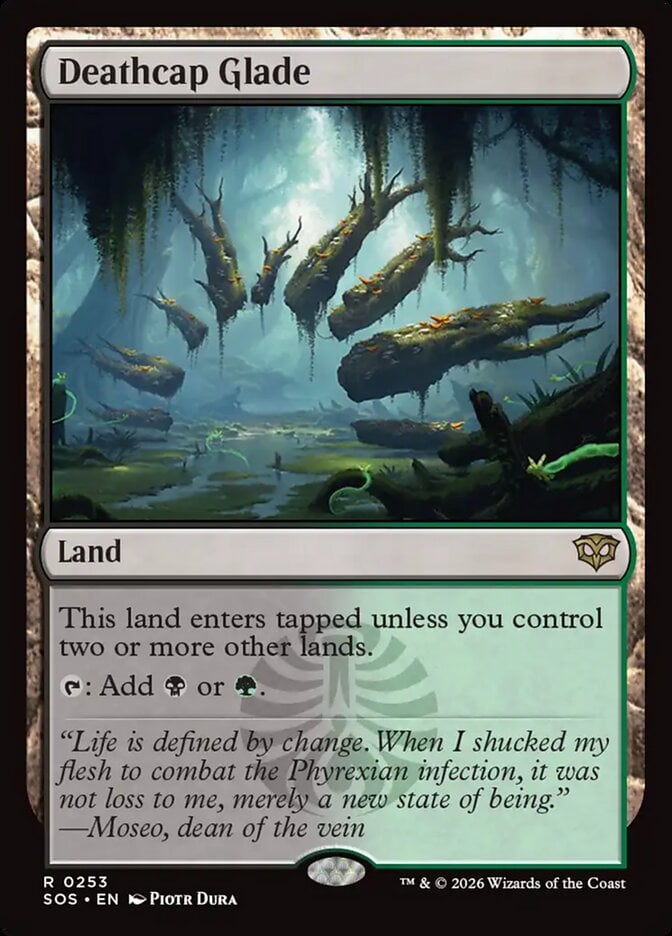
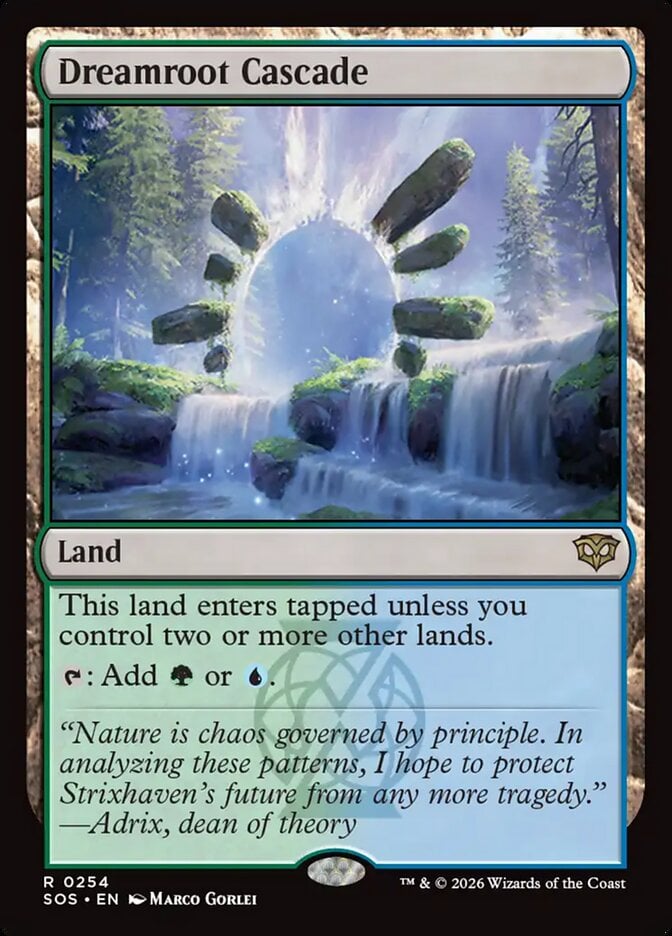
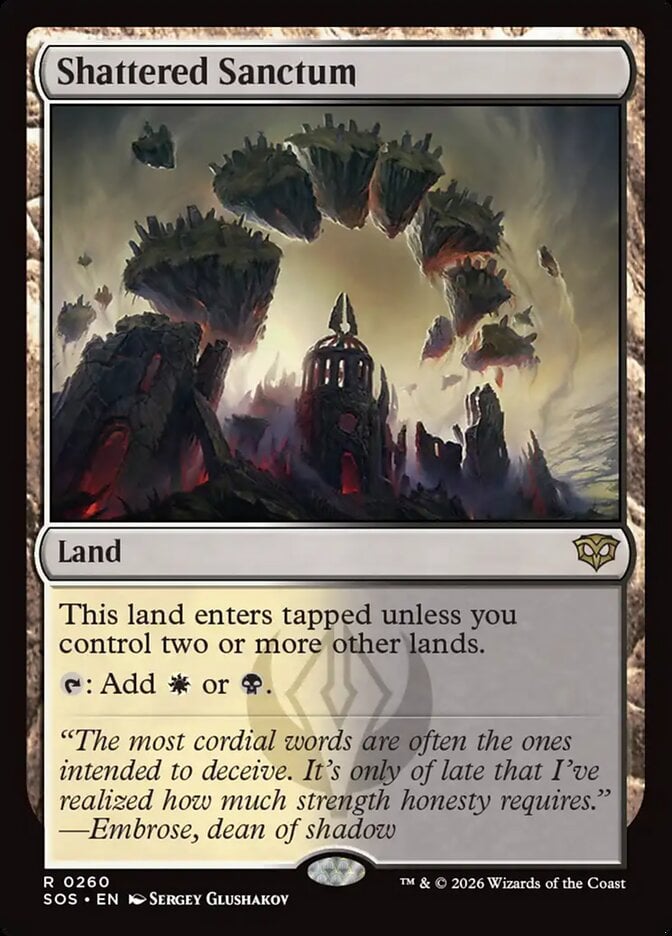
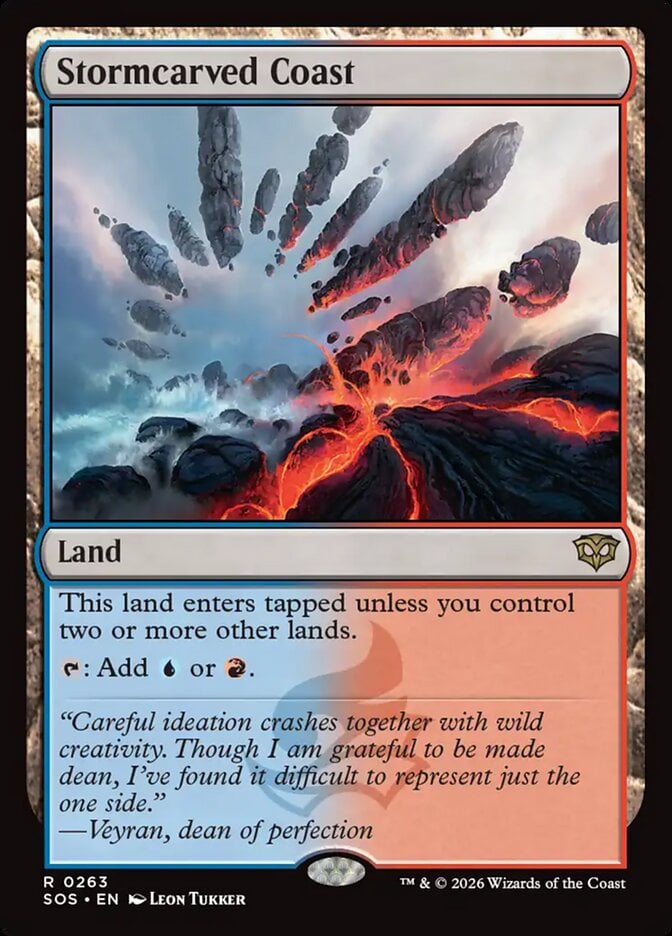
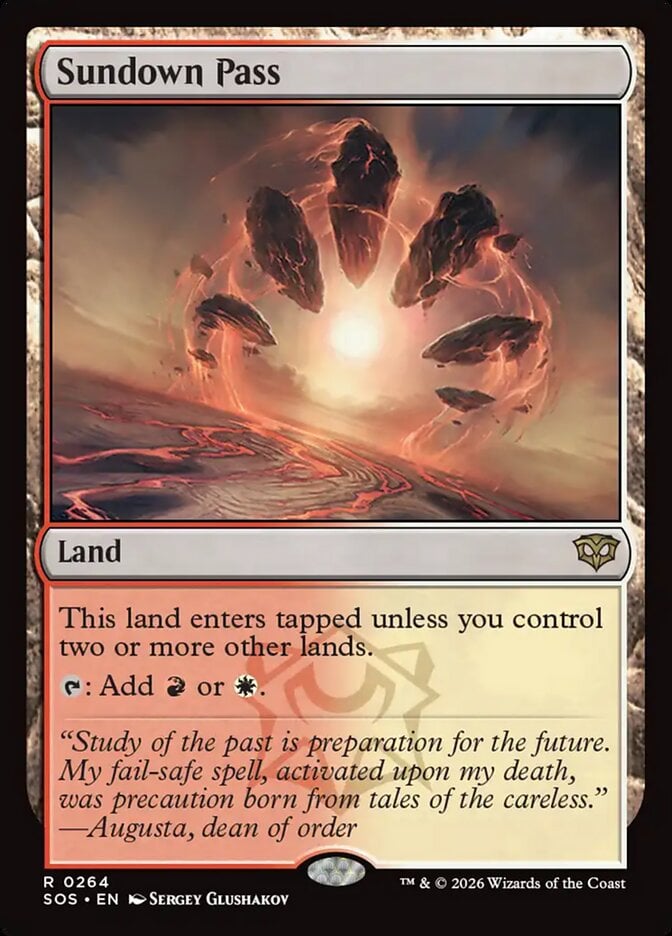
Rating: 5/10
Like any set, dual lands like these will be very good if you can pick them up. With the sheer number of multicolored cards in Secrets of Strixhaven, it’s even more important to make sure you have the right fixing, meaning you’ll probably end up taking these a little more often than usual.
The “Location” Lands
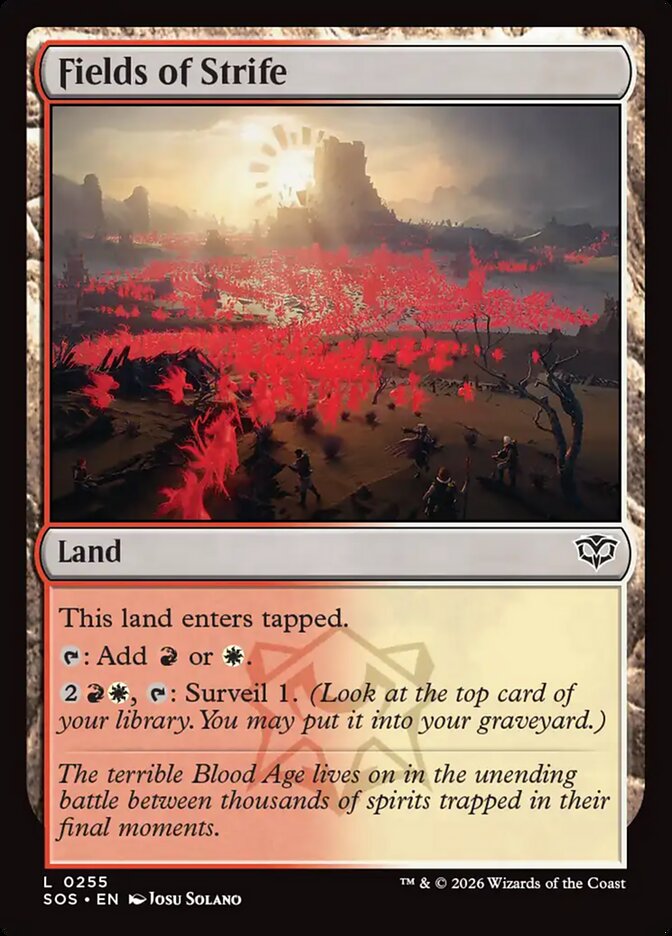
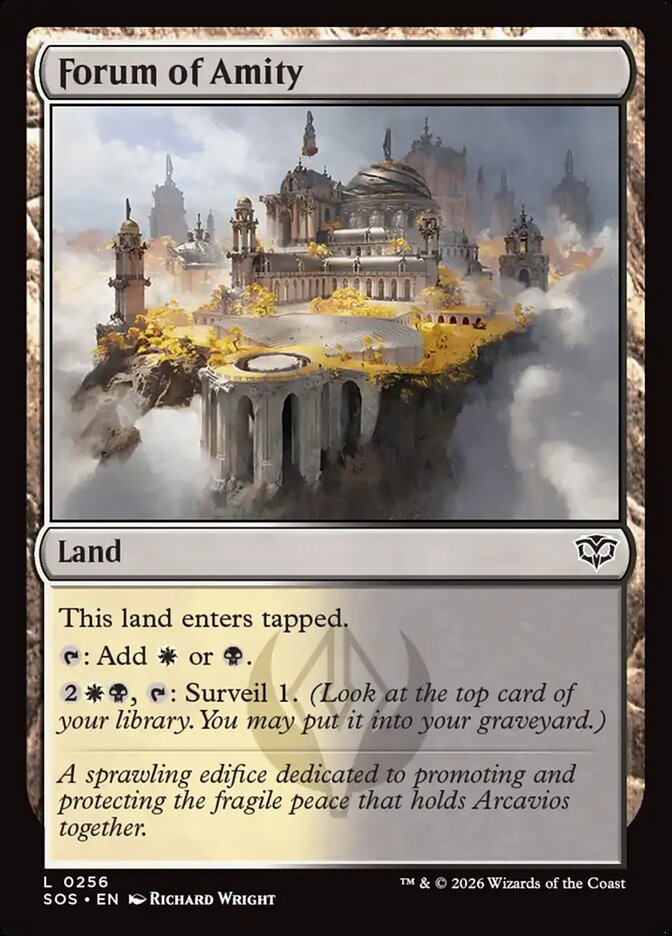
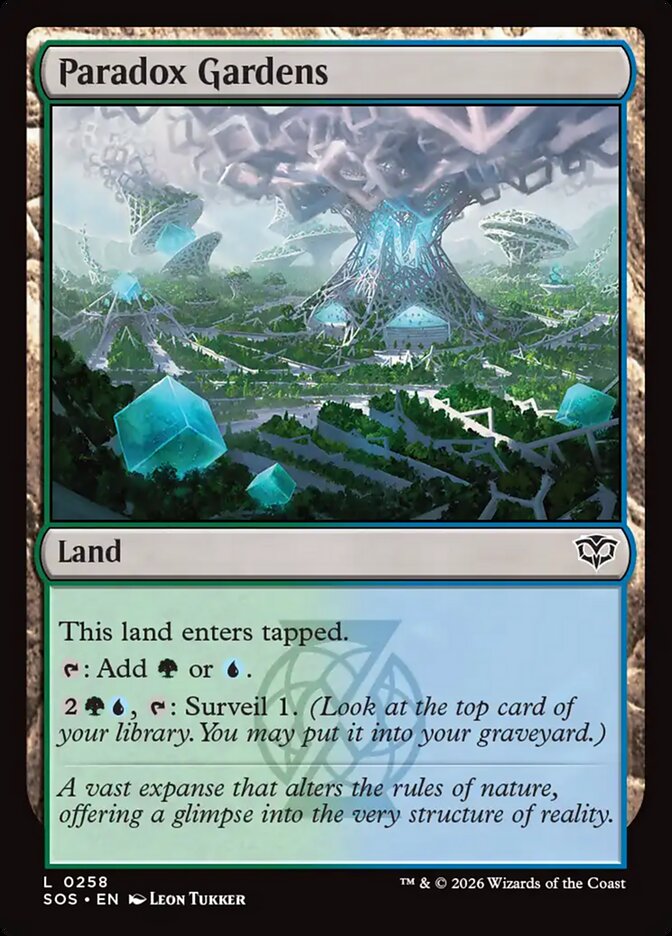
Rating: 5/10
These lands are really not much different from the rare ones. While the rare ones are technically better, you’ll see these far more often and you’ll be happy to take any of them, especially when you want to draft more than just two colors.
Great Hall of the Biblioplex

Rating: 7/10
Great Hall of the Biblioplex is both a 5-color land for your instants and sorceries and a creature land for later, both of which are incredibly valuable abilities for a land. Awkwardly, if you’re drafting five colors, this is good for your spells but useless for the archaics that you want to cast, so maybe it’s a bit limiting. I’d still take it every time for that deck though.
Petrified Hamlet

Rating: 0/10
Petrified Hamlet is a really interesting design that I’m sure will make waves in many formats. Here in Limited, it’s not that this will lack options, but the cost of playing a colorless land in a multicolor set is extremely high just for the chance that one of those options might present itself.
Skycoach Waypoint

Rating: 3/10
Colorless lands come with an extremely high cost, especially in a multicolor set, but this ability might just be worth it. There are some very powerful prepared spells in SOS, and not every creature has a way to re-prepare itself. I don’t think you’ll use Skycoach Waypoint particularly often, but if you can find a good home for it, it should be able to pull its weight.
Terramorphic Expanse

Rating: 5/10
While the dual lands will overall be better for your 2-color deck, Terramorphic Expanse will be much better for anything with three colors or more. Still, as I’ve said plenty of times, this is a multicolor set, so you should take whatever fixing you can get your hands on.
Secrets of Strixhaven Mystical Archive
Many sets these days have some sort of bonus sheet included, all thanks to Strixhaven having the first bonus sheet since Time Spiral in 2006. The Secrets of Strixhaven Mystical Archive is a selection of classic instants and sorceries from throughout Magic’s history, and with one appearing in every pack, they’ll make a very real impact on the Limited format.
Akroma’s Will

Rating: 10/10
We last saw Akroma's Will on Final Fantasy’s Through the Ages bonus sheet, where I grossly undervalued it in my set review. It turned out the card was absolutely disgusting, as each mode can automatically win the game from different positions. Even if you don’t win, giving your whole team lifelink and gaining a ton of life was enough to see you through, too. If not for white’s other cards in Secrets of Strixhaven and its Mystical Archive, I might be saying this is the best white card in the set.
Angel’s Grace

Rating: 0/10
Fog isn’t even that good of a card, and Angel's Grace is far worse, since you still go down to 1 life. Yes, Ad Nauseam is also on this bonus sheet, but without a way to win the game with your library in your hand, that combo is completely pointless.
Armageddon

Rating: 9/10
If you’ve never had the pleasure of playing with or against an Armageddon, then boy, are you in for a treat. The key to this card is to establish a better board than your opponent and then wipe out all lands so that they have no hope to catch up to you. Armageddon wins nearly every game in which you cast it, but the downside is finding the right spots to cast it in the first place. It’s also terrible to see when you’re the one who needs to catch up to your opponent. Still, it’s a dangerous card, and white is definitely the color best suited to enable it in this set.
Duty Beyond Death

Rating: 3/10
I underrated this card a bit when we last saw it. Duty Beyond Death can be effective at protecting your creatures from removal, a board wipe, or a big combat, but the fact that it adds +1/+1 counters while doing so is the clincher here. Even having sacrificed a creature, this spell benefits the rest of your board enough to be a very reasonable combat trick.
Helping Hand

Rating: 4/10
We’ve seen many of these cheap reanimation spells in white, but none are as cheap and efficient as Helping Hand. There are some very good 3-drops for you get back with this (I’m thinking Emeritus of Abundance) and some nice combos for it too, especially in a Lorehold deck.
Hop to It

Rating: 6/10
We may not have access to the bunny support from Bloomburrow, but Hop to It is still going to be a phenomenal card. Three mana for three 1/1 tokens is a very good deal, and we’ve even seen a bunch of white cards in SOS that reward you heavily for going wide.
Prismatic Ending

Rating: 4/10
The key to a good removal spell is the ability to trade up on mana (for example, your 2-mana spell removing a 4-drop), which Prismatic Ending is never able to do. The reason it’s so good in Constructed is its versatility at being able to exile any kind of permanent, but that’s of little use to us here, making it look a bit below average.
Repel Calamity

Rating: 5/10
Repel Calamity loses a few points for not being able to target small creatures, but we mostly want to deal with big creatures anyway, so it’s not too big of a deal. This is still cheap and efficient while it can still handle a lot of important targets.
Reprieve

Rating: 7/10
Returning a spell to its owner’s hand doesn’t sound that great. After all, they can just recast it, right? Well, sure, but you’ve denied them their opportune moment, wasted their mana, and drawn a fresh card, which makes Reprieve a very potent counterspell, just like its blue counterpart, Remand. There are even some storm spells on this bonus sheet that we might be able to get a little tricksy with, so keep an eye out for that.
Requisition Raid

Rating: 2/10
A +1/+1 counter on all your creatures might be nice in a certain type of deck, but the main thing that Requisition Raid does is answer artifacts and enchantments, so it should probably just stay in the sideboard.
Return to the Ranks

Rating: 0/10
Return to the Ranks is a weird inclusion. If there’s one thing we’re not likely to care about in Secrets of Strixhaven, it’s lots of 2-drop creatures. Hard pass.
Winds of Abandon

Rating: 10/10
Ever heard of Plague Wind? Well, how about one that you can cast for two thirds of the price? Winds of Abandon is a really absurd Magic card that even managed to be one of the best cards in a set as powerful as Modern Horizons. Even if you only need to answer one creature, it’s also really effective at doing that. I hope I never have to play against this card, but I know that’s just wishful thinking. It’ll blow me out at some point.
Brain Freeze

Rating: 6/10
Okay, when I reviewed Exhibition Tidecaller, I pointed out that you only need to mill a player for about 20-25 cards to win a game of Limited. If you have the right set up, Brain Freeze can accomplish that. Between cheap spells and Rapturous Moment to build up a storm count, ways to get it back from the graveyard, and whatever else you can think of, I think this becomes a very legitimate win condition. I really hope I’m right, because that sounds like a lot of fun to do.
Cyclonic Rift

Rating: 9/10
Cyclonic Rift is the scourge of many a Commander game. It has been a while since we last saw it in Limited; 7-mana spells are far more castable now than they once were, and a one-sided bounce board wipe is always going to be powerful. Casting it without overload isn’t advisable, but there are a few situations where it’ll also be useful.
Daze

Rating: 6/10
Ah Daze, one of Magic’s most fundamentally unfair and annoying cards. Getting caught out by this free counterspell always feels bad. The fact that I can play out my 3-drop on curve and then still counter my opponent’s 3-drop is just ridiculous. Yes, it sets you back on mana, but that’s well worth the cost.
Deduce

Rating: 4/10
Four mana total for two extra cards is always nice. I’d rather we saw Think Twice in this spot so that it combos better with the set, but Deduce still does its job in any deck that needs to keep drawing cards.
Disdainful Stroke

Rating: 3/10
There are a lot of powerful spells available for Disdainful Stroke to counter, but it’s all the ones that it can’t counter that hold it back from a better grade. Having one in your deck seems perfectly fine, but other copies should probably stay in your sideboard until you face a Prismari or Quandrix deck.
Flusterstorm

Rating: 1/10
While Flusterstorm was clearly designed to counter storm spells, it also does a pretty good job of countering regular instants and sorceries. In Limited, we can usually just pay the extra mana, so I’m not sold on this being more than a good sideboard card.
Force of Will

Rating: 1/10
Force of Will might be the most infamous counterspell in all of Magic. It’s not really that good of a card, but in formats like Legacy, Vintage, or Cube, players do a lot of really broken things very early in the game, and Force is a very effective way to keep those strategies at bay. It’s not worth it to trade this and another blue card just to counter most spells, but there are some very powerful cards in Secrets of Strixhaven that I wouldn’t mind boarding this in against to help protect me.
Pongify

Rating: 0/10
Downgrading a creature to a 1/1 is barely good enough, so Pongify has no chance, even if it does cost 1 mana.
Preordain

Rating: 6/10
Cheap cantrips, like Preordain, have a very specific use in most Limited sets, and that’s to help trigger abilities that require you to use instants and sorceries. There are plenty of those, particularly in Prismari, so this looks really good there. Also, getting to look potentially three cards deeper into your deck is a great way of smoothing out your early draws, so I can’t imagine why you’d ever cut this, you just might not need to prioritize it in a draft.
Sleight of Hand

Rating: 4/10
Sleight of Hand is significantly worse than Preordain, but everything I said about using it to trigger the right abilities still holds true, so this has a very clear home in the format.
Spell Pierce

Rating: 1/10
The sheer number of instants and sorceries in original Strixhaven made Negate a very worthy main deck card from that bonus sheet. Spell Pierce feels a little too situational for my liking though. It does look like a good sideboard card, but as far as I can tell, it won’t be good enough for the main deck, though I certainly could be wrong about it.
Stock Up

Rating: 7/10
Stock Up is basically the best Divination variant we’ve ever seen. It helps to set up your future turns perfectly, so the only question is can you afford to take the turn off to cast it when it doesn’t affect the board.
Ad Nauseam

Rating: 6/10
If you have a high enough life total, which I’m sure a Witherbloom deck is likely to have, resolving an Ad Nauseam to draw about four or five cards seems pretty good. Black is very limited in how many extra cards it can draw, but this does let it draw a bunch, so long as you’re willing to pay the price.
Bitter Triumph

Rating: 7/10
As an unconditional removal spell for just 2 mana, Bitter Triumph has earned its place as one of the best Doom Blade variants ever printed. Most of the time, you’ll pay the 3 life as an extra cost, but every now and again you’ll be happy to throw away a flashback spell, a creature that you want to Reanimate, or an excess land and be happy about it.
Culling the Weak

Rating: 0/10
Rituals aren’t good in Limited, especially ones that sacrifice creatures. Just take Culling the Weak and leave it in your Pauper decks, where it belongs.
Dismember

Rating: 9/10
Dismember is probably the least black card in the Secrets of Strixhaven Mystical Archive. Sure, you’ll play it in a black deck, and it’ll be fine, but where it really shines is in Quandrix, a color combination with very limited options for removal. One mana to answer most creatures is extremely powerful, but the ability to play it in any deck, so long as you’re willing to pay the 4 life, is what really sets it apart from the rest.
Feed the Swarm

Rating: 3/10
While it’s useful to be able to answer any creature or enchantment, the life loss you get from Feed the Swarm will often be too great to manage. It’s really effective when targeting Fractal and elemental tokens though, so that’s worth keeping in mind.
Living End

Rating: 0/10
The only reason Living End is so infamous as is because of how it interacts with cheap cascade spells. With none of those in Secrets of Strixhaven, it’s absurdly bad.
Locust Spray

Rating: 5/10
You’re not going to find a good target for this trick very often, but having cycling for just 1 mana means it’s never a bad idea to put Locust Spray in your deck. If it doesn’t do anything in the matchup, just trade it in for a new card, no big deal.
Sheoldred’s Edict

Rating: 4/10
Sheoldred's Edict is one of the best edict effects we’ve ever had. The ability to control the kind of creature that’s sacrificed is a huge bonus for it. Still, players tend to have enough creatures on the board that it loses its effectiveness in Limited, but it should be fine in some situations.
Smallpox

Rating: 1/10
I have cast my fair share of Smallpoxes, but I don’t like the card here. It’s too situational, and more often than not it punishes you a little too much. I might be wrong, as I don’t think I’ve ever tried it in Limited, but it just seems too costly.
Stargaze

Rating: 2/10
Black may not have access to a ton of ways to draw cards, but this probably isn’t the kind of thing it wants. Last time we saw Stargaze, it was pretty useless. While Secrets of Strixhaven is better suited to it than Bloomburrow was, I still don’t think it’s worth playing very often.
Vampiric Tutor

Rating: 0/10
We would play a Demonic Tutor, but we don’t want a tutor that costs life and doesn’t put the card into our hand. Vampiric Tutor is obviously a valuable card, but you need a targeted answer or big bomb in your deck to even consider it.
Zombify

Rating: 3/10
Reanimating a creature requires you to have something worth getting back, to get it into the graveyard, and then to play your Zombify. That’s a lot of hoops to jump through, which really limits the playability of this card, but the right set up can make it work.
Abrade

Rating: 6/10
Two mana for 3 damage is always a good rate in Limited, and Abrade even doubles up as a good answer to annoying permanents like Ark of Hunger and Colossus of the Blood Age.
Big Score

Rating: 4/10
It’s really embarrassing to have Big Score on this list as a rare, but the gimmick behind the Mystical Archive is that any cards on it that aren’t currently legal in Standard have to be rares or mythics. So, here we are. The card is fairly good, particularly in a deck like Prismari which can fully utilize the Treasure tokens.
Brotherhood’s End

Rating: 6/10
Three mana for 3 damage to all creatures is a great rate on a cheap sweeper. You’re unlikely ever to need to destroy cheap artifacts, but this is going to be especially powerful against go wide decks such as Lorehold.
Bulk Up

Rating: 1/10
We generally expect combat tricks to help a creature to survive a combat, not just to win it, so Bulk Up looks pretty awful. However, I’ll point out one interaction where you might want to use it: If this is your third spell while you control Spectacular Skywhale, then that whale is attacking for 20 damage. That might be worth going for, but nothing else will be.
Burst Lightning

Rating: 6/10
Shock is a perfectly fine card in Limited, but Burst Lightning takes it to the next level by letting you get a bunch of extra damage in the late game. Better yet, the 4 damage can go directly to your opponent, and kicking it also enables opus abilities, which makes this a particularly good burn spell.
Crackle with Power

Rating: 9/10
In original Strixhaven, Crackle with Power looked too expensive to be worth playing, but the format ended up slow enough that this often closed out games by being cast for 10 or 15 damage. I don’t know how fast this format will be, but we should be able to cast this in most Prismari decks, and it’s pretty devastating once X gets to 2 or greater.
Empty the Warrens

Rating: 1/10
Prismari has a few ways to enable storm spells, so Empty the Warrens might not be literally unplayable, but you shouldn’t play it in any random red deck.
Jeska’s Will

Rating: 0/10
Without access to a commander so that you can use both modes, Jeska's Will just doesn’t work. Neither mode is good enough on its own, so just take this for your Commander collection and move on.
Monstrous Rage

Rating: 3/10
What’s especially funny about seeing Monstrous Rage here is that all the uncommons on this sheet are cards that are legal in Standard. Except… this got banned. Well, it’s a fine combat trick for Limited that might be particularly dangerous alongside Spectacular Skywhale and Bulk Up.
Pyretic Ritual

Rating: 0/10
I’m holding out hope for some kind of wacky storm deck, but even then, Pyretic Ritual is unlikely to be a part of it.
Return the Favor

Rating: 0/10
Return the Favor is far too situational to be worth playing in any deck. It’s just not something we care about in Limited.
Subterranean Tremors

Rating: 8/10
Subterranean Tremors is so close to being a really busted board wipe. You can easily sweep a lot of creatures and for just 9 mana total, also create an 8/8 token. The big thing holding it back is the fact that it doesn’t touch flying creatures, meaning sometimes it might not be able to destroy anything at all. This is a very powerful card, just note that it does have significant limitations.
Awaken the Woods

Rating: 7/10
X-spells that create X 1/1s have a long history of being very good performers in Limited. The fact that these 1/1s are also Dryad Arbors means that casting Awaken the Woods for 3-5 mana has the great hidden mode of being a ramp spell. Given that Quandrix is all about enabling X-spells in Secrets of Strixhaven, this is a brilliant one to have access to.
Berserk

Rating: 2/10
Berserk is a very powerful card with a variety of applications outside of Limited, but here it appears to be quite weak. Getting a huge hit in is good, but losing your creature in the process isn’t a good trade off. Still, I’ve already mentioned the synergy with Spectacular Skywhale that might be interesting, and you can use it to finish an opponent’s attacking creature, so long as you can tank a hit from it.
Crop Rotation

Rating: 0/10
Crop Rotation is purely a combo enabler with incredibly powerful lands, none of which exist in this format, so it’s completely unplayable.
Giant Growth

Rating: 3/10
The OG combat trick is back again. Giant Growth is such a simple card and hits a bit harder than most modern combat tricks. In fact, it’s so simple that that’s all I have to say about it.
Glimpse of Nature

Rating: 0/10
This needs to draw at least two cards to be worth playing, but lining up a turn when you can cast Glimpse of Nature followed by two creatures is just not going to happen often enough.
Knockout Maneuver

Rating: 6/10
Green bite spells are pretty much always good in Limited, and Knockout Maneuver even fronts you a +1/+1 counter to make sure you can destroy the target. On top of that, this is especially powerful in Quandrix with all the creatures that trigger when they gain a +1/+1 counter.
Pick Your Poison

Rating: 2/10
Pick Your Poison looks like purely a sideboard card, but given that it attacks fliers, it may very well make its way into some main decks.
Royal Treatment

Rating: 4/10
We’ve seen plenty of 1-mana protection spells over the years, and Royal Treatment is one of the better ones. Not only does it protect a creature from something, but the Royal role it leaves behind is a very real upgrade to that creature for future turns.
Shamanic Revelation

Rating: 4/10
I don’t like that if you have no creatures in play, Shamanic Revelation is basically uncastable. That said, it’s quite powerful if you can get the right situation lined up for it. Quandrix should be able to draw a few cards and gain a lot of life from it.

Rating: 6/10
Rampant Growth is an excellent card, especially in a format where we value fixing so much. While you’d much rather be casting Shared Roots on turn 2, it’s still a fine play later in the game given the number of ways there are to spend large amounts of mana.
Triumph of the Hordes

Rating: 8/10
It’s been a very long time since I’ve cast Triumph of the Hordes in Limited, and I’m very thankful for that. This card is extremely stupid and often wins a game on the spot. You have to be careful with it, as there are no other poison cards in Secrets of Strixhaven, so if you don’t win with it, giving your opponent eight or nine poison is completely pointless.
Veil of Summer

Rating: 7/10
It may only work against black and blue spells, but Veil of Summer still functions as a 1-mana counterspell that draws a card, which is just excellent. Since the only college that isn’t blue or black is Lorehold, I’d definitely start this in my main deck and just side it out when it’s dead.
Bring to Light

Rating: 2/10
In most sets, Bring to Light is pretty useless and it might be here, too. I’m a little more hopeful for it because we have support for converge in SOS, so if you have a really powerful card to grab with this, then it could be worth playing.
Culling Ritual

Rating: 2/10
Culling Ritual is a very powerful sweeper in other formats, but far too restrictive to be more than a sideboard card in Limited. Still, Secrets of Strixhaven has a lot of tokens lying about, so it might be useful in some cases.
Deflecting Palm

Rating: 1/10
Deflecting Palm, by preventing a big hit and dealing that damage back to the opponent, is essentially like casting a Lightning Helix on your opponent. That’s not something we typically care for in Limited, but this is a potential sideboard card against very large creatures or Spectacular Skywhale shenanigans.
Expressive Iteration

Rating: 7/10
Assuming you play it right, Expressive Iteration is often a spell that lets you draw two cards out of your top three. All you have to do is make sure to cast it before your land drop so that any land you see can be played from exile while you put another card into your hand. This is one of the best draw spells we’ve ever had, which is what has led to its ban in both Pioneer and Legacy.
Fracture

Rating: 1/10
This isn’t exactly an iconic spell, but it was first printed in Strixhaven I suppose. Fracture is nothing more than a super flexible sideboard card.
Special Guests
In addition to a full bonus sheet, we also have 10 Special Guests cards. These are going to be very rare to find, but most of them are actually really good, so let’s have a quick look over them.
Archaeomancer

Rating: 6/10
I own and operate an all commons/uncommons cube, and Archaeomancer is easily one of my favorite cards in it. The simple act of buying back a removal spell or going infinite with a flicker spell is exactly what I want to do in Magic. I really hope I get to use it in this format.
Archmage Emeritus

Rating: 8/10
Making a return from original Strixhaven, Archmage Emeritus has one of the best magecraft abilities that we were given in the original set. Drawing a card is always going to be one of the better payoffs for doing a thing, and it’s so easy to trigger it that this will always be a good card for your deck.
Murmuring Mystic

Rating: 8/10
If you can’t draw a card, then creating a good token whenever you do a thing is one of the better payoffs you can get for a strategy. Murmuring Mystic not only does that very well, but it’s also a 1/5 on the board, helping to fend off incoming attacks.
Grim Haruspex

Rating: 7/10
We don’t have a sacrifice theme in SOS, but you can’t argue with the efficiency of Grim Haruspex. Even just trading off creatures in combat will trigger it, and you can even use morph to disguise what’s coming (though a seasoned player will probably know that this is the only morph card in the set).
Dualcaster Mage

Rating: 4/10
Dualcaster Mage was meant to be red’s answer to Snapcaster Mage. The problem is, Snappy works at nearly any time, whereas Dualcaster needs you to play it at the same time that there’s a spell to copy, which is much harder to line up properly. Still, it can give you some decent value in the right spot, so it’s worth looking at.
Magus of the Library

Rating: 3/10
Two-drop mana dorks are typically very good, but the double green cost on Magus of the Library doesn’t inspire me with much confidence. It’s still a playable card, but it’s nowhere close to other dorks that we usually see, plus the Library of Alexandria ability will probably never be relevant during a game.
Sylvan Library

Rating: 9/10
If you’ve never had the joy of playing a Sylvan Library on turn 2, then believe me, you should be aggressive with it and pay the life. Drawing two extra cards right away is a surefire way to overwhelm your opponent. Of course, don’t draw them if you’ll end up discarding to hand size or something, but doing so will enable you to see deeper into your deck and find what you need a lot faster. Library is a broken Magic card, and I’m interested to see how it plays out here.
Adrix and Nev, Twincasters

Rating: 1/10
Doubling tokens is fine in theory, but Adrix and Nev, Twincasters is embarrassingly weak on its own, so I’d stay away from this one.
Codie, Vociferous Codex

Rating: 4/10
Last time we saw Codie, Vociferous Codex in Strixhaven, it was actually a really fun build-around in Draft. Locking you out of permanent spells is a little rough, but the power of SOS lies in its instants and sorceries anyway, and Codie really rewards you for adhering to this. It fixes you for all five colors, which helps a little bit with converge, then every spell you cast cascades into another. This is definitely worth trying out, especially as you won’t see it very often.
Library of Leng

Rating: 0/10
As a judge, Library of Leng might be my least favorite Magic card of all time. Thankfully, it’s total crap in Limited, so I shouldn’t have to ever talk about it.
Editor’s Note: Library of Leng will be replaced by Library of Alexandria on MTG Arena, which is a much stronger card.
Wrap Up

Graduation Day | Illustration by Brian Valeza
I can’t tell you quite how excited I am for Secrets of Strixhaven. It looks so powerful and incredibly fun, not just for SOS Drafts, but for other formats as well. I hope you’ve enjoyed this “quick” review, and enjoy your prereleases!
If you liked this article, please consider subscribing to our new YouTube channel The Daily Upkeep and join our Discord server too. Share the article with your friends and help drive the conversation further.
Until next time, take care of yourselves!
Follow Draftsim for awesome articles and set updates:










2 Comments
I think you’re way off about Rabid Attack. Think about it, only two creatures need to die for it to be very mana efficient – draw 2 for 2. If you draw 3, that’s incredible – 4 insane. If you draw 6 cards, it’s just as good as Ancestral Recall in terms of mana efficiency. It’s instant speed so very versatile.
Archaic’s Agony looks like it’s primarily for drawing cards and triggering Opus. Let’s say X is 5 and you target something with 1 toughness. You then draw 4 cards for 5 mana. That’s a really good deal. I could see this vibing in a RU Temur deck with good mana variety.
Add Comment