
Last updated on July 29, 2026
Lightning Bolt | Illustration by Chuck Lukacs
In the very first Magic set, Alpha, there’s a cycle of five instants that cost 1 mana. There’s one for each color, and they each give three of an appropriate resource for the color. Healing Salve and Giant Growth are underpowered, seeing little play in any MTG format. Ancestral Recall and Dark Ritual are incredibly overpowered and find themselves way out-of-line for what could be printed today.
That leaves just one of these spells that, over all these years, has maintained its competitive relevance and its status as an accurate representation of red’s place on Magic’s color pie. That card, my friends, is Lightning Bolt – the original burn spell.
What Are Burn Spells in MTG?
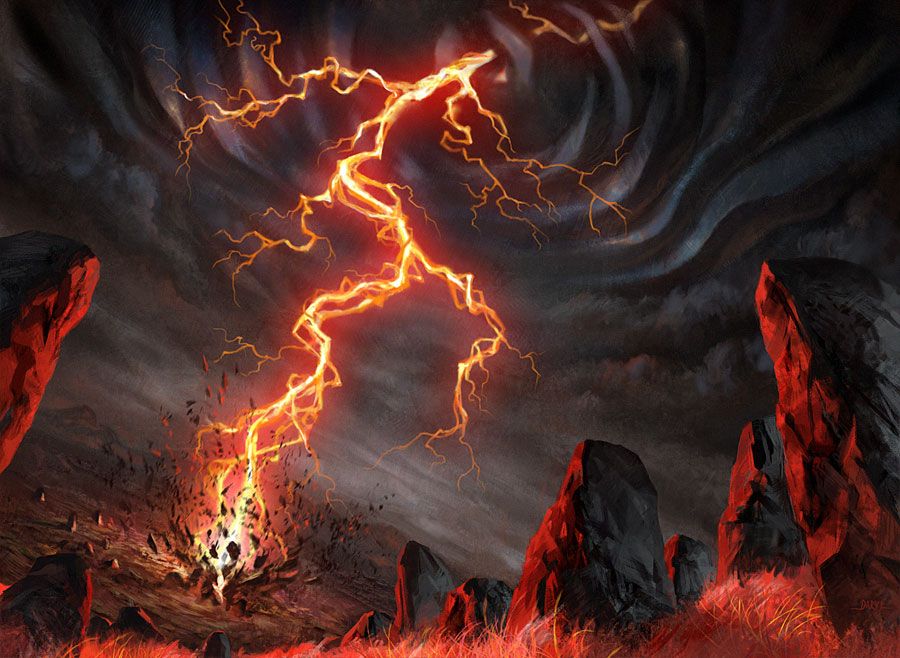
Rift Bolt (Modern Masters) | Illustration by Daniel Ljunggren
Burn spells in Magic are nonpermanent spells – that is to say, either instants or sorceries – that deal noncombat damage. The term “burn” arose naturally in the community as a result of these cards often depicting fire or electricity being used to inflict direct damage.
Burn is a decidedly red effect, with red cards like Lightning Bolt and Fireball defining red’s identity in Magic’s very first set, Alpha. That means red mages have been hurling flames at the opponent’s face for as long as there have been red mages! Other colors receive noncombat damage effects, usually with a twist that makes the spell feel more appropriate for that color. Green gets bite spells, black burn spells like Consuming Corruption tend to gain life, and white ones like Hobbit's Sting or Joust Through relate to creatures and combat, for example.
It’s important to note that “burn spells” aren’t to be confused with a “burn deck.” The latter is an aggressive deck archetype that tends to play few creatures, instead aiming to reduce the opponent’s life total by targeting them with powerful burn spells. Not every burn spell is suitable for burn decks, especially those that can’t deal damage to opponents directly. Burn spells aren’t just for burn decks, either, and many burn cards find their home outside of them.
#37. Crackle with Power
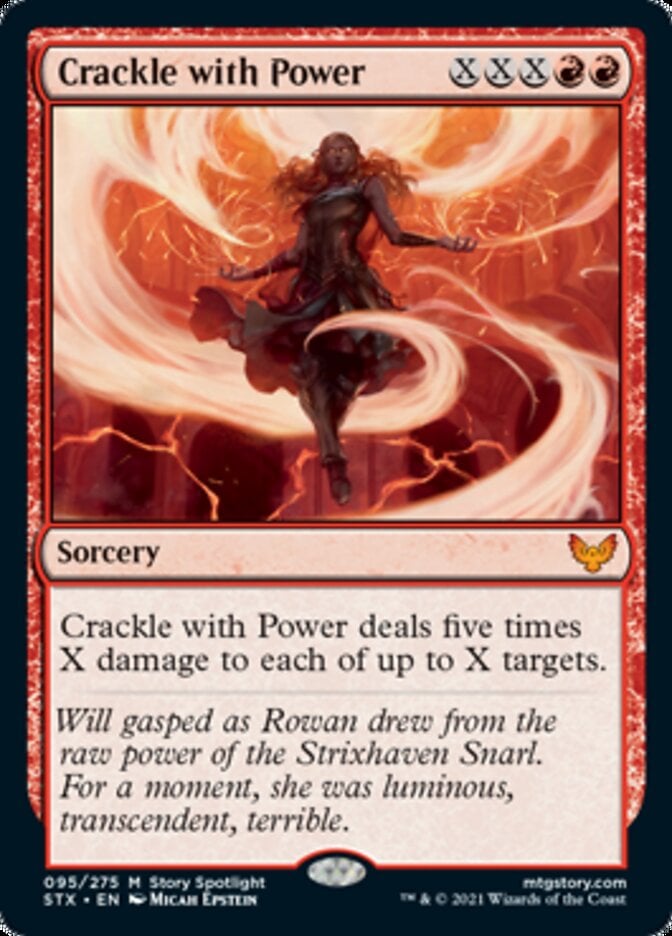
Unless you have what could best be described as an “arbitrary” amount of mana, it’s just hard to get Crackle with Power to play well. Its best role is as a finisher enabled by ramp and cost reduction or as an outlet for infinite mana.
#36. Team Avatar

Team Avatar is a flexible card that shows off white’s way to burn creatures down, and that’s with it’s strength in numbers. I find the enchantment mode helps guard against burn on my singular attacker because it boosts toughness as well.
#35. Comet Storm
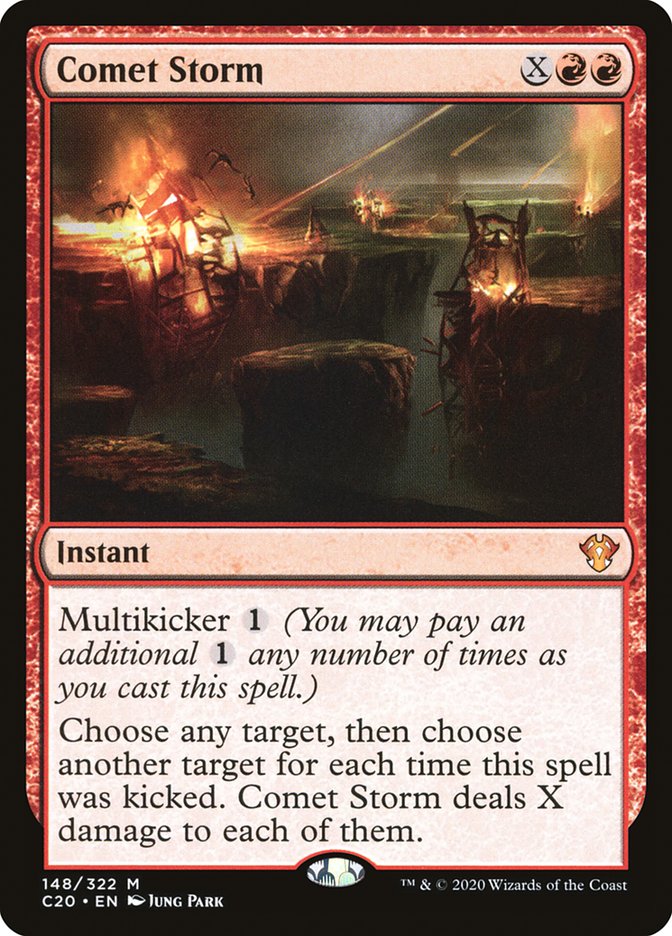
While is costly for a Fireball effect, Comet Storm is still a solid way to sink a bunch of mana. It’s often played alongside commanders like Hinata, Dawn-Crowned or Rowan, Scion of War to reduce the cost.
#34. Electrolyze
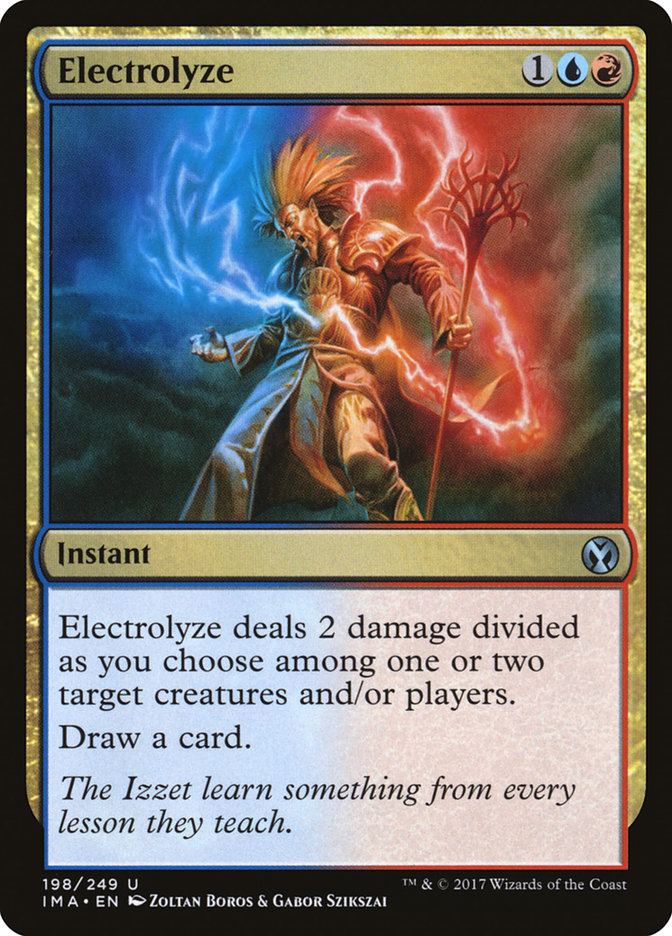
Worst case scenario, you’ve got to send Electrolyze at your opponent’s face to draw a card. Best case scenario, you remove two small creatures and draw a card. No matter what, it replaces itself. It offers too little impact for most competitive formats these days, but in Commander it can still shine, especially in Izzet () spellslinger decks that can reduce its cost.
#33. Combustion Technique

Combustion Technique scales up with the lessons you put in the graveyard. The exiling text ensures this is fit for a high-paid assassin that leaves no chance for reanimation.
#32. Shrapnel Blast
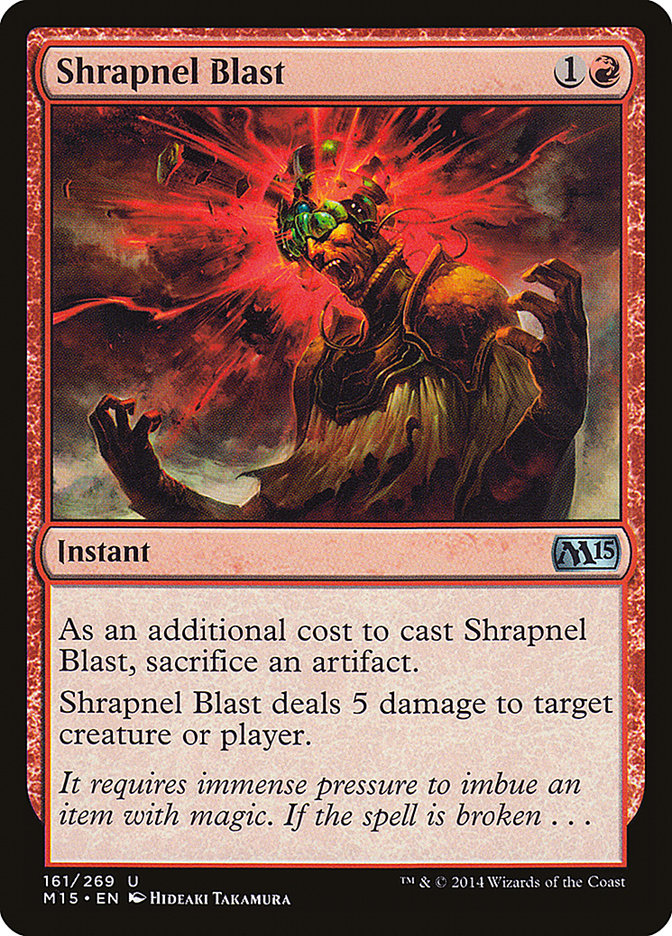
Possibly my favorite burn spell of all time, Shrapnel Blast requires sacrificing an artifact for 5 damage at instant speed. I played it in Pioneer’s fringe Ensoul Artifact deck, which leverages bonus artifacts from creatures like Voldaren Epicure to make that additional cost less punishing. At a Regional Championship Qualifier, I once won a game by casting two of these on the opponent’s end step while they had 10 life – a fitting anecdote for keeping in mind what burn spells can be capable of in their best moments.
#31. Skewer the Critics
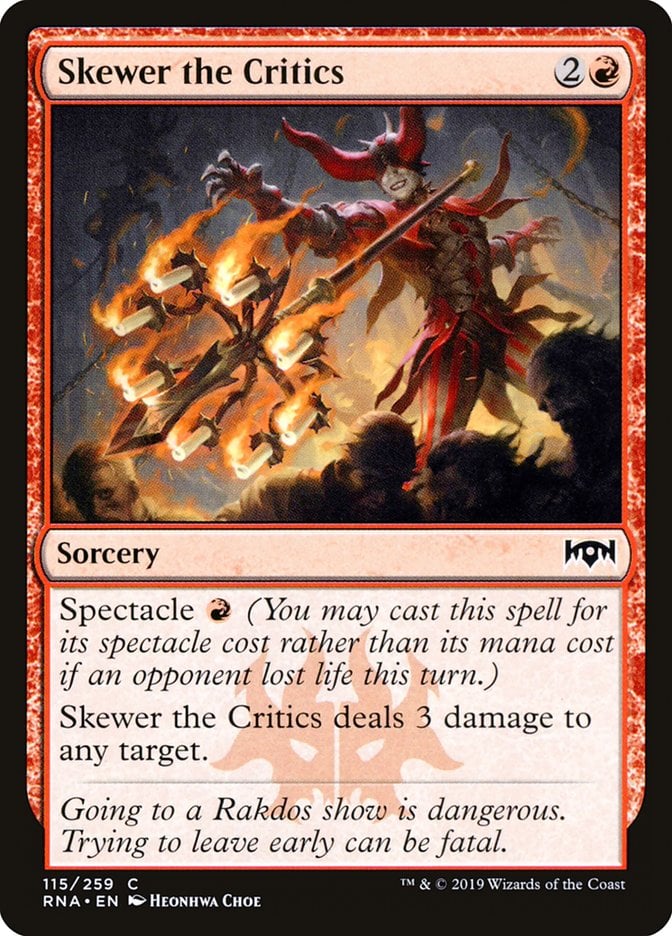
Enabling the spectacle cost on Skewer the Critics doesn’t tend to be that difficult, especially in a deck packing more burn spells. Once it’s online, this red sorcery becomes a sort of sorcery-speed Lightning Bolt. It’s still a hurdle that prevents Skewer the Critics from making it in every deck the way Bolt might, but it’s still a powerful card.
#30. Izzet Charm
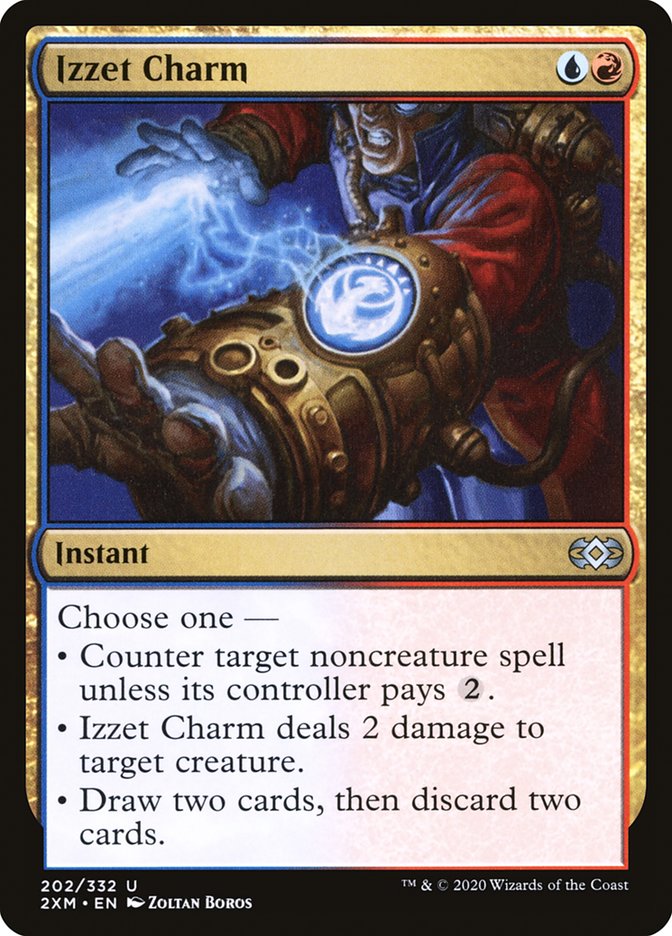
Izzet Charm isn’t the best Ravnican charm on the list, but that isn’t to say that it’s weak. You get to choose between what’s essentially a Spell Pierce, a Shock, and one use of Faithless Looting. None of those are effectively priced at 2 mana, but access to all three modes of these practical tools at the same time is a level of flexibility that can’t be overlooked.
#29. Jaya’s Immolating Inferno
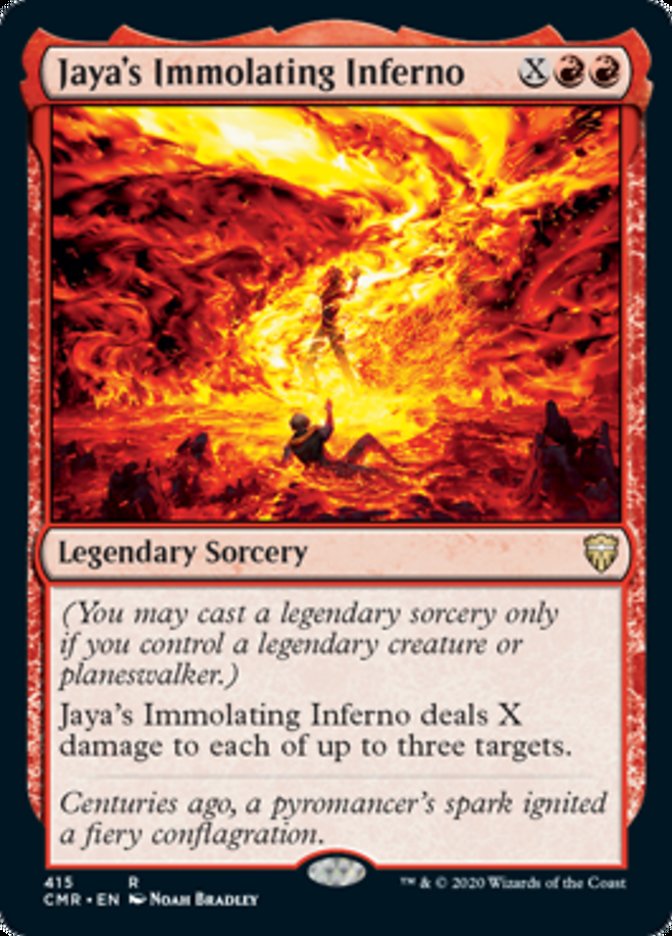
Despite its legendary downside, Jaya's Immolating Inferno is an effective burn spell. In aggressive decks, this legendary sorcery eliminates multiple blockers with precision. It’s perfect for those situations when a board wipe would be convenient but you’d rather not remove your own permanents. You can also use this as an infinite mana outlet in Commander, sending lethal damage to each of your three opponents.
#28. End the Festivities
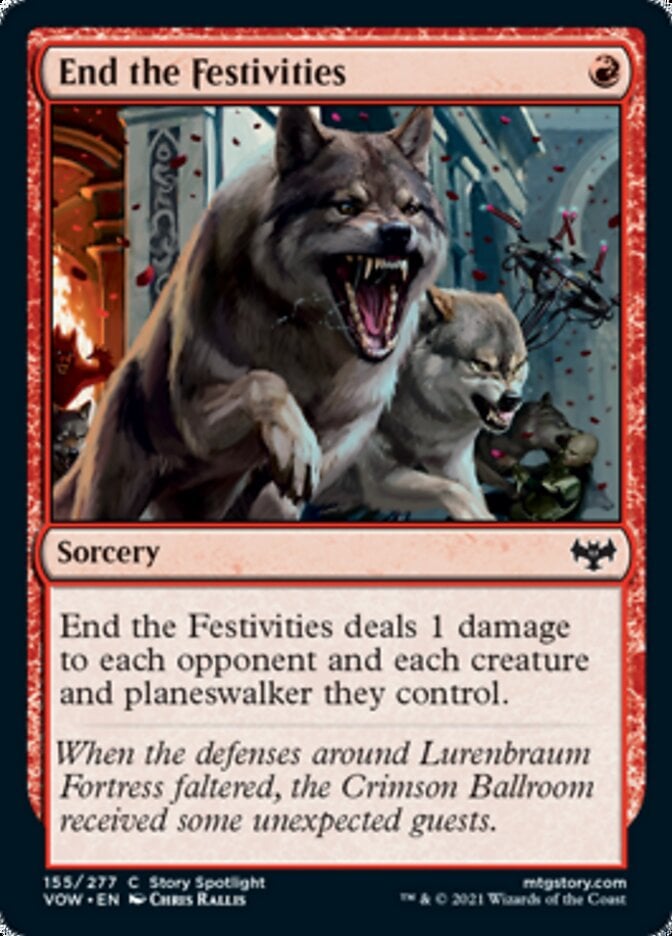
End the Festivities doesn’t seem all that strong at first glance, but this burn spell scales very well in Commander. With certain creatures in the command zone, this becomes one of the most efficient and powerful burn spells. With Niv-Mizzet, Visionary, it does an impeccable Ancestral Recall impression. Ojer Axonil, Deepest Might can wildly increase the damage it deals, turning it into an opponent-only board wipe.
#27. Summon: Kujata

Sure this saga card isn’t your typical burn spell, but the main burn part is chapter one on this large and hasty ox. Summon: Kujata does have the Fire chapter which lets you pitch a potentially game-winning amount of damage before you get one more attack in.
#26. Delayed Blast Fireball
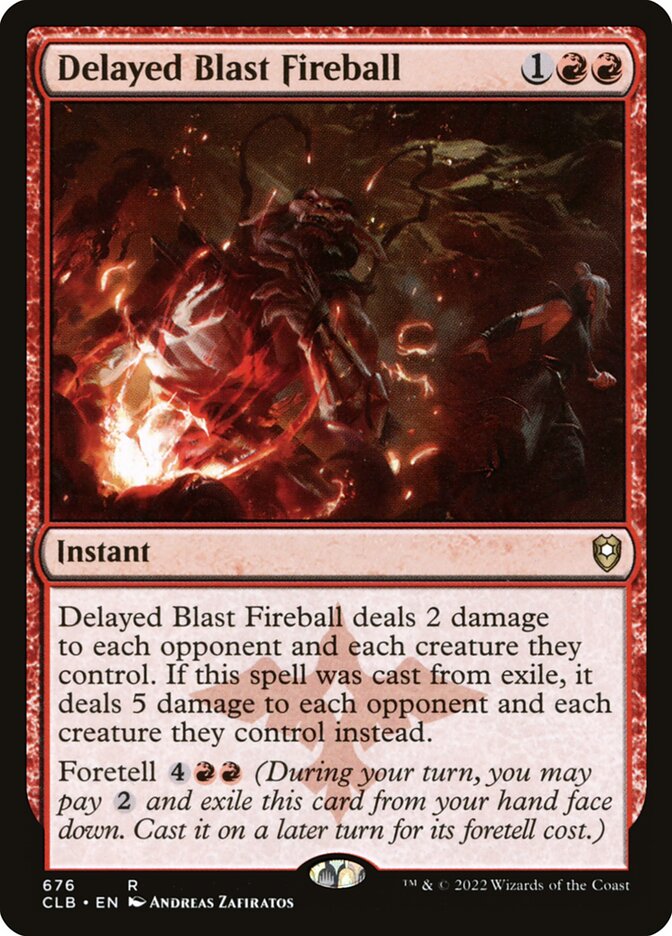
Red has plenty of burn-based board wipes, but it’s rare to see a card like Delayed Blast Fireball at instant speed. Eight mana, the total cost of casting this using foretell, is definitely steep. But you get to sweep the board on the opponent’s end step right before you untap, likely taking over the game. Find a cheaper way to cast this from exile, like with Prosper, Tome-Bound, and you’ll get the big-mana damage for the cheaper price.
#25. Chain Reaction
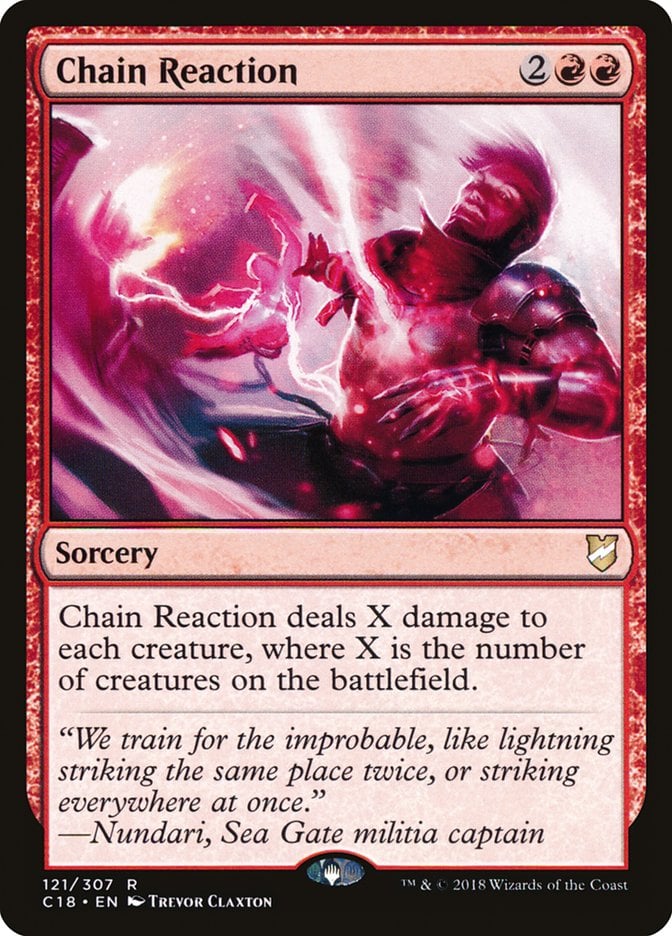
Chain Reaction is like a fairer Blasphemous Act. It’s a board wipe whose effectiveness scales with the number of creatures on the battlefield. This is one of the better red board wipes for Commander, where there’s four players to increase the creature count.
#24. Price of Progress
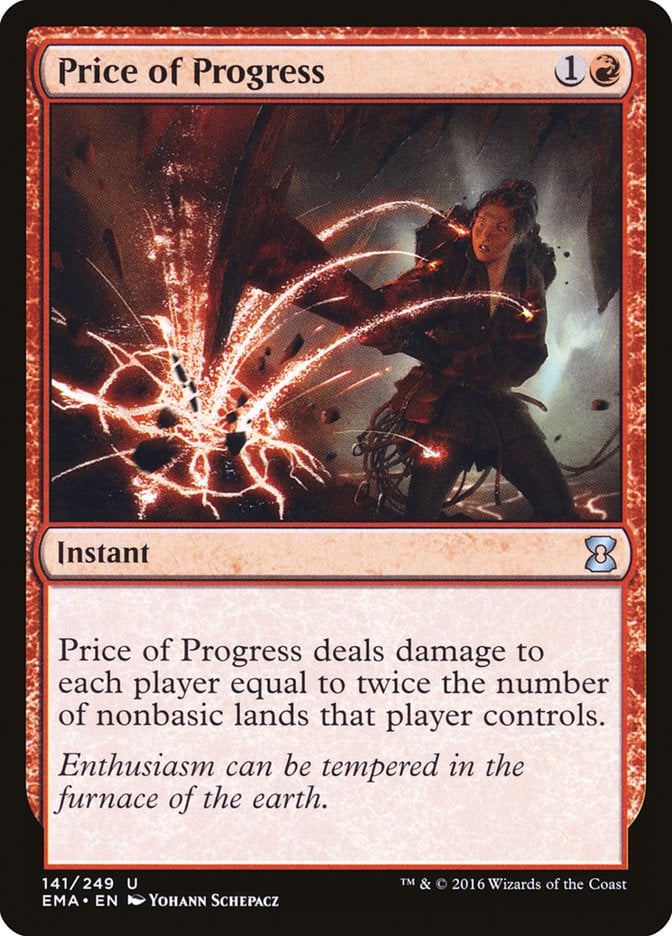
Fittingly, the more powerful and greedy the decks at the table, the higher the Price of Progress. Against opponents that are playing three or more colors, this deals a disproportionate amount of damage for 2 mana.
#23. Fire // Ice

Much like the charms on the list, Fire // Ice is a split card that you can always find a use for. You can tap down a terrifying attacker before it swings at you, or get rid of Orcish Bowmasters and its amassed army at the same time. If there’s no good targets, simply use Ice to cantrip.
#22. Rip Apart
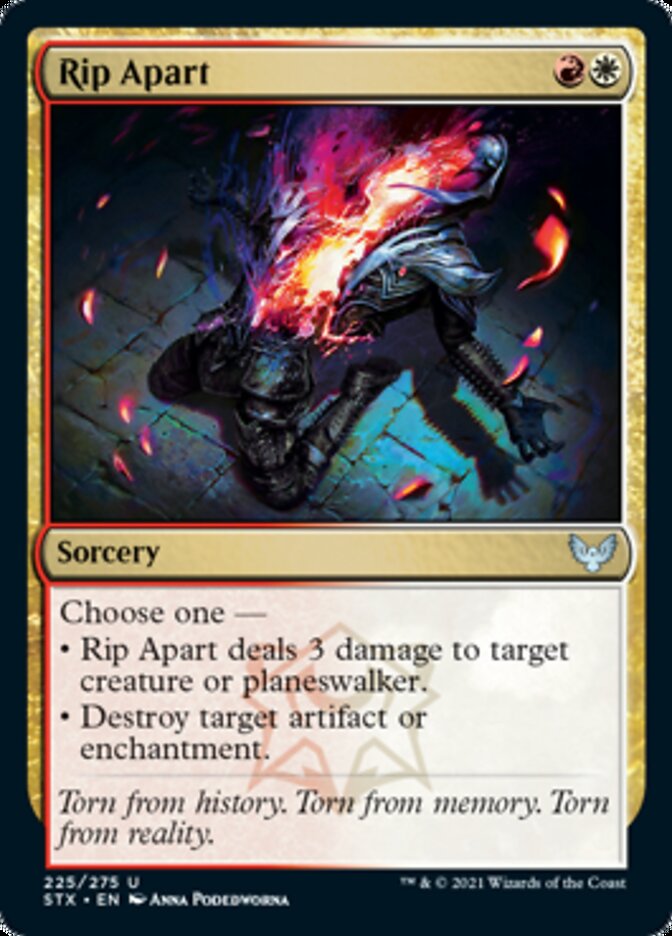
Being a sorcery rather than an instant certainly holds Rip Apart back, but that doesn’t mean it isn’t a versatile and reliable removal spell. The range of targets is wide enough that this can slot easily into just about any Boros () deck, even if it’s never best-in-class.
#21. Lava Spike + Boltwave
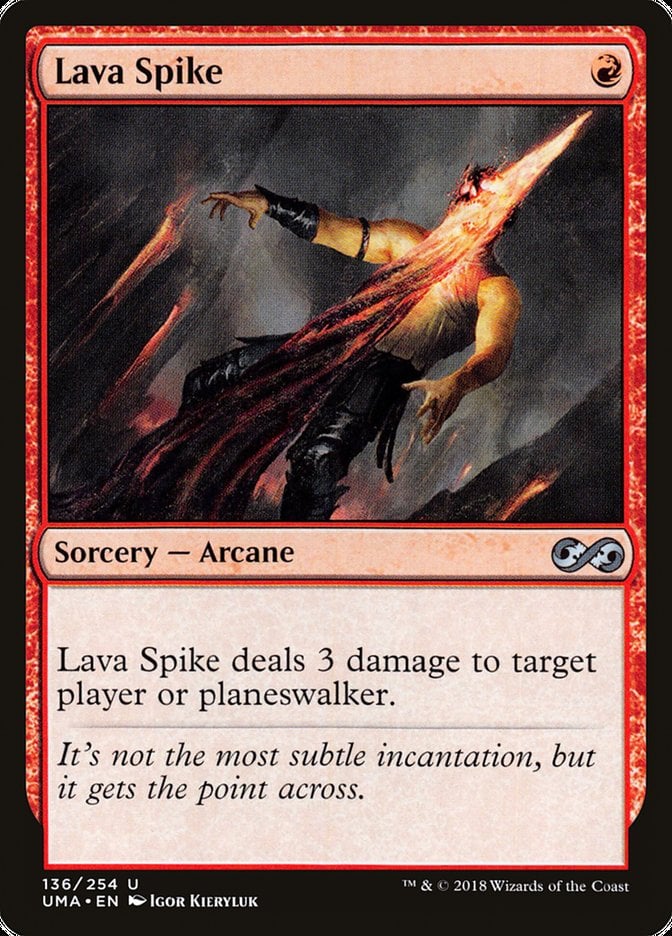

Lava Spike is one of many riffs on a more restricted Lightning Bolt. It can’t target creatures, but for burn decks that simply want to reduce the opponent’s life total, that doesn’t matter too much. Boltwave is similar but finds itself more effective in multiplayer formats like Commander where you’ve got multiple opponents to hit.
#20. Play with Fire
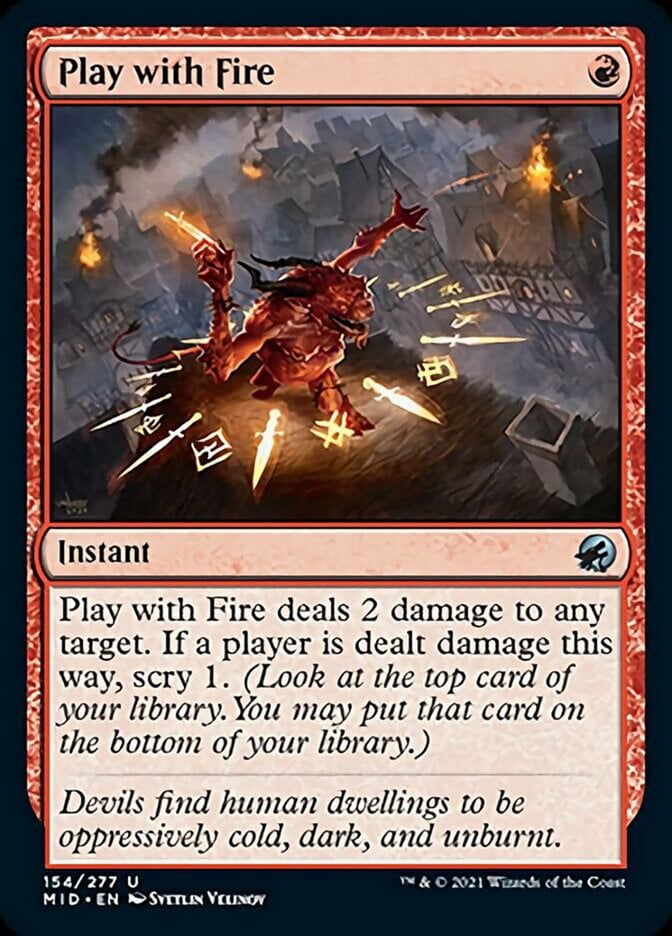
One of the more powerful variations on Shock, Play with Fire comes with a slight scry upside when targeting an opponent. Aggressive decks are worse at generating card advantage, meaning that they can end up in topdeck mode while their opponent is barely clinging to life. Play with Fire can be the difference between finding a Mountain or another burn spell on your life-or-death draw step.
#19. Lightning Strike
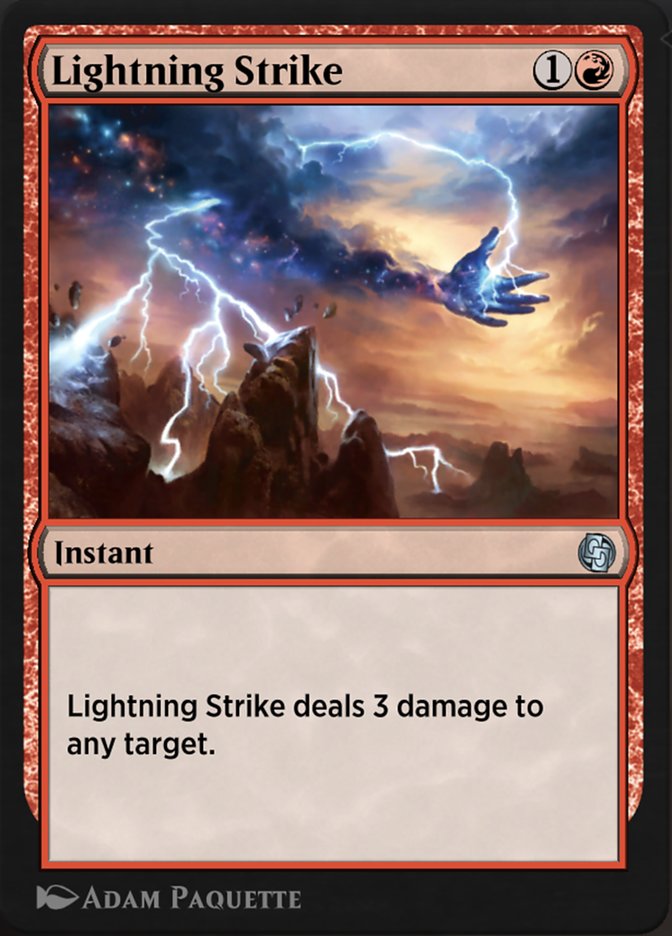
Lightning Bolt is so strong that it’s still a great card when it costs 2. Lightning Strike does everything that the original red instant can do, but less efficiently – but the original’s efficiency isn’t something cards can realistically strive for these days.
#18. Galvanic Blast
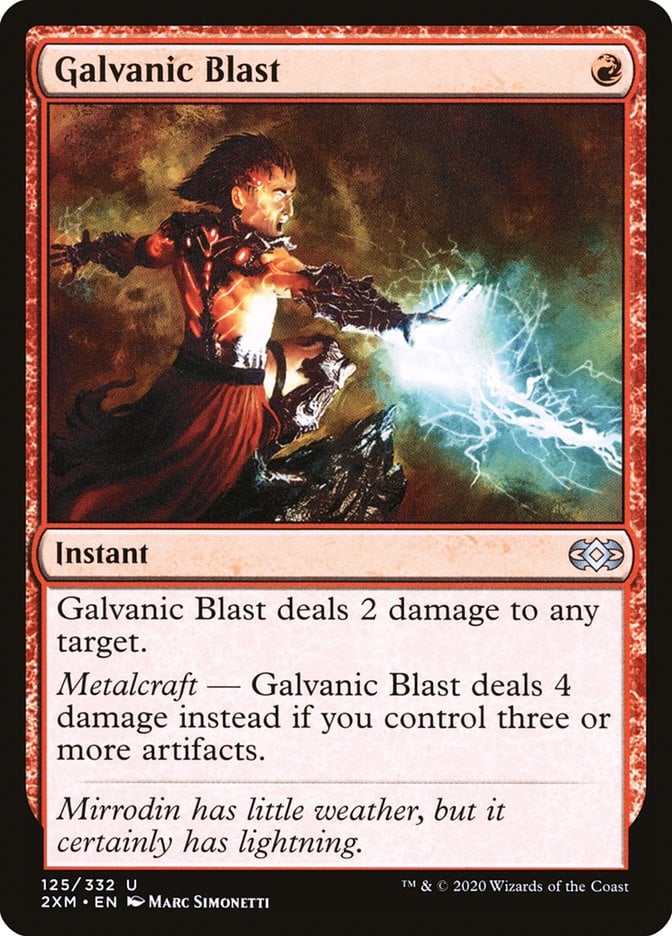
It’s hard to hate a card when the floor is Shock. Galvanic Blast has that stable floor, and a ceiling rivaling the Sistine Chapel. It becomes better than Lightning Bolt when metalcraft is active, which is a task that artifact-focused decks can accomplish with relative ease. This is most prevalent in Pauper, where powerful affinity decks leverage artifact lands and other cheap artifacts to keep this active.
#17. Prismari Command
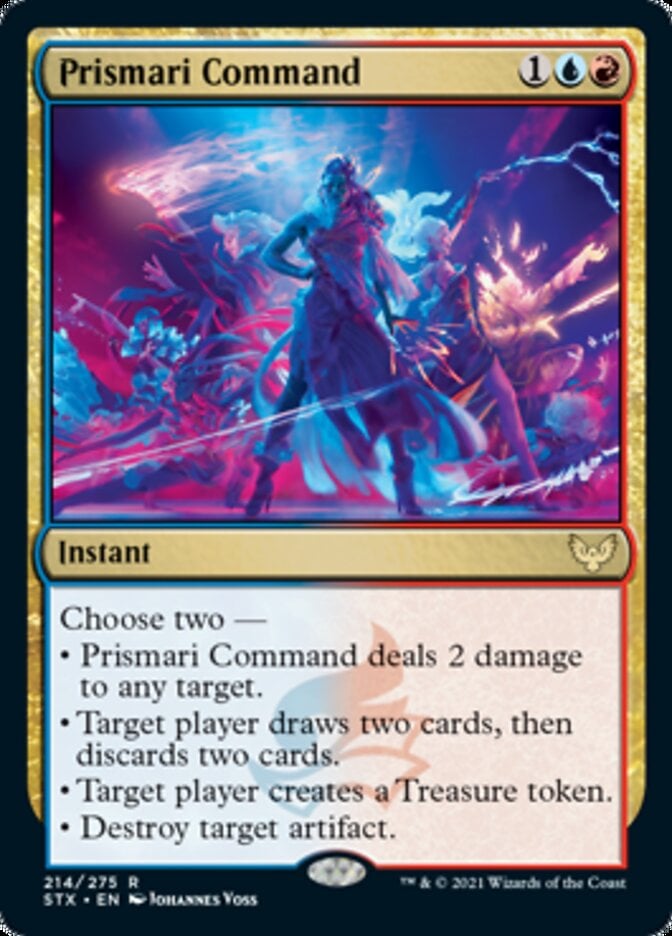
I’ve spent a lot of time harping on about flexibility, and why it’s powerful when a card can serve multiple functions under different circumstances. Prismari Command is worth making an example of in that regard. It’s perfect for controlling decks that look to remove threats and extend the game. The best time for this Izzet card is when it can remove a creature and destroy an artifact, but no matter what the board looks like, there’s always a good way to use Prismari Command.
#16. Nibelheim Aflame

Nibelheim Aflame is a sort of ignition and red board wipe that you can fire off twice. The potential to draw four cards is an incredible late game boost.
#15. Kolaghan’s Command
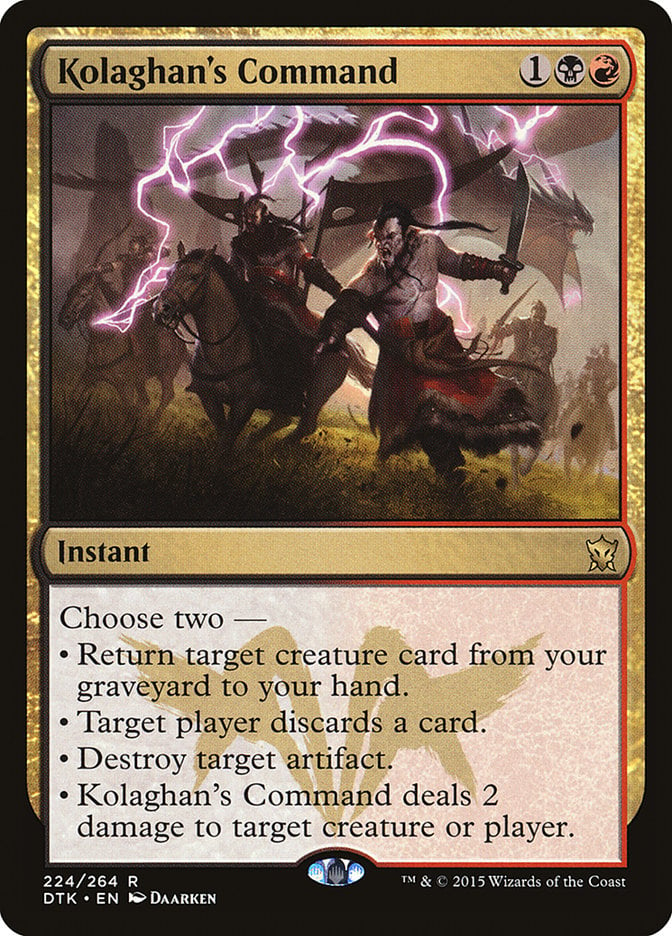
Similarly to Prismari Command, there’s hardly a bad time to draw Kolaghan's Command. Grabbing a creature from the graveyard is a type of value that the previous command can’t replicate, and this Rakdos card () uniquely aids the resiliency of a creature-based gameplan.
#14. Fiery Confluence
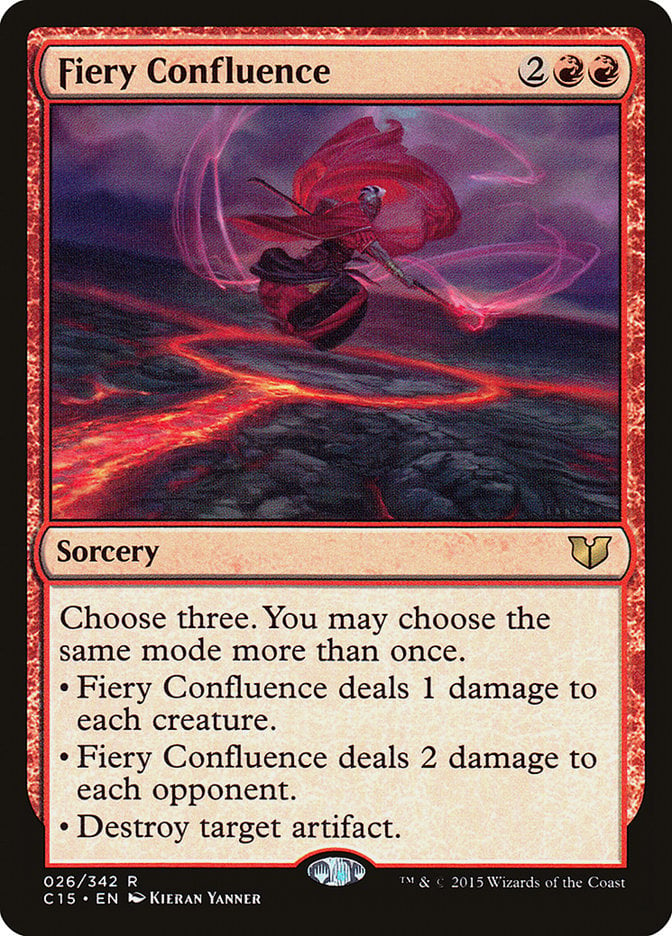
Fiery Confluence is the perfect card for a Commander burn deck. I’d recommend avoiding the “each opponent” mode unless it’ll win the game – but across three choices with the other two modes, it’s not unrealistic to remove three or four permanents with this one card. It can remove chump blockers while keeping your big creatures healthy, too.
#13. Flame of Anor
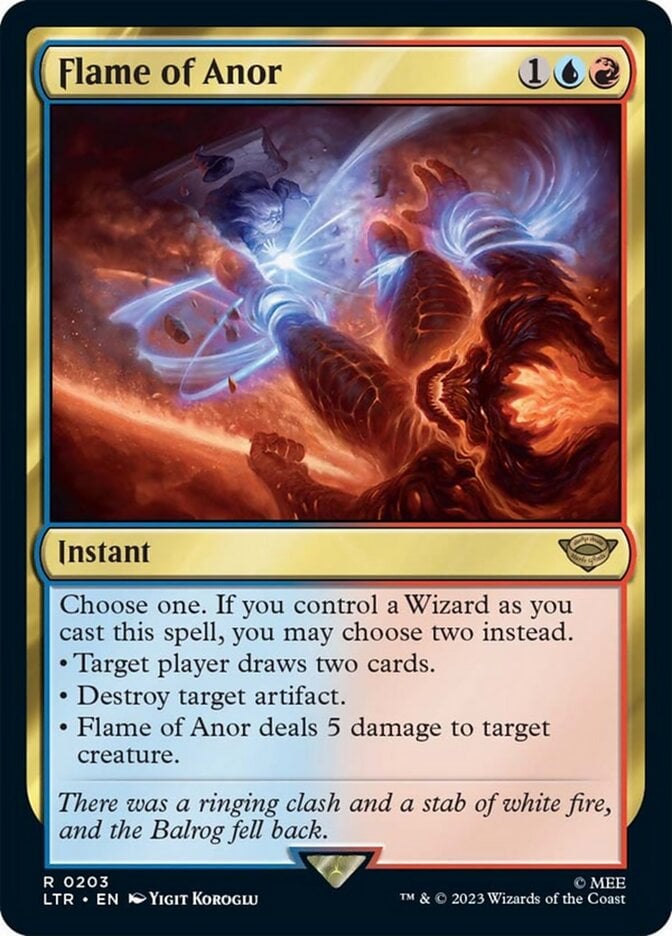
When you don’t control a wizard, Flame of Anor is unremarkable at best. When you do, it’s an absolute blowout. Destroying a creature and an artifact at the same time is pretty brutal, for sure. Flame of Anor truly feels disgusting when you use it as a removal spell and a draw 2. That’s a level of value that not many cards can claim to reach. This is by far my favorite way to flip Tamiyo, Inquisitive Student.
#12. Abrade
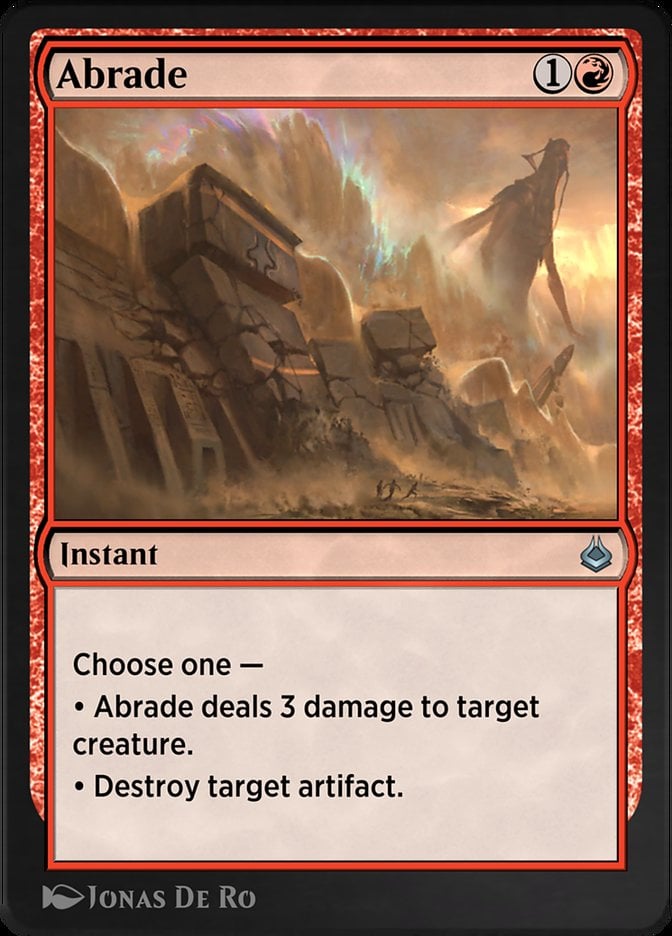
Abrade is an unassuming card whose power lies in the flexibility it offers. Any red deck can make room for a copy – there aren’t many games where you won’t have a good opportunity to fire this off, efficiently answering a creature or artifact.
#11. Will of the Mardu

Will of the Mardu is really aggressively costed for the potential board swing this represents. You should feel no shame casting this without your commander, but with your general, you can match in number the biggest army on the board, and snipe a big creature too.
#10. Rift Bolt
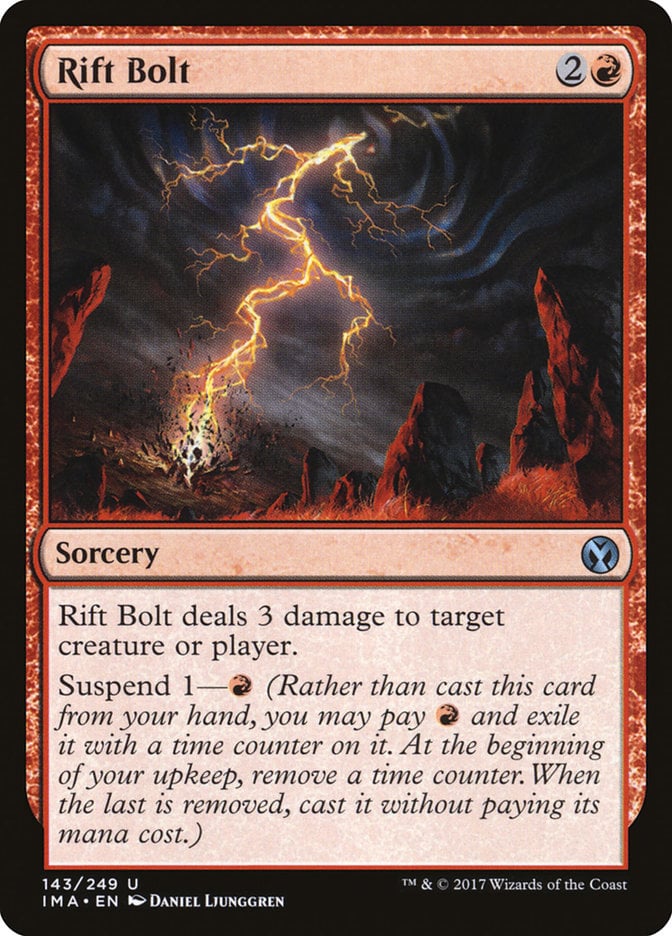
In dedicated burn decks, Rift Bolt doesn’t need to be everything that Lightning Bolt is – all that matters is that it sends 3 damage at their face for 1 mana. In that way, Rift Bolt is much-needed redundancy for decks looking to burn the opponent directly.
#9. Unholy Heat
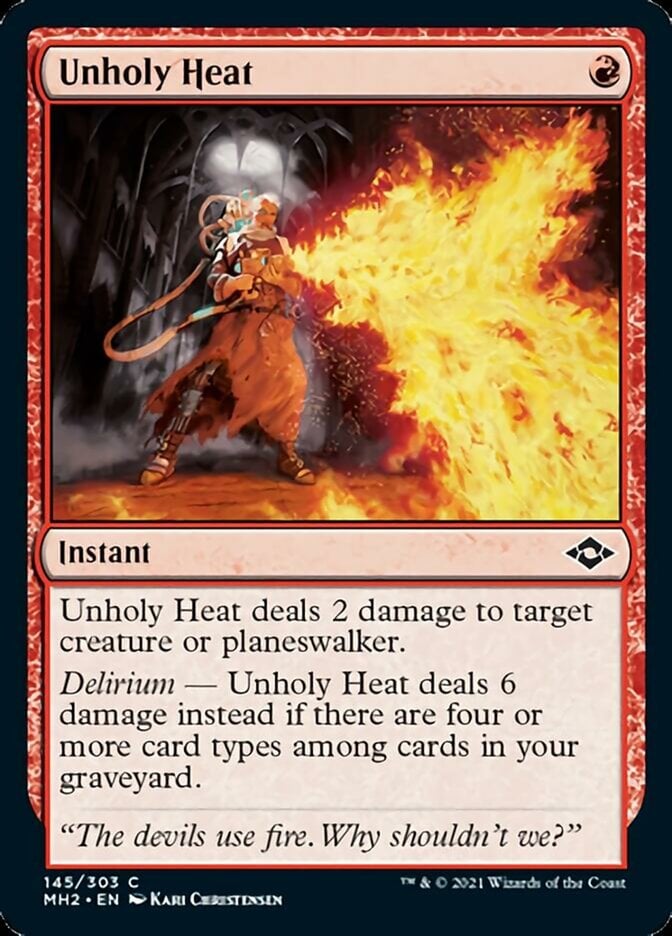
In formats like Modern, delirium isn’t particularly difficult to enable. Fetch lands, surveil lands, and plenty of efficient instants and sorceries turn delirium on quickly. Unholy Heat starts as a worse Shock but quickly becomes one of the most cost-efficient removal spells in Magic. Consider that in the early game, before enabling delirium, many creatures worth removing appear with 2 or less toughness anyway.
#8. Blasphemous Act
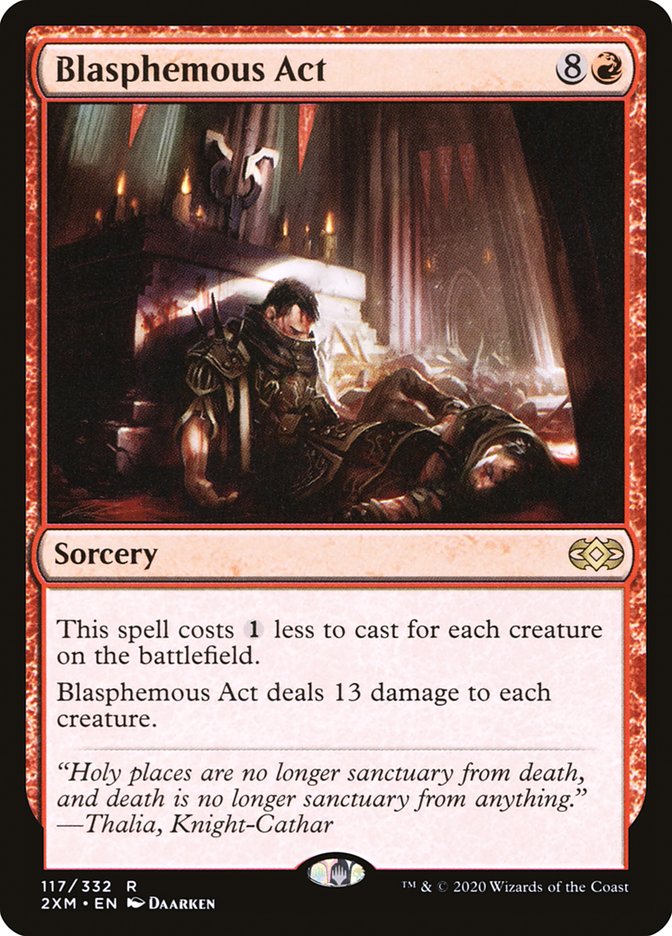
Blasphemous Act is an iconic red board wipe. In Commander, where four players are casting spells and putting creatures on the board, this red sorcery is notorious for getting ridiculously cheap. The downside is a card that’s hard to use early in the game, but that’s a minor drawback compared to the upside on offer.
#7. Fireblast
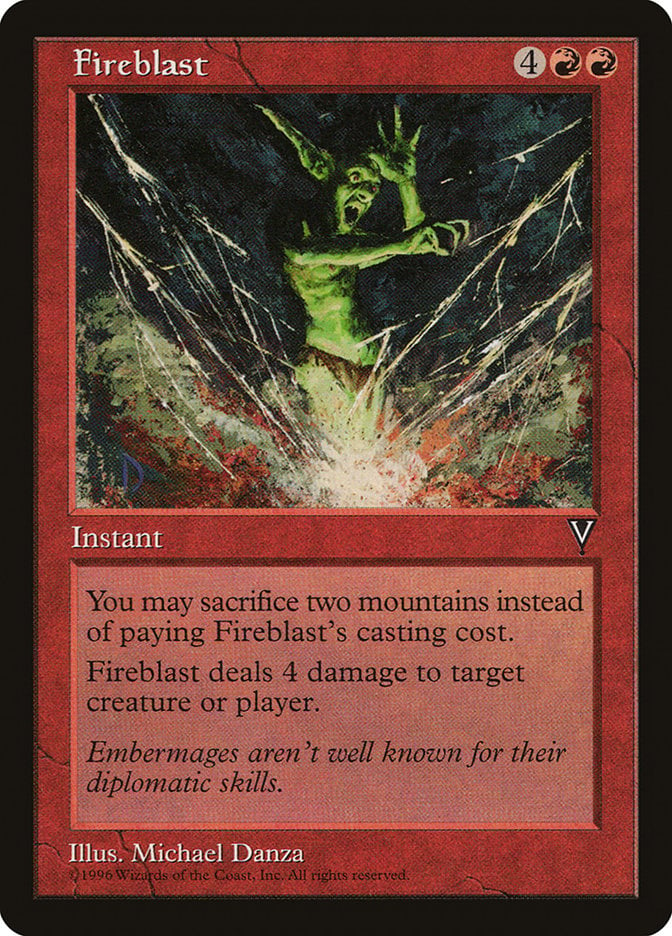
One of my favorite cards in Vintage Cube, Fireblast is a free burn spell. You can spend all your mana on burn spells at the opponent’s face and use this to finish the job even though you’re tapped out.
#6. Grapeshot
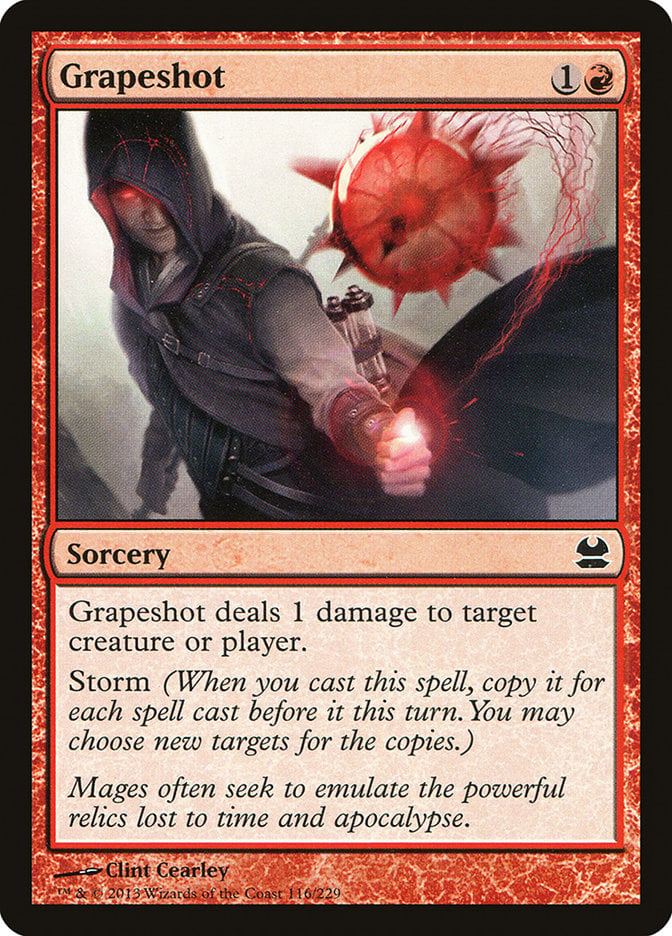
In the realm of burn spells, Grapeshot serves a rather unique purpose: combo finisher. If you assemble a loop that lets you cast an absurd number of spells in a turn, this sorcery with storm finishes is one of red’s best win conditions, converting all that work into damage.
#5. Lightning Helix
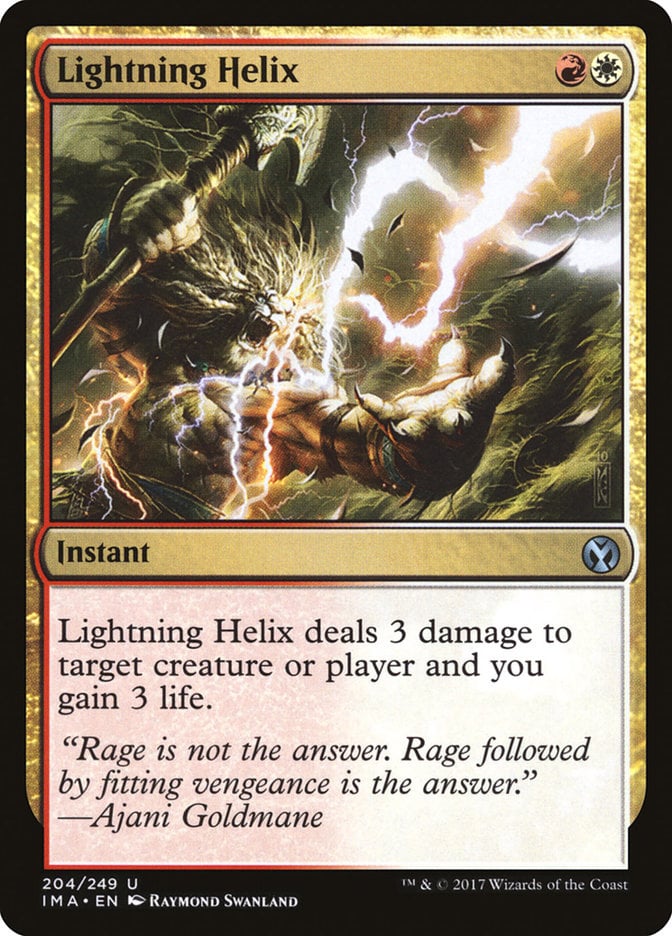
Ah, Lightning Bolt and Healing Salve stapled together. Lightning Helix is yet another reliably useful Boros card to draw. Against aggro decks, the lifegain is plenty relevant. This helps you to stabilize as you remove a threat – or aim it at their face, where it results in a swing of 6 life points, keeping you ahead in the damage race.
#4. Chain Lightning
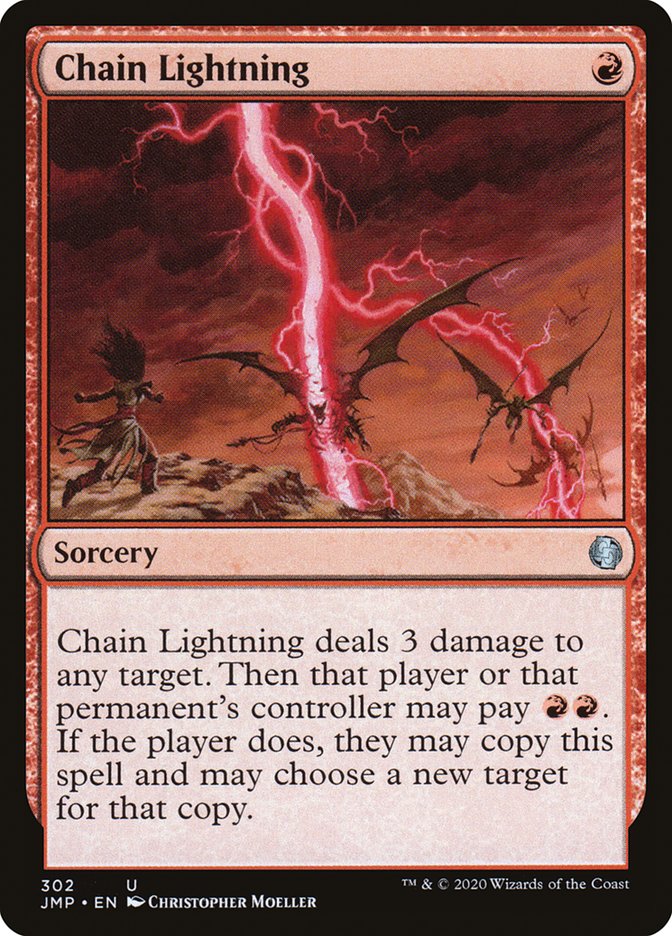
If the opponent is tapped out or simply not playing red, Chain Lightning is just a sorcery speed Lightning Bolt. Outside of those circumstances, it can get sent right back at you. Generally, it’s trivially easy to make sure this won’t backfire, and even if it does, they’re now spending 2 mana on your turn for a spell that they just watched you cast for 1 mana.
#3. Galvanic Discharge

Sure, Galvanic Discharge seems powerful, but it always helps when evaluating cards like this to consider what the worst-case scenario looks like… wait, Lightning Bolt?!
The only thing stopping this from being better than Bolt is that it can’t target opponents directly. Lightning Bolt would still be one of red’s best spells with that restriction, and this card is better. In Modern, this is the removal spell of choice for various energy-based strategies, even sometimes replacing Bolt. Generate an abundance of energy counters with creatures like Guide of Souls and Amped Raptor to turn this 1-mana spell into 5 or more damage.
In Commander, there are plenty of ways to generate unbelievable amounts of energy – get something like a Sphinx of the Revelation going and Galvanic Discharge practically removes any creature by the late game.
#2. Boros Charm
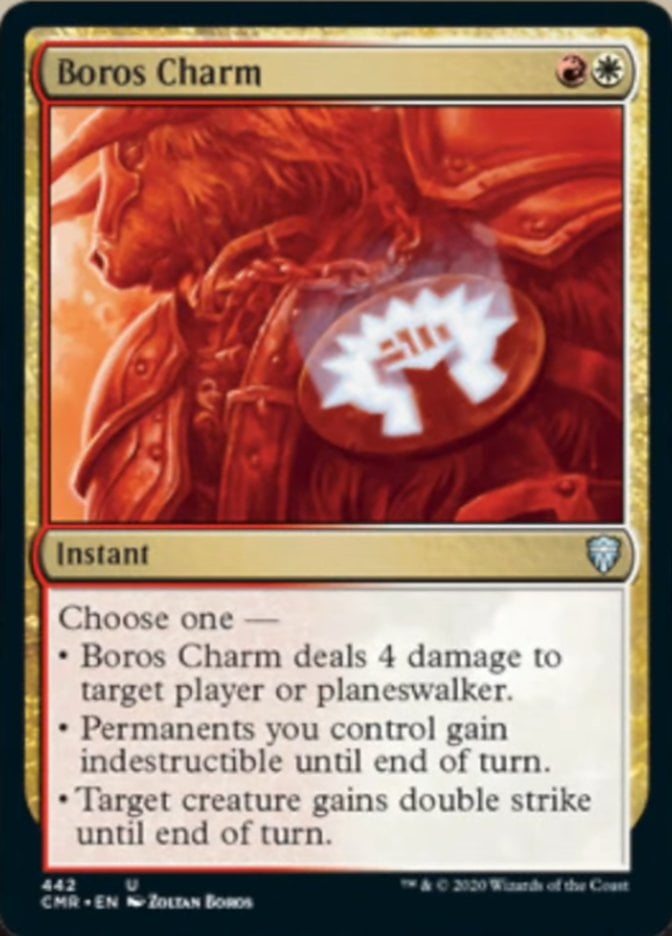
Four damage to the face makes for a solid burn spell – but that’s just icing on the cake that is Boros Charm. It can also protect your team from a board wipe or grant double strike to a creature, making this a card that just does everything an aggressive instant could want to do. There might not be another card in history that has this level of versatility with multiple modes that can outright win you the game.
#1. Lightning Bolt
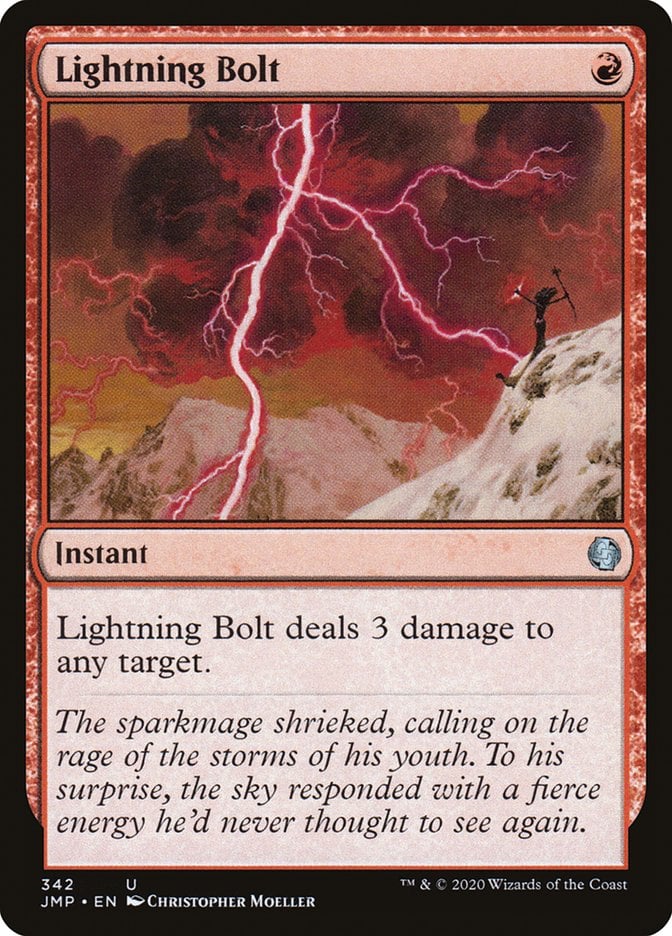
Lightning Bolt is undeniably the most iconic burn spell in Magic’s history and stands strong as a pillar of red’s identity. As far as efficiency goes, 3 damage for 1 mana is probably too much, considering Wizards of the Coast has kept it far away from Standard for a number of years. It’s just too powerful not to play in basically any red deck – interactive decks use it as removal and aggressive decks use it to burn the opponent directly or get rid of a blocker. There’s just no way around it: Lightning Bolt is the best burn spell, and it isn’t close.
Best Burn Spell Payoffs
Burn spells are a versatile bunch. Many can be proactive or reactive based on your needs – Lightning Helix can be sent at the opponent’s face, or it can be removal for a pesky planeswalker or creature. Decks with proactive, aggressive strategies primarily use noncombat damage to target the opponent. Decks that are more controlling and reactive can use burn as removal. Hence, there are different ways to make burn pay off depending on what your deck wants to do.
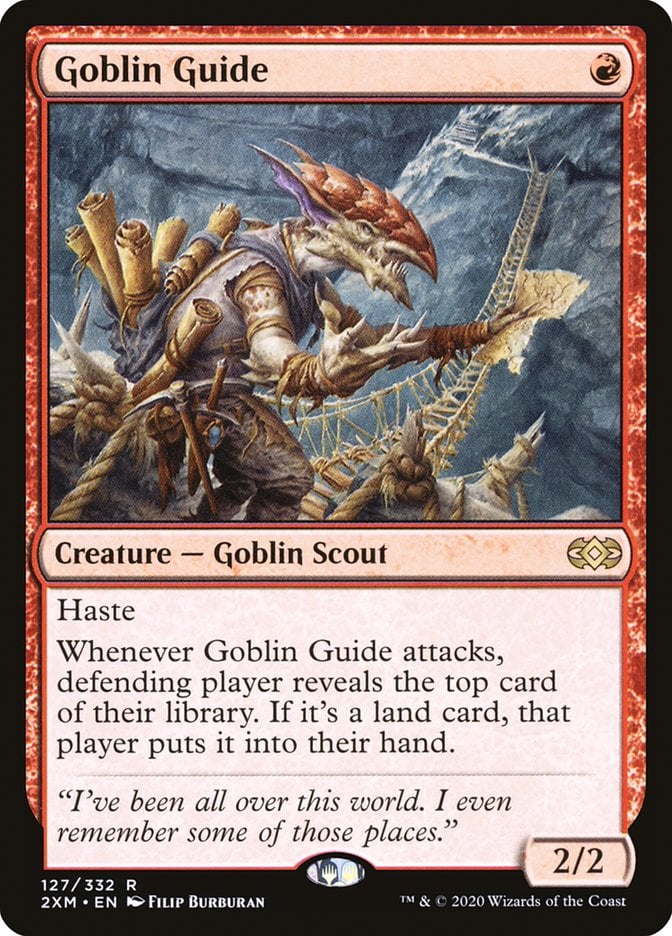
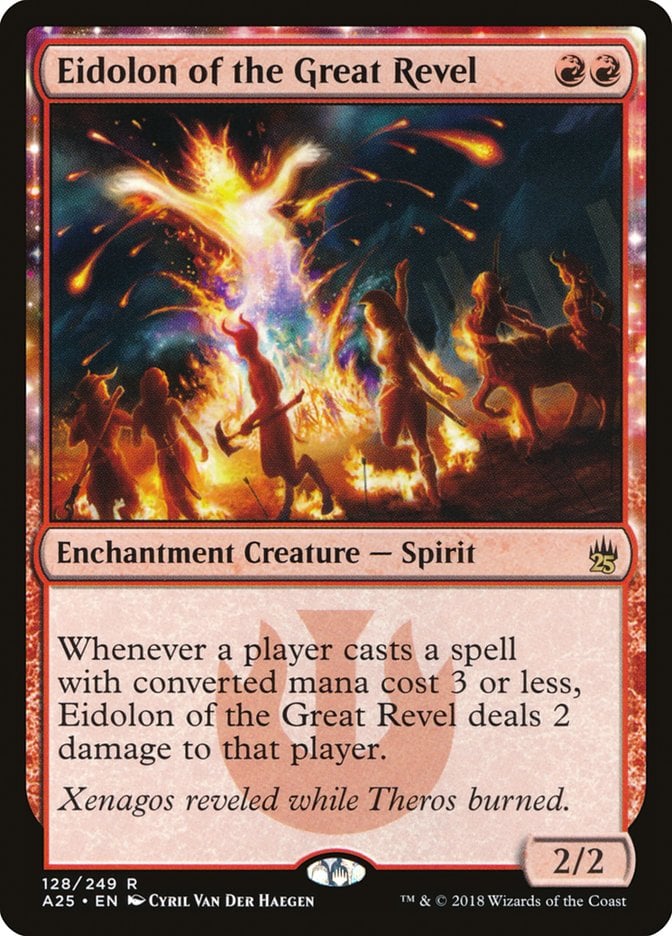
To many a Magic player, “burn” as a term more closely relates to the archetype of deck than specific types of card. Burn as a strategy uses the cards that can most efficiently bring an opponent’s life total from 20 to 0 in as little time as possible. They’ll use creatures if they’re efficient damage-dealers, like Goblin Guide and Eidolon of the Great Revel. It’s fallen out of favor in most of the formats it once called home – but in Standard as of Foundations, Lightning Helix, Boltwave, Boros Charm, and more are bringing the archetype a resurgence, with the help of another fan-favorite burn payoff….
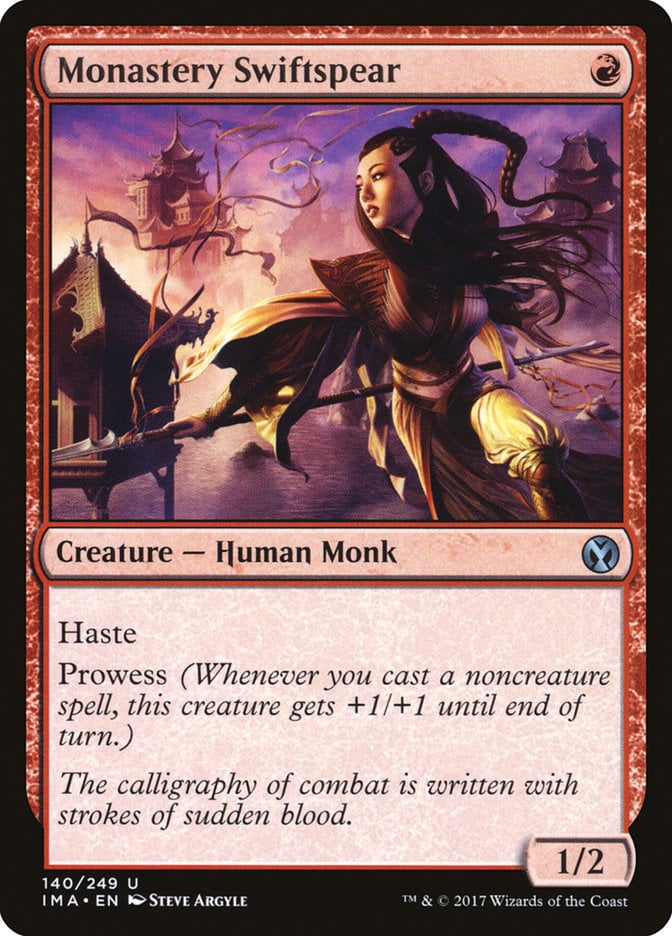
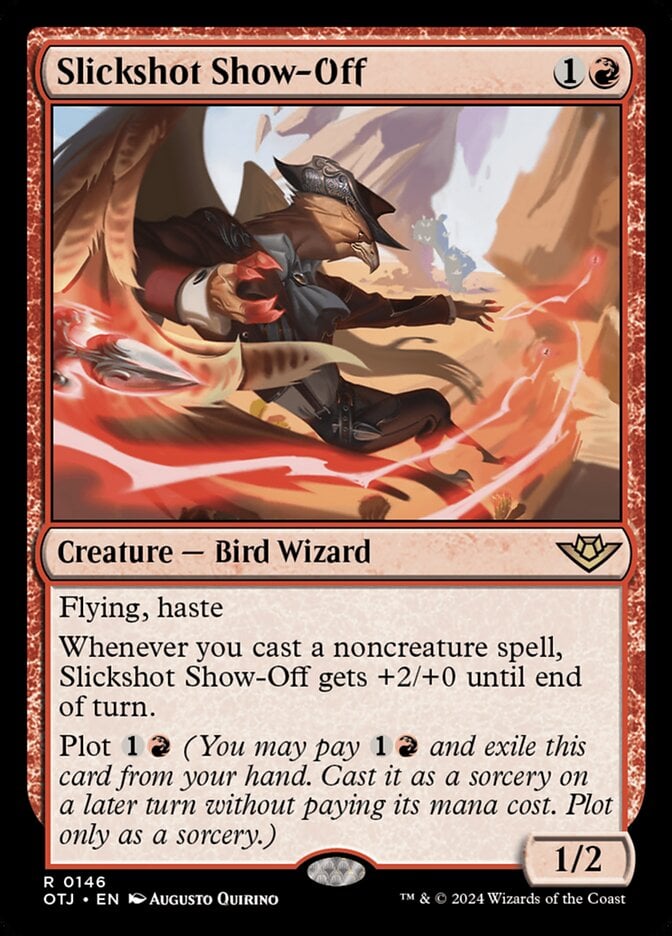

Creatures with prowess also pair nicely with burn spells. They’re instants and sorceries, so burn spells trigger prowess, resulting in even more damage. This concept has been the backbone of a ton of aggro strategies for years. In Standard and Pioneer, Monastery Swiftspear, Slickshot Show-Off, Emberheart Challenger, and others are paired with burn spells and auras to reduce the opponent’s life total quickly.


Bloomburrow, gave prowess decks a midrange twist with awesome cards like Kitsa, Otterball Elite and Ral, Crackling Wit. There’s even Stormchaser's Talent, which is essentially a 1-drop prowess creature that also triggers prowess itself.
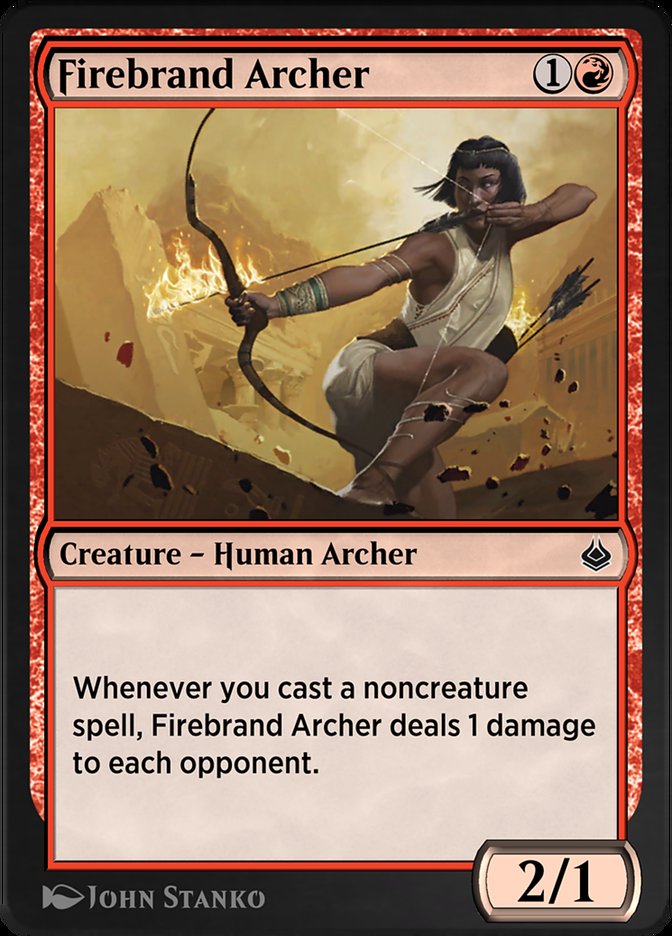
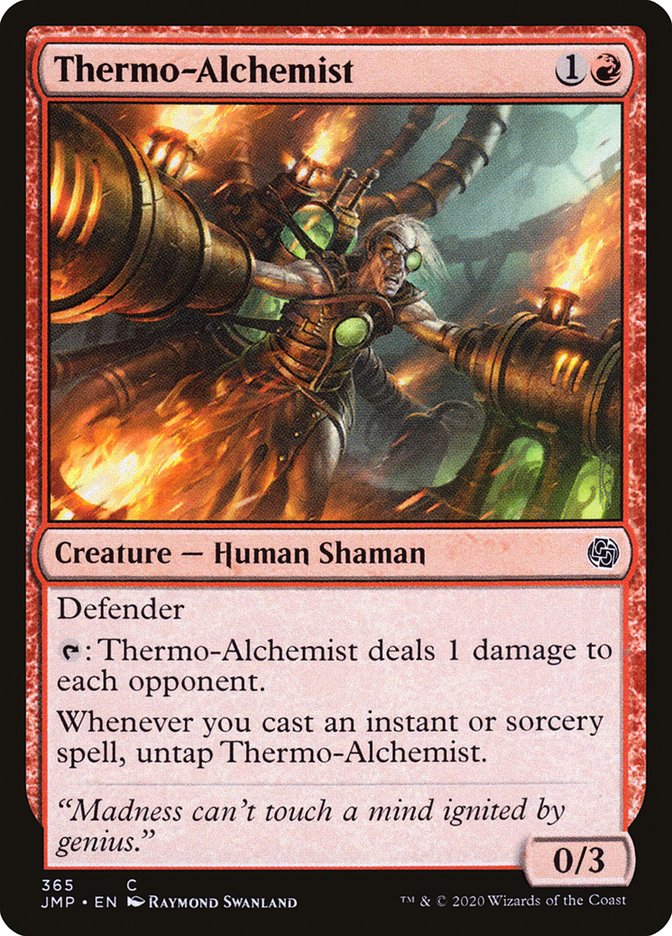


There’s also cards like Firebrand Archer and Thermo-Alchemist that similarly convert burn spells into more noncombat damage. Kuja, Genome Sorcerer/Trance Kuja, Fate Defied stands in to represent any effect that results in a black wizard and contributes extra damage with your noncreature spells.
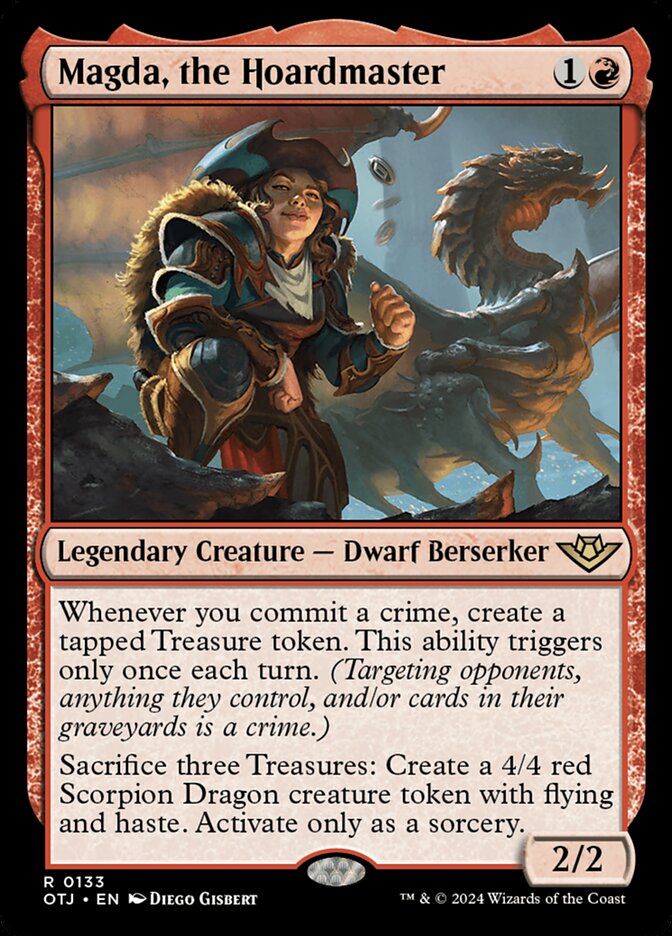
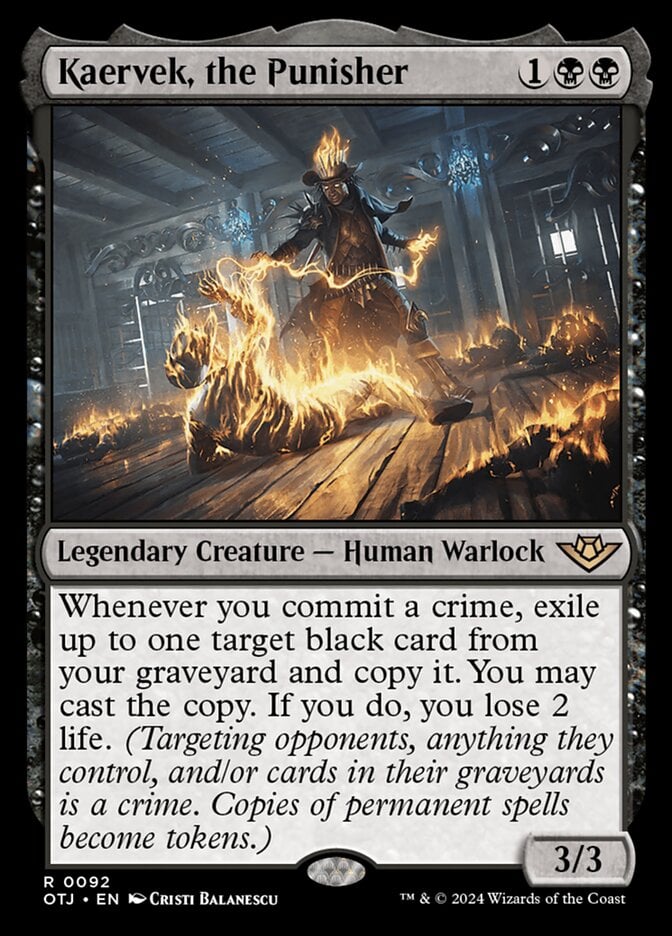
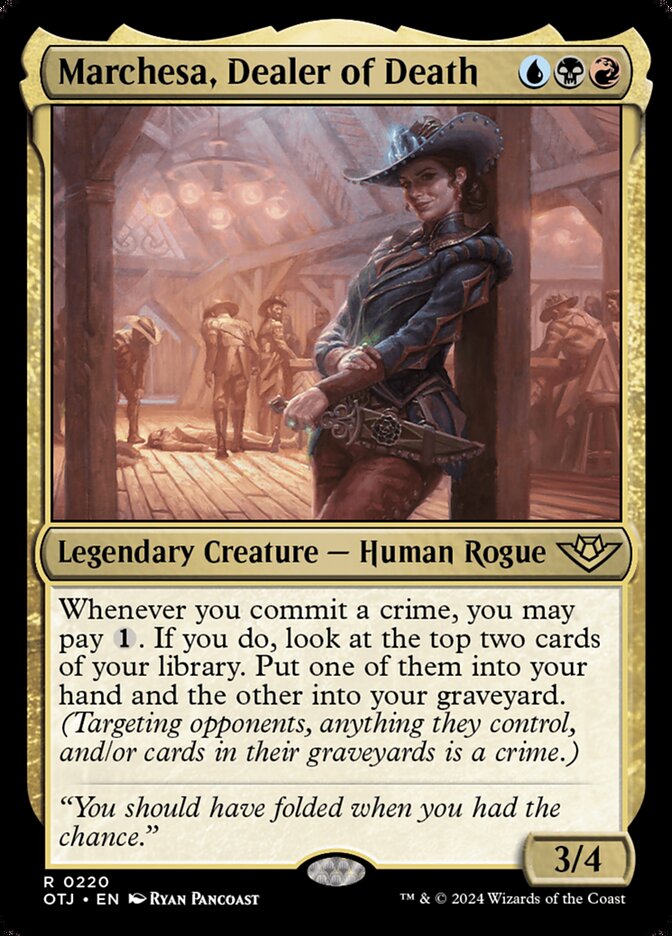
Many burn spells target either an opponent or one of their permanents. That means that those burn spells commit crimes. Some of the stronger crime-related payoffs are Magda, the Hoardmaster, Kaervek, the Punisher, and Marchesa, Dealer of Death. Marchesa works wonders with burn spells, since they’re often able to target opponents even if they have an empty board to keep the cards flowing.
Let’s face it: Burn as your primary gameplan is a difficult sell in Commander, where you have 120 opposing life points rather than just 20. Burn being a beloved strategy that’s been around for a long time, Wizards of the Coast has printed some burn commanders to helm your deck and bring burn up to speed.
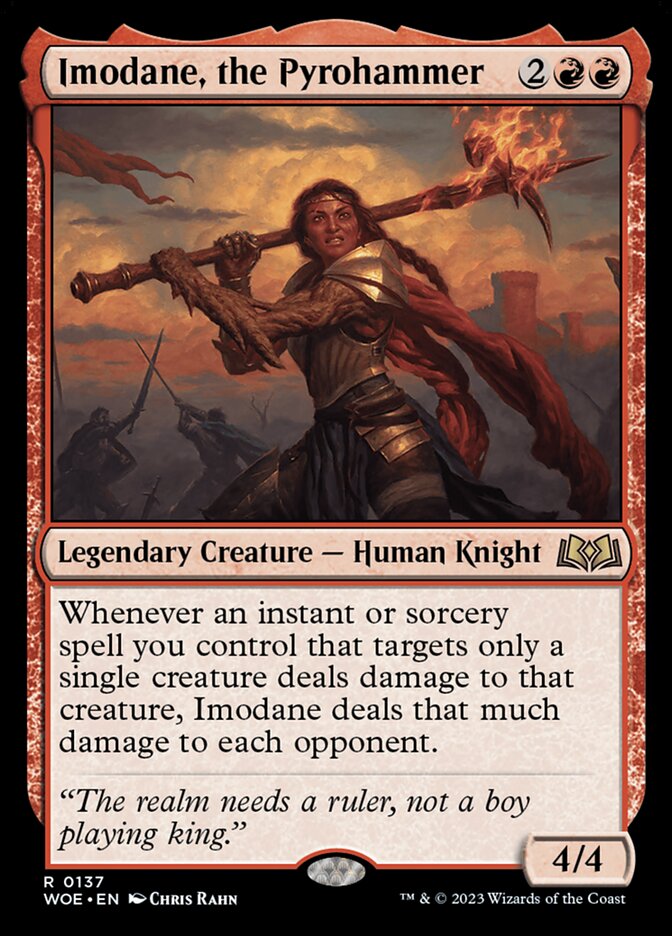
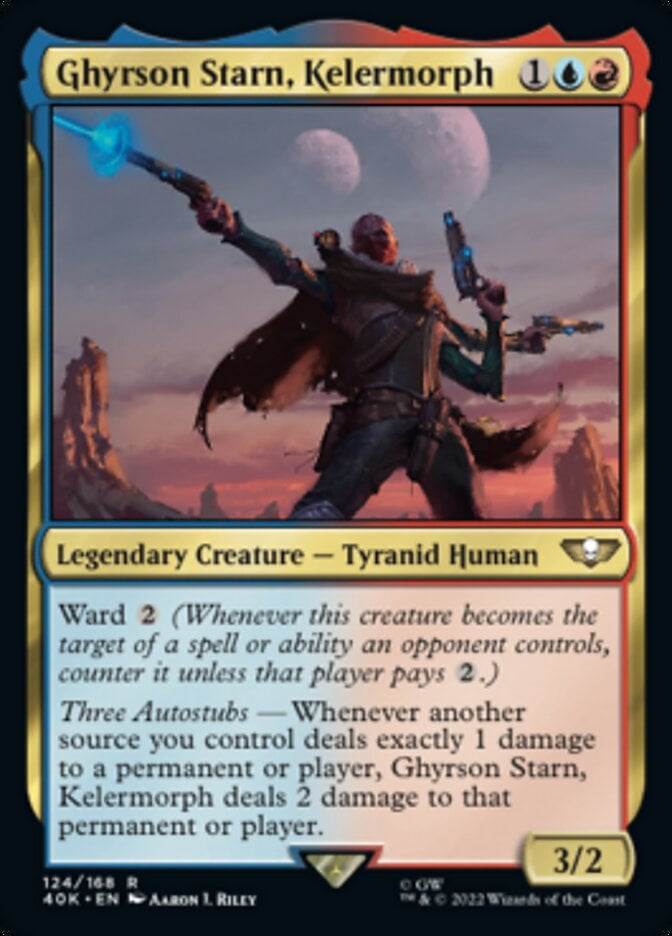
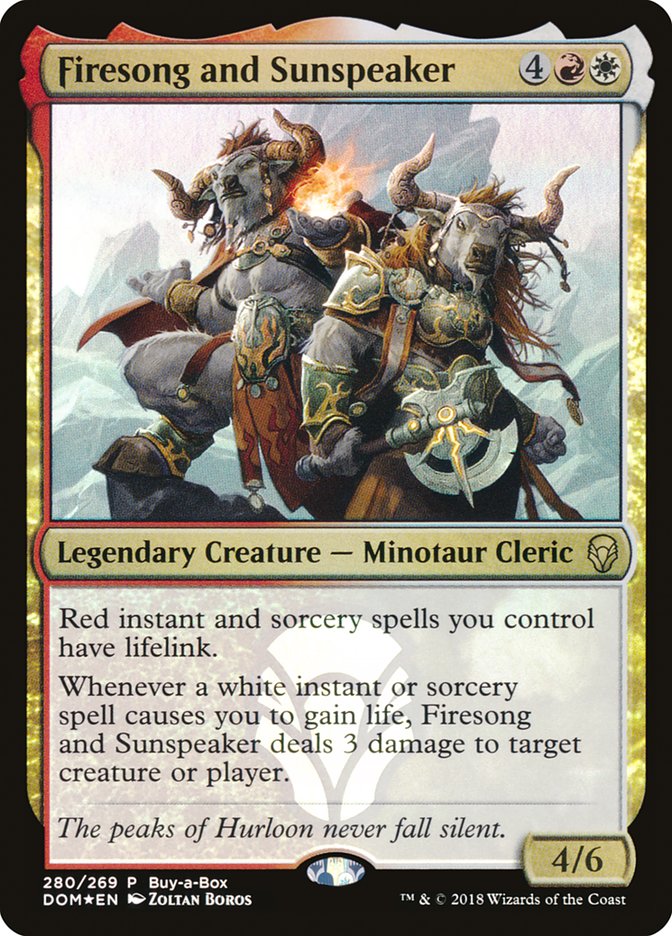
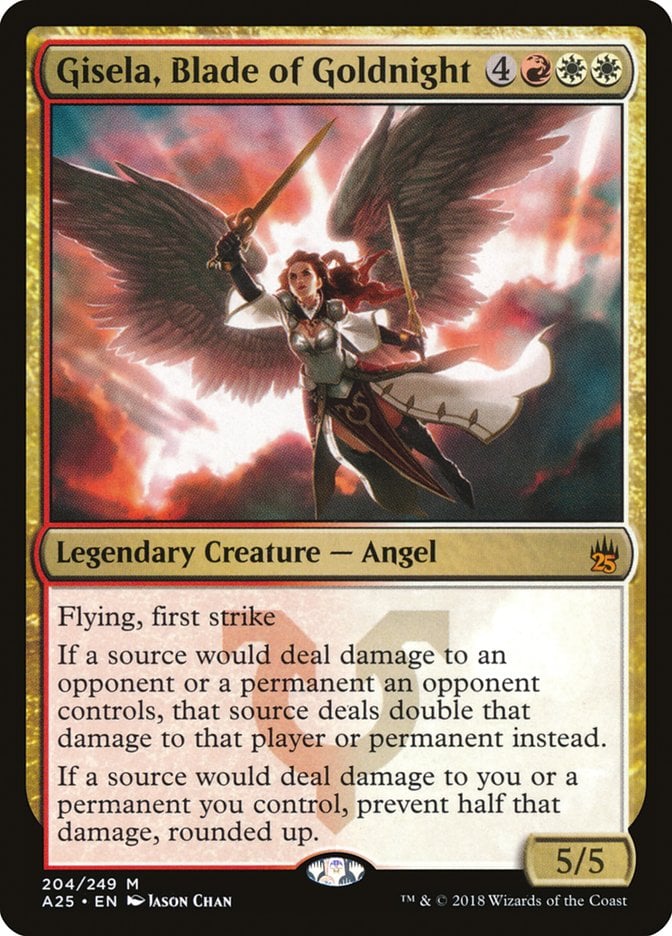
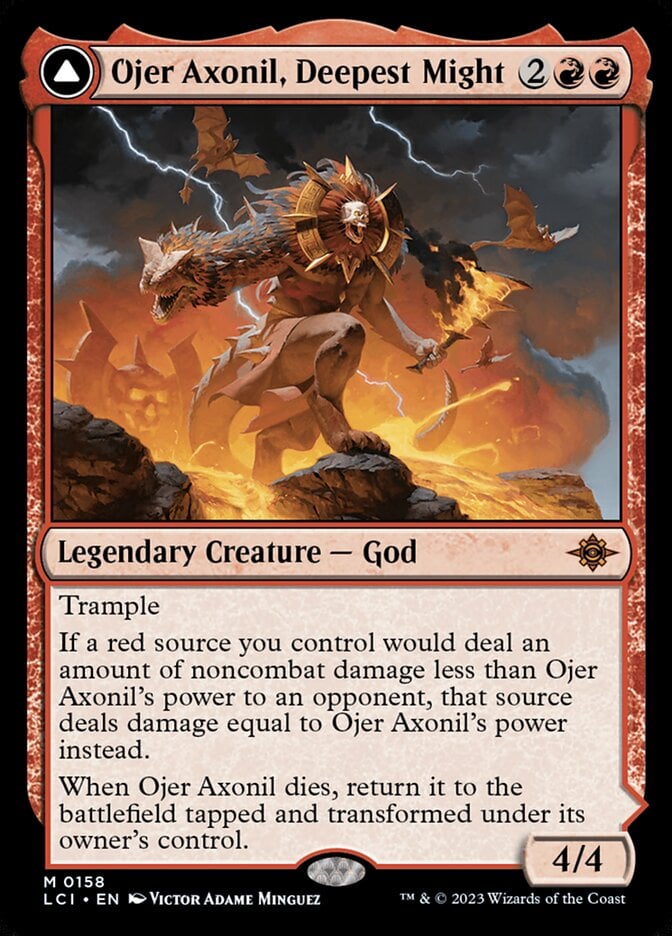
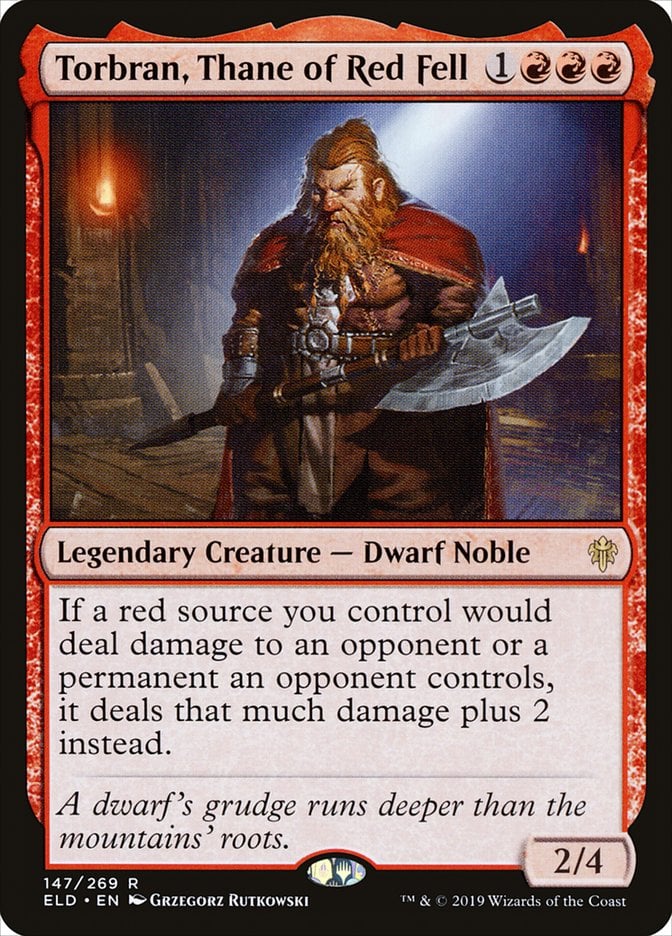
Imodane, the Pyrohammer turns burn-as-removal into more noncombat damage pointed at each opponent. Ghyrson Starn, Kelermorph and Ob Nixilis, the Adversary turn small pings into extra damage and card advantage, respectively. A fan favorite is Firesong and Sunspeaker, which gives your instants and sorceries lifelink. Gisela, Blade of Goldnight, Ojer Axonil, Deepest Might, and Torbran, Thane of Red Fell unconditionally increase the damage of your burn spells, as do other damage doublers and damage increasers.
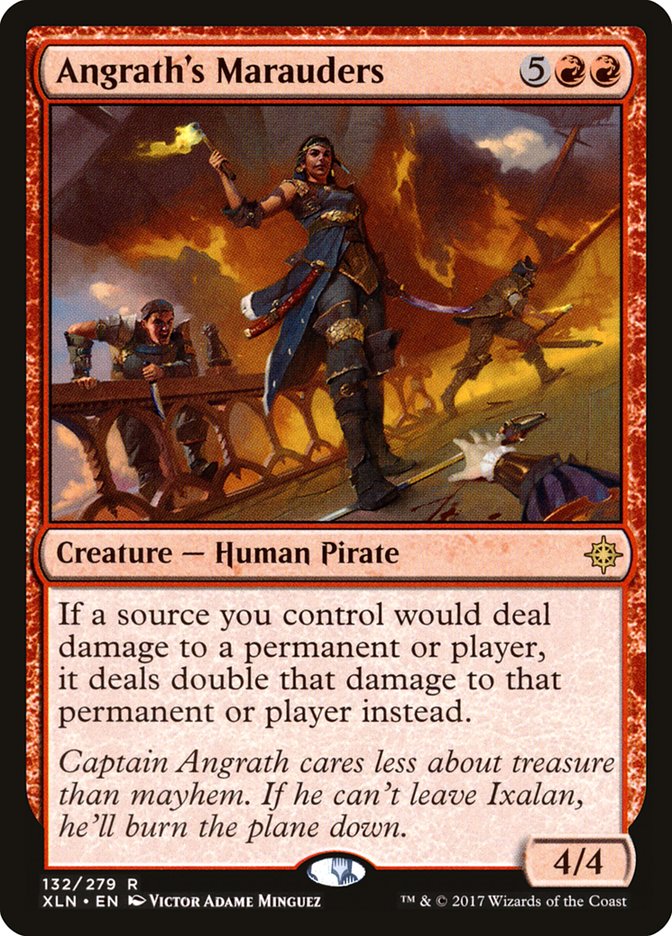

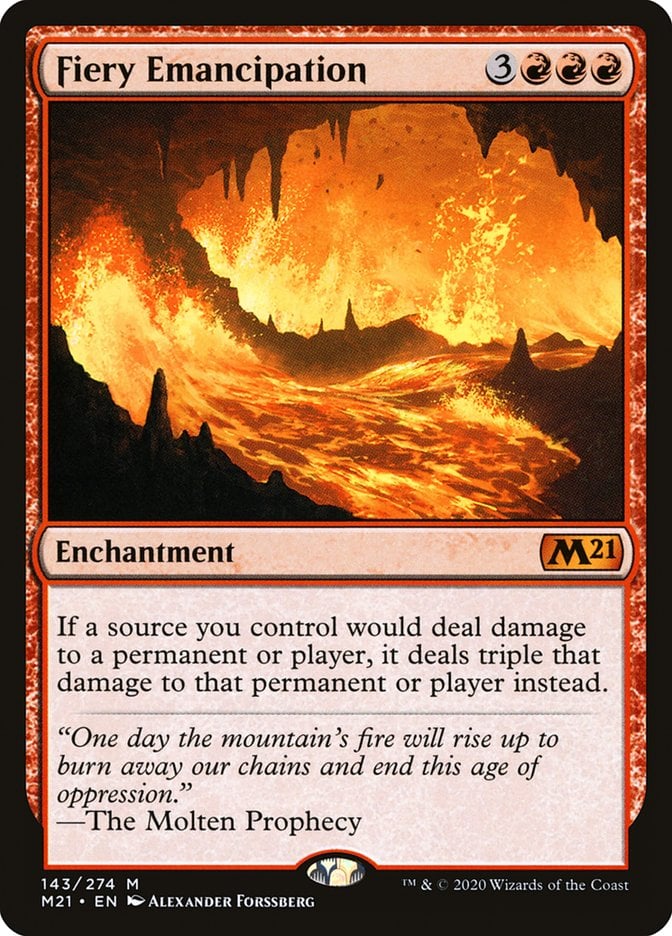
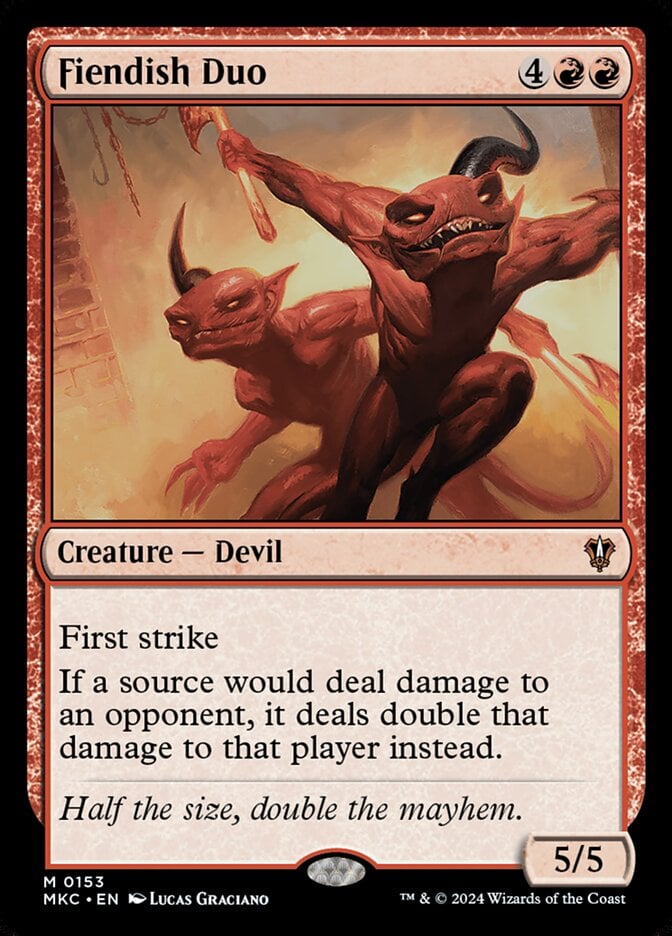
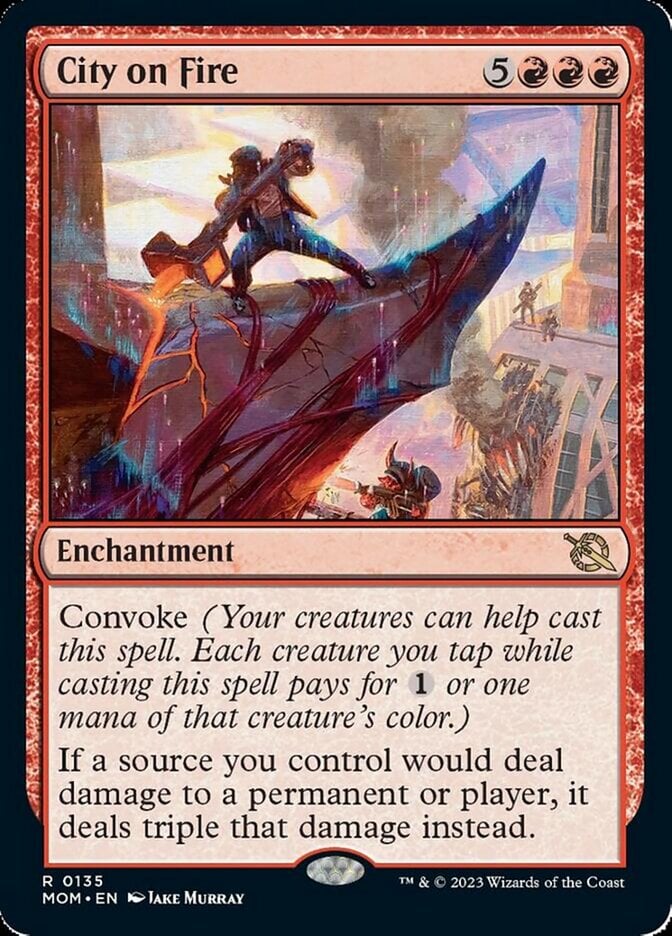

Here are a handful of those damage doublers, be mindful of any that offer increases to opponent’s sources of damage as well: Angrath's Marauders, Twinflame Tyrant, Fiery Emancipation, Fiendish Duo, City on Fire, and Fated Firepower.
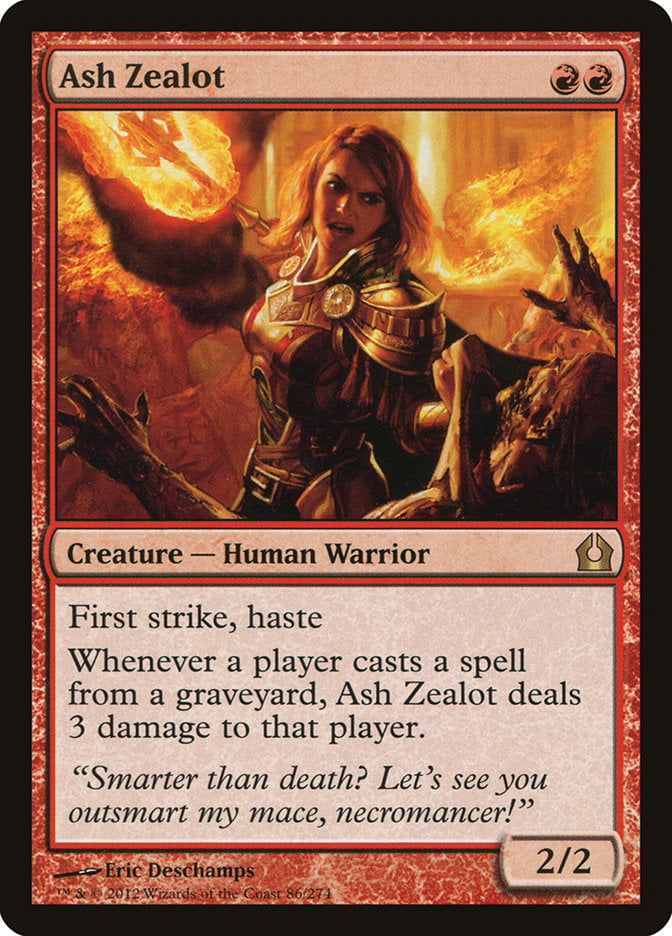
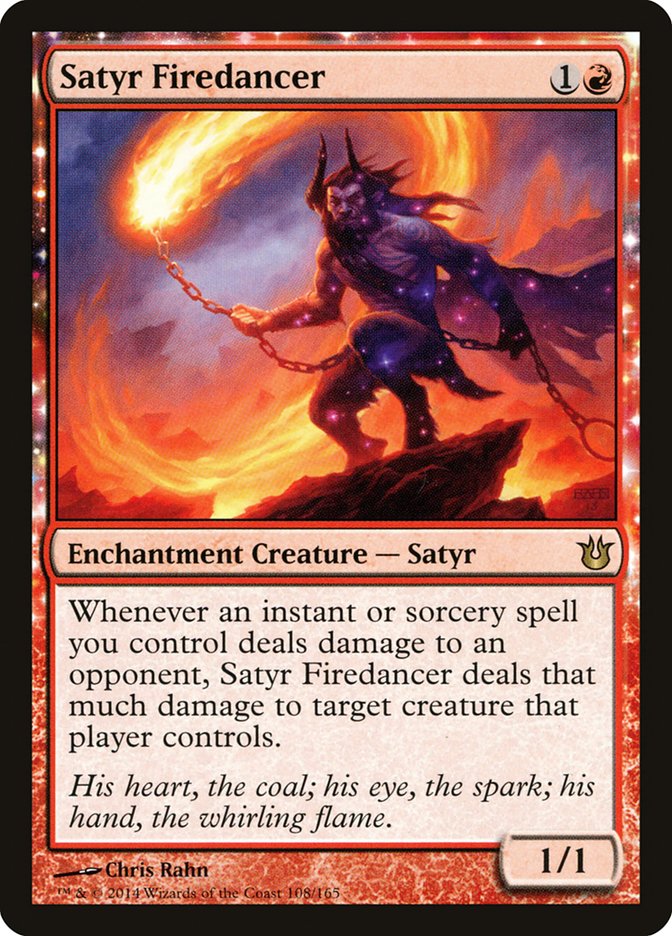
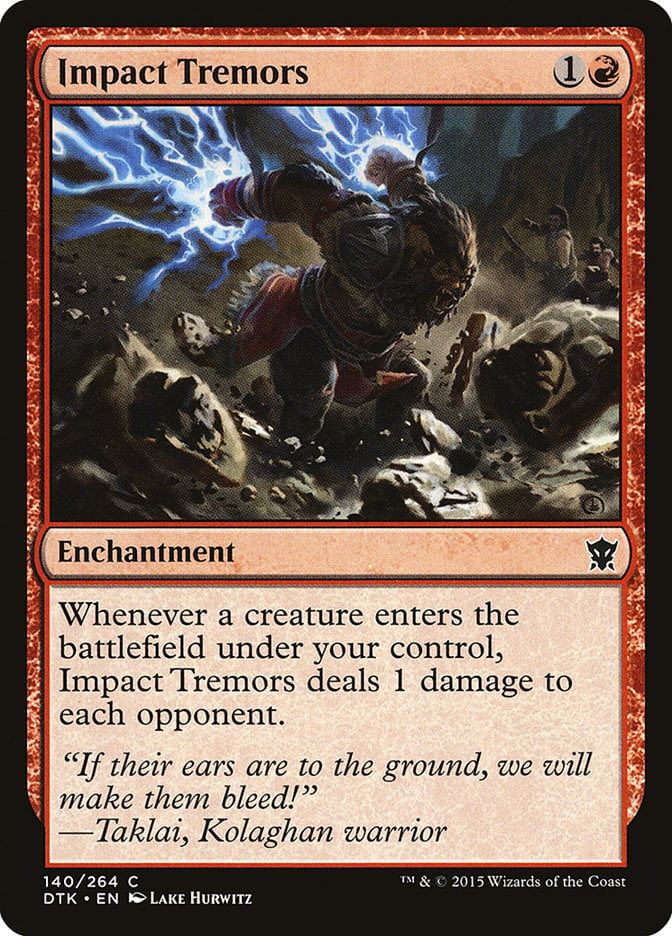
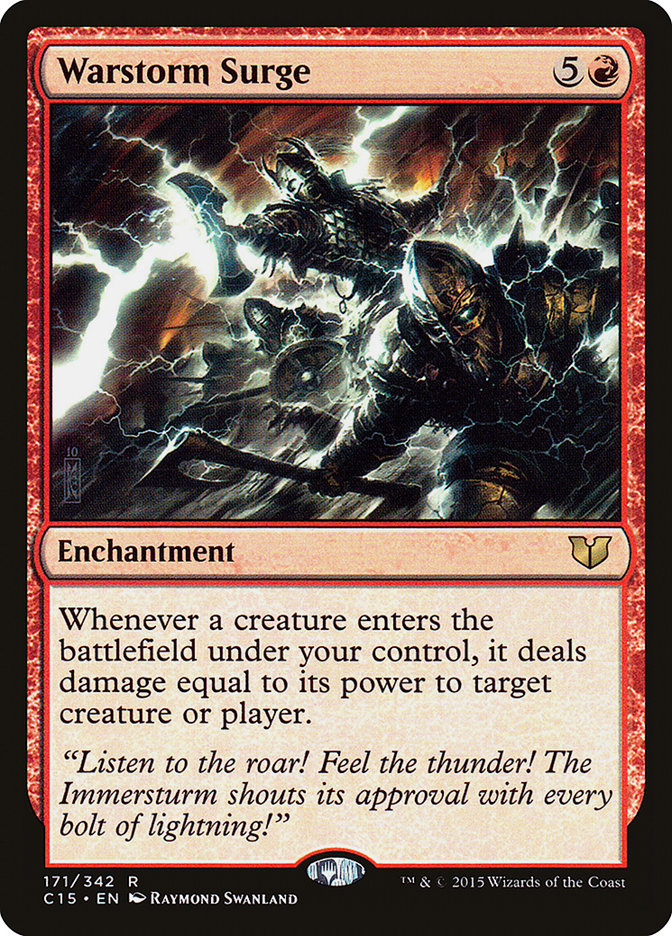
Other types of cards that can contribute to a burn strategy are permanents that deal noncombat damage as part of their value. This includes some hate cards like Ash Zealot and Eidolon of the Great Revel. Satyr Firedancer adds creature-targeted burn when your instants and sorceries deal noncombat damage to opponents. There’s also cards like Impact Tremors and the super-charged version Warstorm Surge, whose damage chips away at opponents while you play the game as normal.
Fiery Finale
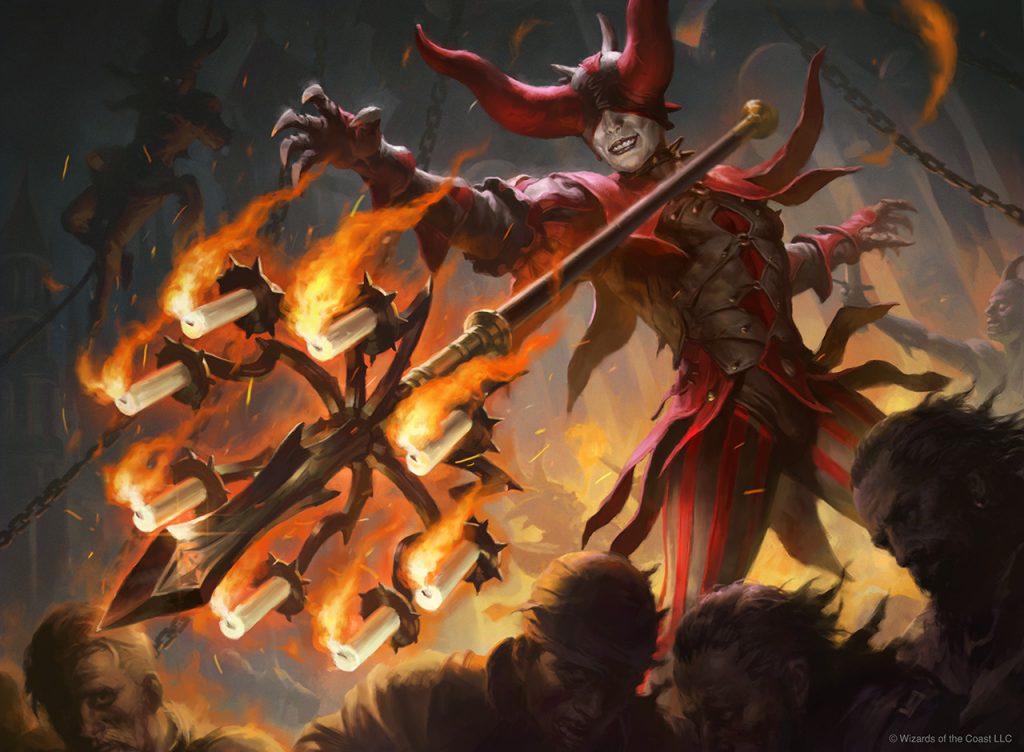
Skewer the Critics | Illustration by Heonhwa Choe
If you made it this far, you’re a red mage through-and-through. Now that you’re up to speed on the most powerful and iconic burn spells in Magic’s history, you can start declaring targets with the best of them. Reduce opponent’s life totals and turn their creatures into smoke and ash with noncombat damage.
What’s your favorite burn spell to cast? Will they ever decide to truly power creep Lightning Bolt? Have you felt the wrath of a burn player, and could you overcome that flaming fury? Let us know in the comments or over on the Draftsim discord.
Thanks for reading, and until next time, stay safe and keep yourself warm!
Follow Draftsim for awesome articles and set updates:









Add Comment