
Last updated on August 10, 2026

Black Lotus | Illustration by Steven Belledin
Magic formats exist on a wide spectrum of competitiveness. On the more casual side, you have things like Sealed pre-release events and maybe Commander if you’re lucky enough to still have a casual pod. In the middle of the pack, you have things like Standarad or cEDH which are slightly more competitive but are likely the more beginner-friendly competitive options. Then, there are the highly competitive formats where players need to drop four or more figures just to keep up with the meta.
Enter Vintage.
Vintage is an Eternal format with a massive card pool. This means there are plenty of different ways to break the game. That means there are many ways you can build your deck, and coming up with your own builds can be intimidating. But although Vintage can be intimidating and expensive, it’s also a great format for players who like to see the full potential of a Magic deck.
If you enjoy fast-paced, high-level gameplay, or you just like to see some crazy broken combos go off, Vintage may be the format for you. Let’s take an in-depth look at how the format works, some of its decks, and how you can start playing as soon as possible.
What Is Vintage?
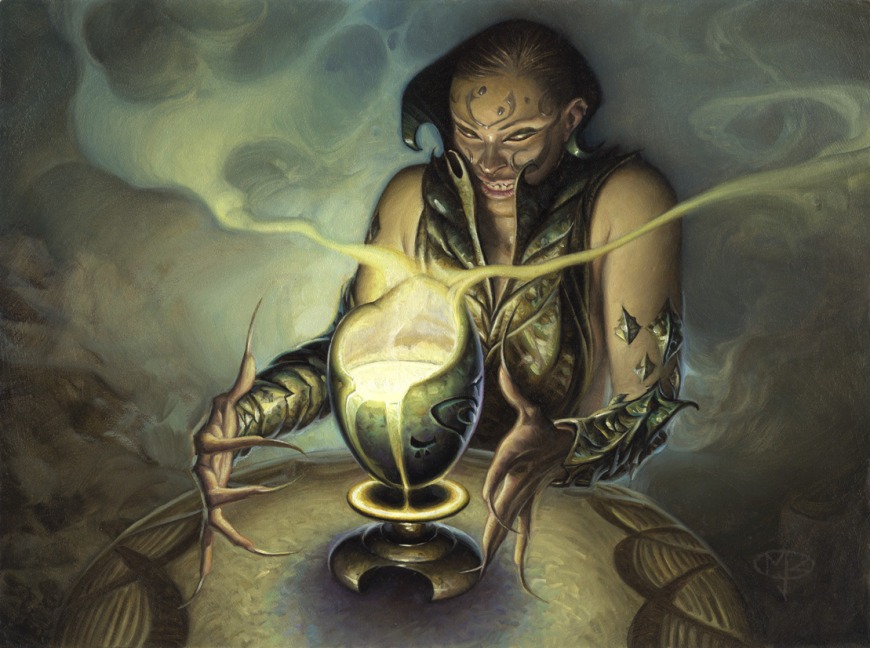
Chalice of the Void | Illustration by Mark Zug
Vintage is a non-rotating (a.k.a. Eternal) Magic format. Like most Constructed formats, Vintage is a one-on-one format with minimum 60-card decks. Vintage stands out as the format with the largest card pool, which allows for a wide range of powerful combos.
Who Is Vintage For?
Vintage is a competitive format for players who enjoy games with powerful interactions that typically end within a few turns. For example, I tested out a Vintage Workshop deck while researching which set up an infinite turn loop on my first turn. While I’d never say someone shouldn’t try a format, I’ll say that Vintage is a lot more fun when you have a strong grasp of the game. Handing a Tier 1 or Tier 2 deck to a beginner would likely leave them unsure of how they’re even supposed to win the game with the cards included.
While there are ways to play Vintage online for free, players who like to play paper Magic with official cards may find it hard to get into Vintage. Competitive decks, even those that don’t include Black Lotus or any original Mox cards, still tend to be close to if not over $10,000. Even if you’re looking for a “budget” option, you’re looking at a $3500+ mono-red Prison deck that likely won’t be able to hang with some of the better decks in the format.
Though Magic: The Gathering Online (MTGO) versions of these decks are much cheaper, we’re still talking about $500 for a lot of decks. This means that official Vintage events are limited to players who can spend large amounts of money on Magic. That said, I’d still encourage trying the format out with proxies or free Magic programs if you’re interested.
Vintage-Legal Sets
Every Magic set is legal in Vintage, as long as it’s legal for Constructed play. This means that aside from silver-bordered Un-sets and gold-bordered collector’s items, any MTG set is fair game. This includes cards that were only printed in Commander precons, like Fierce Guardianship.
While every set is legal, that doesn’t mean every card is legal. Vintage has a short ban list, and certain cards are restricted to one copy per deck. That said, the format has a remarkable number of legal cards, which is one of its main selling points.
Vintage Rules

Vintage overview from Wizards of the Coast
Vintage requires you to have a deck with at least 60 Vintage-legal cards. No more than one copy of any restricted card may be included in a Vintage deck. You also can’t have more than 4 copies of a given card between your main deck and your 15-card-maximum sideboard. Vintage games are played one-on-one with all the same rules as any classic Constructed format.
Though not an official rule, some Vintage tournaments allow players to use proxies in their decks. This is up to the discretion of the tournament organizers, so you’ll want to check with them before signing up. A lot of times, these tournaments don’t give full carte blanche to proxy use, and instead limit proxies to extremely expensive cards like the Power 9 or cards on the Reserved List. Some tournaments are also okay with using gold-bordered Collector’s Edition cards. It’s important to remember that Wizards of the Coast still forbids the use of proxies in any officially sanctioned tournaments and their use is considered cheating in that setting.
The reason many Vintage tournaments are proxy-friendly is simple: They want people to actually play the format. Black Lotus and other Power 9 cards are absurdly expensive, but they’re also a part of many competitive Vintage decks. Tournament organizers are faced with the choice of running an event for the very few people who can afford these cards or allowing proxies to make it more accessible to a wider range of players.
Vintage Ban List
The following blanket categories of cards are banned in Vintage:
- Cards with the “conspiracy” card type.
- Any card that includes “playing for ante.”
- Cards that Wizards of the Coast have banned in all formats due to their racial or cultural insensitivities (make sure to check in with this list periodically, as Wizards is going to keep adding to it).
- Cards that include stickers or attractions.
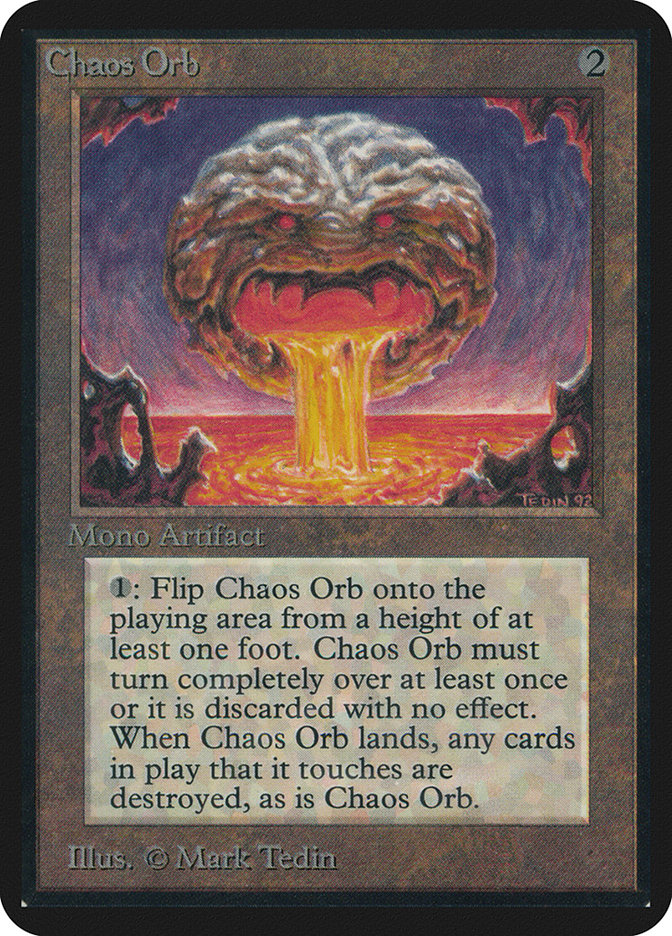
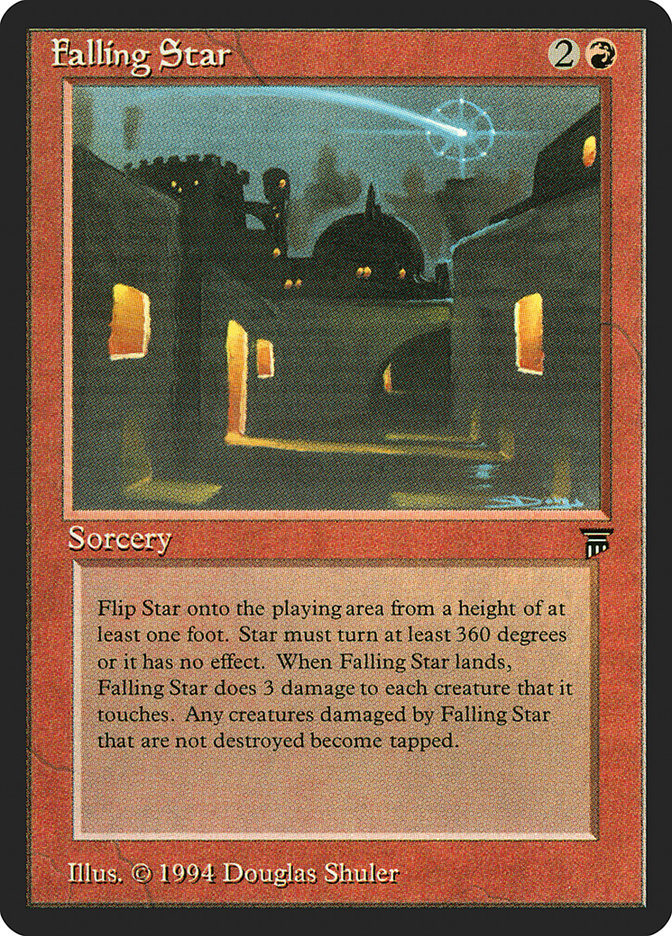
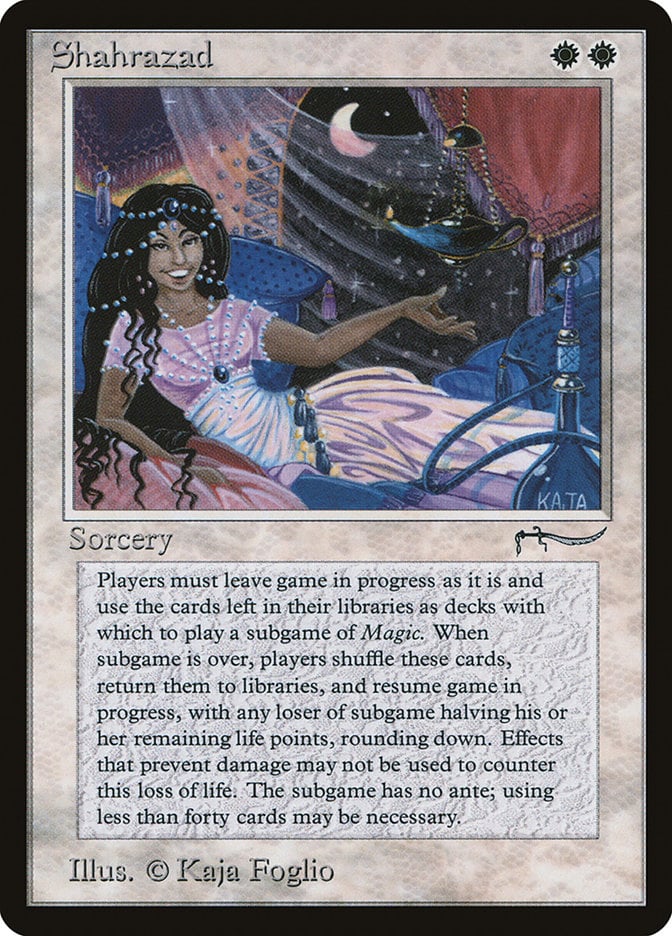
There are only three specific cards not included in the above categories that are specifically banned in Vintage.
Aside from cards that are fully banned, some cards are Restricted. You can only put one copy of the following cards in any Vintage deck, and no additional copies are allowed in your sideboard:
- Ancestral Recall
- Balance
- Black Lotus
- Brainstorm
- Chalice of the Void
- Channel
- Demonic Consultation
- Demonic Tutor
- Dig Through Time
- Flash
- Gitaxian Probe
- Golgari Grave-Troll
- Gush
- Imperial Seal
- Karn, the Great Creator
- Library of Alexandria
- Lion's Eye Diamond
- Lodestone Golem
- Lotus Petal
- Mana Crypt
- Mana Vault
- Memory Jar
- Mental Misstep
- Merchant Scroll
- Mind's Desire
- Monastery Mentor
- Mox Emerald
- Mox Jet
- Mox Pearl
- Mox Ruby
- Mox Sapphire
- Mystic Forge
- Mystical Tutor
- Narset, Parter of Veils
- Necropotence
- Sol Ring
- Strip Mine
- The Fantasticar
- Thorn of Amethyst
- Time Vault
- Time Walk
- Timetwister
- Tinker
- Tolarian Academy
- Treasure Cruise
- Trinisphere
- Urza's Saga
- Vampiric Tutor
- Vexing Bauble
- Wheel of Fortune
- Windfall
- Yawgmoth's Will
Where to Play Vintage
Finding somewhere to play Vintage in person is a lot trickier than a format like Standard or Commander. I live in one of the largest metropolitan areas in the US, and there isn’t an official Vintage event within 100 miles of me according to the Wizards event locator. But while there aren’t sanctioned events, there may still be some options for finding local Vintage play.
Checking your local game store’s website, or even just calling them, is a good way to find out if there’s any Vintage play or a community for it. In truth, you’ll still need to be pretty lucky if a store near you runs any regular Vintage events. Due to the large barrier of entry to the format, it doesn’t get nearly as much play in stores as other formats.
If you want to play Vintage, you’ll most likely be playing it online. Vintage can be played officially through MTGO, and thanks to the reduced price of digital cards compared to their physical counterparts, more people play Vintage online. Since many of the cards in Vintage aren’t on Magic Arena, that isn’t an option. The closest you could get there is playing one of MTGA’s digital-only formats: Timeless.
Probably the easiest option for playing Vintage is to use a program like Cockatrice or XMage. These programs allow you to make decks with any card from Magic, completely free. Even if you’d prefer to play Vintage through a more official channel, it might be a good idea to at least try the format out for free first to ensure that way you aren’t sinking hundreds or thousands of dollars into a deck just to find out you don’t like it.

spelltable.wizards.com | Desktop front page
Wizards of the Coast also explicitly lists SpellTable as a way to play Vintage. While this is technically an option, my attempts to turn up information on a thriving Vintage community on SpellTable were fruitless, but I did find a lot of people complaining about SpellTable in general.
I saw that in August 2023, there was a Vintage tournament on SpellTable that limited the deck price to $30. This could be a fun experimental way to play if they do it again, and might be worth keeping an eye out for, but it isn’t exactly a typical Vintage experience.
If you’re a Vintage player and you’re looking for a tournament to play in, your best bet is the Eternal Weekend tournaments, though there aren’t too many locations for these so you’ll likely need to do some traveling.
Vintage Decks
There are two things to note about Vintage decks: One, the actual cards that get played in them, and two, how expensive they can be. You’re signing up for a bit of an investment if you plan on getting into Vintage without proxying. If that sounds like a commitment you’re ready to make, we recommend AncestralMTG’s great selection of Vintage stapes. Be sure to check them out whether you’re looking for real Power 9 and dual lands or plan to proxy and just want some of the less expensive staples. Now on to the meta!
Workshop

Mishra's Workshop | Illustration by Kaja Foglio
Workshop is one of the best Vintage deck archetypes in the current meta. This deck revolves around using mana artifacts and drawing cards to quickly set up an infinite turn loop.
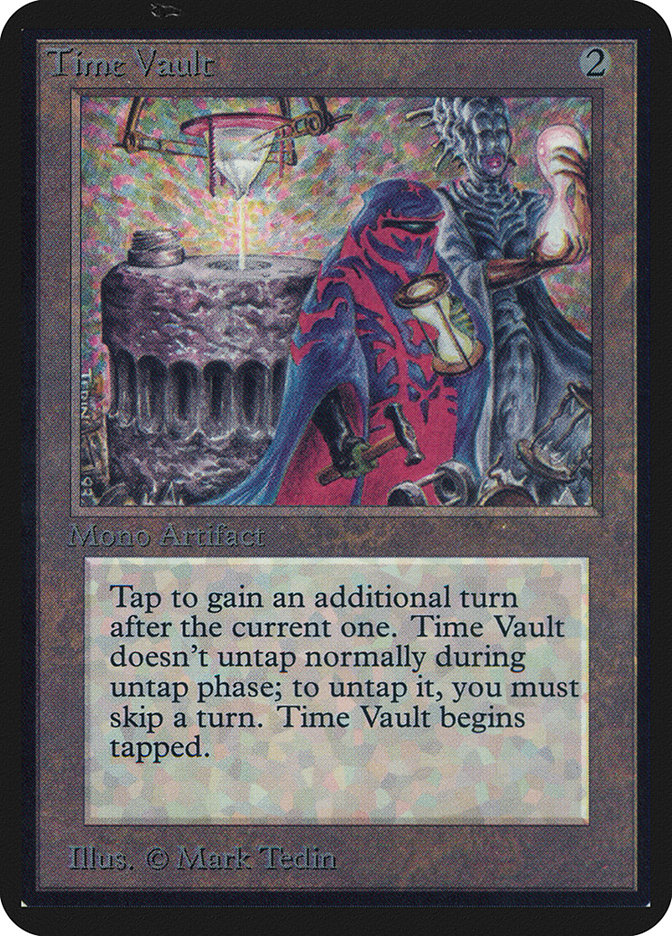
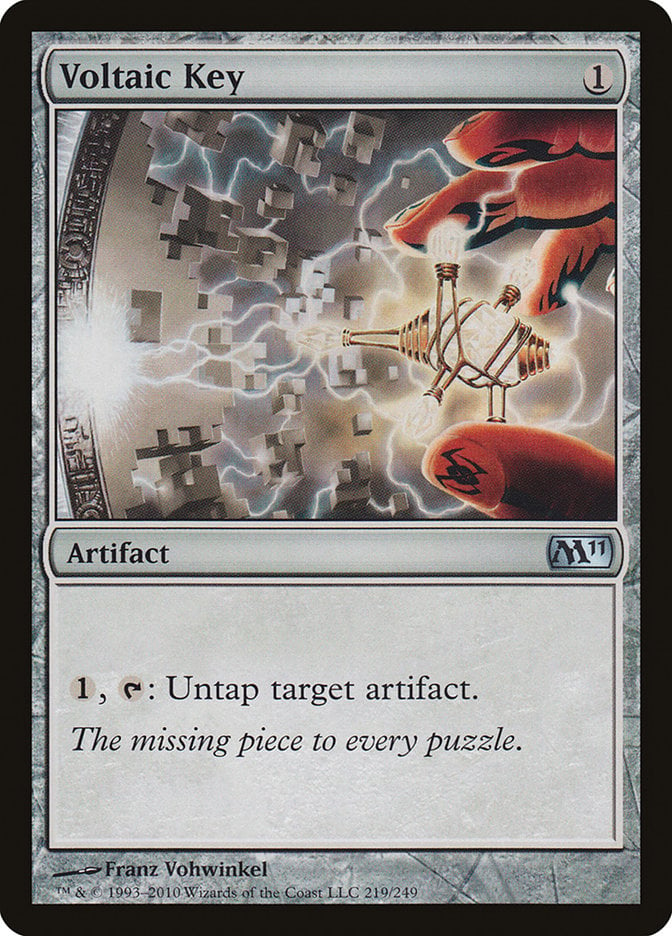
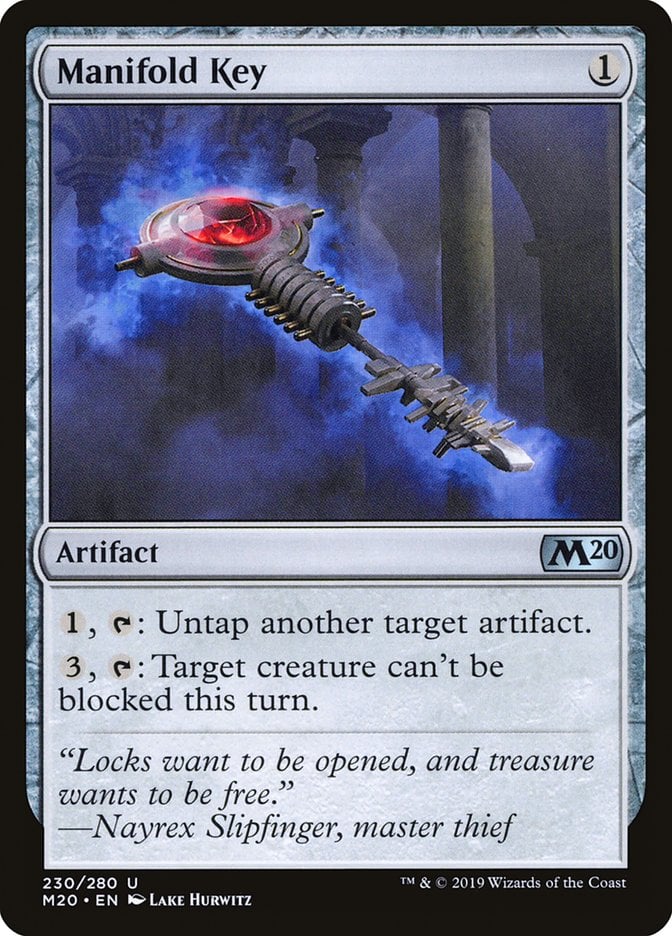
This is done with a combination of Time Vault and a way to untap it like Voltaic Key or Manifold Key.
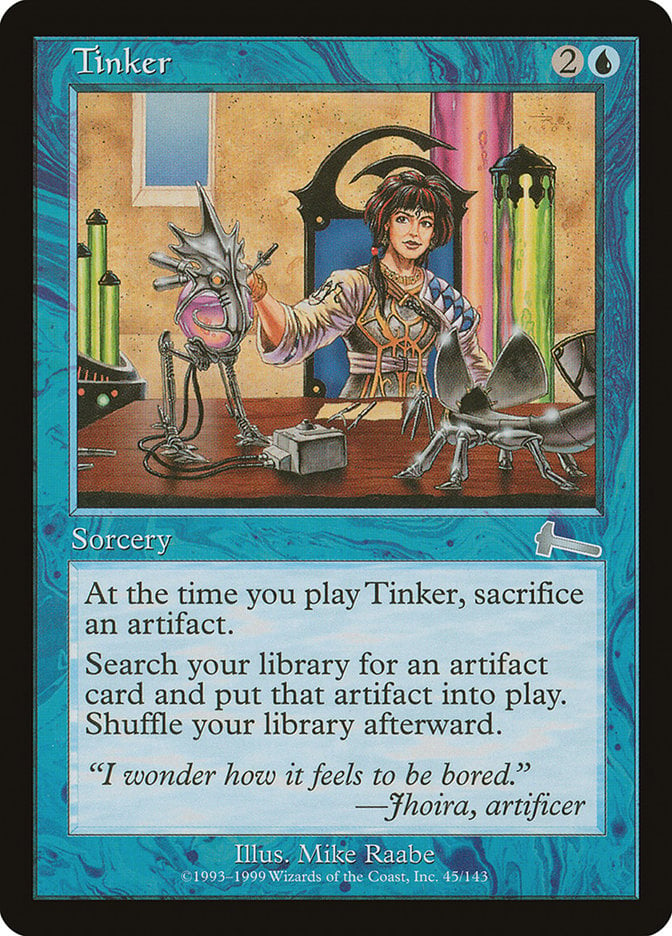
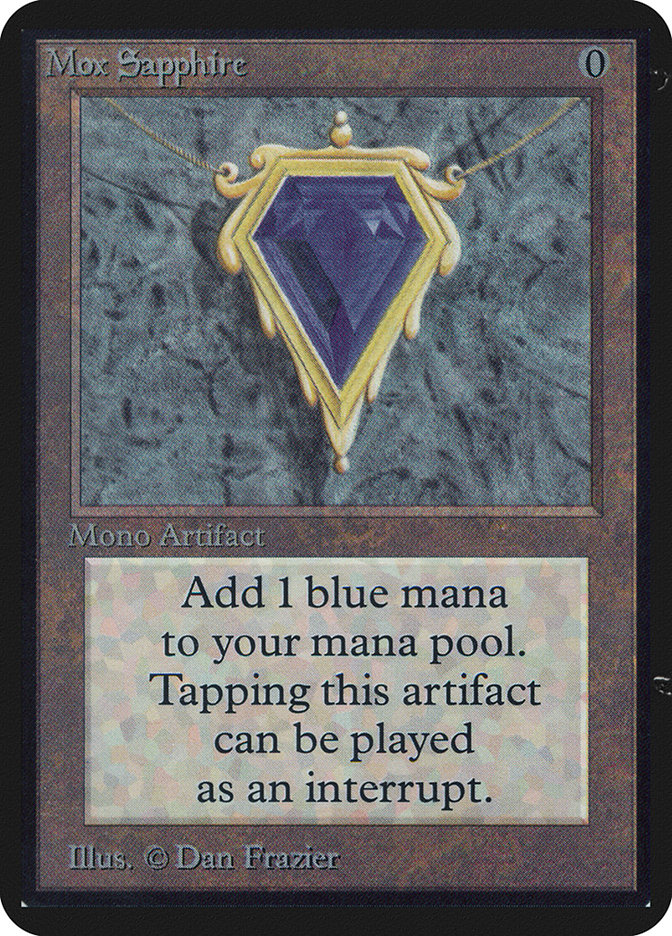
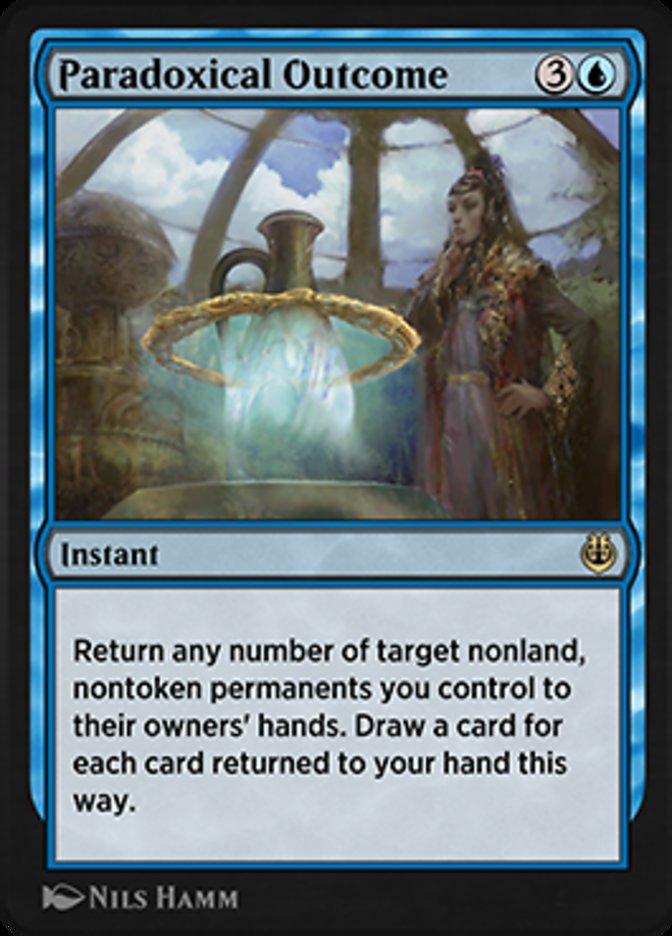
The maindeck is completely devoted to cards that help set up this combo quickly, like Tinker, which tutors up important artifacts like Mox Sapphire to help accelerate your mana production. Paradoxical Outcome also allows you to draw cards and then replay any of your free mana rocks for more mana.
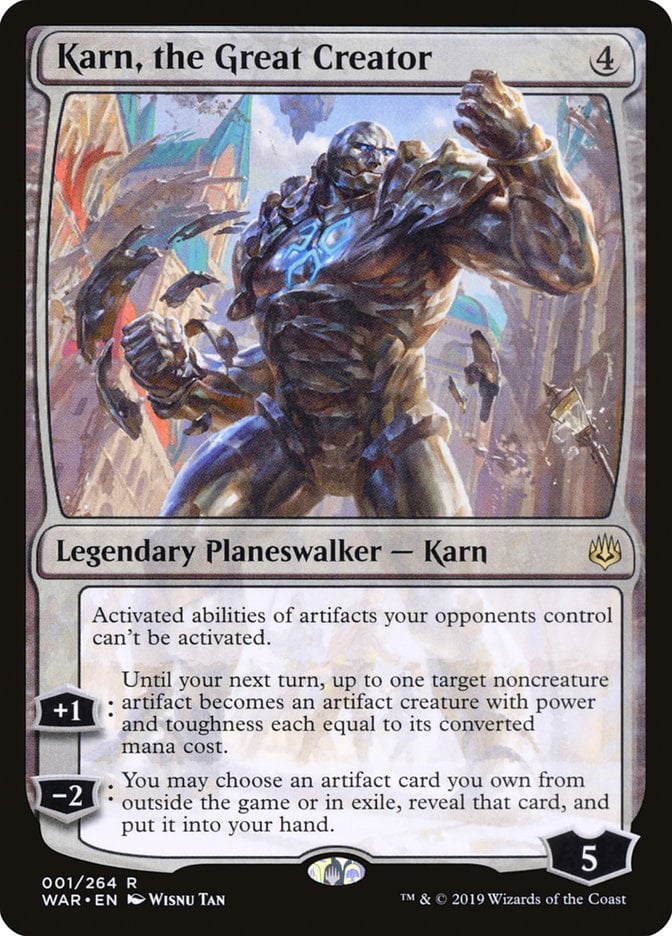
Once your infinite turns combo is set up, you can use Karn, the Great Creator to grab your win con from the sideboard. Here’s an example build of this type of deck, one created by MTGO user _Mago_ for an MTGO event:
Planeswalker (1)
Creature (4)
Instant (13)
Ancestral Recall
Force of Will x4
Paradoxical Outcome x4
Sink into Stupor x4
Sorcery (2)
Artifact (26)
Coveted Jewel x4
Black Lotus
Grim Monolith x3
The One Ring x4
Vexing Bauble
Mana Crypt
Mana Vault
Manifold Key
Mox Emerald
Mox Jet
Mox Pearl
Mox Ruby
Mox Sapphire
Mystic Forge
Sol Ring
Time Vault
Trinisphere
Voltaic Key
Land (14)
City of Traitors
Minamo, School at Water's Edge
Mishra's Workshop x4
Otawara, Soaring City
Tolarian Academy
Urza's Saga
Island
Ancient Tomb x4
Sideboard (15)
Grafdigger's Cage
Mycosynth Lattice
Pithing Needle
Argentum Masticore x4
Wurmcoil Engine x2
Hullbreacher x3
Hurkyl's Recall
Dismember x2
Lurrus Esper Control

Lurrus of the Dream-Den | Illustration by Slawomir Maniak
With so many cheap and free counterspells in Vintage, it shouldn’t be a huge shock that control decks can be some of the strongest in the format.
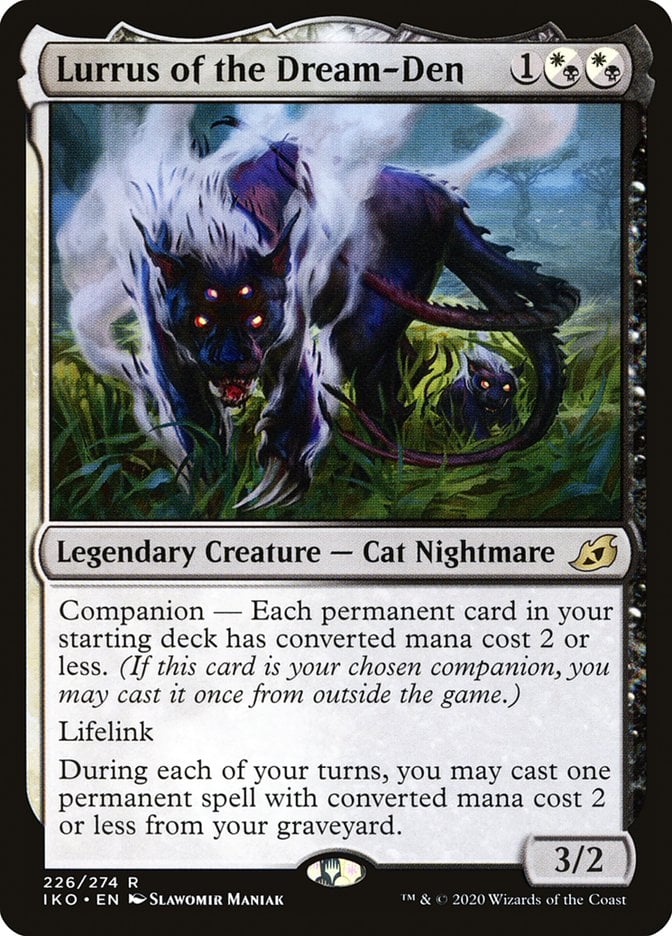
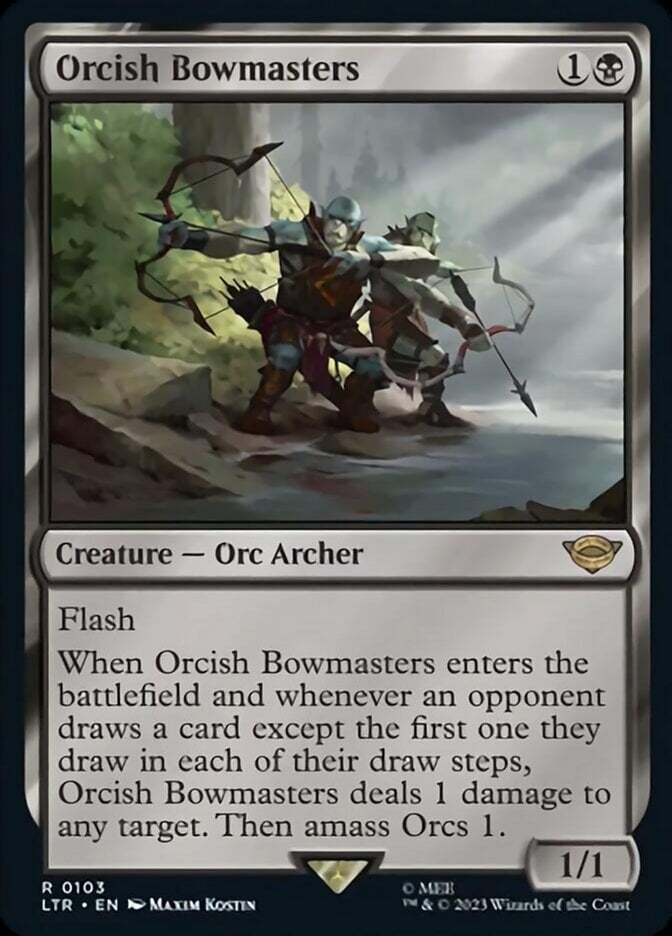
One popular type of choice at the moment is an Esper () control deck that uses Lurrus of the Dream-Den as a companion and includes the infamous Orcish Bowmasters from The Lord of the Rings.
Orcish Bowmasters provides an excellent counter to many Vintage decks, as it punishes players for drawing extra cards. With The One Ring also being popular in this format and many decks running Ancestral Recall, it’s very likely that Orcish Bowmasters will be well-worth the 2 mana you spend on it. Lurrus of the Dream-Den can also help bring your Orcish Bowmasters back if it’s countered or removed.

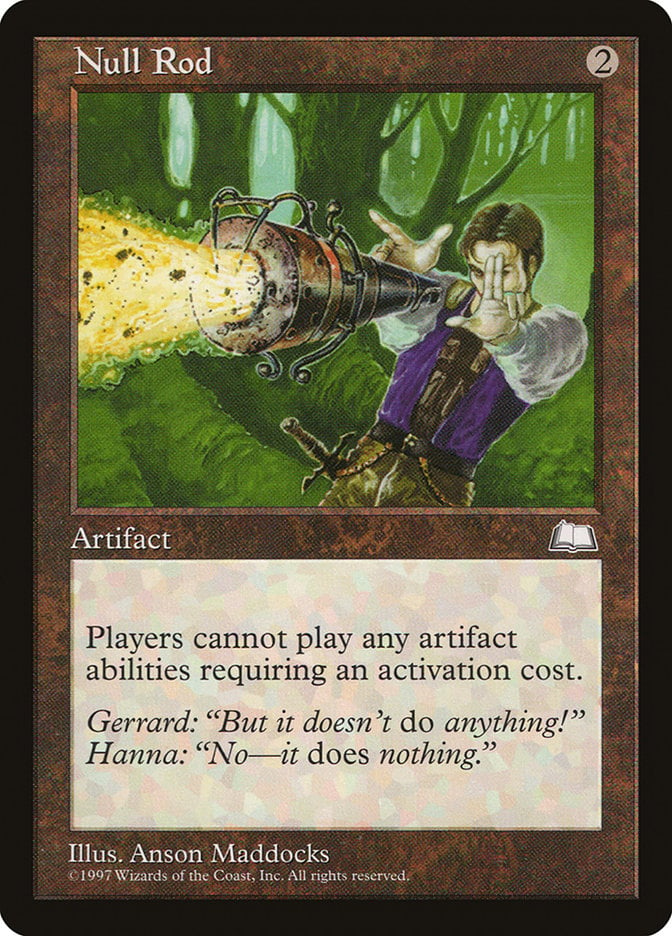
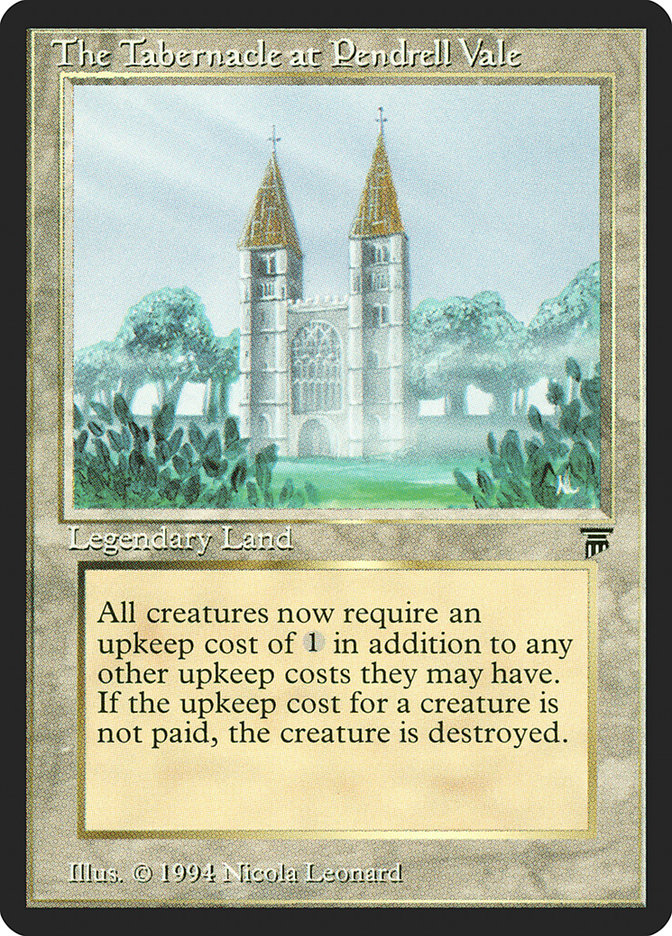
Aside from a large number of counterspells, this type of deck can also include classic Vintage stax pieces like Vexing Bauble, Null Rod, and The Tabernacle at Pendrell Vale. Here’s an example of a Lurrus control deck from MTGO user RaGod:
Creature (8)
Orcish Bowmasters x2
Psychic Frog x4
Tamiyo, Inquisitive Student x2
Instant (18)
Force of Will x4
Spell Pierce x3
Mental Misstep
Ancestral Recall
Swords to Plowshares x2
Brainstorm
Dig Through Time
Daze
Flusterstorm
Force of Negation x3
Sorcery (8)
Gitaxian Probe
Time Walk
Treasure Cruise
Demonic Tutor
Prismatic Ending
Lórien Revealed x3
Artifact (8)
Black Lotus
Mox Jet
Mox Pearl
Mox Sapphire
Soul-Guide Lantern
Mishra's Bauble
Sol Ring
Vexing Bauble
Land (18)
Island
Strip Mine
Tolarian Academy
Tundra x3
Underground Sea x3
Polluted Delta x2
Karakas
Urza's Saga
Wasteland x4
Flooded Strand
Sideboard (15)
Torpor Orb
Grafdigger's Cage x2
Tormod's Crypt x2
Null Rod x2
Lurrus of the Dream-Den
Containment Priest x3
Swords to Plowshares
Consign to Memory x2
The Tabernacle at Pendrell Vale
Ichorid / “Dredge”

Ichorid | Illustration by Rk post

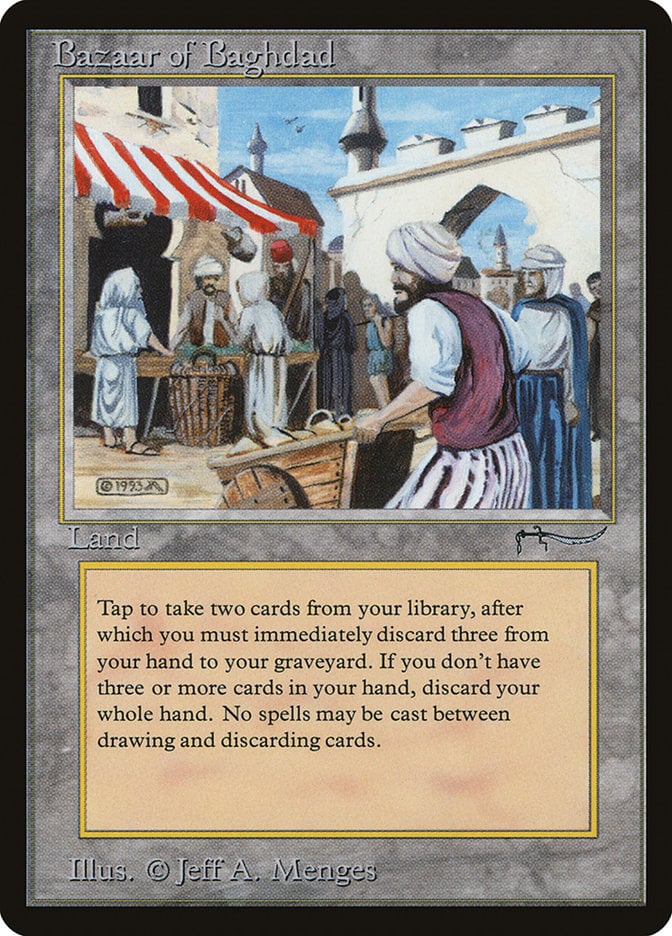
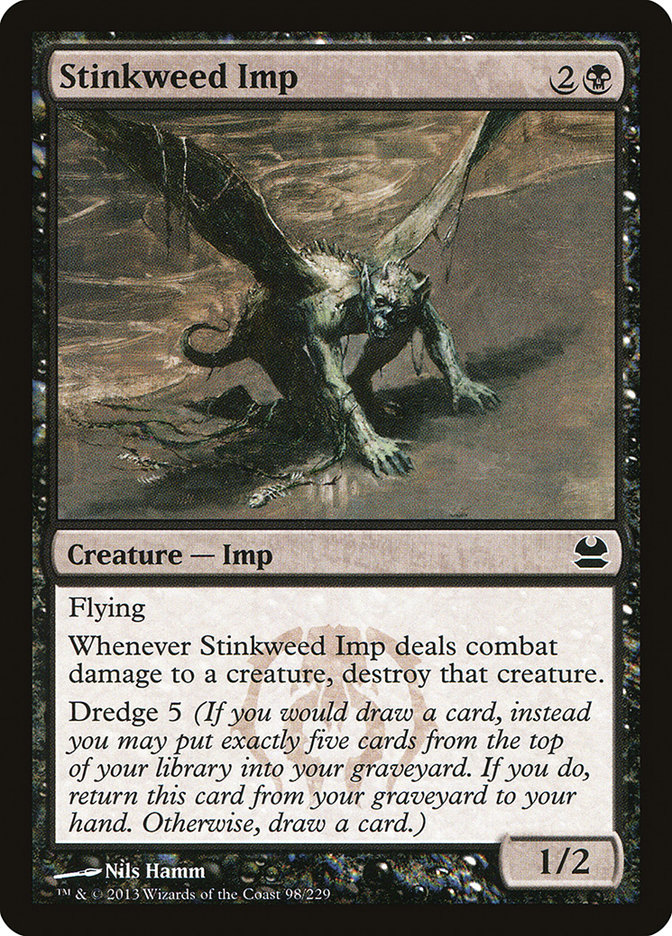
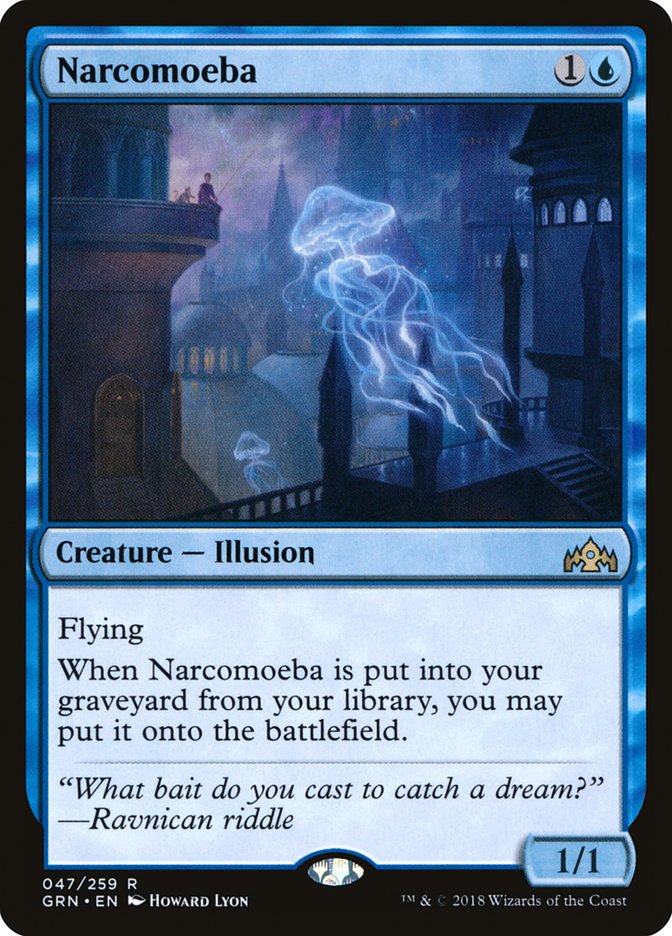
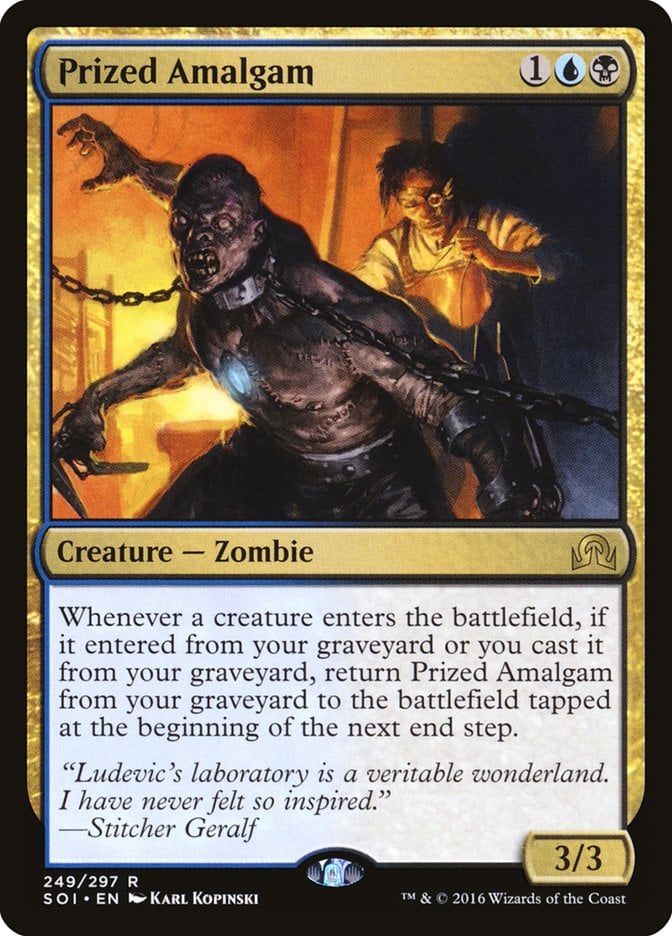
Vintage decks built around Ichorid are a lot of fun because they can use as few as four lands and still be very effective. The main idea behind the deck is to use Bazaar of Baghdad and dredge abilities on cards like Stinkweed Imp to fill your graveyard. Narcomoebas that are milled are put onto the battlefield, you’ll have plenty of options for getting Ichorid out with its effect, and Prized Amalgam can also easily get out for free.
Because this deck revolves around using abilities to get creatures out, instead of casting them, you can avoid the many counterspells that are common in Vintage. You’ll have to pay close attention to all the different abilities in this deck to make sure you’re playing it effectively. I had several times when I forgot I could play my Hollow One for free off a Bazaar of Baghdad activation, and it likely cost me those games.
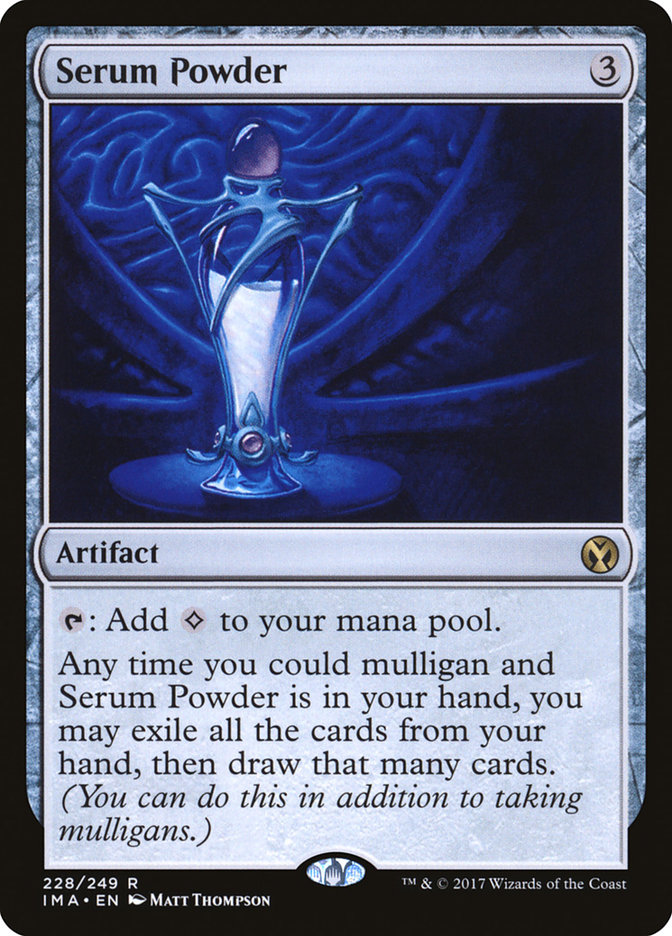
Since you’ll likely want one of your Bazaar of Baghdads in an opening hand, and at least one counterspell to shut down an opponent’s likely turn-1 combo, Serum Powder is a helpful inclusion in this deck. Here’s an example version of this deck made by MTGO user Cheiffireball:
Creature (32)
Stinkweed Imp x4
Golgari Grave-Troll
Hollow One x4
Prized Amalgam x4
Shambling Shell x3
Ichorid x4
Narcomoeba x4
Grief x4
Golgari Thug x4
Instant (10)
Force of Will x4
Force of Negation x2
Mental Misstep
Noxious Revival x3
Sorcery (6)
Cabal Therapy x2
Creeping Chill x4
Enchantment (3)
Artifact (5)
Chalice of the Void
Serum Powder x4
Land (4)
Sideboard (15)
Leyline of the Void x4
Force of Vigor x4
Noxious Revival
Sickening Shoal x3
Wasteland x2
Strip Mine
Doomsday

Doomsday | Illustration by Noah Bradley
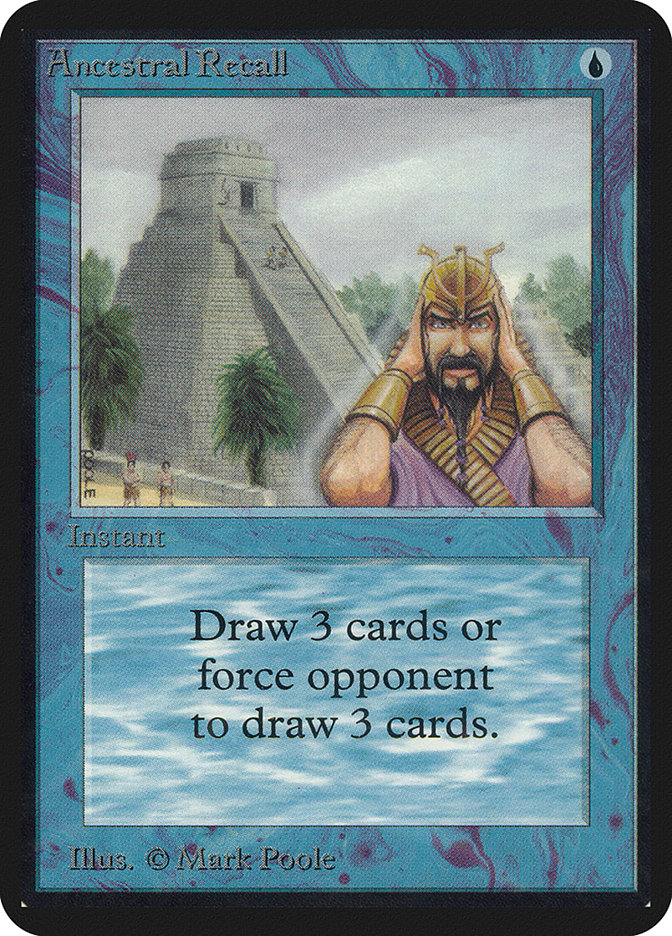
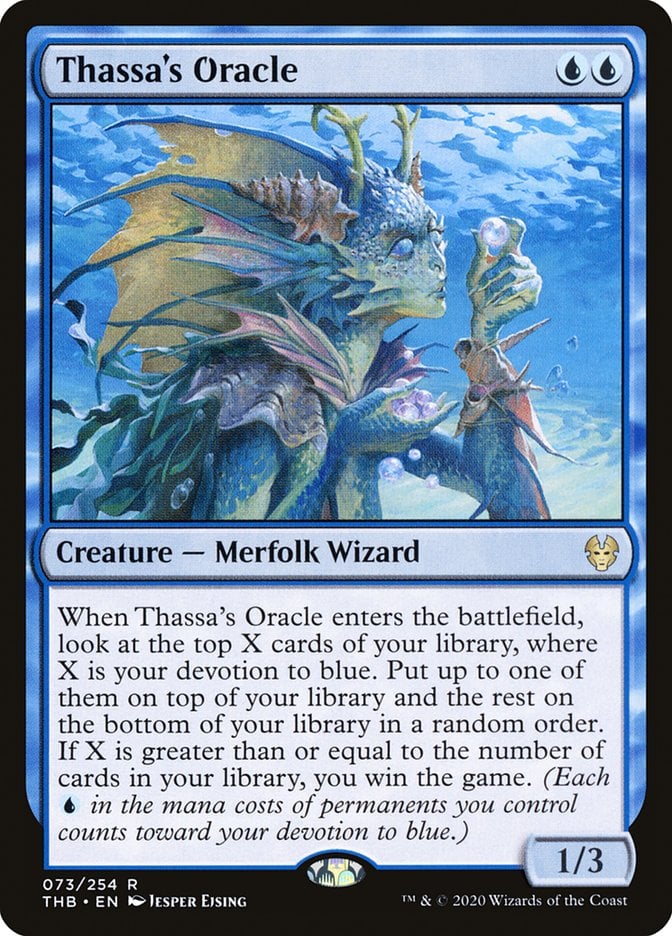
Vintage Doomsday decks seek to win the game using Thassa's Oracle. Incidentally, if you (understandably) booed and or hissed at the mention of Thoracle, Vintage might not be your favorite format. This deck uses cheap cantrips like Ancestral Recall to help find combo pieces that allow you to pull off a win with Thassa's Oracle.
There are several ways you can set up a Thassa's Oracle win with this deck.
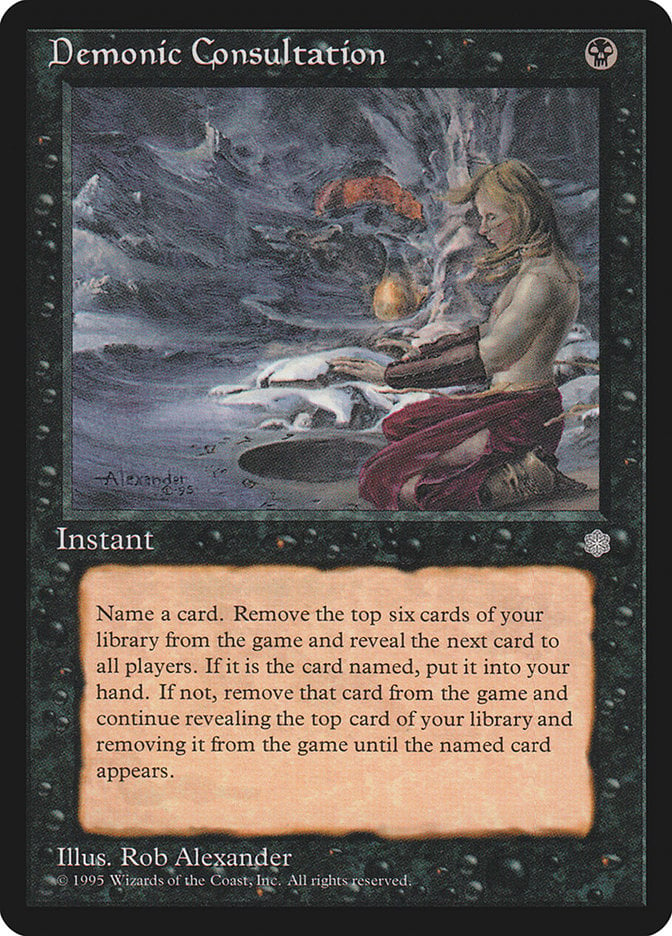
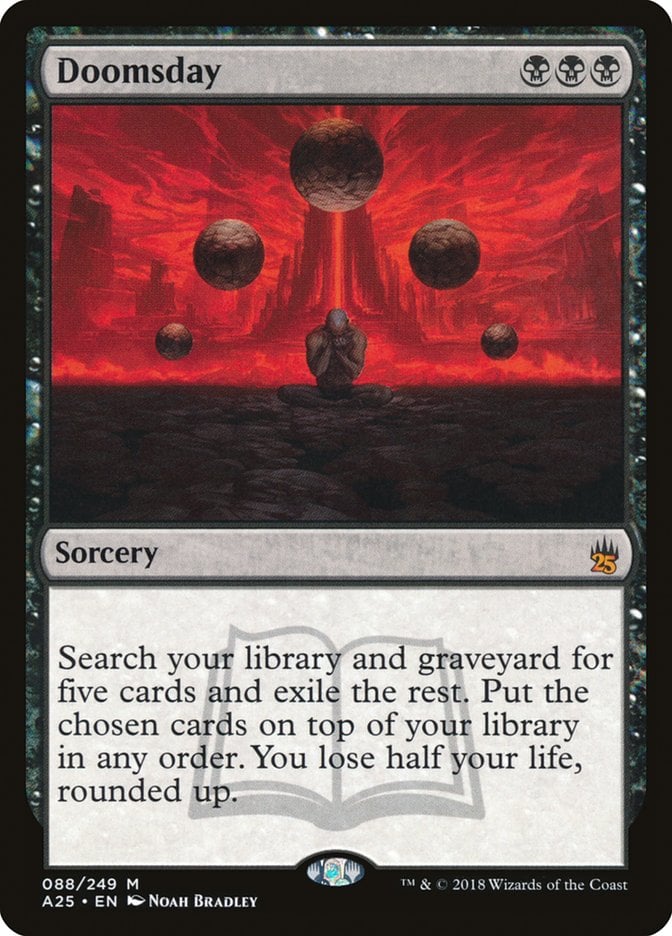
If you already have the card in your hand, you’ll just need to use Demonic Consultation and name a card that’s not in your deck. This exiles your entire deck, allowing you to play Thassa's Oracle for the win. Alternatively, you can use Doomsday to find the cards you need to win from your deck while clearing out the rest. Doomsday is also a great backup in case your initial Thassa's Oracle attempt is countered and you’re stuck without a deck.
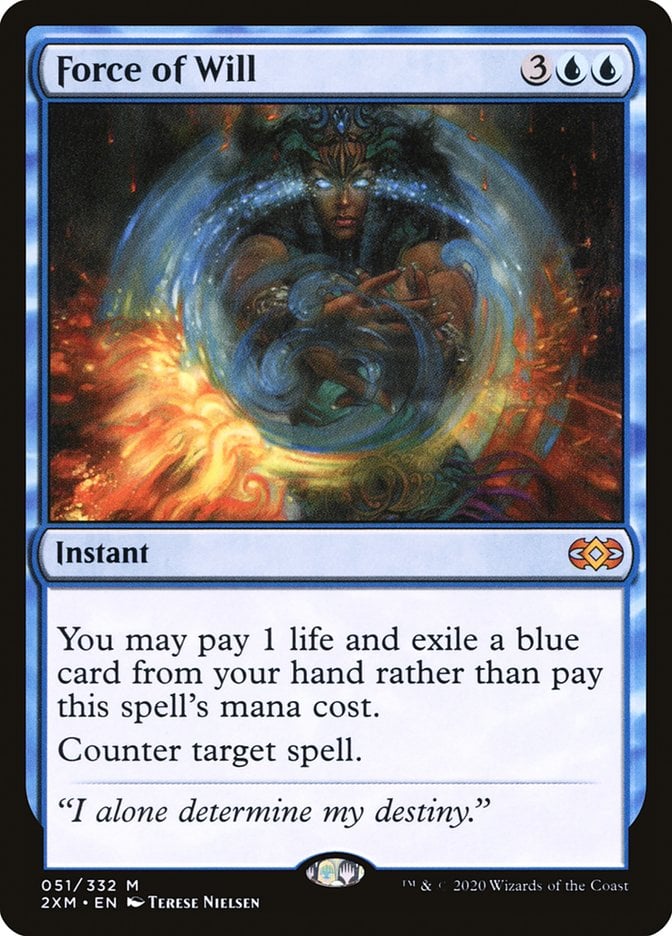
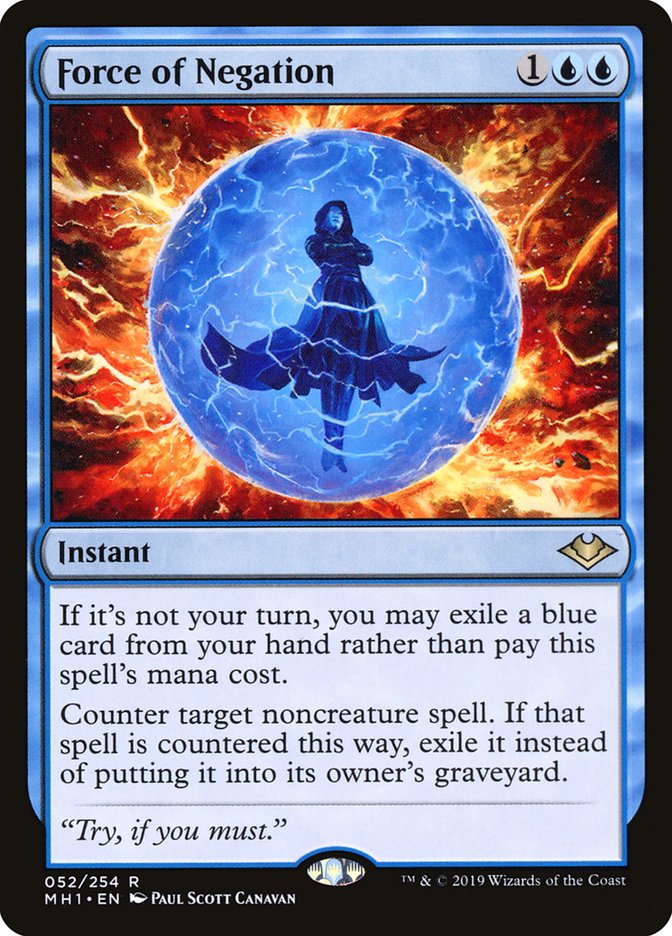
This deck also includes plenty of counterspells like Force of Will and Force of Negation that can be played for free. This helps ensure you can play Thassa's Oracle when you need to and counter any counterspells that come your way.
Here’s a solid Doomsday deck made by MTGO user Tsubasa_Cat for Vintage Challenge 32:
Creature (7)
Thassa's Oracle x2
Street Wraith x4
Psychic Frog
Instant (19)
Ancestral Recall
Demonic Consultation
Daze
Brainstorm
Mental Misstep
Dark Ritual x4
Flusterstorm x3
Gush
Dig Through Time
Force of Will x4
Force of Negation
Sorcery (16)
Ponder x4
Doomsday x4
Gitaxian Probe
Preordain x4
Demonic Tutor
Time Walk
Treasure Cruise
Enchantment (1)
Artifact (3)
Black Lotus
Mox Jet
Mox Sapphire
Land (14)
Misty Rainforest x2
Undercity Sewers
Island
Underground Sea x4
Scalding Tarn x2
Flooded Strand x2
Polluted Delta x2
Sideboard (15)
Leyline of the Void x4
Mindbreak Trap x2
Force of Negation x2
Fatal Push x2
Steel Sabotage
Consign to Memory x2
Ray of Enfeeblement
The Tabernacle at Pendrell Vale
Mono-Red Prison

Blood Moon | Illustration by Franz Vohwinkel
Though it isn’t a top-tier build, mono-red prison is an archetype worth mentioning as it’s the most competitive deck you could build for less than $2,000, as long as you’re playing in a tournament that allows proxying for Reserved List cards. I know that probably doesn’t make a big difference for most people, but for anyone super eager to get into paper Vintage, this is your cheapest option while staying at least somewhat competitive.
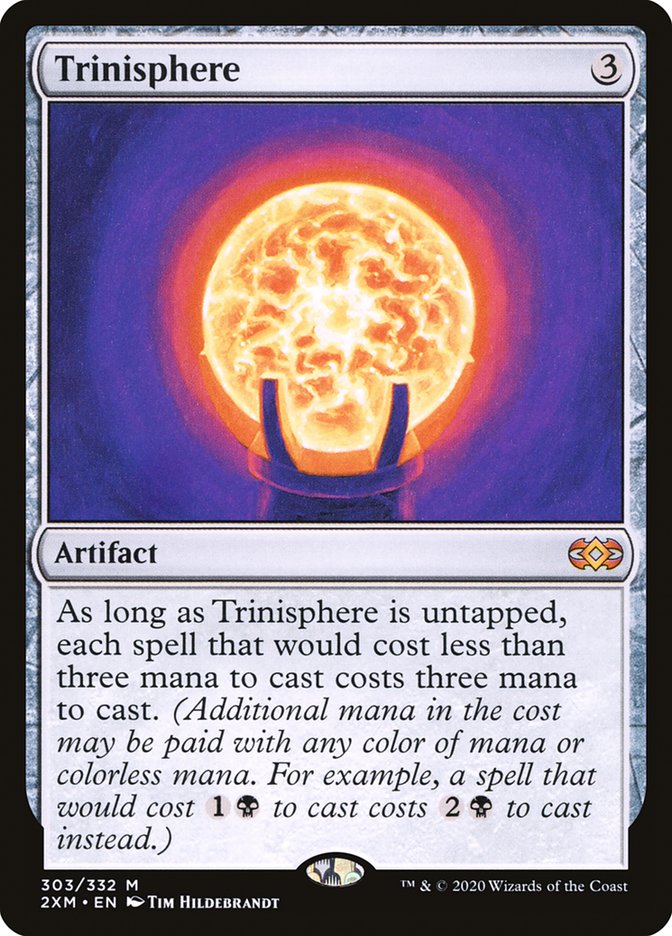
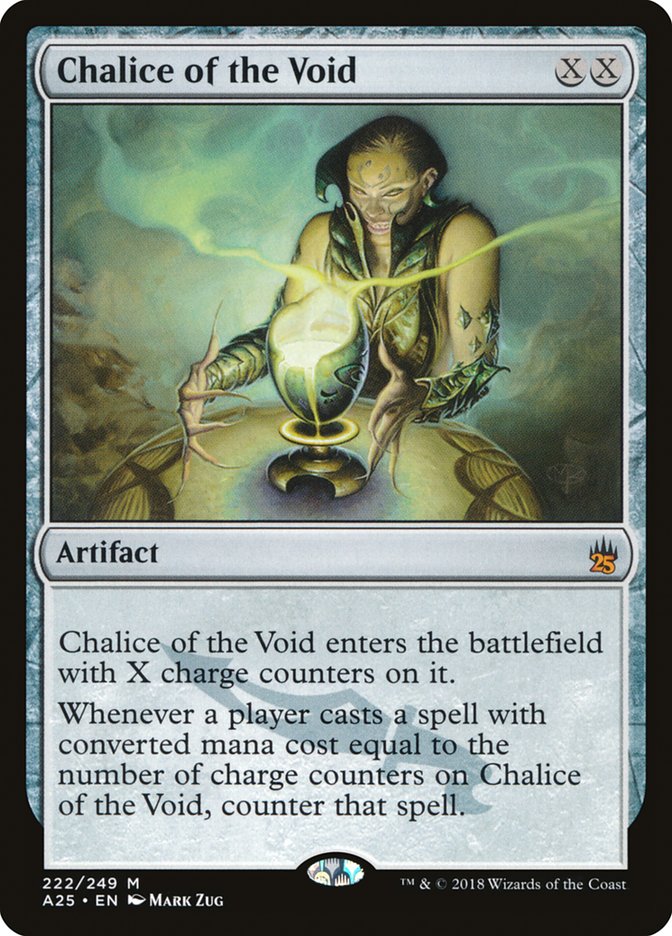
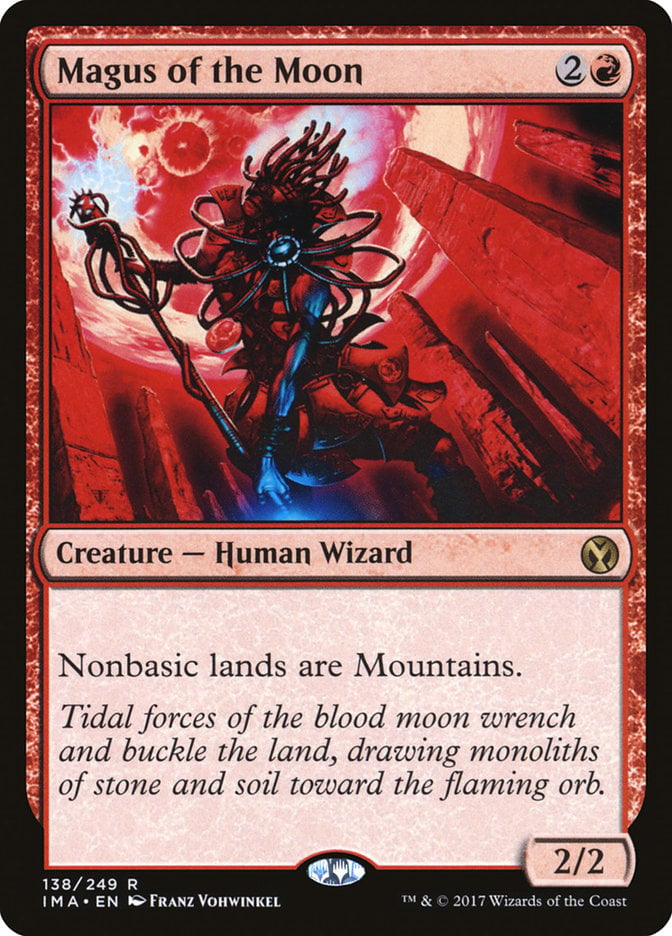
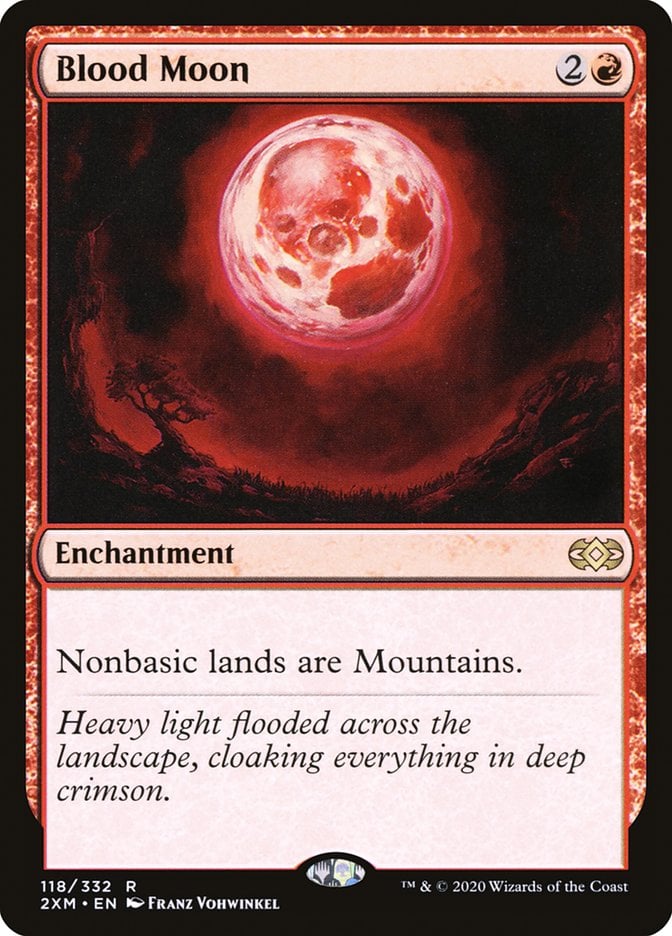
This deck’s main goal is to shut down your opponent’s strategy through the use of stax pieces like Trinisphere and Chalice of the Void. Magus of the Moon and Blood Moon are great in a format like Vintage where basic lands are much rarer. Null Rod can also shut down a lot of Vintage decks since they rely heavily on cheap mana rocks, and several top-tier decks employ Time Vault as part of their winning strategy.
This deck brewed by Eli Smith for Hurricane Weekend 2024 can be built for less than two grand, if whatever tournament you’re signing up for allows proxies:
Planeswalker (1)
Creature (17)
Laelia, the Blade Reforged
Fury x4
Goblin Rabblemaster x4
Magus of the Moon x4
Simian Spirit Guide x4
Sorcery (5)
Sundering Eruption x2
Shatterskull Smashing x3
Enchantment (7)
Blood Moon x3
Fable of the Mirror-Breaker x4
Artifact (16)
Mox Ruby
Chalice of the Void
Lotus Petal
Mana Crypt
Black Lotus
Vexing Bauble
Sol Ring
Trinisphere
Chrome Mox x4
Null Rod x4
Land (14)
Gemstone Caverns
Sokenzan, Crucible of Defiance
Strip Mine
Mountain x3
City of Traitors x4
Ancient Tomb x4
Sideboard (15)
Grafdigger's Cage x2
Pithing Needle
Tormod's Crypt
Leyline of the Void x3
Mindbreak Trap
Pyroblast
Pyrokinesis
Red Elemental Blast
Anarchy x2
Vandalblast x2
Getting Started with Vintage
Aside from winning the lottery, there isn’t really a quick way to be ready to play Vintage on paper. There aren’t any starter products, since Wizards doesn’t really support the format, so you’ll be stuck building your own decks.
If you already have an extensive Magic collection and already have a lot of the staples like Force of Will, you might be able to grab what you need for a Vintage deck without paying full price, but with how common the Power 9 and other Reserved List cards are in the format, it likely still won’t be cheap.
The best way to get started with Vintage is either through a free online method or by using an extensive number of proxies – perhaps even proxying your whole deck. Or you can always print your own or just write on basic lands with a sharpie. Personally, I like to make proxies by using the blank back of art cards to doodle approximations of the real card’s art.
If you’re looking for a good starter deck to make on paper, something like the Mono-Red Prison deck is a good place to start. Anything that has fewer Power 9 cards is going to be a better option because those cards can’t be played in most formats.
Vintage Products
The best aspect of Vintage is that decks are built using a mixture of cards that came out recently and older cards to create the most powerful interactions. However, that also means there isn’t really one product you can buy that gives you a lot of Vintage staples. Wizards doesn’t sell any pre-made Vintage products, and format staples are spread out across a ton of sets from across Magic’s history, so you can’t just buy a booster box of one or two sets. However, there’s an option if you’re looking to buy digital Vintage products.

While Reserved List cards can’t be reprinted on paper, the same isn’t true for digital copies of the cards. MTGO has a Vintage Masters set that includes plenty of cards that players need to be successful in the format. That said, this set is 10 years old at this point, so newer staples like Orcish Bowmasters and The One Ring won’t be included.
For existing Vintage players on the lookout for ways to supplement your deck, the best thing to do is just keep your eyes on new releases. Any new black-bordered products are Vintage legal, and you never know when the next sleeper hit is going to drop. I’m sure nobody expected a Universes Beyond set like Lord of the Rings to redefine the format in such a significant way, and future sets can always do the same.
Vintage Communities
If you’re looking for an online community of Vintage players, there are a few options. You can check out r/MTGVintage or the Vintage Facebook group. Both have around 3,000-4,000 members, which means there’s some active discussion, but the likelihood of meeting other locals may be slim. It may be worth checking a local Facebook group for Magic in general and simply asking about Vintage if you’re looking to meet players in real life.
On Draftsim’s Discord, we have the “other-formats” channel where any MTG format without a dedicated channel can be discussed. If we see a large Vintage community starting to grow, I’m sure we can also give it its own dedicated channel. Additionally, we have a “looking-for-a-game” channel where you can look for other players who may want to play some Vintage online. If you want to beat me while I stubbornly try to figure out how to master an Ichorid deck, you can post on there.
Additionally, make sure to ask around at any local MTG events you attend to see if anyone at your LGS plays Vintage. Commander events are probably the easiest time to chat with and get to know other players, and a Vintage player would likely be excited for a new opponent given how hard it is to play compared to other formats.
How Much Does a Vintage Deck Cost?

Vintage decks from mtgdecks.net
Looking at the top 50 Vintage decks listed on MTG Decks and taking a mean of their average prices reveals the average price of a Vintage deck is nearly $12,000. In truth, it’s probably higher than that because while the site mostly has accurate prices, it lists the value of a Black Lotus around $2,000. In reality, a legal, undamaged Lotus alone likely costs you five figures, so the price of any deck running it should actually be much higher.
Vintage decks are much cheaper on MTGO. The same Workshop deck listed above costs over $20,000 on paper. On MTGO it only costs $541. This is still expensive, but it’s also less than 3% of the cost of a physical deck.
Why Is Vintage so Expensive in MTG?
Vintage is the format you play so that you can build decks using the best cards in the game. The appeal of having such a massive card pool is to see what kind of wild combos and interactions players can come up with. However, good cards aren’t cheap, so Vintage decks tend to get very pricey.
This is especially true when looking at older cards. Reserved List cards are (as of now) never getting reprinted in a legal border. As time goes on, the number of available cards from the Reserved List will continue to dwindle as more are lost, damaged, or simply find a permanent home with a player who never intends to sell them. While not all Reserved List cards retain a high value, good ones like the Power 9 will likely stay expensive.
What’s the Difference Between Vintage and Legacy?
The main difference between Vintage and Legacy is the number of banned cards in each format. Legacy has a much more extensive ban list, whereas Vintage prefers to restrict cards instead of banning them outright. This means Vintage has a lot more potential to pull off busted combos on the first or second turn.
Many players think of Vintage as “Powered” Legacy. That is, they overlap significantly, but Vintage is the format that allows you to play the Power Nine (and other broken Magic cards).
Wrap Up

Necropotence | Illustration by Dave Kendall
It’s a shame that Vintage is such an inaccessible format for most players because it’s a lot of fun. As someone who enjoys seeing the upper limits of what a Magic deck can do – whether I’m winning or getting stomped – I think it’s the perfect Eternal format. I also enjoy that games finish fast, making it easy to play a few games online with friends when you have limited free time. I think you should check it out through free channels if you’re curious, and then make sure to tag Wizards in a bunch of posts about how much you wish you could buy Vintage precons. Maybe if they think there’s a big enough market, they’ll ditch the Reserved List.
If you play Vintage, I’d love to hear about some of the builds you use or any tips you have for making the format more accessible. I’d also be interested to know if there are any thriving communities for the format online that I couldn’t find because of how awful online searching has become. Let me know in the comments, or on Draftsim’s Twitter.
Thank you for reading, and see you next time!
Note: this post contains affiliate links. If you use these links to make a purchase, you’ll help Draftsim continue to provide awesome free articles and apps.
Follow Draftsim for awesome articles and set updates:











Add Comment