
Last updated on May 24, 2025

The Wandering Emperor | Illustration by Tommy Arnold
As a self-proclaimed Limited player, combat tricks are an extremely important resource to know how to use. The ability to identify when to play around your opponent having a trick and when to use your own is a necessary skill to succeed in Limited.
What makes a good combat trick? When are they good to play? Which are the best combat tricks ever printed? Let’s find out!
What Is a Combat Trick?
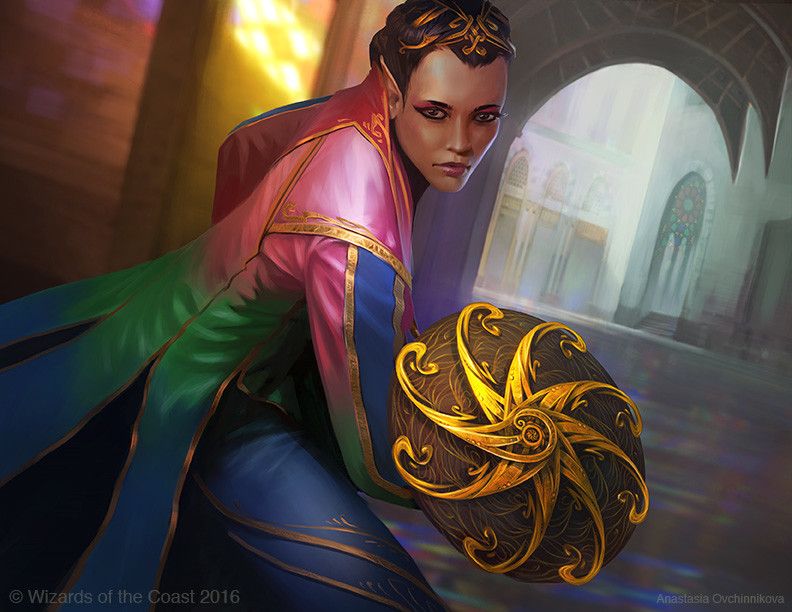
Blossoming Defense | Illustration by Anastasia Ovchinnikova
A combat trick in MTG is a spell or ability that lets you affect the results of combat. This is usually done by buffing the power and toughness of your attacking creature so that it destroys whatever blocks it. It can often also involve giving a keyword ability. The most classic example of this is Giant Growth, though it doesn’t make the cut for this list.
Combat tricks are commonly found in Limited play because they’re very often weaker than just killing the opposing creature with a removal spell. You can’t rely on getting too many removal spells in a single Draft or Sealed event.
Some cards have also proven particularly good in Constructed formats. Competitive strategies like Death's Shadow, infect, and other hyper-aggressive decks have often used combat tricks to push through the final points of damage that they need.
What Makes a Good Combat Trick?
There are all sorts of combat tricks. There are usually at least half a dozen in each new set to support the Limited format. The best ones usually follow a few simple rules:
- They should be cheap and efficient. One-mana tricks tend to give at least +2/+2, which is often fine. If you’re spending more mana you need to get a lot more for what you’re paying, or you may as well default to the cheaper cards. Rare and mythic combat tricks are often bad because they usually cost a lot more mana to give a bigger effect, but you’d prefer cheap and cheerful.
- They should make it easier to win races. Combat tricks are inherently designed for aggressive strategies. The one thing an aggro deck wants to do is win a damage race. If a combat trick helps you do this by granting your creature lifelink, trample, double strike, or something similar, its stock immediately goes up.
- They leave their buff behind. While most combat tricks last until the end of the turn, a common feature of good combat tricks is that they give +1/+1 counters or some other kind of permanent buff.
- They have the potential for two-for-one blowouts. The best removal spells are the ones that can easily destroy two creatures or destroy a creature and give you an extra card in some way. The same is true of combat tricks. All combat tricks can potentially give you this advantage when your opponent blocks with multiple creatures, but some of the best tricks enable this no matter what.
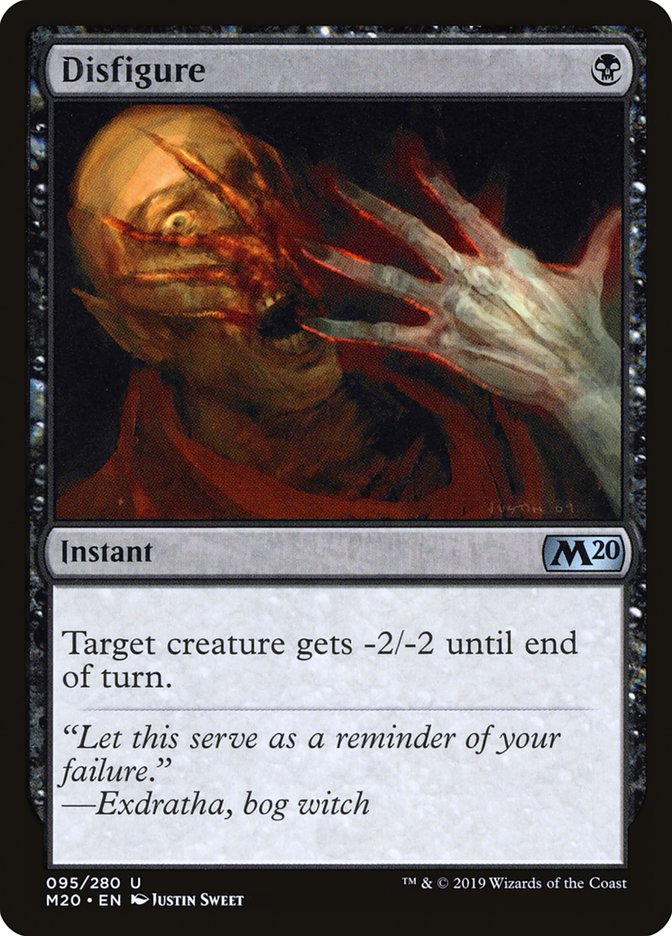
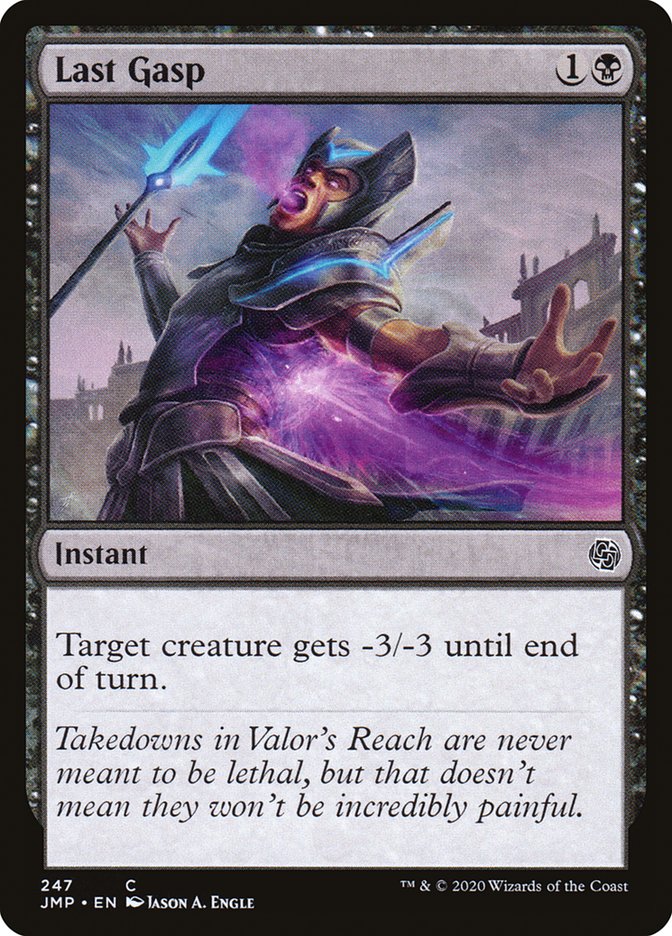
Every card listed also follows these two rules: They need to be playable at instant speed, and they have to mainly function as combat tricks. Cards like Disfigure and Last Gasp are certainly good as combat tricks, but their main purpose is as removal spells.
One card on this list possibly falls under this umbrella, but it was too good to pass up. All creatures with flash could be classed as combat tricks, but I’m only including ones that do more than just serve as blockers.
#45. Run Amok
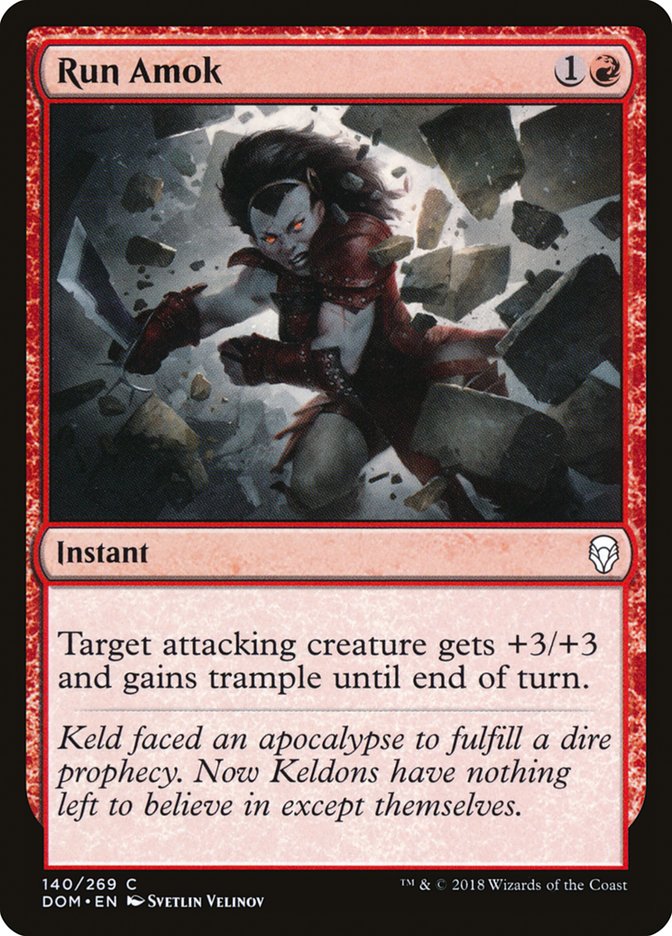
Run Amok is a very unassuming but powerful little spell. Red gets a lot of cards like this, like Sure Strike or Antagonize. They always play out fine, but Run Amok is a cut above the rest.
In its first appearance in Dominaria, Run Amok was powerful enough to make red aggro decks a thing in the field of slow, controlling decks that the format was known for. Trample was a big deal, it turns out.
All other tricks could save your creature in combat, but the extra chunk of damage on top was something that could win you games. Red decks in this format and Kaldheim where it saw a reprint always wanted this.
#44. Butcher’s Glee
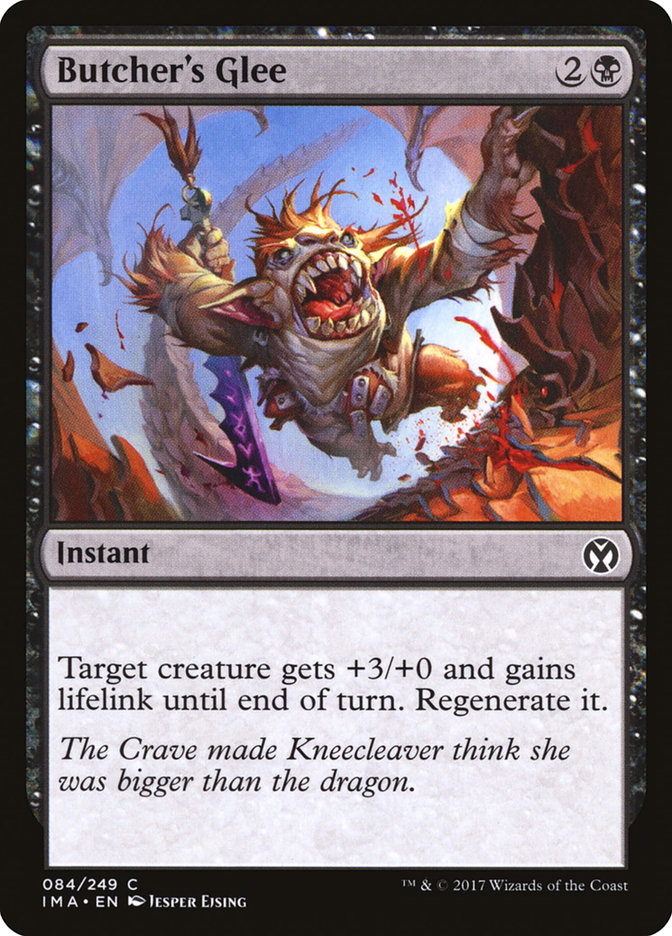
Trample is a great mechanic to help with races. On the opposite end of the spectrum, lifelink helps you survive them as well as win them. Butcher's Glee didn’t wow anyone when Dragons of Tarkir was first spoiled. The card had done its fair share of damage by the end of the format.
Black decks were very strong in the format and this played an important role in making that happen. Butcher's Glee ticks all the boxes: Your creature survives the combat and the lifelink along with the +3/+0 mean you often gain a huge chunk back and swing races in your favor.
Doubtful this card would hold up in a modern Limited environment, with cards like Give In to Violence falling flat in Duskmourn.
#43. Shelob’s Ambush
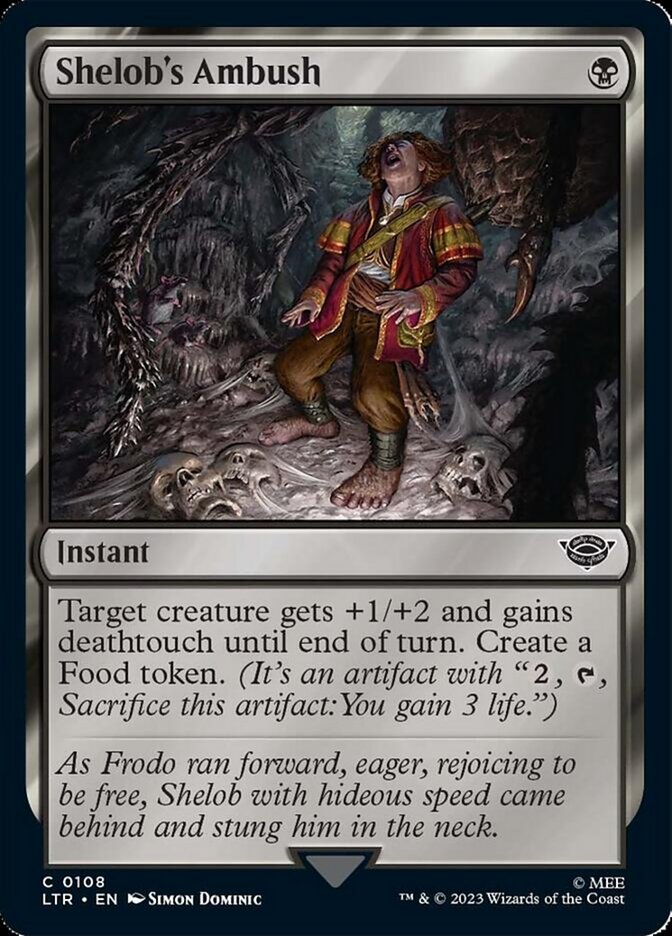
Black gets a lot of random deathtouch tricks, but none ever performed quite like Coat with Venom. This was incredibly efficient and easy to use at just 1 mana. What sets it apart from other similar cards is the +2 toughness boost.
Shelob's Ambush is the same card but also creates a Food token, putting it in strictly better territory. And as it turned out, the effect was a bit of a sleeper hit in Lord of the Rings.
#42. Wild Hunger
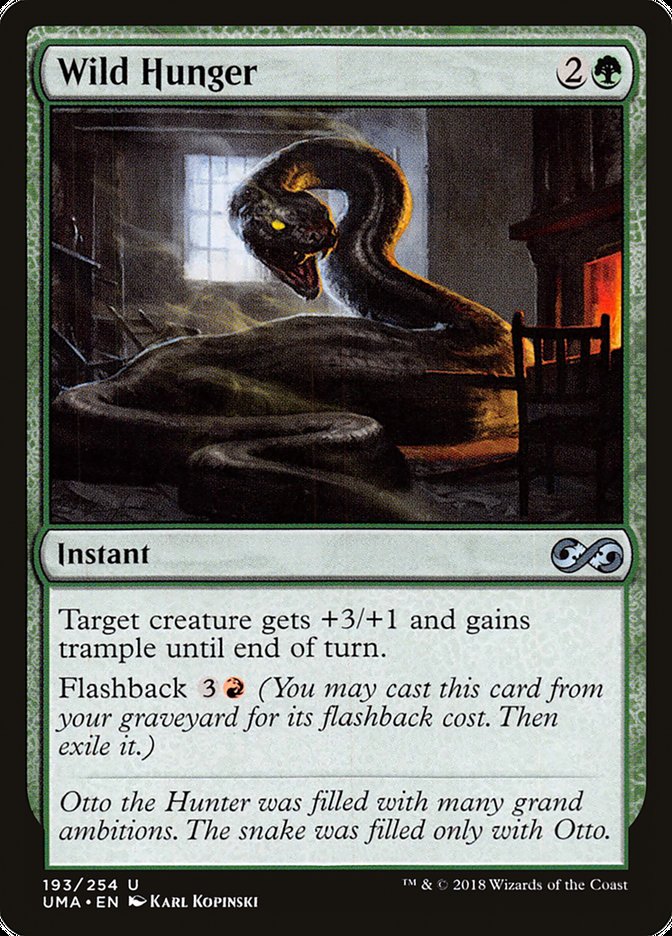
If you’re a bit crazy (like me), perhaps you loved when the individual small sets from three-set blocks were put onto Magic Online as Draft formats. If you did then it should be common knowledge that Wild Hunger was by far the best common in Dark Ascension Limited.
What? You’re saying that absolutely no one played that format? Fine. The card was still great when you drafted it alongside Innistrad for the simple fact that any combat trick you can cast twice is bound to be better than one you only cast once.
Quick shoutout to Sylvan Might, which would have been included if this list were longer.
#41. Wild Onslaught
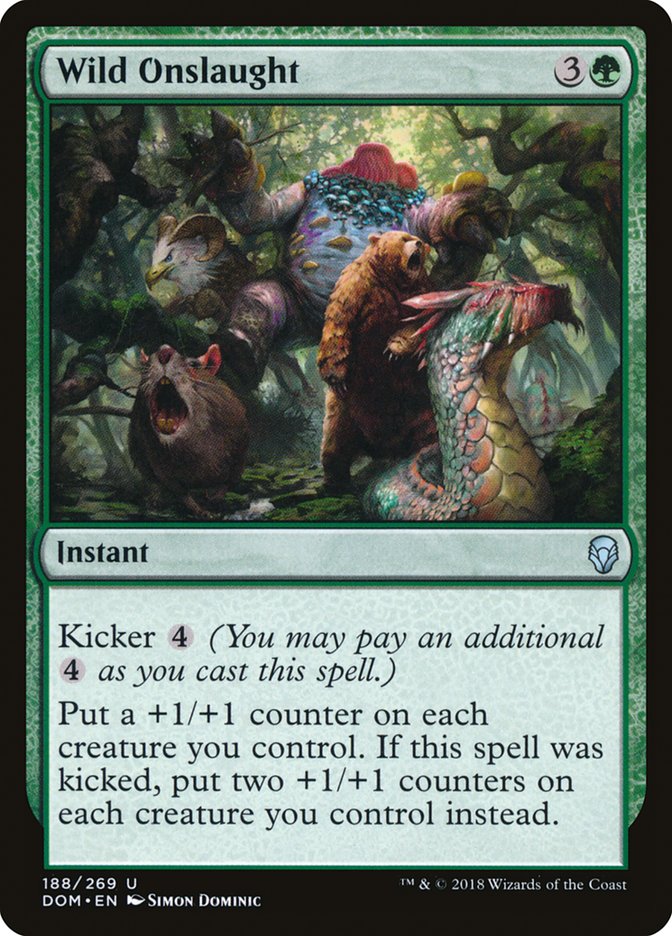
You won’t find many 8-mana combat tricks that are playable. Golgari () Saprolings was one of the two best decks in the Dominaria format alongside Izzet () wizards. You need something to pay you off for it when you have a deck that’s capable of putting several small creatures into play. Wild Onslaught was a very good answer to that depending on how lucky you were.
Sending in your entire team of 1/1s and throwing this down was a huge blowout. I can’t remember many instances of casting this without winning the game. The cost is far too much to make it functional beyond that, but it was still an exceptional card in its own set.
#40. Fight as One
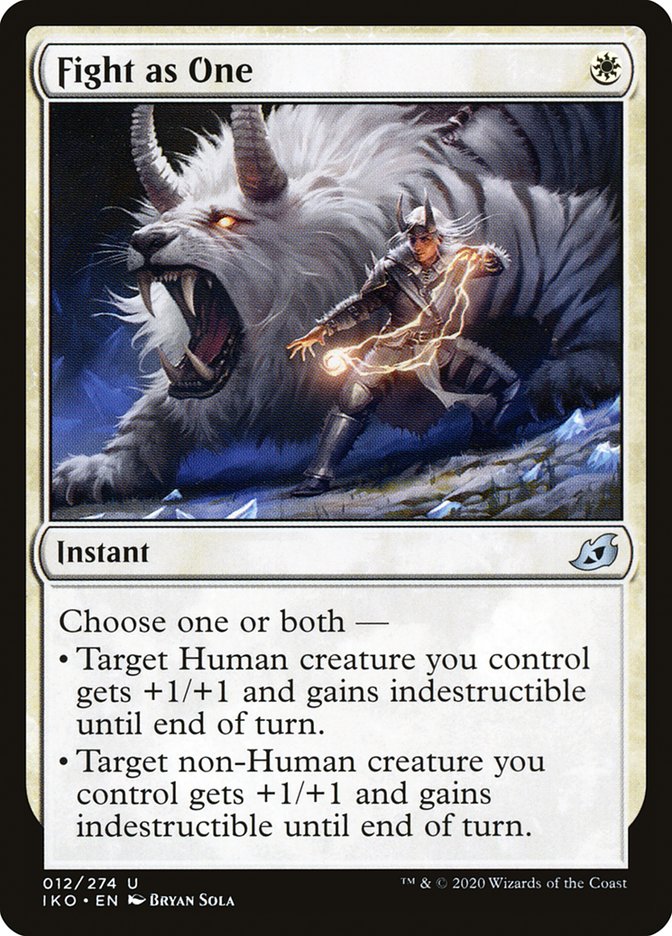
Ikoria was basically all about the cycling deck, the single most powerful Limited deck of all time. Even then, Fight as One was powerful enough to be relevant. It was very playable in that cycling deck as a white card, but it was also great in other decks in the format.
Combat tricks that can affect two creatures always look a little better than they perform, but granting indestructibility was huge. Having the functionality to protect just one creature if that’s all you needed was also great. I’ll say it again, costing 1 mana is a very big deal.
#39. Groundswell
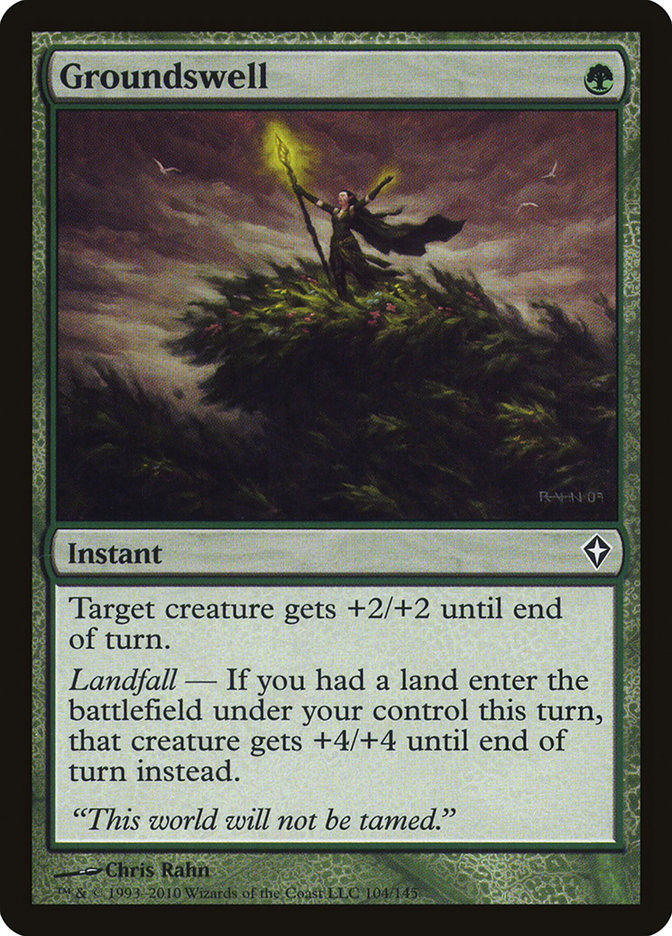
Zendikar Limited is one of the most aggressive formats ever seen, and Worldwake didn’t do much to curb that speed. Groundswell was a perfectly fine card in that format, but it really shines in Constructed.
You’ll notice a trend here, but this is one of the tricks that infect decks often use to get you dead quickly. Infect decks want to be as aggressive as possible, so they need their spells to offer the largest power buffs in a very short span of time. A near guaranteed +4/+4 for just 1 mana on turn 2 or 3 is enough for this to make the cut, but this won’t be the only card from that deck.
#38. Subtle Strike
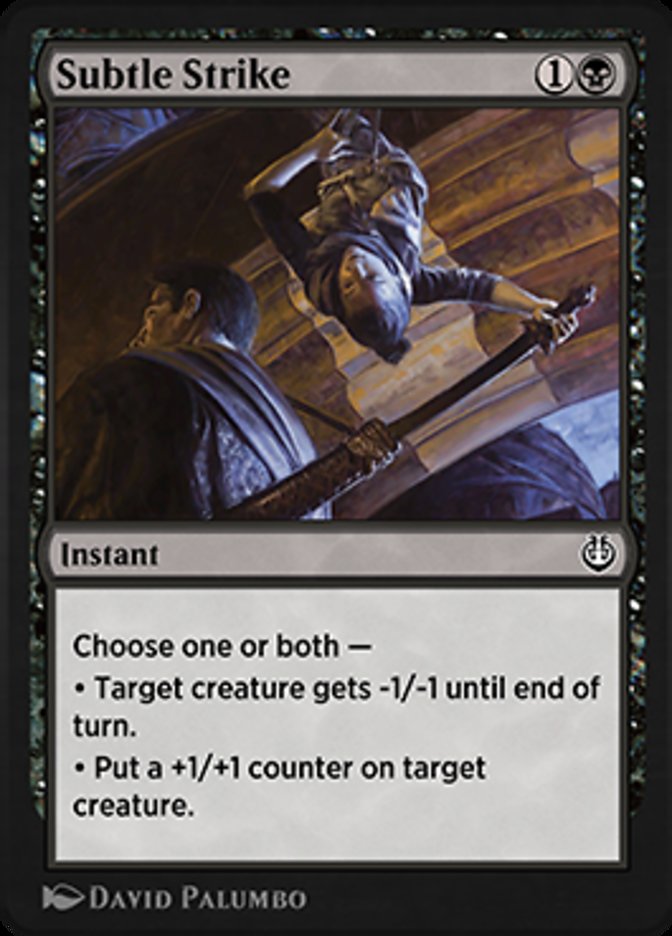
Subtle Strike is a funny one because it’s been printed twice so far. While it wasn’t good in Kaladesh (black just didn’t care about cards like this), it was very good in Zendikar Rising.
Combat tricks that leave behind something after they’ve resolved are always worth a second look. Given that this targets two creatures, it was often easy to set up two-for-one scenarios with it. Even if you just made your creature win a combat and killed a 1/1, that was a sweet play to make.
#37. Feat of Resistance
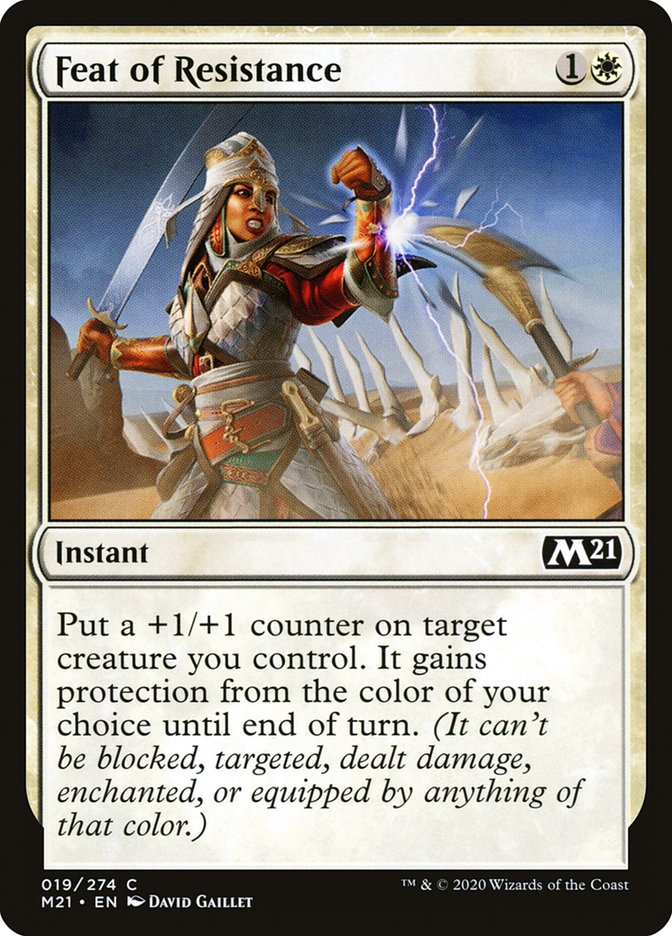
There are protection spells and then there are protection spells. Feat of Resistance certainly looked like nothing special when looking at Khans of Tarkir for the first time, but it became by far the best white common in the set.
Leaving behind a permanent buff is great, and the protection from a color lets you protect a creature for the turn with the potential to make your creature unblockable in some situations. This card played exceptionally, and by the end of the format, every deck wanted at least one or two in them.
#36. Take Up the Shield
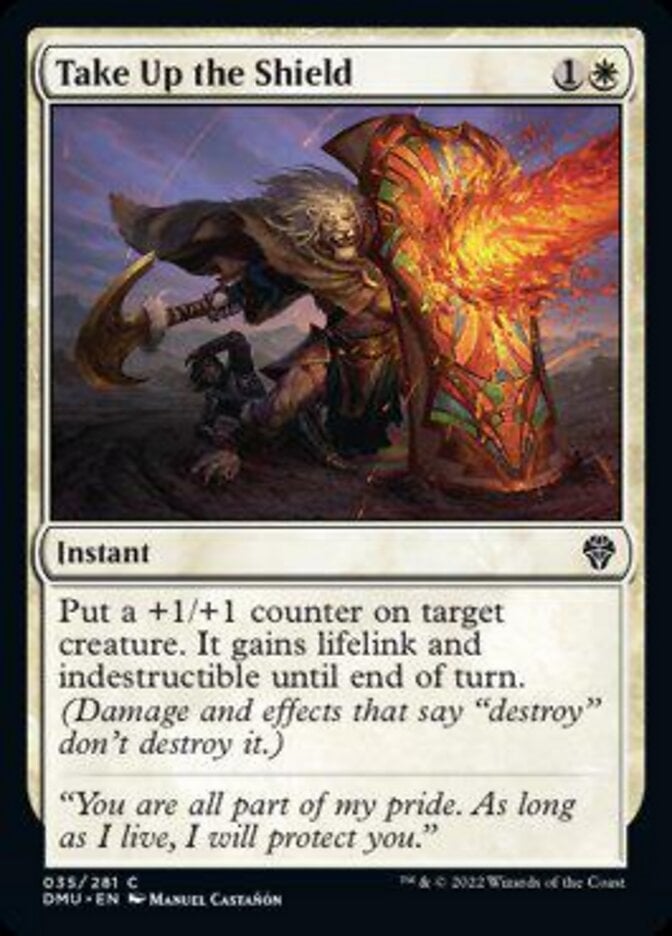
Following in the footsteps of Feat of Resistance, Take Up the Shield proved itself as the best white common in Dominaria United. The combination of this permanent buff plus a protective keyword is really great, but giving lifelink on top of that makes this a devastating trap to fall into.
It always felt bad when I ran into this, and I always assume that opposing white decks will have it available.
#35. Dive Down
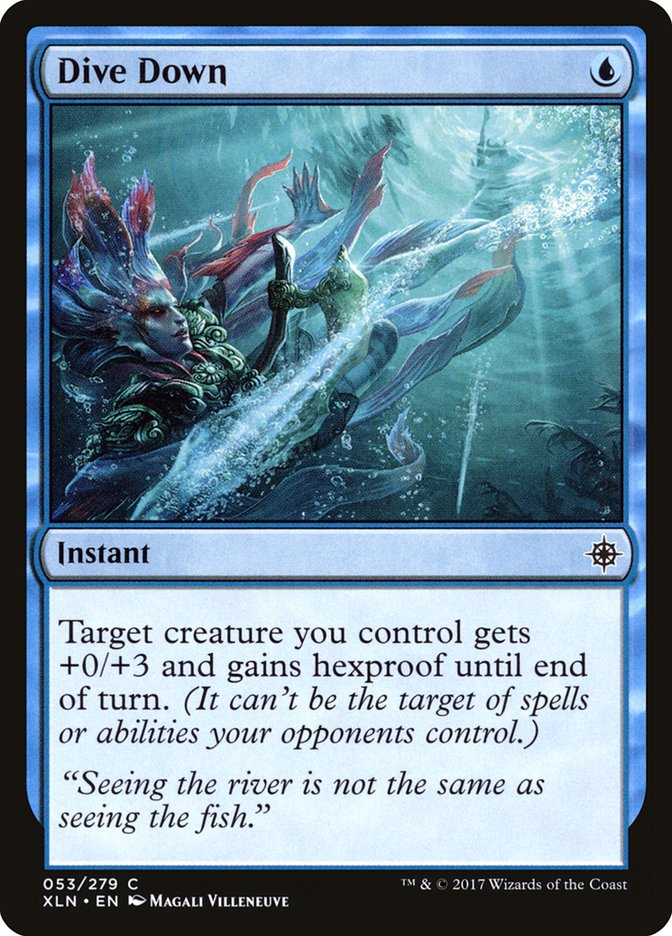
Ixalan was an incredibly aggressive set, and merfolk was one of its two strongest decks. Dive Down was a perfectly serviceable trick that you were happy enough to put in your deck, but this card mainly ranks highly because of its Constructed applications. Blue tempo decks really need ways to protect their creatures, and this is one of the most efficient answers out there.
It was mostly good in Standard, even being played as a playset in Autumn Burchett’s winning decklist at Mythic Championship I. These days, it looks like the card is seeing less play in the Pioneer versions of the deck because cards like Slip Out the Back and straight-up counterspells are more favorable. Still, Dive Down had its moment in the spotlight.
#34. Skulduggery
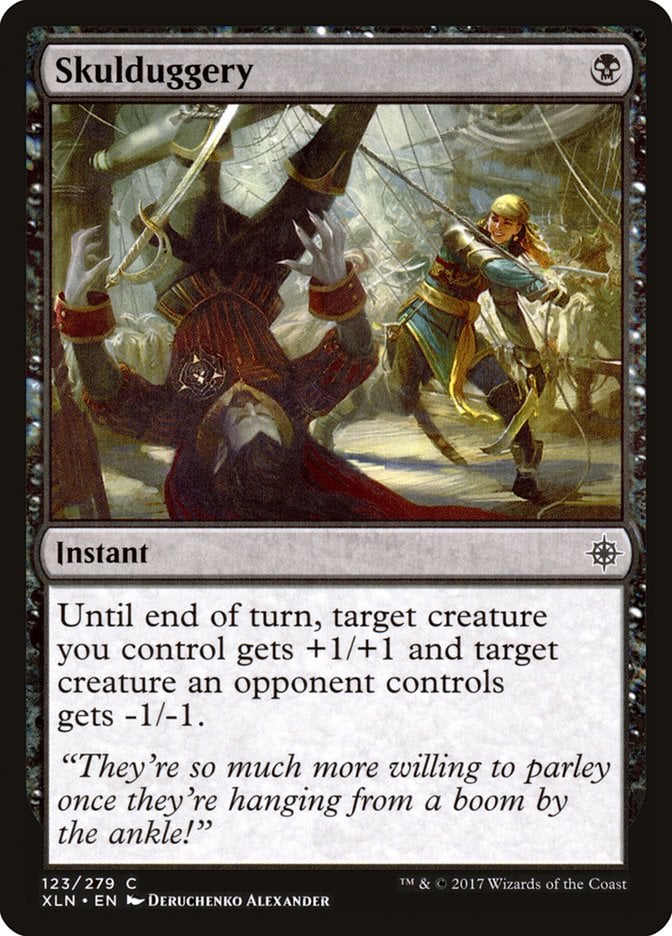
Speaking of Ixalan, the other best creature type to draft was vampires. I opened a great vampires deck in my Sealed pool at Grand Prix Liverpool in 2017 and managed to make Day 2 with it. Skulduggery was an incredible trick and one that this deck often wanted multiple copies of.
It had some obvious two-for-one potential, but it also cost 1 mana to make it incredibly easy to play on the same turn as a follow-up creature. On turn 4 you could attack with your 2- and 3-drop, use this to win the combat, and still play a 3-drop post-combat. It’s very similar to Subtle Strike, but this card’s power level is a testament to how good it is for your tricks to simply cost less mana. Unfortunately, it had a poor showing in Outlaws of Thunder Junction.
#33. Suit Up + Majestic Metamorphosis
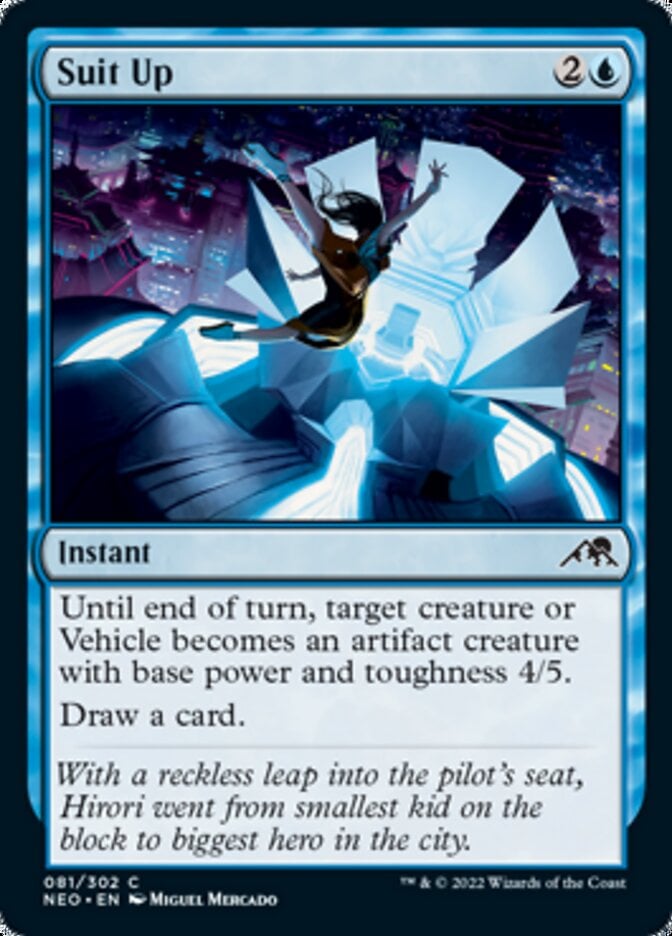
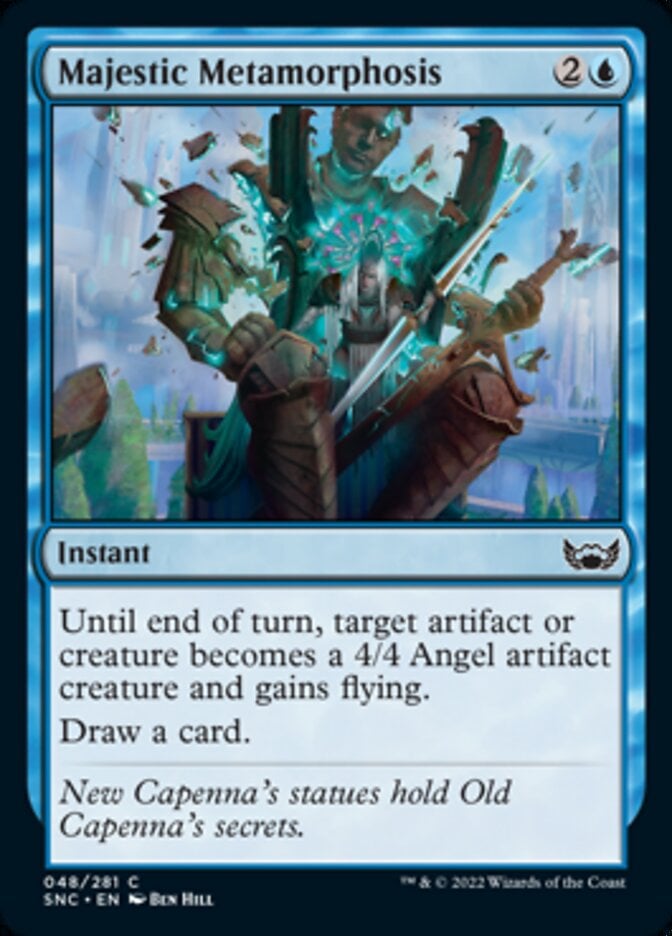
Suit Up and Majestic Metamorphosis are virtually the same and both are extremely good. Limited sets of this era have players blue’s best combat tricks between these and Startle. Blue isn’t usually an aggressive color, so it never needs tricks, and the few it has often suck.
Both cards changed that by adding a very simple line of text: “Draw a card.” The sweetest three words you ever see on a Magic card, and they turn what would otherwise be a terrible card into the best combat tricks that blue has ever had.
#32. Startle
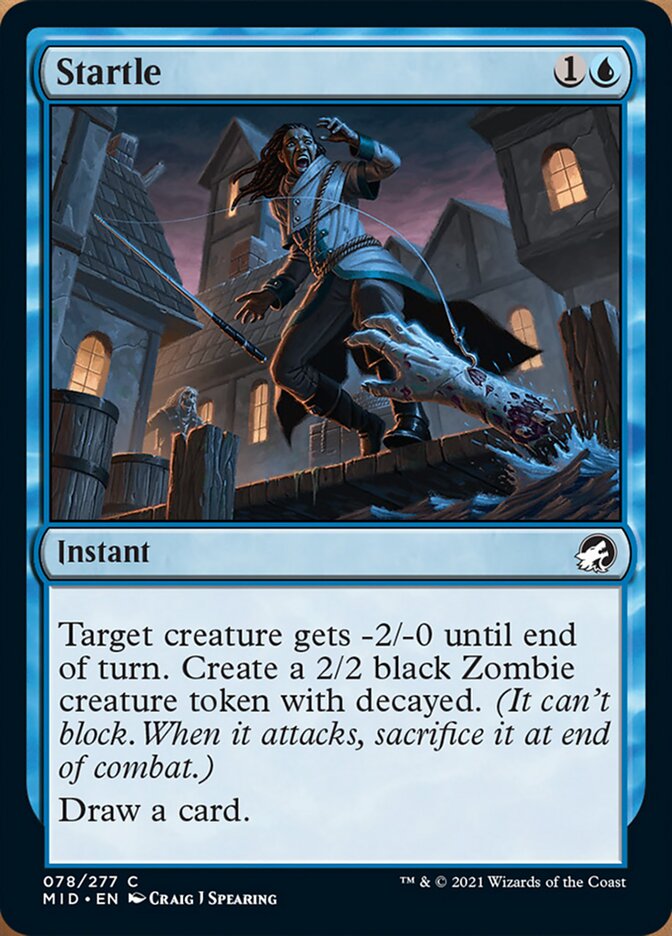
I was always a fan of cards like Zulaport Duelist and Faerie Duelist, but you could never be too certain that the negative power was going to be enough to win you a combat. Chilling Trap was also great, but it needs a fair bit of setup to get working.
Startle goes way beyond all of that. A 2/2 decayed Zombie token plus an extra card is a much more valuable payoff than a measly 1-power creature. You may need access to another creature to get the combat trick going, but you’re never disappointed to just cycle this and make the 2/2.
This is the best combat trick that blue has ever had. Fight spells and bite spells were needed for green to have a shot at good removal, so this is hopefully what blue’s combat tricks will look like from now on.
#31. Pride of Conquerors
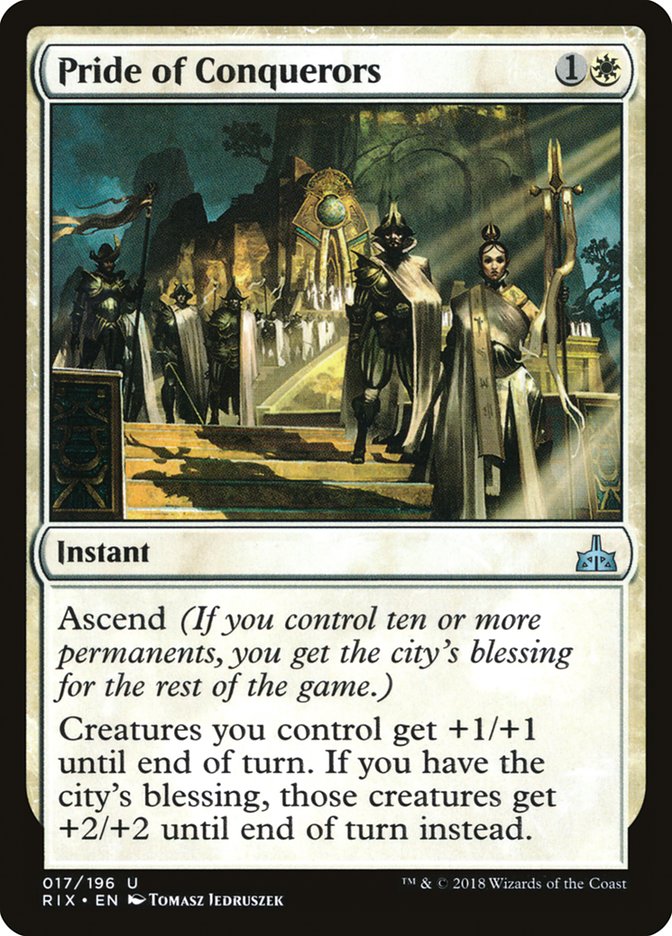
I had such a lousy time with Ixalan Limited that I didn’t want to play any Rivals of Ixalan at all. I saw Pride of Conquerors be a huge blowout many times on stream, though. It also saw a bit of play in Standard.
The key is simply that Inspired Charge is a fine card, but it becomes exceptional when you make it stronger and cut the cost in half.
#30. Dreadmaw’s Ire
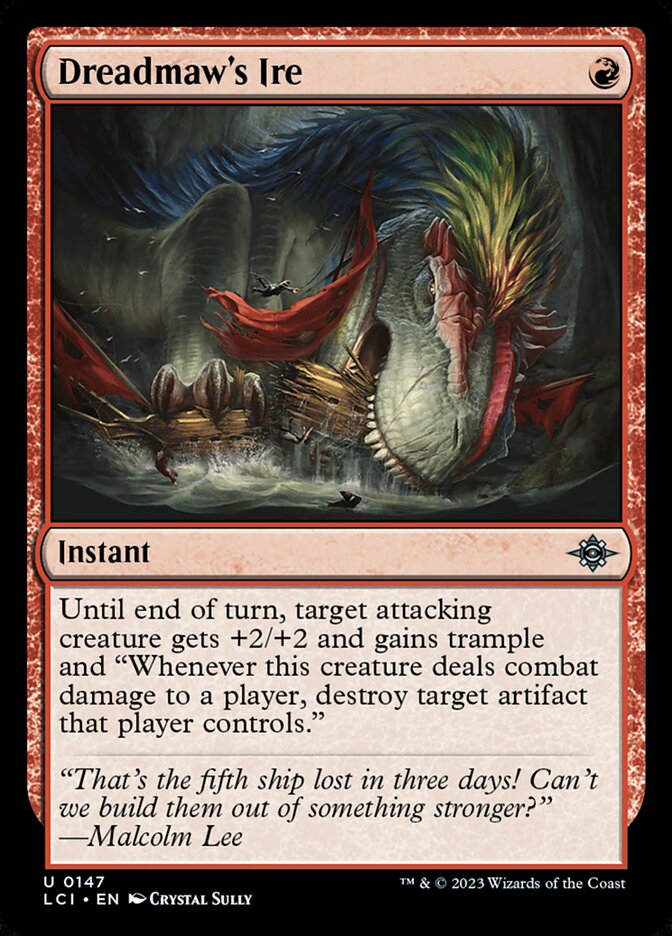
Giving +2/+2 and trample is very efficient as a combat trick, because you can save your creature and even push some damage. The fact that you can destroy an artifact sometimes is what propels Dreadmaw's Ire further. There’s always some good artifact lurking around, from equipment to vehicles.
#29. Overprotect

What doesn’t Overprotect do? Paying just 1 mana more than the classic Giant Growth gives your creature trample, hexproof, and indestructible. A nice, clean design that can operate both on offense and defense.
#28. Requisition Raid
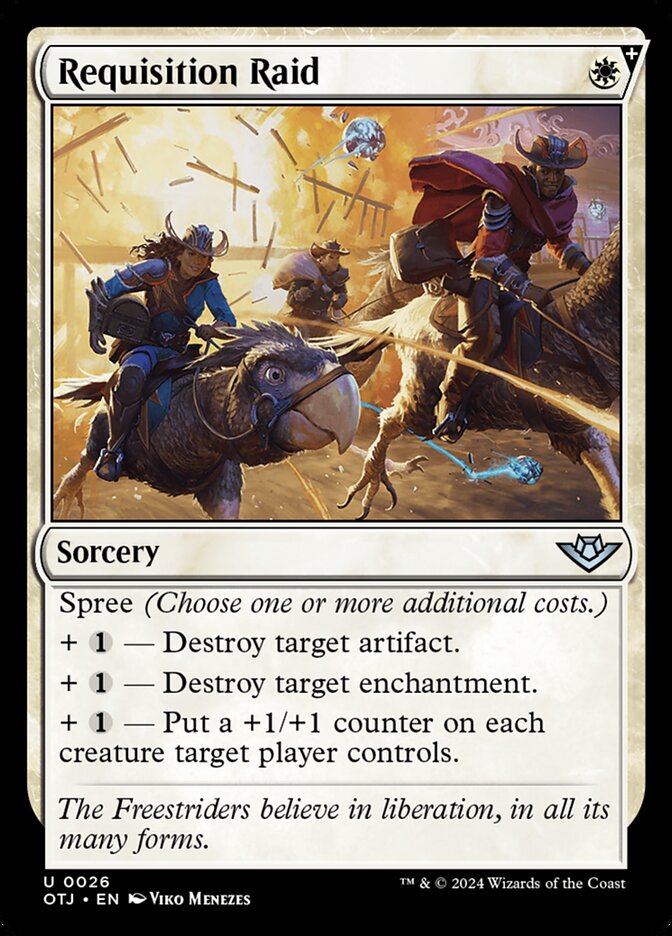
Comparing it to Wild Onslaught, the base mode is just better on Requisition Raid, giving +1/+1 counters to all your creatures for just 2 mana. This modal spell is a permanent-killing machine, so it’s much easier to justify including it in your deck. Here, 4 mana gives you a three-for-one, most of the time.
#27. Vines of Vastwood
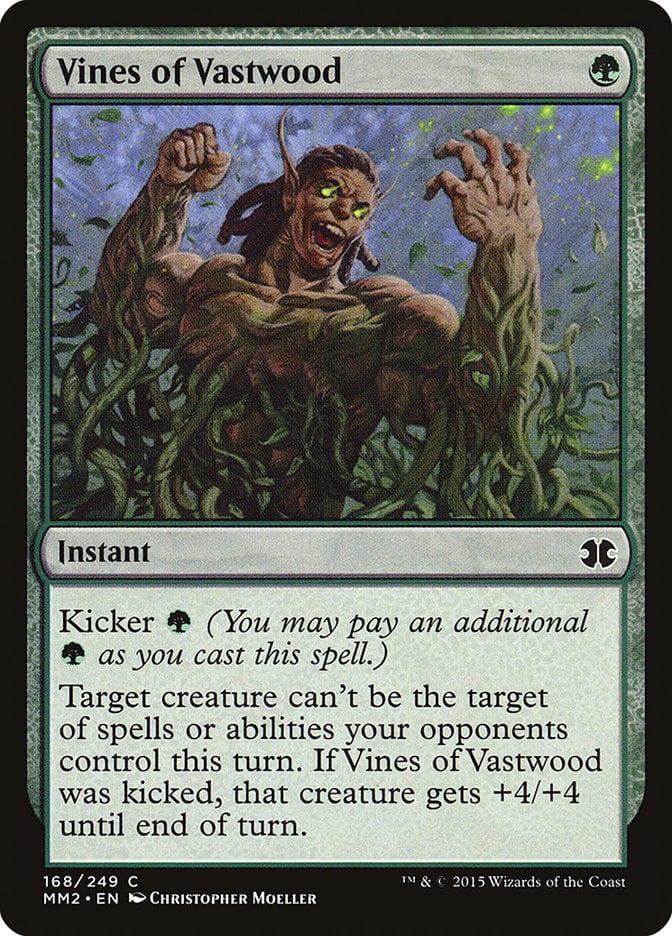
Vines of Vastwood is another popular infect spell. One mana to protect your creature is fine, but not too exciting. Two mana to do that and get +4/+4 on top is huge.
Infect decks would really prefer their power buffs to all be 1-drops, but this one is powerful enough that an exception is often made for it.
#26. Drogskol Shieldmate
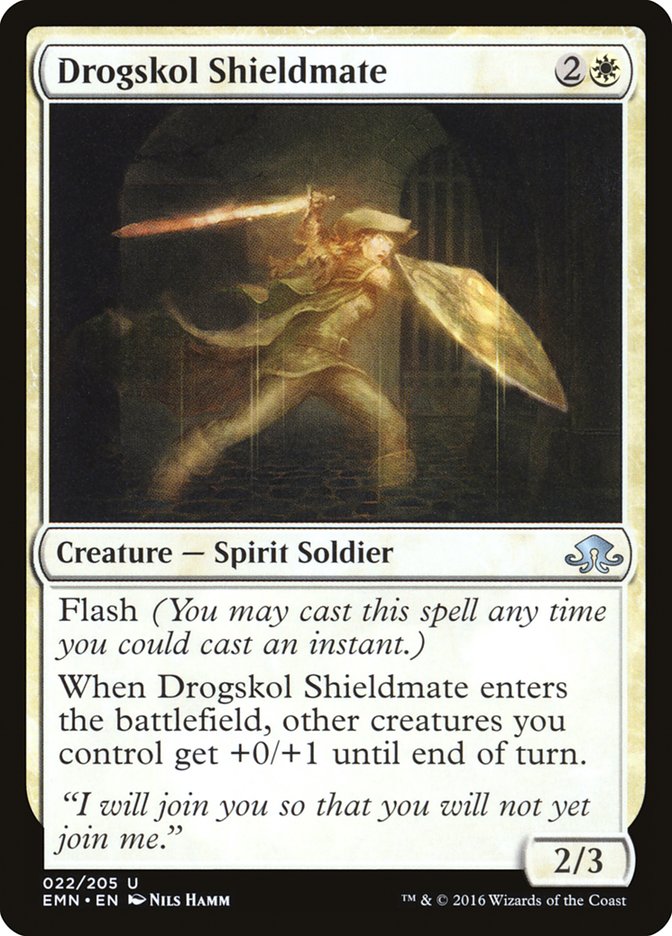
+0/+1 is the absolute bare minimum that a card needs to do to qualify as a combat trick, but sticking that as an ability on a flash creature and granting it to all creatures is more than enough to make a viable card. You have to put some work in to make Drogskol Shieldmate work, but the floor is that you have a 2/3 flash creature for 3 mana.
Even if you don’t get to blow out an opponent in combat, the failsafe is perfectly fine.
#25. Heron’s Grace Champion
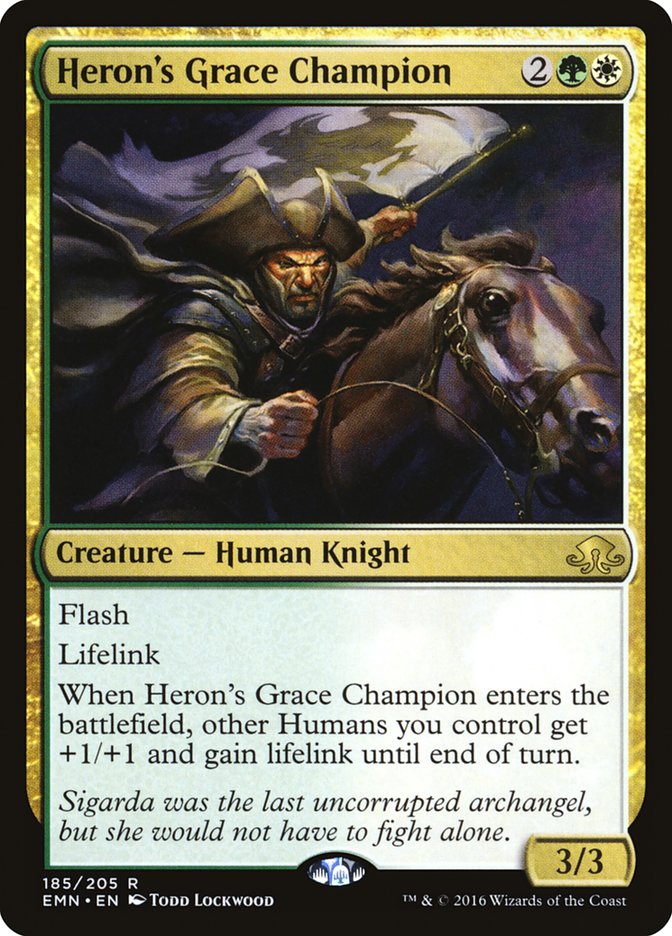
If lifelink tricks are good, then a trick that has and gives lifelink to all your creatures has to be broken, right? I don’t remember much about Eldritch Moon Limited, but I remember the only thing holding this card back was the quality of humans around it. Other Draft decks were better, particularly the emerge Eldrazi decks.
That said, Heron's Grace Champion is one of the most swingy bombs you’ll ever come across, and it’s one of the (cough) rare instances of a bomb rare being a functional combat trick. It saw a bit of play in Standard, but it was mainly a great Limited bomb and one of the few cards likely to pull you into humans.
#24. Prismatic Strands
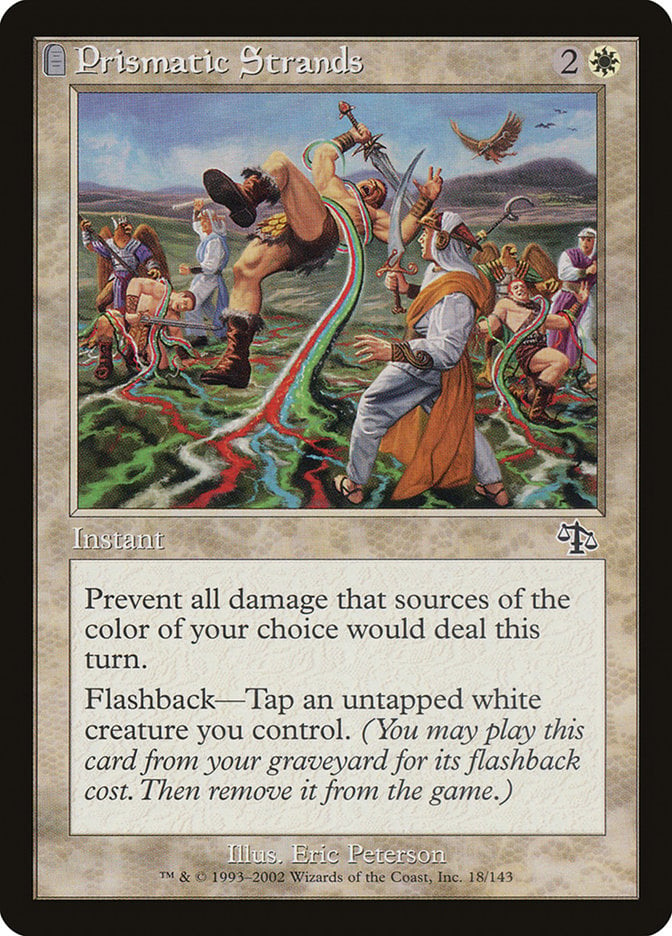
Prismatic Strands is a classic of the Pauper format. There, the decks tend to be mono-color most of the time, or a heavy color with a light splash. If you’re fighting mono-red with mono-white, giving all your creatures protection from red is huge, winning combats for you and protecting your creatures from red burn. What’s more, you get to do it again just by tapping a single white creature. It’s also game-winning if you need to push damage since they can’t block in most cases.
#23. Zealous Persecution
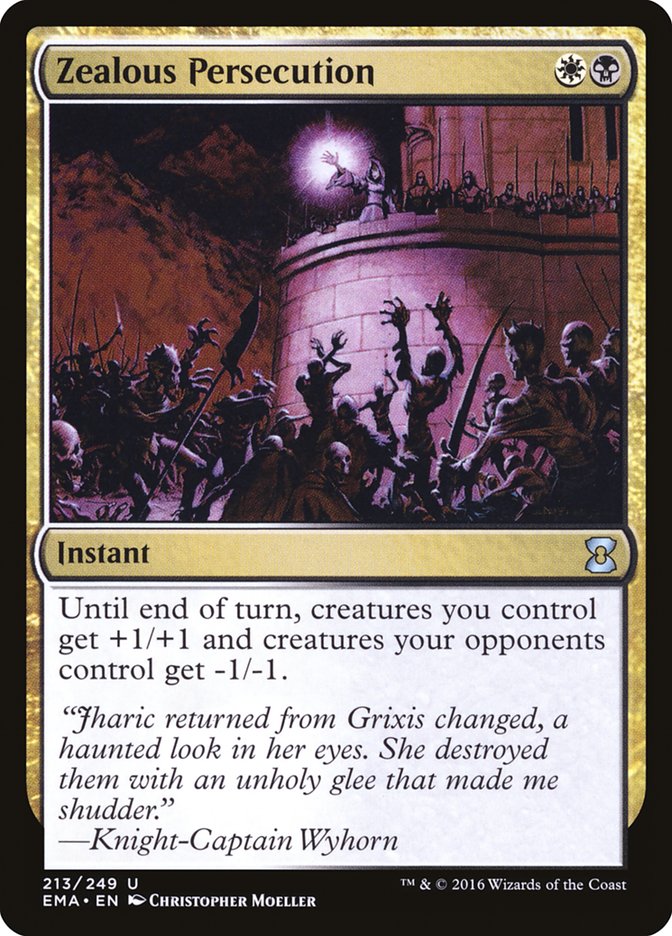
In a very similar vein, Zealous Persecution is a much stronger card. This was a huge blowout in Limited, but it also saw a lot of Constructed play. I used to play a lot of Orzhov () tokens, a deck that has sadly disappeared from the Modern metagame but was once top-tier in the format.
Zealous Persecution was a good card all round, letting you overrun with your army of tokens, but it was also the best card in mirror matches by often letting you wipe your opponent’s board while hitting for double damage with yours.
#22. Prepare // Fight
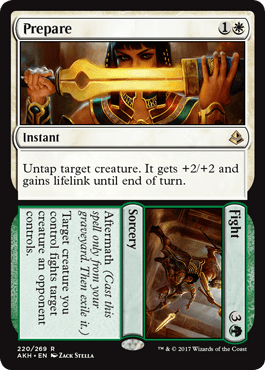
Few good combat tricks are at higher rarities. They’re designed for Limited, not Constructed, so they really ought to be put at rarities that let players encounter them more often. Thankfully, Prepare // Fight isn’t uncommon, otherwise Amonkhet Limited would have been even less fun.
White was already the best color in Amonkhet, and the set was extremely aggressive. You always wanted combat tricks, but this trick lets you untap a creature that you previously exerted, letting you bypass the mechanic’s downside.
It’s very simple as far as combat tricks go, even though it’s strong. Throwing in a fight spell on top of that is far better than simply drawing a card. You just need to be committed to two colors to make full use of it, but you were often still happy playing this in Azorius () or Boros () to just use the Prepare side.
#21. Destined // Lead
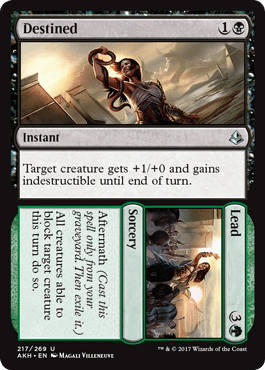
All I remember about Destined // Lead is that if you ever saw it, you wanted to take it. There were so many applications for it.
You could use it as a combat trick early, then use Lead in the late game to divert attention away from the rest of your team and kill your opponent. You could also wait until you can cast both sides in the same turn and wipe your opponent’s board with a single big creature, perhaps getting some extra damage in at the same time.
The fact that Destined is a perfectly fine combat trick by itself means that you have a card that will at least be able to trade for one card. At best, either win you the game outright or hit your opponent with a Plague Wind, and that’s an incredibly strong package overall.
Deathtouch creatures rule with this card around.
#20. Briarhorn
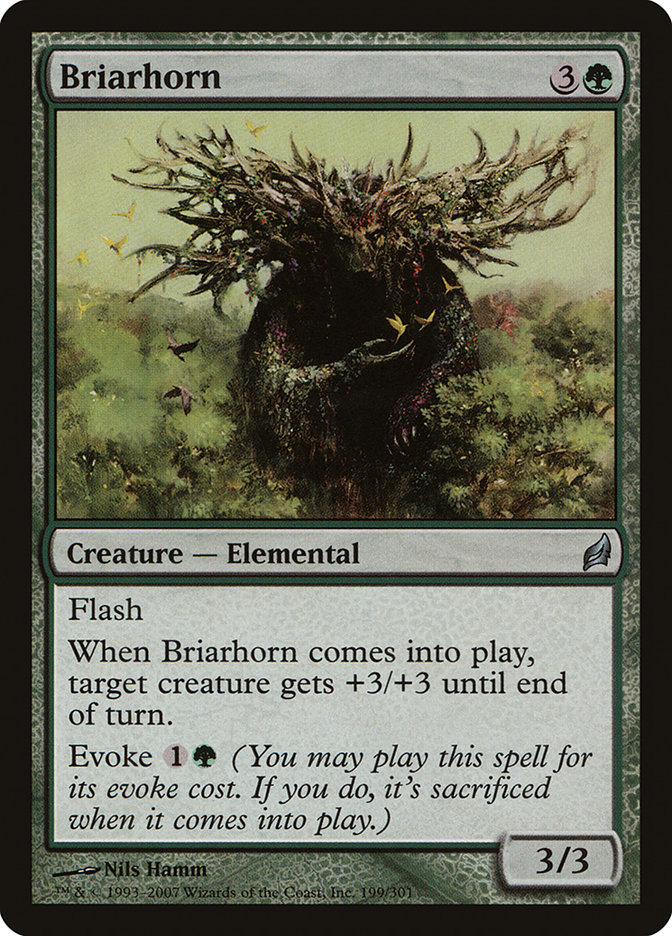
Briarhorn is the best combat trick ever printed for Limited. Take anything I ever used to say about Briarpack Alpha and add in the extra mode of being a +3/+3 trick for 2 mana. Extra options make cards better!
#19. Wildsize
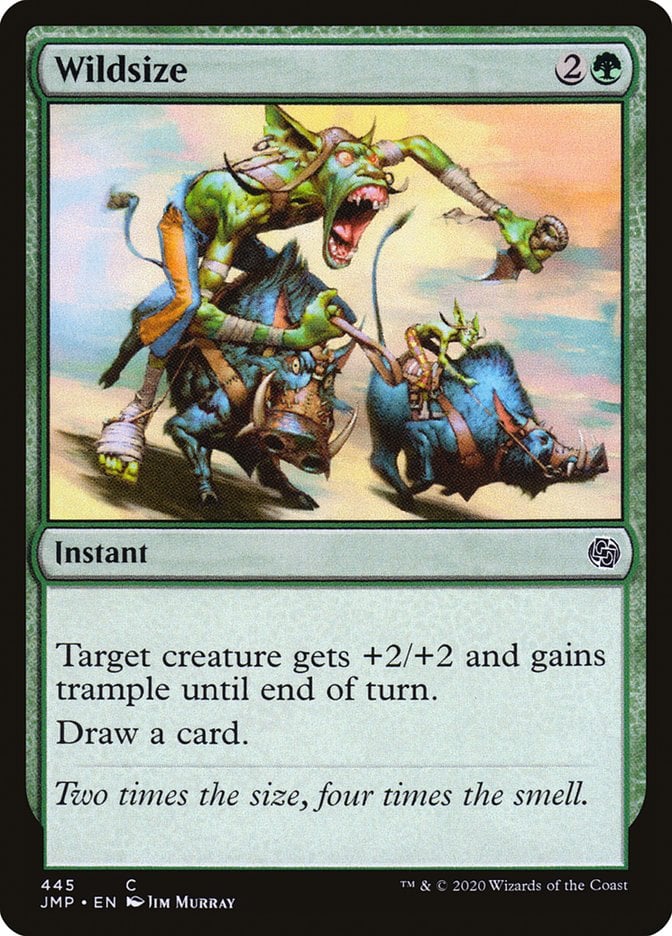
Wildsize is the ultimate simple combat trick. Trample and +2/+2 make it a little worse than other cards, but it’s a big deal that Wildsize can draw you a card. If you need to just use it as a cantrip, go ahead.
When you attack and throw this down against a blocker, you’ll be getting one of the easiest two-for-ones in the game along with at least a few points of trample damage to sweeten the pot. Wildsize is in every non-rare Cube that I make as one of the best Limited combat tricks of all time, and it always performs well.
#18. Tyvar’s Stand
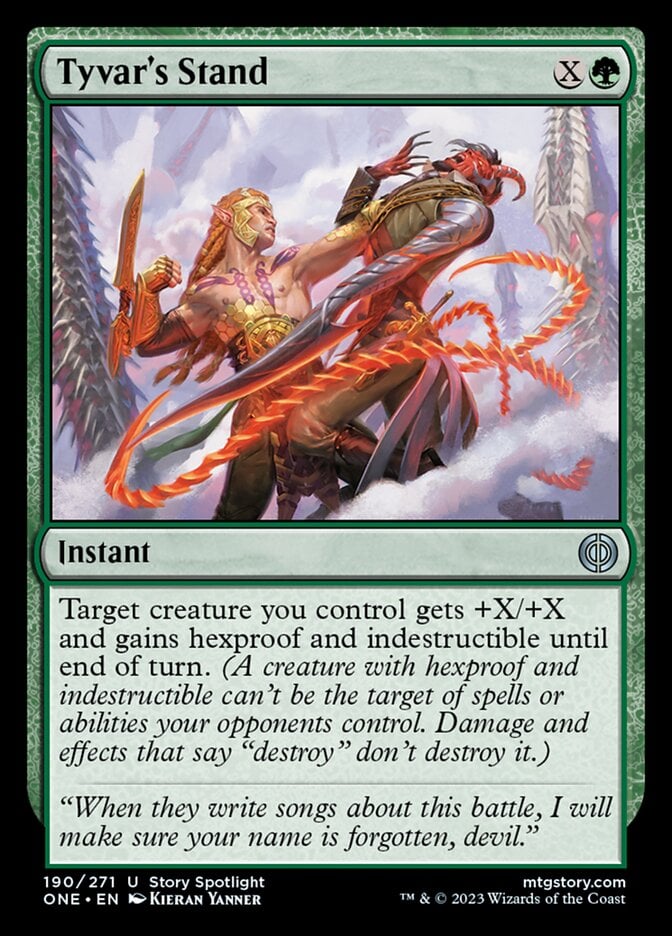
Tyvar's Stand is a very flexible green instant. On one hand, you can simply give your creature indestructible and protect it from removal, while also triggering mechanics like heroic for 1 mana. It gets much better if you have mana to spare, almost a win condition on its own.
#17. Karametra’s Blessing
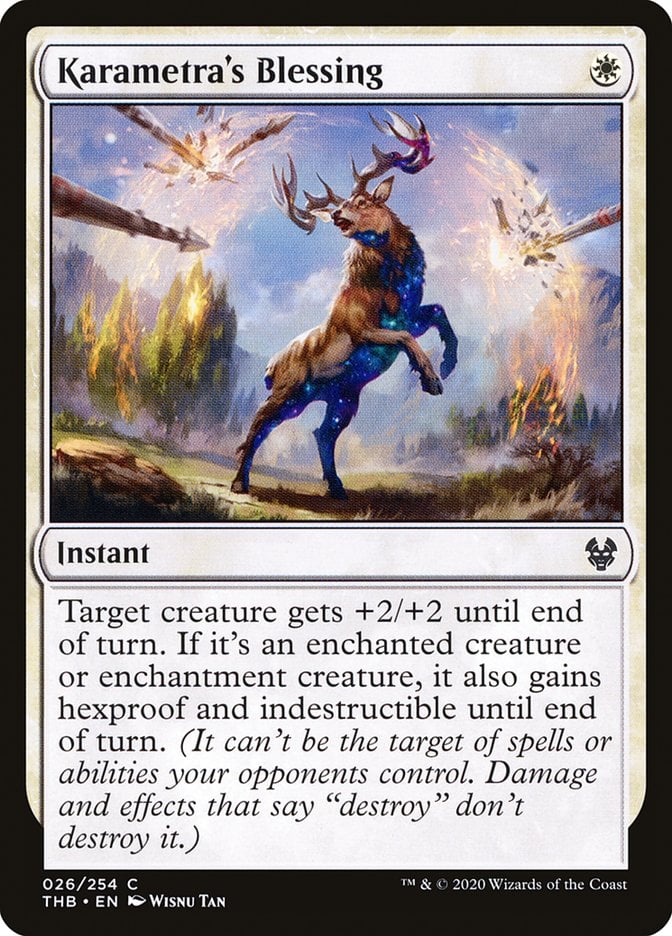
There are a few different white spells that give +2/+2 for 1 mana and protect your creatures sometimes, but Karametra's Blessing is by far the best of the bunch. Hexproof and indestructible protect from so much that if your deck is full of enchantment creatures or auras, you like having this. Bogles decks particularly love this.
The modern versions don’t need hexproof, but indestructible still protects from board sweepers. This really shines in the Historic and Pioneer auras decks, where four copies of this card were seen all over.
It was also exceptionally strong in the Theros Beyond Death Limited environment. Removal was cheap and efficient, making it even more necessary to protect your best creatures.
#16. Trash the Town
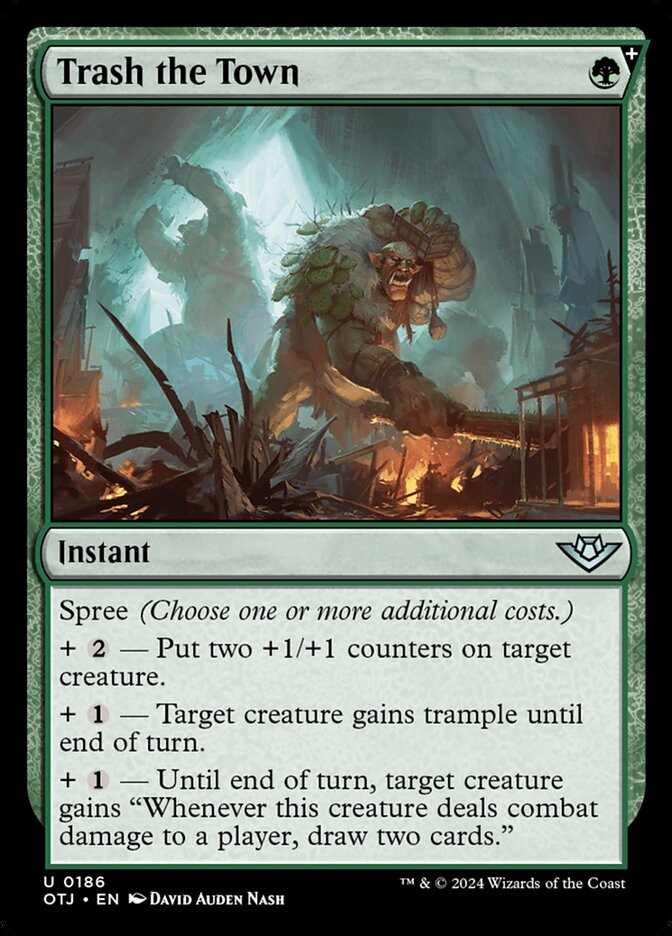
What I like most about Trash the Town is that it can pay you in cards for what you already want to do: attack with a big trample creature. Yes, 5 mana is a big investment, so you won’t get all the modes at the same time, but one or two are already a fine deal for this green card. In decks already benefit from dealing combat damage or with +1/+1 counters, this card is a steal.
#15. Ghor-Clan Rampager
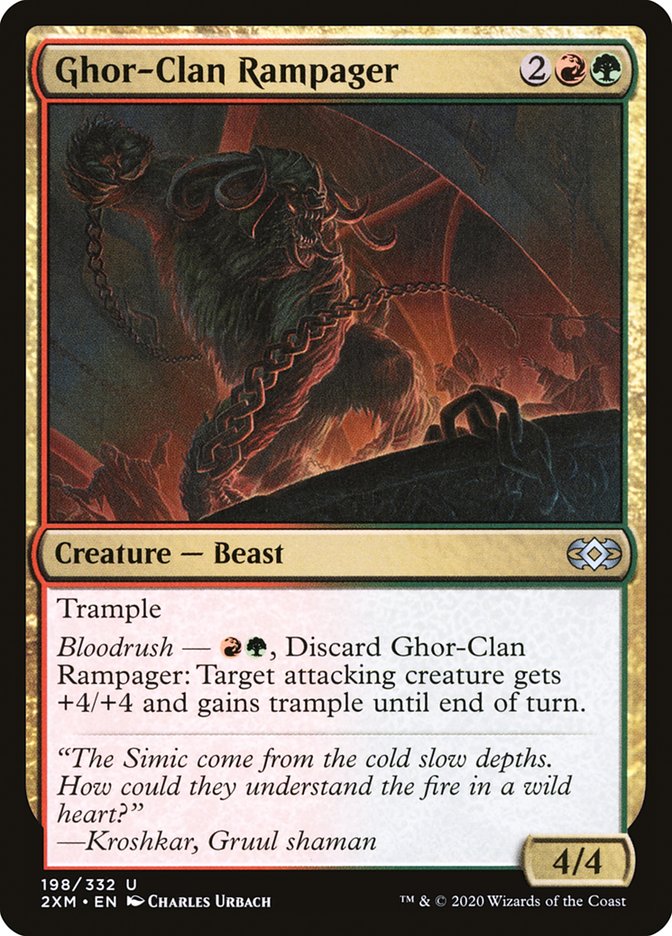
You can’t have a list of the best combat tricks ever without mentioning bloodrush. The mechanic is literally designed to turn your creatures into combat tricks. Many of these were playable, like Rubblebelt Maaka and Slaughterhorn, but one of them stood out among the rest: Ghor-Clan Rampager.
Colossal Might is a decent card at just +4/+2 with trample, and Run Amok snuck onto the list with +3/+3. A +4/+4 combat trick plus trample for only 2 mana is an absurdly good deal. What puts this over the top is the functionality of also being able to play it as a 4/4 trample creature for 4 mana. More options are always a good thing in Magic.
Neither mode of this card is quite good enough to see Constructed play on their own, but the combination made this a powerhouse in Standard and even a little bit in Modern. Ironhoof Boar looked pretty good in Neon Dynasty, but this is the card it really wishes it were.
This card was a Modern staple in aggressive decks like Zoo for all the reasons cited above.
#14. Blossoming Defense Variants
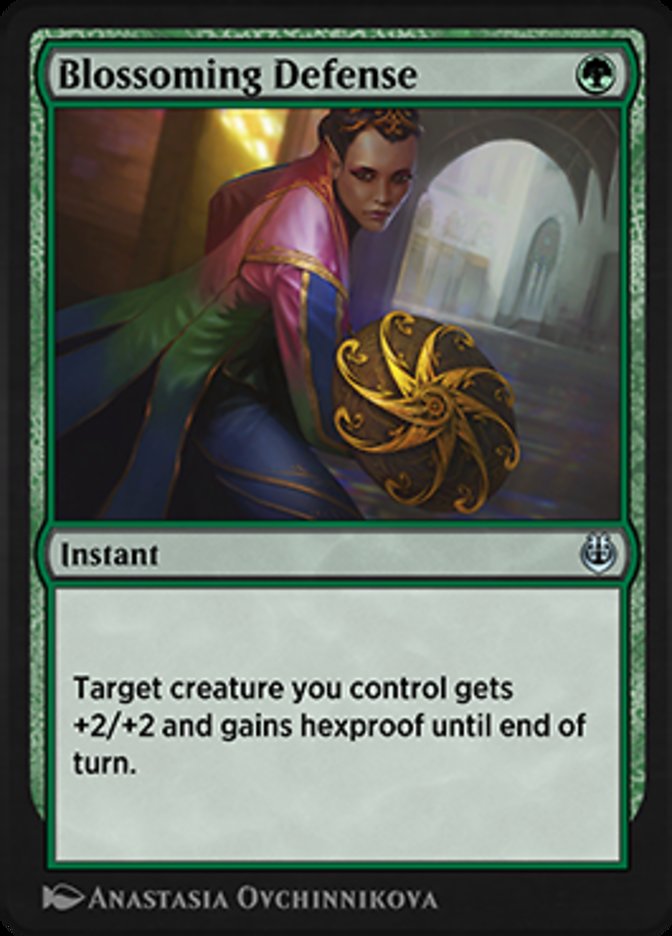
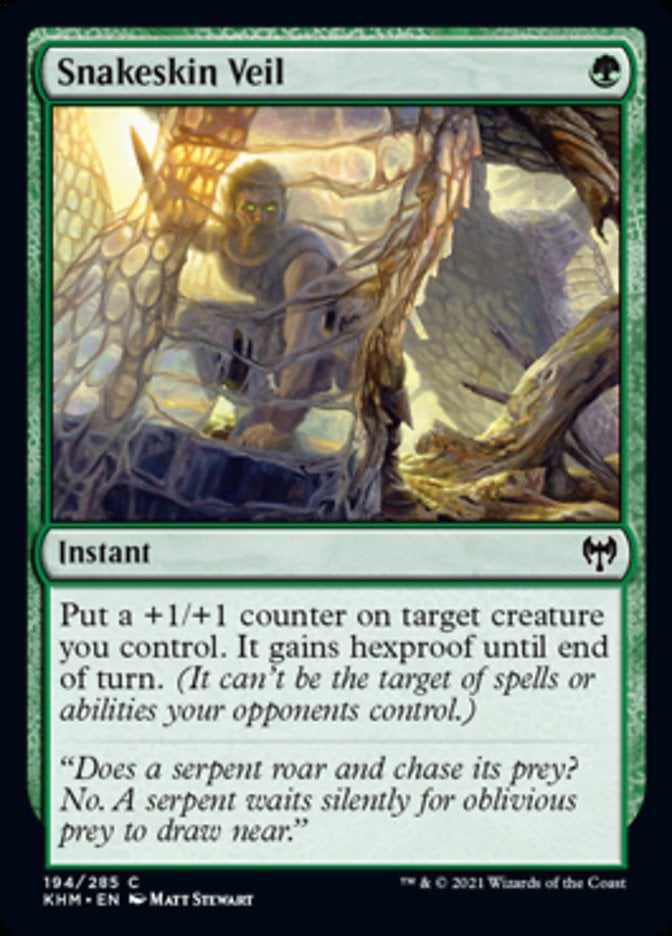
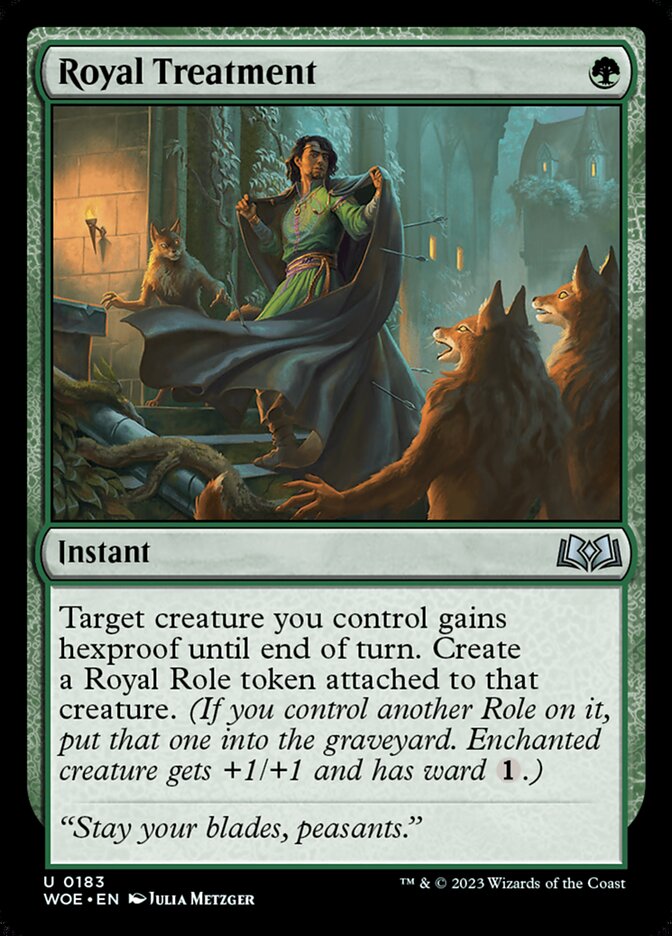
When Kaladesh launched, players had already seen Ranger's Guile and it had never quite hit the mark. Giving hexproof for 1 mana was good, but the +1/+1 was never good enough to make it a worthwhile combat trick. Enter Blossoming Defense, a card that immediately made its presence known.
This was a very playable card in Kaladesh Limited as both a combat trick and a protection spell, but it was also a powerhouse in Standard. It paved the way for better cards, like Snakeskin Veil, Royal Treatment, and Defend the Rider.
#13. Boon Satyr
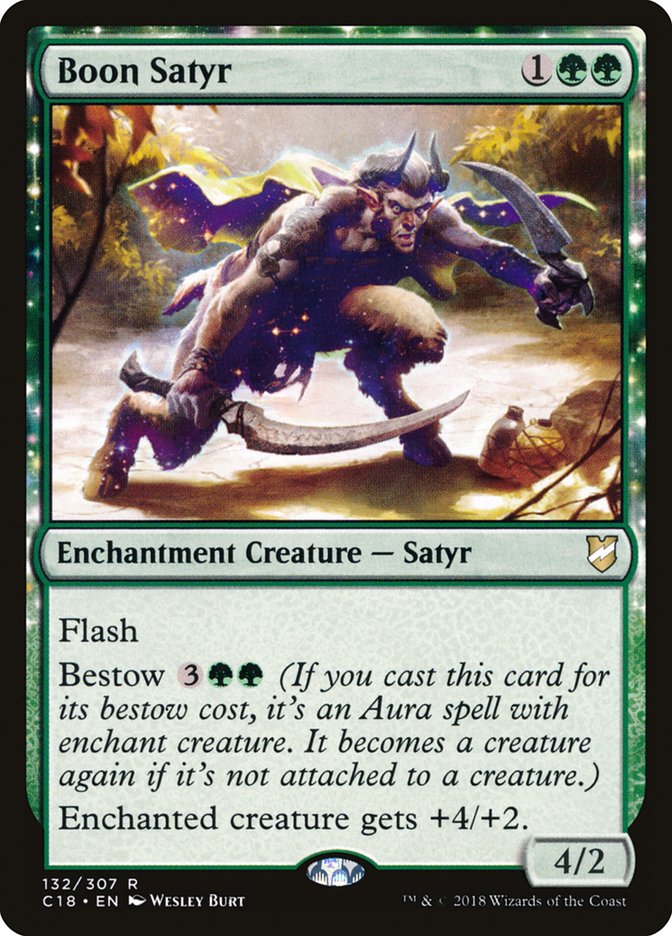
Boon Satyr is a personal favorite. When everyone in Standard was running Gruul () Monsters (which this card was also good in), I turned to Simic () Flash, where this card was absolutely outstanding. It was a great combat trick and a 4/2 flash creature, but you also had the option to bestow one end of turn, then untap and bestow another to come swinging in for about 12 damage out of nowhere.
Boon Satyr was always busted in Limited. Five mana is a lot to spend, but you got a permanent trick plus a 4/2 creature, which was well worth the cost you paid. It held up in Pioneer Masters, though it wasn’t surrounded by modern-day cards there.
#12. Celestial Armor

Celestial Armor is very reminiscent of Maul of the Skyclaves, a powerful rare equipment from MTG’s past. Celestial Armor has the same casting cost and flash, and it even protects your creature the turn it enters. Watch the surprise on your opponents face while you blank their removal and create a game-winning threat just with a single card.
#11. Monstrous Rage
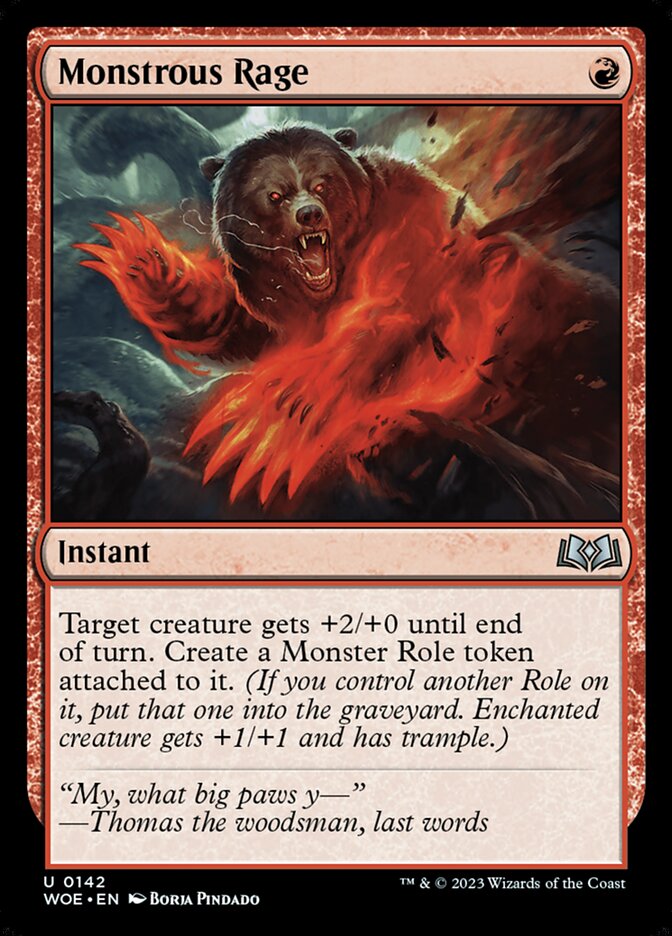
Monstrous Rage does too much on its own for just 1 mana. You’ll give a creature +3/+1, and after that it gets +1/+1 and trample permanently. +4/+2 if we’re talking prowess creatures, or if we’re triggering heroic, not to mention the possibility of double strike. This red instant can be a mini Embercleave, and it’s no surprise that it’s been a mainstay of Constructed red aggressive decks.
#10. Invigorate
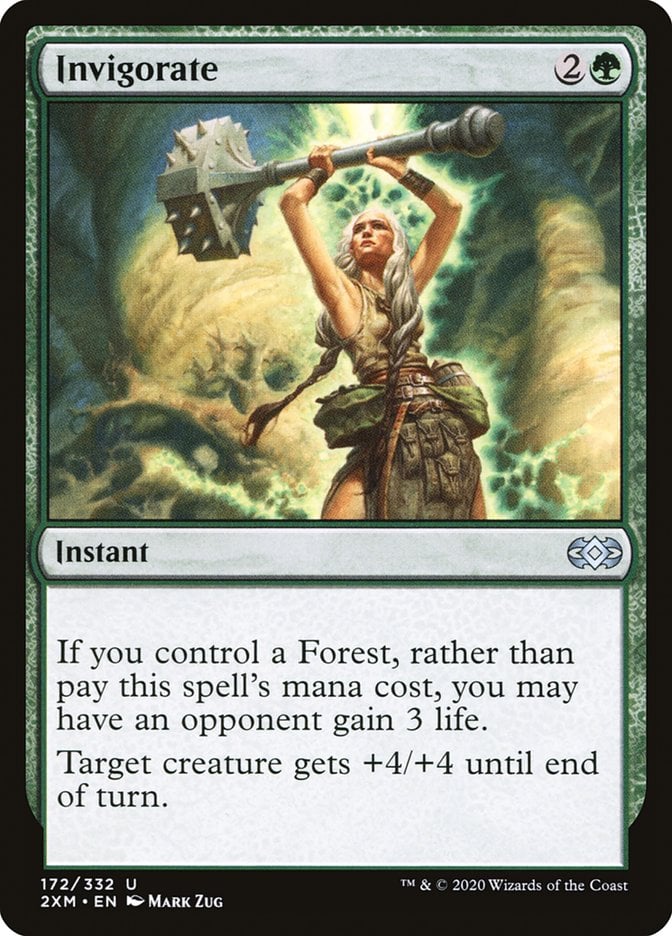
Invigorate is one of two spells that’s here entirely because it’s free to cast. One of the core themes of Mercadian Masques block was free spells. It’s what brought bangers like Gush and Daze. It also gave players Invigorate, which was always a strong card in Limited although it didn’t do much else.
That is, it didn’t do much until infect. If infect decks are happy playing Groundswell, a 1-mana spell that gives +4/+4 about 80% to 90% of the time, you’d better believe they’re happy with a 0-mana +4/+4 with literally no downside.
#9. Revitalizing Repast / Old-Growth Grove


On its own, Revitalizing Repast is just a Snakeskin Veil kind of card. But this is just one of the MDFC’s faces, so having this effect tackled to a dual land in relevant colors is so much better. Old-Growth Grove fixes your mana when you need lands, typically early in the game, and late it can save one of your best creatures.
#8. Timberwatch Elf
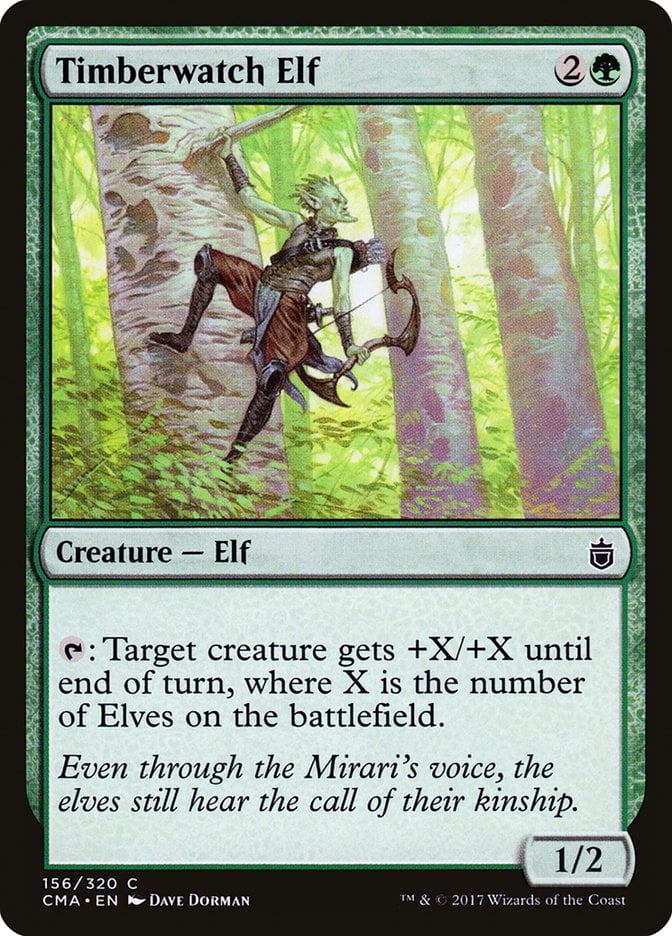
There are few typal payoffs in Limited that are as busted as Timberwatch Elf. If it’s giving anywhere near +5/+5, your creatures are just unblockable. What’s worse is that knowing there’s a huge buff going somewhere, your opponent has to be able to block everything coming at them or risk taking a big hit to the face.
If you have five elves in play and attack with the other four, the Timberwatch Elf buff can always go onto the unblocked creature when your opponent only has three blockers. This card is so powerful that it’s a big reason to draft elves in Onslaught block.
Above all else it’s a big reason to play elves in Pauper. You’ll regularly be able to grant +10/+10 and you even untap it with Quirion Ranger in that format. This card is just disgusting.
#7. Consume Strength
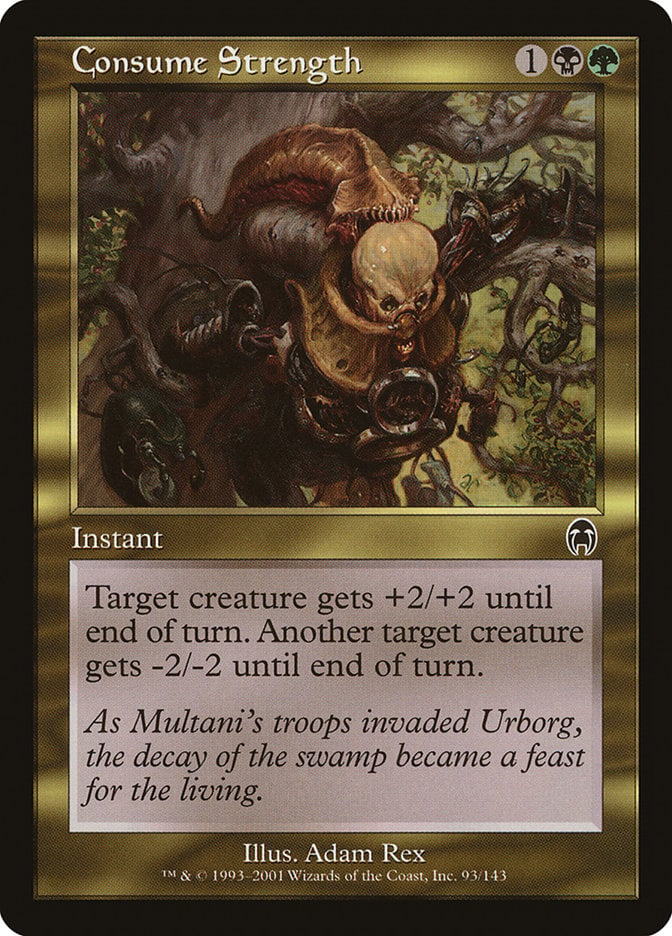
The Invasion block was the first block of sets to focus on multicolor themes, so you’d better believe they’d jam black and green together to make a removal spell that’s also a combat trick. Like Wildsize, Consume Strength is so easy to use and get value out of that it earns a high rating.
You can combat trick your guy and kill a creature in the process or use the -2/-2 on their blocking creature to trade up for something bigger. You can also use it to combat trick through two of your creatures. It’s just awesome. Cankerous Thirst is very similar, so this spot is basically for both.
#6. Mutagenic Growth
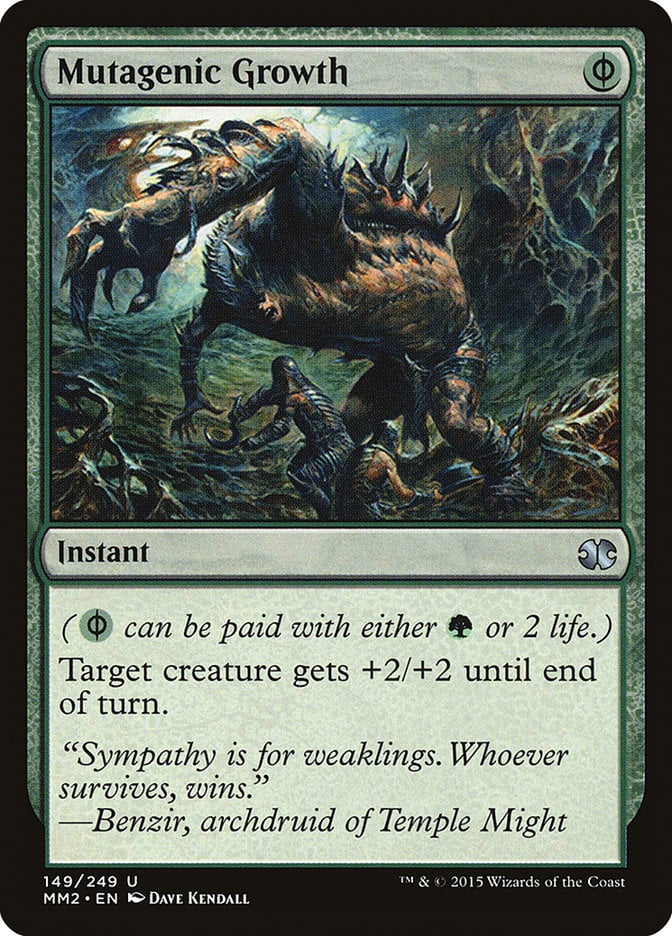
More free spells! Pretty much every mechanic that gives you 0-mana spells has been a mistake to print, and this is no different. Mutagenic Growth was fine in Limited because you can never see it coming, but it has also seen play in a variety of decks across all the Eternal formats, especially in infect.
These days, you’ll most often see it in the prowess-focused decks of Modern and Pauper. It’ll keep popping up all over the place as long as it remains legal.
#5. Temur Battle Rage
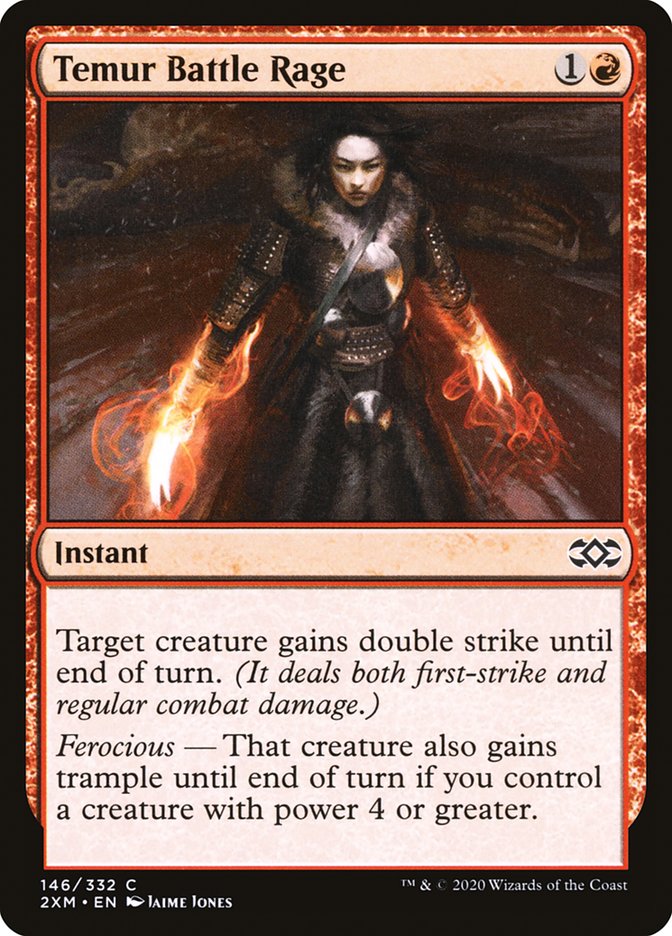
Sometimes cards are printed that do just the right amount of stuff to get nudged right into the Constructed playable bracket. Double strike and trample on a 2-mana combat trick makes you kill in one hit through blockers if your creature is big enough. In the case of Death's Shadow, it often will be.
Temur Battle Rage was legal in Standard alongside Become Immense, which turned into a Splinter Twin-style 2-card combo to throw down a ton of damage out of nowhere for very little mana. It doesn’t see anywhere near as much play anymore, but all it might take is the right meta shift to put it right back.
#4. Become Immense
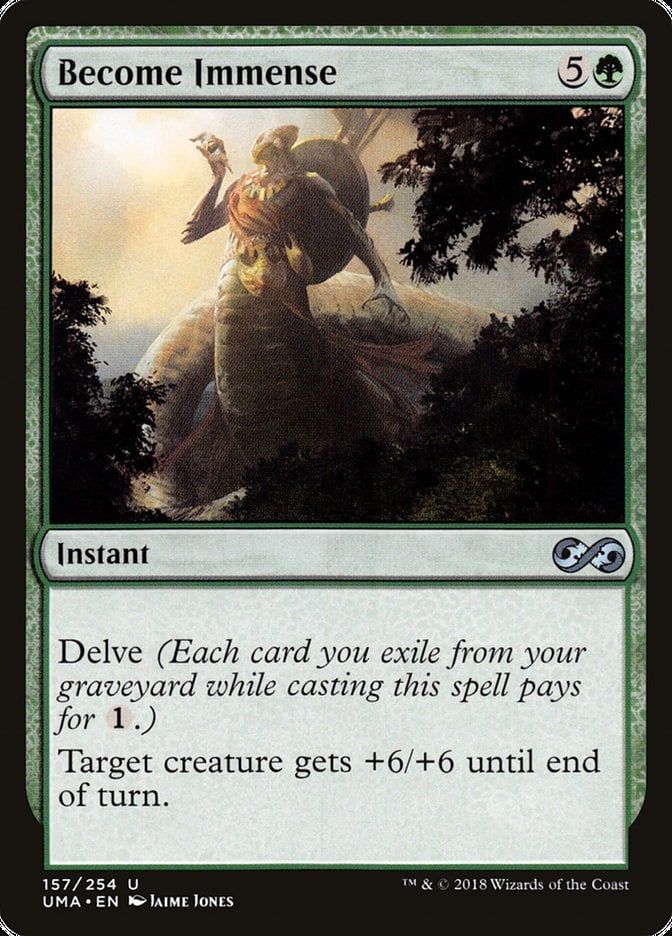
Giant Growth is no longer good enough to make this list. The question is, how big of a buff does a spell have to give for 1 mana to be considered playable? I’ve listed a +4/+4, Gaea's Might is a +5/+5 (though not consistent enough to be featured here), but Become Immense is a whopping +6/+6.
As soon as it was printed players started to brew with it and figure out if it was viable to get the five cards into the graveyard that you needed to delve with it. It was easy thanks to cantrips and fetch lands in the older formats, and this card has seen play in all sorts of different strategies.
It’s used most notably in infect and alongside Temur Battle Rage as a combo kill. Any better than this would probably be too good.
#3. Berserk
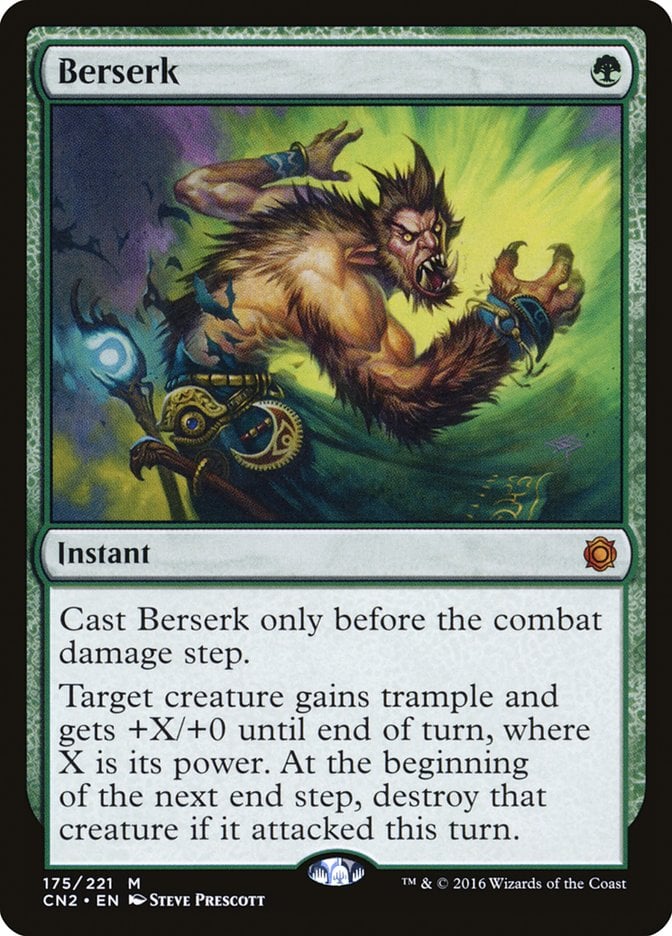
Berserk is a classic. It used to see play alongside Hatred, mimicking the sort of combo Temur Battle Rage and Become Immense create. Berserk has become one of the only reasons you’ll be likely to sit across the table from an infect player in a Legacy tournament.
Doubling your creature’s power and giving it trample is a big swing, especially when you’re only looking to get up to 10 power to win. It’s also randomly functional as a way to kill an attacking creature, as long as you can survive one hit of double the damage.
This is very similar to Temur Battle Rage, but it’s more playable because it costs half as much and is in a more favorable color.
#2. Embercleave
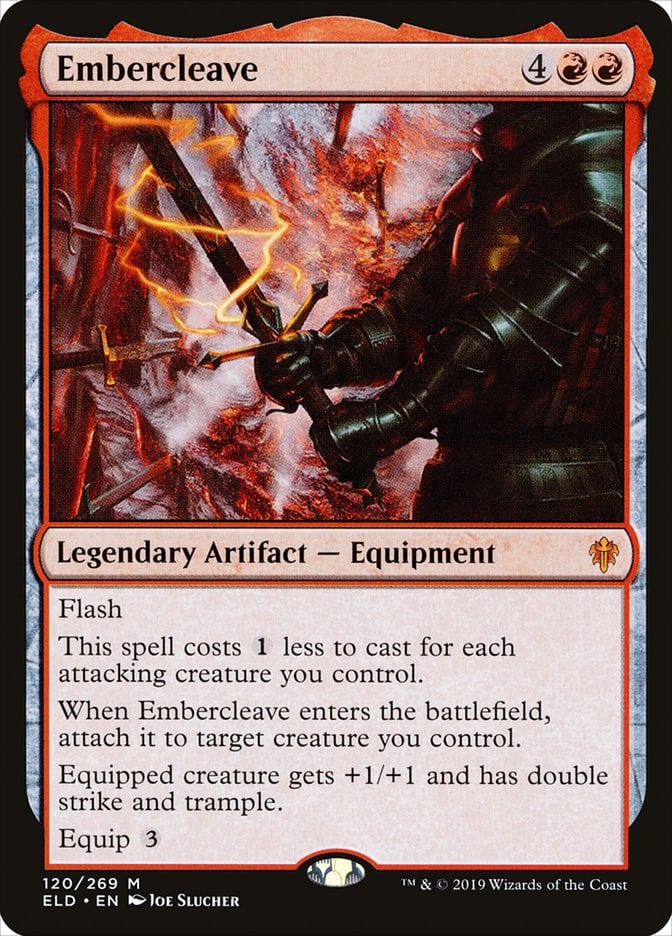
Do you believe in the cleave? I certainly do.
Throne of Eldraine is one of the most broken sets in Magic’s history. Over half a dozen of its cards were banned in Standard, yet this wasn’t one of them. After all those bans, Embercleave proved itself time and again as the best card in the format, and many were glad to see the back of it.
Aggressive decks enable the casting cost on it so easily that it never felt like a 6-mana spell. You felt wrong if you ever needed to spend more than 3 on it. It was also a ridiculous bomb rare in Limited, though in all the times I drafted Boros Knights, I never got to see it.
The legacy of the ‘cleave goes way higher because it was one of Eldraine’s least powerful broken cards. It was one of the most annoying things to play against and you were nearly always dead when it came down.
#1. The Wandering Emperor
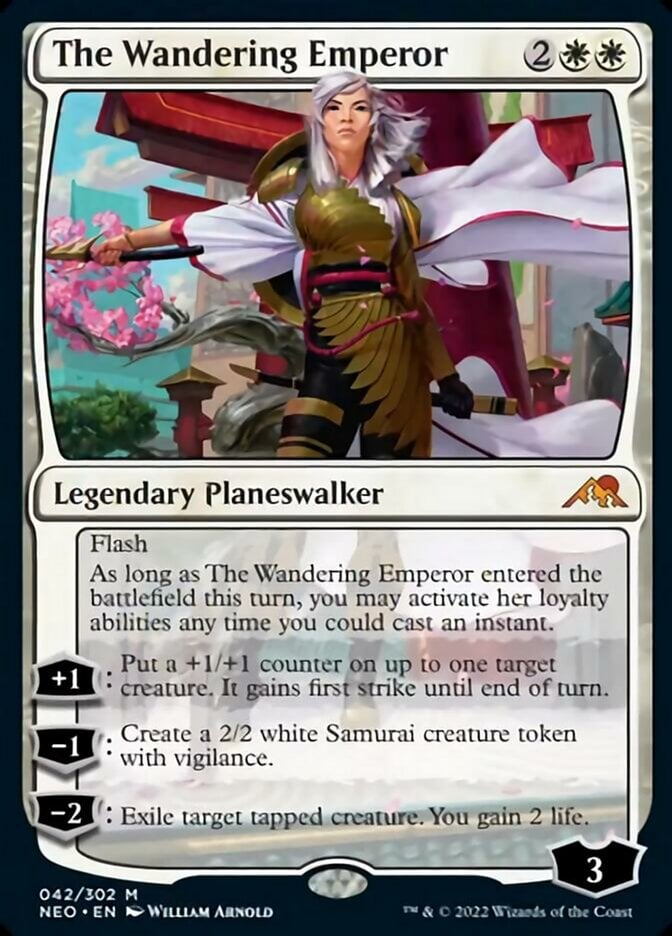
The minute that I read The Wandering Emperor for the first time, my immediate thought was: “This is the best combat trick of all time!” I’m sticking by that assessment. I’m cheating a little because the most common use of The Wandering Emperor is to use its -2 to exile an attacking creature.
But I can’t ignore just how powerful this card is as a combat trick because its +1 ability is very capable of winning a combat and leaving behind a must-kill planeswalker with 4 loyalty. The Wandering Emperor has made a huge impact on Magic, seeing play in a lot of Constructed formats and being obscenely broken if you’re lucky enough to get it in Neon Dynasty Limited.
Wrap Up
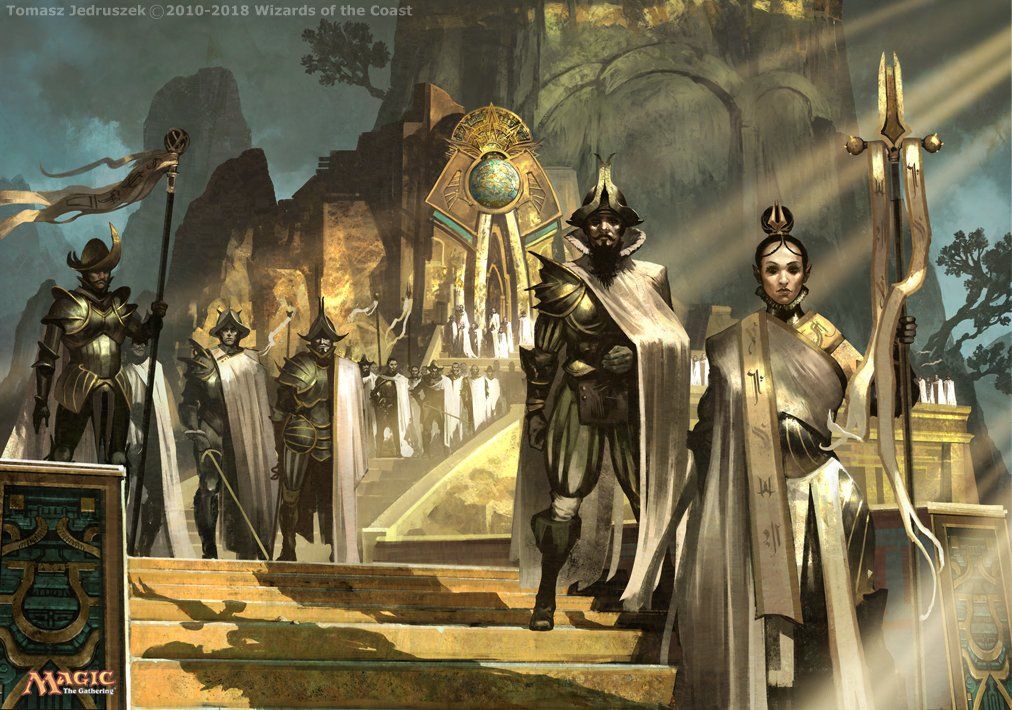
Pride of Conquerors | Illustration by Tomasz Jedruszek
Combat tricks are crucial to success in Limited, but a few have crossover potential in Constructed formats. There have been so many over the years that even the classic Giant Growth doesn’t crack the top anymore.
Did I miss any important combat tricks? Which tricks do you like to use, and with which strategies? Let me know below in the comments or over in the Draftsim Discord.
Until next time, take care of yourselves!
Follow Draftsim for awesome articles and set updates:










Add Comment