
Last updated on June 17, 2026

Tendrils of Agony | Illustration by Rovina Cai
Life totals are rather important in Magic as they determine when the game ends—unless someone’s running alternate win conditions, at least. It’s critical to have ways to attack the life total in any Magic deck so that you can win the game.
This is often done with creatures, but some decks go straight to the face. Many players would reach for burn, but that mechanic has a close cousin in life loss cards that don’t care about anything so petty as damage or creatures.
Which are the best life loss cards, and how can you use them? Read on for answers!
What Are Life Loss Cards in MTG?
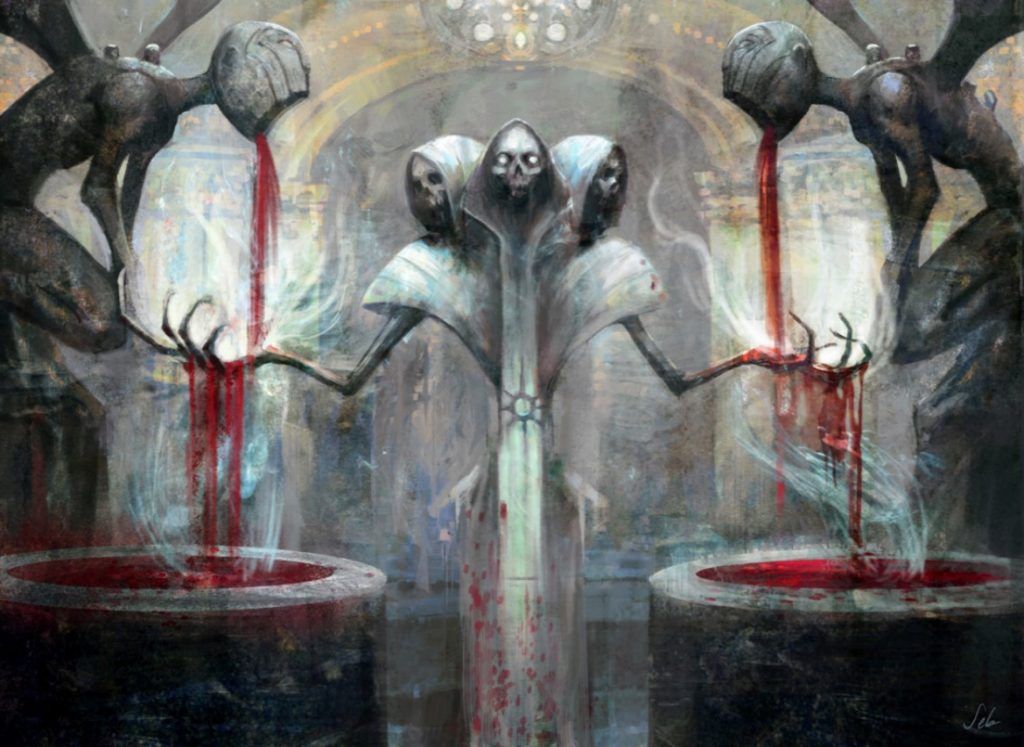
Debt to the Deathless | Illustration by Seb McKinnon
Life loss cards cause your opponents to lose life, often either gradually with activated or triggered abilities or all at once for a burn-adjacent attack on opposing life totals.
Most life loss cards are black as it rests firmly within its slice of the color pie, but a few colorless cards and quite a few gold cards snuck onto the list. I’m only considering cards that cause your opponents to lose life, though there are a few effects that can target any player.
#44. Okiba Reckoner Raid / Nezumi Road Captain
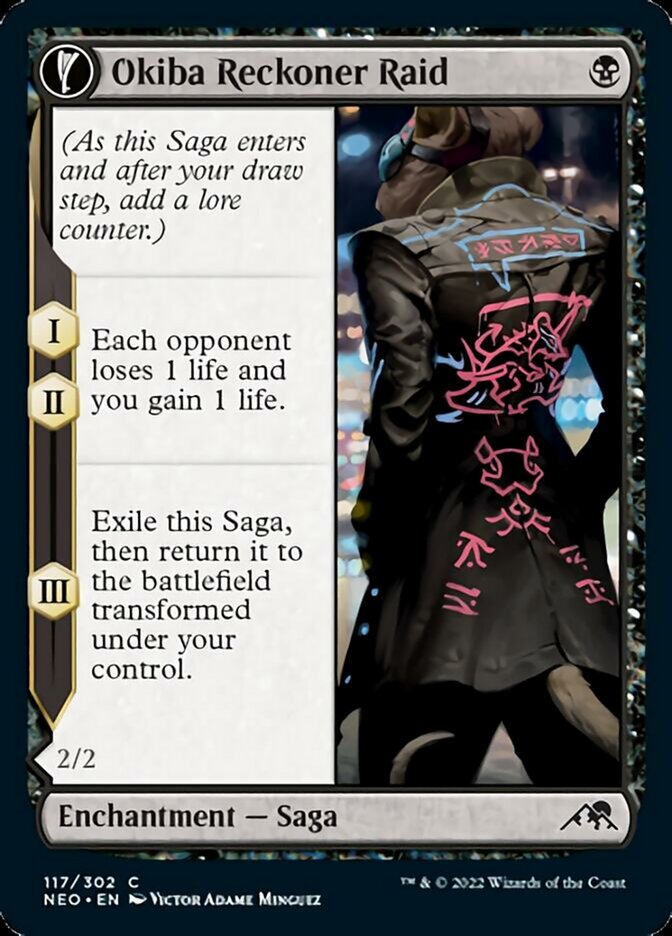
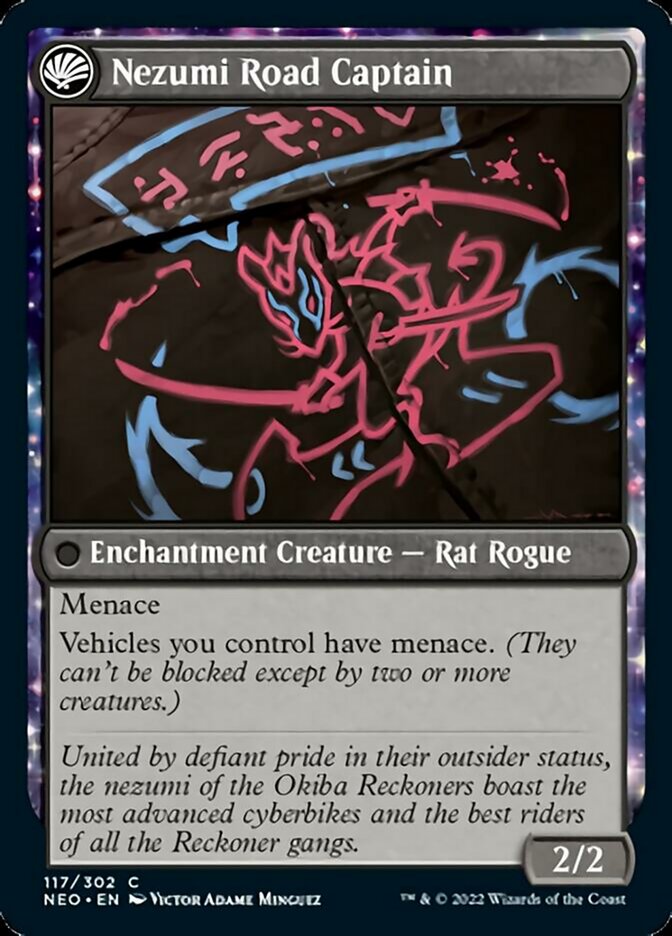
Okiba Reckoner Raid sinks its fang in players in Pauper and Pauper Cubes, giving black decks a powerful 1-mana play to affect the board early while squeezing out some direct damage to finish the game off.
#43. Warlock Class
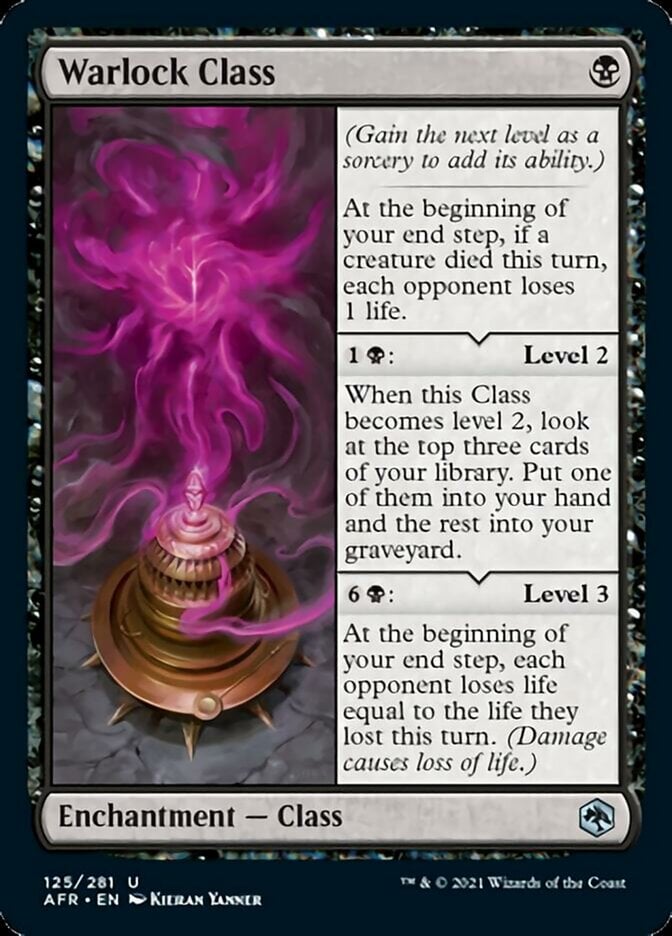
Pioneer and Explorer decks leverage Warlock Class as a devotion-building cantrip that deals some damage over a long game. It can do great work in Commander, where you have time to really leverage this class’s final level.
#42. Pact of the Serpent
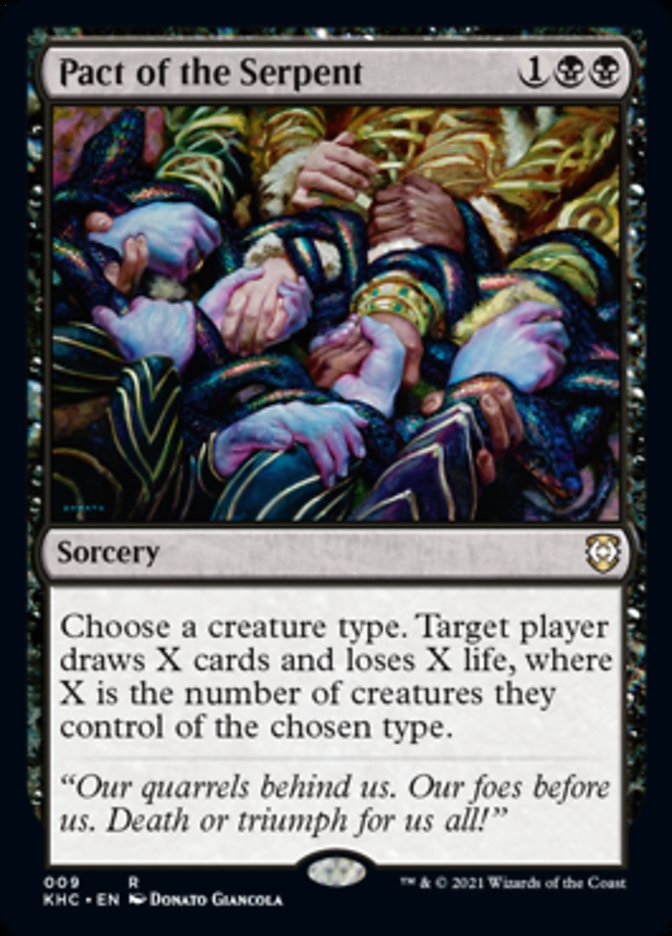
Pact of the Serpent only works in typal decks, but it’s a pretty flexible card: While you’ll often draw a bunch of cards, you can reasonably expect to use it as a burn spell to finish off an opponent, especially with a creature type like elves or goblins that thrive on token production.
#41. Sanctum of Stone Fangs
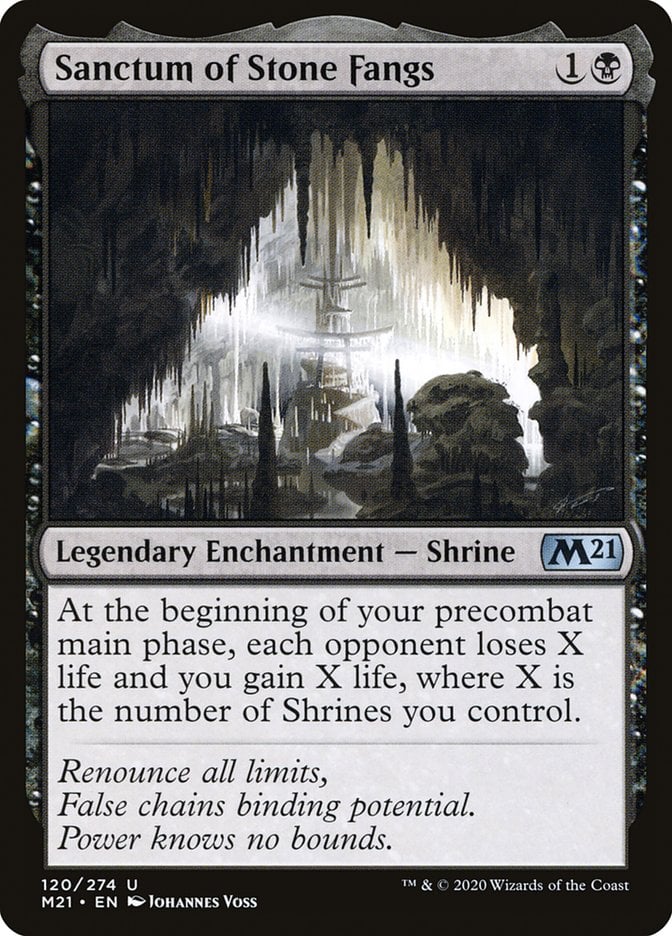
Sanctum of Stone Fangs is one of the few shrine cards that sees play outside of dedicated shrine decks. The consistent life loss fuels commanders like Belbe, Corrupted Observer and Rakdos, Lord of Riots for almost no mana.
#40. Corpse Knight
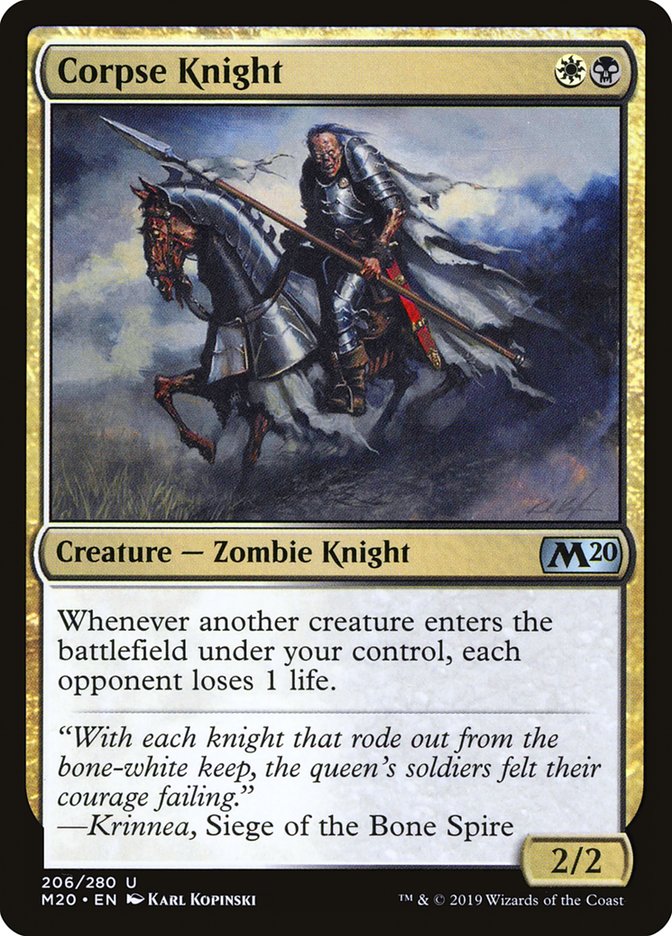
Corpse Knight provides reach for go-wide decks that really helps in Commander as it maintains pressure through board stalls and pressures all your opponents at once, which is critical for aggressive decks attempting to beat three players.
#39. Debt to the Deathless
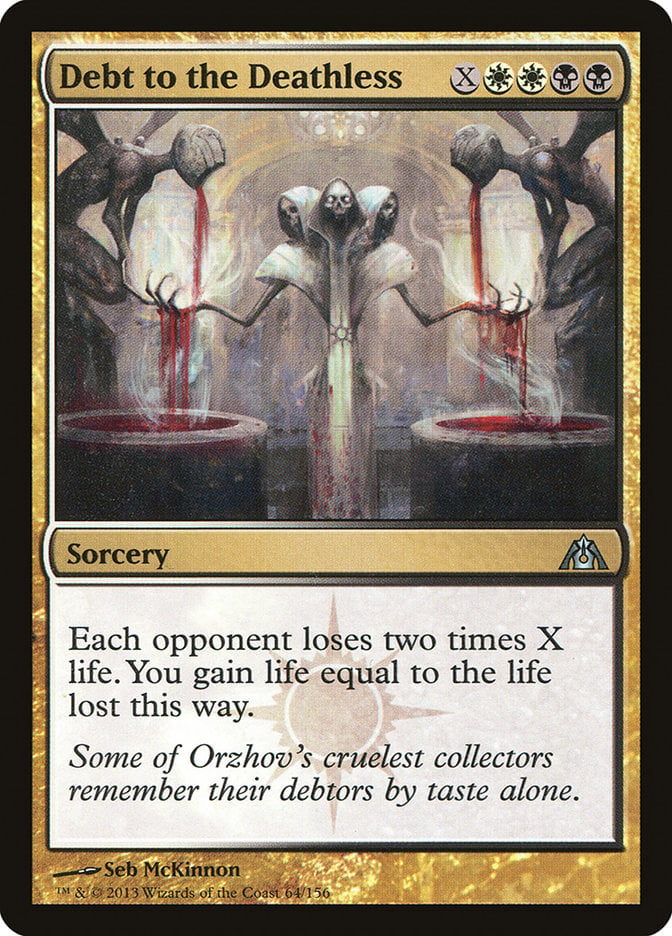
An Orzhov () take on the classic Fireball, Debt to the Deathless is a fine finisher for decks capable of producing extreme amounts of mana; the massive life swing makes this almost impossible to race, and it greatly benefits from life loss doublers like Bloodletter of Aclazotz and Wound Reflection.
#38. Kambal, Consul of Allocation
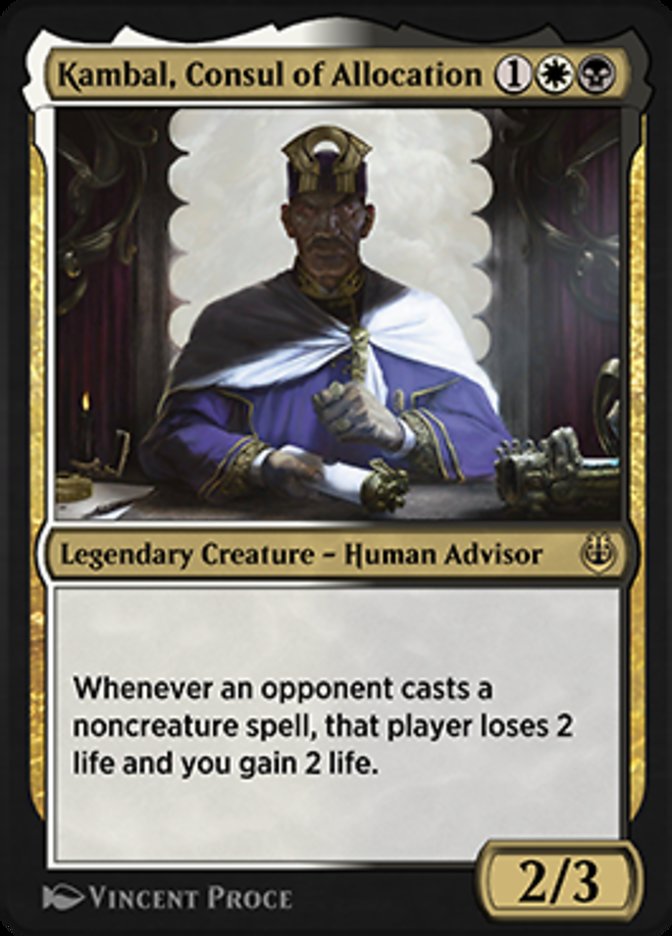
Kambal, Consul of Allocation provides a surprising amount of lifegain and drain at an EDH table with players throwing cards around. I suspect it’s psychological; 2 life seems like nothing when you start at 40. But then you take stock in the midgame and realize that the Kambal player has 60 life and nobody else is above 20.
#37. Shaman of the Pack
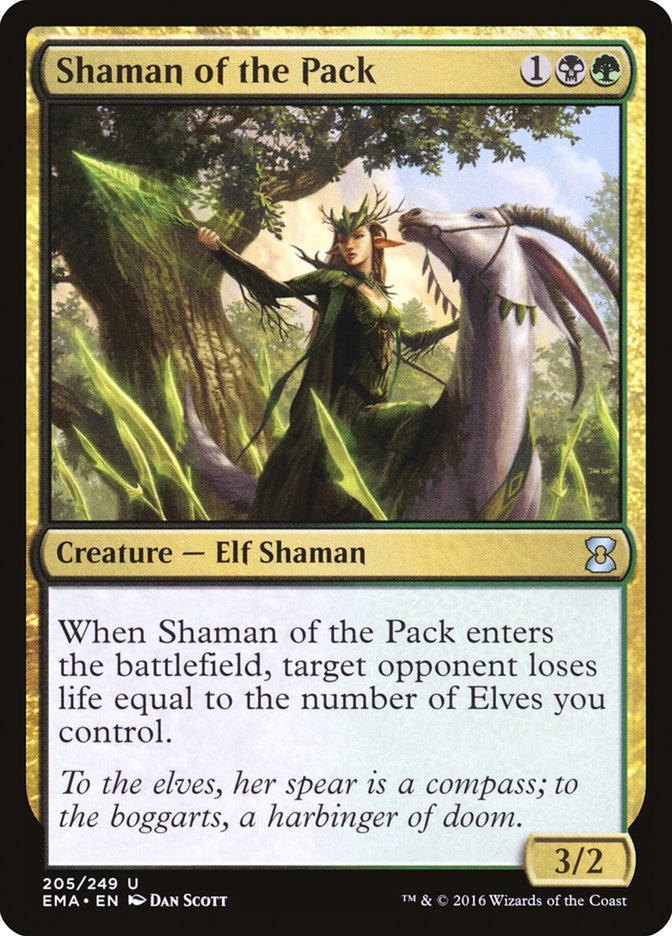
One of the biggest reasons to add black to your elf decks, Shaman of the Pack often casts Lava Axe when it hits the battlefield, with a far higher ceiling. If you get to flicker, copy, or otherwise retrigger this shaman, you’ll often find yourself winning quickly.
#36. Black Widow, Daring Operative
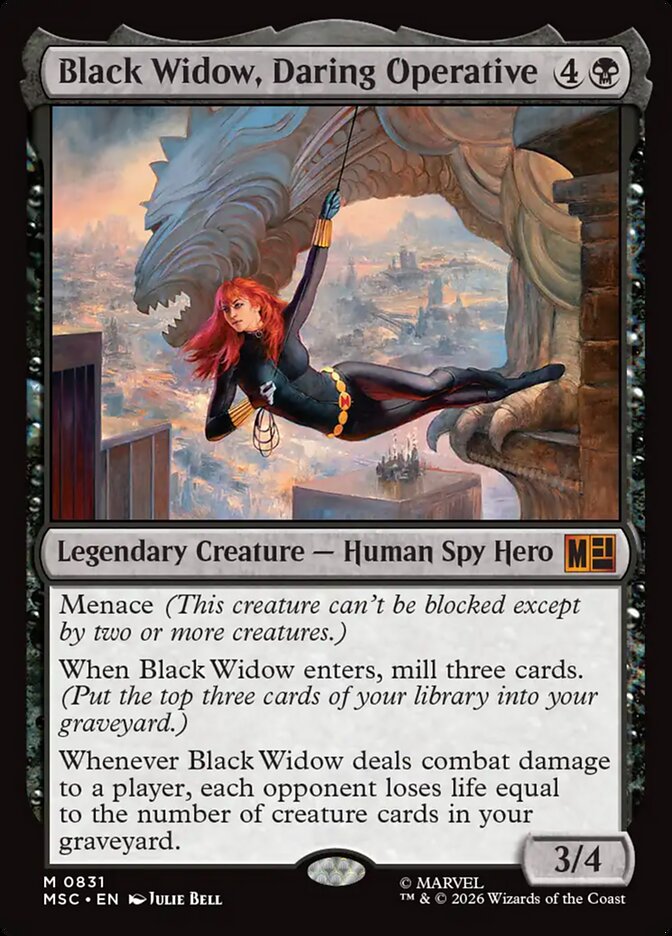
Though costly, Black Widow, Daring Operative has excellent scaling with its saboteur trigger. If you can self-mill most or all of your library, it has the potential to one-shot a player.
#35. Cauldron Familiar
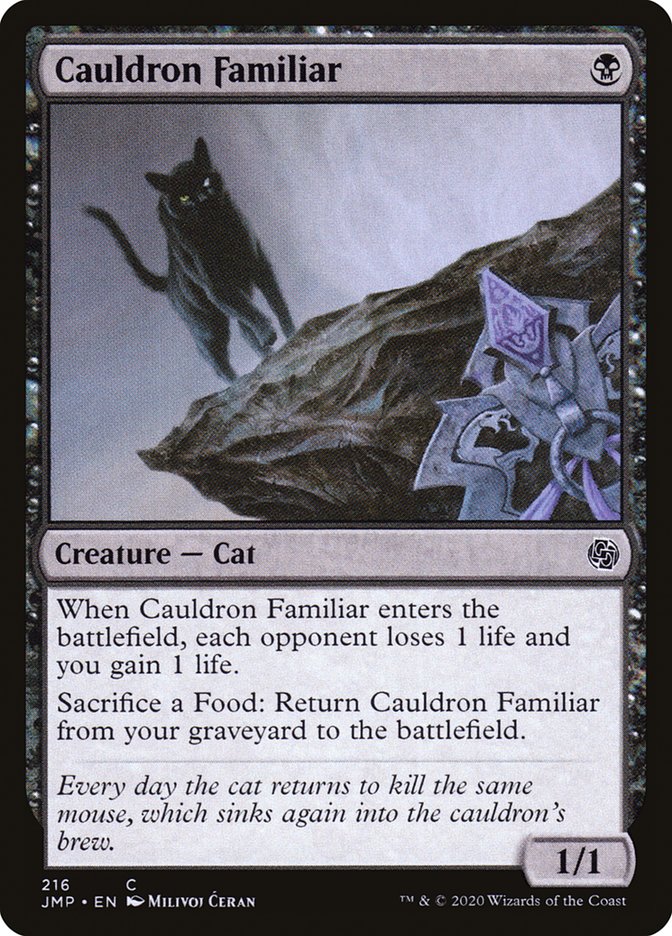
Cauldron Familiar might be the most groan-inducing card I’ve ever played against, specifically due to the powerful combo with Witch's Oven. It allows you to drain your opponents steadily while stopping any assaults that aren’t backed by trample. It’s a midrange killer, tempered only by the fact that this black cat requires support to function.
#34. Scrawling Crawler

Scrawling Crawler punishes opponents for drawing cards, providing a steady source of damage for aggressive decks to exploit. I really appreciate this new spin on a Howling Mine that triggers in your upkeep; it prevents your opponents from drawing a card, then killing this before you get yours. I suppose power creep does have upsides!
#33. Mishra, Claimed by Gix
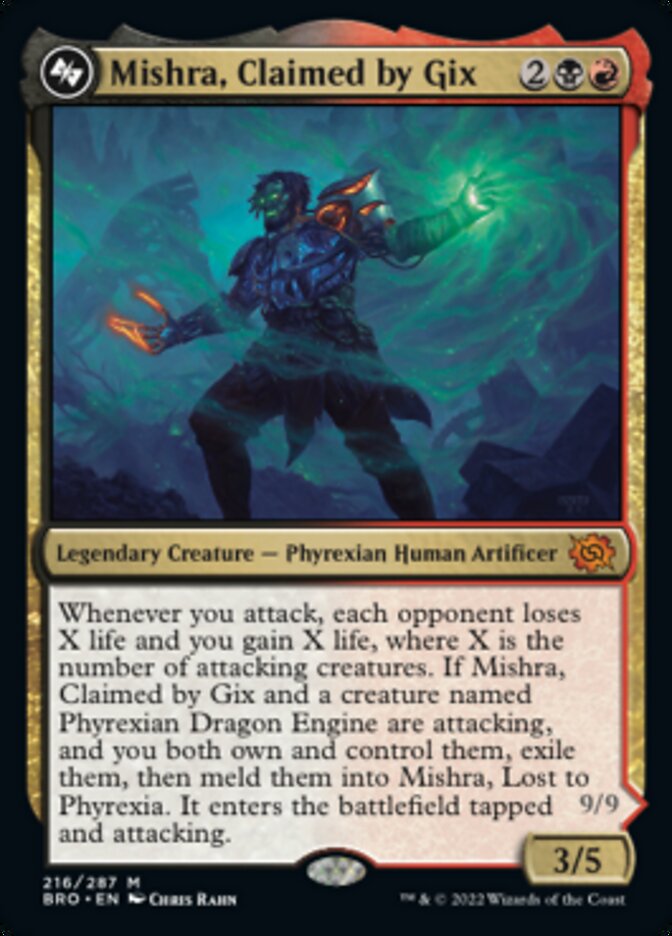
Mishra, Claimed by Gix attempts to solve the age-old issue of aggro decks in Commander by giving you reach to attack all your opponents at once, and it does so quite well; this often helms aggressive decks focused on token-making, with the eventual meld of Mishra, Lost to Phyrexia as a finisher. But I’ve found it to work best as a support piece for other aggressive commanders.
#32. Caustic Bronco
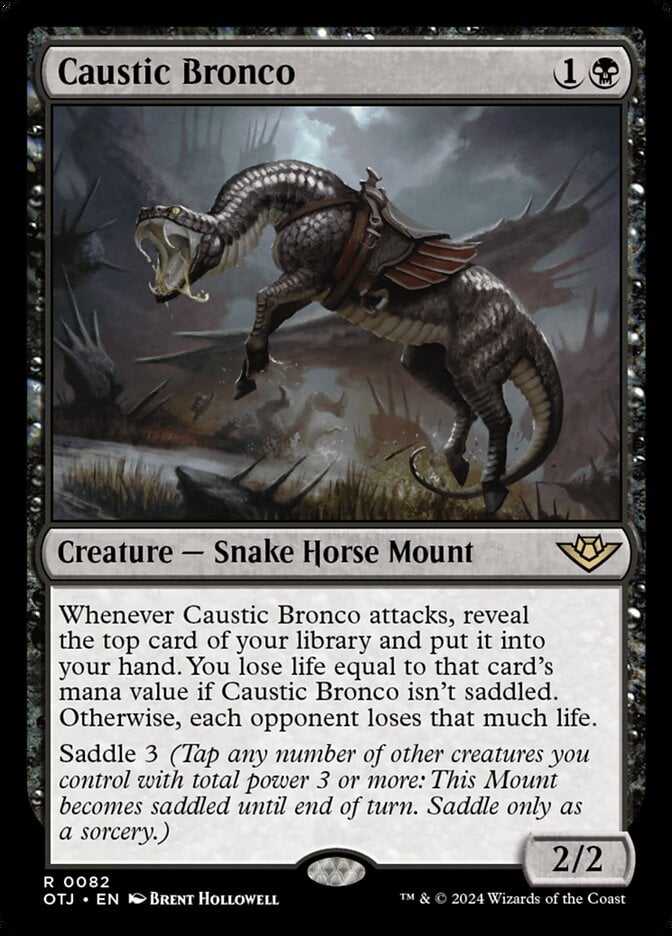
Perhaps my favorite creature in Standard, Caustic Bronco is an aggressive spin on Dark Confidant that’s a wonderful threat for black midrange and aggressive decks because it’s a great source of early pressure while threatening lethal off the attack trigger alone later in the game. That utility is exactly what I want from a 2-drop.
#31. Commissar Severina Raine
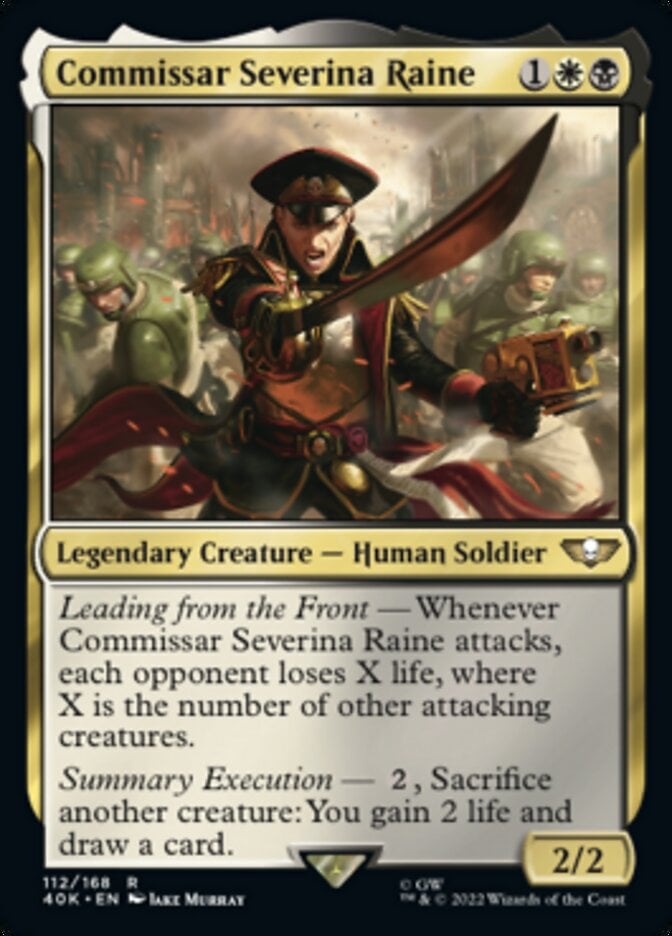
Commissar Severina Raine exists in a similar space to Mishra, Claimed by Gix, but I like it better for two reasons.
Firstly, trading lifegain for a powerful sacrifice outlet makes this broadly more useful, and card draw is always nice. More importantly, Orzhov is a better color combination for token-aggro, making this a more potent threat.
#30. Villainous Wrath

Villainous Wrath is a great way to punish go-wide and token decks as the lifeloss could be lethal. As far as board wipes go, this one gets to be pretty aggressive and pairs nicely with cards like Bloodletter of Aclazotz that double life loss.
#29. Cauldron of Essence

Cauldron of Essence might be the most exciting Blood Artist variant in the game. You get your stellar death trigger, then it can be cashed in later as a reanimation spell. That flexibility is especially important in Commander, where games go long and cards need to do a lot.
#28. Siege Rhino
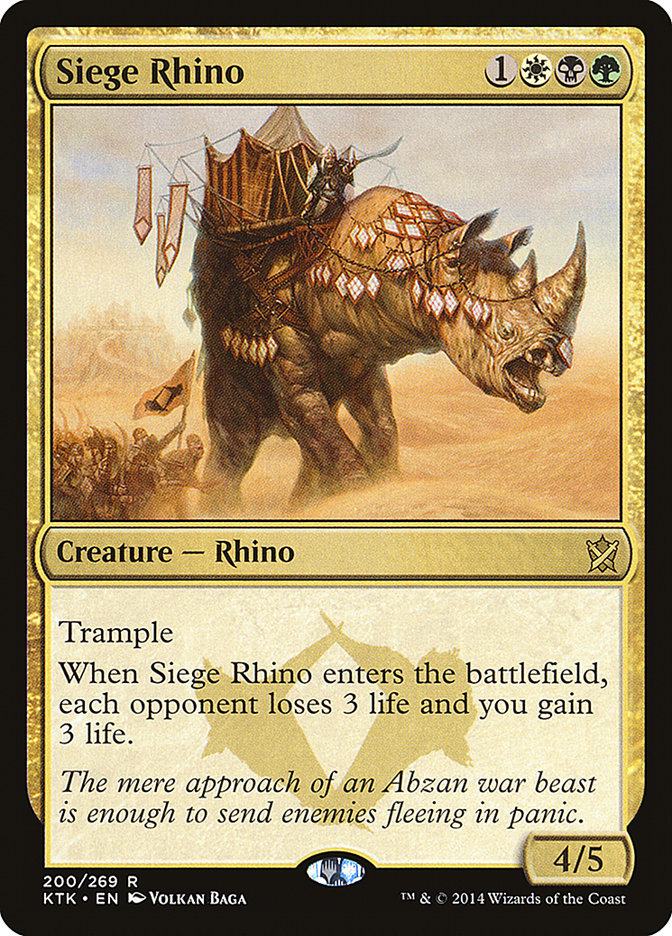
One of the great classics of modern Magic, Siege Rhino held Standard in a stranglehold for its entire tenure in the format and impacted many others besides. Though much of Magic has sped past this card, you can still find it gumming up the board of Cubes for a classic threat.
#27. Cruel Ultimatum
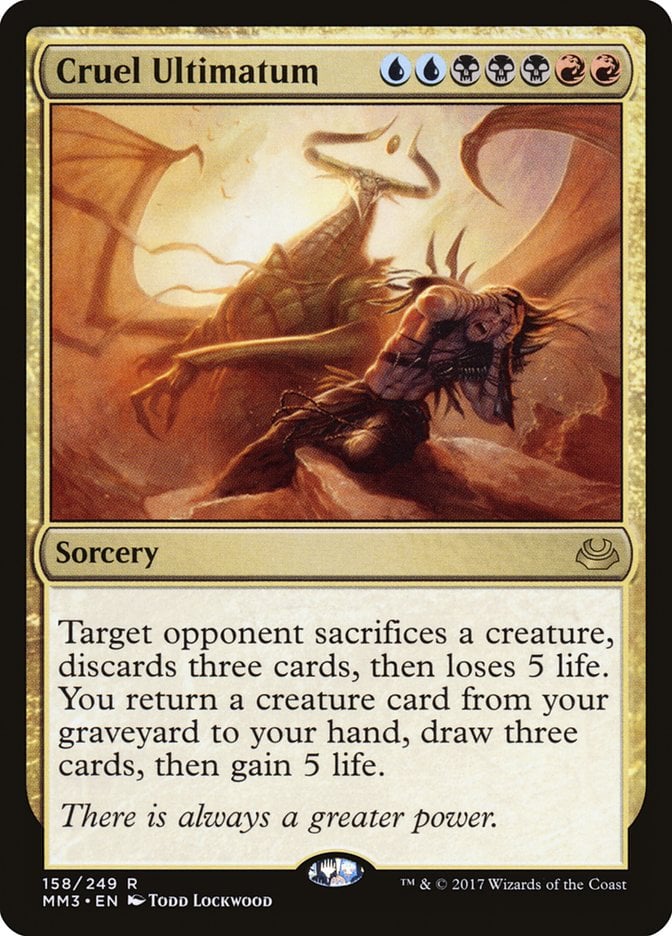
Cruel Ultimatum has captured the attention of many Magic players who aren’t daunted by one of the game’s most demanding mana costs. This often leads players to skirt the cost with cards like Dream Halls and Mizzix's Mastery for an incredibly high-impact play.
#26. Sanguine Bond Effects
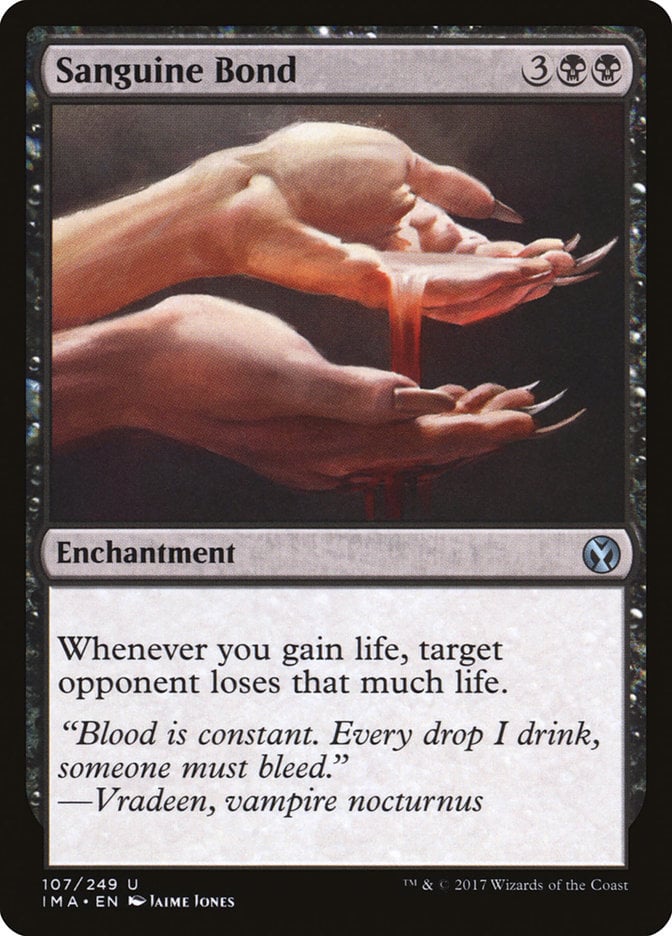
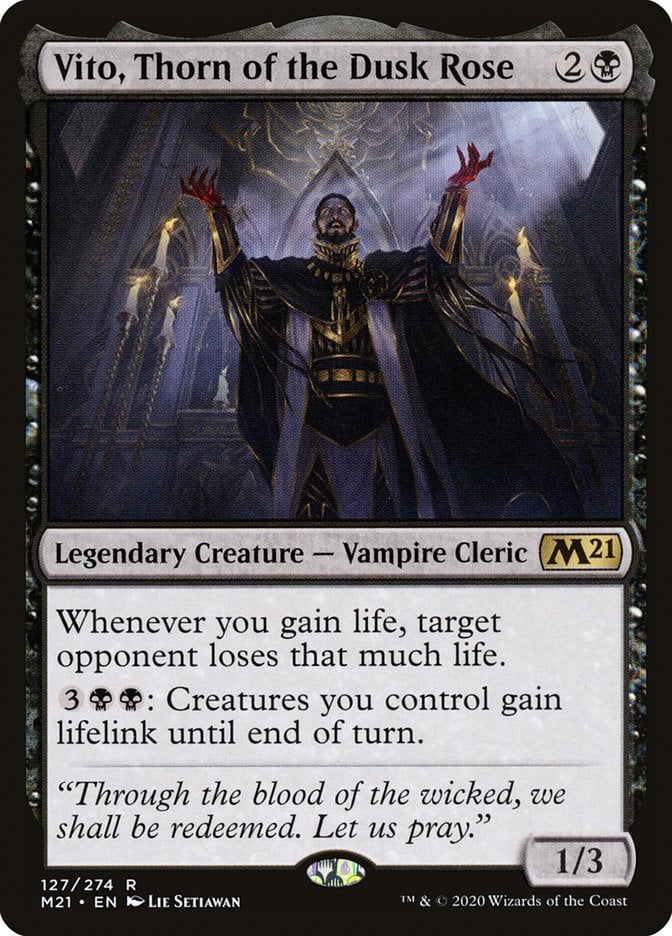

There are many iterations on Sanguine Bond that allow you to drain your opponents as you gain life, with two notable variations being Vito, Thorn of the Dusk Rose and Enduring Tenacity.
These are all powerful effects; gaining life isn’t particularly hard, it’s just a low-impact game action. But these effects change that, giving you a powerful source of damage your opponents will struggle to race, plus combo opportunities with Exquisite Blood and Bloodthirsty Conqueror.
#25. Talion, the Kindly Lord
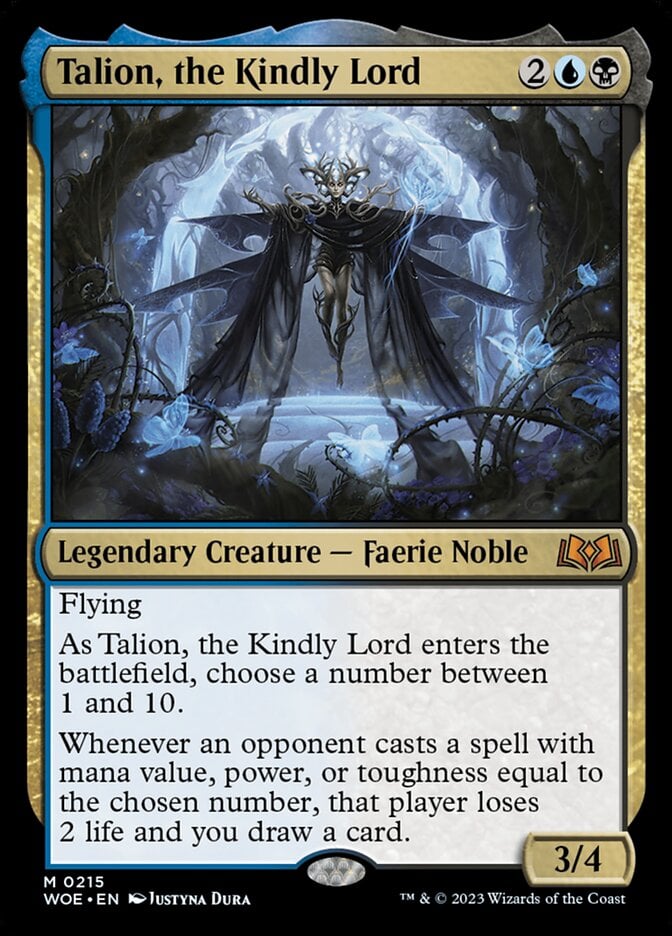
It takes some finesse to exploit Talion, the Kindly Lord, namely a strong understanding of what cards your opponents are likely to play. Though I often find success naming 2 or 3, it can be useful to name a number appearing on opposing commanders to benefit from your opponents’ desire to keep them in play. This is a personal favorite threat in mid-power Cubes.
#24. The Frightful Four
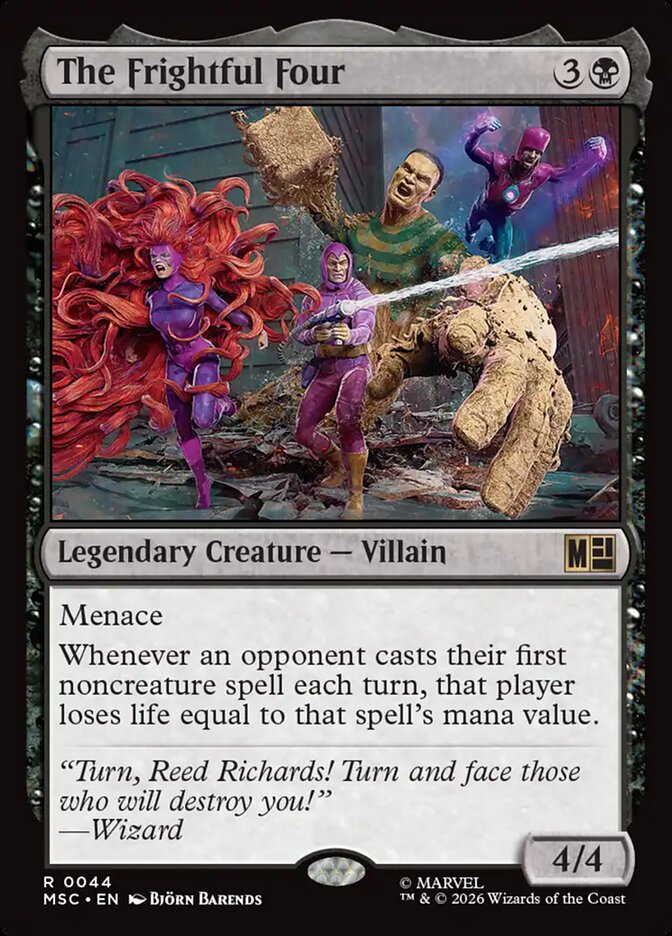
If you’re tired of blue players wrecking your day with countermagic, consider using The Frightful Four to punish them. They can only get away with so many spells cast on other turns before you destroy them.
#23. Queza, Augur of Agonies
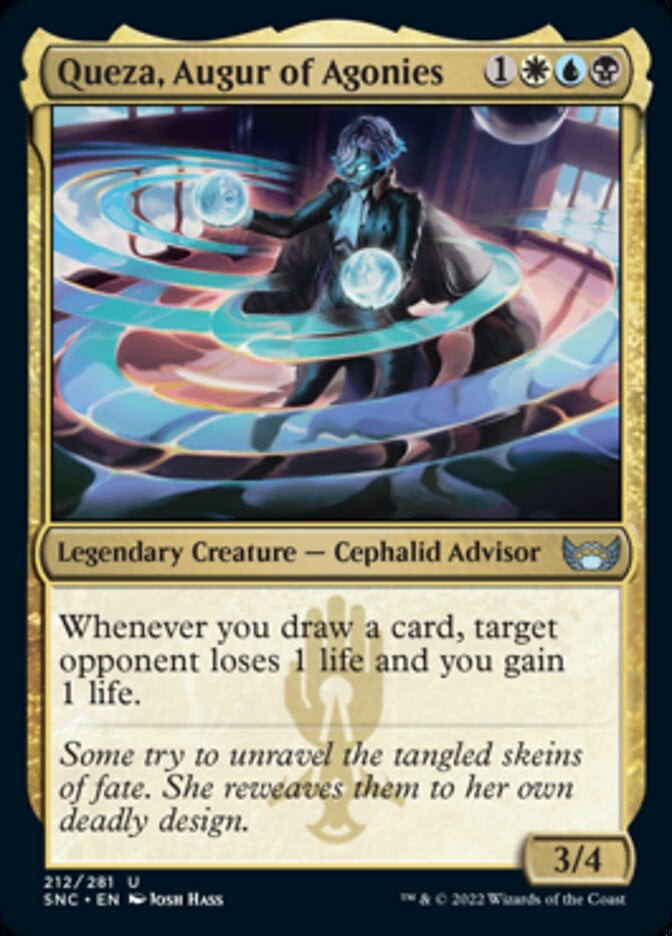
Drawing cards is among the easiest and most desirable game actions you can take in Magic, so Queza, Augur of Agonies has a lot of power behind it. That power’s somewhat tempered by it being a 4-mana play with no immediate impact on the board, which can be dicey in our modern era, but I still like it.
#22. Graveyard Trespasser / Graveyard Glutton
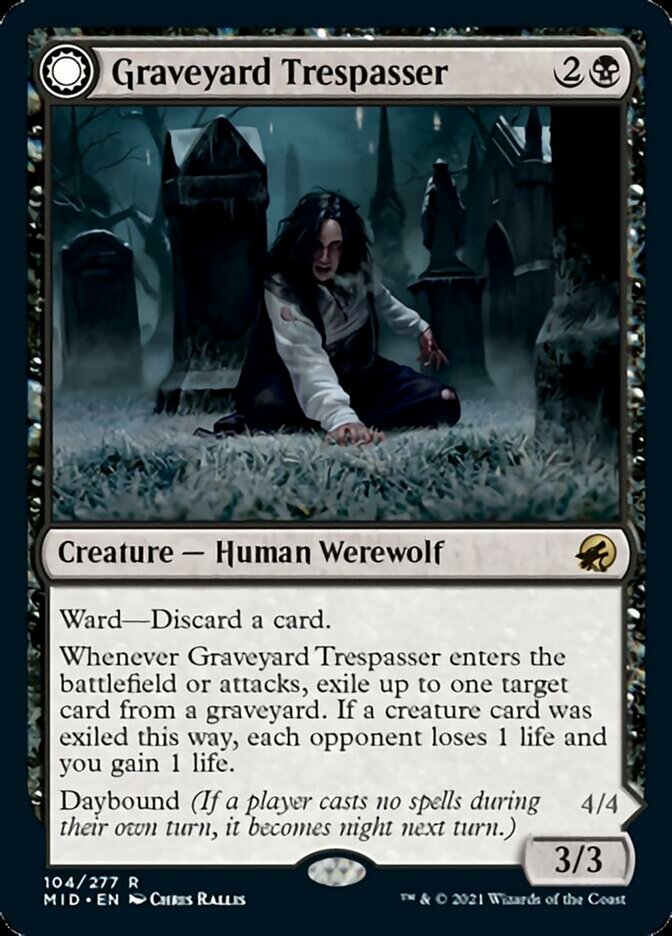
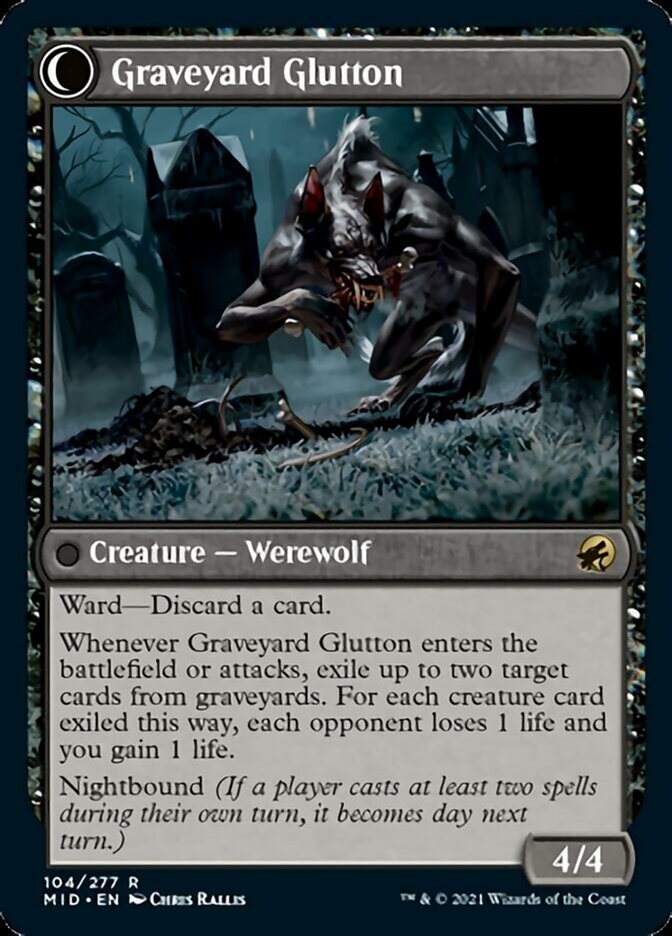
Graveyard Trespasser has proven itself an annoyingly robust threat in Cubes and Pioneer. It’s just ludicrously efficient for its cost, combining a meaningfully disruptive ability with a stout body and a miserable ward cost. If you ever have to remove two Trespassers, the game feels over! Not to mention the nightbound Graveyard Glutton doing all that, but just a little better.
#21. Twilight Prophet
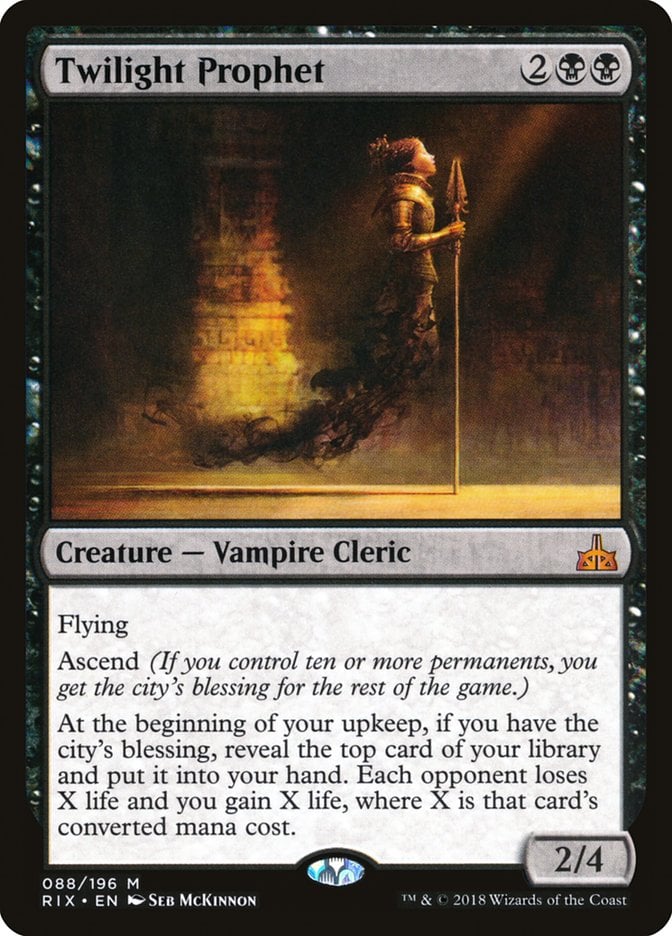
Twilight Prophet looks to Dark Confidant and attempts to scale the card in a way that makes it meaningful in Commander, and it largely succeeds. It takes very little to obtain the city’s blessing, especially considering all the mana rocks running around the format, and EDH’s structure encourages playing large spells like Massacre Wurm and Breach the Multiverse that this spell benefits from.
#20. Vein Ripper
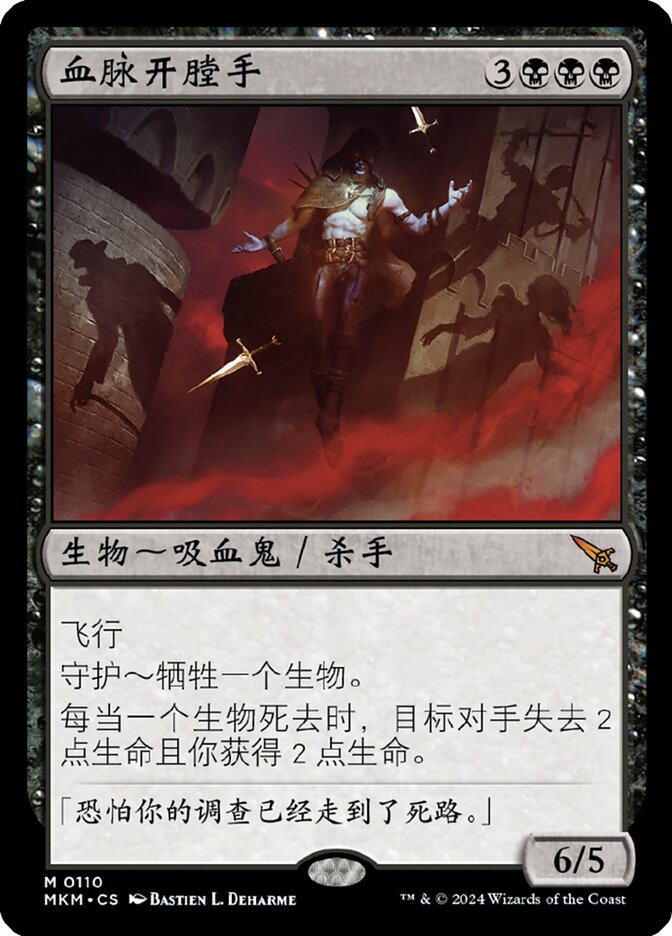
Blood Artist’s bigger, older brother, Vein Ripper spent some time terrorizing Pioneer until Sorin, Imperious Bloodlord caught a much-needed ban to stop players cheating it in early.
Now it mostly sees play in EDH, where decks have abundant mana to cast it and aristocrat decks enjoy the powerful drain ability to close out games.
#19. Palantír of Orthanc
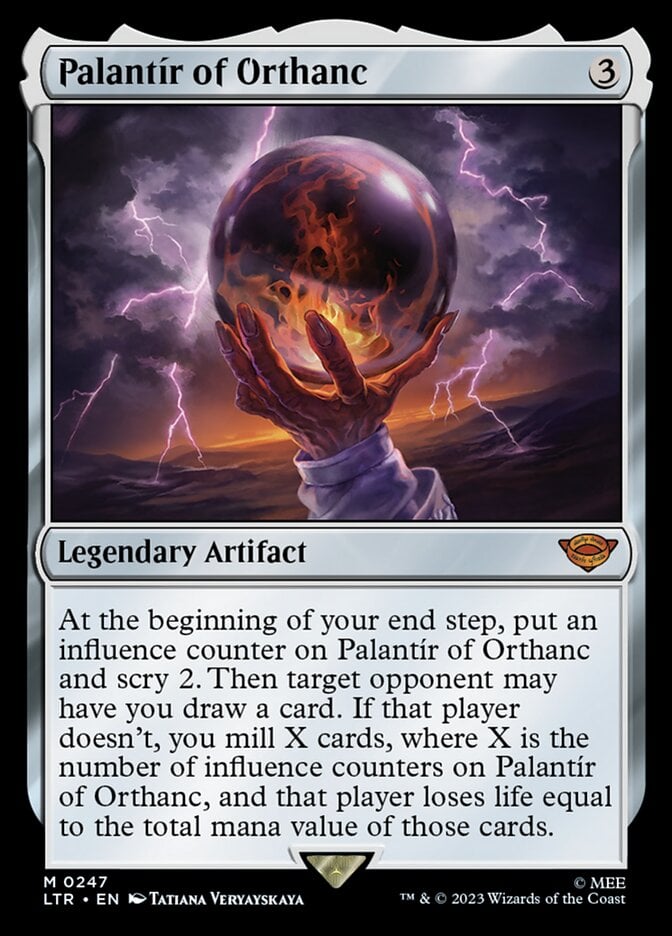
Palantír of Orthanc is among my favorite artifacts to power out. In Cube, your opponents often take a little damage before grudgingly allowing you cards lest you flip 8 damage into the bin. It takes much longer for that to be a problem in EDH, but that just means you get more fuel thrown into the graveyard.
#18. Throne of the God-Pharaoh
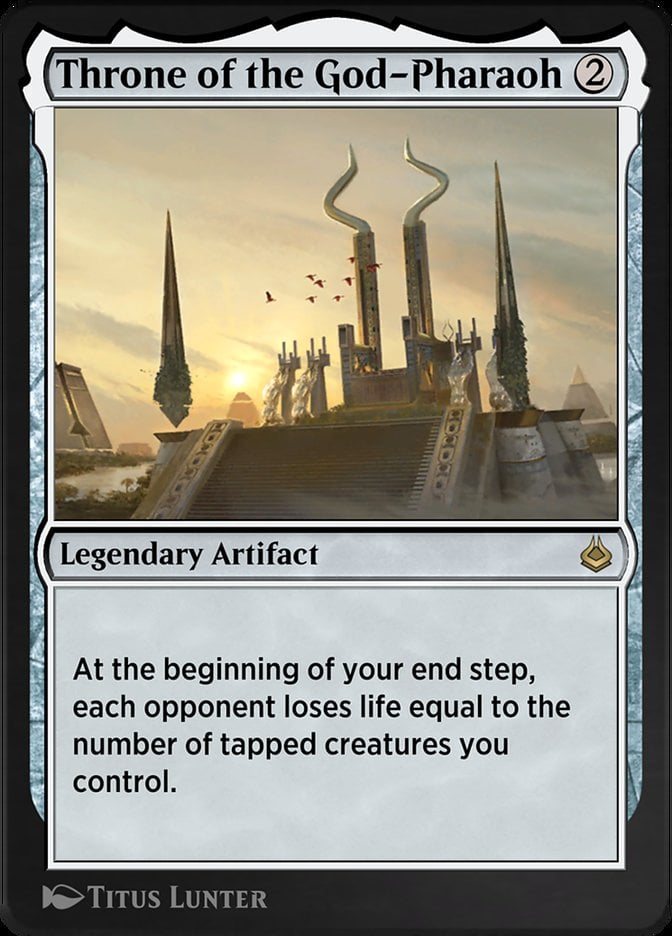
Throne of the God-Pharaoh primarily sees play in token decks hunting for extra damage, but it’s also an excellent bit of tech for convoke or vehicle lists.
#17. Within Range

While Within Range was printed to support mobilize cards, any aggressive Commander deck should be interested in this: Anything to push a little extra damage. Since this is life loss, not damage, it even gets around Fog effects.
#16. The Scarab God
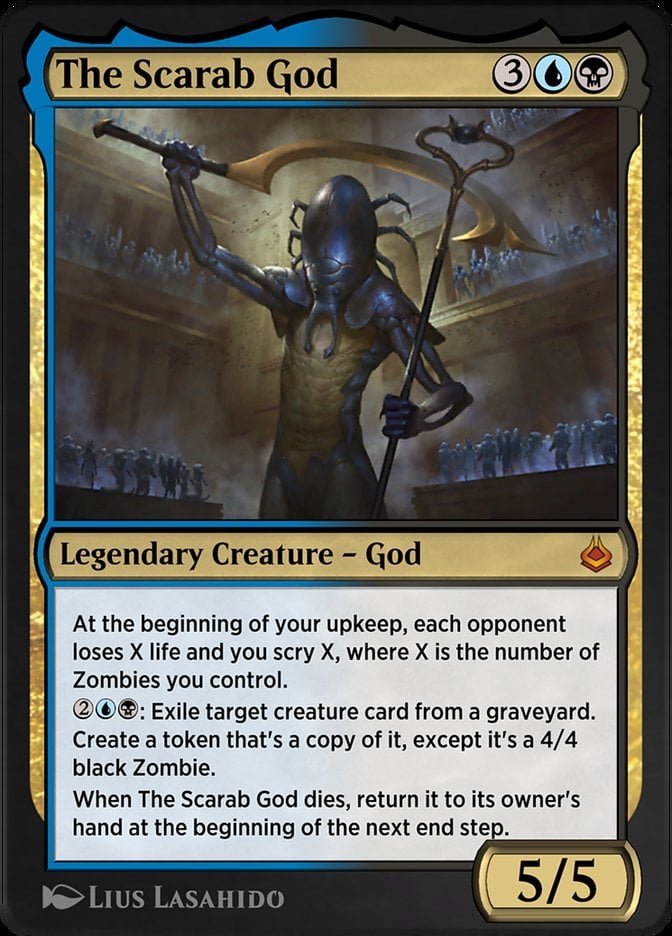
One of Magic’s most potent one-card armies, The Scarab God takes over games in short order with a horde of lazotep-strengthened zombies. Every time I play this card, I’m surprised at how effective the upkeep trigger is at closing out games; the combination of pressure and scrying to fix the top of your deck is quite hard to overcome.
#15. Massacre Wurm
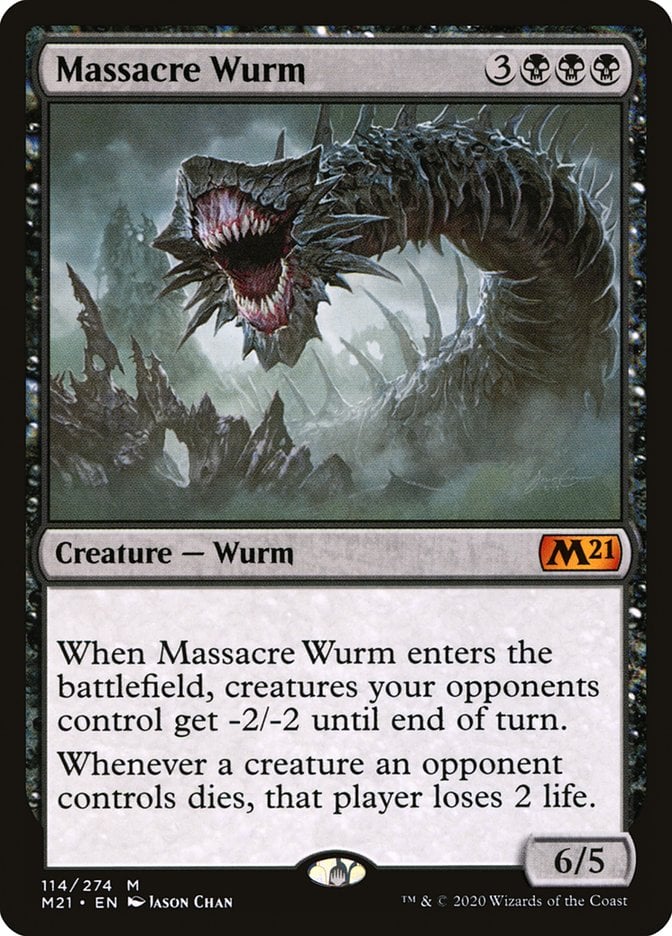
Many a Commander game has ended to Massacre Wurm doling out tens of damage on ETB, plus throwing stray Shocks around as the game progresses. It’s an excellent board wipe, and its lethality is hard to argue with.
#14. Peer into the Abyss
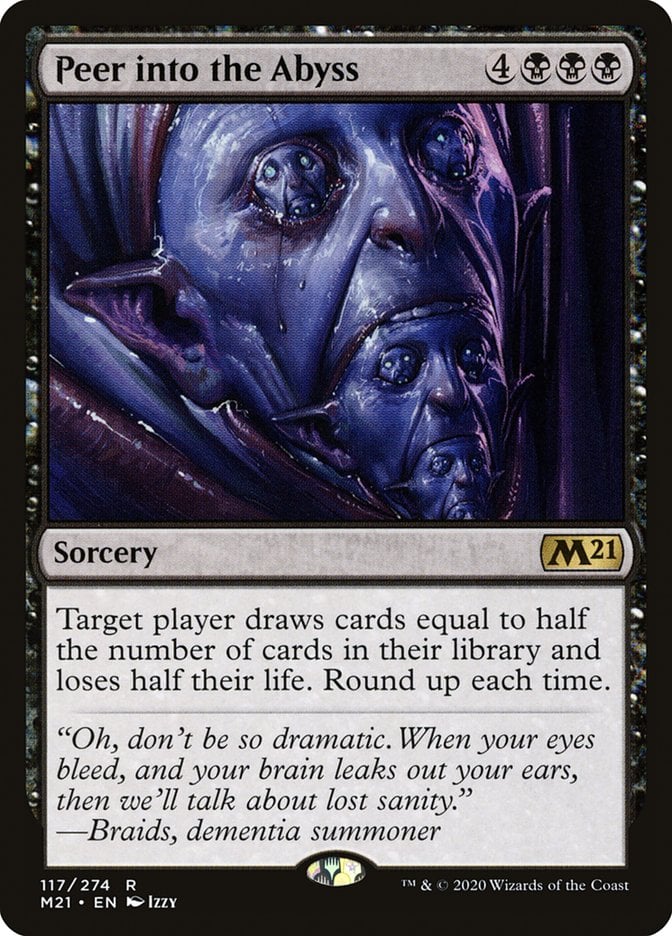
If you’ve ever wanted to just pick up your deck and start playing with it in Commander, you might be interested in Peer into the Abyss. It gets you halfway there, at least. Though you’ll often use this card to draw your deck, the life loss can be quite potent; I’ve seen more than a few games lost to this dealing 15 damage before a massive attack.
#13. Tendrils of Agony
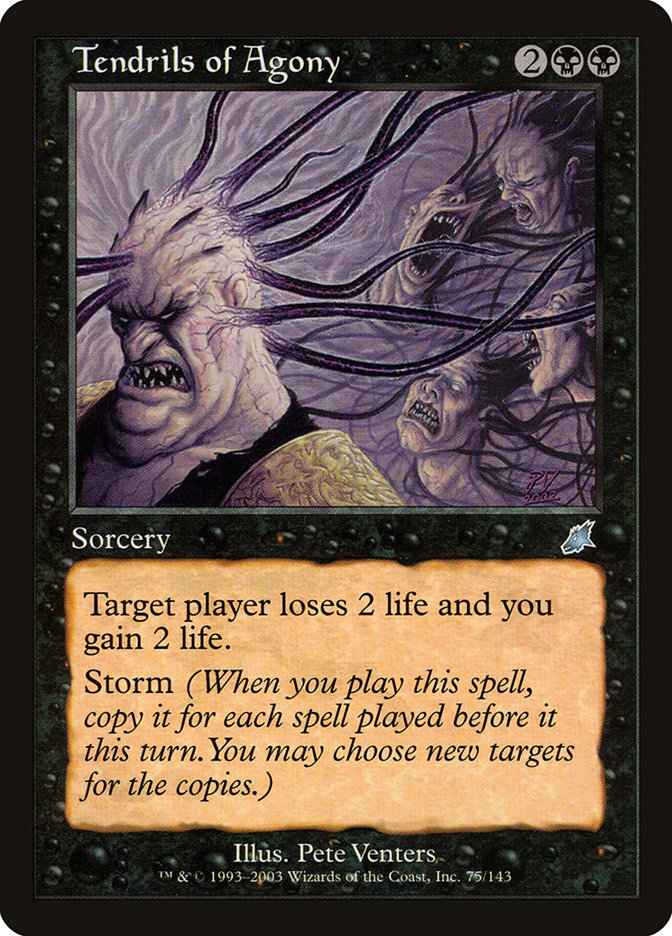
Tendrils of Agony earns a place of fame as far as life loss cards go as a representative of one of Magic’s most busted mechanics. There’s even merit to using it outside of a storm deck; the right lifegain deck can use this as a cheap source of triggers for cards like Drogskol Reaver and Sorin, Ravenous Neonate.
The high build-around requirements make it hard to throw it to the top of the list, but it’s undeniably iconic and can finish a game in one swoop.
#12. Monument to Endurance

Monument to Endurance is one of the strongest discard payoffs, in part because it chews through opposing life totals. It’s super easy to set up a board where you pair this with repeatable discard outlets like Lorehold, the Historian to discard a card every turn and punish your opponents horribly.
#11. Sephiroth, Fabled SOLDIER / Sephiroth, One-Winged Angel


Death triggers and life loss go hand in hand, and they rarely look better than on Sephiroth, Fabled SOLDIER. An exceptionally powerful sacrifice outlet and payoff, the front side is cheap and the transformed Sephiroth, One-Winged Angel ends games in a flash thanks to the stackable emblem.
#10. Marionette Master
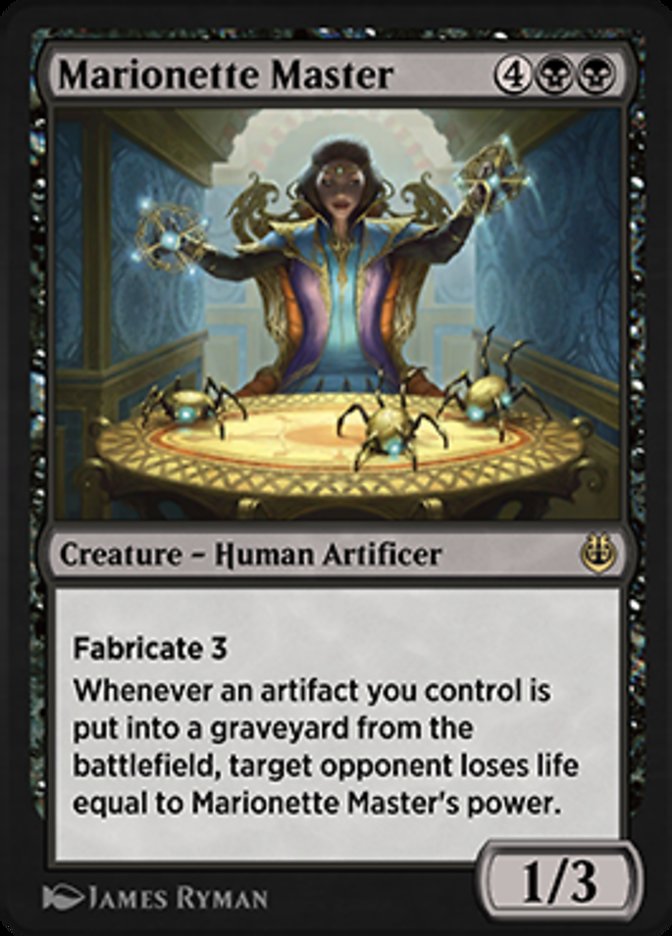
Marionette Master is one of the biggest benefactors from Wizards’ push to put Treasure token on every card in every color.
That’s a little dramatic, but this creature’s impact is anything but. Hitting your opponents for 4 each time you crack a Treasure or activate a sacrifice outlet adds up terrifyingly fast.
#9. Blood Artist
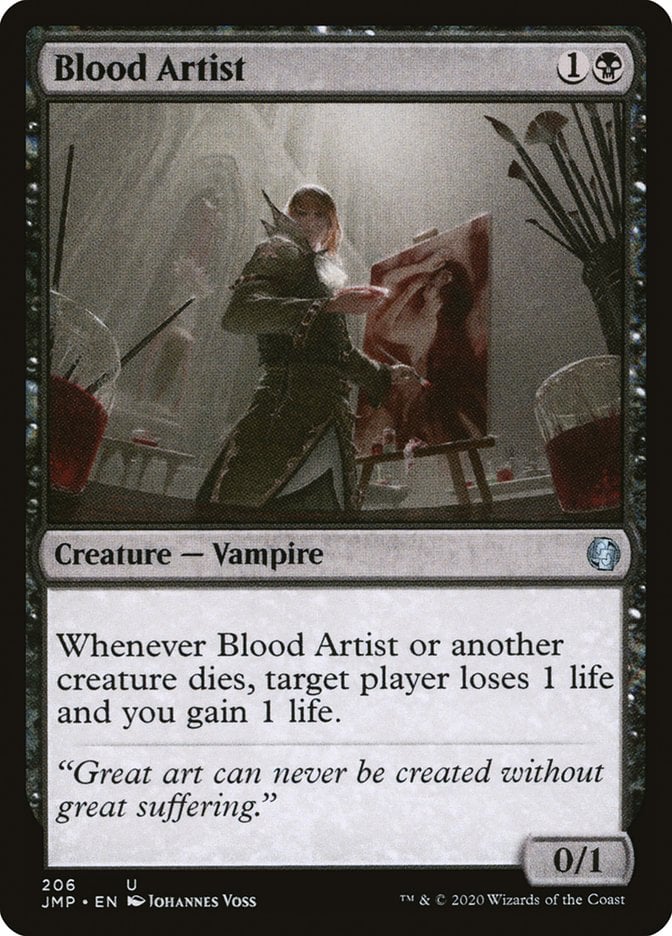
Blood Artist and its many imitators are among the most reliable damage sources in aristocrat decks that might otherwise struggle to close out the game as they fiddle around with Putrid Goblin, Yawgmoth, Thran Physician, and similar cards.
Blood Artist remains among the best due to its low mana cost and the fact that it triggers off your opponents’ creatures dying, which puts tons of pressure on the board. It even converts a board wipe into a win condition if the board gets cluttered enough.
#8. Hearthhull, the Worldseed

Hearthhull, the Worldseed has quickly become the best lands commander in Magic. It enables a ton of synergies, plus the life loss makes it a great win condition in a land sacrifice deck. It goes especially well with cards like Scapeshift and Famished Worldsire that sacrifice all your lands at once.
#7. Kroxa, Titan of Death’s Hunger
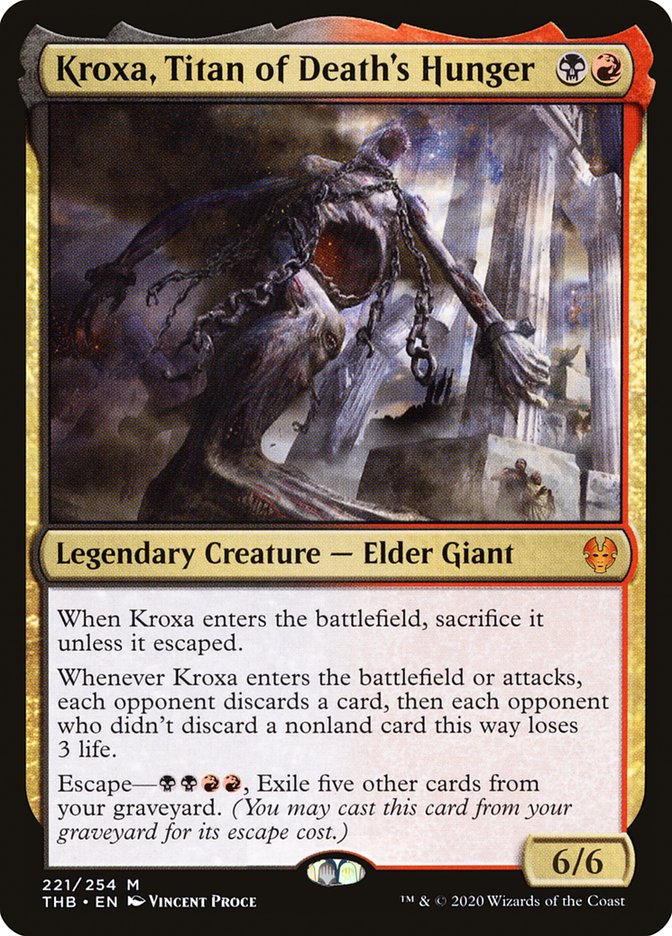
Kroxa, Titan of Death's Hunger might be my favorite midrange threat. Pressuring opposing life totals and resources via the hand attacks your opponents on multiple fronts, making it hard to counter, and its near immortality gives you all the tools necessary to win a long, grindy game.
#6. Torment of Hailfire
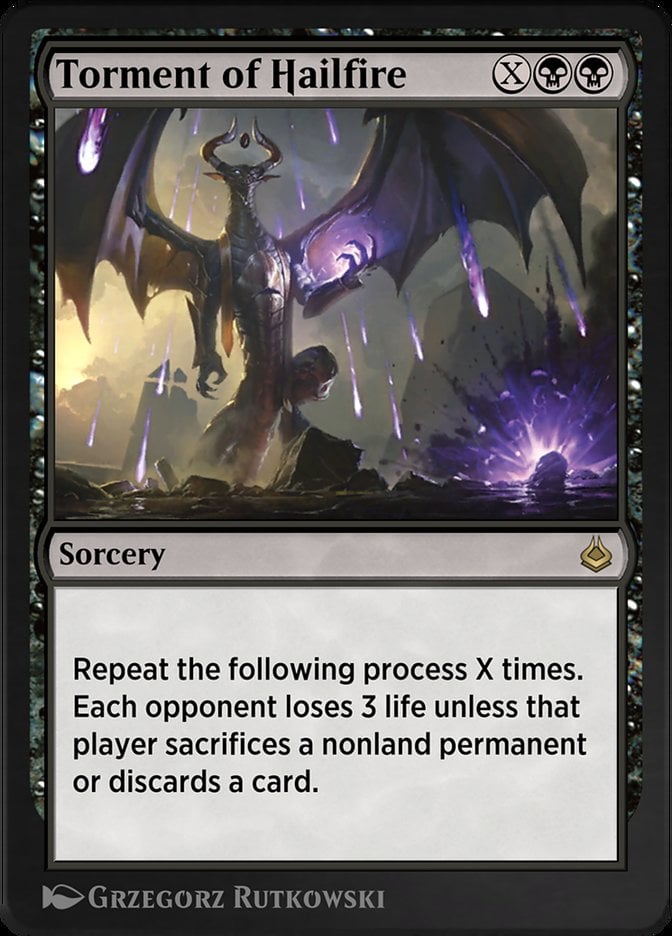
If you regularly enjoy Commander, chances are you’ve encountered Torment of Hailfire as it’s a very popular finisher, rather like a Fireball that hits all three opponents at once. It’s a great infinite mana outlet or simply a way to convert your 20 ramp spells into a winning position.
#5. Gray Merchant of Asphodel
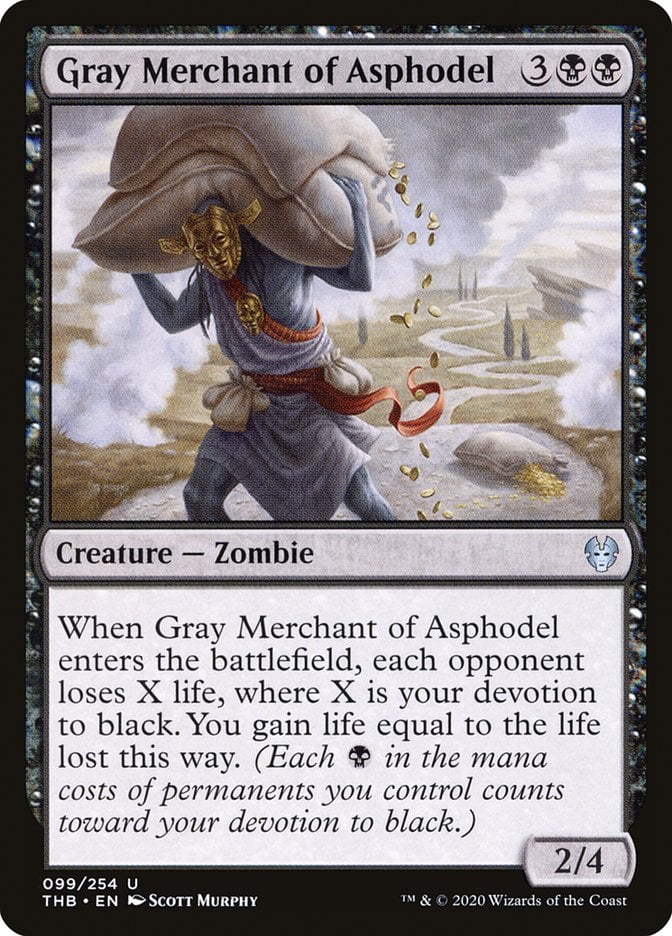
Gray Merchant of Asphodel is likely one of the best-known entries on the list, and one of the best reasons to play mono-black in pretty much any format. Pauper, Pioneer, EDH, Cube… Gary’s courted them all. It’s a highly efficient clock and a great stabilizer, and it pairs very nicely with Saw in Half.
#4. Yuriko, the Tiger’s Shadow
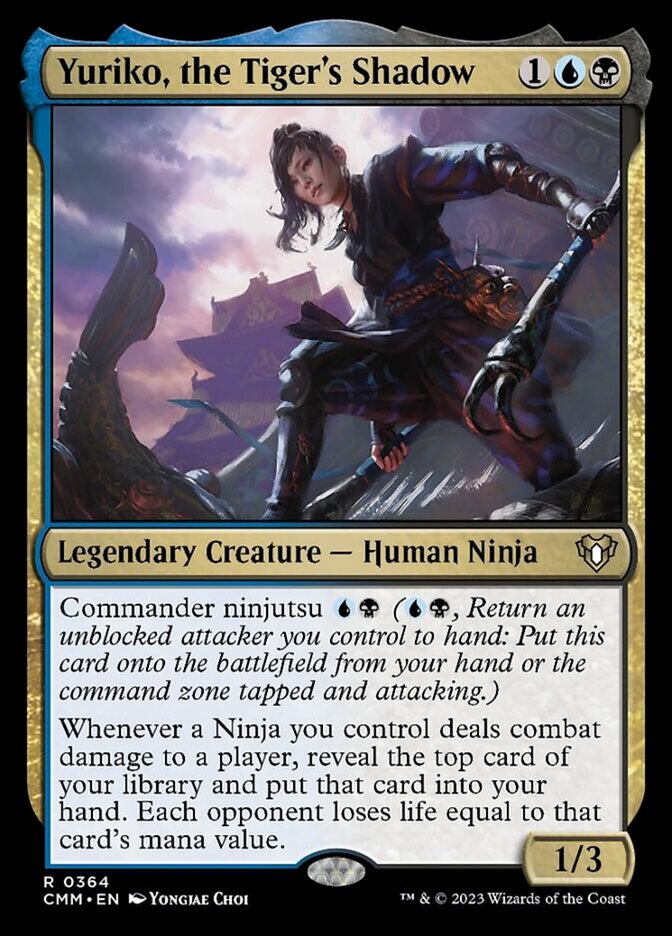
Yuriko, the Tiger's Shadow is among the format’s most infamous commanders as its unique commander ninjutsu ability skirts commander tax, making it hard to profitably remove. It also presents quite the clock, turning a handful of ninjas into truly deadly assassins while flipping up cards like Shadow of Mortality and Dig Through Time.
#3. Sheoldred, the Apocalypse
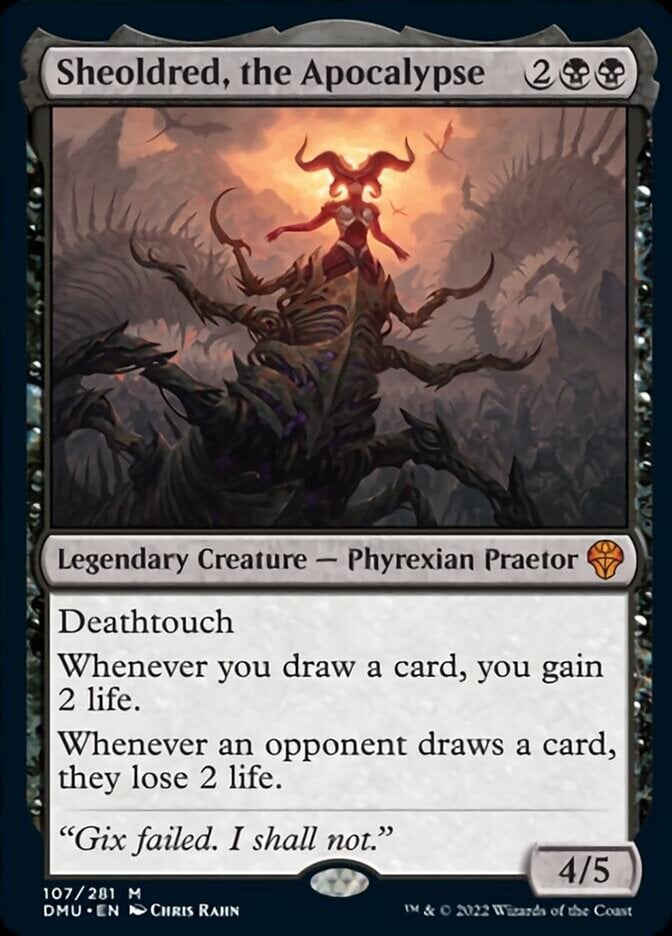
Sheoldred, the Apocalypse wins the game simply by being in play, often faster than you think. The combination of a massive body and the two draw triggers puts you in a position to win pretty much any race if your opponents don’t have removal. It stabilizes and pressures beautifully. And if you play it in EDH, it becomes a nasty win condition alongside a couple of wheels.
#2. Deathrite Shaman
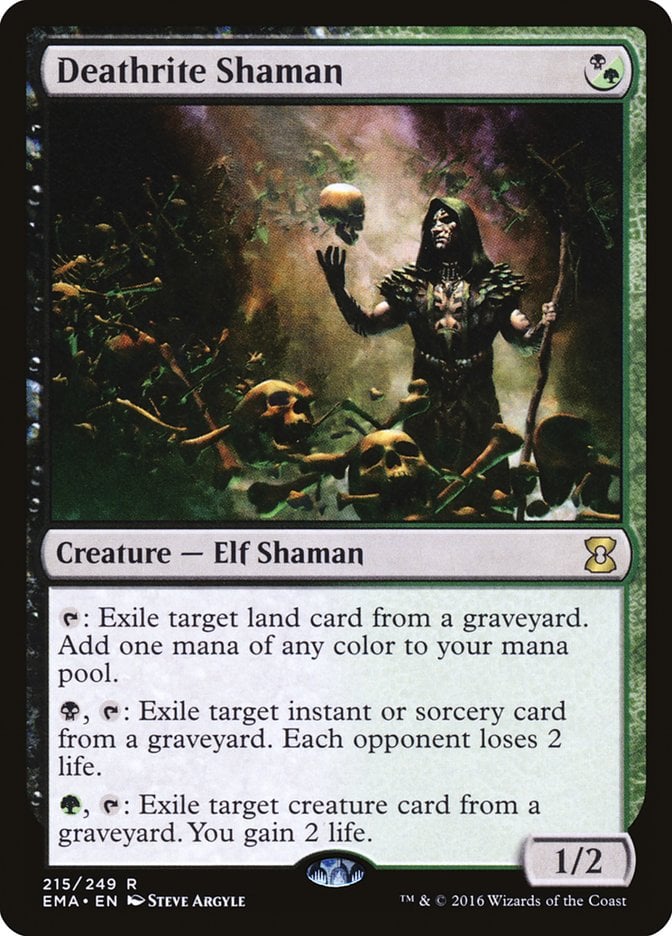
The infamous “1-mana planeswalker,” life loss is arguably the second most vital of Deathrite Shaman’s abilities, right behind the mana ability that makes excellent use of fetch lands. There’s a reason this card has caught bans in most formats where it would be legal.
#1. The Meathook Massacre
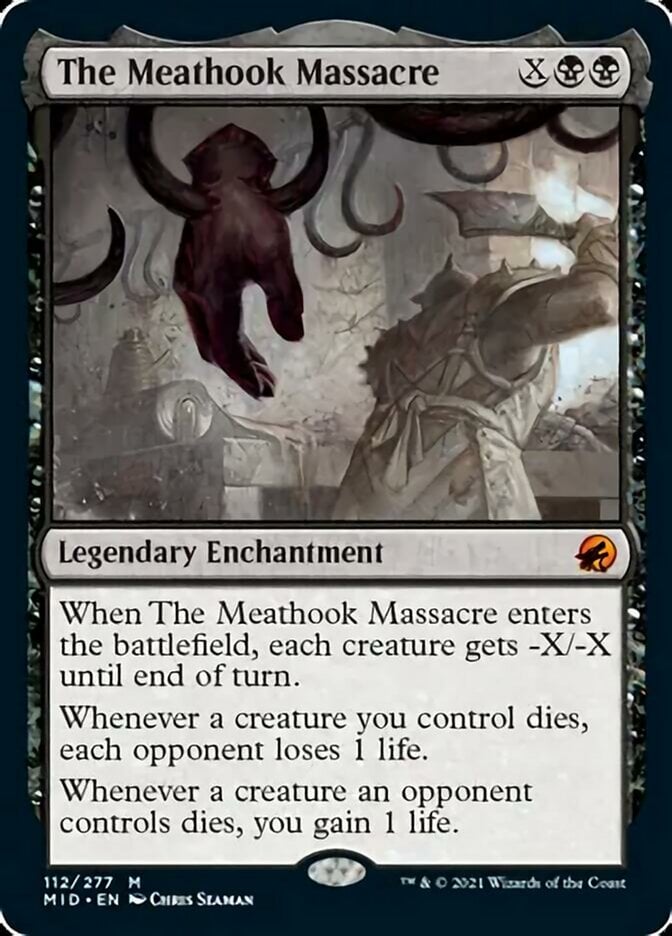
The Meathook Massacre is perfectly unreasonable. Board wipes should always stabilize you—that’s literally their function—but why does this one also function as a win condition? The flexibility is absurd. You can cast it for for a reasonable Blood Artist riff, or you could wipe everything away. Since you control what dies, you get to destroy everything, or you could just use a little mini-board wipe to clean up some small things while leaving your Vein Ripper or whatever in play.
Best Life Loss Payoffs
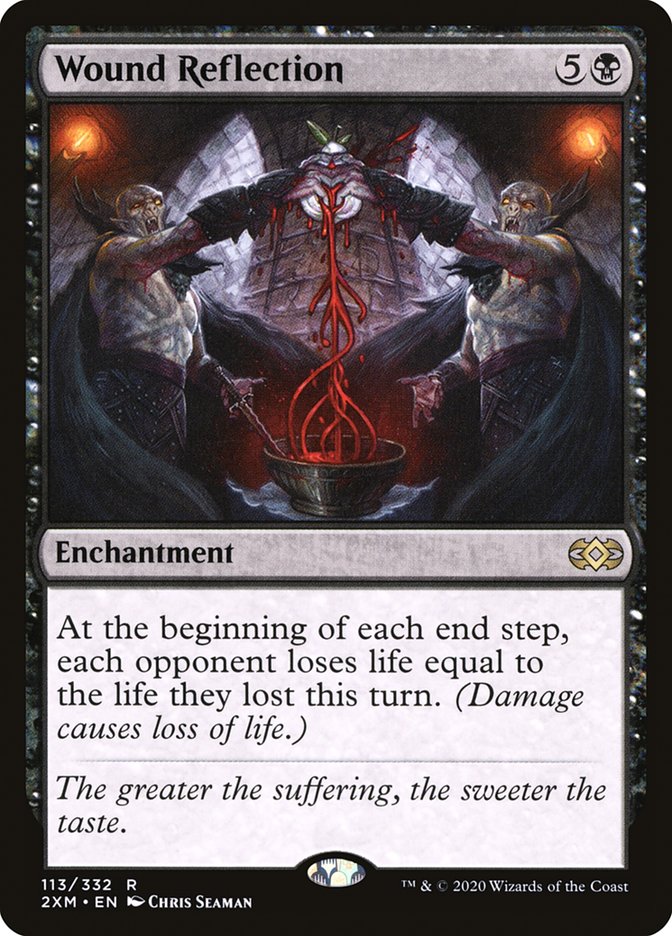
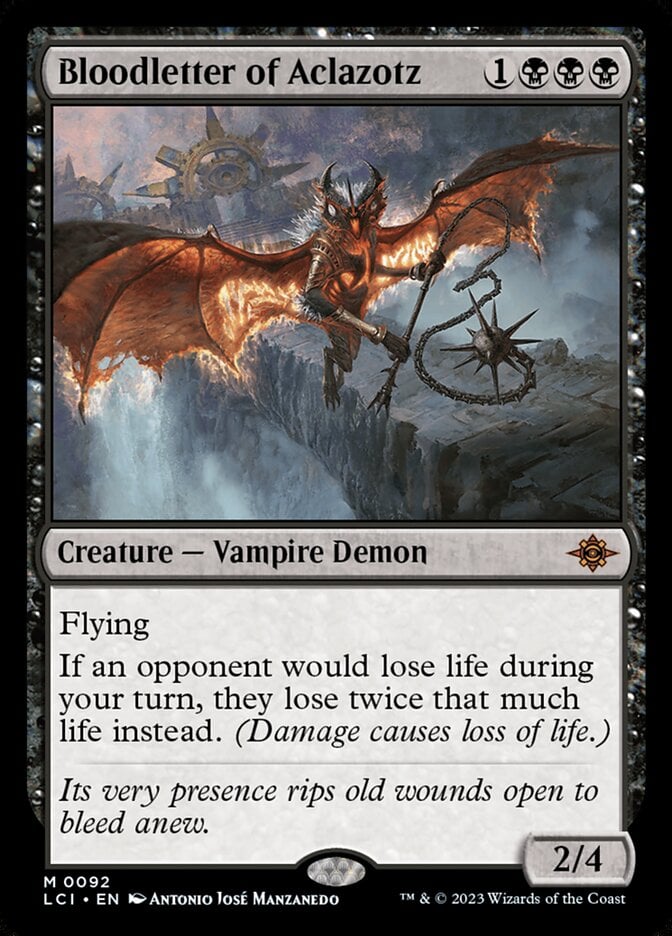
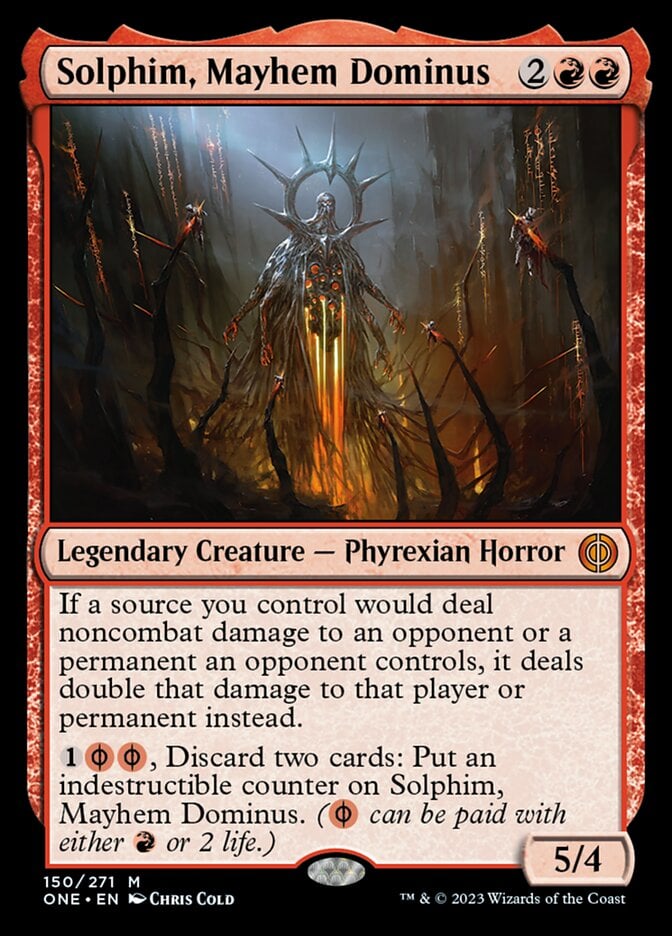
The absolute best payoff for life loss are cards that increase the amount of life your opponents lose like Wound Reflection and Bloodletter of Aclazotz. Life loss effects already pressure your opponents; these are to life loss what damage doublers like Solphim, Mayhem Dominus are to burn.
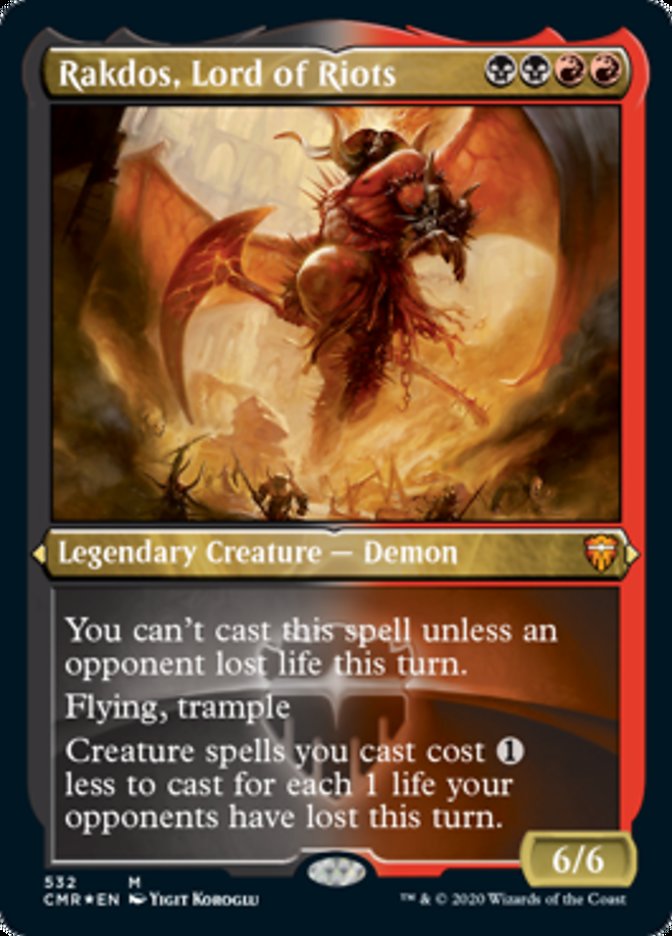
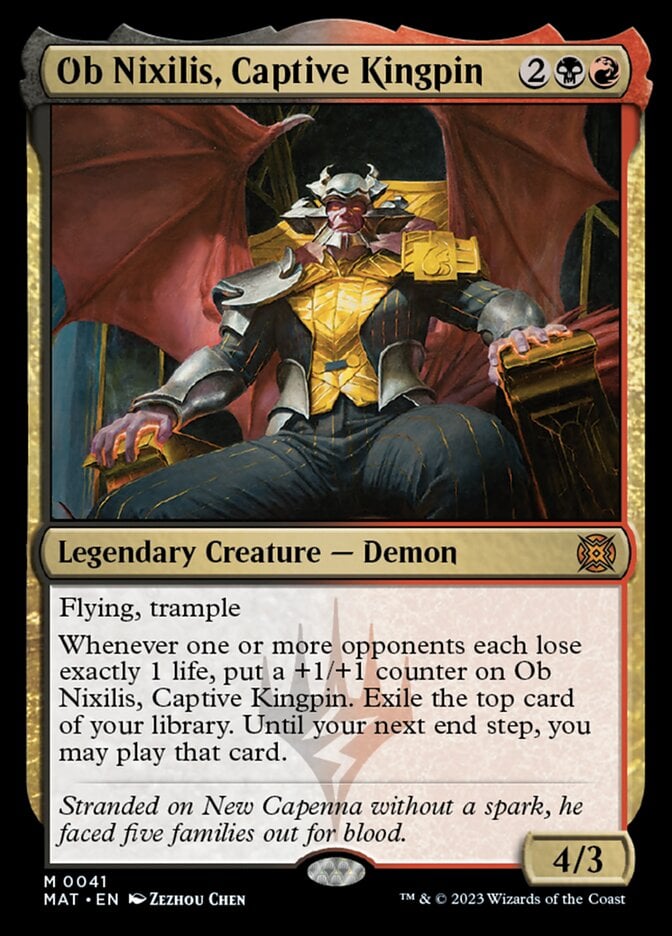

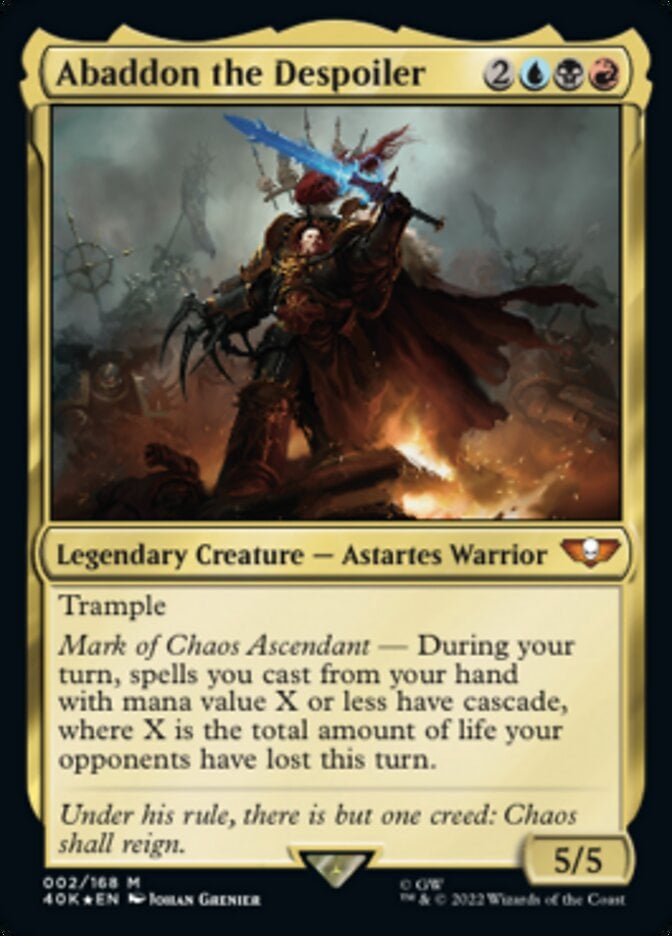
There are quite a few cards with abilities that only work when your opponents lose life, especially in the command zone. Rakdos, Lord of Riots and Ob Nixilis, Captive Kingpin are among the most popular options, but you can also leverage Gev, Scaled Scorch and Abaddon the Despoiler. All these cards also work well in concert, so you can slip them into the same decks more often than not.
Does Losing Life Count as Damage?
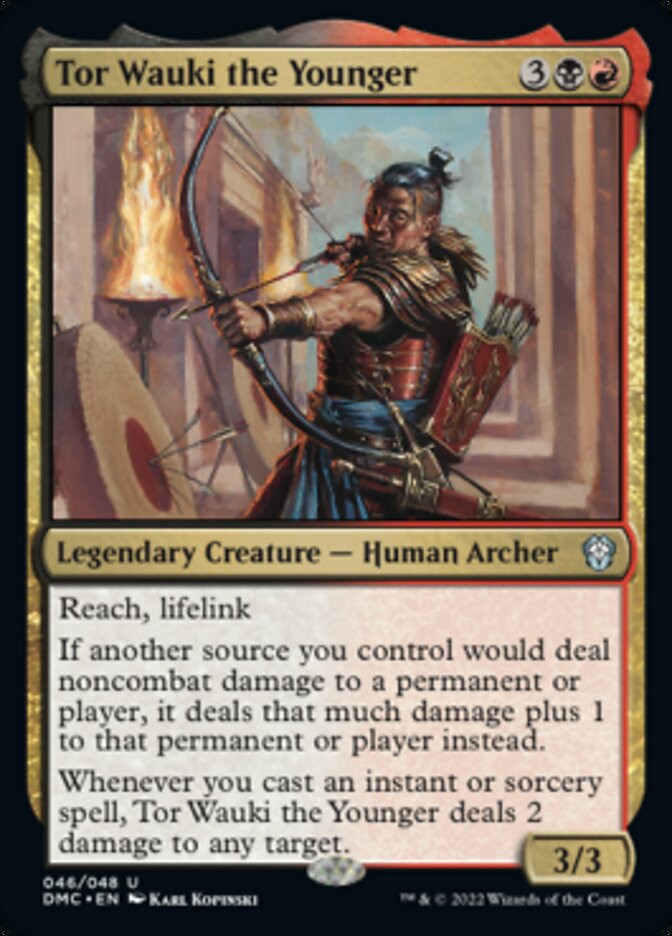
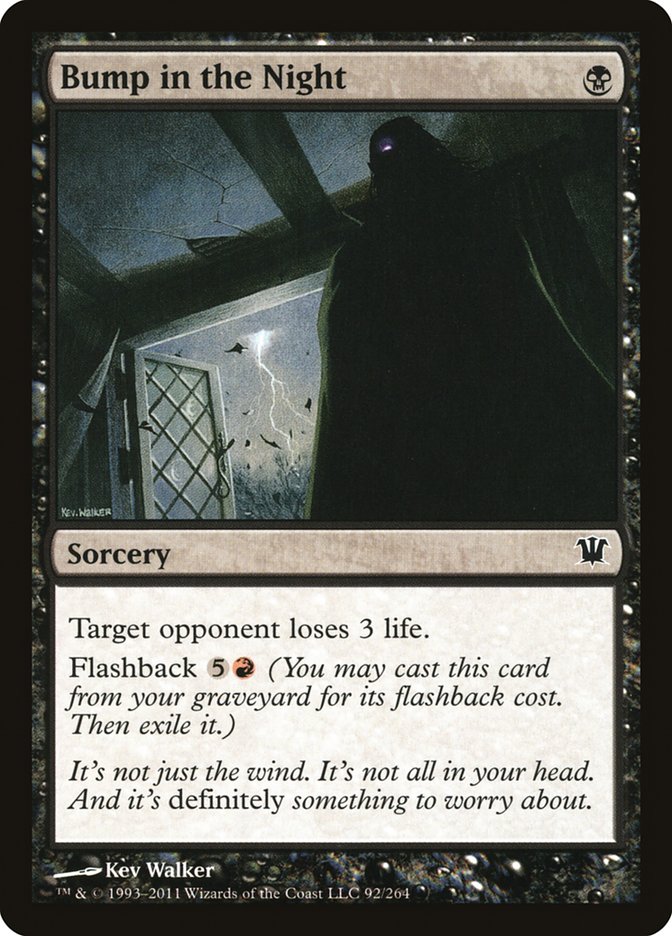
No. Losing life isn’t the same as taking damage. For example, Tor Wauki the Younger won’t increase the life lost from a Bump in the Night.
This is a bit of a rectangles and squares situation though, because damage causes life loss for cards like Bloodletter of Aclazotz and Wound Reflection.
Can Damage Prevention Stop Life Loss?
Nope. Life loss doesn’t count as damage, so damage prevention and damage reduction abilities don’t affect it.
Does Loss of Life Count as Non-Combat Damage?
Nope. Life loss and damage aren’t the same thing, so life loss doesn’t count as any form of damage.
Is Paying Life Loss of Life?
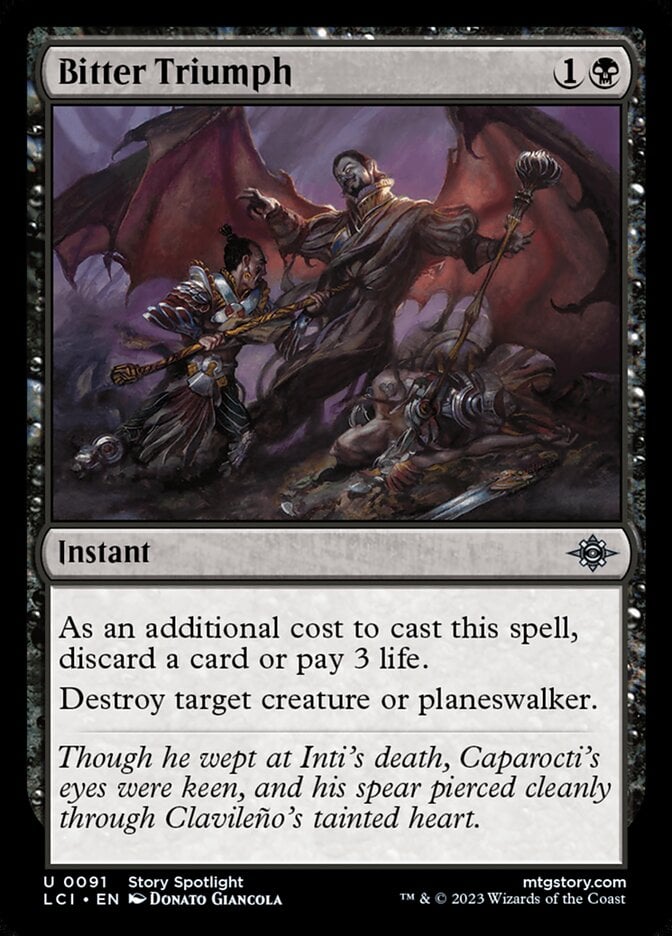
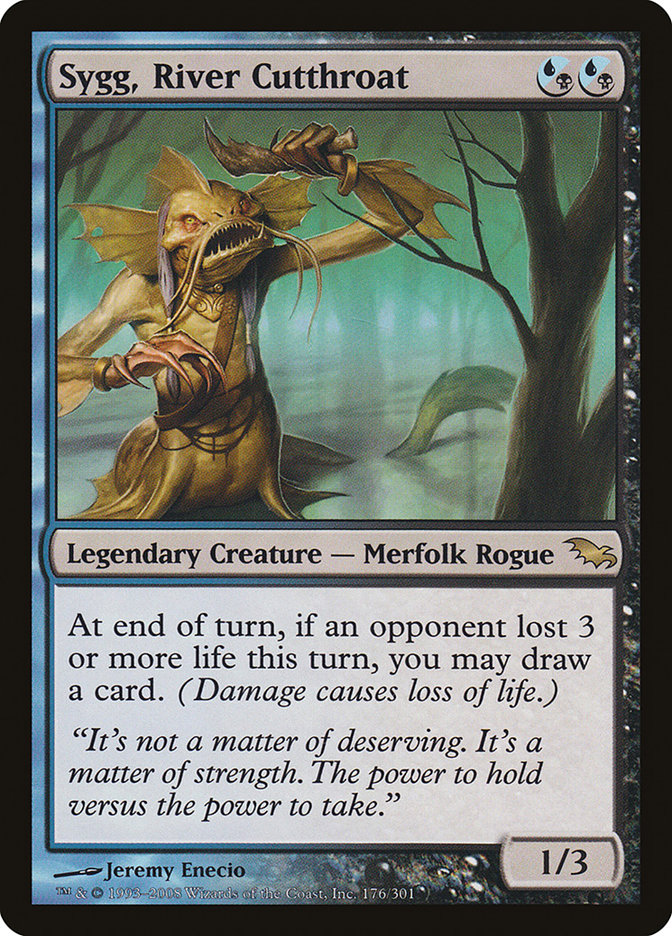
Yes, paying life causes you to lose life. For example, if an opponent pays 3 life to cast Bitter Triumph , that’ll satisfy the condition for Sygg, River Cutthroat to trigger in the end step.
Does Exchanging Life Totals Cause Loss of Life?
Yes, switching life totals causes lifegain and life loss. Let’s say you have 10 life and your opponent has 20, and you switch life totals with them. The player who went from 20 to 10 would have lost 10 life, and the other opponent gains 10 life.
Wrap Up
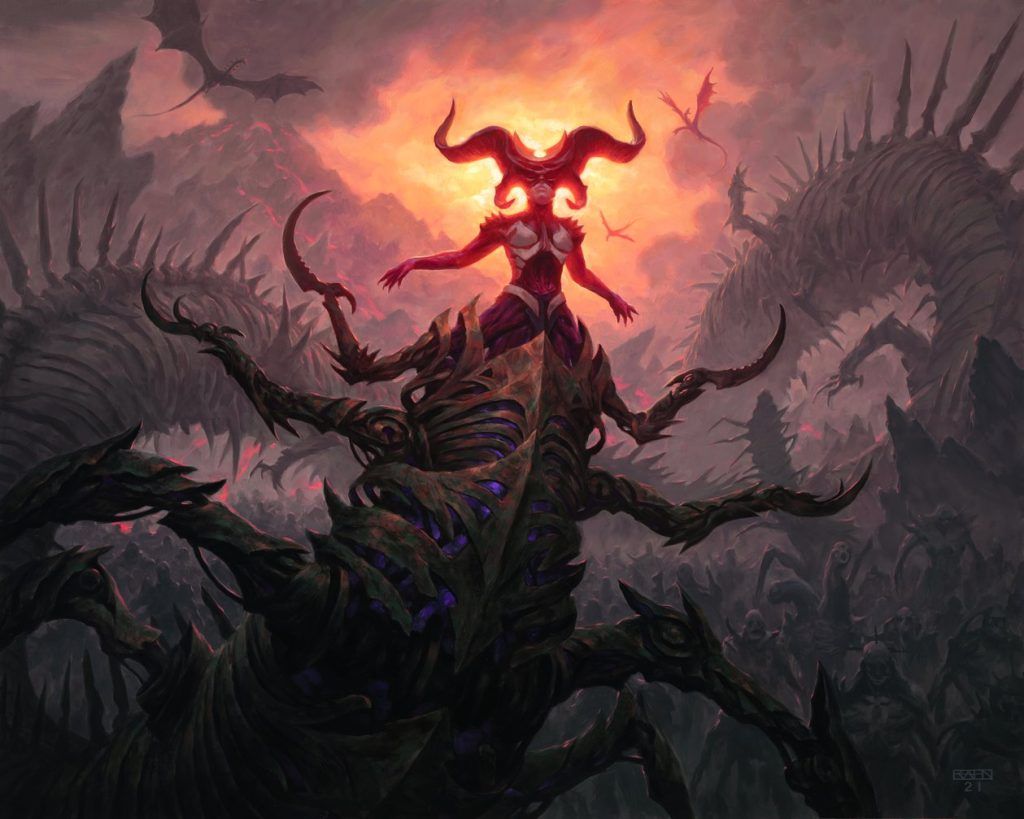
Sheoldred, the Apocalypse | Illustration by Chris Rahn
Life loss cards are potent ways to attack opposing life totals without worrying about combat math or maintaining a board of creatures. With effects that range from slow, steady sources of damage that drain your opponent 1 life at a time to massive spells that consume half their life at once, there’s a life loss card for any strategy.
What life loss cards are you most likely to play? Did I miss your favorite? Why should it have been on the list? Let me know in the comments below or on the Draftsim Discord!
Stay safe, and thanks for reading!
Follow Draftsim for awesome articles and set updates:










Add Comment