
Last updated on June 29, 2026
Brainstorm (Mystical Archive) | Illustration by Justin Hernandez & Alexis Hernandez
It was a cold autumn afternoon back in 2009. I was sitting on my own at my LGS building a deck for FNM when someone I’d never met before came into the shop and approached me since I was the only person in the room. They asked me if I’d like to play a game of Legacy.
I’d only been playing the game for a few months at the time and I didn’t even know what Legacy was. I explained that I only had a Standard deck, but he insisted that would be fine. So I agreed and we played a game. On his fourth turn, my new opponent cast Stroke of Genius for X=40 and copied it with Twincast, making me draw 80 cards from my deck.
While most players might have been put off by what happened, I was amazed. I loved seeing all of these new cards (well, old cards, but new to me) and what they could do in combination. From that moment on, I was hooked. I built my first Legacy deck and for the next few years, I played in Legacy events almost every month.
But what is Legacy? What makes it different from other formats, what makes it tick, and how can you get into it? Let’s talk about that.
What Is the Legacy Format?
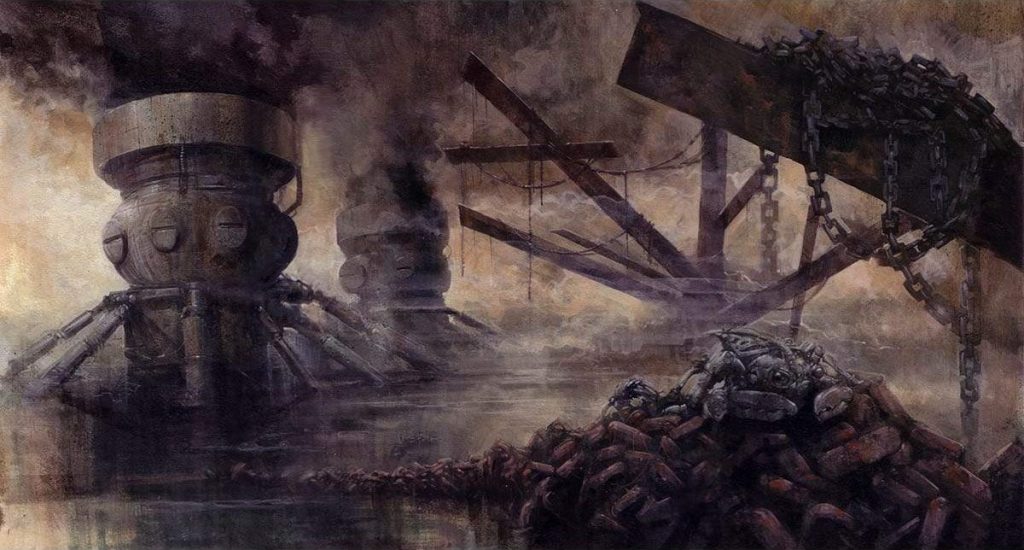
Wasteland | Illustration by Carl Critchlow
Legacy is Magic’s main “eternal” format, meaning one where all cards are legal and it never rotates like Standard does. Simply put, every set and expansion in Magic’s history is legal for play, with the exception of a list of banned cards.
Legacy-Legal Sets
Every black-bordered and white-bordered set and expansion in Magic’s history is legal in Legacy. This includes all Standard sets, Secret Lairs, and supplementary products like Commander decks and sets like Conspiracy and Battlebond. Essentially, any “real” Magic card that’s ever been printed with a black or white border is Legacy-legal.
Legacy Format Rules
Legacy’s rules are identical to other constructed formats in Magic:
- Your deck must consist of at least 60 cards.
- You can have a sideboard of up to 15 cards for use in best of 3 matches.
- You can only use up to four copies of each card in your deck except for basic lands.
Legacy Ban List
Legacy’s ban list is quite extensive, though decks in the format are allowed to be considerably more powerful than in formats. Some ban-worthy cards in other formats are allowed to thrive here.
Here’s the list of banned cards in Legacy:
- All 25 cards with the Conspiracy card type.
- All 9 cards that reference playing for ante.
- Cards whose art, text, name, or combination thereof are racially or culturally offensive.
- Cards that bring a sticker or an attraction into the game.
- Ancestral Recall
- Arcum's Astrolabe
- Balance
- Bazaar of Baghdad
- Black Lotus
- Candelabra of Tawnos
- Channel
- Chaos Orb
- Deathrite Shaman
- Demonic Consultation
- Demonic Tutor
- Dig Through Time
- Dreadhorde Arcanist
- Earthcraft
- Entomb
- Falling Star
- Fastbond
- Flash
- Frantic Search
- Gitaxian Probe
- Goblin Recruiter
- Grief
- Gush
- Hermit Druid
- Imperial Seal
- Library of Alexandria
- Lurrus of the Dream-Den
- Mana Crypt
- Mana Drain
- Mana Vault
- Memory Jar
- Mental Misstep
- Mind Twist
- Mind's Desire
- Mishra's Workshop
- Mox Emerald
- Mox Jet
- Mox Pearl
- Mox Ruby
- Mox Sapphire
- Mystical Tutor
- Nadu, Winged Wisdom
- Necropotence
- Oath of Druids
- Oko, Thief of Crowns
- Psychic Frog
- Ragavan, Nimble Pilferer
- Sensei's Divining Top
- Shahrazad
- Skullclamp
- Sol Ring
- Sowing Mycospawn
- Strip Mine
- Survival of the Fittest
- Time Vault
- Time Walk
- Timetwister
- Tinker
- Tolarian Academy
- Treasure Cruise
- Troll of Khazad-dûm
- Undercity Informer
- Underworld Breach
- Vampiric Tutor
- Vexing Bauble
- Wheel of Fortune
- Windfall
- Wrenn and Six
- Yawgmoth's Bargain
- Yawgmoth's Will
- Zirda, the Dawnwaker
Who is Legacy For? Why Was Legacy Created?
Legacy is for the players who want a stopgap between the most powerful cards of Vintage and the most recent cards.
Legacy was first introduced back in 1997. Magic had been going on for long enough that the game had two distinct formats, named “Type 1” and “Type 2.”
Type 1 was designed to be the format where every card was legal with the most powerful cards being restricted. Type 2 would rotate sets out of legality so only the newest sets were legal. These formats later became known as Vintage and Standard respectively.
Type 1.5 included all sets, but the cards that were restricted in Vintage were fully banned. In 2004 Legacy was born when Type 1.5 was separated from Vintage, to give the format an entirely separate ban list.
Where Can You Play Legacy?
Luxury Suite | Illustration by Jonas De Ro
Legacy is much harder to play these days since Magic has become much more popular and the supply of its best cards is so scarce. The easiest way to play Legacy right now is through Magic Online, though many LGSes support the format if local interest in it is high enough.
A lot of the rare cards that make Legacy ridiculously expensive in paper Magic are much cheaper to buy on MTGO. Force of Will, one of Legacy’s most impactful cards, is about $55 a copy while the digital versions are around the $20 mark.
Competitive Legacy and Events
Competitive outlets for Legacy have dwindled. The future looked bright for the format at one point, but Star City Games cut their support for Legacy on their Open circuit in 2015 and there are fewer and fewer Legacy GPs as the years pass.
2018 saw the highest-level Legacy format event for a long time with the 25th anniversary Pro Tour. This Pro Tour was Team Constructed, with each team of three requiring a Legacy player. It even showcased some fresh innovation in the format with Josh Utter-Leyton pioneering a Dimir Death's Shadow deck that helped get him and his team all the way to the final. I then took that same deck and won the UK Legacy Nationals for that year, just as a quick side brag.
Magic Online is the main way to play the format. There are Magic Online Championship Showcase preliminary and challenge events every week with opportunities to qualify for more premier play events.
Format Characteristics and Defining Cards
A friend of mine who taught me the ins and outs of Legacy in my early days of playing Magic once wrote a blog post that featured 100 different Legacy decks. The format is so large that you can literally play anything you want. The degree of success you can expect with your deck vary of course, but you can basically play anything you can think of.
Broadly speaking, though, you can group a lot of these decks into some broad categories that help to define the format. To best understand why these cards and decks are important, I’m going to start with the boogeyman of Legacy: combo decks.
The Epic Storm
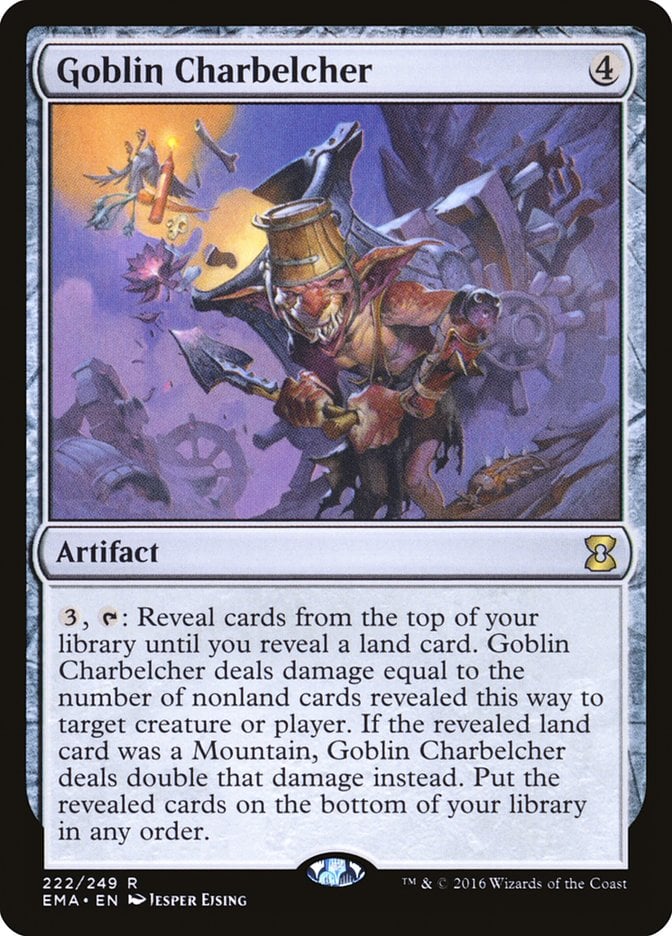
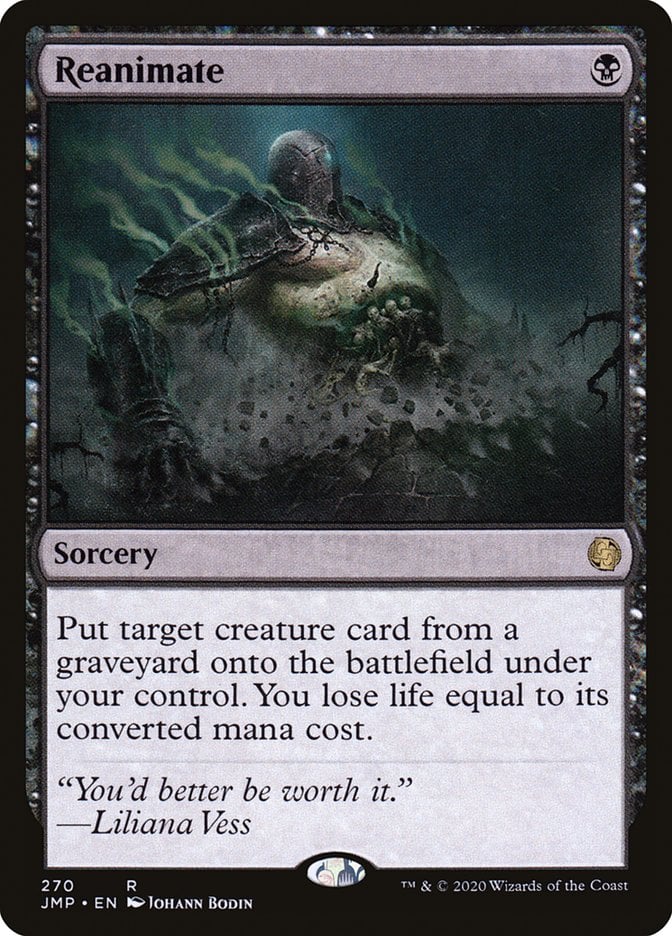
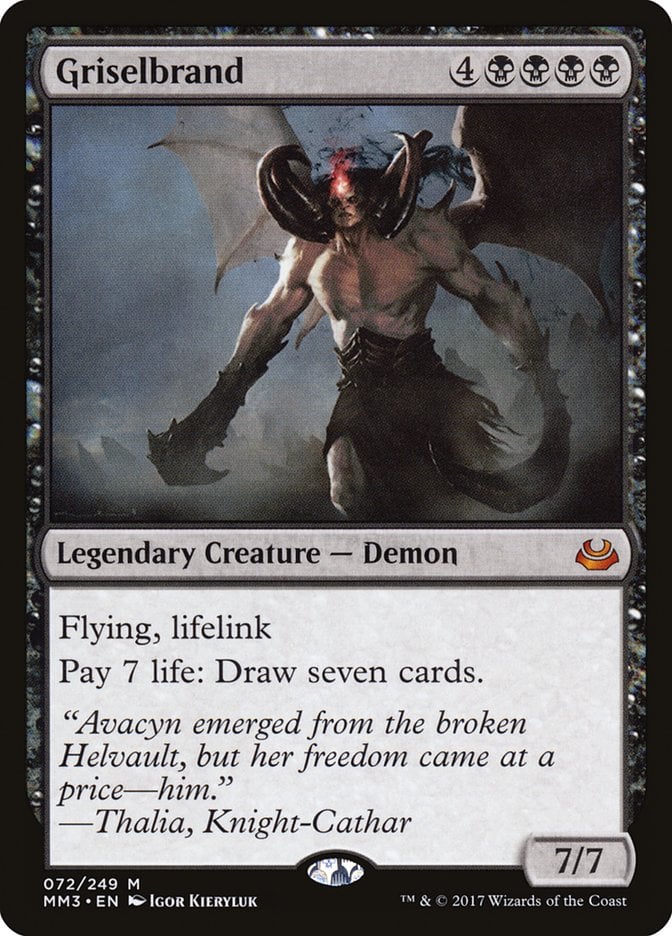
Many players often tell you that Legacy is a format where you can win on turn 1. And that’s kinda true. There is a vast array of different combo decks in the format, from the absurd one-land “Belcher” decks that kill you with a storm spell or a Goblin Charbelcher that reveals their entire landless library to being able to Reanimate a Griselbrand on turn 1 and win from there.
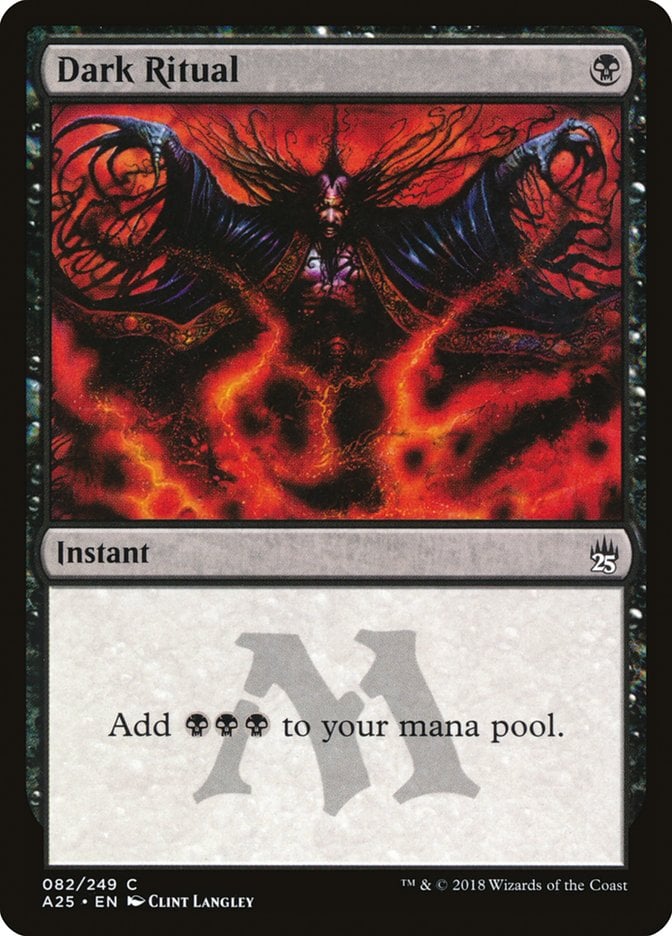
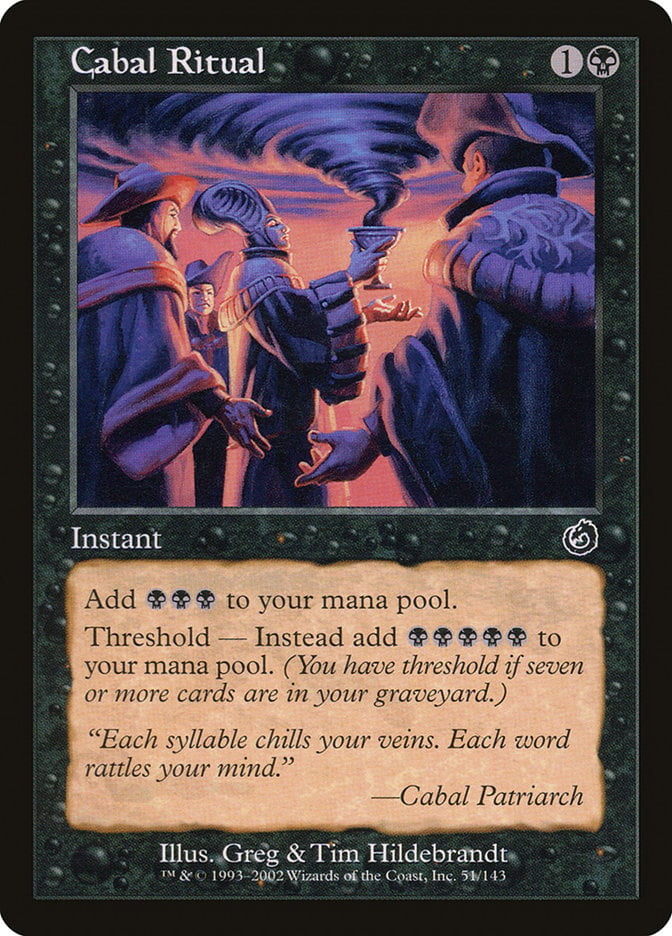
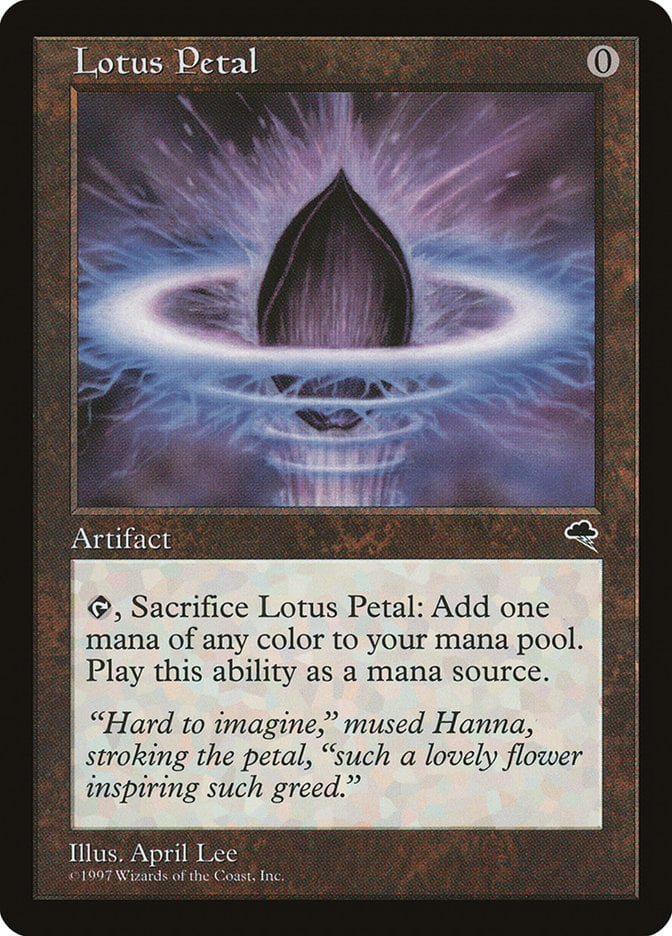
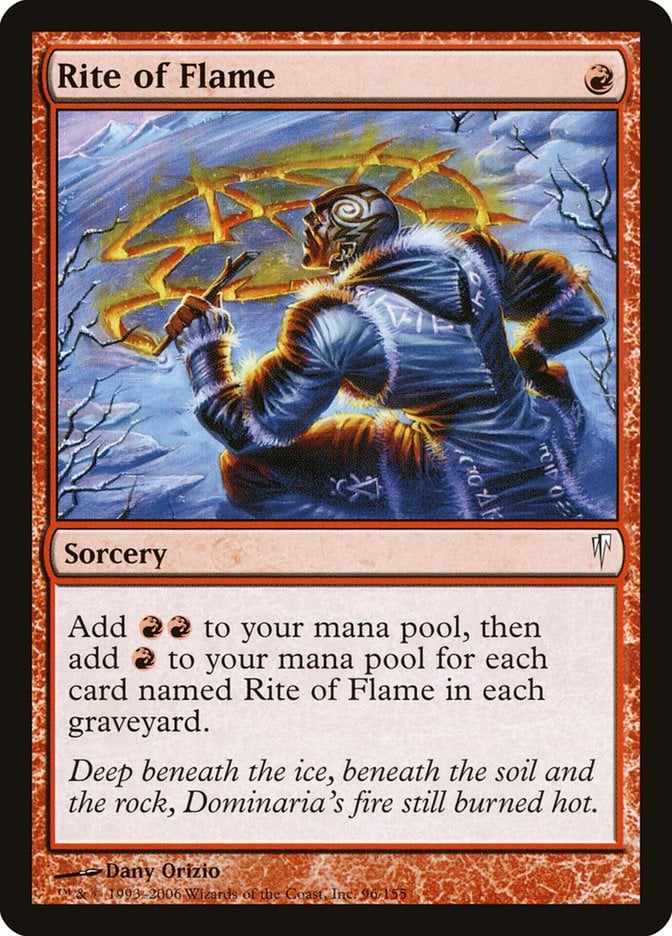
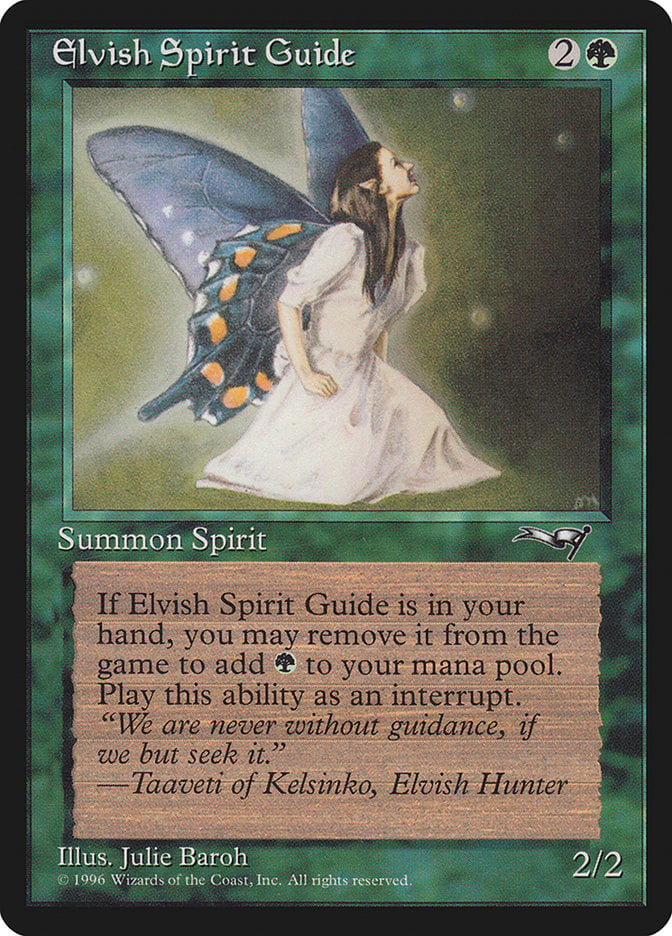
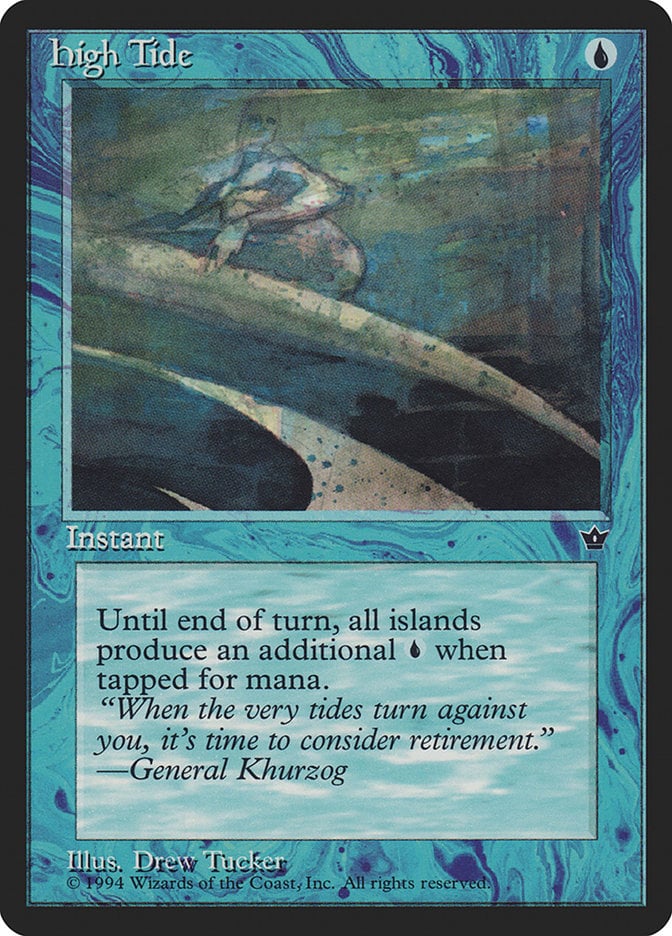
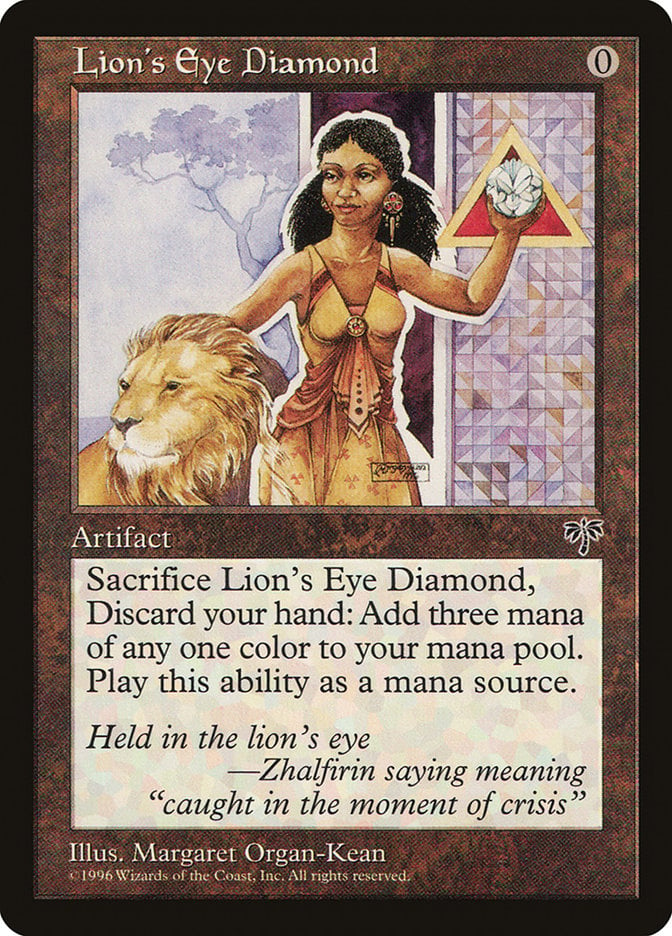
The key to all of these decks is the abundance of fast mana that’s unique to the format. Dark Ritual, Cabal Ritual, Lotus Petal, Rite of Flame, Elvish Spirit Guide, High Tide, and the deck-defining Lion's Eye Diamond are all exclusive to Legacy and they allow you to get enough mana on turn 1 to make combo kills very possible. And that’s not even every card available.
Storm combo decks are a pillar of the format, and the fast mana options allow it to work a lot more efficiently than you might be used to in other formats. But not to worry! These decks may have the capacity to kill as early as turn 1, but they never get the chance to. Every other deck in the format is aware of this deck’s existence and always comes prepared.
Force of Will
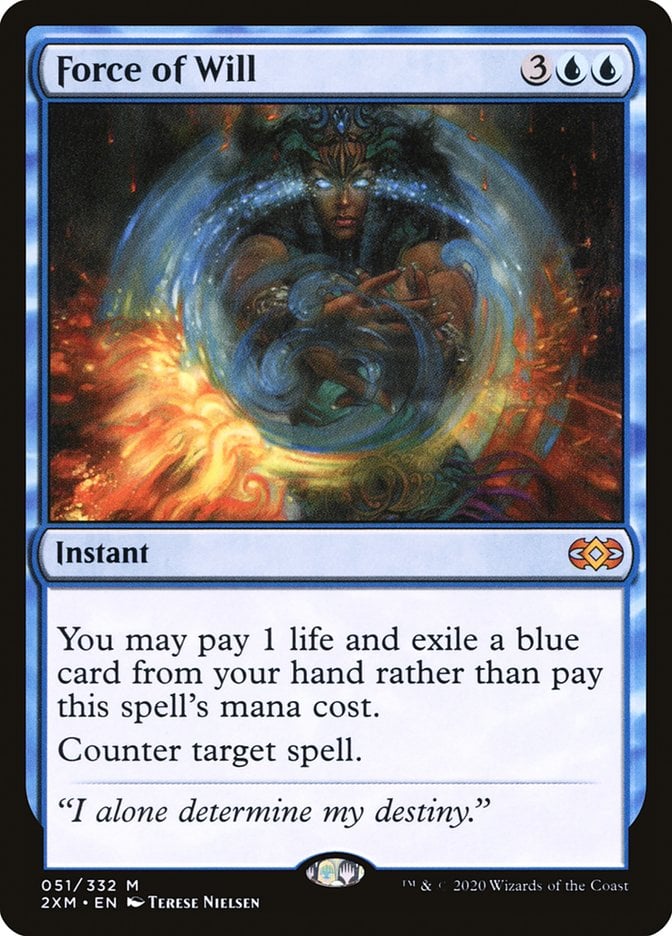
Force of Will, the best counterspell in Magic, is probably the single most important card in the whole of the Legacy format. Nearly every blue deck in Legacy ends up optimized to play Force because the ability to interact early is a necessary evil. The mere existence of this card means that all of the decks in the first category have to be wary of running their combos into a zero-mana counterspell on the first turn.
Your opponent may not have Force of Will in their hand or even in their deck, but how can you be sure against an unknown opponent? All combo decks are slower use disruption like Thoughtseize, Duress, or Unmask to let them get through a barrage of counterspells. Except for Belcher decks; they tend to be optimized for speed and hope the opponent doesn’t have Force.
Modern Horizons’ printing of Force of Negation only added to the list of combo decks’ problems, giving blue decks access to as many as eight free counterspells if they wished. Daze is another pillar that’s used in some blue decks, though normally ones that can better survive with bouncing one of their own lands like Delver of Secrets decks or, my own personal favorite, merfolk tribal.
The Dual Lands and Wasteland
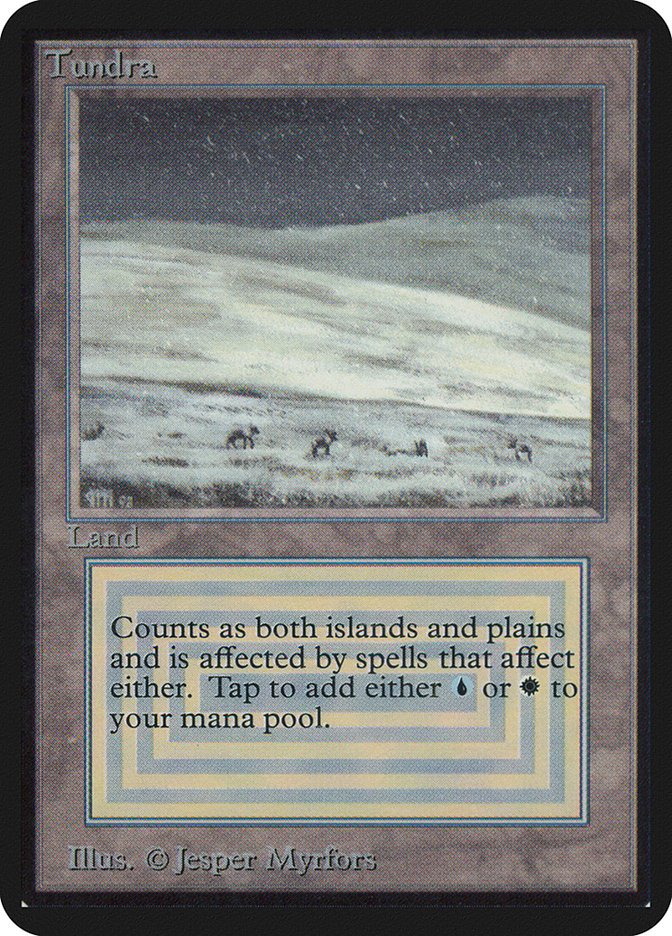
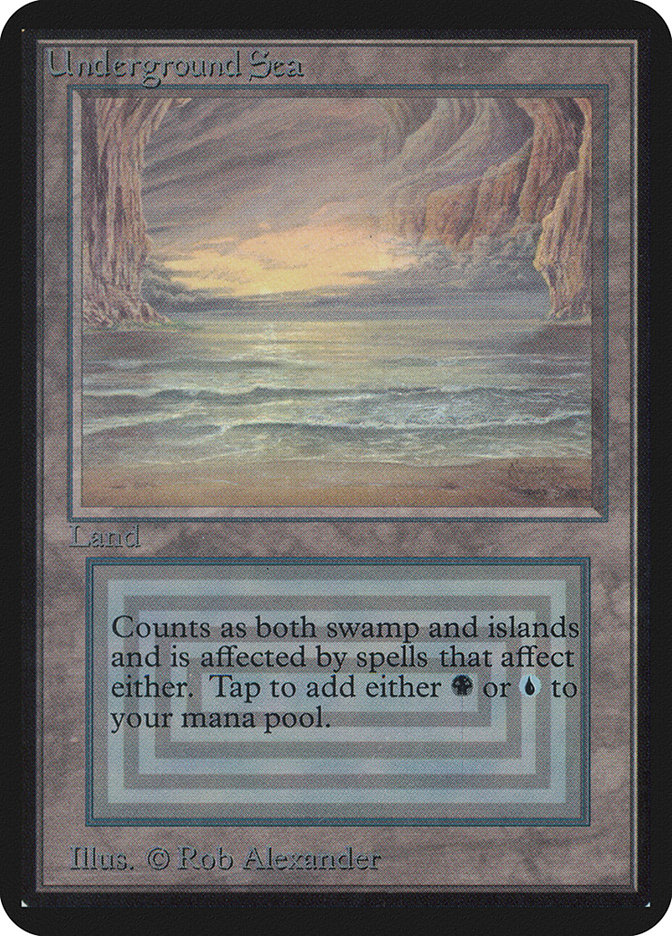
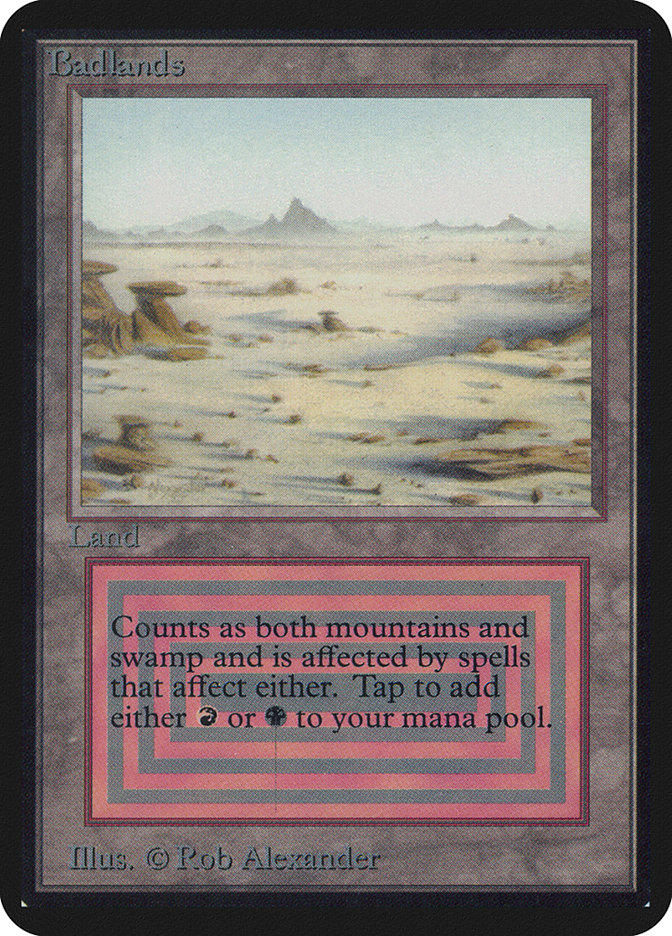
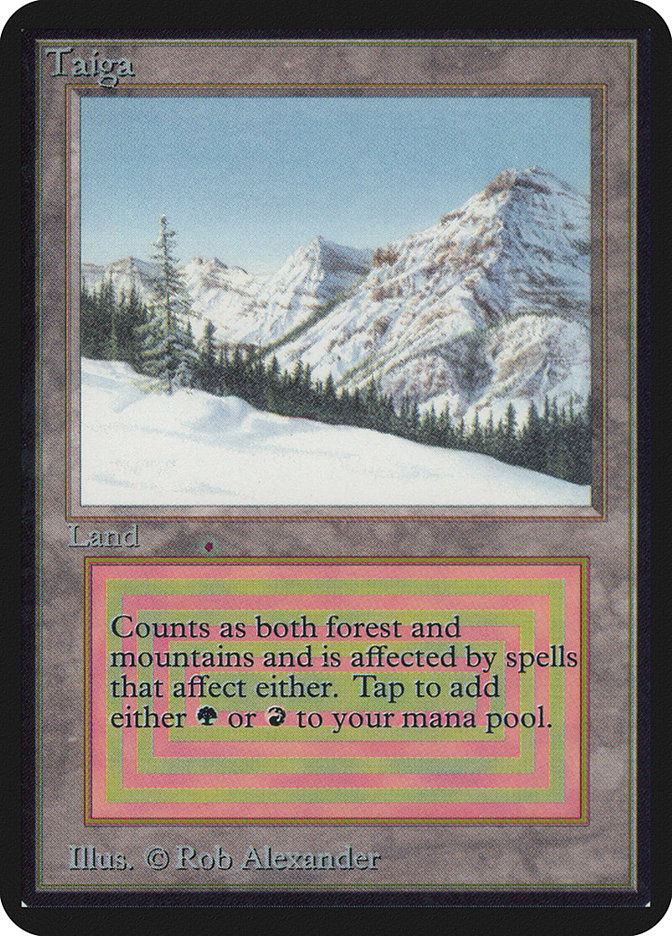
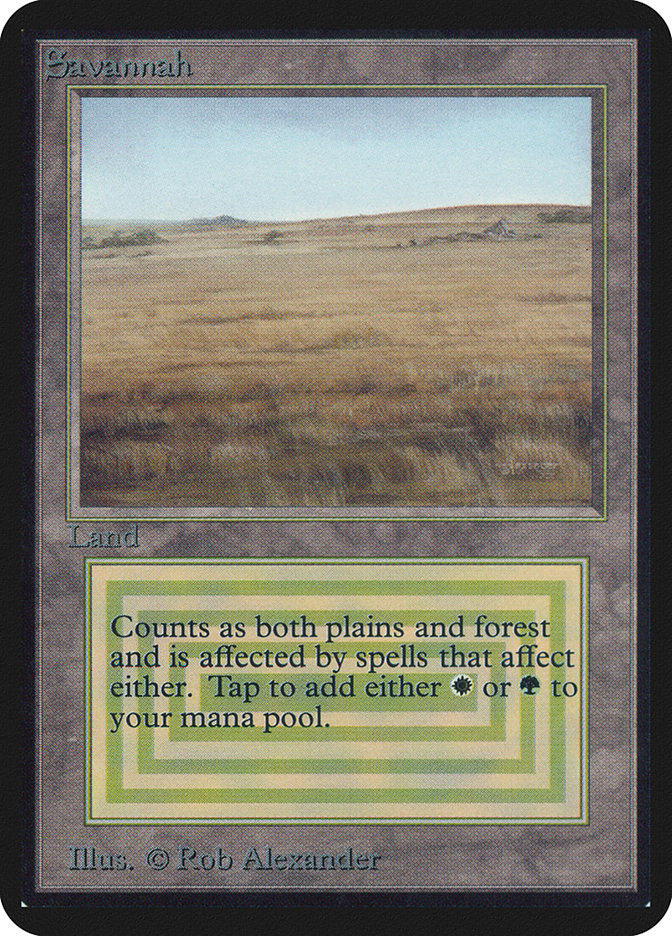
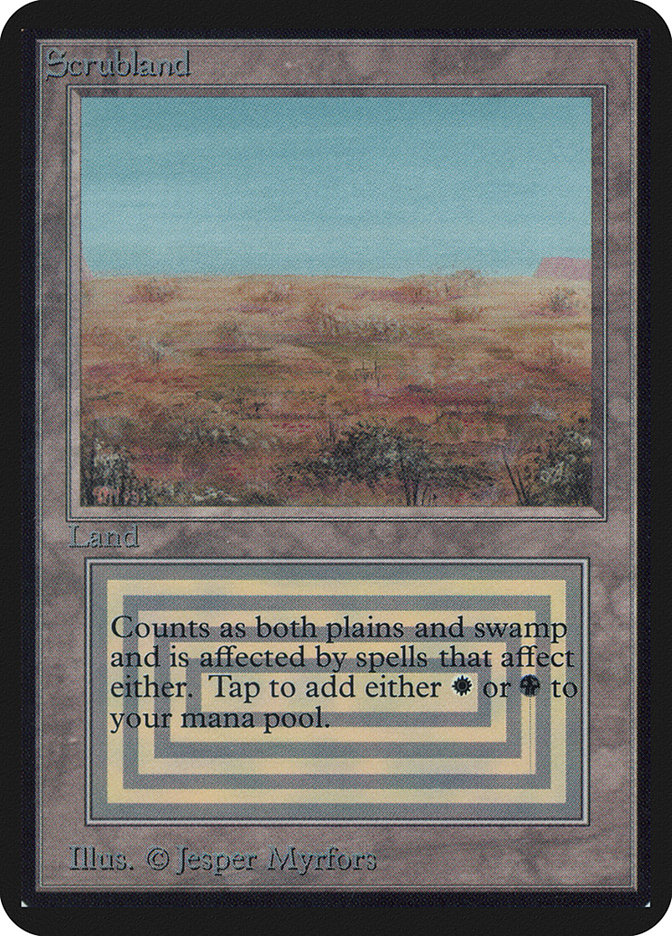
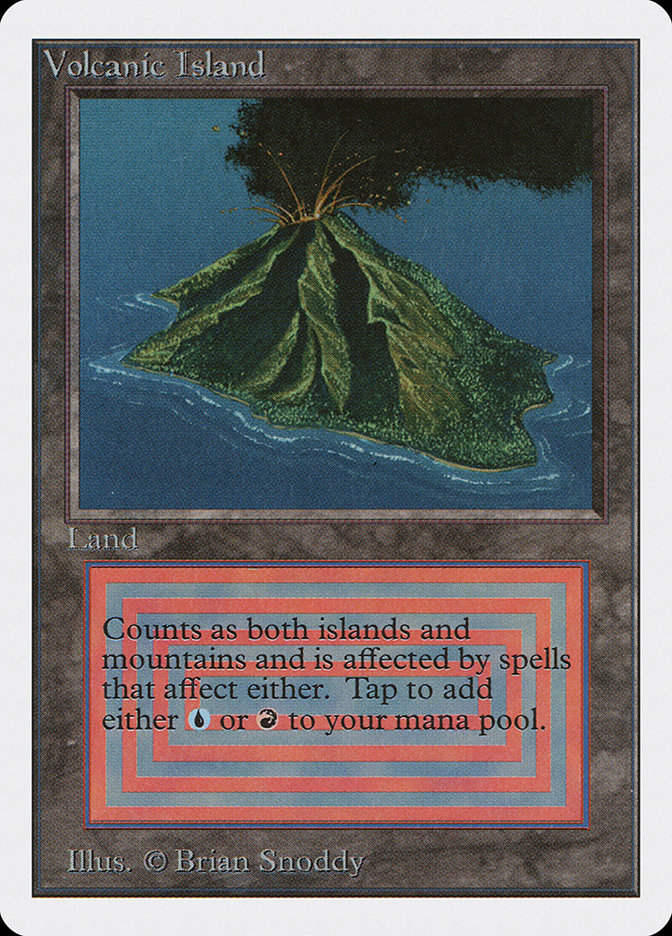
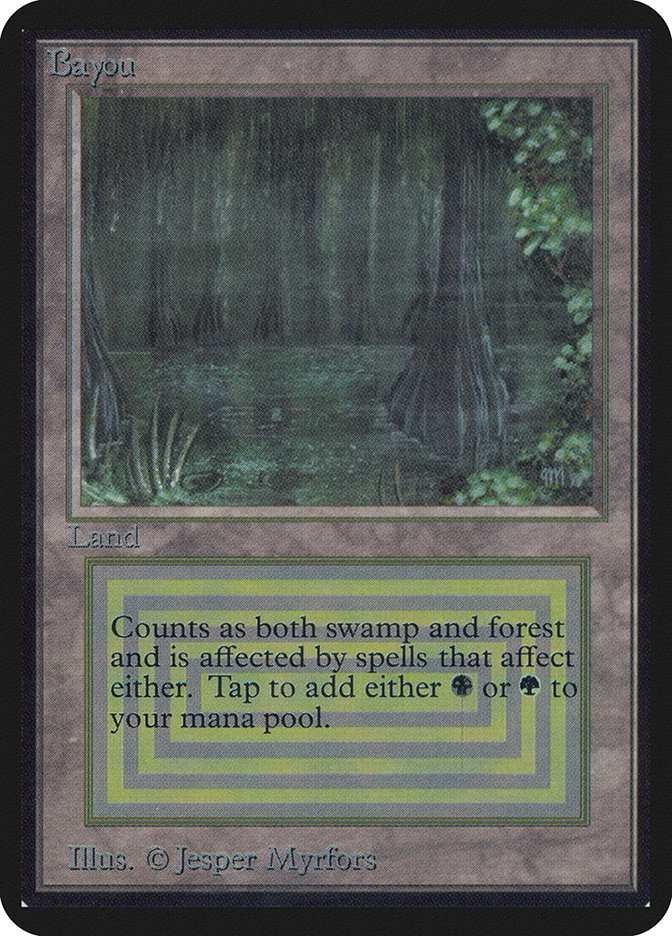
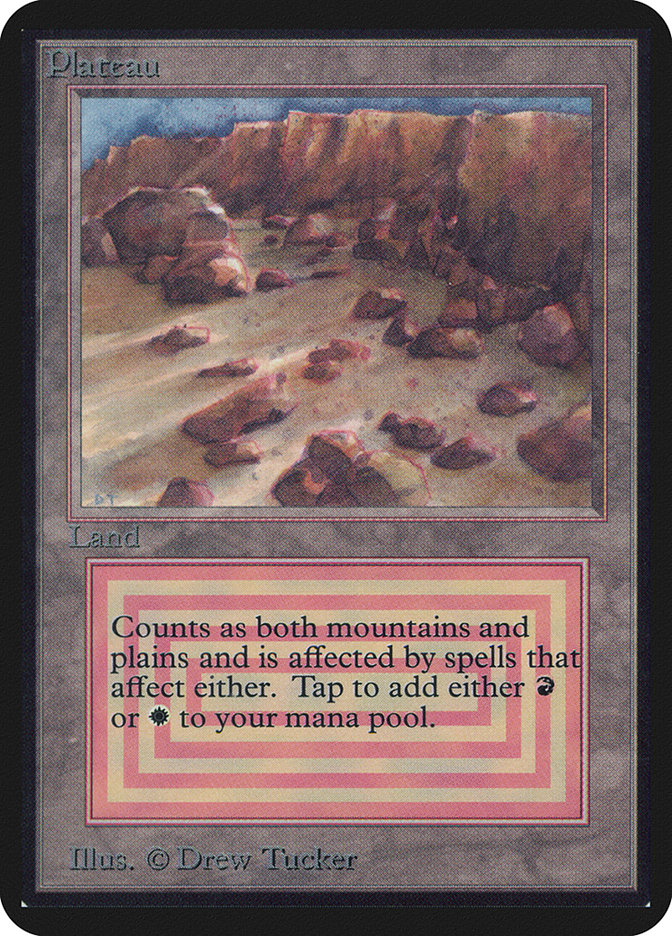
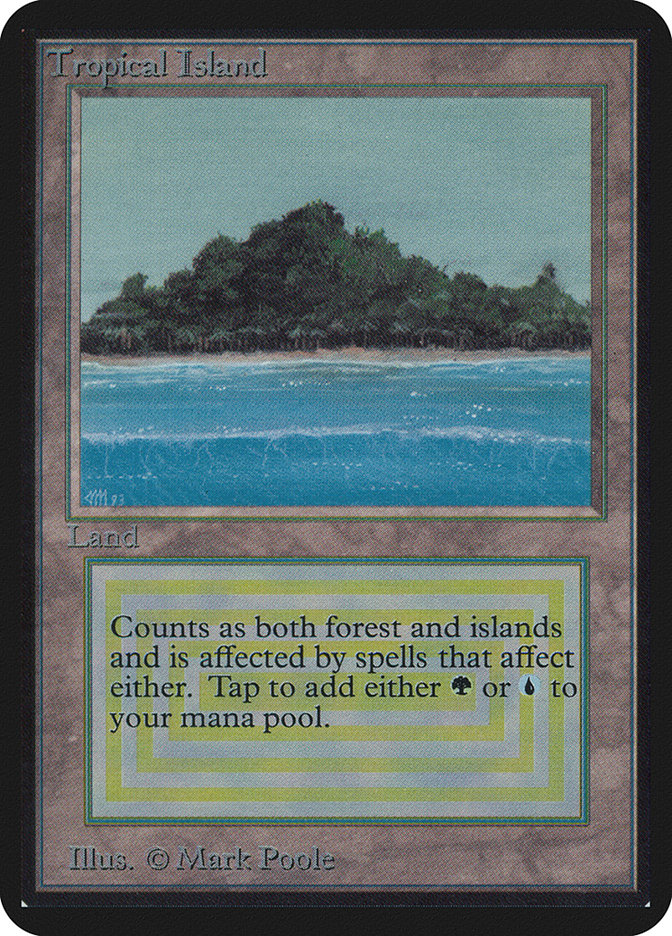
One of the most prominent features of Legacy is that you have access to Alpha’s original cycle of dual lands. This cycle has no downsides (other than being non-basic), has both of the land types of their respective colors, and always enters untapped.
The original fetch lands printed in 2002 redefined how mana bases work in Magic. Nearly all multicolor mana bases in Legacy are constructed using fetch lands that fetch up the duals of the colors you need.
Izzet Delver, a deck I’ll get to later, often runs a simple mana base of four copies of Volcanic Island and a bunch of fetches. This is often the case with 3-color mana bases since you can run just three to six dual lands spread across your color combination along with a bunch of fetch lands that can all fetch any of the three duals. It also makes splashing tech cards very easy since you often see 2-color control decks splashing a third color for powerful sideboard cards.
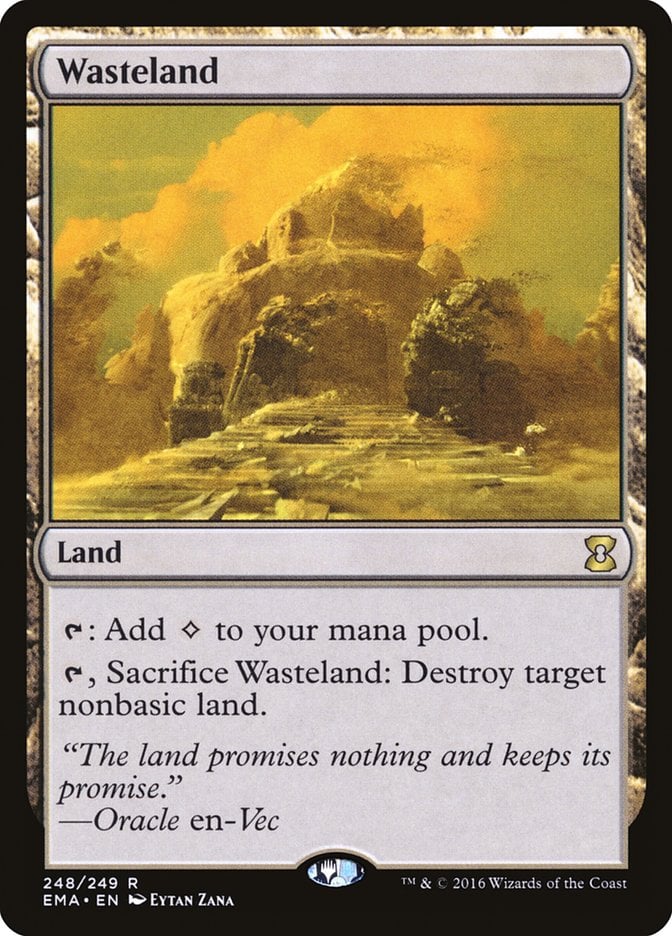
The prevalence of the dual/fetch mana bases also makes Wasteland one of Legacy’s most important cards. Mana denial with land destruction can be a very effective strategy with mana being so key in the early turns. Every color has access to Wasteland and you can sometimes use it to punish some very greedy opening hands.
Brainstorm
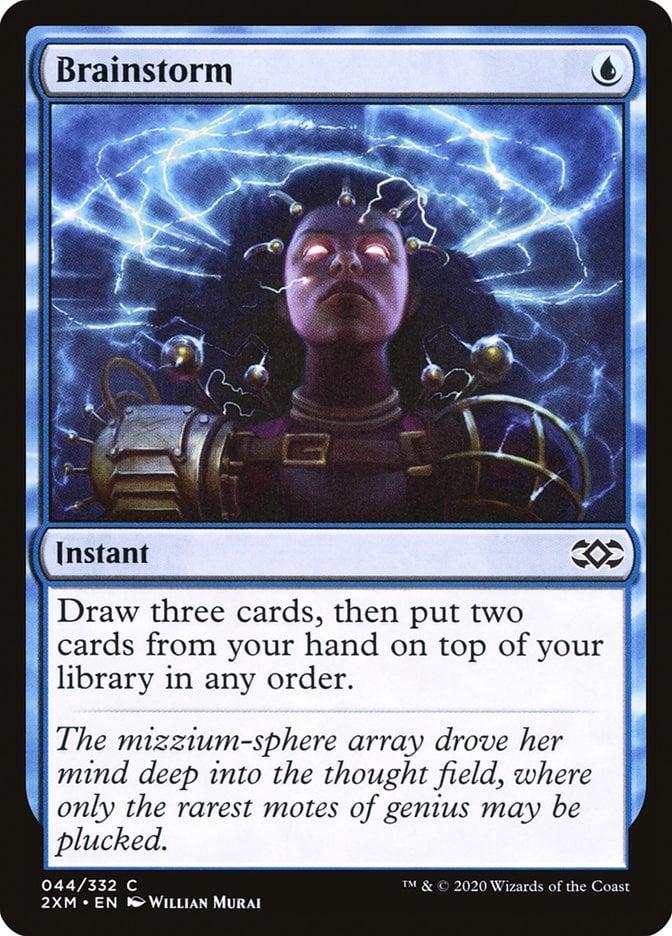
Another key feature of the format is Brainstorm. You saw the power of this card if you got to play with it before it was banned on Arena in Historic.
Thanks to most decks running fetch lands, Brainstorm often functions scarily similar to Ancestral Recall in Legacy, letting you shuffle away the two cards you put back into your deck. You have a great amount of control over the cards you see in a game with this simple interaction which makes Brainstorm one of the most played cards in the format.
Stax Cards
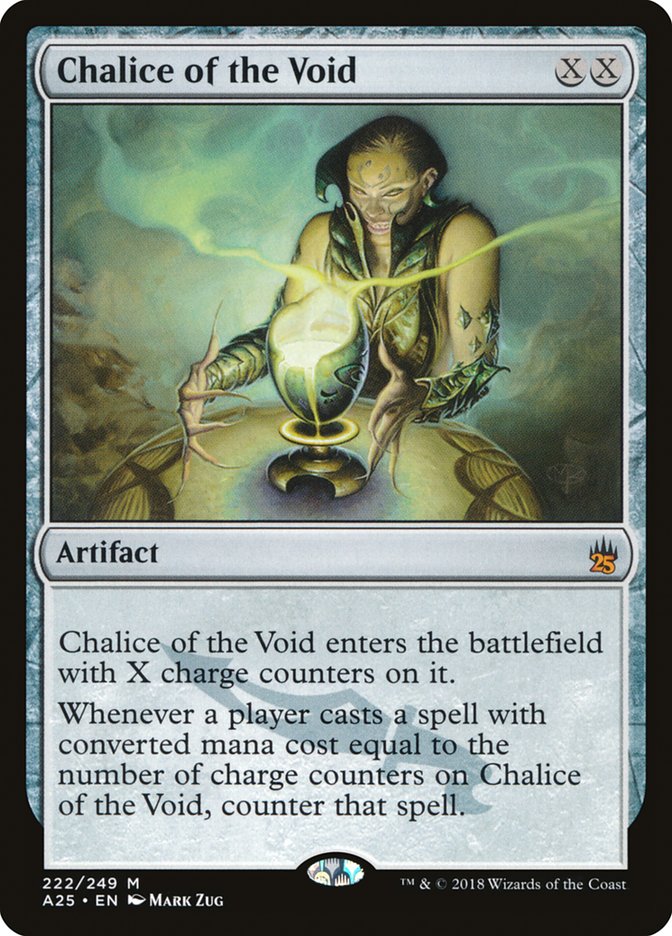
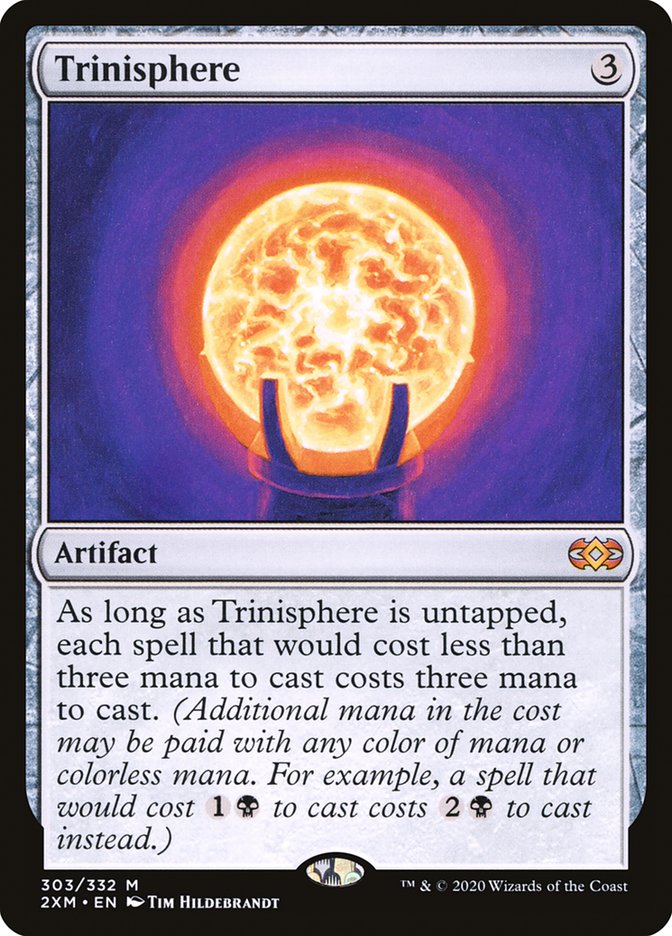
While they don’t get printed very often anymore, stax cards like Chalice of the Void and Trinisphere help to define Legacy even further. They’re very effective at stopping combo decks and can be very good against Force of Will decks when backed up by a horde of creatures.
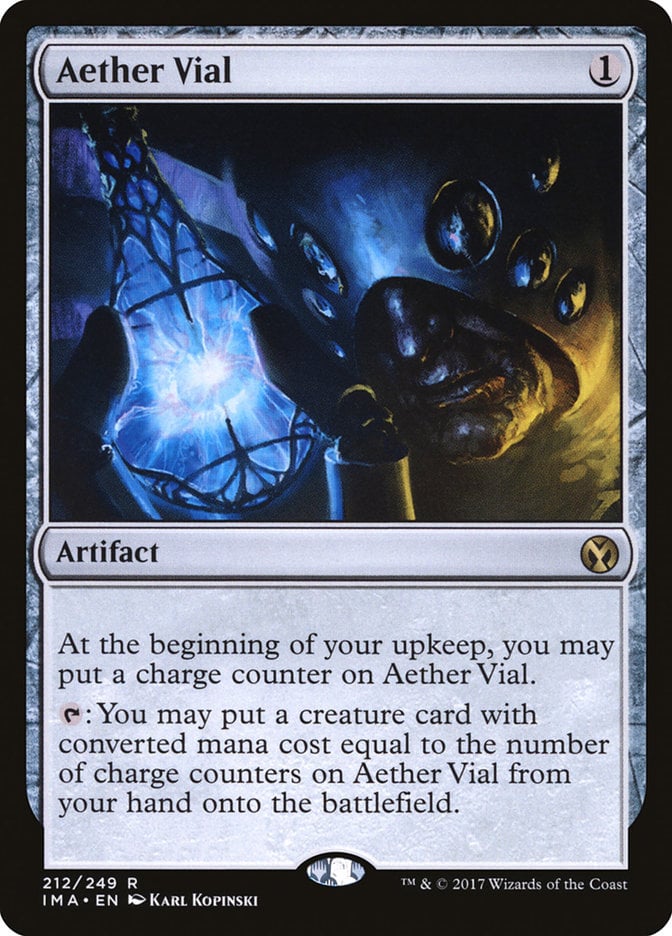
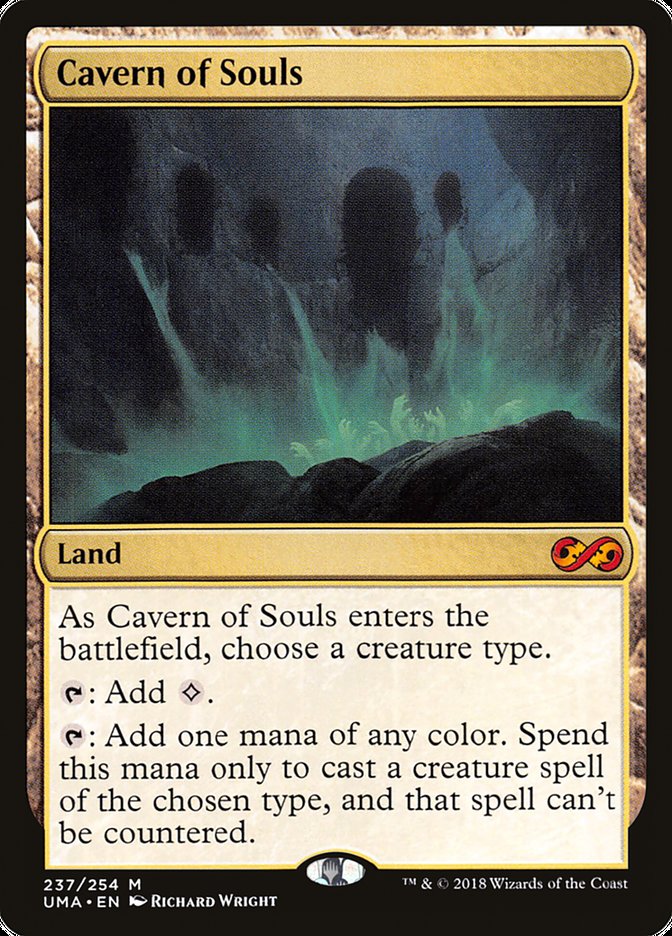
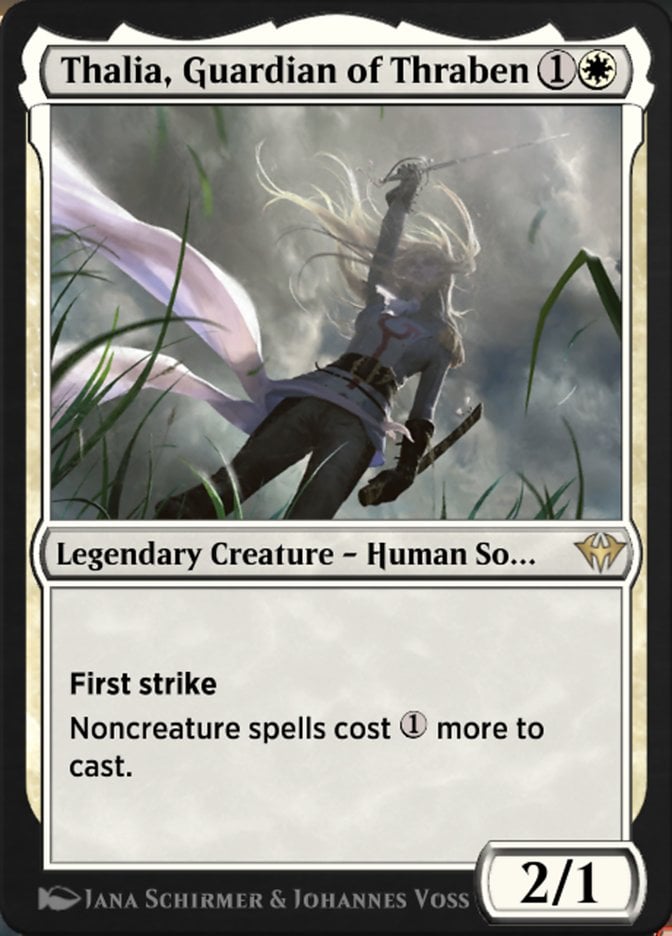
Aether Vial and Cavern of Souls help you get creatures down through counterspells. Cards like Thalia, Guardian of Thraben can also further tax your opponent’s resources.
Most decks in Legacy attack the format through combo, counterspells, or resource denial. Aggro decks are often backed up by Force of Will or use Wasteland and Chalice of the Void to tax their opponent’s resources.
Legacy Meta and Decks
Dimir Reanimator

Reanimate | Illustration by Nils Hamm
Creatures (17)
Abhorrent Oculus x2
Archon of Cruelty x2
Atraxa, Grand Unifier
Griselbrand
Metamorphosis Fanatic x2
Murktide Regent x2
Psychic Frog x4
Tamiyo, Inquisitive Student x3
Instants (13)
Brainstorm x4
Daze x3
Fatal Push x2
Force of Will x4
Sorceries (15)
Careful Study x4
Ponder x4
Reanimate x4
Thoughtseize x3
Enchantments (2)
Animate Dead x2
Lands (17)
Flooded Strand
Island
Polluted Delta x4
Scalding Tarn
Swamp
Undercity Sewers
Underground Sea x4
Wasteland x4
Sideboard (15)
Barrowgoyf x2
Brazen Borrower x2
Consign to Memory x4
Fatal Push x2
Ghost Vacuum
Go for the Throat
Null Rod x2
Unlicensed Hearse
You can expect to see plenty of blue-black, Dimir Reanimator in Legacy matchups, so do you have a way to stop Tamiyo, Inquisitive Student, Reanimate, and Metamorphosis Fanatic? Do you love how this deck cheats the high mana value cards in Atraxa, Grand Unifier, Griselbrand, and Archon of Cruelty? Though there’s no traditional and consistent discard outlet it’s loaded with Careful Study to loot for the best reanimation target, and free counterspells in Daze and Force of Will.
In case you need to drop a wrench in opposing decks, the Thoughtseize loves to pick off key pieces and wreck some strategies and makes this a spell-dominant deck.
Izzet Delver
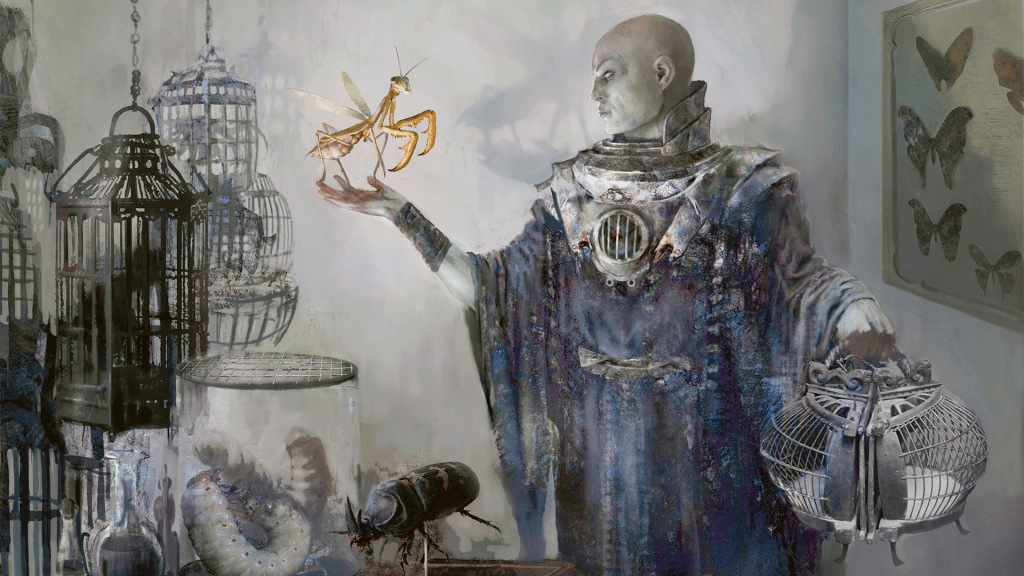
Delver of Secrets | Illustration by Nils Hamm
Izzet Delver dates back a very long time to before Delver of Secrets was even printed. It was called “Canadian threshold” back in the day and it used Nimble Mongoose and Tarmogoyf as its main threats.
The deck has evolved over the years and no longer needs green, but the strategy is the same as it’s always been: you want to throw out a cheap threat and back it up with counterspells and cheap removal. You can use Brainstorm and Ponder to find the pieces you need at the right times while also being able to stack the top card of your deck to consistently flip Delver.
Izzet Delver has evolved considerably over time. Expressive Iteration from Strixhaven and a whole bunch of cards from Modern Horizons 2 made their way into the deck. Ragavan, Nimble Pilferer and Dragon's Rage Channeler proved themselves to be better 1-drop threats than the deck’s namesake card.
Creatures (14)
Delver of Secrets x2
Dragon's Rage Channeler x4
Ragavan, Nimble Pilferer x4
Murktide Regent x4
Instants (18)
Brainstorm x4
Gut Shot
Lightning Bolt x4
Unholy Heat
Daze x4
Force of Will x4
Sorceries (8)
Ponder x4
Expressive Iteration x4
Artifacts (2)
Lands (18)
Island
Misty Rainforest x3
Mountain
Scalding Tarn x4
Volcanic Island x4
Wasteland x4
Wooded Foothills
Sideboard (15)
Blazing Volley
Gut Shot
Hydroblast
Pyroblast x4
Surgical Extraction x2
Abrade x2
Brazen Borrower
Court of Cunning
Narset, Parter of Veils
Submerge
This list made the Top 8 of a Legacy event in North London in the hands of Sean Goddard. The cards may have changed but the strategy is very simple and has stayed the same.
You have ten 1-mana creatures backed up by eight counterspells and six burn spells with fourteen draw spells to find what you need at the right time. Murktide Regent rounds out the list as a huge threat, often being a 6/6 or 8/8 flier for just two mana. Izzet Delver is a tried-and-tested strategy that’s always a good place to start if you want to get a feel for how Legacy works.
Miracles
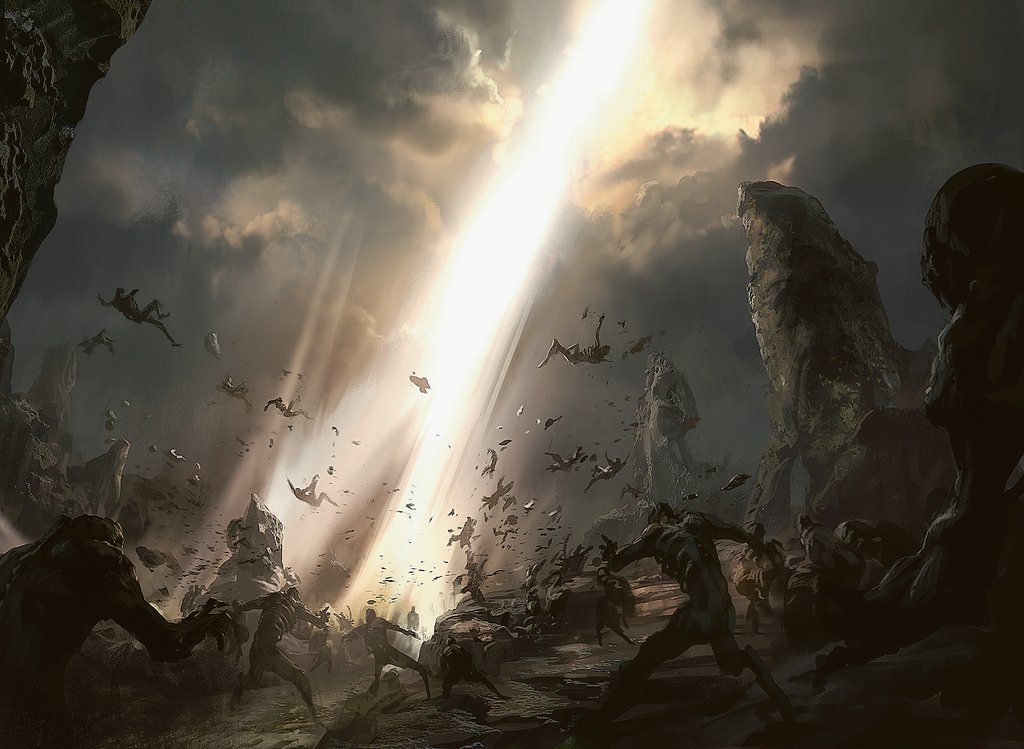
Terminus | Illustration by James Paick
This is Legacy’s premier control deck. A good old-fashioned Azorius () control deck with all of the cards you’d normally expect in a control deck. Removal, counterspells, draw power, and powerful win conditions.
Nicknamed “Miracles” after the miracle mechanic from Avacyn Restored, versions of this deck have used Brainstorm and Ponder to set up powerful miracle plays using Terminus and Entreat the Angels. But those cards are far less necessary these days.
The deck still bears the name of this mechanic even though the mechanic has all but disappeared from it. It’s a lot like how artifact-based aggro decks never lost the name “Affinity” even after all cards with the mechanic were removed.
Let’s have a look at a sample decklist that was played in a Magic Online Challenge by player “wiky:”
Planeswalkers (5)
Narset, Parter of Veils
Teferi, Time Raveler x2
Jace, the Mind Sculptor x2
Creatures (4)
Snapcaster Mage x2
Monastery Mentor x2
Instants (15)
Brainstorm x4
Swords to Plowshares x4
Force of Negation x3
Force of Will x4
Sorceries (14)
Ponder x4
Preordain x2
Prismatic Ending x4
Expressive Iteration x3
Terminus
Enchantments (2)
Dress Down x2
Lands (20)
Flooded Strand x4
Island x4
Mountain
Plains x2
Prismatic Vista x4
Scalding Tarn x2
Tundra
Volcanic Island x2
Sideboard (15)
Hydroblast
Pyroblast x2
Red Elemental Blast
Surgical Extraction x2
Containment Priest x2
Ethersworn Canonist x2
Back to Basics x2
Izzet Staticaster x2
Wear // Tear
Thanks to the printing of Prismatic Ending in Modern Horizons 2, this deck has the ability to deal with virtually any troublesome permanent it comes across. Some versions of Miracles also splash a fourth color that allows you to deal with Jace, the Mind Sculptor in mirror matches.
Although the deck has always traditionally been a straight Azorius deck, red splashes are common for cards like Pyroblast and Blood Moon. With Expressive Iteration and Prismatic Ending, the deck would be worse off for not running the red.
Miracles decks use either Monastery Mentor or Jace, the Mind Sculptor to win the game, two powerful cards both capable of winning by themselves. This is where you want to be in Legacy if you’re a control player at heart.
Corey Burkhart’s control course over on Spikes Academy also happens to have a full module on Legacy Control, so check that out if you want even more information.
“The Epic Storm”
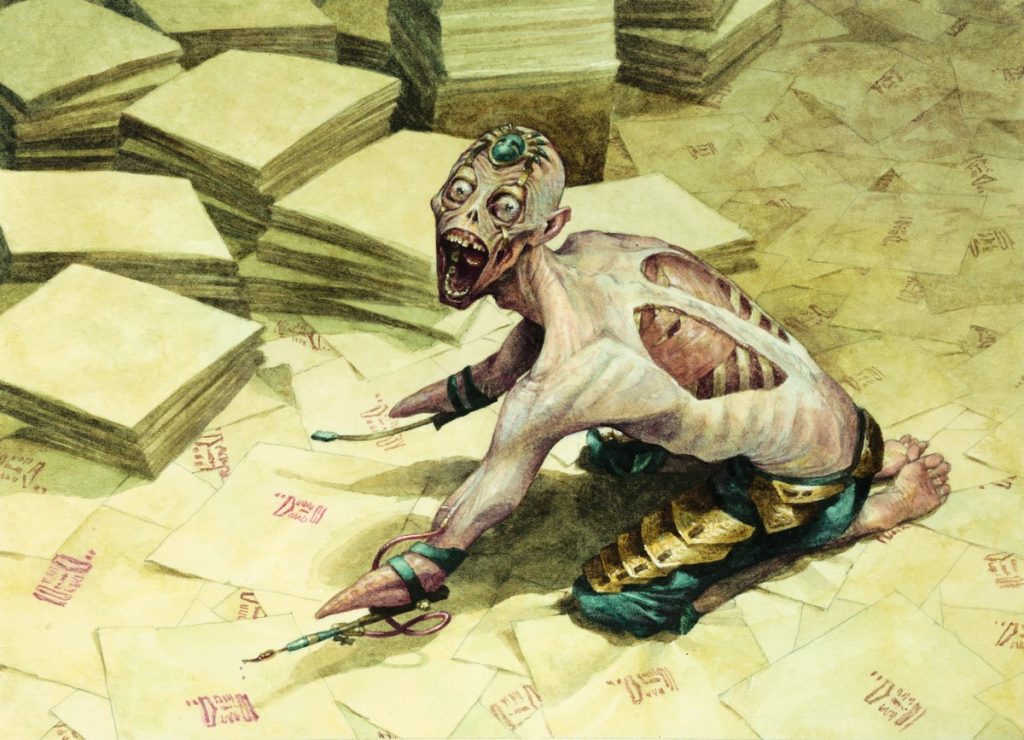
Ad Nauseam | Illustration by Jeremy Jarvis
I don’t think I ever got an answer as to why this deck is called “The Epic Storm.” But hey, that’s what decks ended up being called back in the day. There are plenty of storm deck variants in Legacy. Here are just a few of them:
- Ad Nauseam Tendrils (ANT): A pure Dimir storm deck that uses Ad Nauseam as a draw engine to fill its hand with ritual spells. It wins with Tendrils of Agony.
- The Epic Storm (TES): A version of ANT that still uses Ad Nauseam as a draw engine but branches out into red for Burning Wish and Rite of Flame.
- Belcher: A multicolor storm deck optimized for speed at the cost of protection against disruption. It only runs one land (usually a single copy of Taiga) which it can search using Land Grant and tries to win by casting a big Empty the Warrens on turn 1 or getting enough mana to use Goblin Charbelcher.
- Solidarity or Spring Tide: A mono blue storm deck that uses High Tide with effects that untap your lands to produce large amounts of mana. Solidarity operates at instant speed to make use of Reset while Spring Tide plays at sorcery speed and uses Time Spiral and sometimes Candelabra of Tawnos before it was banned. This is the deck that crushed me in my little anecdote at the start.
Let’s have a look at an example of TES, the most tried and true of these archetypes. This list scored MTGO user Bryant_Cook a 1st place finish in an MTGO Challenge:
Instants (15)
Brainstorm x4
Dark Ritual x4
Orim's Chant x2
Veil of Summer x4
Ad Nauseam
Sorceries (14)
Ponder x4
Rite of Flame x4
Burning Wish x4
Tendrils of Agony
Echo of Eons
Artifacts (18)
Chrome Mox x3
Lion's Eye Diamond x4
Lotus Petal x4
Mox Opal x3
Wishclaw Talisman x4
Lands (13)
Badlands
Polluted Delta x2
Scalding Tarn x2
Scrubland
Taiga
Tropical Island
Tundra
Underground Sea
Verdant Catacombs x3
Sideboard (15)
Prismatic Ending x3
Abrupt Decay x2
Grapeshot
Galvanic Relay x4
Empty the Warrens
Massacre
Tendrils of Agony
Echo of Eons
Peer into the Abyss
Much of this list will resonate with you if you’re at all familiar with storm decks. You can generate mana using the various Moxen plus Dark Ritual and Rite of Flame. Veil of Summer and Orim's Chant are here as disruption to stop Force of Will and other counterspells.
But the biggest card that makes this stand out in Legacy is Lion's Eye Diamond. This Black Lotus-variant is a key part of what makes this deck so powerful compared to, say, a Modern storm deck. Discarding your hand is a big cost for LED, but the deck is built to accommodate it.
You’d ideally cast a big draw spell like Ad Nauseam or a tutor effect like Wishclaw Talisman or Burning Wish and crack your LEDs in response, allowing you to use the mana you get on the card(s) that are added to your hand afterward. With three mana and an LED in play, for example, you can cast Burning Wish putting you to one mana, crack LED in response to go to four mana, grab Tendrils of Agony, and you can now cast it.
Lands
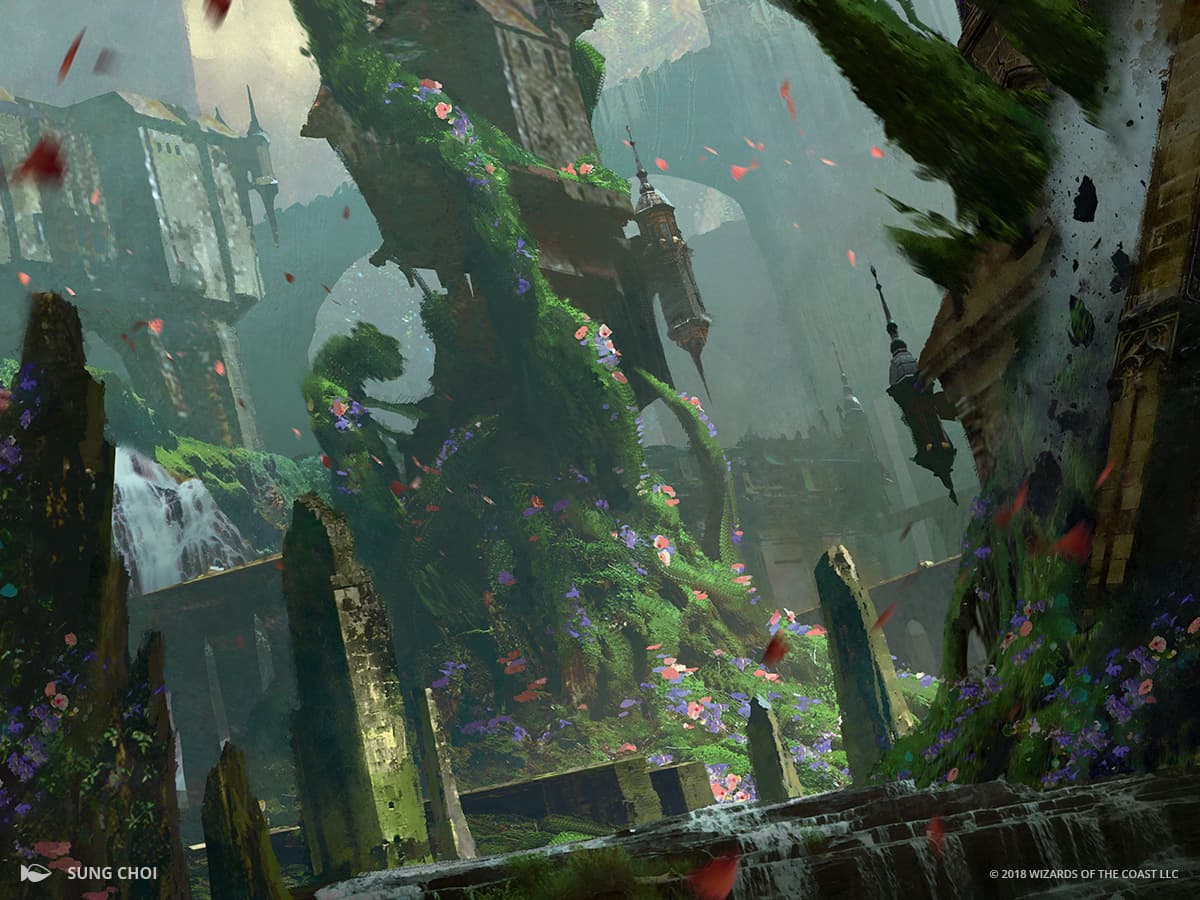
Life from the Loam | Illustration by Sung Choi
There are a ton of cool and interesting decks out there that I could talk about, but I only have so much space. We could talk about some of the best deck names of all time, Doomsday, Elves, Sneak and Show, Aluren combo, Enchantress, Ninjas, Maverick, Dredge, Hogaak, Burn, Stiflenaught, Nic Fit, “Oops! All Spells,” Eldrazi Stompy, Goblins, Merfolk, Curses, Stoneblade, Infect… You get the point.
Instead, I round this out and cover one of the coolest and most unique decks in the whole format: Lands. Yes, you heard that right, Lands.
Let’s start with a sample decklist, one that made the Top 8 of a cash prize tournament in the hands of Legacy expert Jarvis Yu:
Instants (6)
Crop Rotation x4
Punishing Fire x2
Sorceries (4)
Enchantments (6)
Exploration x4
Valakut Exploration x2
Artifacts (8)
Mox Diamond x4
Expedition Map
Pithing Needle
Pyrite Spellbomb
Crucible of Worlds
Lands (36)
Blast Zone
Bojuka Bog
Dark Depths x4
Forest
Ghost Quarter
Grove of the Burnwillows x4
Karakas
Maze of Ith x3
Rishadan Port
Taiga x2
The Tabernacle at Pendrell Vale
Thespian's Stage x4
Urza's Saga x4
Verdant Catacombs
Wasteland x4
Windswept Heath
Wooded Foothills
Yavimaya, Cradle of Growth
Sideboard (15)
Red Elemental Blast x4
Sphere of Resistance x4
Torpor Orb
Endurance x3
Force of Vigor x3
There’s a lot going on in this deck with a lot of different engines at work. I’ll go through the main highlights one at a time:
- First and foremost, this deck is built around Life from the Loam and Exploration. You usually want to dredge Loam every turn and cast it to pick up three lands while Exploration gives you multiple land drops to play them all. Imagine picking up two copies of Wasteland and being able to deploy both of them in the same turn.
- Grove of the Burnwillows combined with Punishing Fire makes for an almost unbeatable combo that lets you mow down all of your opponent’s creatures in quick fashion. And you have Maze of Ith ready to go for bigger creatures that you can’t quite deal with this way.
- The deck features a lot of powerful singleton lands for different situations like Blast Zone and Bojuka Bog. This makes Crop Rotation into a powerful tutor that can find the right card whenever you need it.
- Urza's Saga is an exciting addition to the deck. It provides you with a powerful win condition that also lets you search for something from a toolbox of various silver bullet artifacts including an Expedition Map to grab some of your singleton lands as I just mentioned.
- Being able to buy back Wastelands and Ghost Quarters with your Loams and Crucible of Worlds lets you put pressure on mana bases to slow them down to your pace of play.
- Finally, the deck’s primary win condition is the combination of Dark Depths and Thespian's Stage. Stage copies Depths giving one with no ice counters on it which creates the 20/20 indestructible Marit Lage token. And you can always buy back the two lands with a Life from the Loam and give it another go if it doesn’t work.
Lands is by far one of the coolest decks that Legacy has to offer. It’s unfortunately also one of the most expensive with just a set of Mox Diamonds likely to set you back about $2,400 and a single copy of The Tabernacle at Pendrell Vale hovering around the $3,000 mark. It helps that Tabernacle is by no means essential to play the deck, but it does improve a lot of tough matchups.
The deck is substantially cheaper on MTGO with the main expenses being the Urza's Sagas, Moxes, and the sideboard cards. This is one of my favorite builds and a really great way to showcase just how different Legacy is from other constructed formats.
Legacy vs. Vintage

Ancient Runes | Illustration by Susan Van Camp
If you’re looking to get into an eternal format and you’re wondering what the key differences between Legacy and Vintage are, here we go. Vintage is a much more powerful format with access to a ton more cards including the whole Power 9, Time Vault, Bazaar of Baghdad, and so on. The key difference as far as I’m concerned is that Vintage is a lot less diverse than Legacy.
I rattled off a list of twenty different decks that could all be very good choices if you wanted to get into Legacy, not including the ones I actually wrote about. But that’s far less the case in Vintage. There are a lot of decks available, but many of them use very similar shells. The format is also very well-defined since Dredge and Mishra's Workshop decks are key pillars of the format that are too powerful to fight against unless you bring the right amount of disruption.
And that’s not even mentioning if you wanted to get into Vintage in paper, it’s just not possible without an absolute ton of disposable income. Even the cheapest Vintage deck will set you back five figures, which not even Legacy Lands is likely to do. Most Vintage decks sit in the $50,000 to $100,000 range thanks to the ever-increasing prices of Reserved List cards. You can get around this by sticking to MTGO, but Legacy and Vintage are still massively different, and you have more variety to choose from in Legacy.
Legacy vs. Modern vs. Historic vs. Timeless

Timeless Witness | Illustration by Deruchenko Alexander
All of these formats have their own benefits. So in what ways does Legacy differ from Modern, Historic and Timeless?
Spell Definition
Legacy is a format very much defined by its spells. Magic’s creatures meant almost nothing in its earliest days; the game was all about the most powerful instants and sorceries. If you look back at some of the defining creature-based decks from the first decade of Magic, decks like Rebels and Simic Madness along with cards like Morphling, they’re all laughably bad compared to the competitive-level creatures printed in the last decade.
Modern marks a key point of Magic’s design philosophy where they began to make the game more about creatures than about spells. This makes for a very different play experience than in Modern or Historic featuring cards like Brainstorm, Force of Will, and Lion's Eye Diamond that are powerful enough by themselves to create whole new strategies around them and don’t exist anywhere else.
The Cheaper the Better
Legacy has access more cheap and free spells. It was very common for merfolk tribal to play a 1-drop into a 2-drop and have three counterspells up as protection between the Cursecatcher you played on turn 1 and the Force of Will and Daze you have in your hand.
This sort of line of play just isn’t possible in Modern or Historic where virtually every play you make has to cost mana.
Arena and Fetches
Compared to Legacy, Timeless is truly still in its infancy and the big difference with Timeless is access to the most powerful cards to make it to Arena like Daze and fetch lands. One nice point about Timeless is that cards retain their original form and do not get rebalanced, that’s what Historic is for. So you could almost say Vintage is to Legacy as Timeless is to Historic as far as the framework of their card pool. However, the contents of those pools are so greatly different that a Historic or Timeless deck will never be mistaken for a Legacy deck.
Okay, Now Pick One
I‘ve played and enjoyed each of these different formats and I definitely prefer Modern and Legacy since I like paper Magic over Arena. The more you explore different formats the more you’ll realize that the existence of a single card that you didn’t have in the last format creates an entire metagame warped around it.
For example, Muxus, Goblin Grandee made Goblins a deck in Historic and improved the power level of the deck in Legacy, but it wasn’t printed in Modern so the deck didn’t pop into existence there. But Conspicuous Snoop and the combo with Boggart Harbinger made Goblins a real deck in Modern, and one that was very different from its Historic counterpart. The mere existence of Goblin Lackey in Legacy makes Legacy’s version even more different from the other formats.
The key to figuring out what to play is to explore what you enjoy about Magic and see which of these formats speak to you.
Is Legacy Dead?
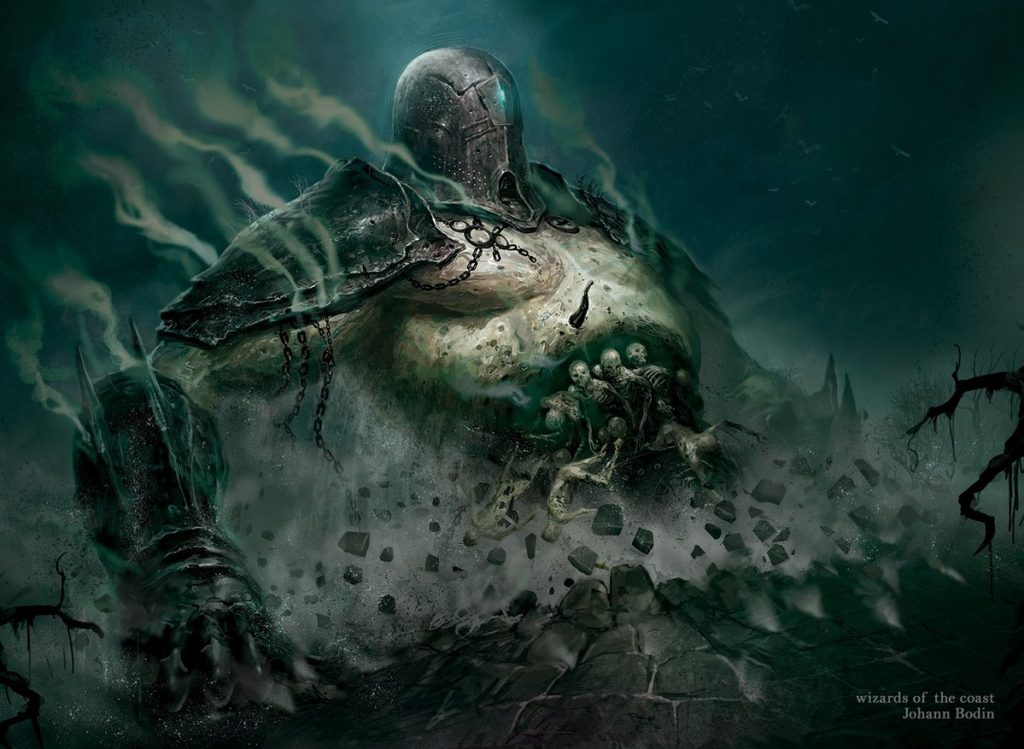
Reanimate | Illustration by Johann Bodin
I’ve loved Legacy ever since the anecdote I told way back at the beginning of this journey. This is a difficult question for me to answer, but I’ll be honest and to the point:
If the Reserved List policy stands as it currently is, then paper-based Legacy play is increasingly impossible for new players to get into without proxies.
The Price We Pay
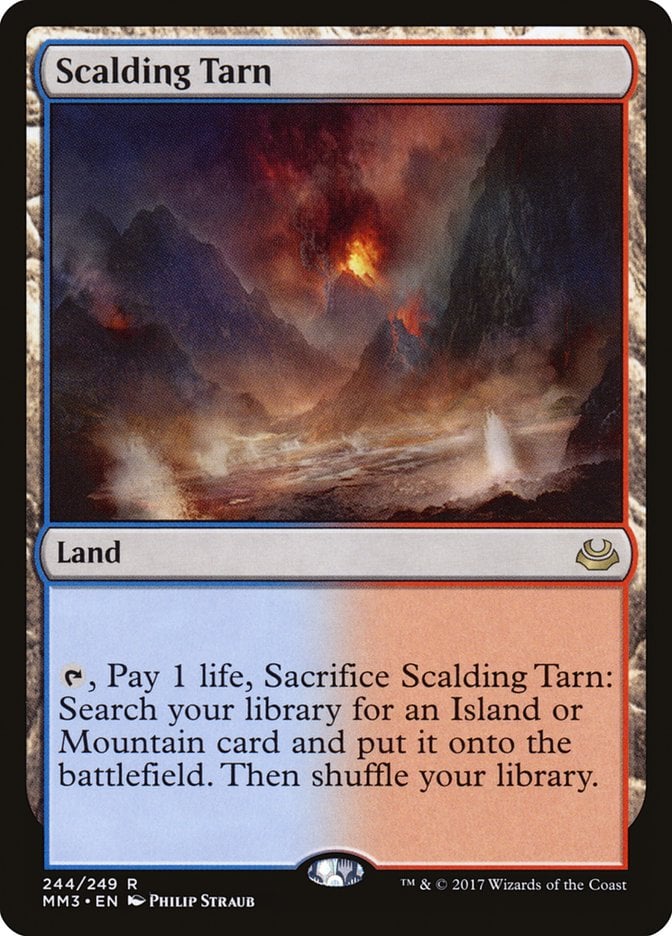
Card prices have skyrocketed in recent years thanks to a number of different factors. Also legal in Modern, Scalding Tarn in particular reaches the $25-30 range and makes it extremely hard to buy into the format.
A competitive Modern deck that skips out on our Modern budget deck list will set you back around $1,000 these days, give or take depending on the deck. That’s definitely expensive but it’s not an insurmountable goal.
Reserving the Staples
Collectors were outraged that WotC had devalued a bunch of their expensive cards by creating their first big reprint sets back in 1996: Chronicles and Fourth Edition. In response to the backlash, Wizards entered into an agreement that they would never reprint certain cards again. We call that list of cards the Reserved List.
And unfortunately for Legacy, it has many of the format’s key players including all 10 of the original dual lands, Lion's Eye Diamond, Mox Diamond, and the absurdly expensive Gaea's Cradle and The Tabernacle at Pendrell Vale. Each is a member of the top 100 most expensive club. Without fear of ever seeing a reprint that could tank their value, collectors and players alike have a sense that they’ll never significantly drop in value.
While a deck costing around $1,000 could be a feasible target for quite a few people, $5,000 to $10,000 just isn’t. And it’s hard for many to justify such an extravagant expense with support for Legacy tournaments dwindling. While WotC could choose to abolish the Reserved List, that’s an entirely different can of worms.
How to Get Into Legacy
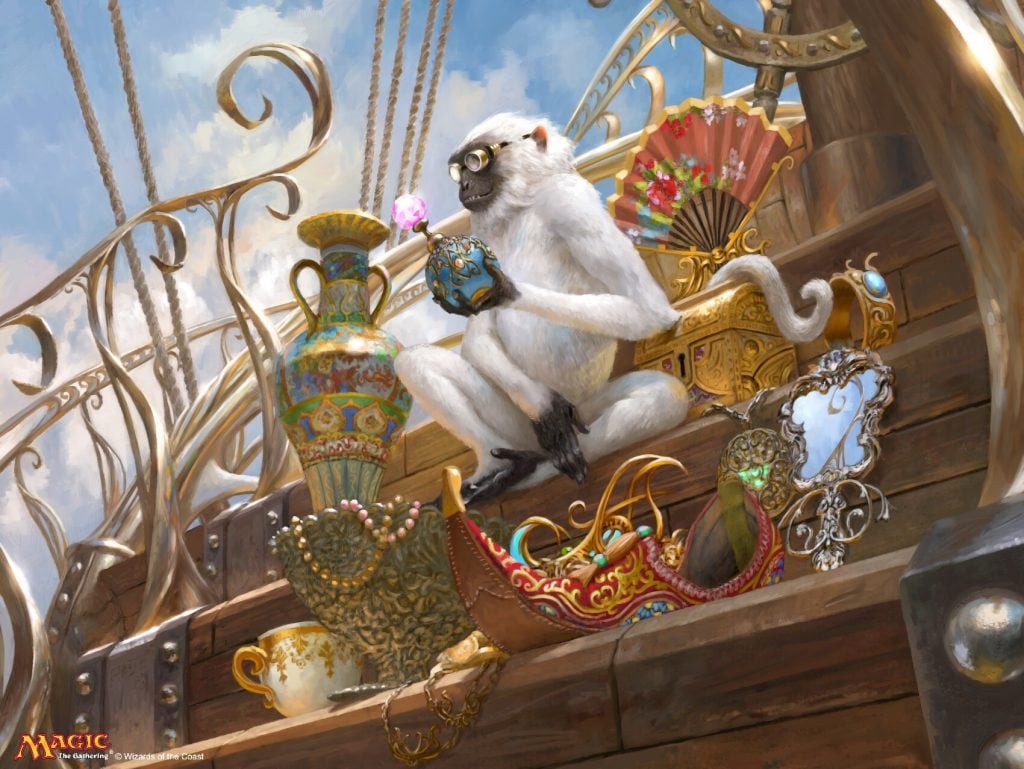
Ragavan, Nimble Pilferer | Illustration by Simon Dominic
With all of that said, if your local area supports it and you can afford even the cheapest of decks (mono red burn is a tried-and-true strategy that doesn’t use any stupidly-expensive cards), it’s always a good idea to support the format and support your LGS.
To get into the format, you can start by looking at what you already own and see if you can convert that into a Legacy deck. If you already own Ragavan, Nimble Pilferers for a Modern deck, then all you probably need is a set of Force of Will and you can build Izzet Delver. The Volcanic Islands are of course very expensive, but you could use Steam Vents as a more budget-friendly land to get you started.
Death & Taxes is less expensive, on the fringe of competitiveness and the lists are very similar to their Modern counterparts. You’ll automatically have a good Modern deck if you build decks like these, letting you save money with a deck that can be used across multiple formats.
If you do have a much higher budget, pick a deck that’s most closely related to a strategy you enjoy and go from there. Aim for decks that use a card in multiple decks. Lion's Eye Diamond plays a key in all of the storm decks and the dredge and graveyard-based decks.
Magic Online has weekly Legacy preliminaries and challenges and is the easiest way to play Legacy consistently. The more people play the format, the more likely it is that WotC will support it in the future.
Legacy Products
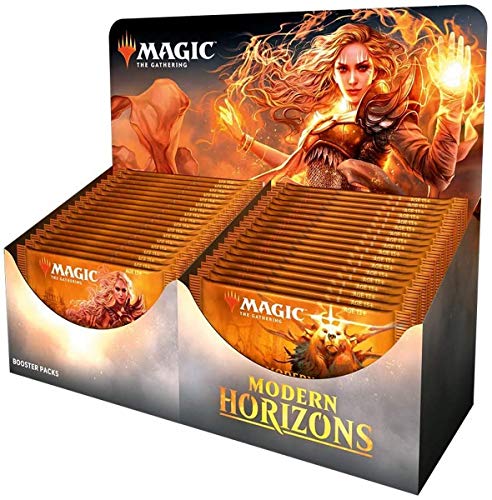
Sadly, since WotC doesn’t regularly support Legacy as a format, there are no good products out there to help you start a Legacy collection. Well, that’s not entirely true.
Modern Horizons 3

Modern Horizons 3 has fetch lands, free spells, and generally powerful cards that could improve your Legacy decks. Play boosters of Modern Horizons 3 give you a decent chance of multiple rares in one pack thanks to their pack structure.
- YOUR NEW FOREVER FAVORITES—Introducing a heaping helping of exciting cards for Modern, one of Magic’s most celebrated formats, plus the return of competitive favorites, there’s something for everyone to love in Modern Horizons 3
- POWERFUL CARDS FOR MODERN CONSTRUCTED, LIMITED & COMMANDER PLAY—Spice up your deck with powerful New-to-Modern cards, host a supercharged Booster Draft with friends, or discover Legendary Creatures with striking special treatments to inspire your next Commander Deck
- MODERN’S NEVER BEEN MORE MARVELOUS—Expand your horizons with novel twists on classic mechanics and more cards for beloved Modern strategies
- FUN TO OPEN. FUN TO PLAY—Get the best of Draft and Set Boosters, combined into one! Play Boosters are great for Limited play and fun to open, with a possibility of Art cards, striking alt-frame cards, and more
- MODERN MIGHT THAT SHINES BRIGHT—Both powerful and flashy, every MH3 Play Booster includes 1-5 cards of rarity Rare or higher and 1-2 shining Traditional Foil cards
Modern Horizons 2
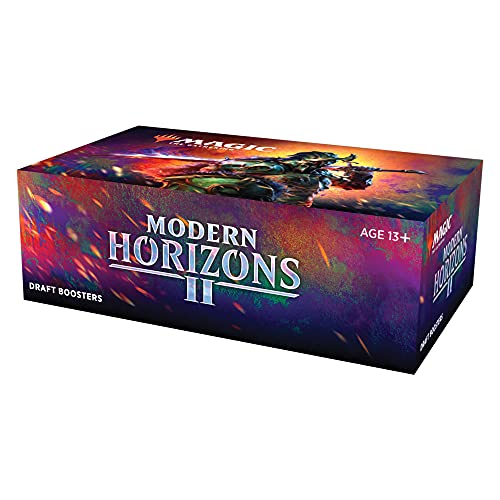
WotC’s eternal-friendly reprint sets like Double Masters and Modern Horizons often contain cards that are good for Legacy. If you buy some Modern Horizons 2 draft boosters then you can get Urza's Saga, Ragavan, Nimble Pilferer, Murktide Regent, etc.
- 36 Modern Horizons 2 (MH2) Magic: The Gathering Draft Boosters
- 1 New-to-Modern reprint in every pack
- 1–2 Rares and/or Mythic Rares in every pack
- Just add lands and draft with up to 12 players
- Introduces powerful cards and beloved reprints to the Modern format
Double Masters

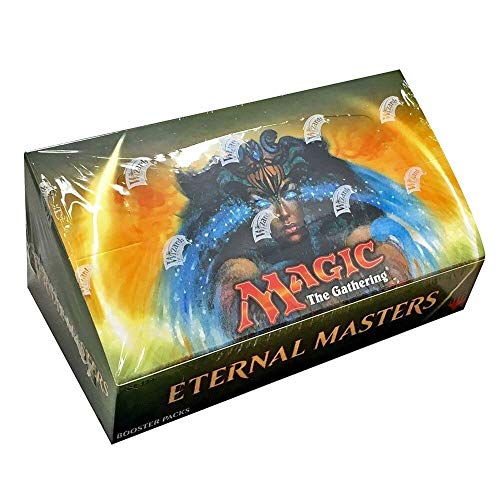
Double Masters booster packs from 2020 even had a Force of Will reprint, as did Eternal Masters boosters. Make sure to keep your eyes open on non-Standard sets and bonus sheets for key reprints!
- TWO RARES. Each of the 24 Double Masters Draft Booster Packs inside your booster box contains not 1 but 2 rare or mythic rare Magic cards—at least.
- TWO FOILS. All 24 packs have twice the shine, with 2 foils in each booster (can be any rarity).
- TWO BOX TOPPERS. Each Double Masters Draft Booster Box contains 2 special box topper cards with beautiful borderless treatments.
- TWO FIRST PICKS. Every pack of Double Masters has two rares—and when you booster draft, you can pick them both.
- TOO POWERFUL. Play with some of the most powerful Magic cards ever, whether you're into Commander, Pioneer, Legacy, or all of the above.
The Legacy Community
If you’d like to get involved with the wider Legacy community, there are many ways to do it. There are podcasts and Discord servers available to join, so you can pick whatever is suitable for you. Here are just a few starting points if you’re not sure where to look:
- The MTGlegacy subreddit is a place where you can discuss anything to do with the format. It also includes links to several Discord servers to discuss various archetypes in the format.
- There are several Facebook groups available for various Legacy deck discussions. I’m a member of a number of UK-based regional groups and it’s easy enough to find more for your local area or in your native language.
- Many pro Magic players are fans of the format and stream it from time to time. I watched a bit of Reid Duke’s stream where he played Elves in a Legacy Challenge event while I was finishing up this piece.
- A Legacy podcast that I’ve heard good things about is Eternal Glory.
As with all forms of creative content, it’s up to you to find something that appeals to you and the way you like to interact with the game. These are just some suggestions, and I’m sure you’ll find something that you enjoy.
Wrap Up
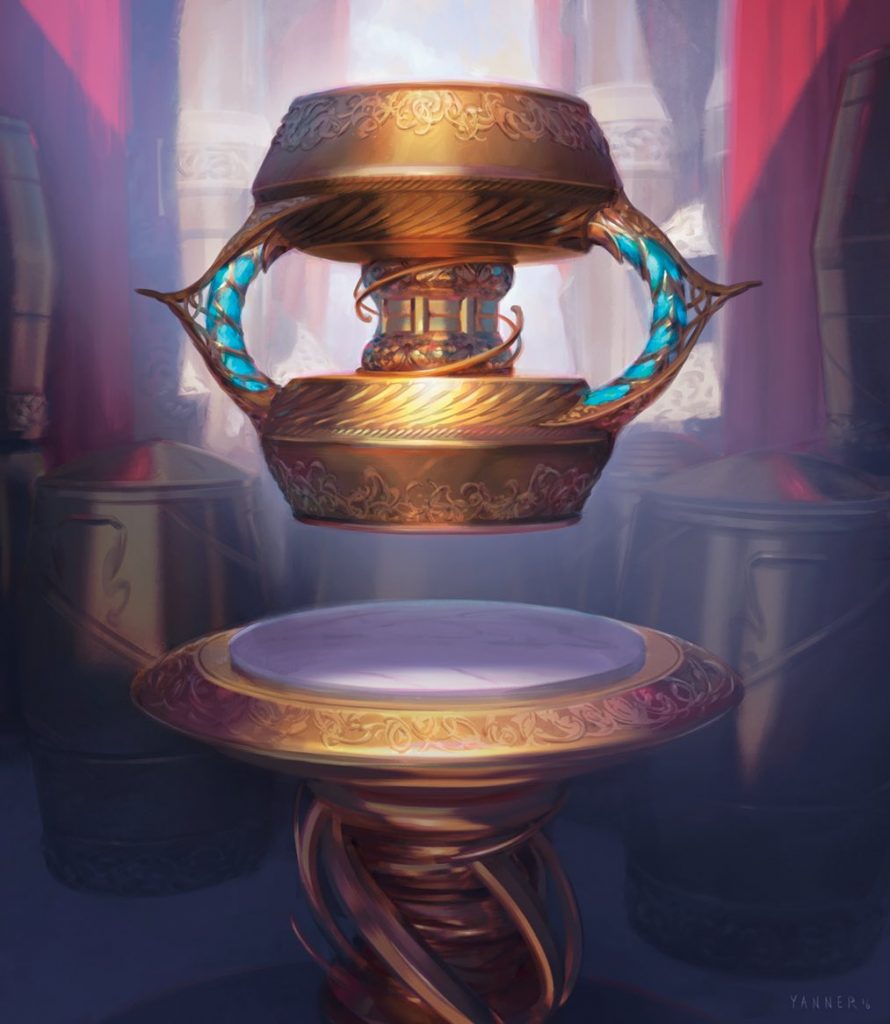
Chalice of the Void (Kaladesh Inventions) | Illustration by Kieran Yanner
Legacy is an amazing format full of crazy combos, demoralizing stax decks, and 20/20 flying gods. It’s a really interesting game and it feels so different from any other Magic you’ve played that you’re bound to fall in love with it just like I did.
What’s your favorite deck in the format? Let me know in the comments or find us on Twitter to let us know what you think about this eternal format.
Until next time, take care of yourselves and leave a place better than you found it!
Note: this post contains affiliate links. If you use these links to make a purchase, you’ll help Draftsim continue to provide awesome free articles and apps.
Follow Draftsim for awesome articles and set updates:










Add Comment