
Last updated on August 29, 2026

Mathemagics | Illustration by Liiga Smilshkalne
I remember my middle school introduction to Algebra. The use of variables instead of squares and underscores blew my little mind. As a math teacher later on, I taught introductory Algebra to my own students and blew their little minds too. Then I became a Magic player and learned about X-spells. Guess what happened to my mind?
There’s an intrigue to X-spells in Magic; they’re naturally modal, and they [mostly] scale as the game continues and you have access to more and more mana. You can’t help but ask just how far you can push your mana to make X the largest number possible.
There’s also a lot of X-spells available, from fireballs to mass draw spells, so let’s do some basic subtraction and look at the X best X-spells in Magic. See what I did there?
What Are X-Spells in MTG?
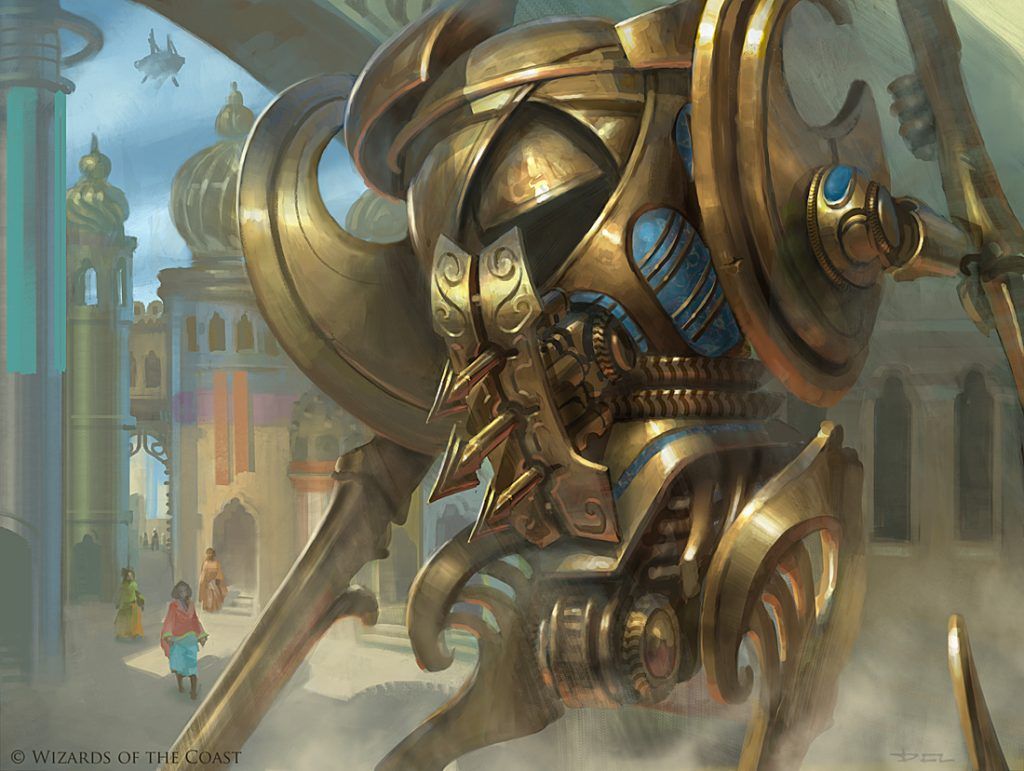
Walking Ballista | Illustration by Daniel Ljunggren
I’m defining an X-spell as a card with at least one in its mana cost. These are spells after all, so cards that only have in an activated ability or elsewhere don’t count. Sorry Shark Typhoon.
My reasoning is that some X-spell payoffs like Zaxara, the Exemplary don’t work with abilities. Let’s keep it simple and stick to mana costs on this one. I’m also focusing on Commander, so don’t hold your breath on Chalice of the Void. Commander is what I know best, and my lawyers say I’m legally bound not to rank cards based on Constructed merit. Take it up with them.
#44. Villainous Wealth
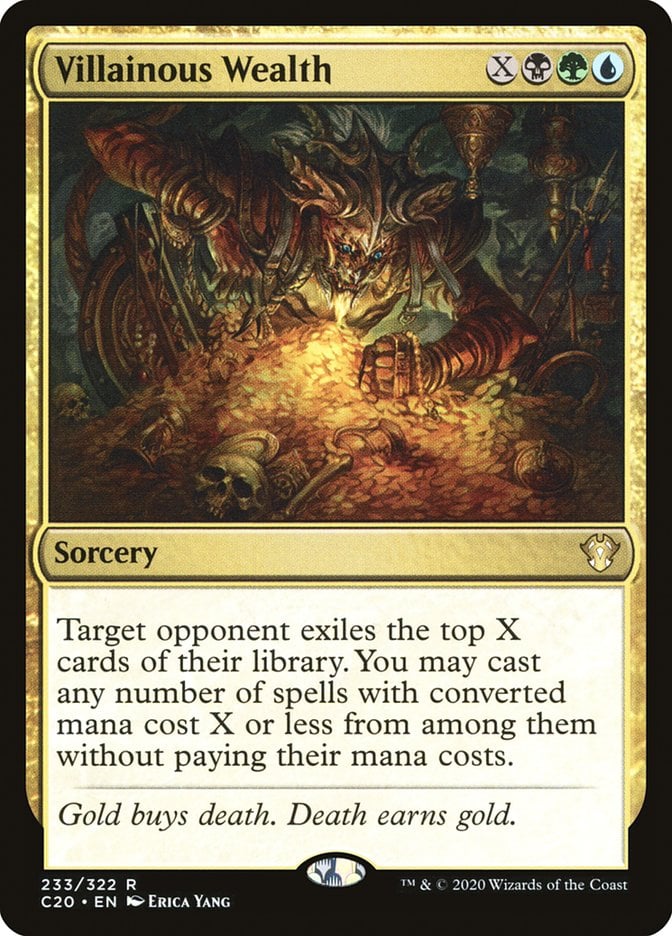
More deviously fun than actually good, casting Villainous Wealth should have you rubbing your hands together maniacally. It’s easy to get greedy by putting it off for just 1 more mana, but you should feel comfortable firing this Sultai card off for X=6 or 7 and hoping you strike gold.
#43. Dance of the Manse

Playing Dance of the Manse entails a heavy artifact/enchantment deck, preferably one that puts permanents in the graveyard easily so you can reanimate your enchantments and bring back your artifacts. It’s a viable wincon for said decks, though I’ve never been much of a dancer myself.
#42. Death Cloud
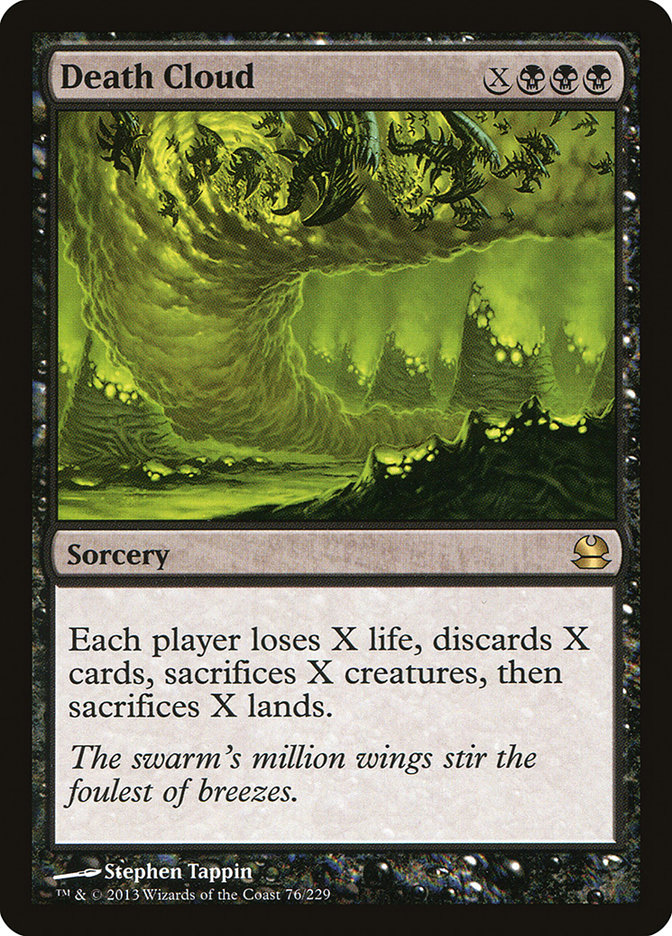
Smallpox, but a bunch more times. Death Cloud’s a nasty card that’s only used by two types of players: those who wish to watch the world burn, and Tergrid, God of Fright players, who also incidentally love to watch the world burn.
#41. Comet Storm
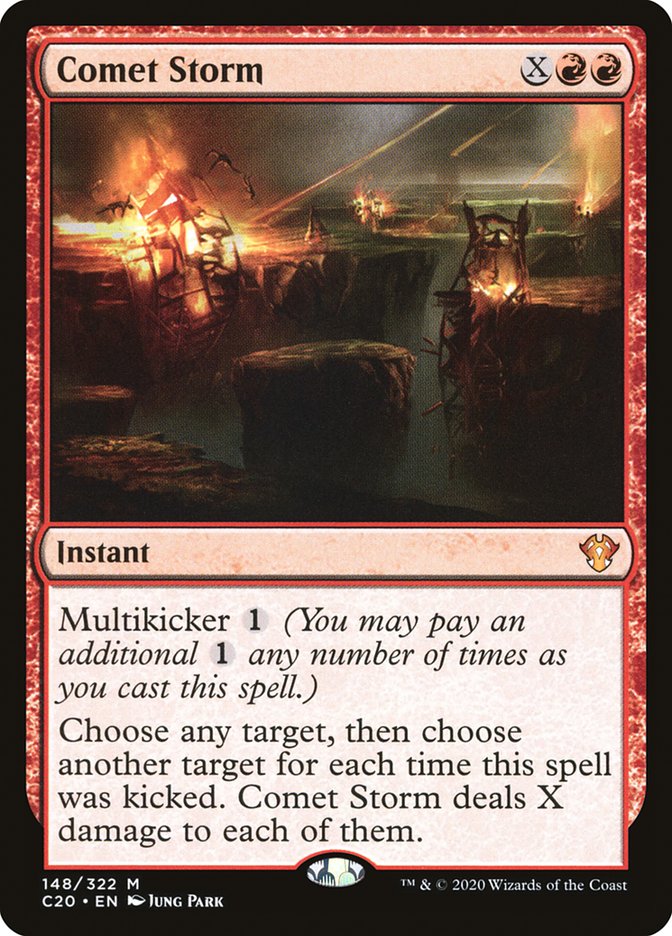
Like Genesis Wave, Comet Storm was one of Magic’s best red instants some time back, but it now falls short of more recent, better versions of the effect it provides. Comet Storm’s still a reasonably strong Fireball, its main appeal being that it can hit all opponents at once.
#40. Tyvar’s Stand
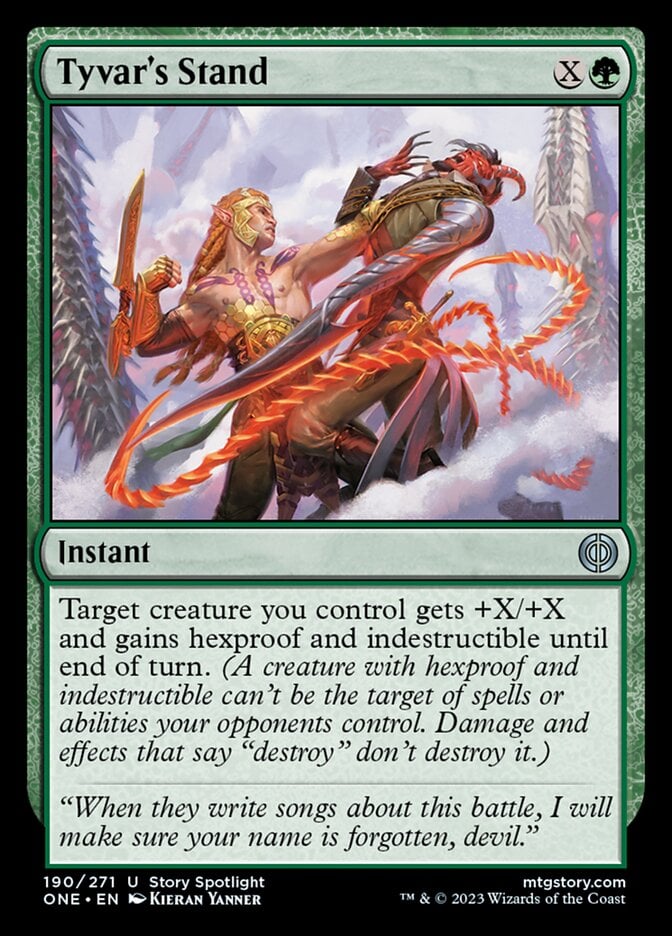
I prefer Tyvar's Stand to other single-target protection spells like Tamiyo's Safekeeping. Repurposing your protection spell as a Fireball makes this a great fit for Voltron decks that want to keep one key threat safe but also want to take the offensive.
#39. Mind Twist
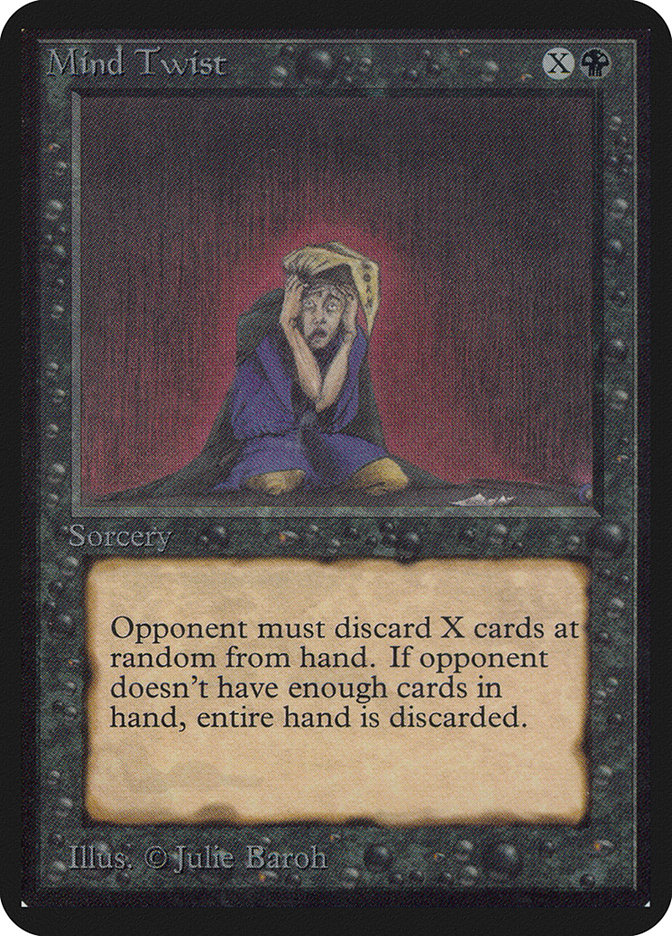
Targeted discard takes a huge hit in Commander compared to Constructed formats, since it typically only interacts with one opponent and doesn’t affect the board. That makes Mind Twist more of a cruel-spirited play against one opponent than an actual wincon, and it’s usually frowned upon in casual games. By one player, at least.
#38. Bonfire of the Damned
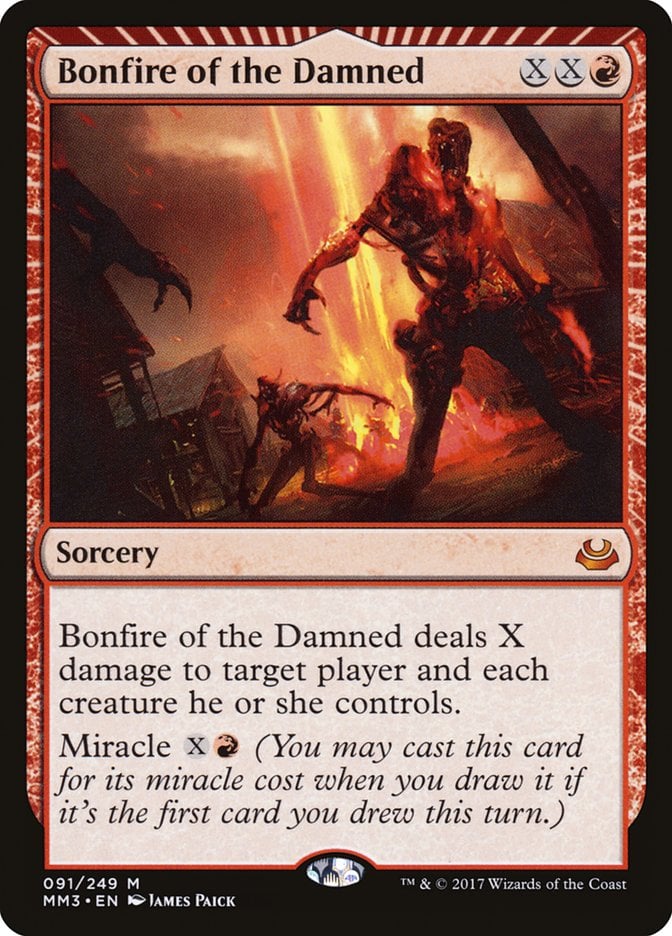
Bonfire of the Damned creates fun story moments. Rip it off the top, cast it for its miracle cost, and absolutely decimate someone’s board and life total. Quite the dud otherwise, and its post-errata textbox is horrendous to read. Seriously, look at this oracle text.
#37. Silkguard
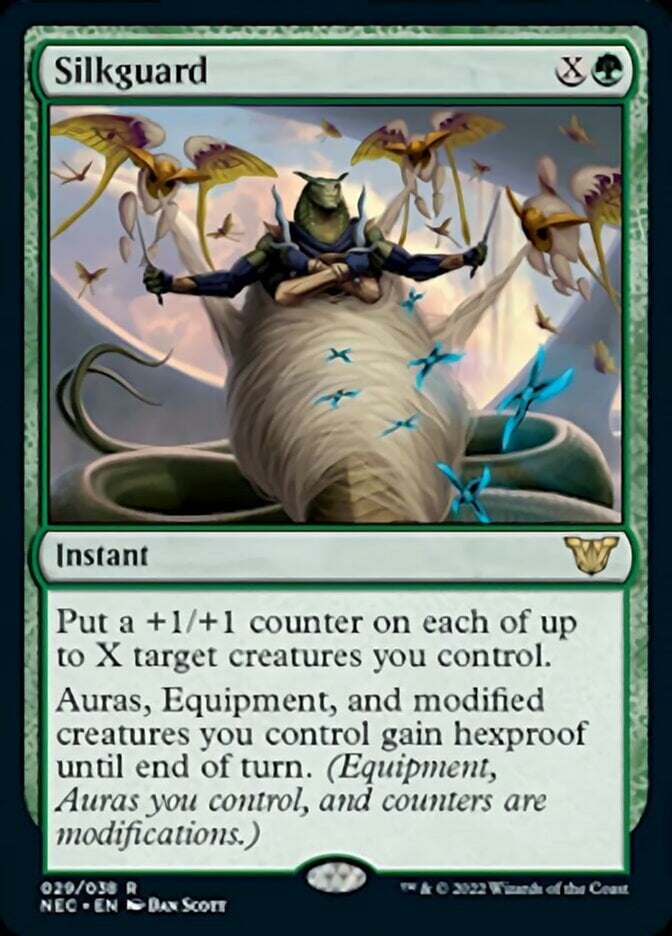
A step below Heroic Intervention as far as green protection goes, Silkguard’s still pretty darn good. It won’t stop a wrath, but it’ll blank single-target removal while growing a number of creatures in the process. Note X can equal 0 and still give all your modified creatures/modifiers hexproof for the turn.
#36. Expansion Algorithm
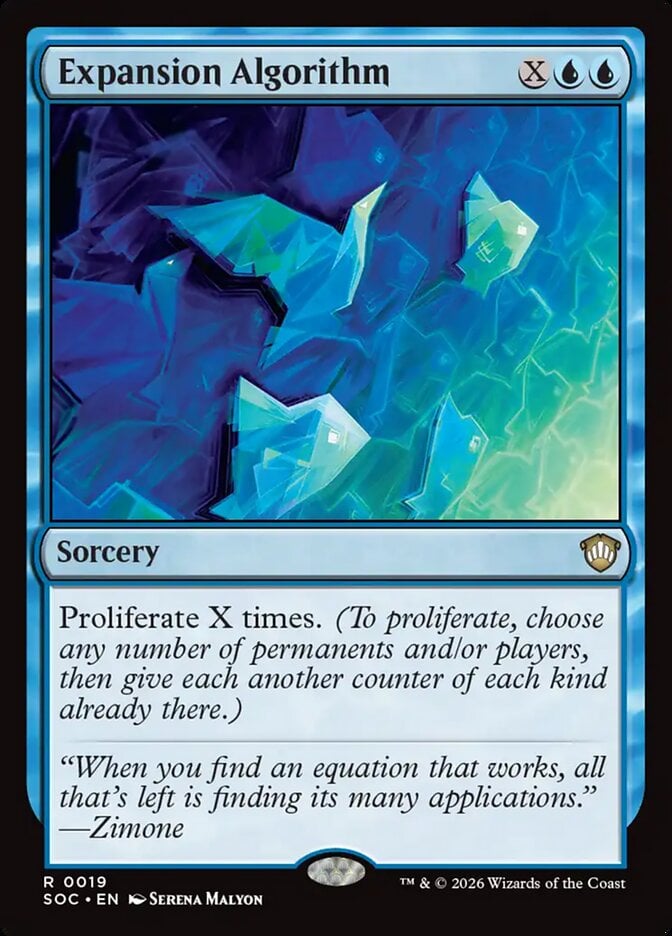
A single instance of proliferate can go a long way in Commander. That’s another poison counter on each opponent, or more experience/energy for you. Or +1/+1 counters across your board. Expansion Algorithm does that as many times as you can pay for.
#35. Indomitable Creativity
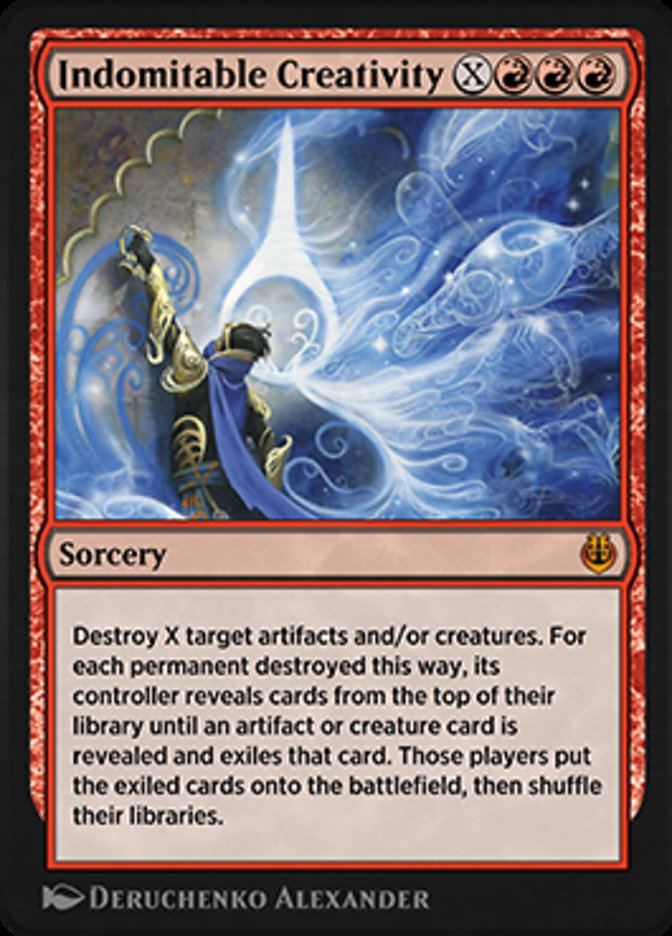
This is more of a Constructed plant as one of the best Polymorph effects in Magic, notably winning a Pro Tour in the hands of Reid Duke, but Commander players can get in on the chaos, too. Indomitable Creativity decks create a bunch of tokens and run nothing but haymaker creatures to flip into. Creativity can also target opposing permanents if you’re in a gambling mood.
#34. Entreat the Angels
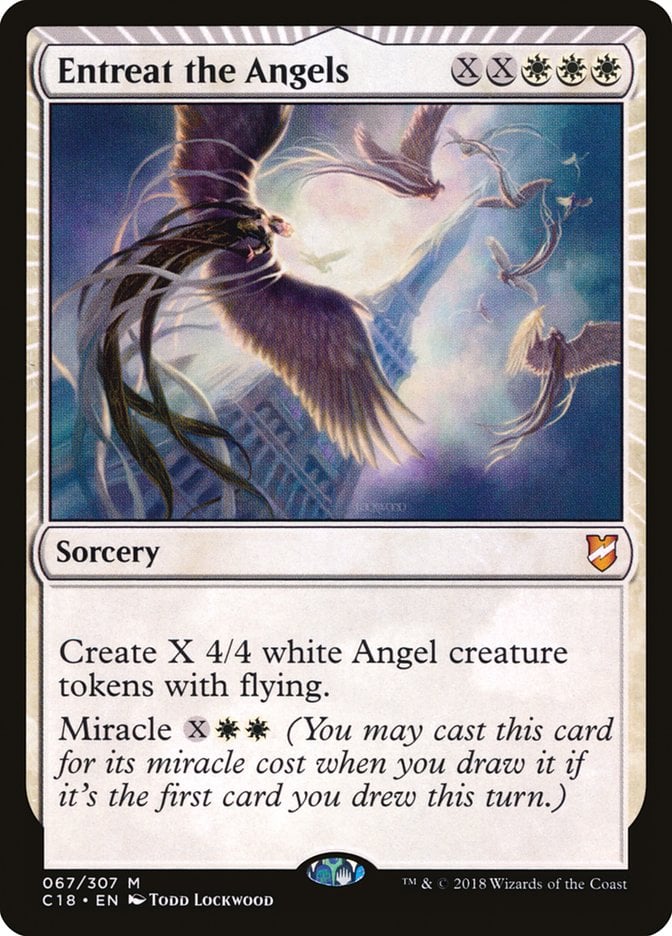
Entreat the Angels goes from normally overpriced to “oh my god I’m dead” when cast for its miracle cost. That means you’ve got to set it up or naturally draw into it, but that’s easy enough. Starnheim Unleashed doesn’t technically fit our definition of an X-spell, but I’ll lump it in here.
#33. March of the Multitudes
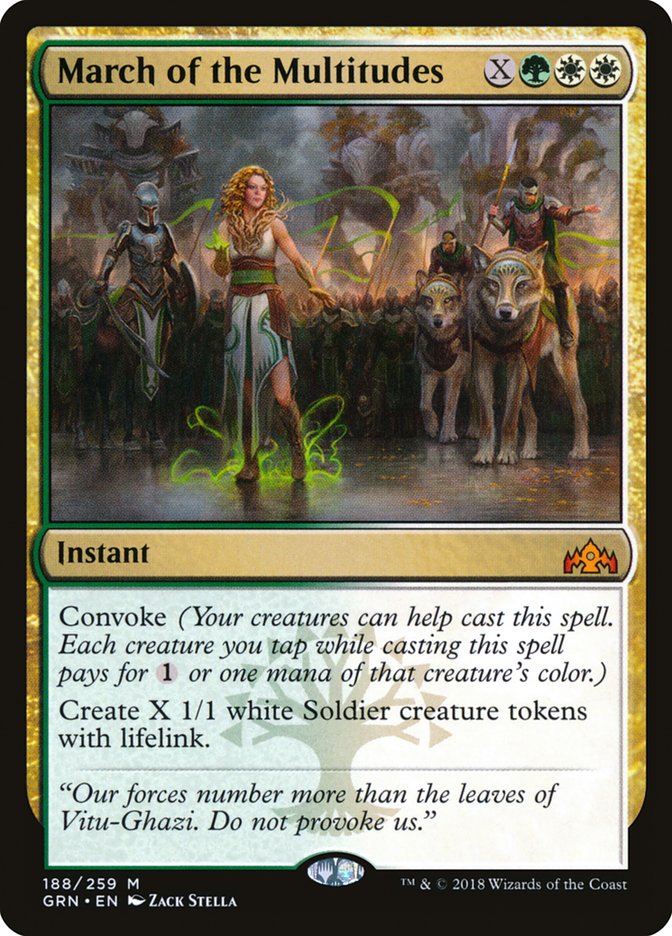
Convoke and X-spells go together like pie and more pie. Go-wide decks can supercharge March of the Multitudes, after which they presumably have ways to take advantage of a pile of 1/1 lifelinkers.
#32. Traumatic Critique

Similar to Tyvar's Stand, Traumatic Critique is a classic bread-and-butter effect with a fireball tacked on. Think of this like an improved Thrill of Possibility that lets you sink extra mana into free damage.
#31. Black Sun’s Zenith
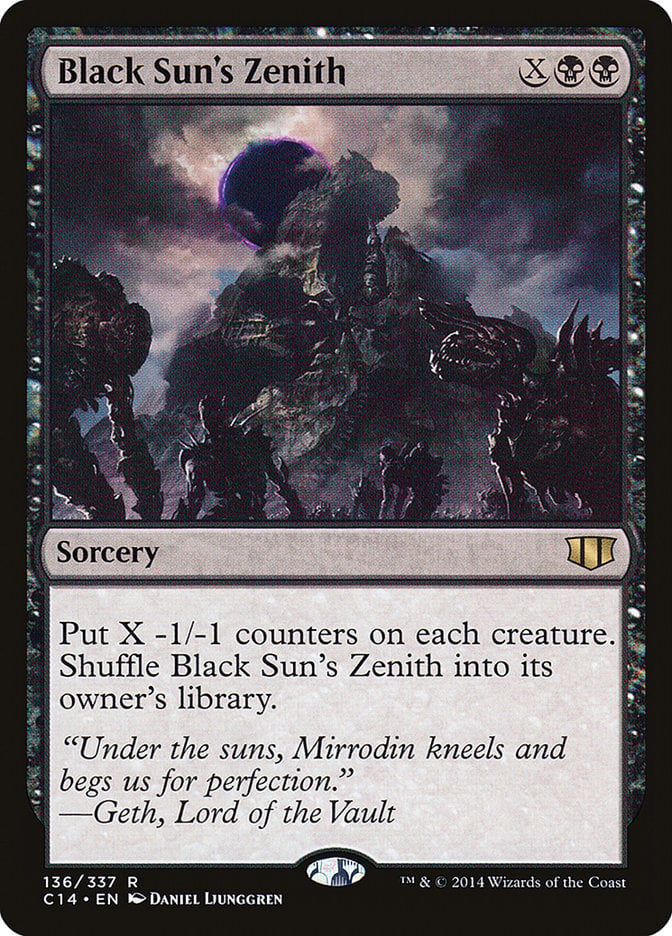
Damnation and Toxic Deluge are still higher up the tier list of black sweepers in Commander, but Black Sun's Zenith falls squarely in that tier-2 category, and it’s cheap. Bump this one up if you’re running -1/-1 counter synergies or if you’ve got a Skullbriar, the Walking Grave in your usual playgroup.
#30. Entreat the Dead
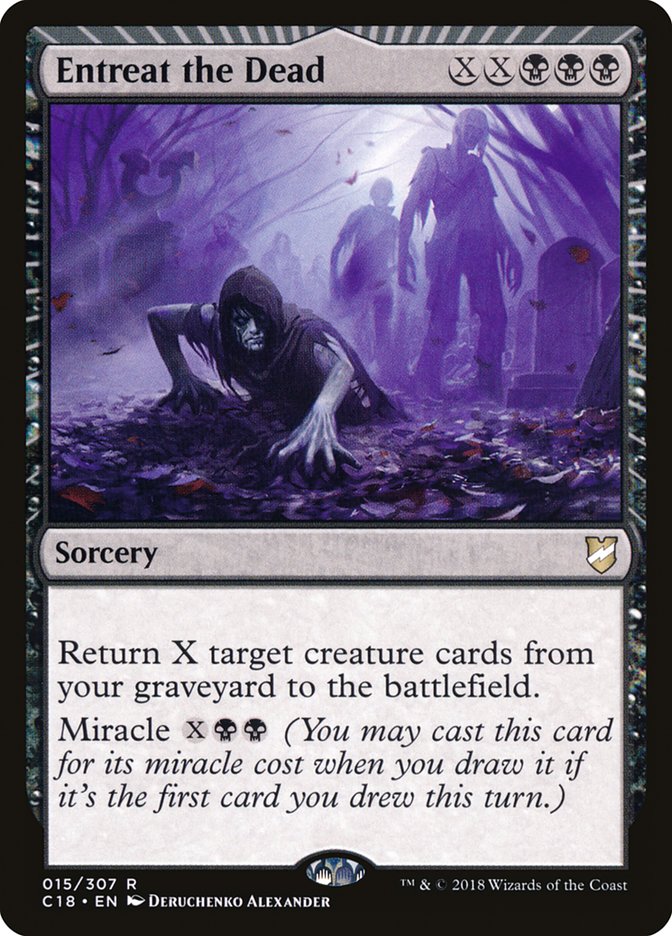
Like Entreat the Angels but for the dead! A little on the nose, but Entreat the Dead deserves some praise. There’s plenty of competition in the mass-reanimator department, but this gives you a pretty significant mana advantage if you manage to miracle-cast it.
#29. Curse of the Swine
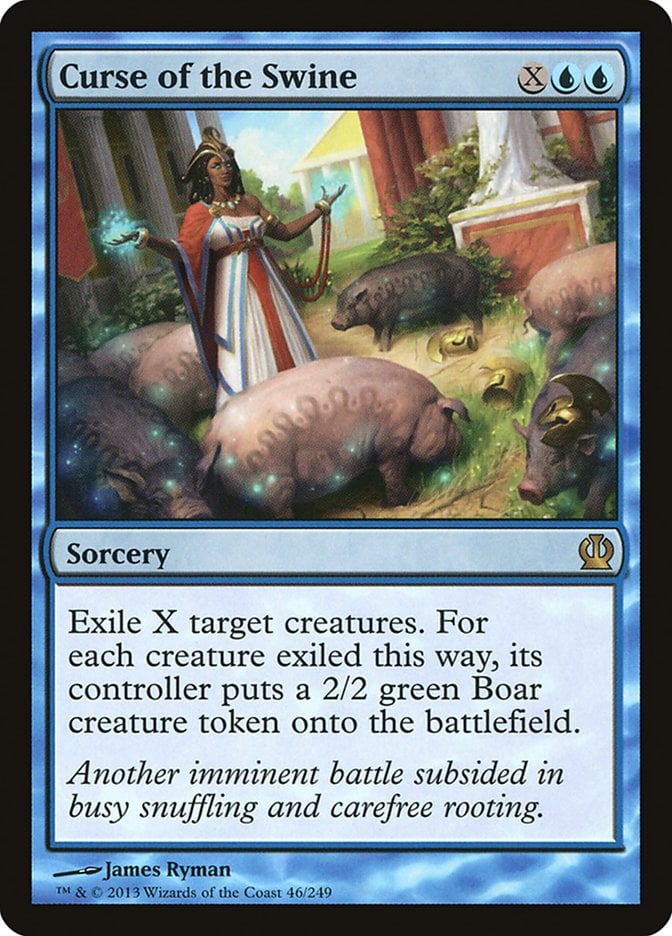
Curse of the Swine’s more of a necessary evil due to the state of blue board wipes, but it’s also not that effective when your life total’s on the cusp. It does exile the targets, but you better believe those boars are coming your way. Still, every deck can’t have (nor needs) a Cyclonic Rift, so I won’t fault anyone for playing Curse.
#28. Clown Car
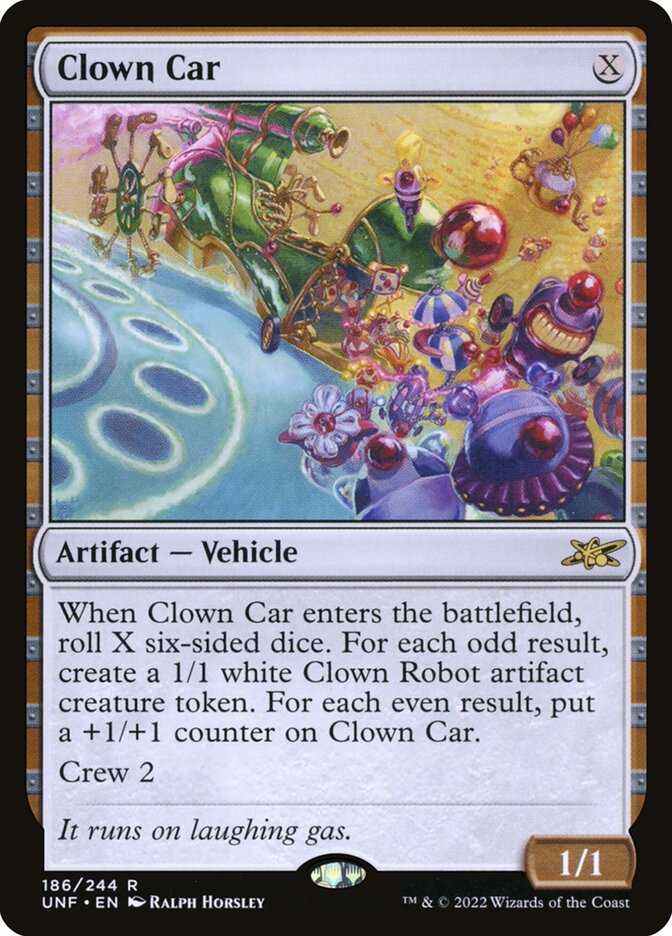
I mean, sure. Clown Car turns infinite mana into an infinite-powered vehicle and an infinite army of… Clown Robots. It’s competitive enough that I have to talk about it as much as I dislike the Unfinity cards being legal in Commander.
#27. Klauth’s Will
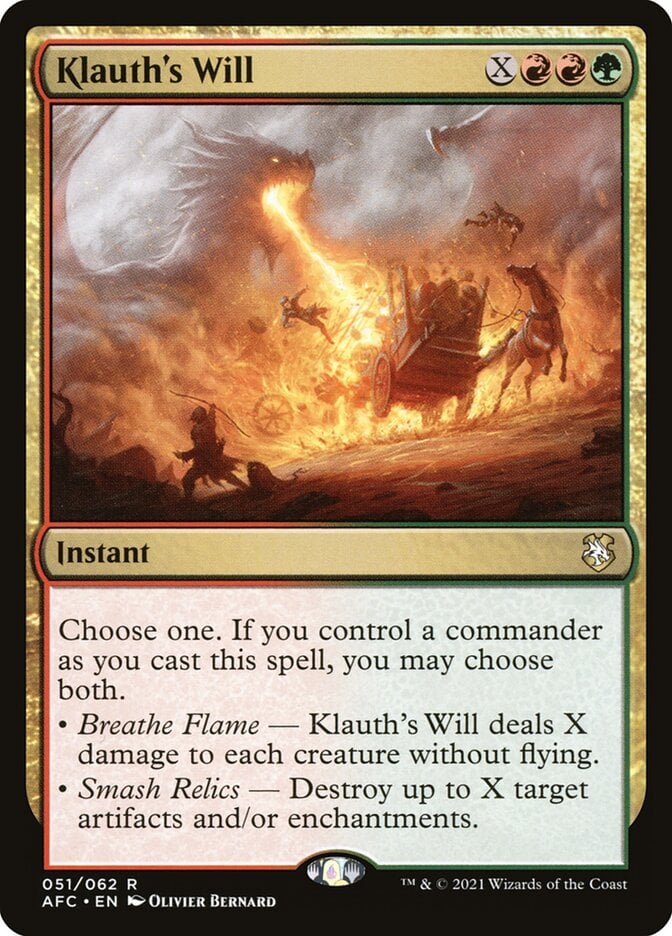
Klauth's Will is a hidden gem from Forgotten Realms Commander. It’s part Savage Twister, part mass Naturalize, or both if you control a commander. Not hard to pull off while significantly reshaping the boardstate.
#26. Red Sun’s Twilight
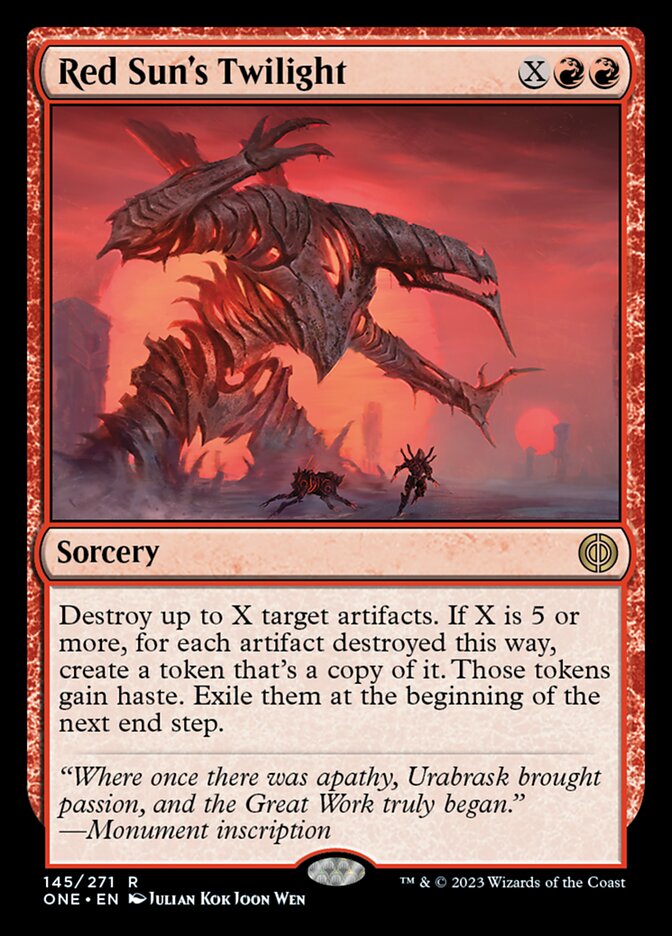
Mileage on Red Sun's Twilight will vary, but it’s Vandalblast levels of artifact removal. It’ll be your silver bullet against artifact-themed decks, and it’s always good enough at sweeping up stray mana rocks.
#25. Agadeem’s Awakening + Shatterskull Smashing
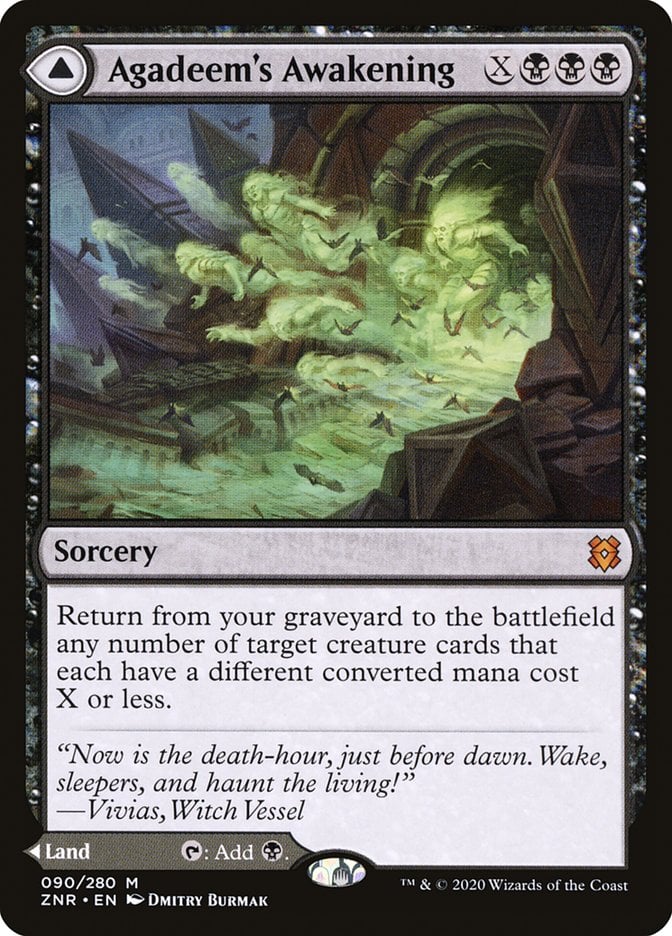
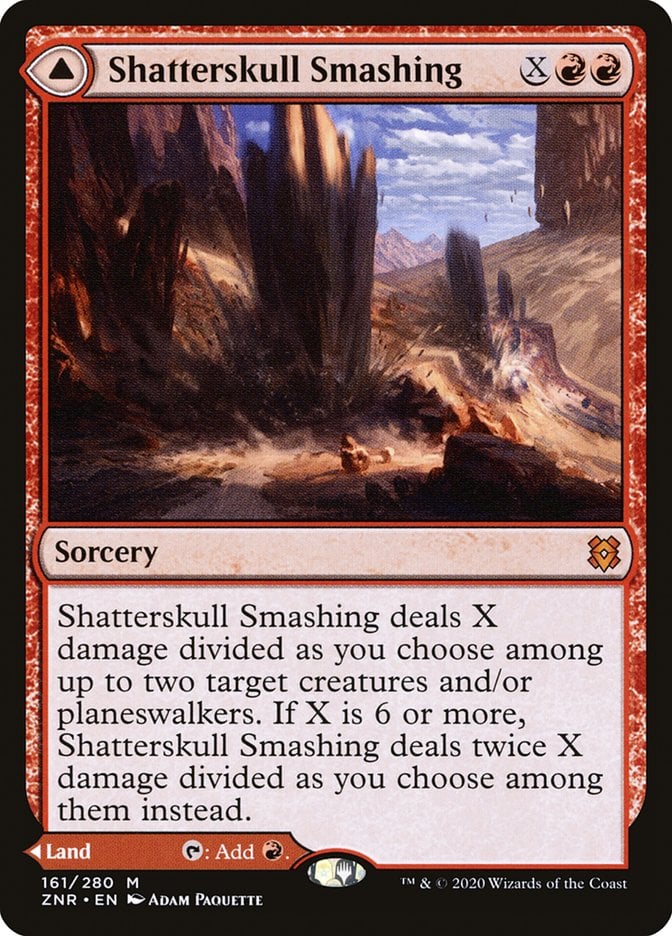
Most of the power of MDFCs like Agadeem's Awakening and Shatterskull Smashing comes from slotting them into your mana base at virtually no cost while sneaking a situationally powerful spell into your deck.
Agadeem, the Undercrypt and Shatterskull, the Hammer Pass hurt you on occasion, but the opportunity cost to include them is low and makes all the mythic rare Zendikar Rising MDFCs great by default.
#24. Spiteful Banditry
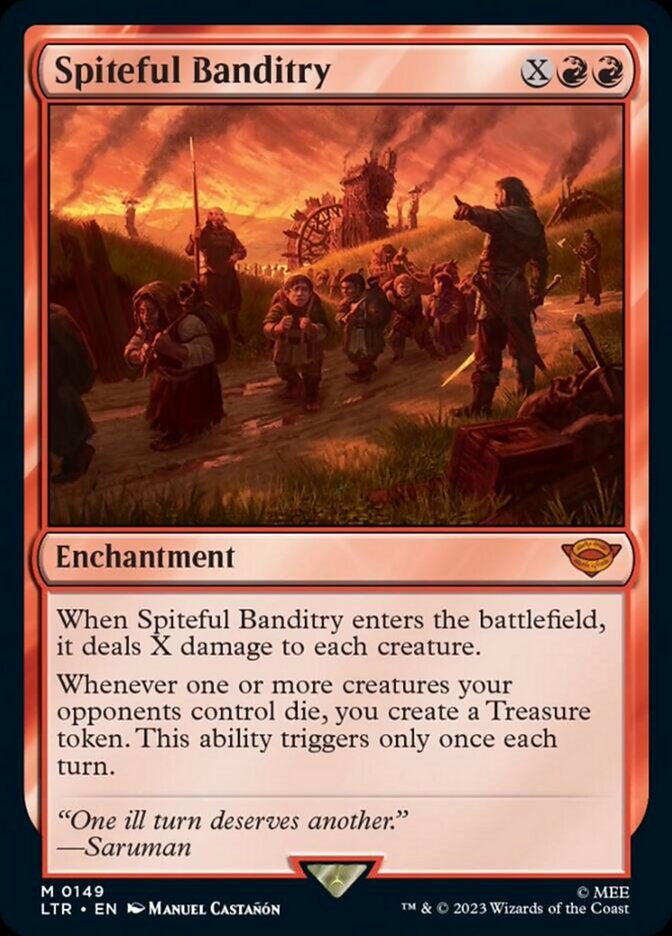
The Meathook Massacre this is not, but Spiteful Banditry copies the formula. It’s below rate for a sweeper, but the steady Treasure acquisition makes up for that. It’s like a Revel in Riches that doesn’t [always] draw the immediate anger of your foes.
#23. Blue Sun’s Zenith
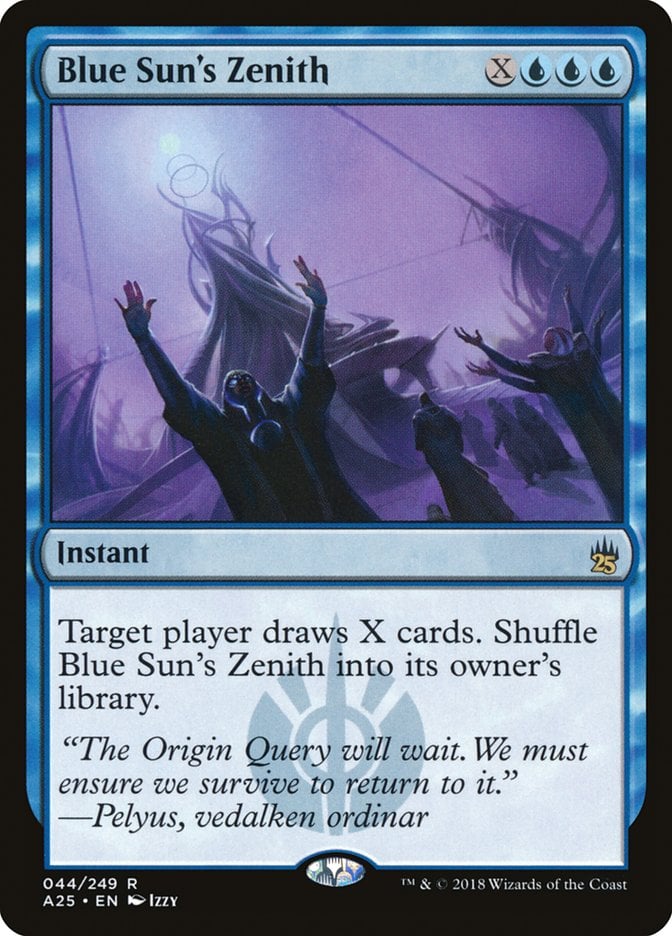
Blue Sun's Zenith stands in for all the X-cost draw spells, which includes everything like Finale of Revelation, Sphinx's Revelation, Commander's Insight, Diviner's Portent, and more. I still prefer Zenith since it can target opponents, which converts an arbitrary pile of mana into an actual wincon.
#22. Genesis Wave + Kamahl’s Druidic Vow
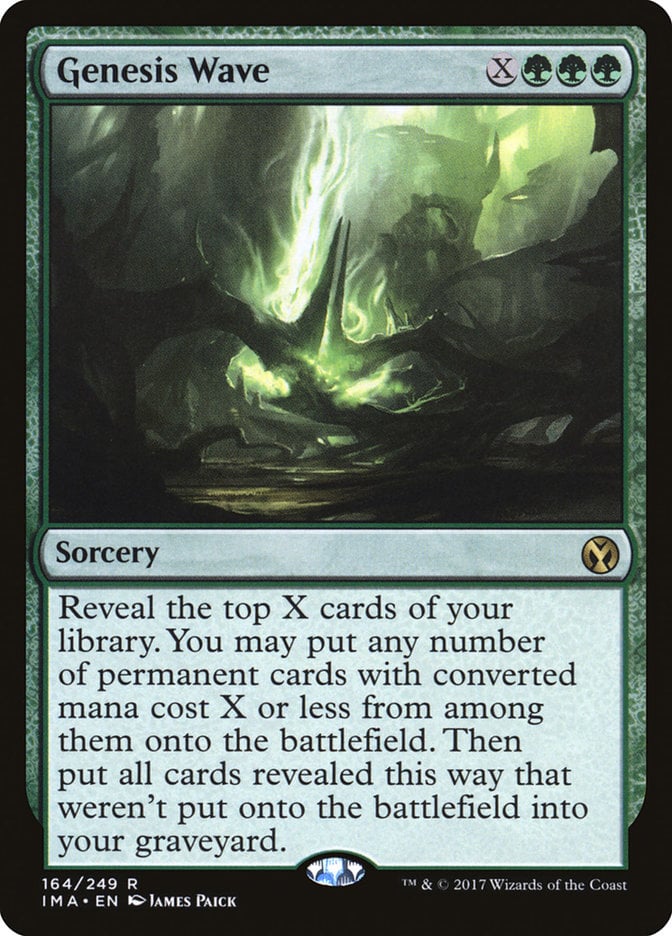
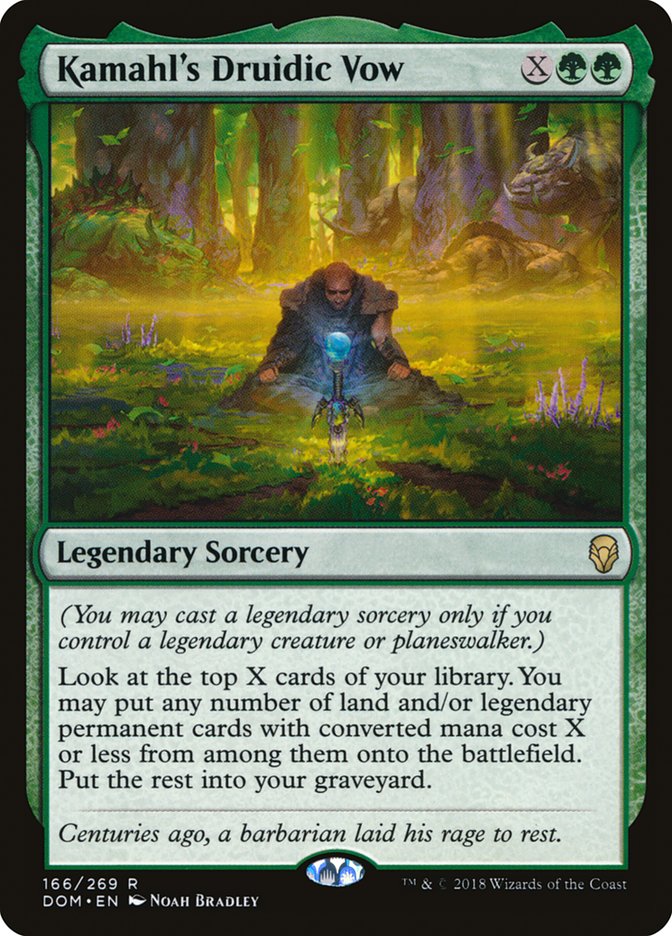
Genesis Wave is still an effective place to dump, I dunno, 15-20 mana. Kamahl's Druidic Vow is in the same camp; it’s cheaper but has the legendary sorcery restriction, though that’s really not a hard hurdle to pass. Either one should effectively end the game on the spot with a large enough amount of mana.
#21. Doppelgang
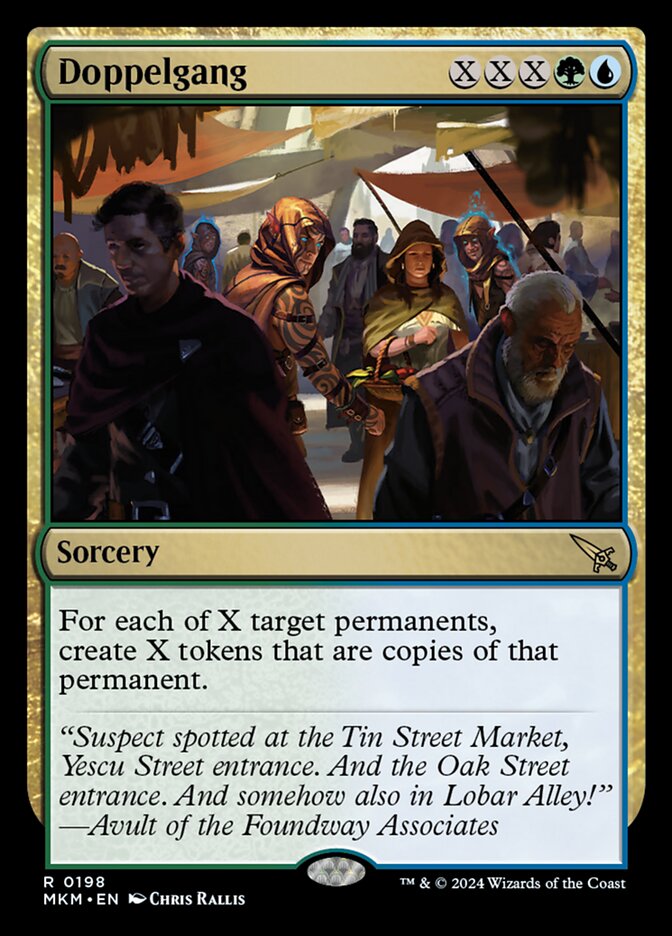
So many Xs it’d make Vin Diesel proud. Doppelgang is a bad clone for 5 mana, a 4-for-1 at 8 mana, and a logistical boardstate nightmare at anything at or above X=3. The game usually ends when you get to 11+ mana for this card, so the boardstate clutter usually isn’t an issue for too long.
#20. Mockingbird

Mockingbird is a fair and flexible clone that can become a copy of yours or your opponent’s best card, plus flying. The reason it sees play in competitive lists is because it trades tit-for-tat with other 1-mana creatures without overcharging, due to its specific wording.
#19. Rocco, Cabaretti Caterer
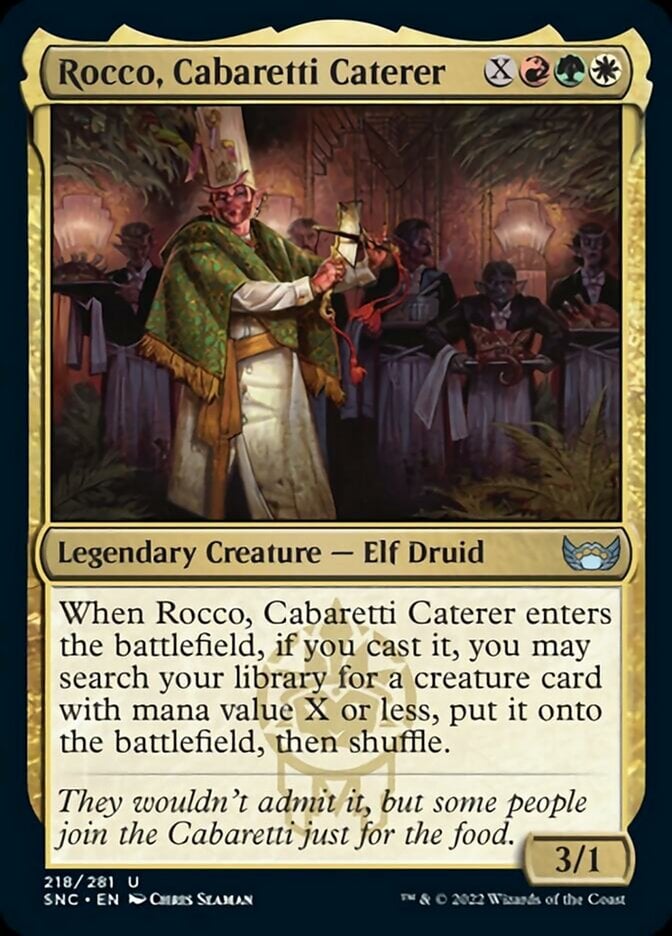
I didn’t lump Rocco, Cabaretti Caterer in with the rest of the green tutors because: A, Rocco has more colors, and B, putting a tutor in your command zone is a huge deal. CEDH huge.
#18. Mawloc
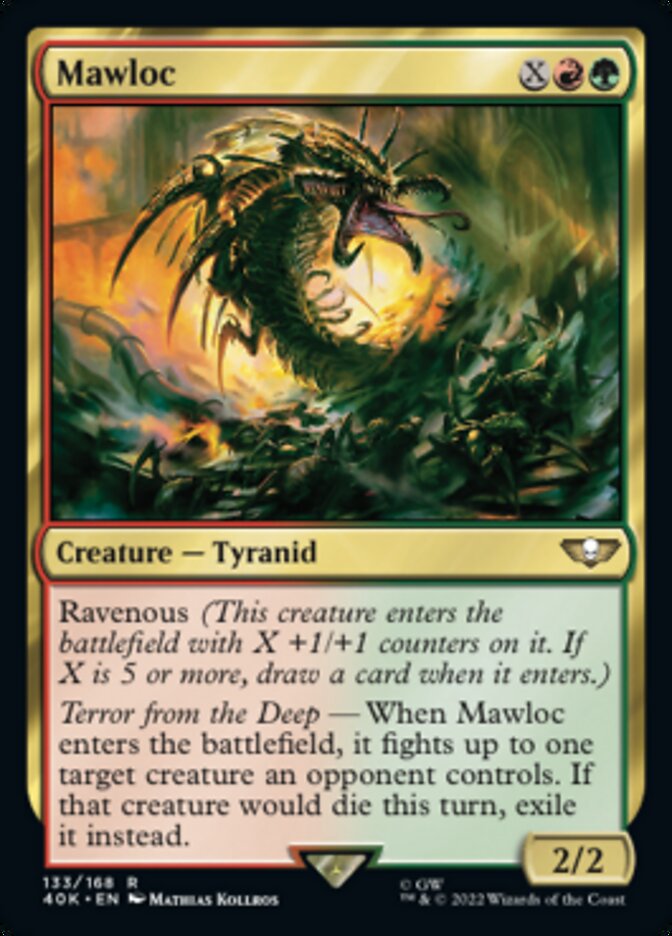
Mawloc turns up all the right knobs on a fight creature. It’s huge, it can cantrip with ravenous, and it exiles the target it fights. The kicker is drawing the extra card at X=5 or greater, making Mawloc a clean 3-for-1 that leaves a large threat on board.
#17. Rampaging Yao Guai
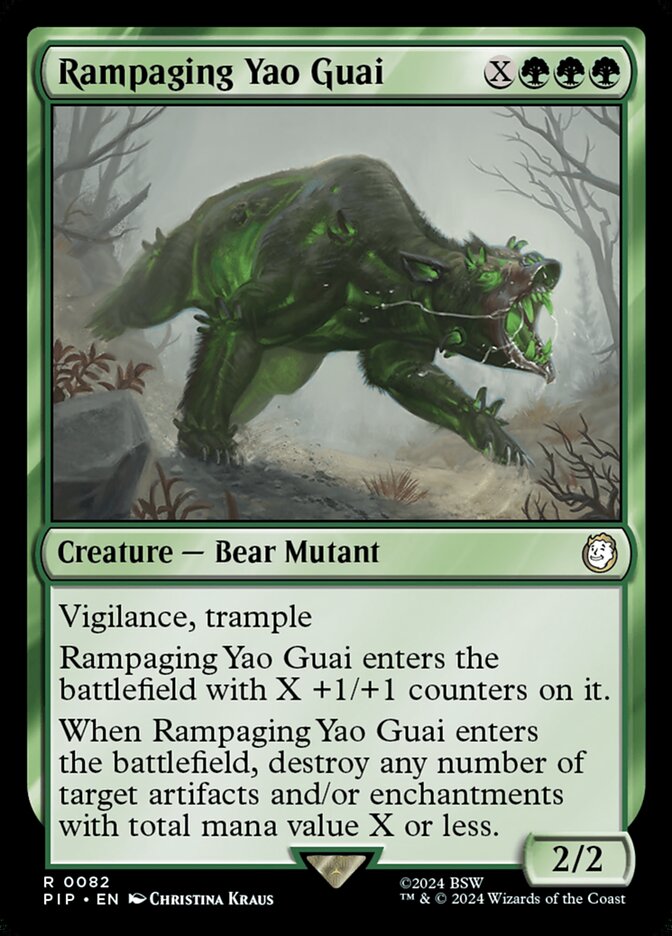
Rampaging Yao Guai doesn’t get the praise it deserves. It can sweep up multiple artifacts and enchantments, but at a base level it clears all the pesky 0-mana artifact tokens from play for no extra investment.
#16. Exocrine
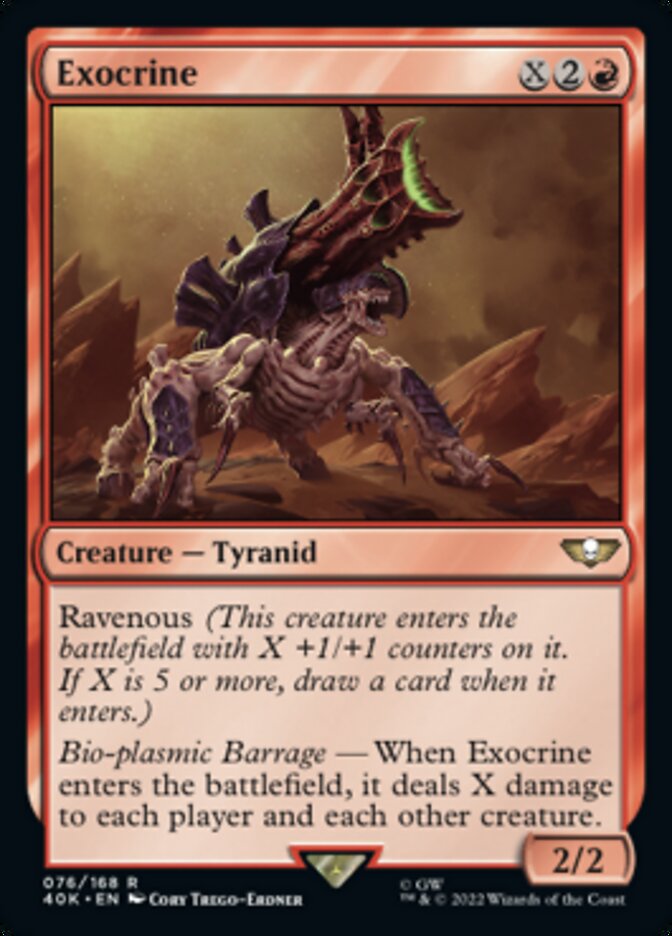
Exocrine is a large, ravenous Earthquake. Quite literally. It costs more mana upfront than a traditional Earthquake, but ravenous gives you the opportunity to get your card back. Just be careful: Exocrine hits all players, including yourself.
#15. Mathemagics

I like the concept of a card that’s simultaneously a 2-mana cycler, a 4-mana draw-2, and a 16-mana wincon. For X=6 (14 mana), you can force a player to draw 64 cards, which is often enough to take someone out of the picture, and X=7 (16 mana) guarantees one opponent has to pack it up. You can also fire it off for lower amounts and just draw a ton of cards yourself, or combine it with Laboratory Maniac and a load of mana for a cheesy mathematical auto-win.
#14. Grand Crescendo
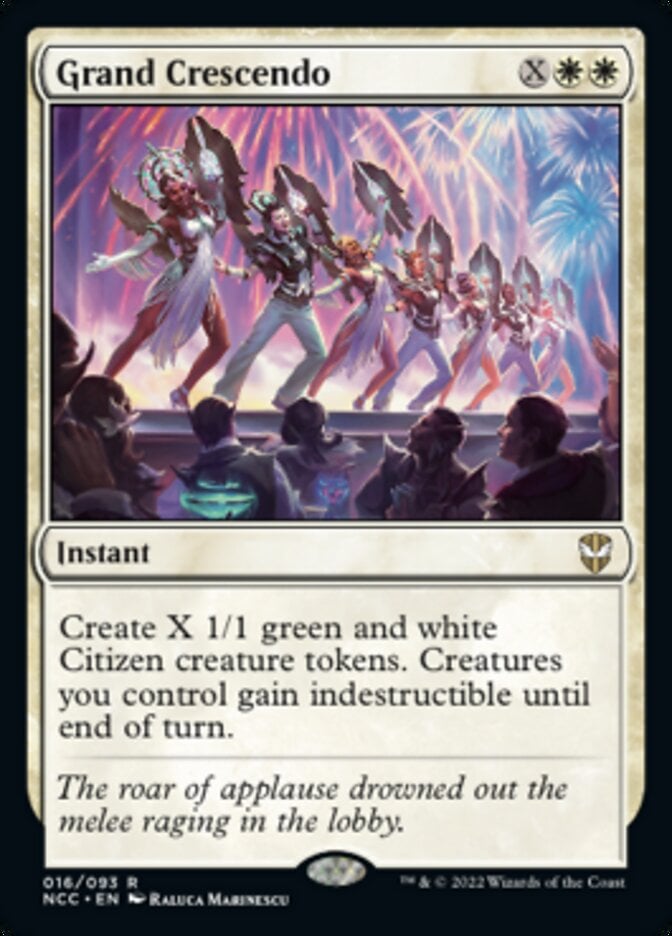
Grand Crescendo firmly unseated Secure the Wastes. You’ll always be down one token compared to Secure, but that’s a small price to turn this spell into board protection as well.
#13. Awaken the Woods
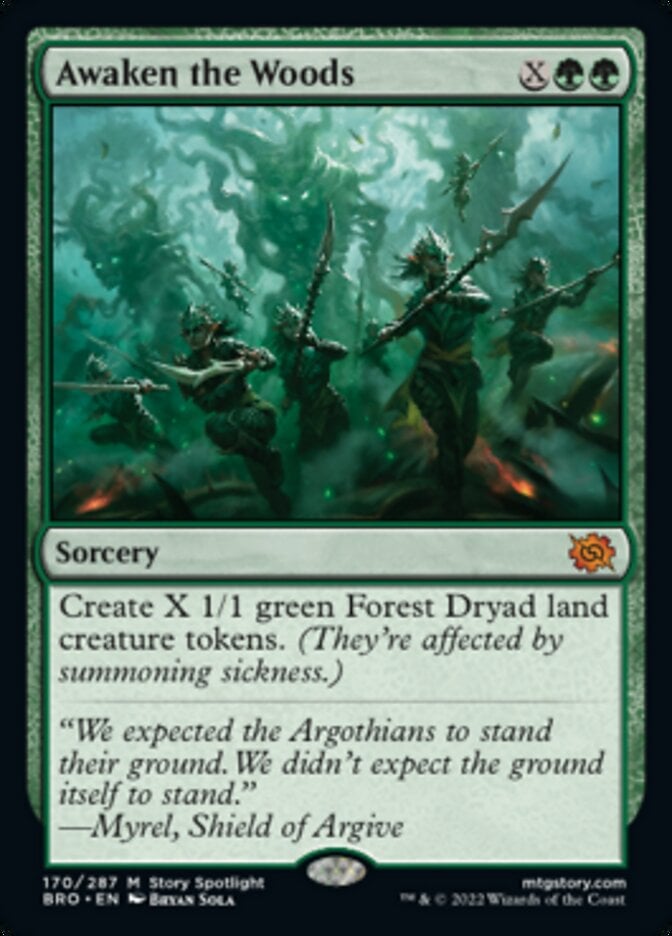
More like Awaken the Dryad Arbors. Awaken the Woods creates an army in a can, though an army of mana dorks is unique for this type of card. It also puts a ton of lands into play, making it one of the easiest ways to multi-trigger landfall abilities with one card.
#12. Debt to the Deathless + Exsanguinate + Torment of Hailfire
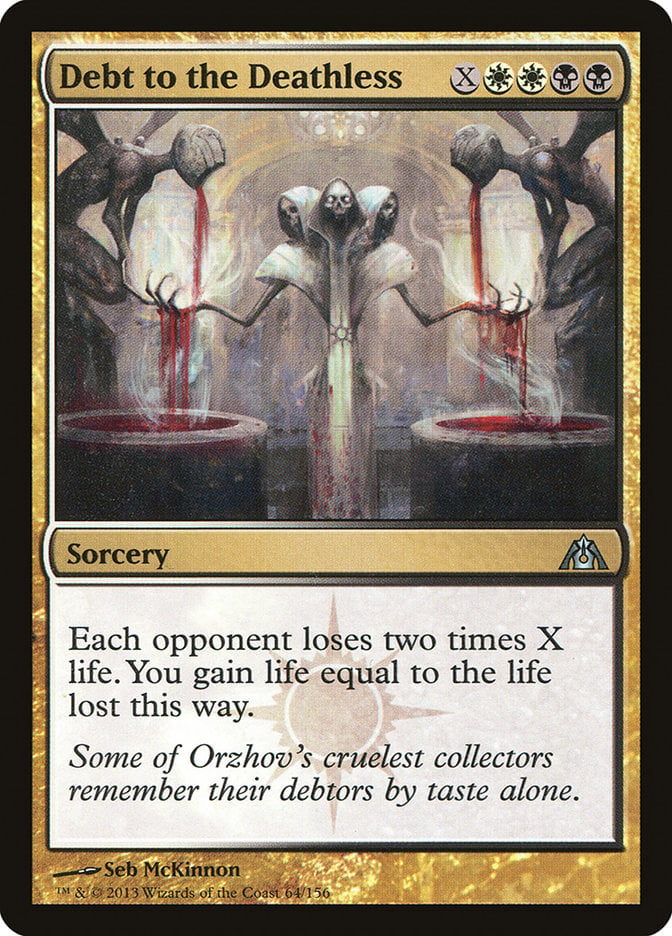
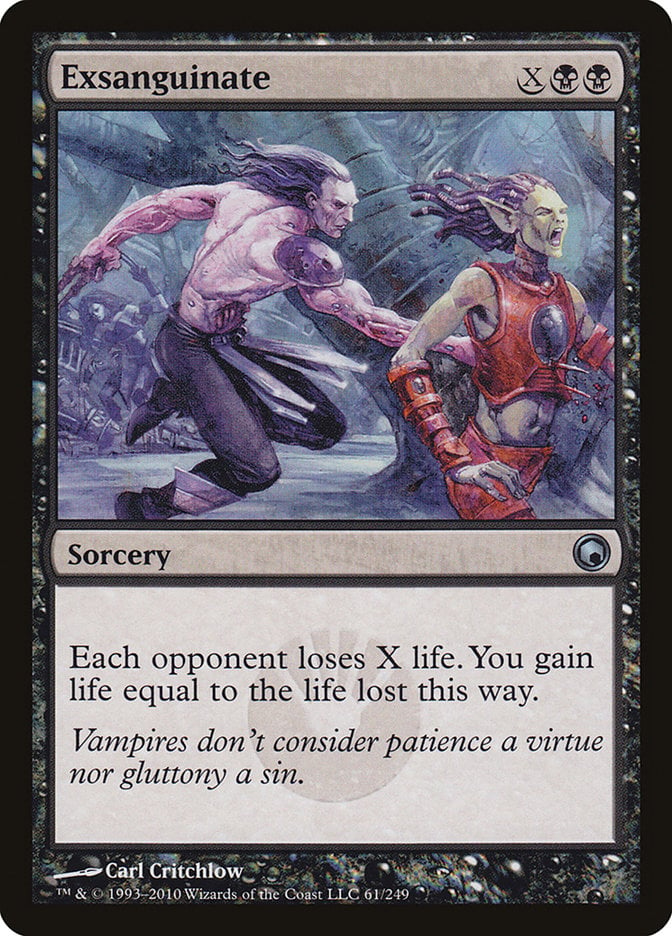
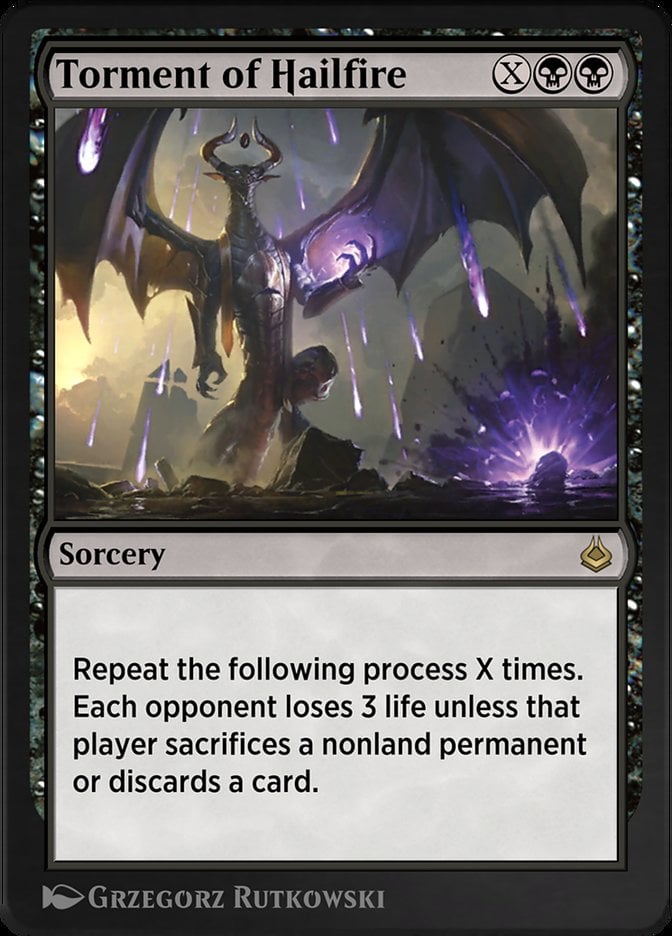
Let’s be real: They’re all the same thing. There are some notable differences between Debt to the Deathless, Exsanguinate, and Torment of Hailfire, with Torment being the best wincon among them, but they’re all effective at ending games.
#11. The Green Tutors
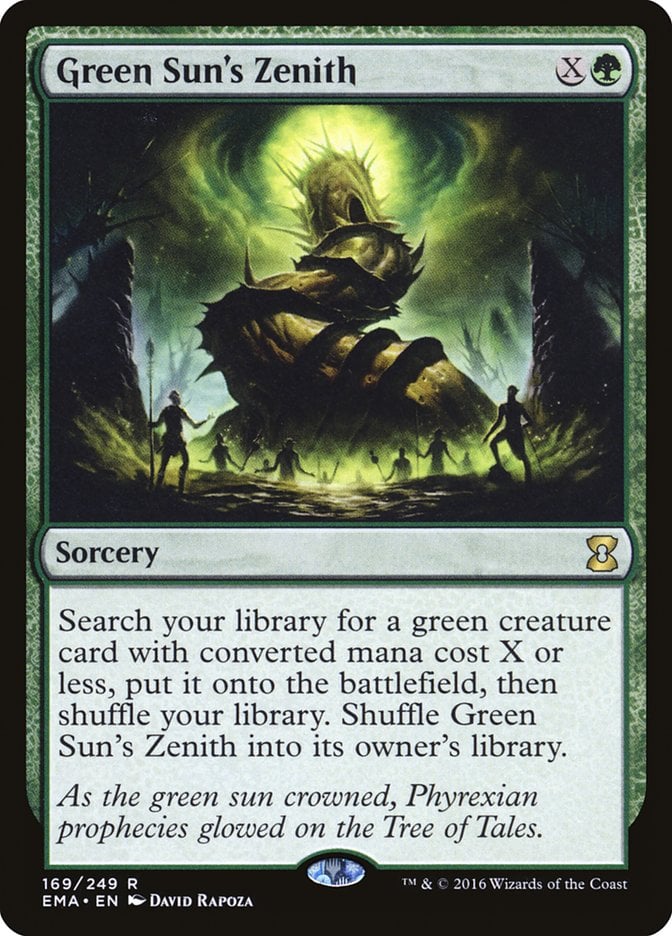
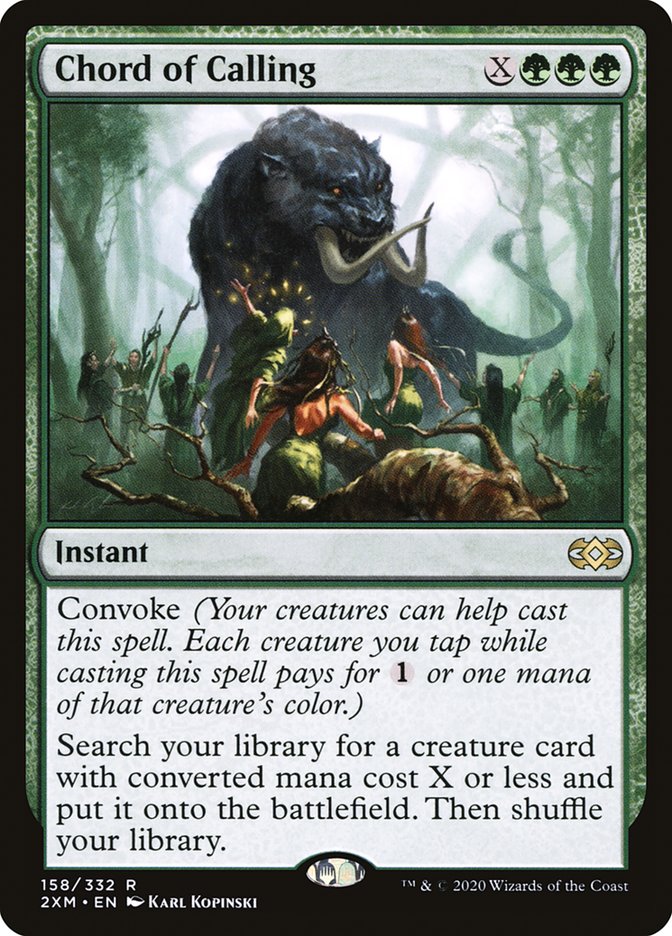
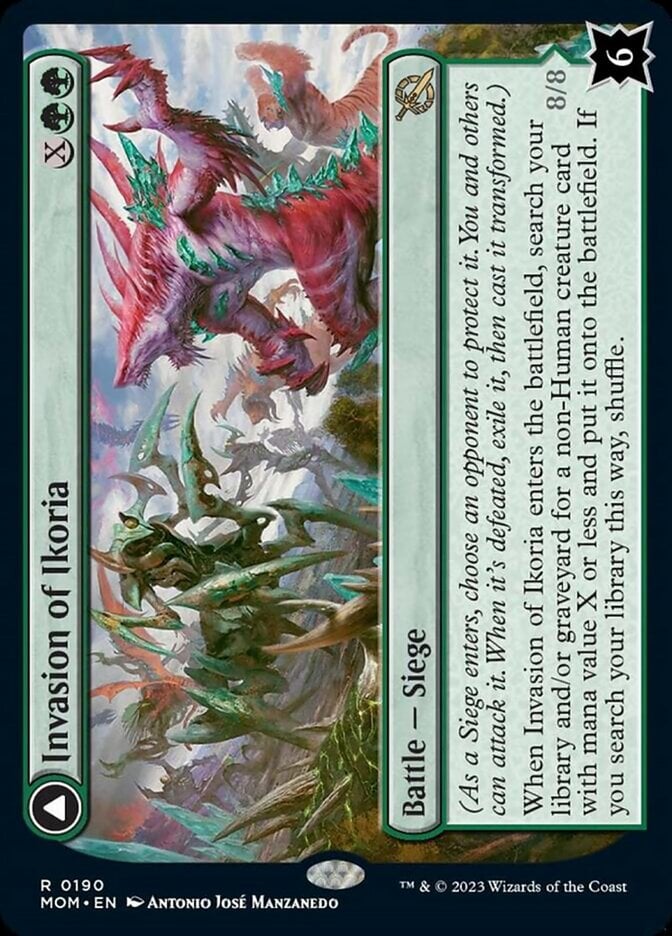
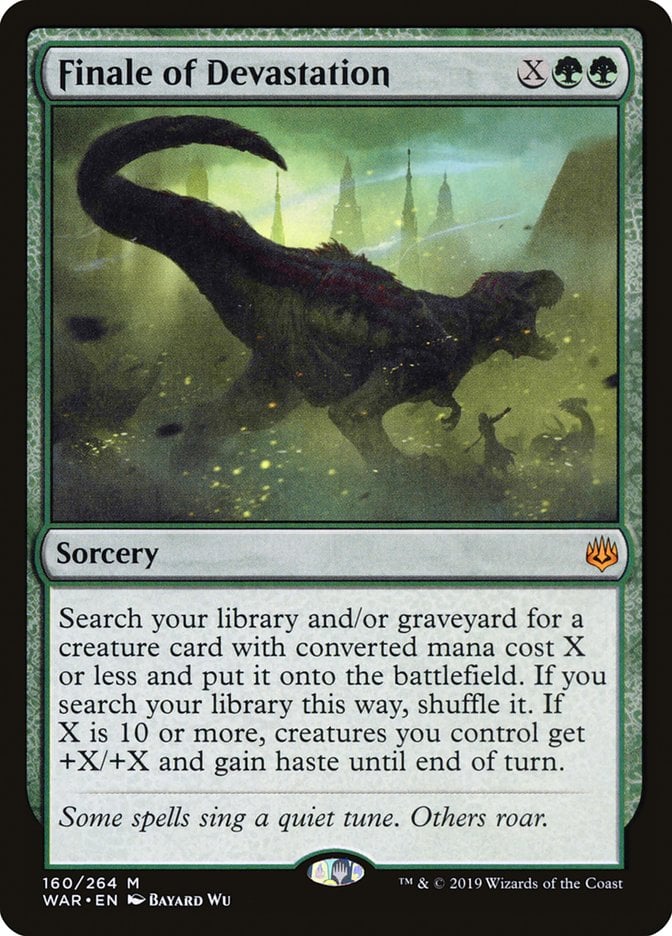

Between Green Sun's Zenith, Chord of Calling, Invasion of Ikoria, and Finale of Devastation, there are tons of X-spells in green that tutor creatures directly into play, some pulling from the graveyard, too. Chord’s an instant, Invasion flips into Zilortha, Apex of Ikoria, Zenith’s the cheapest, and Finale (arguably Magic’s best green sorcery) has a flashy wincon mode. Nature's Rhythm joined the ranks as a version with harmonize.
#10. March of Swirling Mist
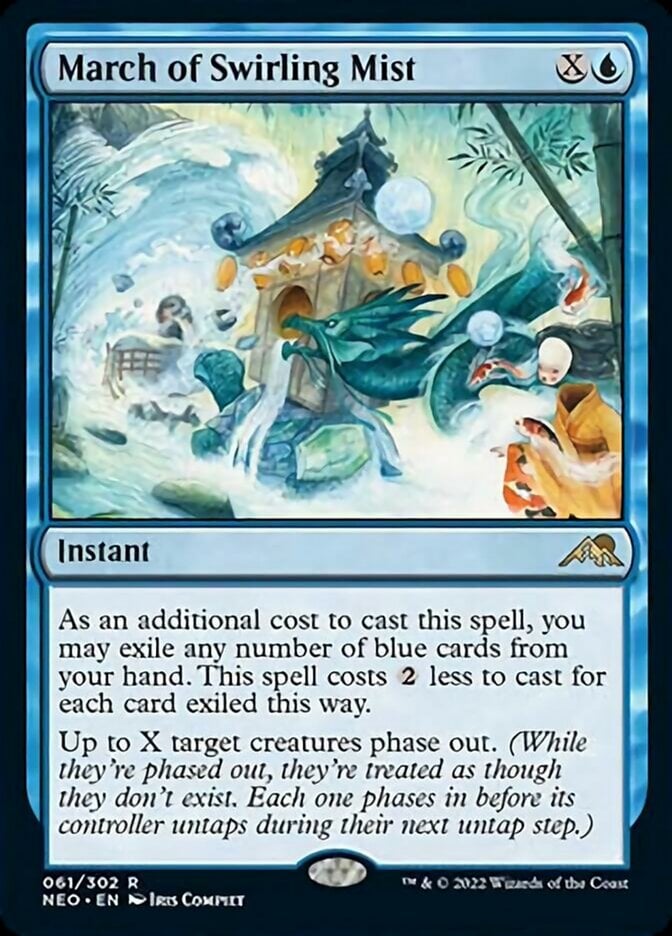
Say it with me: Under. Rated.
One of the best phasing cards in the game, March of Swirling Mist is just so flexible, saving your own creatures or phasing out your opponents’ completely at your discretion. Phasing’s the best form of protection in Commander, and it’s nifty tech for equipment and aura decks looking to save permanents attached to their creatures.
#9. Kozilek’s Command

Kozilek's Command takes flexibility to the Eldrazi level. Since you pick two, you always get a great effect that scales with your current game state. If you’re behind, exile a creature and make a bunch of spawn tokens. If you’re ahead, scry and draw. This super handy kindred instant can help any Commander deck capable of producing colorless mana.
#8. Wake the Dead
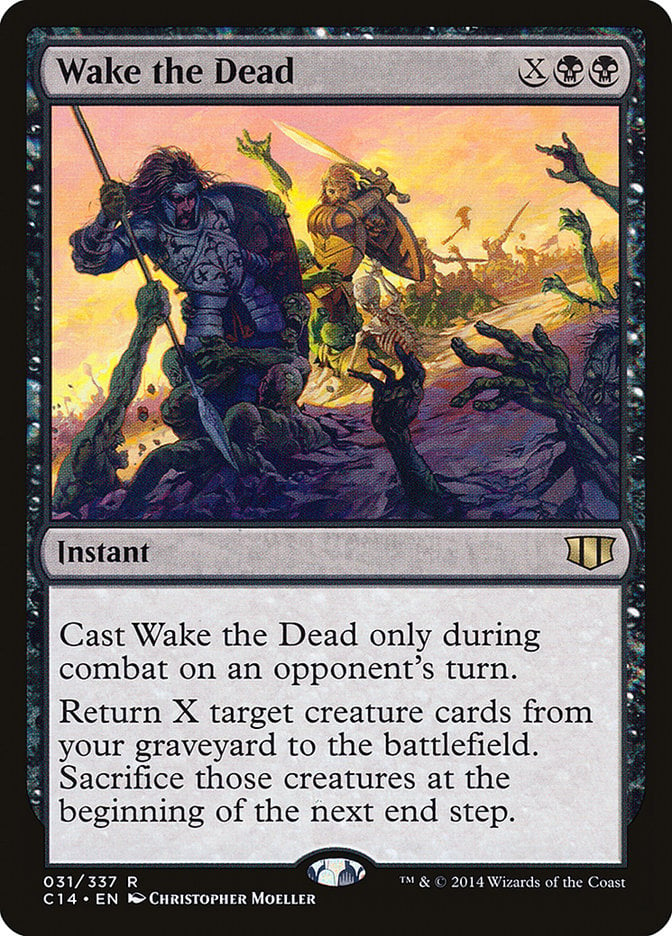
It’s insulting that Wake the Dead has been around since Commander 2014 and still sees so little play. Perhaps the timing restriction scares people off, but you’ve got to damper instant speed mass reanimation somehow. This is an absurdly powerful reanimation spell with mid-combat ambush potential, and the creatures you return just end up right back in your graveyard.
#7. Heliod’s Intervention
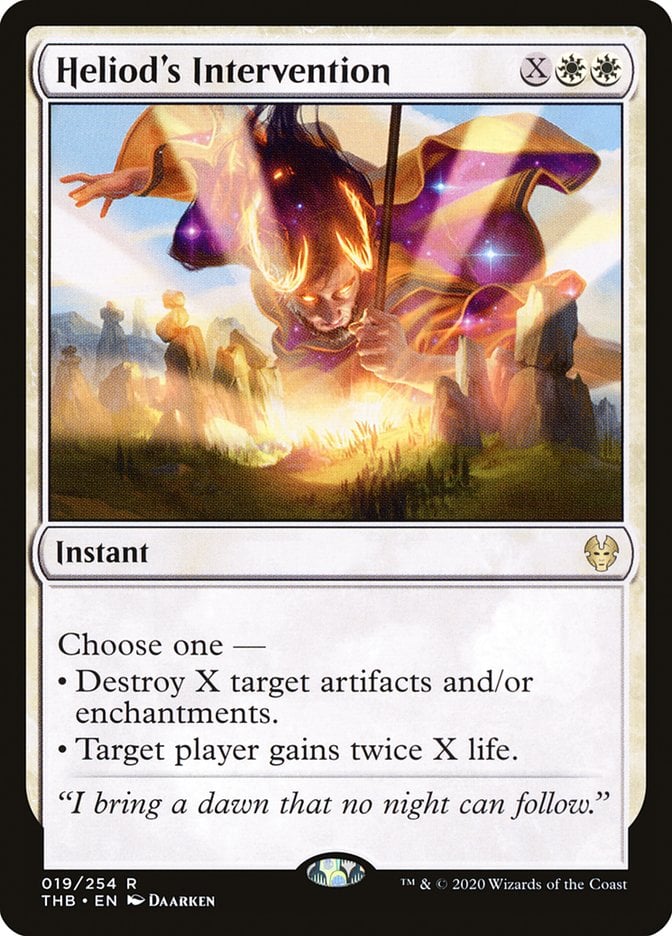
Which is better: Return to Dust or Crush Contraband? The answer hardly matters if Heliod's Intervention is in the conversation, too. Sometimes you’ll wish you had an exile effect instead, but otherwise you’re thrilled to scale this up and take out four or five different permanents all at once. I suppose you could gain life in a pinch, too.
#6. Crackle with Power
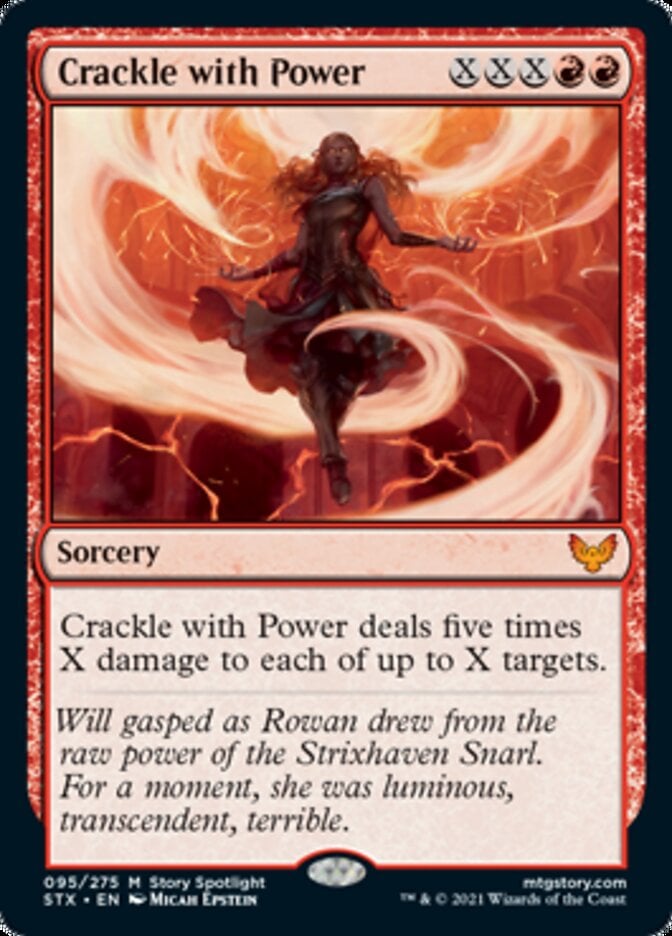
Crackle with Power puts other Fireball variants to shame. The baseline is 5 mana for 5 damage to a single target, but for every 3 additional mana you spend, it’ll deal another 5 damage and add another target. Eleven mana is the sweet spot, letting you blast three different opponents for 15 damage each.
#5. Wan Shi Tong, Librarian

The latest X-spell to break into cEDH territory, Wan Shi Tong, Librarian has two major features working it its favor: flash, and tutor hate. It’s not hard to line the bird up against an opponent’s fetch land or Rampant Growth, and Wan Shi Tong can become a sizeable threat over time, if it didn’t already start out that way when you cast it.
#4. Pest Infestation
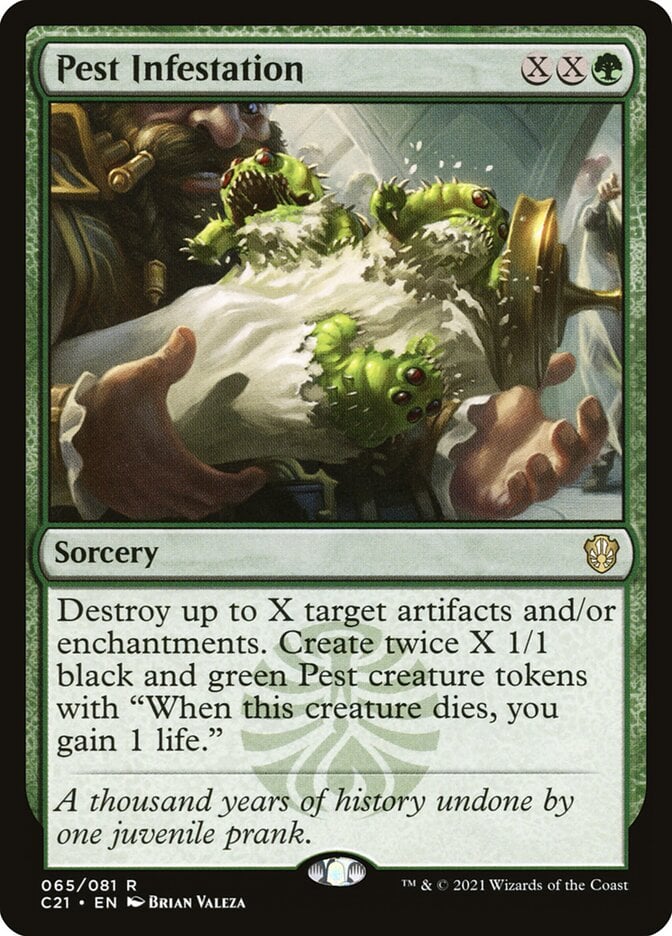
I used to be a Release the Gremlins believer, but now I’m a Pest Infestation boy through and through. You get a 1/1 pest token for each mana spent beyond the initial , and you can scale this up to destroy more problematic permanents. Think about it like a 1/1 Reclamation Sage that copies itself for every additional 2 mana you spend.
#3. Forth Eorlingas!
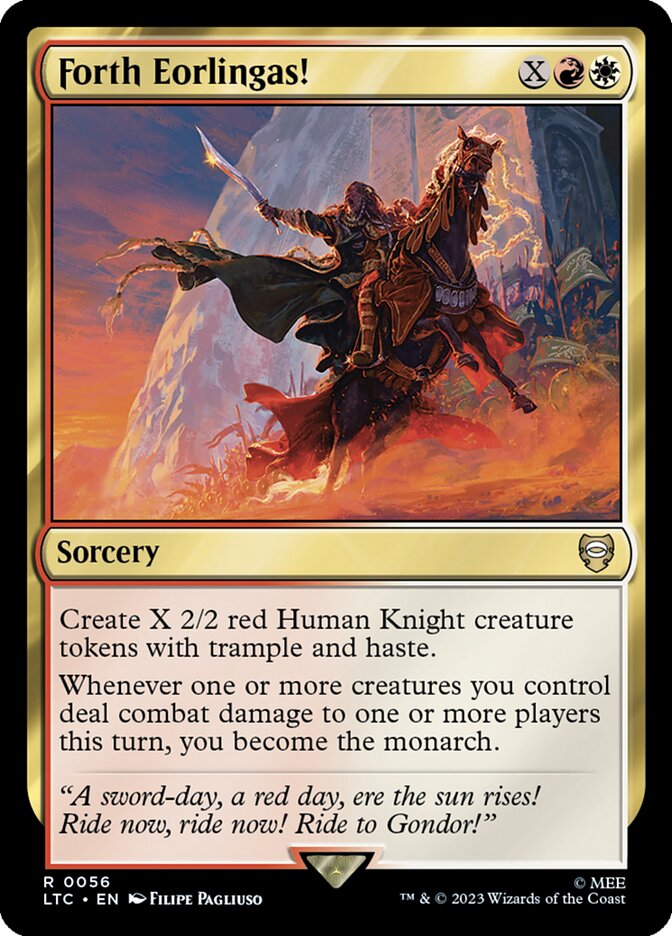
Remember Eiganjo Uprising? Yeah, me neither. Forth Eorlingas! is unnecessarily pushed, to the point where it made waves as a top card in Vintage Cubes. Vintage! There’s no X value where this isn’t worth the mana spent, and introducing the monarch makes it a card advantage engine, too! Remember when “Boros was bad”? Well, it ain’t anymore.
#2. The Meathook Massacre
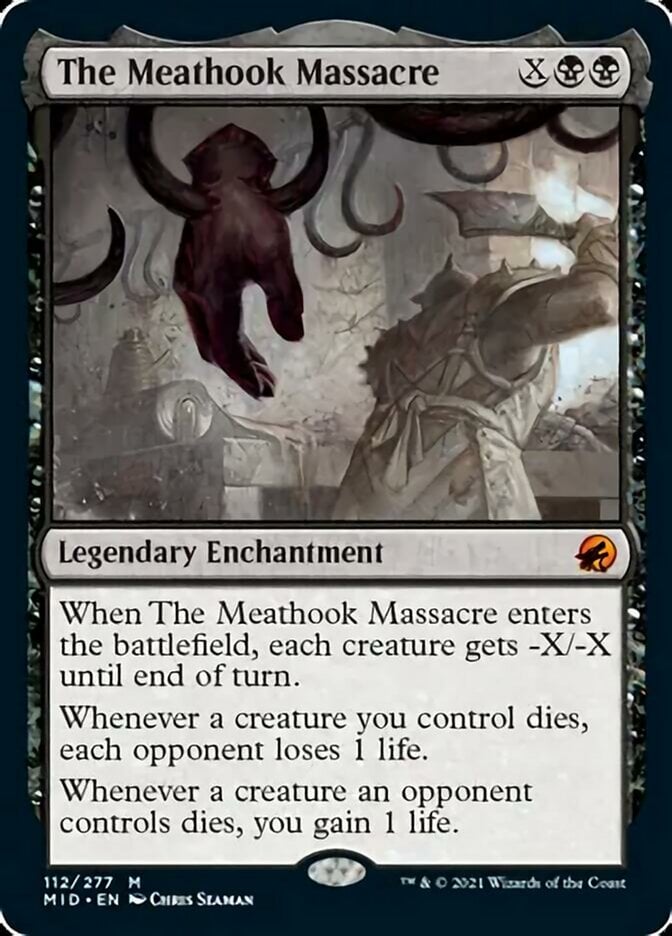
Blood Artist and Damnation is a hell of a combination. Like combining chocolate and peanut butter, but with more severed hands. The Meathook Massacre has never been affordable, which keeps it off many tables, but trust it’ll turn a game around in a heartbeat if you ever see one.
#1. Walking Ballista
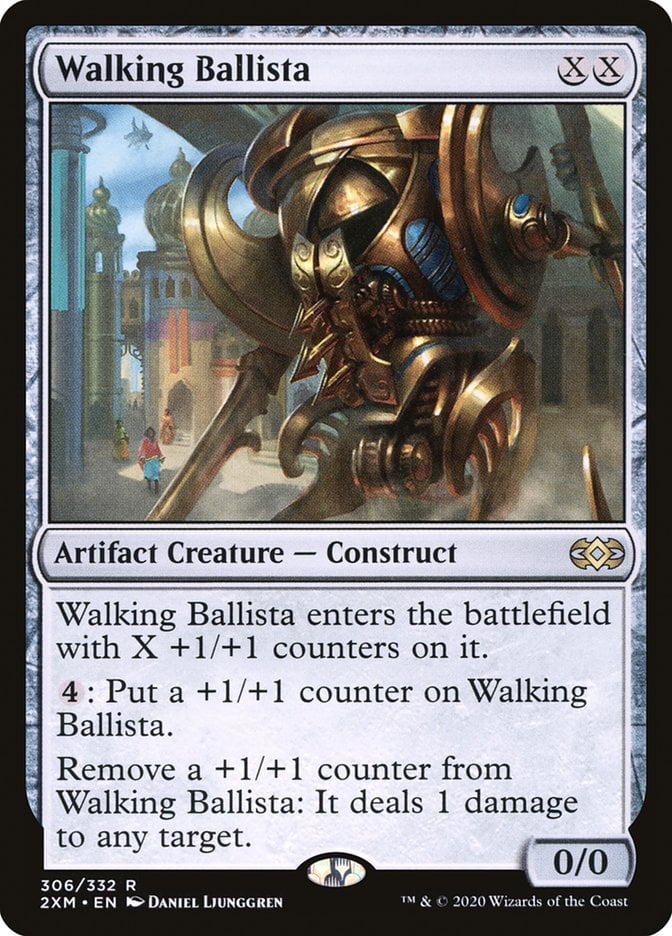
Two X’s? That’s rough Walking Ballista. Don’t worry, there are other fish in the sea. This mobile machine gun shows up in Constructed in everything from fair decks to those comboing with Heliod, Sun-Crowned, but you better believe seeing this in Commander means infinite combo central. It goes infinite with a wet noodle while being perfectly serviceable on its own.
Best X-Spell Enablers and Payoffs
In the abstract, X-spells make for great ways to spend lots of mana; they’re natural mana sinks that scale with the game and turn large pools of mana into in-game advantages, whether that’s removing a bunch of permanents, drawing a ton of cards, or fireballing opponents out of the game. In a sense, they are the payoffs for big mana or infinite mana decks.
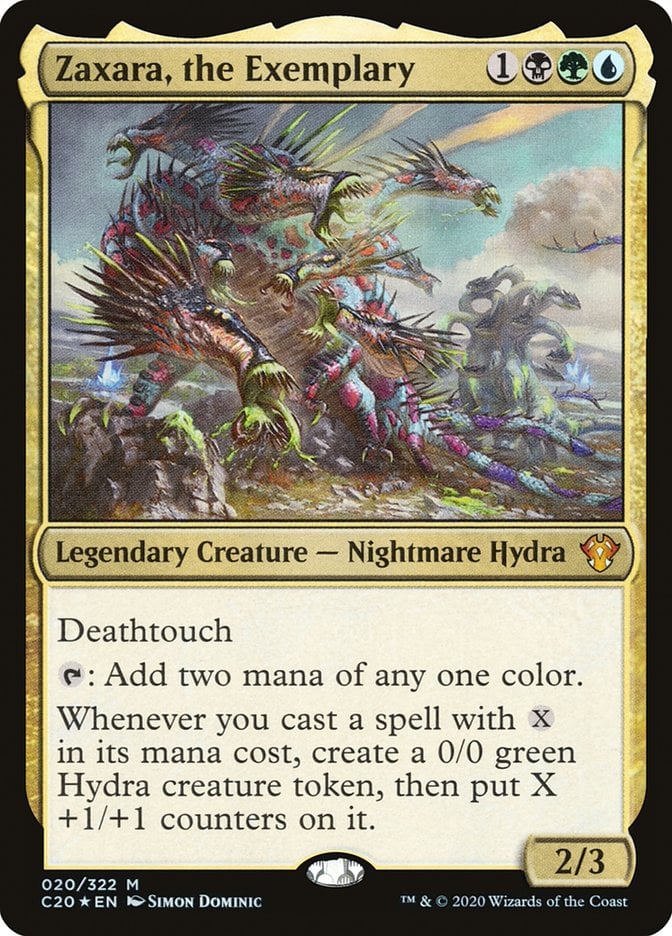
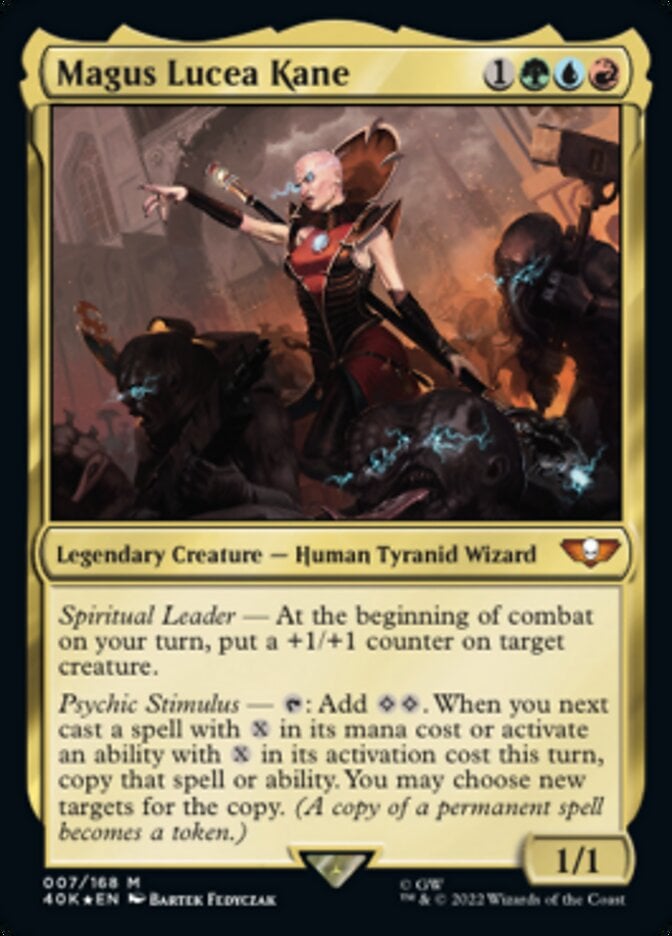
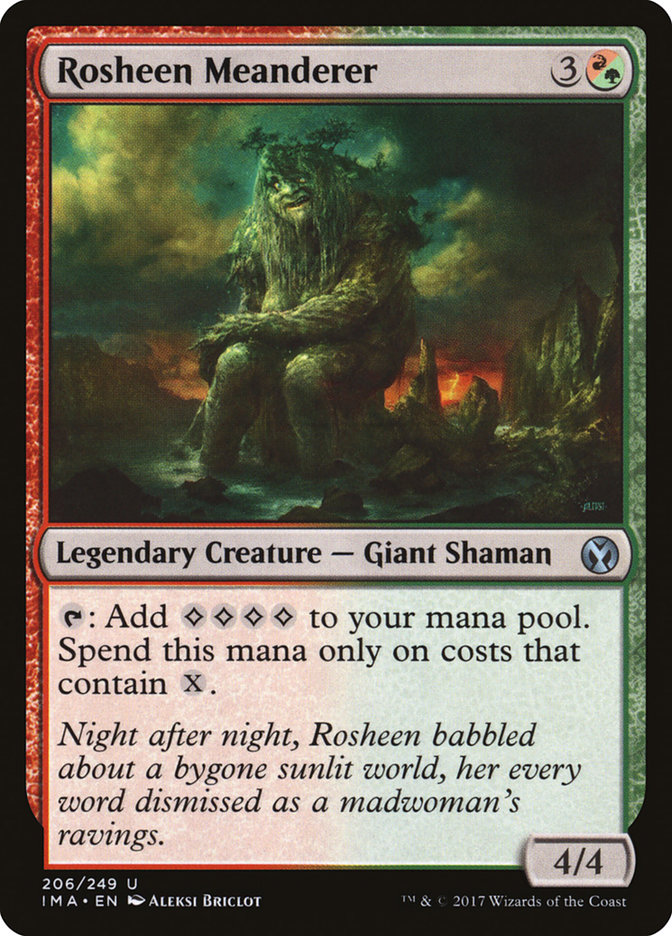
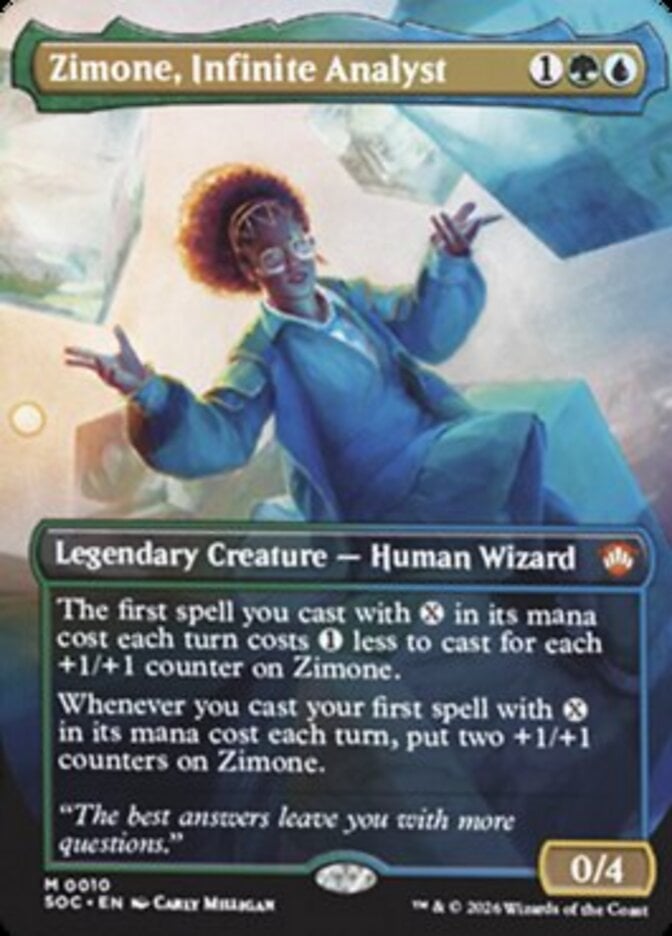
“X-Spells Matter” is a supported archetype all its own, with several commanders explicitly dedicated to the theme. There’s Zaxara, the Exemplary and Magus Lucea Kane as the two most popular X-spell commanders, with Rosheen Meanderer as something a bit more niche. Zimone, Infinite Analyst was the face commander for the Quandrix Unlimited precon, which had a major X-spell theme.
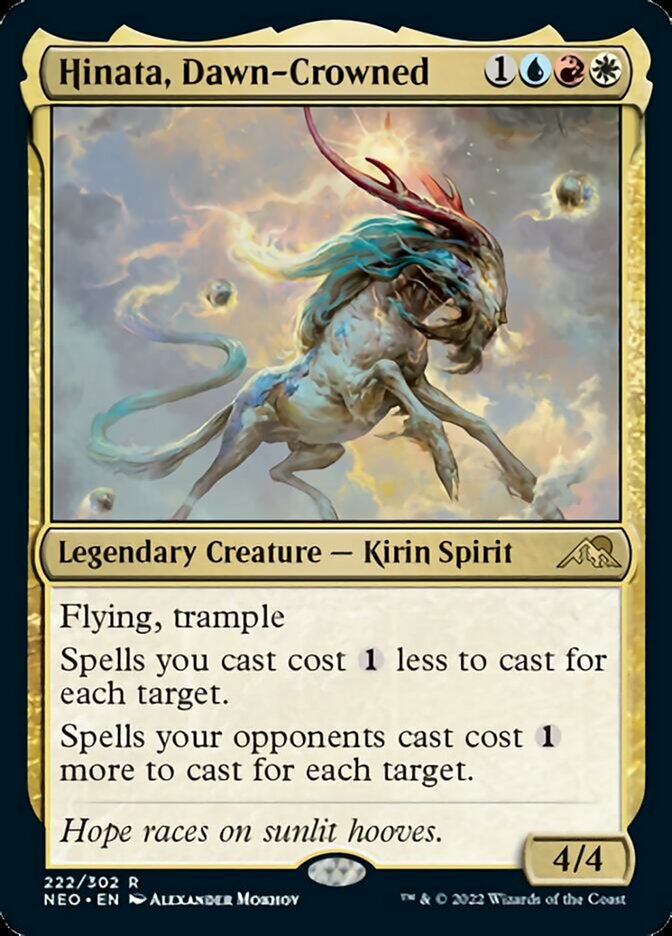
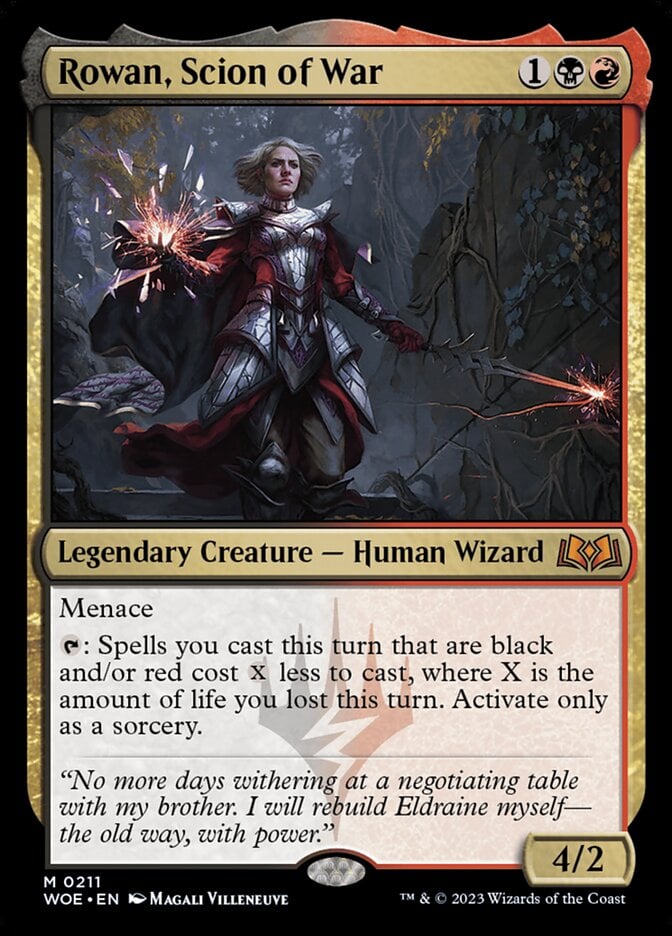
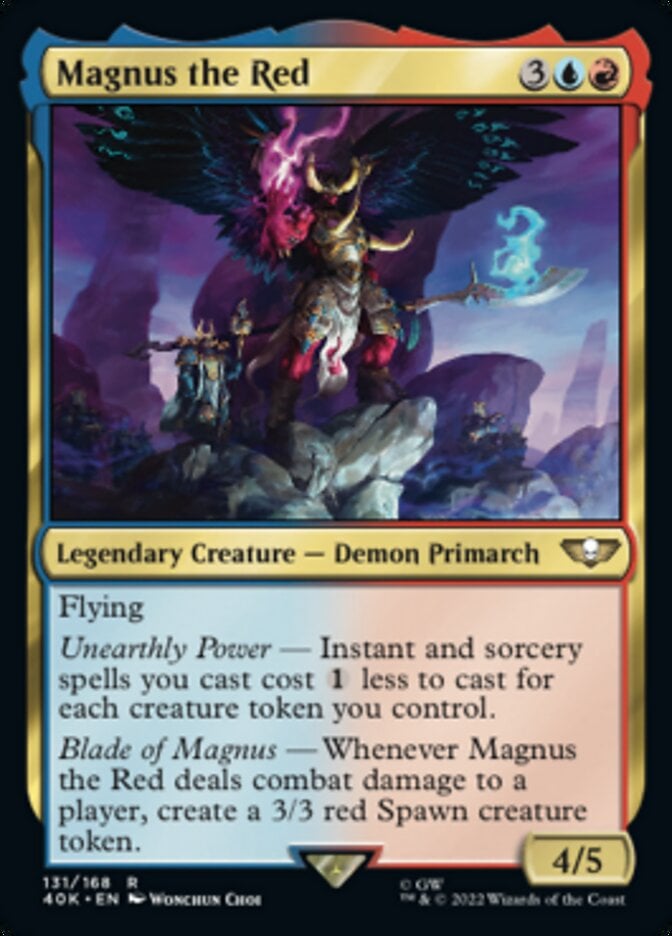
There are also legends that don’t directly call out X-spells but offer the kind of cost reduction that facilitates playing X-spells way more easily than normal. Here you’ve got commanders like Hinata, Dawn-Crowned, Rowan, Scion of War, and Magnus the Red.
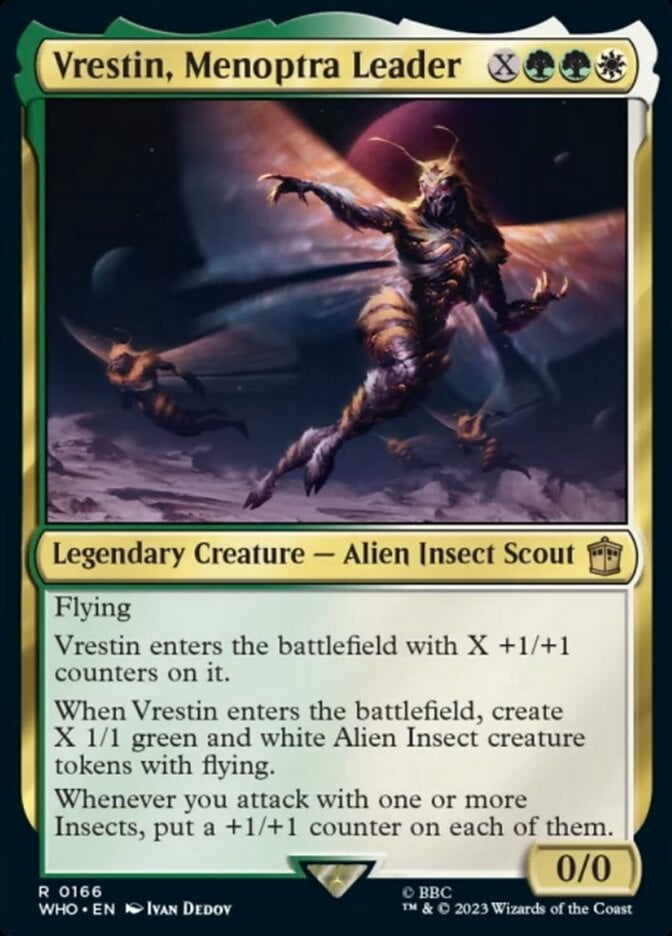

Then you’ve got commanders with in their costs, which naturally benefit from all the other X-spell support you’re already playing. Examples include Rocco, Cabaretti Caterer and Vrestin, Menoptra Leader, to name a couple. Rosheen, Roaring Prophet on the other hand wants lots of X-spells in your deck, mills them into your hand and ramps you up to spend lots on them.
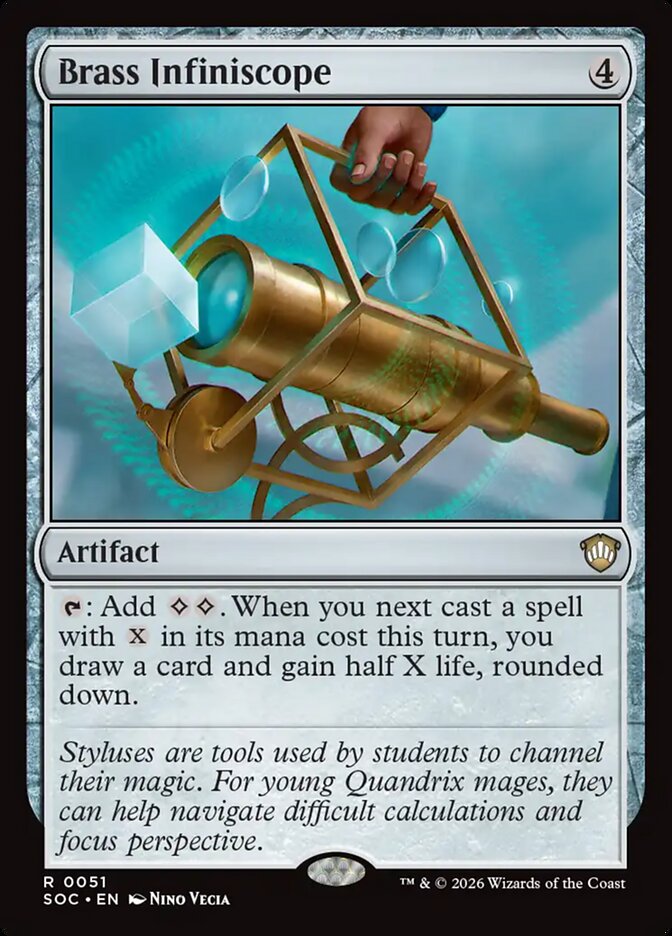
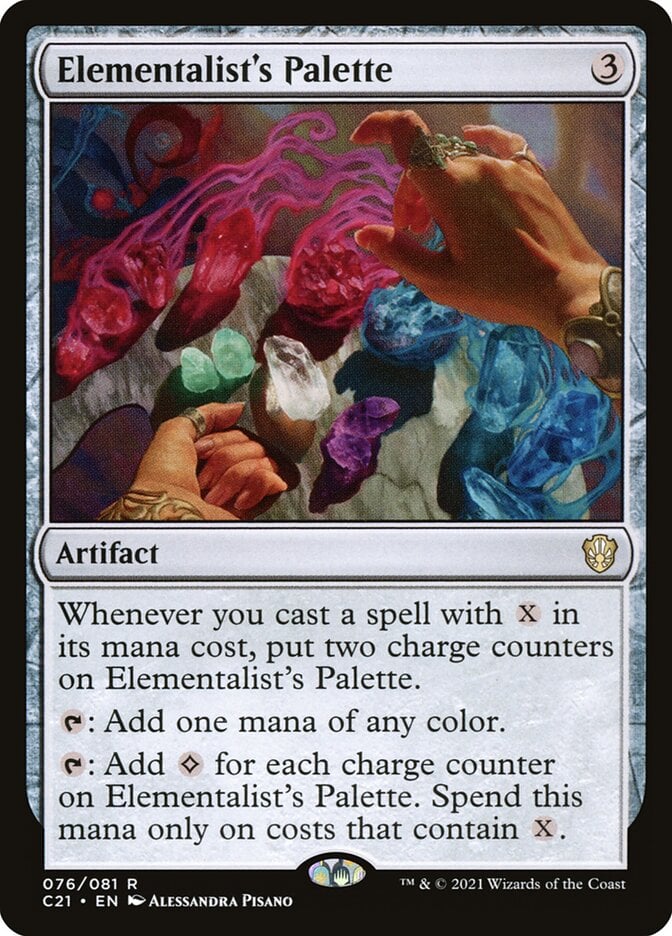
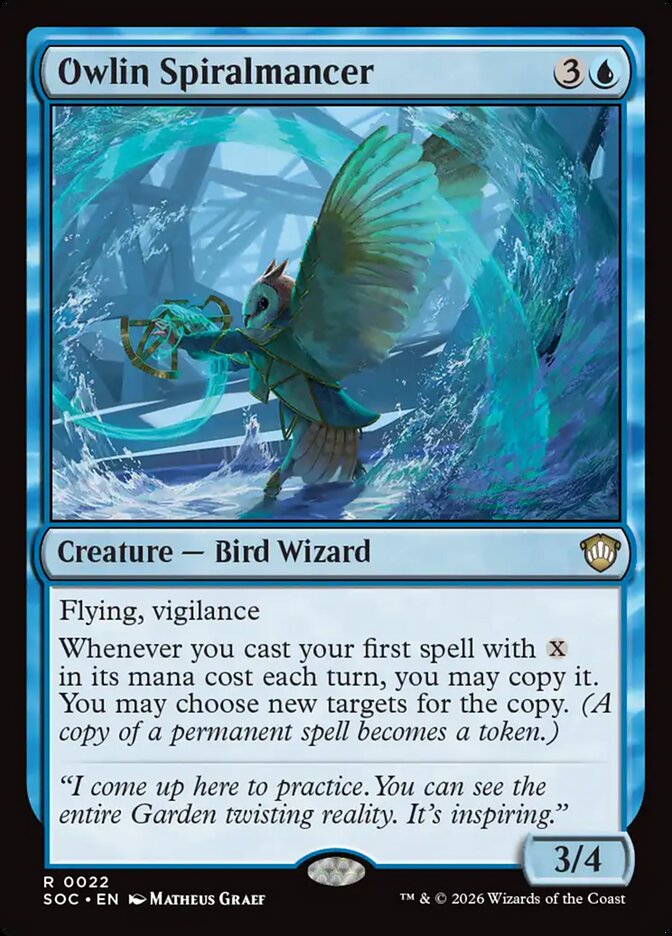
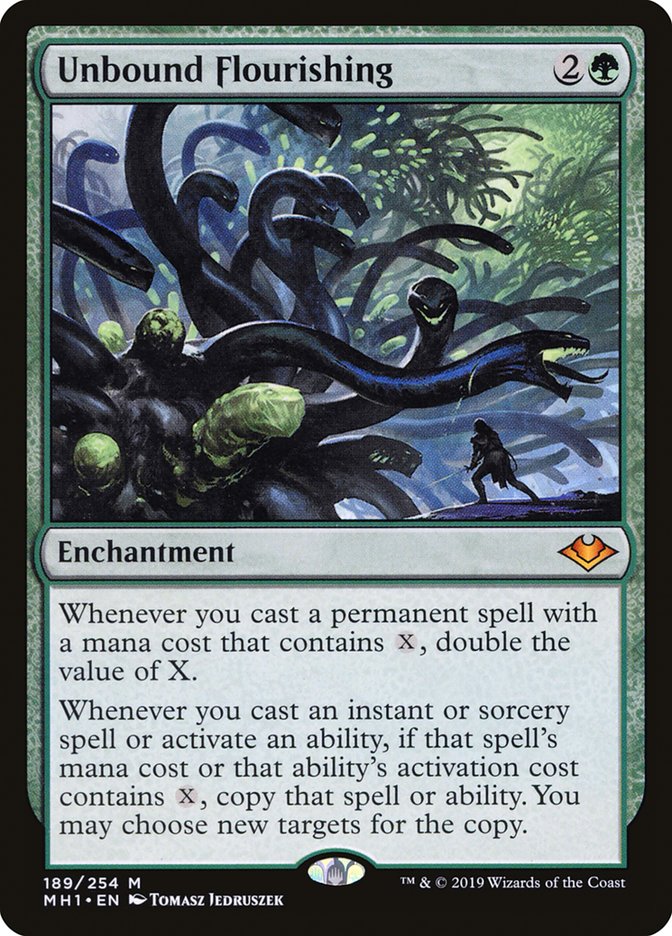
There’s a smattering of X-spell support that doesn’t have a home outside of a dedicated X-spell deck. Brass Infiniscope and Elementalist's Palette are archetypal mana rocks, while Owlin Spiralmancer and Unbound Flourishing help you to double up on your expensive X-costs.


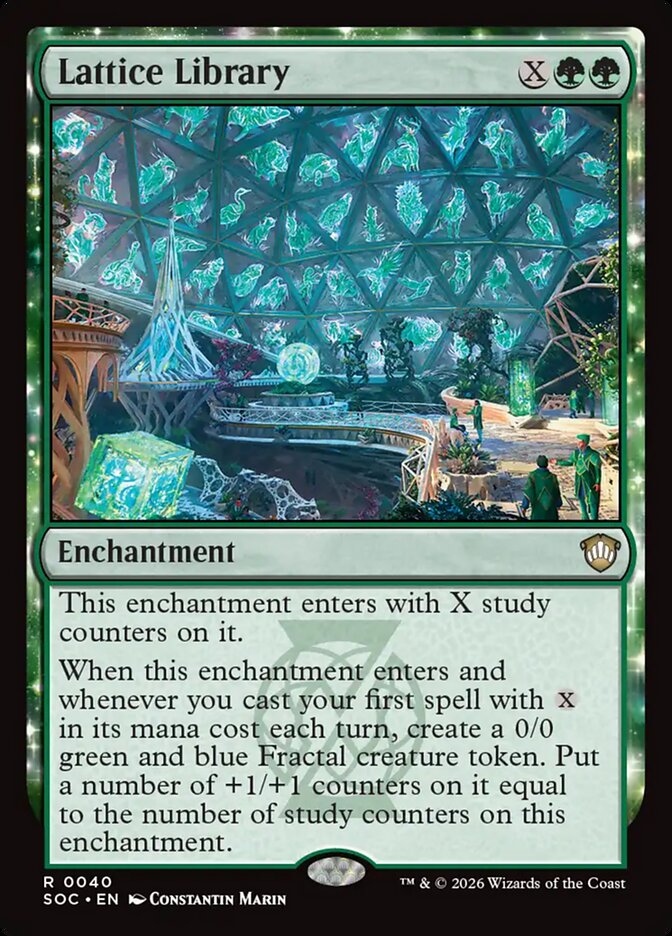
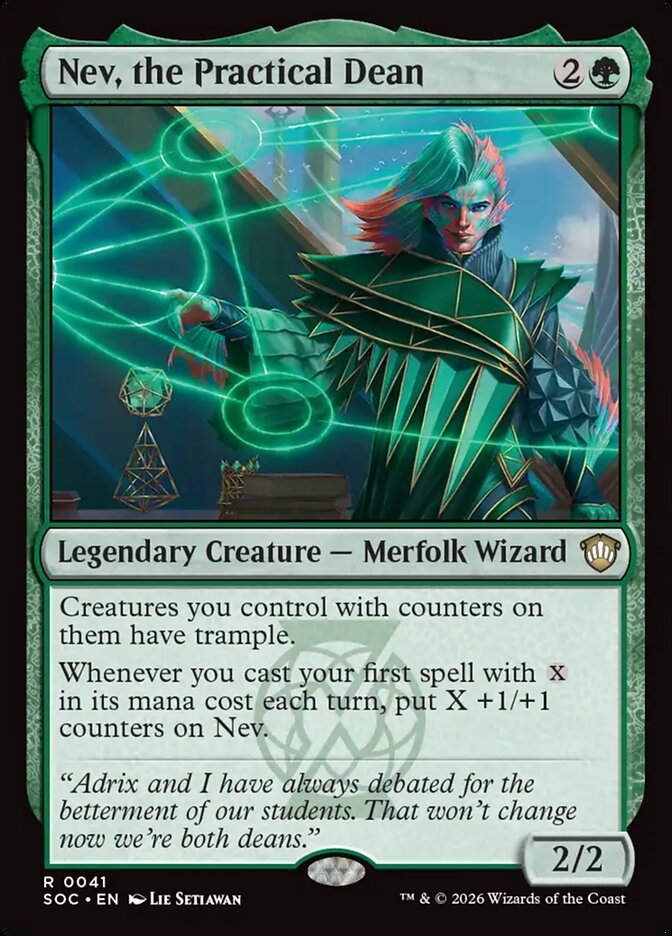
Geometer's Arthropod and Paradox Surveyor insinuate some extra card advantage into X-spell decks. And if you’re looking for sustained board presence, you could try Lattice Library and Nev, the Practical Dean to pick up +1/+1 counters as you cast X-spells.
What Does X Mean on an MTG Card?
The symbol can be paid with any amount and color of mana. To be clear, there’s a difference between “X” and . is a cost that you pay mana for. That determines what X in the rules text ends up being. Once you’ve chosen how much mana to pay for , you can substitute each X in the card’s effect with that same number, the same way you would in algebraic math.
For example, when casting Klauth's Will, you must always pay , but you can make whatever you want it to be, so long as you actually have that much mana to spend. If you choose =3, each X in the rules text is treated as 3.
What’s the Mana Value of an X Spell?
While on the stack, is treated as whatever amount of mana you spent on it. For example, if X=3 on Blue Sun's Zenith, the spell has a mana value of 6 on the stack.
If you cast an X spell “without paying its mana cost,” perhaps from the effect of Beseech the Mirror, you can’t pay anything for and it’s treated as 0 on the stack.
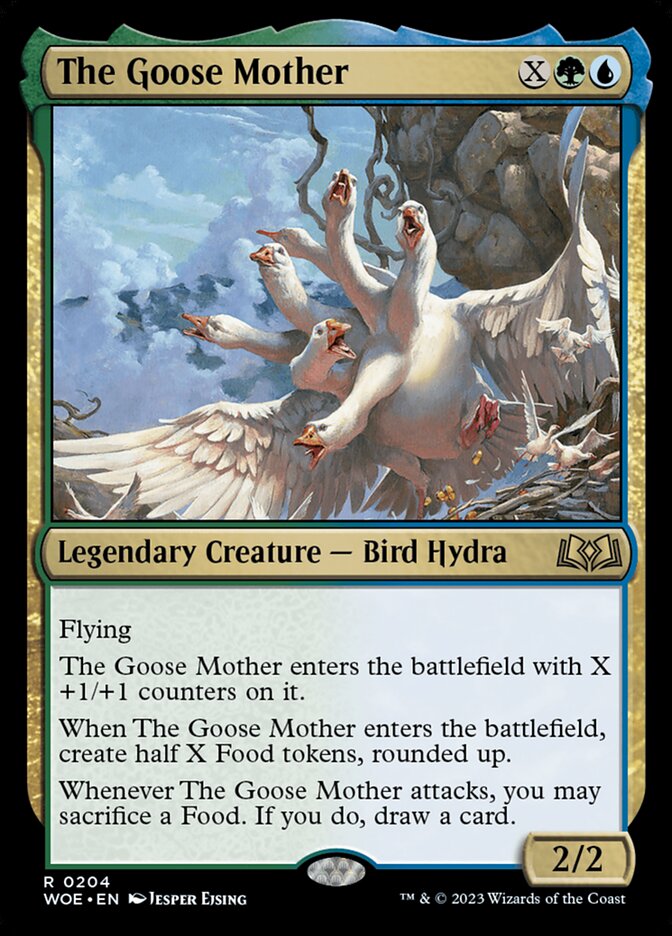
Note that in the cost of permanents is treated as 0 on the battlefield. For example, if you cast The Goose Mother for X=4, it’ll have a mana value of 6 on the stack, but a mana value of 2 on the battlefield.
What Does Two or More X’s Mean?
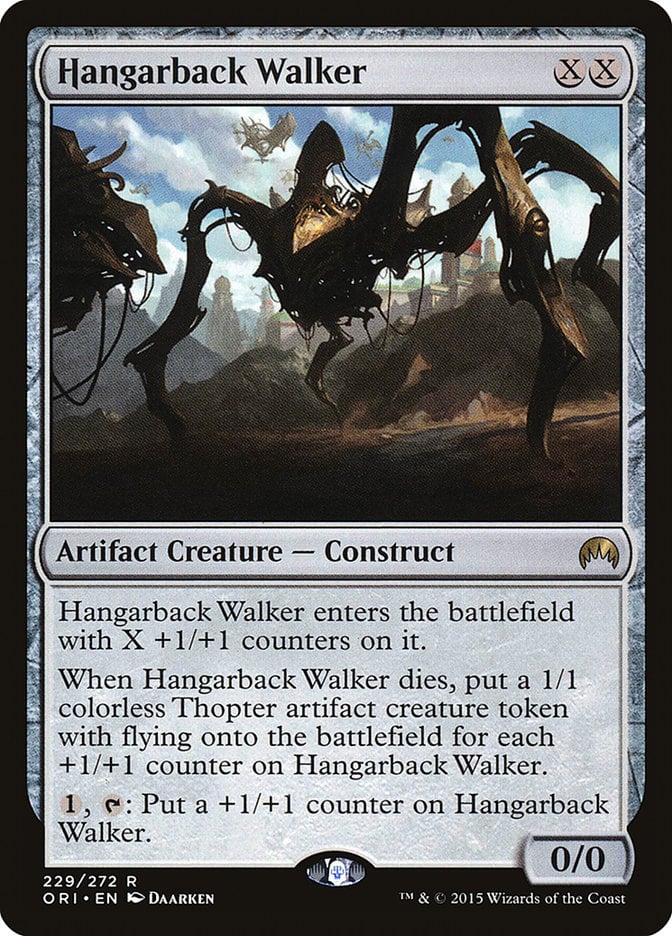
An cost means whatever value of X you choose needs to be paid twice. For example, if you want Hangarback Walker to enter the battlefield with two +1/+1 counters, each must equal 2. That effectively makes the mana cost , or 4 mana total.
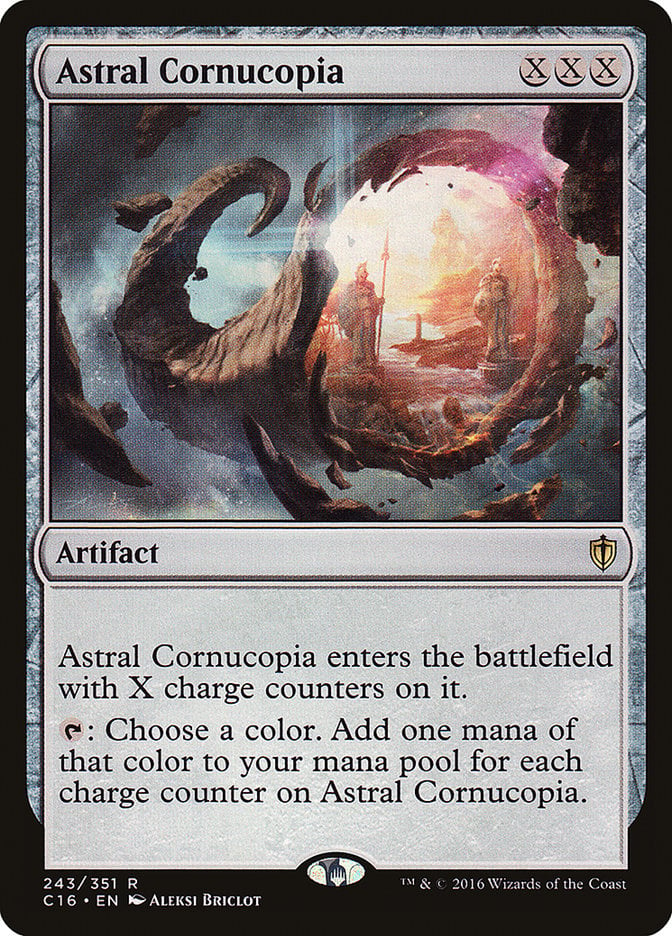
Same goes for spells like Astral Cornucopia and Crackle with Power. You must pay the same amount of mana for each in the cost in order to cast the spell. If you want an Astral Cornucopia with three charge counters, the mana cost would be , or 9 mana total.
Can You Pay 0 for an X Cost?
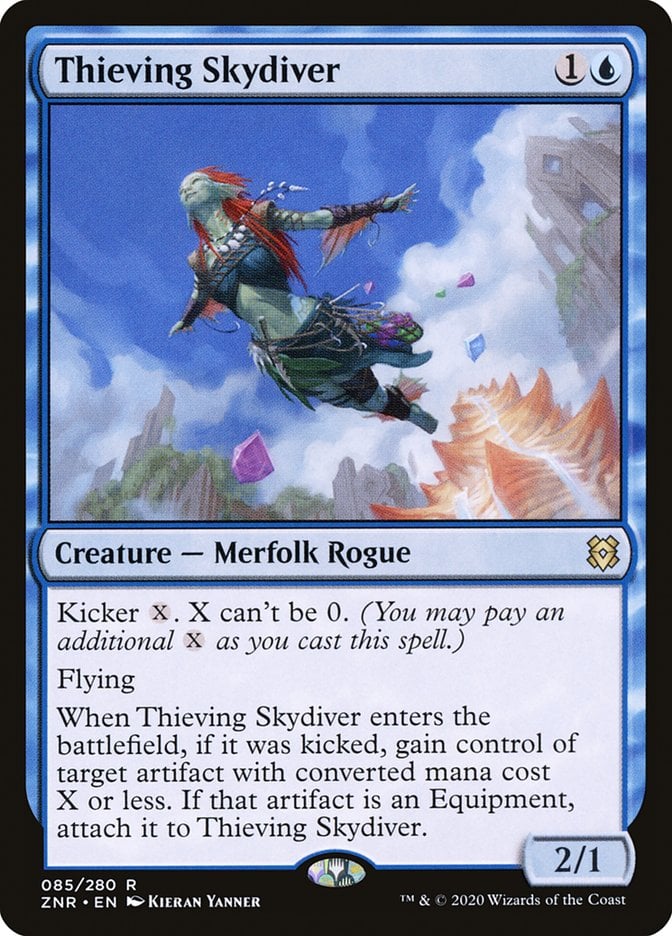
can be 0 unless specifically stated otherwise. For example, Thieving Skydiver’s kicker cost says “X can’t be 0” to prevent stealing 0-mana artifacts without paying an extra cost.
However, you might really need to save a creature with Tyvar's Stand, but you only have available. That’s okay, just pay and say X=0, and the spell works just fine.
Does Cost Reduction Work on X-Spells?
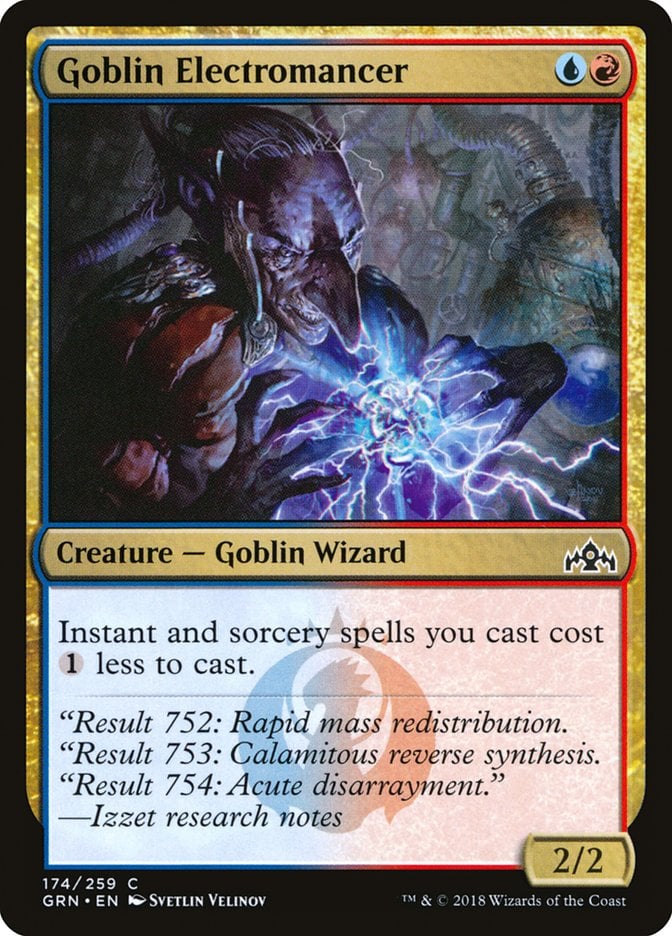
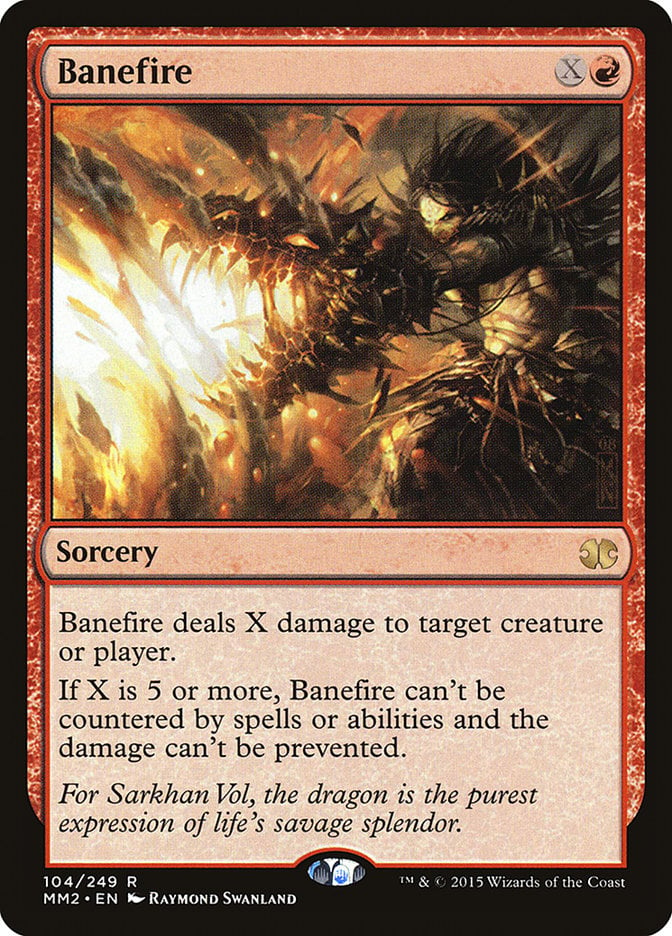
Yes it does! A card like Goblin Electromancer basically gives a free +1 mana to all your instants and sorceries with X in the cost. Here’s how it technically works:
You cast an instant/sorcery with in its cost, let’s say Banefire. You declare the value for when you put Banefire on the stack. Let’s say X=5. That makes Banefire cost . Goblin Electromancer’s effect reduces that cost by , so when you actually pay the mana to cast Banefire, you only end up paying , even though X equals 5.
Also note that cost increases always apply before cost reduction. That won’t matter often, but it does mean you always get the maximum amount of reduction from your effects, regardless of taxation effects on board.
What Happens If You Copy an X-Spell?
A copy of an X-spell on the stack is a separate spell with the same X value that you paid for the original. If you cast Heliod's Intervention for X=4 and copy it, you’ll get a second Intervention, also for X=4. You’ll almost always be able to choose new targets for the copy, but the copy is created on the stack above the original, meaning the copy resolves first.
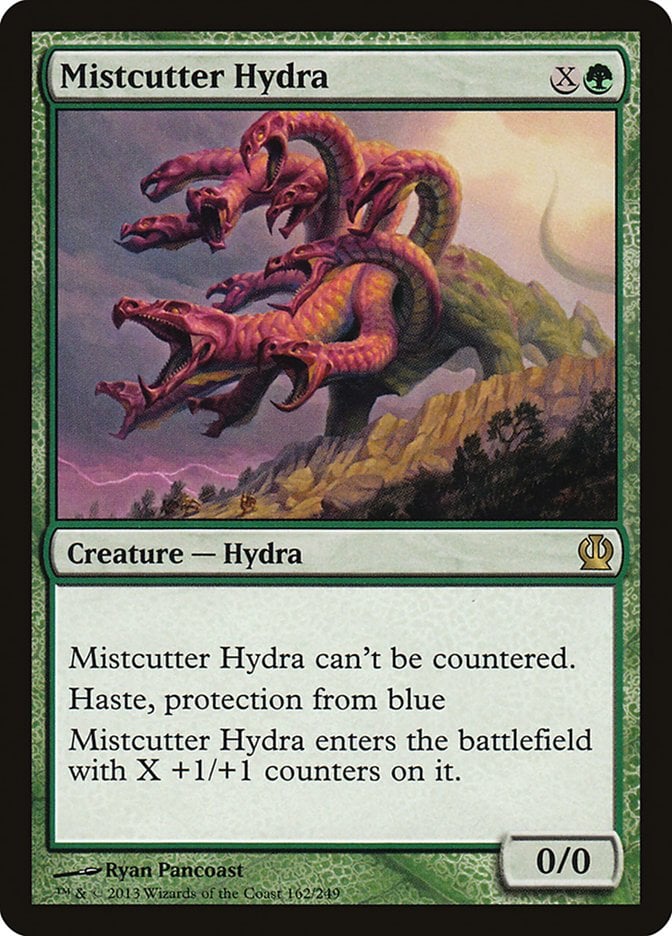
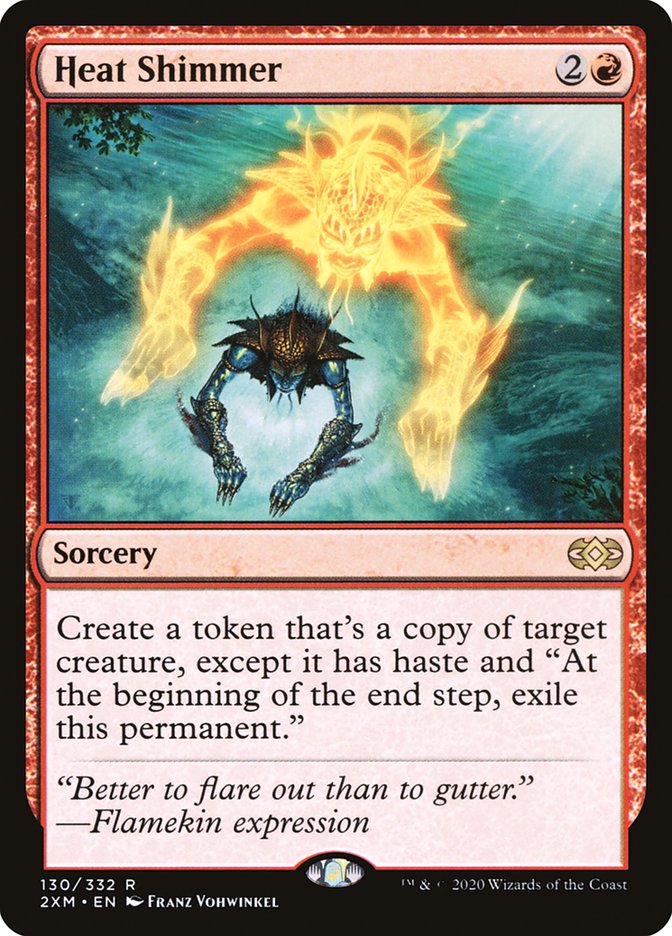
Note that this is only true of X-spells, but X is treated as 0 for permanents on the battlefield. If you cast a Mistcutter Hydra for X=6, it enters with six +1/+1 counters. However, if you copy that permanent with Heat Shimmer, the Mistcutter Hydra copy enters with 0 +1/+1 counters and presumably dies.
How Do X-Spells Work With Cascade?
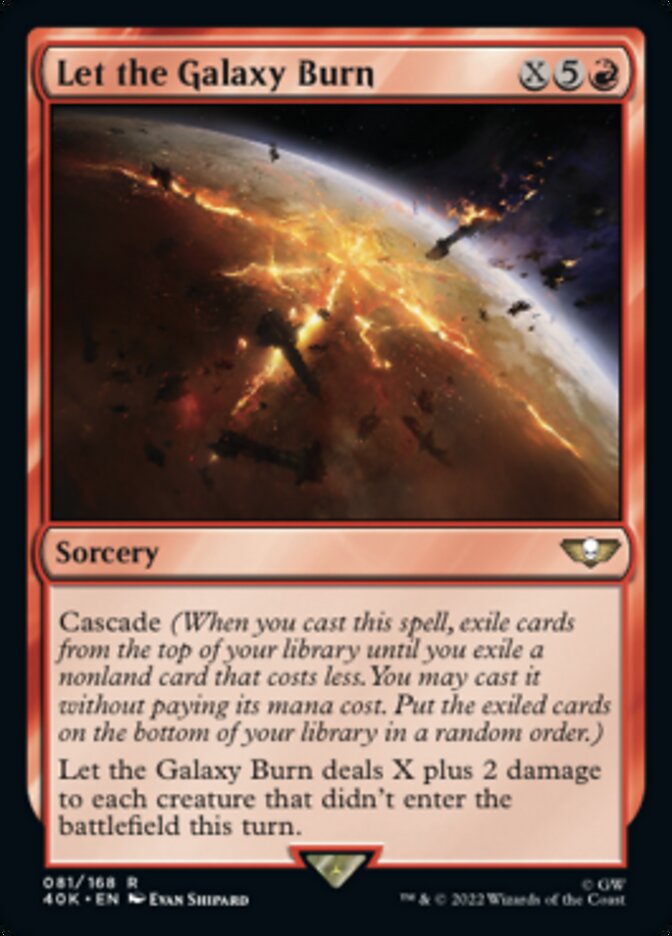

This can go one of two ways.
If an X-spell you’re casting has cascade, X adds to the total mana value of the spell while it’s on the stack, which increases the range of spells you can cascade into. If you cast Let the Galaxy Burn for X=3, the total mana value is 9, which means you could cascade into a 7- or 8-drop.
However, if you cascade into an X-spell, X is treated as 0. For example, if you cast Shardless Agent, which has a mana value of 3, and the first card you exile is Blue Sun's Zenith, you’ll keep exiling cards since that also has a mana value of 3 while in exile. Comet Storm, however, has a mana value of 2 in exile and can be flipped off cascade, but if you cast it, X always equals 0.
Bottom line: X-spells with cascade are great, but X-spells aren’t great with other cascade spells.
X-citing, Right?
Unbound Flourishing | Illustration by Tomasz Jedruszek
X-spells have been around since the beginning; I mean, who doesn’t love a good Disintegrate or Braingeyser? Probably people who hate math. Though the algebra-haters probably aren’t big on Magic in the first place, eh?
I understand that X-spells can be a bit confusing for a novice player. “What do you mean I get to pick how much I want to pay? How can I possibly wield such power responsibly?” To that I say: No responsibility needed! Make a bunch of mana and dump it into your favorite X-spell! Just leave a mana up for a sneaky counterspell like Mana Tithe, because you never know.
I narrowed down my list quite a bit, to the point where I left off perfectly viable cards that I’m sure plenty of players have had success with. Perhaps I missed you favorite X-spell in Magic? If you’ve got a compelling argument for something I omitted, let me know in the comments below or over in the Draftsim Discord. And check out The Daily Upkeep newsletter to stay up to date on the latest MTG news.
Thank you for making Draftsim your #1 stop for all things Magic!
Follow Draftsim for awesome articles and set updates:










5 Comments
Great overview, but the fact that you didn’t include Magus Lucea Kane in there when she is by far the strongest commander based around X spells is criminal.
I totally agree with most of your list. But, as you said, you can’t include every spell and that some people would say that other spells belong on the list. I feel this way about Jaya’s Immolating Inferno. I have won a number of games with the shock of Jaya’s Immolating Inferno and cards like Pyromancer’s Goggles. It’s always a surprise and always bring laughs of congratulations.
Immolating Inferno is such a sweet fireball, and was on the shortlist before I narrowed things down. I actually still run it in one of my decks, though I’m a Crackle With Power fanatic now.
Given all the hype around adding Magnus to the new Prismari precon, does it mean with his reduction and Rootha (and other Prismari cards) saying in Opus “if 5 or more mana was spent to cast…” that Magnus is an anti-synergy to Opus?
Yes, cost reduction doesn’t play well with opus, though it does still work with effects that check mana value. So Magnus pairs very well with Rootha, but not actual opus cards.
Add Comment