
Last updated on August 10, 2026

Cori-Steel Cutter | Illustration by Xabi Gaztelua
Standard is the most accessible and simplest MTG Constructed format, and the format WotC tests the most. They (usually) know precisely which sets are in a given Standard rotation, and most rares and mythics are designed with Standard’s balance in mind. However, they’re also known to push the boundaries of power level on cards from time to time, which sometimes leads to cards being banned in Standard.
More recently, they’ve also changed the Standard format rotation from a 2-year to a 3-year set rotation. This, of course, brought some undesirable changes in Standard’s power level, and because of that, we’ve recently had some bans.
Today, we address all the banned cards in Standard, which decks they fit into and why they’ve been banned, and we’ll speculate a bit on future bans.
The Latest Banned & Restricted Announcement

Up the Beanstalk | Illustration by Lucas Graciano
This is the latest Banned and Restricted Announcement from WotC, including the cards that were banned and when:
August 10, 2026


When Is the Next Banned & Restricted Announcement?
The next Banned & Restricted announcement will be on October 12, 2026. With Reality Fracture before the next announcement and Star Trek shortly after, and rotation upon Nauctis: The Sunken Realm early in 2027, there should not be too many things to address.
Leyline of Resonance

I’m starting with Leyline of Resonance because it’s only banned on MTG Arena in Best-of-One (BO1). In BO1, you can have a very explosive draw with Leyline of Resonance in your hand, and a fast aggro start that ends the game as fast as turns 2 or 3.
The main combo is to use the Leyline to double Turn Inside Out or Monstrous Rage to turn your Heartfire Hero into an 8/2. You then attack for 8, and sacrifice the Hero with Callous Sell-Sword’s adventure, which effectively deals 16 and wins from there. The card is still legal in Alchemy, but with additional text: You need to pay mana to copy the spell, which slows the combo.
MTG Arena has a more generous mulligan system with the BO1 hand smoother, which allows you to have a better ratio of spells and lands. Players are incentivized to mulligan until they have a greater chance of comboing on turn 2, which leads to plenty of non-interactive games.
Abuelo’s Awakening
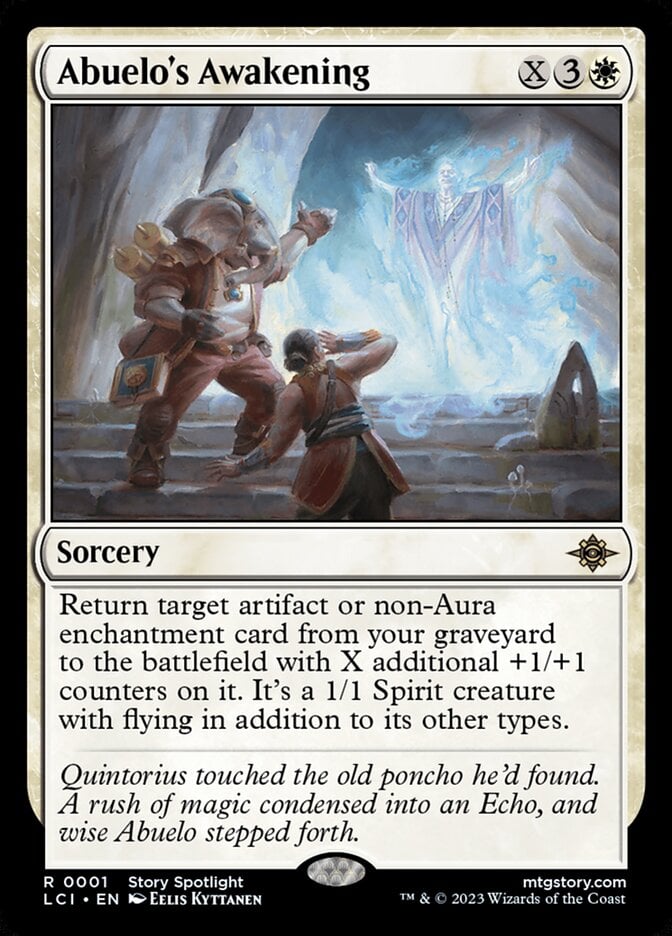
Abuelo's Awakening died for Omniscience’s sins, so to speak. Abuelo's Awakening is an easy way to reanimate Omniscience for just 4 mana, and after that, the game’s pretty much over. If the Standard format had a hard reset spell like Farewell, then maybe this combo would have more counterplay. But once your opponent lands Omniscience on the battlefield and casts the second one, not even enchantment removal will save your bacon.
Badgermole Cub
Players knew for a long time that Badgermole Cub was a little baddie that accelerated mana at an alarming rate. It just took about 10 months for WotC to decide it was too much. Cub did so much to elevate cards like Spider Manifestation, Llanowar Elves, and Gene Pollinator, there was often little to do other than cower before Ouroboroid and Leatherhead, Swamp Stalker.
Cori-Steel Cutter

Cori-Steel Cutter is a very flexible card that can go in aggressive red decks or spellslinger decks alike, and Izzet () Prowess was one of the more dominant decks in the metagame while it was legal. It’s a very hard card to interact with, as you’re dealing with an equipment card that makes tokens with prowess that are buffed by the many cantrips and burn spells that spellslingers run. It has the same powerful passive ability as Monastery Mentor, but on an equipment card. Even if you sweep the board to kill the tokens, the equipment is still there, able to produce more tokens.
Gran-Gran
Gran-Gran will need to stick to formats with older cards. With cost reduction on a 1-drop, Katara and Sokka’s grandmother put the Izzet Lessons deck on sleds to make it too fast. The combination with Accumulate Wisdom for the nickname Grancestral Recall is one you can still pull off in formats outside of Standard.
Heartfire Hero

Heartfire Hero is an excellent aggressive 1-mana creature that also has the mouse subtype. One of the reasons this card was banned was that the synergies with Manifold Mouse were too strong: They allow you to target your Heartfire Hero for free to trigger valiant and give it a +1/+1 counter, while you also give the Hero double strike for a turn.
But the worst part about this card is that it’s very hard to interact with once it’s buffed. If it dies, you take direct damage, and your opponent can buff it even more in response to a removal spell. So, they attack you with a 6/3 mouse that’s punishing to kill, one that often has trample or double strike.
Hopeless Nightmare
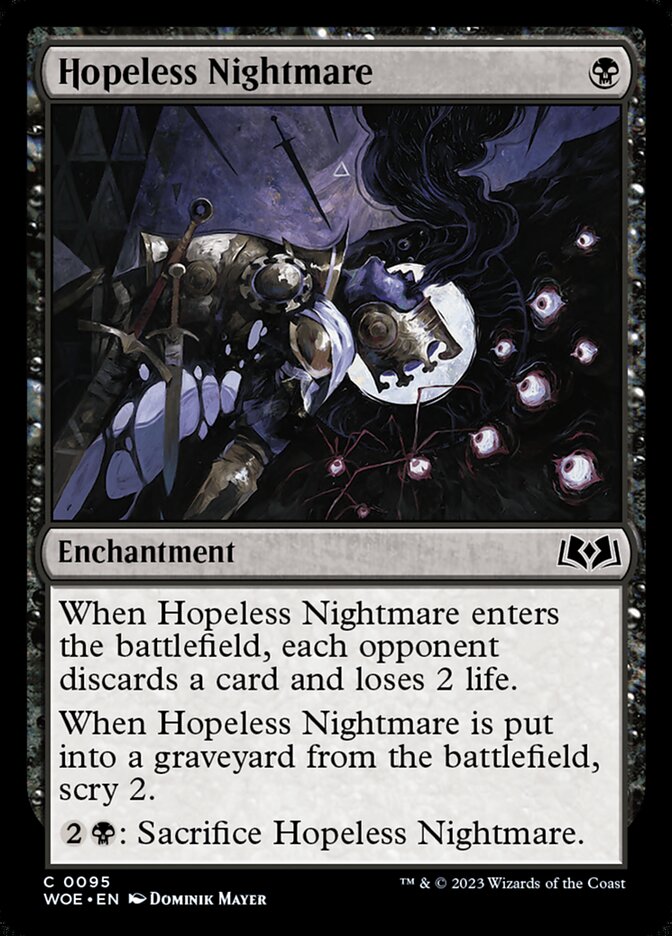
Hopeless Nightmare was an integral part of the Esper () Pixie decks that contained Nurturing Pixie and This Town Ain't Big Enough, along with cards like Fear of Isolation and Stormchaser's Talent. This deck thrives on returning cheap cards that have good enter effects, like Hopeless Nightmare, to your hand to play them again and again. Turns out, when you can consistently make players discard cards and lose life, you have a pattern that’s very hard to come back from. Unlike creatures, it’s harder to remove an enchantment in response to the trigger.
Monstrous Rage
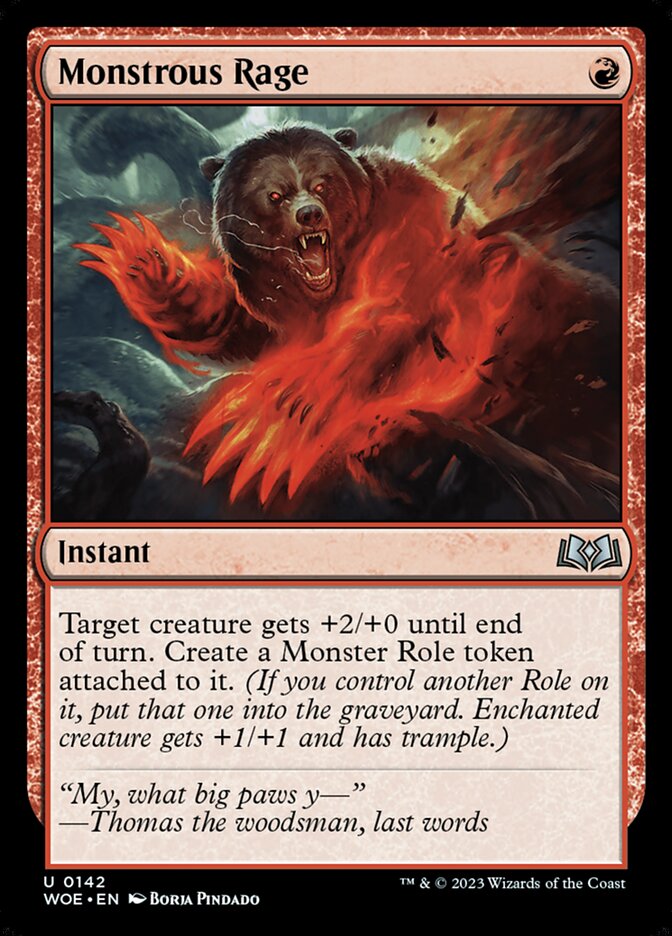
Targeting Heartfire Hero is good, right? But what about when you do it with a 1-mana, instant speed card that gives your creature +2/+0 on top of a permanent +1/+1 buff? Monstrous Rage is also good with cards like Emberheart Challenger, thanks to its prowess ability and valiant trigger. It’s such a big damage buff out of nowhere for just 1 mana, and it needed to go.
Proft’s Eidetic Memory
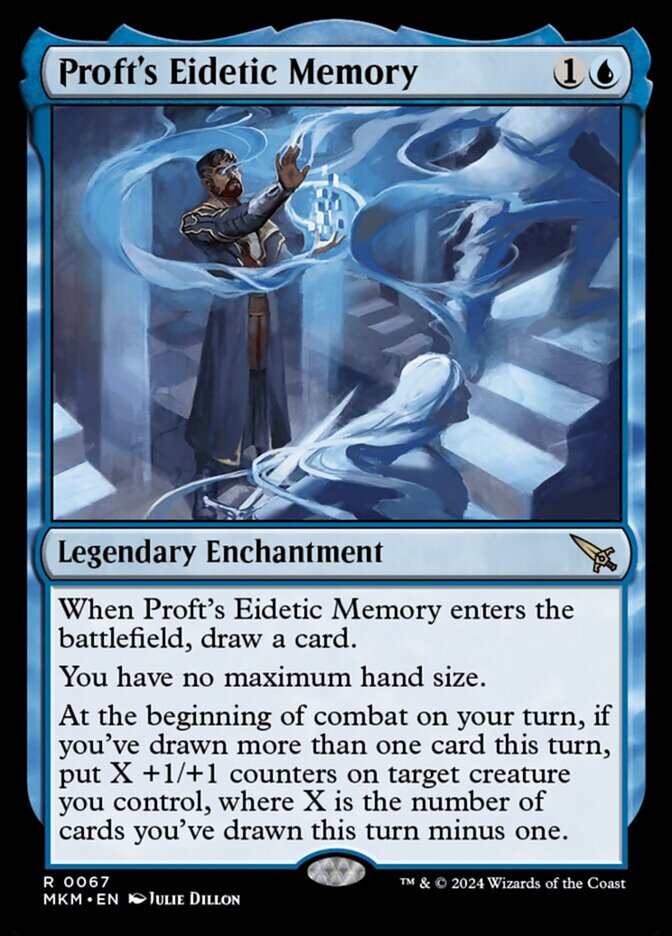
Proft's Eidetic memory didn’t actually last as a competitive force in Standard for too long. It released in early 2024 but didn’t take off until late 2025, where people found shells that combined it with cheap draw spells and Fear of Missing Out to turbo-charge the early game. It had a similar issue to Up the Beanstalk where cantripping on ETB made it safe to play in most scenarios, and this one even spotted you extra power and toughness the turn you played it.
Screaming Nemesis

According to Wizards of the Coast, Screaming Nemesis just did its job too well. It made it difficult for decks that wanted to specifically combat mono-red to attack it appropriately, since Nemesis would roadblock actual combat, or even lifegain strategies that should be good against it. Mono-red was a dominant force throughout all of 2025, and this was one of its biggest contributors.
Stormchaser’s Talent
Stormchaser's Talent synergizes especially well with Boomerang Basics to enable lots of low-cost prowess action. Part of the issue with this one is that its effects are super useful both early and late, but the class enchantment is too cheap to cast.
This Town Ain’t Big Enough
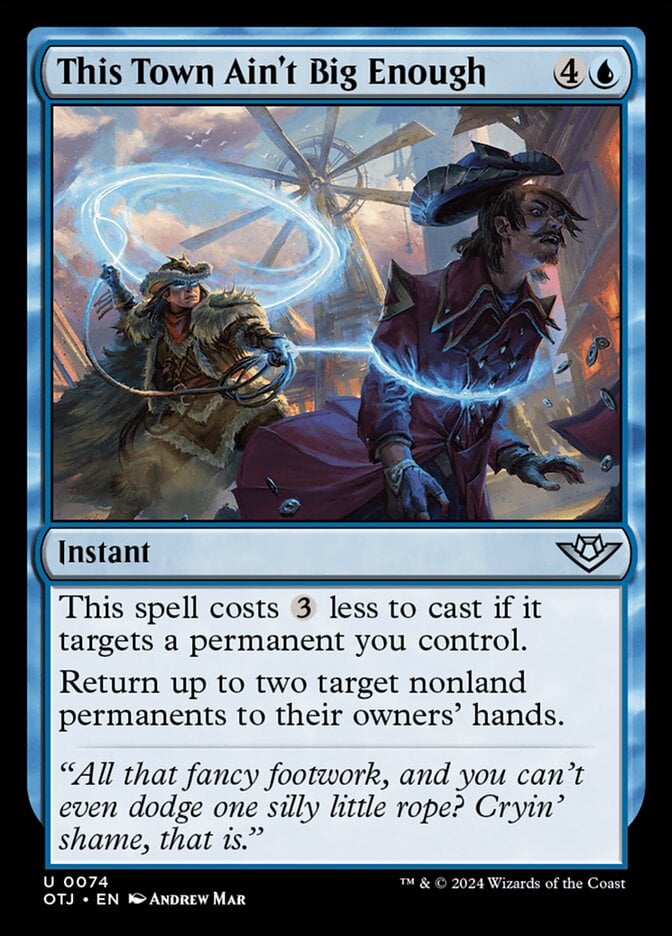
One of the main cards in Esper Pixie decks, This Town Ain't Big Enough just isn’t very fun to play against. This card never costs 5 mana to play. When your opponent pays 2 mana to bounce an expensive card you control to your hand and also get a very good permanent back to cast, then you’re in trouble. Or when they pay 2 mana to bounce two very good permanents, only to cast them again. Think two Hopeless Nightmares, or maybe two Momentum Breakers, to deal with big creatures or take their cards.
Up the Beanstalk

Up the Beanstalk was clearly a strong card for the Standard format right from the get-go. Drawing a card whenever you cast a spell with mana value 5 or greater is excellent with sweepers like pre-rotation Sunfall, where you can kill every creature and draw a card, with removal spells like Leyline Binding, or with the various Overlords that can enter the battlefield for cheap via impeding, like Overlord of the Hauntwoods.
Vivi Ornitier

A bit of a no-brainer, Vivi Ornitier was just pushed to begin with, with no tap ability associated with its mana acceleration. It served as both combo enabler and wincon, especially in conjunction with Agatha's Soul Cauldron, which could transfer its mana-making ability to other creatures. It was Standard-defining to the point of damaging the format as a whole, and was the single biggest card on most players’ radars to remove from the format.
How Often Are Standard Bannings Announced?
Every two to three months Wizards of the Coast announces bans. A Standard ban announcement doesn’t necessarily ban a card, sometimes there are unbans, but WotC often makes an official statement about the health of the format, and which decks and cards are more likely to get the axe in the future.
Who Decides What to Ban in Standard?
WotC has a special design team called Play Design, that largely decides what gets banned in Standard. The team is mainly responsible for playtesting MTG formats, including Limited and Constructed (mainly Standard). Play Design monitors the health of the Standard Format on MTG Arena, on Magic Online, and in tabletop tournaments and competitive events, through data collected in matches, among other sources.
When a deck is stronger than it should be, either in match win percentage or in tournaments, these MTG designers analyze the power outliers and make a decision. Sometimes the decision is to wait a little longer, while in other situations, it’s a straight-up ban on the problematic card(s).
Do Standard Bannings Affect MTG Arena and Magic Online?
Standard bannings affect all formats, from paper MTG to MTG Arena and Magic Online. However, on MTG Arena, sometimes cards are only banned in the Best-of-One (BO1) format, like Leyline of Resonance. When this happens, it’s usually a card that’s hard to interact with without a sideboard, and that leads to a higher win rate in BO1 than in Best-of-Three (BO3).
Banlist Speculation


If one signal for a card to get banned is appearing in too many decks, Jeskai Revelation is one of the top suspects as multiple control builds use it. The community also has an eye on Quantum Riddler, as well as Into the Flood Maw, a hyper-efficient form of interaction in for format.
Wrap Up

Hopeless Nightmare | Illustration by Dominik Mayer
Having a healthy Standard format is very important for paper MTG as a whole, considering that Standard is usually the easiest point of entry to Constructed MTG. But in recent times, it’s easier to fire a draft or to find a Commander pod than to play casual or competitive Standard at the LGS, and even Eternal formats like Modern or Legacy see more play due to these formats’ slower rate of change.
Clearly, something needs to be done, and WotC needs to stop the bleeding, even if it’s unpopular. But it’s terrible to invest in a popular paper deck only to find out its most important cards can’t be played anymore. I mostly play Standard on MTG Arena, so at least we get a refund in wildcards, which isn’t something WotC can do on MTGO or in paper MTG.
What’s your take on Standard bans? Do more cards need to get the axe? Let me know in the comments, or over on the Draftsim Discord.
Until next time, take care and be well!
Follow Draftsim for awesome articles and set updates:










Add Comment