
Last updated on July 30, 2026

Daze | Illustration by Richard Wright
Blue has long been hailed as the strongest color in Magic, and for good reason. The color of control, blue offers some of the best instants and sorceries that the game has to offer alongside the best permission and card draw.
When a good blue player sits down at the table, they’ve got the game in the palm of their hand and everything that happens does so because they allow it. With these cards, you can become the master of your tables.
Let’s take a look!
What Are Blue Cards in MTG?

Mana Drain | Illustration by Raymond Swanland
We’ll be evaluation cards with a mono-blue color identity, though exclusing blue lands since we’ve ranked those elsewhere. Any of the cards on this list can be included in any EDH deck with blue in the color identity.
#45. Omniscience
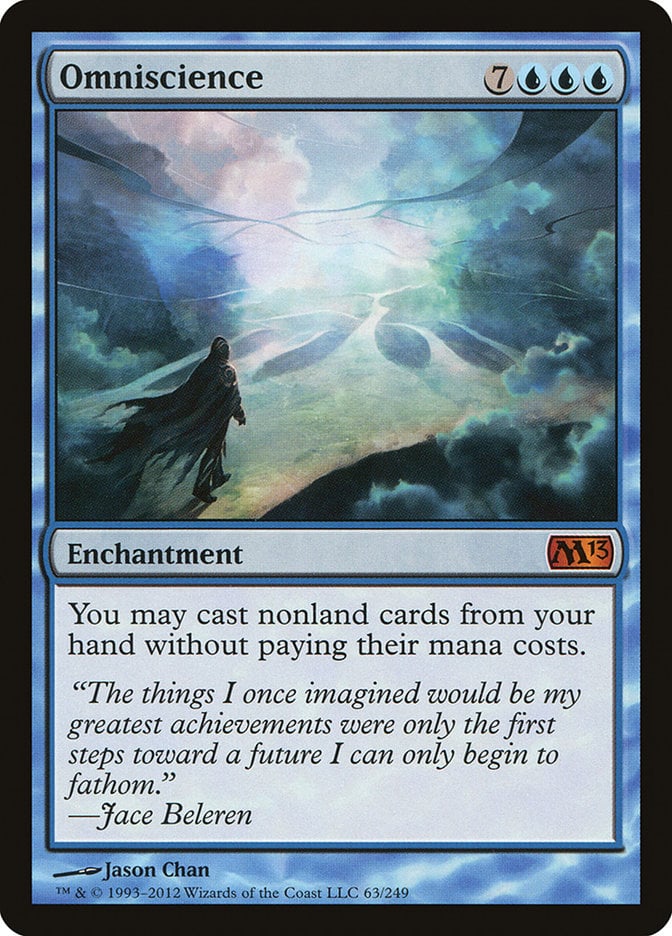
Omniscience is expensive at 10 mana, but once you get this card into play, the game is probably over. There are plenty of ways to put this card into play early, namely Show and Tell. Whether by casting huge Eldrazi or looping many spells, the blue mythic card is known to end games.
#44. Flash
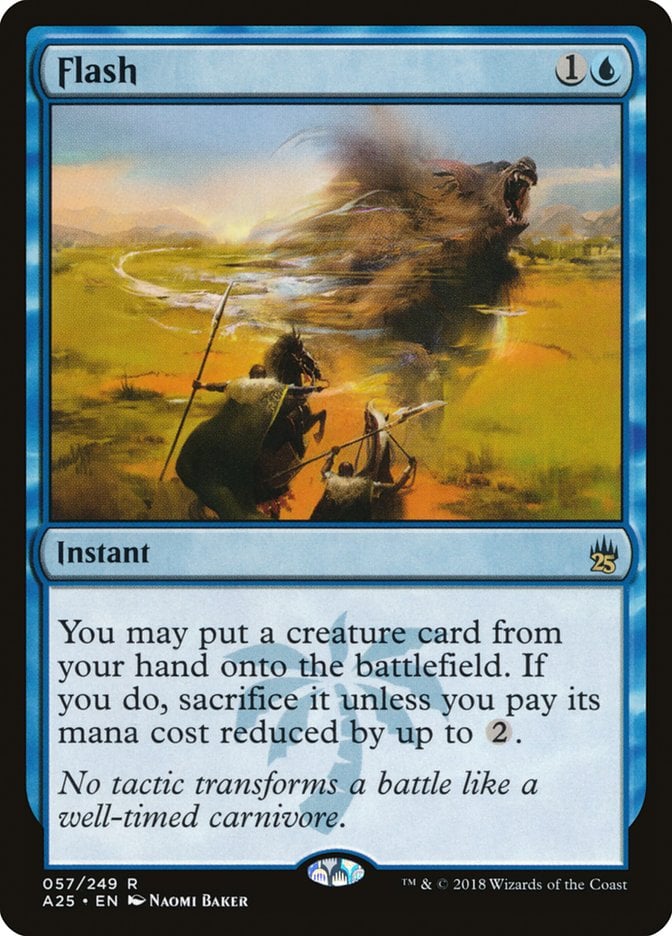
Flash is a 2-mana spell that can end games on turn 2 by itself. Its preferred targets are ones with strong ETBs or death triggers, like Protean Hulk and Worldspine Wurm.
Aside from Oathbreaker, it’s restricted in the only other format we can play it in, Vintage, like many other cards from this list.
#43. Accumulate Wisdom

This card requires lessons to be good, but when you’re chaining lesson into lesson, it becomes a 2-mana draw-3. Accumulate Wisdom has been the driving force of many UR lesson decks in formats like Standard and Pioneer.
#42. Flow State

Expressive Iteration made some waves as a mix of a card selection and card advantage spell, to the point of being banned in formats like Legacy. Flow State is worse but very similar in nature, and you can get two cards from your top three with a certain consistency in a format that allows you to play spell-based cantrips like Brainstorm and Preordain.
#41. Snapcaster Mage
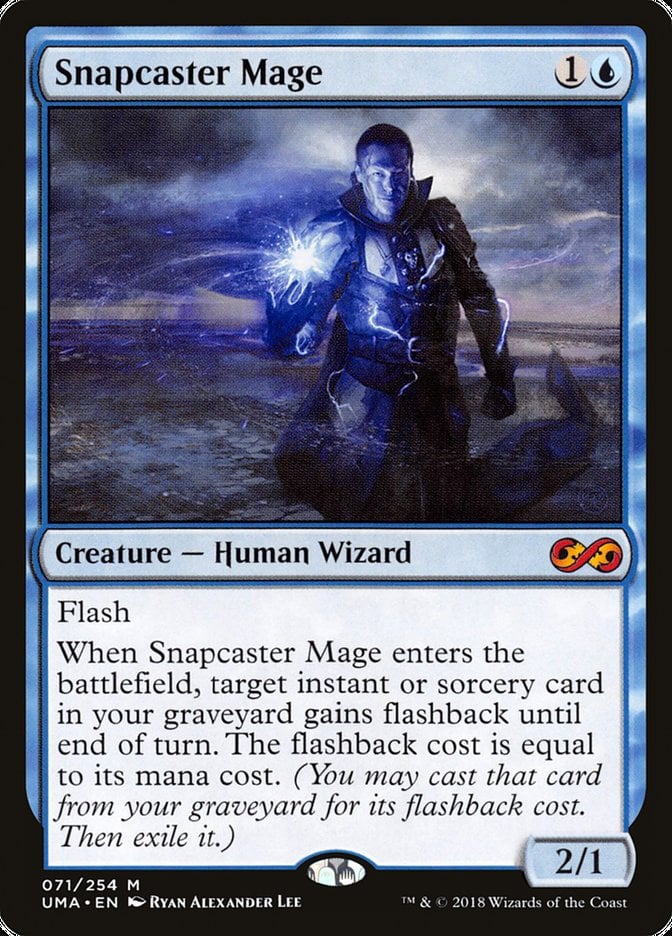
Snapcaster Mage went from the best blue creature ever and a blue staple across multiple formats to a barely playable card. The main culprit is the huge power creep that MTG’s had across the last few years, printing cards – especially creatures – that are more powerful than old Snappy in a vacuum. It’s also a symptom that blue spell-based control got weaker.
That won’t rule out this card as one of the better and more versatile blue creatures, and it’s always an option as better, cheaper spells continue to be printed.
#40. Delver of Secrets
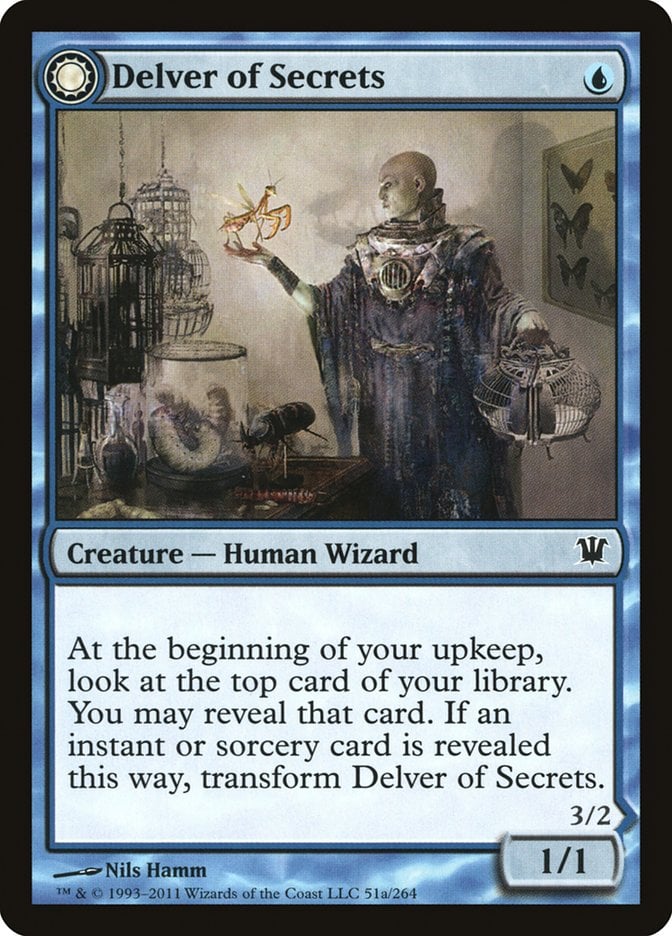
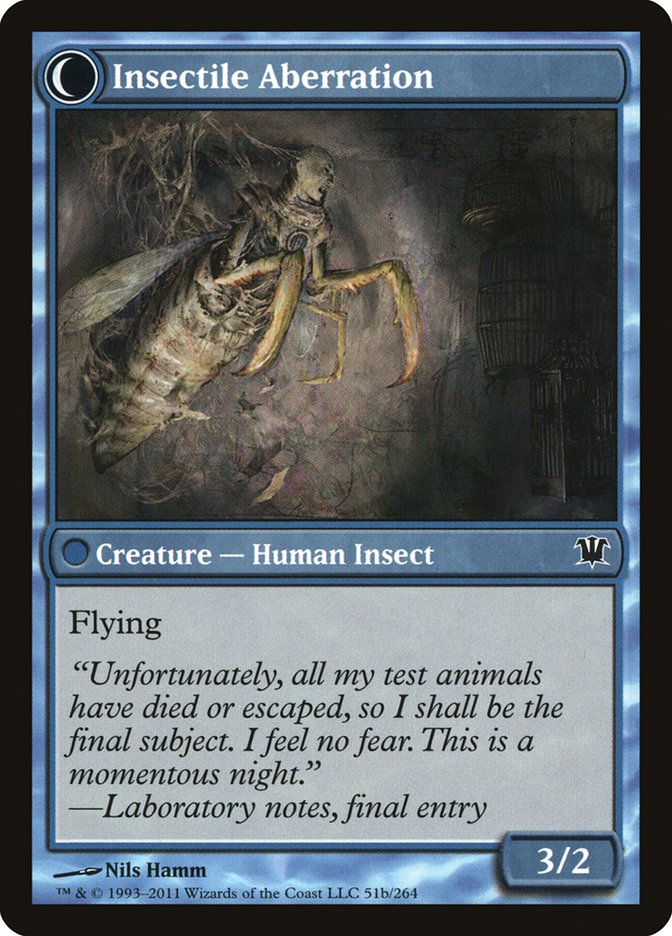
Now here’s an iconic blue creature. Delver of Secrets defined its Standard format, was a major force in Pauper for years, and was once at the forefront of one of Legacy’s top decks.
This is one of the few efficient and powerful creatures blue gets, though it’s significantly weaker in formats without access to excellent top deck manipulation like Ponder and Brainstorm.
#39. Mystical Dispute
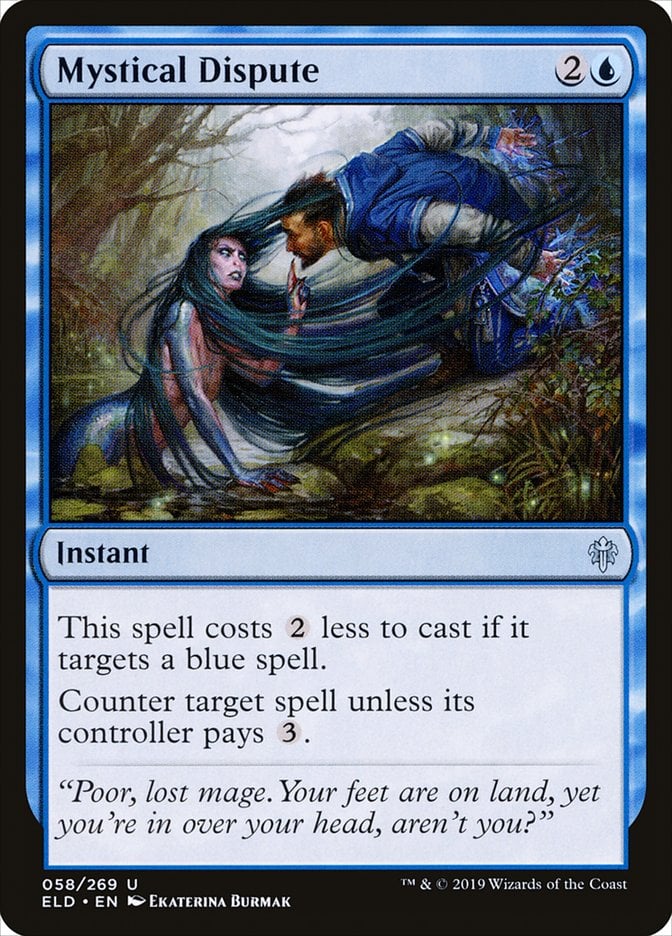
Mystical Dispute is very much a sideboard card, but it’s one of the best blue has to offer in any format where the color is a major force to contend with. This was great in Standard and still sees play in Pioneer and Modern, making it a worthy entry and useful if your meta is dominated by other blue decks.
#38. Standstill
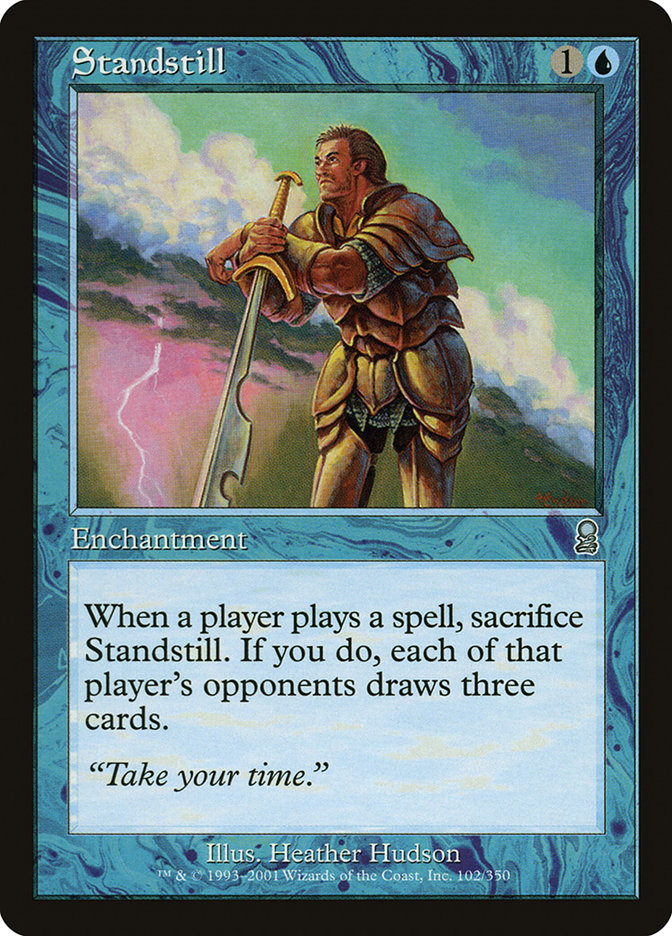
Standstill brings the game to a full stop. A standstill, if you will. Playing this early gives you a huge advantage over your opponents because they can’t play spells without giving you a massive advantage.
This does have the weakness of being weaker later in the game when they might have a developed board and don’t need to cast spells.
#37. Time Warp
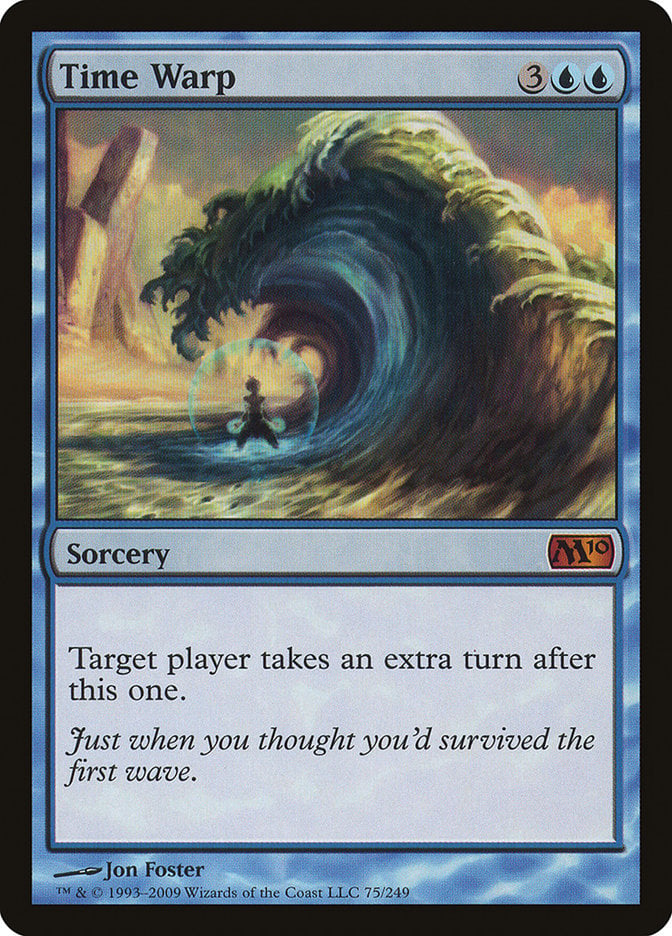
Taking extra turns is good, and Time Warp is the quintessential extra turn spell. This is especially powerful when paired with planeswalkers or colors that build out a powerful enough board presence that an extra turn might just end the game.
#36. Emeritus of Ideation

Emeritus of Ideation is a strong 5/5 flier with relevant protection in ward 2, and one of the best spells of all time in its prepared slot. Just casting this card, letting it eat a removal spell, and drawing three cards in response is just a massive advantage. It doesn’t compare to the original Ancestral Recall, of course, but this card is very interesting in midrange value decks, or as a threat to blink or reanimate.
#35. Intuition
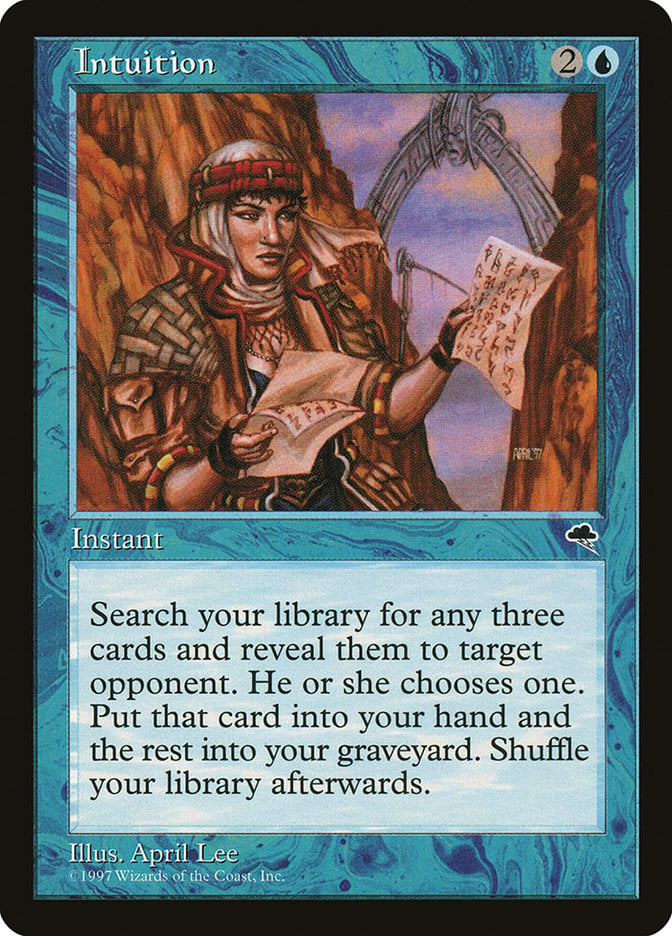
Intuition is a powerful tutor that doesn’t really have a downside. Sure, you only get one of the three cards into your hand, but the others going into your graveyard is easily exploitable.
In 60-card formats you can just grab three of the same haymaker if you want, and in singleton you can sculpt your deck around Intuition piles designed to give your opponents no good choices.
#34. Opposition

Countering your opponent’s spells is good, but denying them the mana to play those spells is so much better. Opposition is a card that you might want to pair with another color that produces tokens for its full value, but this is just broken.
Using your creatures to tap your opponents’ lands lets you shut them down unless they’re running a critical mass of instants. You can also use it offensively to tap all their creatures on their end step, then untap and kill them on your turn.
#33. Upheaval
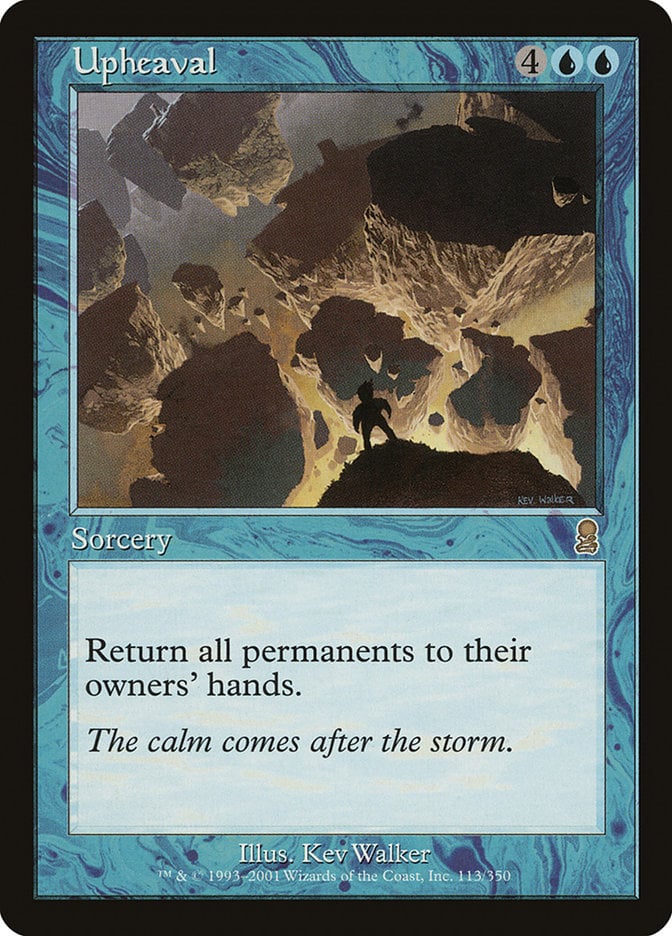
Symmetrical effects have never been fair in the history of Magic. The idea is generally that it can’t be broken if both players do it, but Upheaval’s banning in most formats disagrees. It’s easy to use a bunch of mana rocks to stack this card to your advantage. One of the best blue board wipes, Upheaval offers a clean reset of the board, and you’ll probably win if you’re the one expecting it.
#32. Stormchaser’s Talent

Stormchaser's Talent is a 1-drop enchantment that has seen increasing levels of play over many formats. It’s good in the early game as a cheap spell that creates a prowess threat; it’s good in multiples or when bounced and recast. And in a longer game, leveling up this class card gets you more value, and it can even take over a game if not answered.
#31. Quantum Riddler

Quantum Riddler has two main modes: the warp mode, where it enters the battlefield and cantrips, and the 5-mana mode, where it’s a big 4/6 flier, like Consecrated Sphinx, that immediately draws you another card.
The most interesting trait is that it has you draw two cards instead of one whenever your hand is empty. So, in the lategame it’s a 4/6 that draws two cards, and the synergies with Ephemerate are also excellent. It usually sees play in grindy WU midrange/flier decks.
#30. Stock Up

Stock Up has been played more and more ever since it was released. The combination of seeing five cards and drawing two is surprisingly potent, especially in formats that have good ramp (Sol Ring, Ancient Tomb) and where the power level between cards varies greatly (singleton formats, Vintage). It’s still a sorcery speed draw spell, but it’s a staple everywhere.
#29. High Tide
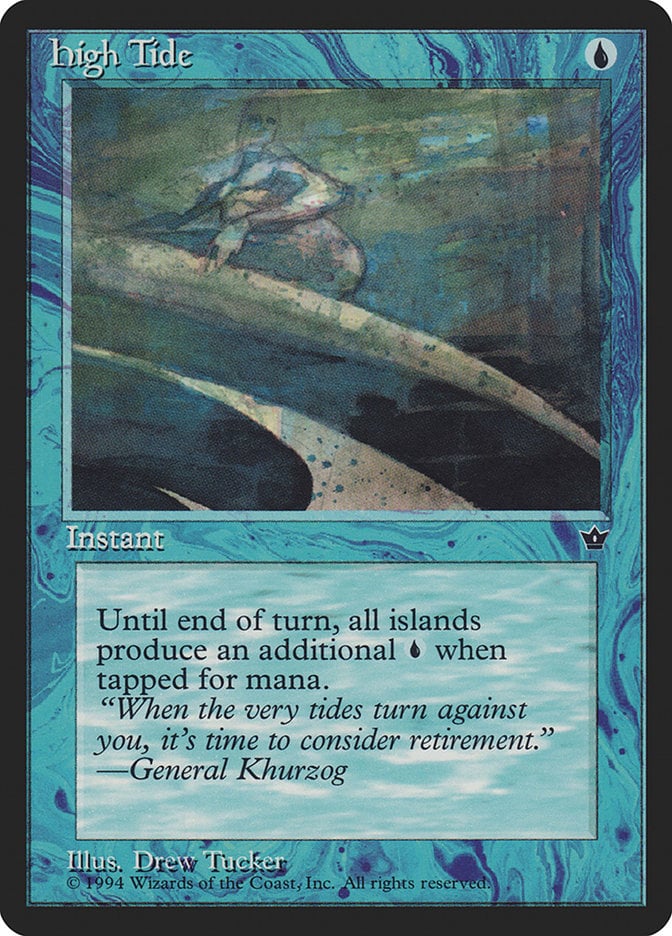
Extra turns are good, but extra mana is better. High Tide needs to be built around a little bit, but it’s an obscenely powerful card. Doubling the mana produced by your islands enables some incredible turns, especially with effects like Turnabout and Time Spiral. Playing this card often results in a kill the same turn.
#28. Time Spiral
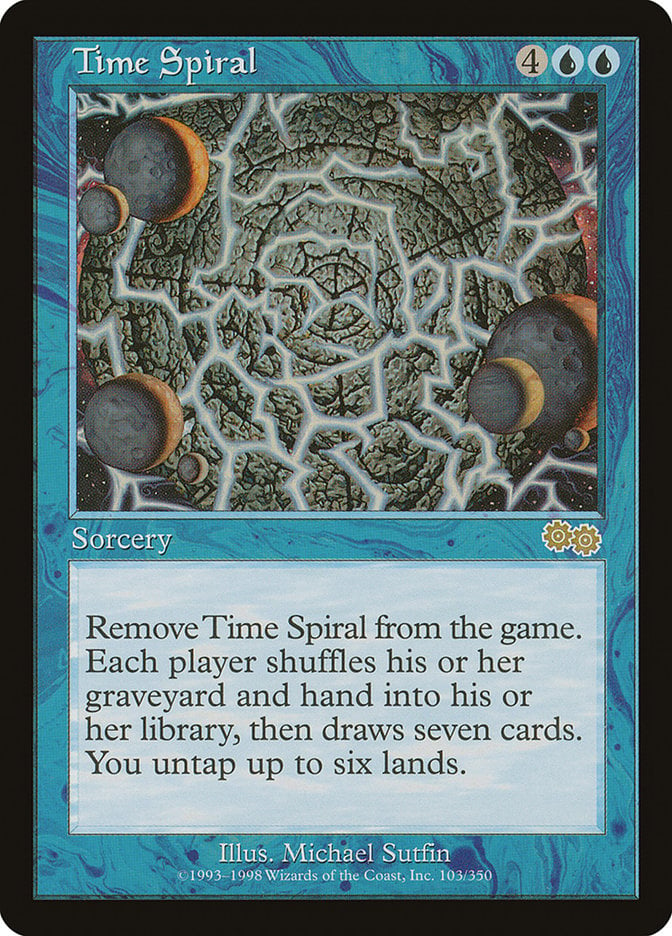
Time Spiral is very powerful, if a bit expensive. There are cheaper wheel effects, but this one is “free” since it lets you untap your lands.
That said, getting to 6 mana in the first place makes this a little harder to pull off. It’s not as easy to defend it with countermagic, but a fresh hand and 6 mana is still really good.
#27. Mind’s Desire
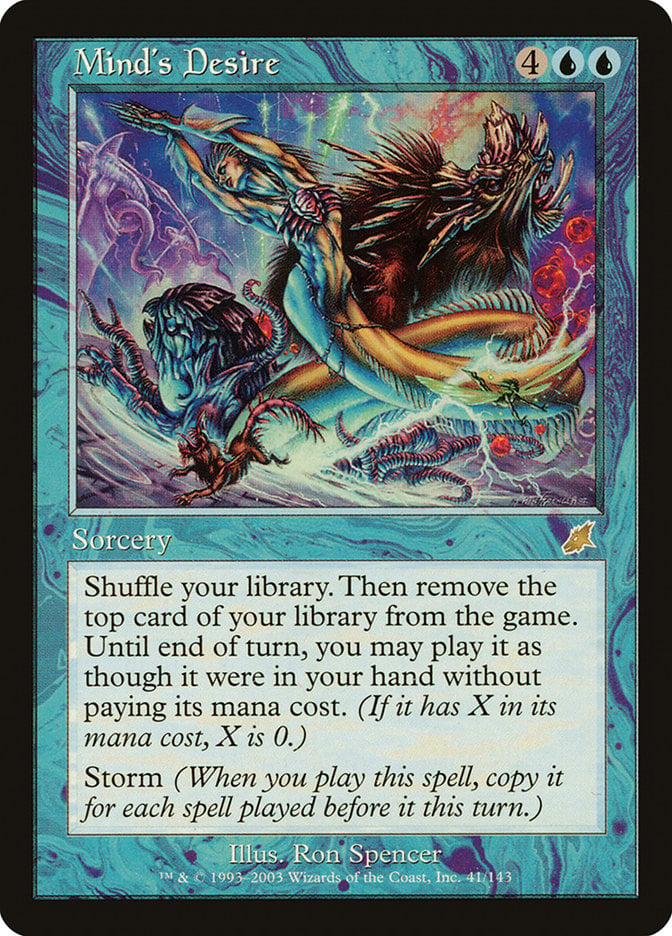
Speaking of finishers, let’s look at a storm card. Mind's Desire is a great way for a storm deck to get the final push of cards it needs to close out the game. The main thing that holds it back from being higher on the list is that it doesn’t necessarily end the game itself.
Oftentimes it’s finding the Tendrils of Agony or similar effect that actually wins. But getting a bundle of free cards makes it worth including.
#26. Jace, the Mind Sculptor
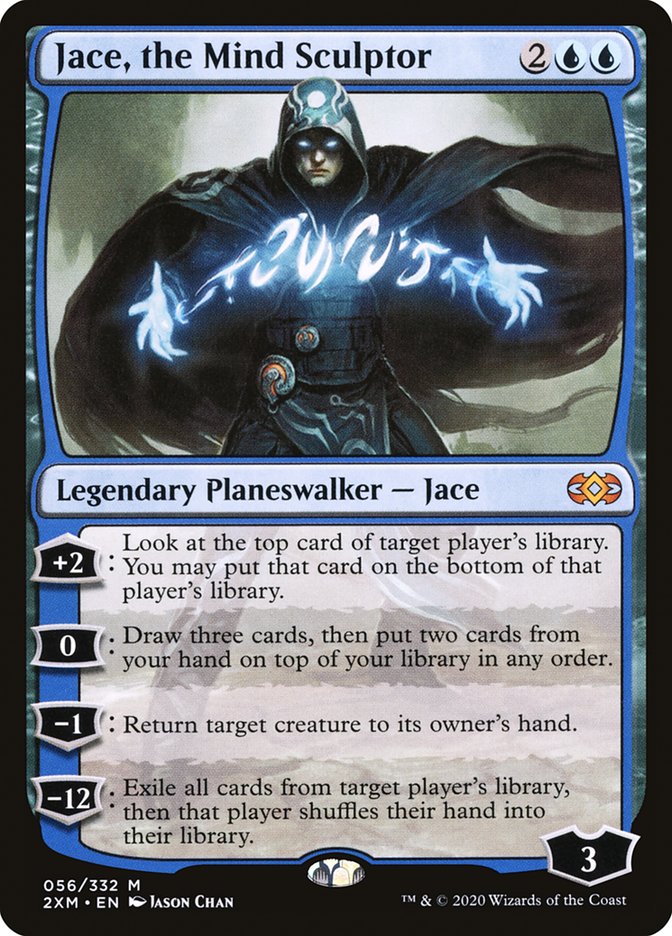
Jace is one of the most iconic characters in Magic lore, and Jace, the Mind Sculptor is one of his most iconic and powerful cards. The repeated Brainstorm on its 0 ability lets you sculpt your hand until you’re ready to use the +2 to ensure your opponents never see another good card.
This is the epitome of a card that wins the game before your opponent knows they’ve lost.
#25. Swan Song
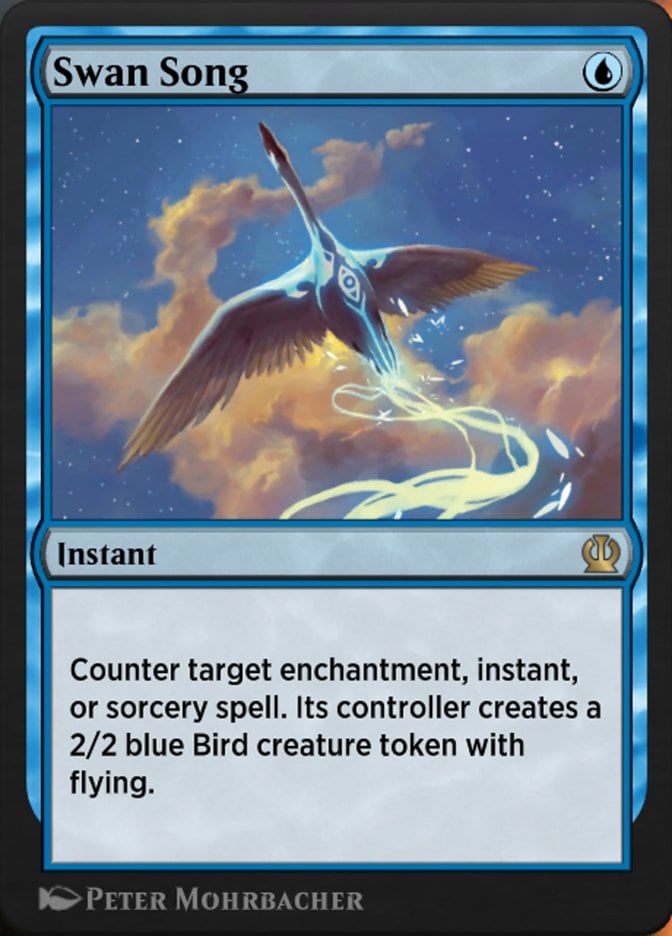
Swan Song is a powerful counterspell that takes care of most threats your opponents play for a single mana. It doesn’t hit creatures but stops combos and opposing countermagic cold for next to nothing. The 2/2 bird won’t often matter, especially in EDH.
#24. Flusterstorm
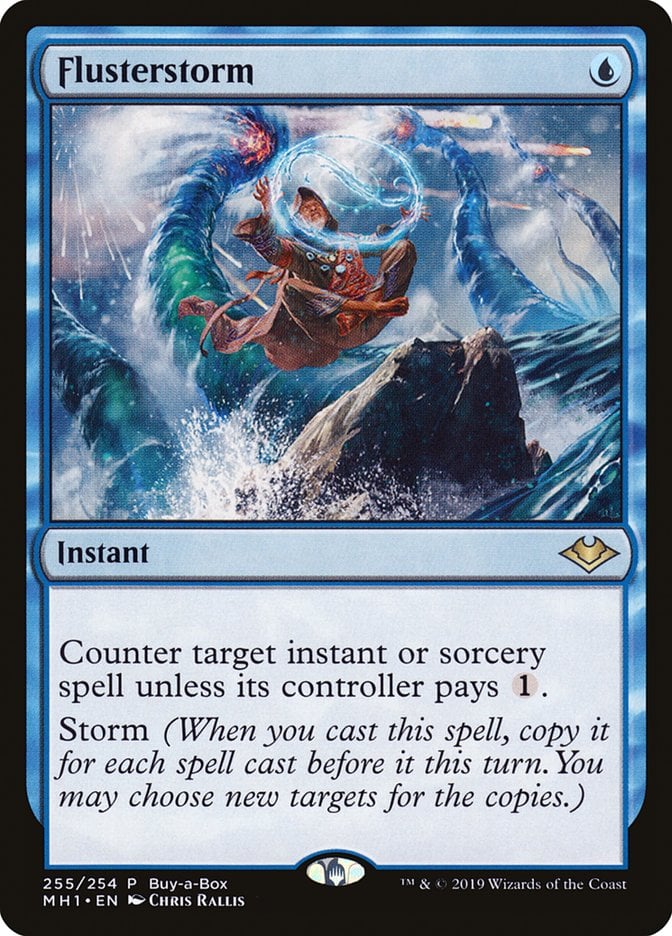
This is a powerful permission spell that’s hard to play around. Flusterstorm generally lets you win any counterspell fight you get into by getting multiple copies on the stack.
If enough spells have been cast it’s basically a 1-mana Counterspell. Only hitting instants and sorceries is a little restrictive, but this is still one of the best counterspells in the game.
#23. Cyclonic Rift
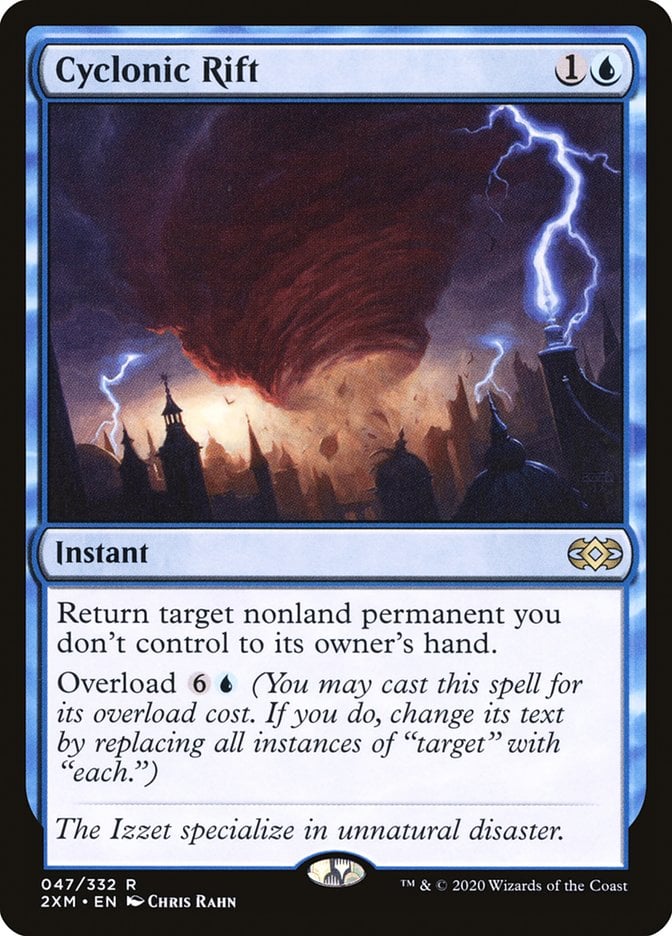
This is much more of a Commander card, but Cyclonic Rift demonstrates just how good it can be. This is as close as blue gets to Plague Wind, completely resetting your opponent’s boards while leaving yours untouched.
#22. Mental Misstep
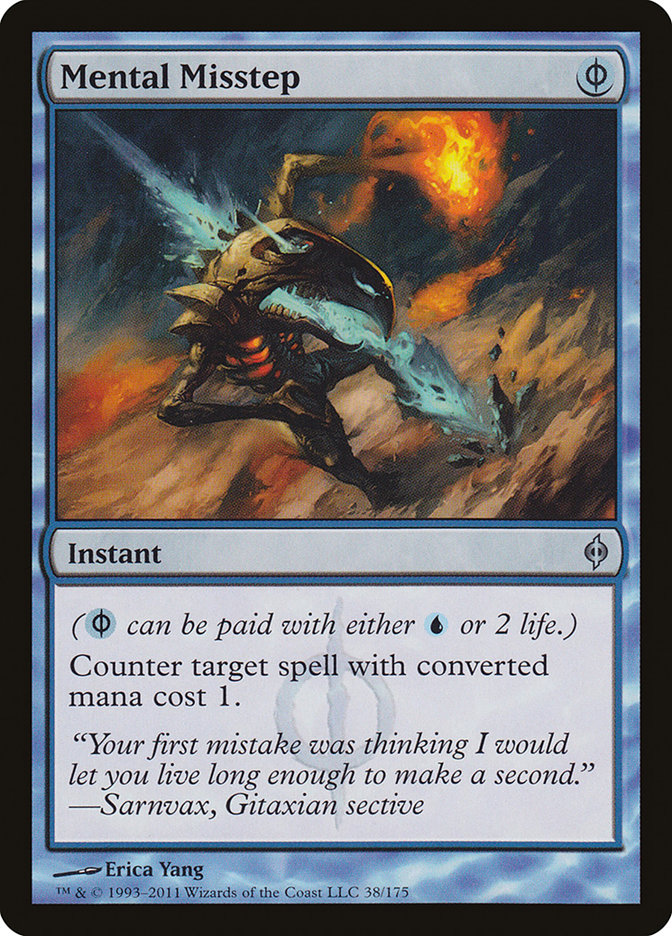
Mental Misstep is a card that shows off how broken of a mechanic Phyrexian mana is. Countering an opponent’s spell for something as trivial as 2 life is incredibly busted.
It’s much more powerful in older formats that focus on efficient spells, but it’s banned or restricted in all those formats because it’s just that good. You don’t even need to be running blue to play this.
#21. Rhystic Study
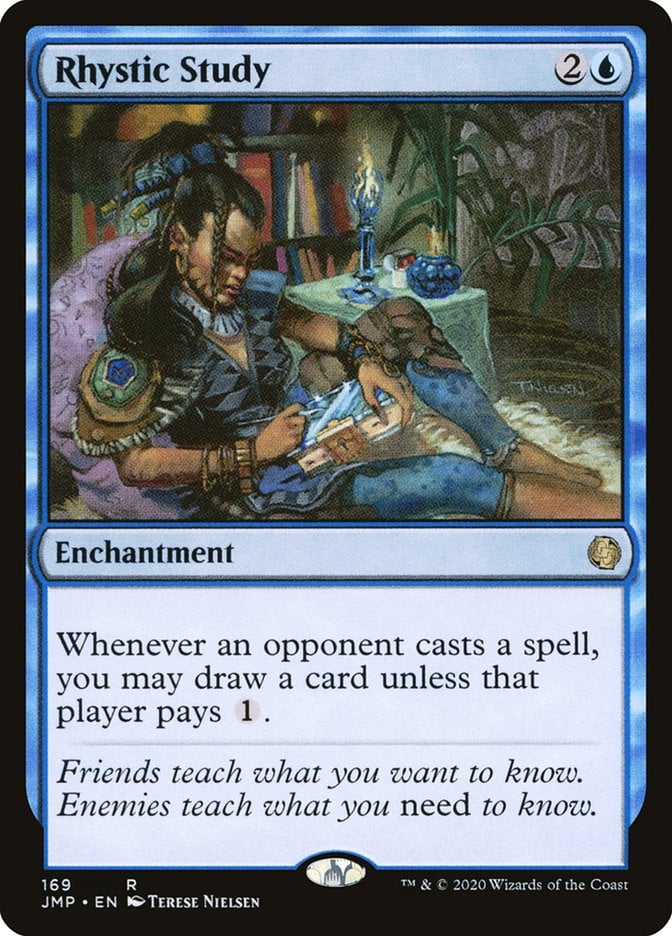
This is really another Commander callout, but Rhystic Study is strong enough to terrorize tables. It’s a powerful stax piece that forces your opponents to pay more mana or drown in card advantage as you draw more and more spells. It’s a unique ability that leaves your opponents with no good options.
#20. Urza, Lord High Artificer
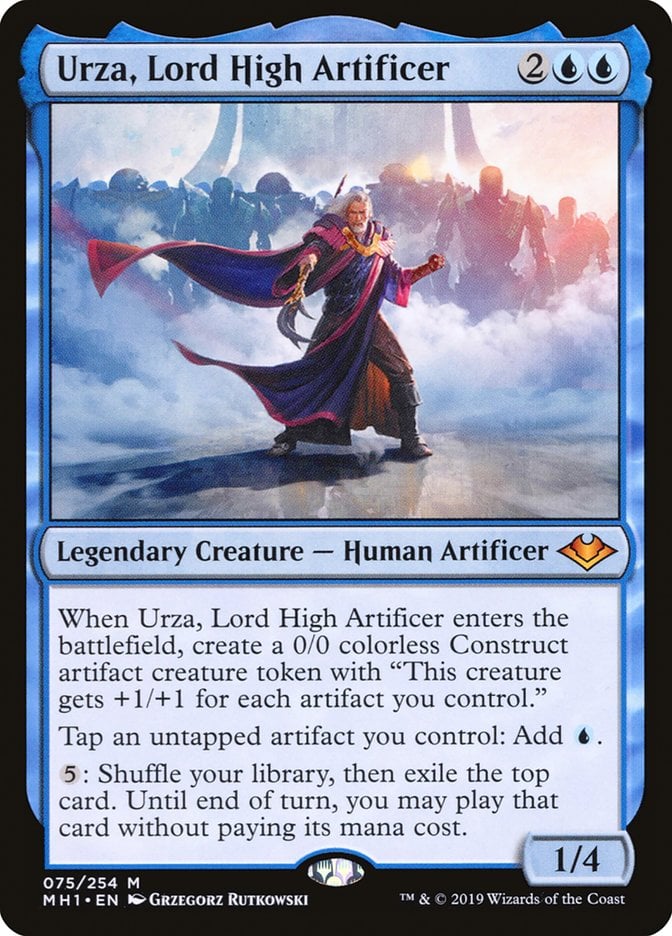
Urza, Lord High Artificer was the first card to depict the ancient well-known planeswalker on his own. It’s also incredibly powerful. Turning all your artifacts into Mox Sapphire and coming into play with a massive artifact creature is great, but its activated ability gives you an outlet for all that surplus mana.
It’s also a terrifying lock piece with cards like Winter Orb and Static Orb.
#19. Counterspell
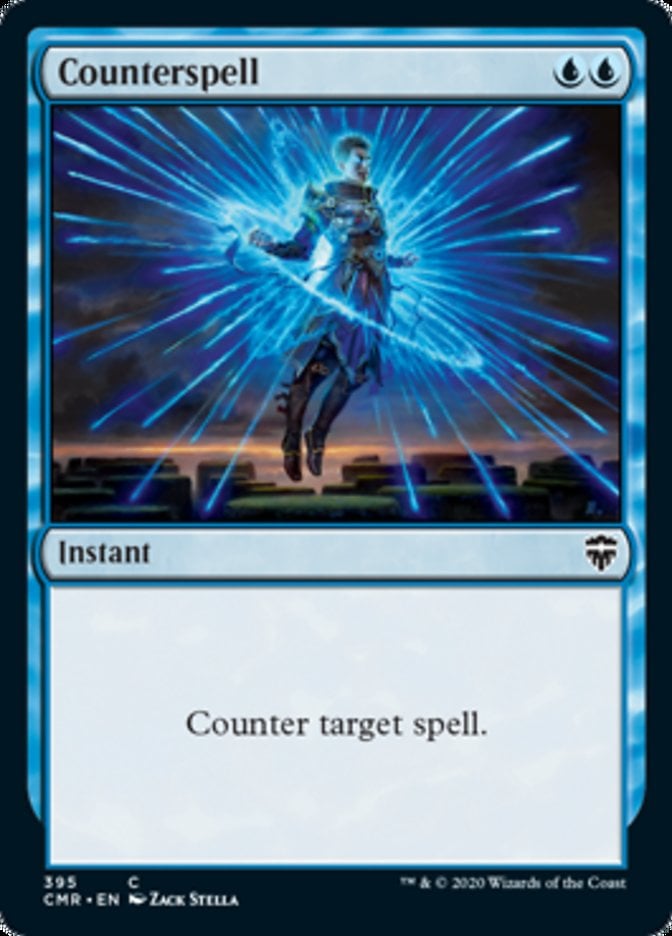
Counterspell is one of the few Magic cards I’d consider a perfect design. It’s everything blue wants to do; it’s controlling at instant speed, and it demonstrates what it means to be a blue mage. It’s cheap but not overpowered since it does nothing if the threat is already on the board and is never better than an even one-for-one trade.
This is an exceedingly simple yet elegant design.
#18. Force of Negation
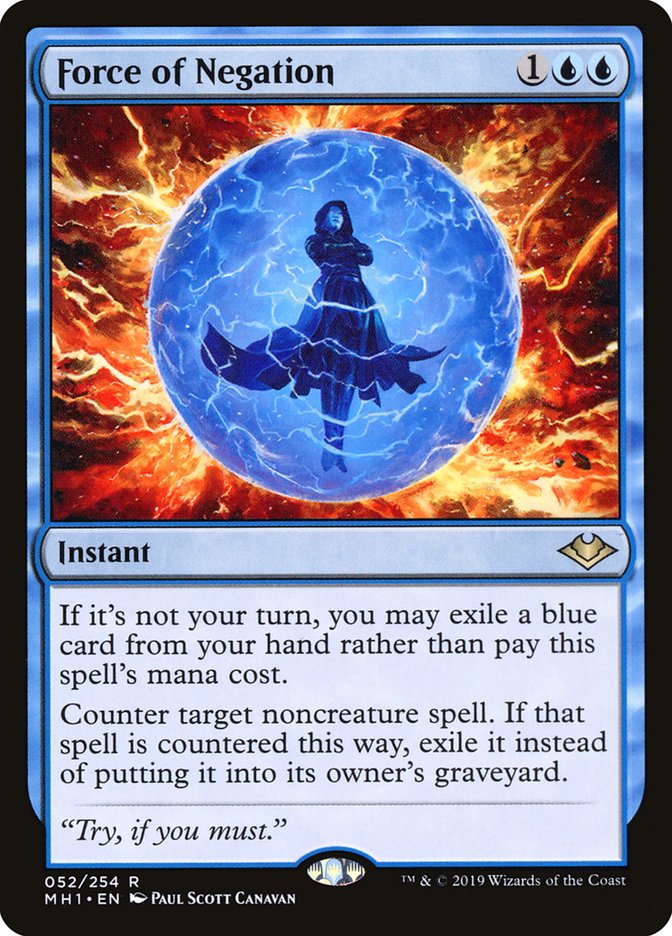
Part of the Force cycle from Modern Horizons, Force of Negation is a powerful free counterspell. The greatest weakness of the card comes from the sheer card disadvantage you get. You’re always two-for-oneing yourself and this card is pretty restrictive, only hitting noncreature spells for free on your opponent’s turn.
This is more easily cast for full price than its contemporary Force of Will, however.
#17. Timetwister
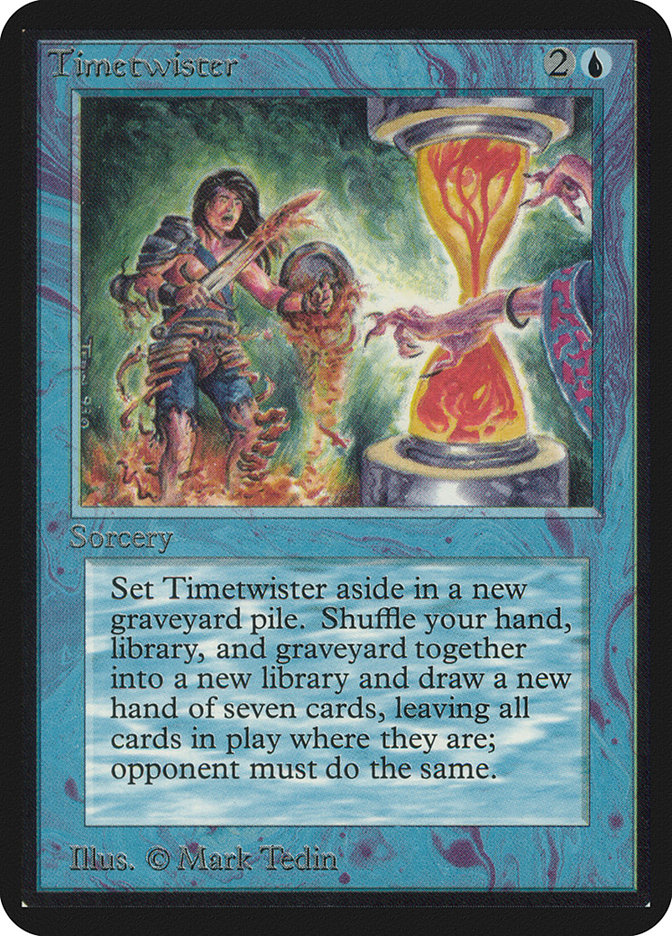
It might look like this is pretty far down the list for part of the Power 9, but there are some significant drawbacks to Timetwister. Unlike Time Spiral it doesn’t recoup its mana cost. You’ll usually be down mana after casting this card before shipping the turn to your opponent, who gets all their mana and a fresh hand, plus another card drawn for turn.
This is an incredibly powerful effect, made better since Timetwister doesn’t exile itself. It takes some work to get the most out of this card, which keeps it fairly far down the list.
#16. Force of Will
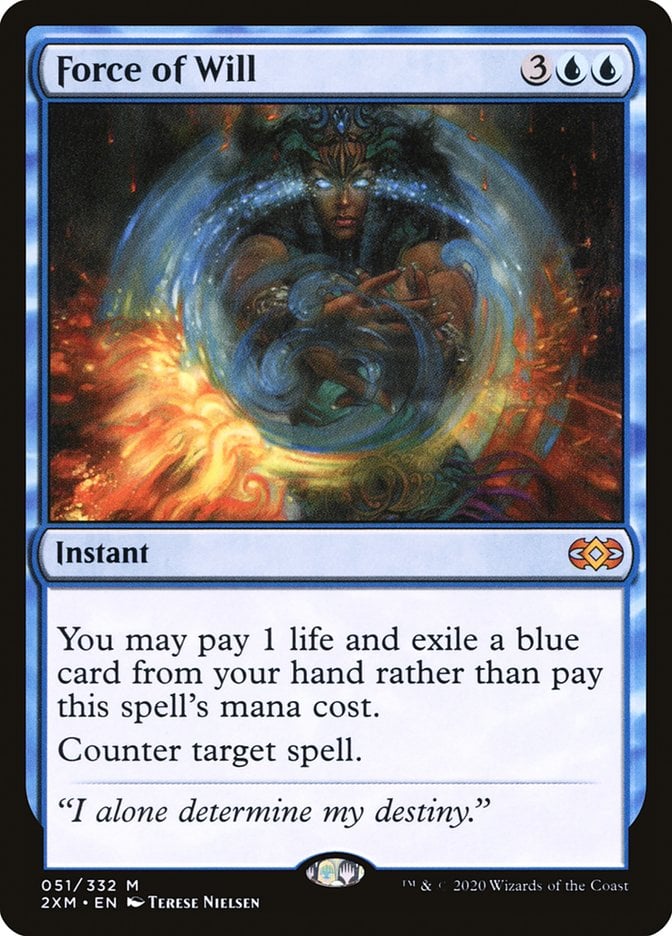
Force of Will is a much stronger catch-all card than Force of Negation. It just doesn’t have any of the restrictions. You can use it on your turn to protect your combo or hit an opponent’s creature to keep them off the board.
It’s a powerful card, but this is still card disadvantage and is only worth playing when the power level of other decks in the format is insanely high.
#15. Gush
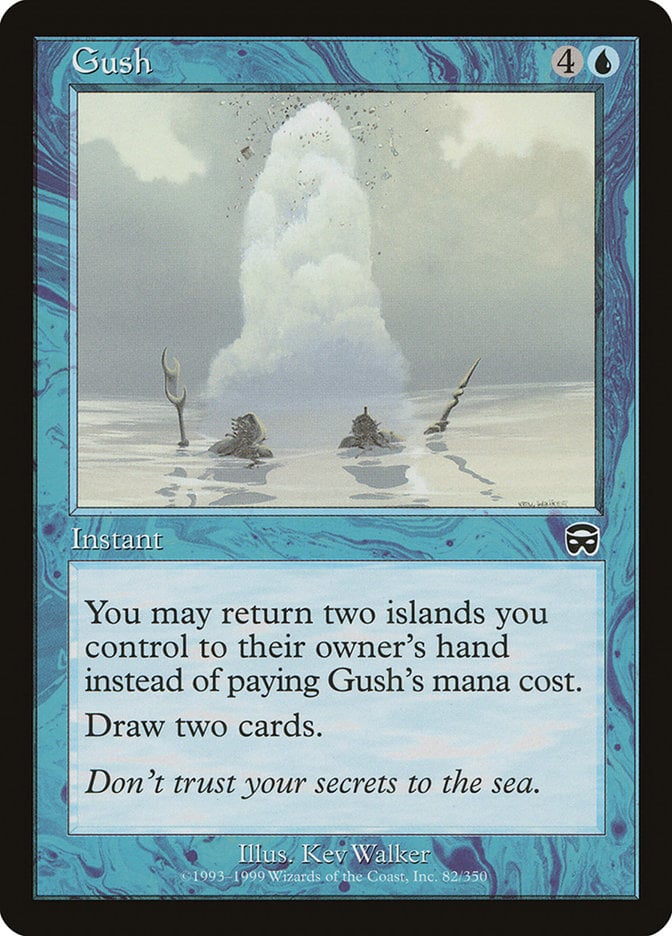
Free spells are good, and Gush is a powerful draw spell. Returning two islands to your hand is a bit of a steep cost, but the card draw and free spell are fantastic. Even though this is an instant, it’s best played during your main phase so you can tap both of the islands to float 2 mana and immediately replay one.
#14. Daze
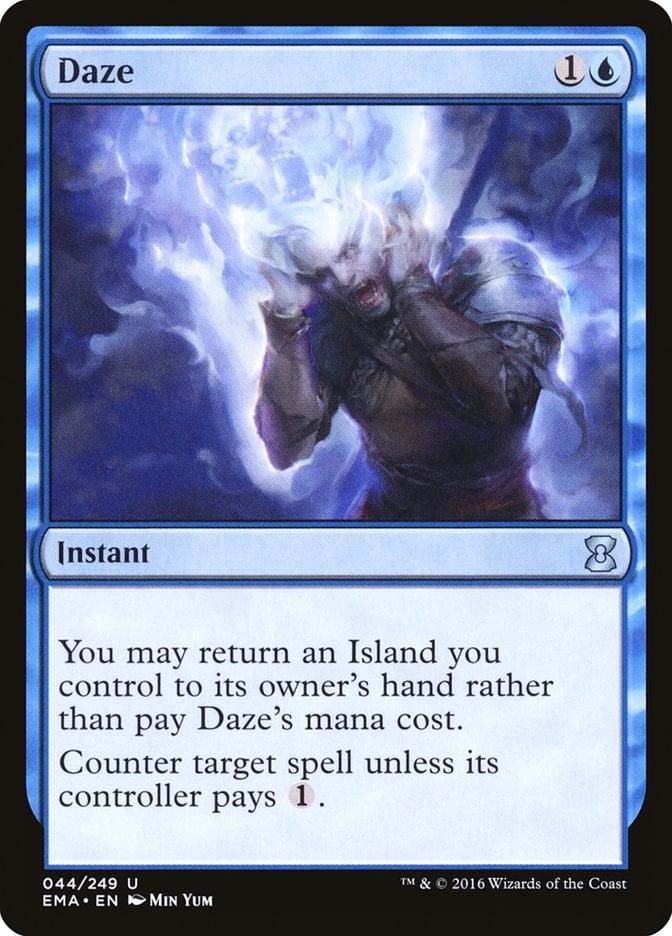
Putting Daze above Force of Will may be contentious, but Daze generally has fewer downsides. Yes, bouncing a land is a tempo swing, but so is stopping your opponents from casting a spell.
This is insanely powerful in tempo decks and is far more castable than either of the other free counterspells we’ve looked at.
#13. Treasure Cruise
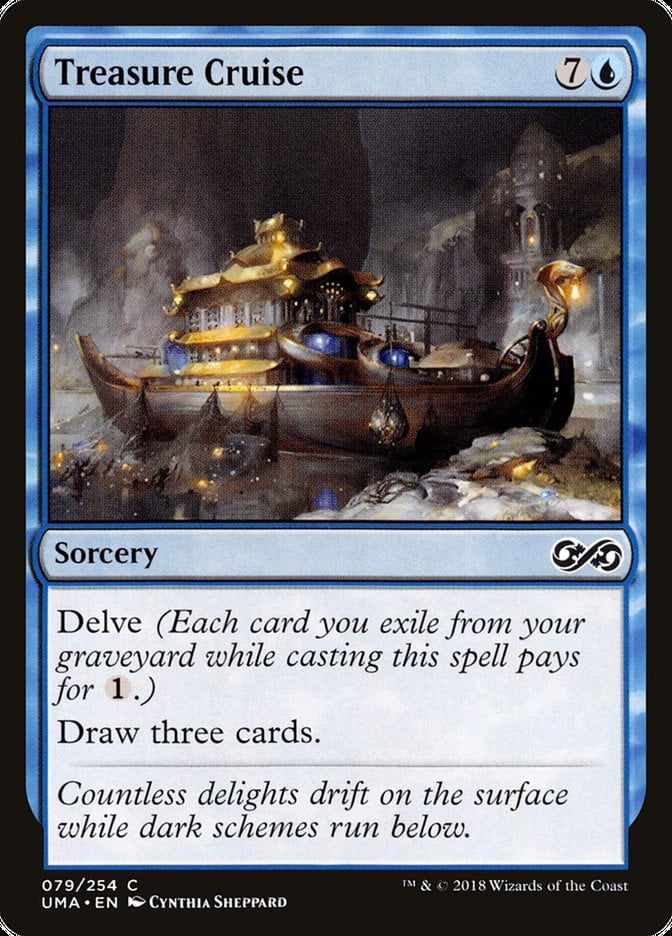
Mana reduction isn’t quite as good as free spells, but it’s close.
Treasure Cruise is close to free once you get its cost down to a single blue. It’s an incredible three-for-one that calls back to one of the most iconic blue spells ever printed. It’s fantastic in any format with fetch lands or just cheap, efficient spells to churn through your deck and fill up your graveyard.
#12. Show and Tell
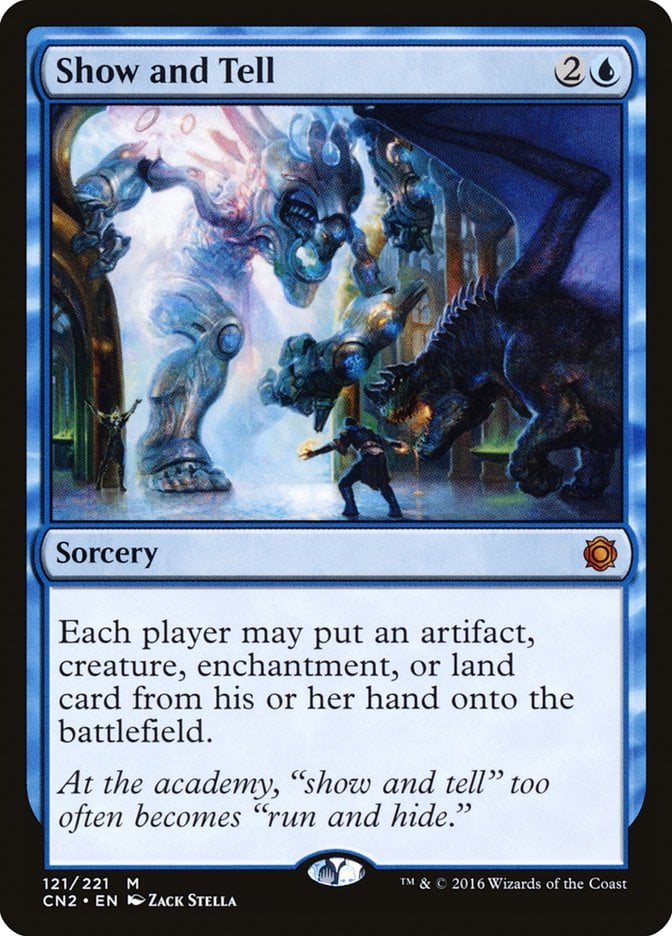
This is another fantastic card to cheat in your permanents. Show and Tell has found plenty of friends in Legacy like Omniscience and Emrakul, the Aeons Torn, and it’s just generally strong.
It has a larger downside than Tinker, but it also has wider playability. Frankly, these two cards are roughly equivalent.
#11. Lórien Revealed
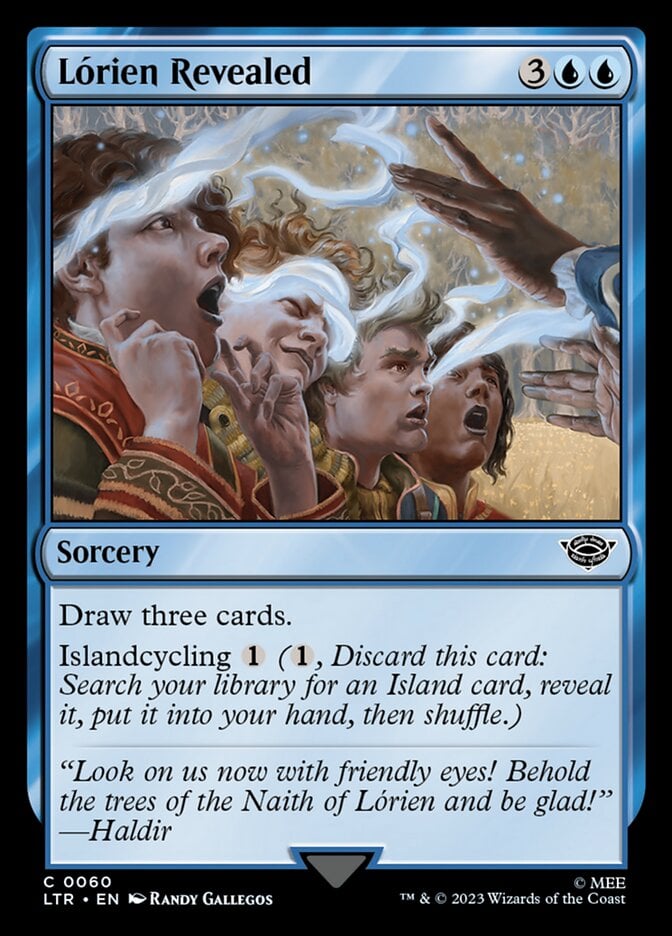
Lórien Revealed is a mix of a land tutor and a graveyard enabler that you can later exile to mechanics like delve. All the while it’s still just a card draw spell later if the game drags on. One-mana landcycling is awesome, and the card’s become a blue staple in many formats from Pauper to Legacy.
#10. Gitaxian Probe
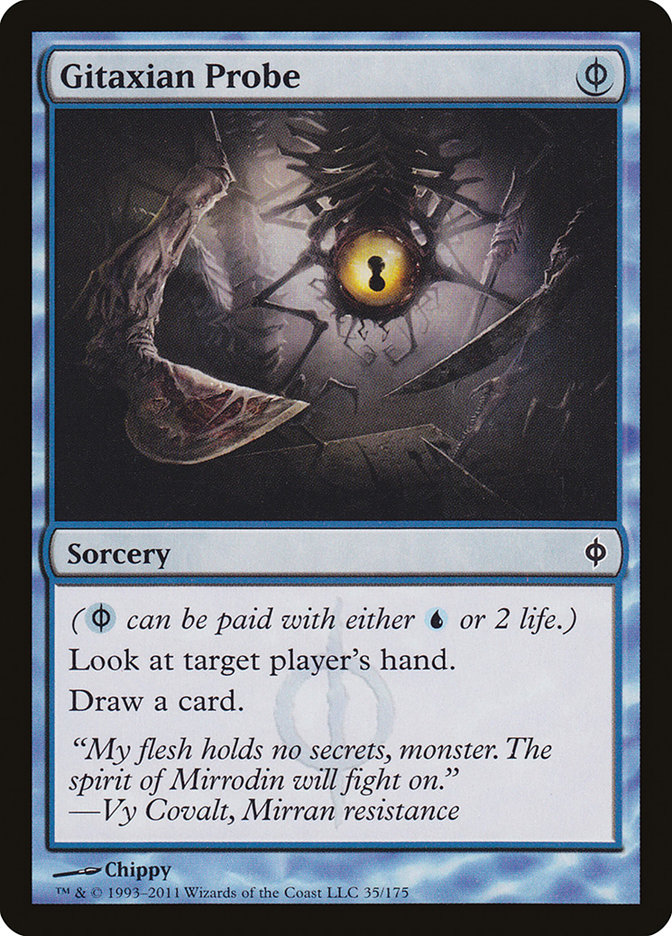
Gitaxian Probe is free, and it’s so versatile. It’s one of blue’s best cantrips, to the point where it’s banned in several Constructed formats. Paying 1 mana or 2 life to draw a card and see what’s going on in your opponent’s hand is strong and has additional synergies in spellslinger decks, storm decks, Death's Shadow decks, and more.
#9. Brainstorm
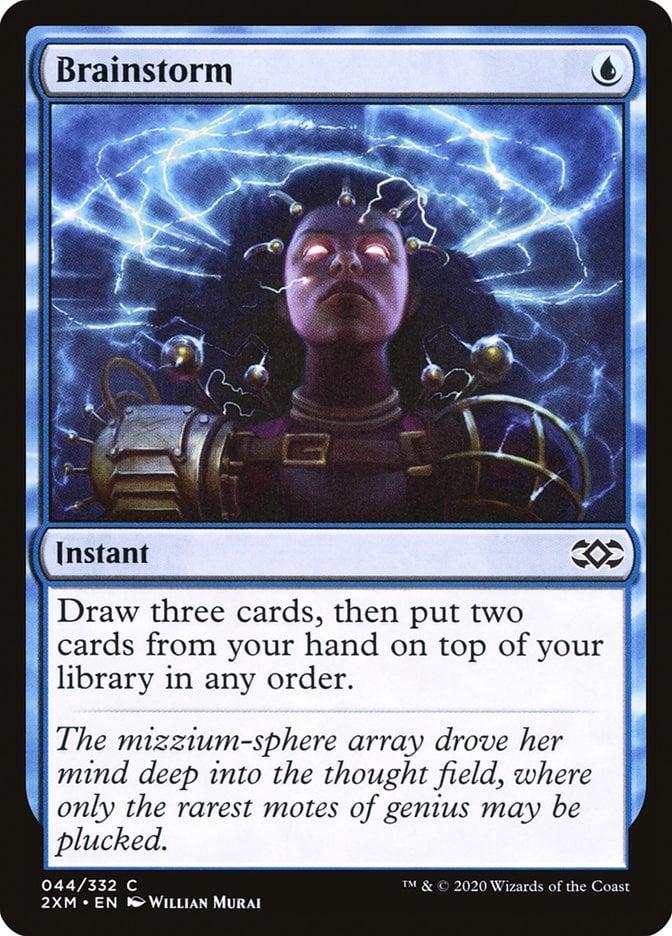
Brainstorm is one of the best cantrips ever printed and there’s a reason it’s a Legacy staple and restricted in Vintage. You’re basically cheating when you can cast Brainstorm with a shuffle effect like a fetch land: You draw three cards and get rid of the worst two. It’s as close to casting Ancestral Recall as you can get without, well, playing Recall.
That said, it needs those shuffle effects to be this powerful. If you just Brainstorm without a shuffle, you’re not getting nearly as much value because you’re locked into re-drawing the cards you tucked away.
#8. Preordain
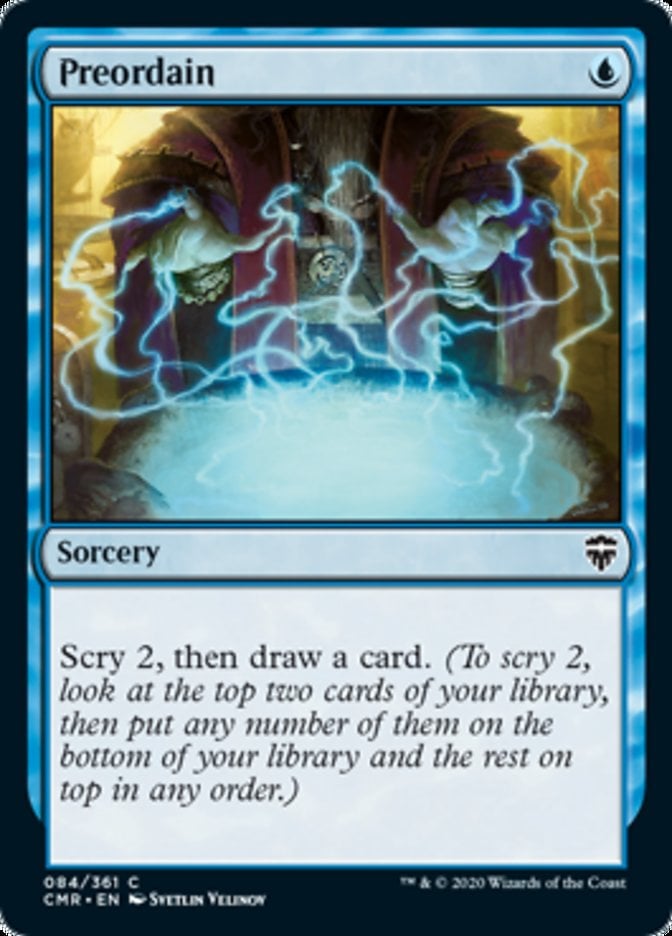
On the front side Preordain is weaker than Brainstorm but has greater utility. It doesn’t need to have shuffling effects to fix the top of your library and can let you see just as many cards as Brainstorm. This is a more compact cantrip that lets you sculpt the top of your deck without needing additional effects.
#7. Ponder
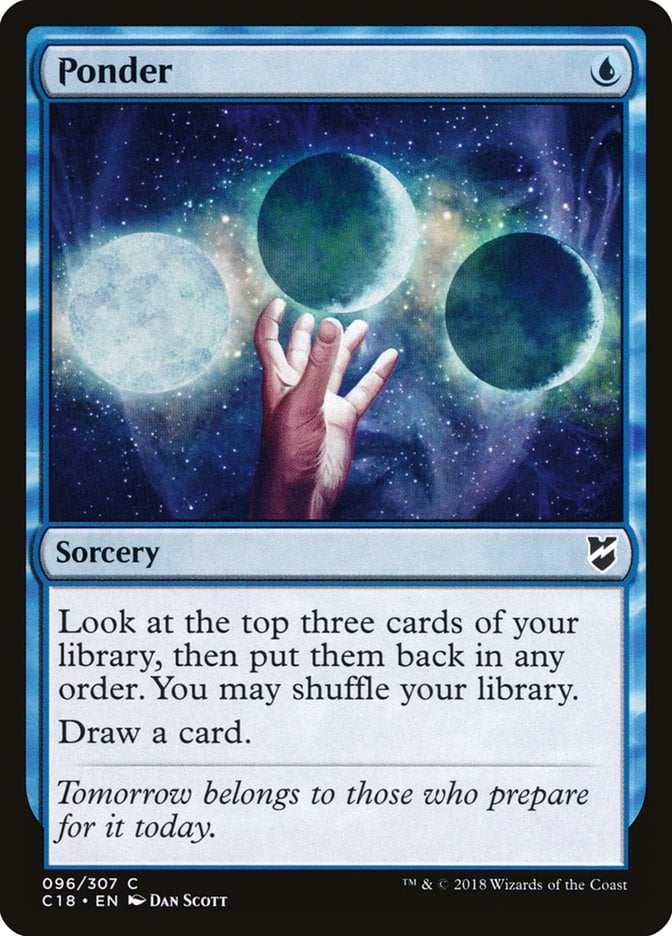
Like Brainstorm, Ponder lets you see three cards. It doesn’t give you the same hand-sculpting power as Brainstorm, but it’s generally a stronger effect because it comes with the shuffle.
Ponder gives you far greater control over the top of your deck in one package and sees more cards than Preordain, resulting in an incredibly powerful cantrip.
#6. Dig Through Time
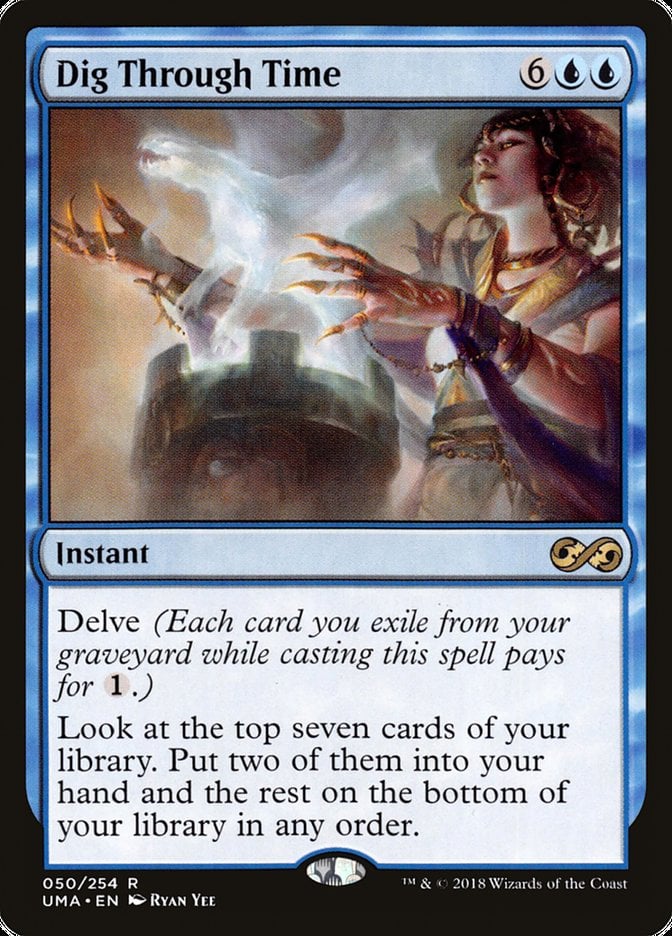
Dig Through Time is one of the best card selection spells ever printed. Delve is a fantastically strong mechanic in any format with cheap spells and fetch lands, and getting the best two out of seven cards with no drawback is a huge advantage.
Being instant speed also makes it incredibly flexible, allowing you to hold countermagic or cast this if nothing needs to be countered.
#5. Mystical Tutor
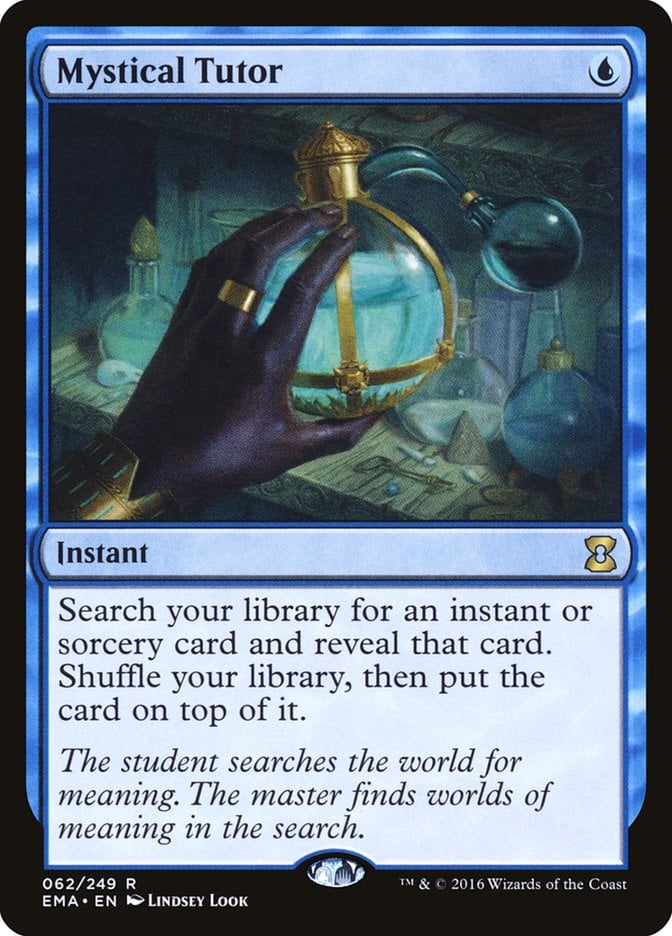
Sculpting the top of your deck is good and all, but Mystical Tutor just lets you get what you need. Only tutoring instants and sorceries isn’t that much of a downside in the color of instants and sorceries. Putting it on top also doesn’t matter if you cast this before your draw step or play any of the million blue cards that says “draw a card.”
#4. Tinker
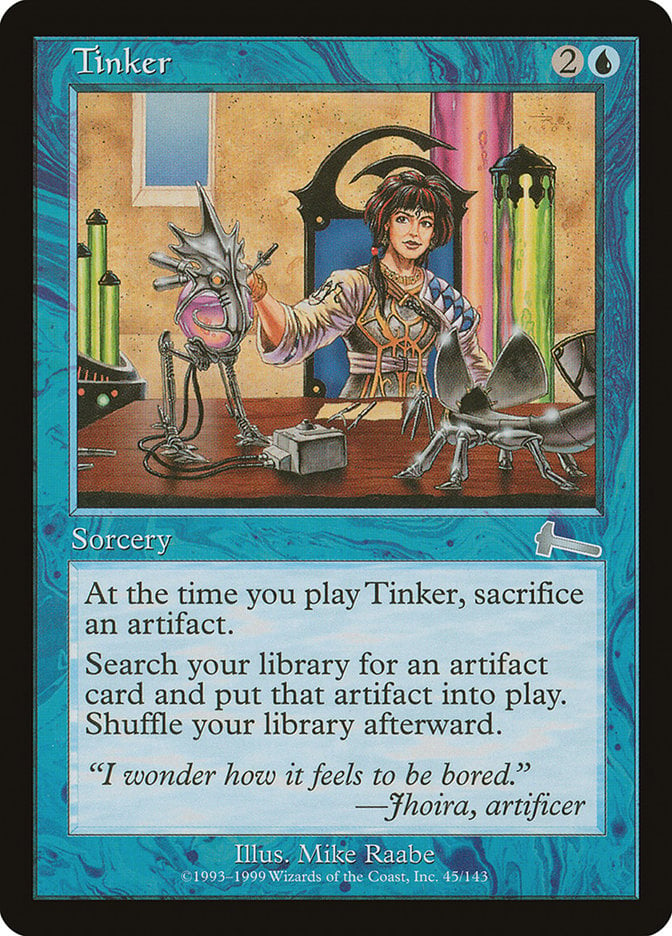
Tinker costs so little for what it offers. Sacrificing an artifact doesn’t mean too much, especially since you usually use that artifact to cast this spell. In the formats where Tinker is legal, it’s easy to play it on turn 1 and offers explosive potential, whether you’re fetching a Bolas's Citadel or Blightsteel Colossus.
#3. Time Walk
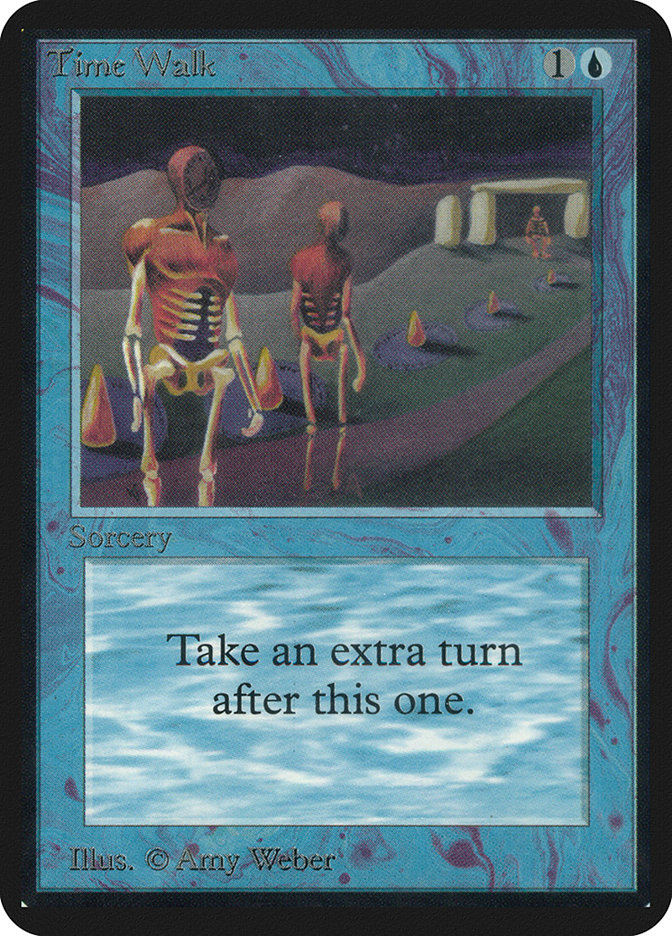
Five mana for Time Warp is a lot, but Time Walk lets you take an extra turn for a mere 2 mana.
Magic’s best blue sorcery, Time Walk has much more versatility than more expensive extra turn spells like Time Warp. It’s easier to combo with this one and easier to protect it with countermagic, and it lets you do all the good things that come with extra turns, even when you have to fire it off as a color-shifted Explore.
#2. Mana Drain
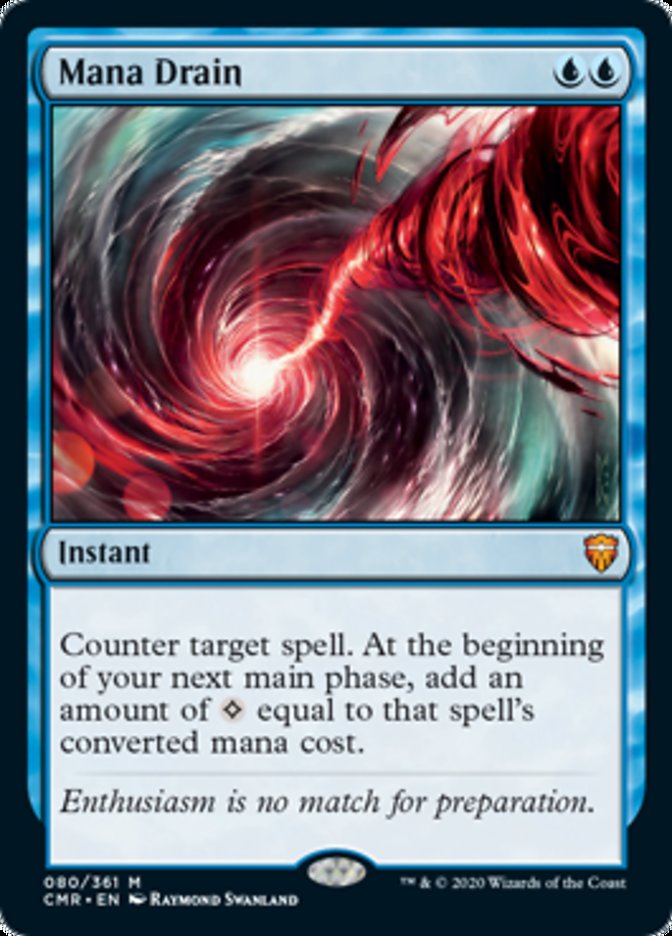
What if the elegance of Counterspell were compounded by making it hopelessly stronger? You get the efficient power and control of Counterspell alongside a huge burst of mana with Mana Drain, the best blue instant outside of the Power Nine.
You can use this and cast a spell during your next turn with enough extra mana to hold up more countermagic. This is just incredibly powerful and pushed beyond belief.
#1. Ancestral Recall
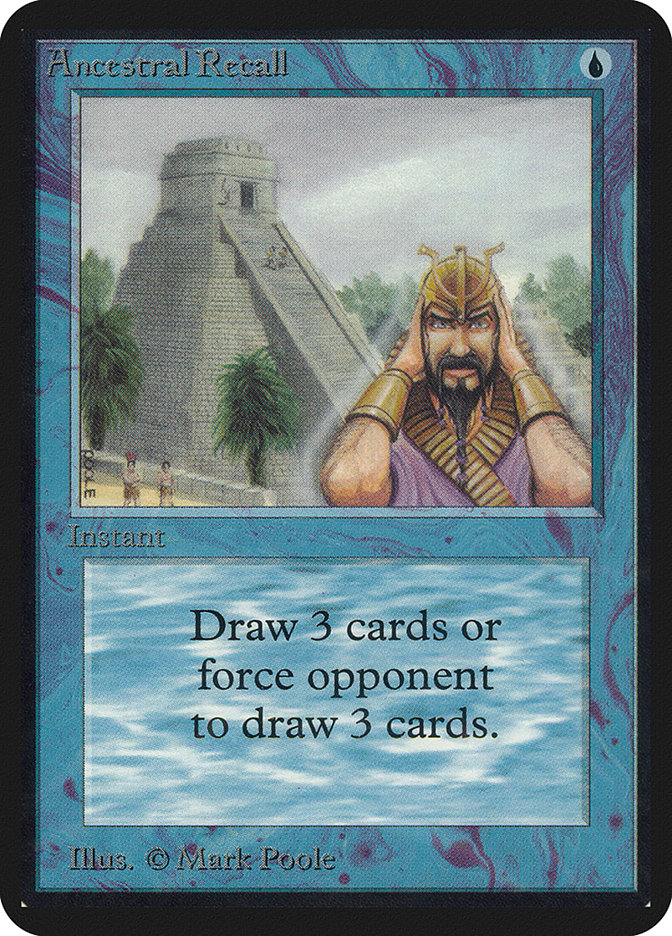
It’s likely no surprise that Ancestral Recall comes out on top here. Drawing cards is one of the best things you can do in Magic, and there isn’t a more flexible draw spell. Treasure Cruise is just a pale imitation of the real thing; Ancestral Recall is among the strongest and rarest cards in MTG.
You can use this at any time for a single mana and draw a massive number of cards. It’s the most efficient three-for-one ever printed, the best card draw spell of all time, and just the best blue spell in Magic.
Best Blue Card Payoffs and Synergies
The payoff you get from going mono-blue is getting to play the best permissive and card draw spells in the game. You simply have the ability to say no to whatever your opponent tries to do while burying them in card advantage. It’s hard for your opponents to keep up if they can’t resolve spells, and you’ve got plenty of cantrips like Ponder and Preordain to make sure you’ve always got the appropriate answer.

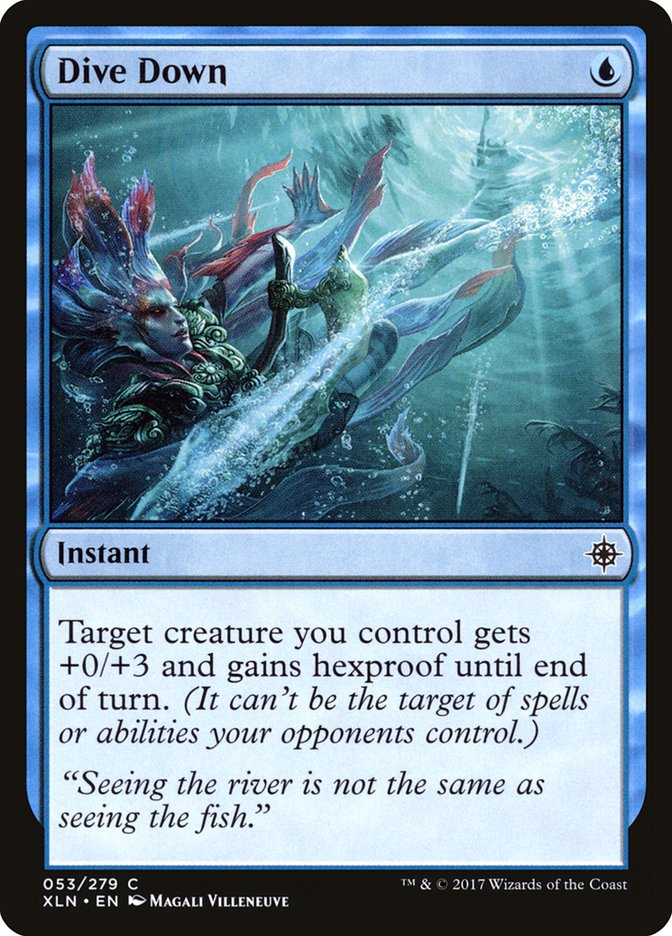
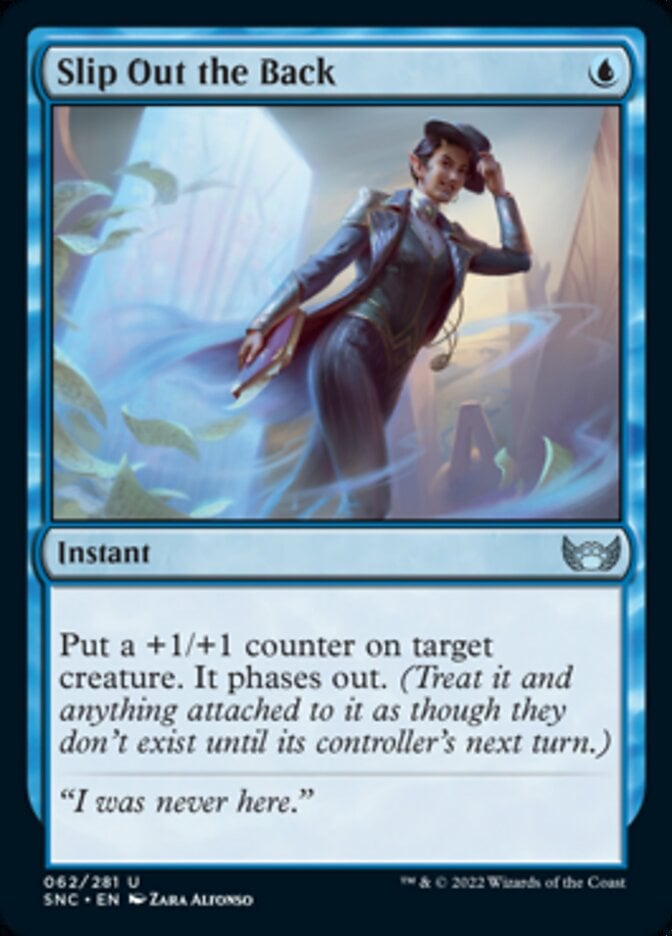
You’ve also got a lot of evasive creatures to win with. Blue doesn’t go big, but it gets slippery options like Delver of Secrets and Brazen Borrower to move around the opponent’s defenders, paired with protective spells like Dive Down and Slip Out the Back to negate your opponents’ removal.

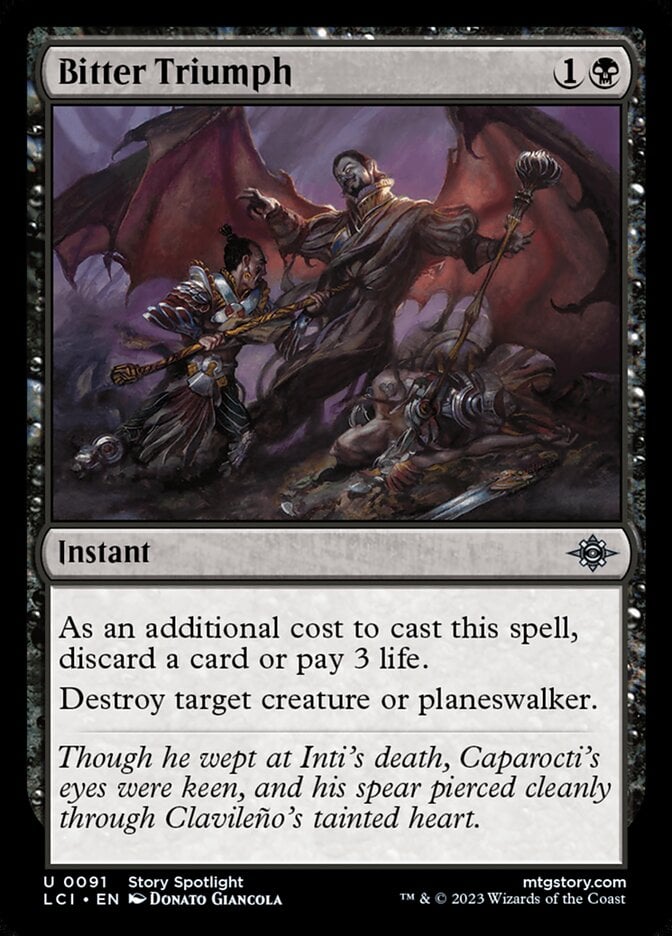
There are also great colors to pair blue with. For controlling strategies, white and black tend to be good colors to pair with it. Blue’s greatest weakness is an inability to deal with resolved threats; once a creature or planeswalker is in play it gets far harder for blue to deal with it, which is where the value of cards like Erode and Bitter Triumph comes from.
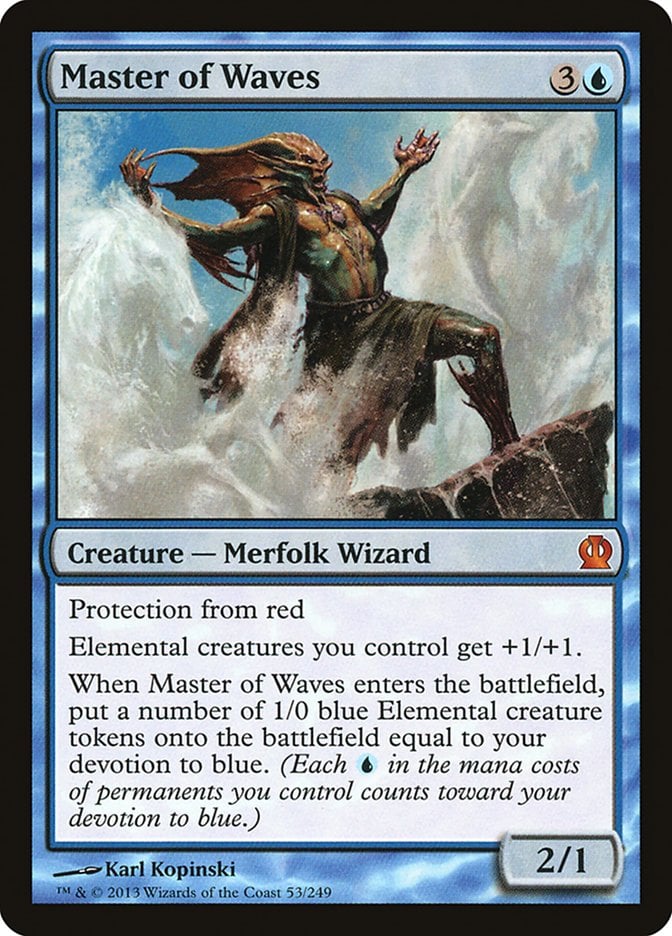
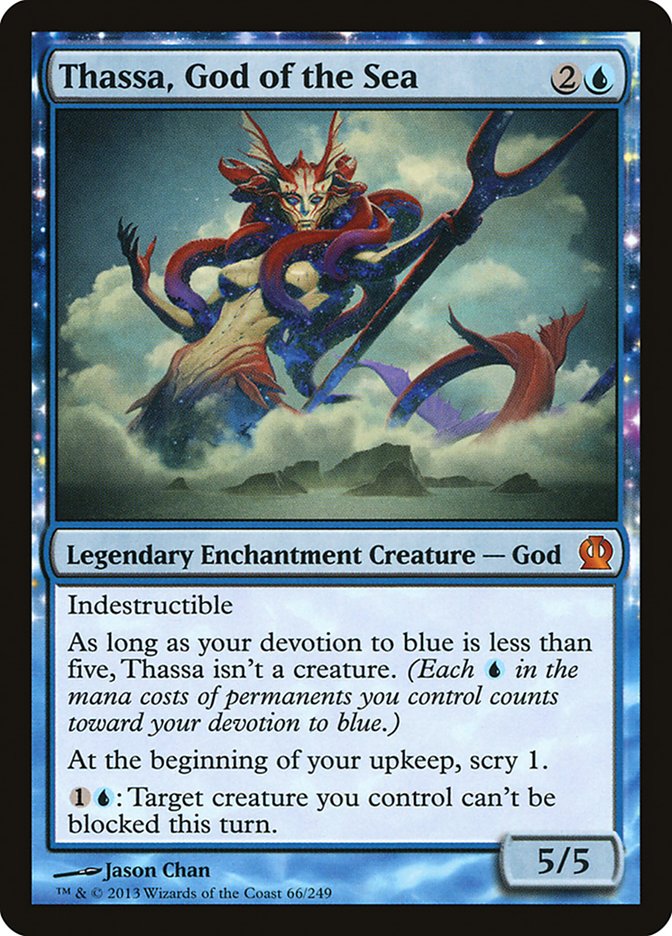
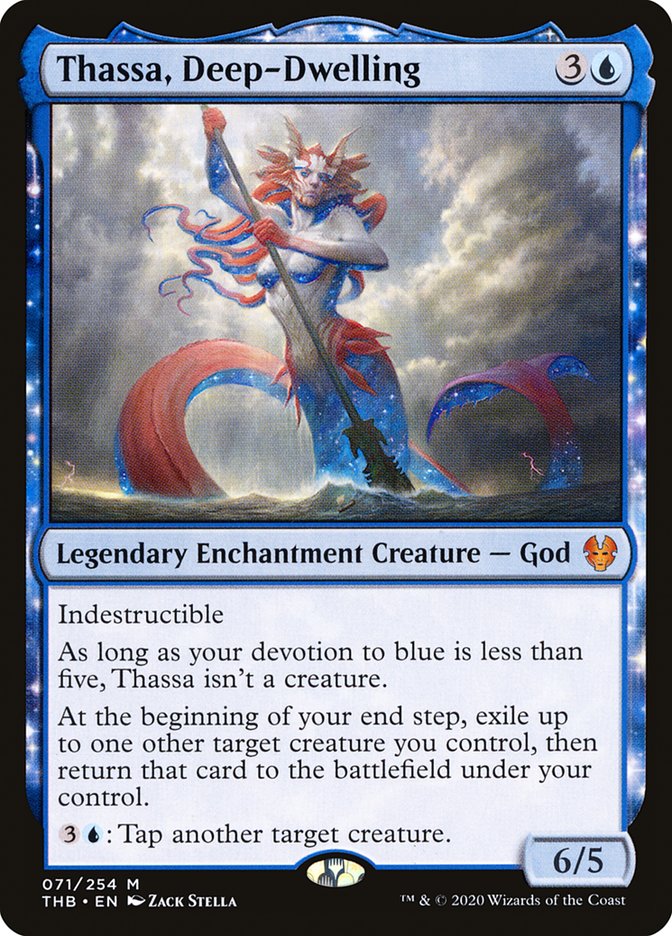

Some decks rely on the devotion mechanic, with Master of Waves, Thassa, God of the Sea, and Thassa, Deep-Dwelling offering good payoffs for having many blue symbols around. The same goes for Namor the Sub-Mariner, who checks blue symbols in your noncreature spells.
Why Is Blue So Good in MTG?
Blue is often referred to as the strongest color in Magic for many of the reasons listed above. Drawing cards is probably the strongest thing you can do in Magic next to making land drops, and you’ll find that you win more games if you can reliably see more cards than your opponents.
The permission from countermagic is another huge factor. It doesn’t matter how strong your opponents’ haymakers are if they never resolve. You can stop them from playing threats, stop them from defending themselves, and stop them from interacting with your creatures. Just saying “no” is another of the strongest effects in the game.
Blue usually has a say in what stays on the battlefield and what doesn’t. Bounce is sometimes too efficient, and it leads to blue cards being banned in Standard, like Reflector Mage and This Town Ain't Big Enough. That often puts a stop to ramp strategies or +1/+1 counter strategies, and it invalidates casting expensive spells.
The card filtering and selection is another big factor for blue’s power. Raw card advantage through drawing numerous cards is good, but getting the card you need is even better.
What Do Blue Decks Do in Magic?
Blue decks generally want to be a little more controlling than some of their contemporaries and look to play a longer game that maximizes the value of their card advantage and selection. You can definitely make more aggressive blue decks.
Blue aggro decks are more interested in playing a tempo-based strategy that can rush down their opponents while disrupting them with efficient countermagic. A premier example is the Pauper Faeries deck that focuses less on controlling the game and more on disrupting the opponent while beating down with small fliers.
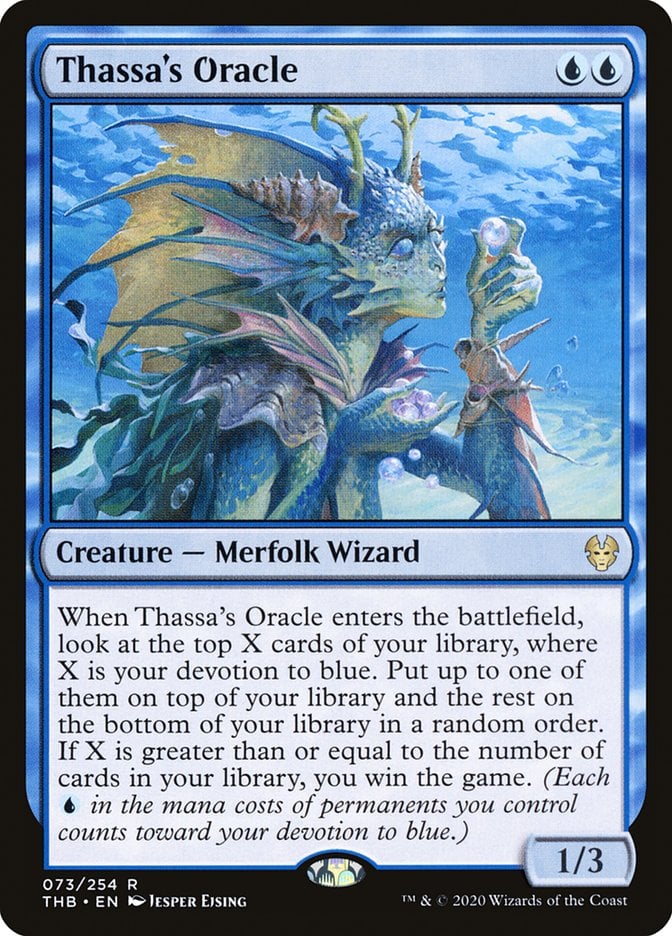
Blue also thrives on supporting combo decks due to its fair share of library manipulation, card draw, cantrips, and tutors. Be it a reanimator deck that needs self-mill, a storm deck, or a Splinter Twin + Pestermite combo deck, blue is usually involved somehow. We can also see this in cEDH with Thassa's Oracle combos.
As MTG shifts towards decks that play more to the board in a tempo game, it’s common to see blue decks that rely on creature and permanent loops do well, using cards like Stormchaser's Talent and Quantum Riddler as blink targets and cards like Boomerang Basics as engines. Even in a control role, blue sometimes gets more card advantage from its creatures than from its card draw spells and planeswalkers.
Wrap Up

Counterspell | Illustration by Zack Stella
Blue has long been hailed as the strongest color in Magic thanks to its ability to command every aspect of the game, from what your opponents resolve to the cards in your hand and on top of the library. Its color identity is synonymous with drawing cards, which is one of the strongest game actions you can take.
It’s also incredibly versatile, capable of going for a long game as a control deck or closing things quickly with aggressive tempo strategies. What do you think are the best blue cards printed? Let me know in the comments below or over in the Draftsim Discord. And check out The Daily Upkeep newsletter to stay up to date o nall the latest MTG news.
Thanks for reading and stay safe!
Follow Draftsim for awesome articles and set updates:










Add Comment