

Channel | Illustration by Rebecca Guay
Many Magic players seek casual games where they play cool cards at a reasonable pace, where nothing spirals out of control and everybody has a chance to participate in the game. But Magic’s designers haven’t always delivered the fair cards that players desire.
Broken or unfair cards become the diva that commands the show: When broken cards appear in formats, top decks are reduced to those playing the broken card, or the few cards that beat it. Broken cards are great in the right environment (who doesn’t love Vintage Cube?), but they generally harm formats more than help them.
Let’s examine the greatest design mistakes in Magic!
What Are Broken Cards in MTG?
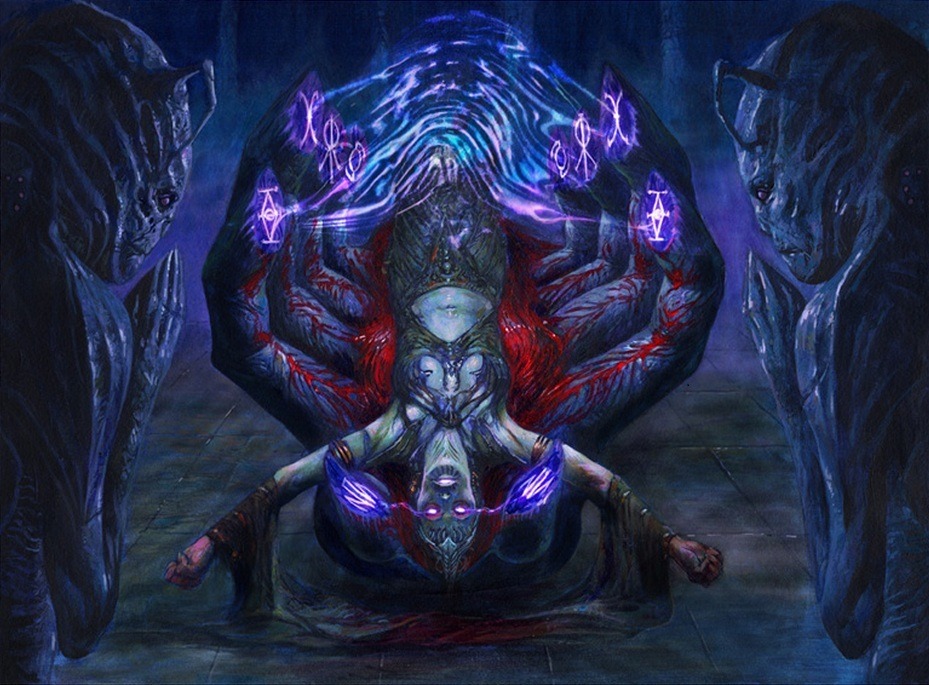
Necropotence | Illustration by Dave Kendall
Though broken cards have no set definition, we can agree that for one reason or another, they warp the game around themselves. These cards fall into one of two loose categories. The first are cards that have an overly large impact on the game relative to their mana cost; these are often old spells that provide card draw or ramp for little to no mana. The other category is made up of game-warping threats; these are often newer cards that highlight power creep’s ugly side.
#38. Hogaak, Arisen Necropolis
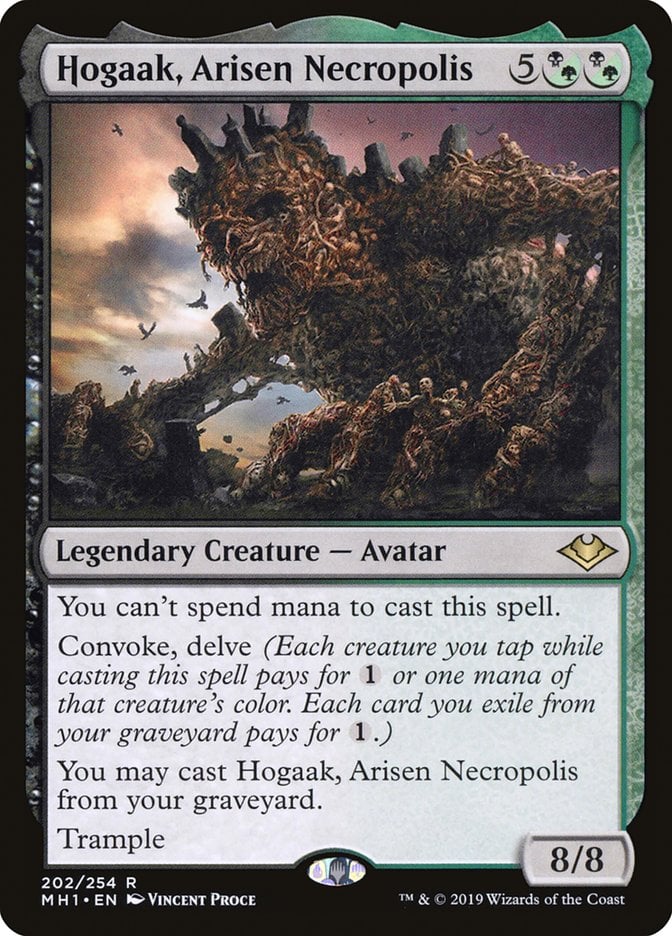
Broken cards are often cheap cards that do way too much for their low costs, so you might not expect an 7-drop on the list. Thing is, nobody ever paid 7 mana for Hogaak, Arisen Necropolis. It was a free threat that never stayed down since you could cast it from the graveyard. Combined with cards like Bridge from Below and Altar of Dementia, it formed the core of a fierce strategy that saw multiple cards banned in Modern to weaken the deck—including Bridge from Below and Faithless Looting—but the culprit was always this eldritch monster.
#37. Bazaar of Baghdad
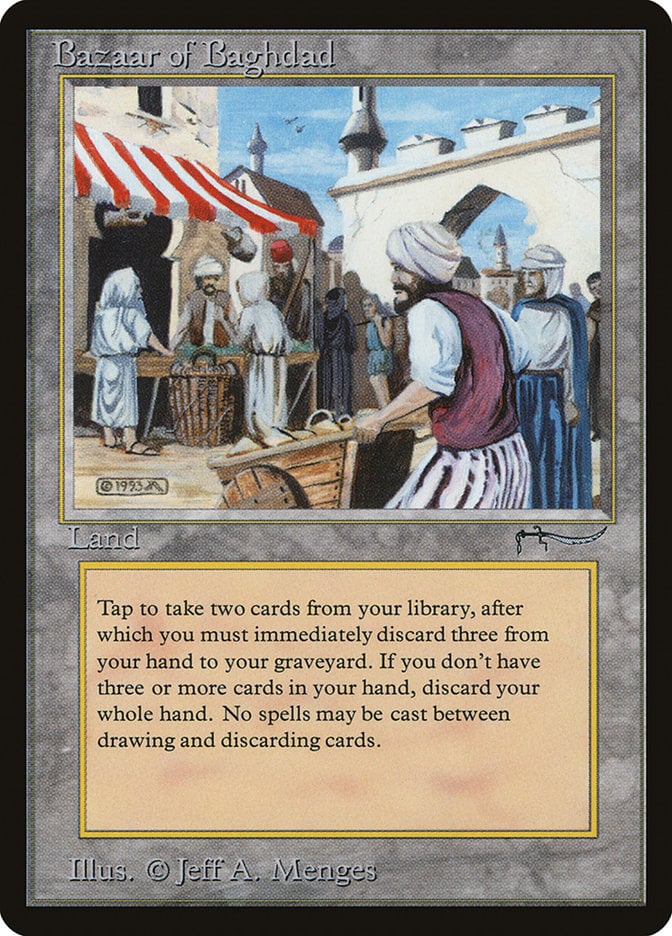
I’ve gone back and forth on Bazaar of Baghdad’s inclusion. Though activating it is technically card disadvantage, enough busted strategies rely on the graveyard to desire seeing three cards hit the yard. But is the Bazaar truly busted, or does it simply enable actually broken strategies like reanimator and dredge? I’ve erred the side of including it; at the very least, it’s indispensable in decks that want it.
#36. Fetch Lands
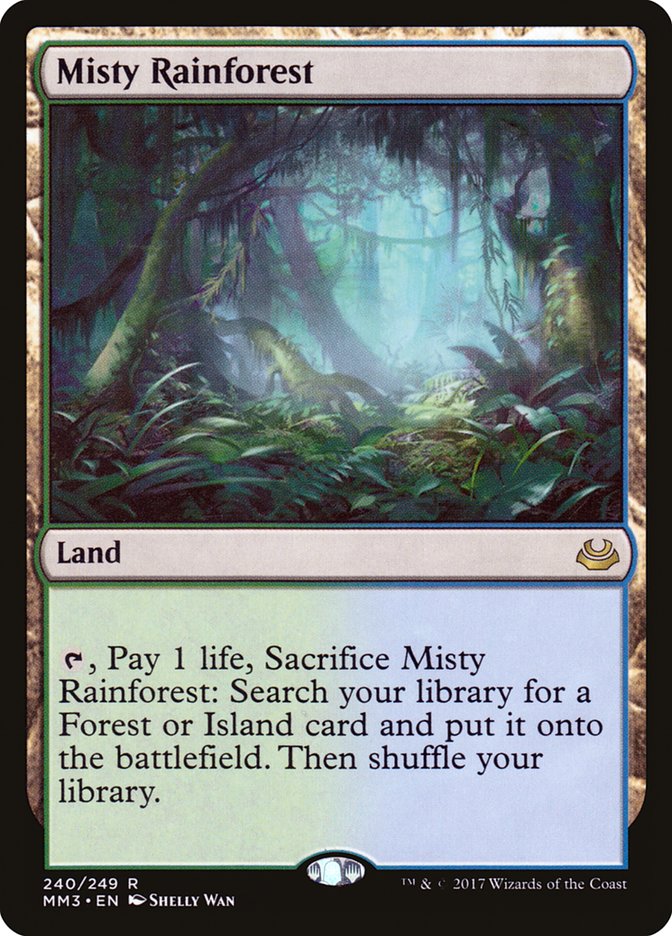
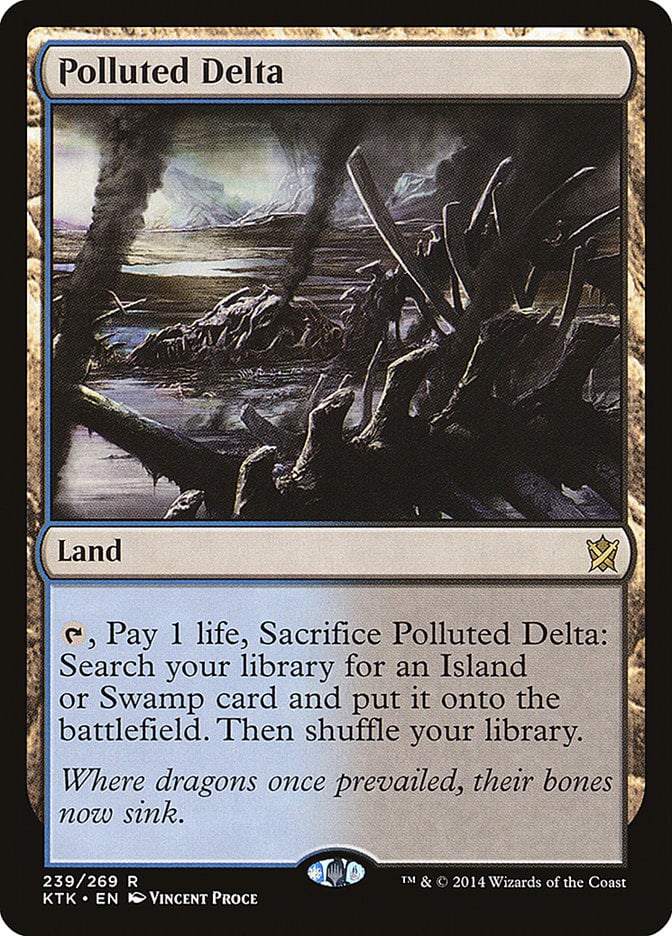
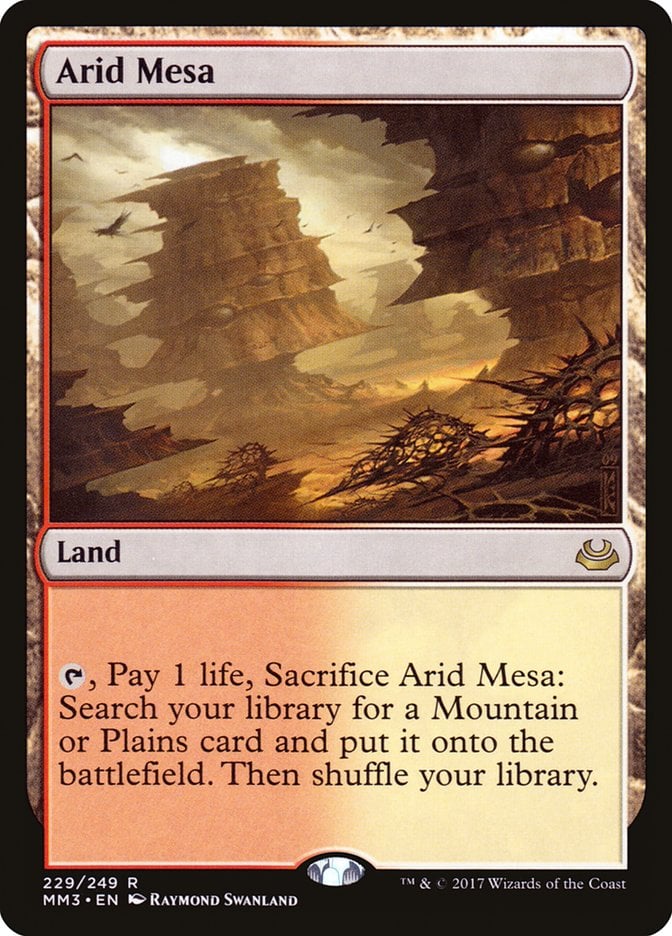
Mana fixing alone is far from broken, but fetch lands do so much more. They’re a source of life loss; cards in graveyard for mechanics like delve, escape, and delirium; shuffle effects; sacrifice triggers for Mayhem Devil and its ilk; and they work with a variety of niche cards like Wrenn and Six and Baloth Prime. All these little things are done in excess of fixing your mana, for no mana invested: It’s the very definition of cards with an over-sized impact compared to their mana cost.
#35. Reanimate
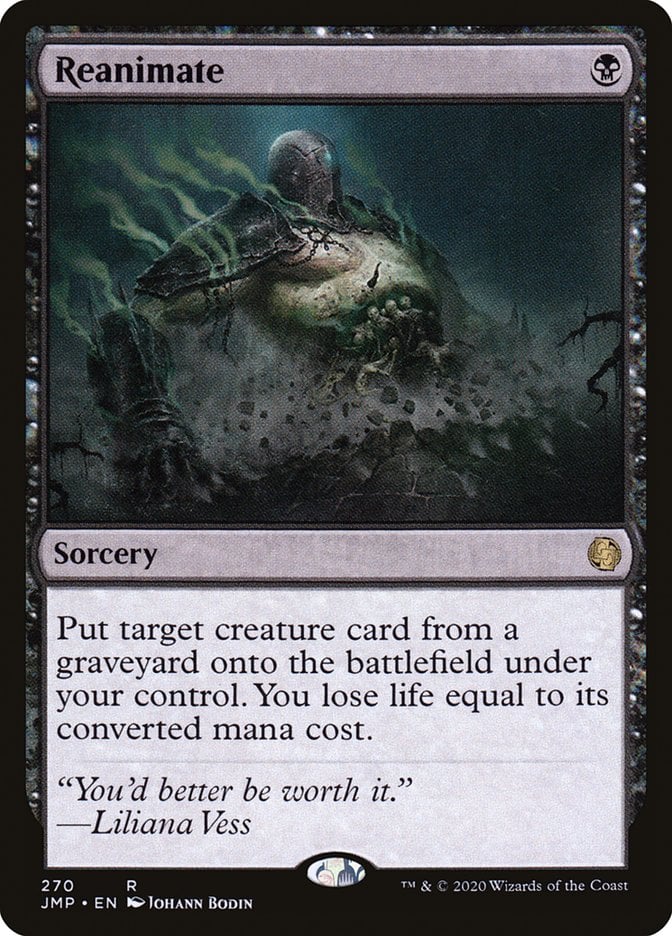
Reanimate requires lots of setup because you need a reanimation target and a way to get it into the graveyard, but it’s still cracked. There aren’t enough hoops in the game to make a 1-mana Griselbrand fair.
#34. Emrakul, the Aeons Torn
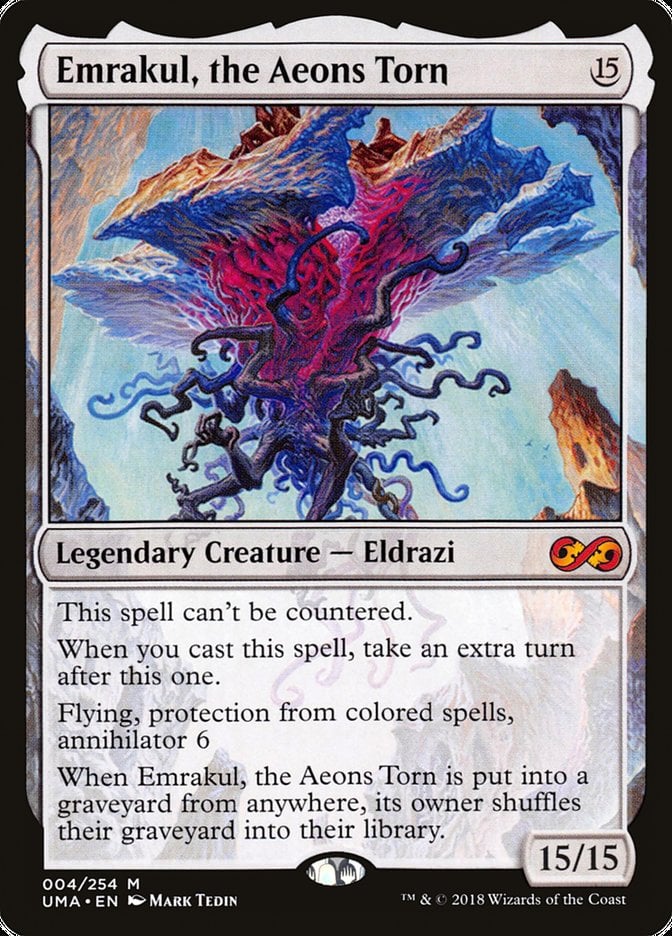
Emrakul, the Aeons Torn has one of the strongest text boxes in the game, yet I struggled to include it on this list. Is Emrakul, with its immense 15 mana value the issue, or is it the slew of cards that get it into play for a fraction of the cost? I decided to add it because taking an extra turn and annihilator is nasty, and that’s made this one of the marquee creatures to cheat into play, but I still think Sneak Attack and friends are the real offenders.
#33. Fastbond
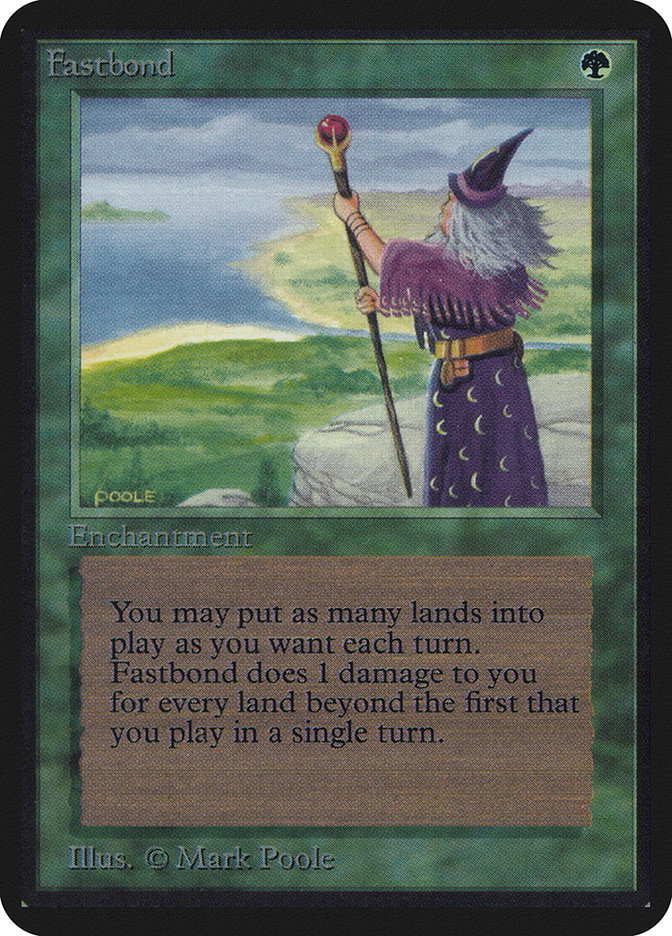
Making your land drop each turn is already one of the best game actions in Magic. Imagine how good making all your land drops at once is! Even if Fastbond just puts two extra lands into play turn 1, you have a two-turn advantage over your opponent. It often goes further with draw-sevens and infinite combos that involve Crucible of Worlds to make this a 1-mana game-winning play.
#32. Balance
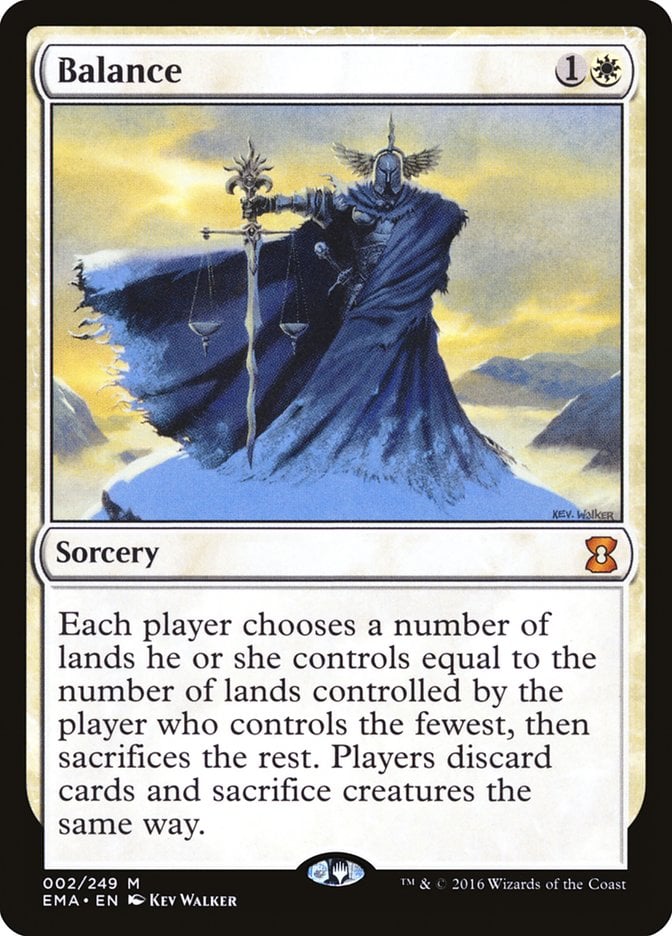
Few white cards are truly broken, but Balance does a good job of it. You often end up playing artifact mana to empty your hand so Balance Mind Twists your opponent in addition to messing with their lands. Even outside that ideal scenario, you can leverage a 2-mana board wipe that attacks lands and the hand in many situations.
#31. Skullclamp
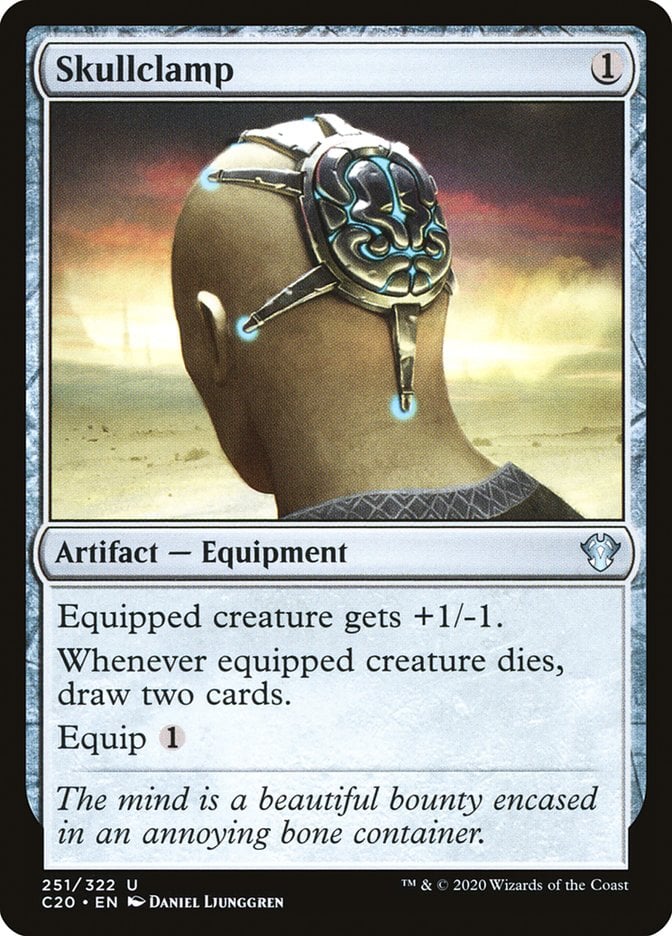
Skullclamp requires a stream of small creatures to pop off, but tokens have been part of Magic since its inception. This draw engine rivals The One Ring with a little preparation, all for a minuscule mana cost. Since Skullclamp often draws cards the turn it comes into play and only costs 1 mana, it’s hard to remove profitably.
#30. Golgari Grave-Troll
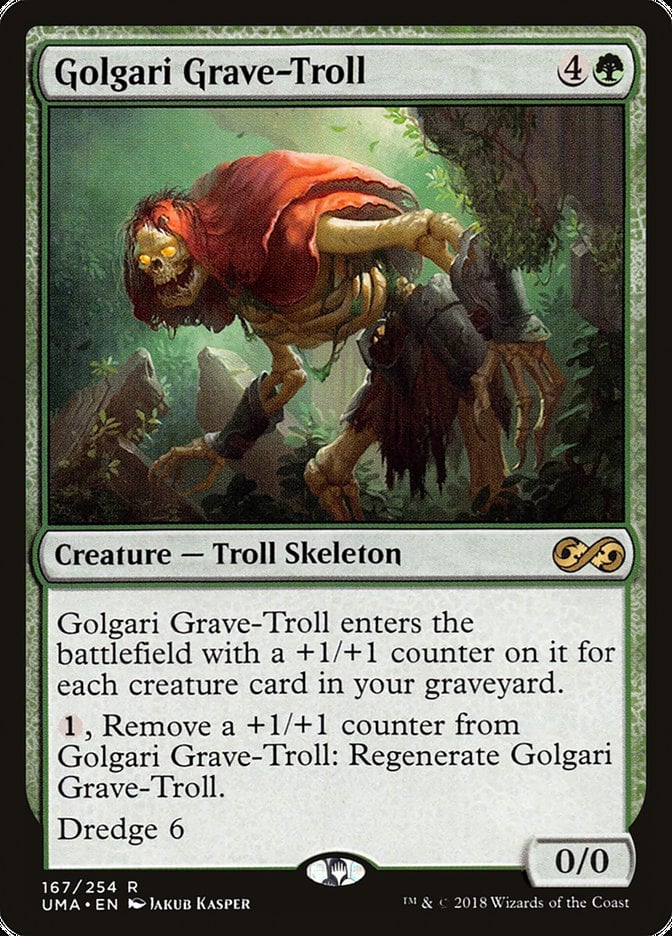
Playing dredge feels different than any other archetype because of how it relies on the graveyard and your library. No dredge card is stronger than Golgari Grave-Troll, a powerful enabler that managed to get banned in Modern twice.
Think of it like this: Dredge decks need to dump cards in the graveyard to trigger effects like Narcomoeba, so self-mill more or less equals drawing cards. The Grave-Troll basically lets you draw six cards at a time! That’s almost a full hand’s worth of resources.
#29. Timetwister + Wheel of Fortune
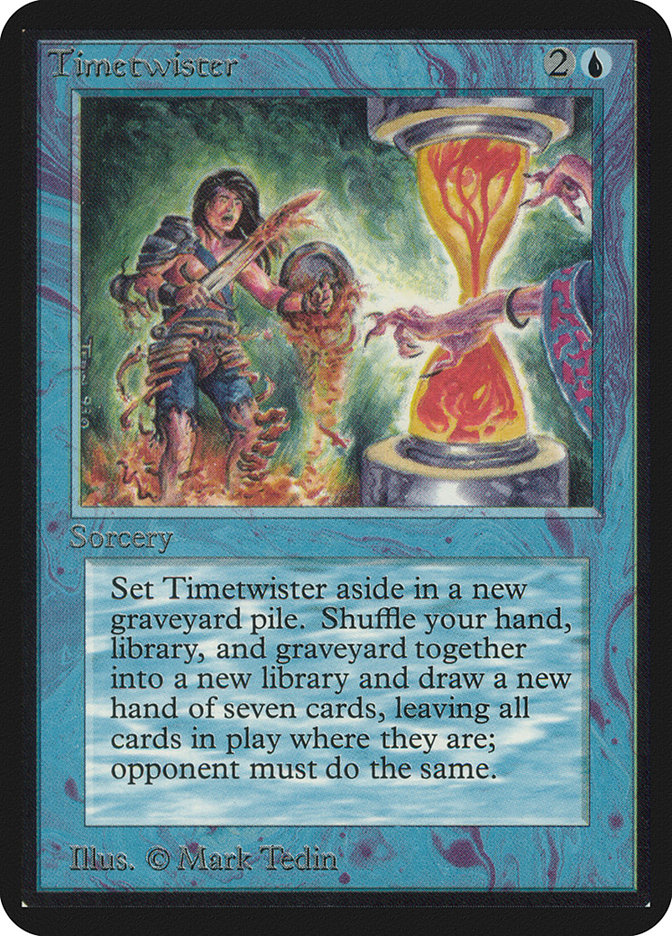
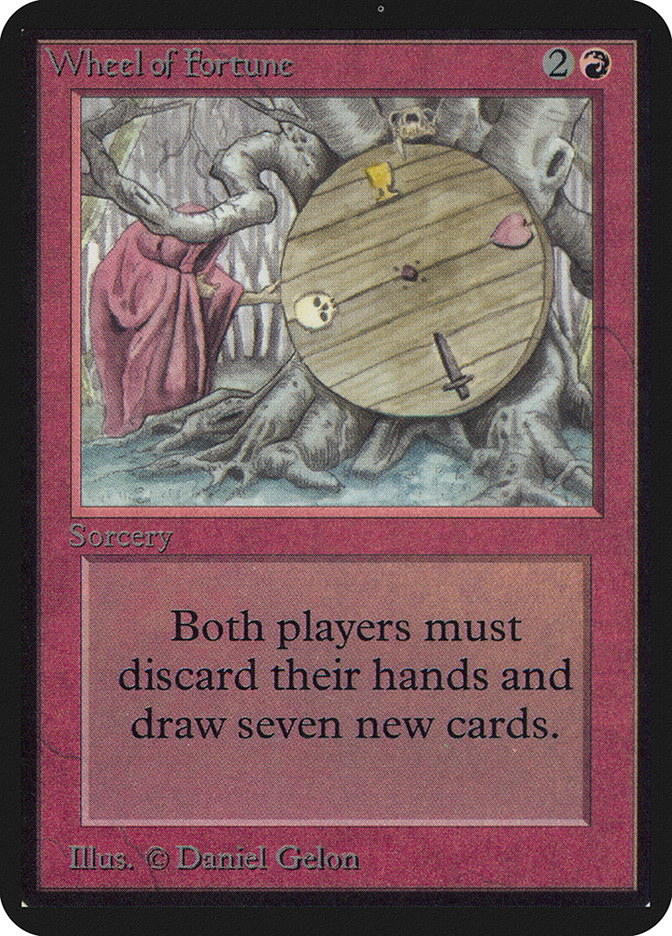
Draw sevens like Timetwister and Wheel of Fortune require some setup to really break; just casting one on turn 3 often backfires since your opponents get free cards and the first crack at casting them. But a little fast mana or a card like Narset, Parter of Veils or Orcish Bowmasters to inhibit or punish the card draw can turn them into powerful tools. These are incredibly efficient, after all; no other effects let you draw seven cards for 3 mana.
#28. Oko, Thief of Crowns
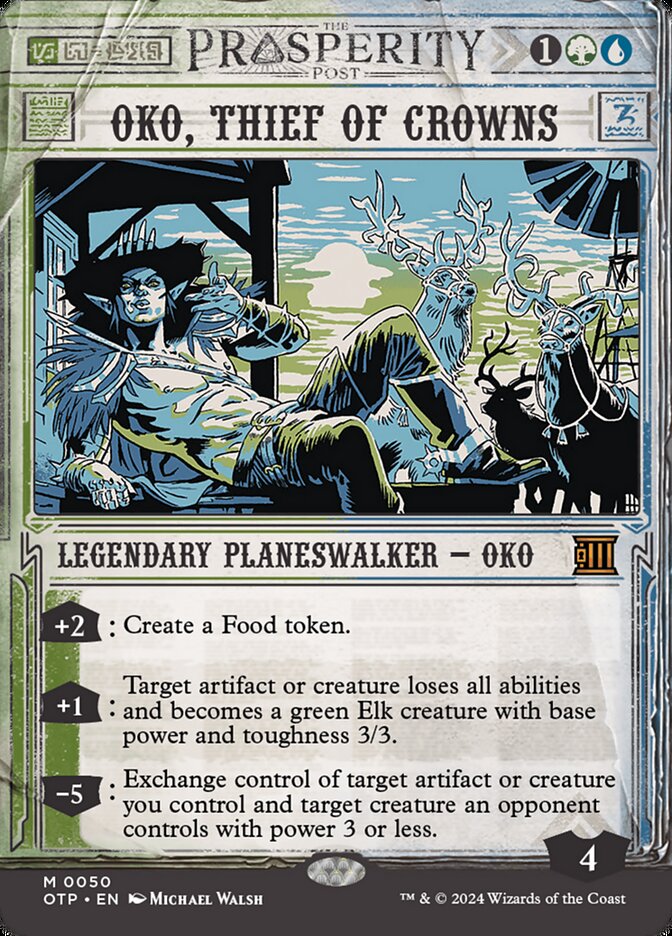
The numbers are just wrong on Oko, Thief of Crowns. You can’t pressure a 3-mana planeswalker that upticks to 6 loyalty easily—especially since it often comes down on turn 2 thanks to mana dorks. It invalidates any meaningful artifact or creature its opponents play, which makes it a wildly powerful control tool that also wins the game thanks to a steady stream of 3/3s. Oko is a great example of a card that’s too cheap; Oko at 5 mana would be one of Magic’s strongest planeswalkers. Wizards really wanted Throne of Eldraine to sell well.
#27. Demonic Tutor
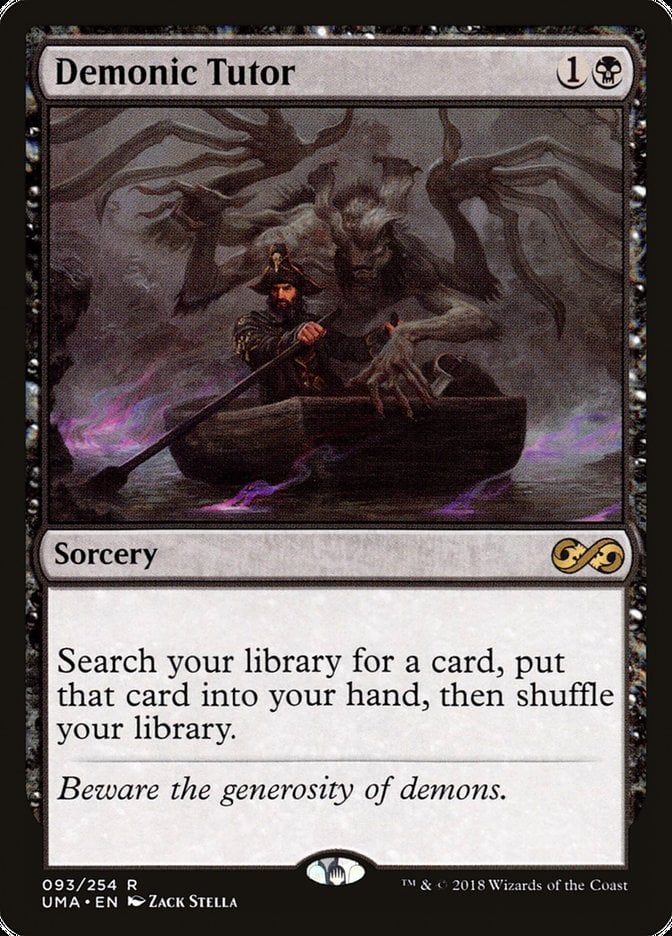
Demonic Tutor doesn’t cheat on mana or provide immense card advantage, but it’s still an incredible card because it’s always your best card. It enables fast combos by acting as additional copies of your Thassa's Oracle, but it’s far more flexible than that; this can be your Oracle, or a Thoughtseize to set up the combo, or Force of Will to protect it. As long as you have Demonic Tutor, you have your most important card for any given situation.
#26. Thassa’s Oracle
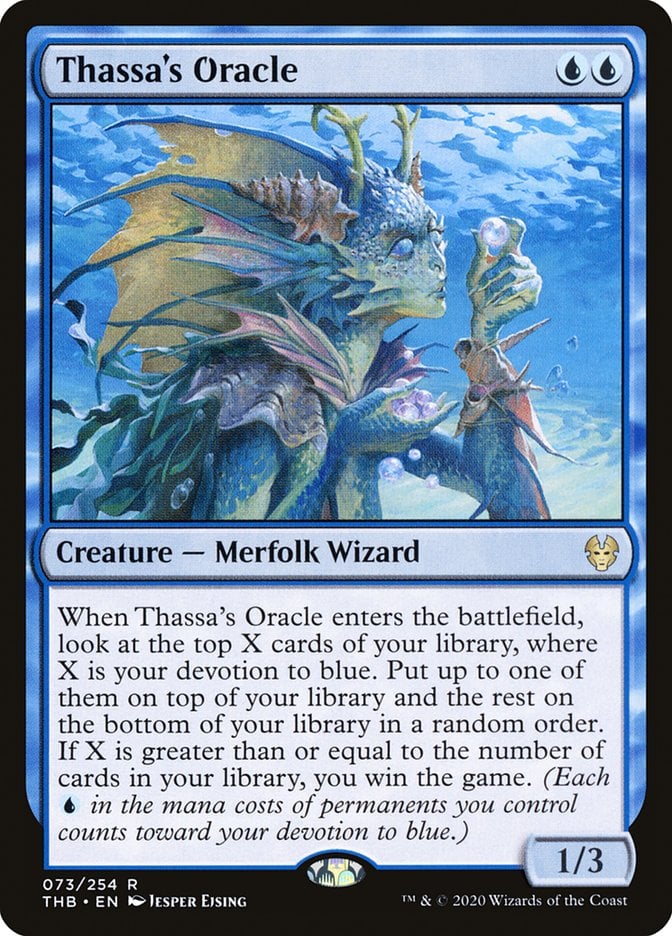
Thassa's Oracle wins the game if your library is empty. It isn’t even the first card of its kind, with Laboratory Maniac as the previous staple. But Oracle is far stronger; not only does it cost less mana than LabMan, but it doesn’t require an additional effect to draw a card, and killing it in response rarely interrupts the win since the trigger goes straight to the stack. It has spawned new combos (namely with Demonic Consultation and Tainted Pact) and provided existing decks with a strict upgrade to the old staple.
#25. Mishra’s Workshop
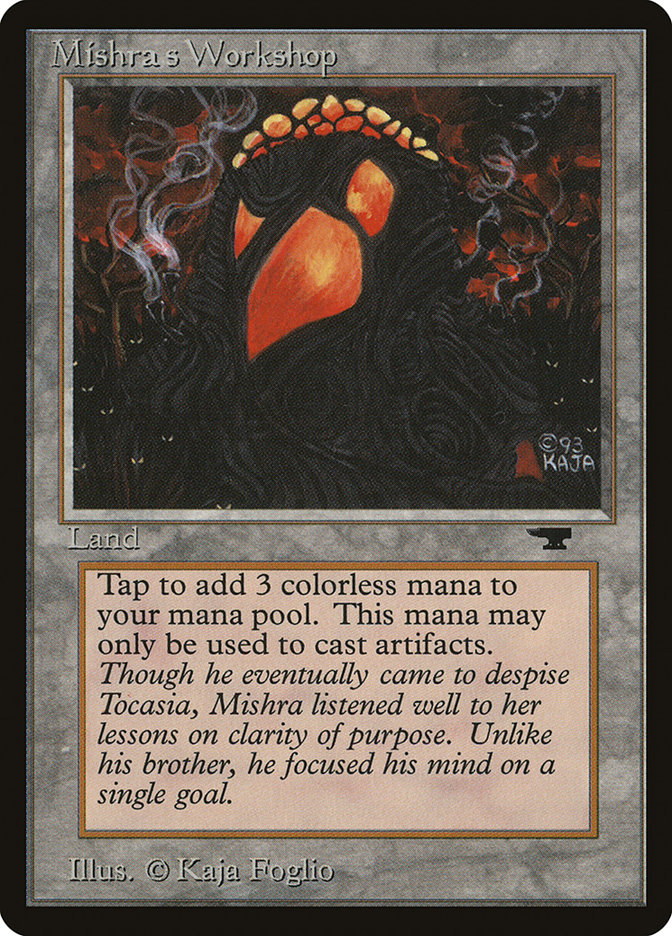
The immense restriction on the mana Mishra's Workshop produces fails to balance the absurdity of a land that taps for 3 mana. Maybe if artifacts weren’t already the strongest card type in the game… but they are. Workshop decks have been a constant staple in Vintage, and this is one of Magic’s greatest lands.
#24. Library of Alexandria
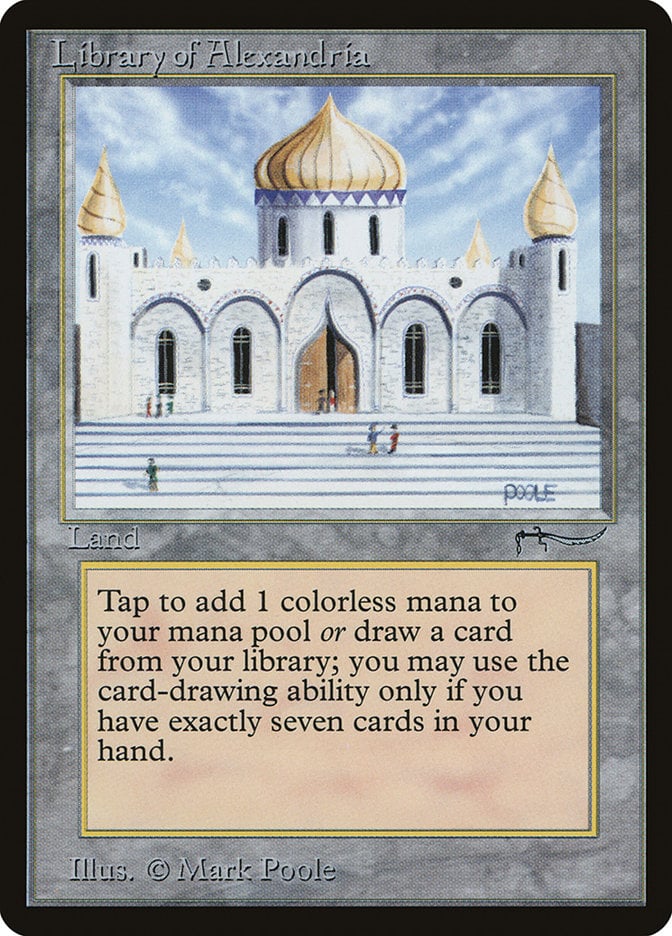
Library of Alexandria comes with a slight cost; activating this to draw cards means playing a turn off curve, and it limits your actions in the first few turns of the game. But repeatable, mana-less card draw is worth nearly any number of hoops, especially when it goes into any deck.
#23. Channel
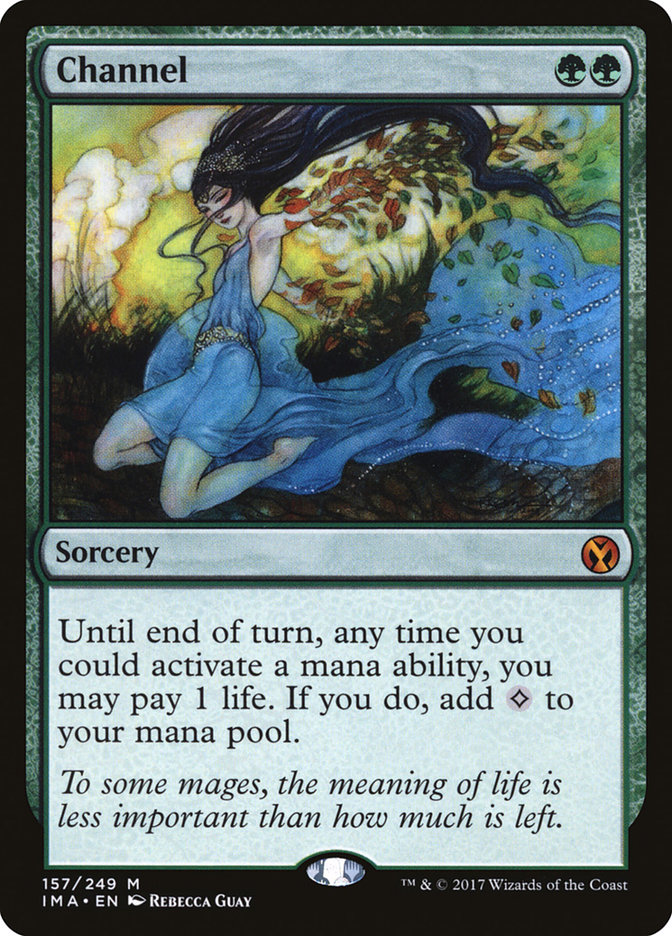
Channel has always been an iconic threat alongside expensive spells like Fireball, and time has only made it better; these days, we cast Emrakul, Portal to Phyrexia, and Coveted Jewel. Channel casts spells without paying their mana costs with extra steps, a fundamentally game-warping play pattern.
#22. Treasure Cruise + Dig Through Time
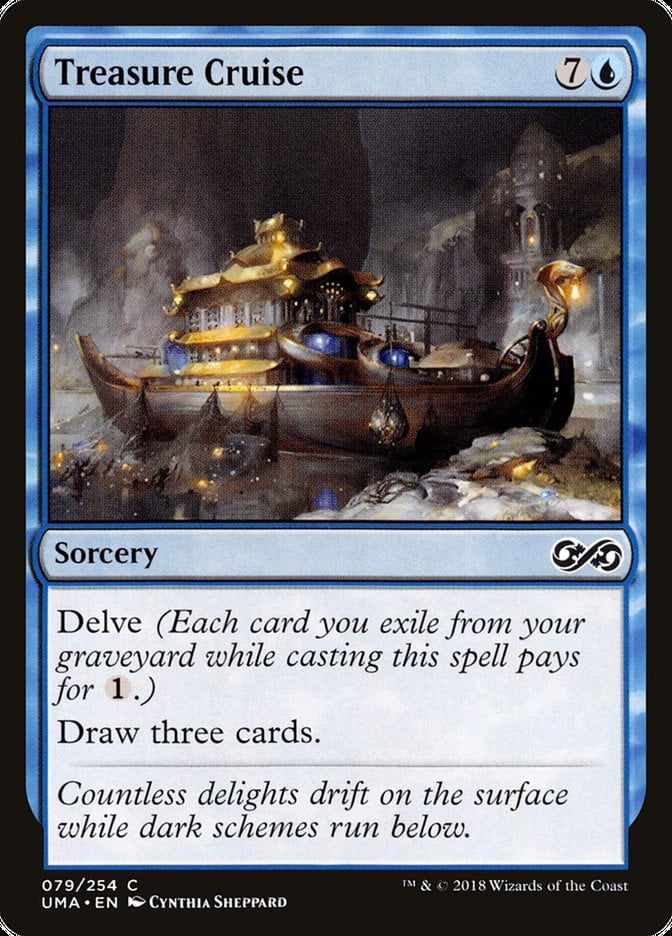
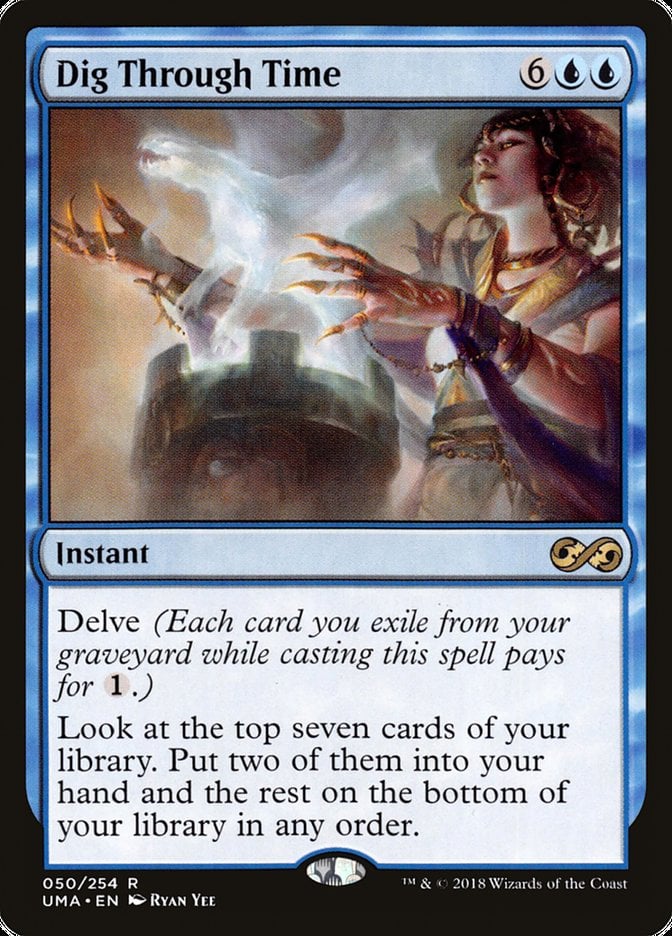
Any mechanic that lets you pay mana costs with a resource other than mana is at least a little broken. Enter delve, a mechanic that converts your graveyard into mana. Play fetch lands, cheap spells, and a little self-mill like Thought Scour, and you’ll have no trouble casting Treasure Cruise and Dig Through Time for 1 or 2 mana. When you do, you get ludicrously unfair card draw. Three cards for 1 mana? The best two of seven for 2? Utterly insane.
#21. Tinker + Natural Order
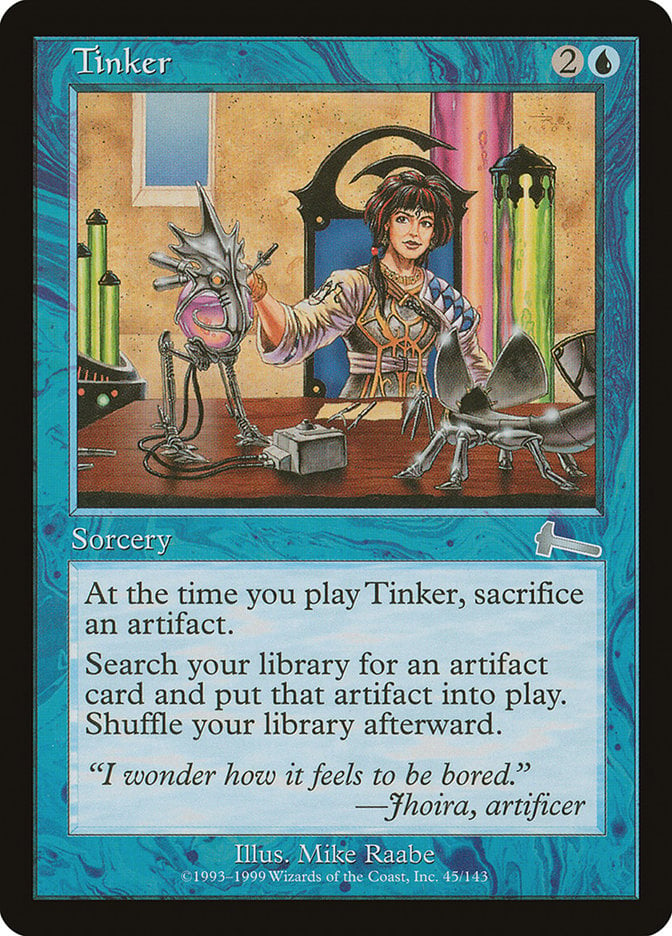
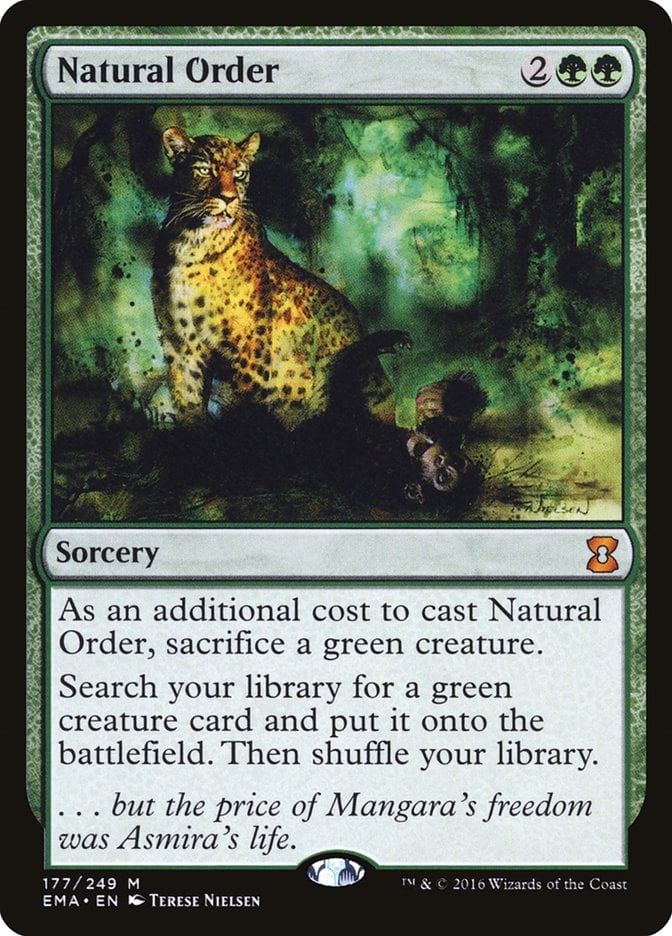
Though Tinker and Natural Order appear similar, make no mistake: Tinker is superior. Only artifacts can rival green for mana production, and any format where Tinker is legal has access to fast mana. Both are worth playing in decks that support them as ways to cheat high mana costs on exceptional threats like Bolas's Citadel and Atraxa, Grand Unifier.
#20. Chrome Mox + Mox Diamond
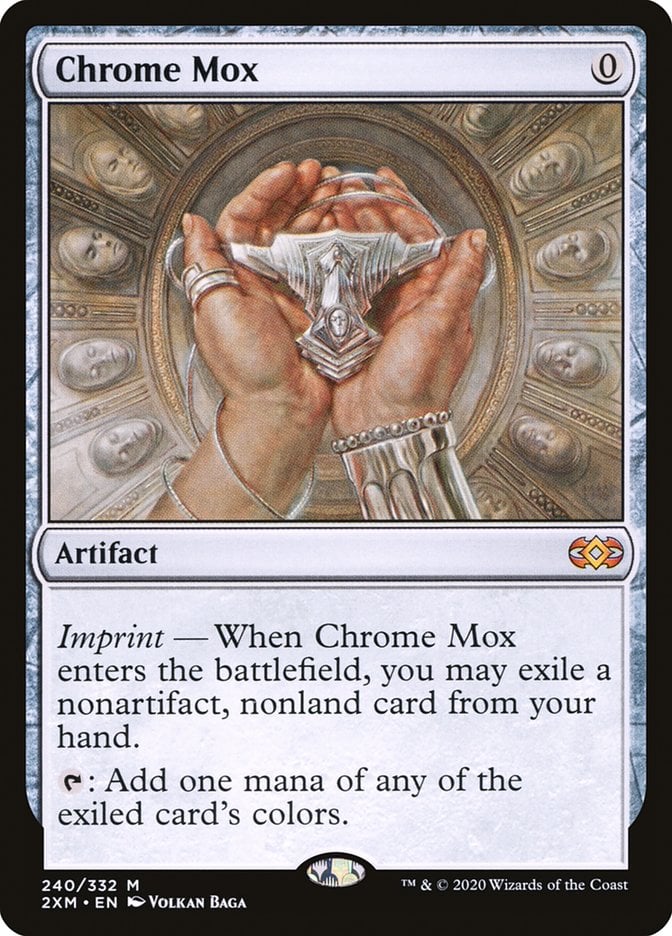
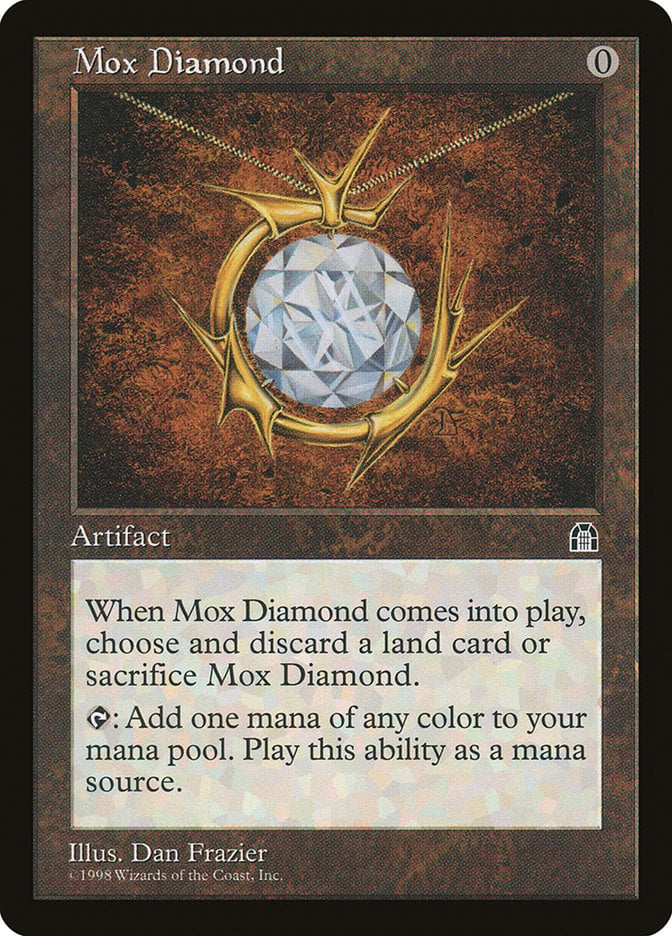
Chrome Mox and Mox Diamond are very similar cards: They provide mana fixing and acceleration at the cost of a card from your hand. That makes them susceptible to artifact removal, but the reward outweighs the risk. Starting the game on turn 2 gives you more options, more ways to spend your mana, and a faster start to win.
#19. Yawgmoth’s Will + Underworld Breach
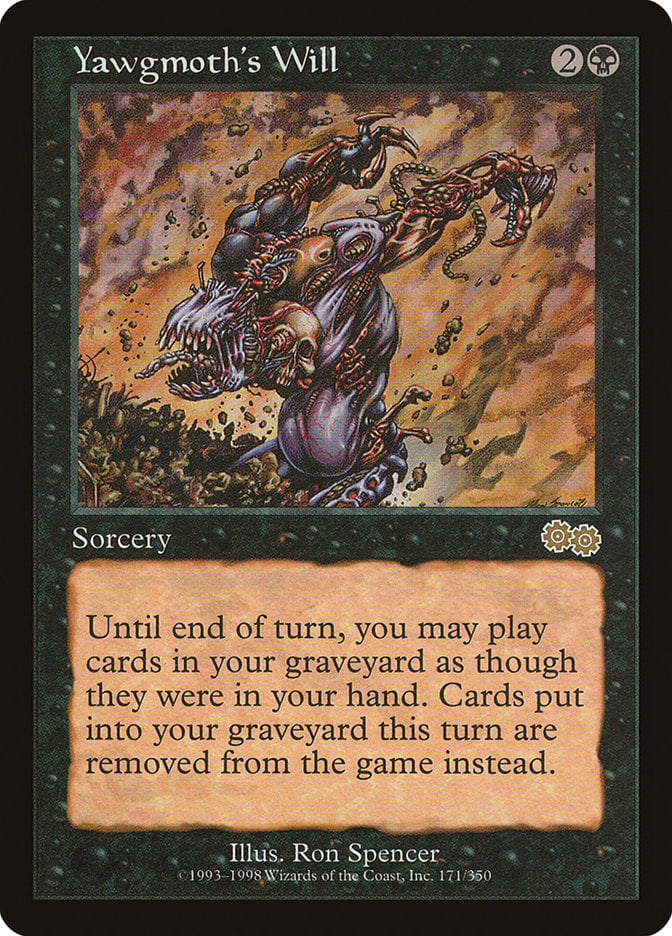
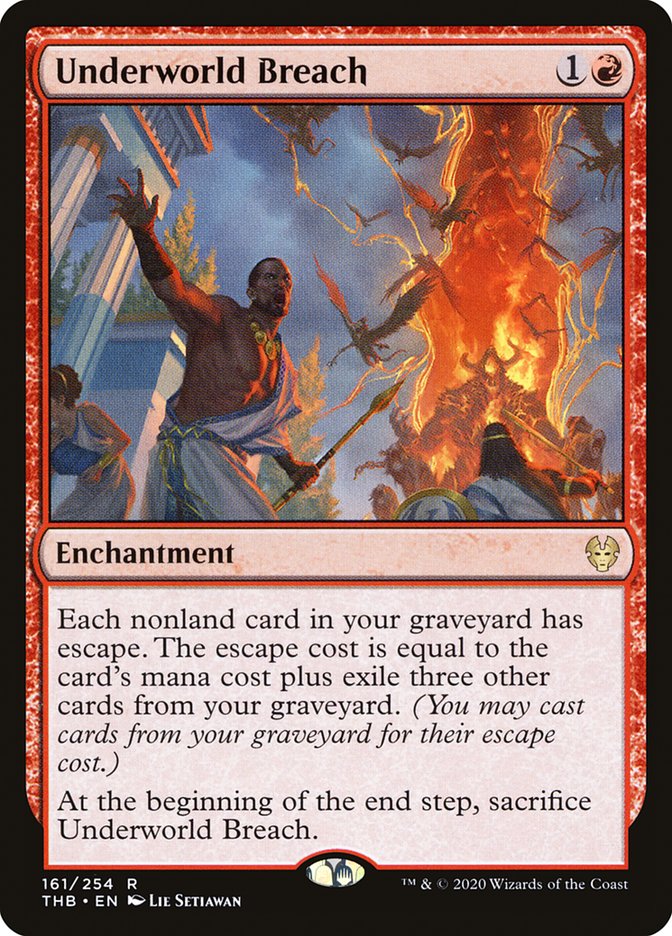
Though they have different uses, Yawgmoth's Will and Underworld Breach both fuel graveyard-based combos that end the game. Will works in traditional storm builds that cast rituals and tutors, then it recasts them to up the storm count; Breach is more concise, relying on cards like Brain Freeze or Grinding Station to enable Thassa's Oracle. Whichever you run, the easy access to spells in your graveyard makes them insane finishers worth building around.
#18. Nadu, Winged Wisdom

It can be tricky to design cards for multiple formats. A card with a power level appropriate for Modern might not be fit for Standard. Nadu, Winged Wisdom embodies this struggle; Wizards initially pushed Nadu for Commander and ended up breaking Modern—and Commander, for that matter. Combinations with cards like Shuko and Sylvan Safekeeper that target your creatures for no mana drew huge sums of cards and pumped mana into play. It provided all of Magic’s best resources with little effort, for 3 mana; this was a design mistake through and through.
#17. Necropotence
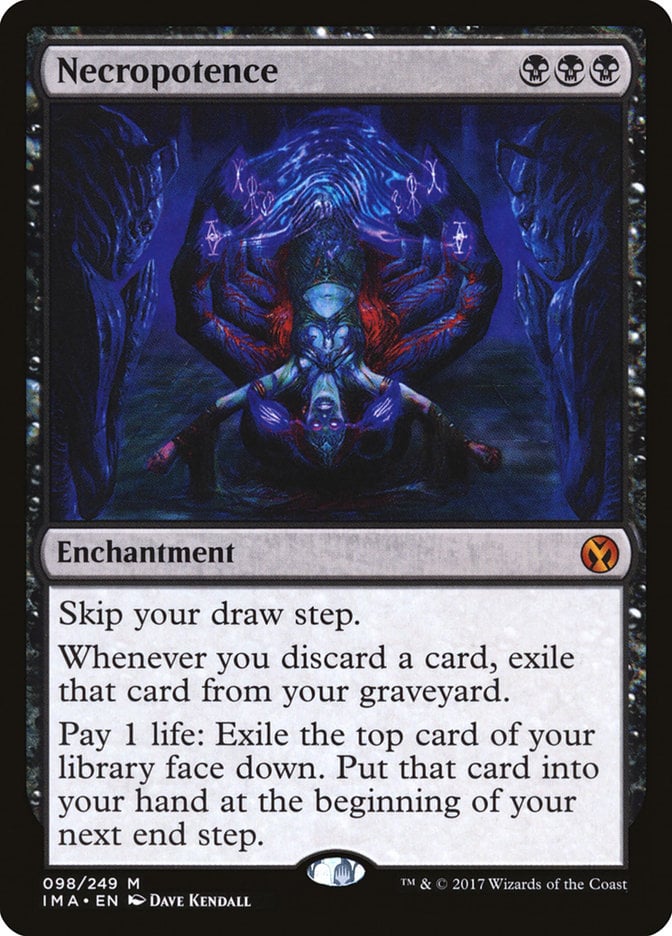
Though inarguably broken, Necropotence offers more interesting lines than something like The One Ring. You see an unfair number of cards, but you need to make choices. It sculpts the perfect hand rather than just flood you with resources, which makes it engaging to play with and terrifying to see on the other side of the board.
#16. The One Ring
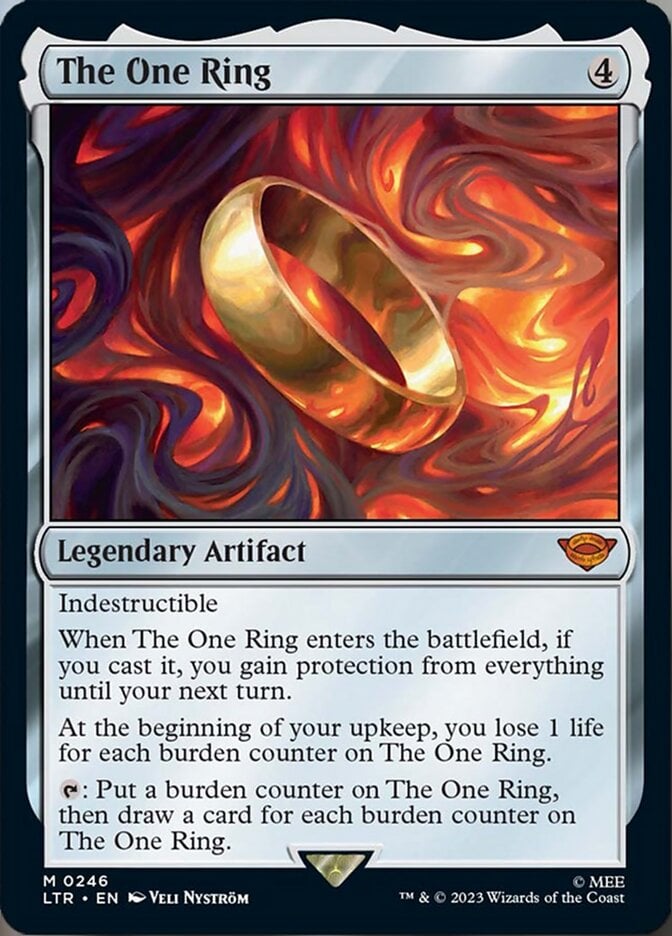
I understand why Wizards made The One Ring a powerful card; imagine the reactions to the greatest artifact of Middle-earth being some dorky equipment that gave unblockable. But this went too far; not only is it an incredible draw engine, but it also protects you and can’t be removed by most interaction. That coupled with its colorless identity makes it one of the strongest threats in recent memory.
#15. Dark Ritual
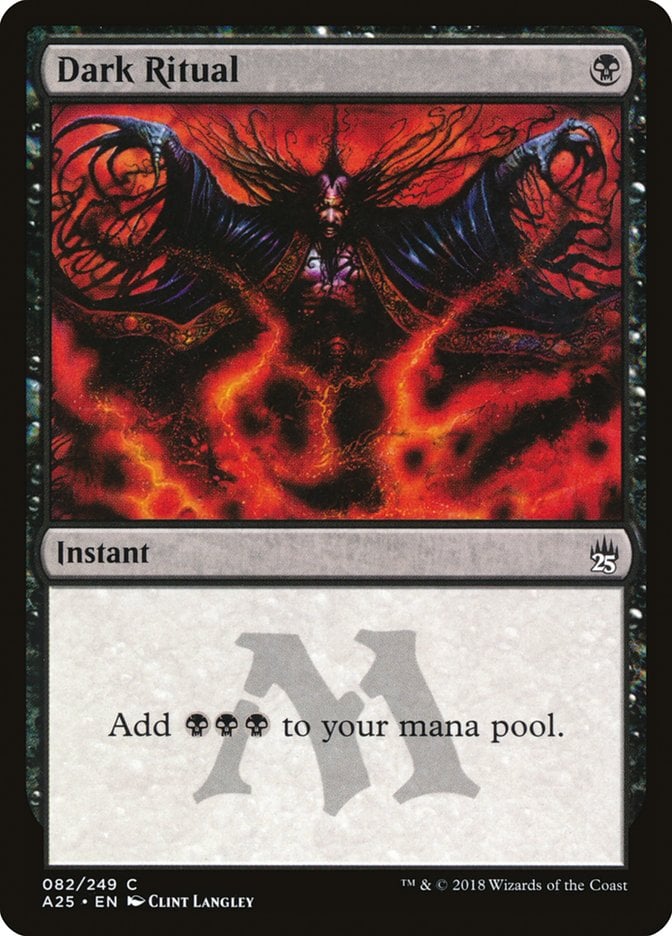
Dark Ritual, like all rituals that bare its name, has a built-in risk. If you cast Necropotence on turn 1 with DR and it’s countered, you’ve been two-for-one’d. But the upside of that turn-1 Necro, or using this to fuel a long turn that ends in Tendrils of Agony, more than makes up for that weakness.
#14. Mana Vault
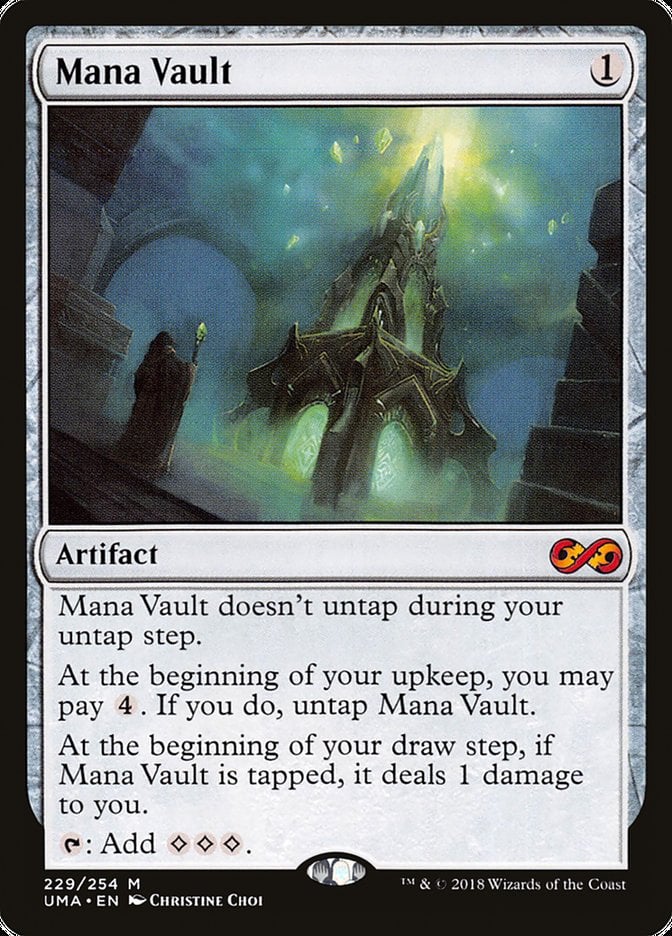
Mana Vault has a lot in common with Dark Ritual as players often leverage it as a ritual to get large cards like Lodestone Golem and Karn, the Great Creator out fast. It’s also easier to break: You can untap it with Voltaic Key and similar effects, bounce it with Paradoxical Outcome, etc.
#13. Gaea’s Cradle
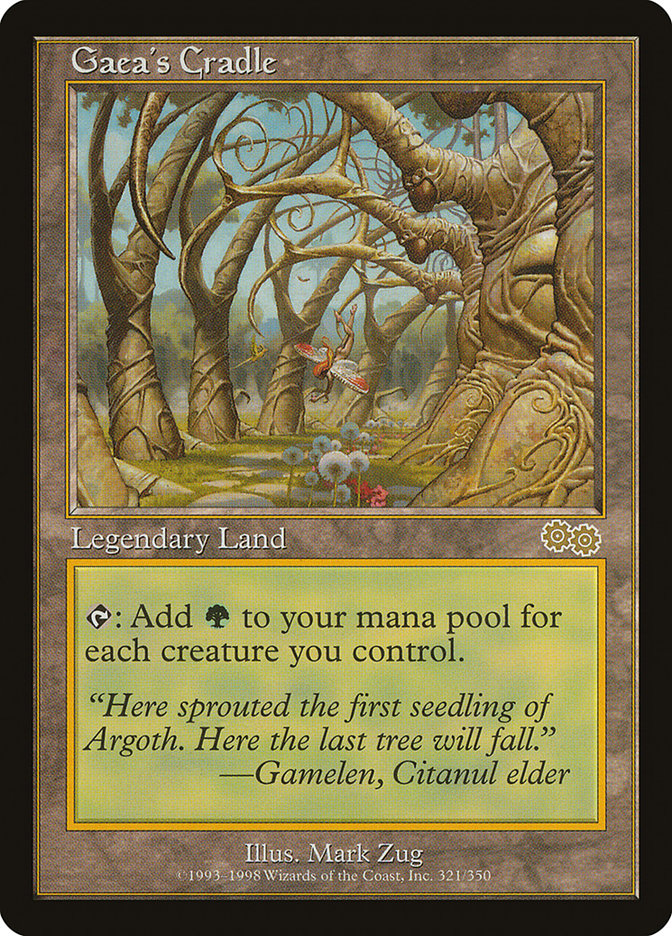
Many lands that tap for 2 mana made this list. So imagine what a land that taps for a theoretically infinite amount of mana can do! Any deck that floods the board with cheap creatures—often elfball decks—turns this into a busted bomb that takes over games in short order, typically so they can finish off with a Craterhoof Behemoth. The need for many creatures makes Gaea's Cradle more restrictive than other fast mana, but it’s still amazing.
#12. Ancient Tomb + City of Traitors
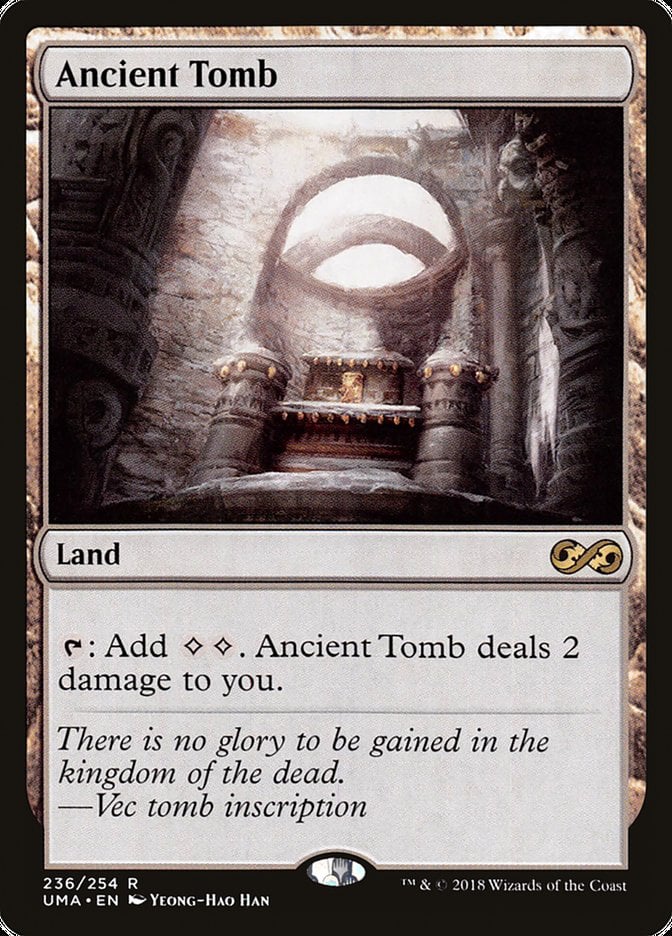
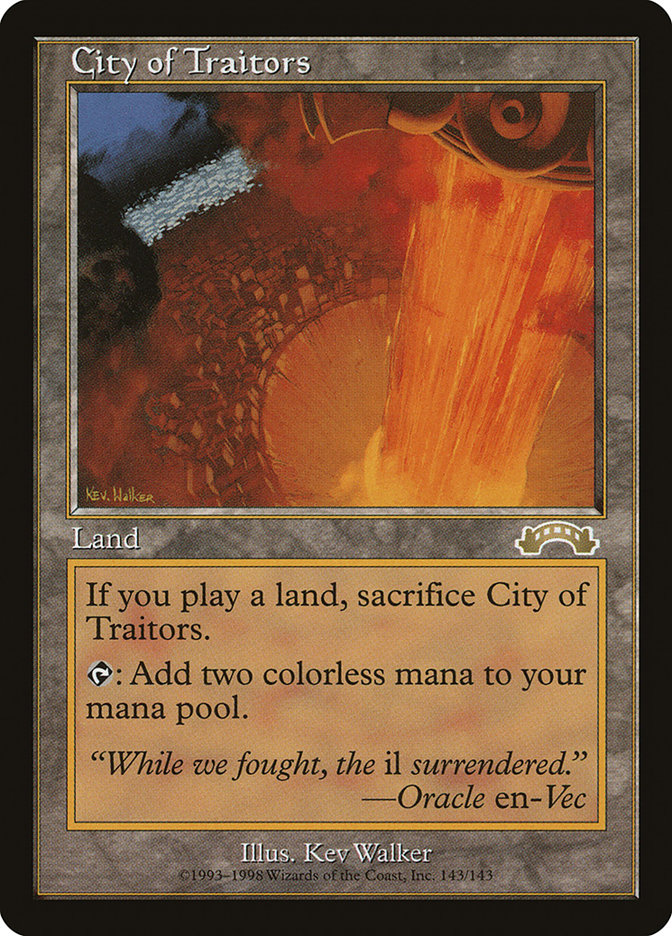
While Ancient Tomb is clearly superior to City of Traitors, most decks that include the former find room for a copy or two of the latter. These ignore the fundamental rule that lands tap for 1 mana, which throws off the balance. Dragon Stompy decks use them to power out stax pieces like Chalice of the Void and Blood Moon and under-costed threats like White Plume Adventurer. Since they produce colorless mana, they work best with artifacts.
#11. White Plume Adventurer
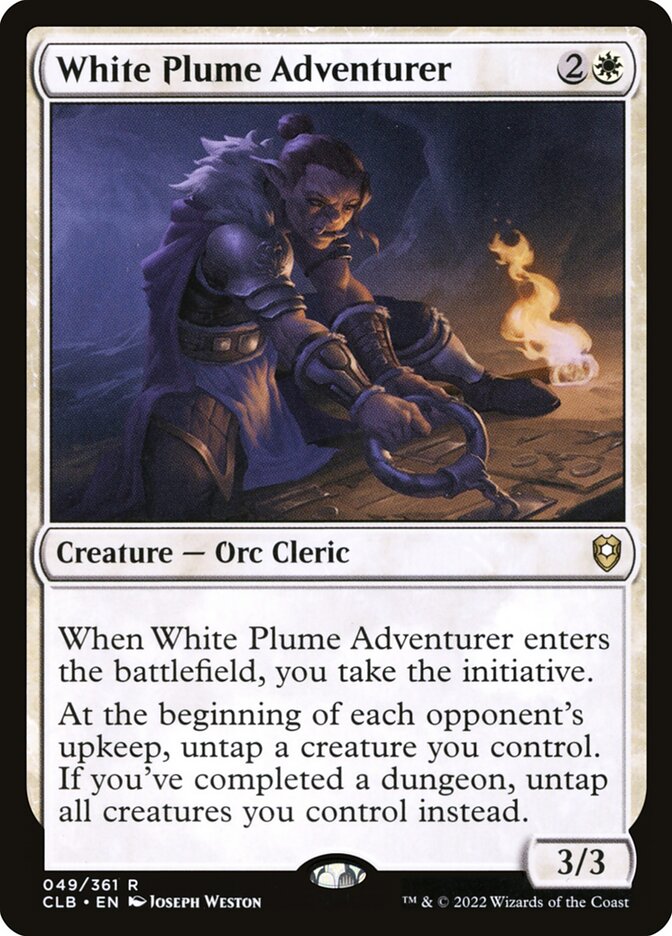
The initiative is a broken mechanic because it offers game-warping amounts of pressure and card advantage. White Plume Adventurer warped the Legacy meta for a time because a good draw could play it turn 1, and many draws played it turn 2—before the opponent had a chance to establish a board presence and contest The Undercity. Fast mana plus White Plume is still good enough for Vintage, which should give you an idea of its power.
#10. Lurrus of the Dream-Den
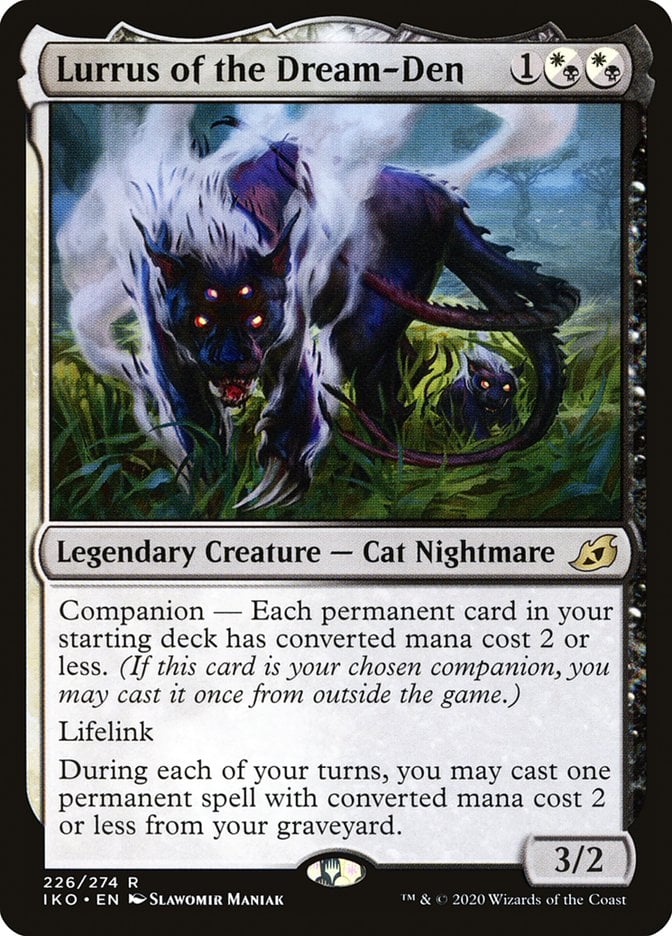
Companions break the game because players with companions start with a free extra resource, which gives them a huge edge over players without a companion. This has led to multiple companions’ ban across numerous formats, but none top Lurrus of the Dream-Den, one of the very few cards ever banned in Vintage, a format specifically designed to play with Magic’s strongest cards. It was later unbanned, but that doesn’t detract from its strength: Many decks struggle to contend with its card advantage engine. Part of its power lies in its near-nonexistent companion restriction—old formats necessitate cheap, high-impact cards, so only playing cheap permanents is barely a restriction at all.
#9. Lion’s Eye Diamond
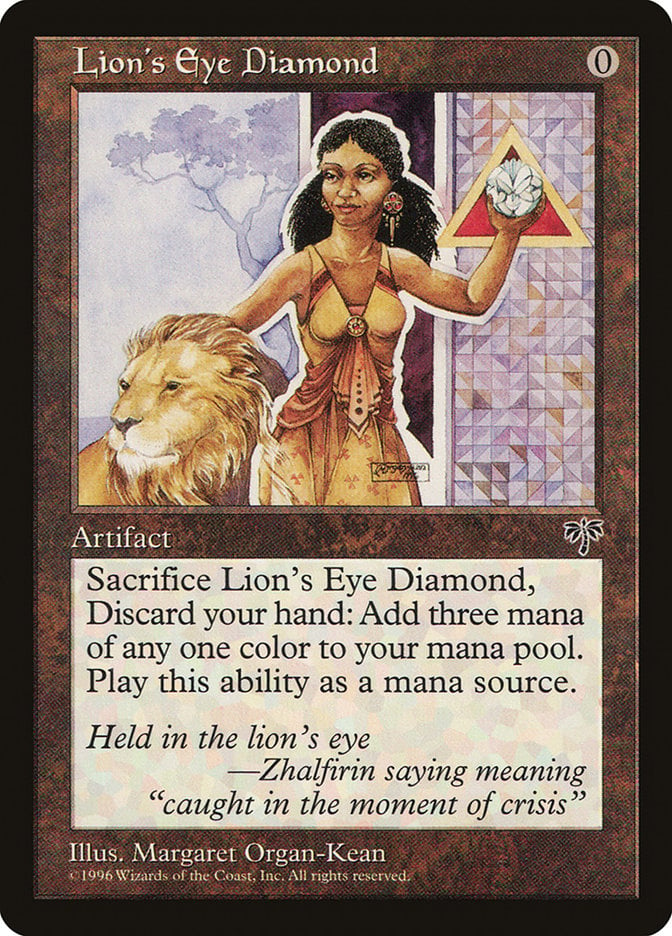
Lion's Eye Diamond attempts to be a fair Black Lotus; while I applaud the effort, the product was doomed. Discarding your hand often doesn’t matter with cards like Yawgmoth's Will, and occasionally it even becomes a boon with cards like Infernal Tutor and Echo of Eons.
#8. Tolarian Academy
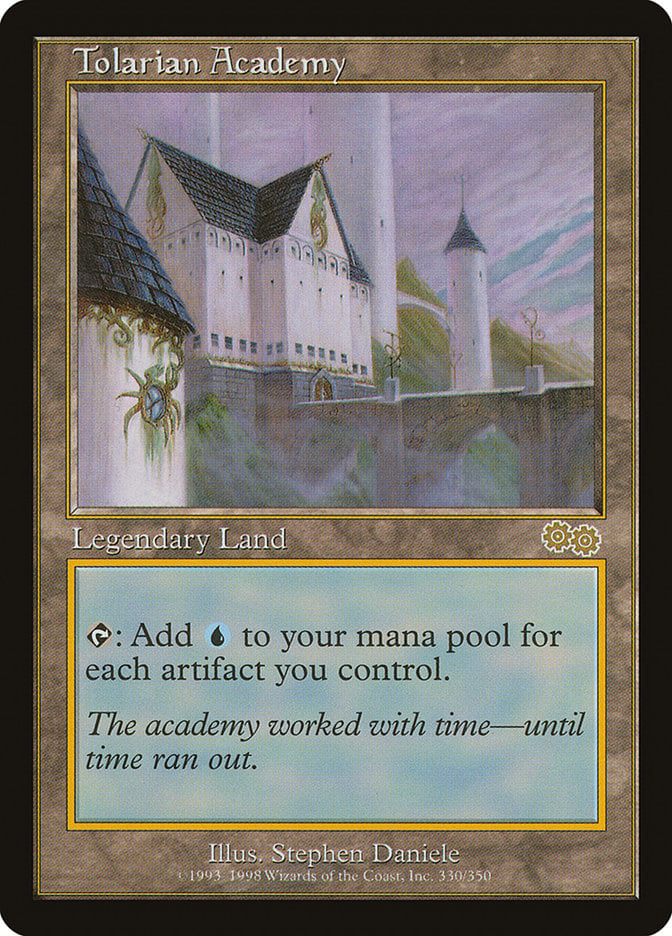
Blue is Magic’s best color, and artifacts are its best card type. What happens when they come together?
You get Tolarian Academy, one of Magic’s most famous locations and most infamous lands. It taps for oodles upon oodles of mana to power out threats. Toss in a Candelabra of Tawnos and your opponents might as well concede.
#7. Time Vault
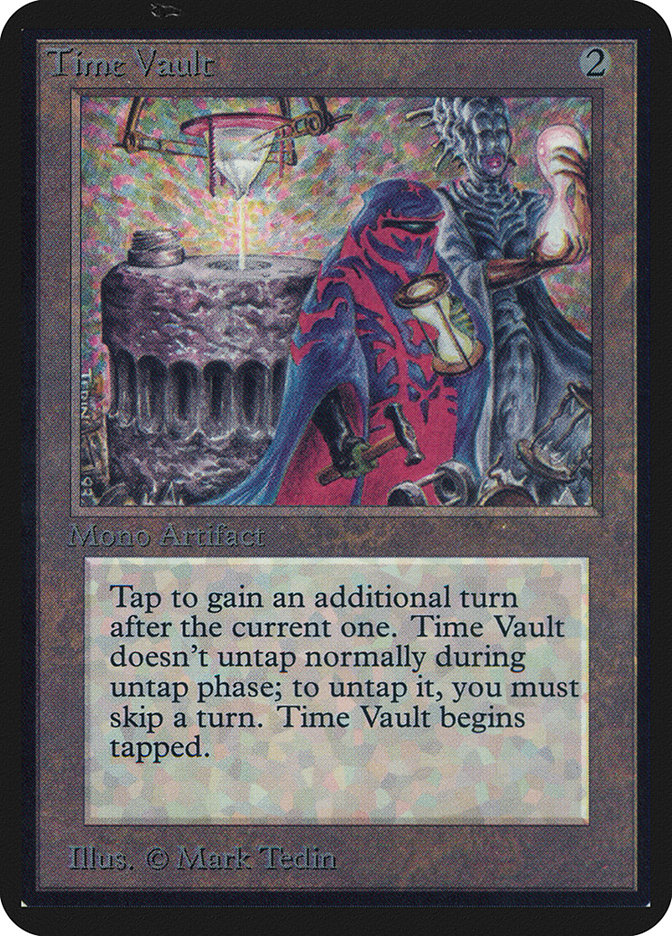
In a vacuum, Time Vault is a fascinating design. Engineering a situation where you can give your opponents two turns in a row to take two turns yourself sounds interesting. Engaging, even.
In reality, it turns Voltaic Key, Manifold Key, and anything else that untaps an artifact into a very cheap, colorless infinite combo to win the game. Due to the low mana cost and ubiquity of Time Vault and a Key, this artifact has seen many well-deserved bans and rarely even makes it into Vintage Cubes.
#6. The Alpha Moxen
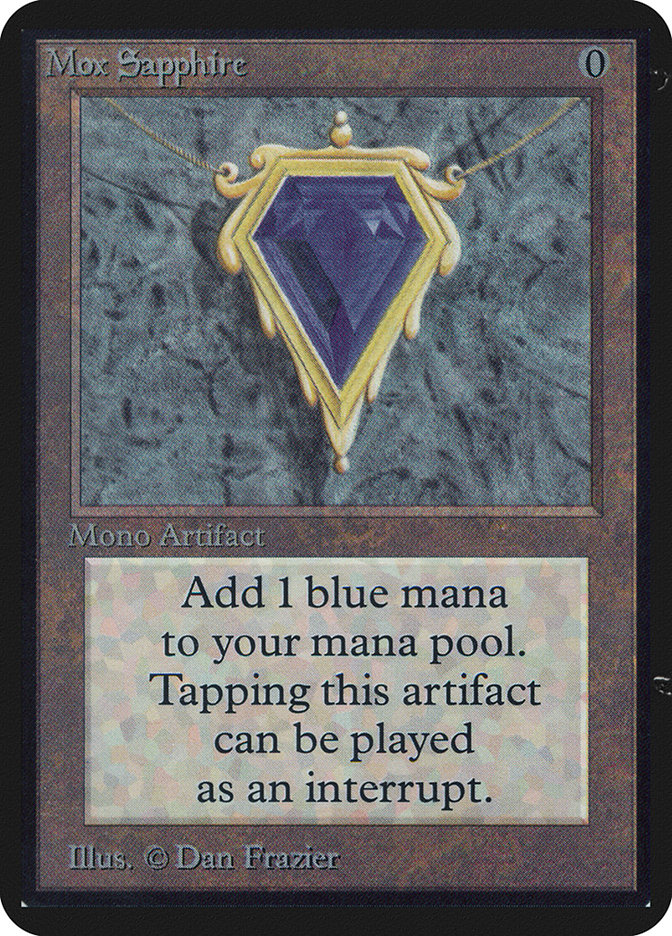
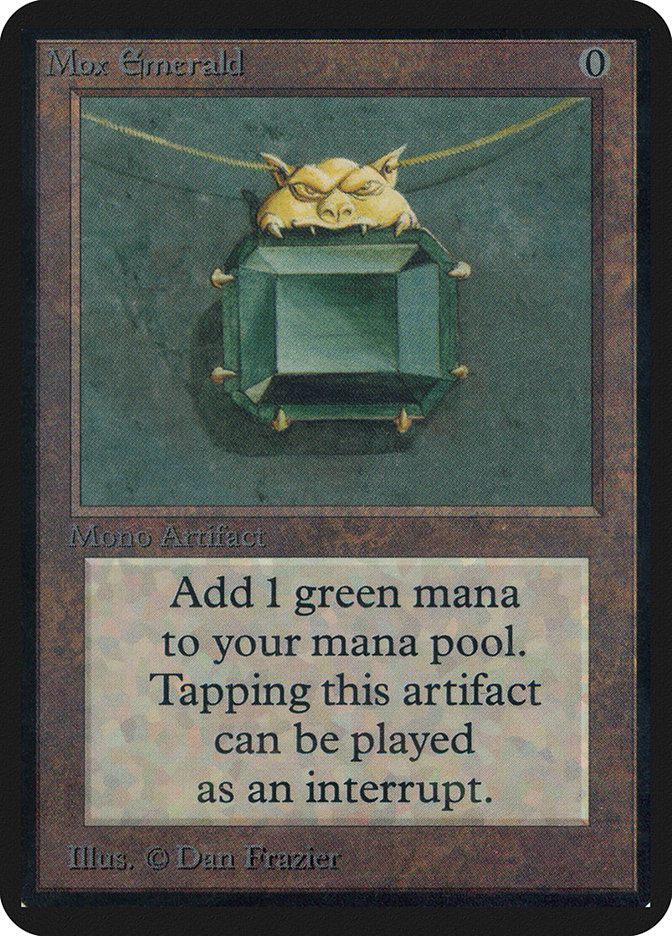
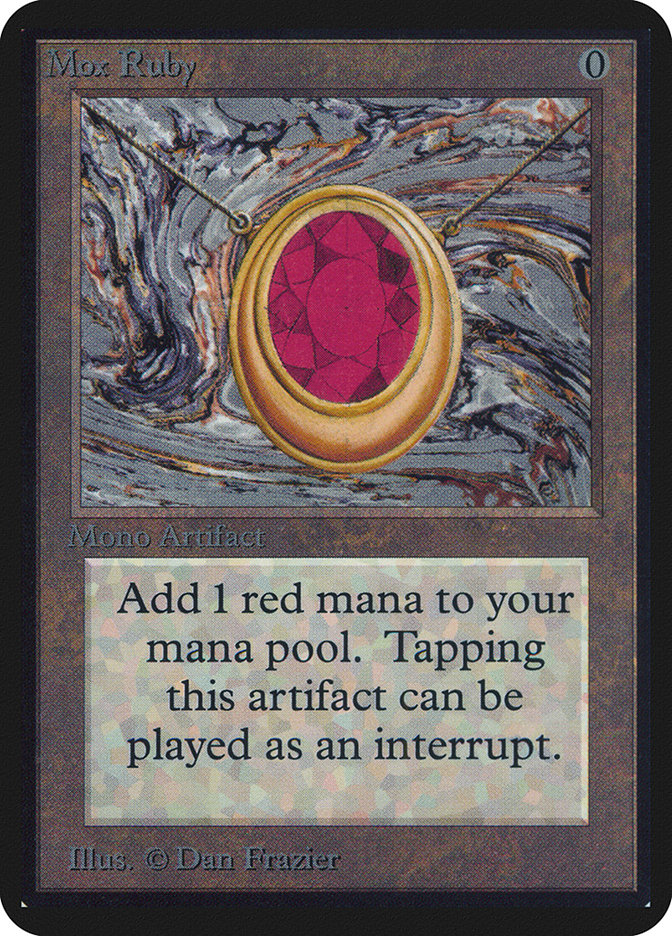
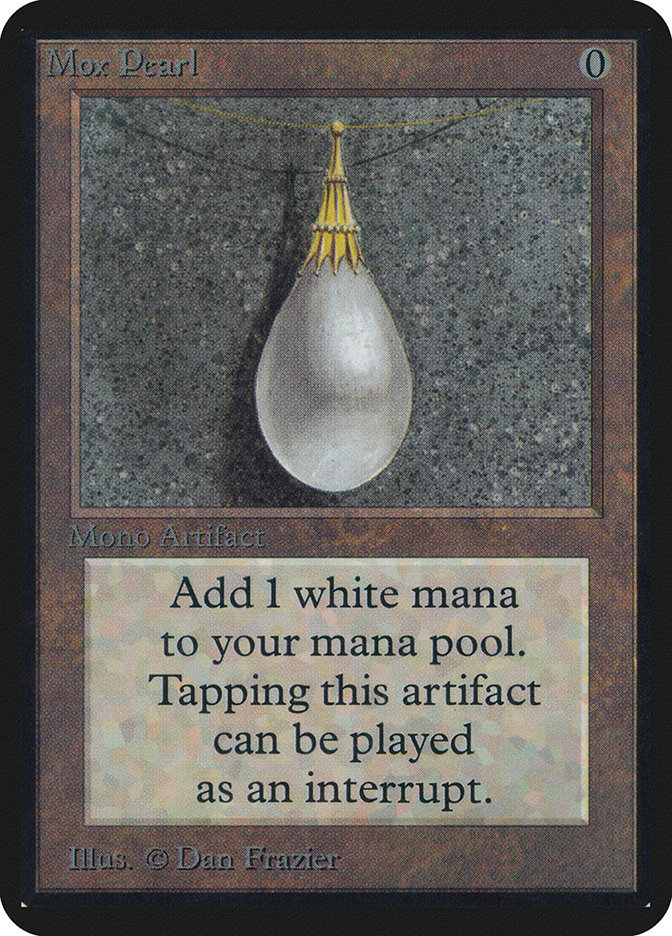
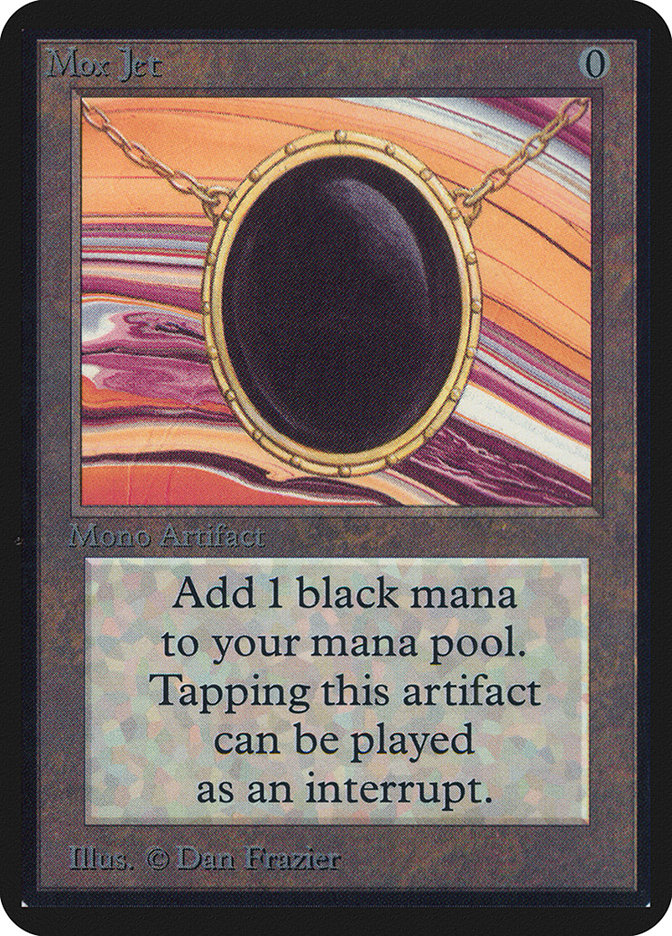
If you asked me to strip Magic to its most basic mechanisms and identify the most important element of the game, there’s only one answer: The player who spends the most mana wins the game. That makes the moxen from Alpha—really, all the fast mana on this list—absurd. Whichever mox you play gives you access to a turn’s worth of mana ahead of schedule. That’s busted in fair decks; can you imagine beating turn-1 Bristly Bill, Spine Sower? A turn-2 White Plume Adventurer? It gets even crazier when you pair them with other high-powered cards. Have you ever lost to a turn-1 Channel in Vintage Cube?
#5. Mana Crypt
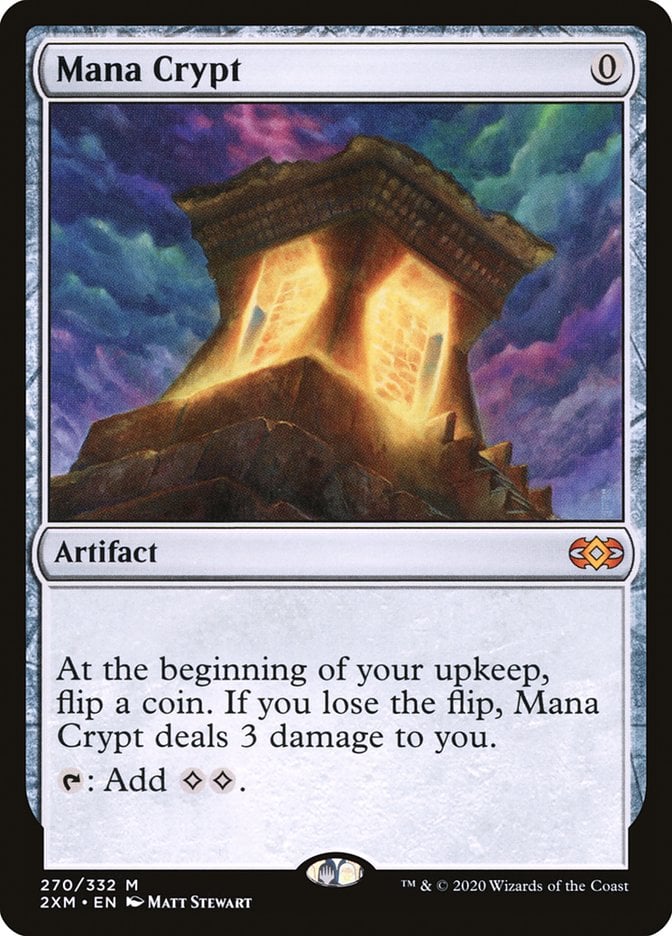
Paying 0 mana to get mana will never be fair, even when it comes at the cost of a little life. Mana Crypt’s downside often doesn’t matter; you can win the game well before the coin flips pose a meaningful threat as the mana production fuels explosive starts and fast combo wins.
#4. Ancestral Recall
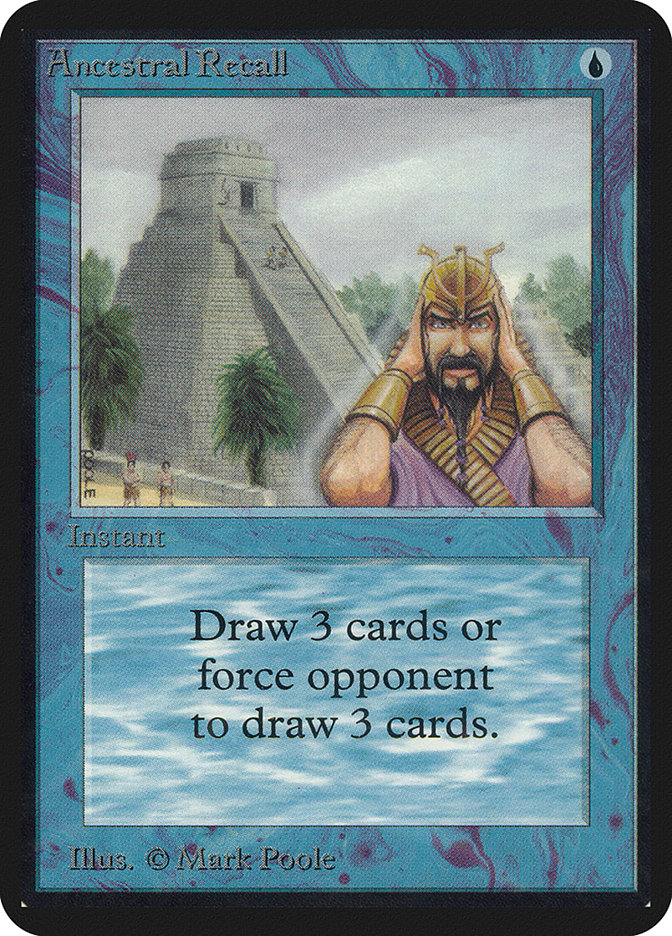
To understand the sheer power of Ancestral Recall, take another look at Treasure Cruise, a card that I included despite being restricted to sorcery speed and requiring 7 cards in the graveyard to cost 1 mana. Ancestral requires no setup and has nothing but upside. This card could have only been designed before Magic was deeply, truly understood.
#3. Sol Ring
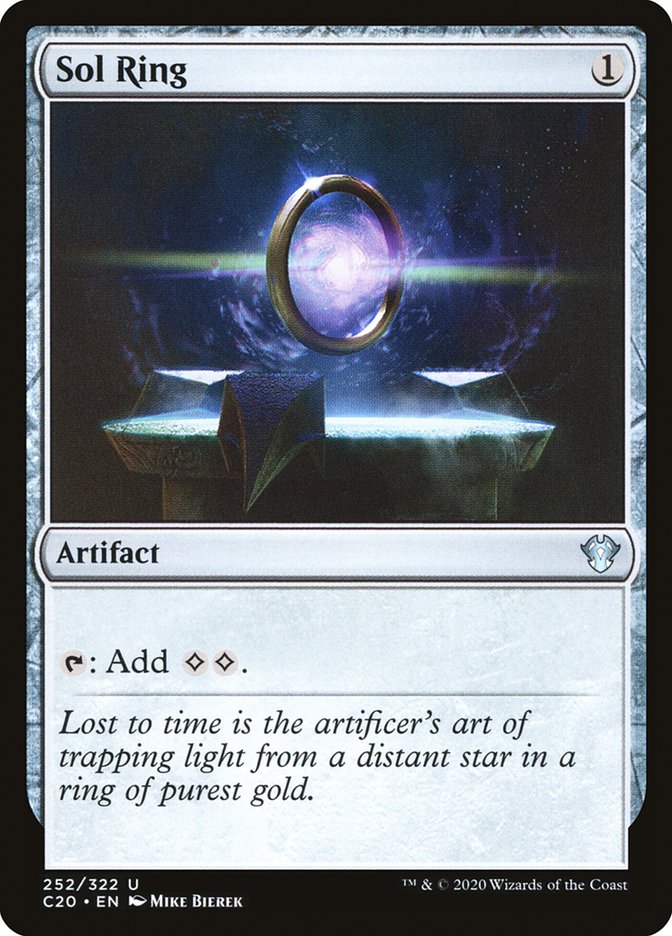
Commander has normalized Sol Ring; it appears in every precon, and it might be the most widely played broken card in the game. It’s one of few pieces of fast mana that taps for multiple mana without restriction—no need to untap it like Mana Vault, no damage like Mana Crypt. Just unrestricted access to the game’s most valuable resource.
#2. Black Lotus
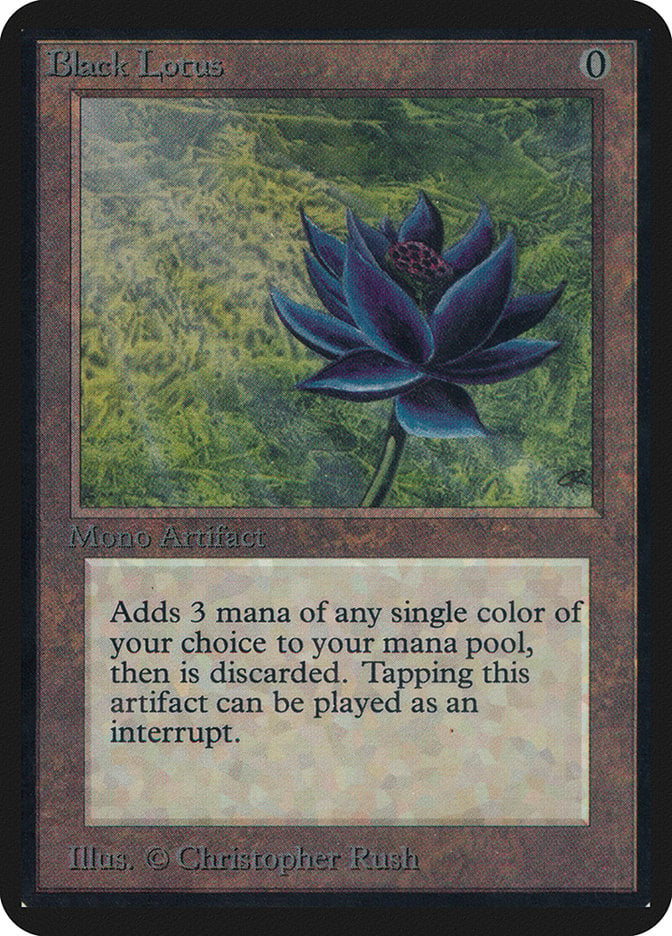
The most iconic Magic card of all time, Black Lotus is a simple ritual, and an absurd one. You can do incredible things with 4 mana on turn 1. Or you can whip up a combo brew with Yawgmoth's Will or Auriok Salvagers. You just can’t go wrong with a 0-mana card that gives you 3 free mana.
#1. Time Walk
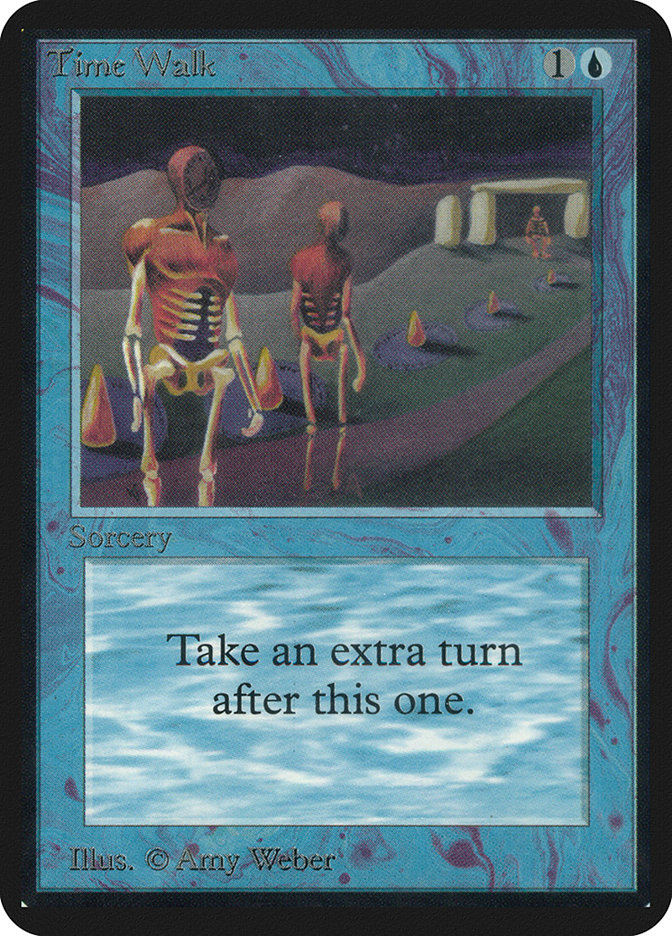
Taking an extra turn is among the strongest game actions in Magic. You get to draw an extra card, re-spend all your mana, and get an extra combat step—not to mention extra upkeep/end step triggers, planeswalker activations, and so on. This effect typically goes for 5 or more mana—see Time Warp and Part the Waterveil.
Time Walk costs 2. It has no restriction, and no downside—it doesn’t even exile itself, so you can recur or recast it with ease. This concept is cool, but it never should have seen print if the game designers cared about balanced game play.
Wrap Up
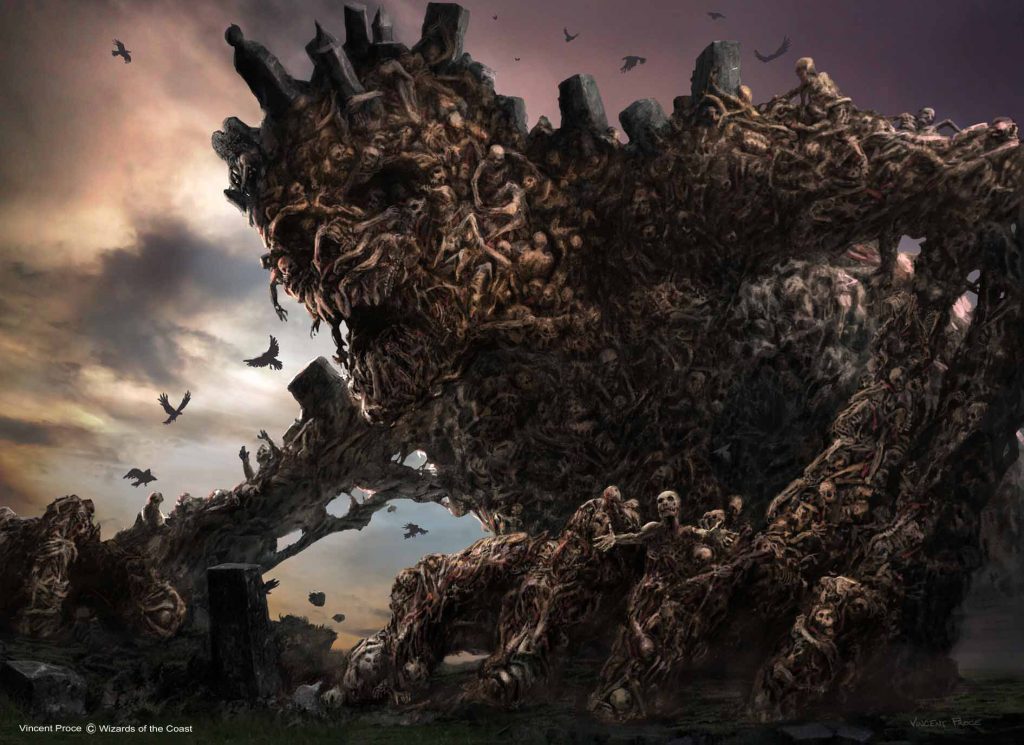
Hogaak, Arisen Necropolis | Illustration by Vincent Proce
Questionable designs clutter Magic’s history, from cards created before the designers really understood what makes a busted card to even more questionable threats that make players fear power creep’s effect on the game. While fun in the right context, these cards often break formats due to their immense impact on individual games.
Which of these broken cards do you play? What would you have added? Let me know in the comments below or on the Draftsim Discord!
Stay safe, and thanks for reading!
Follow Draftsim for awesome articles and set updates:










Add Comment