
Last updated on September 30, 2026

Emrakul, the Exigent Doom | Illustration by Princess Hidir
It’s all come down to this. Jace Beleren, once the savior of the multiverse, has decided that the entire world needs to be destroyed and replaced with his own Echoverse. He needs to be stopped, so the rest of the Lorwyn Five are back together to take him down! This is one of the coolest and most unique Magic multiverse sets we’ve ever seen. Jace’s influence is felt throughout the entire set as we explore his Echoverse of color-shifted classic cards and the colleges of battlemages at Hexhaven. Today, we’re going to look at every single card in this wild set and review them for their potential use in Reality Fracture Limited.
As always, keep in mind that this review is based on my initial impressions of the cards. It’s hard to figure out how these cards will play out without knowing things like the speed of the format or the relative power levels of the colors and archetypes. Many cards will under- or over-perform based on initial impressions as the format takes shape. My reviews are largely based on the card’s quality in a vacuum or the assumption that their archetype is playable.
Grading Scale

Hexhaven Dueling Arena | Illustration by Constantin Marin
I use a comparative rating system on a scale of 0-10. Here’s a rough guide to what each rating means:
10: The absolute best of the best. 10s make a meaningful impact on any game, especially when playing from behind, and will be extremely tough to beat.
Examples: Fíli the Pathfinder or An Unexpected Party.
8-9: Extremely good cards, usually game-winning bombs and the most efficient removal spells, though not quite good enough to be a 10/10. Could also be the mythic uncommon of the set (though these are harder to predict).
Examples: Bard's Company or Great Gilded Boat.
5-7: Important role-players. These are typically great uncommons that really drive you towards playing a particular color, such as build-arounds and good removal, as well as very powerful commons.
Examples: Stone by Sunlight or Nighthowl Pursuer.
2-4: The average Limited card. Most commons end up in this range, and most of your Limited decks will be made up mostly of these.
Examples: Uneasy Partings or Dori, Bearer of Friends.
1: These cards are weak, and you hope never to play them in your main deck, though they’re still just about playable if you need them in a pinch.
Examples: Mirkwood Meditator or Giant's Boulder.
0: Virtually unplayable in every scenario and you should never put these cards in your main deck. Typically cards that were designed with Constructed or Commander in mind but are awful in Limited.
Examples: Gleaming Splendor or Wizard's Staff or Uncover the Moon-Letters or Fateful Discovery or Getaway Barrel or Last Light of Durin's Day or Supper for Spiders or Glamdring, Foe-hammer… (dear me).
A Note on Echoed Pairs
Play Boosters for Reality Fracture have a new twist. A big part of this set is Jace’s Echoverse, so to show how characters have changed in this new world, the set features 43 “echoed pairs”. These pairs feature a character from the Magic multiverse alongside their Echoverse counterpart.
Due to a quirk with how printing these cards works, each Play Booster will contain three echoed pair cards, with two of them being from the same pair. This dynamic changes the Draft environment quite a bit, because while you can’t be 100% certain on the signals that are being passed to you, if you get sent a pack with two echoed pair cards from different pairs, you know that the player took the other card from one of those pairs. This is a pretty interesting twist that we rarely get, so I’m excited to see just how this will change the draft process itself.
These echoed pairs appear at the end of the set’s numbers, but every card will be displayed here in alphabetical order within each color. I won’t weigh one half of the pair against the other, just evaluate each card on its own merits.
Set Mechanics
This set features only a couple of main mechanics, but this new one is a real doozy. Let’s have a little look at them.
Empower Jace
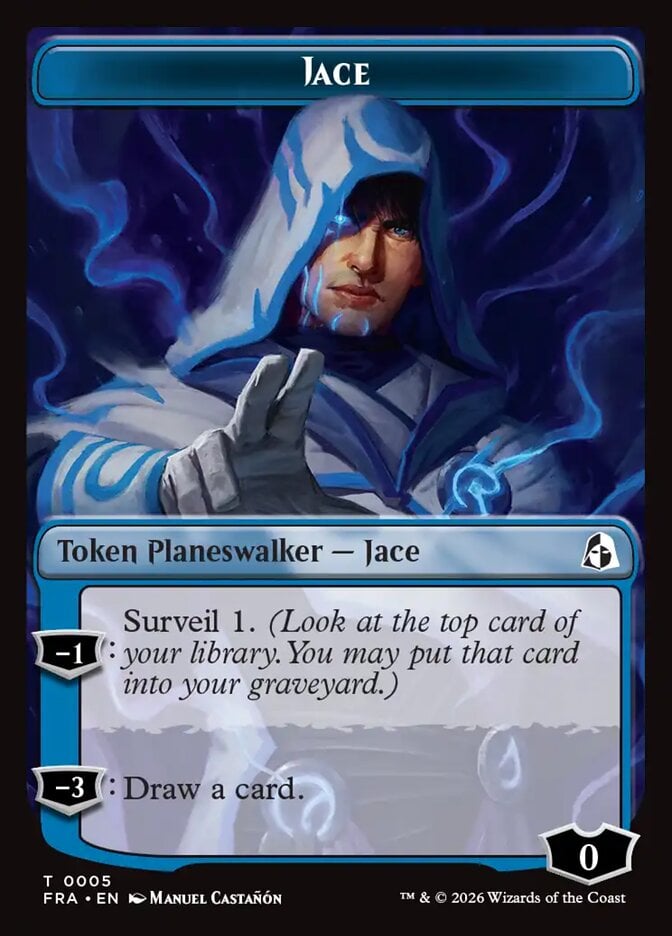
I did say that Jace’s influence was going to be felt throughout this set, didn’t I? Empower might be the most “out there” mechanic we’ve ever seen a mainline Magic set. You can effectively think of it as amass, except for a Jace planeswalker token instead of an army of zombies, orcs, or whatever else.
When you “Empower Jace N”, you either put N loyalty counters on your existing Jace token, or if you didn’t control one already, you create a new one and put the counters on that. The Jace token has just two loyalty abilities. You can either -1 to surveil 1 or -3 to draw a card. This mechanic is tacked on to all sorts of spells and abilities throughout this set in every color. Now, if a card has a typical ability but adds on empower Jace 1 or empower Jace 2, you can really combine these to get three loyalty counters on your Jace and draw a free card.
This is the main mechanic of Reality Fracture, appearing in every color and at every rarity, so protecting your Jace to preserve your additional cards is going to be key to how this set plays out.
Prepared
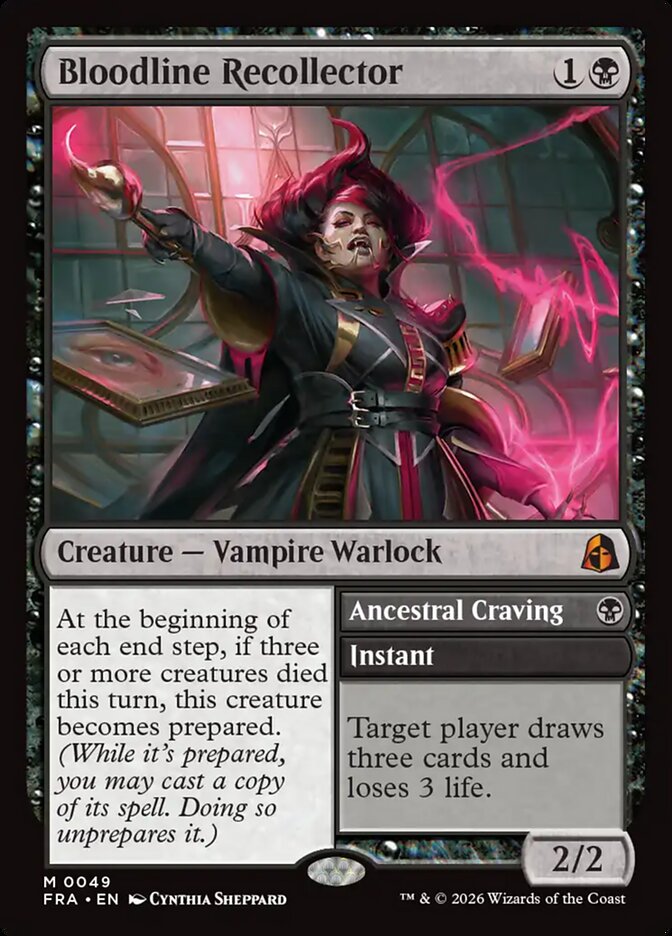
Returning from Secrets of Strixhaven, the prepared mechanic is back with a little twist in this set.
While the halls of Strixhaven were a bastion of independent learning, the towers of Hexhaven are home to a strict, regimented military education. As such, every common and uncommon preparation card will use one of the same five prepared spells, one for each of Hexhaven’s five schools. These spells give an interesting identity to each of the schools and will help to inform their Draft archetypes. The rares and mythics will have different spells, as usual.
Ultimately, prepared spells are excellent. Just like their Strixhaven counterparts, these cards simply give you additional value and gameplay options and that always makes for an interesting Limited mechanic.
Heartwood Tokens
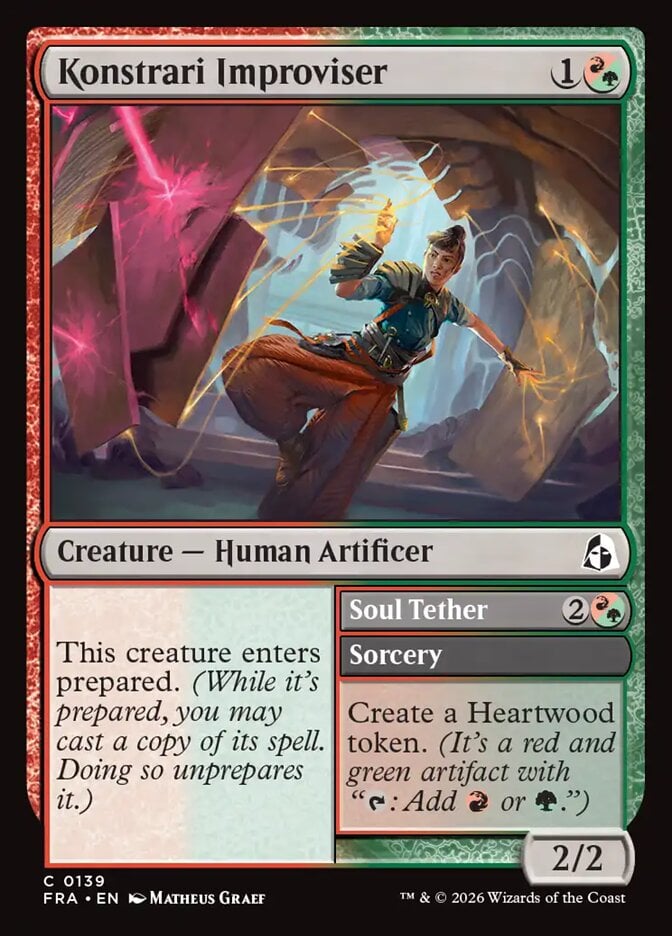
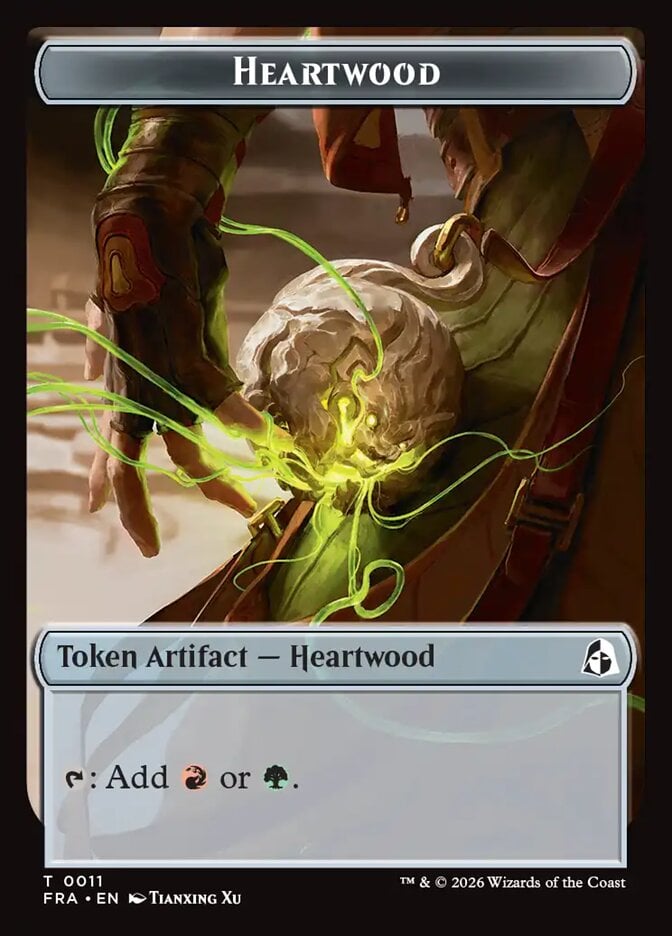
That’s all for mechanics. Just two of them. So finally, just a quick note on Heartwood tokens. These are a new type of artifact token that will form the basis of the red/green Konstrari school. They’re very simple: Heartwoods are artifacts that tap for red or green mana. The Konstrari prepared spell, “Soul Tether”, creates one of these for 3 mana. That’s a little overcosted for my liking, but I love ramp strategies and this allows the Konstrari to ramp while also utilizing a pile of artifacts.
Draft Archetypes
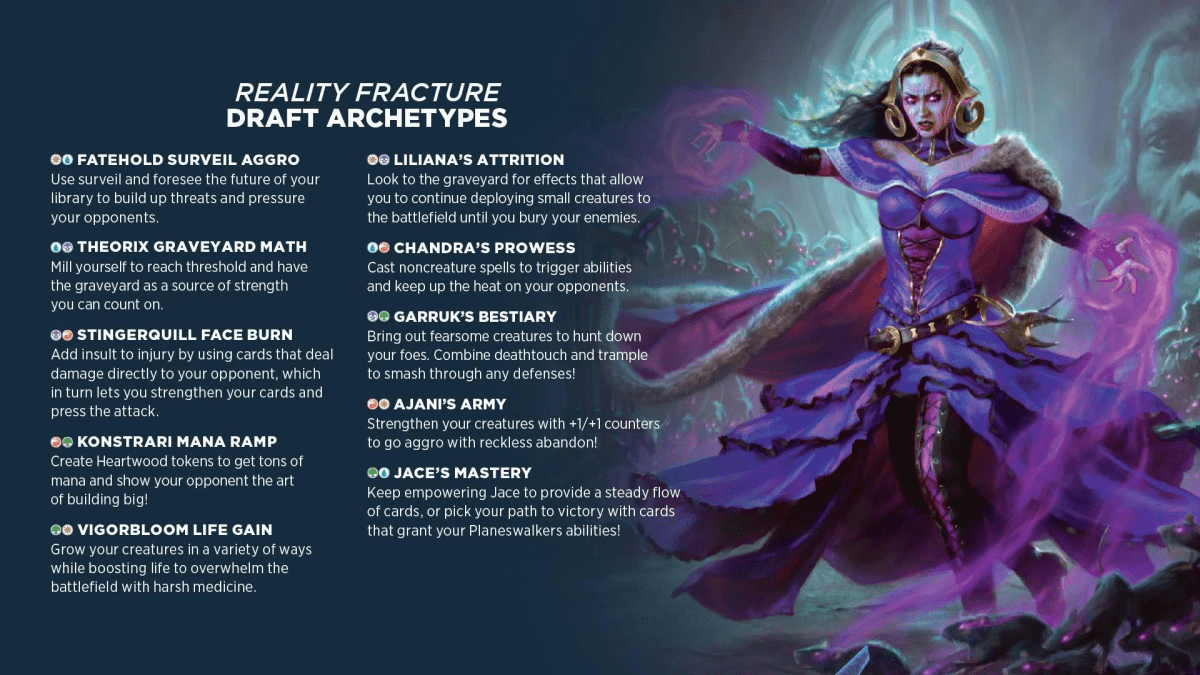
Reality Fracture takes us back to 10 draftable archetypes centered around the 10 2-color pairs. The five allied pairs are a little more prevalent because they represent the five schools of Hexhaven, while the enemy pairs represent the identities of the Lorwyn Five. Let’s have a look at the themes for all 10.
- Fatehold (White/Blue ): Scrying and Surveilling
- Theorix (Blue/Black ): Self-Mill
- Stingerquill (Black/Red ): Aggro and Noncombat Damage
- Konstrari (Red/Green ): Artifacts and Ramp
- Vigorbloom (Green/White ): Lifegain and +1/+1 Counters
- Liliana (White/Black ): Sacrifice and Graveyard Recursion
- Garruk (Black/Green ): Midrange with Graveyard Synergies
- Jace and Vraska (Green/Blue ): Empower Jace
- Chandra (Blue/Red ): Noncreature Spells and Prowess
- Ajani (Red/White ): Go-Wide Aggro and +1/+1 Counters
White
Academic Ascent
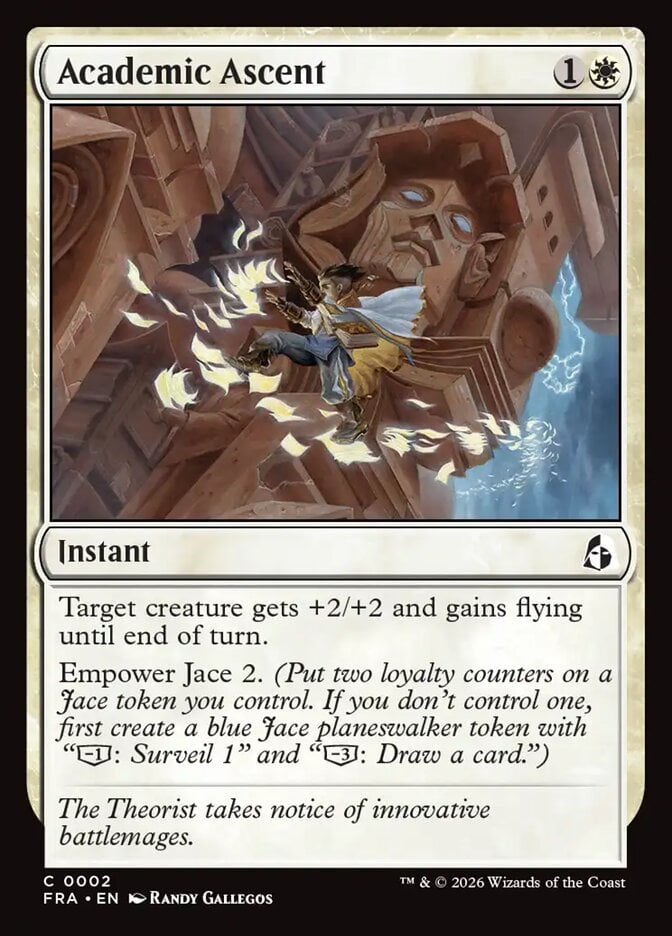
Rating: 2/10
If a combat trick can draw you a card as well as kill something in combat, then that elevates it well into good playable territory. Empower Jace 2 basically makes Academic Ascent get you two thirds of the way there, which honestly feels very fair for a common. This still isn’t the most playable card in the world, but the empower ability definitely makes me more interested than I’d normally be.
Ajani Resolute
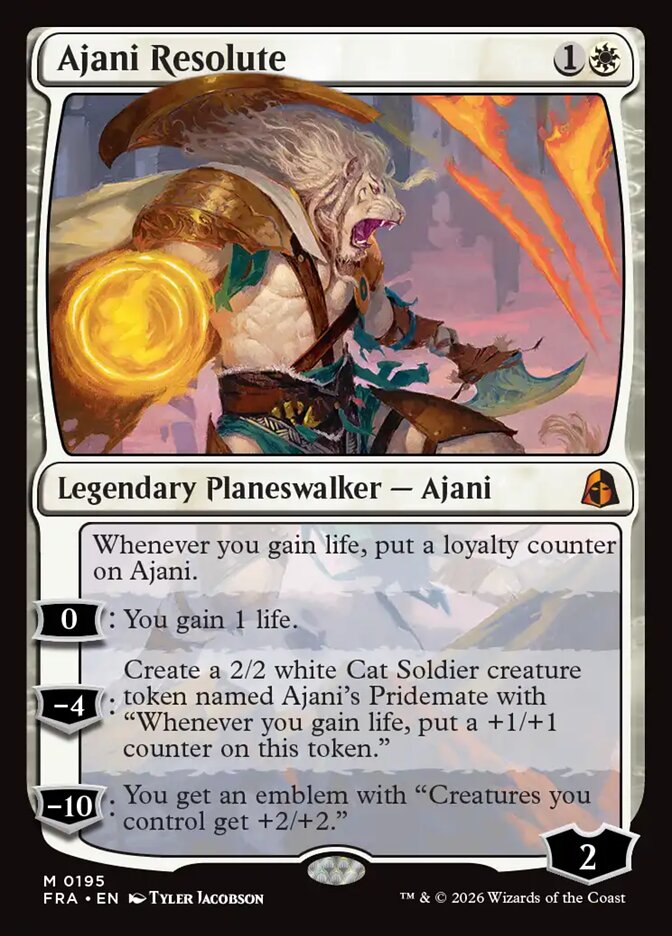
Rating: 2/10
While Ajani Resolute is probably my favorite design in this set, answering the question “What would Ajani's Pridemate look like as a planeswalker?”, it sadly feels very lackluster for Limited play. Vigorbloom is of course a lifegain archetype, but the fact that you need to have gained life at least three times before Ajani can use its -4 and survive makes me think this isn’t where we want to be. I’d love to be wrong though.
Blossom-Blessed Angel
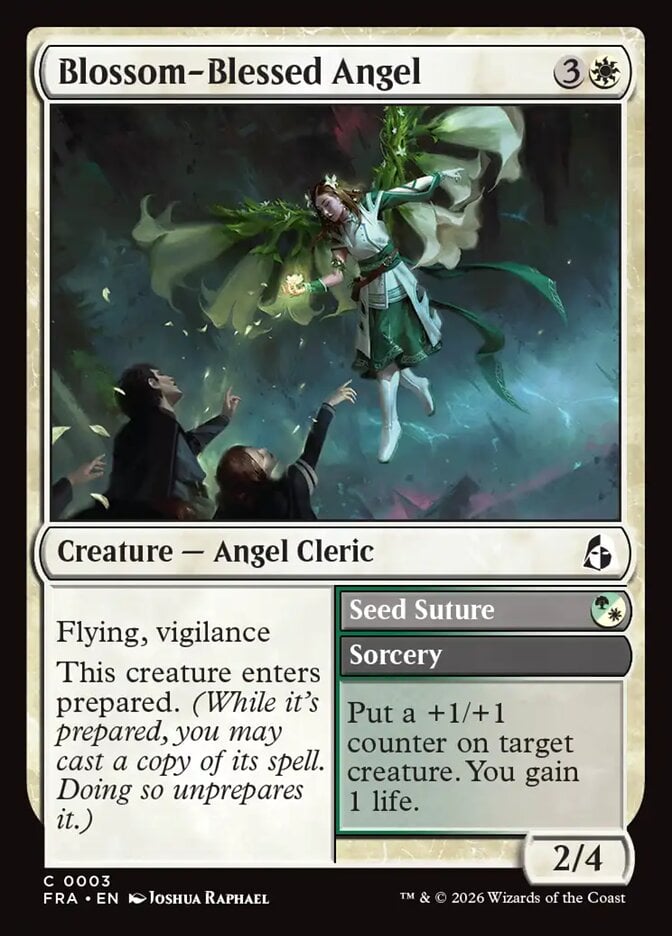
Rating: 3/10
A 2/4 with flying and vigilance is perfectly fine, though a little under-statted for modern Limited. What really sells Blossom-Blessed Angel though is the Seed Suture spell, because you can now make it a 3/5 or buff something more relevant for very cheap. Basically, this adds a fair amount to the board while gaining life, so it shouldn’t be that bad, but it’s not exceptional either.
Campus Crier
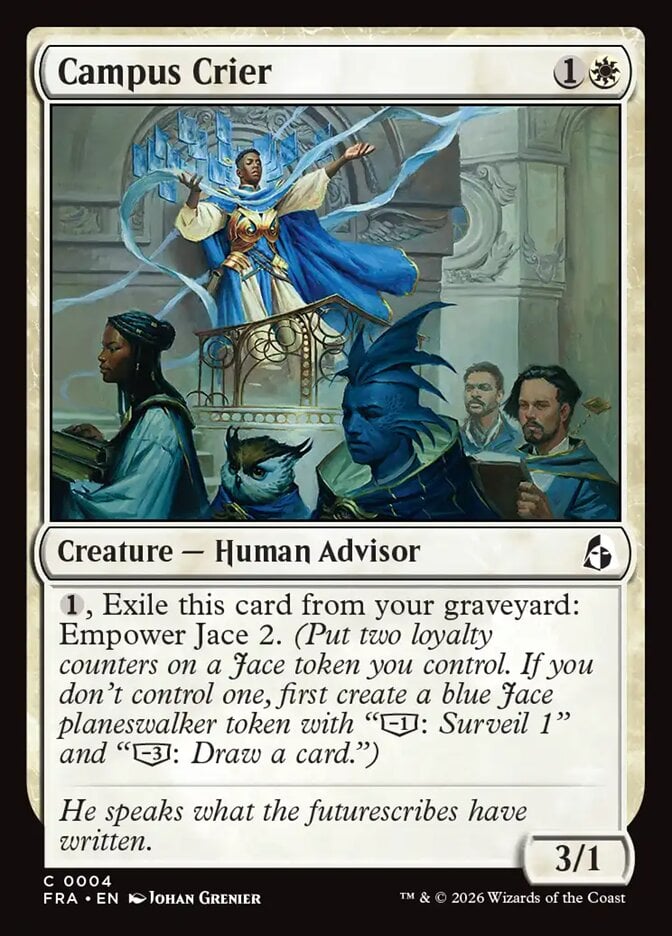
Rating: 3/10
Campus Crier looks like a very solid common 2-drop to me. A 3/1 for 2 has proven to be very reasonable to play in most aggressive decks and 3 power is especially good at pressuring opposing Jace tokens. Plus, getting some free value out of it after it dies or when you surveil it away is just the icing on the cake!
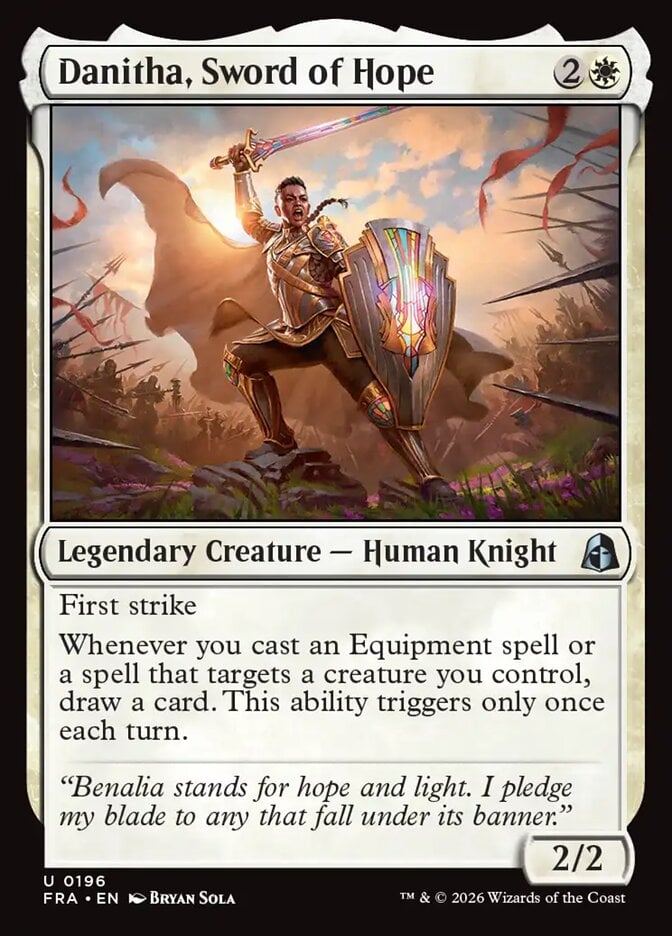
Danitha, Sword of Hope
Rating: 4/10
There are only a couple of equipment cards in Reality Fracture, but a fair few spells that target your creatures. Danitha, Sword of Hope isn’t supported well enough for you to consider it a solid build-around, but there are enough synergies that it should at least be a playable card in the right deck. For example, it does seem especially nice alongside Predictive Preparations.
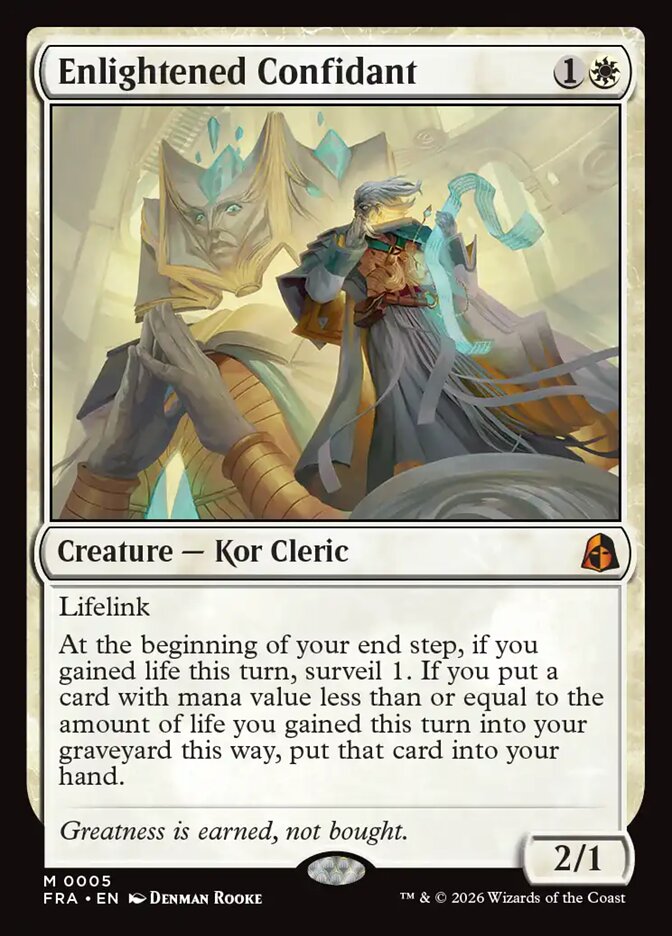
Enlightened Confidant
Rating: 6/10
Bob’s more enlightened cousin looks like they might be quite a bit stronger in Limited. Enlightened Confidant basically lets you draw a card at the end of your turn if its mana value is less than or equal to the amount of life you’ve gained this turn. Having lifelink is a good way to help you with that, assuming you can attack with them, but it’ll be the other lifegain sources from Vigorbloom that will really let this pop off. You really need to support this card, but since there’s an archetype here that’s perfectly built for it, that should be fairly easy to do.
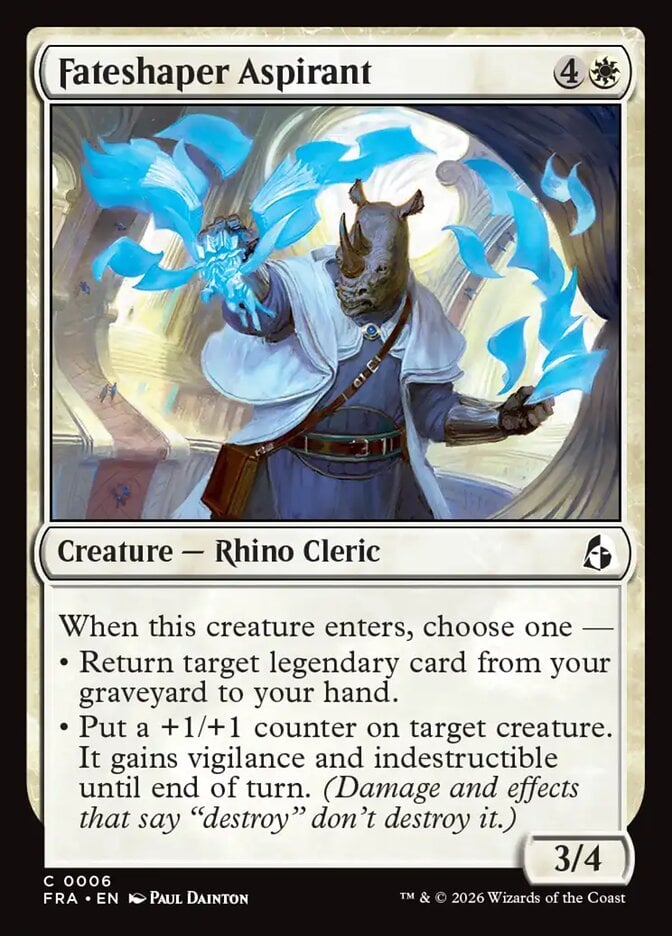
Fateshaper Aspirant
Rating: 3/10
This common has a nice bit of potential. I’d imagine that nearly every deck in this format will have at least one legendary creature in it, thanks to the prevalence of the echoed pairs. As such, having a 5-drop like Fateshaper Aspirant to allow you to pick it back up again should be pretty good. It even has another option you can use if it’s more relevant at the time. Gravedigger variants are of course very good; it’s just the extra mana that holds this one back a little.
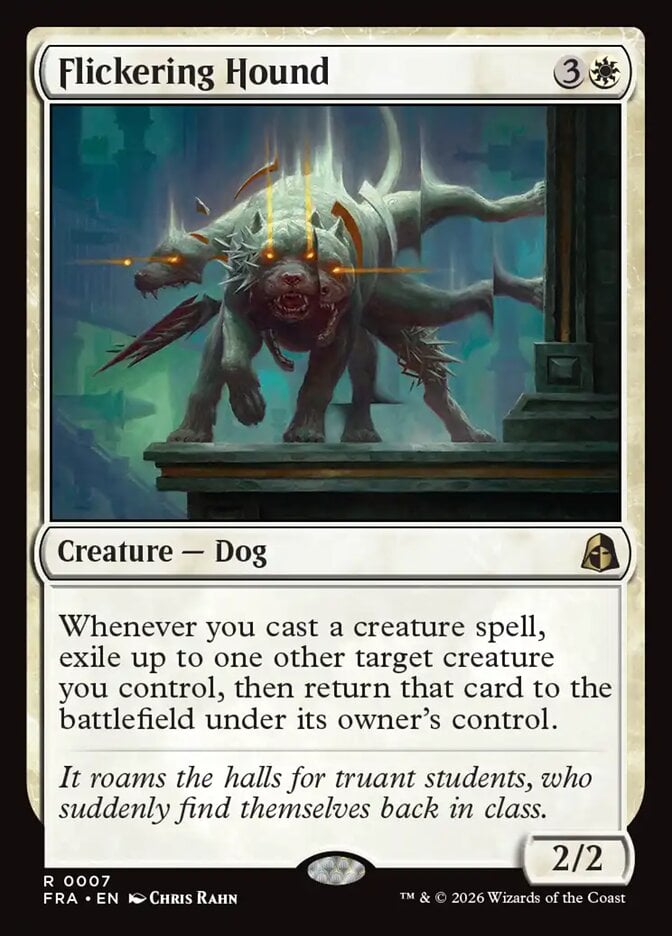
Flickering Hound
Rating: 5/10
There was a TV commercial in the UK back in the 90s for Ronseal “Quick Drying Woodstain”. It used a rather obnoxious guy painting his fence panels and a slogan that became an instant hit across the country: “It does exactly what it says on the tin!”
Well, that’s exactly what you get with Flickering Hound. It’s a hound… and it flickers stuff. It’s of course a color-shifted Displacer Kitten, except that since it triggers off of creature spells, it triggers more often in Limited. The only thing you need is some good creatures to be flickered, of which there are a few in the set, but I’d just be extremely wary of how bad a 4-mana 2/2 is when you don’t have them.
Generous Revival
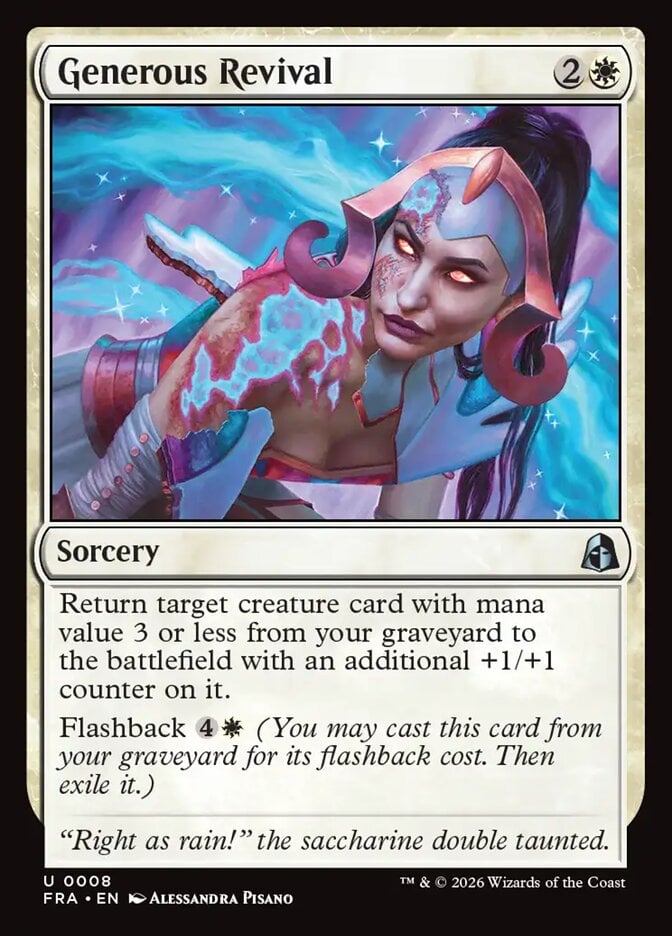
Rating: 2/10
While getting to flash this back is a nice upgrade, Recommission was a card you didn’t play very often. This takes some setup, and Generous Revival doesn’t even let you cheat on the mana value of what you’re getting back. I’m sure there’ll be the odd deck in which this can shine, but this is quite a bit weaker than The Mountain-king Returns from The Hobbit.
Germinate Recruits
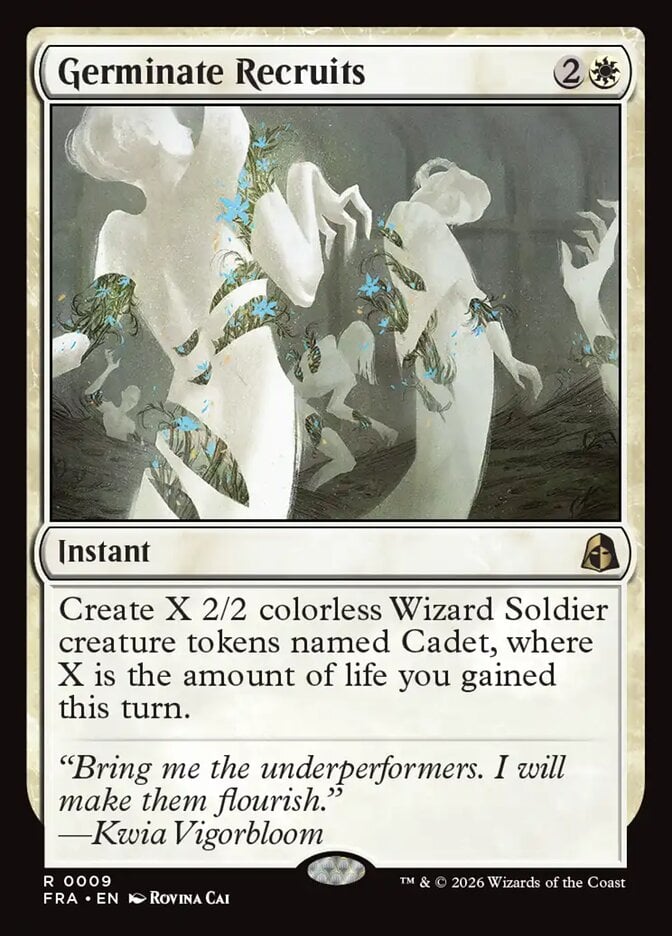
Rating: 1/10
This card is tricky. Yes, we can all figure out ways to make five 2/2s with it, but how often will something like that actually happen in Limited? Vigorbloom has some great ways of gaining life, but they mostly cost a lot of mana, so paying 3 more to Germinate Recruits in the same turn sounds far too situational for my liking. This is a 1/10 in most scenarios and a 10/10 when it works.
Ghalta the Immovable
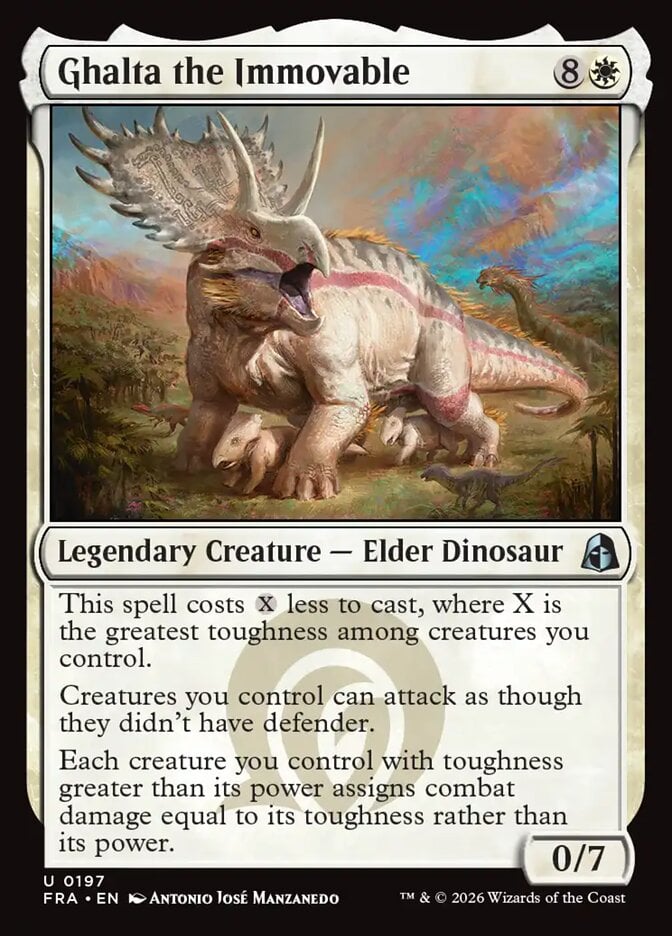
Rating: 2/10
Nine mana is obviously far too much to pay for what’s essentially just a 7/7 vanilla creature. Even if you have a 4-toughness creature in play, which is by no means trivial to set up, Ghalta the Immovable is only a vanilla creature, albeit a big one. This one goes off the cuff of normal archetypes a fair bit, but maybe every now and then you try to spice up your drafts with Ghalta and a couple Living Library cards.
Gideon’s Memorial
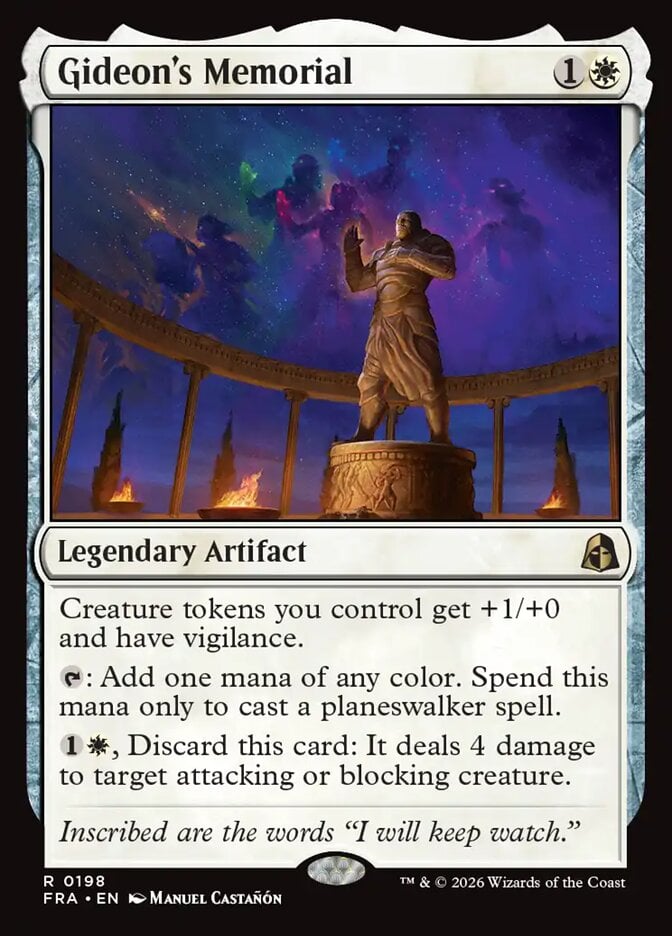
Rating: 6/10
Cards that work with planeswalkers in your deck usually get a flat 0/10. Even with seven of them in the set, they’re all mythics, so you can never rely on having them. That said, Gideon's Memorial does so much more than that. We can simply ignore the second ability and this is still an Intangible Virtue that you could also use as a mediocre removal spell. Both of those modes together make this a pretty good card if you have tokens and more like a 3/10 if you can only use it as removal.
Graft Surgeon
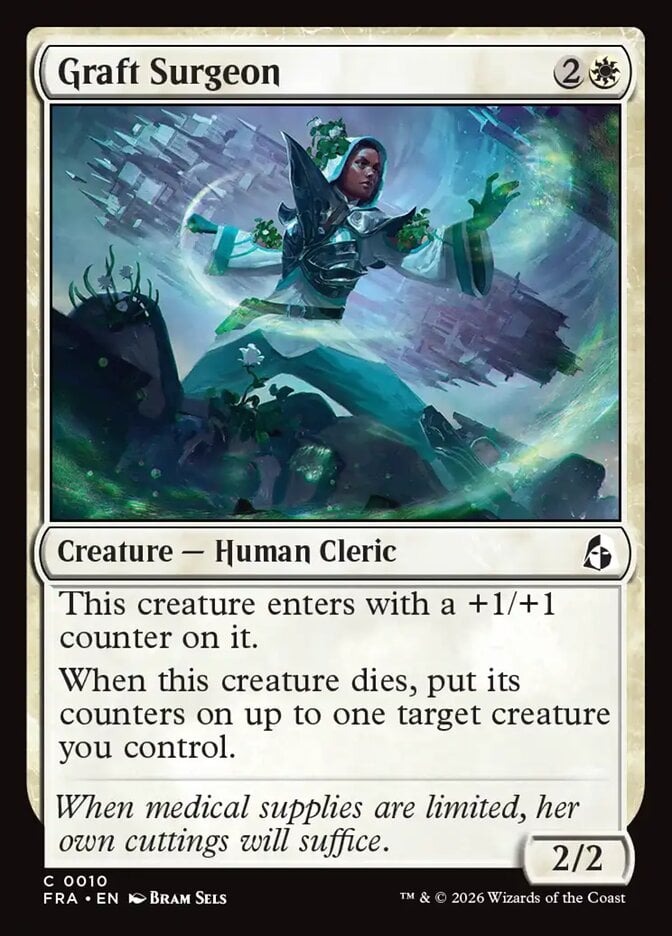
Rating: 3/10
Three-drop 3/3s need a little something extra to be good these days, so leaving behind a +1/+1 counter when it dies is just enough to be interested in Graft Surgeon. Better yet, if you put more counters on it with Seed Sutures or whatever else, it leaves all of those counters behind on something else, which is a pretty powerful ability if you set it up right. I’d imagine most white decks would be interested in it.
Guiding Hydra
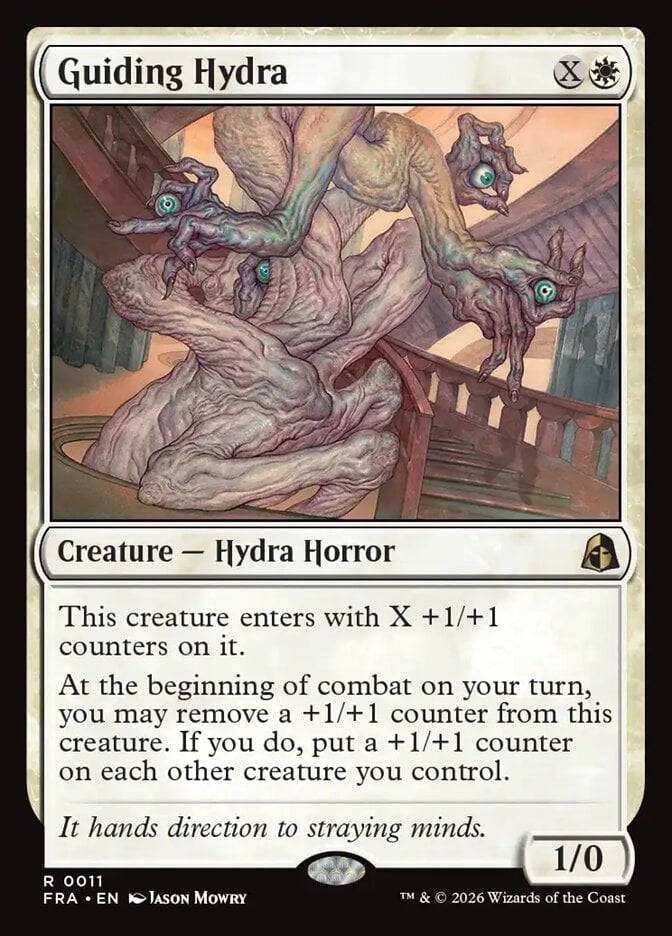
Rating: 9/10
Guiding Hydra, a.k.a. Ouroboroid at home, looks absolutely disgusting. If you cast this for around 4 or 5 mana, then you have several turns of putting a +1/+1 counter onto your whole team, which of course gets stronger with the more creatures you have out. You obviously need a lot of creatures to make this work to its full potential, but white looks to be quite good at that in Reality Fracture, so I don’t see that I’d ever not want to play this card.
Hexhaven Battalion
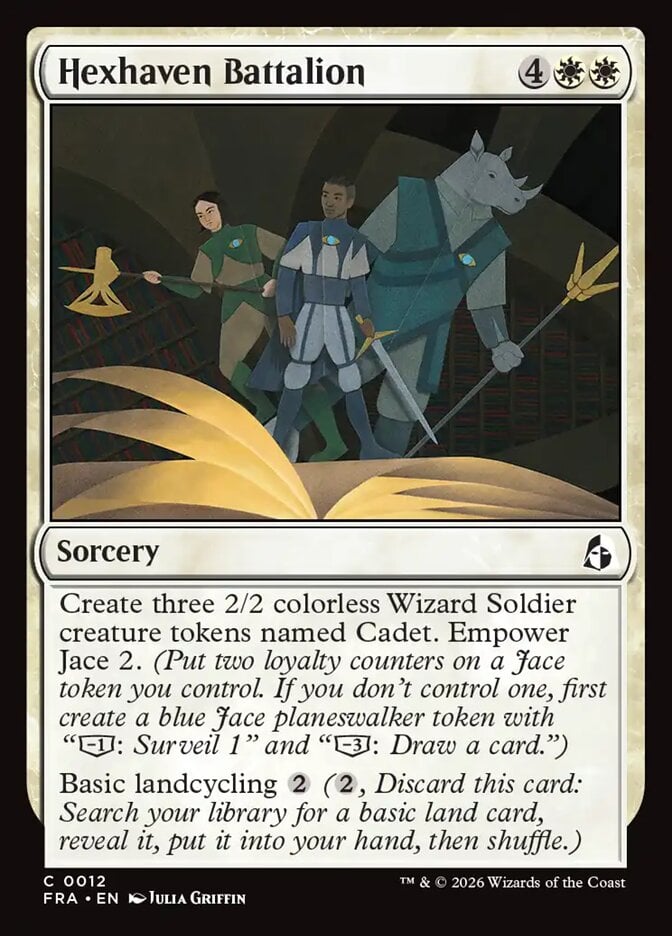
Rating: 6/10
In Kamigawa: Neon Dynasty, there was a card called Imperial Oath. This flew under the radar of many commentators at the time, as 6-mana commons tend not to pull their weight. Yet as the format evolved, players started to realize just how impactful it could be, especially when the scry 3 ability would set up your next turn for you. It ended up widely regarded as the best white common and one of the best commons overall.
Hexhaven Battalion has a lot of the same rewards on it. Three 2/2s is incredible, especially if you need to catch back up to your aggressive opponent, and the empower might even draw you a card in the right spot. Not to mention that landcycling lets you use it early in the game when you need to. This card looks amazing to me, and it’s my early pick for white’s best common.
Kindred Judgment
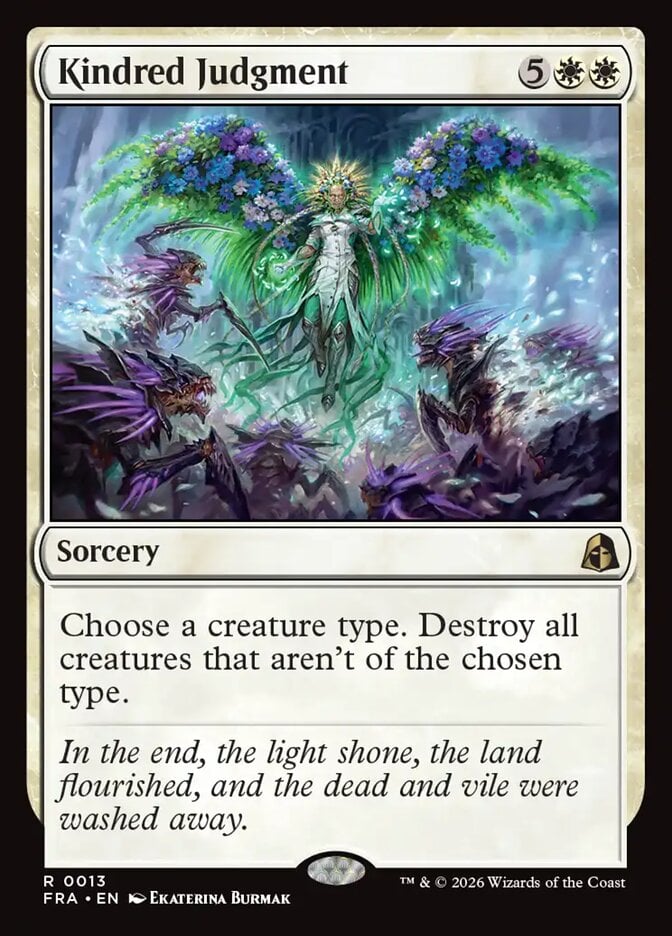
Rating: 7/10
Board wipes are often very powerful in Limited. Kindred Judgment costs 7 mana, which does make me a little cautious, but the fact that it’ll often be one-sided does bring me back around. This is a color-shifted version of Kindred Dominance, a long time Commander staple, which explains the hefty mana cost. Ultimately, I think you get what you’re paying for and it will be worth it, but it might end up that 7 mana is just a little too expensive.
Koth of the Homestead
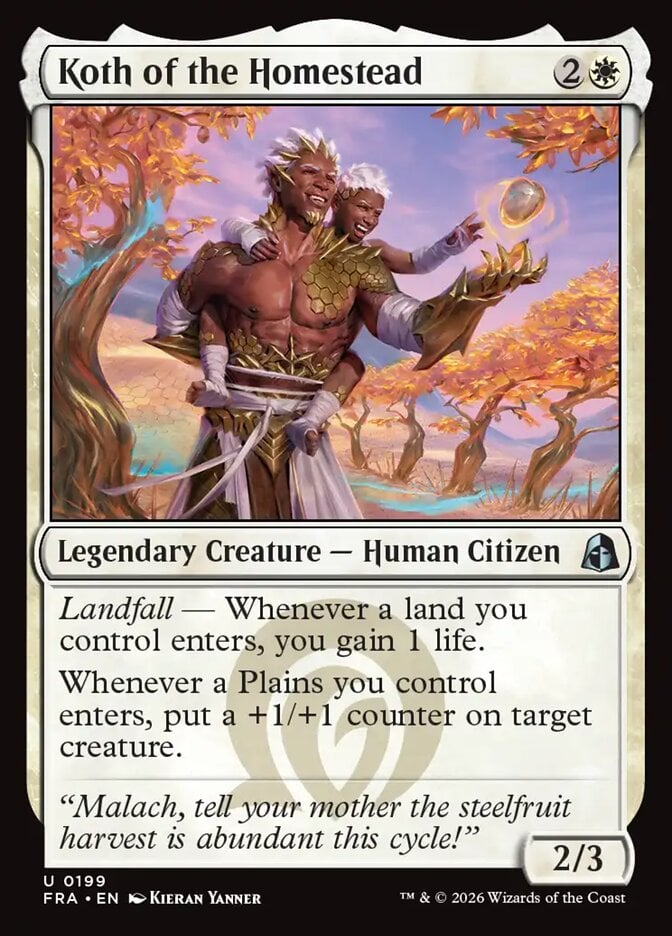
Rating: 4/10
Koth of the Homestead is pretty unassuming, but it provides a consistent source of lifegain for the Vigorbloom decks. I doubt I’d want to play it outside of Vigorbloom, because getting the +1/+1 counters isn’t reliable enough, but this Koth should still shine there.
Liliana the Faultless
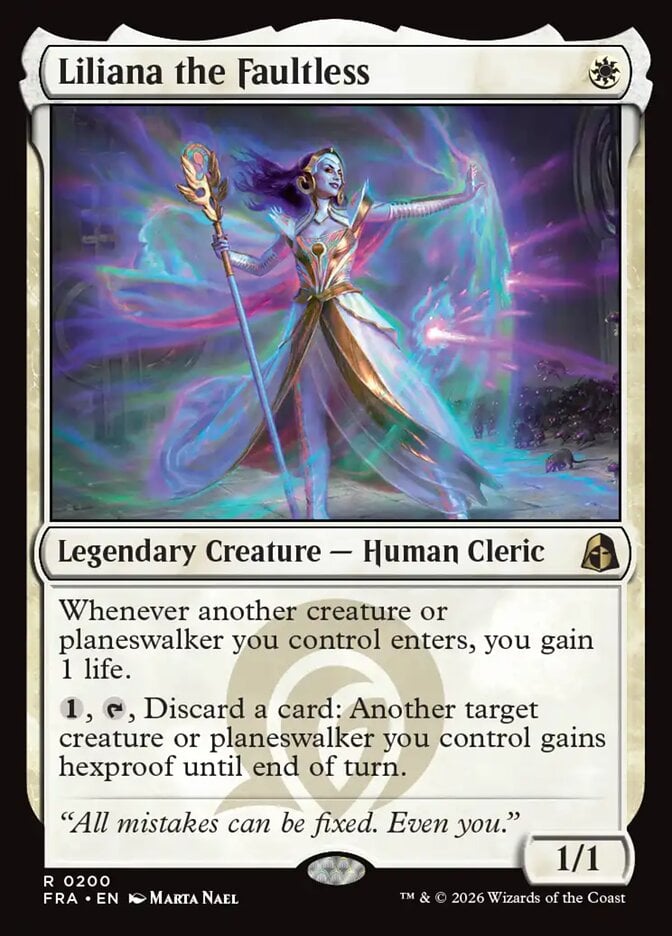
Rating: 7/10
Considering we have Vigorbloom really wanting lifegain sources, Liliana the Faultless looks like an exceptional Soul Warden for that archetype to function. Not only does it enable those synergies, but it also helps you by protecting your other creatures from removal spells. While not a bomb rare by any means, there’s a lot to like on this Liliana, and it comes down as early as turn 1.
Loyal Tutor
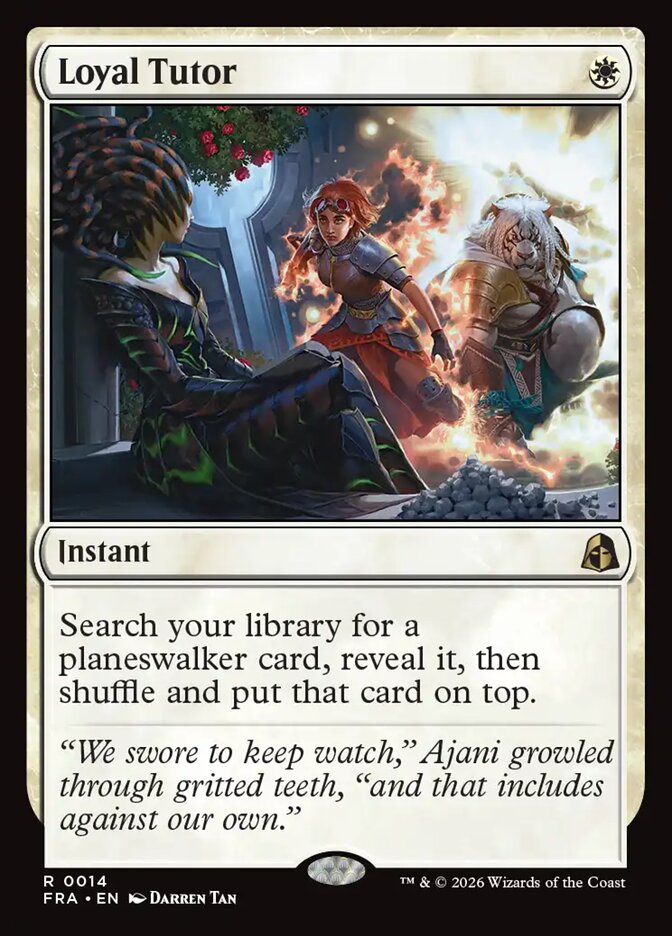
Rating: 0/10
Loyal Tutor is a great design for Constructed formats, but there’s no way you can afford to spend a whole card just to put a planeswalker card on top of your deck. There are some very powerful ones to find, but they’re also all mythics and are a lot worse if you have to go down on card advantage to find them.
Lyra, Archangel of Dawn
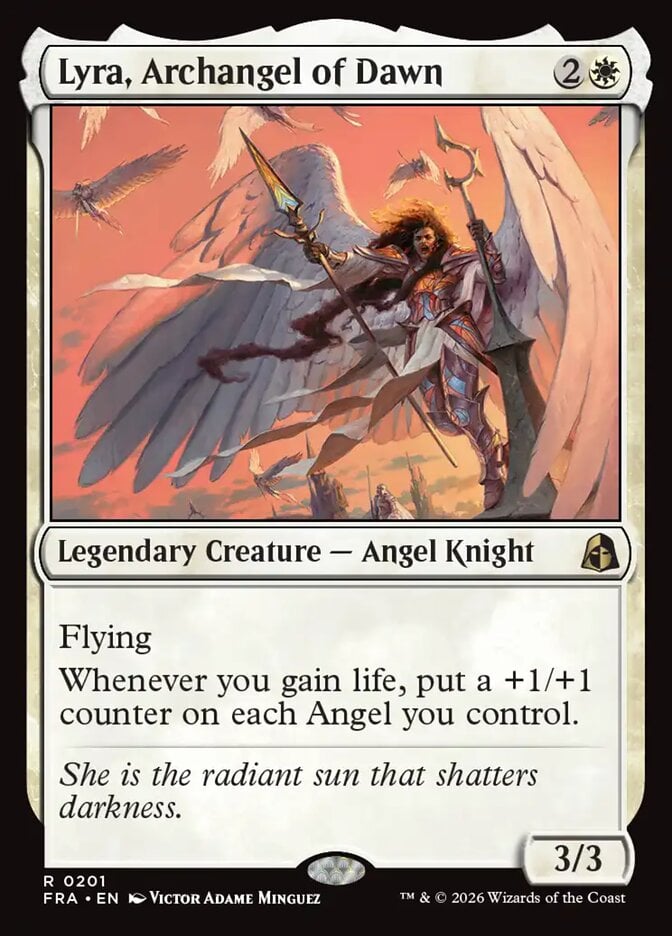
Rating: 8/10
I misread this card originally and thought that it buffed all of your creatures. Sadly that’s not the case, but Lyra, Archangel of Dawn is still able to buff itself, which makes it a 3-mana 3/3 flying Ajani's Pridemate when white has access to a lot of sources of lifegain. That sounds pretty incredible to me.
Memory Trap
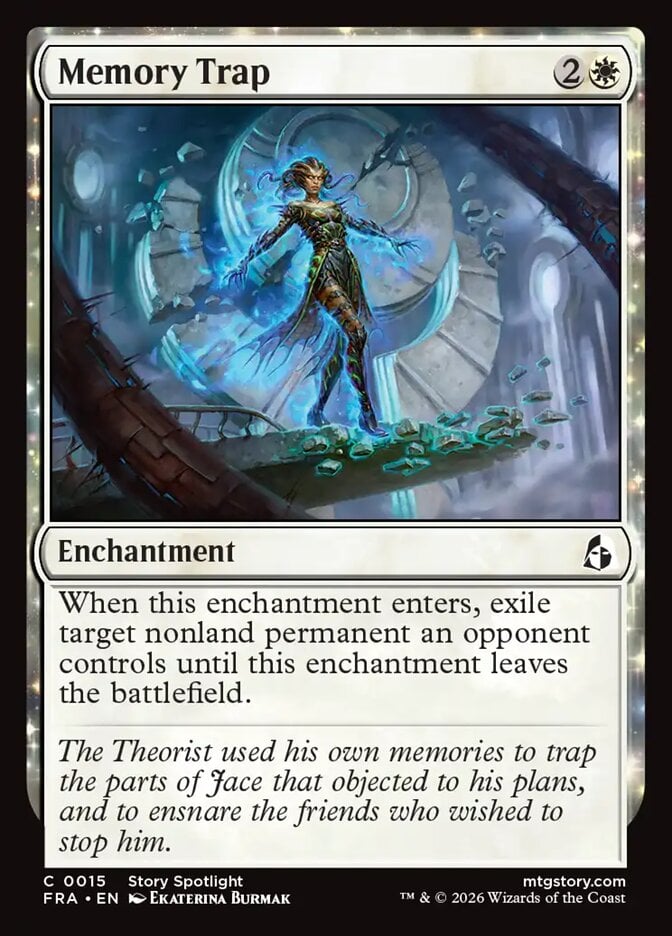
Rating: 6/10
Whether you call it Banishing Light, Web Up, or of course Memory Trap, 3 mana to answer just about anything you want is a very good deal. This is an early frontrunner for white’s best common, but even if it isn’t, it should still be a premium pickup when you’re drafting white.
Predictive Preparations
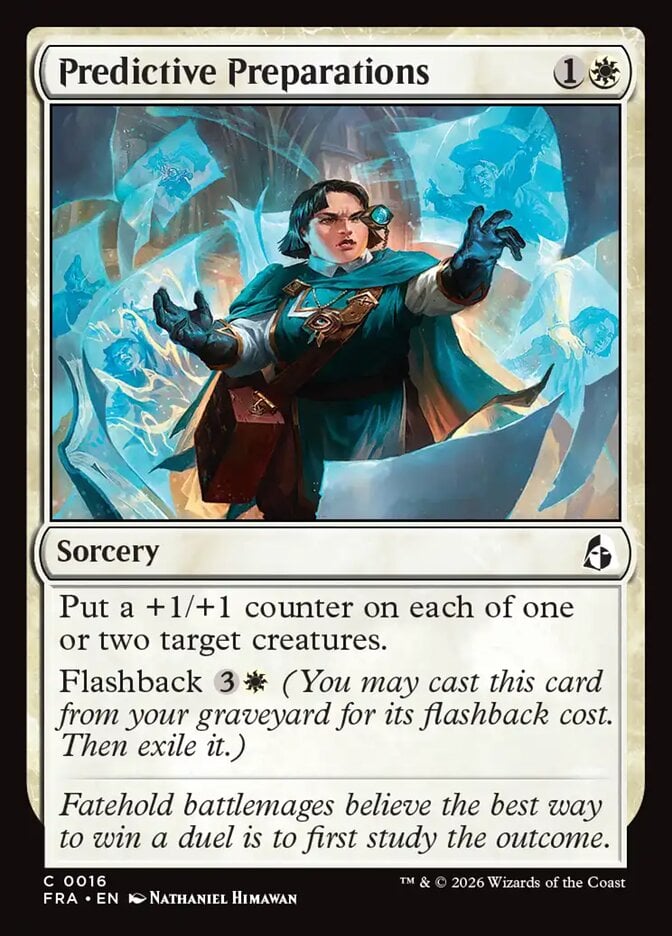
Rating: 3/10
This is a nice little throwback to the very powerful Travel Preparations, a card that took Innistrad Limited by storm, but I think Predictive Preparations is a fair bit worse than Travel Prep. It’s only one color, but it’ll cost 2 extra mana to fully cast both sides of it. That said, there are some ways to support it here, especially in red/white, so it’ll probably be a strong common.
Prophesied End
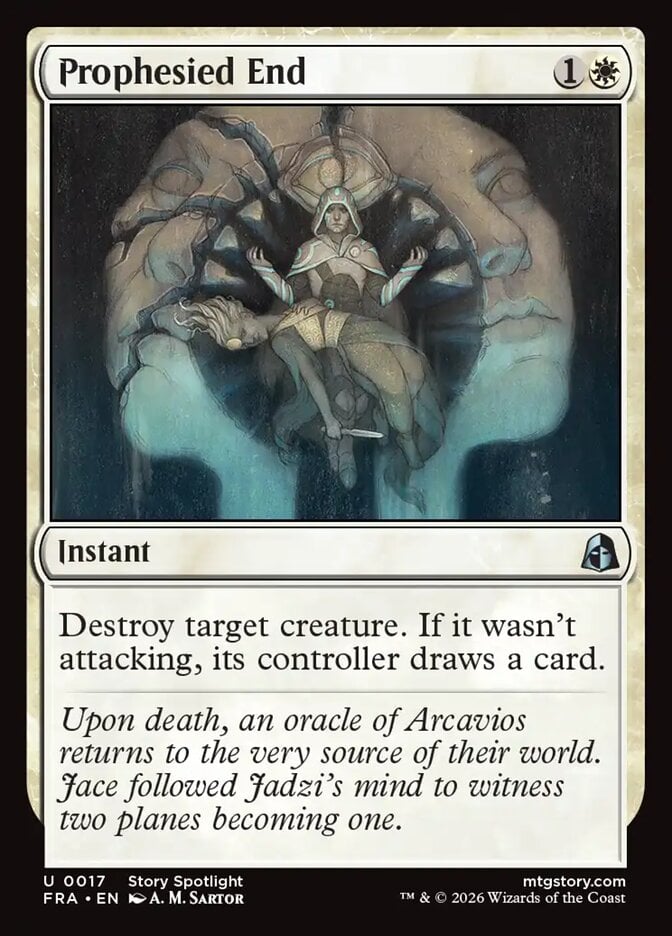
Rating: 5/10
Two mana to destroy an attacking creature is a pretty solid removal spell for white, but it usually comes with drawbacks. What’s nice about Prophesied End is that additional flexibility to proactively destroy any creature when you really need it to. I really don’t want to give my opponent a free card, but if I can kill a potential blocker and attack for the win, I’ll absolutely do that.
Refute Destiny
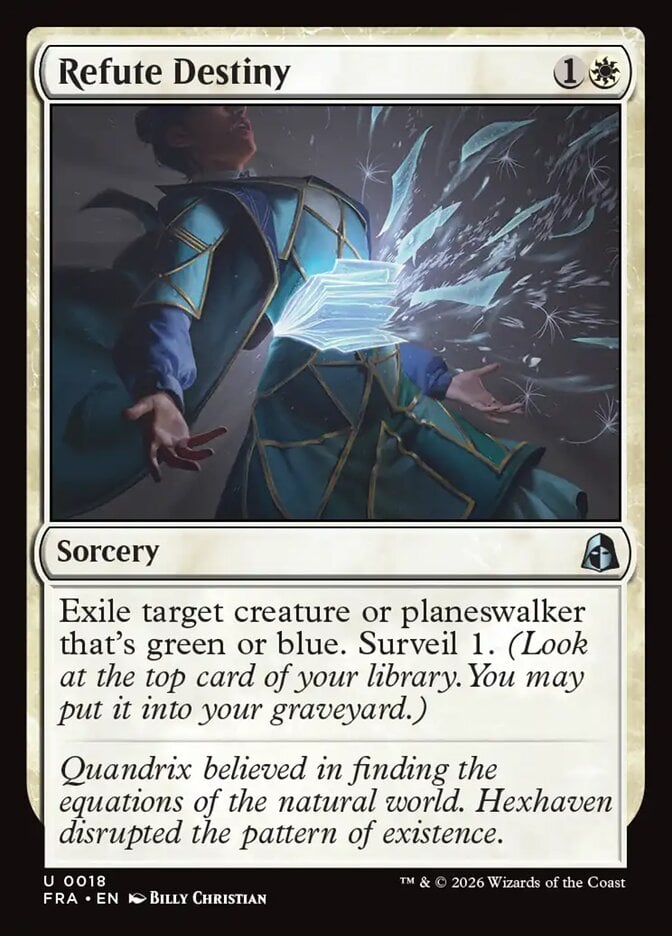
Rating: 5/10
This cycle of allied color hosers looks pretty good. You might think these are only good as sideboard cards, but the variety of decks in Limited mean that 70% of the 2-color pairs will have targets for each of them. That said, Refute Destiny is going to be one of the stronger cards in this cycle because it can target Jace tokens against virtually any deck and not be dead. Even if you do only sideboard this, it’s probably the strongest card you’ll bring in for the right matchups. It’s so clean and efficient that it needs that attention.
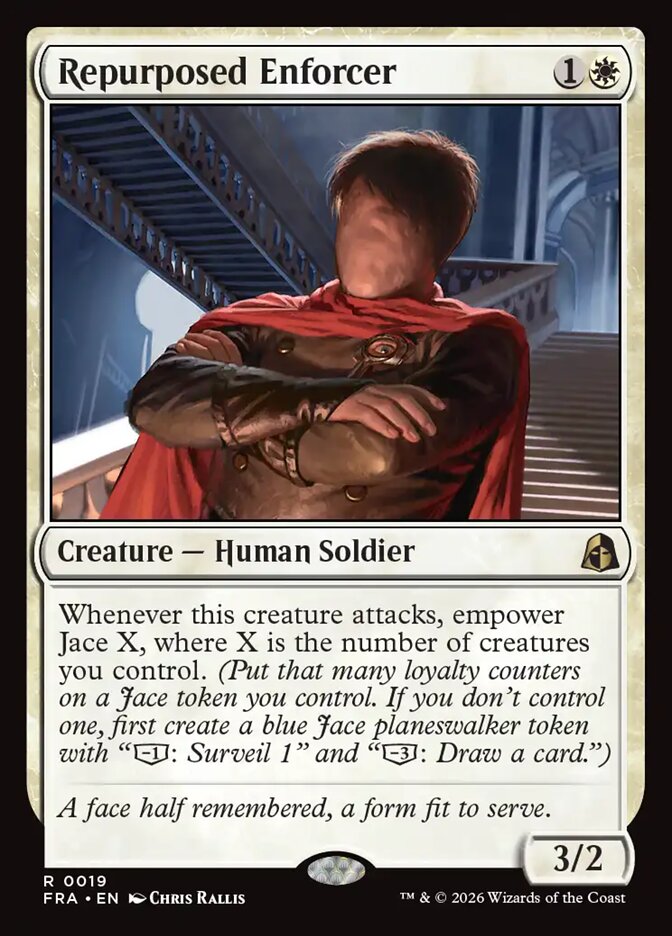
Repurposed Enforcer
Rating: 5/10
Creatures with 2 toughness trade off in combat very often, so the main question with Repurposed Enforcer is what can we get out of it if that’s the case? If this attacks unimpeded, you get a free Jace no matter what, which is very nice. If it’s going to die in combat, then as long as you’re getting to empower for 3 or greater, you’re doing very well on that exchange. I don’t think this card is great, but it does enough that it’s quite a bit better than your average 2-drop.
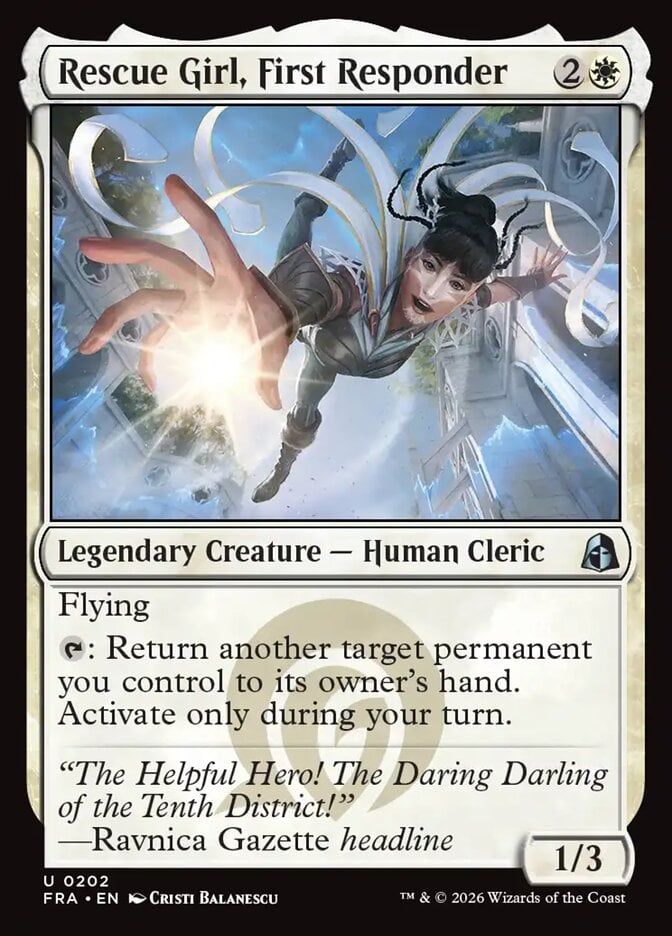
Rescue Girl, First Responder
Rating: 2/10
Rescue Girl, First Responder is one of the cooler Echoverse characters since it’s such a staunch departure from the original Massacre Girl. The design is a neat throwback too, because you tap it to Rescue a creature. Unfortunately, restricting it to only your turn stops it from being good enough here, but if you have a lot of good ETB abilities, I could see finding a spot for Rescue Girl.
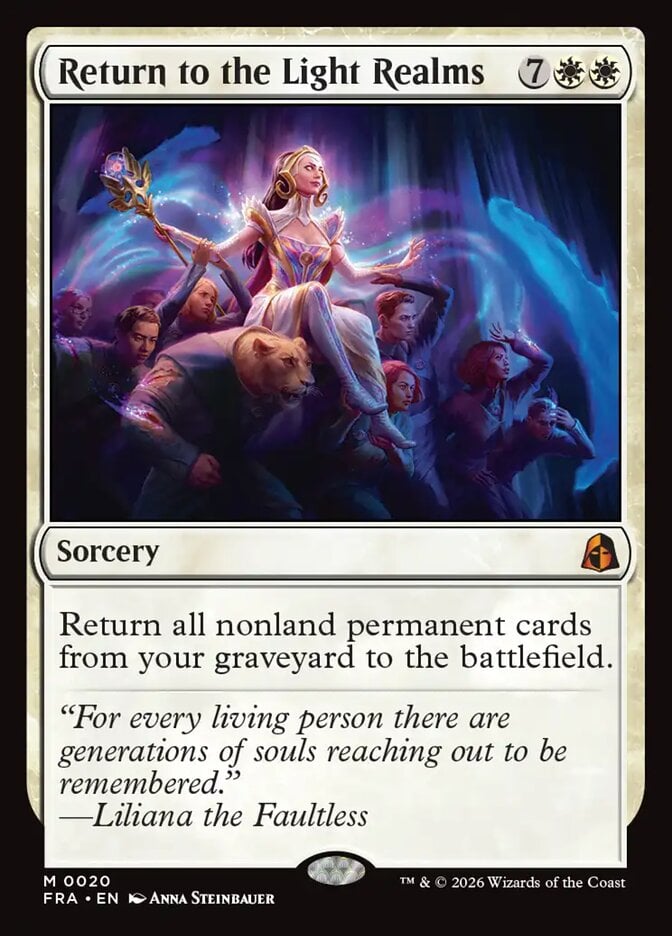
Return to the Light Realms
Rating: 0/10
While Return to the Light Realms is a really cool throwback, and I’m sure it’ll be a great card in Commander, a 9-mana spell with no guarantee of winning the game isn’t something we can afford to play in Limited.
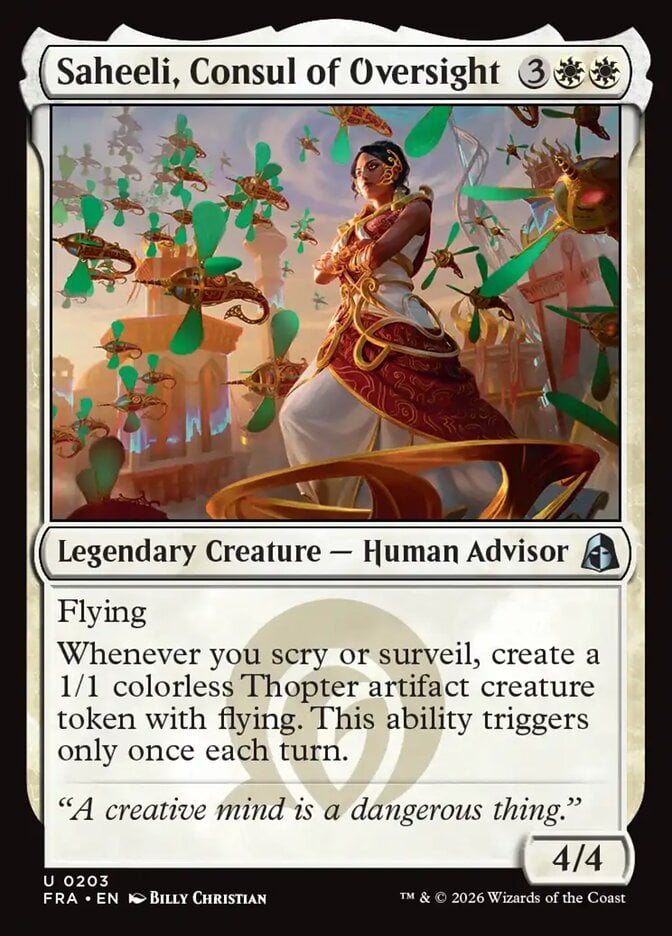
Saheeli, Consul of Oversight
Rating: 7/10
If Saheeli, Consul of Oversight is good in this format, I’m going to enjoy drafting this set a lot. Strong build-arounds are a hallmark of good Limited environments, and this Saheeli looks like a very good one. Creating a thopter token every time you scry or surveil is incredible in Fatehold, but it also synergizes incredibly with the Jace tokens, so it might just be good enough to top the curve in any white deck. It’s also a huge flier, so even if you don’t have anything to trigger Saheeli right away, it’s not exactly a dead card.
Shatterwing Pegasus
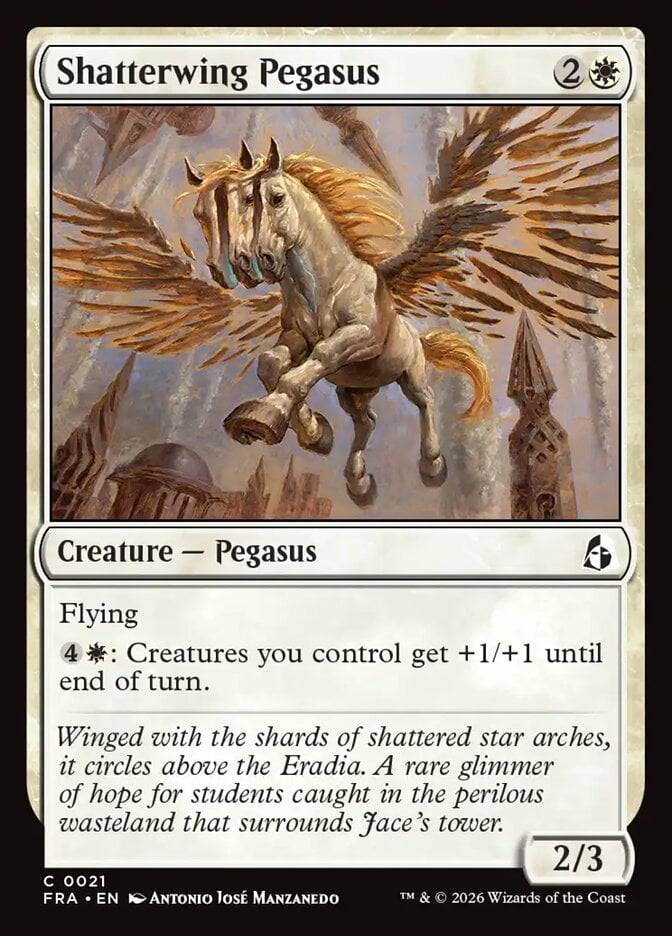
Rating: 3/10
Three-mana 2/3 creatures with flying have massively underperformed over the last few years. There’s nothing all that wrong with them, but they just don’t hit hard enough to compare with everything else. Shatterwing Pegasus however might be an exception, since the ability to pump your team for 5 mana is really strong and we’ve seen it do very well on 2-drops in other sets. I’d like to hedge on this one a bit, especially in a go-wide deck like red/white.
Surgical Precision
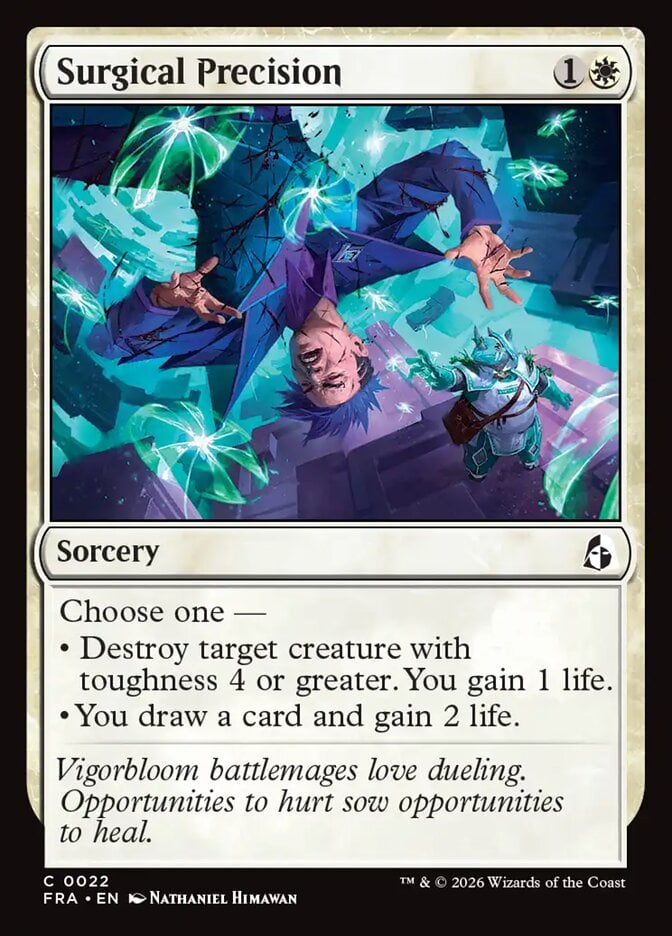
Rating: 4/10
Most good creatures worth killing have 4 toughness or greater anyway, making Surgical Precision a highly effective removal spell in the mid-to-late game. It won’t do much early on, but you can always cycle it if you need to, and both modes gain you life too, making this an especially good inclusion in Vigorbloom decks.
Teyo, Lightshield Expert
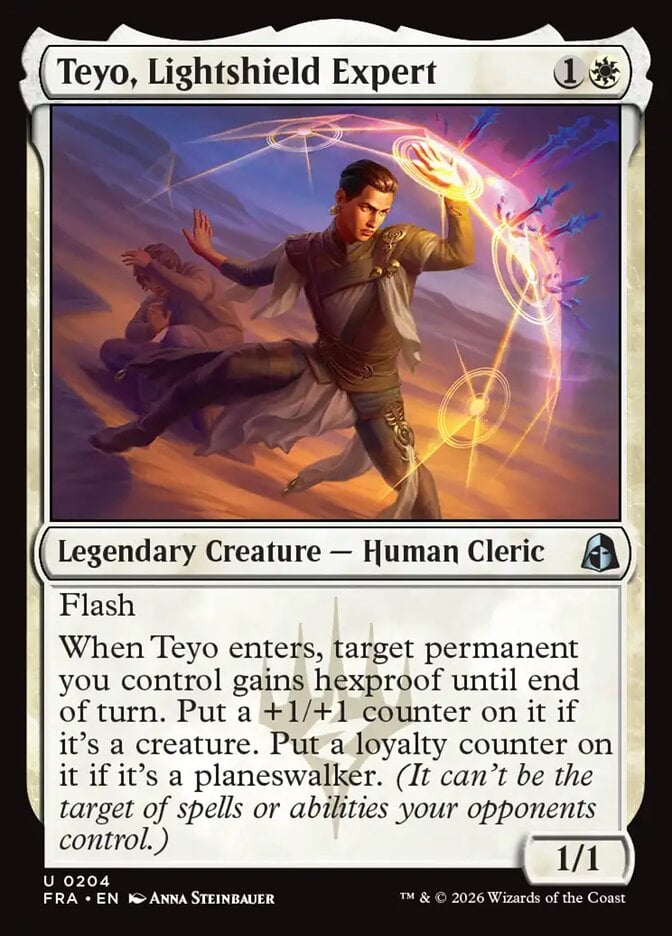
Rating: 6/10
We’ve seen our fair share of protection spells over the years, but none quite as good as this. Some, like Shardmage's Rescue, provide some additional benefit beyond stopping a removal spell, but Teyo, Lightshield Expert not only gives a +1/+1 counter (or loyalty counter), but a whole body for you to use to your advantage. As a creature, you can also flicker Teyo or recur it with far more ease than other protection spells, which makes this a very unique card and one that I’d be happy to include in basically any white deck.
Thalia, the Survivor
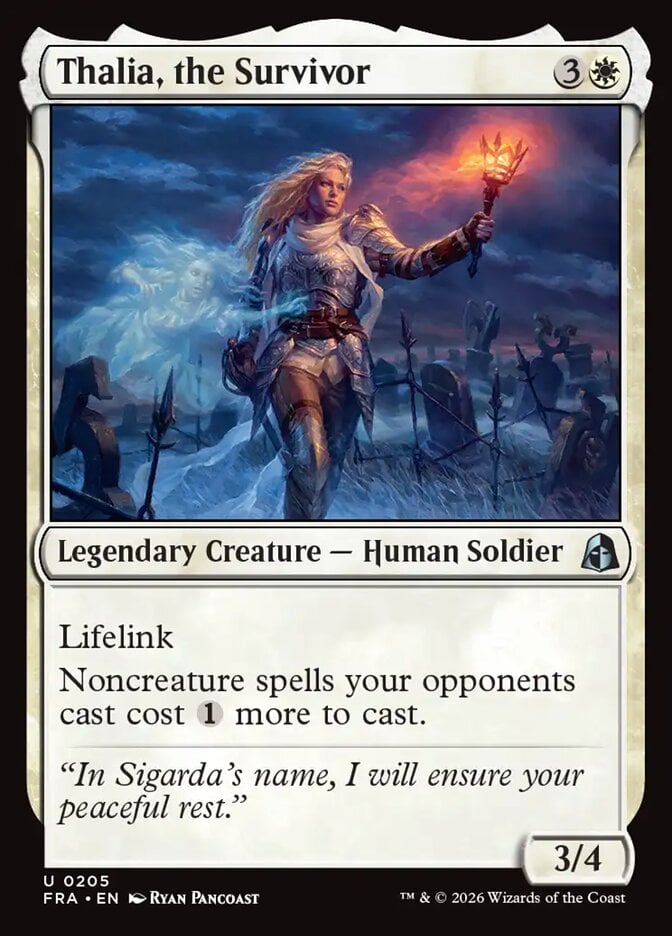
Rating: 3/10
Thalia, the Survivor is a bit too small for a 4-drop, so its abilities really need to do the heavy lifting. Lifelink is incredibly powerful and we don’t often see it on bigger creatures because of that. Making noncreature spells cost 1 mana extra isn’t that big of a deal, but it might be annoying every now and again. Thalia isn’t too bad, but it looks below average for an uncommon legend.
Tomik, Orzhov Lawmage
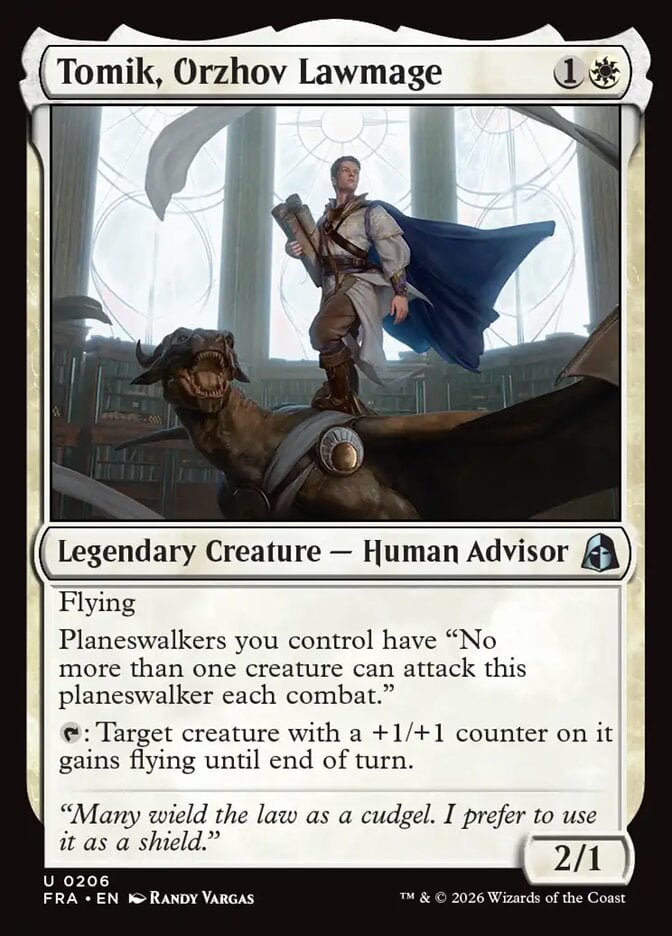
Rating: 5/10
Starting out as a 2/1 flier for 2 mana means Tomik, Orzhov Lawmage doesn’t have to do much else to be interesting. It actually doesn’t do a lot else, but it does protect your Jace tokens pretty effectively and it can launch creatures into the air every now and again. Mainly, it’s a good, efficient creature on the board with a little bit of late game flexibility.
Unflinching Hortimancer
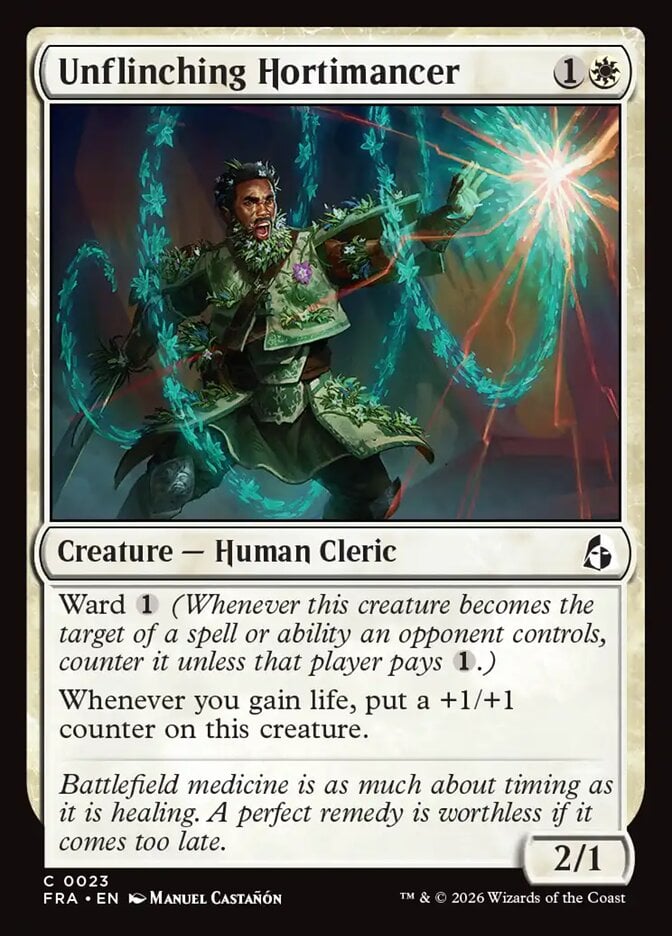
Rating: 4/10
Ajani's Pridemate is a design that has proven itself time and time again in previous sets. Vigorbloom looks like one of the strongest lifegain themes we’ve seen in recent years, and Unflinching Hortimancer is going to be great in that deck. It’ll basically be unplayable outside of it, but that just means that when you’re drafting Vigorbloom, you should be able to take as many of these as you need.
Way of the Healer
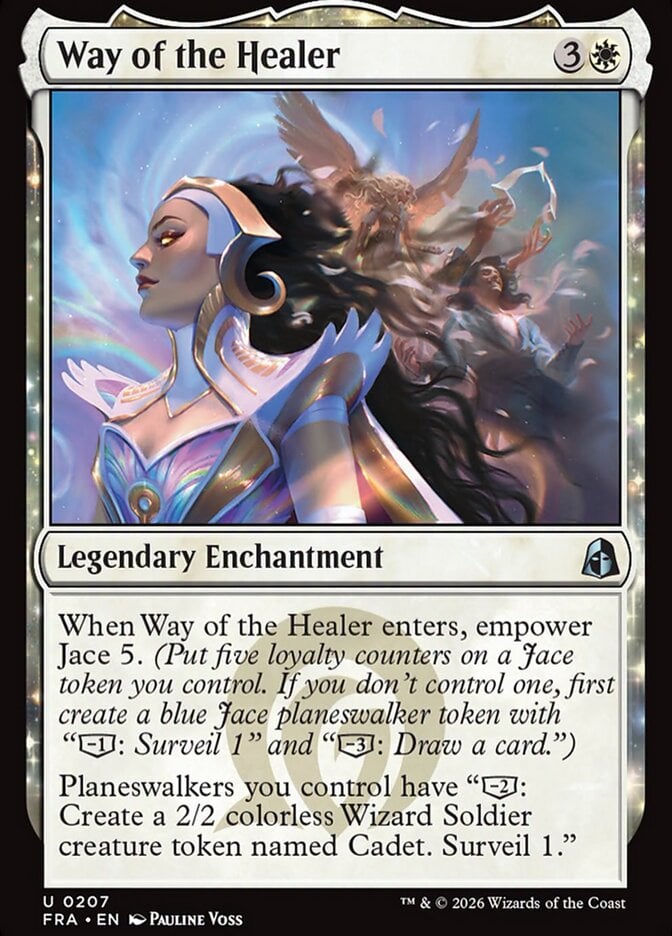
Rating: 6/10
This cycle of legendary enchantments is really intriguing. As powerful as the empower mechanic can be, only getting to surveil or draw limits what the Jace tokens can do, so giving them better abilities sounds very lucrative.
Way of the Healer starts out by giving you up to two 2/2s from the Jace token it creates, which will be better than drawing cards on average, but then it just sticks in play and makes every empower ability you use a lot stronger. A card like Campus Crier looks a lot stronger since you can exile it from your graveyard to create a 2/2 as well as surveil. These enchantments look strong, and this one looks particularly good.
Way of the Mentor
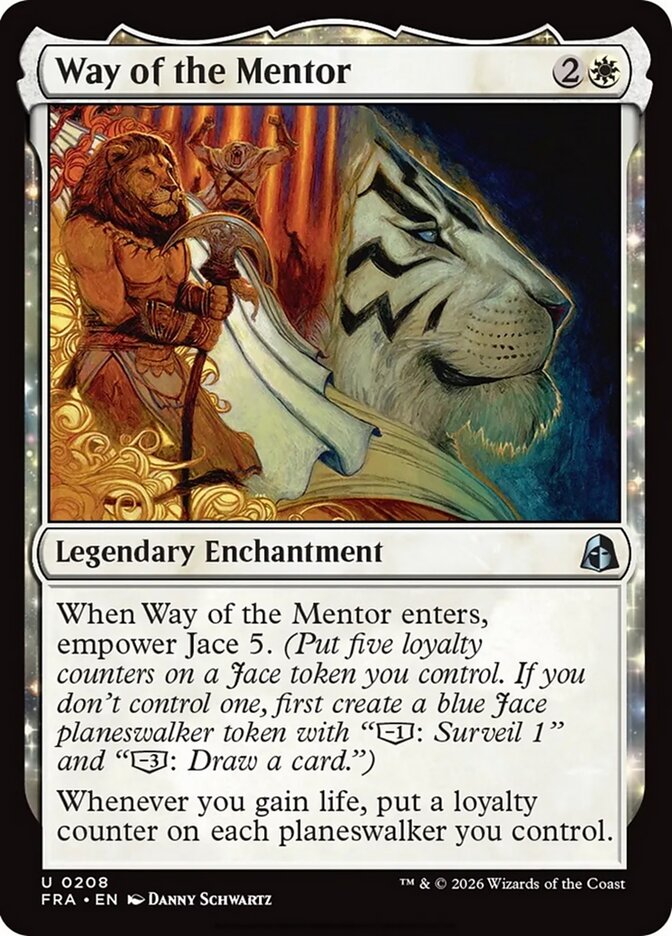
Rating: 1/10
Compared to the last card, an enchantment that isn’t giving a relevant ability to your Jaces sounds a lot worse. Way of the Mentor does at least replace itself, but I don’t think that decks with lots of lifegain are all that interested in empowering Jace. This just looks like a card with no home, but maybe we can create one for it and it’ll be only mediocre?
Yoshimaru, Beloved Companion

Rating: 4/10
When we’ve seen these kinds of effects in the past, like on Winding Constrictor or Conclave Mentor, they’ve been pretty strong. While Yoshimaru, Beloved Companion is mono-colored, costing 1 extra mana prices it out of your curve a little too much. Casting Yoshimaru on turn 3 means you’re waiting until turn 4 before you can make use of it, and that might honestly not be good enough if that’s your best case scenario. Still, there’s a lot of potential here, so I’ll try Yoshimaru out at first and see if I’m right.
Your Fate Ends Here
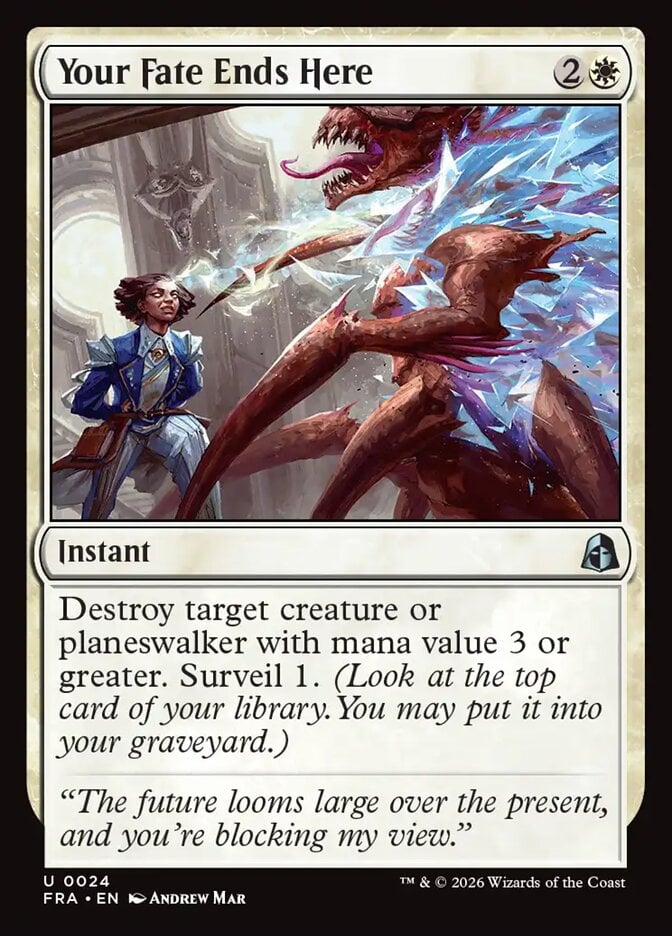
Rating: 6/10
While this can’t destroy 2-drops or Jace tokens, getting to destroy basically anything else at instant speed and get a free surveil sounds pretty incredible. Your Fate Ends Here is a very powerful removal spell for white and also one of the coolest names of any card in Reality Fracture.
Yuriko, Blade of the Mighty
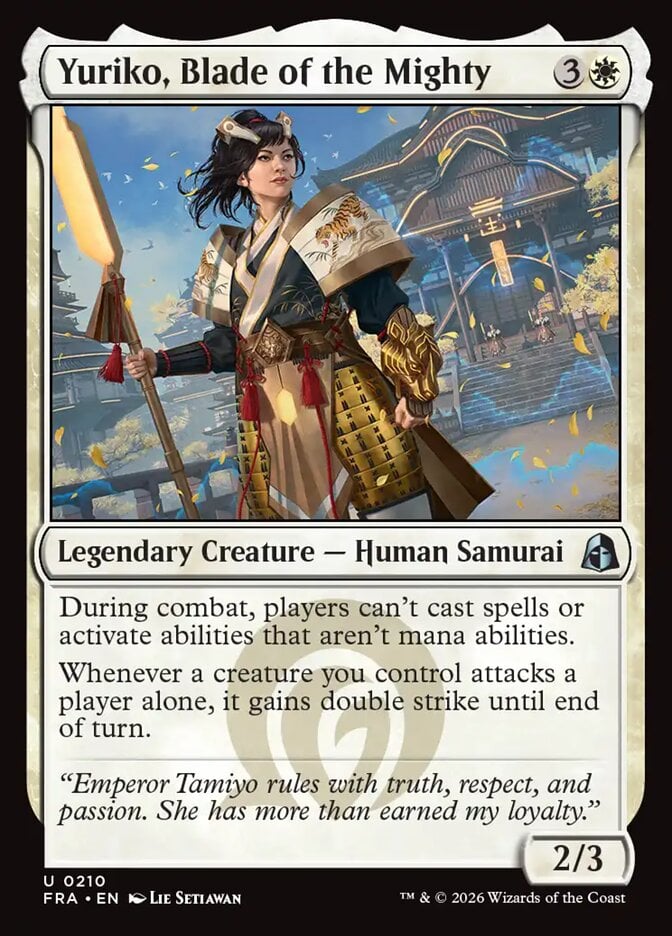
Rating: 4/10
Stopping your opponent from doing anything in the middle of combat is a pretty powerful ability, but also stopping you from doing anything feels like it cancels that out. This doesn’t allow you to use a combat trick or anything to sway the combat in your favor. What I do like is that while only one creature can attack to get double strike, you can still send other creatures at your opponent’s Jace token in the same combat. Still, Yuriko, Blade of the Mighty doesn’t really stand out to me.
Blue
Arni, Humble Scribe
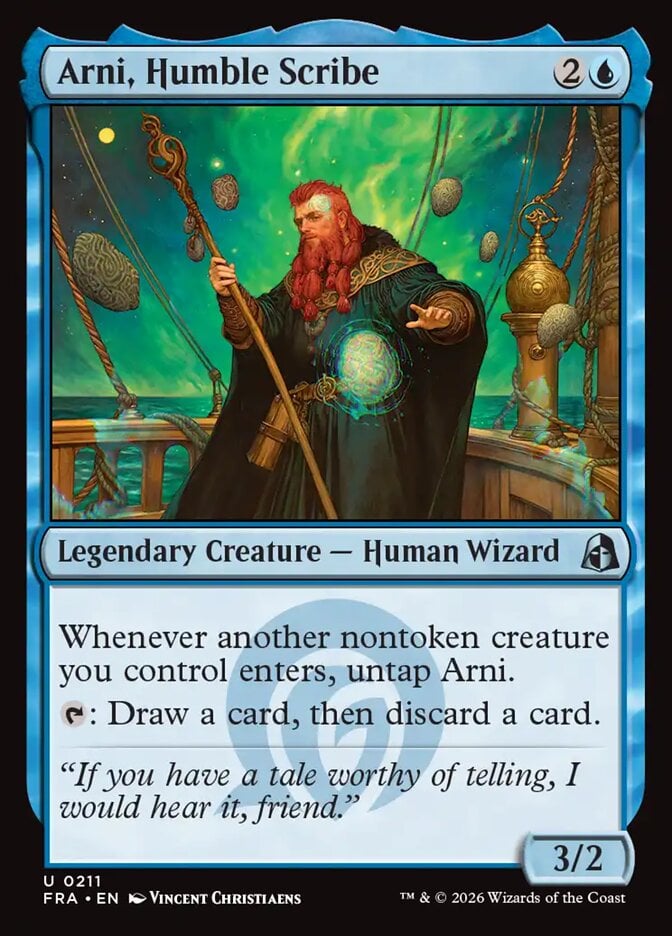
Rating: 5/10
Merfolk Looter variants used to be a mainstay of Limited, and at some point they just stopped being printed very often. Arni, Humble Scribe is a pretty effective one, despite being a 3-drop. The fact that you can probably use it twice in a turn thanks to its creaturefall trigger will let you churn through your deck pretty quickly, which will be especially good in Theorix to fill your graveyard. I like Arni a fair bit, it’ll be interesting to see where it lands.
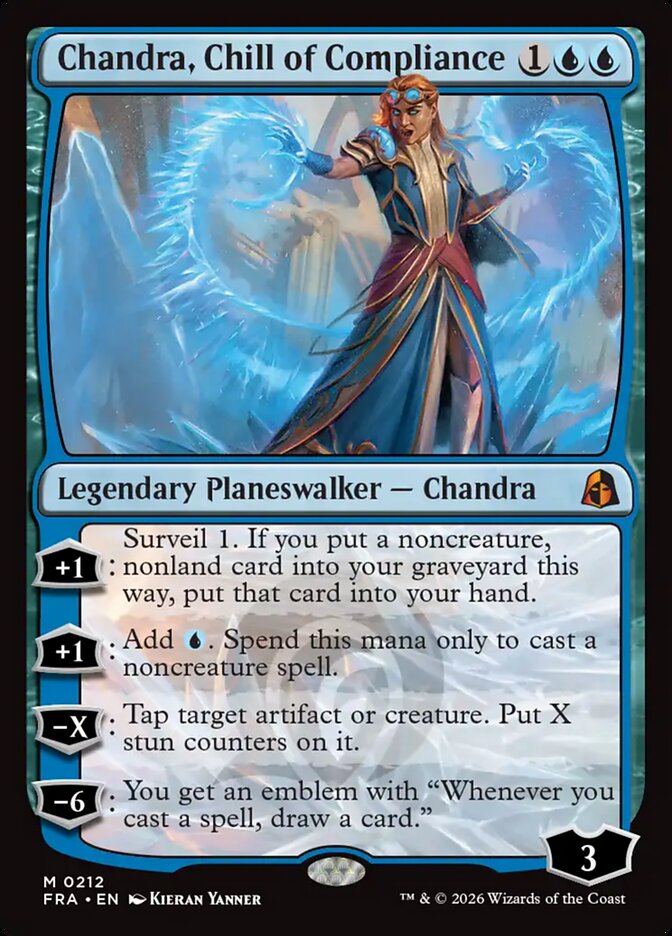
Chandra, Chill of Compliance
Rating: 8/10
Chandra’s Echoverse double has a lot to live up to. Chandra, Chill of Compliance was modelled as a completely blue counterpart to Chandra, Torch of Defiance.
While it’s not quite as good, it still hits pretty hard. The -X ability lets blue Chandra deal with a creature on the board, if only temporarily. From there, its plus abilities can put you ahead on cards or mana, whichever you happen to need the most. It’s not as good at defending itself as other planeswalkers are, but this Chandra does cost 3 mana, so it’s also able to come down earlier in the game when that’s less of an issue.
Overall, I really like this Chandra and I think it’ll play out quite well. It just isn’t one of the top-level threats in this set.
Countersculpt
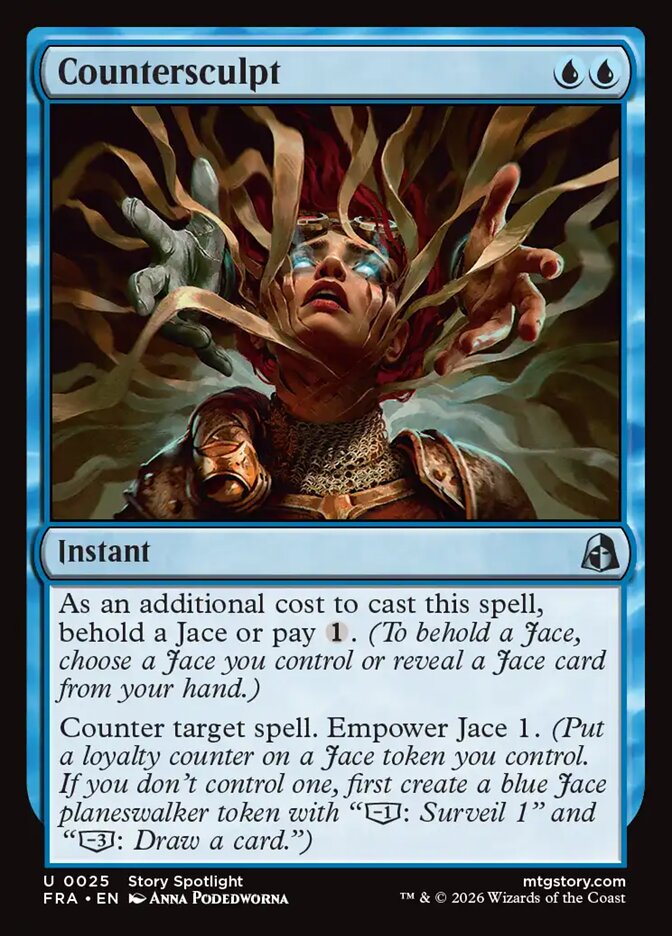
Rating: 4/10
On balance, Countersculpt is a pretty good variant of Cancel with an upside. The empower 1 will usually result in a free surveil, like Sinister Sabotage, and if you can get the mana discount on it because you have a bunch of other empower sources then it just gets even better.
Cruel Calculations
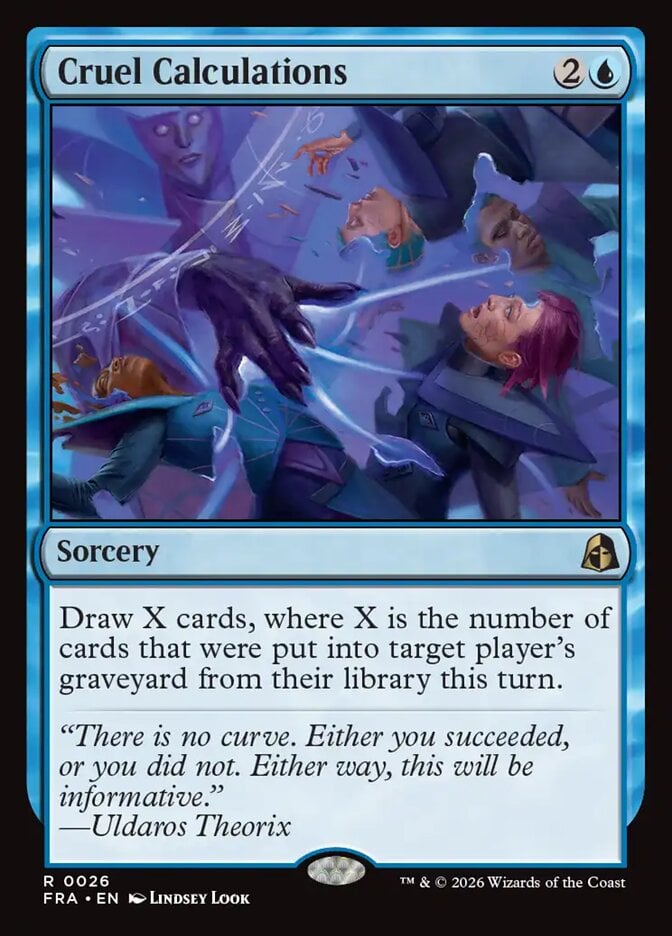
Rating: 6/10
This is basically just a Theorix card, but it looks like a pretty powerful one at that. All you need to do is cast the Omit Variables prepared spell and this will draw you three cards, which is a great deal for 3 mana. Tack on some surveils or random other little mill effects and Cruel Calculations turns into a very powerful draw spell. The only thing you need to ask yourself is whether you can afford to play a draw spell in the first place, but this one definitely has the potential to go off.
Crytheory Adept
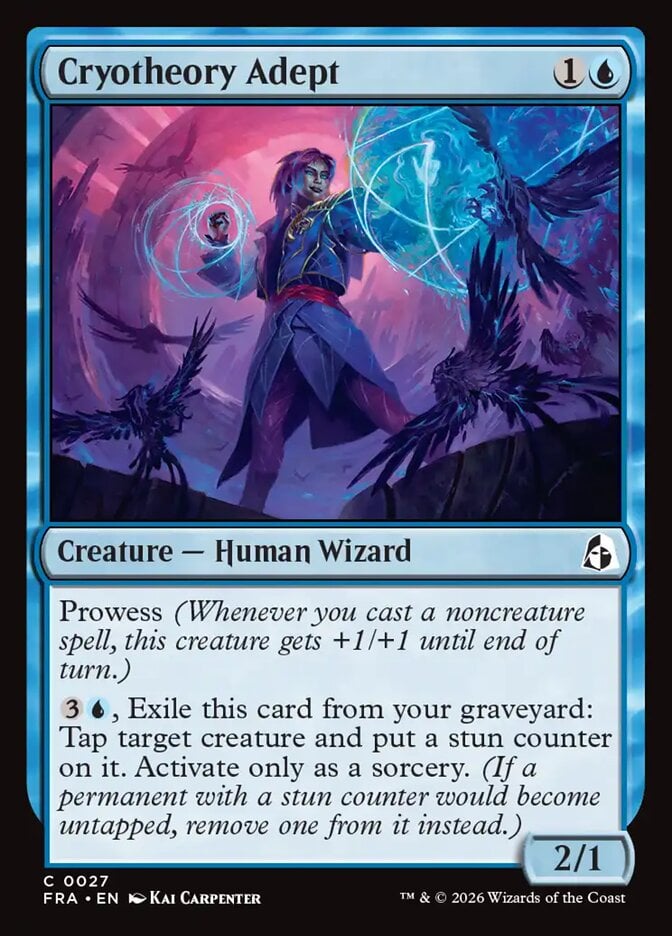
Rating: 3/10
Casting this as a 2-drop with prowess feels pretty mediocre to be honest. I’m far more interested in the second ability though. If you’re milling yourself aggressively in Theorix, then Cryotheory Adept is a great card to hit, since it actually does something relevant from the graveyard, while also being something you can play on the board if you draw it.
Diviner of Victory
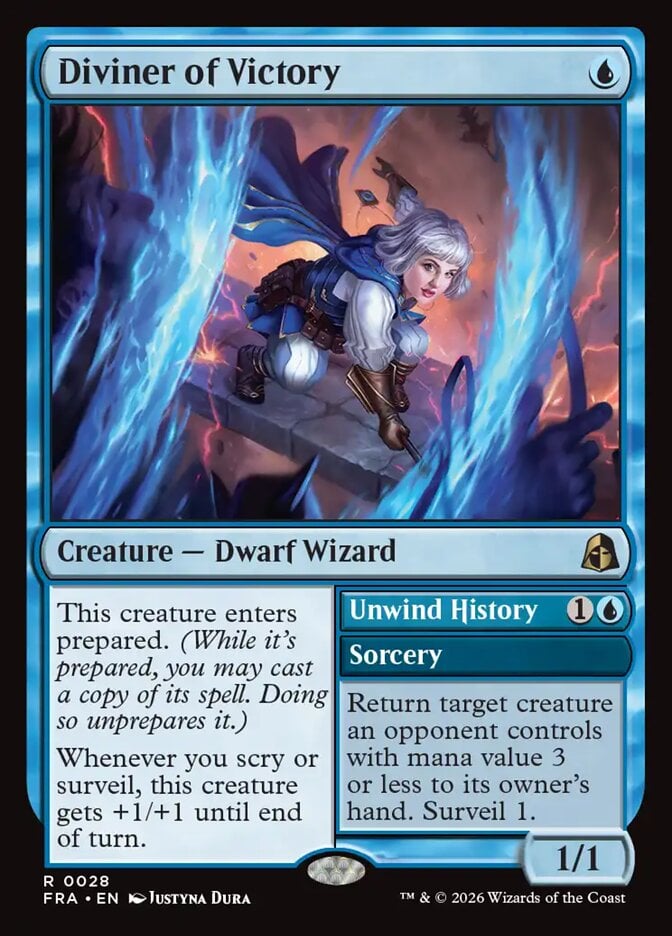
Rating: 6/10
Between its own prepared spell, Jace tokens, and the Fatehold archetype as a whole, Diviner of Victory may be able to attack as a 3/3 or even a 4/4 on certain turns. It also gives you a bit of interaction and requires an investment of only 1 mana, which makes it quite a powerful creature for any aggressive blue deck.
Divining Duelist
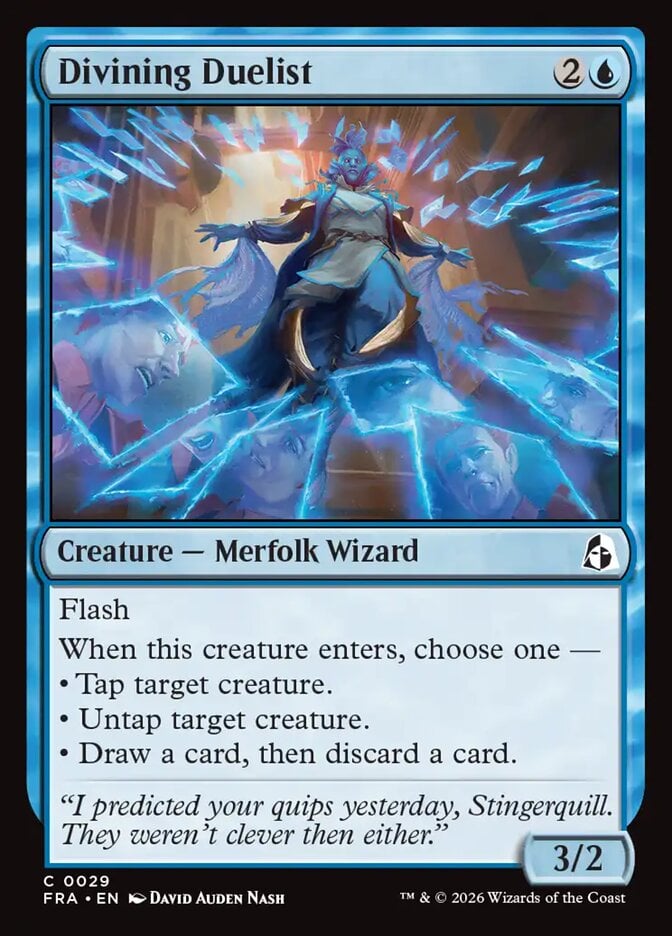
Rating: 3/10
Getting to tap down a potential blocker on the end of your opponent’s turn is a great way to pressure an opposing Jace token, or simply get a bunch of damage in when your opponent may not have been expecting it. That’ll typically be the best use of Divining Duelist, and that’s honestly good enough a lot of the time. The fact that it has some extra abilities to use is really nice, and don’t forget that it’s technically possible to open a Splinter Twin, too.
Fblthp, Impossibly Lost
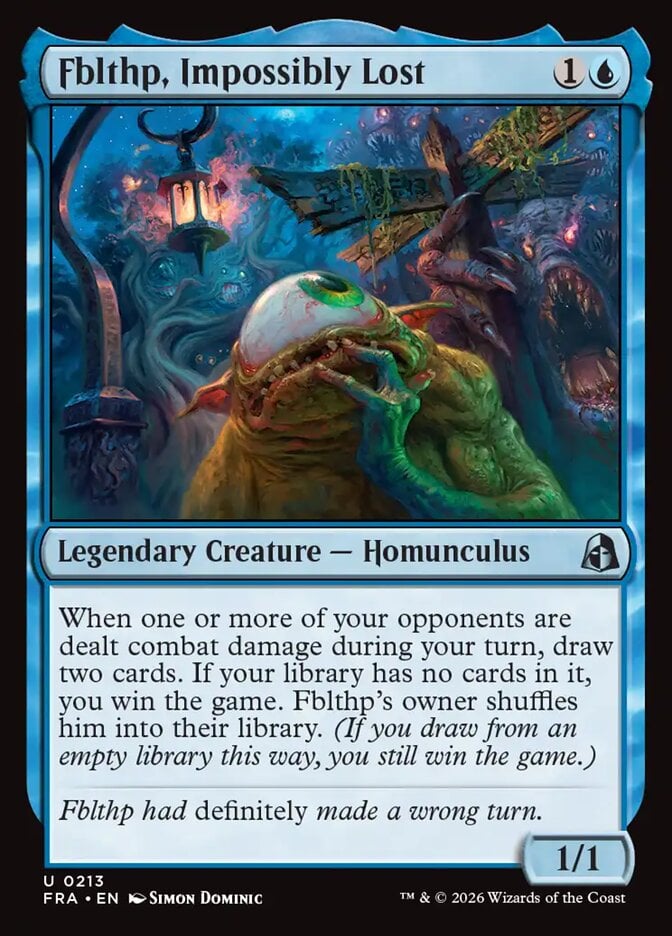
Rating: 4/10
Everyone’s favorite little lost homunculus is back! Fblthp, Impossibly Lost has a lot of text, but it basically amounts to a 2-mana spell that draws you two cards if you can deal combat damage to your opponent, kind of like when you cast Chart a Course. However, unlike Chart a Course, Fblthp’s only a vanilla 1/1 if you can’t enable it, which is quite a bit worse. Still, getting to draw those cards is a good effect to have, and you only need a few ways to enable this before it looks quite good. You might even draw it again and draw more cards later in the game.
Geist of Saint Thalia
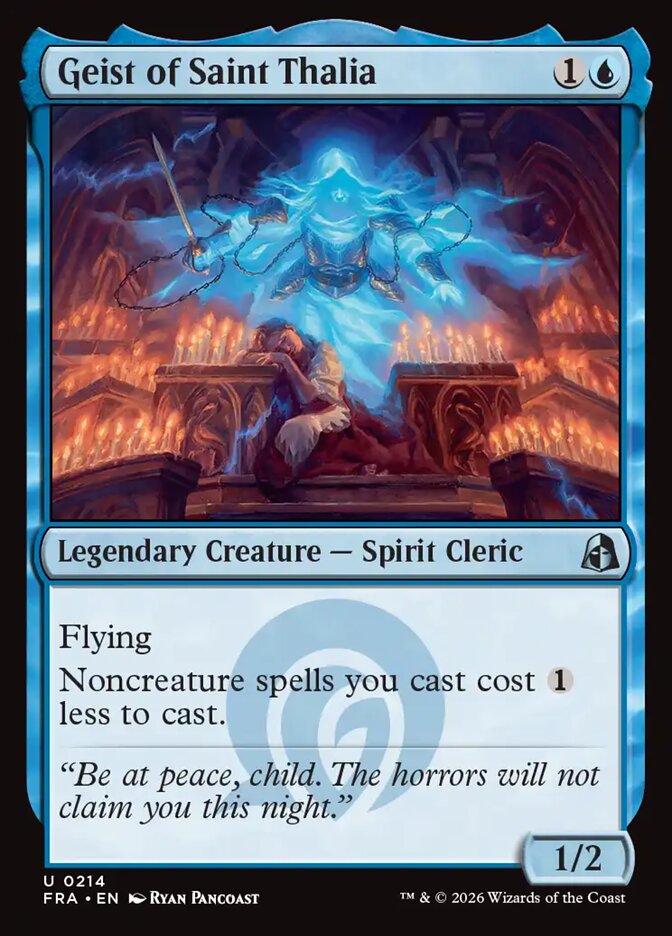
Rating: 5/10
We’ve seen plenty of cost reduction permanents in the past, and they’ve never really panned out. Geist of Saint Thalia however is a 2-drop, making it very comparable to a simple mana dork. If you have a deck built around noncreature spells, this is a useful way to accelerate out a 4-drop on turn 3 or to cast multiple spells in a turn much sooner than normal.
Hapatra, the Desert Frost
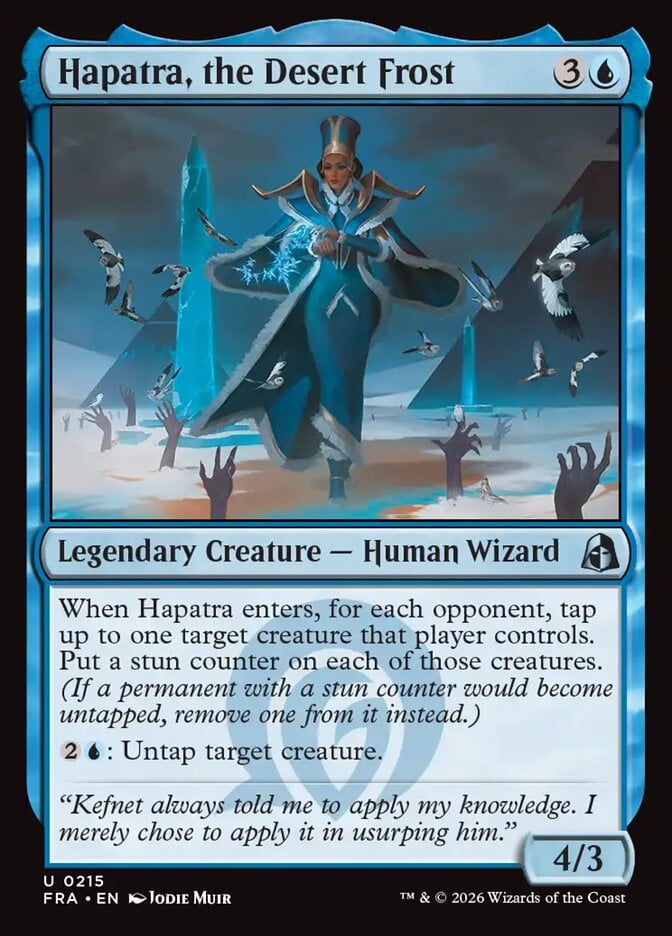
Rating: 5/10
I’m in for a big 4-drop Frost Lynx. Blue looks kind of aggressive in Reality Fracture, so a powerful tempo play like Hapatra, the Desert Frost looks really well positioned. I’m saying this a lot, but it’s also really good for pressuring a Jace token.
Icy Reception
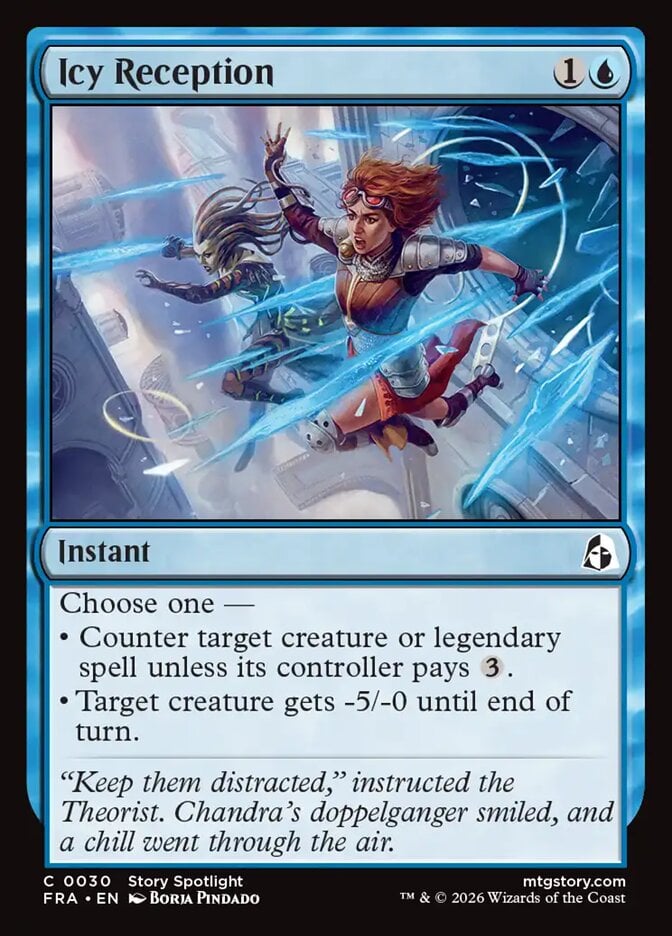
Rating: 4/10
A Mana Leak that only hits creatures and legendary spells is still pretty strong, since that should be most of the cards your opponents will play in the first place. However, unlike most counterspells, Icy Reception also has a way to deal with a creature that has already resolved. It doesn’t do it very well, because it’s only a combat trick, but it’s still a nice bit of extra flexibility that should make this a solid blue common.
Infinite Coursework
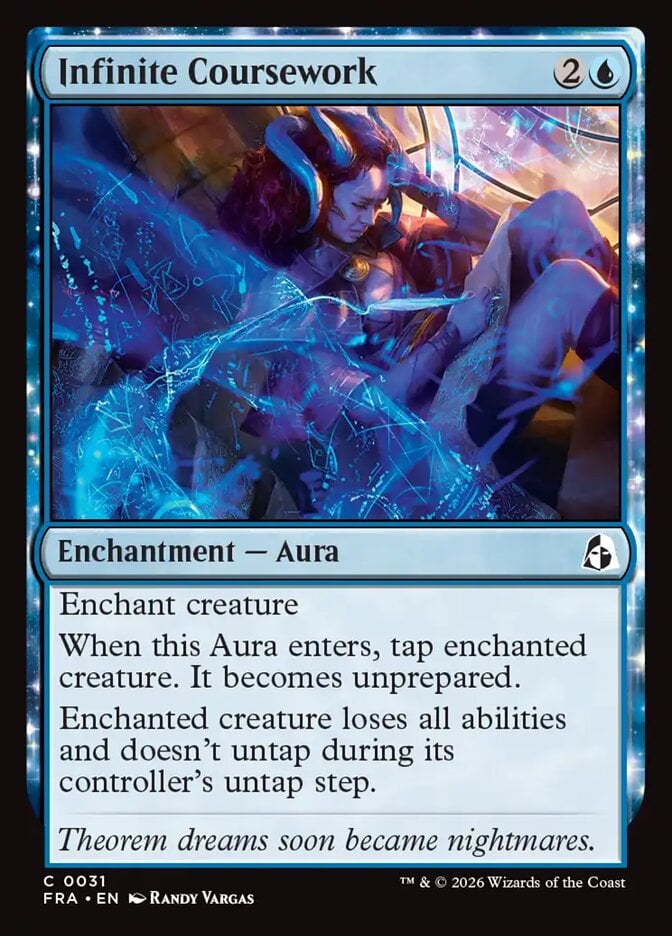
Rating: 5/10
These new Claustrophobia effects have been pretty good lately. Removing the creature’s abilities was a very useful addition and getting rid of their prepared spell is a big upside for this set. Infinite Coursework I’m sure is something we all have nightmares about, but I’ll be pretty happy to see this one at least.
Jace, Reality Sculptor
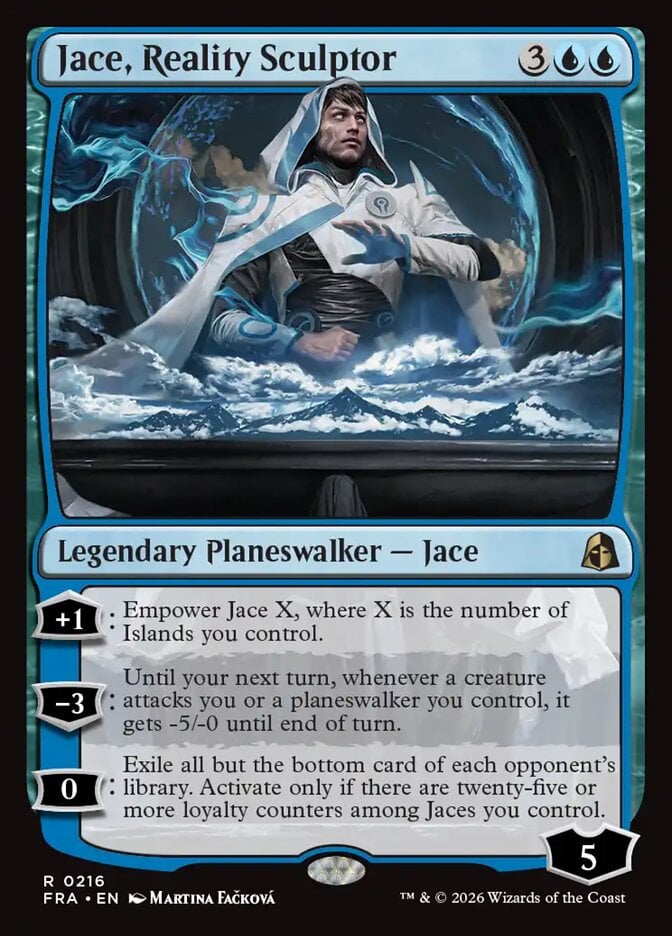
Rating: 6/10
It may make my job a lot harder to review it, but I love how different this planeswalker design is. As with other ‘walkers, the most important thing for them to do is protect themselves. The -3 ability on Jace, Reality Sculptor does this perfectly, but it can only really be done once before you uptick it. The +1 ability also potentially lets you draw a card right away if you have enough islands in play. All of that is fine, but nothing too special compared to other planeswalkers. It’s also worth noting that in a blue/green empower deck, this might actually be a legitimate win condition. We’ve seen cards with very large empower numbers, so getting your Jace token up to about 20 loyalty honestly doesn’t sound too difficult. This is definitely something I’ll be looking to try for myself!
Jace’s Machinations
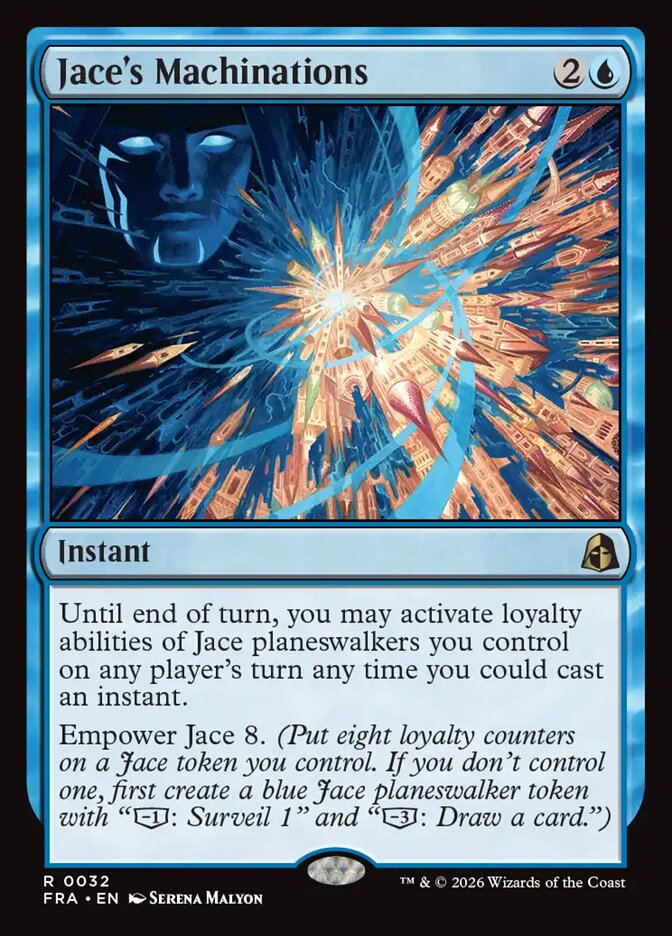
Rating: 5/10
On its own, Jace's Machinations is an instant that draws you two cards, since you can -3 the Jace token on your opponent’s turn and again on yours, leaving behind a Jace with 2 loyalty. That’s a bit better than your average Quick Study effect, but not by a lot. Where it’s more interesting though is if you can combine it with one of the many ways to grant your Jace token a different ability. Way of the Wildspeaker for example would turn this into a 4/4 with flash and thereby make it a lot more powerful. While this is a playable card in any blue deck, a deck built around empower will love it.
Lyra, Tolarian Archangel
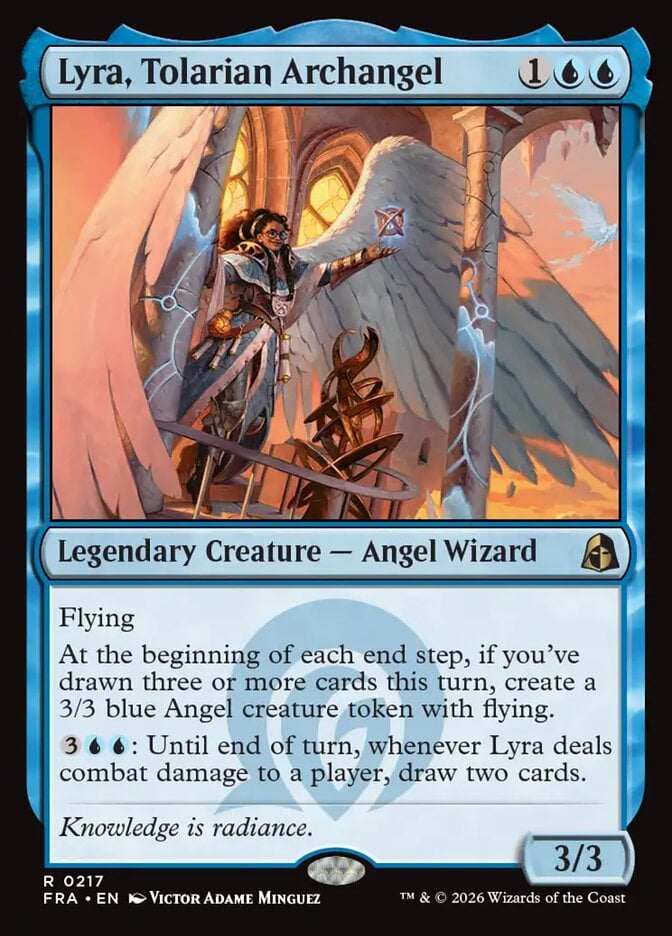
Rating: 10/10
Lyra, Tolarian Archangel is basically a Resplendent Angel that’s been shifted into blue. A 3/3 flier for 3 mana is already great, and if you ever get to activate its ability for 5 mana, you’re completely running away with the game. You get to draw two extra cards and create another 3/3 flier in the end step. This is a truly absurd rare, and I expect to lose to it quite a bit in this format.
Mindseeker Oculus
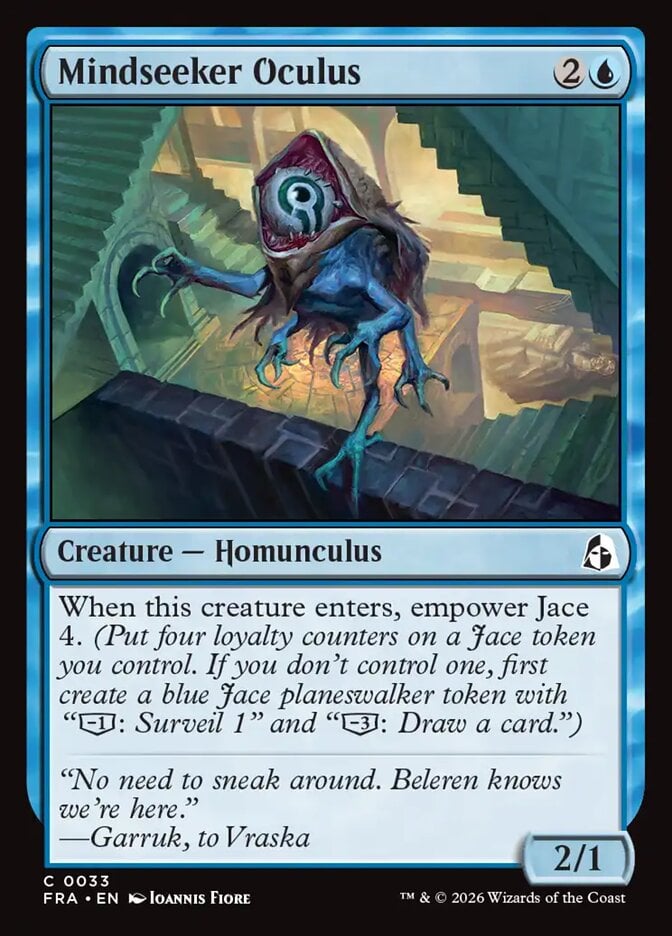
Rating: 6/10
I’d imagine that Mindseeker Oculus is the best blue common. Three mana creatures that draw a card when they enter are just very good, and this one even leaves you with a 1-loyalty Jace token. There’s basically no scenario when this is a bad play, and you can absolutely play as many of them as you find.
Perfected Theory
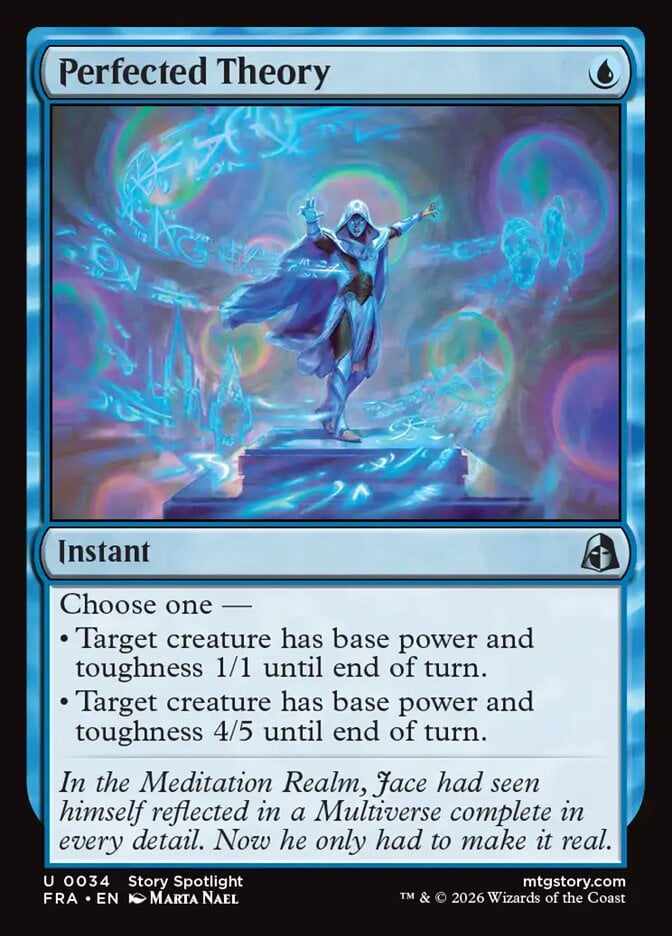
Rating: 1/10
While costing 1 mana and having the flexibility to buff your own creature or downgrade your opponent’s, Perfected Theory is still just a combat trick in the color least likely to want one in the first place. If you have a really aggressive blue deck, then maybe this can make the cut, but otherwise you shouldn’t bother.
Plan for All Outcomes
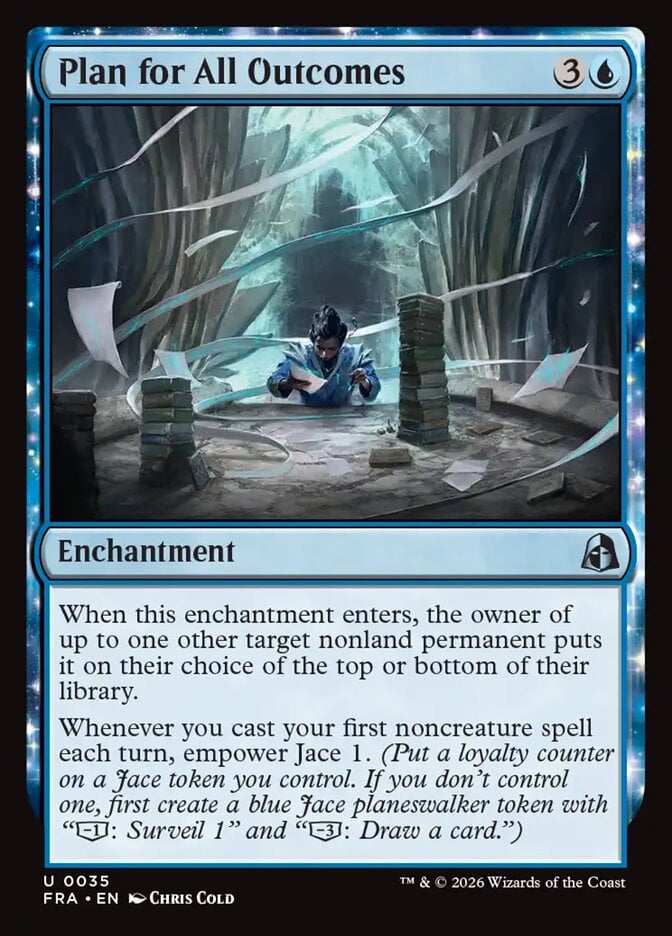
Rating: 6/10
I often make fun of WotC for the fact that they’ve printed about two dozen different versions of the same blue removal spell in sets over the past four years or so. Well, Plan for All Outcomes is the newest version for Reality Fracture but also one of the best I’ve seen. It’s only sorcery speed, and that didn’t stop Trickster's Stratagem, but staying in play and letting you empower when you cast a noncreature spell each turn is incredible. This looks like a very strong build-around that any blue deck would be happy to play, thanks to the removal mode.
Precise Redaction
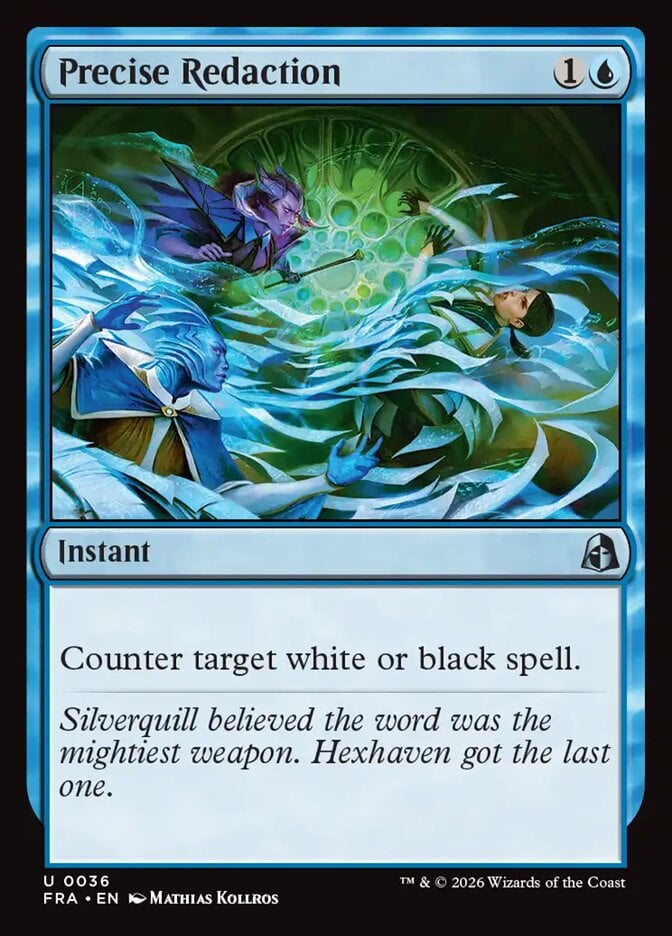
Rating: 3/10
As I said with the last color hoser, 70% of the 2-color pairs include white or black, so along with all the hybrid cards, you’ll find a target for this in most matches. That said, countering a spell is a lot worse than exiling a creature for the same amount of mana, so Precise Redaction looks a lot closer to being a sideboard card than anything else, but it’s cheap and efficient enough that I think I’d start it in the main and side it out when necessary. It’s also a lot better to main-deck if you have ways to discard it when it has no targets.
Proft, Consulting Detective
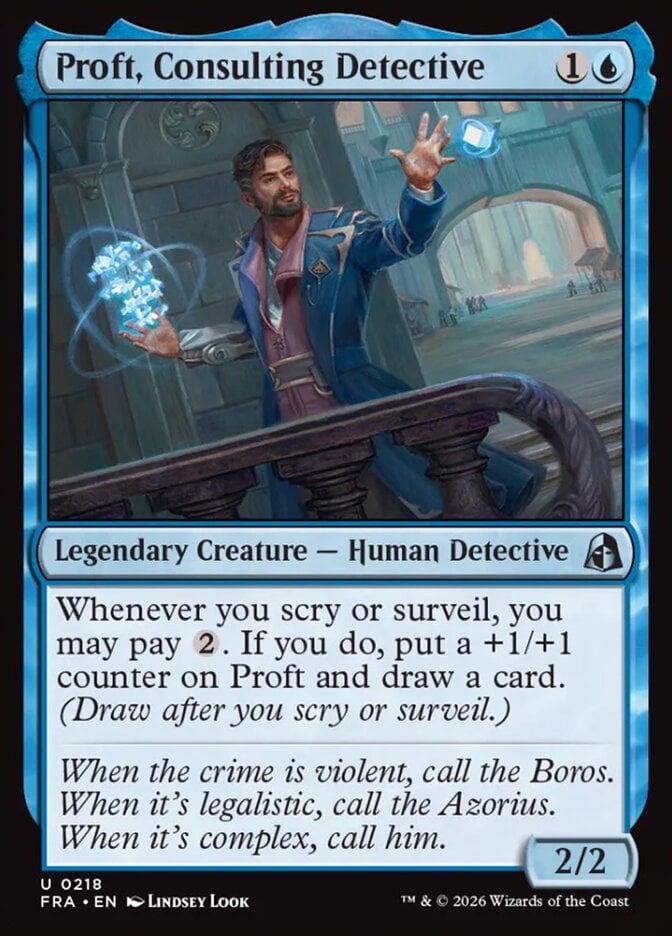
Rating: 6/10
If you’re drafting Fatehold and have plenty of ways to scry and surveil, then Proft, Consulting Detective is one of your best payoffs. It does cost an additional 2 mana to draw your extra card, but I’d say that’s a price well worth paying. That holds Proft back a little, especially when Peer Review already costs 3 mana to cast, but even getting to draw once or twice makes this a card well worth playing.
Protege’s Awakening
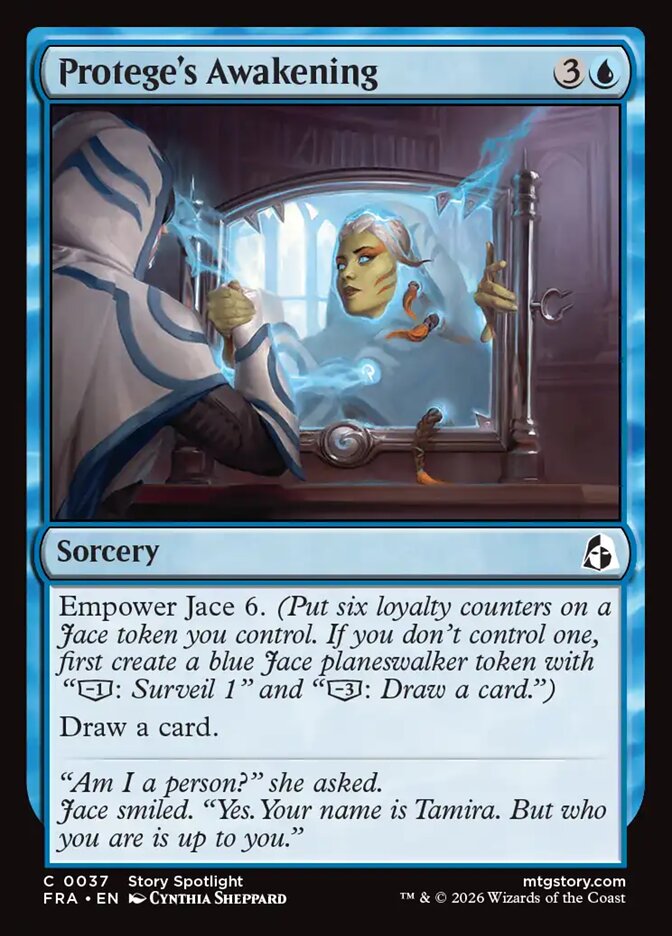
Rating: 3/10
Just like with Jace's Machinations, this could just be a simple draw spell in most blue decks, but one built around empower could utilize it so much more. I wouldn’t be surprised if this card ended up overperforming, but for now, I’ll be a little more reserved on it and say it just looks fine.
Ruric Thar, Biomagus
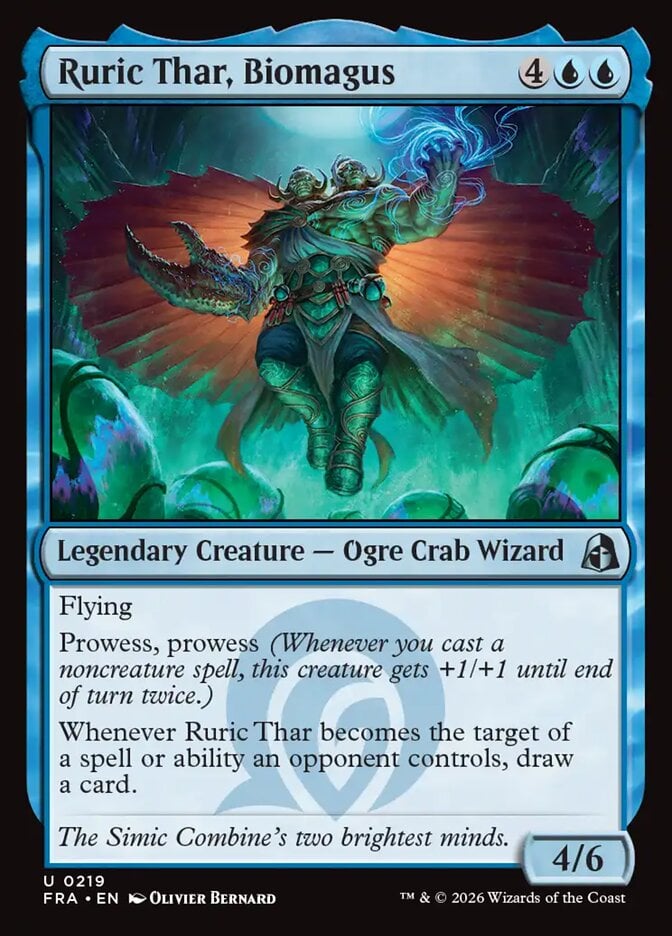
Rating: 4/10
Sometimes, you just need something to close out a game. Ruric Thar, Biomagus is pretty good at doing just that. A huge flier that gets +2/+2 whenever you cast a noncreature spell and replaces itself if your opponent tries to target it is going to be pretty hard to deal with. You’re only going to ever want one of these, as they do nothing in the early game, but if your control deck needs a win condition, this can serve that purpose pretty well.
Samut, Tyrant of Naktamun
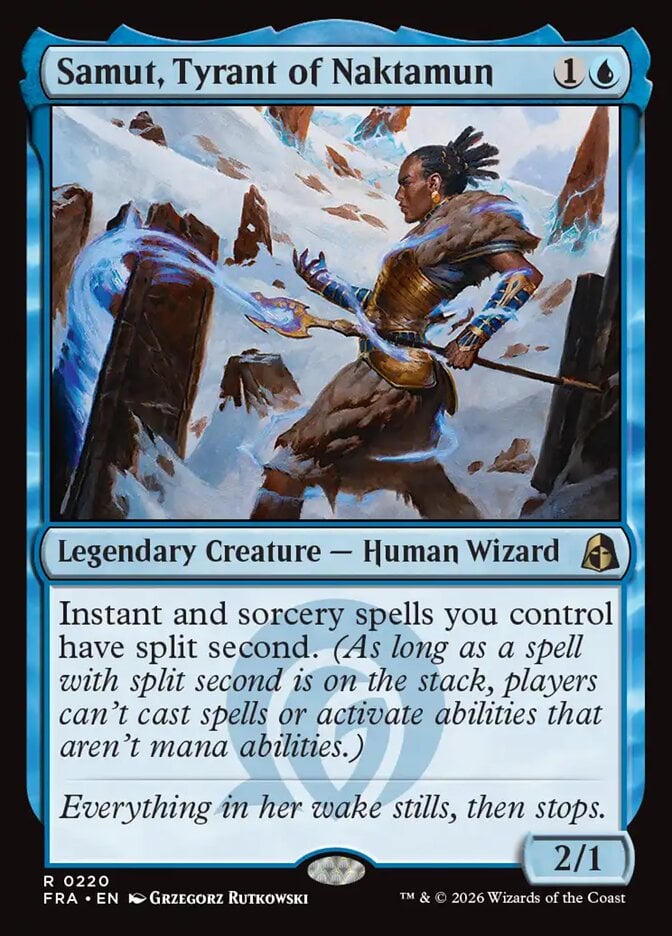
Rating: 1/10
As interesting as it is to see the return of split second, making it so your opponent can’t respond to your spells is rarely going to be relevant. I view Samut, Tyrant of Naktamun as basically nothing more than a vanilla 2/1, which you should basically never play.
Seasoned Cryomancer
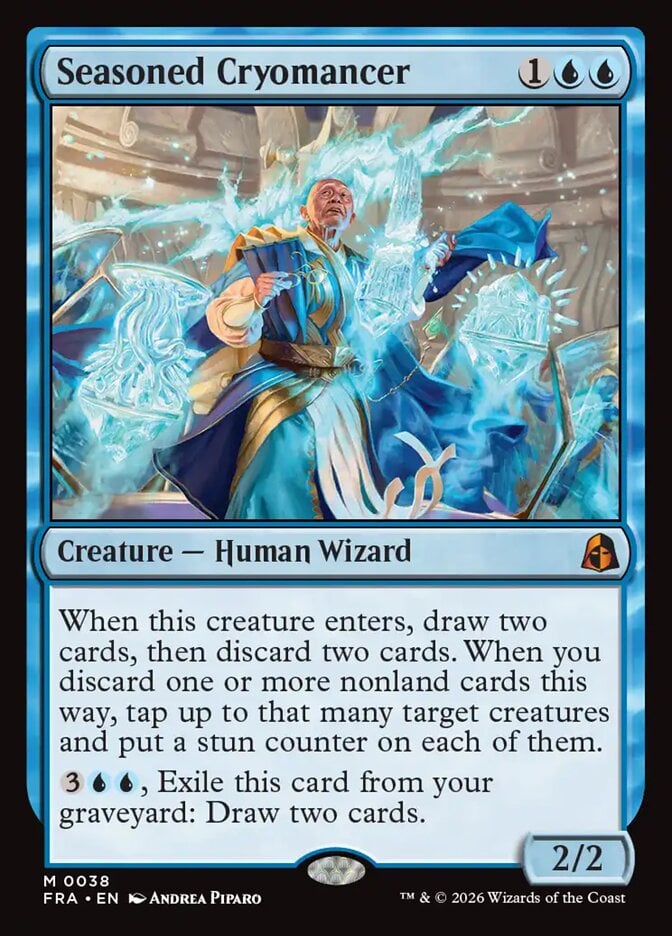
Rating: 8/10
Modern Horizons’ Seasoned Pyromancer has been a competitive staple pretty much ever since it got printed. It’s a bit niche, so it needs the right deck to work, but it’s very powerful when it finds one.
Its color-shifted cousin Seasoned Cryomancer is a fair bit worse, but also better in some regards. When you play it, you’re forced to draw and discard, whereas you could bypass the discard on SPyro when your hand was empty. It’s still pretty good though, and the best ability it has is the last one, where you can draw two cards by exiling it from your graveyard. This puts you +2 on card advantage since you’re not spending a card, and you can even use it if you just mill it with Theorix cards. This is just a very solid blue card all round and it really shines in a good Theorix deck.
Semester Foreseer
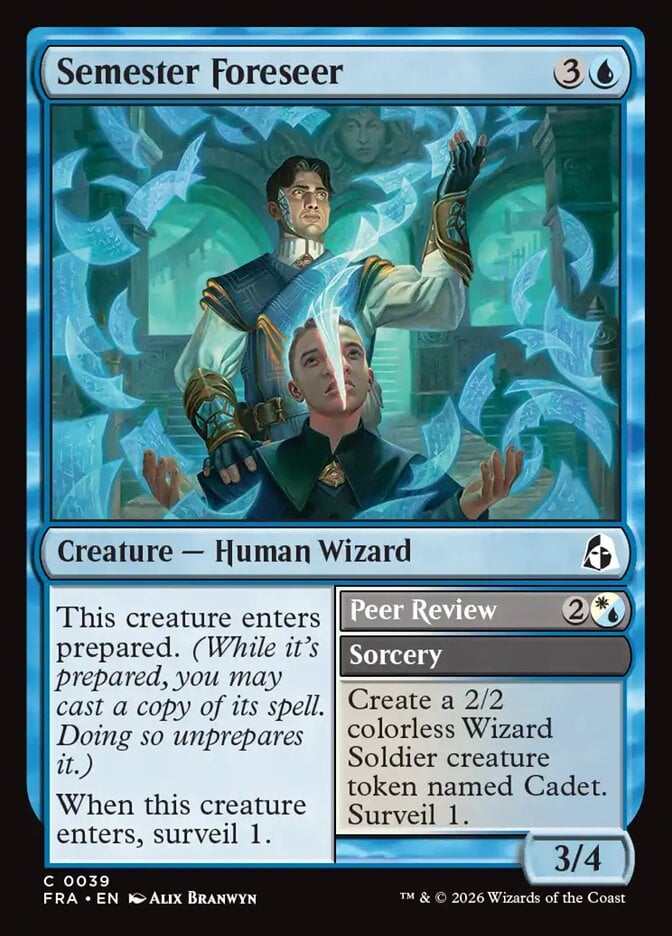
Rating: 4/10
The comparison to make here is to Campus Composer, a pretty good card from Secrets of Strixhaven. Four mana for a 3/4 plus a surveil isn’t that good, but getting a free prepared spell out of it on a later turn, or perhaps the same turn, sounds really good. It’s also two instances of surveilling to trigger the Fatehold mechanic. I didn’t like Semester Foreseer at first, but I think it might be growing on me.
Sphinx of False Conclusions
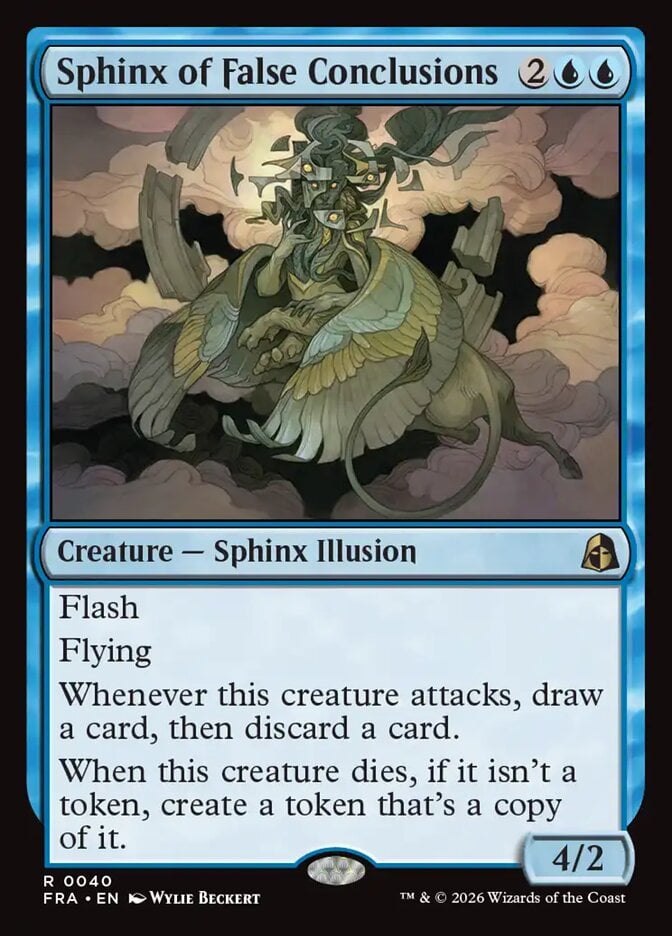
Rating: 8/10
The reason why flashback is so good is because you get two bites of the apple out of a single card and that’s exactly what makes Sphinx of False Conclusions so good. As soon as it dies, you get another copy of it for free! You can just run it out and start to attack, but what also sounds like a useful play is flashing it in to trade for something in combat, then you still have the token left over when you’re done. However you play it, this is a very powerful rare that’s going to be very difficult to deal with profitably.
Sphinx’s Approach
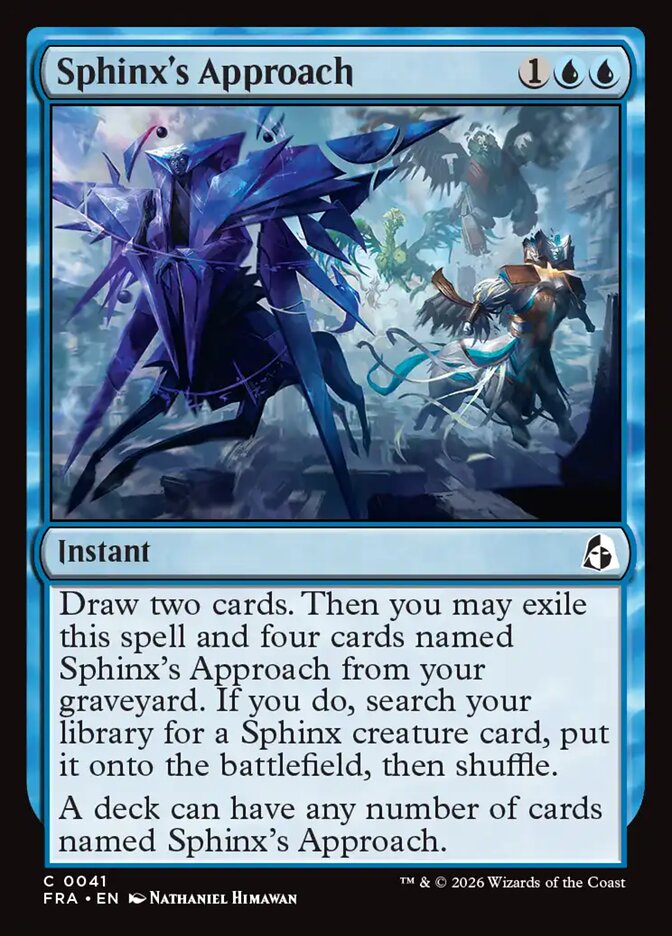
Rating: 2/10
You can basically ignore every line of text on this card other than “draw 2 cards”. This is simply a Quick Study that’s harder to cast, which is just barely still good enough. I think this is quite playable in a slower control deck, but I’d never play it in an aggressive deck.
Surveillance Phantasm
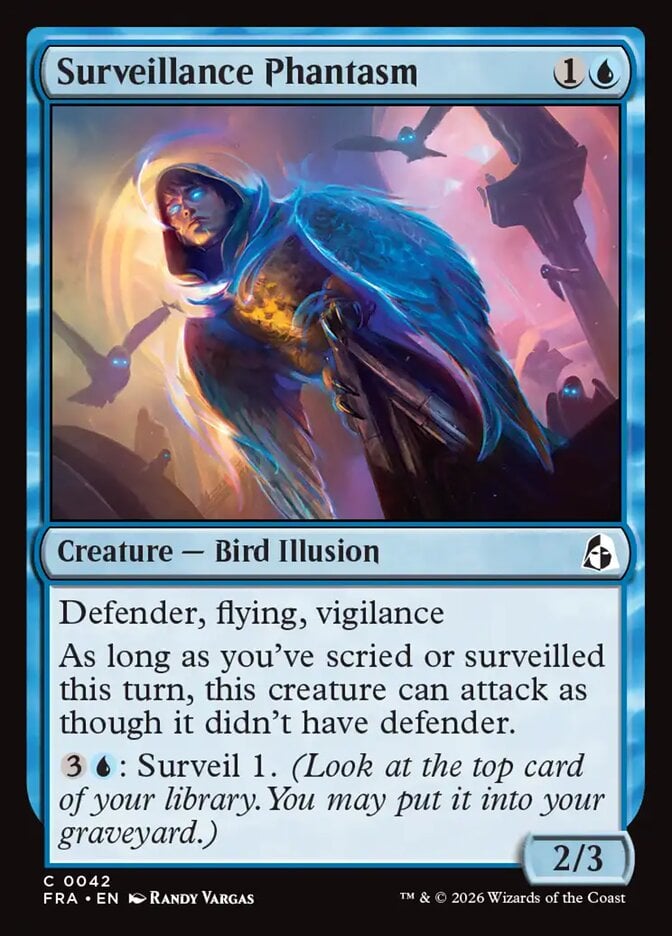
Rating: 2/10
I was always a fan of these 2-mana blue defender creatures, but they also used to be 3/3s. There was a very real reward for being able to attack with them. Recent ones like Surveillance Phantasm have lost a point of power and they just don’t have the edge they once had. After all, 2/3s for 2 aren’t all that uncommon, so you’re not really gaining anything. Yes, this one has flying and vigilance, but I’m still not all that impressed.
Tetsuko Umezawa, Fugitive
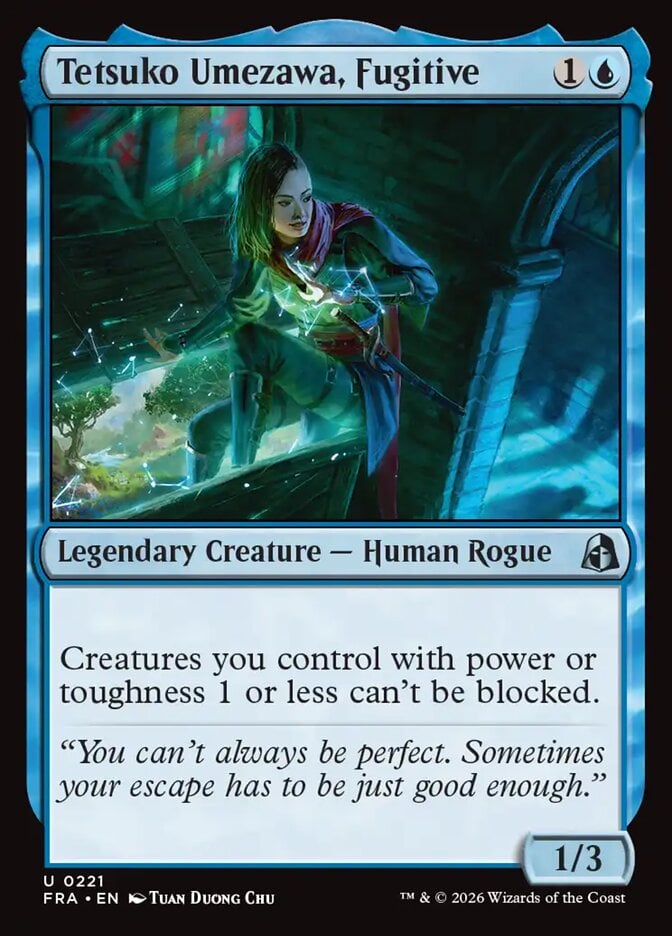
Rating: 5/10
We’ve seen Tetsuko Umezawa, Fugitive a couple of times before and it’s been pretty good each time. It already makes itself unblockable, and while I can’t predict what other creatures it’ll be able to buff, even making anything else unblockable is a good effect for 2 mana.
The Theorist, Jace Beleren
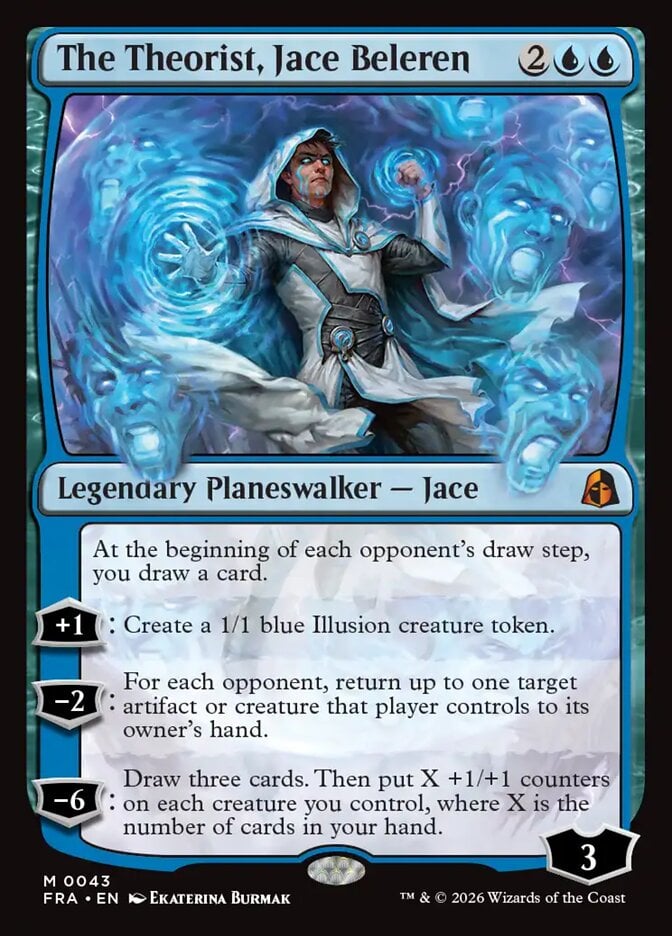
Rating: 10/10
This is Jace’s set, so of course we get an incredibly powerful card to represent him.
Unlike many previous Jace planeswalkers, The Theorist, Jace Beleren doesn’t force you to choose between drawing extra cards and affecting the board. After all, why not have both? All of the best planeswalkers protect themselves, and both of Jace’s main loyalty abilities are capable of doing that. Meanwhile, every turn that passes with The Theorist still standing lets you draw another card to support it.
This Jace is a threat that absolutely must be dealt with, and it really doesn’t make that easy to do.
Theorist’s Proxy
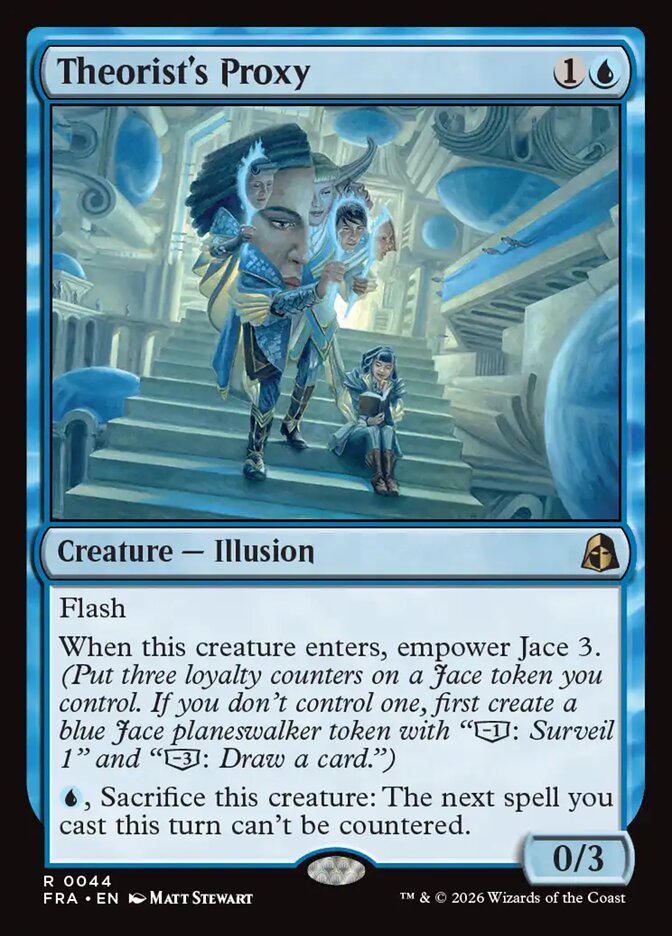
Rating: 4/10
This is a really weird card. The uncounterable ability is pretty much useless, so we’re really just looking at a 0/3 that empowers 3 when it enters, which isn’t bad. The empower 3 allows you to draw a card, which already makes Theorist's Proxy comparable to something like a Spirited Companion, but the high toughness also makes it better at protecting your Jace token should you need to build it up for a bigger loyalty ability. This is pretty good overall, but very uninspired for a rare. It feels more like a good common.
Traxos, Academy Guardian
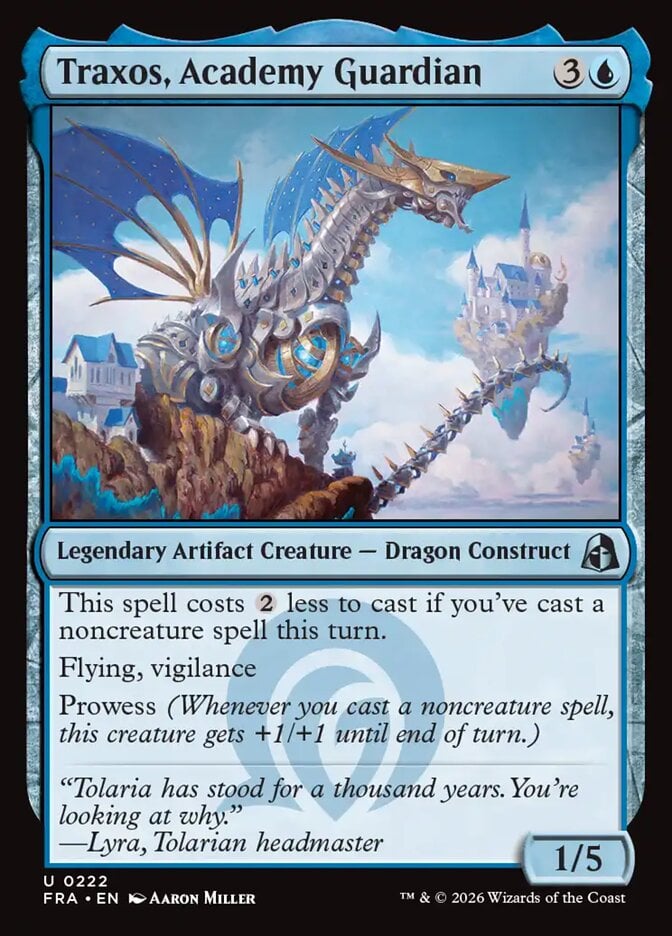
Rating: 5/10
I’m a big fan of this card. I love defensive creatures that don’t accomplish much and Traxos, Academy Guardian is exactly that. Its huge 5-toughness body should allow it to block just about anything, it can attack and still defend you, and getting to cast it for 2 mana feels like a dream. I might be overrating it a bit, but this is how good I expect it to be in decks that I draft.
Undulating Witness
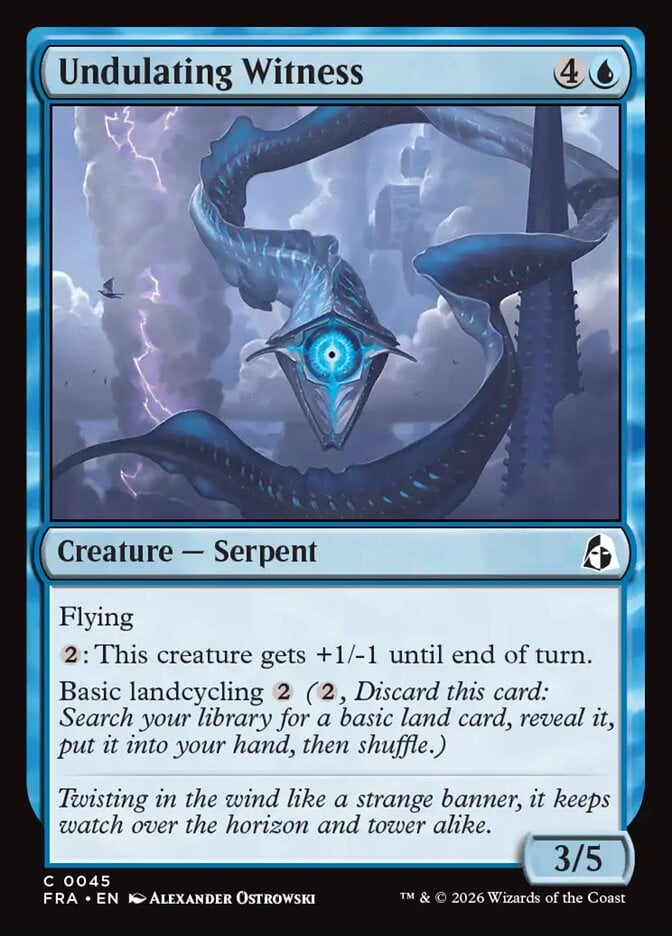
Rating: 3/10
I made the mistake in Marvel Super Heroes of massively undervaluing basic landcycling over islandcycling or mountaincycling. Undulating Witness isn’t a very good card to cast, but neither was A.I.M. Scientists, yet it was a very good card in that format. Fixing your mana is incredible, and you’ll sometimes play this just for that ability, then if you do happen to cast it, a big flying creature is hardly the worst thing to play.
Unsummon
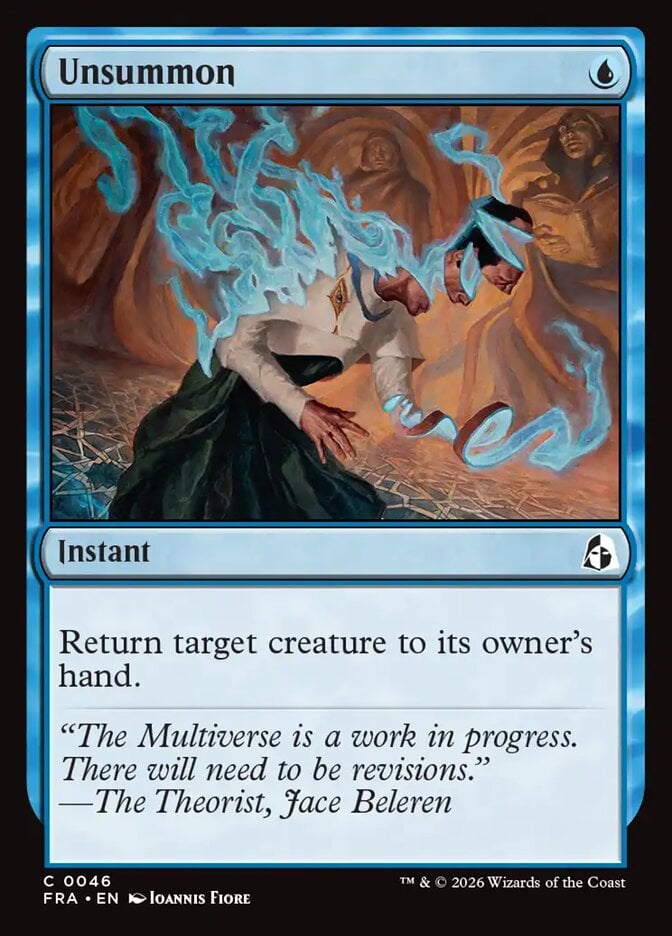
Rating: 4/10
I love to have an Unsummon around! I like bounce spells in general for their flexibility, but tack that onto a simple 1-mana spell and I’m salivating at the value I might be able to get from it. You can kill a token, punish double blocks, dodge removal, or just make a nice tempo play, all for just 1 mana. I definitely like these more than most, and I’ll be taking them quite often.
Variable Chaser
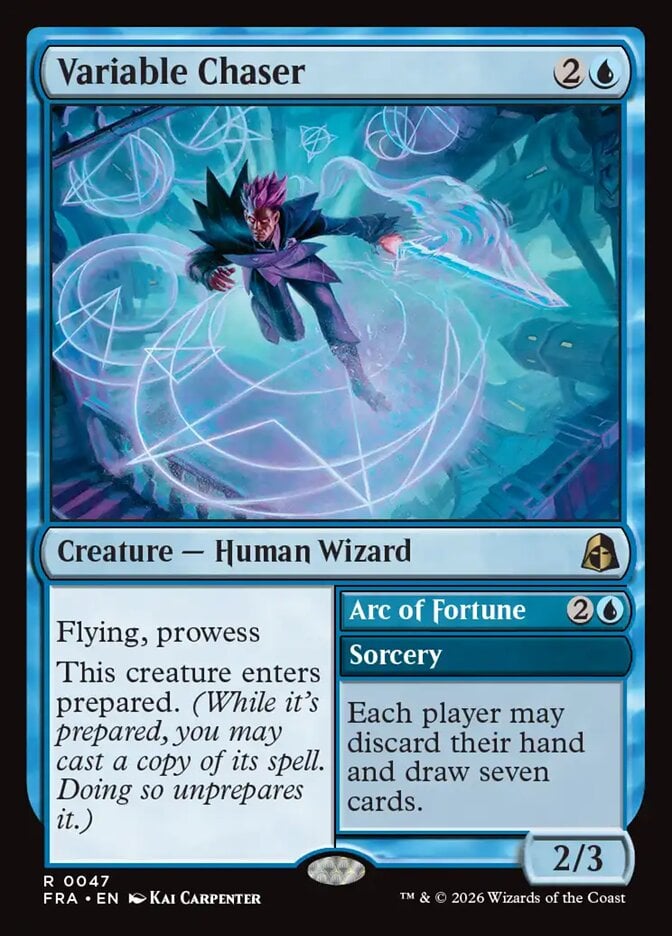
Rating: 4/10
A 2/3 with flying and prowess is a very good rate for a 3-drop, but it’s hard to see Variable Chaser as much more than that. The Arc of Fortune spell is really cool to see, but Wheel of Fortune isn’t a card that I’d traditionally want to cast in a random deck. While it’s great to draw a new hand of seven cards, giving your opponent that same opportunity isn’t likely to go well, so I don’t think you should give them that chance.
Way of the Cryomancer
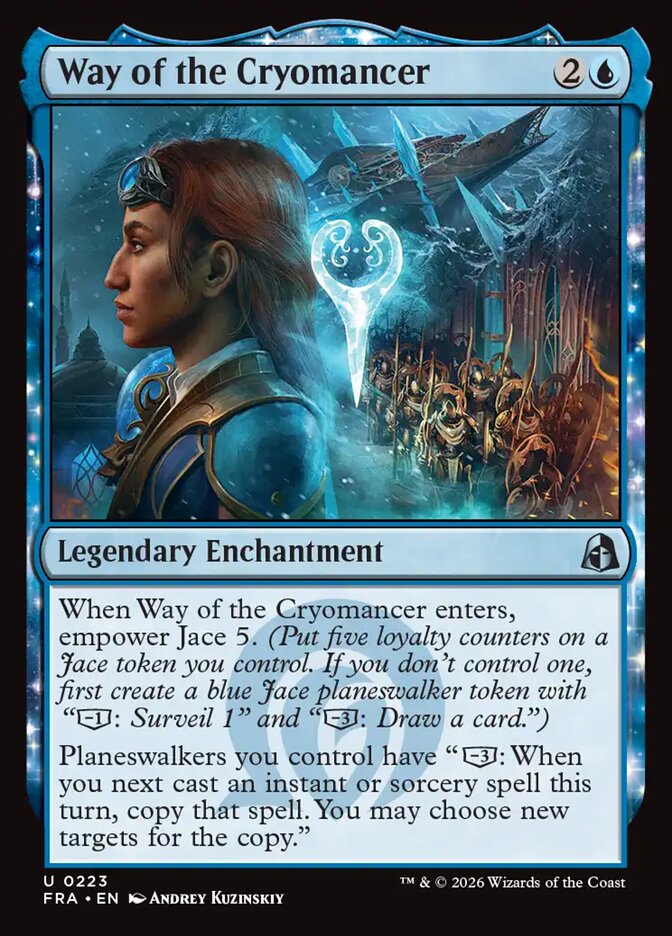
Rating: 4/10
This is kind of difficult to evaluate without having played the set. On the one hand, you can immediately -3 your Jace token and draw a card, or you can leave it on 5 so that you can copy a spell on the following turn, but neither of those options do anything to affect the board.
That would lead me to believe that Way of the Cryomancer is unplayable, but there’s so much potential here that I’m doubting it. Surely this can do some work? We’re going to be wanting to protect our Jace tokens anyway, and there’s a lot of powerful spells that we could copy.
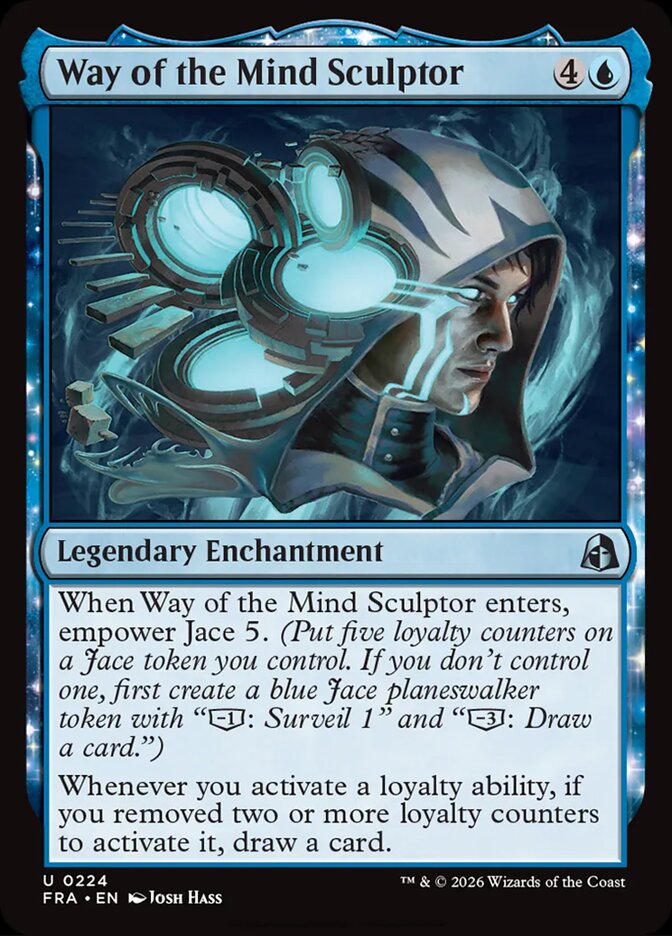
Way of the Mind Sculptor
Rating: 1/10
It’s not that I inherently dislike this effect, but 5 mana is a lot to pay. If I’m spending 5 mana to draw some extra cards, I’d better be drawing at least three or four, which not only is Way of the Mind Sculptor not guaranteed to do on its own, but it’ll take several turns to give you that advantage. This already lands in the build-around territory for me, and even then I don’t think it’ll play out very well.
Yargle, Goliath of Otaria
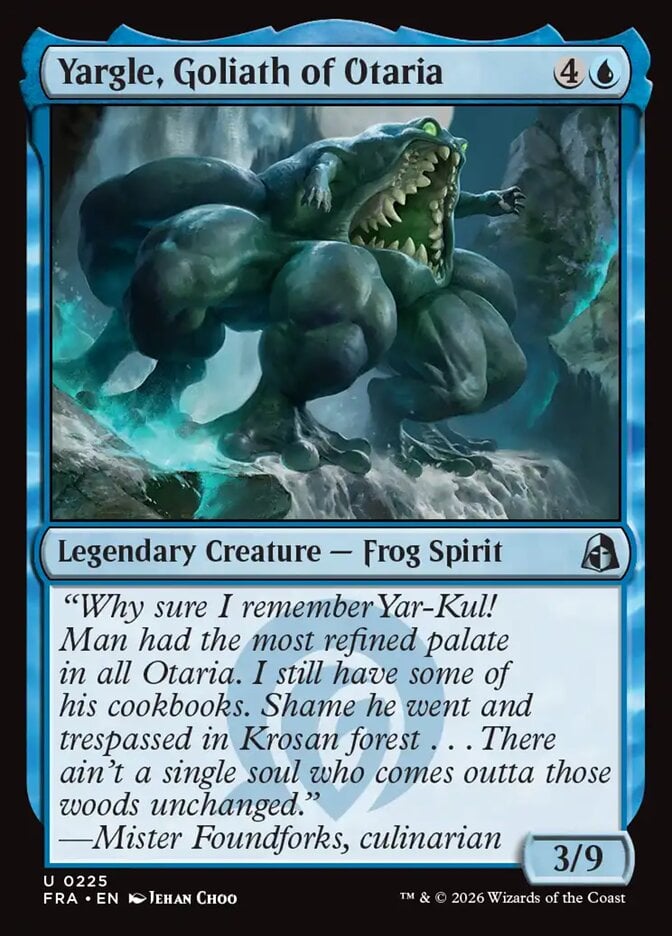
Rating: 1/10
Yes, it’s hilarious to see a blue Yargle and all that’s changed is they’ve swapped its power and toughness, but a 5-drop vanilla creature isn’t really what we’re after. A 3/9 can obviously be quite good at blocking and playing defense for your Jaces or other planeswalkers, but I don’t think Yargle, Goliath of Otaria is going to be playable enough. Maybe if you want to make Ghalta the Immovable work, this will be the way to do it.
Yuriko, Hope from the Shadows
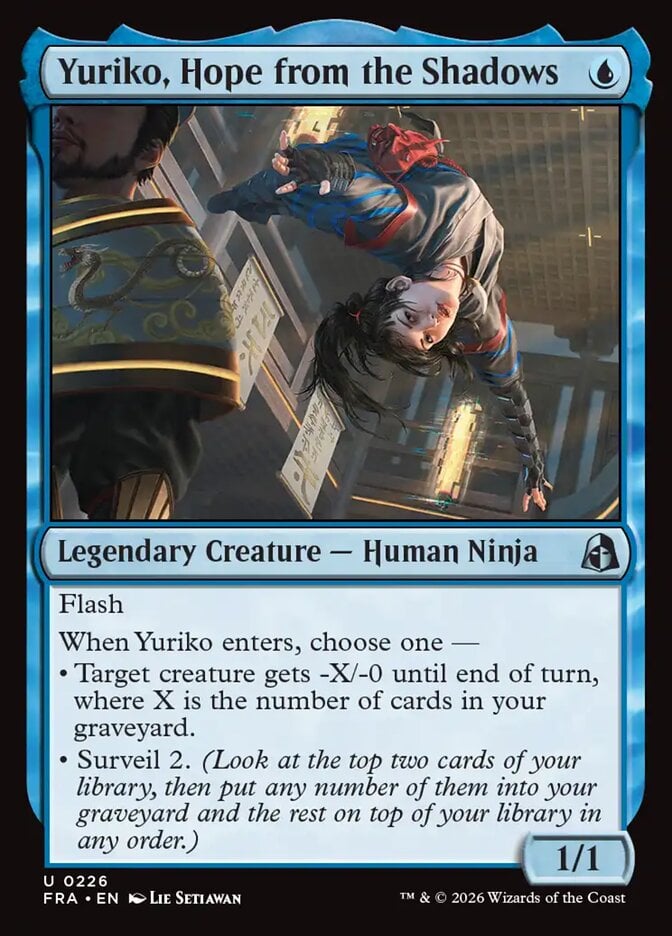
Rating: 4/10
I’m a big fan of creatures like this. A tricksy 1-drop that can shrink an attacking creature and eat it in the same combat is pretty legit. Yuriko, Hope from the Shadows doesn’t do this particularly consistently, but it does also have the buyout of getting to surveil 2, which can also trigger Fatehold cards, so this ninja seems pretty good on balance.
Black
Apex Witchstalker
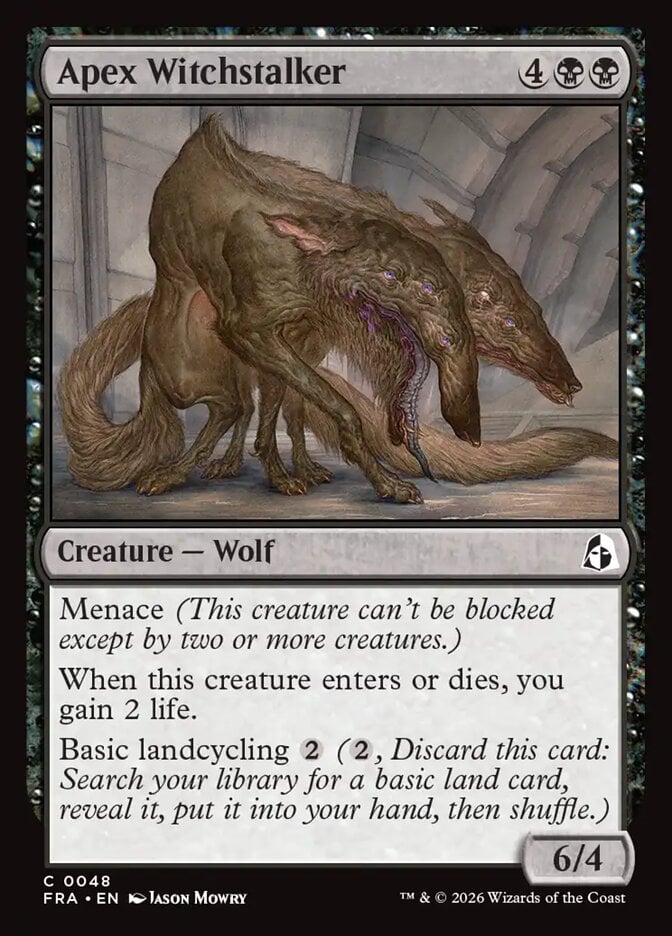
Rating: 3/10
Basic landcycling can make just about any card good enough to play. Apex Witchstalker isn’t good enough on its own, but that buyout of getting to fix your mana is incredibly strong. It can still be a meaningful play on 6, but the main reason you’d play it at all is for the fixing.
Bloodline Recollector
Rating: 2/10
This is a real far cry from Emeritus of Ideation. A 2-mana 2/2 with no relevant text obviously isn’t good enough these days. While I’d love to cast an Ancestral Craving, needing three creatures to die in a turn is a very tall order. Even sacrificing a creature to Silence the Echo won’t get you all the way there. Bloodline Recollector is a big miss for me, but I hope we can get it to work in Standard.
Break Under Pressure
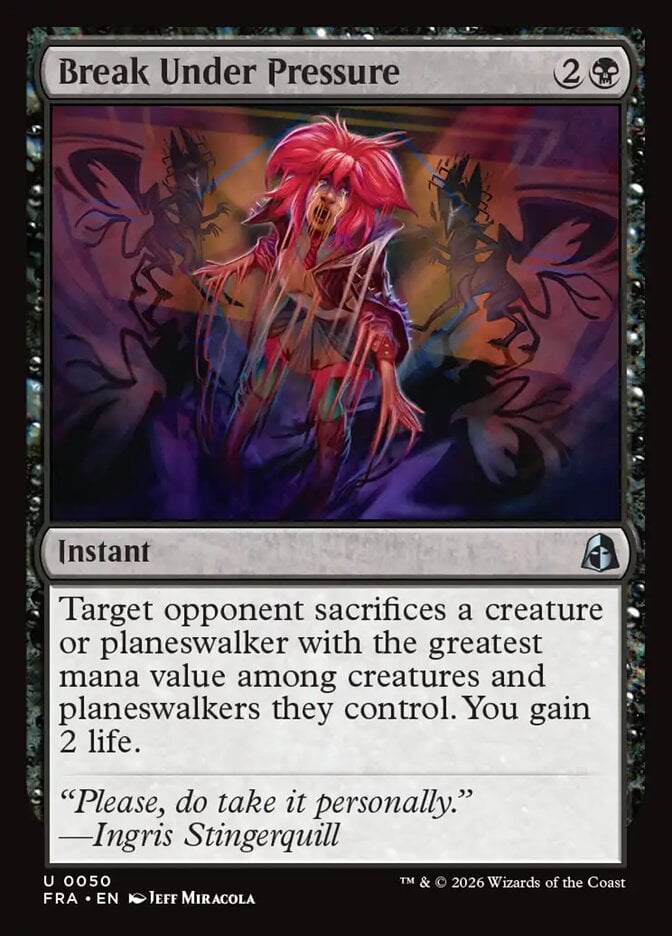
Rating: 5/10
While it’s usually going to be better to just target and kill what you want to, at least Break Under Pressure should always kill your opponent’s biggest thing. In exchange for basically never hitting tokens, it does get around hexproof/ward and other ways to protect creatures, and it even gains you some life just to be sure. So yeah, nice removal spell.
Cast Away Doubt
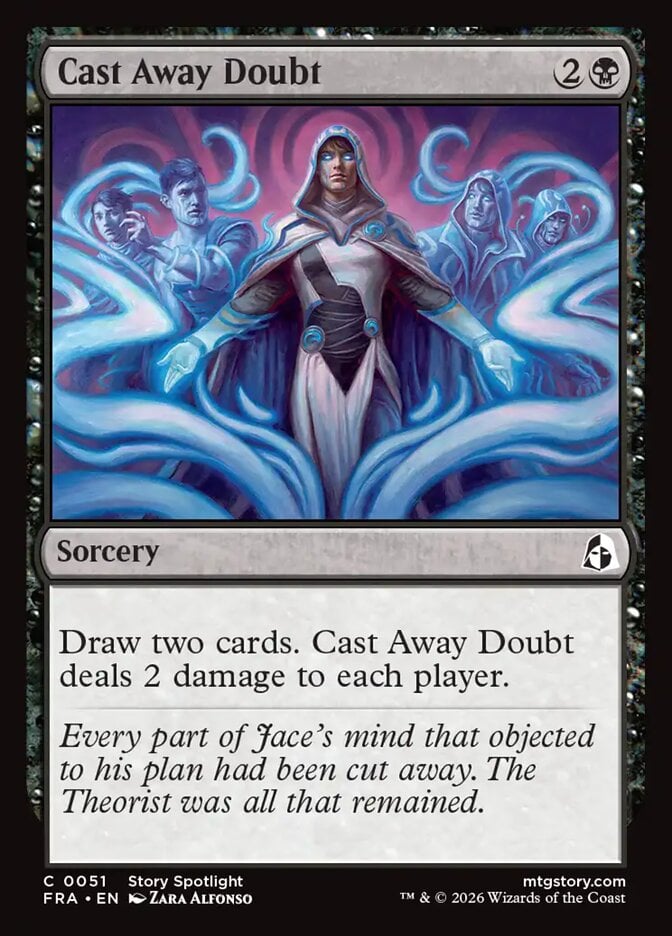
Rating: 2/10
Read the Bones effects are a bit hit or miss these days, as playing a creature to affect the board is often going to be more desirable. Cast Away Doubt’s upside is quite relevant in Reality Fracture though, as the 2 damage to your opponent is perfect for triggering the effects of Stingerquill cards. There are better spells to do that, but this isn’t horrible if you need more of them.
Danitha, Spear of Agony
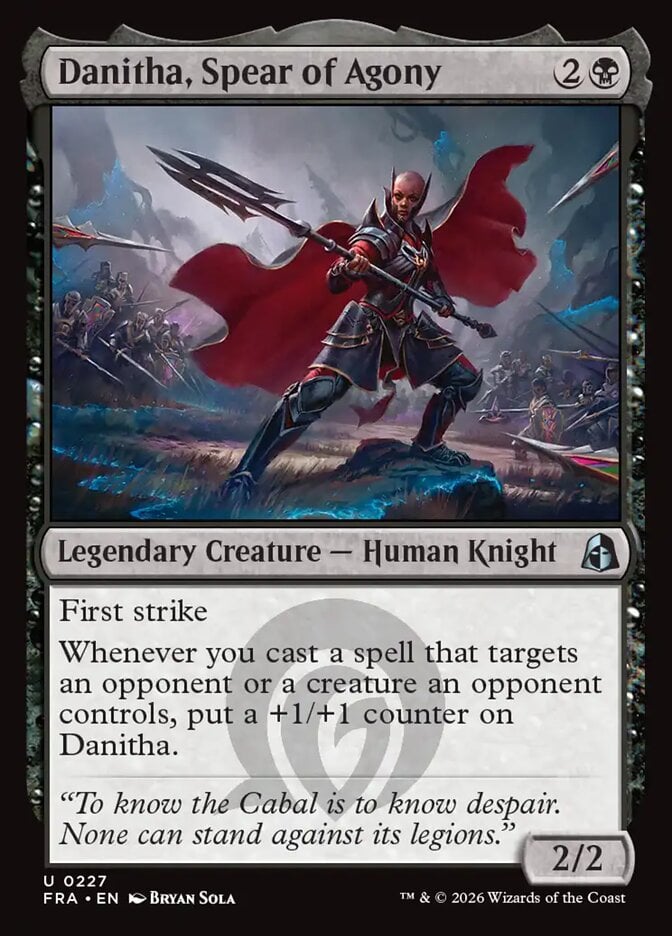
Rating: 4/10
Removal spells are the most obvious way to trigger Danitha, Spear of Agony, so as long as you have plenty of them, it’ll probably be a solid inclusion. However, this Danitha’s starting size holds it back for me a bit, because it really needs to pick up a counter or two before you can feel good about having spent 3 mana on it.
Dark Matter Manipulator
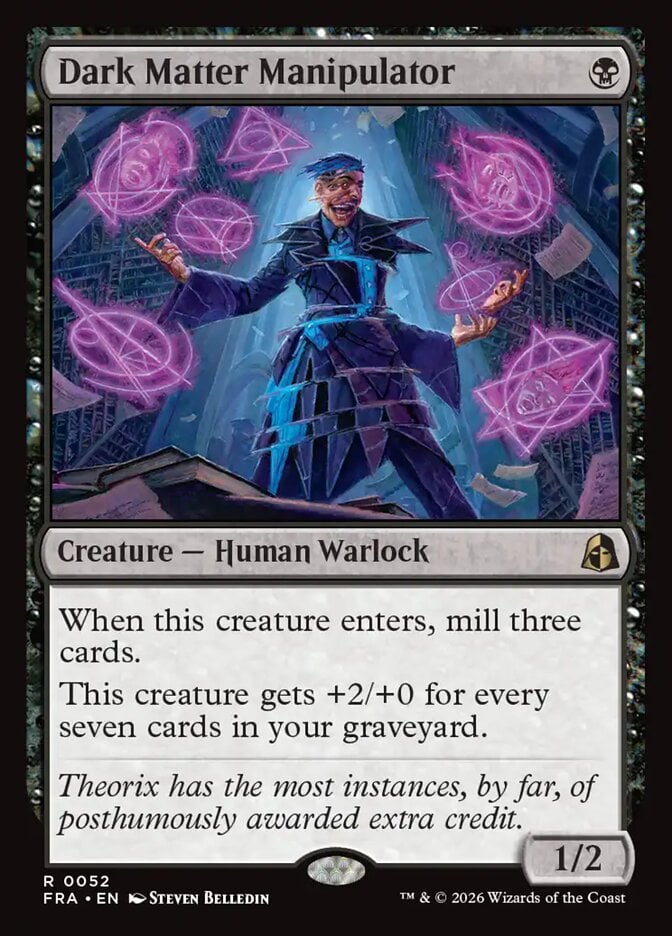
Rating: 6/10
Theorix is all about self-mill, so getting to mill three cards as early as turn 1 sounds like something they’ll be very interested in doing. On top of that, it shouldn’t take much effort to get to the first seven cards to make Dark Matter Manipulator a 3/2 and let it brawl in combat, especially if you cast an Omit Variables. This is an incredible enabler for any graveyard-based deck and Theorix especially.
Darklight Phoenix
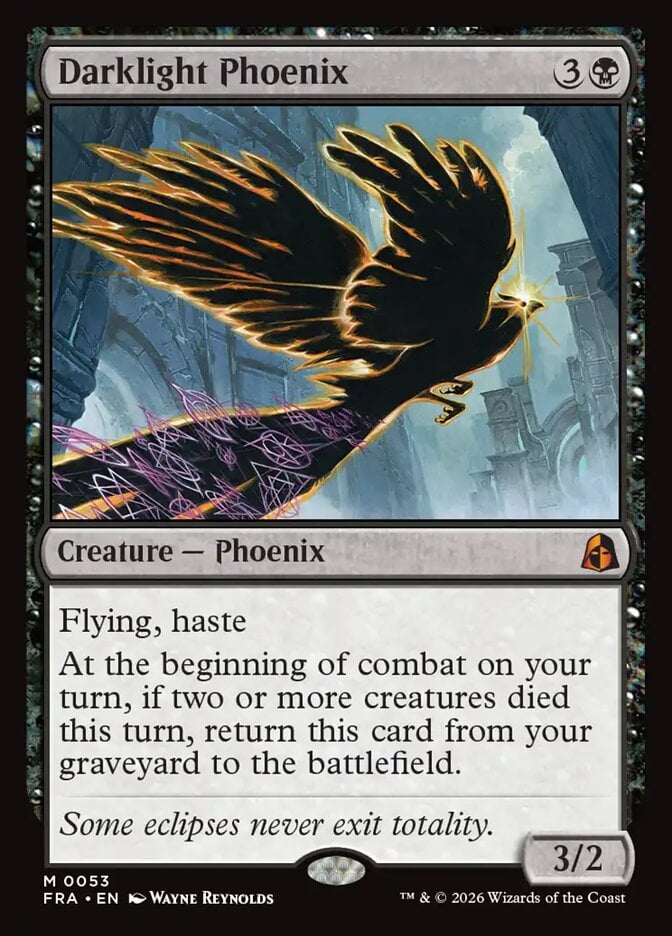
Rating: 6/10
Arclight Phoenix is now a classic card with an impressive competitive record across multiple formats. The new Darklight Phoenix has a lot of potential too, so what does it look like in Limited? Casting it is fine, but milling it and reanimating it for free sounds better. Black has two great cards that enable it in Silence the Echo and Winter, Tormented Loner, but simply using two removal spells before combat will do the trick, too. This isn’t trivial to do, but even getting the phoenix to trigger once gives you some great value and makes it well worth the inclusion.
Extended Absence
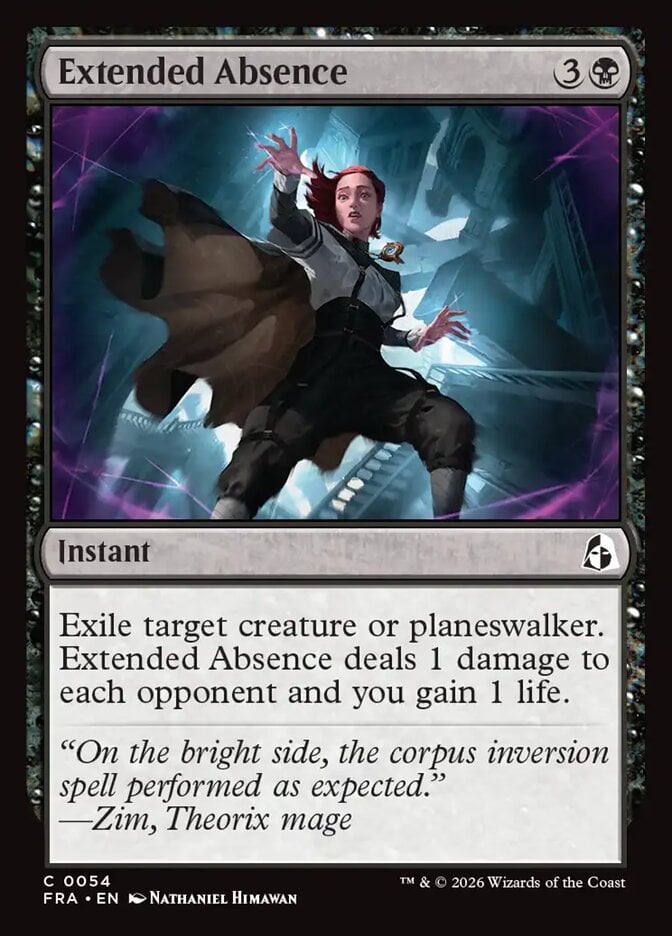
Rating: 4/10
There’s a lot of good removal in Reality Fracture, but there’ll always be a need to cleanly remove anything, and the extra damage ping is very welcome in Stingerquill. Extended Absence will always be a solid card in any black deck and is even potentially splashable.
Extrapolate the Impossible
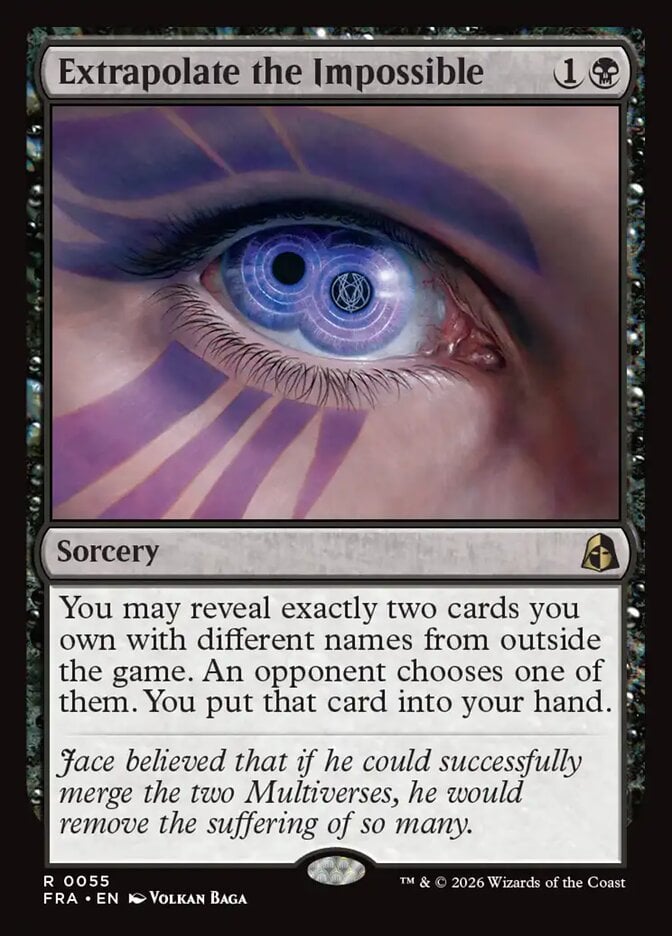
Rating: 0/10
In case you’re unaware, “outside the game” in Limited means anything in your Sealed/Draft pool that isn’t in your main deck. Not only should all your best cards be in your main deck already, but your opponent gets to give you the worst option of the two you show them. Having so little agency over what you can get from Extrapolate the Impossible makes it look pretty unplayable from where I’m standing.
Gallia, Tragic Host
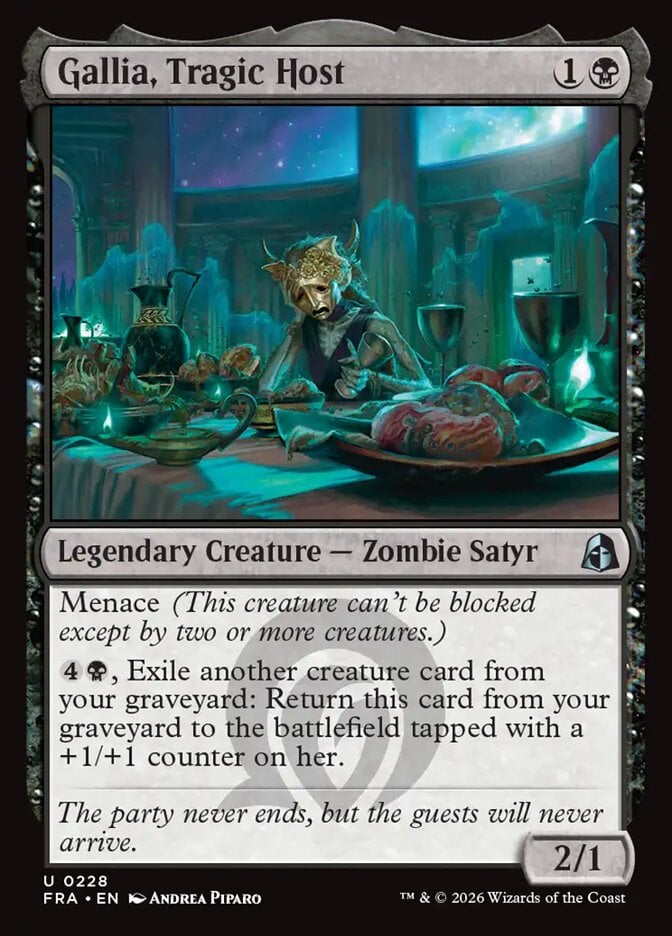
Rating: 6/10
A 2/1 menace creature for 2 isn’t too bad, but not something I’m going out of my way to pick up early in a draft. I’m very impressed however at Gallia, Tragic Host’s potential inclusion in graveyard-centric decks like Theorix, where you can mill this satyr or discard it for value and then pull it out of the graveyard without costing anything from your hand or field. Something that’s notably missing from its ability is a finality counter; Gallia can keep coming back again and again, which makes it a very annoying threat in the right deck.
Garruk, Veiled Butcher
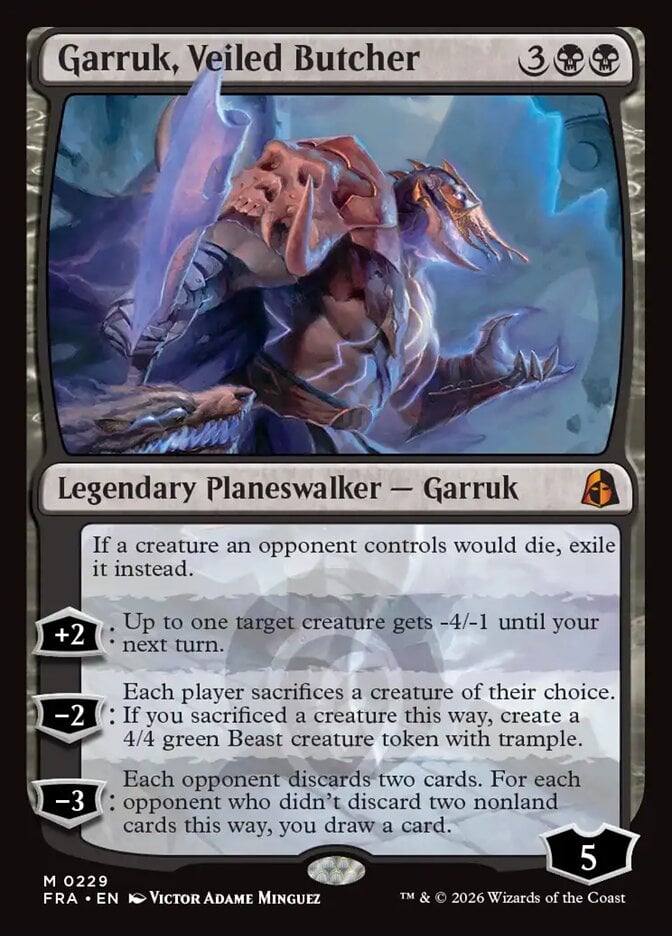
Rating: 9/10
All planeswalkers need to protect themselves and Garruk, Veiled Butcher has that covered a few times over. Both its +2 and -2 abilities affect the board in a very meaningful way, and it starts on enough loyalty that its +2 will also take it out of range of a lot of attacks. The -3 ability is also very powerful and a great option to use on an empty or stalled board. Overall, Garruk is very powerful, and while it doesn’t quite reach the heights of some of the other planeswalkers in Reality Fracture, it’s still extremely good.
Gideon the Oathless
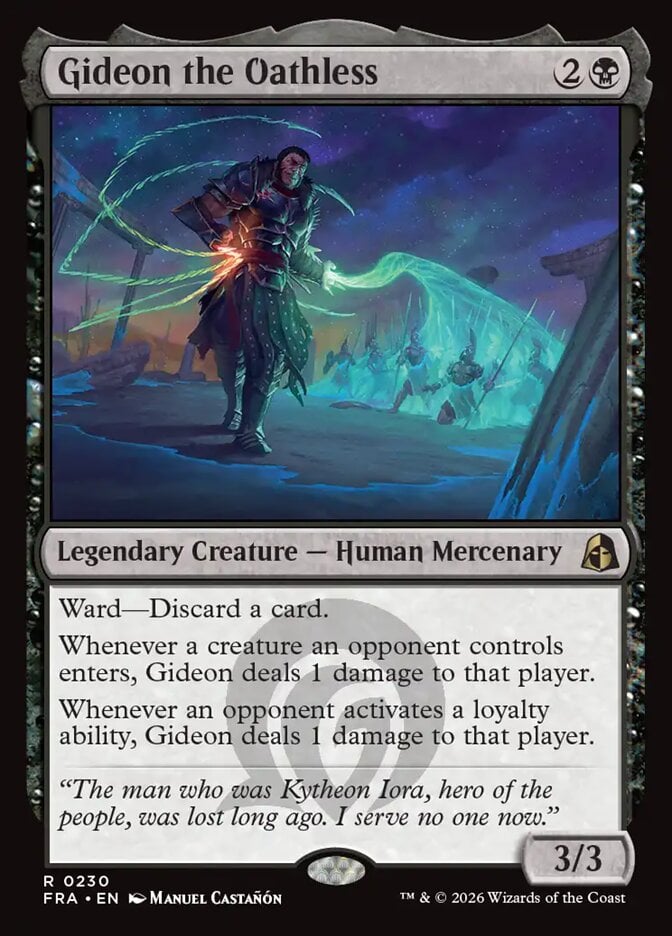
Rating: 6/10
The ward cost of “discard a card” is very powerful here, as an opponent is basically forced to two-for-one themself to deal with Gideon the Oathless. If they just leave Gideon alone though, its damage pings will add up over time and put a lot of pressure on without the opponent realizing until it’s too late. Although Gideon isn’t a huge bomb or anything, it seems to provide just enough to be a very annoying creature and a welcome addition to any deck, particularly aggressive ones.
Last Gasp
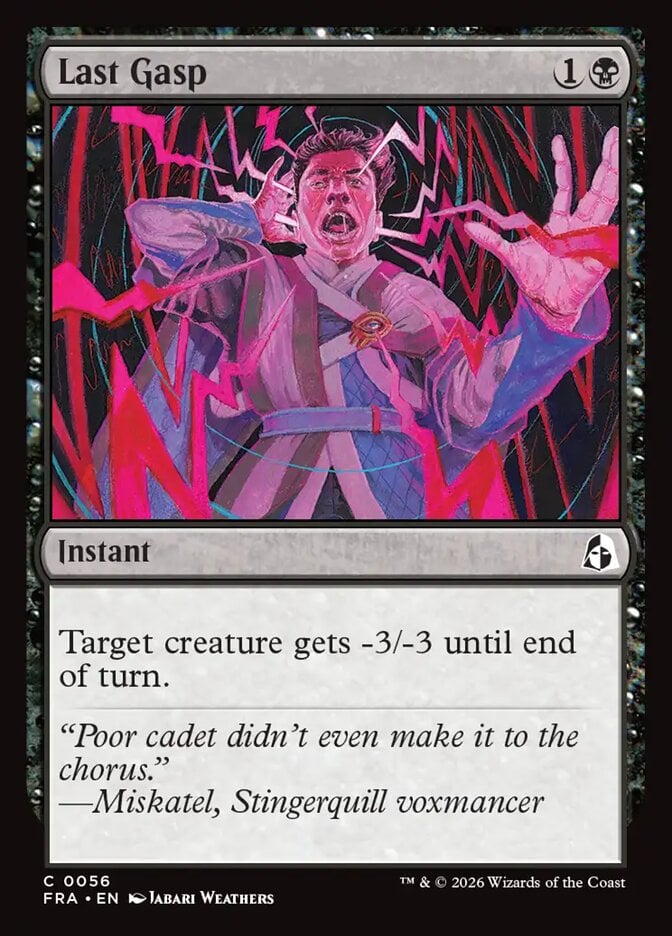
Rating: 6/10
I always like to see Last Gasp in a set. -3/-3 is enough to kill a lot of creatures, and it can even take down bigger creatures by shrinking them as a combat trick. For 2 mana, this is one of the most efficient removal spells in FRA, and it’ll probably be the best black common.
Lich’s Relic
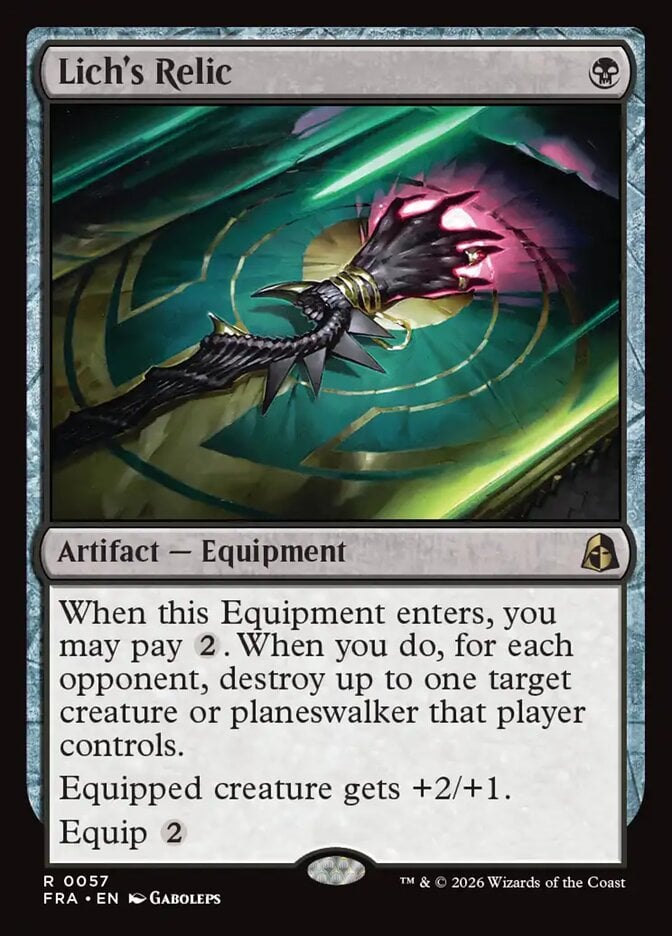
Rating: 7/10
Getting to destroy any creature for 3 mana is a great start for any spell, but Lich's Relic then sticks around and provides additional value. We’ve just seen how relevant Crude Bent Blade ended up being in The Hobbit, only this time this is targeted removal, which means it’s going to be even better.
Liliana the Repentant
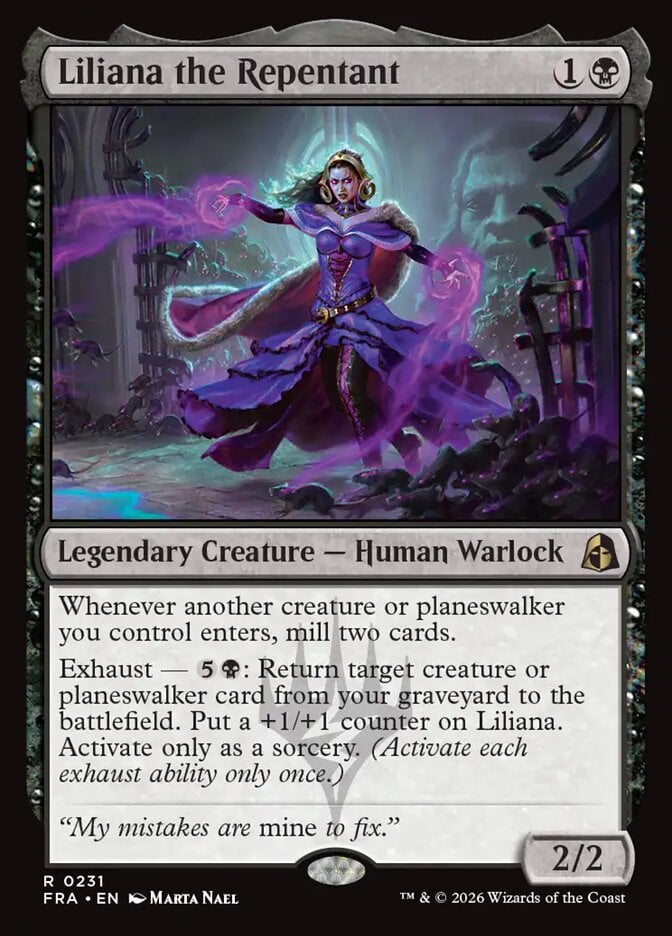
Rating: 6/10
Black’s graveyard themes in this set look very well-supported for once. Liliana the Repentant serves as both a powerful enabler for these strategies and a big payoff once you’ve milled yourself a bunch of times. Theorix decks are going to love it, but any black deck apart from an aggressive Stingerquill one will be very happy to play this Liliana.
Loot, the Anomaly
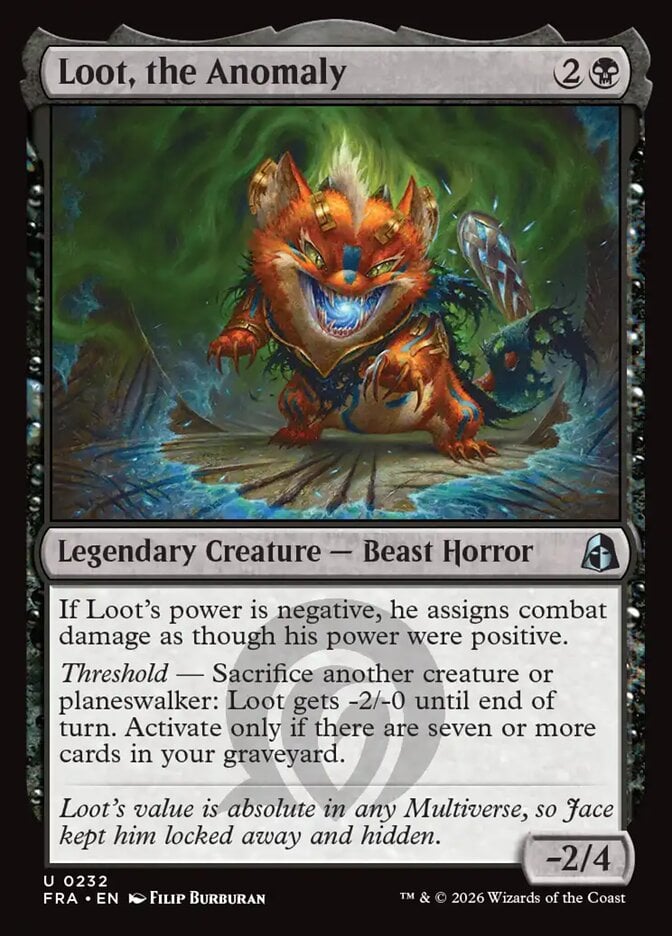
Rating: 5/10
This set is full of weird and wacky designs, yet Loot, the Anomaly manages to stand out even among them. Relying on having negative power is an interesting dynamic, and it lets you combine Loot with cards like Icy Reception, Last Gasp, or the +2 ability from Garruk, Veiled Butcher. But that’s not what makes Loot so good. Instead, it’s the threshold ability, which basically turns this beast into a Nantuko Husk. This is extremely powerful, and you can even use it at instant speed, so you can attack and then use it several times after your opponent declares no blocks.
Mabel, Bitter Recluse
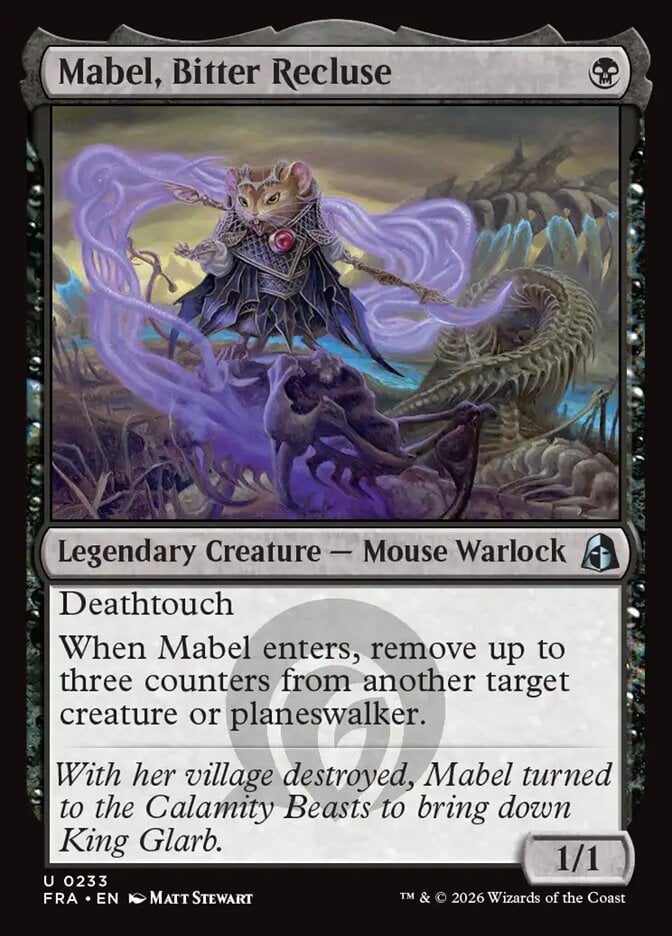
Rating: 4/10
I doubt a 1-mana 1/1 with deathtouch will ever be bad. That’s really all you want out of Mabel, Bitter Recluse, but denying your opponent a future card draw from their Jace token is a nice bonus to have access to, plus it might even be able to snipe down something bigger.
Massacre Girl, Most Wanted
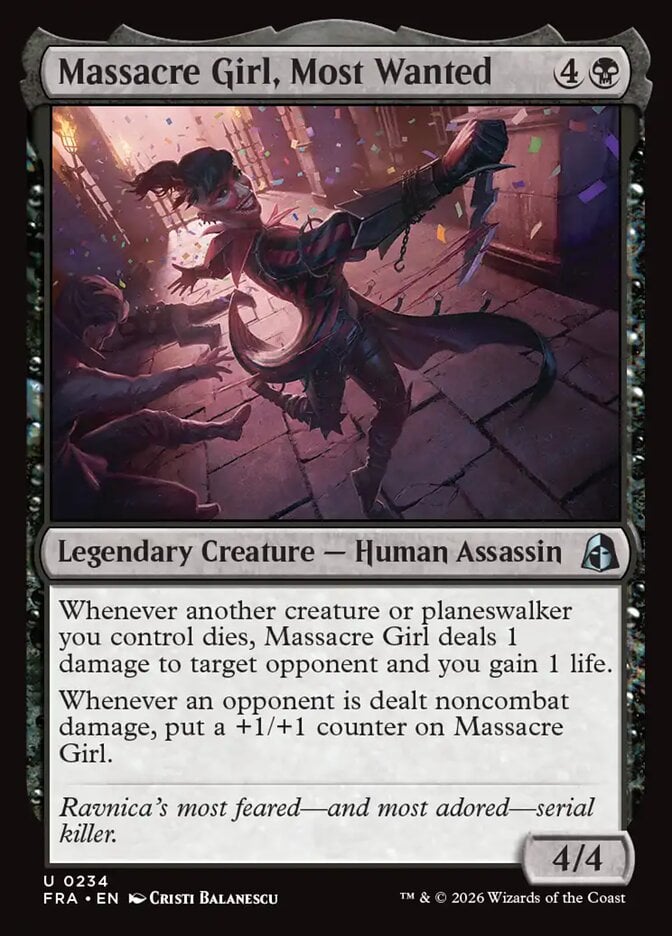
Rating: 6/10
Massacre Girl, Most Wanted is perhaps the biggest Blood Artist variant we’ve ever seen. Even at 5 mana, pinging your opponent every time one of your creatures dies is a very powerful ability. Better yet, it grows with every damage ping from itself and from other damage sources you might have. Your opponent needs to deal with it, and becoming an 8/8 after a few triggers just makes Massacre Girl that much harder to kill.
Multiply by Zero
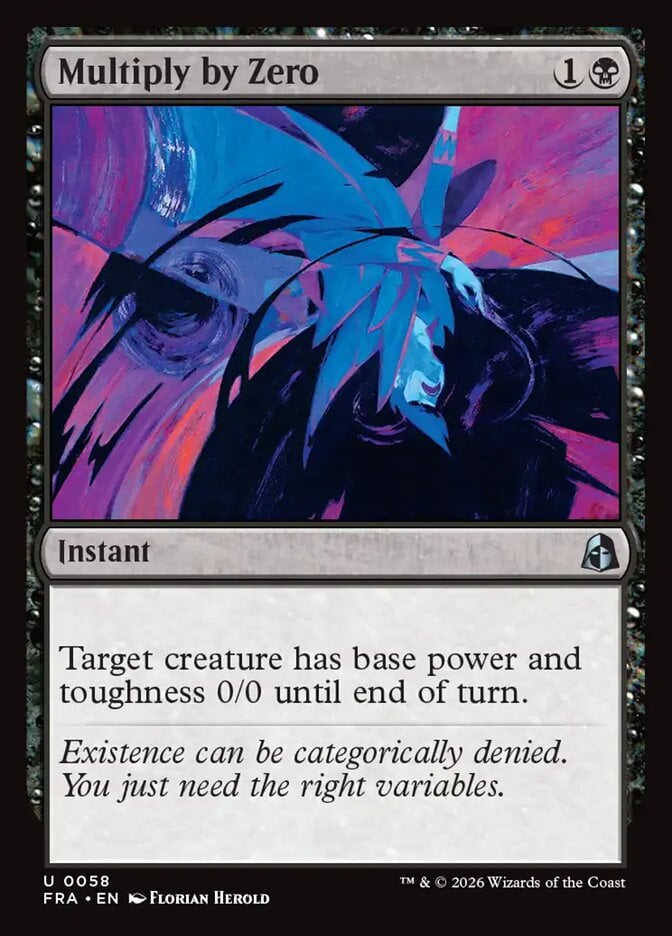
Rating: 6/10
I’m a math guy. I have a degree in it, and I teach it for a living. As such, I was always puzzled by how Divide by Zero didn’t feel quite like the result of dividing by zero. Multiply by Zero on the other hand is brilliant. It’s a perfect representation of the name and a very powerful removal spell, able to kill any creature that doesn’t have a toughness buff of some kind, and it can at least shrink those creatures in combat.
Overwrite the Multiverse
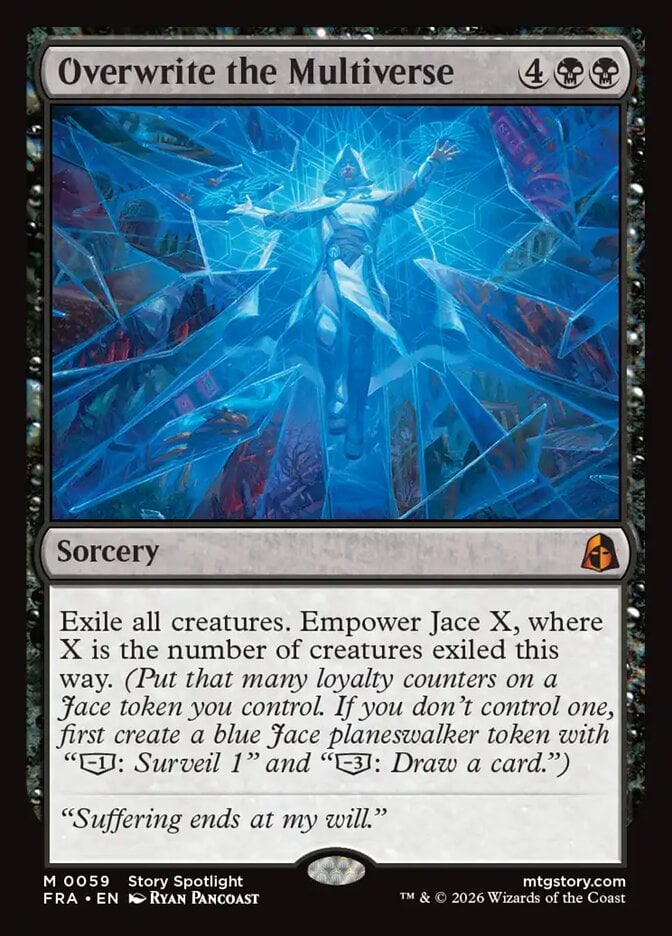
Rating: 9/10
The obvious comparison to make here would be to Sunfall. While Sunfall was one of the best cards in March of the Machine, Overwrite the Multiverse will likely fall short of that. Still, exiling all creatures and giving you an extra reward is an incredibly powerful ability, and this is going to be very strong regardless.
Proft, Sinister Mastermind
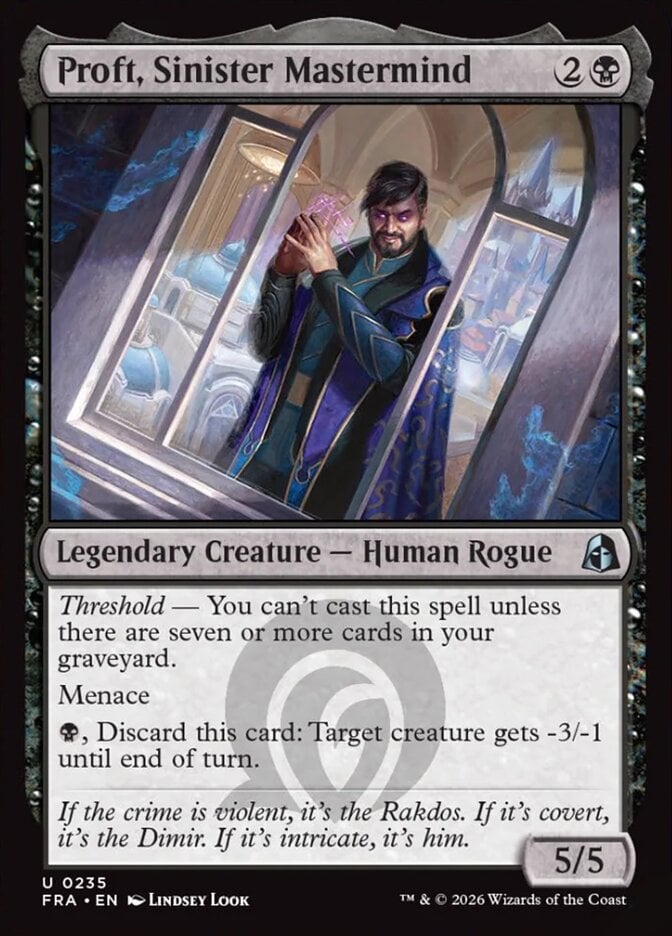
Rating: 4/10
I just have to say, making an Echoverse version of Proft as a Moriarty-esque figure is a brilliant design. Being unable to cast it until you hit threshold is a very big ask. While there are a lot of self-mill enablers in Reality Fracture, you’re not guaranteed to hit threshold early in every game you play. Proft, Sinister Mastermind is clearly quite powerful if you can resolve it, I’d just be very wary of times when Proft is stuck in your hand and you’re unable to cast it.
Rampart Hunter
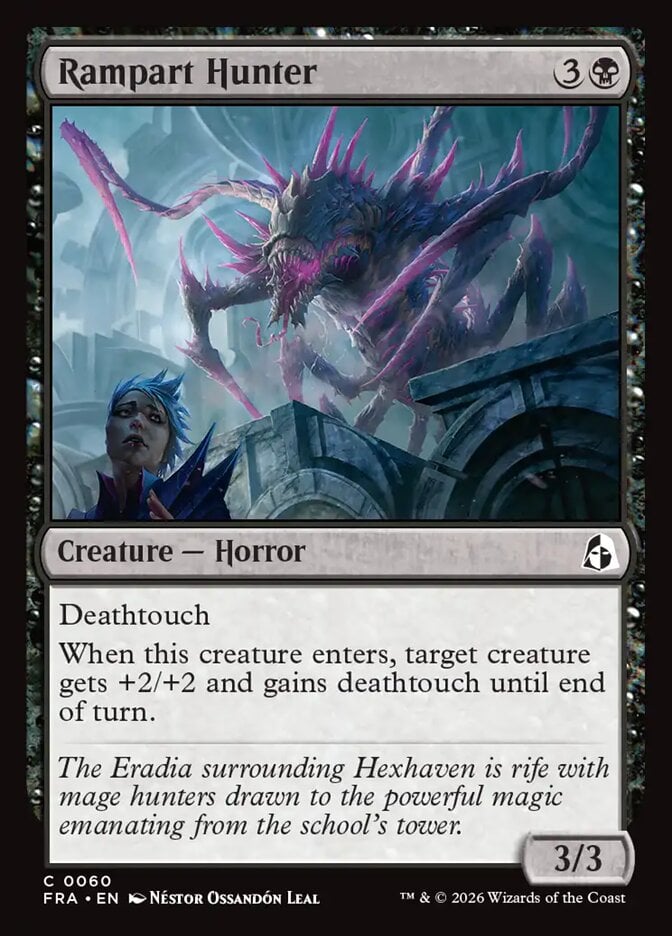
Rating: 2/10
Deathtouch gets weaker and weaker as a creature gets bigger. On a 4-drop like Rampart Hunter, it just looks mediocre and over-costed. The ETB ability might be enough to warrant playing it in some decks, but this looks like filler material at best.
Rank Rat
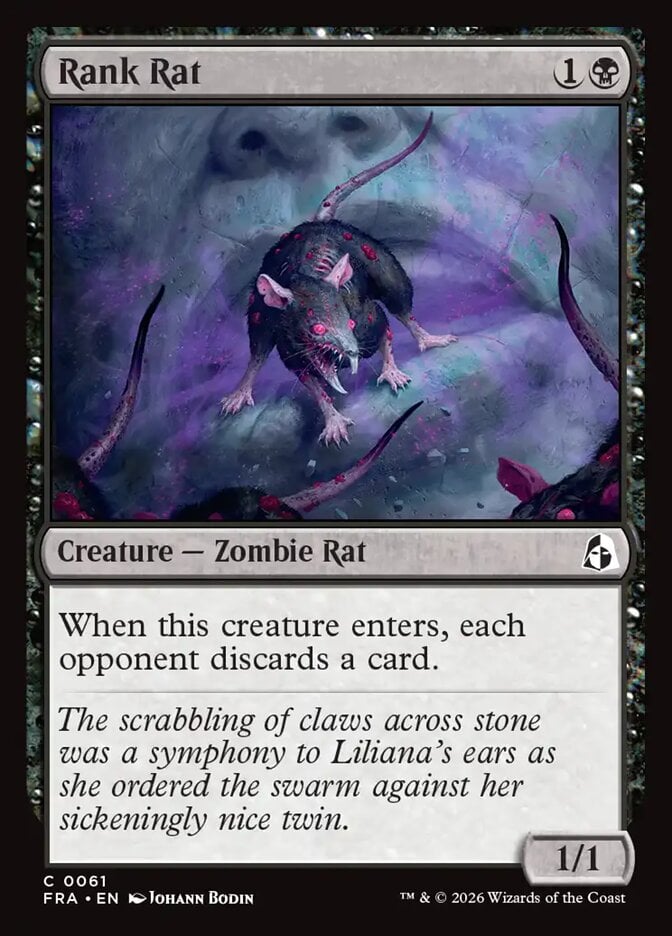
Rating: 4/10
We see these cards in most sets these days. Making your opponent discard a card is very similar to you drawing one, especially when you play it early in a game to hinder your opponent’s development. While these vary in power level depending on the set surrounding them, it’s still likely that Rank Rat will be quite good.
Rewrite Regrets
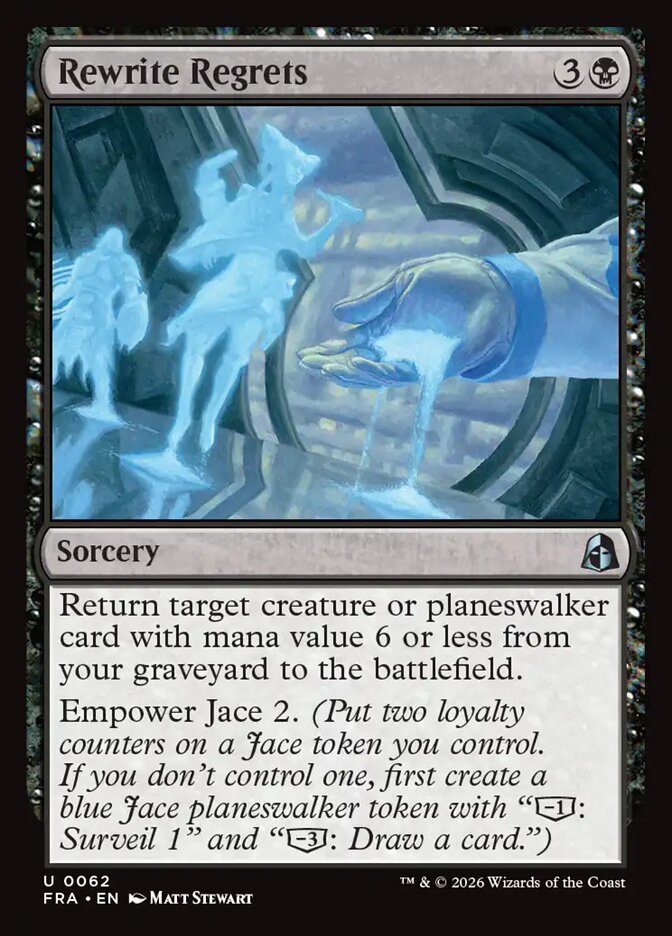
Rating: 3/10
Reanimation spells are rarely good enough in Limited. The simple fact is that you need something worth reanimating in the graveyard or it’s just uncastable. Rewrite Regrets might find a home in Reality Fracture thanks to the big landcycling creatures like Apex Witchstalker, especially since the empower ability is a nice bonus that other spells don’t normally give us.
Rise of the Deathbringer
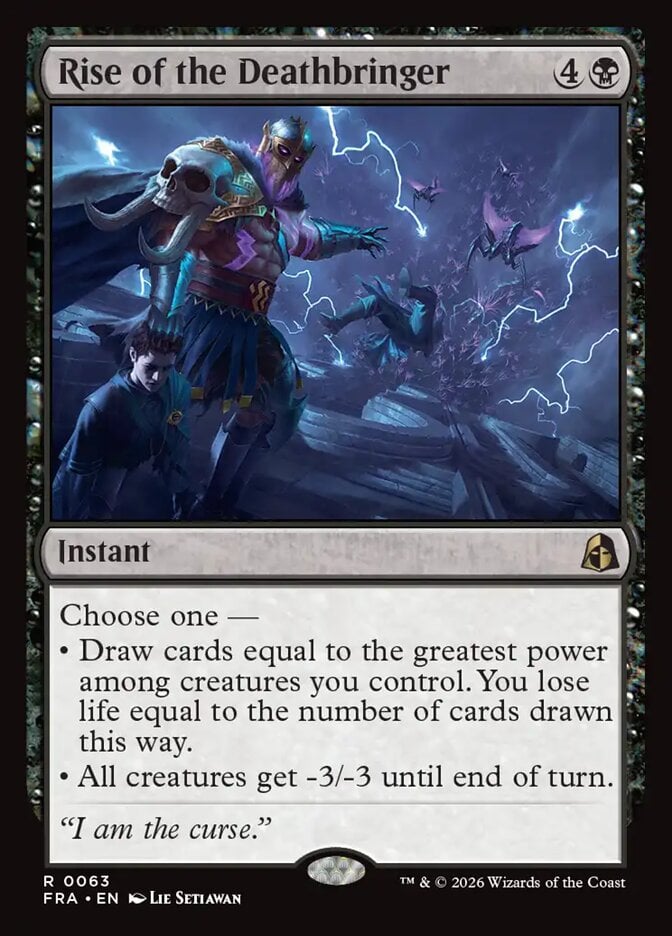
Rating: 7/10
-3/-3 to all creatures is a pretty reasonable board wipe, but at instant speed it gets even more powerful. Most sweepers have the downside of your opponent being the first player to commit to the board once you’ve played them, but Rise of the Deathbringer doesn’t have that problem. It can also be a big draw spell, and you can use it after blocking creatures in combat to finish some bigger creatures off, making it a very powerful spell all round.
Sanctum Lurker
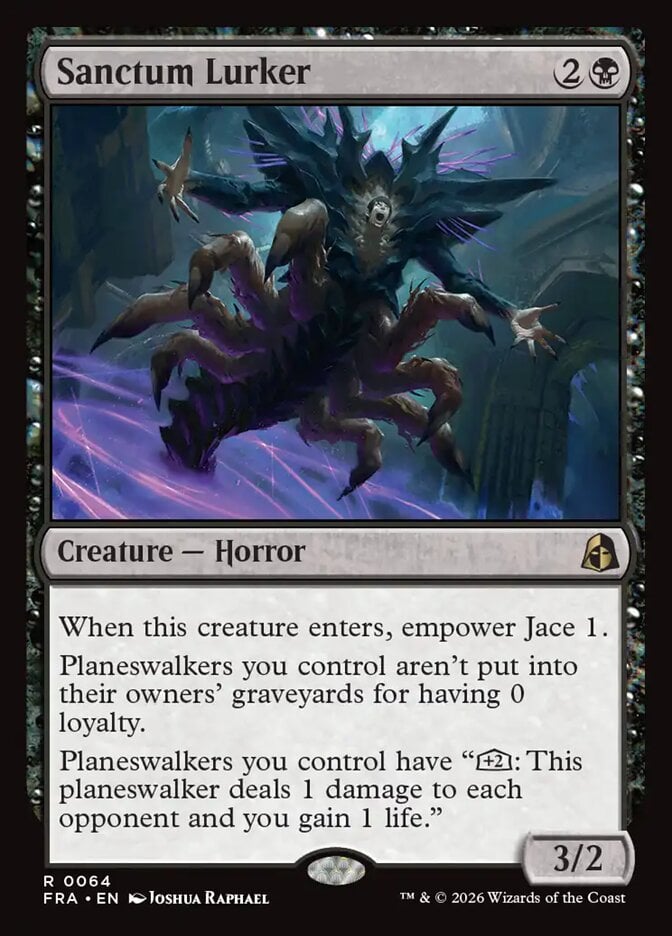
Rating: 5/10
I never thought I’d be here, writing about a card that only cares about planeswalkers and yet still singing its praises. I guess that’s just the effect of this set. Making your Jace token stick around on 0 loyalty doesn’t matter too much, because you can always empower another one, but giving them a +2 ability actually matters a lot. It helps you to grow the Jace token each turn but also helps to trigger Stingerquill abilities at the same time. Sanctum Lurker isn’t exactly a bomb rare, but it does provide a good amount of value and is a great addition to any deck with a good number of empower cards.
Screeching Soulbreaker
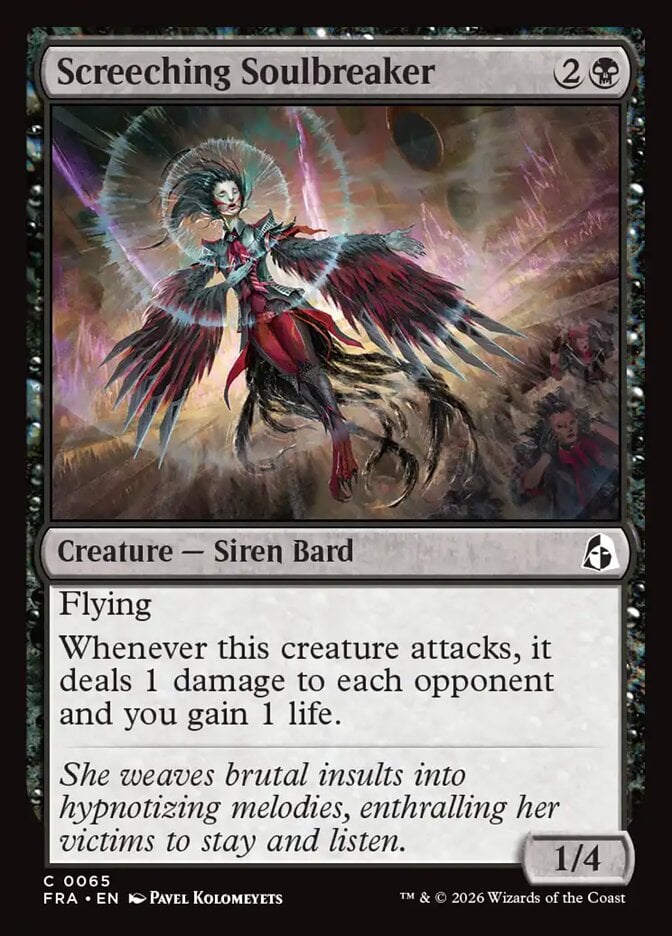
Rating: 3/10
A cheap flier that guarantees at least 1 point of damage whenever it attacks is actually quite a pain to deal with. Thinking back to creatures like Vicious Conquistador, they demanded answers since letting them get into combat in the late game could be quite dangerous. Screeching Soulbreaker looks a bit too small, but this ability is strong and I think it’ll be better than it may initially look.
Silence the Echo
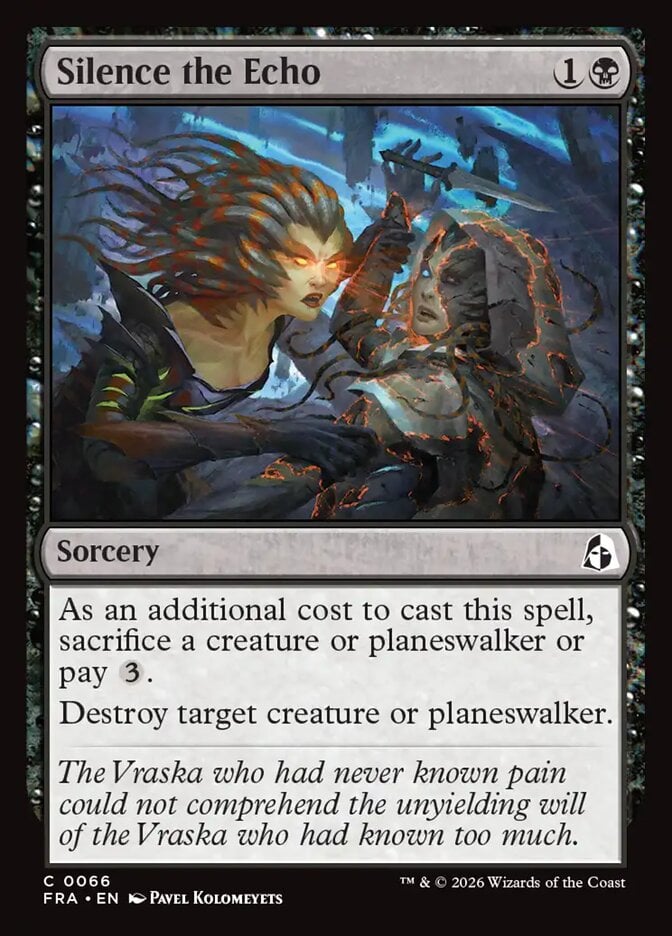
Rating: 4/10
This is another removal spell design that we see again and again, but it looks a lot more relevant in Reality Fracture. A Jace token on 1 loyalty doesn’t do a lot for you in most situations other than just minus itself to surveil. Silence the Echo sacrificing it to get the cost reduction is a much better use of it, and of course you could always play it for 5 mana if you have to.
Solve for Disappointment
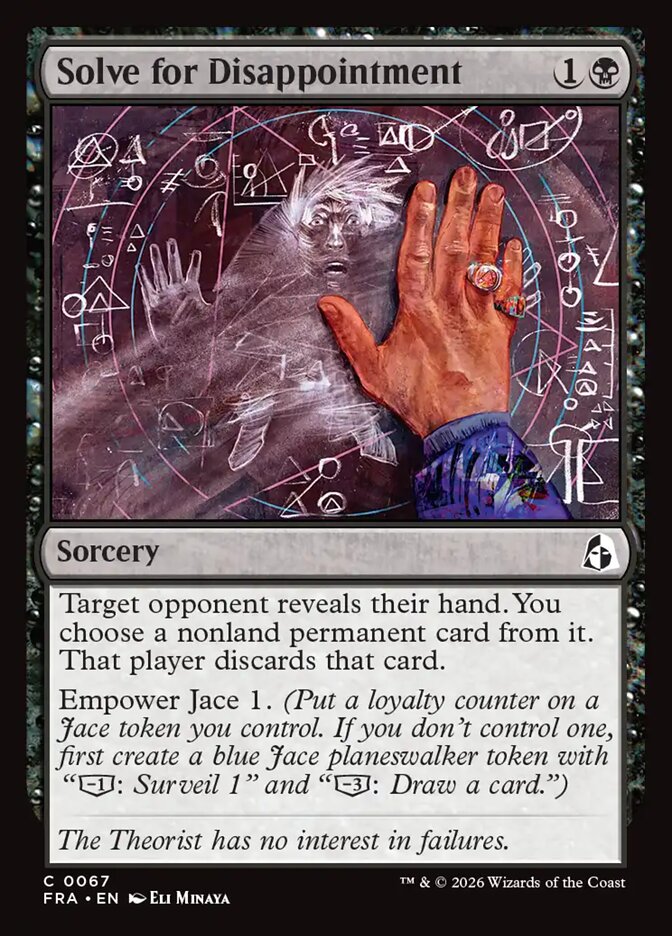
Rating: 3/10
We normally see Coercion effects for 3 mana in Limited sets, and they really suck if they don’t do anything else. At 2 mana, Solve for Disappointment might actually be a good card. It can be played early enough or alongside another spell, and it even empowers for a little bit of extra value on top.
Terminal Criticism
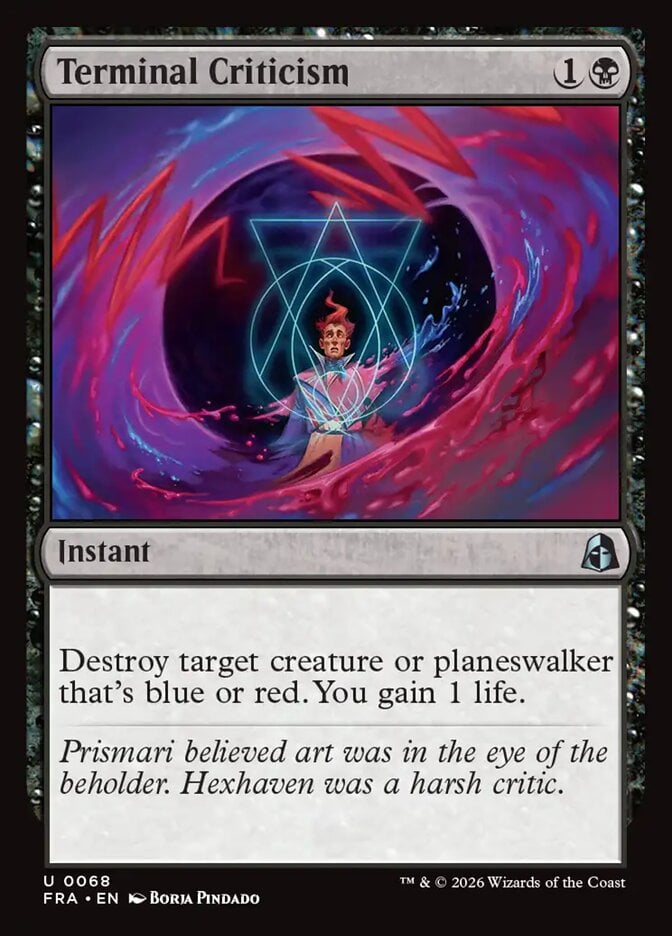
Rating: 5/10
Thanks to also being able to kill Jace tokens if needed, Terminal Criticism is another color hoser that I think is very much worth putting in your main deck. It’s obviously exceptional against any deck with blue or red creatures, but killing Jace is a great buyout that keeps it relevant against other decks, too.
Teyo, Diamondblade Mage
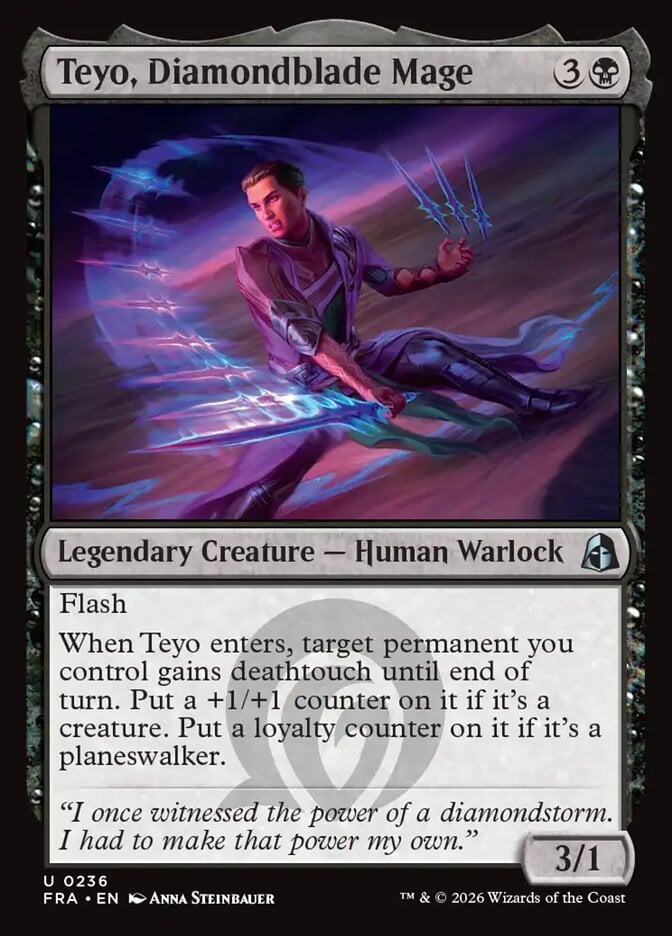
Rating: 3/10
Teyo, Diamondblade Mage looks like the kind of design that WotC was too scared to make better. Creatures that act as combat tricks when they flash in, like Briarpack Alpha, have been very good historically. Only giving a single +1/+1 counter and deathtouch isn’t the best trick in the world, and being only a 3/1 for 4 mana itself isn’t very impressive. This isn’t to say this Teyo is completely useless, but I just don’t feel like going out of my way to pick it in a draft.
Theoretical Necromancer
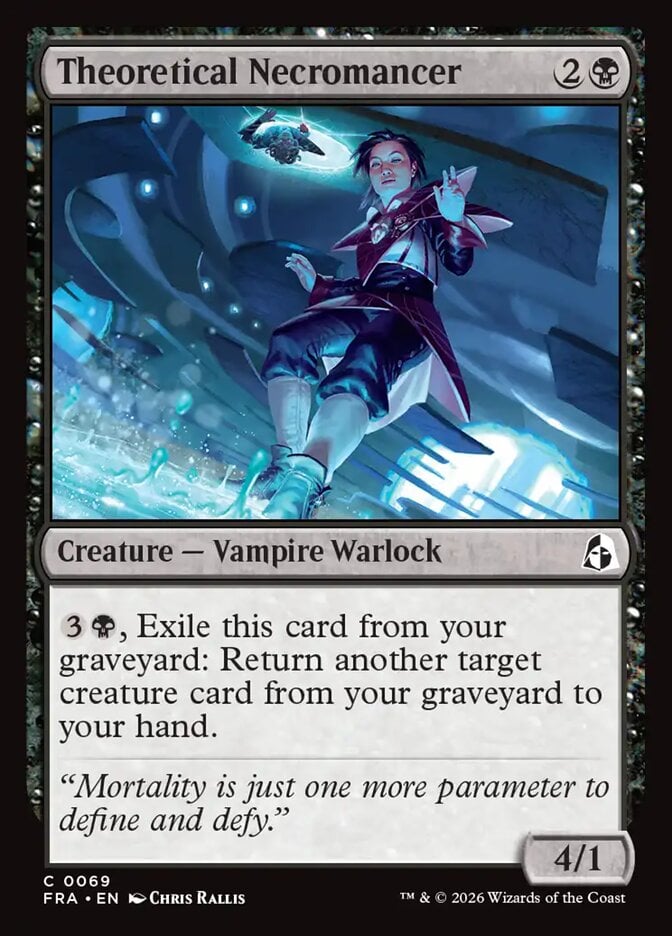
Rating: 4/10
Three mana for a 4/1 with no keywords is pretty atrocious by modern standards, so of course we’re only interested in Theoretical Necromancer’s ability. When you’re milling yourself, anything you mill that does something from the graveyard is like drawing a free card, and that’s exactly what this neat little creature does. I really want to be able to mill or discard it and get value from it, but I guess if you have to cast it then it should be able to find something to trade with.
Tinybones, Pocket Nuisance
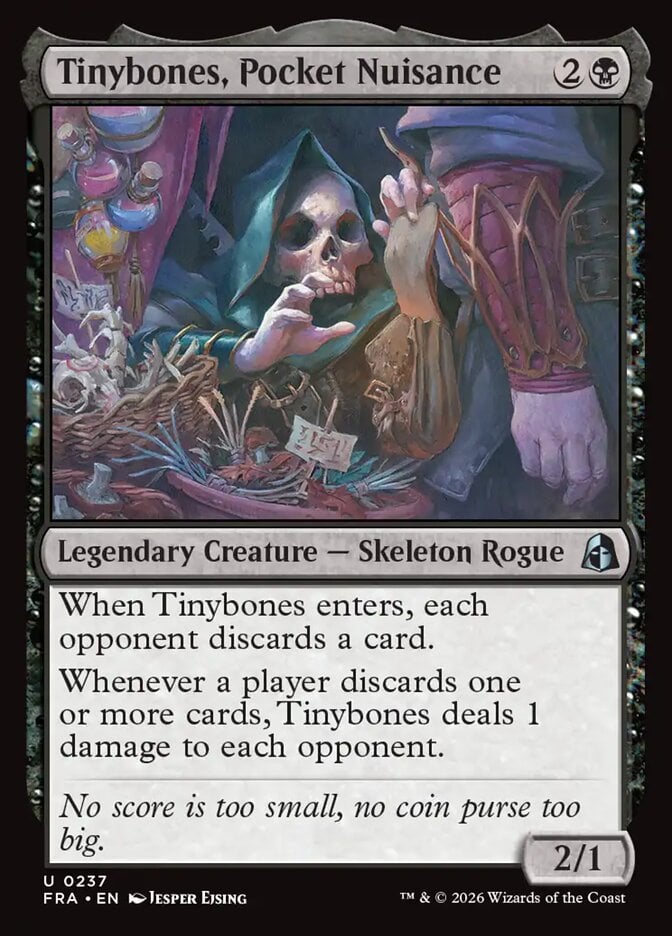
Rating: 5/10
Much like the Rank Rat, Tinybones, Pocket Nuisance is a good value card to give you some early card advantage while affecting the board. The extra damage ping is very welcome too, as we’ve seen a lot of ways in which that can benefit you.
Void Extrapolator
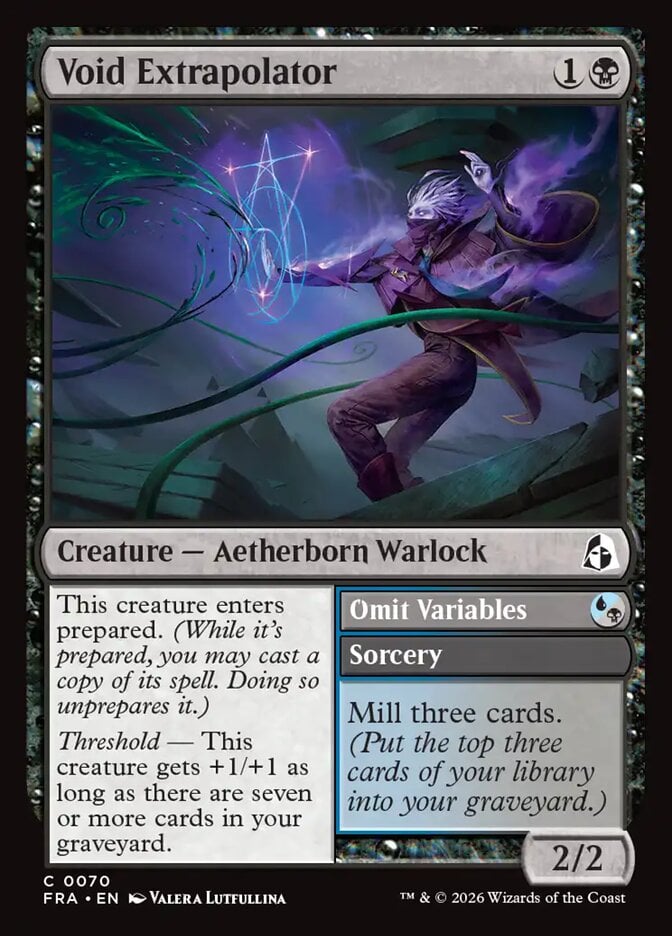
Rating: 4/10
I’ve been talking about the Theorix self-mill deck quite a lot and it needs some enablers. Void Extrapolator is a perfect one: As a simple 2-drop with access to Omit Variables, it can start to mill you as early as turn 3 and even gives itself a nice buff once you reach threshold. If you’re drafting Theorix, this is going to be one of the most important cards to pick up.
Vraska’s Final Mercy
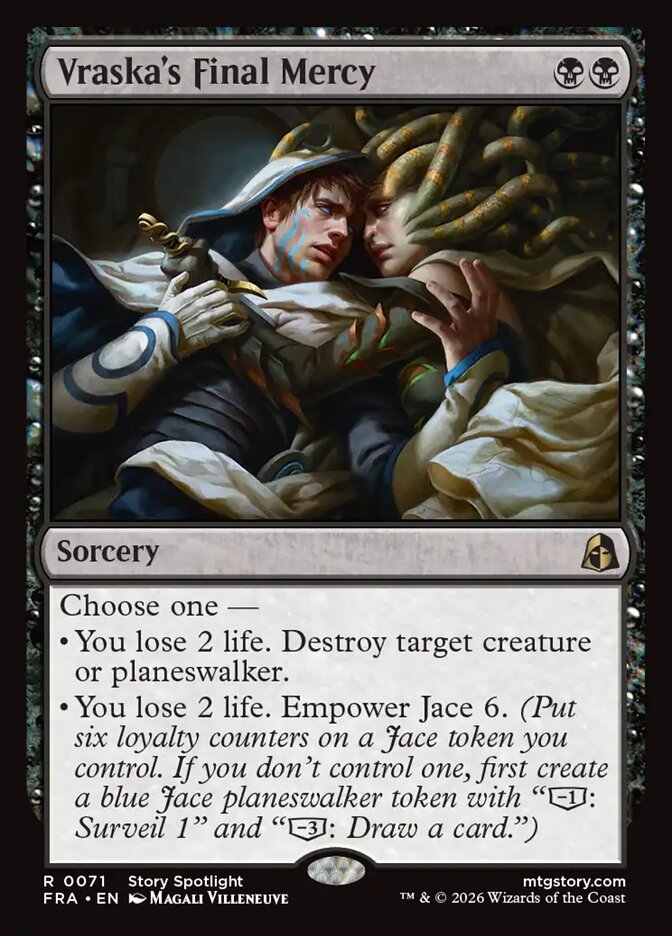
Rating: 6/10
Even at the cost of 2 life, killing any creature or planeswalker for 2 mana is a great deal. I don’t think you’ll empower 6 very often, but it’s a nice buyout to have late in a game. Either way, Vraska's Final Mercy is clearly very good, and double black isn’t enough to hold it back.
Way of the Deathbringer
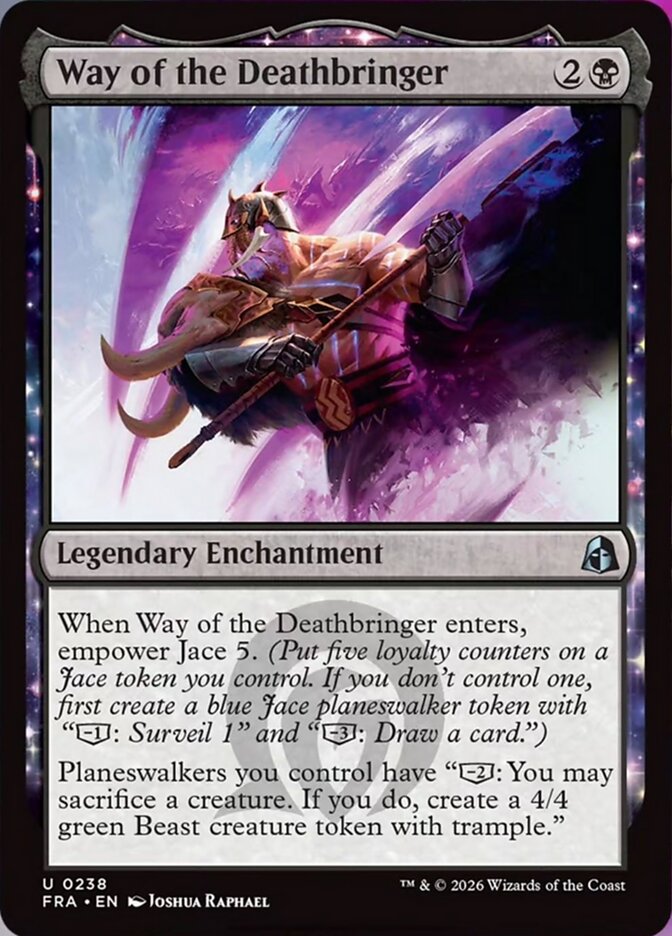
Rating: 3/10
Turning one of your creatures into a potentially better one is considerably worse than just creating a new one altogether. It’d be quite nice to curve a turn-2 Rank Rat into a turn-3 Way of the Deathbringer, but this -2 ability isn’t always going to be as good as that, so this is one of the more mediocre enchantments in this cycle.
Way of the Necromancer
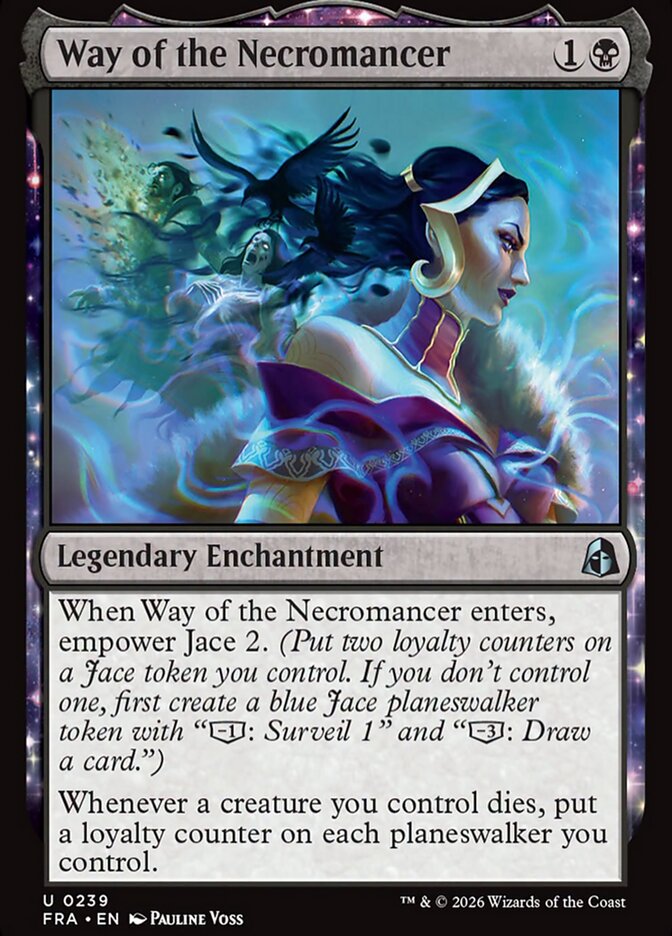
Rating: 1/10
Way of the Necromancer just does so little for what you’ve spent on it. You’re not necessarily guaranteed to have many creatures die, and it only does something if you have a planeswalker out when they die in the first place. It’s not unplayable, but it’s definitely not good.
Winter, Tormented Loner

Rating: 5/10
This is a pretty good way to design a legendary Fleshbag Marauder. Usually, making each player sacrifice a creature is a little too situational, as your opponent could have something in play that they don’t mind losing. As such, giving up a creature of yours to do that seems useless. Winter, Tormented Loner solves that problem by giving you the choice. You could just run it out as a big vanilla creature if the timing isn’t right for its first ability, and I think that makes it quite a bit better.
Yargle, Glutton of Urborg
Rating: 1/10
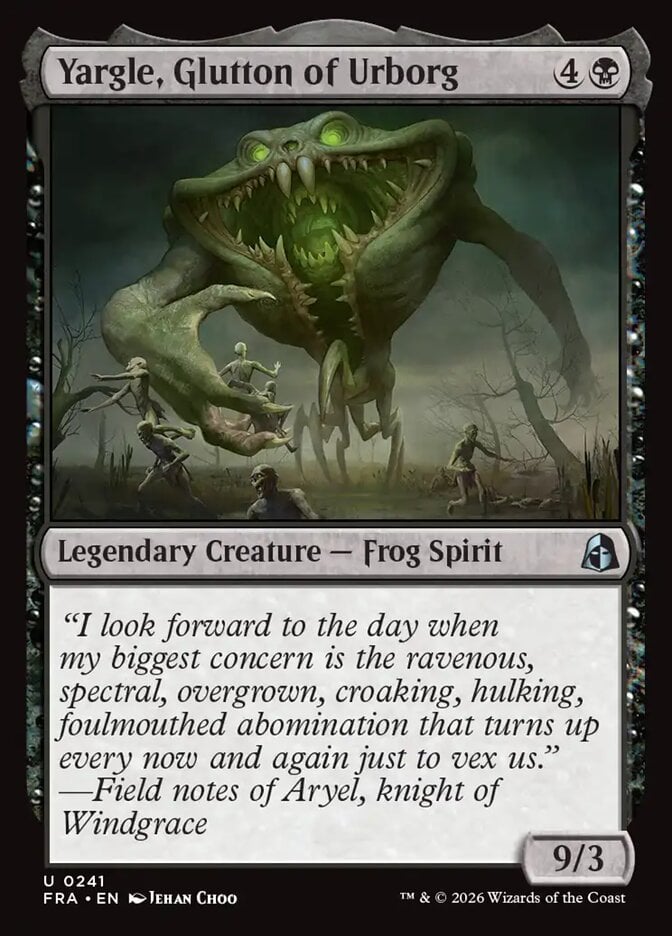
It may be a 9/3, but it’s still just a vanilla creature. Yargle, Glutton of Urborg has always been a funny card, but that doesn’t make it good in Limited.
Red
Ajani Unrelenting
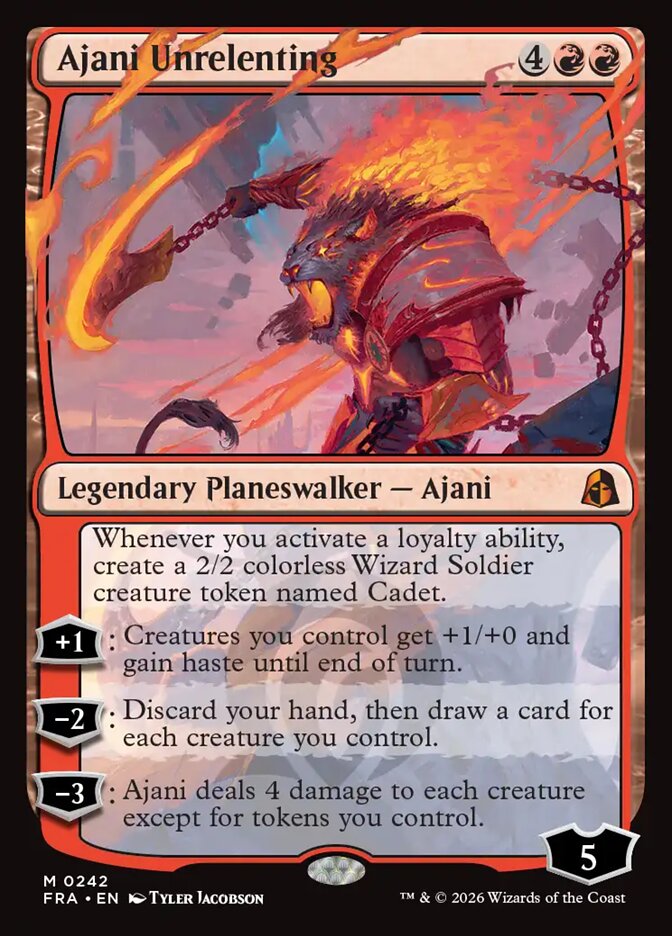
Rating: 10/10
Ajani Unrelenting is one of the most disgusting planeswalker cards I think I’ve ever read. Six-mana planeswalkers have to do a lot to be useful, and Ajani passes that bar by a mile.
The most important abilities are its trigger to create a Cadet token every time you activate a loyalty ability and the -3 to wipe the board. I’m assuming that you’ll use the -3 ability a lot of the time you play Ajani, and the fact that you get the Cadet token as well as wiping the board seems truly absurd.
On top of that, it’s reasonably likely you’ll have a Jace token hanging around, and using one of its abilities also nets you a Cadet token. Ajani can even be aggressive by coming down and using its +1 to make a Cadet token and give it +1/+0 and haste, along with a second token if you again happen to have the aforementioned Jace token.
Ajani’s Anguish
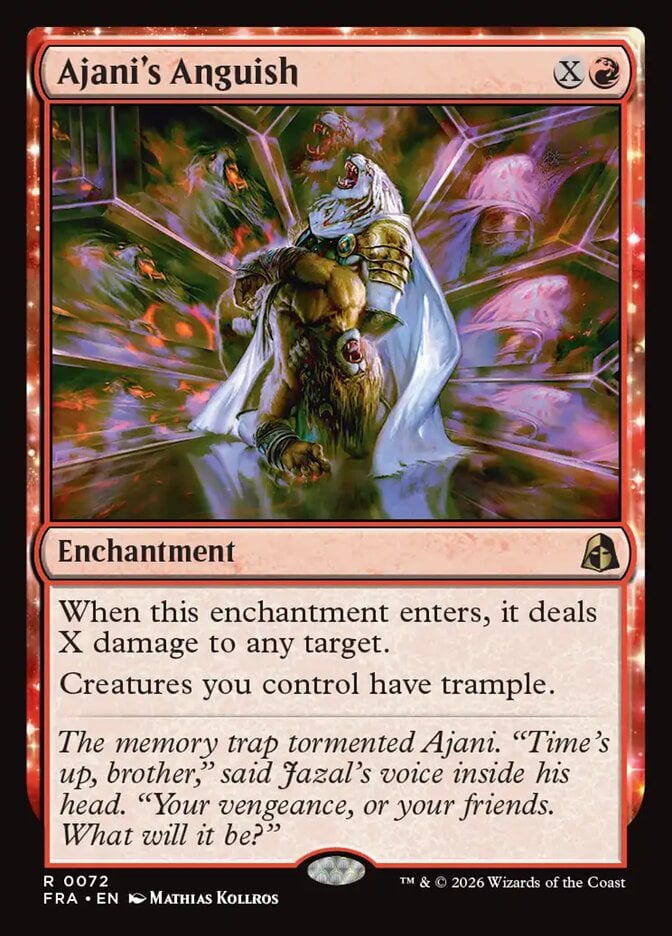
Rating: 4/10
Red plus X mana for X damage to any target is a spell that used to be incredible, but it hasn’t aged well as the game has evolved. Yes, you can finish off a player with that damage, but it’s so inefficient to kill a creature with it that it just ends up being quite weak. I don’t think being an enchantment with some very minor text changes the equation at all. At the end of day, Ajani's Anguish is fine and you could use it better in a Konstrari ramp deck, but a lot of red decks aren’t going to be interested in playing it.
Arni, Renowned Champion
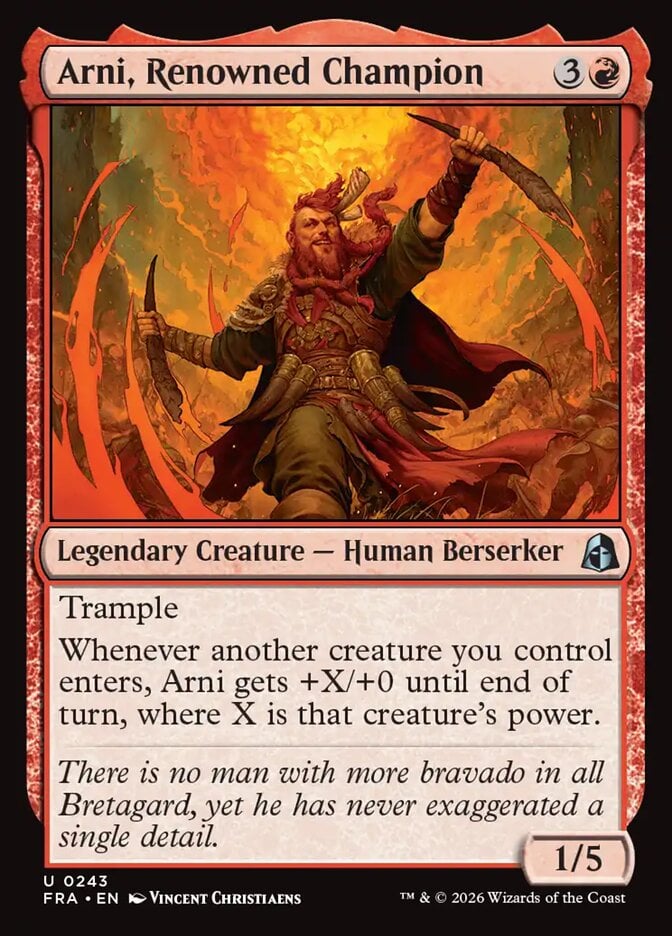
Rating: 3/10
While it’s funny to imagine what happens when you play Yargle, Glutton of Urborg and attack with your 10/5 trampling Arni, Renowned Champion, you should also consider the case where it isn’t triggering at all. For every time it attacks and deals a lot of damage, there are likely a few more times when it’s a 1/5 and can barely do anything and that inconsistency really holds it back.
Artifist Acumen
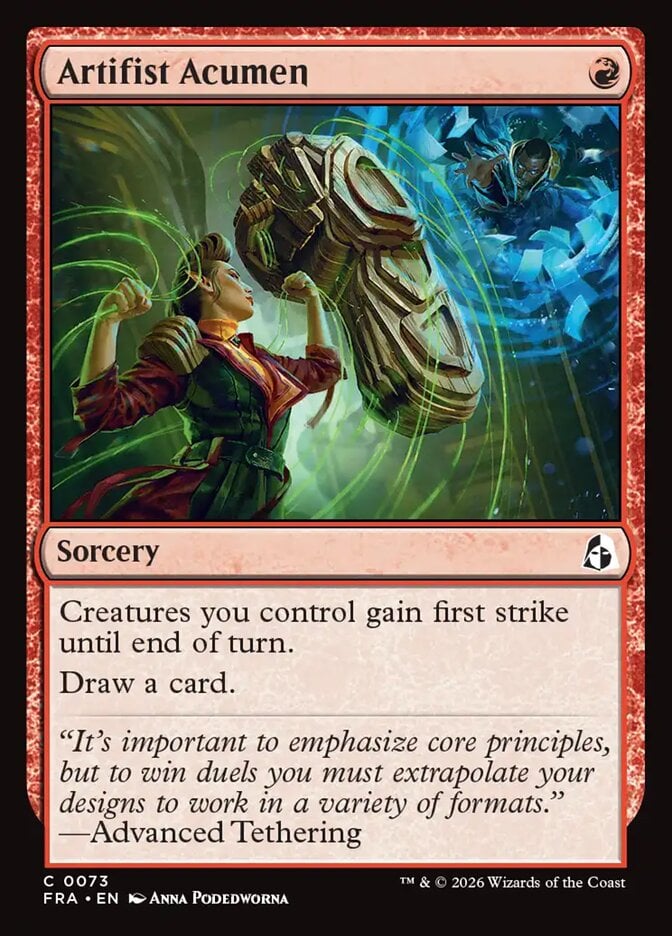
Rating: 3/10
Over the years, we’ve seen our fair share of 1-mana cantrip spells that grant a random keyword to a creature. Artifist Acumen looks a lot stronger than those previous cards simply because it grants first strike to all your creatures. Combined with the sheer number of prowess creatures in Reality Fracture, this looks like a card I’d want to pick up in multiples to enable that prowess deck.
Awaken the Inferno
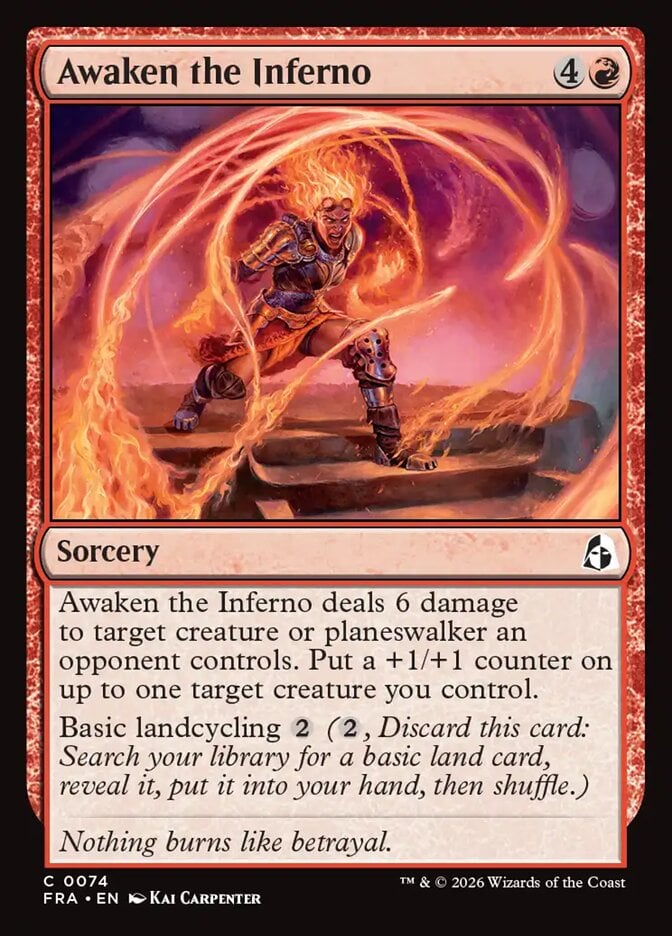
Rating: 4/10
Five-mana big burn spells are usually fine to play. You’ll often be happy to put one copy in your deck for the late game. Awaken the Inferno is a lot better than previous versions of this effect, since the main reason you’ll play it is to fix your mana in the early game. This is so rarely a dead card because it has applications at every point in the game and that’s very good to have around.
Blazing Crescendo
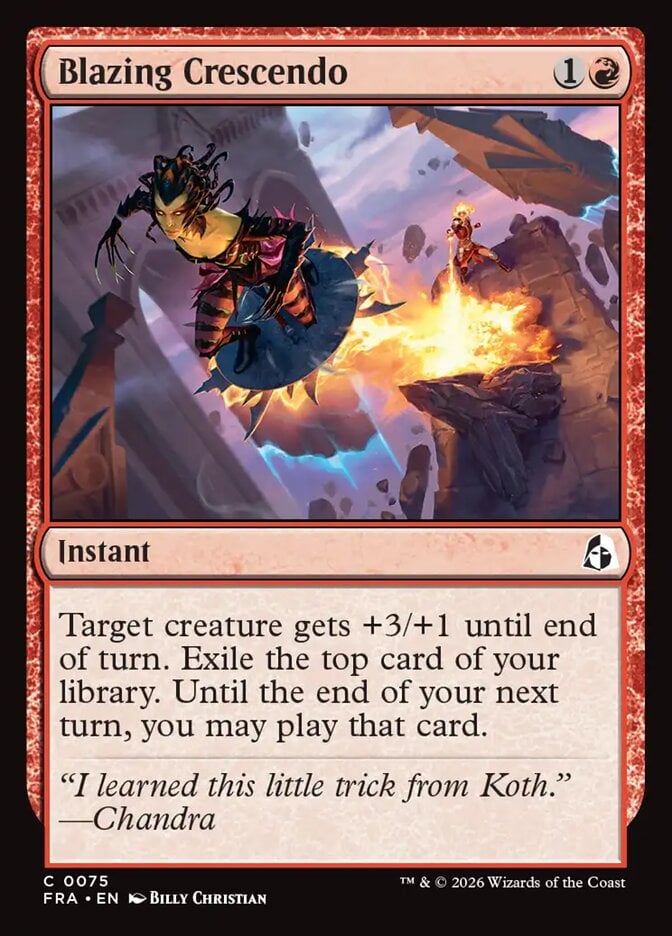
Rating: 3/10
Combat tricks aren’t particularly good these days, but Blazing Crescendo is one of the better ones. It doesn’t always win a combat for you, but it does replace itself a good amount of the time. I also like that it helps you to apply more pressure to a Jace token, so I wouldn’t be surprised if this saw a good amount of play.
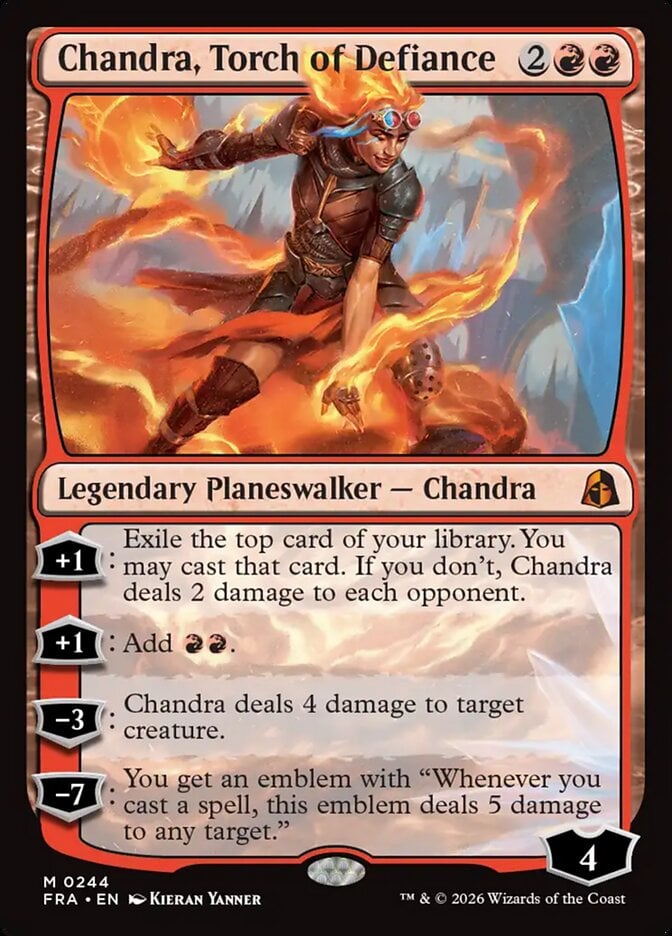
Chandra, Torch of Defiance
Rating: 10/10
Chandra, Torch of Defiance is one of my favorite planeswalkers of all time. When it was originally printed in Kaladesh, it was an absolute house in Standard and was basically the best card in the format up until it rotated. It’s no worse in Limited either, because it can immediately affect the board by killing off a creature and then provides a steady stream of card advantage after that point. You need to do something to protect Chandra a little after the turn it comes down, but that shouldn’t be too hard when it draws you an extra card each turn. I’m so excited to see it back, and I can’t wait to bust out my original playset and win more games with it!
Chandra’s Emberling
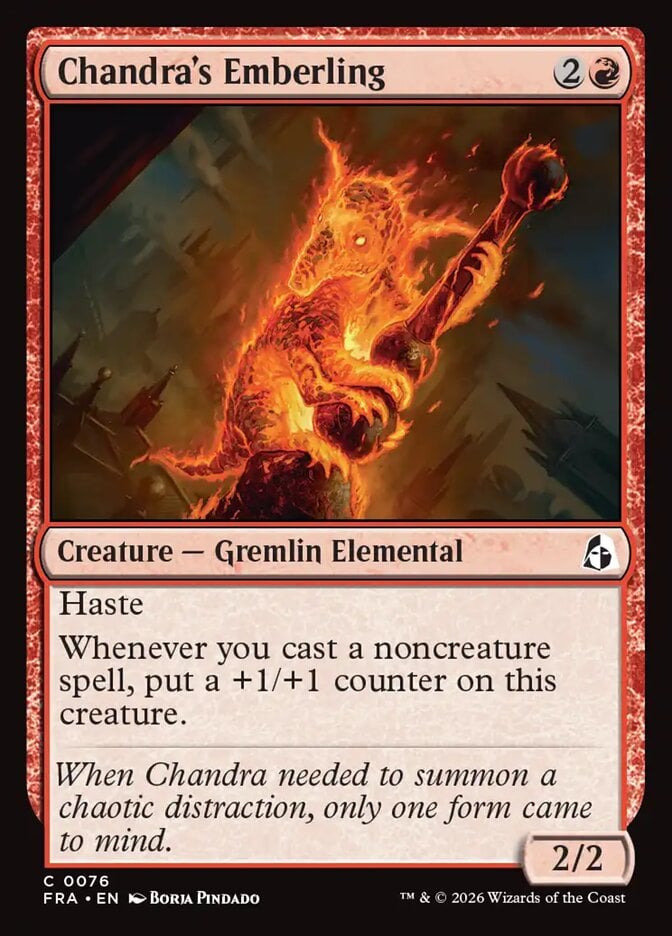
Rating: 2/10
Some variants on this design have seen play in the past, but the difficulty is even wanting to put a comparatively weak creature in a deck that has enough noncreature spells to support it. I’d assume that Chandra's Emberling just isn’t good enough at first, though it wouldn’t be that shocking if it was playable.
Command the Stage
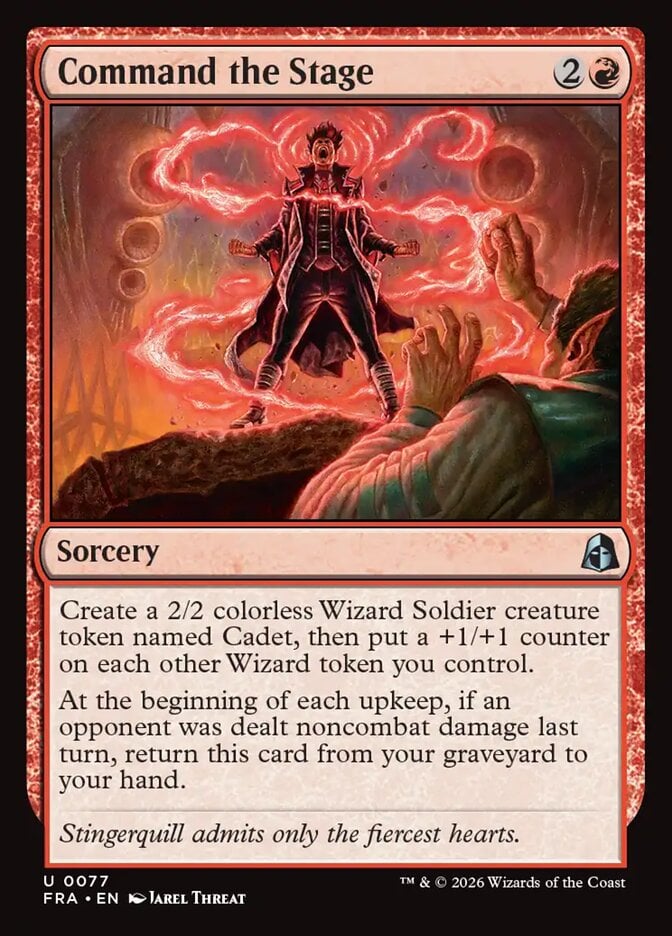
Rating: 6/10
No matter what it does when you cast it, the fact that Command the Stage is so free to get back into your hand makes it a premium spell to me. It then of course helps that it does something very relevant on the board. Sadly, there are virtually no wizards in red, but there are a lot of them in blue and of course the Cadet tokens also count, so I can’t imagine losing many games where you cast this a few times. Unless you curve a 2-drop wizard into this, the first cast could be a little rough, but this still looks like an incredible card to build around.
Craterclaw Colossus
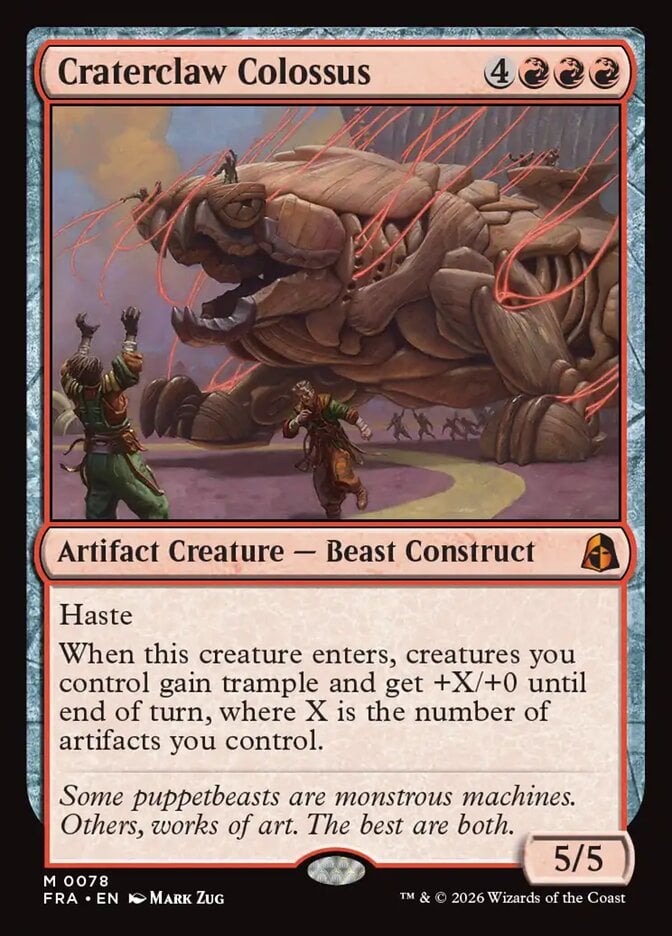
Rating: 10/10
If you have no other artifacts in play, Craterclaw Colossus still counts itself, so it attacks as a 6/5 trampler on that turn and buffs your other creatures a little bit. That’s already kind of good, but what makes Craterclaw look really broken is the Konstrari deck. Heartwood tokens not only ramp you up to 7 mana and fix the triple red that you need, but they also count as extra artifacts in play towards the ability. On top of that, the Konstrari have a bunch of artifact creatures in their ranks that will also add to that total. In a good Konstrari deck, I can imagine Craterclaw coming down and giving +5/+0 to your team and just winning the game in one shot. This is the perfect win condition for Konstrari, and it might even be good enough in some other red decks, too.
Curse-Marred Demon
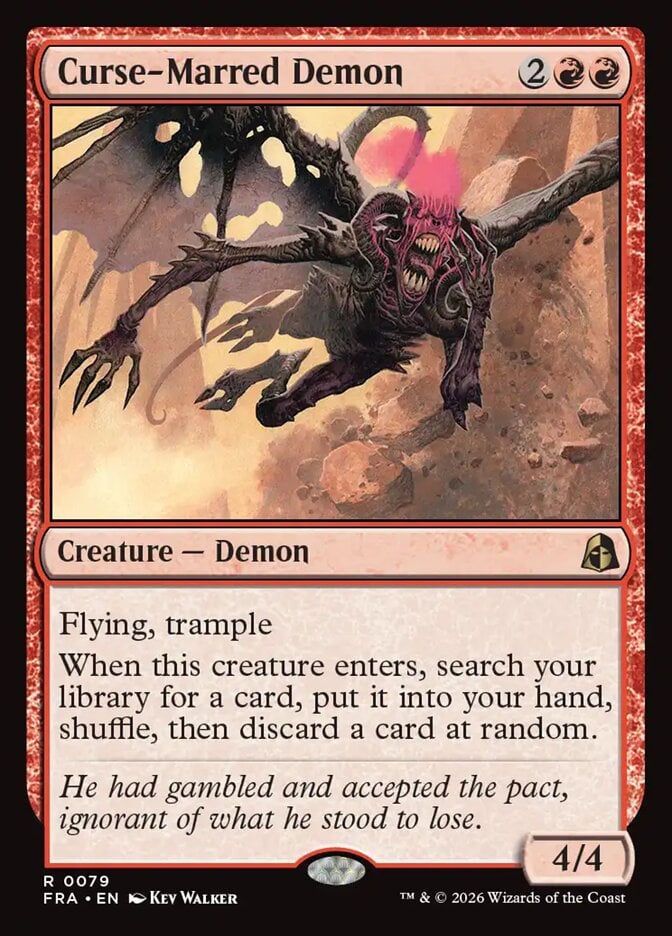
Rating: 8/10
The bulk of the power in Curse-Marred Demon comes from it being a 4/4 with flying and trample for just 4 mana. The Gamble when it enters is of course very random, so it might improve the quality of your hand, or it might not. Of course, if it does let you keep a great card from your deck, then it’ll feel very powerful, but I guess what I’m saying is that you don’t need to rely on it. If you have two lands in hand, search for a good spell and then randomly discard that spell, you’re still doing well.
Draconic Visitor
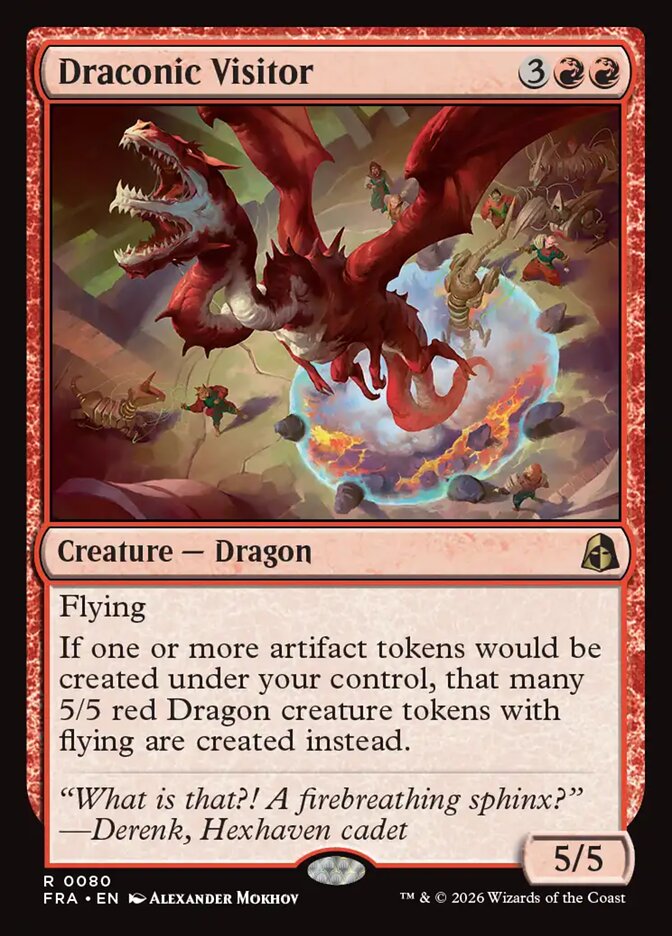
Rating: 9/10
The main artifact tokens to create in Reality Fracture are the Heartwood tokens, but there are so many of them that I can easily see Draconic Visitor going pretty wild with them if you get to untap. There are a few other nice synergies, such as with Pia, Determined Rebuilder or Vraska, Soul of Stone, but it’s also a 5/5 flying dragon for 5 mana, so you’d even play it without any of those combos.
Eardrum Rattler
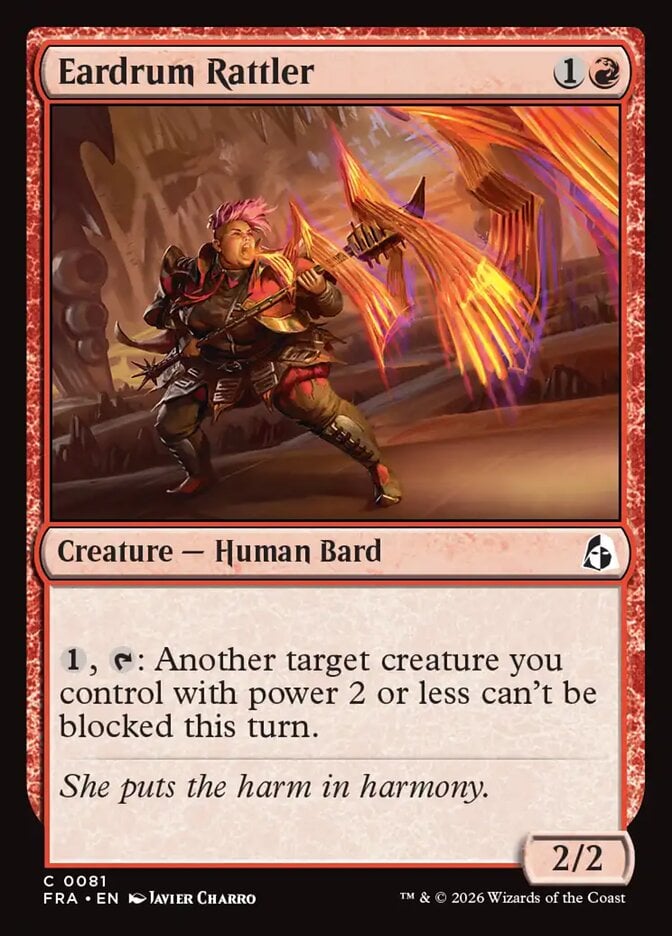
Rating: 3/10
Cards like this provide you a little bit of late game inevitability but are generally too slow to make too much of an impact. What I really like about Eardrum Rattler though is how much it enables you to pressure Jace tokens and also how well it combines with some of the combat damage triggers we’ve seen. Since it’s just a 2-drop 2/2 as a starting point, I’d say it’s worth including in a lot of red decks.
Essence Burn
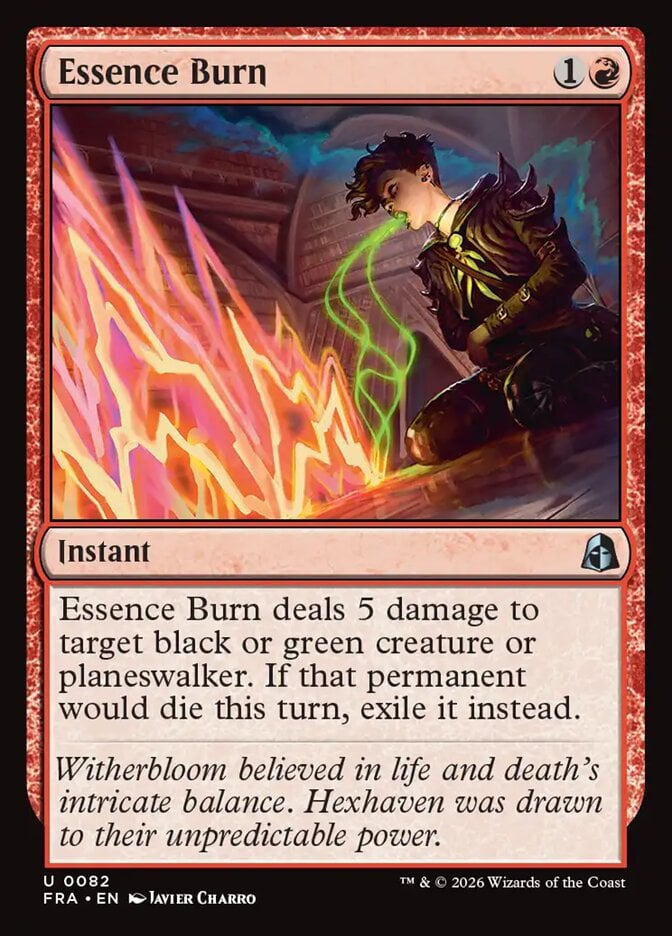
Rating: 2/10
Red has access to a lot of good burn spells in Reality Fracture, so I doubt you’ll need to worry too much about whether Essence Burn is worth a slot in your main deck. It is an excellent sideboard card, but I think it’ll miss a little too often to warrant main-decking.
Face Yourself
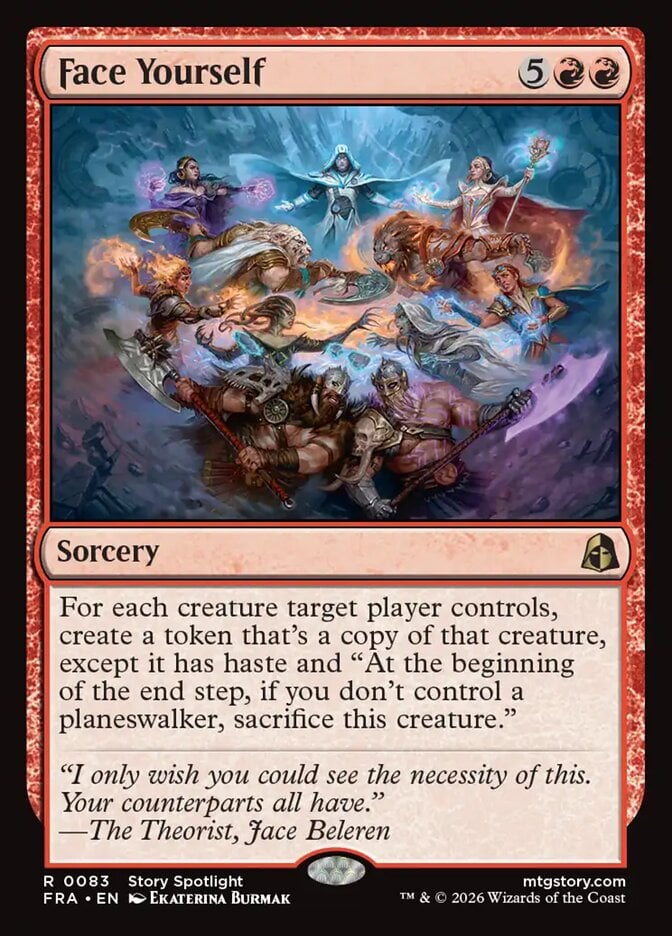
Rating: 0/10
If you’re spending 7 mana on a spell, you have to know that you’re getting a ton of value and/or basically winning the game when you play it. Face Yourself is capable of that, but only in very specific situations. In my opinion, it’s not worth putting this card into your deck. With no guarantee that you can copy useful creatures or permanently keep them, I’m not interested in a 7-mana sorcery that only might do something.
Fulminous Forte
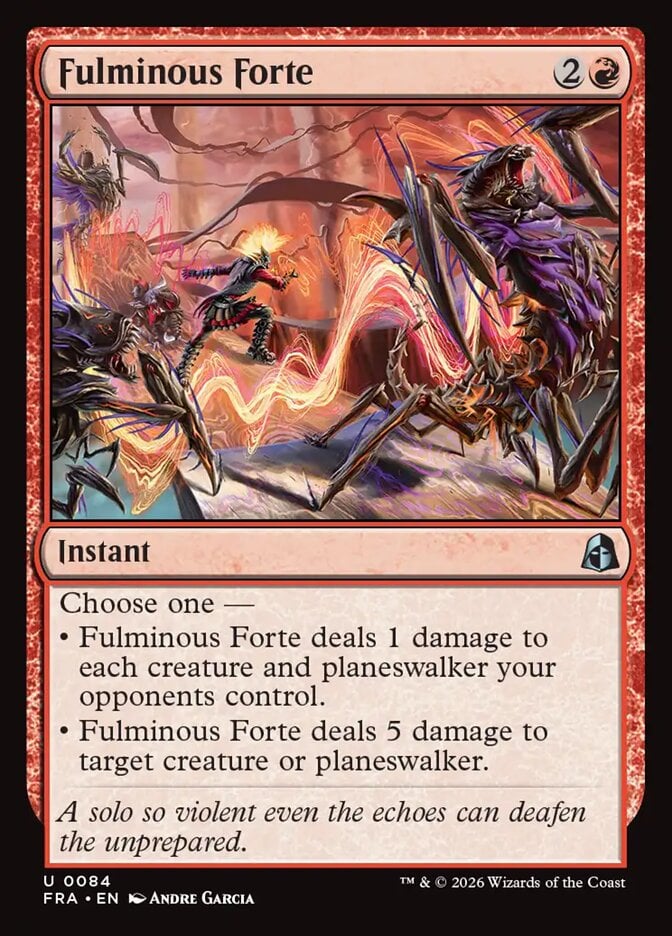
Rating: 7/10
We just had Gnashing of Teeth in The Hobbit, and Fulminous Forte looks remarkably similar. It’s an excellent burn spell to clear out a big creature or finish off a few smaller ones, but the key selling point for me is that it’s an instant. That extra bit of flexibility over a sorcery makes a big difference and sells this to me as one of red’s best and most versatile cards.
Gallia, the Merrymaker
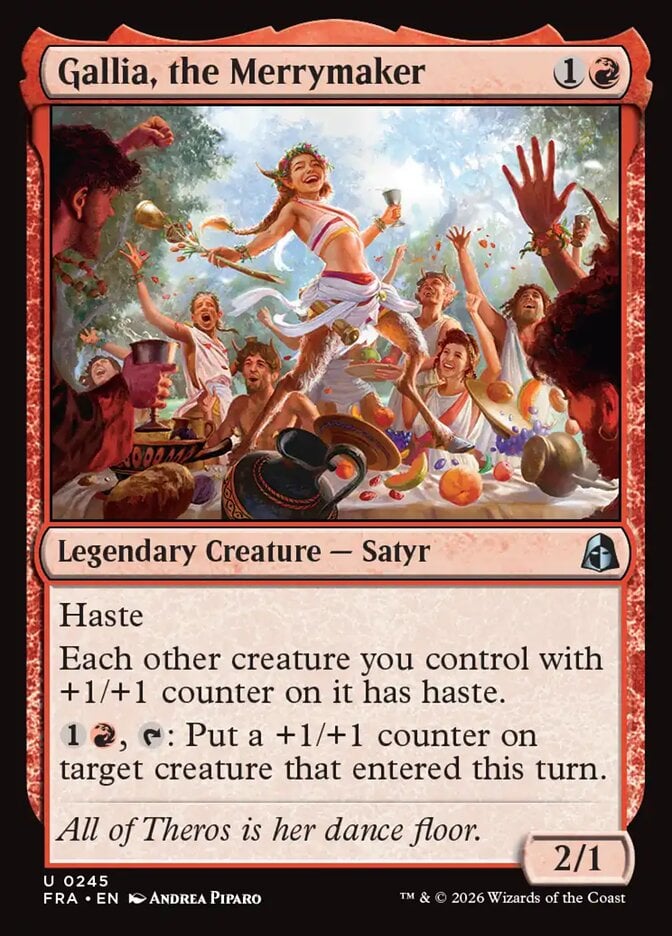
Rating: 4/10
Two-drop creatures that can give haste to your other creatures entering, like Axgard Cavalry, have been reasonable in the past. Gallia, the Merrymaker is a souped-up version of that same effect, but in exchange for giving an extra +1/+1, it costs mana to use, which often isn’t going to work very well. Gallia is at least a 2/1 with haste itself, and it doesn’t need to be the one to give the counters in order to grant haste, so it seems useful in a few ways.
Hallway Heckler
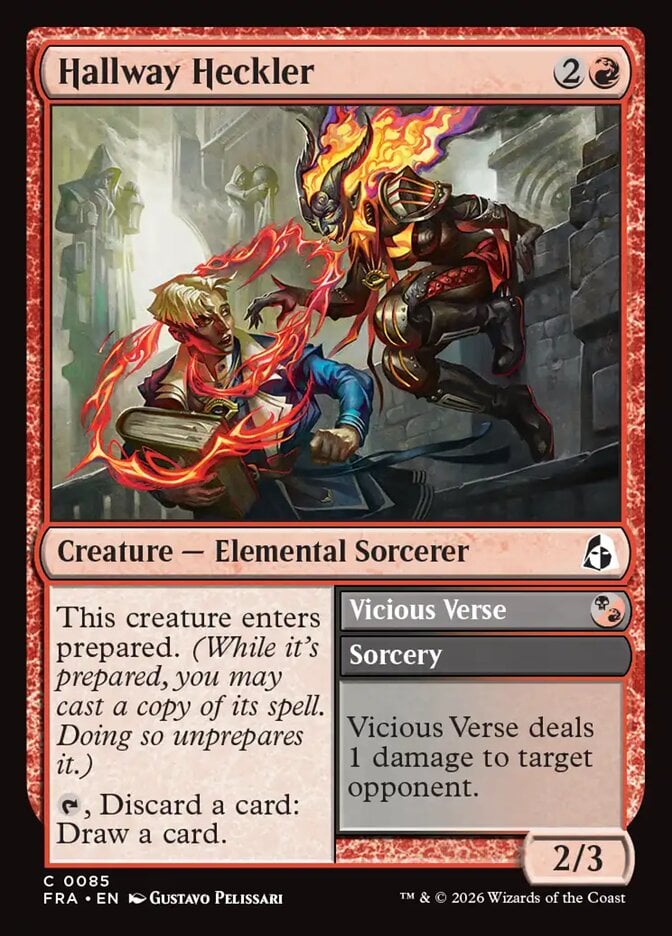
Rating: 2/10
Three mana for a bigger Rummaging Goblin doesn’t sound all that appealing to me. Tacking on a Vicious Verse for free is nice, but decks that want that extra damage ping are probably going to want to be more aggressive than what a creature like Hallway Heckler is suited for.
Heartstring Puller
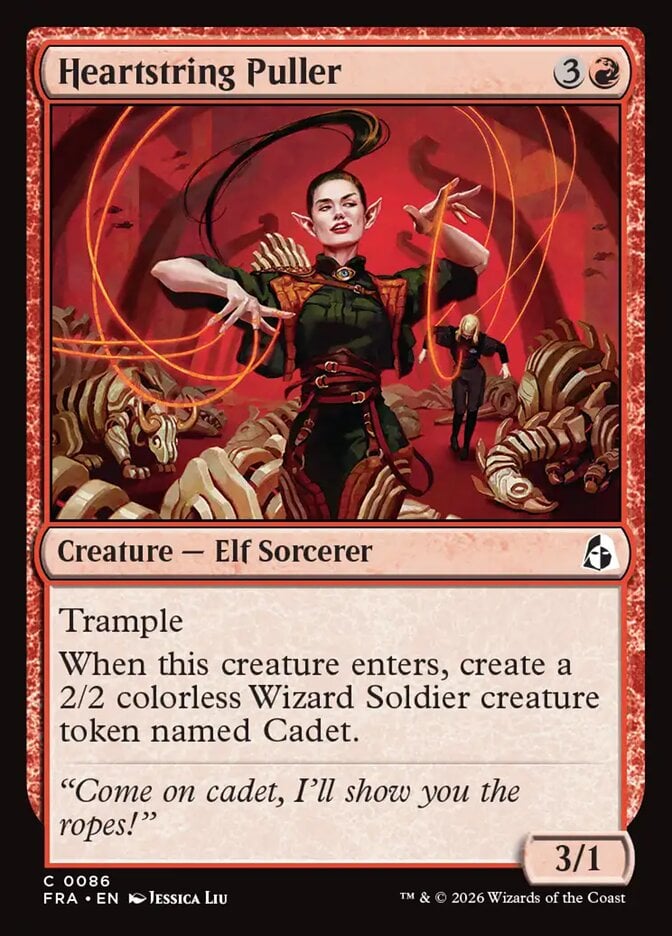
Rating: 4/10
We’ve seen quite a few 4-mana creatures over the years that give you a pair of 2/2s and they’ve always been fine. Turning one of those 2/2s into a 3/1 with trample, as Heartstring Puller is doing, raises the bar a fair bit and helps these two creatures to provide some extra utility over their predecessors.
Identity Echo
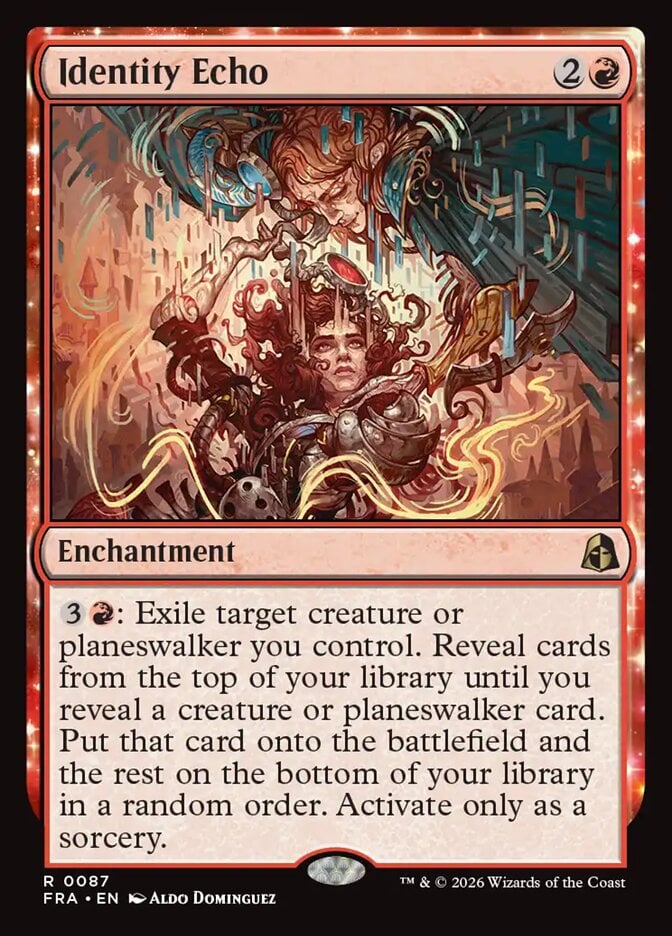
Rating: 0/10
That’s a lot of text and mana to basically accomplish nothing. Nope, Identity Echo isn’t playable in the slightest, please don’t put this card into your deck.
Jiang Yanggu, Alone
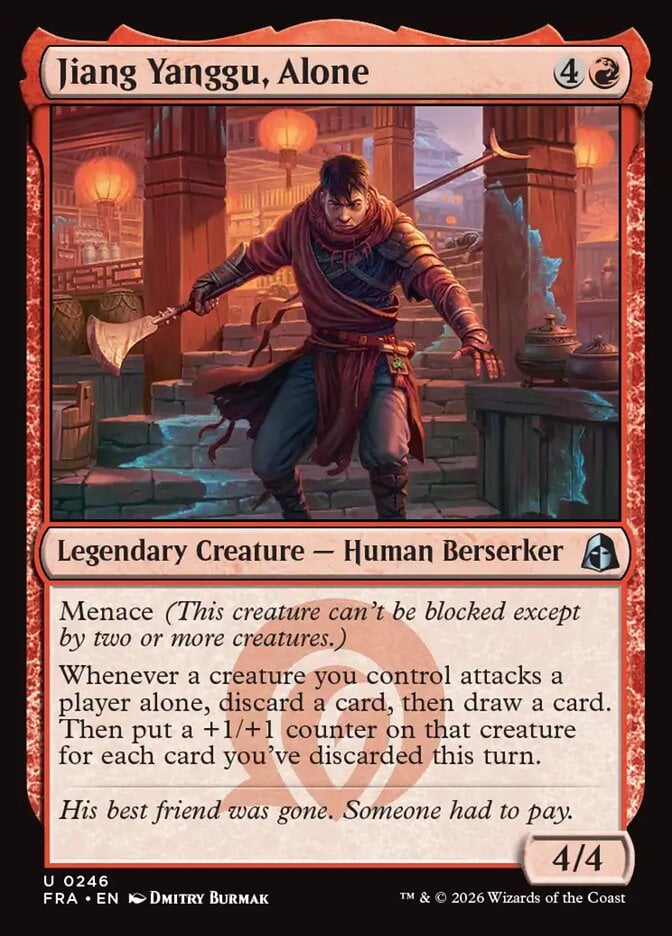
Rating: 3/10
Jiang Yanggu, Alone, or to give him his proper title, Jiang Wick, is perhaps the victim of Jace’s gravest crime in creating the Echoverse. He’s killed Mowu! How dare he!
Sadly, it looks like Jiang isn’t quite sad enough, because this card looks very mediocre to me. It’s cool that you can play it and immediately trigger it by attacking with something else, but it’s also a replaceable 5-drop and the ability only has a minimal impact.
Kiora of Fire and Ashes
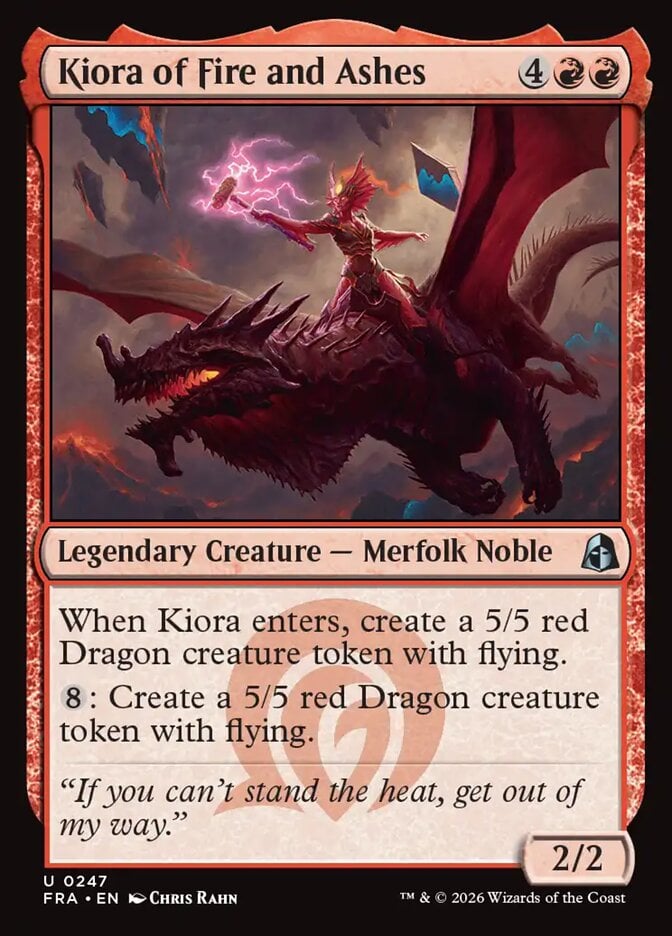
Rating: 6/10
Urbis Protector was a solid playable back in the day, and Kiora of Fire and Ashes is considerably better already. When you play it, the obvious threat is the 5/5 dragon token, but if your opponent can’t deal with Kiora itself, it’ll just churn out more 5/5s in the later turns. This is a great ramp payoff for Konstrari, and one I’m very excited to try out for myself.
Koth, the Geomancer
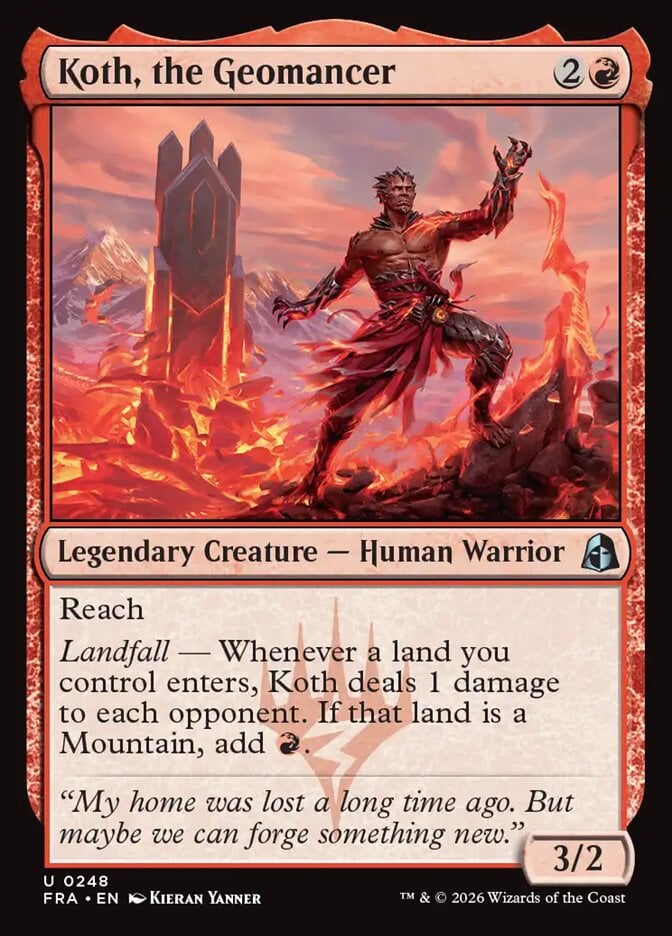
Rating: 4/10
Koth, the Geomancer is a cool rendition of this classic character that pulls a little bit of double duty. In a Stingerquill deck, it’s a reliable source of noncombat damage to enable your other cards. In Konstrari, it’s a pseudo mana dork that potentially ramps you into your bigger plays. It doesn’t make a huge impact in either of these decks, but it does have potential and flexibility, so this Koth seems like a card I’d be happy to take late in a pack.
Marwyn, the Clearcutter
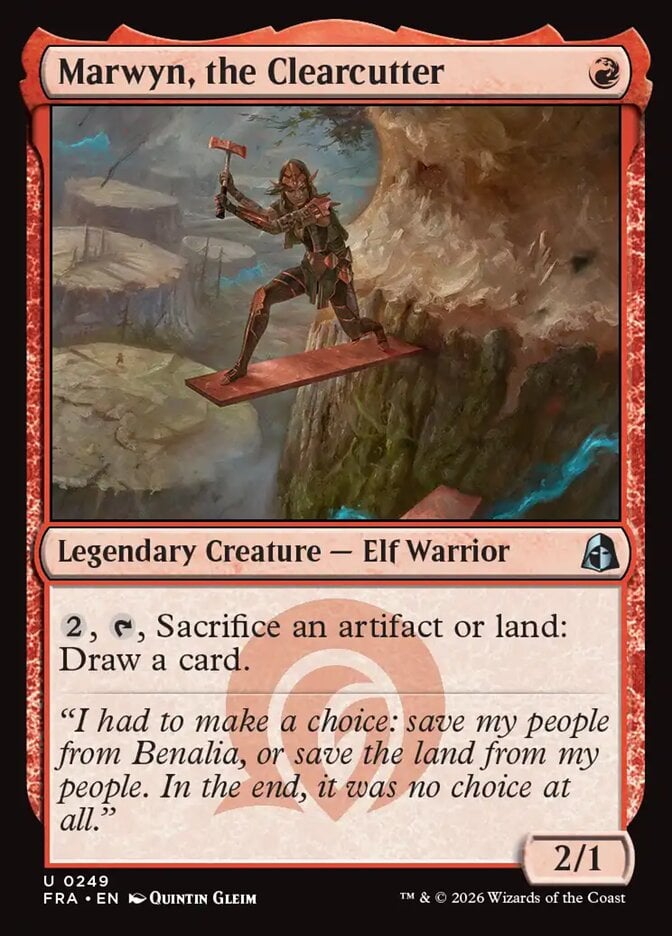
Rating: 4/10
Just being a 1-mana 2/1 already makes Marwyn, the Clearcutter a reasonable card to play. When you get to the late game, turning your Heartwood tokens and excess lands into more cards is something that should help you turn the corner, but only being a vanilla creature up to that point means it’s fairly limited in scope.
Master of Barbs
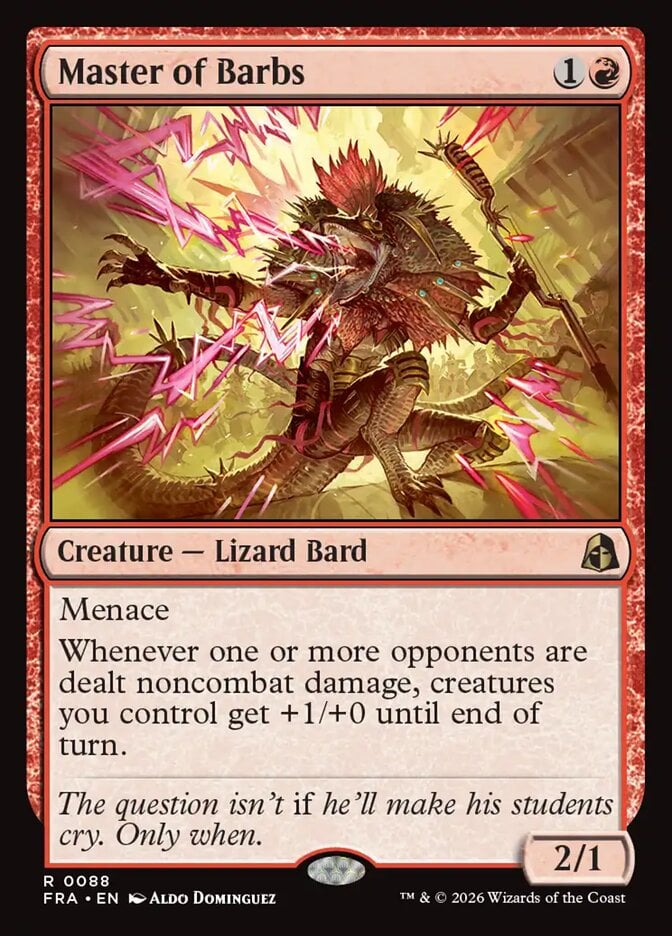
Rating: 7/10
A 2/1 menace creature for 2 mana is already a pretty good start. Normally, the ability on Master of Barbs would look kind of situational, but thanks to the Stingerquill prepared spell, Vicious Verse, there should actually be a lot of ways to trigger it. As such, this puts a lot of extra pressure on an opponent, and it could easily close out a game by itself.
No Admittance
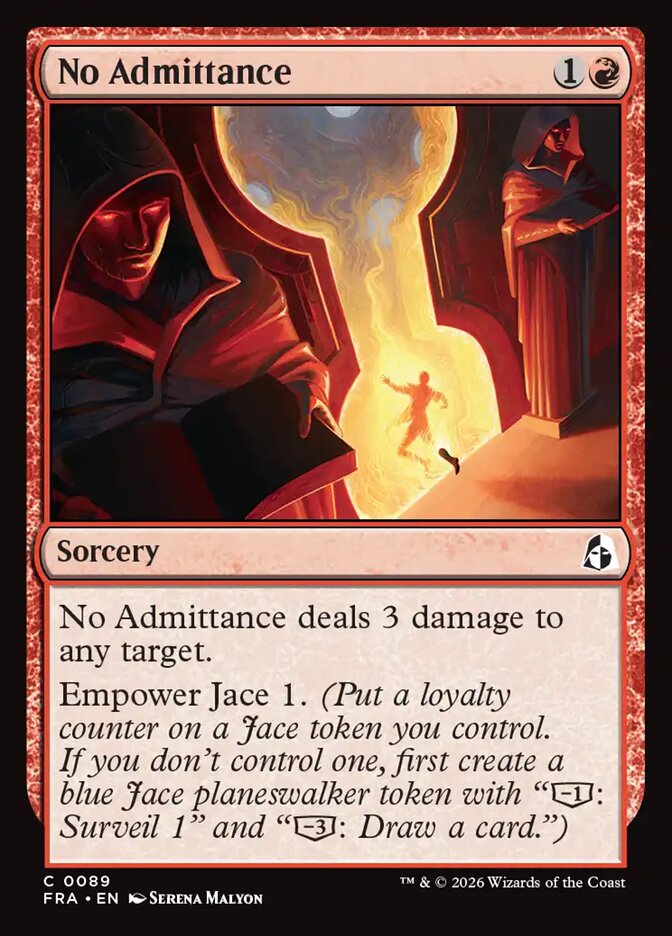
Rating: 5/10
Being a sorcery can be a bit of a downside, but 2 mana for 3 damage to any target is still a great return on your investment. You even get a free Jace token out of the deal. No Admittance is bound to be one of red’s better commons, even though it lacks some of the flexibility of a simple Lightning Strike.
Pia, Determined Rebuilder
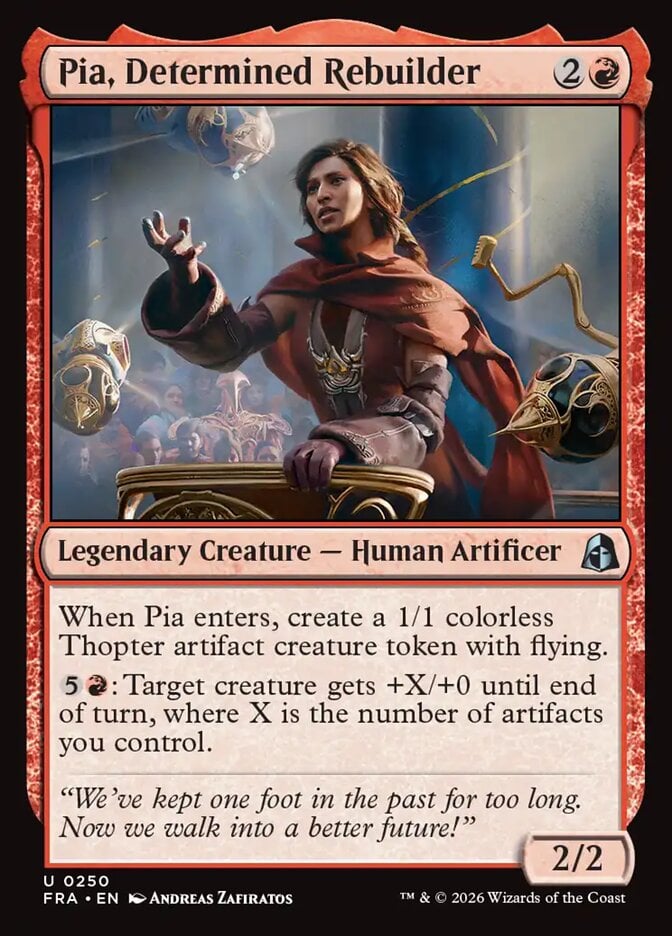
Rating: 6/10
A 2/2 plus a 1/1 flier is excellent for 3 mana. You should play Pia, Determined Rebuilder in every red deck, but it’s Konstrari that will be able to utilize it the most, as they can give Pia the artifacts needed to activate its ability. It may be expensive to activate, but the ability to use it at instant speed means you can wait for your creature to go unblocked before you use it and deal a lot of free damage.
Pompous Battlemage
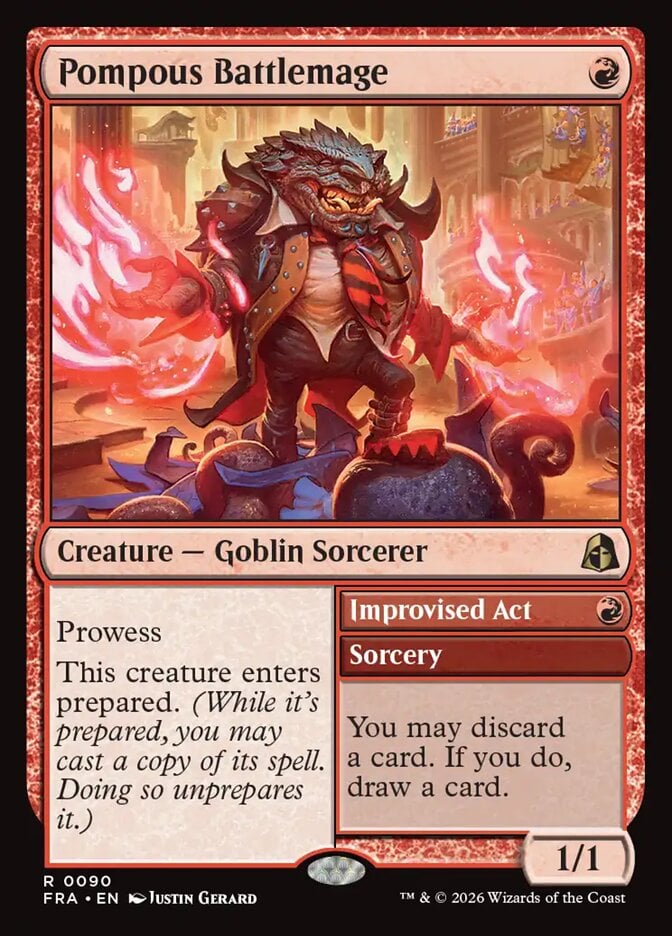
Rating: 3/10
I try never to underestimate a 1-drop, but a 1/1 with prowess and barely anything else doesn’t look particularly good to me. Prowess is a supported archetype in Reality Fracture, with lots of good 1-mana spells to trigger them, but Pompous Battlemage feels a little too reserved for my liking.
Pyre Rhymer
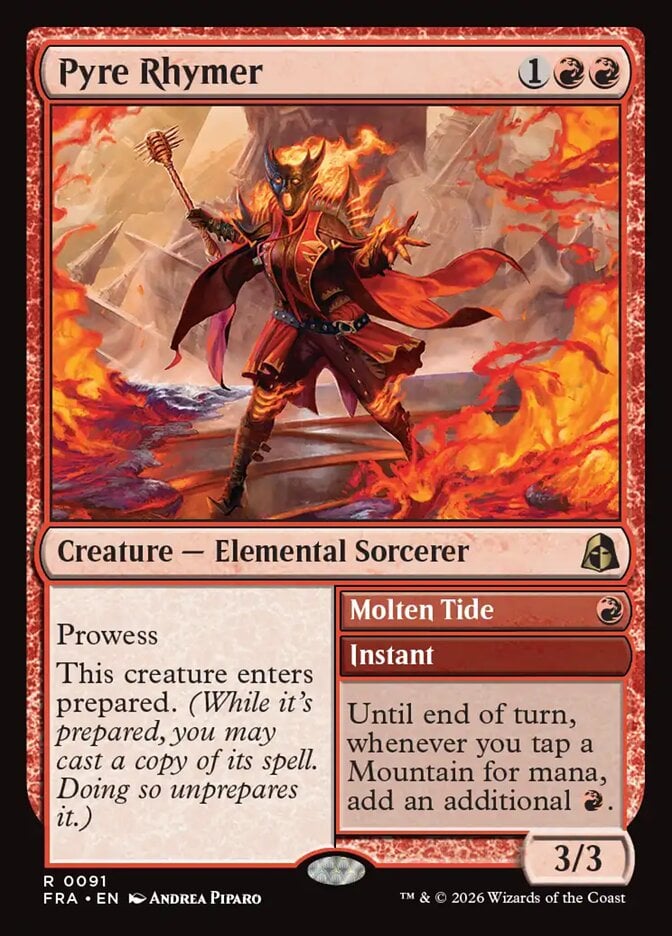
Rating: 4/10
On the other hand, I much prefer a bulkier 3-mana 3/3 prowess creature. Pyre Rhymer doesn’t look like anything too special beyond its raw stats. High Tide was a very powerful spell and I’m sure Molten Tide will have some applications somewhere, but it won’t do a lot beyond triggering prowess.
Samut, Hazoret’s Champion
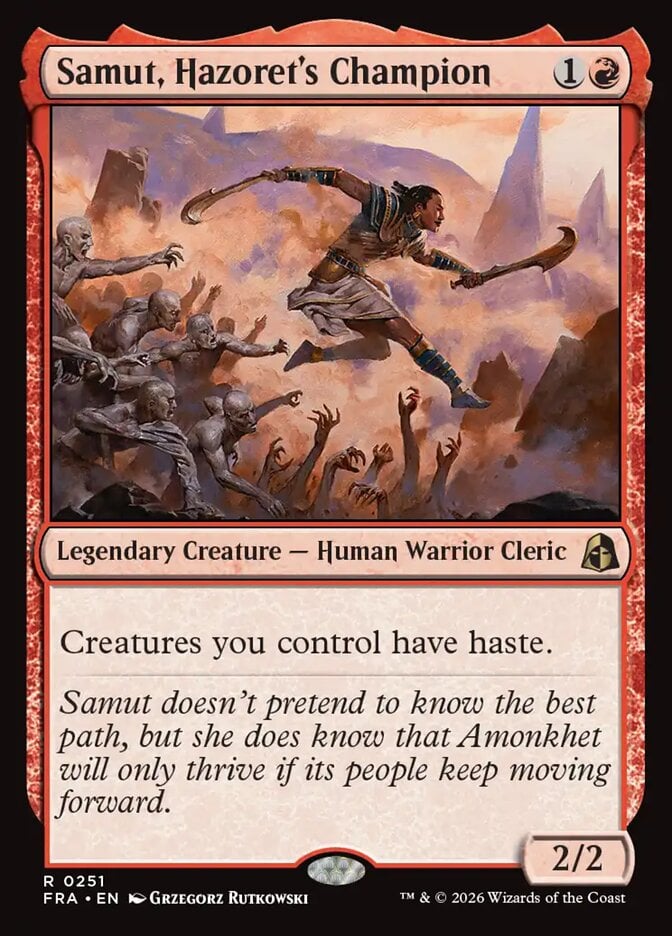
Rating: 5/10
Samut, Hazoret's Champion looks weirdly similar to Gallia, the Merrymaker. They’re both hasty 2-drops that can give haste to your other creatures. On balance, Samut looks quite a bit better, since you don’t have to put any work into it, but not so much better that I’d be picking it highly.
Skilled Battlecarver
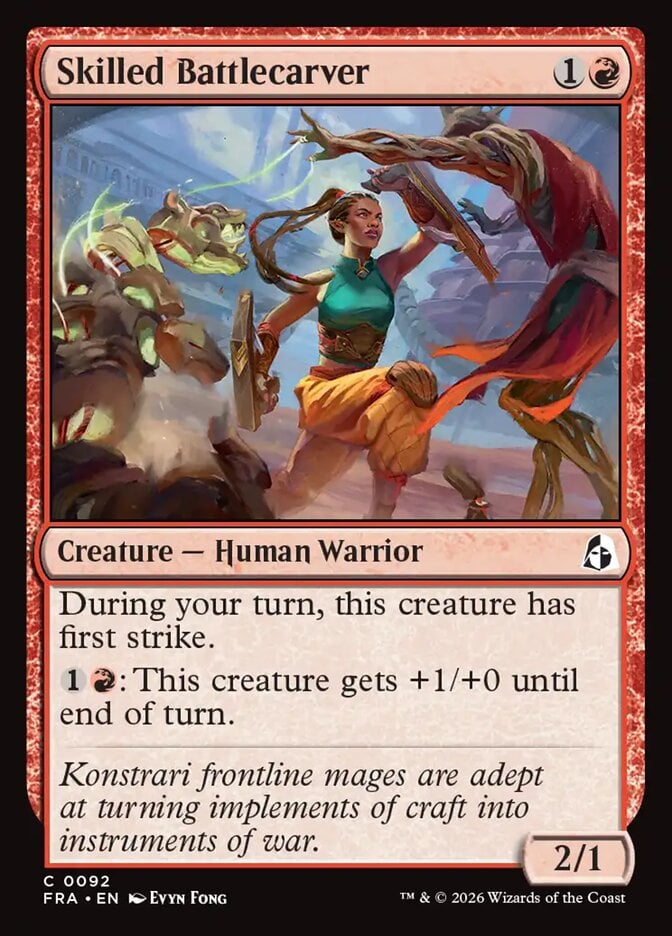
Rating: 4/10
First strike is such a pain to deal with on an attacking creature. Skilled Battlecarver is a creature you basically can’t block, as your opponent just has to attack with mana open and you have to treat it as though it has those power buffs from its ability. This is a very powerful 2-drop, but it’s best suited for aggressive decks, meaning it looks pretty mediocre in Konstrari builds.
Stingcaster Mage
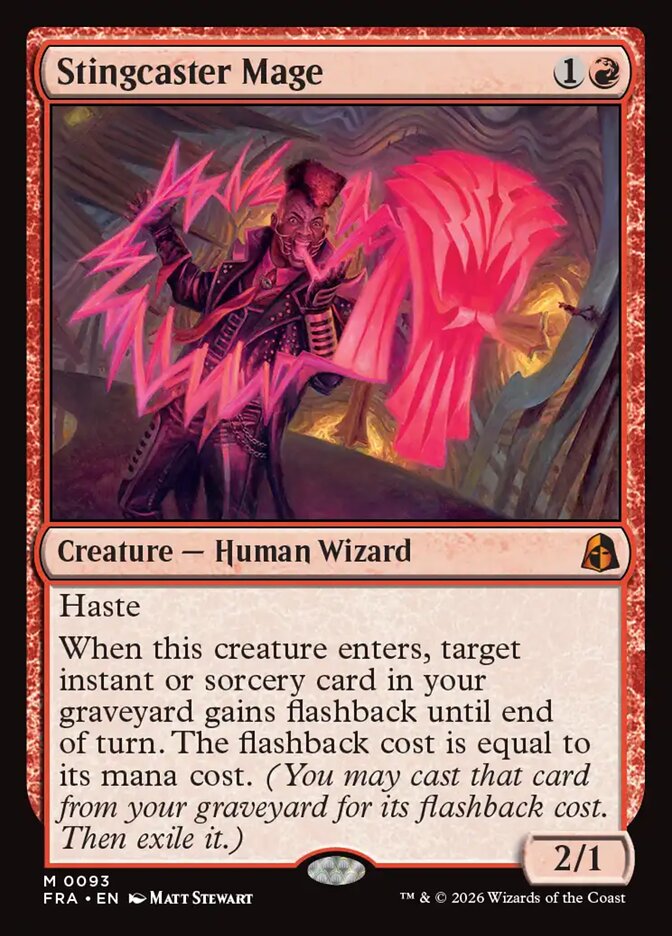
Rating: 8/10
For a long time, Snapcaster Mage was one of Magic’s most powerful cards. No matter which spell you flashback with it, it should always be a two-for-one. Stingcaster Mage has most of the same utility as the original, just without flash. The best thing to do will typically be to flashback a removal spell and turn this into a makeshift Flametongue Kavu, but there are a lot of other options. You’re only held back by the spells you put in your deck. As long as you have plenty of good spells, this card should always be a great addition to your build.
Tether Technician
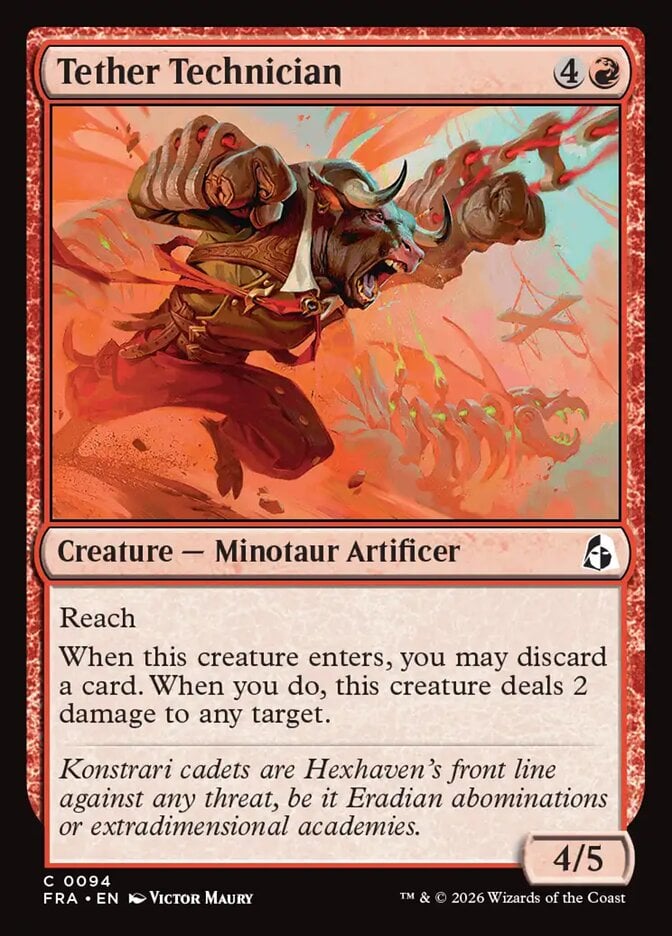
Rating: 3/10
You may have to discard a card to it, but getting to Shock something on entering is quite powerful. This is very far from being a Flametongue Kavu, since you’re not getting a two-for-one out of the exchange very often, but Tether Technician looks better than your average 5-drop and affects the board in a very meaningful way.
Tetsuko Umezawa, Pursuer
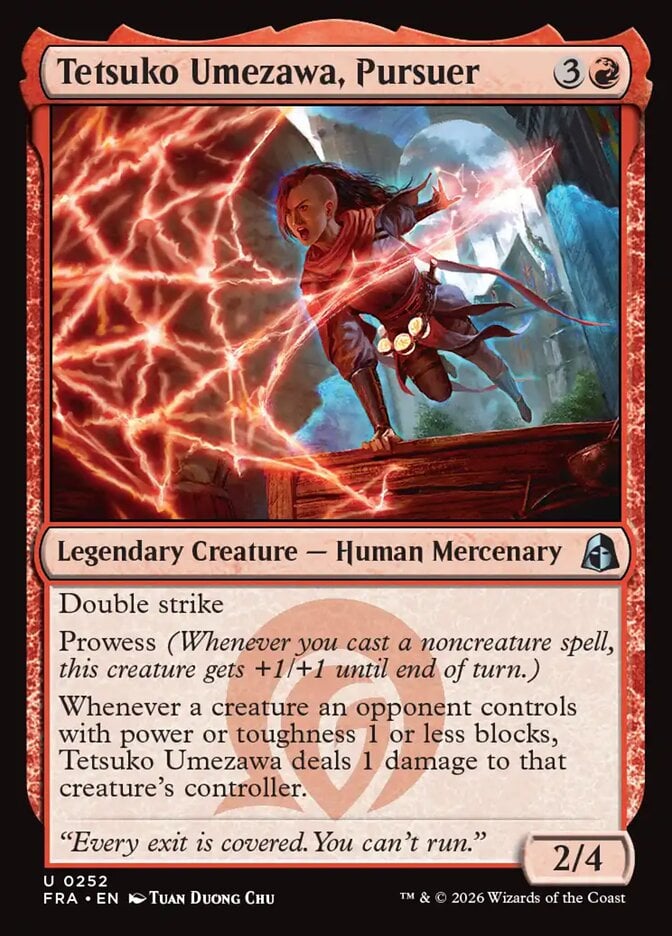
Rating: 6/10
Double strike plus prowess is a pretty deadly combination to have on one creature. While you need to support it to maximize its potential, Tetsuko Umezawa, Pursuer is a very powerful and aggressive creature that demands an answer of some kind and even punishes chump blocks with its last ability.
Tomik, Izzet Sparkmage
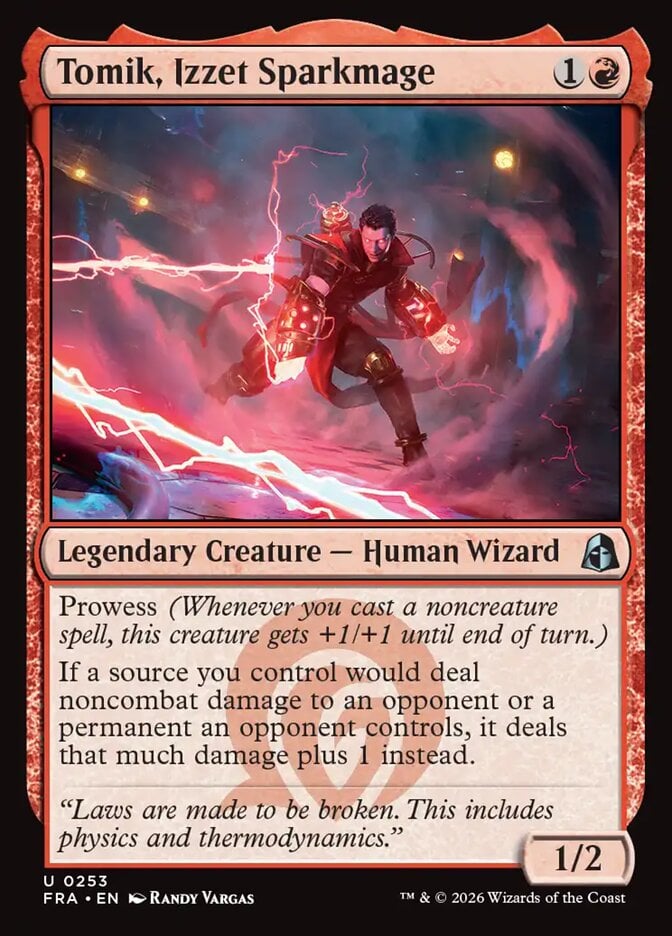
Rating: 5/10
I’m interested to see where this potential blue/red prowess will land, but if it’s any good, Tomik, Izzet Sparkmage will surely be a part of it. Adding 1 to your noncombat damage sources might not sound impressive, but when you consider just how many sources we have that do 1 damage each, Tomik effectively doubles our noncombat damage. On top of that, it’s a 2-drop with prowess, so a great early play to get the ball rolling.
Violent Echoes
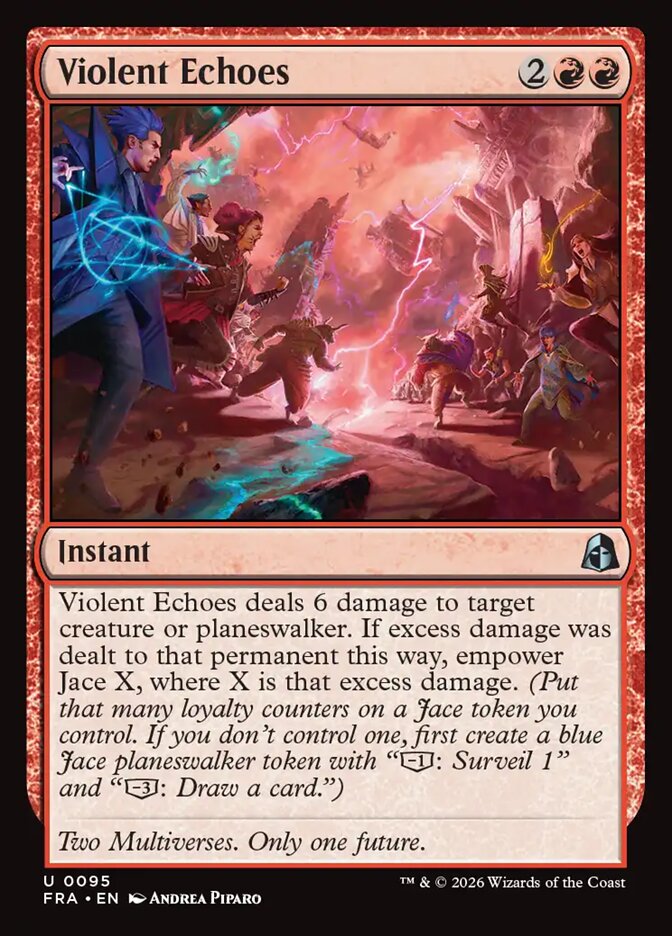
Rating: 6/10
The sweet spot here, as with every other empower card, is to empower 3, allowing you to draw an extra card. This means that Violent Echoes can either kill a smaller creature and draw a card for a sweet two-for-one, or just kill a bigger creature if necessary. Both options are great and being an instant makes it incredibly flexible, too.
Way of the Pyromancer
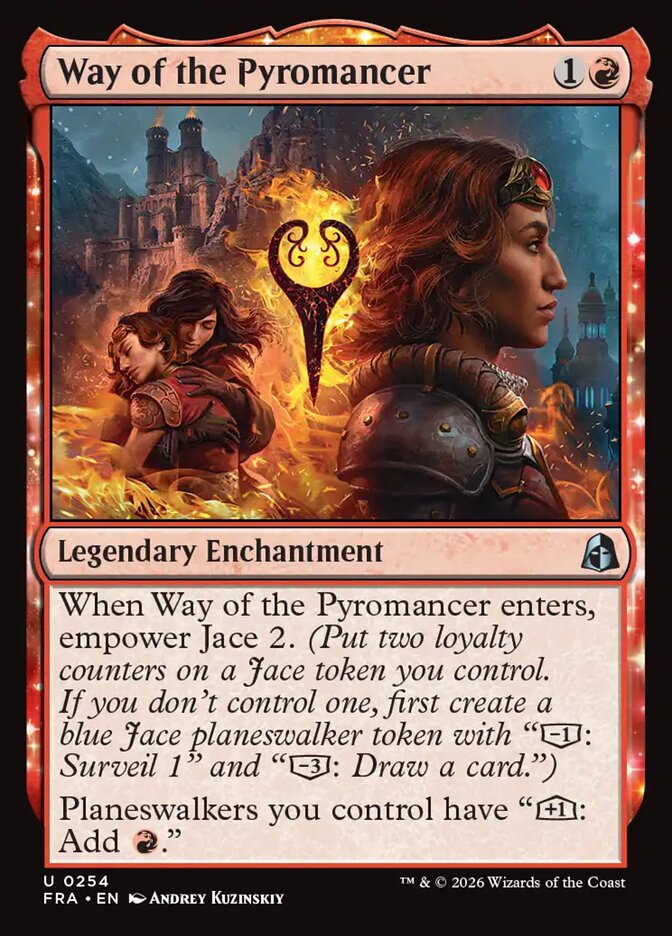
Rating: 5/10
When evaluating this card, it’s worth noting that there are no 2-drop mana dorks in Reality Fracture. Konstrari decks mostly ramp beginning on turn 3, and Way of the Pyromancer is one of the only ways to do that a turn earlier. Of course, having your Jace token act as a mana dork is a lot worse than it being a creature, since it’s a lot more vulnerable, but with there being so few other ways to do this early, it should be worth the risk.
Way of the Warlord
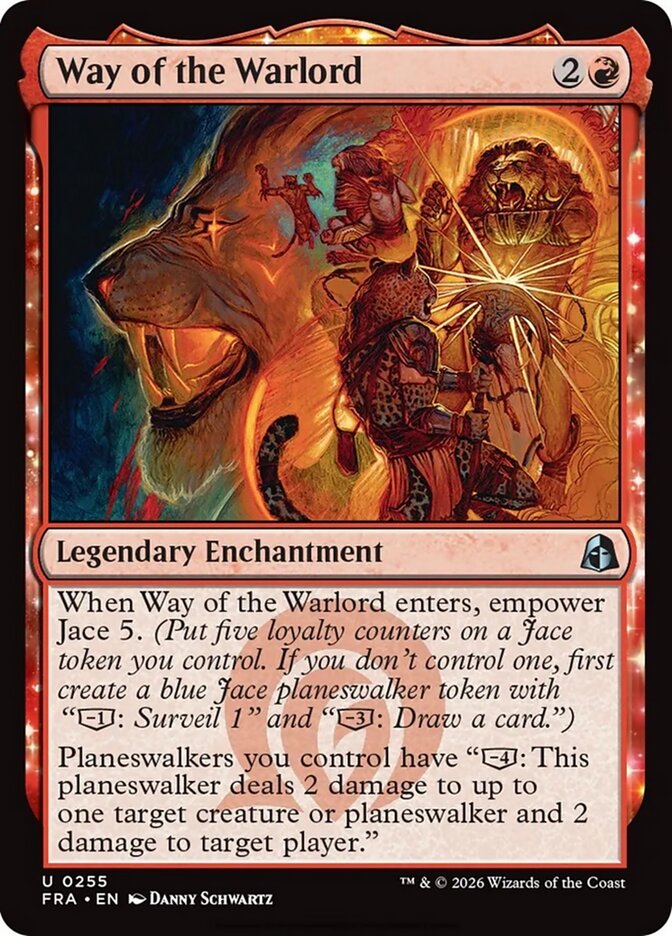
Rating: 6/10
-4 loyalty just for 2 damage sounds a bit excessive to me, but the ability is powerful enough on its own. Way of the Warlord fronts you a 5 loyalty Jace so you’ll be able to use the ability immediately (as do all of these enchantments). I mean, one way to view this is simply as a 2-damage removal spell that leaves behind a relevant enchantment and a Jace token, which sounds very good on its own. After that, any empower ability you use can turn into removal, which makes this start to look like a very strong pick for any deck with multiple sources of empower.
Winter, Team Player
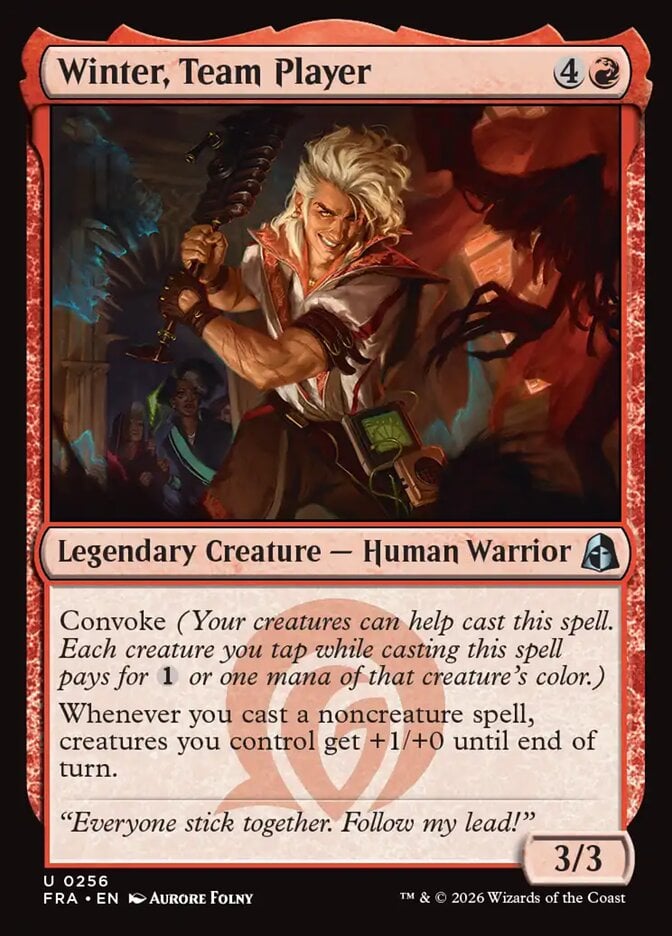
Rating: 4/10
While there is a go-wide theme in red/white, it’s not particularly well established, so we won’t be able to enable Winter, Team Player quite as easily as convoke creatures in other sets. Still, you might be able to curve into it, and it does have a very relevant ability, so I’m definitely going to play it. I’m just not taking this Winter highly in a draft yet.
Wrath of the Bloodmane
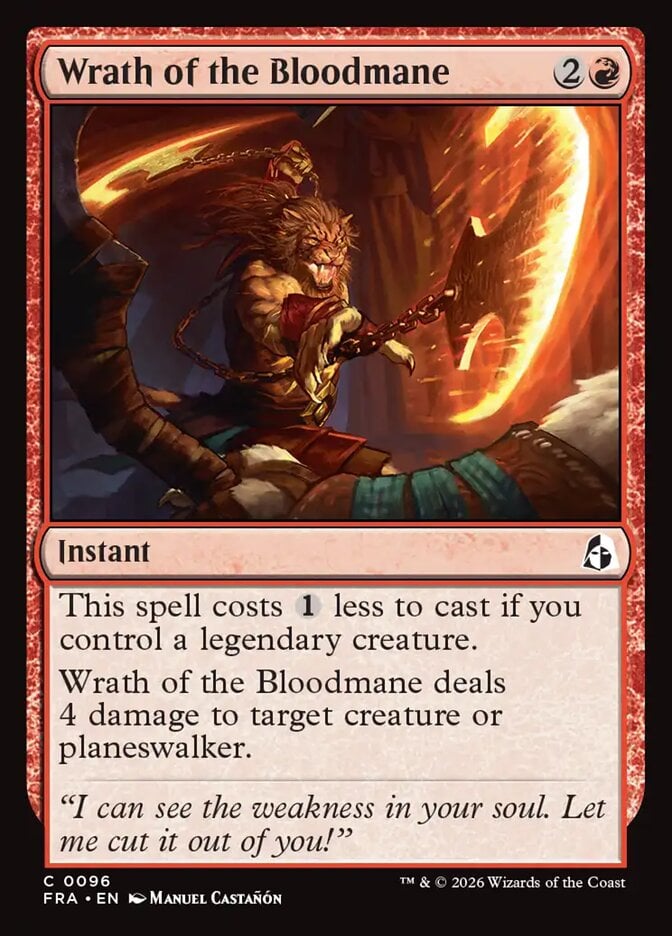
Rating: 5/10
You don’t need the cost reduction on Wrath of the Bloodmane for it to be good. Four damage for 3 mana is a good rate for a burn spell, and getting to hit planeswalkers also lets you take out Jace tokens. This is a very flexible spell for red, and I imagine it will be very good.
Green
Arcane Amphisbaena
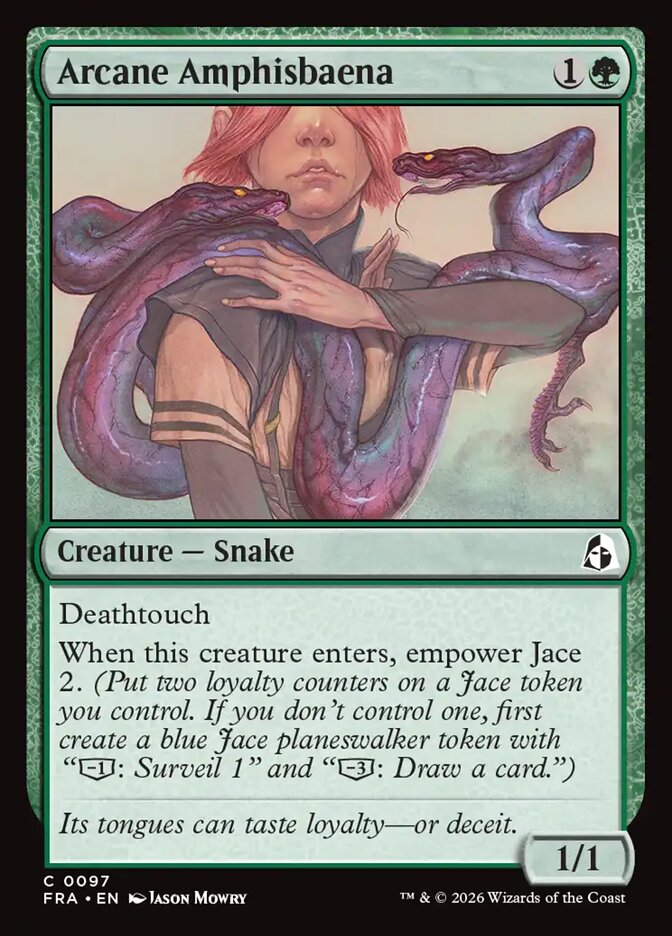
Rating: 4/10
A cheap deathtouch creature will always be on my radar to pick up in Limited. Two mana is a little more expensive than usual, but Arcane Amphisbaena comes with a free Jace token, which you could start to cash in right away, or you could protect it with this deathtoucher and then build up on a later turn. Either way, this is a really good early play.
Bestial Incursion
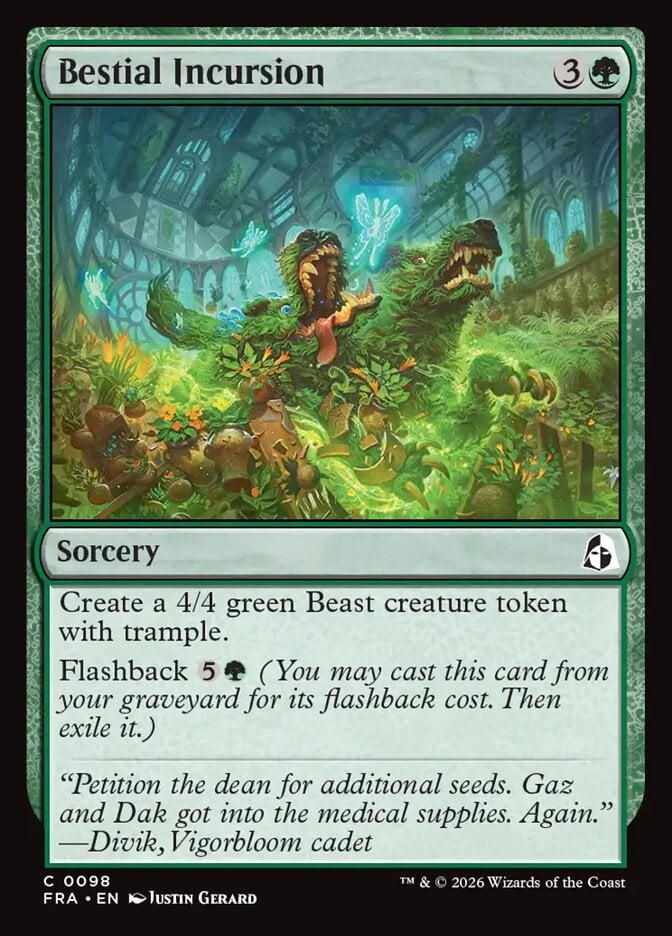
Rating: 4/10
This feels like a callback to Call of the Herd, a meta-defining card from back in Odyssey. While it’s clearly not that good of an effect anymore, getting to create two 4/4s out of a single card is still quite powerful. Better yet, if you were to discard or mill Bestial Incursion, you could get some free value by flashing it back from the graveyard.
Budding Insurgent
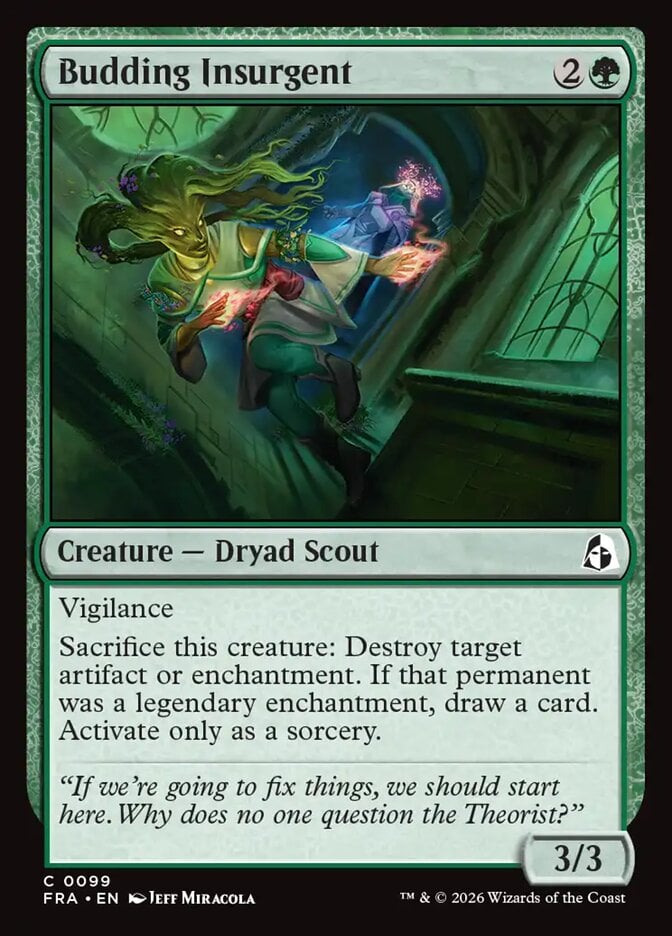
Rating: 2/10
A 3/3 with vigilance is about average for a 3-drop, but not exciting. I think it really comes down to how many artifacts and enchantments you can remove with it. There don’t appear to be that many of them, so I’m starting low on Budding Insurgent for now, but it could definitely go up as the format goes on.
Carnivorous Cultivator
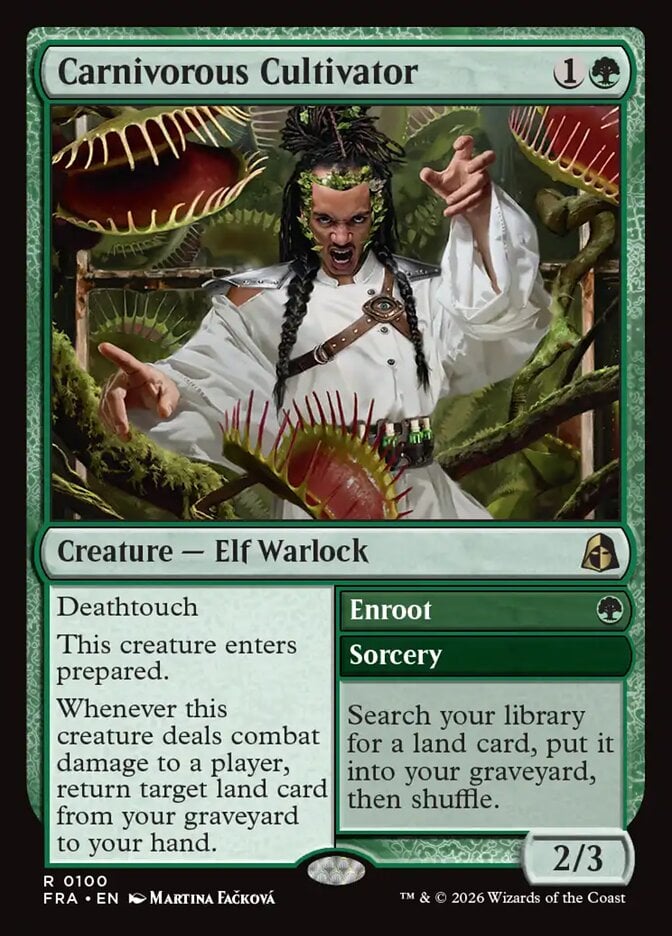
Rating: 5/10
I can’t see anything I don’t like about Carnivorous Cultivator. A cheap deathtouch creature that probably draws you a land sounds very good. Of course, your opponent could just block and trade for it when you attack, but that will mean it’s at least trading up for something good, which I’ll definitely take.
Compel Brutality
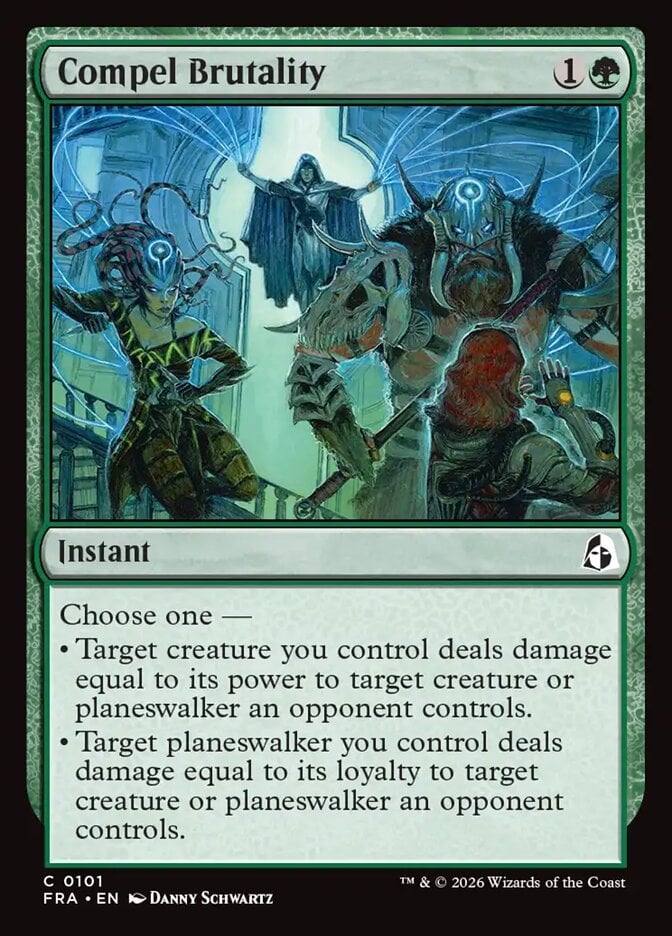
Rating: 5/10
The generic bite spell of the set, Compel Brutality will be an important removal spell to pick up in every green deck. You should be wary of black and red, as their removal spells are very good in Reality Fracture and they will have ways to disrupt this, but it’s still a strong card, especially when you pair it with a deathtouch creature.
Edgar, Moonlit Sovereign
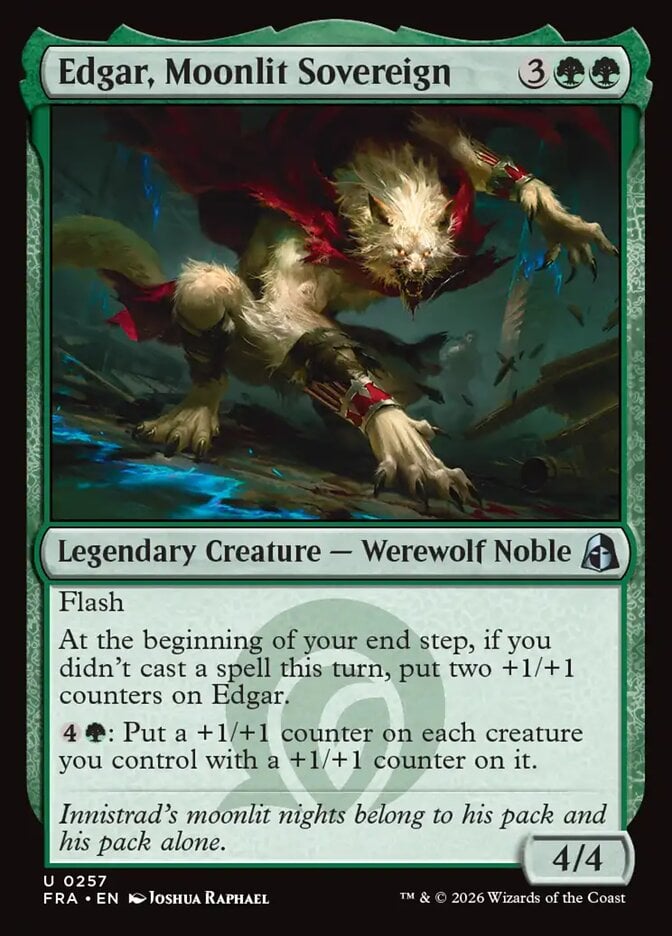
Rating: 6/10
Seeing Edgar Markov reimagined as a werewolf in the Echoverse is pretty sweet. Most of the power of Edgar, Moonlit Sovereign comes from the ability to flash it in and eat an attacker in combat. After that, it doesn’t need to do much else at all, but it’s nice that it can continue to grow and stay relevant as you move into the late game.
Fblthp, Knows the Way
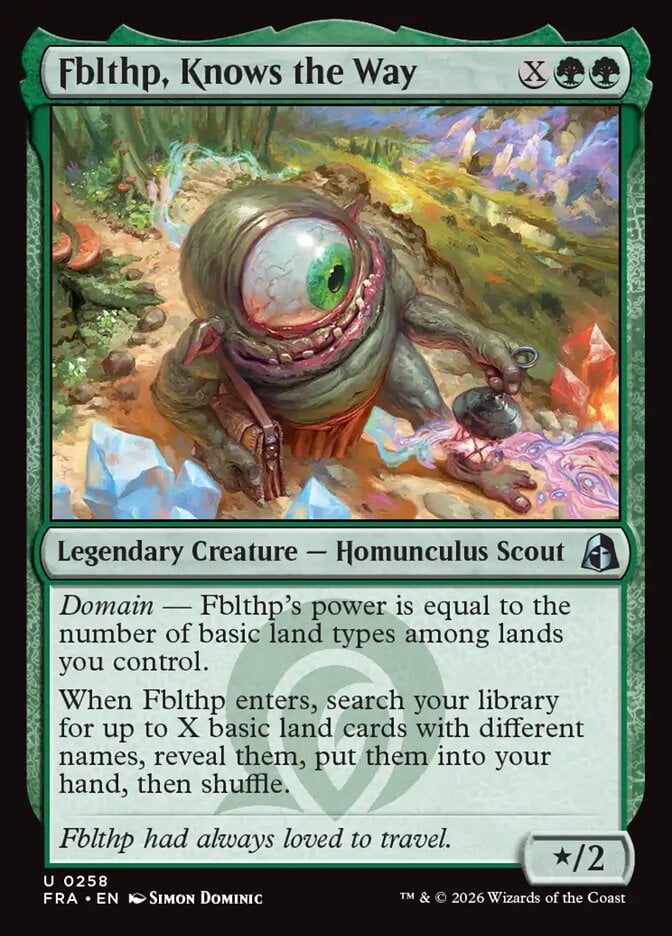
Rating: 6/10
Finally, a version of Fblthp who thought to bring a map with him.
Despite costing double green, the bare minimum that Fblthp, Knows the Way can be is a 3-mana 2/2 that adds a basic land to your hand. So basically, a Civic Wayfinder. That’s excellent already, and put more mana into it and you can search for potentially even more lands. Fblthp is great early and late, and it’s also a great enabler for a 5-color deck.
Flourishing Grapple
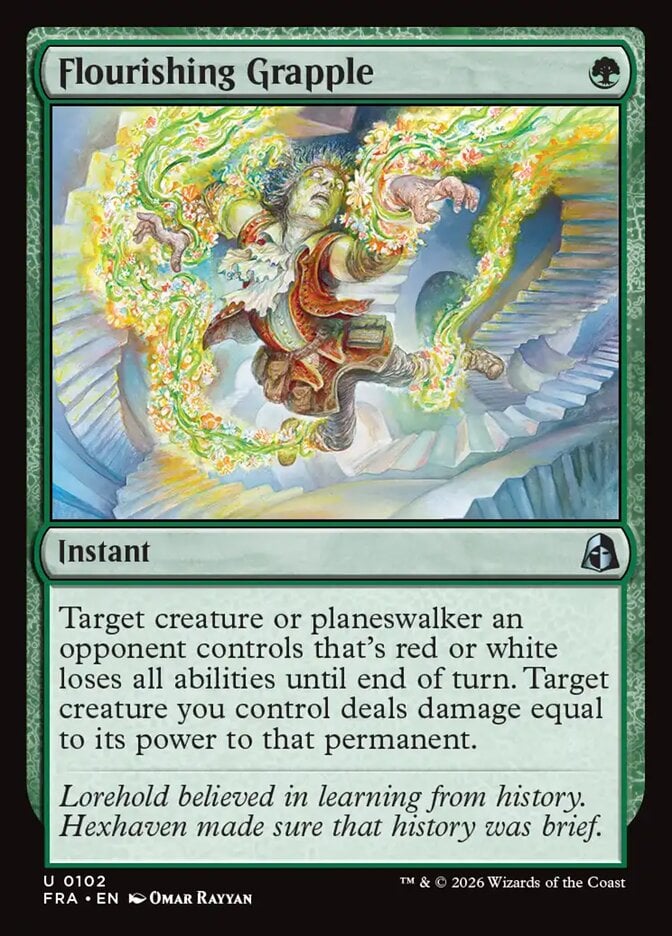
Rating: 2/10
I think this last color hoser should also stay in your sideboard for the time being. Flourishing Grapple is clearly powerful in the right matchups, but it’s not that much different from Compel Brutality, so you probably shouldn’t go out of your way to run it. It can just stay as a powerful sideboard option.
Gardenize
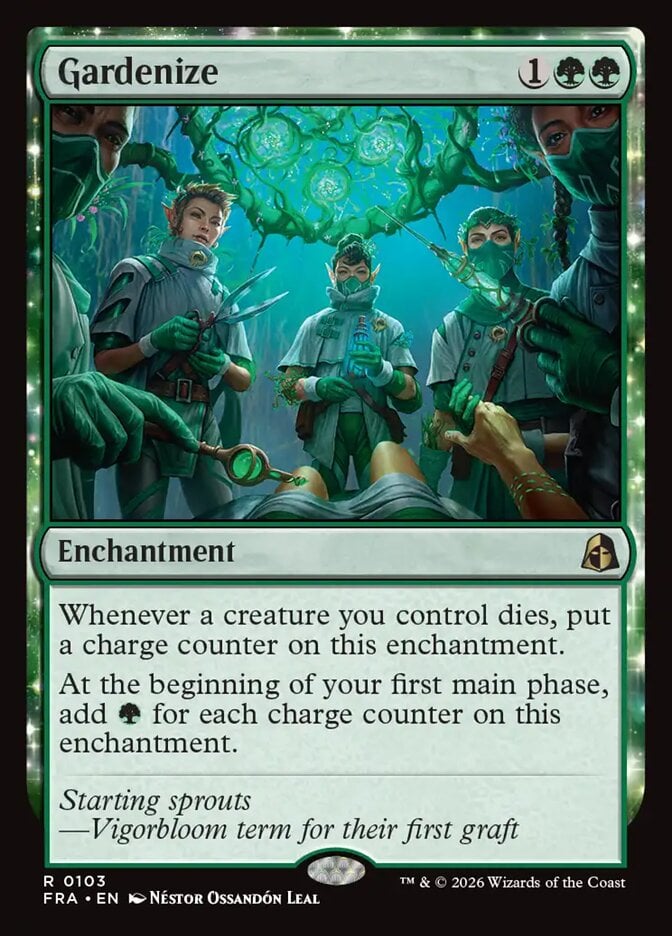
Rating: 0/10
This color-shifted Black Market may cost 2 mana less, but that’s not enough to make an effect like this playable. You can never rely on Gardenize to actually give you any mana, since you need to have creatures die first. By the time it’s enabled, the mana will be a lot less useful to you, so spending 3 mana and a whole card on playing this just won’t be worth it.
Garruk, Curse Breaker
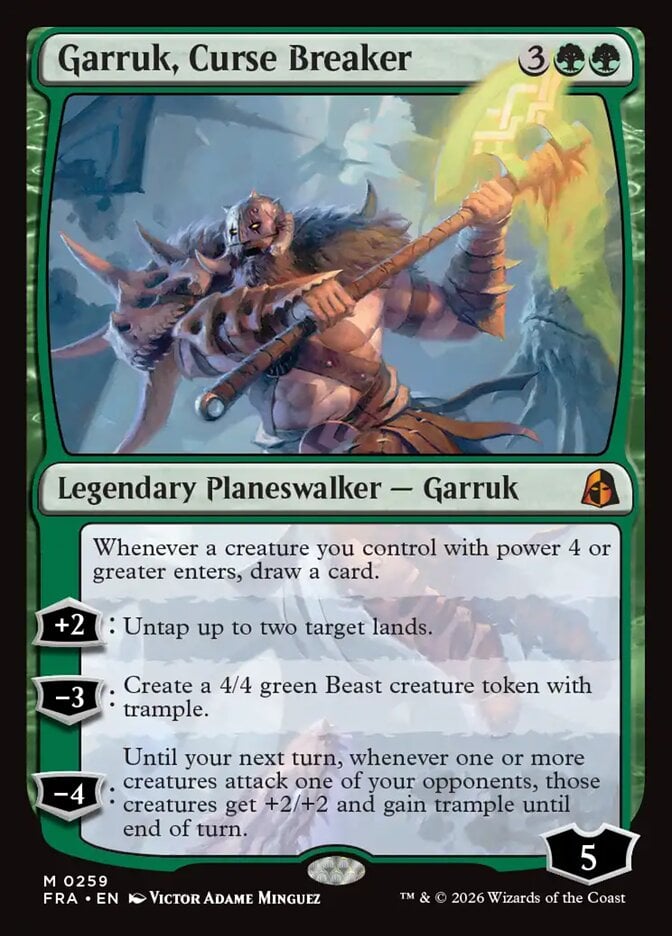
Rating: 10/10
This new Garruk is a great throwback to the original Garruk Wildspeaker. Each of the abilities are very similar to the original’s, but amplified to match the extra mana that Garruk, Curse Breaker costs. On top of that, we get a free Garruk's Uprising, which makes all the difference. Now, you can immediately create a 4/4 and draw a card at the same time. Then on future turns, whatever other big plays you make will draw you more cards without even using Garruk’s loyalty abilities. This is just about everything I want in a green planeswalker, and it looks like one of the best cards in the set.
Ghalta the Unstoppable
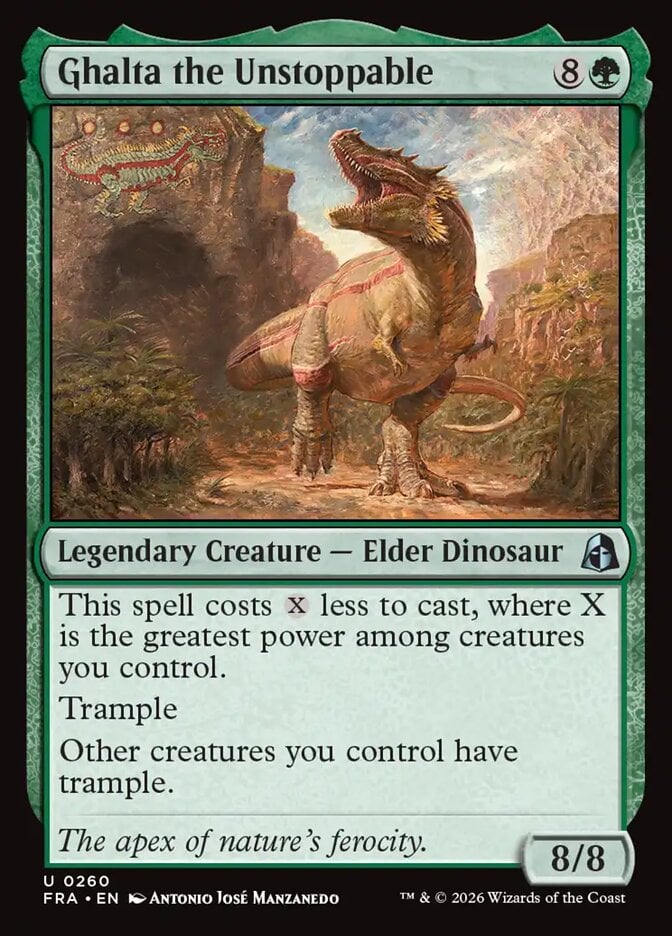
Rating: 4/10
Ghalta the Unstoppable has all the same issues as its white counterpart, but with one key upside. An 8/8 with trample that gives trample to all your creatures is a lot more impactful than a glorified 7/7 vanilla creature. Even though you need another creature on the battlefield to be able to cast this Ghalta, this one does at least seem worth the effort.
Greenhouse Propagator
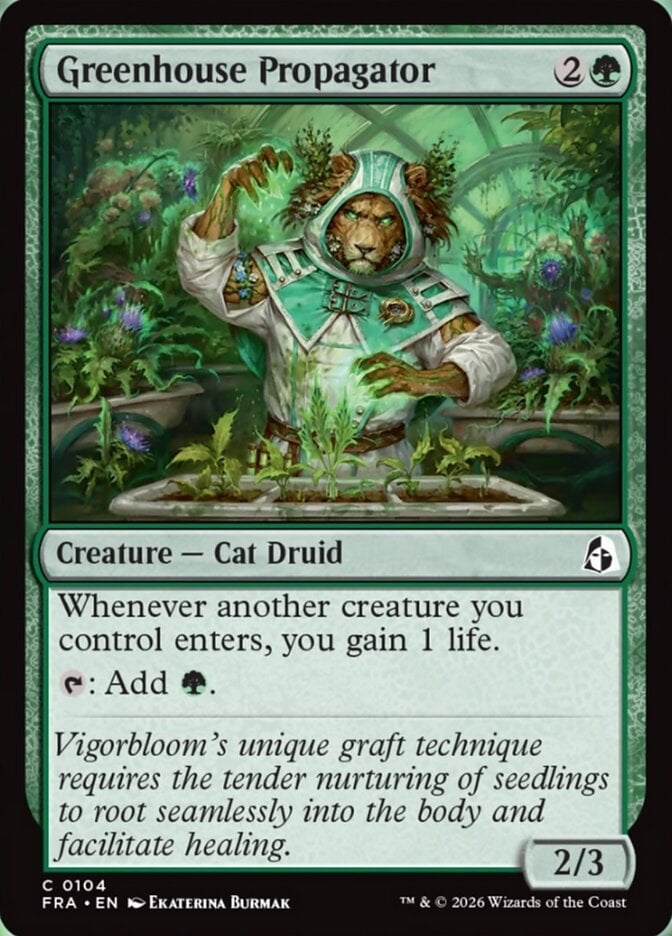
Rating: 4/10
Acting as both a mana dork and a Soul Warden, a lot of decks will be happy to run Greenhouse Propagator. Turn 3 is definitely not my favorite time to be ramping, but Reality Fracture does look slow enough to accommodate that, and Soul Tether is also a 3-mana ramp spell, which leads me to believe this is actually what we’ll be doing in this set.
Heartwood Crafter
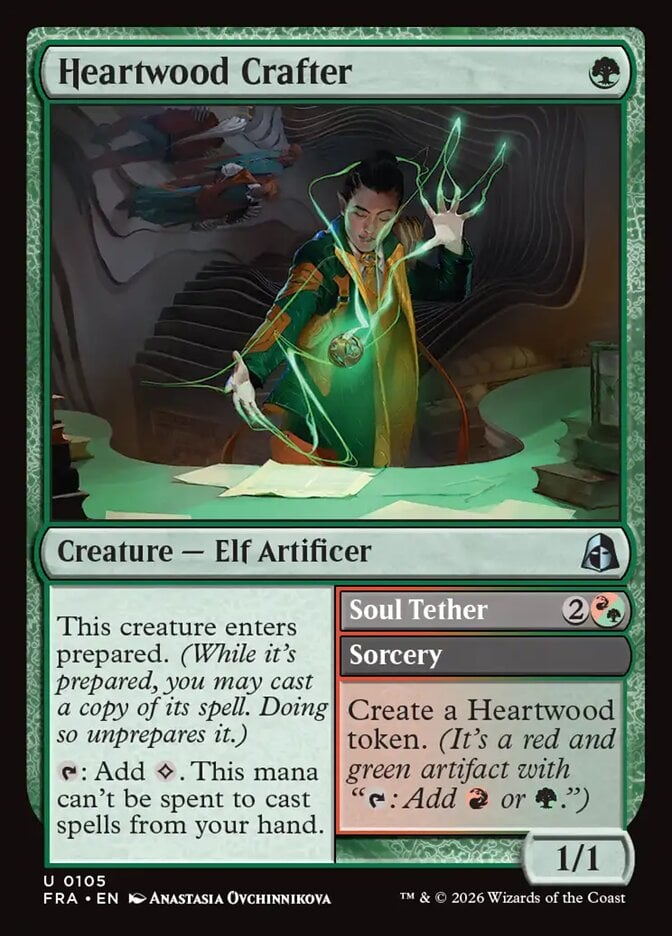
Rating: 6/10
In addition to Way of the Pyromancer, I believe Heartwood Crafter is the only other way to ramp before turn 3. Given that, I think it has a premium. While it doesn’t function as a Llanowar Elves, it does cast its own Soul Tether ahead of schedule, as well as any other Soul Tether spells you want to cast. This is a very important card for Konstrari and something I’m very willing to take highly.
Hexhaven Invigorator
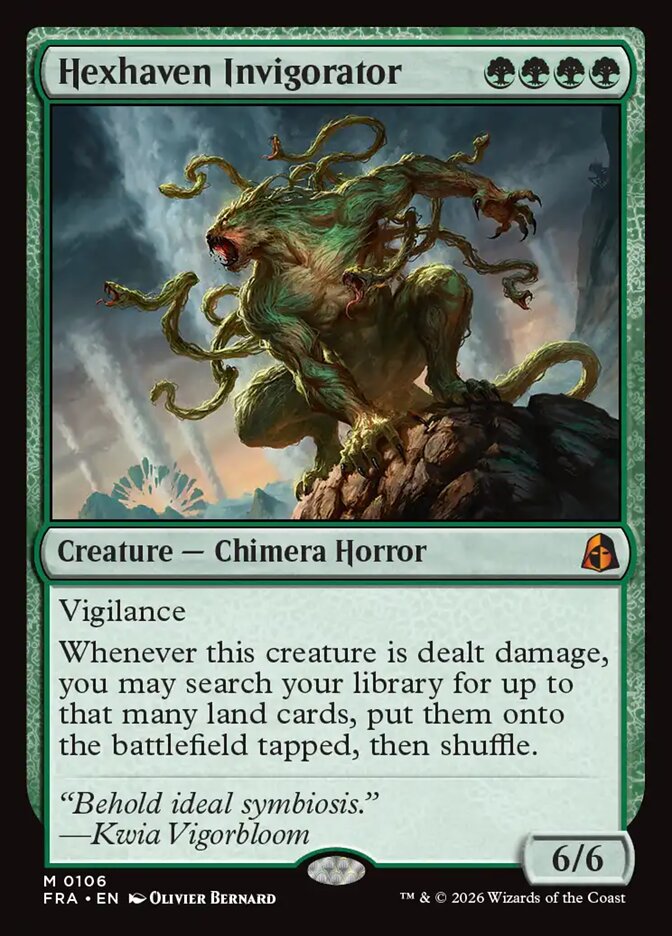
Rating: 1/10
Quad green is a prohibitively expensive mana cost. Even in Konstrari, where the Heartwood tokens would help to fix for it, there are going to be plenty of times when this will be stuck in your hand and you’re too far away from casting it. On top of that, what happens if you actually do get to cast Hexhaven Invigorator? It has a powerful ability, but it could just die to a removal spell that isn’t based on damage and all that effort you spent to cast it will be wasted. Just like its black counterpart, Phyrexian Obliterator, this isn’t remotely good enough.
Hungering Puppetbeast
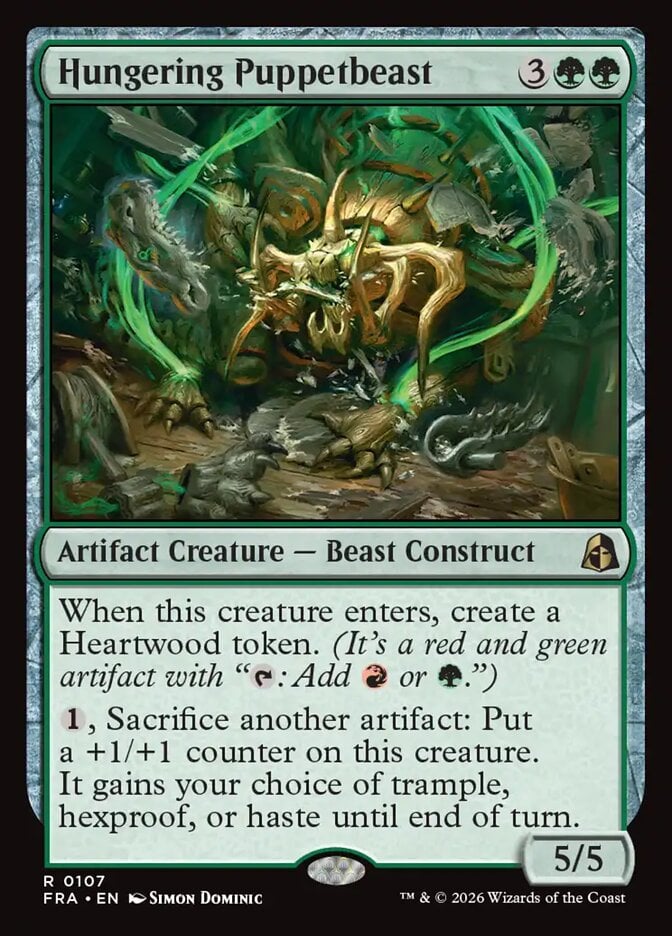
Rating: 9/10
The ability to use the Heartwood token to pay for the second ability of Hungering Puppetbeast is absolutely incredible. You can basically play it as a 6/6 with haste for 5 mana, or leave the mana open to protect it from removal. While I’m not ecstatic at the thought of losing my Heartwood tokens to fuel it, it’s so absurdly big and difficult to deal with that I don’t think I’ll care too much.
Hunter’s Axe
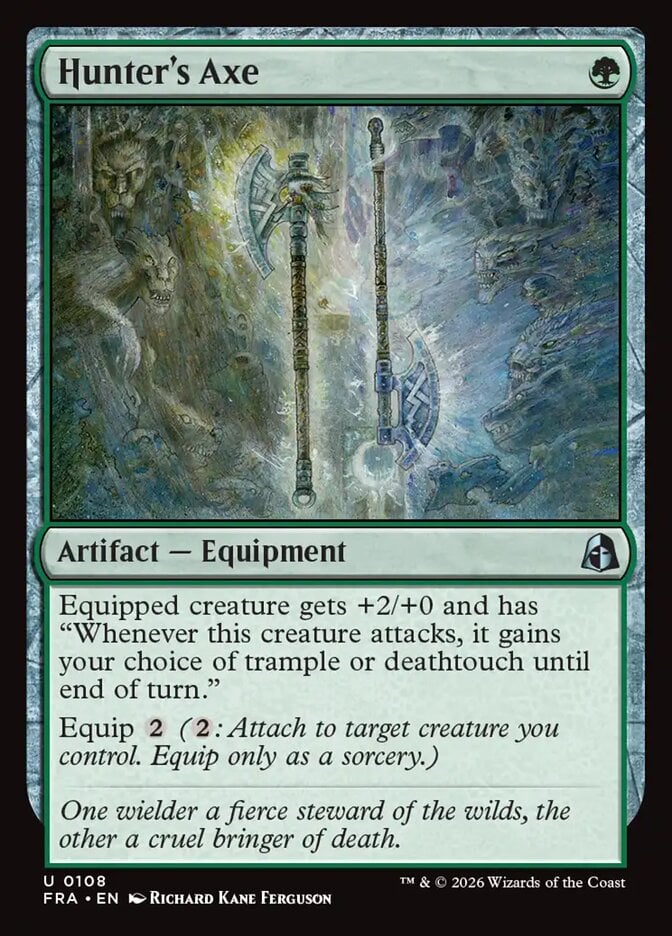
Rating: 4/10
Much like an equipment that grants flying, granting trample is a huge bonus that helps your big, dumb creatures to get their damage through blockers. Hunter's Axe has a very reasonable rate of return and is a great way to break through opposing boards.
Inspired Tethermage
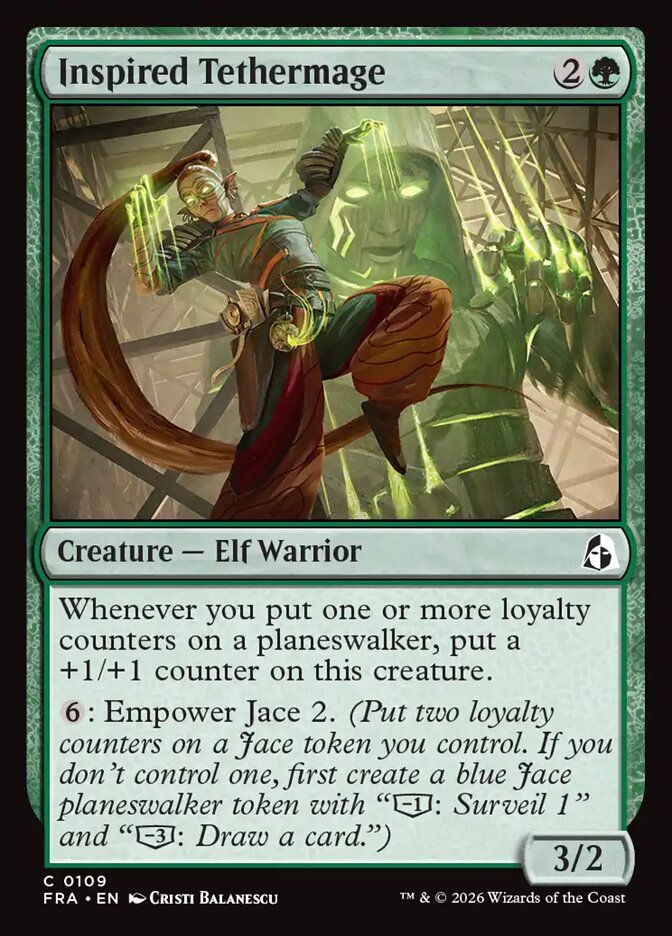
Rating: 2/10
Inspired Tethermage is a great card to draw later in the game, as it provides a good amount of late game inevitability, but playing it early sounds pretty atrocious. Starting out as only a 3/2 is very poor, and the main way to trigger it is to empower, which you’ll need to do some other way. I can see this finding a home in blue/green, but it won’t make the cut a lot of the time.
Jiang Yanggu, Never Alone
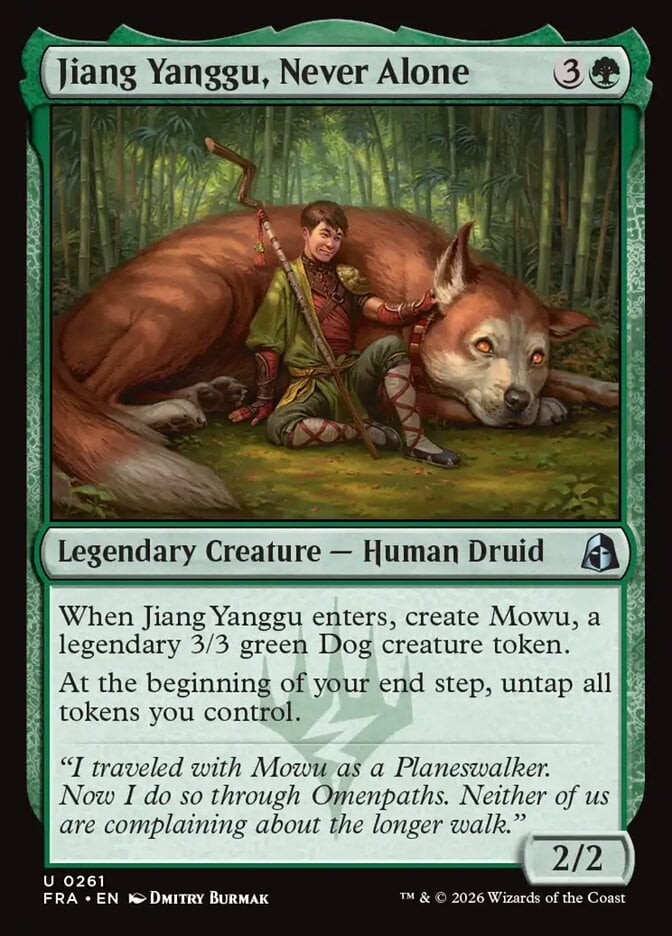
Rating: 5/10
And peace is restored. Jiang Yanggu, Never Alone and his best friend Mowu, together as they should be.
A 2/2 plus a 3/3 is a great deal for 4 mana, and the ability to untap your tokens might also be very relevant, especially when you can untap your Heartwood tokens.
Loot, the Nexus
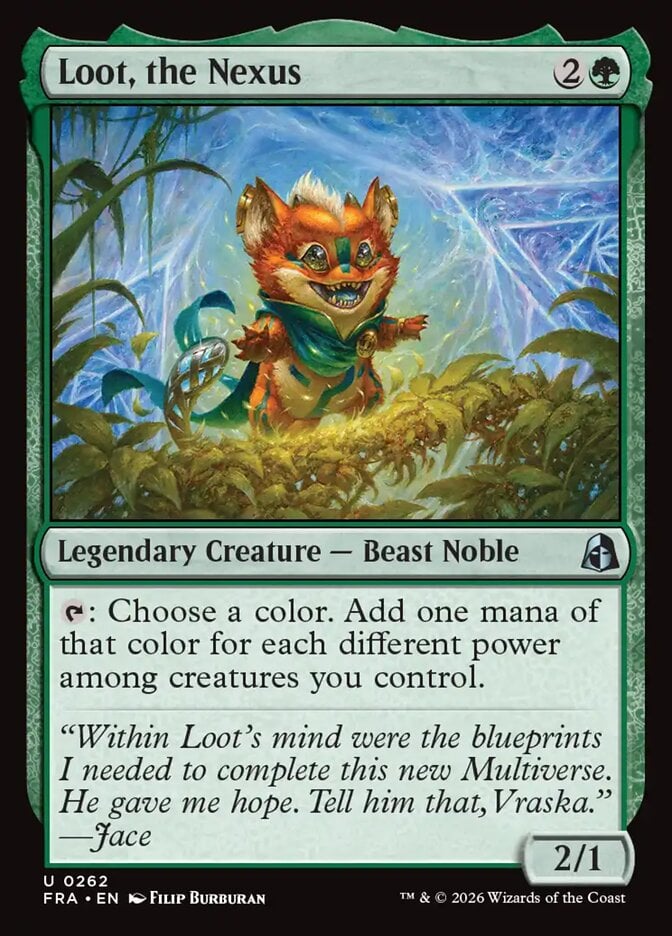
Rating: 6/10
Mana dorks at 3 mana tend to be a little underwhelming, but if they tap for more than 1 mana they really mean business. Loot, the Nexus is only guaranteed to tap for 1 mana, but with the potential to tap for 2, 3, or even more, it stands out as a premium green uncommon, particularly in Konstrari.
Marwyn, the Preserver
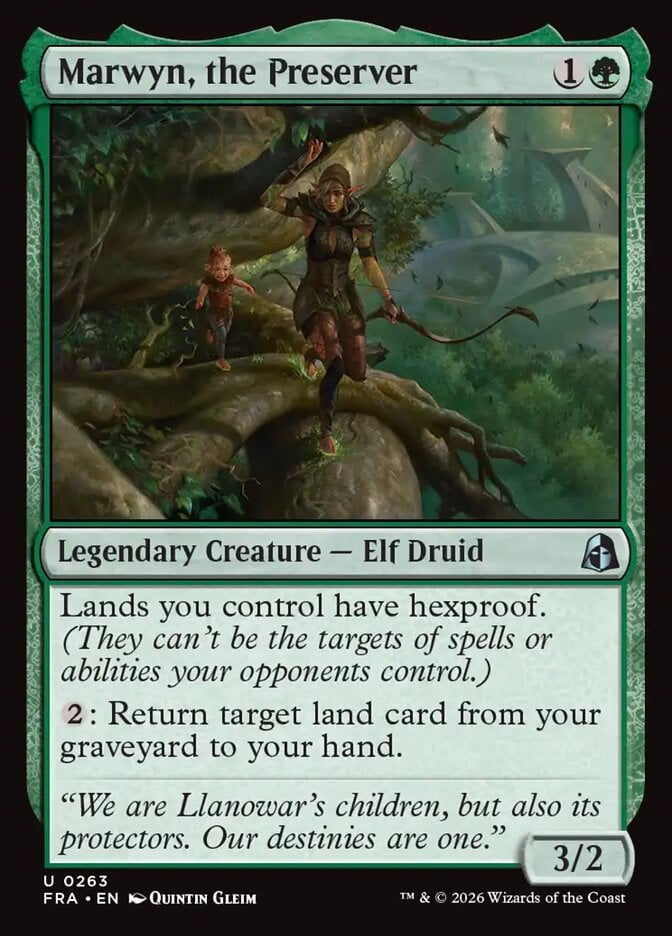
Rating: 5/10
We can ignore the first ability, because it has no relevance in Reality Fracture from what I can see. A 3/2 for 2 mana is a decent size for a creature already, and if you’re able to fill up your graveyard, getting to draw a land from your graveyard for 2 mana is a very powerful ability. It requires a good amount of setup, but Marwyn, the Preserver can be a great card advantage engine in the right deck.
Omnipresence
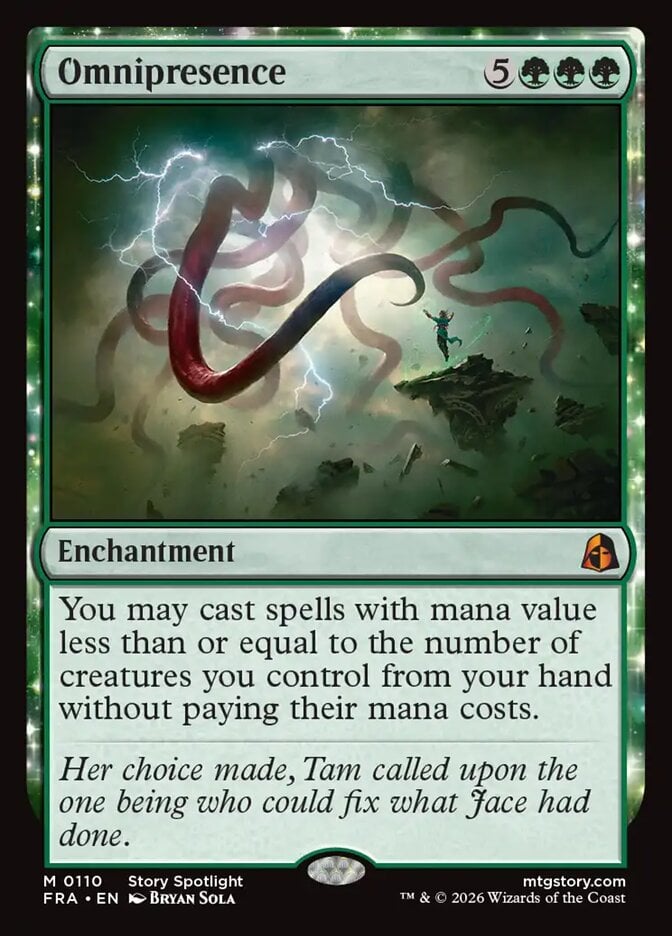
Rating: 0/10
What kind of grade do you give to a card like Omnipresence, which is worse in just about every way than Omniscience, a card we’d also give a flat zero to?
Pia, Aether Ascetic
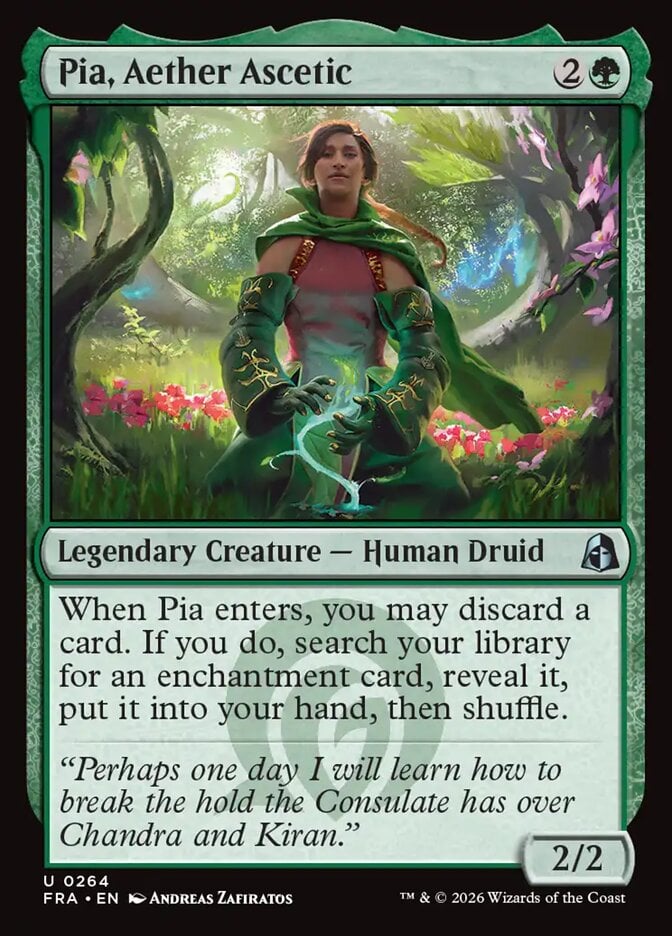
Rating: 4/10
You can’t always run Pia, Aether Ascetic, but this set has quite a few powerful enchantments, including the cycle of “Way” enchantments and multiple removal spells. If you have enough good targets for it, you can definitely run this as a way to find them. Also, while the discard means this is even on card advantage, you could also use this as an opportunity to discard something useful, such as one of the many cards we’ve seen that do something from the graveyard.
Puppet Crafting
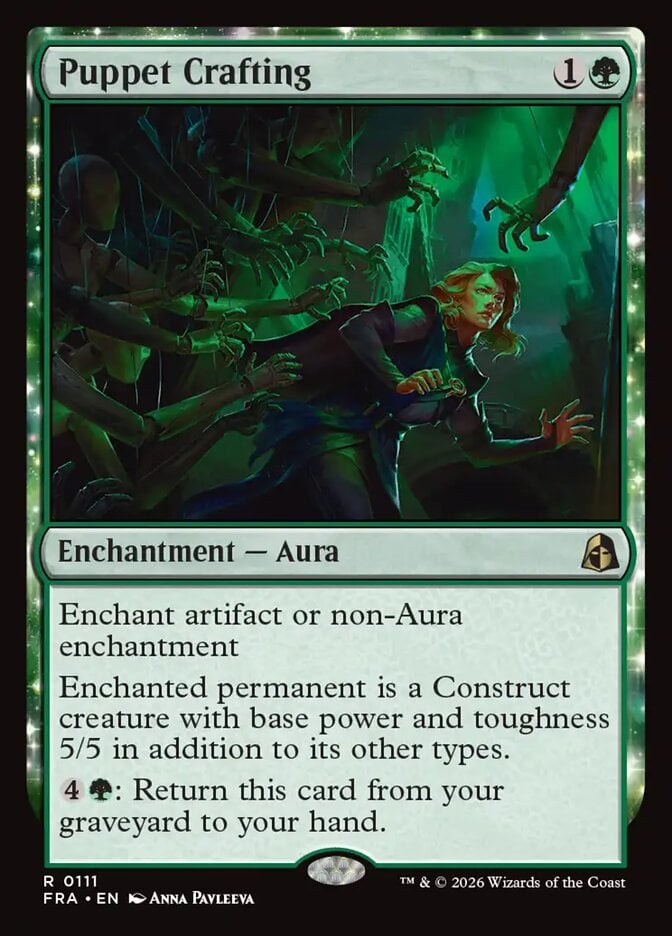
Rating: 6/10
Getting Ensoul Artifact back into Standard is a very interesting concept. That card was extremely powerful when it was first printed, and I reckon we’ve got the tools available to make it good again this time.
In the context of Reality Fracture, there are a good number of artifacts and enchantments for Puppet Crafting to combine with, including the Heartwood tokens out of Konstrari. There aren’t a lot of ways to enable it on turn 2 sadly, but the fact that it can keep coming back from the graveyard makes it a very potent threat in the format.
Restore with Empathy
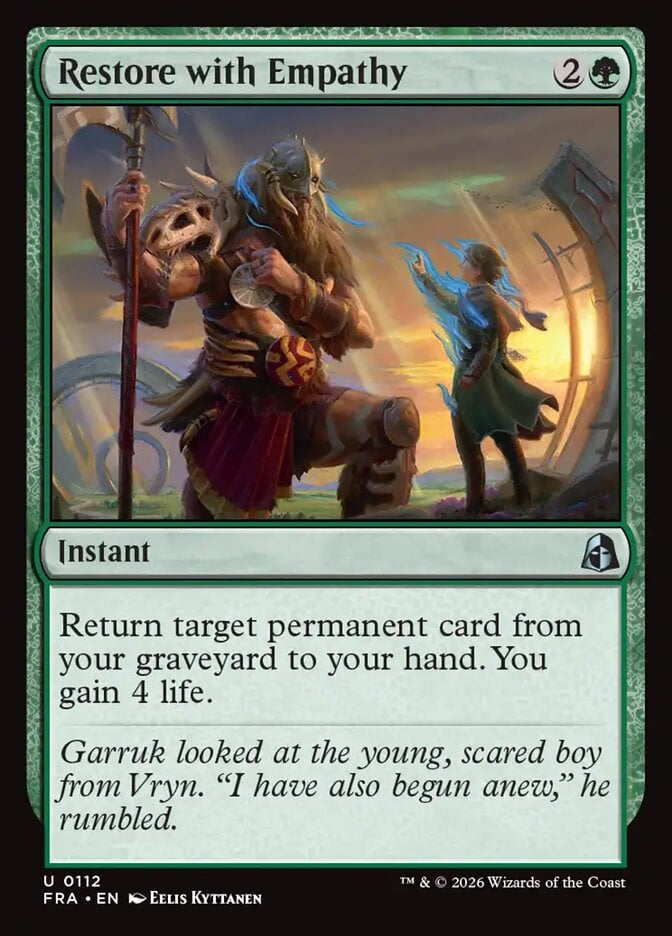
Rating: 4/10
I’m a huge fan of Pulse of Murasa. It’s a card I’ve cast a lot in Pauper and won games on the back of. Spending 3 mana just to get something back from the graveyard is not usually a winning proposition, but gaining 4 life is a great buffer to help you stay alive having done so. I want to give Restore with Empathy a higher grade, but without any ways of recurring it and gaining even more life, I don’t think it’s as good as it could be.
Ruric Thar, Magecrusher
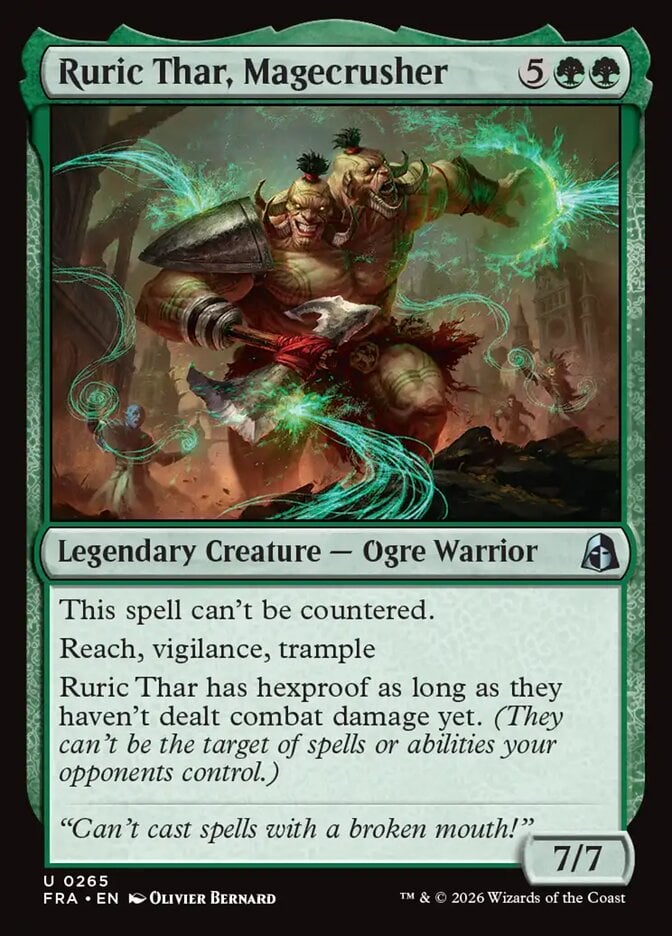
Rating: 7/10
I was very high on Karakyk Guardian in Tarkir: Dragonstorm, and it turned out to be one of the best uncommons in the entire set. Ruric Thar, Magecrusher may not be able to fly, but this combination of abilities is extremely powerful, and I can’t see it landing much lower than the Guardian did. Even better, the extra toughness goes very well with vigilance because it’ll dominate virtually any board it’s played on.
Simulacrum Shaper
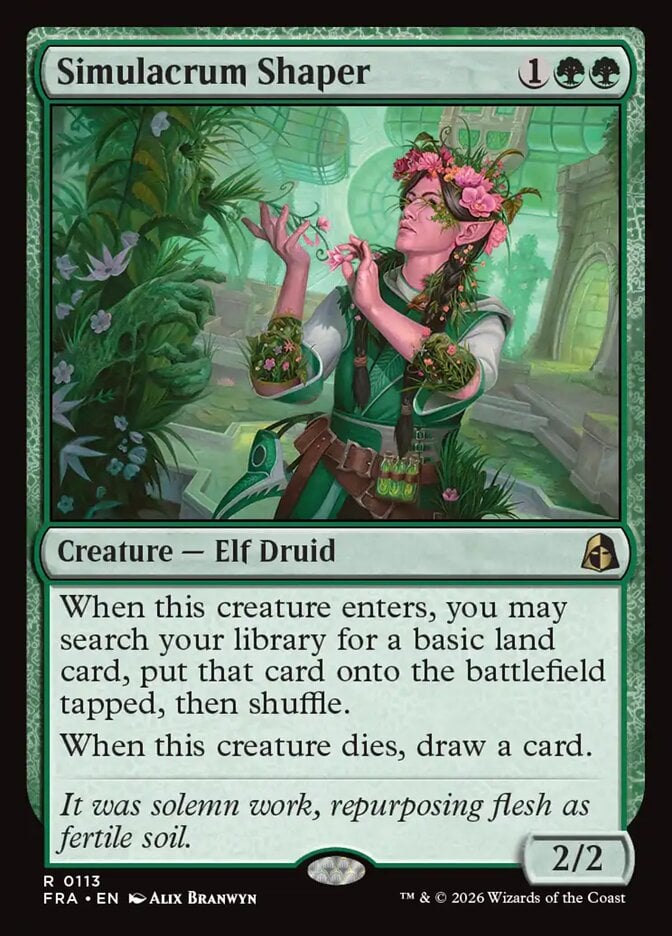
Rating: 7/10
If we’re going to ramp on turn 3, it might as well be with Simulacrum Shaper. The classic Solemn Simulacrum always felt a little over-costed, but at 3 mana it’s absolutely perfect. A creature that Rampant Growths on turn 3 has proven itself time and time again, but drawing a card when it dies is an absurd upgrade. I love this card, and I hope I get to cast it a lot.
Something Worth Saving
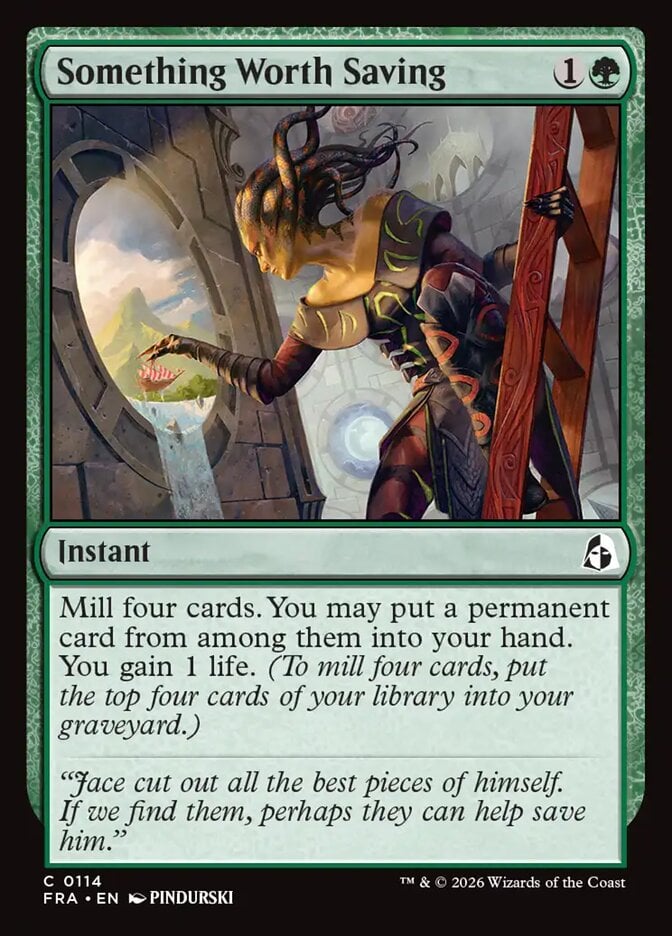
Rating: 4/10
It may not be in the Theorix colors, but Something Worth Saving is a great way to fill your graveyard. It replaces itself immediately while loading four cards into your graveyard, and you won’t find many enablers better than that.
Sureshot Sower
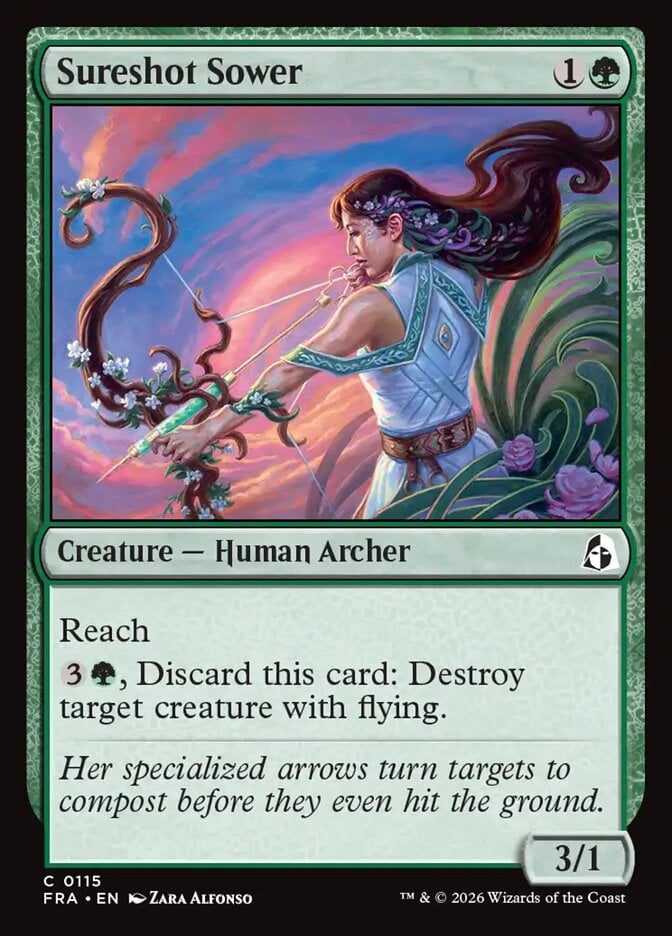
Rating: 3/10
A 2-drop 3/1 is great for putting pressure on opposing Jace tokens, and reach also lets Sureshot Sower block really well. When you draw it late it’ll get a lot worse, but the ability to discard it and destroy a flying creature gives it a great extra purpose when you get to that point in a game.
Tarmogoyf
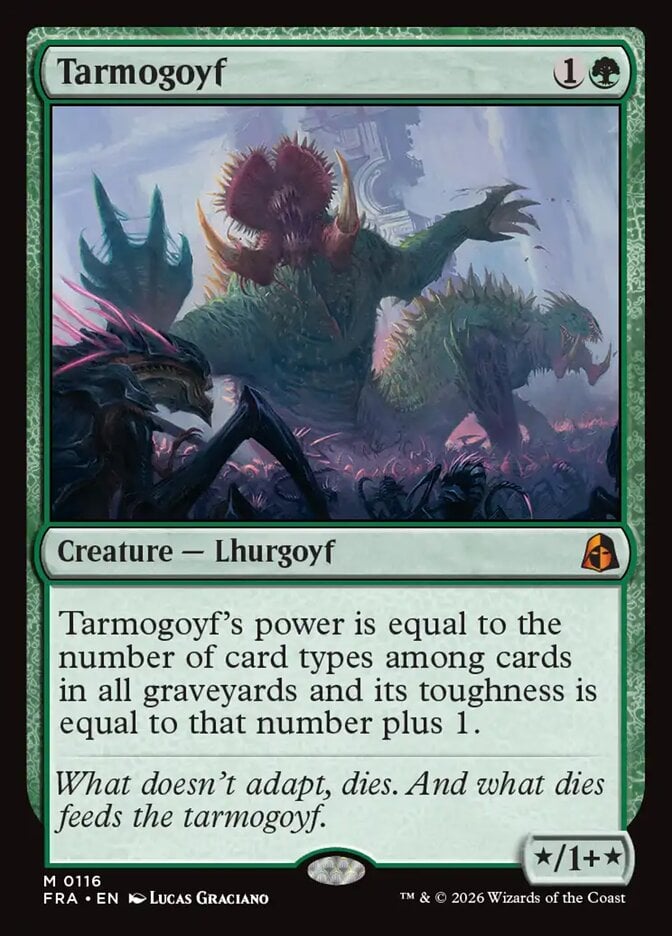
Rating: 5/10
Ma BOI! I’ve only been able to make it to the Pro Tour once in my career and Tarmogoyf is one of the cards responsible for helping me get there.
Once considered one of the best creatures in the game, if you have ways to fill up your graveyard, it shouldn’t be hard to get Tarmogoyf up to around a 4/5 in the mid game. Since it always costs 2 mana, you can slot it into your curve at some point and it’ll be pretty strong. Of course, it’s only a big creature with no combat abilities, so it doesn’t do that much, but it should still be good enough in the right deck.
Tethermage’s Advantage
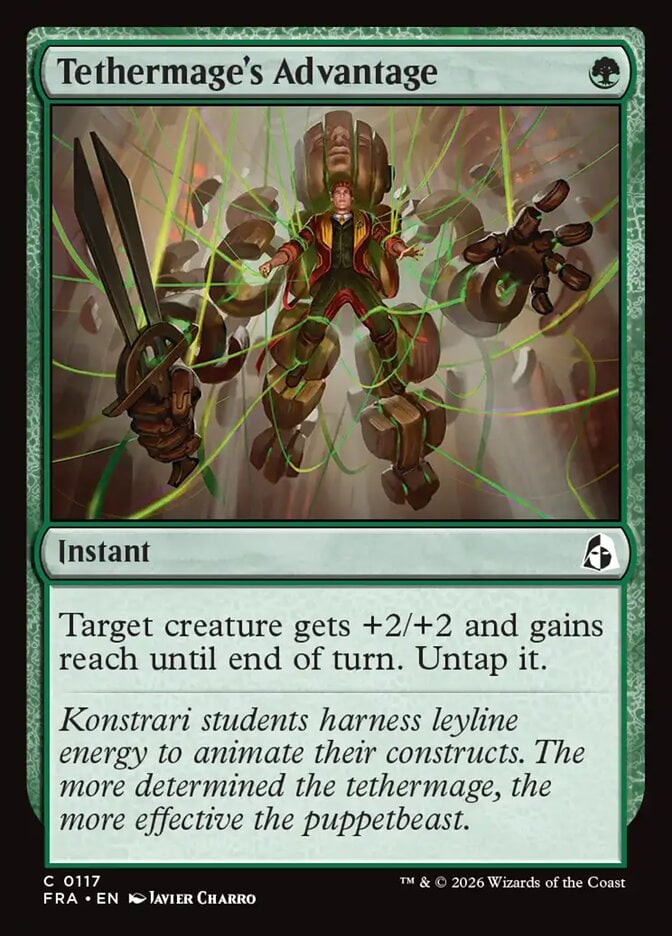
Rating: 1/10
Even at 1 mana, combat tricks just aren’t good enough in green unless they can do a lot more than just +2/+2. If you’re really short on removal, then Tethermage's Advantage could make the cut, but there are so many better cards I hope I never have to.
Titanbones, Towering Heart
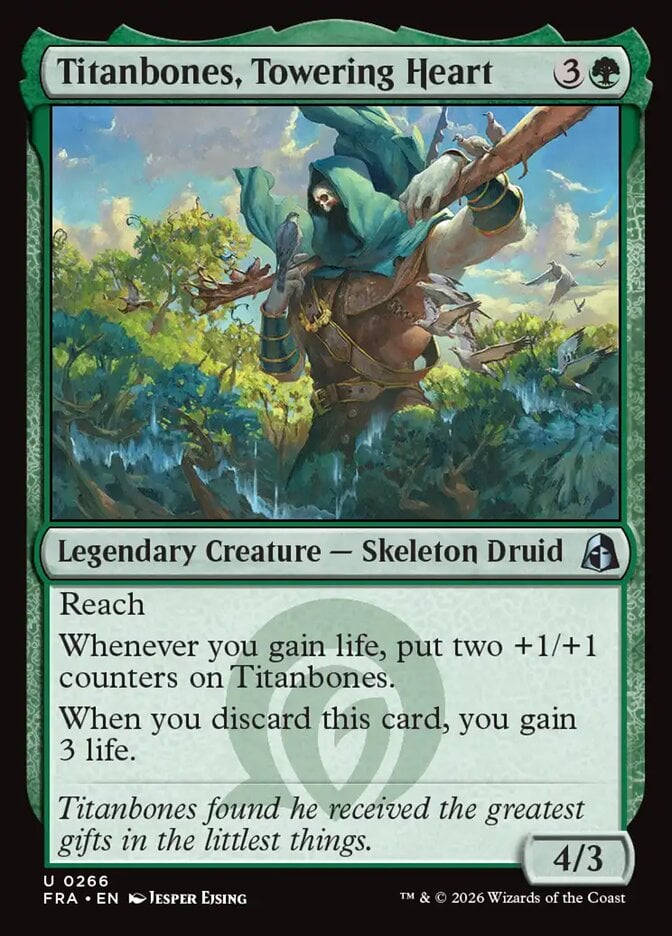
Rating: 6/10
Ajani's Pridemate is a tried and tested formula that really works. A bigger one that picks up two +1/+1 counters whenever you gain life sounds like a nice upgrade. Titanbones, Towering Heart looks like an excellent payoff for Vigorbloom decks, and something I’d probably look to take early and try to make work.
Verdant Kraken
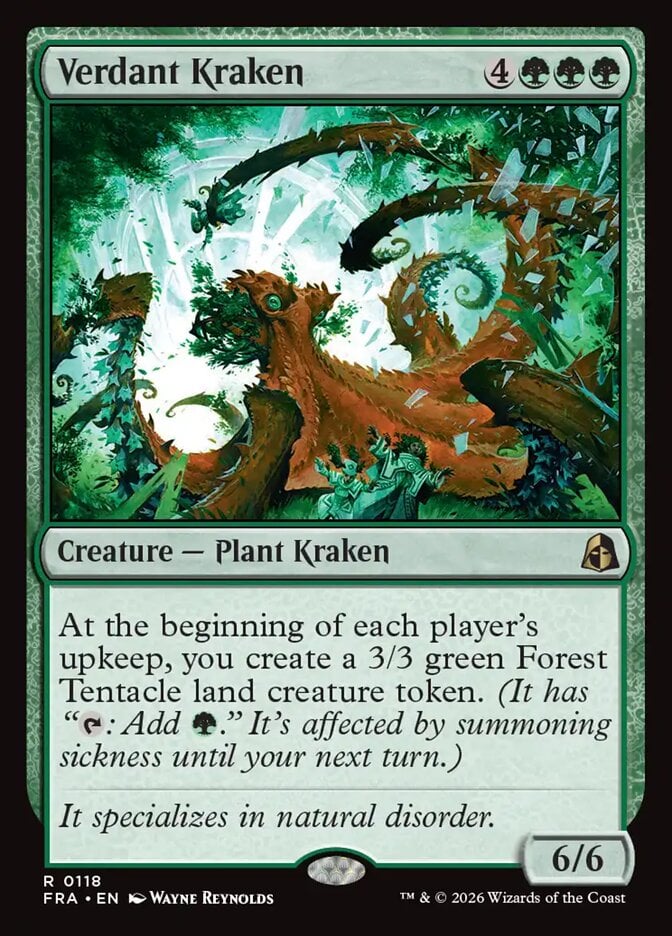
Rating: 10/10
This bomb rare is a reference to Verdant Force, an extremely powerful rare in its own right. Verdant Kraken is a lot better, creating much more relevant tokens for 1 mana less. If your opponent can’t answer it before their turn begins, you’re getting a minimum of a 3/3 out of the deal, and then even more if they still can’t find a way to remove it. Two 3/3s every turn cycle will close out games very quickly and overwhelm your opponent with free advantage.
Vinelasher Adept
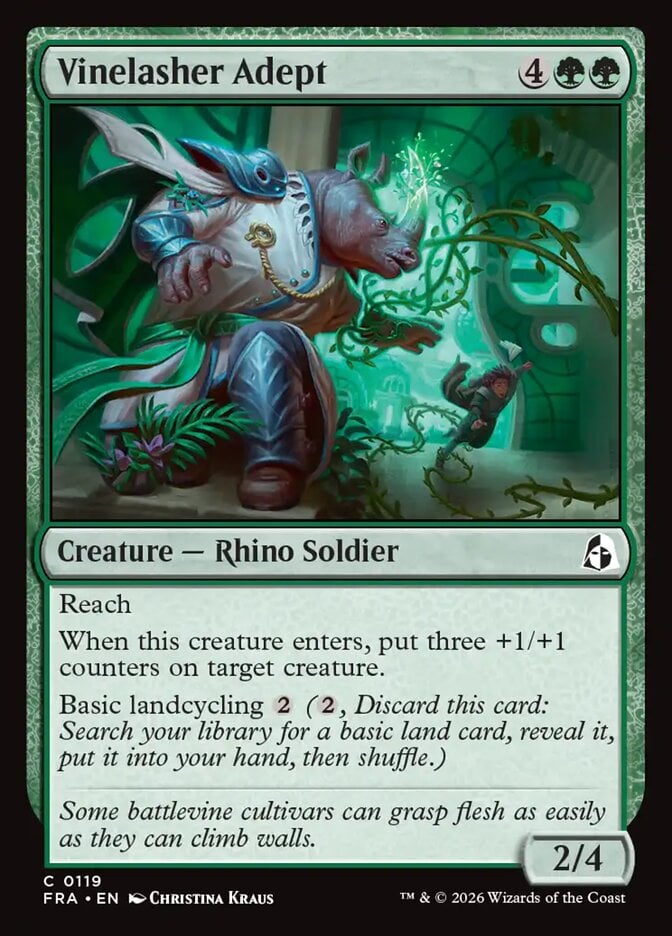
Rating: 3/10
This looks like the weakest of the landcyclers, but it can still pack a punch. Of course, the main reason to play Vinelasher Adept at all will be to fix your mana, but if you end up playing it, sticking three +1/+1 counters on a creature is still a strong effect if you can find a good window for it.
Way of the Paradox
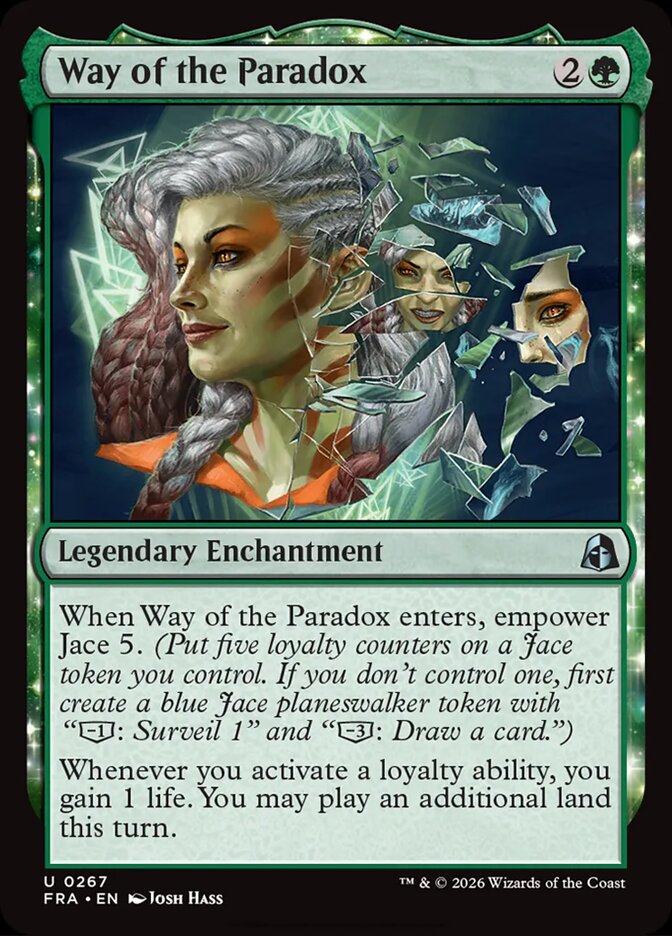
Rating: 4/10
The second ability on Way of the Paradox doesn’t look like much, but when you combine it with the -3 to draw a card on your Jace token, this basically becomes a slightly more expensive Explore. That’s not too bad, and then it sits in play and provides a little extra advantage for the next few turns. Sounds like a good deal to me.
Way of the Wildspeaker
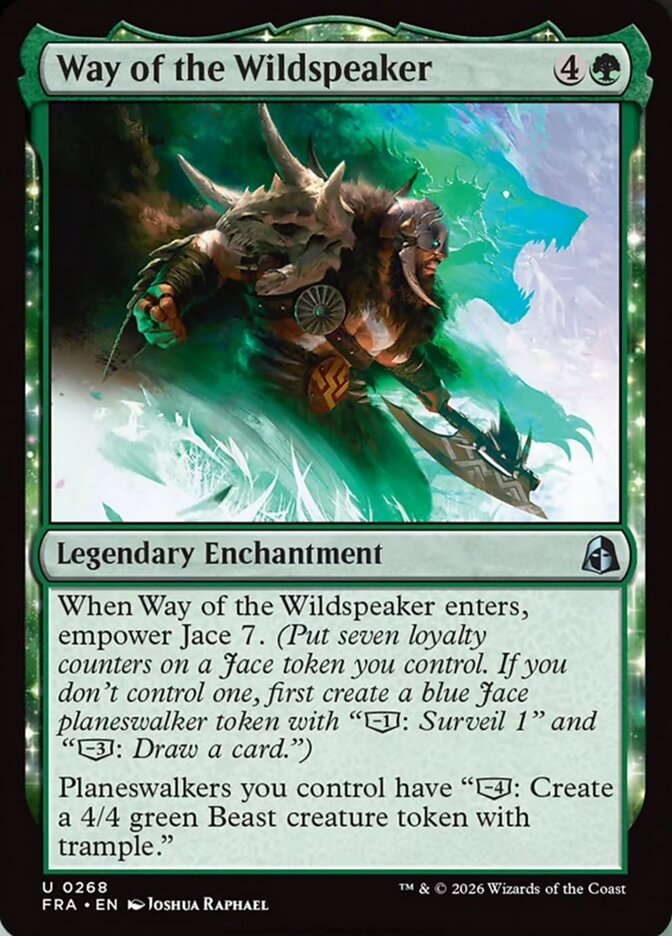
Rating: 6/10
Just on its own, Way of the Wildspeaker gives you a 4/4 and a 3-loyalty Jace token for just 5 mana. That’s good, but not exactly worthy of this high grade.
What really stands out to me is the context. This is a green card that empowers 7. In a blue/green empower deck, this large number doesn’t appear on many cards, and with rewards like Kiora of Salt and Sand and Jace, Reality Sculptor available, that goes a long way towards their totals. Overall, this looks like an incredibly strong build around for that deck.
Wrecking Gecko
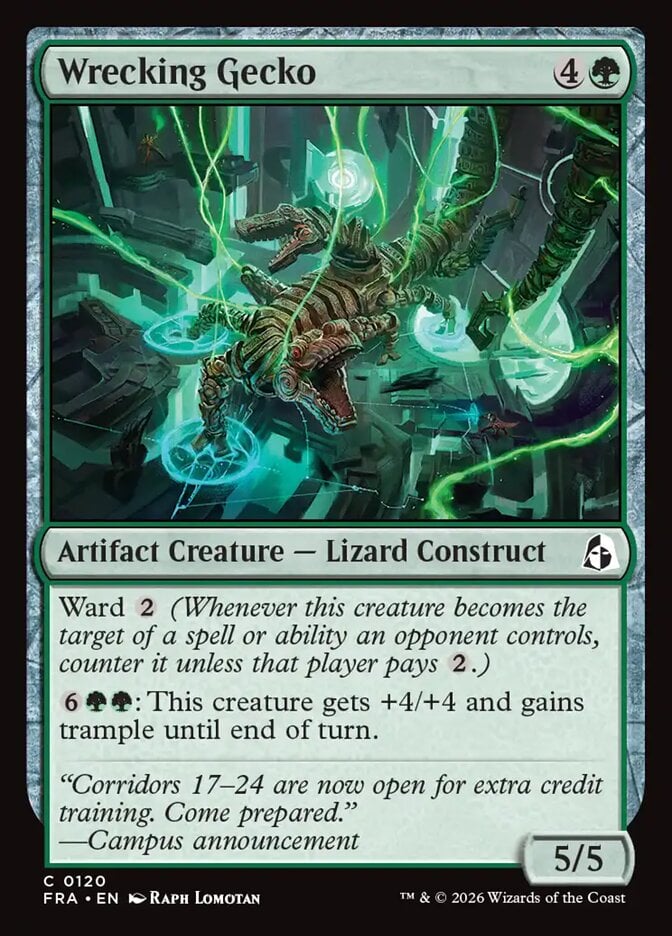
Rating: 1/10
There are a plethora of great ramp targets for Konstrari decks to play. Naturally, as a common, Wrecking Gecko is the worst by a lot. Your average green deck isn’t interested in what’s essentially just a 5/5 vanilla creature, and most ramp decks will be able to find something better.
Yoshimaru, Scrappy Stray
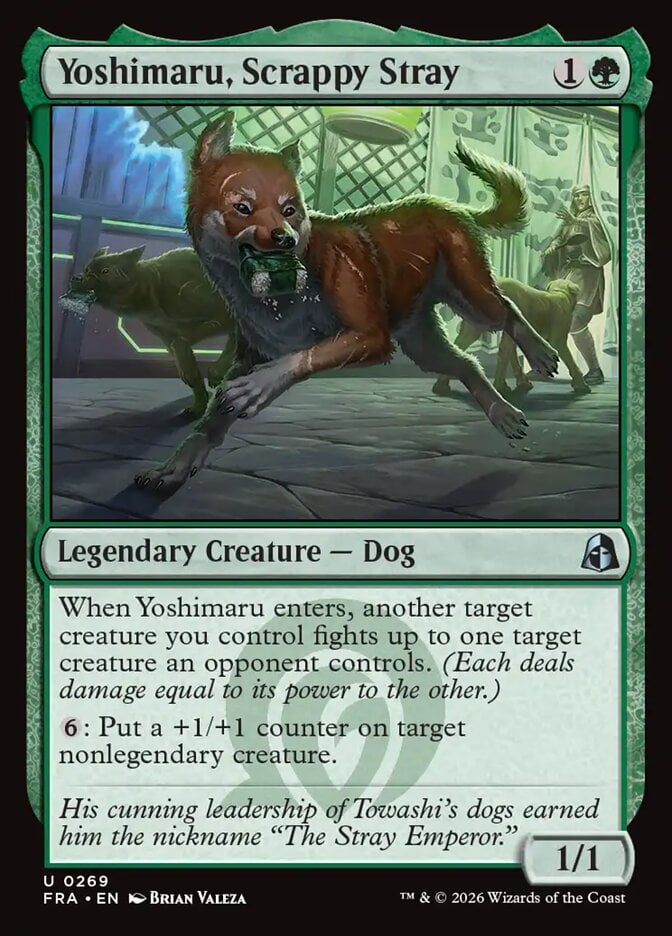
Rating: 7/10
Over the years, I’ve seen many creatures that fight something when they enter, but none that do it this way. Green has plenty of large creatures in Reality Fracture, and Yoshimaru, Scrappy Stray will let you use them to fight an opposing creature. Two-mana fight spells are fine, but attach them to the ETB ability of a creature and now we have a card that you can recur, flicker, and whatever else. This looks like a very impressive creature, much like a green Flametongue Kavu with an extra step involved.
Multicolored
Aerid Konstrari
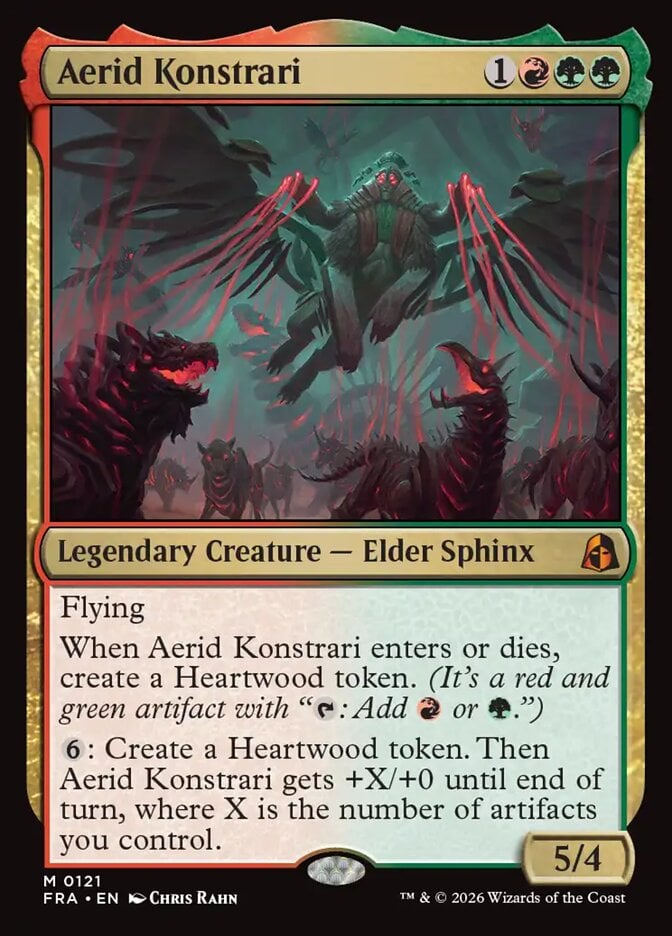
Rating: 9/10
You don’t need much to sell me on a 5/4 with flying for just 4 mana, but yeah, I’ll take a few extra abilities while we’re at it. Aerid Konstrari isn’t only a beefy creature that can close out games, it also ramps you with a Heartwood token and then has an activated ability that not only creates more of them but also speeds up the clock and kills your opponent faster? This card is absolutely incredible and a great first pick to cement you into what might be the best Hexhaven school.
Avatar of Burgeoning Echoes
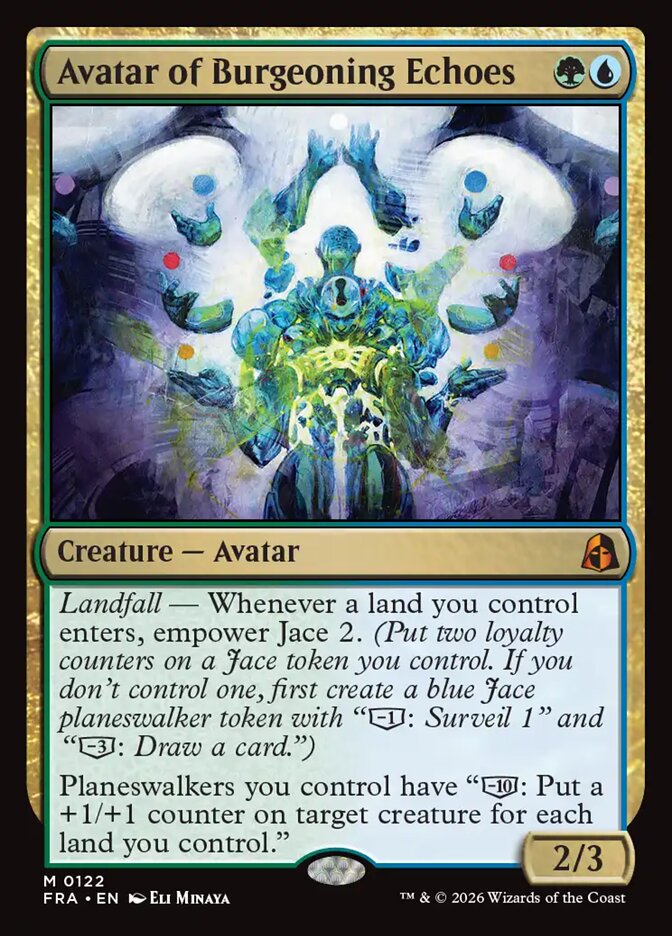
Rating: 8/10
One of my favorite Limited cards of all time was Tatyova, Benthic Druid. Drawing a card every time you played a land was an absolute dream. Avatar of Burgeoning Echoes doesn’t do the exact same thing, but empower 2 on landfall is very close to drawing a card. Even if you just surveil with the Jace token straight away, your opponent has to be able to finish it off for your next land drop not to turn into a free card. Plus, with this not costing any mana to empower, it’s very easy to spend your mana on something that can empower the Jace token and let you draw a card. I don’t put a lot of stock in the -10 loyalty ability here, because it seems really over-costed to me, but the rest of the card looks pretty awesome.
Blessed Ghoul
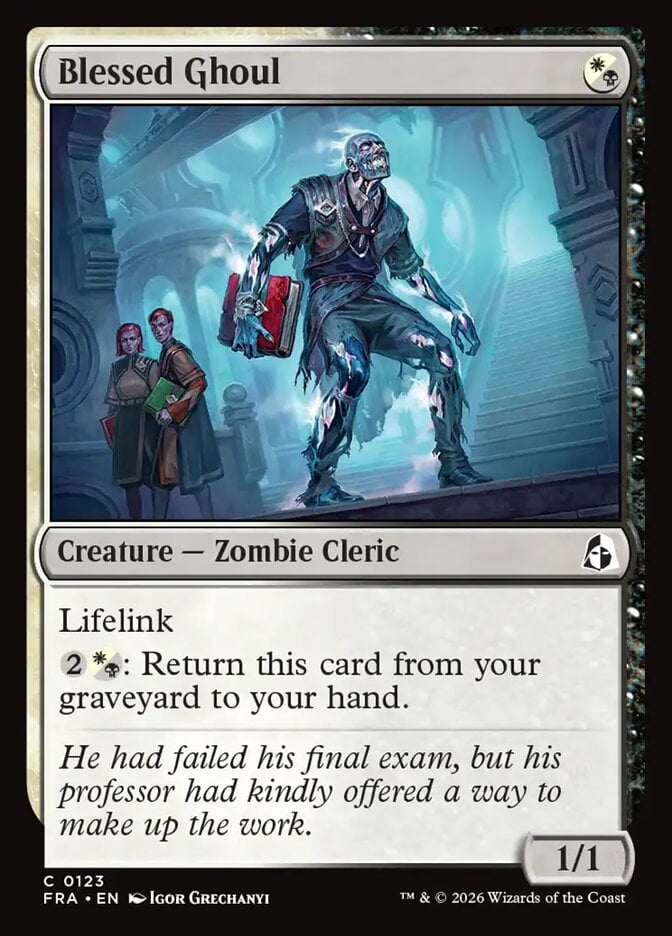
Rating: 3/10
I’ve always been a big fan of Sanitarium Skeleton, so swapping out that second point of toughness for lifelink sounds like a fair trade. In Reality Fracture in particular, I think this is a great way to get value out of milling yourself and a cheap lifelink creature helps to trigger various Vigorbloom triggers. Blessed Ghoul looks to me like a card we will want to play in these graveyard shenanigans decks.
Bloombrute
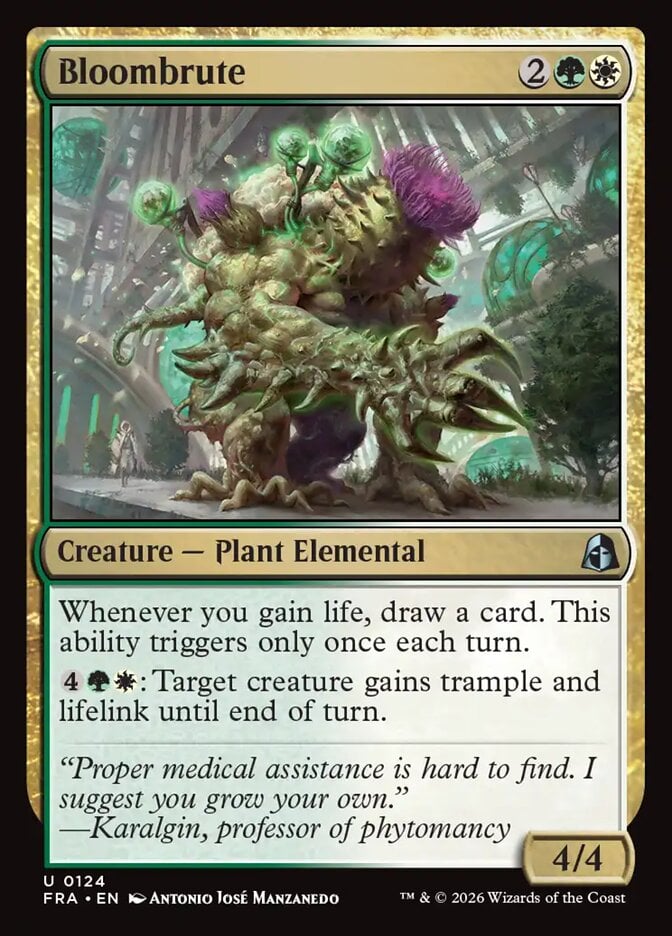
Rating: 7/10
I often say that the best build around cards in Limited are usually the ones that draw a card whenever you do the thing, so of course I like Bloombrute. Not only does it draw you cards pretty freely, but the activated ability will help you win any damage race while continuing to guarantee your card draws. This card is awesome and likely one of the best reasons to go into Vigorbloom.
Charge the Sanctum
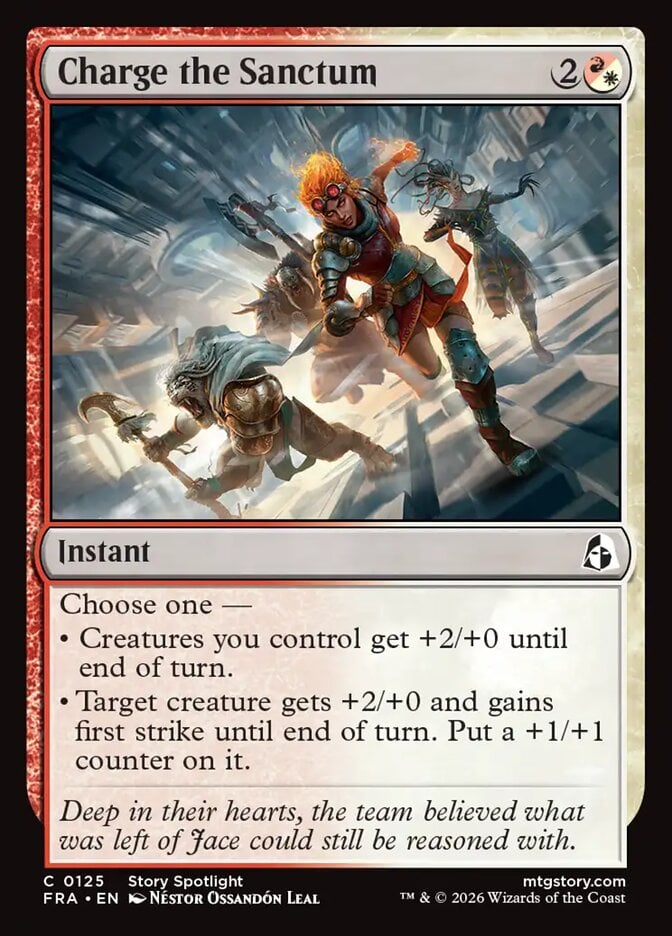
Rating: 1/10
I’ve never been a fan of Trumpet Blast effects or mediocre combat tricks. Giving you the option of one or the other doesn’t change my mind on that, especially when you make it cost 3 mana. I’d imagine that Charge the Sanctum isn’t a card you want to play if you can help it.
Clash of Elements
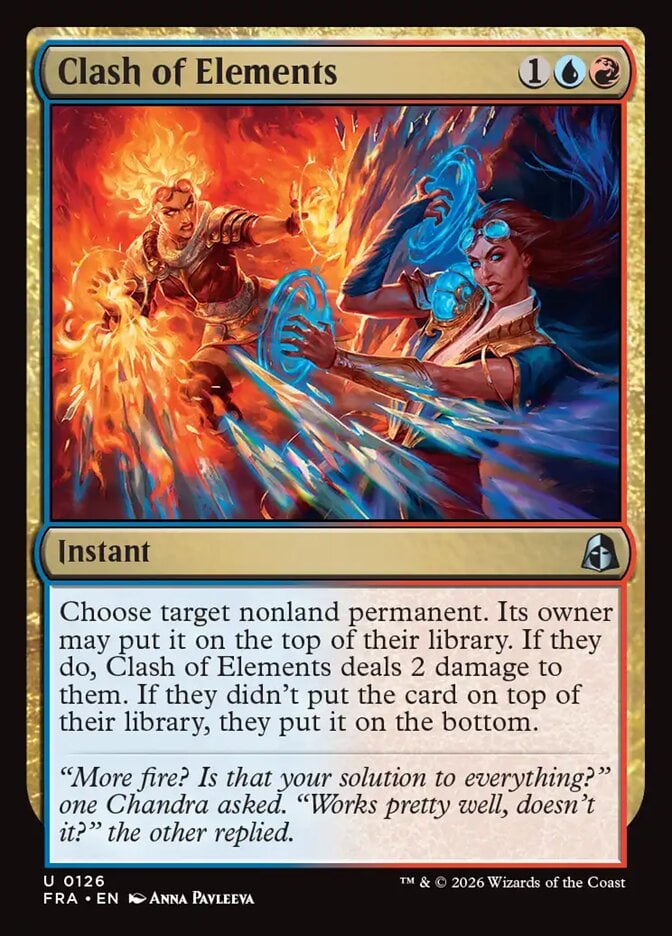
Rating: 6/10
They just couldn’t help themselves, could they? Wizards prints a spell like this in every set, and now Reality Fracture has two of them! I mean, I’m complaining a little, but this card is still very good. We usually see these effects at 4 mana, so the mana discount is nice. Plus, the blue/red deck in this format looks to be an aggressive tempo-based strategy, which Clash of Elements is perfectly suited for.
Craftwork Crusher
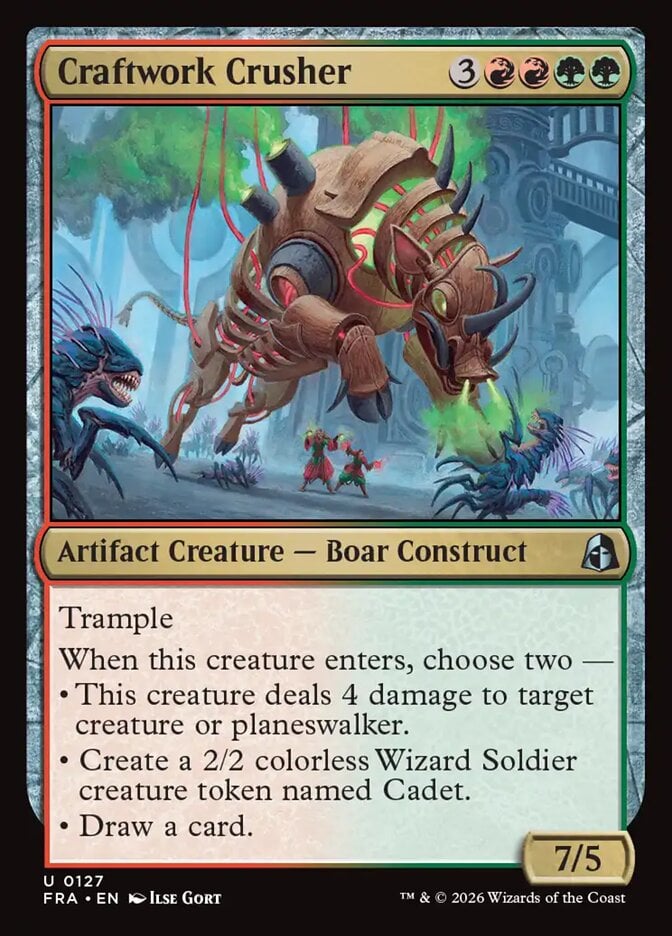
Rating: 8/10
Oh, dear lord…. Anyone who knows me personally will probably know that I enjoy ramp. I first saw this card shortly after I’d parked my car and I practically screamed with excitement. The only thing Craftwork Crusher doesn’t do that I’d want it to is to gain life, but that hardly matters when it’s an automatic three-for-one every time you play it. I mean… 7 mana is obviously a lot, but when you’re killing a creature, drawing a card, and making a 7/5, what else were you going to spend 7 mana on? This card is just absolutely ridiculous, and it makes me really excited to draft Konstrari.
Denzilore Fatehold
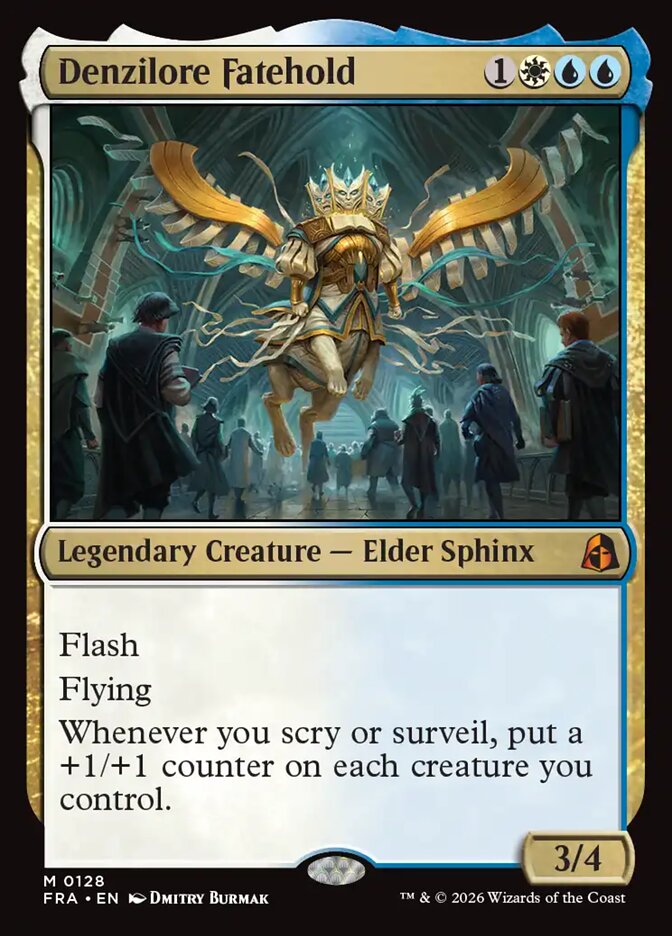
Rating: 10/10
I keep looking at this card and trying to find any downsides, but apart from the 3-color pips in its casting cost, I’m failing. Flash enables Denzilore Fatehold to swoop in during combat for an easy two-for-one, or just at the end of a turn to avoid sorcery-speed removal. Jace tokens are a very easy source of surveilling for no mana, meaning the likelihood of being able to trigger its ability two or even three times in a turn is relatively high. This card is just obscene, and I can’t imagine being able to win the game against anyone who plays it right.
Desperate Futurescribe
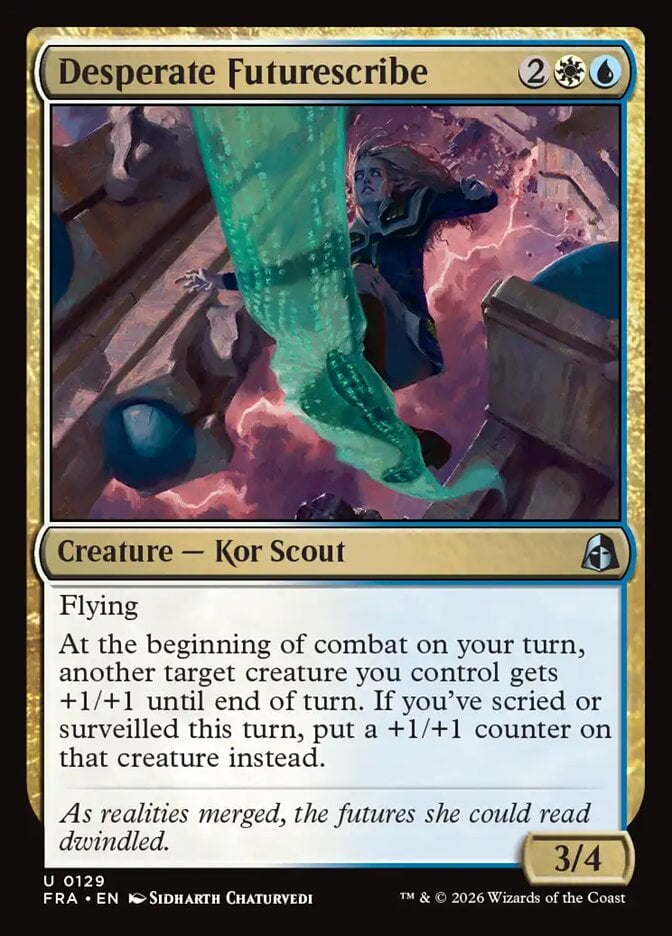
Rating: 7/10
Luminarch Aspirant is still one of the most broken rares we’ve seen in the last decade. While Desperate Futurescribe needs some setup to come close to that, the fact that it’s an uncommon creature that can do that is remarkable. Not to mention it’s also just a 3/4 with flying, which is a great deal for 4 mana.
Edgar, Ancient Bloodlord
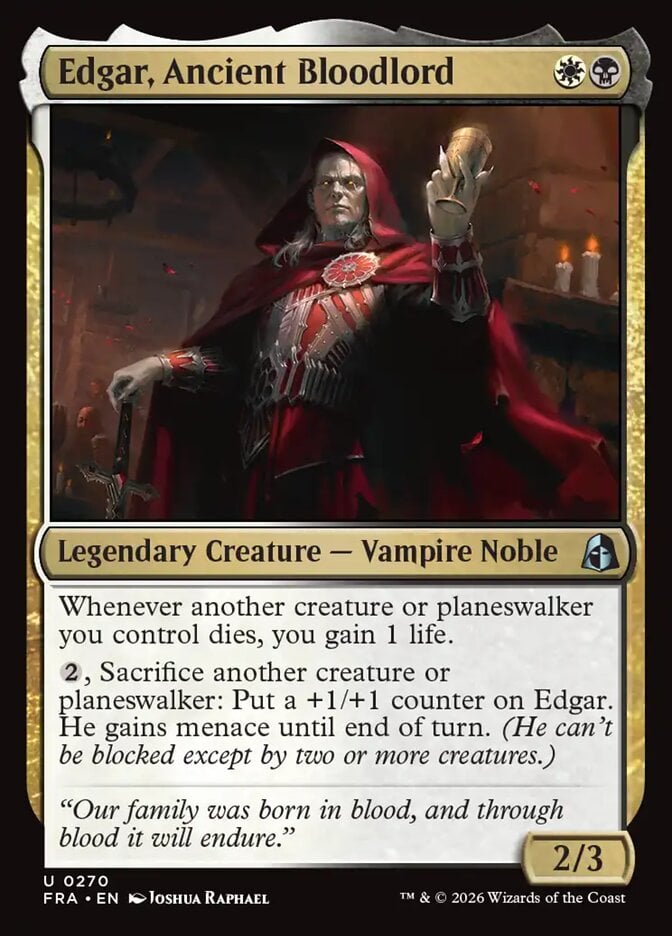
Rating: 5/10
Jace tokens with 1 loyalty aren’t especially useful. Sure, surveil 1 is a good thing to do, but if you don’t have another source of empower on the horizon, it’s definitely desirable to find a better use of them. Edgar, Ancient Bloodlord does exactly that, letting you turn these tokens into something much more useful, as well as any throwaway creatures you might have. There aren’t a lot of sacrifice outlets in Reality Fracture, but Edgar looks like a very good one to have.
Emergency Phytomedic
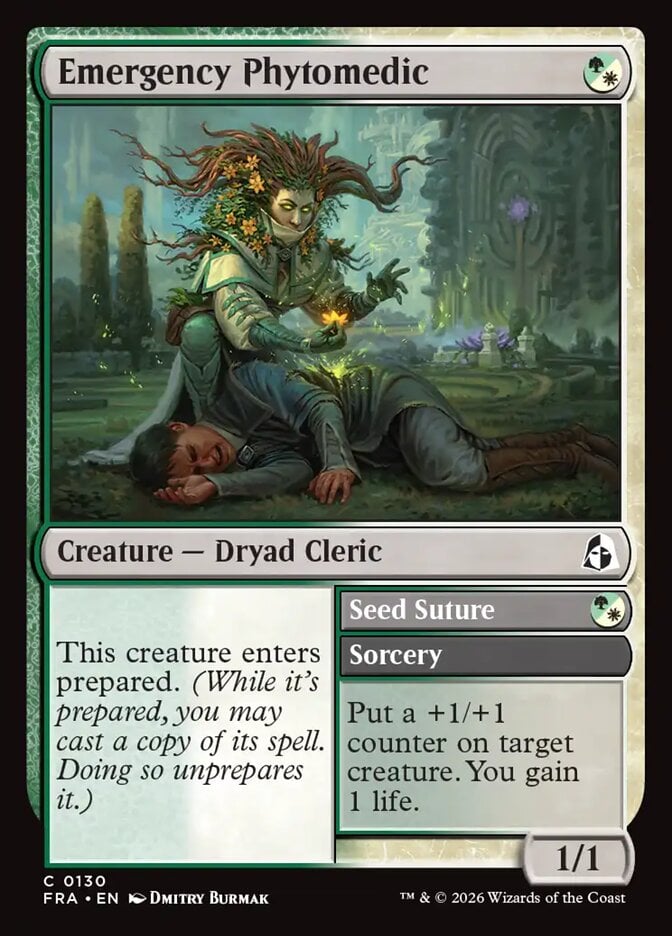
Rating: 3/10
A 2-mana 1/1 that gives something a +1/+1 counter when it enters is typically a good card in Limited. Emergency Phytomedic is pretty much that same card, but with the upsides of being a 1-drop, being hybrid green/white, and also gaining you a bit of life. This all seems very reasonable and this should be a nice early play for any deck that can cast it.
Entrust the Spark
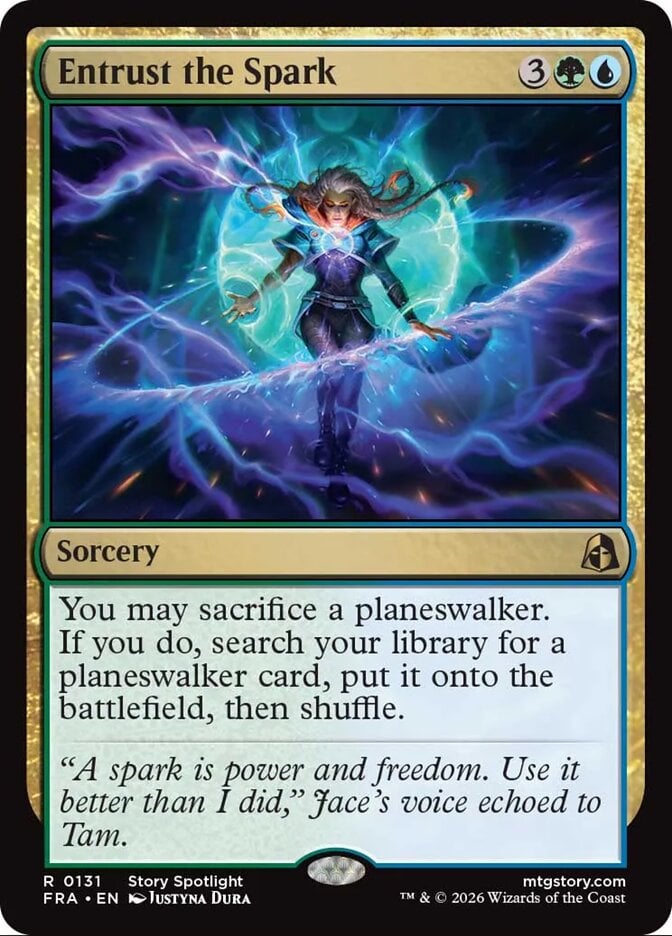
Rating: 0/10
Despite all of the Jace tokens, most decks in this format aren’t going to have any planeswalkers in them, meaning Entrust the Spark won’t do anything. Even if you did have a deck with a good planeswalker and this, is it even worth two-for-oneing yourself to get it into play? No, I don’t think it is.
Fatehold Charm
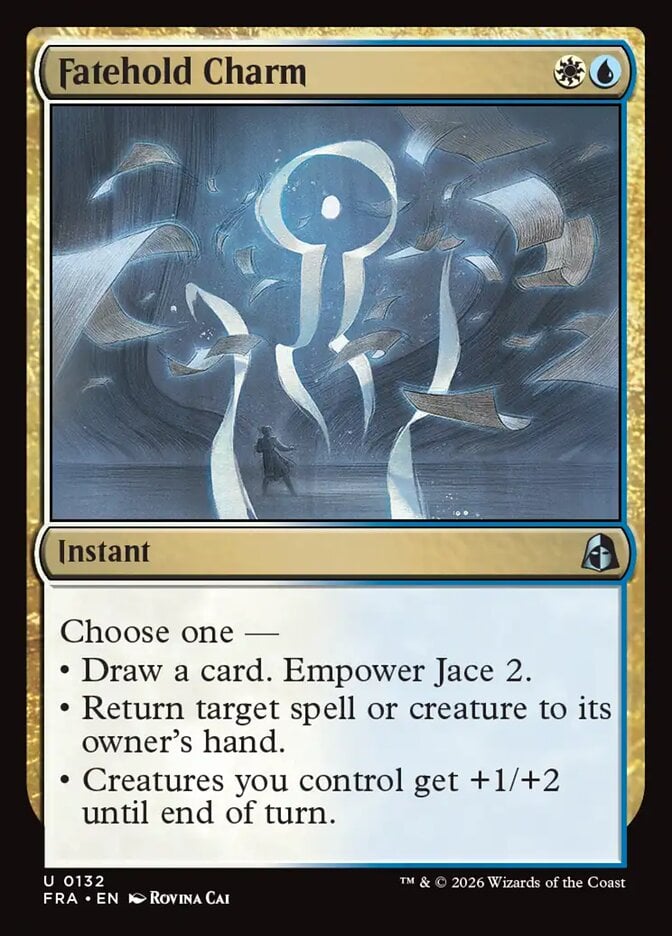
Rating: 5/10
When looking over these charms, I figured Fatehold Charm would probably have Consider as one of its modes, so the mode of drawing a card and empowering 2 is a very nice surprise. Anyway, every charm in this cycle has a removal mode of some kind, making them all pretty useful. This one functions as Unsubstantiate, which is a pretty bad spell on its own, but when you factor in the ability to cycle or to buff your team in combat, I think you’ve got a very potent card.
Fatehold Chronologist
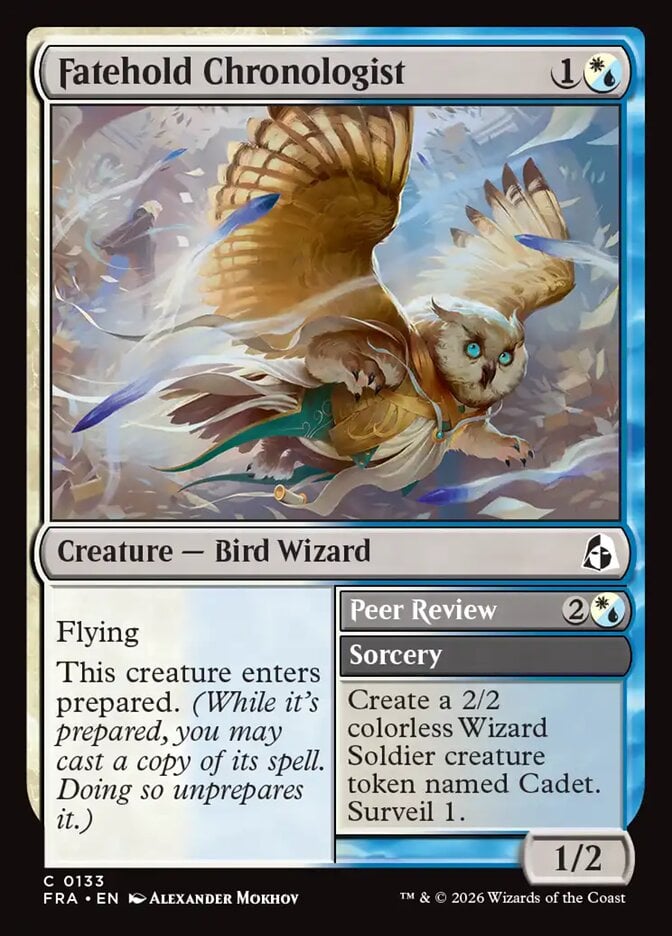
Rating: 4/10
You wouldn’t think I’d be interested in a Storm Crow, but Fatehold Chronologist is a great design to work well with its Peer Review spell. Curving this on turn 2 into Peer Review on 3 is just a good start to any game you play. While both creatures you get are very small, the fact that they came from just one card played is great.
Ferocity of the Hunt
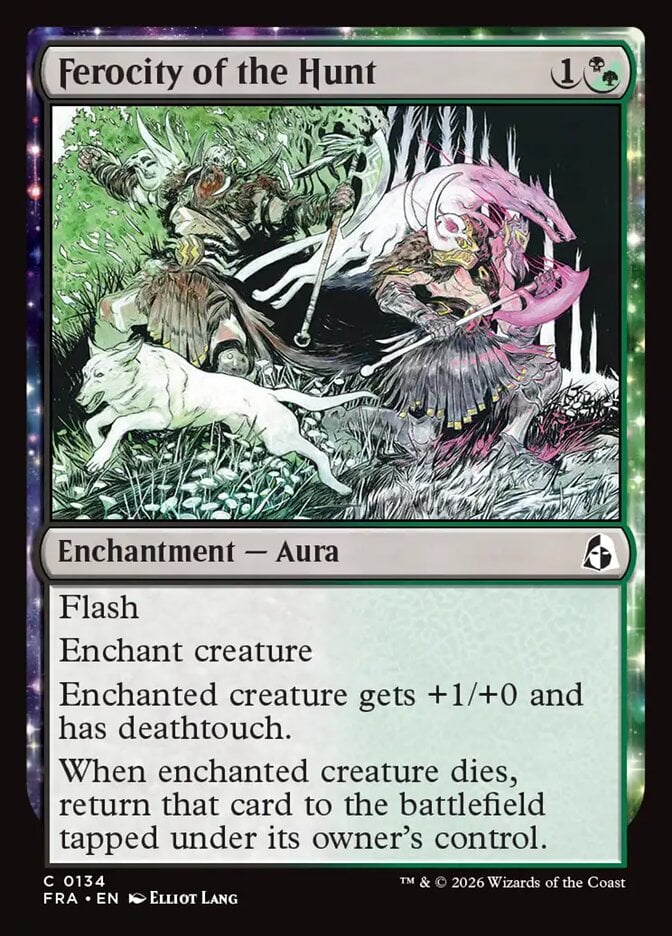
Rating: 1/10
WotC keeps printing these cards in one form or another, and I’m never impressed by them. If everything goes right, you’re effectively looking at a 2-mana spell that destroys an opponent’s creature and lets yours retrigger its enters ability. That sounds amazing when you frame it that way, but that’s only the best-case scenario. When you factor in that you can only do it in combat and that the creature you want to kill can’t just fly over you, have first strike, or anything like that, now it’s looking a lot worse. In practice, these don’t work often enough, and you shouldn’t bother playing them.
Frostbite Pyromental
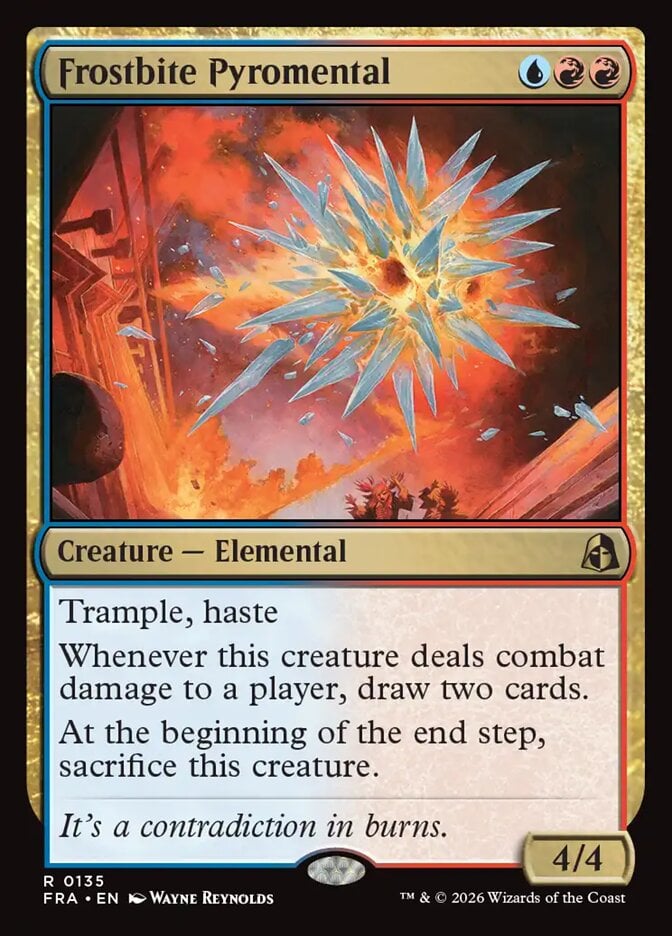
Rating: 1/10
Let’s say you had a spell that cost and just said you draw two cards and dealt 4 damage to your opponent? Would it even be that good? While the effect is an upgrade over Divination, you wouldn’t be able to cast it reliably because of how prohibitive the mana cost is.
Now what if the spell weren’t guaranteed to do either of those? In fact, the later in the game it gets, the more likely it fails. To me, that’s exactly what Frostbite Pyromental is. Just like the card it’s based on, Lightning Skelemental, it’s probably just not worth trying to play.
Grim Repriser
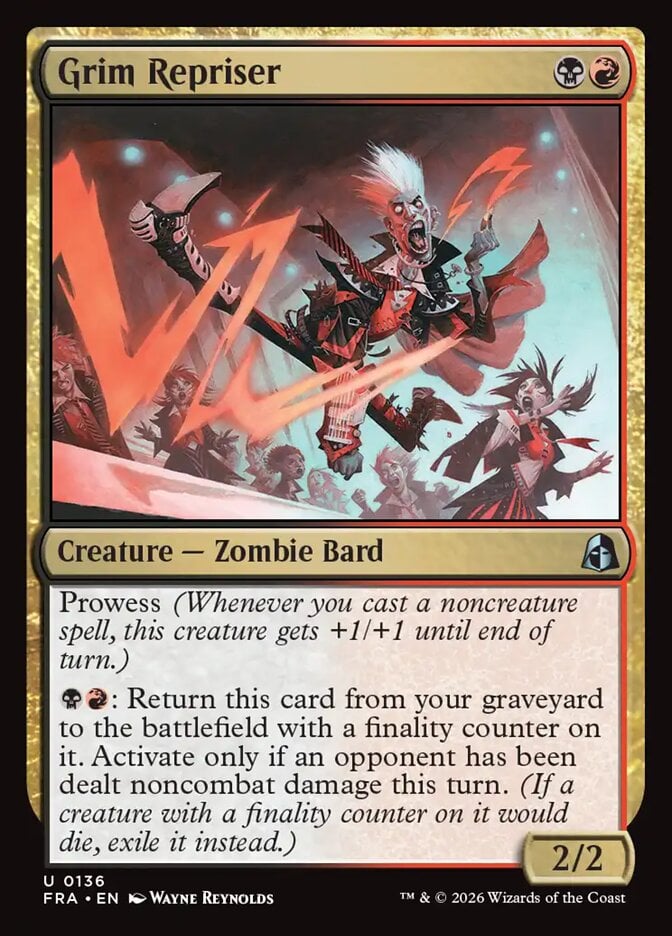
Rating: 5/10
For a deck built around these extra damage pings, Grim Repriser is a great 2-drop. 2/2 and prowess is a decent body, and getting a second go of it later on is really strong. It’s like a good 2-drop creature that can flash itself back if you enable it, which is pretty good overall.
Hapatra, the Desert Fang
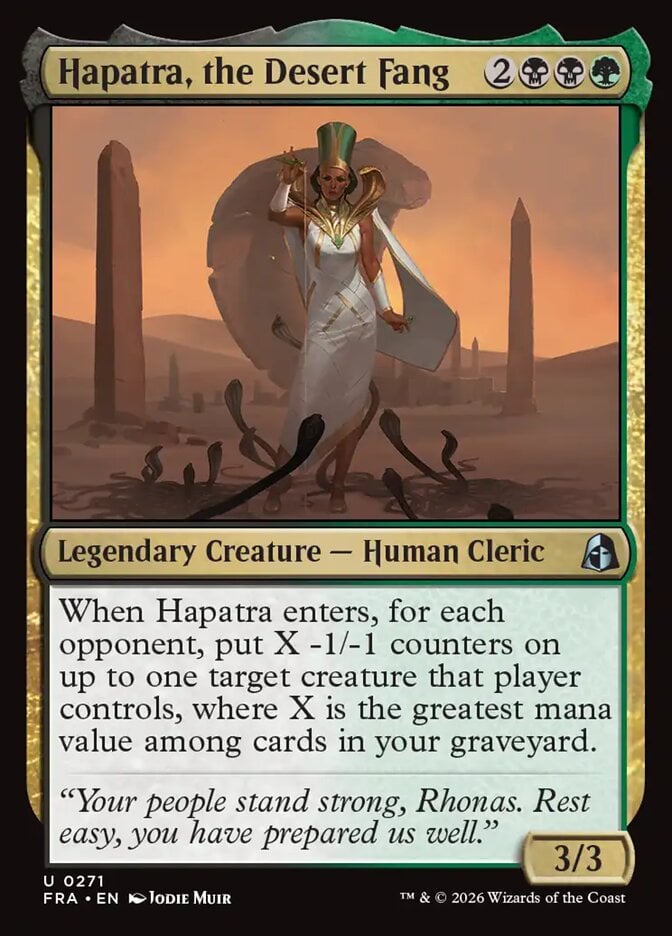
Rating: 7/10
This reminds me a lot of Cloud of Darkness from Final Fantasy, one of the best uncommons in that set. Of course, if you have a 4- or 5-drop in your graveyard, Hapatra, the Desert Fang can enter and kill most creatures in the format. Green/black looks pretty good at filling the graveyard since most of Theorix’s graveyard enablers are black anyway. Also, this is incredibly splashable as a big payoff in a Theorix deck. I often refer to Nekrataal as one of the cornerstone broken cards in Limited history, and Hapatra is doing a very good approximation of that effect.
Ingris Stingerquill
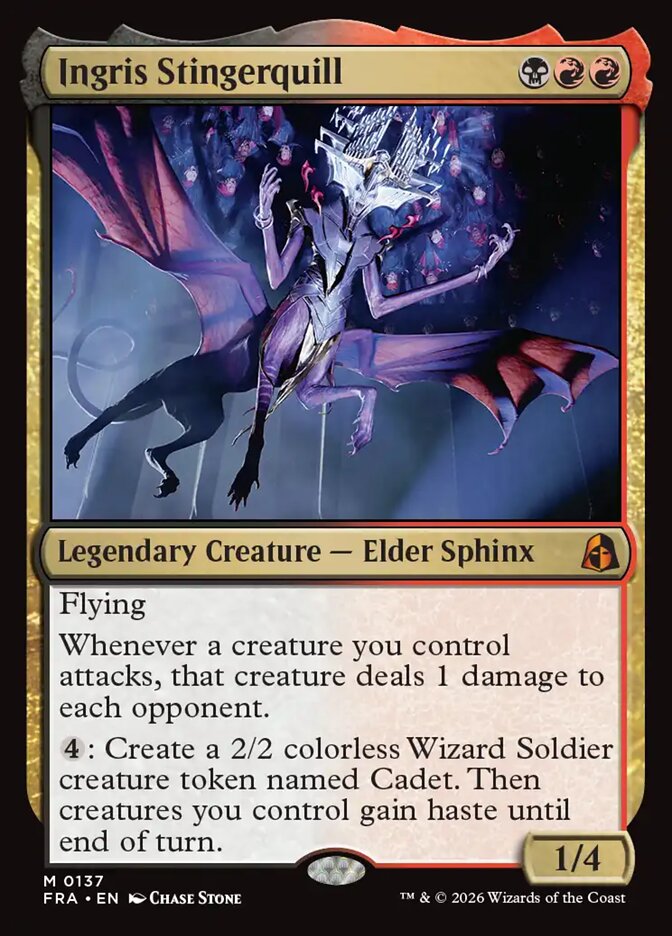
Rating: 9/10
One of the keys to a good Stingerquill deck will be the ability to deal noncombat damage without spending any mana. So, what better way is there to do that than with Ingris Stingerquill?
Kind of like a Hellrider without the haste, Ingris provides a huge amount of unchecked damage from the moment it hits the board and doesn’t even need to attack. If your opponent doesn’t remove it, this sphinx can just sit back and churn out Cadet tokens each turn if you’d like, and it’s even a great play late in the game, as for 7 total mana it can also give itself haste.
Ingris is a little bit too vulnerable to removal for my liking, but it’s cheap and powerful enough that that only counts against it a little bit, it’s still broken.
Karn, Gilded Guardian
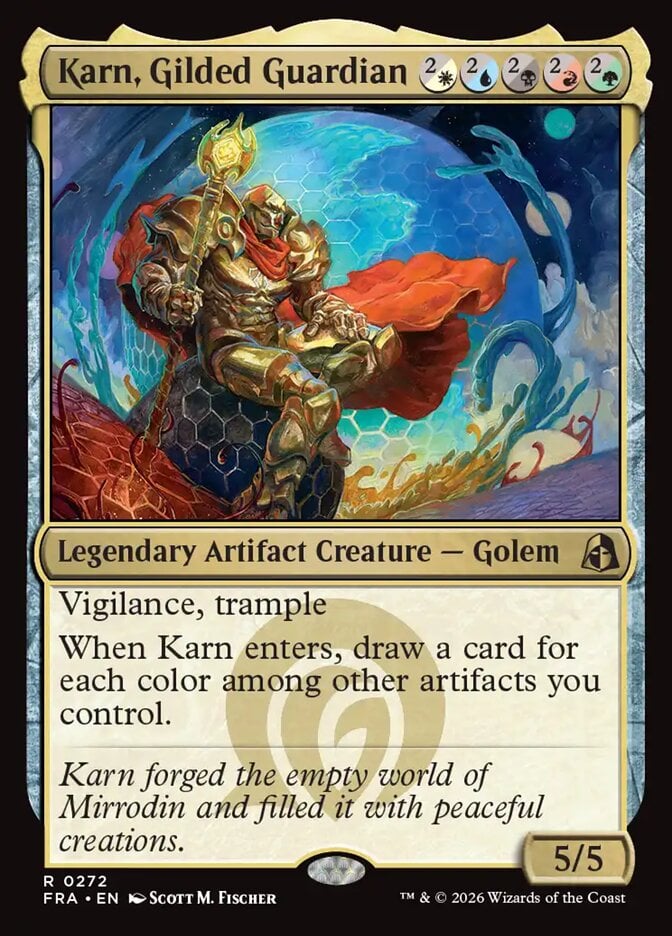
Rating: 3/10
Okay, so hear me out. FRA technically contains some artifacts in each color. Most notably of course are the Heartwood tokens that are red and green. Let’s say you had one of those in play. You then only need something like Warrior's Blades or Traxos, Academy Guardian and Karn, Gilded Guardian will draw three cards when it enters. That’s a very intriguing proposition, and I’m sure I’ll try it at some point, but I’m sure there are easier ways to draw a bunch of cards.
Kiora of Salt and Sand
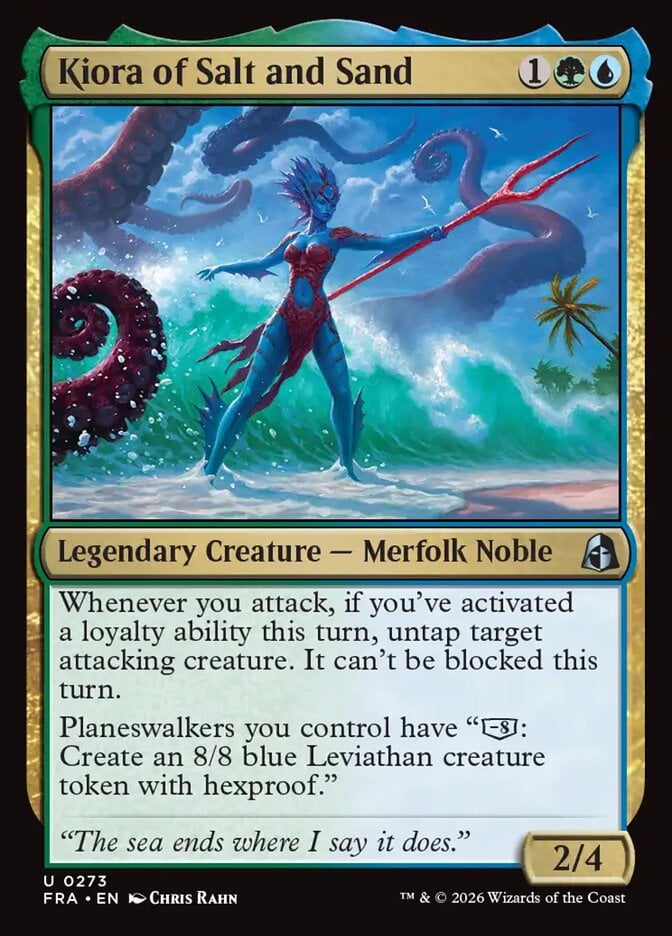
Rating: 6/10
A 3-mana 2/4 is a great creature to help defend your Jace tokens, and of course the -8 loyalty ability is a great reward for stacking up your empower spells. The first ability on Kiora of Salt and Sand also lets you pressure opposing Jace tokens. Since it doesn’t have an ability that lets you empower, this isn’t the best blue/green payoff in the world, but these 8/8 hexproof tokens should be more than enough to win a game if you can create even one.
Konstrari Charm
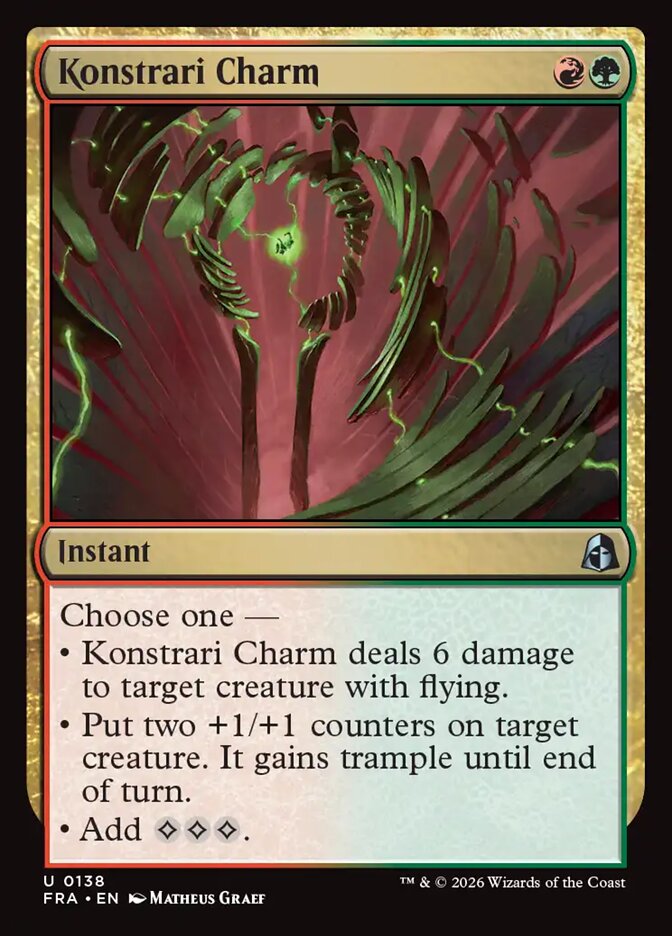
Rating: 2/10
I swear, red/green always gets the short end of the stick when it comes to charms. Gruul Charm was abysmal and now Konstrari Charm is easily the worst of this cycle. I honestly think this is leaning much closer to sideboard territory than anything else, and then you bring it in to attack flying creatures. I don’t want a fairly weak combat trick, and I definitely don’t want a bad ritual spell, so what else is there to do?
Konstrari Improviser
Rating: 4/10
Getting to cast Konstrari Improviser on turn 2 and then a Soul Tether on the following turn sounds like a great way to start a game. While this is obviously good in a Konstrari deck, the fact that this is hybrid red/green allows you to play it in a variety of decks that might also want an effect like this.
Kwia Vigorbloom
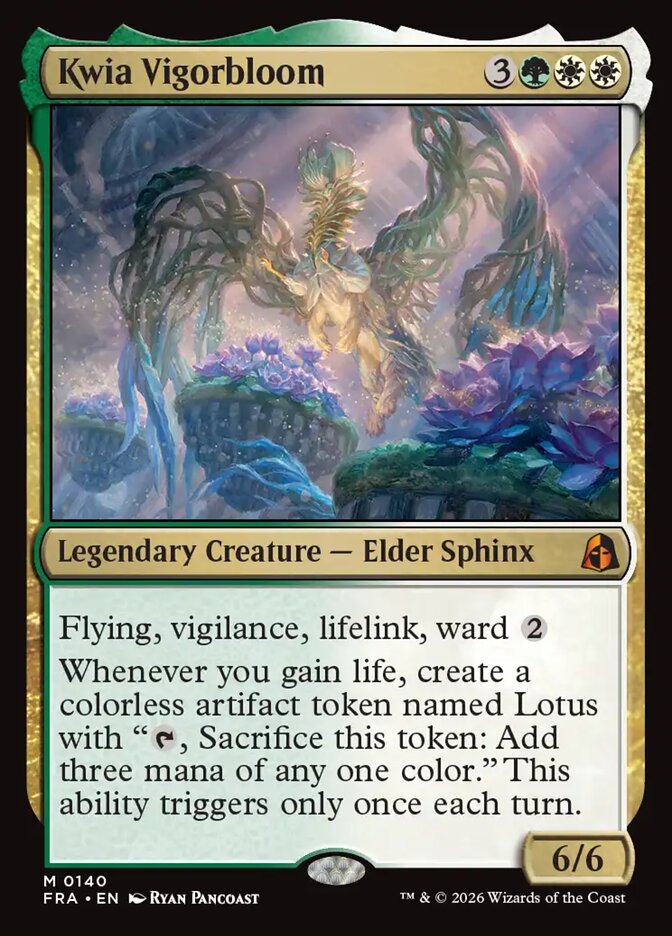
Rating: 10/10
Flying, vigilance, lifelink, 6/6. Seriously, what more do you even want? Do you need me to tell you that Kwia Vigorbloom is going to win you games of Limited? I should hope not. Kwia is massive and kind of hard to kill, and it dominates combat from the moment it enters. The Black Lotus tokens it creates are a funny touch, but really not necessary to make this one of the silliest bombs in the set.
Mabel, Valley Hero
Rating: 4/10
You can essentially view Mabel, Valley Hero as a 2/3 for 3 mana that lets every creature you play pick up a +1/+1 counter when it enters. That’s about it, barring some shenanigans with multiple creatures entering in the same turn. That’s a fine effect to have, but it’s not a particularly exciting one. +1/+1 counters is supposed to be the red/white theme, but it doesn’t seem to be incredibly well supported, so I just don’t see this being all that useful. Poor Mabel.
Mind Meanderer
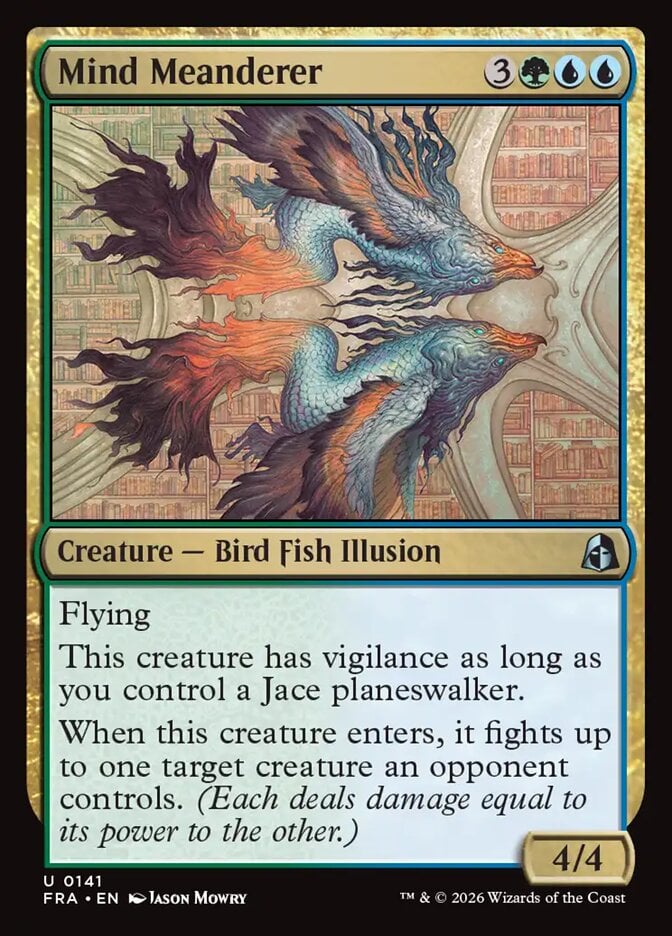
Rating: 7/10
I loved getting to play Affectionate Indrik back in Guilds of Ravnica, so give it flying and an extra ability and you know I’m still going to love it. Double blue plus a green is a little difficult to pay, and it does make this a lot less splashable, but Mind Meanderer is an instant two-for-one and a great reason to draft blue/green.
Null Summoner
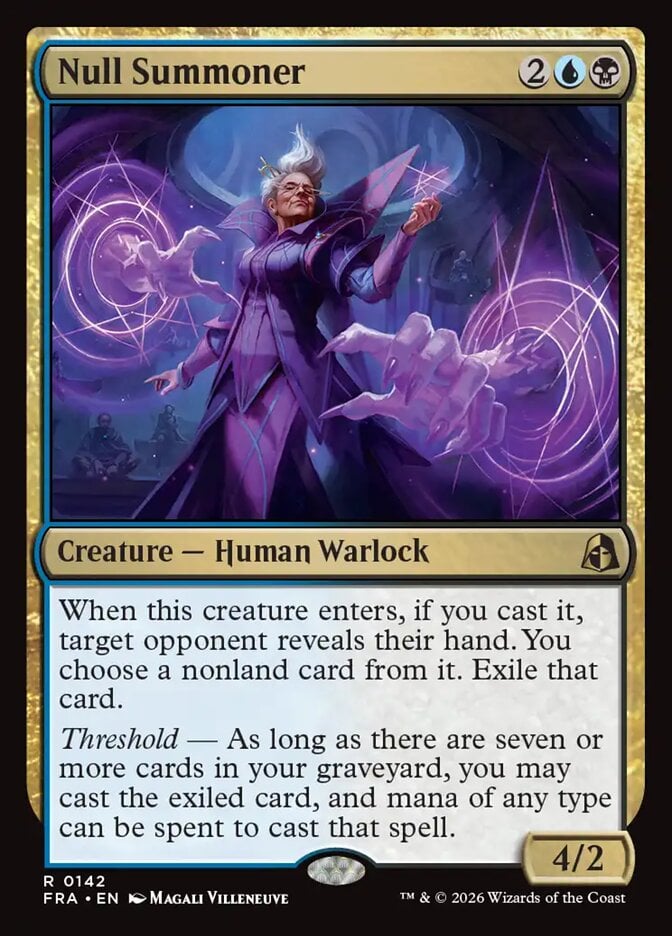
Rating: 7/10
I really like this card, and I definitely have a Commander deck for it to slot right into. Stealing an opponent’s card and then potentially getting to cast it for yourself is pretty busted, kind of like a Thought-Knot Seer crossed with Hostage Taker. The main downside to Null Summoner though is that the later the game goes, the less likely your opponent is to actually have a card in hand for you to steal. That said, if it all goes right, this is a self-contained three-for-one, which is too powerful to ignore.
Paradox Shaper
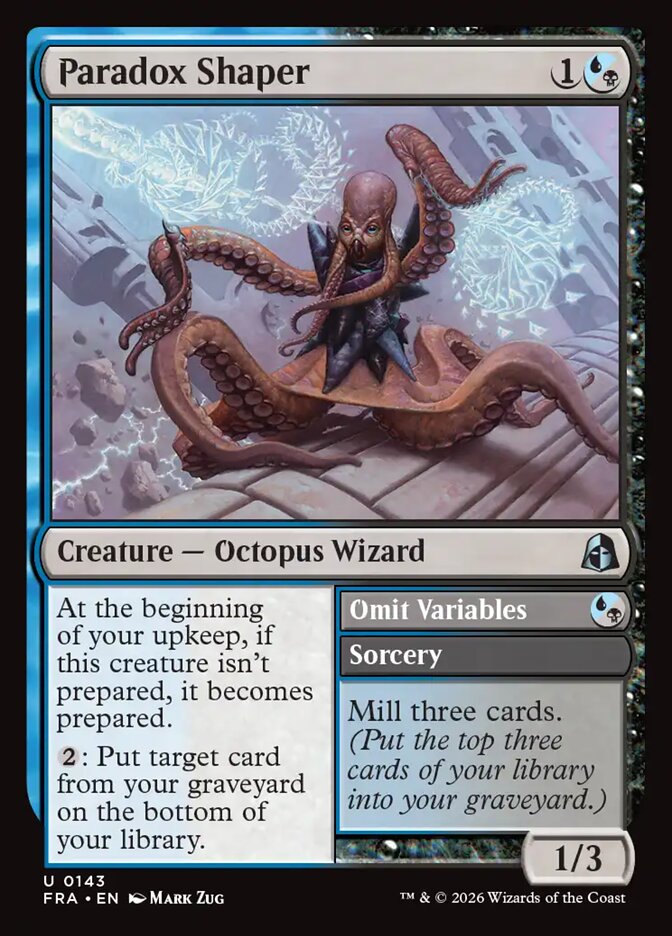
Rating: 6/10
Strategy enablers usually don’t shine anywhere near as much as the cool payoffs you get, but I think Paradox Shaper is an exception to that. It’s only a vanilla creature when you play it, but as each turn passes, it keeps preparing itself, allowing you to keep filling your graveyard turn after turn. It even works well in the late game to restock your deck with some of your best cards and stop yourself from decking out. I’m very impressed with the amount of graveyard support there is in this set, and that makes me really happy to see an enabler as strong as this one.
Primal Witchstalker
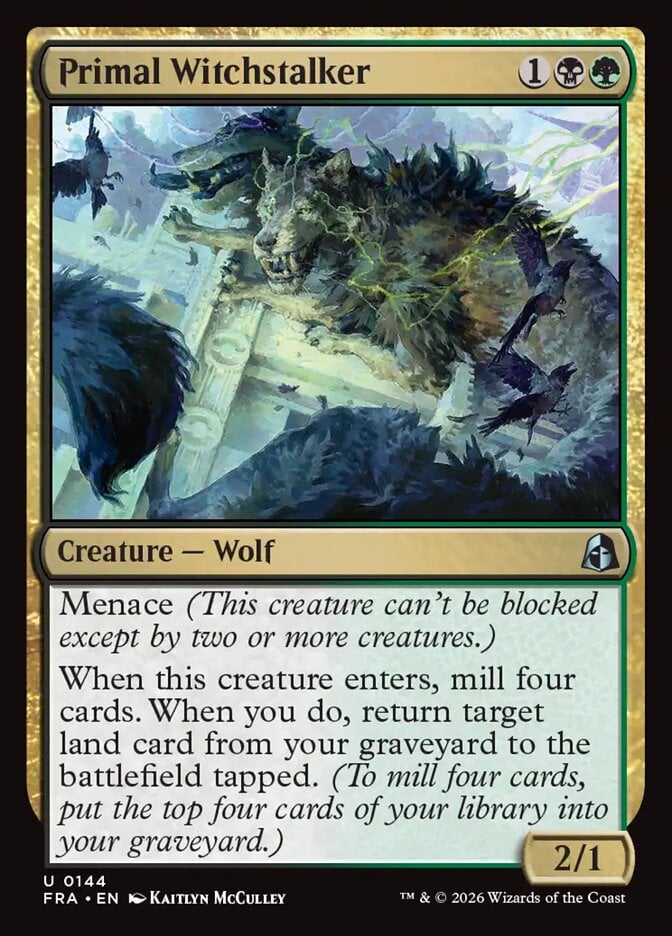
Rating: 6/10
Speaking of strong enablers for graveyard-based decks, Primal Witchstalker is just incredible. Milling four on entering is a really good number, and you’re very likely to hit a land to ramp you as well. Even better, the land you get doesn’t have to be from among the four you milled; any other ways that you milled yourself before playing this will also contribute, so you might already know if you’re guaranteed to hit one. Ramping on 3 with a good body attached is great, and fueling the graveyard too is even better.
Proctor of Potential
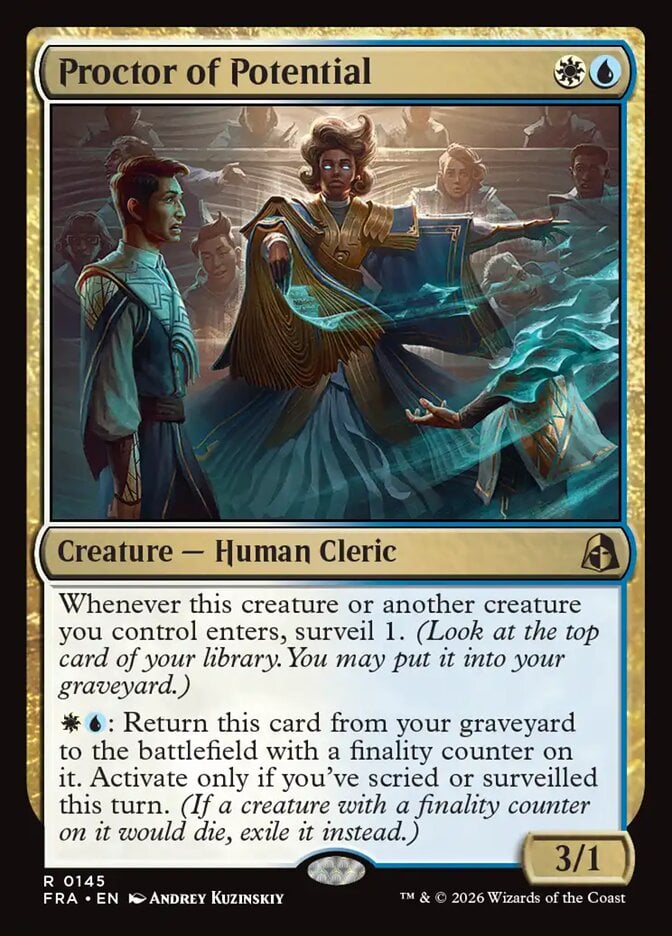
Rating: 7/10
Getting to surveil without spending mana is going to really make the Fatehold deck come alive, and that’s exactly what Proctor of Potential does for you. It’s already great as a 2-drop 3/1 that surveils when it enters and can replay itself out of the graveyard, but then consider how it synergizes with other cards from this color pair. Now, Saheeli, Consul of Oversight and Denzilore Fatehold will immediately trigger their own abilities when they enter, as will anything else you can think of that cares about surveilling. This is just a very powerful enabler for Fatehold and one I’d be glad to take early.
Prudent Fateseer
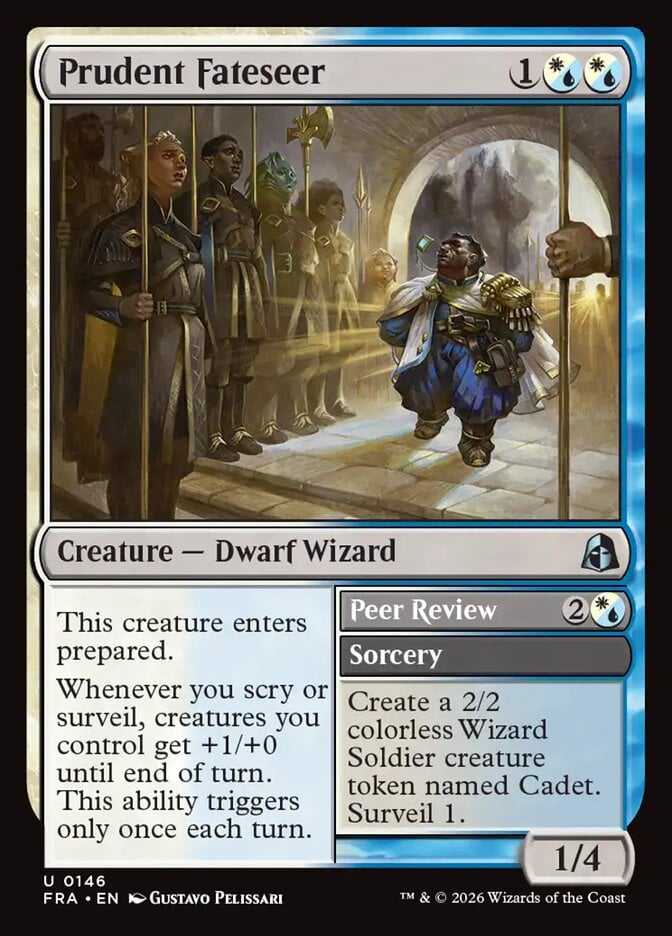
Rating: 4/10
Giving +1/+0 to your team is a depressingly minor reward for doing what Fatehold wants, especially when it can only happen once each turn. Most of the power behind Prudent Fateseer comes from the fact that it has Peer Review as a prepared spell, so it’s actually two creatures in one card, but I don’t give it much credit beyond that.
Recursive Recruitment
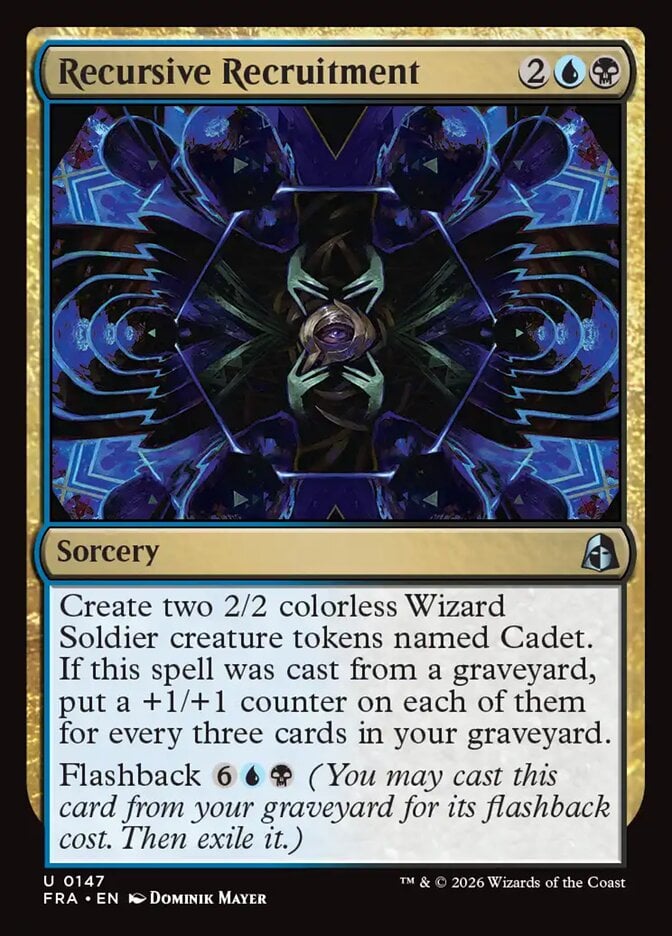
Rating: 6/10
Four mana for a pair of 2/2s is a reasonable spell to cast, even if it’s a bit weird to see in blue/black. Then, while 8 mana is a lot to get to, Recursive Recruitment is well worth the cost. It’ll basically give you a pair of creatures that should be around 6/6 or 7/7 depending on how much you’ve milled yourself. This may not be as good as something like Spider Spawning, but it’s still a fantastic reward for playing a grindy game and stalling out to the point where you can cast it.
Saheeli, Jewel of Avishkar
Rating: 7/10
Murmuring Mystic is one of my favorite Limited cards of all time. I drafted Guilds of Ravnica dozens of times, and it was the card I always wanted to see the most. Saheeli, Jewel of Avishkar is remarkably similar to that, and even though I’d rather have the fifth point of toughness that the Mystic had, there’s still plenty to love about this new version.
Solarium Sentry
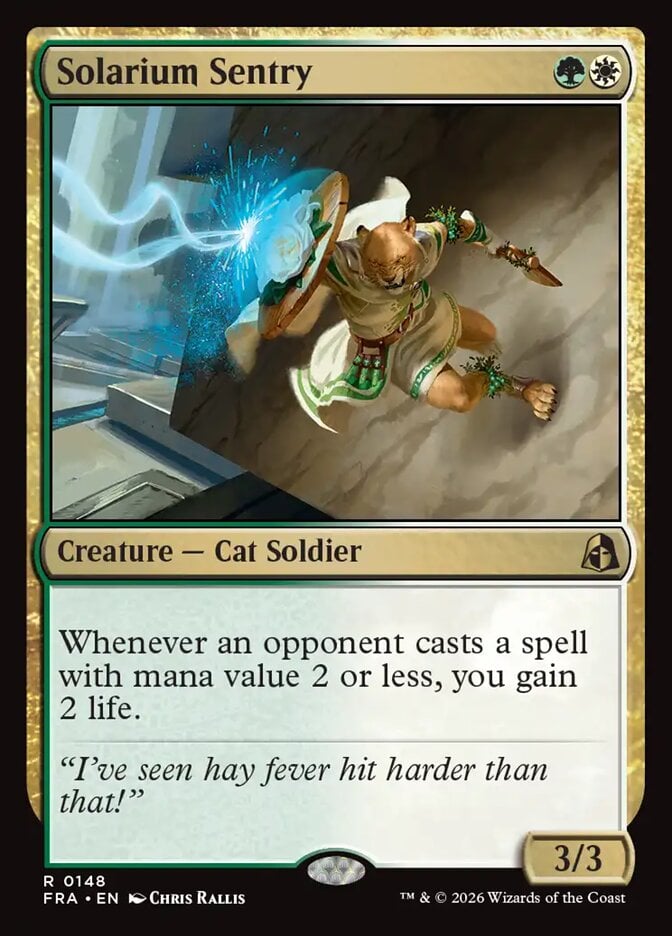
Rating: 4/10
Most cards in your average Limited deck are going to cost more than 2 mana, but the prevalance of cheap prepare spells means Solarium Sentry will actually trigger a good bit. Regardless it’s still reasonably good to cast a 3/3 for 2 mana, and you might get some free lifegain every now and again, but that’s about it. When you’re matched up against a deck like blue/red prowess though, its stock goes way up because now it should trigger off of most of their spells, making it incredibly hard for the opponent to race.
Solitary Cell
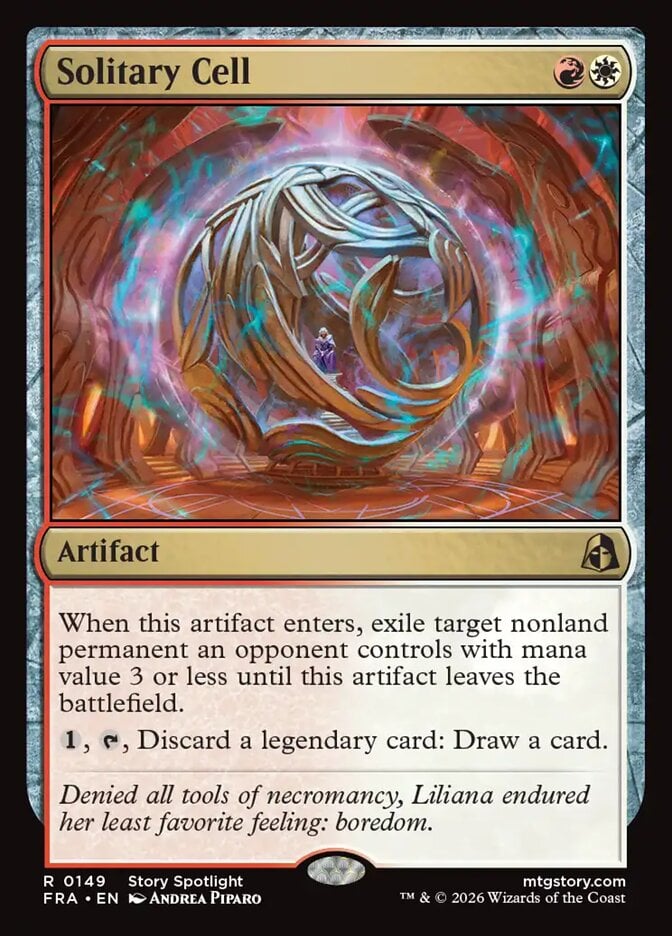
Rating: 6/10
Glass Casket has proven itself to be a solid removal spell in past sets. Solitary Cell should be just as good. Costing an additional color of mana is bad, but that seems like a fair trade for being able to answer noncreature permanents too, especially Jace tokens. I don’t put a lot of value in the ability to trade your legends for extra cards, but I guess you’ll take it if you have multiple copies of some.
Stingerquill Charm
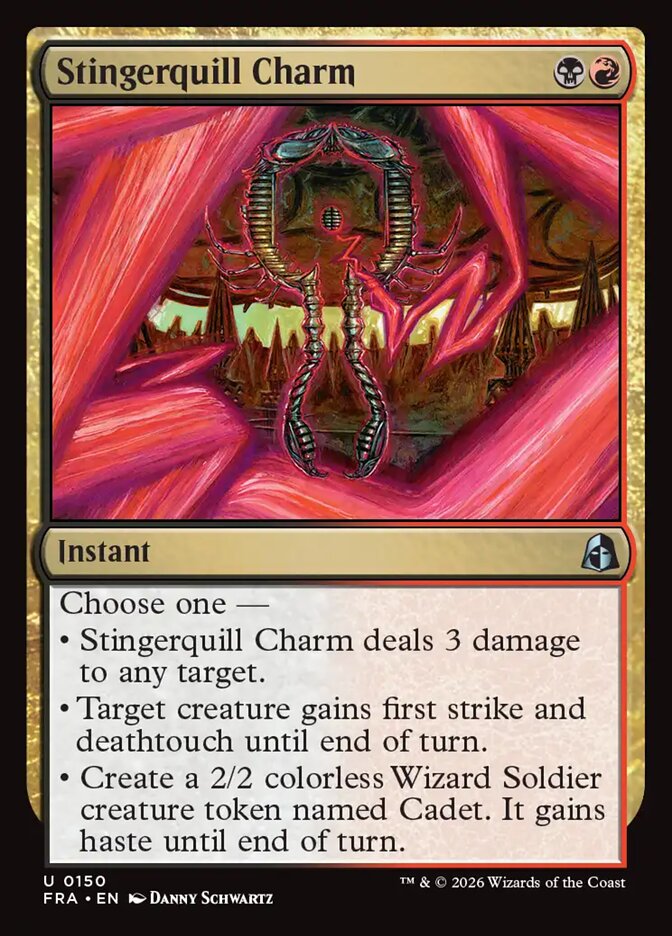
Rating: 7/10
Stingerquill Charm is my pick for the best charm in this cycle. All three modes are incredible, especially with the base rate of just being Lightning Strike. This really is the perfect charm, and I don’t know what else I could say about it.
Stingerquill Voxmancer
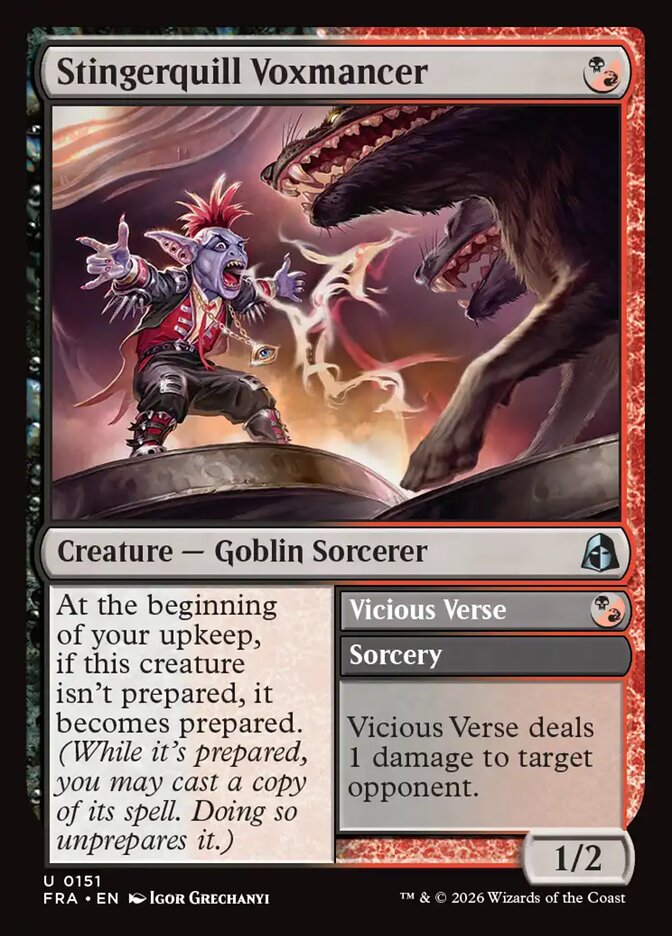
Rating: 6/10
This looks like an incredibly annoying creature. The Stingerquill archetype is based around sources of noncombat damage in the first place, and Stingerquill Voxmancer preparing itself every turn means it can give you noncombat damage every turn. All of that on a 1-mana creature sounds really exceptional to me.
Stinging Vitriol
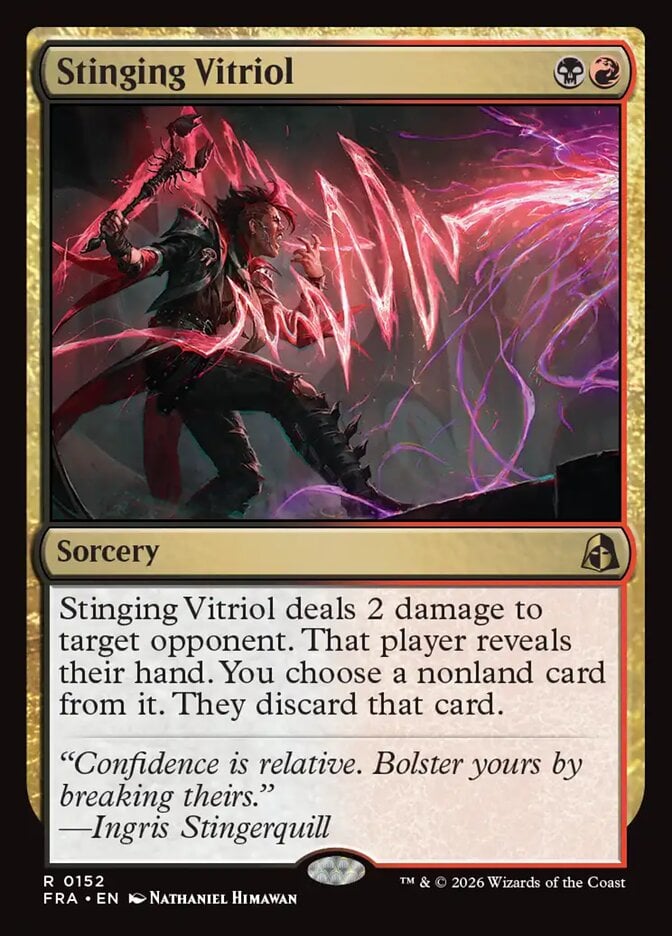
Rating: 5/10
Thoughtseize effects tend to be very hit or miss in Limited, usually because they’re over-costed. Stinging Vitriol certainly looks like one of the better ones. Two mana is very reasonable for this effect, and you’ll always get the 2 damage out of it anyway, so it’ll also trigger your Stingerquill synergies. There are a lot of better cards, seeing as this doesn’t affect the board, but it does seem like it has its place.
Tam, the Possibility
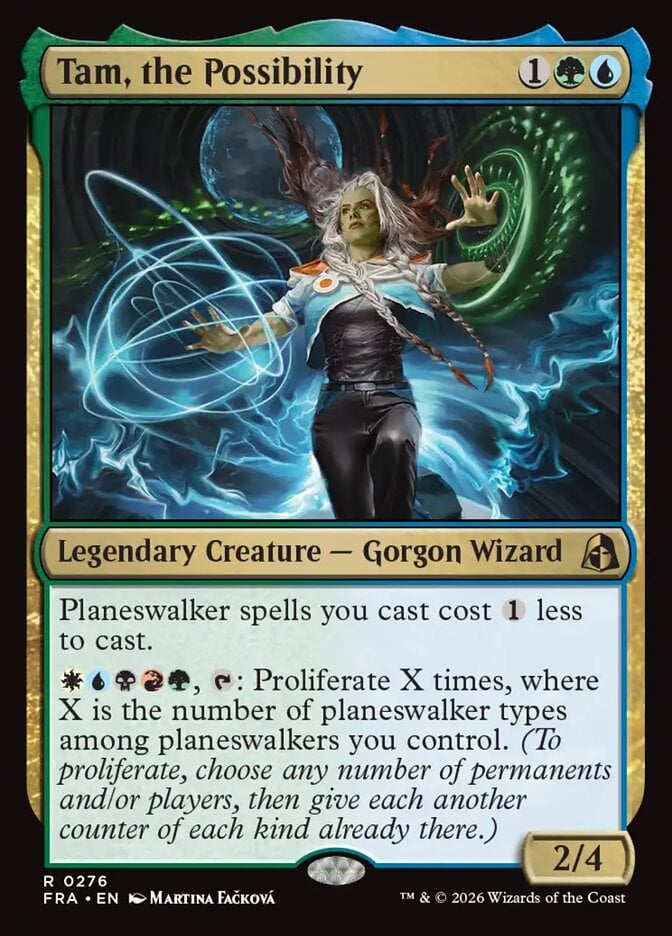
Rating: 1/10
This rating is entirely based on Tam, the Possibility being a 2/4 creature for 3 mana. Neither of Tam’s abilities are remotely useful. While we will often have planeswalkers on the battlefield, the eight high-rarity planeswalker cards in Reality Fracture still aren’t going to be in our decks very often. Proliferating is a good ability, but costing all five colors is obscenely expensive. It’s sad to see such a pivotal character in the story get such a useless card for Limited, but there we go.
Tam’s Resistance
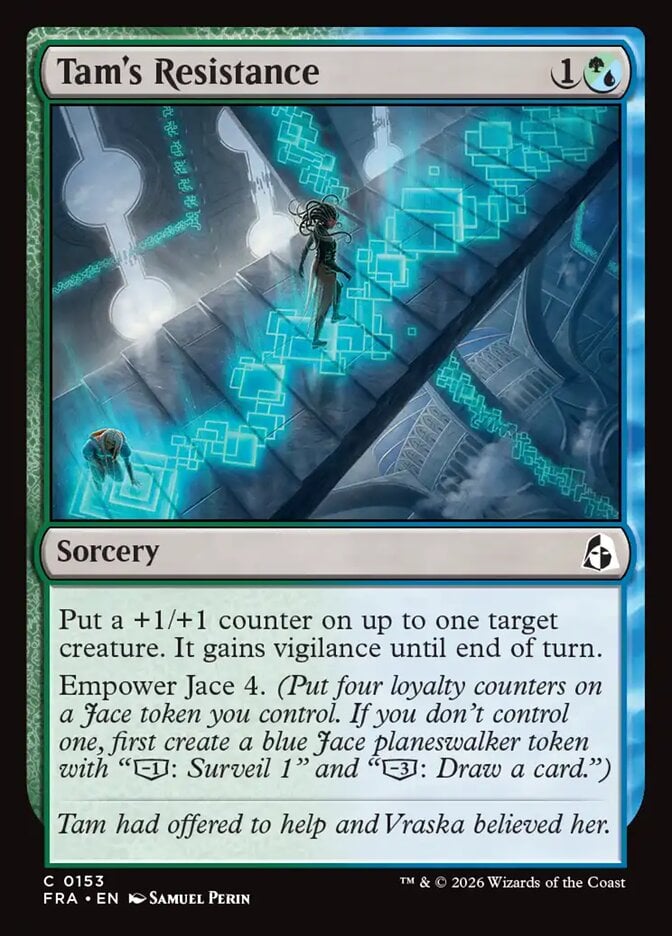
Rating: 2/10
Since Tam's Resistance empowers 4, it’s always at least going to draw you a card. It may not do a lot else, but the fact that it cantrips adds a certain level of legitimacy: While a +1/+1 counter and vigilance isn’t worth spending your time and mana on, that card draw is all it takes to make it worthwhile.
Tenured Tethermage
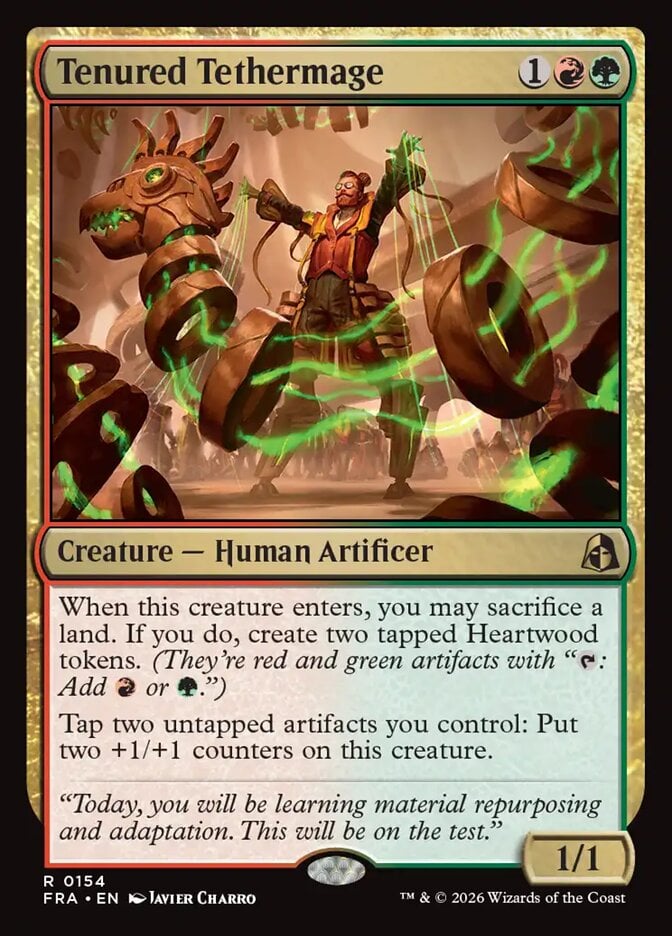
Rating: 8/10
There are a bunch of creatures in Reality Fracture that ramp you for 3 mana, but Tenured Tethermage might be the best of the lot. On top of ramping you, it also slowly grows itself into a massive threat. Thanks to the threat of activation, you don’t even need to use it that often. Just attack with your artifacts open, let your opponent take the damage, and then you can use your Heartwoods on something else. This is one of the best enablers for Konstrari that I can see, so you bet I’m excited to give it a try.
Theorix Charm
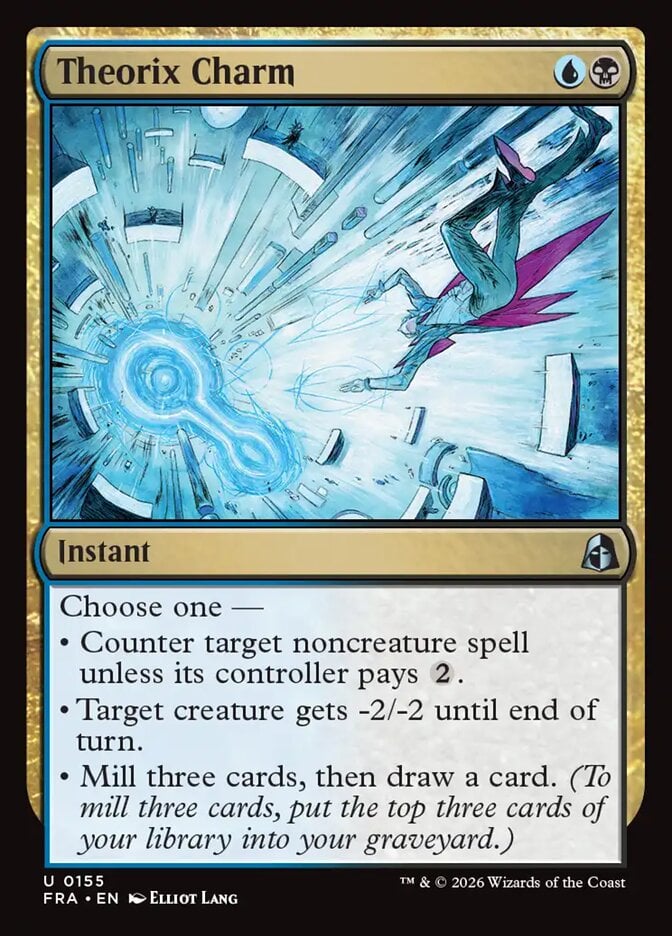
Rating: 4/10
Each of the modes on Theorix Charm are good in principle, but they’re all highly inefficient. Each mode is essentially a 1-mana spell, Spell Pierce, Disfigure, and Mental Note. Well, close enough anyway. While each of those is very good at 1 mana, they’re considerably worse at 2. The combination of all three does count for something, but not enough for me to be particularly high on this charm.
Theorix Metamage
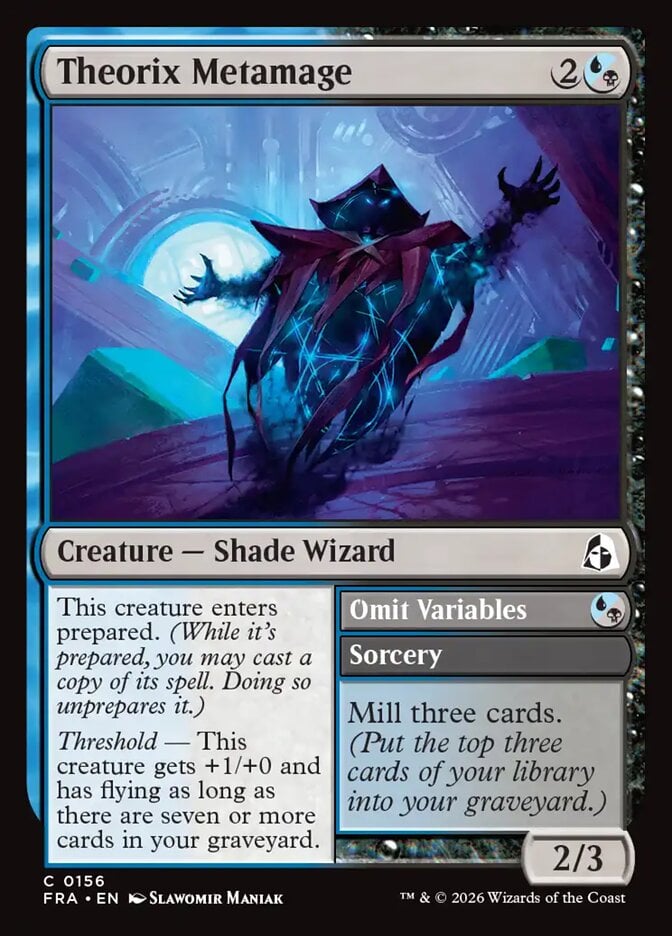
Rating: 3/10
If you’re looking for a way to mill yourself, then Theorix Metamage is a pretty good option. For a total of 4 mana, you get most of the way towards a 3/3 with flying and three more cards in your graveyard. It looks very easy to fill your graveyard if you want to do so, making Metamage a good inclusion in any graveyard-based deck.
Twinned Vision
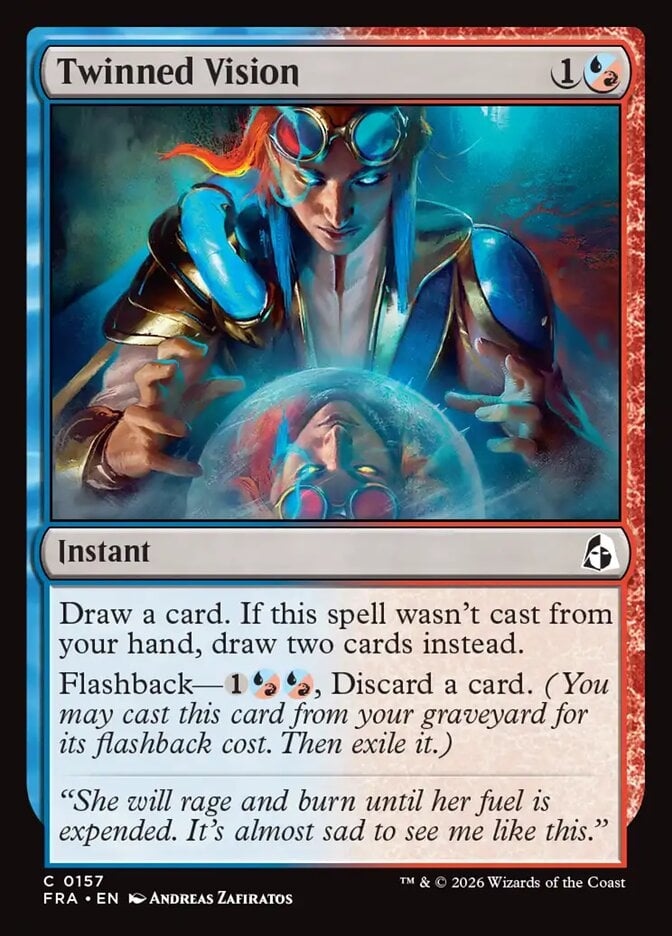
Rating: 3/10
This is kind of a cool design, but I don’t think it’s as good as it might look. Only drawing a card for 2 mana isn’t a good idea. What could be good is milling or discarding this and then recasting it for a bit of extra value. As such, I’d happily play Twinned Vision in a deck that could accommodate that, but probably not in much else.
Twisted Fates
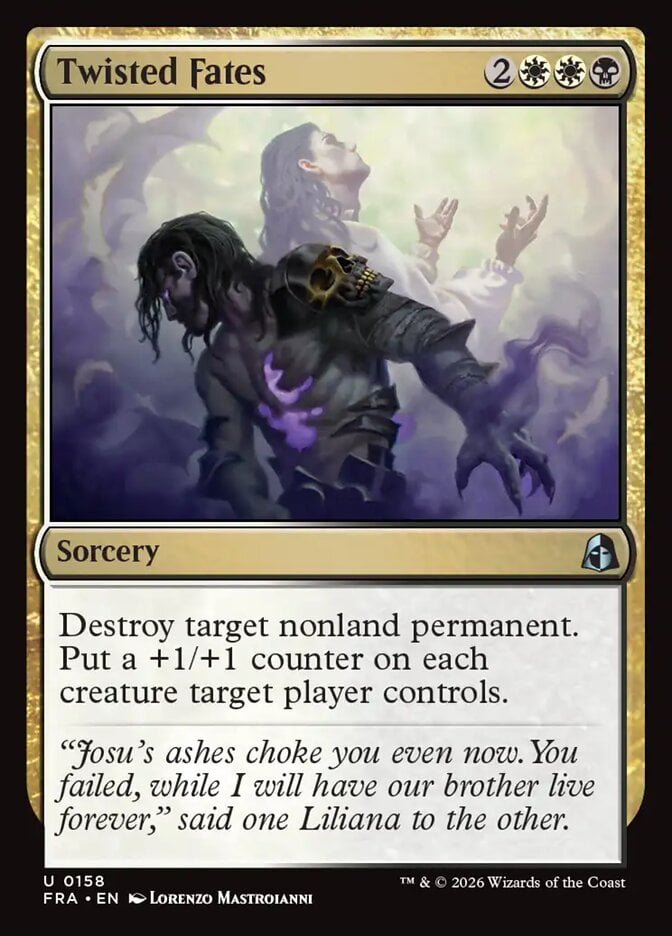
Rating: 6/10
Five mana is quite a lot to pay for a removal spell, but distributing a few +1/+1 counters sounds like a good enough bonus to make that cost worth paying. Imagine a board stall and you have a Twisted Fates. You destroy the biggest creature on the opponent’s board, then your board grows and also gets a potentially profitable attack in. Sounds like a good plan to me.
Uldaros Theorix
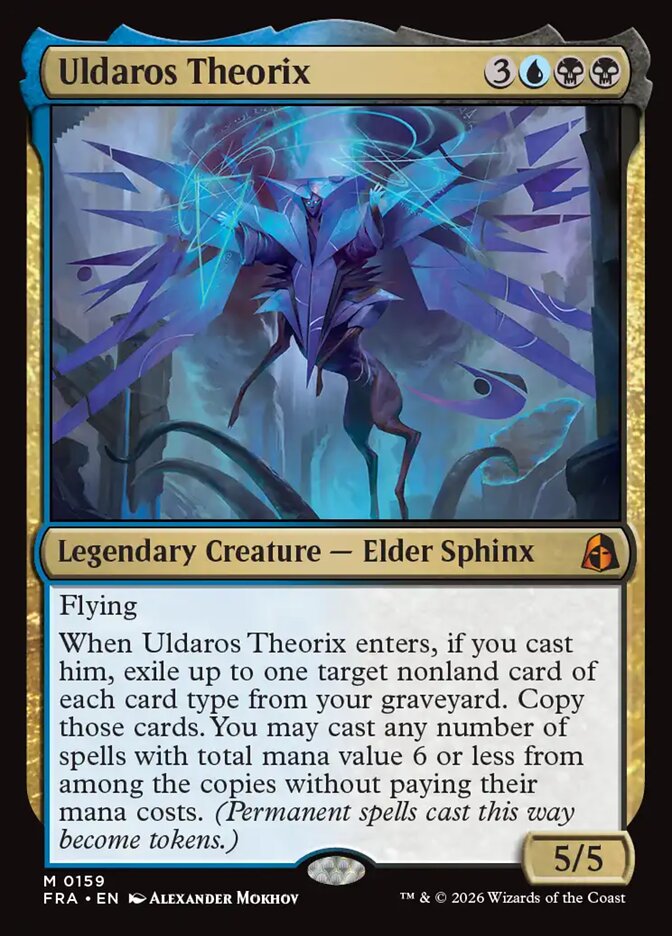
Rating: 9/10
Our last sphinx and it’s still a massive bomb. Uldaros Theorix lets you recast a 6-drop from your graveyard, or perhaps a pair of 3s, or whatever other combination you can find. Simply casting Uldaros gives you an immediate two/three-for-one depending on the situation, and if you’re filling your graveyard as we’ve seen that Theorix is very capable of doing, that just gives you a lot more options for what to do with it. All five of these legendary sphinxes are phenomenal cards and will all be great starts to any draft in this format.
Vigorbloom Charm
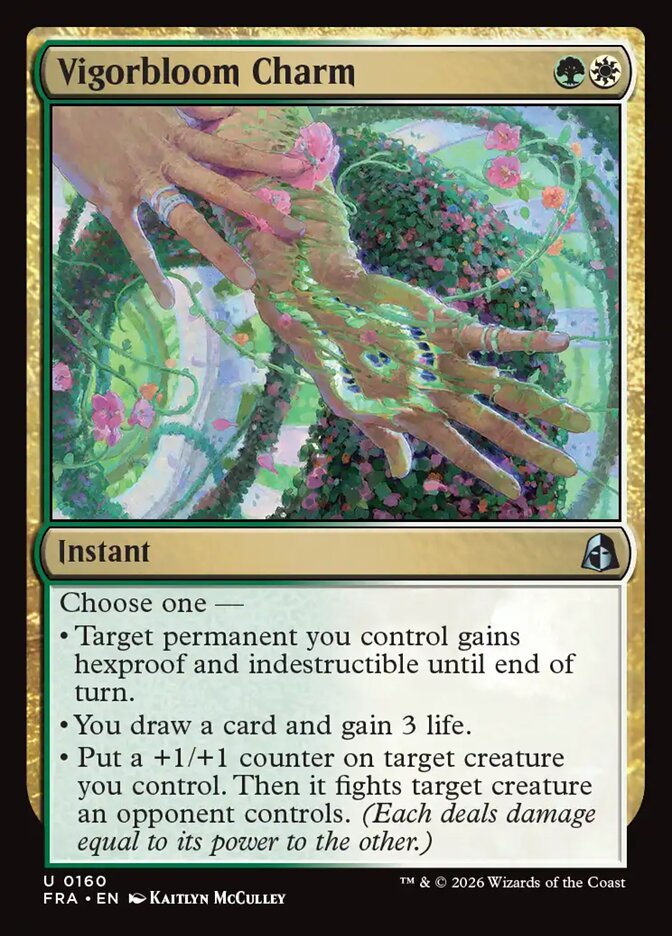
Rating: 6/10
An instant speed fight spell with a +1/+1 counter attached is a very powerful form of removal. To me, that’s the most useful mode on Vigorbloom Charm, yet it also protects a creature from removal and you can even cycle it when you need to. This is one of the better Hexhaven charms, and definitely a good early pick.
Vigorbloom Vanguard
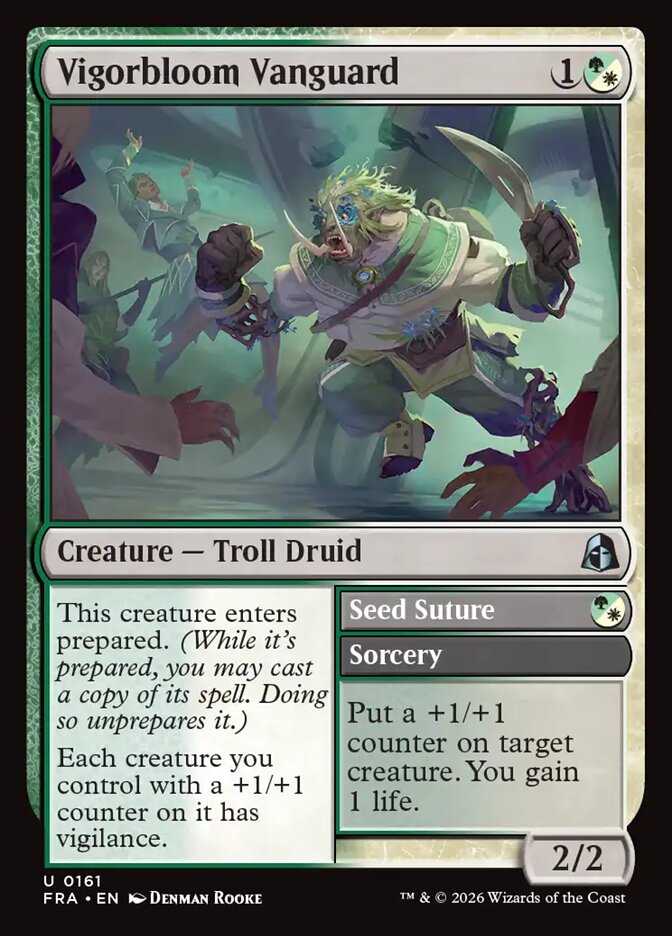
Rating: 3/10
Just like its common counterpart, 3 mana total for a 2/2 plus a +1/+1 counter wherever you want it is a good card, but I’m not seeing anything here that improves that. The point of lifegain, the vigilance, these aren’t the kinds of bonuses that can elevate Vigorbloom Vanguard beyond the level of a simple common, despite being uncommon.
Vindictive Triumph
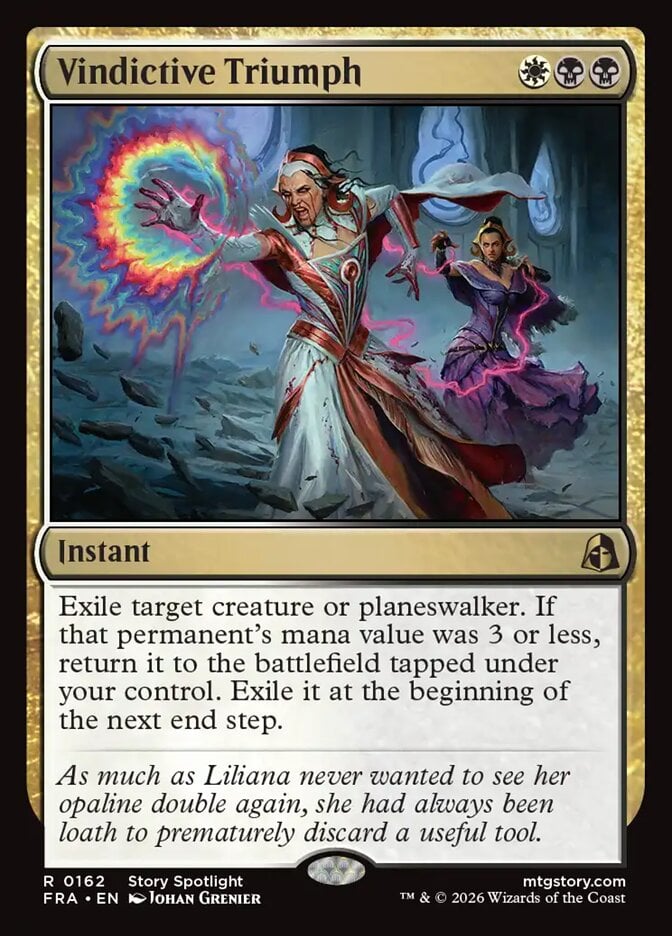
Rating: 7/10
Three mana to cleanly exile any creature is a good start. After all, Unmake is a strong removal spell. There are enough restrictions on Vindictive Triumph to control the power of the rest of the spell, but it’s still a good bonus. You can get an ETB trigger, or you could cast it on your opponent’s end step and get an attack in on your turn before the creature is exiled. The bulk of this card’s power level is still rooted in getting to answer any creature, but adding in some additional applications is nice to see.
Vraska, Soul of Stone
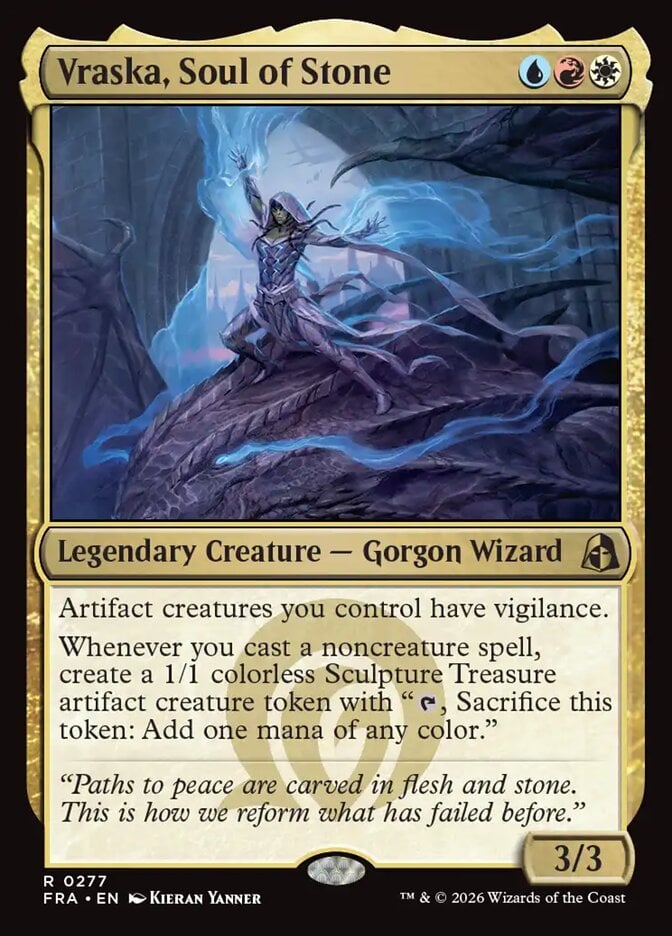
Rating: 6/10
It mainly matters that the tokens you create from Vraska, Soul of Stone are 1/1s. Also being treasures is interesting, but it’s rarely good to sacrifice board presence for a bit of mana. Besides, you’ll have to wait a turn to sacrifice them after creating them thanks to summoning sickness. This is a 2-color set, but there’s enough color fixing available that this Vraska should be worth casting in a spell-heavy deck, just like Saheeli, Jewel of Avishkar.
Vraska, the Cutting Glare
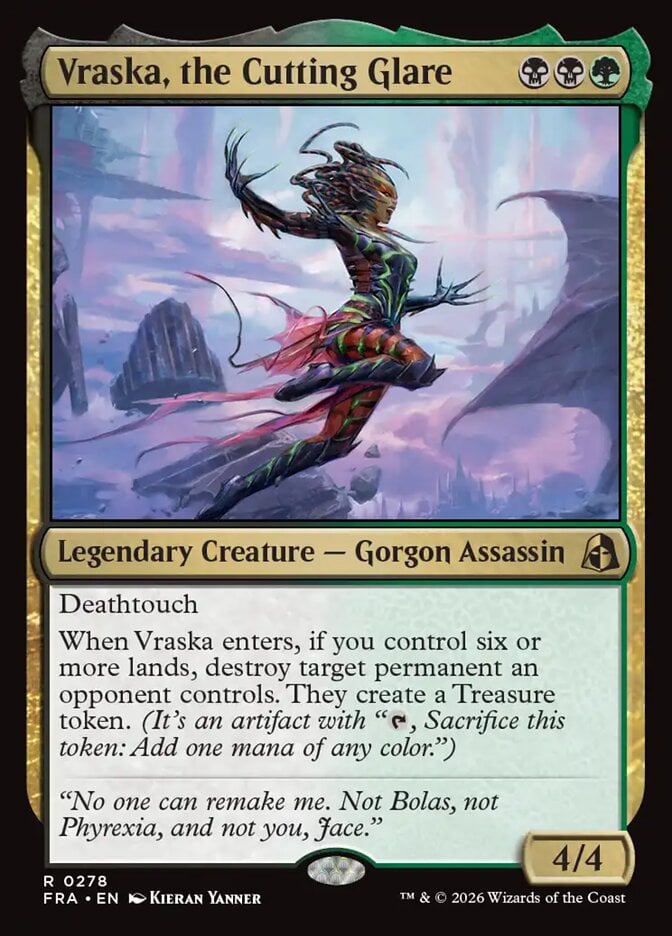
Rating: 8/10
It requires a little bit of setup, but Vraska, the Cutting Glare is as close to a Ravenous Chupacabra as you’re going to get. It’s also a 4/4 with deathtouch, so it’ll likely trade off for multiple permanents whenever you play it. This is a pretty simple design, but a very powerful one in Limited.
Warrior’s Blades
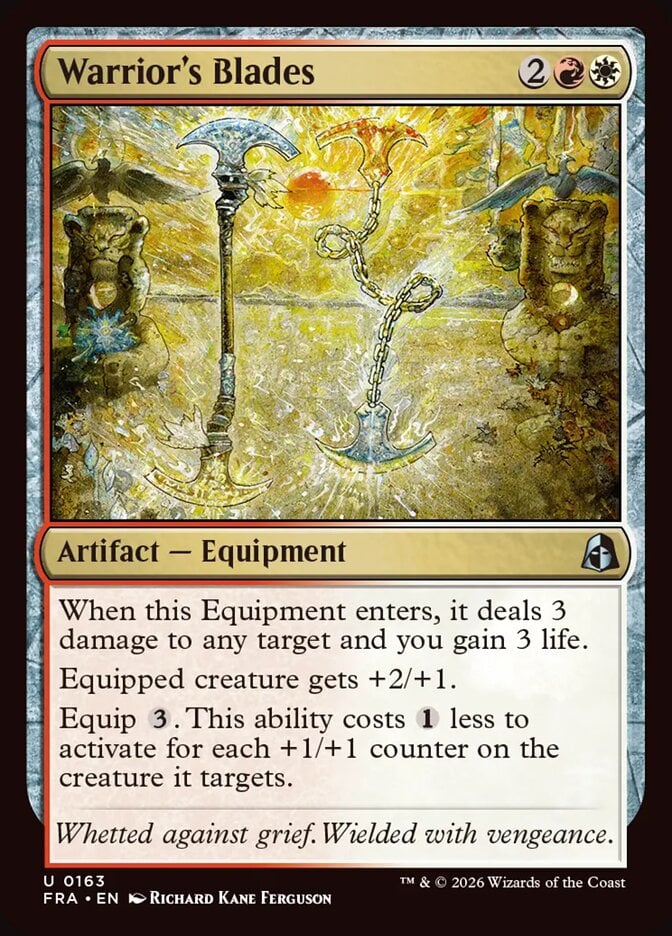
Rating: 6/10
Lightning Helix on a stick is a pretty powerful card, even if that stick is only an equipment, not a creature. With Warrior's Blades, you can kill a creature and then have a relevant permanent on the board, not to mention the nice buffer to your life total. It obviously gets better if you have some +1/+1 counters on your creatures to reduce the equip cost, but the Helix is front-loaded on the spell, so you get most of it right away anyway.
Whiplash Wordsmith
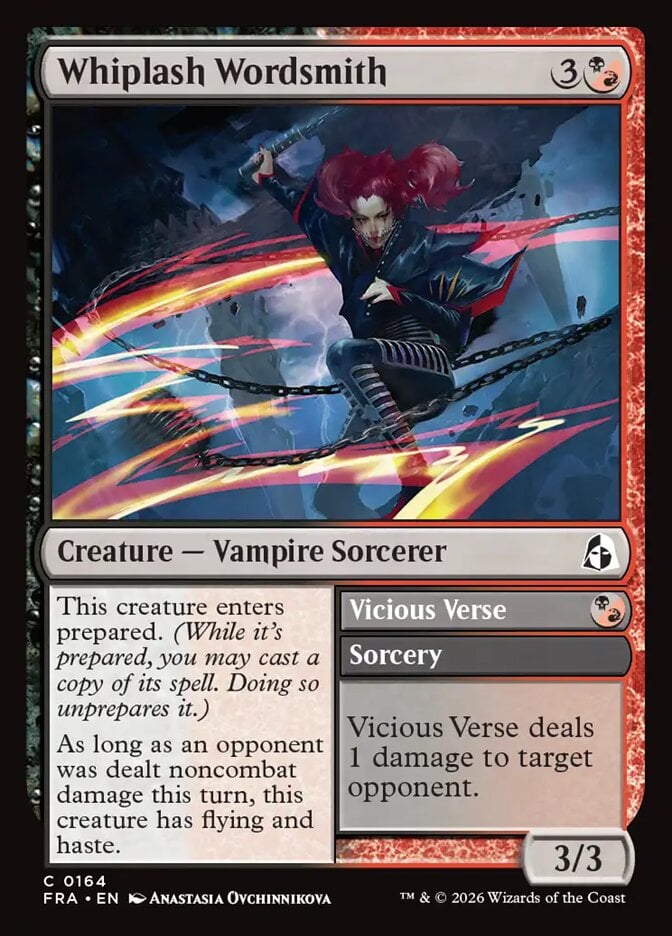
Rating: 2/10
Five mana for a 3/3 with flying and haste can be good on occasion, but it’s mostly mediocre. Stingerquill is probably the most aggressive archetype in Reality Fracture, so it’s far more interested in creatures that are cheaper than Whiplash Wordsmith.
Woodwork Prodigy
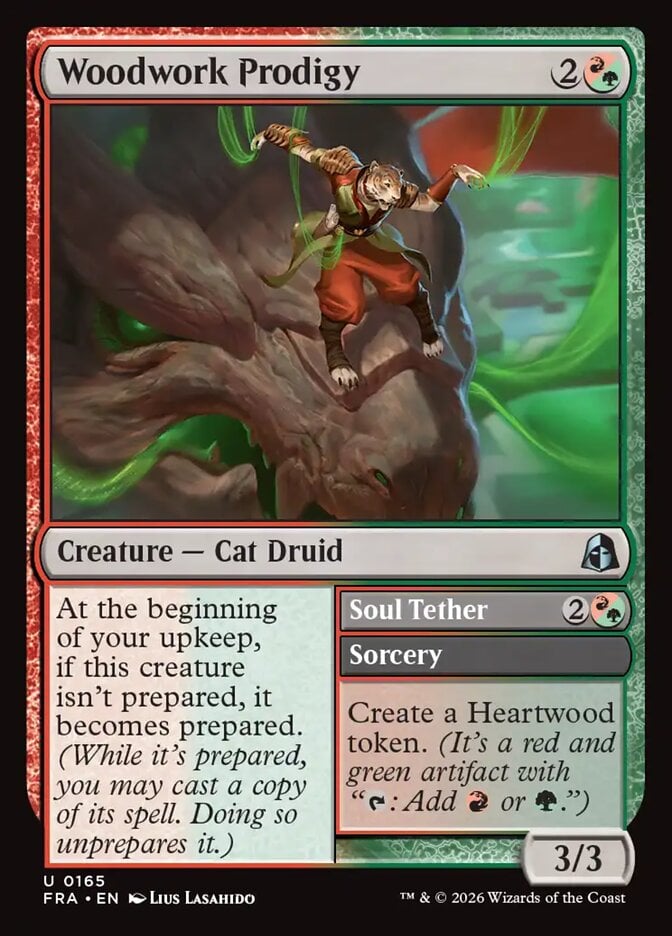
Rating: 6/10
One of my favorite Limited cards in recent years is Svella, Ice Shaper. Sure, Woodwork Prodigy doesn’t give you something to spend your excess mana on, but it does let you cast Soul Tether over and over. There are only a handful of cards in the set that create these hallmark tokens for Konstrari’s artifact ramp strategy, so having a card that can keep churning them out each turn sounds incredibly powerful to me.
Artifacts/Colorless
Emrakul, the Exigent Doom
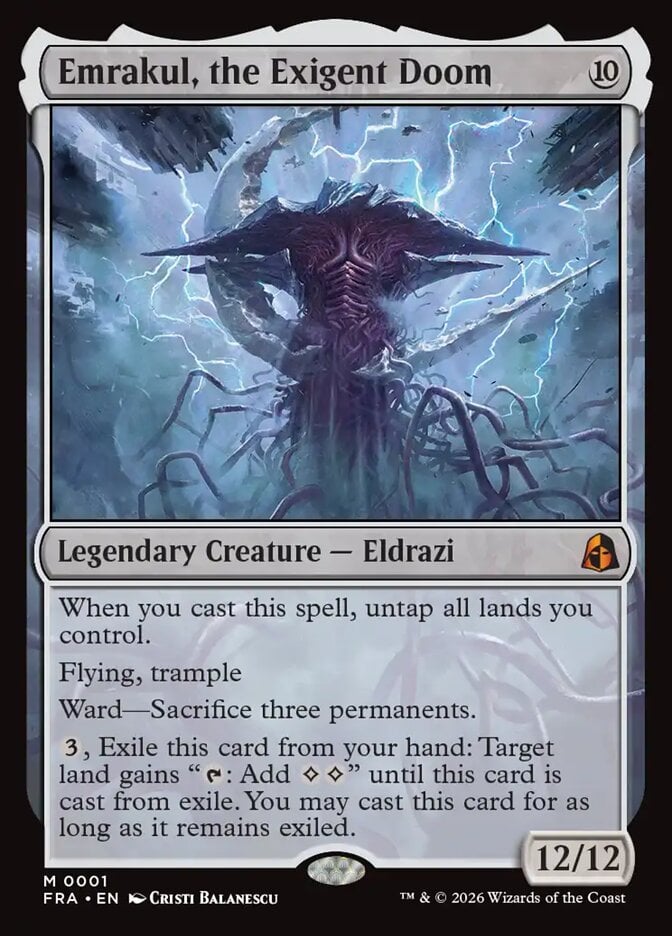
Rating: 0/10
I guess we’re heading into an Eldrazi storyline for 2027, and I’m all here for it! Sadly, as cool as Emrakul, the Exigent Doom is, it isn’t worth trying to cast at all. Ten mana is, well, untenable. Konstrari could be good to help ramp into it with Heartwood tokens, but after you put in all the effort to get Emrakul into play, it just dies to removal. The ward cost looks impressive, but it’s easy enough to pay by sacrificing lands. I’m not saying Emrakul will be removed every time, but the fact that your opponent can deal with it is too much of a downside for me to want to go out of my way to play it.
Afterthought Sentry
Rating: 2/10
A 2/2 is the bare minimum that we want to see on a 2-drop that isn’t going to grow by itself. We never see colorless creatures of this size, so I’m interested to see how Afterthought Sentry plays out, but I’d imagine that aggressive decks will be able to find better options in their own colors.
Archive Arbiter
Rating: 3/10
Archive Arbiter looks surprisingly good for a colorless artifact creature. A 4/4 flier plus gain 4 life sounds pretty reasonable, even if it’s a little below rate by today’s standards. The fact that any deck can use this if they need it gives it some extra points, and it can even answer Jace tokens if you need it to. So yeah, it seems pretty nice.
Codie, Ravenous Codex
Rating: 4/10
I’m not putting a lot of stock in the 5-color ability of Codie, Ravenous Codex. Rather, the idea of a 1/4 in play that copies your prepared spells actually sounds pretty good. In particular, copying Soul Tether or Peer Review seems particularly strong, or maybe an Ancestral Craving if you get really lucky. If you can get some real value this way, Codie should be worth playing.
The Echoverse Fulcrum
Rating: 6/10
A colorless board wipe shouldn’t be underestimated. Any deck can play this and clear out the board if they need to. The major downside to The Echoverse Fulcrum is that unless you pay the full 7 mana in the same turn, your opponent will see the wrath coming and can try to play around it. Funnily enough, this can also work to your advantage, allowing you to extend your board while your opponent is scared to extend theirs. This does look powerful of course, but I’m not sure it’s the slam dunk pick it might appear to be at first.
Eye of Jace
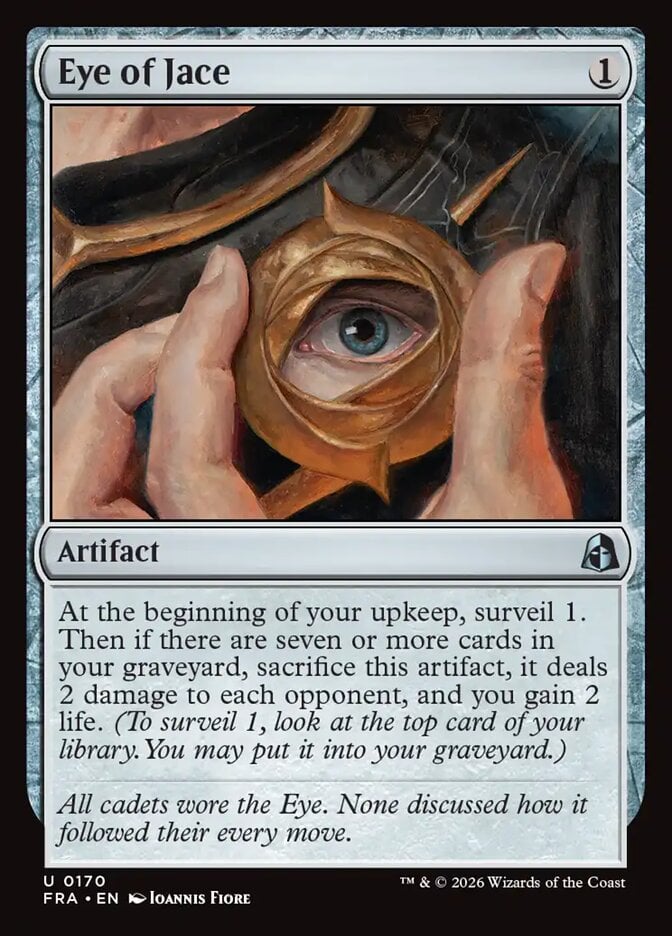
Rating: 1/10
Surveilling every turn isn’t a terrible ability, but Eye of Jace will never get you a full card’s worth of value if you play it. I can maybe see using it in a very focused Theorix deck, but I wouldn’t be happy about it.
Karn, Argent Defender
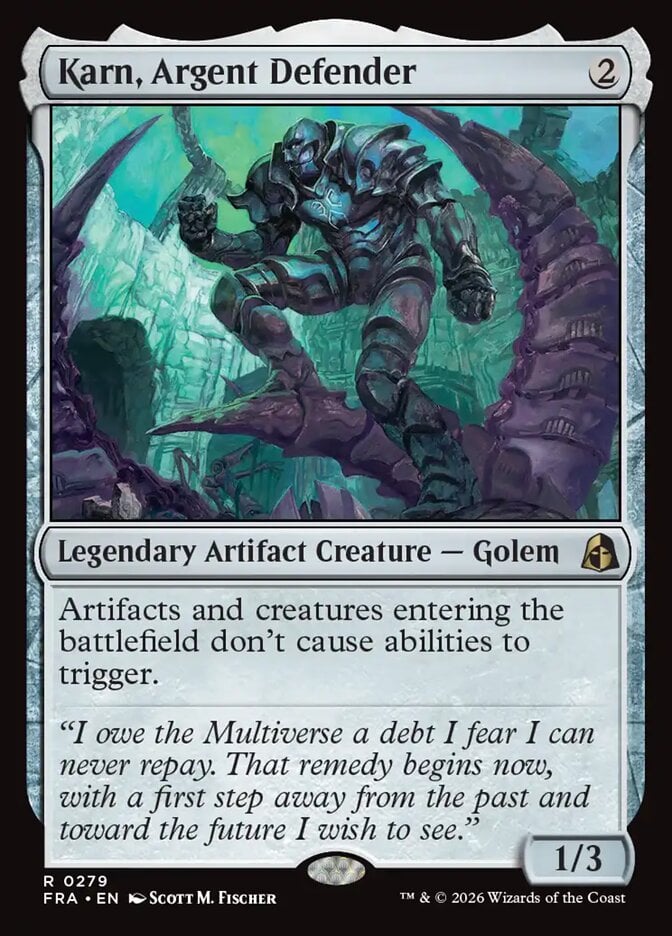
Rating: 1/10
It’s quite funny that Karn, Argent Defender looks like a great card to get off of Karn, the Great Creator. This card screams “sideboard me”, and I sincerely doubt it’ll be anything more than that in Limited either.
Keeper of the Quiet Hour
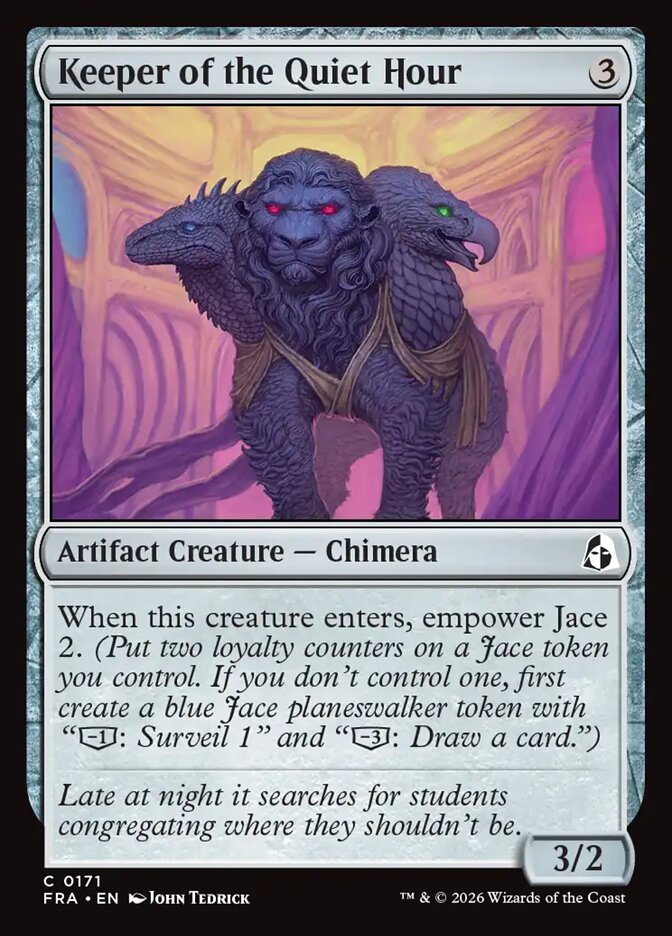
Rating: 1/10
Keeper of the Quiet Hour is considerably better than the usual 3-drop artifact creatures that do a little bit of scrying or surveilling, since topping up your existing Jace token to draw a card sounds very appealing. I could see running this if you need one more playable in a Jace-centered deck, but it’s still not something I’d be excited to play.
Living Library
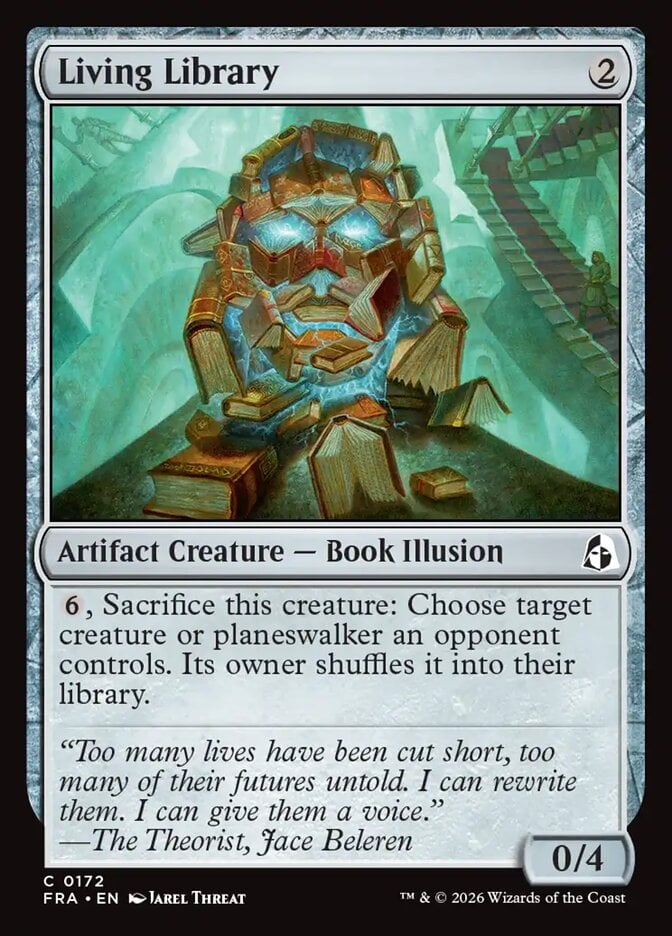
Rating: 2/10
I instinctively want to say this is bad, but a 0/4 does actually block for your Jace tokens pretty well and can then deal with an annoying creature in the late game. Living Library isn’t something I’ll go out of my way for, but it may be able to find a home in a good blue/green Jace deck.
Medic’s Kitesail
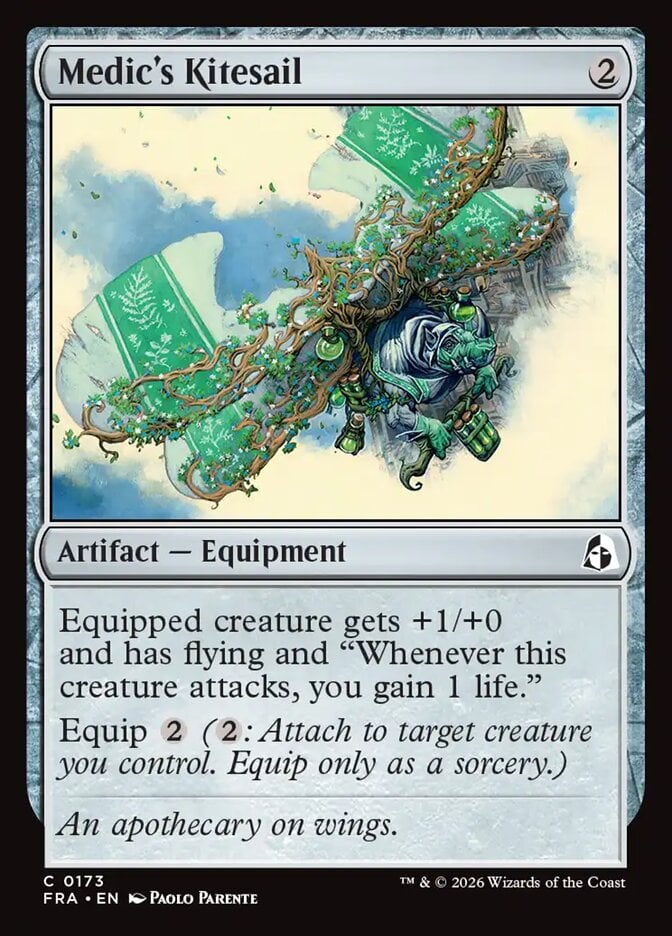
Rating: 2/10
The ability to give a creature flying tends to be pretty strong, especially if you have a deck that might struggle with breaking out of a board stall. Medic's Kitesail is something that you won’t always want to play, but every now and again you’ll have the right deck for it and it should do its job well enough.
Murmuring Volume
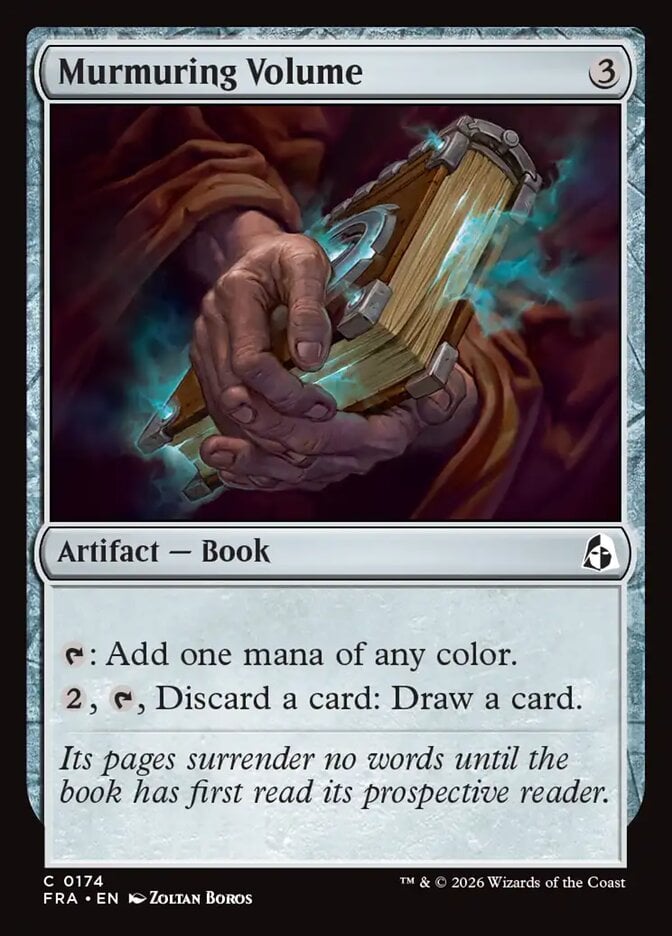
Rating: 3/10
Mana rocks have been performing well in recent sets due to their additional abilities getting considerably better than they used to be. I don’t think Murmuring Volume quite stacks up against the rest of them, but it’s worth noting that Konstrari are trying to ramp with artifacts and this is definitely a way to do that. Plus, it does seem like a 5-color deck might be available, and this can enable that.
Traxos, Scourge Eternal
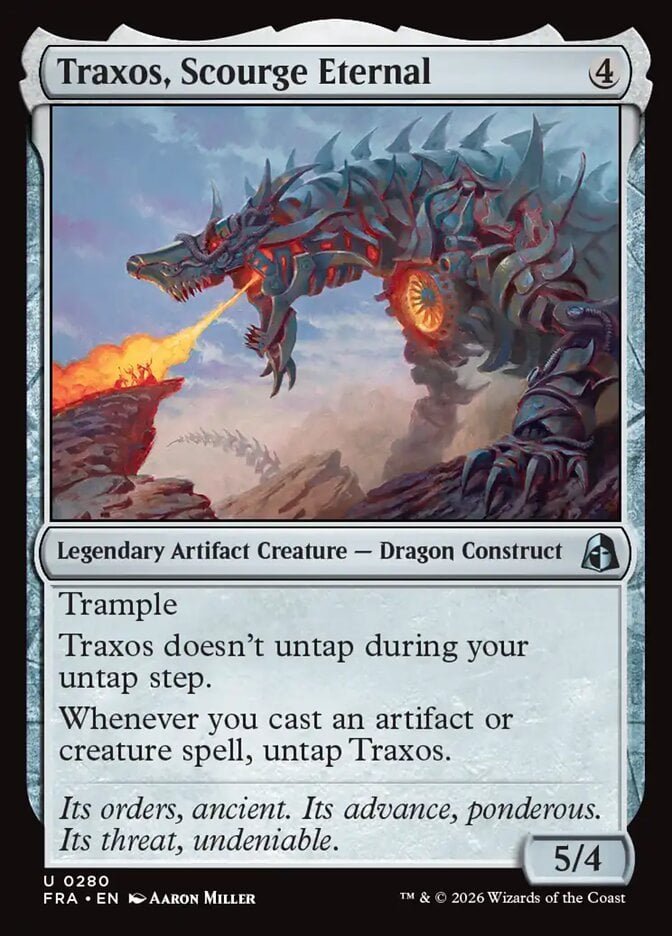
Rating: 4/10
A 5/4 trampler for just 4 mana hits incredibly hard. Needing you to cast a creature or artifact spell to untap it is a pretty big downside, but unlike the original Traxos, Scourge of Kroog, Traxos, Scourge Eternal at least enters untapped, so you get that first attack without needing to cast another spell. The tradeoff for that of course is that Traxos isn’t that much bigger than 4-mana creatures normally are, so I think this is only good in decks that don’t have access to creatures of this size (nongreen ones basically).
Lands
The “Commons/Annex” Planeswalker Dual Lands
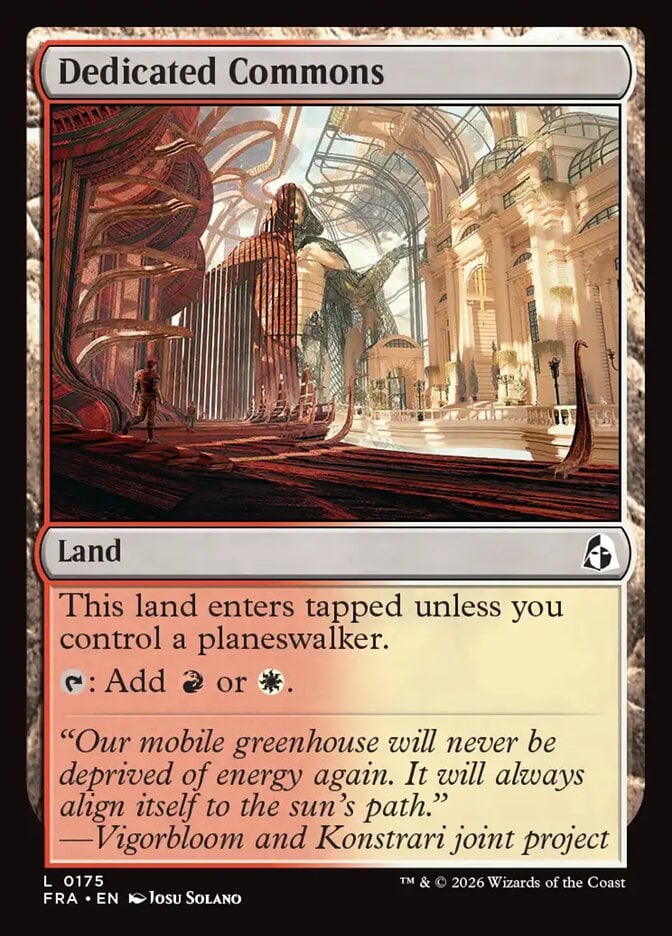
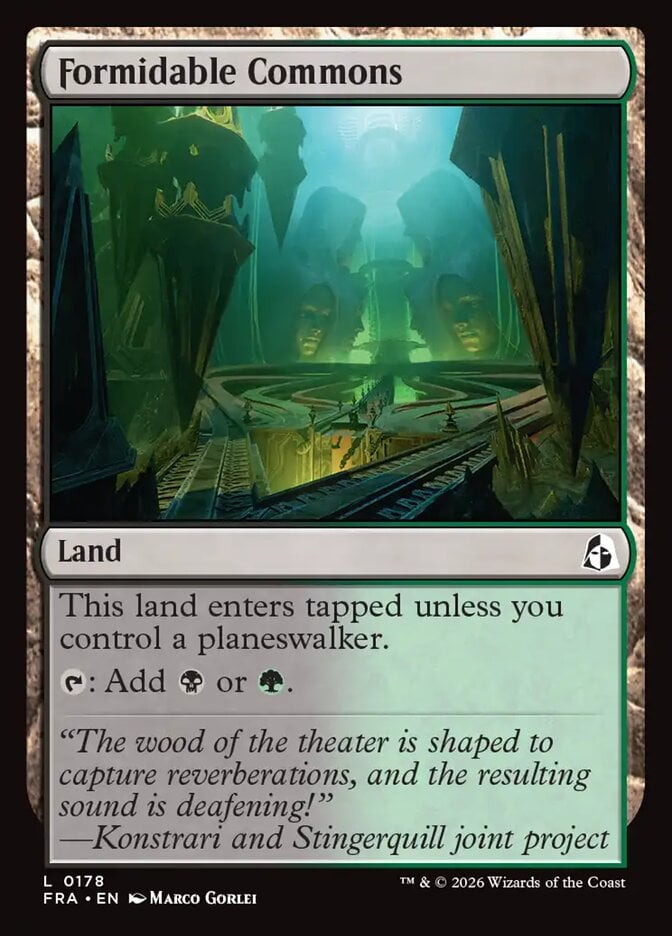
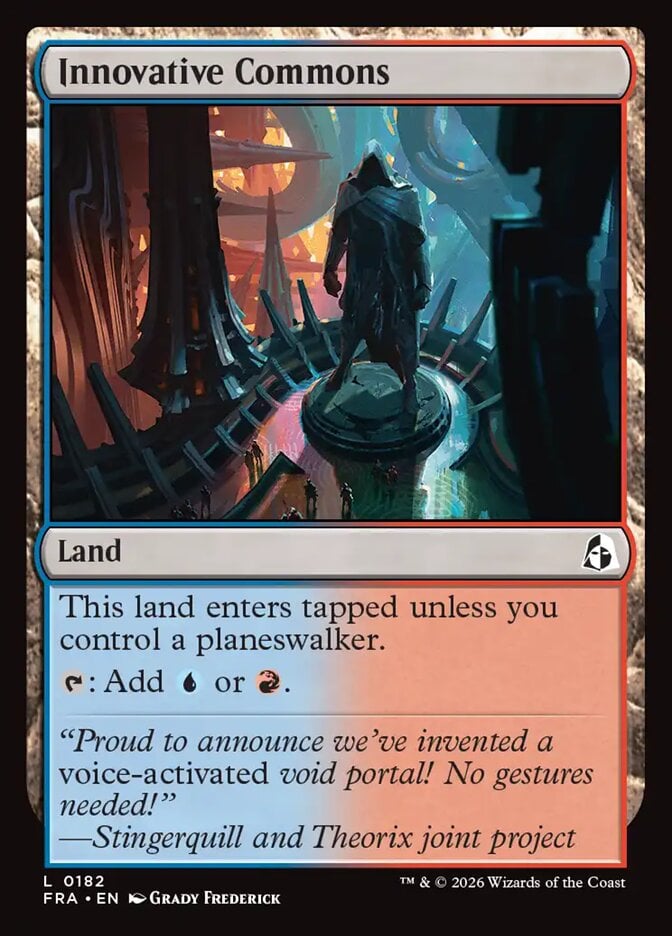
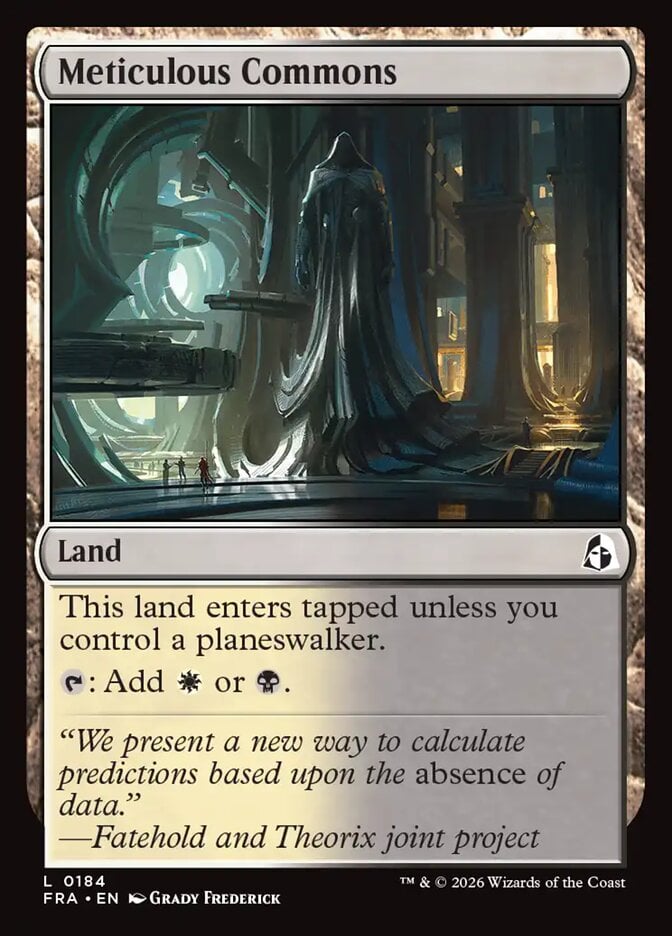
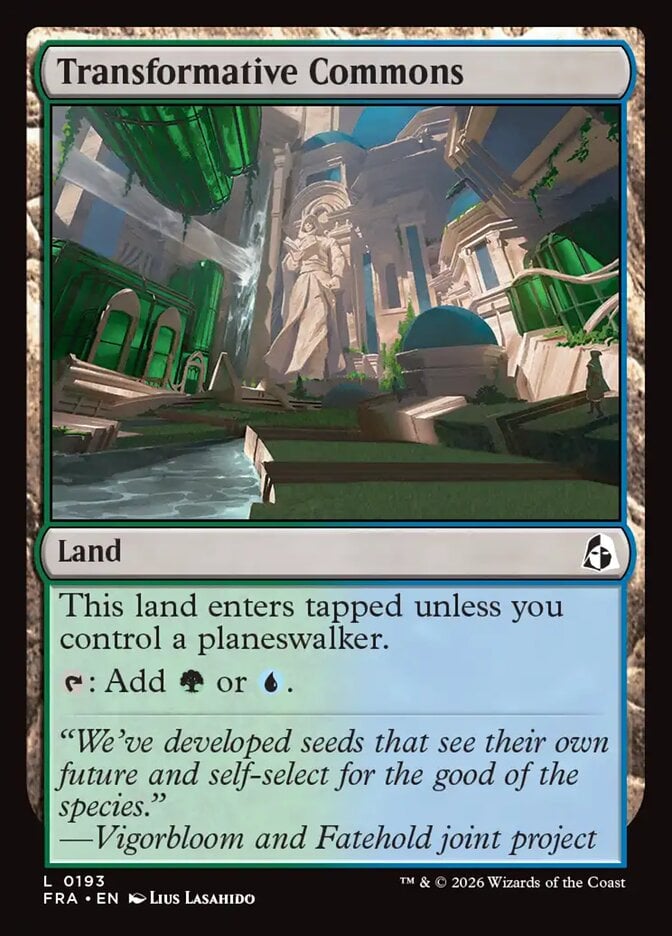
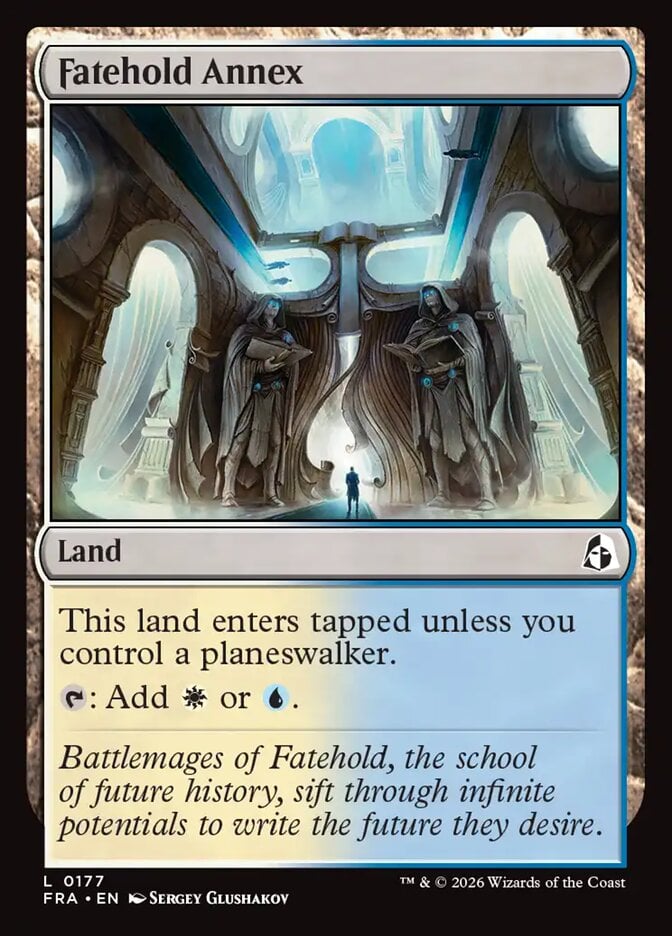
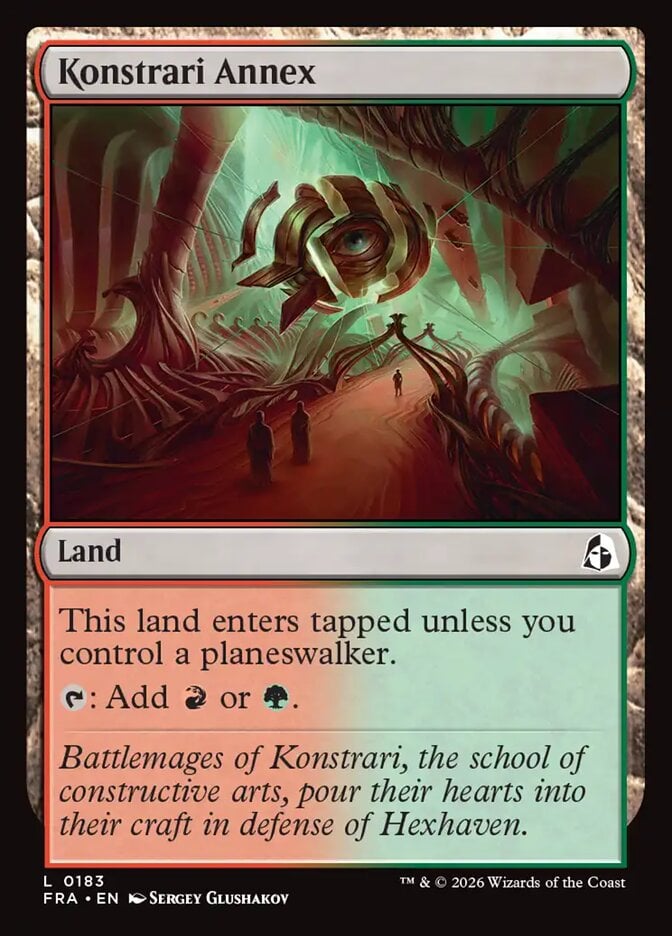
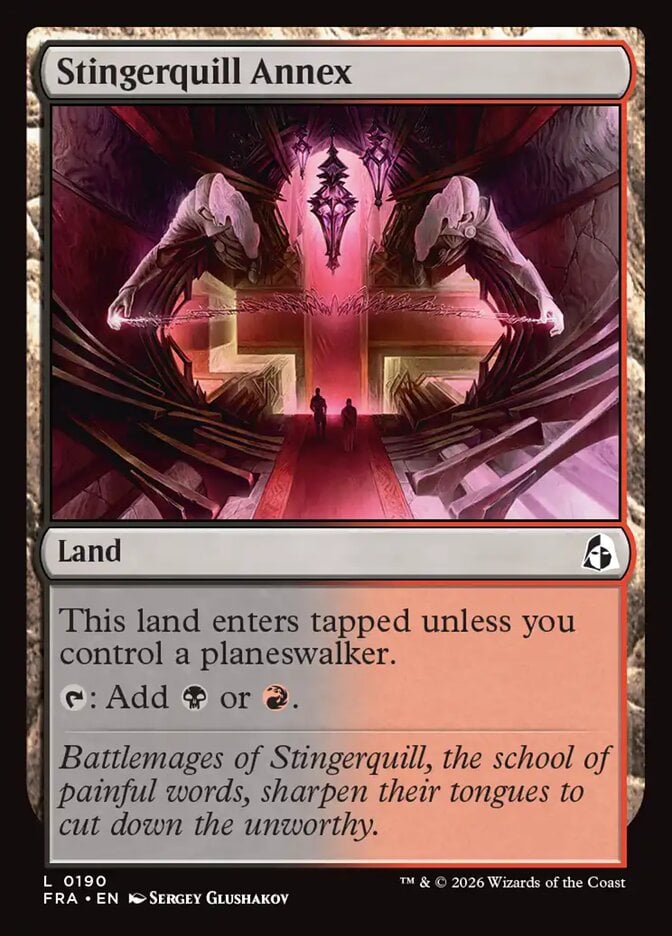
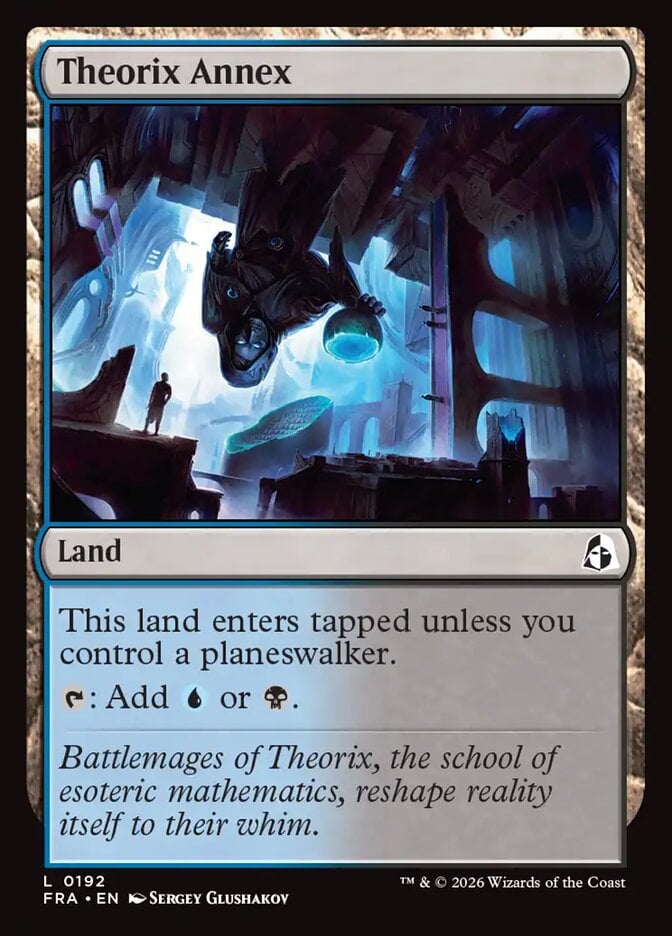
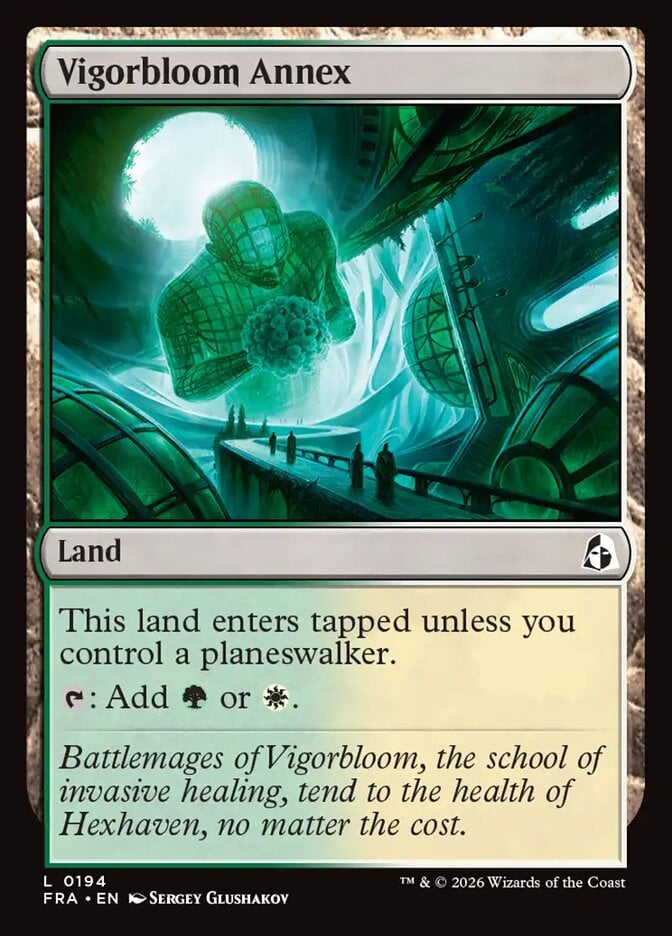
Rating: 4/10
This is definitely a cycle I never could have imagined. Planeswalkers are littered throughout this set, and while these lands will never enter untapped on early turns, they certainly can later. As with all cycles of common dual lands, you should pick these up if you need fixing and prioritize them over medium-level commons, but not over premium cards like removal or the more powerful legends.
The “Slow” Dual Lands
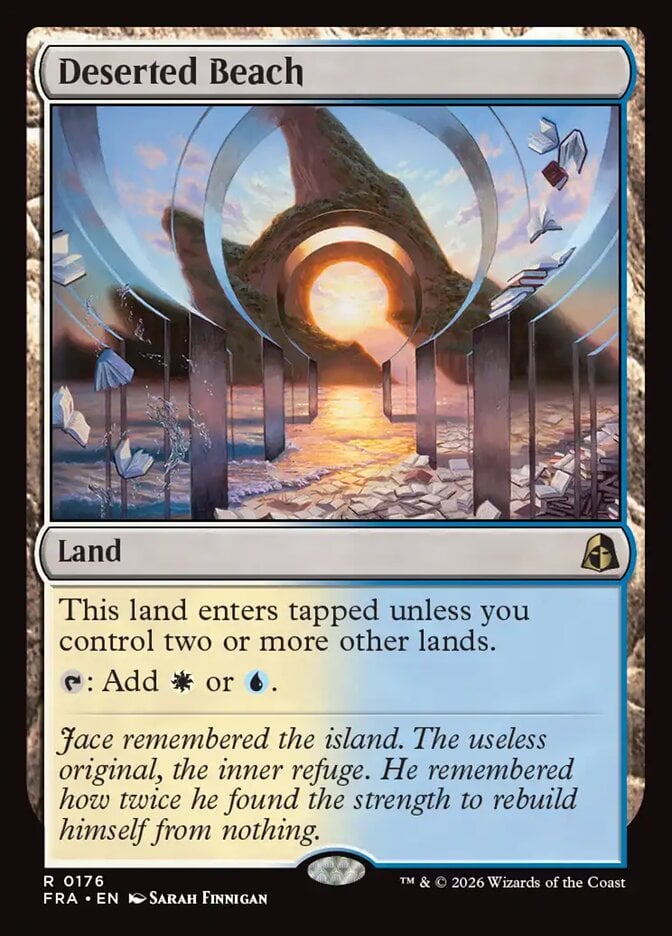
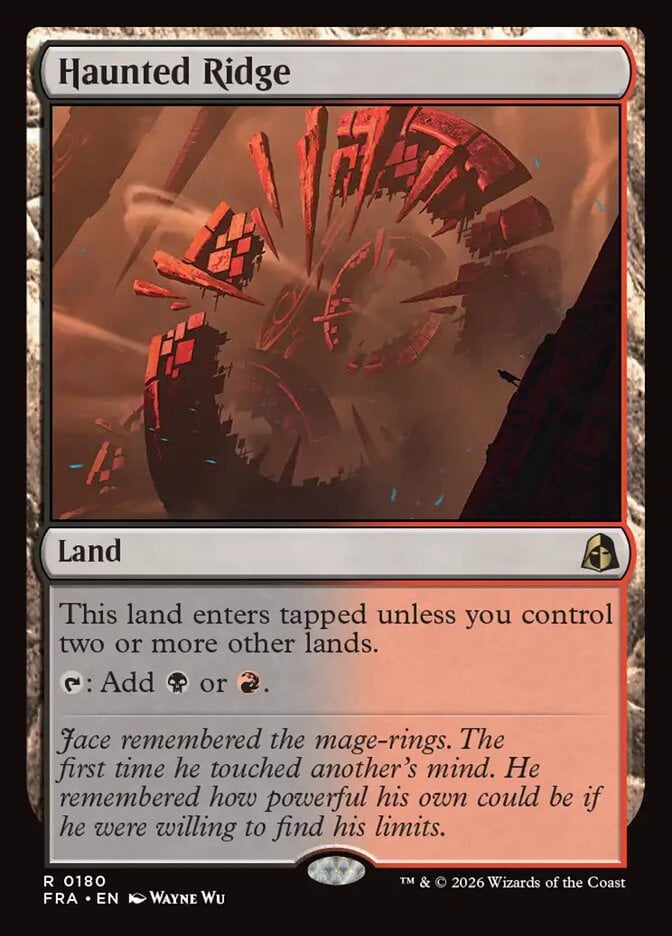
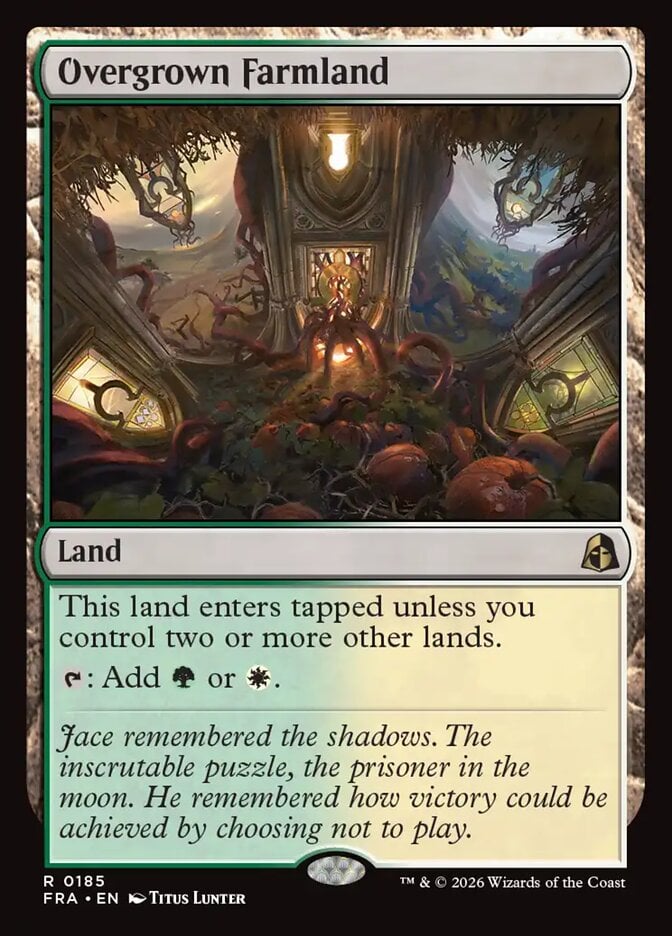
Rating: 4/10
Games of Limited last for long enough that these duals basically have no downside and should enter untapped almost every time. If you’re in their color combination and there’s no premium card for your deck in the pack, you should absolutely take these.
Hall of Echoes
Rating: 2/10
While creature lands are usually very good to put in your deck, even if they’re colorless, one that relies on you having something in play to copy doesn’t sound very appealing. On top of that, it costs far too much to activate Hall of Echoes, effectively costing you 6 mana when you include itself. While copying a massive creature of course sounds good, the times when you have nothing or only something bad to copy I think will outweigh them.
Hexhaven Dueling Arena
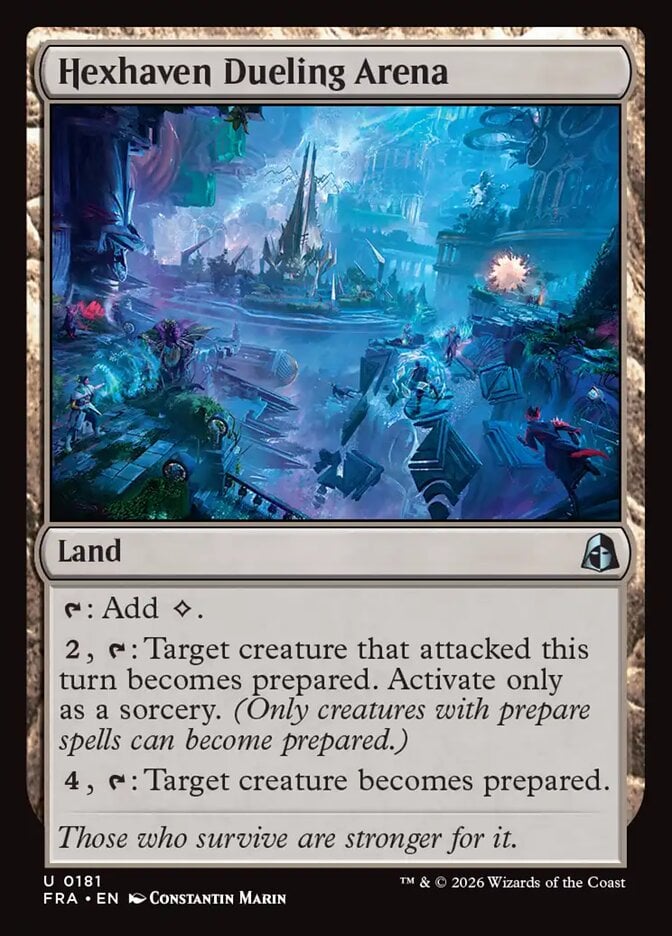
Rating: 1/10
Colorless lands come with a very real cost when you put them in your mana base. While some have an ability that’s worth paying that cost, Hexhaven Dueling Arena does not. I thought Skycoach Waypoint might have been good enough, but it ended up being pretty bad, so I imagine the same is true here.
Roiling Canopy
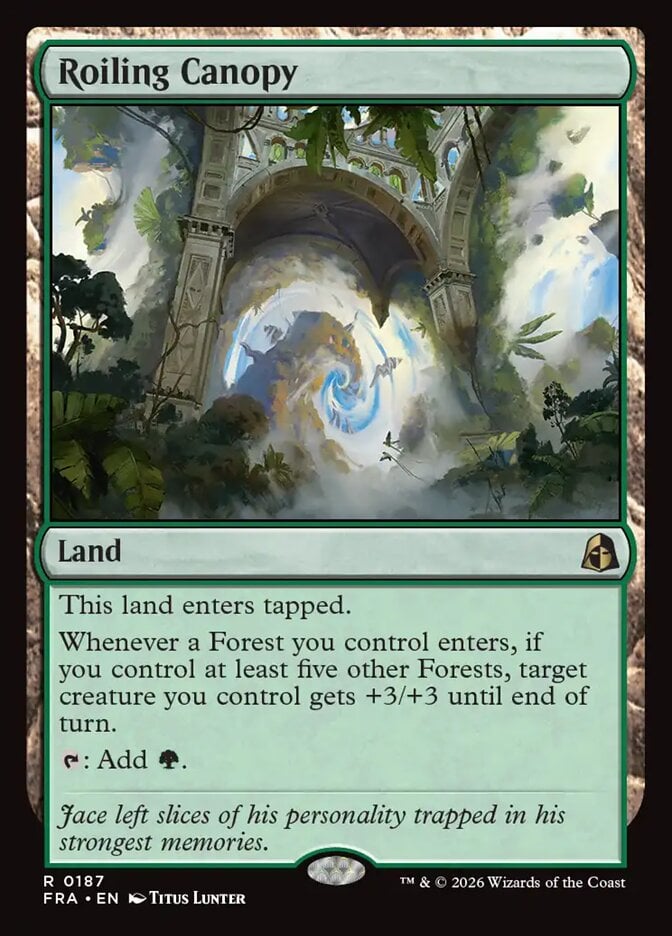
Rating: 0/10
A green-shifted Valakut, the Molten Pinnacle is kind of cool, but Roiling Canopy does literally nothing until you reach your sixth forest in play. That won’t happen unless you warp your entire draft around forcing mono-green, so since it enters tapped, that makes it strictly worse than a forest and you should never play it.
Room of Refuge
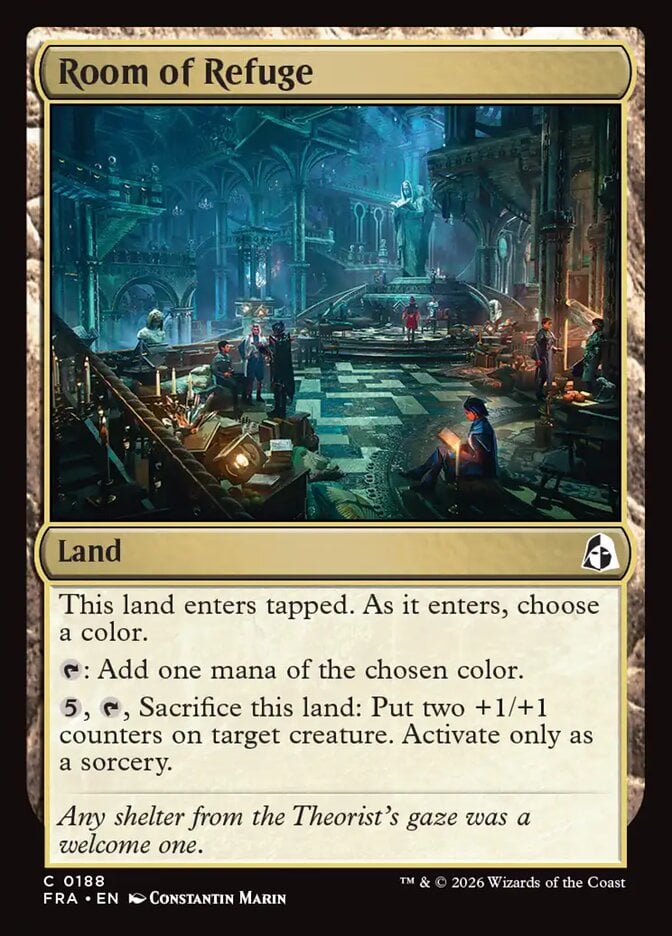
Rating: 3/10
We’ve seen plenty of these lands before and they’re always fine. I’d rather have a dual land most of the time, but the fact that you can play Room of Refuge in any deck sometimes gives it an edge. The utility ability is a nice bonus, but pretty expensive to make too much of an impact.
Theorist’s Sanctum
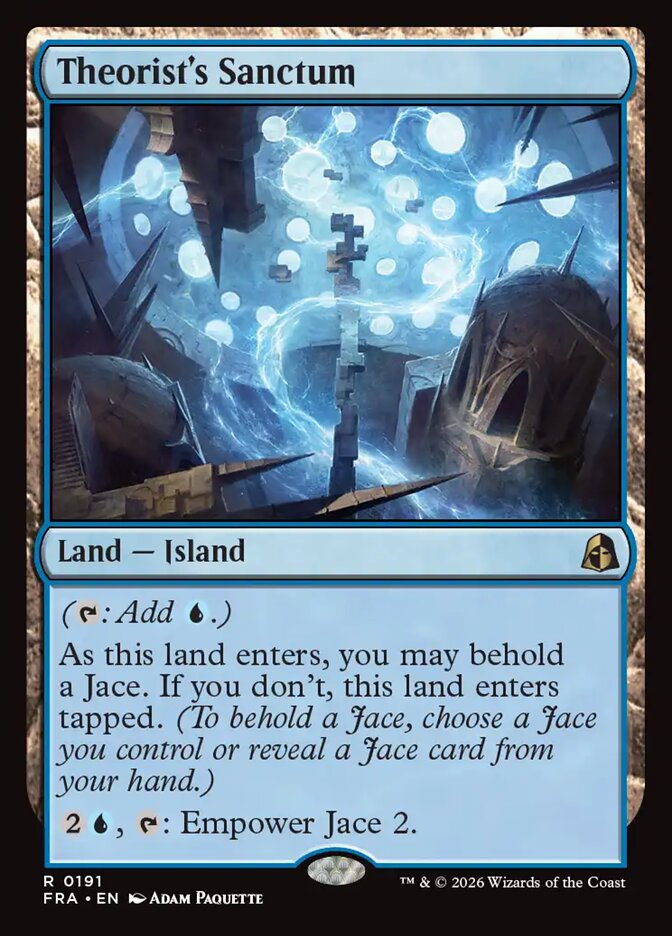
Rating: 7/10
Powerful utility lands are often very good pick-ups in Limited. Theorist's Sanctum is very close to being a strict upgrade over an island, especially if you have a deck that empowers a lot. As such, picking it in a draft is essentially like taking a spell that goes in one of your land slots instead of one of your spell slots. That utility shouldn’t be underestimated, and it’s what makes me want to take this very highly.
Special Guests
As with the other in-universe Magic sets that we get, Reality Fracture features 10 Special Guest cards. They’re very rare in Play Boosters, and most drafts won’t see a single one, but it’s still worth looking at them briefly in case they come up. The arts form a cool panorama, so they’re listed here in the order in which they appear on that panorama.
Eye of Ugin

Rating: 0/10
Technically this can work with Emrakul, the Exigent Doom, but to do that you’d have to play a land that doesn’t tap for mana. Sure, Eye of Ugin is an incredibly broken card, but definitely not in Limited.
Austere Command
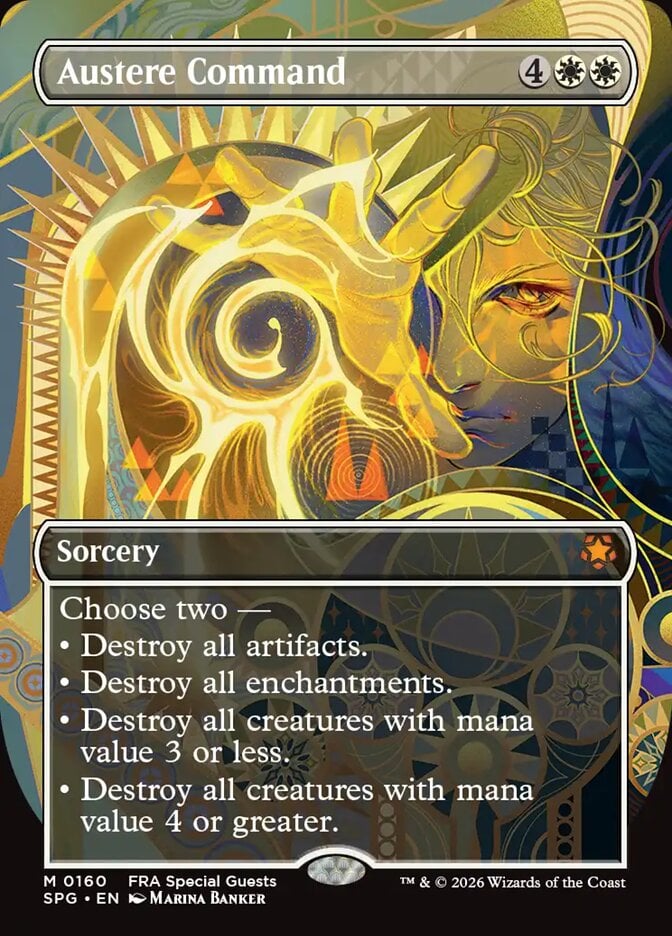
Rating: 8/10
Right off the bat, Austere Command is a 6-mana board wipe that can kill all creatures. That’s definitely good enough for Limited without needing to worry too much about the rest of it. That said, it’s also a sweeper that you can potentially turn into a Plague Wind if you have the right board. It can of course also destroy some pesky Heartwood tokens or enchantments, making it a sweeper with a lot of potential in this format.
Flesh Duplicate

Rating: 7/10
Even though it comes with a downside, getting to copy any creature on the battlefield for just is really good. You’ll get the ETB trigger from it and be able to attack at least twice before you sacrifice it, so you should be able to find some good ways to play Flesh Duplicate. Plus, it’s an import from the Doctor Who set, so that’s also nice to see.
Consign to Memory
Rating: 1/10
While this is the best sideboard card in Modern for very good reasons, Consign to Memory is far too situational to see any Limited play. Maybe you can bring it in as a sideboard card, and I’d definitely bring it in if my opponent was trying to Emrakul me, but you should never start it in your main deck.
Sublime Epiphany
Rating: 10/10
If you’ve never played against Sublime Epiphany, you’re in for a… what’s the opposite of a treat? Simply put, all your opponent needs to do is wait for you to cast a spell, they can usually cast this with four of its modes, countering the spell, bouncing one of your creatures, putting a copy of a creature into play, and drawing a card. It’s an automatic three-for-one plus a huge tempo swing. As an enjoyer of big, powerful blue spells, I love this card, but I really don’t want to have to play against it.
Consider
Rating: 4/10
One-mana cantrips are never that bad, but the key is simply to find a deck that actively wants a Consider. Fatehold will love it since it triggers all of its abilities, Theorix appreciates the help it gives you to load the graveyard, and the blue/red deck will also like it for triggering prowess. That sounds like a pretty good card to me.
Necrodominance
Rating: 0/10
As powerful as Necrodominance is in various Constructed formats, it’s completely useless in Limited. Triple black makes it too difficult to cast, and without the ability to also draft the right cards to support it, it just has too many downsides.
Mind Twist
Rating: 8/10
Random discard is absurdly powerful, and Mind Twist is one of the most famous examples of it in this game. Is the card good in 2026? It doesn’t affect the board in any way, which is a difficult proposition these days, but I can imagine casting it for X=3 or X=4 in the middle of the game will be backbreaking for most opponents. My gut tells me that this won’t be that good because of how much the game has evolved in 33 years, but it’s also hard to bet against such an iconically toxic card. Arcane Omens was incredible in Secrets of Strixhaven, but this is a very different format.
Splinter Twin
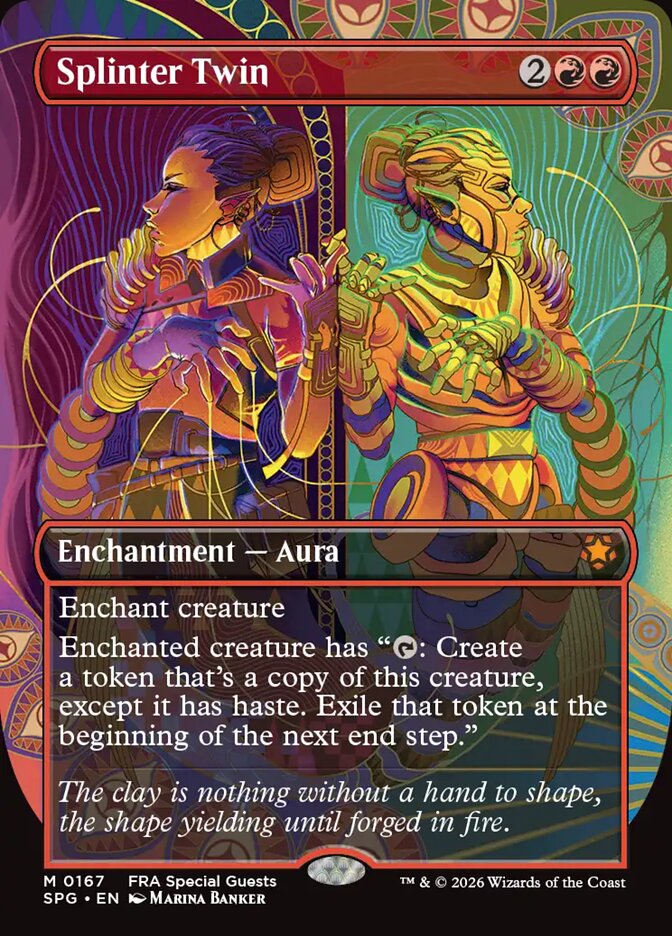
Rating: 6/10
Splinter Twin is a weird one. On the one hand, it’ll be unplayable in most decks, but Reality Fracture does have a little twist in it. If you pick it up early in a draft, you could look for a copy or two of Divining Duelist and put together the classic auto-win that made this card the bane of every Modern player’s existence throughout the 2010s. Even with just one copy of this in your deck, I think that’s worth going for.
Root Maze

Rating: 0/10
Sure, this slows down your opponent, but it slows you down too. Root Maze is absurdly bad and you should never play it.
Wrap Up

Eye of Jace | Illustration by Ioannis Fiore
I haven’t been this excited for a Draft environment in a long time. This set is filled with so many great cards to build around and the empower mechanic is fascinating. You can be sure I’ll be going to a few prereleases, and I hope you have fun at yours too.
Which archetype are you hoping to find in your Sealed Pool at Prerelease or as you draft Reality Fracture? Which cards are you looking forward to playing? Which ones do you hope you never face? Let me know in the comments below.
If you liked this article, please consider subscribing to our YouTube channel The Daily Upkeep and join our Discord server too. Share the article with your friends and help drive the conversation further.
Until next time, take care of yourselves!
Follow Draftsim for awesome articles and set updates:










8 Comments
I was really looking for this article!
Hope it helps Gabriel!
Ajani Unrelenting will kill your opponents’ tokens though, its 4 damage is only not deal to tokens *you control*
The Ajani mythic planeswalker does indeed kill opposing tokens, so the last part of the review text is not true
That’s been edited, thanks Lorenzo.
Ajani in fact does kill opposing tokens. I understand it reads to good to be true
Thanks Emiel, turns out it’s even better somehow.
Not sure about draft, but Face Yourself might be one of the best cards of the set in sealed (at least in my limited experience).
Add Comment