
Last updated on August 26, 2026

Notion Thief | Illustration by Clint Cearley
Of all the mechanics, themes, and strategies in the game of Magic, drawing cards is the most potent of all. Magic is a game of resources, and there’s no better way to win a game than by just having more cards than your opponent. Limited players especially live and die by this ideology.
It is a daunting world. Every color and archetype has access to some kind of card draw engine, and there are hundreds of options in Eternal formats like Commander. That’s why today I come to you with a comprehensive list of the best ways to draw cards and what makes them so great.
Let’s get started!
What Is Card Draw in MTG?
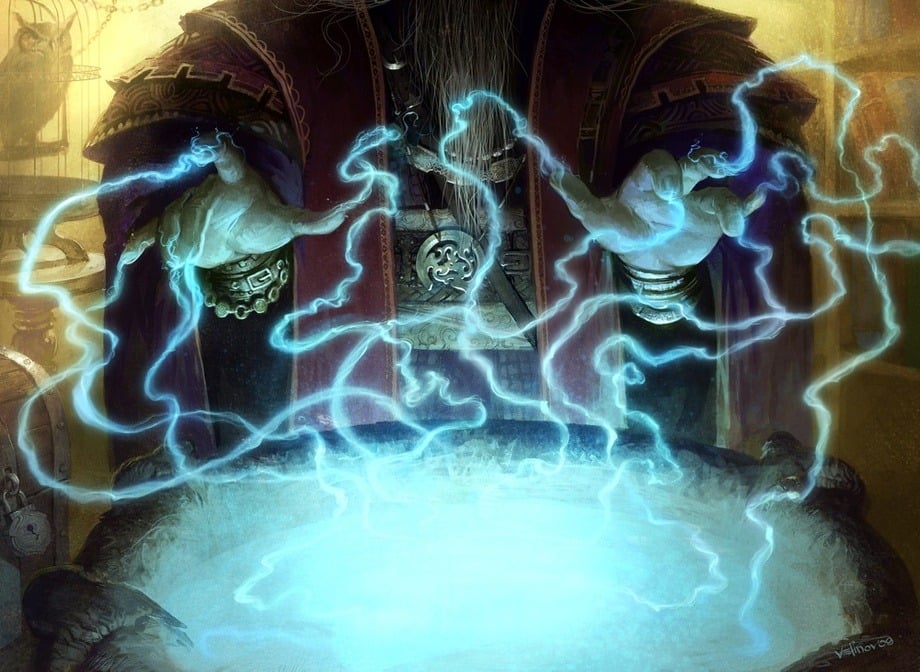
Preordain | Illustration by Svetlin Velinov
Card draw includes any effect that puts extra cards in your hand and explicitly uses the word “draw.” Generally speaking, card draw in Magic works the same as in any other card game, be it a TCG or classics like poker or bridge: To draw a card, you take the topmost card from your library and put it in your hand.
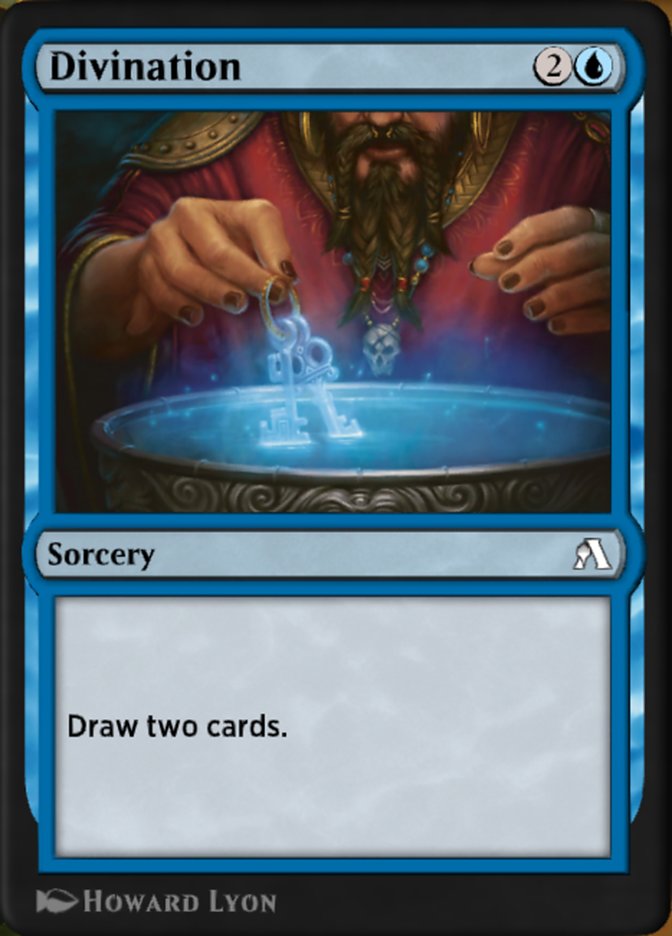
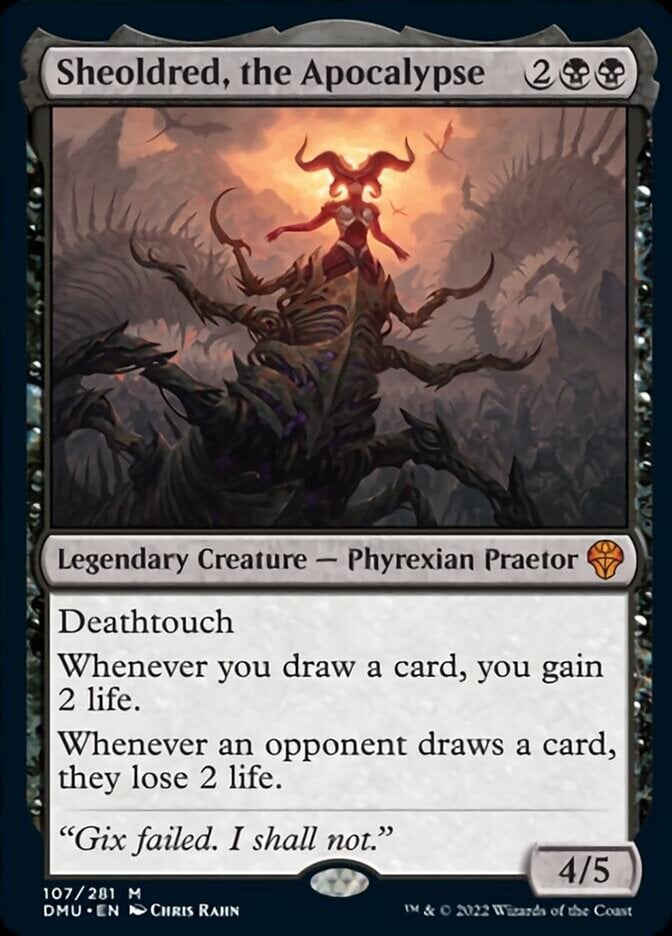
There’s an important caveat, though. Effects that trigger whenever you draw a card and/or punish your opponents for drawing cards, like Sheoldred, the Apocalypse, only trigger for effects that literally say “draw” in their description. An effect like Impulse doesn’t have the word “draw” in it, so it doesn’t count for Sheoldred.
As such, for today’s ranking, we only consider cards that spell out “draw” in their rules text. Magic has tons of ways to put cards in your hand or to achieve similar results, but if it doesn’t say “draw,” it doesn’t belong in this ranking.
By the way: In Magic, drawing cards is one way to lose the game. Specifically, whenever an effect asks you to draw a card and your library is empty, you lose the next time a player would receive priority (which, in practice, pretty much means on the spot, regardless of what’s in play or on the stack). That’s only for drawing cards, though. Effects that interact with your library in any other way won’t make you lose the game even if they ask you to interact with an empty library.
Honorable Mention: Impulse Drawing
Impulse drawing, nicknamed that way after Act on Impulse, is a specialty of red cards that exile cards from the top of a library and let you play those cards for a limited period of time.
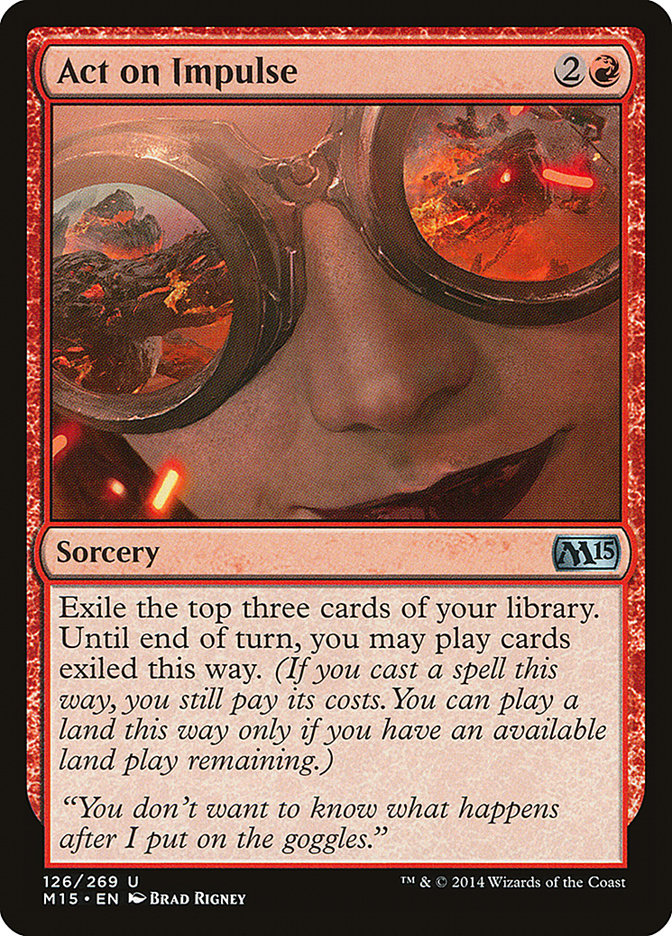
While very common nowadays. this is not card draw as per Magic’s rules. You don’t even put the cards in your hand, and you won’t lose the game if you “impulse draw” from an empty library.
Honorable Mention: Impulse
Magic slang sure can get confusing sometimes; while “impulse drawing” is a red specialty, “impulse” is nicknamed after the Impulse blue instant.
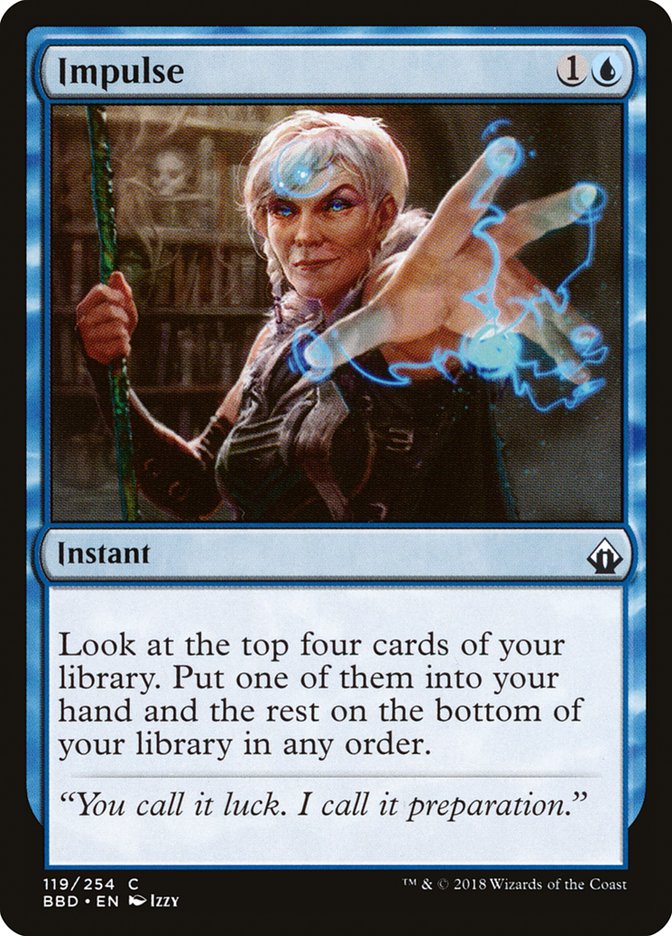

Impulse refers to effects that let you look at the top X cards from your library, and then put some of those cards in your hand. Commune with Beavers shows how green does this at common nearly every set and sometimes the extra cards go to the graveyard instead of back into the library. For new players, this certainly looks exactly like drawing cards, but you’re not drawing cards unless the effect literally says “draw.”
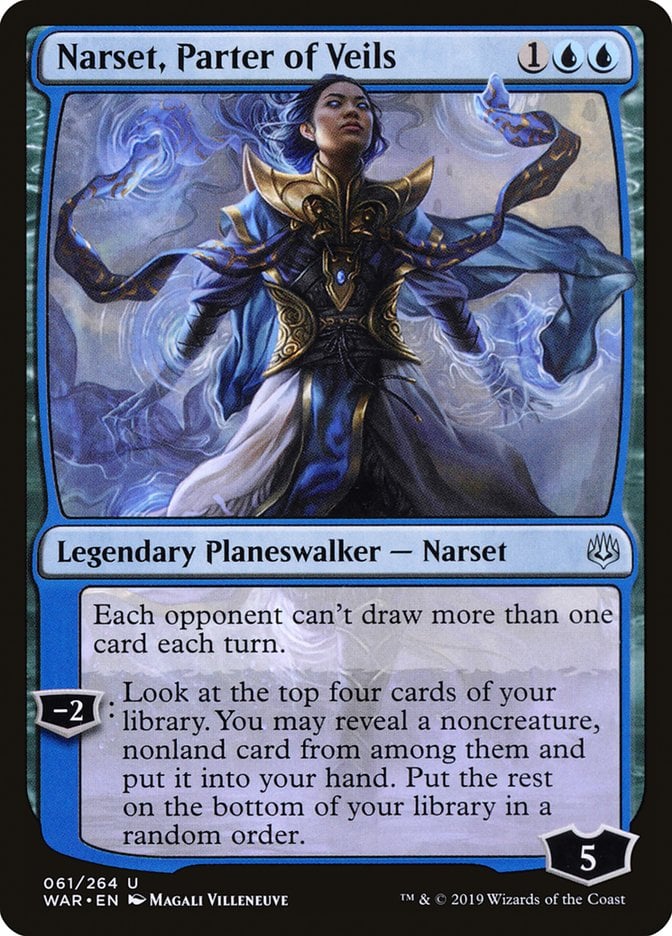
Narset, Parter of Veils is a good example of this difference. If you and I both have a copy of Narset in play, we can’t draw more than one card per turn, but we both can still use impulse-like effects like Narset’s own ability.
Some very strong cards, including Thassa's Oracle (one of cEDH’s staple wincons), are impulse effects. We won’t rank them here, though, since they aren’t proper card-draw effects.
#63. Deadly Dispute
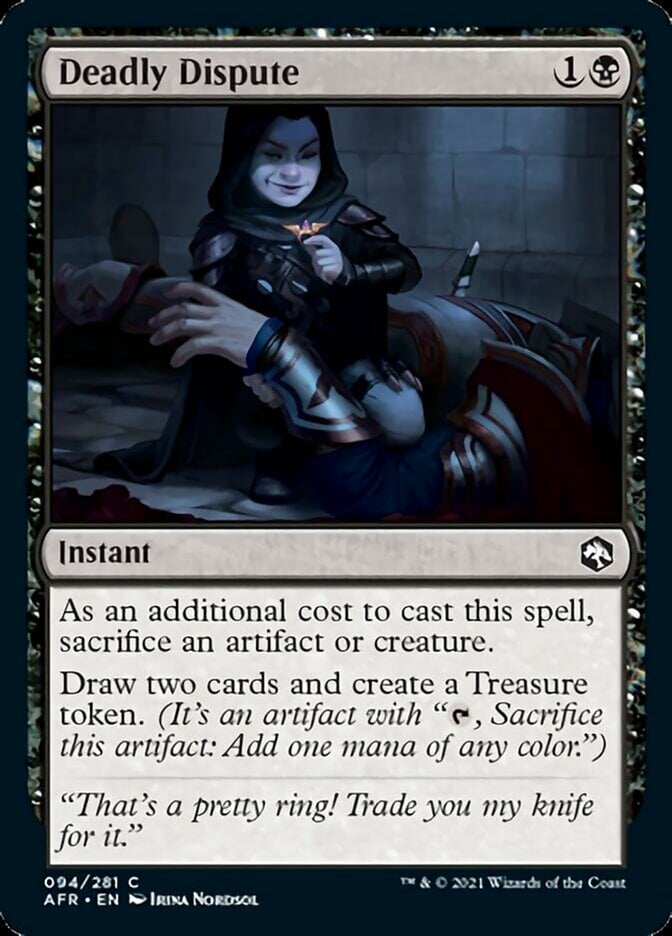
Pauper used to love this black instant before it got banned. Few things are as satisfying as your foe pointing removal at your creature, only for you to turn the victim into card advantage!
Village Rites offers a similar effect for a lower upfront cost, but not allowing you to sacrifice an artifact makes it a bit less flexible, and the Treasure is a huge addition to this effect.
#62. Demand Answers
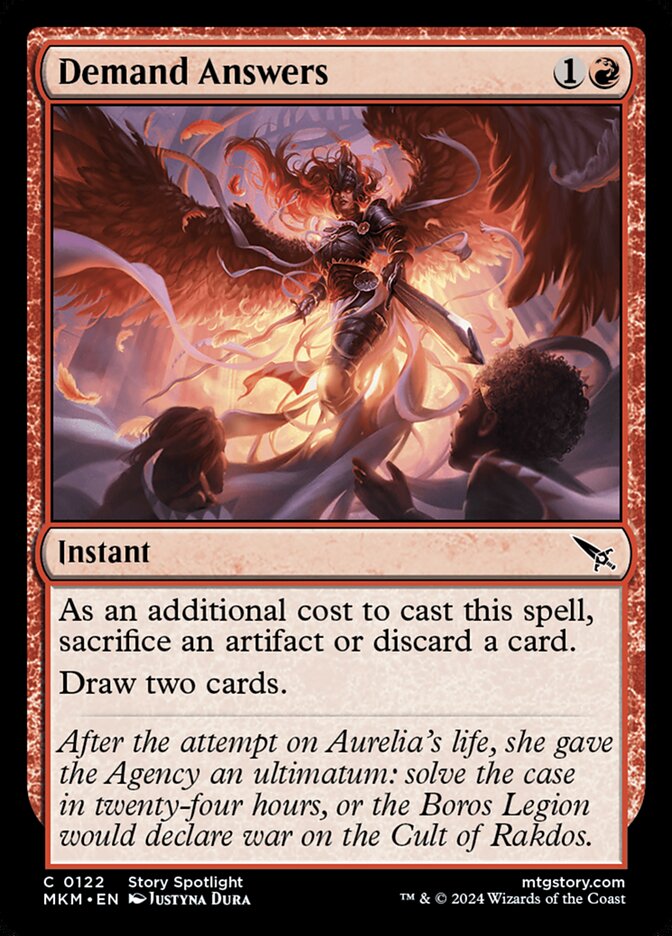
Demand Answers hits a nice sweet spot because a stray artifact token or extra card to rummage away is so easy to come by in red that this is an amazingly useful card, even if on the surface it’s underwhelming.
#61. Night’s Whisper
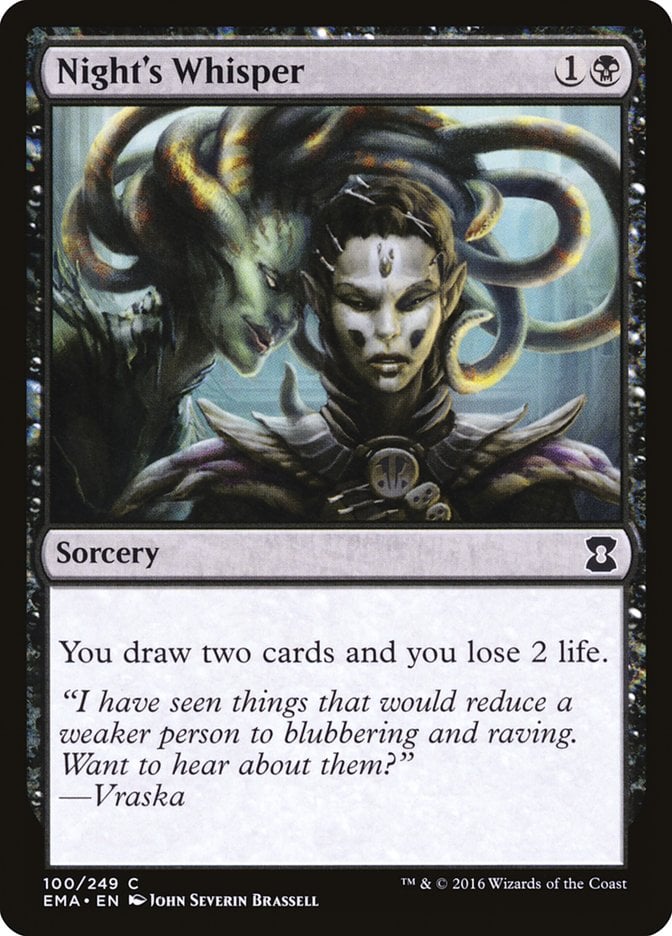
Night's Whisper is this ranking’s first and tamest among the cards that let you pay life to draw cards.
That’s usually broken, but in this case, it’s balanced enough!
#60. Sign in Blood
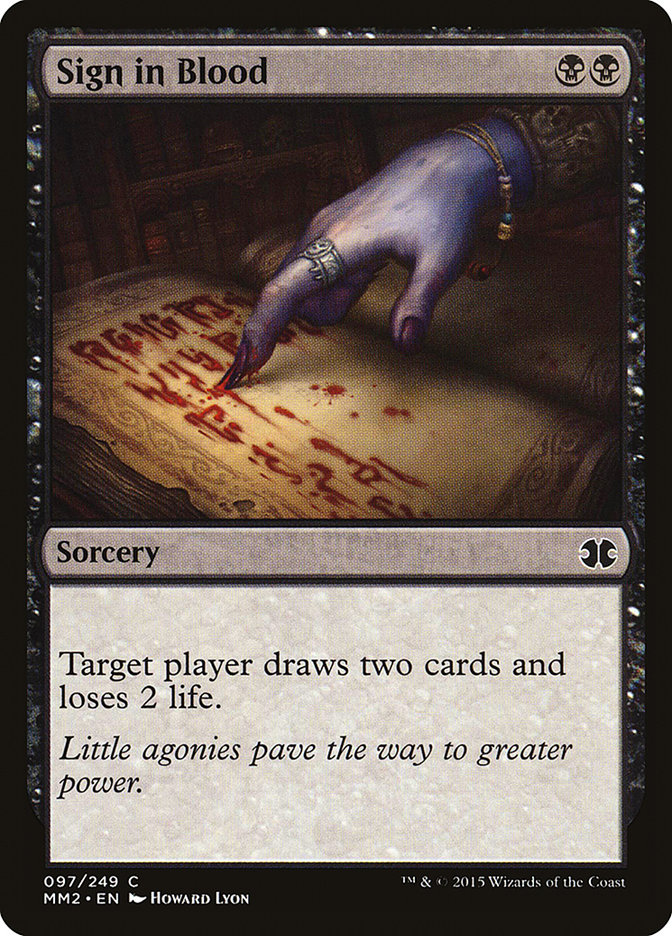
A bit harder to cast than Night's Whisper, but you can burn foes down with Sign in Blood. That’s enough to make this black sorcery a multi-format workhorse.
#59. Matoya, Archon Elder

Final Fantasy introduced Matoya, Archon Elder, which is a total engine for any deck that likes to scry or surveil. Every time you dig a little deeper into your deck with one of those mechanics, you just straight-up draw a card afterward. It basically turns your setup effects into card advantage, so it’s a great pick for spellslinger or control builds that constantly filter through the top of their deck.
#58. Narset, Jeskai Waymaster

Narset, Jeskai Waymaster gives you an explosive draw option at the end of your turn—if you’re willing to let go of your hand. The more spells you’ve slung that turn, the more fresh cards you get back. It’s especially sweet in decks that can empty their hand quickly or generate lots of value with cheap instants and sorceries. Just keep in mind the discard is optional, so there’s no downside if you’re ahead.
#57. Winternight Stories

Winternight Stories is a classic “draw three” with a twist. You’ve got to toss two cards unless one of them is a creature, which makes this perfect in creature-heavy builds. But the harmonize mechanic is where it really gets wild—you can replay this from your graveyard by tapping a big creature to make it cheaper. That’s a lot of potential card draw for one slot, and it’s very reminiscent of other effective card draw tools like Deep Analysis.
#56. Monument to Endurance

Monument to Endurance is sneaky good in discard or madness-dedicated decks. Every time you discard a card, you get to choose a new benefit: You draw a card, make a Treasure, or drain your opponents. But here’s the kicker: you can only choose each option once per turn, so the order matters. If you’re pitching cards anyway, this turns the downside into value fast, especially in decks like Hashaton, Scarab’s Fist in Commander, where you’re already discarding creatures for value.
#55. Loot, the Pathfinder

Loot, the Pathfinder is a Swiss Army knife of abilities, but that blue exhaust tap is the highlight—it draws three cards, straight up. With double strike, vigilance, and haste, Loot can swing in right away and still use its tap abilities. This card screams “build around me” in a control shell and gives you massive flexibility, especially if you’re ramping or dealing damage along the way.
#54. Peer Past the Veil

Peer Past the Veil is a fun graveyard payoff that acts like a red-green take on Wheel of Fortune. You toss your hand and refill based on how many card types are in your graveyard—so if you’ve been casting a mix of creatures, instants, sorceries, and so on, this can draw you a big new hand. It’s a great fit for decks that naturally mill, that fill their graveyard, or that revolve around delirium.
#53. Enduring Innocence

In decks built around small creatures, Enduring Innocence quietly delivers a steady stream of value. Whenever a creature with power 2 or less enters the battlefield under your control, you get to draw a card—but only once per turn, so timing matters. It also comes with lifelink, which helps you to stabilize, and it returns as a pure enchantment when it dies, which keeps that card draw engine going. It’s a perfect fit for go-wide or token strategies that want consistent card flow without overcommitting.
#52. Traumatic Critique

Traumatic Critique gets by on its flexibility. It can be 2 mana card filtration, or a removal spell that handles a small threat, or a finisher if you have enough mana to pour into X. All that flexibility on a cheap instant makes it a great card in most spellsinger strategies.
#51. Flubs, the Fool

Flubs, the Fool is a weird one, but in the best way. If your hand is empty, it turns every spell or land drop into a card draw, letting you reload super efficiently. Otherwise, you’re discarding instead, so the goal is to stay empty-handed. Flubs is ideal for decks that dump their hands fast or run lots of cheap spells.
#50. Tatyova, Benthic Druid
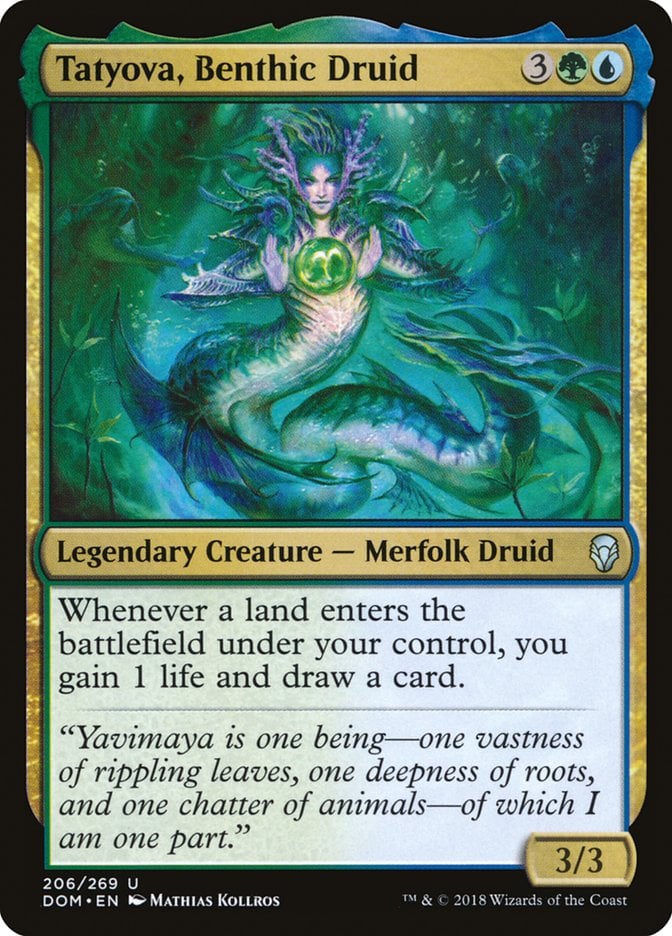
Tatyova, Benthic Druid is a straightforward and very popular Simic commander. And, as you may guess, very good in the role of a landfall commander, where this merfolk druid ensures a steady stream of card draw.
#49. Faerie Mastermind
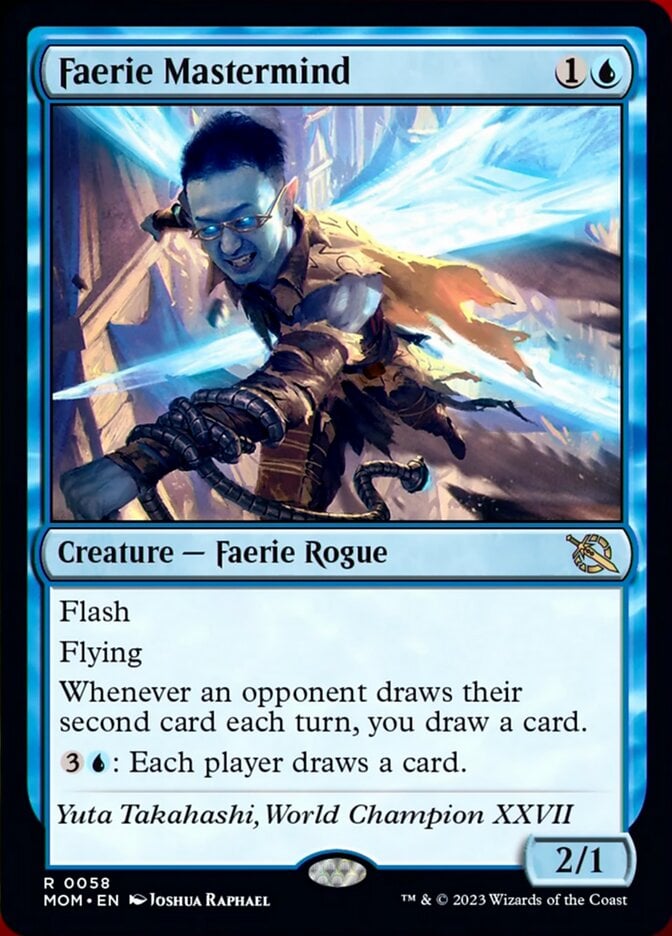
World Champion Yuta Takahashi helped design this card, and the Commander format adopted it en masse along with a good showing in other decks. This faerie rogue is more draw hate than card draw proper but, hey, Faerie Mastermind draws you lots of cards if timed well!
#48. Selvala, Heart of the Wilds
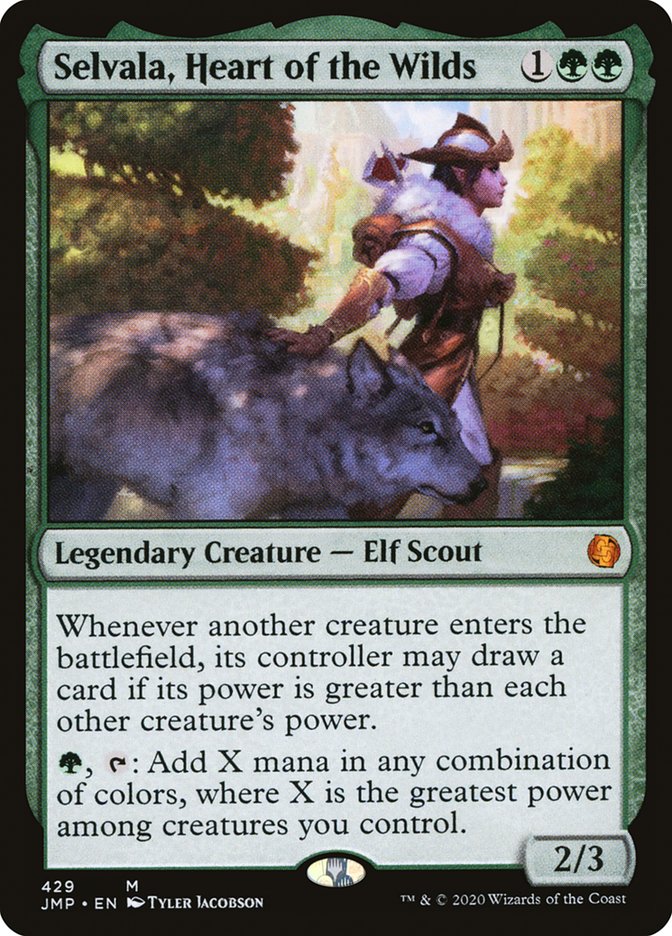
Rolling card draw and mana dork in one card, Selvala, Heart of the Wilds makes for one of the best mono-green commanders and frequently shows up in cEDH decks under Sisay, Weatherlight Captain‘s command. Selvala’s card-drawing ability may read a bit group-hug-y, but we all know who’s gonna be dropping the biggest, baddest creatures on the board.
#47. Consecrated Sphinx
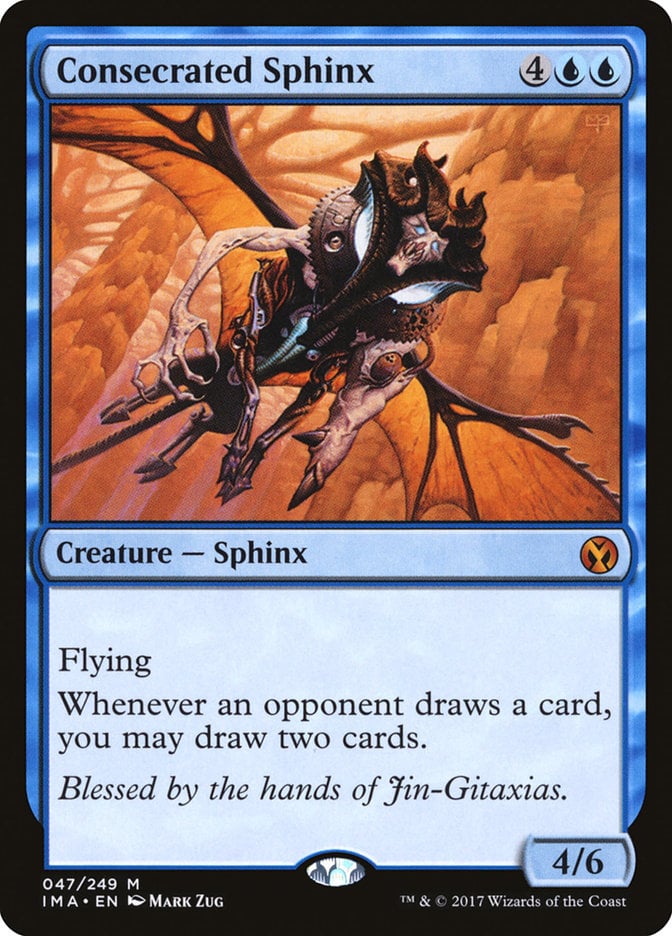
A bit like Faerie Mastermind, Consecrated Sphinx is more draw hate than card draw… but it still gets you the cards. The sphinx is unplayable in any format other than Commander, but it’s a cEDH staple.
#46. Mulldrifter
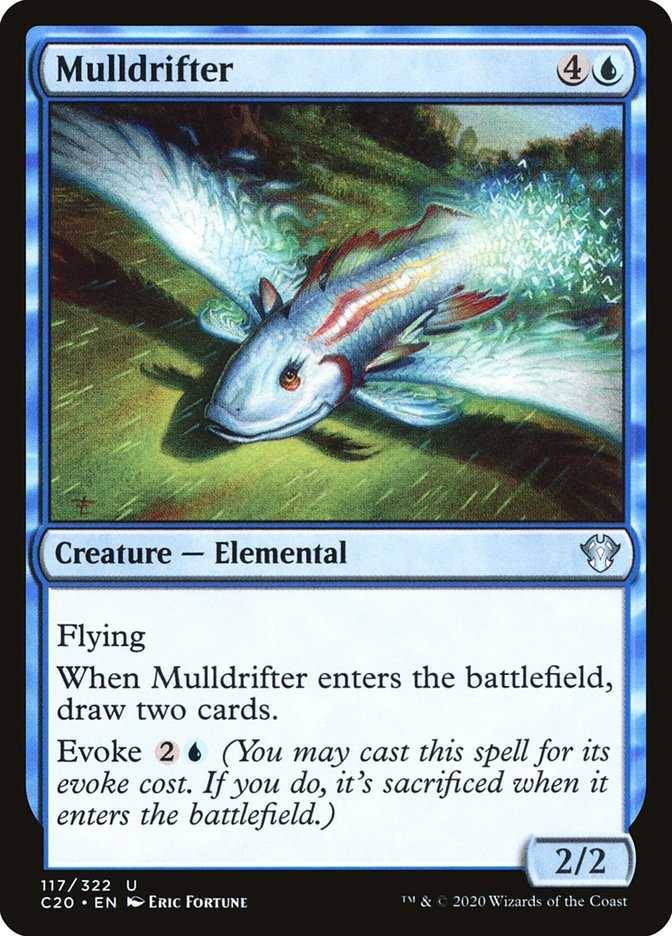
Pauper staple Mulldrifter is a simple yet flexible “on a stick” card-draw effect. Nothing fancy, but evoke makes sure it gets the job done at two different points on your curve.
#45. Sea Gate Restoration / Sea Gate, Reborn
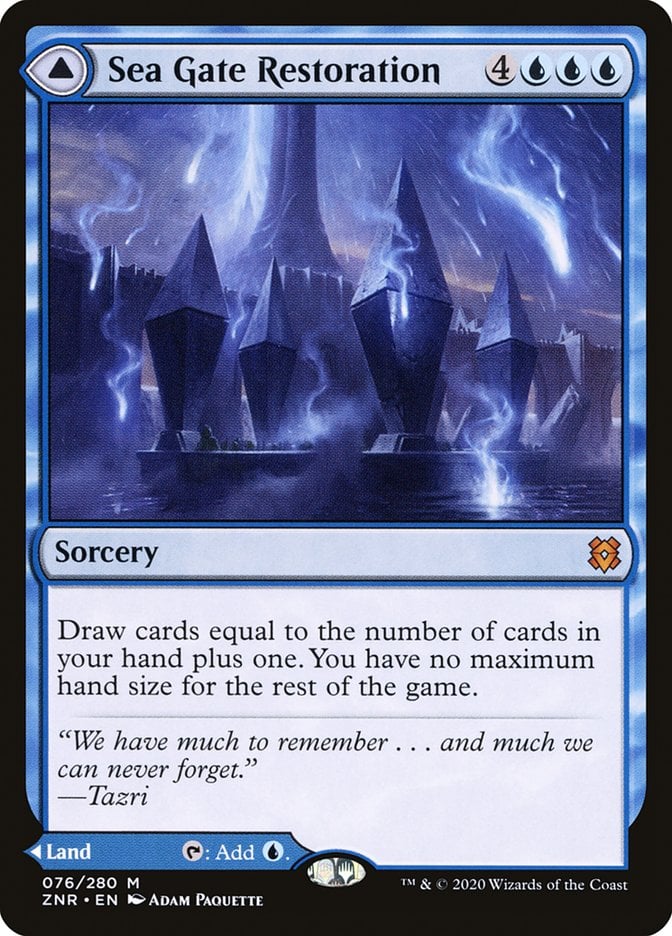
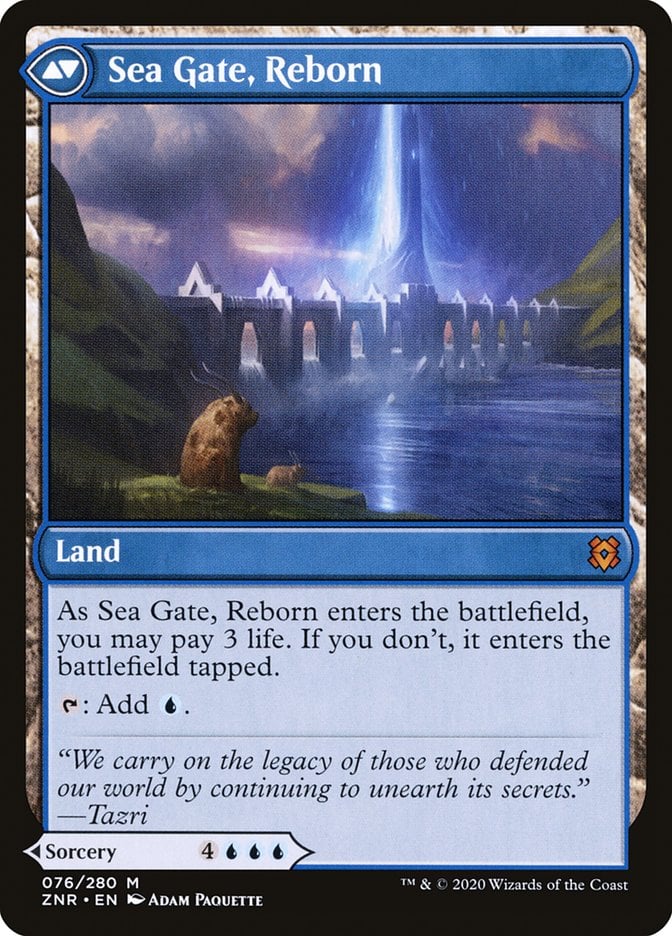
Like Mulldrifter, Sea Gate Restoration gets a spot due to the flexibility it provides. One of the best MDFC lands in the game, Sea Gate Restoration is what’s known as a “bolt land,” with a spell on one side and a land that can enter untapped on the other. In this case, the spell side provides an infinite-hand-size “emblem” while drawing you lots of cards, and the Sea Gate, Reborn side is an untapped mana source if needed early on.
#44. Opt
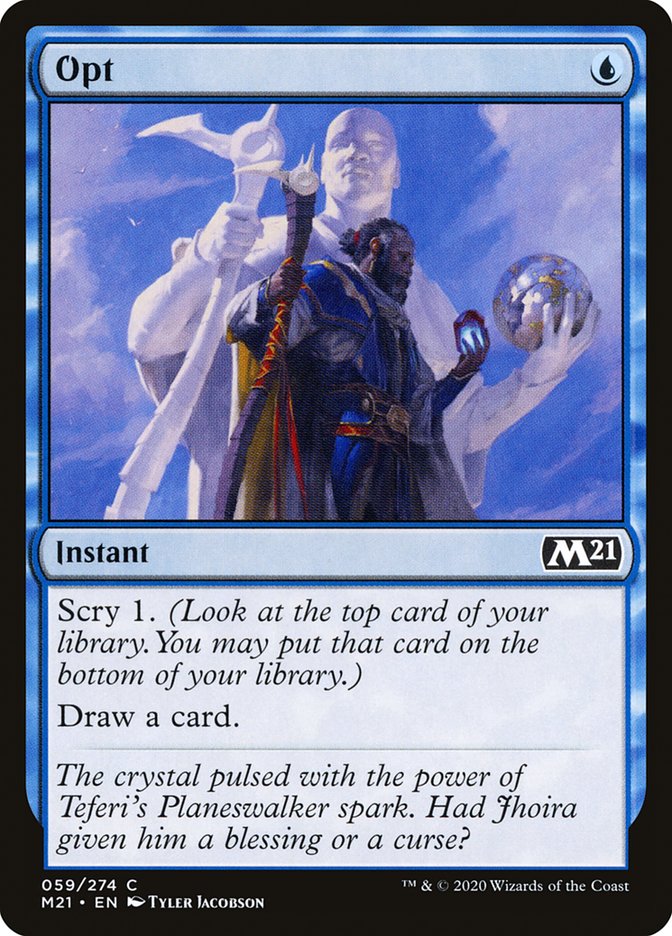
Cantrips are said to “replace themselves,” in the sense that when they leave your hand, you draw another card to replace them. They are legion, and we’ll find a handful among the best card draw effects. Opt has been a multi-format cantrip since Invasion nearly two and a half decades ago, providing both card draw and card selection ever since.
#43. The Great Henge
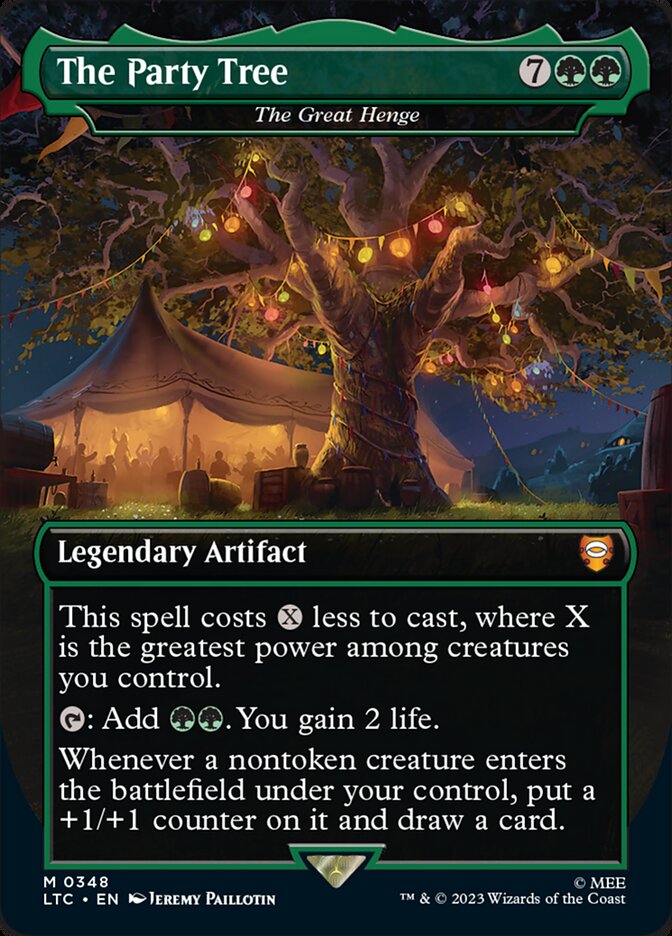
It’s easy being green!
If you drop this legendary artifact on curve, The Great Henge makes your incoming beatsticks bigger and draws you cards for each creature you put in play.
Green has several of these “creaturefall” card-draw effects, like Beast Whisperer or Guardian Project, which are fairly common in Commander.
#42. Solemn Simulacrum + Baleful Strix
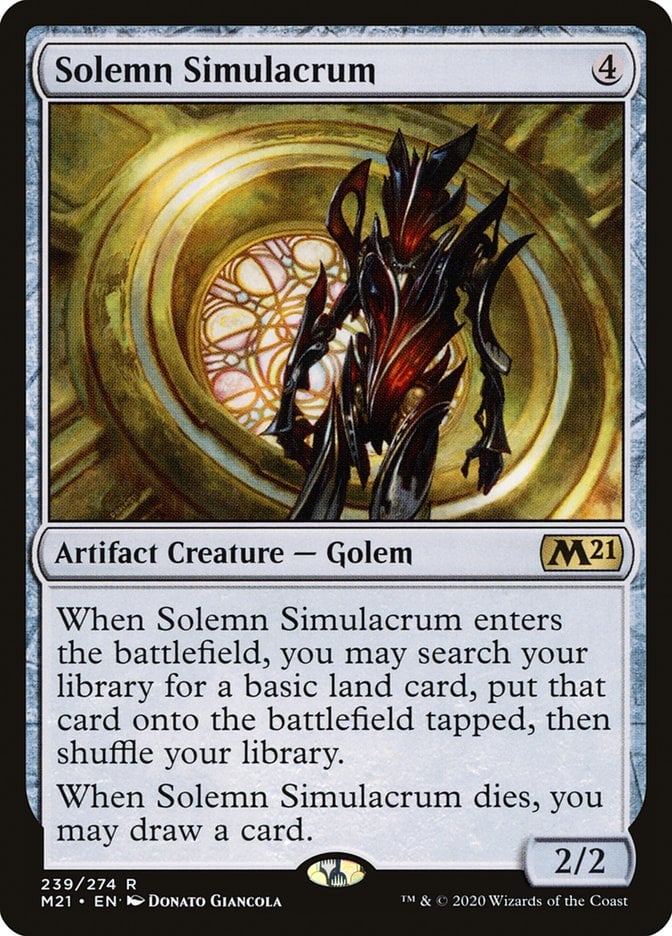
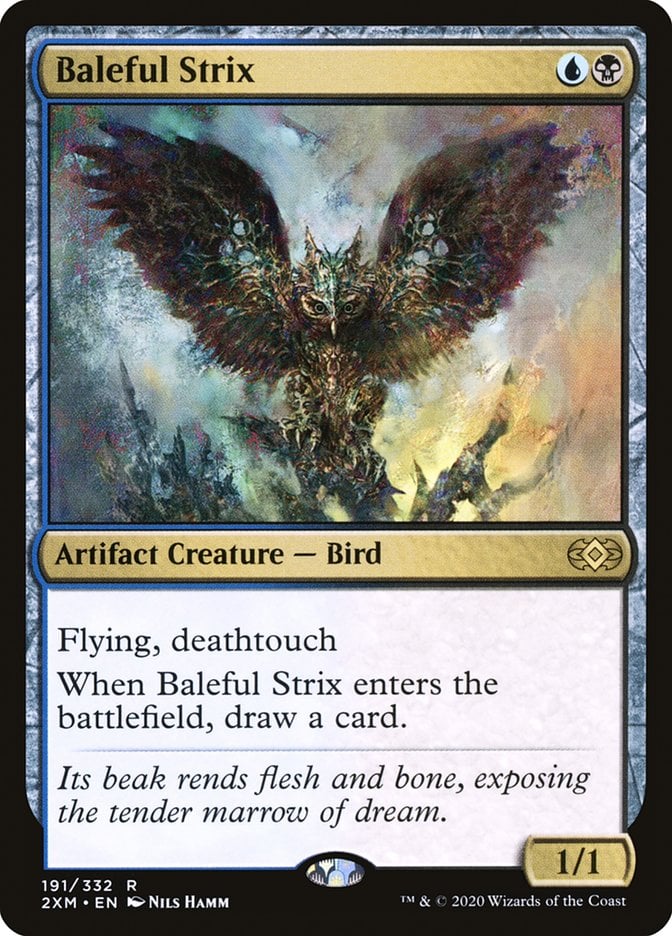
To be honest, this may be too high a spot for Solemn Simulacrum or Baleful Strix if we’re rating them strictly by their usefulness in current formats.
But as examples of very popular “cantrips-on-a-stick,” and given their steadfast service and dedication across countless decks and formats, I’d say they’ve earned their spot!
#41. Mister Fantastic, Reed Richards
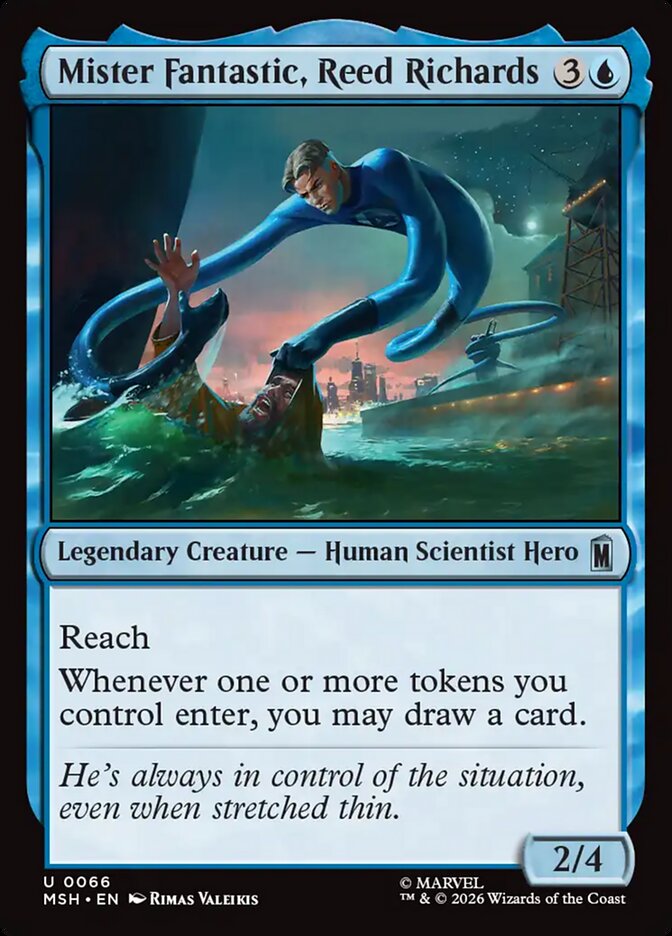
Mister Fantastic, Reed Richards goes nuts with token production. It’s not even restricted to creature tokens, so your Treasure and Clues can draw extra cards. Blue’s not even that deep into tokens, so this is a surprising threat.
#40. Consider
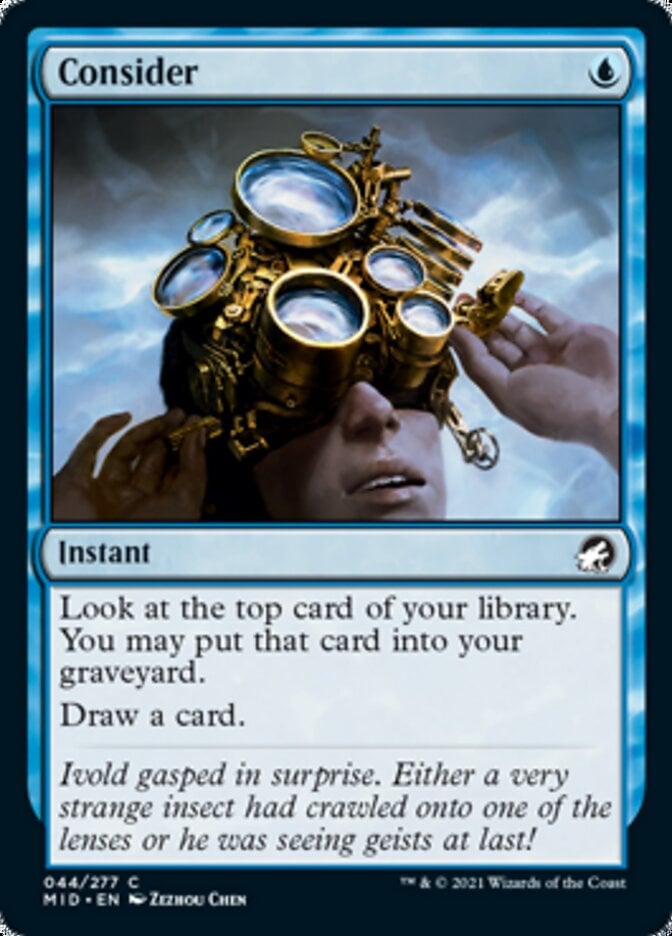
Better than its Opt cousin since Consider‘s surveil ability fattens your graveyard, this cantrip is Modern-playable on top of its frequent presence in Pioneer and cEDH.
#39. Toski, Bearer of Secrets
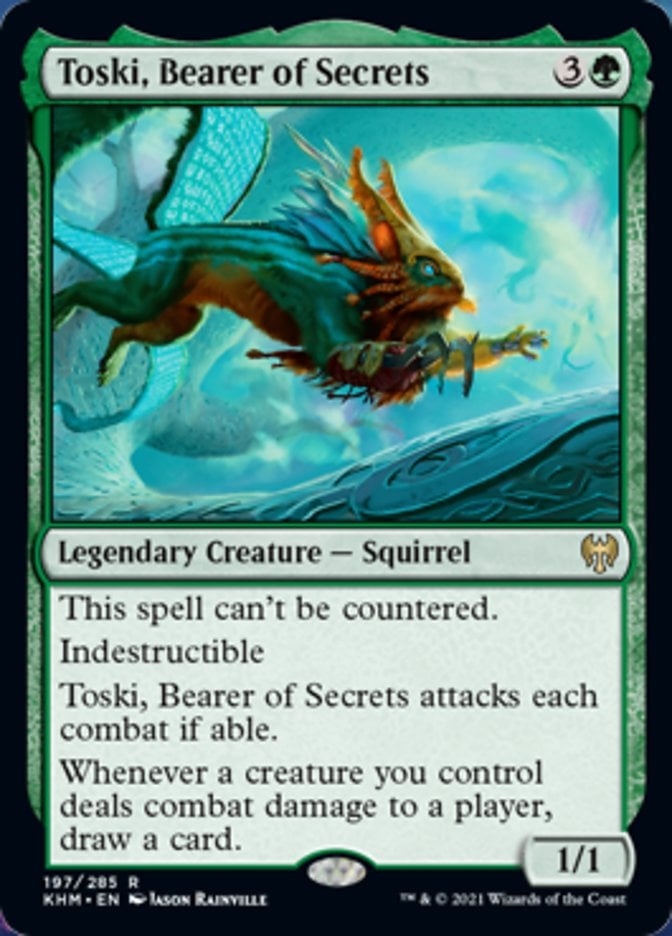
Some of the best card draw engines in Commander come from turning your creatures into saboteurs—that is, giving you cards whenever they connect in combat. Toski, Bearer of Secrets is a green all-star for this because it makes every creature you control draw a card when it hits a player. It doesn’t hurt that it’s indestructible and always swings, either. In blue, Enduring Curiosity offers a similar effect with flash, and it even sticks around as an enchantment when it dies. You’ll often see cards like Edric, Spymaster of Trest in these decks too, helping small evasive creatures keep your hand full. It’s a tried-and-true strategy—turning chip damage into a flood of cards.
#38. Elrond, Moon-Reader
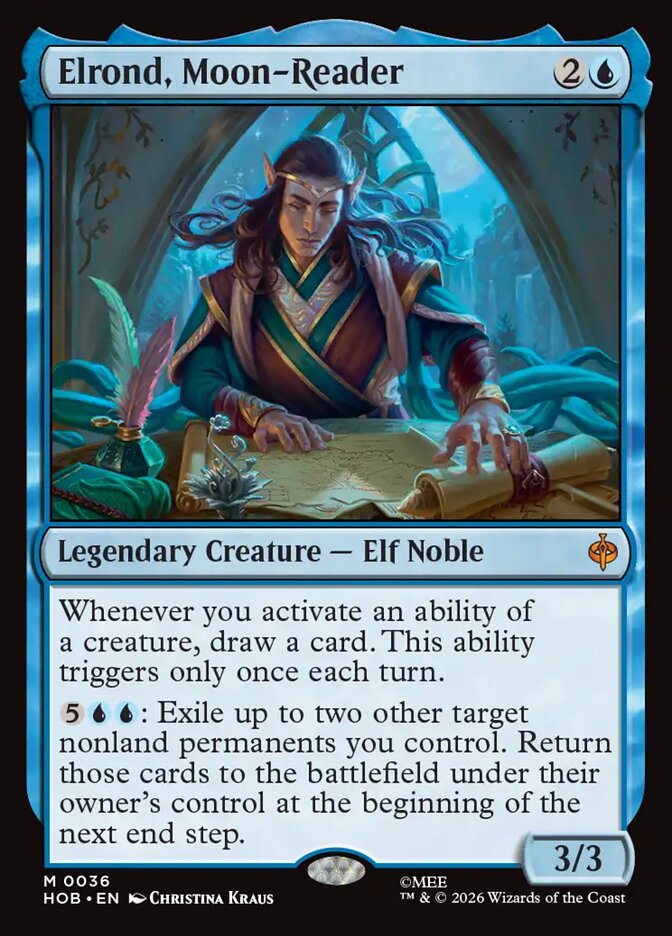
Elrond, Moon-Reader has terrifying potential as a card draw engine because activating abilities isn’t that hard. Remember, mana abilities are activated abilities, so tapping Llanowar Elves draws a card with Elrond in play for no mana. It’s perfect with all kinds of Simic () commanders.
#37. War Room
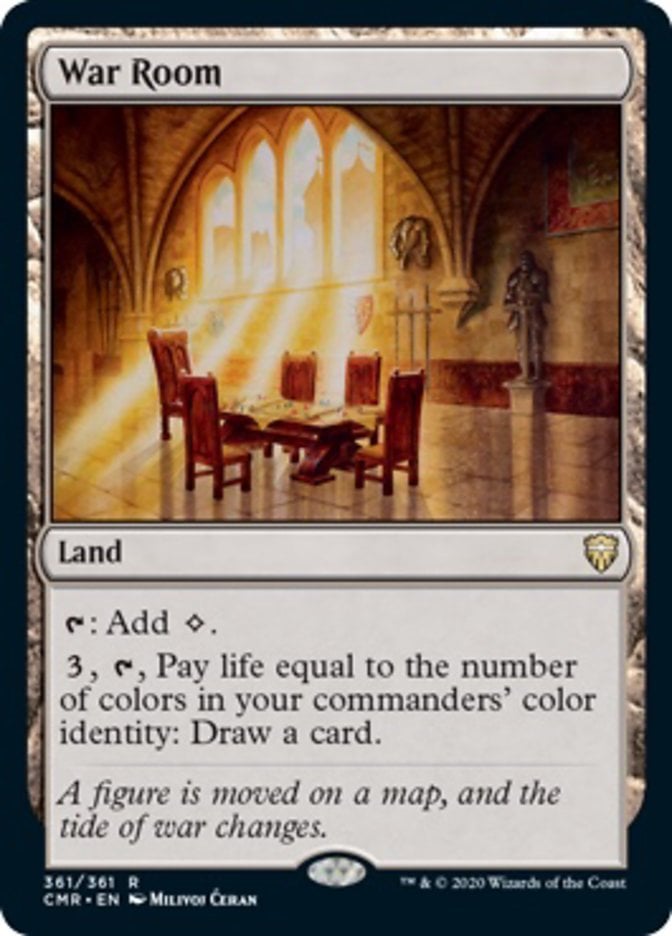
War Room‘s activated ability is a bit too costly (and painful!) for frequent use, but the option of sinking some extra mana into a card draw effect at instant speed is never a bad idea.
#36. Curiosity
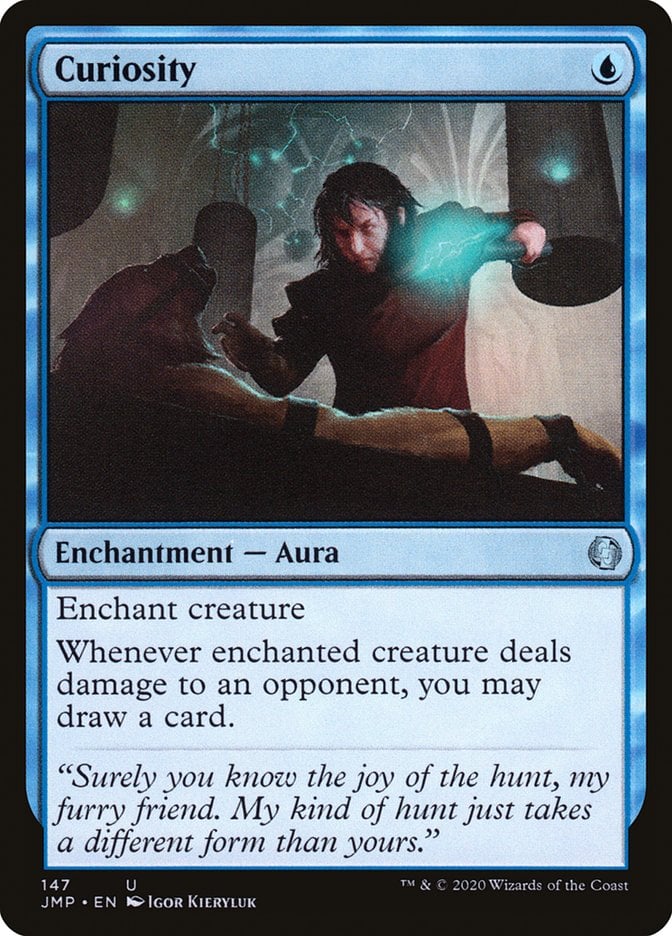
Perhaps not the best blue enchantment for a kitten that you’re fond of, but excellent to slap on pretty much any evasive creature or pinger you have around.
Notice that Curiosity is more than a saboteur effect: It triggers not just with combat damage, but with direct damage too.
#35. Disciple of Freyalise / Garden of Freyalise


Disciple of Freyalise is a big MDFC land that can be a 3/3, and you need to sacrifice a 3-power or more creature to really feel the benefits. Garden of Freyalise is there to smooth out your mana and make sure you can play all the cards you draw, but the biggest upside is on the Disciple.
#34. Wheel of Fortune + Wheel Effects
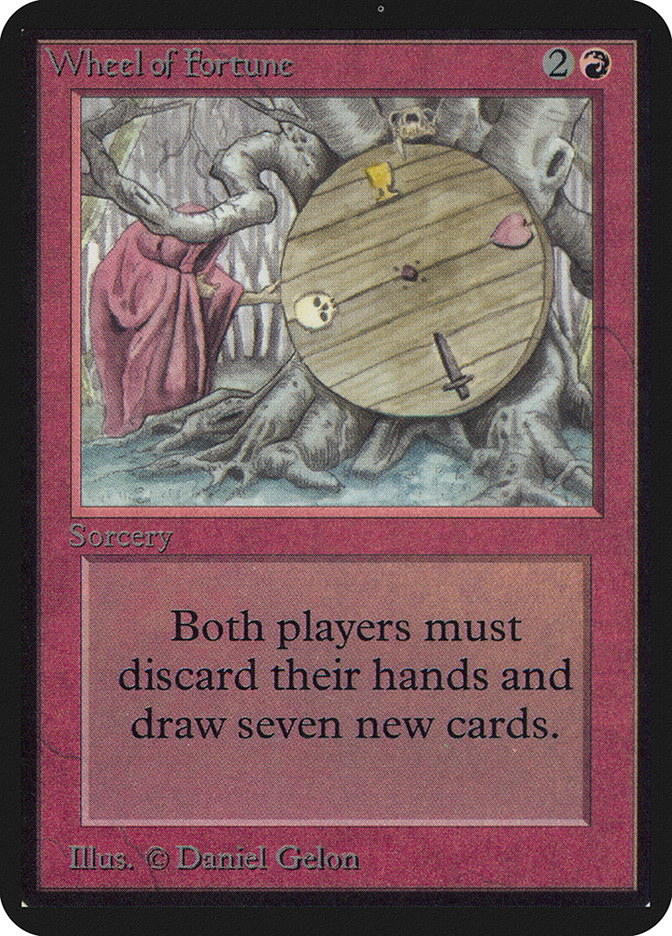
Wheel effects, named after Wheel of Fortune, are a special subset of card draw spells that (usually) force all players to draw a new hand after discarding their current one, with some variations of how they go about it. They’re so unique that wheel decks are a specific EDH theme.
As a rule of thumb, you won’t use wheel effects just for drawing cards (decks that include wheel effects tend to have some more nefarious plans than that…), but they’re nevertheless one of the most potent card draw categories in Magic.
#33. Archmage Emeritus + Archmage of Runes
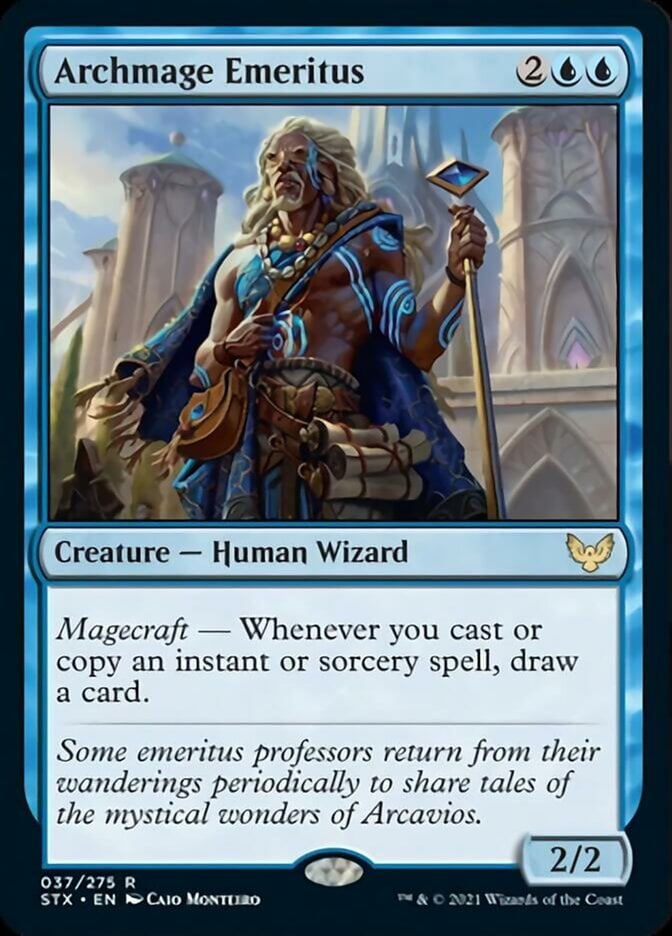

While green loves drawing cards when creatures enter the battlefield, blue leans into spellslinging for its card advantage. Creatures like Archmage Emeritus and Archmage of Runes are perfect examples—they reward you every time you cast an instant or sorcery by drawing you a card. Archmage Emeritus is a popular pick in cEDH despite being too slow for faster formats, thanks to how easily it snowballs value in spell-heavy builds. Meanwhile, Archmage of Runes not only draws cards the same way, but it also makes your spells cheaper, turning every cantrip into a little engine. Together, they’re staples in any blue deck that wants to chain spells and stay ahead on cards.
#32. Black Market Connections
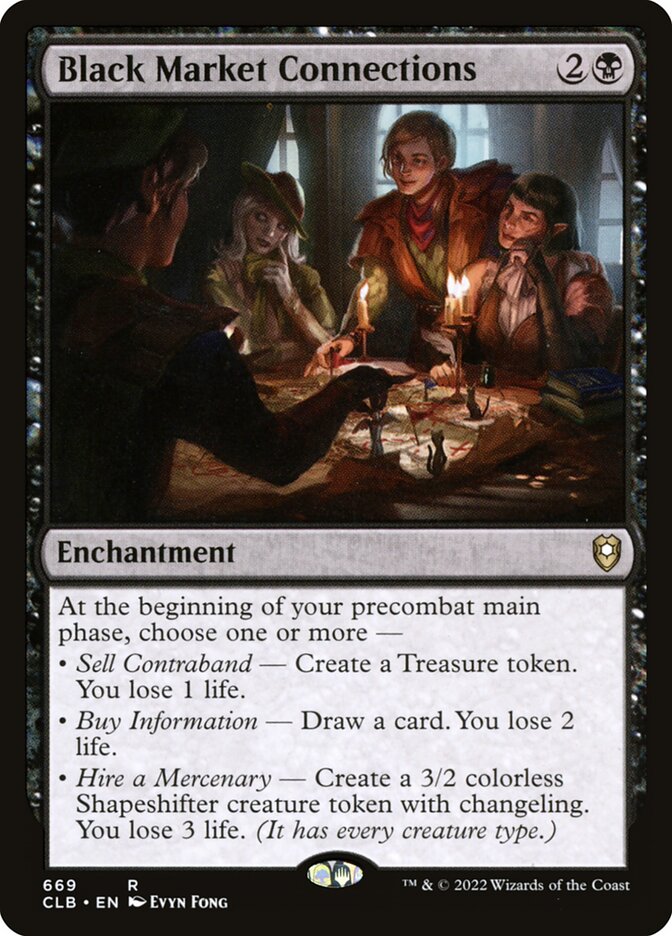
Extremely popular in Commander since printed in Commander Legends: Battle for Baldur’s Gate, Black Market Connections provides flexibility in spades. It’s far from the best option if you’re only looking for efficient card draw, but for EDH decks that need a Swiss Army enchantment, Black Market Connections is a perfect fit.
#31. Phyrexian Arena
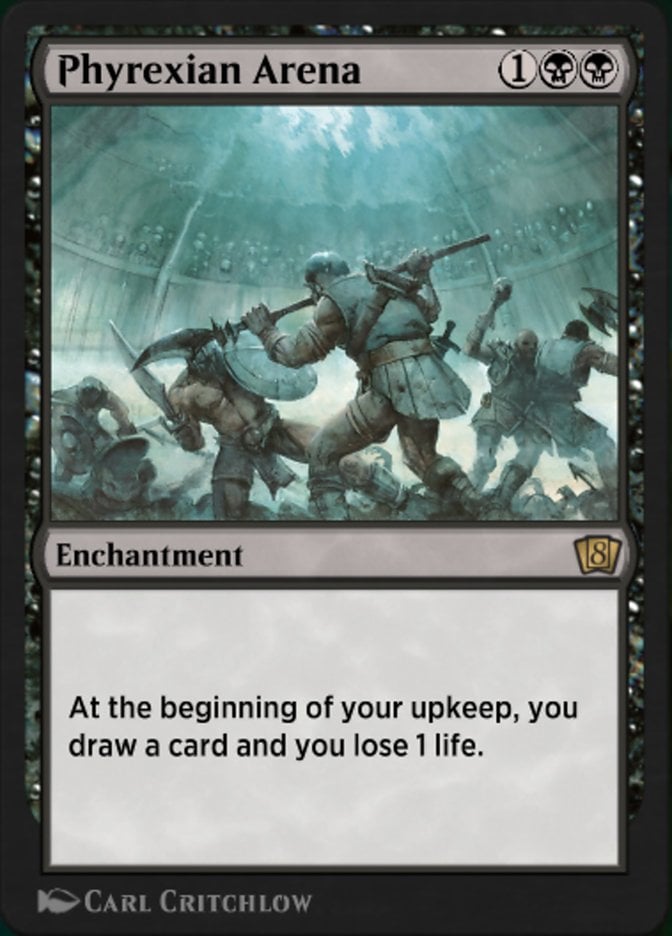
Drawing cards since Apocalypse, Phyrexian Arena is a bit too slow to see competitive play in Eternal formats. But it’s extremely popular in casual Commander and sees occasional high-level play in Standard, where it won’t be affected by Standard rotation thanks to Foundations.
#30. Preordain
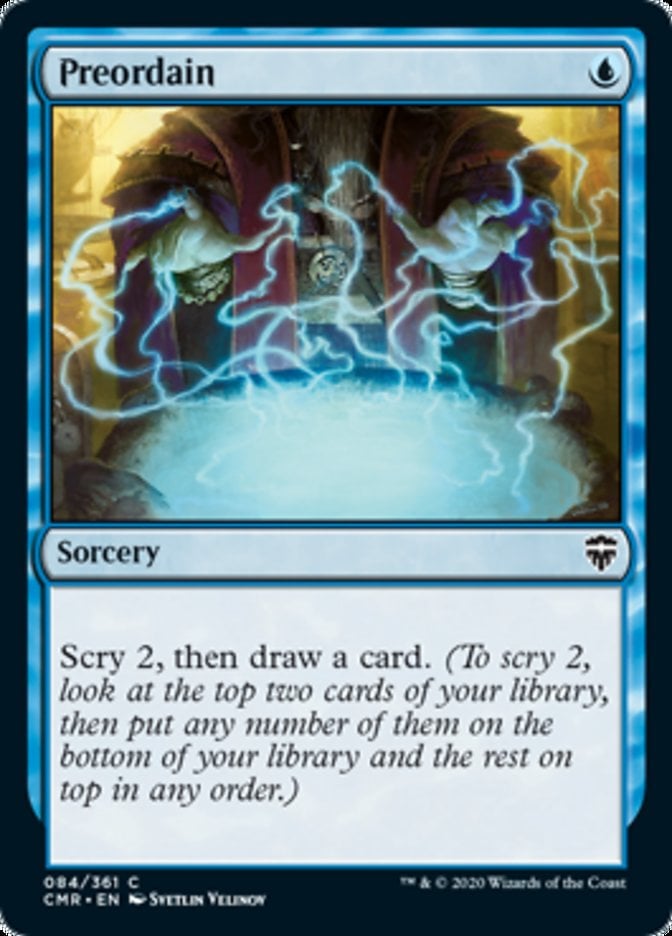
Scrying twice deeper than Opt in exchange for being sorcery speed, Preordain sees multi-format play from Pauper to Modern. It used to be banned in Modern, but it’s playable now (and hasn’t broken anything just yet).
#29. Braids, Arisen Nightmare
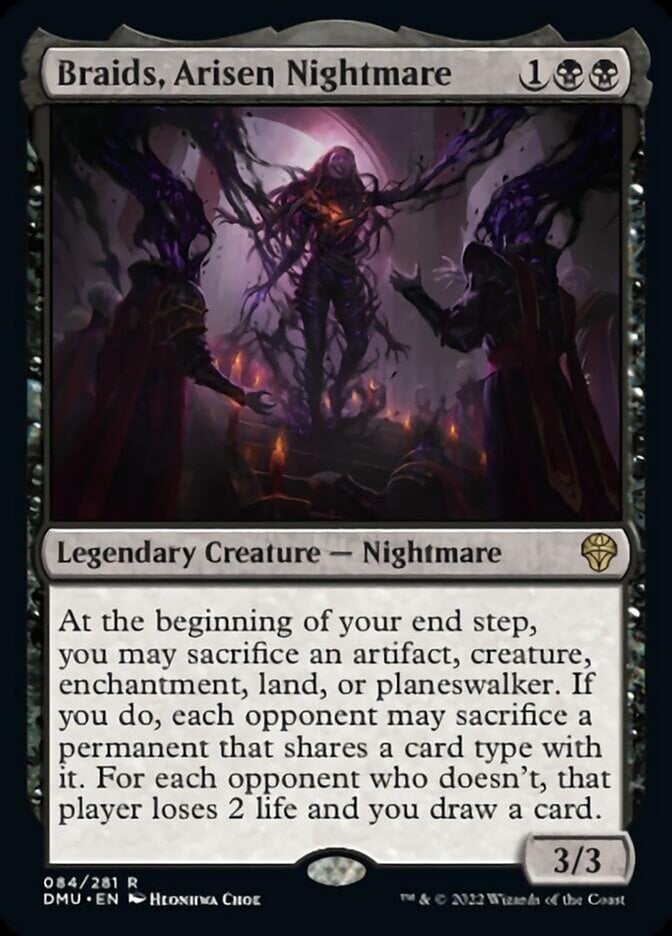
A very popular mono-black commander at casual tables and quite capable of making the cut into the 99 of cEDH decks, Braids, Arisen Nightmare is the delight of sacrifice-heavy decks. Black is usually fond of gaining power at any cost, but Braids is more of the “This is gonna hurt you a lot more than it’s gonna hurt me” type of black card!
#28. Ketramose, the New Dawn

One of my favorite recently printed cards is Ketramose, the New Dawn, an all-star in multiple Arena formats like Brawl and Timeless. It’s a grindy value machine: As long as you can exile stuff repeatedly—maybe with graveyard hate or flicker effects—you keep drawing and bleeding life. That kind of trade-off is usually worth it, especially since Ketramose is hard to remove and comes with menace and lifelink to help stabilize once it’s ready to attack.
#27. Insatiable Avarice
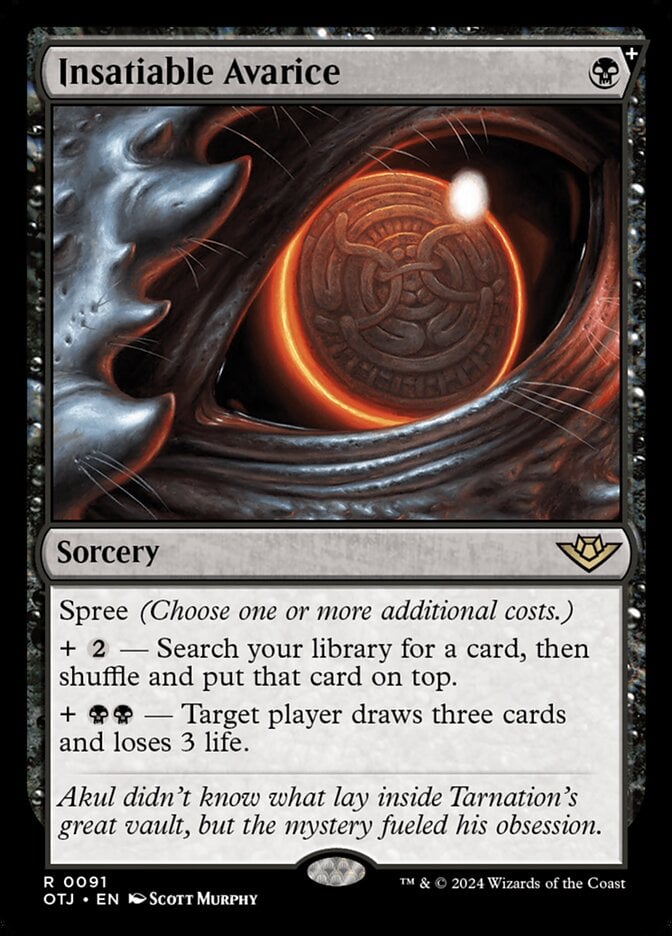
The spree on Insatiable Avarice allows for two powerful sides to this card that are quite strong. At you tutor for any card, essentially put it into your hand, plus get a supersized version of Sign in Blood. Such a deadly combination.
#26. Three Steps Ahead
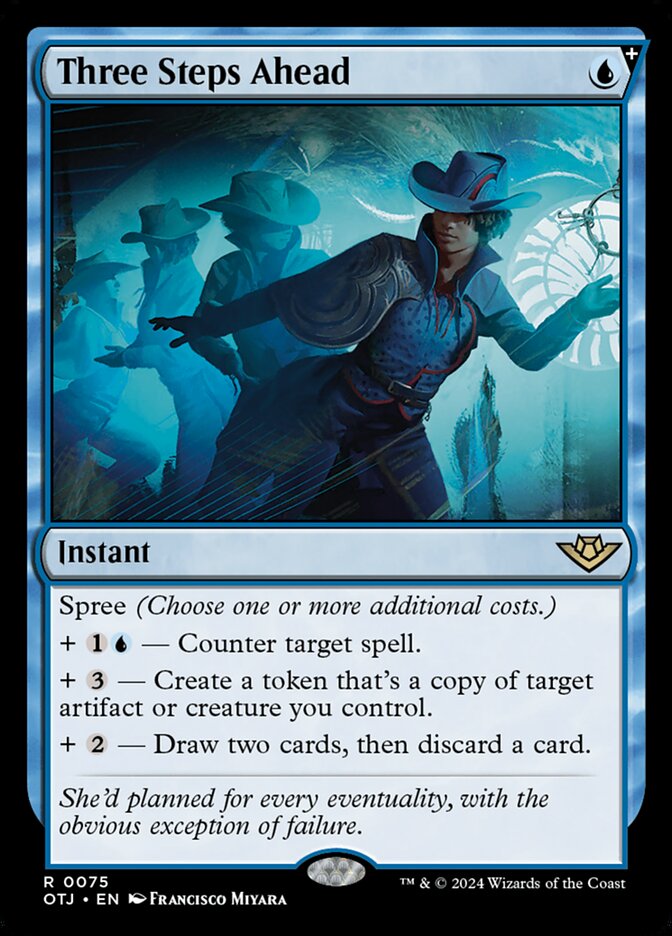
If you thought of Three Steps Ahead as purely a card draw spell, it probably doesn’t make this list. However, more and more cards turn the discard of a card into a payoff, so if you pay it’s sometimes better than Quick Study.
This spell has very good modes to use beyond card draw which makes this a favorite for many decks.
#25. Quantum Riddler

When threats and card advantage marry, busted cards are born. Quantum Riddler causes problems in multiple formats, largely due to warp: You can play this then flicker it on turn 3 (even turn 2 in Standard) to get an early 4/6 that drew two cards. Of course, it’s also fine as a 2-drop that matures into a big flying creature, or a big threat…and if its replacement effect ever comes into play, you’re up endless cards.
#24. Glimpse of Nature
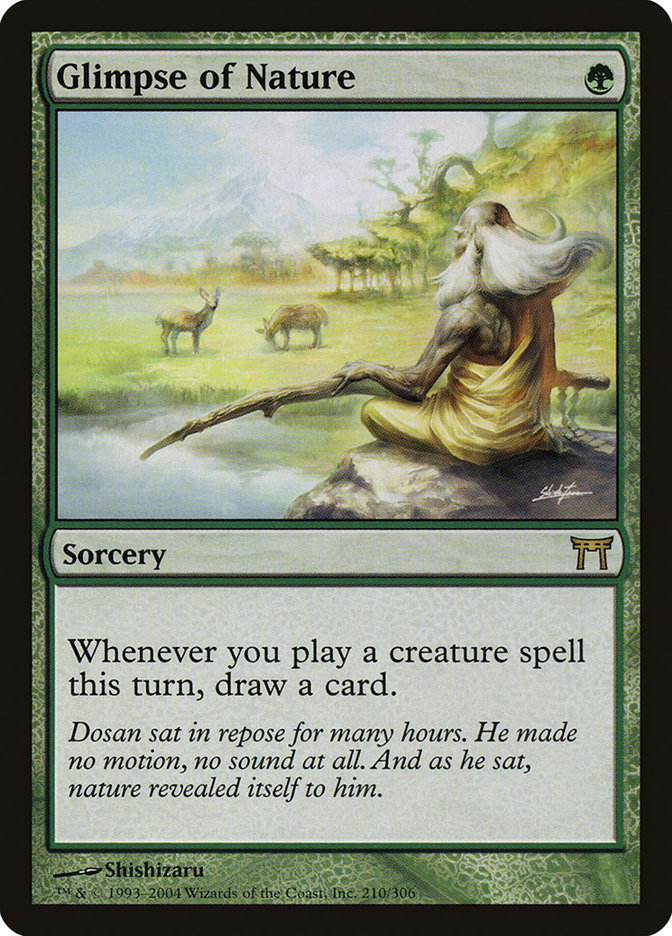
Glimpse of Nature is a classic powerhouse, especially in Legacy Elves decks. It’s the kind of card that turns one turn into the last turn—you cast it, then start chaining cheap creatures one after another, drawing cards the whole time. What makes it really shine in Elves is how the deck supports it with insane mana from cards like Gaea's Cradle or Priest of Titania and untap effects from Quirion Ranger or Wirewood Symbiote. That setup means you don’t just draw a bunch of cards—you also never run out of gas to play them. It’s not something you want to draw late with no board, but when it’s part of your plan? It can just end the game on the spot.
#23. Greater Good
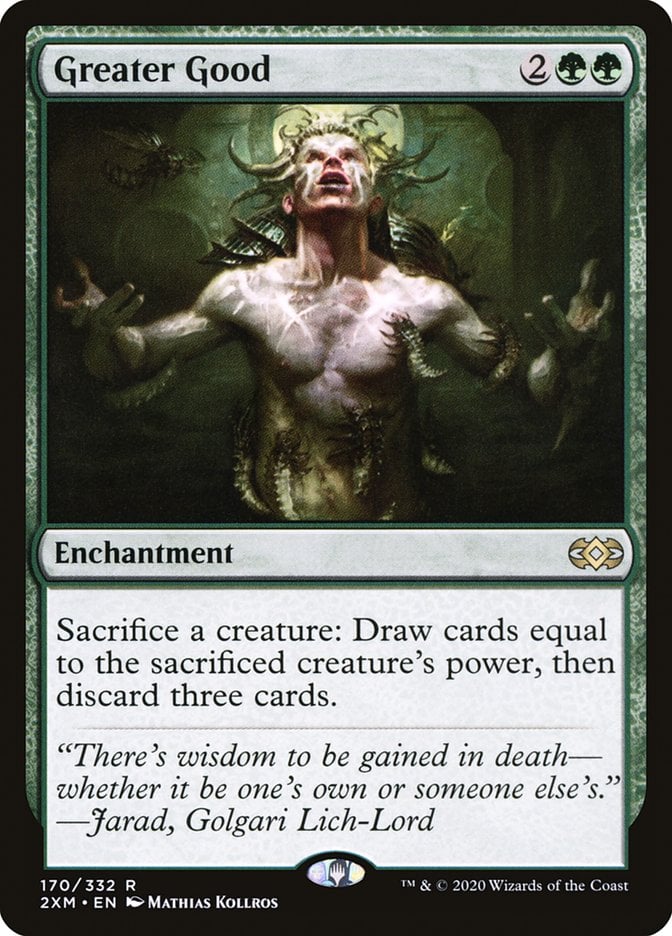
In creature-heavy decks—especially ones that run big, beefy creatures—Greater Good can be absolutely busted. It lets you sacrifice a creature to draw cards equal to its power, then discard three, which often nets you a huge chunk of your deck. It’s particularly nasty when your creatures already want to die or when you’re digging for a combo piece. With no mana cost to activate, this turns your board into raw card advantage on demand.
#22. Niv-Mizzet, Parun
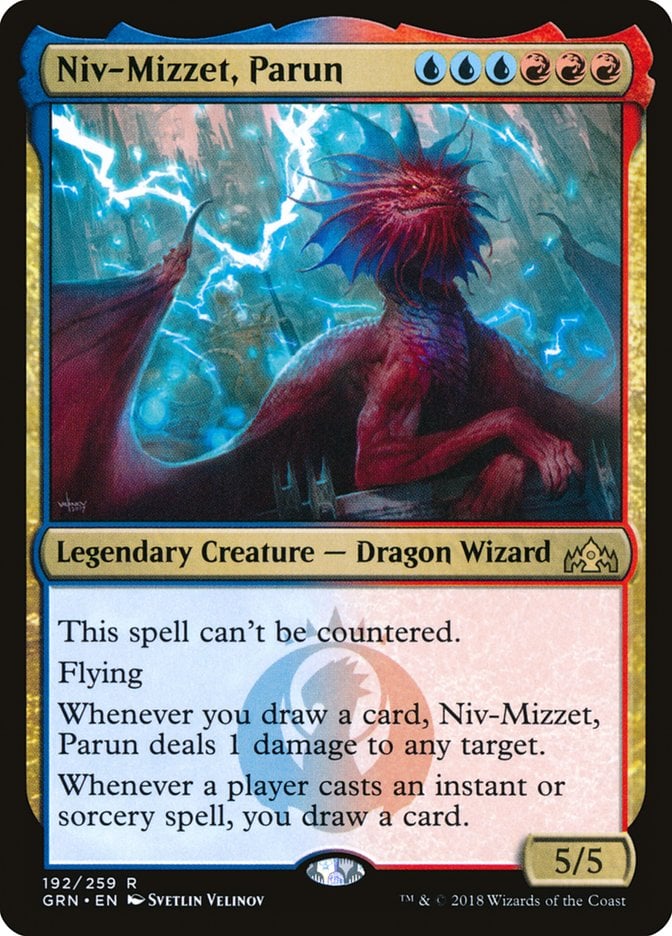
Good ol’ Niv-Mizzet, Parun is here to kill foes, draw cards, and chew jalapeño-flavored bubblegum. And it’s all out of bubblegum!
An awesome Izzet commander and one of the most popular commanders overall, Niv-Mizzet, Parun is a great choice if you’re specifically looking for a card draw commander. But ol’ Niv is a great team player and will happily hop out of the command zone and join your 99, where it’s often found in cEDH brews.
And, yeah, Curiosity and Niv-Mizzet, Parun are a deadly two-card combo; just don’t draw yourself to death!
#21. Wan Shi Tong, Librarian

Wan Shi Tong, Librarian draws cards on two axes for an astonishing amount of card draw. Archivist of Oghama that grows is already pretty good, but making it an X-spell gets around the weakness of drawing it late. This is arguably the ideal X-spell: While you can pour mana into it later in the game, it’s just as good early as it is late when it comes to cheap threats and drawing cards.
#20. Ponder
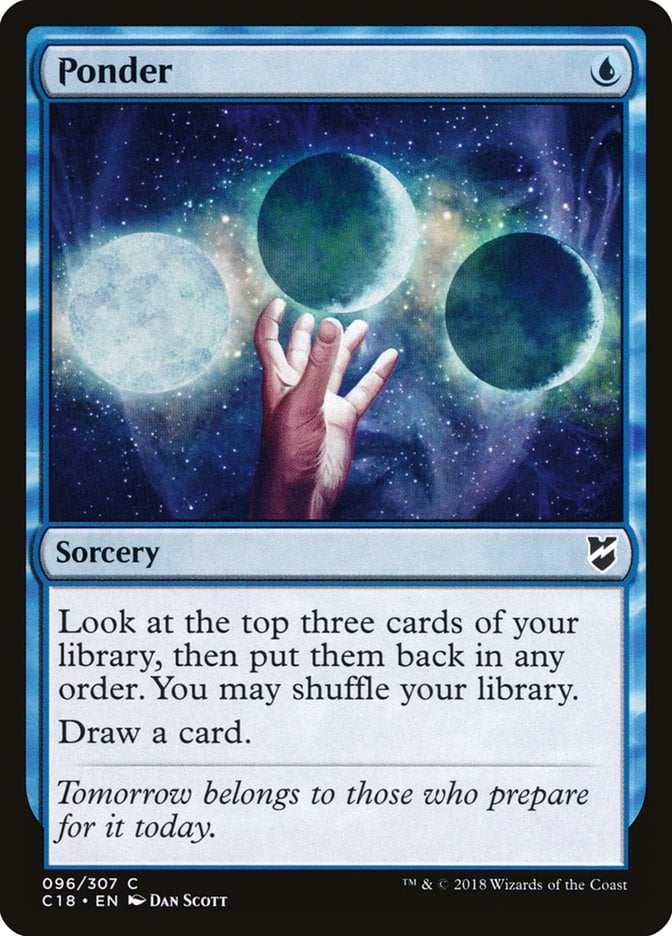
As we move closer to #1, we’ll start bumping into spells strong enough to be banned or restricted in certain formats.
One of Magic’s best blue sorceries, Ponder looks even deeper than Preordain before drawing one, and you can shuffle everything away if you don’t like what you see.
Strong enough to be banned in Modern!
#19. Yawgmoth, Thran Physician
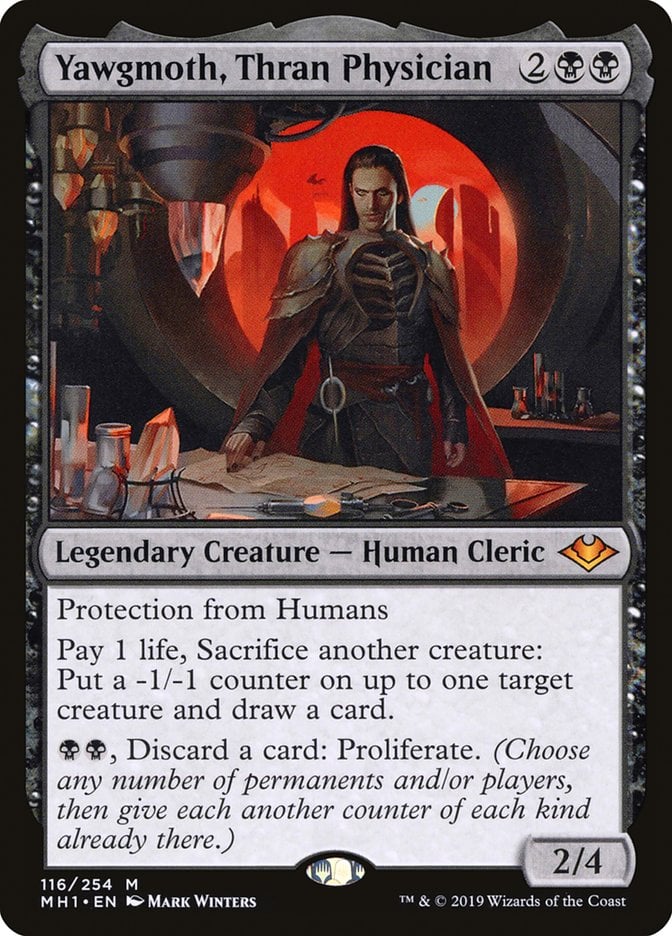
Another mono-black commander makes the cut – you’re less likely to see Yawgmoth, Thran Physician than Braids, Arisen Nightmare in the command zone, but the Father of Machines is a lot stranger in formats like Modern.
You probably won’t count on Yawgmoth too much if your only concern is to draw cards, but when looking at the whole package, Yawgmoth, Thran Physician is hard to beat.
#18. Caretaker’s Talent

With every Magic set released, Caretaker's Talent does more and more work because there are always more ways to make tokens. Created a clue, food or treasure on your turn? Draw a card. Flashed in a Resolute Reinforcements during your opponent’s combat? Draw a card. Levels 2 and 3 are all just upside on this class enchantment.
#17. Up the Beanstalk

Up the Beanstalk would be playable even if it didn’t draw you a card when it enters. But as it stands, this is an amazing little banned-in-Modern green card that is easy to pull lots of value from if a giant-sized portion of your curve is mana value 5 or more.
#16. Sylvan Library
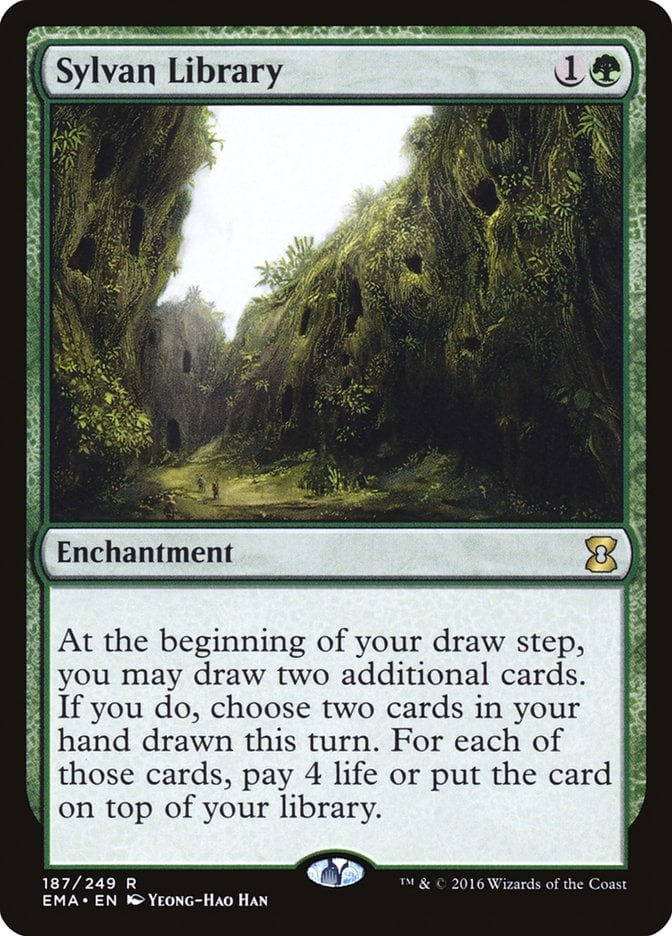
Speaking of multi-format staples, Sylvan Library can even make the cut in Vintage, besides being often seen in cEDH.
One of the best green enchantments, the trick here is that you can choose any of the cards you’ve drawn this turn to put on top of your library. That includes the card you normally draw during your draw step and any other effect that allows you to draw cards before Sylvan Library‘s trigger resolves.
#15. Skullclamp
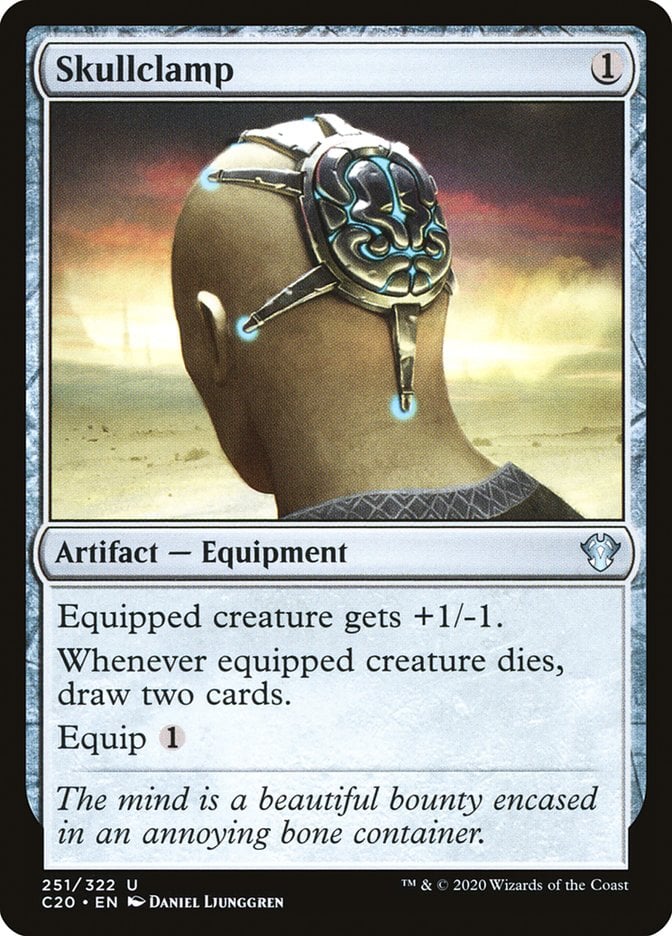
Have you heard the one about Skullclamp? True story!
During internal testing, this little artifact used to give a +1/+1 buff, just like an equipable +1/+1 counter. But the MTG designers thought it was too strong, so they nerfed it to +1/-1, and sent the card to the press.
As soon as it was let loose in the wild, Skullclamp bumped into the likes of Bitterblossom and every token generator that spews X/1 creatures.
Long story short: Banned in Modern, banned in Legacy, and a very popular card-draw engine in the formats it’s still legal in.
#14. Brainstorm
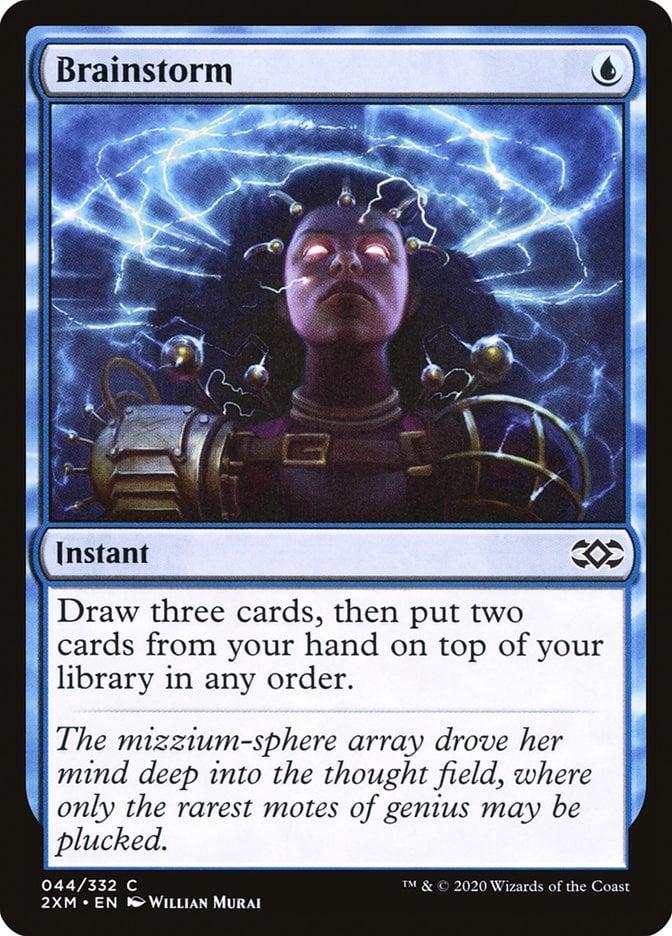
An improved, instant-speed version of Ponder, Brainstorm is arguably the best cantrip in Magic. It’s playable in major Eternal formats, namely Commander, Legacy, and Pauper. It’s restricted in Vintage and one of the select cards banned in Arena from the Historic format.
Unlike Ponder, Brainstorm doesn’t shuffle on demand. But that’s why Brainstorm is best friends with the fetch lands: If you don’t like what’s in your hand, put it on top of your library and then have a fetch shuffle it away.
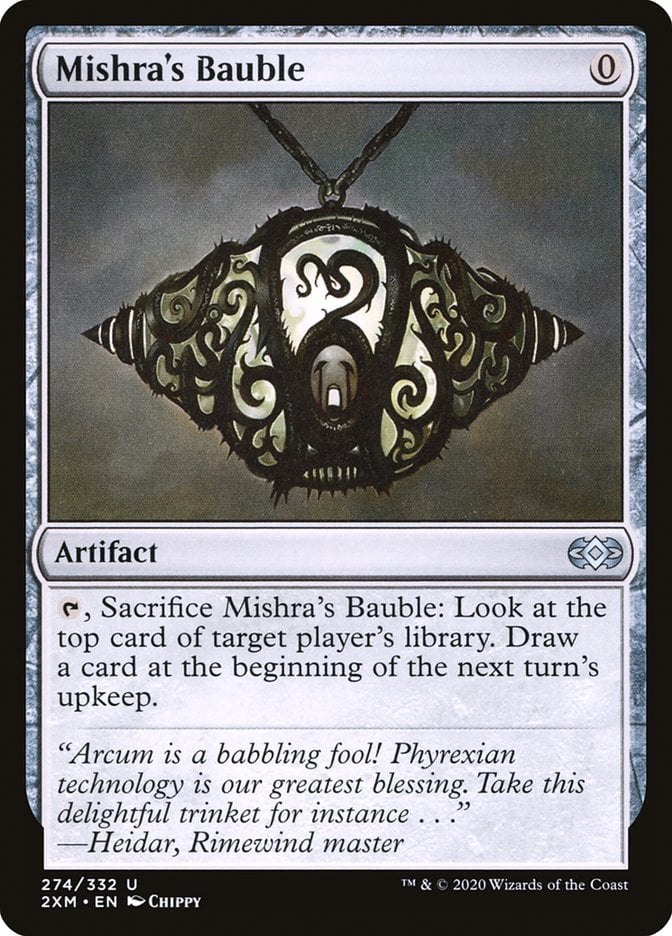
#13. Gitaxian Probe + Mishra’s Bauble
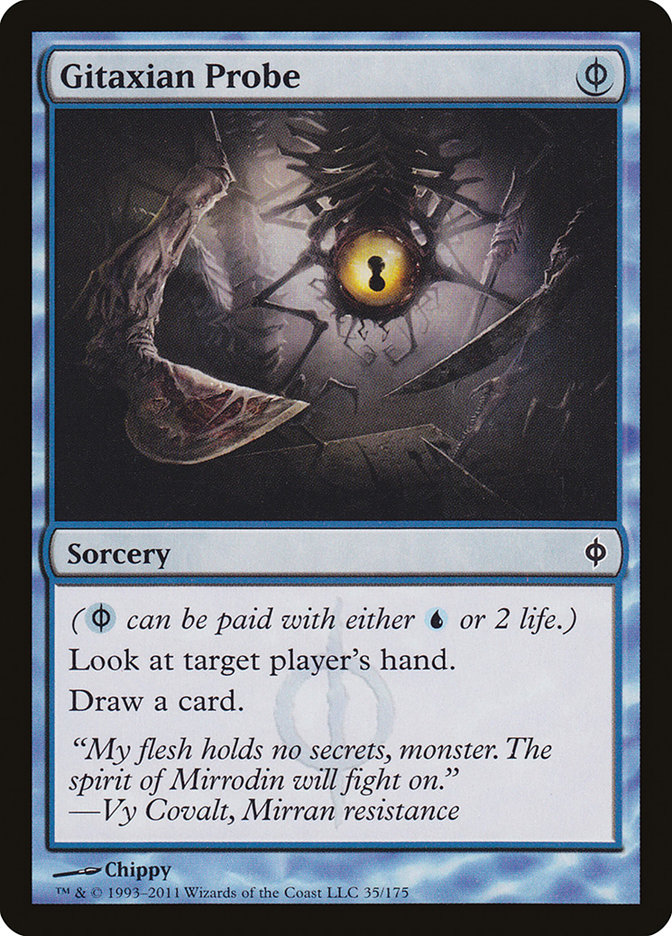
Let’s put it this way: A cantrip that you can pay for with life rather than mana, and tells you what your foe’s up to, is so fundamentally broken that Gitaxian Probe is banned in Modern and Legacy, and it’s also restricted in Vintage, where it’s no stranger to top-tier decks! Phyrexian mana is just that good.
Mishra's Bauble, one of the best eggs in Magic, isn’t as broken, but being a 0-mana cantrip (even if the card draw is delayed) makes it a mainstay in Vintage and Modern.
#12. Treasure Cruise
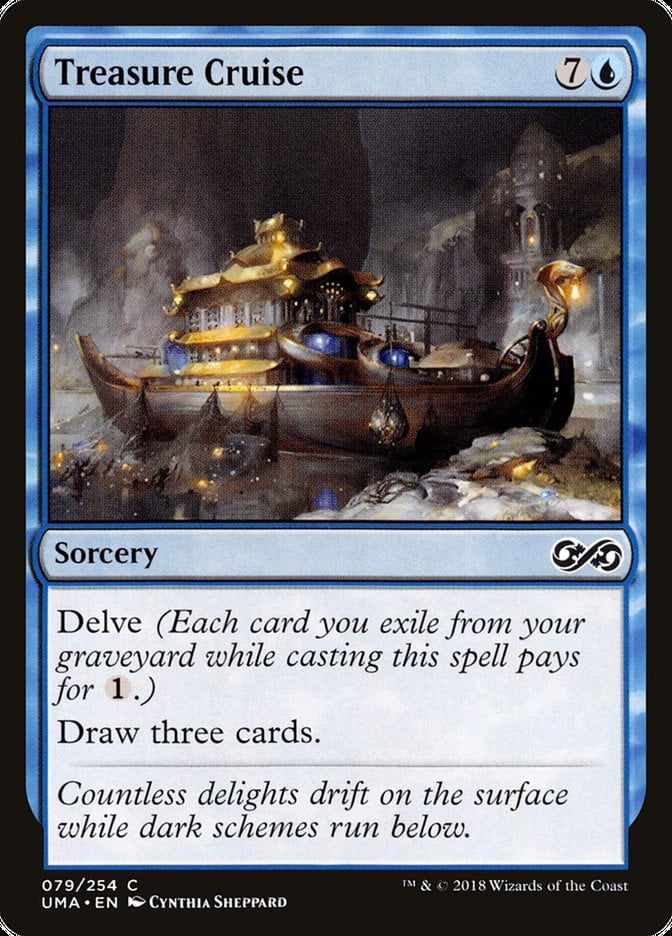
A match made in heaven with Arclight Phoenix in Pioneer, and a house in Vintage, Treasure Cruise sees exactly zero play in Modern or Legacy… but that’s because it had to be banned, which is a testament to the power of Ancestral Recall‘s little delve cousin!
#11. Mystic Remora
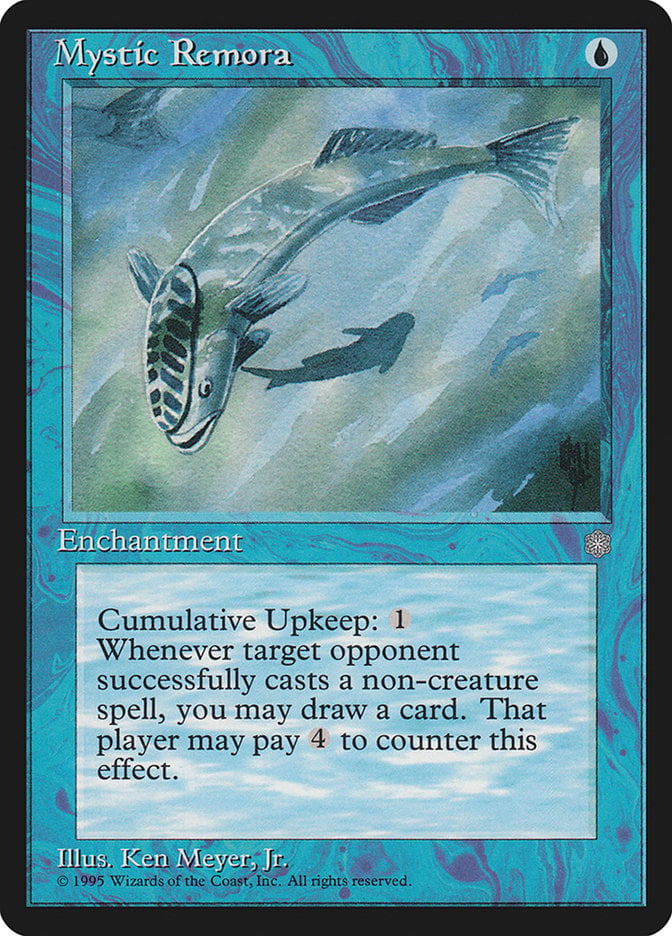
Alright, let’s talk about the blue fish in the room.
Save for the occasional showing in Vintage, 60-card decks have no use for Mystic Remora. Commander, on the other hand, is chock-full of this Ice Age blue enchantment, and it’s probably one of the most-feared turn-1 plays a blue deck can make.
#10. Griselbrand
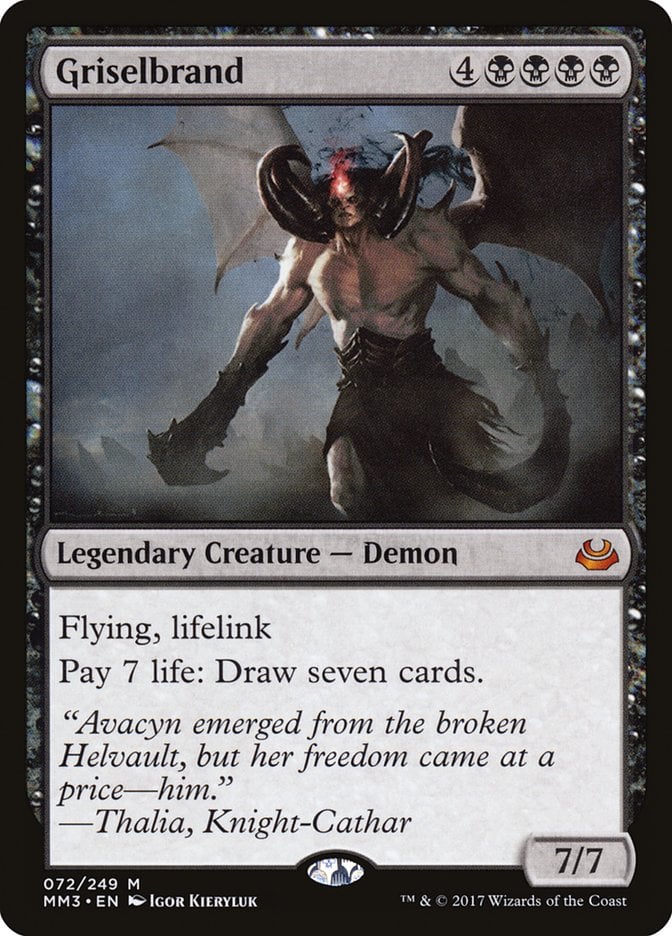
Griselbrand is one of the scariest reanimator targets, and being a huge, flying lifelinker means that the 7 life you pay to draw seven cards isn’t an outlandish price.
You won’t see Griselbrand coming back from the graveyard in Commander, though, since it’s banned in EDH.
#9. Esper Sentinel
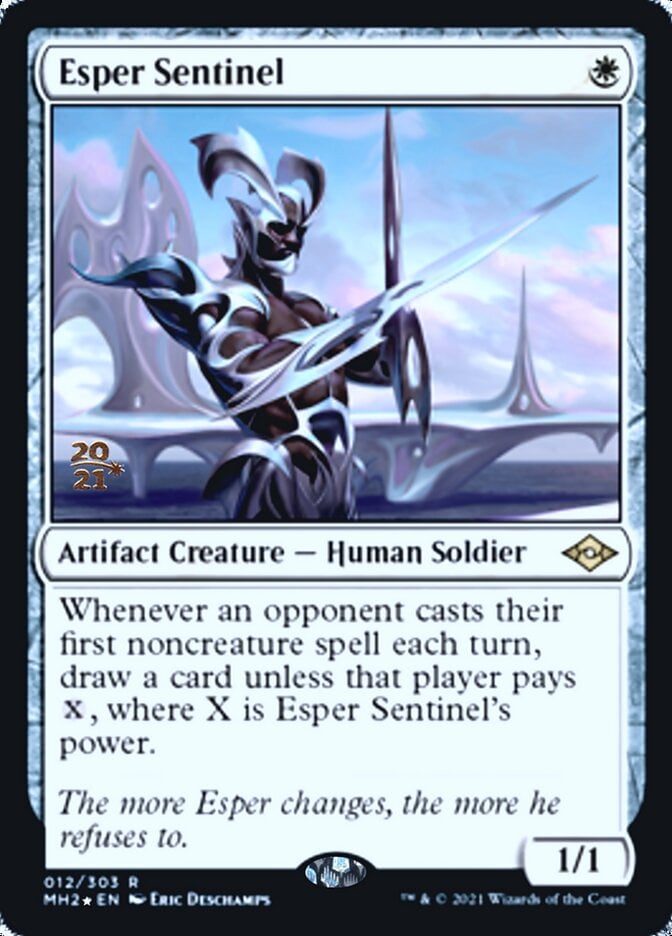
Like Mystic Remora, but in white and much, much better: It has no cumulative upkeep, and it can block in a pinch. Esper Sentinel is a powerhouse both in cEDH and Modern, and it’s very likely the best card-draw effect in white.
#8. Leovold, Emissary of Trest
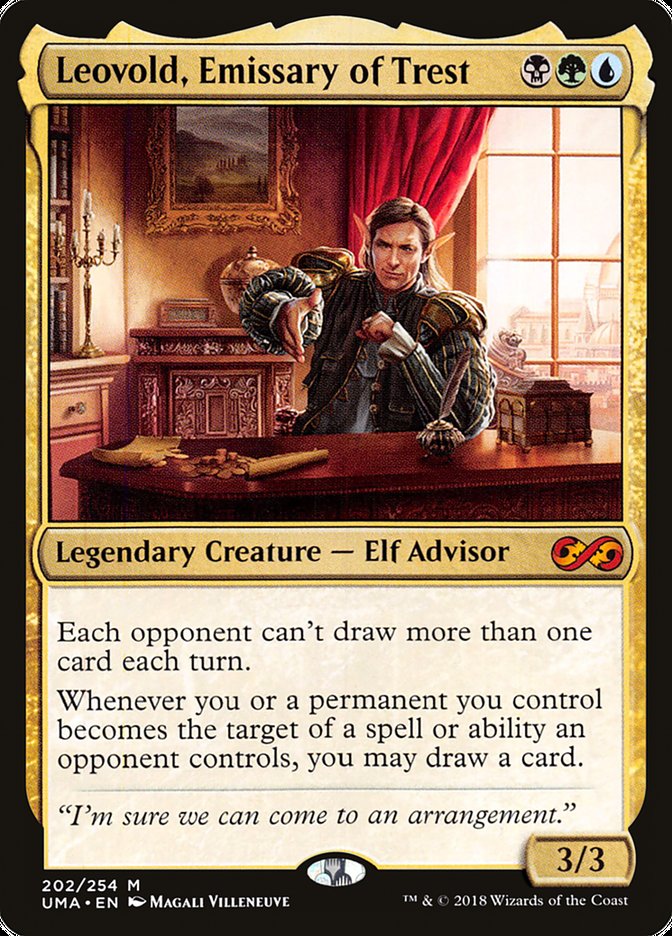
A common story among the upper ranks, Leovold, Emissary of Trest was an amazing card-draw (for you) and draw-hate (for your foes) Sultai commander until, victim of its own success, it was banned from EDH.
As one of the strongest Sultai cards it still sees quite a bit of play in Vintage and Legacy, the only other formats where you can play it.
#7. The One Ring
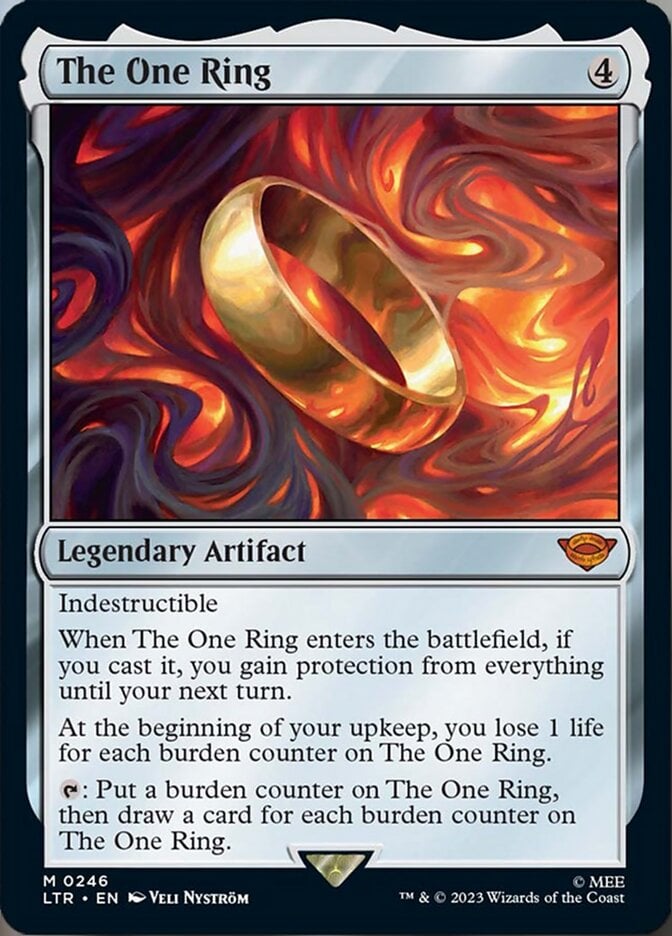
More like “The One Card Every Modern Deck Needs Four Copies Of,” really, until it hit the banlist. And also every cEDH deck, but, well, cEDH players love Rings that go into every single deck.
The Lord of the Rings brought its main McGuffin to Magic, and it has been rocking formats ever since. You get to draw cards, and with one of the best colorless ETB effects in the game you get protection from everything, which buys you time to actually put your cards to good use. The One Ring is probably the best card draw artifact in all of Magic when it comes to raw card advantage.
#6. Sensei’s Divining Top
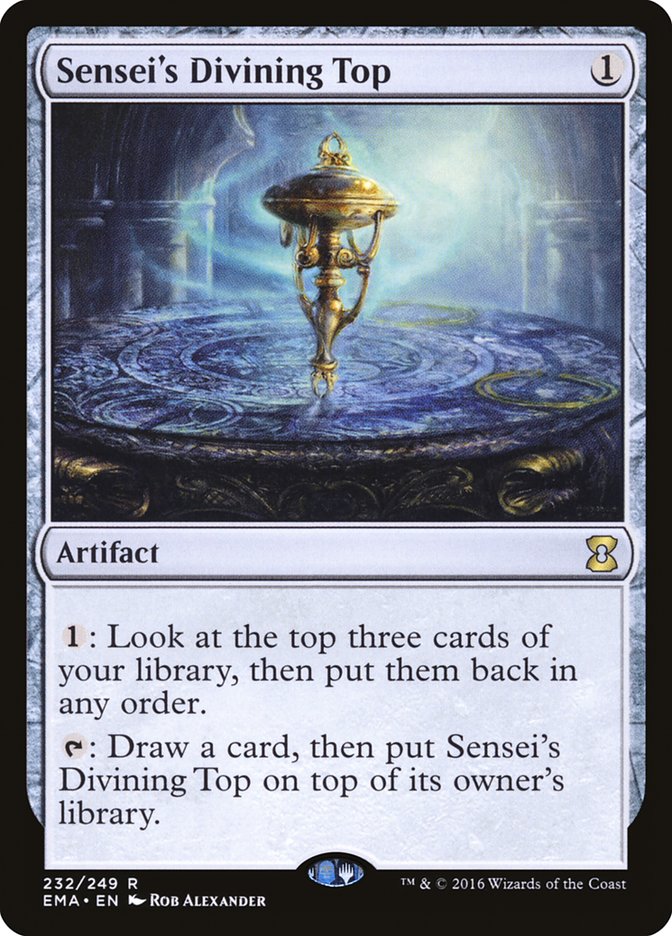
Another artifact that got itself banned from Modern and Legacy, Sensei's Divining Top goes infinite with just about anything that has a Magic logo on its back.
It may seem like a cantrip at first glance, but combined with artifact cost reduction and effects that let you play cards off the top of your library, Sensei's Divining Top is a card-drawing monster. If you need a sample, look up Mystic Forge and Foundry Inspector.
#5. Rhystic Study
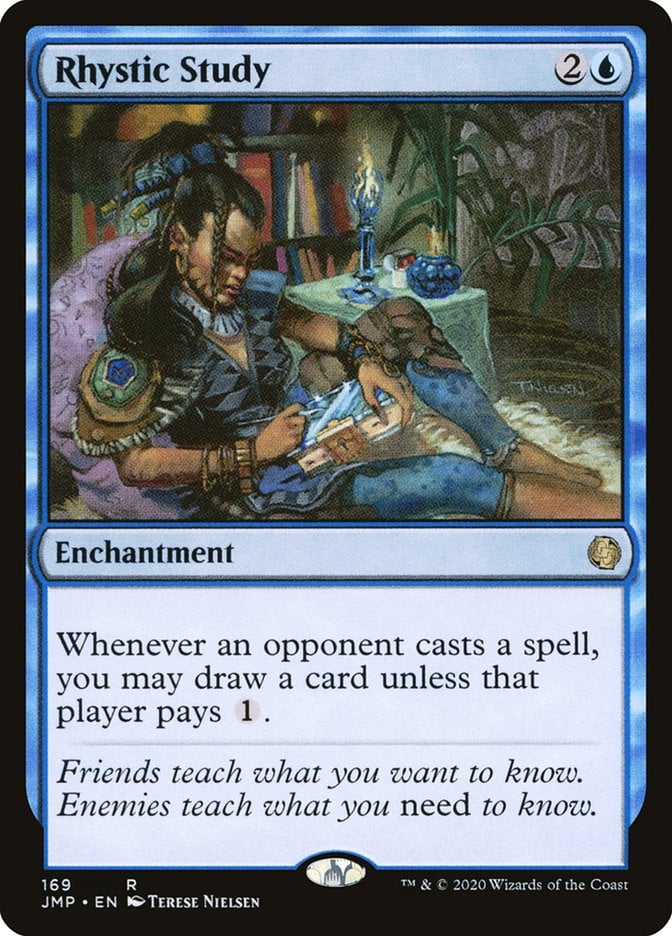
Introduced in Prophecy, rhystic spells weren’t received too well… but one of them bloomed into one of the strongest Commander staples: Rhystic Study.
Any spell can trigger this blue enchantment (unlike Esper Sentinel or Mystic Remora, for which you need a noncreature spell), and it has no downsides or per-turn limitations.
Except perhaps for Ancestral Recall, Rhystic Study is simply the best card-draw effect you can include in your EDH deck, possibly the best enchantment in the Commander format, and among the strongest early plays.
#4. Timetwister
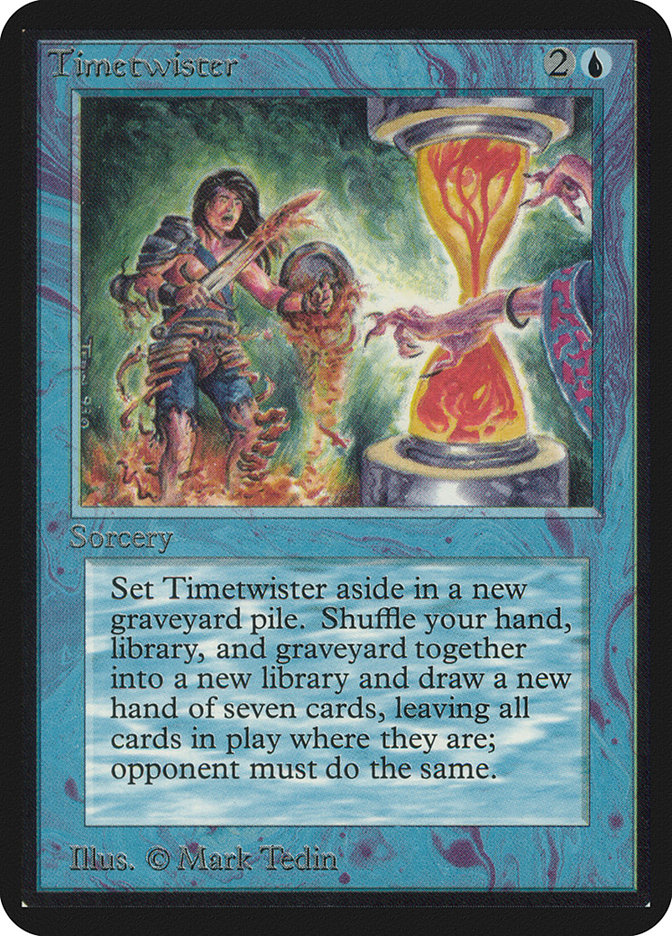
As a proud member of the Power Nine – the most powerful Magic cards ever printed – Timetwister‘s fame should be enough to put this wheel-plus-graveyard-hate at the top of the list. But some card drawing effects are really broken, so we’ll find three more cards above this hall of famer.
#3. Yawgmoth’s Bargain
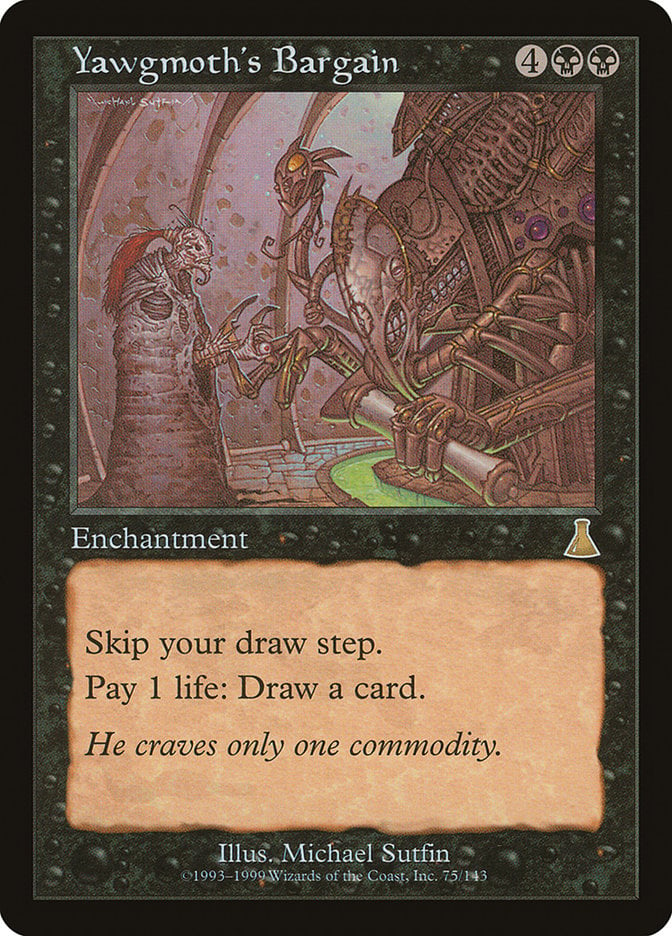
A card that’s not a piece of Power Nine, ranked on top of a power-niner?
Yep, indeed! This high up, we’ll go strictly by “Whoever gets the most bans, wins.”
You can play Timetwister in Vintage (even if it’s restricted) and Commander, but Yawgmoth's Bargain is strictly Vintage-only and one of Magic’s best black enchantments ever. That’s how broken “paying life to draw cards” is!
#2. Library of Alexandria
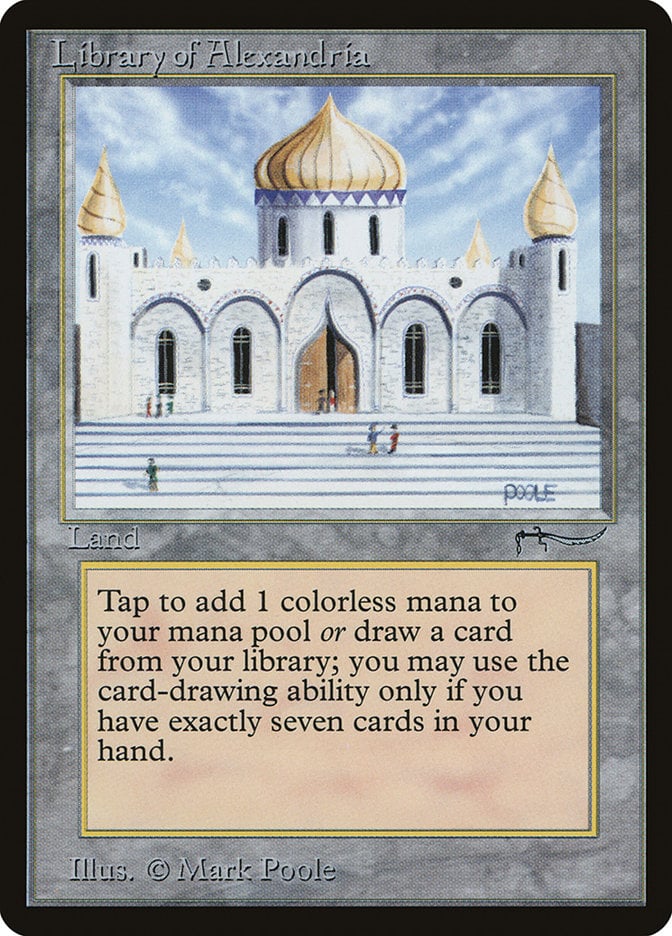
You can only play Yawgmoth's Bargain in Vintage, but at least you can put four copies in your deck.
Not so with Library of Alexandria. This Arabian Nights land is banned everywhere else, and it’s restricted in Vintage: only one copy per deck!
#1. Ancestral Recall
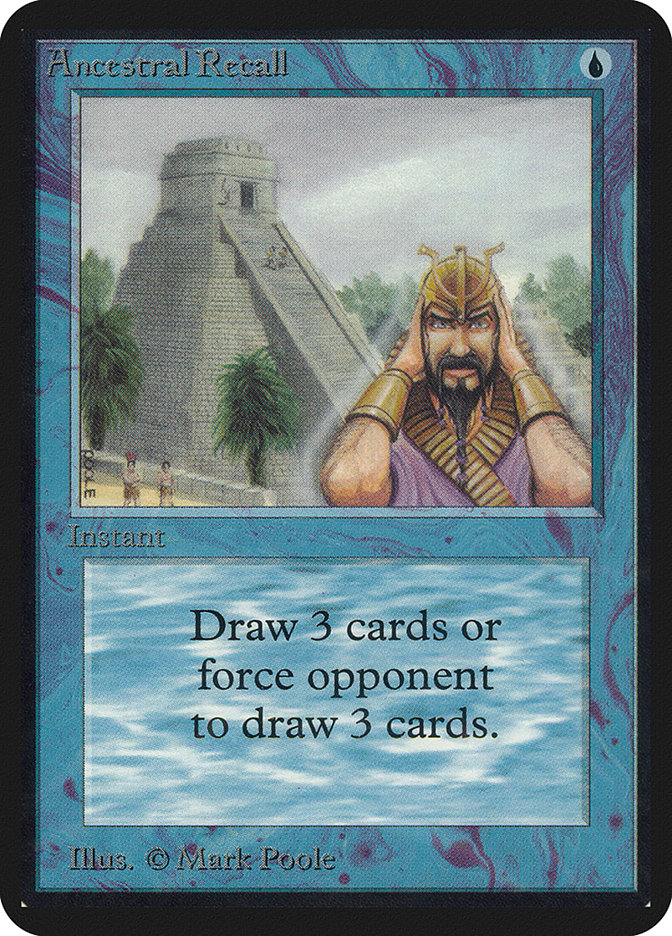
We’ll give this ranking’s #1 to Ancestral Recall, but even that is selling this power-niner short.
Ancestral Recall is just off the charts, and like Library of Alexandria, it’s banned everywhere save Vintage, where you can have just a single copy in your deck. Not to mention being one of the most expensive cards in Magic.
Ancestral Recall draws you cards or forces your foe to, at instant speed, for by far the best base rate in the game, and with exactly zero drawbacks.
This is, and forever will be (unless WotC gets really crazy!) the best card draw spell in all of Magic.
Best Card Draw Payoffs
Drawing cards is its own best payoff: The more cards you draw, the more options and resources you have to beat your opponents.
Magic is, at its core, a resource-management game – more doesn’t always mean better, but it usually lands pretty close.
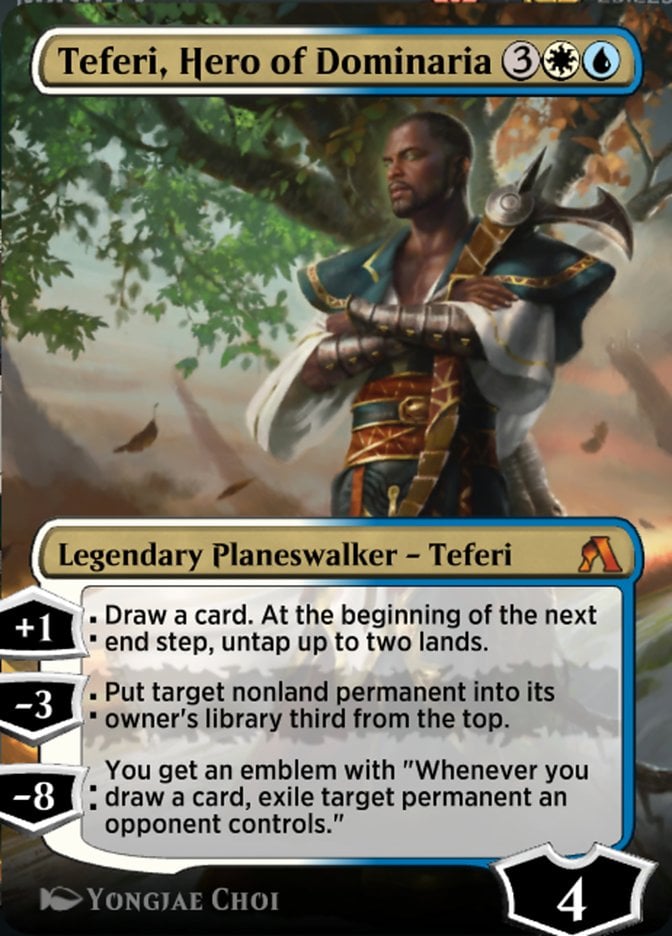
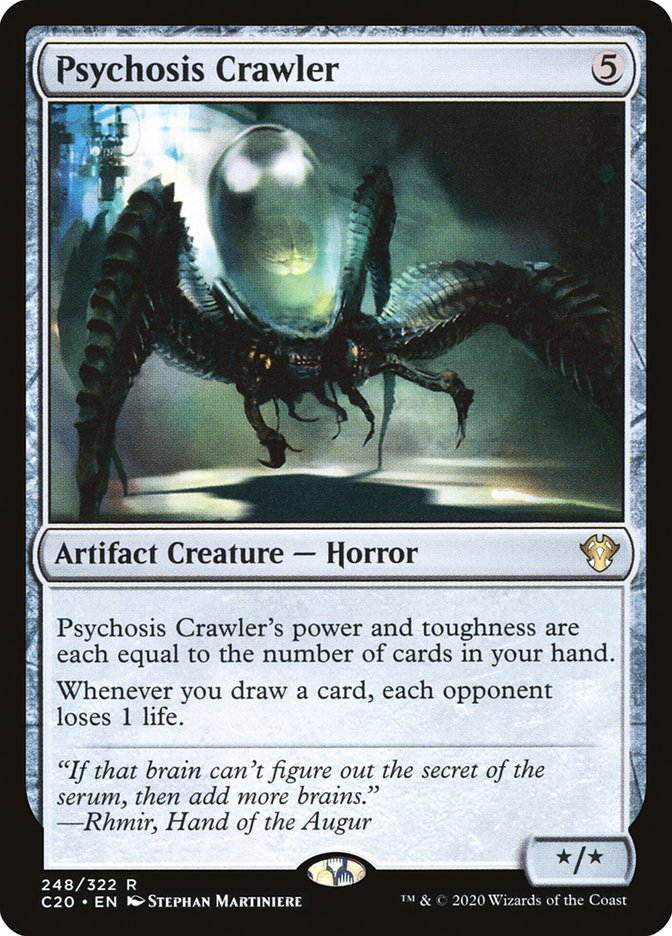
You still have specific card draw payoffs, though. Niv-Mizzet, Parun and the emblem from Teferi, Hero of Dominaria are two good examples. Psychosis Crawler benefits from the full hand you drew and burns opponents while you draw.
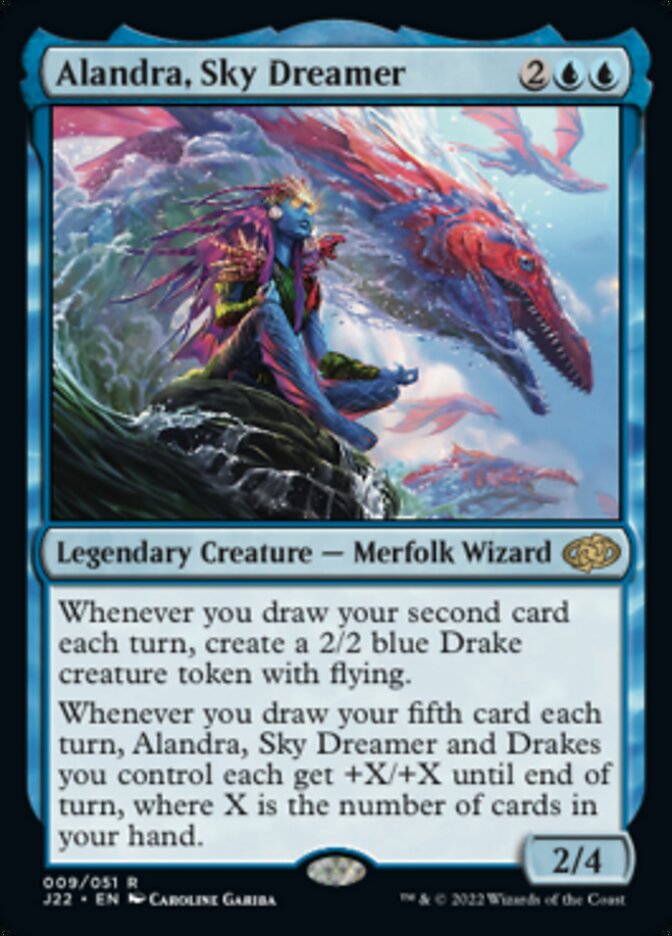
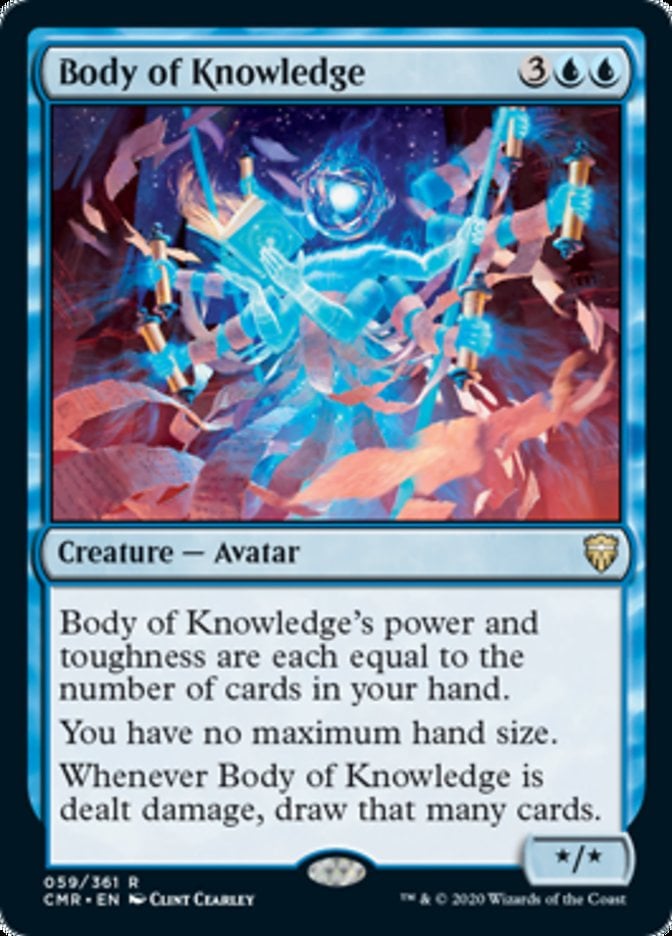

There are also specific payoffs for drawing your second card and WotC experimented with payoffs for drawing your third card each turn. Alandra, Sky Dreamer ups the ante to a fifth card drawn for a big bonus. Body of Knowledge is one of the best rewards out there for drawing cards and each bit of text goes great with this list. Nightmare Unmaking is a different sort of payoff in that you control the number of cards in your hand and can get close to a one-sided board wipe.
Card Draw vs. Card Advantage
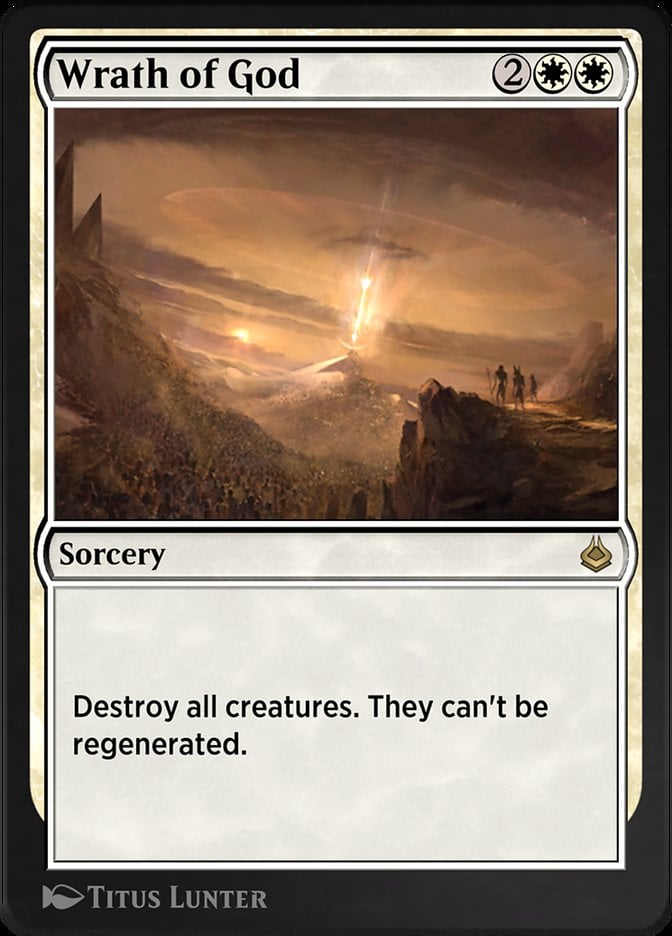
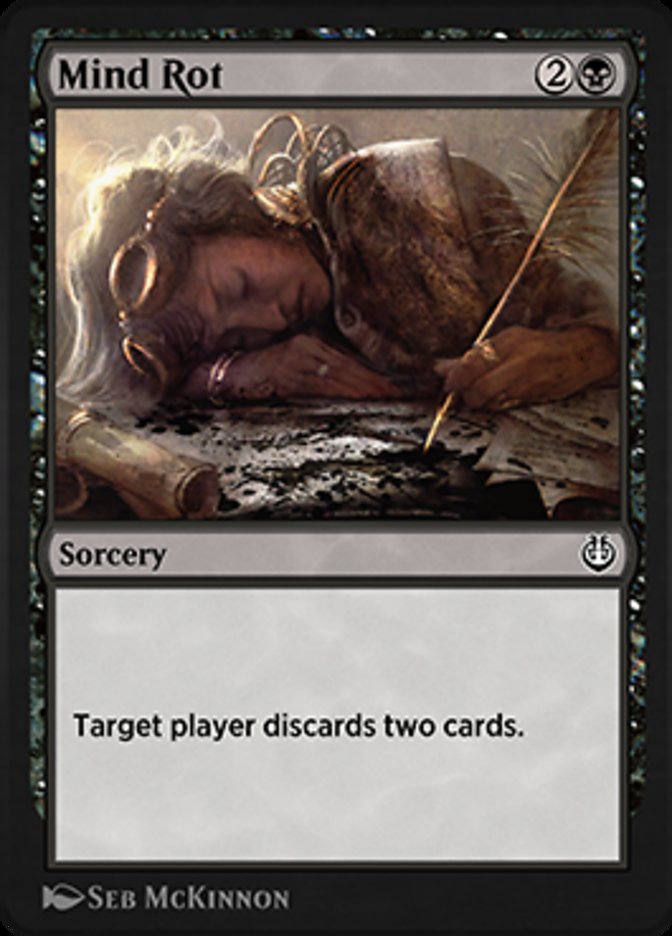
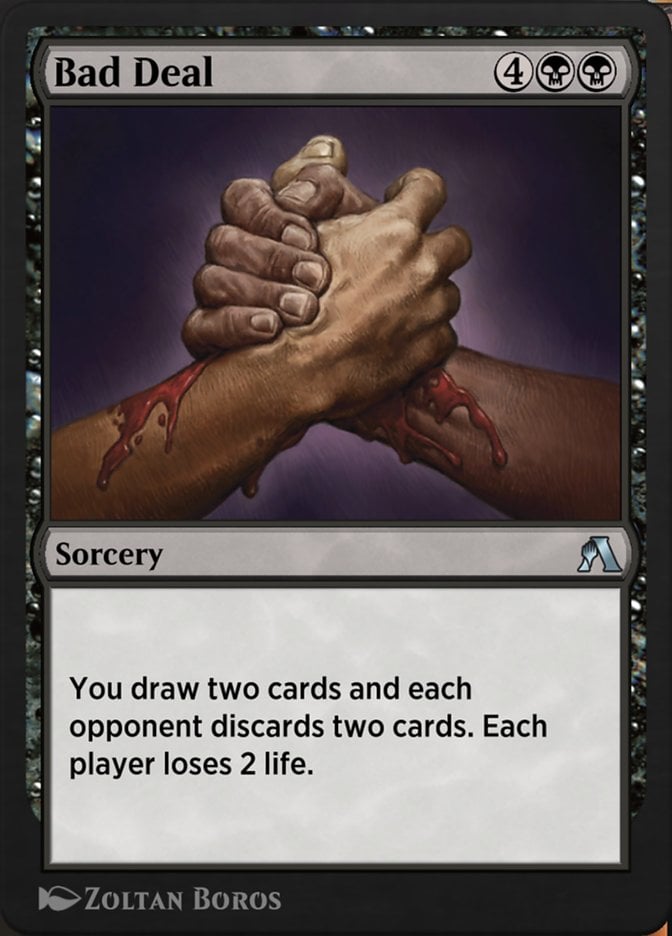
In Magic, “drawing” is a very specific game action – the card or effect must literally say “draw” in its rules text. Card advantage is a strategic concept (rather than a specific game term) and a lot broader, and basically means “having more cardboard than my opponents.”
For starters, any card that puts more cards in your hand is card advantage, even if it doesn’t say “draw.” But card advantage also looks at what happens in other zones. If I play three creatures, and then you kill them all with a Wrath of God, you’ve got card advantage: You used a single card to get rid of three of mine. From another direction, Mind Rot reduces the cards in your opponents hand to give you card advantage, yet has nothing to do with card draw. A Bad Deal combines multiple effects to count as card draw and card advantage in two directions. Card draw is one way to acquire more resources – card advantage is all the ways to have more resources than your opponent.
Wrap Up
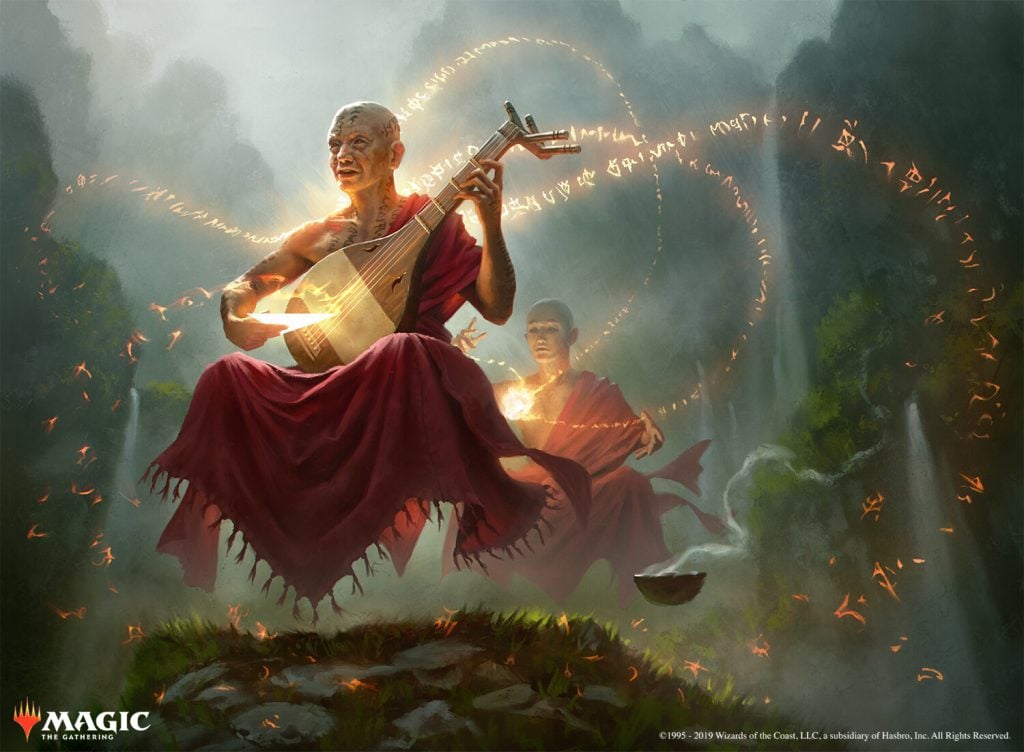
Sylvan Library | Illustration by Bryan Sola
We’ve reached the end of the list! I really enjoy putting these kinds of lists together as I inevitably find new and surprisingly powerful cards to run in my jank Commander decks that I’ve never heard of before.
What did you think of my rankings? Were there any cards or selections you’d swap around a bit? Any cards I missed that you think are worthy of recognition? Let me know in the comments or in the official Draftsim Discord. If I think they’re as good as you say, maybe I’ll add them.
Until next time, stay safe and stay healthy!
Follow Draftsim for awesome articles and set updates:









7 Comments
I love this list! I’m a big fan of drafting, and this list has some great cards to help me out. Thanks for sharing!
Some pieces of information on this list are outright incorrect (Beast Whisperer is a creature, not an enchantment; Garruk’s Uprising cares about power, not mana value)
Thank you, we updated the article.
Interesting that you put Timetwister at #4 and Parallel Thoughts, being a far more powerful version of Timetwister, never gets on the list.
I’d like to hear your thoughts on Parallel Thoughts (no pun intended). It certainly doesn’t read as very powerful, let alone being better than Timetwister.
Necropotence not on the list? Odd.
A bit pedantic but the author chose to specifically include only cards that “draw”, and Necro doesn’t. So yeah, Necro’s Top 10 card advantage tool, no doubt, but not card draw in the way this list uses it.
Add Comment