
Last updated on May 26, 2026

Nature's Lore | Illustration by Julie Dillon
Excuse the explorer gear; I’m searching for lands today!
Look, you gotta play lands to compete in Magic, and a good land tutor can help ensure you always have your land drop for the turn. Or, you can get ahead of the competition with a few timely ramp spells. Whatever the endgame, these land search effects are sure to develop your mana base nicely.
What Are Land Search Cards in MTG?

Scapeshift | Illustration by Daniel Ljunggren
Land searchers, or land tutors, are spellsand abilitiesthat let you search your library specifically for one or more land cards. The cards you search for might go to different game zones: your hand, graveyard, or in the case of ramp spells, directly on the battlefield.
You could technically use a generic effect like Demonic Tutor to search for a land, but I want to keep this list distinct by including only cards that specifically search for lands. I’m also focusing on Commander, though some of the best land tutors in Commander also overlap with 60-card Constructed formats.
Honorable Mention: Initiative Cards
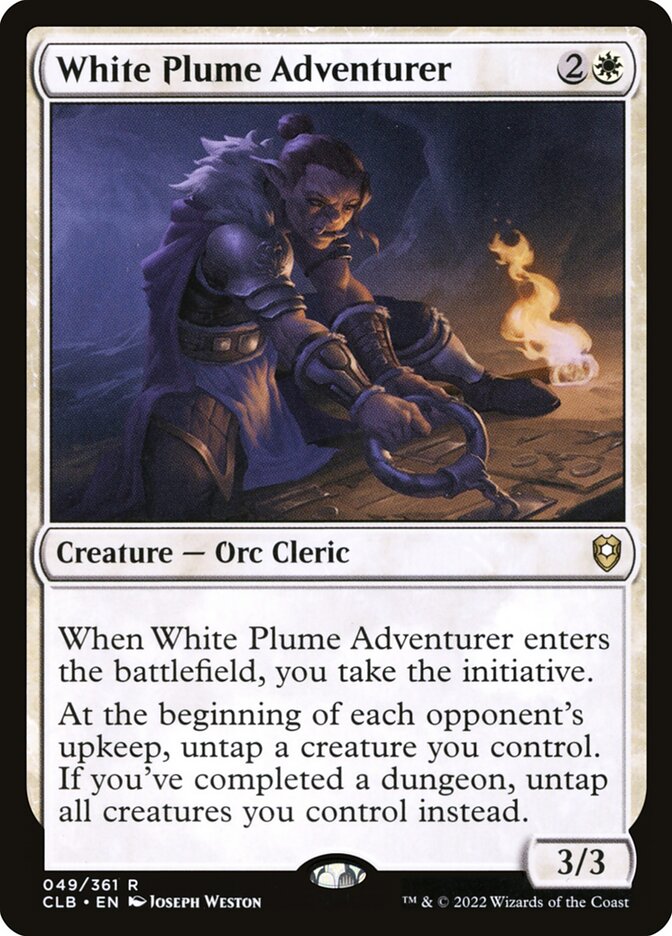
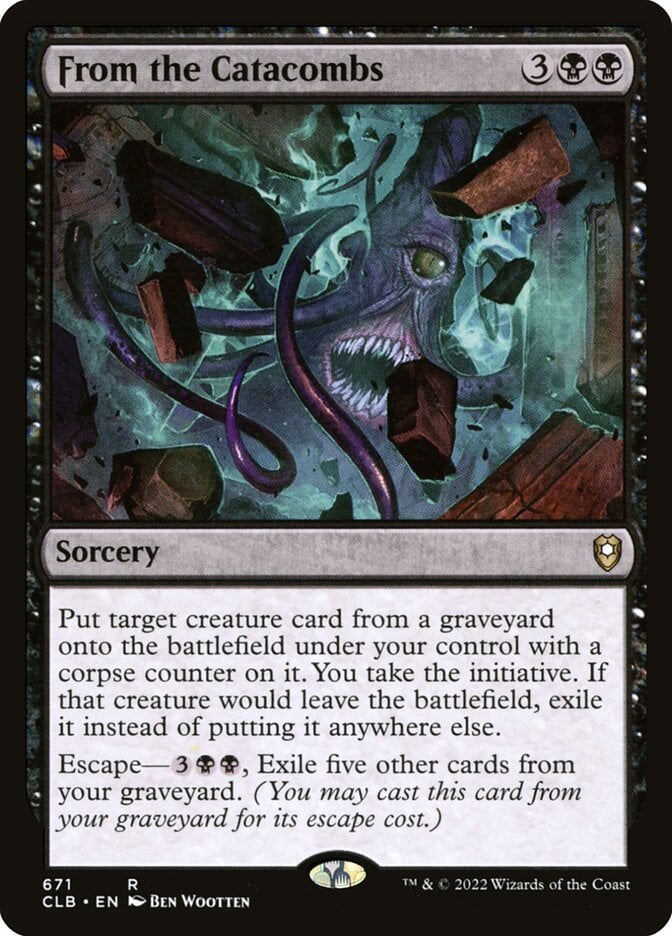
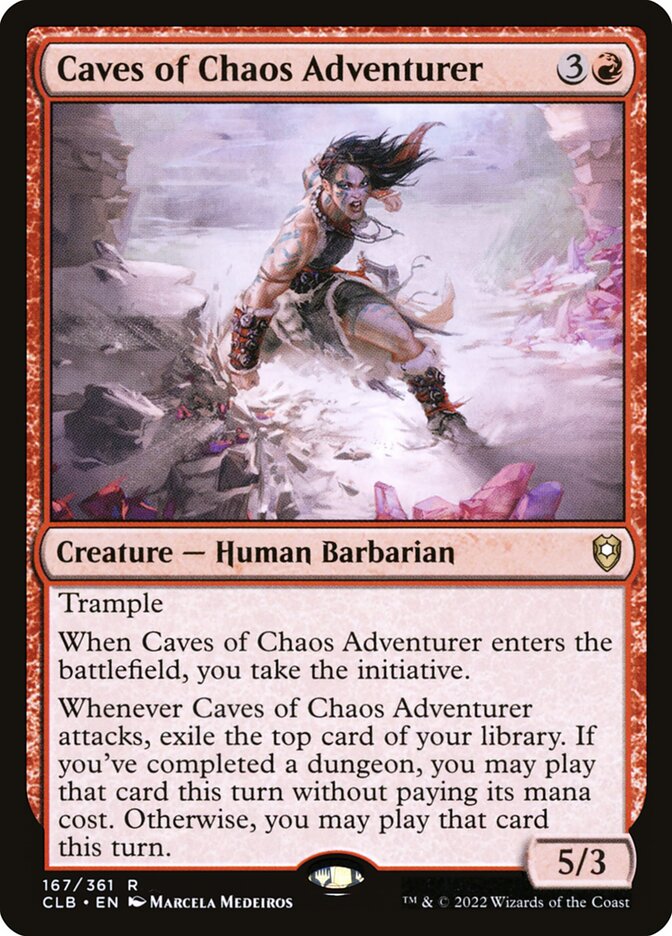
The first room on The Undercity always fetches a basic land from your deck, which makes every card with the initiative a land-searcher of sorts. I’m not going to parse out the best or worst ones here, but they all kind of fit the description.
Honorable Mention: Primeval Titan + Golos, Tireless Pilgrim
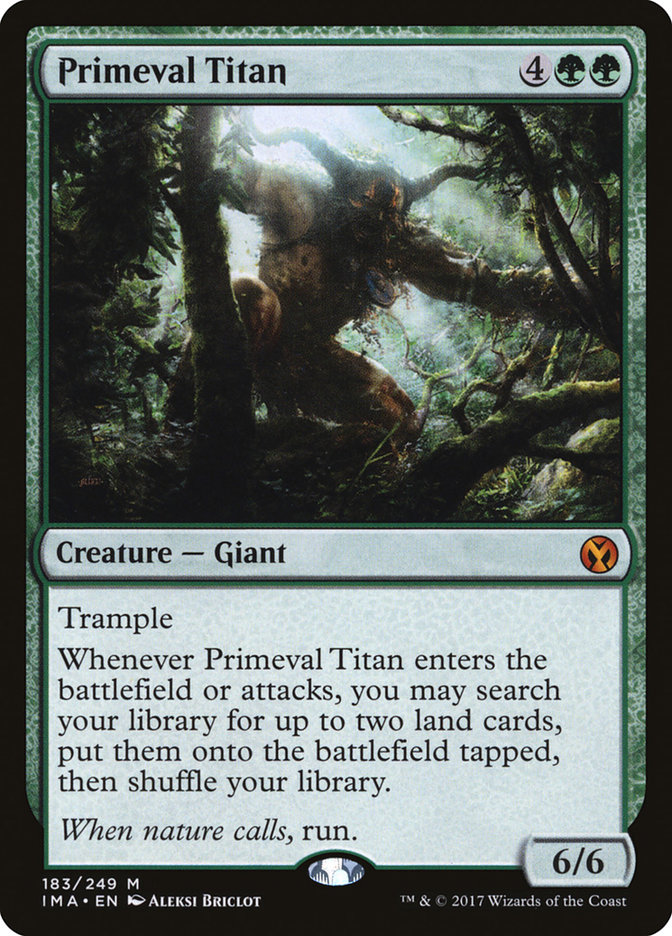
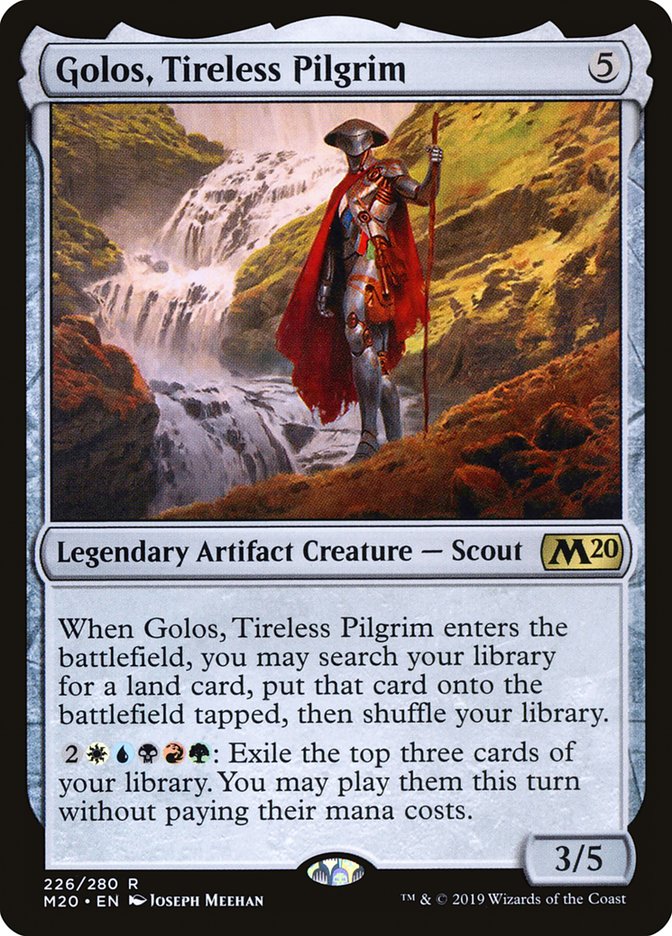
This list is primarily geared towards Commander players so it would be strange to include cards banned in Commander, but I’d be remiss not to mention Primeval Titan and Golos, Tireless Pilgrim, two land searching machines that deserve their bans. Primeval Titan produces way too much mana while it tutors value lands and Golos is an obnoxious commander because the free land makes it nearly impossible to kill. One day they could come off the banlist and made into Game Changers, but I hope it never comes.
#63. Collective Voyage
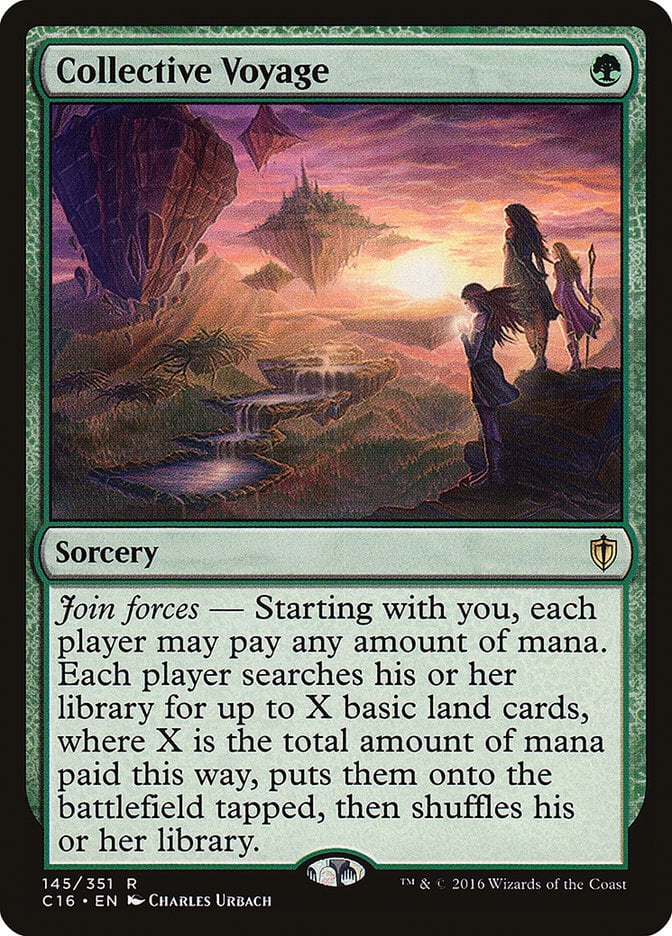
I’m not fond of cards that completely break open the developing stages of a game, but Collective Voyage can lead to silly matches where people are casting their finishers on turns 3-4. That’s fun every now and then, but my stance is rarely to chip in on the join forces ability.
#62. Heaped Harvest

Heaped Harvest is a lot like Grow from the Ashes, ramping once on 3 mana or twice on 5. Where I really like this green artifact is in decks that want a surplus of food, since sacrificing this to another effect still grants you a land. Baba Lysaga, Night Witch and Glissa, the Traitor come to mind, the key being getting that second land without actually spending the mana to sacrifice the artifact.
#61. Maze’s End
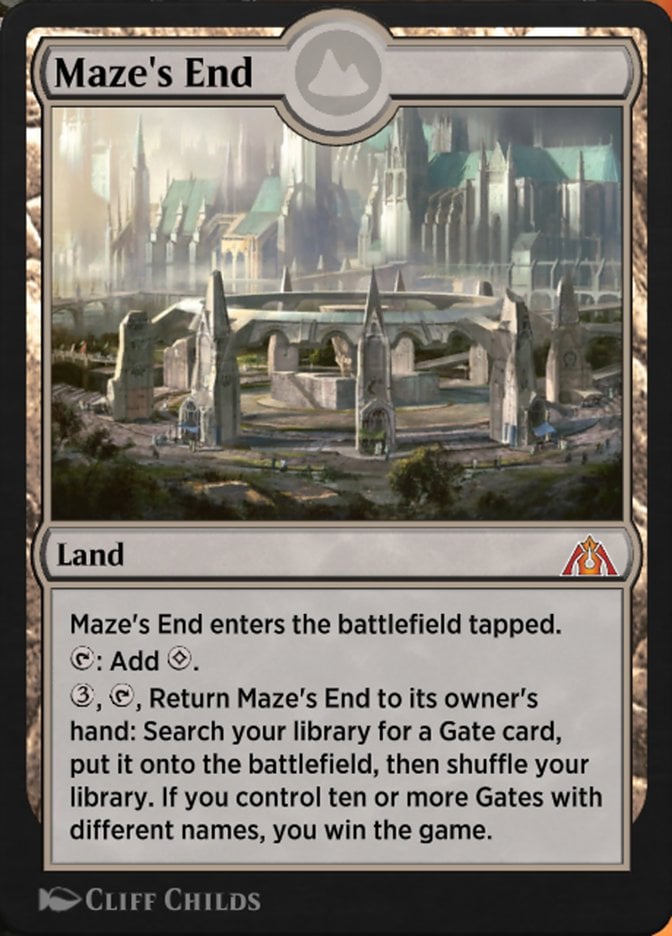
Everyone knows what’s up when Maze's End hits the battlefield. This was one of the original alternate wincons that felt doable in most Magic formats, though it’s benefitted from an influx of extra gate cards in various MTG sets, which means you don’t have to be a 5-color deck to pull off a Maze’s End victory anymore.
#60. Cleansing Wildfire
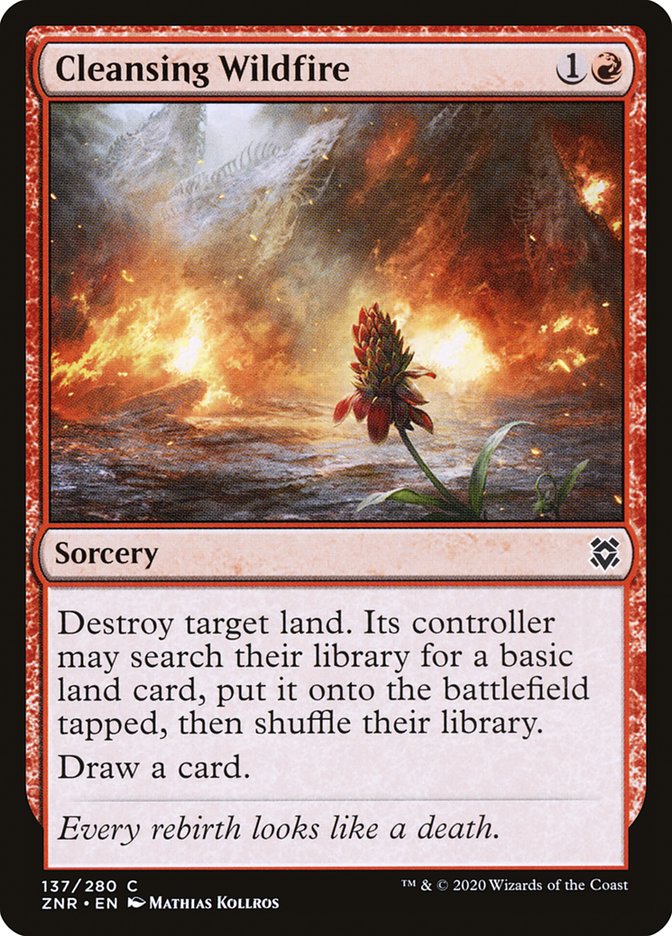
The trick with Cleansing Wildfire is to target an indestructible land you control, turning this into a Rampant Growth that cantrips. It’s also just a land destruction spell against a problematic utility land. Maze's End, perhaps? Check out Geomancer's Gambit for a slightly more expensive version.
#59. Atalan Jackal
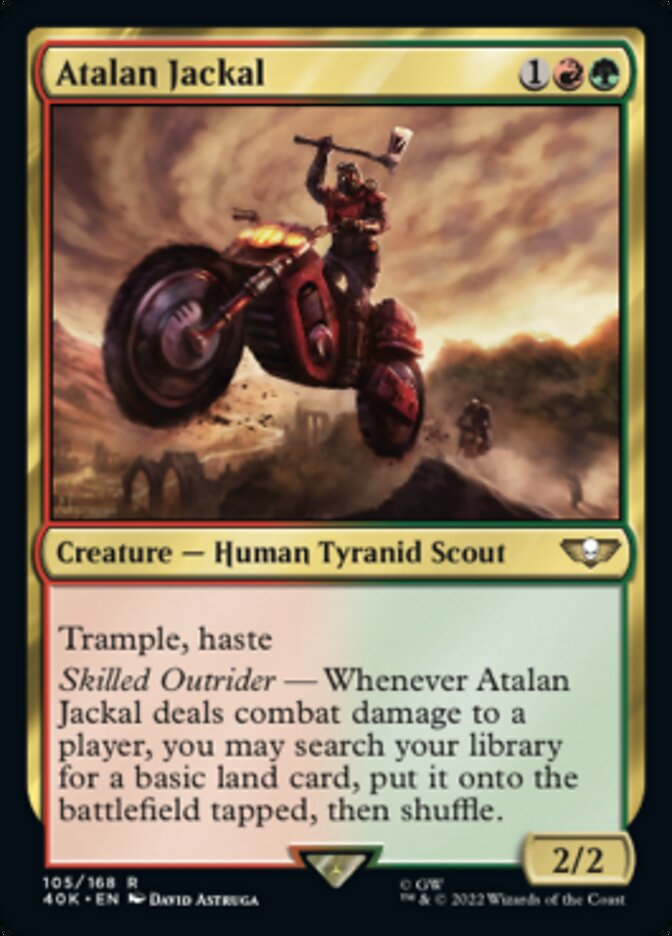
Atalan Jackal just needs to sneak in the first hit to justify itself. And if you can get extra lands off subsequent hits, all the better. This Gruul card () probably needs the help of some good pump spells to get the job done, making it solid in a deck led by The Howling Abomination.
#58. Claim Jumper
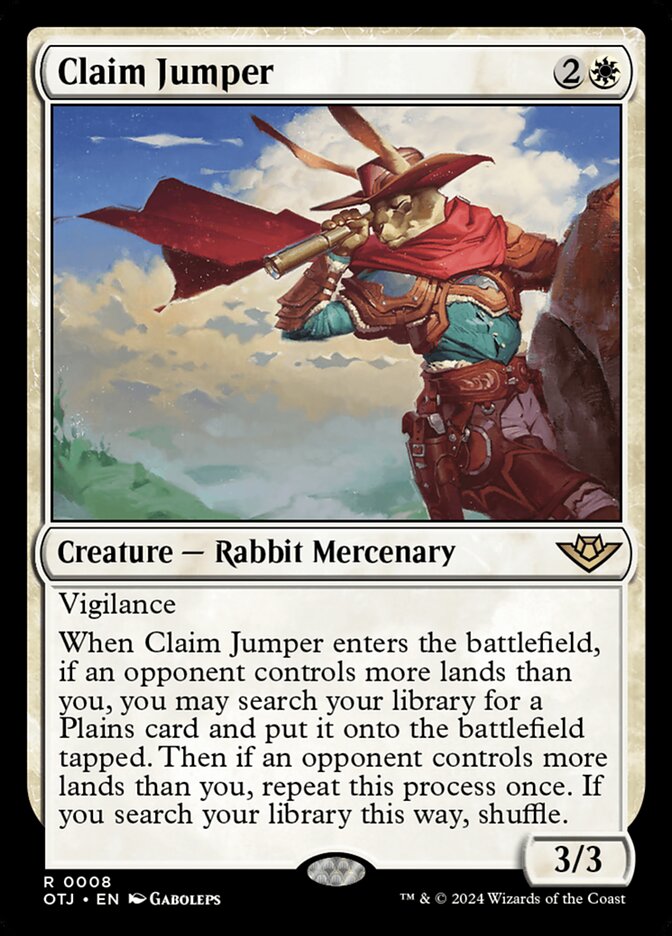
White catch-up cards rarely put you in first place, but cards like Claim Jumper can at least put you at parity with the ramp player. I’m sure Finneas, Ace Archer is happy to see the rabbit creature type here, but Claim Jumper’s a fine 99th-100th card for any white deck looking to fill out a couple slots.
#57. Bioengineered Future

Okay, technically Bioengineered Future isn’t doing the land searching, the Lander token it creates is. But Landers do search for lands, and this enchantment has an extremely powerful payoff for land searching—specifically ramp—so you should know about it for your next lands deck.
#56. Viridian Emissary

Viridian Emissary is a cheaper Farhaven Elf for aristocrats decks. A 2/1 also trades off with enough stuff that this elf scout might just die naturally and put you up a land for your efforts.
#55. Mycosynth Wellspring
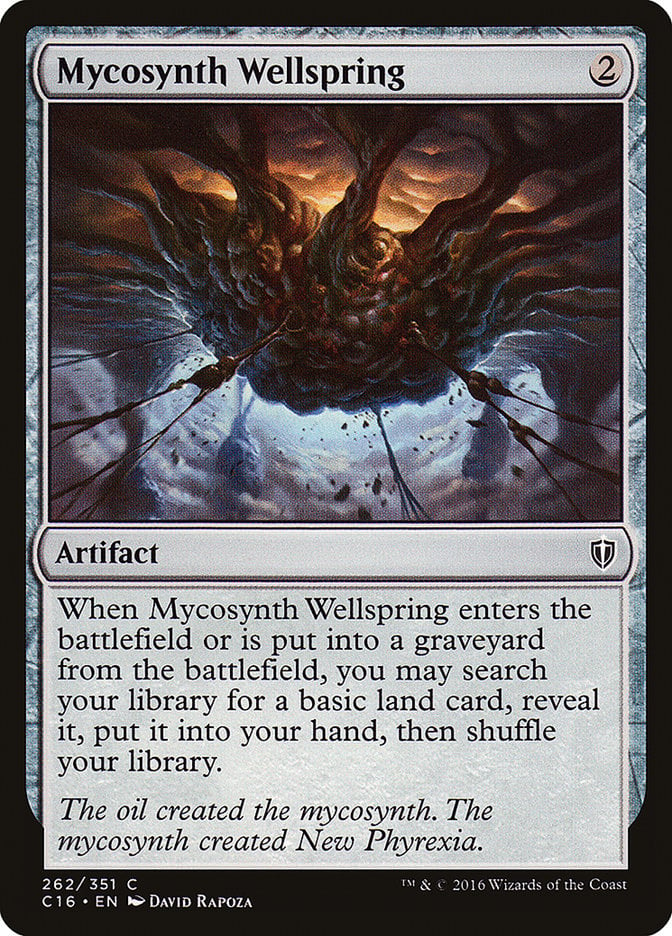
If you can sacrifice Mycosynth Wellspring with any degree of consistency, it represents 2 mana for two lands. Those both go to your hand, but guaranteeing land drops is crucial, and you’re probably getting some other benefit from the artifact sac outlet you used to pop the Wellspring.
#54. Huatli, Poet of Unity
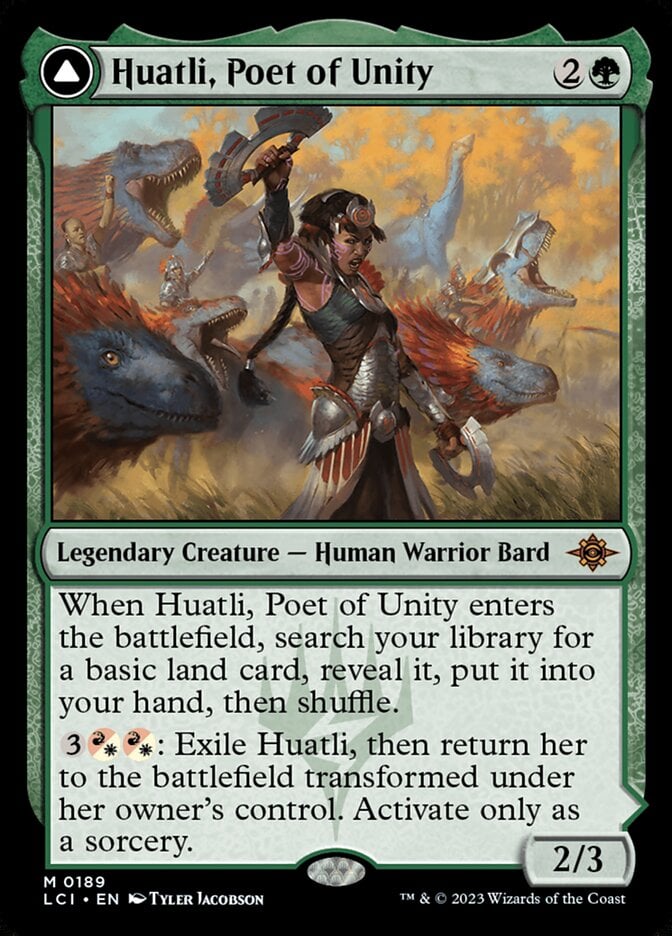
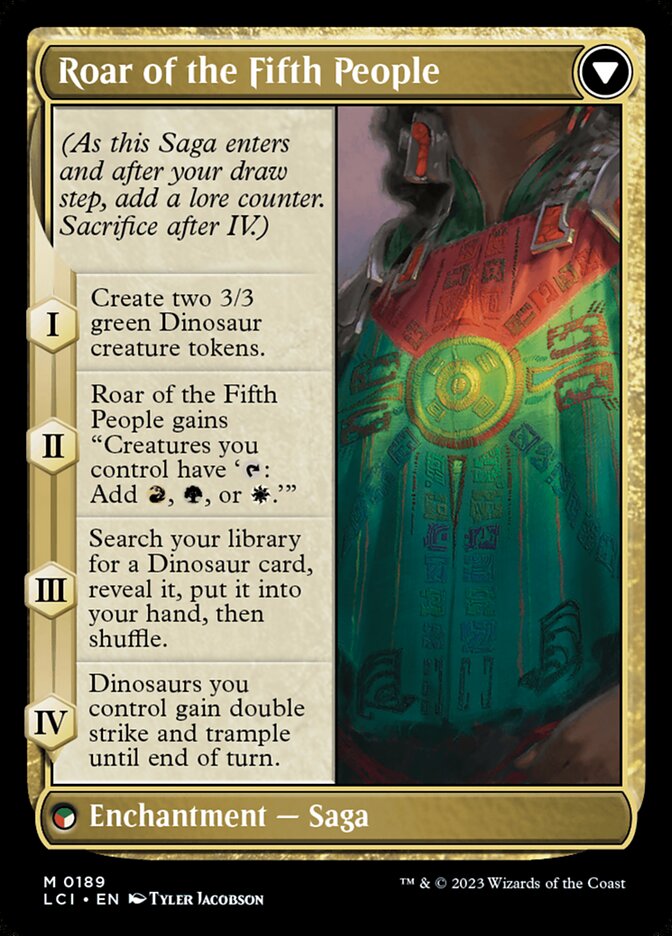
There’s a whole slew of Civic Wayfinder-type creatures that cost 3 mana and fetch a basic to your hand. Huatli, Poet of Unity is fine on stats and 2-for-1 potential alone, but Roar of the Fifth People adds so much more to the card. This saga is about as dinosaur-centric as it gets, but you don’t even have to be all in on dinos to make it worth transforming Huatli.
#53. Knight of the Reliquary
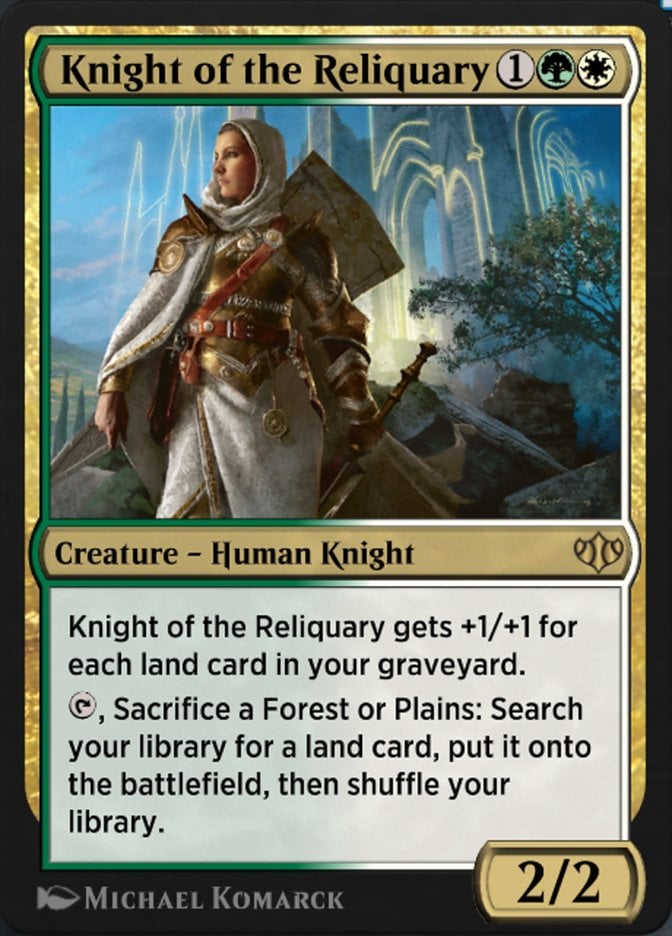
Knight of the Reliquary upgrades your forests and plains while becoming a large creature in the process. You’ll typically run this Selesnya card () in decks where it’s essential that you find a very specific land, though being an instant-speed activated ability also gives you some interactive potential with lands like Bojuka Bog or Glacial Chasm.
#52. Myriad Landscape
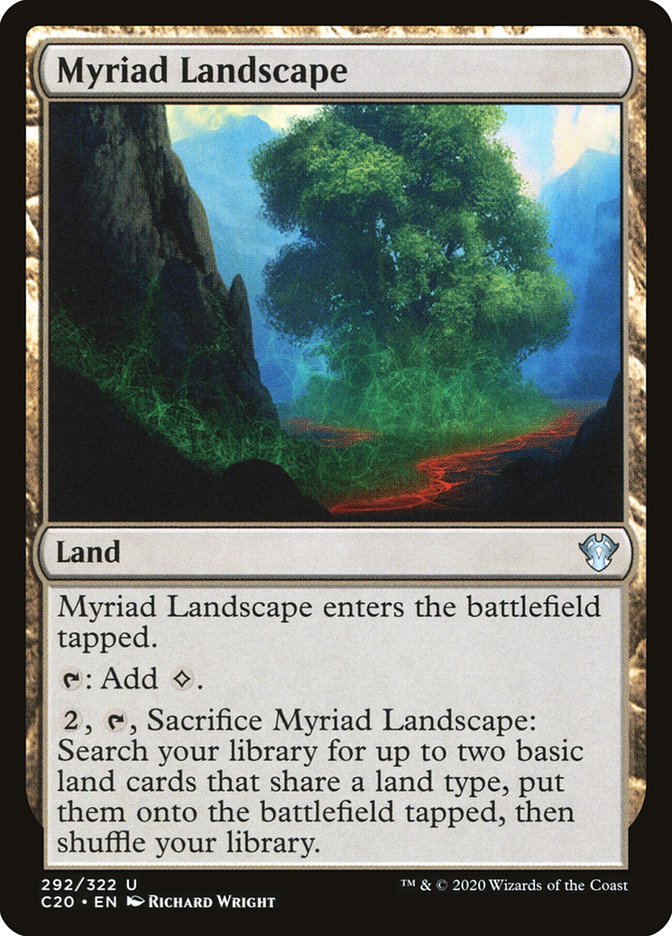
Myriad Landscape is a very polarizing colorless card. It has its defenders and its haters, but it all boils down to knowing the right decks for this land. Two-color decks that don’t have access to much ramp and can afford a few colorless mana sources can make good use of a Myriad Landscape, whereas green decks and 5-color commanders have much less need for something like this.
#51. Environmental Scientist

Civic Wayfinder has officially been power-crept with Environmental Scientist shaving 1 mana off the cost. A 2/2 that cantrips into a land isn’t breaking high-powered Magic, but it’s wonderful to spice up a Peasant Cube with 5-color support.
#50. Scapeshift
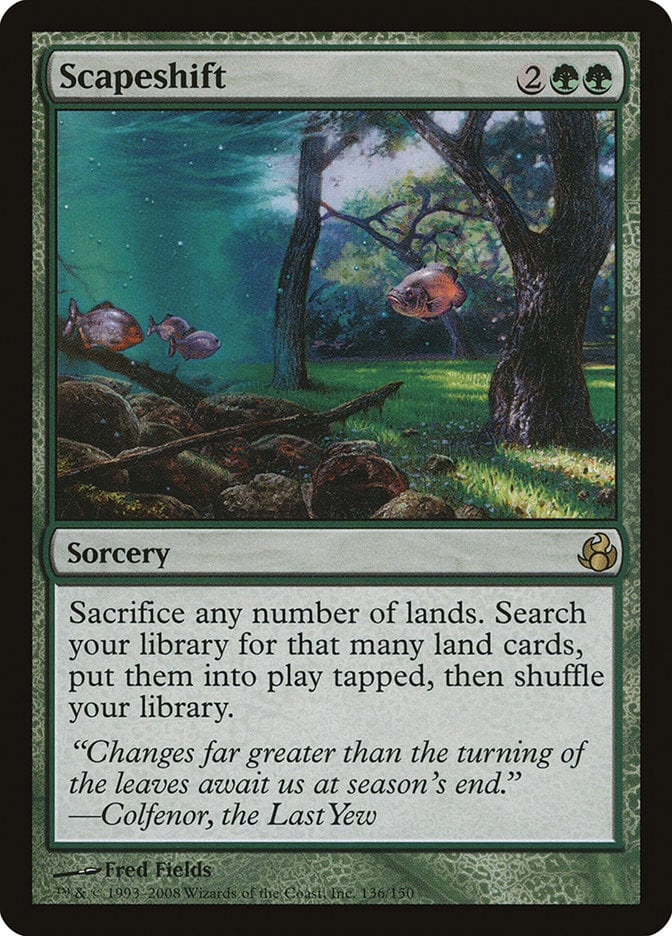
Entire decks are built around Scapeshift, as we saw with Valakut, the Molten Pinnacle decks in 2010s Modern, or even Field of the Dead decks back in M20 Standard. Those strategies transfer over to Commander with varying degrees of success. There, you’ll often find Scapeshift as a mass landfall enabler, stacking 10+ landfall triggers all at once.
#49. Scholar of New Horizons
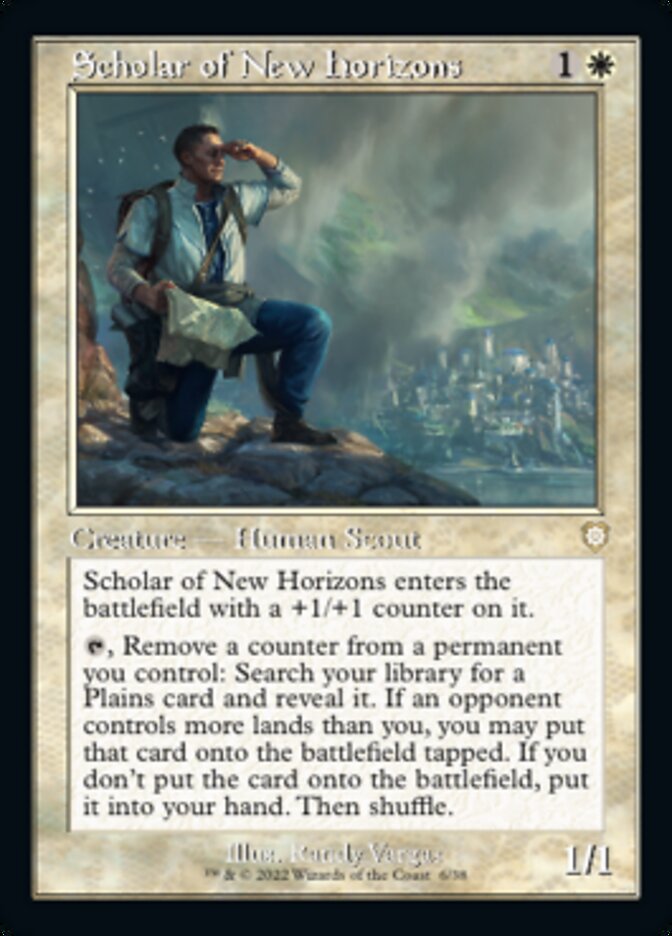
Scholar of New Horizons removes a counter from any of your permanents to draw a plains, and it even puts that land into play if someone has more lands than you. That’s just pure white card draw, à la Land Tax, and there are silly things you can do with sagas and other counter-based cards.
#48. Thaumatic Compass
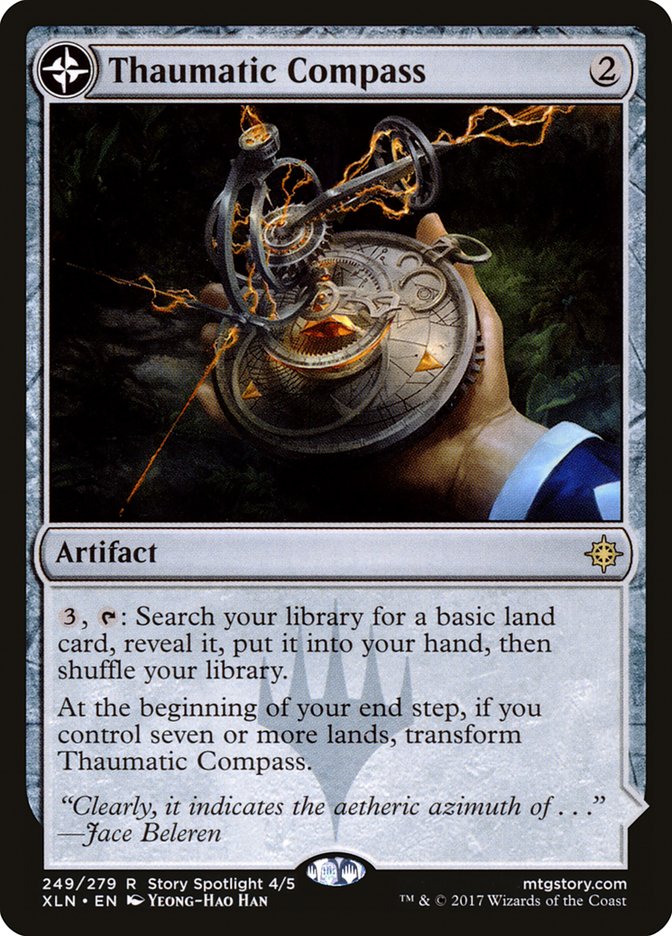
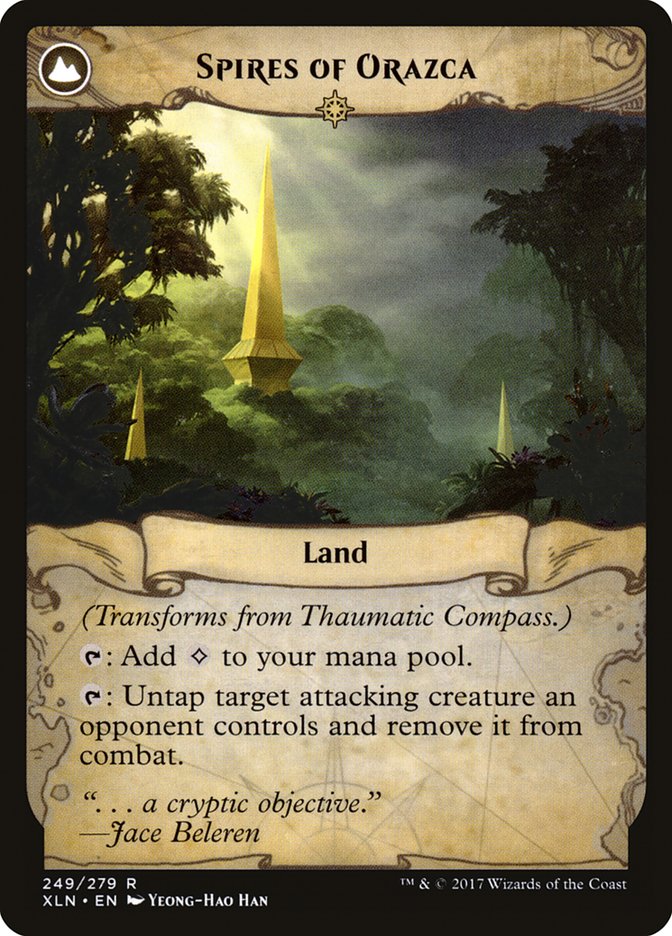
Thaumatic Compass is an upgrade to Journeyer's Kite, both of which allow you to find lands with spare mana. While 3 mana is a lot for this sort of activation, the promise of flipping into Spires of Orazca makes the Compass well worth playing. This land functions like a Maze of Ith that can tap for mana, though it only interacts with your opponents’ attacking creatures.
#47. Nissa, Vastwood Seer
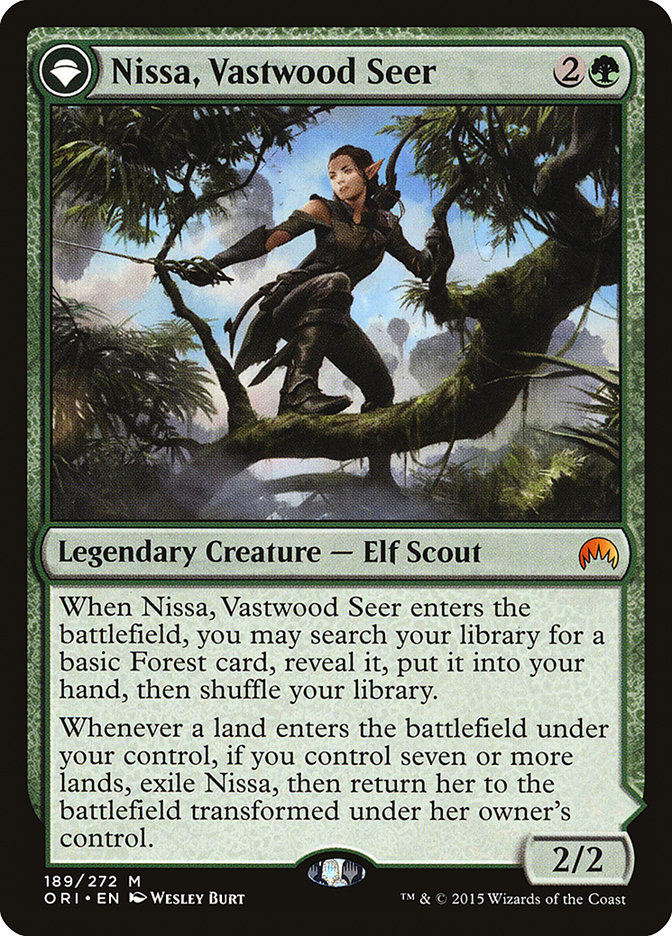
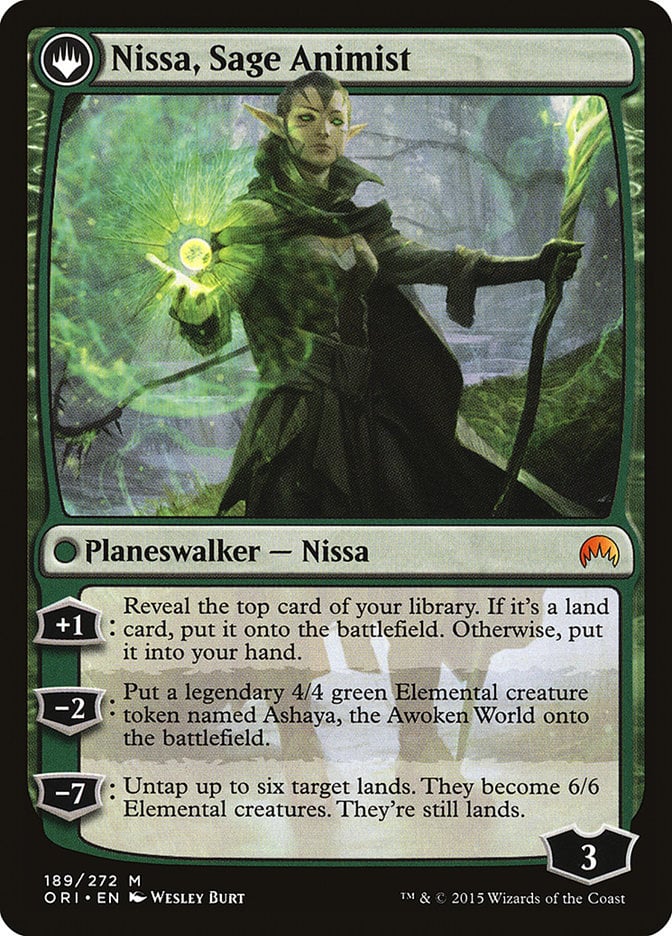
Another Civic Wayfinder+, Nissa, Vastwood Seer finds a basic Forest and transforms into Nissa, Sage Animist when you hit your seventh land. Planeswalker Nissa’s +1 offers a steady stream of card advantage/ramp and a somewhat menacing -7 ultimate. You can also make Ashaya, the Awoken World if you need a way to protect Nissa.
#46. The Earth King

Green loves its 4-power creatures, and The Earth King is among the stronger payoffs for the archetype. Getting a land every turn you attack provides a gradual, powerful source of mana ramp that pairs nicely with big monsters. Since TEK comes with Bosco, you can start the next turn without endangering your ramp engine.
#45. Farhaven Elf + Wood Elves
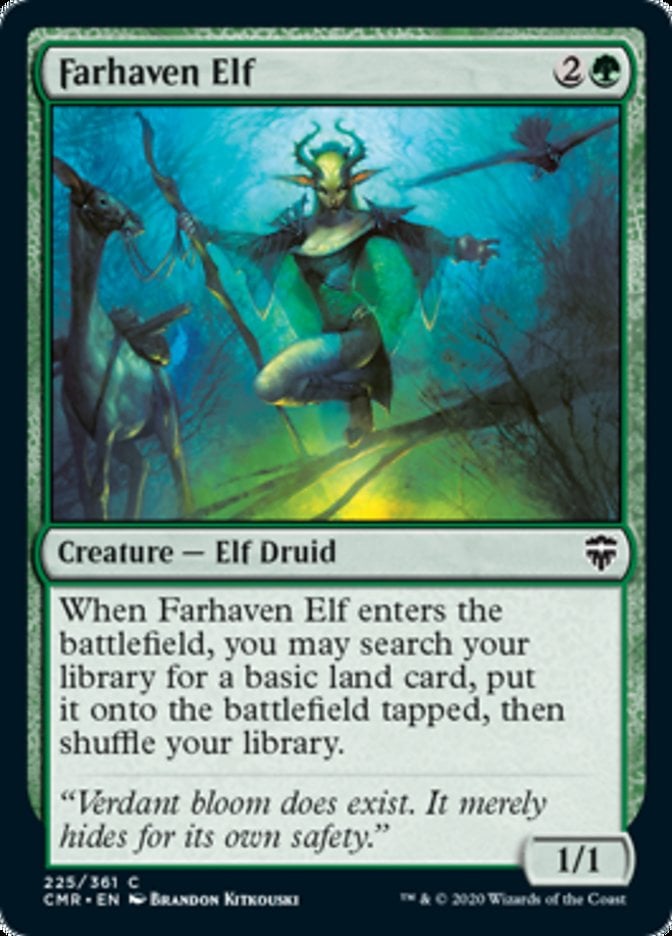
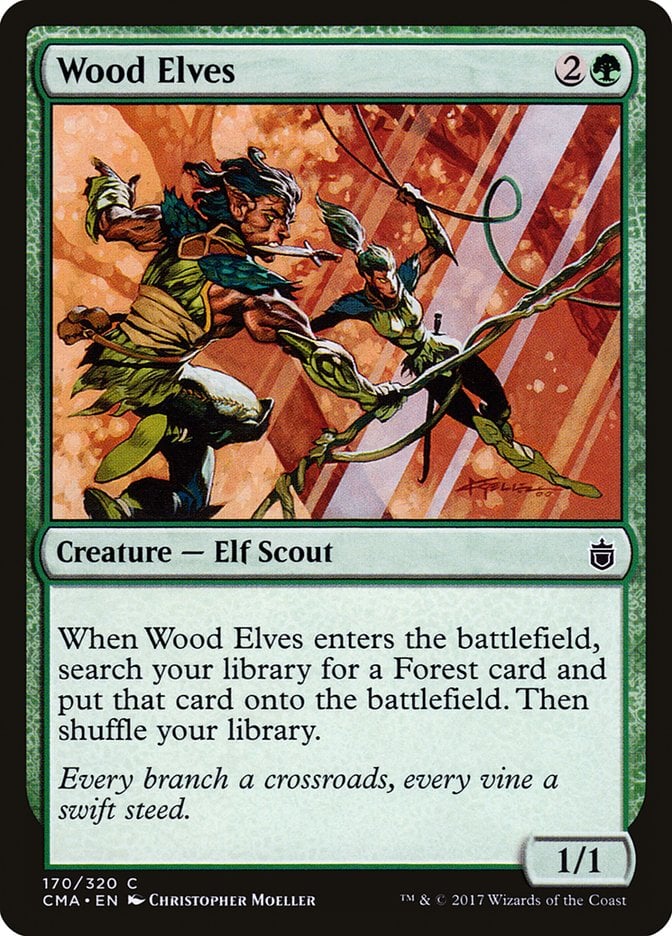
Wood Elves is generally better than Farhaven Elf, since it can fetch nonbasics and even puts lands into play untapped. These two dorks are still close enough, and both put premium blink targets/sac fodder on board.
#44. Sporocyst
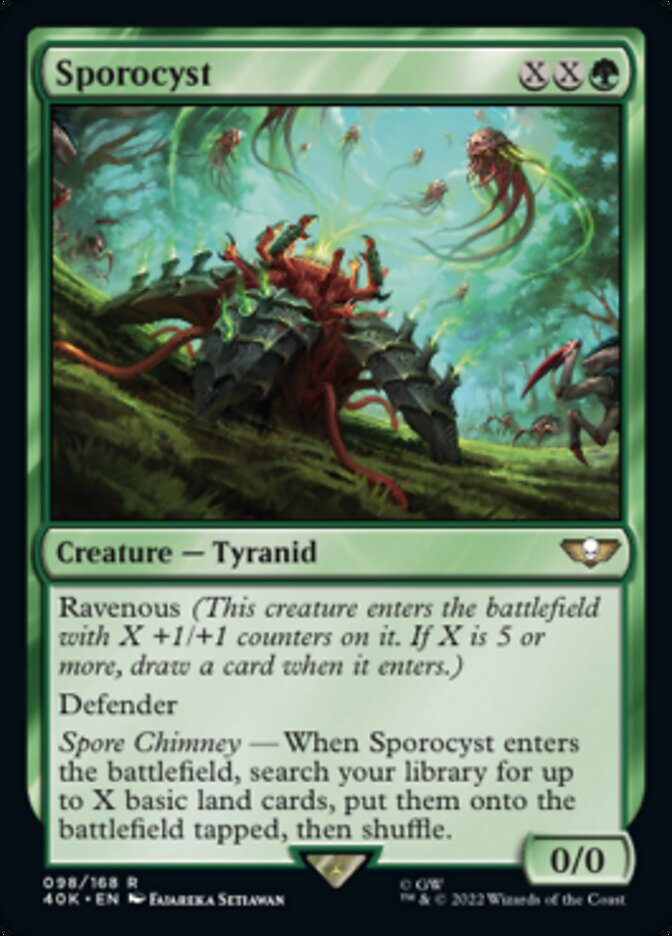
Sporocyst acts like a Farhaven Elf that can get bigger with extra mana, and defender doesn’t hurt a card like this too much. This is both ramp enabler and ramp payoff, in the sense that it turns a ton of mana into even more mana. It’s really hard to get the card off ravenous though, since it requires paying at least 11 mana total for this creature.
#43. Sutina, Speaker of the Tajuru

This gem from Foundations Jumpstart is one of the few Civic Wayfinder variants that just puts the land it finds into play. That’s already a great start, but don’t discount that attack trigger either. You get a +1/+1 counter when Sutina, Speaker of the Tajuru picks up a land, but that’s also a reliable way to get extra landfall triggers or even regain access to an MDFC land you ran out early in the game.
#42. Binding the Old Gods
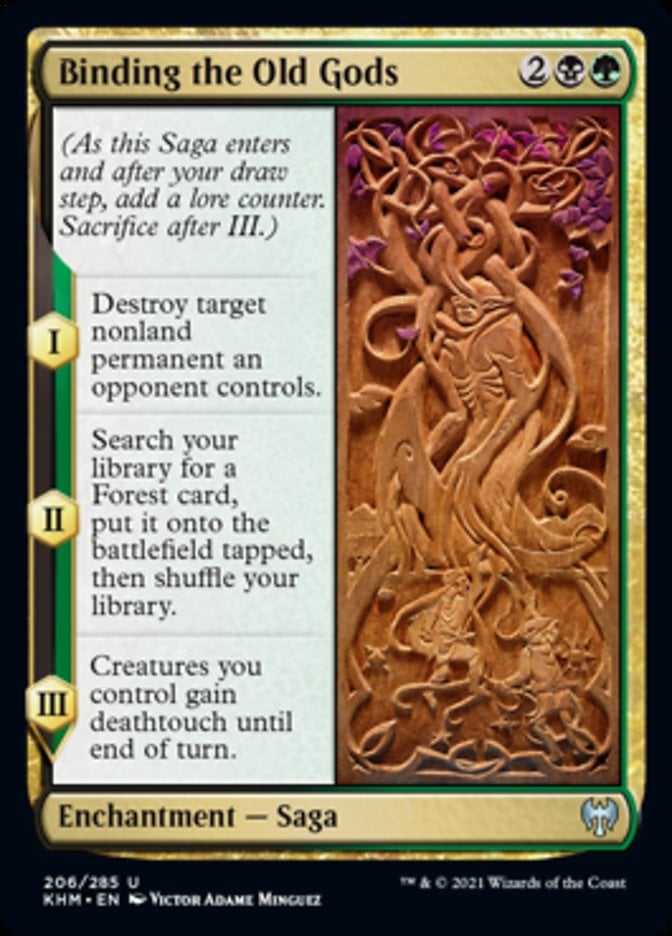
Chapter three isn’t anything special, but the removal + ramp chapters on Binding the Old Gods makes this a great saga for midrange decks. It’s a lot like Deathsprout with a less restrictive cost, but there are so many more ways to interact with sagas than a Golgari () instant. Note that chapter two can fetch non-basic forests, so this can even function as mana fixing in some situations.
#41. Keeper of the Accord
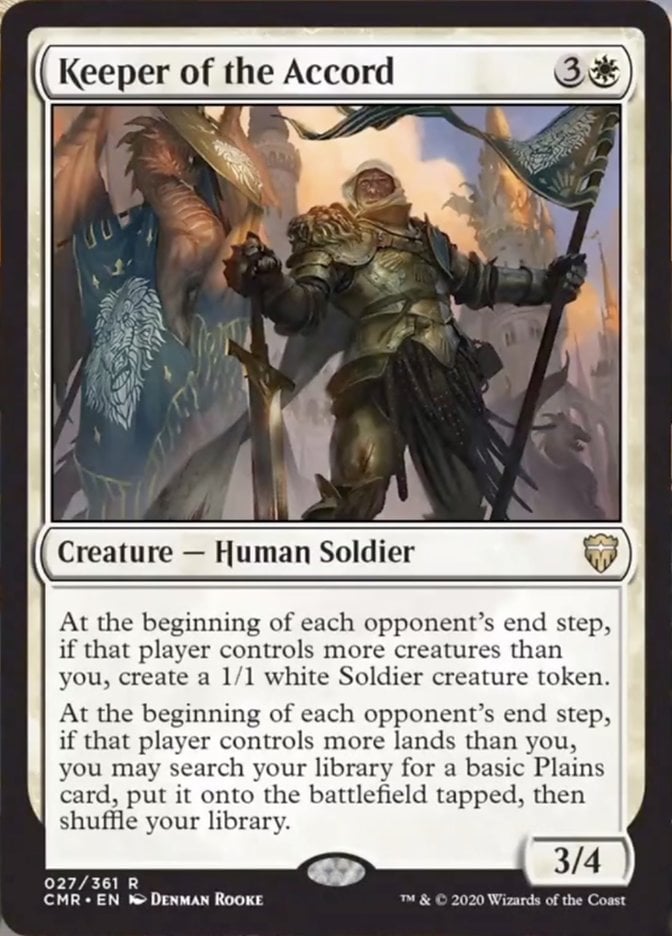
Another catch-up card, Keeper of the Accord does a great job of keeping your board up-to-speed with whatever your opponents are doing. And if Keeper’s not triggering at all, that probably means you’re in a good position already. You’ll often get a few 1/1 soldiers and a couple lands as this white creature sits in play, which is perfectly reasonable for a 4-mana play.
#40. Wayfarer’s Bauble
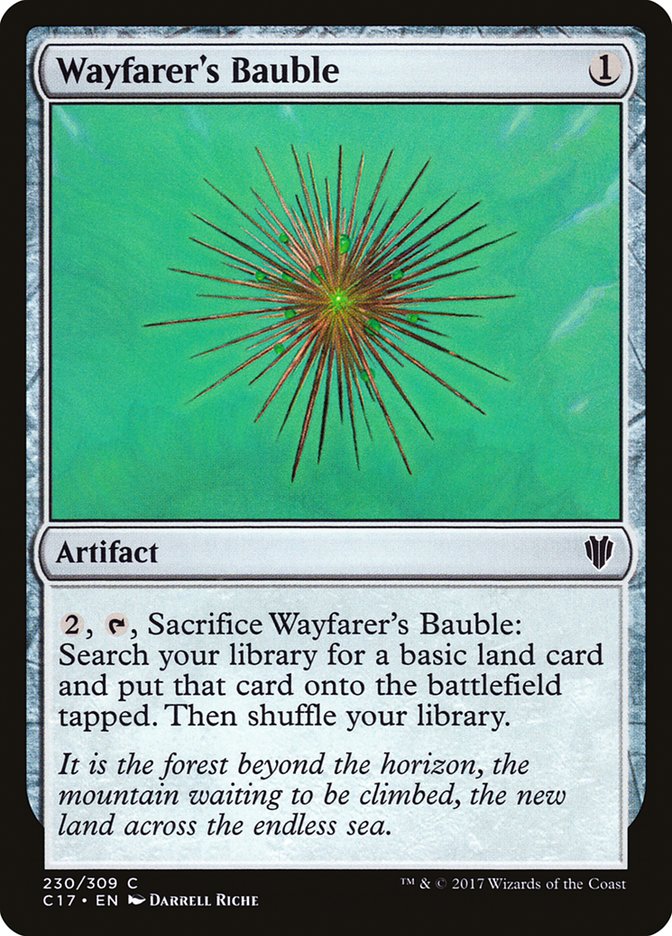
Wayfarer's Bauble is a go-to piece of ramp for non-green decks. It’s still slow, but it works a lot like a Rampant Growth if you can get it into play on turn 1. Decks that make use of this being a cheap artifact can get extra mileage from the Bauble. Think commanders like Jhoira, Weatherlight Captain or Lurrus of the Dream-Den.
#39. Lesser “Lay of the Land” Variants
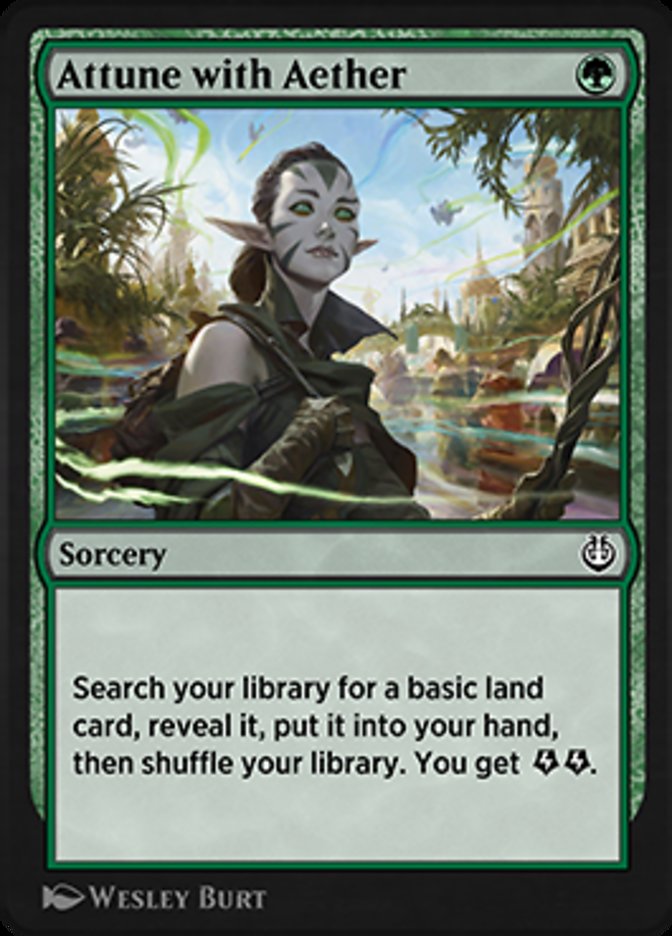
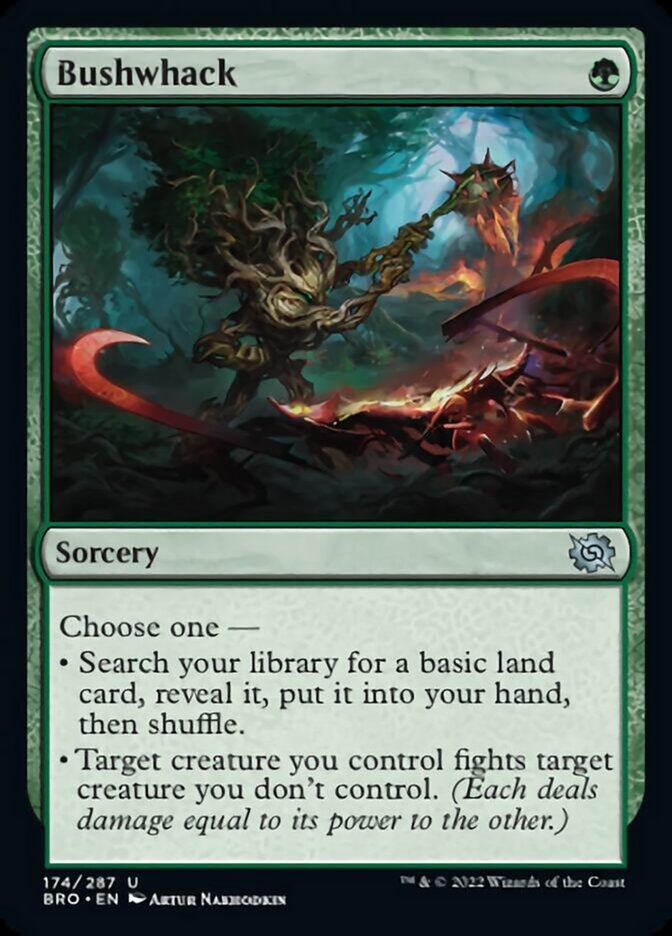
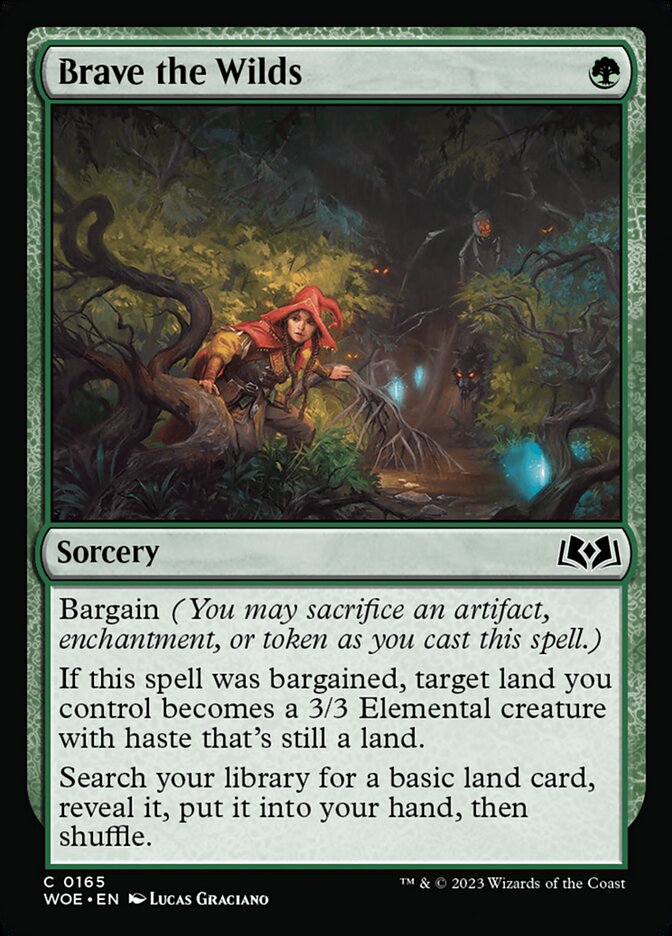
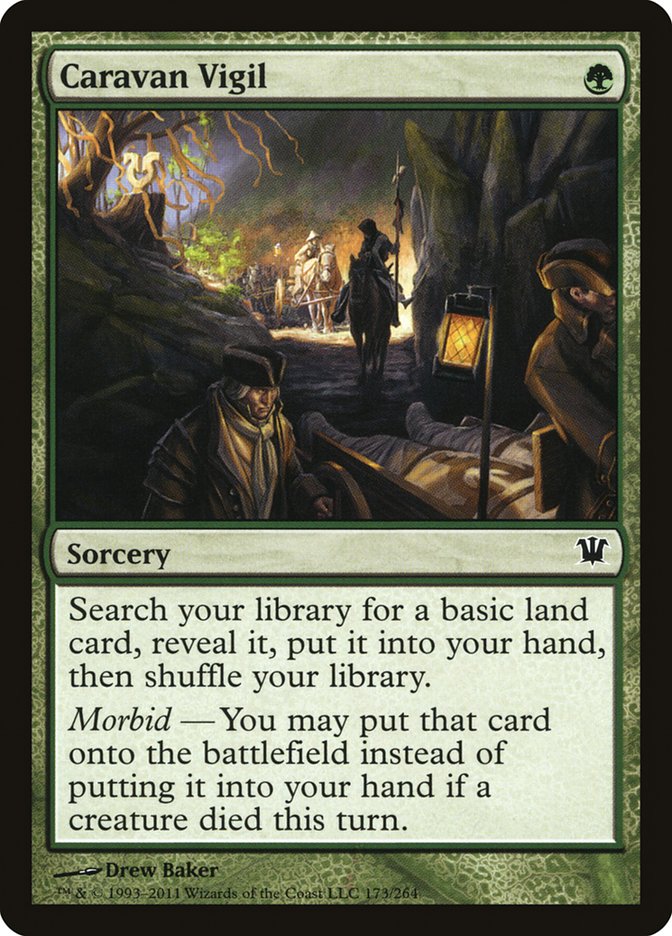

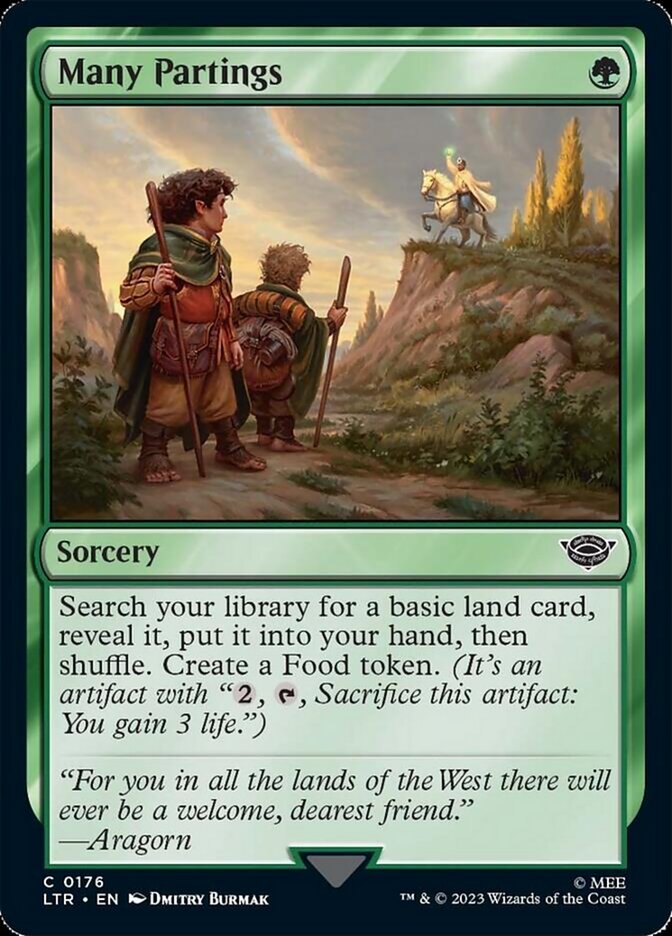
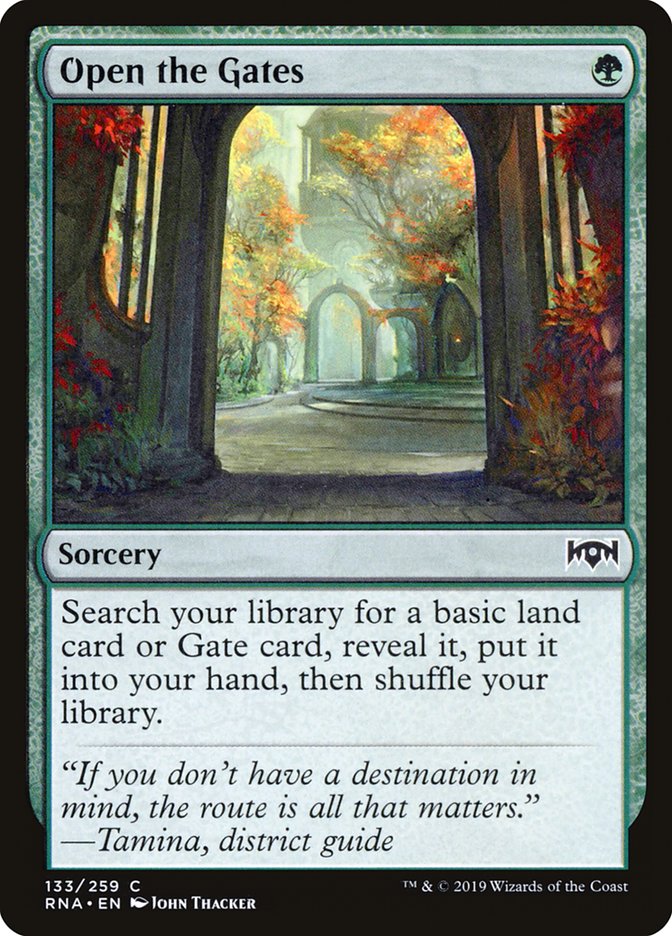

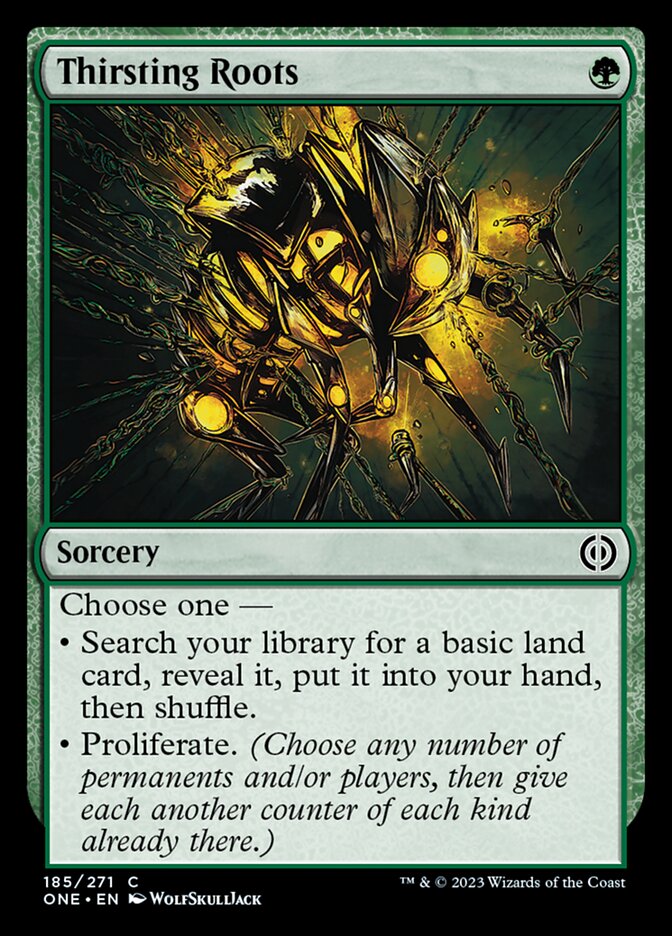
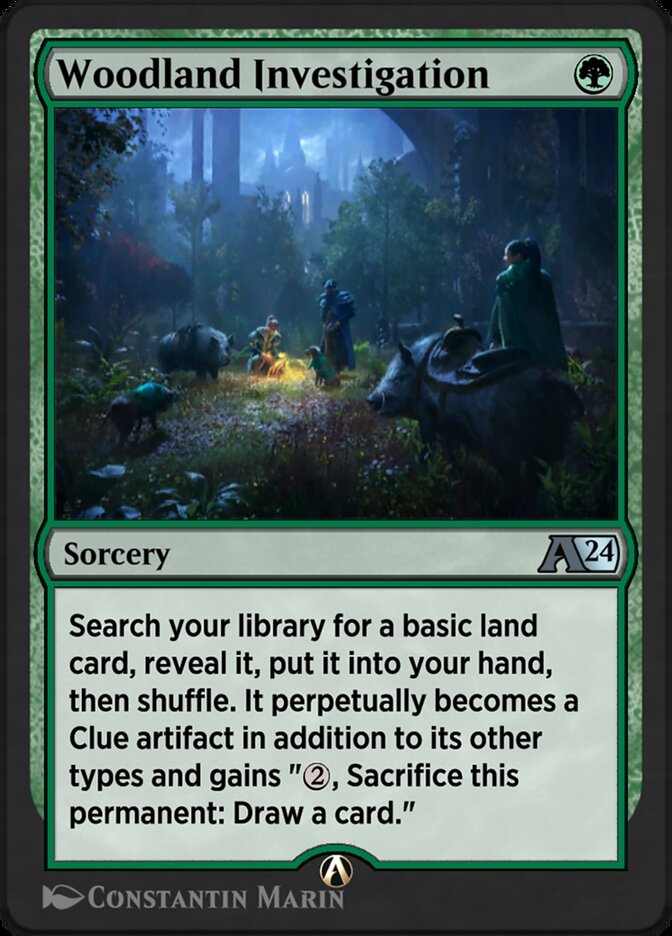
There are tons of Lay of the Land alternatives that let you choose between fetching a basic or getting a minor alternative effect, sometimes both. These are often designed as game-smoothers for fighting mana flood in Limited, allowing you to replace your 17th land with a card that can be mana if needed but also serves as a better topdeck on turns 7 and beyond.
There isn’t much need to replace basics with cards like this in Commander, but if the secondary effect is something your deck actually cares about, you might take a second look. For example, I’d definitely want Thirsting Roots in my proliferate deck, or Many Partings in a food deck.
#38. Powerful “Lay of the Land” Variants
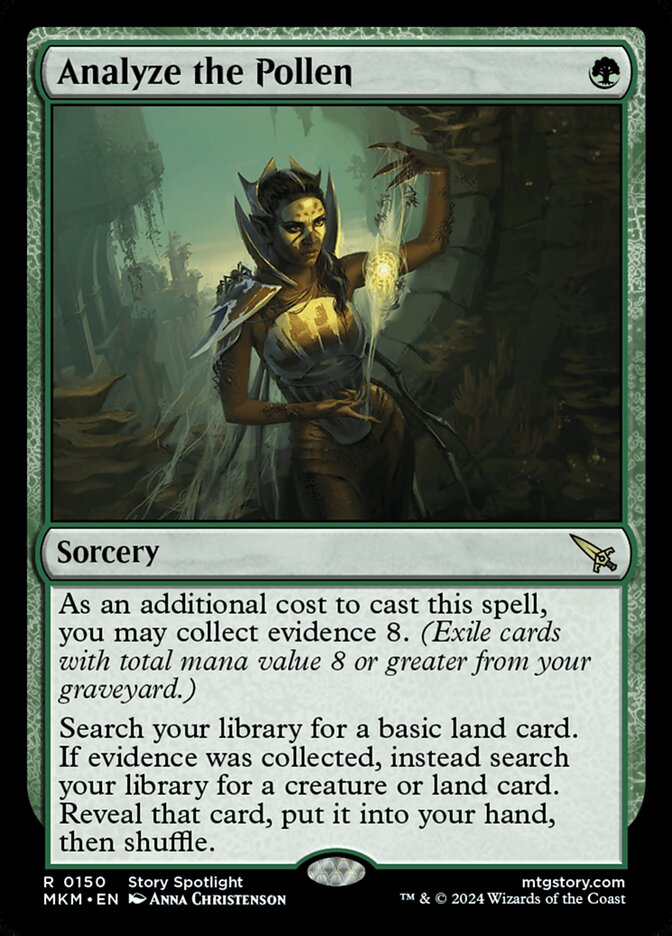
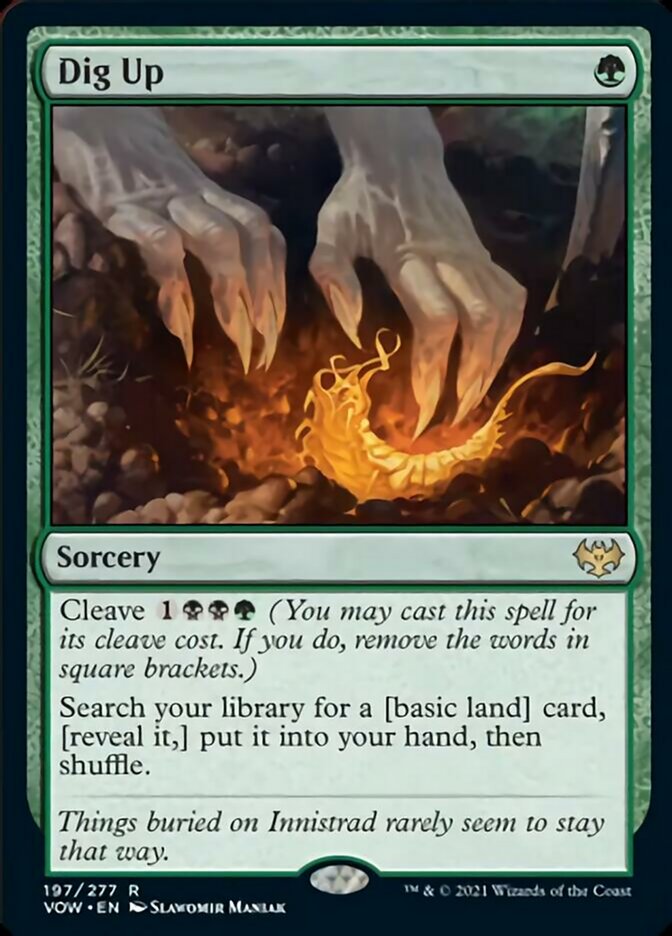
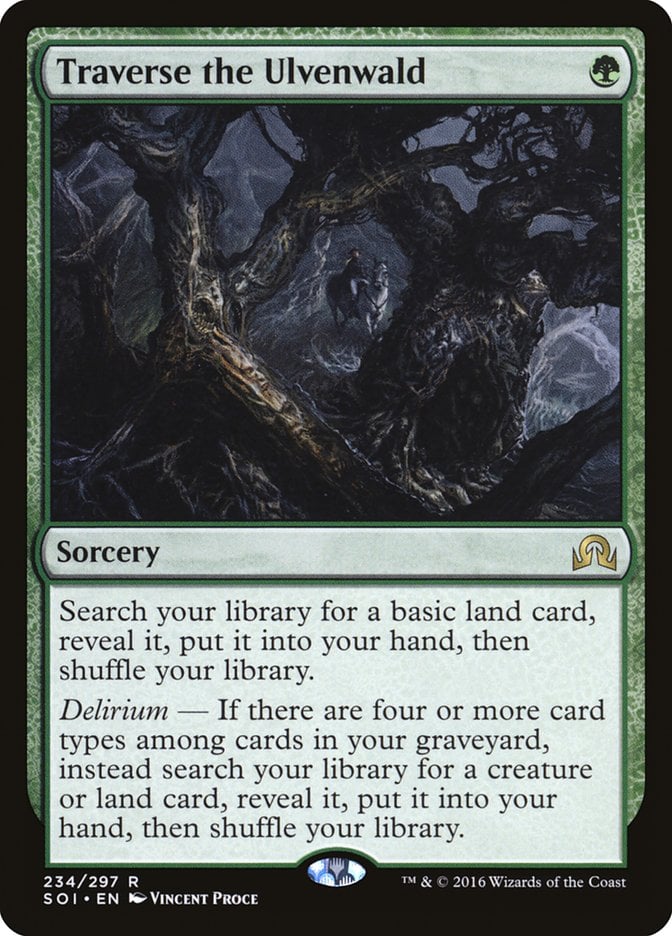
The more powerful versions of these effects turn into more universal tutors if you put in the extra work. You can cleave Dig Up to turn it into Diabolic Tutor, Traverse the Ulvenwald can search up most permanent types once you hit delirium, and collecting enough evidence upgrades Analyze the Pollen into a creature tutor. The saving grace for all these cards is that they can always be cast for 1 mana to secure your next land drop, making them great early on without being embarrassing later.
#37. Hour of Promise
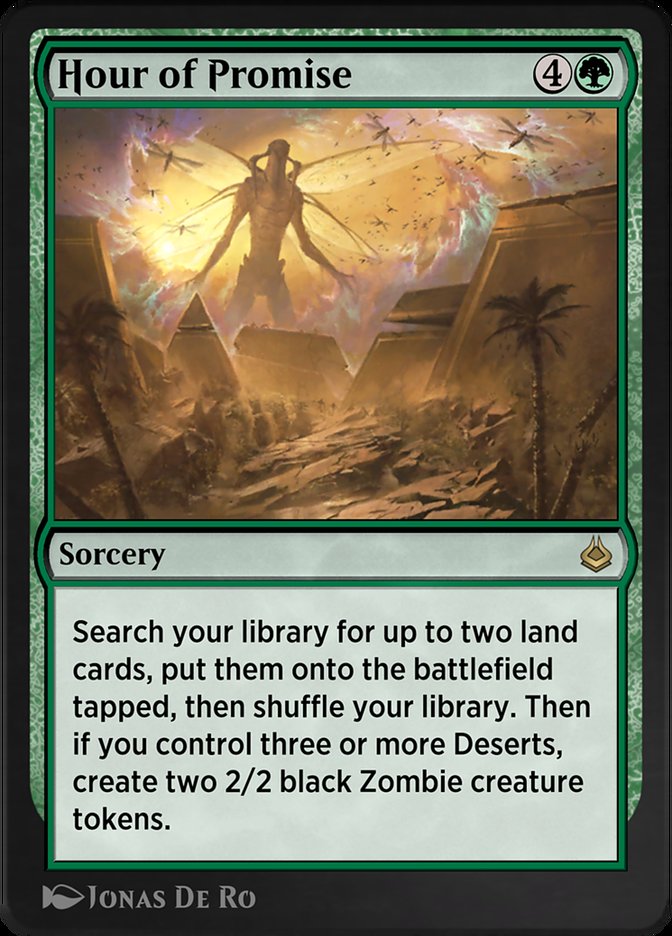
Five mana’s the point where you usually want to be making big plays instead of continuing to ramp, but some decks go so big that they just want to go little ramp into big ramp into game-winning haymaker. Hour of Promise qualifies as “big ramp”, putting any two lands into play. You can ignore the desert text completely and treat this green sorcery like a bodiless Primeval Titan, or actually play into desert synergies and get a few zombie tokens for your troubles.
#36. 4-Mana Double-Ramp Variants
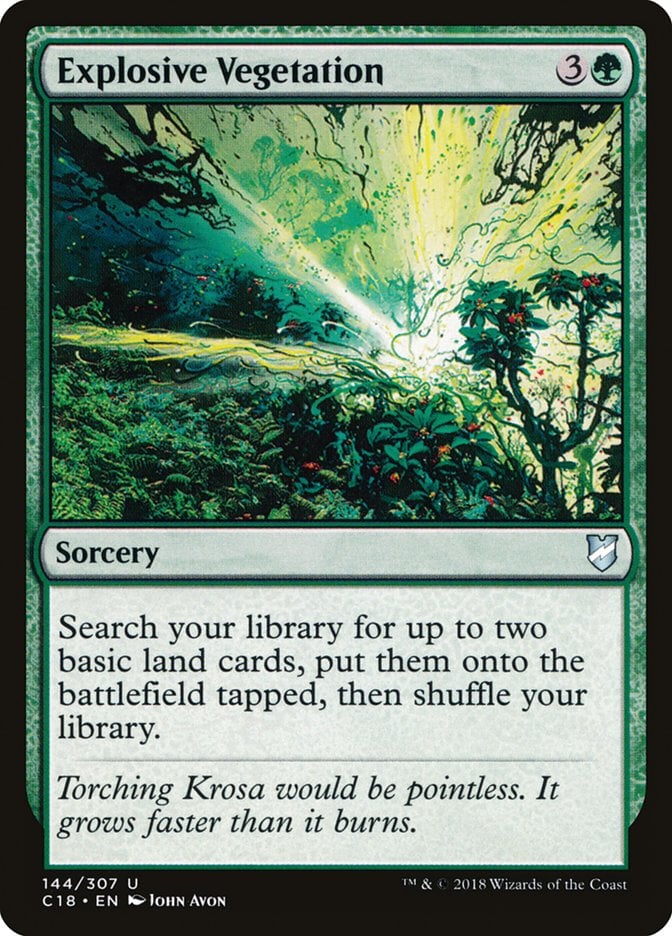
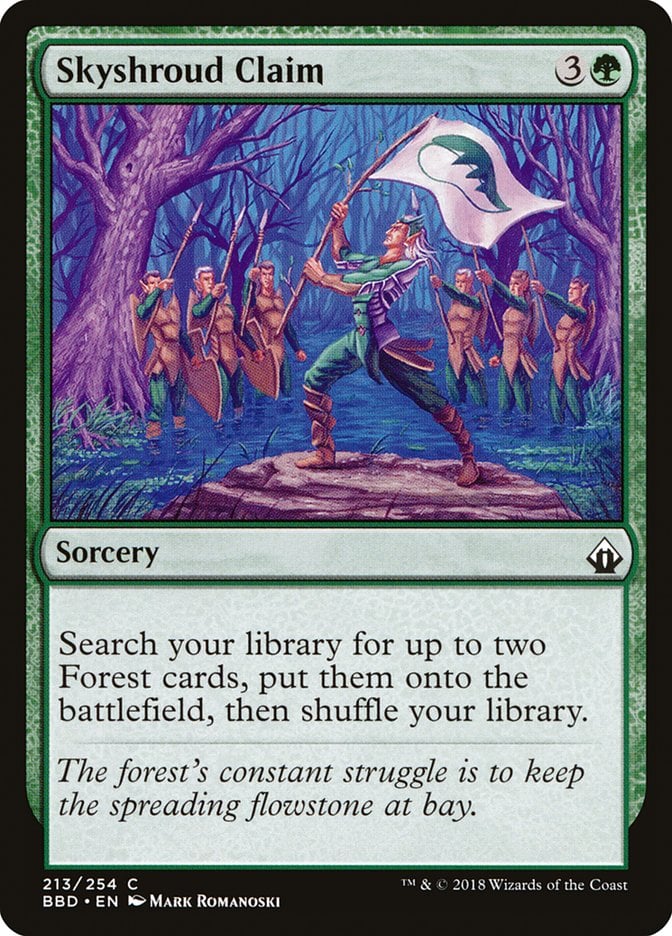
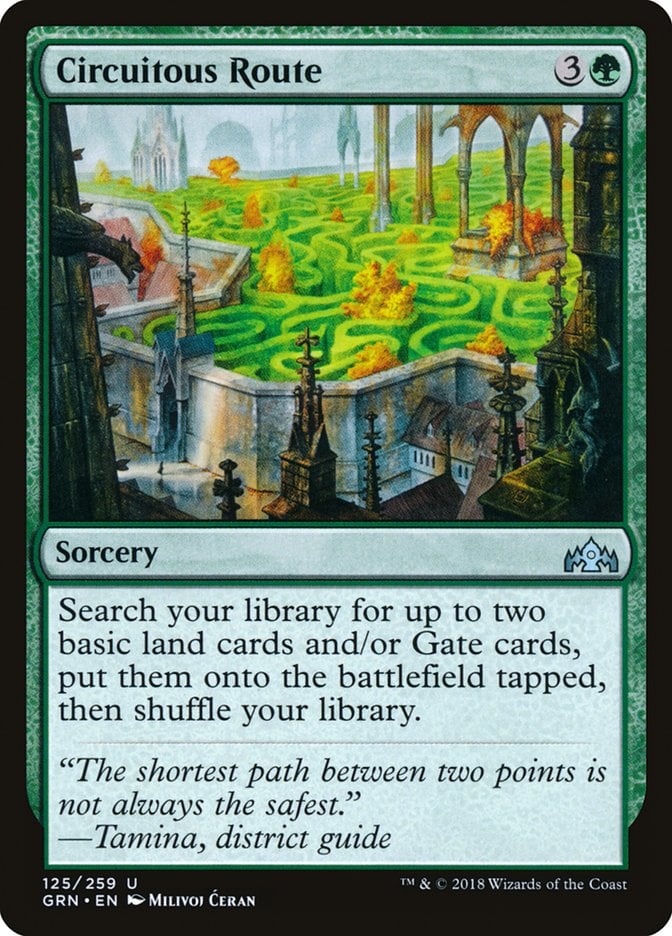
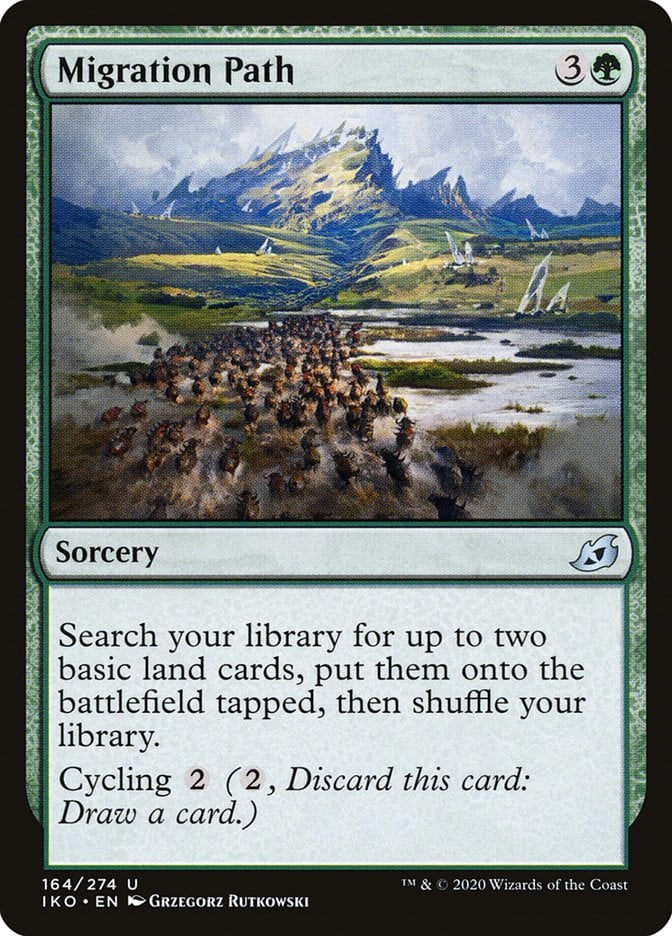
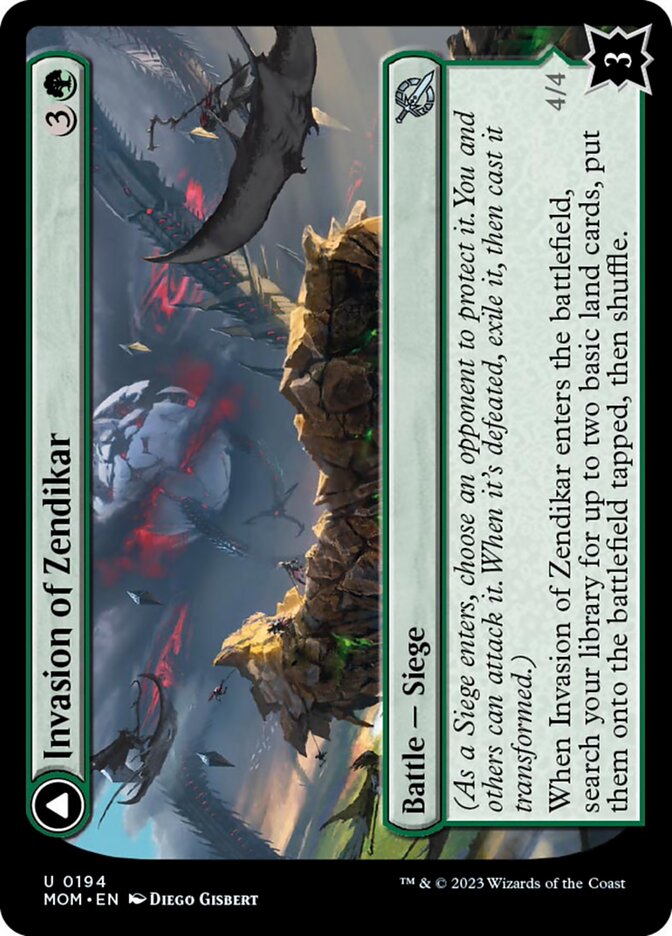

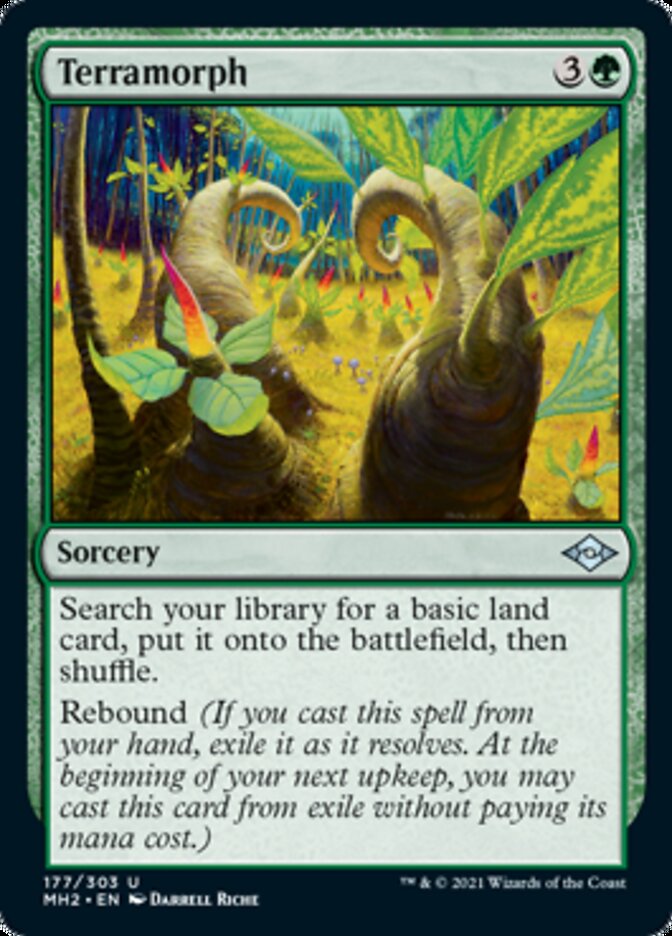

Also in line with the “big ramp” effects we have all the Explosive Vegetations of the world, 4-mana sorcery-speed effects that ramp you ahead two lands at a time, often with extra bonuses or alternative effects. Skyshroud Claim is generally the best since it puts lands into play untapped, but the others have advantages depending on your strategy. Vastwood Surge has synergy in +1/+1 counter decks, for example, and Circuitous Route is a staple of gates decks.
#35. Realms Uncharted

Realms Uncharted boasts the same templating as Gifts Ungiven, but for lands. While that restriction makes it the lesser of the two, you shouldn’t write it off. Add just a little recursion like Crucible of Worlds, Icetill Explorer, even an Echoing Deeps and this can establish lots of land-based combos.
#34. Rampant Rejuvenator
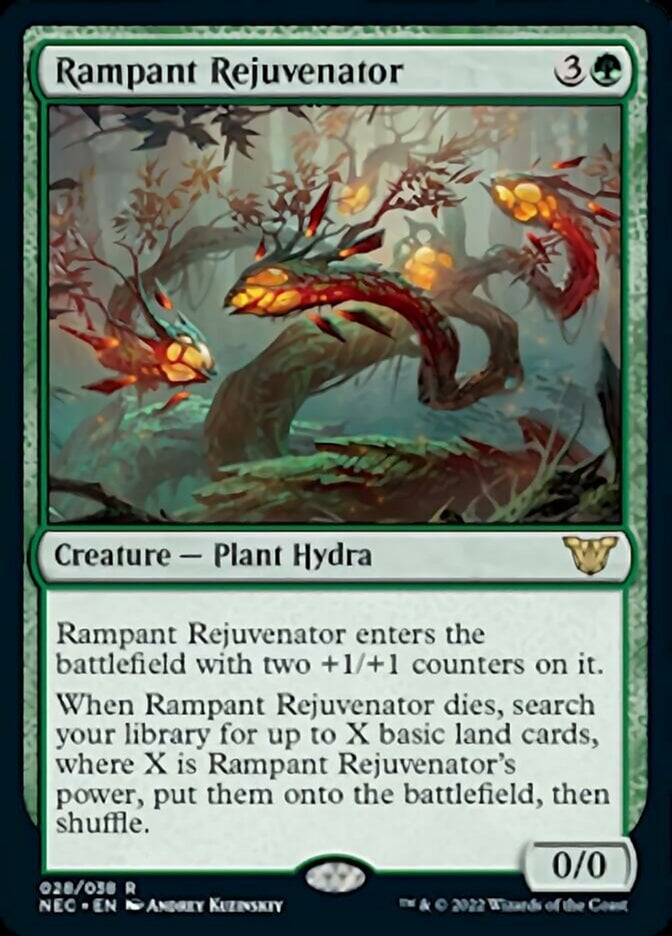
On its own, Rampant Rejuvenator is a 4-mana 2/2 that ramps ahead two lands when it dies. I’m already interested, but Rejuvenator counts its total power, so pumping this up in any way means more lands from the death trigger. Seems like a good target for that Hydra's Growth. Either kill it now and give me a ton of lands, or hold off and die to my giant plant hydra.
#33. Earthbender Ascension

Earthbender Ascension is a central piece to landfall decks in Standard but players in other formats should get their hands on this tech. Baseline, it’s a ramp spell that searches up a basic, and it earthbends a land. It can’t earthbend the land it fetches, but you don’t want it to: You want to hit a fetch land that you can crack to find a second land, then it comes back into play for a third landfall trigger. Scute Swarm is going crazy here.
#32. Deep Gnome Terramancer
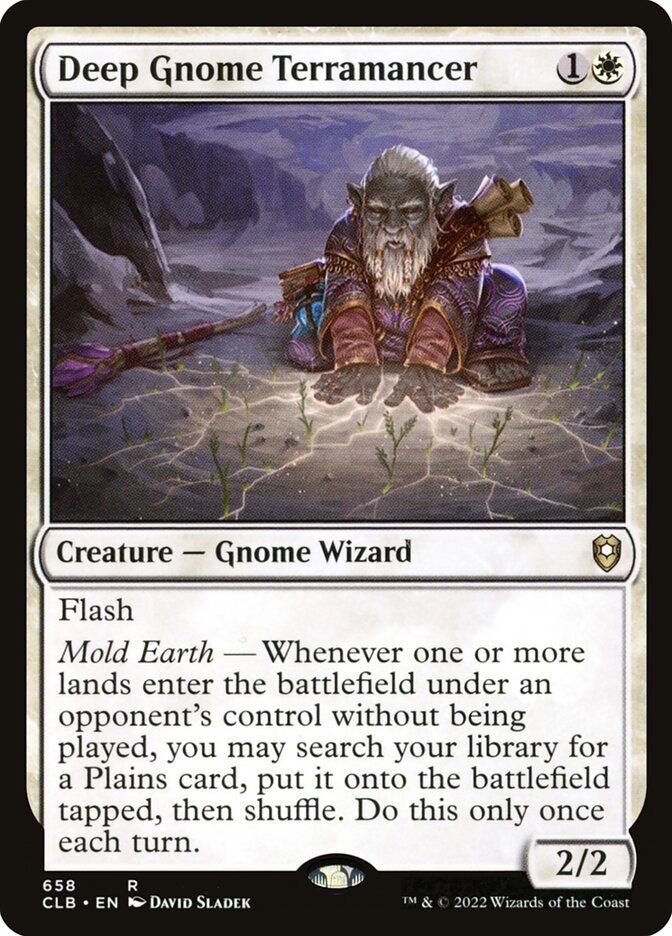
Deep Gnome Terramancer has the distinct advantage of being a white ramp card that can actually put you ahead on lands. It doesn’t have the usual white restriction of only working while someone has more lands than you, making it a great deterrent against opposing ramp and fetch lands.
#31. Traverse the Outlands
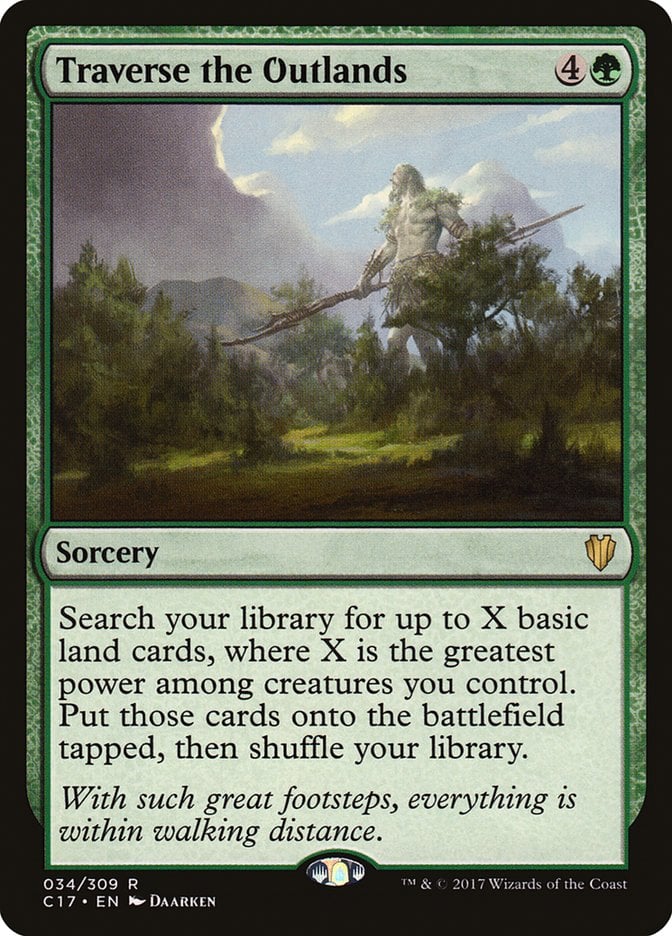
Just like Hour of Promise, Traverse the Outlands is a “big ramp” spell, but this green card goes about as big as you can get. Decks built around high-power creatures, like Selvala, Heart of the Wilds and Xenagos, God of Revels, can often fetch nearly every basic from their deck with this card. You just have to mind your timing; getting your giant creature blown up in response is devastating.
#30. Road // Ruin
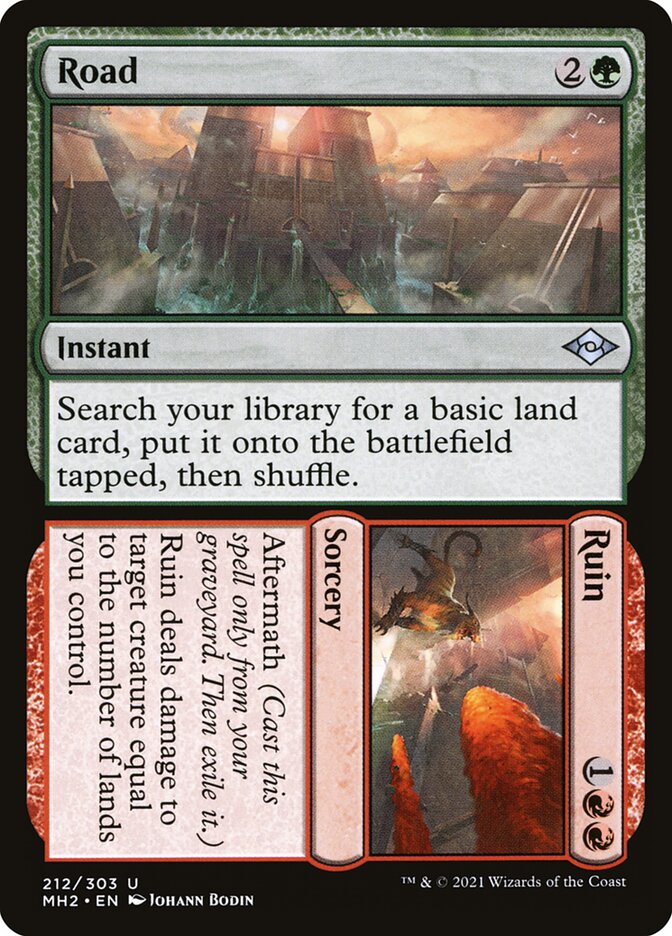
An overpriced ramp effect and a medium removal spell come together to make a nice aftermath card with Road / Ruin. Neither half is excellent, but both halves together is interesting. I dunno, I just think it’s neat.
#29. Wight of the Reliquary

Knight of the Reliquary’s morbid counterpart sacrifices creatures instead of sacrificing lands, which is honestly way better with all the same potential upsides. They even threw in vigilance, which means your pumped up Wight of the Reliquary can attack with impunity and still activate its ability on an opponent’s turn.
#28. Viewpoint Synchronization

I’m going to rank Viewpoint Synchronization lower than Cultivate, recognizing that it has the potential to be significantly better. However, that’s contingent on your ability to turn on freerunning, which requires you to play assassins or a commander that can consistently deal combat damage. That’s not always a given for green decks, so I imagine Synchronization will be very good in some shells, though worse on average than Cultivate.
#27. Planar Engineering

Planar Engineering is basically a super-sized Harrow, though the lands come into play tapped. The big reason to run this is landfall: Four triggers from one card is pretty significant.
#26. Harrow Variants
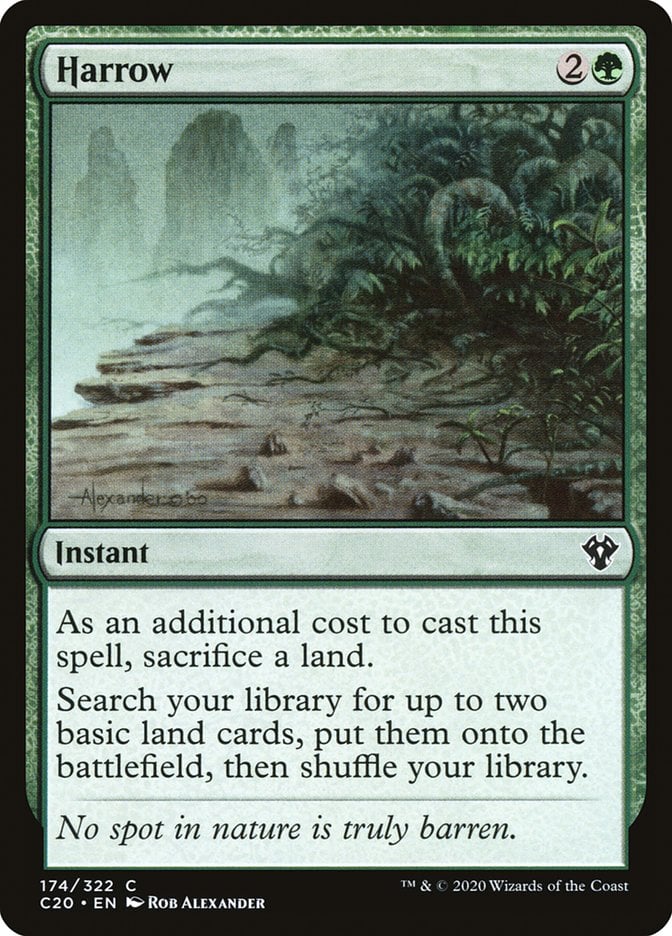
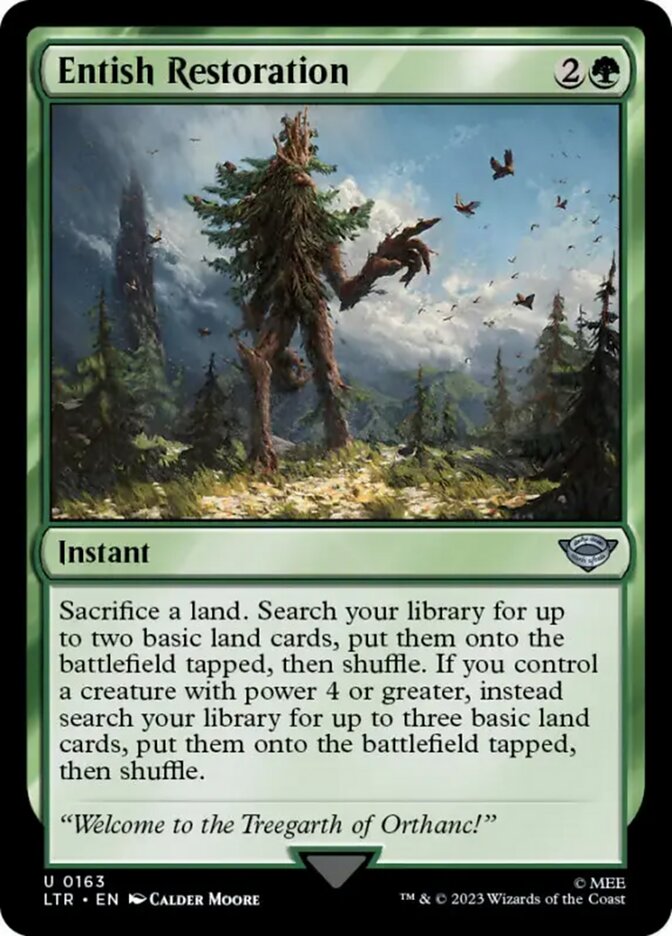
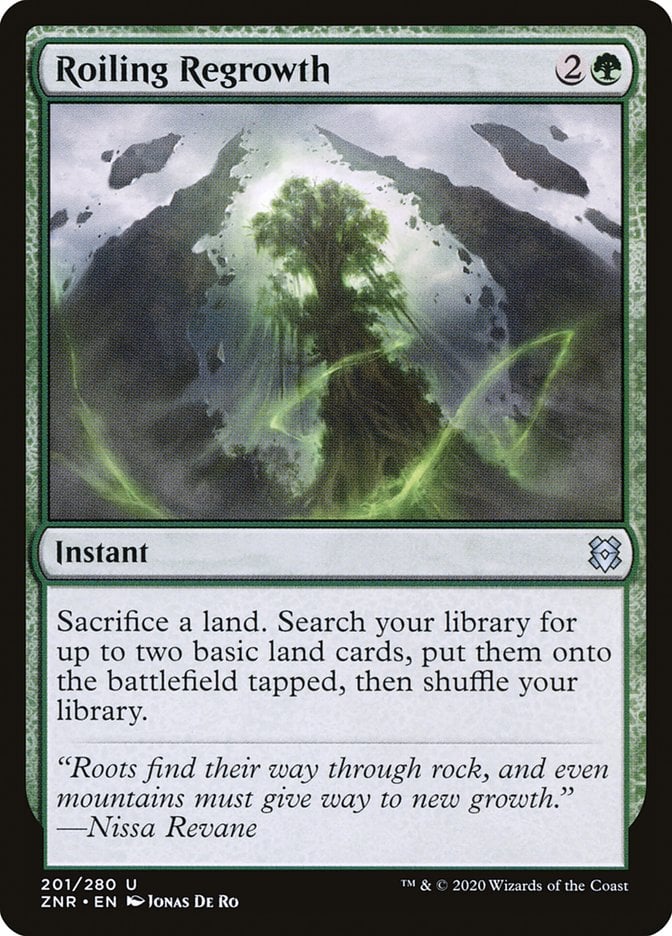
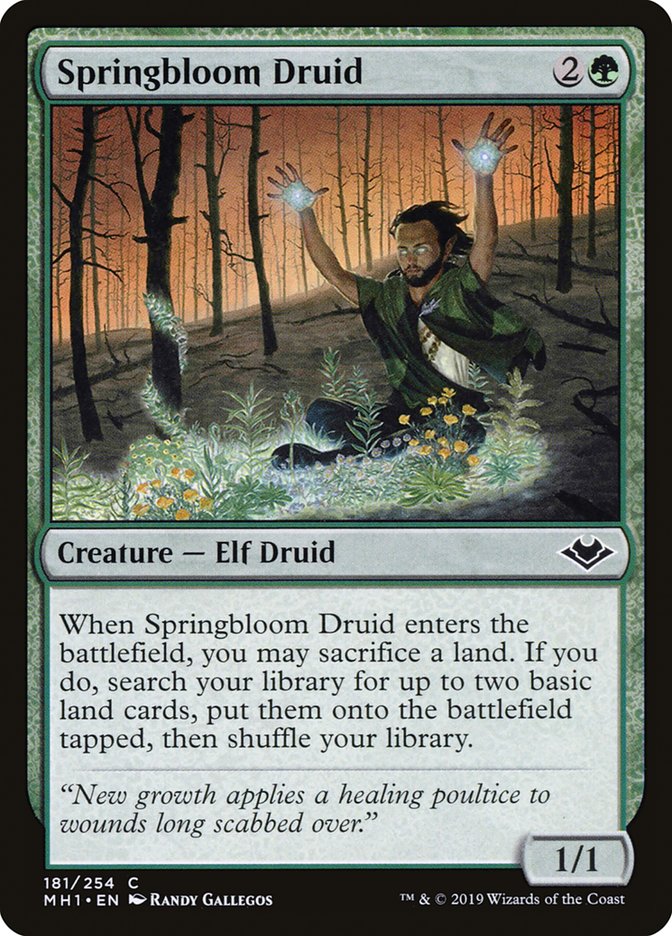
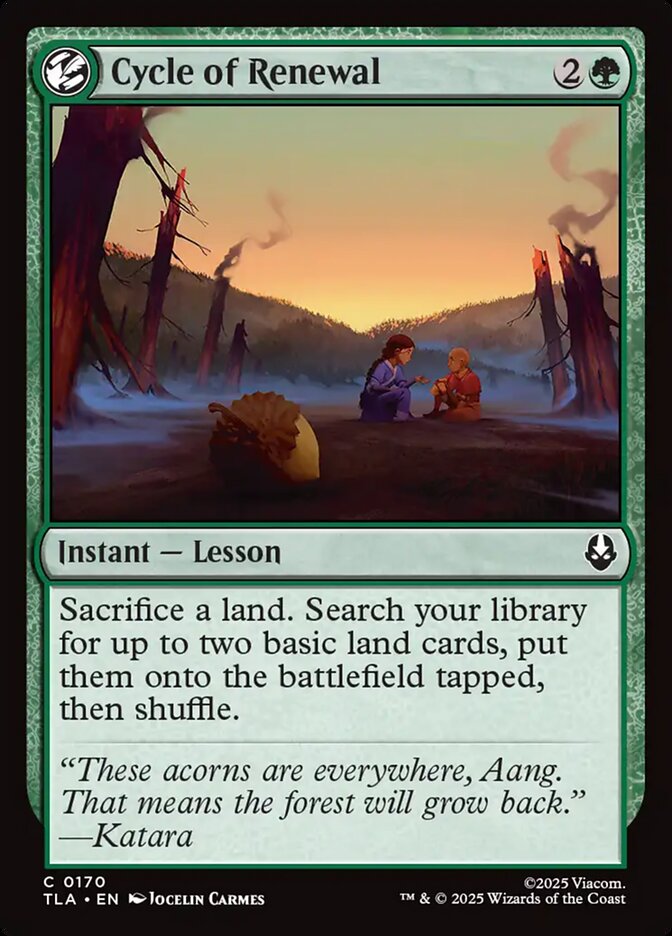
This slot goes to all the “sac a land, get two lands” variants. Harrow’s the classic, and it puts lands into play untapped but also folds hard to counterspells. Roiling Regrowth is the safer version with a lower floor, and Entish Restoration has upside if you control a large creature. Springbloom Druid’s the effect you want for decks that can make use of the 1/1 body.
#25. Cultivate + Kodama’s Reach
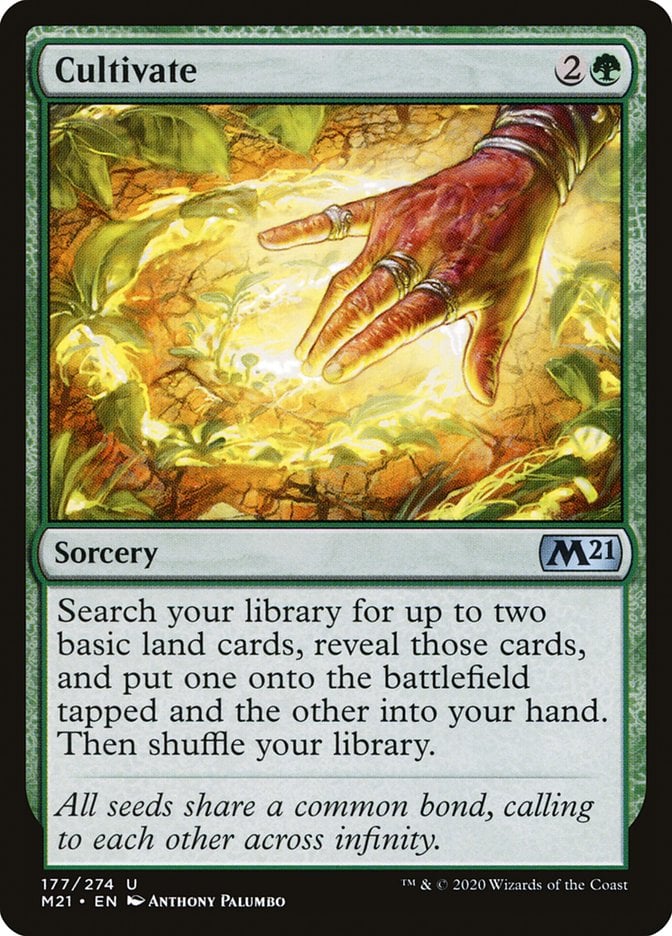
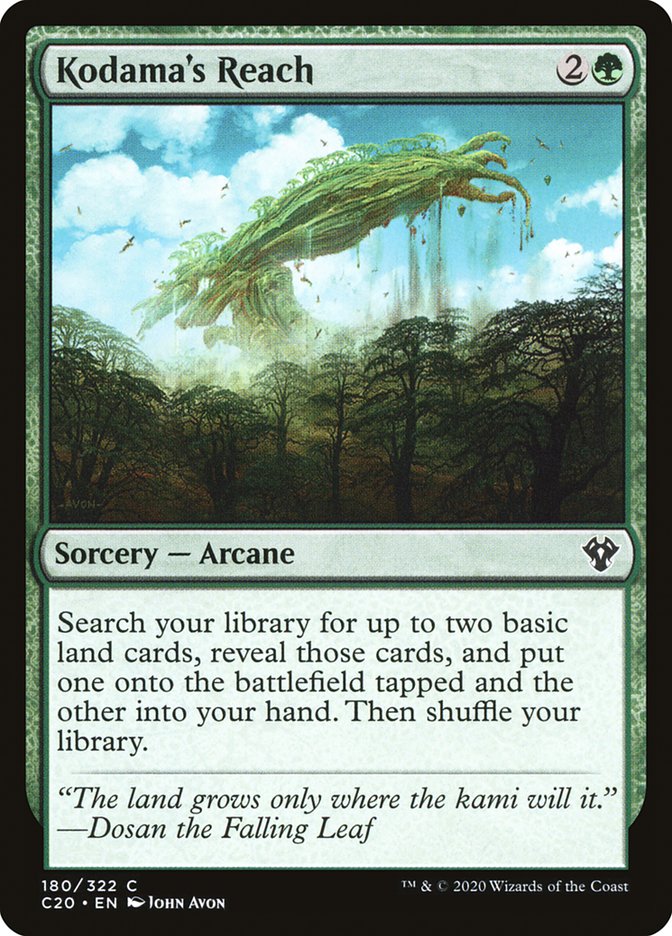
Classics. Cultivate and Kodama's Reach still hold up, even in the accelerated world of modern-day Commander. They’re slow ramp, but they also guarantee your next land drop, so these two sorceries are just great at making sure you get to play a game. Optimized decks can probably drop these in favor of more 1- and 2-mana acceleration, but these are still staple-status for casual Commander decks.
#24. Flare of Cultivation

Flare of Cultivation is basically Cultivate 80% of the time, but being able to sacrifice a green creature to cast this for free is nothing to scoff at. The dream is to do that with something like an Arboreal Grazer on turn 1, but it’s a fine option for those dorky Wood Elves and Springbloom Druids later on.
#23. Lumbering Worldwagon

Lumbering Worldwagon is a pretty substantial threat. It finds basic lands potentially every turn and smacks incredibly hard. It’s great in Commander because green decks often commit so many resources to land ramp, so you can expect this 3-mana vehicle to smack for 6+ damage a turn.
#22. Bitterthorn + Sword of the Animist
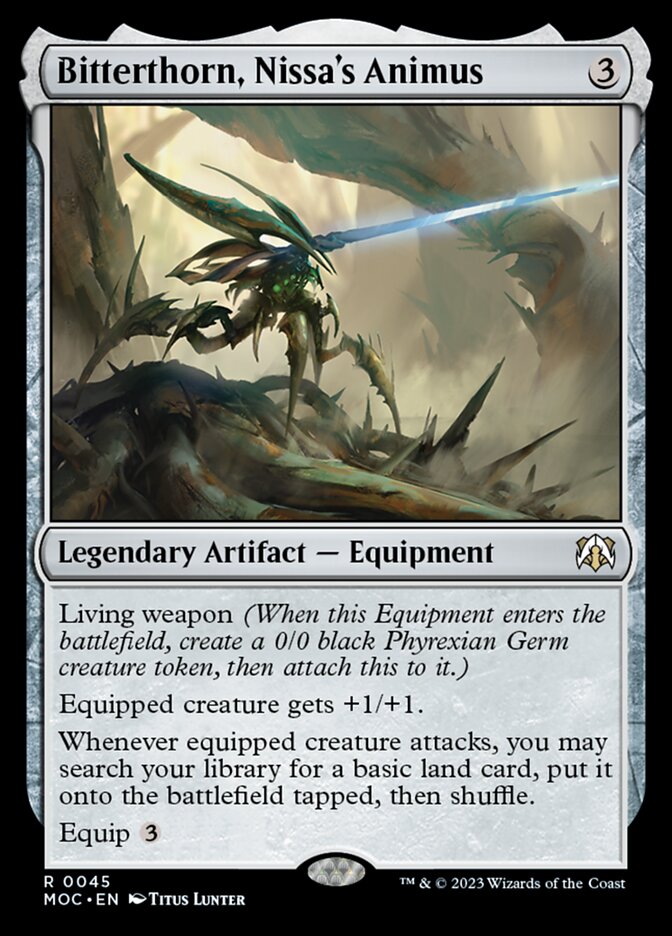
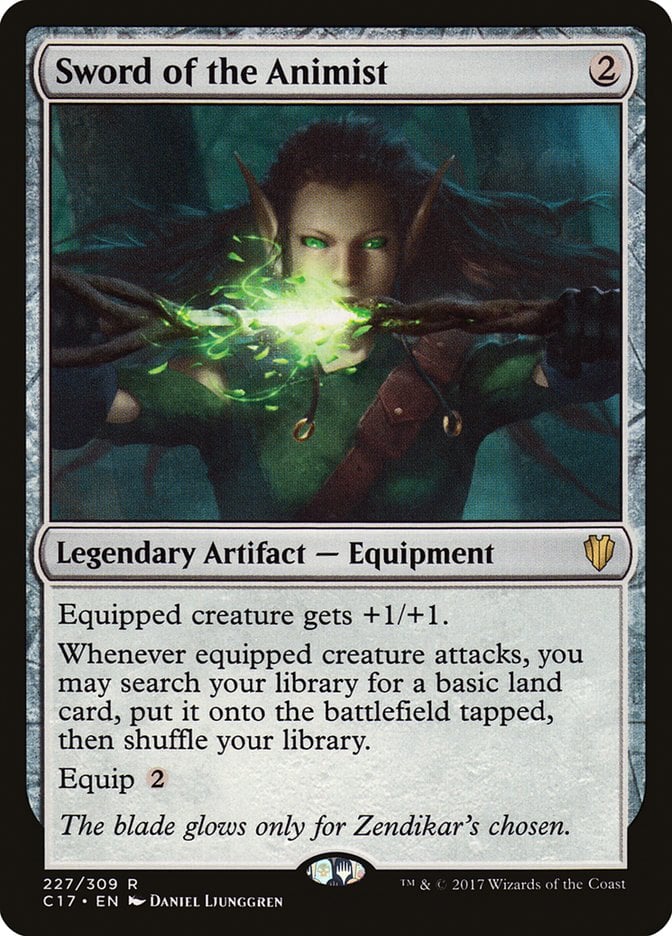
I’m sure you could write a thesis on which is better between Bitterthorn, Nissa's Animus and Sword of the Animist, but this ain’t no thesis, and I like them both. Whether you go with the more expensive living weapon equipment or the cheaper sword, these are both colorless ramp pieces that give non-green decks access to acceleration they otherwise might not have.
#21. Elvish Reclaimer
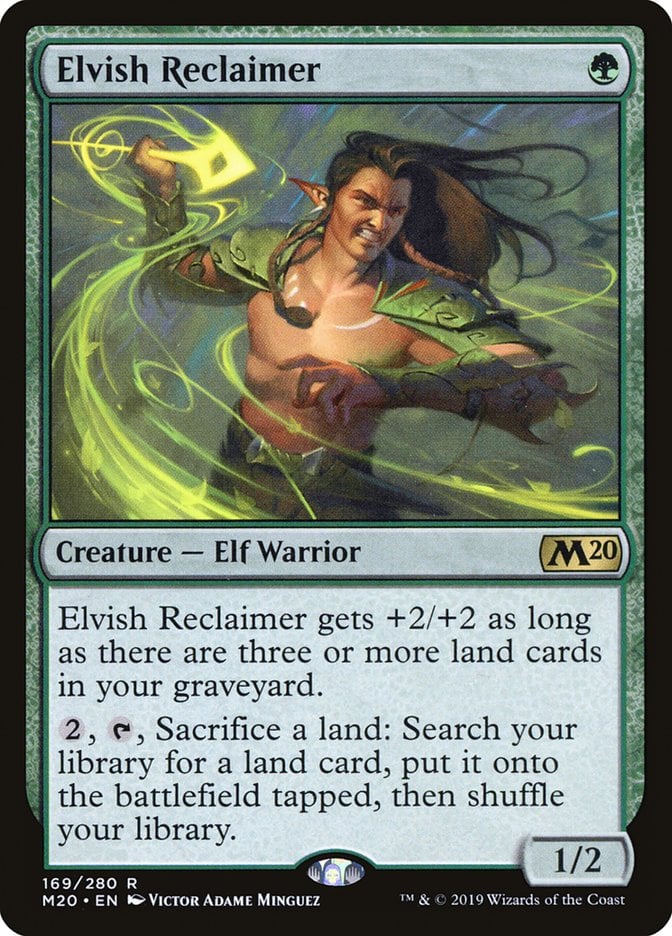
I don’t care so much about the stat boost on Elvish Reclaimer; it’s the ability to fetch up any land at any time that makes this interesting. It costs mana to activate, but it’s also a 1-drop and much less restrictive than Knight of the Reliquary, so it has some advantages that the Selesnya card doesn’t have.
#20. Search for Tomorrow
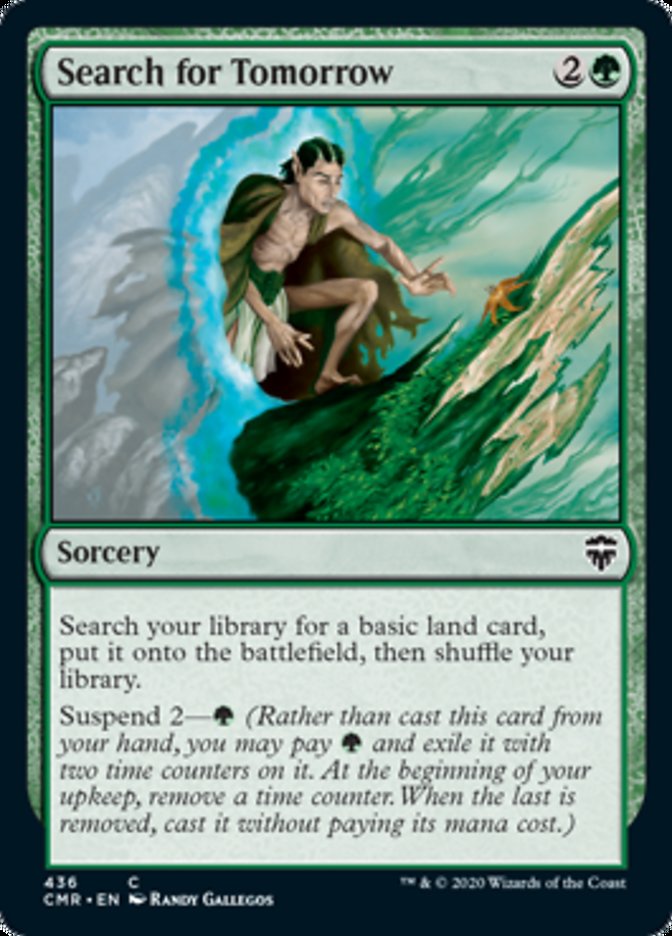
I feel like Search for Tomorrow is often forgotten about in the ramp discussion. People flock towards the 2-mana ramp effects, but Search for Tomorrow is so much better than a typical Rampant Growth if you suspend it on turn 1, freeing up your turn 2 to cast other spells, and giving you access to the same amount of mana on turn 3. It’s decidedly worse beyond the first turn, but all ramp spells dwindle as the game goes on. Suspend cards also have inherent synergy with cast-from-exile payoffs, so I’d definitely prioritize Search for Tomorrow in a Faldorn, Dread Wolf Herald deck.
#19. Solemn Simulacrum
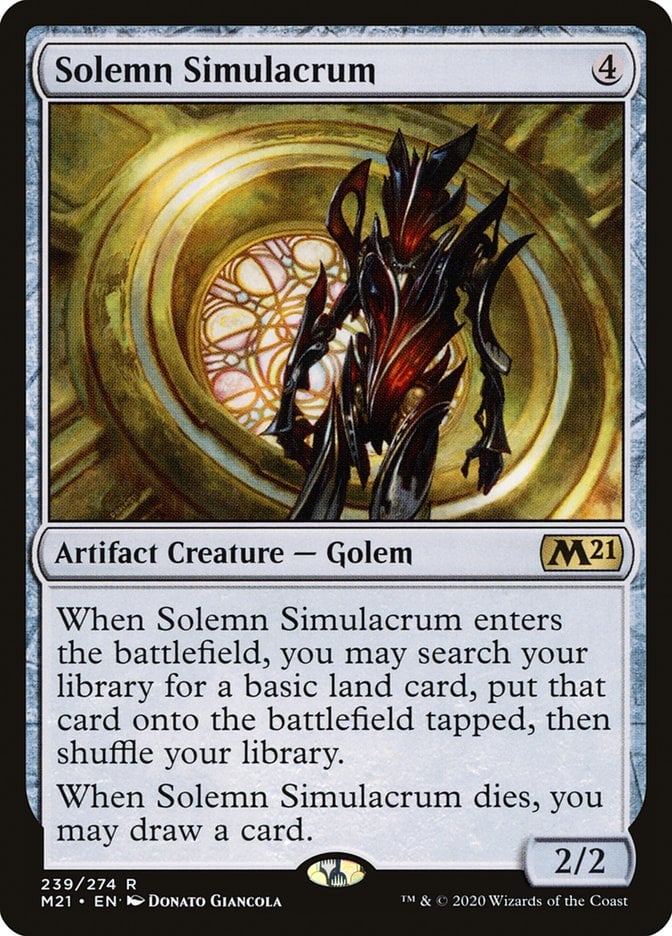
Solemn Simulacrum is in that same category as Burnished Hart where I know it doesn’t perform at the same level it used to, but it’s so hard to let go. Granted, a resolved Solemn is still effective, representing a full 3-for-1 when all is said and done and spotting you a great body for your blink effects.
#18. Lesser Rampant Growths
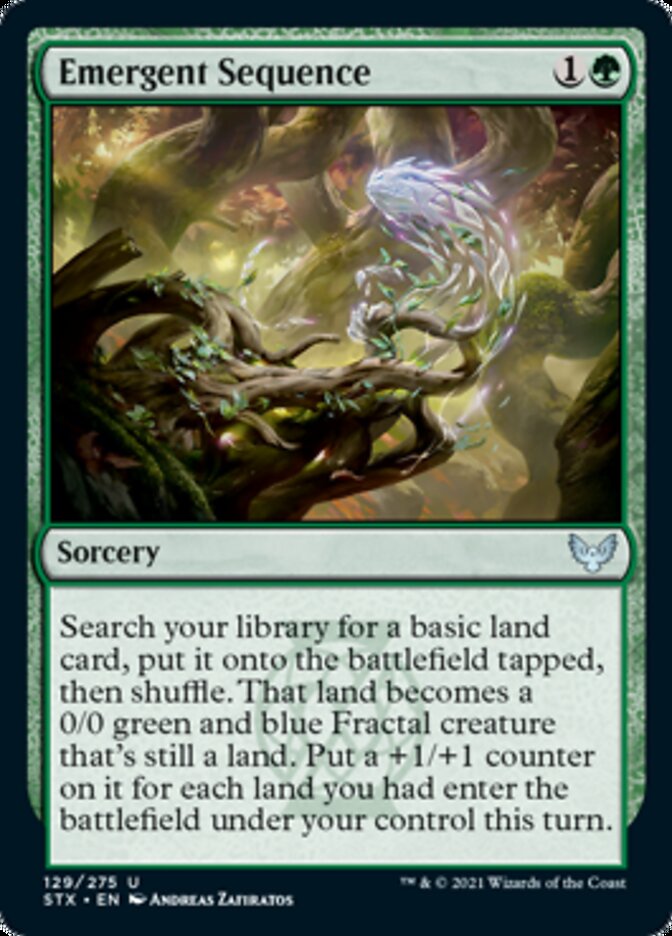
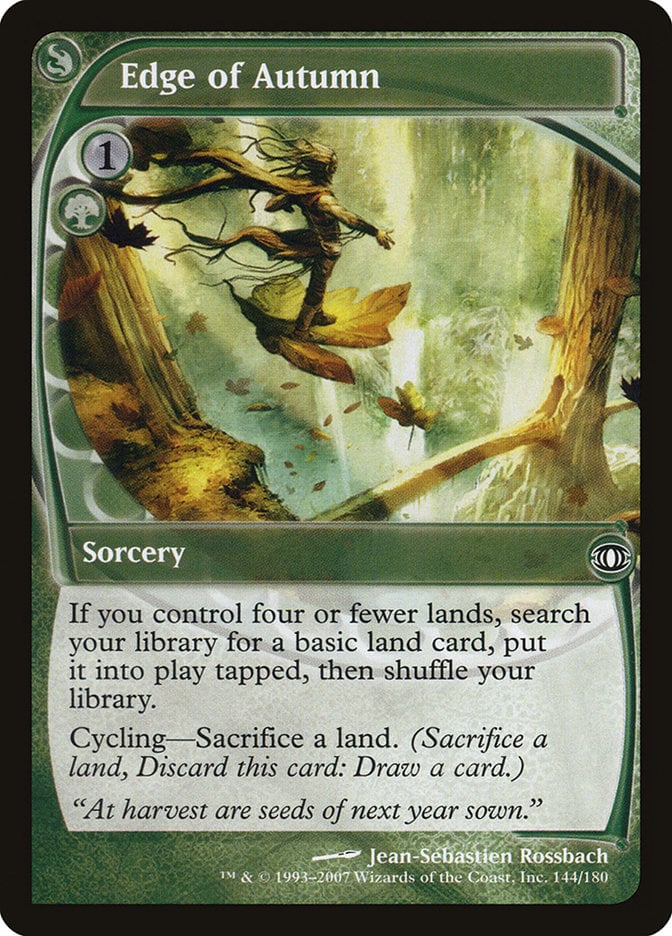
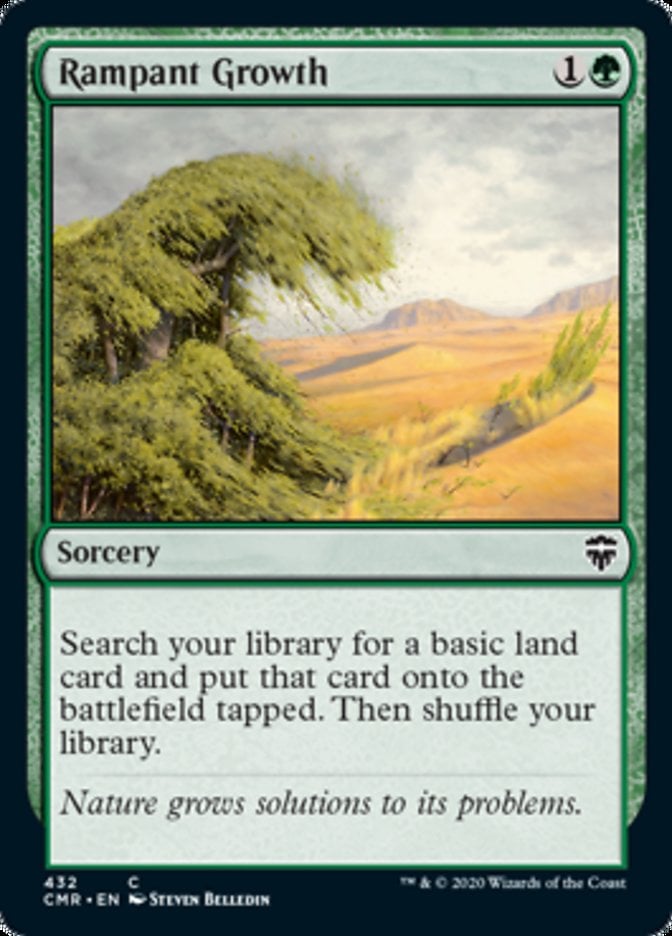

Oh look, we finally hit actual Rampant Growth! Unfortunately, the OG is one of the worst cards in its own category, only fetching basic lands and putting them into play tapped. Emergent Sequence is similar but exposes your land to removal, and Edge of Autumn straight up stops working after a certain point, though it has a nice cycling buyout.
#17. Powerful Rampant Growths
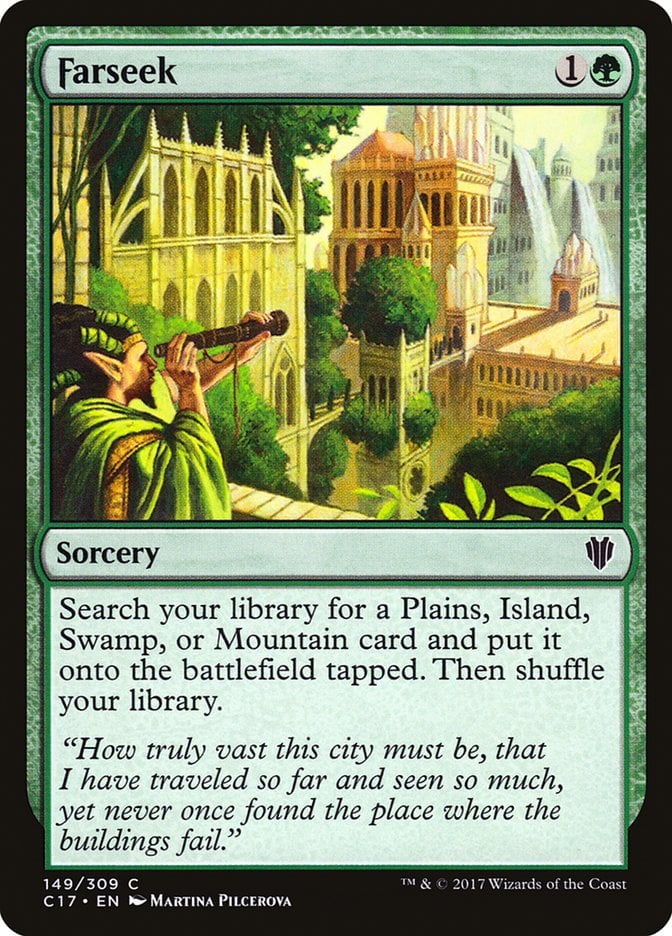
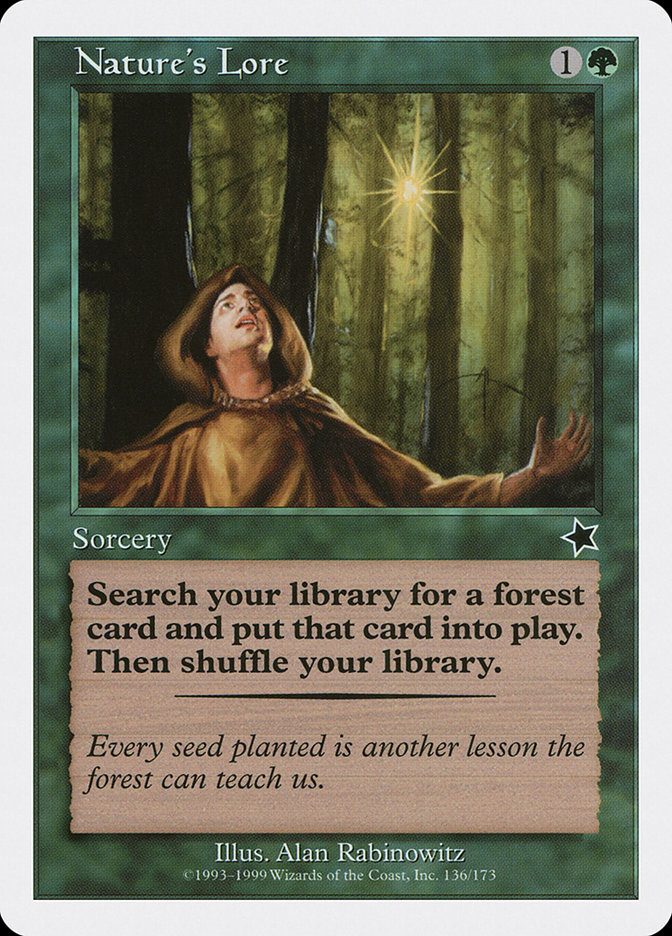
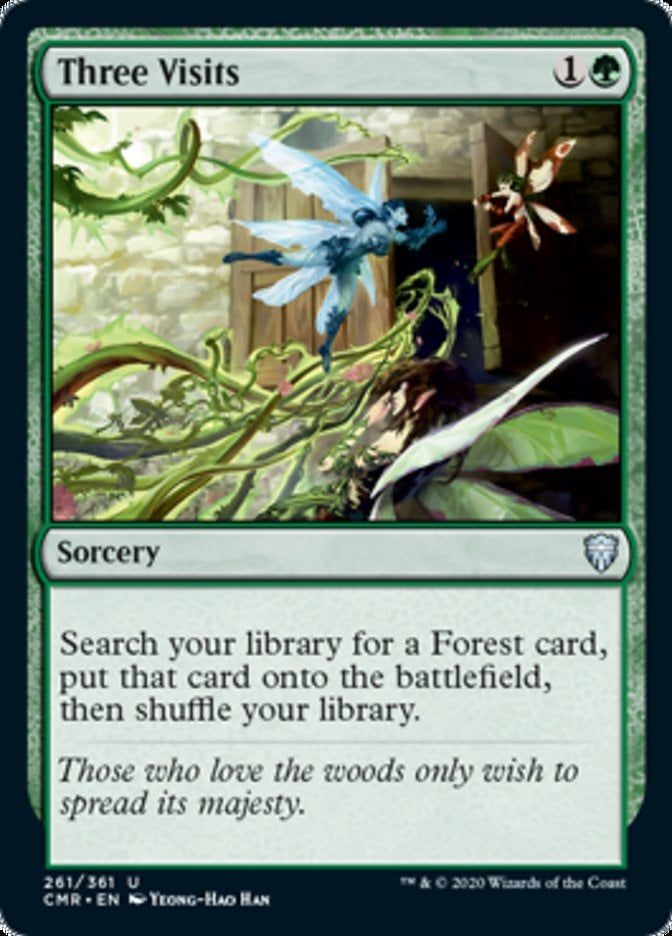
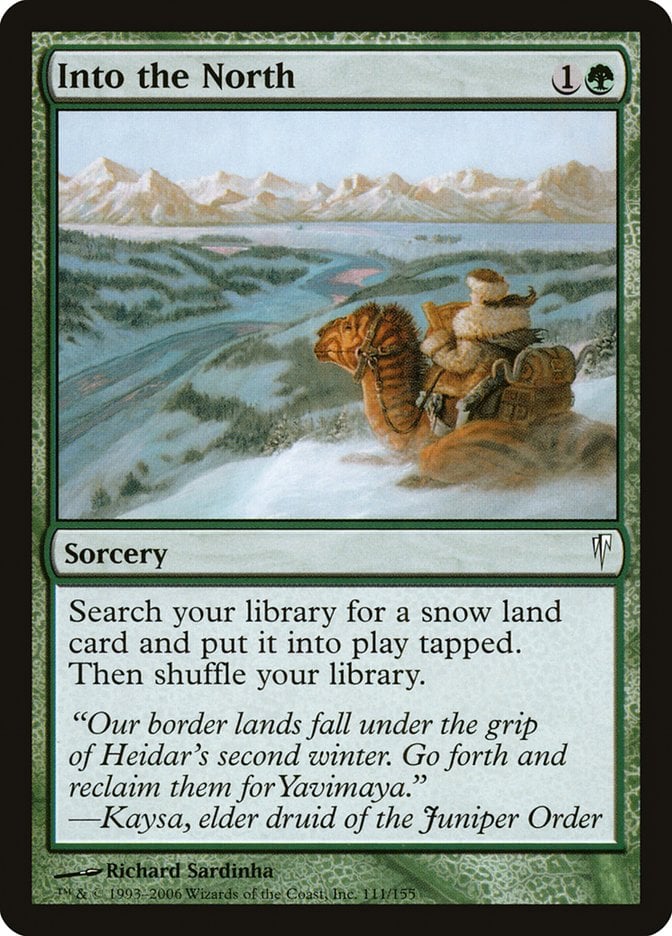

When people say “Rampant Growth effects”, this is what they’re talking about. Farseek, Nature's Lore, and Three Visits can fetch up non-basics and/or untapped lands, which are huge improvements over actual Rampant Growth. Into the North’s a nice one if you’re playing with snow lands, and Studious First-Year spots you a literal Rampant Growth on a body.
#16. Sakura-Tribe Elder
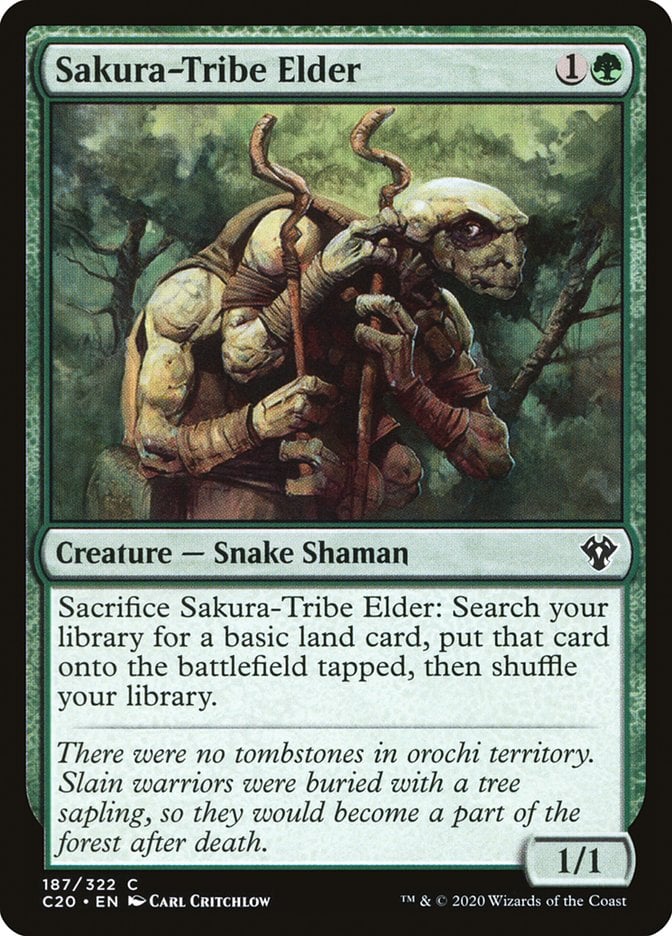
Sakura-Tribe Elder takes the crown for best Rampant Growth effect. It’s functionally exactly that card, but it exists as a body on the battlefield until you need to use it. That means it’s always good for at least one block, and it’s ripe for creature recursion effects like Meren of Clan Nel Toth.
#15. Expedition Map
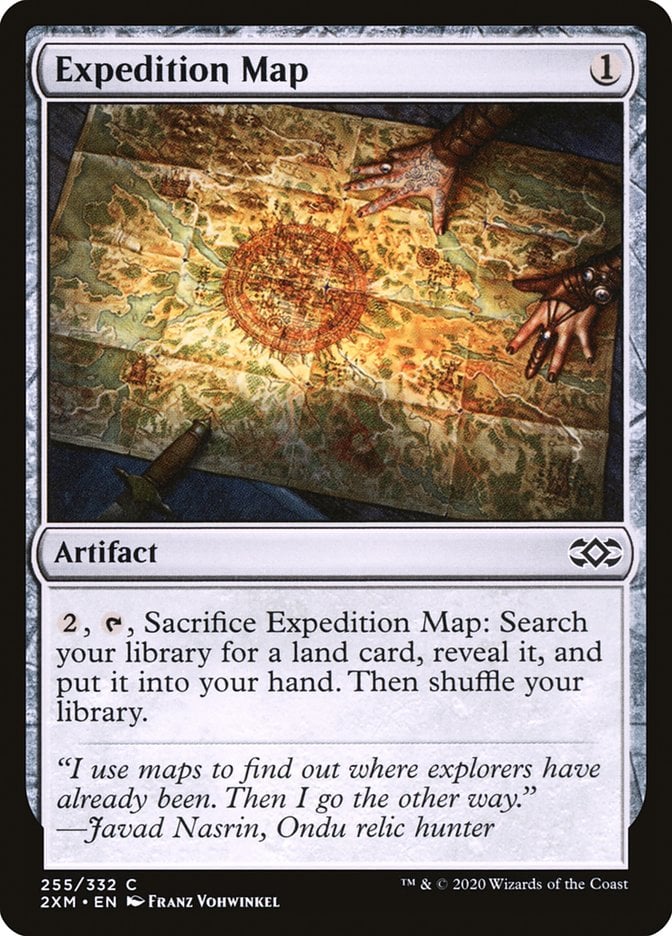
Sylvan Scrying on an artifact. We saw a lot of Expedition Map in Modern Tron decks of old and still do to some extent, but the Map’s going to be good in all the same places where Sylvan Scrying would be, and many more. Sylvan Scrying can’t get your Cabal Coffers with a mono-black commander, for example, though Map is still overall more expensive to cast and activate.
#14. Urza’s Cave

This Urza’s land tags out into a different land at some point during the game, making it one of the most universally accessible ways to find a specific land. It’s a lot like an Expedition Map that you don’t have to use an actual spell slot on, though Urza's Cave offers limited utility until you crack it.
#13. Pir’s Whim
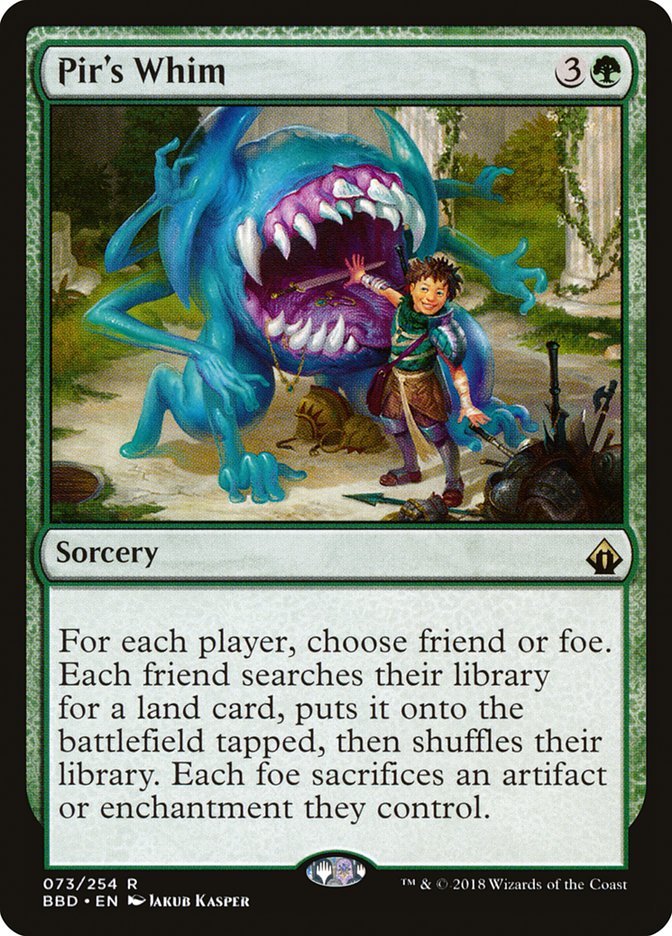
The friend or foe cards from Battlebond are masterclasses in political multiplayer card design, Pir's Whim being the best. This’ll always put your best land into play, but it also tacks on a Tribute to the Wild for good measure. Choosing someone as friend is also a highly effective way to get someone on your good side.
#12. Tapped Basic Fetches
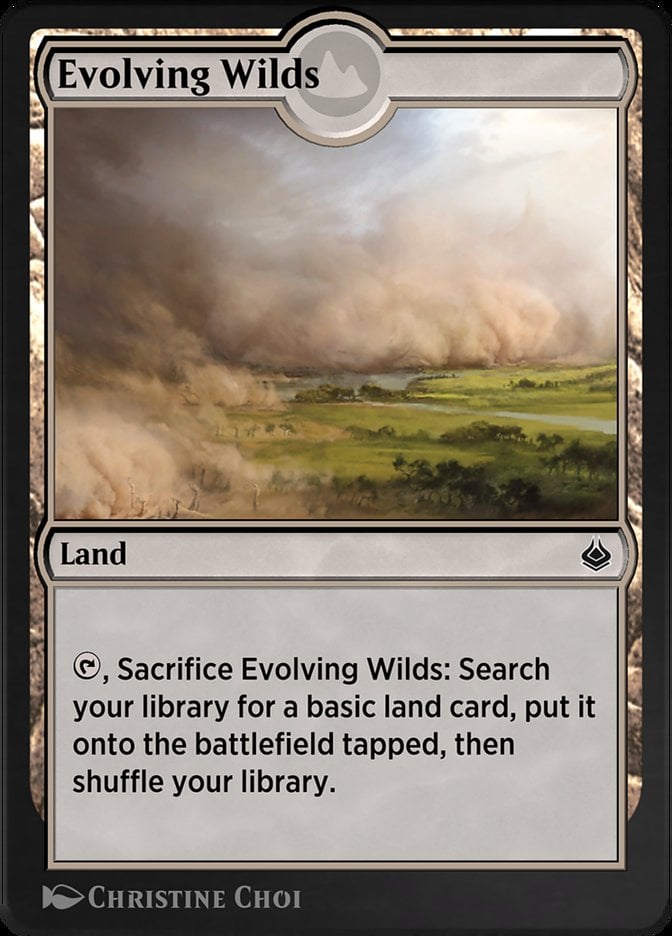
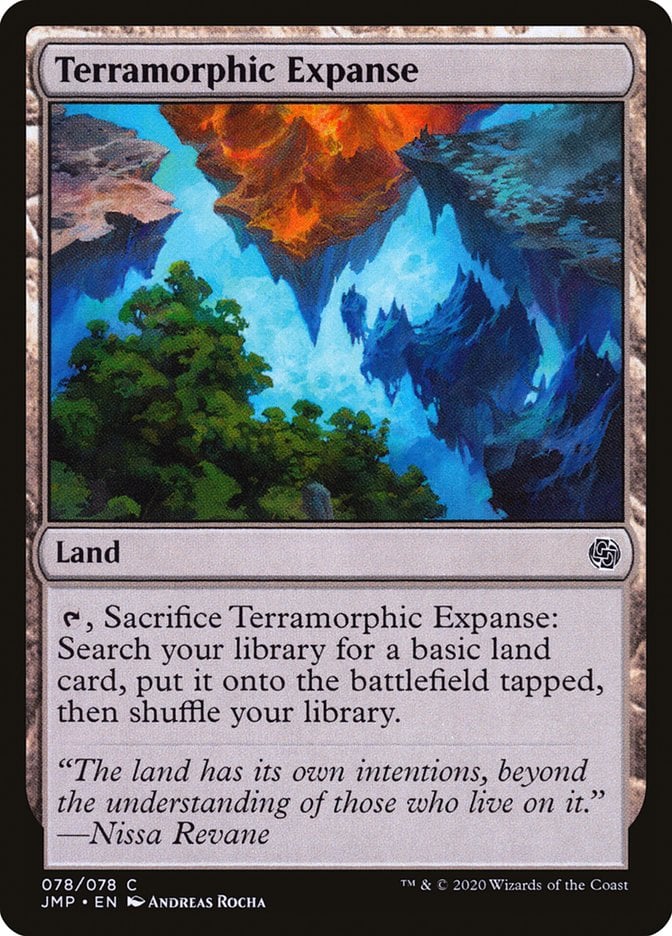
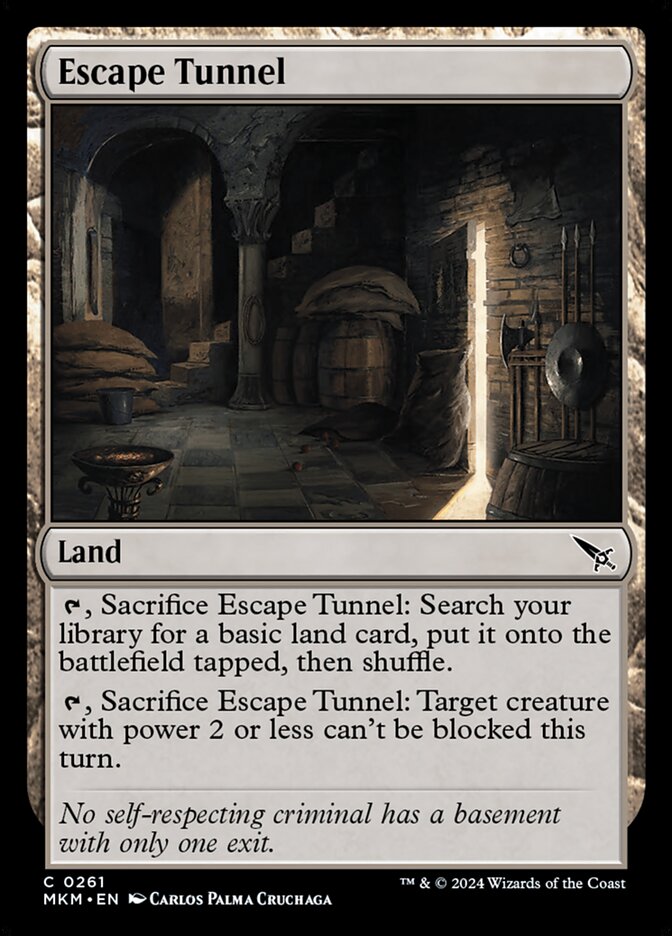
For the next couple entries we’ll work our way up a sort of hierarchy of lands that sacrifice themselves to search for other lands, usually basics. We’ll start with Evolving Wilds and friends, which are go-to budget lands that get the job done, but slowly. Terramorphic Expanse is a classic, and Escape Tunnel actually power creeps them both with a small bit of extra text.
#11. “Budget” Mana-Fixers
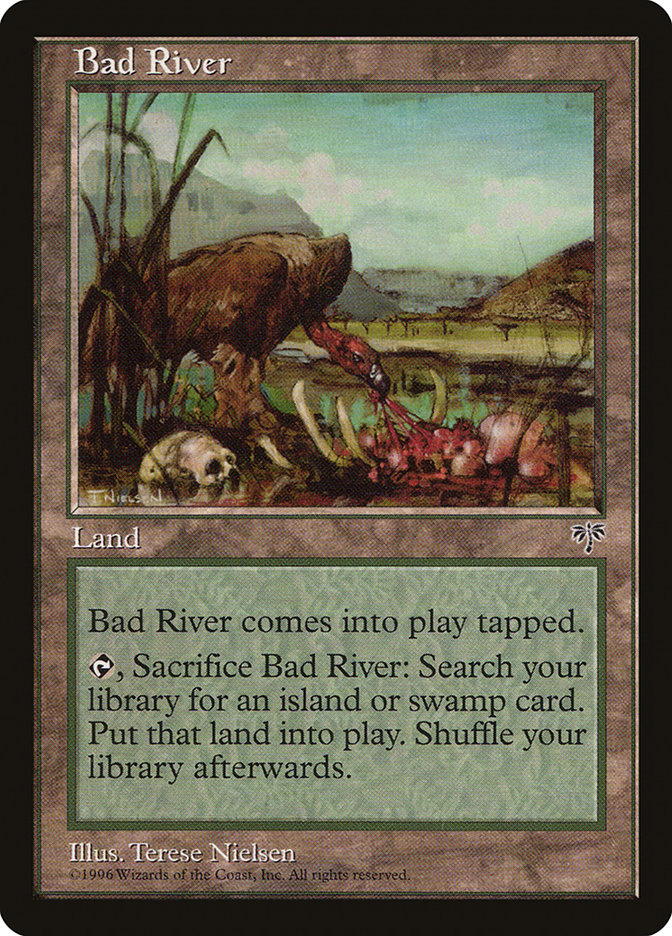
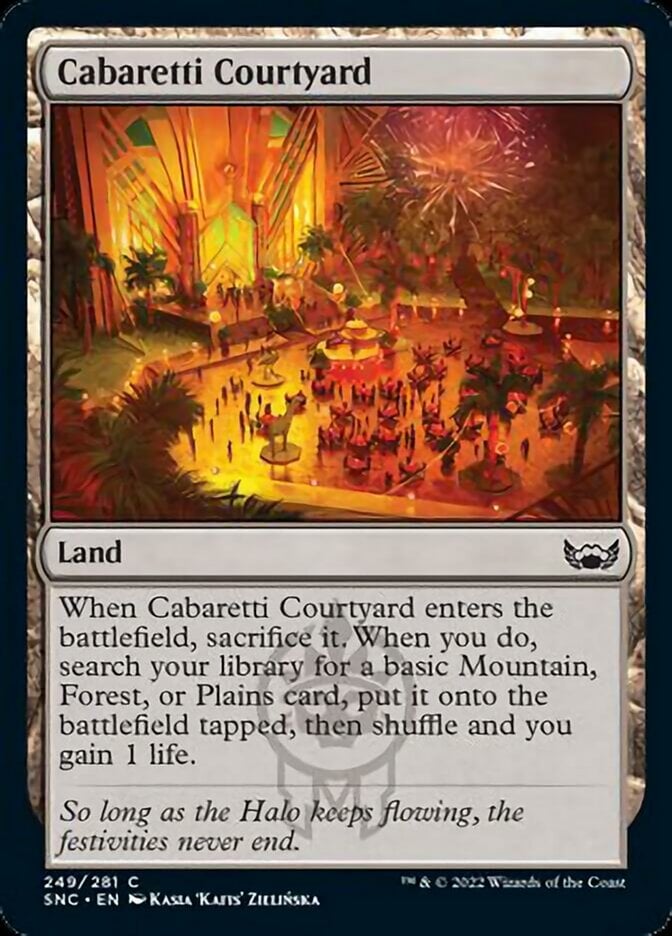


Next up are the mana-fixers with some minor added utility. The Streets of New Capenna “family fixers” like Cabaretti Courtyard gain a life, while slow fetches like Bad River can find non-basics. Panoramas and Landscapes can tap for colorless mana until you need to use them, and the latter even have a cycling ability if you don’t need to use them as a land drop.
#10. “Untapped” Basic Land Fetches
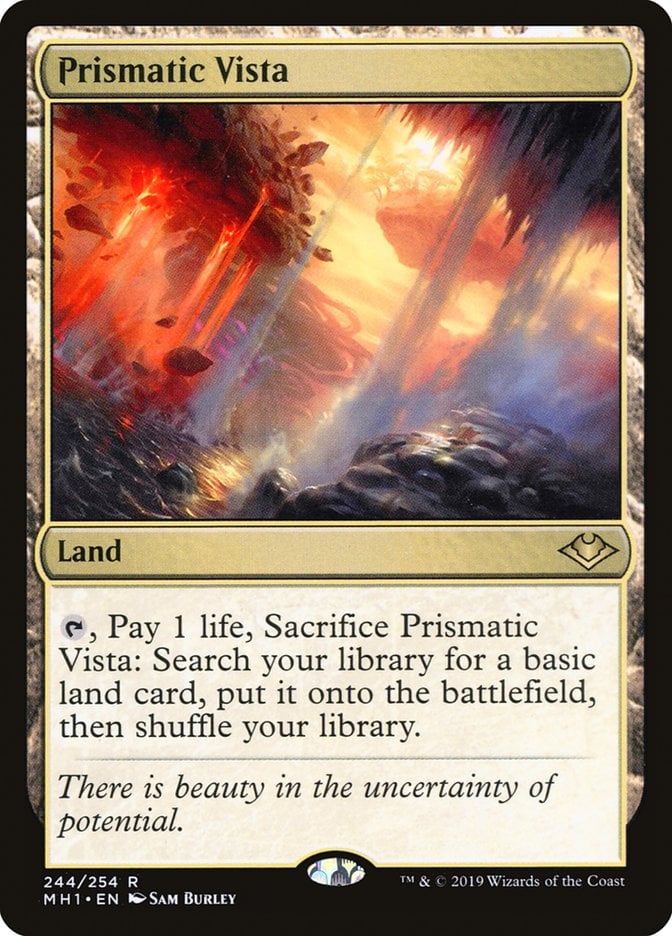
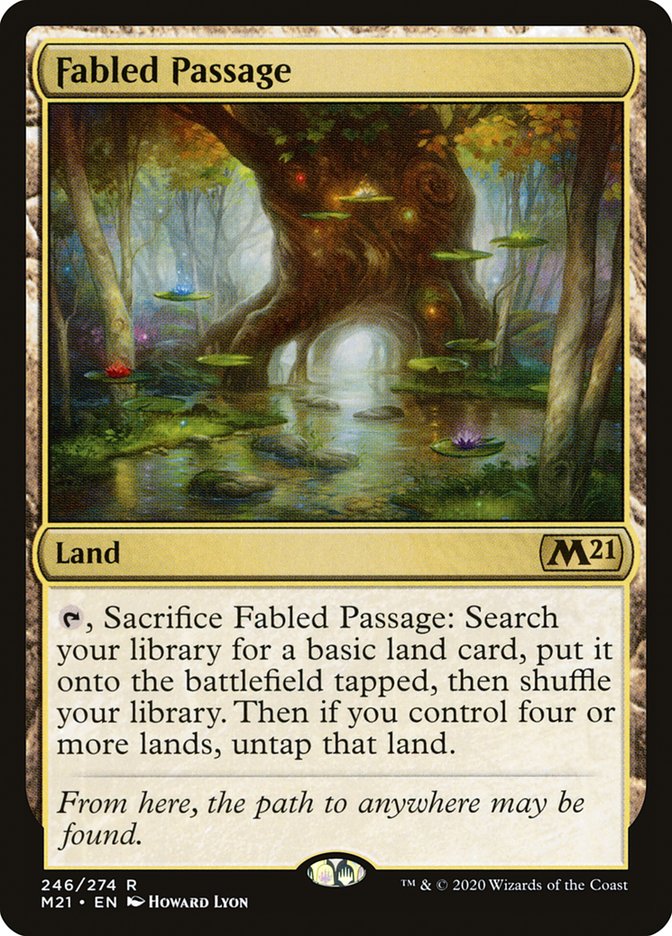
Prismatic Vista and Fabled Passage are “fixed fetches” that only find basic lands but put them into play untapped. That requires a few extra lands in play for Fabled Passage, but you can usually work around that restriction.
#9. Vibrance

Vibrance is an astonishing card. Evoke it for and you get Sylvan Scrying, one of the best land tutors ever. And for some reason, it keeps going! It can be a removal spell or a decent midrange threat. You can’t go wrong with this when looking for lands in Gruul+.
#8. Sylvan Scrying
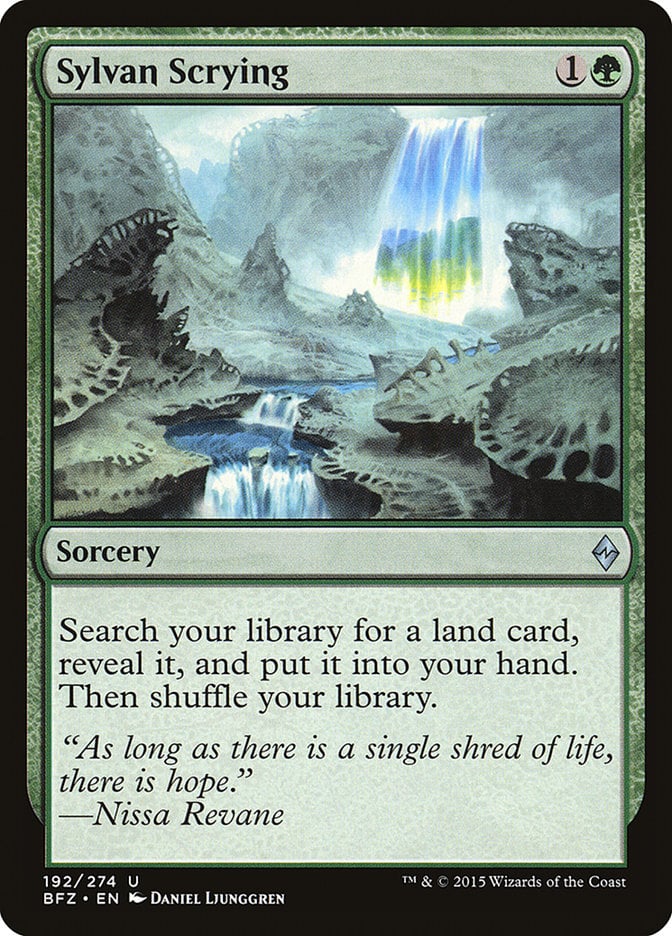
Type-specific tutors usually cost around 3 mana. Look at Fabricate, Idyllic Tutor, and Solve the Equation as examples. But Sylvan Scrying only costs 2, perhaps because lands are typically less impactful than other types of spells? Whatever the reason, this is an essential for decks that revolve around specific lands like Blinkmoth Nexus or Dark Depths.
#7. Crop Rotation
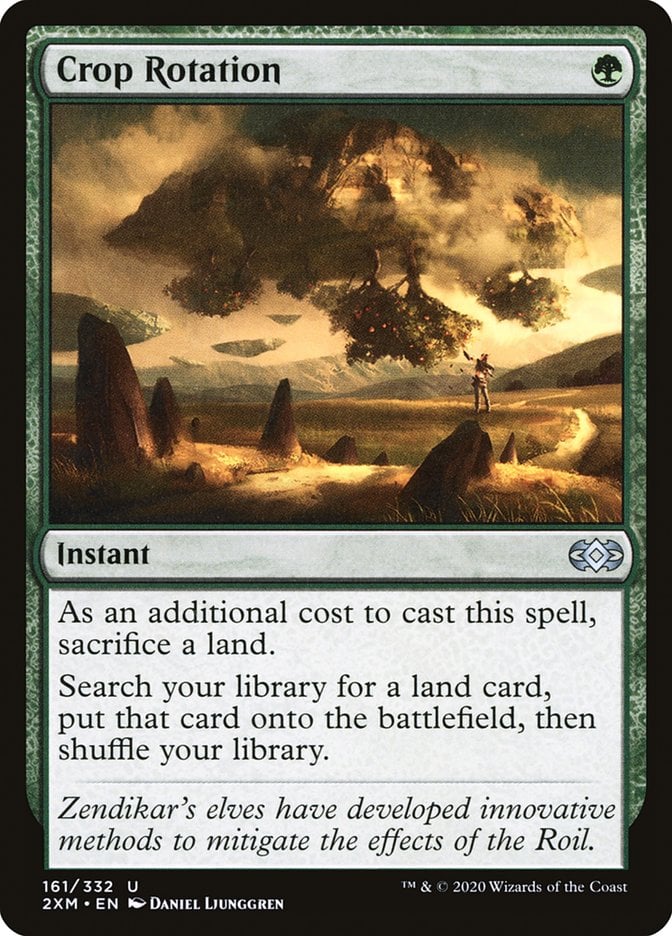
We’ve already seen other cards that trade out lands in play for ones from your library, but those are typically creatures with tap abilities. Crop Rotation works on demand and costs just 1 mana, making it about as versatile as this effect can get.
#6. Lord of the Rings Landcyclers
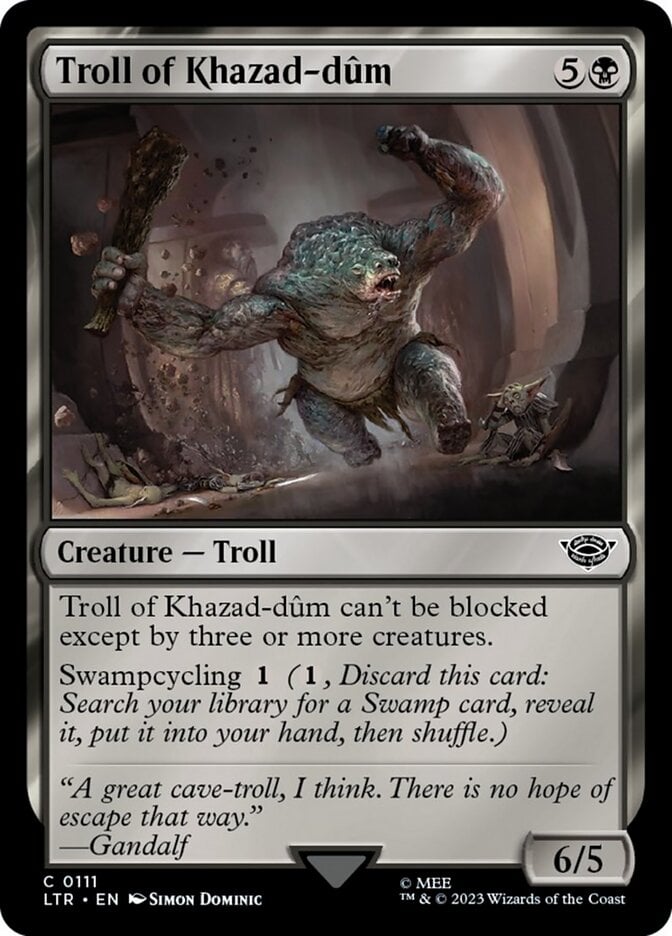
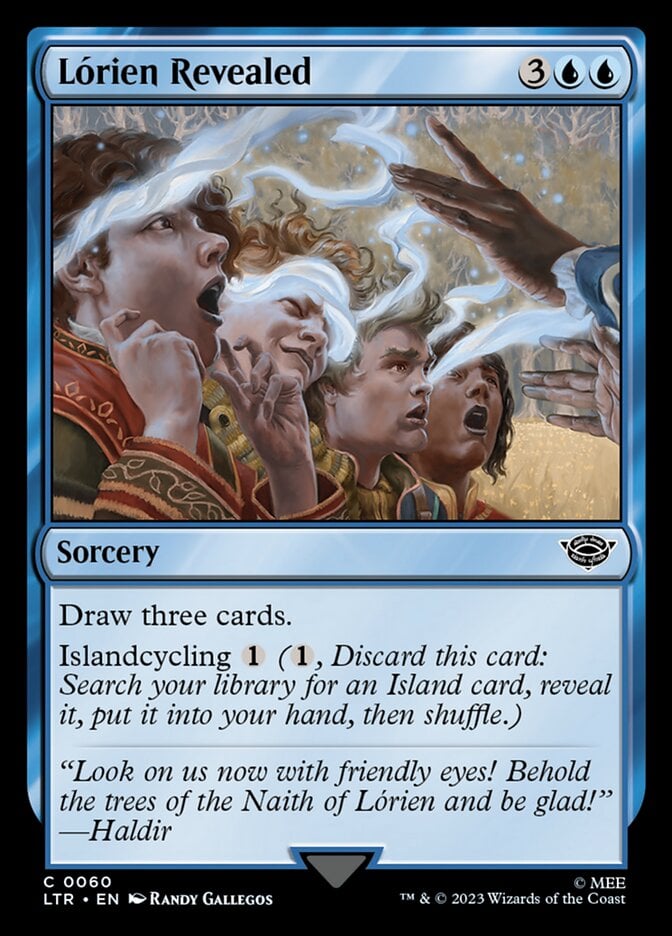
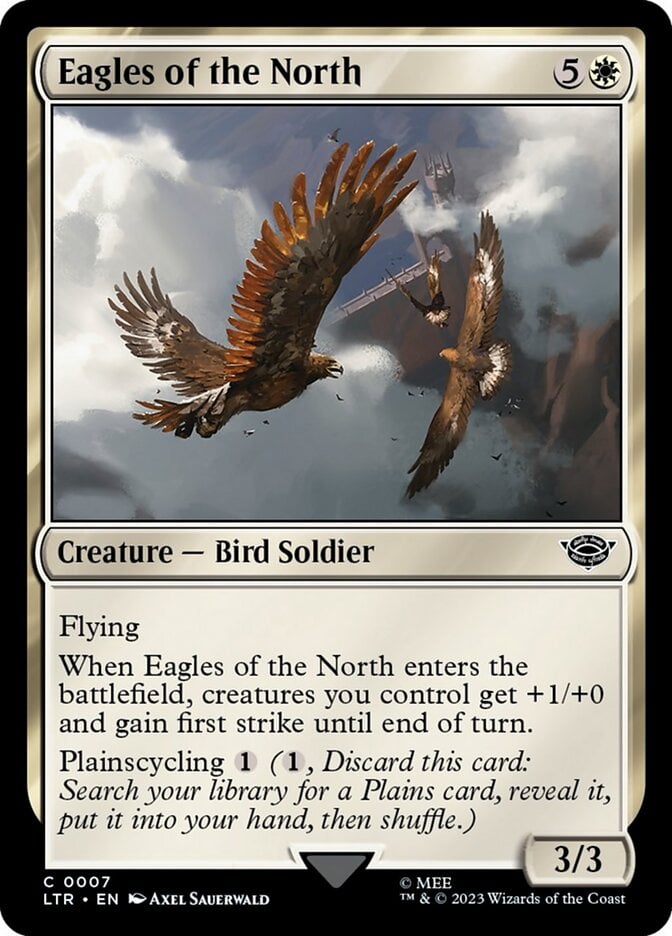
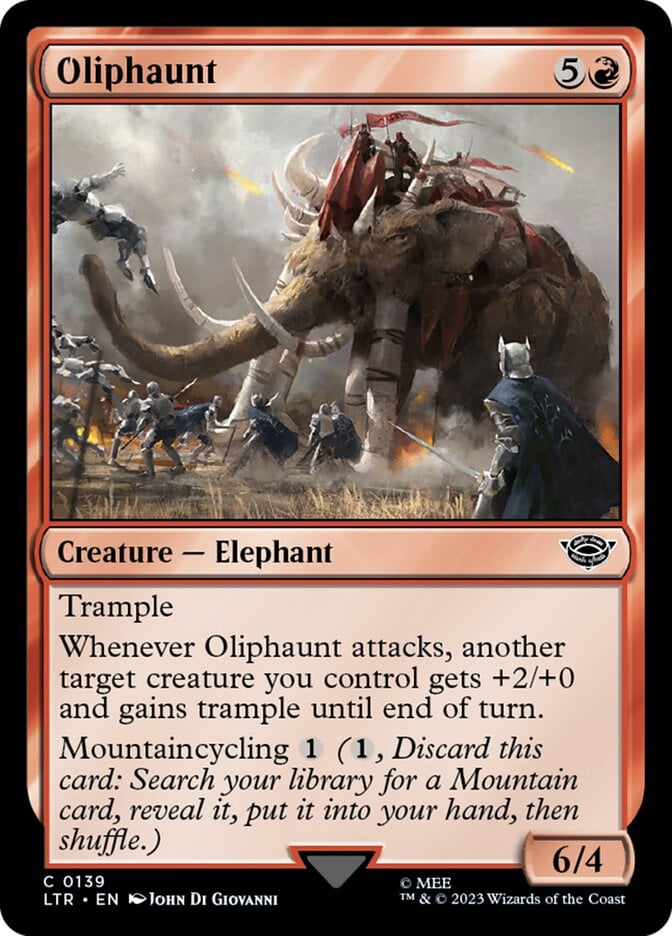
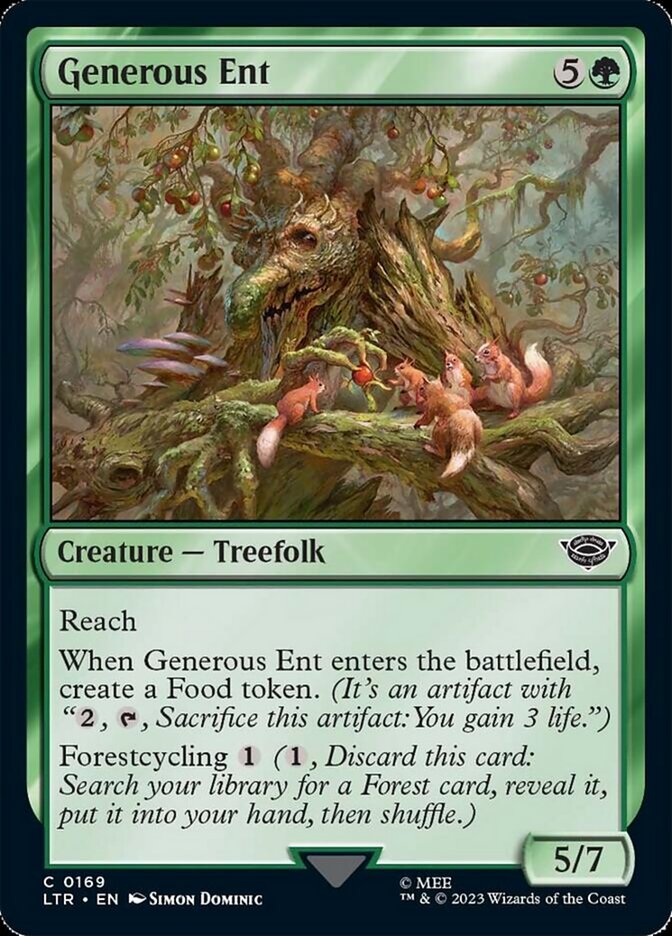
This category realistically belongs to Troll of Khazad-dûm and Lórien Revealed, though the whole cycle is pretty flexible. These 1-mana landcyclers from Lord of the Rings usually replace a basic land in your deck but have the option of being an impactful spell later in the game. They’re a lot like MDFCs in that regard, even if the creatures don’t look all that enticing.
#5. Kodama of the West Tree
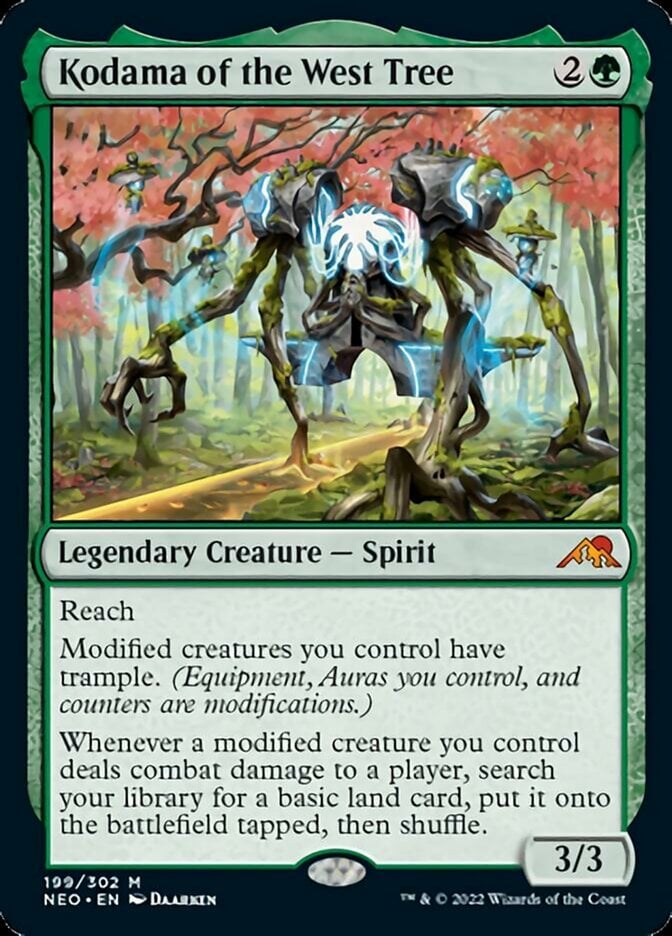
A Kodama in motion stays in motion. Getting just one hit in with a modified creature while you control Kodama of the West Tree feels like free real estate, and anything beyond that is absurdity. Modifying creatures is quite easy, as it turns out.
#4. Archaeomancer’s Map
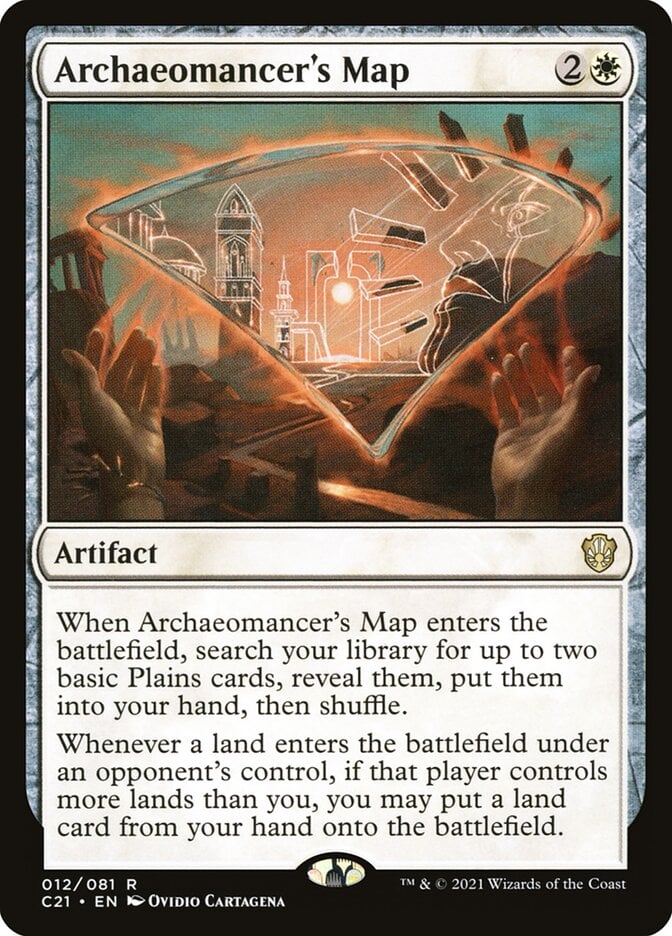
People love Burgeoning way too much not to be playing Archaeomancer's Map more often. You’re not going to get a better ramp option in white, and it even draws you two Plains to kick things off!
#3. Archdruid’s Charm
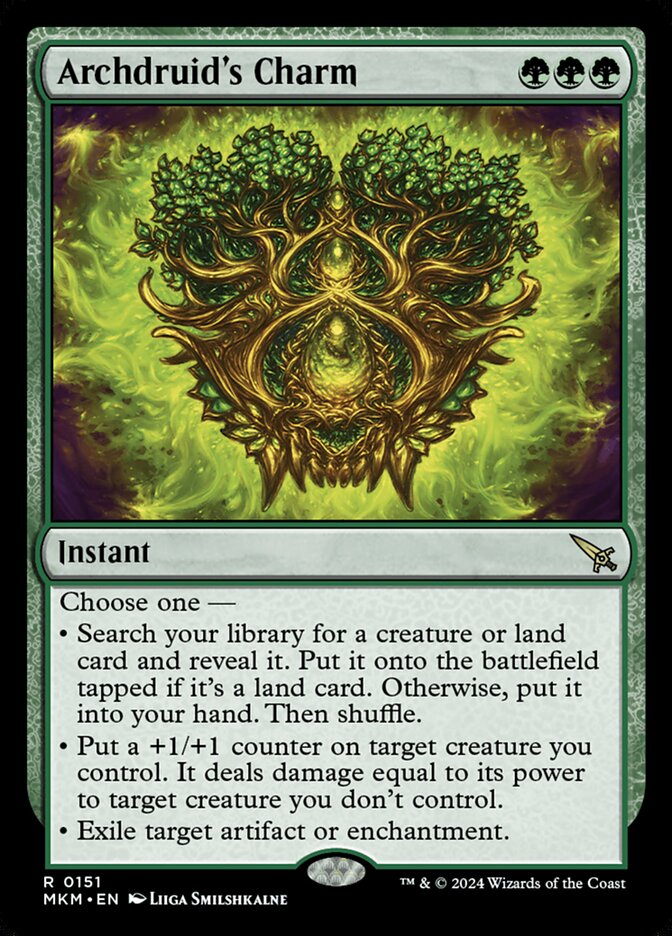
Archdruid's Charm is one of the best charms ever printed, displaying three modes but offering something in the ballpark of 5-6 different options. Unmitigated ramp at instant speed is interesting, and the removal options are all useful in different scenarios.
#2. Land Tax
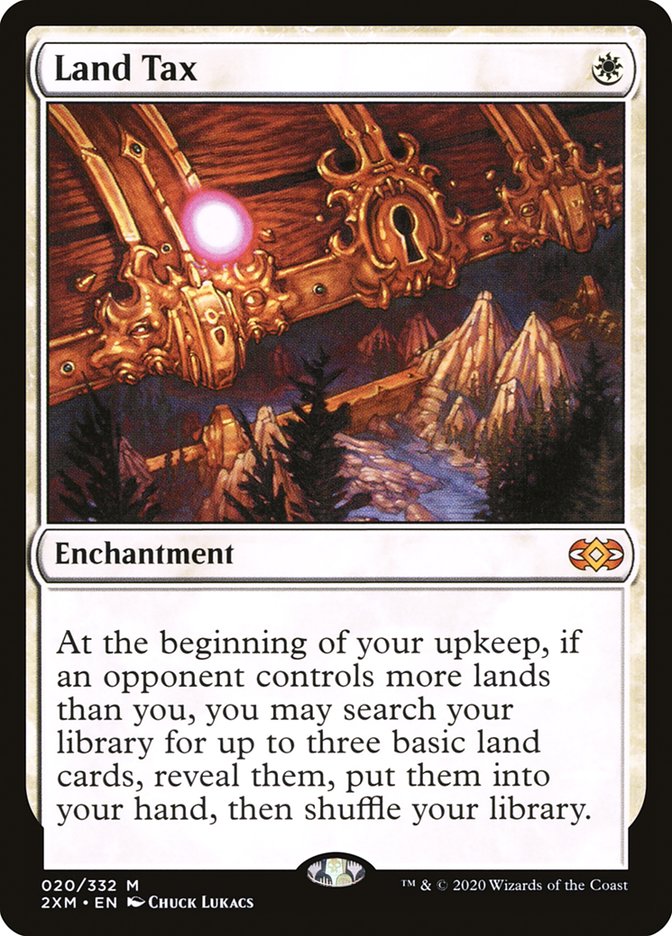
Land Tax was one of the cards that helped white just barely hold onto Commander viability throughout the 2010s. And it’s still amazing. It’s very easy for Land Tax to be a draw-9 or draw-12 throughout a game, and it’s one of the few cards that contributes to deck-thinning in a meaningful way.
#1. Traditional Fetch Lands
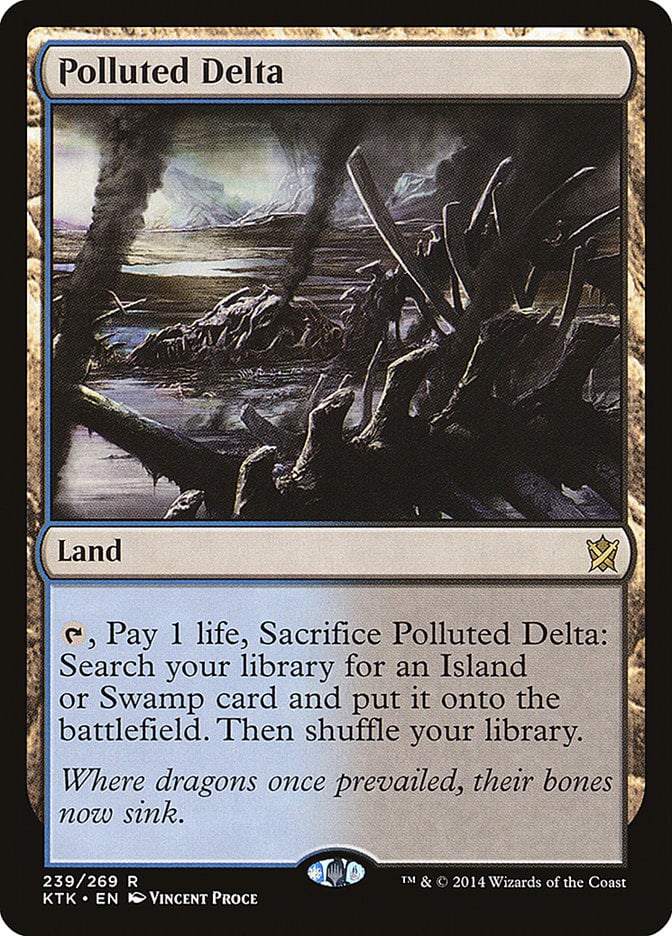
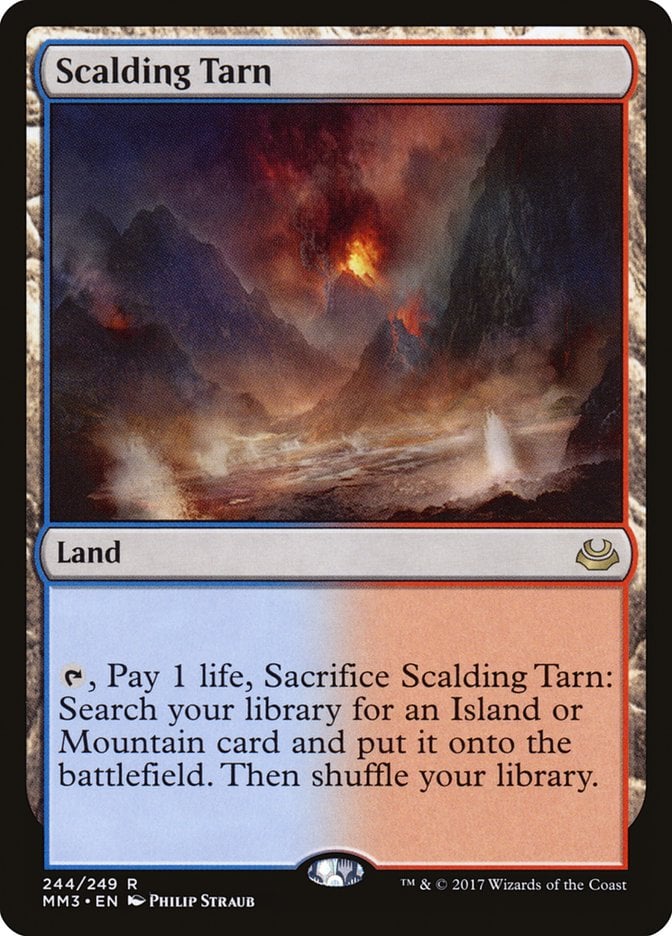
The fetch lands were always going to take first place, and they always will until Wizards loses their mind and power creeps them. Paired with typed duals and triomes, the Onslaught/Zendikar fetches offer the easiest unfettered access to mana fixing that you can get.
Best Land Tutor Payoffs
Besides just finding your land drops consistently, land tutors have a few other specific payoffs worth examining.
Landfall cards are a no-brainer box to check off. More lands equals more landfall triggers. What a twist! Of course, you’ll want actual ramp spells that put extra lands directly into play.
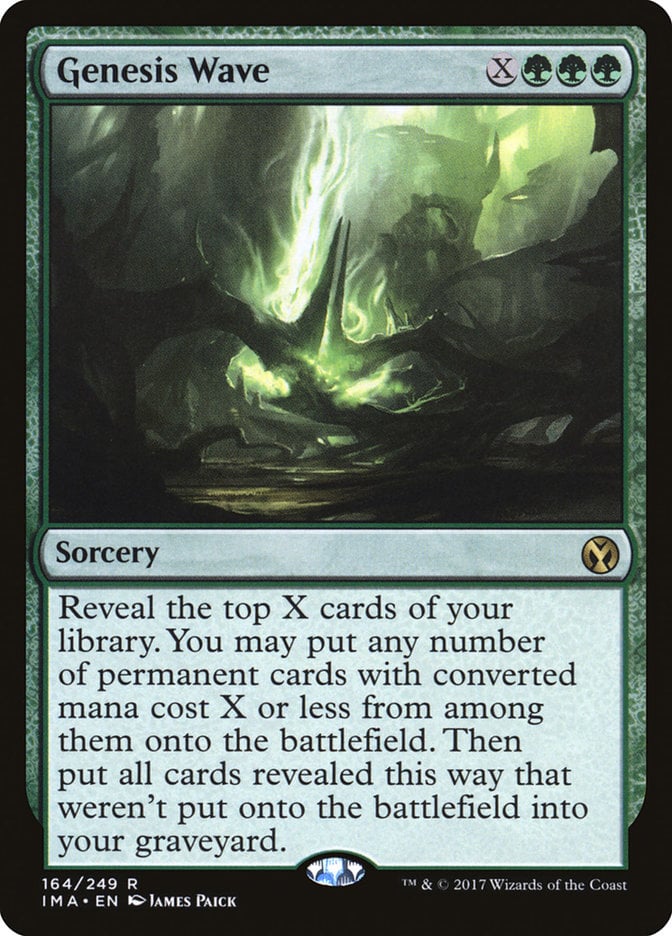
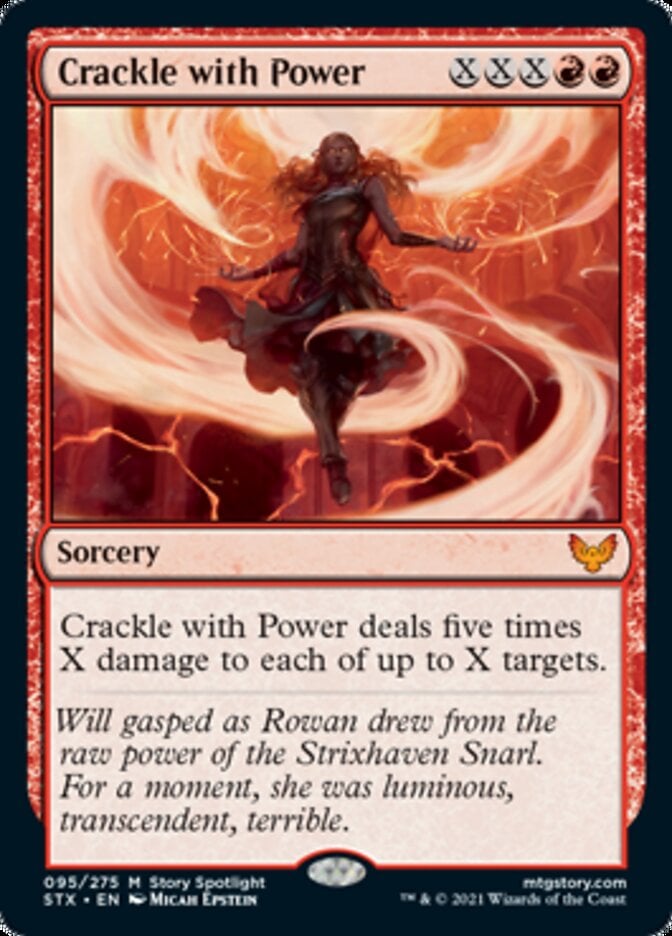
X-spells are another place to look if you’ve got an endless supply of mana sitting in play. That’s true of expensive spells in general, but cards like Genesis Wave and Crackle with Power thrive off ramp effects.
Multicolor decks usually need a combination of good mana bases and a few land search effects to operate properly. The more colors you’re playing, the truer this becomes, with 4- and 5-color decks heavily relying on fetch lands and mana-fixing tutors to set up their mana. A single Cultivate is often enough to set those decks in motion.
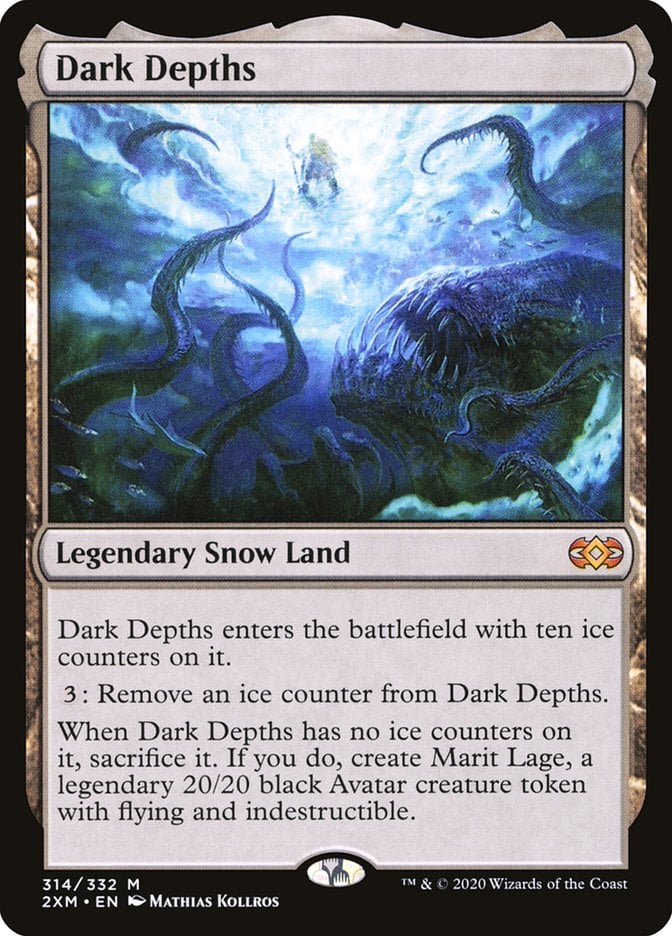
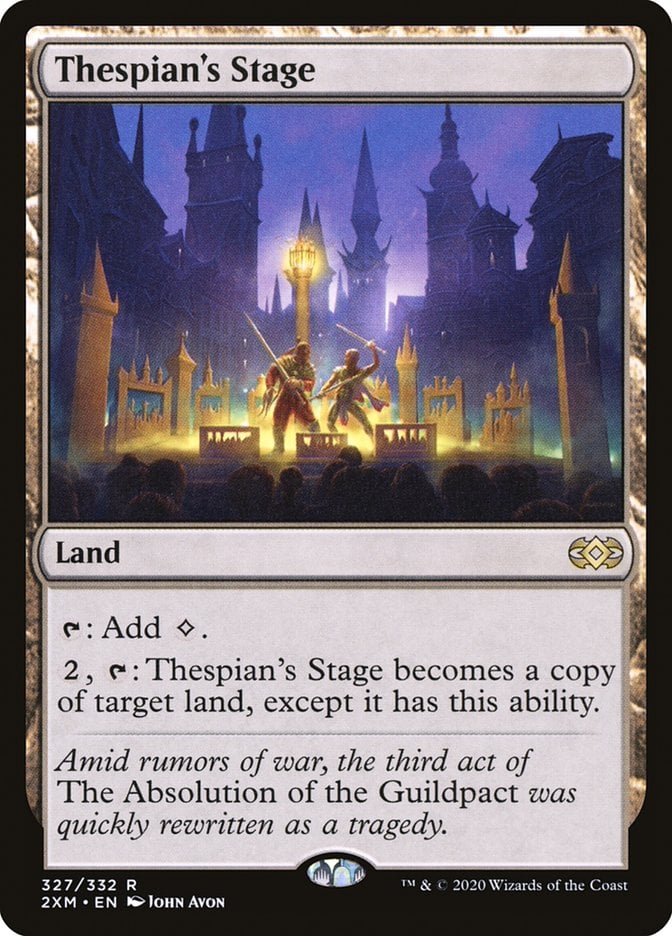
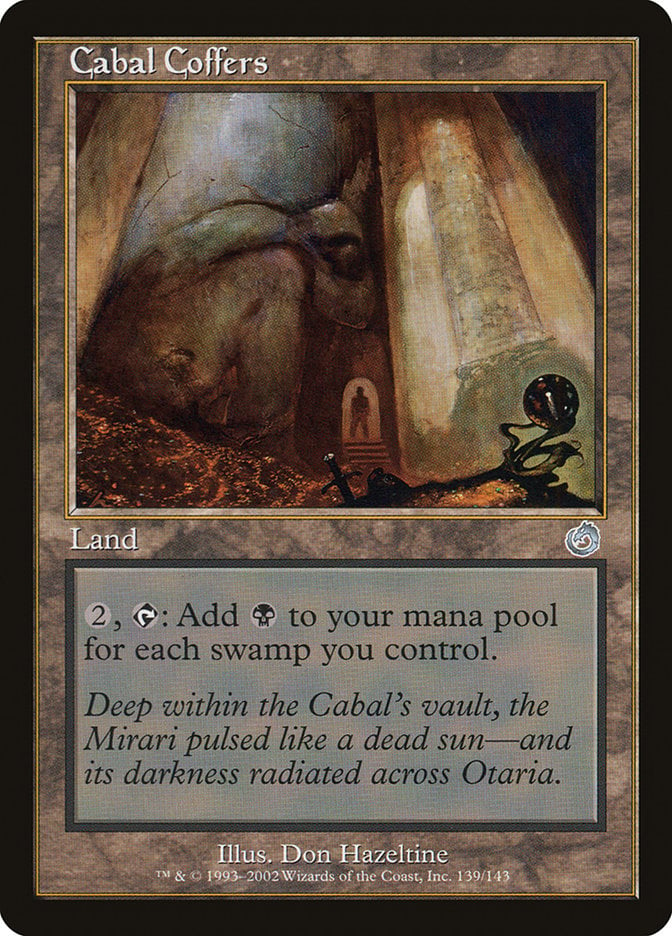
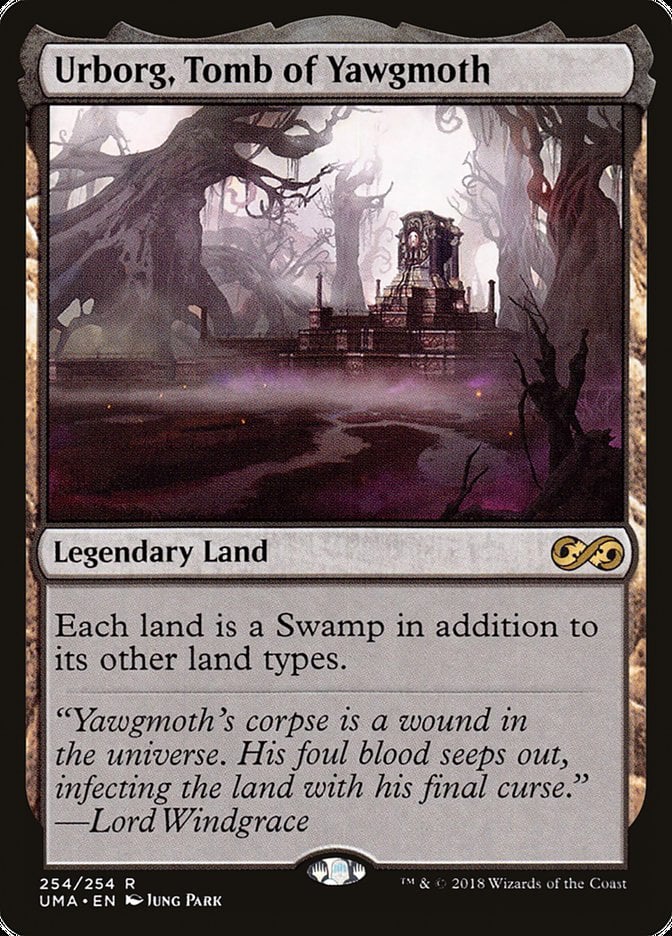
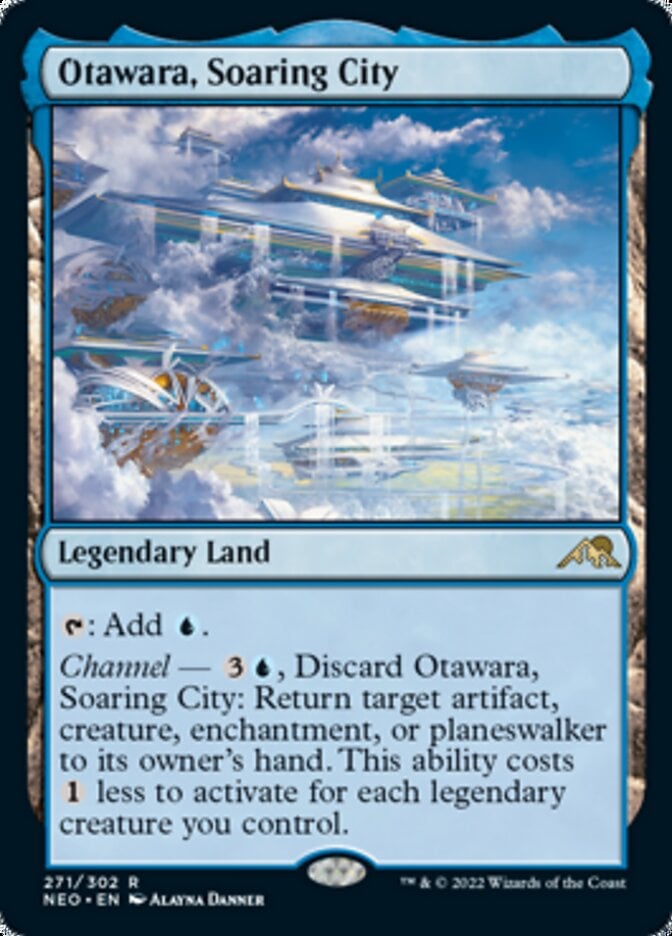
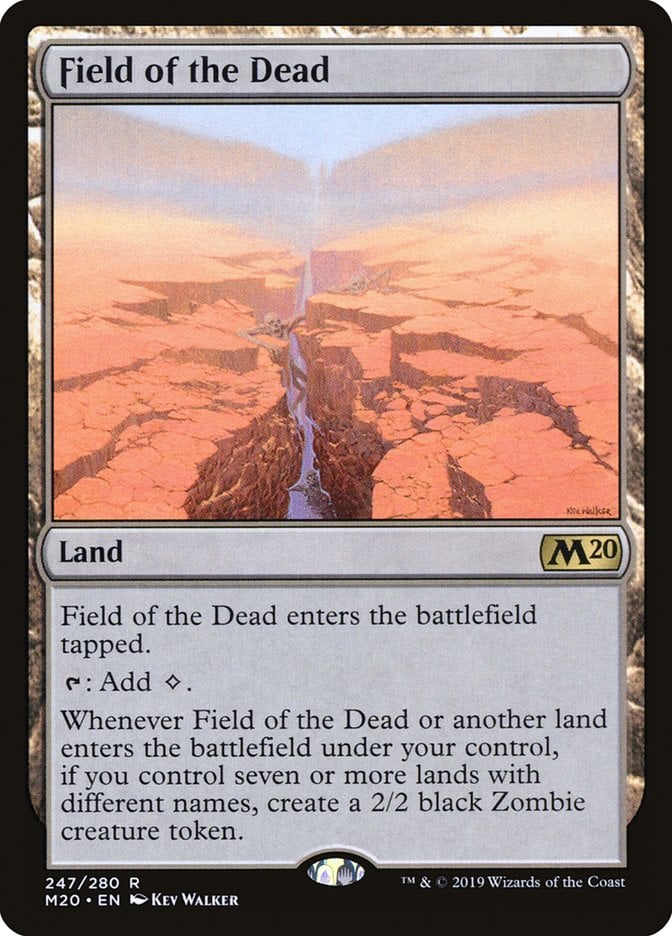
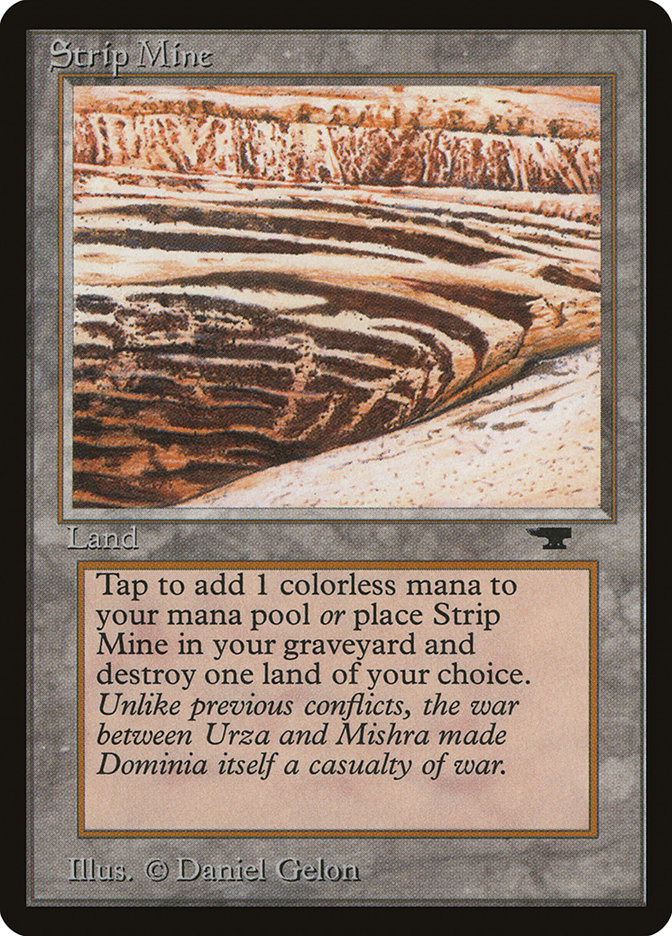
Another great benefit to tutoring for lands are land combos and individually powerful lands. A good example of a land combo is the classic Dark Depths + Thespian's Stage, though Commander players might be more familiar with Cabal Coffers + Urborg, Tomb of Yawgmoth. As for individually powerful lands, cards like Otawara, Soaring City, Field of the Dead, and Strip Mine are just a few examples of lands worth tutoring for.
There’s also the inherent benefit of deck-thinning, though from a statistical standpoint it’s not exactly clear that deck-thinning is all that fruitful in a game of Commander. This is the concept that using effects to remove lands from your library also increases the odds that you’ll draw non-land cards, which is true, but it can also be negligible if you’re only cracking an Evolving Wilds or landcycling an Oliphaunt once or twice a game. However, cards like Land Tax and Traverse the Outlands can thin your deck of lands so much that you’ll see a statistical advantage over time and draw fewer lands than you would otherwise.
Your Search Is Complete

Cultivate | Illustration by Anthony Palumbo
That seems like quite enough for now, right? If the cards on this list can’t help you find the lands you need, I’m not sure what else is going to do the trick. Whether you’re ramping or just setting up next turn’s land drop, a few land tutors should probably make their way into just about every EDH deck you build.
Do you have a land search effect you’re fond of, or one you think flies under the radar? Better yet, do you run ways to punish your opponents for searching up lands? Let me know in the comments below or over in the Draftsim Discord, and check out The Daily Upkeep newsletter to stay up to date on the latest MTG news.
Thanks for making Draftsim your #1 stop for all things Magic!
Follow Draftsim for awesome articles and set updates:










5 Comments
Thanks for the list!
I think Sowing Mycospawn deserves a spot on the list as it’s used often in Semi-Blue commander decks.
Where would you rank it?
I think so, and I would personally have it in the top 10-15 somewhere, if not higher.
Yeah, I play Archivist of Oghma. It is pretty much guaranteed to rake in several card draws stemming from opponent land searches. I think it is a great soft penalty piece for land tutors.
Could someone please spell out for uncaffeinated me, why Golos ability that searches a land onto the battlefield TAPPED equates to “Golos is an obnoxious commander because the free land makes it nearly impossible to kill”; is there a land that grants hexproof to target creature until end of turn? TYIA
The idea is that Golos helps cover some of its own commander tax.
You’re up a land, opponent destroys Golos, you play a land next turn and just replay Golos, and now you’re up another land towards the next recast.
Eventually people will have to do something besides removing your Golos, and if they ever don’t you untap and get a bunch of free spells off the activation.
“Impossible to kill” isn’t exactly correct, more like “disadvantageous to kill”.
Add Comment