
Last updated on December 26, 2024

Lightning Bolt | Illustration by Anato Finnstark
Magic design needs to be constantly evolving for the game to stay relevant, and people always desire new and shiny MTG cards. In addition, powerful cards sell. Just ask anyone at WotC.
Naturally, over the course of dozens of years, some cards that are better than preexisting ones are printed, and MTG just turned 30. But what exactly is strictly better? And which aspects of the game have to be carefully considered to keep the game balanced and evolving at a healthy pace? I’m here to answer all your questions on this subject, so let’s get going!
What Does Strictly Better Mean in MTG?

Counterspell | Illustration by Mark Poole
In MTG, strictly better is when we compare two cards side-by-side, with card A being better than card B in at least one way, with no way card A is worse than card B.
This is a game design term, and differs from the exact dictionary definition of “strictly better.” The literal definition would mean something like “better in every situation, no matter what,” which is not how it’s used by the people who create Magic. Even if you can engineer an in-game situation where Shock would be better to have than Lightning Bolt (your opponent controls a Mogg Maniac as their only blocker and you’re at 3 life), Bolt is still strictly better by the R&D definition.
A 2/2 creature for is strictly better than a 2/1 creature for . Both are white creatures, and they cost the same amount of mana to cast, but one has more toughness than the other.
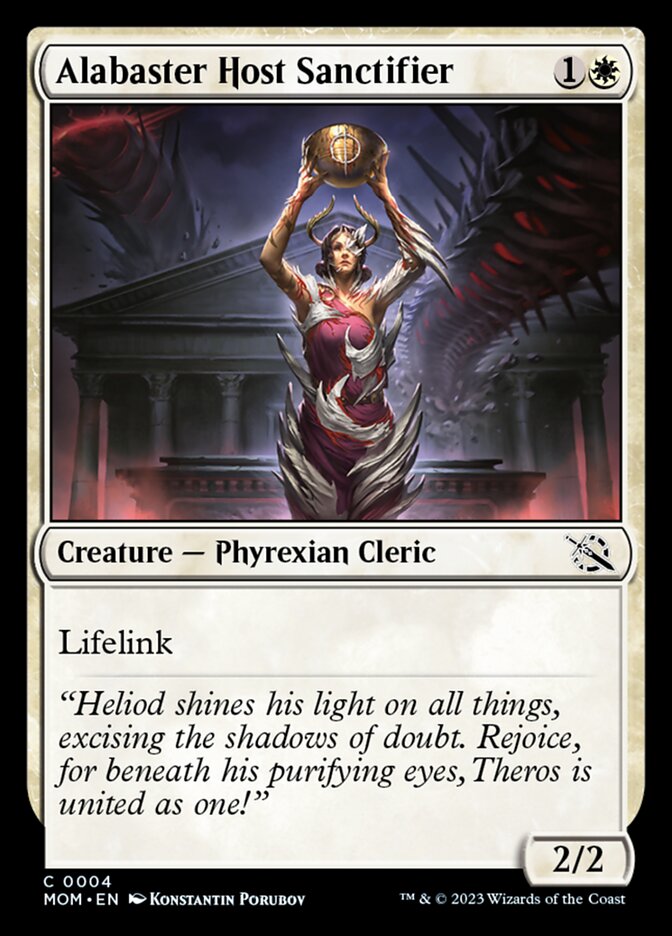

We can also consider other attributes, such as the casting cost. For example, let’s compare Alabaster Host Sanctifier and Ajani's Sunstriker. They’re identical creature cards, but Alabaster is considered to be strictly better because of the easier casting cost.
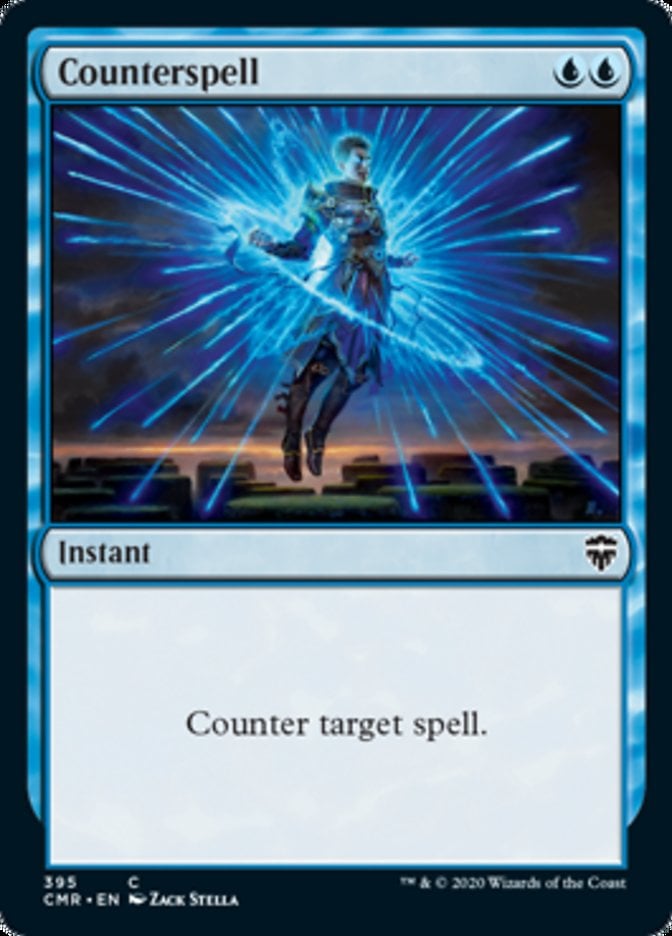
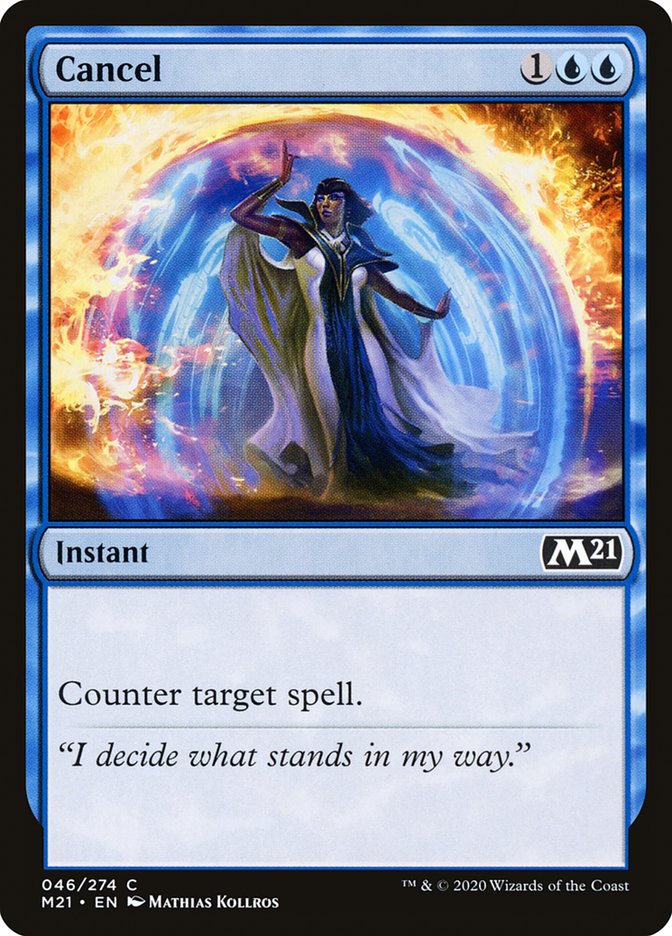
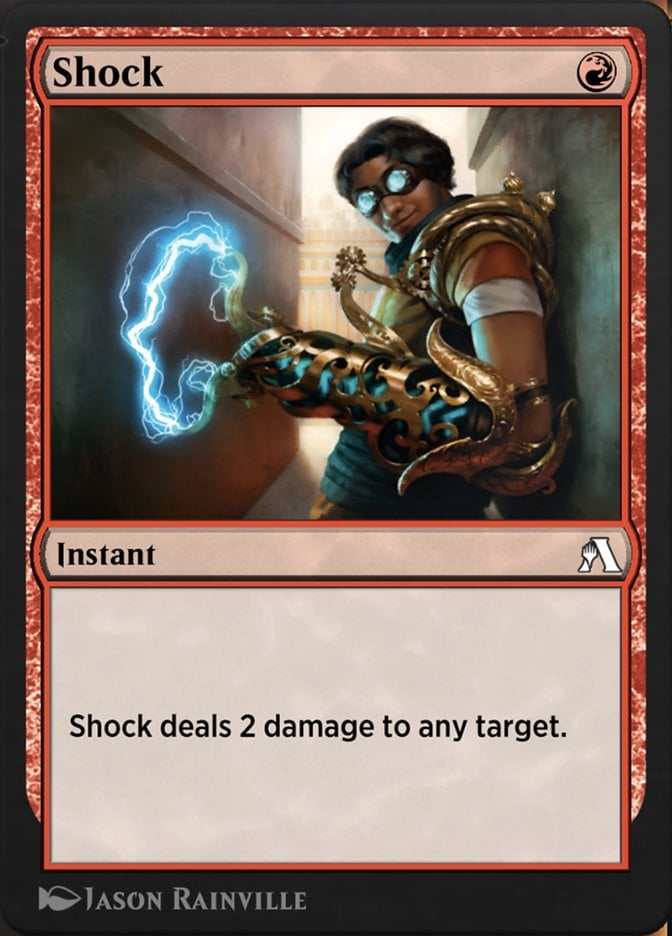
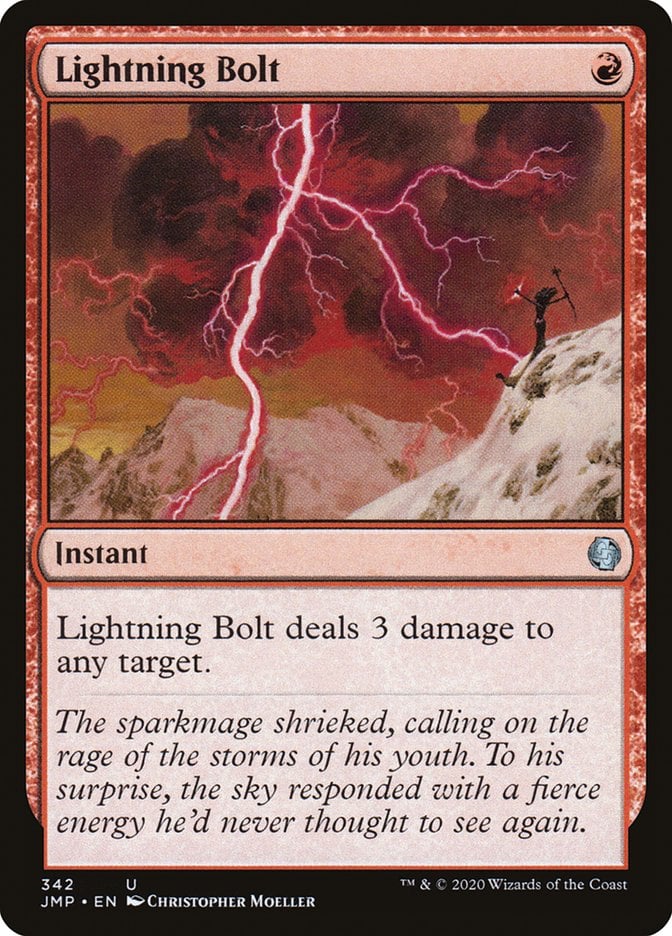
We have classic examples among instants like Counterspell and Cancel, two blue counterspells that do the same thing, but one costs more than the other. Or Shock and Lightning Bolt, two red instants that cost the same but one does more damage than the other.
The term “strictly better” is for when a card is always better than the other. Two cards may be very similar and comparable, but one isn’t necessarily a strictly better card than the other one, like Imposing Sovereign and Leonin Snarecaster.
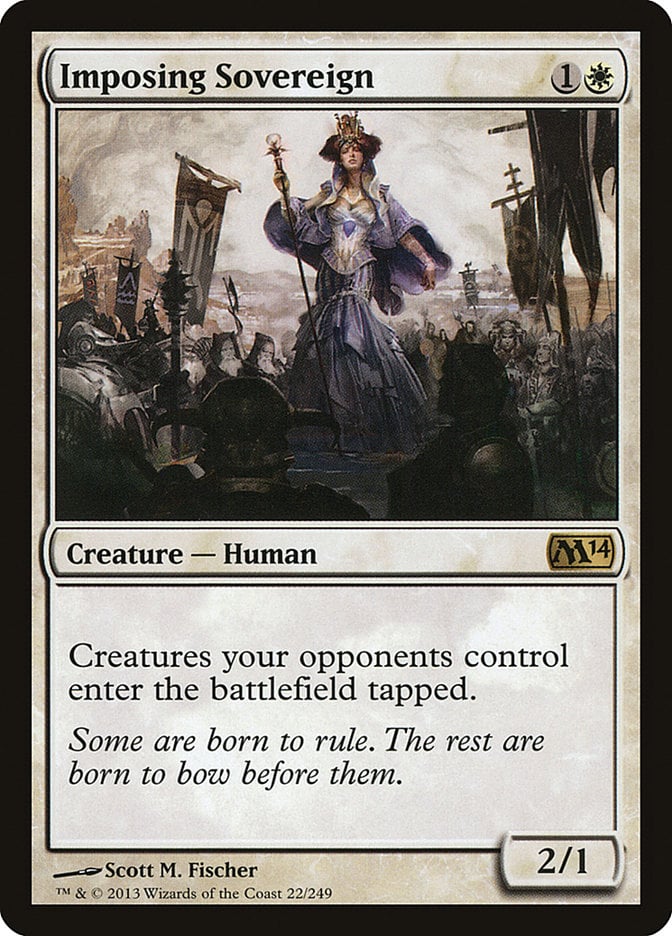
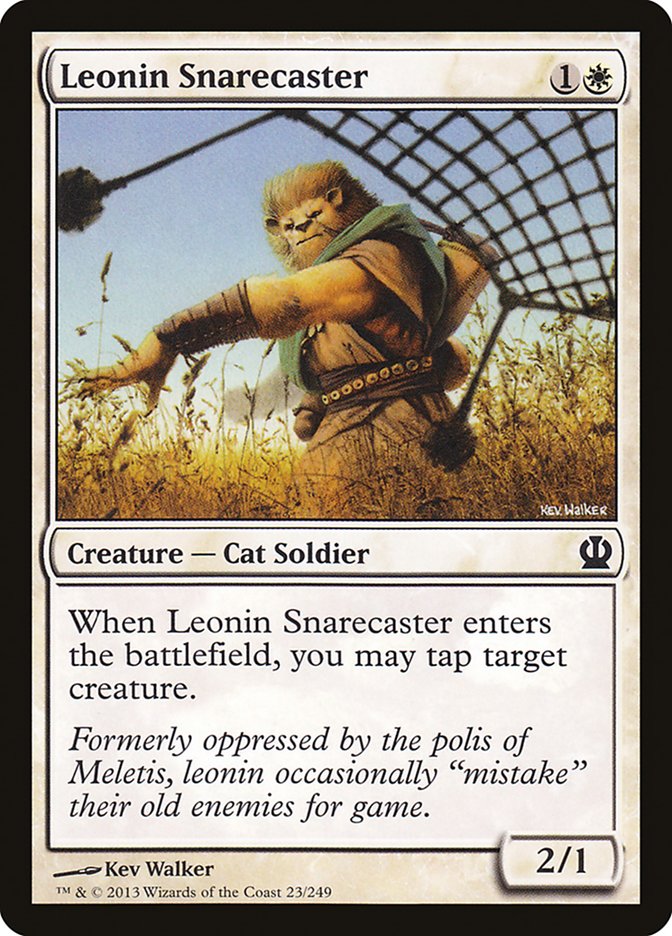
These are both 2/1 creatures for with tap-related abilities, but these abilities operate in different ways. Although Imposing Sovereign ends up seeing more play than the Snarecaster, sometimes Leonin Snarecaster is the better play, so in this case I can’t say one is strictly better than the other.
Examples of Strictly Better Cards
Better Abilities or More Abilities

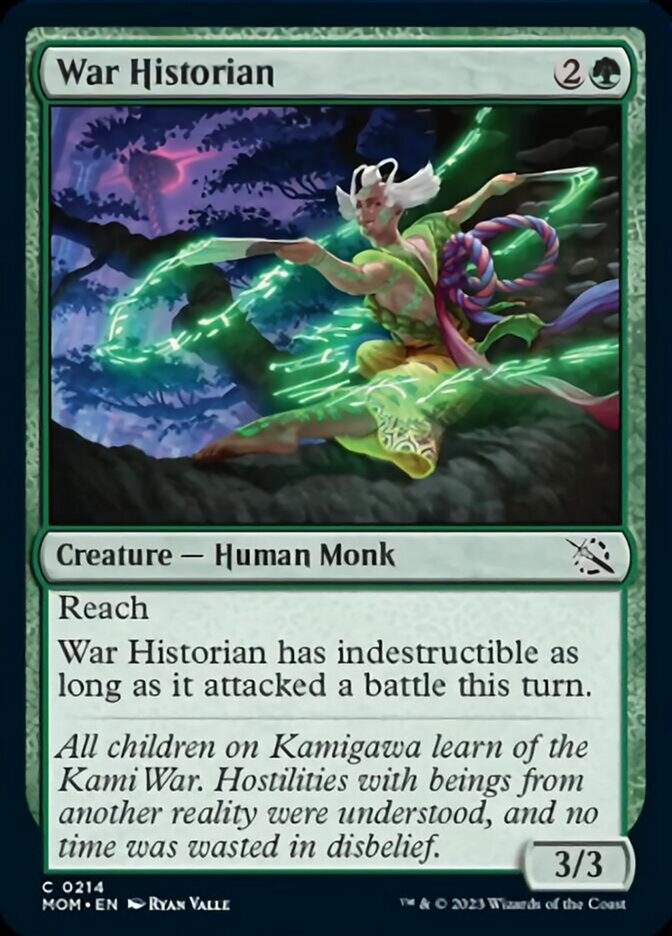
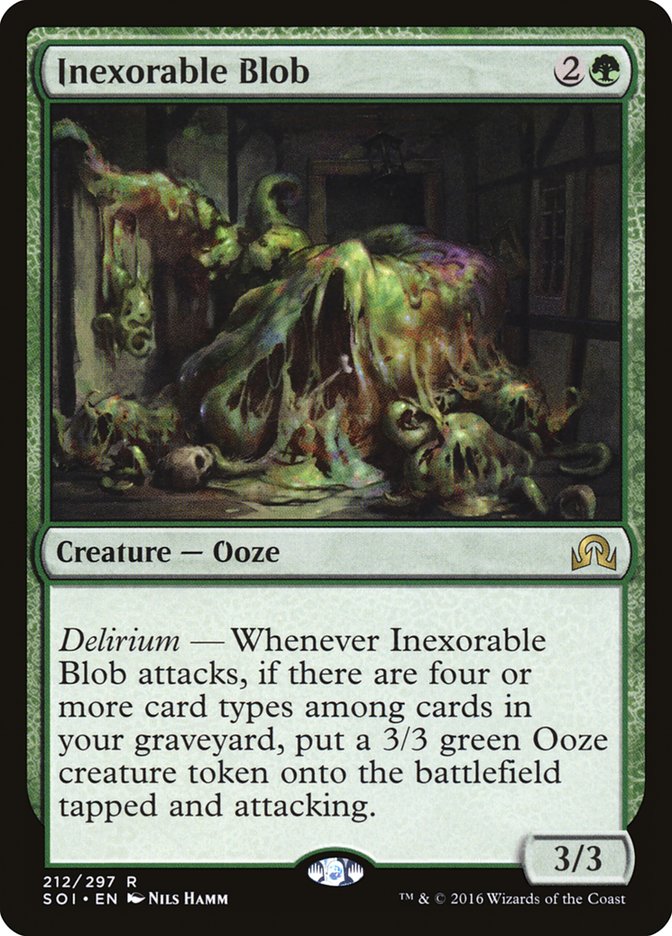
Let’s take Centaur Courser as an example of a baseline 3/3 for 3 mana. A card like War Historian is strictly better, as it has reach at all times and a when-attack ability, while Centaur Courser doesn’t have abilities at all. Inexorable Blob can also be considered strictly better, because when it doesn’t have delirium enabled, it’s equal to Centaur Courser, and it’s clearly better when you reach delirium. Note that the Blob isn’t worse than the Courser when you don’t have delirium.
Easier to Cast
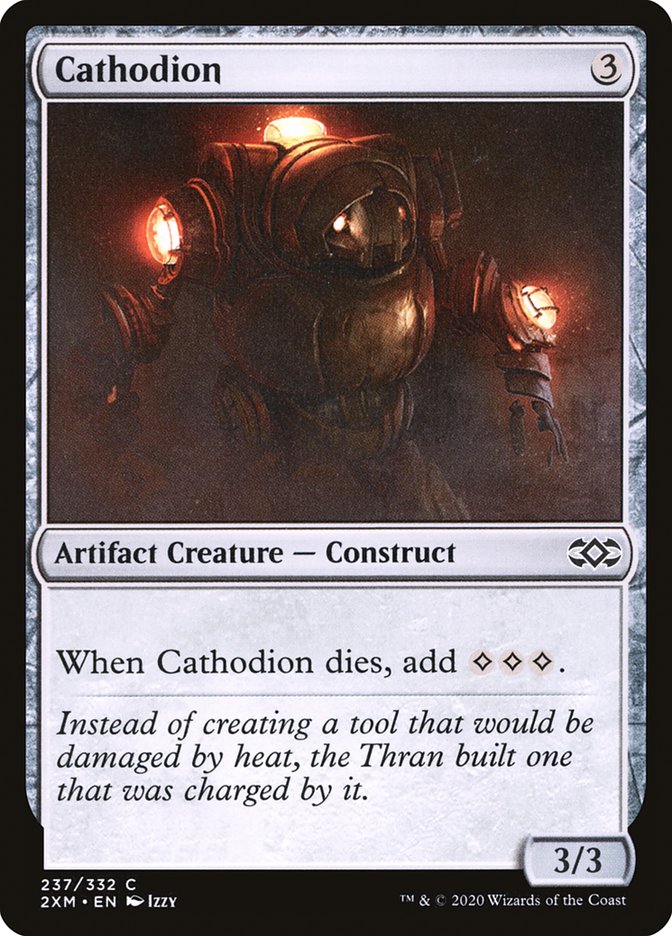
Centaur Courser and Cathodion are quite comparable at in terms of castability. Both are 3/3 creatures, but Cathodion doesn’t even cost colored mana. It also has a good death trigger.
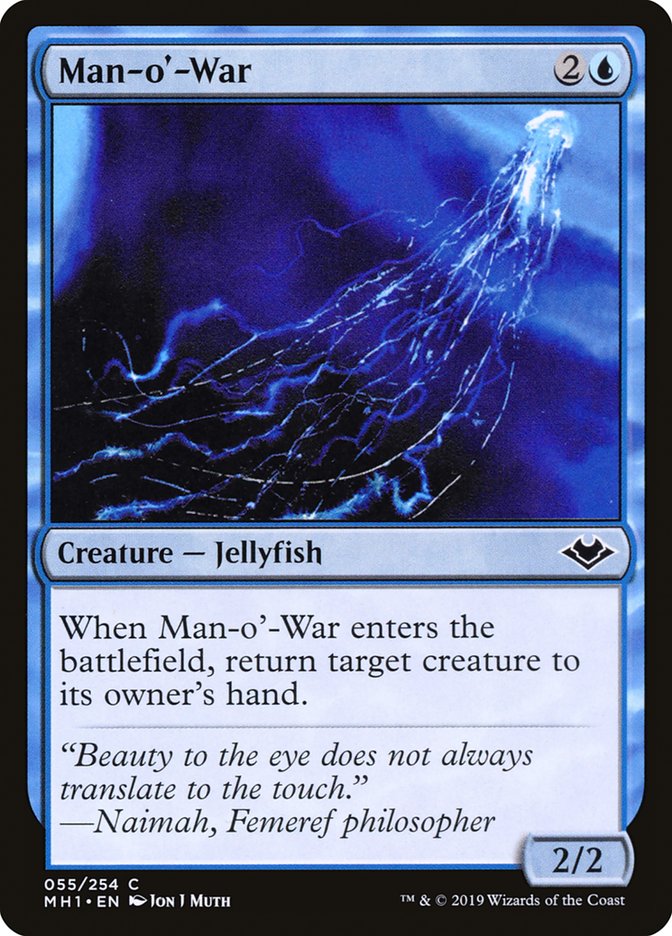

A similar comparison is between Man-o'-War and Aether Adept, where one costs and the other costs , making the latter slightly harder to cast.
Better Stats
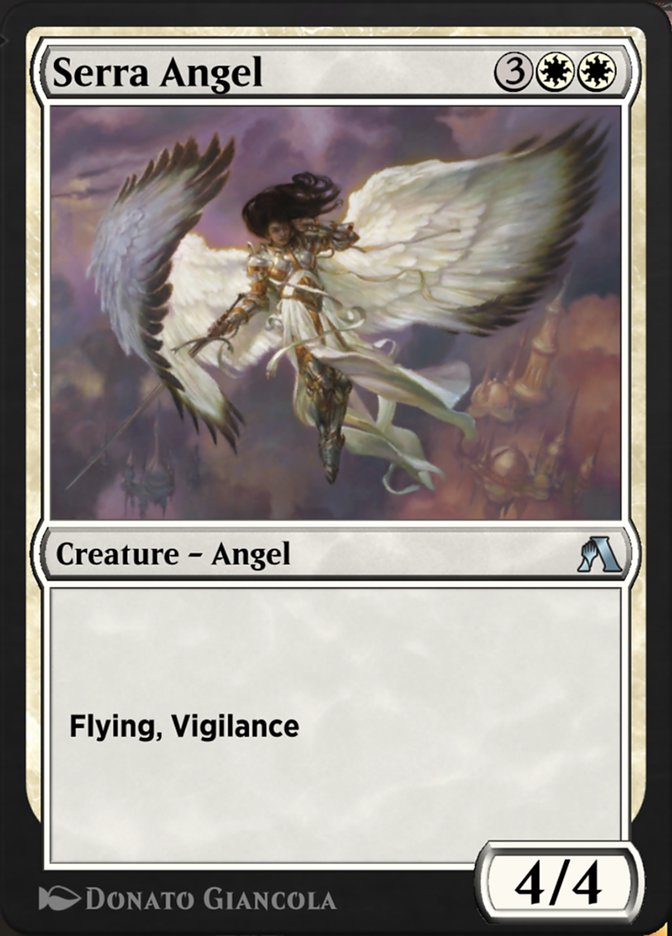
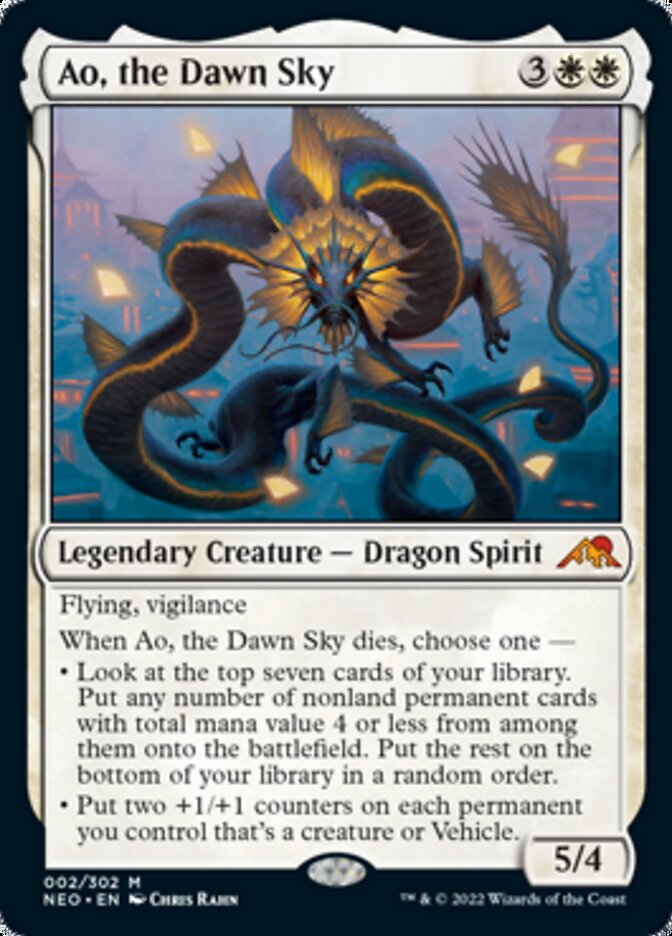
One of the classic stats comparisons is Serra Angel versus Ao, the Dawn Sky: Ao costs the same and has the same keywords, but it’s bigger and has extra abilities.
More Flexible
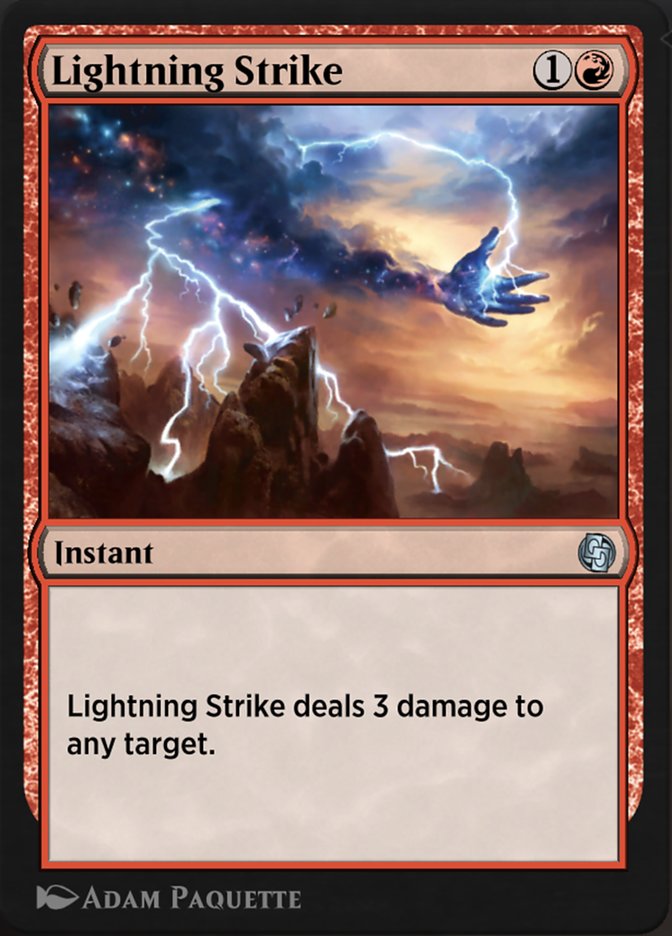
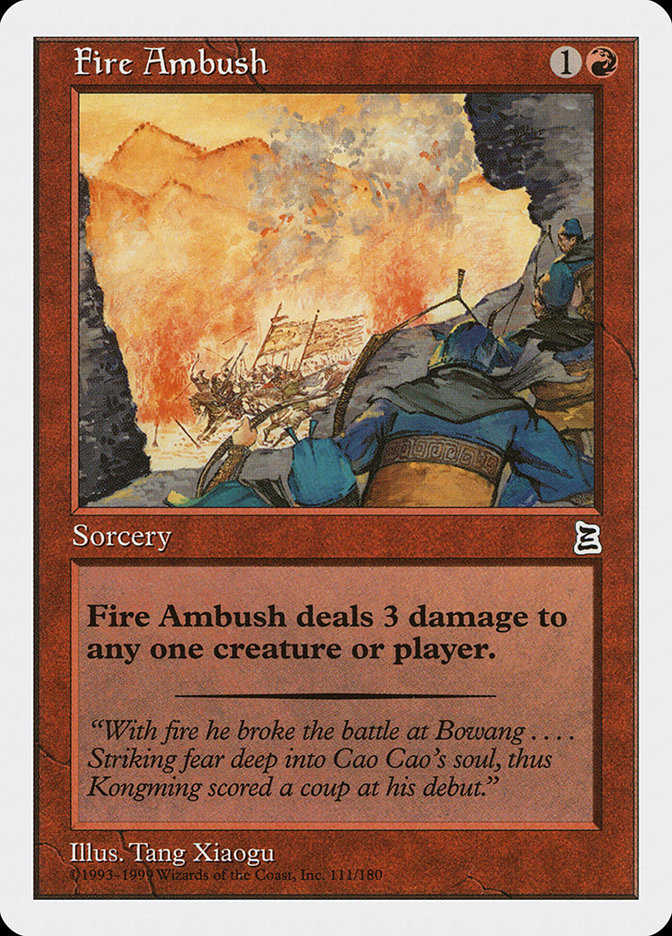
Instants are more flexible than sorceries, since they can be cast at any time an instant could, but also at additional times, so an instant like Lightning Strike is strictly better than a card like Fire Ambush.
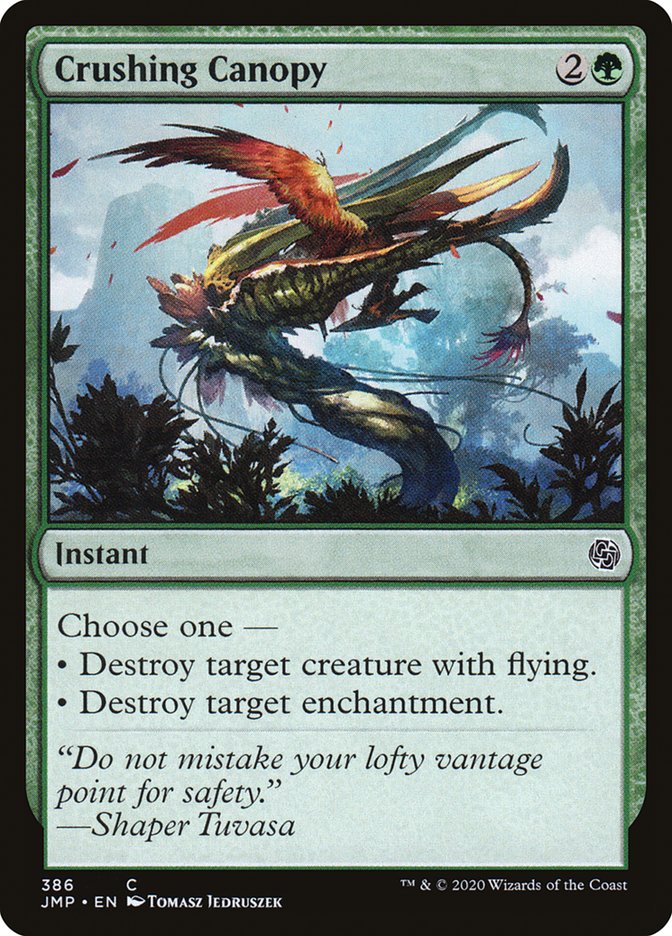
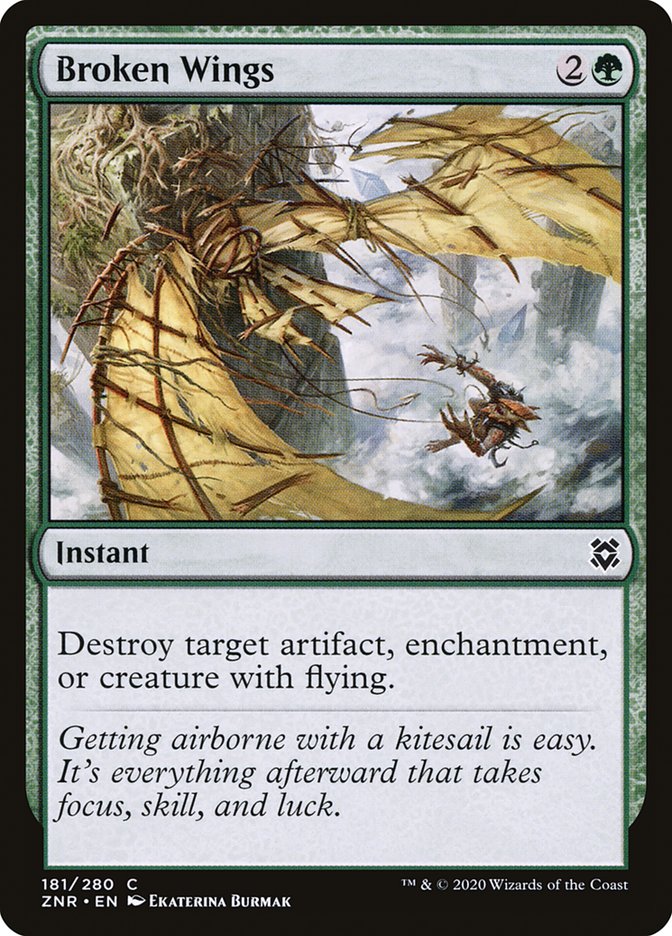
Crushing Canopy is strictly worse than Broken Wings because it has one less option. It can’t destroy artifacts, while both can deal with flying creatures or remove enchantments.
Better Removal

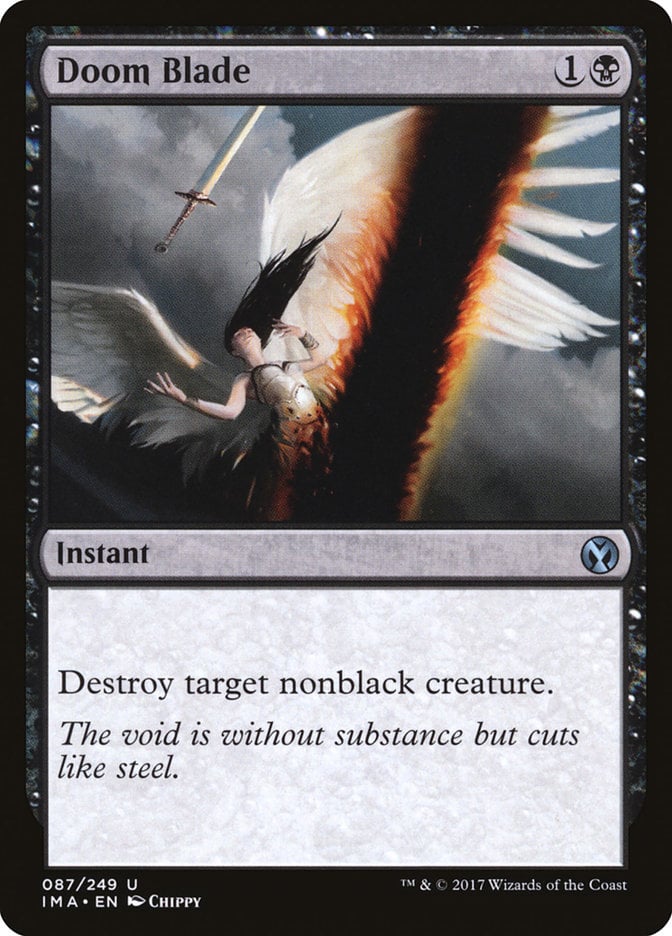
A classic removal example is Terror and Doom Blade. Doom Blade works on all nonblack creatures and artifacts, while Terror misses artifact creatures. Cards like Cast Down and Go for the Throat work very similarly to Doom Blade, but since all these cards miss on some creature types, one can’t be considered strictly better than the other.
Let’s compare Nekrataal versus Ravenous Chupacabra.
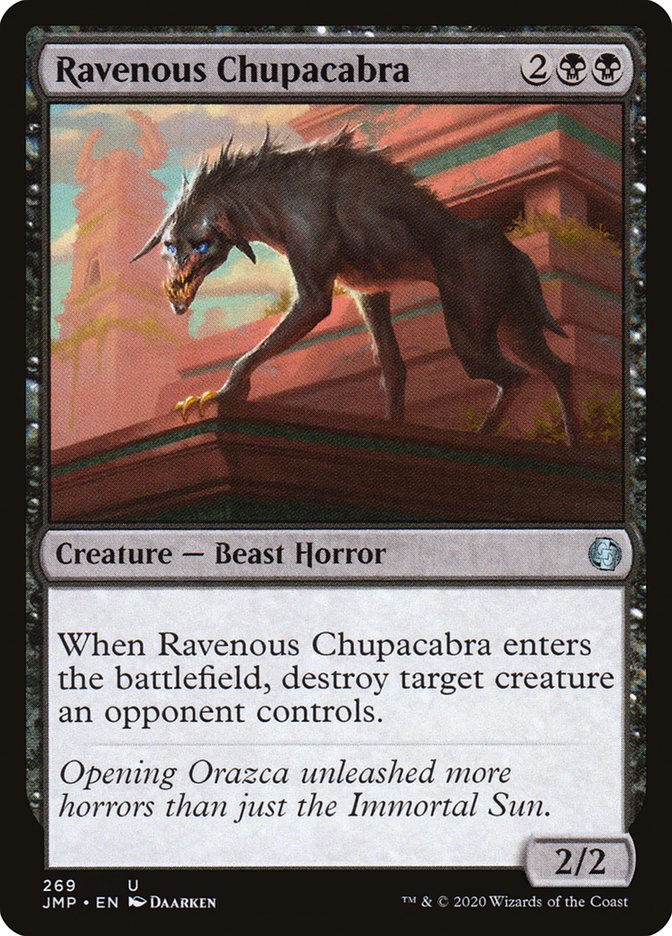
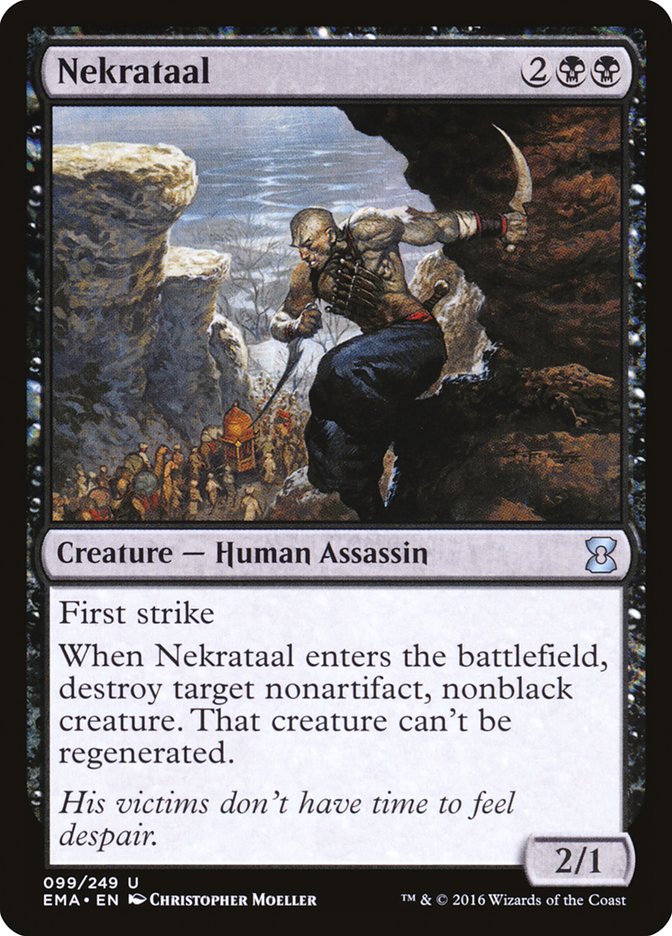
Ravenous Chupacabra has 1 more toughness and destroys any creature when it enters. Nekrataal has 1 less point of toughness and a more narrow range of creatures it can destroy on ETB. However, Nekrataal has first strike and Chupacabra doesn’t which means both cards have an advantage the other doesn’t. You’d almost always choose Chupacabra given the choice, but it’s not strictly better than Nekrataal.
Cost Less for the Same Effect
We can compare Lightning Bolt and Lightning Strike here, the same spell effect but Lightning Strike costs 1 more, so it’s therefore strictly worse.
It’s harder to compare Murder and Fell. Fell costs 1 mana less, but it’s a sorcery, while Murder costs but it’s an instant. There’s no strictly better comparison to be made between the two.
Counterspell and Cancel are equal cards in effect, but Cancel costs 1 mana more.


This is a common contribution to power creep. Shaving mana off an existing spell and reprinting it as a new card just pushes strictly better cards into the game. Consider Aerie Auxiliary, which is the exact same, strictly better version of Angelic Quartermaster, given it costs a whole less to cast.
Deals More Damage
When dealing direct damage, we’re usually interested in how much damage we can inflict per mana spent. Lightning Bolt is a card that was never truly surpassed, as you can deal 3 damage to any target at instant speed by spending a single red mana.
There are situational cards like Galvanic Blast which are better if you have metalcraft or worse if you don’t, or Unholy Heat that can be better at killing creatures or planeswalkers, but they lose on the flexibility to burn a certain player.
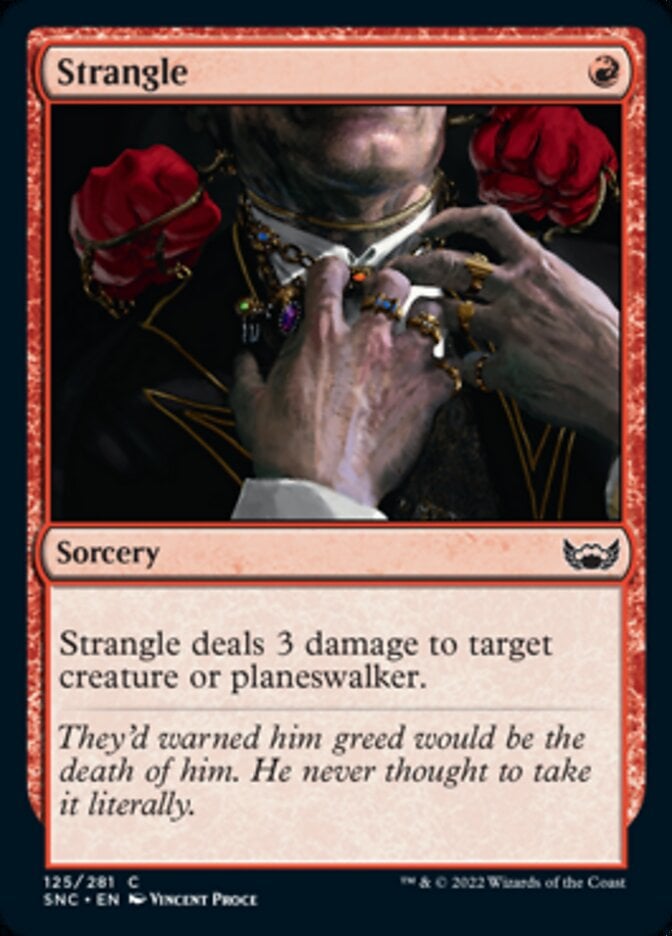
At any rate, Lightning Bolt is strictly better than cards like Shock or Strangle.
A Wrath Comparison
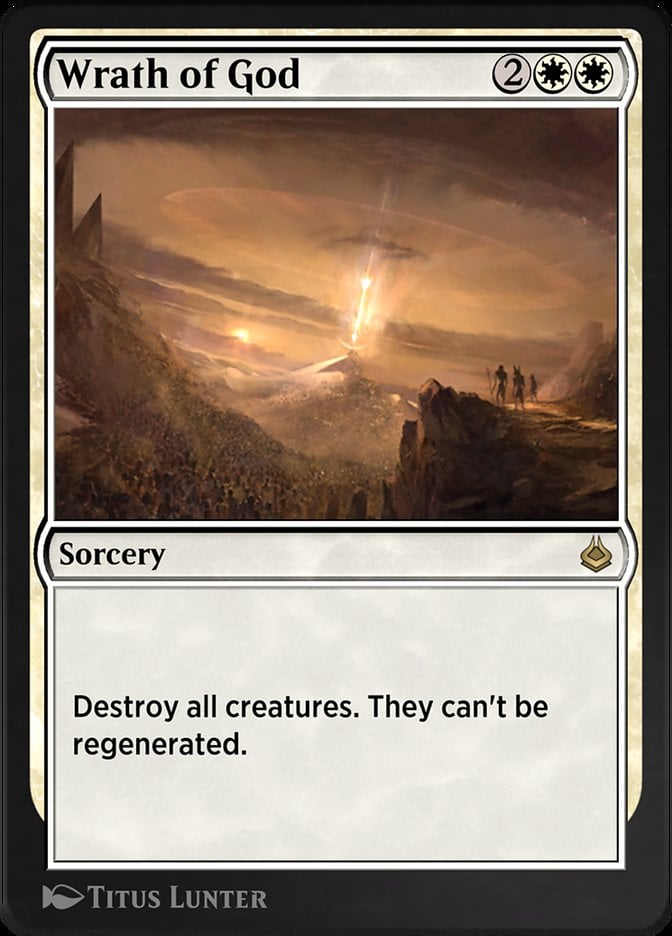
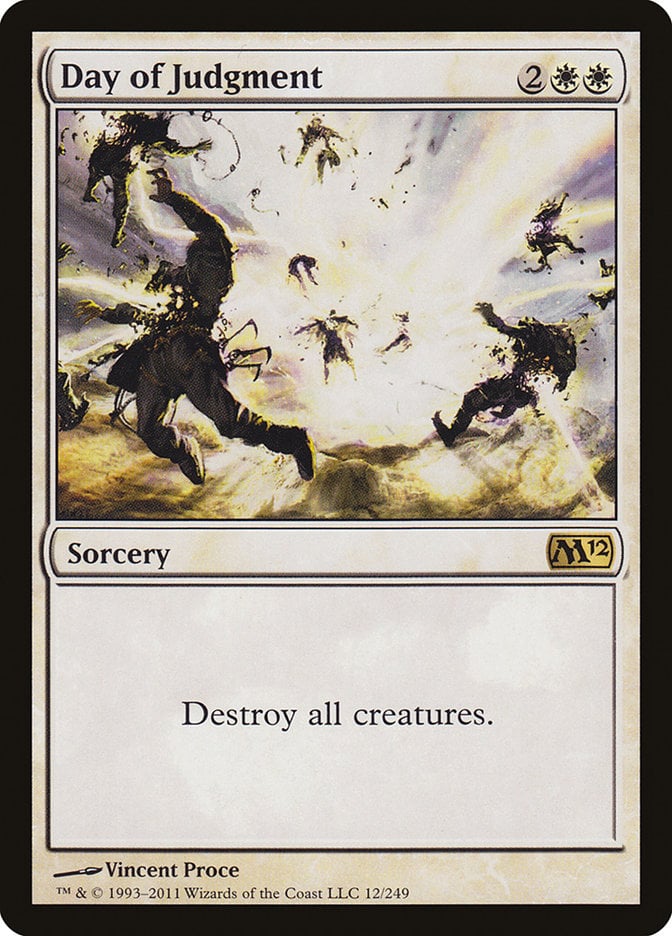
Wrath of God is strictly better than Day of Judgment, there’s no doubt about it. But for a long time, 4-mana wraths were considered too powerful for Standard. That’s where we see WotC printing cards like Cleansing Nova, Kaya's Wrath, Depopulate, or Shatter the Sky, which all do similar stuff with some downside, and they depend on the metagame to be better or worse. Shatter the Sky is better when they have a bunch of 1/1 and 2/2’s, while Depopulate is better against mono-colored decks, and so on.
Exile vs. Destroy
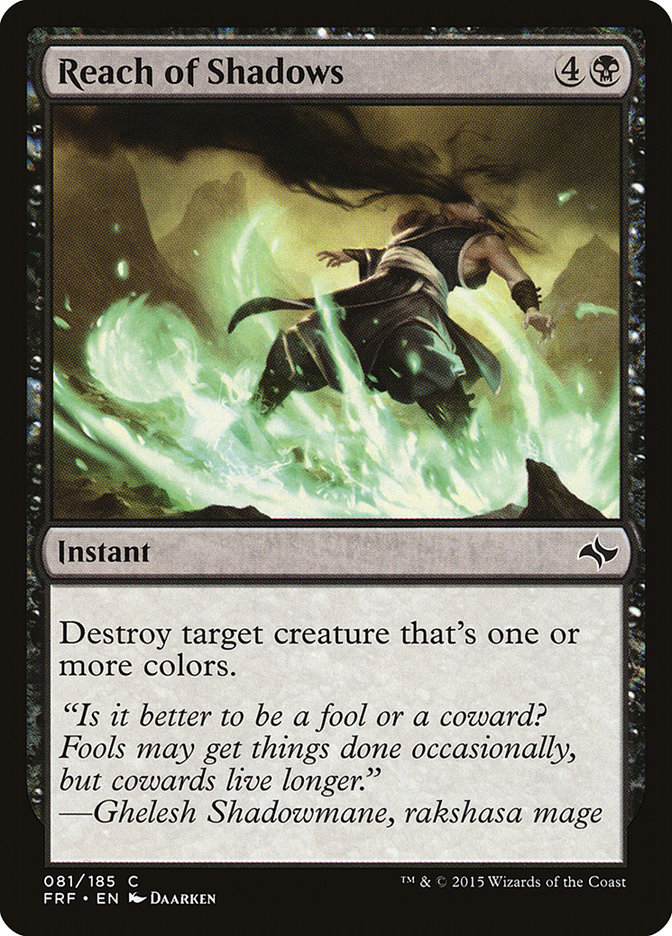

Exiling is better than destroying where removal is concerned. Final Reward is already more flexible than Reach of Shadows (there’s no restriction on what it can target), but it also exiles, which is an improvement.
Do Creature Types Make a Card Strictly Better?
Strictly better discussions usually consider card evaluation in a vacuum, so we’re usually not considering creature types. For example, a 2/1 creature card that makes a Saproling token and a card with the same stats but that makes an Elf token are considered the same card in power level, even if elf typal decks are stronger or better supported.
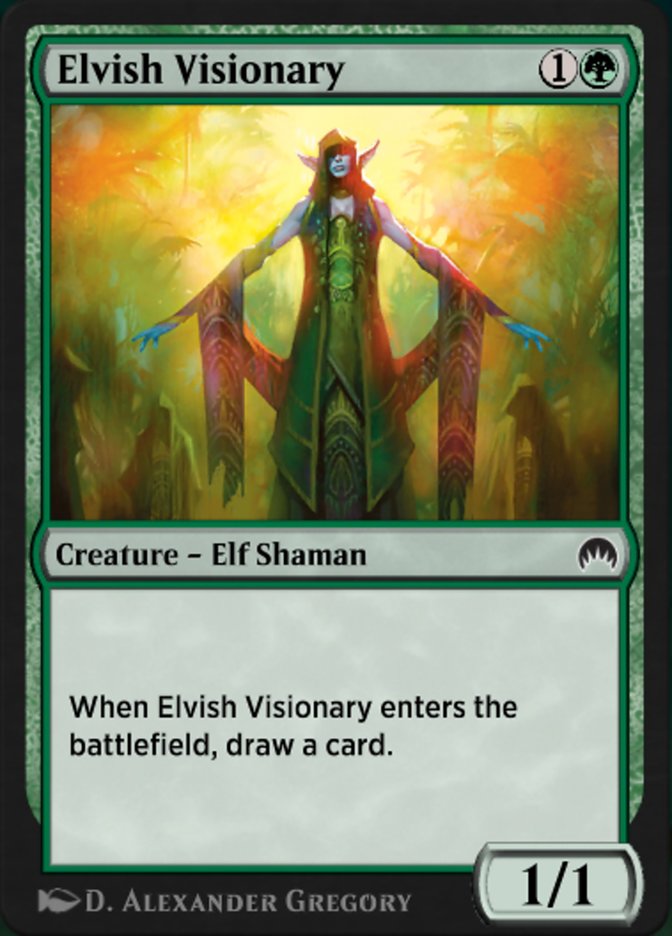
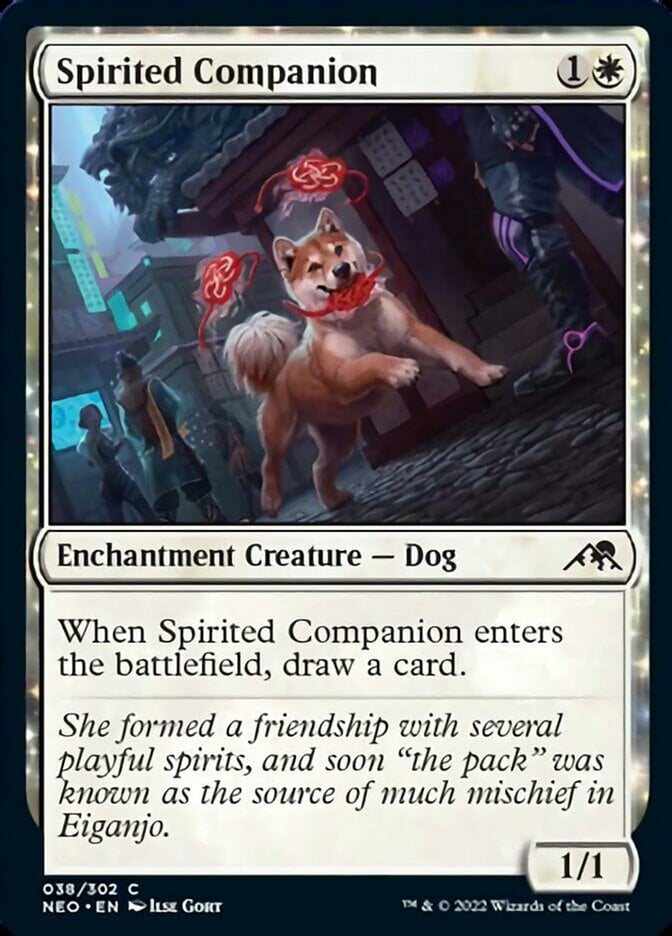
Elvish Visionary isn’t strictly better or worse than Spirited Companion, they’re basically the same card, except that one is a green elf creature while the other is a white dog that’s also an enchantment. As such, there’s a different home for each of these cards.
The important part here is that strictly better compares cards in a vacuum, compared directly to one another with no consideration for boardstates or interactions with another card. You could argue Visionary is better because there’s way more elf support in the game, but then you’re no longer comparing the two cards directly to one another, and the strictly better/worse conversation no longer applies.
Is Legendary Strictly Better Than Non-Legendary?
Being legendary or not legendary doesn’t count for strictly better purposes or comparisons. When considering the card’s application in multiple formats, being legendary can be a downside if you’re playing 60-card formats that allow you to play up to four cards with the same name. Having four copies of Sheoldred, the Apocalypse in your Standard deck is bad if you draw multiples of the same card, while this downside doesn’t exist in singleton formats like Commander, and in fact, it’s more desirable for the format. Sometimes being legendary is better, and sometimes it’s a downside.
Are Strictly Better Cards Good or Bad for Magic?
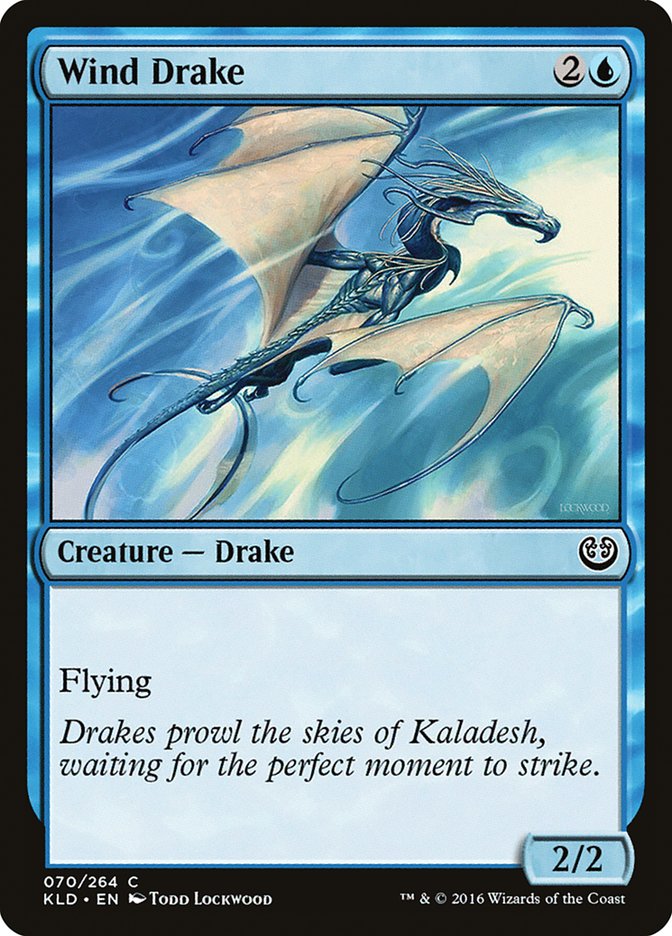
The answer to this question is that it depends. Strictly better cards always exist in card game design, as WotC needs new MTG sets to appeal to existing players, and new players can access powerful cards right from the get-go. We can see this effect clearly in Draft, where it was very common to have cards like Centaur Courser and Wind Drake as playable cards, and they don’t make the cut anymore. This is relatively okay because more cards are seeing play across many rarities.
Then, there’s power creep.
Power creep is when card power spirals out of control, and old cards are made totally obsolete by new cards. We can see this effect clearly in Modern. Cards that were Modern staples in the 2010-2018 era, like Tarmogoyf, Bloodbraid Elf, and Liliana of the Veil are barely playable in the format today. What changed? Sets like Lord of the Rings: Tales of Middle-earth, and Modern Horizons 1, MH2, and MH3 were released. Also, the power level of Standard sets like Throne of Eldraine and War of the Spark was very high and impacted Modern as well, with many cards from those sets banned in the format.
A final problem with strictly better cards is that some of these reach an absurd value on the secondary market, so it’s hard to buy the staples you need. Cards like The One Ring and Sheoldred, the Apocalypse are $80-100 cards, and these were printed in 2022/23. It’s okay for a card to be marginally better than another card that was released 10 years ago, but when cards have constantly better rate, we have power creep.

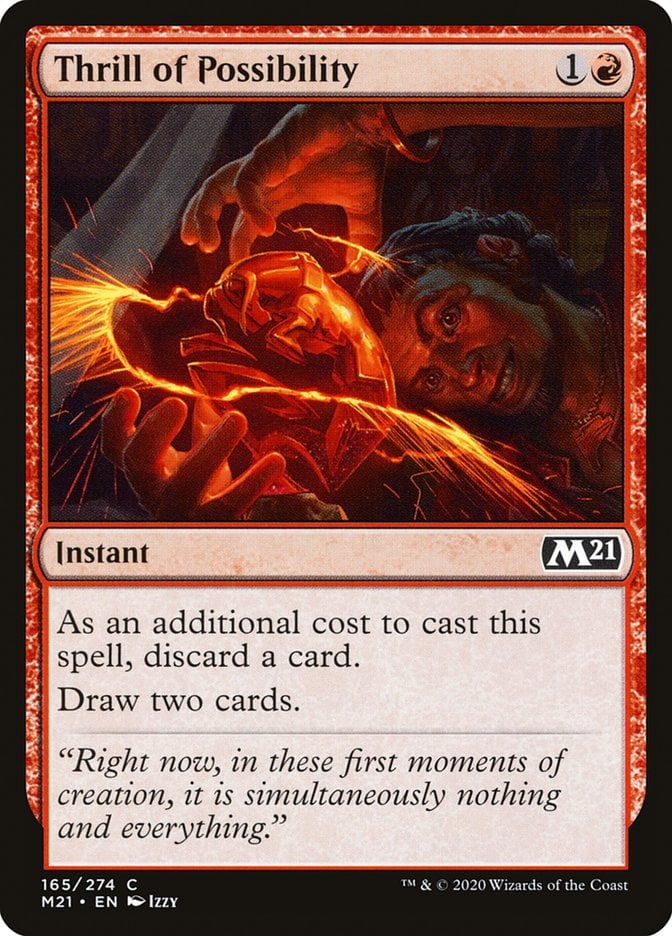
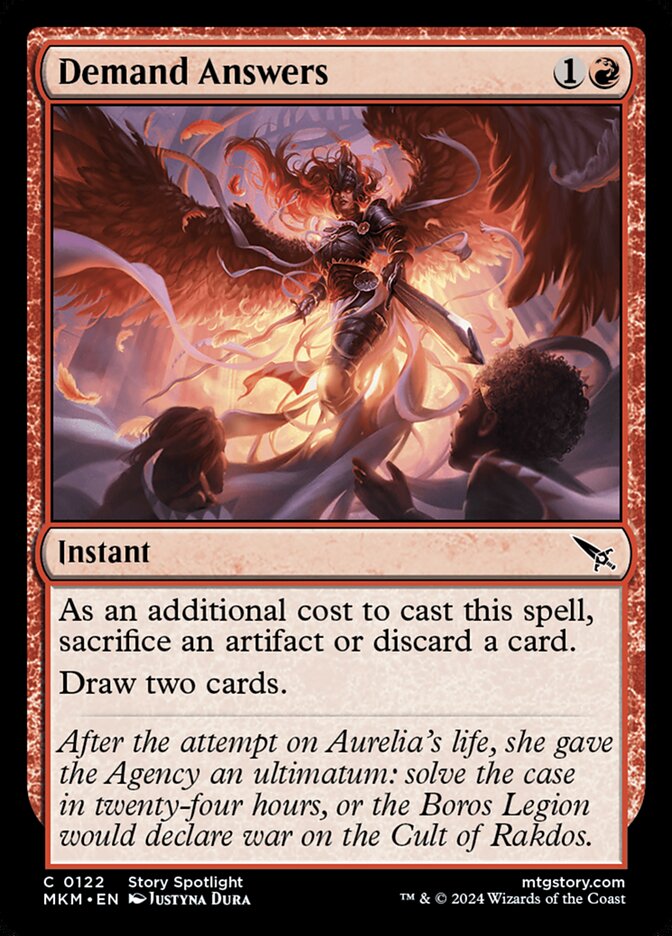
It’s worth noting that a strictly better design can take a classic card that doesn’t see much play and improve upon it, making the card/effect more desirable for different formats. Tormenting Voice was printed in Khans of Tarkir, it was obsoleted by the instant-speed Thrill of Possibility in Throne of Eldraine, and we’ve even seen another strictly better version with Demand Answers in Murders at Karlov Manor. This shows how an effect can adapt and evolve over time without producing a necessarily broken card.
Do Strictly Better Cards Cost More Money?
Not necessarily. The factor that contributes the most to card price is its desirability in Constructed decks, not considering the rarity, the card, or in which edition it was printed. For example, Lightning Bolt is strictly better than Shock, and it’s widely played across different formats. Shock these days is considered Limited fodder, so the card doesn’t have any value on the secondary market, while Lightning Bolt is a more desirable card and costs more. Cards like Play with Fire, Skred, and Needle Drop cost on average more than Lightning Bolt because they’re scarcer, and they were only printed in their respective sets.
Format legality also plays a role. Sometimes a Pioneer staple is strictly worse than a Modern-legal card that’s not actually a Modern staple. A card like Wild Slash had a high cost just because it was the best 1-mana burn spell in Pioneer for a long time, even though there were dozens of strictly better Wild Slashes across formats like Modern and Legacy.
Wrap Up
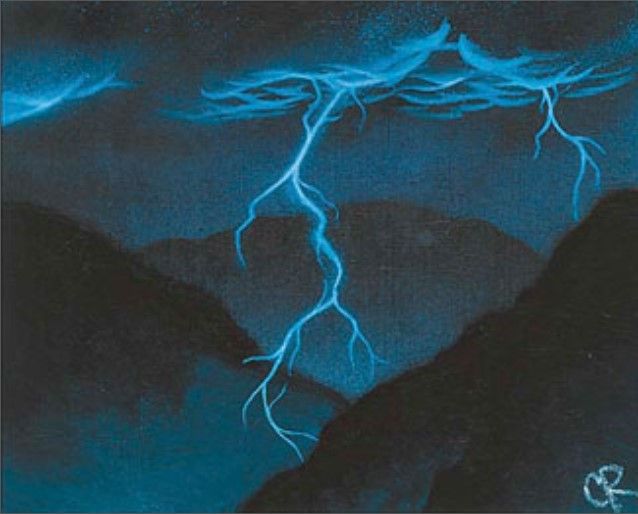
Lightning Bolt | Illustration by Christopher Rush
And that concludes my take on strictly better cards, folks. Strictly better cards aren’t inherently bad, unless we have a strong power creep, which makes whole decks obsolete with every released set. That makes the game unsustainable in the long run, and WotC risks ruining their profits. Something along those lines is already happening in Standard, and we’re seeing them dedicate efforts to try and revitalize Standard, and to prevent power creep.
What do you think of strictly better cards? Is Wizards losing their touch on card design? Let me know in the comments section below, or in Draftsim’s Discord.
Thank you for reading, and stay safe out there.
Follow Draftsim for awesome articles and set updates:










Add Comment