

Bad Deal | Illustration by Zoltan Boros
Ally and enemy colors are terms that are thrown around by veteran Magic players without much conscious thought about what they actually are. After some time, they just become part of the language of the game, a convenient shorthand to describe some subtly complex design philosophy. At some point every MTG player needs to learn what these terms mean and start to uncover that iceberg of context that goes back to Magic’s earliest days.
Today we’re not only going to look at what these terms mean, but also where they come from and how they’ve influenced the evolution of Magic over the years. There’s a lot to cover about this throwaway term, so let’s get started, shall we?
What Are Ally and Enemy Colors in MTG?

Dimir Informant | Illustration by Lucas Graciano
The terms “ally” and “enemy” colors come from the color wheel, which you can find on the back of any Magic card. You’ll notice that all five colors are represented by small circles in the middle of the card back. This circle defines which color pairs are allied and which are enemies.
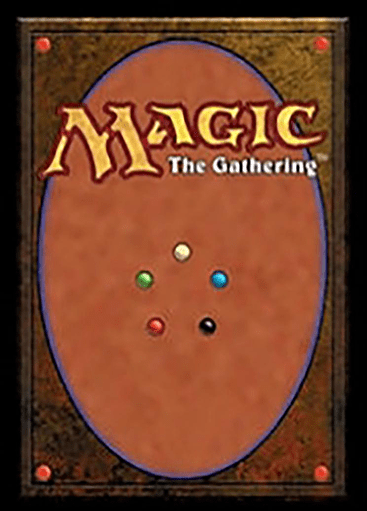
Allied colors’ pips are adjacent to each other in this ring. This means that red is allied with green (the next clockwise) and black (the next counter-clockwise). This leaves red-white and red-blue as the enemy color pairs associated with red, which are on the opposite side of the color wheel.
The color pairs take their “nicknames” from the guilds found on Ravnica, as this was the first time there was a defined flavorful group for each pair. The names were so popular that they’ve stuck ever since, despite a brief attempt by the Strixhaven colleges to usurp them!
The characteristics of each pair are defined by what the colors making up the pair have in common. For example, you often find that red-white (Boros ) is a very aggressive color, as both red and white are often aggressive individually.
What Are the Ally Color Pairs in MTG?
The five allied color pairs are:
- Azorius: White-Blue ()
- Dimir: Blue-Black ()
- Rakdos: Black-Red ()
- Gruul: Red-Green ()
- Selesnya: Green-White ()
When looking at the allied colors, you not only look at the characteristics the colors share, but also the characteristics of their shared enemy, which is the color directly opposite the pair in the color wheel. For example, green for blue-black. This gives some interesting insight into what each of these pairs mean. For a bit of insight straight from the mothership, Magic’s Head Designer Mark Rosewater has a fantastic breakdown of his own view of these pairs.
Azorius

Azorius Cluestone | Illustration by Raoul Vitale
Azorius is the white-blue color pair. Both colors are somewhat aligned with knowledge and order, leading to WU being a pair often aligned to control decks. However, both colors also have strong alignment to fliers, so you can build an aggressive fliers deck in these colors. The shared enemy here is also red, which is all about impulse and emotion. When these are joined, you’re looking at a very logical philosophy.
Dimir

Dimir Cluestone | Illustration by Raoul Vitale
Dimir is blue-black. Blue brings knowledge to the table, while black brings a desire for power and individuality to the table. Therefore, UB is looking at getting ahead by using the power of the noggin. With the shared enemy being green, which according to Rosewater is the color of understanding the role you’re born into, you’re looking at a relatively selfish color pair, bringing many of the aspects of black’s personality that are generally seen as negative to the forefront.
Rakdos

Rakdos Cluestone | Illustration by Raoul Vitale
When we come to Rakdos, the red-black pair, we’re taking the passion of red with the selfishness of black to get a pair which prioritizes individualism. This is strengthened when looking at their shared enemy, white, which is the definitive color of being a part of a greater whole. Rakdos simply wants nothing to do with that.
Gruul

Gruul Cluestone | Illustration by Raoul Vitale
Looking at red-green, Gruul brings the wildness from both colors, with a personality that’s all about impulsiveness and listening to your gut. This is certainly the opposite of their common enemy, blue, the color of patience and making sure you’re making the right move. RG just wants to get it done.
Selesnya

Selesyna Cluestone | Illustration by Raoul Vitale
Finally comes Selesnya in white-green. This brings the community of white together with the feeling of a harmonious ecosystem from green to create an incredibly peaceful and symbiotic pair, which is entirely at odds with black, their opposite and the color that’s about the self. GW is often seen as the hippy guild on Ravnica (or “Those Hippy Elves” as one of my friends once put it), and it’s pretty clear why.
What Are the Enemy Color Pairs in MTG?
In Magic, the five enemy color pairs are as follows:
- Orzhov: White-Black ()
- Izzet: Blue-Red ()
- Golgari: Black-Green ()
- Boros: White-Red ()
- Simic: Blue-Green ()
The five enemy color pairs are slightly more difficult to align, which makes sense if they’re enemies. They often have cards that actively work against cards of their opposite colors (see White Knight and Black Knight or Pyroblast and Hydroblast). However, there are similarities to these pairs, and one way you can identify their synergies is by looking at their shared ally and looking at what they don’t share with that color. The lack of alignment may also be why we sometimes see the same archetypes popping up Magic set after Magic set with some of these pairs, too.
Orzhov

Orzhov Cluestone | Illustration by Raoul Vitale
Orzhov has both black and white, colors quite strongly aligned with death and life, respectively, but also life loss/lifegain and selfishness/community. They do share things like exile effects, as well as reanimation. If we look at their shared ally, blue, it’s a color known for its sub-par removal that also doesn’t have anything to do with lifegain, so it’s often a strong theme for the pair.
Izzet

Izzet Cluestone | Illustration by Raoul Vitale
Blue-red is one of the classic rival pairs in Magic, with plenty of cards from each of the colors opposing the other. One thing they’re known for sharing is spellslinging, though, in particular instants and sorceries. There’s a reason why we see this in Draft and Sealed in what feels like every other set!
Golgari

Golgari Cluestone | Illustration by Raoul Vitale
The Golgari colors have one thing that’s easy to focus on between them, and that’s graveyards. While it’s sometimes easier to find commonality between these two than the other enemies, getting value from your bin is something that we regularly see. If we take a look at their shared ally, red, it’s not about death and decay like green and black are, although it does sometimes look at the ‘yard.
Boros

Boros Cluestone | Illustration by Raoul Vitale
Boros is known for one thing in particular, and that’s aggro and attacking. Both colors are known for small creatures (weenies), and we often see RW wanting to flood the board. Green, their shared ally, isn’t exactly known for small stuff, either, if we ignore elves at least, which solidifies Boros as the color of weenies.
Simic

Simic Cluestone | Illustration by Raoul Vitale
Simic is known for value. Whether it’s card draw, ramp, or a combination of the two, this is what we see set after set. It’s odd as blue doesn’t do much with lands alone, and green is known for not being a good color for card draw, but it’s difficult to find those similarities.
How do Wedges and Shards Use Ally and Enemy Colors?
We’re mainly looking at 2-color pairs today, but there are also other combinations. Three-color pairs come in two different versions of combinations. We initially had shards, which are made up of three neighboring colors and what Shards of Alara is known for. More recently, Khans of Tarkir brought the rest of the 3-color combos, nicknamed wedges, where each allied pair is joined with the pair’s common enemy.
Shards tend to look at what the absence of the missing colors means (for example, Esper () is missing red and green, the colors of nature, so artifacts is a large theme). Wedges on the other hand often pick a particular color out of the three to “lead” the group, for example on Ikoria the lone enemy color was the focus.
Why Are There More Ally-Colored Cards than Enemy-Colored?
We can see from the above that allied colors are more of a natural fit than enemy colors. Through a lot of Magic’s history, the enemy colors were often left out from cycles, with the allied pairs being the focus in multicolor cycles, leading to more cards being printed in the allied pairs. This also meant that many enemy halves of cycles came along much later than the allied halves, perhaps the most notable of these being the fetch lands, with the enemy fetch lands coming in Zendikar, seven years after the allied ones from Onslaught.
Wrap Up
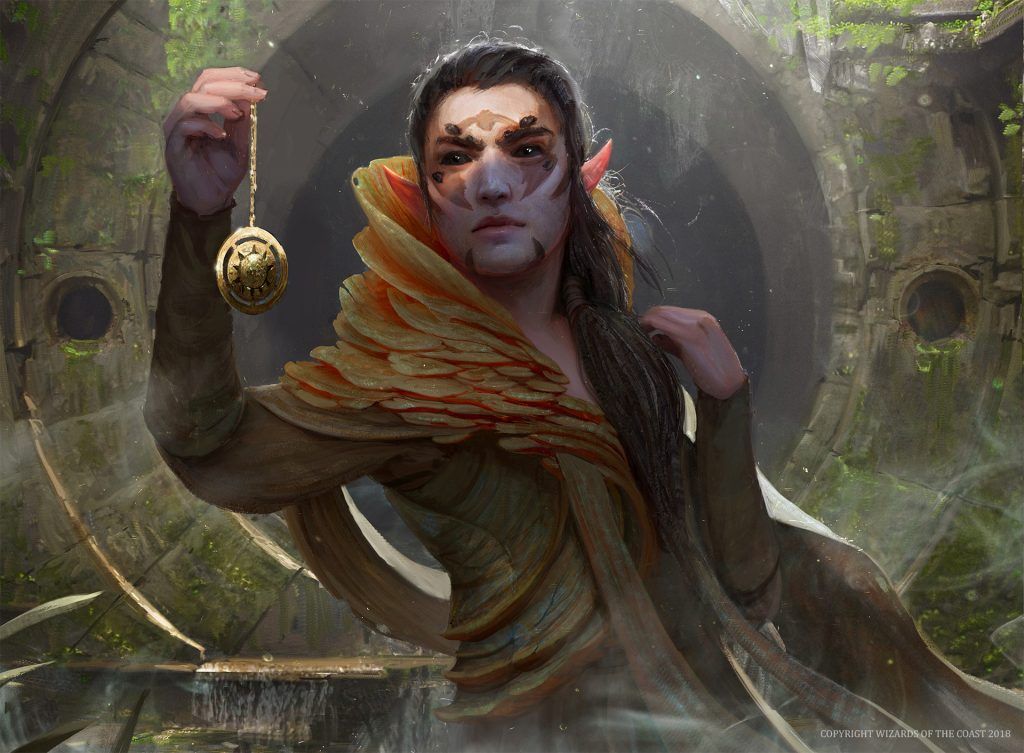
Golgari Findbroker | Illustration by Bram Sels
Color pairs are subtly very important to the feel of Magic, and just like the colors that make them up, the feel of the pairs gives the game personality and each archetype its own uniqueness in both flavor and gameplay.
Do you have a favorite pair for either gameplay or flavor? Is your choice different for flavor than it is mechanics? Be sure to let us know down below or over on the Draftsim Discord.
And remember, keep your allies close but your enemies closer!
Follow Draftsim for awesome articles and set updates:










Add Comment