
Last updated on May 8, 2026

The Wandering Rescuer | Illustration by Anna Pavleeva
Greetings planeswalkers! It’s time to leave the idyllic land of Bloomburrow (and its fiery but mostly peaceful Draft format) for something darker. Not too dark, though, as Dana Fischer wouldn’t have been able to play the Magic set, but dark enough to sell some Play boosters. I’m talking of course about Duskmourn: House of Horror, with Duskmourn’s prerelease taking place this weekend.
As always, I’m here to give you an Ultimate Guide to Day 0 of the DSK format, with many educated guesses as to how the format will play out, and complementing our Duskmourn Limited Set Review. You’ll learn about the format’s mechanics, archetypes, themes, best cards, bombs, and more. There’ll also be a sequel in a week or two that expands on what I’ve covered here, with a greater focus on drafting Duskmourn.
Let’s begin!
Introduction

Overlord of the Hauntwoods | Illustration by Tiffany Turrill
Duskmourn‘s story takes place on a unique Magic plane called, well, Duskmourn, which happens to be more or less a giant haunted house. Valgavoth, Terror Eater has this place on lock, conjuring up personalized fears for any inhabitants unlucky enough to find themselves here. The main story is a rescue mission, with a bunch of planeswalkers searching for Nashi, Searcher in the Dark (who is himself on a rescue mission of sorts).
I won’t say much more about the plot, but I’ve mentioned it to opine that I like the execution of Duskmourn! I was personally skeptical when I heard about the concept, but having the plane itself be one giant house was a nice lore touch. My only gripe with Duskmourn’s flavor is that certain cards (cough Acrobatic Cheerleader) are too cheeky for their own good, as the set works best when the survivors really feel like survivors.
As for gameplay, Duskmourn is an interesting Magic set with two loud themes: enchantments and the graveyard. There was a conscious effort by WotC to distinguish Duskmourn from their other approaches to horror (Innistrad and New Phyrexia), which is how they settled on this enchantment approach. I’ll get to the archetypes, but you should know in advance that enchantments/graveyards cover the focus of about half of Duskmourn’s Draft archetypes.
Mechanics
Duskmourn introduces a new enchantment type (rooms) and four new abilities (one of which is a remix of an older one, manifest), alongside the return of delirium.
Rooms
Rooms have two halves (doors), each with their own mana cost. To cast a room, you must choose one of those costs to pay. When you do (and the room resolves), it enters and that door “unlocks.” You may unlock the other door later when you please by paying the other cost (as a special action at sorcery speed). Let’s use an example (Derelict Attic // Widow's Walk) to make how rooms play super clear:

- You first spend on turn 3 to cast the room, unlocking Derelict Attic (Painful Lesson). The room enters the battlefield, and you draw two cards and lose 2 life.
- Next turn, you play a land and then pay to unlock the Widow’s Walk side. You attack with your Innocuous Rat, which gets +1/0 and deathtouch from Widow’s Walk.
Doors generally function in one of two ways. They either do something once when you unlock them or offer some kind of long-term bonus after doing so.

Glassworks // Shattered Yard is an example of a room that showcases both; Glassworks is a one-off removal spell like Agate Assault, while Shattered Yard is a slow burn effect similar to Curse of the Pierced Heart. This distinction is an important one for properly sequencing your rooms and doors.
Rooms are a core theme of Duskmourn, and there are 23 distinct rooms across all colors and rarities. They’re slightly more numerous in both blue and red, though, as rooms are the theme for Izzet’s () Draft archetype in Duskmourn.
Most rooms are mono-colored, but there are a handful of exceptions at higher rarities.
I should note that there are also effects in the set that directly interact with doors, both positively (i.e. Keys to the House) and negatively (Anthropede).
Room Card Evaluation
I want to add a note on how to evaluate room cards, starting with Glassworks // Shattered Yard. 4 damage for at sorcery is slightly below average, but it comes with the upside of being an enchantment and letting you play Shattered Yard later in the game. Shattered Yard would be pretty miserable on its own, but it works well as a bonus on an already playable removal spell. This is a good example of a room where there’s a clear primary spell, and everything else you’re getting can be considered extra.

On the other hand, a room like Moldering Gym // Weight Room is less polarized between the “good” and “bad” door. You can evaluate the card like you would an adventure; it’s an overcosted Rampant Growth that draws you an overcosted 6-mana 5/5 stabled for free (similar to Beanstalk Giant). One advantage rooms have over adventures is that you can play both modes no matter the order you play them in. This is especially relevant with cards like Meat Locker // Drowned Diner. If you don’t need the freeze effect of Meat Locker early on, you’re free to get value from Drowned Diner first without losing any value.
This isn’t intended to be exhaustive by any means, but hopefully demonstrative of how to look at this strange new card subtype!
Eerie


Eerie is a new ability word that greatly resembles constellation, which was last in Standard with Theros Beyond Death. Like constellation, eerie is a “landfall” of sorts for enchantments that triggers whenever an enchantment enters. The only difference is that eerie also triggers when its controller fully unlocks a room. Given that rooms themselves are already enchantments, this makes them some of the best ways to consistently trigger eerie payoffs like Optimistic Scavenger and Entity Tracker.
Eerie is a well-represented mechanic for white, blue, and black in Duskmourn. Green has no eerie cards, though, and red just has Infernal Phantom. Two Draft archetypes in Duskmourn (UB Eerie Control and WU Eerie Tempo) are focused on the mechanic as well.
Survival
Survival is an interesting mechanic that offers a new take on the disappointing inspired mechanic. A survival ability triggers if the creature with the ability is tapped during your second main phase.


There are all sorts of beneficial effects from survival in Duskmourn, like gaining life with Cautious Survivor, drawing lands with House Cartographer, or even cheating permanents into play with Kona, Rescue Beastie.
Survival appears almost entirely in white and green with one lonely exception (Cynical Loner). Survival is also GW’s Draft archetype focus for Duskmourn, although most creatures with the mechanic are uncommons and rares.
Delirium


Delirium is a returning mechanic that hasn’t been seen in Standard since Eldritch Moon. Delirium rewards you for having four or more card types in your graveyard. You can see the influence of delirium with cards like Bear Trap, Found Footage, and Grasping Longneck, which can help fill up your graveyard with diverse card types.
Delirium cards are featured at a reasonable frequency in black, red, and green, and at all rarities. It’s also the basis of two Draft archetypes (RG Delirium Aggro and BG Grindy Delirium). Because both archetypes are Gx, I view delirium as primarily green in Duskmourn, though you’ll occasionally care about it in non-green decks.
Manifest Dread
Manifest dread falls somewhere between a returning mechanic (manifest) and a new one. To manifest dread, you look at the top two cards of your library, then manifest one (play it face-down as a 2/2 creature) while the other goes to your graveyard. If the face-down card itself is a creature, you may turn it face up at any time for its mana cost (this is a special action that doesn’t use the stack).
In terms of gameplay, manifest dread is generally a bit stronger than classic manifest. While the old manifest mechanic was fairly close to “make a 2/2,” getting to look at two cards rather than one substantially increases the odds that you’ll have the option to flip it later. For example, with 15 creatures in your 40-card deck, you’d have the option to put a real creature face-down slightly over 60% of the time. The extra card you’re binning also helps to fuel delirium and occasionally get value with cards like Resurrected Cultist and Rite of the Moth.


Manifest dread appears in all colors, though mostly in blue and green and barely in white (just Unsettling Twins). As with other mechanics so far, it also has a corresponding archetype in those colors, with rewards like Growing Dread and Oblivious Bookworm. There are also a handful of creatures in the set like Abhorrent Oculus and Patched Plaything that are incredibly dangerous when manifested!
Impending
The final mechanic is a rare one, as it appears only on a cycle of mythic rares. It acts similarly to suspend, though instead of exiling the creature with time counters, you play it as an enchantment (which isn’t a creature). That enchantment enters with 4-5 time counters on it and immediately triggers its “enters” effect. You then remove a time counter at the beginning of each of your end steps, and eventually you’ll be at 0 time counters and your Overlord will become a creature. The full cycle is:


- Overlord of the Mistmoors
- Overlord of the Floodpits
- Overlord of the Balemurk
- Overlord of the Boilerbilges
- Overlord of the Hauntwoods
Suffice it to say that they all look extremely good in Limited! The best comparison for them is probably the famous Titan cycle introduced in Core Set 2011, but somehow even more broken thanks to the flexibility provided by impending. Here’s to hoping you open some this weekend!
Archetypes

Source: https://magic.wizards.com/en/news/feature/duskmourn-house-of-horror-prerelease-and-draft-guide
Just like the vast majority of sets, Duskmourn has 10 2-color archetypes (one for each pair). In a slight twist, each archetype has two signpost uncommons rather than the usual one. This likely makes signals a bit clearer while drafting Duskmourn, as most of these archetypes look well supported and worth pursuing. They also make for excellent tiebreaker cards in Sealed when you’re trying to decide between colors.
Azorius Eerie Tempo


Gremlin Tamer and Inquisitive Glimmer are the pair of signpost cards for this archetype. Gremlin Tamer rewards you for playing enchantments with free 1/1s. The Azorius () fox glimmer creates a tempo advantage by making your enchantments and doors cheaper.
UW Eerie is the leaner and more aggressive of the two eerie decks in the format. You’re generally looking to combine a high enchantment count with payoffs like the signposts and Optimistic Scavenger to create advantages over your opponent. Rooms are great in UW, providing eerie triggers and a mana sink for later in the game.
Dimir Eerie Control


Fear of Infinity and Skullsnap Nuisance are the pair of signpost cards for this archetype. Fear of Infinity is a recursive creature that pads your life total, while Skullsnap Nuisance is an efficient blocker that brickwalls early aggression and fixes your draws.
UB Eerie has a bigger and grindier gameplan than UW. Though it’ll likely want many of the same support cards, it puts them at different ends by playing to extend the game rather than push an early advantage.
Rakdos Sacrifice


Disturbing Mirth and Sawblade Skinripper are the pair of signpost cards for this archetype. Disturbing Mirth is an interesting Altar's Reap variant that piles on extra value if you can sacrifice it. Sawblade Skinripper is both a sacrifice outlet and a reward for sacrifice, and obviously pairs well with Disturbing Mirth.
BR treads familiar ground for the color pair in Duskmourn with one of its most common themes. You’re looking to pair fodder cards like Innocuous Rat, Clockwork Percussionist, and Fear of Lost Teeth with sacrifice effects like the signpost uncommons or Final Vengeance. This is also by far the best color pair for Vengeful Possession, which enables timeless treason + sacrifice lines. There’s enough good sacrifice effects that I’d consider Vengeful Possession to be a third signpost of sorts!
Gruul Delirium Stompy

Beastie Beatdown and Wildfire Wickerfolk are the pair of signpost cards for this archetype. Beastie Beatdown has convoluted templating, but it essentially amounts to a souped up Rabid Bite with delirium. Wildfire Wickerfolk is likely even better as an efficient haste creature that improves with delirium.
RG is the more aggressive of two delirium decks, thus repeating the dichotomy between UW and UB eerie. There’s an inherent tension to the idea of “aggressive delirium,” though as delirium almost always requires you to spend a few turns setting it up. RG seems like it’ll end up at the faster end of midrange, which is a common place for the color pair in Limited formats.
Selesnya Survival


Baseball Bat and Shrewd Storyteller are the pair of signpost cards for this archetype. Baseball Bat greatly resembles Thunder Lasso, but has its cast and equip costs reversed and can pick up extra value by tapping your own creatures for safe survival triggers. Shrewd Storyteller is a more straightforward payoff that provides a solid reward for having it survive combat.
GW is likely to be one of the fastest and most straightforward decks in the format. While there’s definitely room for finesse with the survival mechanic (i.e. tapping your own creatures in creative ways), classic aggro tools like pump spells, equipment, or tapping blockers can be just as effective.
Orzhov Reanimator


Rite of the Moth and Shroudstomper are the pair of signpost cards for this archetype. Rite of the Moth is a double reanimate, and a love letter to Unburial Rites fans everywhere. Shroudstomper just so happens to be an ideal card to discard or mill for reanimation as well, offering a huge body and guaranteed value.
Though the reanimation theme does have some support (including a common reanimation spell in Emerge from the Cocoon), this archetype seems to be lacking in redundancy for enablers. Possessed Goat and Fanatic of the Harrowing are your only common options for discarding fatties, and there’s a distinct lack of self-mill in these colors.
My expectation is that WB will often find itself in a weird mix of themes, as this color pair can leverage sacrifice synergies (small white creatures + black sacrifice), eerie, and removal spells to fill in the gaps in its strategy. You can also leverage two common landcycling creatures (Shepherding Spirits and Spectral Snatcher) as a solid backup plan for Emerge from the Cocoon and Rite of the Moth.
Izzet Rooms


Intruding Soulrager and Smoky Lounge // Misty Salon are the pair of signpost cards for this archetype. Intruding Soulrager is an odd payoff that works best with rooms with one-off effects. For example, if you were to use both halves of Meat Locker // Drowned Diner, you could then sacrifice the room to Intruding Soulrager with no value lost! I can also imagine 2 damage and a card being preferable to the second door of a room like Glassworks // Shattered Yard. Smoky Lounge // Misty Salon is a more straightforward archetype card that is weak on its own, but potentially great with other rooms.
UR Rooms seems like a grindy strategy that has a good deal of overlap with blue eerie cards like Stalked Researcher and Unwilling Vessel. Though I’d expect to see rooms in many decks in this format, UR will likely get the most out of them with its various payoff cards. I’m not sure how good this archetype will be yet, but I’ll definitely be trying it out in the Draft format as soon as I get the chance!
Golgari Delirium Grind


Broodspinner and Drag to the Roots are the pair of signpost cards for this archetype. Broodspinner is an excellent 2-drop that blocks, provides card selection, and perhaps even acts as a late-game win condition once you’ve filled your graveyard enough. Drag to the Roots is a more straightforward effect that resembles past cards like Mortality Spear as unconditional removal with a potential discount. I expect great things from it, as answering enchantments seems to be a big upside for obvious reasons.
BG delirium is another grindy strategy that wants to drag out games while exchanging resources and filling up its graveyard. I’d expect BG and RG to play out fairly similarly to each other, as they’ll no doubt be in the market for many of the same enablers. It’s also possible that you may see them splash each other’s signposts, as a number of great cards (i.e. Spineseeker Centipede) will freely fix your mana when you play them.
Boros Aggro


Arabella, Abandoned Doll and Midnight Mayhem are the pair of signpost cards for this archetype. Arabella, Abandoned Doll is a deadly payoff for decks that amass small creatures, while Midnight Mayhem provides a little army in a can.
As is often the case with Boros (), I expect this to be the fastest, most aggressive deck in the format. There seems to be some play to the archetype, as the 2-power theme enables a lot of micro synergies. One particular combo that I expect to see a lot from RW players is Arabella, Abandoned Doll plus Ragged Playmate, which seems incredibly hard to beat without removal.
Simic Manifest Dread

Growing Dread and Oblivious Bookworm are the pair of signpost cards for this archetype. Growing Dread is a flash 2/2 for 2 with multiple forms of upside, with the enchantment sticking around to reward you for flipping over face-down creatures. Oblivious Bookworm is even better, as it triggers at each of your end steps and either loots or draws cards.
GU seems to be on the slower side of midrange in this format. It’s usually not an aggressive color pair anyways, though I’d say GU in Duskmourn is probably less passive than GU in most sets. There are some quality beatdowns and value to be had in this color pair. Look for cards that reward you for playing/flipping face-down creatures like Cryptid Inspector and Threats Around Every Corner.
Set Overview
Now that we’ve covered the set’s mechanics and archetypes, we can get a bit more in depth as to what actually makes Duskmourn tick.
Thematic Overlap
You’ve probably picked up on this already, but there’s a good deal of overlap in Duskmourn. UW, UB, and UR are all archetypes that care about enchantments, while both RG and BG care about delirium. Though WB and BR have their own distinct archetypes, they can also fall back on eerie/delirium if necessary, as those mechanics are well represented in each color pair.
RW aggro, GW survival, and GU manifest are guilty of “doing their own thing” more than other archetypes. While I can see them sharing interest for some cards with other archetypes (i.e. RW and BR might both want Clockwork Percussionist for different reasons), it’ll be harder to get into/out of these archetypes in Draft.
Colored Themes
This ties directly to the archetypes, but it’s a good idea to contextualize the themes each color finds itself supporting.
White has some eerie payoffs, survival creatures, power 2 or less support, and a common reanimate (Emerge from the Cocoon). There are a lot of solid white creatures for each of its themes. As a secondary color, white is notable for having one of the best removal spells in the set (Trapped in the Screen) at common.
Blue is definitely the most enchantment-friendly color in Duskmourn, with blue cards having slightly more payoffs and enablers than any of its competitors. This includes a couple of cards like Glimmerburst and Tunnel Surveyor that create enchantment tokens. Enchantments are the main reason to care about being blue in Duskmourn, as blue creatures and blue removal seem outclassed in a vacuum.
Black has a trio of strong removal spells at common (Murder, Final Vengeance, and Winter's Intervention), and black removal provides the best reasons to play black at lower rarities. Black cards touch on a couple of themes like sacrifice and delirium, though black creatures seem largely mediocre.
Red is mostly an aggressive color (as you’d expect), though there are some compelling red cards for slower decks like Impossible Inferno. Red’s four archetypes are all pretty different from each other, which in turn makes its commons feel more distinct than other colors.
Green has the largest focus on delirium and manifest dread, but green cards care less about enchantments (and rooms) than any other color. It has the traditional green privilege of being the only color able to splash other colors thanks to Spineseeker Centipede and Moldering Gym // Weight Room.
Common Removal
Removal is very important in new Limited sets, particularly in Sealed (with its reputation for groan-inducing bomb rares). The removal in Duskmourn looks pretty good overall, and the set also lacks anything like disguise to stealth-nerf cards like Murder.
Trapped in the Screen

Banishing Light apparently gets ward 2 in Duskmourn, which is a strong bonus on top of an already strong card. Throw in the fact that Trapped in the Screen also triggers eerie, and you have what I’m expecting to be the strongest (and most splashed) common in Duskmourn!
Seized from Slumber

Seized from Slumber doesn’t quite hit the sugar high of Trapped in the Screen, but it’s still a pretty decent removal spell. This is playable anywhere, but it does better in slower decks, which’ll be less pressured to pay 5 for this. You could also try pairing it with tap effects like Fear of Immobility for some decent setups. It’s also worth noting that this card is a natural predator for survival creatures, which necessarily make themselves vulnerable to this.
Unable to Scream

Greatly resembling Witness Protection, which was a better removal spell than blue usually gets, Unable to Scream has interesting rider text that makes it a fair answer to manifested creatures. If you suspect your opponent has put something good face-down, you could do worse than turning it into an 0/2 toy. Unable to Scream isn’t a perfect removal spell, but I’m bearish on this blue aura being a solid playable.
Vanish from Sight

Vanish from Sight is Run Out of Town plus surveil 1 in a set with minimal instant or sorcery incentives, thus very mediocre. You can and will play this blue instant sometimes, but it doesn’t do anything particularly well. It’s also inherently soft removal, as you’re only temporarily answering whatever problem you’re having.
Final Vengeance

BR Sacrifice will likely want multiples of Final Vengeance, but I’d expect the first copy to be solid in most black decks regardless. You’re of course looking to sacrifice stuff like Innocuous Rat, Clockwork Percussionist, or 1/1 Glimmer tokens to this black sorcery, though sacrificing a 2-drop or something should be fine in a pinch.
Winter’s Intervention

Sorin's Thirst with a less restrictive mana cost is an appealing card, as Winter's Intervention is great for slowing down aggro decks and padding your life total. This black instant hits most 2-drops as well as manifested cards (without +1/+1 counters on them). Whether this is better or worse than Murder depends on how fast the format is (or the matchup you’re playing).
Murder

I’m still sad about how this Limited black staple performed in Murders at Karlov Manor, so it’s nice to see WotC give it another chance. This is pretty much the perfect rate for “destroy target creature” at common; it’s efficient enough to be appealing, but it’s impossible to splash and not so efficient as to be oppressive. If your mana base can support (9+ Swamps ideally), Murder is good to have.
Scorching Dragonfire

Three damage hits just about every 2-drop and most 3-drops. Scorching Dragonfire‘s exile text is relevant against delirium and death triggers from cards like Living Phone, Innocuous Rat, and Grasping Longneck.
Glassworks // Shattered Yard
I’ve mentioned Glassworks // Shattered Yard a few times already to explain rooms, but this is probably my favorite common room. You can’t go wrong with decently-costed removal with useful card types and free value, so I expect great things from this red enchantment.
Impossible Inferno

In most sets, 5-mana removal spells like Trick Shot are bad filler that you play 0-1 copies of, depending on what other kind of removal you have access to. Impossible Inferno flips that formula on its head by being a genuine 2-for-1 for decks that can enable it, which makes this red instant well worth 5 mana in the right shell. Decks that aren’t as focused on delirium might still play this, but it likely won’t be a priority outside of RG, BGr, and certain BR builds.
Monstrous Emergence

Green’s sole removal spell is an oddly buffed version of Rabid Bite. Unlike other Rabid Bite variants, Monstrous Emergence is notable for being templated in such a way that opposing removal spells won’t fizzle this green sorcery. All you need to do is either control a big creature or have one in your hand, and Monstrous Emergence does the rest. Note that the unique templating does make this worse with lifelink and deathtouch, as the spell itself is dealing the damage here, not your creature.
Bear Trap

Common artifact removal is usually pretty inefficient, so Bear Trap is a pleasant surprise similar to Scalding Cauldron. You can play this colorless removal anywhere, but it’s obviously best in decks that care about delirium, as Bear Trap can bin itself while picking off whatever early game creature you want dead.
Mana Fixing
Thanks to the thematic overlap (plus some strong rares I’ve yet to discuss), Duskmourn seems like it’ll have a fair number of appealing cards to splash. But how’s the mana fixing in this set? Let’s consider our (non-rare) options.
Colorless / All Decks

Terramorphic Expanse provides familiar Evolving Wilds gameplay and helps delirium a bit.


DSK also has common cycle of 10 ETB tapped dual lands (Bleeding Woods) that ETBs untapped if a player has 13 or less life. These have a 50% to replace the basic land slot in Play boosters.


A common cycle of five landcycling creatures, which are fat and average creatures that can also be cycled for (2) to grab their color’s corresponding basic land. They work poorly for splashing, as they all require two pips to cast. These are better at helping you hit your base colors reliably rather than adding new ones.

Haunted Screen is a flavorful Manalith with a powerful mana dump for longer games.

Keys to the House acts as a colorless Lay of the Land and fuel for delirium, and it has an alternative room mode for when you don’t want another land.
And… that’s it! These are actually all pretty decent, but being limited to just common lands and two uncommon artifacts means non-green decks won’t always have access to fixing.
Green

Spineseeker Centipede is a common Civic Wayfinder variant with delirium upside. It’s one of green’s best commons and a great way to splash bombs and removal like Impossible Inferno.
I mentioned Moldering Gym // Weight Room as a solid Beanstalk Giant of sorts. A Rampant Growth that’s also a good top deck is an appealing card, even if both sides are a bit overcosted. This is a great companion for Spineseeker Centipede to enable consistent splashes.

Say Its Name isn’t quite reliable mana fixing like the other two, but looking at three cards is definitely better than nothing when it comes to finding your other color(s). It’s also an out to accidentally milling the one basic you’re using to splash, as you can recur your land with this green sorcery.

Greenhouse // Rickety Gazebo immediately fixes your mana for the rest of the game, though that’s all the first half of this green enchantment does. The second room is a decent value spell, which makes this a solid inclusion in greedy delirium decks.

Overgrown Zealot is a solid mana dork and a surprisingly competent blocker to boot. The extra mana bonus isn’t nothing, but I’d hardly view this as restricted to UG decks.

Threats Around Every Corner is a value engine attached to a Wild Wanderer of sorts, making it a good green card overall that excels alongside other manifest cards.
As you can see, green has quite a few good ways to tutor up your splash in Duskmourn. While I’m not expecting many true 3-color decks, Duskmourn looks friendlier towards splashing than past sets like Bloomburrow, Murders at Karlov Manor, and The Lost Caverns of Ixalan.
Special Guests
As with other recent sets, Duskmourn features 10 ultra-rare Special Guests that occasionally pop up in your drafts. These range in quality from excellent to mediocre to flat out unplayable, with most of them actually being worse than your average common.
Hallowed Haunting

Hallowed Haunting is much better in Duskmourn than it was in Crimson Vow, and it may actually be one of the bombiest cards in the set! There are just so many enchantments in Duskmourn relative to its original set, so building around it is hardly a challenge. Play this white enchantment, play some other enchantments, then smash your opponent in the air for obscene amounts of damage.
Soul Warden

Soul Warden has almost no support in Duskmourn. You have Leyline of Hope, Enduring Tenacity, and… that’s about it, really! I’d only play this if I had multiples of it + Leyline of Hope. Given that one of those is rare and the other is a “super mythic” of sorts, this’ll likely never happen for the entire format.
Expropriate

Expropriate is dramatically nerfed when you go from multiplayer games to 2-person games. While a double Time Warp/Mind Control is undoubtedly a powerful effect, it’s not close enough to “you win the game” to ever be worth a whopping 9 mana. You might be able to sideboard Expropriate in the slowest matchup known to man, but you probably shouldn’t bother.
Phantasmal Image

Phantasmal Image is a very efficient Clone with an unfortunate weakness to targeted abilities. This can make it a potential liability against cards like Fear of Immobility, Meat Locker // Drowned Diner, Boilerbilges Ripper, and Fear of Falling. Overall, Duskmourn doesn’t look too hostile towards it, so I’d be happy to play this in just about any blue deck. It’s not a true bomb or anything though.
Damnation

Special Guest sweepers are the best kind of sweeper, as they’re rare enough that you should have serious complaint equity when you get blown out by them! Jokes aside, Damnation is incredibly powerful, a good card to remember if things seem to be going a bit too well. This is certainly the best sweeper in the set, though there are four others (Split Up, Restricted Office // Lecture Hall, Waltz of Rage, and Pyroclasm). The art is beautiful, and it’s among the most expensive cards in Duskmourn; count yourself lucky if you see this one!
Sacrifice

Sacrifice is a surprising inclusion that hasn’t been reprinted in almost three decades! It’s not a great Limited card, though, as Infernal Plunge effects rarely do anything in 40-card formats. I’d avoid it entirely and just stick to much more reliable sacrifice cards like Final Vengeance. It’s definitely worth picking up a copy or two for Commander, though!
Maddening Hex

Rolling d6s is certainly novel, though novelty likely comprises most of what Maddening Hex has to offer in a competitive Limited environment. While it’s pretty mana- and damage-efficient for a punisher effect, it relies heavily on your opponent’s deck to be mostly noncreatures. I might sideboard this one in the right matchup, but I’m certainly in no rush to start it.
Unholy Heat

There’s premium removal, and then there’s Unholy Heat. This is the Swords to Plowshares of this format, and no doubt there’ll be someone getting blown out for playing around Scorching Dragonfire instead of this heinous 1-mana Terminate. It’s among the best delirium cards in the format, though it’s so rare that you’ll barely see it.
Collected Company

Despite Collected Company’s pedigree in 60-card formats, it has always been surprisingly underwhelming in Limited. Hitting a critical mass of good 3-mana creatures for this green instant is difficult. You’d need to dramatically warp the curve of your deck and likely add weak filler cards to get this to acceptable odds. If you don’t believe me, imagine a deck with ten 3-drops; you’re only 47.4% to hit 2+ of them off of Collected Company!
Noxious Revival

Card disadvantage is a big deal in Limited, so I’d avoid playing Noxious Revival unless I had a very specific reason for doing so. Given the lack of any sort of Archaeomancer in Duskmourn, I genuinely can’t think of a circumstance where it’d be correct to play Noxious Revival.
Top Commons
Here’s my wager on what I think the best commons in Duskmourn will be, but I’ll be omitting descriptions for cards I’ve already reviewed in other contexts. We’ll revisit this section in the next guide!
White
#1. Trapped in the Screen
#2. Hardened Escort

The rate on Hardened Escort looks strong, as it blocks well, attacks well, and synergizes with RW and GW’s archetypes. It’s best with combat tricks because it should often invite double blocks due to its utility, toughness-slanted stat line, and the fact that your other creature will be indestructible.
#3. Unsettling Twins
Unsettling Twins‘s rate is also pretty good, and this also happens to be one of white’s best cards for the set’s small-creature theme.
#4. Fear of Immobility

Fear of Immobility‘s a great curve topper for any white deck, as it touches on eerie/survival themes and pushes through damage for RW. The precedent for this card is definitely there, as past variants like Berg Strider were generally great.
Blue
#1. Tunnel Surveyor

Tunnel Surveyor‘s a nice value creature that blocks bears and x/1s well. It’s great for both eerie and gumming up the board.
#2. Glimmerburst

It’s not quite a Mulldrifter or anything, but throwing in a free 1/1 enchantment makes Glimmerburst a massive improvement over junk like Inspiration. I like value and thus like Glimmerburst.
#3. Unable to Scream
#4. Underwater Tunnel // Slimy Aquarium

Underwater Tunnel // Slimy Aquarium‘s the most convenient Hill Giant to ever Hill Giant, as it lets you surveil 2 at your leisure before or after playing it. The combination of okay sizing, useful card types, and early/late game filtering makes this a blue enchantment I rarely see myself cutting from blue decks.
Black
#1. Murder
I’m giving the #1 spot to Murder for now, though I wouldn’t be surprised to see Winter's Intervention eclipse this if the aggro decks are good in Duskmourn. For Sealed at least, Murder is certainly better!
#2. Winter’s Intervention
#3. Final Vengeance
#4. Innocuous Rat

Innocuous Rat is a nice Doomed Dissenter variant that I’ve used as an example of a good sacrifice card. It’s also a playable defensive card, even with minimal sacrifice support.
Red
#1. Scorching Dragonfire
#2. Glassworks // Shattered Yard

#3. Boilerbilges Ripper

Great sacrifice creature with fair stats and a useful, flexible ability. Boilerbilges Ripper is best in RW and BR, which should have plenty of fodder for it to make use of.
#4. Impossible Inferno
Green
#1. Monstrous Emergence
#2. Spineseeker Centipede
#3. Moldering Gym // Weight Room
#4. Wary Watchdog

There’s not enough x/1 hate for me to be wary of this watchdog, which has a solid rate (same as Wary Thespian) and some extra play with delirium. Wary Watchdog‘s my preferred 2-drop for green in general compared to Flesh Burrower and Manifest Dread (yes, they named a card after the mechanic…).
Bombs
What would a Sealed format be without bombs? Here I want to help prepare you to crack some packs this weekend by giving you in-depth evaluations for various rares. Note that I’m choosing to list cards ranging from good to broken, though I’ll throw in a rating at the end to make that clear. The ratings are fairly self-explanatory, but just in case:
Broken Bomb – Among the absolute best cards in the set.
Bomb – Powerful card that can singlehandedly win games, often worth splashing if possible/single pipped.
Great – A little short of true traditional bomb status, but the next thing.
Good – Better than most commons and uncommons.
Mediocre – You won’t see this rating much here, but this denotes a card that’s worse than most common and uncommons. I’m only putting this here for cards that require building around (i.e. The Rollercrusher Ride).
Mythics
Dollmaker’s Shop // Porcelain Gallery

Good to Great
Dollmaker's Shop // Porcelain Gallery is the first of the mythic room cycle, though not all of them made this list. It’s a strong card for any white deck with a lot of creatures, which should be most white decks in this format. If you can engineer a board stall (pretty common in Sealed), this can absolutely take over games later on.
Overlord of the Mistmoors
Broken Bomb
I mentioned the Overlords earlier when I covered impending, but to recap, they’re all great in Limited! None of them are anything less than great, but Overlord of the Mistmoors happens to be the most broken one of the cycle. You’re looking at a better Grave Titan, more or less. That’s just stupid for Limited, so hopefully you open this/don’t play against it.
The Wandering Rescuer

Bomb
The Wandering Rescuer has a bit more finesse to it than Overlord of the Mistmoors, but it’s still very powerful. A 5-mana 3/4 flash double strike would already be good, but the extra convoke and hexproof text makes this even better. The dream is to blow out removal by flashing in this in, but there’s no real way to go wrong here.
Overlord of the Floodpits
Bomb
Do I even need to describe these in much detail? Overlord of the Floodpits draws cards and is probably the least likely Overlord to be impended. The main reason you’ll do so is if you don’t have another 3-drop or find yourself stuck on lands, but remember it’s upside on top of upside.
Overlord of the Balemurk
Great
With 15 creatures, this is about 86~% to draw a card when it enters/attacks. It’s also a great way to get delirium fast, though it could deck you if you aren’t careful. Overlord of the Balemurk isn’t the best of the cycle, but it manages to be a strong value creature at worst.
Valgavoth, Terror Eater

Unplayable to Bomb
The arch-villain of Duskmourn is a dreamy card to reanimate, though hard-casting this elder demon at 9 mana seems incredibly difficult. I’d only play this with a solid game plan for using it, but make no mistake; if Valgavoth, Terror Eater somehow hits the table, the player who owns it is winning the game almost every time.
Charred Foyer // Warped Space

Good
Charred Foyer // Warped Space gives you two cards a turn for , a strong rate in Limited even if Warped Space is mostly pointless. It’s not the spiciest mythic in the set or anything, but card advantage still wins games in 2024.
Overlord of the Boilerbilges
Broken Bomb
I’m tempted to just type “lol” and move on. Overlord of the Boilerbilges gives Overlord of the Mistmoors serious competition for “most unbeatable rare in the set.” Four damage kills most creatures, and this also happens to go face, too. Inferno Titan comparisons will be common, and it’s not immediately clear to me which is better.
Screaming Nemesis

Bomb
Boros Reckoner with haste is pretty messed up, and Screaming Nemesis also happens to be really easy to cast for some reason. The lifegain hate is mostly irrelevant, but the combination of rate + aggression here is worthy of its mythic rarity. If your opponent doesn’t have a (non-damage-based) removal spell, this’ll often play out like a 2R 3/3 haste with “can’t be blocked.”
The Rollercrusher Ride

Mediocre to Great
Without delirium, The Rollercrusher Ride is about as thrilling as a teacup ride. If you can set it up properly, you’re looking at an incredible experience that can (legally) kill multiple riders at once! How good this is definitely depends on how well your deck supports delirium.
Hauntwoods Shrieker

Great
Hauntwoods Shrieker is a strong value creature that seems perfect for a UG manifest deck, though I’d be happy to play it anywhere. Flipping things up for cheap is mostly irrelevant, but the attack trigger is a lot of value on a 3/3 for 3.
Overlord of the Hauntwoods
Great
Overlord of the Hauntwoods is probably the weakest of the cycle, though it’s still quite a good rare all things considered. This green enchantment creature fixes your mana while providing extra enchantments to boot.
Tyvar, the Pummeler

Bomb
Tyvar, the Pummeler is a very threatening elf warrior that’s deadly in longer games and capable of freely protecting itself. It can also work as a great enabler for survival creatures, though this is hardly necessary.
Niko, Light of Hope

Bomb
Niko, Light of Hope is an incredible card that should be one of the most commonly splashed bombs in the format. This Azorius card comes with solid base stats, two free Shards (which trigger eerie twice), and a powerful activated ability for breaking board stalls. Considering that this is a 3-for-1 at worst, it seems absolutely messed up in Limited!
Kaito, Bane of Nightmares

Good to Great
This is only planeswalker in Duskmourn, and a pretty solid one at that. Kaito, Bane of Nightmares is unique for being the first ninjutsu planeswalker, which is pretty cool and flavorful. Its +1 ability is pretty awful (as Kaito and Nashi, Searcher in the Dark are the sole ninjas in the set), but its 0 and -2 are both generally useful. Kaito plays best with cheap evasive creatures that can sneak it in on a discount while also leveraging its 0 to draw cards.
Rares
Enduring Innocence

Bomb
Enduring Innocence is the best 2-power-or-less payoff in the format, potentially keeping you gassed up for the rest of the game. It’s also highly resilient, as this white glimmer comes back when traded off in combat or killed by removal spells. The combination of power + trickiness against removal makes this a frustrating card to play against, so hopefully you have Scorching Dragonfire, Trapped in the Screen, or Unable to Scream ready for it.
Ghostly Dancers

One of the strongest bombs in the set, as Ghostly Dancers packs both immediate and long-term value onto a high-toughness flier. Ideally you’ll have a room setup for this white spirit to unlock immediately (which triggers its eerie ability right away), but even just getting back an enchantment is more than good enough.
Reluctant Role Model

Bomb
Reluctant Role Model is a strong 2-drop that scales well if you can have it survive at least one combat. You’ll usually want to choose a flying counter first, as evasion helps it grow continuously. It’s best with survival support, but the rate and potential are good enough that no white deck is ever cutting it. Good to Great
Split Up

Great
Three-mana sweepers are rarely seen in MTG, and they usually have some kind of drawback to mitigate their incredible potential. Rather than being limited to just small creatures, Split Up is instead limited to tapped or untapped creatures, which makes this hard to play with and against. Tapped generally means “my opponent’s creatures that attacked last turn,” while untapped means “blockers, creatures my opponent just played, and my own creatures.” I’m bearish on this white board wipe, but I’d expect awkwardness from it in certain situations.
Toby, Beastie Befriender

Good
Toby, Beastie Befriender is a good kid and also happens to have brought a big friend. Though the 4/4 has a real drawback, you’re still getting enough stats here for me to be interested. The second ability might occasionally come up with the right supporting cards (mostly Glimmer creators), but I wouldn’t count on it.
Unidentified Hovership

Great
Strong Skyclave Apparition variant (one of the best white ETB cards) that also marks the first appearance of classic Aliens in our beloved children’s card game (aside from Universes Beyond products and Un-sets). Unidentified Hovership exiles almost anything you need gone while providing a Wind Drake of sorts for honest beats. This vehicle also happens to be an amazing survival enabler, though I’d be happy to play this anywhere with Plains regardless.
Enduring Curiosity

Bomb
Enduring Curiosity might kill your opponent, let alone the cat. This is a well-stated flash creature with an incredible static ability, and it also has the same resiliency as Enduring Innocence. Your opponent will find themself under immediate pressure to remove this blue enchantment creature as soon as it hits the table, and only certain removal spells do the trick.
Entity Tracker
Great
Entity Tracker is an incredible card advantage engine with a bit of building around, and building around this just means focusing on the set’s loudest themes. If you can’t remove it, you may find yourself buried in card advantage in no time.
Silent Hallcreeper

Great
Another great value creature, though Silent Hallcreeper is almost entirely self-contained with no real support needed from your deck. Unblockable sets this up to draw a card, grow in size, and finally become a copy of something else entirely (and all for just !).
Come Back Wrong

Good to Great
Come Back Wrong is fairly costed removal with considerable potential upside, either by targeting something with enters value and/or pairing this with cards like Final Vengeance. I’d take this over Murder as the upside is high enough to justify sorcery speed.
Unholy Annex // Ritual Chamber

Good
Unholy Annex // Ritual Chamber is one of the better rare rooms, mostly by virtue of being a 6/6 flier at worst. Unholy Annex can also be great, though it’s risky as the 6/6 flier often dies to removal. While you can use other demons with this black room, there are only four in Duskmourn, and the cheapest one (Miasma Demon) still costs 6 mana.
Unstoppable Slasher

Great
Good base stats, free recursion, and a threatening combat damage trigger is a recipe for success. The recursion is slow enough that trading off with Unstoppable Slasher is a realistic out, though. Still, it’s hard to ask for much more from a 3-drop creature.
Chainsaw

Great
The worst Chainsaw can be is 3 damage to a creature for at sorcery speed, and that’s assuming you’re somehow never able to equip this red artifact. The combination of efficient removal + scaling equipment makes Chainsaw a highly desirable rare for almost any red deck, particularly if you have small creatures that want +X/+0.
Enduring Courage

Great
Enduring Courage is a good boy, though your opponent may be too tilted from beatdowns to agree with you. This souped-up Ogre Battledriver brings the beats hard and fast, and it also has the same resilient upside as all the other Enduring cards. It plays best in an aggressive, creature-heavy deck.
Fear of Missing Out

Good
Solid value creature that helps set-up delirium and rewards you with extra free attacks. Though the upside is nice, I’d be partial to trading Fear of Missing Out off when I had the opportunity, as looting a land + trading this off gets you to 3/4 delirium types as early as turn 3!
Razorkin Needlehead

Good to Great
Good rate + annoying incremental damage makes for a nasty little clown that no one will like playing against. Razorkin Needlehead’s obviously best in aggro decks.
Waltz of Rage

Good to Great
Waltz of Rage is an interesting take on Chandra's Ignition, exchanging the face damage for extra cards when you blow up your own creatures. Waltz of Rage has incredible potential, but it’s also liable to blowouts and always requires space to be useful. It’ll often end games one way or another, either by getting fizzled or wrathing the board and drawing you a bunch of cards. I’d play this red sorcery in any red deck with good targets, though you should try to time it carefully and not telegraph it if you can.
Balustrade Wurm

Bomb
The rate here is good enough with no delirium, but the delirium upside pushes Balustrade Wurm completely over the top with the right support. This is one of the scariest 5-drops in the format.
Enduring Vitality

Good
Turning all your creatures into dorks can definitely be useful, though Enduring Vitality is mild upside compared to most other Enduring cards. Solid base stats + upside makes for a generally good playable.
Hedge Shredder

Good to Great
Hedge Shredder has good stats for its cost and only requires 1 power to crew it. It can also help fill your graveyard while getting some extra value when you mill lands. And don’t forget that as a vehicle, this is a premium survival enabler as well.
Kona, Rescue Beastie
Good
Kona, Rescue Beastie is an interesting take on the survival mechanic, and it boasts one of the most potentially lopsided rewards for survival in the set. Cycling creatures are a practical pairing with this, though the dream is to dump Valgavoth, Terror Eater off this somehow. I wouldn’t expect consistency from Kona, but its vanilla stats are passable enough to be worth the risk.
Omnivorous Flytrap

Good to Great
Omnivorous Flytrap is a juiced delirium payoff when it works, showering your creatures with massive amounts of +1/+1 counters every time it attacks. The counter-doubling bonus seems very difficult to pull off: Land, creature, enchantment, artifact, instant, and sorcery mean it’s possible to get six different card types in your graveyard, but it’s much easier just to get to four types. Since this green plant starts as a reasonable blocker either way, I’m quite interested in getting it to work.
Twitching Doll

Great
The Buy-a-Box promo for Duskmourn is an unsettling mana dork that builds an army in a can as you use it. Twitching Doll can also help turn on delirium in a pinch, as sacrificing it puts an artifact creature into your graveyard.
Valgavoth’s Onslaught

Bomb
Valgavoth's Onslaught is a strong X spell that scales well over the course of the game. This is acceptable to cast on turn 3 if you have nothing else going on, but ideally you’ll wait until you have 5 or 7 mana.
Restricted Office // Lecture Hall

Great
One of the handful of sweepers in Duskmourn, Restricted Office // Lecture Hall doesn’t kill everything, but this can be upside when you build around it (it works perfectly with the 2-or-less-power theme). I’d expect Lecture Hall to be close to flavor text in most games, though I’d love to unlock it for free with something like Ghostly Keybearer sometime.
Nashi, Searcher in the Dark

Great
All the multicolor rares in Duskmourn look pretty good, and Nashi, Searcher in the Dark is no exception. Similar to Lazav, Wearer of Faces, this is a 2/3 for 2 that can draw cards for free while attacking. It works best in a UB enchantment deck.
Undead Sprinter

Great
The base rate here is pretty average to start, but all you need to do to get this zombie back from the graveyard is to play a cheap (non-exiling) removal spell or trade with something on your turn. There are also lines with Undead Sprinter like sacrificing it to Final Vengeance, then immediately getting it back as a 3/3 haste!
Peer Past the Veil

Mediocre to Good
Peer Past the Veil is an interesting delirium card that does next to nothing without setup. You’ll want to play this Gruul card as your last card for sure to mitigate the “discard your hand” drawback. If you’re already in the delirium space, this seems like a great way to refuel later on in the game.
Rip, Spawn Hunter

Great
Rip, Spawn Hunter has the same decent base stats as Cautious Survivor, but the difference between their triggers is absolutely massive. Rather than gaining a paltry 2 life, you could be drawing multiple creatures each combat! This Selesnya card is one of the best reasons to play survival-friendly cards like Baseball Bat and Fear of Immobility.
Victor, Valgavoth’s Seneschal

Great
Victor, Valgavoth's Seneschal is a solid eerie engine with a bit of reanimator flair to it. That trigger requires you to play three enchantments in one turn, so it’s more of a bonus than anything. Either way, 3/3 for 3 with multiple upsides (including free surveils and Mind Rots) makes for a great card. This should work well in most WB decks, but it could also be worth splashing in WU and UB eerie.
Roaring Furnace // Steaming Sauna

Great
Fires of Victory returns, kind of. The first door is sorcery Fires of Victory, while the second mode is a slow but powerful card advantage engine. Playing Roaring Furnace // Steaming Sauna in either order makes good sense to me; using Roaring Furnace early buys you time for Steaming Sauna, while playing it later ensures maximum damage (particularly if you draw this Izzet card later on).
The Swarmweaver

Bomb
The Swarmweaver has a base rate of 4/5 worth of stats spread across three bodies (two of which have evasion). Delirium not only improves generated tokens, but also several playable insect and spider creatures in the set (i.e., Spineseeker Centipede, Flesh Burrower, and Broodspinner). This is a fantastic deal that I expect to splash often in RG delirium.
The Jolly Balloon Man

Good
I can’t decide if The Jolly Balloon Man is silly or genuinely unsettling when I look at it. Your opponent might have the same conundrum, since this Boros card’s effectiveness largely depends on how good the copies it makes are. As with most effects like this, your best bet is to pair this with powerful “enters” triggers from cards like Splitskin Doll and Fear of Immobility.
Zimone, All-Questioning

Good
You just know whoever made this Simic card thinks they’re the most clever designer ever, as I never expected to read the phrase “prime number” on a Standard-legal Magic card. Zimone, All-Questioning is a solid value creature, though it can punish you for sloppy sequencing, missing land drops, or drawing it too late into the game.
Key windows when you’re looking to play Zimone include turn 3, turn 5, and turn 7. If you have Zimone, All-Questioning in your deck, there’s probably a case for holding land #7 in general until you draw it.
Winter, Misanthropic Guide

Mediocre
Winter, Misanthropic Guide is going to be one of the strongest Duskmourn commanders, but it’s not nearly as annoying in Limited. The base stats here are reasonable, but it requires three colors and breaking symmetry on the draw effect is hard. I’d play it if I were already in RGb/BGr delirium, but I wouldn’t go out of my way for this.
Ghost Vacuum

Mediocre to Great
Ghost Vacuum is probably going to be one of the most annoying cards in the set, as this artifact freely hoses delirium and reanimation while building into a powerful late-game play. It can also go in every deck since it’s a cheap colorless card. My plan is to start with this in every deck, then board it out when it isn’t getting any graveyard hate value.
Cards to Avoid
Not all cards in this section are bad everywhere, but they should mostly be avoided. I’ll have explanations for when you shouldn’t take my advice!
Abhorrent Oculus

Abhorrent Oculus: An absurd rate in theory, but delving six on turn 3 is genuinely impossible. Even if you have good setups for this, you’re still looking to play it on turn 5 at earliest (the average deck could be looking at turn 9 or so!). Your best bet for making this work is Say Its Name and lots of manifest dread cards. If you’re lucky enough to manifest this, your opponent is in serious trouble!
Funeral Room // Awakening Hall

Funeral Room // Awakening Hall: Bastion of Remembrance was a great card in the right deck, but removing the free 1/1 makes it much less powerful. Awakening Hall won’t make up for this in most games, though I reserve the right to sideboard this card in uber-grindy decks/matchups.
Meathook Massacre II

Meathook Massacre II: As with most sequels these days, Meathook Massacre II is a lazy cash grab that has nothing on the original. shows that inflation is completely out of control, as most decks will turn away before even getting into the theater! And even if you’re somehow black enough to play this, it’s a hideously expensive Diabolic Edict in all but the grindiest games.
Walk-In Closet // Forgotten Cellar

Walk-In Closet / Forgotten Cellar: Crucible of Worlds but better is an awesome card, though not one I’d expect great things from in most Limited games. Terramorphic Expanse goes very well with it, I suppose. Forgotten Cellar is also too mana intensive for most games. I might try this in grindy graveyard decks, but I’m not convinced it’ll be worth it.
Dazzling Theater // Prop Room

Dazzling Theater // Prop Room: I’m not exactly sure what the point of this card is. Convoke has some play with survival, but it’s hardly enough for this to be worthwhile. The second door provides pseudo-vigilance which is nice, but again not really worth a card + 3 mana. I’d leave this one to Constructed brews, as this seems interesting with something like Inga and Esika.
Leyline of Hope

Leyline of Hope: As I said with Soul Warden, this isn’t a set for lifegain build-arounds. There just really isn’t much to do with this, so do yourself a favor and pass it to the drafter next to you who doesn’t know this!
Central Elevator // Promising Stairs

Central Elevator // Promising Stairs: Okay, fine, I’ll try it. But you can’t really expect this to work, right? It’s not the jankiest alternate win condition I’ve seen, but you’re still looking at spending 15+ mana on rooms before this wins you the game. The extra tutor / card selection isn’t enough to play this blue enchantment when you aren’t trying to win with it, so only play this if you are going deep on Rooms to Go.
Leyline of Transformation

Leyline of Transformation: This makes Leyline of Hope look playable. I can’t think of a single reason to bother with this!
Marina Vendrell’s Grimoire

Marina Vendrell's Grimoire: Drawing five cards is tempting, but everything else on this card is purely there to make your life more difficult in Limited. Note that all the sacrifice effects in Duskmourn say creature or enchantment, further compounding the uselessness of Marina Vendrell's Grimoire.
The Mindskinner

The Mindskinner: Scary card, but is quite rough and milling your opponent might even be a drawback against delirium. You could pair this with Scrabbling Skullcrab, I suppose, though the real challenge is having 13+ Islands to realistically cast it. It’s not necessarily unplayable, but don’t ruin your deck chasing it.
The Tale of Tamiyo

The Tale of Tamiyo: This blue saga is in the wrong color for self-mill, as blue doesn’t really care about delirium in Duskmourn. Chapter IV is also pretty poor in Duskmourn, as there are fewer instants and sorceries than the average set. While you could draw some cards off this if you get lucky, I can’t imagine playing it.
Demonic Counsel

Demonic Counsel: If you have a good deck for delirium (plus a good demon or two), this might just be playable. Most decks’ll have absolutely no interest in it, though, so don’t trick yourself into playing it because it’s rare.
Doomsday Excruciator

Doomsday Excruciator: is a hilariously difficult mana cost (genuinely requiring nothing but Swamps), and it’s not as though this just says “you win the game” or anything. The dream of reanimating or manifesting it is somewhat tantalizing, though, as that would cheat both its mana cost and its cast trigger (which is a drawback without a mill setup). It’ll probably be correct to play this in about 1/200 drafts or so, I’d imagine, but that one time might be the most enjoyable draft of this format!
Grievous Wound

Grievous Wound: Painful Quandary type cards have never impressed in Limited, and Grievous Wound seems like a similar kind of dud. There isn’t much life gain to hose, and it’s hard to do the kind of raw damage this wants after tapping out for a 5-mana do nothing. Pass!
Leyline of the Void
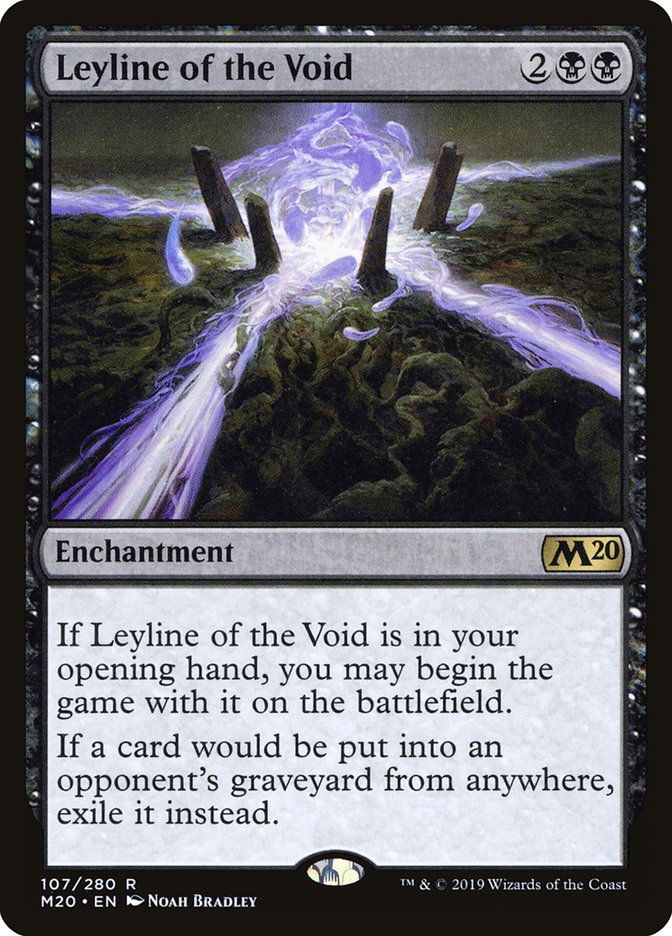
Leyline of the Void: Leyline of the Void is more sideboardable in Duskmourn than it is in most formats, as hosing delirium might be worth a card in the right matchup. It’s no Ghost Vacuum though, so don’t get too excited.
Cursed Recording

Cursed Recording: This is a strong instant and sorcery engine in a set with a minimal focus on instants and sorceries. The usual archetype for cards like this (UR) is in another room, so I wouldn’t bother with this one.
Leyline of Resonance

Leyline of Resonance: Name a more iconic combination than leylines and unplayable Limited rares. This wants dudes, pump spells, and the kind of player who can just have this in their opener (17.5% to happen) six games in a row. I obviously wouldn’t bother, though it speaks to the competition that’s probably the best leyline for Limited!
Leyline of Mutation

Leyline of Mutation: This makes all the other Leylines look like Overlord of the Mistmoors. I can’t think of anything worse in Limited than spending a card and 4 mana to give your spells a more difficult alternative cost!
Marina Vendrell

Marina Vendrell: Unlike most of the other cards here, Marina Vendrell is incredibly powerful. Unfortunately, it costs and requires you to pack a substantial number of enchantments (mostly rooms) to properly pay you off for going 5 colors. One tension with it is that you’ll need to be Gx for fixing, but green is the least enchantment-centric color in Duskmourn. If you have the rare Sealed pool with enough fixing to go for a Marina Vendrell deck, definitely give it a try!
Marvin, Murderous Mimic

Marvin, Murderous Mimic: I pored over the activated abilities in Duskmourn for this and came away rather unimpressed. Marvin, Murderous Mimic is basically just Friendly Teddy with a rare symbol on it, which means it’s on the lowest end of playable filler.
Seven Steps for Sealed Success!
- Open your Play boosters and sort your cards by rarity and color. Note any exceptional cards (bombs, removal spells, multicolor signposts, rooms, mana fixing, etc.).
- Set weak cards aside, then assess which of your colors are deepest. Look for synergistic clusters of cards, especially ones that provide standout synergies for Duskmourn’s big 10 archetypes.
- Start laying out builds and try to include your best cards. Your baseline should be two colors with at least seven sources for each primary color (more is better).
- Consider colorless costs and whether splashing makes sense for your Limited pool. The best cards to splash are usually single-pipped bombs, removal spells, or sources of card advantage.
- Keep working on your deck, aiming for a good balance of bombs, removal, card advantage, and mana curve. If you’re worried about the clock, you can mitigate time anxieties by having a baseline done early (i.e. “I know I’m playing GW because I opened Rip, Spawn Hunter, Shrewd Storyteller, and Unidentified Hovership, but which pump spells should I include…”).
- Settle on a final product, then battle it out. Feel free to change your deck between rounds to fix errors and/or try new things.
- Don’t forget that you can use Draftsim’s Sealed pool generator to practice the set before attending your prerelease!
Wrap Up

Cathartic Parting | Illustration by Miranda Meeks
And we’re done!
I thank you for joining me on this tour of Duskmourn: House of Horror, and hope you’ll enjoy any non-guided sections you partake in yourself.
Which archetype are you hoping to play in your Sealed matches? Which cards are you dreading to see on the other side of the table? Let me know in the comments below, or hunker down in the Draftsim Discord.
Until next time, may your opponent never have any of those stupid Overlord mythics!
Follow Draftsim for awesome articles and set updates:










Add Comment