
Last updated on July 30, 2026

Elemental Bond | Illustration by David Gaillet
Enchantments weren’t very prominent in green back when Magic was first starting. There were some good green enchantments here and there, but it was better known as the color that had cards like Hush, Reverent Silence, Tranquility, and Tranquil Grove–it was basically an anti-enchantment color.
The current game state is far from that enchantment-hating meta. Nowadays all colors have access to all card types in mostly viable ways. There are a ton of green enchantments out there that synergize greatly with the most viable strategies in this color.
But what are the best ones out there? Let’s find out!
What Is a Green Enchantment?

Utopia Sprawl | Illustration by Ron Spears
Green enchantments and enchantment creatures have a green color identity and synergize well with green-heavy strategies. There are some good enchantments that go outside of what green typically does in the color pie, and they may drop in the ranking or be outright excluded for that reason.
#44. Kenrith’s Transformation

Targeted removal that isn’t making creatures fight is kind of uncommon for green. Kenrith's Transformation fills that spot well, but it’s also cheap and provides a highly playable green cantrip.
#43. Destiny Spinner
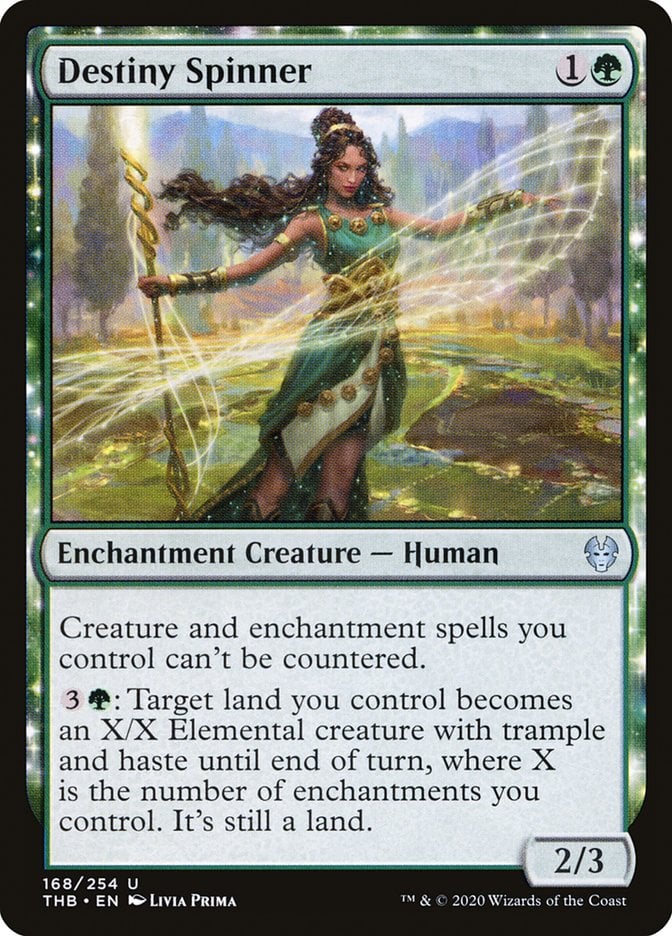
Destiny Spinner is at its best in enchantment-focused decks for obvious reasons, but it’s also extremely useful in regular green decks. Making your creatures impossible to counter for only 2 mana makes it a worthy addition even if you don’t play many enchantments.
#42. Unnatural Growth
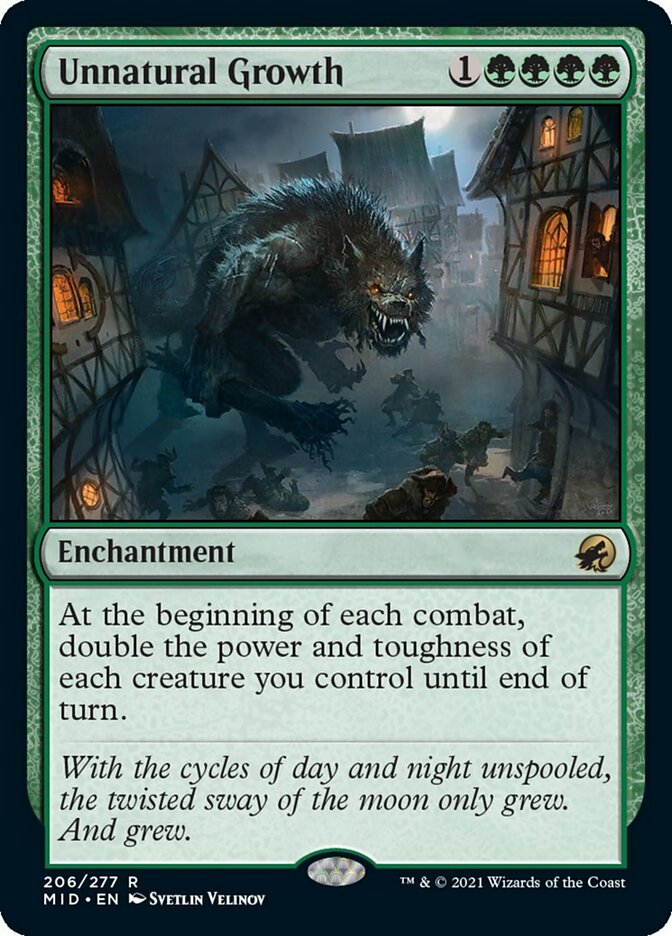
The mana cost on Unnatural Growth makes it hard to add to multicolored decks, but that’s a reasonable drawback considering the card’s effect. Playing this in a big creature mono-green deck can allow you to quickly and easily overpower your opponents in combat.
#41. Bioengineered Future

Bioengineered Future can be risky. Three mana is a lot for a card that doesn’t impact the board and requires additional investment, but the potential ceiling is quite high. This card doesn’t distinguish between the lands you play and the lands that enter, so fetch lands and ramp spells make it easy to hit two or more lands in a given turn. It’s just as equitable for nontoken and token creatures, so it can build a monstrous board fast under the right circumstances.
#40. Asceticism
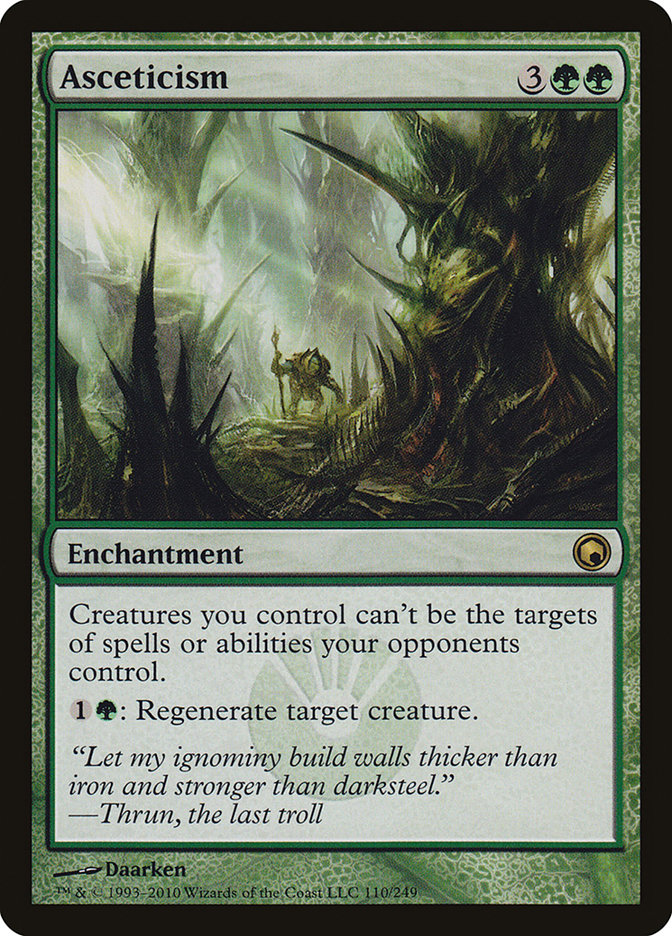
Asceticism gives all your creatures hexproof, which is undeniably one of the best protective abilities in Magic. It also allows you to regenerate a creature for 2 mana, so you can save your most important creatures if an opponent plays a board wipe. Just fade Wrath of God and Damnation.

This spot used to be occupied by Zendikar's Roil, and might’ve been replaced by Chocobo Racetrack were it not for Eusocial Engineering blowing it out of the water. Some landfall decks might prefer the chocobo-maker, but Eusocial has so many more applications as an enchantment that spits out artifact tokens and has cast-from-exile synergy with warp. Either way, they’re both strict upgrades over Zendikar’s Roil.
#38. Bear Umbra
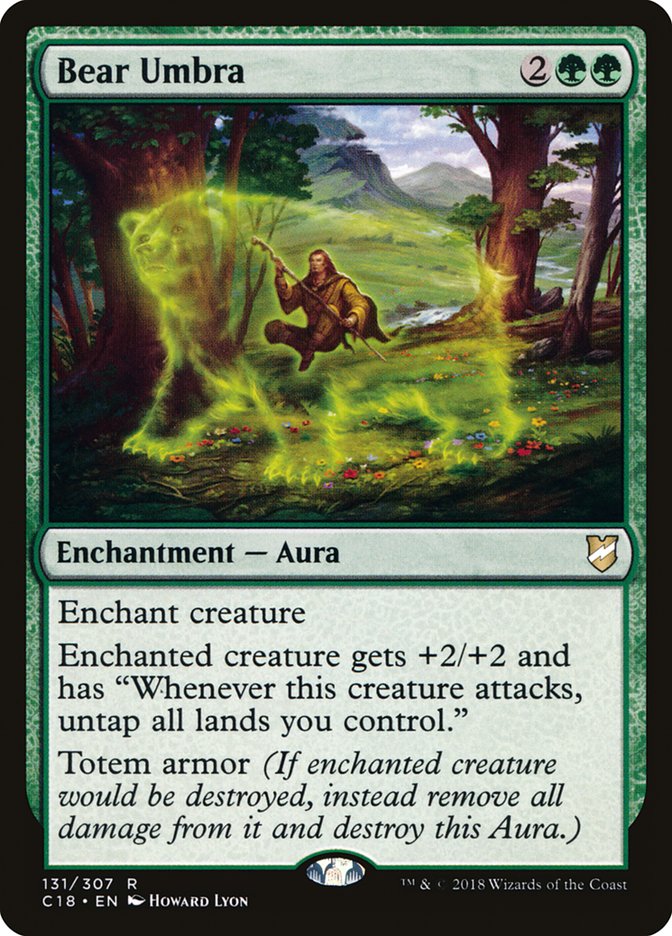
I actually love most totem armor cards. They feel flavorful and fun to play while giving you some amazing advantages. Bear Umbra is arguably the best of them thanks to its land untap effect that can be a complete game changer in a good green deck.
#37. Khalni Heart Expedition
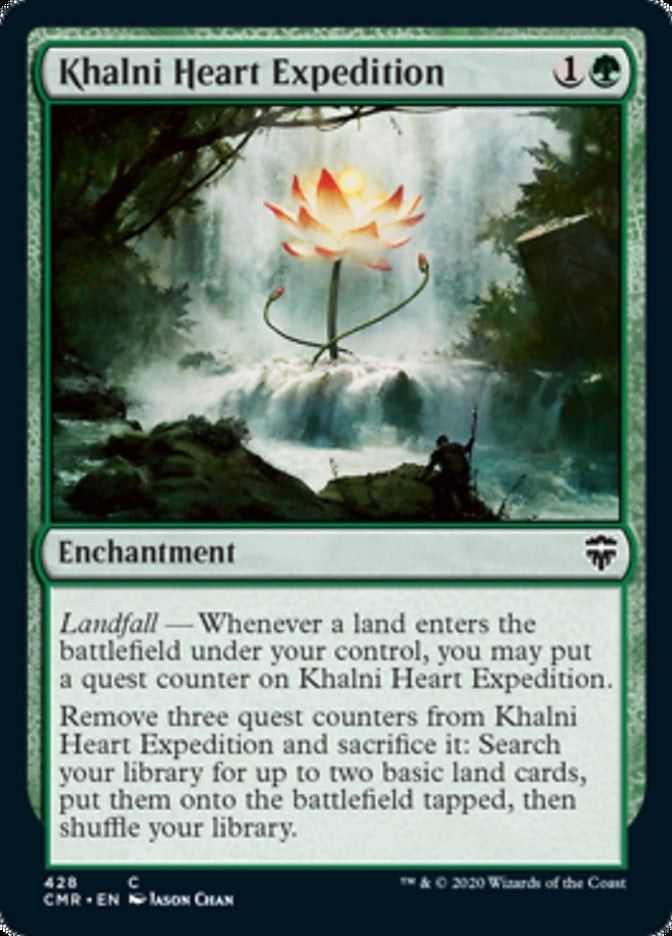
Putting three quest counters on Khalni Heart Expedition is way easier than it may seem at first. It’s probably not the greatest ramp spell, but it can be useful in decks that care about sacrifices.
#36. Master Chef
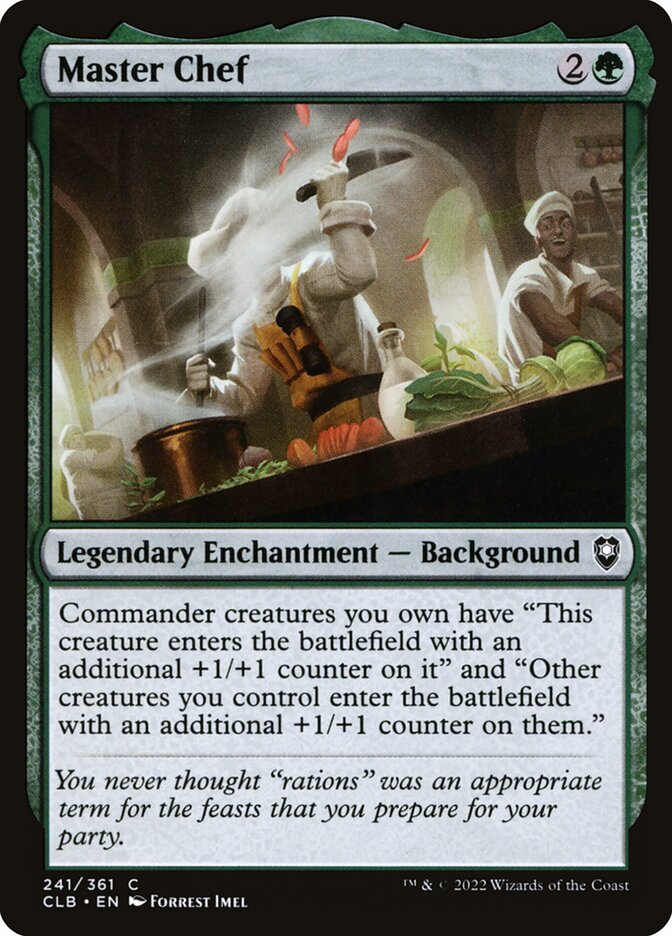
While counter doublers and payoffs like Danny Pink and Evolution Witness are well and good, they don’t do much without ways to get counters onto your creatures. Master Chef is highly dependent on your commander, but this background’s always impressed me as a way to start the counter train rolling.
#35. Kraven’s Last Hunt

I love a good value-oriented saga, and Kraven's Last Hunt fits the bill. It’s a removal spell that draws a card, plus it mills you a bunch. You can’t justify this in decks that aren’t interested in milling five cards, but cards that incidentally self-mill you are always welcome in various graveyard archetypes.
#34. Utopia Sprawl
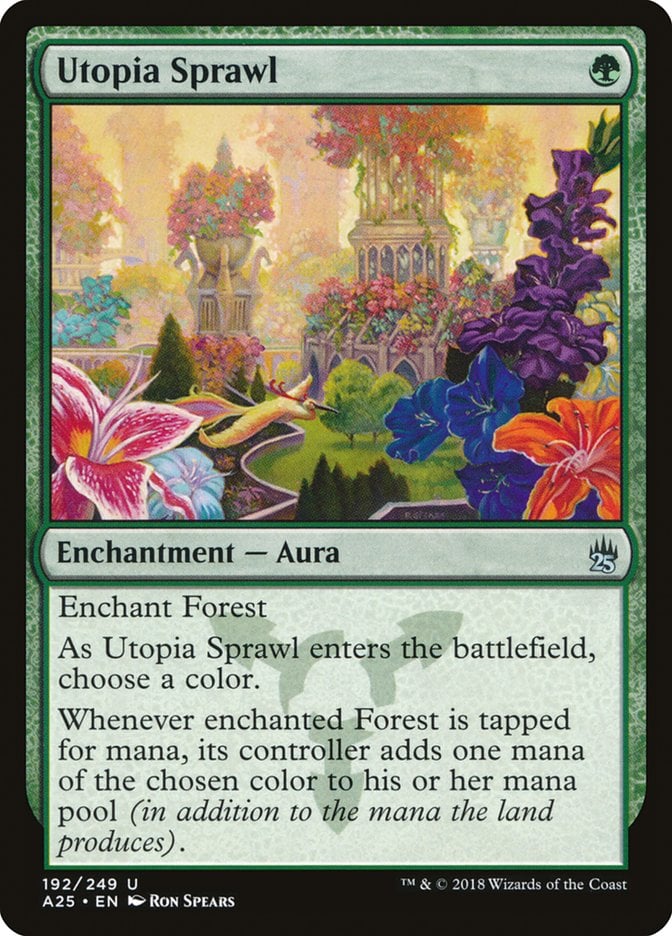
This card’s biggest advantage is its low mana cost. I prefer other cards with similar effects because Utopia Sprawl feels too constrained, only letting you add one extra color and always needing a forest to enchant, though it’s a good backup to the alternatives.
#33. Fertile Ground
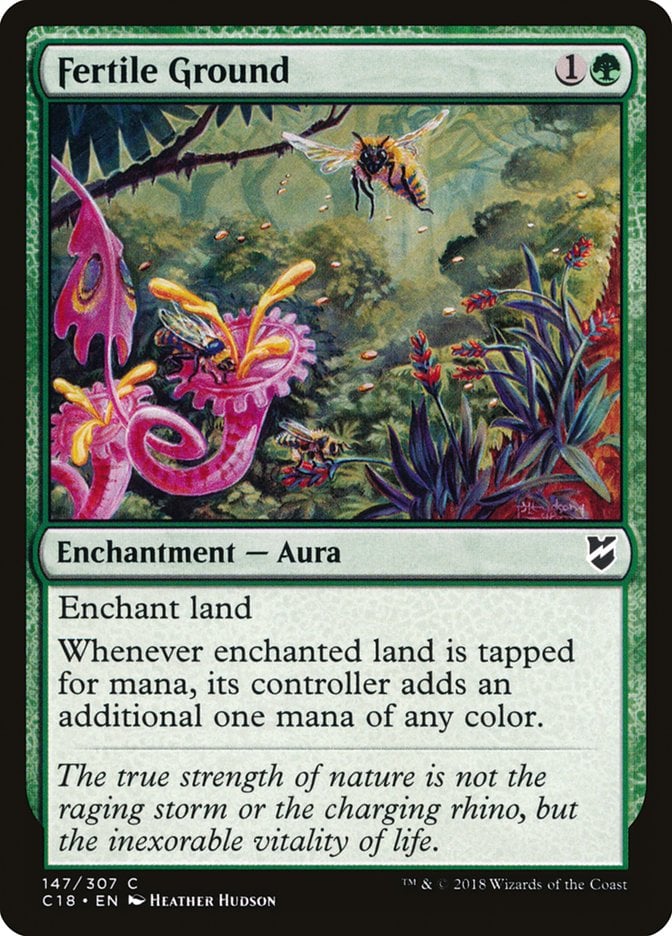
For a single mana more than Utopia Sprawl you can play Fertile Ground. This card can enchant any land and adds any color you may need, so it has more versatility. Not to mention it costs less than $1, making it an ideal budget green card.
#32. City of Death
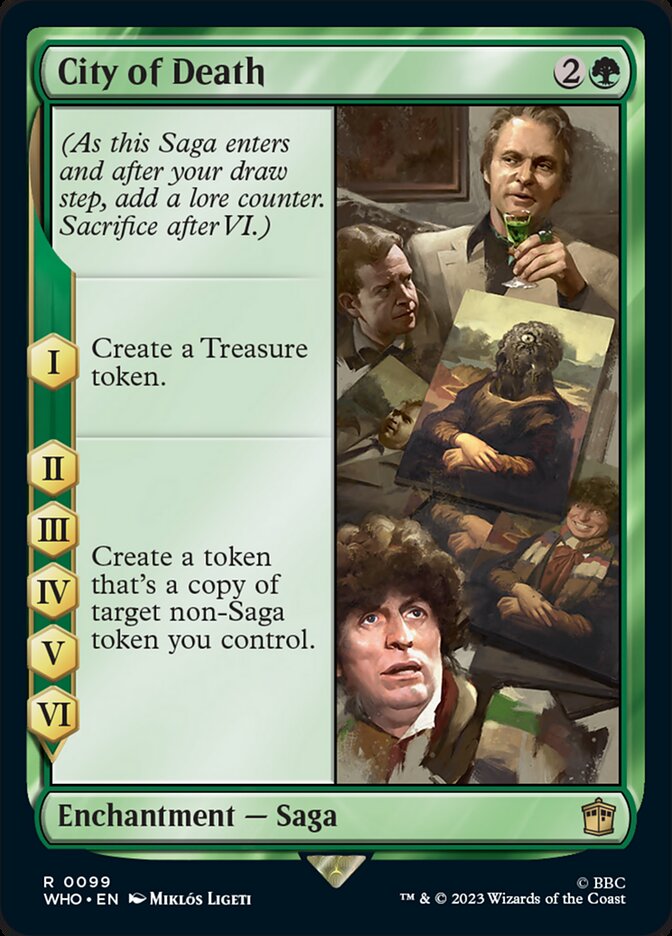
Doctor Who‘s City of Death isn’t breaking the game, but getting five full turns of copying your best token can get out of control.
This green enchantment pairs very well with blue cards like Double Major and Quasiduplicate that make tokens of impactful creatures like Avenger of Zendikar for a disgusting amount of value.
#31. Cryptolith Rite
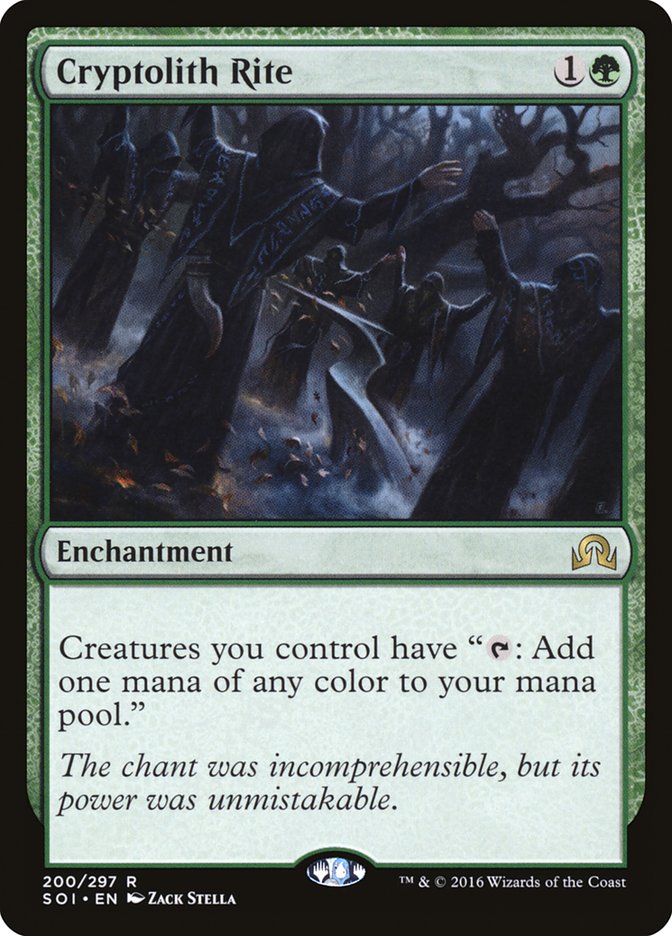
Before green became the color that does absolutely everything in Magic, it was the color of creatures and having tons of mana. Cryptolith Rite is a card that plays perfectly into its strengths.
#30. Arboreal Alliance
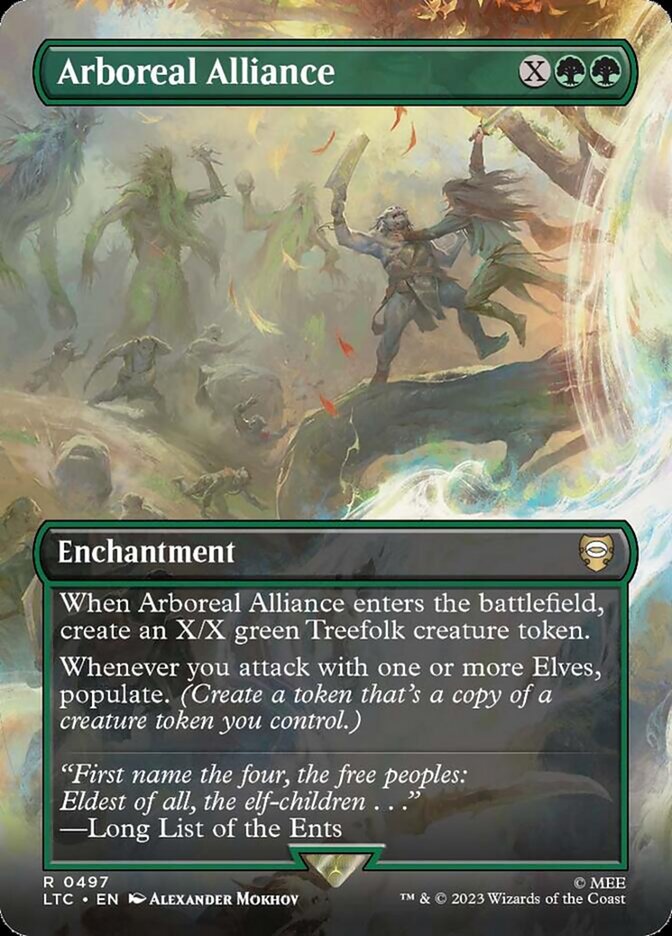
Arboreal Alliance is a total bomb for elfball decks. At worst, you get a 2-mana enchantment that provides you with easy proliferate triggers. Plus, if you’ve got mana to spare (what elf deck doesn’t?), then you can make a huge treefolk as well!
#29. Nyxbloom Ancient
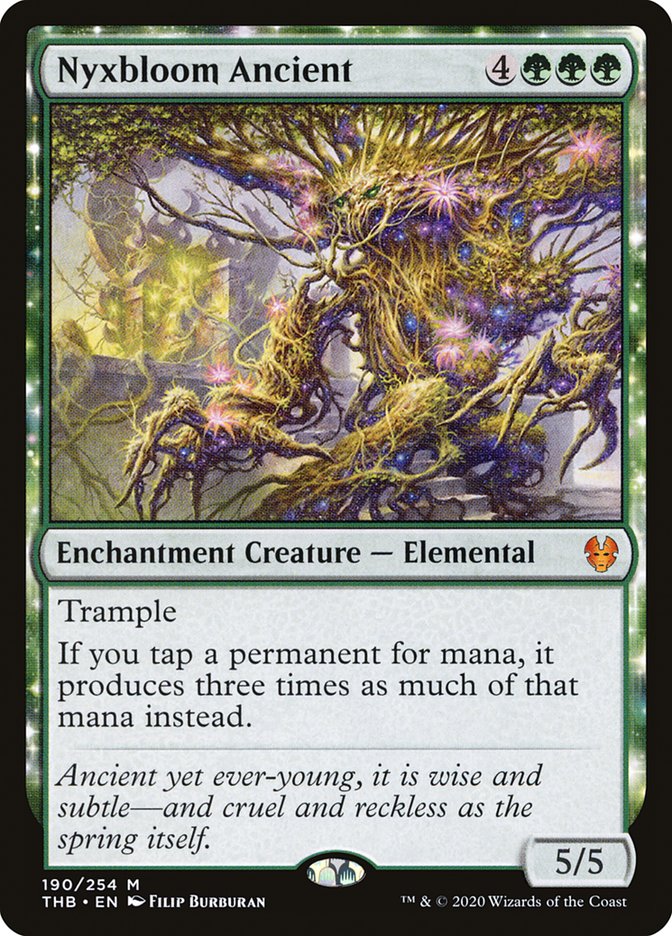
I don’t even have to explain why having a card that triples the amount of mana you generate is amazing. Nyxbloom Ancient has a high mana cost, but the possible rewards are more than worth it.
#28. Rancor
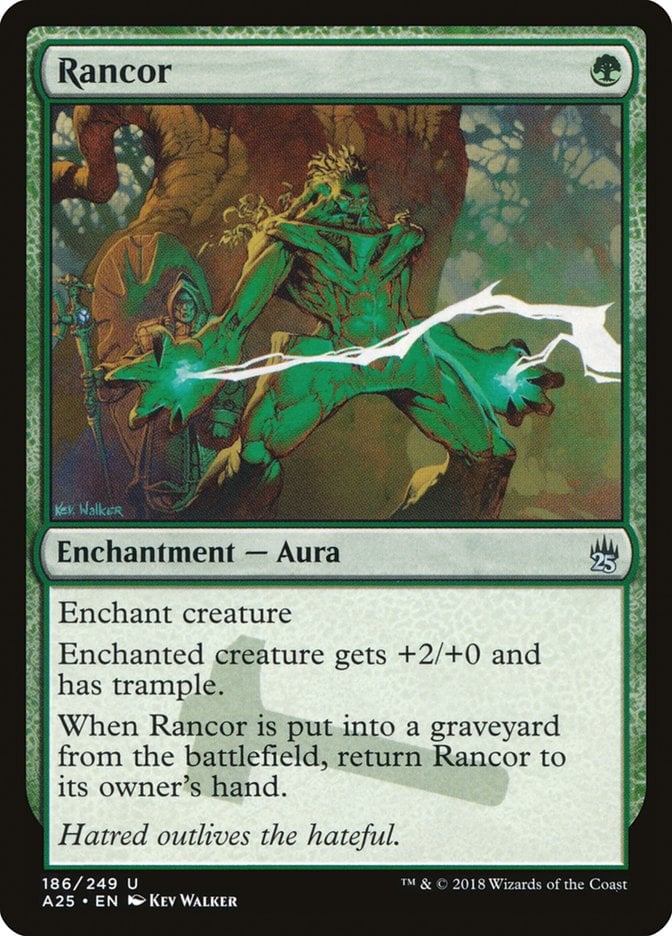
Rancor isn’t just a card with one of the best flavor texts out there, it also has a hyper-aggressive effect. I used to play four of it in a Modern infect deck, and it changed the direction of a game more than once.
I’ll take no criticism about playing infect, by the way.
#27. Burgeoning
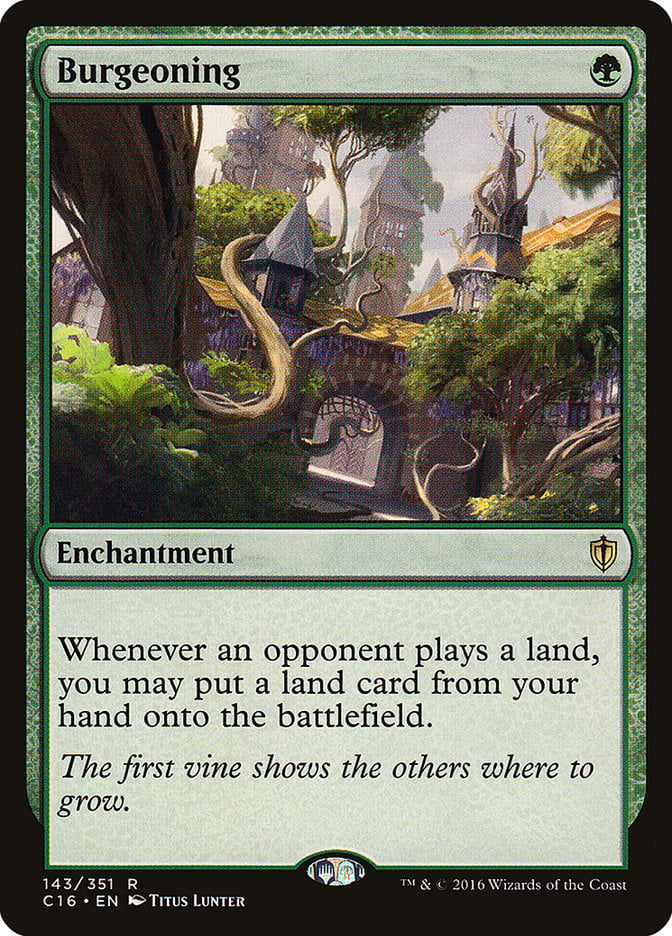
Burgeoning lets you constantly cheat lands into play and keep up with your opponents’ ramp. It’s solid on its own, but there’s no way you’ll fall behind on mana if you combine it with something like Land Tax.
#26. Enduring Vitality

Enduring Vitality isn’t exactly a new effect—Cryptolith Rite and effects like Elven Chorus have existed for a while. But this one has a unique strength: It’s quite hard to kill. If your opponent doesn’t exile it, it sticks around for a while. Green also cares more about creatures than enchantments, which is another glimmer of hope for the elk.
#25. Wild Growth
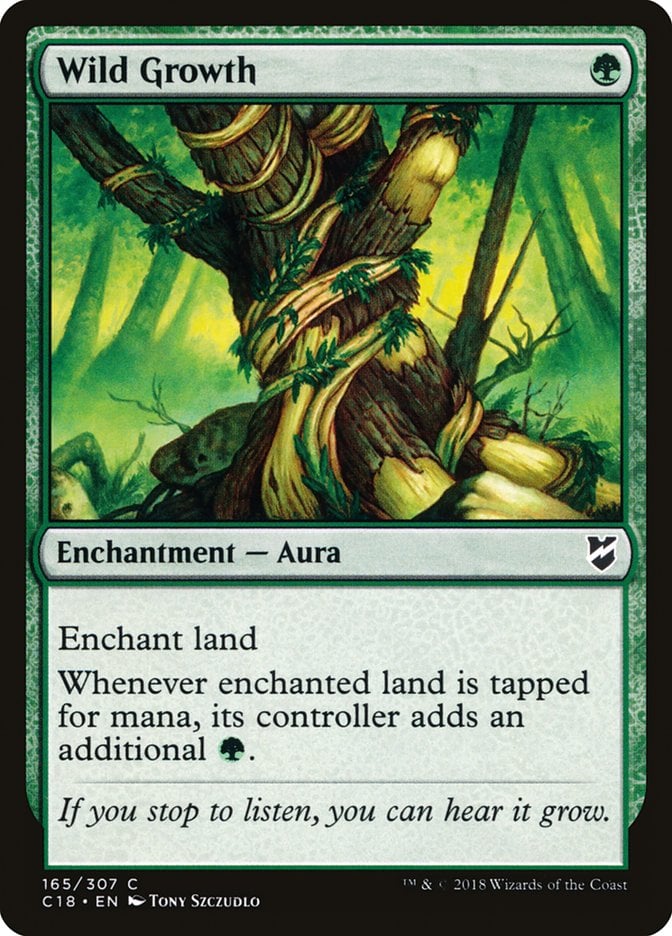
Wild Growth only costs a single mana and can enchant any type of land. It can be really good to get ahead in the game’s early stages, even if it only generates green mana.
#24. Elven Chorus
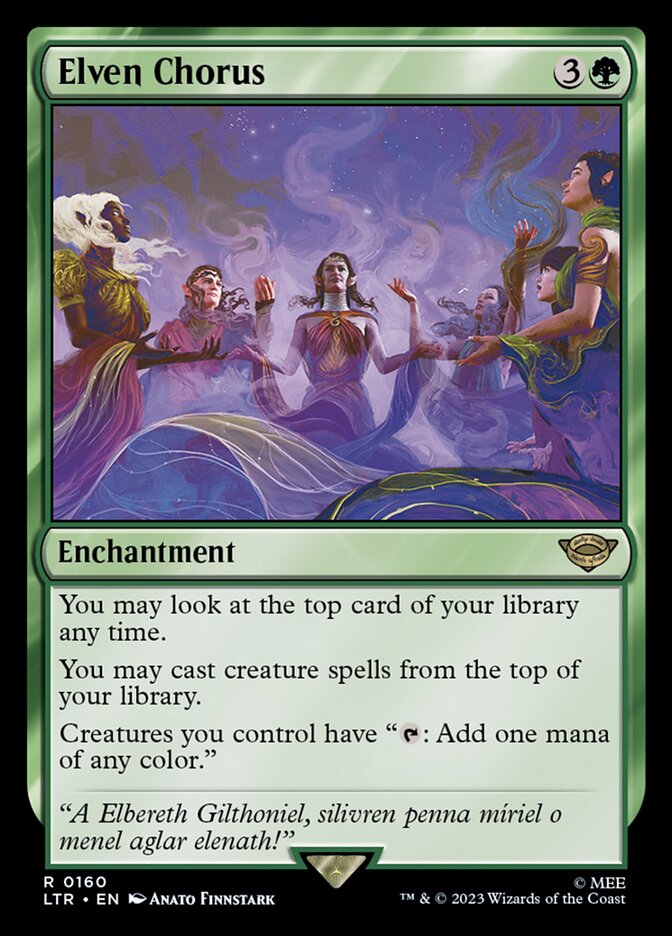
You need to be a creature-heavy deck to justify running Elven Chorus – like, almost entirely lands and creatures. But the reward for such deckbuilding restrictions is immense. Future Sight variants will always be powerful sources of card advantage, and this one comes with enough mana to make use of those cards. Toss in a haste enabler so that the creatures you cast off the top of your library can tap for mana to keep the engine rolling and you’ll take turns long enough to rival the storm players.
#23. Beastmaster Ascension
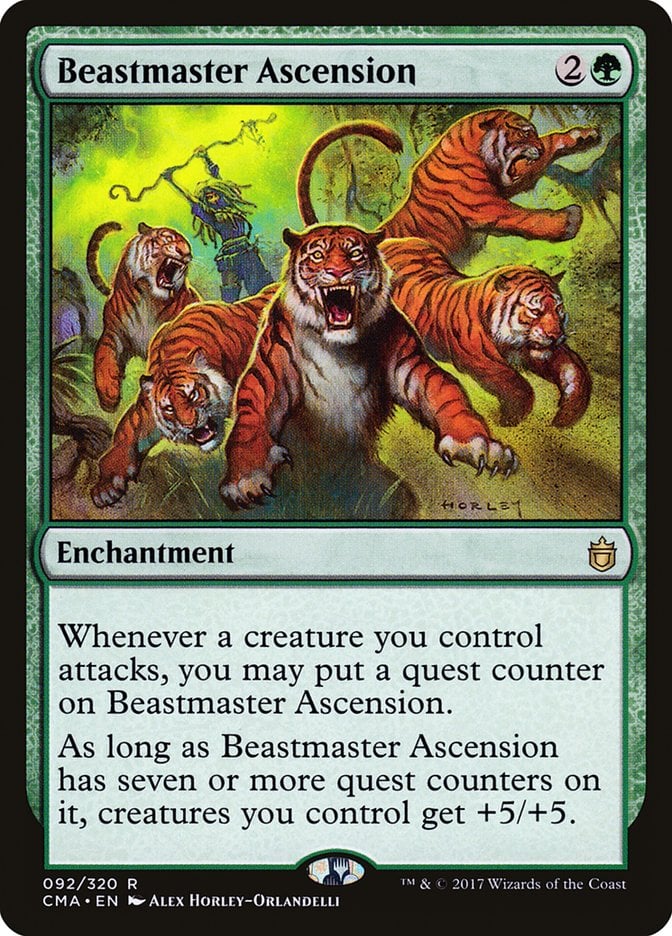
Green decks tend to attack often, whether with a handful of large creatures or a massive army of tokens. Getting quest counters on Beastmaster Ascension won’t be hard at all and it eventually (or immediately) gives you an overpowering board state.
#22. Innkeeper’s Talent

Magic players love looking at two cards and calling it Splinter Twin (in reference to the combo more than the card), but they got it right in Standard with Vraska, Betrayal's Sting and Innkeeper's Talent.
Even outside that combo, this Bloomburrow class enchantment is worth playing. Counter doublers are always strong, and this one boasts counter distribution, which many of the others lack.
#21. Court of Garenbrig
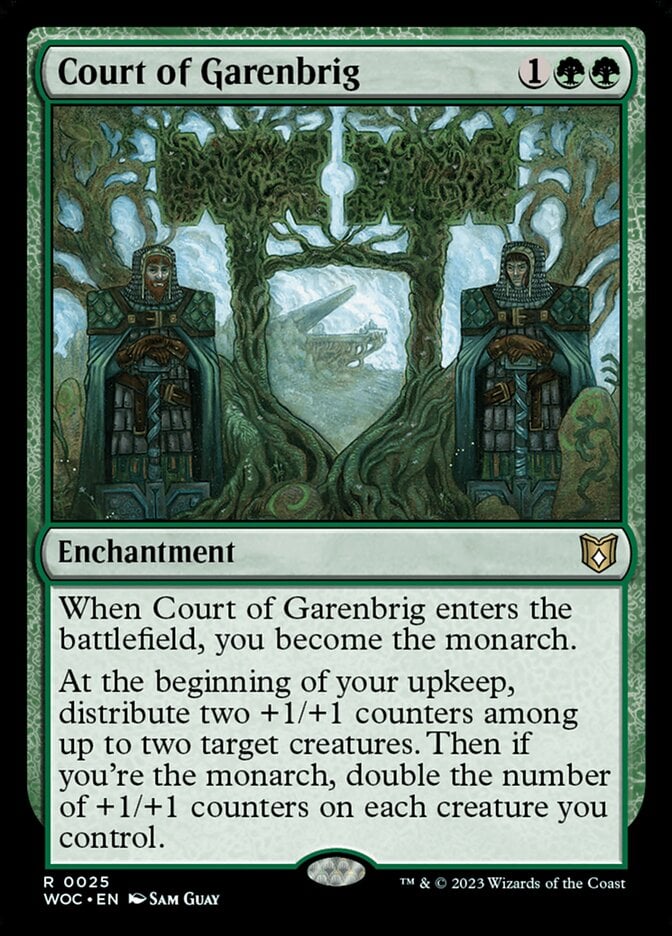
The monarch has proven to be an excellent source of card advantage in EDH and beyond. Court of Garenbrig’s useful because it bolsters your team to better protect the crown. Once you’ve accumulated enough cards and counters with this court, you can easily turn the tables and start attacking rather than defending.
#20. Elemental Bond
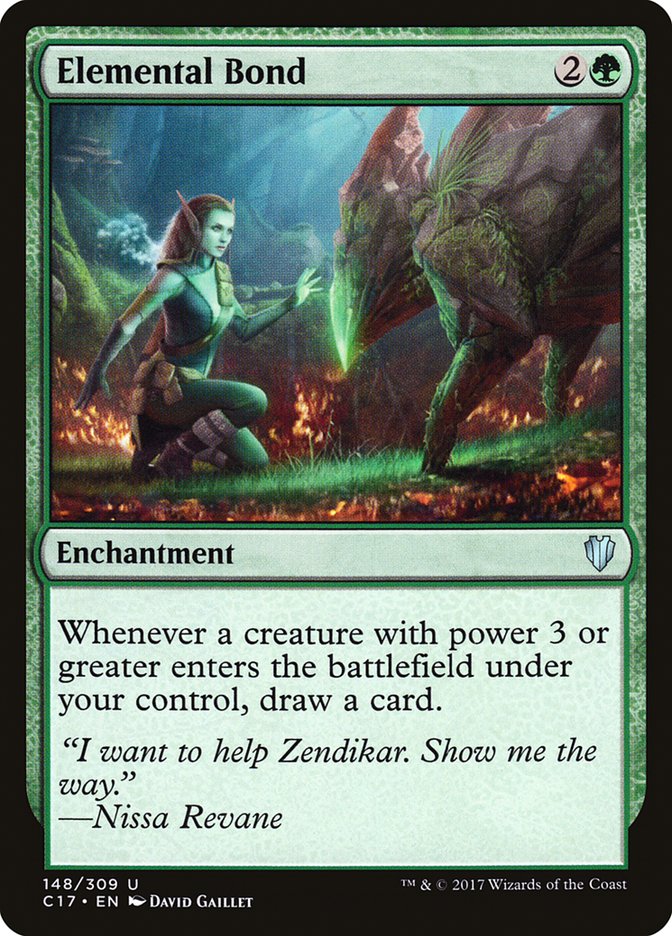
Some people prefer Colossal Majesty since it passively gives you a card each turn just for having one large creature. I like Elemental Bond more because you could draw a ton of cards on a good turn. And you should still be consistently playing creatures with power 3 or greater in a green deck even on a not-so-good turn.
#19. Omenpath Journey
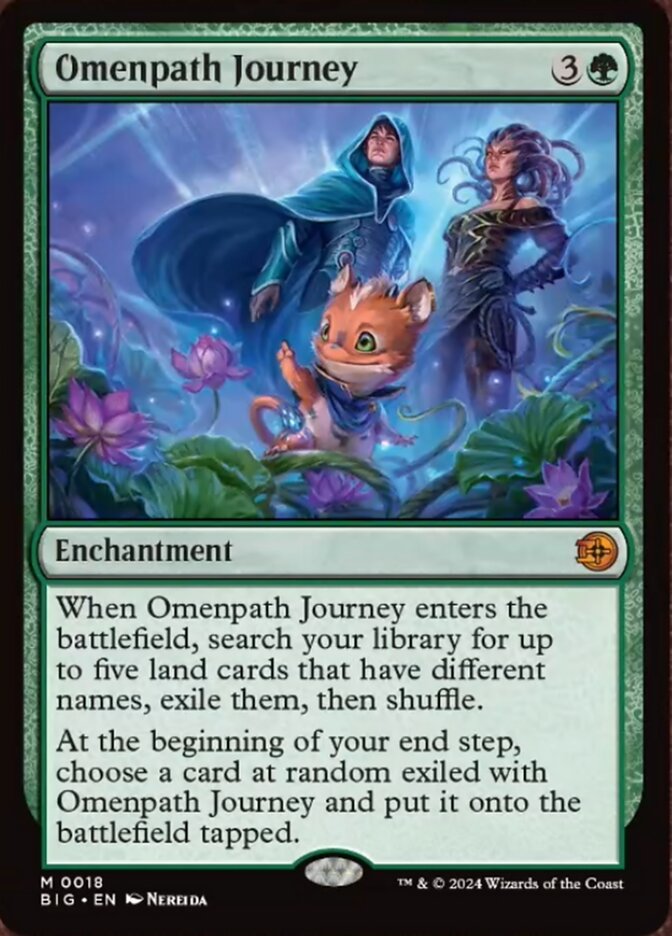
Omenpath Journey works best in decks that are filled with utility lands to grab. Cards like Field of the Dead, Kessig Wolf Run, Dark Depths, and so on. You always risk somebody destroying this and locking away your lands forever, but I’ve found this amount of ramp and land tutoring worthwhile.
#18. Zendikar Resurgent
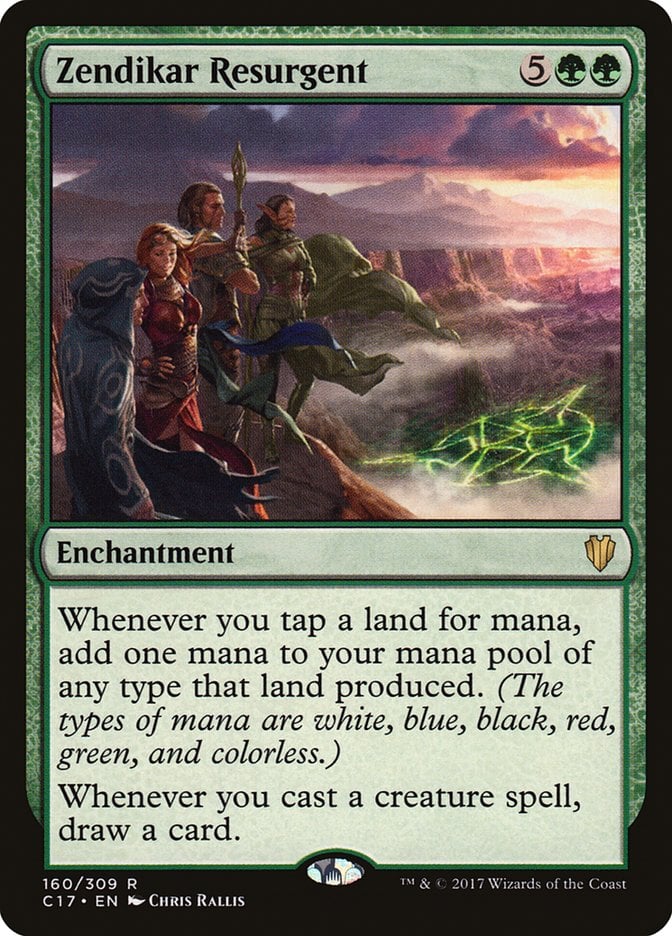
Zendikar Resurgent’s mana cost can be steep, but the rewards you could reap are absolutely worth it. It’s a card that plays perfectly into green’s strengths and can be a consistent utility card.
#17. Parallel Lives
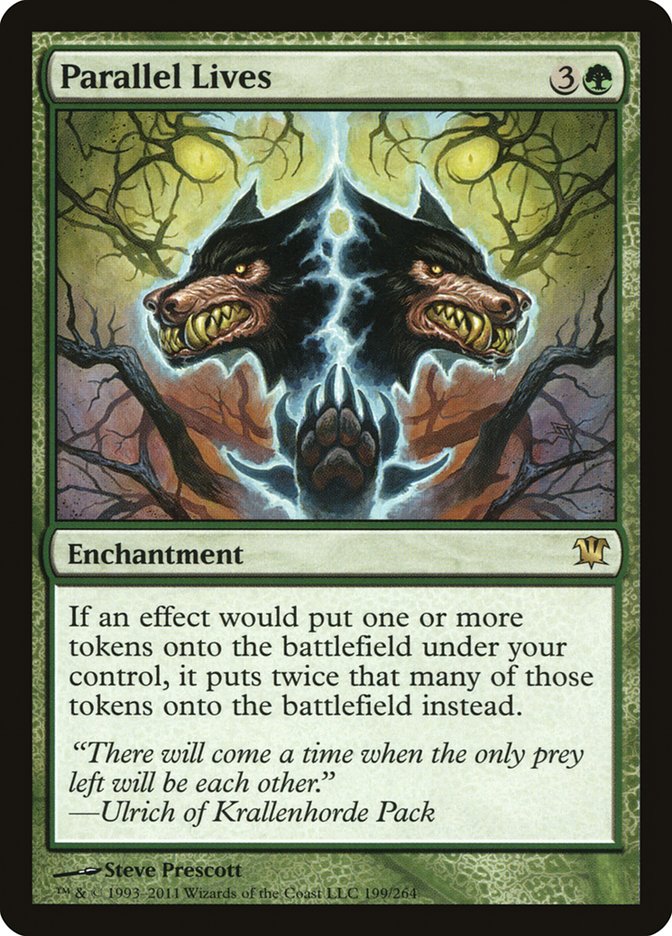
If you’ve played Arena the past couple of years you probably know Scute Swarm pretty well. Green is a color that enjoys creature tokens a lot, and Parallel Lives is there to emphasize that and create some powerful token armies.
#16. Overlord of the Hauntwoods

Overlord of the Hauntwoods’s power comes from its versatility. It’s both a respectable ramp spell on turn 3 and a fine card to ramp into due to its high power and strong ability. It’s rarely bad to seize a mana advantage at any point of the game, especially when said mana advantage comes with perfect mana fixing. Toss in its bevy of synergies as an enchantment creature and you have a winning threat.
#15. Tribute to the World Tree
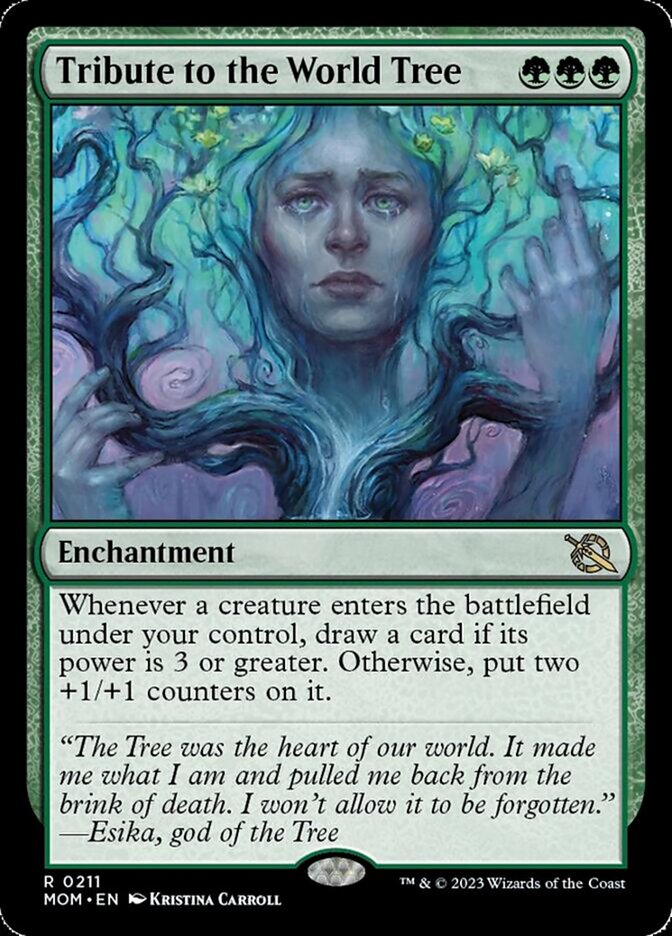
Elemental Bond slaps, but Tribute to the World Tree is just (mostly) better. The mana cost makes it harder to play in multicolor decks, but it’s well worth the price. You either draw a bunch of cards or throw a bunch of counters around, or both! This green card took one of the best green enchantments already printed and removed the fail state.
#14. Growing Rites of Itlimoc / Itlimoc, Cradle of the Sun
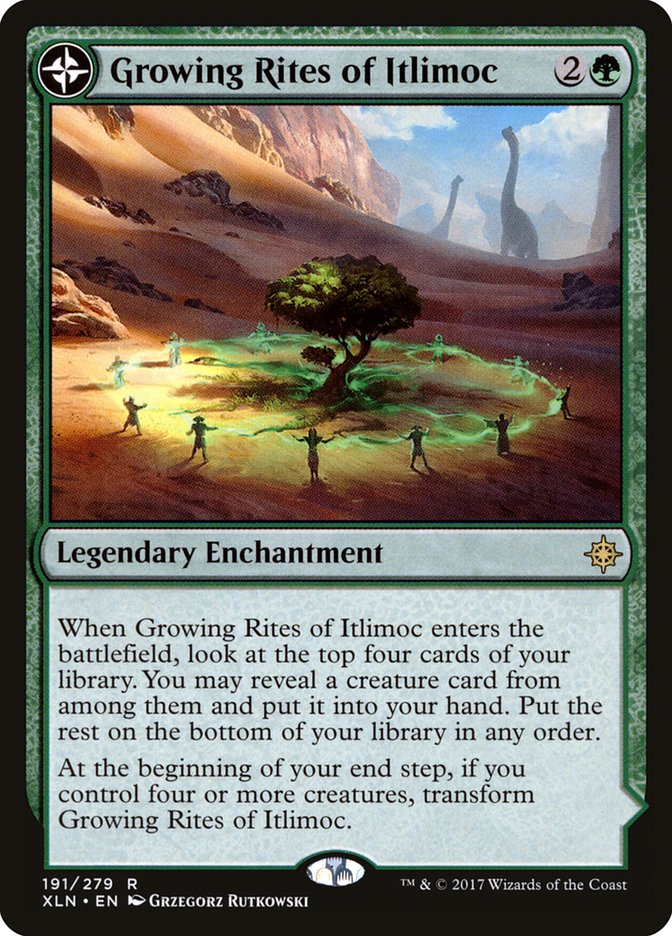
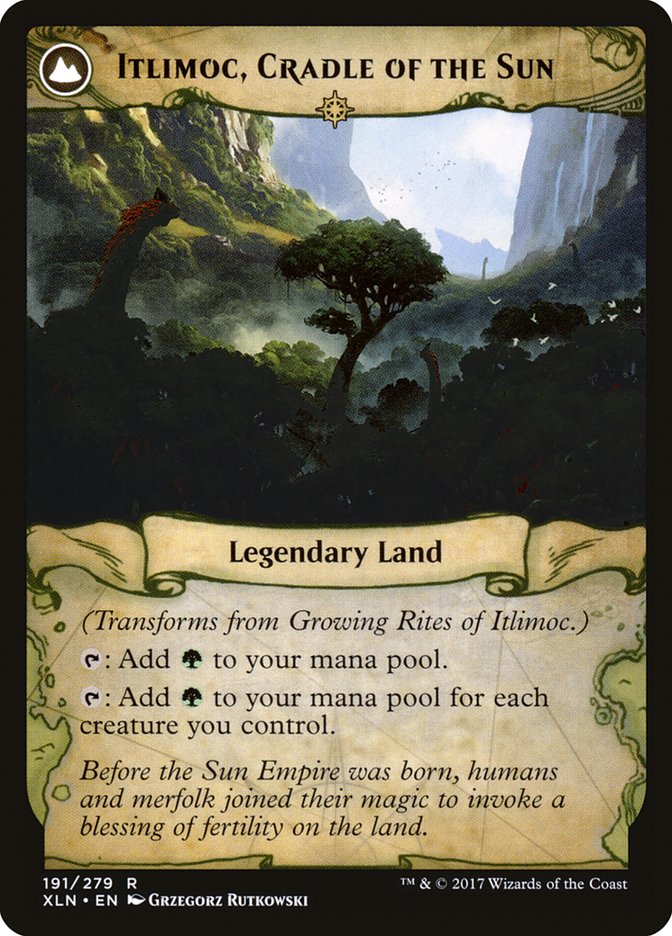
What makes Growing Rites of Itlimoc great isn’t its enchantment face, but the backside. One of the best flip lands in MTG, Itlimoc, Cradle of the Sun is a somewhat better Gaea's Cradle, since it can still add mana even if you don’t control any creatures.
Gaea's Cradle is obviously easier to play since you don’t have to play an enchantment and reach a creature threshold to transform this green land.
#13. Exploration
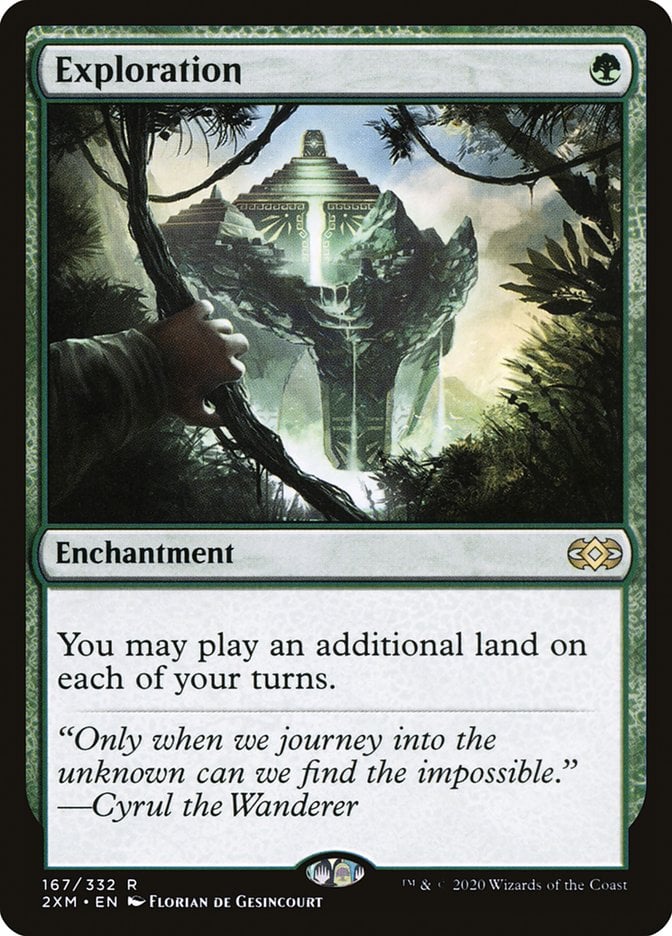
Sometimes it’s better if a card is simple and straightforward. Exploration lets you play two lands each turn and build a huge mana base quickly. What else could you need?
#12. Garruk’s Uprising
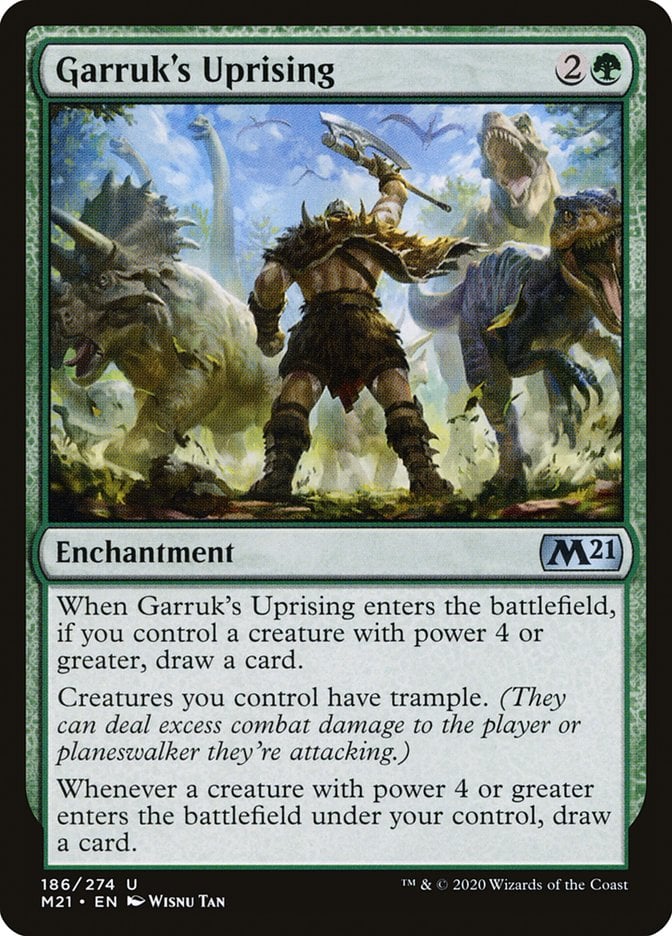
This is my personal favorite out of all these types of enchantments. Garruk's Uprising gives creatures trample and is an undeniable advantage in any deck that plays big creatures at a consistent rhythm.
#11. Springheart Nantuko

Springheart Nantuko has been closely connected to Nadu, Winged Wisdom since its release, but this insect shines even without the busted, banned bird. Landfall making an insect is reasonable, but the bestow ability gets out of hand.
Imagine making copies of Avenger of Zendikar whenever you play a land, or doubling down on Etali, Primal Conqueror (you don’t keep the token, but the trigger’s what matters). Even relatively simple cards like Wood Elves and Aether Channeler spiral out of control with this enchantment creature in play.
#10. Dryad of the Ilysian Grove
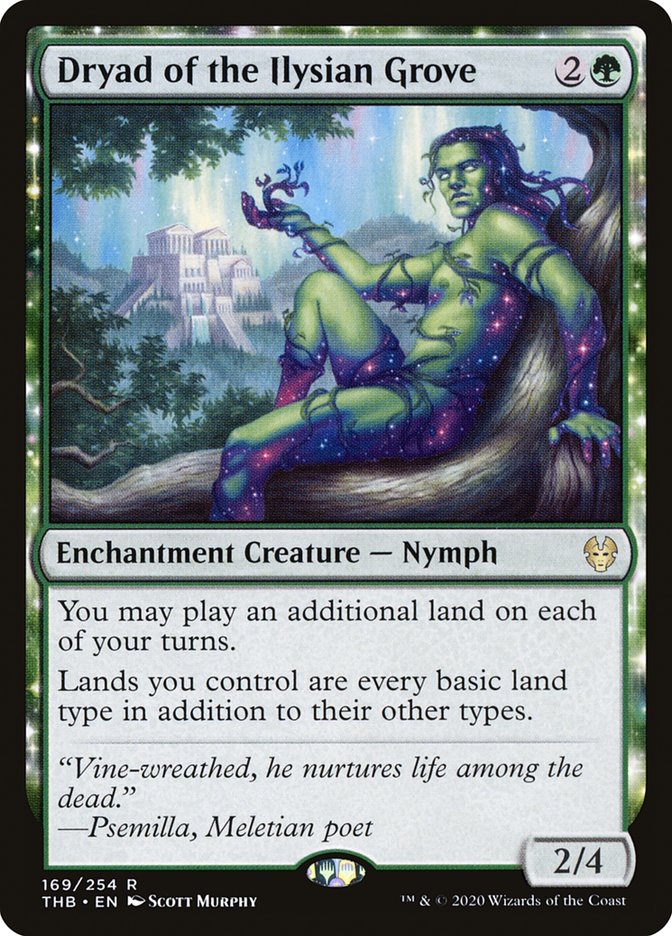
Maybe I lied a little when I said that simpler is better. Dryad of the Ilysian Grove lets you play an extra land each turn, and instantly makes your entire mana base 5-colored. It’s an amazing addition to any multicolored deck, especially decks that play three or more colors.
#9. Up the Beanstalk

Up the Beanstalk proved too strong a card for Modern thanks to the ease with which you can cast 5-drops for less mana with cards like Fury and Solitude (and Force of Will for players in stronger formats…). Even without a bunch of free spells, Up the Beanstalk slots right into green’s natural tendency to ramp and jam big haymakers.
You only need to trigger this green enchantment once for it to surpass Divination in mana efficiency.
#8. Drop of Honey
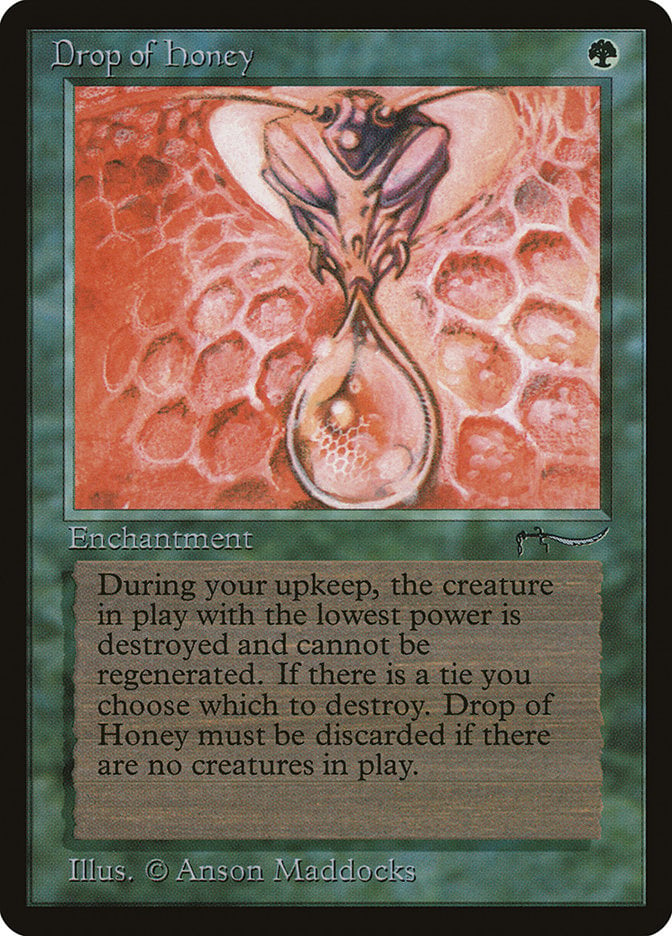
Drop of Honey is powerful and distinctly doesn’t feel like a green card, which means it gives green decks a tool they wouldn’t normally have access to. Destroying the smallest creature works in two scenarios. The first is when you don’t have many (if any) creatures, which is why you see it as a sideboard card in Legacy Lands. The second is when your creatures are just the biggest. If you’re playing 8/8s, it takes a while before the Drop starts destroying your own creatures, letting you eat away at your opponents’ boards.
#7. Greater Good
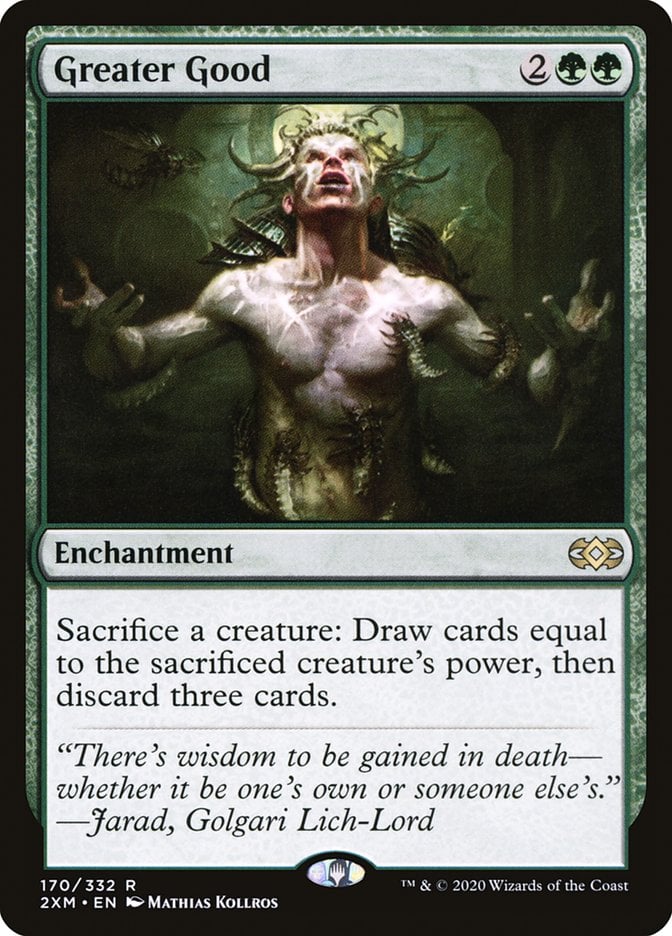
Turning a creature into cards is an incredible deal, especially when looking at some monstrous green creatures like Ghalta, Primal Hunger, Worldspine Wurm, and Yargle and Multani. Getting a free discard outlet can also work wonders alongside cards like Reanimate and Living Death. The best way to maximize this effect is with Pattern of Rebirth to draw tons of cards and something to utilize them.
#6. Guardian Project
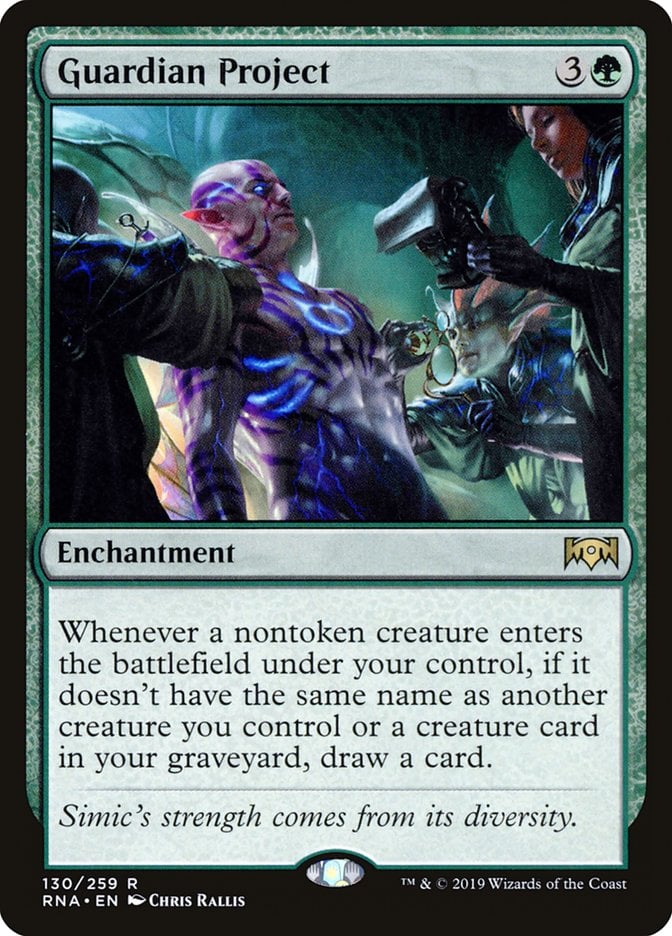
This enchantment was pretty much made for Commander. Guardian Project is a consistent card advantage generator in any deck. It can also be used for infinite draw combos with Intruder Alarm, any creature that can return itself to your hand, and a mana dork creature.
#5. Doubling Season
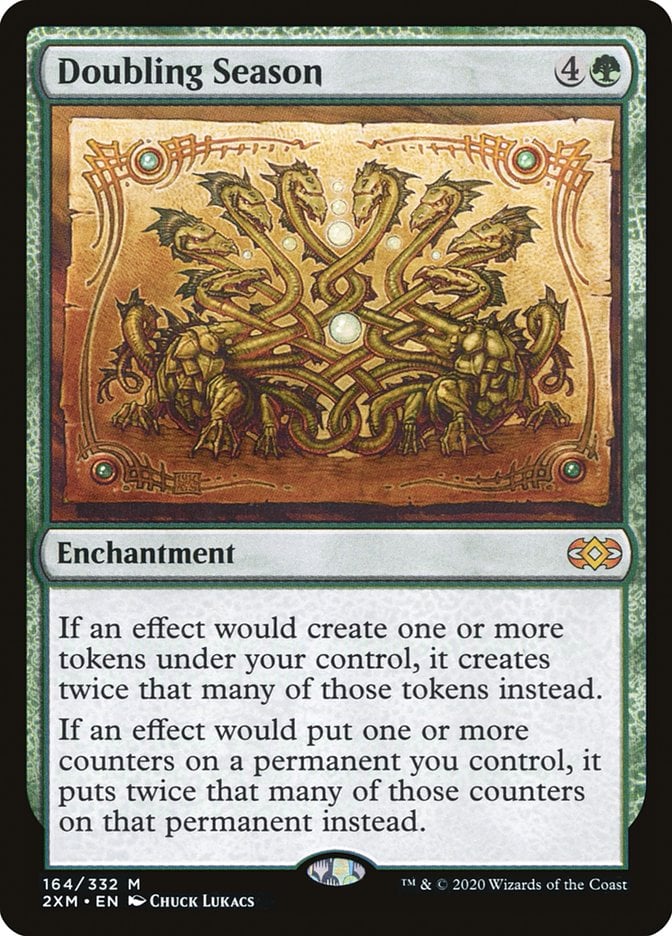
“Let’s take Parallel Lives and make it way better.” Something like that must’ve been how the Doubling Season design meeting went, because it’s ridiculous how good this is. Ignore the fact that Parallel Lives came after the first printing of Doubling Season.
Doubling the number of tokens you create and the amount of counters you can put on a permanent is objectively amazing. Word to the wise; that doubling also affects the loyalty counters your planeswalkers enter with.
#4. Survival of the Fittest
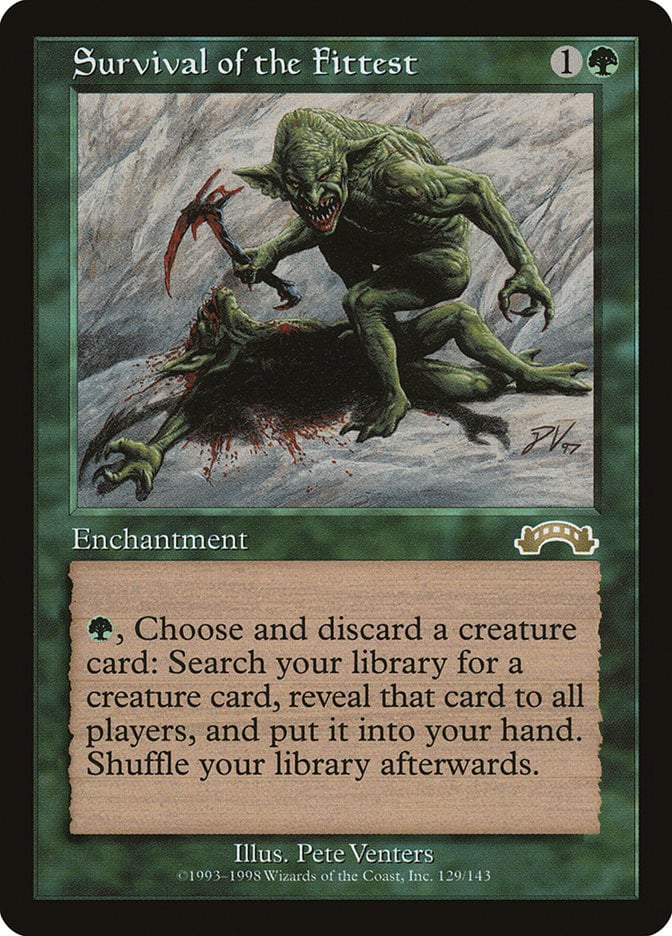
When you have the best creatures of all colors, finding the one you need when you need it takes top priority. Survival of the Fittest is one of the best creature tutors ever thanks to its repeatability. Filling your graveyard for cards that care about that isn’t bad, but this card’s value comes from finding what you need. Turning excess Llanowar Elves into answers like Reclamation Sage or Kogla, the Titan Ape or game-ending threats like Craterhoof Behemoth makes this incredibly valuable in any creature-based toolbox strategy.
#3. Food Chain
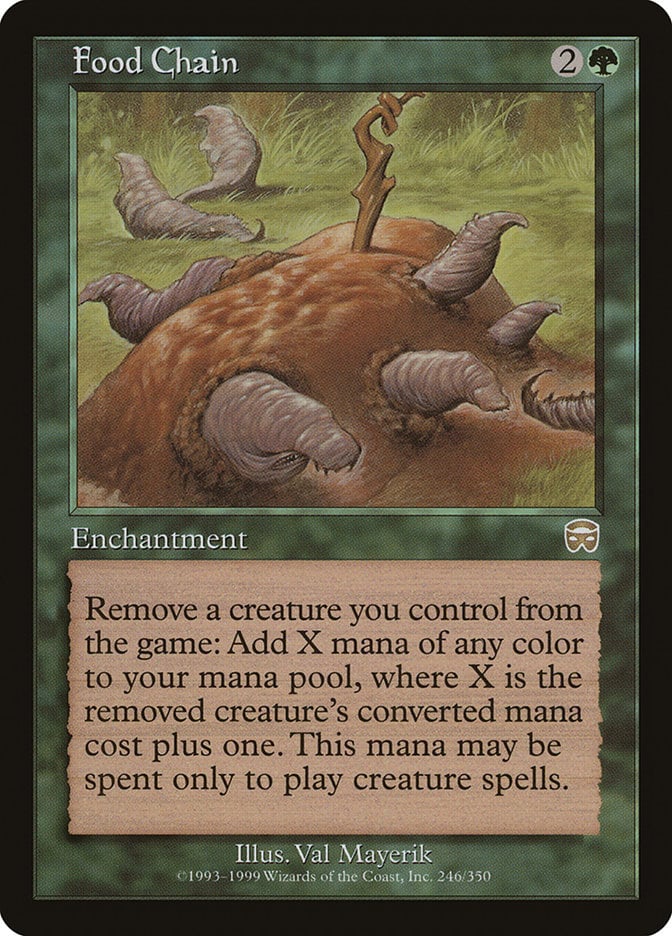
Turning creatures into mana is a great way to get an unfair win. Food Chain attempts fairness by restricting the mana to creatures only and exiling the creatures you make mana from, but it’s all for naught. You get infinite mana with Eternal Scourge, Squee, the Immortal, or Misthollow Griffin that makes an infinitely large Walking Ballista. You can also use something like Rocco, Cabaretti Caterer to assemble a different combo.
#2. Carpet of Flowers
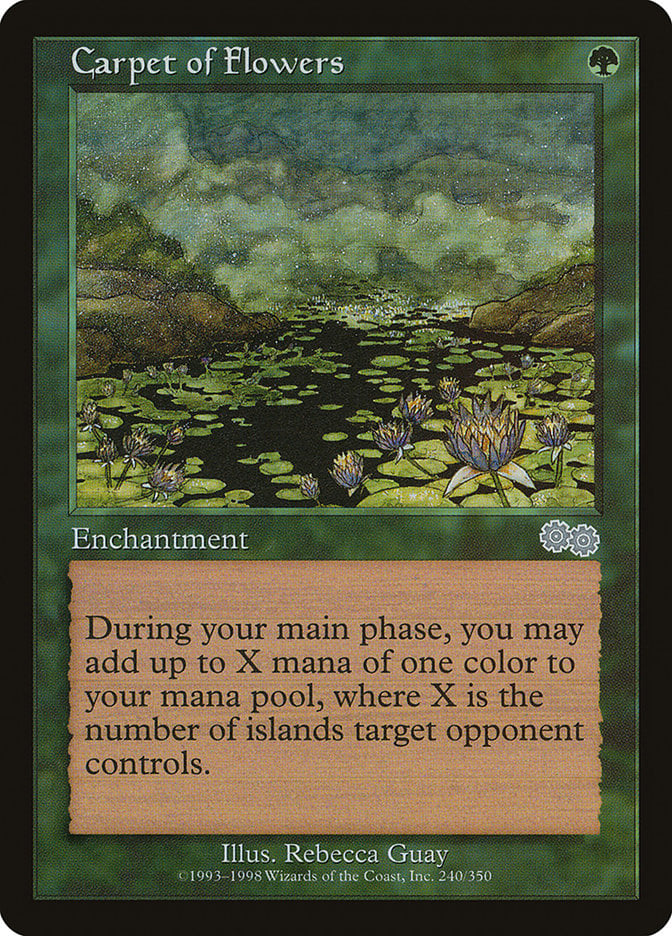
Your opponents need to be running islands for Carpet of Flowers to be impactful, but who isn’t playing Magic’s best color? It’s reasonable to expect at least one blue player in a pod of Commander. This only needs to make a single mana a turn to have similar value to a Llanowar Elves, which is a fine floor when you consider the card’s ceiling of an extra 3 or 4 mana a turn. It’s also useful in Legacy sideboards for decks to minimize the impact of Wasteland decks loaded with Volcanic Island and the like.
#1. Sylvan Library
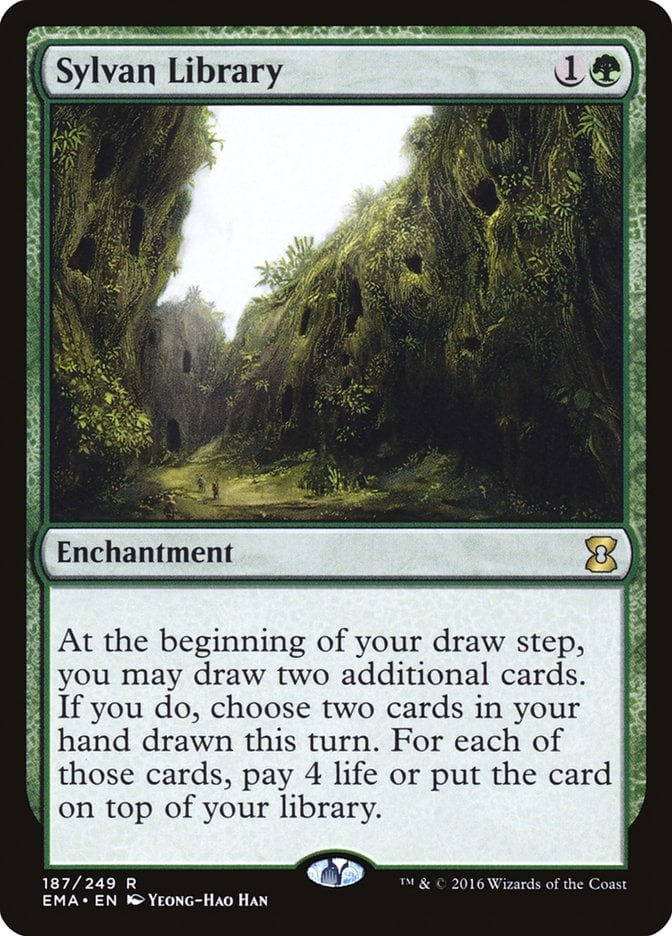
Sylvan Library is just incredible. All of your draw payoffs trigger two additional times per turn, and you get to choose the order in which those cards go into your library, or you can keep them for a more than affordable life cost.
Green tends to have plenty of ways to recover life, so paying 4 life to keep a card every now and then isn’t bad at all. This is the best card draw spell in green.
Best Green Enchantments Payoffs
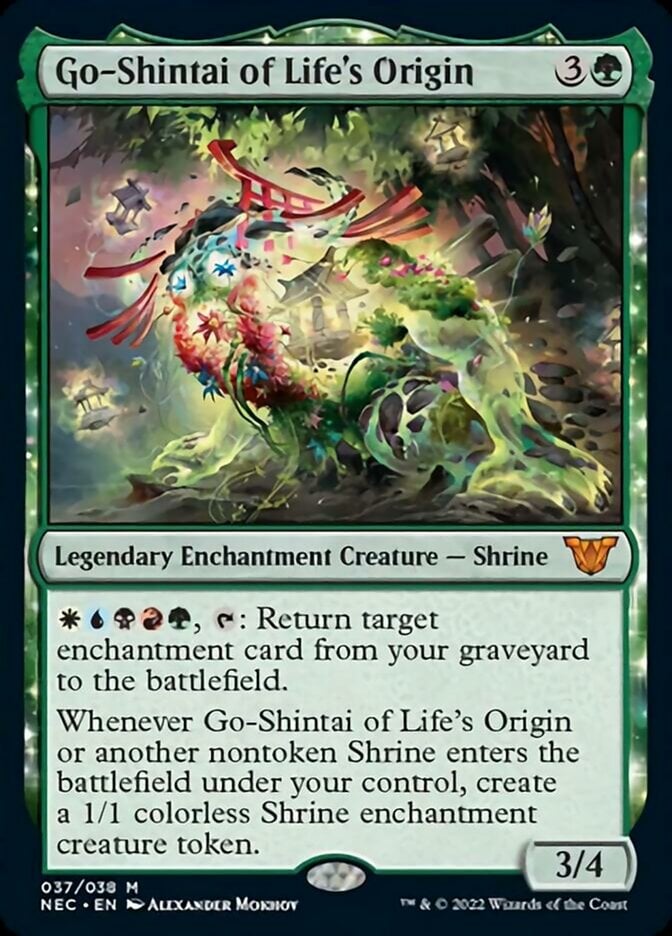
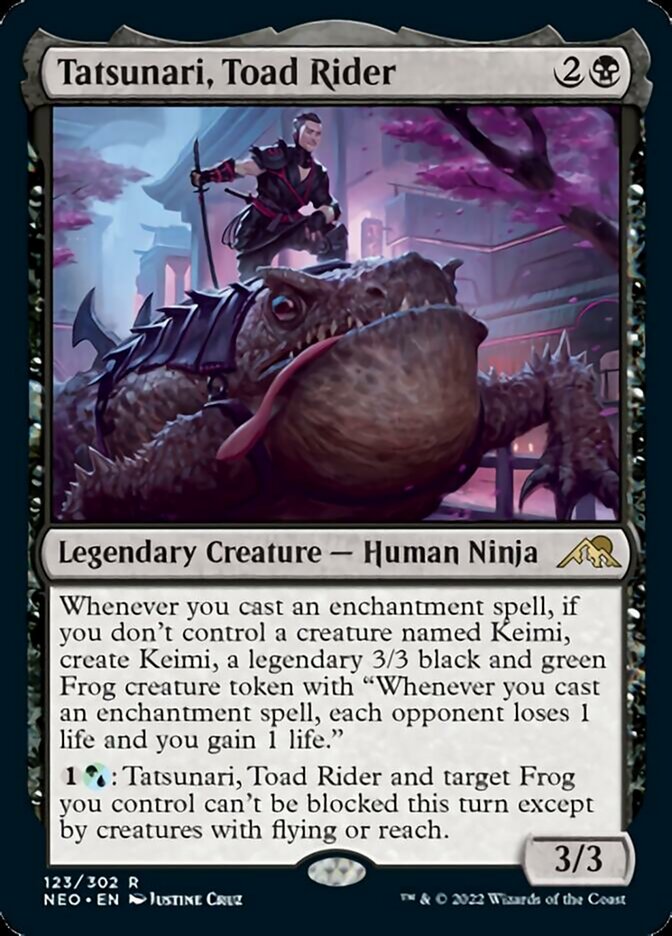
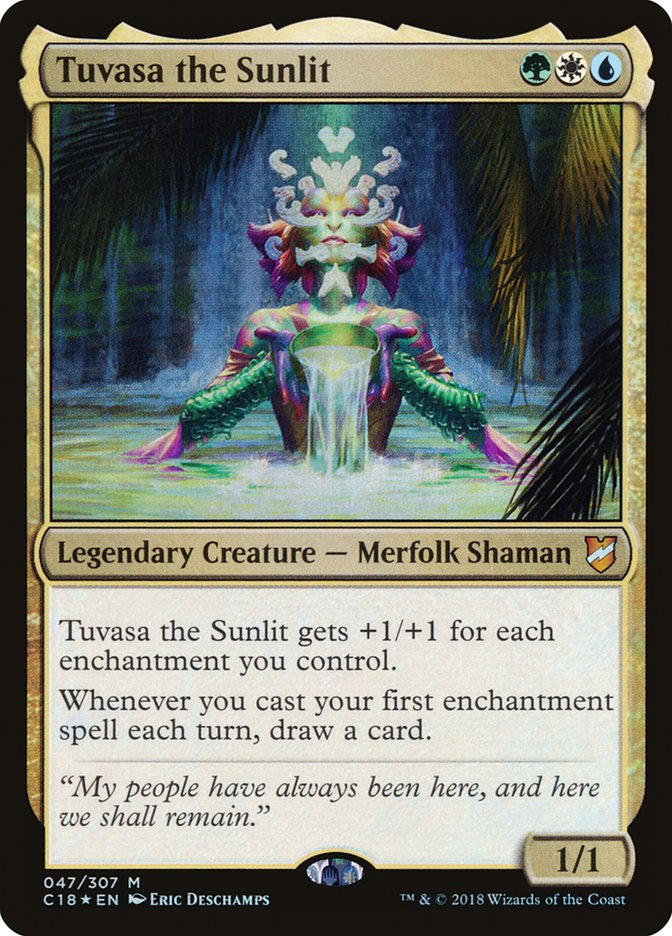
There are plenty of EDH enchantment decks out there. Go-Shintai of Life's Origin is arguably one of the best commanders for this theme, but Tatsunari, Toad Rider and Tuvasa the Sunlit are close.
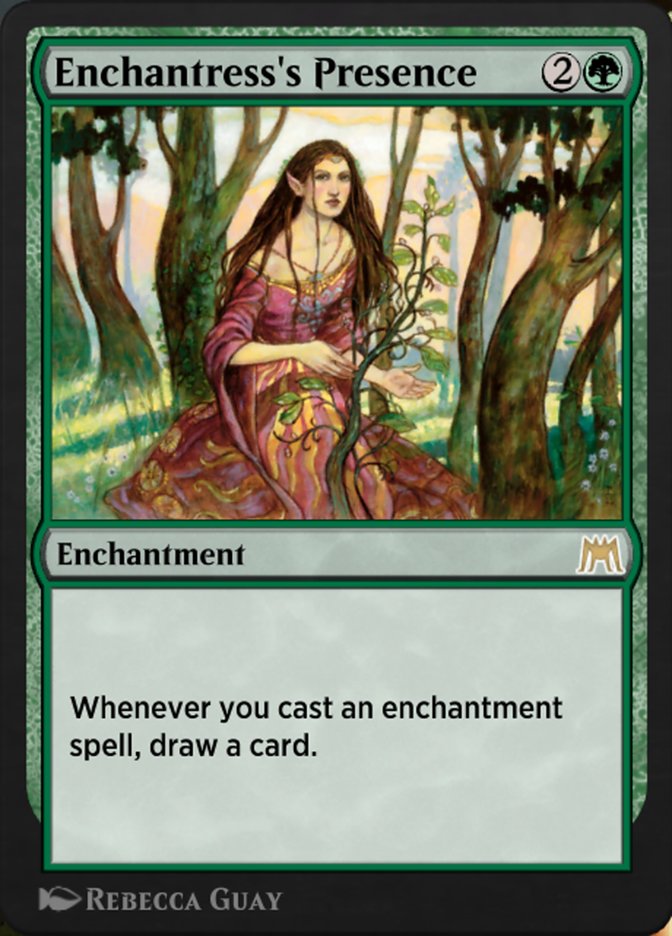
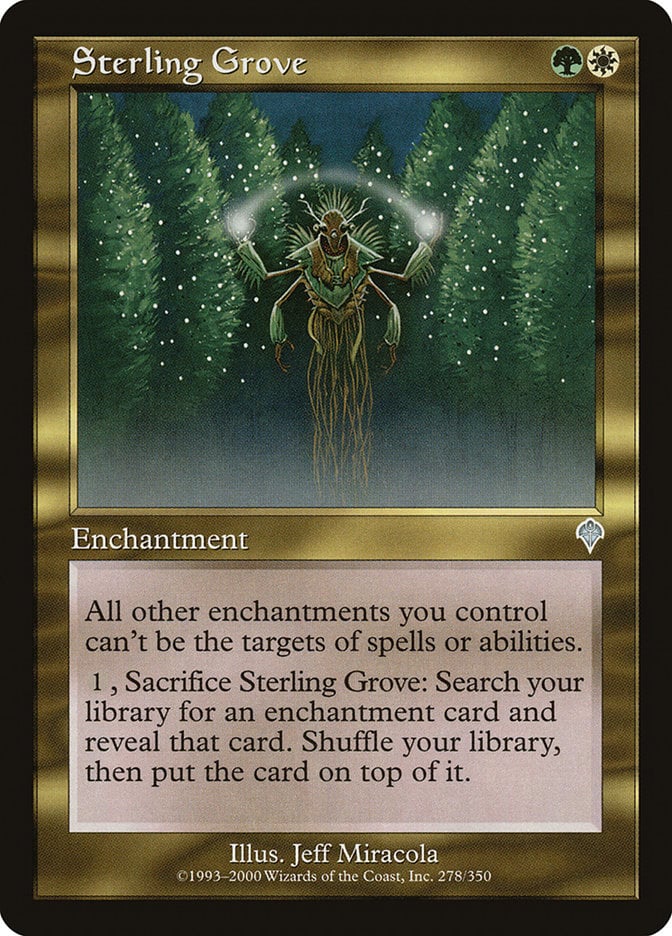
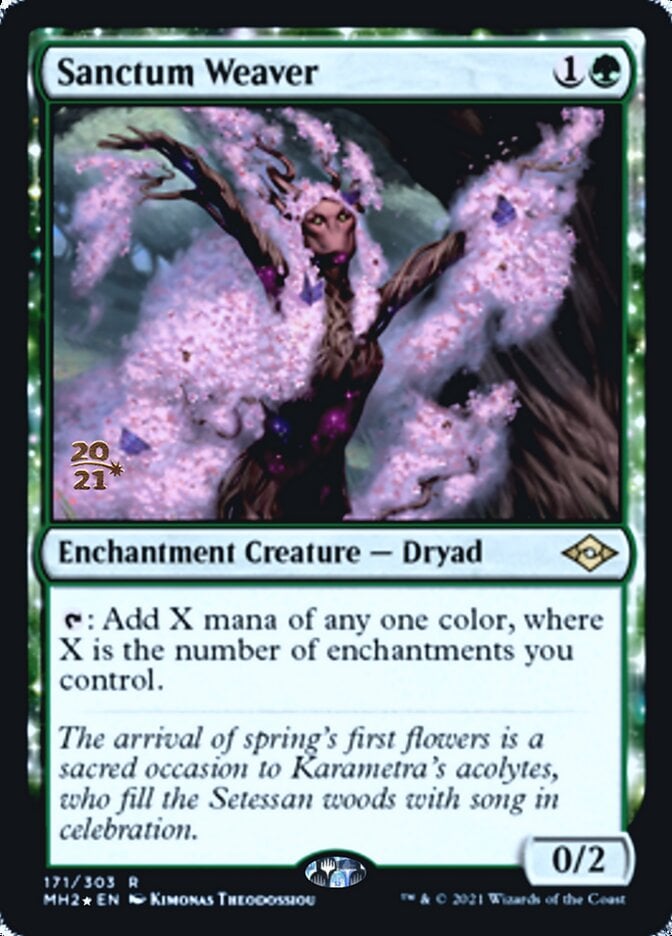
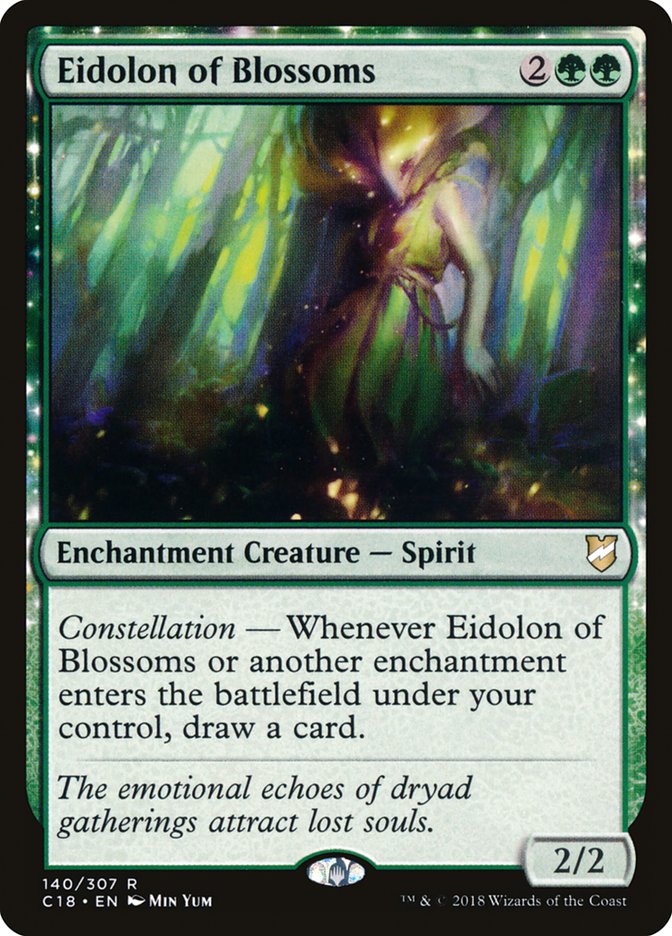
A funny thing about green enchantment synergy is that a lot of cards that work well with them are other green enchantments, and also white enchantments and Selesnya enchantment. Enchantress's Presence, Sterling Grove, Sanctum Weaver, and Eidolon of Blossoms are all incredible payoffs for a deck focused on green enchantments, and they’re green enchantments themselves.
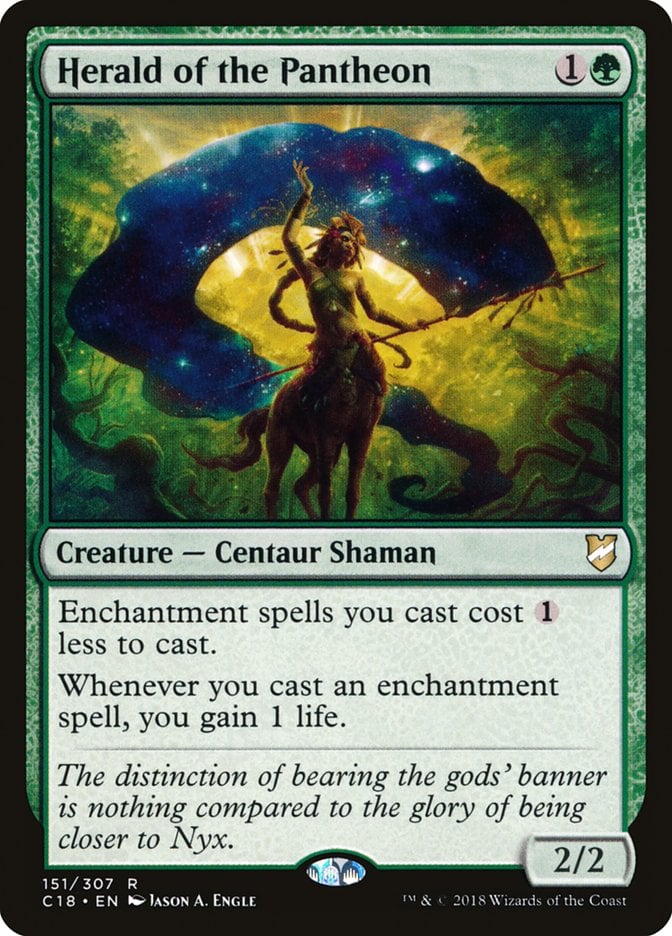
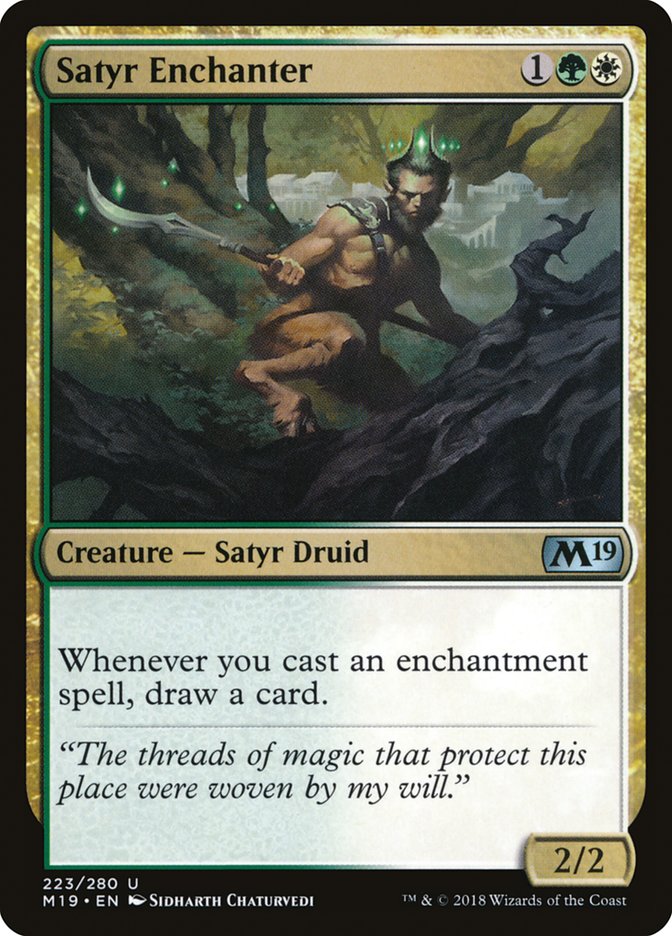
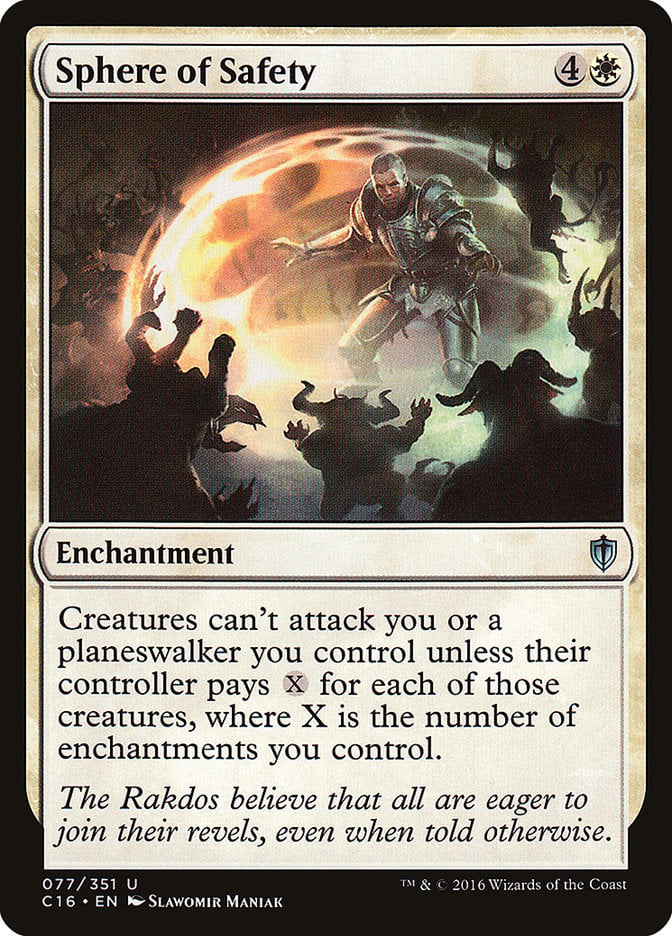
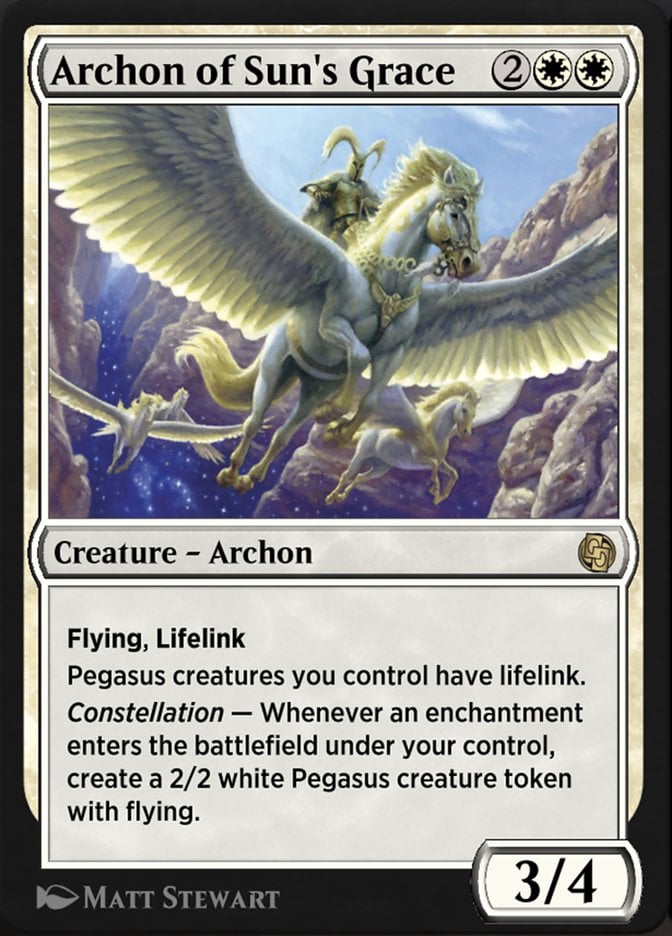
Herald of the Pantheon and Satyr Enchanter are great cards to have in enchantment decks. You can also consider things like Sphere of Safety and Archon of Sun's Grace if you’re building a GW+ deck.
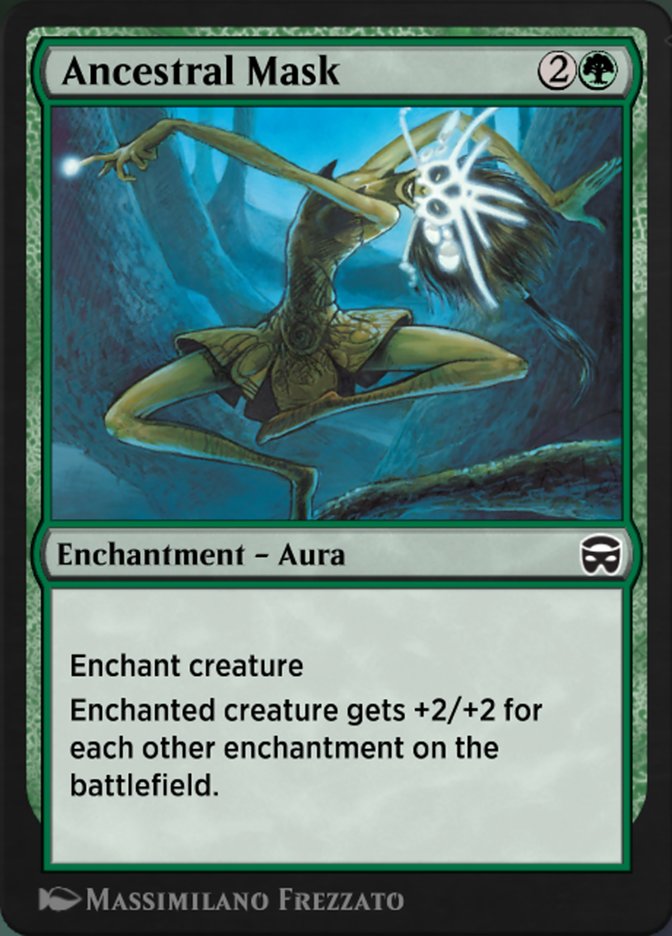
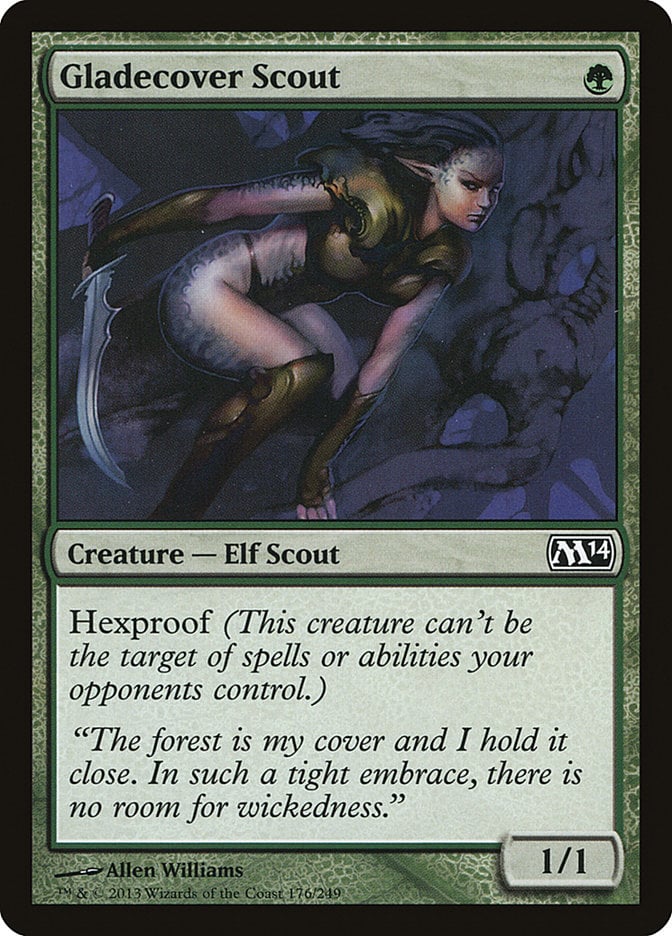
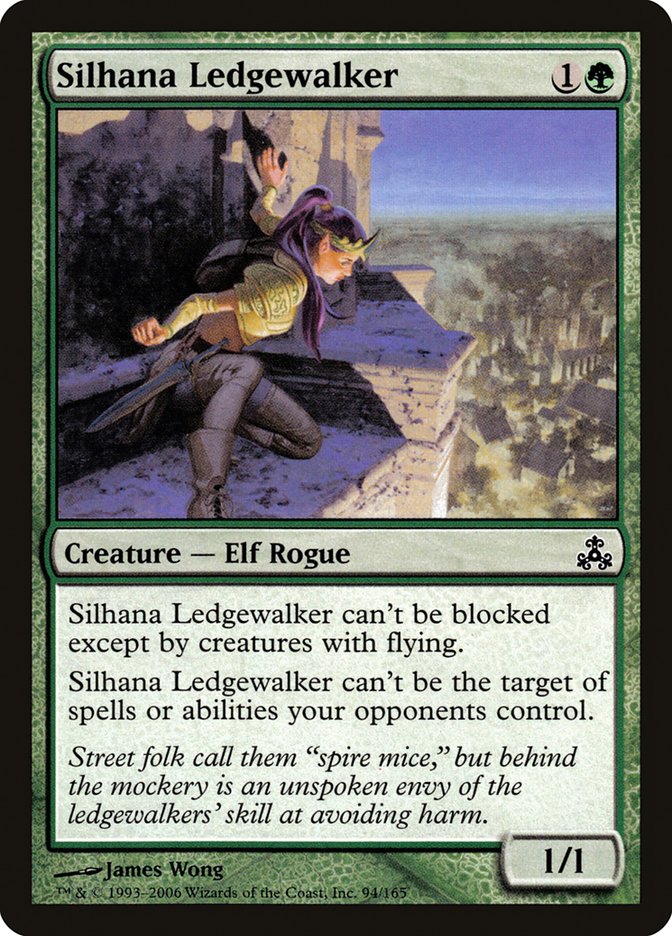
Green has access to plenty of great auras like Rancor and Ancestral Mask that shine when paired with cheap hexproof creatures like Gladecover Scout and Silhana Ledgewalker. These allow you to heap auras onto one creature with little concern for your opponents’ removal.
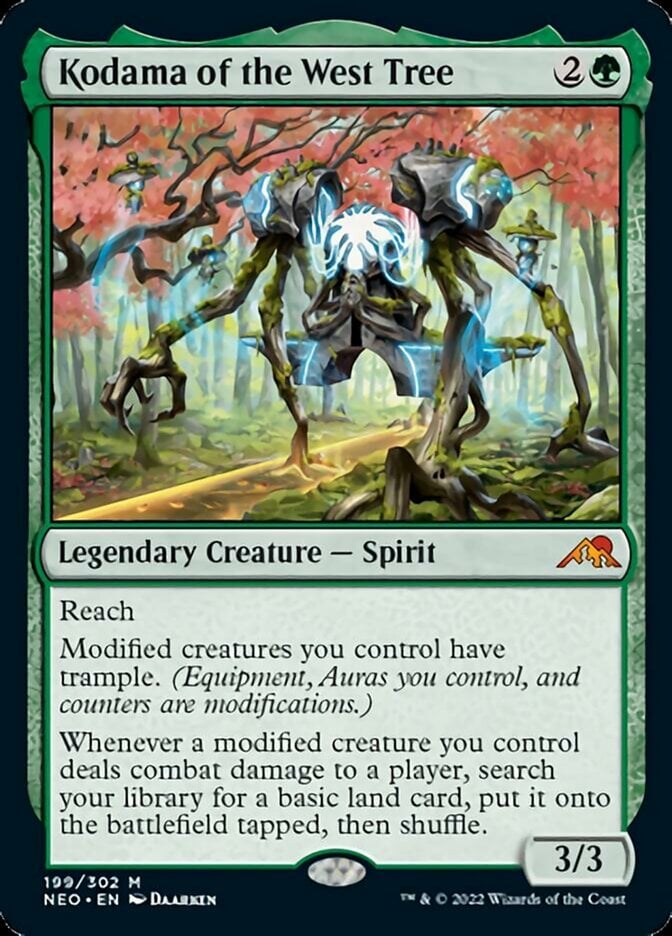
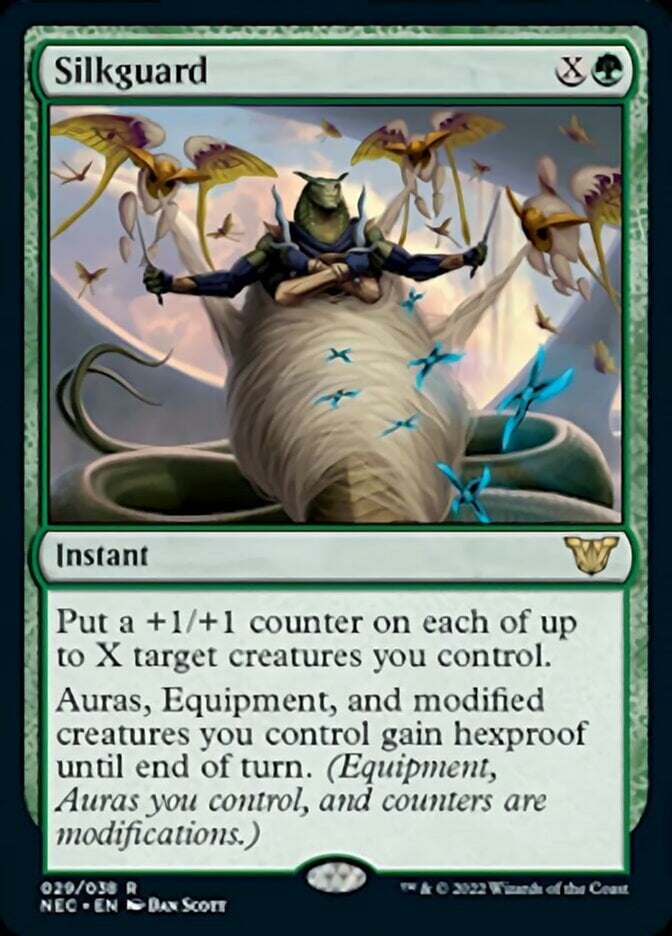
Between auras and many ways to bestow +1/+1 counters, green excels at modifying creatures. Payoffs for this include Kodama of the West Tree, an excellent ramp card, and Silkguard, a strong protection spell.
Wrap Up

Doubling Season | Illustration by Richard Wright
Green has gone from an enchantment-hating color to one that takes great advantage of them and has some of the best in the game. I personally love some of these cards and play them in one or more of my EDH decks.
What do you think? Do you think a green enchantment deck is a viable strategy? Would you add some other enchantment to this list? Feel free to leave a comment down below or over on Draftsim’s Twitter. Unless you’re gonna criticize me for playing an infect deck in Modern. We can discuss that another time.
That’s all from me for now. Have a good one, and I’ll see you next time!
Follow Draftsim for awesome articles and set updates:










Add Comment