
Last updated on October 5, 2026

Demonlord Belzenlok | Illustration by Tyler Jacobson
Each plane of Magic has its own connections to magic and nature, and while some like Theros have gods, what happens when you get something that’s even more ancient than a god? Enter elders. And they don’t all care for our adoration and worship. In some cases, fear does just fine.
It’s time to bone up on some of our favorite Magic villains, some of the most iconic characters across its entire story. We’re looking at cards only, though, and I’m laser-focused on the elder creature type.
Let’s see what some of our favorite planes’ oldest beings can offer you!
What Are Elders in MTG?
Shilgengar, Sire of Famine | Illustration by Chris Rallis
Elder is a creature type in Magic that serves as a creature class. It’s used to highlight important, powerful, often long-lived beings. The creature type was introduced with the original cycle of elder dragons in Legends from which we get the Commander format’s original name: Elder Dragon Highlander (EDH). Those dragons received a modernized treatment in the M19 core set, and there have been other elder dragon cycles since. There have also been elder dinosaurs in various Ixalan sets, some elder giants associated with Theros, the Hexhaven elder sphinxes from Reality Fracture, and a smattering of elders in other MTG sets.
The word “elder” appears in many creatures’ names; those aren’t our focus today, though that could make for a neat gimmick for your last deck of the night.
I’m keeping my eye on Commander since the elder dragons gave us the format, and I’m looking more toward today and the future than the past, though I’m ranking both with an eye to using these legendary creatures in the command zone and in the 99. But considering that these are all big creatures with lots of board presence, the margins between individual slots is razor thin.
Unranked: Playtest Cards


These playtest cards come to us from the 2024 Unknown Event and represent a pair of 5-color elder dragons and a Naya () sable judge. Genevieve, Conniving Dragon has a combat trigger that plays into the party mechanic, dice rolls, and Treasure. Eldest Dragon Highlander’s name should be obvious, and its abilities are silly. It would play well with Ramos, Dragon Engine to help ramp it out.
There’s also The Battle of the Dragon Brothers / Fate Reforged, a battle that transforms into a saga. The backside allows you to create a token copy of one of the Legends elder dragons.
Honorable Mention: The Coming of Galactus
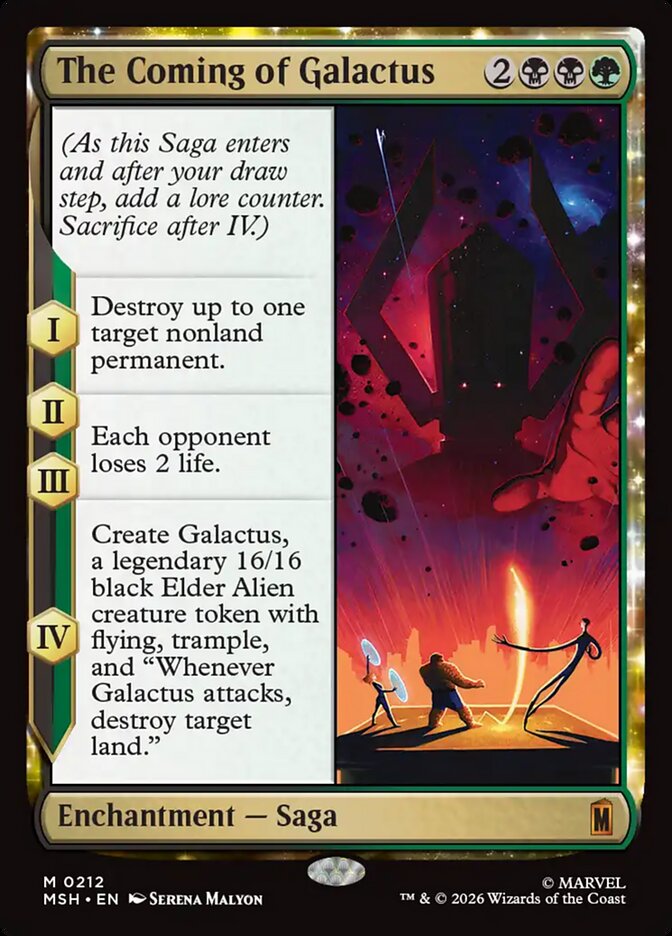
While The Coming of Galactus isn’t an elder, it creates an elder Galactus token. It’s a totally fine card for a slow, grindy deck: Blow up a permanent, pressure your opponent’s life, then get a fatty that either kills more stuff or forces out a removal spell. This is the card midrange players dream of.
#65. Chromium
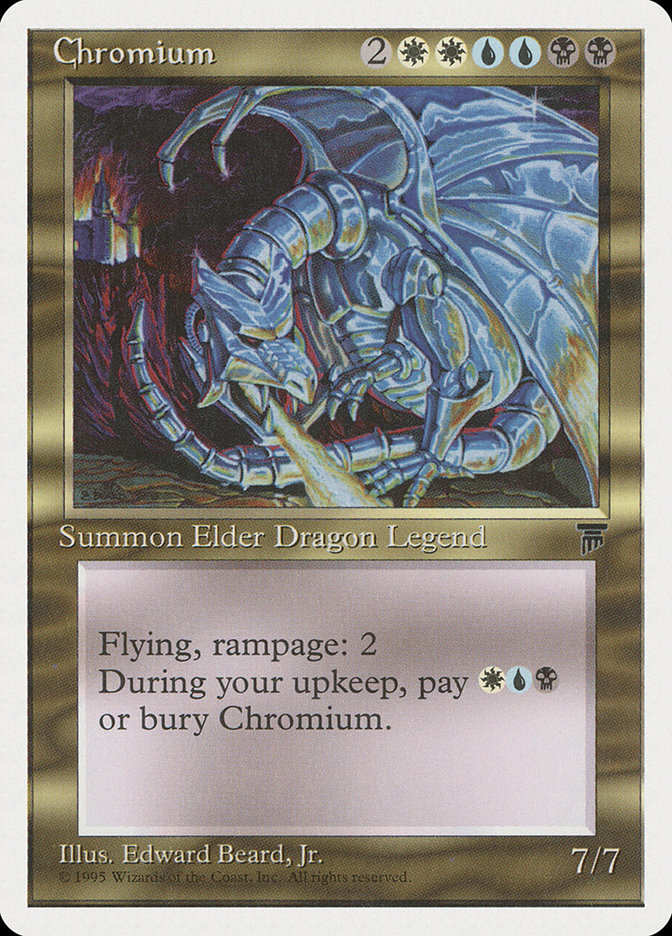
Chromium sucks, mostly because rampage is famously one of the worst mechanics ever printed: Your opponents can just… not double block, and it never does anything. Chromium doesn’t even have trample to punish a chump blocker.
#64. Arcades Sabboth
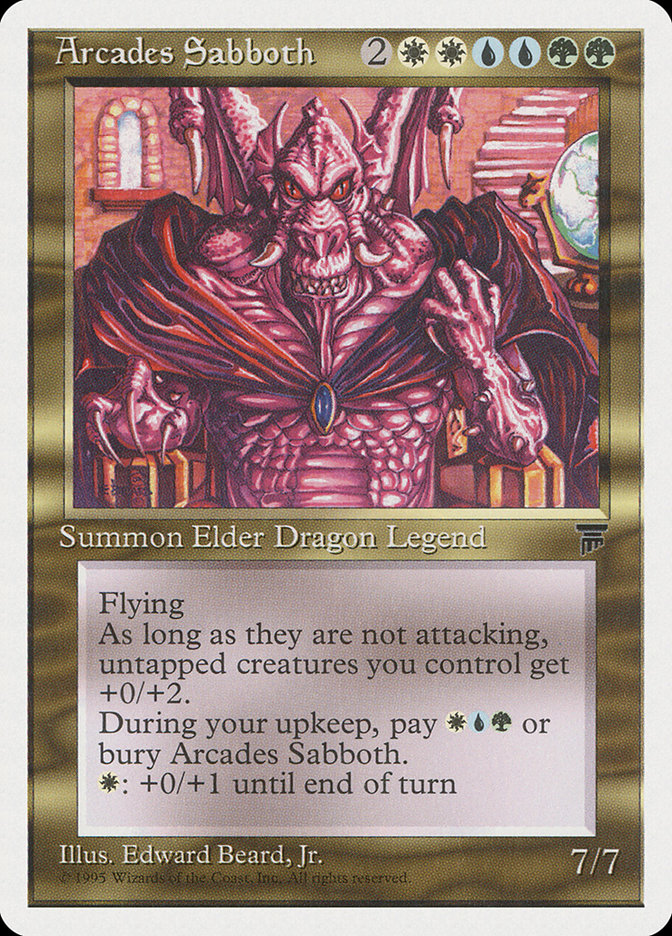
Arcades Sabboth is very cool if you want to block, but you better not plan on making those defenders attack, or they lose the buff. The best I can say about this textbox is that it inspired the actually interesting Arcades reinterpretation in Core Set 2019.
#63. Vaevictis Asmadi
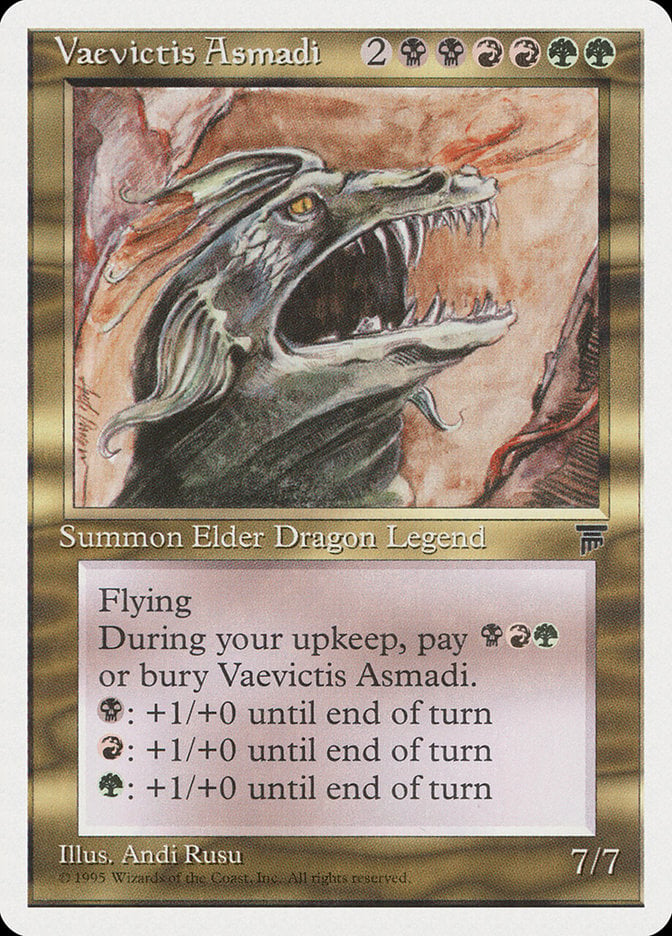
Giving dragons firebreathing is a classic, though I’m admittedly stumped about why Asmadi has green and black firebreathing, too. It’s a dismal card compared to Shivan Dragon, which boasts firebreathing at a lower mana cost and doesn’t tax you.
#62. Palladia-Mors
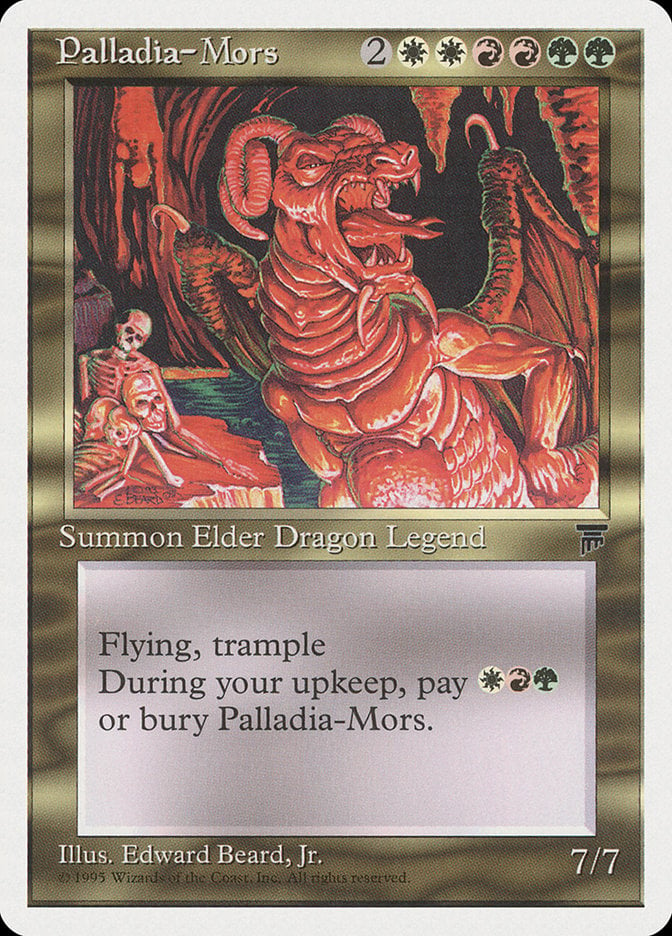
Palladia-Mors has one of the better textboxes among the original elder dragons, though that says less about flample being good than the others being weak.
#61. Nicol Bolas
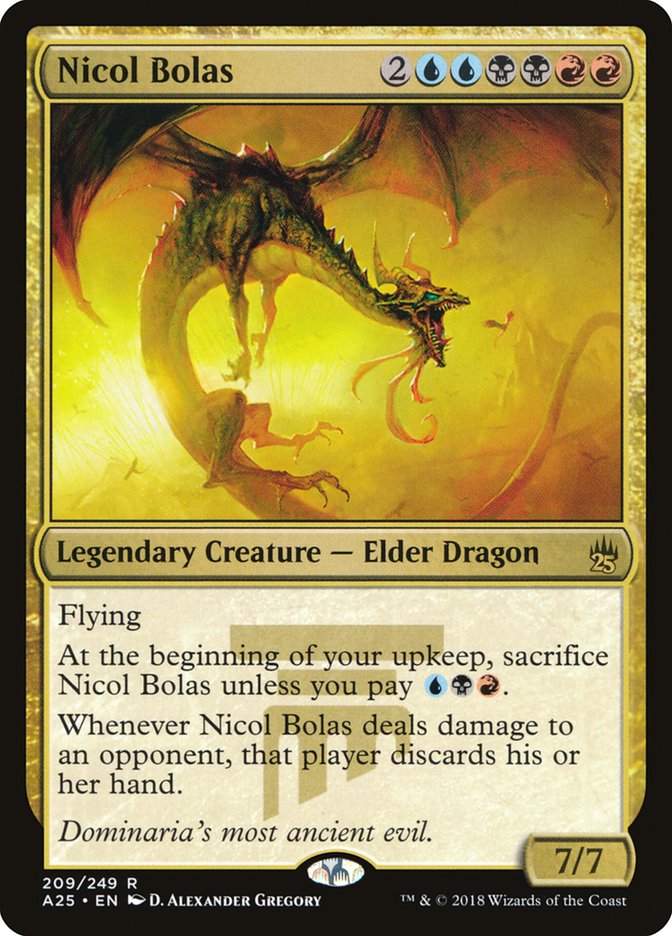
Everybody’s favorite villainous dragon is the only member of the original cycle to have a meaningful ability. Even then, it’s questionable; how many cards will your opponent really have in hand by the time you’ve played a 7-mana spell and it survives to attack? Maybe it gets by as a janky reanimation target.
#60. Dragonlord Atarka
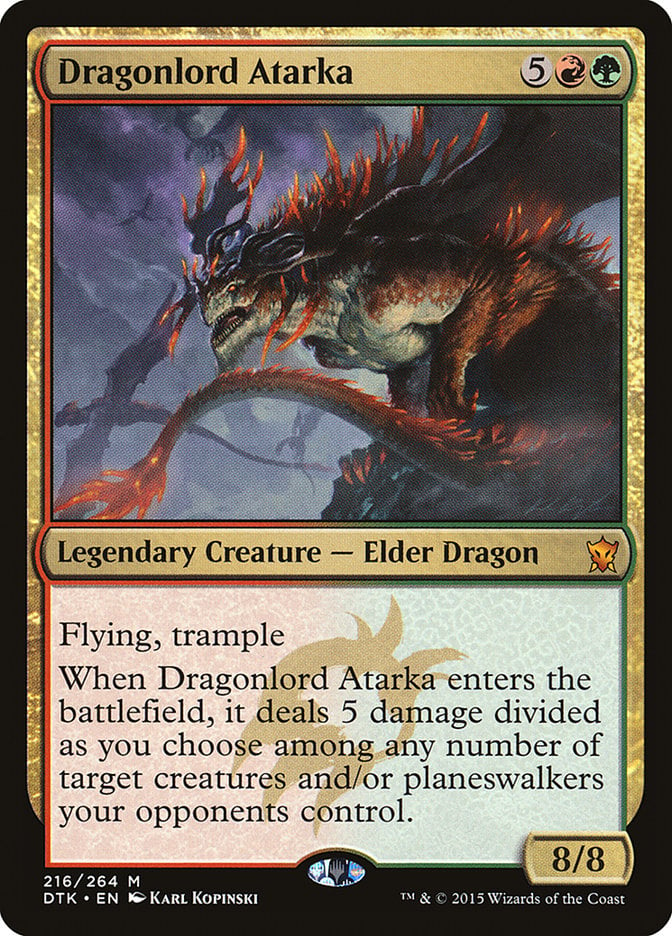
This sequel isn’t better than the original. Dragonlord Atarka just doesn’t do enough when it enters to encourage me to play it in the decks where I could.
#59. The Lion-Turtle
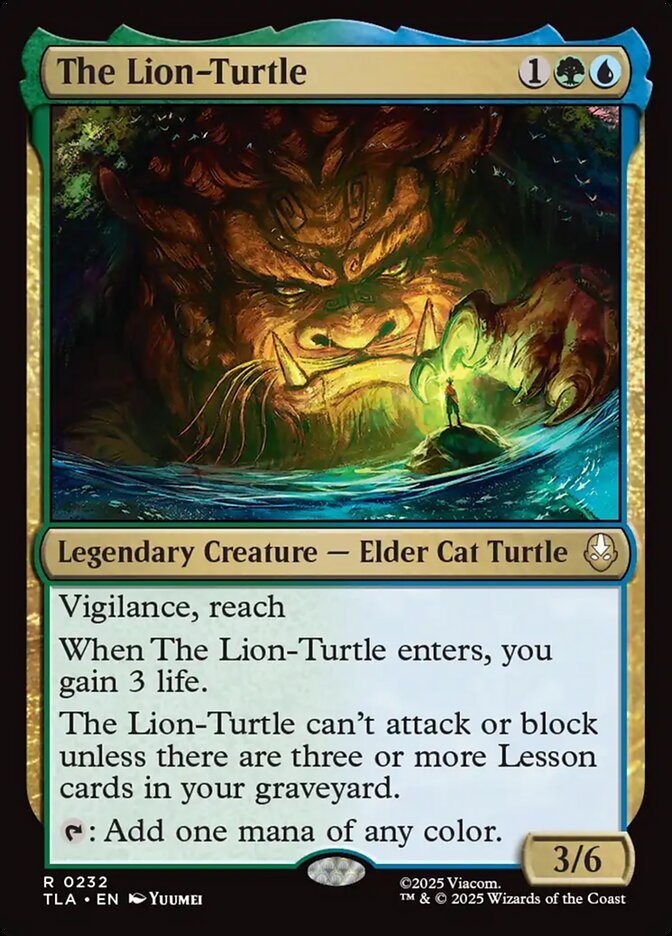
The Lion-Turtle is severely held back by a lack of strong lessons. It’s a decent mana dork, and I see it doing well if a proper midrange-lessons shell ever emerges, but I expect it to be on the bench for now.
#58. Palladia-Mors, the Ruiner
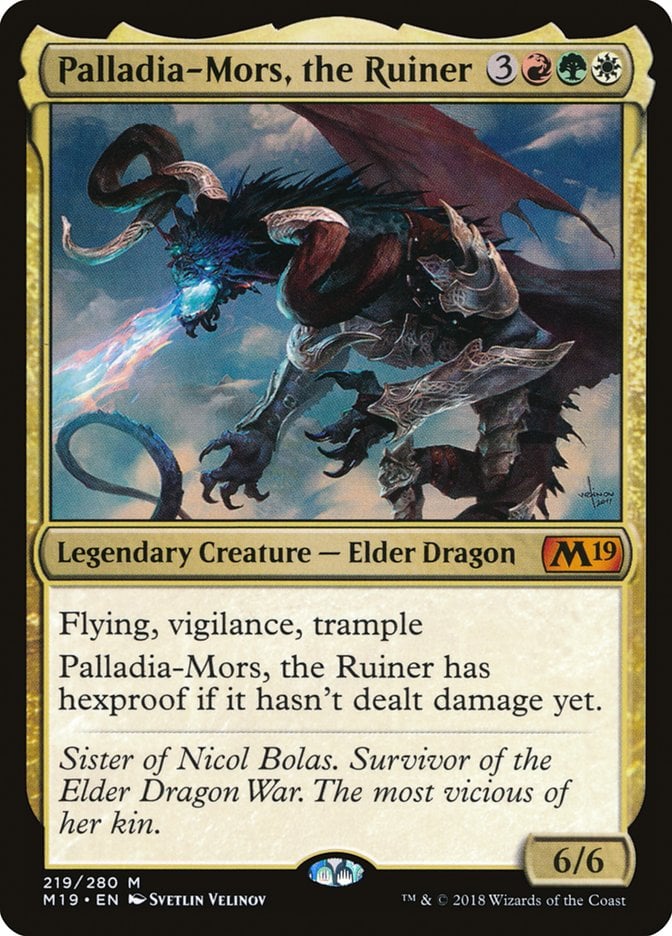
You could do worse than build Palladia-Mors, the Ruiner as a Voltron commander given the keywords it already has, though it’s funny we see comparable commons these days like Karakyk Guardian and Ruric Thar, Magecrusher.
#57. Tetzimoc, Primal Death
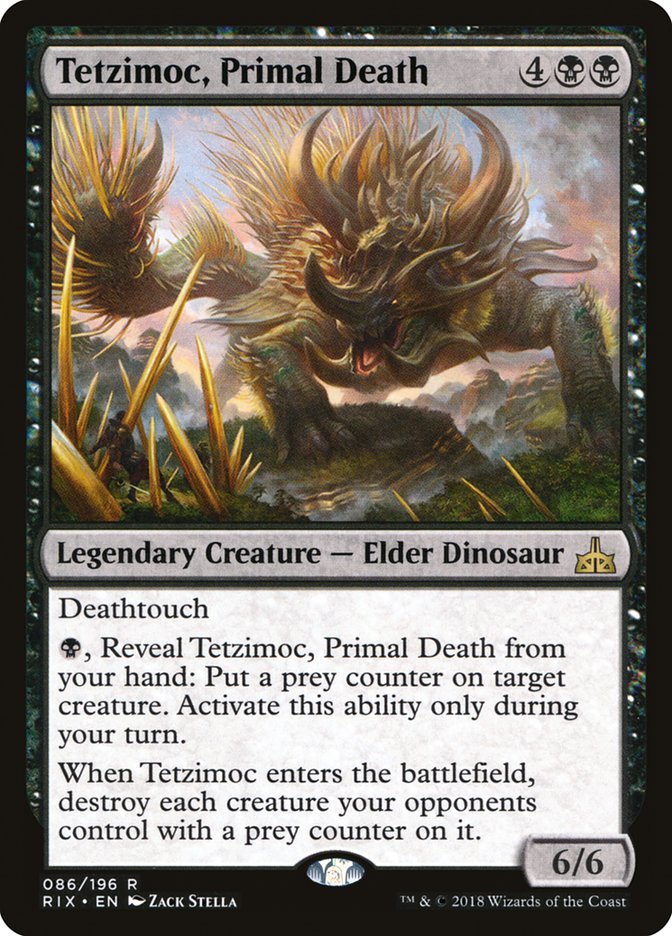
I had a shower thought the other day about how I want Wizards to get silly and give us an archetype built around revealing cards from your hand. Ruthless Ripper already enables some combos with Missy and Ashnod's Altar, but I like the idea of packing a deck with that combo and a Tetzimoc, Primal Death combo.
#56. Venat, Heart of Hydaelyn / Hydaelyn, the Mothercrystal


Venat, Heart of Hydaelyn is a solid support card for a legends deck. Even a worse Reki, the History of Kamigawa is pretty good for redundancy, so you can play this in any deck with a critical mass of legends. I wouldn’t expect to transform it into Hydaelyn, the Mothercrystal too often since it costs so much, but the flexibility is nice.
#55. Chromium, the Mutable
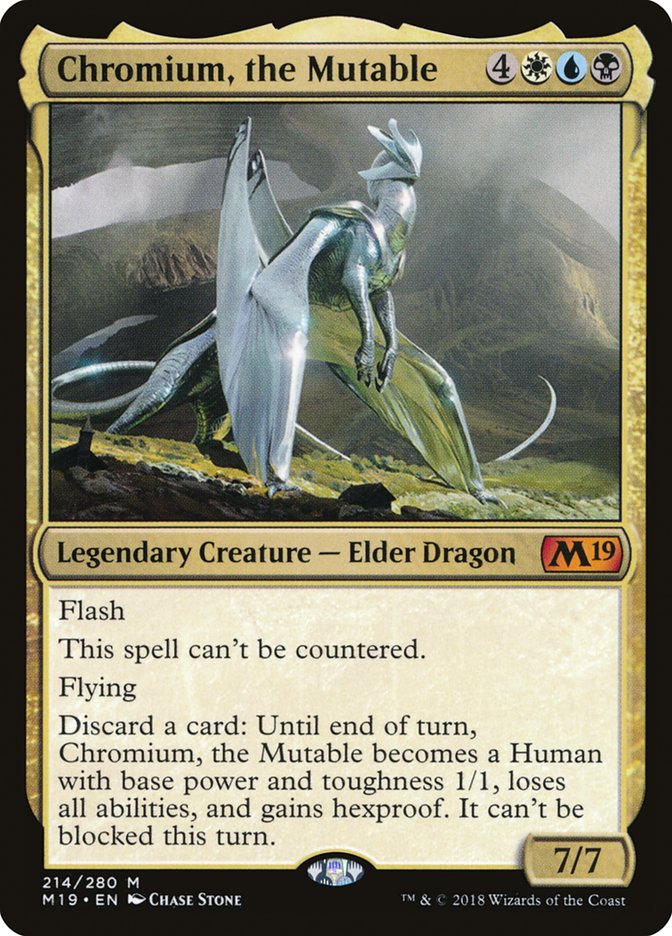
Chromium, the Mutable can benefit from discard payoffs, or you can take advantage of the unblockable part of its ability to give it equipment with saboteur abilities or infect. This largely underperformed expectations as a Standard control finisher, but it has some promise in casual settings.
#54. Galactus, Devourer of Worlds
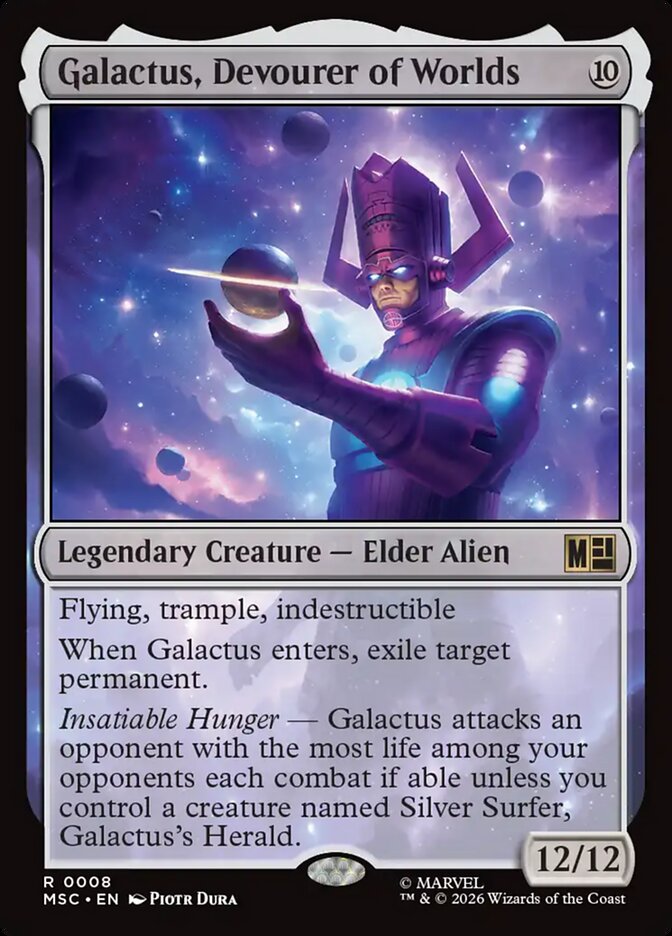
Galactus, Devourer of Worlds exists in a similar space to Ulamog, the Ceaseless Hunger and Summon: Bahamut as massive colorless threats that remove a permanent, then keep chewing. While it’s weaker than those, it still hits pretty hard and it’s significantly cheaper—a few bucks rather than $20+.
#53. Tanazir Quandrix
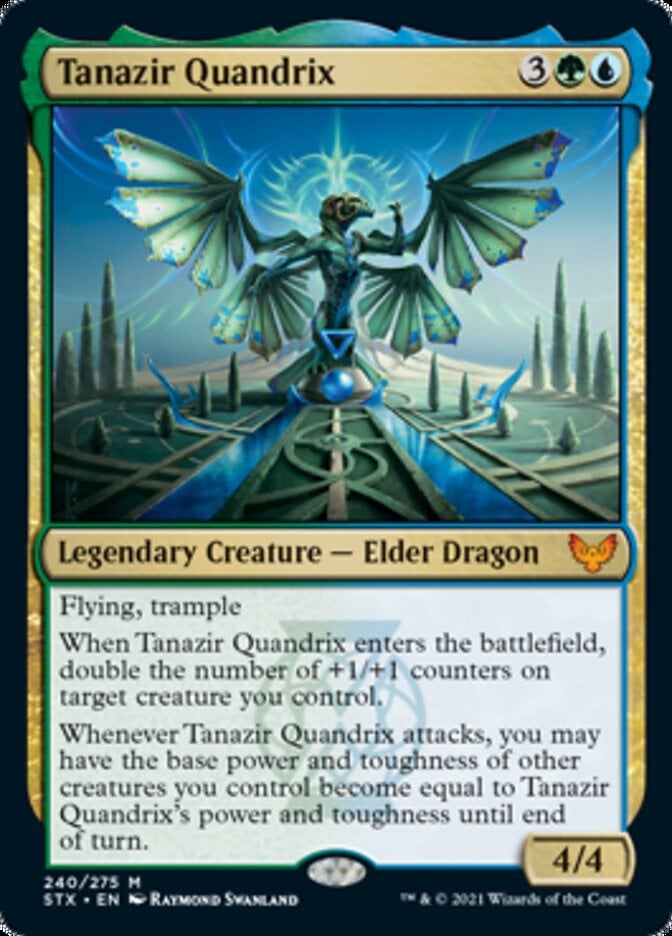
You don’t even need to pay attention to Tanazir Quandrix’s +1/+1 counters text to make it valuable, although it really helps. Pair its second ability with some Overrun effects and your opponents are going to take a beating.
#52. Ghalta the Immovable
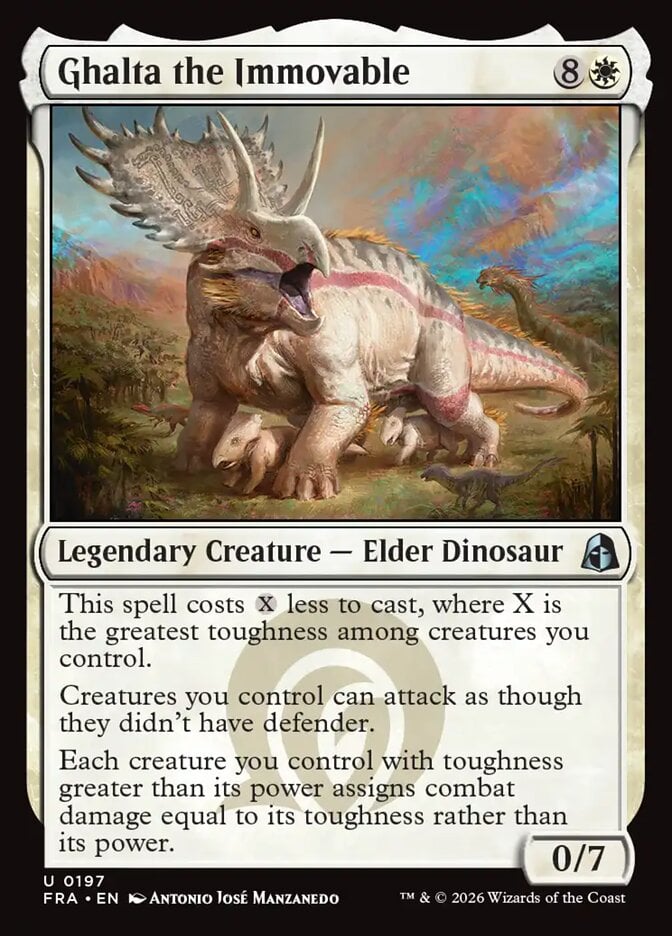
Ghalta the Immovable is basically a cheap 7/7 for a toughness-matters deck. It’s never going to be the commander because there are better options with more colors, but it belongs in the 99 pretty much always.
#51. Ghalta the Unstoppable
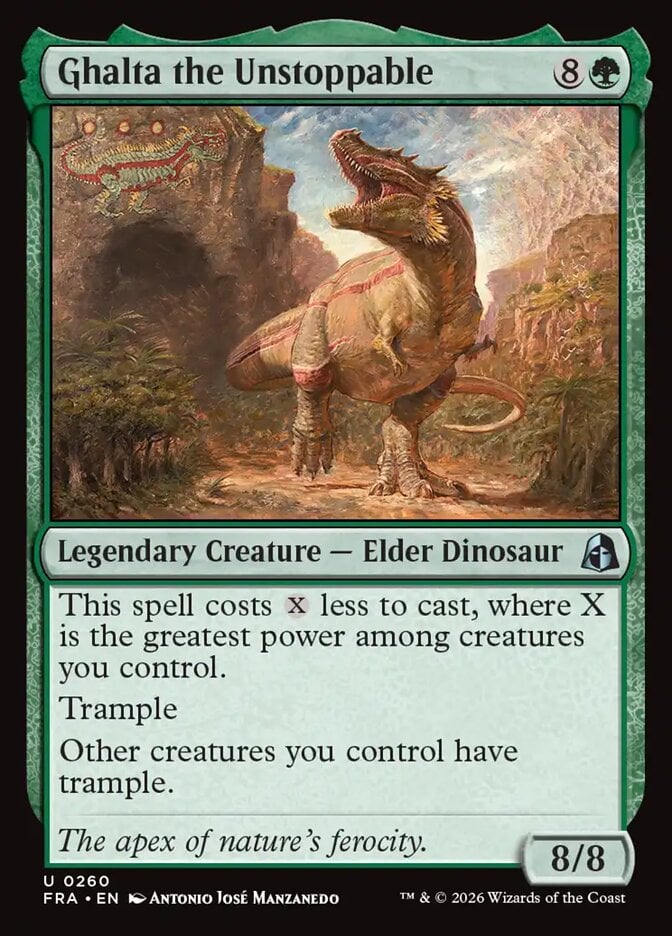
Ghalta the Unstoppable could be impressive… if it weren’t just Ghalta, Primal Hunger shrunk down to be an uncommon. I do think it has potential. Eight is close enough to 12 that a deck with Ghalta Prime and support like Greater Good probably still plays this.
#50. Velomachus Lorehold
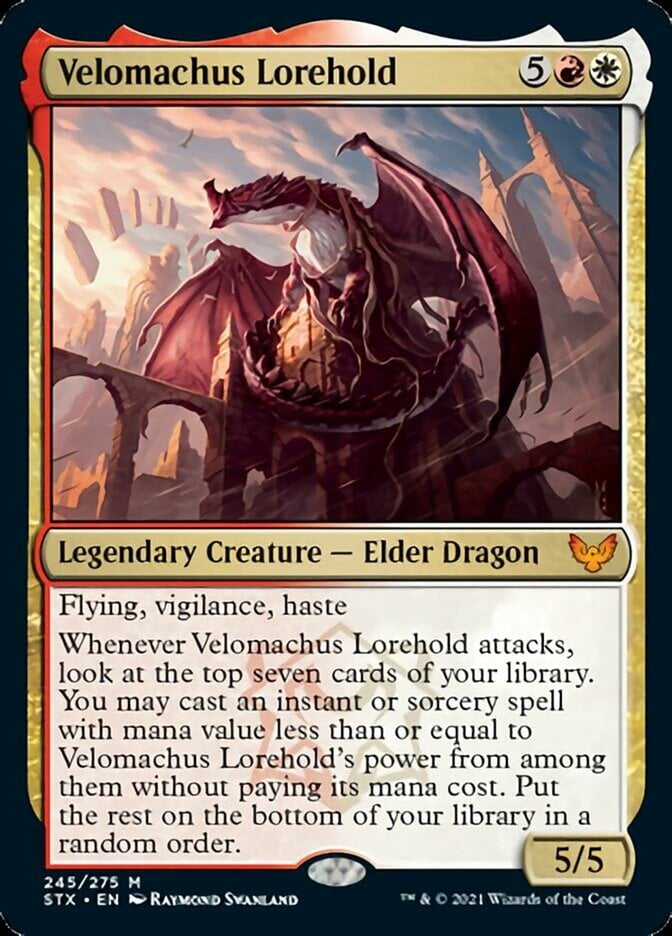
Velomachus Lorehold’s attack trigger churns through your library for instants and sorceries, and I can’t believe it also has vigilance. You can use combat tricks to increase its power, giving you access to higher-mana instants and sorceries for free. Pair that with some extra combats and evasiveness, and you’ll find yourself circling the table in a fiery aerial assault.
#49. Piru, the Volatile
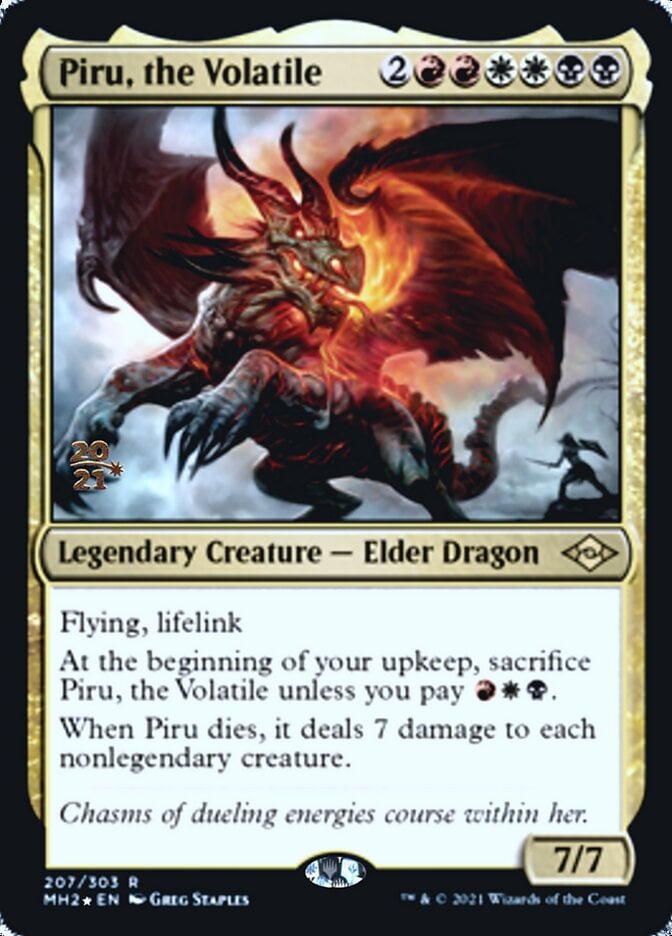
Modern Horizons 2 gave us Piru, the Volatile, and elder dragon that uses the same templating as the original cycle in terms of its upkeep trigger and mana value. This Mardu () dragon improves with a bomb of an effect, since it takes a lot of creatures down with it when it dies. Its lifelink and the fact that it deals the 7 damage itself mean that you’re also gaining that much life in the process.
#48. Vaevictis Asmadi, the Dire
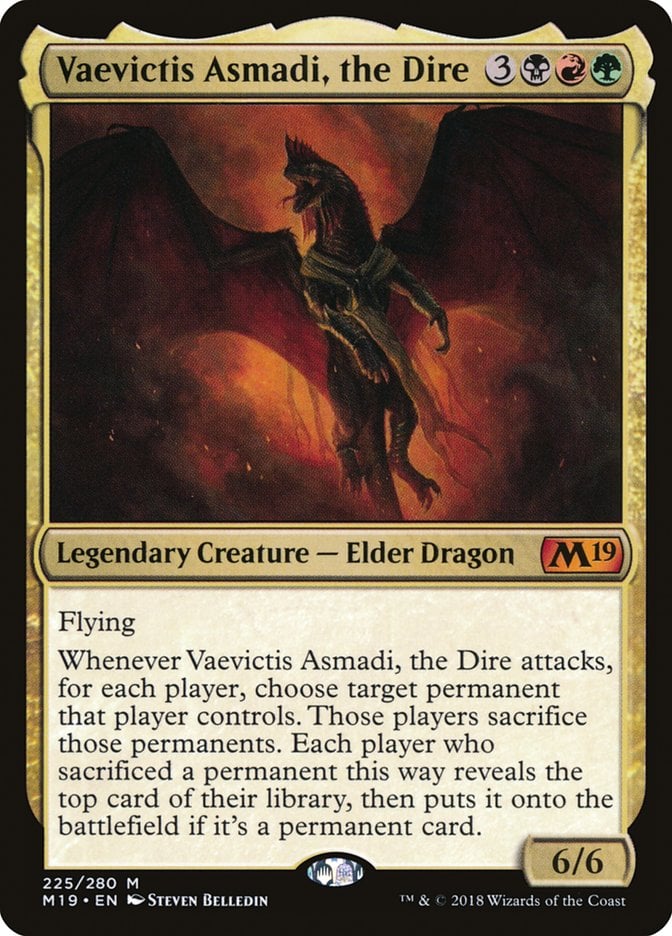
Forced anything can make your opponents have less fun and become salty, and forced sacrifice is no different. I say that as the kind of player that loves these playstyles.
Vaevictis Asmadi, the Dire lets you remove permanents when it attacks and possibly replaces them with the top card of their owners’ library. It’s chaotic and very match-up dependent, but that’s the deal you make when you’re playing Jund () as a devilish color identity.
#47. Nephilim Epochal
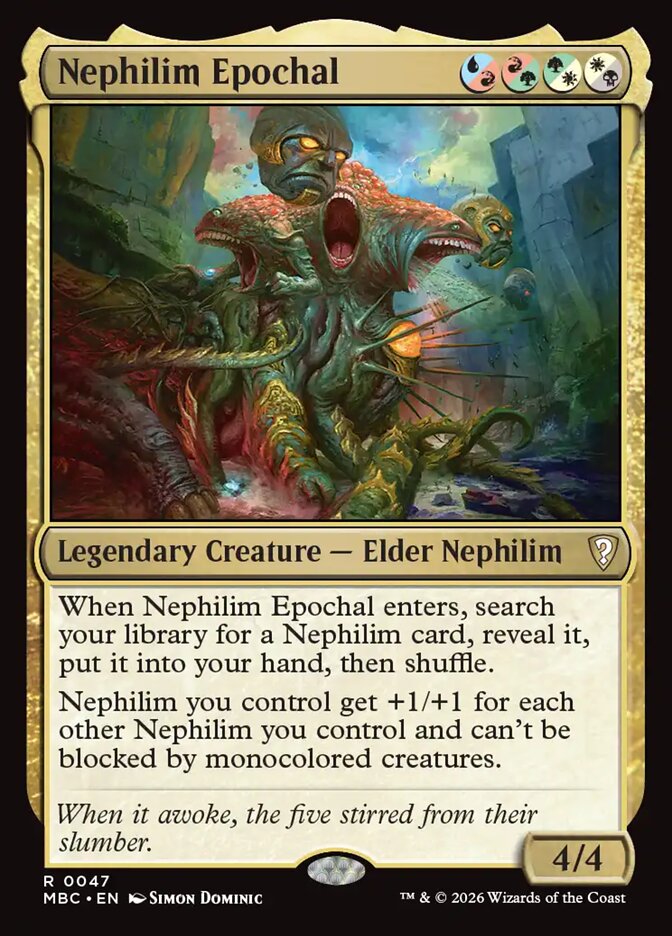
Gatecrash‘s nephilim were famous for being Rule 0’d as 4-color commanders prior to any of them being leaked, but they were never legal commanders. Nephilim Epochal finally gives them a commander. That said, there are only four nephilim, so expect to pad it out with plenty of changelings.
#46. Zetalpa, Primal Dawn
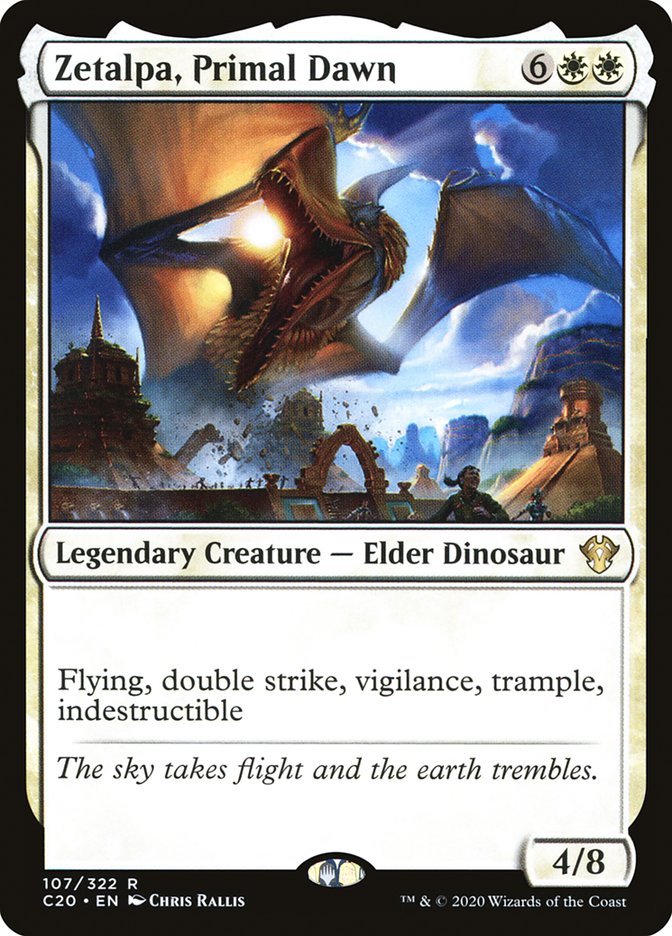
Zetalpa, Primal Dawn has been reprinted in so many Commander precons that it’s practically a meme now. It’s easy to acquire for your dinosaur decks and any commanders that care about keywords like Kathril, Aspect Warper and Odric, Lunarch Marshal. It’s worth it if you can ramp into it with a deck that deals damage based on toughness, and it’s a worthwhile threat if you can cheat it out. We stan the versatility.
#45. Kroxa and Kunoros
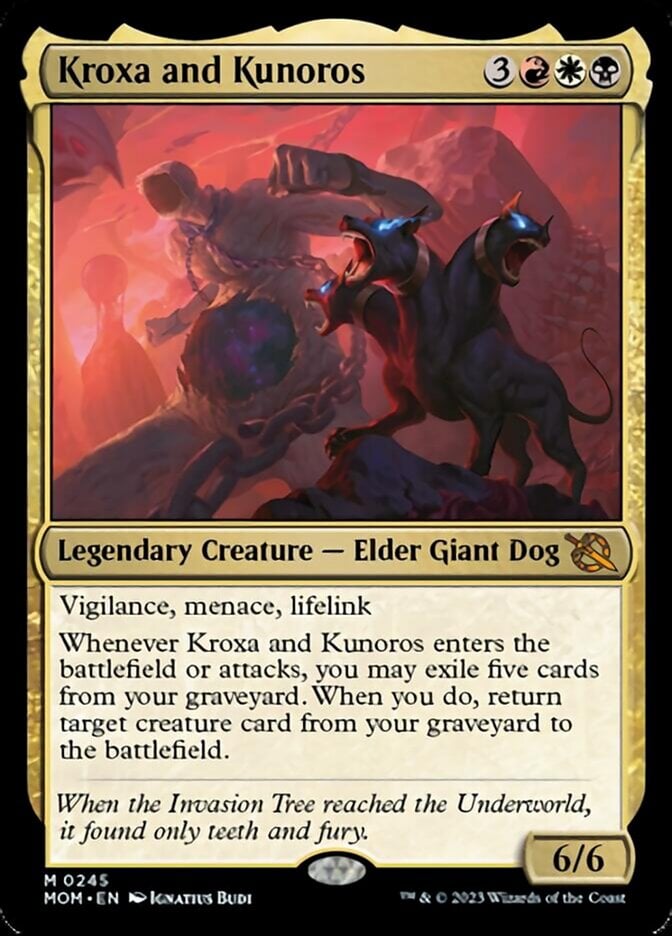
You’ve got to squint to see the original cards more with Kroxa and Kunoros compared to many of the other potential commanders from March of the Machine. The keywords come from Kunoros, Hound of Athreos, while Kroxa, Titan of Death's Hunger lends its enters/attack trigger to allow other creatures in your graveyard to escape, although without using that word. You can play it at the front of a Mardu reanimator deck, or you can lend its keywords to a commander that cares about those.
#44. Fandaniel, Telophoroi Ascian

Fandaniel, Telophoroi Ascian is a pretty good payoff for a graveyard-heavy spellslinger deck. Think of it as a support piece for commanders like Emet-Selch of the Third Seat or Gale, Waterdeep Prodigy. It’s certainly slow but not unplayable.
#43. Hraesvelgr of the First Brood

Hraesvelgr of the First Brood is in a similar spot to Fandaniel: It’s too slow to be anything more than a casual threat but a very engaging one. I wouldn’t run it as a commander because it’s mono-colored, but it looks like a great accessory to commanders like Narset, Enlightened Exile and Sokka, Tenacious Tactician.
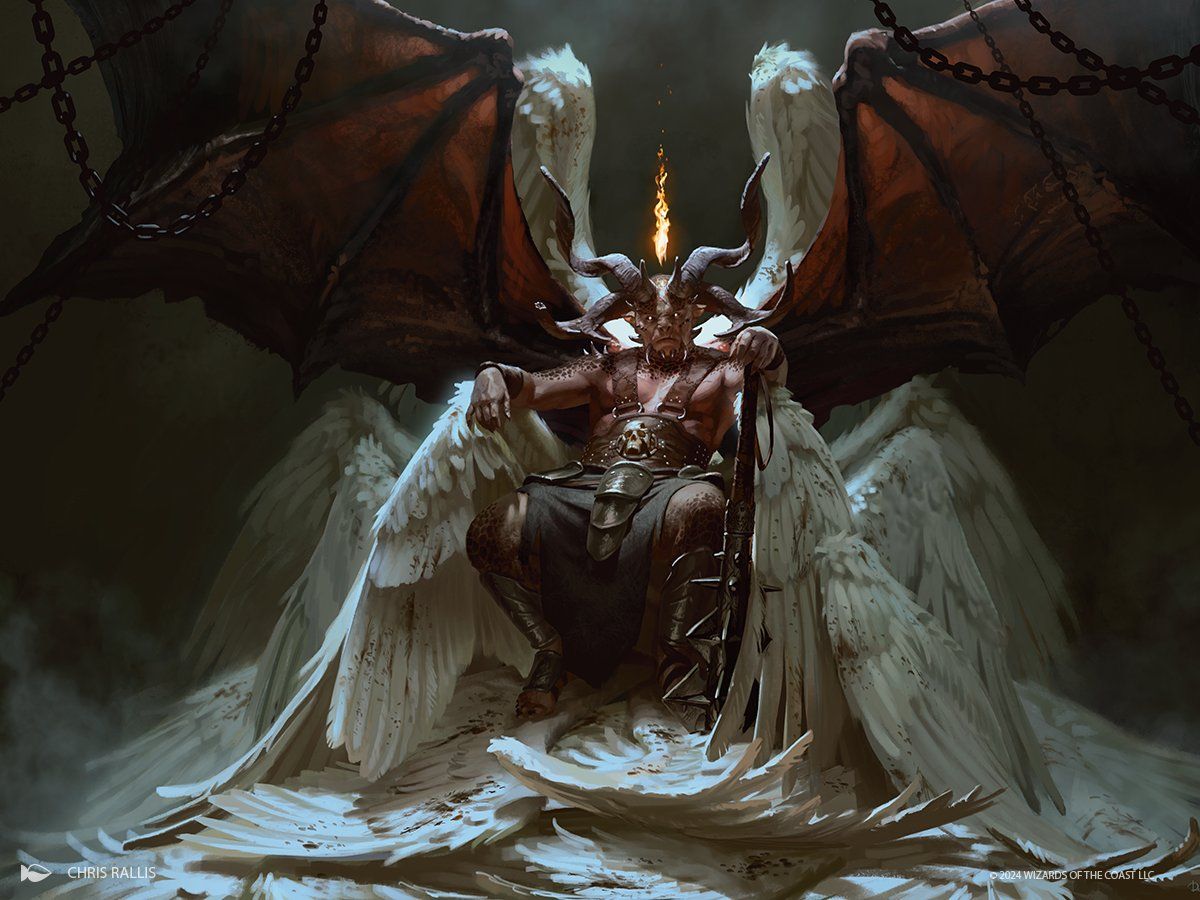
#42. Shilgengar, Sire of Famine

Should I make Pokémon or Hazbin Hotel references? Shilgengar, Sire of Famine pairs well with angels and aristocrats. You can cash in your Blood tokens later for mass reanimation. Mass blink effects like Semester's End will let you get around the finality counters if you want to.
#41. Demonlord Belzenlok
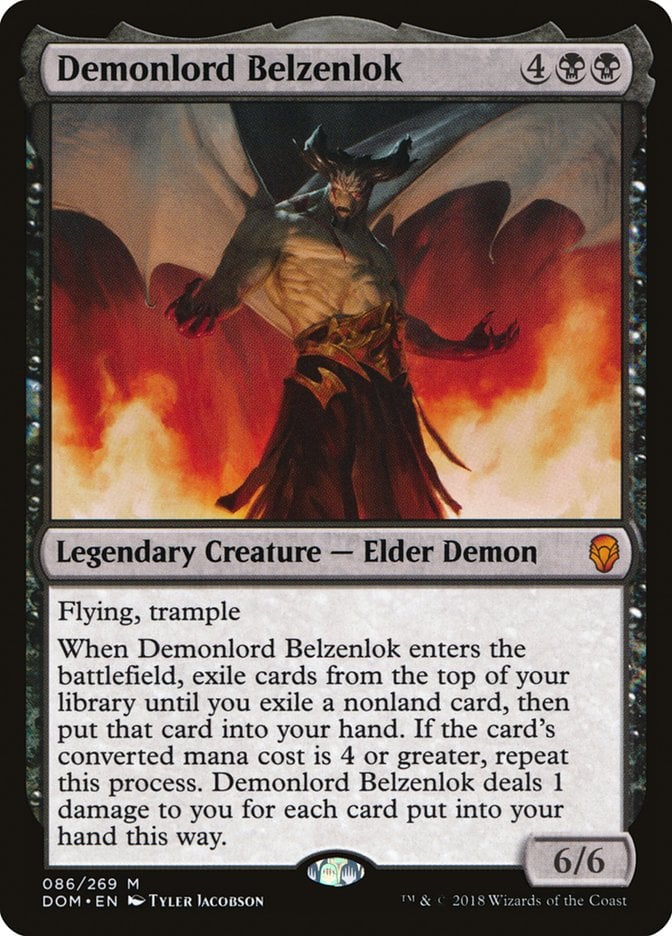
Demonlord Belzenlok’s enters ability is a big-mana payoff, which is very useful in support of another demon commander. Black also has tools that allow you to take advantage of the damage that you take, and at worst you could make an indestructible creature your Pariah.
#40. Dragonlord Silumgar
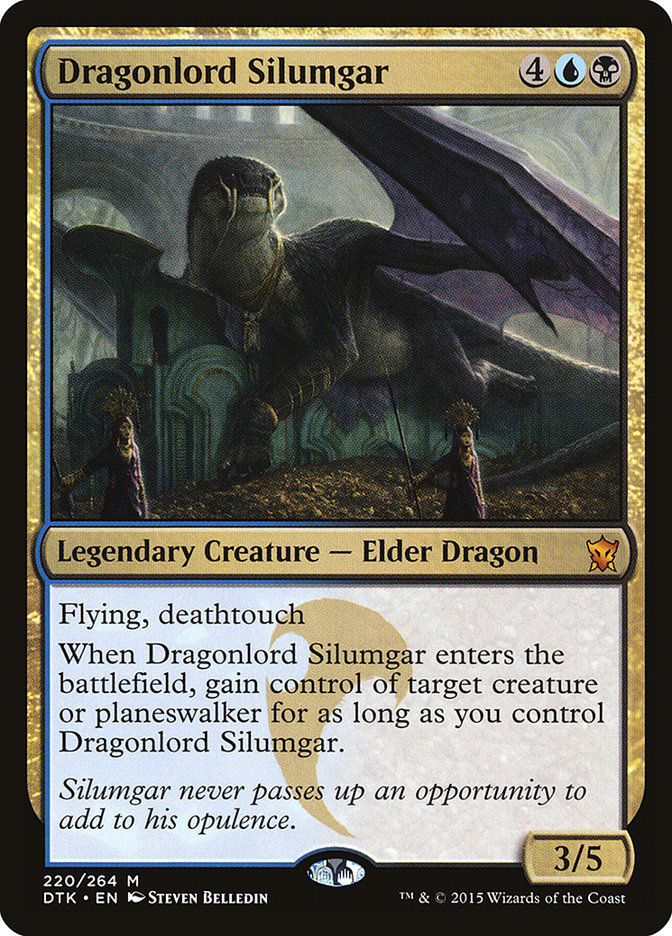
A Dimir () dragon that steals a creature for as long as you control it, Dragonlord Silumgar has its own specific homes where it doesn’t disappoint. It doesn’t grant the creature haste, but there’s room for a steal and sac strategy, especially if you can copy it, blink it, or reanimate it.
#39. Ancient Bronze Dragon

Being the least useful of an elder cycle like this is a really backhanded compliment, but Ancient Bronze Dragon is exactly that. It’s got a place with some +1/+1 commanders, but they tend to be more Gruul () than Selesnya (). Some dragon commanders use it, but dragon decks that go green just don’t tend to support the dice roll or counters themes as much. You’re not wrong to use it, but it’s got the type of abilities that makes it more likely to be removal bait than stick around. I’d find it overkill in my Atarka, World Render deck, for example.
#38. Hermes, Overseer of Elpis

Hermes, Overseer of Elpis generally looks worse than Talrand, Sky Summoner on account of making small tokens. The exception is with commanders like Choco, Seeker of Paradise or Denzilore Fatehold that benefit from the bird typing or the regular scry.
#37. Dragonlord Kolaghan
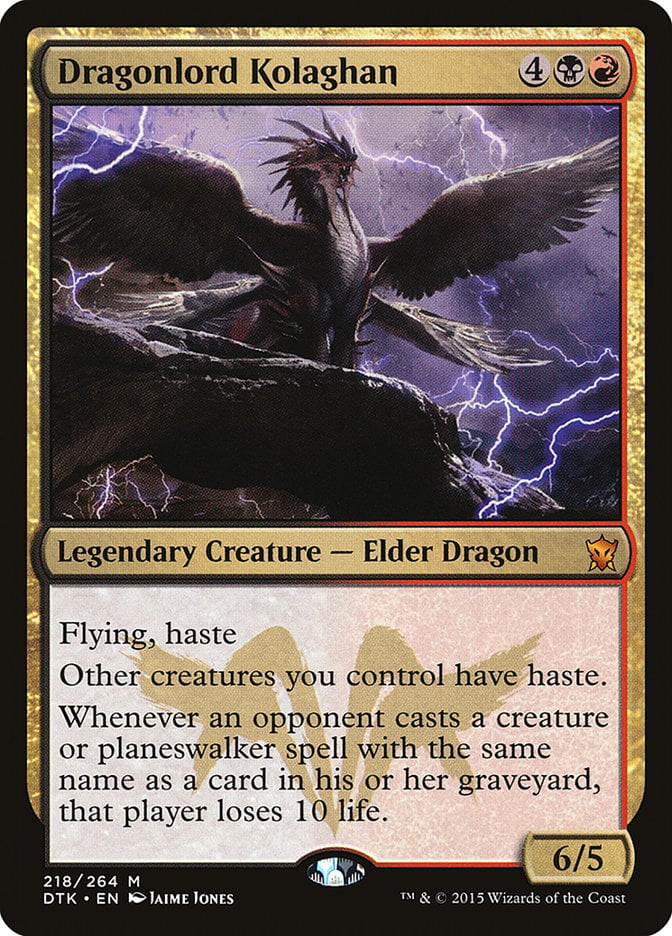
Well… it’s a haste enabler. In a singleton format, Dragonlord Kolaghan is only really going to hate on Shadowborn Apostles and Rat Colony style decks. In non-singleton formats, this Dragonlord can be incredibly punishing, especially across from cantripping decks with tons of redundant Preordains and Ponders.
#36. Dragonlord Ojutai
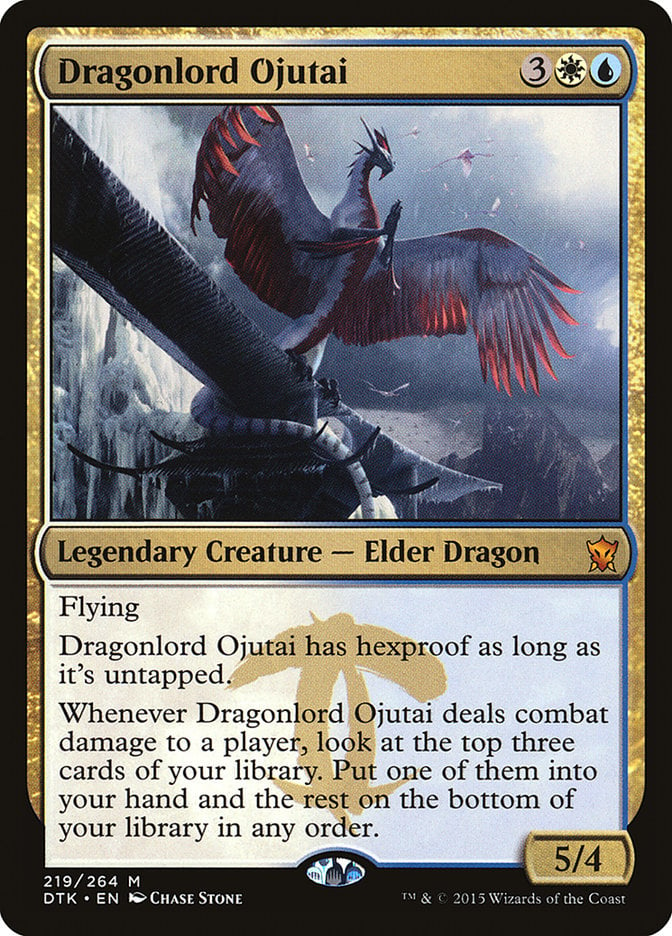
Dragonlord Ojutai is a solid piece to have higher in your curve when you’re running a lot of fliers and want to filter the top of your deck. You can run it with other dragons, and it can command its own deck without locking you into a restrictive strategy. Ojutai would love to receive either one of Kamiz, Obscura Oculus’s perks, too.
#35. Lorehold, the Historian

Lorehold, the Historian had the community’s eye for a while as the first SOS elder dragon spoiled, but it’s out of the spotlight now. While the deck is very fun, Boros () lacks the card selection for it to be as consistent as you’d like. It’s still a very fun commander, but restricted to lower bracket levels.
#34. Prismari, the Inspiration

Prismari, the Inspiration really ought to consider what it’s teaching to students. Letting people learn a mechanic as busted as storm is pretty scary, though I find this commander’s high cost does a lot to keep it fair. It rarely survives the turn cycle, so you somehow need to set up a turn when you play Prismari and storm off for the best results.
#33. Etali, Primal Storm
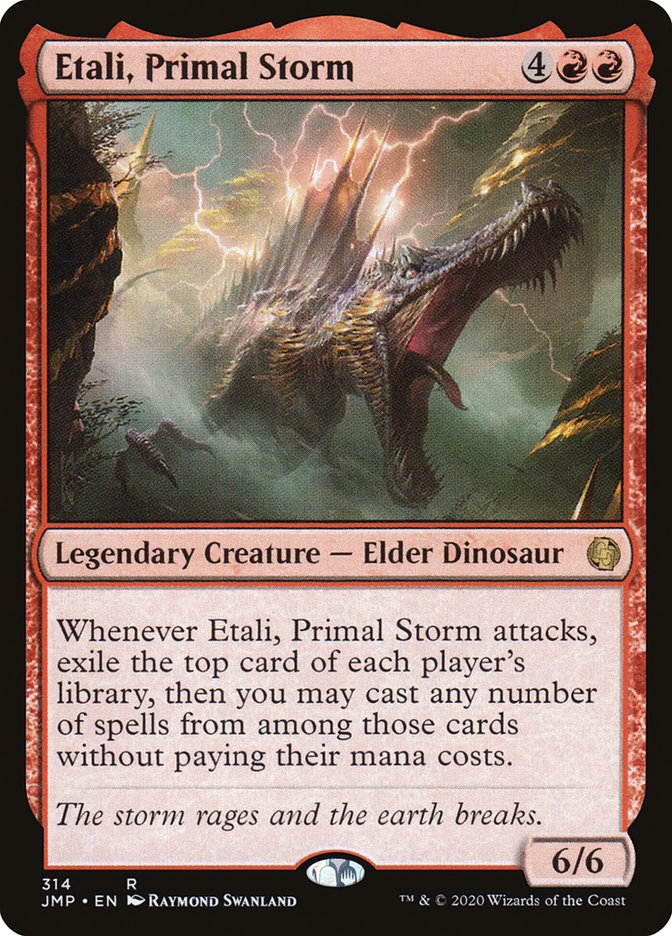
Since its original printing, Etali, Primal Storm has returned in tons of Magic products. It has an attack trigger that just begs for Wulfgar of Icewind Dale to double it, and gives you cards to cast from exile, which plays into all kind of exile payoffs and exile commanders. It’s got a good power stat to fling at a problem, and it has a good mana value to cascade into or to give cascade to. Etali, Primal Storm remains a must-answer threat that’s also accessible due to the number of reprints floating around.
#32. Uldaros Theorix
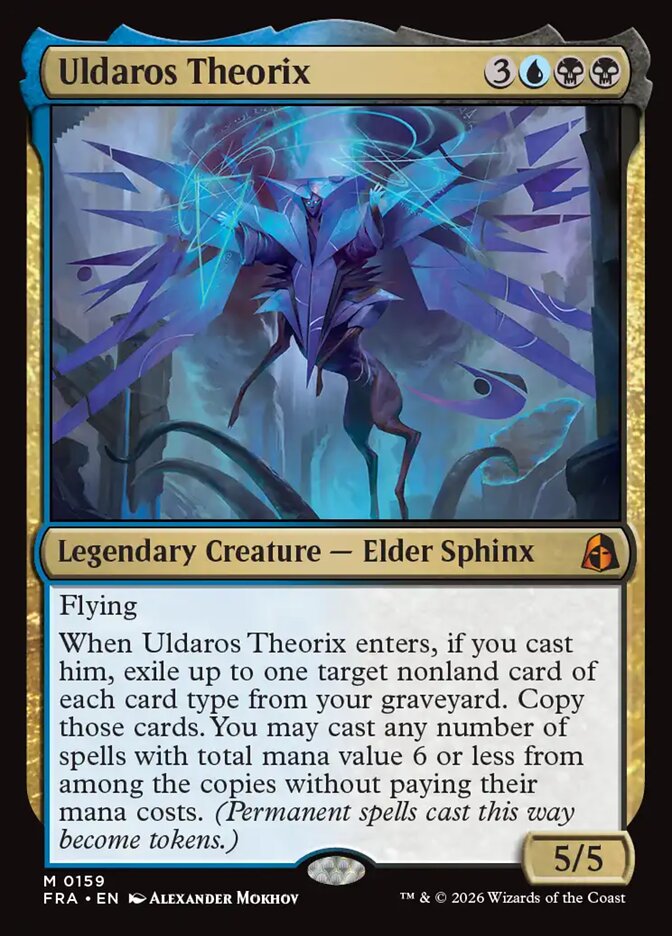
Uldaros Theorix can cheat lots of spells into play, as long as you cast it. That means no reanimating, but it’s still a great value engine, especially if one of the cards you hit are spells like Boomerang Basics and Unsummon that bounce Theorix back to your hand to recast. It’s also pretty cool with cards like Superior Spider-Man that let you cast it for less than its mana cost.
#31. Kwia Vigorbloom
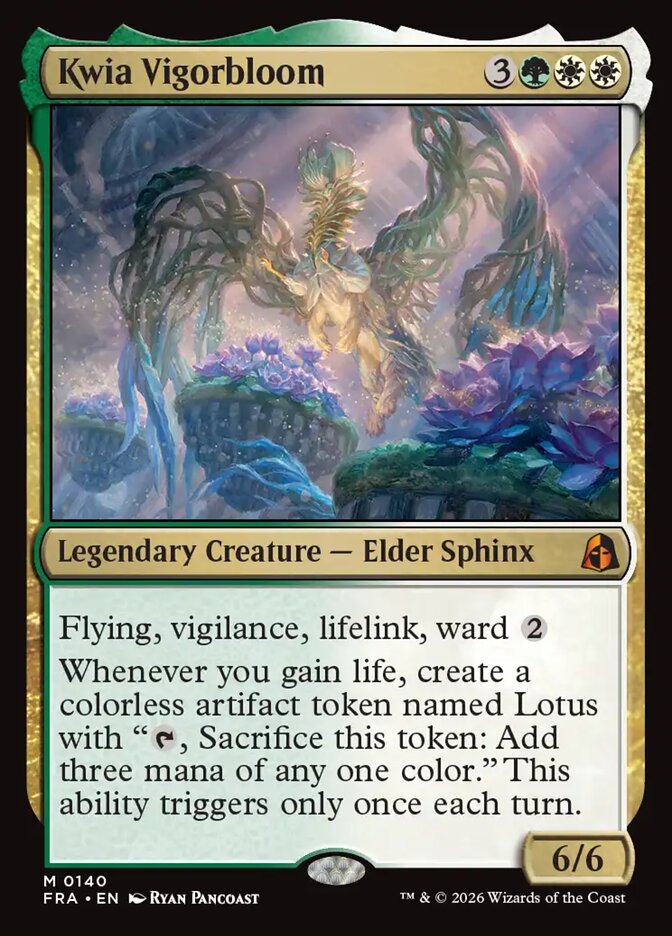
Black Lotus tokens are fantastic rewards for lifegain. They’re also extremely useful for players interested in breaking Kwia Vigorbloom as a commander, as it leads to many infinite combos. Though you don’t need them to make it work. You can make one each turn, so a Soul Warden can net four tokens a turn cycle if you get lucky.
#30. Shadrix Silverquill
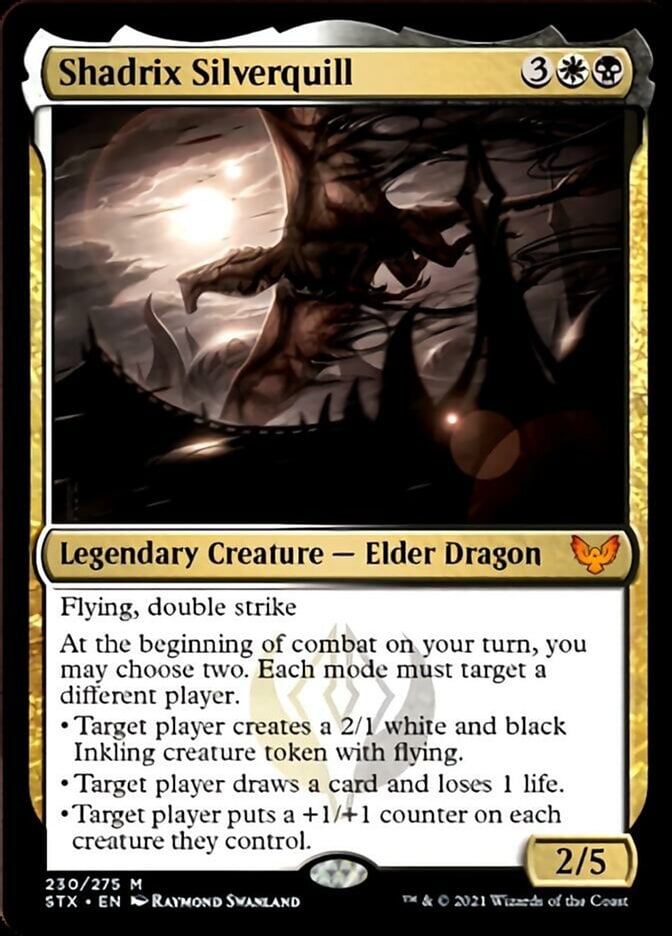
Shadrix Silverquill lets you be versatile even if you’re playing the selfish game. You can do +1/+1 counters and tokens, but you can also play a more political game. Orzhov () always needs sacrifice fodder, and there are Abzan () +1/+1 counter strategies. I just want to see this paired with Kambal, Profiteering Mayor and Mirkwood Bats somewhere.
#29. Galazeth Prismari
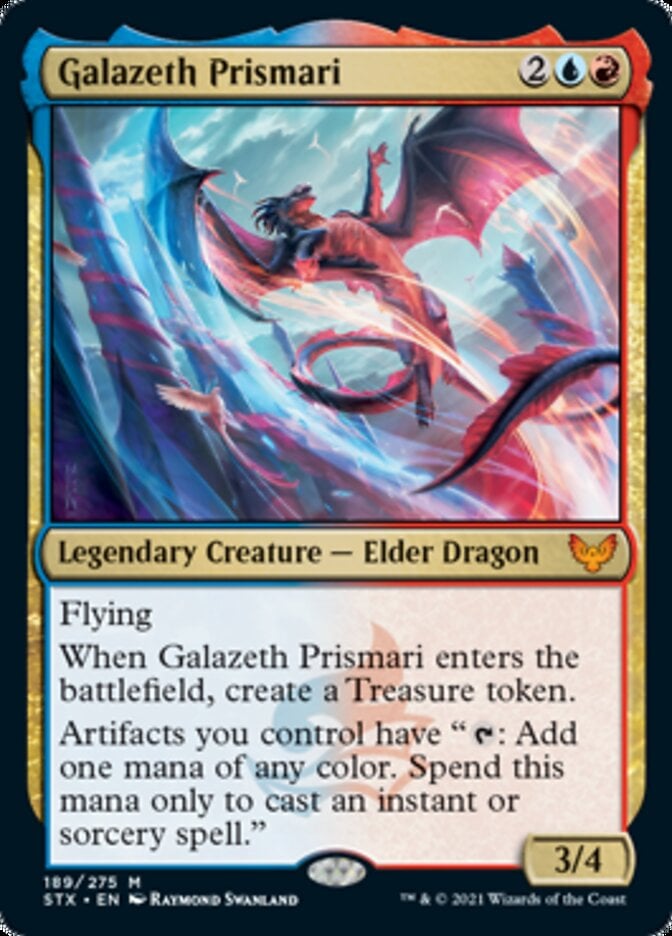
Galazeth Prismari positions itself at the crossroads of spellslinger commanders and treasure commanders, which is why it has a home in the supporting ranks of both decks. You don’t have to sacrifice your Treasure tokens if you’re using them for instants and sorceries, which is an incredible amount of ramp potential.
#28. Emet-Selch, Unsundered / Hades, Sorcerer of Eld


Emet-Selch, Unsundered is a fine commander, mostly because Hades, Sorcerer of Eld is wild. Yawgmoth's Will on a stick in the command zone hasn’t broken anything, but it makes this a particularly enticing combo commander for players who enjoy long, convoluted turns.
#27. Denzilore Fatehold
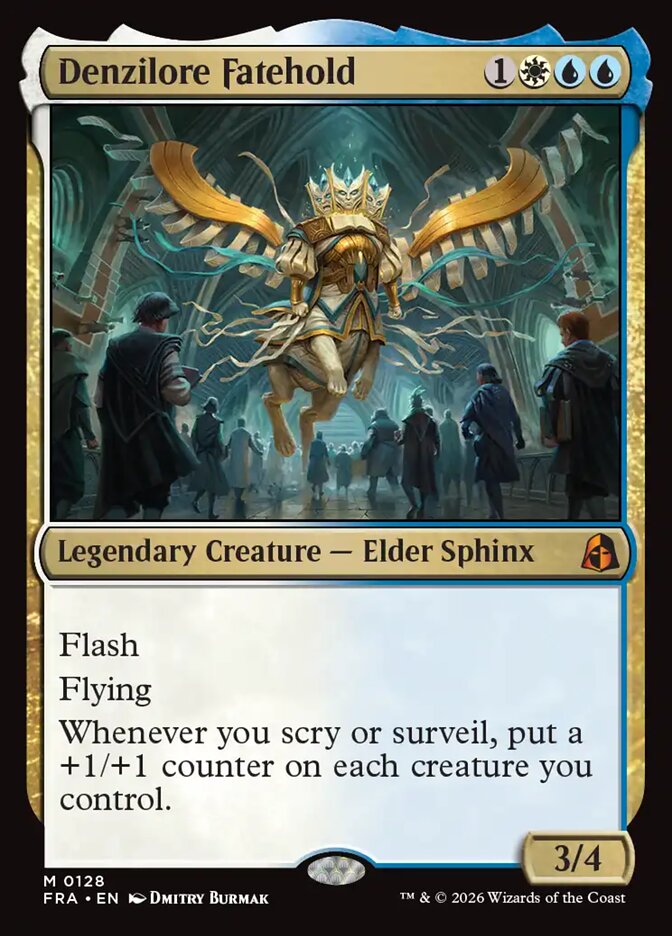
Denzilore Fatehold runs off simplicity. Scrying and surveilling aren’t flashy abilities, but they make your game better. +1/+1 counters aren’t flashy either, but they make your creatures hammer to iron out the kinks in life totals until they hit 0. Focus on cheap, evasive creatures where possible.
#26. The Mycotyrant
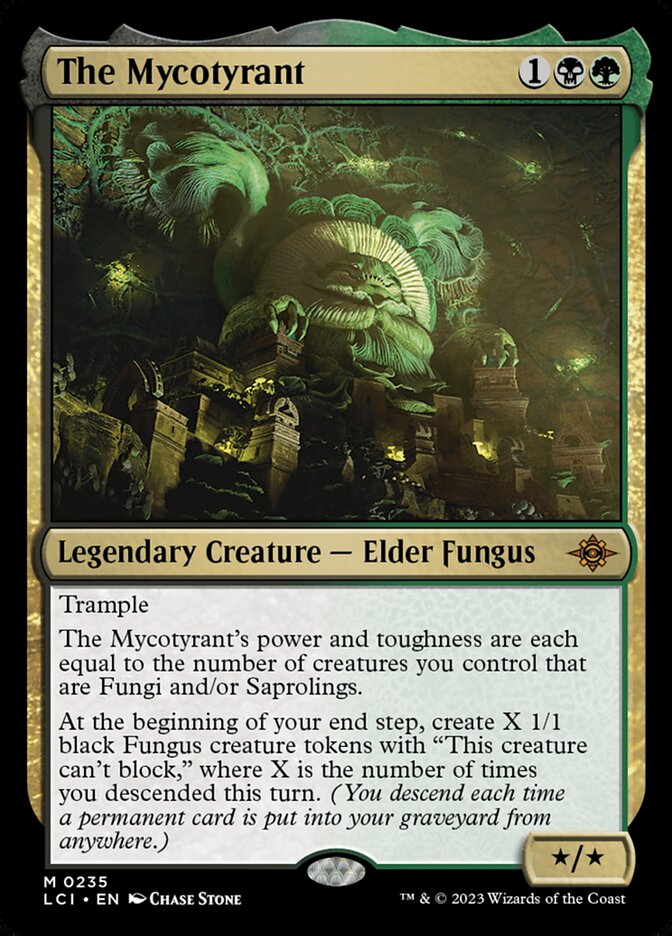
The Mycotyrant comes to us from The Lost Caverns of Ixalan, and this fungus uses that set’s descend mechanic to pump out Fungus tokens. It plays into sacrifice and self-mill themes, and discarding doesn’t hurt your synergies either. It pays you off for filling your graveyard, and there’s plenty of other ways to bring things back. Its power and toughness also benefit from saprolings, which is beautiful flavoring.
#25. Arcades, the Strategist
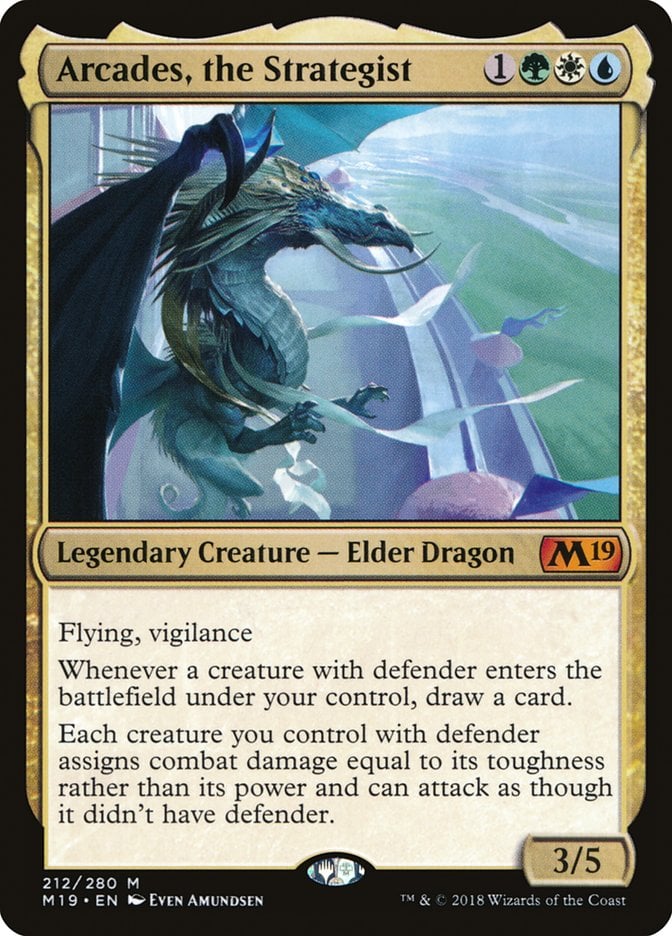
This evaluation comes from how you’re far more likely to run Arcades, the Strategist as your toughness-matters commander than in the 99 of any deck. It also works for a walls or defender theme, if you’re looking to go hyper-specific. The toughness ability also allows it to be a commander for turtles, treefolk, and other creatures with higher toughness than power.
#24. Emet-Selch of the Third Seat

Emet-Selch of the Third Seat has a pretty neat recursion ability that gives you a steep discount on spells cast from the graveyard and a way to recast them. Importantly, the recursion ability is templated such that it ignores timing restrictions, so you can set up funny plays by casting sorceries like Syphon Mind in an opponent’s end step.
#23. Nicol Bolas, the Ravager / Nicol Bolas, the Arisen
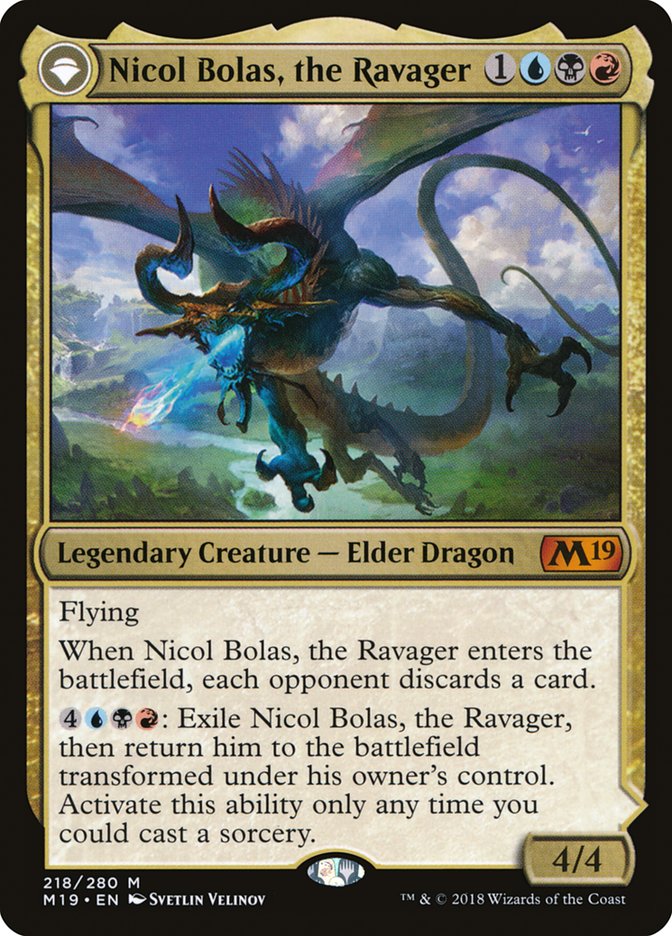
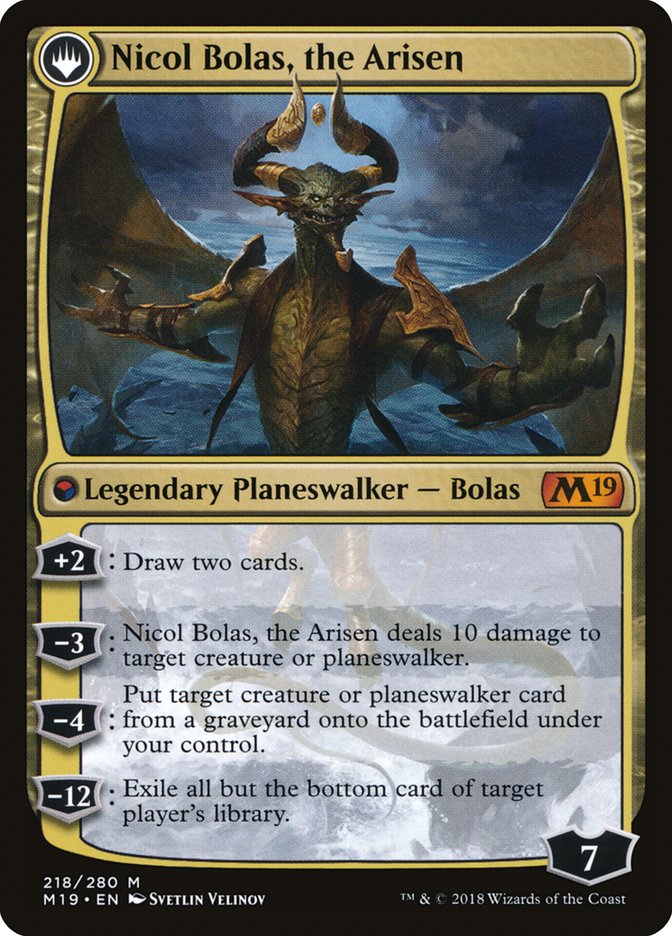
One of Magic’s most iconic villains gets an elder dragon printing that flips into a planeswalker. Nicol Bolas, the Ravager isn’t terribly oppressive to cast, while flipping it into Nicol Bolas, the Arisen should continue to become easier with more Omen Hawker and other ability-specific cost reducers being printed. The Arisen has four loyalty abilities with incredible value. You probably won’t make it to the ultimate that often, but it’ll set an opponent’s Doomsday Clock to 11:59.
#22. Dragonlord Dromoka
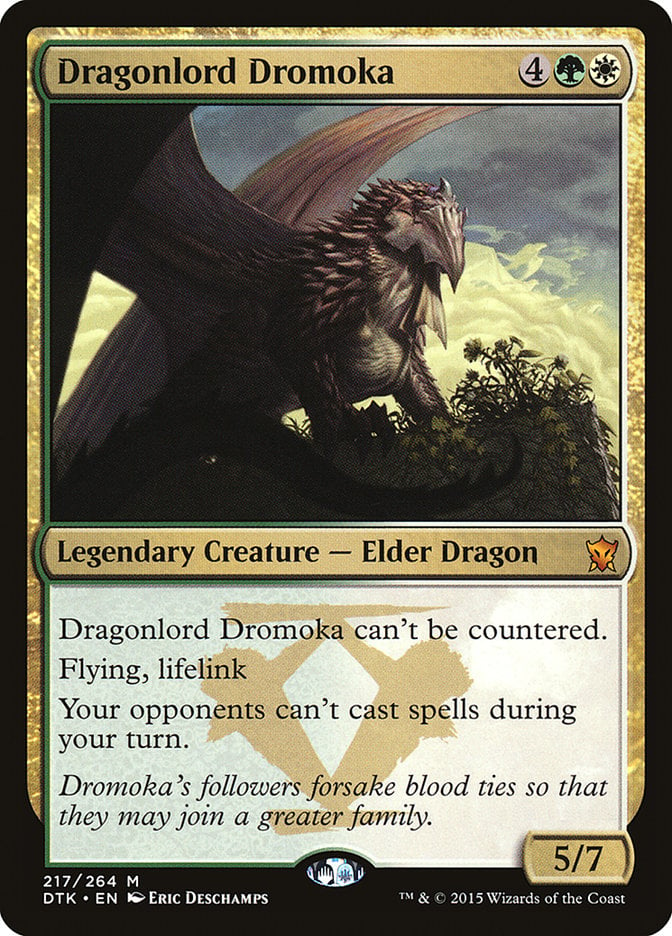
Compared to Dromoka’s previous bolstering card, Dragonlord Dromoka is an oppressive piece of support for many dragon decks. It’s uncounterable and prevents your opponents from casting spells during your turn, which means you can set up your big swing without worrying about an opponent disrupting your plans.
#21. Quandrix, the Proof

Quandrix, the Proof instructing you on cascade is such a Simic () value pile. It’s fantastic, and totally worth messing around with. Making every spell you cast into two overwhelms your opponents quickly. Look out for counterspells, though; try to find modal ones like Confound with Riddles that do something other than simply counter spells.
#20. Aerid Konstrari
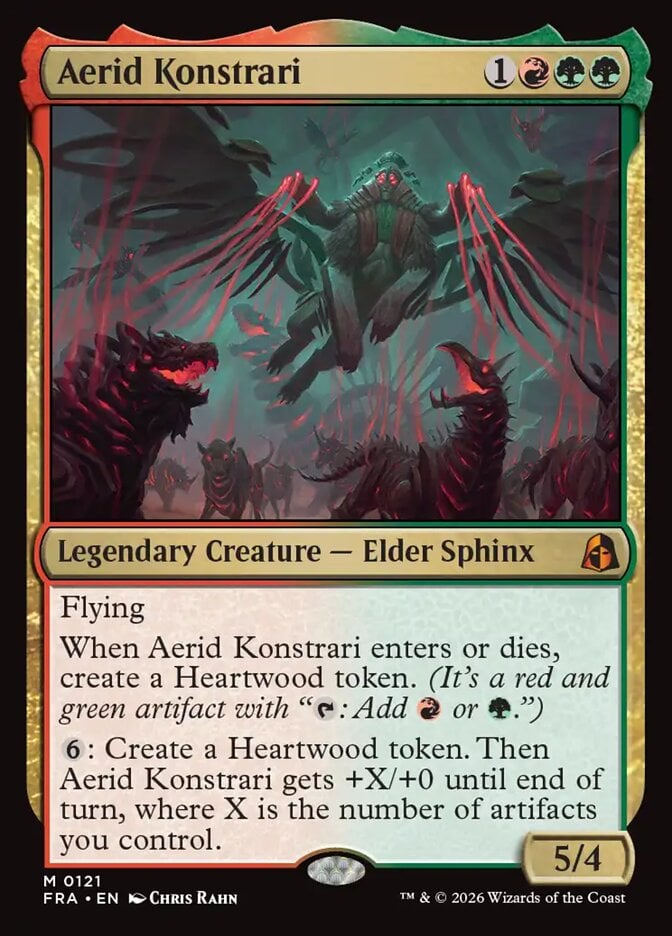
Aerid Konstrari slaps hard as a commander because of the Heartwood tokens. If it enters, it pays half of the commander tax when you play it again. And if it dies normally, it pays for the whole thing. You can exploit that further with copy effects like Twinflame to ramp very hard.
#19. Beledros Witherbloom
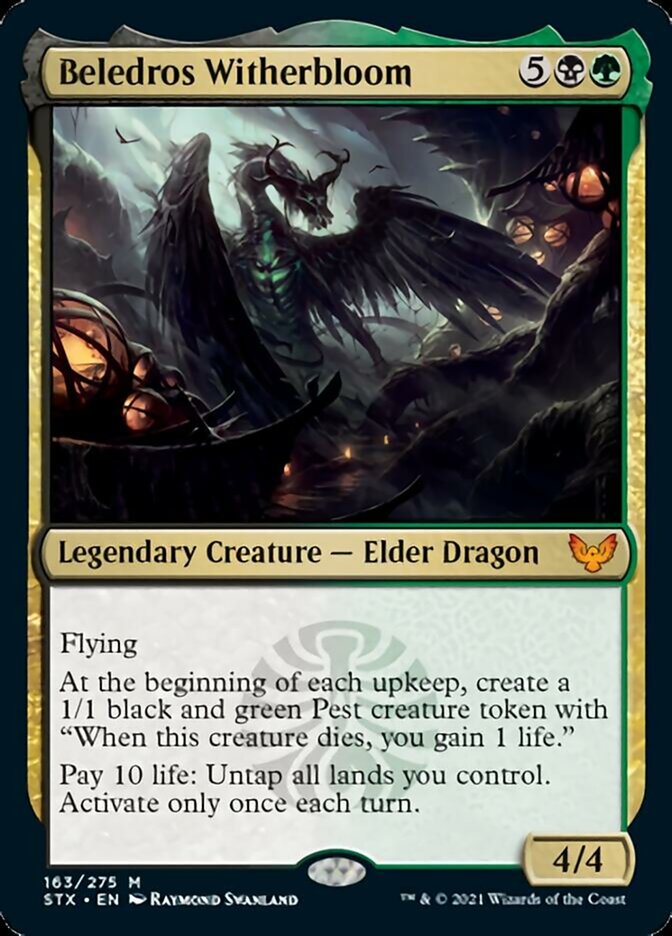
Beledros Witherbloom is a formidable lifegain commander in its own right, but it pairs nicely with token and sacrifice strategies. Food tokens are another avenue for lifegain, and Beledros was deservedly reprinted in the Squirreled Away Bloomburrow Commander precon.
#18. Ancient Gold Dragon
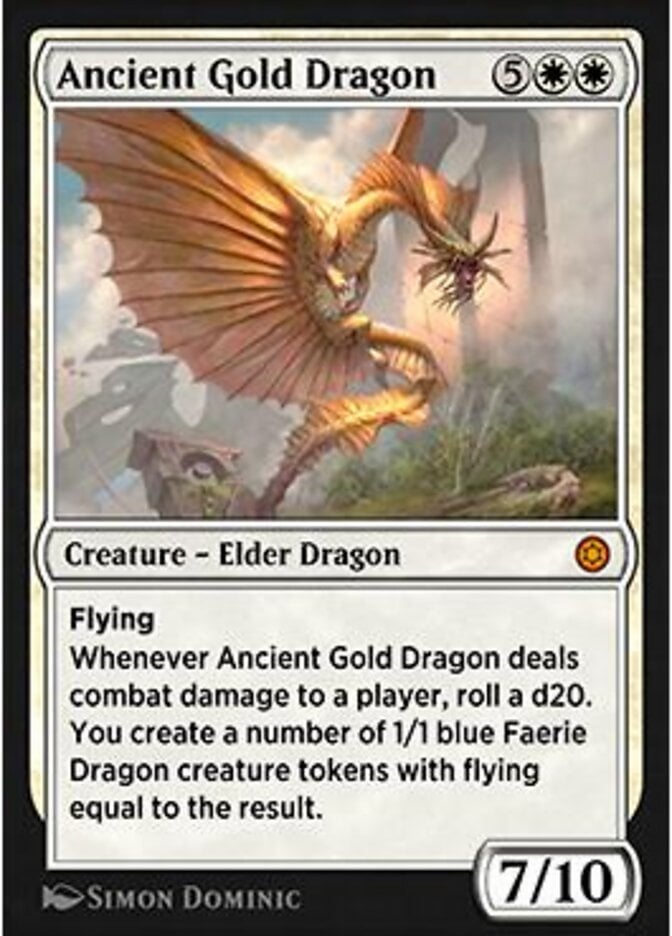
One thing about these Baldur’s Gate elder dragons is that if you want one, you generally want all the ones in your colors. Ancient Gold Dragon is one of the best white token generators, pumping out flying Faerie Dragons. Your token doublers and triplers can turn even a mediocre roll into massive Impact Tremors damage.
#17. Silverquill, the Disputant

Silverquill, the Disputant is a fantastic spellslinger commander, largely because Orzhov so rarely explores that design space. But it’s right at home: White token makers fuel black sacrifice outlets, and your opponents drown under the onslaught of value.
#16. Ghalta, Stampede Tyrant
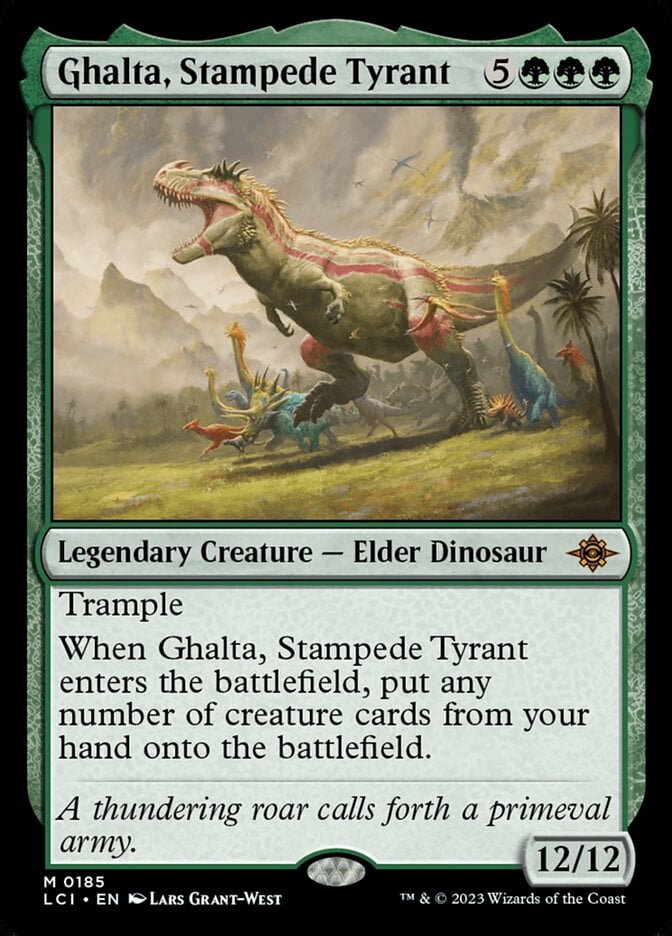
The fact that Ghalta, Stampede Tyrant’s enters trigger isn’t limited in any way is rather busted. You can drop it onto the field using any of your favorite ways to cheat creatures into play (think Mr. Foxglove or any of the Etali cards), and then you can add any of the other creatures you have in hand. An 8-mana 12/12 trampler is just the body you get with the mono-green elder dinosaur.
#15. Ancient Silver Dragon

You only need Ancient Silver Dragon to hit once for it to affect the game in a major way. By removing your maximum hand size, you aren’t at risk if someone blows up your Decanter of Endless Water and Thought Vessel.
#14. Ancient Brass Dragon
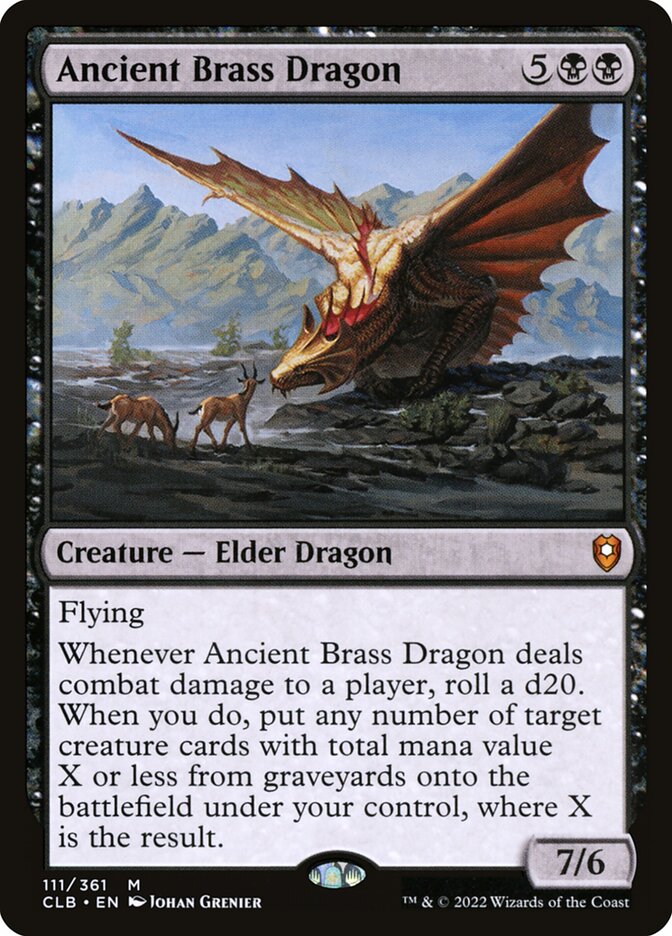
Baldur’s Gate’s black elder dragon rolls dice to plunder everyone’s graveyards, and that’s extremely powerful no matter if you’re playing just a dragon theme or a reanimator theme. As a Fallout fan, I personally like Mr. House, President and CEO, since rolling d20s stacks the deck in your favor, as it were. Ancient Brass Dragon’s “only” weaknesses are removal, flying hate, and graveyard hate, but the upside is worth forcing your opponents to react.
#13. Ardyn, the Usurper

Ardyn, the Usurper is one of my favorite reanimation targets because it keeps the reanimation train chugging. Once you reanimate this, you have a reanimation spell for your next monster. Sure, they’re only 4/4s, but many reanimation targets like Griselbrand and Atraxa, Grand Unifier aren’t played for their bodies but their textboxes.
#12. Ingris Stingerquill
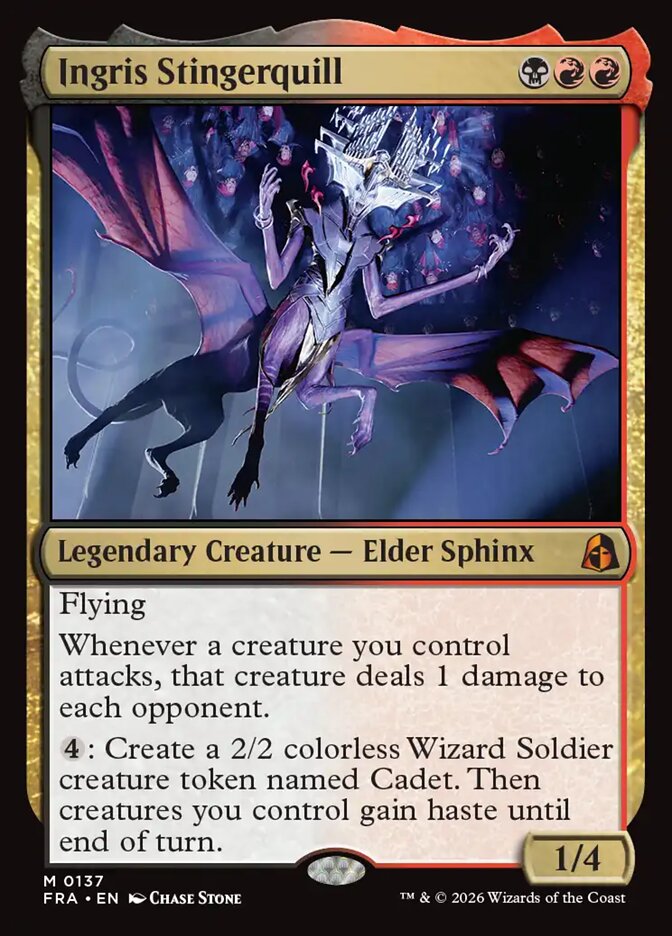
Of the elder sphinxes from Reality Fracture, Ingris Stingerquill may be the most frightening because its burn ability punches through life totals. While it has caught lots of buzz as an infect commander since the attacking creatures deal the damage, not Ingris, it’s just as good with a bunch of token producers. Your opponent will have a very brief time before you go off.
#11. Zacama, Primal Calamity
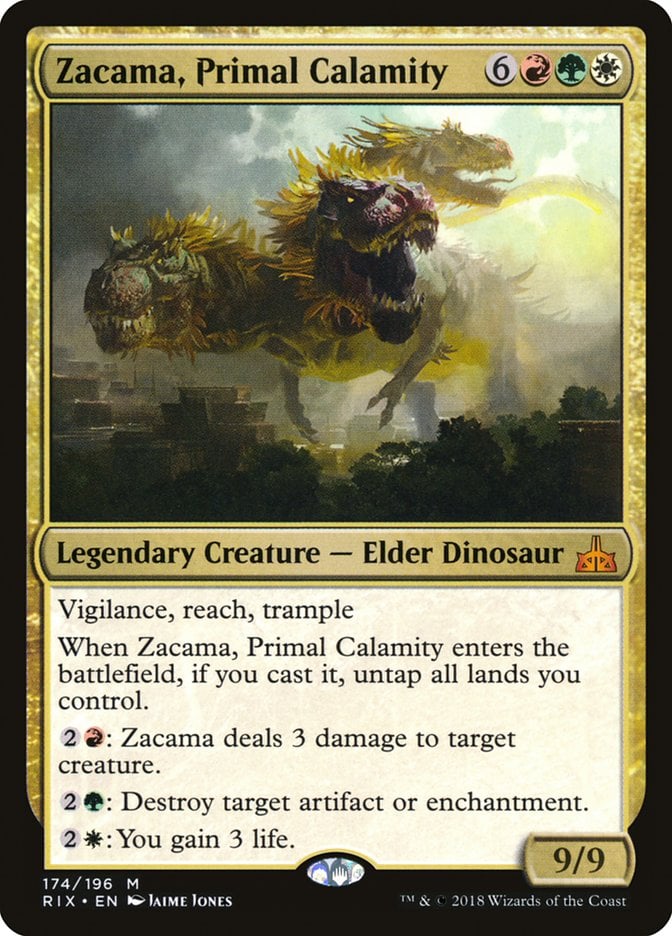
Zacama, Primal Calamity is so much value on its own, but it’s much better when you pair it with Zirda, the Dawnwaker’s cost reduction. Dinosaurs also have their own cost reduction, and you’re usually going to benefit from Zacama’s ETB trigger if you play it from the command zone. Even if you don’t, you can get value when you use it in a deck full of other dinosaur commanders.
#10. Nezahal, Primal Tide
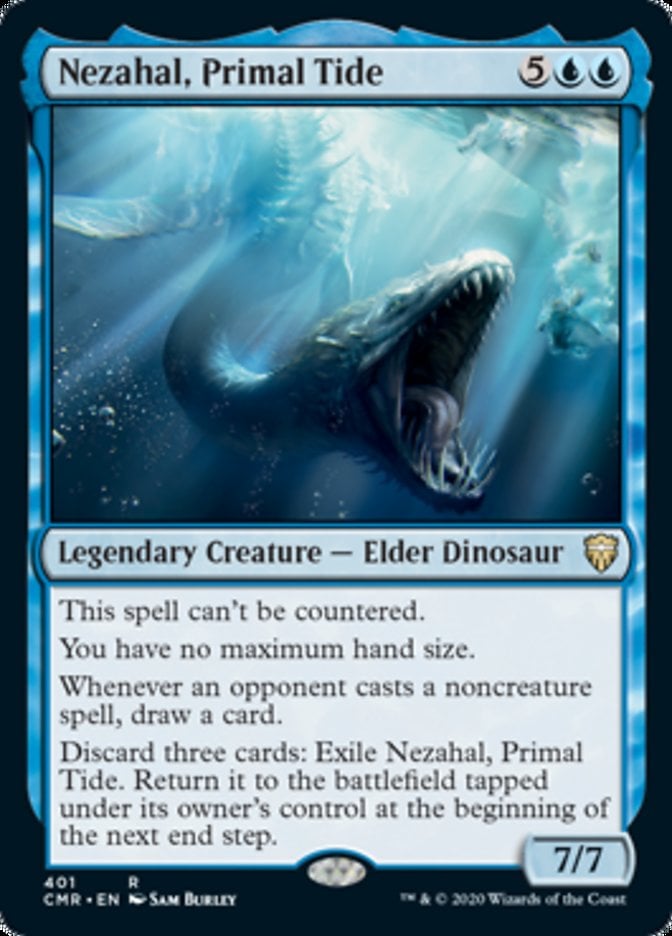
Nezahal, Primal Tide fits perfectly into decks that want to put things into play for free like Braids, Conjurer Adept and Marvo, Deep Operative. It’s uncounterable, and it removes the hand size restriction for you while providing constant card draw. You can also discard three cards to blink it, whether for protection or to take advantage of “when a creature enters” effects.
#9. Valgavoth, Terror Eater

Big threats like Valgavoth, Terror Eater are exactly the kinds of cards you want to cheat out with The Infamous Cruelclaw, Etali, Primal Storm, and similar effects. Valgavoth, Terror Eater is an incredible amount of value, given that you get a permanent, somewhat protected form of graveyard hate. It lets you trade life to play the cards that it exiles, too. Sure, it can be a mono-black demon commander for you, but it’ll do wonders as support.
#8. Witherbloom, the Balancer

Witherbloom, the Balancer is easily one of the greatest elder dragons in Commander. Affinity for creatures offsets the high mana cost, and giving that to your instants and sorceries gives you great potential. And it has infinite combos with Sprout Swarm.
#7. Kroxa, Titan of Death’s Hunger
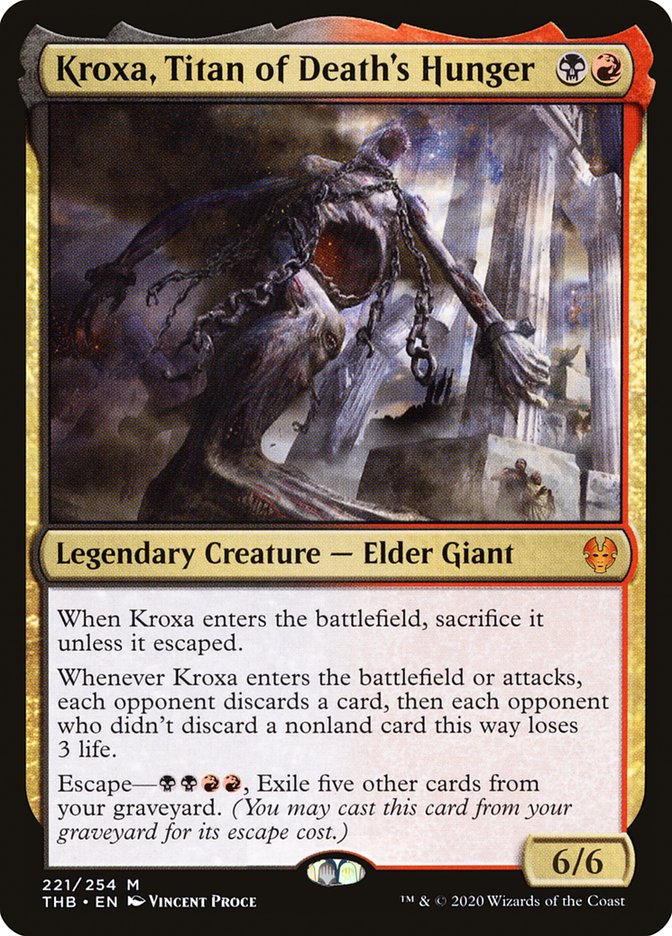
Rakdos (), discard, and life drain. Need I say more?
Okay, okay. Kroxa, Titan of Death's Hunger is good because you’re in the right colors to have payoffs for continually sacrificing it, and you’ve got ways to bring it back from the graveyard over and over. You’re also in good colors for discard payoffs and life drain payoffs. It’s cheap enough that casting it from the command zone more than a few times isn’t terribly taxing, especially with Pitiless Plunderer around.
#6. Valgavoth, Harrower of Souls

The Endless Punishment version of Duskmourn’s big bad, Valgavoth, Harrower of Souls grows and rewards you in straight card draw the first time your opponents lose life during their turn. The phrasing is important; it’s not during your turn, or during any turn. That screams group slug effects and curses like Cruel Reality.
#5. Ancient Copper Dragon
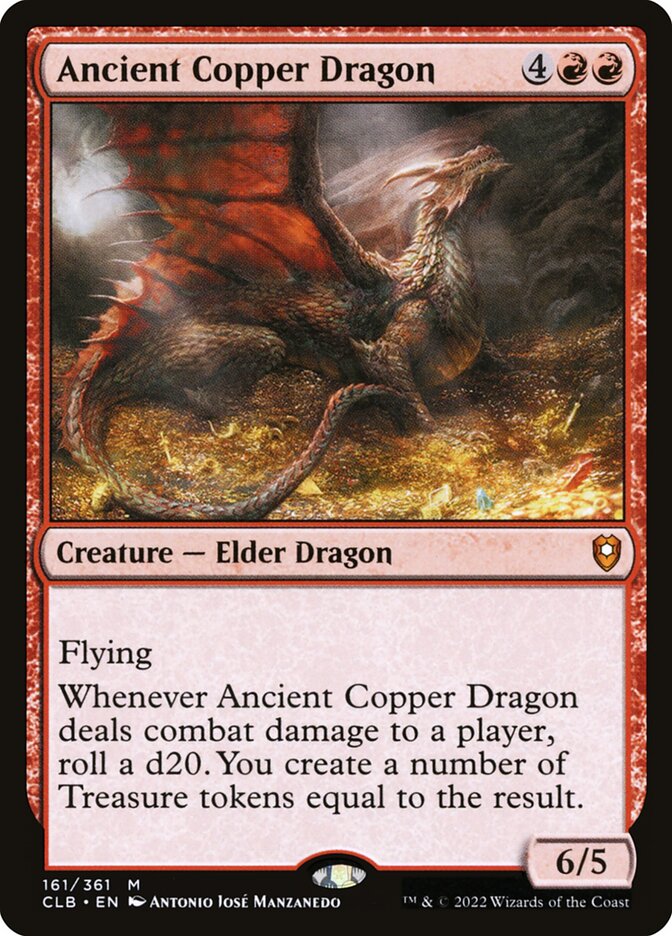
Given that you can build an entire Karumonix, the Rat King deck for less that you might pay for a copy of Ancient Copper Dragon, you could say that this red creature is in high demand. Or you could just proxy it. Its combat damage trigger rolls to give you Treasures, so you can almost expect it to pay its mana back the first time it hits. Unless you’re me. I have decent luck when I’m opening boosters, but I pay for it in my dice rolls.
#4. Ghalta, Primal Hunger
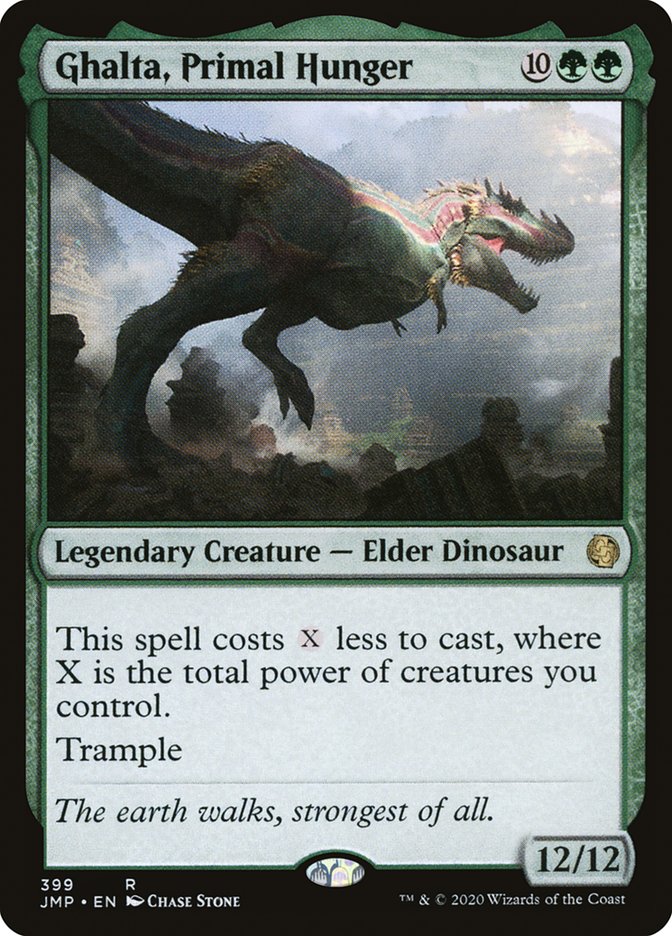
Don’t be intimidated by the mana value: Ghalta, Primal Hunger’s cost reduction makes it a fantastic late-game threat for all kinds of decks. Dinosaurs are obvious, but it doesn’t matter whether you’ve gone wide or tall. It’s a massive ramp play if you saddle it and sacrifice it to The Gitrog, Ravenous Ride, and it pairs nicely with fight spells and bite spells, including pseudo-punches like Monstrous Emergence. You can even run it as a mono-green vehicle commander, if that tickles your fancy.
#3. Uro, Titan of Nature’s Wrath
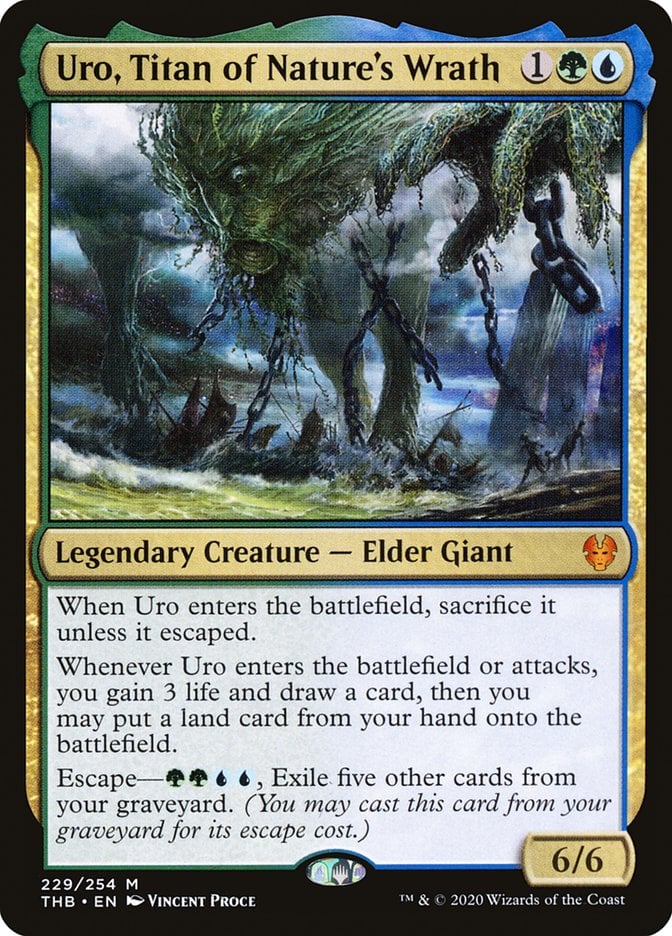
Powerful enough to catch bans in Pioneer, Modern, and Historic, Uro, Titan of Nature's Wrath is a better support piece than a commander, though you can certainly use it as a lands commander. This elder giant wants you to cast it from your graveyard for its escape cost, and it enters and attacks to give you life, a card, and some ramp.
Almost every new set has a commander that can benefit from it. Flubs, the Fool gives you reasons to discard it, while Glarb, Calamity's Augur can surveil it. Zimone, All-Questioning could use its attack trigger to help find the next prime number. You can also manifest it to get around sacrificing it to its ETB if your deck doesn’t play into the graveyard as much.
#2. Phlage, Titan of Fire’s Fury

While less obviously impactful in Commander, Phlage, Titan of Fire's Fury can be incredibly useful in the right home. You can grab it with Havi, the All-Father’s sage project ability to burn a target of your choice, or you can churn through your library with Whiskervale Forerunner’s valiant trigger. And those are just the things that I think about, and I consider myself more casually minded.
#1. Etali, Primal Conqueror / Etali, Primal Sickness
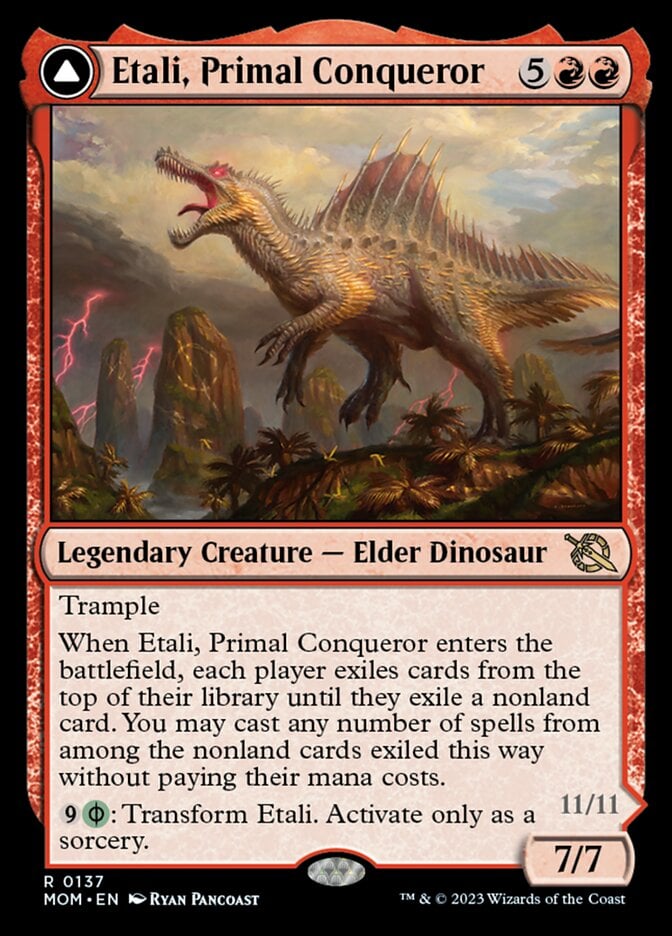
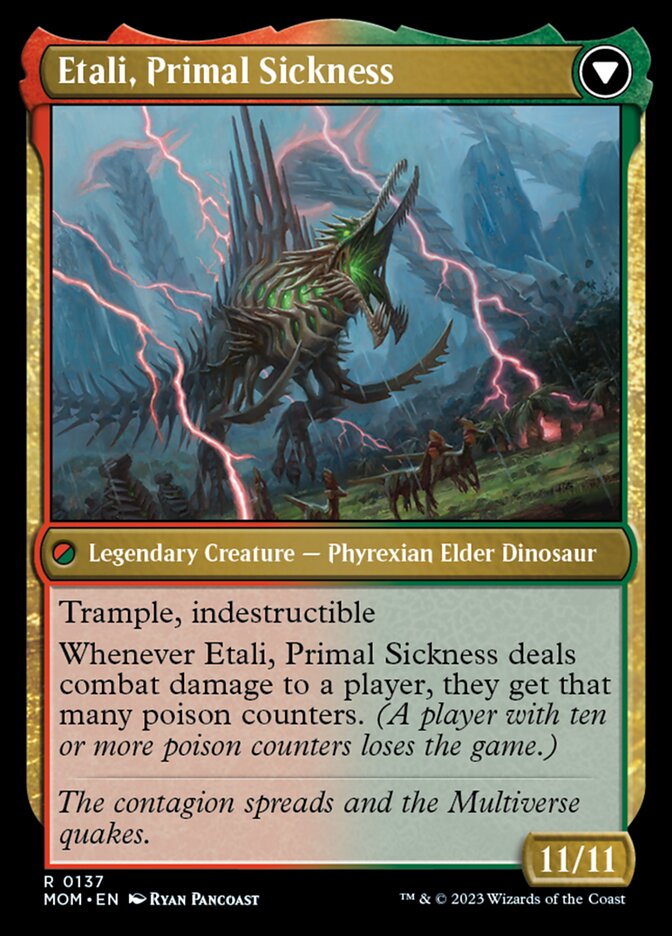
March of the Machine gave us team-up cards for the creatures fighting the Phyrexian Invasion, and it gave us transforming dual-faced cards for the creatures and characters that succumbed to phyresis. Who am I kidding; you know this card already and are probably groaning. Or cheering.
Etali, Primal Conqueror enters and lets you steal something from everyone’s library without paying their mana costs, then transforming it into Etali, Primal Sickness gives you a creature that can deal 11 damage worth of trampling poison on its own. It’s a major threat, and you can accelerate it with unblockable abilities and extra combats, along with much, much more.
What Are All the Elder Cycles?
- Elder Sphinxes: Reality Fracture
- Founder Dragons 2.0: Secrets of Strixhaven
- Metal Dragons: Battle for Baldur’s Gate
- Founder Dragons: Strixhaven: School of Mages
- Elder Dragons 2.0: Core Set 2019
- Elder Dinosaurs: Rivals of Ixalan
- Dragonlords: Dragons of Tarkir
- Elder Dragons: Legends/Chronicles
Elder Ending

Emet-Selch of the Third Seat | Illustration by Magali Villeneuve
And that’s our rundown on the elder creature type in Magic. It’s a bit like mana-weaving a bunch of cycles of big dinosaurs and dragons, but it’s obvious that some of them stand above the rest. Expect their ranks to grow whenever we encounter ancient or primordial beings, though there’s no telling when we’ll get full cycles and when we’ll get one-offs.
Which elders do you run from the command zone, and which do you play in other formats? What kind of elders do you want to see, and on which planes? Let me know in the comments below or over on the Draftsim Discord. And check out The Daily Upkeep newsletter to stay up to date on all the latest MTG news.
And don’t forget to respect your elders!
Follow Draftsim for awesome articles and set updates:










Add Comment