
Last updated on November 19, 2026
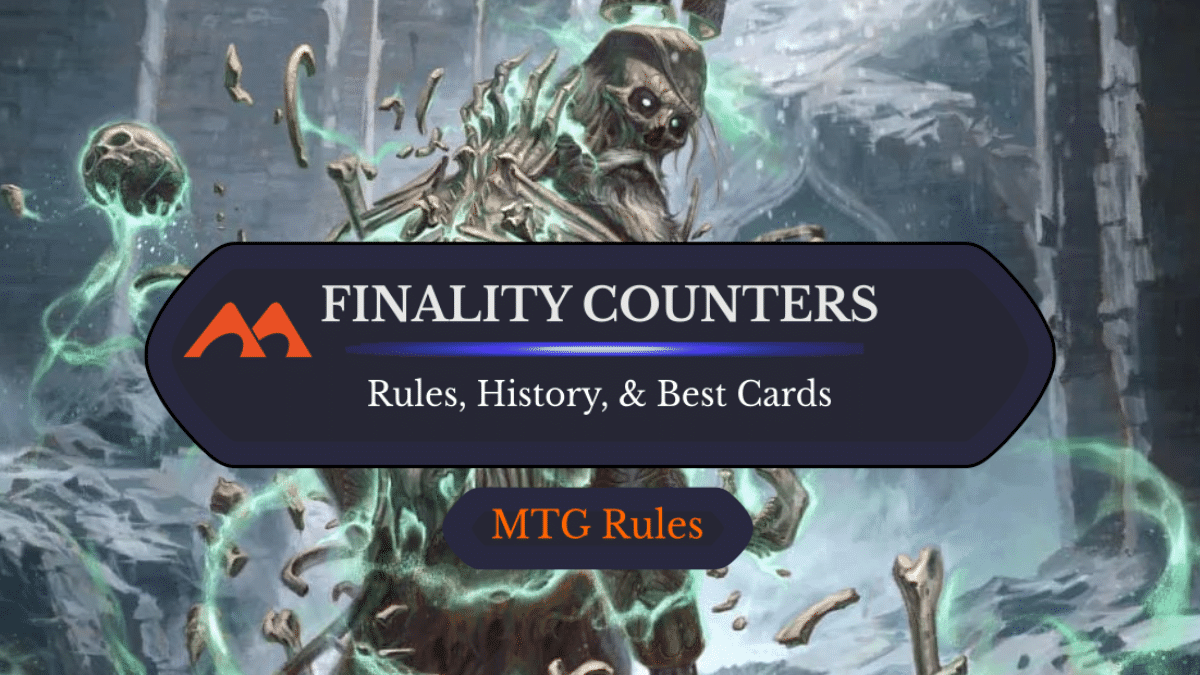
Emperor of Bones | Illustration by Josh Hass
Finality counters have become a staple of new Magic sets, and they’ve very sneakily done a lot of heavy lifting over the last few years to reduce card complexity. At some point the Magic designers realized they can condense a lot of wordy effects into a single type of counter, and that technology has gone a long way to reducing the amount of text bloat on cards. Along with stun counters, hone counters, and more, finality counters are a succinct way to convey something without using an entire paragraph to spell it out.
And since finality counters are a game object, there are ways to interact with them that wouldn’t be possible with the written text version. Let’s see how they work and which cards they appear on, and discuss some of the intricacies with this relatively new counter type.
How Do Finality Counters Work?

Rite of the Moth | Illustration by A. M. Sartor
If a permanent with a finality counter on it dies, it’s exiled instead of going to the graveyard. Many cards that create finality counters put them on creatures, but finality counters work on any permanent type.
It’s a similar effect to the one seen on Rest in Peace. The main difference is that the effect is conveyed by a counter placed on the card, rather than being intrinsically meshed with the card as part of its rules text.
Finality counters only exile the permanent if it would die; permanents can still move to other zones normally, like if one of your creatures is returned to your hand.


Last but not least, finality counters are not keyword counters. They don’t give a permanent any abilities, and anything that happens because of a finality counter is intrinsic to the counter, not the permanent it’s on.
The History of Finality Counters in MTG
As early as Invasion, creatures have been subject to exile over death thanks to cards like Scorching Lava. Just check out the wordiness on The Dark‘s Frankenstein's Monster which used the “removed from the game” clause in 1994.
Drive a DeLorean about 30 years into the future and finality counters were introduced in The Lost Caverns of Ixalan, where they captured the essence of those words in an understandable manner.

Base black decks in Lost Caverns of Ixalan cared about descend, milling, and cards in graveyard, and black cards like Soulcoil Viper and Queen's Bay Paladin pioneered the use of finality counters.
Finality counters are deciduous according to MaRo, meaning you’ll see finality counters pop up in most sets, although not in large numbers. They’ve never been used as a primary set mechanic, but they’ve appeared in most sets following their debut in Lost Caverns. They’re used almost exclusively on reanimation effects to prevent loops where you’d reanimate the same creature over and over.
Do Finality Counters Go on the Stack?
Finality counters note a replacement effect and don’t use the stack. When a creature with a finality counter dies, it goes to exile “instead” of the graveyard. There’s no trigger that uses the stack at this point, and the permanent never goes to the graveyard. The act of dying is replaced by going to exile instead.
This also means traditional stifle effects that counter triggered abilities can’t interact with finality counters, since there’s no ability that uses the stack for a counterspell to target.
Are Finality Counters Errata?
No, there’s no errata on cards that predate finality counters. While the ability may be the same, changing older cards to use finality counters would technically change their functionality, so they’ve been left alone.
What if You Bounce a Creature With Finality Counters?
The bounced creature happily goes back to its owner’s hand, and all counters on it (regardless of counter type) just vanish. Bouncing your own creatures with finality counters can be a clever way to circumvent the downside. Same goes for blinking those permanents.
Can You Remove Finality Counters?

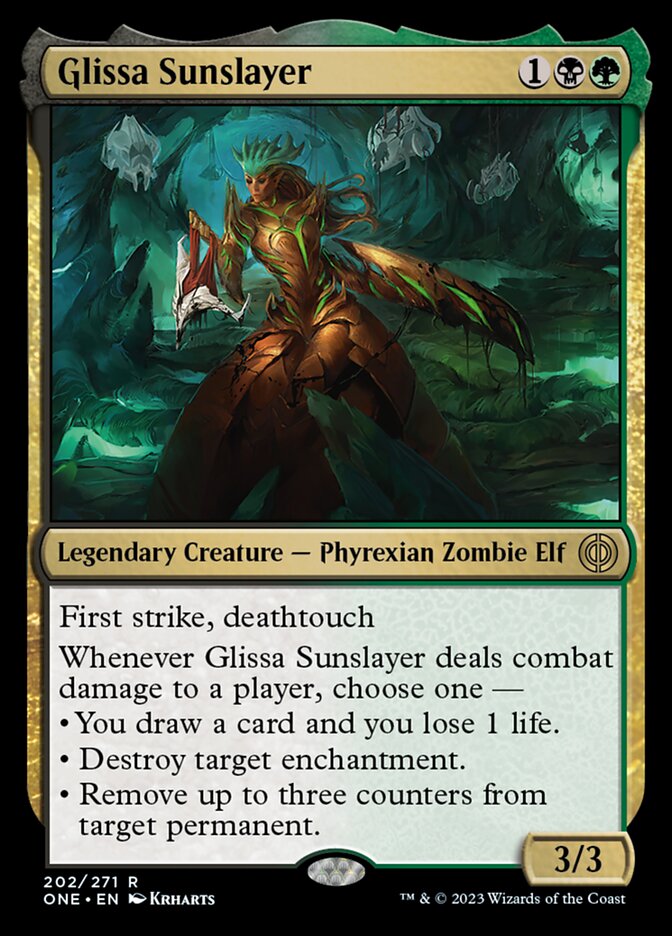
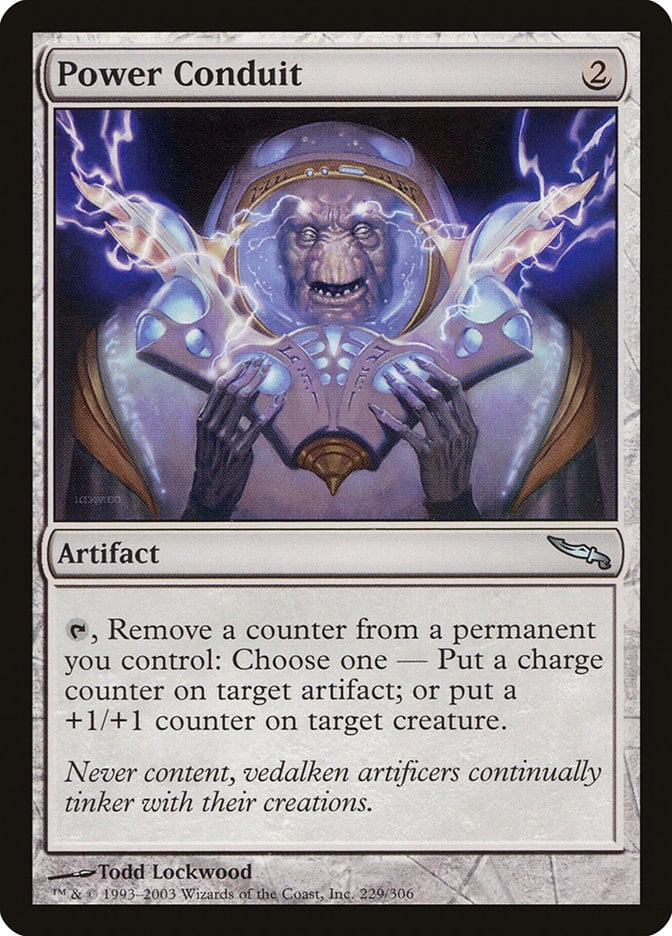
Yes!
Anything that removes counters without specifying what type of counters can remove finality counters. This sort of ability doesn’t come up that often, but you can see if on examples like Thief of Blood, Glissa Sunslayer, and Power Conduit.
Can I Move a Finality Counter?


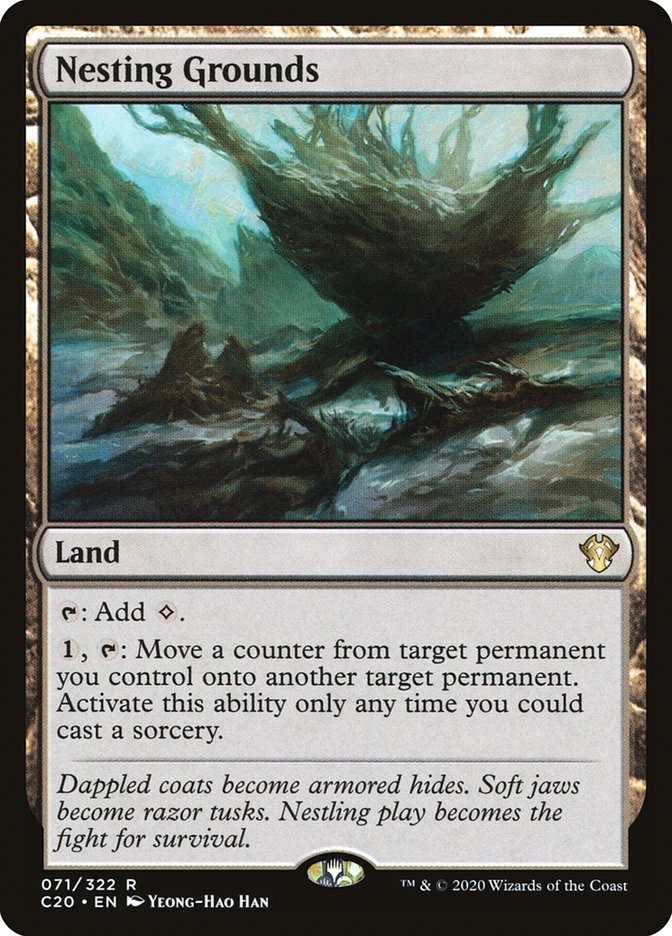
You can. Many cards in MTG allow you to move counters from one creature to another, like Leech Bonder or Tidus, Yuna's Guardian. You can also use a land like Nesting Grounds to get the job done. Even better if you can take the finality counters on your own creatures and distribute them to your opponents’ creatures.
Can You Proliferate Finality Counters?


Yes, you can add another finality counter to a permanent by proliferating, but multiple finality counters on the same permanent are redundant. This might matter if you have an effect that cares about the number of counters on something, like Lumbering Megasloth or Mutated Cultist.
How Do Finality Counters Work with Death Triggers like Undying or Persist?
A finality counter replaces the death trigger that is necessary for undying or persist. So a creature with either ability and a finality counter will simply go to exile if it would die, regardless of +1/+1 or -1/-1 counters. It never touches the bin, and the finality counter sends the creature to exile.
Does a Finality Counter Make My Creature Modified?
It does. A finality counter is, above all else, a counter. A creature with any counter is considered a modified creature, even if the counter isn’t a boon, like a -1/-1 counter or a finality counter.
What Happens if I Have Solemnity Out and Get a Finality Counter?
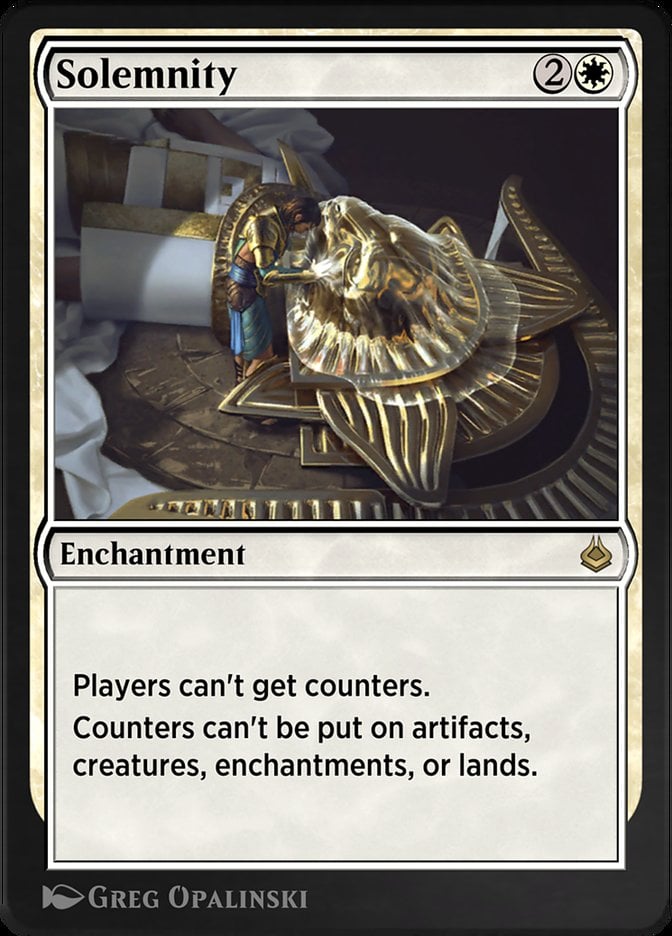
Solemnity stops counters from being added, so no finality counters will be added to your artifacts, creatures, enchantments, or lands.
Gallery and List of Finality Counter Cards


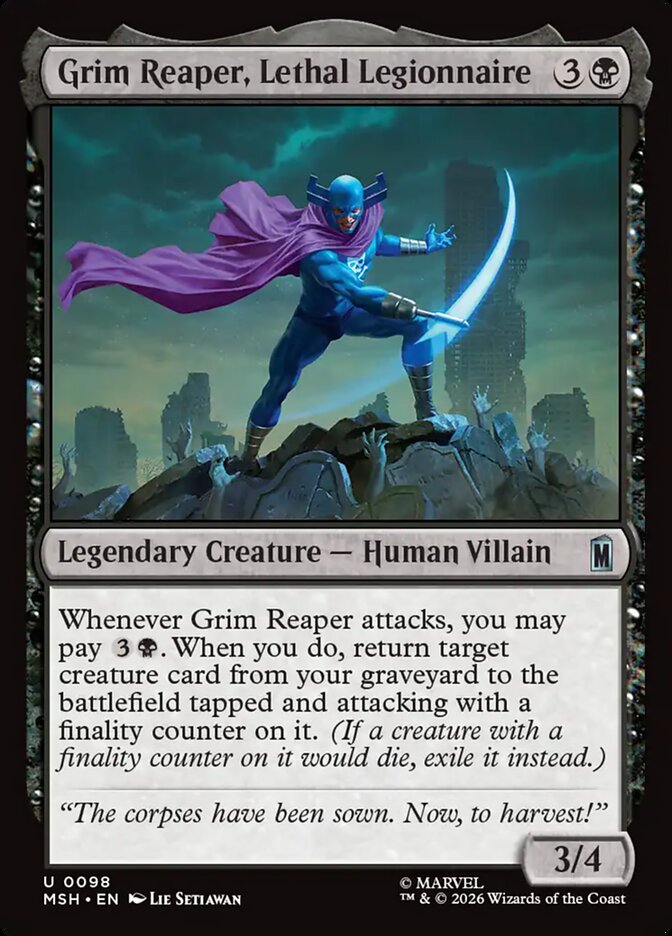
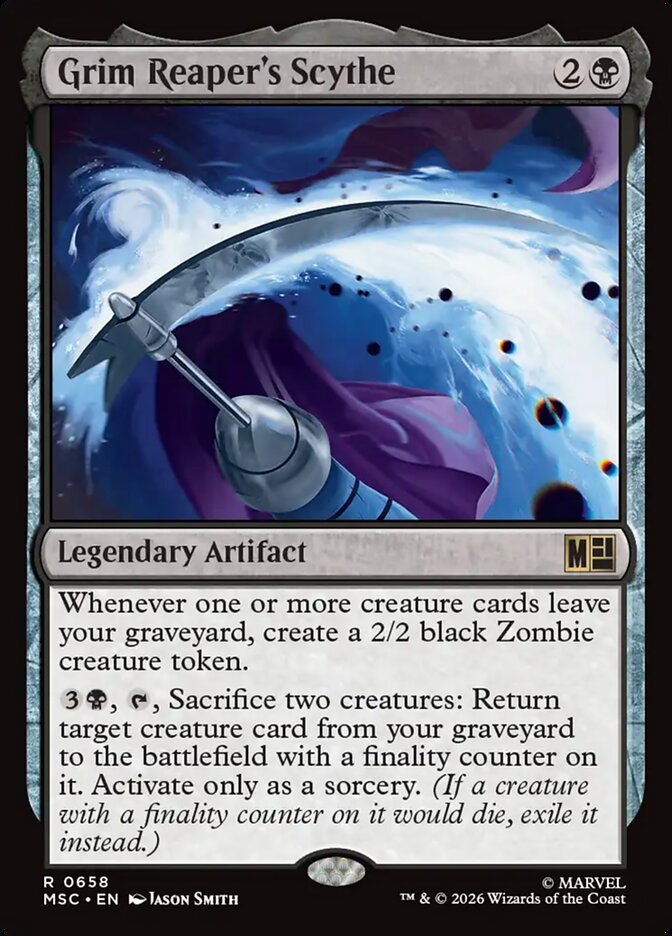


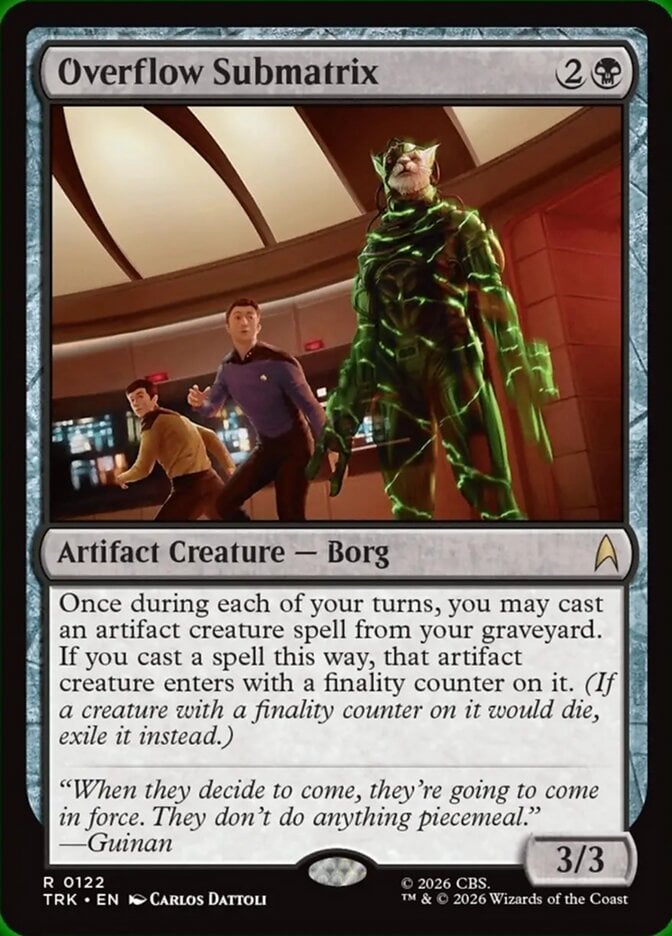


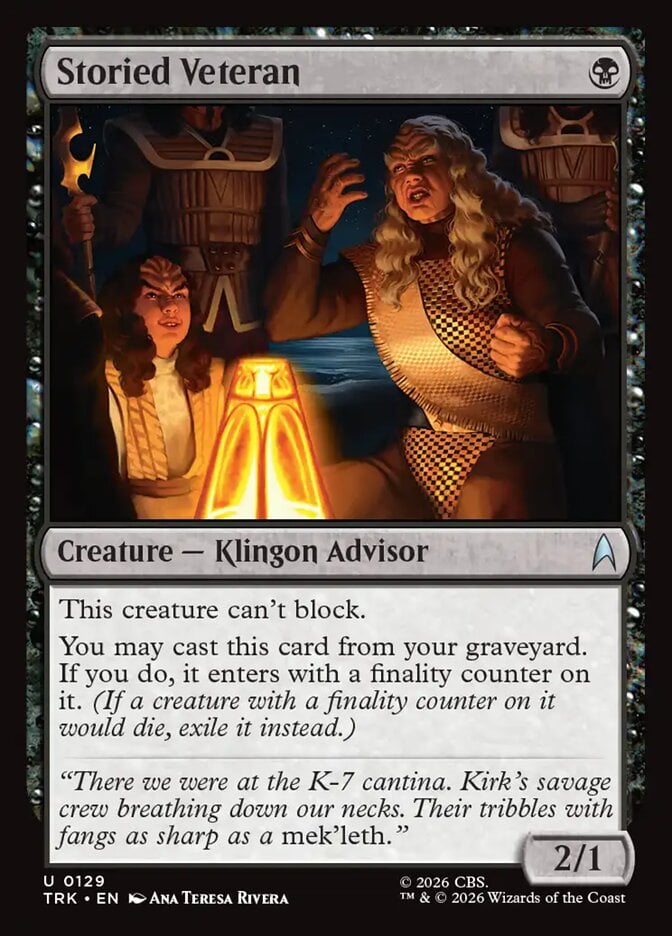
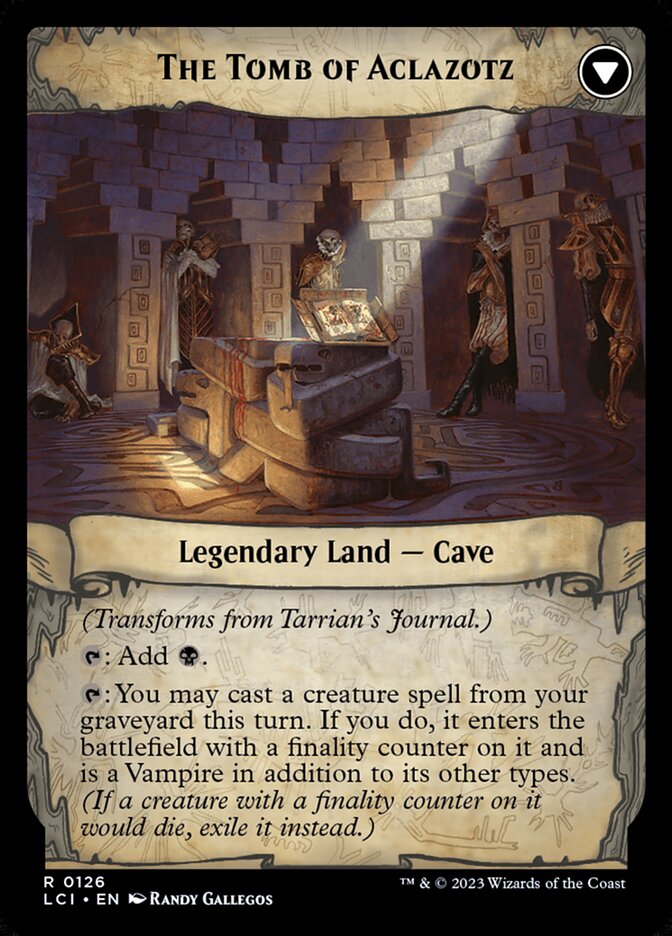
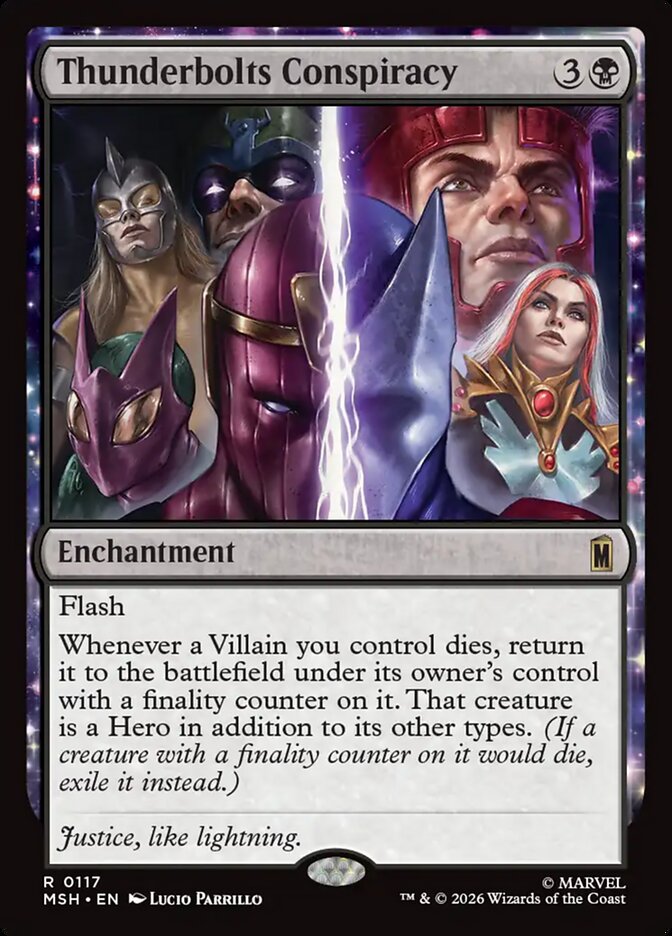
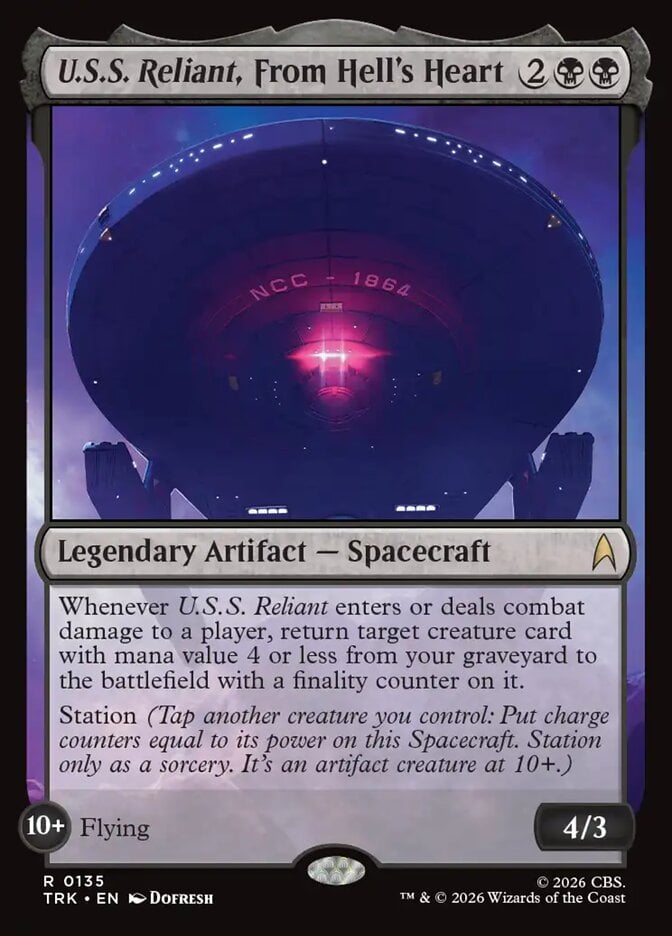
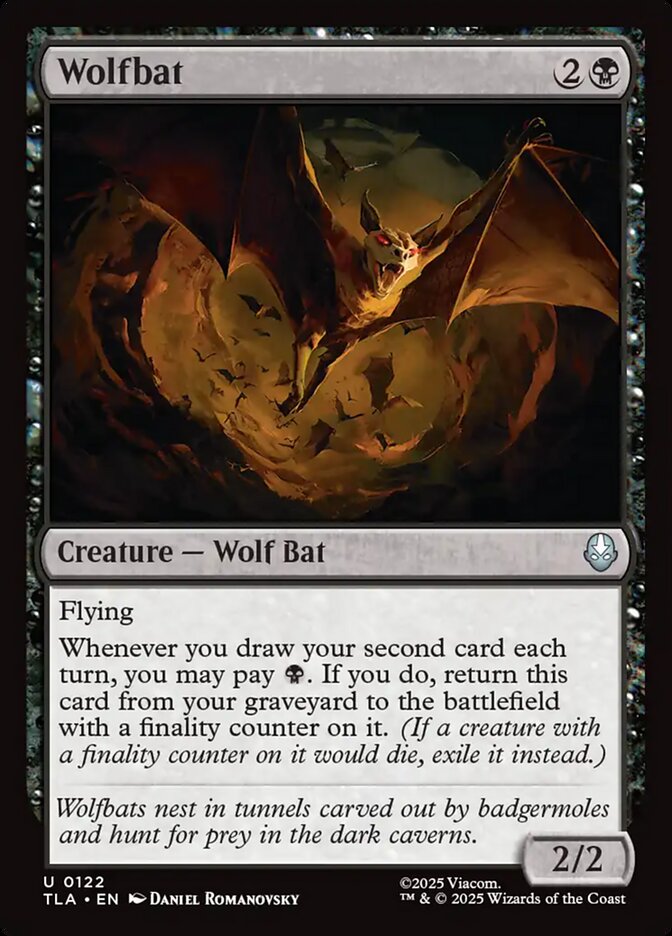


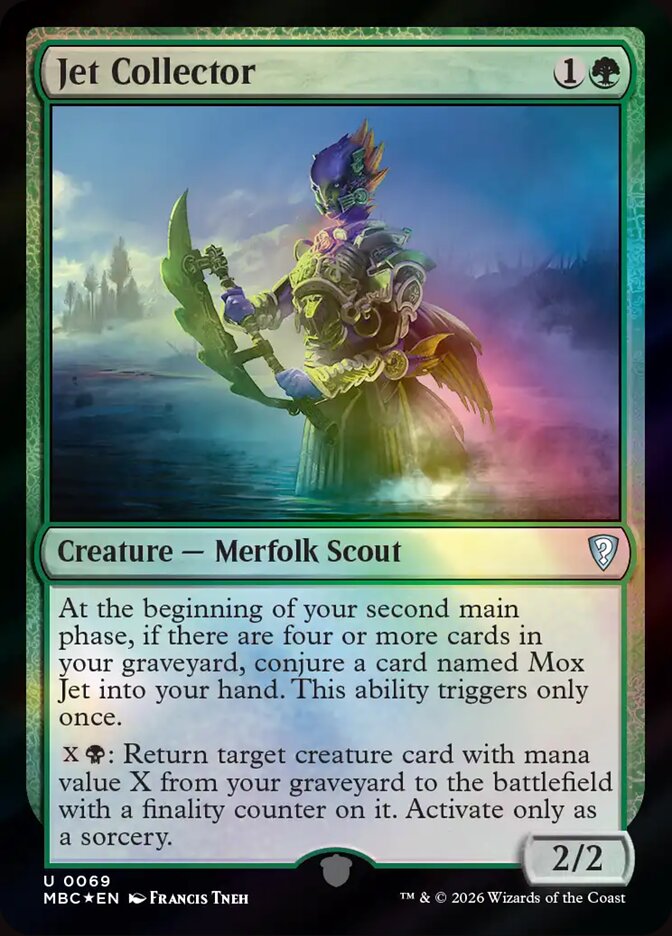

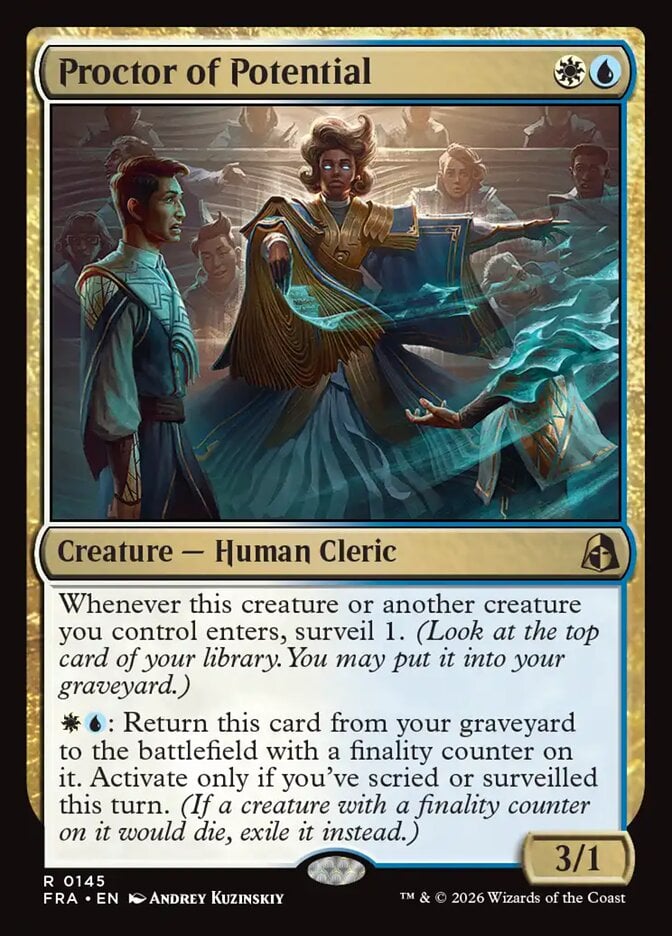


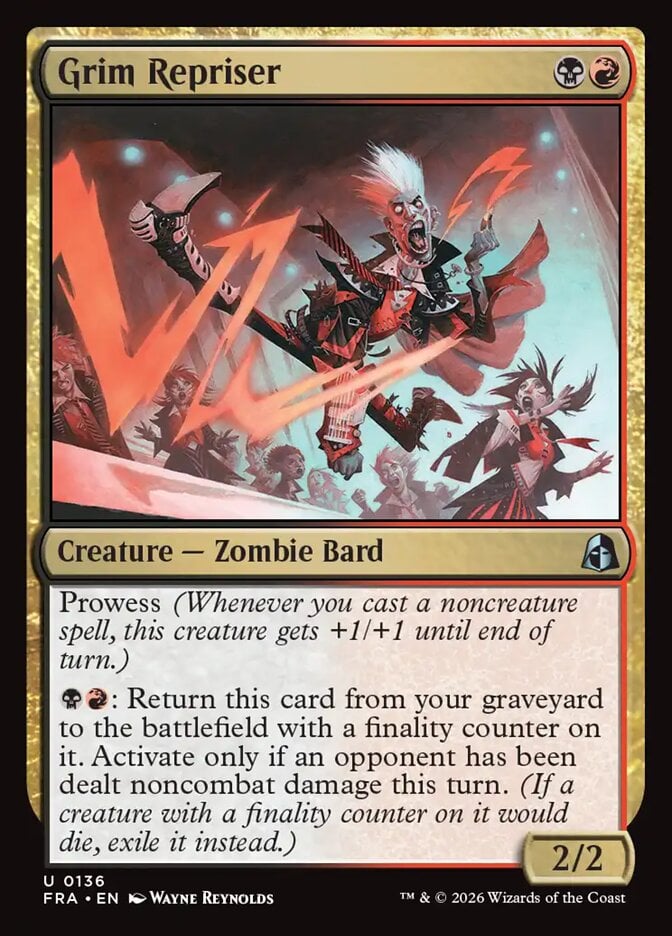






- Battle of Hoover Dam
- From the Rubble
- Leonardo, Sewer Samurai
- Chaos Shrine's Black Crystal
- Charnel Serenade
- Emperor of Bones
- Grim Reaper, Lethal Legionnaire
- Grim Reaper's Scythe
- Hundred-Battle Veteran
- Meathook Massacre II
- Osteomancer Adept
- Overflow Submatrix
- Queen's Bay Paladin
- Resurrected Cultist
- Scavenger's Talent
- Shilgengar, Sire of Famine
- Soulcoil Viper
- Storied Veteran
- The Tomb of Aclazotz
- Thunderbolts Conspiracy
- U.S.S. Reliant, From Hell's Heart
- Wolfbat
- Gastal Thrillroller
- Balustrade Wurm
- Esper Origins
- Intrepid Paleontologist
- Jet Collector
- Kastral, the Windcrested
- Proctor of Potential
- Mirko, Obsessive Theorist
- Uchbenbak, the Great Mistake
- Coalstoke Gearhulk
- Grim Repriser
- Rydia, Summoner of Mist
- Yuna, Hope of Spira
- Rite of the Moth
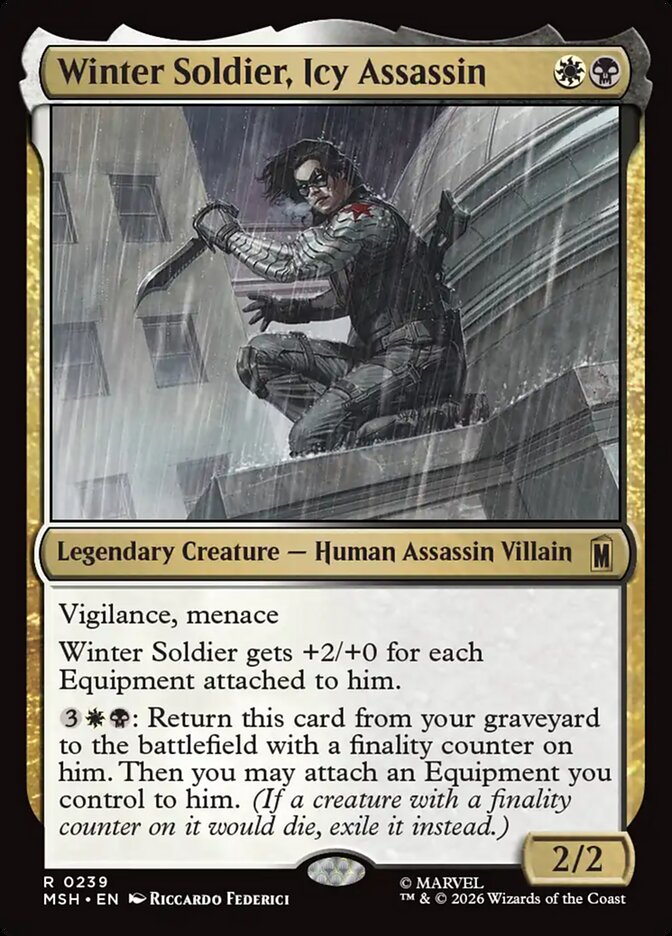
- Winter Soldier, Icy Assassin
- Zoraline, Cosmos Caller
- Winter, Cynical Opportunist
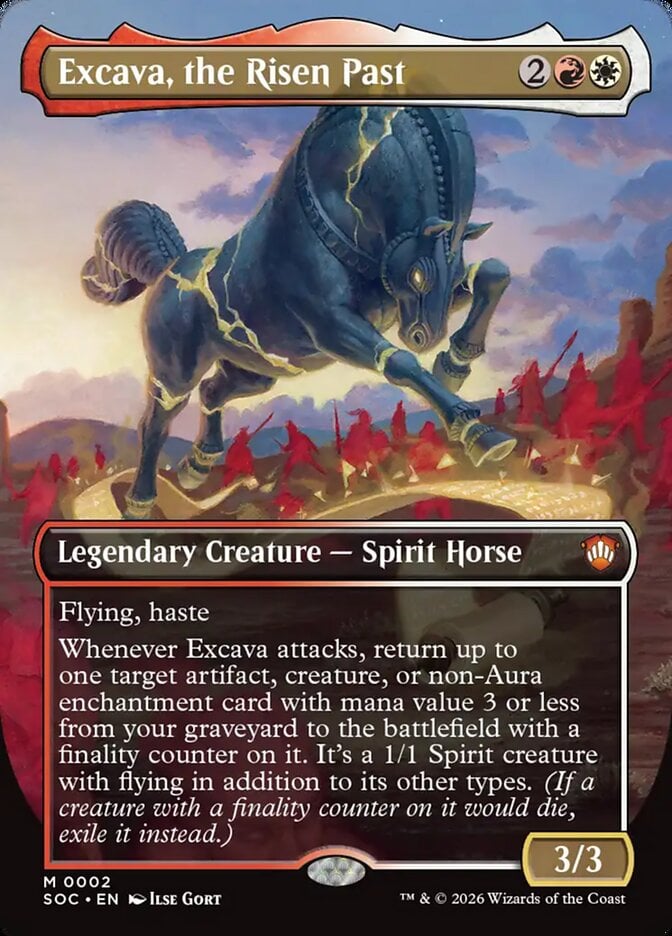
- Excava, the Risen Past
- Noctis, Prince of Lucis
- Admiral Brass, Unsinkable
- Relentless X-ATM092
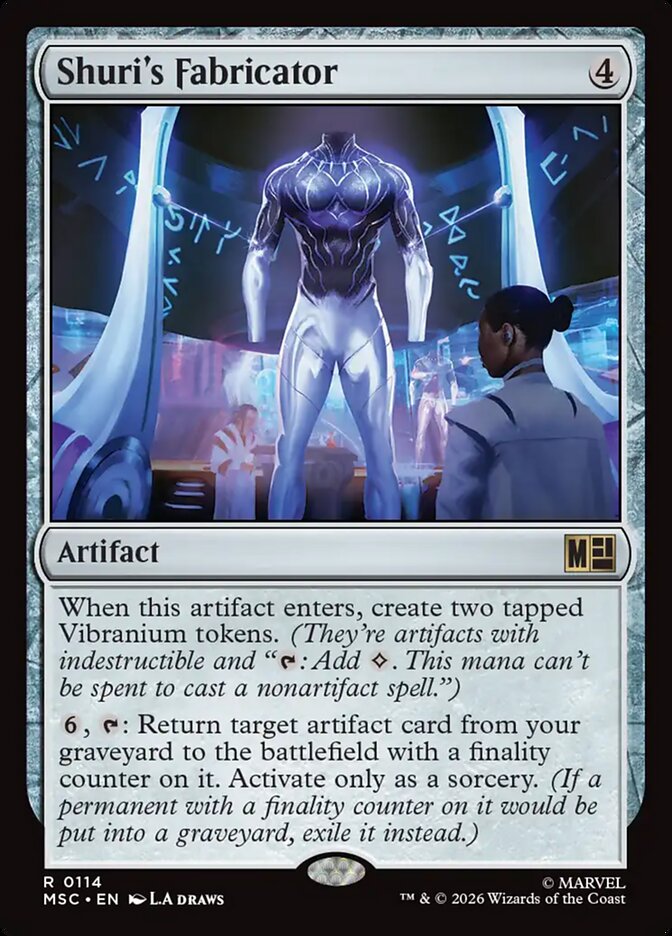
- Shuri's Fabricator
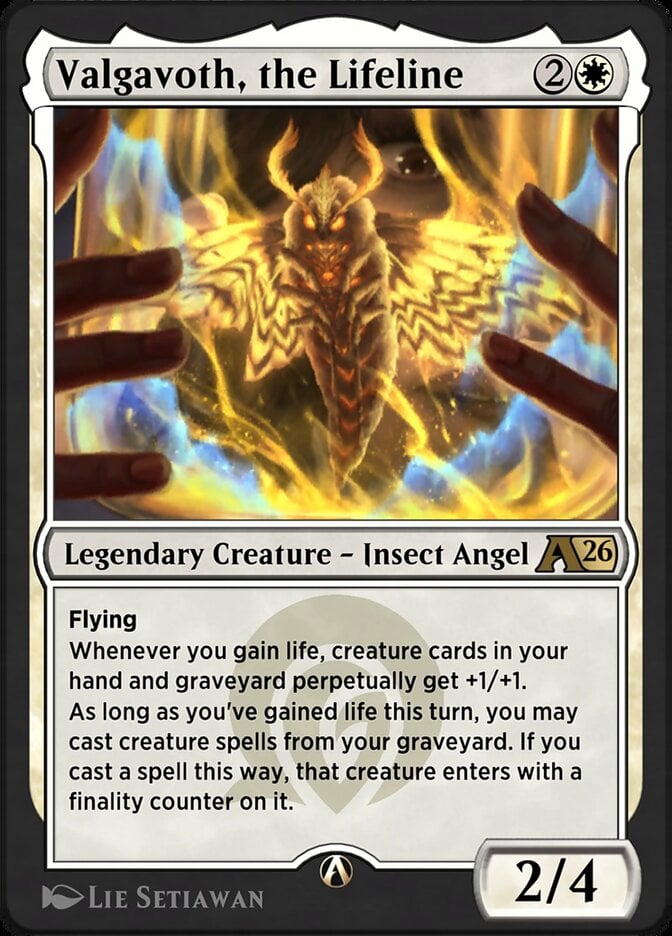
Digital-Only Finality Counter Cards
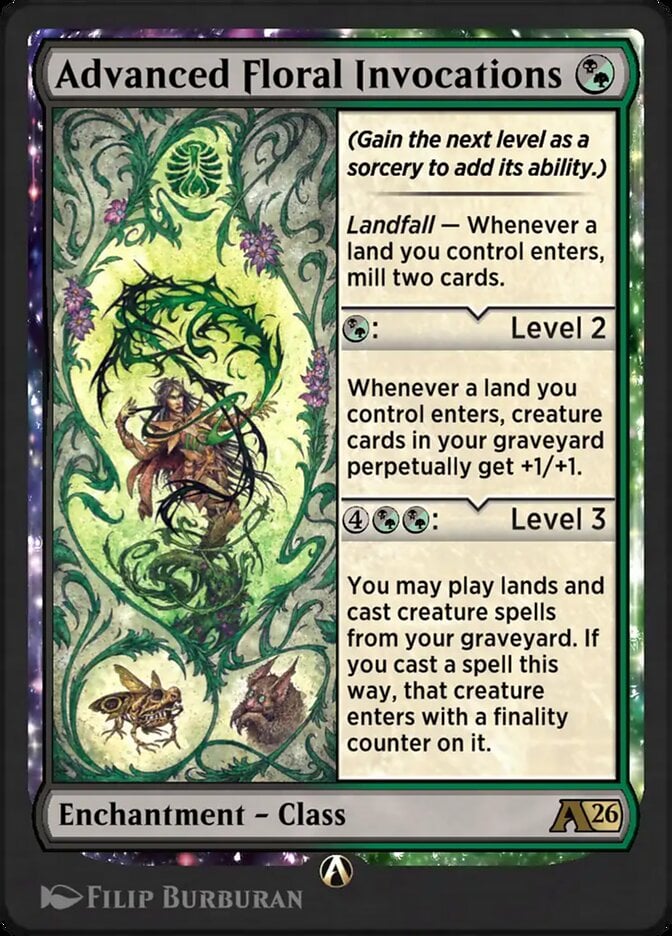
Best Finality Counters Cards
#8. Jet Collector
How does “free Mox Jet” sound to you? It’s really easy to get the Mox off Jet Collector, at which point this becomes a super cantrip creature that draws you a piece of the Power Nine and even has a repeatable reanimation ability on it. Of course, the acorn stamp and conjure text bar it from entry into any real format, but it does exist in paper now, so you might run into people trying to Rule 0 it.
#7. Winter, Cynical Opportunist
Winter, Cynical Opportunist does self-mill decently and promises really good value in just one delirium trigger. Artifacts, enchantments, and planeswalkers are such juicy targets to cheat into play, so it’s enticing.
#6. Coalstoke Gearhulk
Coalstoke Gearhulk is your typical mythic 5-mana value creature. It’s a strong creature with a good size and the combination of menace and deathtouch, and it also gives you another temporary creature with a finality counter. It works best with creatures that have good enters or attack triggers, or overstatted creatures like Rotting Regisaur.
#5. Meathook Massacre II
Meathook Massacre II is a certified bomb; this sequel to The Meathook Massacre works all on its own, yet is absolutely game-changing with a little action around it. It’s a gory complement to Sheoldred, the Apocalypse in black midrange decks.
#4. Admiral Brass, Unsinkable
Admiral Beckett Brass is a fairly popular pirate commander, and Admiral Brass, Unsinkable is even stronger. It has fewer hoops to jump, fits into the “Attack, yarrr!” theme that pirates have by keeping our boys comin’, and some pirates have very good enter-the-battlefield effects that Brass lets us reuse.
#3. Yuna, Hope of Spira
Yuna, Hope of Spira reanimates an enchantment every turn, including the turn you cast it. It’s excellent with all the powerful summon sagas like Summon: Bahamut, though Yuna isn’t limited to creatures, so powerful enchantments like Omniscience or enchantment-based removal spells are strong targets as well.
#2. Scavenger’s Talent
Scavenger's Talent is one of the more interesting class cards from Bloomburrow, with three good triggered abilities. Good token generation and management nets you really solid gains on this one, ultimately returning some incredible threat your opponent killed or thought was milled away, as trading three Foods for an Ygra, Eater of All is nothing but bad news for your opponent.
#1. Emperor of Bones
Vintage Cube all-star Emperor of Bones offers a nice one-shot reanimation effect on its own, and it becomes a reanimation machine if you have other sources of +1/+1 counters. It’s also passive graveyard hate on a 2-drop and brawls pretty well as a potential 4/4 on its own, so it’s a well-rounded creature for high-power environments.
Finale

Uchbenbak, the Great Mistake | Illustration by Steven Belledin
And we’ve reached the finale of this deep dive on how finality counters work in MTG!
Since being discovered in The Lost Caverns of Ixalan, finality counters are a mechanic that you can expect to see in most MTG sets, so I’m hopeful WotC prints more cards that move, remove, or care about counters, and perhaps even use this new “counter tech” on more abilities.
I hope you enjoyed this mechanical deep dive, and if you have questions, drop a comment below or stop by the Draftsim Discord for a chat. And check out The Daily Upkeep newsletter to stay up to date on all the latest MTG news!
Now time for this article’s Dramatic Finale!
Follow Draftsim for awesome articles and set updates:









Add Comment