
Last updated on June 9, 2026

Yawgmoth's Vile Offering | Illustration by Noah Bradley
Magic’s lore turned 30 not too long ago, and the last three decades gave us quite a few memorable villains. These villains range from understandable and ultimately redeemable to pure evil, which can help keep Magic’s story feeling fresh. It might get a little exhausting if every villain was an over-the-top monster like Yawgmoth.
Though some of these villains have been long-dead in Magic’s history, that doesn’t mean they won’t show up again in the game at some point. Products like Modern Horizons and Commander precons have included characters from Magic’s past before. The Brothers’ War also proved that Magic is up for doing sets that take place in the past, opening the door for any of these characters to potentially return at some point.
With the Archenemy format got a rework in Duskmourn, it could be the right time to build a deck around one of Magic’s greatest villains. Let’s take a look at some of the game’s big bads and see which are the best (or worst).
(Dis)honorable Mention: Urza
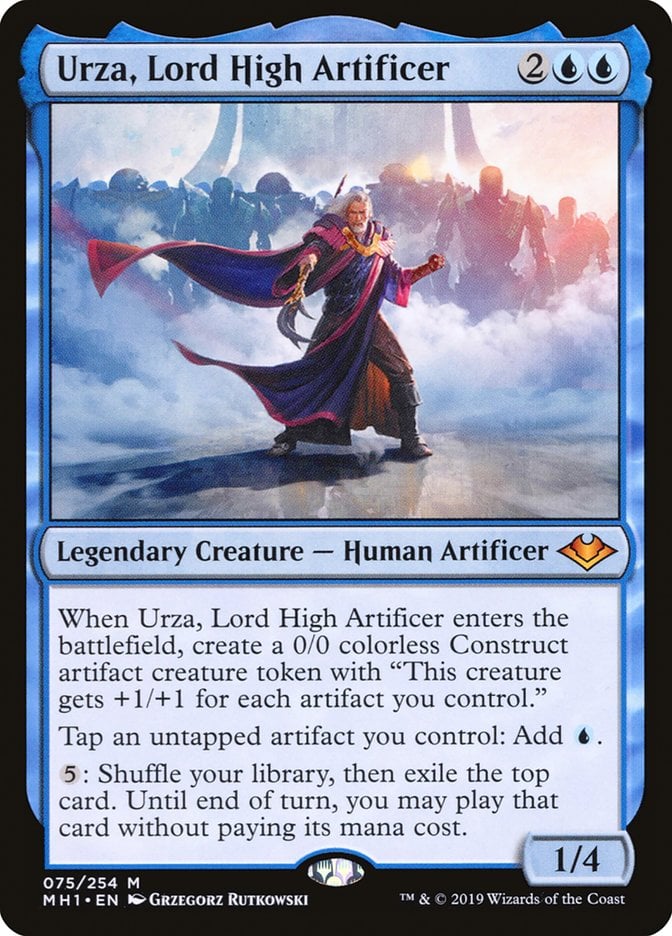
Anyone who has played against an Urza, Lord High Artificer deck probably doesn’t need too much convincing to see Urza as a villain, but it’s worth mentioning why he is also somewhat villainous in Magic’s story.
While Urza is depicted as the lesser of two evils during The Brothers’ War, he is still responsible for continuing to escalate the conflict between himself and Mishra. Urza ended the war with the Golgothian Sylex, killing massive numbers of people, sinking the entire continent of Argoth, and causing Dominaria’s ice age.

Urza's Ruinous Blast | Illustration by Noah Bradley
Urza would later prove that he was mostly interested in power when he eventually traveled to Phyrexia. He wept at its “beauty” and when Yawgmoth asked what his wish was, Urza said it was to study artifice with the god of Phyrexia. For all Urza’s claims that everything he did was to fight Phyrexia, he proved more interested in understanding its power than actually stopping it.
Urza would eventually die when Karn activated the Legacy Weapon during the events of Apocalypse, though his planeswalker spark lives on in the silver golem.
Honorable Mention: Universe Beyond Villians
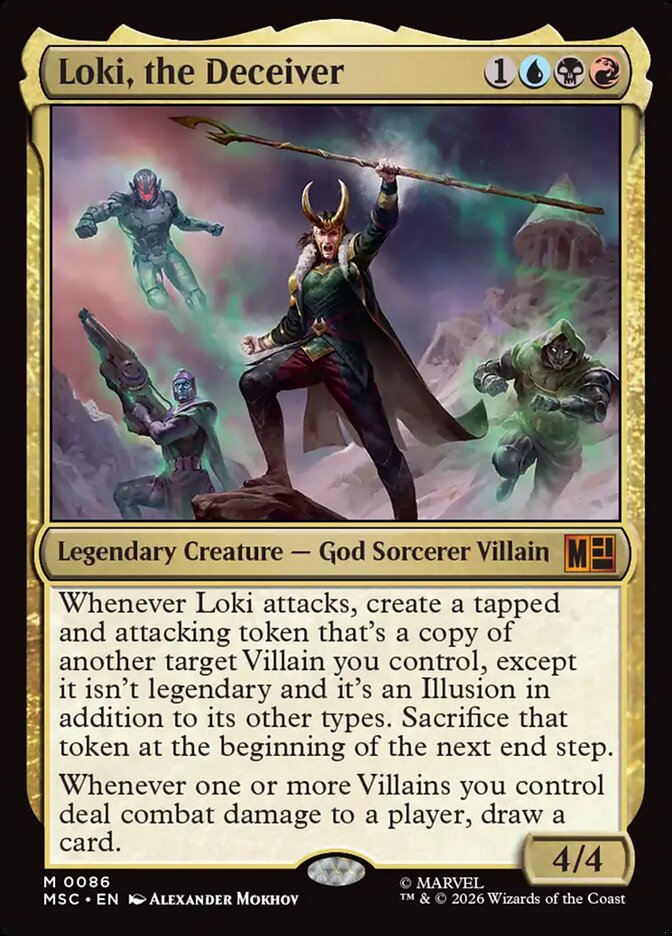


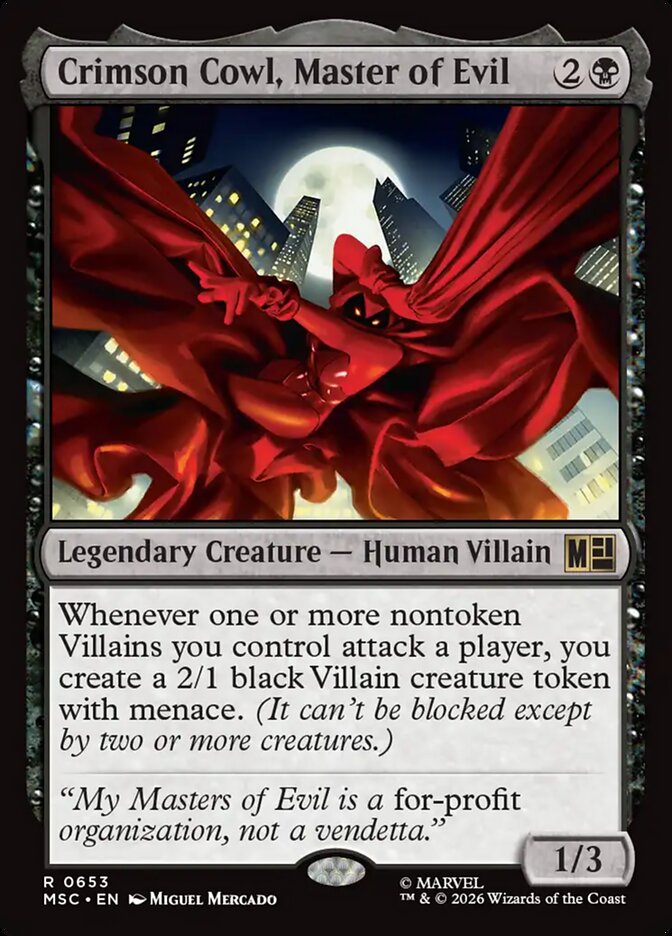
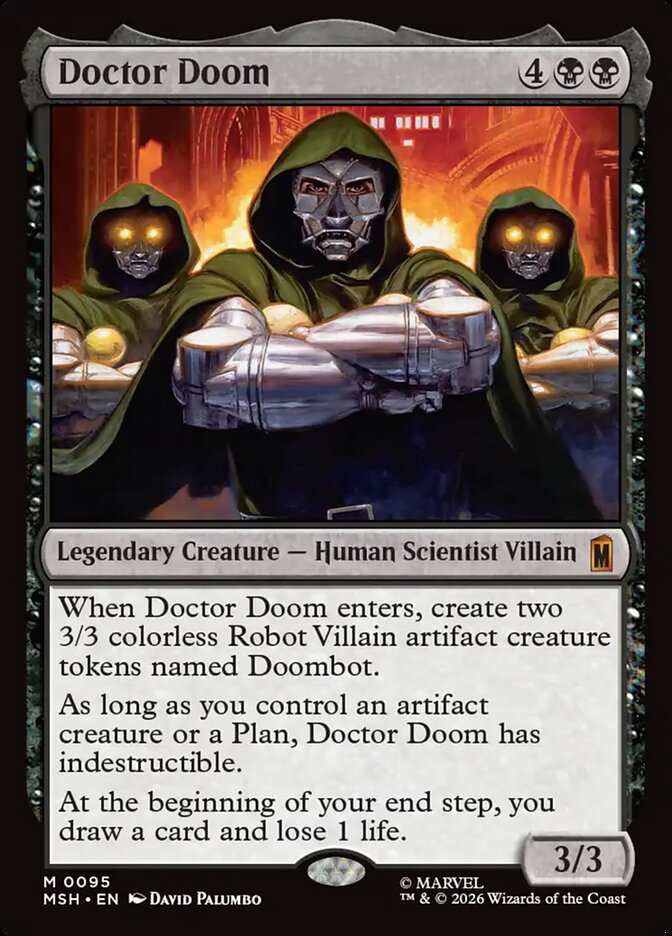
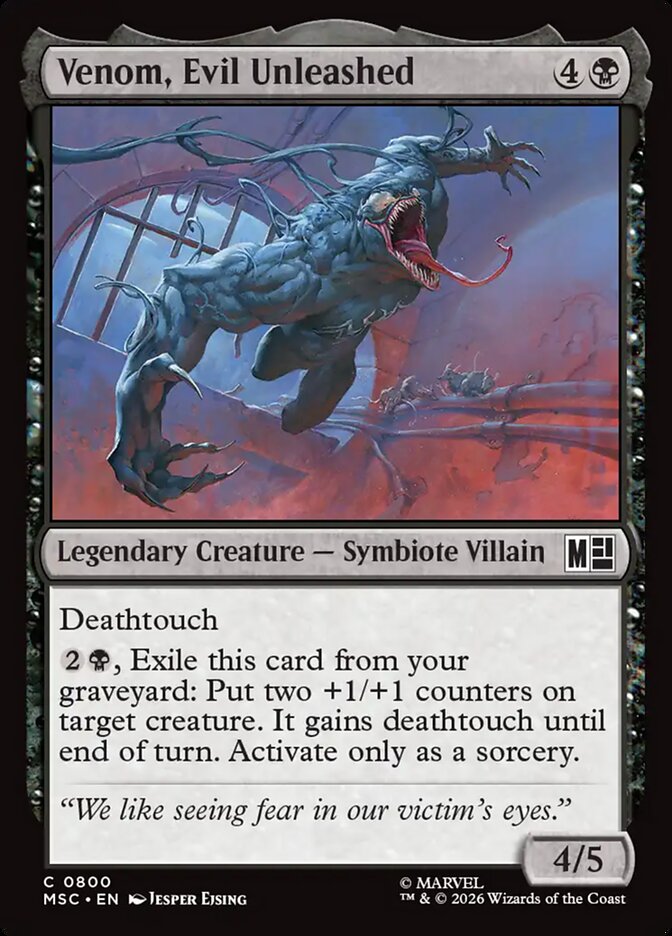
You can chalk this mention up to count for all the evils Universes Beyond represents for you. Loki, the Deceiver, Norman Osborn / Green Goblin, Crimson Cowl, Master of Evil, Doctor Doom, and Venom, Evil Unleashed are a small representation of Marvel‘s evil.

Behold the Sinister Six! | Illustration by Nathaniel Himawan
This is far from the Sinister Six, but rather a sampling of the many villains that make up the storylines of Spider-Man, and are the primary source of conflict for the Marvel Super Heroes. Without these characters, Captain America, Peter Parker, and Thor are pretty boring.
Some Universes Beyond villains have a good intention, but how they complete their goal can be all the difference. Volume upon volume, movie after movie, these villains are important, and the kicker is, we like to play their cards.
#16. Augustin IV
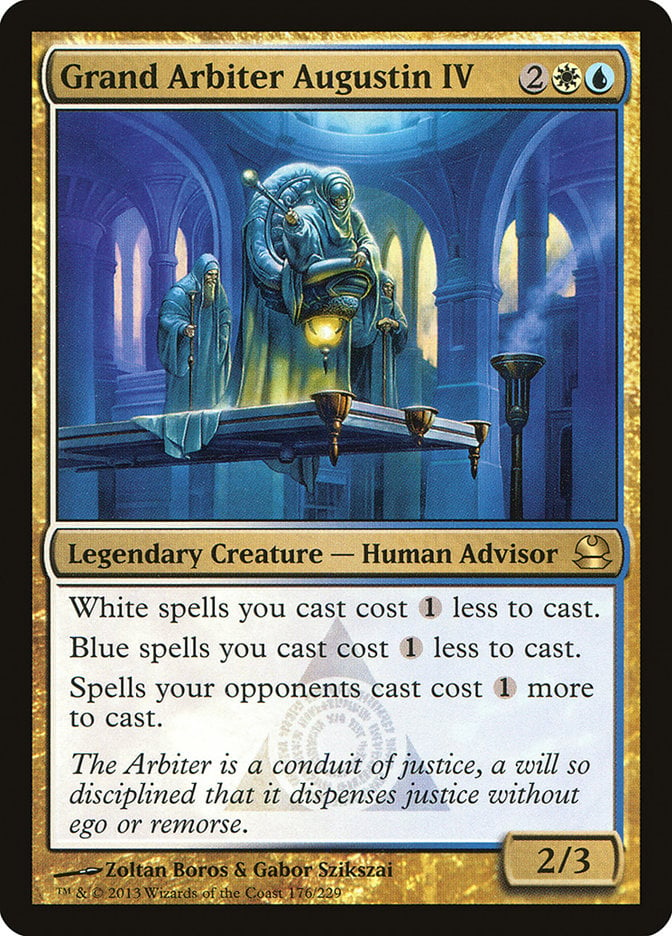
Grand Arbiter Augustin IV is a villain from Magic’s Dissension set. Augustin IV sought to use the breaking of the Guildpact as an opportunity to seize control of Ravnica and reshape it into an authoritarian state under his control.
While Augustin IV isn’t one of Magic’s most exciting villains, he is the perfect illustration of how ideologies from the color pie that seem benevolent can become problematic when combined. White mana’s focus on creating peace and blue’s endless search for self-improvement aren’t necessarily bad goals. However, Augustin IV’s idea of improving Ravnica would have meant taking away individual rights, and he aimed to create peace through the strict subjugation of its citizens.
Villains like Augustin IV help keep Magic’s story a bit more complex. Instead of aligning every villain with a dedicated “bad” color, Magic gives us villain cards that share color alignments with some of our heroes to show how their ideals can be corrupted.
#15. Ertai
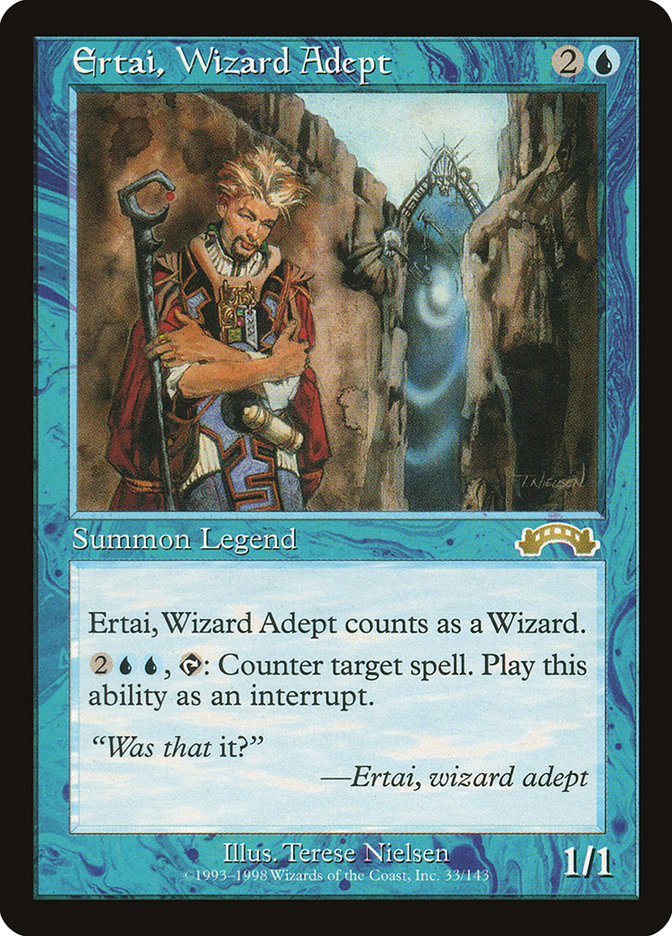
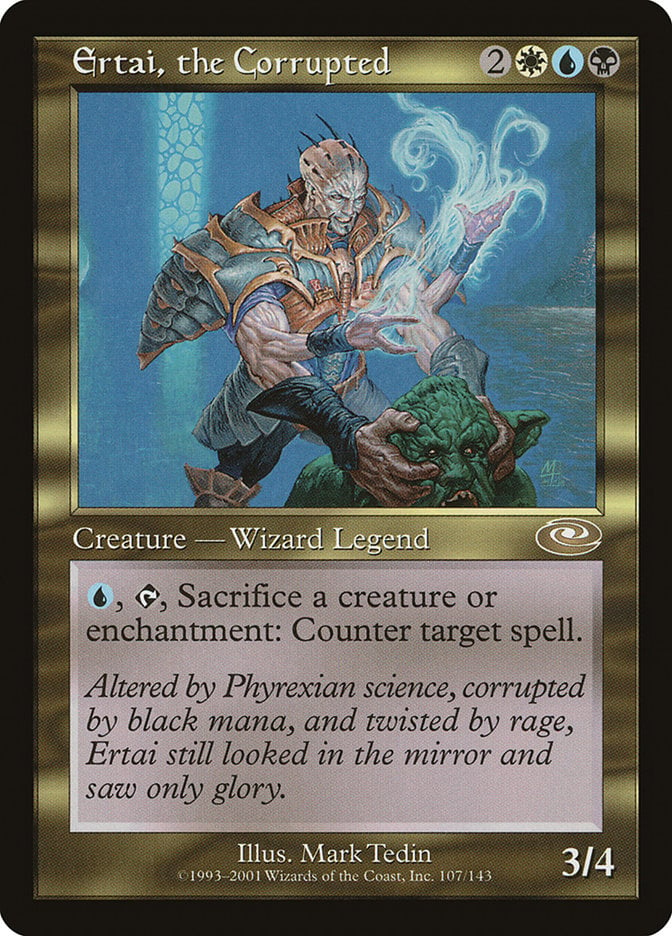
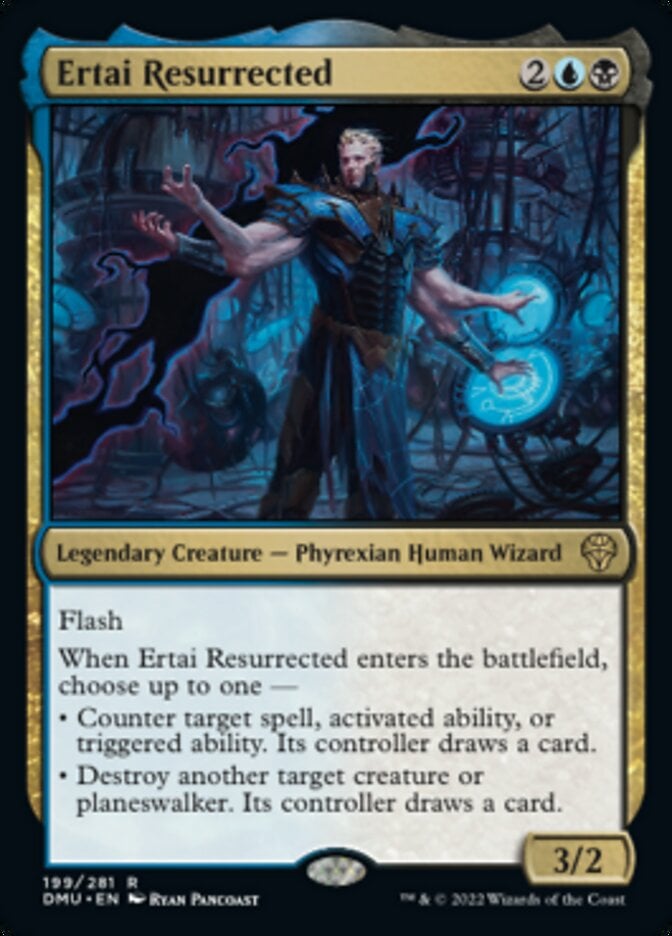
Ertai was originally introduced to Magic’s story alongside the Weatherlight MTG set in the story Fortune Favors the Bold by Michael G. Ryan. Originally, he was a young wizard who helped the Weatherlight crew rescue Sisay from Rath, as depicted in the card Ertai, Wizard Adept from Exodus. However, the Weatherlight crew left him behind, where he was captured by Phyrexians. Ertai was eventually compleated and turned into Ertai, the Corrupted. He blamed the Weatherlight crew for his fate and held a grudge against them, especially Gerrard Capashen.
Perhaps one of Ertai’s most notable contributions as a villain was turning the goblin Squee immortal. While that might not seem like a villainous act on its face, Ertai only did it so he could kill Squee repeatedly in an endless cycle of torture.

Ertai's Scorn | Illustration by Alex Negrea
Though Squee managed to kill Ertai in an accidental explosion, Ertai would later return in Dominaria United when he was brought back to life by Sheoldred. Ertai continued his revenge on his old allies by compleating Gerrard’s descendant Aron Capashen and Squee’s goblin allies.
Ertai wasn’t given a definitive death scene, and it’s unclear if – as an original Phyrexian – he would have been shut down with the New Phyrexians at the end of March of the Machine.
#14. Xenagos
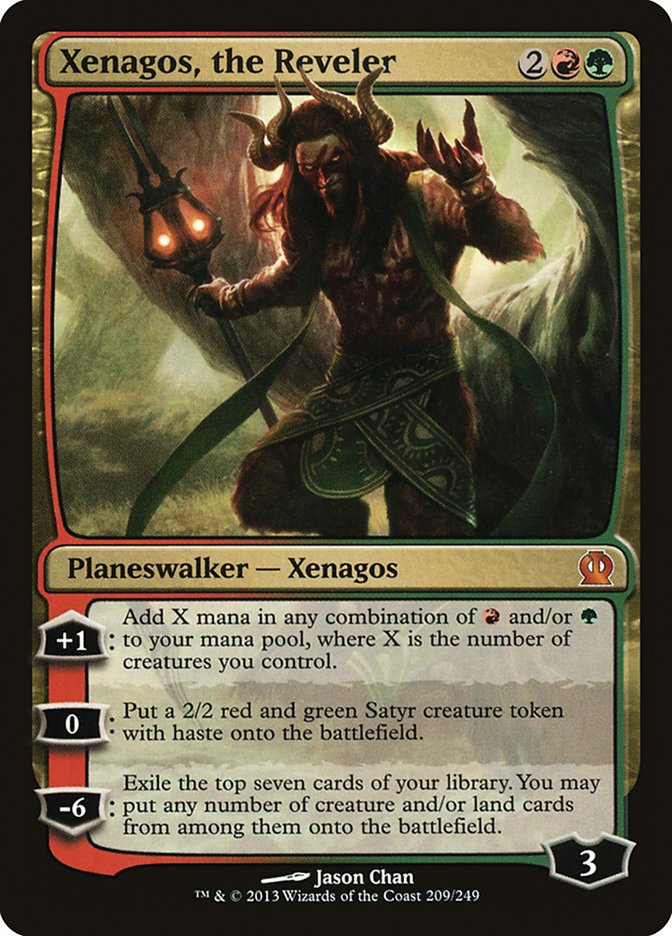
Xenagos was a satyr introduced in the original Theros block. Despite an absurdly violent childhood, which involved him killing another child and making repeated attempts to kill his mother, Xenagos grew up to be a somewhat normal satyr, even serving as host at many of their revelries. However, when Xenagos’ spark ignited, his visits to other Magic planes made him increasingly disillusioned with life on Theros.
Xenagos, the Reveler no longer found joy in the hedonistic lifestyle of satyrs, and no longer respected Theros’ gods upon learning that their powers had no significance in the wider multiverse. After discovering that the gods of Theros gain their power through followers, he begins a scheme to become a god himself.

Deicide | Illustration by Jason Chan
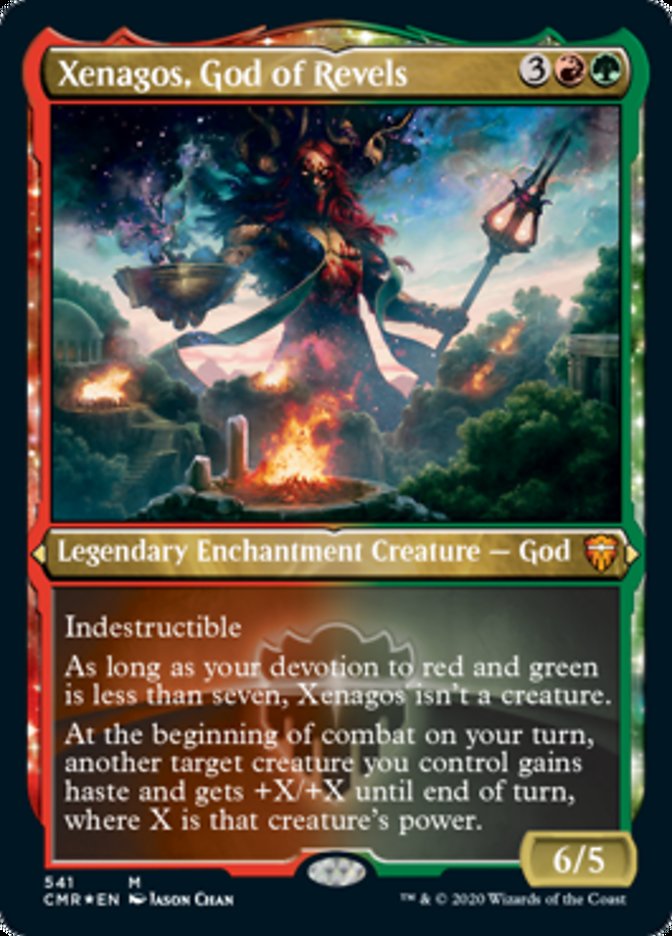
Xenagos successfully gathered enough worshippers to turn him into Xenagos, God of Revels, though he would be quickly defeated by Elspeth. Since Xenagos died in Nyx, he did not go to Theros’ underworld and is presumed permanently dead. However, his discovery of how Theros’ gods gained their power was a significant contribution to the plane’s history.

Aside from being the block’s main antagonist, Xenagos was also the main antagonist of Journey into Nyx Game Day events where players would face off against the Defeat a God Challenge Deck. The deck piloted itself against players and featured a special Xenagos Ascended card that players had to defeat in order to win the game.
#13. Volrath
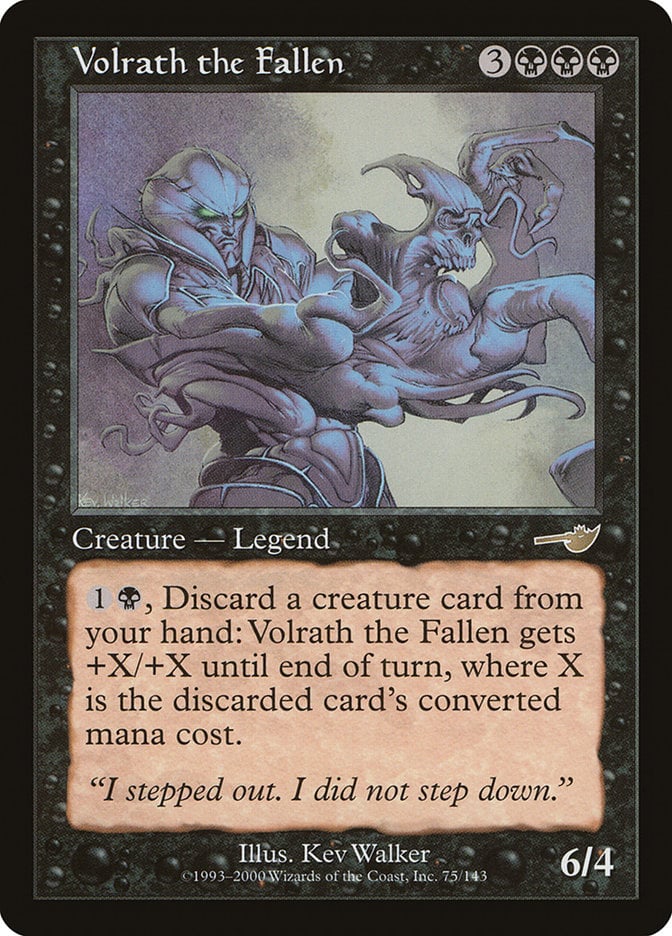
Volrath was a long-running antagonist during Magic’s Weatherlight Saga. He was originally called Vuel, and was raised alongside Gerrard Capashen. Vuel was eventually banished from his clan when he failed a rite of passage, and he came to resent Gerrard for saving his life during this trial.
Vuel would later return to his home with a group of raiders which resulted in the death of his father Sidar Kondo, further creating animosity between Vuel and Gerrard. Vuel would eventually be transported to the plane of Rath and turned into the Phyrexian Volrath, as shown in the card Volrath the Fallen from Nemesis.
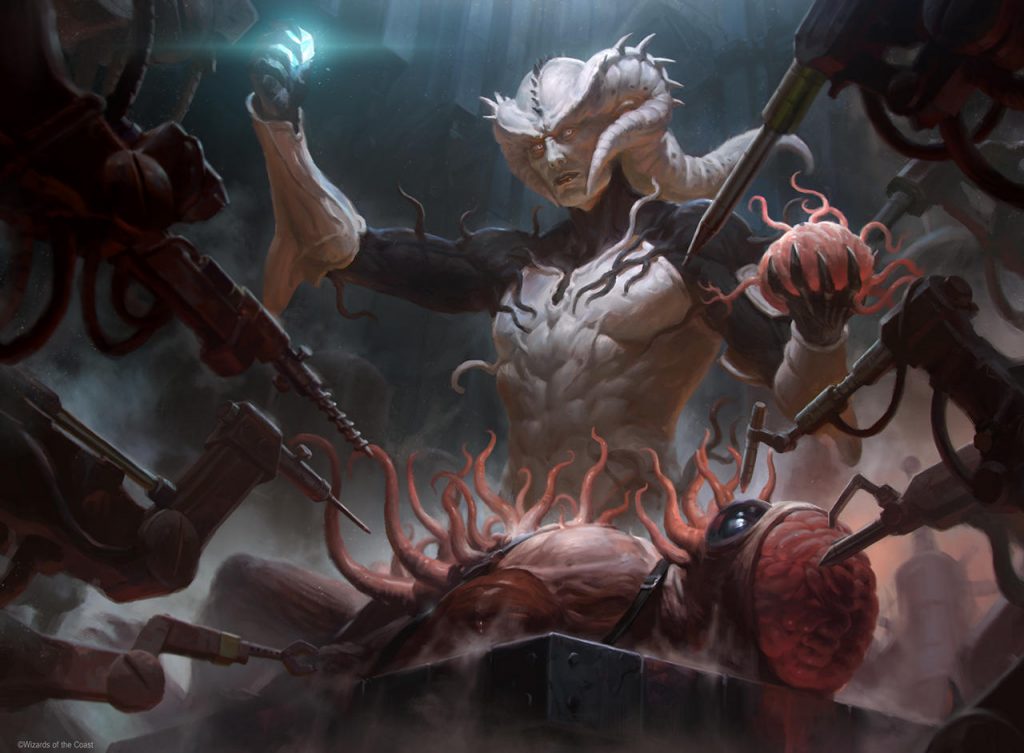
Volrath, the Shapestealer | Illustration by Heonhwa Choe
Volrath would continue to trouble the Weatherlight crew, most notably by capturing their captain, Sisay. Volrath ultimately met his fate, not at the hands of Magic’s heroes, but those of his supposed Phyrexian allies. In-fighting over Volrath’s position as leader of Rath eventually led Ertai and another Phyrexian, Crovax, to team up and take Volrath down.
#12. Memnarch
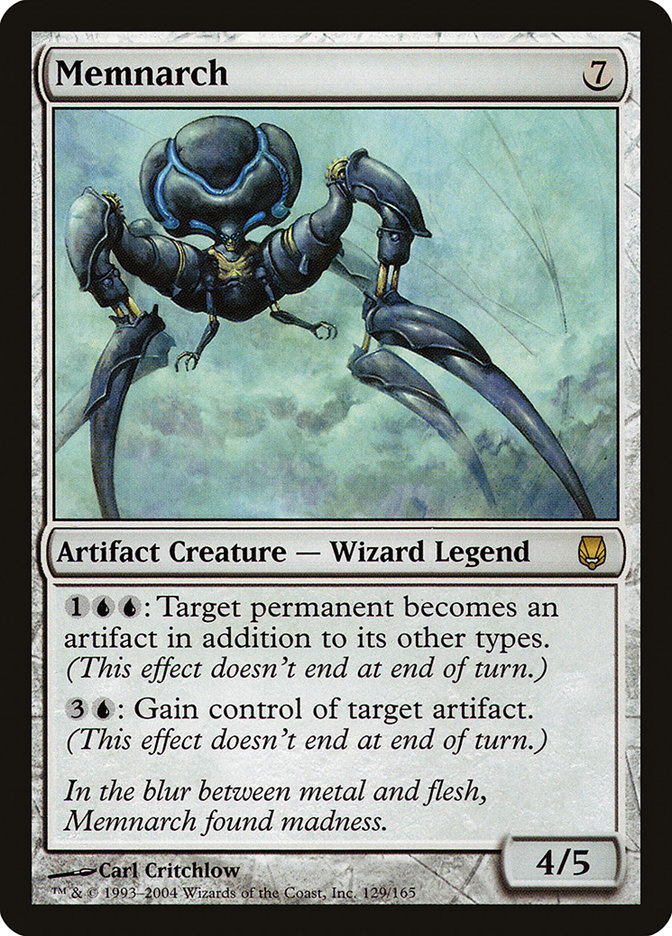
Memnarch was originally a golem created by Karn to serve as the warden of Karn’s castle, Galdroon, on Argentum. Karn’s warden was born from the Mirari, a powerful artifact that helped Memnarch become more intelligent.
When Karn left Argentum to train Jeska, he left Memnarch in charge of the plane, which proved to be a major mistake. Memnarch renamed the plane Mirrodin, in honor of the Mirari which had given him life. He instructed the other golems created by Karn to help terraform Mirrodin into a plane that could sustain natural life and rewarded them for their service by destroying most of them.
Since Mirrodin had no natural life, Memnarch kidnapped creatures from other planes using devices called soul traps to populate the plane. He also began consuming large quantities of Blinkmoth fluids which further altered his mind and drove him towards a new goal: becoming a planeswalker.

Aether Vial | Illustration by Karl Kopinski
Obsessed with gaining a spark, Memnarch turned Mirrodin into a surveillance state, searching endlessly from his Panopticon for a creature with a spark. This would eventually lead him to try and harvest Glissa Sunseeker’s spark, and brought him into conflict with the last of Karn’s remaining creations: Bosh, Iron Golem.
Eventually, Glissa, with help from the goblin Slobad, defeated Memnarch, allowing Karn to return to the plane. Though Memnarch died during the events of Fifth Dawn, his impact on Mirrodin caused long-lasting changes to the plane. He created the Myr and Memnites which remained after his death, and he populated the plane with organic life. Without Memnarch’s introduction of living beings, Mirrodin likely never could have become New Phyrexia.
#11. Ob Nixilis
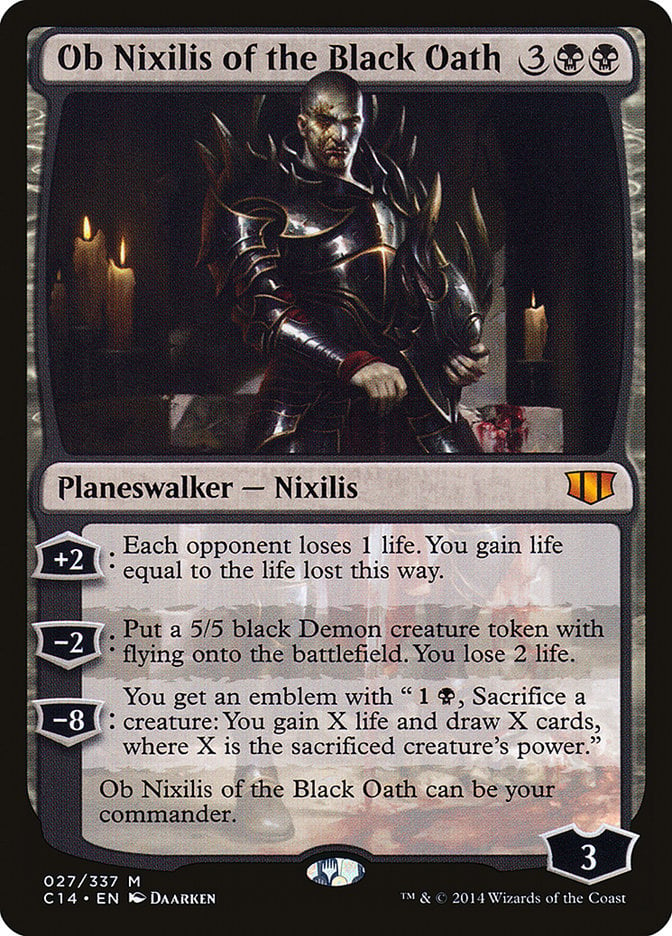
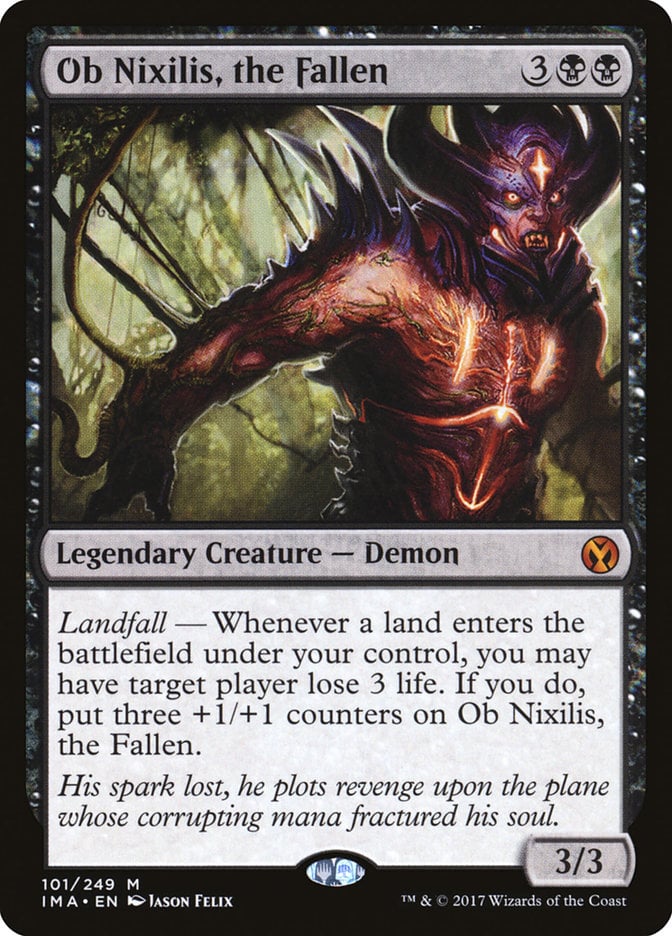
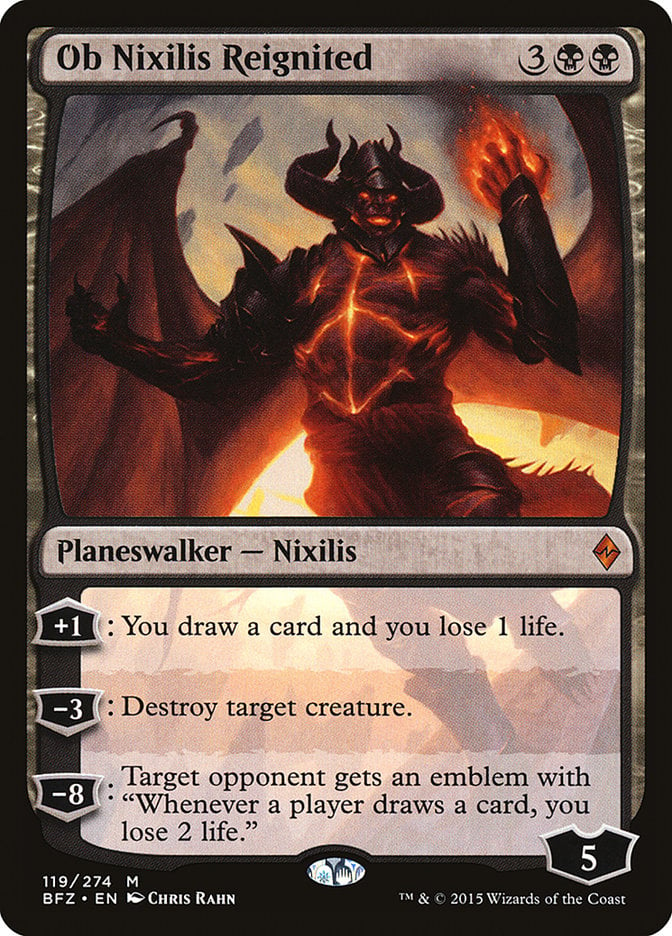
Ob Nixilis of the Black Oath was a human who spent over a thousand years in constant conflict on his home plane. He finally won his seemingly endless war by summoning demons which wiped out the entire plane, leaving him as the sole survivor. His planeswalker spark ignited following the slaughter, leading him to try and conquer other worlds.
His lust for power led him to Shandalar where he attempted to use The Chain Veil to empower himself. Instead, it cursed him with a new demonic form. Ob Nixilis would then travel to Zendikar where he hoped he could use the plane’s powerful mana to cure himself.
On Zendikar, Nahiri used a hedron to rob Ob Nixilis of his power and spark, leaving him trapped on the plane. For years, the demon attempted to trap other planeswalkers, eventually tricking Jace Beleren into removing the hedron from him.
With his power regained, Ob Nixilis confronted several planeswalkers during Battle for Zendikar, managing to overcome Nissa, Jace, and Gideon. Only when Chandra joined the other three original Gatewatch members were the planeswalkers able to drive Ob Nixilis off.

Ob Nixilis, Captive Kingpin | Illustration by Zezhou Chen
Ob Nixilis next popped up during War of the Spark as a reluctant ally of his former enemies, desperate to free himself from Ravnica. He was quickly back to his villainous ways in his next appearance in Streets of New Capenna as Ob Nixilis, the Adversary, where he was attempting to overthrow the plane’s five crime families and seize power for himself.
Following March of the Machine, Ob Nixilis was once again desparked and is currently stuck on New Capenna. With all five crime families now out to get him, he will be lucky to survive and regain his lost power.
#10. Tezzeret

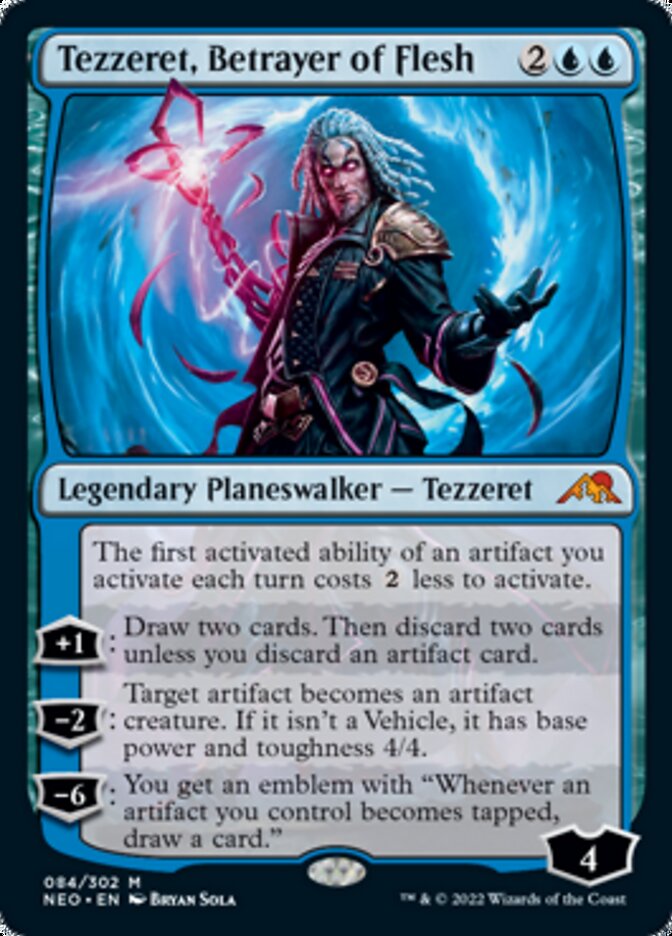
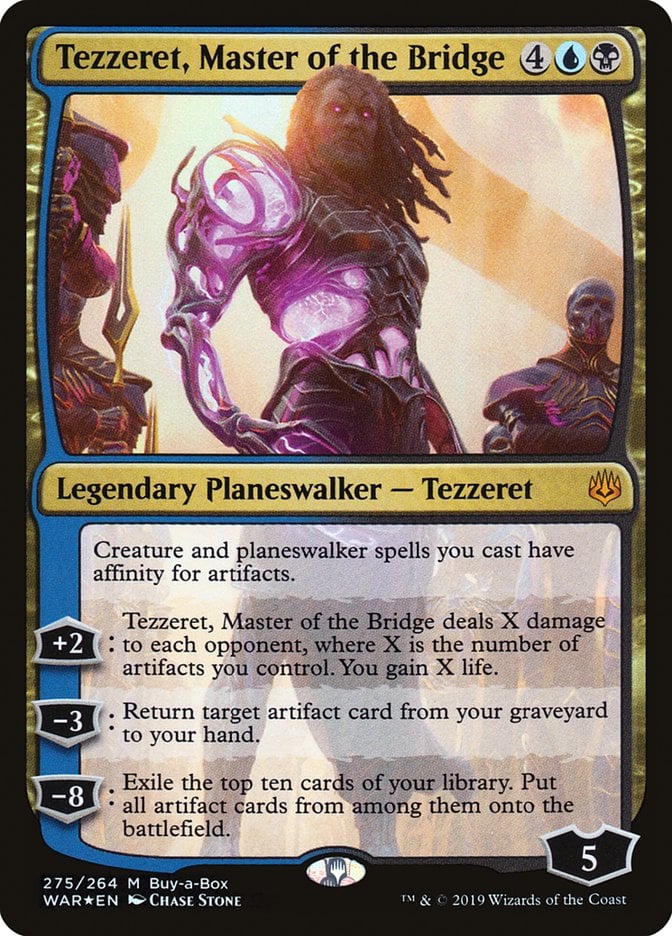
Tezzeret would embrace AI, but in doing so, would look to perfect it for his personal gain. If you recognize Tezzeret, Master of the Bridge as one of Bolas’ top baddies of War of the Spark, or Tezzeret, Betrayer of Flesh and Tezzeret, Cruel Captain, you know that all people are in danger with this planeswalker.

Tezzeret, Agent of Bolas | Illustration by Aleksi Briclot
Left to his own devices, this greedy blue-black-artifact planeswalker is an enemy to humans, animals and aliens alike.
#9. Valgavoth

Valgavoth may have been introduced in Duskmourn: House of Horror, but the set’s ending sort of implies that the demon is being set up as a major villain. Valgavoth was a demon originally summoned to the plane that would come to be known as Duskmourn. The demon’s obvious malevolence caused his summoners to quickly reverse their mistake by binding Valgavoth to the house he had been summoned into.
Years later, Valgavoth would manipulate a young girl named Marina Vendrell into granting him power. Valgavoth used his newfound power to expand the walls of the house he was bound to until it encompassed the entire plane, also gaining his massive form as seen in Valgavoth, Terror Eater. Valgavoth uses his control of the House to terrorize Duskmourn’s inhabitants. He is also powerful enough to open doors to other planes, luring in unsuspecting victims from across the multiverse.

Valgavoth, Harrower of Souls | Illustration by Chris Cold
Valgavoth was wounded during the events of Duskmourn by the planeswalker Kaito Shizuki, but he managed to survive. He also captured Loot, whose internal map of the multiverse will likely prove to allow Valgavoth unprecedented access to worlds outside of Duskmourn. This is likely establishing Valgavoth as a major threat in a future story. It’s nice to see Magic creating another multiversal threats after so many years dedicated to Nicol Bolas and the Phyrexians.
#8. Mishra
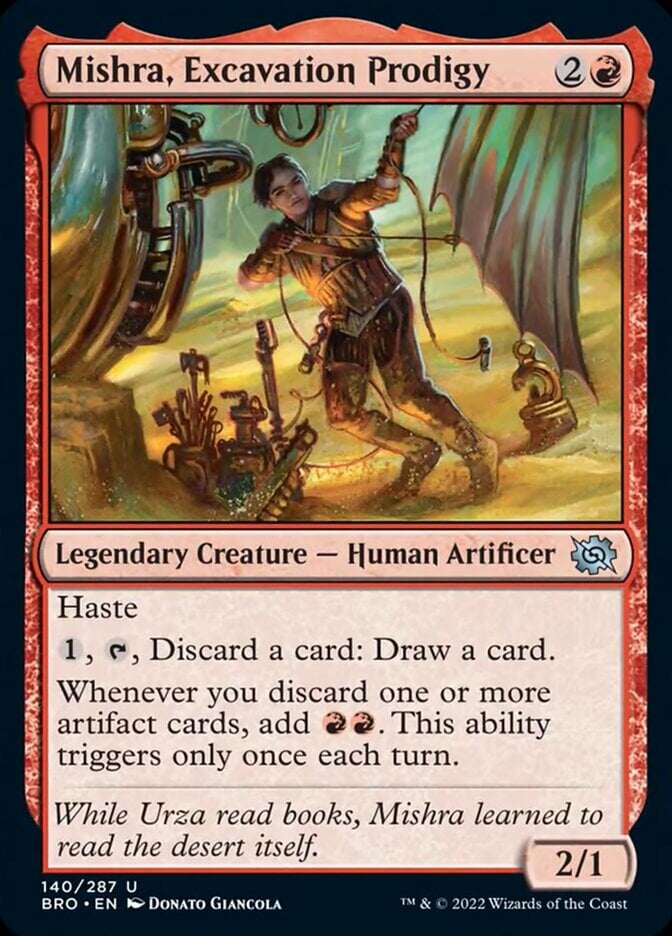
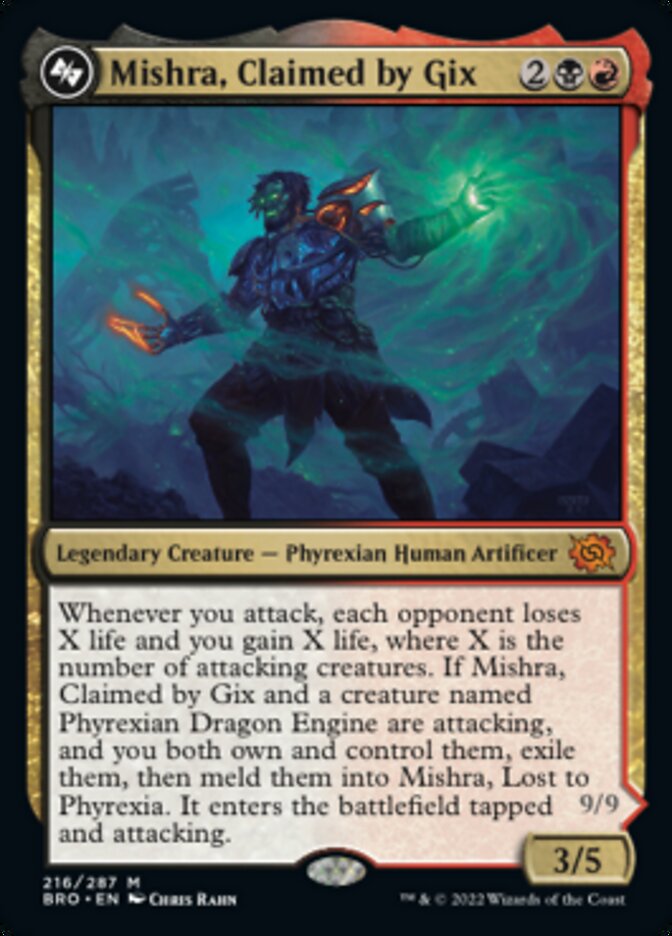
In many ways, Mishra was the opposite of his brother Urza. Mishra was more connected to the people around him, and showed interest in the natural world as well as artifice, according to Mishra, Excavation Prodigy’s flavor text.
Despite being different from Urza in many ways, Mishra like his brother would ultimately become a warmonger and cause much death and destruction in Dominaria throughout The Brothers’ War. Mishra’s bloody takeover of his brother’s kingdom would even earn him the label “The Butcher of Kroog.”
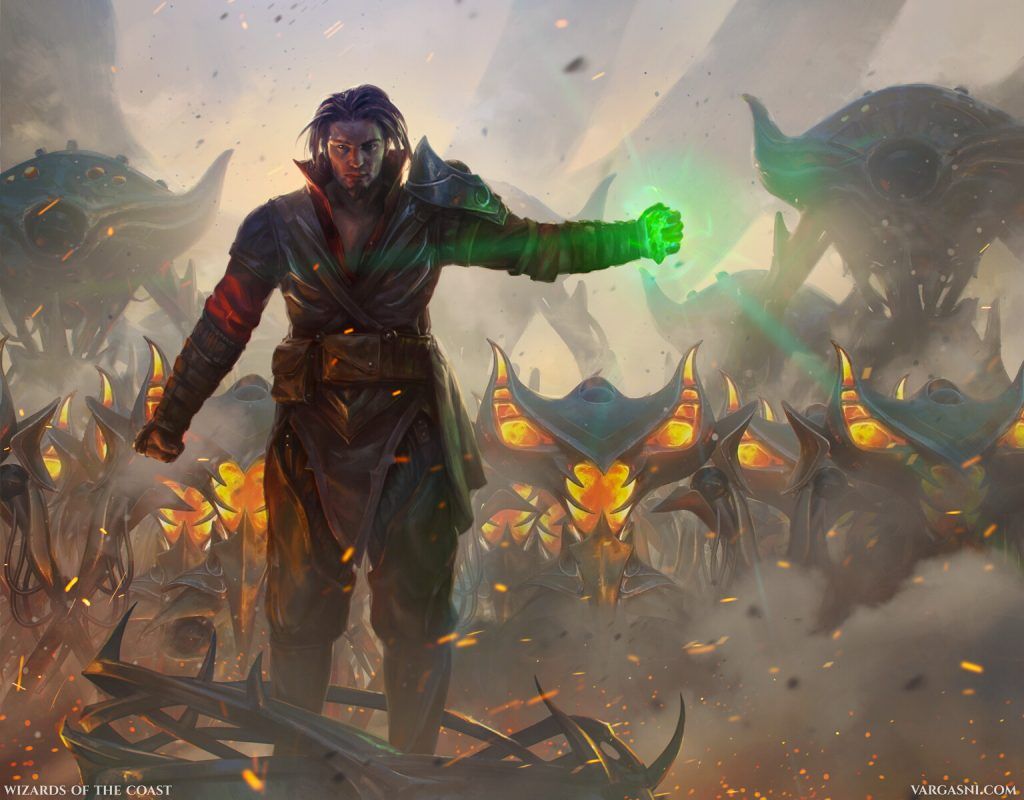
Mishra, Eminent One | Illustration by Randy Vargas
As Mishra’s health began to fail, he would turn to the followers of the Phyrexian Gix to replace his body with mechanical parts. Mishra was eventually compleated as shown in Mishra, Claimed by Gix. This means Mishra is not only significant for leading one half of The Brothers’ War, but also for making Urza aware of Phyrexia’s existence, and fueling Urza’s vengeance against them.
Though Mishra seemingly died at the end of the war, Urza did see his brother again when he visited Phyrexia in Apocalypse. Whether Mishra was truly in Phyrexia or Urza was simply imagining it was left up to interpretation, though since Old Phyrexia has been destroyed according to Magic’s official site, Mishra is likely gone either way.
#7. Geyadrone Dihada
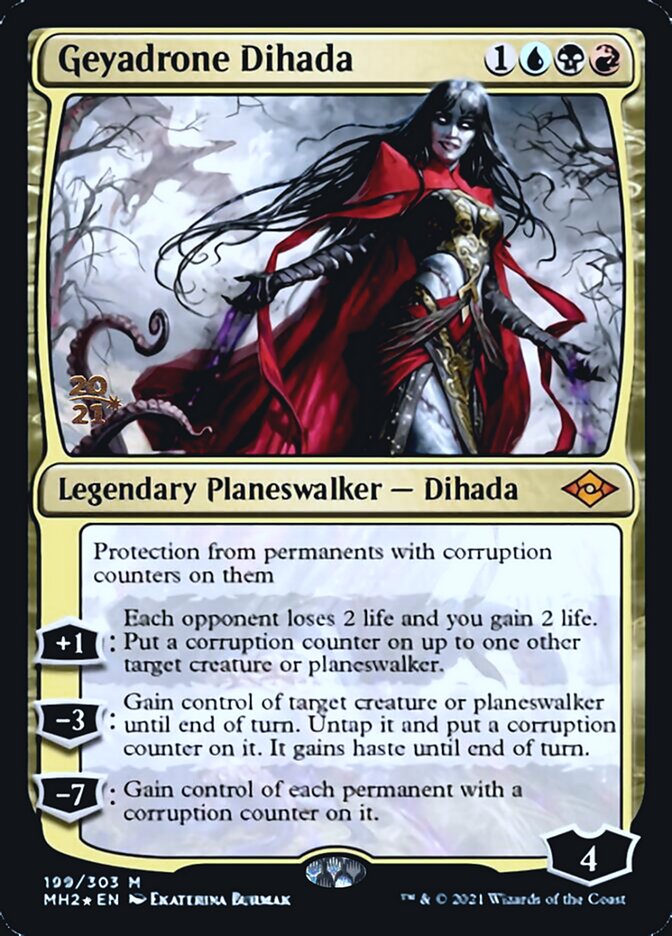
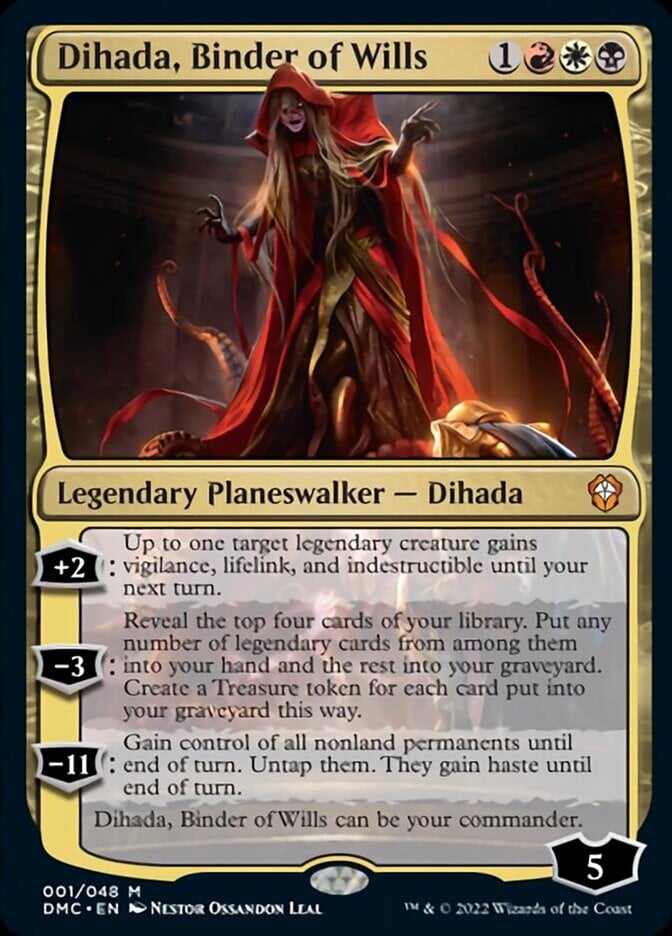
Geyadrone Dihada was one of Magic’s earliest villains, introduced alongside the Legends MTG set. Despite being such an old part of Magic’s story, she didn’t get her first card until Modern Horizons 2. She would reappear shortly after this in the events of Dominaria United and get her second card, Dihada, Binder of Wills.
Dihada was a shapeshifting demon who used her magic to bend others to her will. She corrupted and controlled Dakkon Blackblade until a young man named Carth helped free him from her control.
In Dihada’s recent appearance, she used the confusion from the Phyrexian invasion of Dominaria to take over the Tolarian Academy. She also took over the island of Corondor, the site of an ancient war, hoping to lure Jared Carthalion to confront her. As Carth’s descendent, Dihada is hoping to use Jared to regain control of Dakkon.
Geyadrone Dihada hasn’t popped back up in the years since Dominaria United, but it’s safe to assume she is still alive and likely still scheming. Whether she pops back up soon, or we have to wait another 26 years between appearances is yet to be seen.
#6. New Phyrexian Praetors
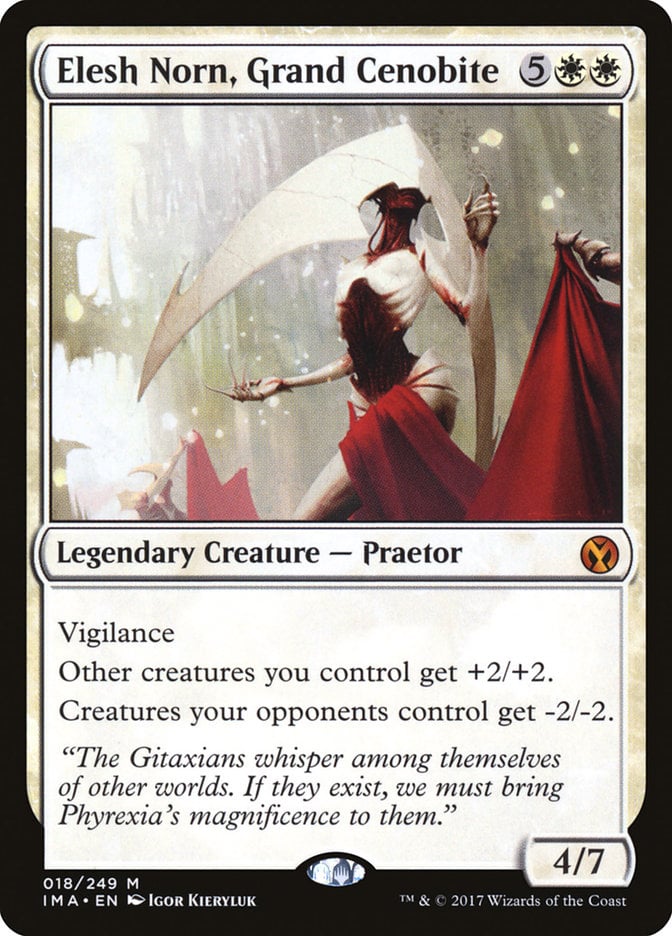
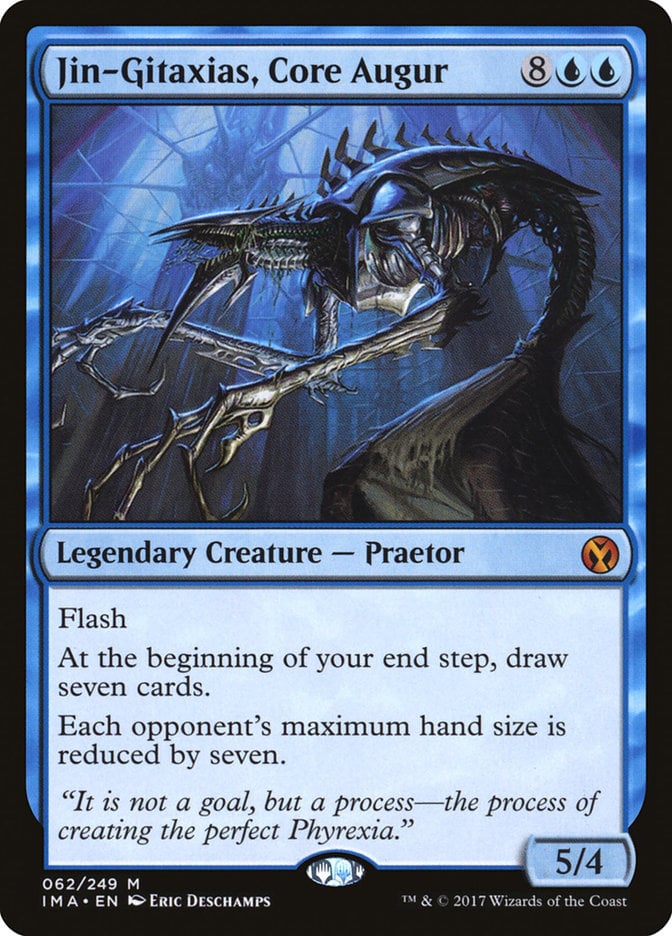
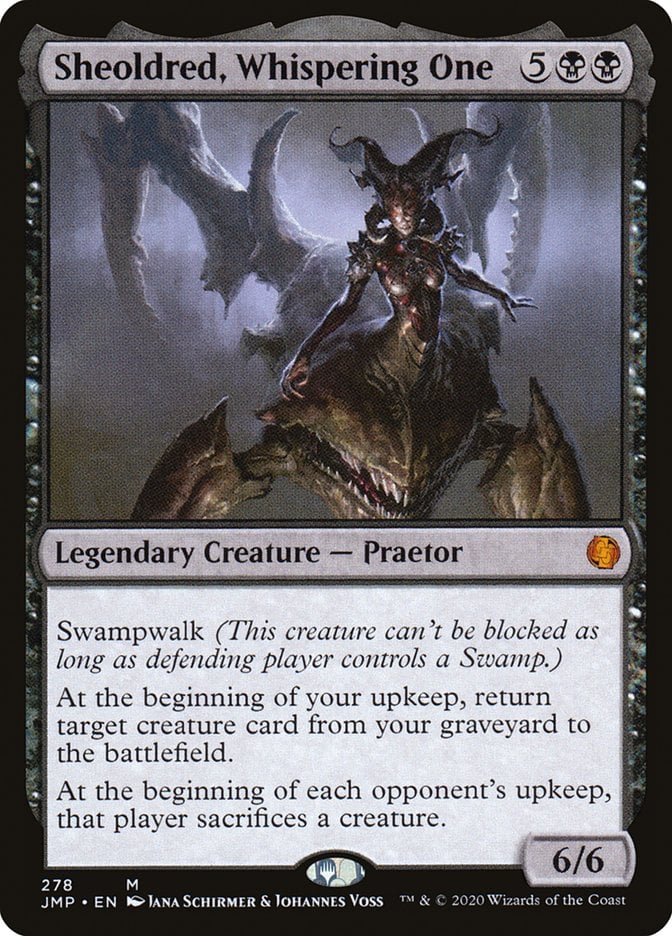
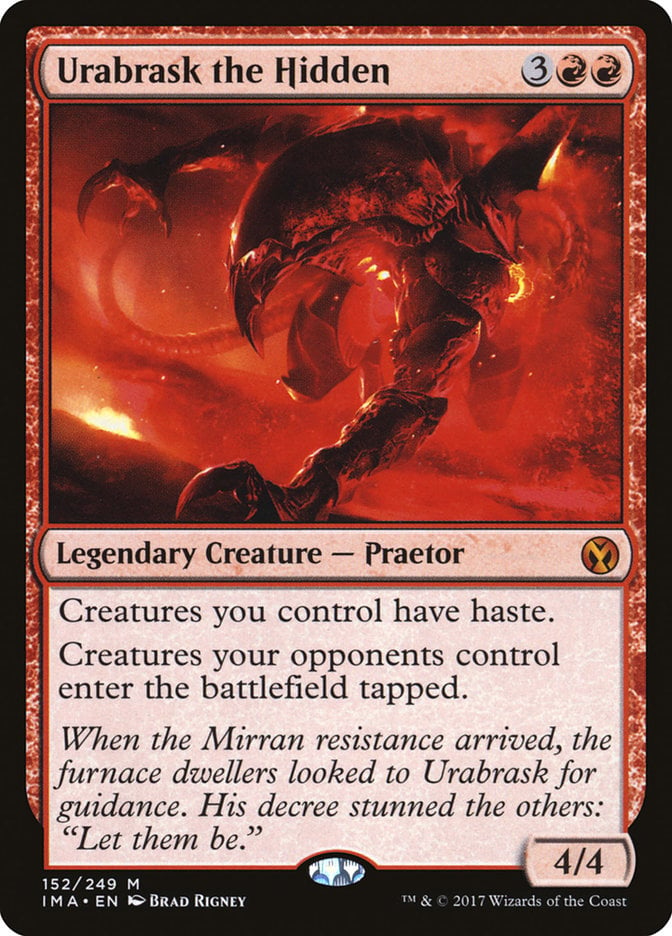
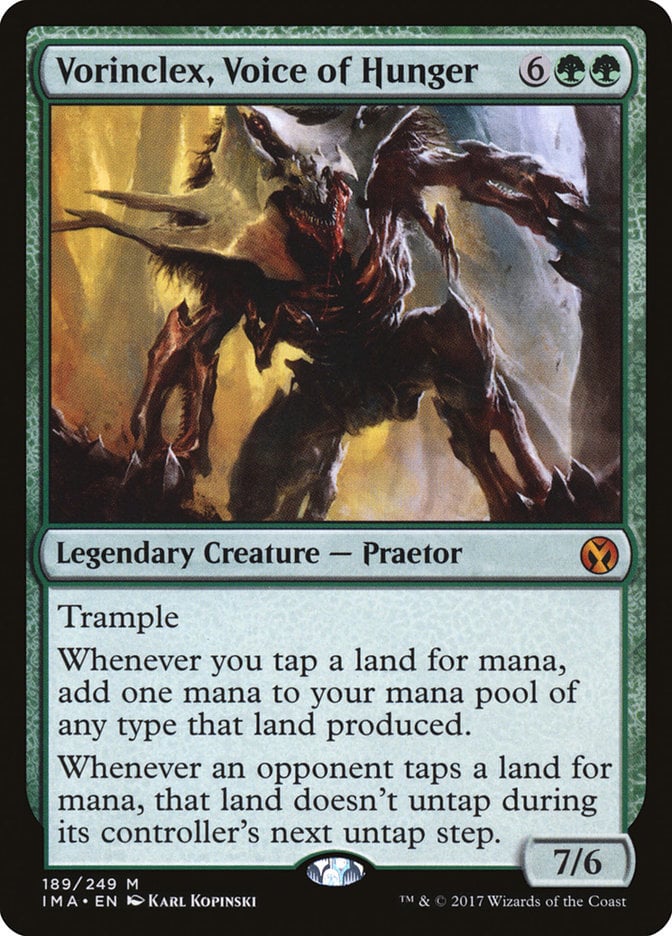
Once Mirrodin was turned into New Phyrexia, the plane was ruled over by five Phyrexian Praetors, each aligned to a different color of mana.
Elesh Norn, Grand Cenobite was the white-aligned praetor who sought to unite all Phyrexians under a religion worshipping Karn, who she redubbed the Father of Machines. Elesh Norn’s mission for unification under her religion was not a peaceful one and the Machine Orthodoxy was more than happy to torture other beings to follow their teachings.
Jin-Gitaxias, Core Augur, the plane’s blue-aligned praetor, instructed his followers on his idea of the “Great Synthesis,” a philosophy on how to improve New Phyrexia which conflicted with the teachings of the Machine Orthodoxy. Jin-Gitaxias sought to redesign New Phyrexia in his image through constant progress.
Sheoldred, Whispering One was new Phyrexia’s black-aligned praetor and one of the Seven Steel Thanes. Sheoldred used her powers of manipulation to gain control of the Thanes, and seeks to enslave all other beings, a goal that caused conflict between her and Elesh Norn.
Though the red-aligned praetor Urabrask the Hidden also supported New Phyrexia’s compleation of other living beings, he also believed in the idea of individualism. This made him slightly more sympathetic to the Mirran resistance, and his constant insubordination led him to align with Magic’s heroes on multiple occasions.
Vorinclex, Voice of Hunger took the concept of “survival of the fittest” very literally and sought to become the apex predator of New Phyrexia. His behavior was far more animalistic than the other praetors.

Cut a Deal | Illustration by Fajareka Setiawan
Following their successful invasion of Dominaria in Dominaria United, the New Phyrexian praetors attempted to conquer the multiverse. They would be much higher on this list if their defeat in March of the Machine hadn’t been a rushed and disappointing conclusion to this story arc, making the praetors look somewhat weak and inefficient. This is especially true given how most of them died quickly and far more easily than one would assume given how much they were built up.
Despite the underwhelming conclusion to their story, the Phyrexian praetors were still some of the coolest designed villains in Magic, and the build-up before March of the Machine was still exciting, even if the conclusion was ultimately disappointing.
#5. Nahiri
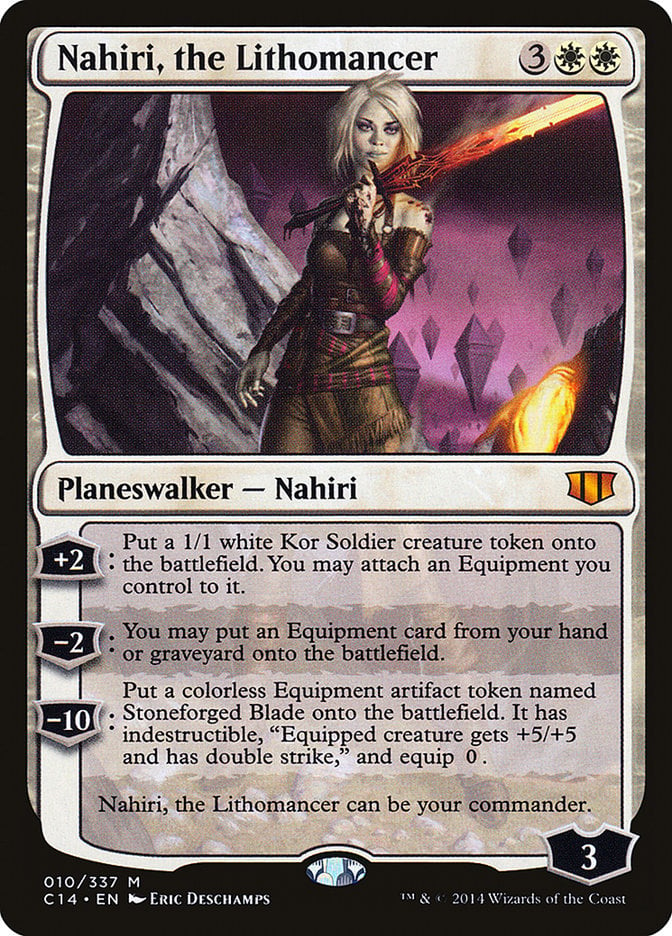
Nahiri, the Lithomancer is Magic’s embodiment of the phrase “the road to hell is paved with good intentions.” Nahiri has appointed herself the defender of her home plane Zendikar, which has led her to feats of heroism like sealing the Eldrazi titans. However, her hot temper has often caused her to go overboard when either trying to defend her plane or avenge it.
When the Eldrazi returned to Zendikar, Nahiri tried to summon her old ally Sorin to help her. When he didn’t show up, she traveled to Innistrad to confront him. Unsatisfied with his explanation that the Helvault absorbed her message, Nahiri attacked Sorin and found herself sealed in the stone prison.
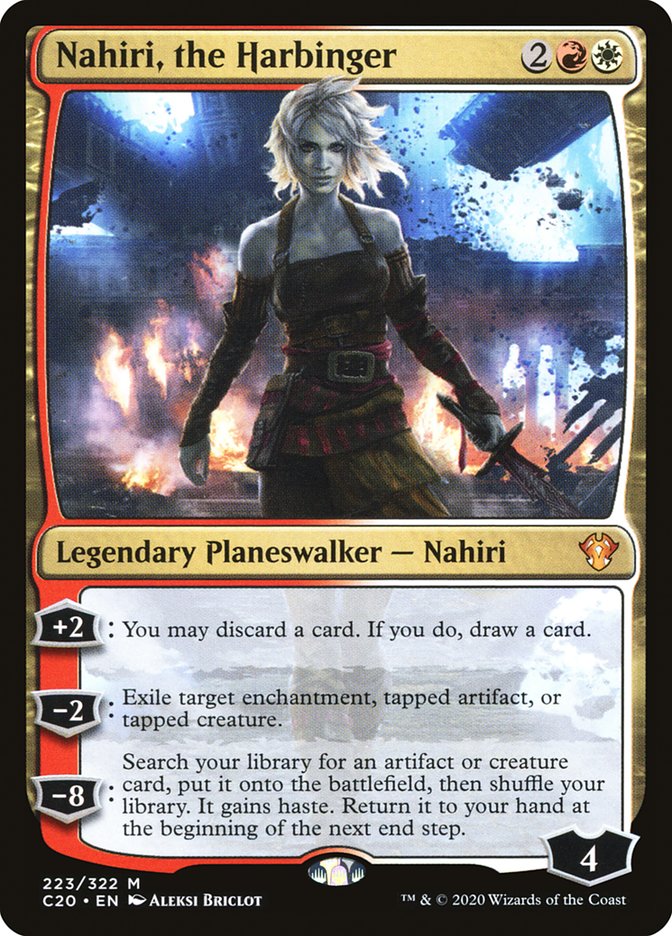
Nahiri spent a thousand years in the Helvault, and was understandably pretty pissed when she eventually got out. However, instead of simply confronting Sorin, she took her revenge way too far and attempted to destroy Innistrad by summoning the Eldrazi titan Emrakul. This earned her the moniker Nahiri, the Harbinger.
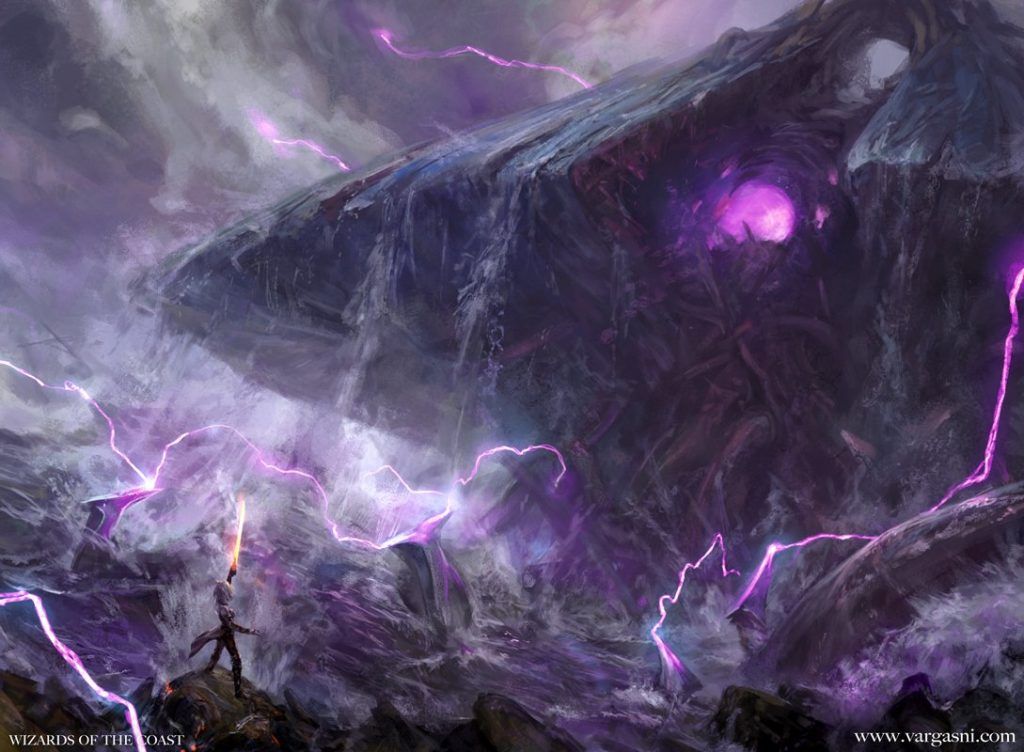
Through the Breach | Illustration by Randy Vargas
Nahiri and Sorin would eventually hash things out during War of the Spark, and eventually team up to take on Nicol Bolas’ forces. However, this wasn’t the end of Nahiri’s misguided actions.
During Zendikar Rising, Nahiri attempted to stop the Roil on Zendikar which she felt responsible for. Again, Nahiri’s goal was to protect her home plane, but it quickly became apparent that if she succeeded it would mean killing much of the natural life on Zendikar. Nahiri was eventually stopped by Nissa and Jace.
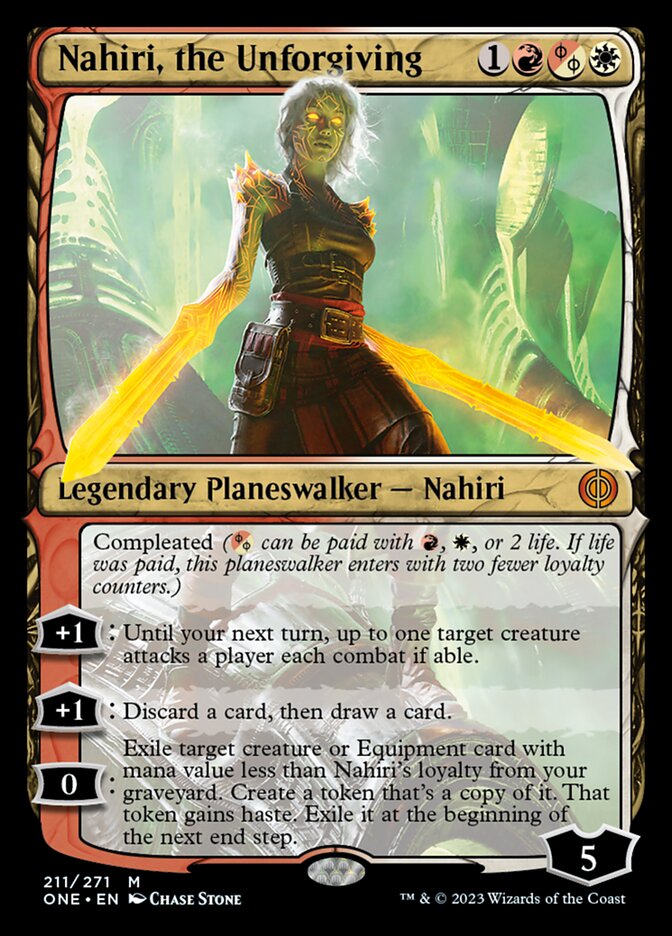
In an uncharacteristic move, Nahiri put her grudge against Jace aside to help the Gatewatch fight the impending Phyrexian invasion during Phyrexia: All Will Be One. This led to a more unwilling villainous turn from Nahiri when she was compleated and turned into Nahiri, the Unforgiving.
Nahiri was eventually cured but lost her spark in the process. Seeing planeswalkers as the cause of her and Zendikar’s troubles, she has decided to stop any planeswalkers from entering her home plane. This will likely bring her into conflict with any major characters that visit the plane in future Zendikar sets.
#4. The Eldrazi
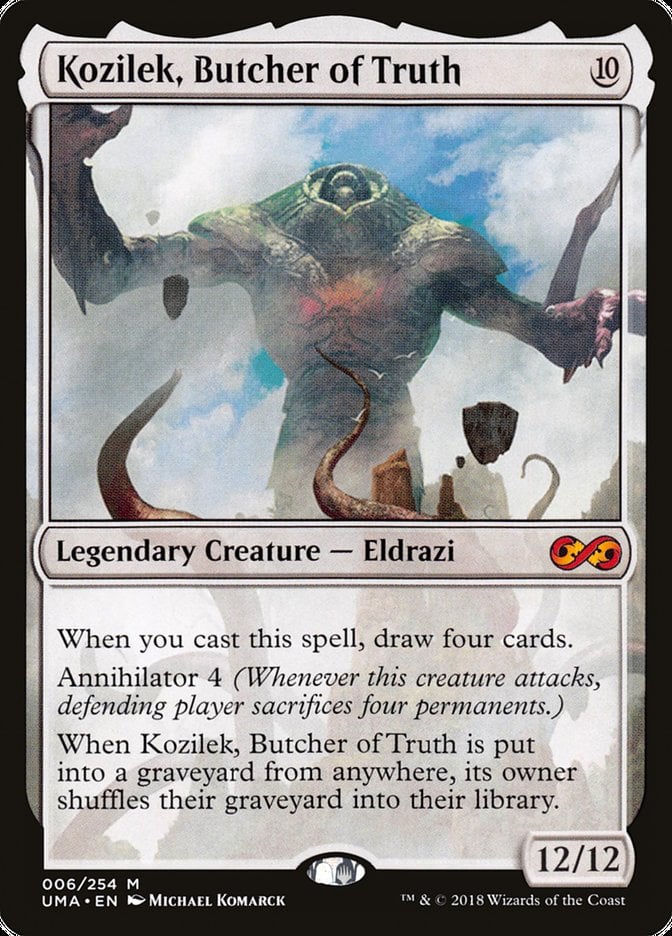
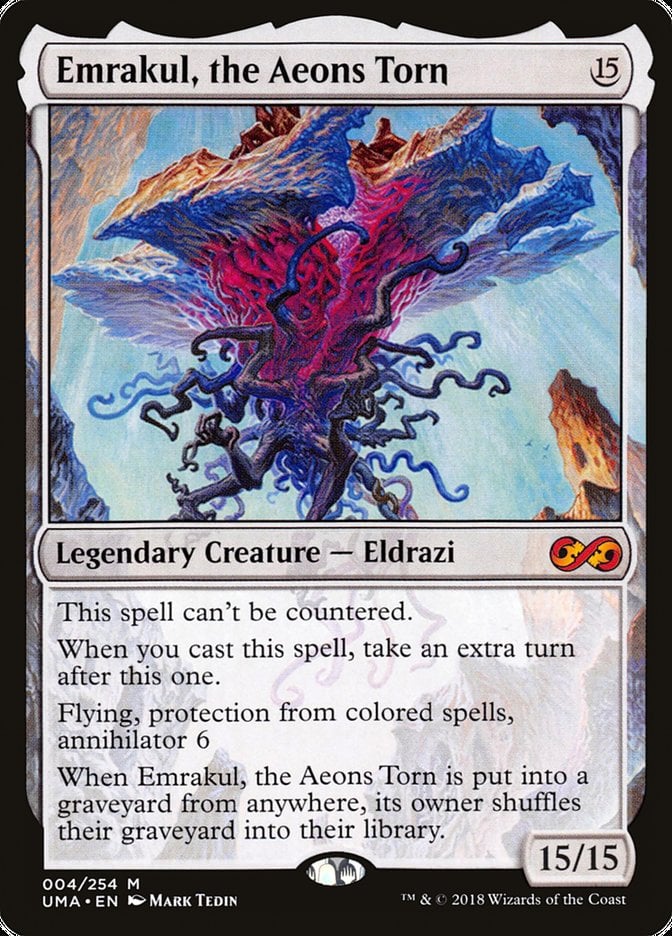
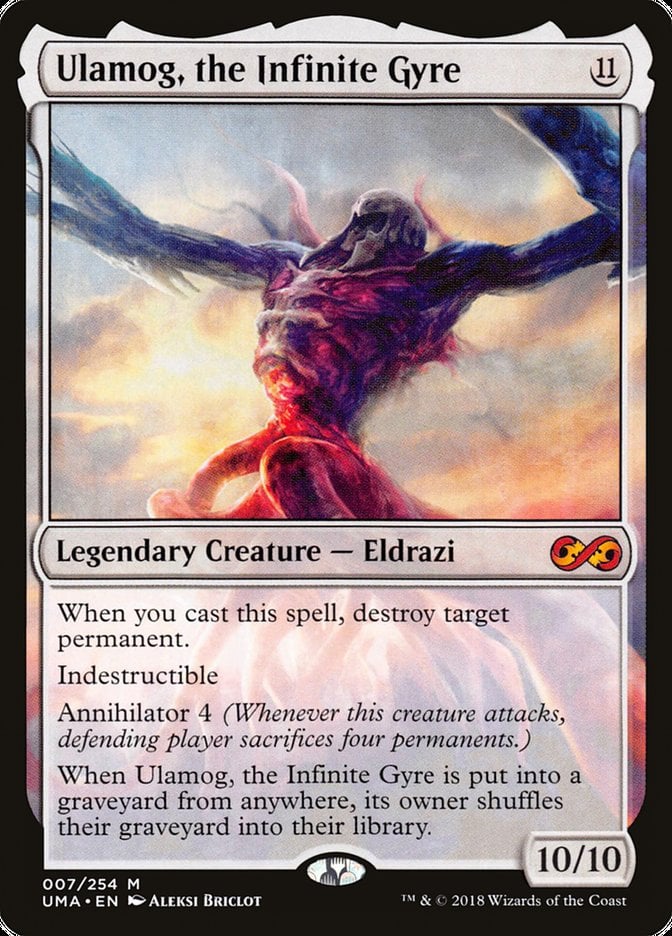
The Eldrazi are one of Magic’s most mysterious creature types. They originate in the Blind Eternities, the space between planes, and consume mana to stay alive. They travel between planes, devouring each world’s energy before moving on to the next.
These creatures were introduced in the original Zendikar block. Rise of the Eldrazi introduced three Eldrazi titans: Kozilek, Butcher of Truth, Emrakul, the Aeons Torn, and Ulamog, the Infinite Gyre. Each Titan is the progenitor of a distinct Eldrazi lineage whose powers and appearance mirror those of their Titan.

Witness the End | Illustration by Igor Kieryluk
Emrakul distorts the biological makeup of creatures, turning them into abominations as seen in Shadows over Innistrad and Eldritch Moon. Ulamog focuses on consuming mana and energy from things around him, and Kozilek can manipulate reality.
After being sealed away by The Three – Nahiri, Sorin, and Ugin – the Eldrazi escaped their imprisonment during the Battle for Zendikar. Ulamog and Kozilek were seemingly destroyed by Chandra during Oath of the Gatewatch, and Emrakul was willingly sealed away in Innistrad’s moon during Eldritch Moon.
While it seems as though Kozilek and Ulamog are gone, Emrakul’s mysterious motives for allowing herself to be sealed away seem to leave the door open for her eventual return. There are also likely more Eldrazi somewhere in the Blind Eternities, though if there are more Titans and lineages is not confirmed.
#3. Liliana Vess
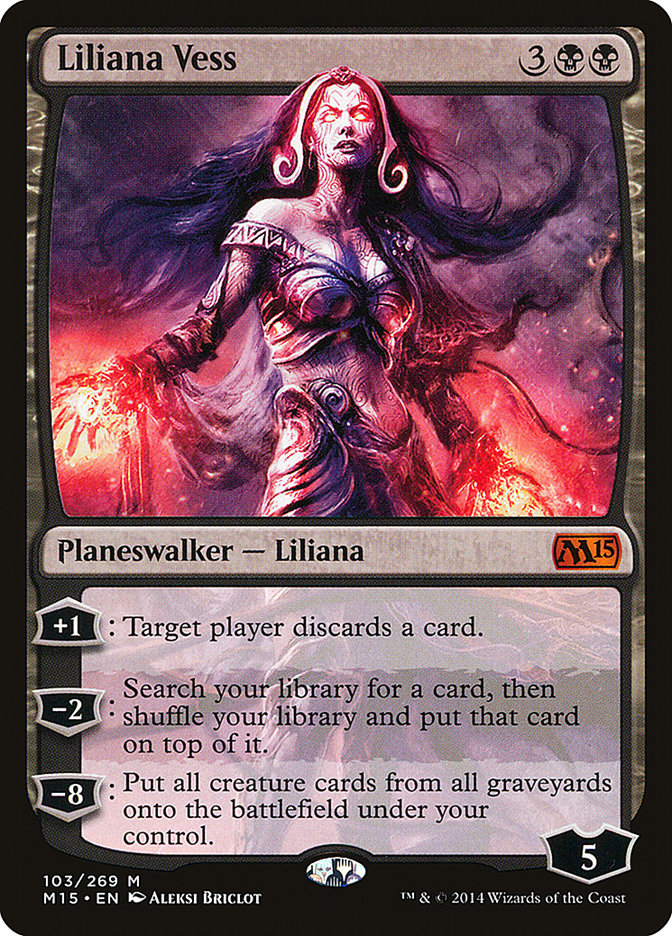
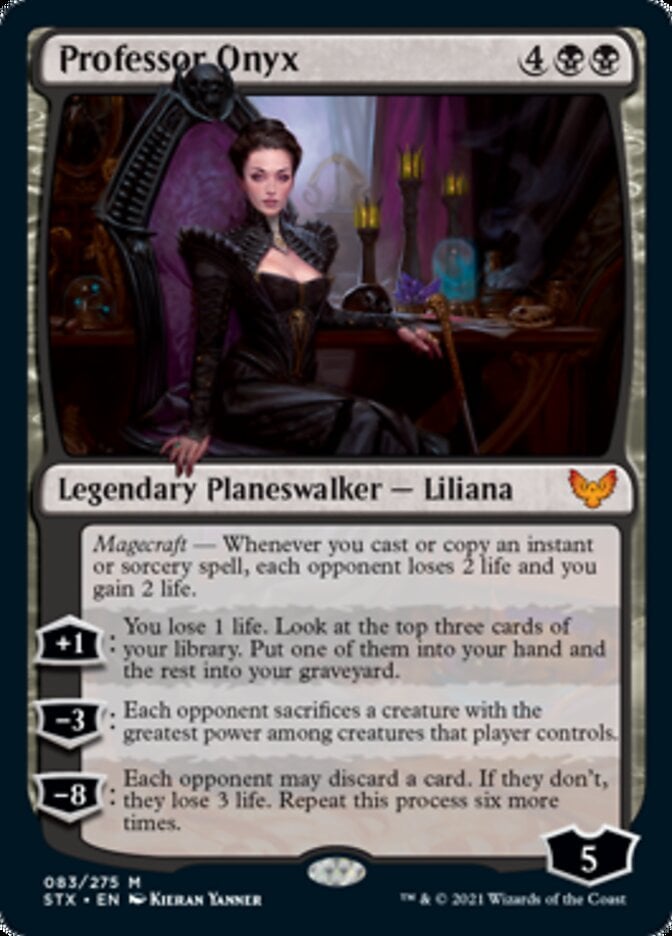
Liliana Vess is another prominent planeswalker who has spent time as both hero and villain, though most of her heroic acts have been fueled by a sense of self-preservation. Liliana has spent much of her time in Magic’s story trying to free herself from a Demonic Pact that granted her eternal youth and secured her pre-Mending power, and she has often acted selfishly or outright destructively in pursuit of this goal.
During her journey to free herself, Liliana’s reckless and selfish acts included cursing Garruk Wildspeaker, destroying Innistrad’s Helvault and freeing the demons trapped inside, killing an innocent angel, and betraying her friends and allies numerous times for her own gain. Liliana was also an unwilling villain during War of the Spark when her demonic contract was revealed to default to Nicol Bolas’ control after the defeat of the four demons who had signed it.
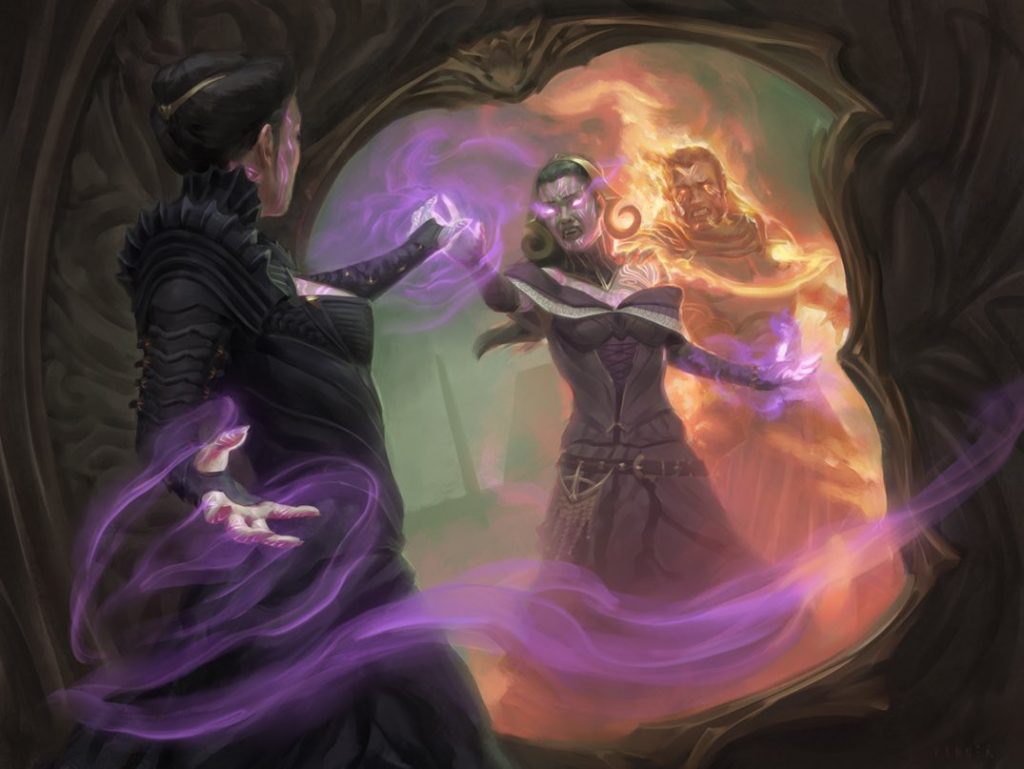
Confront the Past | Illustration by Kieran Yanner
Liliana seems to have finally made a genuine face turn after Gideon sacrificed himself to save her at the end of War of the Spark. Taking up the alias Professor Onyx, Liliana now resides on Arcavios and teaches at Strixhaven. After a short stint trying to find a way to resurrect Gideon, she has decided to instead follow his example by being a hero. Liliana seems to be living up to this, having fought the Phyrexians during March of the Machine, so it will be interesting to see if she stays good or backslides into being a villain again.
#2. Nicol Bolas
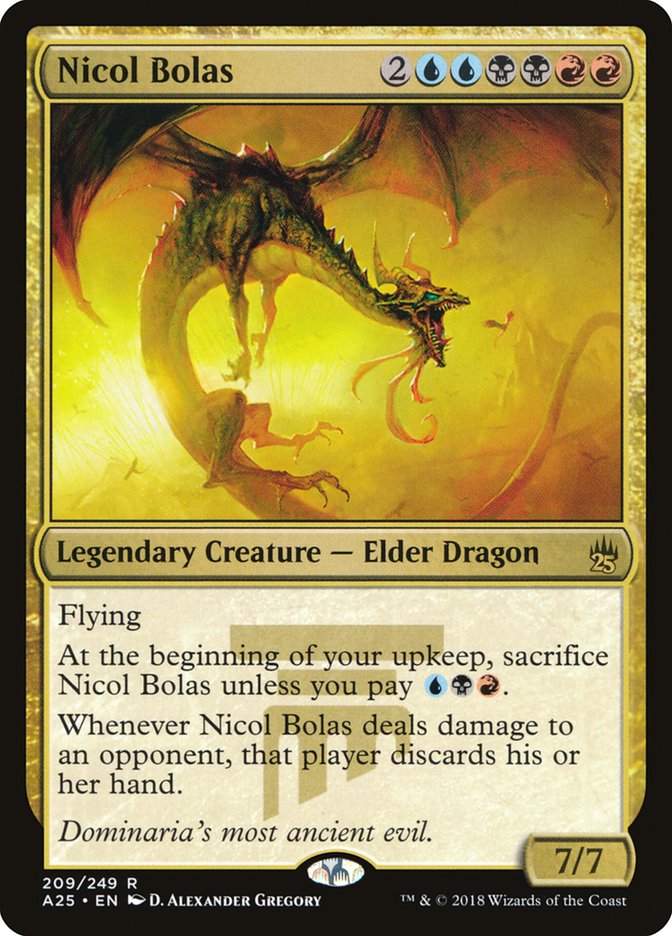
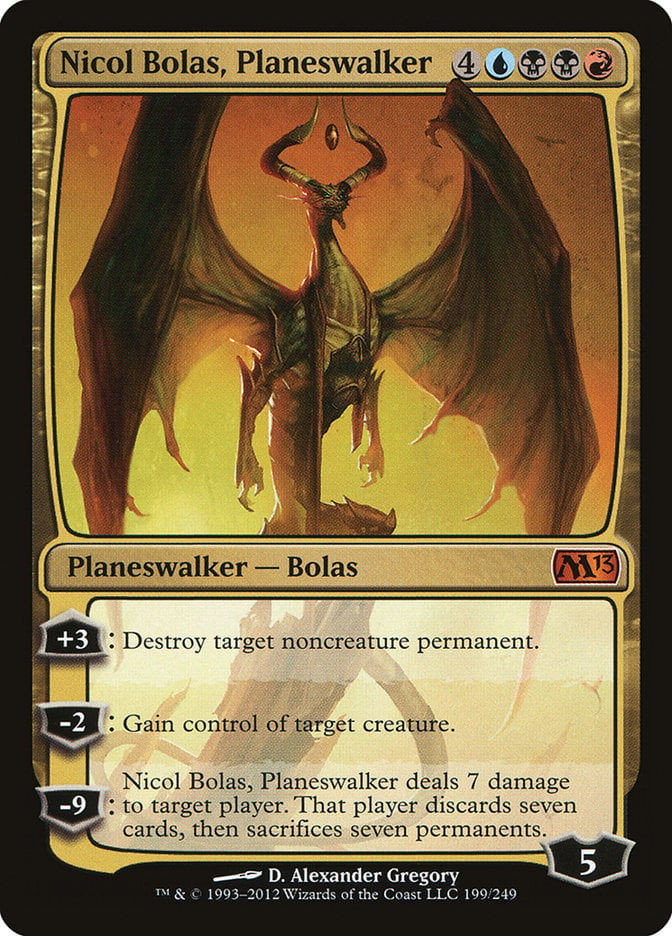
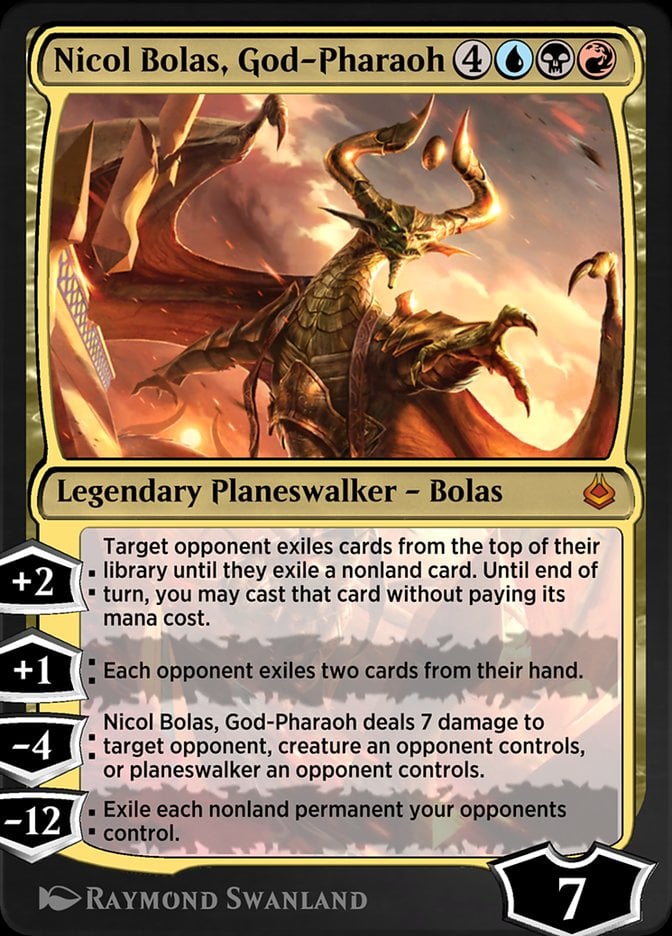
I’ll be honest, I don’t find Nicol Bolas terribly interesting, but to pretend he isn’t one of Magic’s most important villains would be absurd. Bolas has been a part of Magic’s story since 2003 and has spent most of his years plotting ways to gain more power. He is a great villain to hate since he doesn’t have any redeemable qualities, but this also means he lacks the depth of someone like Liliana or Nahiri.
To me, the definitive Nicol Bolas story is Hour of Devastation, when Nicol Bolas conquered the plane of Amonkhet and became Nicol Bolas, God-Pharaoh. This storyline brought Nicol Bolas into direct conflict with the Gatewatch, who he trounced embarrassingly. This was a great way to set him up as a major threat and build up excitement for War of the Spark.
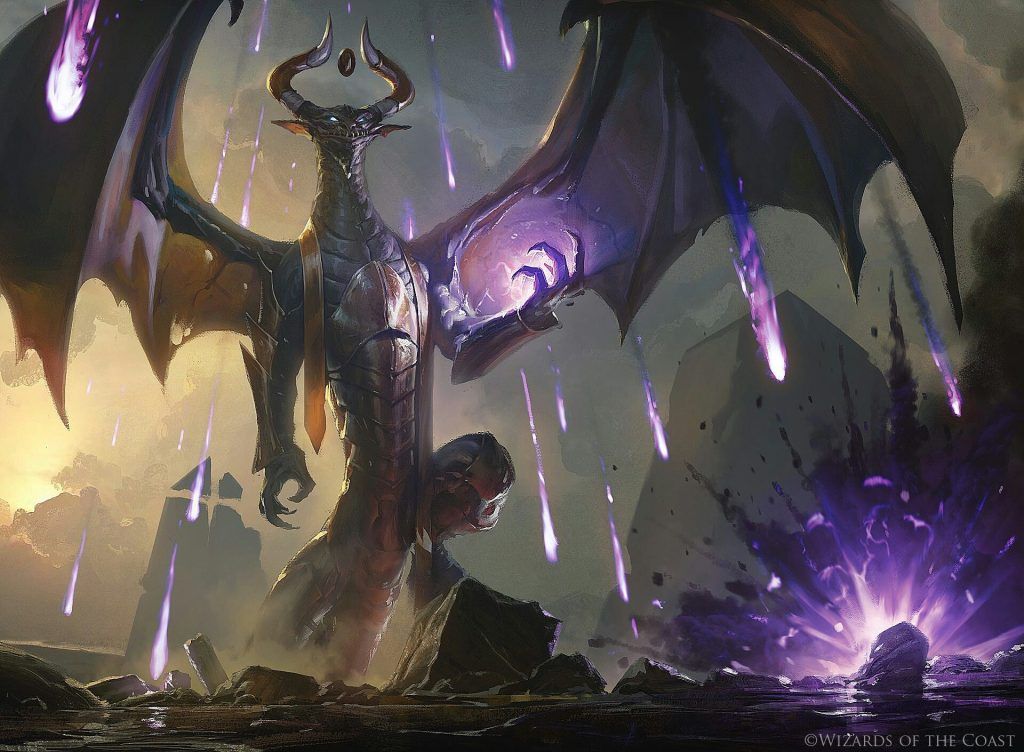
Torment of Hailfire | Illustration by Grzegorz Rutkowski
Bolas’ plan to trap planeswalkers on Ravnica and absorb their sparks was an excellent setup for a final confrontation, and War of the Spark was an interesting set thanks to the overwhelming number of planeswalkers. If only the tie-in novels hadn’t been such a disappointment, it would have been the perfect conclusion to Nicol Bolas’ reign of terror over Magic’s story.
Bolas is currently trapped in the Meditation Realm with no spark, with Ugin watching to make sure he doesn’t escape. With any luck, he’ll stay there.
#1. Yawgmoth
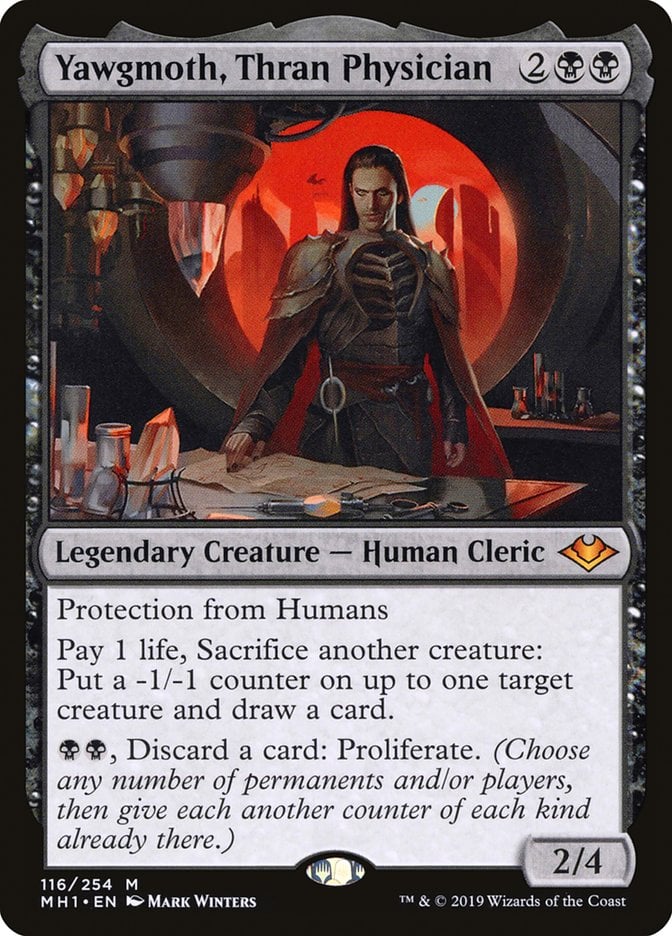
With Phyrexians – new and old – being such a large presence in Magic’s story, it’s hard not to put their creator at the top of the list. Yawgmoth, Thran Physician started life as a human in the Thran empire. This black cleric had an insatiable lust for both knowledge and power, which eventually led him to create the first Phyrexians through experiments on living beings.
When Yawgmoth’s ally, Rebbec, realized the depths of his depravity, she sealed him on the plane of Phyrexia, hoping to keep him away from Dominaria for good. During this time, Yawgmoth focused on further altering the inhabitants of Phyrexia and sending them to conquer other planes. Through unknown means, he also ascended to a twisted form of godhood, becoming the horrifying creature depicted in Yawgmoth's Vile Offering.

Yawgmoth's Vile Offering | Illustration by Noah Bradley
Yawgmoth and his followers would eventually find their way back to Dominaria, posing a threat to its inhabitants throughout the times of The Brothers’ War and later the Weatherlight Saga. Even after Yawgmoth and Phyrexia were destroyed by the Legacy Weapon, his legacy lived on through the New Phyrexians.
Wrap Up
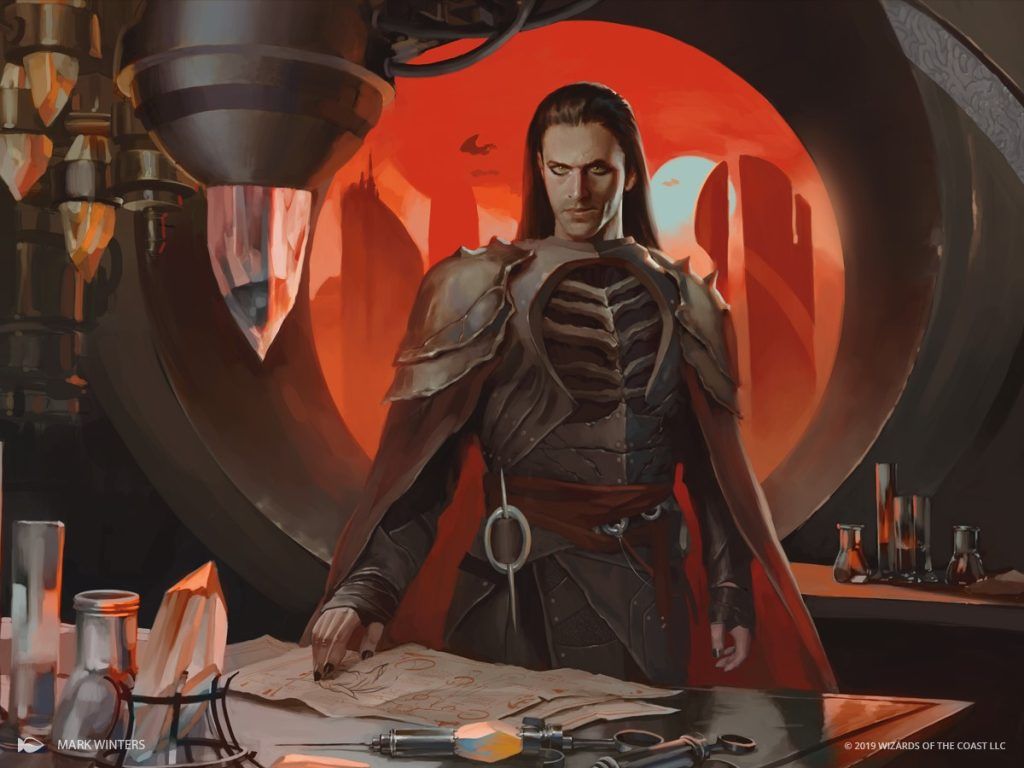
Yawgmoth, Thran Physician | Illustration by Mark Winters
Magic’s story is in an interesting place at the moment, as many of the most important villains are either dead or reformed. While Geyadrone Dihada and Valgavoth both seem to be plotting things at the moment, the multiverse doesn’t have a current major threat like Yawgmoth or Nicol Bolas. I’m excited to see where things go from here, and if we get a brand-new villain or the return of an old one.
Who is your favorite Magic villain? Are there any you think would work for Magic’s next big bad? Let me know in the comments, or on Draftsim’s Twitter.
Thank you for reading, and I look forward to seeing you on the next article!
Follow Draftsim for awesome articles and set updates:










Add Comment