

Brigid's Command | Illustration by Sam Guay
Greetings planeswalkers! After nearly two decades of waiting, it’s finally time to go back to Lorwyn. Lorwyn Eclipsed has Lorwyn and Shadowmoor living side by side, with representation given to both aspects of the plane. It also heralds the return of several of Lorwyn’s tribes, including kithkin, merfolk, elves, goblins, elementals, and more.
Introduction

Dawn-Blessed Pennant | Illustration by Igor Krstic
But first, a confession: I’ve never played any of the Lorwyn sets! This is because I started playing Magic: The Gathering in May 2013, right after Dragon’s Maze was released. I don’t really have any nostalgia for the plane, though I can appreciate its art style and clear popularity with other Magic fans. None of this should impede me from accurately assessing its Limited environment though!
At first glance, Lorwyn Eclipsed is heavily focused on five 2-color creature types, and it has a host of other things going on as well. Let’s start with the mechanics.
Mechanics
Vivid
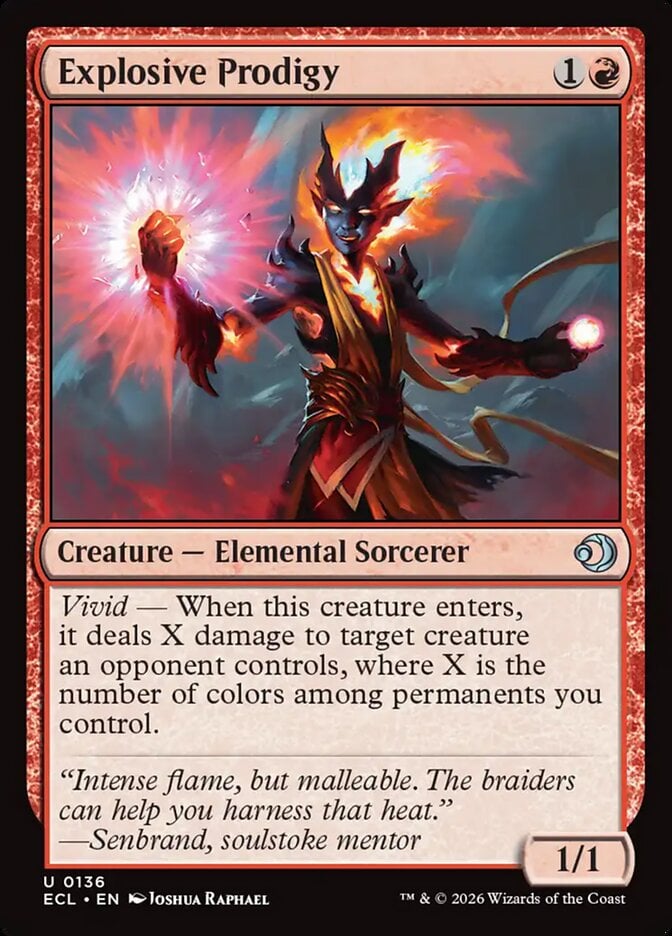
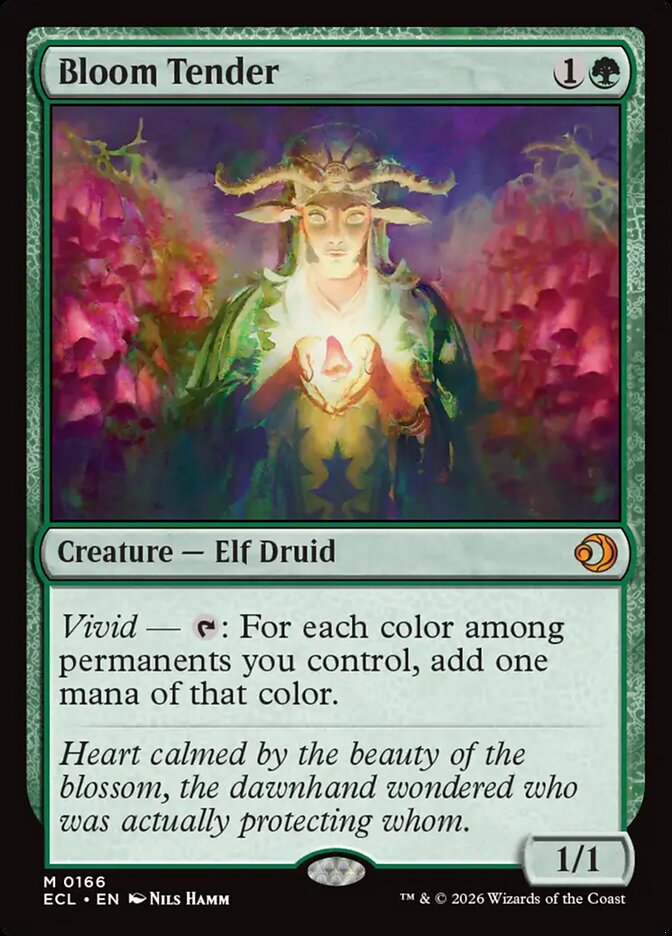
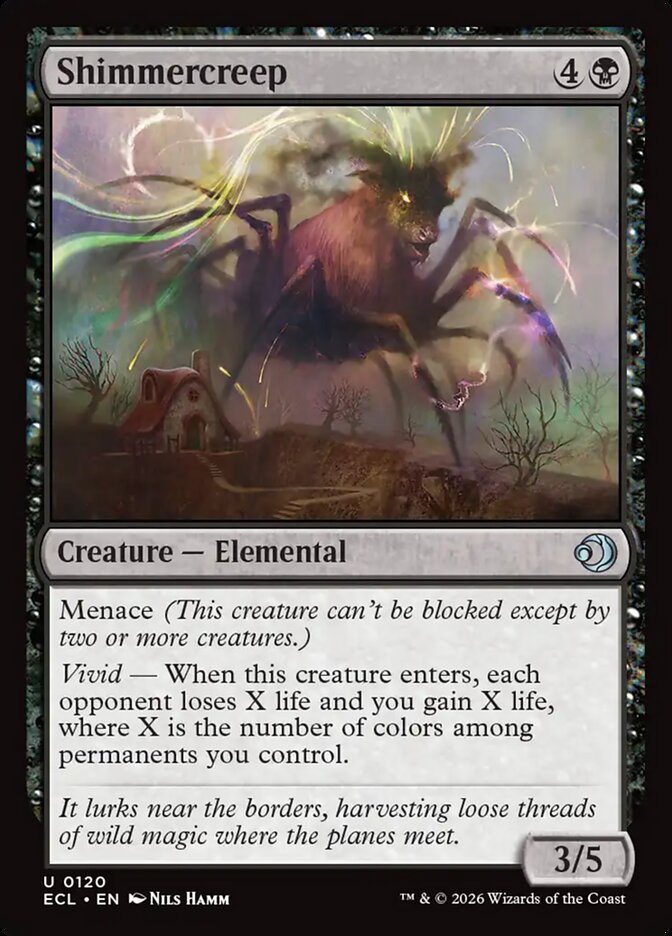
Vivid is a new keyword that checks the number of colors among permanents you control. Vivid cards like Explosive Prodigy and Bloom Tender (which was errata’d to include “vivid”) scale dramatically with how rainbow your board state is. This is one of the main “things” to do in Lorwyn Eclipsed, especially if you aren’t focusing on any of the five major creature types. So how should you make vivid work?
Well, the set provides a number of convenient ways to pick up extra colors. Shimmerwilds Growth and Puca's Eye are two examples that let you name a color to add to your board. There are also a number of hybrid colored creatures like Mischievous Sneakling and Chitinous Graspling, which can go in many decks and provide two colors for vivid.
Most vivid payoffs are enters creatures like Aurora Awakener, Shimmercreep, and Shinestriker. Many of them are also elementals, which overlaps with one of the set’s main creature types.
Blight


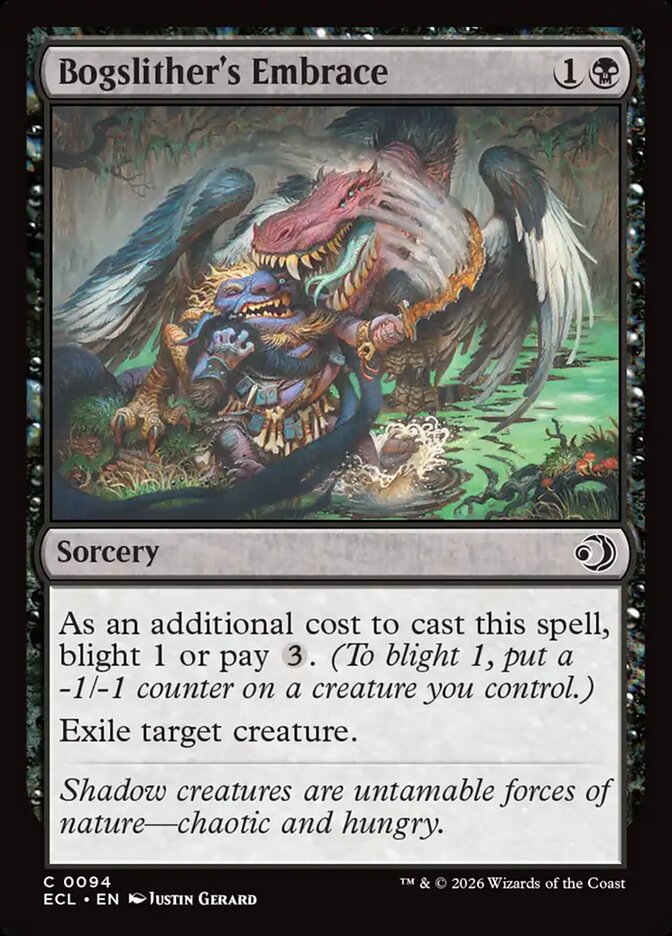
Blight is another new keyword that specifies putting X -1/-1 counters on a creature you control. Most cards with blight cause you to nerf your own creatures, though some like High Perfect Morcant force your opponent to do so. So why would you want to do this anyways?
Take a gander at Brambleback Brute, Moonlit Lamenter, and Reaping Willow. Not such a “drawback” now, is it? You’ll find many other creatures in Lorwyn Eclipsed that enter with -1/-1 counters and then use them to great effect, which further stacks with blight.
Even without synergies, blight can also enable some powerful spells like Cinder Strike and Bogslither's Embrace. Keep in mind that you can also blight X on a creature with less than X toughness; for instance, a giant Soul Immolation for X=5 doesn’t need to fall on your Kulrath Zealot. You can instead just dump those five -1/-1 counters on your 1/1 Goblin token!
Changeling
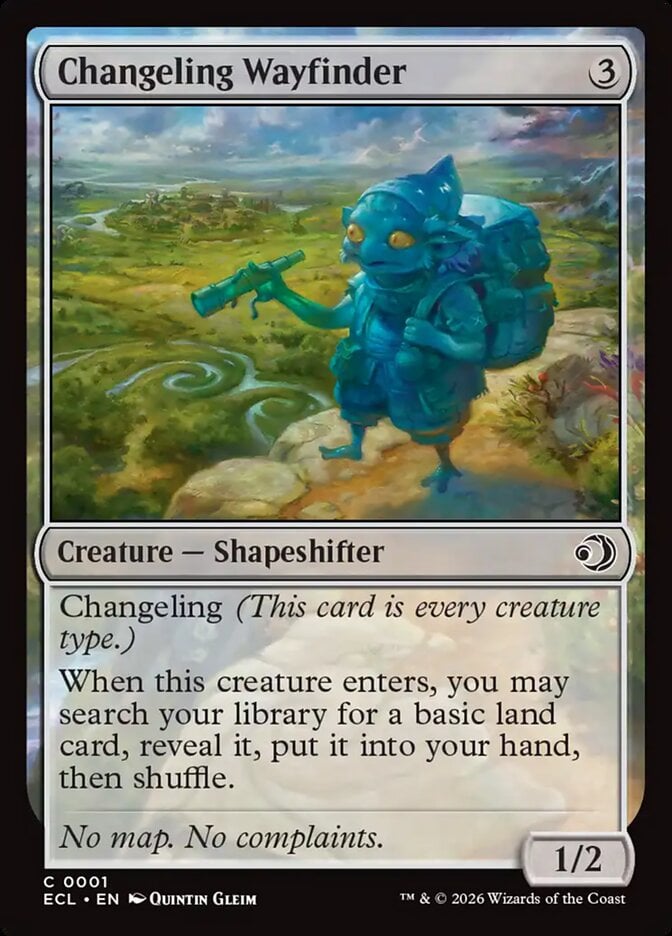
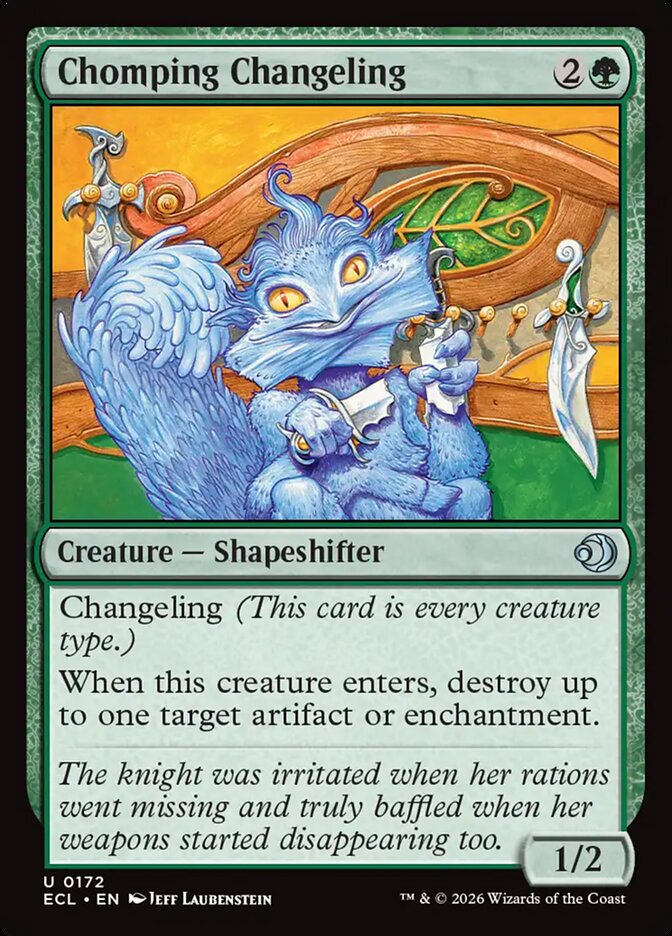
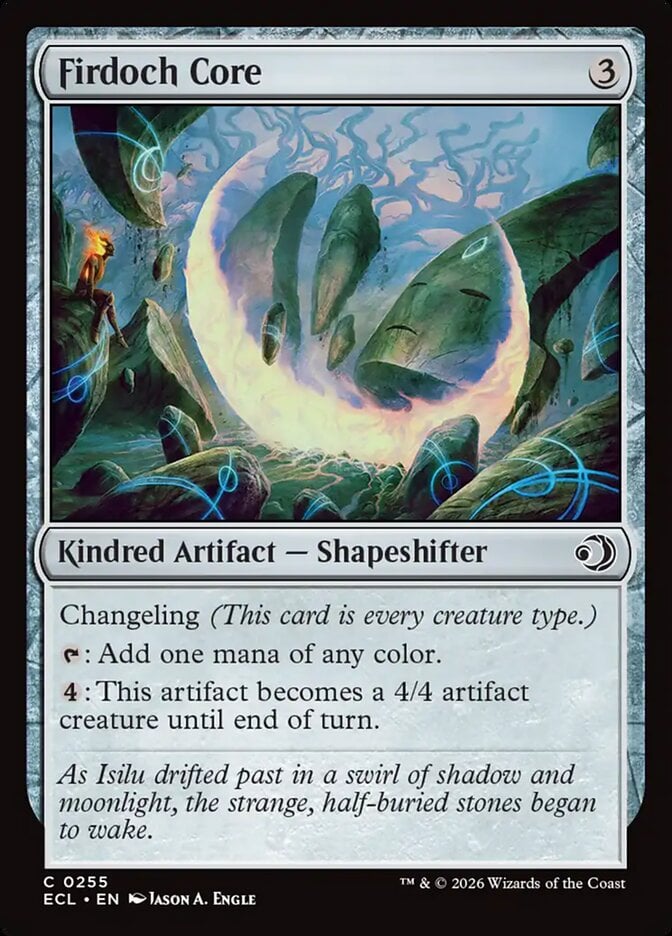
Changeling is a key way for Lorwyn Eclipsed to make its typal synergies easier! Cards with the “changeling” mechanic are all creature types, which means they work with many cards that care about elves, merfolk, kithkin, elementals, goblins, and more. Changelings appear mostly at lower rarity, as there’s a hybrid cycle of common changelings to assist with vivid/typal needs. They form an important “glue” for the format, and they help you to get the most out of your curve-filler creatures.
Kindreds
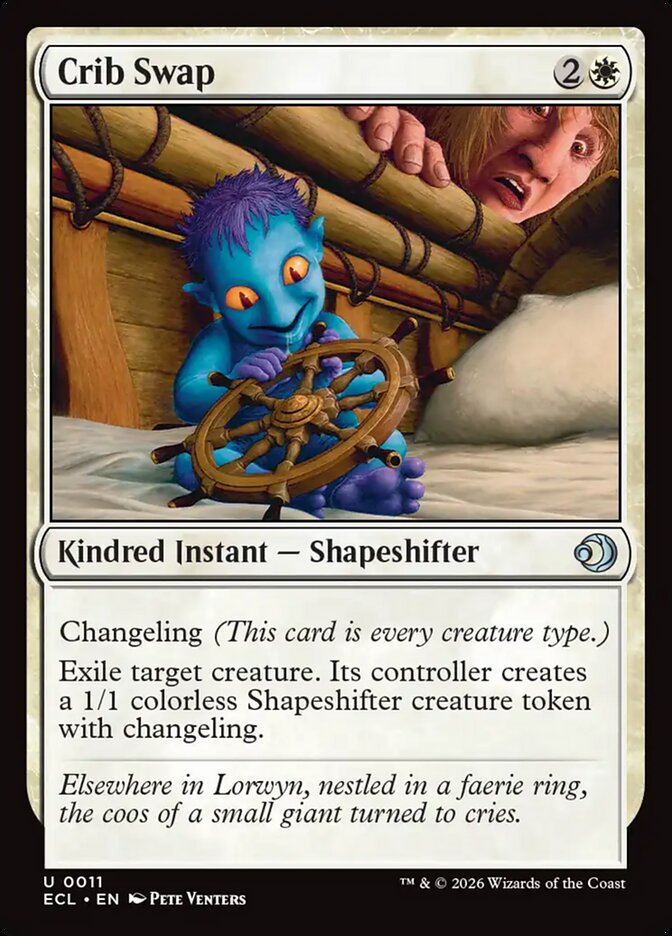
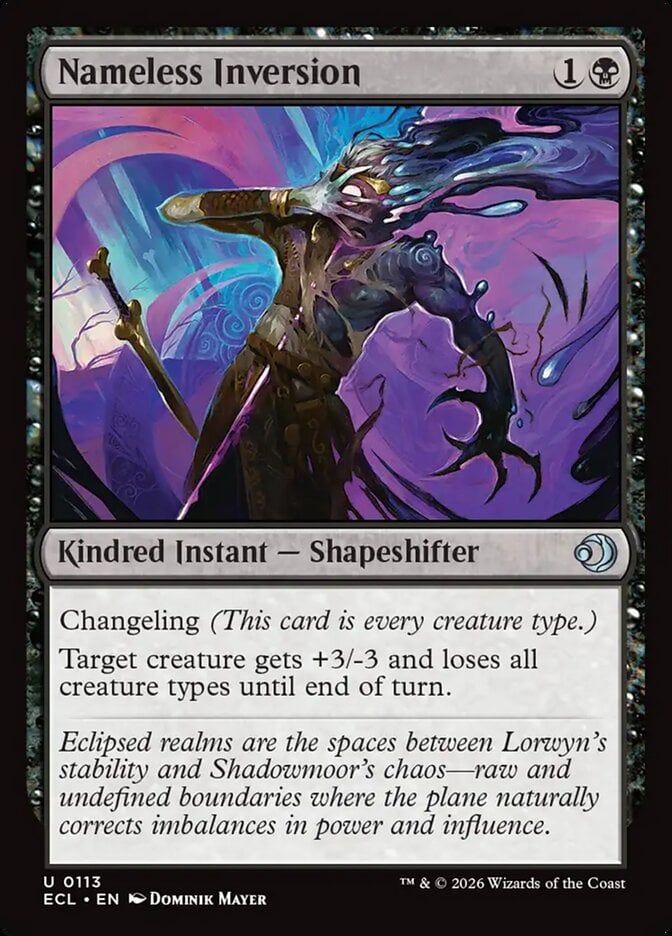
Lorwyn Eclipsed sees the return of the kindred card type, which is just a new name for original Lorwyn’s “tribal” cards. Kindred spells are noncreature spells that have a creature type, which gives them various cool synergies. There are kindred spells for all of the five main creature types in Lorwyn Eclipsed, plus a handful of changeling reprints like Nameless Inversion and Crib Swap.
Double-Faced Cards


Lorwyn Eclipsed also features 6 double-faced cards, all of which appear at rare or above. Outside of Eirdu, Carrier of Dawn / Isilu, Carrier of Twilight, these are mono-colored rare creatures that flip into a different-colored backside. Each of these cards clearly works with the main five types of this set, and all of them look pretty solid in Limited.
Convoke

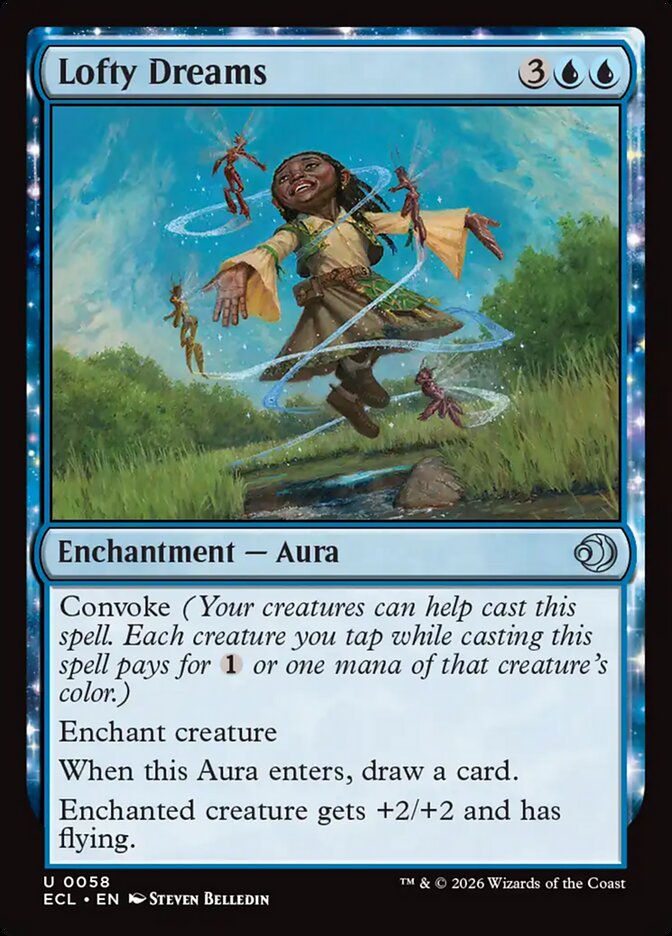
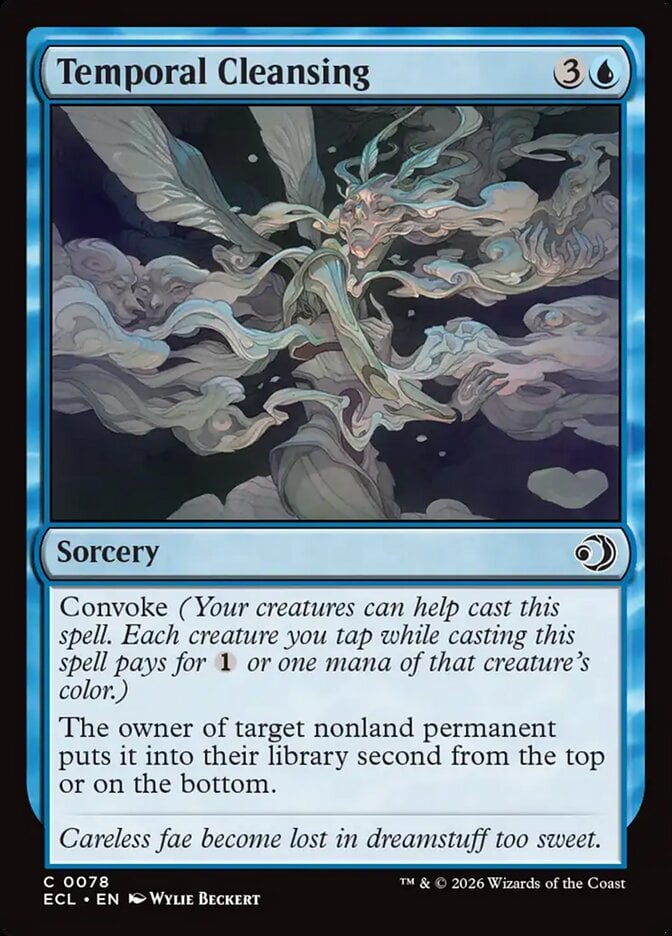
Convoke is a core mechanic for merfolk in this set, and a big part of what makes WU Merfolk tick in Limited. Look for creatures that care about becoming tapped like Silvergill Peddler and Tributary Vaulter, which use convoke spells to great effect. You may also get some nice value out of convoke in kithkin decks, which tend to go quite wide.
Behold
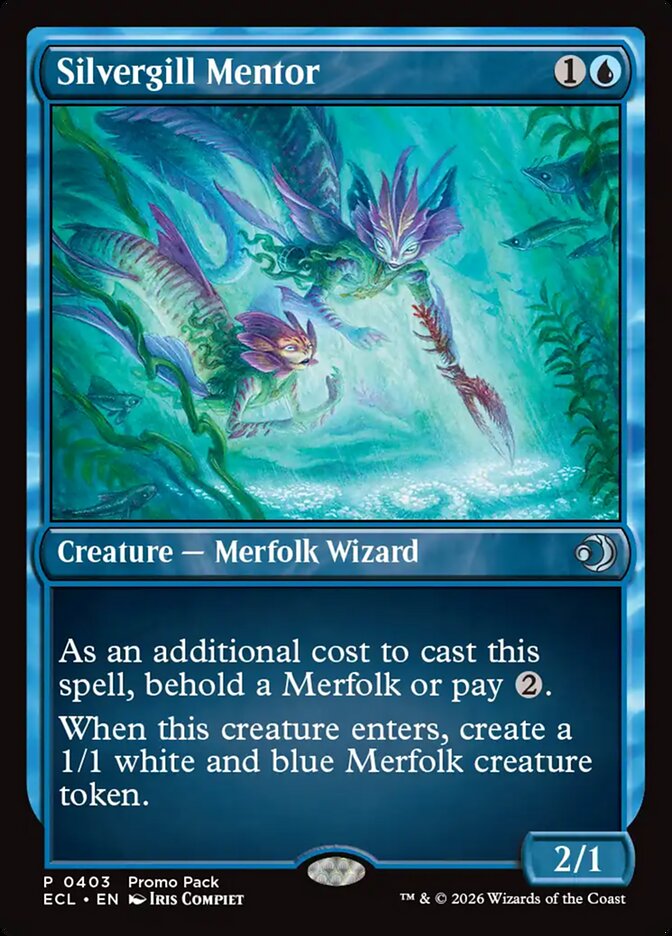
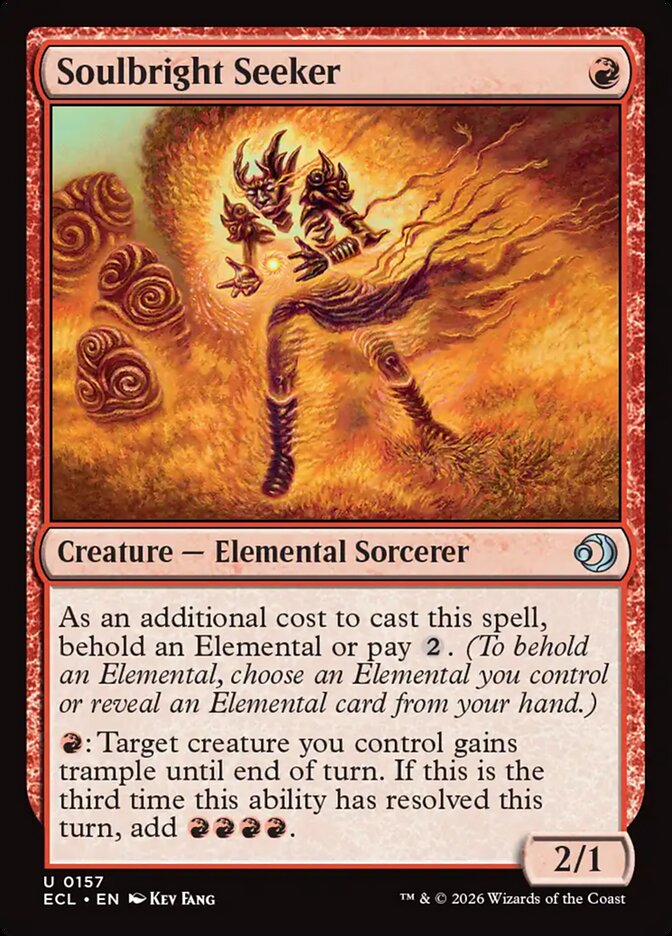

Behold is a returning mechanic from Tarkir: Dragonstorm that has been repurposed for all of the set’s main creature types. Behold primarily appears on two cycles: rare Champions, and uncommon typal payoffs. The rare champions require you to exile the card you behold temporarily, while the others just want you to show it off (like in Tarkir: Dragonstorm). It’s not a major mechanic or anything, but it adds some spice to your typal decks.
Evoke


Evoke is a beloved Lorwyn mechanic that appears in a limited form. The only evoke cards in this set are a cycle of 2-colored mythic rares, which are powerful late game creatures that offer early game utility if needed. They do this by letting you evoke them for XX/YY costs, which trigger one of their abilities.
While the evoke elementals seem excellent on rate, it’s worth noting that they don’t work with some classic evoke lines. Due to their “mana spent to cast” requirements, flickering or reanimating them won’t really accomplish much!
Persist

The last mechanic is another one returning from Lorwyn, though it’s mostly here as a cameo. Rhys, the Evermore and Isilu, Carrier of Twilight can both grant persist to your creatures, which has them returning from death with a -1/-1 counter. This can have some cool synergies with blight cards, though you obviously won’t see it come up much.
Archetypes
Lorwyn Eclipsed is different from most standard-sized sets in that it features five primary archetypes and five secondary archetypes. The primary archetypes are all typal decks built around a particular creature type, and they correspond to five different color pairs. These are the easiest decks to pull off in Draft, and likely to be the focus of most Sealed pools as well. They have an additional signpost uncommon compared to the secondary archetypes, and plenty of support from the set at large.
They aren’t the only thing you can do though, as the five secondary archetypes play off the set’s mechanics rather than creature types. RW and WB manipulate -1/-1 counters for profit, GU and RG seek to maximize vivid cards, and UB plays its own unique flash/faeries game. It may be harder to grab their signpost uncommons though, as their hybrid nature enables many other decks to play them if desired.
Let’s go into a bit of detail on each.
WU Merfolk (Tempo)
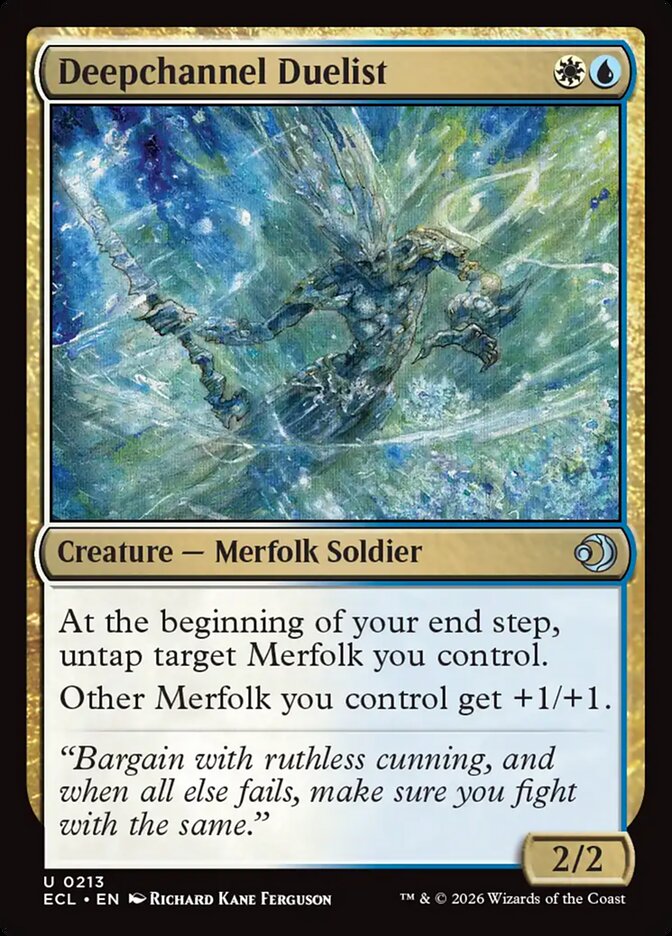
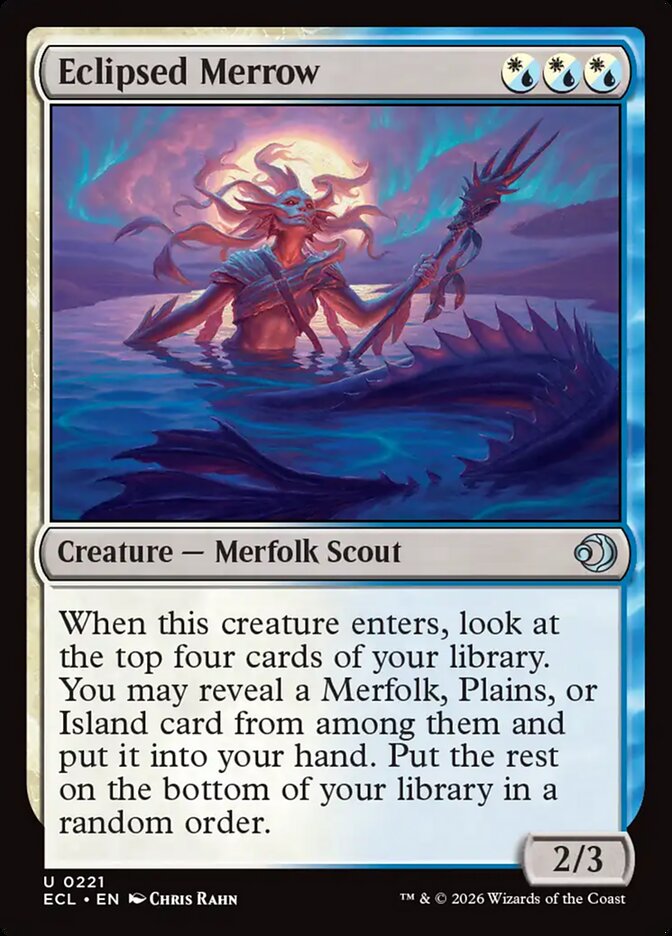
Signposts: Deepchannel Duelist and Eclipsed Merrow
WU Merfolk is a scrappy tempo deck that has a number of ways to “tap” its creatures for fun and profit. Attacking is of course a great start, but even stalled boards won’t stop cards like Gravelgill Scoundrel. It’s the second widest deck in the set (behind Kithkin), and it often looks to create openings for big alpha strikes. Watch out for crafty plays from this deck with cards like Glamermite and Disruptor of Currents!
BR Goblins (Midrange)
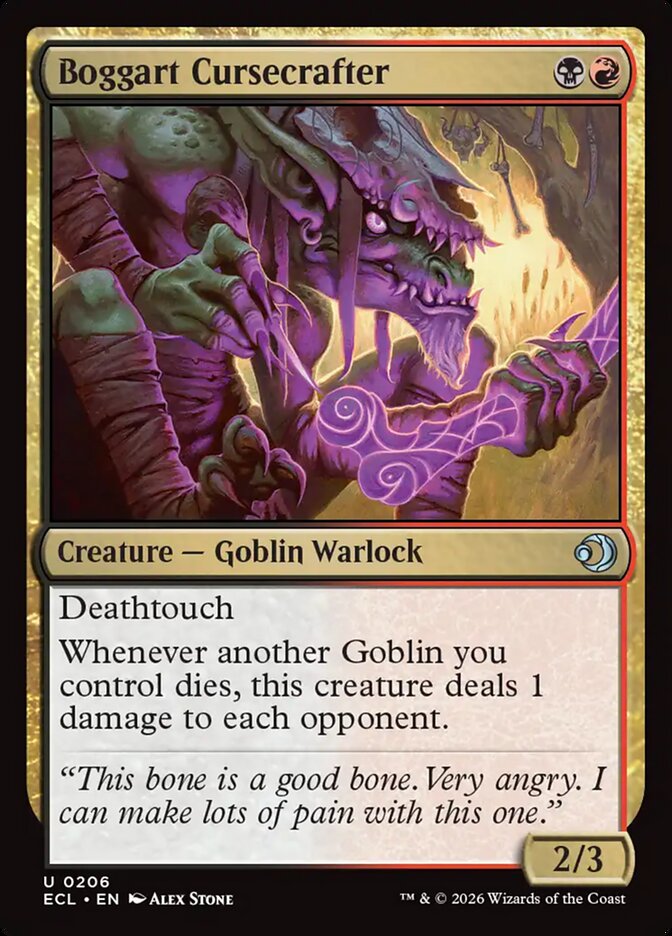
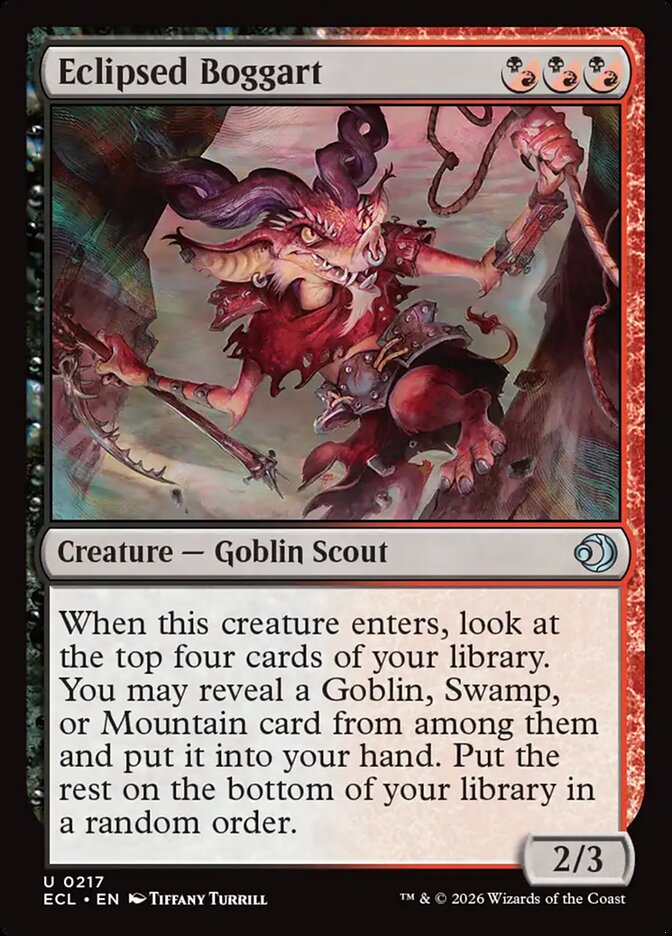
Signposts: Boggart Cursecrafter and Eclipsed Boggart
This isn’t your run of the mill mono-red goblins! Instead, Lorwyn Eclipsed takes a grinder approach to the creature type, with a big focus on dumping -1/-1 counters on your own guys. Killing off your Goblin tokens, Bile-Vial Boggart, and Mudbutton Cursetosser offers a way to break the downside of blight. You can also remove those -1/-1 counters for benefits, or just trust in fatties like Chaos Spewer and Gutsplitter Gang to run over your opponent.
GW Kithkin (Aggro)
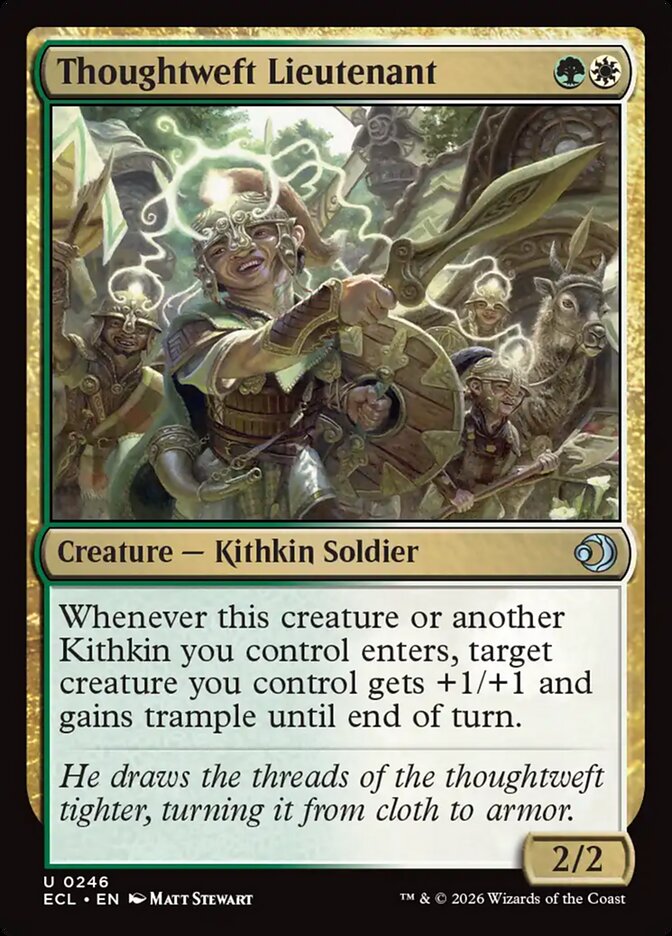
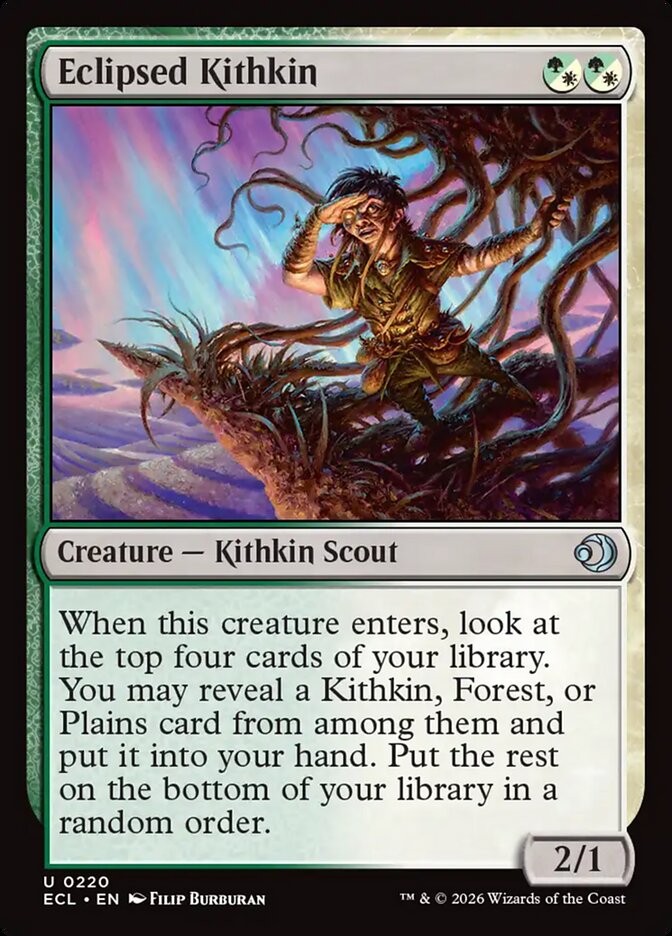
Signposts: Thoughtweft Lieutenant and Eclipsed Kithkin
Kithkin are the most straightforward of all five creature types, with a classic “white weenie” feel to them. You’ll curve out with tons of kithkin, and then reap benefits from cards like Thoughtweft Lieutenant and Champion of the Clachan. It has some of the scariest early game cards in the format, including Kinsbaile Aspirant which hits really hard for a 1-drop!
UR Elementals (Midrange)
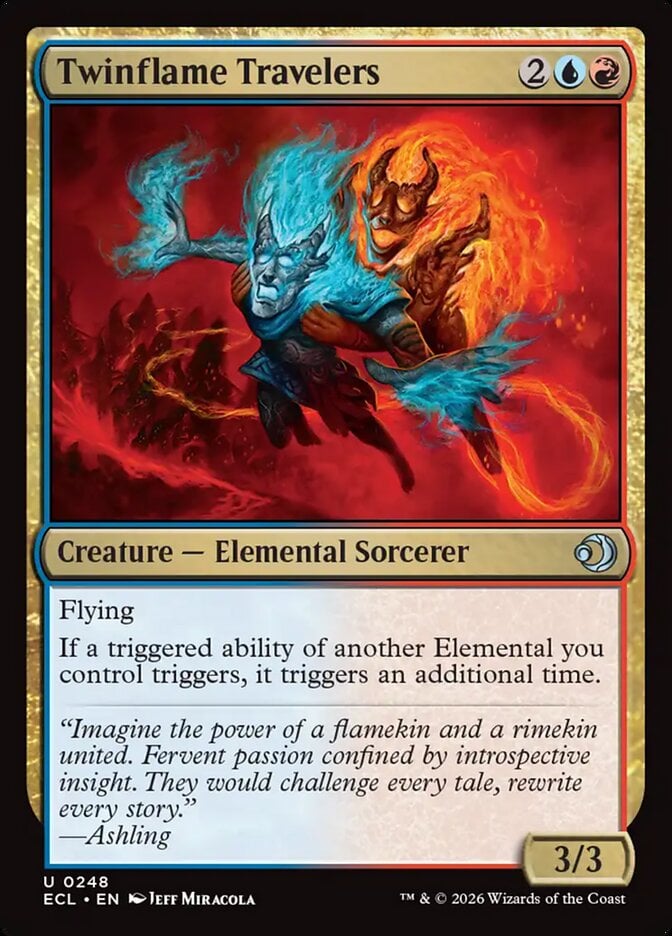
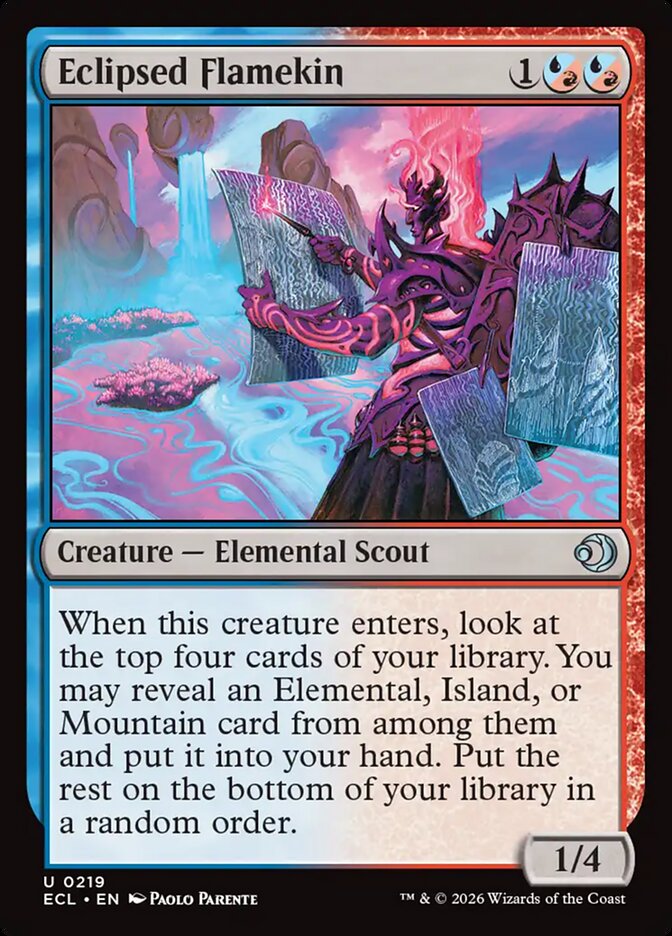
Signposts: Twinflame Travelers and Eclipsed Flamekin
Elementals seek to go bigger than the other five creature types. Many of its cards care specifically about casting “mana value 4 or greater” cards, and it even gets a Panharmonicon of sorts in Twinflame Travelers. This doubles up on some of the vivid creatures earlier, so expect UR to splash other colors surprisingly often. Elementals looks to be the least aggressive of the five creature types, though it does have a couple of cards that clearly want to attack, like Flame-Chain Mauler and Soulbright Seeker.
BG Elves (Midrange)
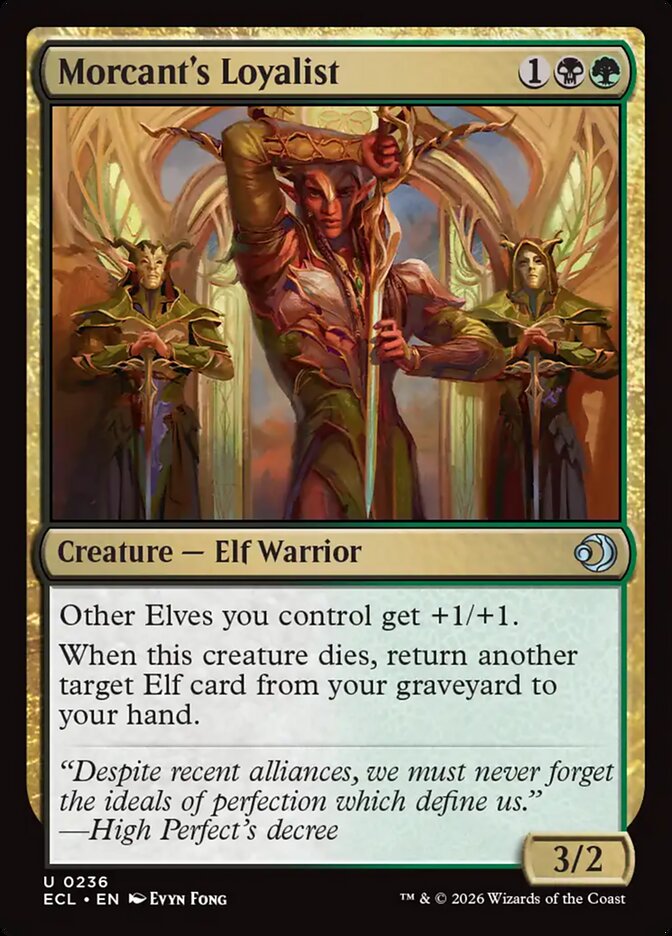
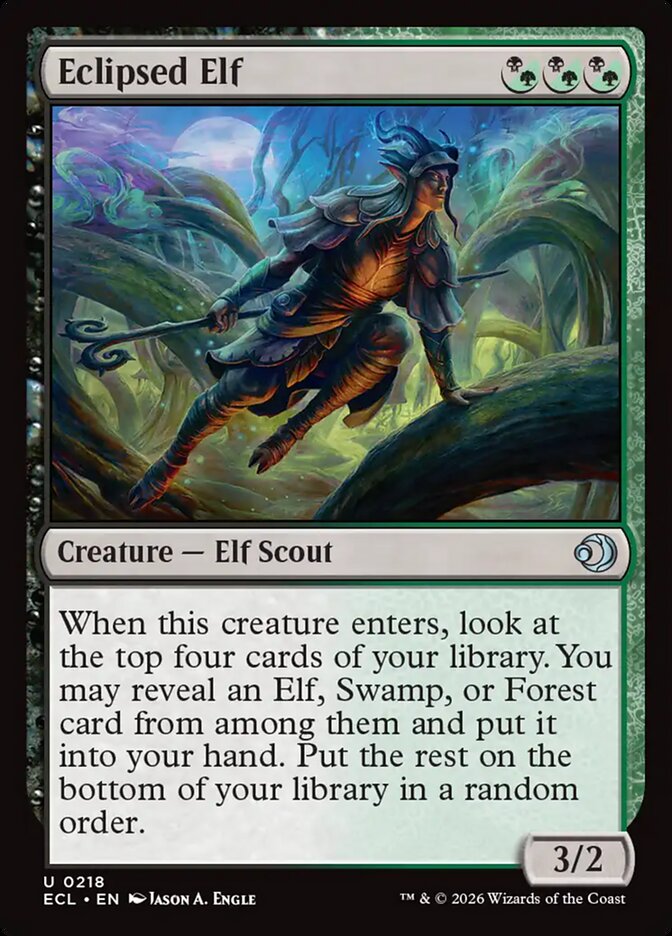
Signposts: Morcant's Loyalist and Eclipsed Elf
Elves is another fairly grindy strategy, though it aims to get value from its graveyard rather than slamming haymakers. There’s plenty of self-mill to be had in these colors, which fuels cards like Moon-Vigil Adherents and Creakwood Safewright. As with the other creature types, elves also have a number of exceptional payoffs like Gloom Ripper that you can open.
UB Flash/Faeries (Tempo)
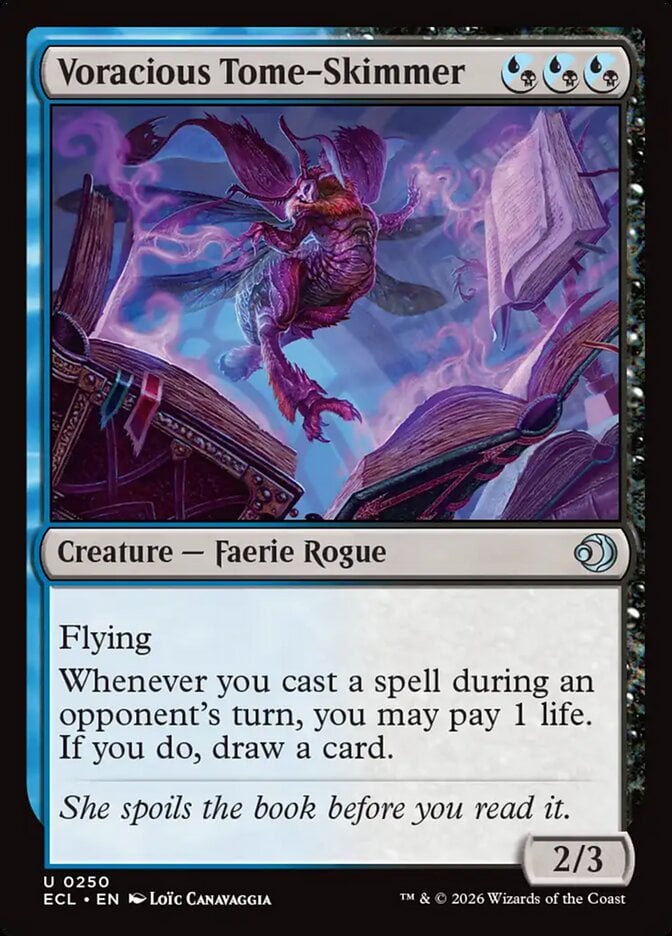
Signpost: Voracious Tome-Skimmer
UB is our first non-primary archetype to cover. These archetypes are short one signpost, although their hybrid cards are pretty good. Voracious Tome-Skimmer shows off UB’s flash theme, which has some nice rewards for casting spells on your opponent’s turn. Look for flash spells like Glamermite and Mischievous Sneakling, plus instants like Blight Rot and Unexpected Assistance.
While I did call this deck “Faeries”, there are actually just two cards that specifically care about those, which are Illusion Spinners and Maralen, Fae Ascendant. As such, you should generally focus more on the “flash” aspect here than being in a specific creature type.
RG Vivid (Midrange)
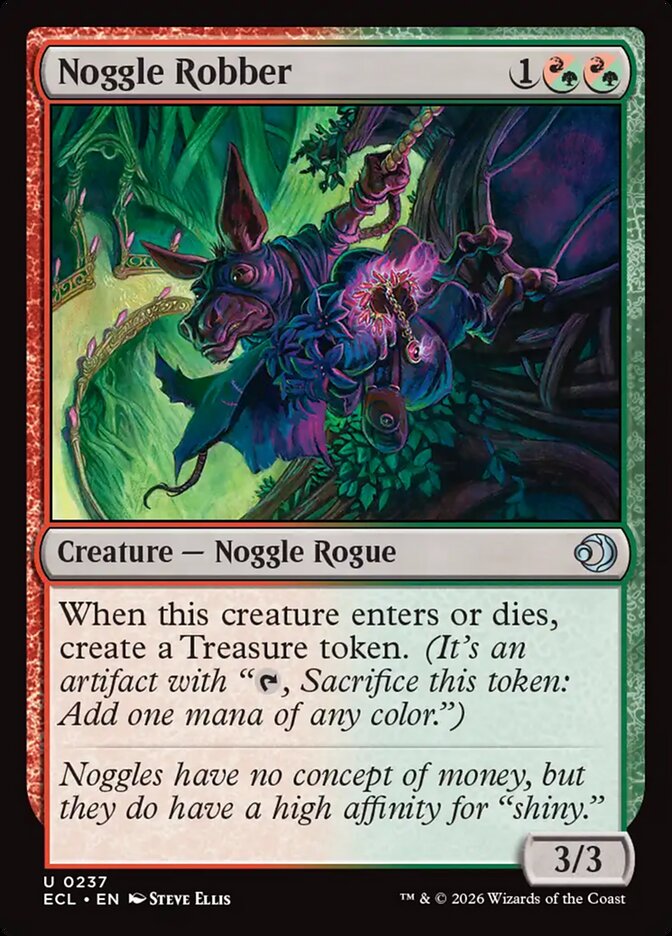
Signpost: Noggle Robber
RG is the first of two vivid-focused archetypes to cover. It’s more aggressive than GU is, with cards like Squawkroaster and Prismabasher potentially smashing face. Honestly though, given that vivid revolves around playing other colors, the differences between the two vivid decks may feel minimal in practice! If anything, one of RG’s greatest woes is the loss of Shinestriker, which is double-pipped and thus very difficult to splash. If you’re playing it, you’re probably just base 3-color or UGr.
WB Blight (Midrange)
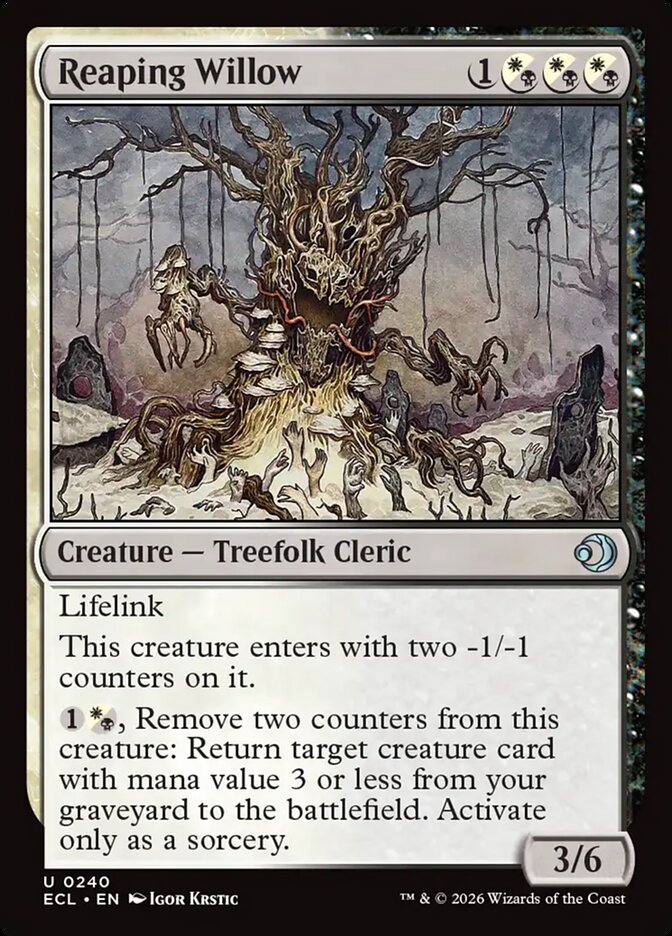
Signpost: Reaping Willow
WB’s signpost is awesome, as Reaping Willow looks like the best of these five cards to me. It’s a 2-for-1 that comes attached to a large lifelinking body, and it’s flexible to cast in BW! The sole drawback I can see is that it requires a target to remove those counters.
Reaping Willow is hardly alone for -1/-1 counter manipulation, which is of course a major theme for WB. Look for blight cards and creatures that enter with -1/-1 counters, and try to extract value over time with those grindy synergies.
RW Blight (Aggro)
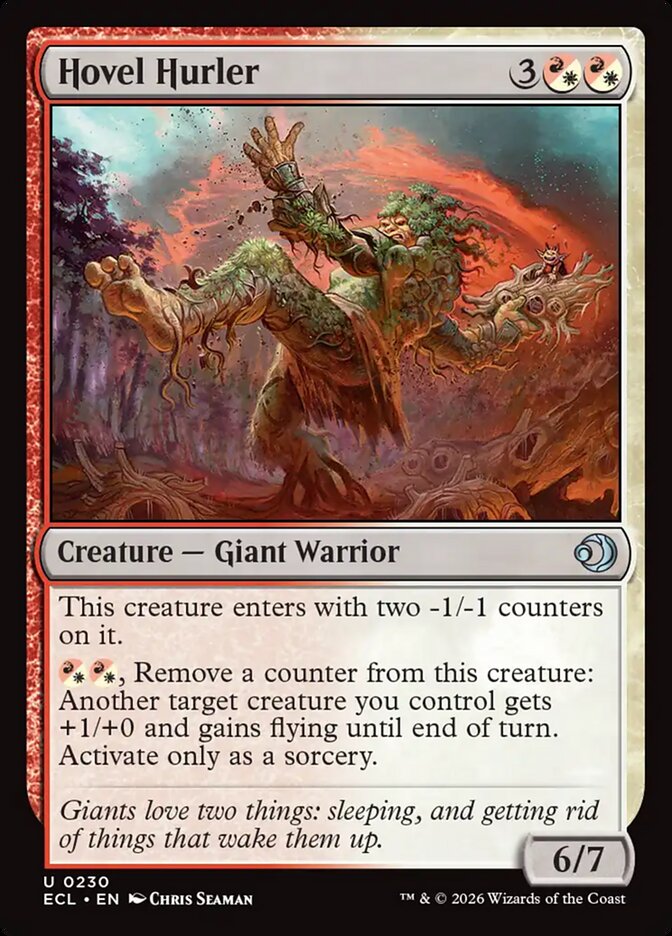
Signpost: Hovel Hurler
RW takes a more aggressive approach to -1/-1 counters, shedding its weaknesses to immediately smash face! Hovel Hurler and Brambleback Brute are some of my favorite cards here, as both embarrass blockers and grow quite large for their cost. Removal looks like the easiest way to disrupt what RW does, although you could also try to go over the top of it with the set’s many typal synergies.
GU Vivid (Ramp)
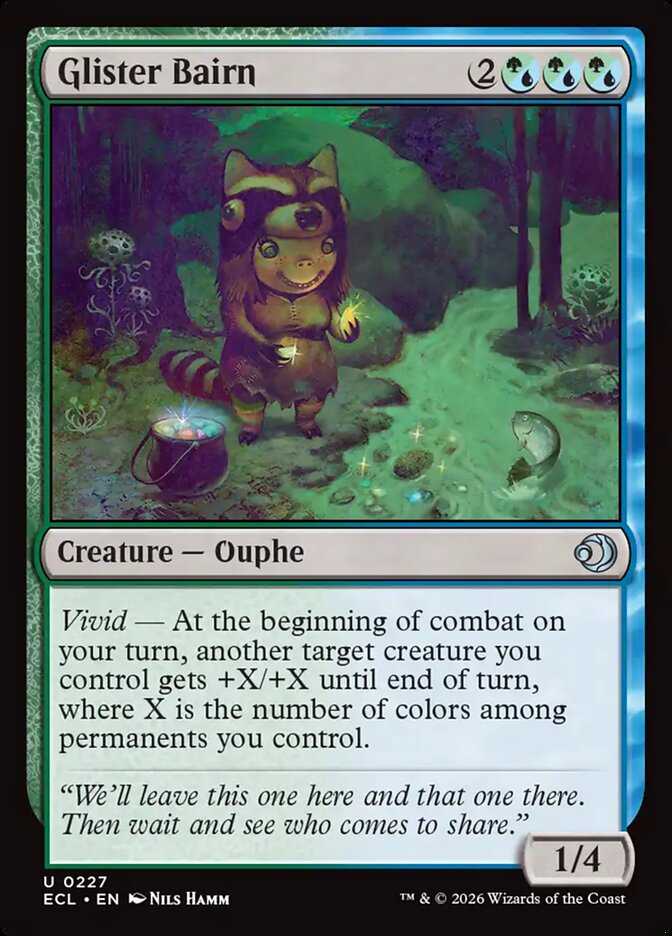
Signpost: Glister Bairn
I’m not a fan of Glister Bairn, which has lackluster stats for its cost and seems too aggressive for what the vivid deck is doing. I wouldn’t say it’s unplayable or anything, but I’m certainly never taking it over Explosive Prodigy, Shinestriker, or Shimmercreep.
Anyways, GU is probably going to be the go-to combination for your vivid needs. It’s almost always the best “5-color good stuff” baseline for Limited sets, and Lorwyn Eclipsed looks to be no exception. You’ll often get your early-game creatures and card draw from GU, and removal/bombs elsewhere.
Set Overview
Archetype Overlap and Correspondence
Unlike most sets, Lorwyn Eclipsed’s archetypes have rather minimal overlap. Two of the secondary archetypes are pairs (RG/GU Vivid and WB/RW -1/-1 Counters), which means they play well off each other’s cards. Otherwise, this set seems to reward you for finding your lane and sticking to it.
The more you lean into merfolk, the more merfolk creatures and “tapped” synergies you’ll have. Same goes for elves and their self-mill gameplan, kithkin’s aggressive typal synergies, and more. -1/-1 counter decks also tend to be pretty parasitic, as most of their great cards will have obvious -1/-1 counter synergy.
Vivid decks can draw opportunity from this by scooping up lots of removal spells and non-primary typal creatures. Good treefolk, giants, faeries, etc. lack synergy with the big five, and thus they’ll go later than they otherwise might have. The same goes for many of the stronger -1/-1 counter uncommons like Moonlit Lamenter and Gnarlbark Elm, which tend to fall outside the big five creature types.
Colors
So what are each of the colors up to in Lorwyn Eclipsed? Here’s a brief summary for each one, focusing on their commons.
White
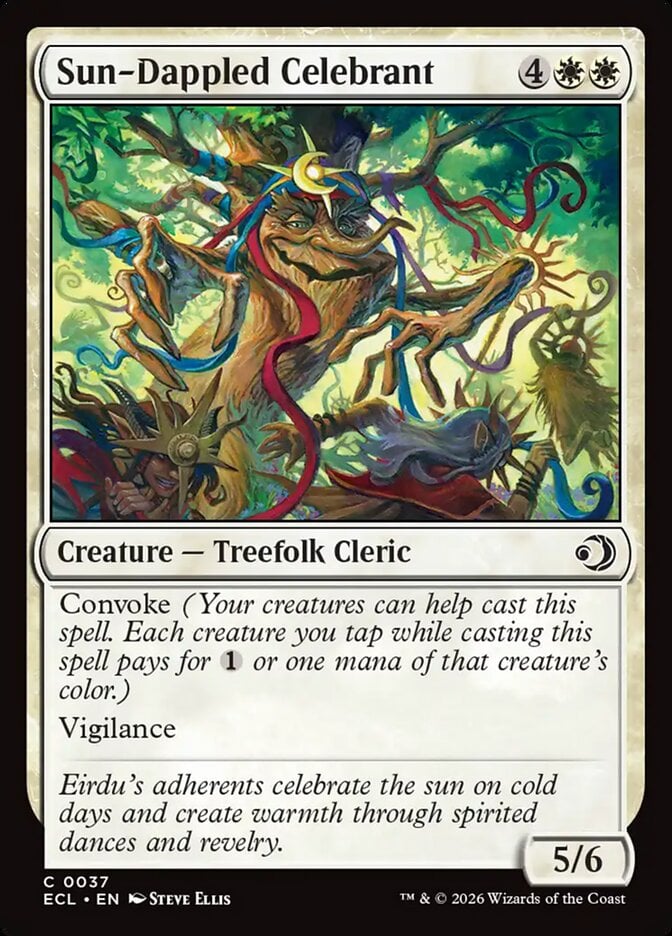
White supports kithkin and merfolk, with four and 3 commons for each respectively. White also has three decent common removal spells. Convoke cards like Sun-Dappled Celebrant and Appeal to Eirdu work well with both of its creature types.
Blue

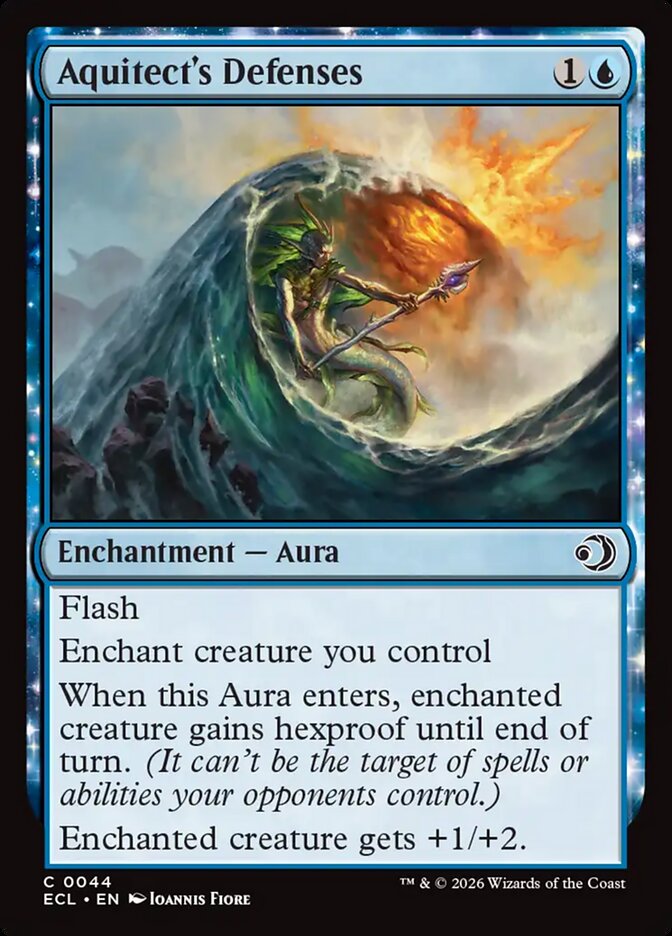
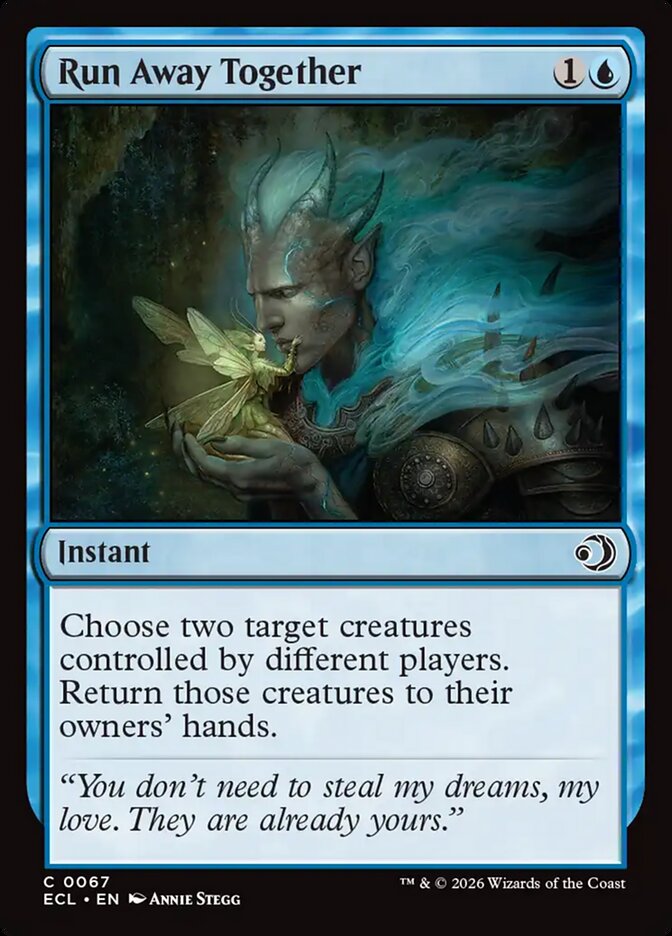
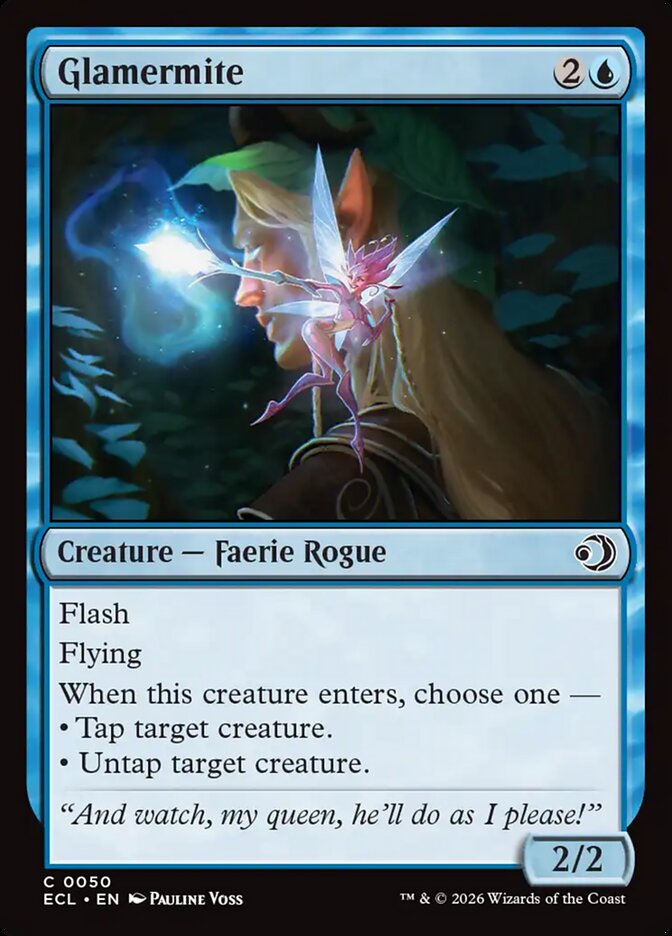
Blue supports merfolk and elementals, with three and two commons for each respectively. It has the strongest raw card advantage common (Unexpected Assistance). Blue mages have access to a lot of tricky cards like Aquitect's Defenses, Run Away Together, and Glamermite.
Black
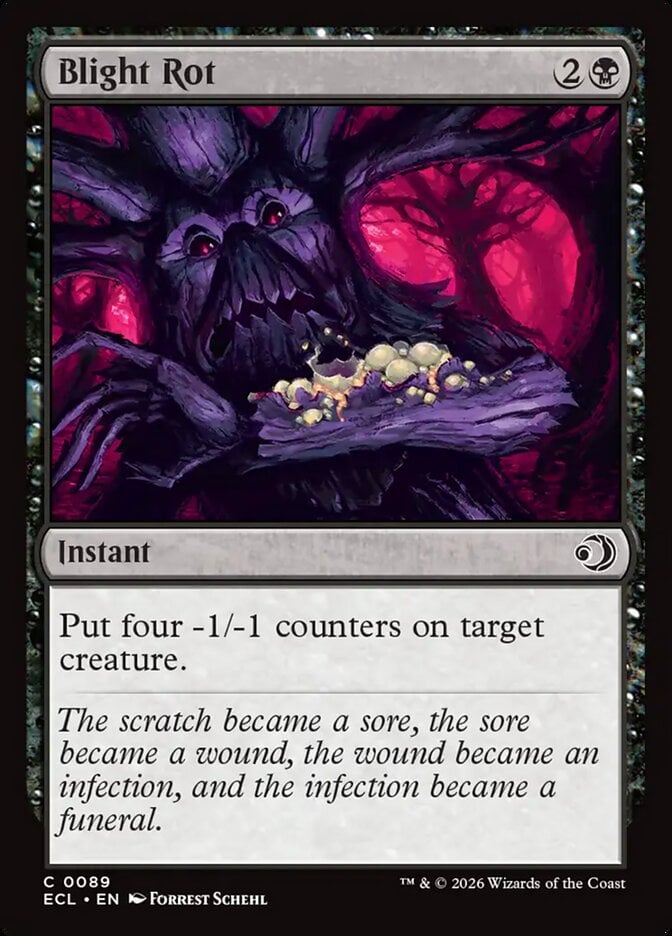
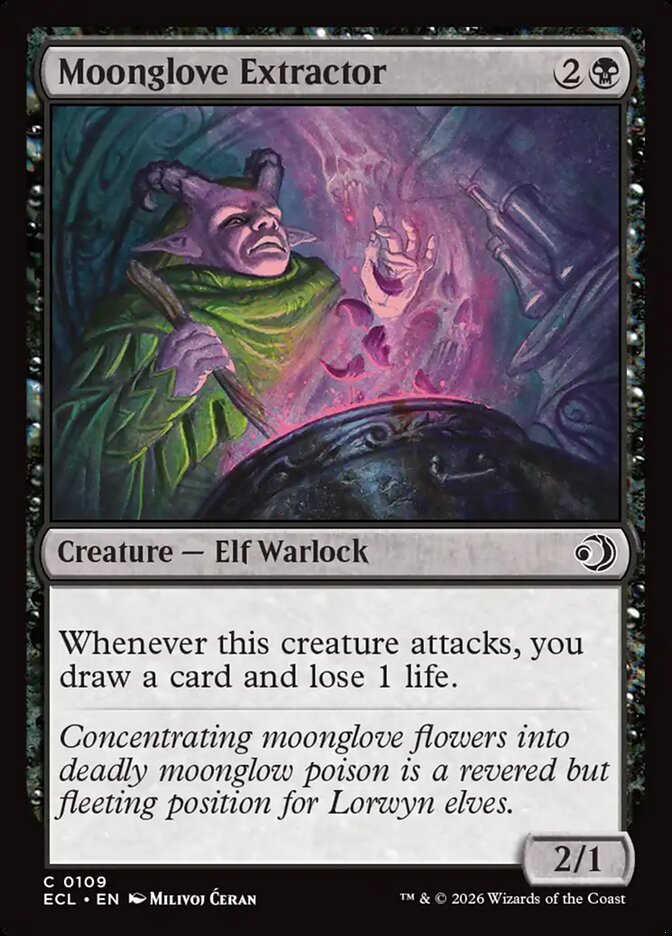
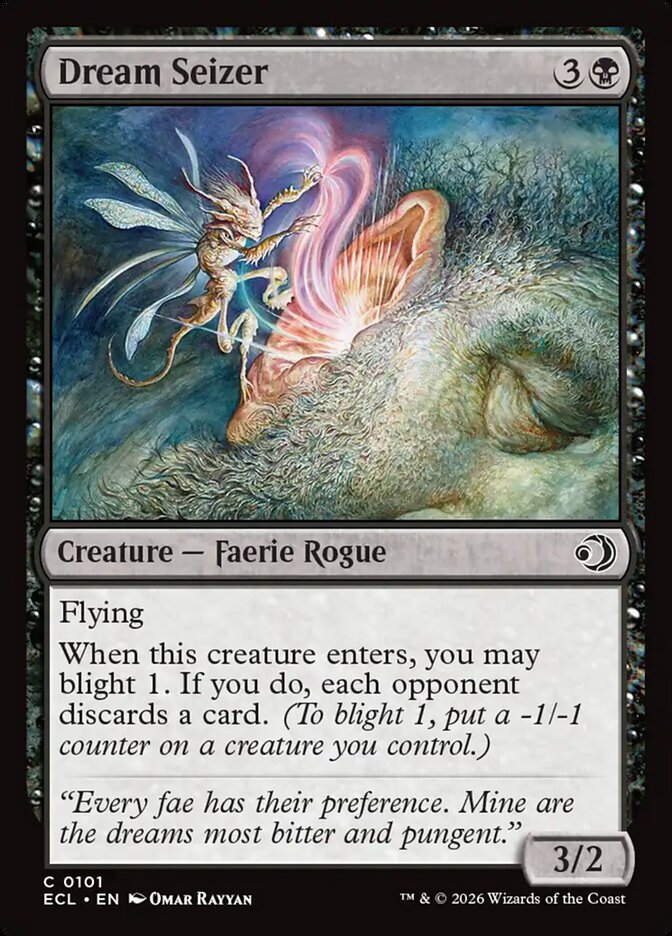
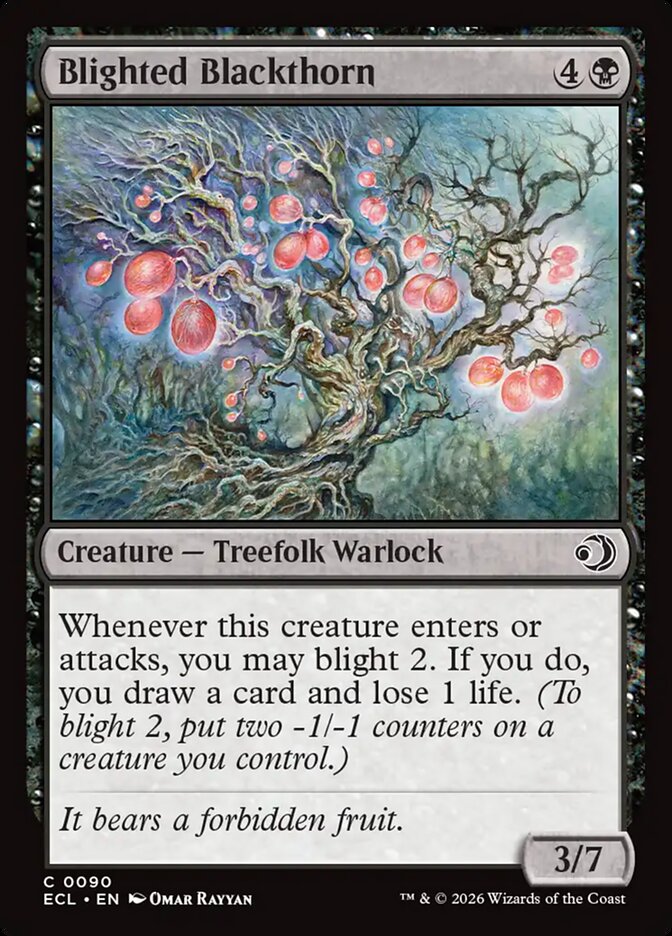
Black supports elves and goblins, with three commons for each. It has two great common removal spells (Blight Rot and Bogslither's Embrace), and a bit more -1/-1 counter synergy than other colors. Black also has some nice 2-for-1 commons like Moonglove Extractor, Dream Seizer, and Blighted Blackthorn.
Red
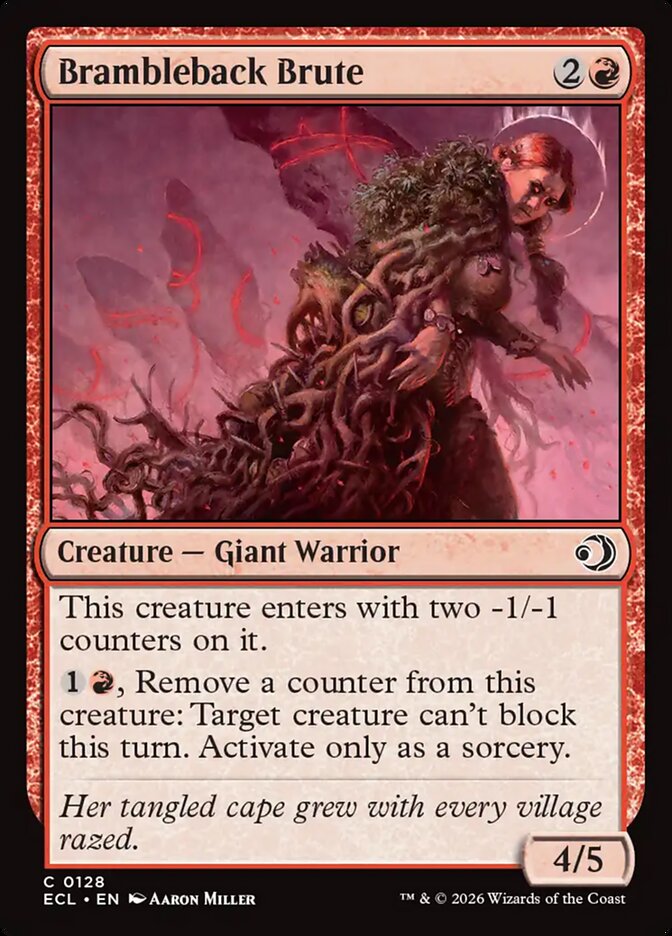
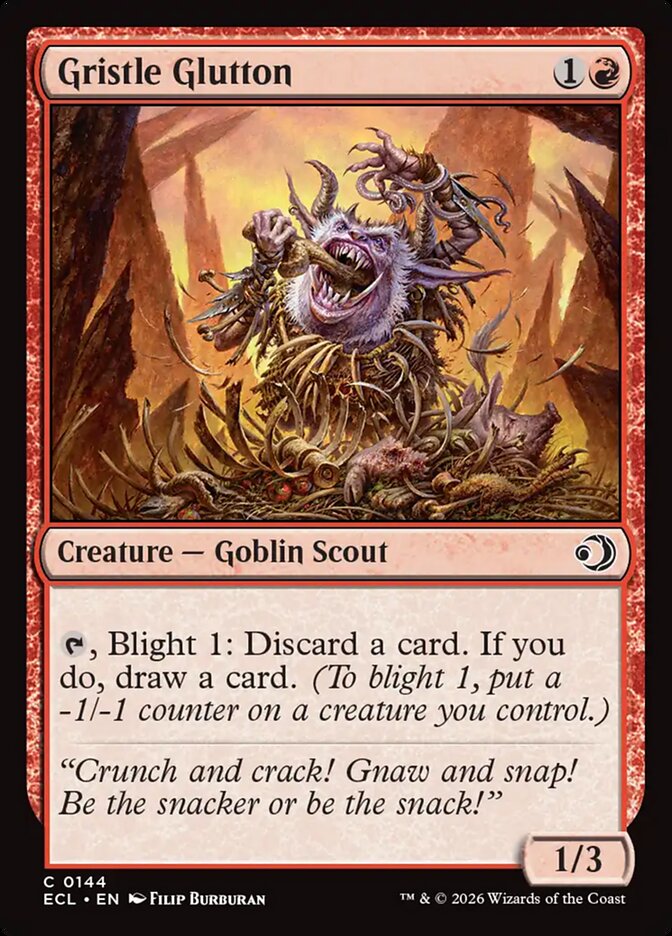
Red supports elementals and goblins, with four and three commons for each respectively. It has a trio of solid common removal spells, including the majorly efficient Cinder Strike. Most of its creatures skew towards attacking, as you’d expect from the color. It also has a couple of effective -1/-1 synergy cards like Brambleback Brute and Gristle Glutton.
Green
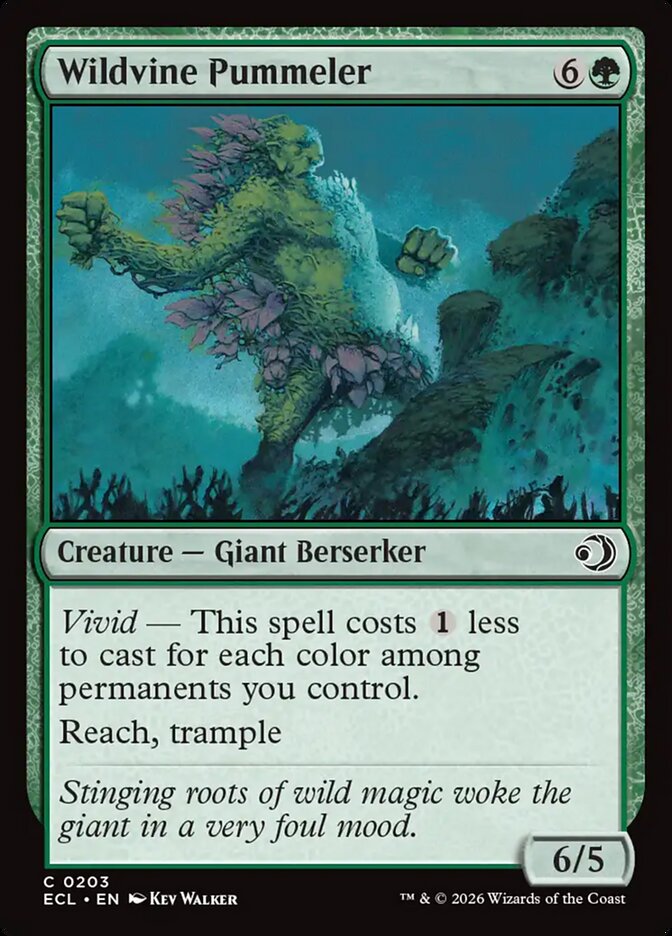
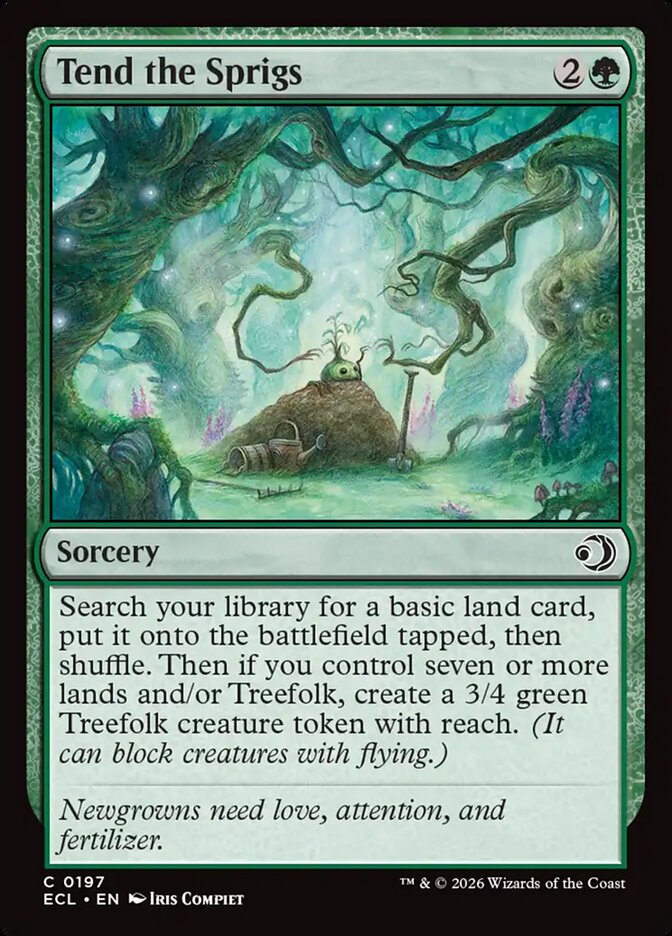
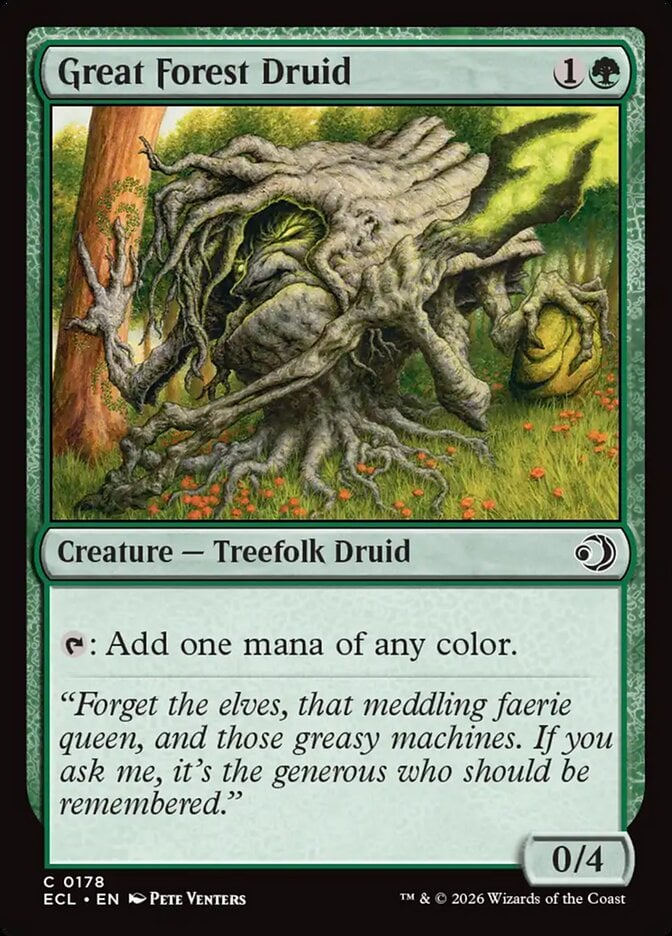
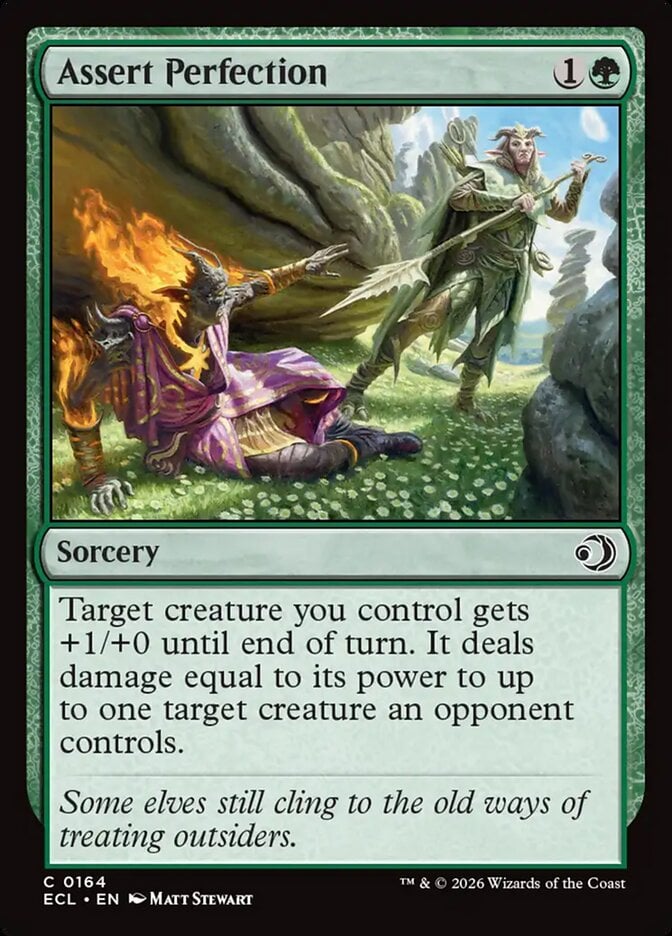
Green supports elves and kithkin, with three commons for each. Green has the only vivid common in Wildvine Pummeler, and two 5-color friendly cards in Tend the Sprigs and Great Forest Druid. Its sole removal spell is Assert Perfection, which is a slightly better Rabid Bite.
Cycles
As a typal set, Lorwyn Eclipsed has a ton of cycles, most of which seek to flesh out its five main creature types. Let’s cover each briefly to help you better picture how the set was structured.
Common Hybrid Typal Creatures
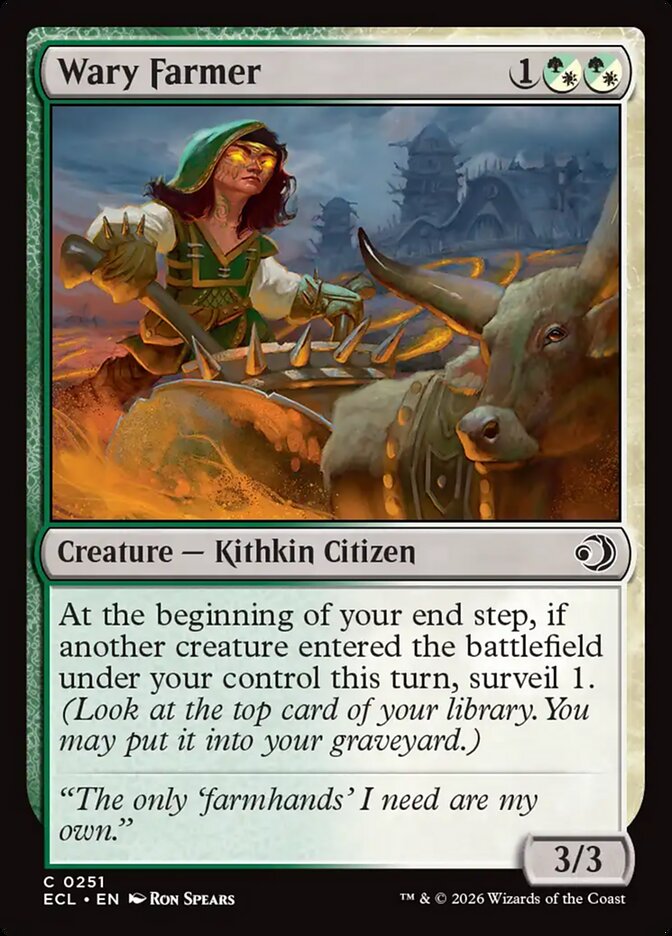
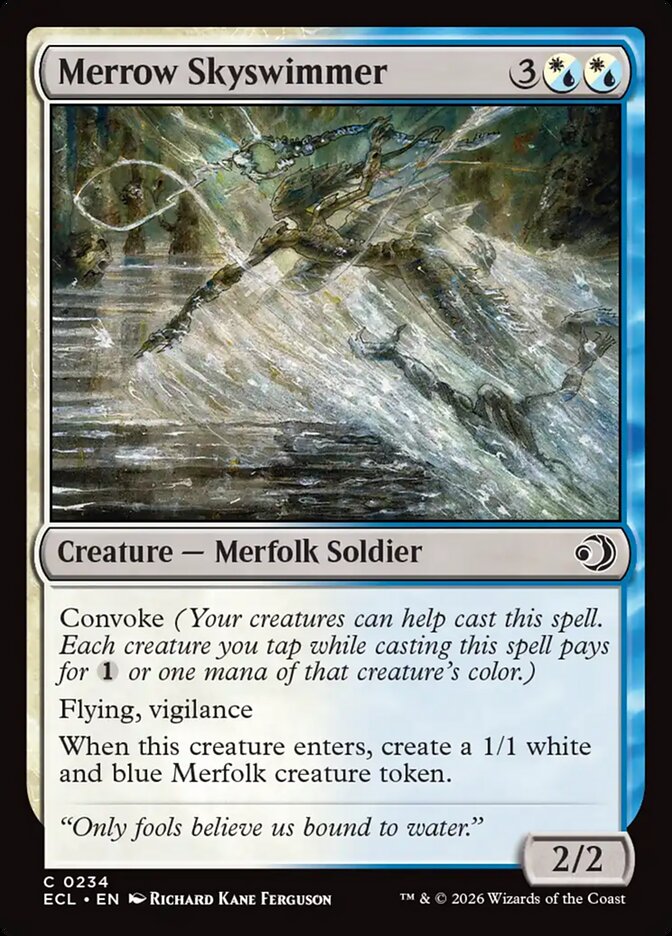
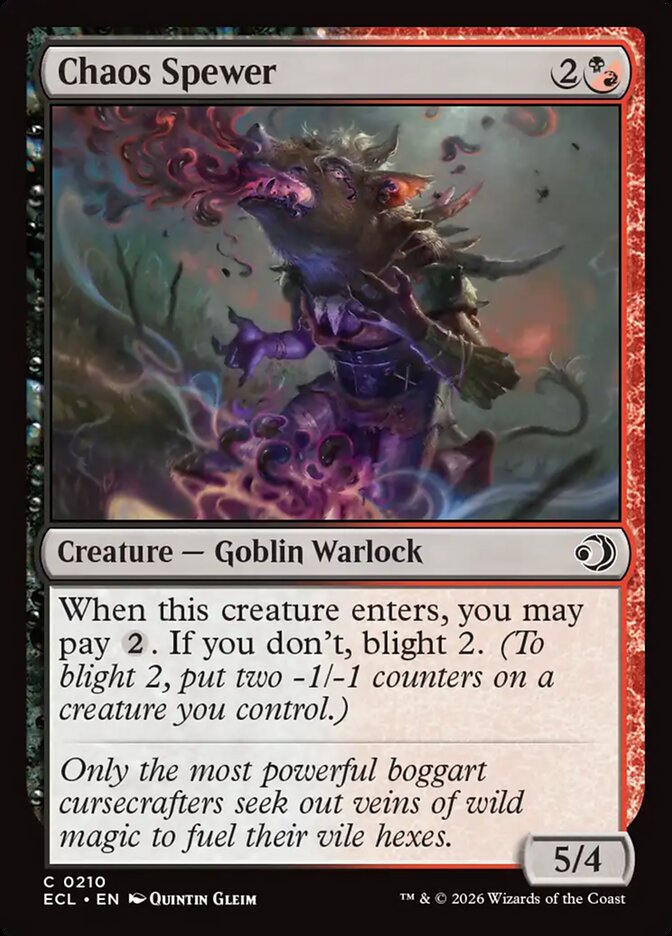
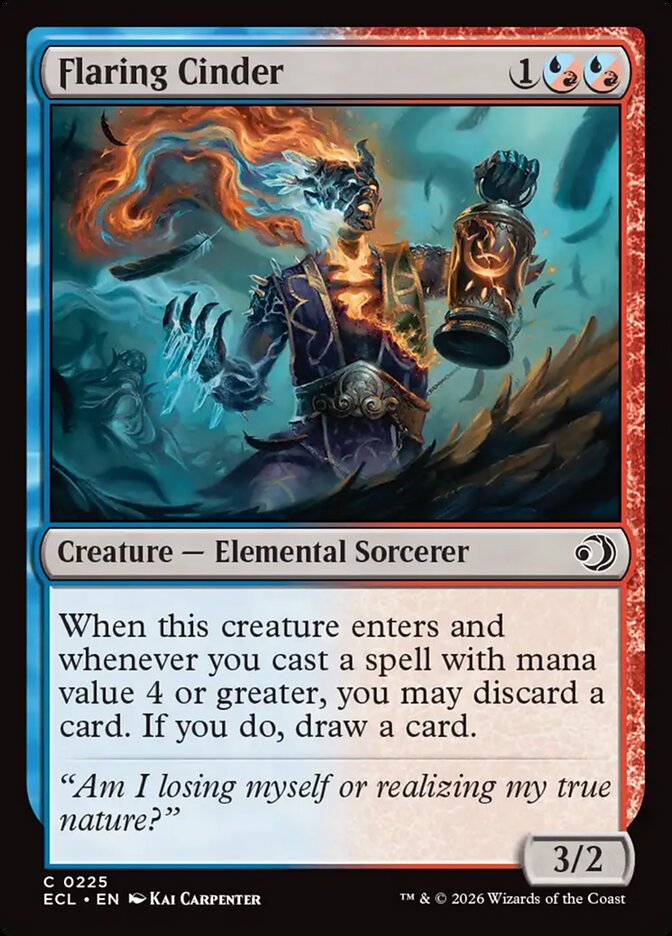
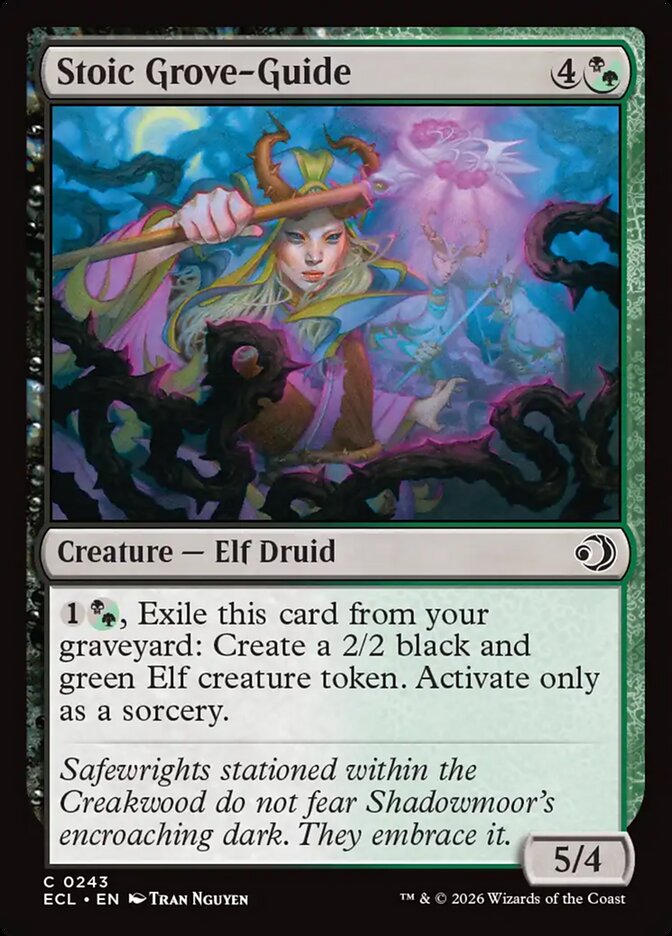
Each of these creatures corresponds to one of the five big types. They’re easiest to cast and most effective in their true color pairs, but you could play them as filler in other decks if needed.
Common Hybrid Changelings
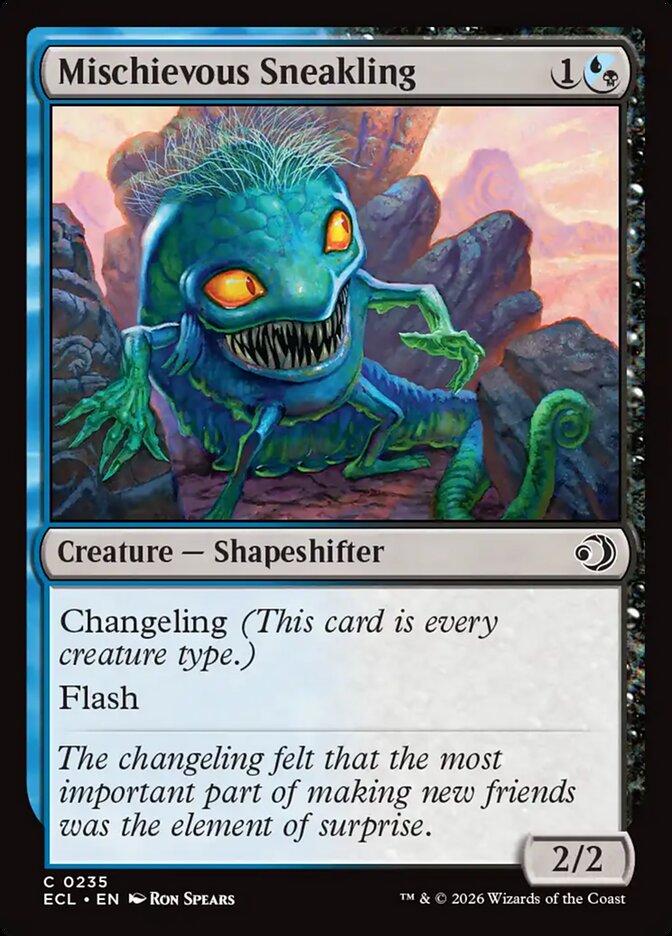
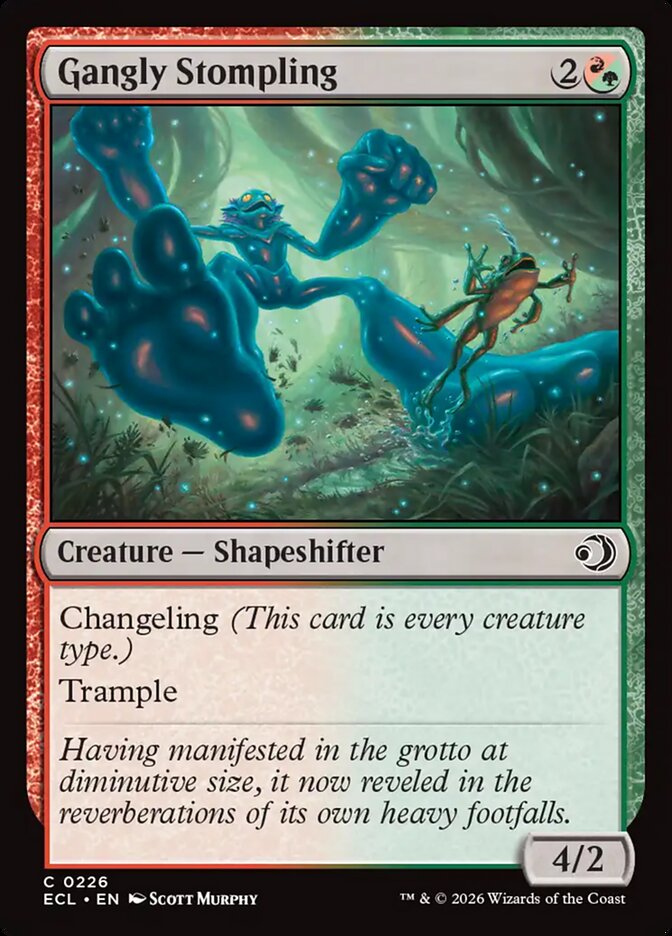
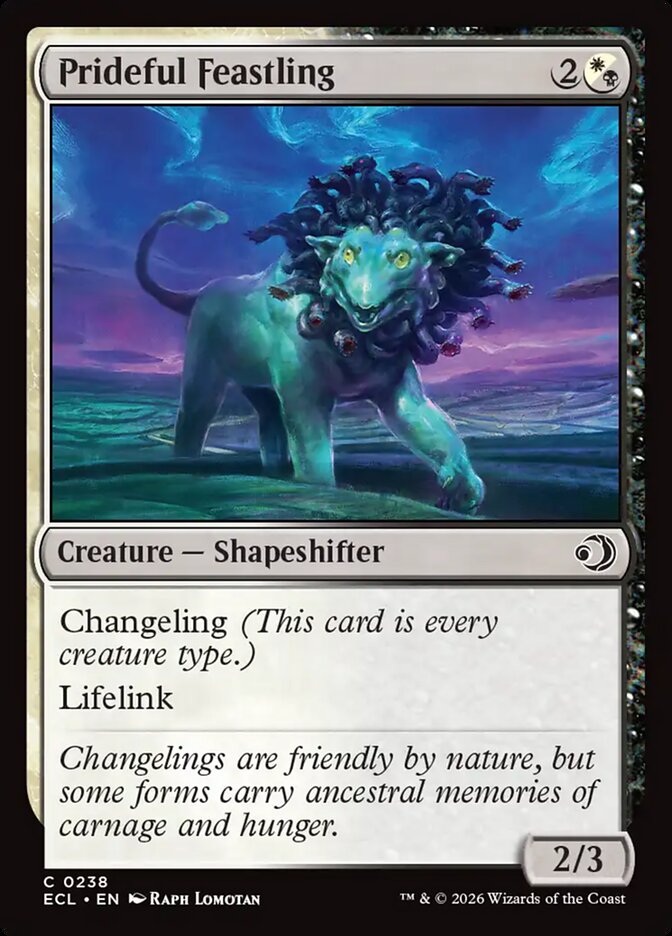
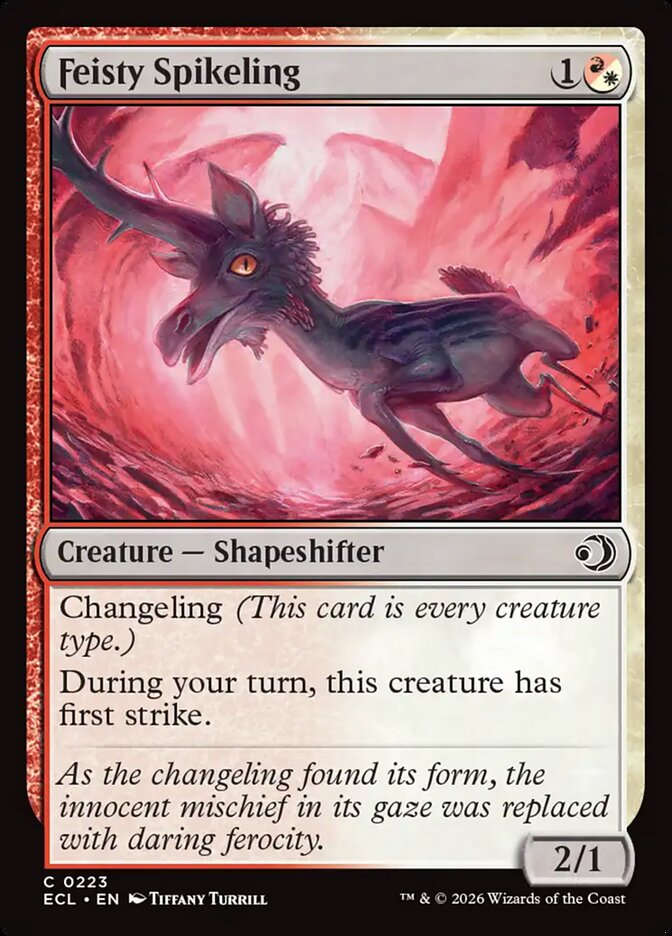
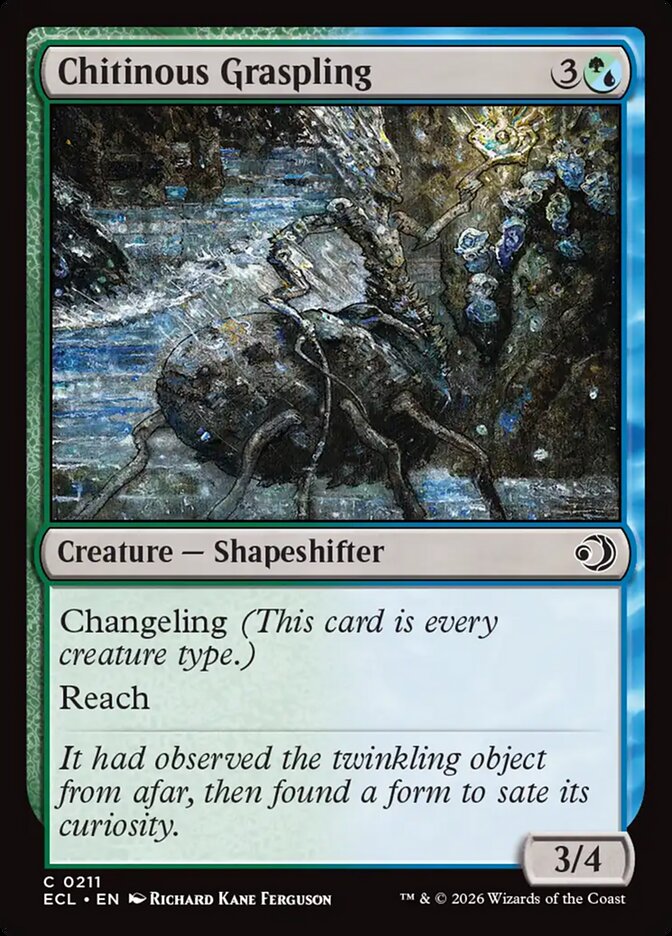
There’s one of each of these for each secondary color combination. They’re all pretty underwhelming on rate, but they provide useful type lines and some minor synergies (like Mischievous Sneakling triggering Voracious Tome-Skimmer).
Uncommon Mono-Colored Changelings
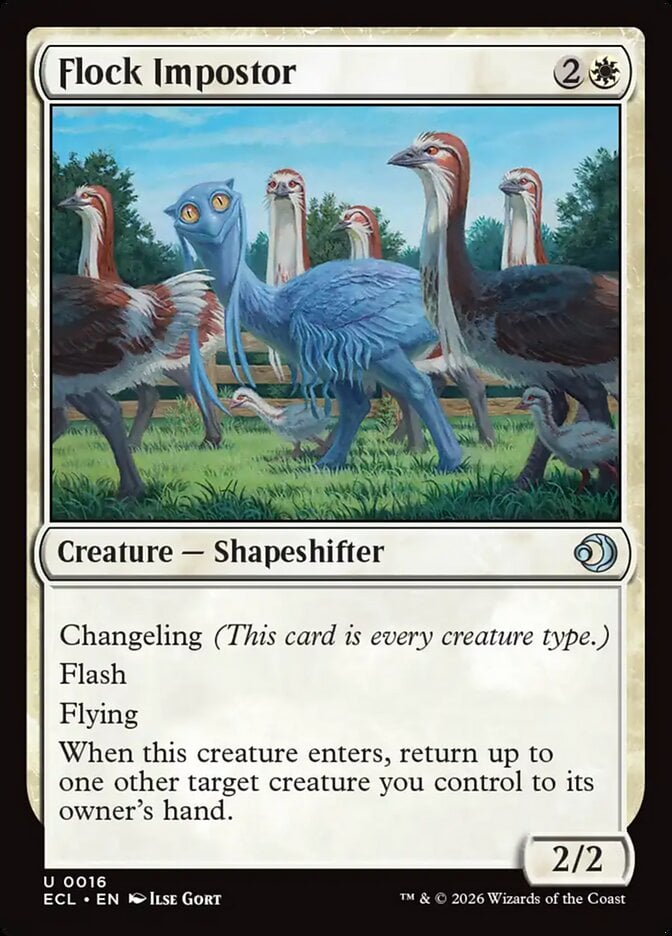
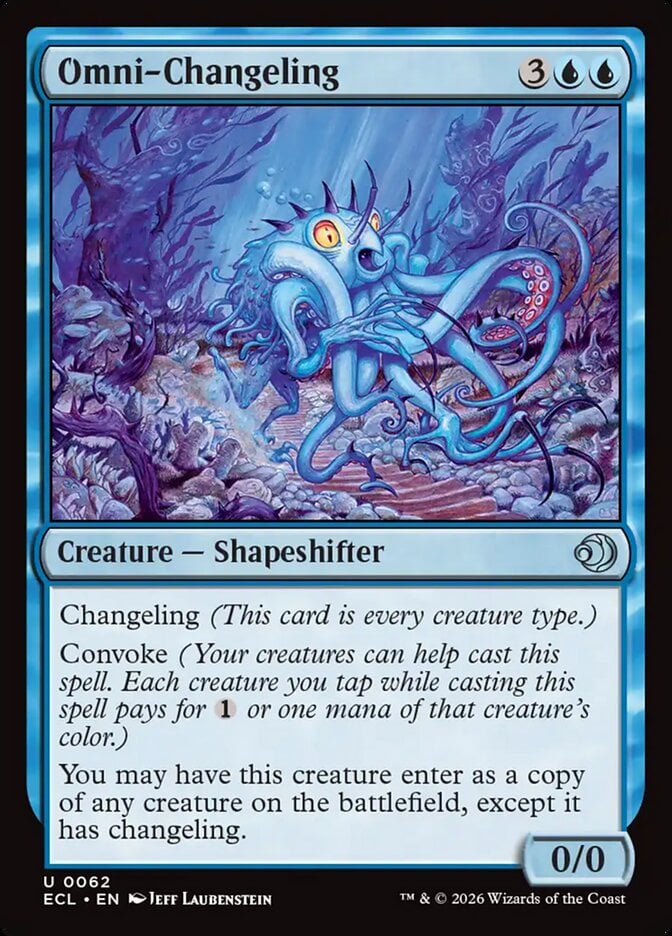
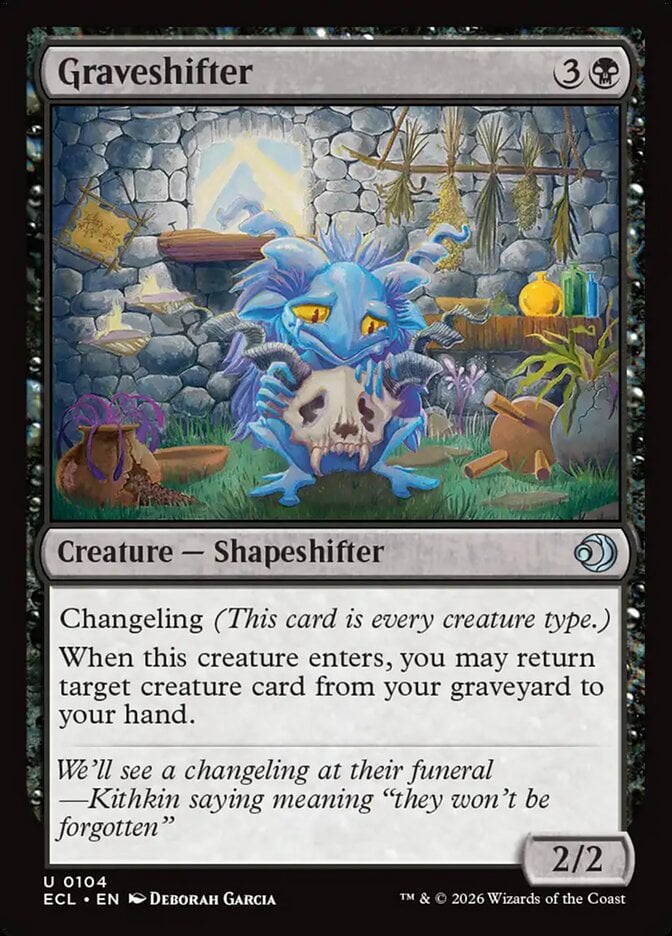
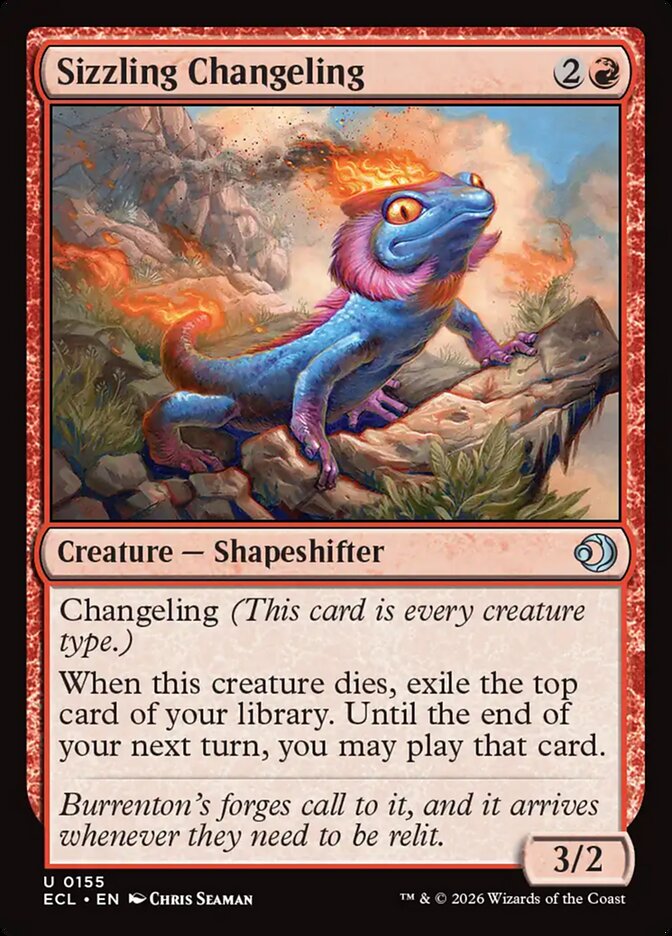
These help you achieve typal synergies in every color. Chomping Changeling is probably the weakest of the bunch, as it has poor stats and won’t always have targets in Limited.
Uncommon Vivid Elementals
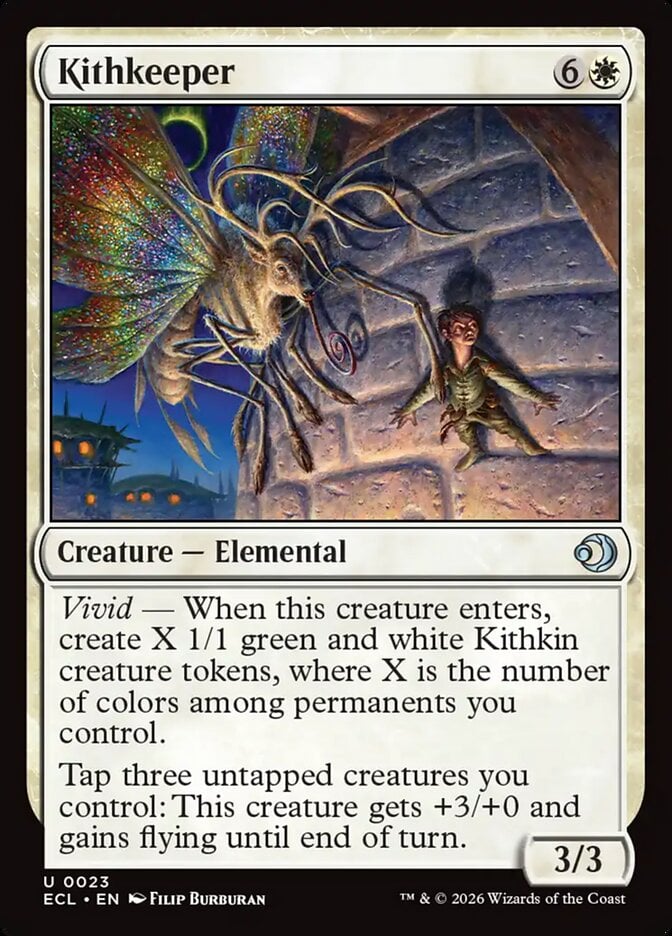
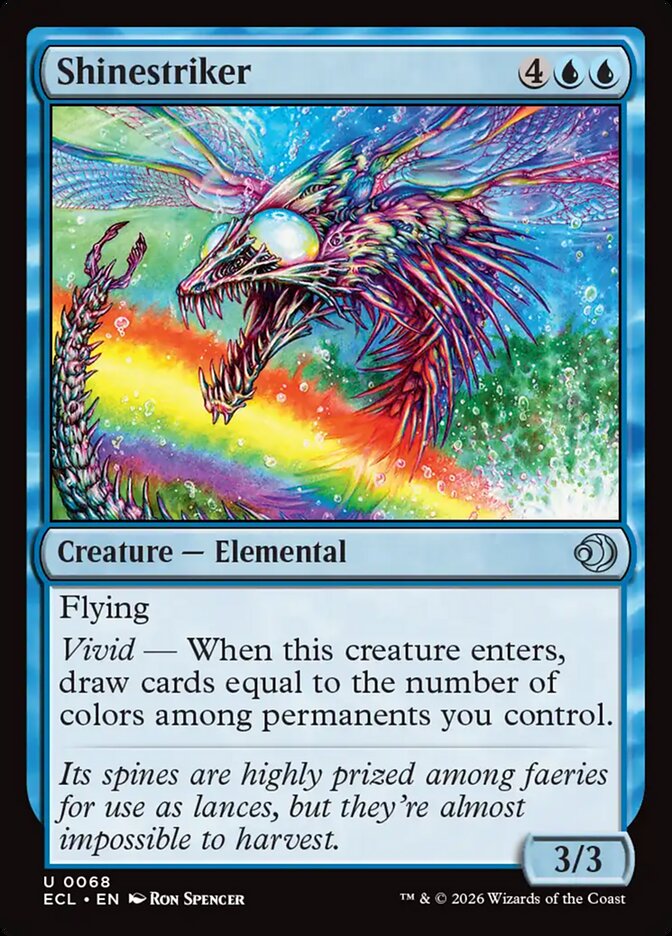
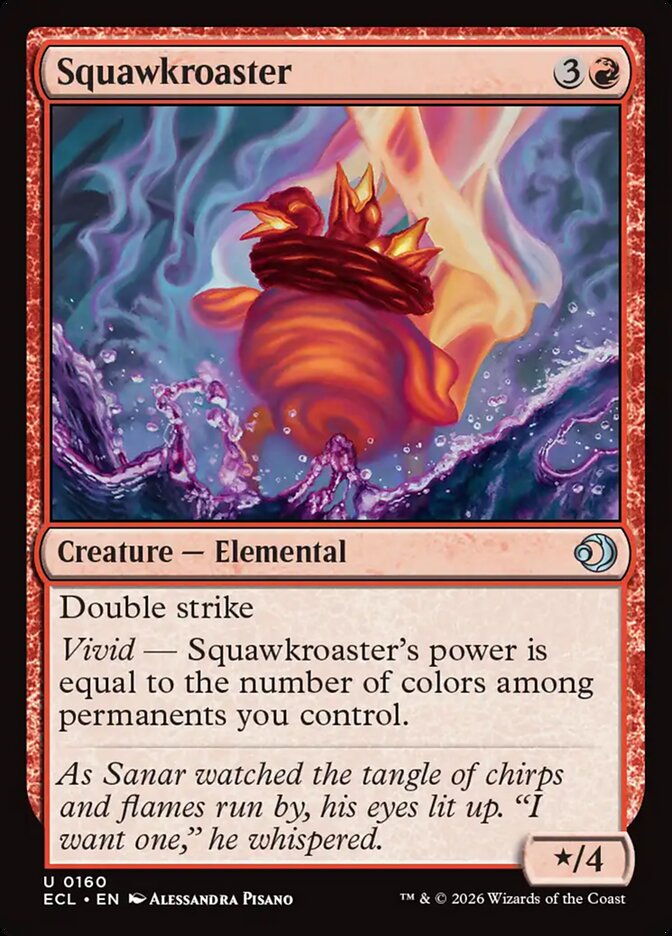
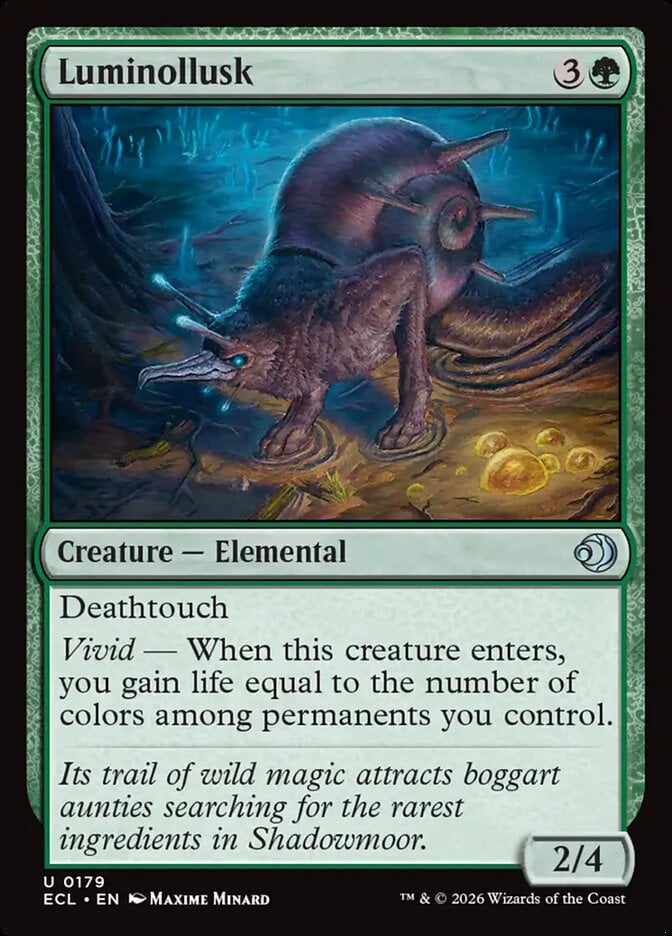
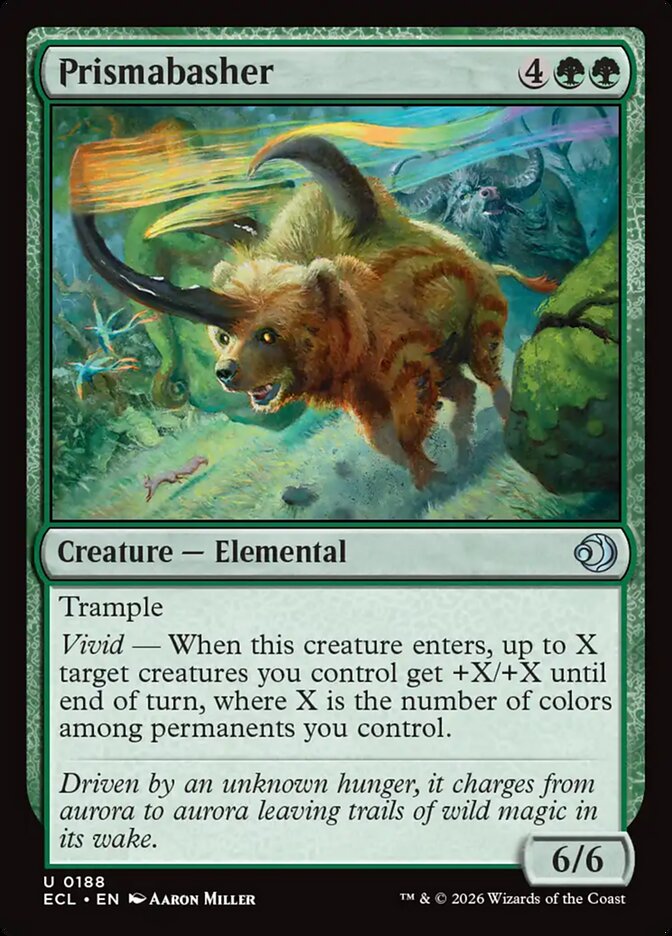
Lorwyn Eclipsed has several powerful vivid uncommons, most of which are elementals. Green gets a bit more than everyone else to reinforce vivid decks being primarily base green. You can also play these in average 2-color decks, assuming you’re okay with missing out on maximum value from them.
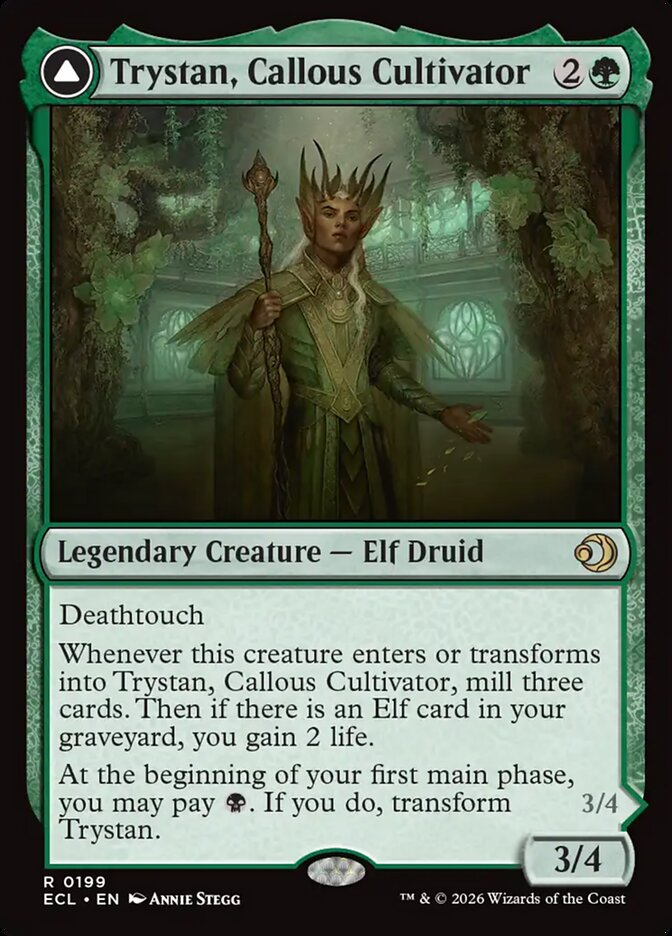
Rare Tribe Leaders


- Brigid, Clachan's Heart / Brigid, Doun's Mind
- Sygg, Wanderwine Wisdom / Sygg, Wanderbrine Shield
- Grub, Storied Matriarch / Grub, Notorious Auntie
- Ashling, Rekindled / Ashling, Rimebound
- Trystan, Callous Cultivator / Trystan, Persistent Culler
One DFC appears for each primary creature type/color pair.
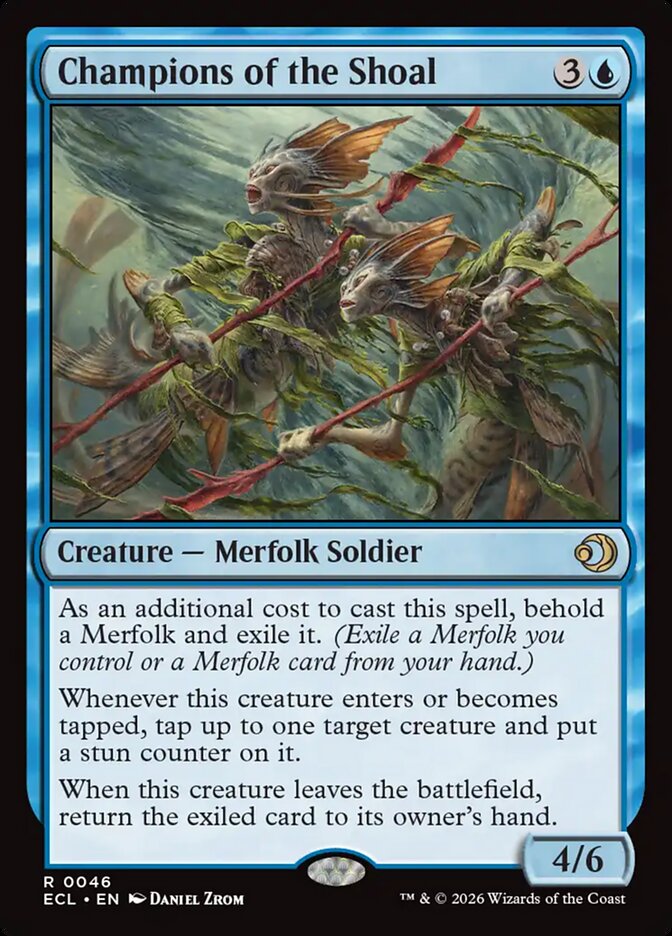
Rare Tribe Champions
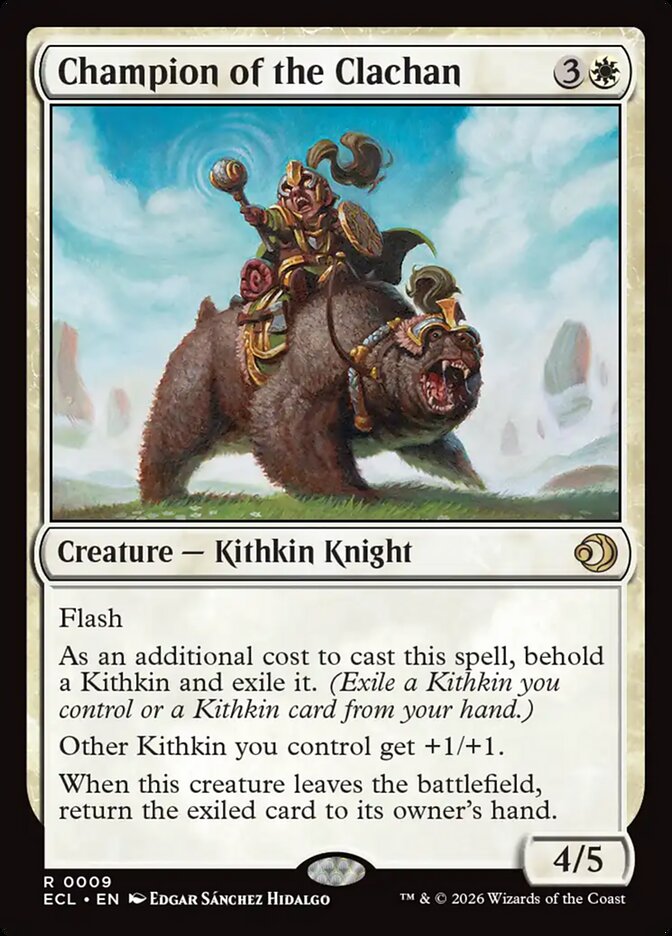
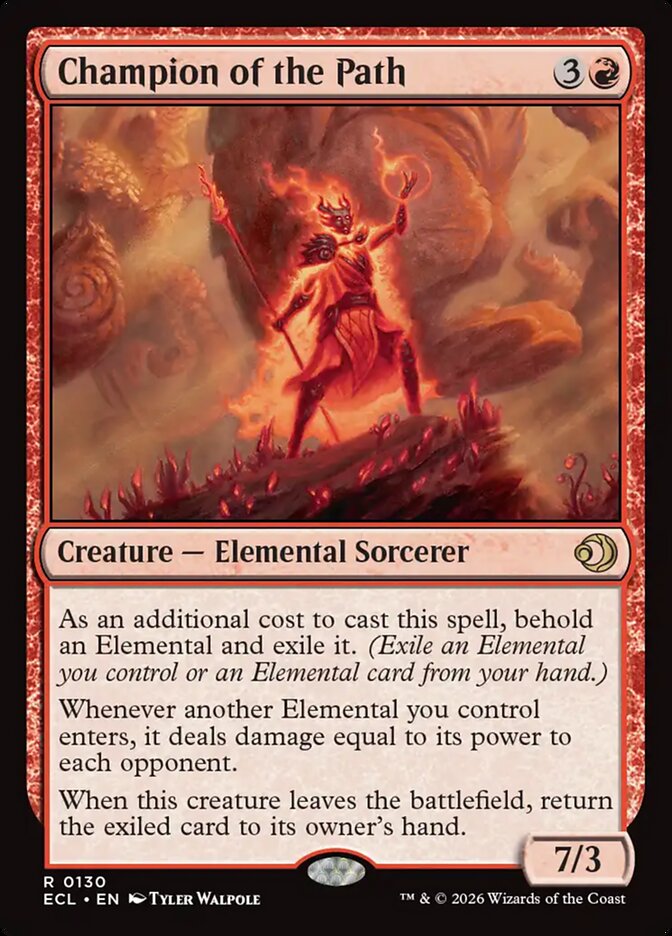
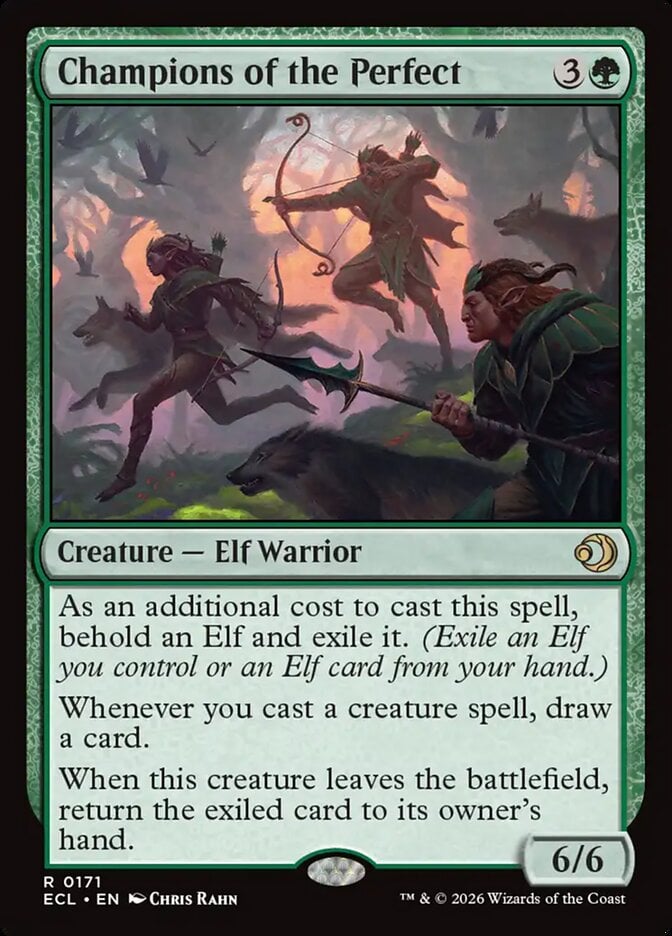
- Champion of the Clachan
- Champions of the Shoal
- Champion of the Weird
- Champion of the Path
- Champions of the Perfect
These make use of the “behold then exile” mechanic, and each major creature type gets one. Most of these look quite strong in Limited, though you’ll need 7+ creatures of their type to reliably “champion” them.
Rare Kindred Commands

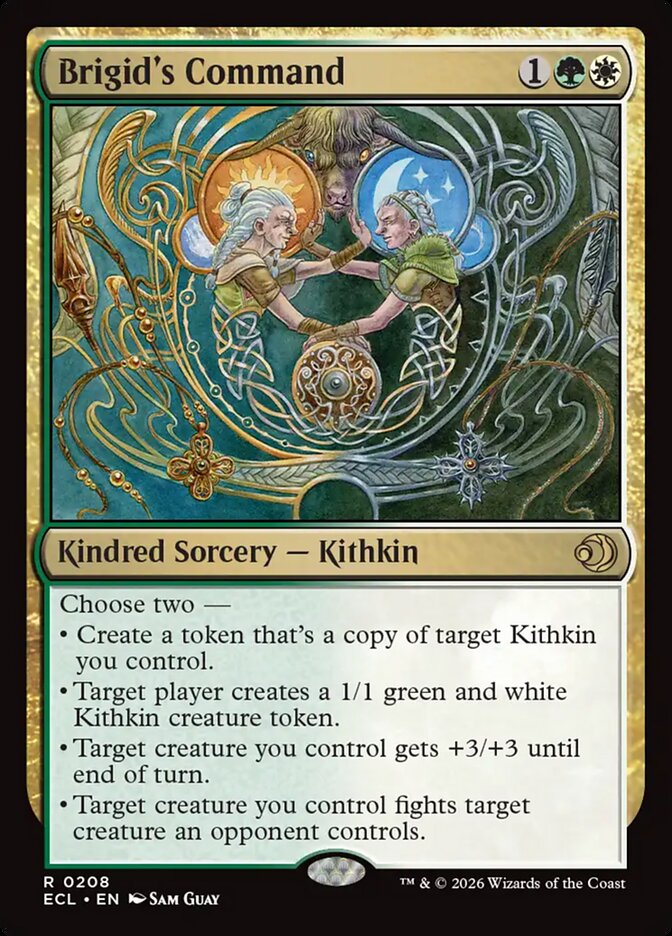
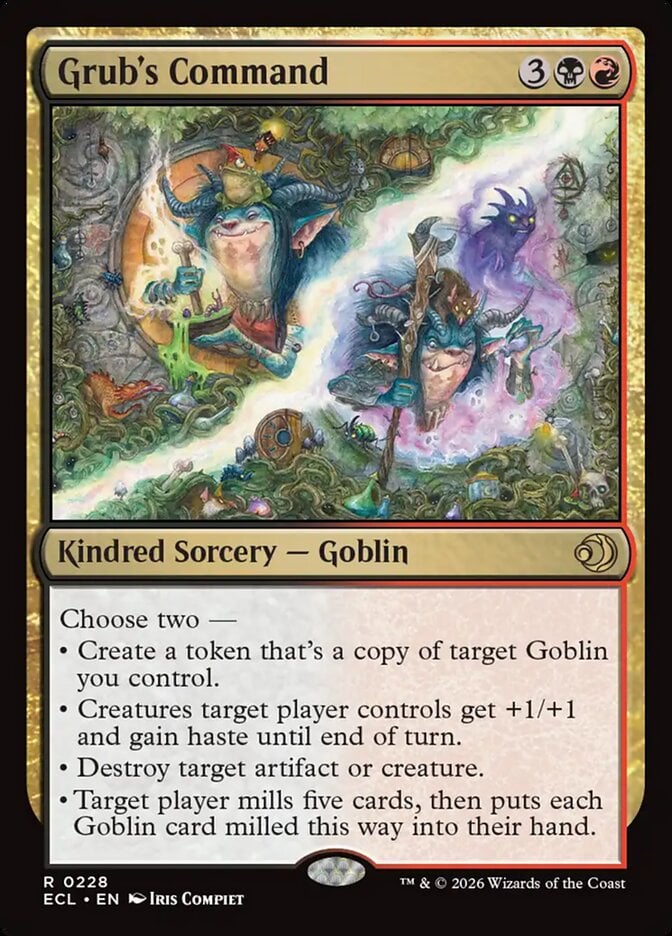
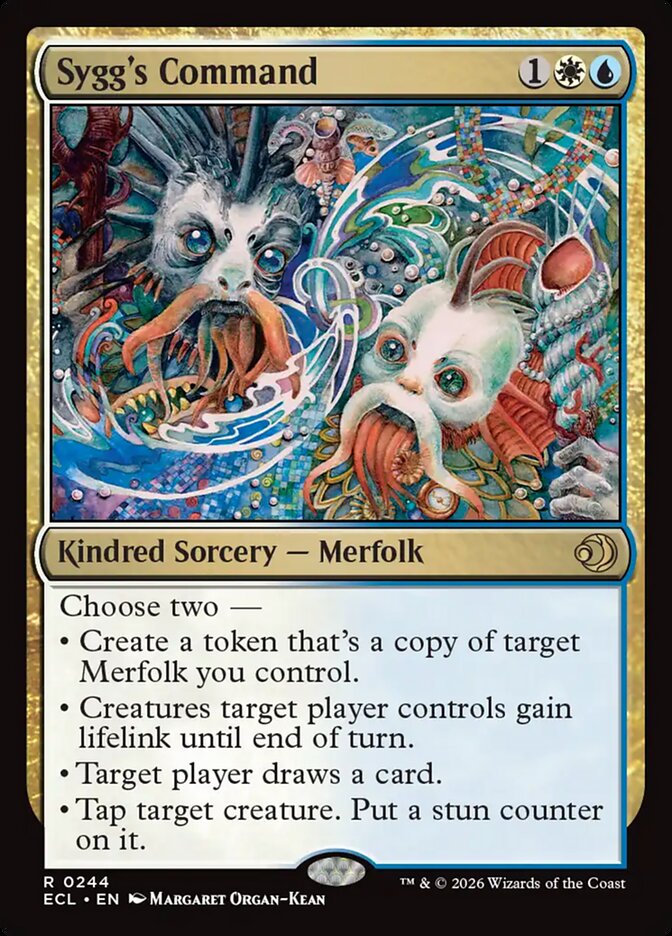
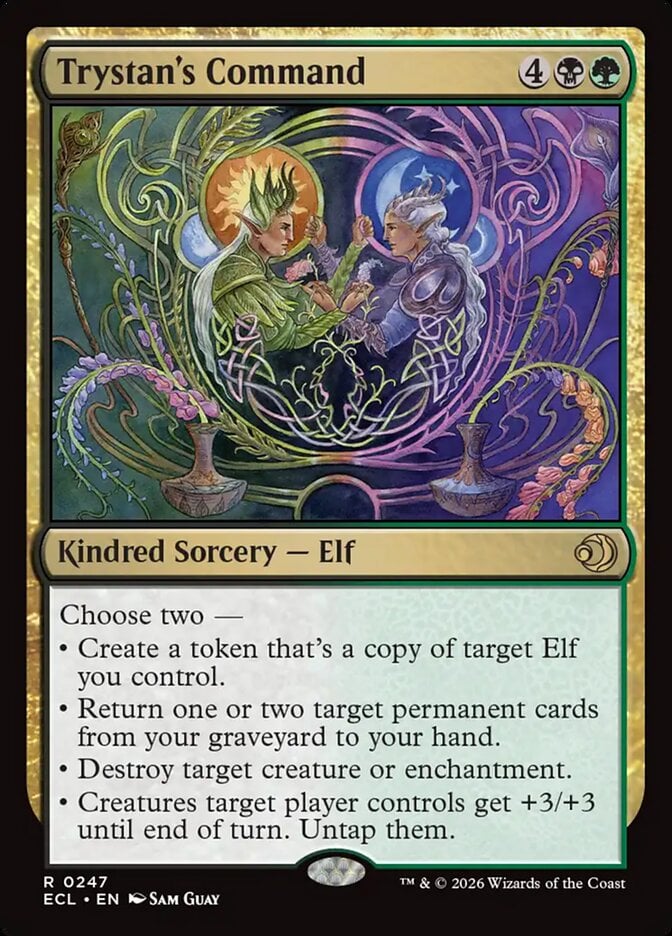
These are the main “kindred” thing in the set, with a command for each of Brigid, Sygg, Grub, Ashling, and Trystan.
Mythic Evoke Elementals


There’s one evoke elemental for each of the non-primary color combinations, although you can play these in any deck that has at least one of their colors. They all look quite strong in Limited to me.
Mana Fixing
Mana fixing is vital for vivid decks, which want to play as many colors as possible. There are also some bombs worth splashing, though I’d expect this set to feel less bomb-heavy than Avatar: The Last Airbender was. Here are the set’s main options.
Stratosoarer
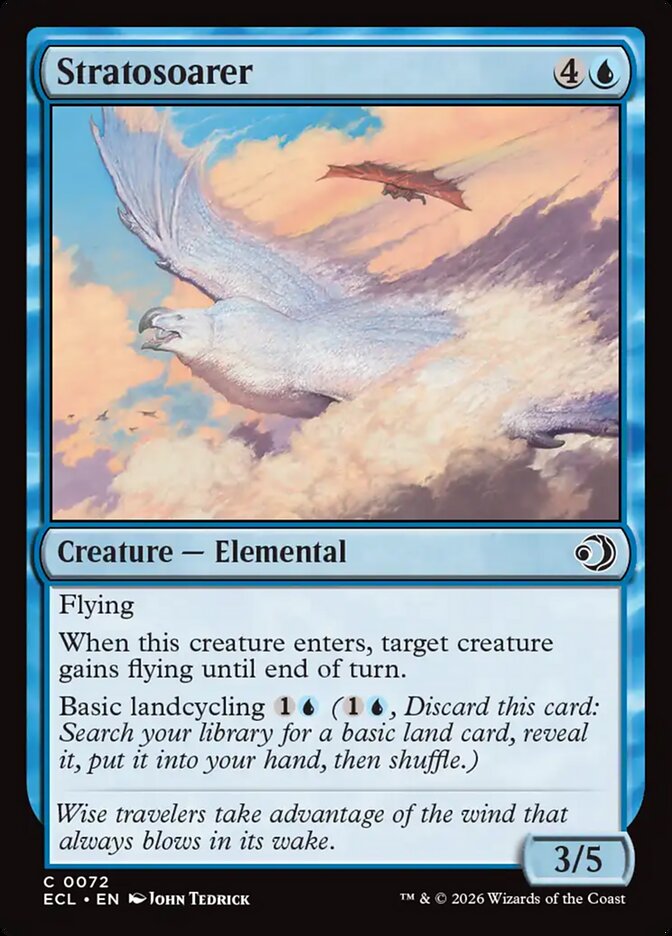
Not a terrible rate for a 5-drop, and Stratosoarer also cycles for any basic if needed. Note that it’s an elemental, too.
Kulrath Zealot
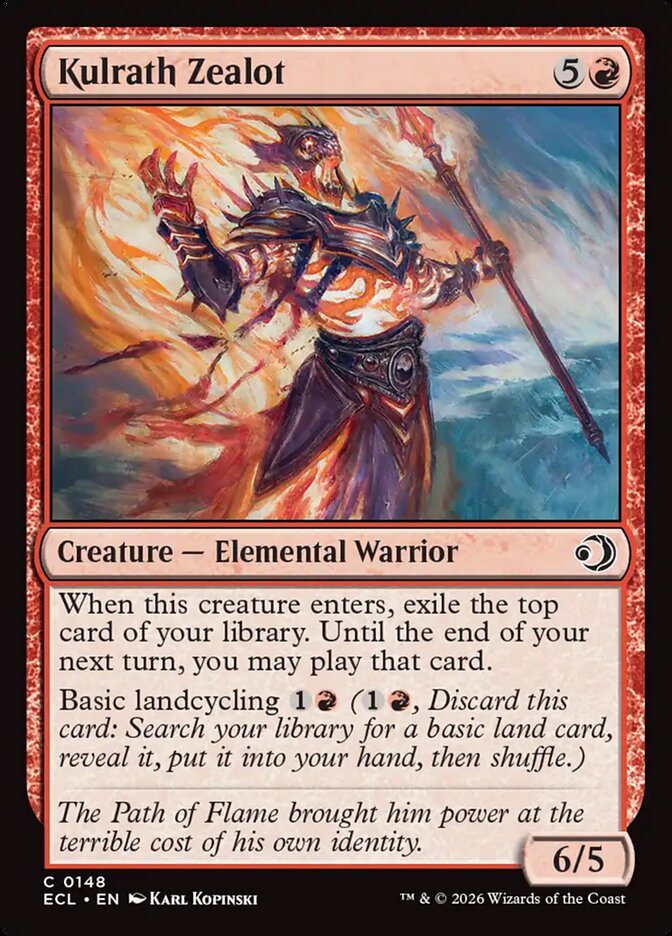
Similar to Stratosoarer, but it’s a fat 2-for-1 instead of a large bird. Kulrath Zealot is a strong top-deck that helps your mana work if you draw it too early.
Flamekin Gildweaver
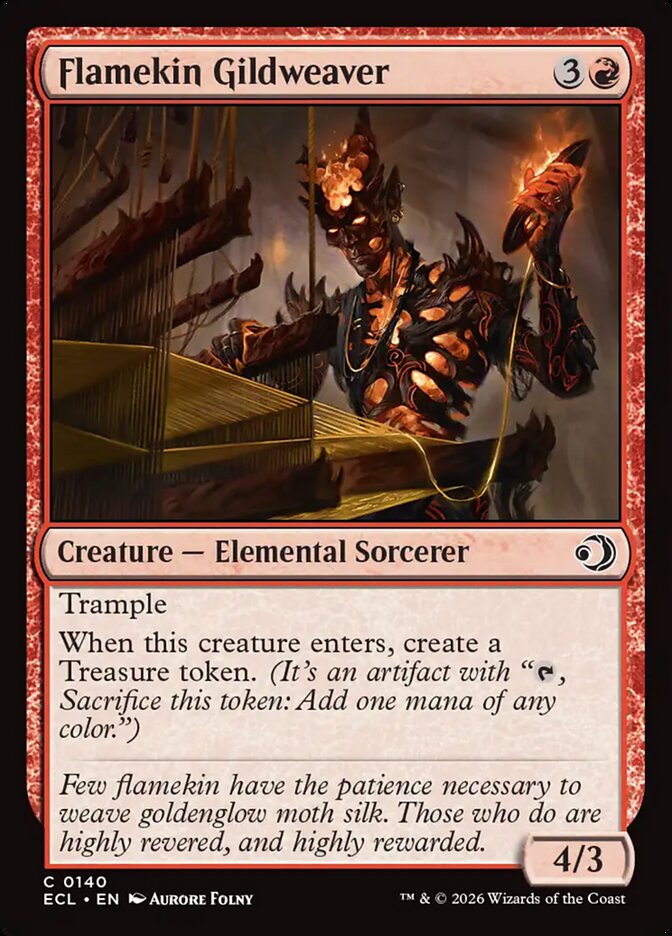
Filler creature that makes a Treasure, which makes Flamekin Gildweaver functionally solid for vivid and UR Elementals.
Reckless Ransacking
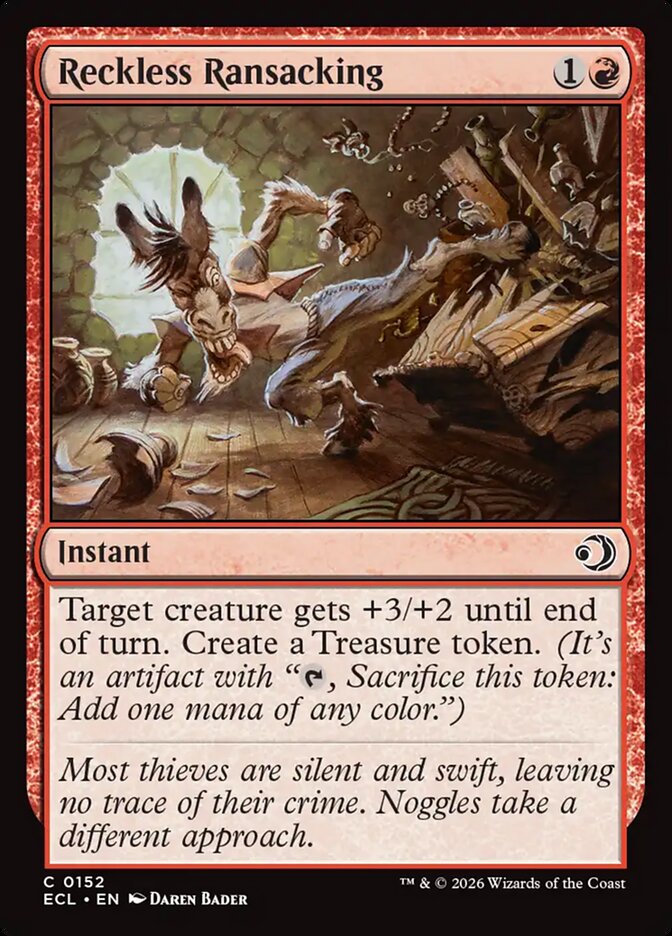
Combat tricks are the last place I’d go for reliable fixing, but Reckless Ransacking can technically splash in a pinch.
Great Forest Druid
This works best for decks that care about vivid, as it doesn’t have a very useful creature type (sorry treefolk). I appreciate how good Great Forest Druid’s stat line is for a mana dork though.
Midnight Tilling
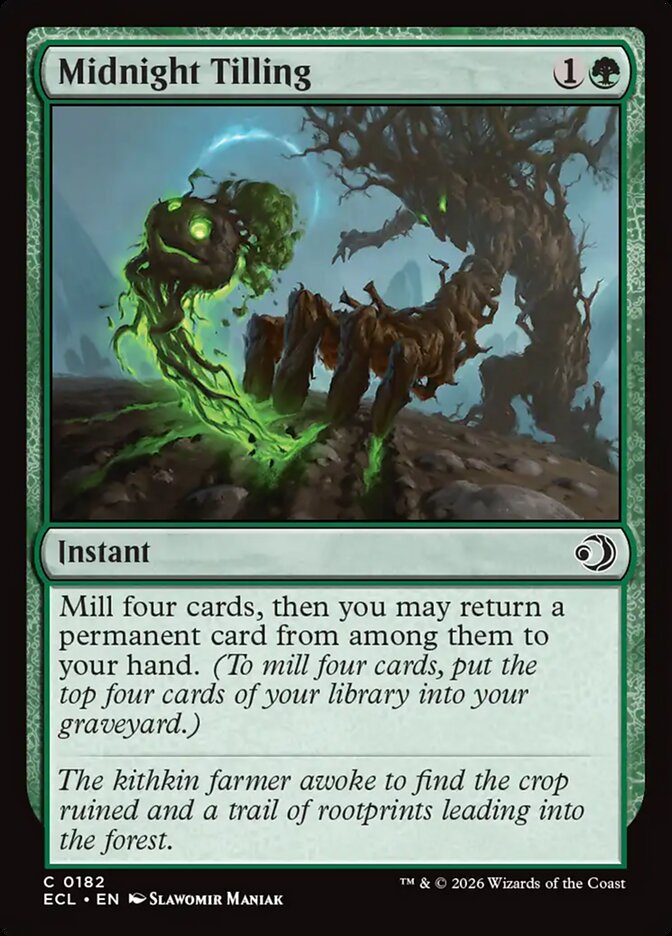
Soft fixing at best, but digging four cards with Midnight Tilling could help tie together a rough mana base if you’re base green.
Tend the Springs
I like that this does at least something later, although it’s primarily a 3-mana Rampant Growth. Greedy vivid decks will play Tend the Sprigs, and others shouldn’t bother.
Colorless Mana Fixing
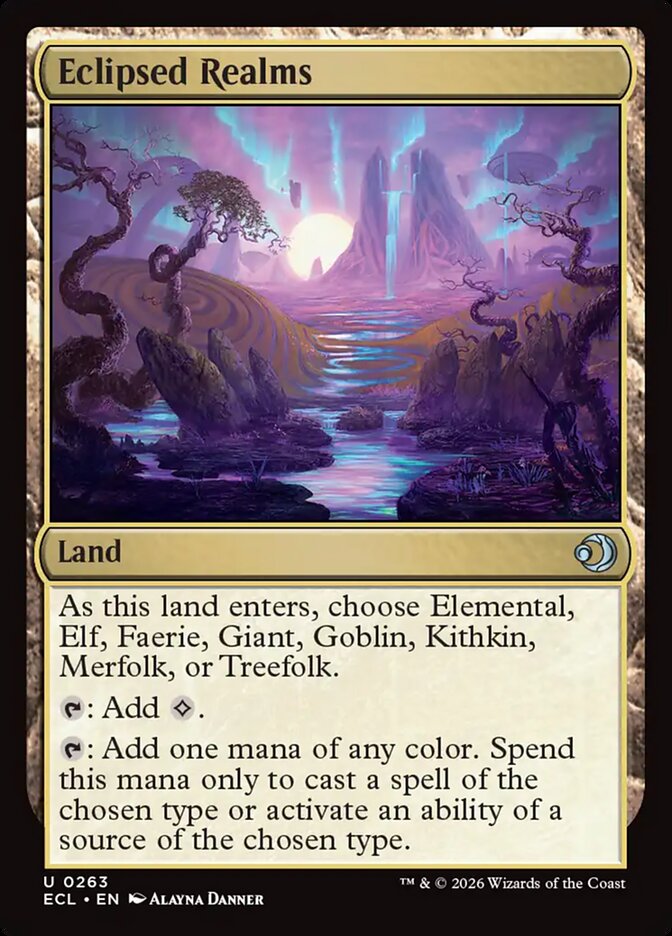
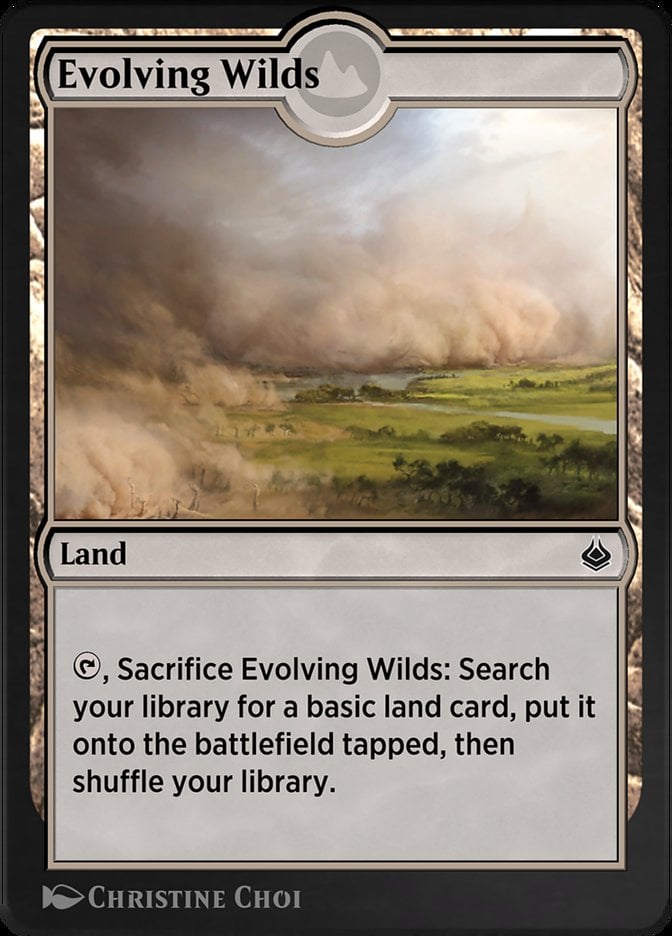
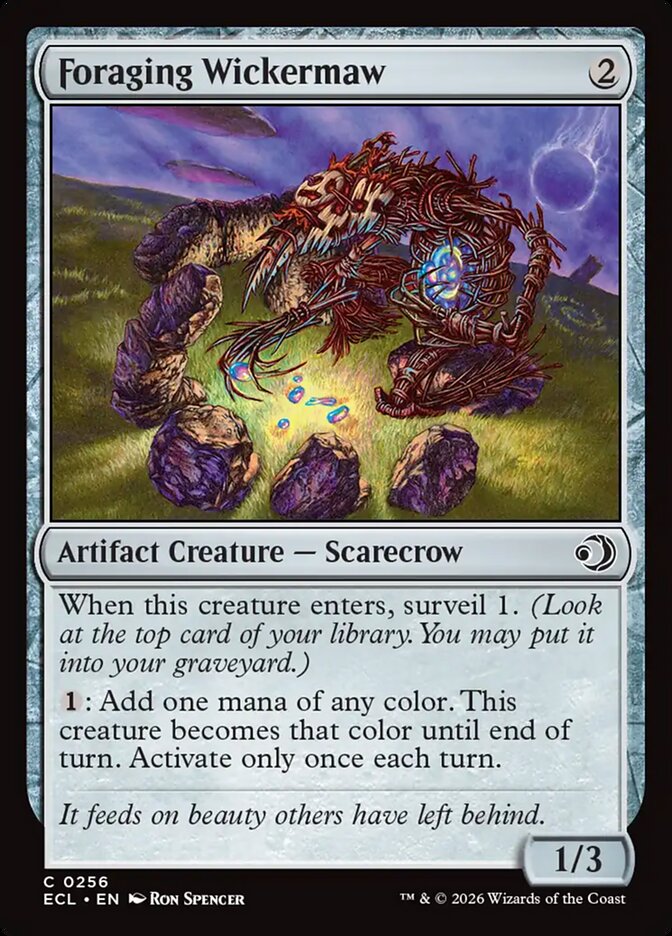
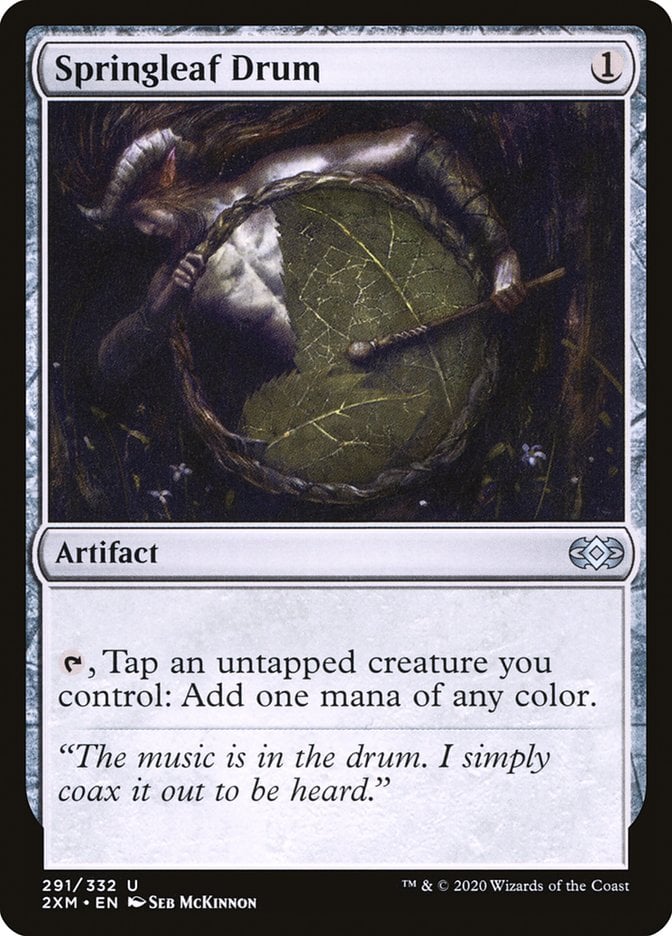
ECL is lacking a common dual land cycle, but there are quite a few colorless ways to fix your mana. Chief among them is the tried-and-true Evolving Wilds, and Changeling Wayfinder has a great shot at being a card than many decks want. The rest are all a bit less universal, and require some deck considerations before you’re interested.
Top Commons
Here I’ll name four commons for each color as the best of the bunch. We’ll revisit this section in the next guide, roughly two weeks from now. One thing I’ll say is this seems a bit harder than most sets, as Lorwyn Eclipsed is so heavily creature type based. The best common for you is often based on your larger theme, although there are a couple of stinkers for some types (i.e. Goldmeadow Nomad).
White
#1. Liminal Hold
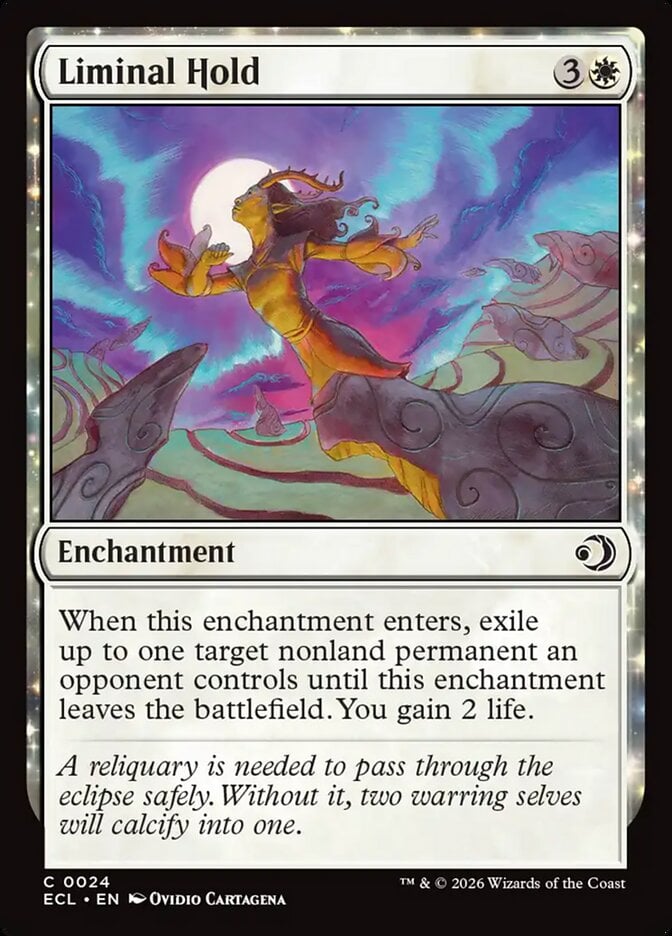
You’re overpaying by 1 mana for Liminal Hold, but the extra 2 life makes up for that somewhat. Either way, this is generally unconditional removal, although you’ll need to be aware of cards like Keep Out and Unforgiving Aim.
#2. Wanderbrine Preacher
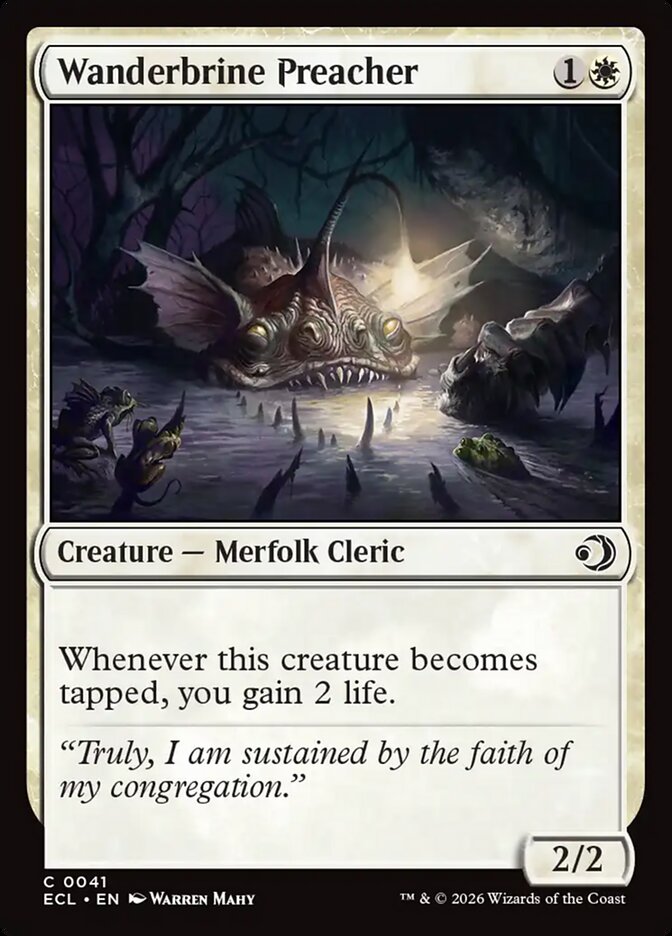
There’s a ton of potential for free lifegain here on a bear baseline. Wanderbrine Preacher shines brightest in Merfolk decks of course, but it should be a solid 2-drop for any white deck.
#3. Sun-Dappled Celebrant
Sun-Dappled Celebrant is huge for its cost if you can play it for or less, which doesn’t seem hard in such a creature dense set. Vigilance is also quite relevant on such a large beater.
#4. Spiral into Solitude
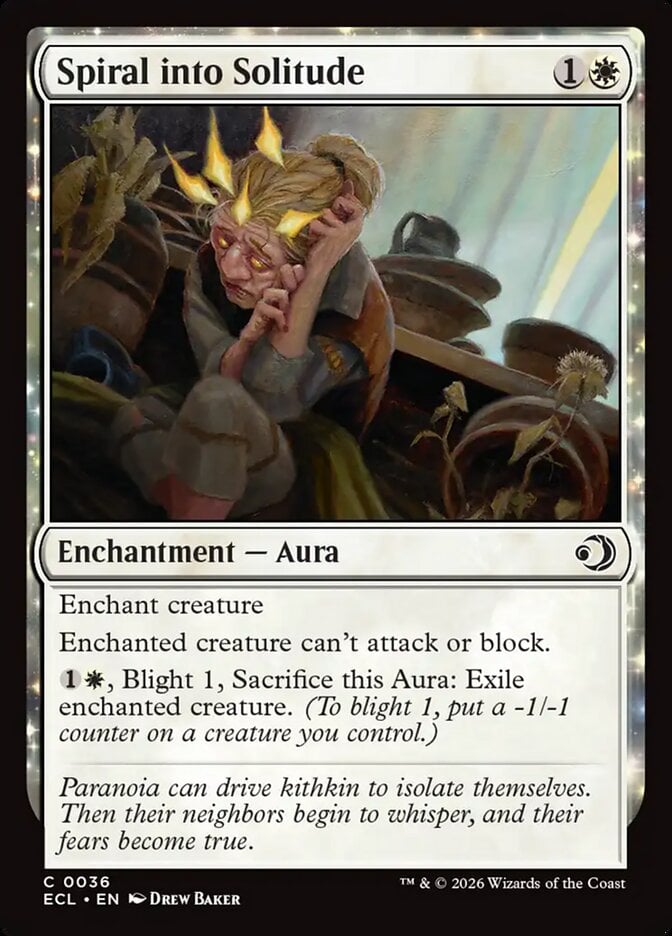
Effectively answers most creatures, though you’ll need to incur a bit of blight to remove anything permanently. Spiral into Solitude looks decent for most decks, and outright excellent if you can use blight to your advantage.
Blue
#1. Unexpected Assistance
This is an impressive rate for a common because it just takes one creature for this to be Rain of Revelation. Anything else past that makes Unexpected Assistance incredibly efficient. It even works with both merfolk and elementals in different ways (convoke for merfolk, and costing 5 for elementals).
#2. Silvergill Peddler
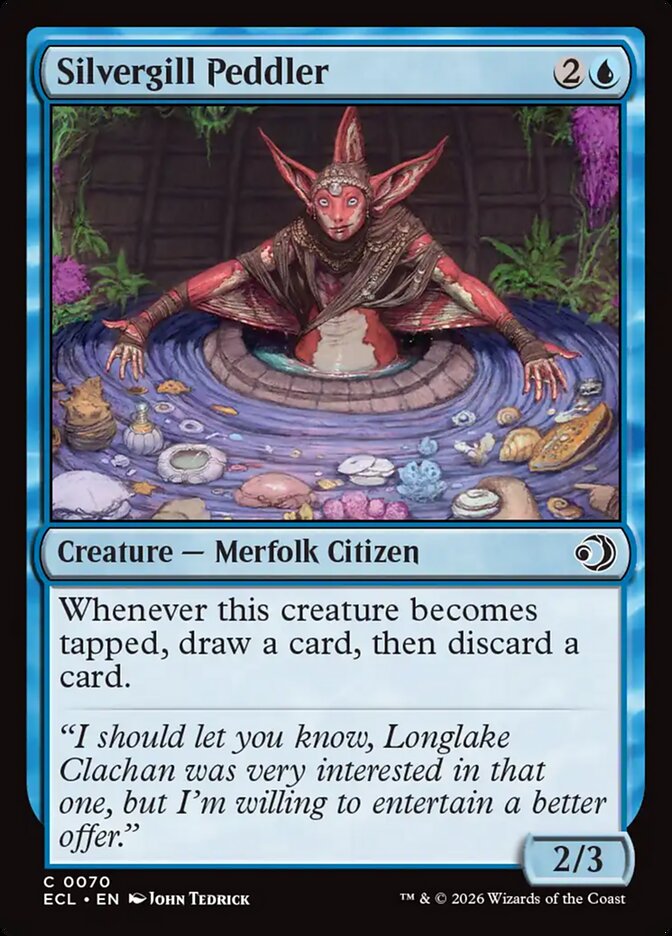
Mediocre combat stats, but they aren’t the worst for a creature that loots on attack. Silvergill Peddler also has excellent synergy with convoke cards, and it provides valuable smoothing in a set that appears light on it.
#3. Temporal Cleansing
Not a permanent answer to anything, but still a pretty solid tempo play. You’ll need at least one creature for Temporal Cleansing to have a solid rate, and anything past that makes it actively good.
#4. Blossombind
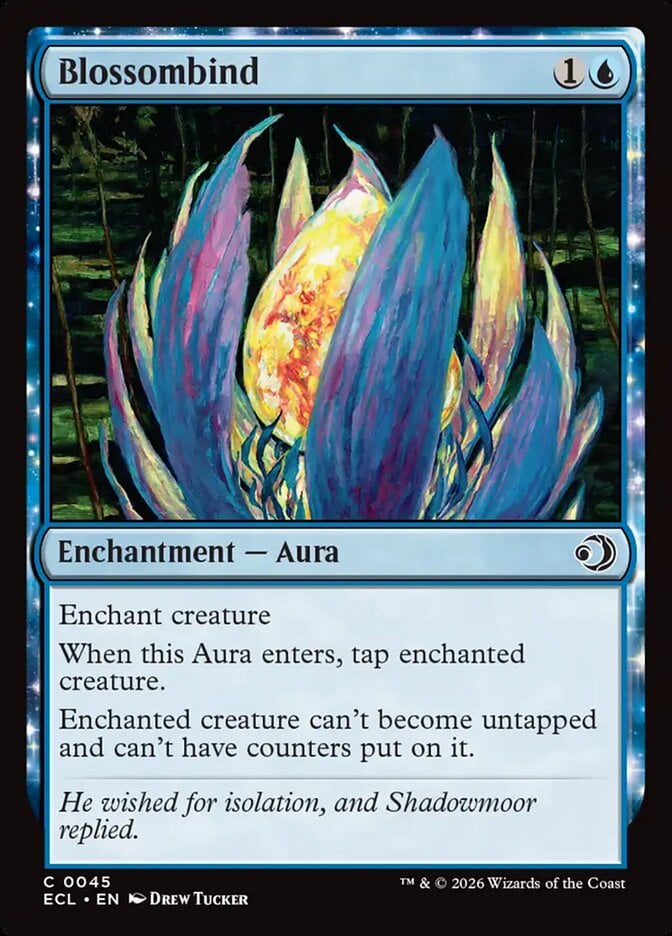
Blossombind won’t answer everything, but it’s efficient removal in a color that struggles with that. The anti-blight text is crucial here, as otherwise this would be too easy to exploit. It also helps you turn on vivid by sitting in play attached to their creature.
Black
#1. Blight Rot
Black always has one gold standard removal spell, which for this set seems to be Blight Rot. This outright kills or severely cripples just about every creature in ECL, and it’s crucially an instant.
#2. Bogslither’s Embrace
Bogslither's Embrace is basically this set’s Eaten Alive variant. Blight 1 is a tiny cost to pay for Fell, and of course it might not even be a “cost” to begin with if you have the right setups.
#3. Blighted Blackthorn
Sluggish, but card advantage is card advantage right? Blighted Blackthorn is a fine curve-topper for most decks, and actively exciting if you’re doing blight synergies. It’s also a safe 2-for-1 unlike Beetle-Headed Merchants, so it lacks the same vulnerability to removal.
#4. Moonglove Extractor
Fragile, but I’d be actively happy with Moonglove Extractor if it trades with my opponent’s 2-drop. You’ll occasionally be able to get extra value out of it via removal spells or ways to grant evasion, too.
Red
#1. Cinder Strike
Four damage for 1 mana is a crazy good rate, and blight 1 ranges from a minor drawback to active upside. Every deck wants at least one Cinder Strike, and RW decks will be slamming multiples.
#2. Tweeze
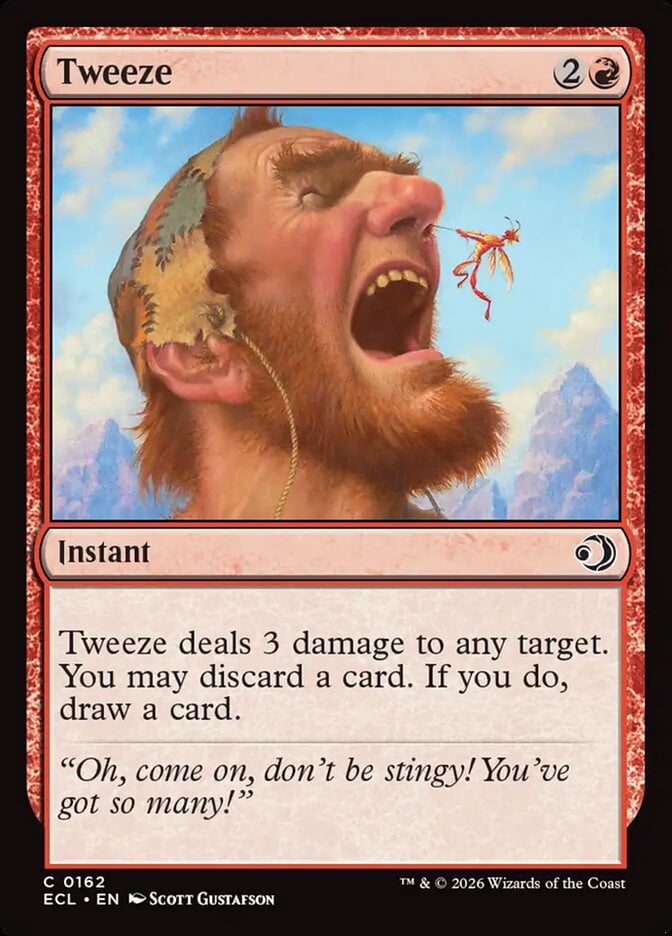
Lightning Strike is probably a little better, but I won’t argue with a free rummage. Tweeze is still passably efficient at 3 mana, too, and it can even go face if desired.
#3. Kulrath Zealot
You can’t play too many of these, but it’s a pretty solid common. Getting any basic makes Kulrath Zealot more flexible than the usual landcyclers we’ve seen, and those also never came with a free card attached.
#4. Feed the Flames
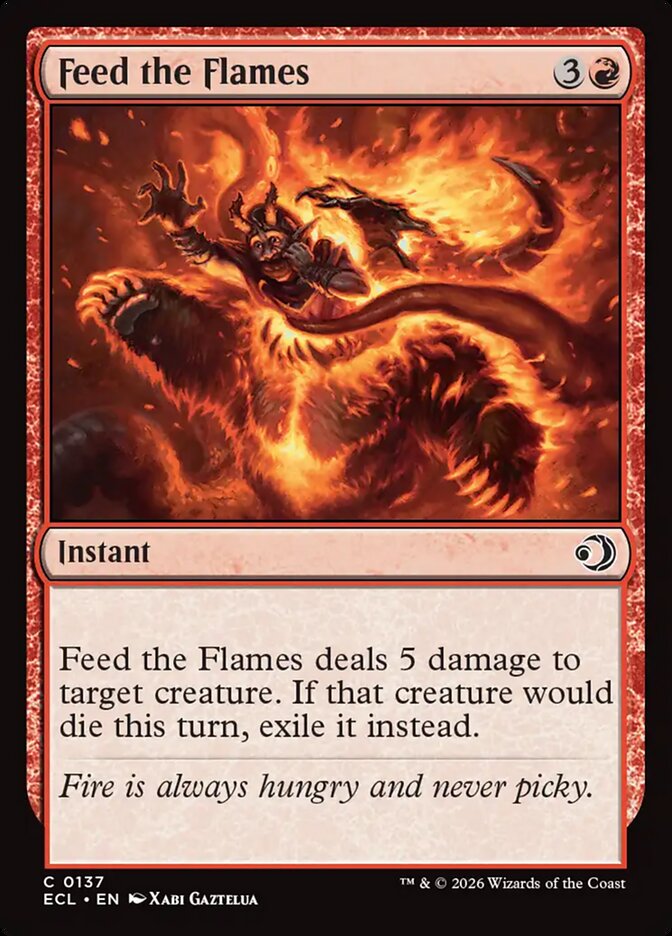
Red’s most middling common removal spell is still above average compared to the rest of the set’s options. Instant speed and exile help make up for how Feed the Flames costs 4 mana, and it kills all but two commons and most uncommons and rares.
Green
#1. Mistmeadow Council
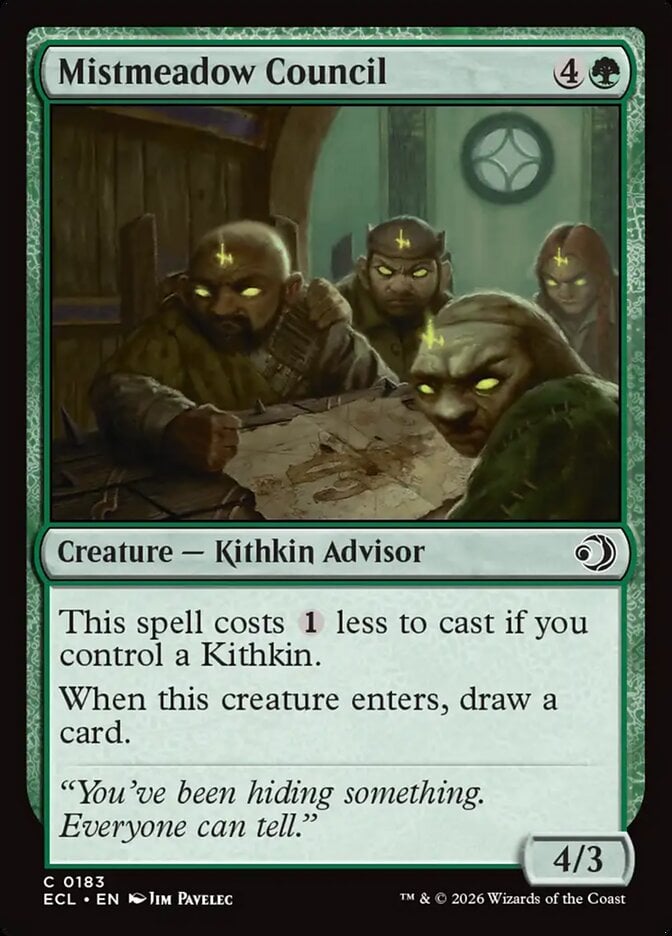
With a kithkin or changeling available, Mistmeadow Council is an excellent rate. It’s not embarrassing without one either, though I’d try to build a curve for this if possible.
#2. Assert Perfection
Rabid Bite plus upside is a well-proven formula for success. Assert Perfection is green’s only true removal spell as well, which makes it more valuable. It’s at its worst in vivid decks, assuming you lack power-slanted early game creatures (i.e., you can’t use this with Great Forest Druid for much).
#3. Surly Farrier
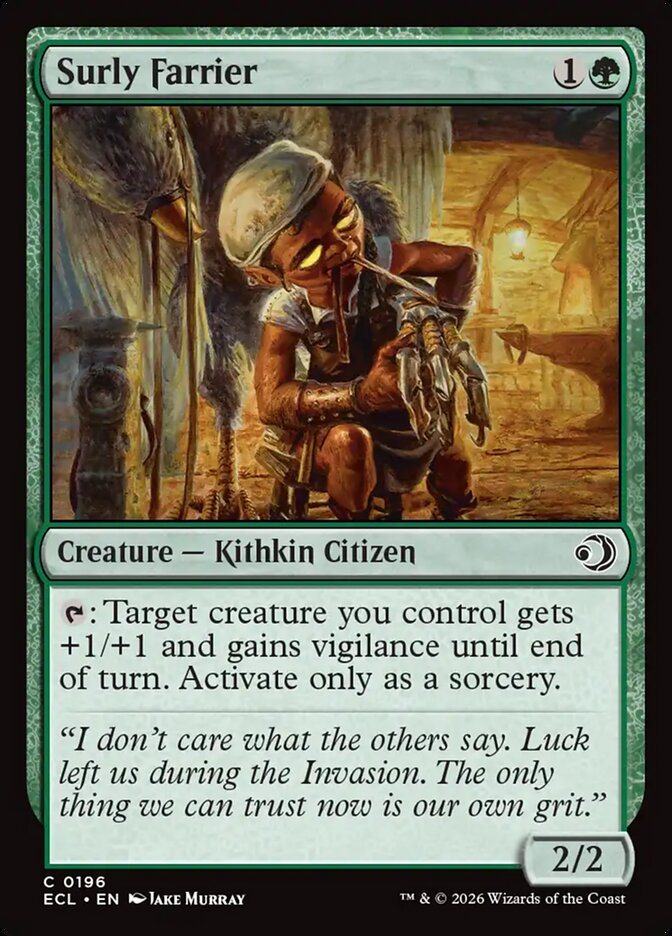
This looks great to me, especially when compared to the mediocre 2-drops in other colors. Surly Farrier is a bear early, and then enables consistent attacks or trade ups into contested board states. Being a kithkin is also valuable for Mistmeadow Council.
#4. Great Forest Druid
It’s not a kithkin or elf, but I still like the way this tree is cut. There are a ton of awesome vivid cards in Lorwyn Eclipsed, and the other fixers like Tend the Sprigs won’t slow down aggro like Great Forest Druid can.
Rare Review
Now I’ll give my thoughts on each of the set’s mythics and rares. You won’t play with these as often as commons and uncommons, so it can be harder to evaluate them without outside help. Lorwyn Eclipsed seems somewhat less bomb-heavy than Avatar: The Last Airbender was, with many of its rares only excelling in particular decks. There will still be plenty of groan-inducing Limited cards, though!
Terms
Bomb
Best possible rating, denotes an absurd Limited card that you’ll want to play/splash every time you can. Examples from Avatar include The Rise of Sozin, United Front, and Wan Shi Tong, Librarian.
Great
These cards fall a little short of bomb status, but they’re still strong and won’t require much from your deck to be great. Examples from Avatar include Beifong's Bounty Hunters, Great Divide Guide, and Wartime Protestors.
Good
“Good” rares are, well, good! They’ll usually have problems that prevent them from claiming a higher rating though, like being clunky or dependent on certain things going right. Examples from Avatar include Boiling Rock Rioter, Diligent Zookeeper, and Spirit Water Revival.
Usually Not Good
These cards generally aren’t worth the effort required for them to be good. I like to dream though, so I try not to shoot down anything with at least some potential. Examples from Avatar include Redirect Lightning, Tiger-Seal, and Zuko, Conflicted.
Bad
These rares are just terrible. You shouldn’t ever play them in Limited. Examples from Avatar include Elemental Teachings, Foggy Swamp Visions, and Waterbender Ascension.
Mythics
Ajani, Outland Chaperone (Bomb)

The latest Ajani is quite efficient, and it protects itself well with both of its abilities. As an army in a can that also offers repeatable removal, you’ll happily play Ajani, Outland Chaperone in any base white deck. It can occasionally enable kithkin synergies as well!
Curious Colossus (Bomb)

Curious Colossus is an incredible creature that cripples your opponent’s entire board on entry. Colossus outright kills any creatures with -1/-1 counters on them, too. While it costs 7 mana, this power level is well worth the cost.
Eirdu, Carrier of Dawn / Isilu, Carrier of Twilight (Bomb)
The front side has Baneslayer Angel stats, and you can flip it to its generally more useful backside the turn after. You don’t need to be WB to play Eirdu, Carrier of Dawn though, as it’s already excellent in any white deck.
Morningtide’s Light (Usually Not Good)

You’ll want a ton of “enters” creatures before starting this one, as it’s only good when you can flicker multiple relevant creatures with it. Mistmeadow Council, Shinestriker, Explosive Prodigy, and Shimmercreep are some good examples of the kinds of cards I’d need to justify playing Morningtide's Light.
It can also be used to clear blockers for a turn, so there may be more use to it in the long run.
Glen Elendra’s Answer (Great)
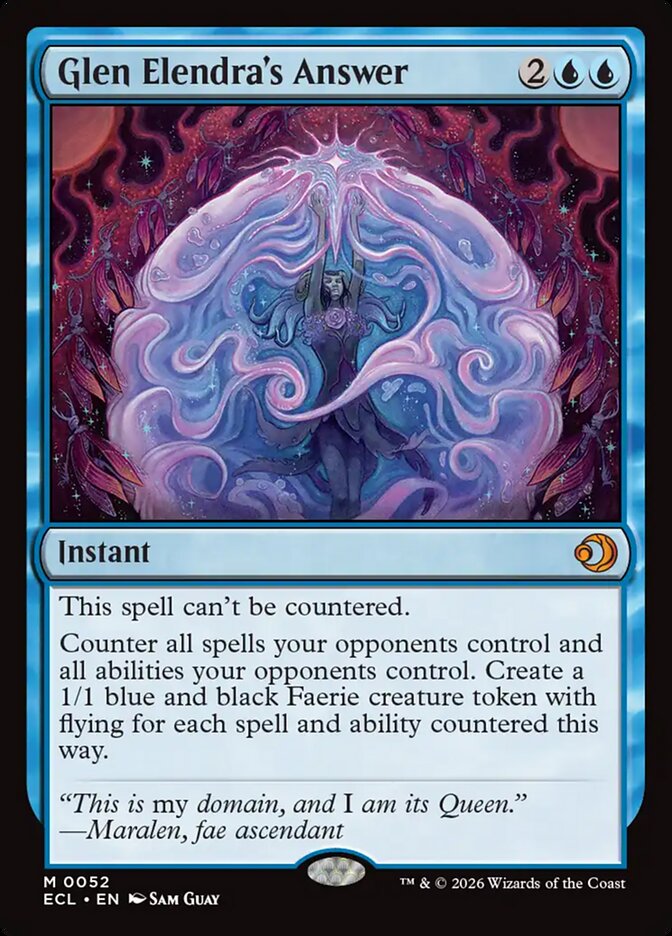
This has a high ceiling due to countering abilities, and it can also just be a Mystic Snake of sorts if needed. I wouldn’t be surprised if Glen Elendra's Answer leads to a few massive blowouts before the format is over.
Loch Mare (Bomb)

Loch Mare is a bit slow to get going, but it offers steady card advantage (or stun counters) on a big creature for its cost. You can also pair this with other blight synergies for extra activations.
Mirrorform (Good)
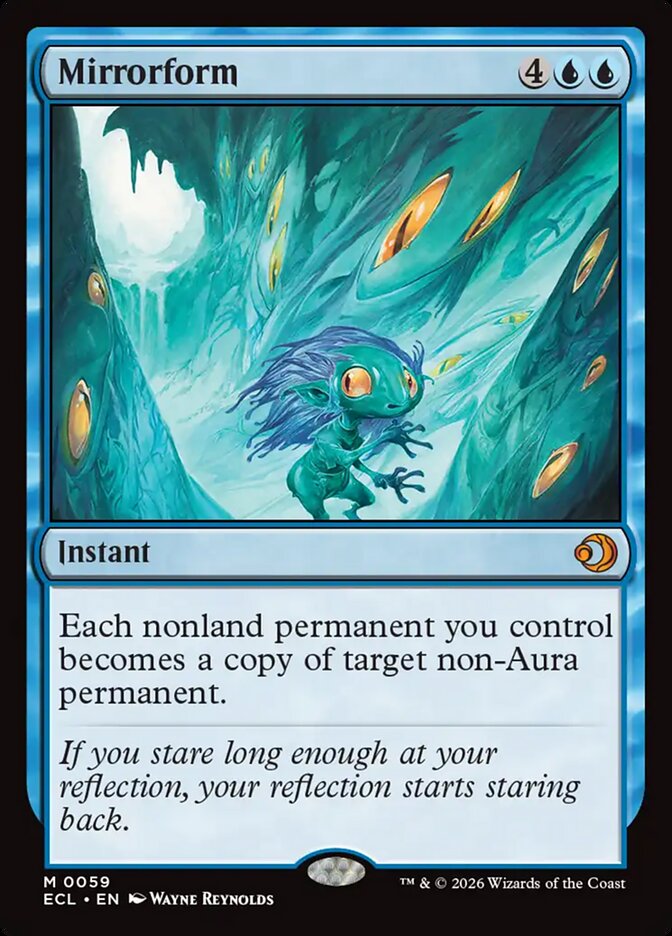
Permanent copying is a big game, and Mirrorform isn’t restricted to your own stuff either. Turning all your cheap creatures into the fattest thing in play seems like an easy way to win games, so I’d consider this a very powerful build-around. Look for token generators like Merrow Skyswimmer and Elder Auntie.
Oko, Lorwyn Liege / Oko, Shadowmoor Scion (Great)

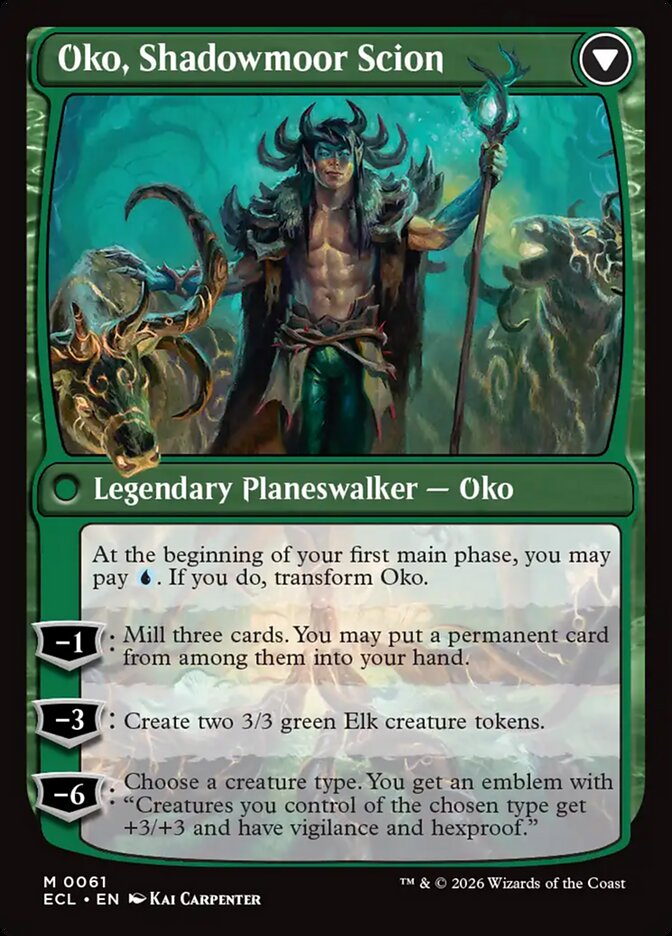
It’s not Oko, Thief of Crowns or anything, but Oko, Lorwyn Liege still looks pretty good to me. This front mode is mostly there to acquire loyalty, while the backside’s -1 and -3 modes offer most of this card’s meat. Don’t forget that you’ll occasionally be able to get value off its +2 with typal synergies.
Bitterbloom Bearer (Bomb)

It’s easier to deal with than Bitterblossom, but it’s still hard to imagine being any less than thrilled to play Bitterbloom Bearer on turn 2. You can even chump block with it if you need to turn off the life loss.
Moonshadow (Good)

It’s not hard to get a counter or two off of this (Evolving Wilds works, for instance), although I’d be surprised if Moonshadow ever hits 7/7 without special help. Rhys, the Evermore and Perfect Intimidation work incredibly well with Moonshadow if you have them.
Meek Attack (Bad)

The name is admittedly cute, but stay far, far away from this one in Limited. Meek Attack puts you down a card to accomplish basically nothing.
Soul Immolation (Good)

This is a red Plague Wind of sorts, provided you have something tough to enable it. Some great cards to pair with Soul Immolation are Blighted Blackthorn, Great Forest Druid, and Moonlit Lamenter.
Spinerock Tyrant (Bomb)

Doubling up on removal spells is sweet, and keep in mind that this is bonus text on a 6/6 dragon to begin with! Spinerock Tyrant is a monster-level bomb, and surely one of the most exciting cards to open in Lorwyn Eclipsed.
Aurora Awakener (Great)

One of the more exciting vivid payoffs available, although you’d only need 3/5 colors for Aurora Awakener to impress in Limited. Try to include cards with vivid synergy like the common hybrid changelings, Shimmerwilds Growth, and Tam, Mindful First-Year.
Bloom Tender (Good)
Bloom Tender is a decent dork for its cost, and it’ll usually add 1-2 mana without much trouble. I’m happy to play it in any green deck, especially if I’m already trying to make other vivid cards work.
Celestial Reunion (Usually Not Good)
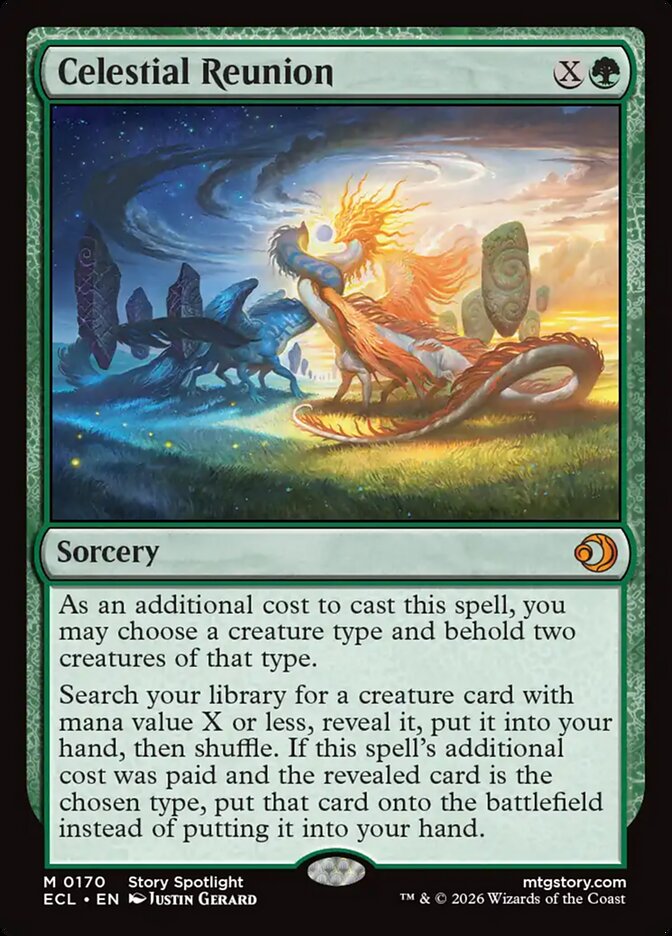
While Lorwyn Eclipsed does have a fair typal focus, you’ll still need a specific deck and great targets for a tutor like this to be worthwhile. I’d mostly look to play Celestial Reunion in the nut Kithkin/Elves deck.
Catharsis (Bomb)
This is the first of a rather powerful mythic cycle of evoke elementals. Its 6-drop mode here offers 3 bodies with 8 power worth of haste, and Catharsis can also be a Raise the Alarm if needed. You won’t use the RR mode much, but it’s still a wicked Limited bomb.
Deceit (Great)
Pilfer and Boomerang Basics are reasonable modes, though you’ll ideally want to combine them to answer your opponent’s best threat. Either way, Deceit is a great card that’s well worth playing.
Emptiness (Bomb)
It should be pretty easy to have a creature to bring back with Emptiness, and the mode is a great removal spell too. Emptiness is excellent at every point in the game, and among the best of its cycle for Limited.
Vibrance (Bomb)
This is a Flametongue Kavu of sorts, which should indicate that this is an awesome Limited card. Try to save it for if you can, but as with all of these, the extra modes make Vibrance even better.
Wistfulness (Great)
Probably the most tame of the cycle for Limited, as you won’t always have a good target for its mode. Wistfulness is a nice value creature though, so I’d be more than happy to open it/play it in any green or blue deck.
Chronicle of Victory (Great)

Chronicle of Victory is a bit slow, but very powerful if you can stick to mostly one creature type. Your creatures will crush combat after resolving this, and the additional resources will give you a huge edge if the game continues somehow.
Rares
Adept Watershaper (Great)

Solid base stats plus free indestructibility for other stuff when tapped makes Adept Watershaper a great creature. As with other merfolk cards, you can further enable this with cards that tap creatures without attacking like Gravelgill Scoundrel and Glamermite.
Brigid, Clachan’s Heart / Brigid, Doun’s Mind (Great)
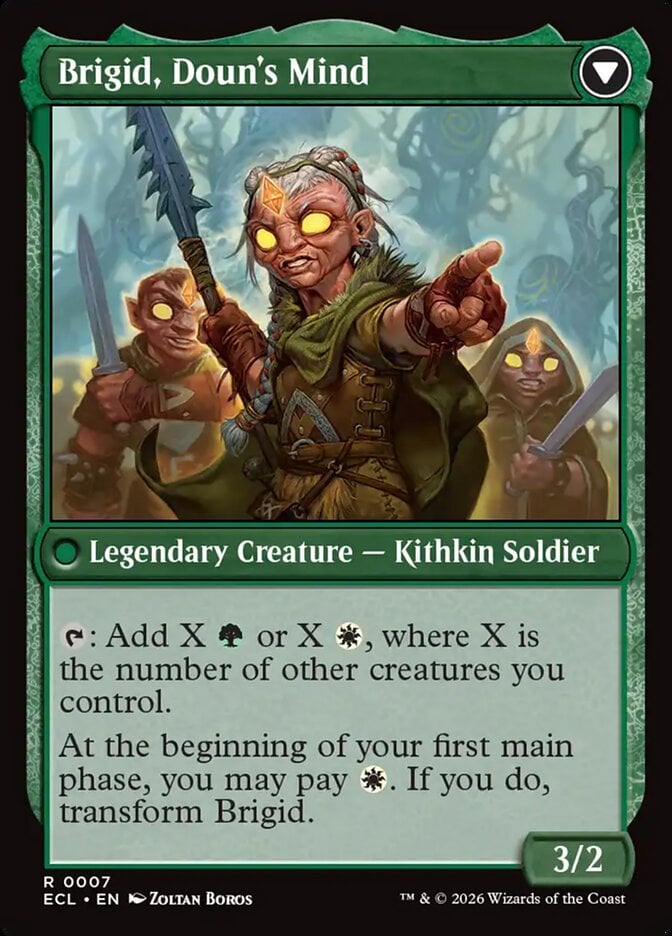
Brigid, Clachan's Heart has a solid base rate and just piles on the upside from there. This flips into an awesome mana dork next turn, and it can even make additional 1/1s by rotating forms. You don’t need to be kithkin for this to be good, though it certainly improves as you focus on its creature type.
Champion of the Clachan (Good)
Champion of the Clachan requires a heavy kithkin focus, though it does seem fairly rewarding. This can immediately eat a creature in combat, and it messes with combat math quite a bit. Some pools won’t even be able to play it, as you must have a kithkin to even cast it.
Kinbinding (Great)

Kinbinding slowly buries your opponent in 1/1s, while it also enables some wicked attack steps with setup. It’s another card that’s clearly better in a kithkin-focused deck, but it should be a generally strong white rare.
Kinscaer Sentry (Great)
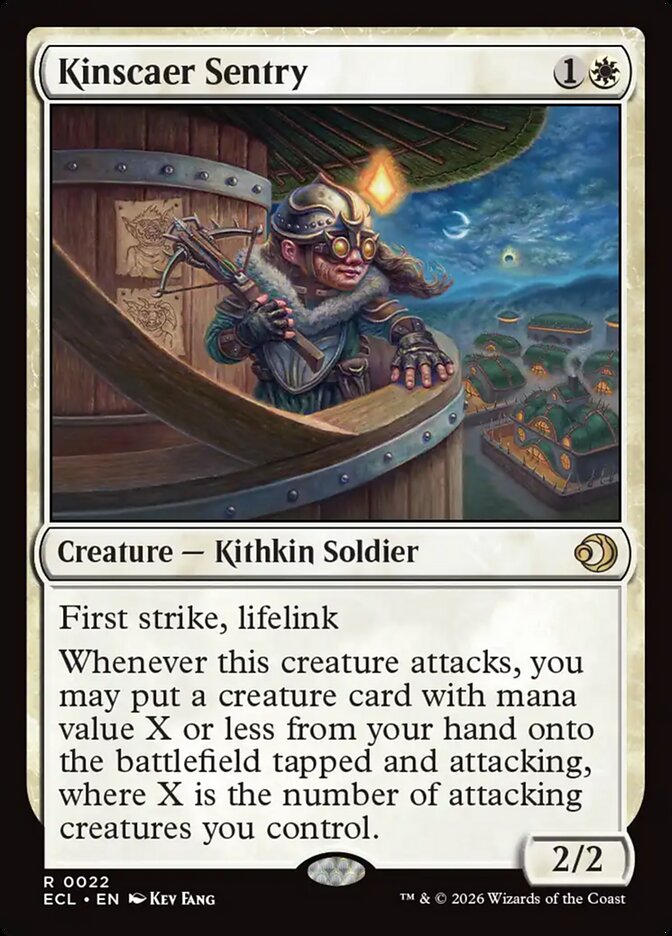
Kinscaer Sentry has excellent stats for its cost, and it confers an early mana advantage with the right draw. It’s also great with pump spells like Assert Perfection and Appeal to Eirdu.
Rhys, the Evermore (Great)
Rhys, the Evermore has a high ceiling with cards like Moonshadow and Bristlebane Battler, and it makes for a decent combat trick in general. I’d happily run it in any white deck.
Slumbering Walker (Great)
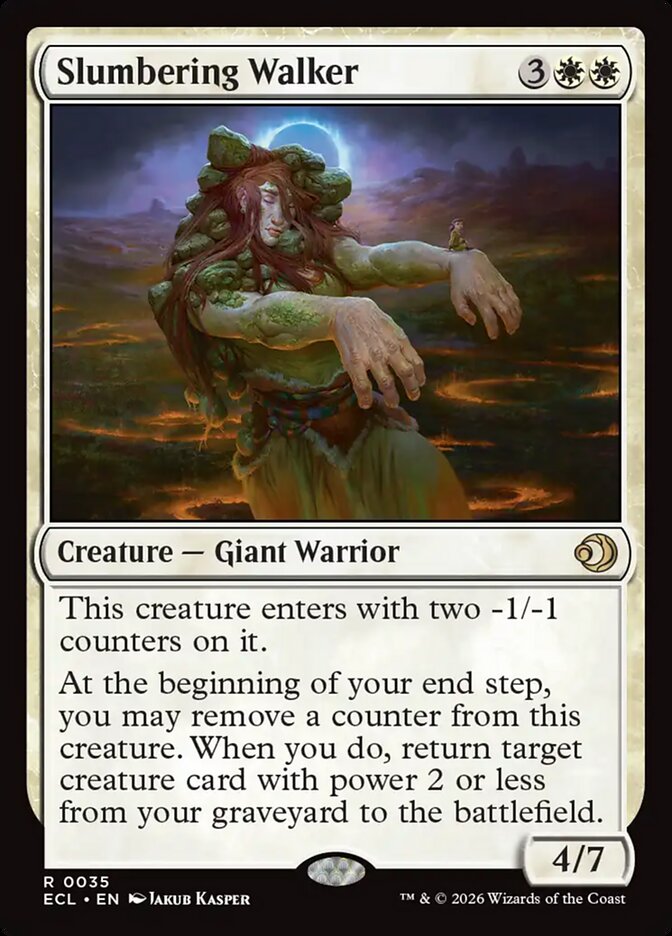
Another solid white rare, provided you have some 2/x creatures worth bringing back. Early trades and self-mill like Midnight Tilling help Slumbering Walker to get immediate value the turn you play it.
Winnowing (Usually Not Good)

You’ll need to be almost entirely in one creature type for Winnowing to work, and it will fail to do much if your opponent is doing the same. Given how half the archetypes in Lorwyn Eclipsed are explicitly about that, I’d expect this to be a very high variance card in Limited. I appreciate how this punishes one weak link though (i.e. you can wrath your Elves opponent using their 1/1 kithkin token).
Champions of the Shoal (Great)
Champions of the Shoal can run away with a game quickly, provided you can consistently behold a merfolk for it. This is strong enough to run a couple of changelings for, and it doesn’t have the same deckbuilding requirements as Champion of the Clachan.
Disruptor of Currents (Great)

Convoking Disruptor of Currents on your opponent’s turn can be pretty crafty, as you should be able to play it for a fair discount. It also has reasonable combat stats and excellent utility, whether it’s saving your own stuff or winning tempo by bouncing your opponent’s.
Flittering Nuisance (Great)
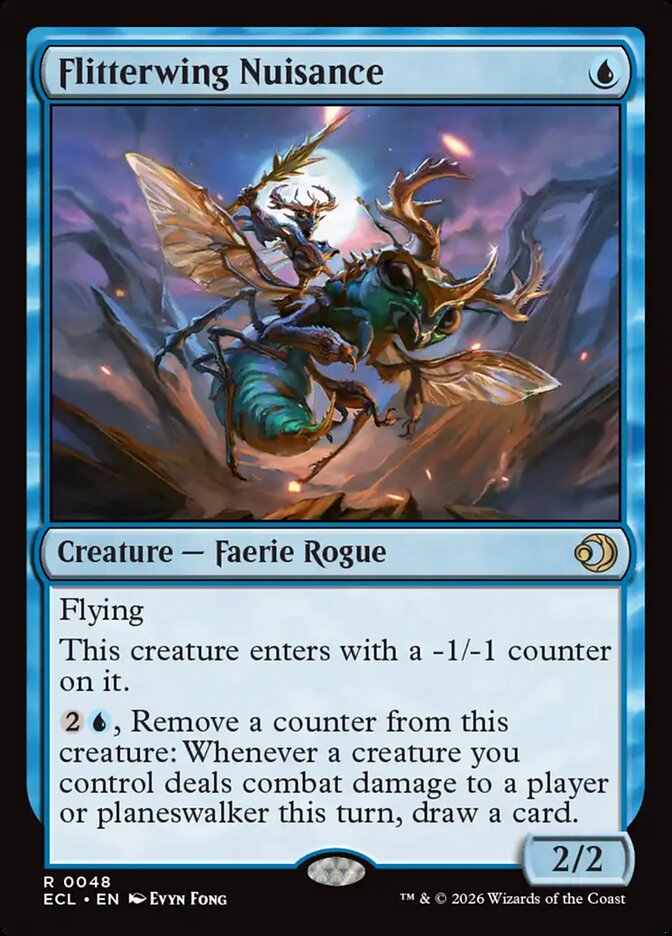
Flitterwing Nuisance has a Flying Men baseline, and it upgrades into a Wind Drake while it draws a card later. You can even get extra cards with other creatures, or repeat the ability by blighting onto it!
Glen Elendra Guardian (Great)
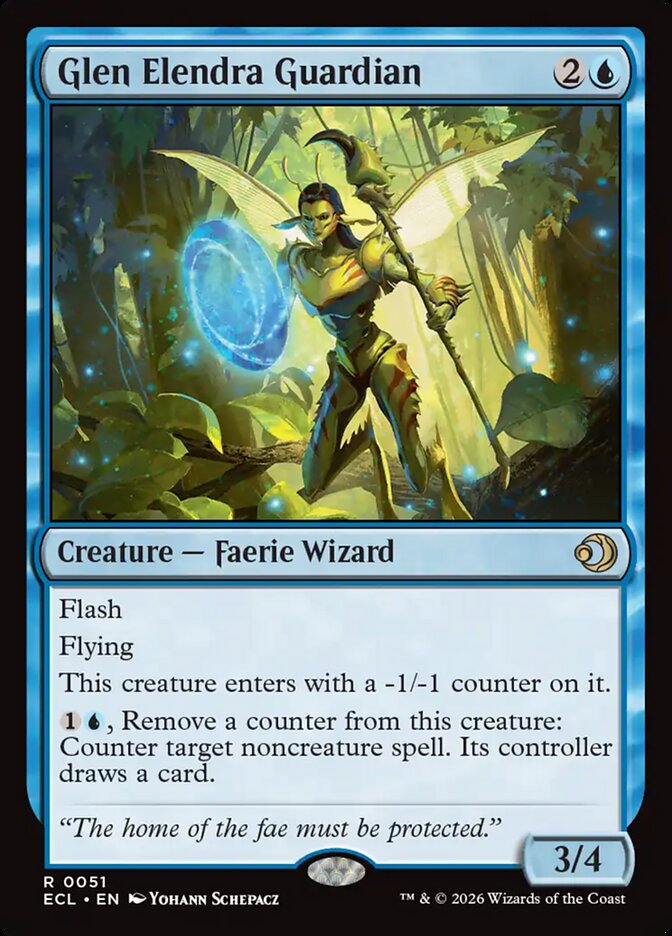
The free Negate option provides a lot of security, and Glen Elendra Guardian already has solid base stats for its cost (even with the -1/-1 counter). It’s even better if you care about faeries/playing on your opponent’s turn, but it’s clearly just a good card.
Harmonized Crescendo (Good)

Harmonized Crescendo is a bit slow to get going, but convoke makes this a realistic card draw spell to pull off. The deeper you can go on one creature type in particular, the stronger it gets. I’d expect Crescendo to play better in Merfolk than Elementals, as it tends to be more creature/token dense.
Rimefire Torque (Bad)
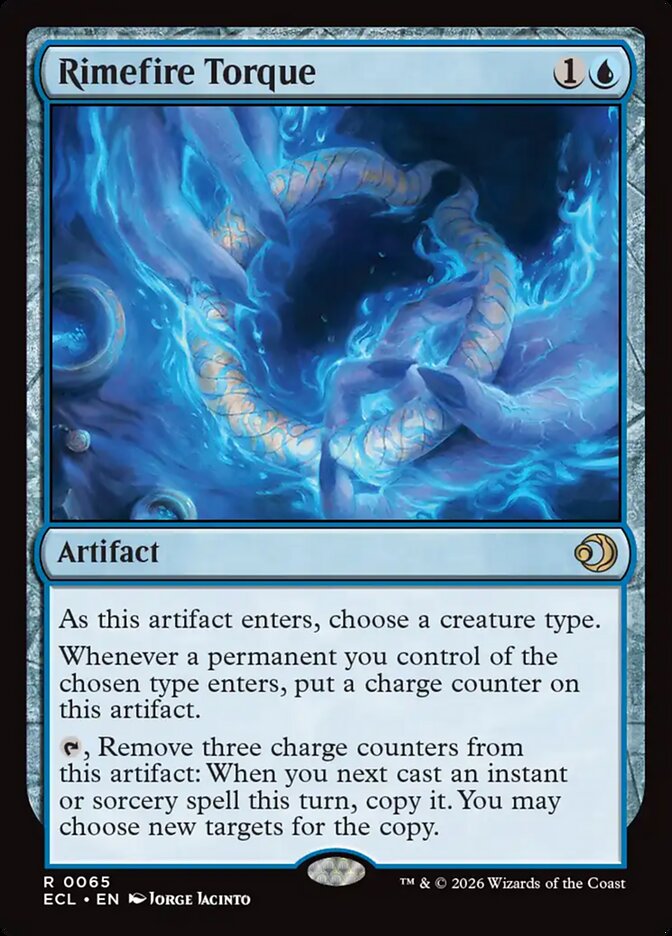
First you need to draw this early, then be largely one creature type, and finally must save your spell until after you’ve played three creatures. That’s too many hoops for Rimefire Torque to be worth playing.
Sunderflock (Bomb)

Sunderflock is the best elemental payoff in ECL. All you need is a single other elemental creature, and you get a massive flier for its cost that bounces all non-elementals! You do need to have other elementals for this to be good, but the payoff is incredible.
Sygg, Wanderwine Wisdom / Sygg, Wanderbrine Shield (Bomb)

Sygg, Wanderwine Wisdom is a consistent source of unblockable damage that draws a card every other turn, and it pushes your creatures safely into combat otherwise. That’s an insane deal for just 2 mana, so definitely play this card!
Bloodline Bidding (Good)

Bloodline Bidding requires a lot of effort, though it’s not too hard to justify being mostly one creature type in this set. Elves likely use it better than any other faction, as they’re already heavy on self-mill.
Champion of the Weird (Good)
Champion of the Weird here has high stats for its cost, and it offers a powerful symmetrical blight ability. “Symmetrical” may be a false sales pitch though, as goblins have more blight/death synergies than other factions.
Dawnhand Dissident (Great)

Another card that goes heavy on blight synergies. The more -1/-1 counter stuff you have, the more likely you have to use its powerful blight 2 ability to good effect. You can also use surveil and blight 2 to set Dawnhand Dissident up, even with no other support.
Gloom Ripper (Bomb)
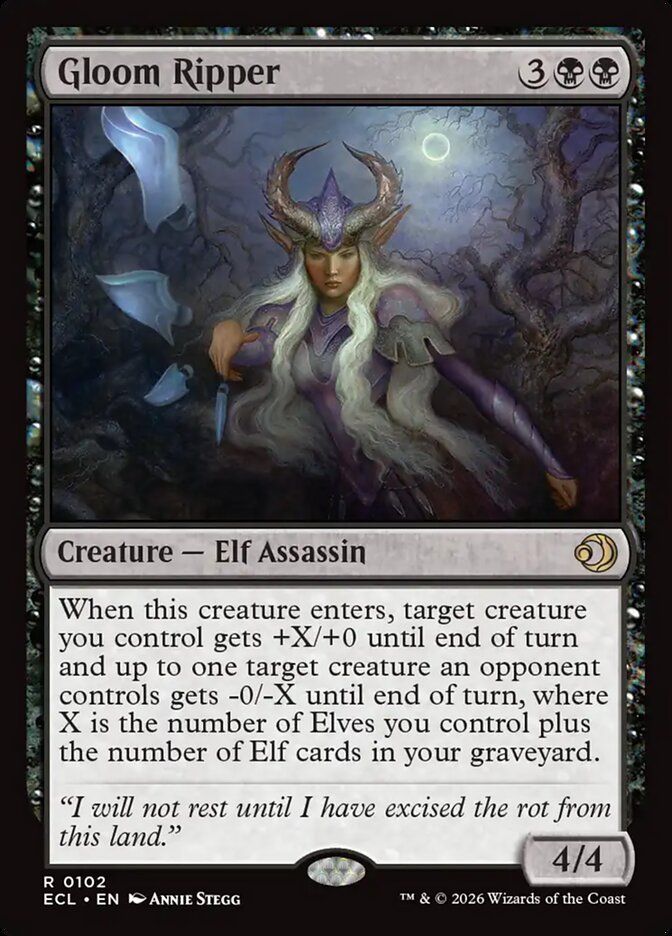
Remember Monoist Circuit-Feeder? This is similar, but cheaper and easier to get a big X with. Definitely worth focusing on elves to make Gloom Ripper good!
Grub, Storied Matriarch / Grub, Notorious Auntie (Great)
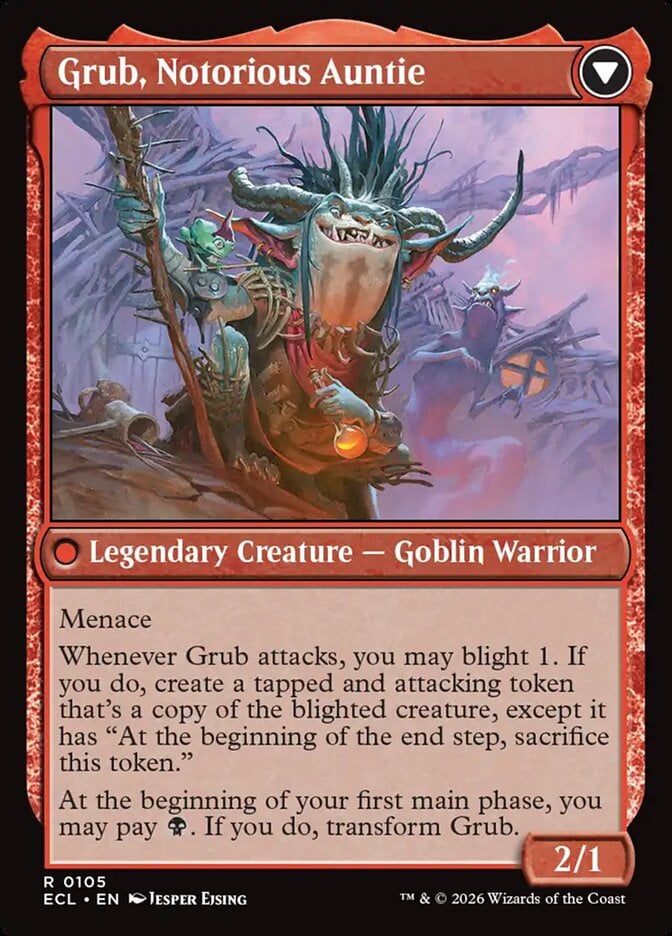
Grub, Storied Matriarch is an efficient Gravedigger, provided you’re mostly goblins. Its backside also works well with death-friendly goblins, or those with good enters abilities. You may just want to consider not attacking with Grub though, as you can actually gravedig with it multiple times.
Mornsong Aria (Bad)

Uh… Commander I guess? No clue what to do with Mornsong Aria, but it certainly won’t make my 40-card decks!
Taster of Wares (Great)

Taster of Wares is a nasty little fellow, provided you’re playing other goblins. Nabbing your opponent’s removal spell with this makes it a 3-for-1, and you’re getting plenty of information and cardboard either way.
Twilight Diviner (Good)
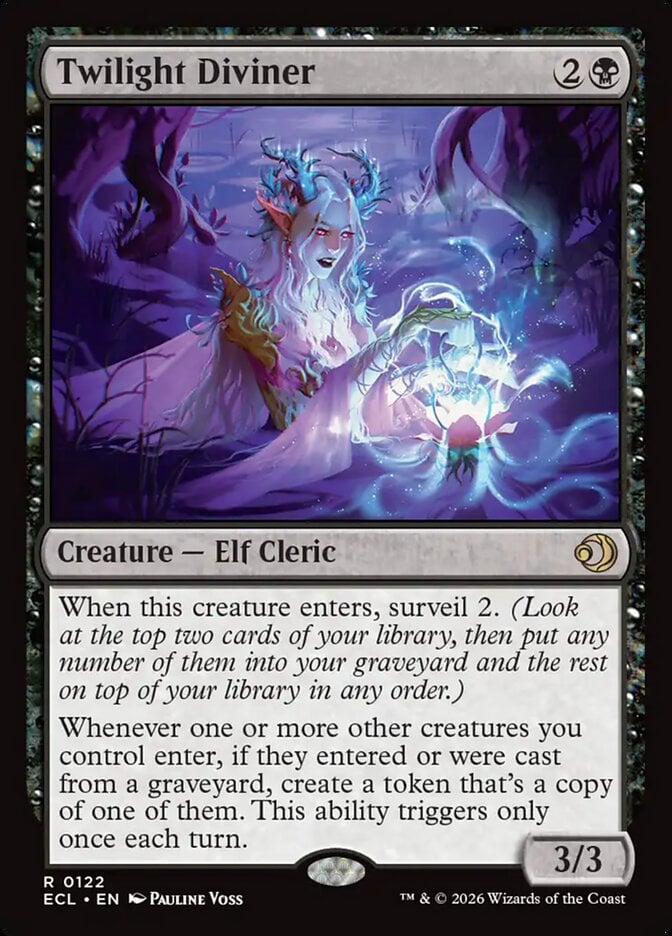
There aren’t too many ways to trigger this one in Lorwyn Eclipsed. Meanders Guide, Reaping Willow, and Dose of Dawnglow are the only non-rares that can, so you’re mostly playing Twilight Diviner as a 3/3 that surveils 2 (which is fine I suppose).
Ashling, Rekindled / Ashling, Rimebound (Great)
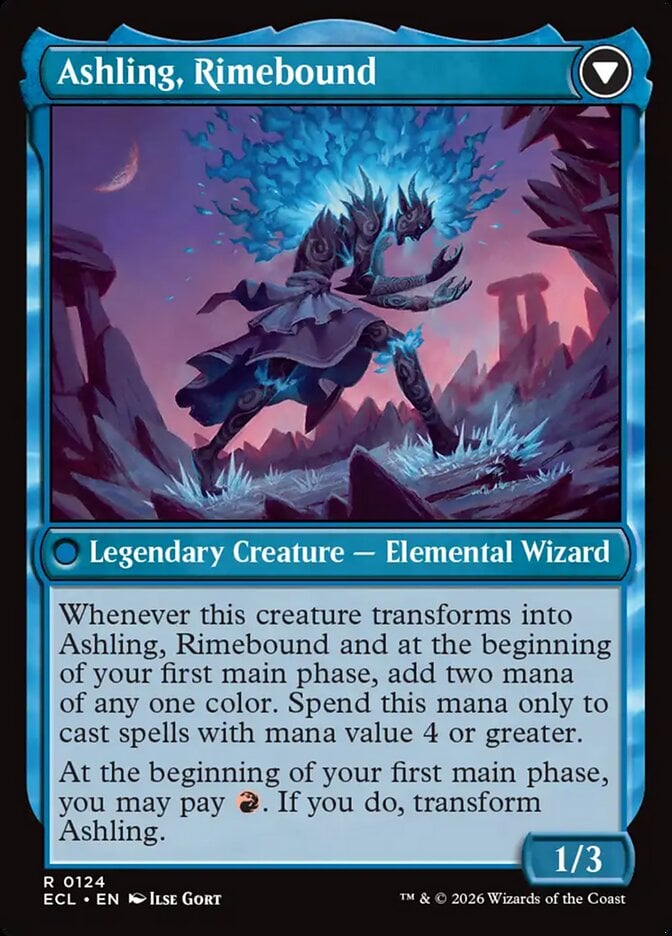
Ashling, Rekindled rummages immediately, and it can then be flipped into a powerful mana dork next turn. It’s restricted to expensive spells, though there are plenty of expensive elementals to dump that mana into.
Champion of the Path (Good)
This Champion of the Path is a Terror of the Peaks for elementals only, which seems… fine I guess? Its combat stats leave something to be desired, too, so I’d mostly want this if I were already heavily in elementals.
Collective Inferno (Usually Not Good)

Collective Inferno effectively puts you down a card for permanent +X/+0 on your creatures, provided you’re mostly goblins/elementals/etc. It doesn’t have flash like Fated Firepower either, so I’m fairly underwhelmed.
End-Blaze Epiphany (Bomb)
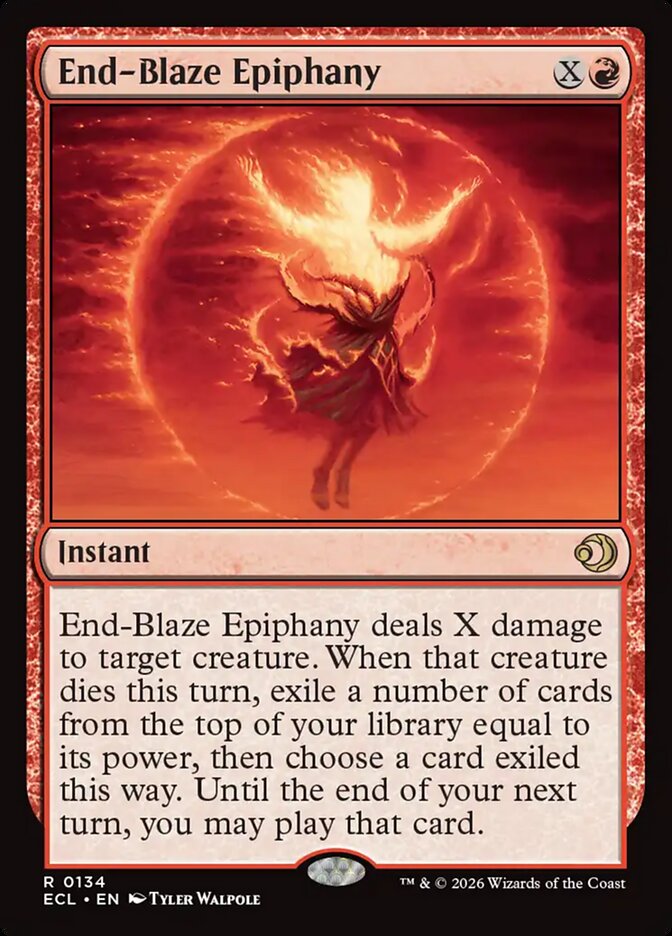
This kills what you need for a fair rate, and then it draws you the best card from the top X cards of your library. Two-for-ones are rarely easier than this, and End-Blaze Epiphany is also quite splashable!
Goliath Daydreamer (Great)
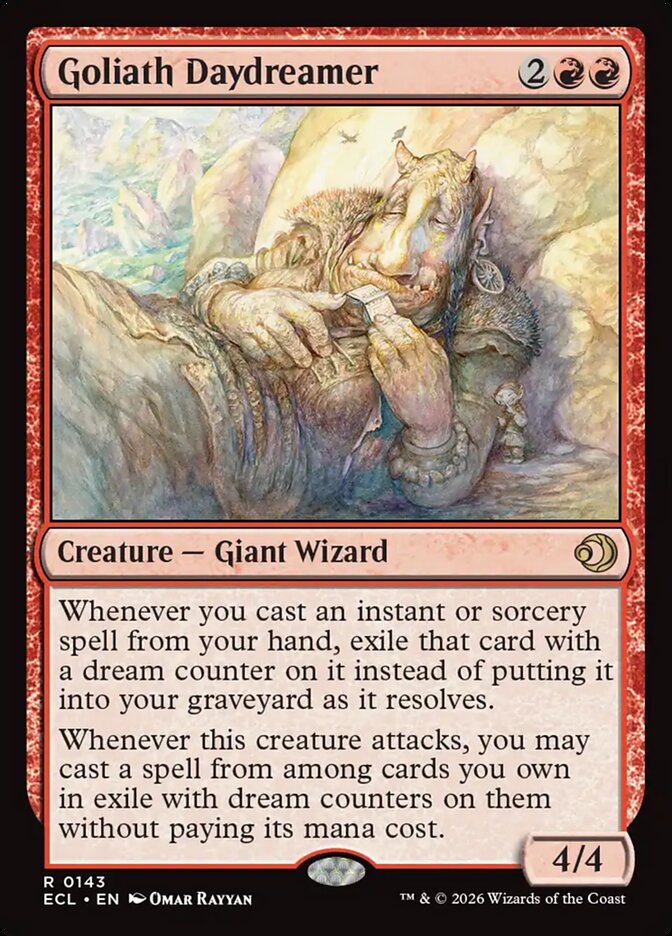
Untapping with Goliath Daydreamer lets you immediately double up on a removal spell, as you’ll just need to cast it and then attack with this. It also has reasonable base stats for its cost, so I’d happily run it in any red deck.
Hexing Squelcher (Good)

Don’t let all that fancy Constructed text fool you, as this is mostly just Viashino Pyromancer in Limited. You could do worse than Hexing Squelcher for a 2-drop goblin, though.
Lavaleaper (Usually Not Good)
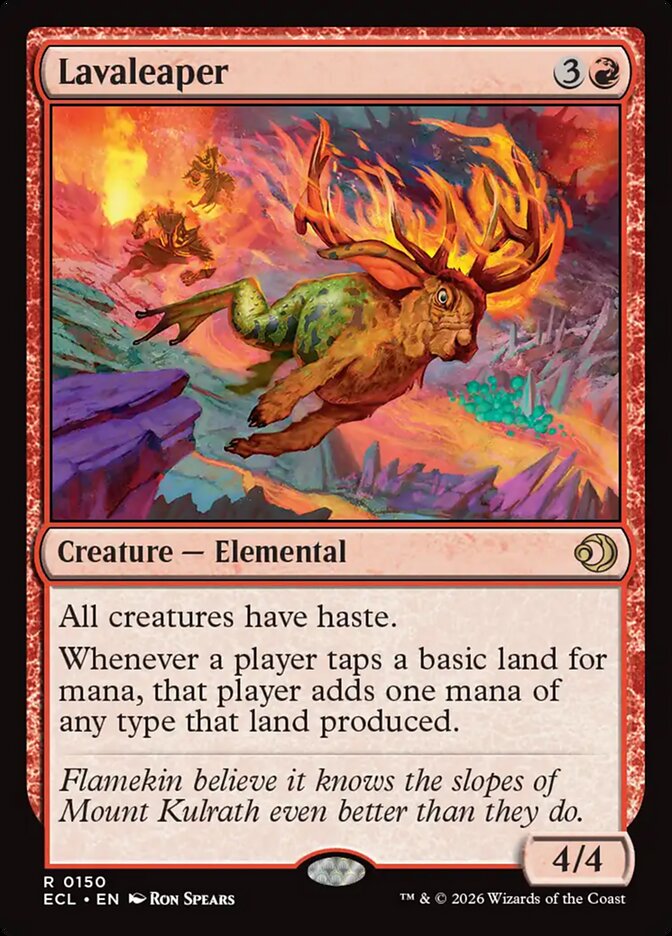
Limited mana bases in Lorwyn Eclipsed will consist almost entirely of basic lands, so your opponent is getting the first spin on double mana here. There’s a tremendous risk of Lavaleaper going very wrong for you, so it’s a “no” from me (even if 4/4 haste for is tempting).
Scuzzback Scrounger (Great)
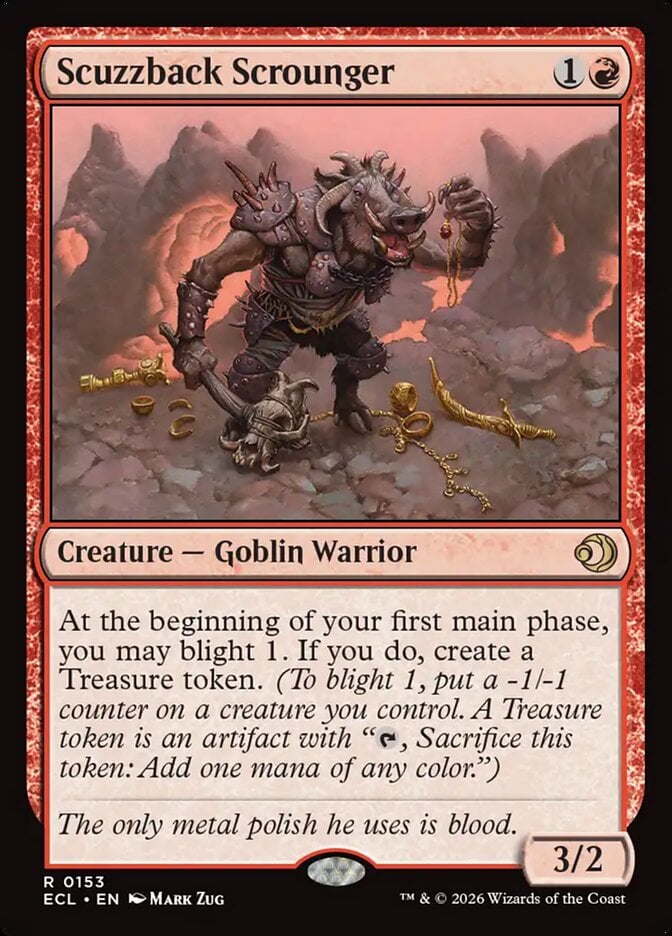
Ramping early is probably worth blight 1 in general, and Scuzzback Scrounger improves immensely when combined with cards like Brambleback Brute and Moonlit Lamenter. I’d have happily played this at 2/2 as well, so being a 3/2 is a nice bonus.
Bristlebane Battler (Great)
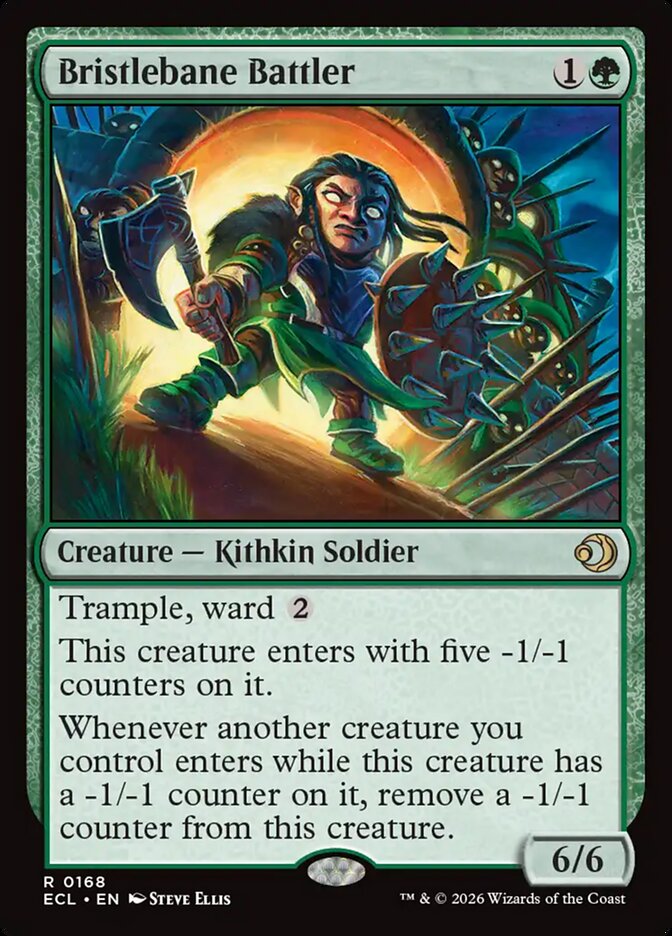
Kithkin excel at making creature tokens, so it’s not hard to imagine Bristlebane Battler quickly growing out of control. Ward 2 also helps to protect your investment, so I’m a big fan of this one (even if it looks like a crummy top-deck).
Champions of the Perfect (Bomb)
This has the most exciting Limited text of all the Champions, and much better combat stats than Champion of the Path. You don’t even need to be all elves for Champions of the Perfect, as it works with any creature spell (though you’ll still want plenty to ensure you can cast it).
Formidable Speaker (Great)

Formidable Speaker isn’t quite as cracked in Limited as it is in Standard, but it still looks pretty solid. It’s a good blocker that gets you your best creature, which is especially good if you have a bomb like Champions of the Perfect. The untap ability may also catch a sleeping opponent off guard.
Mutable Explorer (Great)

One of the most no-frills value creatures in Lorwyn Eclipsed. Mutable Explorer enables all sorts of typal synergies, ramps you, and effectively puts 3/3 worth of stats into play.
Sapling Nursery (Usually Not Good)

You’ll want to be as close to mono-green as possible before you play Sapling Nursery (13+ Forests), as each non-forest land drop effectively delays this a turn. That seems highly unlikely in Sealed, though Draft might be more kind to it.
Selfless Safewright (Great)

A strong defensive combat trick that comes with a free body attached. This is a dangerous one to run into, especially if it seemed like your opponent was “behind”. Selfless Safewright is good in any green deck, too, as nothing about this is restricted to elves.
Spry and Mighty (Usually Not Good)
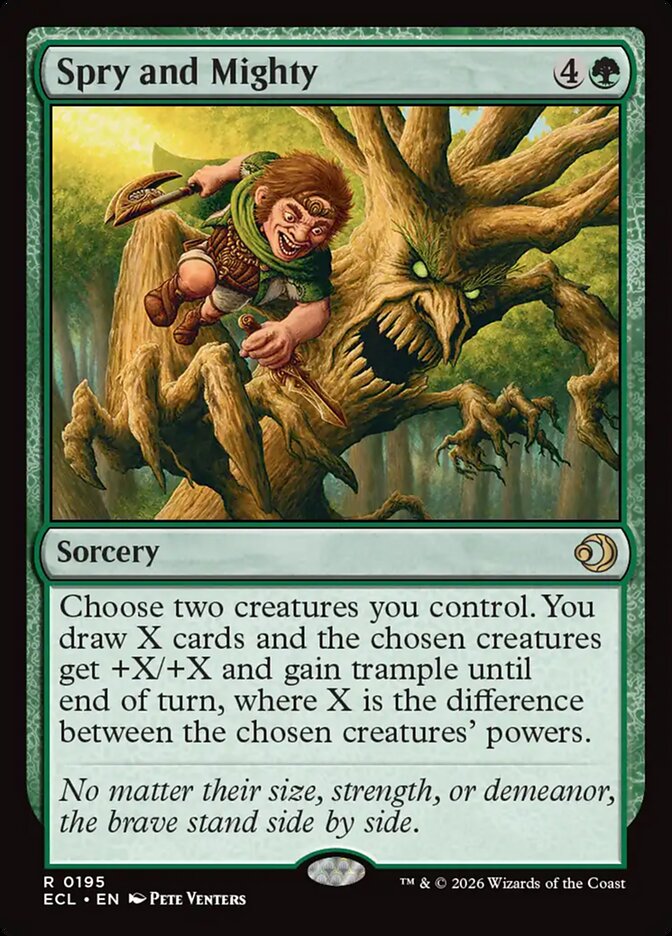
This is a strange build-around card that wants you to have a big power/toughness gap between two creatures you control. Try to pull it off with creatures that have lopsided stats, like Great Forest Druid and Dawn's Light Archer. Note that Spry and Mighty doesn’t target either, so it won’t be fizzled by a removal spell in response (though you may have to pick less optimal creatures).
Trystan, Callous Cultivator / Trystan, Penitent Culler (Great)
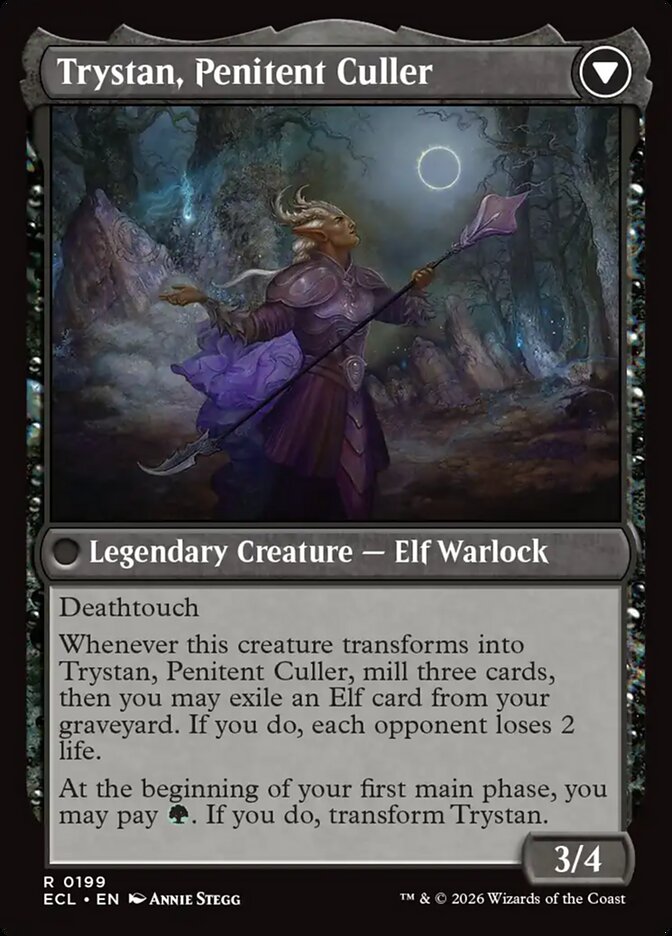
There’s a ton of text here, but the most important ones are “3/4″ and “deathtouch”. Trystan, Callous Cultivator is also rather good at milling you over time, which is great with other elf cards. You may even need to stop flipping it eventually to avoid decking!
Abigale, Eloquent First-Year (Great)
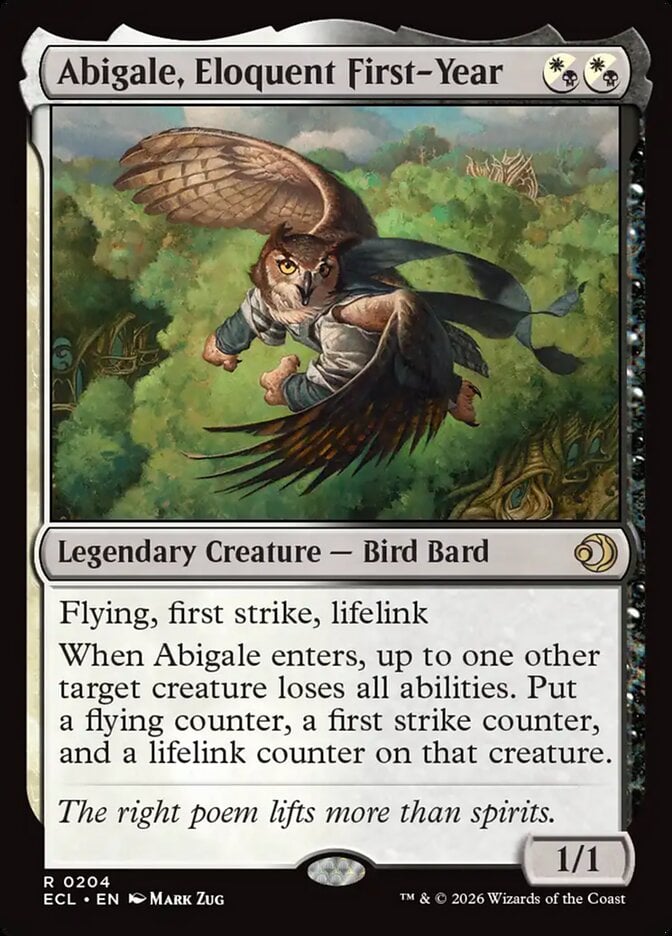
Abigale, Eloquent First-Year plays great with ways to pump it, and it also offers an interesting “aura” of sorts for one of your creatures. Most semi-vanilla creatures make great targets for this, let alone something huge like Wildvine Pummeler.
Ashling’s Command (Great)
Ashling's Command is flexible and powerful, with a mix of useful effects like (one-sided) Pyroclasm, Divination, Treasure production, and copying an elemental you control. You should have plenty of elementals in these colors, though you’ll hardly need any for this to be good.
Bre of Clan Stoutarm (Bomb)
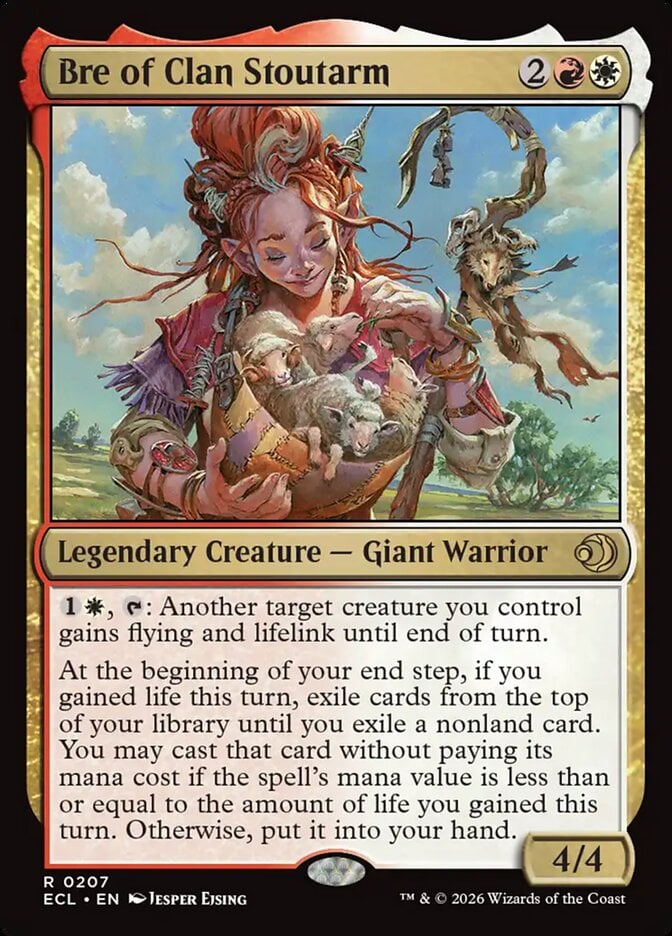
Untap with Bre of Clan Stoutarm and another creature or two, and you’ll leap your way towards free card advantage and lifegain! It’s also decently sized on its own and splashable, so I’m taking this rare very highly.
Brigid’s Command (Great)
A recurring theme with these commands is that they’re all strong Limited cards. Fighting with +3/+3 is the primary mode on Brigid's Command, but you can also double up on kithkin or make a 1/1 token if desired.
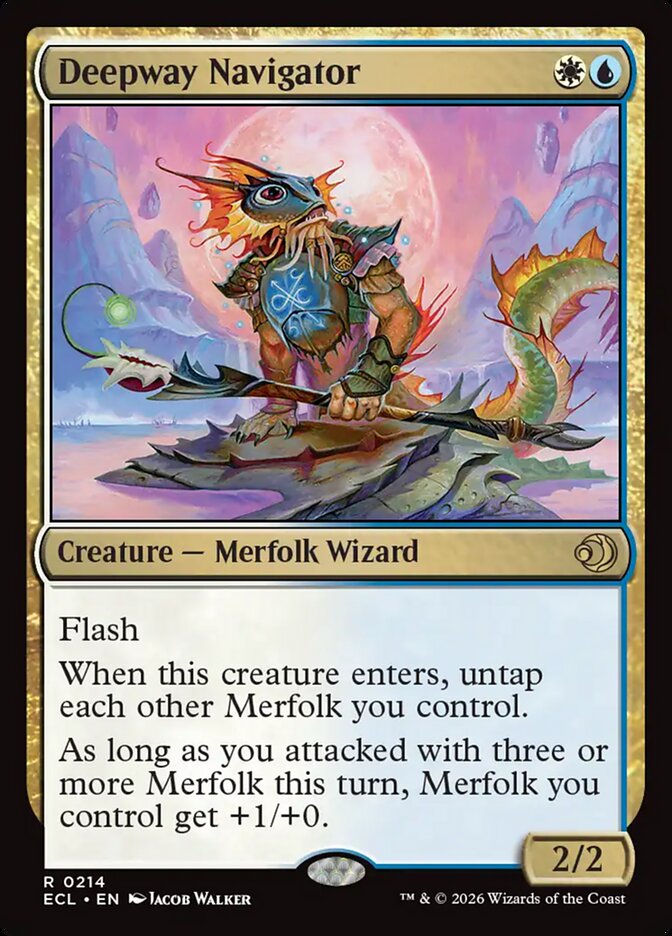
Deepway Navigator is a cheap merfolk lord of sorts with a handy untapping ability. The dream here is to convoke twice in one turn, or to set up an ambush by untapping a bunch of blockers.
Doran, Besieged by Time (Good)
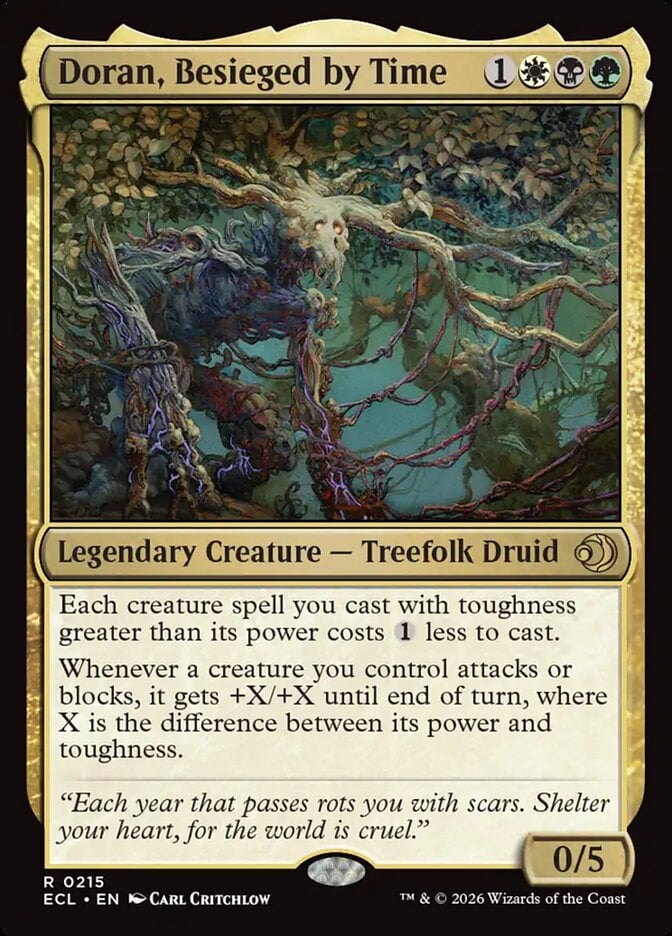
Doran, Besieged by Time is effectively a 5/9 on its own, which is a strong enough stat line to justify possibly splashing it. Doran also improves alongside other high-toughness creatures like Blighted Blackhorn, Reaping Willow, and Thoughtweft Imbuer.
Dream Harvest (Good)
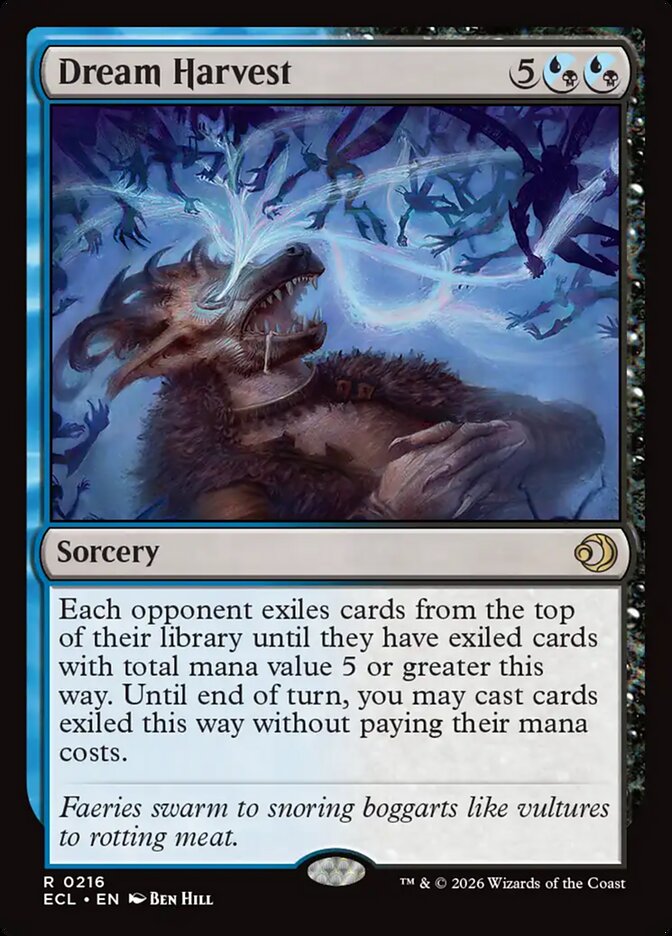
Dream Harvest is a super high-variance card that should hit one big spell or 2-3 smaller ones on average. You can play it in many controlling decks due to its flexible colors, but don’t be surprised if it occasionally whiffs (i.e. you hit a pump spell and a mediocre 3-drop). I like this kind of card in Sealed, but I won’t take it highly in Draft.
Figure of Fable (Bomb)

This grows large quickly, and then it threatens to end the game if it activates for 6. It’s not even limited to GW decks, as any green or white deck could use Figure of Fable (though it gets easier there).
Grub’s Command (Great)
You’re almost always Murder’ing something with Grub's Command, and the copy/self-mill modes should also be quite effective if you’re in Goblins. That’s what BR is looking to do in ECL anyways, so sign me up.
High Perfect Morcant (Good)
High Perfect Morcant puts out a decent number of -1/-1 counters without too much effort, and it further spreads the “love” as you amass elves. It’s not the most juiced typal payoff in Limited or anything, but it still looks like a decent reason to be Elves.
Kirol, Attentive First-Year (Great)
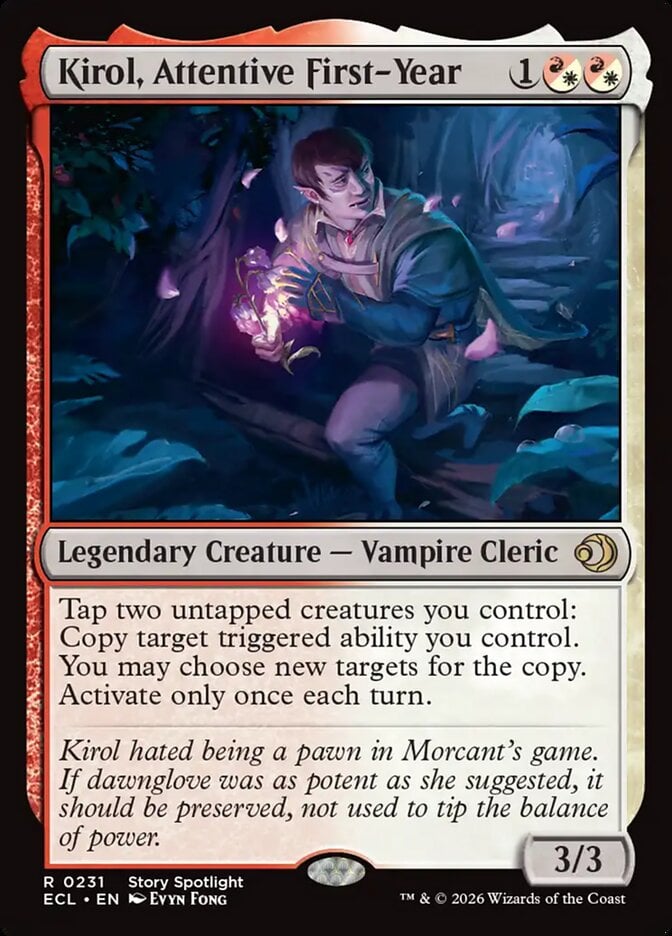
Kirol, Attentive First-Year seems excellent with most vivid cards, which offer powerful abilities worth copying. Tapping it and your “enters” creature is a surefire way to leverage Kirol. I also appreciate its cost flexibility, as you can play Kirol in any R or W deck.
Lluwen, Imperfect Naturalist (Great)
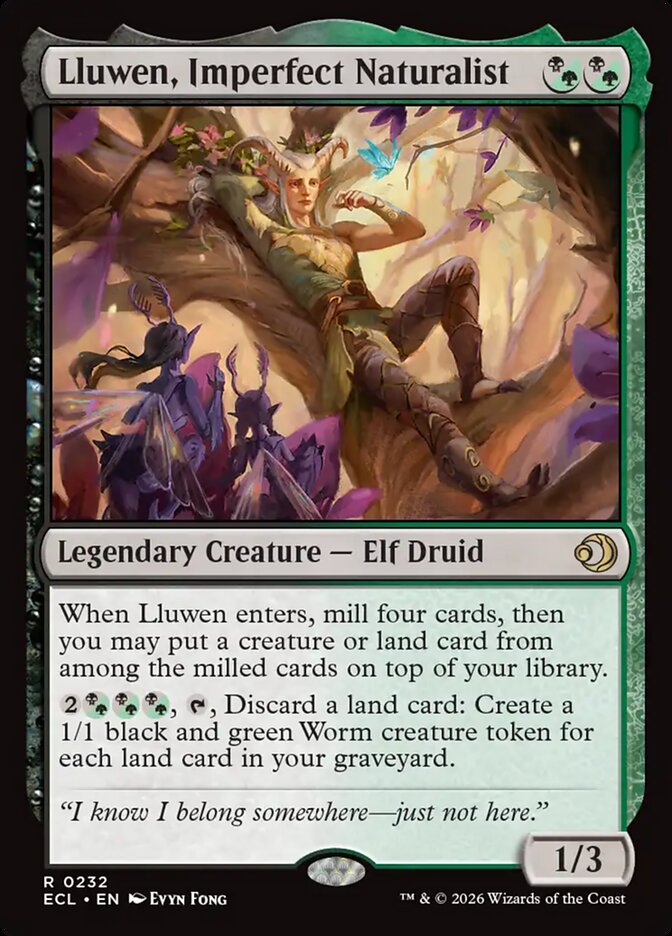
Lluwen, Imperfect Naturalist offers some mill/consistency early, and then a functional Worm Harvest later. It plays great with other self-mill cards, which you can certainly expect to have in Elves.
Maralen, Fae Ascendant (Bomb)

It’s definitely easier to do elves in this set than faeries, though Maralen, Fae Ascendant doesn’t discriminate. You should be able to 2-for-1 immediately with a decent board, and if you untap it just gets nastier every single turn.
Raiding Schemes (Usually Not Good)
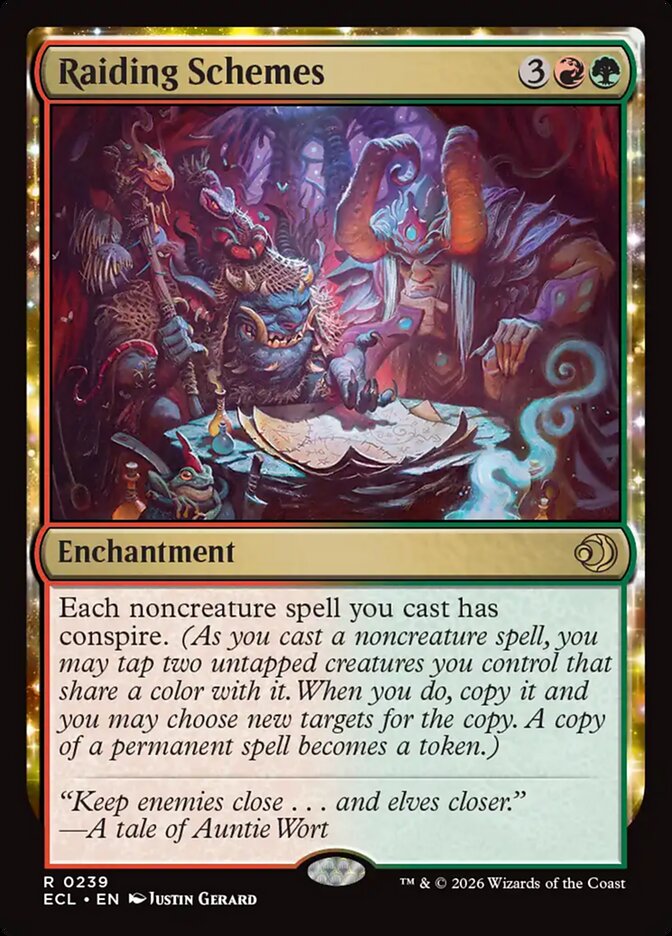
Interesting build-around that requires a strong mix of noncreature spells and creatures, especially token generators like Elder Auntie. The strict requirements and lack of synergy with other cards in Lorwyn Eclipsed limit this to very particular decks.
Sanar, Innovative First-Year (Bomb)
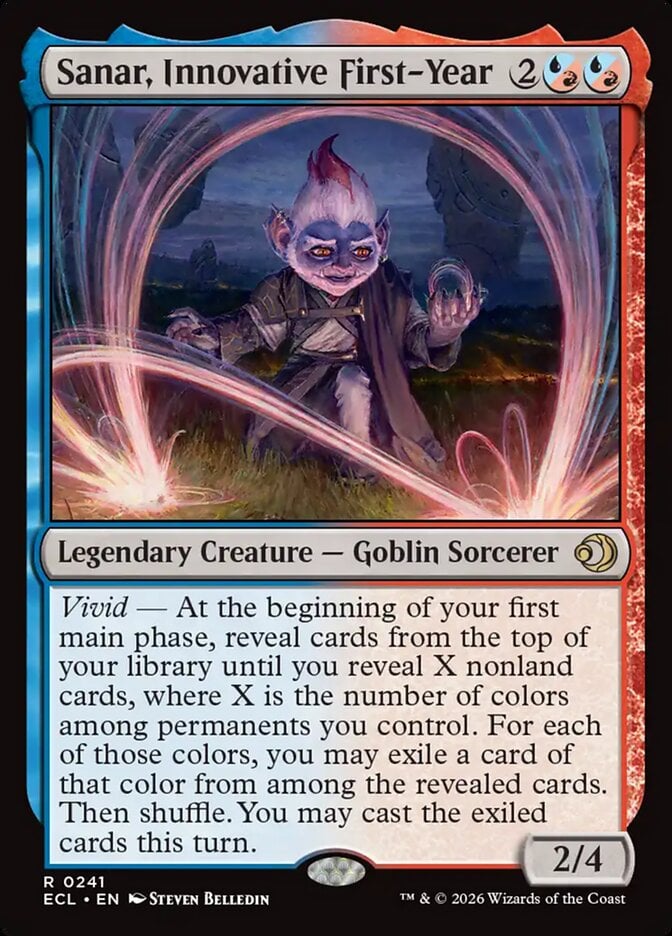
Sanar, Innovative First-Year can draw a ton of cards without much effort, especially if you’re playing up its vivid theme. I quite like this even in just UR though, where this offers two great spells every single turn!
Shadow Urchin (Great)

Shadow Urchin has efficient base stats, a convenient mana cost, and great synergy with disposable creatures and other blight cards. It’s hard to ask for more from a 3-drop, especially if you’re already focusing on a -1/-1 counter theme.
Sygg’s Command (Great)
Cantripping and copying a merfolk is awesome for just , and the other modes are situationally good as well. You want to have plenty of merfolk for Sygg's Command, but that’s what WU is doing anyways.
Tam, Mindful First-Year (Great)
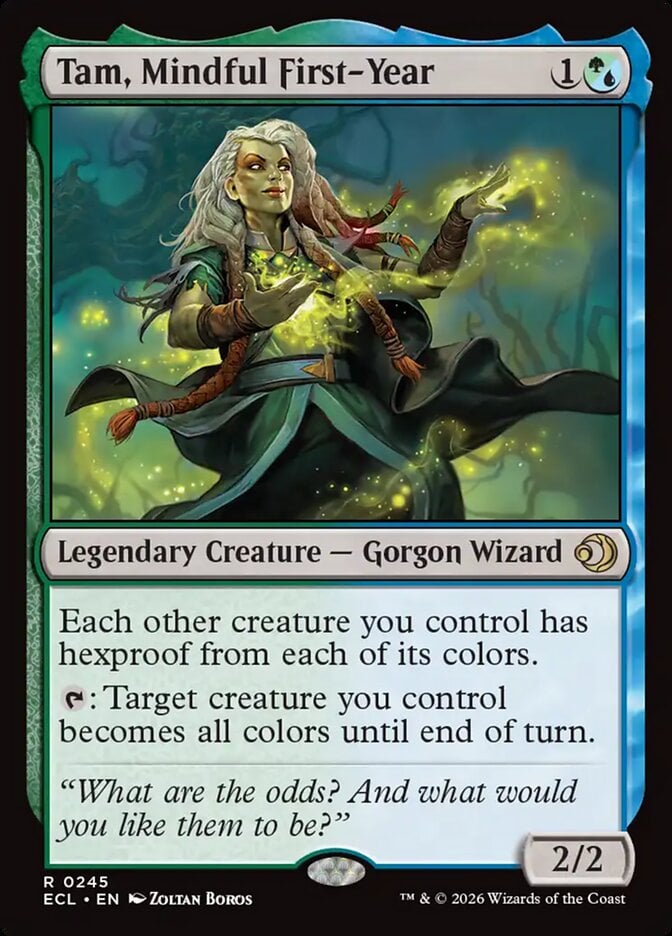
Tam, Mindful First-Year provides excellent vivid support, and it also protects your other creatures from removal spells. These are great abilities to have in Limited, so I expect Tam to be a solid utility creature (even if it doesn’t do much on its own).
Trystan’s Command (Bomb)
The most expensive command is also the strongest one in Limited, as Trystan's Command is plainly just a ridiculous Limited bomb. You’ll either play this as Murder plus Overrun (sans trample) or Murder plus Restock, and be thrilled with both modes.
Mirrormind Crown (Bad)
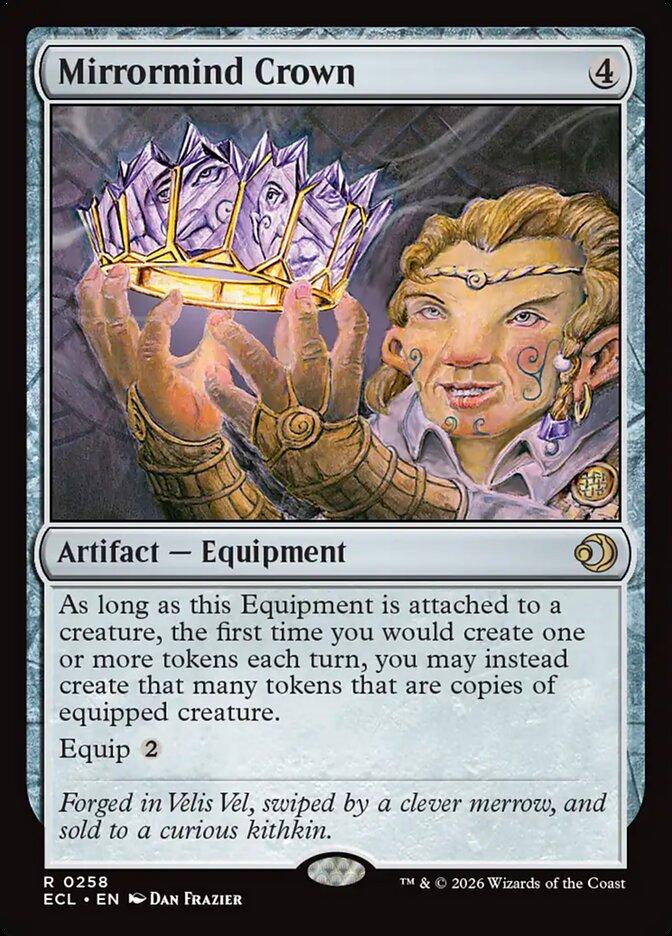
First you need something worth copying, then you need to pay 6 mana, and only then can you start making token copies. I’m sure Mirrormind Crown could technically work in the right deck, but there’s a ton of hoops here without a clear payoff.
Shock Lands (Good)
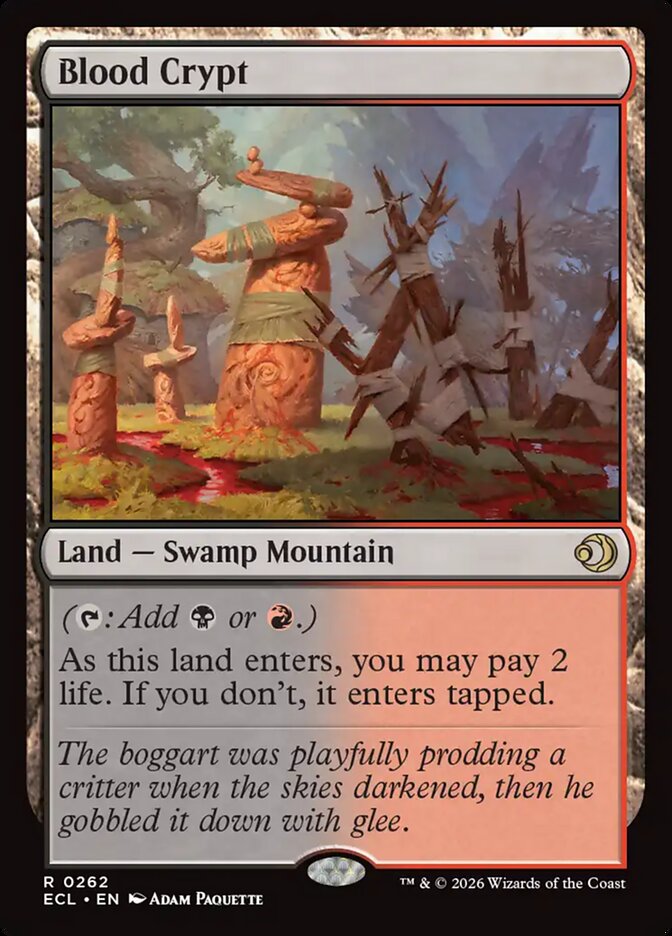
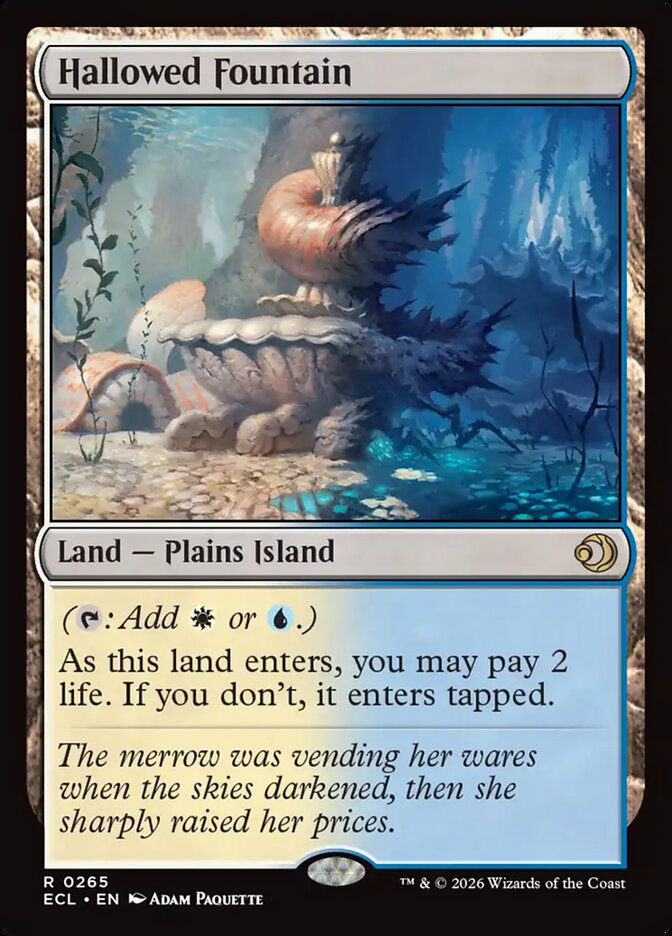
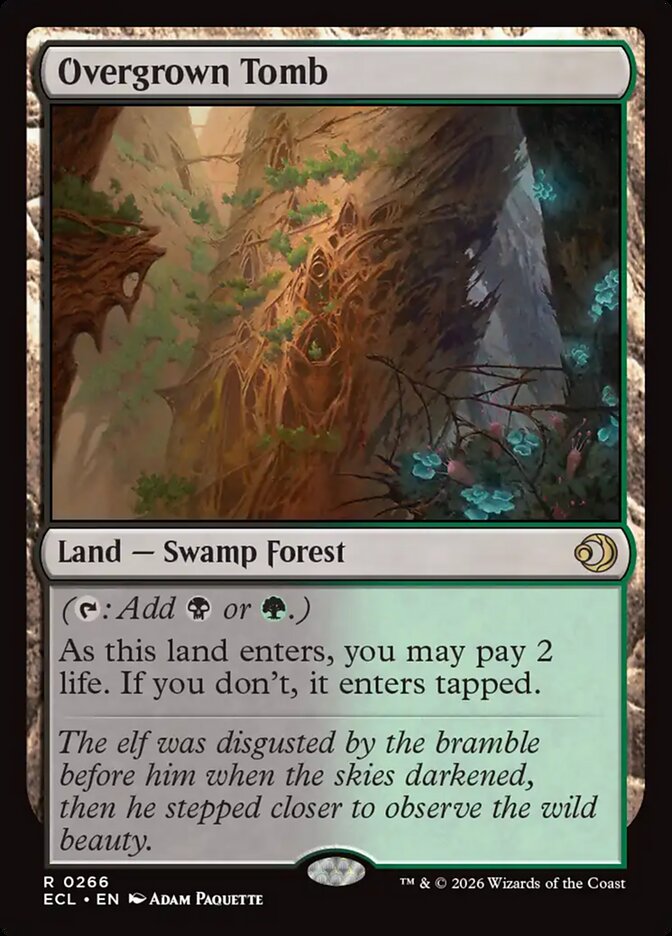
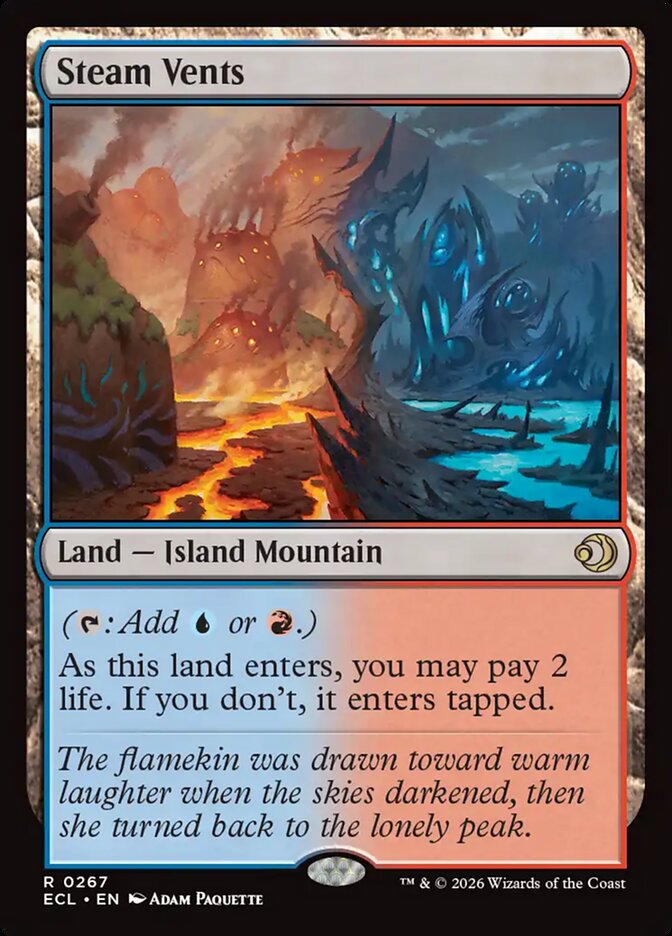
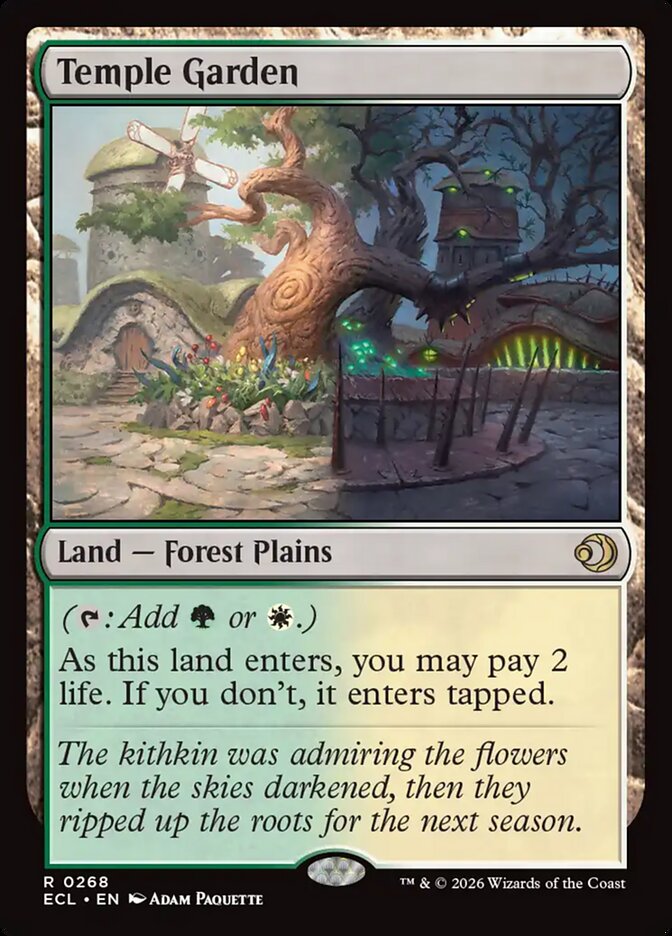
Shock lands make for decent fixing in Limited, though you won’t need to prioritize them. I can’t blame you for taking them early to save wildcards or cash, but if you’re drafting to win, they should be scooped up a bit later.
Special Guests
Lorwyn Eclipsed also includes 20 Special Guests cards, which are uber-rare reprints that can randomly take a common slot. Most of these frankly aren’t very good in Limited, so I’ve mostly included this section for completion’s sake.
Idyllic Tutor (Bad)
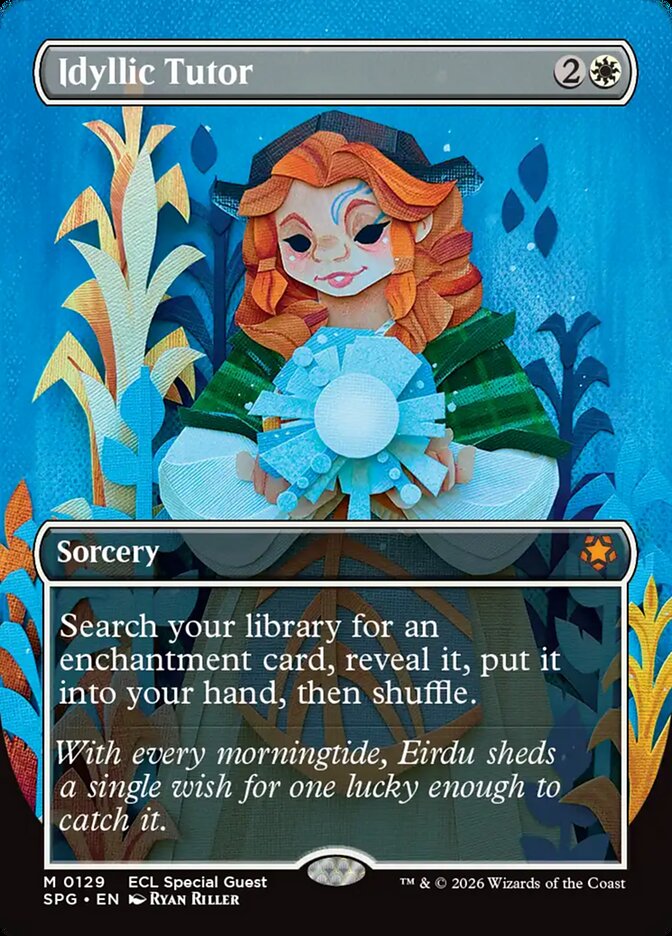
Three mana is a huge price to pay for such a narrow tutor in Limited. The only time I’d even consider playing Idyllic Tutor is if I had multiple good targets, including a strong rare like Kinbinding.
Kinsbaile Cavalier (Usually Not Good)
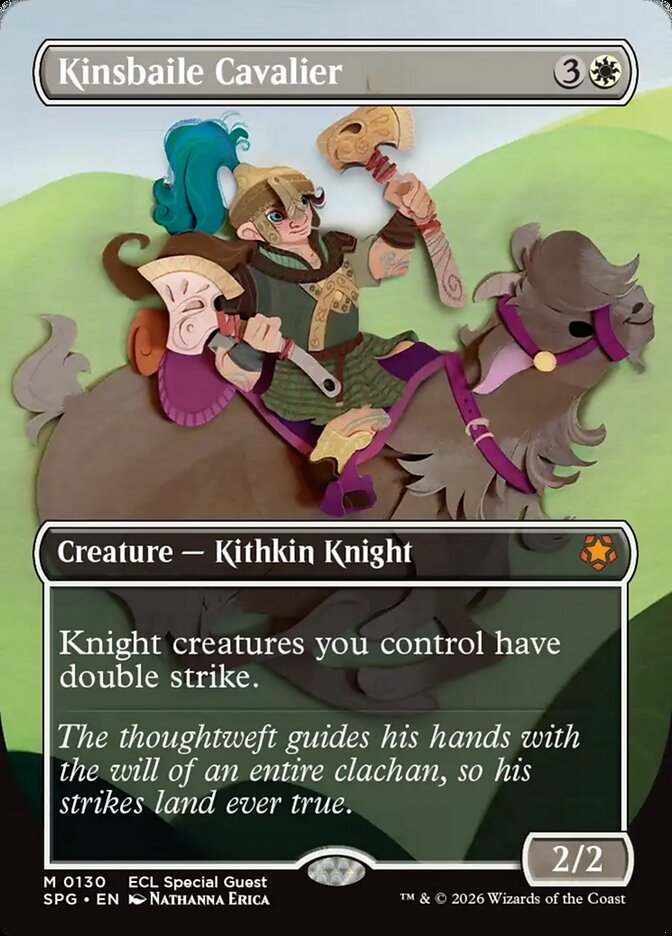
Knights are barely present in Lorwyn Eclipsed (just Gallant Fowlknight and a pair of others), and Kinsbaile Cavalier is merely a 2/2 double striker for on its own. Power creep has definitely left this one behind.
Mistbind Clique (Good)
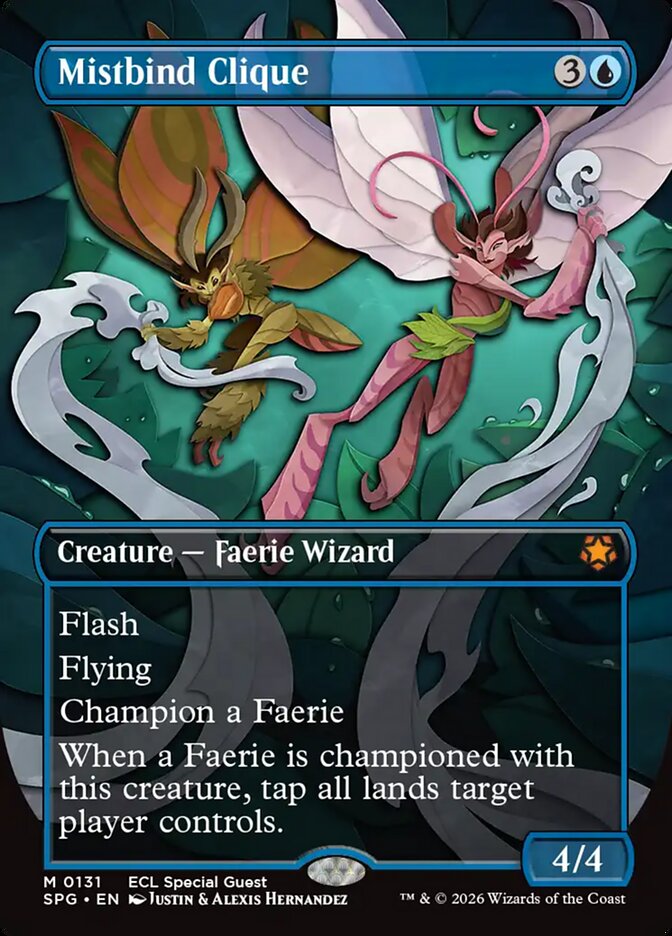
Mistbind Clique is still a powerful creature, although it might be tough to have enough faeries to make it work. You’ll generally want to be UB with cards like Glamermite, Dream Seizer, and various changelings. Remember to flash this in on upkeep for the virtual Time Walk effect it provides!
Wanderwine Prophets (Bad)
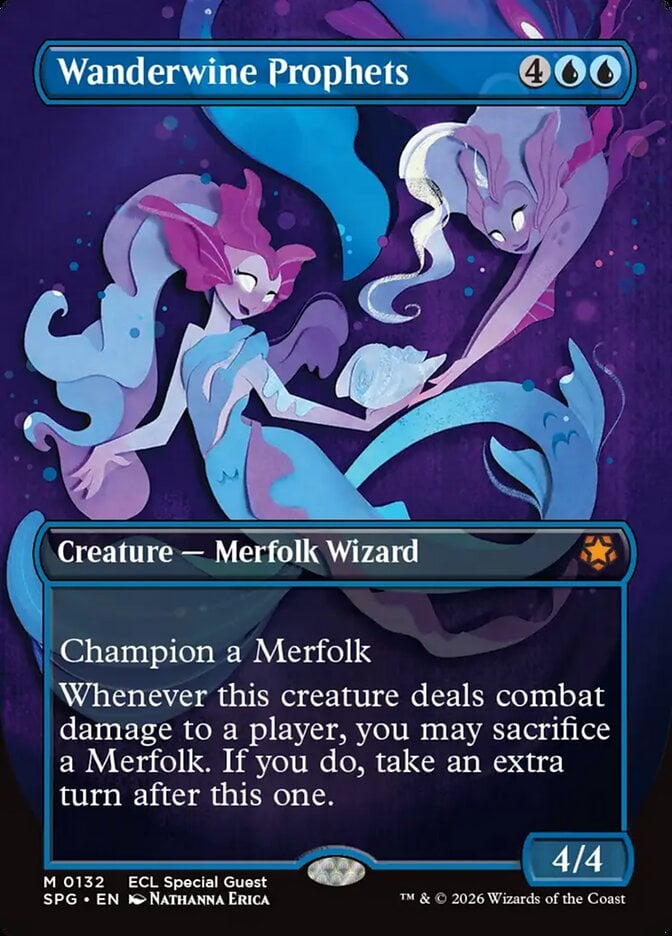
Wanderwine Prophets costs a ton of mana, has poor stats for its cost, and forces you to champion a merfolk. That’s too many hoops to pull this off realistically, so I’m giving it low marks.
Bitterblossom (Bomb)
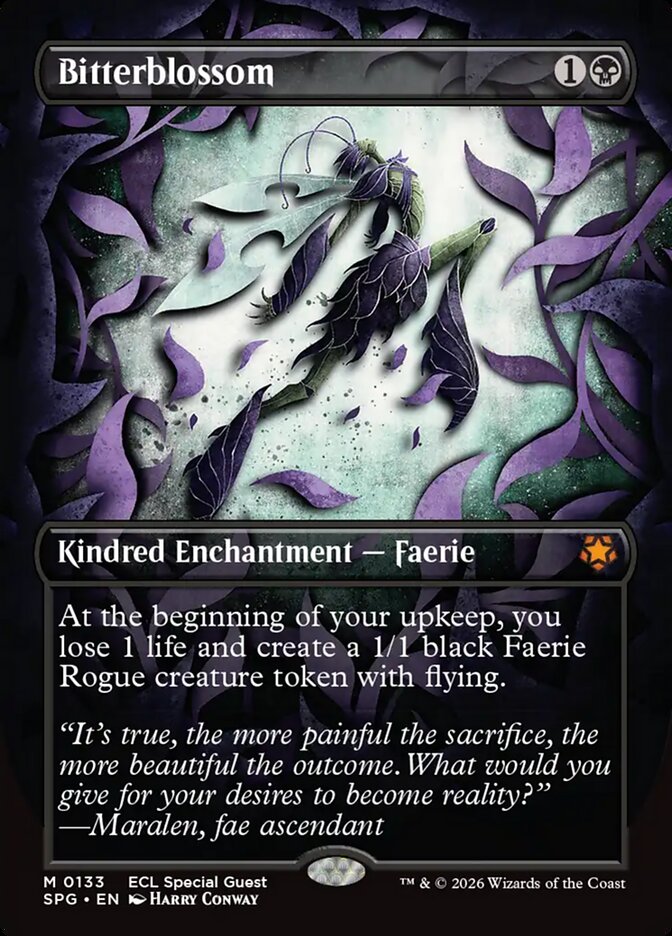
Bitterblossom was incredible in Wilds of Eldraine, and it might be even better in this set due to its typal focus. Turn-2 Bitterblossom is arguably the best start possible in this format, though thankfully it’ll be incredibly rare!
Faerie Macabre (Bad)
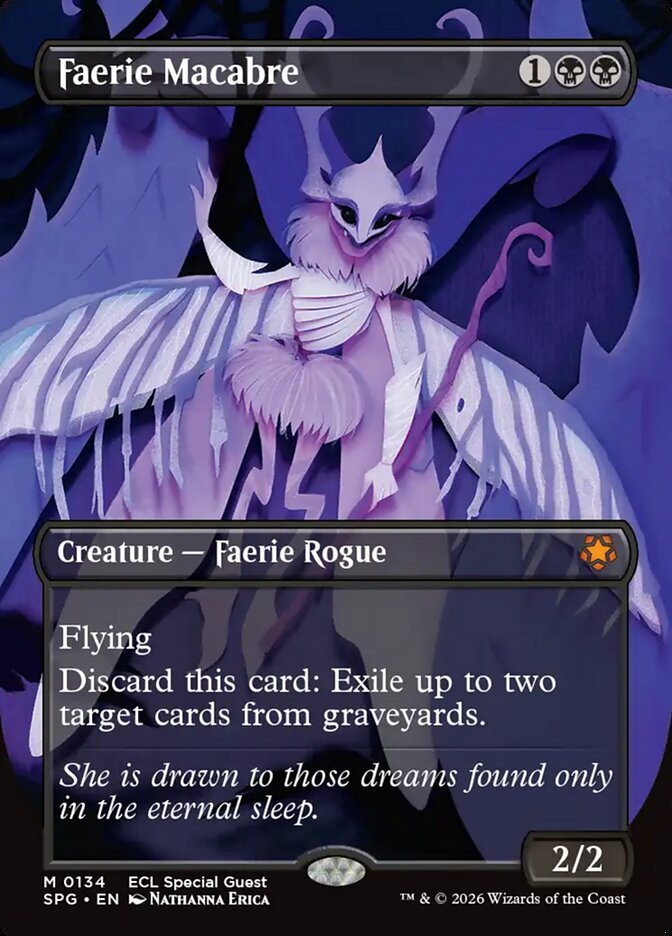
Faerie Macabre is a hard-to-cast Wind Drake that also hates on graveyards for free if needed. You could sideboard it I suppose, but you usually shouldn’t bother.
Goblin Chieftain (Good)
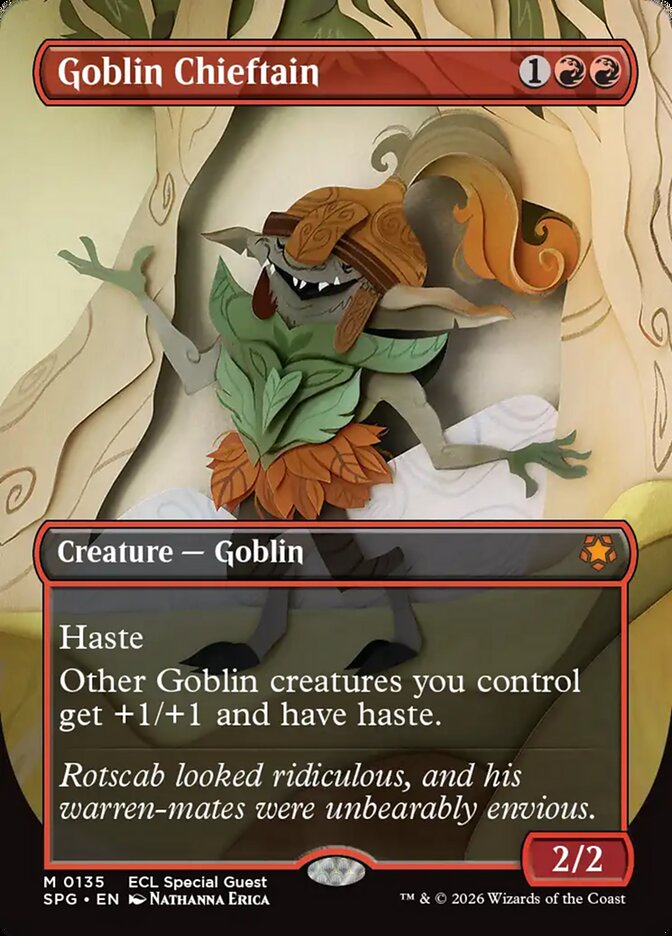
Goblins are one of the best supported creature types in Lorwyn Eclipsed, with several common creatures in both black and red. Goblin Chieftain is more realistic than most of these other payoffs.
Goblin Sharpshooter (Good)
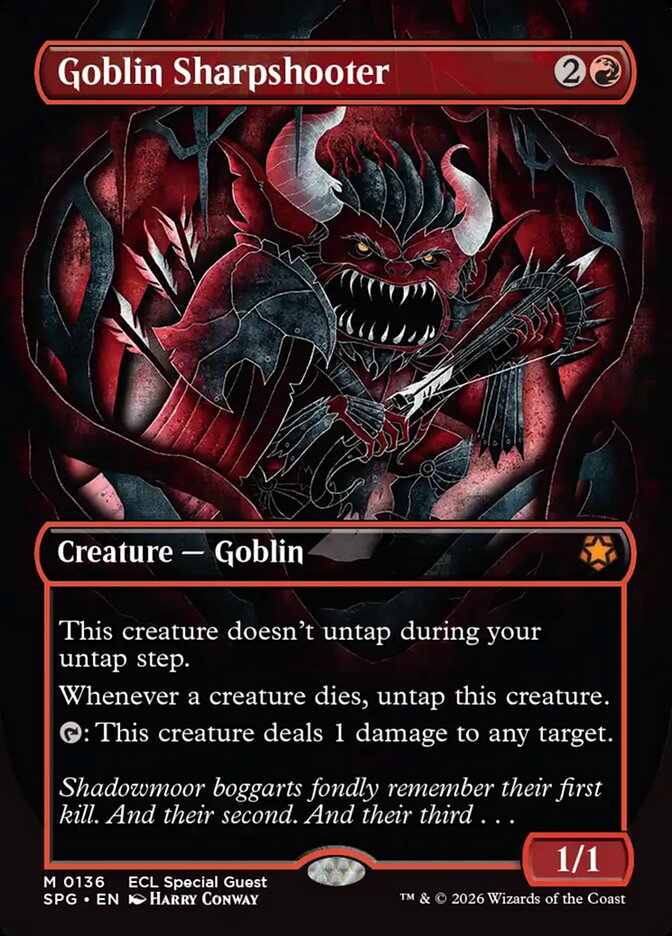
Goblin Sharpshooter has a wombo combo with Scarblade's Malice, which is essentially a make-your-own Plague Wind! It’s also not terrible in a vacuum, especially if your opponent has some x/1s for it to shoot.
Heat Shimmer (Usually Not Good)
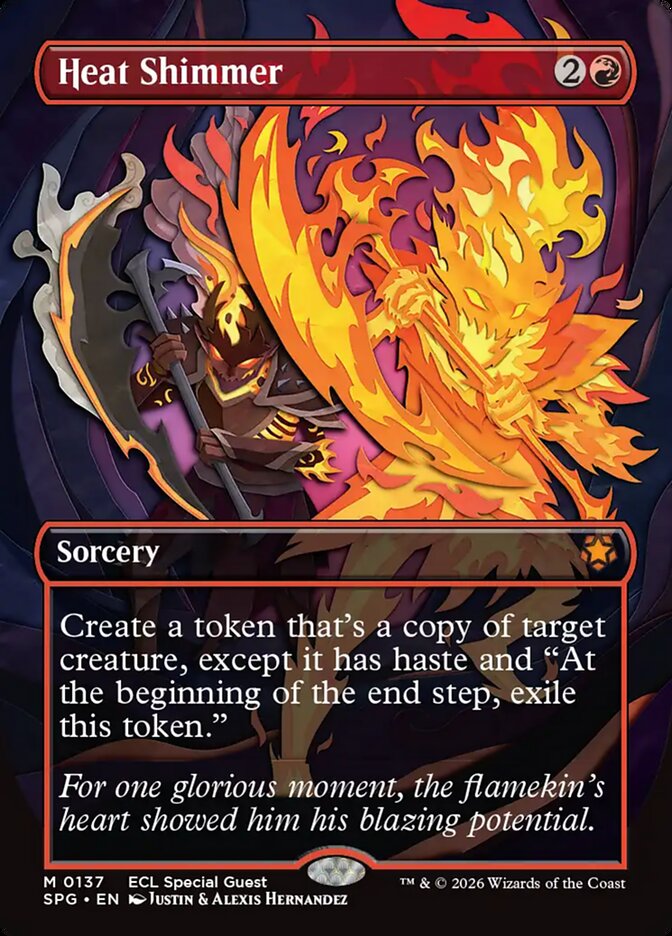
Raw shimmer effects like this aren’t generally worth a card in Limited. I’d only play Heat Shimmer if I had multiple excellent “enters” effects (which are usually vivid cards like Explosive Prodigy or Shinestriker).
Devoted Druid (Good)
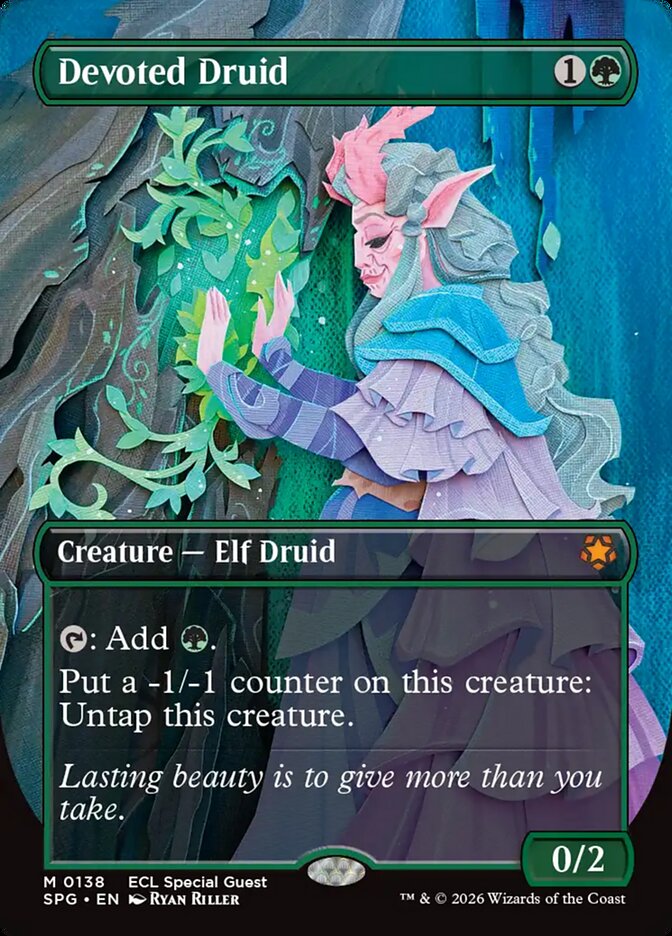
Devoted Druid is largely just a mana dork, but that’s still pretty decent in Limited. You might be able to gain some occasional value from -1/-1 synergies, too.
Helix Pinnacle (Bad)
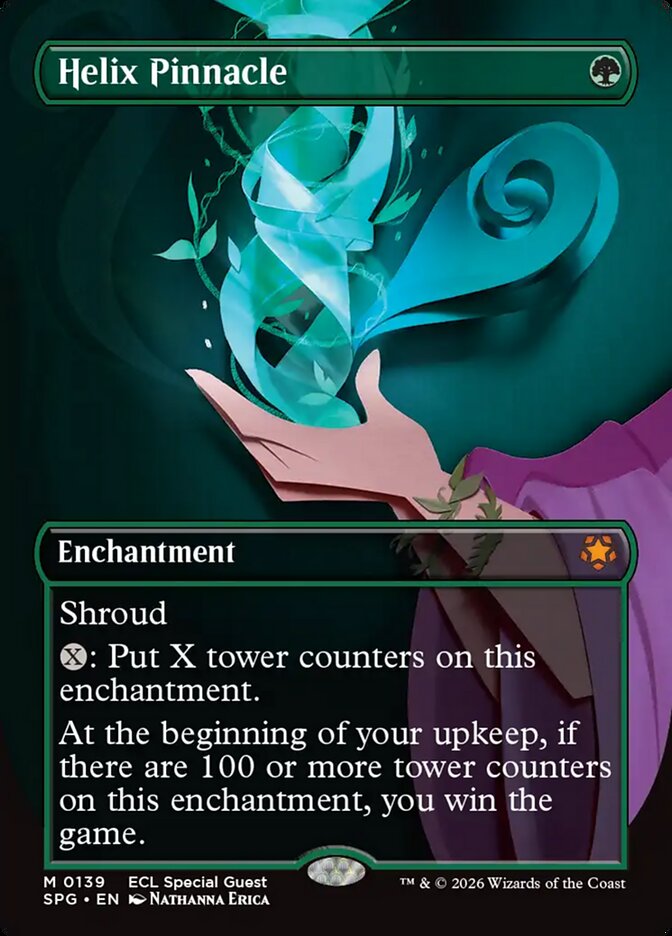
A 100-mana investment is no laughing matter! I suppose you could try it in the World’s Slowest Control Pile, but Helix Pinnacle is more of an “achievement unlocked” card than a legitimate win condition.
Leaf-Crowned Visionary (Good)
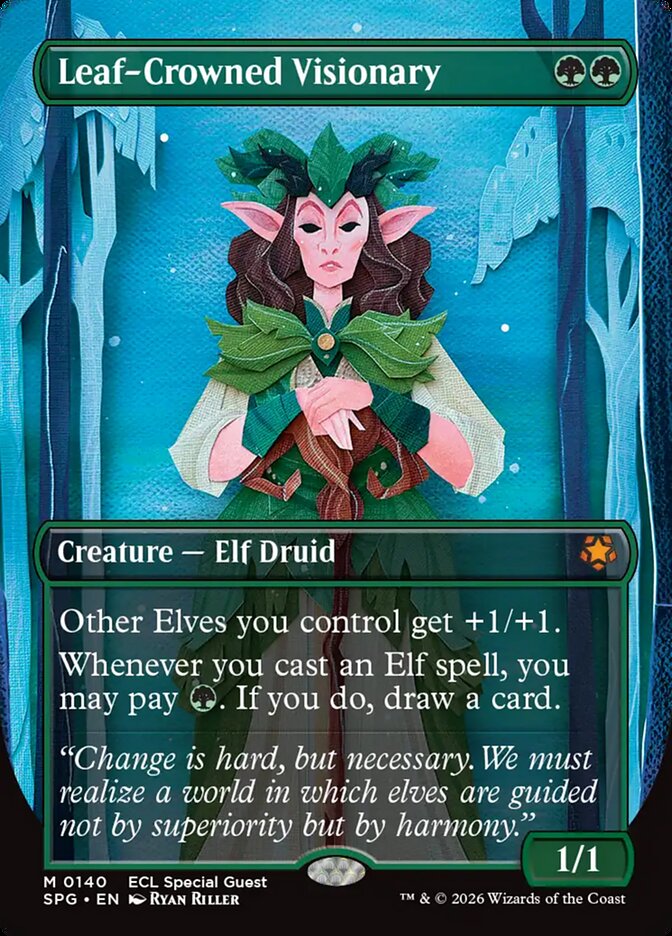
Elves are decently supported as well, though they seem to be more common in black than green this go-around. Still, if you’re mostly elves, you could do much worse than an elf lord like Leaf-Crowned Visionary that draws you some extra cards.
Regal Force (Great)
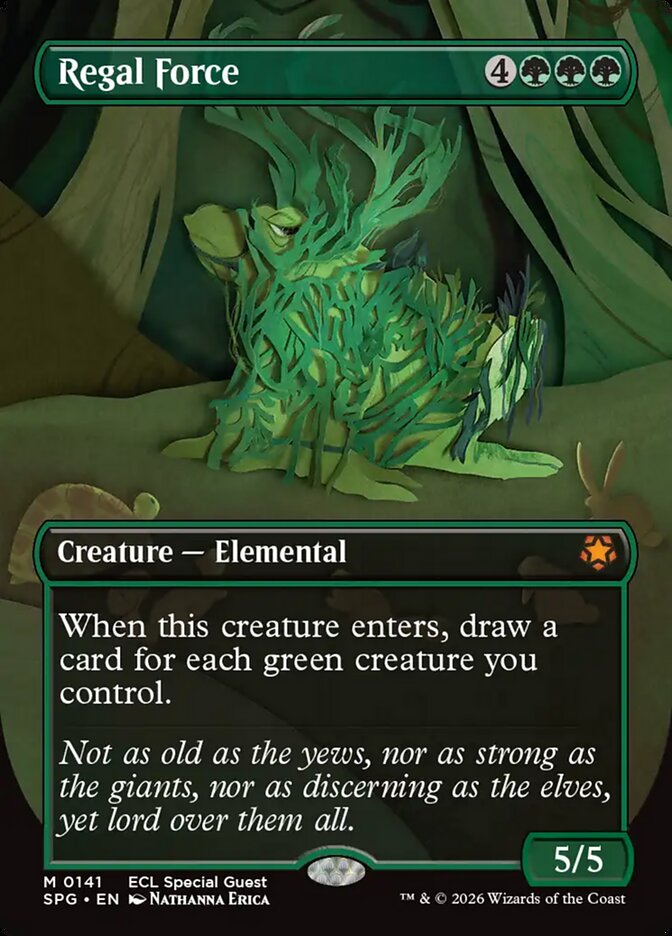
If you’re a base green deck with lots of mana dorks like Great Forest Druid, then Regal Force is an awesome curve-topper. Stacking up on green creatures does conflict a little with vivid though, which wants more diversity.
Manamorphose (Good)
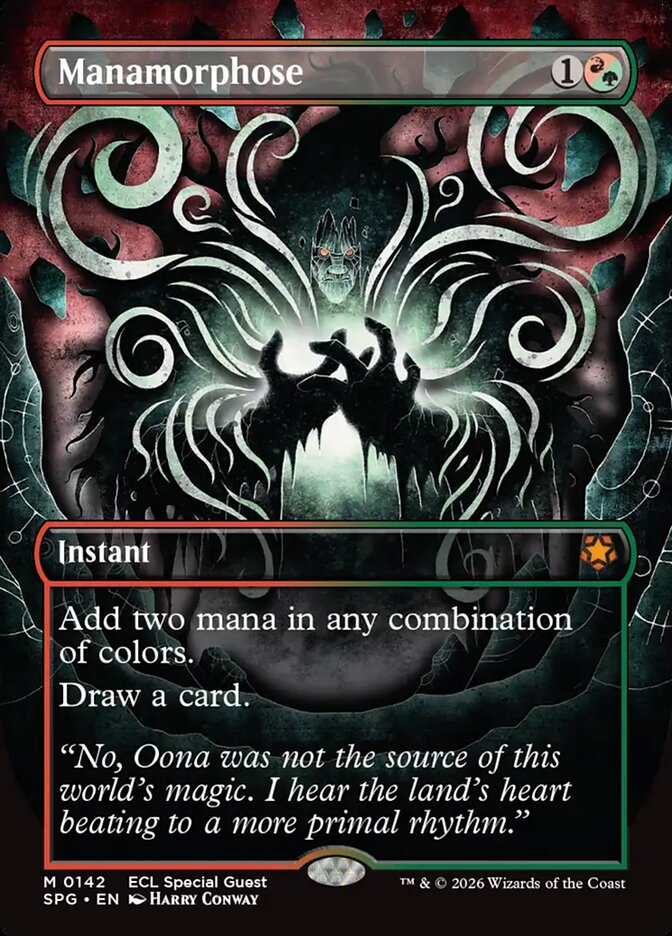
Manamorphose can be run in just about any red or green deck for free fixing, but it’s pretty much just a blank cantrip otherwise. It can pick up occasional value with cards that care about instants and sorceries, like Rimefire Torque and Goliath Daydreamer.
Risen Reef (Good)
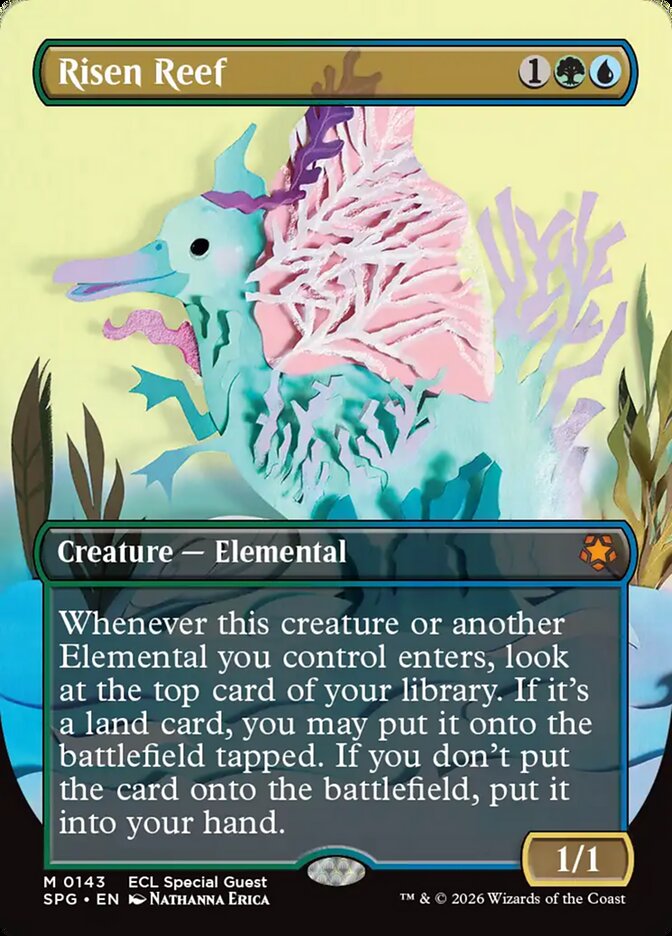
You’ll usually have to splash this for it to be good, as UR is the primary color pair for Elementals in Lorwyn Eclipsed. Risen Reef is arguably worth the effort though, as this is an incredible card advantage engine when you get it going.
Slippery Bogle (Bad)
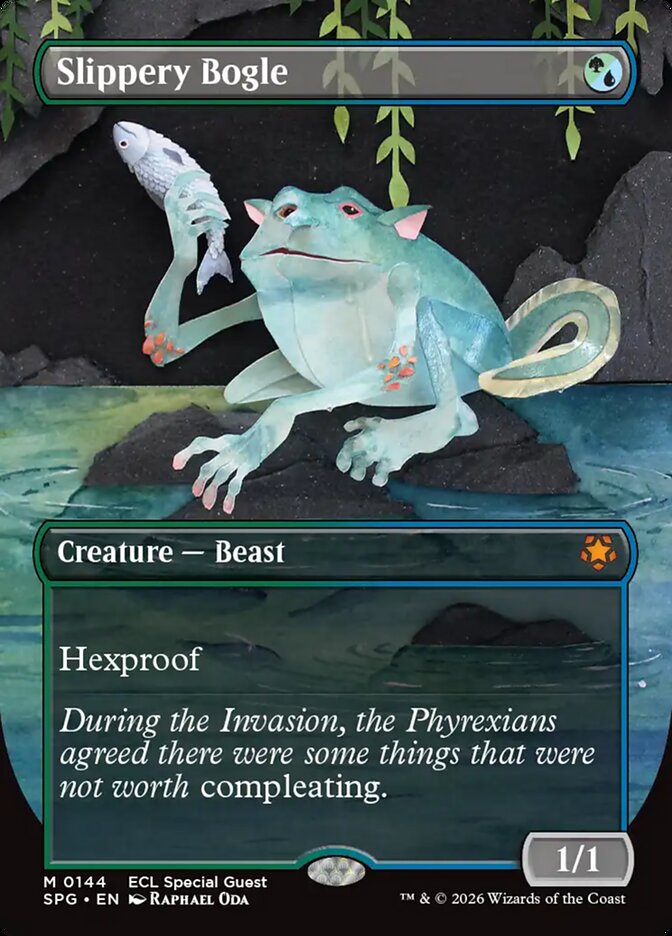
Lorwyn Eclipsed doesn’t have enough auras or +1/+1 counter support for Slippery Bogle to work. We should all be grateful for this!
Dolmen Gate (Bad)
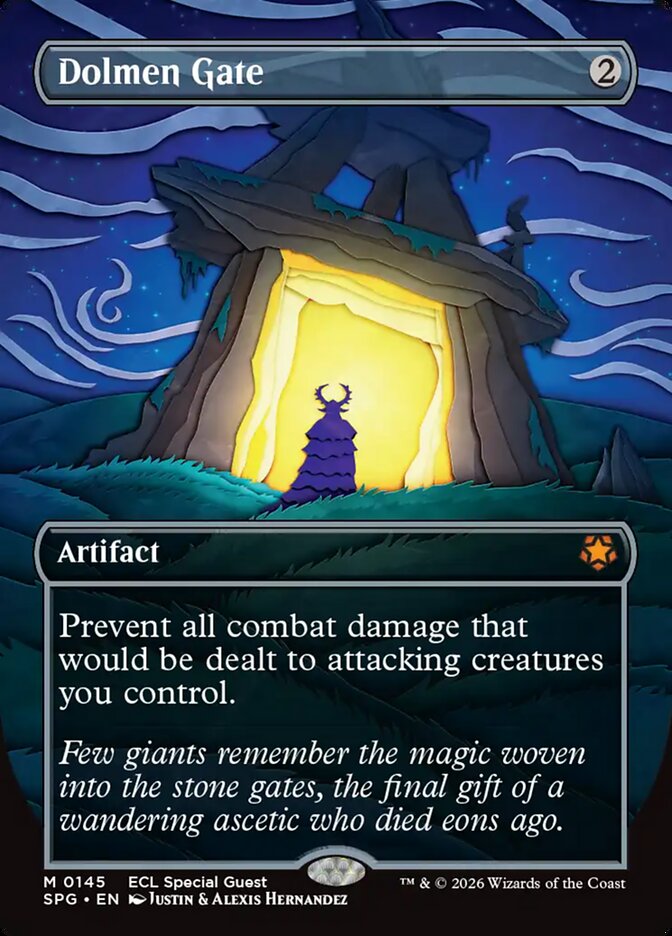
Mulligans! Come and get your mulligans! Put yourself down a card today for little benefit, with Dolmen Gate!
Door of Destinies (Good)
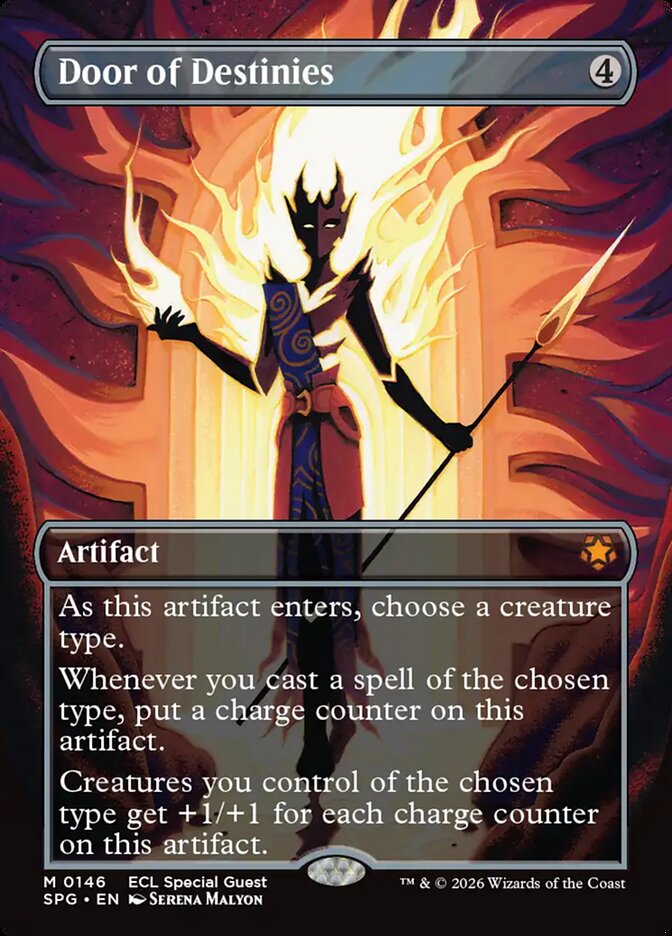
Door of Destinies is definitely slow to get started, but that probably isn’t a dealbreaker in Limited. I’m most interested in this card for swarm decks like Kithkin and Goblins.
Painter’s Servant (Bad)
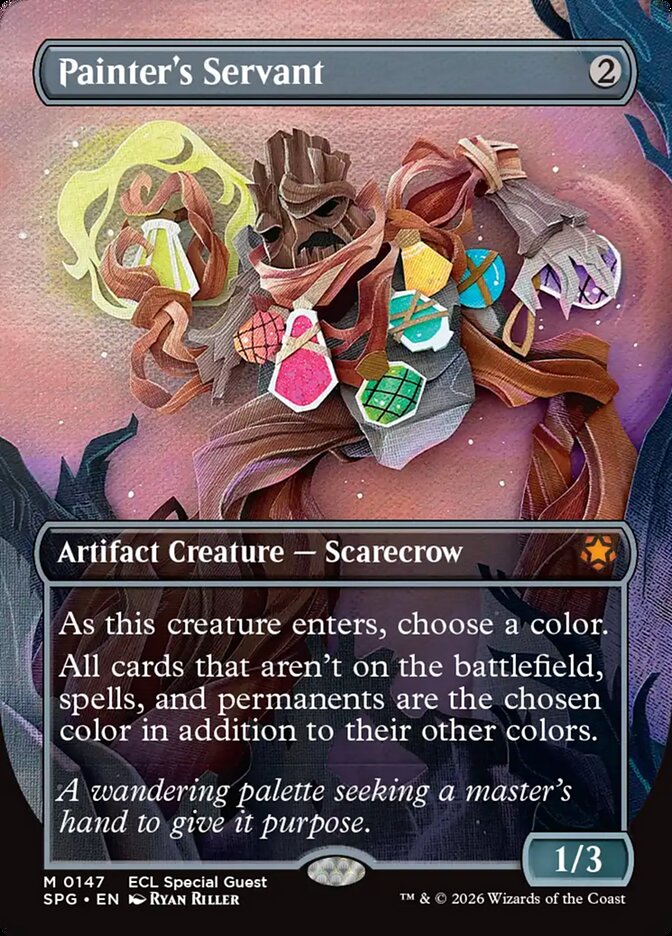
It’s cute that this can assist with vivid, but it’s a vanilla 1/3 otherwise. I won’t admonish you for playing Painter's Servant as curve filler, but I’d certainly hope to do better.
Thousand-Year Elixir (Bad)
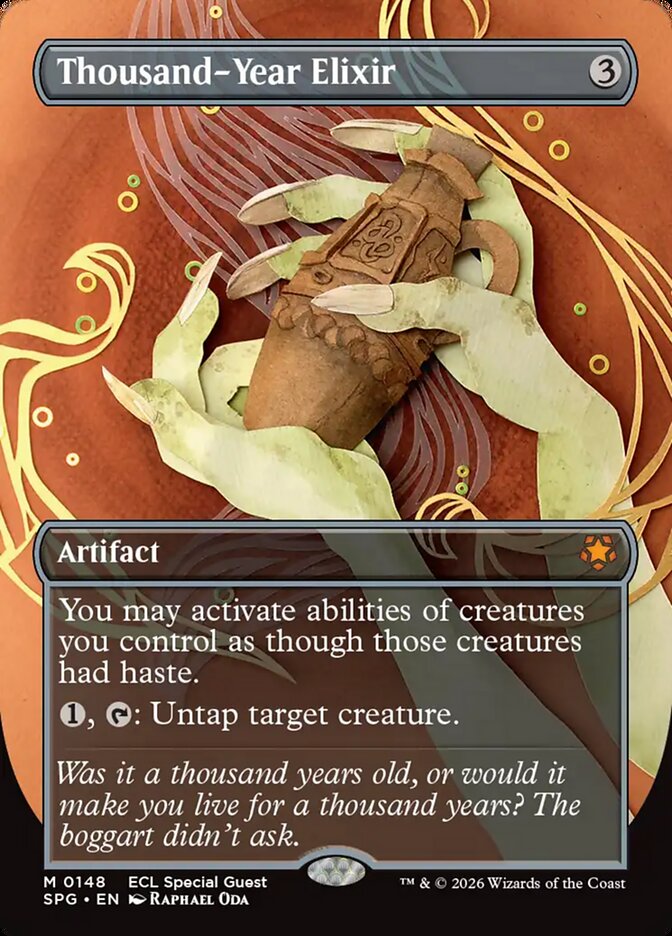
How many activated abilities does it take for Thousand-Year Elixir to be worth running? It’s definitely not a thousand, but whatever number it is doesn’t seem realistic in Limited.
Seven Steps for Sealed Success!
This last section is a refresher course for Sealed itself, and a good reference sheet if you’re stuck.
- Open your boosters and sort your cards by rarity and color. Note any bombs or exceptional cards.
- Set unplayable cards aside (basically just “Bad” rares), then assess which of your colors are deepest. I’m mostly looking for the best commons/uncommons here, with particular importance given to my Top Commons.
- Start to lay out builds and try to include your best cards. The five big creature types will often make for a great guideline, but don’t forget vivid and -1/-1 counter synergies!
- Consider whether splashing makes sense for your Limited pool. The best cards to splash are strong single-pip bombs and removal, like Trystan's Command.
- Keep working on your deck, aiming for a good balance of bombs, removal, card advantage, and mana curve. If you’re worried about the clock, you can mitigate time worries by having a baseline done early (i.e. “I know I’m BG Elves because of my rares, but do I want to splash for a vivid subtheme?”).
- Settle on a final product, then battle it out! Feel free to change your deck between rounds to fix errors and/or try new things. Prerelease prize payouts are rarely top-heavy or anything, so this is a great time to relax and focus on learning the set and having a good time.
- Don’t forget that you can use Draftsim’s Sealed pool generator to practice the set before attending your Prerelease! Our simulator is identical to the experience you’ll have building this format.
Wrap Up
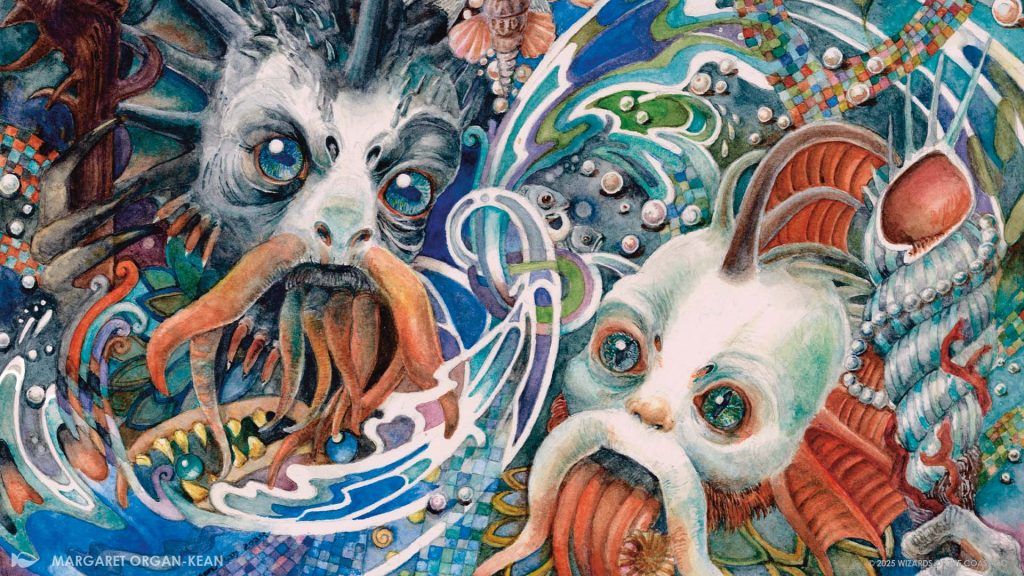
Sygg's Command | Illustration by Margaret Organ-Kean
Whew! And with that, you should be more than ready for Lorwyn Eclipsed Prerelease! There’s a tiny bit more I wanted to cover, but this is huge already so I’ll save that for the next guide.
Which archetype do you hope to find in your Lorwyn Eclipsed Sealed pool? Let me know in the comments below or over on the Draftsim Discord.
Thank you so much for reading, and have a great time with this sweet new set!
Follow Draftsim for awesome articles and set updates:










Add Comment