
Last updated on July 10, 2026

Witherbloom Command | Illustration by Dmitry Burmak
Command cards are unique instants and sorceries in Magic. They usually give you four options to choose from instead of just doing one specific thing. They can draw you cards, tap your opponent’s board, or even destroy lands! Their power comes from their choice and flexibility, with the strongest command cards having the most use regardless of board state or what you’re playing against.
Here we’ll be compiling every command card printed, starting with the Lorwyn cycle and working our way through the years and variations on these modal spells.
What Are Commands in MTG?

Ashling's Command | Illustration by Iris Compiet
Command cards are modal instants and sorceries that allow you to pick two options from among four when you cast them. They’re versatile and give you strong tempo plays, and they’re rarely dead in your hand since they have so much functionality.
The best commands offer modes that interact with your opponents as well as ones that benefit you directly, so you can often disrupt opponents and build out your own board or recoup card advantage at the same time.
One-Off Commands
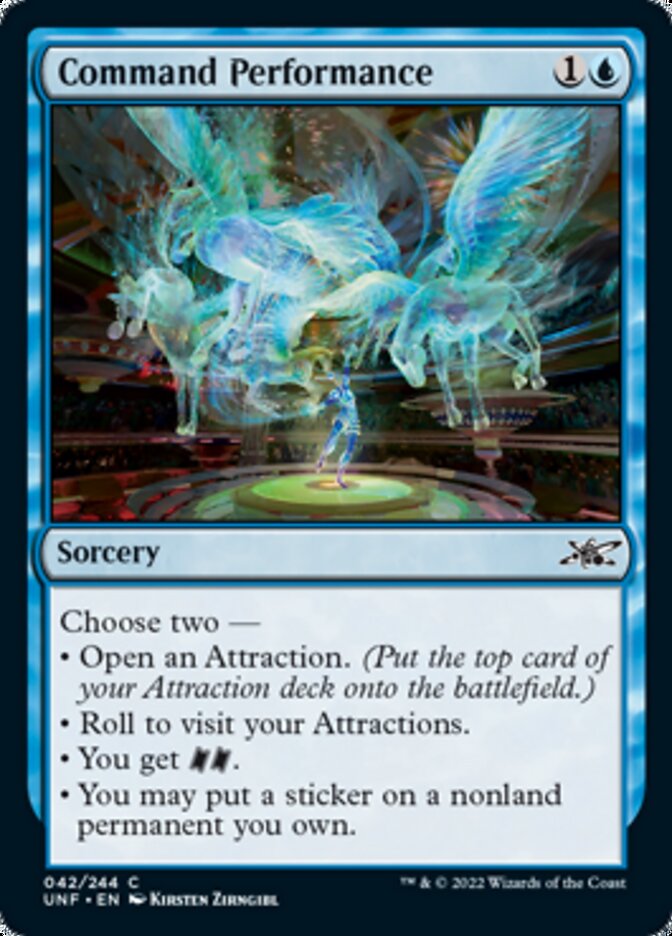

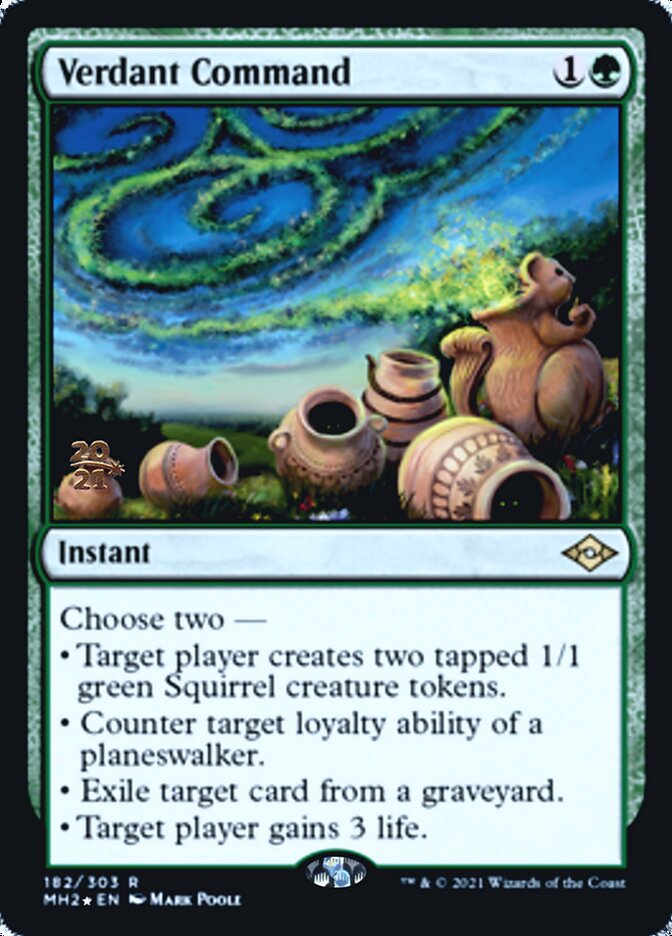

While most commands exist within 5-card cycles, they occasionally print one-off commands that stand on their own and use the command template on a singular card. These include:
- Command Performance from Unfinity
- Kozilek's Command from Modern Horizons 3
- Verdant Command from Modern Horizons 2
- Six different versions of Very Cryptic Command, all from Unstable
Original Lorwyn Commands
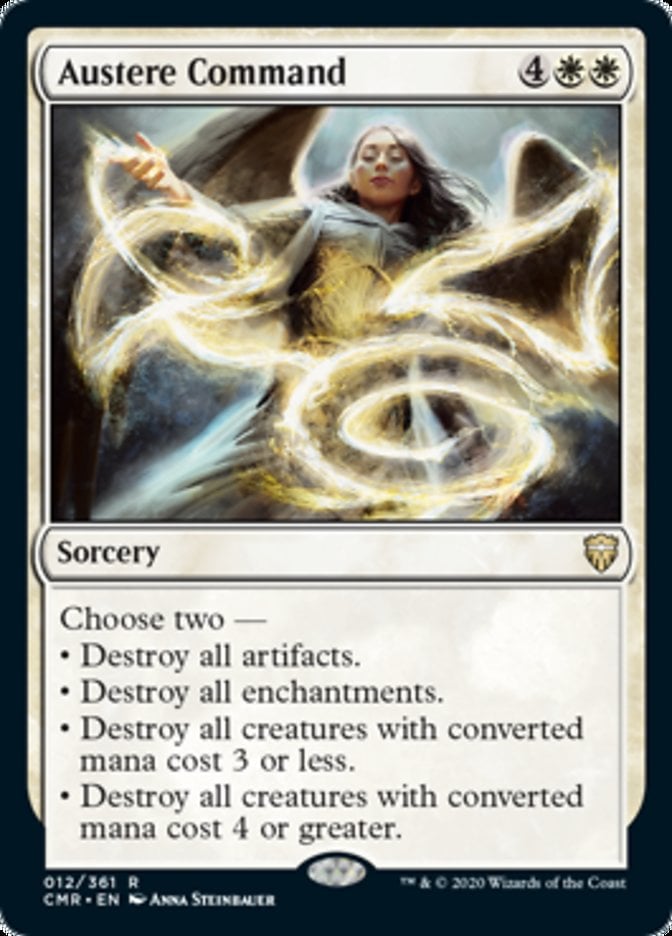
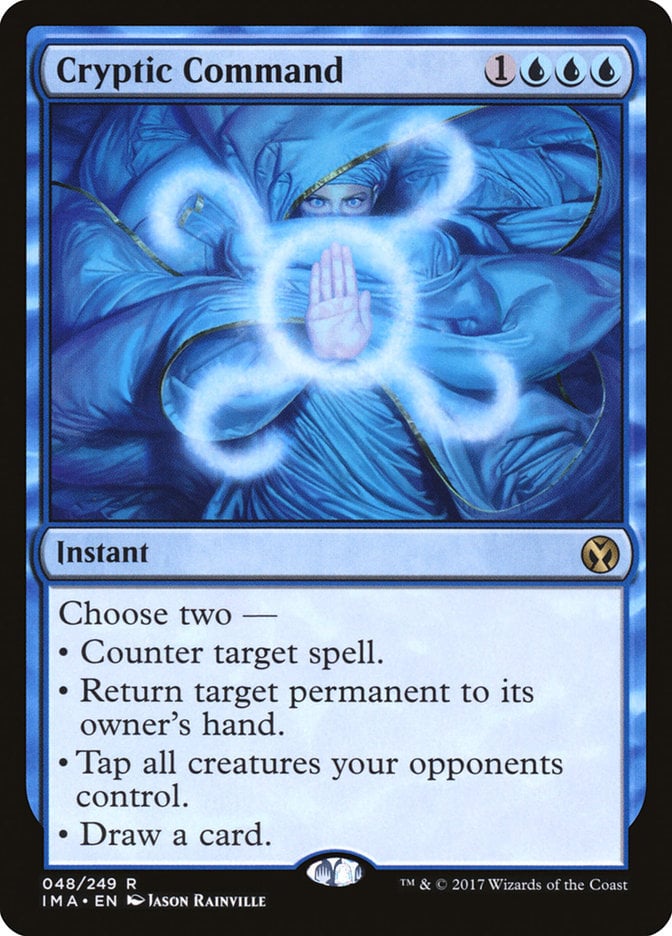
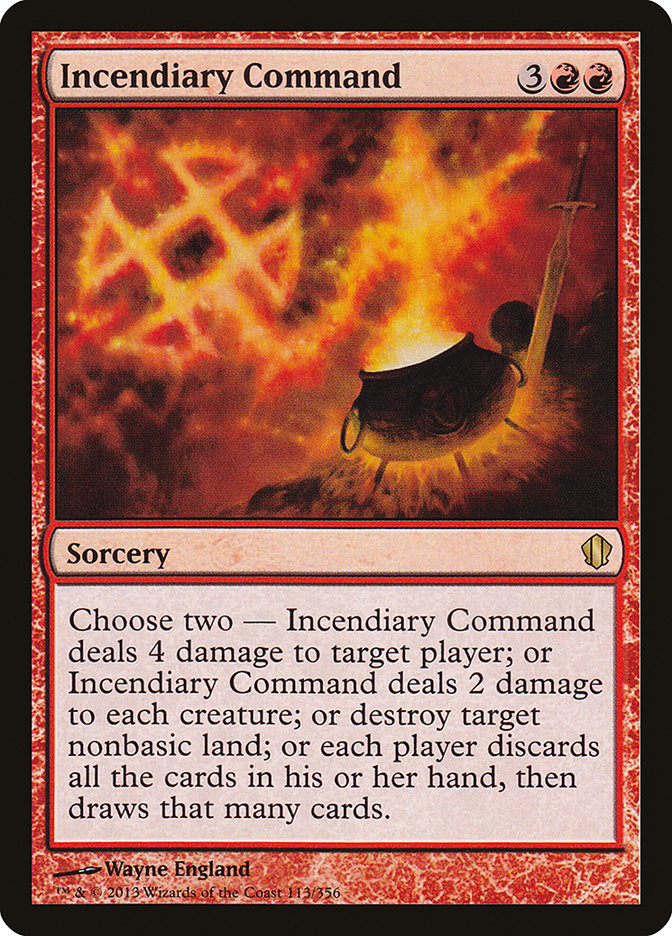
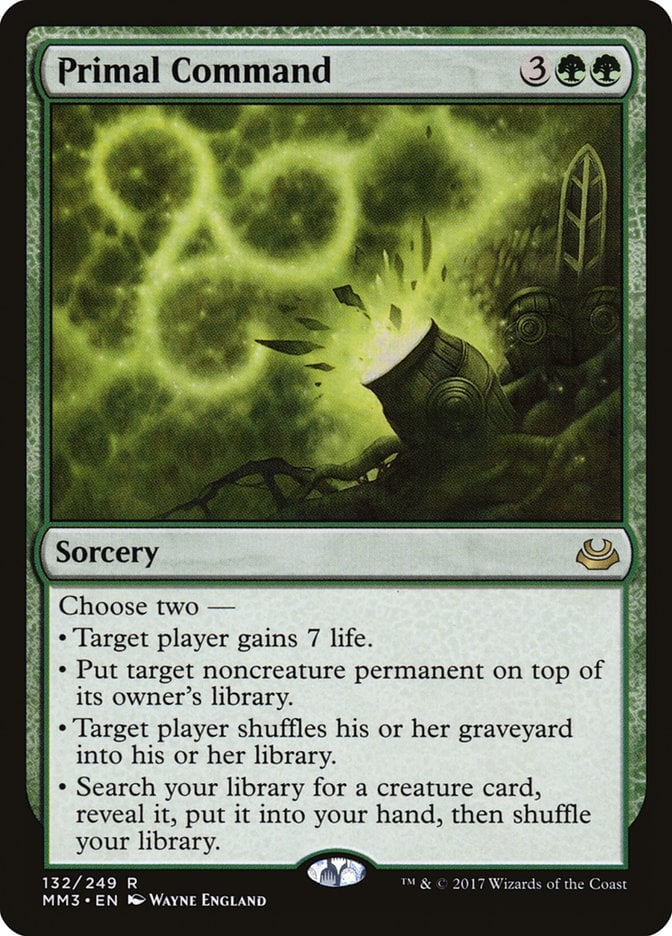
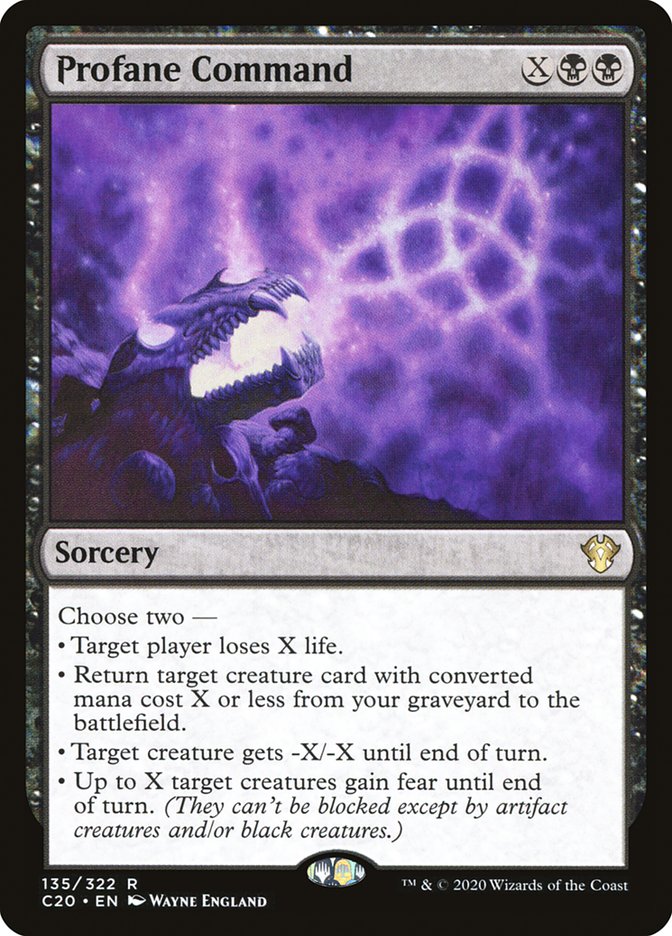
Magic’s original commands came from Lorwyn, which introduced the template and included mono-colored versions, one for each color. All of these cards held a spotlight somewhere, at some time, with the exception of Incendiary Command.
Cryptic Command was a top-tier counterspell for quite some time, and remains a part of higher-powered Cubes to this day. Primal Command was also a Cube mainstay but has since been usurped by more powerful green cards. Profane Command was a standout Limited bomb in multiple Draft sets. And Austere Command is a flexible board wipe that still sees plenty of Commander play, despite having more competition from other wraths.
Dragons of Tarkir Commands
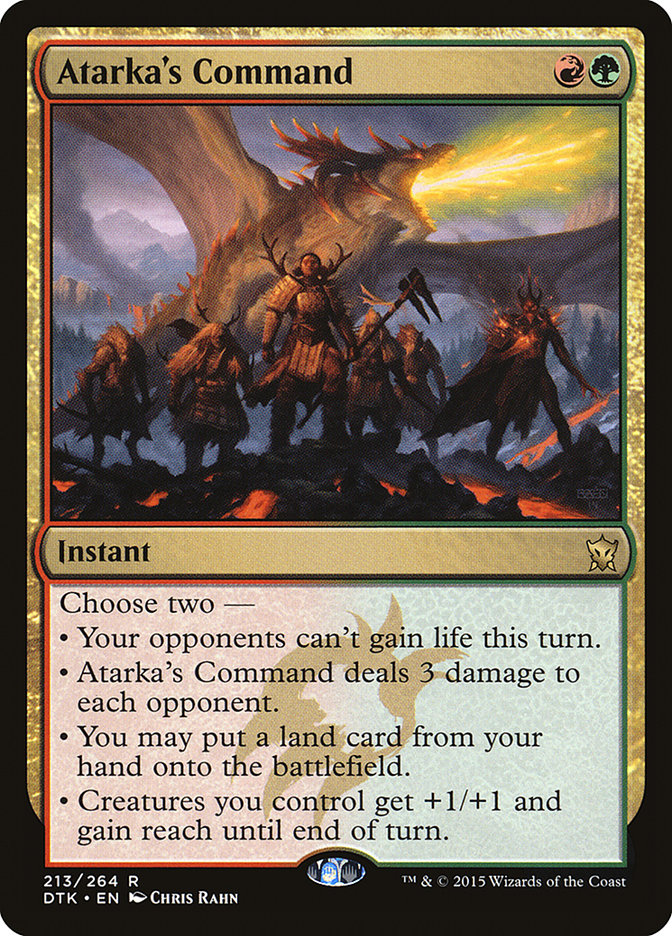
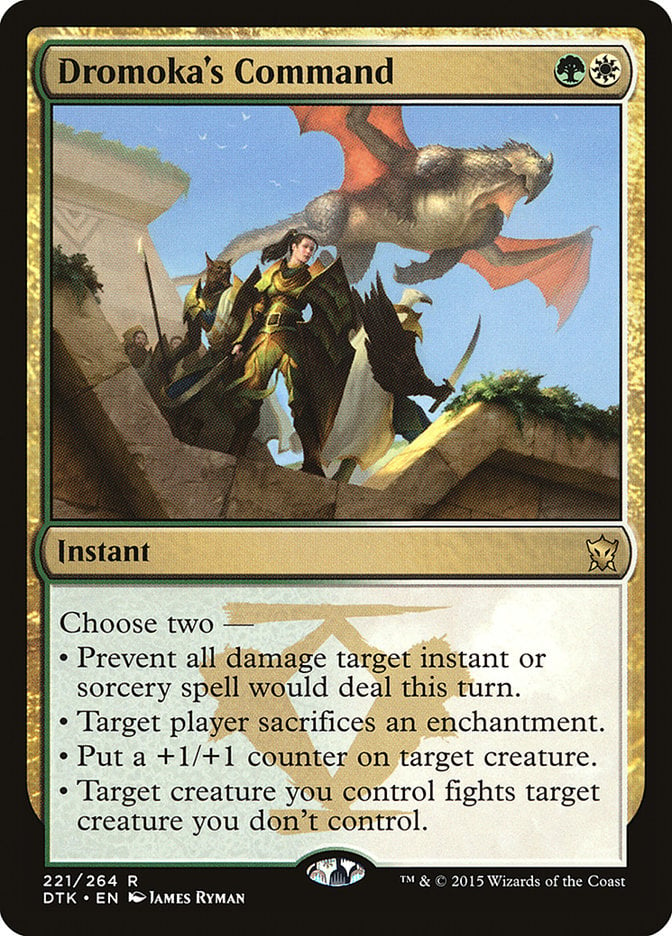
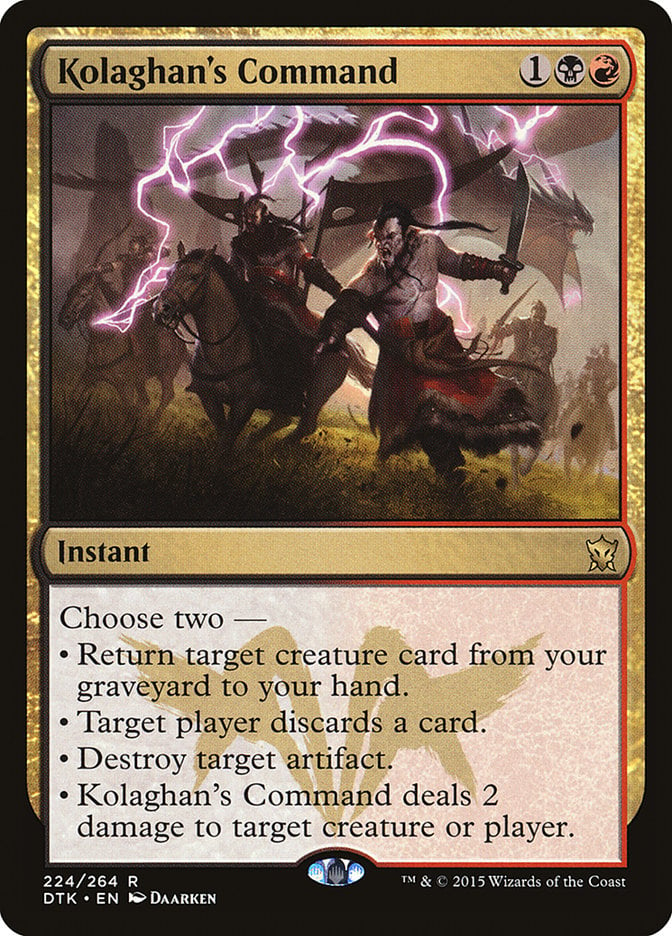
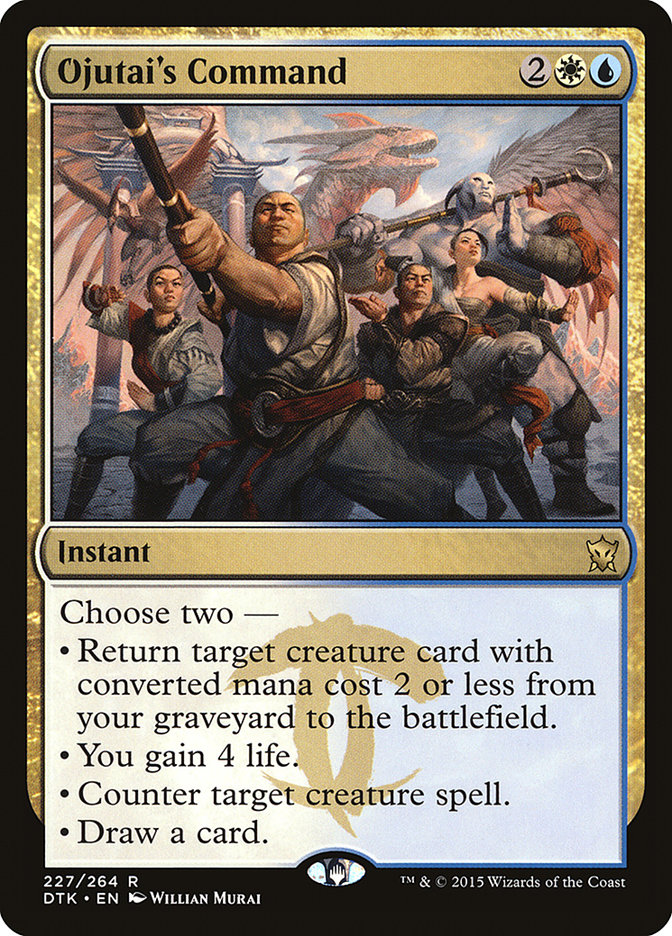
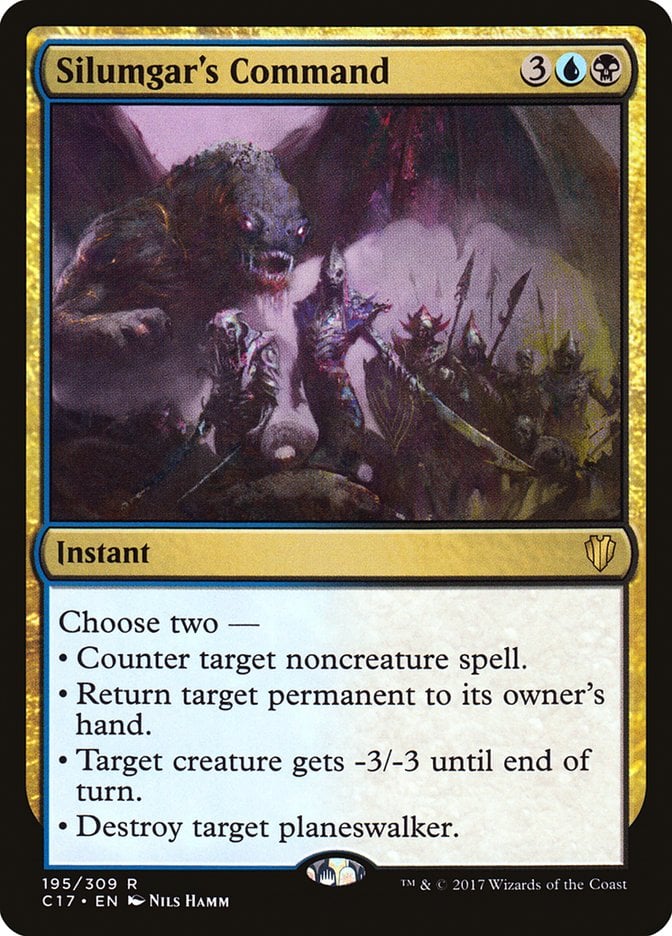
The first 2-color commands came from Dragons of Tarkir, which were associated with the Dragonlords’ broods and color pairs. Kolaghan's Command is the only one that still sees any amount of play across most formats, though they were all played to some extent while legal in Standard, and remain decent options in casual Commander decks.
Strixhaven Commands
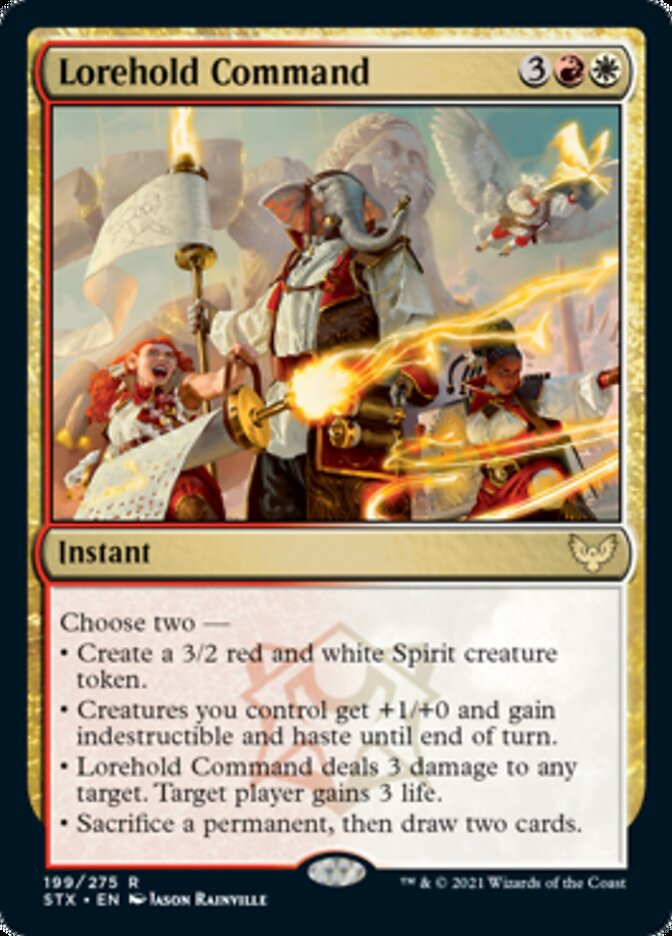
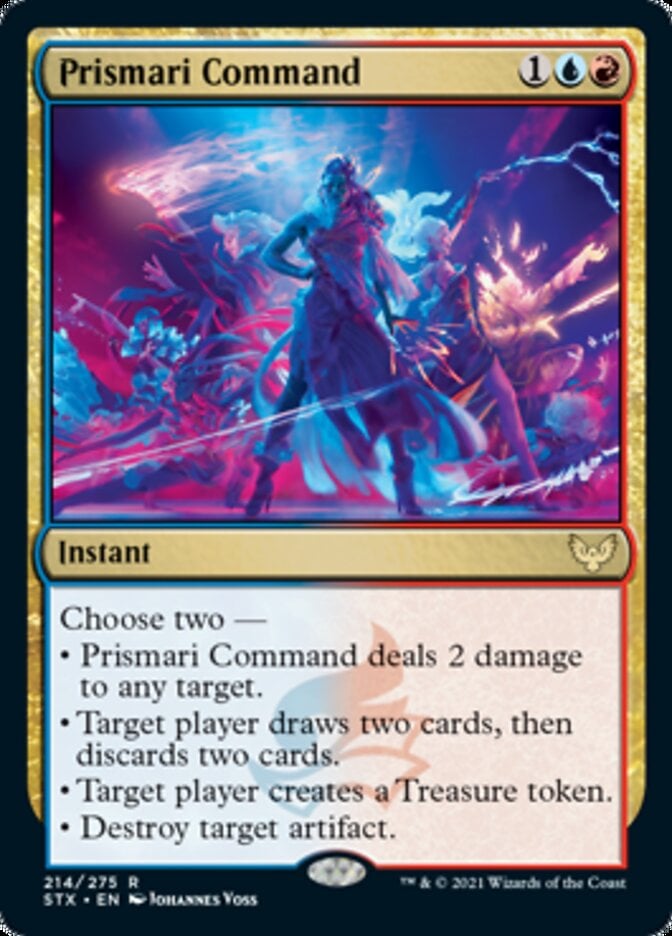
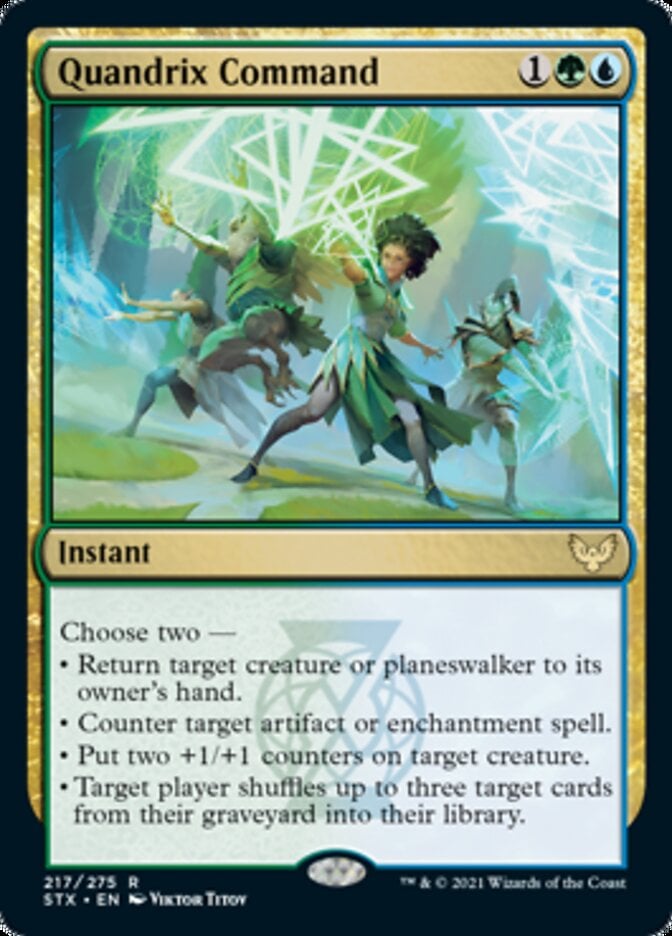
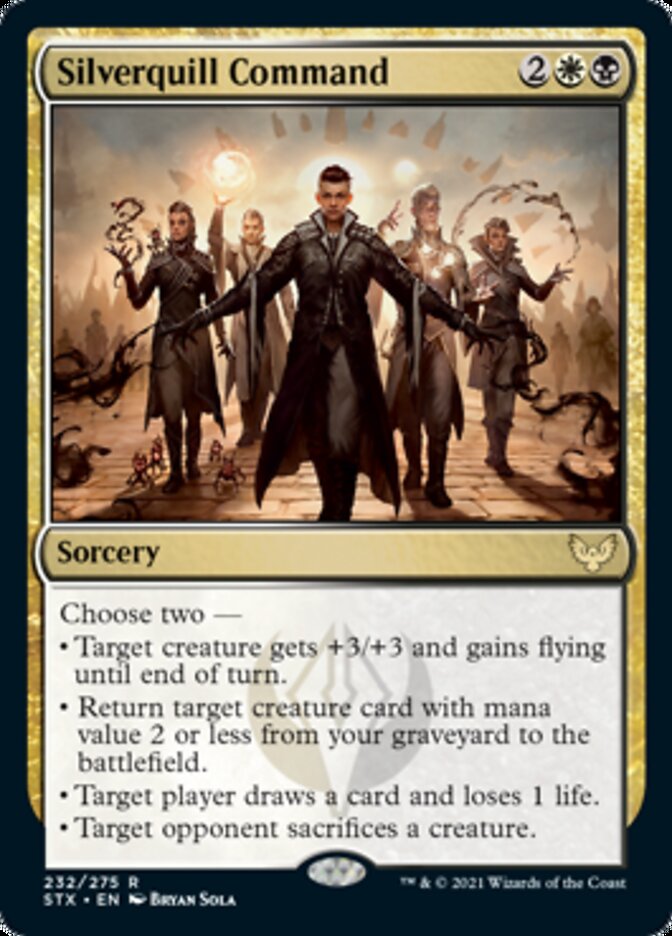
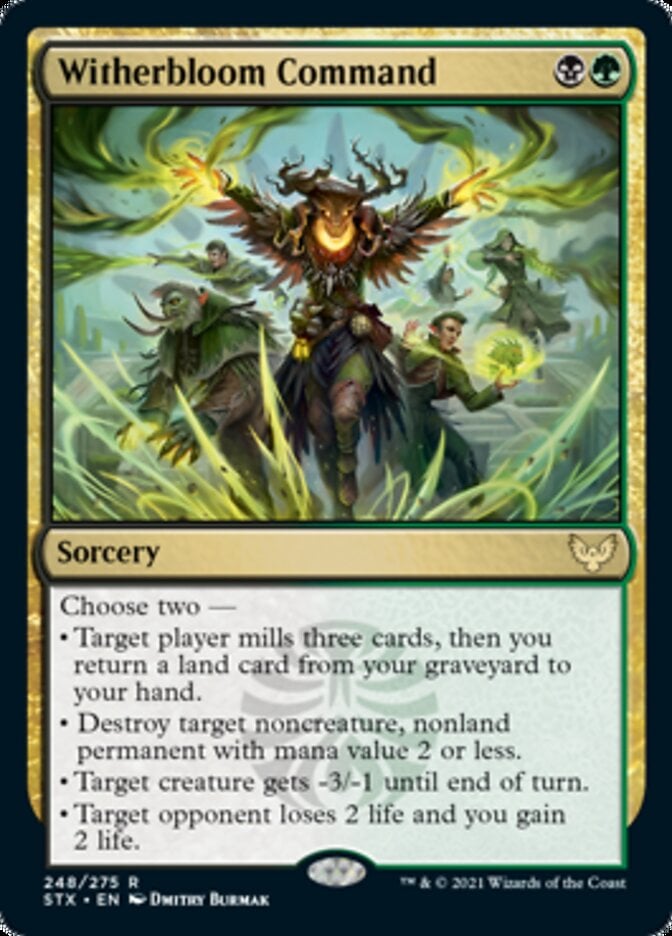
The first enemy-colored commands were printed in Strixhaven: School of Mages, and completed a sort of full 10-card cycle with the DTK commands. These didn’t deviate from the formula at all, and simply provided modal spells in a new set of color pairs. They weren’t as prevelant as cards from previous cycles, but Witherbloom Command has shown up in competitive settings, and Prismari Command does a fine impression of Kolaghan's Command.
The Brothers’ War Commands
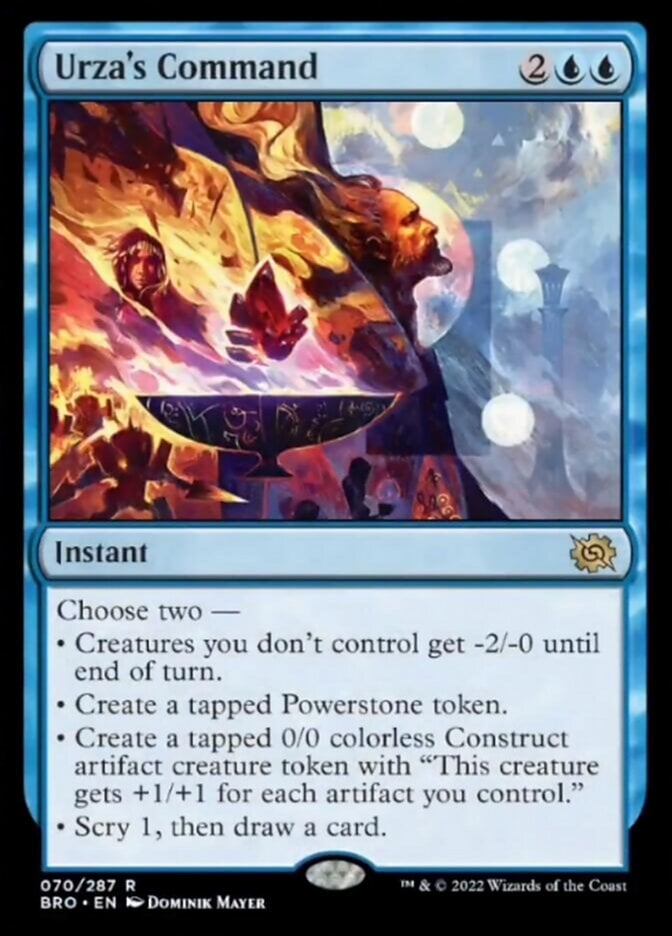
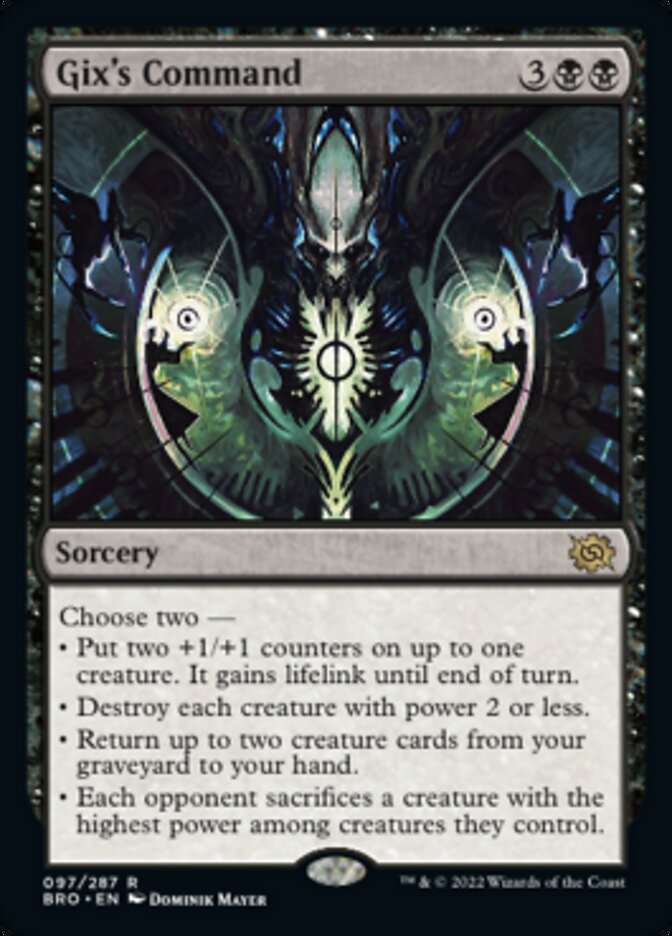
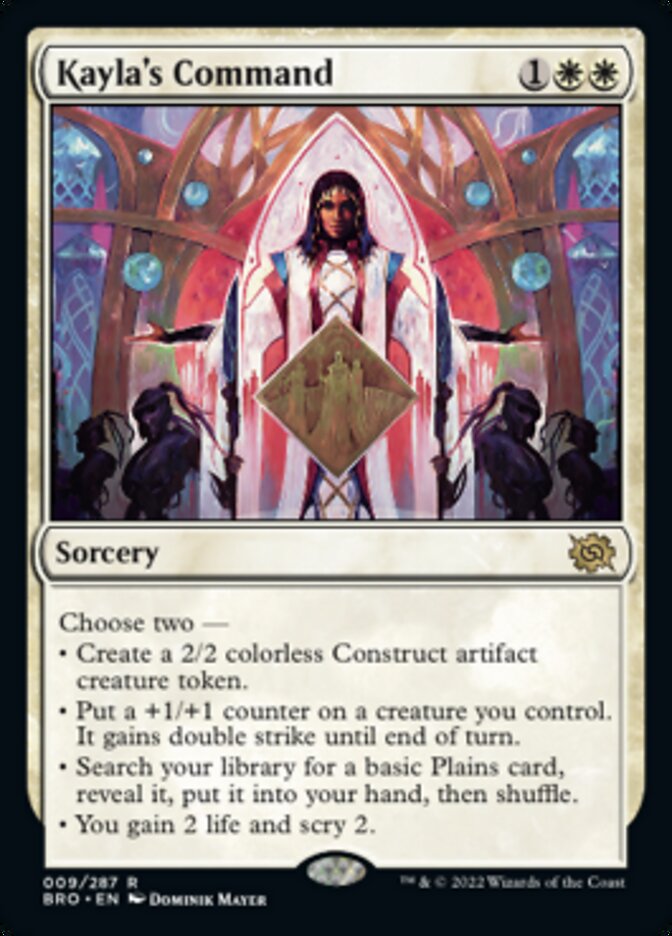
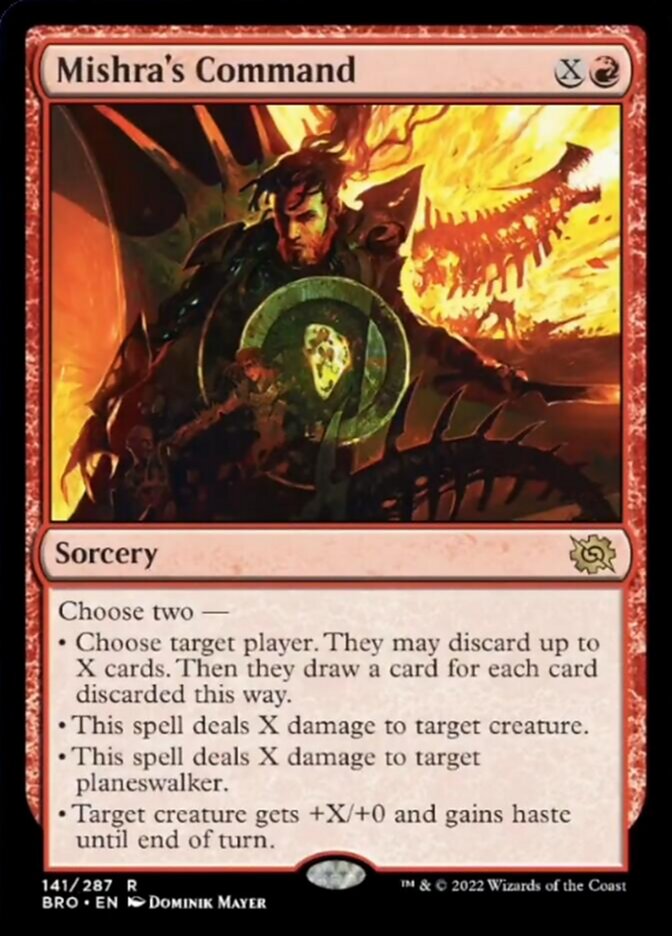
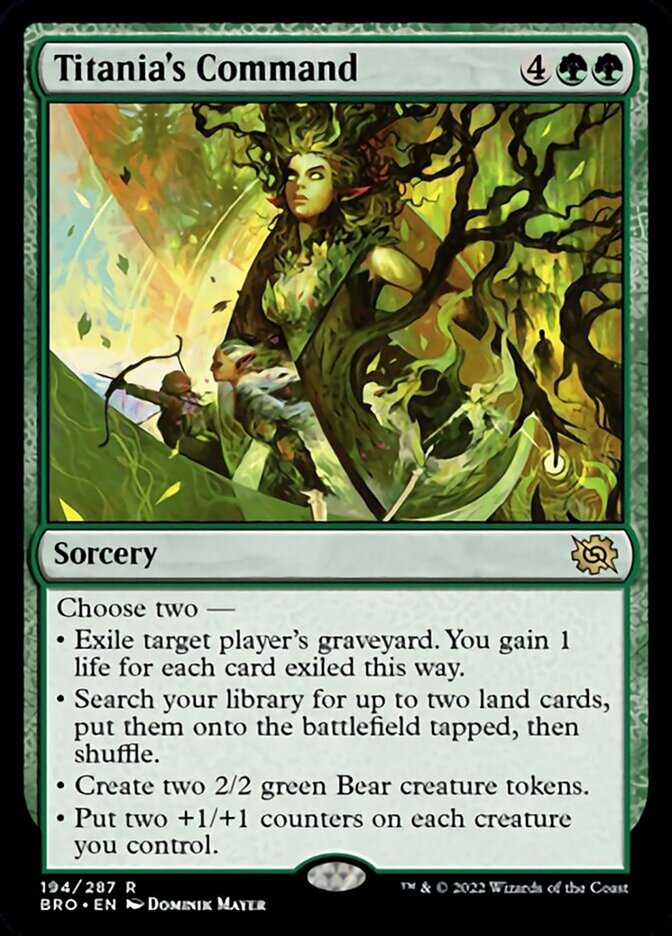
The Brothers’ War introduced a new cycle of mono-colored commands associated with major characters from the set. Gix's Command and Titania's Command stood out as massive Limited bombs, but the cycle as a whole failed to catch on in any competitive settings.
Kindred Commands

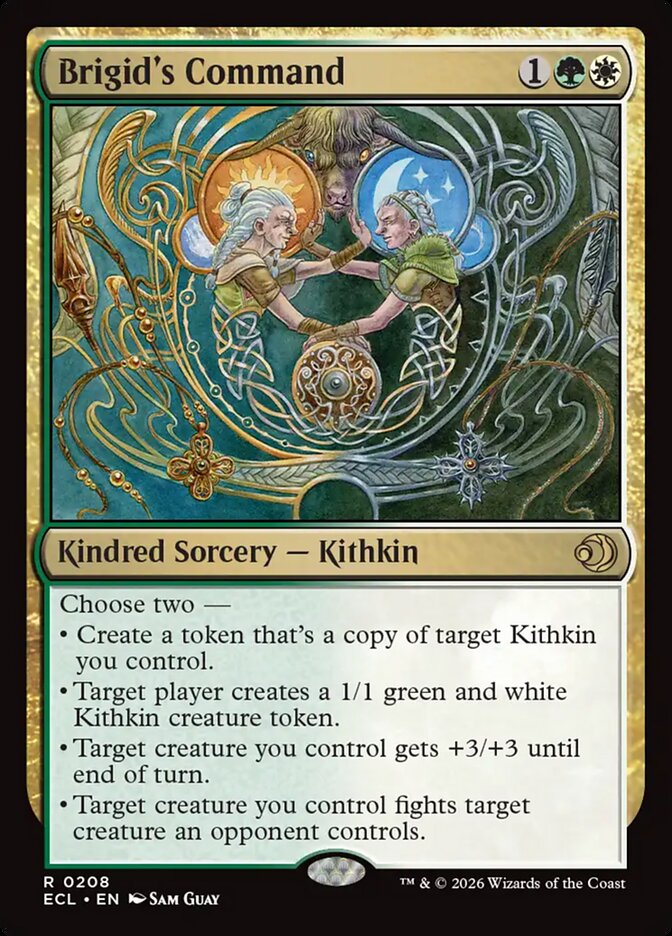
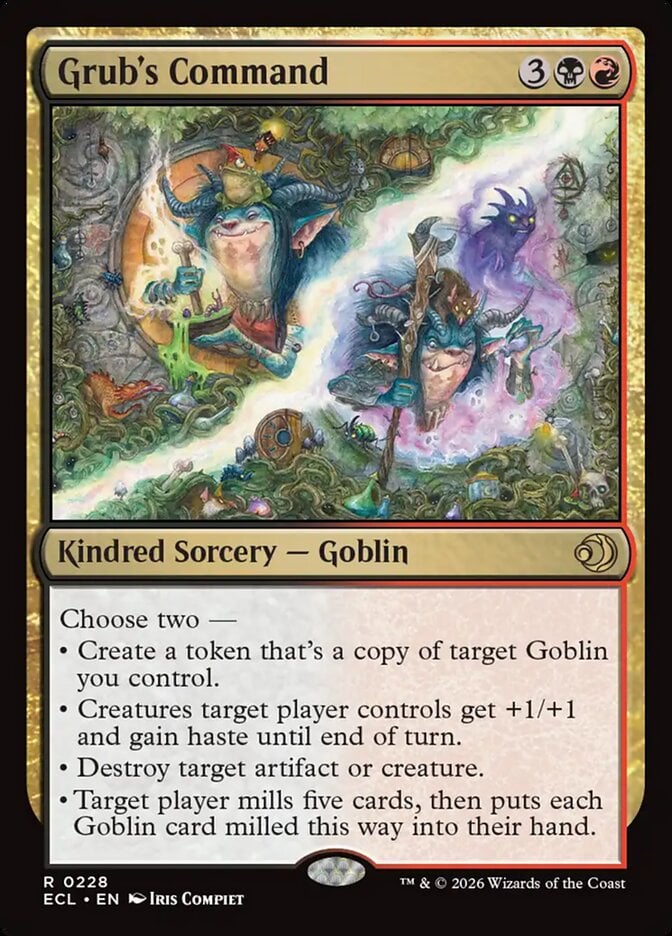
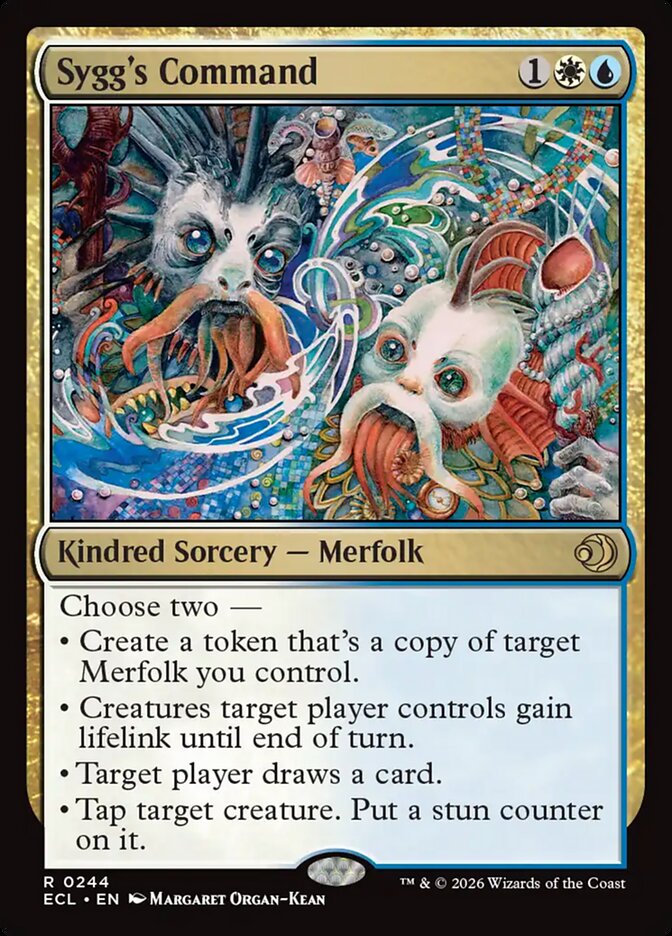
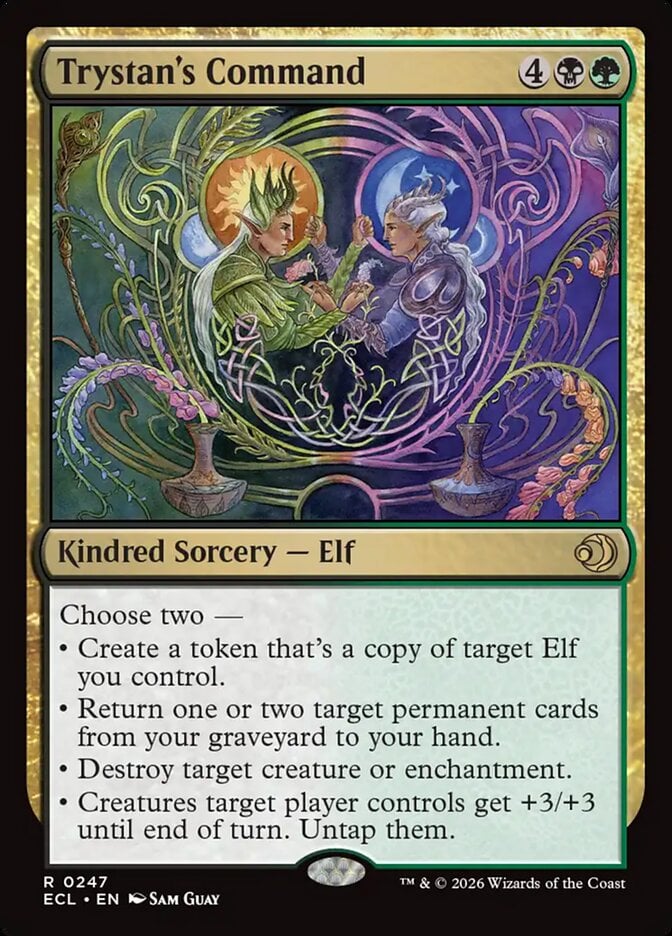
Lorwyn Eclipsed paid homage to the original Lorwyn block with a new cycle of commands, this time a mix of ally- and enemy-colored instants and sorceries with the kindred card type, and an associated creature type.
Most of these were very powerful in Limited, Trystan's Command and Ashling's Command especially, though being kindred cards means they have a fairly prescriptive home anywhere else, whether in Constructed of Commander.
In What Order Do Command’s Modes Resolve?
Command spell modes resolve in the order they’re printed on the card. This may not seem very important but it’s critical to their use for cards like Primal Command.
Since they resolve in order from top to bottom on the oracle text, you can pick Primal Command’s third and fourth option to put a creature from your graveyard into your library and then immediately tutor it back into your hand. This wouldn’t be possible if these were the other way around as you’d have to tutor out a card andthen shuffle your graveyard.
Similarly, if you choose modes 1 and 2 on Lorehold Command, you will create the 3/2 spirit first, then get +1/+0, indestructible, and haste, so the spirit will gain those benefits.
Notably, even though modes on commands resolve in order, the entire effect exists as one spell on the stack. Once a command starts to resolve, players cannot take actions in between modes and anything that triggers will wait until the entire spell (both modes) has resolved to be put on the stack. If your opponent aims a counterspell at your command, the entire spell is countered, and no modes resolve.
How Does Copying a Command Work?
When copying a modal spell, command or otherwise, the modes from the original spell carry over to the copies. You can’t change modes, though you can change targets for any copied modes that involve targeting.
If you’re instructed to cast a copy of a modal spell, for example with the trigger on God-Eternal Kefnet, you can select which modes you want, since you’re not copying another spell with already-selected modes.
Do Commands Work with Riku of Many Paths?
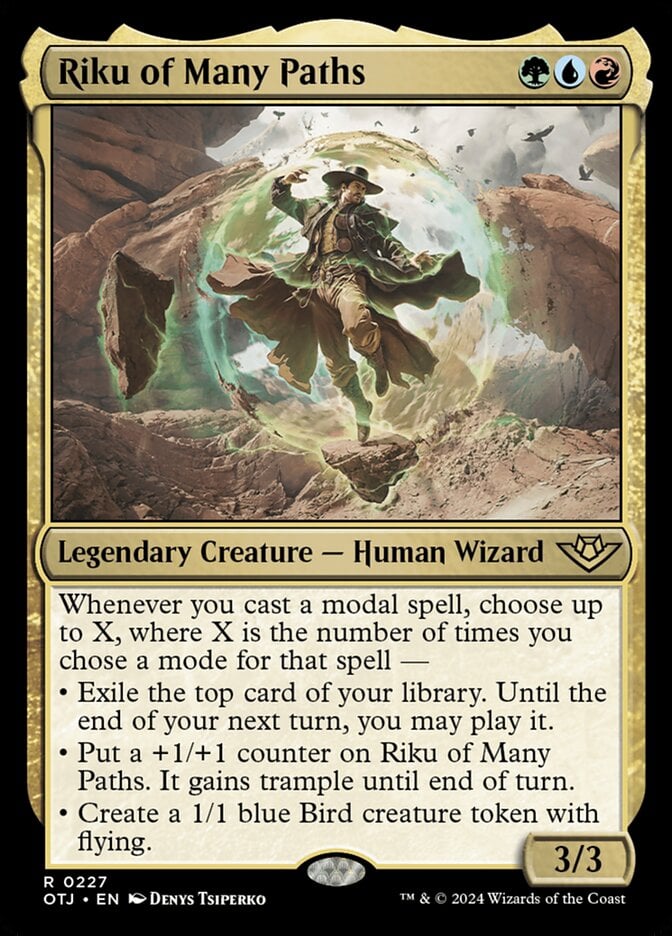
Yes, a modal spell is an instant or sorcery with a bulleted list of options, and commands fit the description. With Riku of Many Paths in play, you’ll choose two options when Riku triggers.
Decklist: Codie Commands in Commander
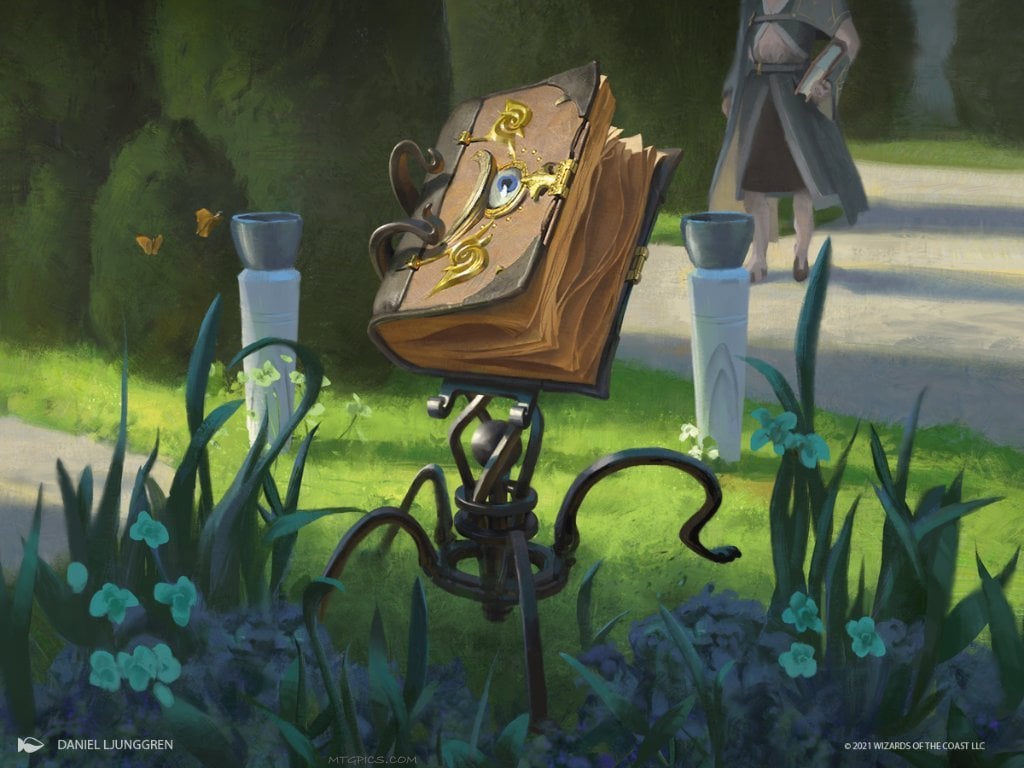
Codie, Vociferous Codex | Illustration by Daniel Ljunggren
Commander (1)
Creatures (11)
Archmage Emeritus
Birds of Paradise
Crystal, Inhuman Princess
Ignoble Hierarch
Jadzi, Oracle of Arcavios
Jodah, Archmage Eternal
Noble Hierarch
Riku of Many Paths
Simian Spirit Guide
Voltaic Construct
Witherbloom Apprentice
Instants (24)
Abrupt Decay
Arcane Denial
Assassin's Trophy
Atarka's Command
Beast Within
Counterspell
Cyclonic Rift
Dromoka's Command
Frantic Search
Kolaghan's Command
Lorehold Command
Mystical Tutor
Noxious Revival
Ojutai's Command
Prismari Command
Quandrix Command
Quicken
Reverberate
Silumgar's Command
Swan Song
Swords to Plowshares
Teach by Example
Vampiric Tutor
Verdant Command
Sorceries (21)
Approach of the Second Sun
Ashling's Command
Austere Command
Blasphemous Act
Conflux
Culling Ritual
Cultivate
Demonic Tutor
Emergent Ultimatum
Farseek
Fractured Identity
Jeska's Will
Kodama's Reach
Mind's Desire
Mnemonic Deluge
Primal Command
Profane Command
Rampant Growth
Three Visits
Trystan's Command
Witherbloom Command
Enchantments (4)
Jeskai Ascendancy
Mana Cannons
Sorcerer Class
Whirlwind of Thought
Artifacts (7)
Arcane Signet
Chromatic Lantern
Commander's Sphere
Fellwar Stone
Mind Stone
Obsidian Obelisk
Sol Ring
Lands (32)
Ancient Tomb
Blood Crypt
Breeding Pool
City of Brass
Command Tower
Exotic Orchard
Flooded Strand
Forest x2
Hallowed Fountain
Island
Ketria Triome
Mana Confluence
Misty Rainforest
Mountain x2
Mystic Sanctuary
Overgrown Tomb
Plains x2
Polluted Delta
Reliquary Tower
Scalding Tarn
Steam Vents
Stomping Ground
Swamp x2
Temple Garden
The World Tree
Verdant Catacombs
Watery Grave
Zagoth Triome
There weren’t really any specifically “command-themed” Commander decks until Riku of Many Paths, so I went ahead and threw together a list of what I think it could look like.
The deck’s commander is Codie, Vociferous Codex. We’ve got an alternative cEDH list here, but take this as an example of a 5-color spells deck that’s purposefully trying to include as many command cards as possible.
Codie has a passive ability that says you can’t cast permanent spells. You still run a handful of permanents, but remember that you’ll have a few turns before Codie drops and turns where it’s dead. With this in mind, the permanents you do have are must-have mana accelerants like Sol Ring and extremely useful cards to play right before your commander like Jeskai Ascendancy and Mana Cannons.
This deck looks to quickly ramp out and play lots of big mana spells through your commander’s activated ability as well as multiple big spells like Jeska's Will and Mnemonic Deluge. As for winning the game, you have a couple strategies.
Approach of the Second Sun can always be tutored out and played to get you there in long matchups. Massive turns with cards like Mind's Desire can sometimes set your opponents back so far there’s simply no hope. You can also win with general big-mana-good-stuff shenanigans, which this deck has plenty of.
Wrap Up

Austere Command | Illustration by Anna Steinbauer
Those are all of the command spells! Do you think you can make a viable high-power EDH deck that includes all of these spells, or do you think it’s more of a for-fun midrange deck?
Let me know down in the comments or go check out Draftsim’s Discord and talk about it there! And subscribe to The Daily Upkeep newsletter to stay up to date on all the latest MTG news.
Until next time, stay safe and stay healthy!
Follow Draftsim for awesome articles and set updates:










Add Comment