
Last updated on February 6, 2026
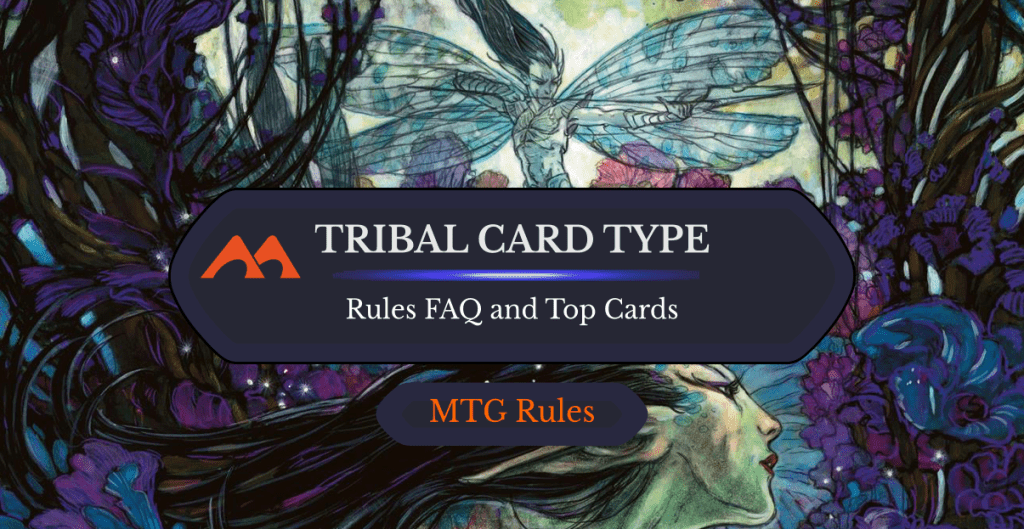
Bitterblossom | Illustration by Rebecca Guay
Magic’s history is full of experiments and mechanics that haven’t returned much since they were introduced. Cipher is a pet favorite of mine, and the arcane spell type associated with spirits is another weird relic from the past.
Magic players everywhere have probably heard of typal/tribal synergies, but players can easily forget that kindred/tribal is also a card type.
So what were tribal cards in Magic? Is it a supertype, a subtype, or neither? Will we ever see it again? Read on for the run-down on tribal Magic cards!
How Do Tribal and Kindred Cards Work?
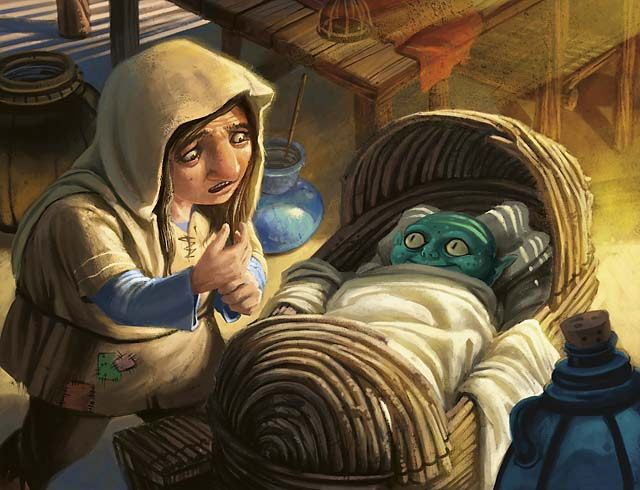
Crib Swap | Illustration by Brandon Dorman
Tribals cards (renamed kindred) have at least one creature type in their type line, but they aren’t creature cards. For the most part, tribal cards work as their rules text and other card types indicate. Tribal instants, sorceries, enchantments, and artifacts are bound by the same rules as non-tribal ones.
The main change comes in how tribal cards interact with other cards. Tribal cards are fetchable and countable by effects that grab or count cards with the matching creature type. However, they aren’t fetchable if the effect specifies or implies a “_____ creature,” because they aren’t creatures. They don’t have power or toughness unless you animate the artifact or enchantment.
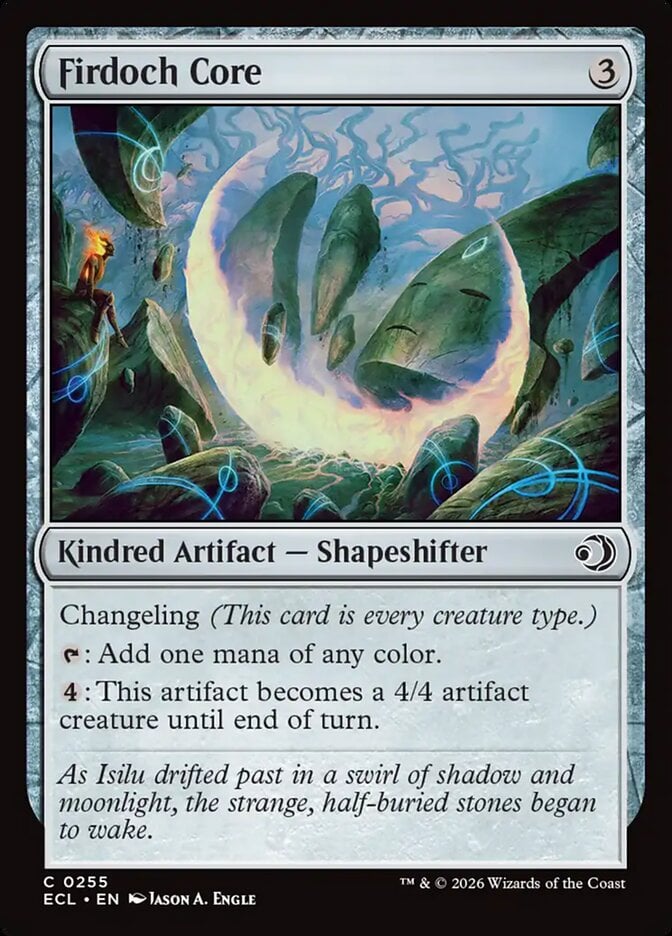

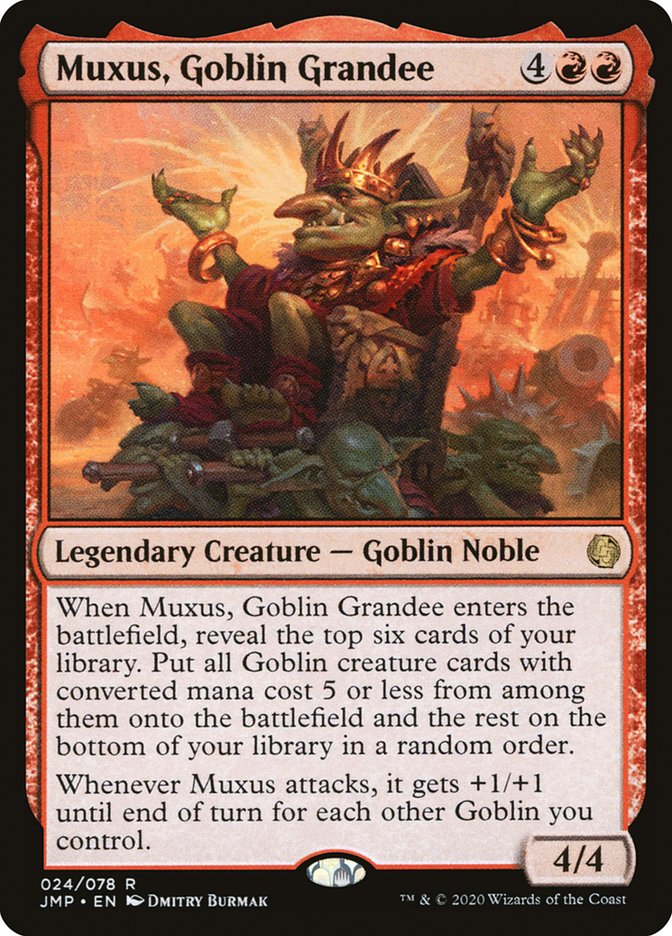
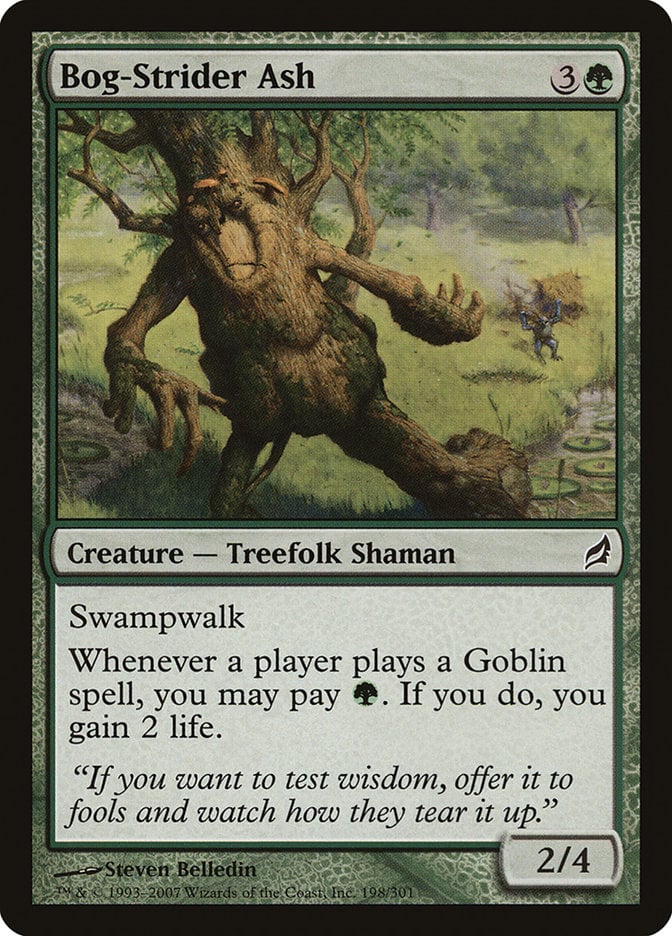
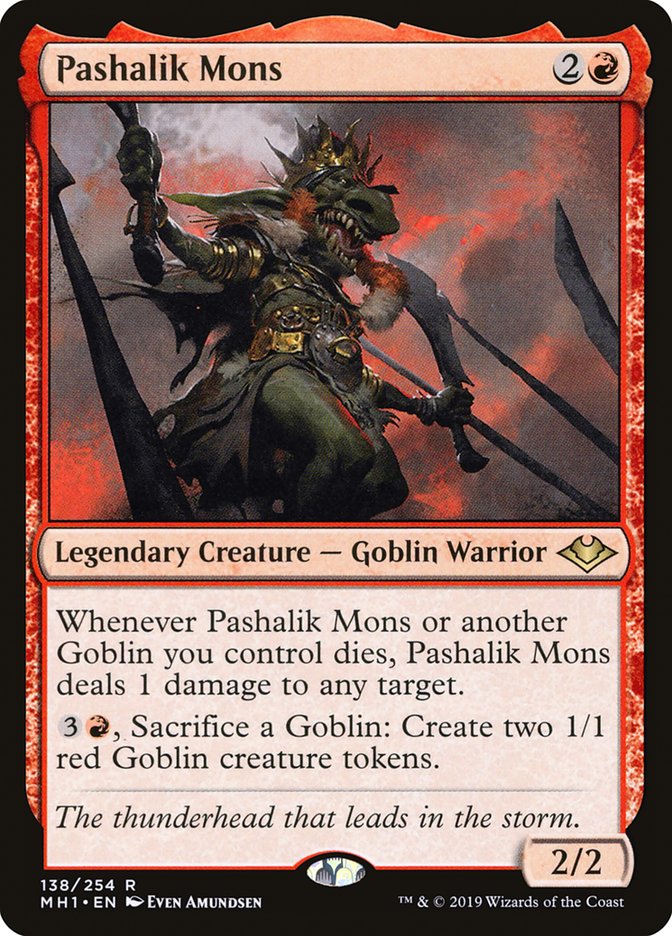
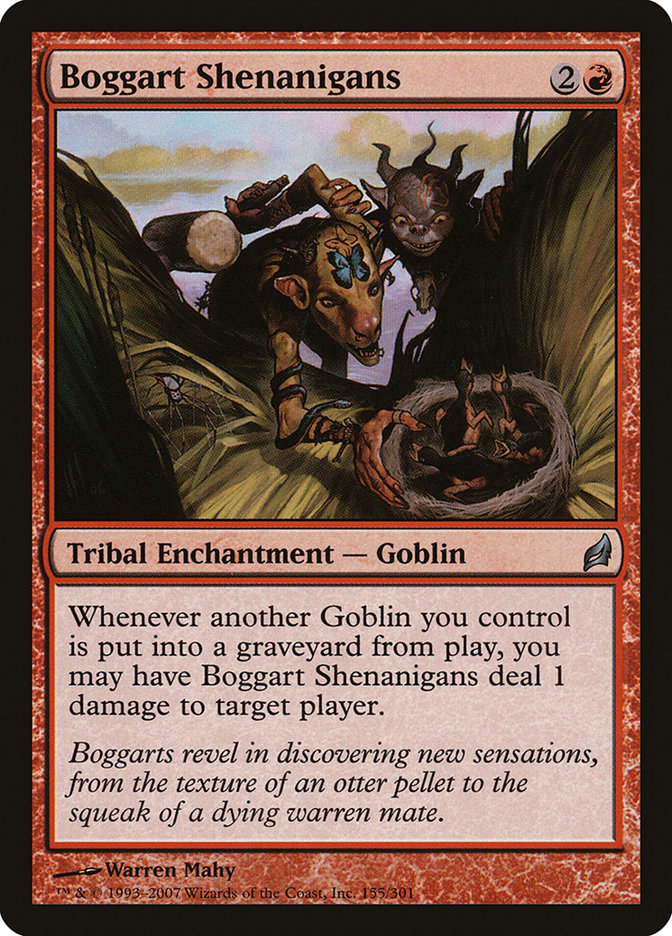
A kindred artifact like Firdoch Core with changeling and thus, the goblin creature type can be grabbed by an effect that’s searching for a “goblin card” (Grub, Storied Matriarch), but it can’t be fetched by an effect that’s searching for a “goblin creature” (Muxus, Goblin Grandee). It can be counted by an effect that counts the “goblins you control” (Muxus’s second ability), and it triggers Bog-Strider Ash’s “whenever an opponent casts a goblin” text. You can sacrifice a tribal goblin enchantment to Pashalik Mons, but it won’t trigger Pashalik Mons’s first ability unless it’s a creature.
The History of Tribal Cards in MTG
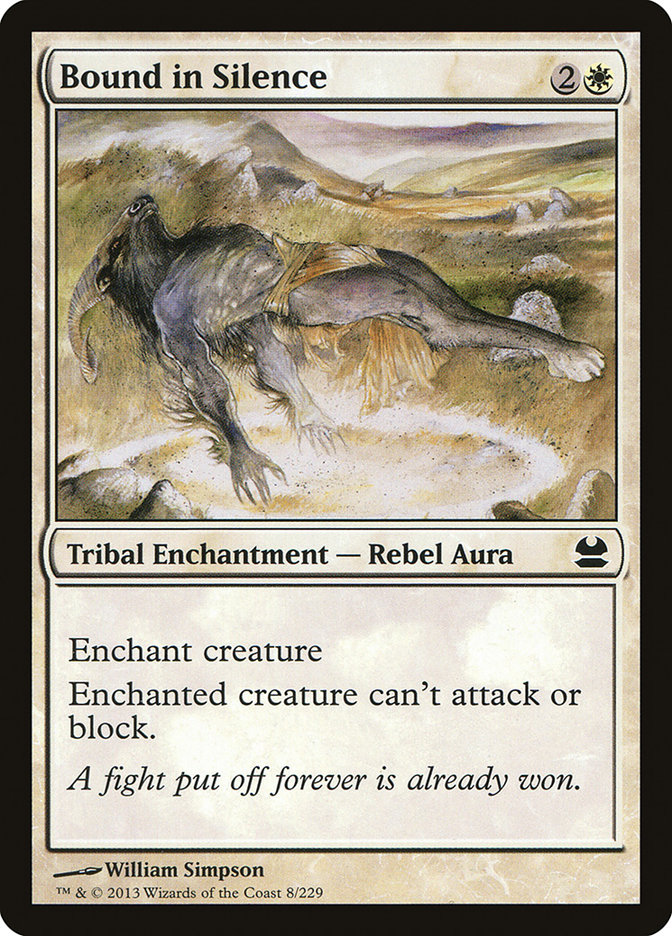
The tribal card type was introduced in 2007’s Future Sight, which featured a rebel aura named Bound in Silence. Lorwyn and Morningtide expanded upon the card type, and there were new cards printed over the next few years until Rise of the Eldrazi.


Innistrad featured lots of focused synergies among creature types like zombies and vampires, but it was notable for not using the tribal card type at all. That was pretty much the end of its run, although it returned on Altar of the Goyf from Modern Horizons 2 and was reprinted in Modern Horizons 3.
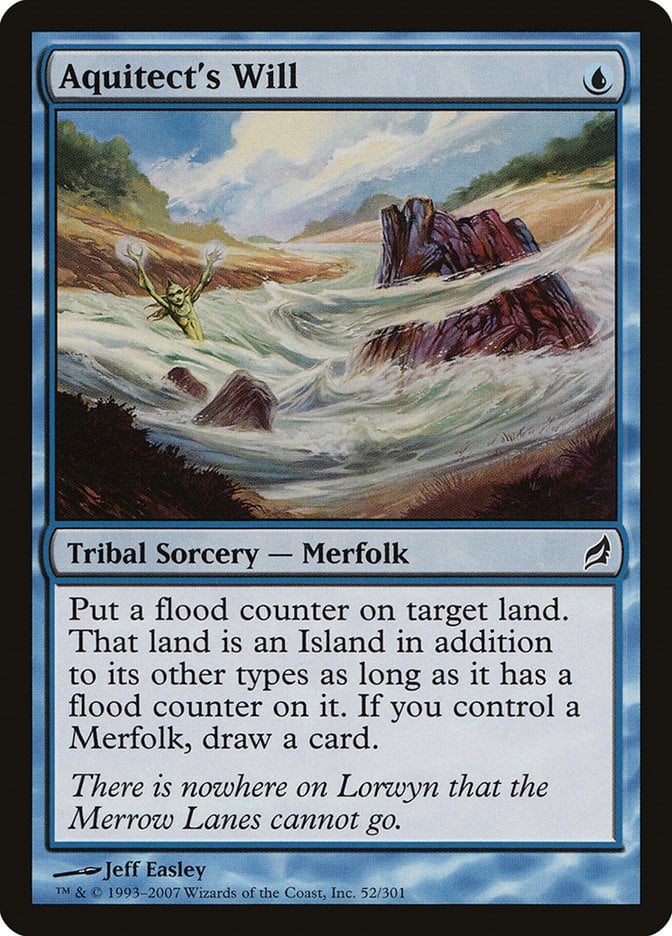
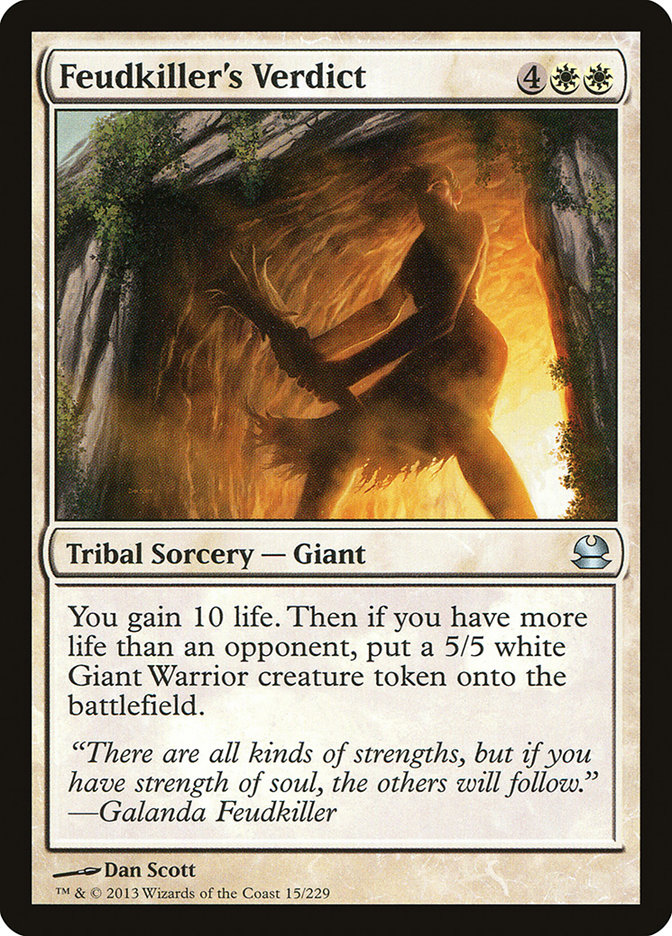
Tribal cards have also been reprinted in duel decks (ex: Aquitect's Will in Duel Decks: Merfolk vs. Goblins), Masters products (ex: Feudkiller's Verdict in Modern Masters), and Commander products (ex: Crib Swap in many products including Commander 2018).
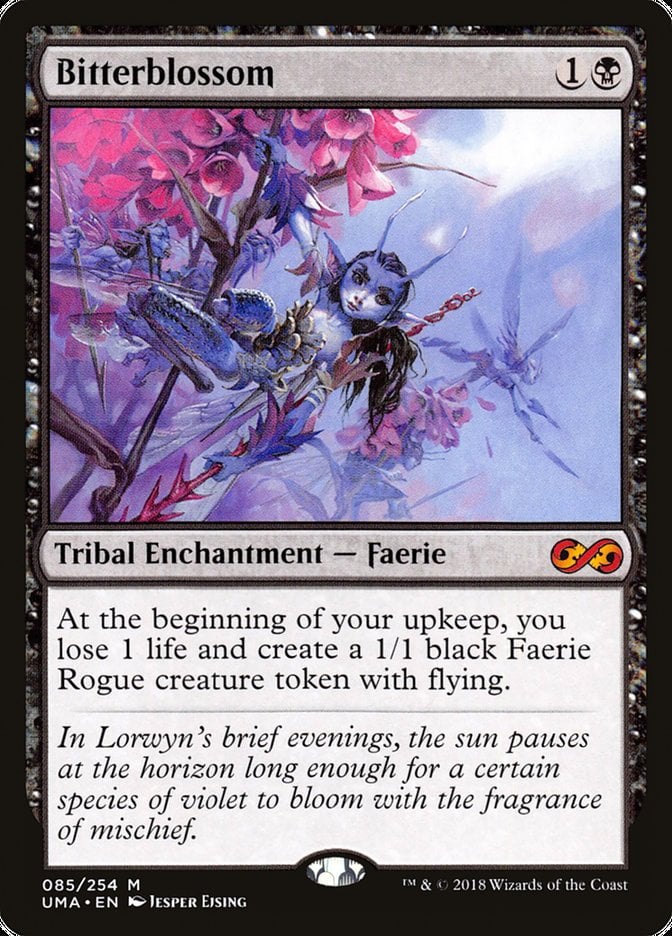
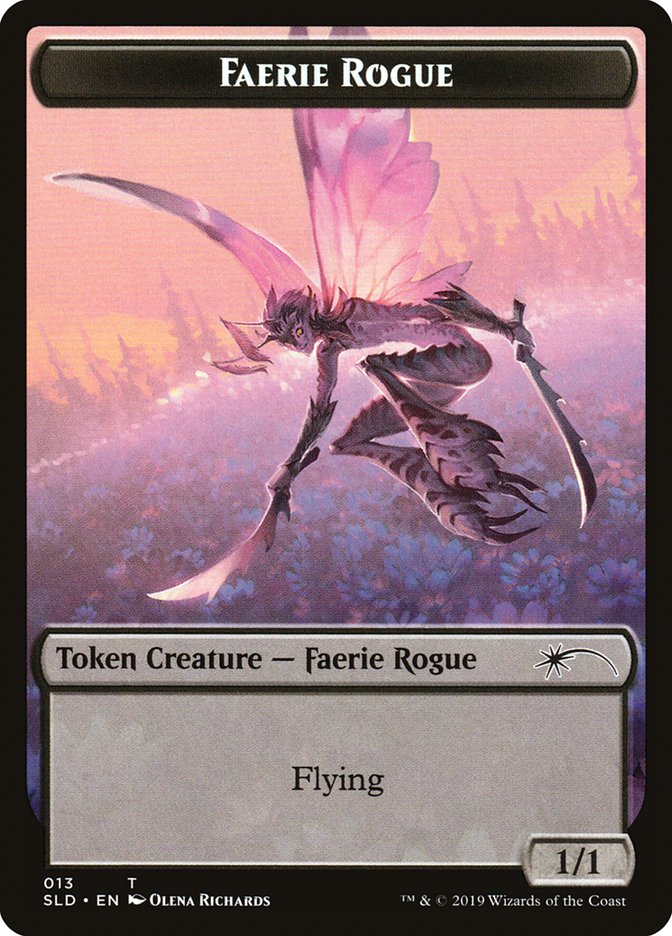
There’s even been a Secret Lair Drop called Bitterblossom Dreams which features a Bitterblossom with new art and four distinct Faerie Rogue tokens.
In November 2023, Wizards chose to replace “tribal” with “kindred”, and the next printings didn’t come until eldrazi and lhurgoyf cards in Modern Horizons 3. Since then, Lorwyn Eclipsed featured several cards with kindred to cement the term in Standard.
Was Tribal Replaced by Kindred as a Card Type?
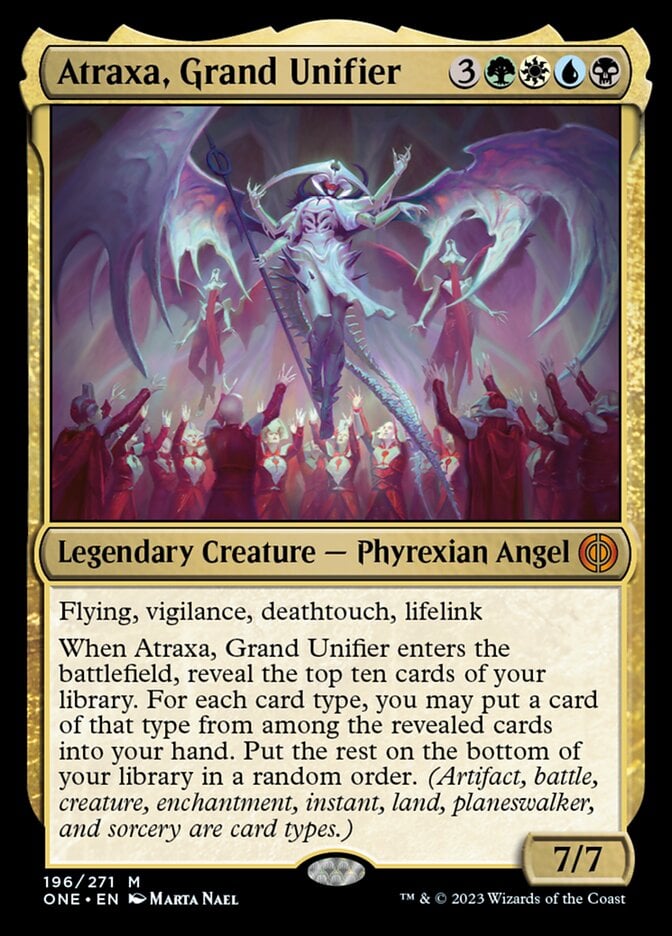
Yes, “tribal” is a card type, errata’d to “kindred” since Modern Horizons 3. Either one counts towards effects like Atraxa, Grand Unifier.
Is Tribal/Kindred a Card Type or a Supertype?
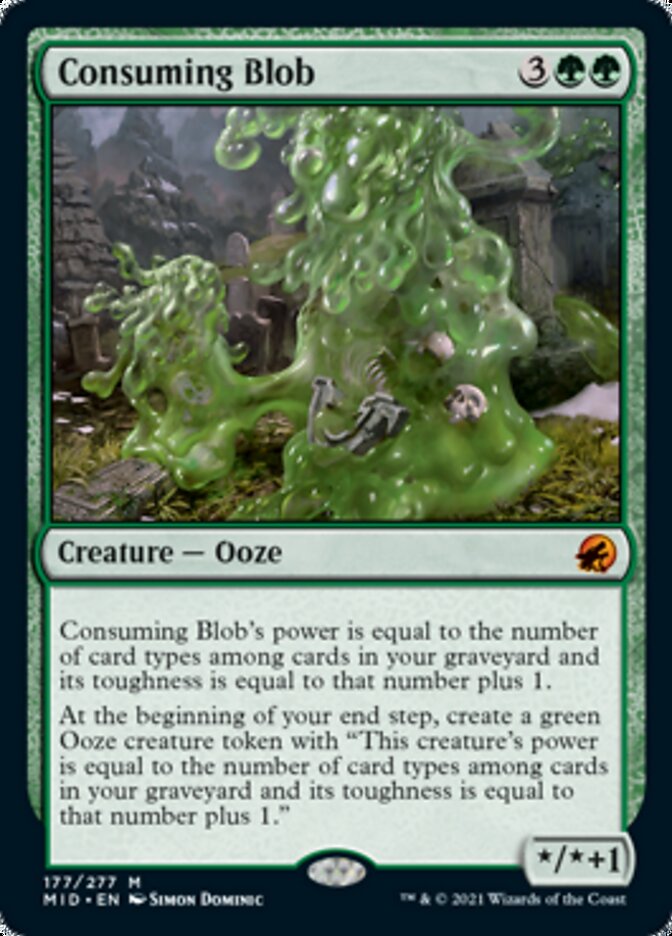
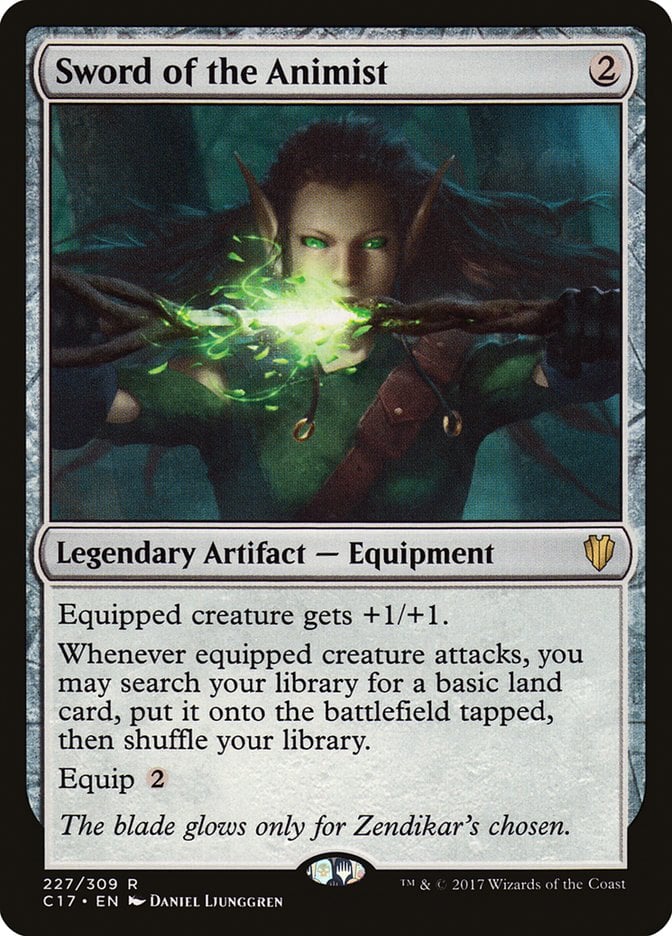
Tribal is a card type, not a supertype. It is a separate card type that can be counted by effects like Consuming Blob. Legendary is a supertype, so Sword of the Animist has a supertype, one card type (artifact), and a subtype (equipment).
Is Tribal a Type of Permanent?
No. Tribal is a card type, but its other types dictate whether it’s a permanent. Tribal artifacts and tribal enchantments are permanents, but only because of the second type.
How Is a Tribal Instant Different from a Regular Instant?
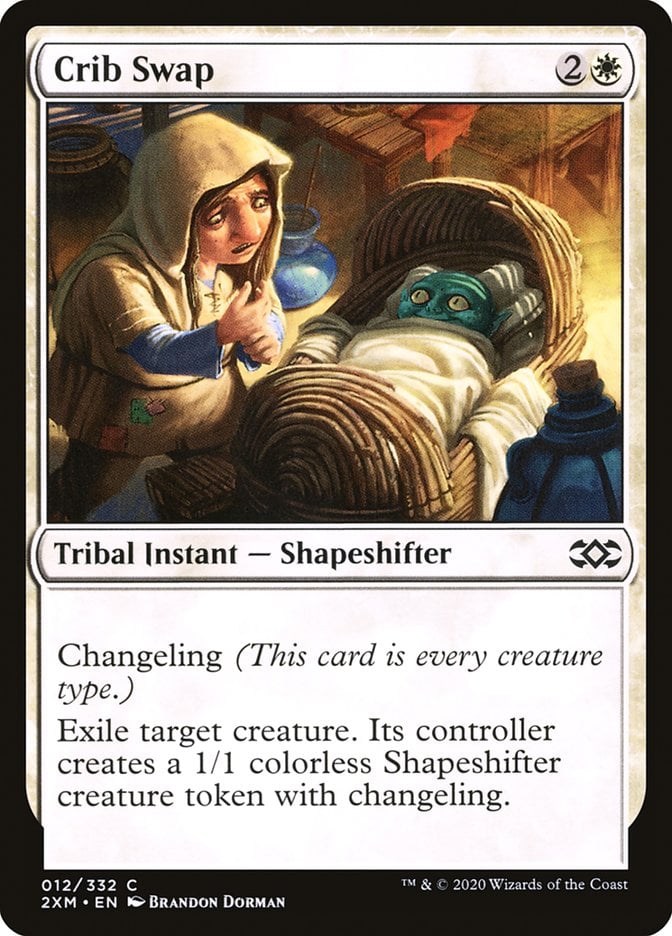
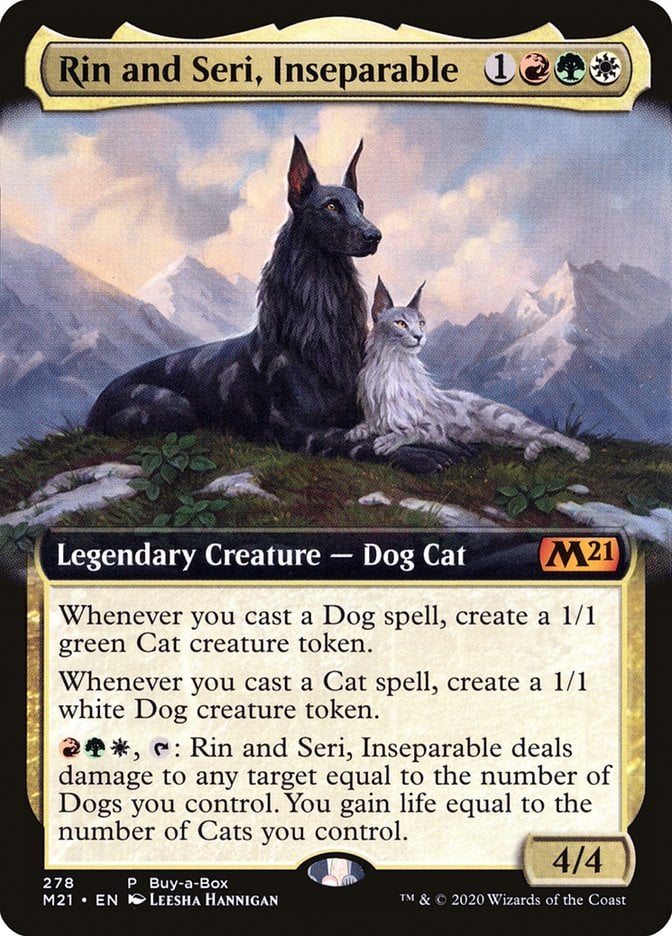
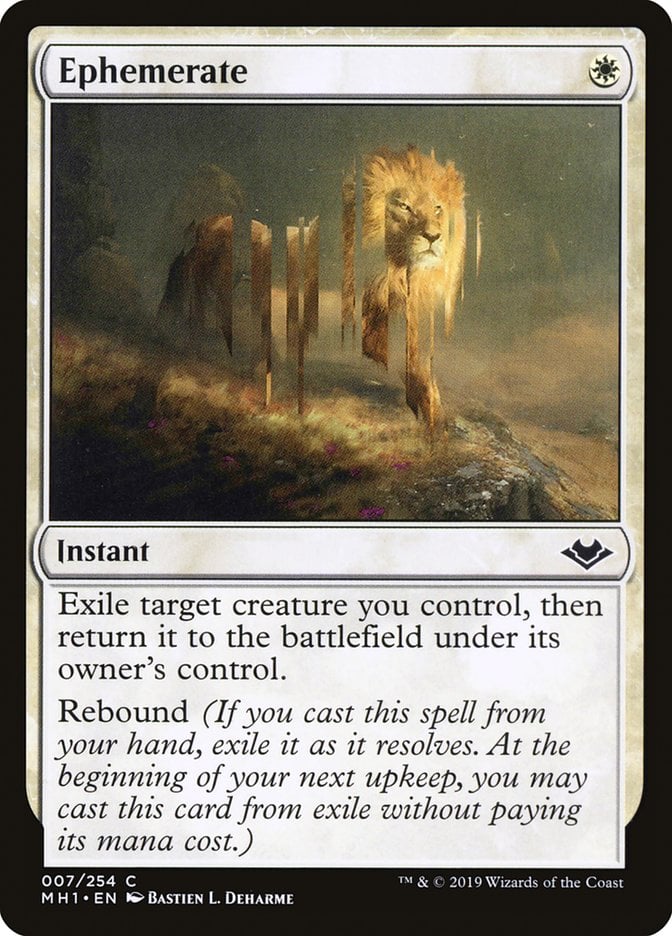
The main difference is the “tribal” in a tribal instant’s type line and how it interacts with other cards. It can be counted by, fetched by, or trigger abilities that care about the matching creature type. For example, a tribal card with the shapeshifter subtype and the changeling ability like Crib Swap triggers Rin and Seri, Inseparable twice, since it counts as both a dog and a cat spell. Ephemerate is a regular white instant that so happens to have a cat in its art.
Do Tribal Cards Count as Creatures on the Stack?
No. Tribal cards have a creature subtype (ex., goblin, merfolk), but they aren’t creatures. They don’t trigger “whenever you cast a creature spell” effects.
Will Tribal Cards Ever Come Back?
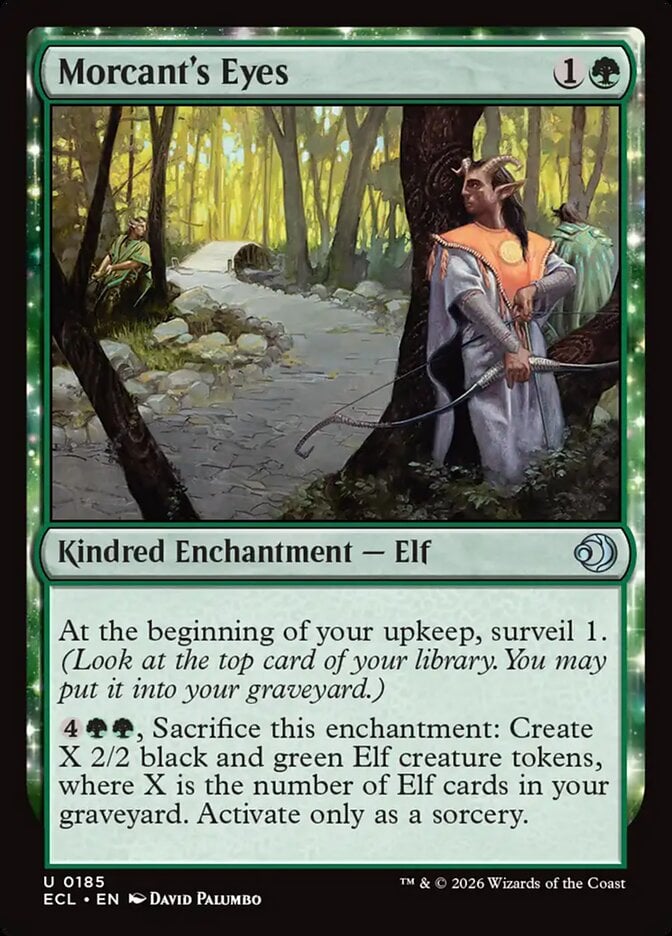
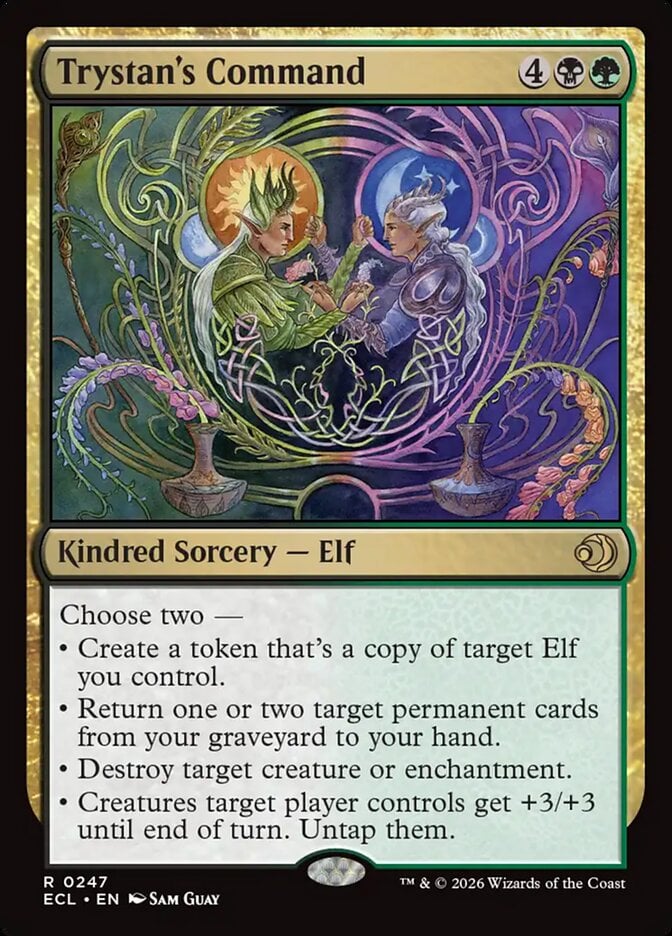
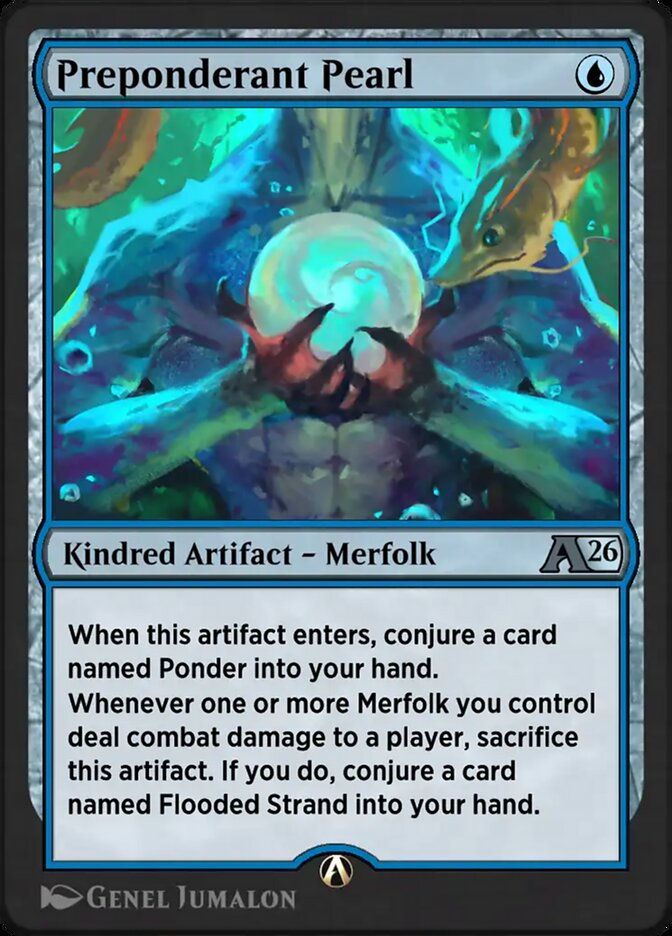
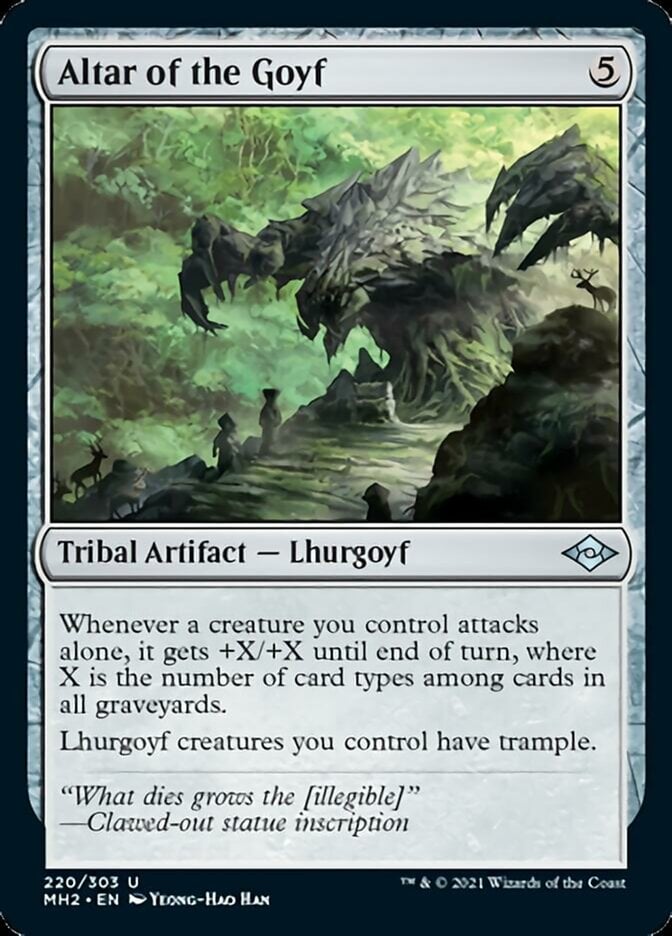


Yes, Lorwyn Eclipsed brought kindred/tribal cards back as permanents, nonpermanents, and Alchemy cards. You do get kindred non-creature cards like Tarmogoyf Nest and Demonic Covenant for non-Standard sets and Commander products.
Lignify was reprinted for LTC, and there was quite a gap between it and Altar of the Goyf from Modern Horizons 2.
As for how often to expect kindred/tribal, it is limited. According to responses from Mark Rosewater on his Blogatog Tumblr, he and the design team feel that you “can’t go half in,” which to me, sounds like they believe you have to label everything. Every burn spell, card draw spell, spot removal, sweeper, stax piece, and mana rock would have a creature type like goblin, wizard, rogue, elf, squirrel, shark, fox, ooze, or ouphe. That’s a lot of extra text that wouldn’t matter much most of the time, so the card type sees sparse use.
Tribal/Typal
Since Lord of the Rings: Tales of Middle-earth, Magic designers have started stepping away from the word “tribal” to describe synergies within a same theme, like how Anowon, the Ruin Thief buffs all your rogues. They say that “typal” is a more inclusive way to talk about those relationships between cards.
Gallery and List of Tribal Cards
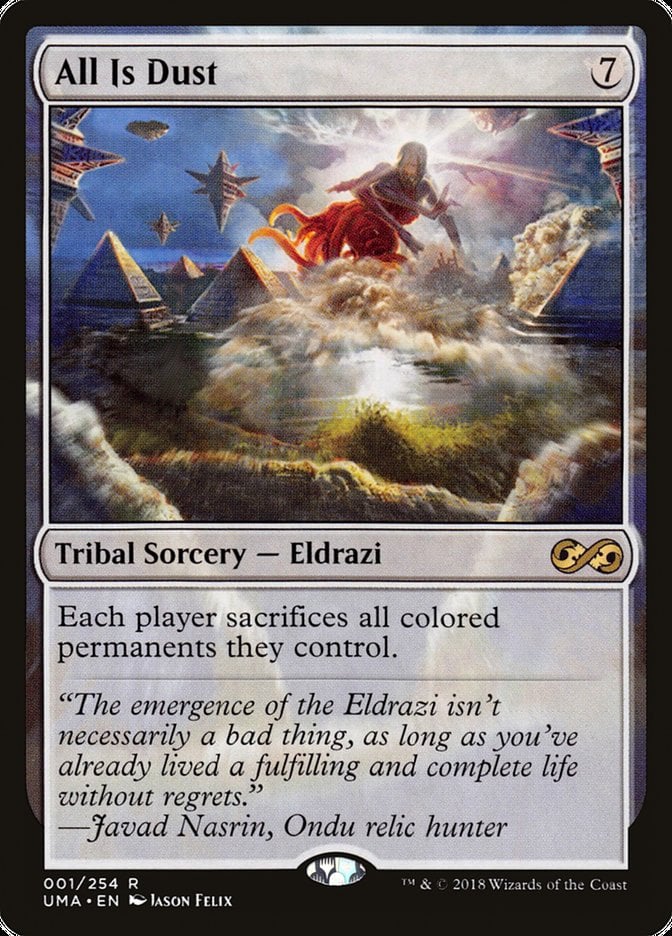

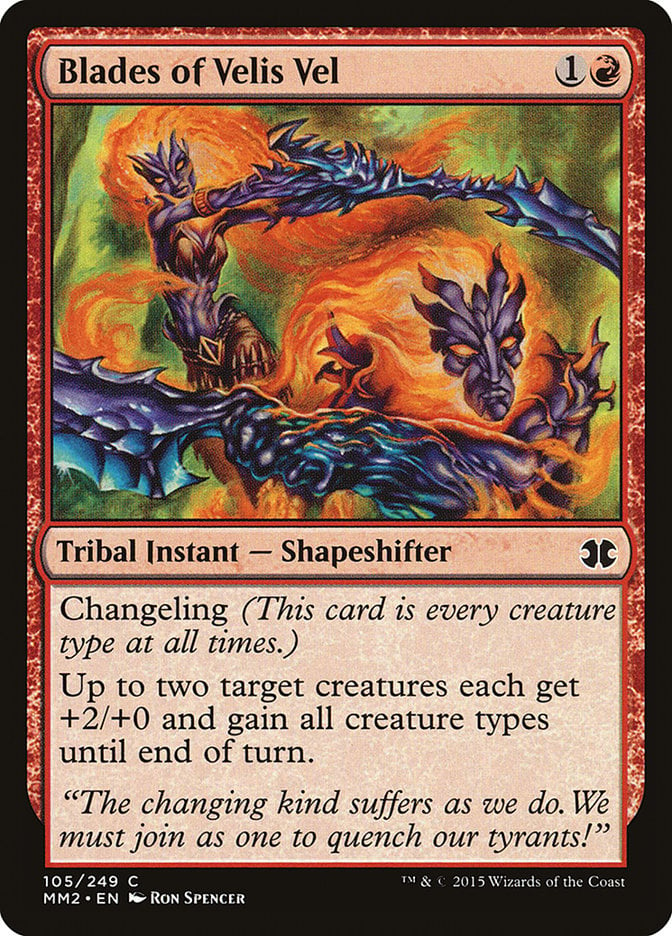
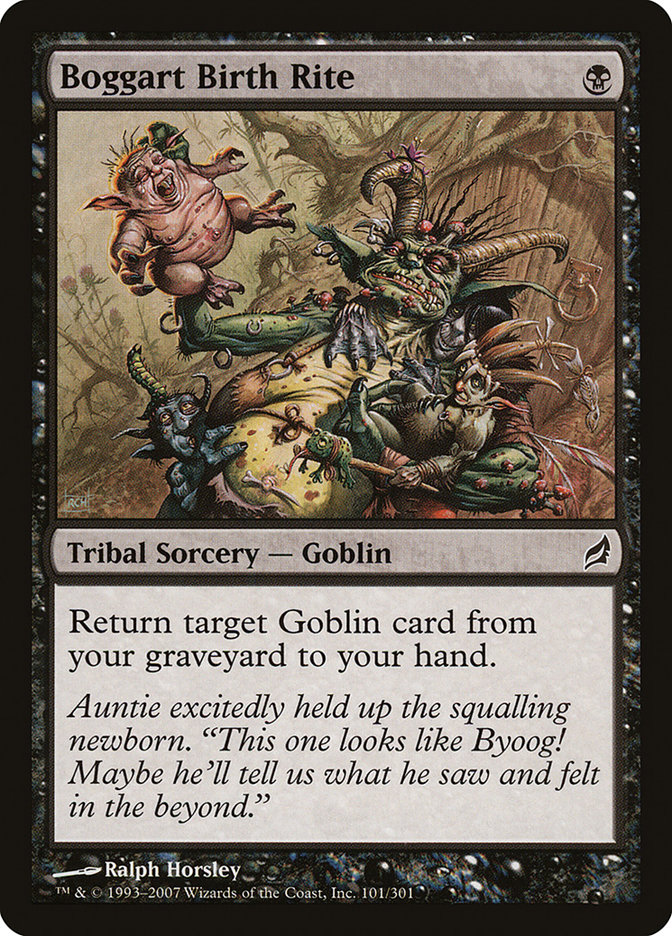
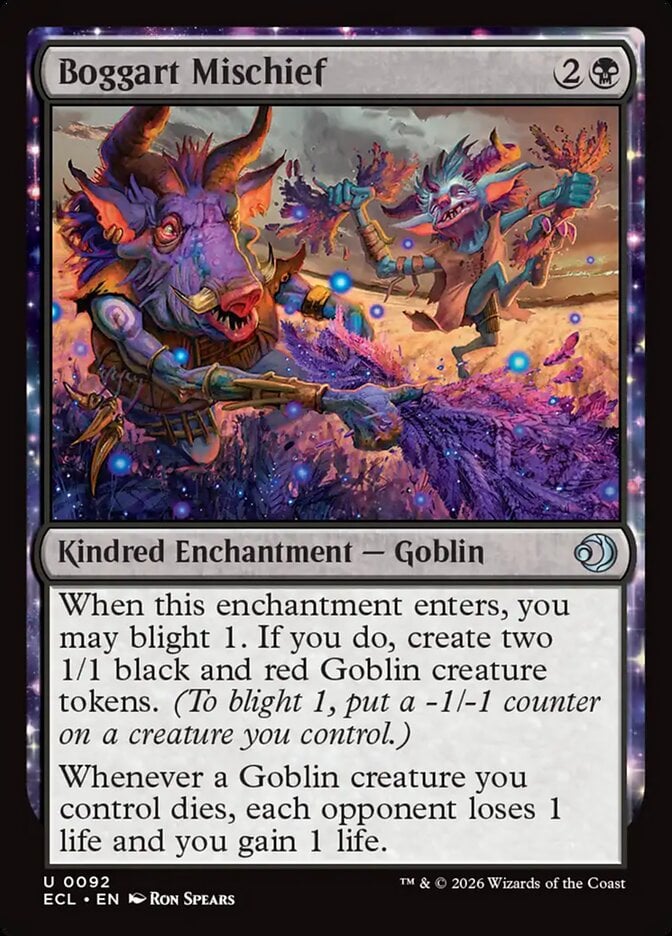
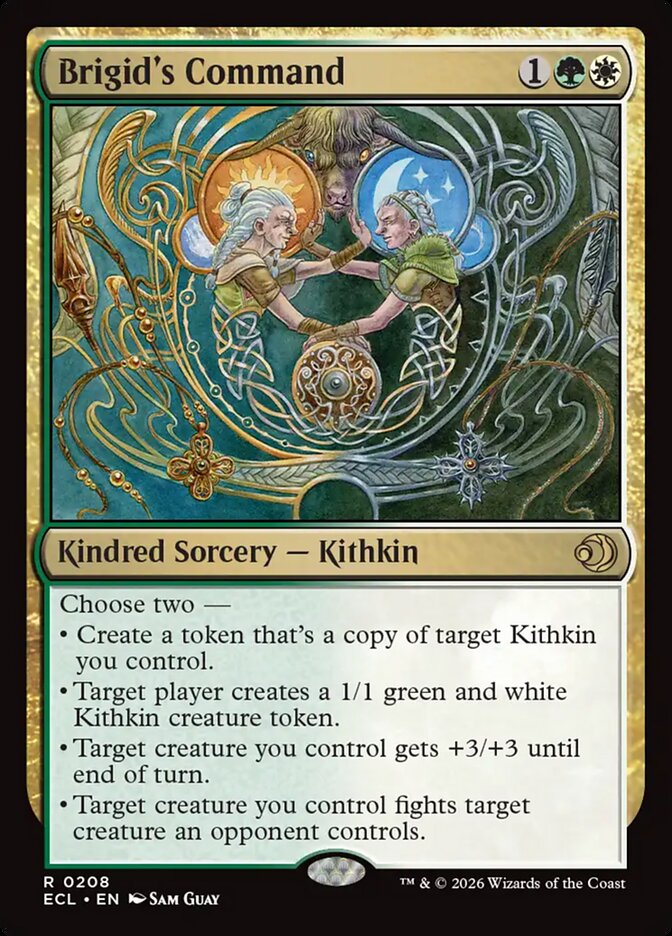
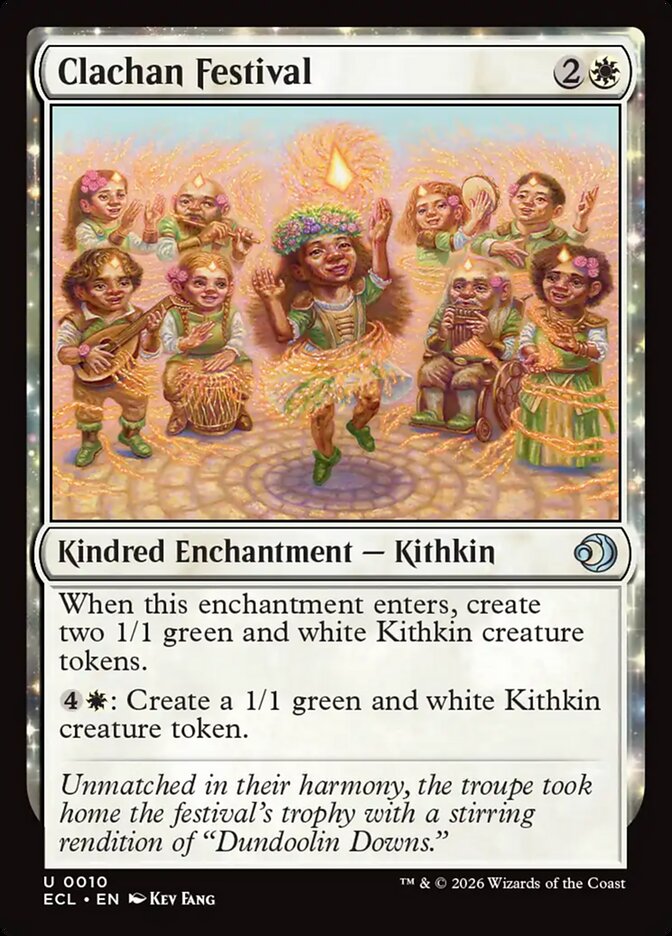
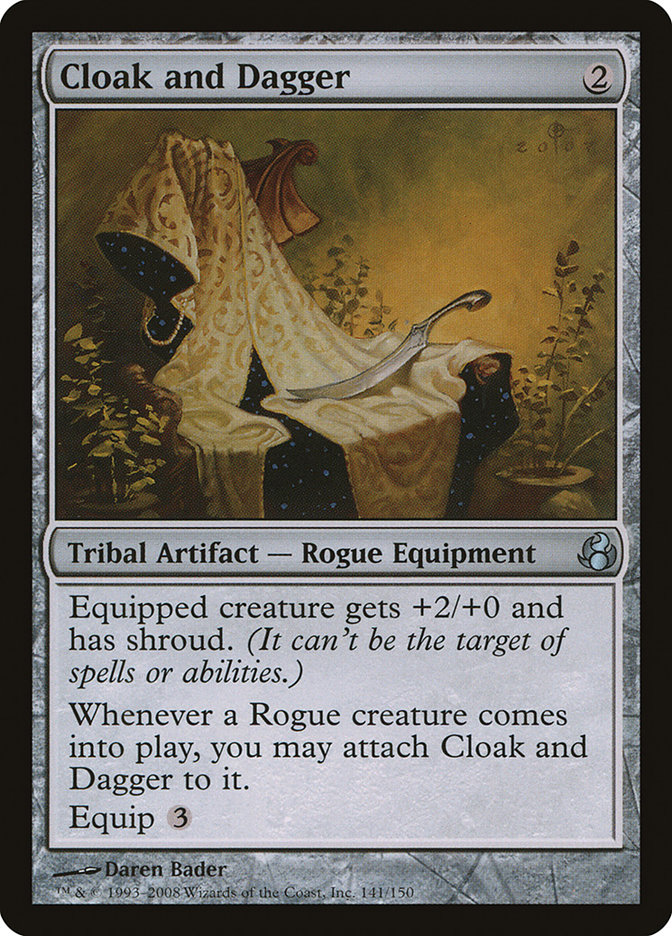
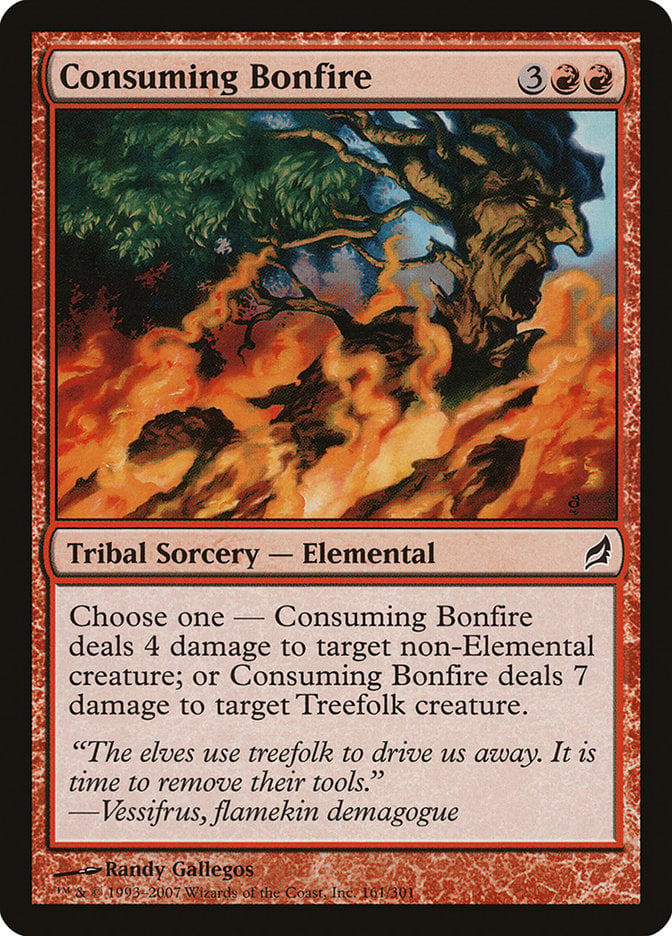
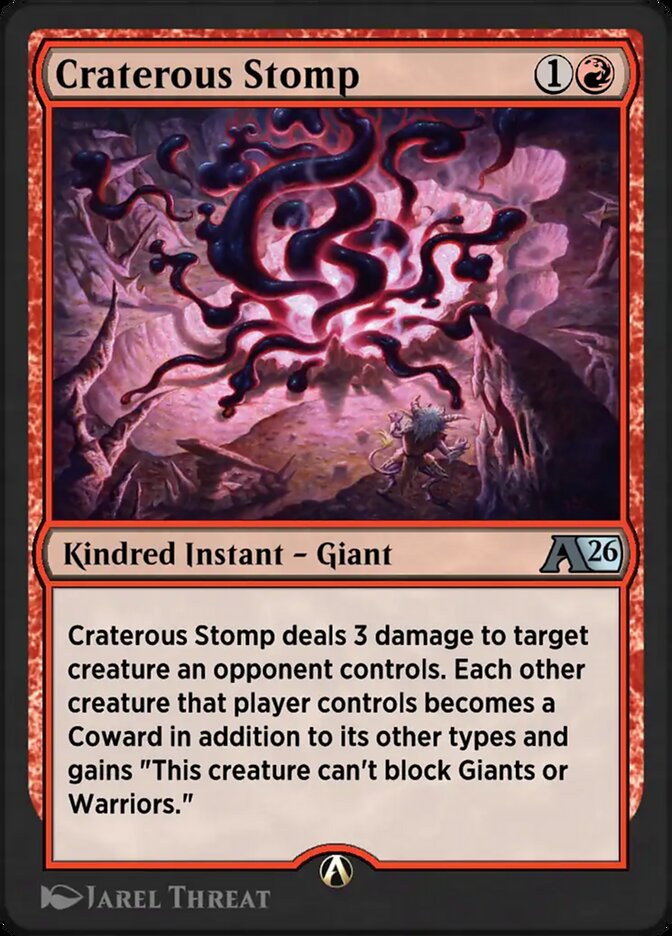



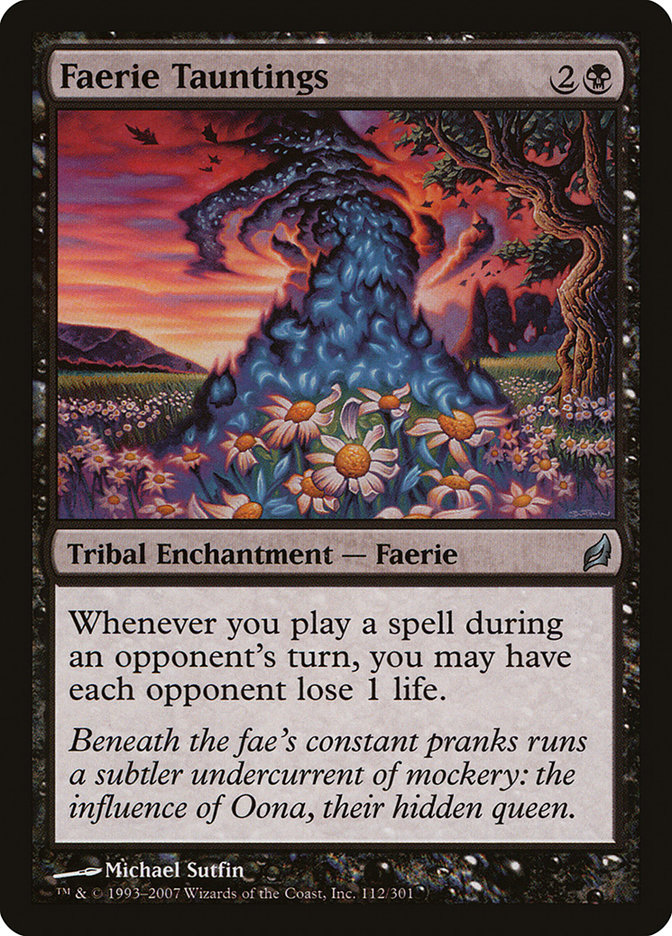
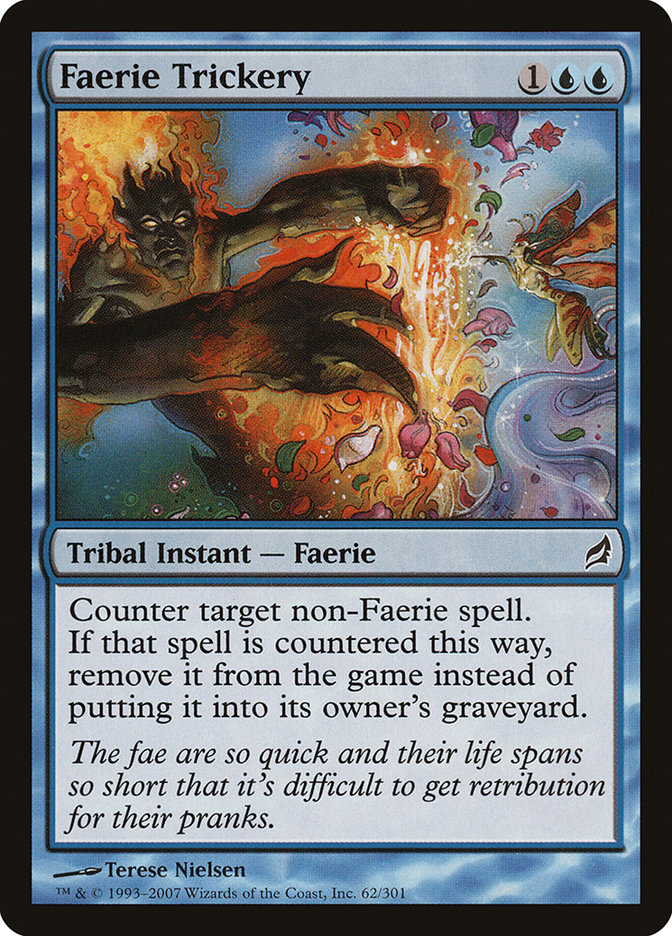
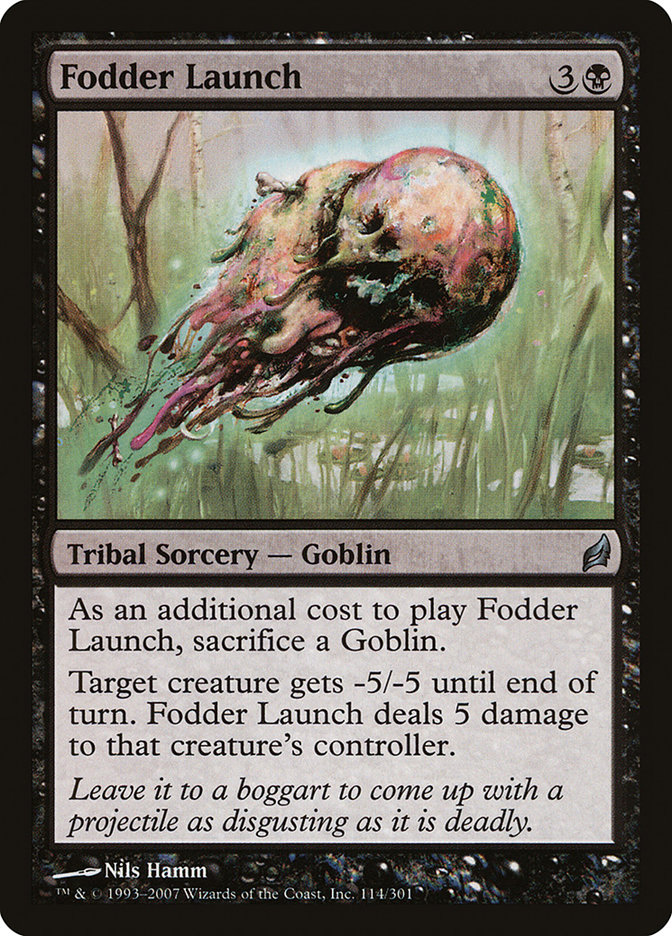



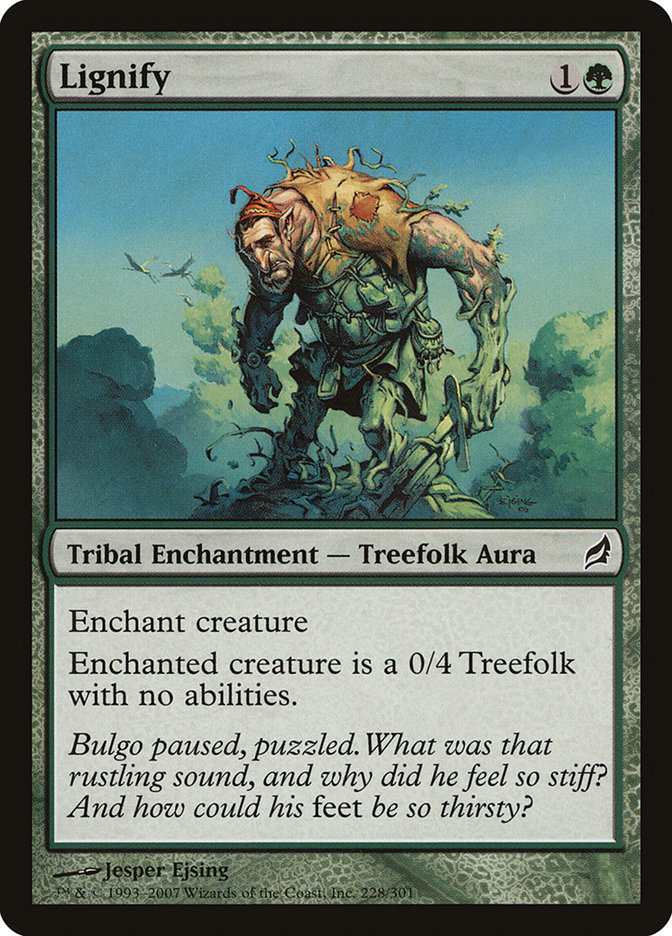
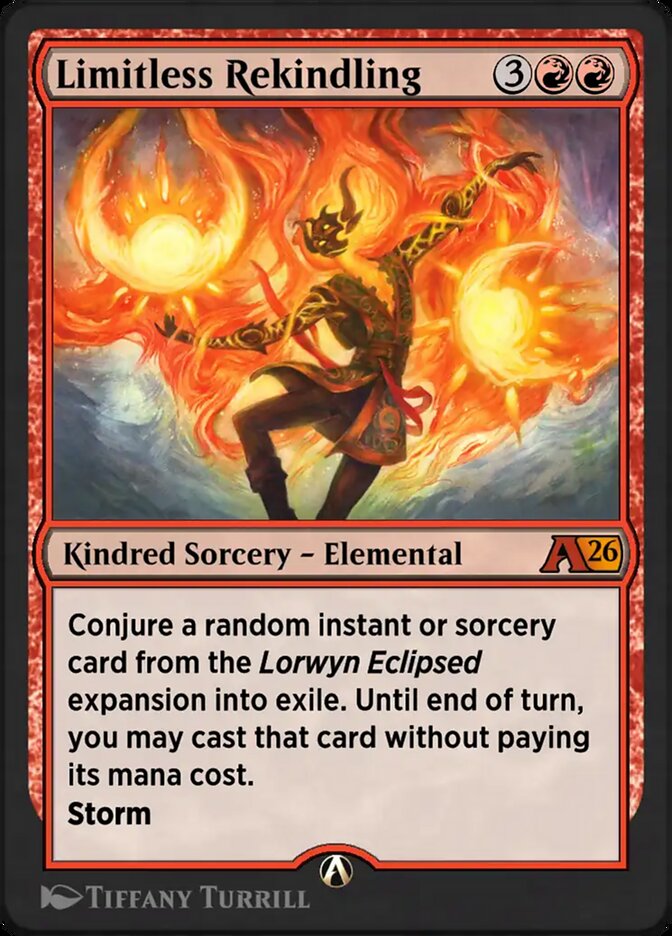
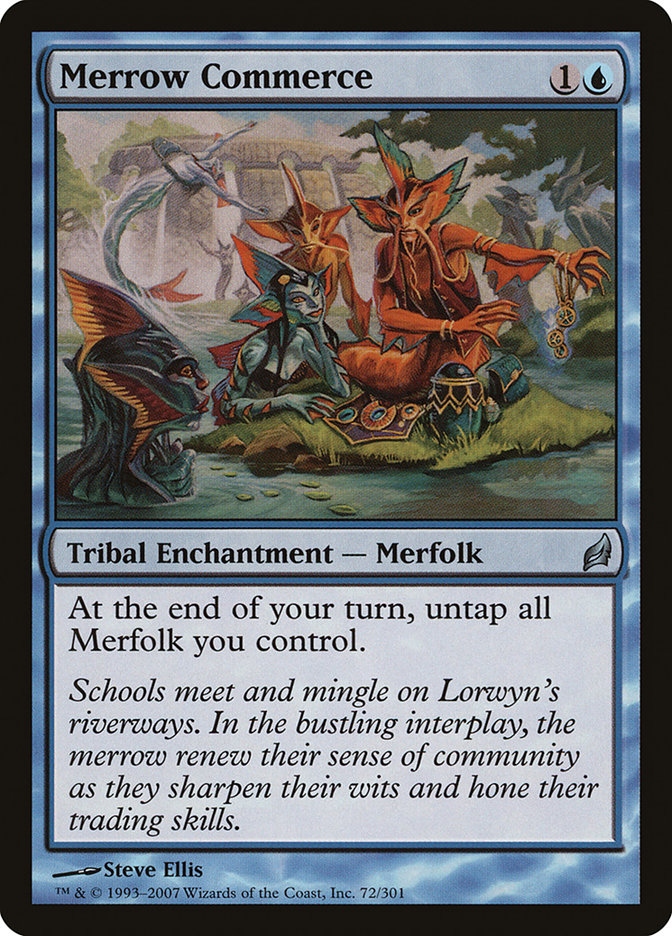
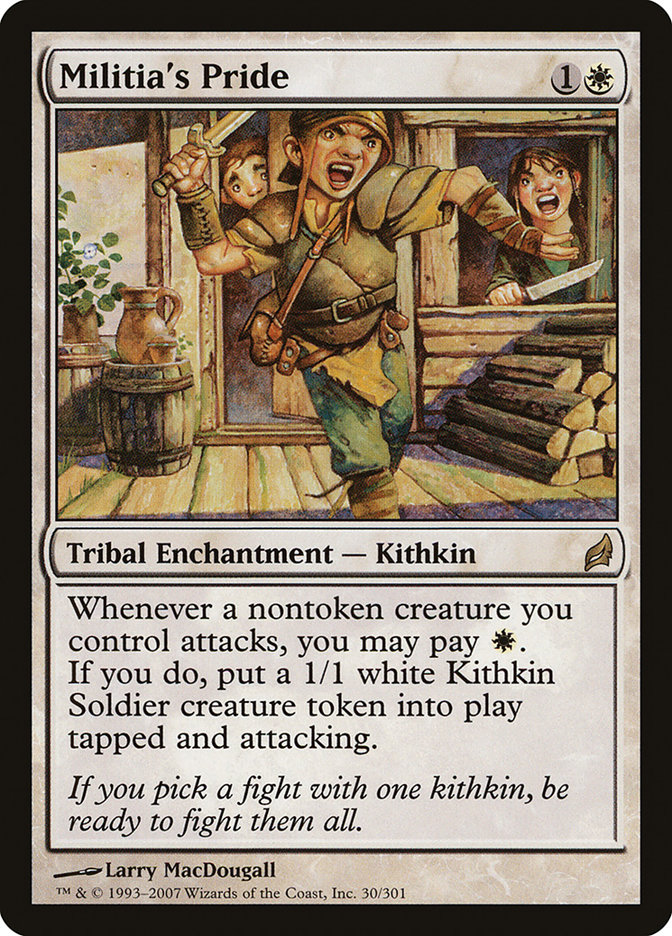
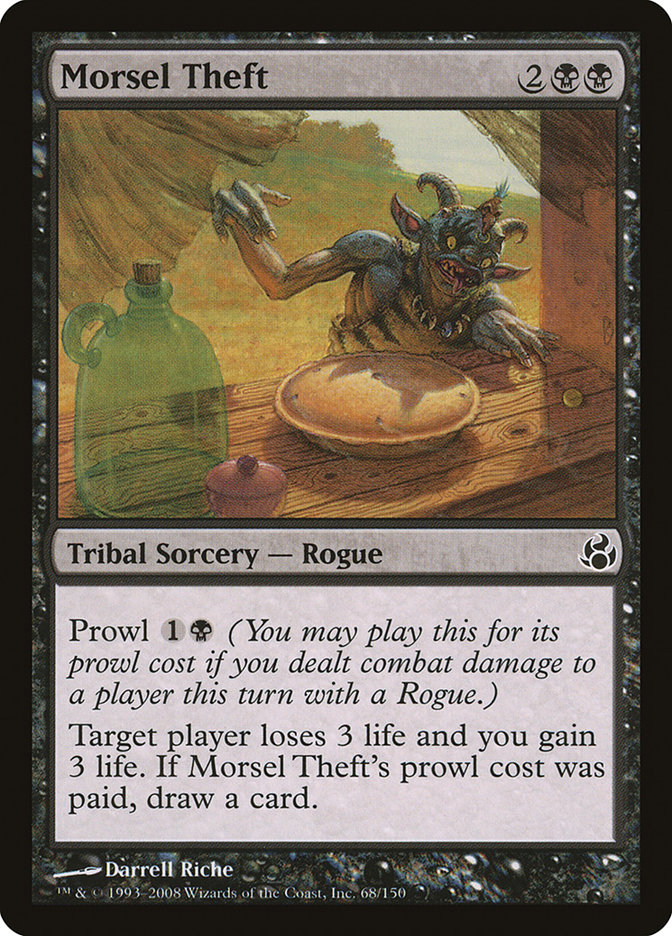
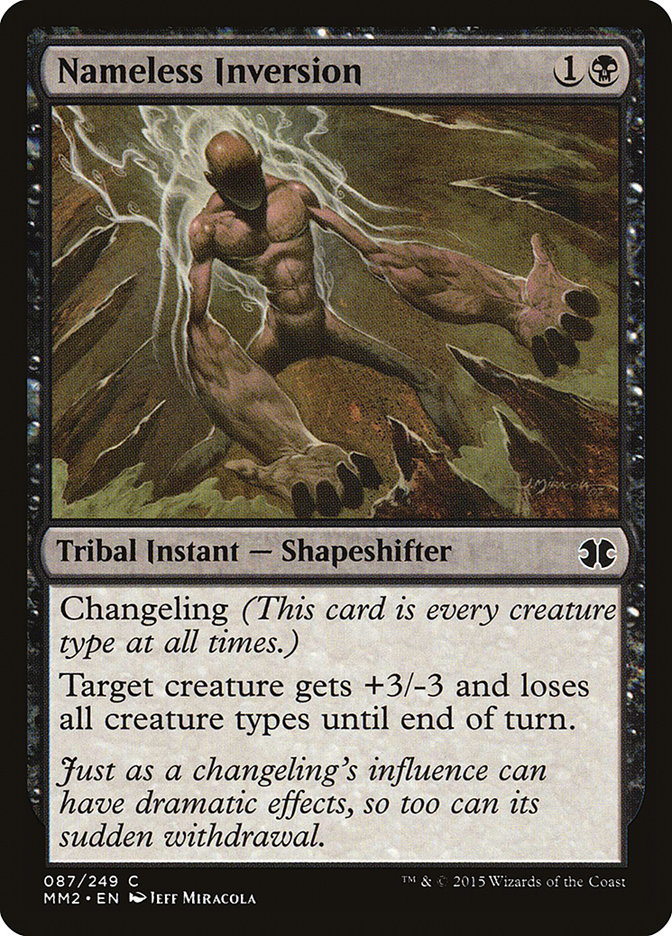
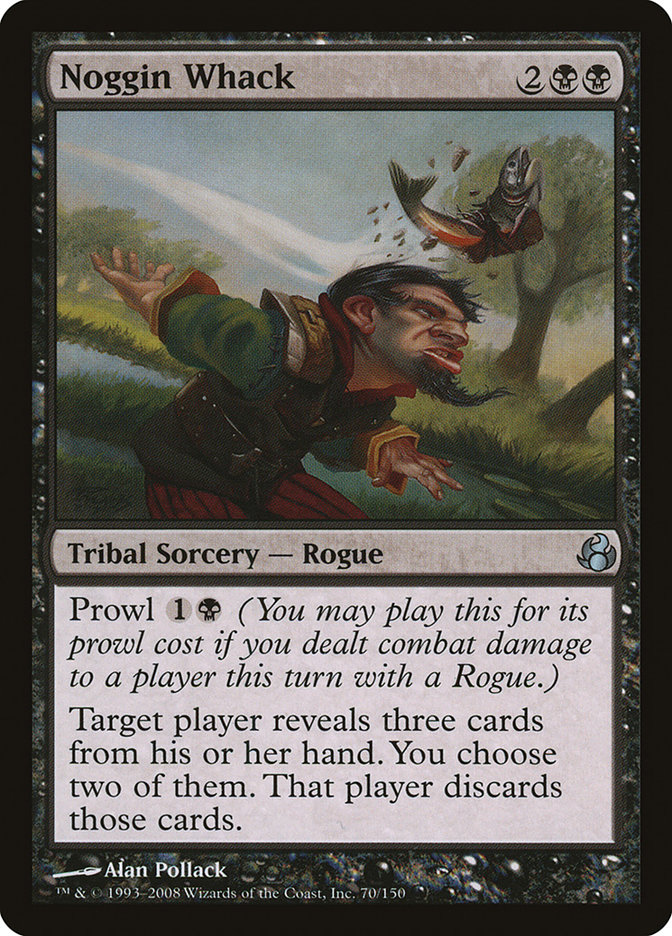
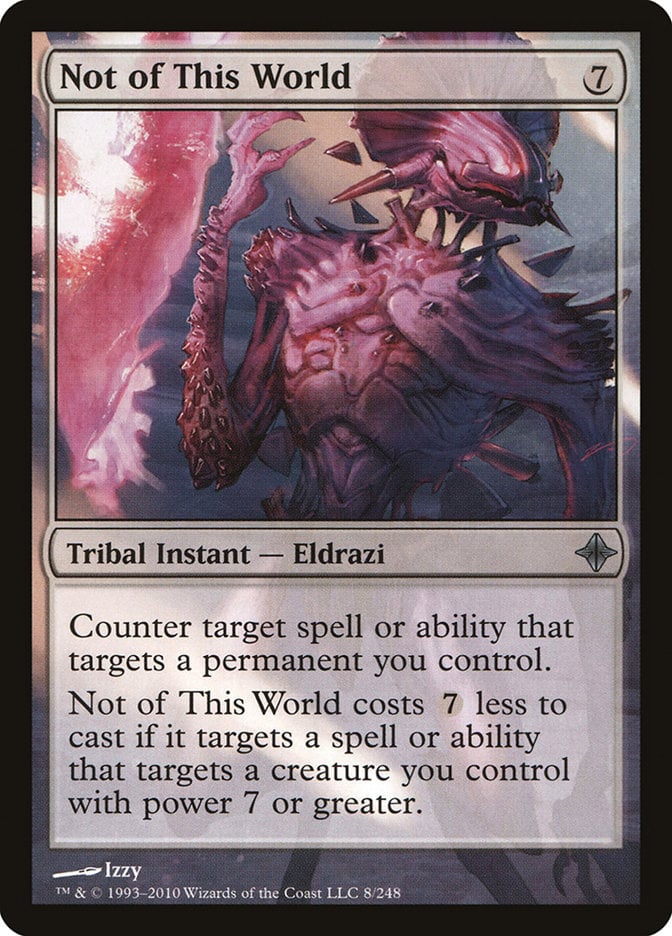
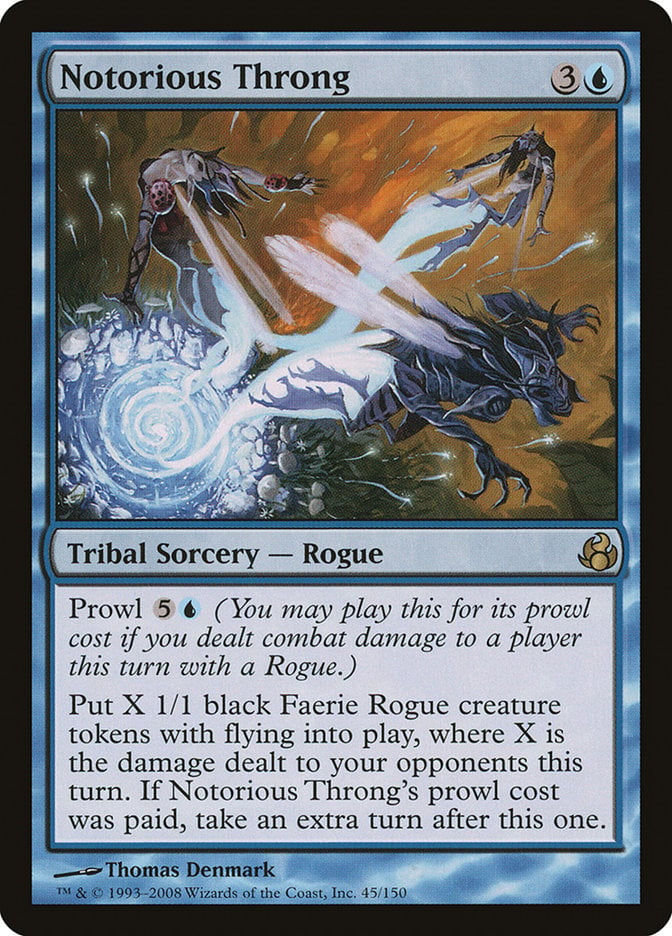
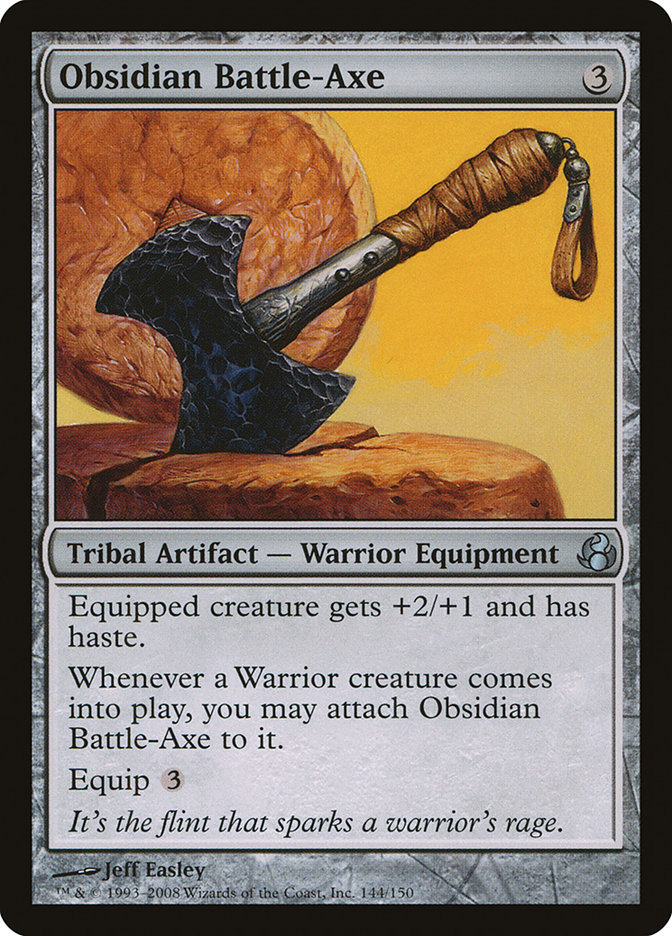
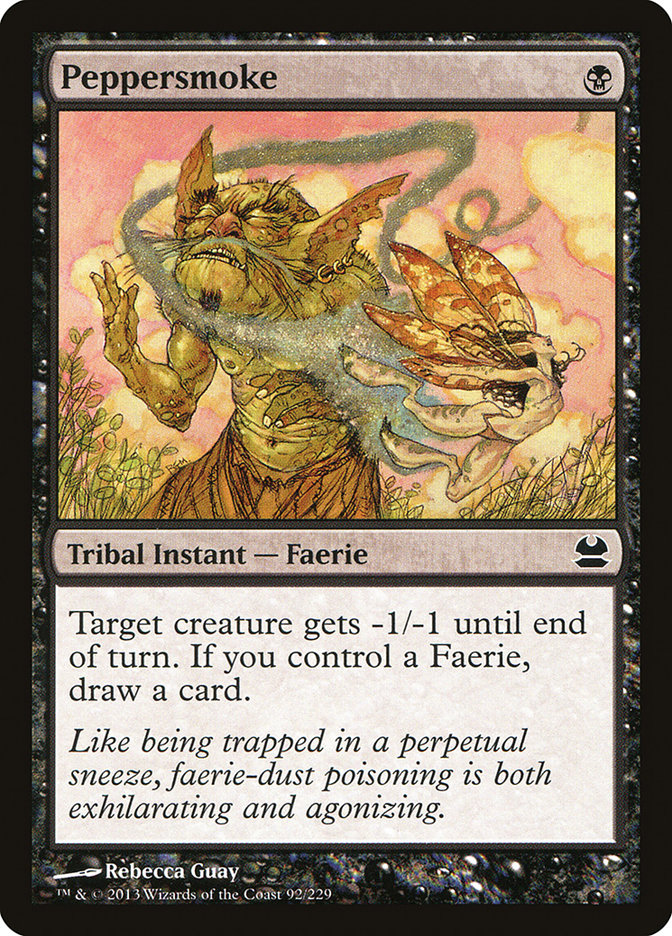
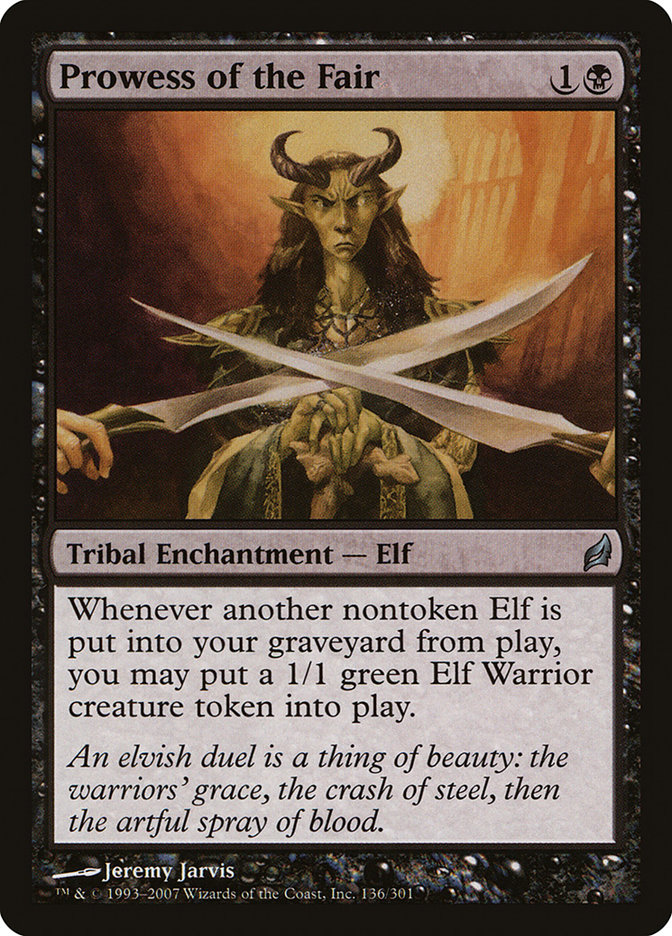
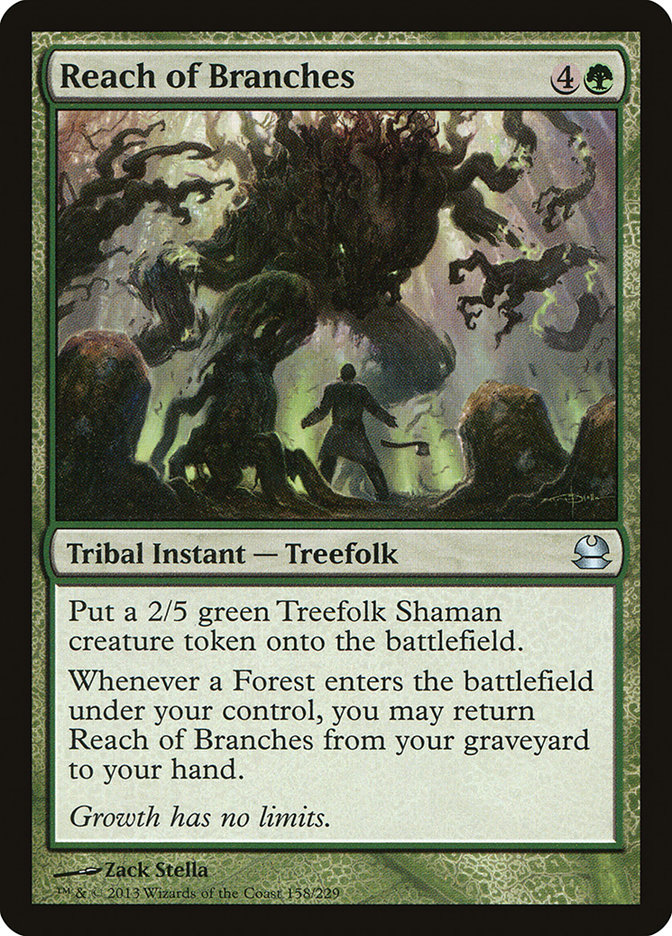
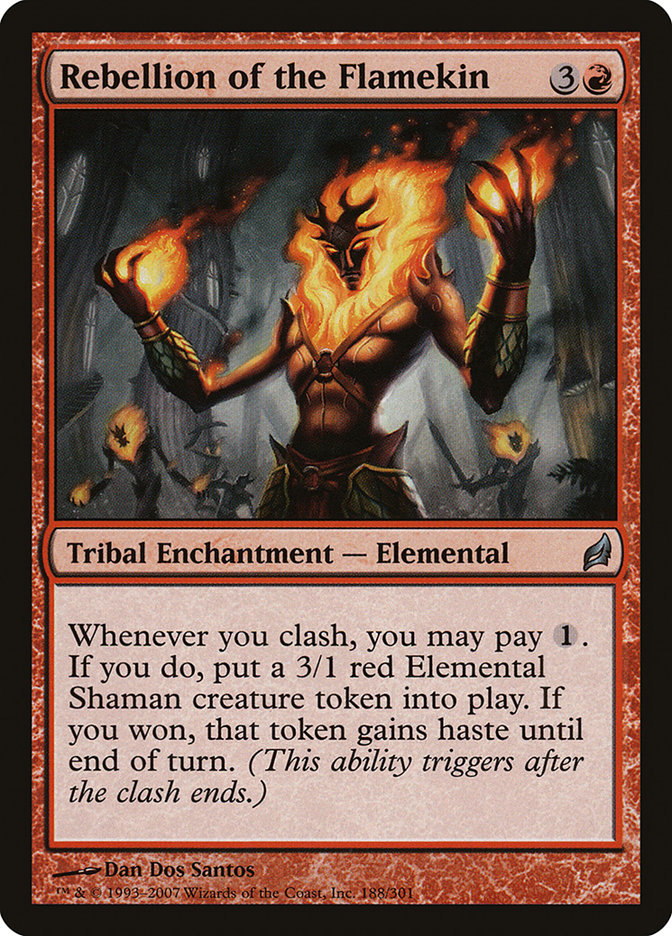
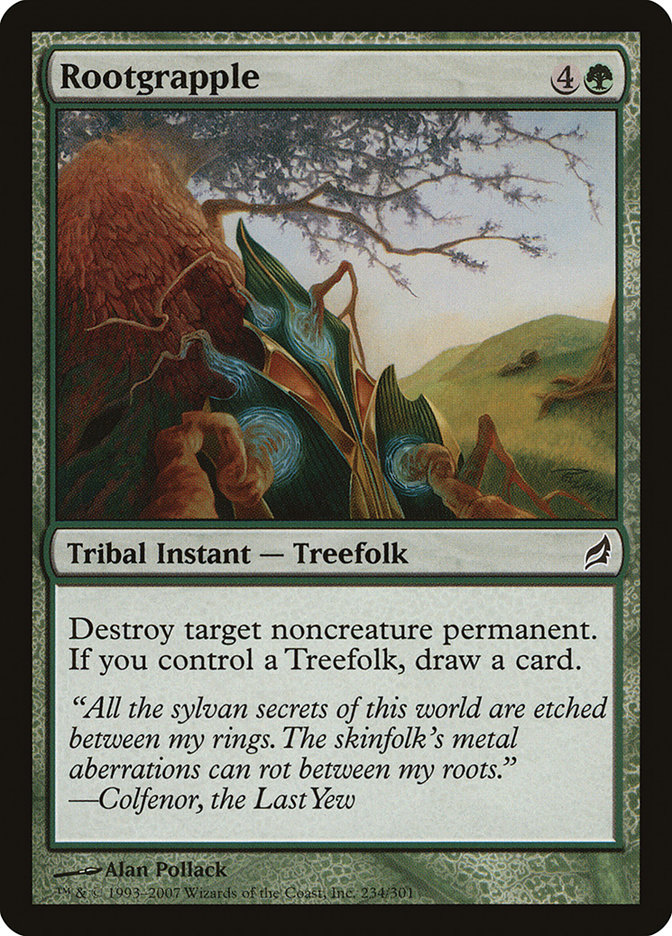
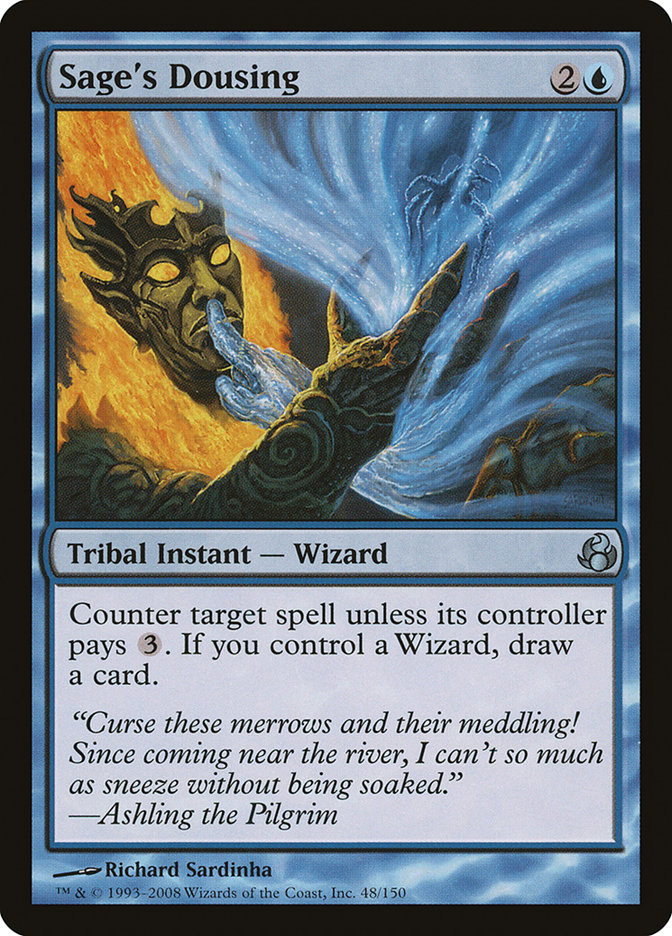
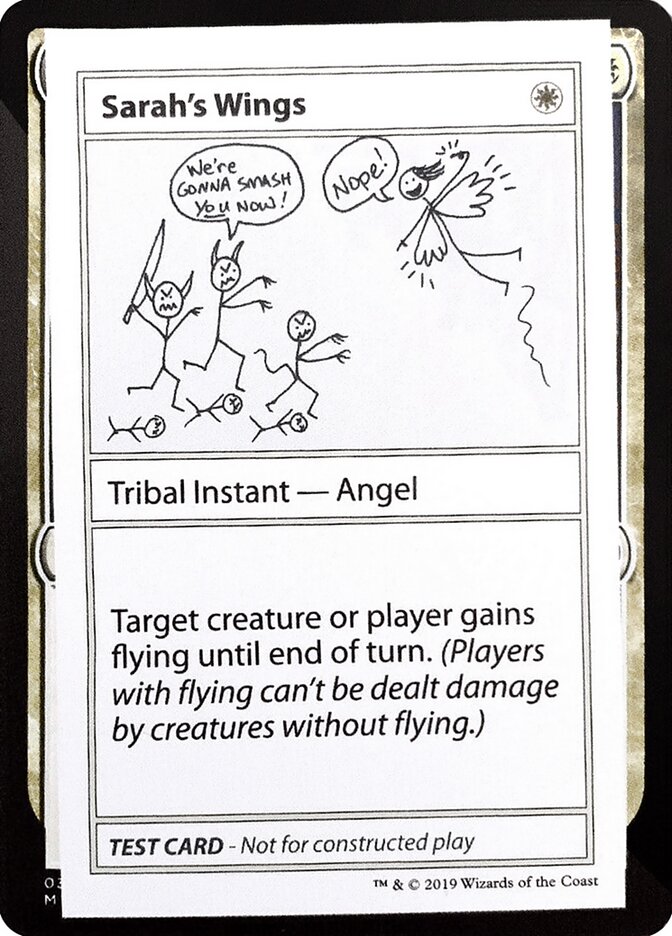
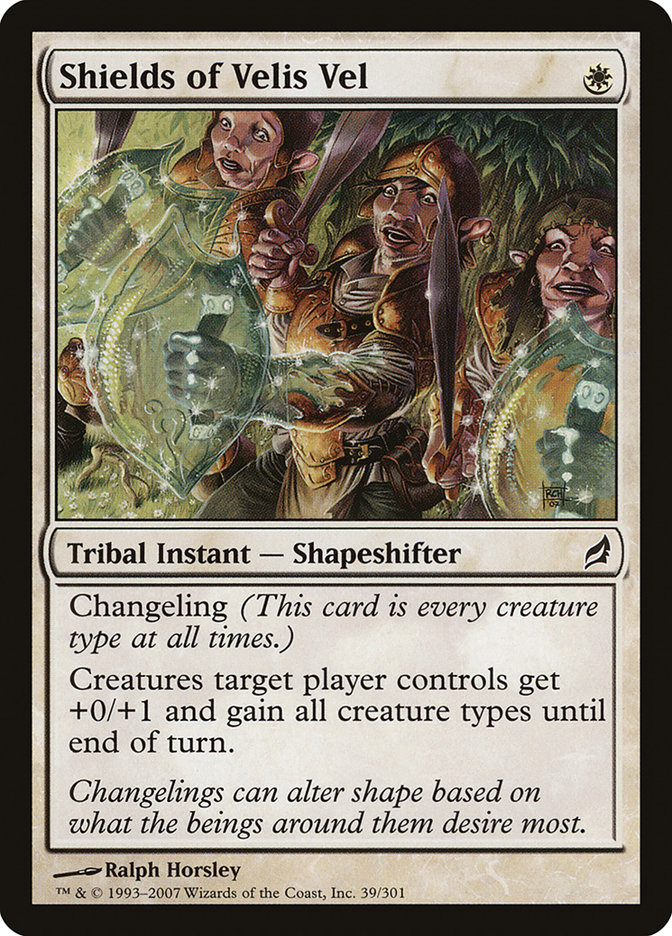
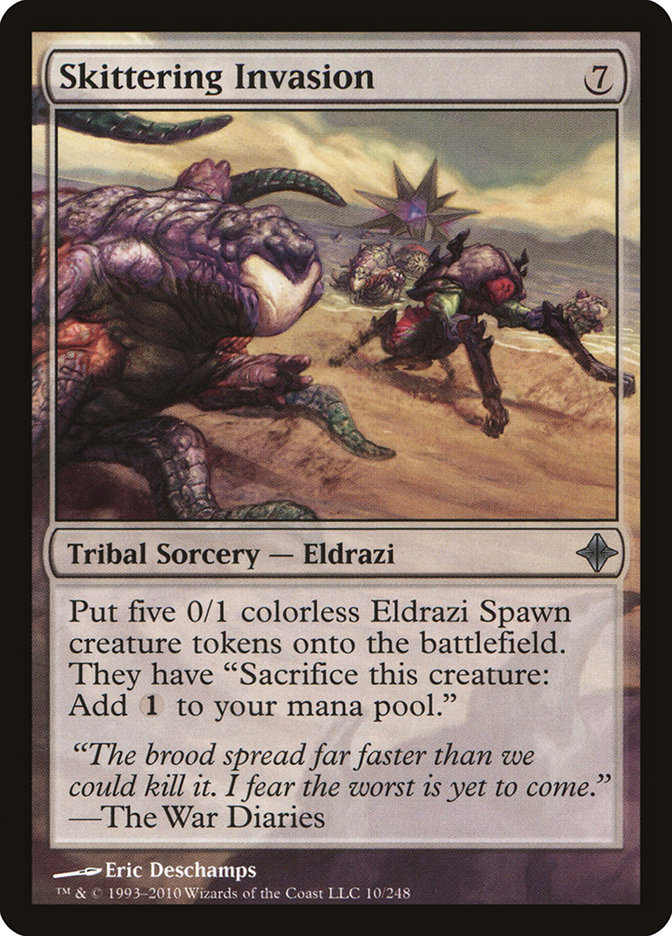
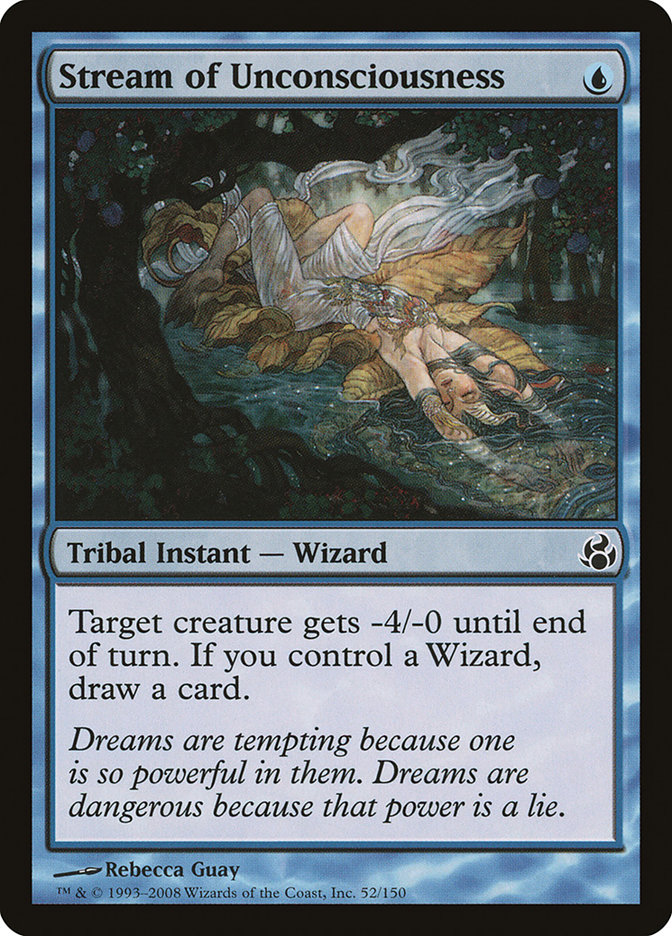
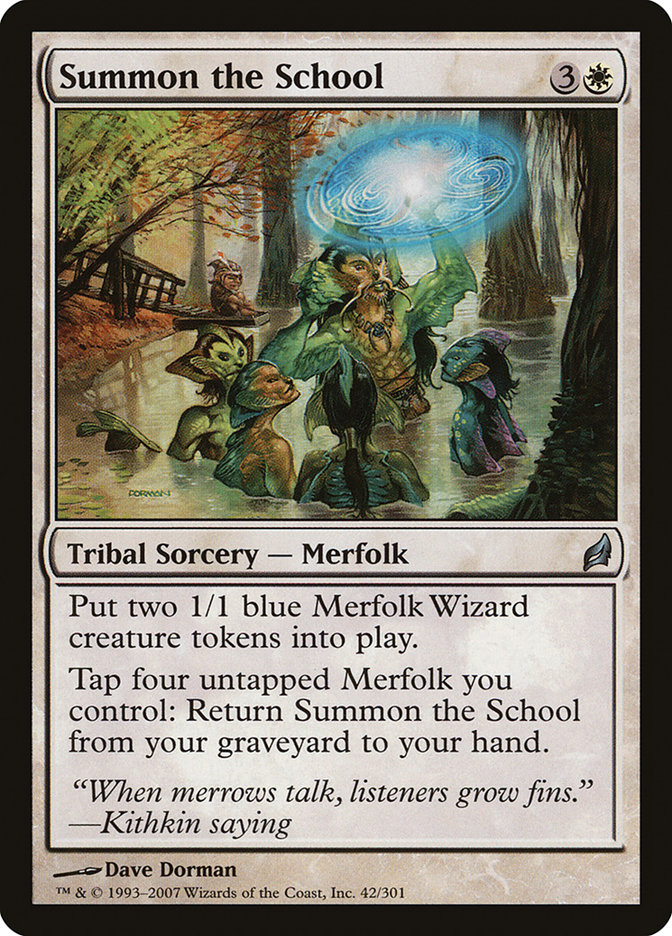
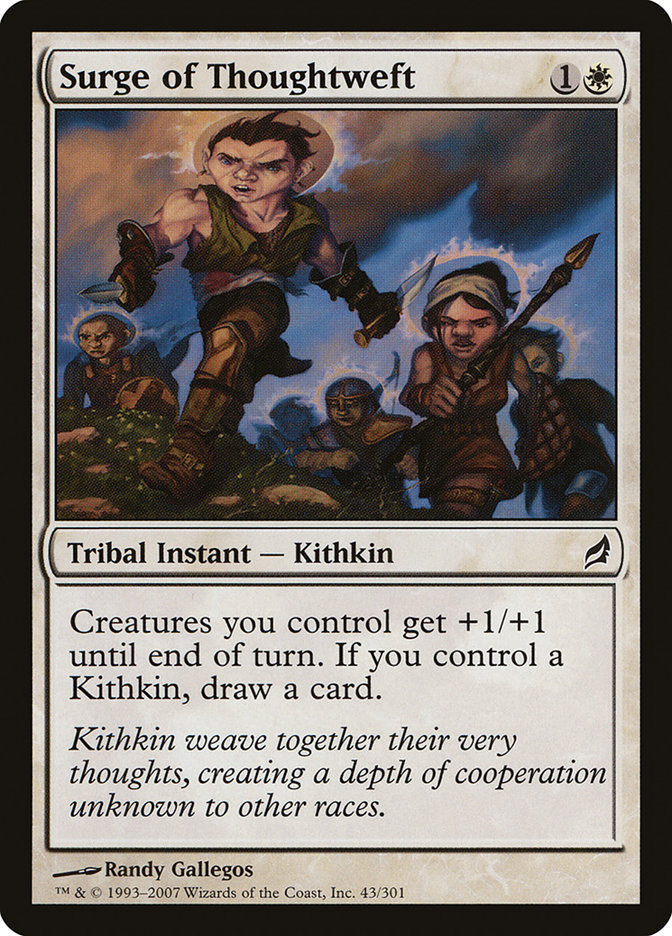
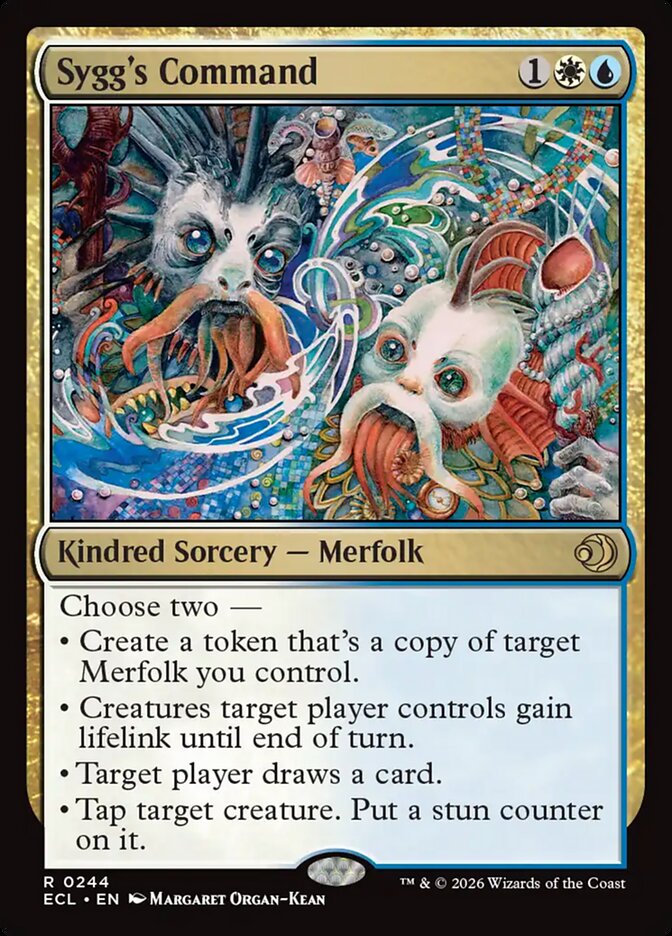
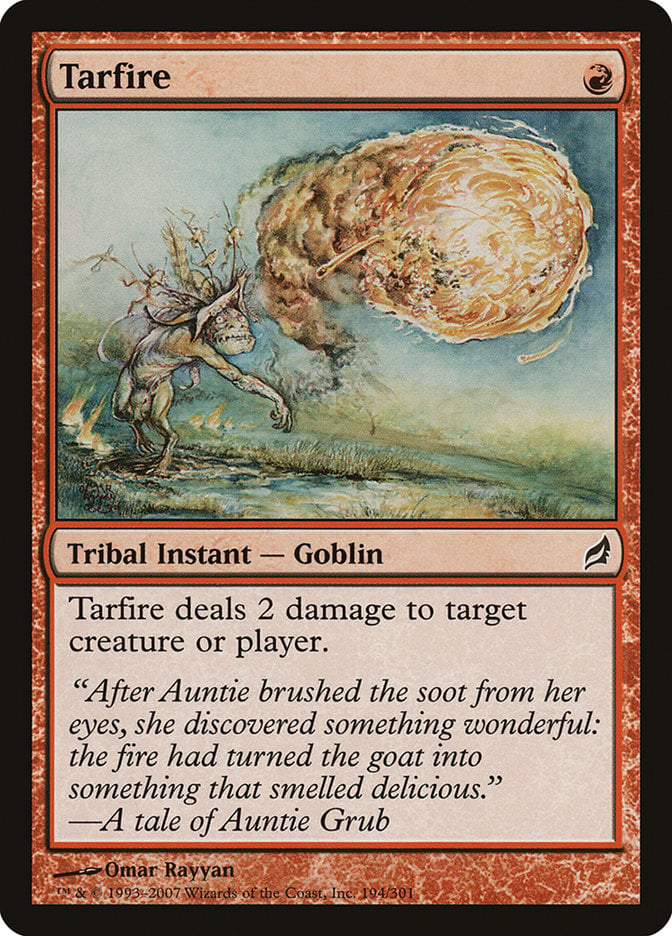
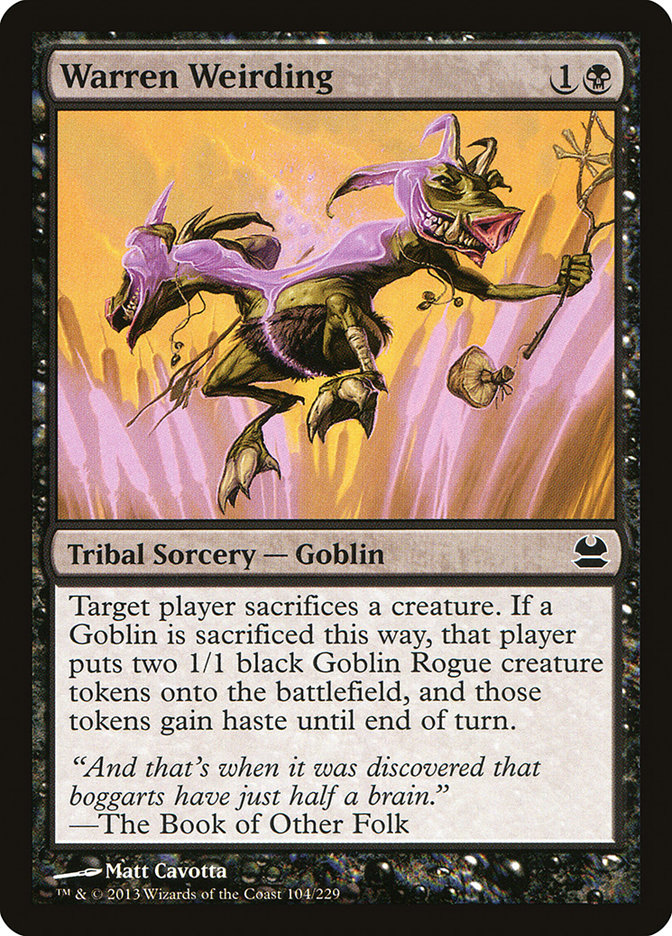
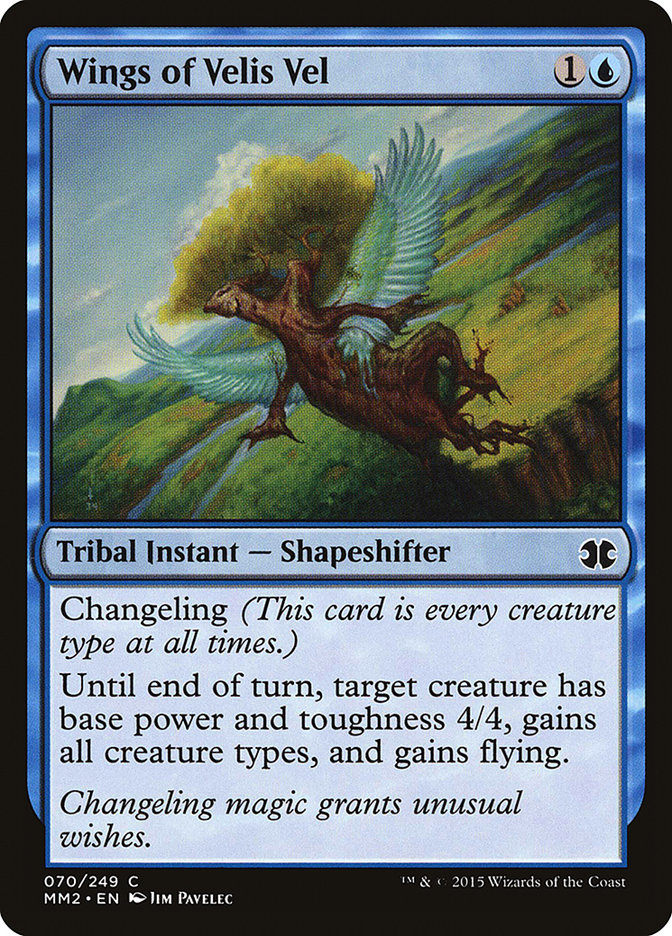
- All Is Dust
- Altar of the Goyf
- Ashling's Command
- Aquitect's Will
- Bitterblossom
- Blades of Velis Vel
- Boggart Birth Rite
- Boggart Mischief
- Boggart Shenanigans
- Bound in Silence
- Brigid's Command
- Clachan Festival
- Cloak and Dagger
- Consuming Bonfire
- Craterous Stomp
- Crib Swap
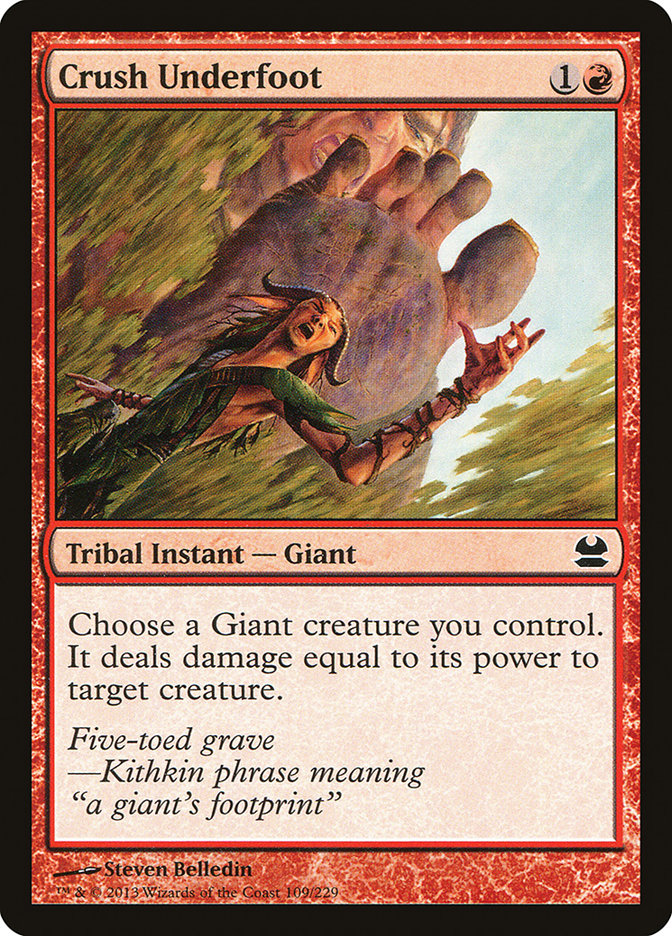
- Crush Underfoot
- Demonic Covenant
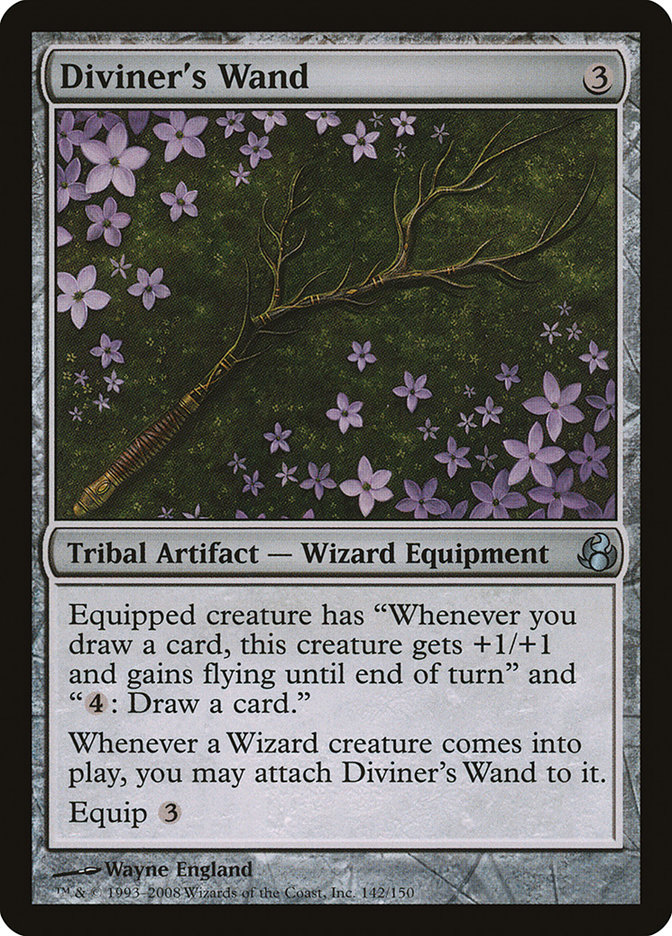
- Diviner's Wand
- Dragon Typhoon
- Echoes of Eternity
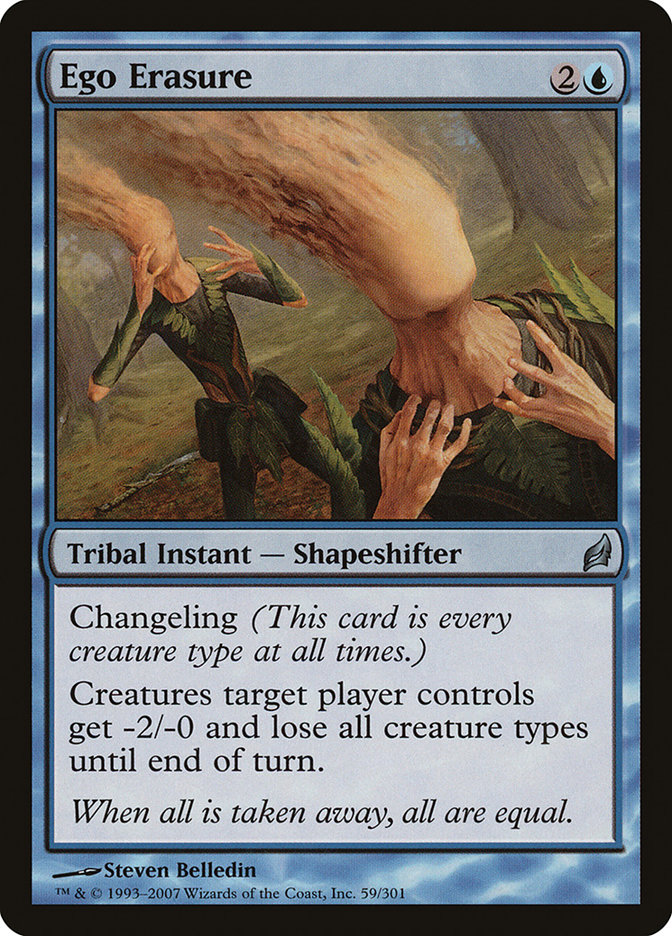
- Ego Erasure
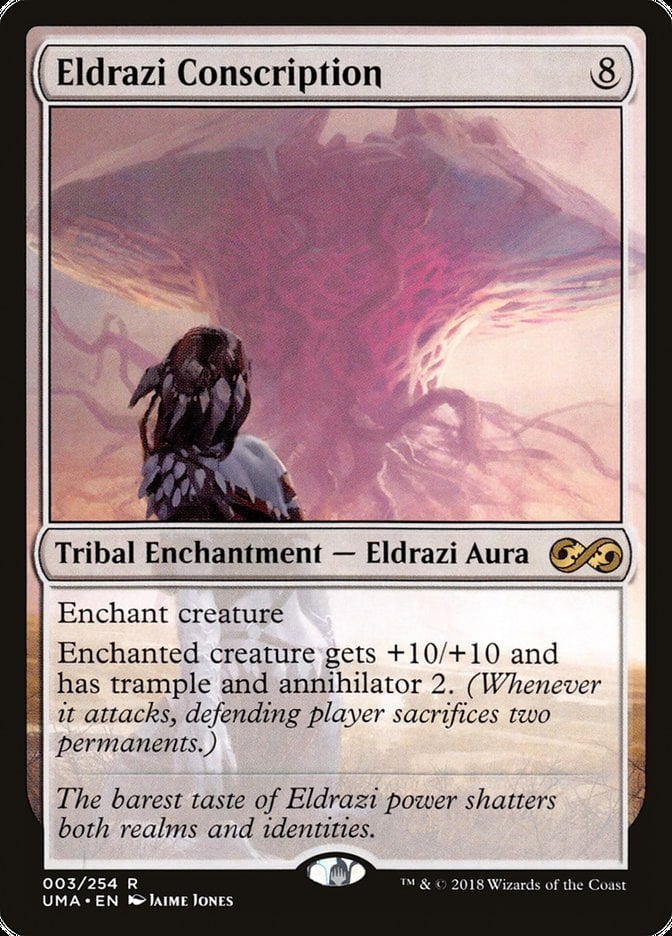
- Eldrazi Conscription
- Eldritch Immunity
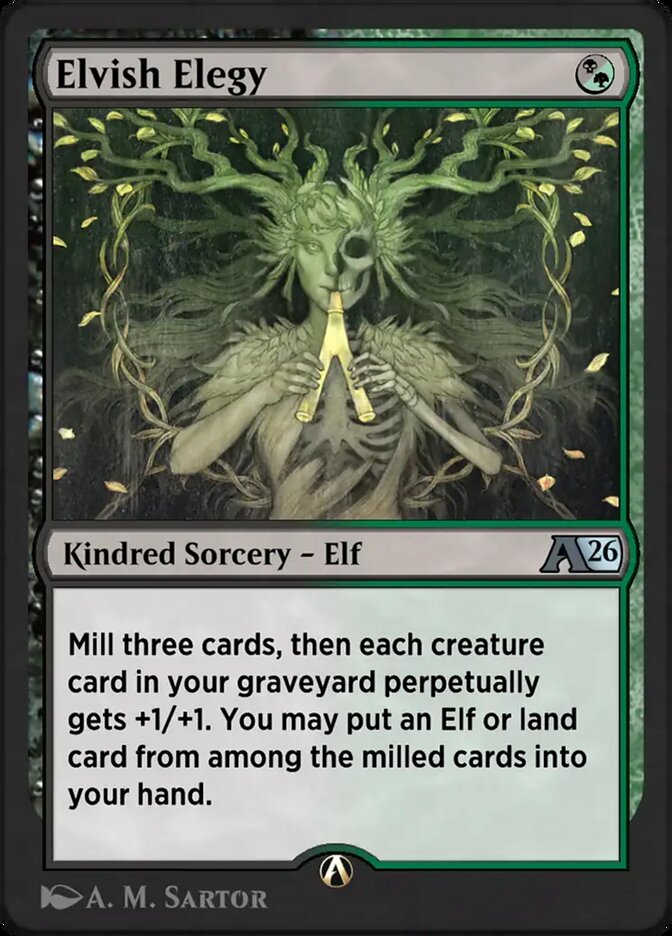
- Elvish Elegy
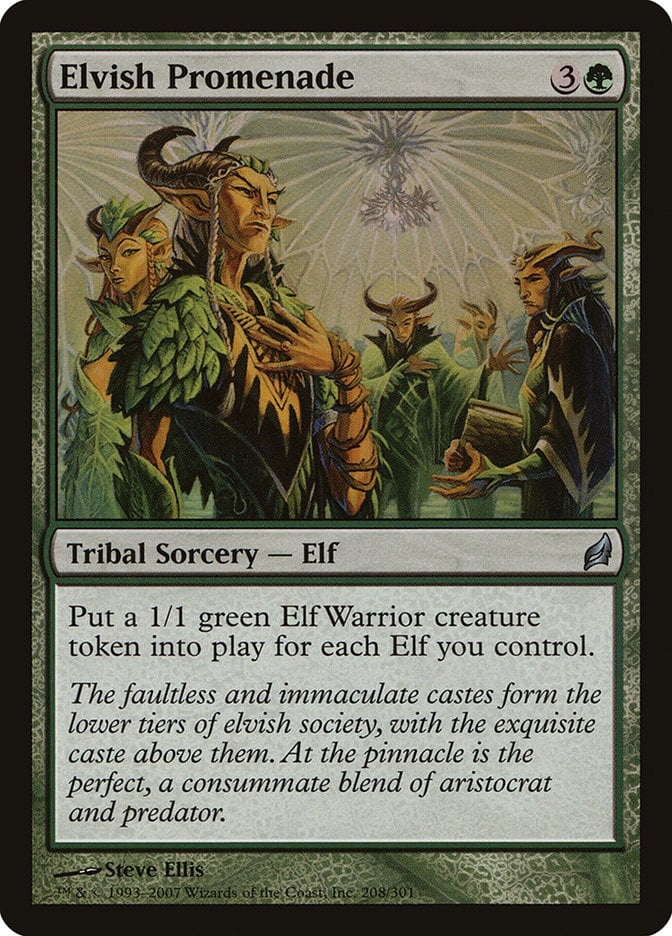
- Elvish Promenade
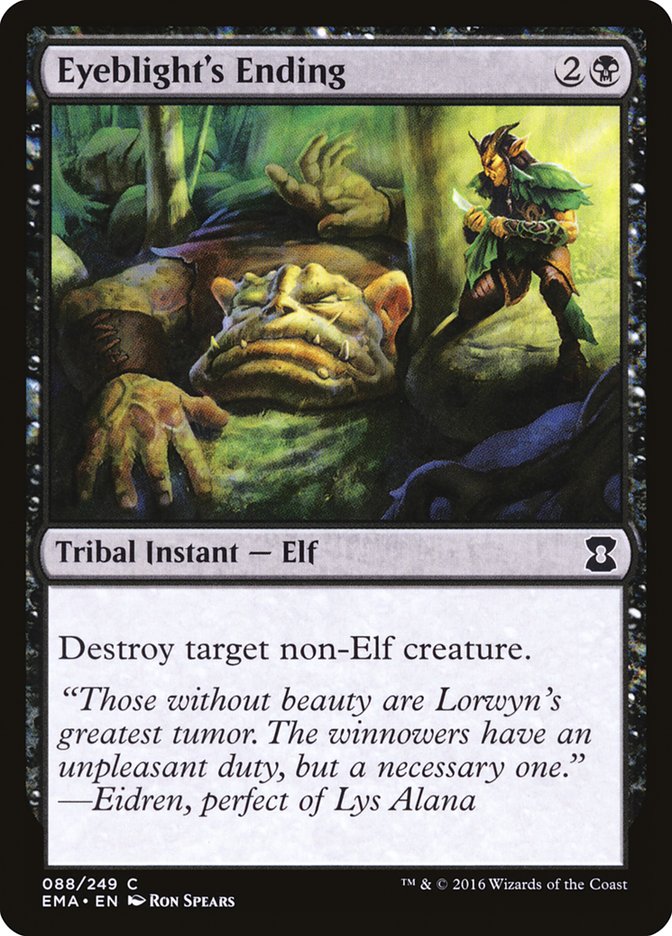
- Eyeblight's Ending
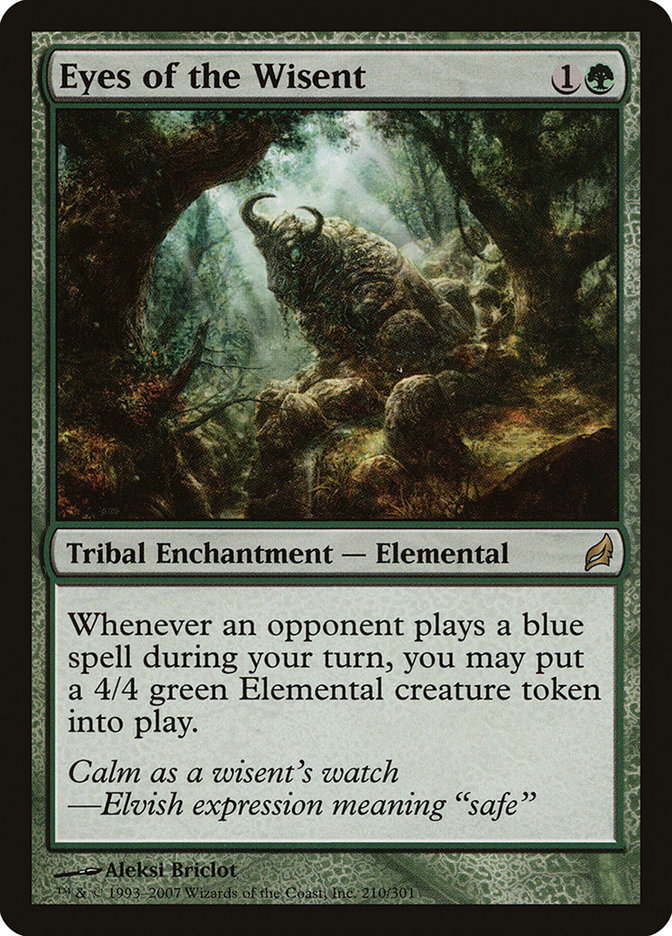
- Eyes of the Wisent
- Faerie Tauntings
- Faerie Trickery
- Favor of the Mighty
- Feudkiller's Verdict
- Firdoch Core
- Fodder Launch
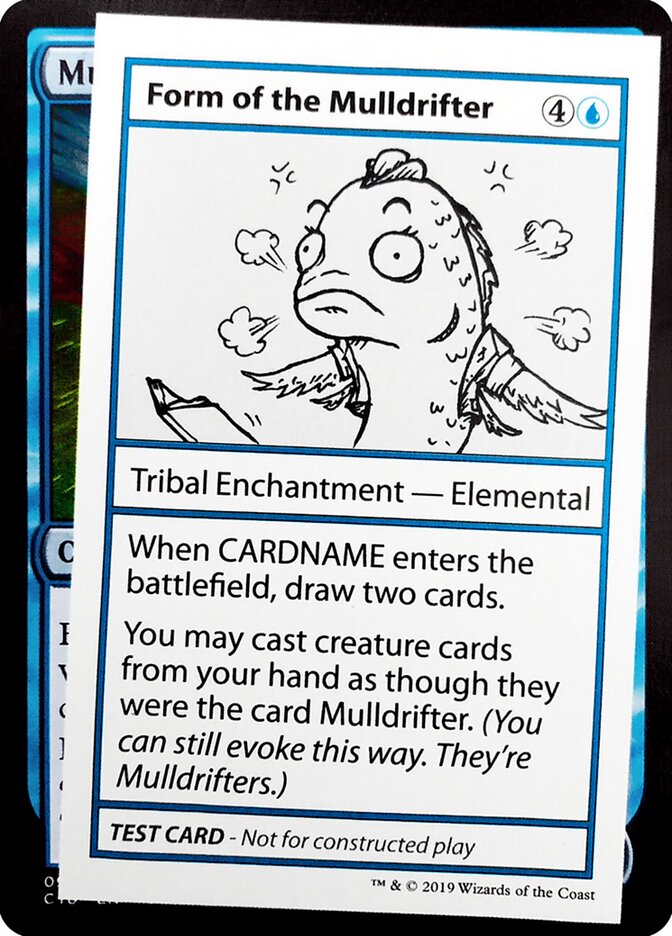
- Form of the Mulldrifter
- Formless Genesis
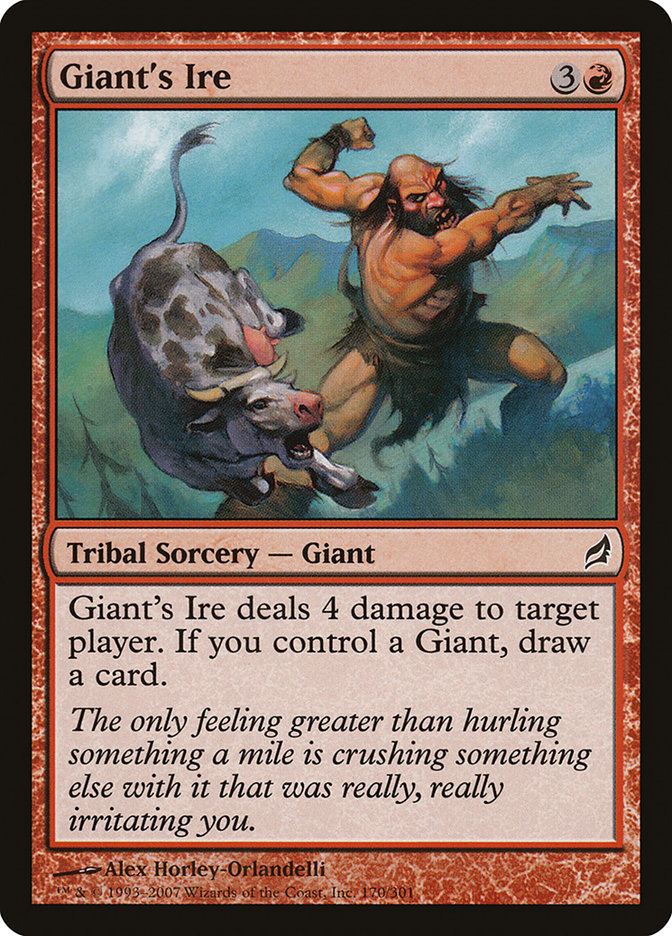
- Giant's Ire
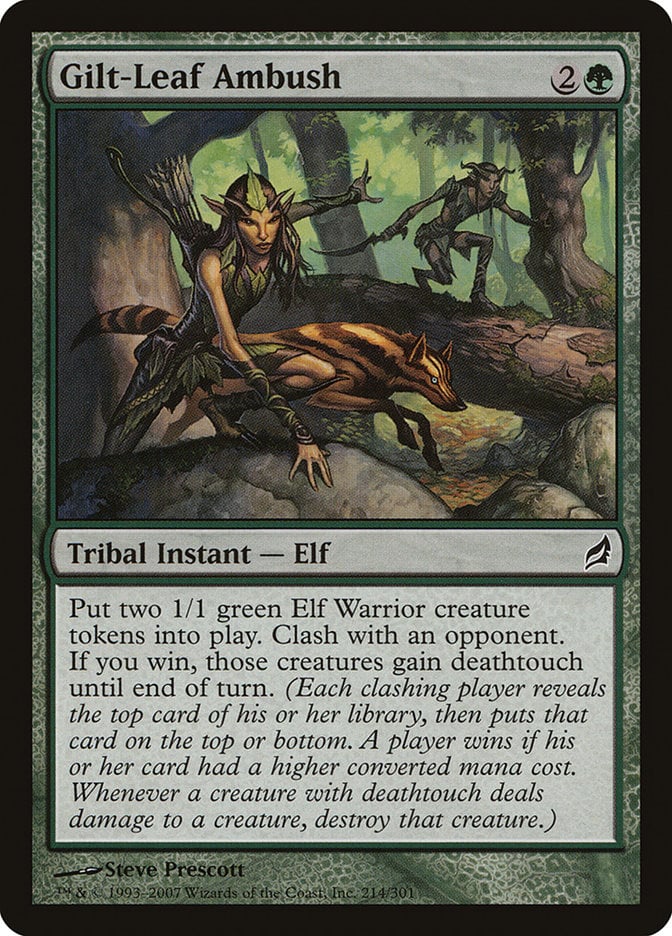
- Gilt-Leaf Ambush
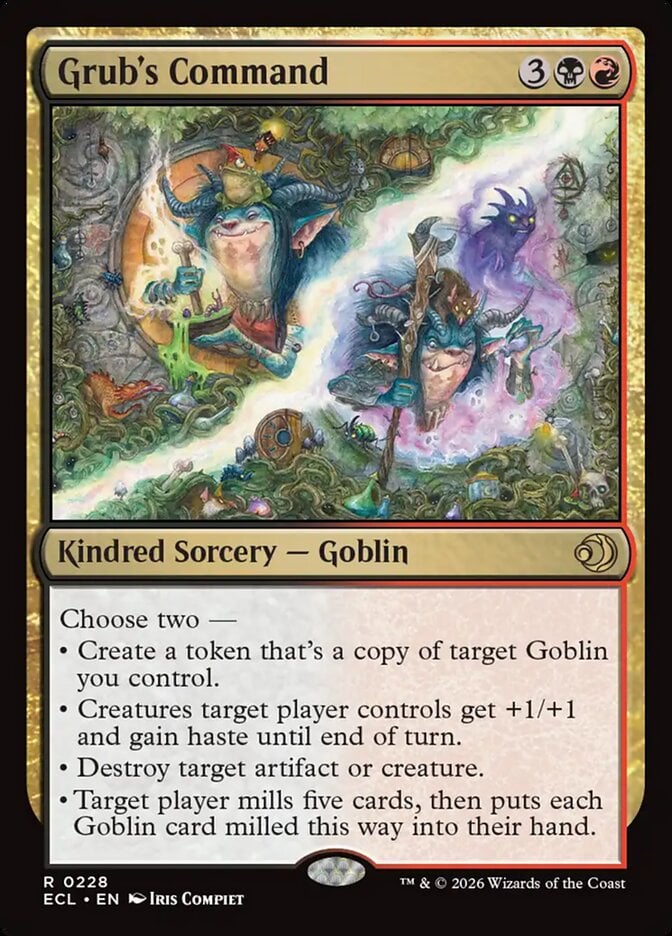
- Grub's Command
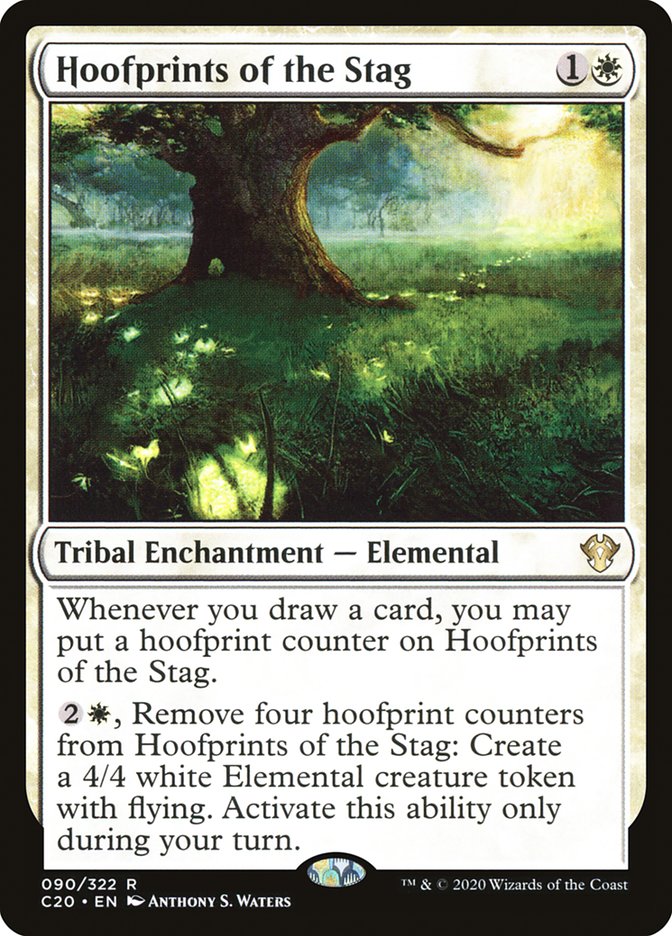
- Hoofprints of the Stag
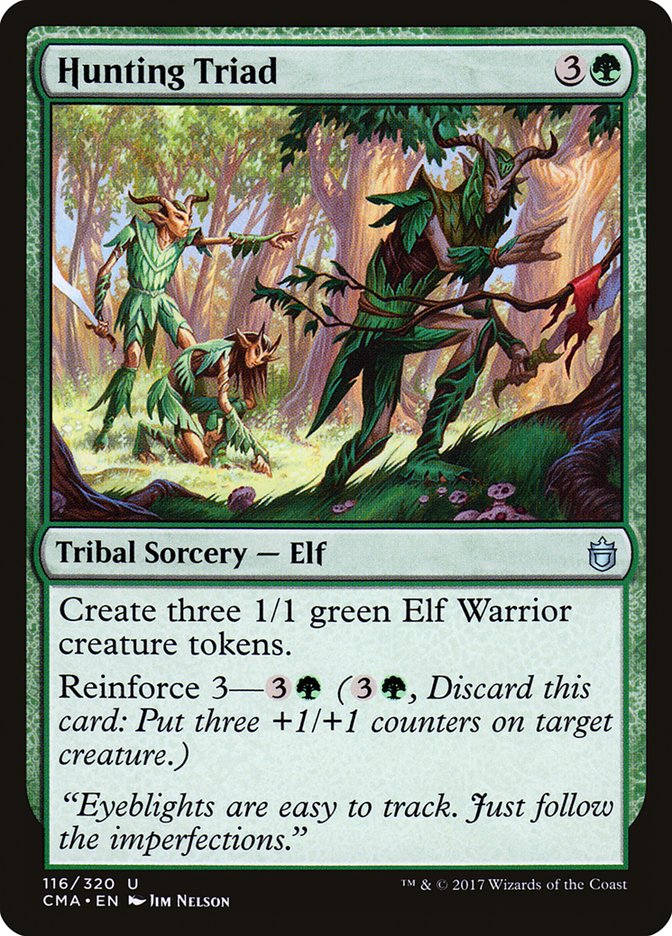
- Hunting Triad
- Idol of False Gods
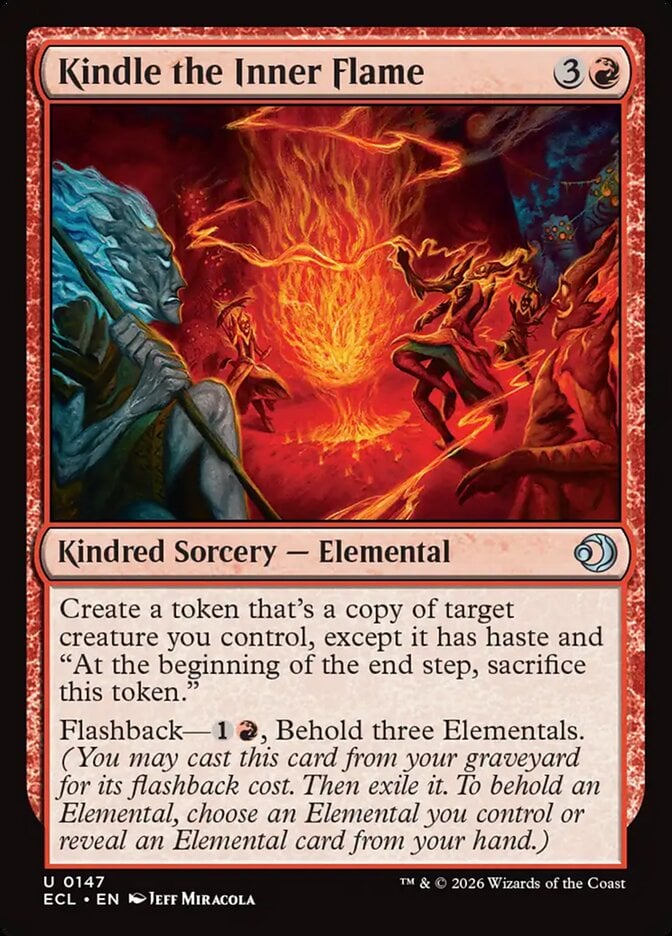
- Kindle the Inner Flame
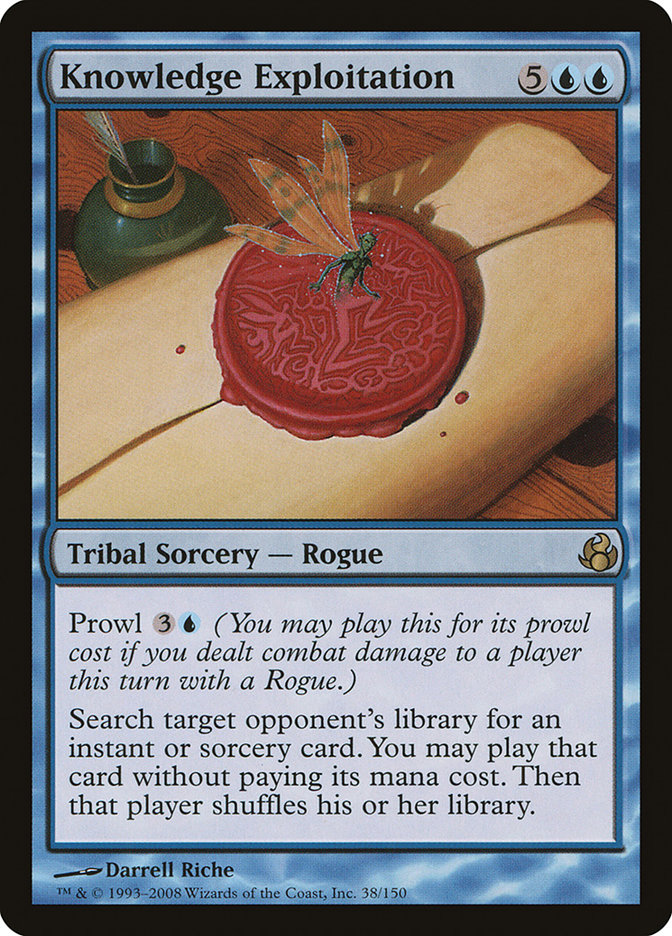
- Knowledge Exploitation
- Kozilek's Command
- Lignify
- Limitless Rekindling
- Merrow Commerce
- Militia's Pride
- Morcant's Eyes
- Morsel Theft
- Nameless Inversion
- Noggin Whack
- Not of This World
- Notorious Throng
- Obsidian Battle-Axe
- Peppersmoke
- Preponderant Pearl
- Prowess of the Fair
- Reach of Branches
- Rebellion of the Flamekin
- Rootgrapple
- Sage's Dousing
- Sarah's Wings
- Shields of Velis Vel
- Skittering Invasion
- Stream of Unconsciousness
- Summon the School
- Surge of Thoughtweft
- Sygg's Command
- Tarfire
- Tarmogoyf Nest
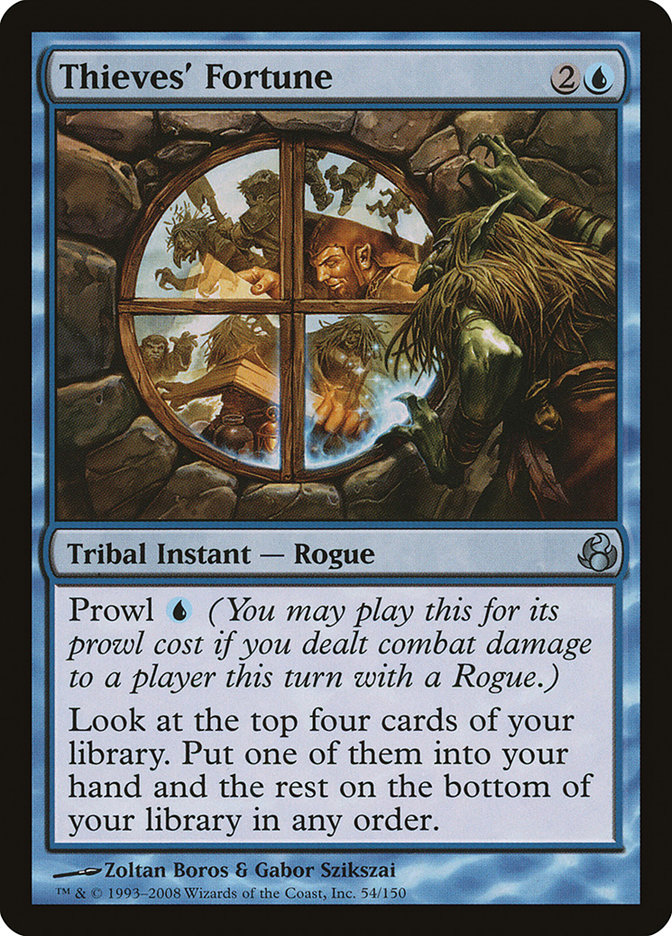
- Thieves' Fortune
- Thornbite Staff
- Trystan's Command
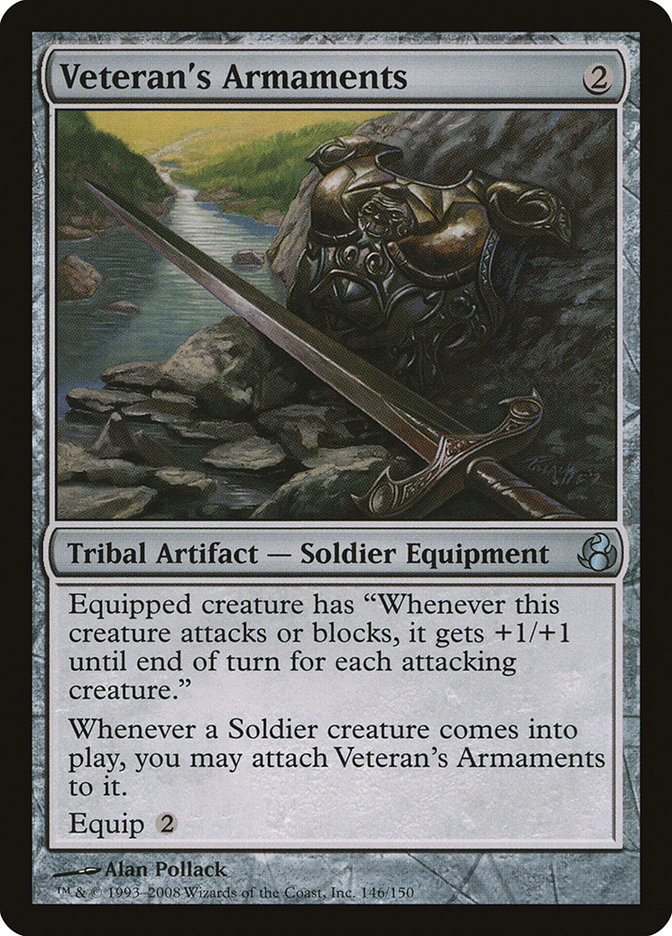
- Veteran's Armaments
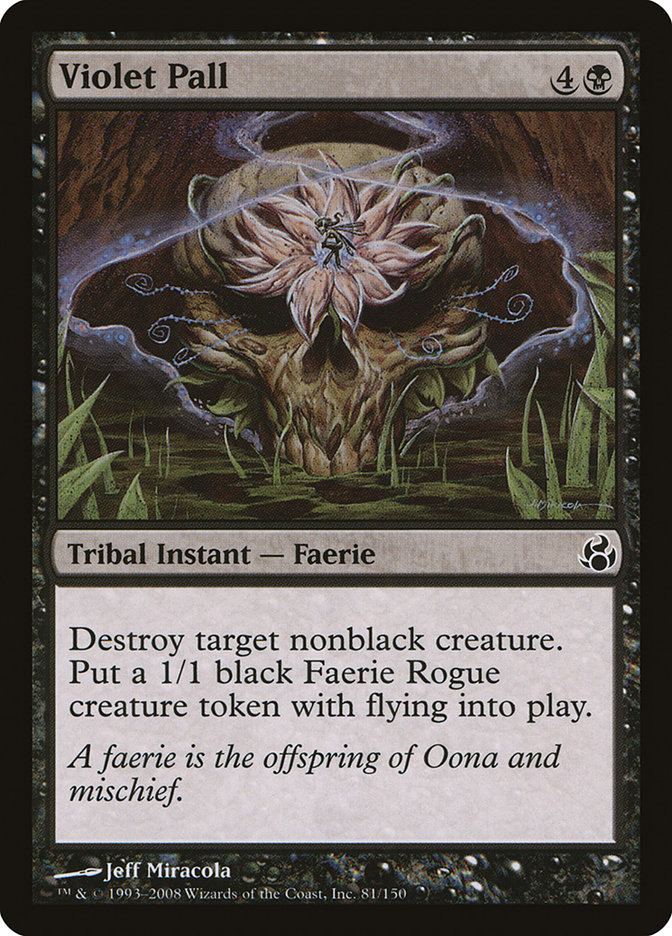
- Violet Pall
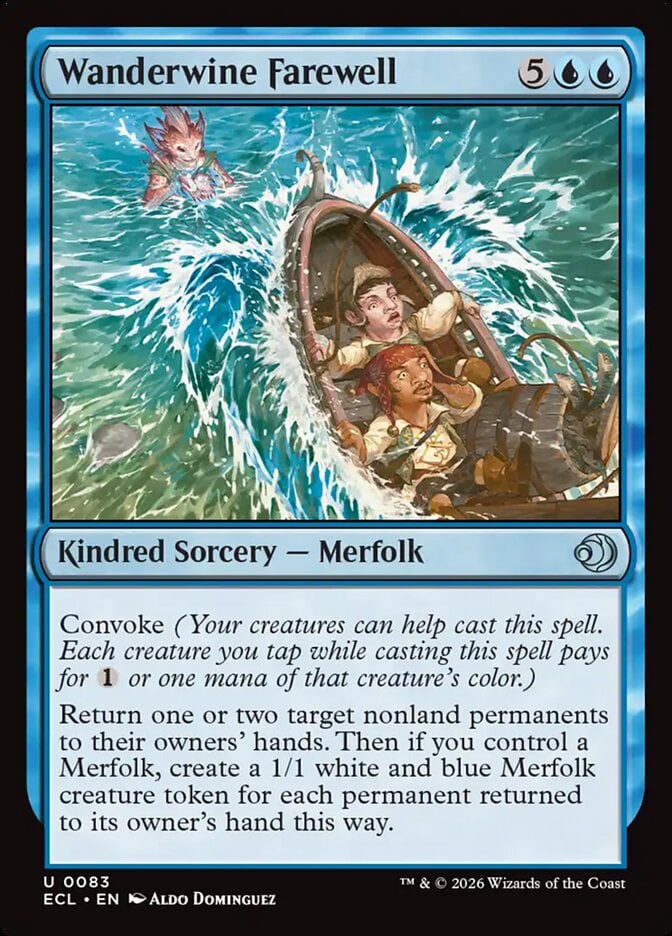
- Wanderwine Farewell
- Warren Weirding
- Wings of Velis Vel
Best Tribal Cards
#12. Trystan’s Command
Trystan's Command gets you either another of your best elf, grinds your opponent on value with a double Regrowth, removes one of their best cards, or trades the trample on Overrun for a team-wide untap to grant tons of value or straight up wins.
#11. Echoes of Eternity
Echoes of Eternity is expensive, but for the triggered abilities of your big colorless cards, six is a bargain to repeat powerful effects found on Scour from Existence, Hideous Taskmaster, and Flayer of Loyalties.
#10. Eldritch Immunity
Eldritch Immunity gives Eldrazi titans a 1-mana protection spell that uses overload to give you a free alpha strike against anyone without colorless defenses.
#9. Ashling’s Command
Ashling's Command gives you great modes to choose from. The elemental tokens easily multiply ETB effects and tacking Pyroclasm onto another effect can be game breaking. On another angle, decks salivate over cards that draw and create treasure.
#8. Kozilek’s Command
I love that you get to pick two from Kozilek's Command, the combinations serve you well whether you’re behind, at parity, or ahead of the board.
#7. Eldrazi Conscription
Attaching Eldrazi Conscription to your commander in EDH is all kinds of scary, especially if it has or you can give it double strike. Or you could just enchant some big Eldrazi like Ulamog, the Ceaseless Hunger with this colorless enchantment.
#6. Lignify
Lignify lets you cheaply deal with an opponent’s threat or commander by turning it into a 0/4 vanilla treefolk. Aside from Kaima, the Fractured Calm and Danitha, New Benalia's Light, I see this more as a general use card than something with a specific home.
#5. Elvish Promenade
Elvish Promenade can make your board of elves multiply faster than rabbits, especially if you’ve got any token doublers on board when you cast it. Being green lets you play this whether you’re doing mono-green, Golgari (), Selesnya (), or Simic () elves.
#4. Crib Swap
Crib Swap is an exiling piece of white removal that’s also a shapeshifter spell, and there are lots of ways to make incredible use of this. You can cast it from the top of your library with Nalia de'Arnise, and you get double triggers from Rin and Seri, Inseparable when you cast it. That’s just scratching the surface, but changeling is one of the more interesting creature types for a tribal card because of abilities like these.
#3. Thornbite Staff
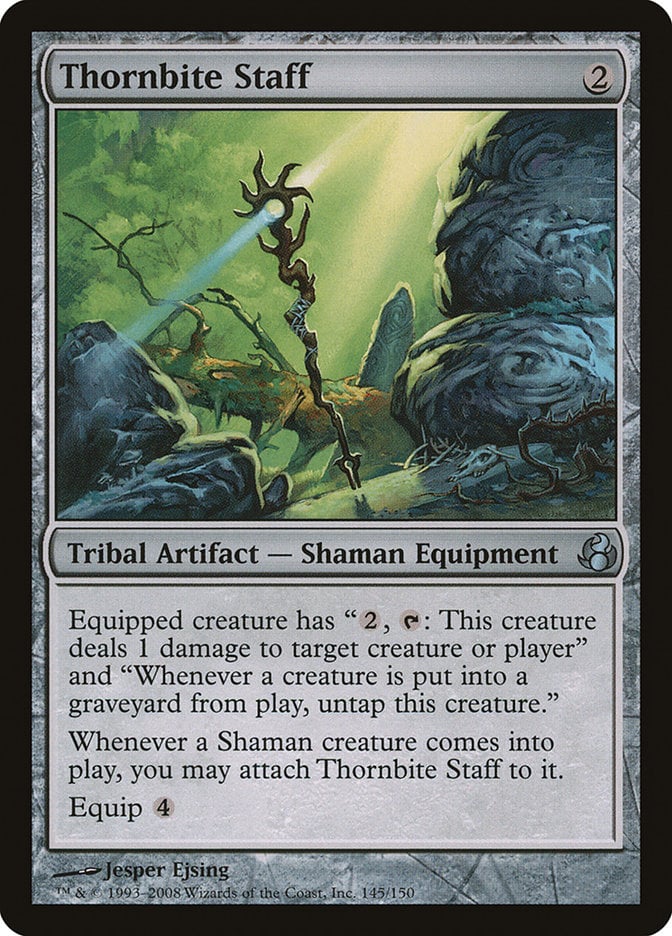
Thornbite Staff turns any of your creatures into a pinger, but pairing it with Viridian Longbow makes it that much better. A deathtouch creature equipped with both can go infinite to destroy an entire board in a hurry.
#2. All Is Dust
You’ll probably want to wear a mask with a good filter after playing this. Destroying every colored permanent is pure Eldrazi fun. The fact that All Is Dust forces everyone to sacrifice stuff gets around all kinds of protection like hexproof, and this is a key card for any Eldrazi-focused deck. Of course, Karn reminds you that you don’t have to play Eldrazi to play in the colorless card pool.
#1. Bitterblossom
I mean, it pumps out Faerie Rogues on your upkeep. For 2 mana. Bitterblossom is one of the best token generators in black, so good that it used to be banned in Modern.
Decklist: Giant Tribal Cards in Modern
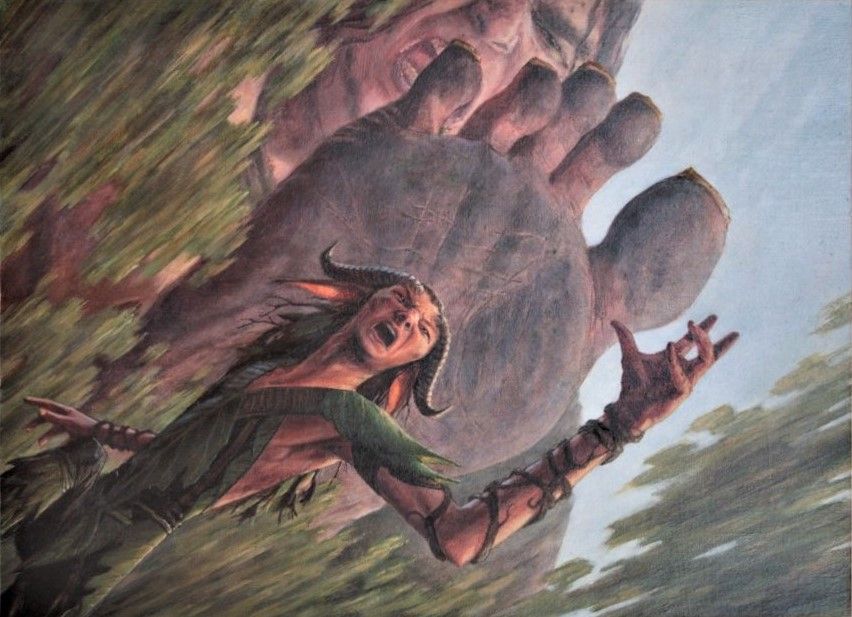
Crush Underfoot | Illustration by Steven Belledin
Creature (26)
Blind-Spot Giant x3
Boldwyr Intimidator
Borderland Behemoth x3
Brion Stoutarm x4
Hamletback Goliath x2
Palisade Giant x2
Pharagax Giant x2
Stinkdrinker Daredevil x4
Sunrise Sovereign x2
Thundercloud Shaman x3
Instant (7)
Crush Underfoot x3
Lightning Bolt x4
Sorcery (3)
Enchantment (5)
Awaken the Ancient x3
Favor of the Mighty x2
Land (19)
Ancient Amphitheater x4
Boros Guildgate x4
Mountain x7
Wind-Scarred Crag x4
Sideboard (15)
Lash Out x2
Smash to Smithereens
Thunderous Wrath
Destructive Urge x2
Oblivion Ring x2
Plains x7
Thank you to DisturbedOrange for posting this deck years ago and never deleting it. Don’t ask me if this is a great, high-performing deck in Modern; we’re just using it as a case study.
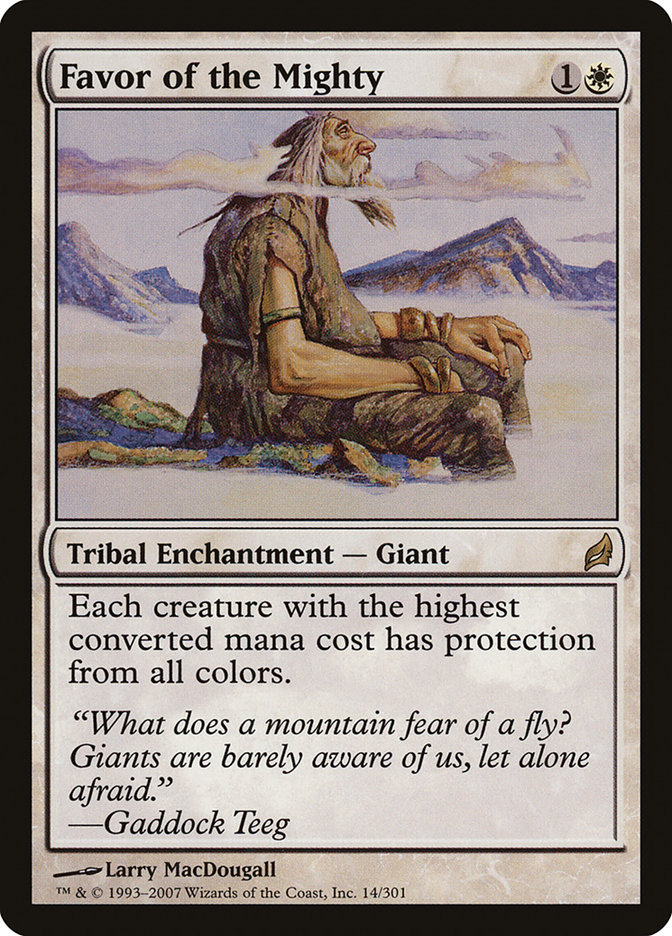
This is a Boros () deck focused entirely around the giant creature type. Every creature in the deck is a giant, and even three of the non-creature spells, Feudkiller's Verdict, Favor of the Mighty, and Crush Underfoot have the giant subtype thanks to their tribal card type.
Favor of the Mighty works especially well because Blind-Spot Giant and Borderland Behemoth care about the other giants you control, but they don’t specify “giant creature.” That means that the enchantment counts, letting your Blind-Spots attack more easily and buffing your Behemoths even further.
There’s also Awaken the Ancient to animate some of your mana base into more giants, and having giants in hand lets you play your Ancient Amphitheaters untapped. When you look to slot your own cards into this, I’d start with Dawn-Blessed Pennant, Eclipsed Realms, or Boldwyr Aggressor.
Wrap Up
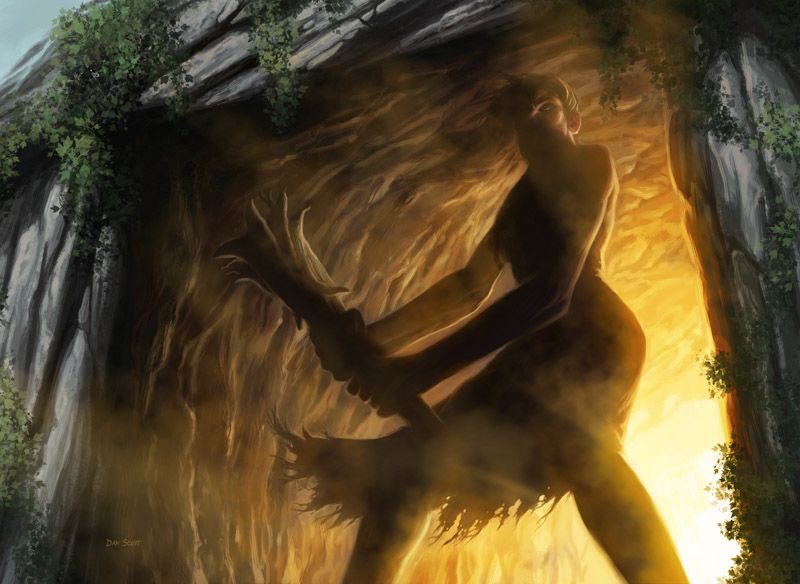
Feudkiller's Verdict | Illustration by Dan Scott
And that’s the story of tribal and kindred cards in Magic. You’ll find some of the best ones creep into Commander and Masters products. It is an interesting experiment, and I can see why designers need to be cautious with it.
Which are your favorite typal cards in Magic? Which formats and decks do you use them in? Ever used wizardcycling to pull a wizard tribal card from your deck? Let me know in the comments or over on Draftsim’s Discord!
Spend time with your loved ones and see you in the next article.
Follow Draftsim for awesome articles and set updates:










2 Comments
So, wizardcycling can grab any “wizard card”, so that is wizard creatures, and wizard tribals, but what about instants and sorceries that their effects pertain to wizards, I.e., wizard’s lighting, wizard’s retort, flame of amor, etc.?
Anything with “wizard” in the typeline is eligible for wizardcycling.
Something like Flame of Anor isn’t viable since it only has “wizard” in the rules text, not the typeline, but you could get something like Diviner’s Wand because it’s a “Kindred Wizard Artifact”
Add Comment