

The Eldest Reborn | Illustration by Jenn Ravenna
Sagas are one of the coolest enchantment types in Magic. They trigger every turn, sometimes with game-swinging effects, but require good timing to be used well.
Black is one of the MTG colors with the least mono-colored sagas (it nearly ties with blue for the last spot, and a long way from white), but it has a couple of the strongest sagas.
Let’s check out the best black sagas in Magic!
What Are Black Sagas in MTG?
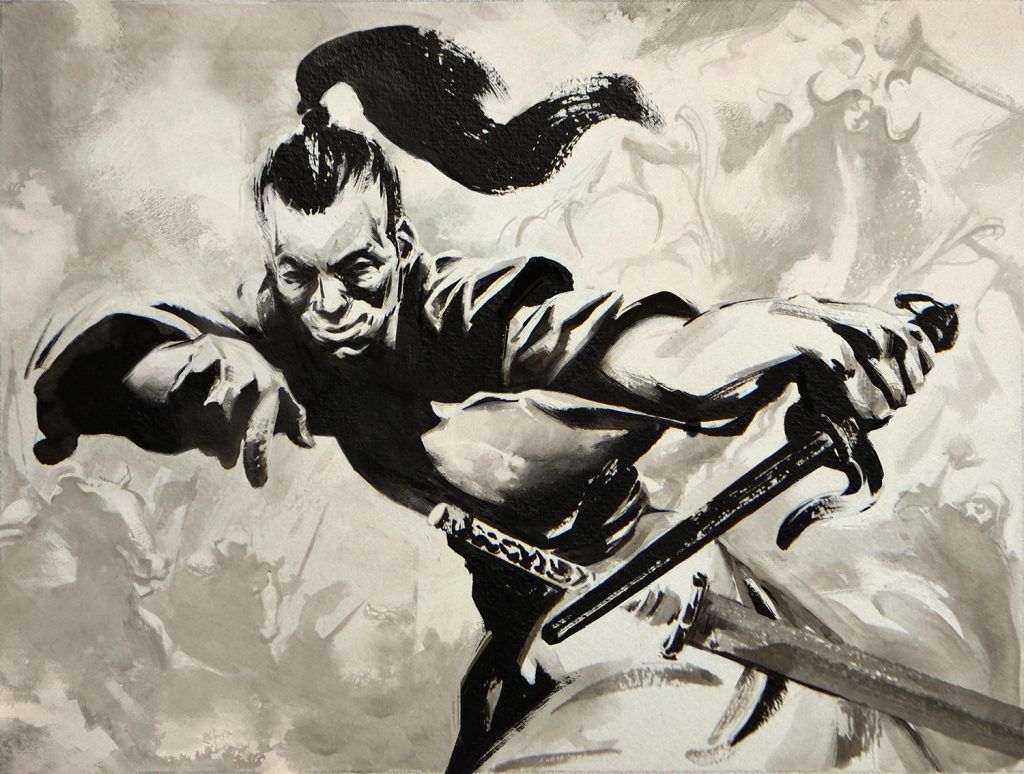
Memory of Toshiro | Illustration by Sidharth Chaturvedi
Black sagas are sagas with a black color identity. Pretty simple!
Sagas are enchantments that have a certain number of chapters. They enter with a lore counter, then you add a lore counter after your draw step each turn, and you trigger the effect of the corresponding chapter. When you reach the last chapter, you sacrifice the saga as soon as the ability resolves.
This ranking looks at sagas that need to cast. We won’t include colorless sagas (even though they would fit in a black Commander deck… and even though the best saga in Magic, without a doubt, is a colorless saga: Urza's Saga). This list will also include double-faced cards that transform into sagas.
Draft Chaff
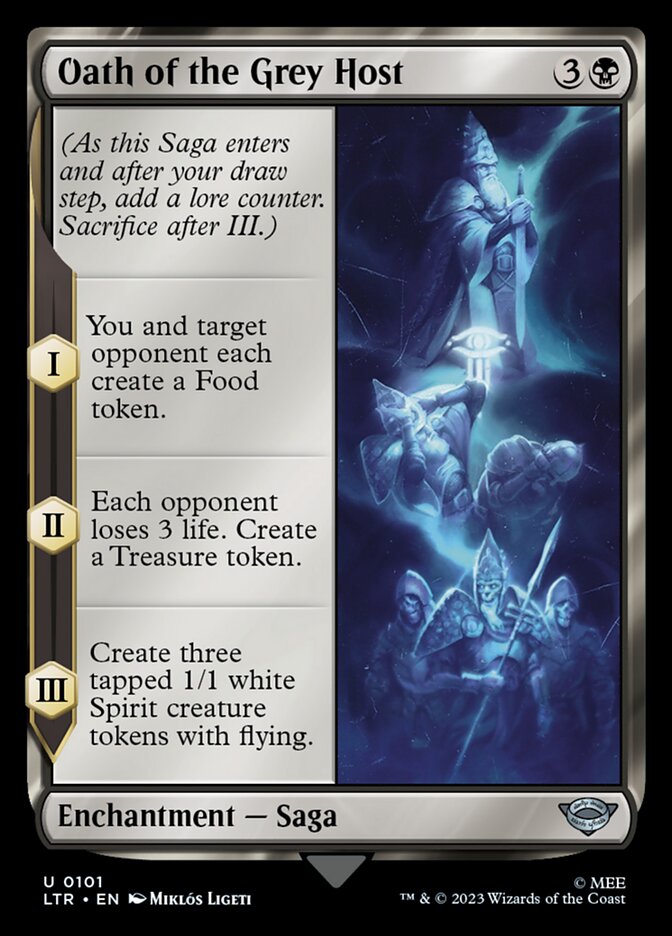
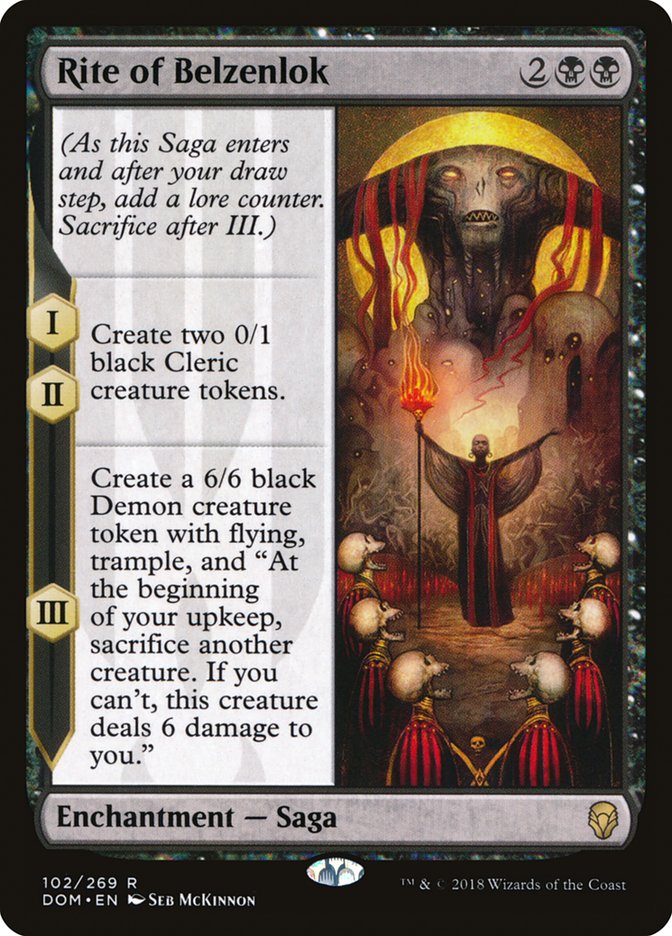
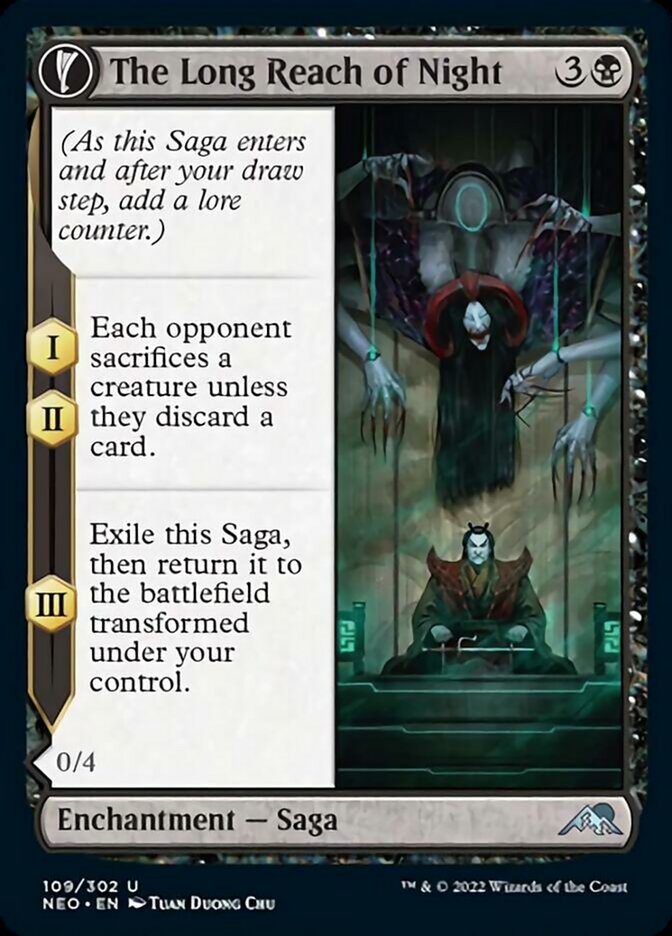
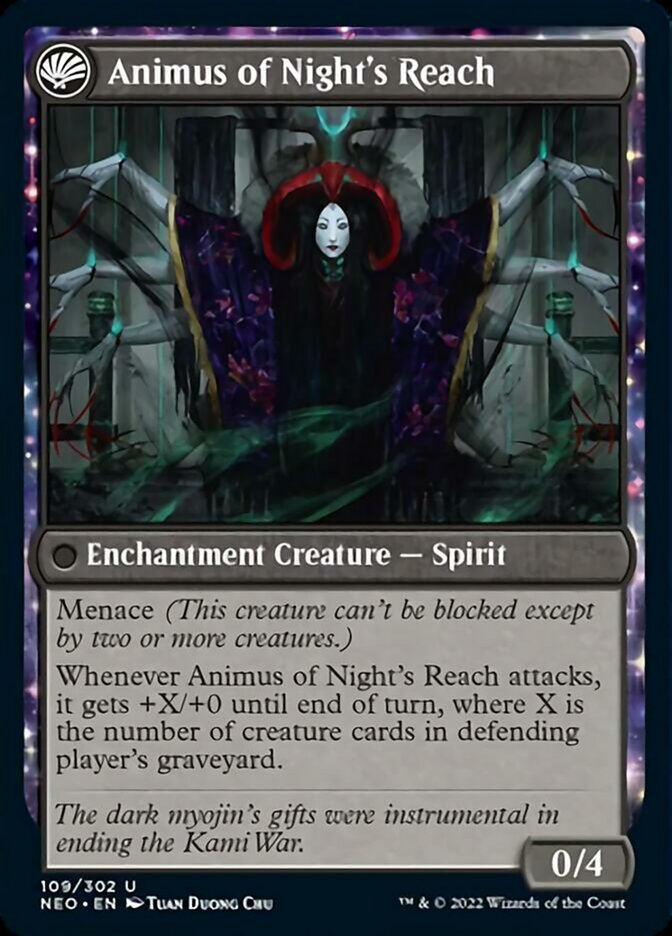
Oath of the Grey Host can be fun in token decks. If you like big flampling demons with sacrifice triggers on top, Rite of Belzenlok may be up your alley. The first two chapters of The Long Reach of Night are not nothing… but Animus of Night's Reach is a pretty mediocre payoff for chapter 3.
All in all, these black sagas are weak cards.
#25. Life of Toshiro Umezawa / Memory of Toshiro
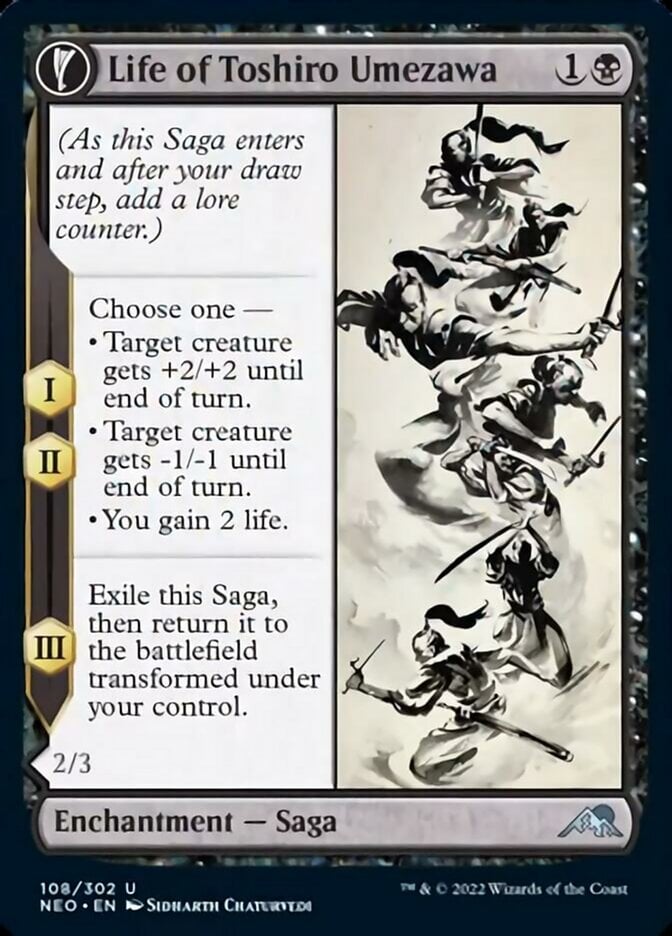
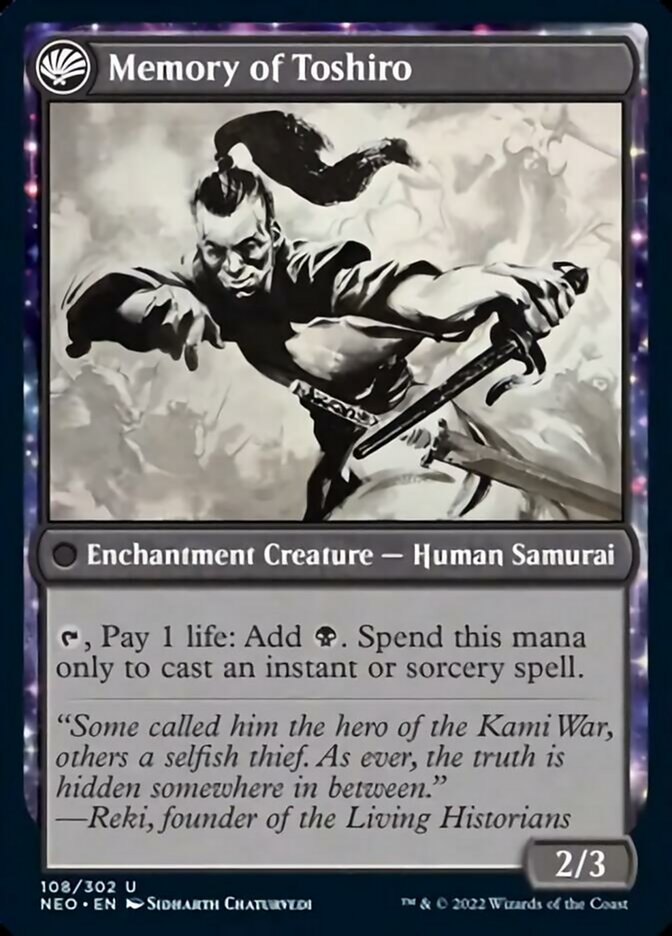
Transforming, double-sided cards that are a saga on the front and a creature on the back were an innovation from Kamigawa: Neon Dynasty. Life of Toshiro Umezawa is too weak for Commander, but saw some play in Standard in its time. The backside counts as a samurai, if you’re building a samurai Commander deck.
#24. The Witch’s Vanity
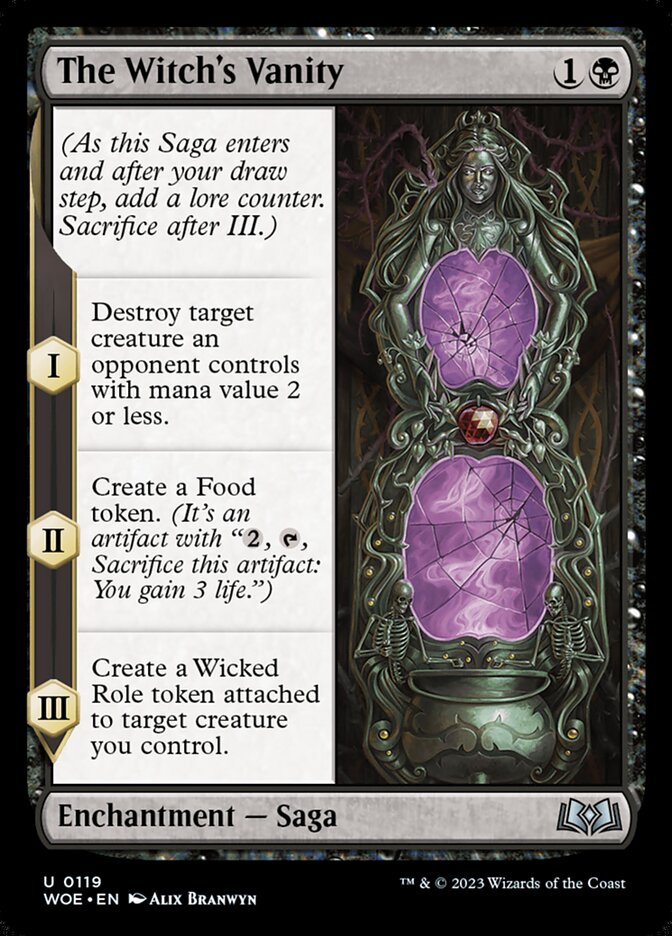
Like Life of Toshiro Umezawa, Wilds of Eldraine‘s The Witch's Vanity is too weak for Commander but had its bright time under the Standard sun, above all in Esper Pixie decks as a good target to bounce back to hand. The archetype eventually found better bounce targets, and The Witch's Vanity never found another home.
#23. Braids’s Frightful Return
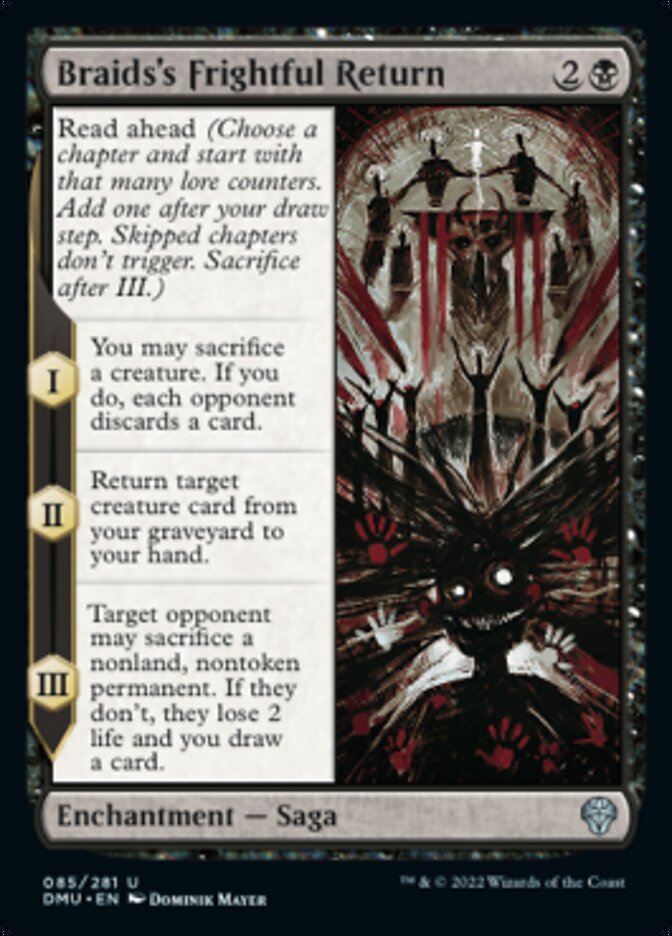
Most of the time, Braids's Frightful Return is “Play it for chapters II/III, and pretend chapter I doesn’t exist.” Which is precisely what read ahead lets you do. Not an embarrassing card, but definitely on the weak end of the spectrum.
#22. Chainer’s Torment
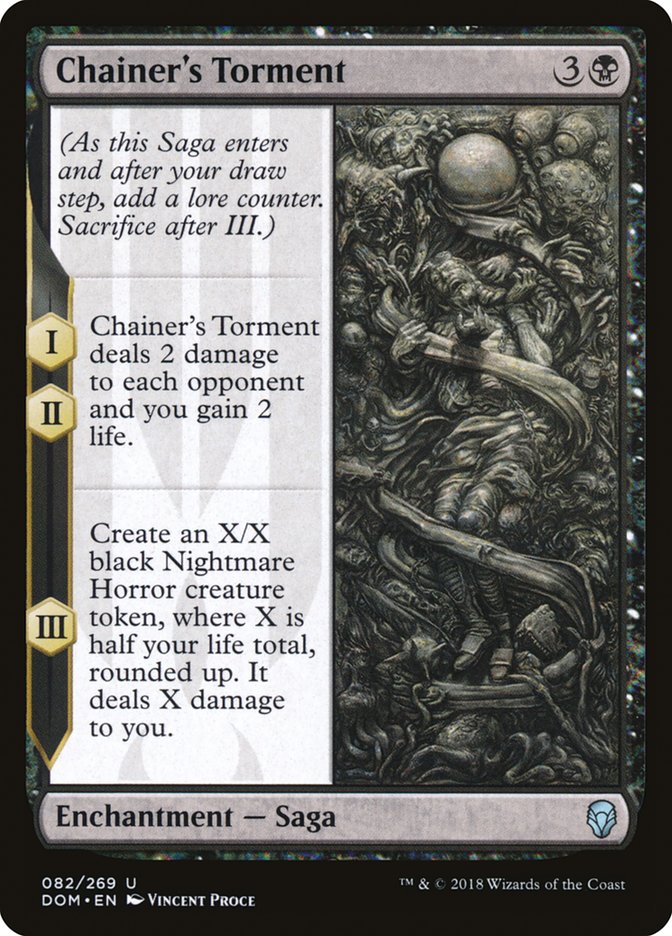
Chainer's Torment lives and dies on whether your deck can squeeze extra value out of burn and lifegain effects. It’s nice that it hits the whole table, but the effect from the first two chapters is fairly small, the third chapter is pretty telegraphed and, let’s be honest, a big, dumb beatstick that doesn’t have evasion or haste isn’t that scary… unless you have a way to negate or redirect the damage, like a Pariah effect. Which makes for a cute little combo but, again, nothing that will change the course of most games.
#21. Elspeth’s Nightmare
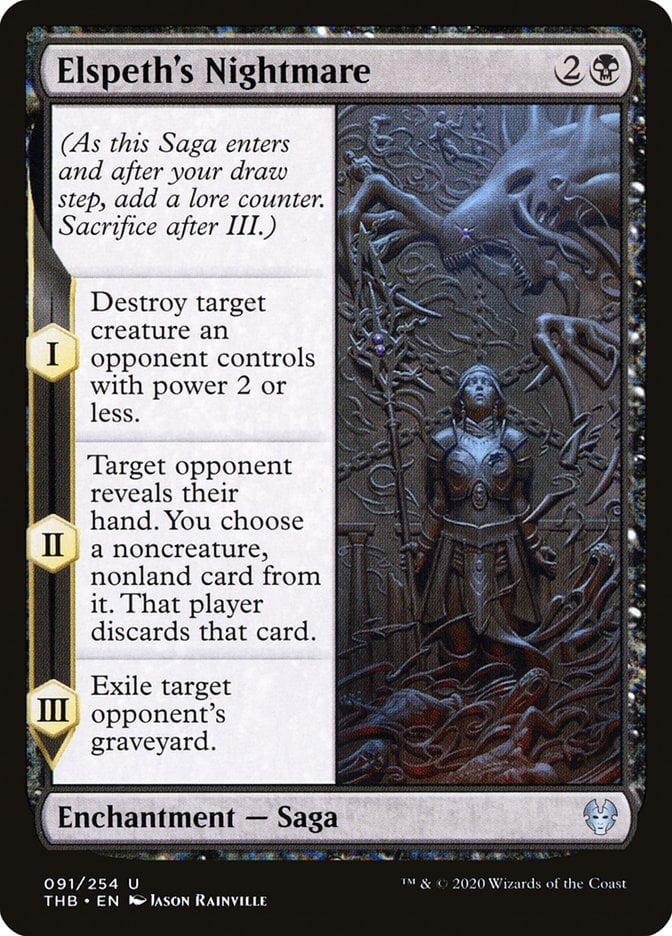
Elspeth's Nightmare reads like a tidy little utility package: You get rid of a small creature, then hit them with a Duress, and then hate a graveyard out of existence as the finale. The effects are fine overall, but they all depend on the matchup and could very well just do nothing.
#20. The War in Heaven
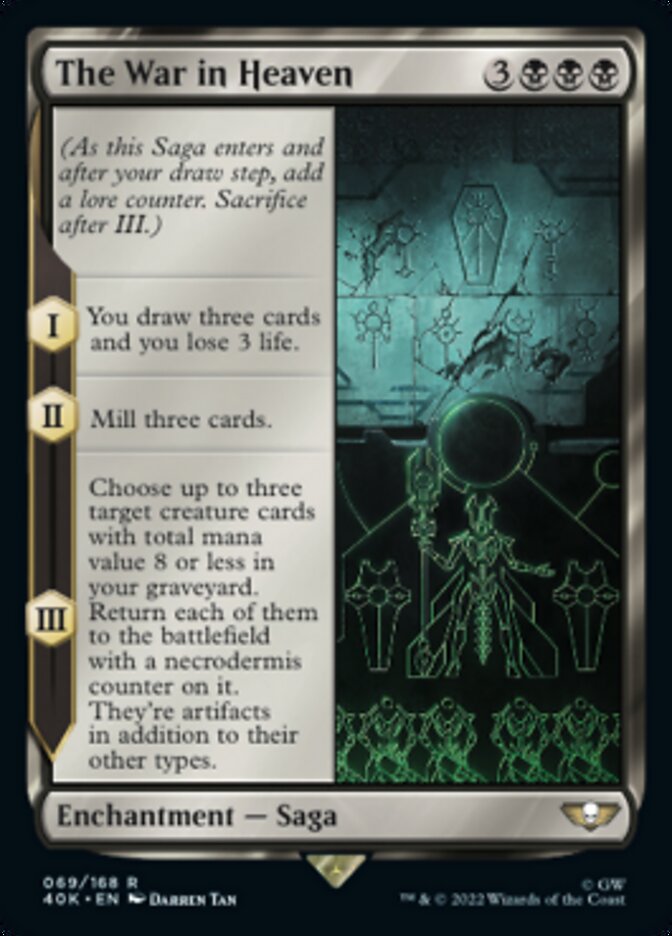
The War in Heaven, from Warhammer 40,000 Commander, is big, swingy, and can finish a game in the right deck.
#19. The Revelations of Ezio

If you’re playing an assassin deck, Assassin’s Creed‘s The Revelations of Ezio‘s second chapter provides a nice board pump, and the third chapter reanimates your biggest threat.
The first chapter is clunky, though, and as with most sagas, there’s not much of a surprise factor after you play it.
#18. The Death of Gwen Stacy

Marvel Spider-Man‘s The Death of Gwen Stacy is fairly similar to Elspeth's Nightmare. except the first chapter is a lot more powerful (you can target any creature… even a creature you control, should that make tactical sense), the second is far weaker, and the third is much better in multiplayer (and even marginally better in single player formats, since it plays around a hexproof‘d player).
#17. Death in Heaven
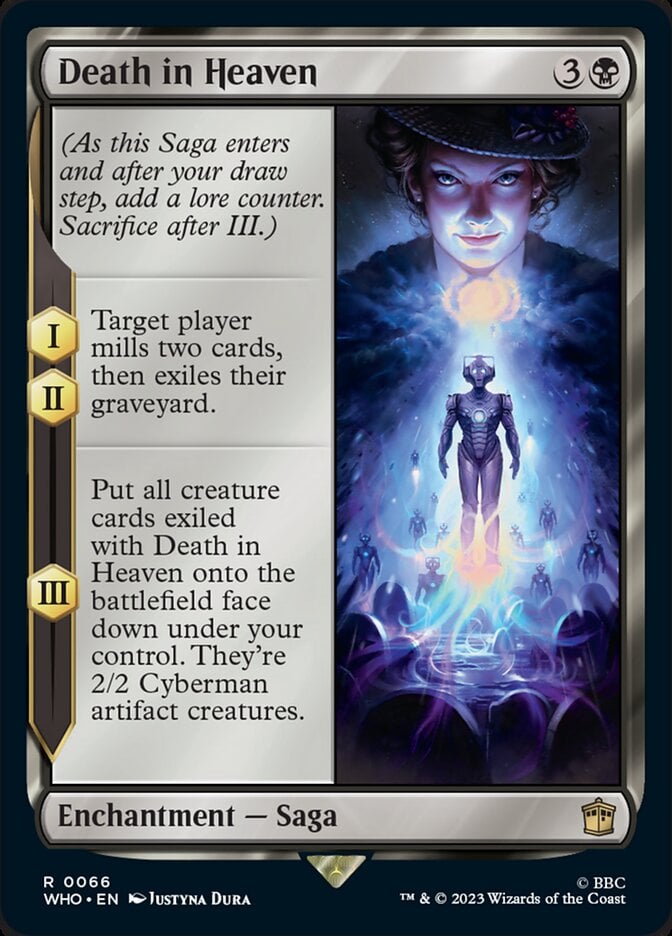
Doctor Who‘s Death in Heaven is another saga that’s kinda weak by itself, but gets a lot better when your deck has a strong theme for it (like trigger doublers to mill additional cards), and ways to make sagas reach their end ASAP.
#16. Tymaret Calls the Dead
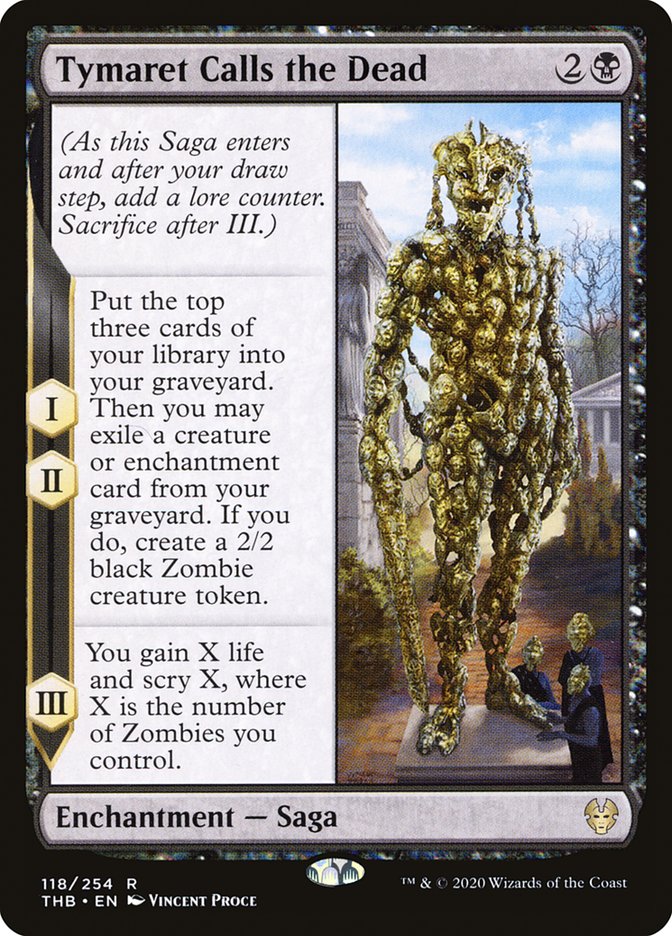
Tymaret Calls the Dead had a pretty good run during its Standard tenure, back when Theros Beyond Death was Standard legal. It was a staple in Rakdos () aggro decks, providing self-mill and token value for decks that love their graveyard more than their hand.
It’s a tad too low power to matter much in other formats, though, and never quite made the cut even into casual Commander decks.
#15. Okiba Reckoner Raid / Nezumi Road Captain
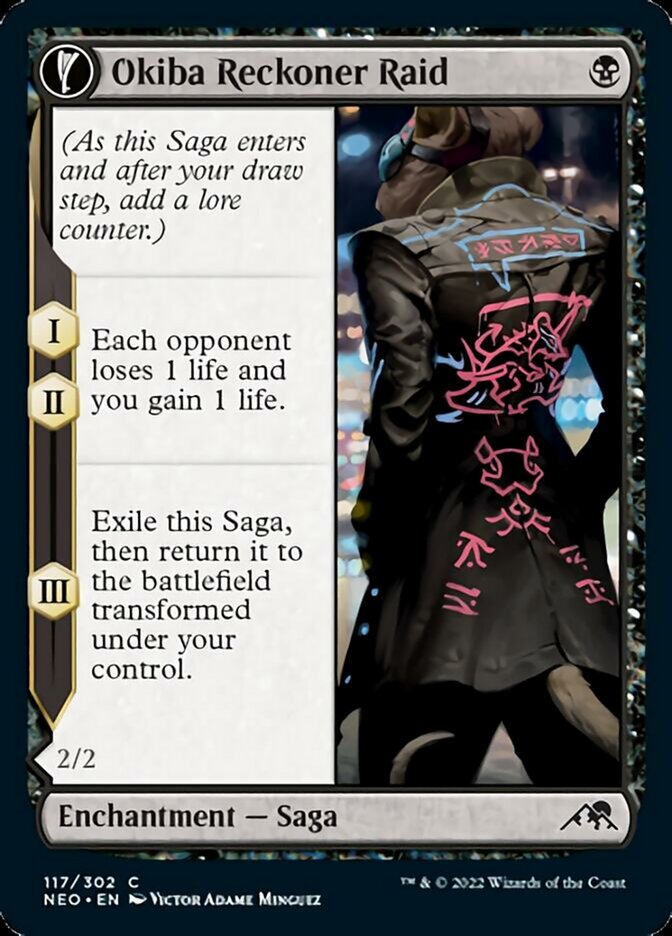
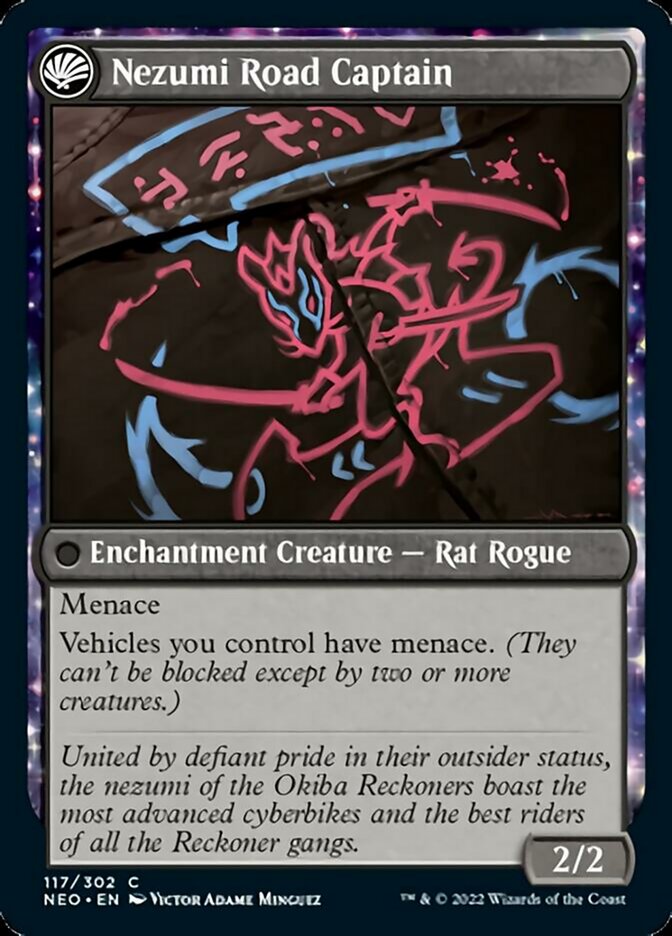
Okiba Reckoner Raid is a pretty serviceable life drain card, and sees quite a bit of competitive play in Pauper.
The problem with most sagas is that they’re slow. But at just , Okiba Reckoner Raid is a solid first-turn play (you’re already getting ahead on the clock), and it turning into Nezumi Road Captain as a 2/2 on turn 3 isn’t bad.
#14. Tribute to Horobi / Echo of Death’s Wail
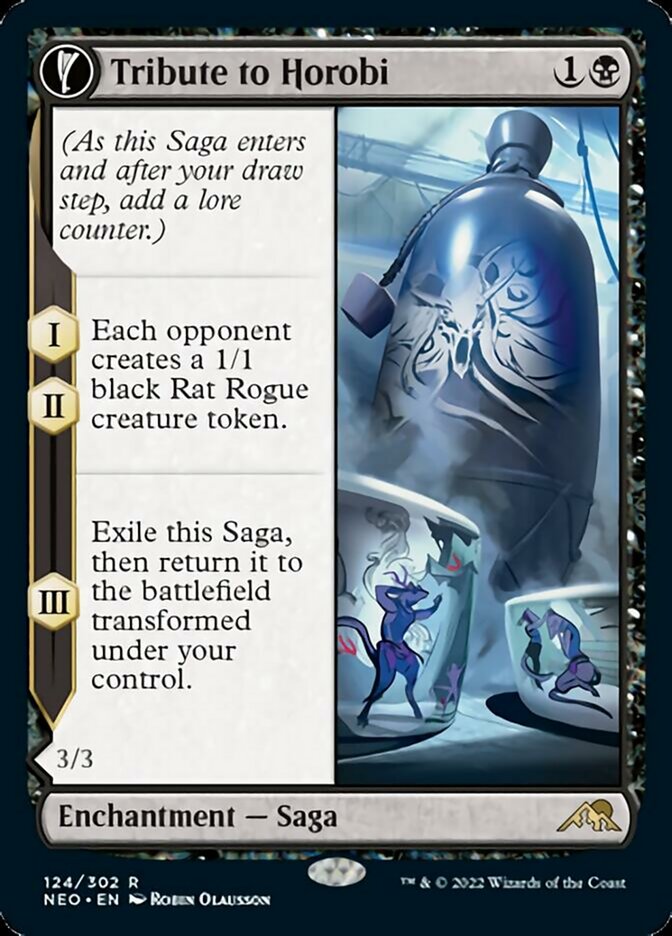
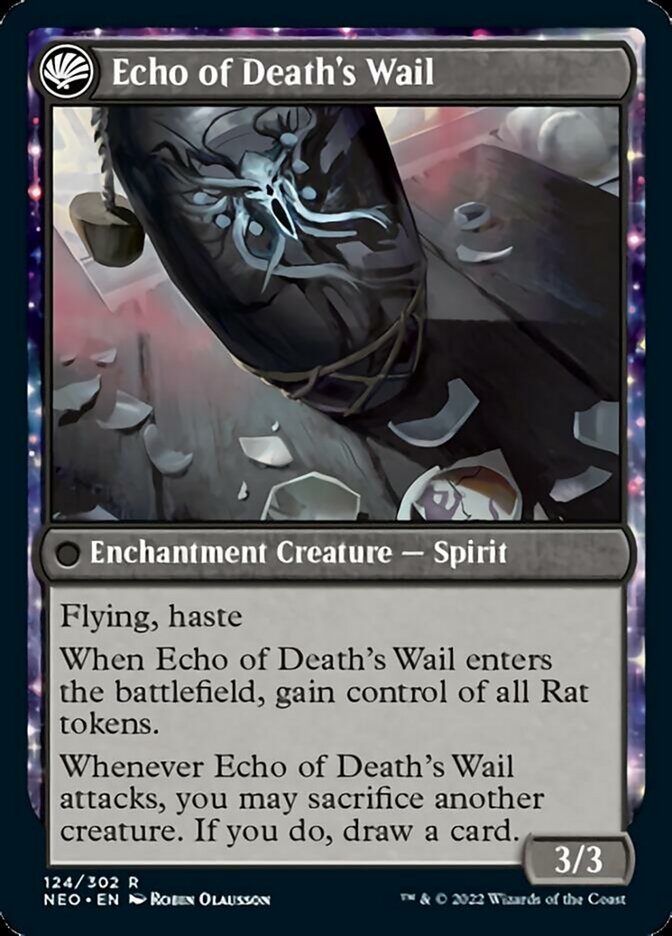
By itself, Tribute to Horobi is a really awful card: Why the heck would you want to help your opponents spawn chump blockers?
Well, Echo of Death's Wail, that’s why!
Tribute to Horobi made quite a splash in Pioneer a couple of years ago, although it later faded in that MTG format and isn’t very strong in Commander.
#13. Genesis of the Daleks
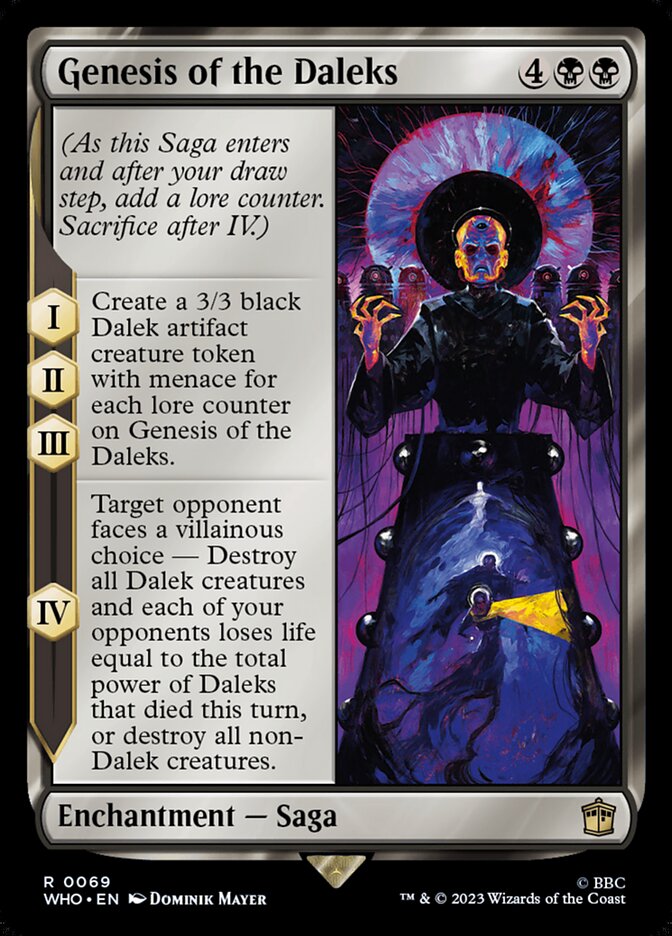
Punisher designs always have the same pitch: “I’m giving you a choice.” Of course, you’re letting opponents choose from two painful options, which is why these cards are so polarizing.
Doctor Who‘s Genesis of the Daleks earns its spot in this ranking by being disruptive enough that the “least painful option” can still be pretty bad. If your deck pressures life totals and resources aggressively, you can make those choices matter.
#12. Summon: Anima

Summon: Anima sees play with commanders that can cram extra lore counters on it (Terra, Magical Adept), care about those lore counters (Tom Bombadil), or really like expensive sagas (Narci, Fable Singer).
It’s too slow without specific synergies, though. Notice that you draw three cards out of it, since Summon: Anima has four chapters in total (instead of the usual three), but that makes the final chapter even more telegraphed if you play it without some way to speed things up.
#11. The Cloning of Shredder
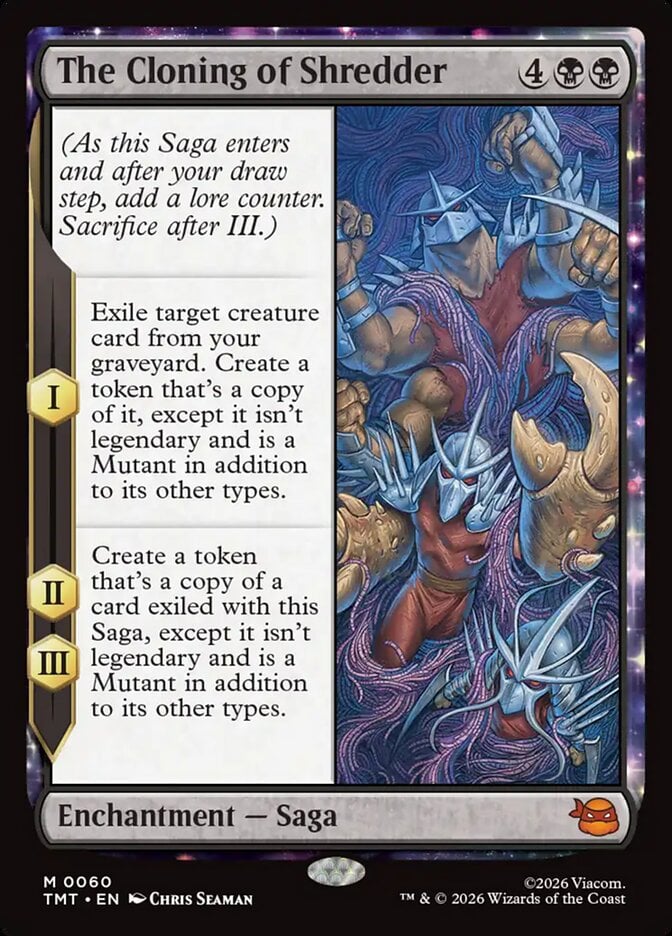
The Cloning of Shredder, from Teenage Mutant Ninja Turtles, reads like a Timmy dream: Paying to reanimate a creature is an awful rate (and you don’t even get the original, but a token copy), but three reanimation effects off just a single card, that also lets you put three copies of the same legendary in play? Yeah, I’d love to have three Toxrill, the Corrosives in play, thank you very much!
#10. The Rise of Sozin / Fire Lord Sozin


Avatar: The Last Airbender reused a theme from Kamigawa: Neon Dynasty: Double-sided, transforming sagas that are a creature on the backside. This is a great way to address one of the main drawbacks that sagas have, namely that they are permanents with a very short shelf life.
The Rise of Sozin would be solid all by itself: The first chapter is a board wipe, the second takes care of an opponent’s wincon if it’s not on the board. And the backside, Fire Lord Sozin, is a threat that your opponent must respect.
(By the way: The Rise of Sozin‘s color identity is black, even if the reminder text on Fire Lord Sozin shows . Mana symbols on reminder text don’t affect color identity).
#9. Jecht, Reluctant Guardian / Braska’s Final Aeon


A 4/3 for is an awful rate, even with menace; but turning it into a 7/7 that draws you cards and forces foes to discard, now that’s a threat that’s hard to ignore.
Sadly, Braska's Final Aeon can’t flip back into Jecht, Reluctant Guardian; the best of these Final Fantasy sagas, like Esper Terra or Ifrit, Warden of Inferno, can keep transforming back and forth, but that’s not the case here.
#8. Vault 12: The Necropolis
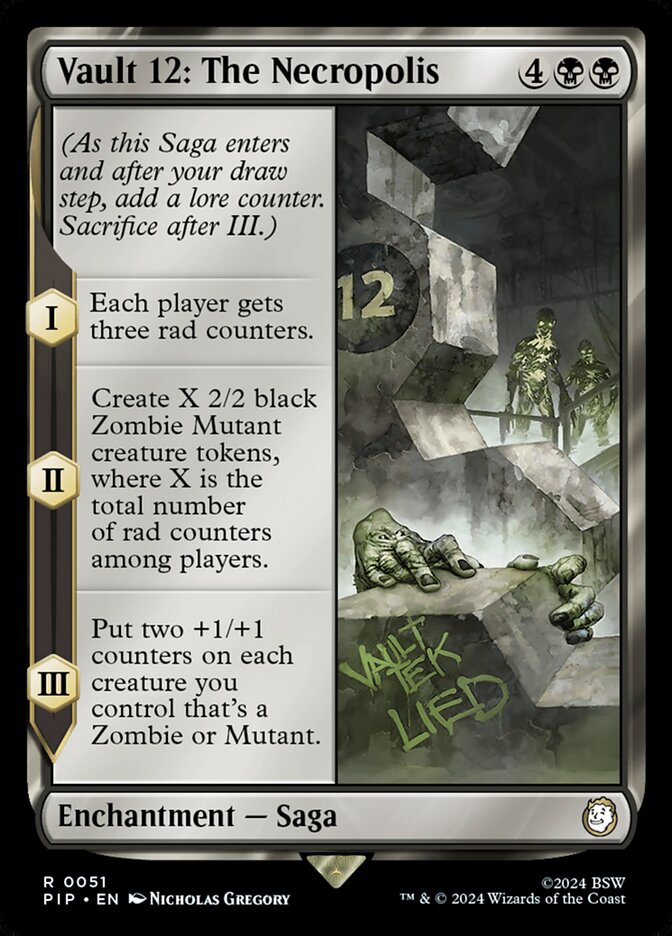
Fallout‘s Vault 12: The Necropolis is what Magic’s Head Designer Mark Rosewater calls “parasitic design“: Cards with a certain mechanic that tend to only play well with that mechanic.
In Vault 12: The Necropolis‘s case, the parasitic mechanic would be rad counters, which currently are only found on other Fallout cards. They do work with other strategies (mill and life loss being two obvious ones), but few cards care about rad counters themselves.
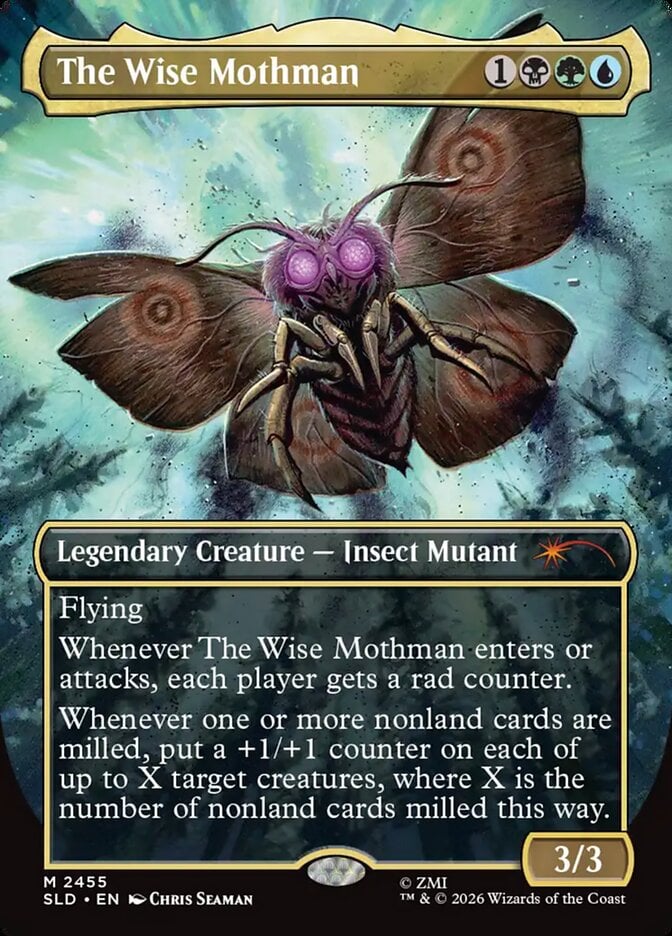
Unsurprisingly, by and large Vault 12: The Necropolis sees play in The Wise Mothman Commander decks… but given how massively popular the Mothman is, that’s a lot of decks!
#7. The Creation of Avacyn

The Creation of Avacyn is strong enough to see competitive play in fringe Modern and Legacy decks, although it’s rarely seen in Commander outside of Narci, Fable Singer decks.
The big appeal of The Creation of Avacyn is that it can set up a payoff that actually ends games: You can tutor any threat in your deck and put it in exile (where it’s very hard to interact with). If it’s a creature, then by chapter 3 it enters the battlefield without you having to pay for it, and without having to cast it, therefore playing around counterspells (although the chapter’s trigger goes onto the stack, so it can still be Stifled).
The drawback is how long it takes, but if you can protect the saga or accelerate the chapters (by proliferating the lore counters, for example), it starts looking a lot better.
#6. Phyrexian Scriptures
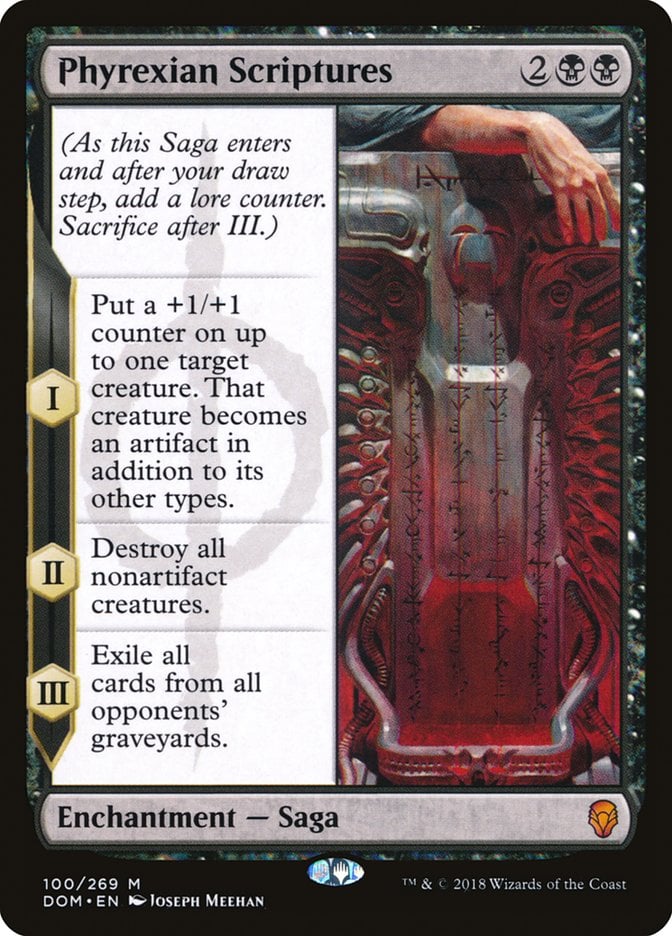
Phyrexian Scriptures does for artifacts what One Ring to Rule Them All does for legendaries: The first chapter artifact-izes one of your creatures, and the second wipes all non-artifact creatures. To add insult to injury, the third chapter wipes all your opponents’ graveyards, getting rid for good anything that you board-wiped with chapter 2.
#5. One Ring to Rule Them All
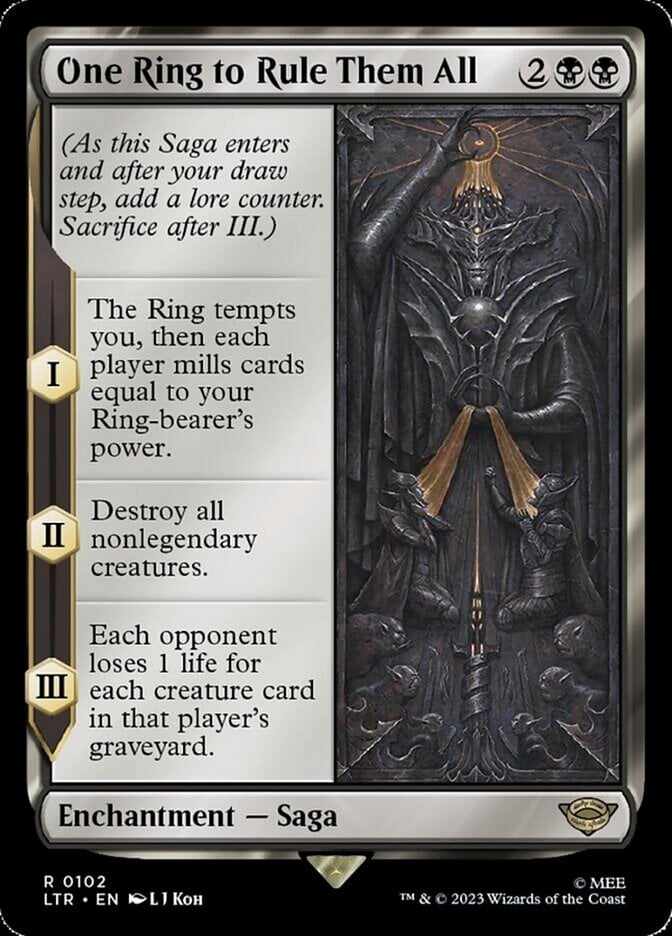
One Ring to Rule Them All is definitely not The One Ring, but can still bring a lot of pain… above all because you of course have built your deck around the ring tempting you, and legendaries. Right?
Worth noting that your ring-bearer is always legendary, so One Ring to Rule Them All‘s chapter 2 will always spare the creature you choose in chapter 1.
#4. The Cruelty of Gix
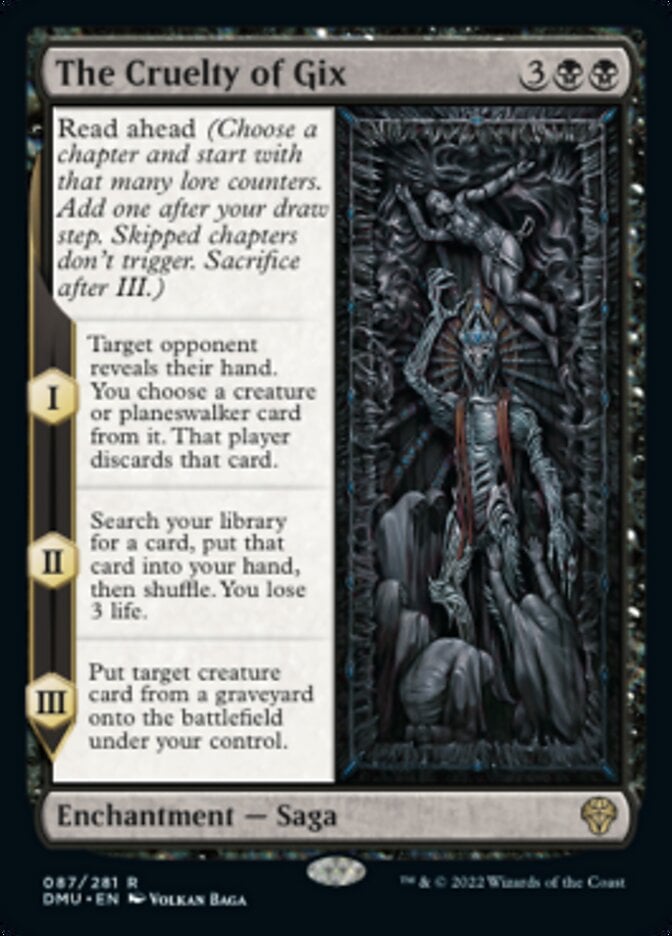
Dominaria United‘s The Cruelty of Gix saw a ton of competitive play while it was legal in Standard. All its chapters are relevant, and The Cruelty of Gix draws most of its strength from its flexibility: It’s one of the only two black sagas with read ahead, which lets you start with as many lore counters as you want when you play this saga (so you could start by skipping chapter 1 and tutoring whatever you need when The Cruelty of Gix enters).
#3. Summon: Primal Odin

Final Fantasy has a ton of cool sagas (which was one way in which the Magic devs could translate Final Fantasy‘s
stories to Magic), but it also brought one cool innovation: saga creatures, enchantment creatures that are sagas, all rolled into one.
Summon: Primal Odin is the mono-black version of that concept. An expensive, high-ceiling black saga that plays like removal-plus-pressure, it can attack like any creature, and it asks opponents to have answers or risk losing the game on chapter two if it connects.
Summon: Primal Odin saw some competitive play in Standard and Pioneer in the months following Final Fantasy’s release, it sees a bit of cEDH play, and is among the most popular black sagas in casual Commander decks, often with Terra, Magical Adept in the command zone.
#2. The Eldest Reborn
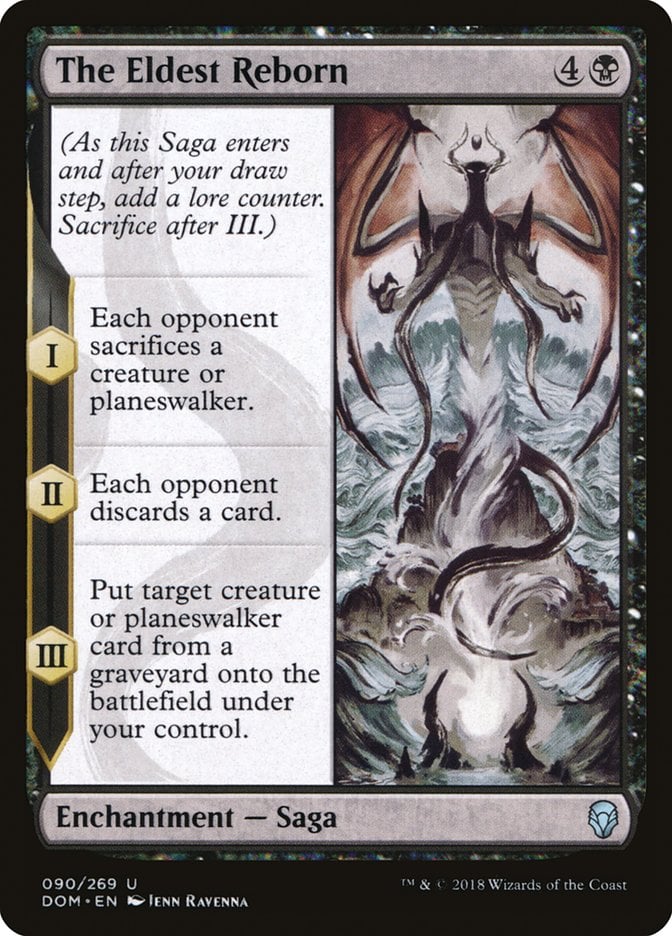
The Eldest Reborn, originally from Dominaria and reprinted in Duskmourn: House of Horror Commander, is Elspeth's Nightmare‘s big brother: Like Elspeth’s Nightmare, the chapters complement each other well (the first shrinks the enemy board, the second disrupts their hand, and they both fill the graveyard for chapter three), but in The Eldest Reborn‘s case all chapters affect all opponents, which is great for multiplayer formats, and chapter three is a lot more powerful.
Chapter 2 doesn’t let you choose which card to discard, and you don’t get to see their hand, but this type of discard effect is sometimes a plus when compared to a Duress effect: Unless your opponents are hellbent, they’ll always have to discard something.
In slower or midrange-heavy games, The Eldest Reborn is consistently annoying in the best black way.
#1. Sheoldred / The True Scriptures
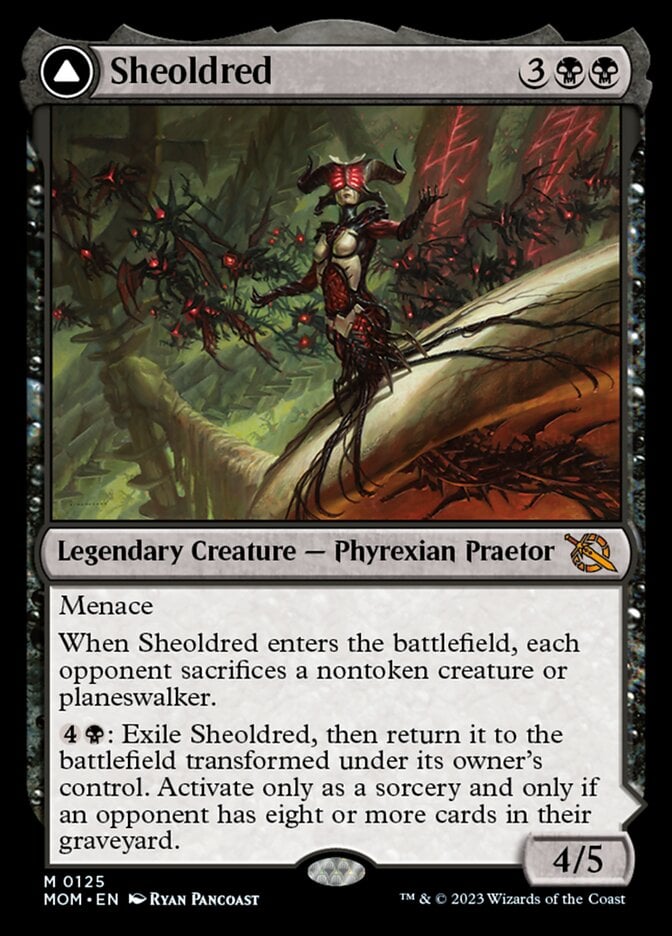
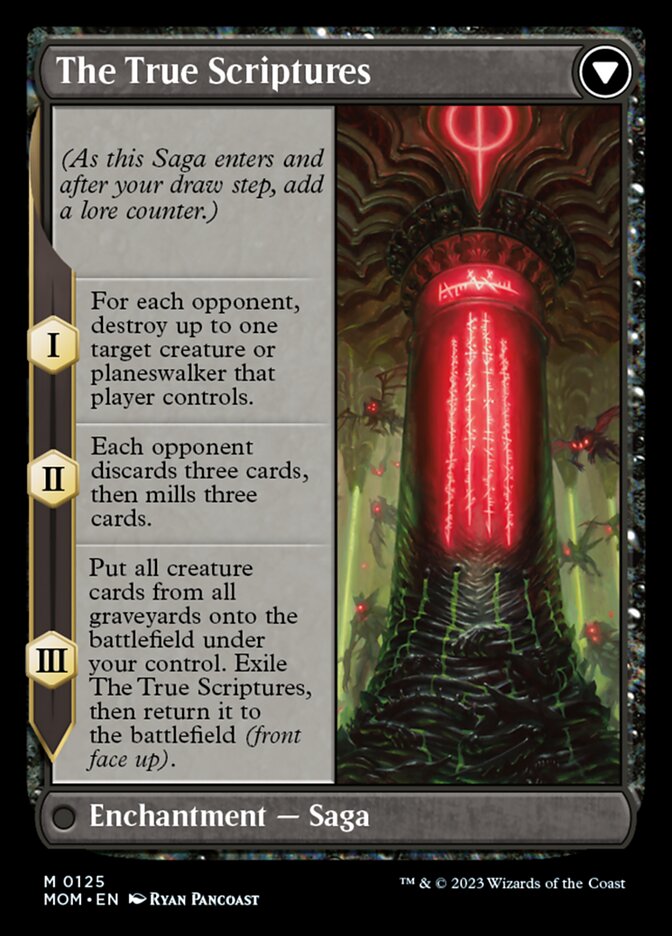
March of the Machine isn’t a saga-heavy MTG set, but it brought an interesting tweak to sagas by, almost literally, flipping Kamigawa: Neon Dynasty‘s trick upside down. Rather than sagas that transform into creatures, March of the Machine has double-sided creatures that transform into sagas (a concept that Final Fantasy would reuse).
Sheoldred is fairly impactful upon entering (it affects all your opponents, and the “nontoken” clause in its edict effect makes sure your foes won’t be just sacrificing lousy 1/1 tokens). But the real spice is in The True Scriptures: The first chapter is targeted removal, the third puts you very close to winning, and after the third chapter fires off you get Sheoldred back (which will again trigger its edict effect).
If the table doesn’t have a quick answer to The True Scriptures, it’s pretty much game over.
Best Black Saga Payoffs
No card specifically rewards you for playing black sagas. What you do have are black-leaning cards that reward you for playing sagas in general. You also have payoffs for playing enchantments (sagas are enchantments), and payoffs for sacrificing permanents (sagas that reach the last chapter get sacrificed when the trigger resolves).
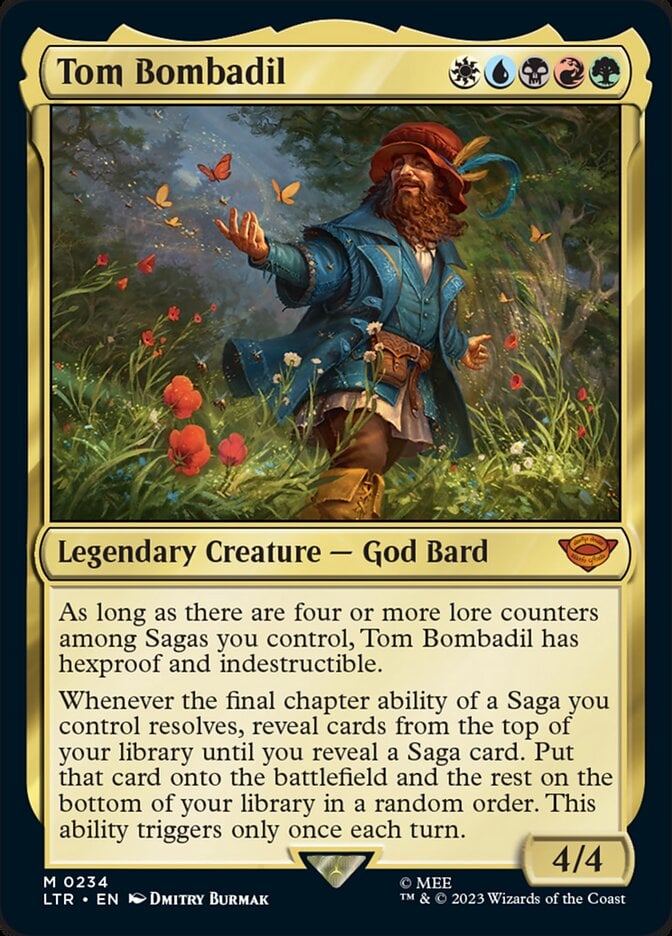
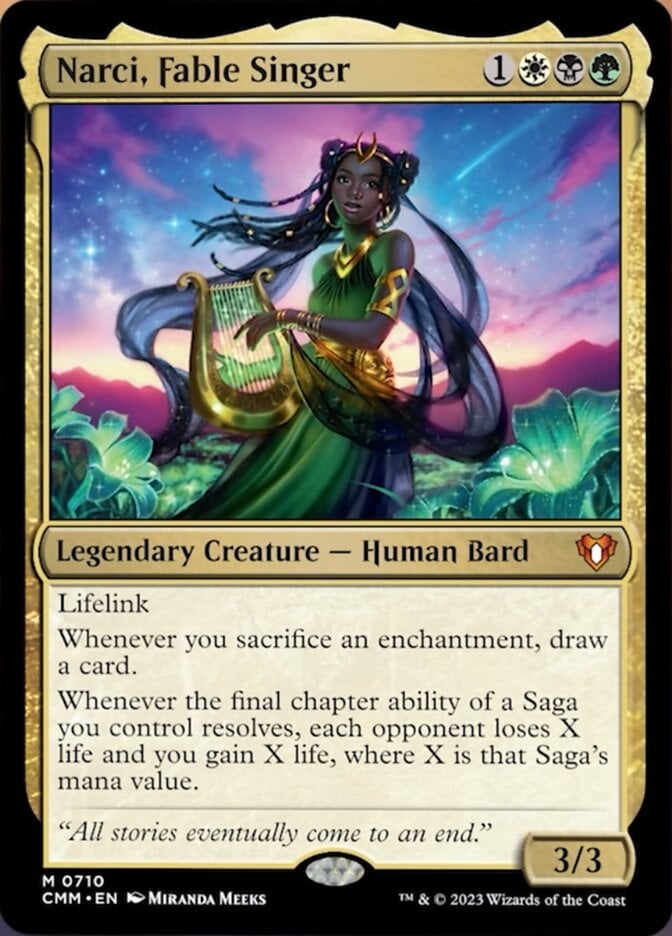
Tom Bombadil is by far the most popular saga commander, and it’s a 5-color commander so anything goes. Luckily for black sagas, the second most popular saga commander is in Abzan colors (): Narci, Fable Singer.
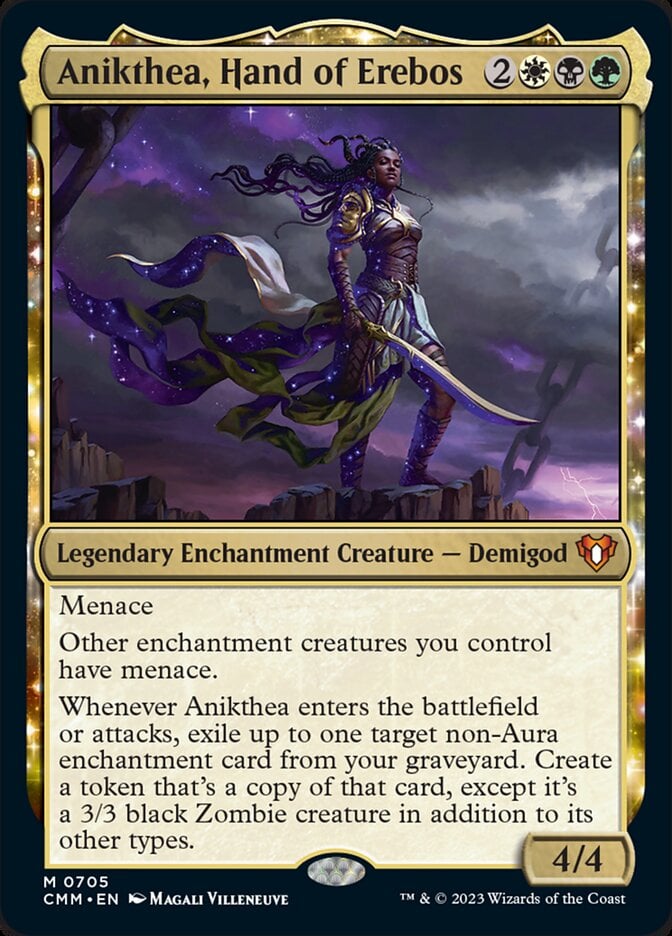
There are lots of cards that reward you for playing enchantments, often letting you draw cards when you do (and usually nicknamed “Enchantress decks” in MTG lingo). Anikthea, Hand of Erebos is the most popular enchantress commander that taps into black: While it doesn’t specifically care about sagas, Anikthea loves it when you fill your graveyard with enchantments… which is exactly what happens when a saga has run its course.
There are cards that reward you when you sacrifice a permanent or an enchantment. Black doesn’t have that many of those, sadly, but that’s what makes Narci, Fable Singer such a good saga commander.
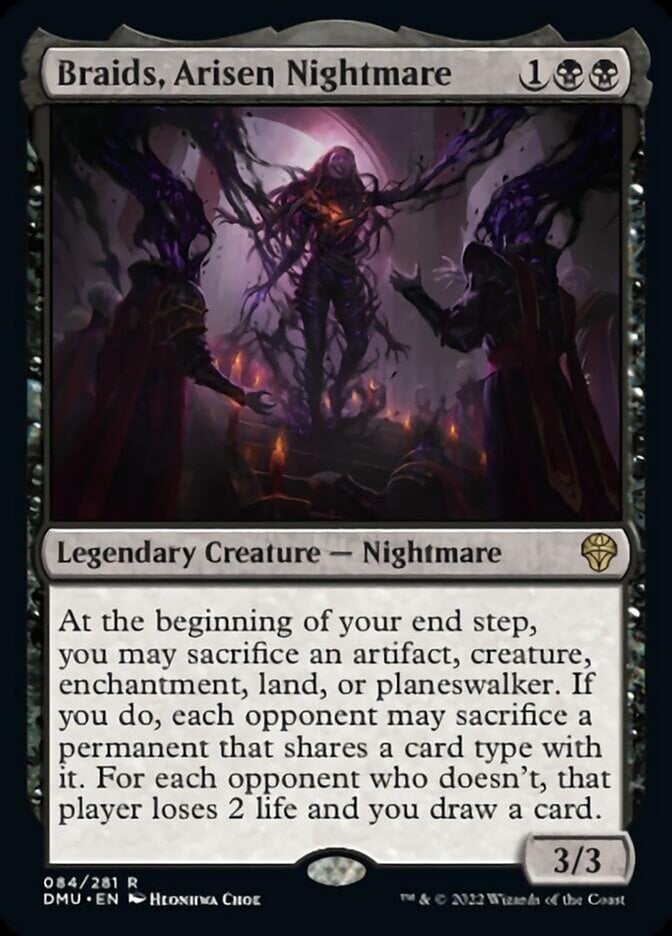
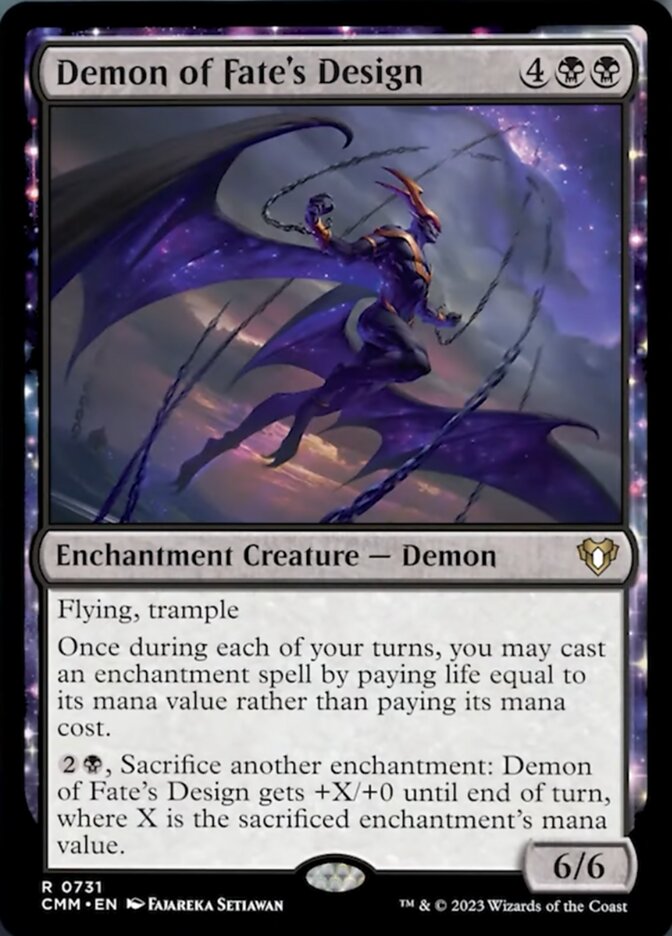
Then there are cards that ask you to sacrifice a permanent or enchantment as a cost, something black has quite a bit more of. Sagas are usually pretty good sac fodder: You can often sac them after you’ve already gotten some value out of it, and if you time things right (and your sac outlet works at instant speed), you can even sac them after the last chapter’s trigger goes onto the stack, but before it resolves.
Wrap Up
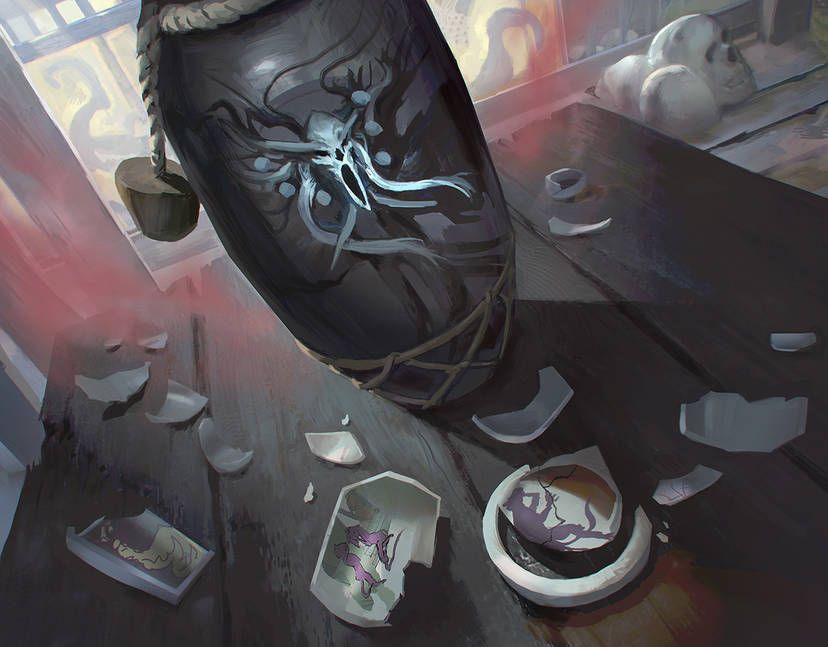
Echo of Death's Wail | Illustration by Robin Olausson
And there you go: our ranking for the best black sagas in MTG!
I hope you’ve enjoyed this mechanical deep dive into Magic’s time travel, and if you have comments or questions please drop something below, or stop by the Draftsim Discord for a chat.
And good luck out there!
Follow Draftsim for awesome articles and set updates:









Add Comment