
Last updated on December 3, 2025

Avatar Destiny | Illustration by Flavio Girón
Greetings planeswalkers! “Book Two” of our Avatar: The Last Airbender guide series has finally arrived. The secrets contained within this scroll will help you to master the four elements and unlock your mythic chakra. I’ll build upon everything I covered in “Book One”, with a particular focus on how to draft specific archetypes and get the most out of every card.
My Experience with Avatar Draft

Avatar: The Last Airbender promotional art | Illustration by Toni Infante
This guide isn’t about me, but I thought I’d briefly share my experience preparing it. I wrote this guide after about a week of grinding the set on MTG Arena. Almost all of my experience with Avatar comes from Best-of-One Premier Drafts.

I hit Mythic fairly quickly, and then attempted to hit Mythic #1 to advertise this guide better (and please my ego). Unfortunately, I bounced around between #5-200 and then ultimately ran out of time to procrastinate on writing this.
You can view my event history with the set here, as you may find it helpful after reading this to review some of my drafts. I did play a lot of drafts on my phone though, so there are plenty of games missing.
Mechanics Revisited
Here I’ll briefly recap the set’s mechanics and touch upon how they’ve played out.
Firebending


Firebending is a useful mechanic that plays well in aggressive decks. You’ll generally dump your firebending mana into one of three things:
- An on-board activated ability, often from the creature that just firebent (i.e., Fire Nation Cadets, Vindictive Warden)
- Cracking Clue tokens to draw a card
- Expensive instants like Lost Days
BR is the closest thing this set has to a firebending archetype, but it’s usually more of a bonus than the sole thing you’ll focus on.
Airbending
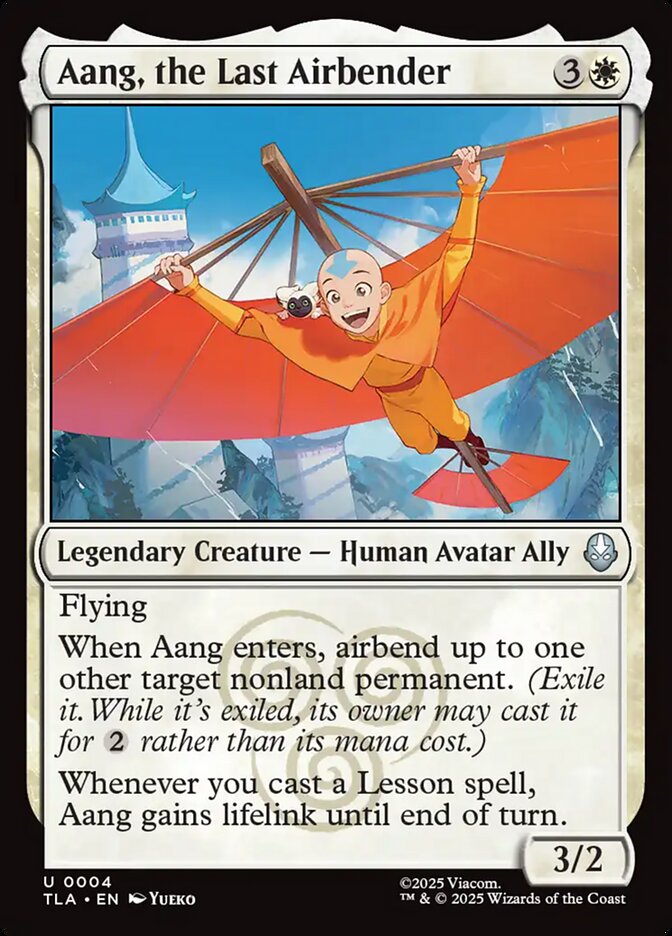

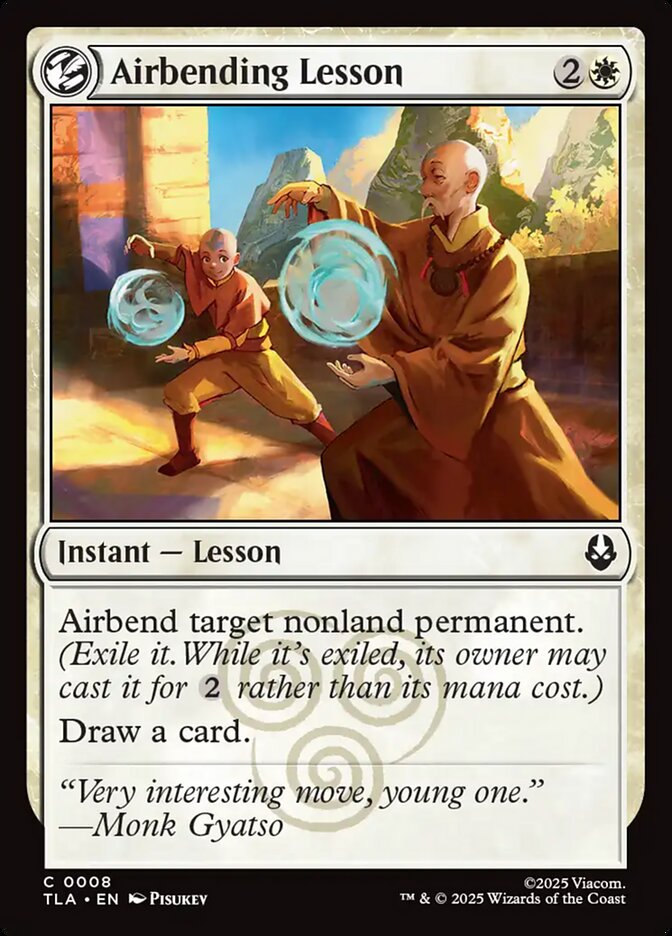
Airbending has really impressed me, as it’s a flexible mechanic and most cards that feature it are good. Aang, the Last Airbender, Glider Staff, and Airbending Lesson are some white’s best non-rares. Here are some nice things you can do with airbending:
- Gain tempo by “bouncing” your opponent’s stuff, either to slow down their offense or remove blockers.
- Save your creatures from Watery Grasp and Path to Redemption.
- Get rid of Clues and creature tokens.
- Reset beneficial “enters” abilities like Forecasting Fortune Teller.
There isn’t really an “airbending deck” in the format, as there aren’t a ton of airbending cards in general. Still, it’s part of the reason why white is the best color in Avatar.
Waterbending
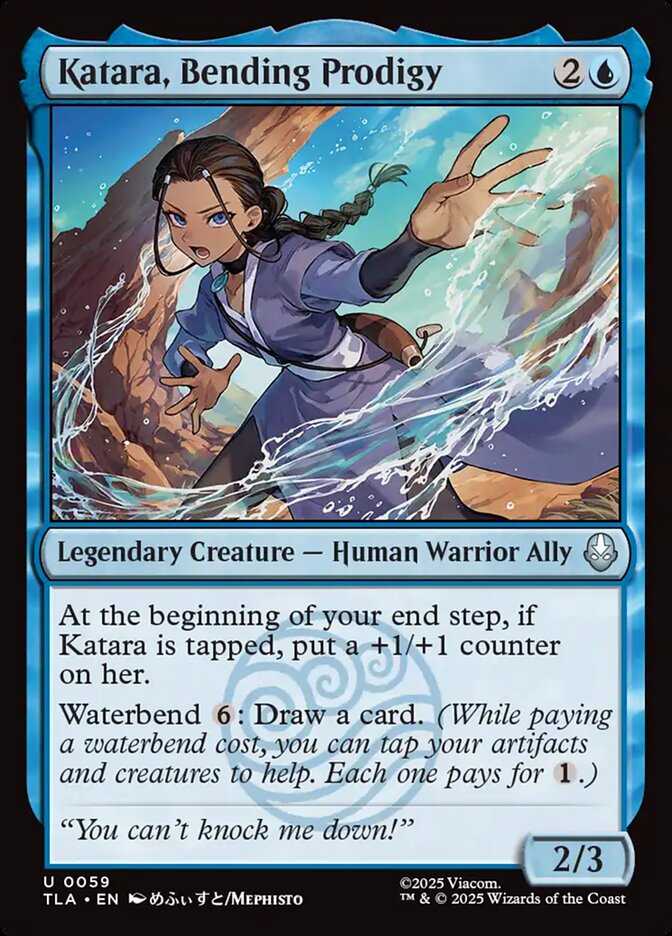
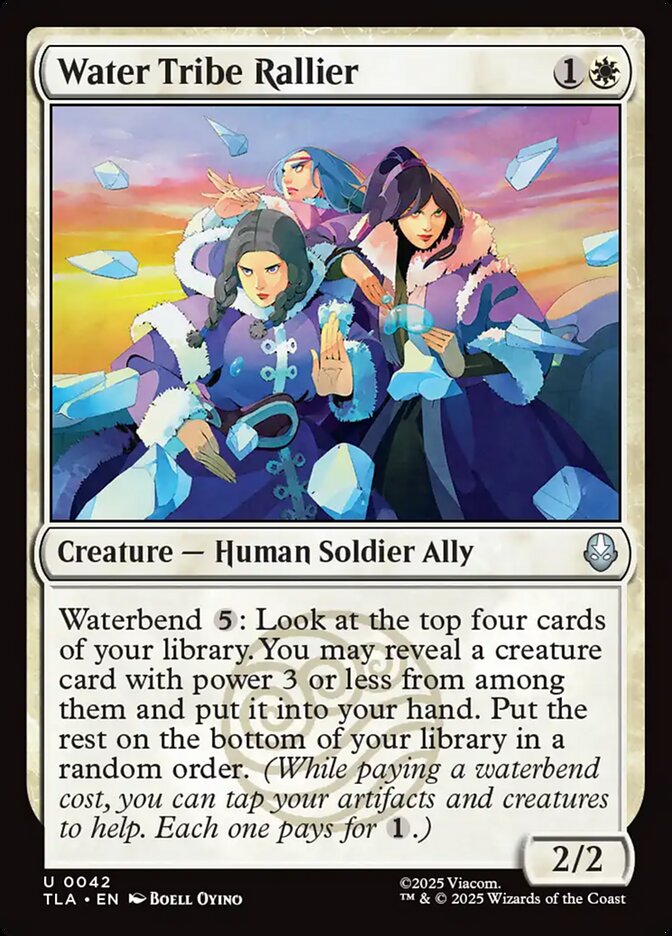
Waterbending is probably my favorite of the set’s mechanics. You can get a ton of equity out of this with Clues, 1/1 Ally tokens, or even blockers on your opponent’s turn. The latter play pattern makes waterbend cards like Katara, Bending Prodigy and Water Tribe Rallier safe win conditions in stalled board states!
Waterbending is relevant in most blue decks, and it’s also the easiest form of bending to build a deck around, most often in WU decks.
Earthbending


Earthbending provides some extra hasty bodies out of your lands. You can view “earthbending X” as kind of like “create a limited X/X creature with haste”. The reason the creature is “limited” is because that creature is still a mana source, so you won’t always be able to attack or block with it.
Here are some general tips for earthbending:
- You can animate lands like Rumble Arena and Secret Tunnel for extra value.
- Choosing when to earthbend is important; doing so earlier means the land won’t usually engage in combat for a few turns. Doing so later lets the land attack with haste, but it may also have no profitable attacks on a stalled board.
- It’s often advantageous to earthbend onto the same land, rather than making new ones. This lets the land brawl better in combat and doesn’t force you to tap multiple creatures for mana.
- On the other hand, small lands do make great fodder for cards like Deadly Precision, since they come back immediately.
- Earthbent lands have a distinct vulnerability to blue removal, asWatery Grasp and Lost Days can both be quite punishing for them.
Earthbending shows up mostly in green decks, and BG is somewhat of an earthbending archetype as well (due to its +1/+1 counter synergies).
DFC Sagas


Not much to add about these other than that they’re all even better than advertised. When The Legend of Kyoshi is somehow the worst of this cycle (and still great), you know you’re dealing with some truly busted bombs.
Lessons

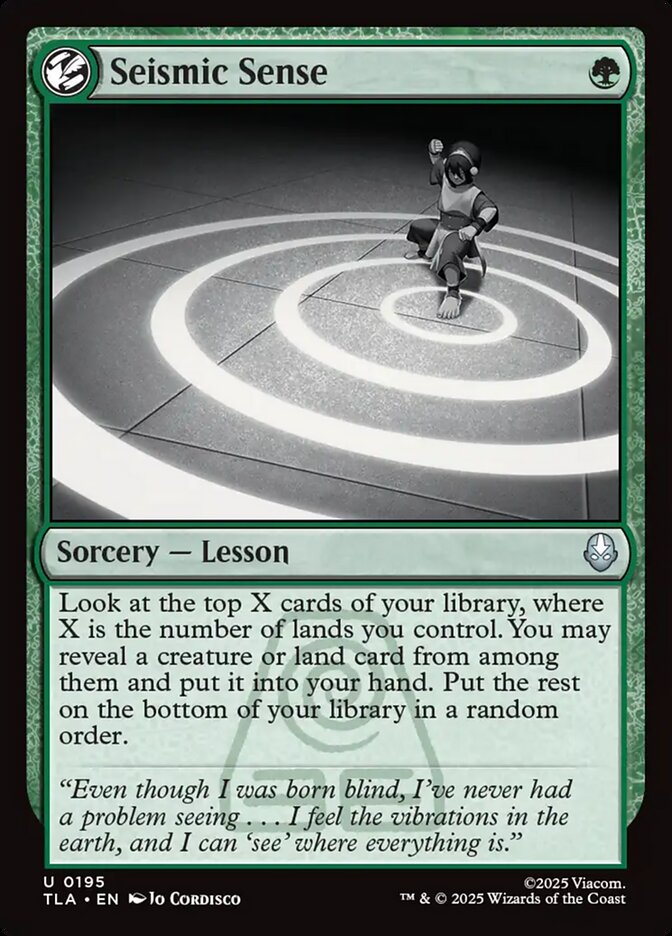

Lessons are an essential facet of Avatar Limited. Two archetypes play directly off of them (UR and GU), and there are enough lesson payoffs for them to matter in other color pairs, too.
Exhaust


Exhaust provides a nice mana sink and works wells with firebending. There’s not much else to say about the mechanic though, as exhaust cards vary from exceptional (Invasion Submersible to solid (Rebellious Captives) to filler (Hog-Monkey).
Clues
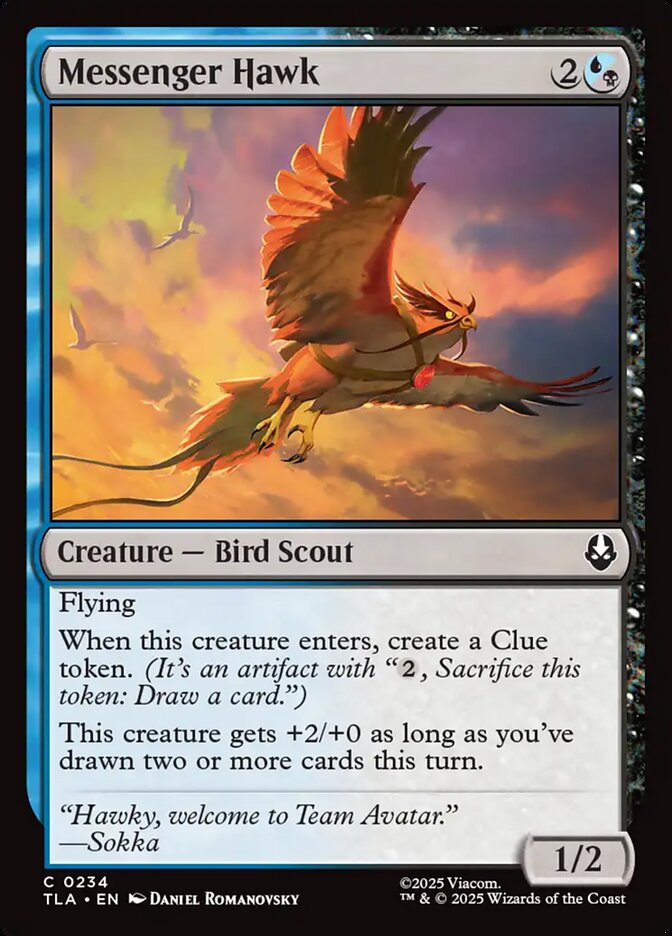


Clues are Avatar’s primary mana sink. You’re generally hoping to curve out first before you pop these, as having to fish for lands with Clues creates a tempo blackhole. Their synergy with waterbending and sacrifice cards also comes in handy often.
Clues are all over the place in this set, but they have their greatest presence in Esper colors ().
Shrines
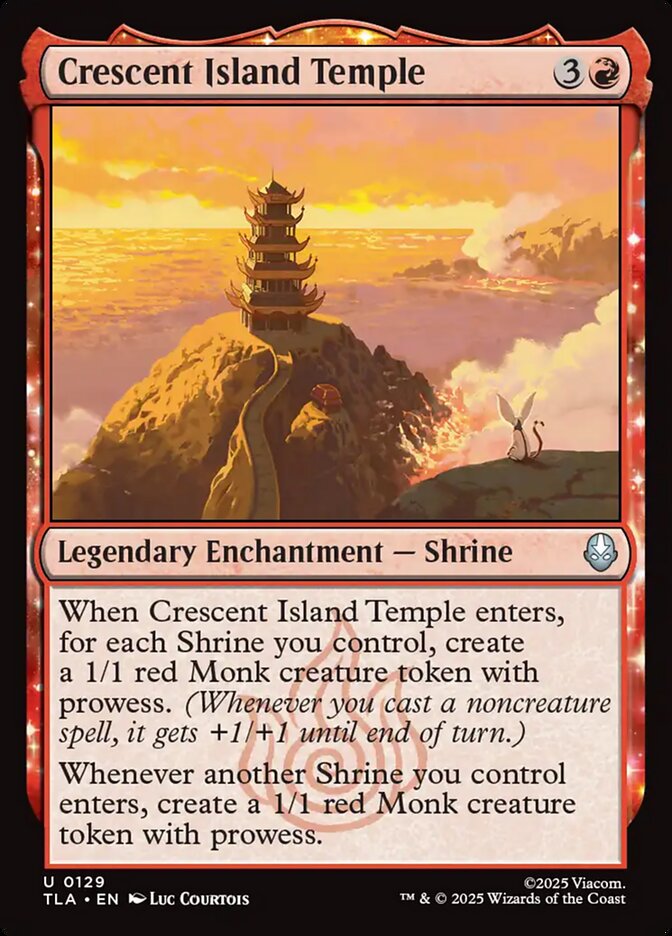


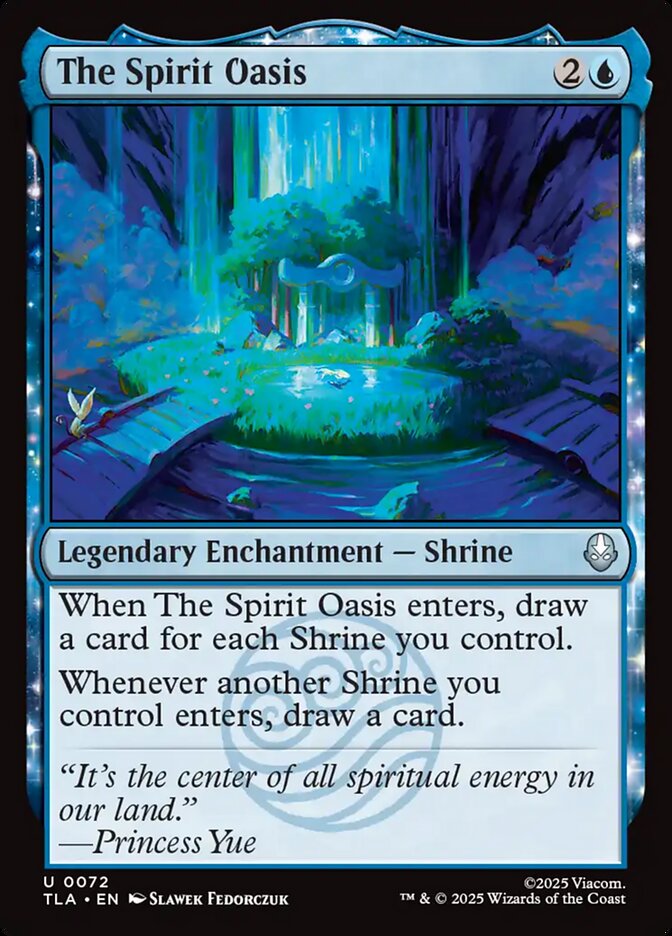
I should have stressed that shrines are basically Draft only, as the odds of opening 4+ shrines in 6 packs are pretty dismal. Even in Draft though, I’ve found shrines to mostly be a trap.
Set Overview
Avatar is a decently balanced Limited set with lots of stuff going on. Allies and lessons are “The Big Two” in this set for me, as most decks will care about one or the other in at least some form. Allies decks are usually base white aggro decks, while lesson decks tend to be best as base blue tempo/control decks.
Color Balance
This brings me to how I rank each color in Avatar:
- Blue
- White
- Red
- Black
- Green
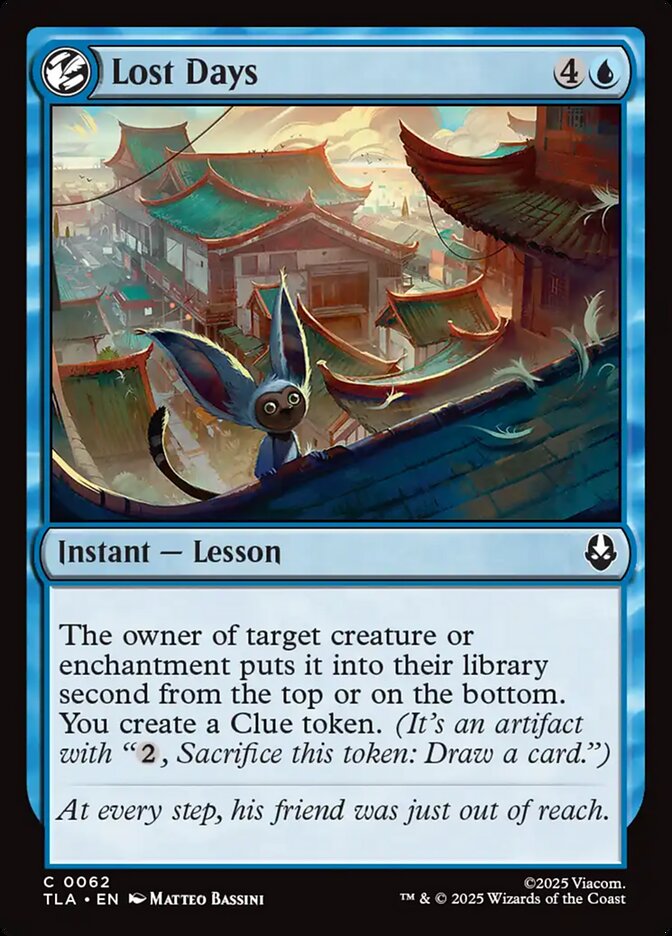


The blue lessons core is in my opinion the best thing you can do in this set! I’ve had a ton of success with decks built around Lost Days, It'll Quench Ya!, and higher-rarity lesson payoffs like Accumulate Wisdom and Dragonfly Swarm. Blue is a strong color at common as well; all of its lessons are good, and Watery Grasp and Forecasting Fortune Teller are excellent defensive cards. It’s only lackluster commons are Rowdy Snowballers and Geyser Leaper, but you’ll have plenty of other options.
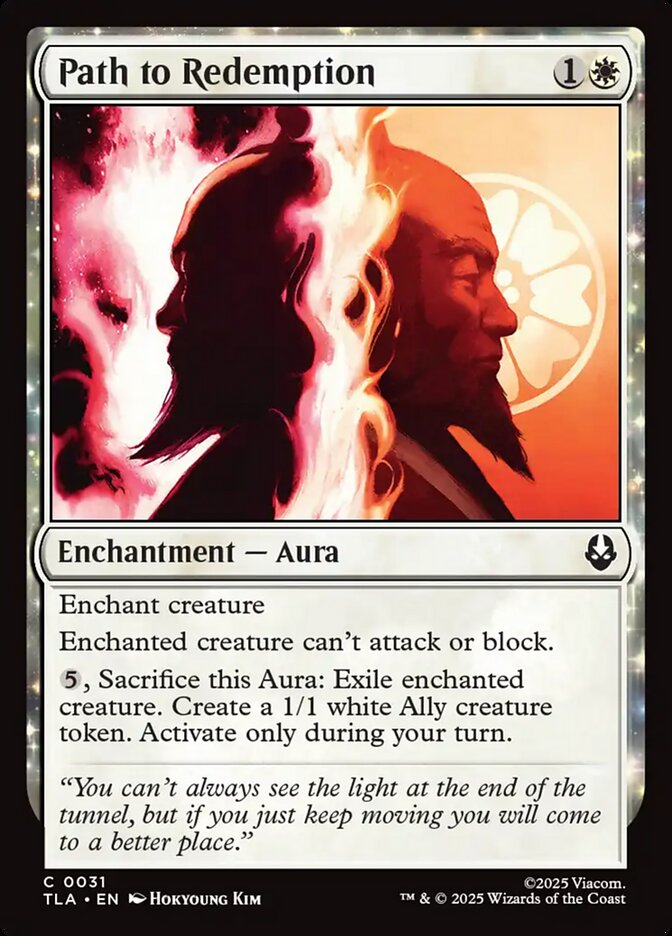
White meanwhile is primarily an aggressive color. Most white common creatures available are allies, and they’re all pretty even in power level. It’s easy to build a functional creature curve in white, which is essential. White also has two strong interactive spells (Path to Redemption and Airbending Lesson), which are its best commons. White’s worst cards are Curious Farm Animals and Rabaroo Troop, neither of which are allies.

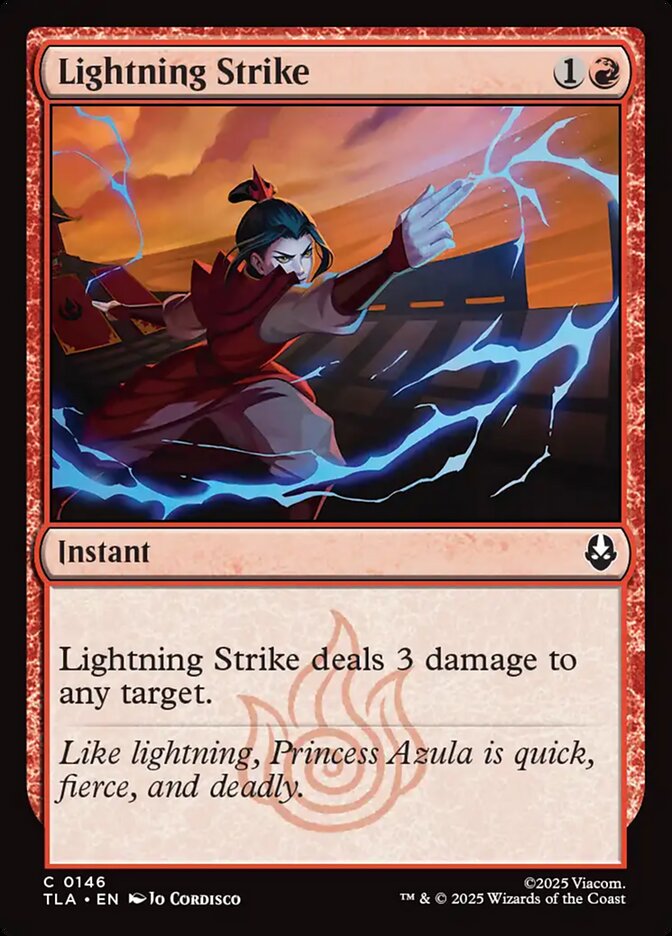
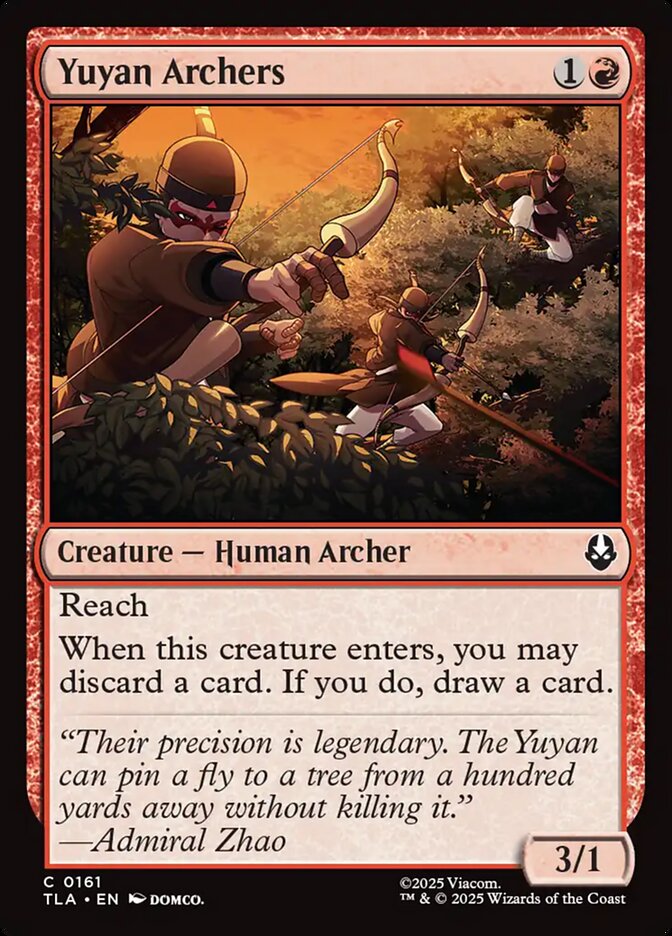
Red has the single best common in Avatar: Firebending Lesson! It’s an excellent removal spell that has plenty of great targets available, both early and late. Red also has two other great commons in Lightning Strike and Yuyan Archers, and a powerful build-around common (Fire Nation Cadets). Unfortunately, red is otherwise fairly lackluster, especially in terms of creature quality.
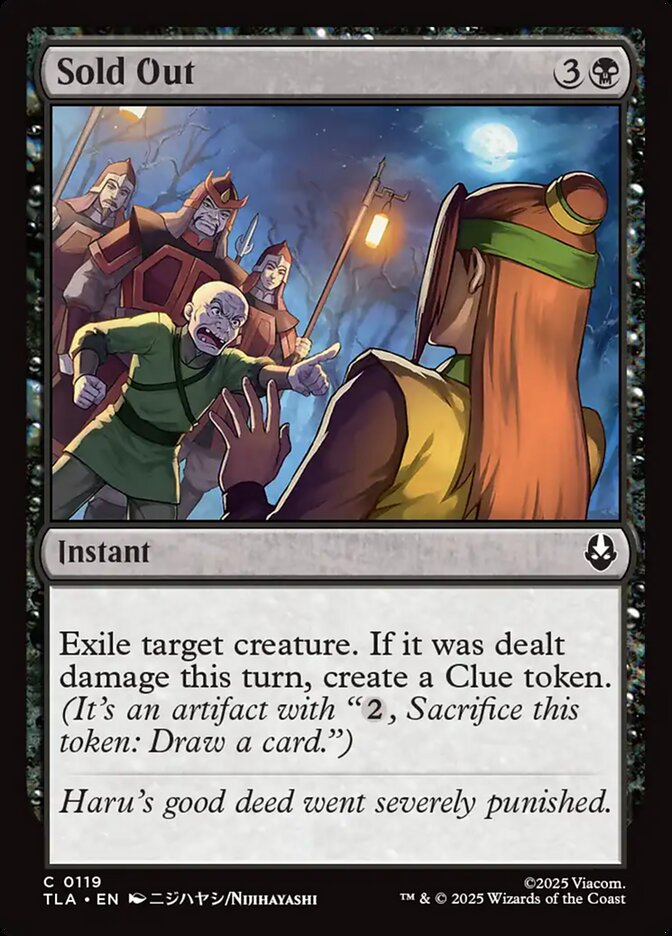
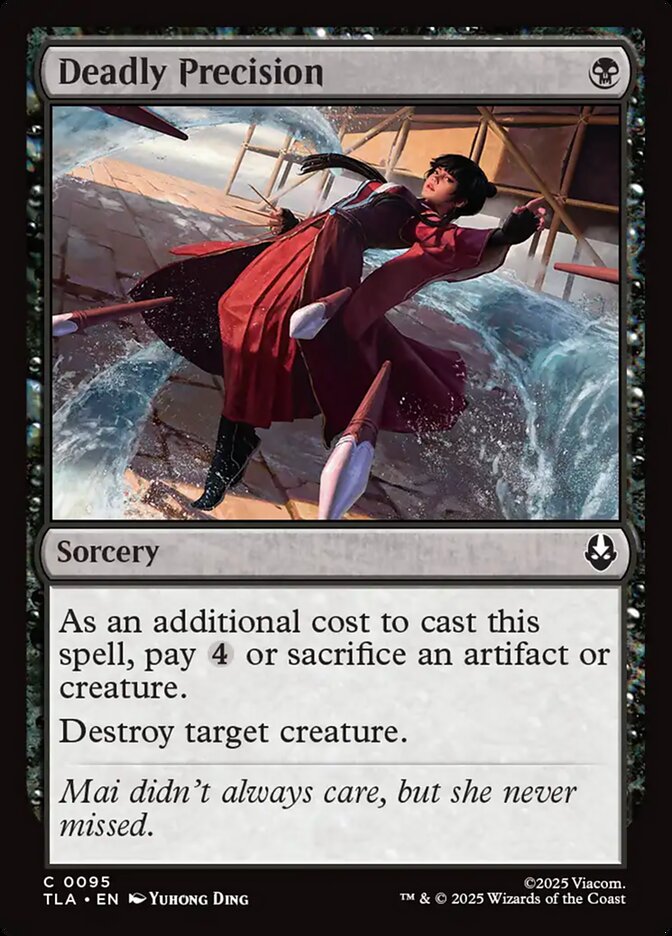
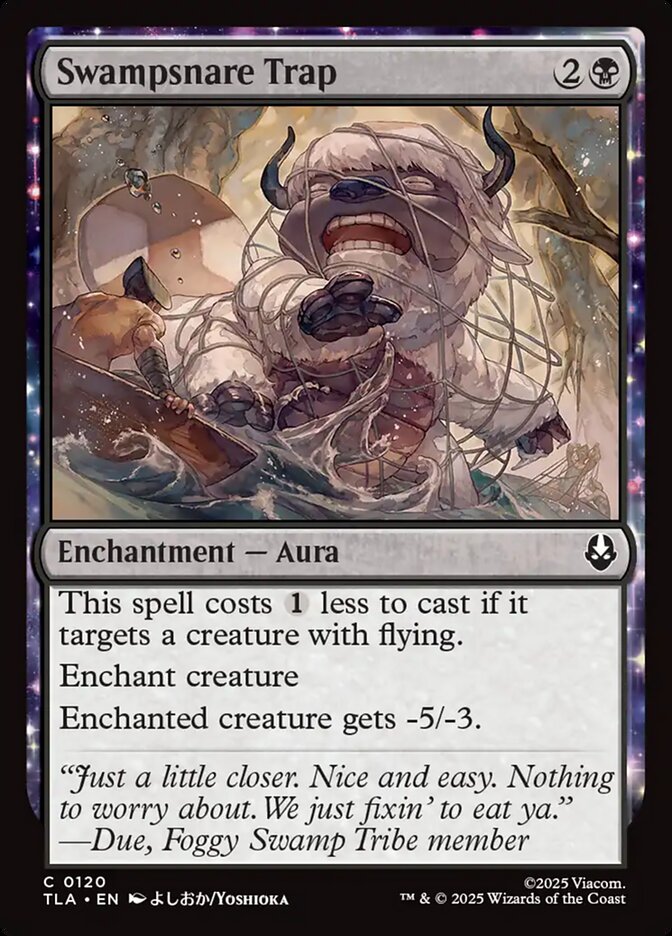
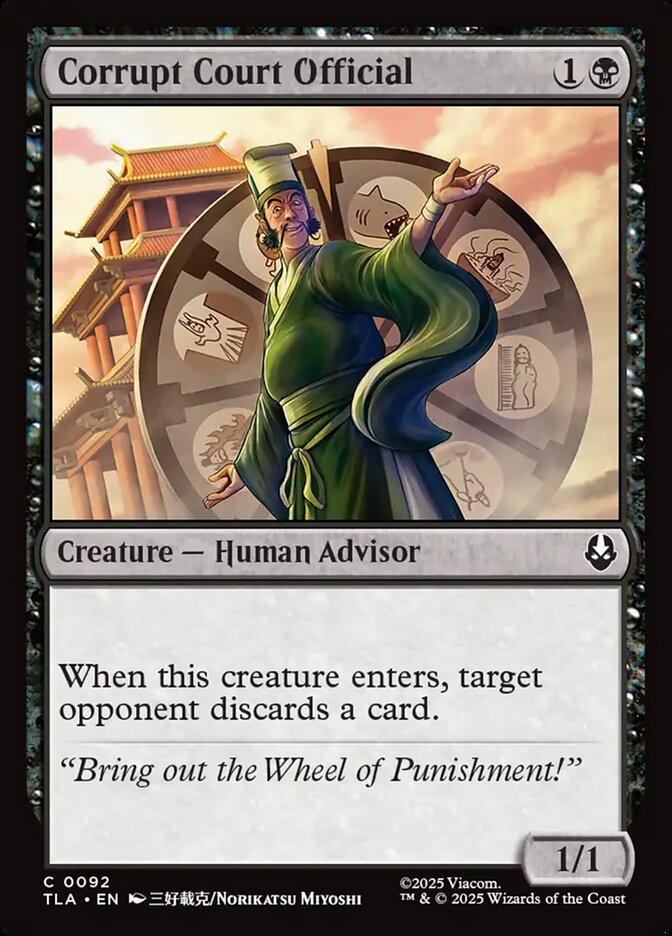
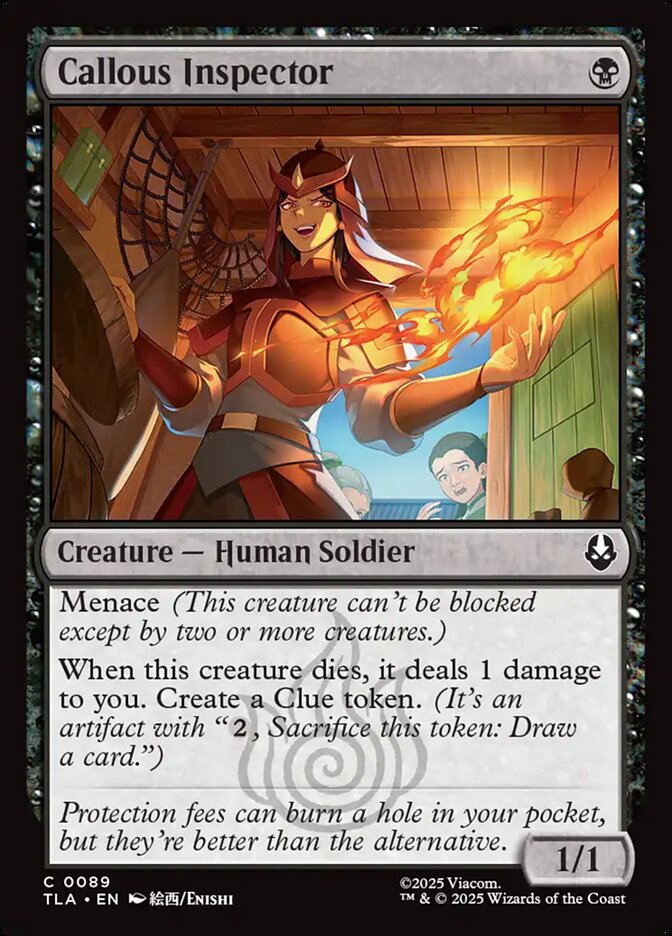
Black does two things well in Avatar, which are removal and sacrifice synergies. Sold Out and Deadly Precision provide excellent answers to bombs and large creatures. Swampsnare Trap is also pretty solid, as -5/-3 answers or cripples most of the format. Black’s creature quality is somewhat poor except for Corrupt Court Official and Callous Inspector, which shine in WB decks.
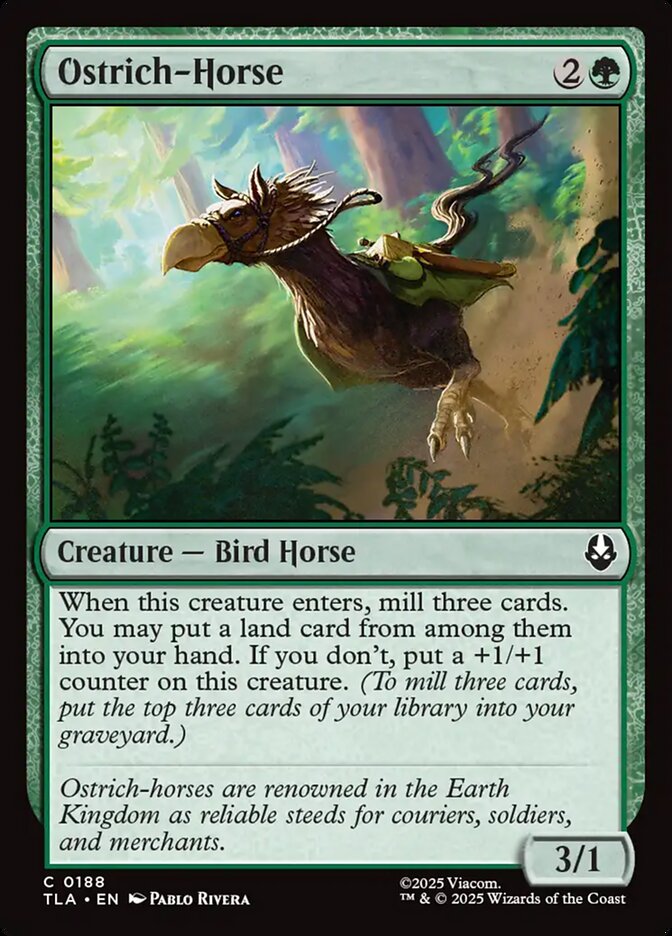
Green is my pick for the weakest color in Avatar, though it’s hardly Battle for Zendikar levels of bad. Green’s main shortcomings are its generally bad lessons and lack of a killer common. I rarely ever cut Ostrich-Horse, but it’s no Galactic Wayfarer. Green decks tend to be pretty midrangey, which puts it in an awkward spot of being slower than white decks, while having less card advantage than blue ones.

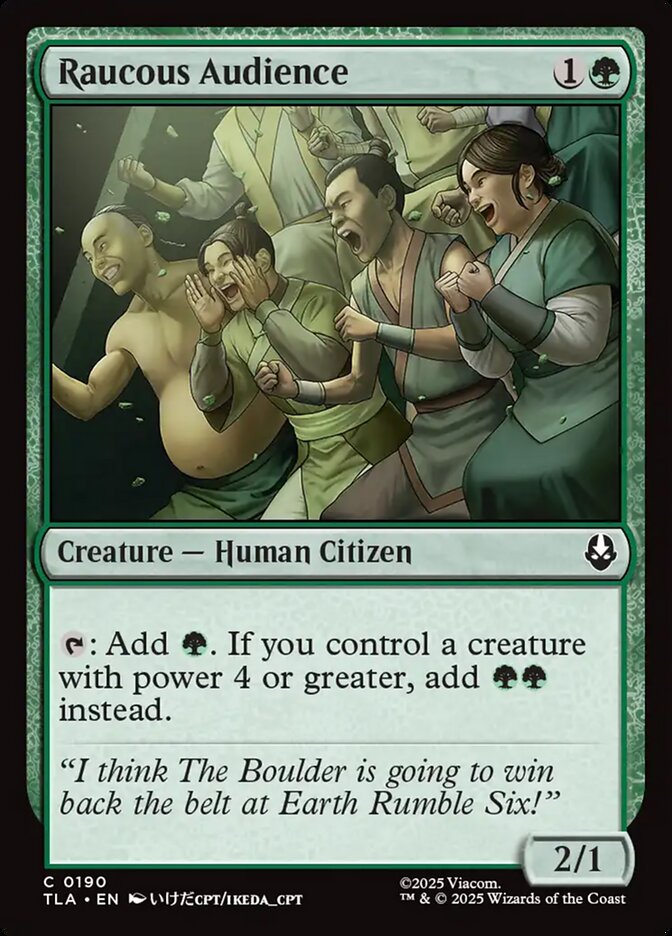
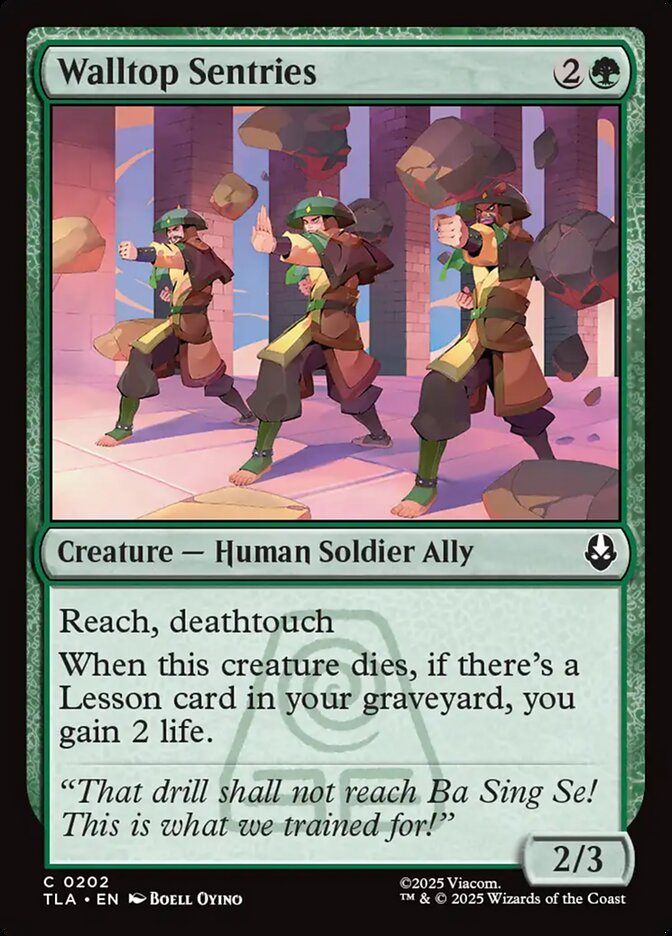
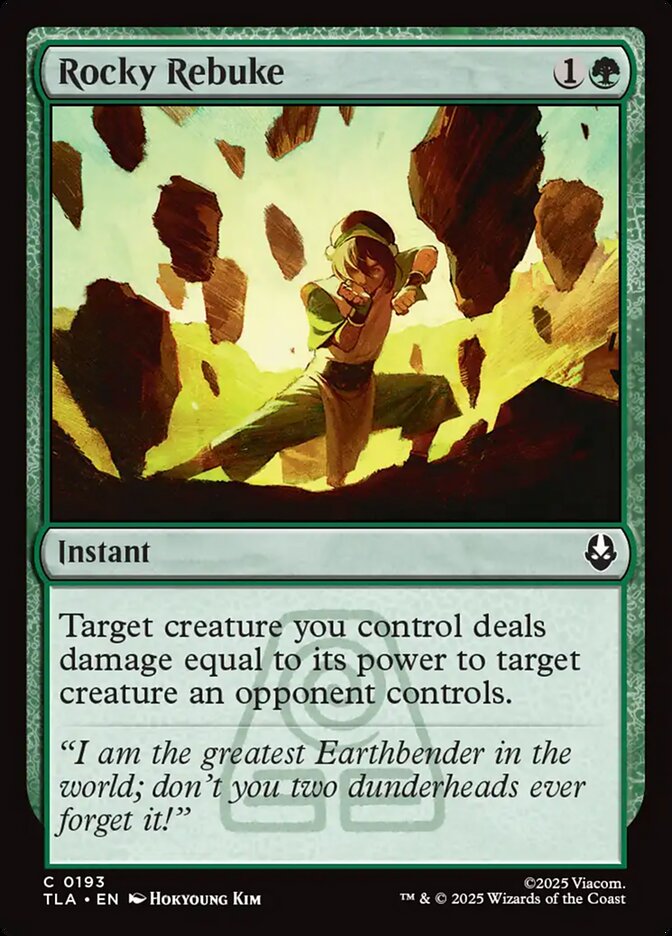
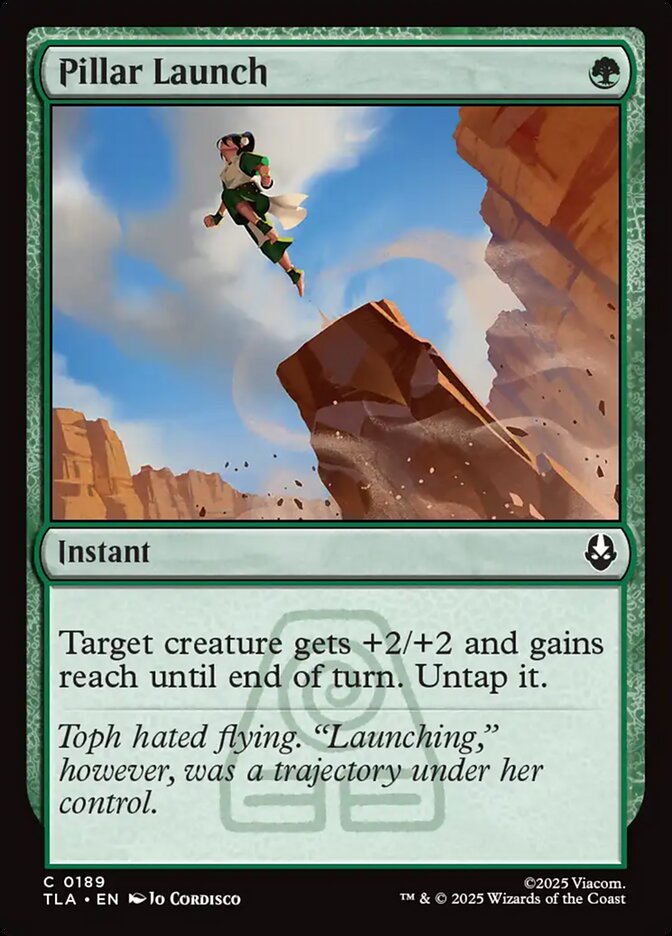
It’s not all terrible for green though; Badgermole, Raucous Audience, and Walltop Sentries are pretty good creatures. The latter is great with Rocky Rebuke, which makes for a convenient in-color way to pick off bombs. Pillar Launch is also quite a nice combat trick if you can find a slot for it, and the untap aspect often catches people off guard.

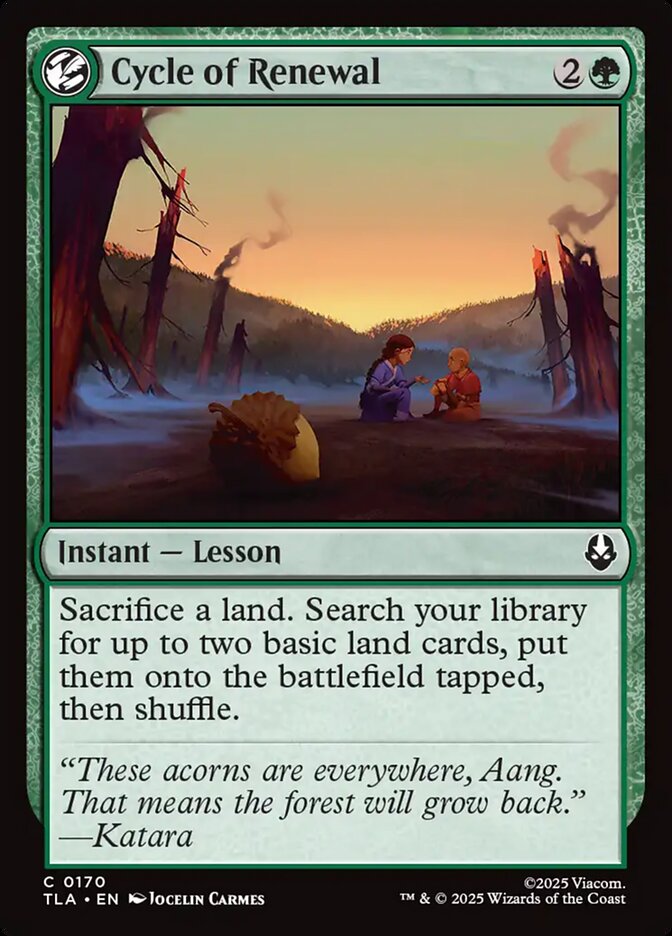
Green’s worst commons are Earthbending Lesson and Cycle of Renewal. Earthbending Lesson is either a 4/4 tapped creature or 4/4 with haste, neither of which is efficient. It also gets embarrassed by Watery Grasp and Lost Days. Cycle of Renewal is pretty much a 3-mana Shared Roots, so you should only play it if you desperately need ramp/fixing.
Rare Re-evaluations
The Legend of Yangchen / Avatar Yangchen: Great to BOMB

“Great” was too tepid a rating, as The Legend of Yangchen is among the very best bombs in the set. It answers any other threat permanently, then it transforms into a powerful creature.
Phoenix Flight Airship: Build-Around to Great

Less of a build-around than I expected, as Phoenix Fleet Airship performs well with just Clues and dual lands. I’ve also seen it get to 8+ once, and it was completely unbeatable!
The Rise of Sozin: Great to BOMB

The Rise of Sozin is another elite mythic that deserved “BOMB” status rather than “Great”. I usually blind name removal spells like Sold Out or Lost Days with Chapter II.
Planetarium of Wan Shi Tong: Good to Great
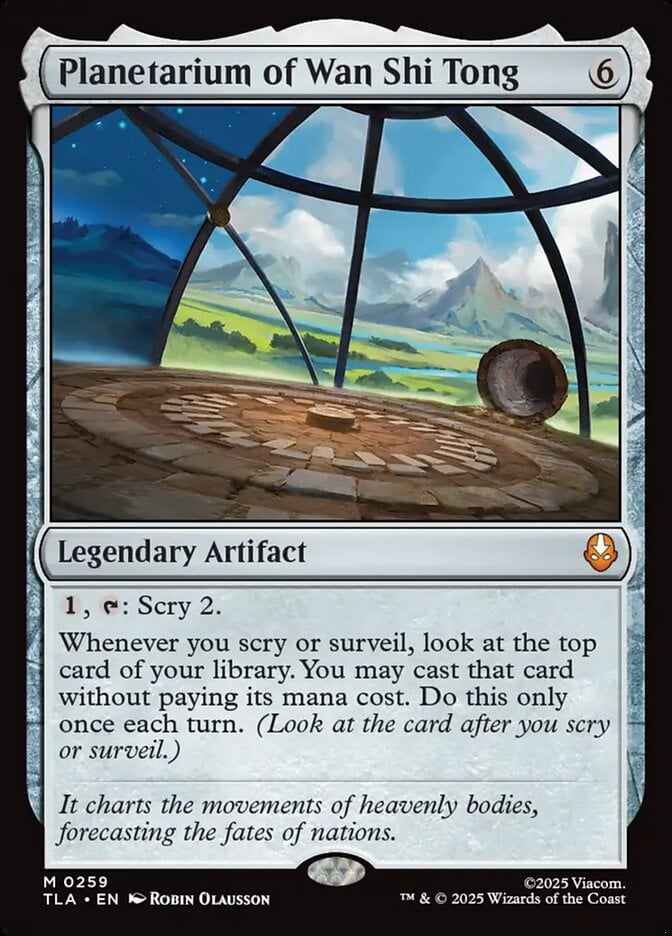
I haven’t had Planetarium of Wan Shi Tong often, but it impressed me in the few drafts I did. “Great” seems more appropriate than “Good”, and I’d pretty much play this in any deck that wasn’t explicitly aggro.
Avatar’s Wrath: BOMB to Good

Avatar's Wrath is the first rare so far that I overrated. It’s more of a tempo play than a true sweeper, which means it won’t reliably catch you up from behind. I’d still usually play it, but be aware of its limitations and try to time it carefully.
South Pole Voyager: Good to BOMB
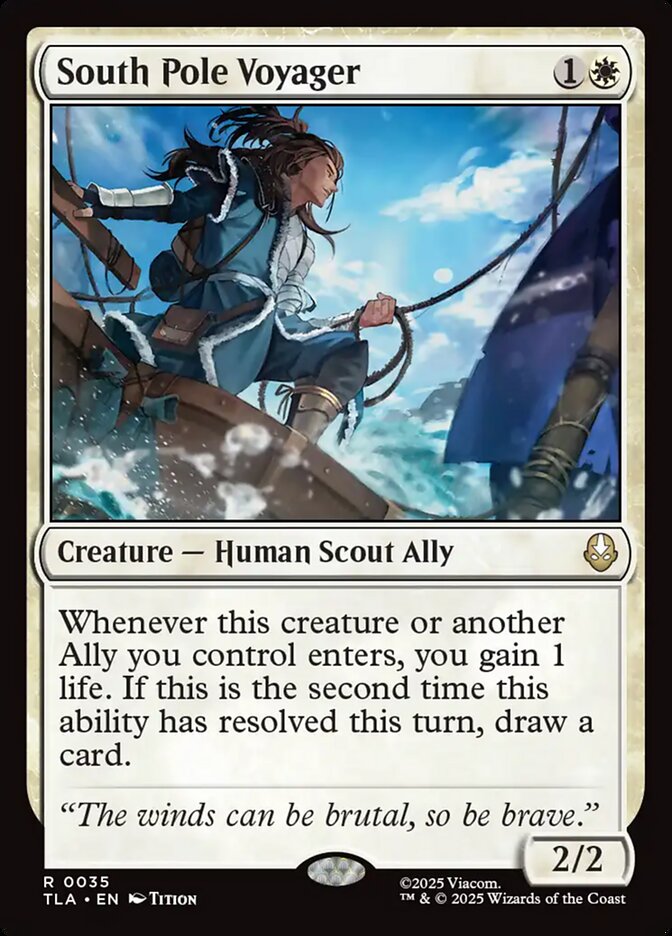
There are way too many allies in this set for South Pole Voyager to be merely “Good”. This is an actual bomb pretending to be Grizzly Bears.
Spirit Water Revival: Great to Good
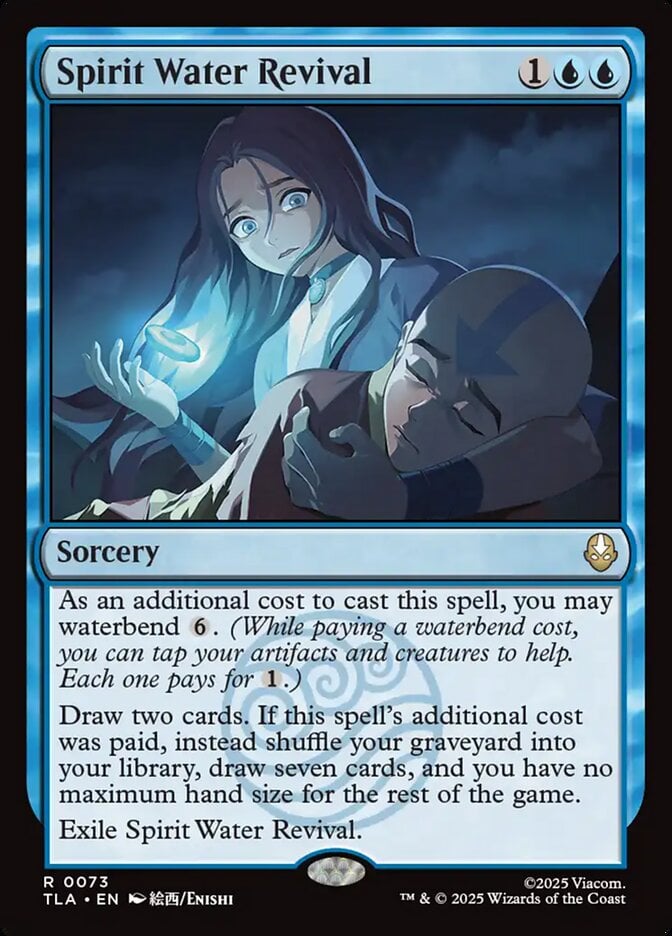
Waterbending 9 is just a little too much for most games, even if the output is remarkable. “Good” is more appropriate for this in your average deck, although it can be truly great with the right support (i.e., Forecasting Fortune Teller).
Waterbender Ascension: Good to Bad

“Good” isn’t a word I’d use to describe this card, unfortunately. In practice Waterbender Ascension just does a whole lot of nothing, as it’s only useful if you’re already ahead. It also has poor synergy with itself; its first ability wants weak evasive creatures, and its second ability wants large non-evasive beaters. Don’t bother!
Obsessive Pursuit: Good to Great
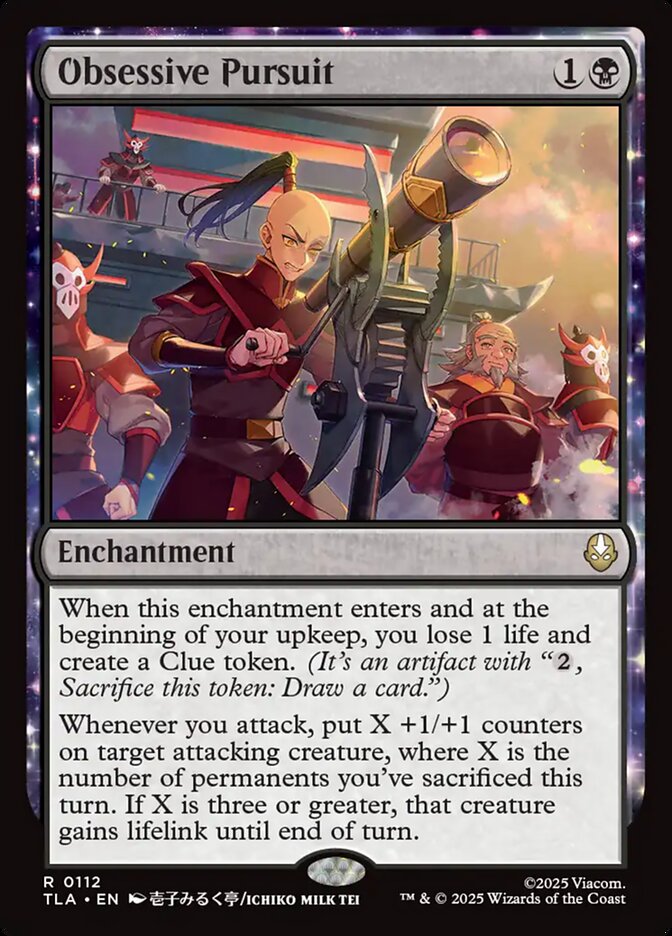
For some reason I thought this card was rather than when I wrote the review. This is a steal for 2 mana, and definitely “Great” rather than “Good”. The lifelink aspect of Obsessive Pursuit has also been exceedingly relevant.
Raven Eagle: Great to BOMB
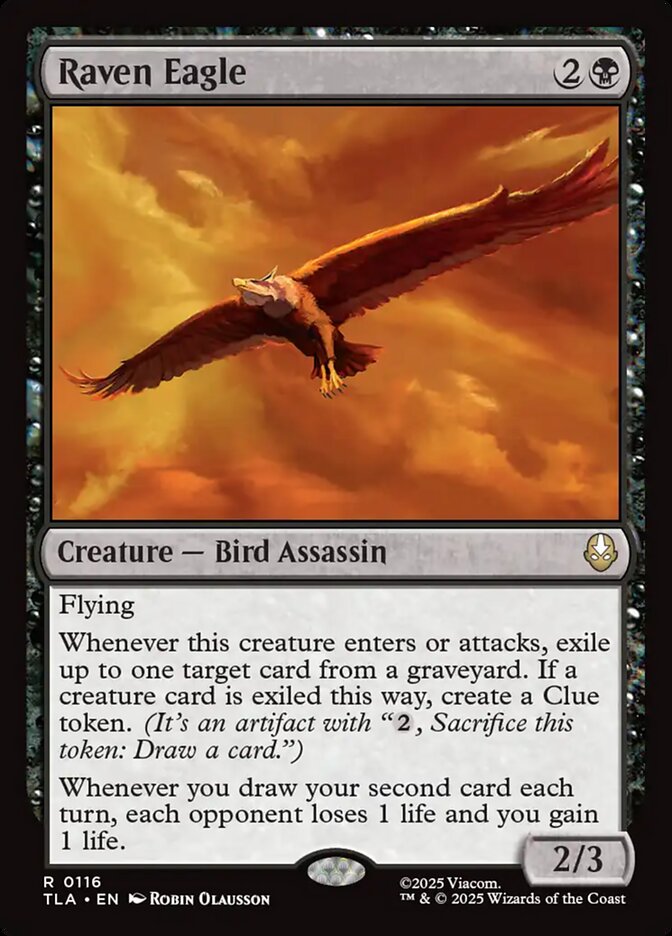
Raven Eagle is a super efficient threat that 2-for-1s at minimum and snowballs if not immediately answered. It’s a little below egregious cards like United Front and The Rise of Sozin, but I’ve been happy splashing it (which makes it a “BOMB” in my eyes).
Redirect Lightning: Good to Usually Not Good

Swerve is just really tough to use in practice, even when it costs 1 mana. Five life is also a substantial loss of life, and you’re more likely to be behind when you have Redirect Lightning rotting in your hand, too. I don’t hate the idea of this in Bo3, but don’t recommend playing it blind.
Diligent Zookeeper: Great to Good

It’s not hard to get some sizing bonuses here, but Diligent Zookeeper is a bit too vulnerable to removal to consider it “Great”. It also doesn’t work with most other allies, which tend to be humans.
Earthbender Ascension: Great to BOMB

As with Raven Eagle, this is just too efficient not to earn top marks. Starting a draft with P1P1 Earthbender Ascension is a wonderful feeling, especially if you end up playing three or more colors.
The Earth King: Great to BOMB

Avatar is a super bomb heavy set, it turns out. 6/6 worth of stats is just completely unreasonable for this set, and the added land bonus is awesome (especially with cards like Gather the White Lotus). The Earth King’s only flaw is its bear‘s vulnerability to airbending.
Katara, Water Tribe’s Hope: Great to BOMB

I missed how easy it is to use Katara, Water Tribe's Hope immediately after you play it. If you can save it for late game, you can immediately tap it, its token, your Clues, and the rest of your lands for a huge boost out of nowhere.
Earth King’s Lieutenant: Build-Around to Great

Once again, there are just too many allies in Avatar. Earth King's Lieutenant is a P1P1 worthy card, though be aware you may need to abandon it if white is cut.
Iroh, Tea Master: Bad to Great

Simply playing this and donating the Food token gives you a pair of 2/2s for , which is above average on its own. Iroh also has exceptional synergy with cards like Path to Redemption and Watery Grasp, which you can donate for tokens while still keeping creatures locked down. I’m sorry Iroh; I wasn’t familiar with your tea game!
Fire Lord Azula: Good to Great

The reward for pulling off Fire Lord Azula is massive, as few things feel better in this format than doubling up on Lost Days. I like it best in UR or UB base decks, which can play it alongside Octopus Form.
Katara, the Fearless: Great to Good

Despite the number of allies in Avatar, an ally Panharmonicon has felt surprisingly tame. Katara, the Fearless does have a high ceiling though with other rares, as I’ve seen this double up on Aang, at the Crossroads once….
Top Commons
After having played the set, was I right about each color’s best commons? Let’s find out!
White
I listed these four cards as white’s best commons:
I stand by 3/4 of these cards. Sandbenders' Storm was a clear miss though; the earthbending mode is just too inefficient, so the card is only good when Smite the Monstrous is good. It can be great as an anti-green sideboard card, but I’d maindeck one at most. Here’s my updated list:
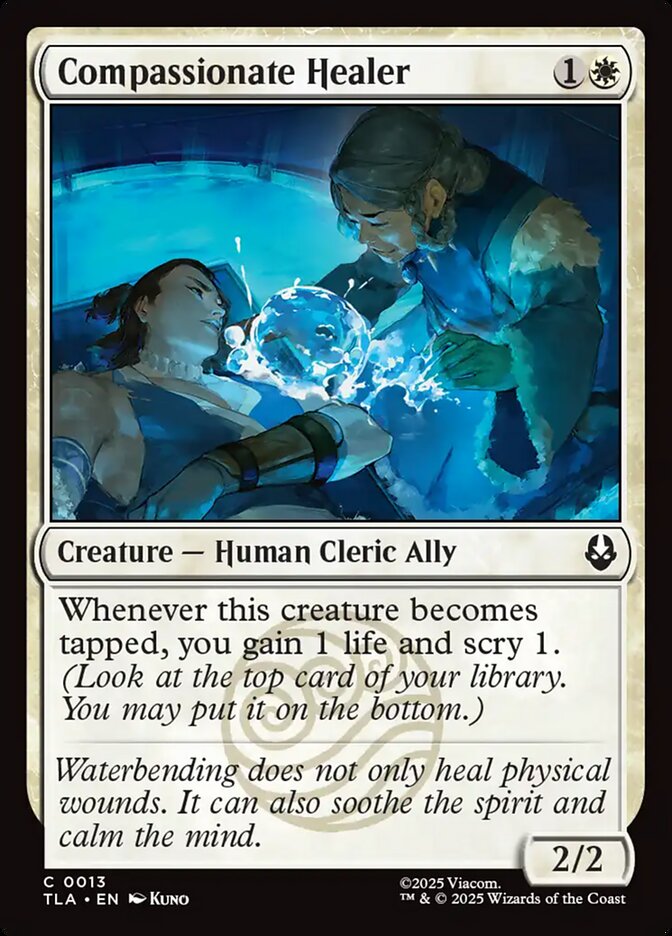
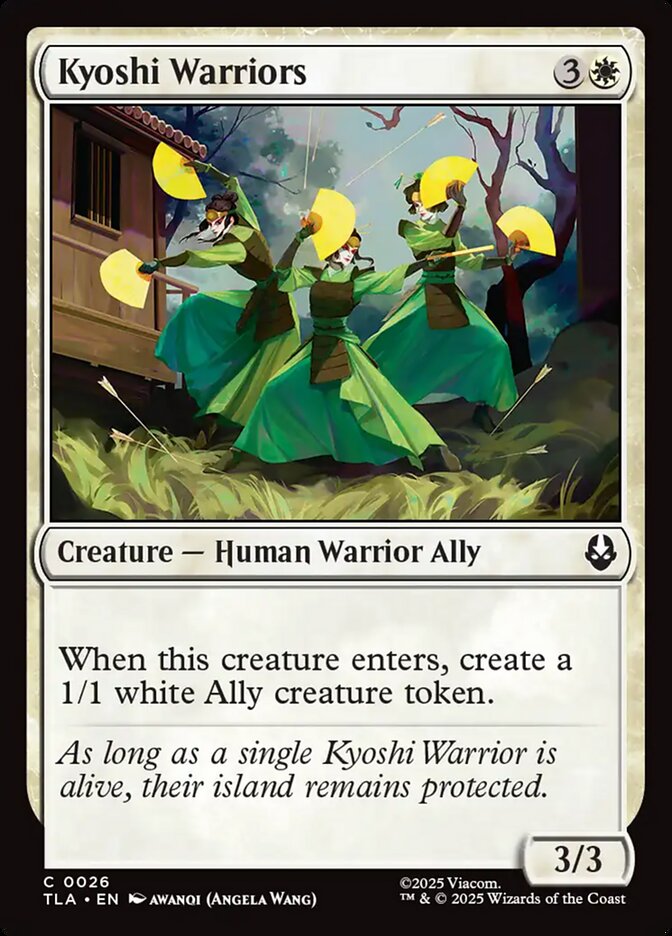
Compassionate Healer is slightly better than Jeong Jeong's Deserters. Note that white is probably Avatar’s most balanced color overall; Glider Kids, Avatar Enthusiast, and Water Tribe Captain feel very close in power level.
Blue
I listed these four cards as blue’s best commons:
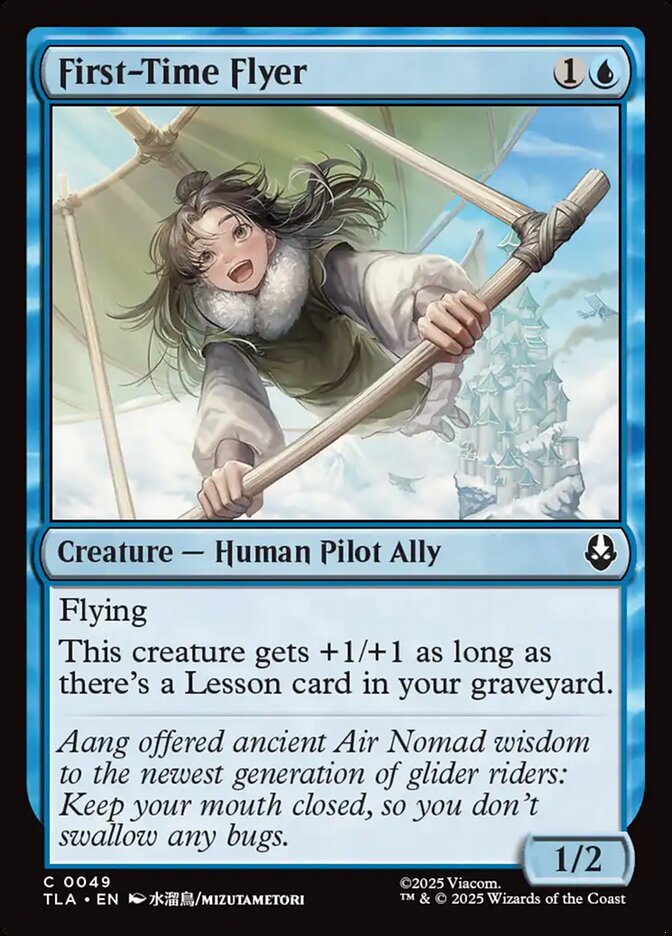
I stand by 2/4 of these cards. Waterbending Lesson and First-Time Flyer are both good cards that I’m happy to play, but they’re being edged out by It'll Quench Ya! and Watery Grasp. Here’s my updated list:
Quench plays well against Avatar’s bomb-heavy nature, and it provides a valuable lesson type cheaply. You can also use Clue tokens to conceal your intentions with it. Watery Grasp has overperformed for a blue removal spell, and it excels versus big creatures and earthbent lands. Lost Days was also upgraded to #1 as I consider it the second best common in the whole set!
Black
I listed these four cards as black’s best commons:
I stand by 3/4 of these cards. Callous Inspector is being edged out by Deadly Precision, but it’d be #5 here anyways. Here’s my updated list:
Deadly Precision should have made the first list, as black clearly has a bunch of ways to support it. It plays well with some creatures from other colors like Forecasting Fortune Teller and Kyoshi Warriors. You can also kick it if you’re flooded or short on fodder. Corrupt Court Official has outperformed Callous Inspector a bit, as it’s less dependent on sacrifice and the discard has felt very relevant.
Canyon Crawler deserves an honorable mention, as it’s been the best of the cycling creatures for me. It has huge stats and the Food token is great for stabilizing or fodder. Black also likes 6-drops a bit more than other colors, as it usually wants to grind and drag out games.
Red
I listed these four cards as red’s best commons:
I stand by 3/4 of these cards. Cunning Maneuver isn’t a terrible trick, but +1 toughness has felt a bit too small. Here’s my updated list:
Yuyan Archers is red’s best overall 2-drop. It hits pretty hard, trades with fliers like Cat-Owl, and provides valuable card filtering. Archers’ only drawback is that it attacks poorly into cards like Corrupt Court Official and Ally tokens. Fire Nation Cadets gets the #4 slot on account of how strong it can be in the right shell. I’d want 5 or more lessons for it (ideally 1- to 2-mana ones), and would only play it in proactive decks.
Red’s runner-up best commons are Treetop Freedom Fighters and Deserter's Disciple, which are both solid aggro cards. I also like playing the first copy of Bumi Bash in most decks, though it’s too clunky to be premium.
Green
I listed these four cards as green’s best commons:
I stand by 4/4 of those cards. I also wouldn’t change the order at all, although it’s worth noting how tiny the gap is between each of these. You should generally just take the one that suits your curve/deck the most.
Green’s runner-up best commons are Pillar Launch and Origin of Metalbending, both of which are pretty nice tricks. The latter is green’s only decent lesson, although I rarely prioritize combat tricks in Avatar. I also like Walltop Sentries in any deck that isn’t explicitly aggro.
Hybrid
I listed these four cards as the best hybrid commons in Avatar:
I stand by 3/4 of those cards. Phantom Monster just isn’t what it used to be, so unfortunately Cat-Owl has been demoted. In its place comes Wandering Musicians, which has been surprisingly good. Here’s my updated list:
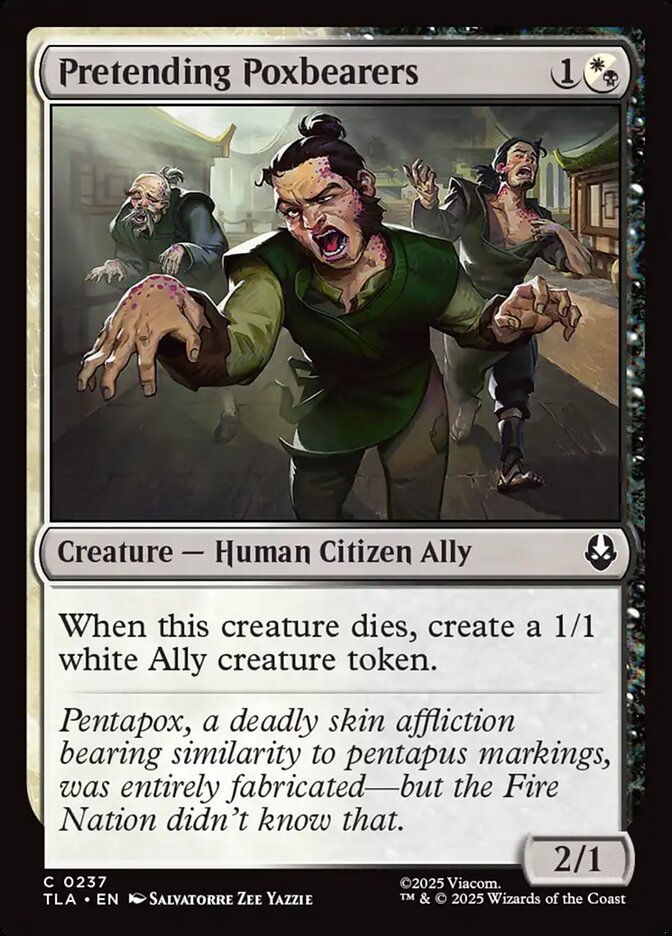

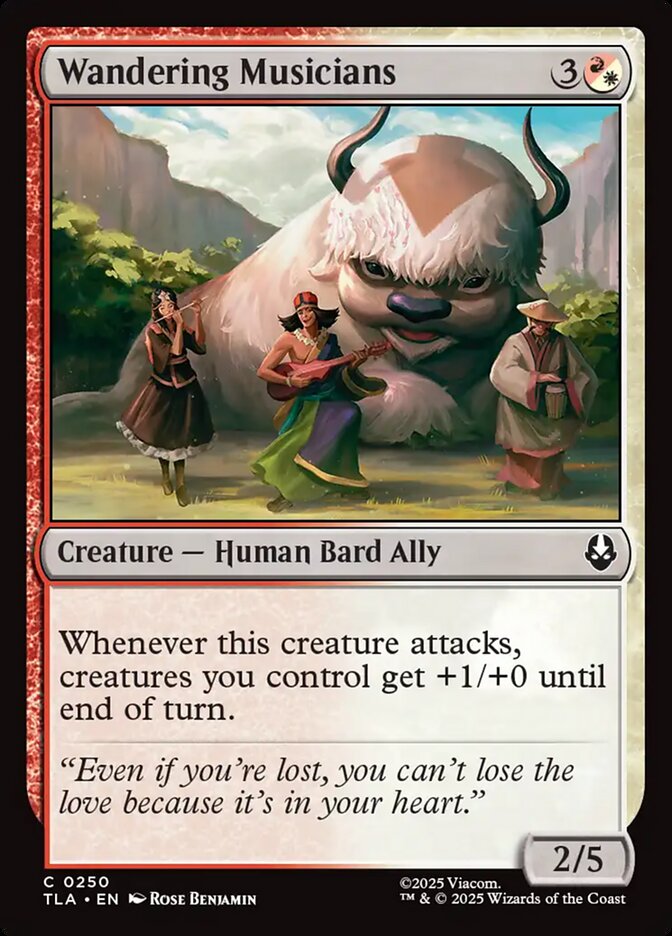
Messenger Hawk excels in UB, but it’s playable in just about any blue or black deck. Poxbearers is similar, as its best in WB but acceptable for both Allies and black control decks. Abandon Attachments is an all-around decent lesson, especially with graveyard synergies (i.e., Accumulate Wisdom). Finally, Wandering Musicians is also playable in any red or white deck, and actively desirable in RW.
Top Uncommons
Uncommons were a rarity that I neglected in the last guide, though that was mostly due to the guide already being jam packed. With the benefit of experience, here’s a list of the set’s 15 best uncommons. Many of these make for ideal P1P1s, and some of them (cough Invasion Submersible cough) are still going criminally late on MTG Arena!
#1. Invasion Submersible
“Man-o'-War but it’s a 3/3 that enters tapped” would be a crazy sales pitch for a Limited card, and that’s essentially how Invasion Submersible plays. What’s even better is that Submersible bounces nonland permanents, including your own! Note that it can tap itself for waterbending, so it’s very easy to have this “enter” as a creature.
#2. Aang, the Last Airbender
I’m glad Avatar made its main character good! Aang, the Last Airbender effectively refunds via airbending, and it can also snipe Clues, tokens, and more. The lifelink aspect of this card is a useful bonus, so try to include a couple of lessons for it if you can.
#3. Earth Kingdom Jailer
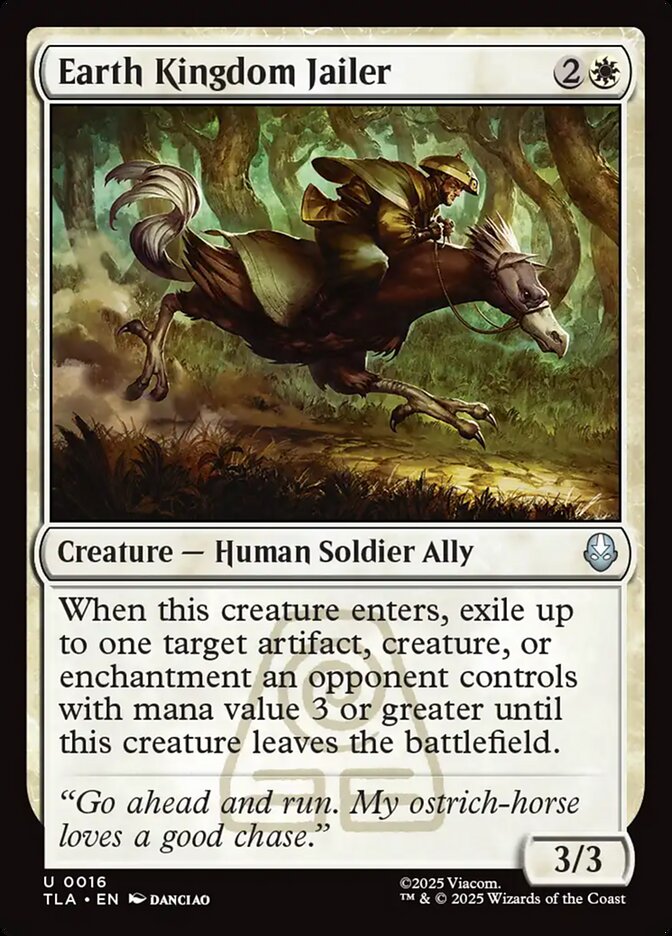
As a 3/3 Fiend Hunter of sorts, Earth Kingdom Jailer is a top tier uncommon; just keep in mind it says “3 or more” not “3 or less”. I’ve seen opponents try to exile tokens with it!
#4. Water Tribe Rallier
Aang, Jailer, and this form of a triumvirate of busted white uncommons. I mentioned how Water Tribe Rallier can take over games, as it’s easy to draw cards off this while keeping blockers ready. You’ll probably be around 80% to hit in most decks as well, as “3 power or less” includes most creatures.
#5. Heartless Act
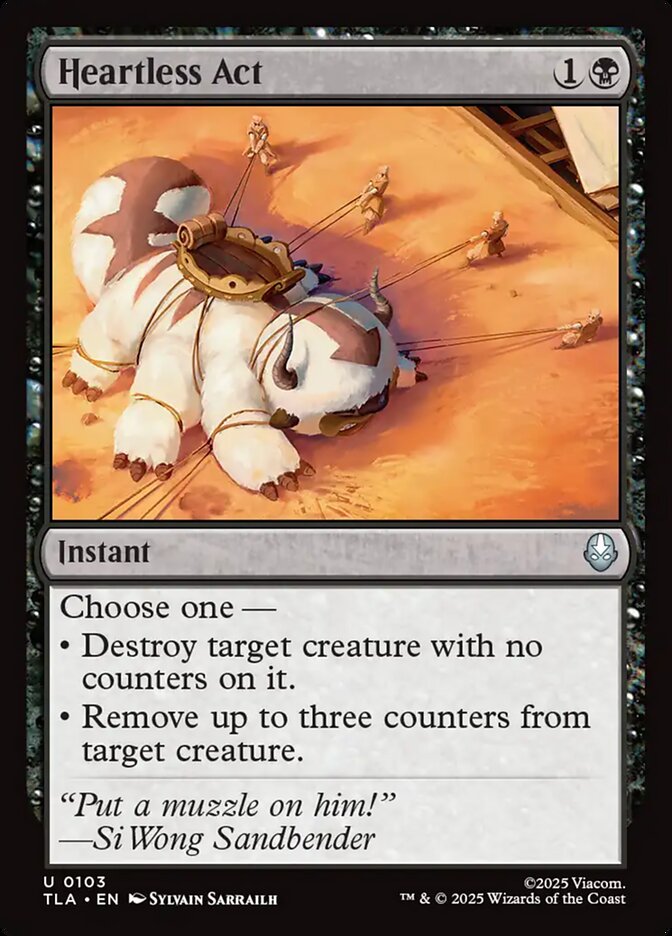
Heartless Act is even better in Avatar than it was in Ikoria. Just watch out for BG decks (and perhaps Azula Always Lies), as this is Terminate 90% of the time. Remember you can remove counters to deal with earthbent land creatures.
#6. Iroh’s Demonstration

Iroh's Demonstration is premium removal with an invaluable subtype. You’ll use this to deal 4 most of the time, but I have occasionally used the 1 damage mode to good effect versus tokens. It’s also sweet to copy with Jeong Jeong, the Deserter.
#7. Sokka, Lateral Strategist
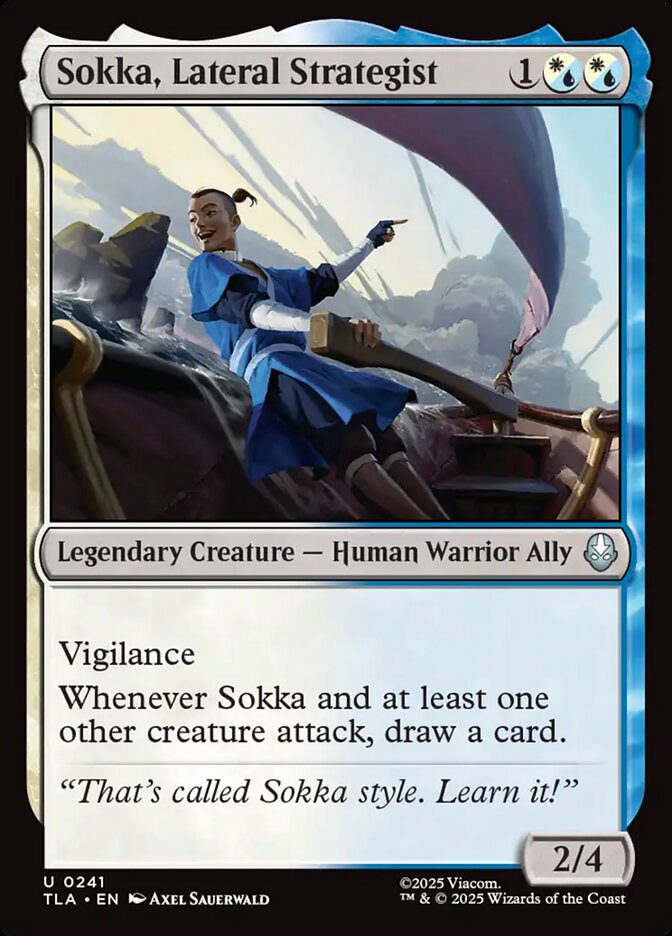
Sokka, Lateral Strategist is an efficient creature with good base stats, free card draw, and a highly flexible mana cost. I’ve played it in a ton of different archetypes, and I’m almost always happy to do so. Sokka plays especially well with 2-drops and combat tricks, which help it to draw more frequently.
#8. Glider Staff
Glider Staff is quite efficient, as you’re basically getting an Airbending Lesson plus a better Kitesail. That makes it an all-in-one finisher and utility card. Glider is also one of the only airbending cards that can target earthbent lands, which can be clutch.
#9. The Cave of Two Lovers

The Cave of Two Lovers is a guaranteed 3-for-1 that essentially casts Raise the Alarm, Lay of the Land, and Earthbending Lesson back to back. It’s one of my favorite 4-drops in the format, and it can be a signal that red is open.
#10. Combustion Technique
This is a 2-mana Unmake in the nut lessons deck, and still solid with just a few of them. I take Combustion Technique highly in UR and RG.
#11. Epic Downfall
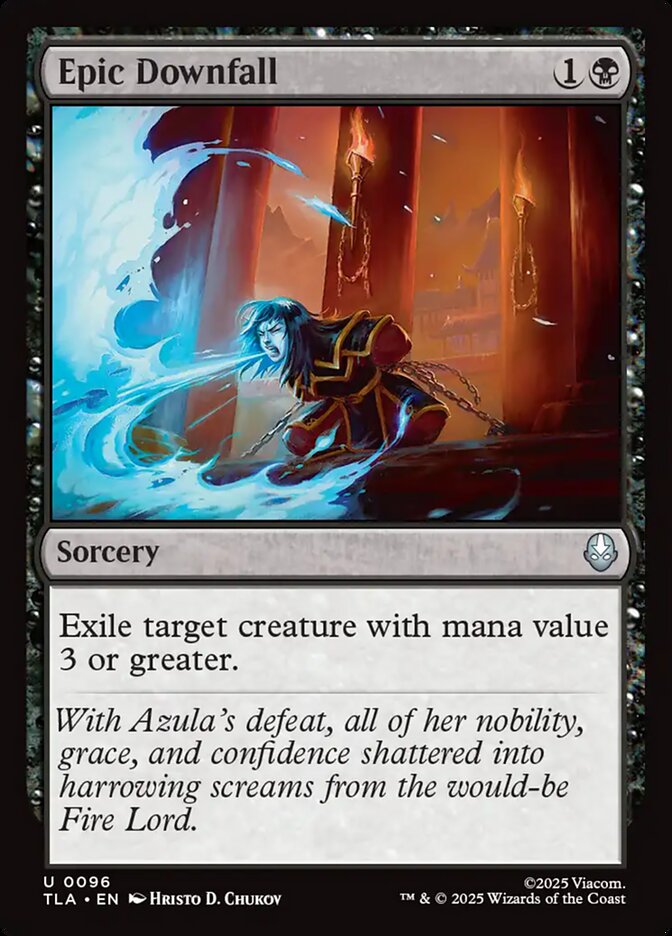
Another strong removal spell that I’m happy to take early. The only caveat with Epic Downfall is that it misses 2-drops like South Pole Voyager and Water Tribe Rallier.
#12. Allies at Last

The ability to choose two creatures makes Allies at Last very safe to use, and it’ll always cost 1 mana in the right deck. I’ve played this with just a few allies, but I’d take it highly for that dreamy discount.
#13. Foggy Swamp Spirit Keeper
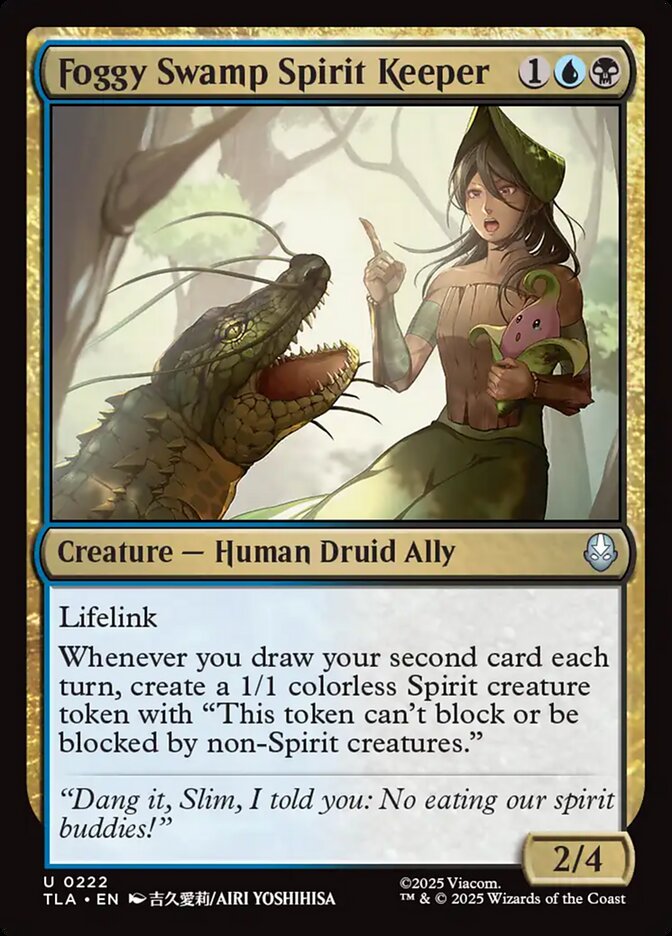
UB has the honor of receiving Avatar’s strongest signpost uncommon. Foggy Swamp Spirit Keeper can churn out evasive spirits pretty consistently, and it has great base stats and lifelink to boot.
#14. Toph, the Blind Bandit
Toph, the Blind Bandit is a clean 2-for-1 on its own, and it scales with other earthbending cards. You don’t need to build around Toph for it to be good, but doing so makes it even better.
#15. Gran-Gran

Last but not least, Gran-Gran is another card that really surprised me. I expected it to feel like a mulligan, but it’s a great turn-1 play that scales into the late game with waterbending cards. Gran-Gran excels in the same kind of decks that Fire Nation Cadets does.
Archetypes
Archetype Tier List
Avatar’s archetype balance largely tracks with its color balance.
Tier 1 (best decks)
- WU Fliers (Tempo)
- GW Allies (Aggro/Midrange)
- RW Allies (Aggro)
Tier 2 (great decks)
- UB Draw-Two (Control/Tempo)
- UR Lessons (Tempo/Control)
- BW Sacrifice (Midrange/Control)
Tier 3 (decent decks)
- RG Stompy (Midrange/Aggro)
- BG Counters (Midrange)
- BR Raid (Aggro/Midrange)
- GUx Lessons (Ramp/Control)
Other Decks (varies)
- Mono-colored strategies
- Temur Lessons
- Shrine piles
In terms of how much I’ve personally drafted each deck, I’d say most of my decks have been WU, UR, or UB. Mono-white has been my most commonly drafted mono-color strategy.
WU Fliers
WU is my pick for the best archetype in Avatar. It’s a hair better than other white archetypes, as it can lean the most into its secondary colors.
Payoffs


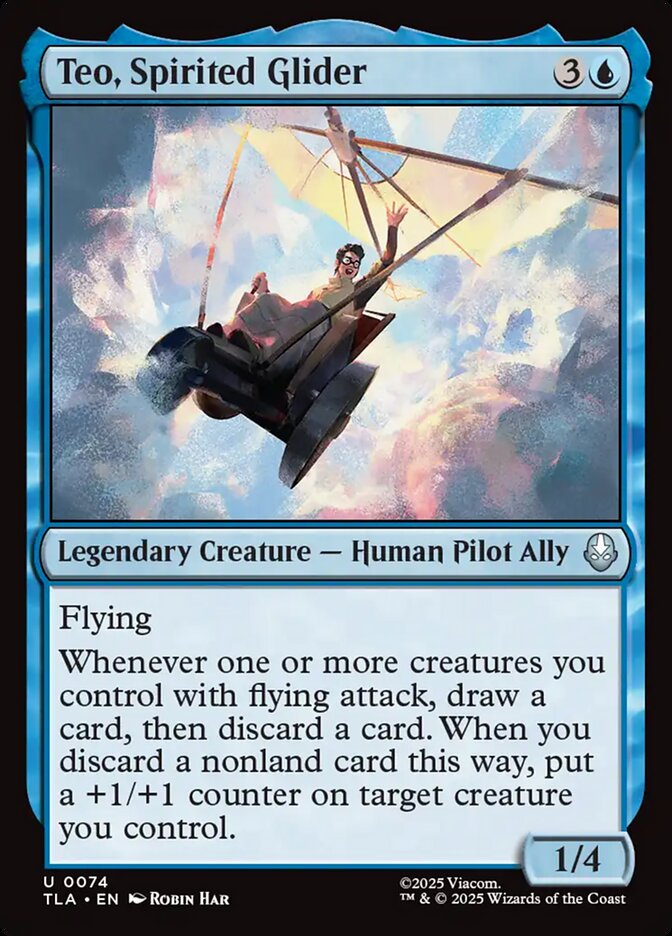
Despite being my #1 archetype, WU’s signpost (Air Nomad Legacy) is actually fairly mediocre. I like 2-for-1s and Favorable Winds, but most of the set’s fliers are mediocre on their own. Most WU decks will have at least some fliers, but how much you lean into it often depends on how many Legacies/good fliers you have. The other flying payoffs available are Momo, Friendly Flier and Teo, Spirited Glider.

WU does have two mega bombs though, in the form of Aang, Swift Savior and Katara, Water Tribe's Hope. Both are windmill slam P1P1s that are good enough to splash in other archetypes, so they aren’t really exclusive to WU or anything. I’ve particularly liked waterbending in WU, as Water Tribe Rallier pairs great with cards like Forecasting Fortune Teller and Lost Days.
Core Cards
WU’s greatest strength is how solid it is at common. You can get a lot done in this color pair with Forecasting Fortune Teller, Lost Days, Path to Redemption, and white’s solid creature base. If you have Air Nomad Legacy, here’s how I’d rate all the set’s common/uncommon fliers.
Great (happily play)

Good

- Glider Kids
- Messenger Hawk
- First-Time Flyer (with 6+ lessons)
Filler


Avoid

- Geyser Leaper
- First-Time Flyer (if you can’t support it)
Trophy Example
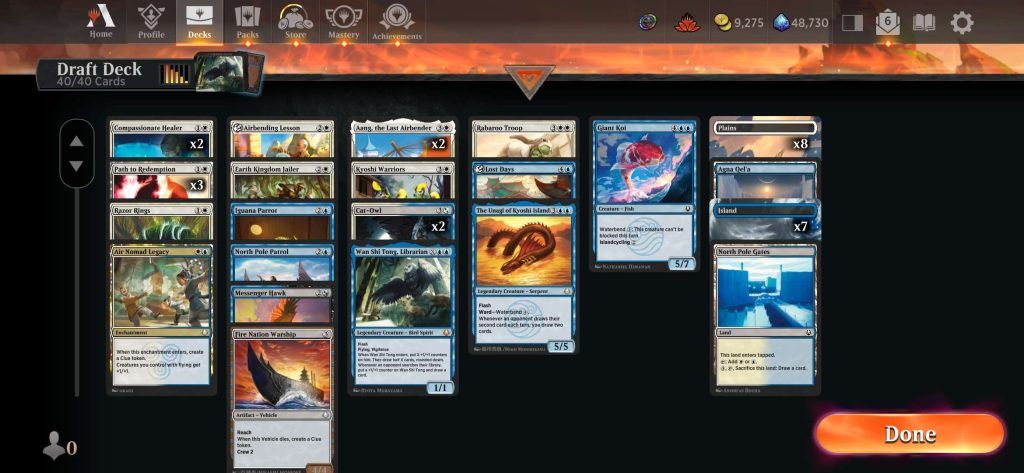
How to Play Against
Against skies lists, you’re either looking to race them (aggro decks) or grind them out (control decks). Green midrange will have to race and/or rely on reach creatures like Walltop Sentries or Earth Rumble Wrestlers. Just don’t expect them to block forever, as Path to Redemption and Lost Days can answer both.
GW Allies
While many color pairs can pull off ally synergies in this set, GW is the most focused on doing so. For this reason, most GW decks tend to be more white than green, as green is usually a support color.
Payoffs
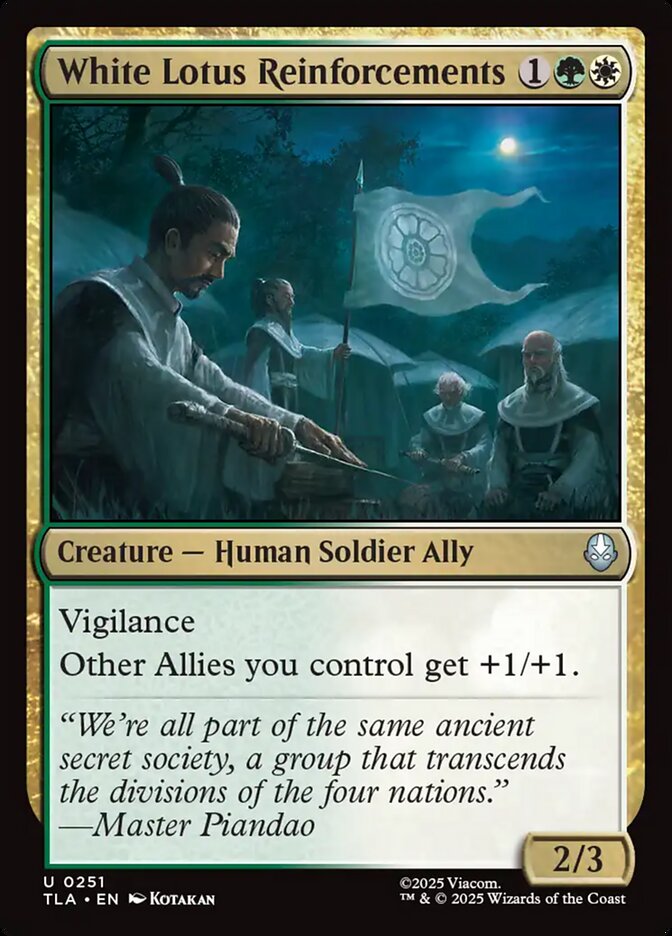


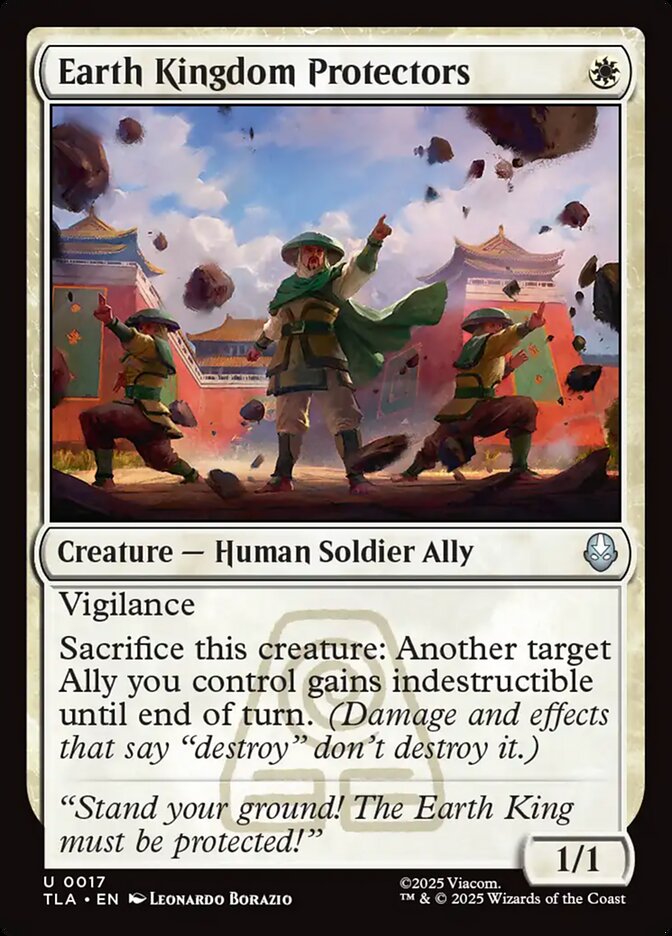
Earth King's Lieutenant and White Lotus Reinforcements are premium ally payoffs that are exclusive to this color pair. GW also has Allies at Last, Haru, Hidden Talent, and Invasion Tactics to distinguish it from other Allies decks. Earth Kingdom Protectors is another great card that scales with how good your deck is, as it can protect your White Lotus Reinforcements from many removal spells.
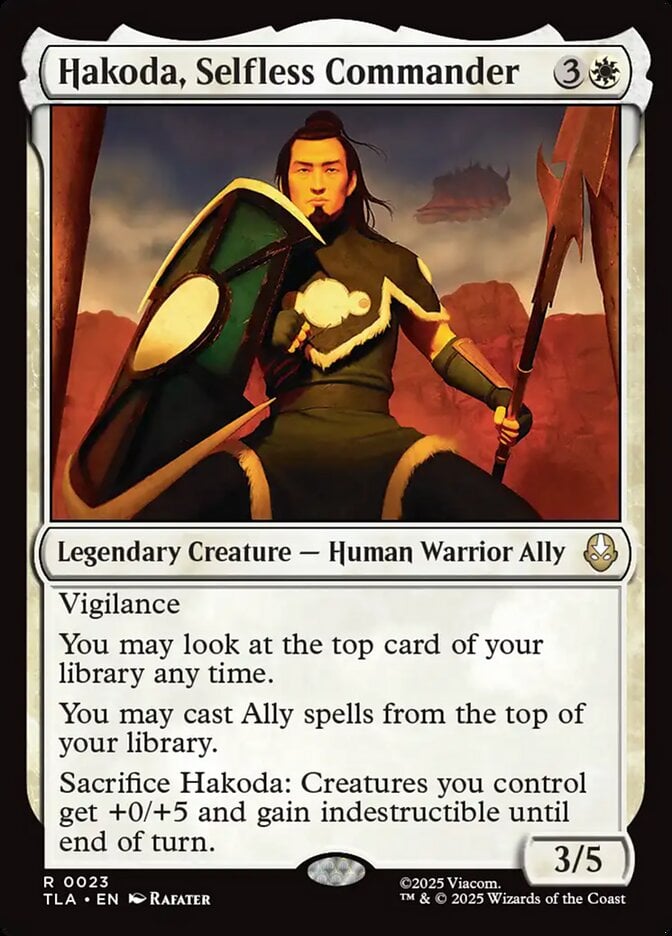


As with all white Allies decks, there are loads of higher-rarity payoffs available. Hakoda, Selfless Commander, South Pole Voyager, Suki, Courageous Rescuer, and Great Divide Guide are all thrilling cards to open in GW.
Core Cards
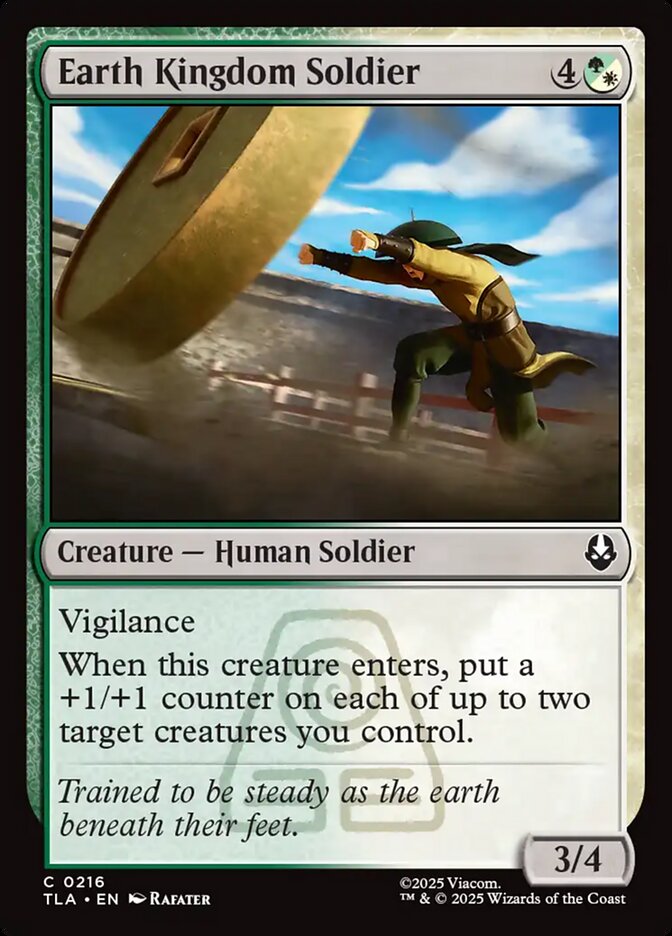
It’s really easy to get allies here, at least if white is open. You’ll want a healthy number of 2s and 3s to curve out with, with lower priority given to 4s and 5s. While Earth Kingdom Soldier unfortunately isn’t an ally, I still don’t mind a copy or two at the top of my curve.

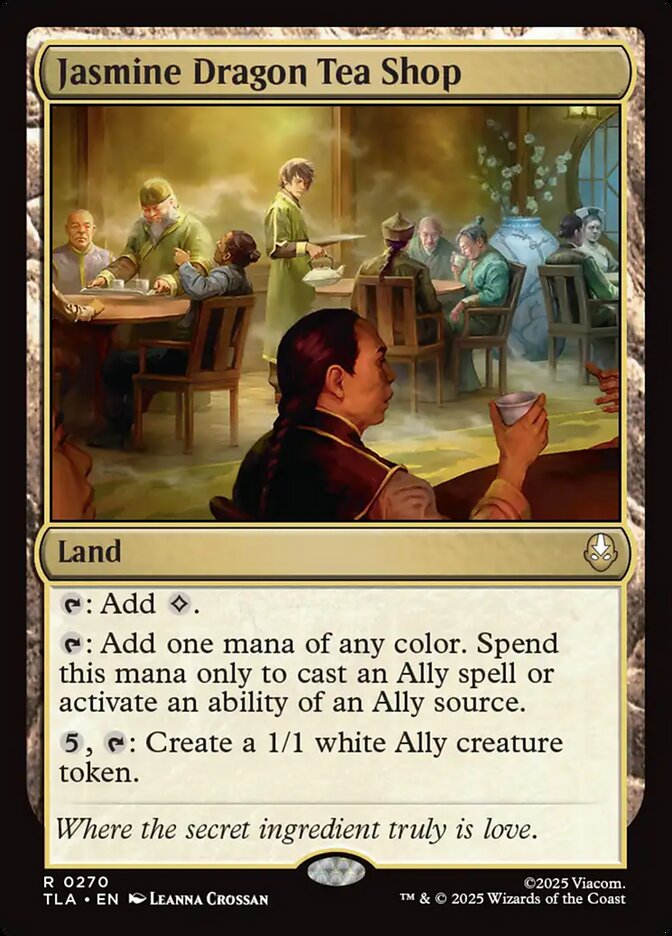
Base green GW is rare, and it tends to be a completely different deck rather than GW Allies. I’ve seen GWx as a base for 4-color piles with Avatar Aang and such, which leverage white for its good common removal spells rather than Allies aggro. I’m also happy to have a Jasmine Dragon Tea Shop when I can pick one up, which is easier to get passed than those bombs.
Trophy Example
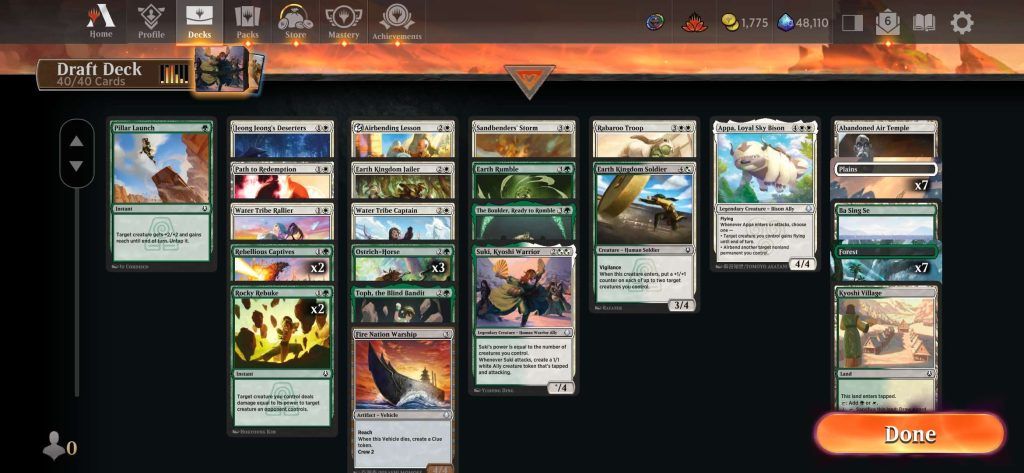
How to Play Against
GW will put your early game to the test, as White Lotus Reinforcements curve outs utterly crush slow hands. Aggro decks are hoping to win the die roll versus it and line up key removal spells/tricks. Control decks need to answer certain threats, and set up early blockers like Forecasting Fortune Teller.
RW Allies
To no one’s surprise, RW is the most aggressive deck in Avatar. That doesn’t mean it’s purely one dimensional though, as I’ve felt decidedly less all in with this color pair than normal.
Payoffs
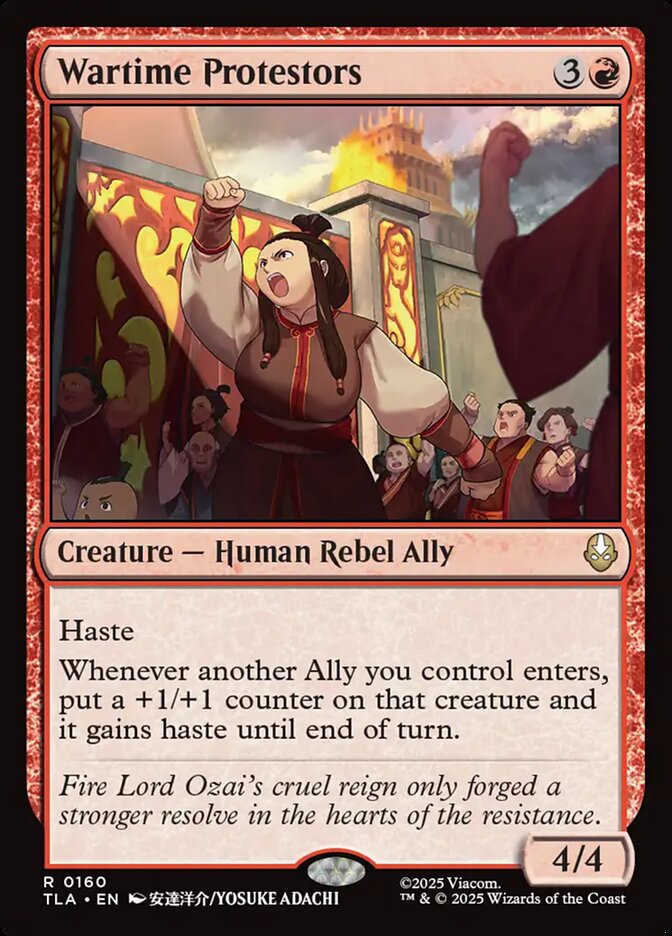

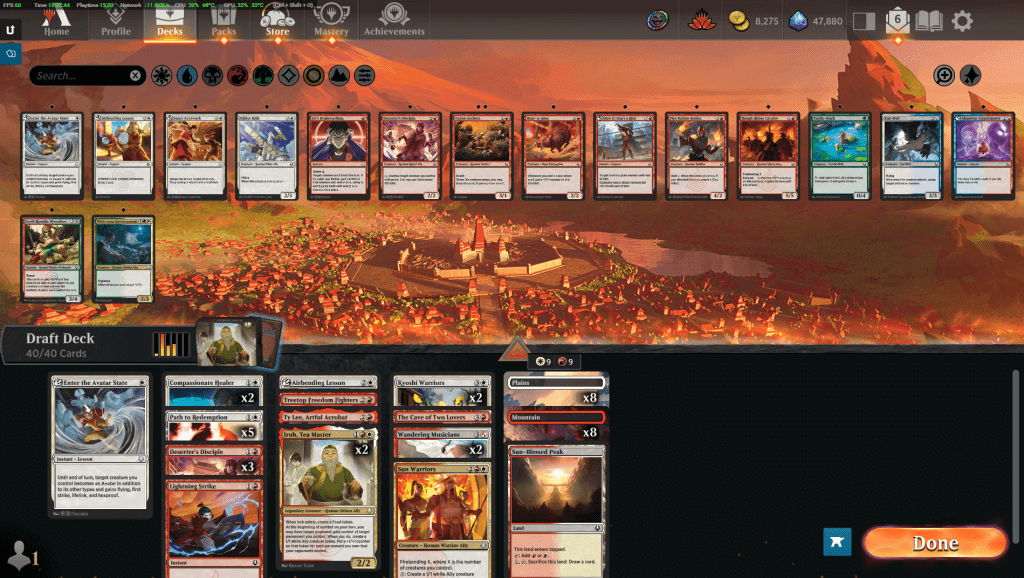
RW gets the same great white ally payoffs I mentioned. Wartime Protestors is its major selling point over green, as it’s great on its own and extremely dangerous with ally support. I also love Iroh, Tea Master and mentioned how wrong I was about it earlier. Sun Warriors is a solid signpost uncommon as well, and scales well with RW’s go-wide gameplan.
Core Cards
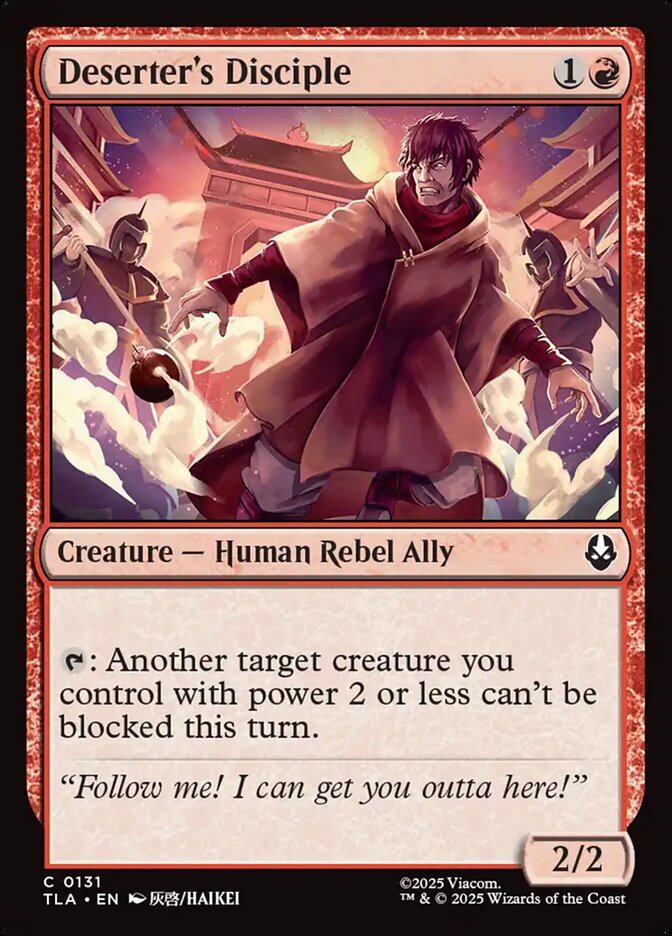
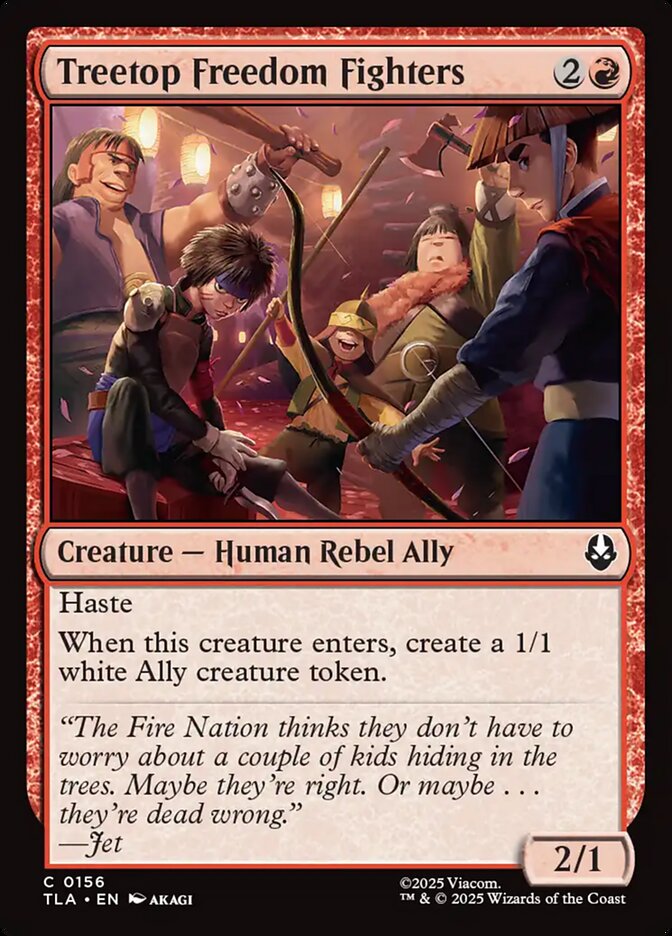
Deserter's Disciple and Treetop Freedom Fighters are excellent in RW. Try combining Deserters with Compassionate Healer, Fire Nation Cadets, and Wandering Musicians for repeatable chip damage. RW gets to play the same white allies and removal core as other decks, too.
Trophy Example
How to Play Against
You’ll need to match RW’s early game to have a chance. Cheap spot removal like Firebending Lesson and Watery Grasp is essential, as Deserter's Disciple may demand an answer later. If you can drag the game out, RW tends to have limited card advantage relative to other color pairs.
UB Draw Two
UB has a familiar archetype in Avatar, as it’s doing the same thing it did in The Brothers’ War. Avatar does a much better job of supporting this color pair than that set did, though.
Payoffs

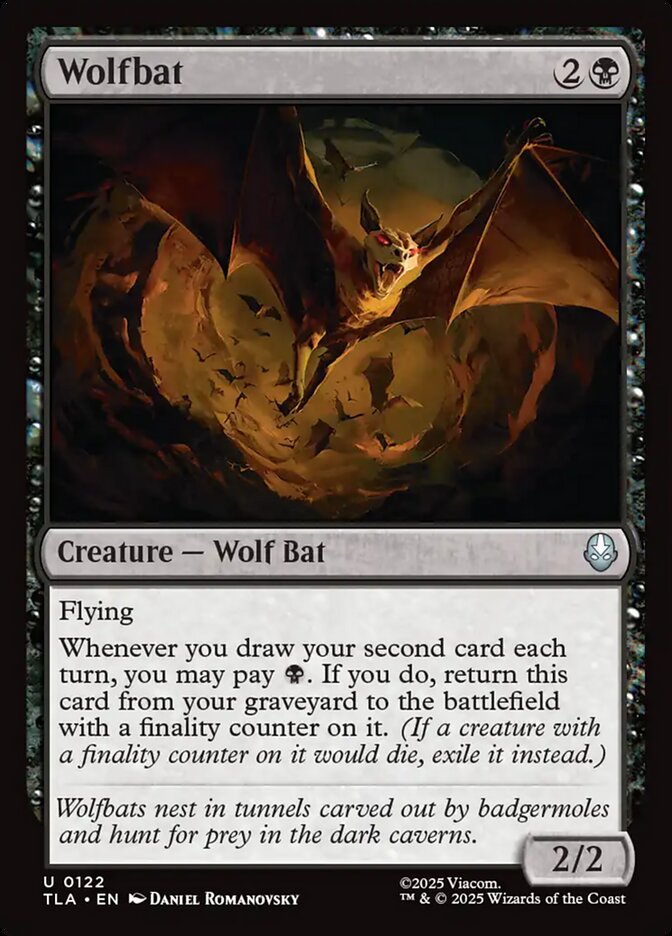
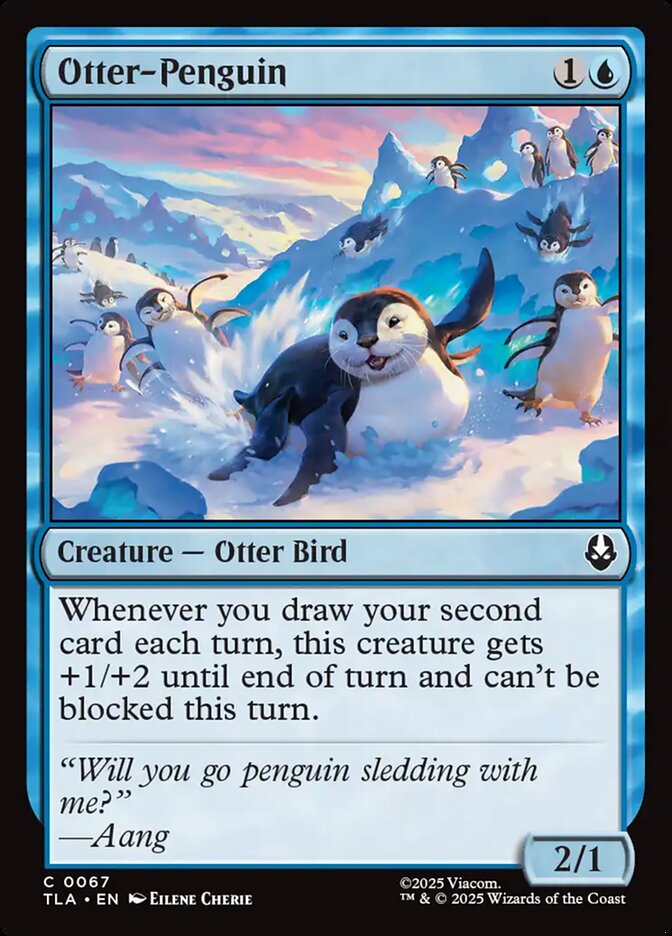
I mentioned Foggy Swamp Spirit Keeper as the set’s best signpost uncommon. UB also gets to windmill slam Azula, Cunning Usurper, which is a nightmare fuel level bomb. There are other “draw your second card” payoffs too, although Wolfbat and Otter-Penguin aren’t especially exciting.
Core Cards
UB is first and foremost a control deck. That means it wants cheap blockers, card advantage, and removal. It does a good job at leveraging Deadly Precision too, thanks to cards like Messenger Hawk and Corrupt Court Official.
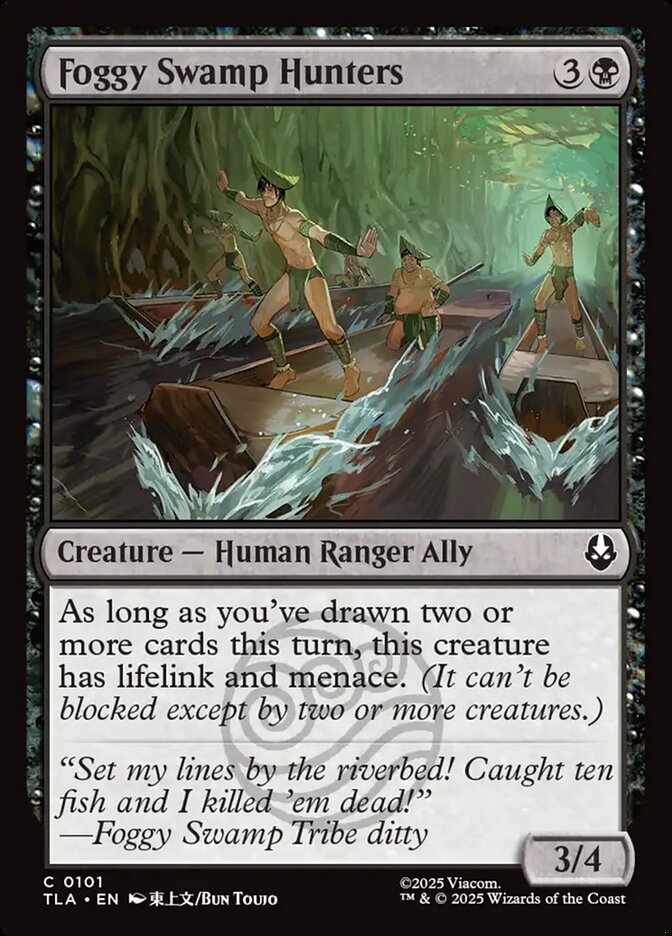
Foggy Swamp Hunters is a card I’ve generally liked in UB, as a copy or two can help you stabilize later on. It should be easy enough to table too, as no other deck should be playing it.
Trophy Example
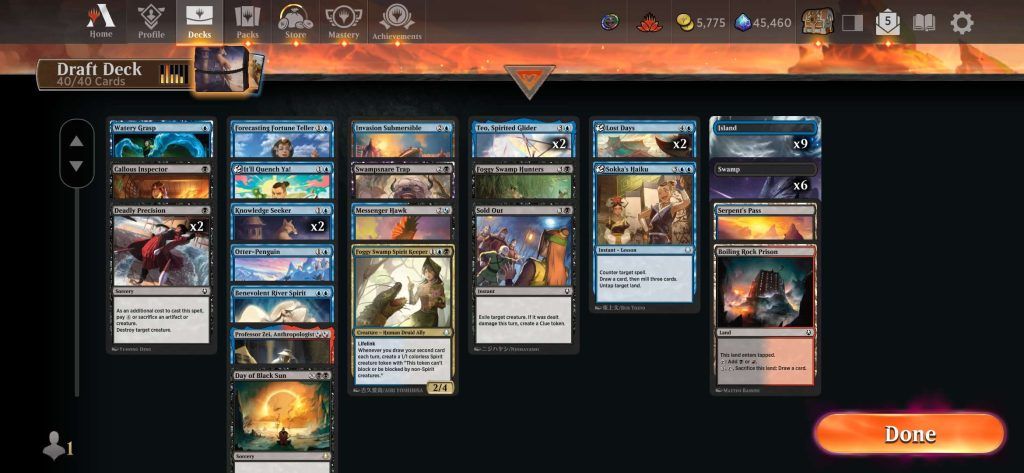
How to Play Against
Aggro decks will want to close the game before getting grinded out. This can be easier said than done though, especially if the UB player has a ton of removal. Getting rid of Foggy Swamp Spirit Keeper early can at least keep them from killing you quickly. I’ve also occasionally seen people forget about the spirit text and run their tokens into Hei Bai, Spirit of Balance. If you’re playing face-to-face drafts, you might be able to goad your opponent into this by acting unaware.
UR Lessons
UR is the first of two major lesson archetypes. You can build it as either a tempo/aggro deck, or pretty much just a stock control deck.
Payoffs
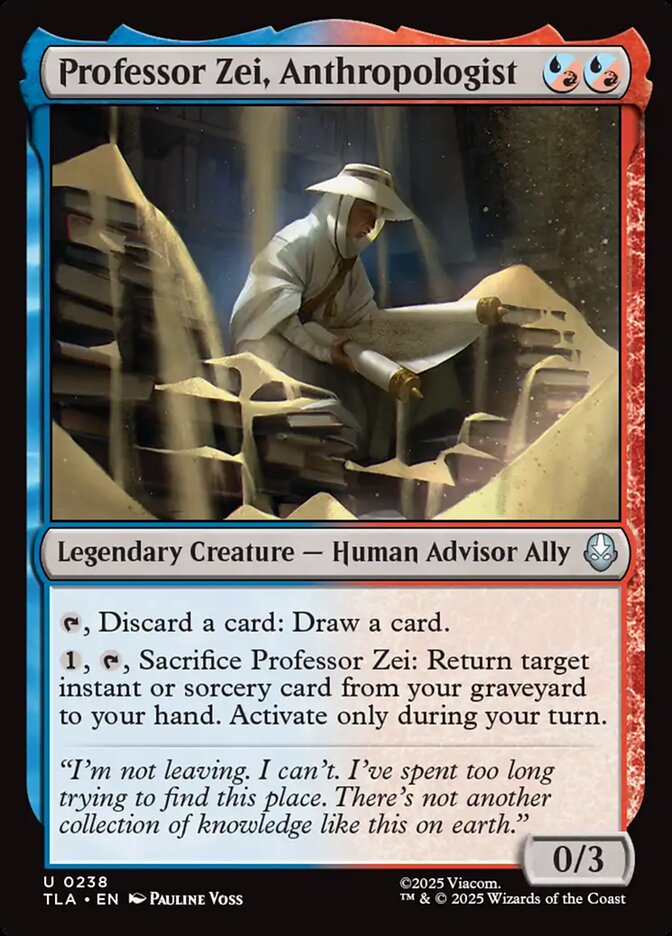
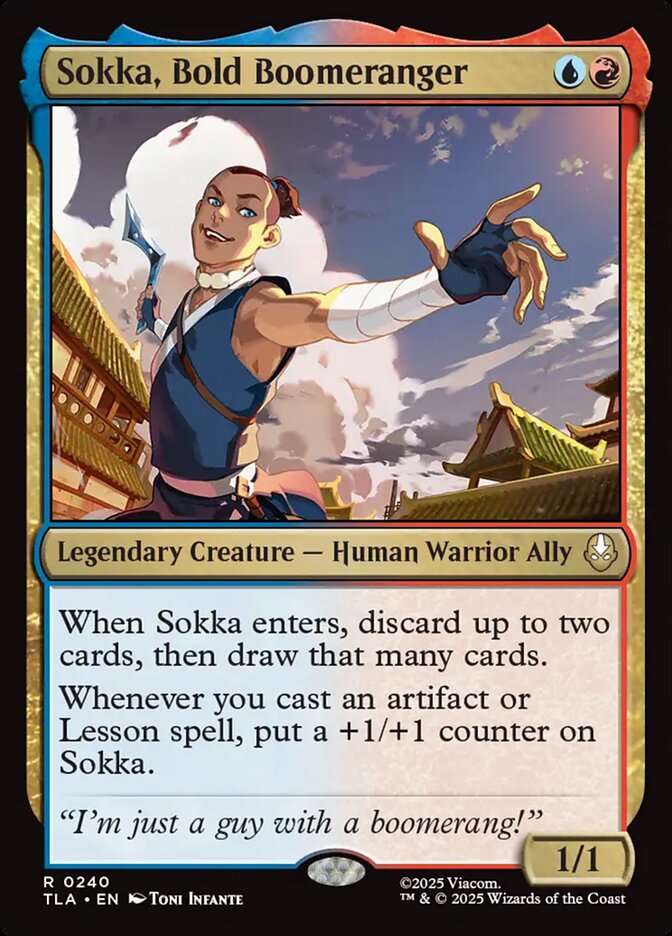
Dragonfly Swarm is an excellent signpost uncommon that shows off UR’s dual nature. It’s great for both control and tempo builds, since it 2-for-1s on death and hits hard with spells. Professor Zei, Anthropologist and Sokka, Bold Boomeranger are solid UR payoffs too, as they give you something to do early and scale with lessons.

Accumulate Wisdom, Combustion Technique, and Ran and Shaw are the best lesson payoffs available. Seeing a late Accumulate Wisdom is one of the best indicators you should be drafting UR!
Core Cards

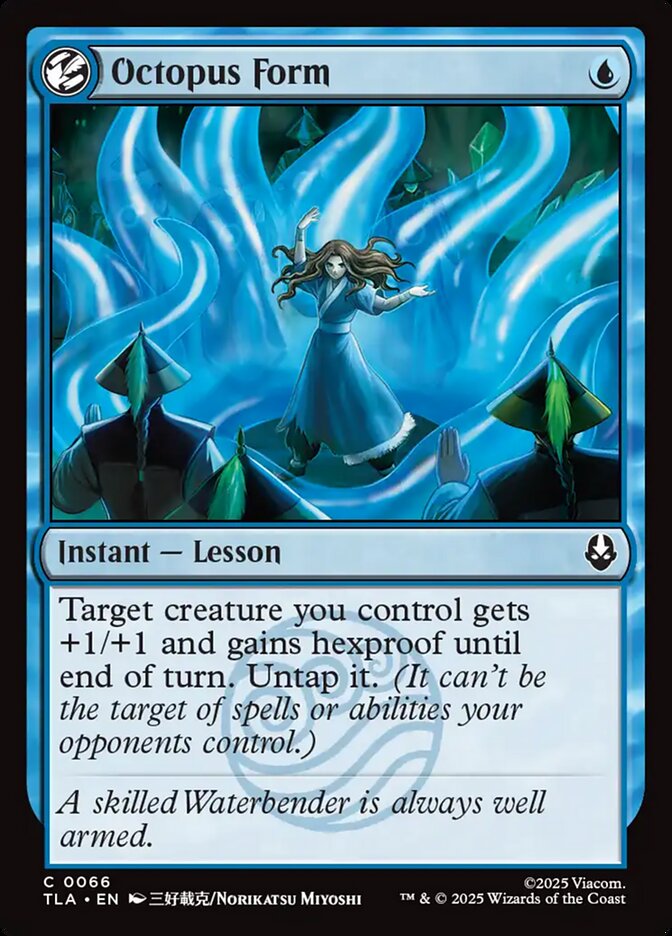

All versions of UR depend heavily on good lessons. Firebending Lesson, Lost Days, It'll Quench Ya!, and Waterbending Lesson are all staples here. I’m also happy to play an Octopus Form in most builds, as well as Abandon Attachments and Aang's Journey for early-game filtering.
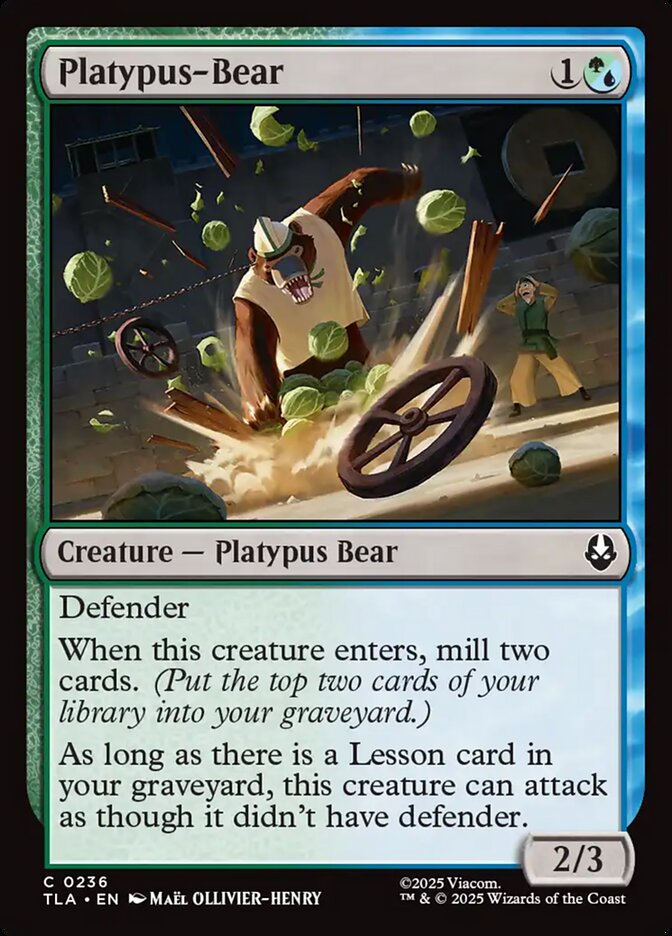
Fire Nation Cadets, First-Time Flyer, and Platypus-Bear are all synergistic common creatures. I like First-Time Flyer the best of the bunch and play it in all builds of UR.
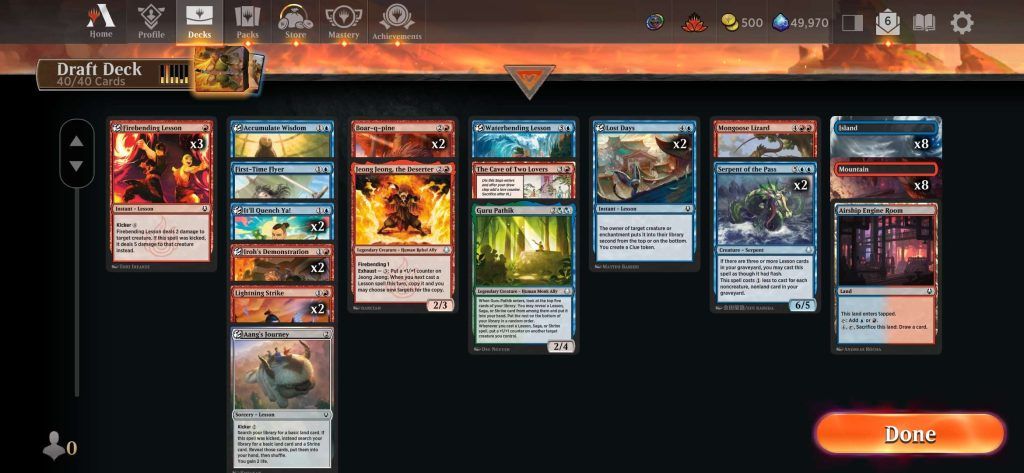
Trophy Examples
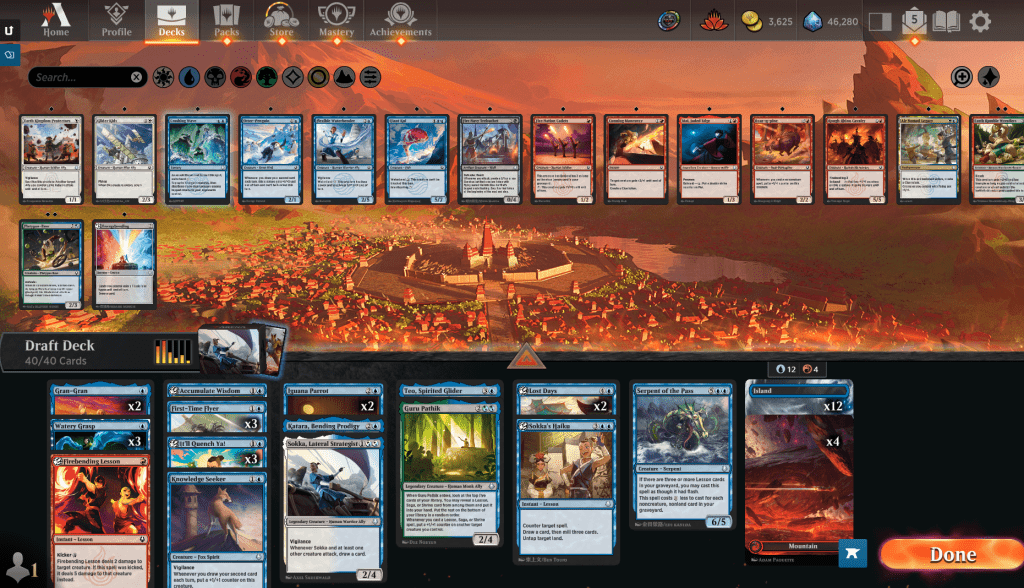
UR is my favorite archetype to draft, so it receives two examples! The first was a (nearly mono-blue) tempo version, while the second was significantly more controlling.
How to Play Against
Try to avoid giving your opponent max value from Firebending Lesson and Lost Days if you can. It’s also essential to play around It'll Quench Ya!, at least when it’s possible to do so. UR decks vary in pace from build to build, so try to figure out who’s the beatdown in your particular game.
WB Sacrifice
WB is a grindy archetype that loves to sacrifice its stuff for fun and profit. This is a common theme for this color pair across a variety of formats.
Payoffs
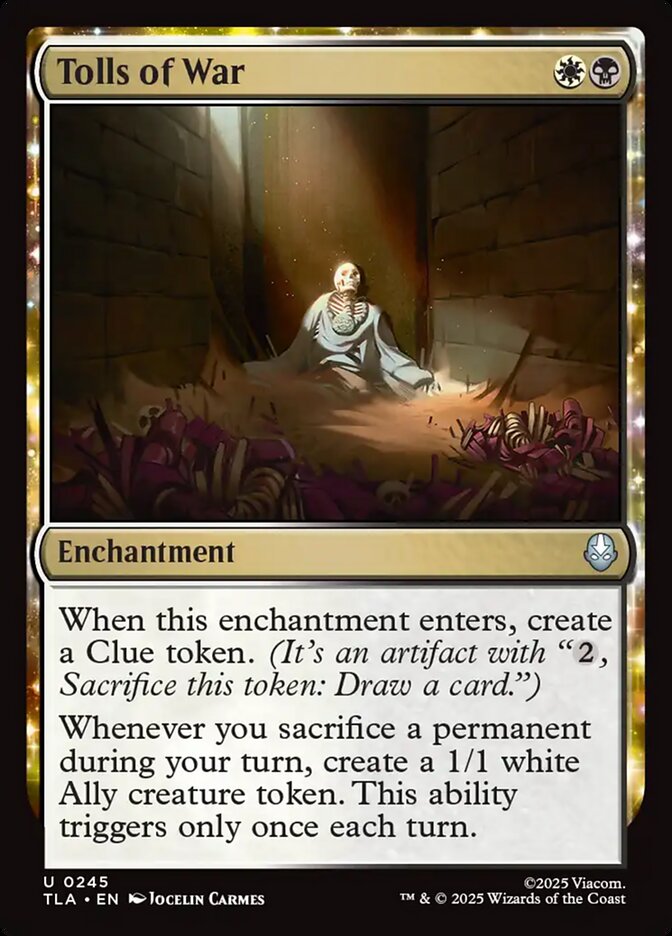
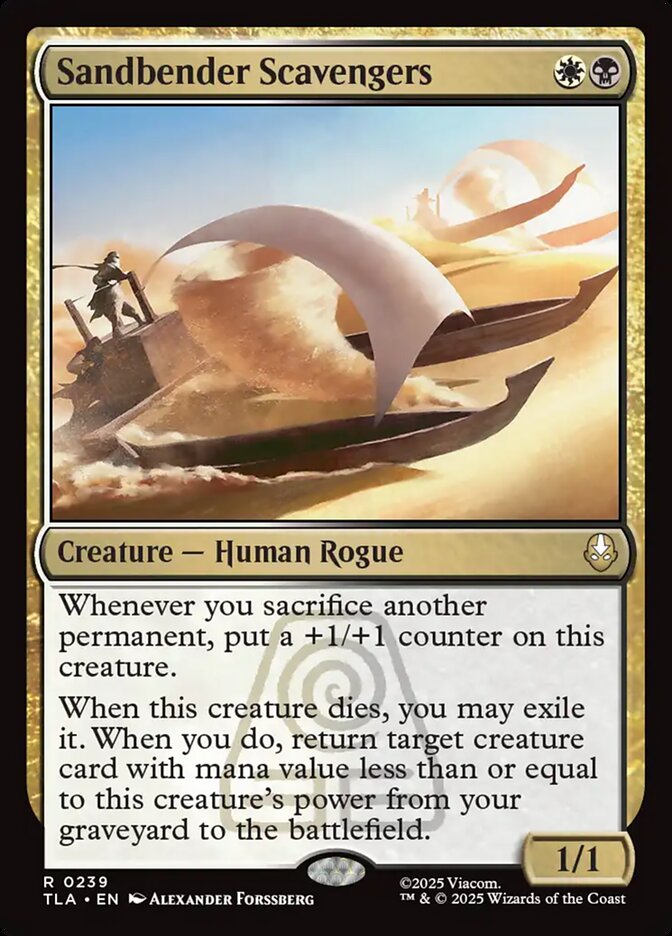
Tolls of War provides an awesome reason to go WB. With a bit of extra help from other Clue makers and sacrifice cards, it can output a ton of 1/1s and even replaces itself! Tolls also scales with other sacrifice payoffs like Obsessive Pursuit, Phoenix Fleet Airship, and Sandbender Scavengers.


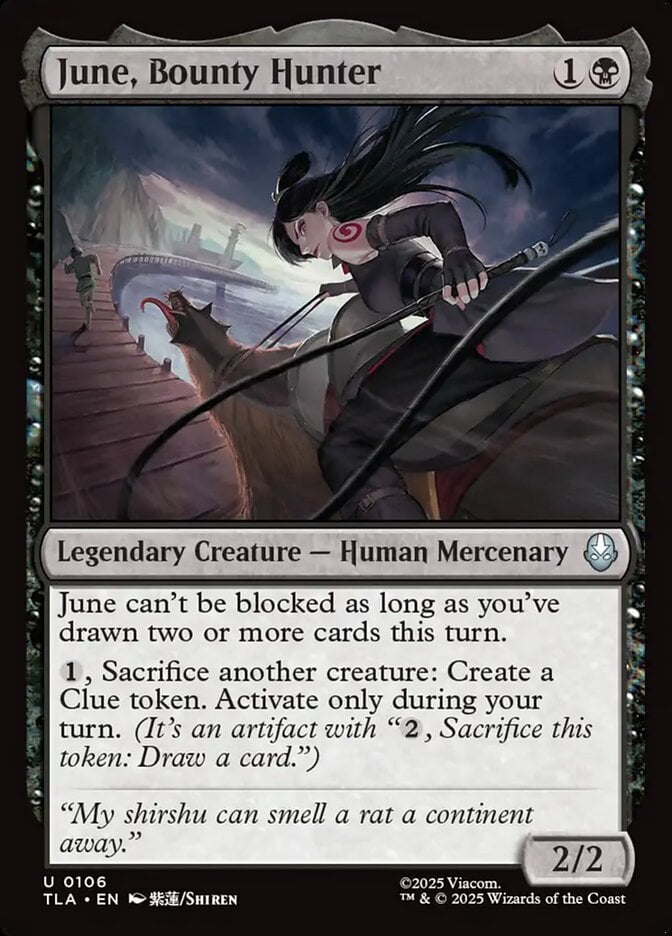
WB leverages several other uncommons to great effect. Fire Navy Trebuchet is a good blocker that provides extra fodder every time you attack. Joo Dee, One of Many and June, Bounty Hunter can then make use of those Boulders for extra creatures and Clues.
Core Cards
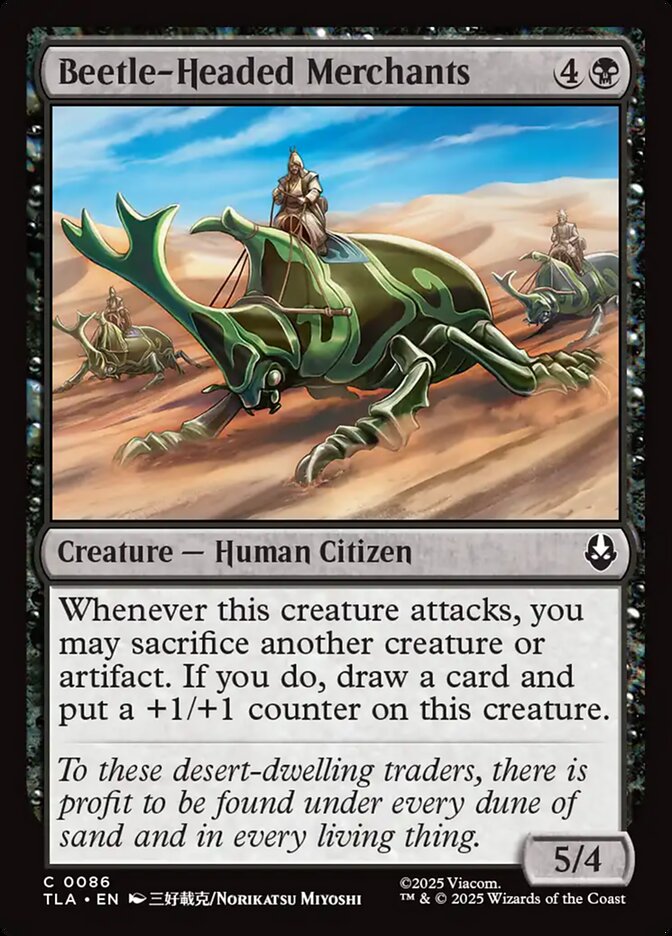
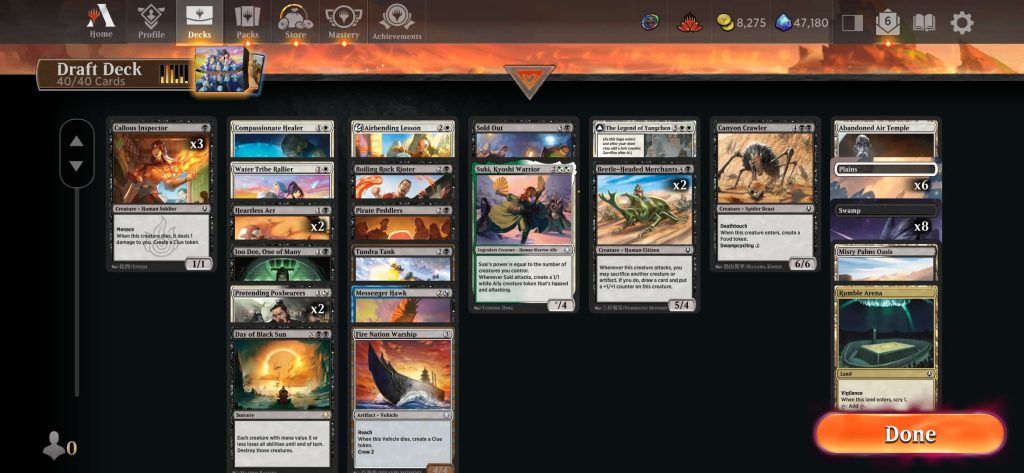
Callous Inspector, Corrupt Court Official, and Pretending Poxbearers are bread and butter fodder cards. You’ll want to sacrifice them to Deadly Precision, Beetle-Headed Merchants, and those uncommons.
Don’t neglect removal spells in WB either, as nickel-and-diming your opponent with 2-for-1s won’t matter if that Avatar Aang doesn’t die immediately! Both colors have some good contributions to make on this front, and Path to Redemption can even pick up some extra Tolls of War value when you sacrifice it.
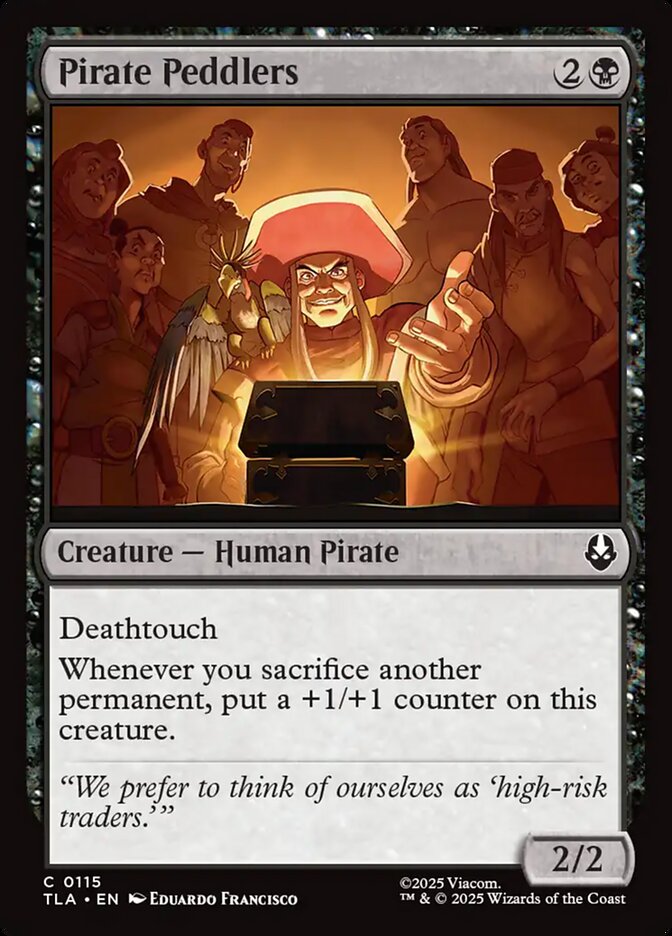
WB is also the only deck I’ve played Pirate Peddlers in. It’s still pretty cuttable, but it grows to decent sizes here without too much extra effort.
Trophy Example
How to Play Against
Removal spells can shut down sacrifice engines like Joo Dee, One of Many. Tolls of War is much more resilient, although in best-of-three Origin of Metalbending could do the trick. Aggro decks will obviously try to go under WB, while blue control decks can sometimes overpower it late game.
RG Stompy
RG is a straightforward archetype that favors power over finesse. Play big boys, turn them sideways, and play some removal spells too. Simple, right?
Payoffs


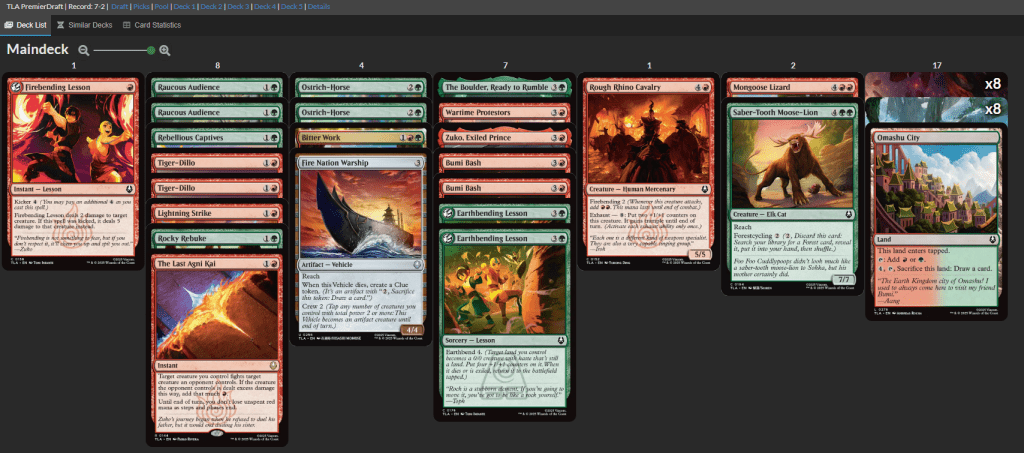
Bitter Work absolutely pummels slow decks, though it can be a bit sluggish to get going. It works well with other earthbending cards like The Boulder, Ready to Rumble and Badgermole. Tiger-Dillo is a lovely card here, especially when you can curve it into another 4/x like Uncle Iroh or a second Tiger-Dillo.


RG’s has two bombs available (Bumi, Unleashed and Toph, Hardheaded Teacher), although both are rather splashable.
Core Cards
RG tends to be heavy on 4-drops, so drafting several copies of Raucous Audience is essential. Most 4-drop creatures are fairly interchangeable here, but almost all of them provide 4+ power for Tiger-Dillo and Bitter Work. RG will definitely want good cheap removal too, as it’s slower to start than RW or GW.
RG is the only deck I’m somewhat happy to play Earthbending Lesson in. It’s bad versus Watery Grasp and Lost Days, but the haste, 4 power, and lesson text can all be relevant.
Trophy Example
How to Play Against
Tempo and well-timed removal spells are key. If you curve out and have Path to Redemption ready for their fat 4-drop, it’s easy to run RG over. Actual control decks can also usually out-grind RG, although Bitter Work can definitely be a problem.
BG Counters
BG is a midrange deck that I haven’t drafted much. It has fairly light synergies in practice, though the ones that do exist are decent and pretty cool.
Payoffs


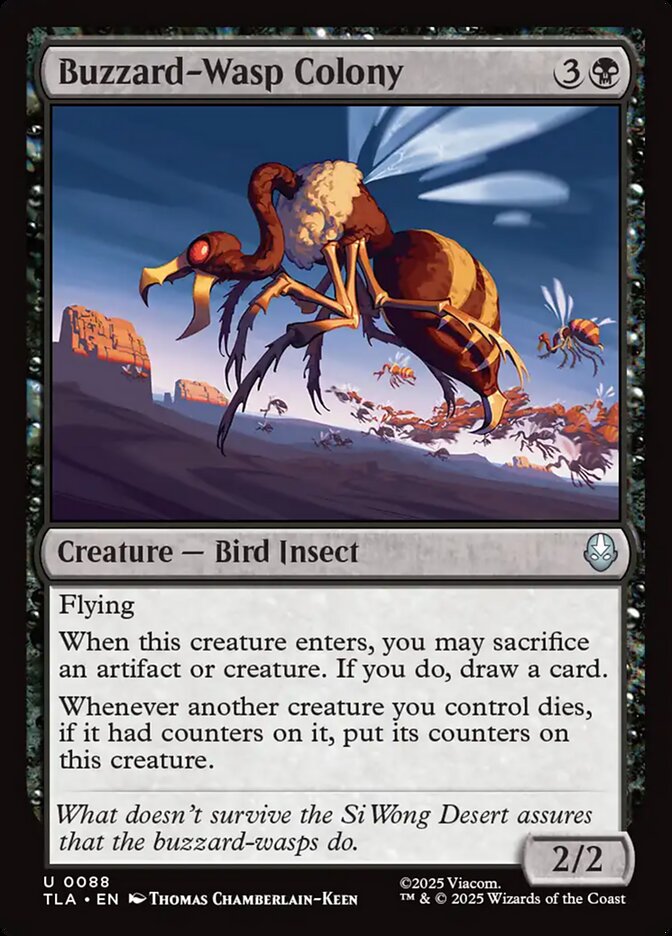


Dai Li Agents and Beifong's Bounty Hunters are strong cards in this color pair. Both are good enough to splash though, which can be problematic for actually being BG. Buzzard-Wasp Colony, Earth Kingdom General, and Earth Rumble could be considered genuine “archetype cards” here though, as both work great with earthbending.
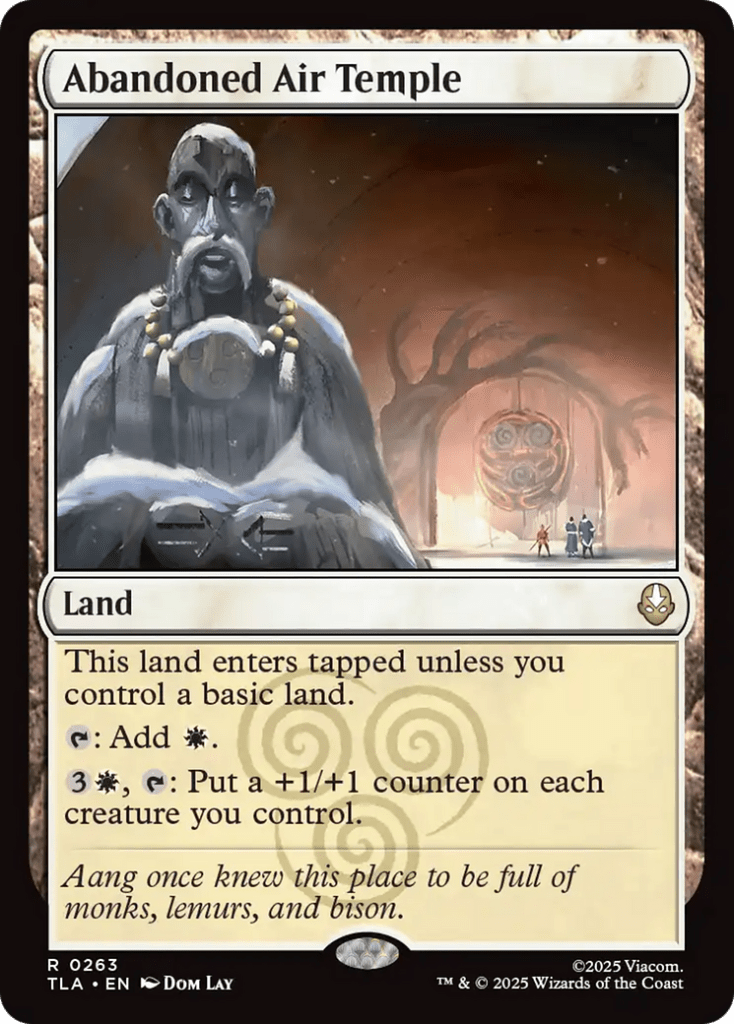
If we’re willing to consider splashes, then one thing I’ll note about Dai Li Agents is how busted it seems with Abandoned Air Temple!
Core Cards
For non-rare/non-bomb cards, BG’s best options are generally its colors’ best commons. Having a mix of efficient removal plus fatties, Raucous Audience, and Ostrich-Horse is ideal. Rebellious Captives also excels as an early game play that gives you something to do later.
As with several other color pairs, there’s a mediocre common (Hog-Monkey) that’s slightly better in BG than in other decks. I still don’t love it, but it does have synergy with earthbending and Dai Li Agents.
Trophy Example
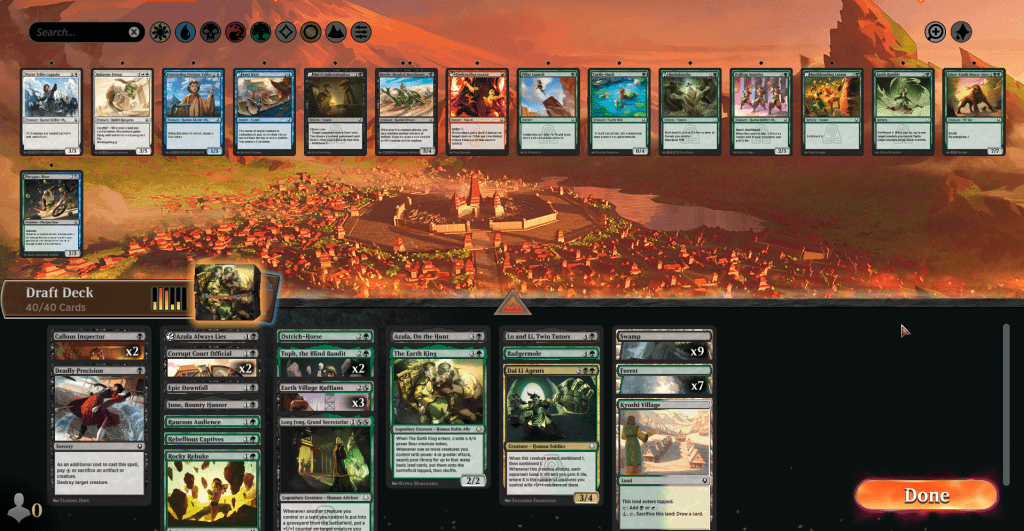
Note that this one wasn’t actually mine, as I’ve only drafted BG once and 6-3’d with it.
How to Play Against
Aggro decks will try to go under BG, and control decks should aim to grind it out (as it has less card advantage than blue decks). Dai Li Agents is threatening but also fairly vulnerable to removal.
BR Raid
BR is another archetype I haven’t drafted much of. It has some of the lightest synergies in Avatar, as it usually ignores both lessons and allies.
Payoffs

The best reason to be BR is Ozai, the Phoenix King, which is an incredible late game bomb. Ozai’s cost makes it tough to splash, so it’s definitely possible to get it late if BR is open.
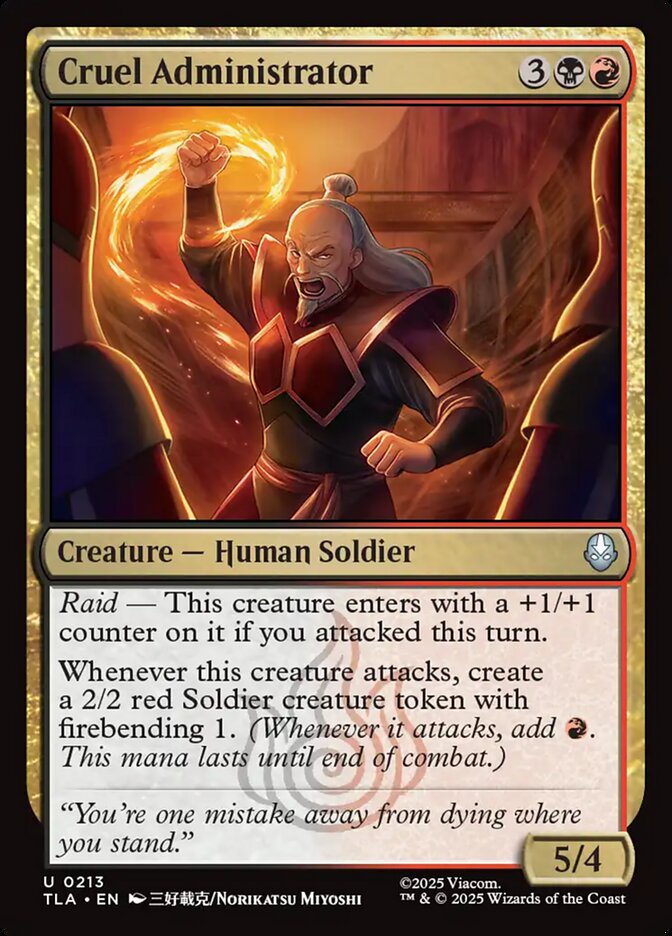
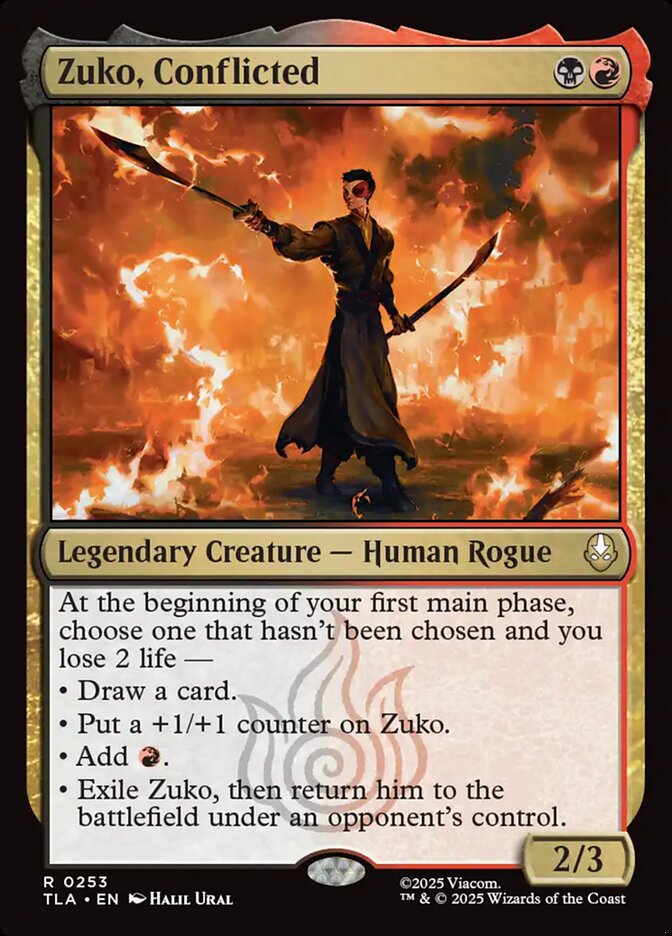
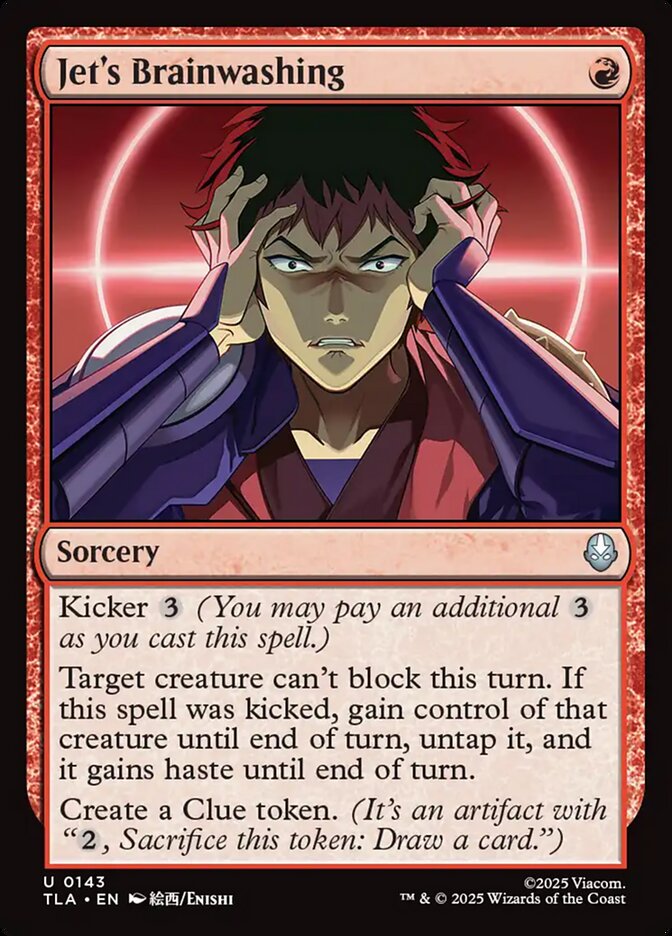
BR’s other multicolor options are somewhat mediocre. Cruel Administrator is threatening but clunky, and it matches up poorly versus Lost Days and Path to Redemption. Zuko, Conflicted rewards you for being aggressive and having some ways to sacrifice it, like Deadly Precision. BR also has its classic treason and sac combo available with Jet's Brainwashing.
Core Cards
Removal is BR’s greatest strength. It has the best common removal spells available, plus some excellent uncommons like Iroh's Demonstration and Epic Downfall. These are great for slowing down white aggro, answering bombs, and clearing blockers.


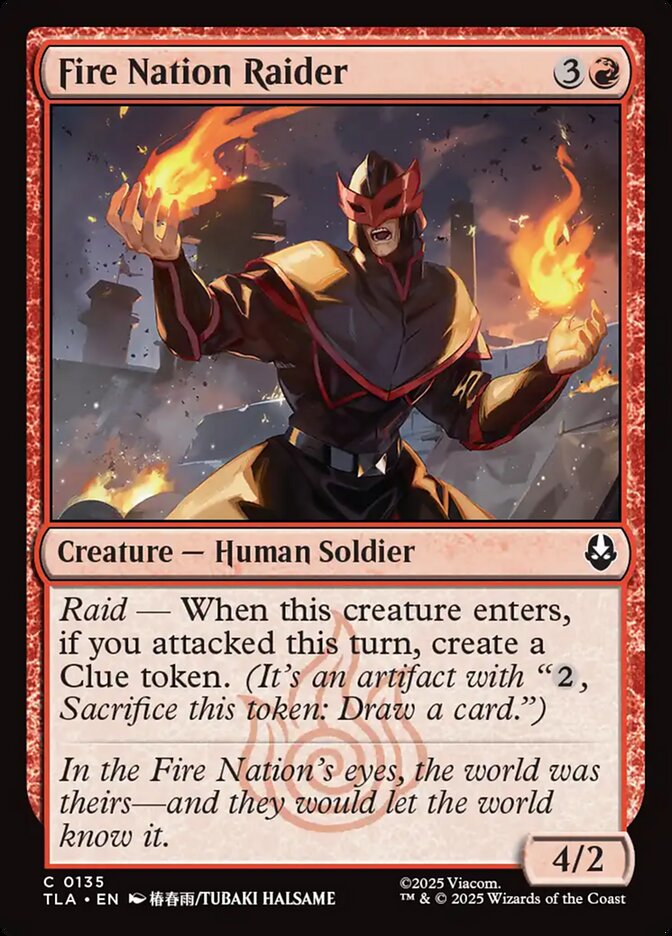
Two cards I like in BR are Azula, On the Hunt and Zuko, Exiled Prince. BR’s abundance of 1-for-1 removal can clear blockers, and it greatly appreciates the card advantage provided by said siblings. Corrupt Court Official, Yuyan Archers, and Fire Nation Raider are good commons for this archetype, too.
Trophy Example
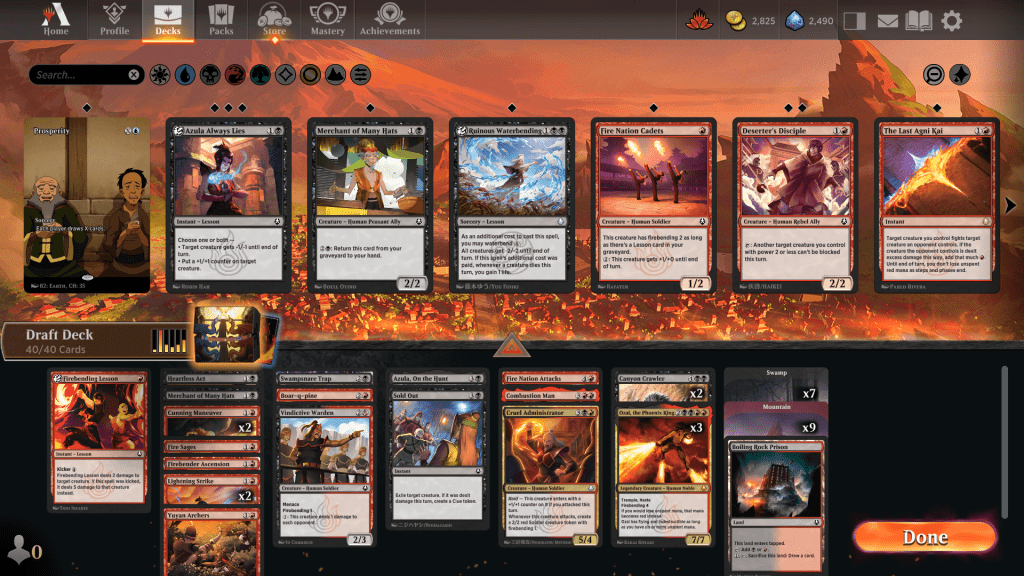
This trophy also wasn’t mine. You probably don’t need 3 Ozai, the Phoenix King to pull off 7 wins with RB, but it certainly helps!
How to Play Against
BR can be pretty clunky in practice, as it tends to glut on 5s due to Cruel Administrator. Its 1-for-1 removal plan is also poor versus token generators like Tolls of War and United Front. If your opponent has Ozai, the Phoenix King, keep in mind that certain removal spells get around its protection. Lost Days, Path to Redemption, and Watery Grasp are some of the better options available.
GU Lessons
GU is the other lesson deck in the format. I think UR is largely better though, as green’s bad common lessons hurt this archetype.
Payoffs
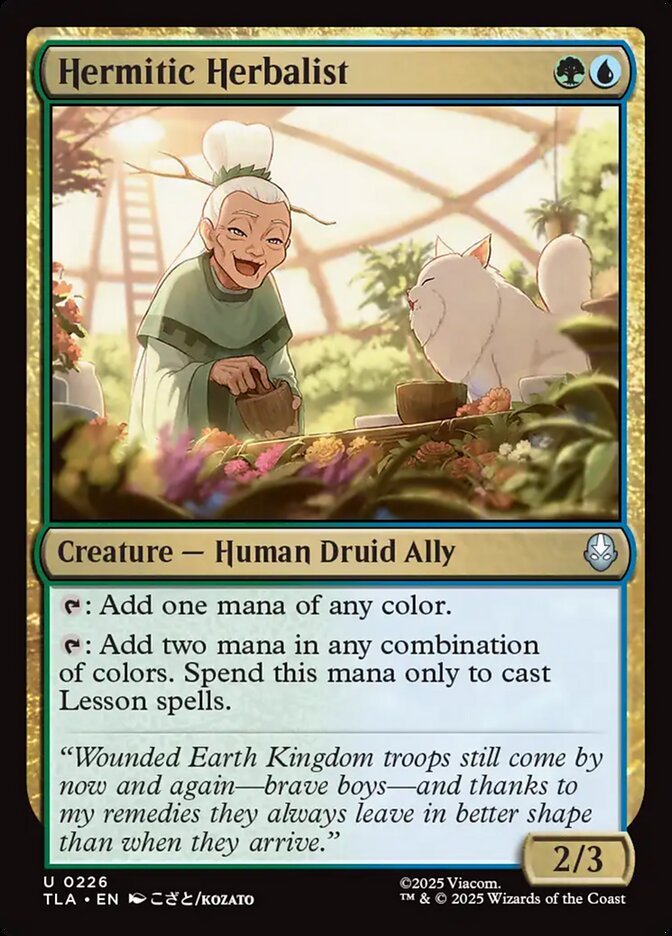
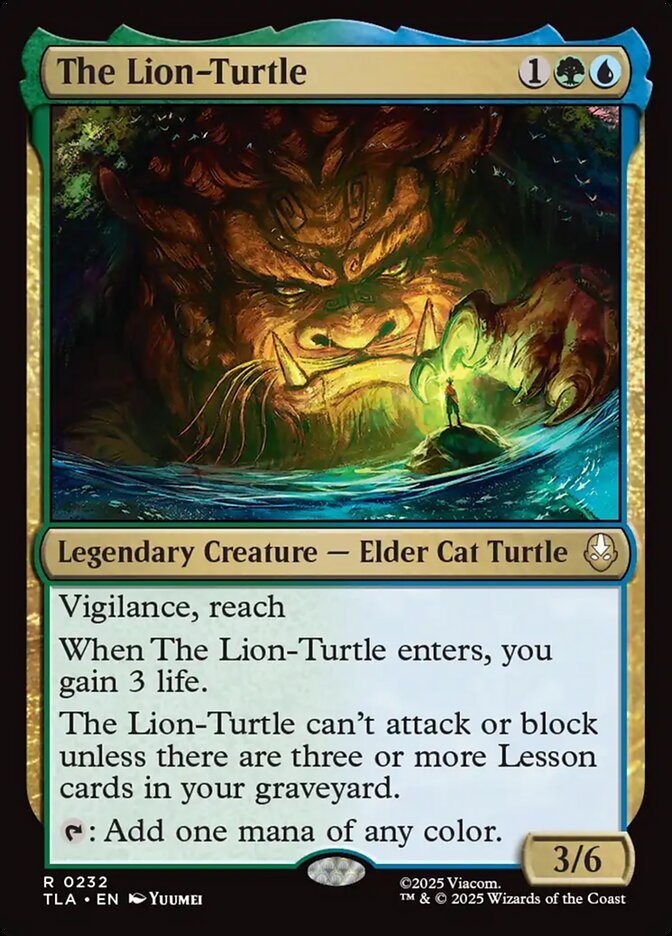
My best experiences with GU always involve Hermitic Herbalist and splashing bombs. The friendly cat grandma is an excellent universal mana dork, so don’t be shy about taking premium cards from other colors. The Lion-Turtle is pretty similar to Herbalist, and an absolutely gigantic wall later in the game. Other than those two, I don’t really love anything specific to this color pair.
Core Cards
Watery Grasp and Lost Days are the best common removal spells available in-color. Rocky Rebuke isn’t terrible either, especially if you have Walltop Sentries and some big beaters. Raucous Audience, Forecasting Fortune Teller, and Ostrich-Horse are good early game creatures to help you get to your late game bombs.
Trophy Example
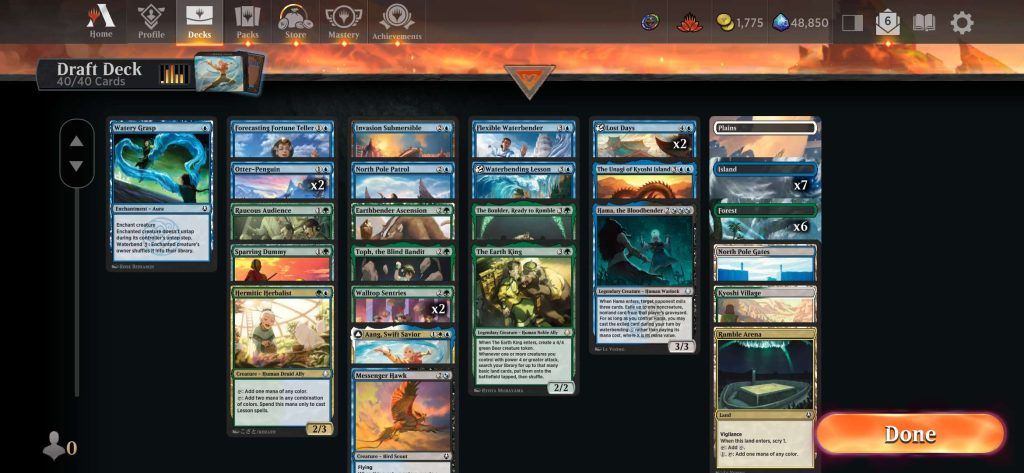
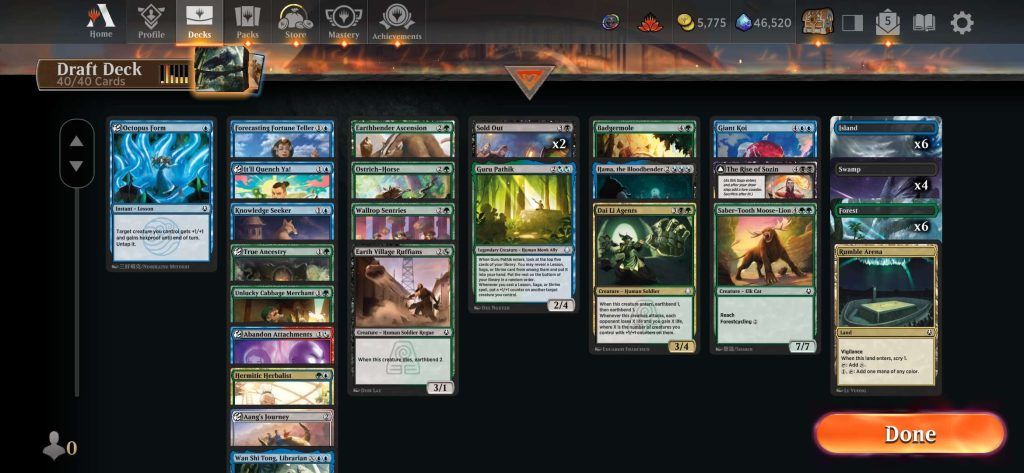
GU gets two trophies as well. The first shows GU with a tiny splash for Aang, while the second was a true 3-color pile. Giga bombs like The Rise of Sozin and Wan Shi Tong, Librarian can be worth bad mana though!
How to Play Against
Most GU decks are fairly slow to start. Killing their early game ramp creatures like Hermitic Herbalist and Raucous Audience makes them even slower. GU also has lackluster removal options on its own, though it may be splashing Firebending Lesson and Sold Out to fix this. Aggro decks will generally want to go under GU, while control decks will have to save removal for fatties and bombs.
Mono-Colored Strategies
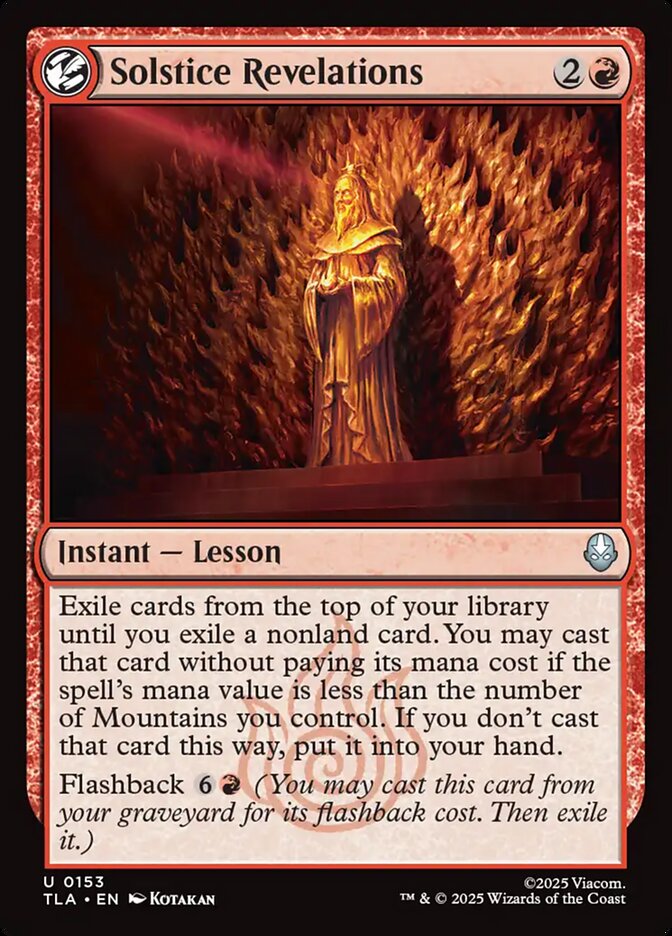
Avatar has a cycle of uncommons that reward mono-colored decks. I haven’t played with Solstice Revelations yet, but have drafted at least one deck with all of the others.
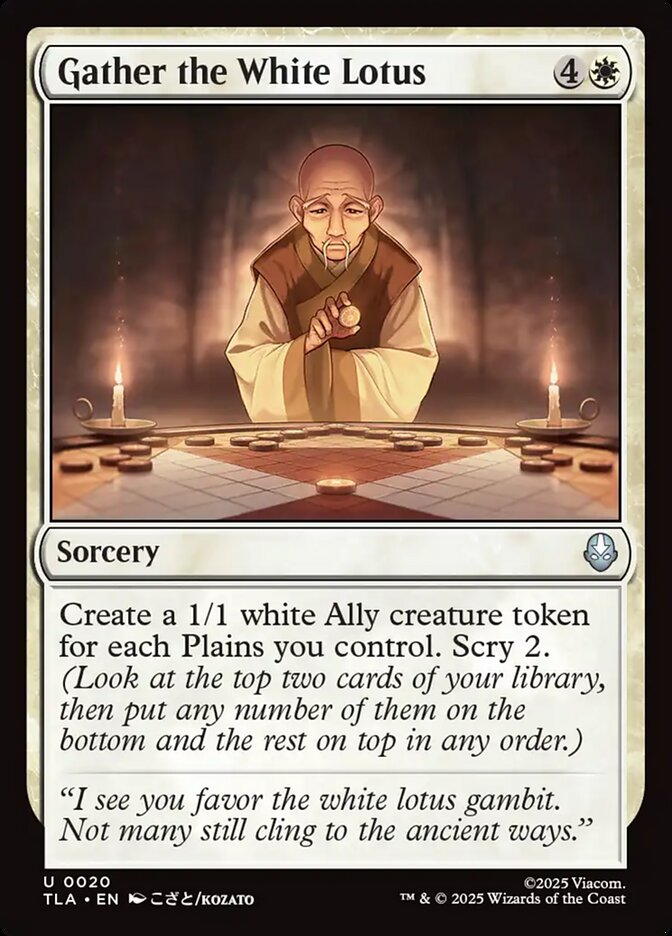
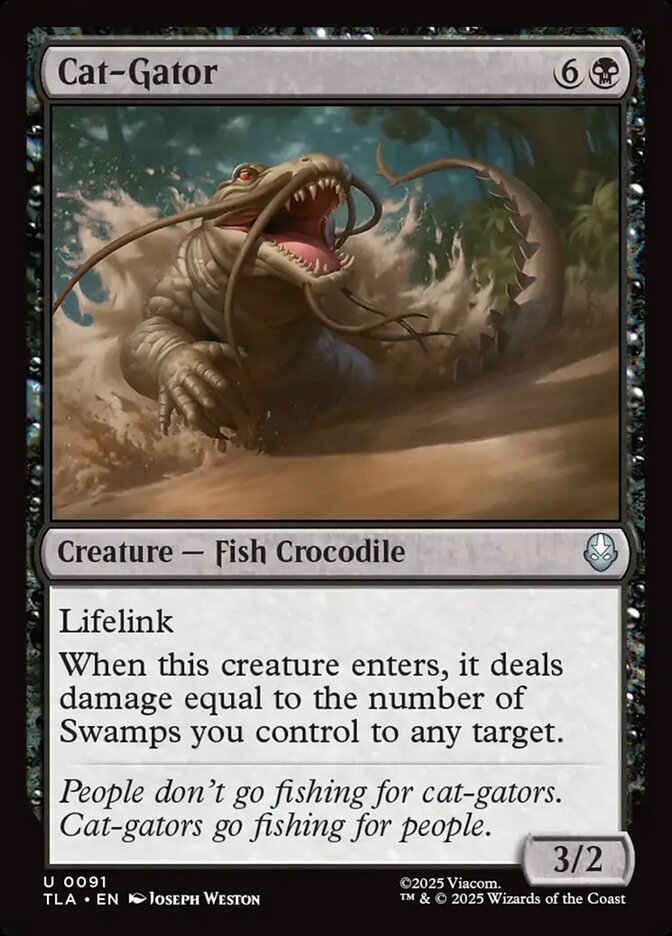

Gather the White Lotus is the strongest one due to how solid white is in Avatar. Cat-Gator is the least strict of the bunch, and the only one I’m happy to play with just nine Swamps. Rockalanche can be exceedingly efficient, but it requires you to go deep on the set’s worst color.
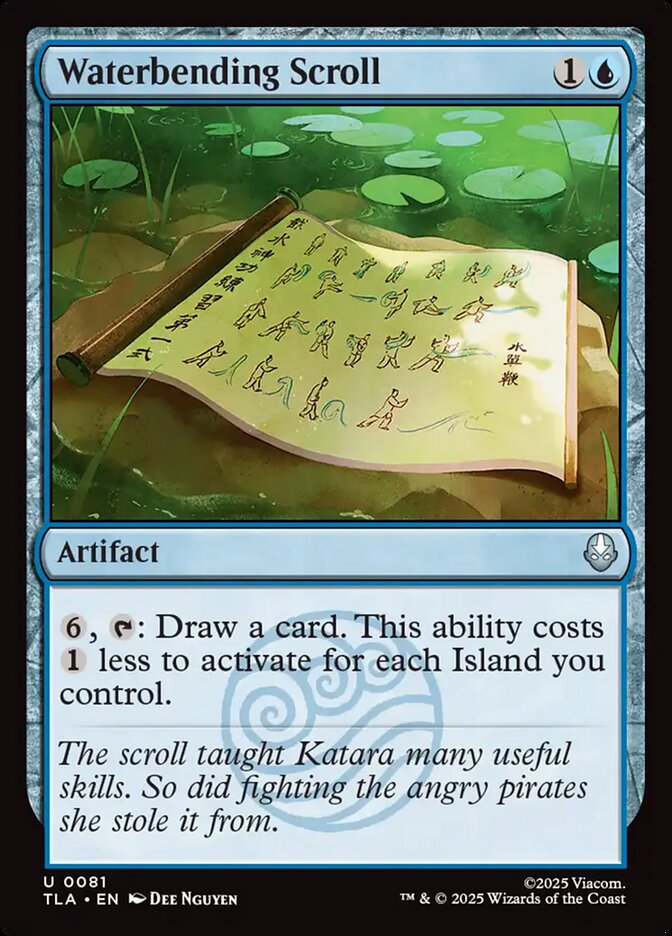
Waterbending Scroll is tempting, but it needs 4+ Islands in play before it’s good. That means 10+ Islands and enough removal and blockers to stay alive for it, which I haven’t yet pulled off. Solstice Revelations meanwhile would be good with 13+ Mountains, but it’s definitely the least exciting of the cycle.
Mono-Colored Examples
All of these trophied except for the blue one, which felt pretty lackluster.
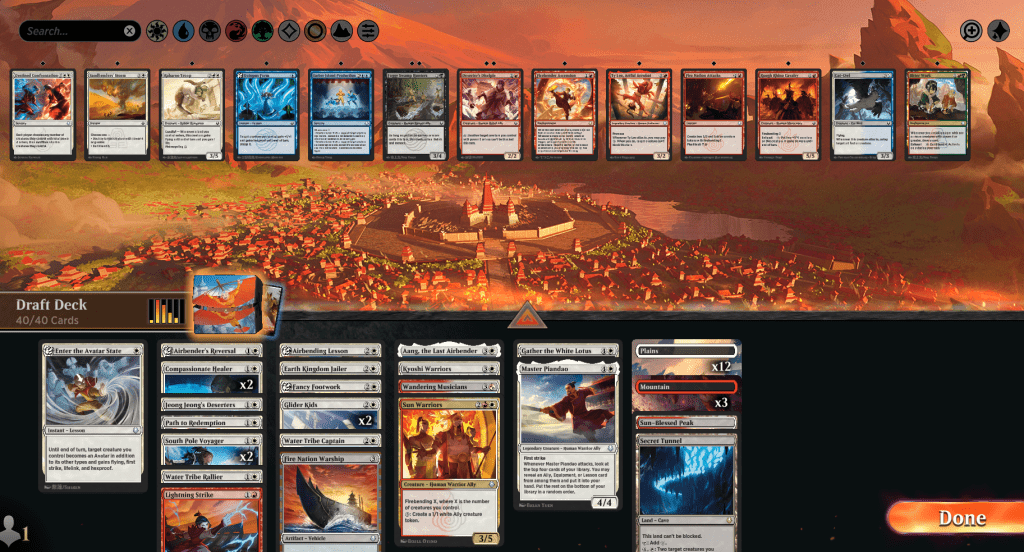
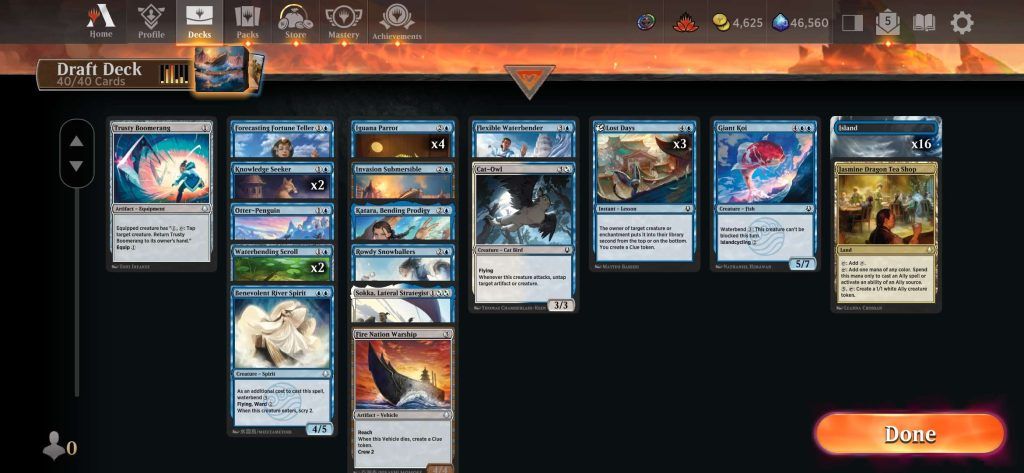
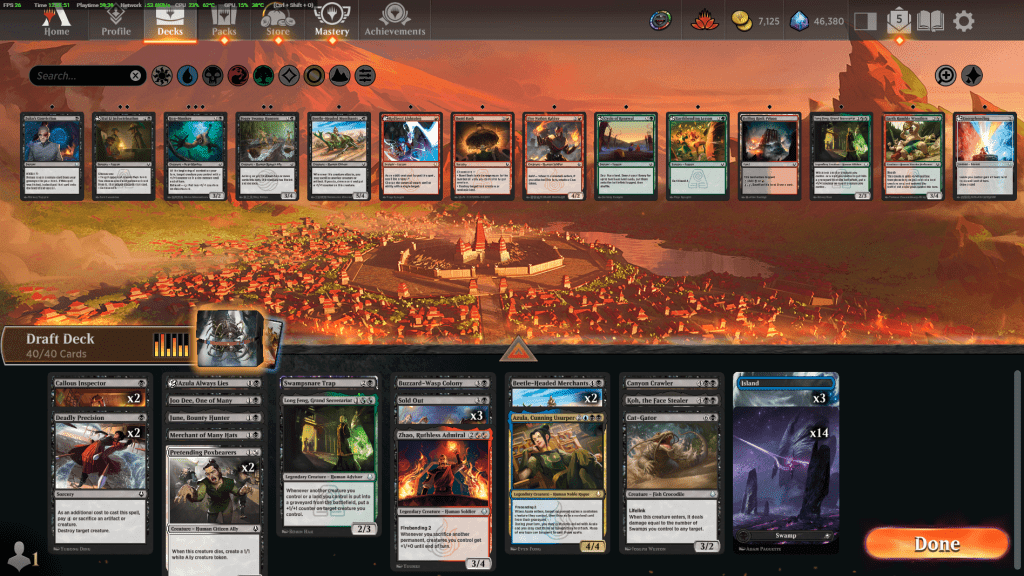
Temur Lessons
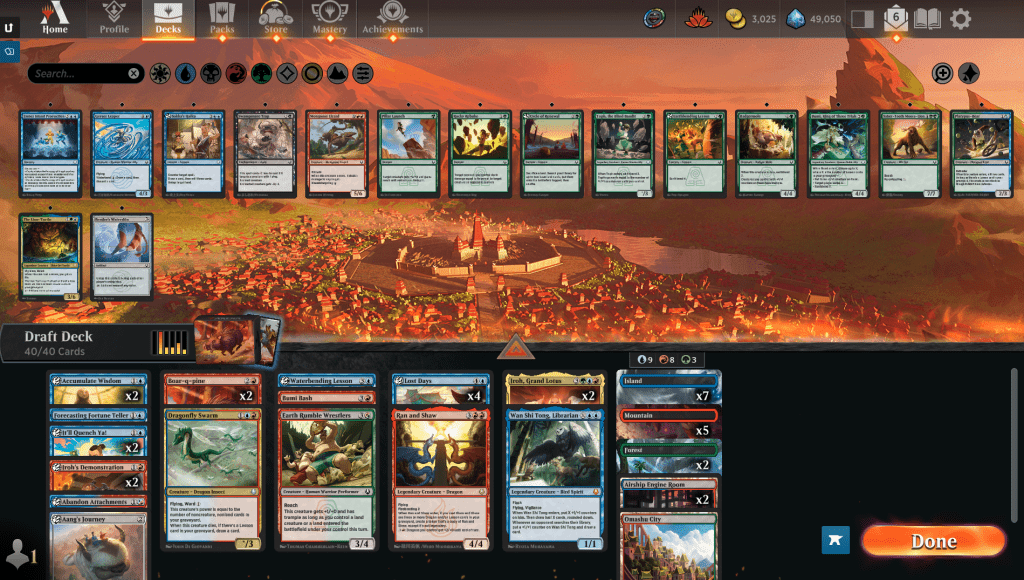
Iroh, Grand Lotus is good enough to build a deck around, and there are other Temur () payoffs like The Lion-Turtle too. It’s pretty easy to justify being in these three colors, although whether you’re splashing or truly Temur will vary from build to build. Here’s a (nutty) example, with UR splashing two Irohs to great effect.
Shrine Piles
I have yet to win a trophy with one of these, but I’ve at least lost a couple of times to Shrines.dek. It’s a tough deck to pull off due to a number of factors:
- You’ll want as many shrines as possible (ideally at least one of each). This requires you to be the only person drafting them and plenty of luck, as you need to pull 5+ of them in 24 packs.
- You’re forced to play 4- to 5-colors, so you’ll have to spend a lot of picks on dual lands and other fixing.
- Aang's Journey is incredible for this archetype, but it won’t table reliably as other players can use it for lessons/splashing.
If your goal is simply to win drafts, I’d recommend to avoid shrines altogether. But if you’re enticed by 5c durdling, here’s my spiel on how to execute this.
Shrines: A Battleplan
To draft Shrines successfully, you’ll need to track and wheel packs with them. You should never P1P1 any of the shrines, as they’re all terrible on their own. P1P5+ is about as late as you should go in on them, but definitely note any shrines you’ve already passed. If a single shrine doesn’t table in P1, then you’re likely fighting someone and should concede the deck to them.
Most Shrines decks are going to be base two colors with 2-3 splashes. The 2-color baseline must provide early blockers, cheap removal, and plenty of mana fixing. Any Gx color pair can make a nice baseline for Shrines.dek, provided it’s open enough to provide the aforementioned stuff.

Note that drafting Shrines doesn’t actually have to represent a huge commitment. Let’s say you start BG off of Earthbender Ascension and The Fire Nation Drill. You take some removal spells and Dai Li Agents, then see a P1P7 Kyoshi Island Plaza with just filler in the pack. You also know that The Spirit Oasis was in your opening pack. If you take Plaza here and then get Oasis P1P9, you’ll have 2/5 shrines and a coherent 2-color base.
Pack two then becomes a “sink or swim” moment for shrines. If you get additional shrines, you’ll need to start picking mana fixing highly to support them. But if you don’t see anymore throughout the draft, then I wouldn’t bother playing just two of them. This is why having a 2-color baseline is so important for shrines, as it can help you avoid trainwrecks.
One last tip on shrines is that they’re great with airbending. You can reset shrines you already have in play with Airbending Lesson, then reuse them immediately!
Shrine Example
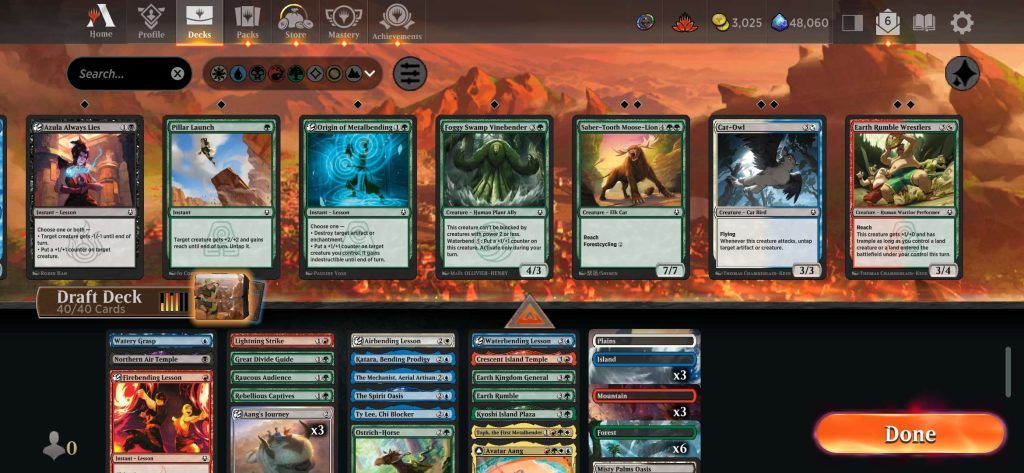
This deck was the closest I’ve come to pulling off Shrines, at least so far. I was missing Southern Air Temple and was a little short on removal, but I had three Aang's Journey and some sweet rainbow cards. It finished 3-3 if I recall correctly, as I barely failed to stabilize against white aggro several times.
Failed Shrine Example
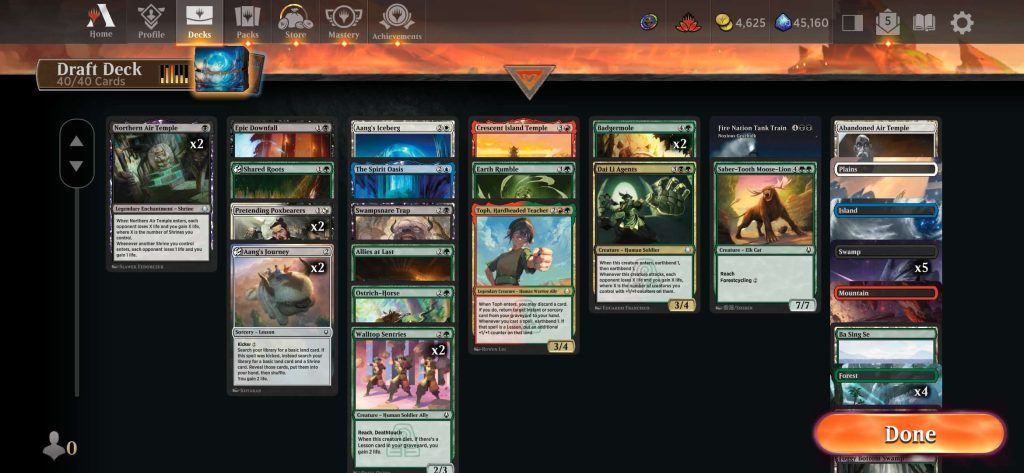
This deck is interesting because I didn’t end up playing it! I don’t have a screenshot of my sideboard, but after playing a few games I realized 3/5 shrines weren’t quite doing it here. I ended up cutting them all and playing it as a GBw deck (splashing Aang's Iceberg and Abandoned Air Temple). This was good enough for a 6-3 finish, and shows that you can recoup if shrines don’t work out.
Card Specific Tips
This last section is a catch-all inclusion for miscellaneous thoughts on specific cards.
Mythics
Appa, Steadfast Guardian

If you’re too Restoration Angel brained (like I was), you might overlook that Appa, Steadfast Guardian says you can airbend any number of other permanents. This lets Appa counter rare sweepers and rack up extra value in slow games.
The Legend of Kuruk / Avatar Kuruk
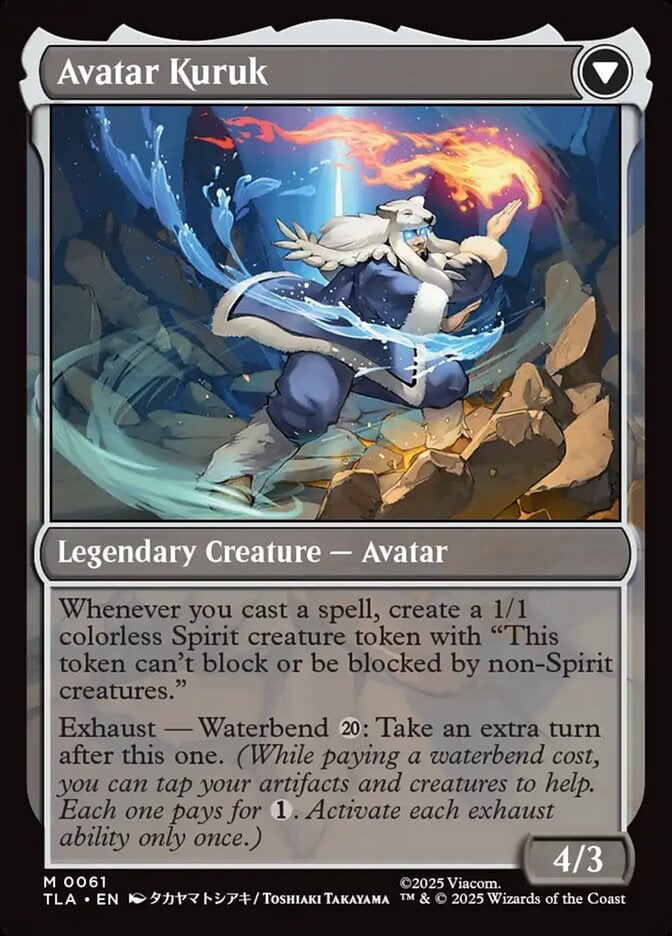
That “20” cost on Avatar Kuruk looks like a lot, but untap with this once and you’ll find it’s surprisingly realistic. One trick I like is to have an Octopus Form waiting for Kuruk before Chapter III ends.
Fated Firepower

This is the closest thing Avatar has to a firebending build-around. Fated Firepower is a permanent Trumpet Blast on its own, but it also combos with mediocre cards like Vindictive Warden and Mongoose Lizard. Warden in particular becomes absurdly dangerous, as pinging twice could deal 8+ damage immediately!
Avatar Aang / Aang, Master of Elements

You can leverage Avatar Aang’s card draw immediately with waterbending abilities (rather than risking a 1-for-1 versus removal). Try playing it after establishing a board with cards like Flexible Waterbender and Giant Koi. Aang is also another card that loves Octopus Form, as it’s often removed immediately without it.
Planetarium of Wan Shi Tong
Firebending can sometimes let you use Planetarium of Wan Shi Tong a turn early!
Rares
Airbender Ascension

Despite my love for airbending, Airbender Ascension is definitely one of the weaker Ascensions. Getting it to 4+ isn’t that difficult, but I’d want a ton of cards like Forecasting Fortune Teller and Corrupt Court Official before I bothered.
Suki, Courageous Rescuer
You can activate Suki, Courageous Rescuer with Clues, airbending, combat trades, and sacrificing dual lands.
The Unagi of Kyoshi Island
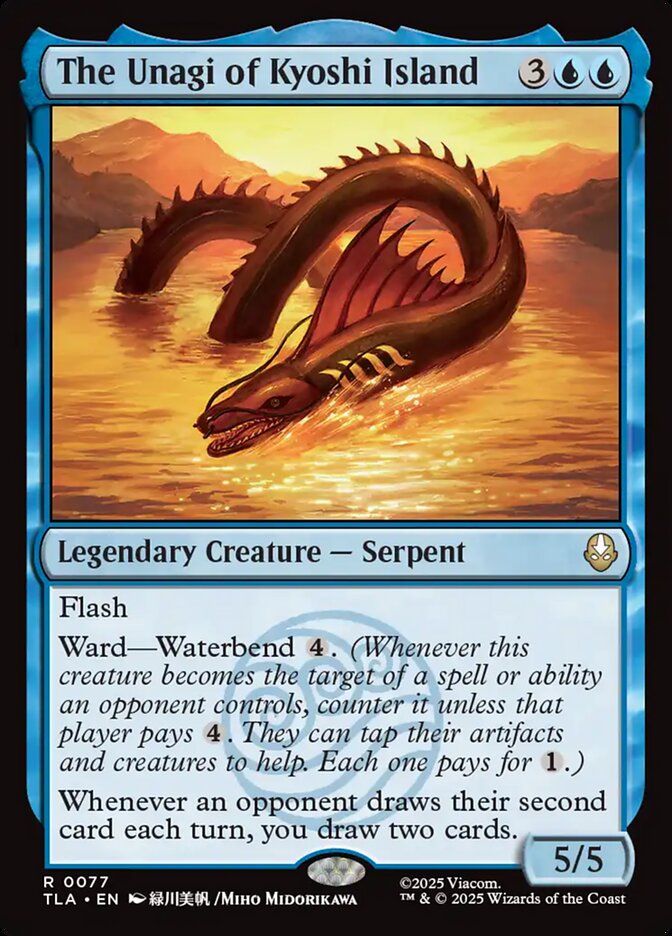
This is a bomb rare, but do try to time it carefully. The ideal time to flash in The Unagi of Kyoshi Island is when you know that your opponent can’t pay the ward cost. Let’s say your UB opponent attacks you with Azula, On the Hunt and has a Clue, four lands untapped, and 2 firebending mana. You can safely plop down Serpent knowing that Sold Out and Lost Days can’t hit Unagi.
Unagi also greatly benefits from the power of Lost Days, which is a premium common that also costs 5 mana in this color. Making your opponent think you just have Lost Days is another way to get them with Unagi.
Yue, the Moon Spirit

Yue, the Moon Spirit is 99% Cat-Owl (aka filler), but in theory Meteor Sword and Ember Island Production would be cool to cheat in.
Boiling Rock Rioter

If you aren’t doing anything else with Boiling Rock Rioter or other allies, don’t forget to clean up your opponent’s lessons. You might just turn off Accumulate Wisdom later!
Obsessive Pursuit
Obsessive Pursuit always triggers on attack, even if you haven’t sacrificed anything yet. This can make for safer timing versus tappers like North Pole Patrol (i.e., declare attacks first, then sacrifice three Clues in response). Pursuit will also always trigger Firebender Ascension!
Firebender Ascension

Speaking of Firebender Ascension, I haven’t been that impressed with it as a build-around. By all means play it if you have other firebending, but don’t treat it like a bomb or anything.
Ran and Shaw
Ran and Shaw has struggled a bit outside of UR, as it’s tough to find enough lessons for this in RW or RB. The payoff here is massive and worth the effort though, so hopefully you start with some Firebending Lessons first!
Toph, the First Metalbender

Toph, the First Metalbender is a strong card in general, but there’s a combo with it that’s worth repeating. Combine Toph with Barrels of Blasting Jelly, and you’ve basically made your own Profane Procession!
Iroh, Grand Lotus

Lost Days is insanely good with Iroh, Grand Lotus, and it’s pretty much the best card available to pair with Iroh. There are also two -cost reducers in this set that can let you storm off with Iroh: Gran-Gran and Uncle Iroh.
Abandoned Air Temple
I think Abandoned Air Temple might be my least favorite card to play against in the format, as it’s a bomb that’s almost impossible to interact with (the only exceptions are Bumi Bash, Price of Freedom, and Meteor Sword). Keep in mind that it’s good enough to be worth splashing, despite being a land!
Uncommons
Appa, Loyal Sky Bison
This ain’t no Appa, Steadfast Guardian, unfortunately. I’d probably only play Appa, Loyal Sky Bison if I really needed a finisher or had great airbending targets like Meteor Sword.
Momo, Playful Pet
Momo, Playful Pet is deceptively efficient, as it trades up with removal and pecks over and over. Vigilance and the Food trigger on leaving also makes Momo great with waterbending.
Team Avatar

I haven’t loved this card, as it’s inefficient as removal and exalted can feel at odds with other go-wide cards like Water Tribe Captain. Team Avatar works best in decks with lots of evasive creatures like WU Fliers.
Vengeful Villagers
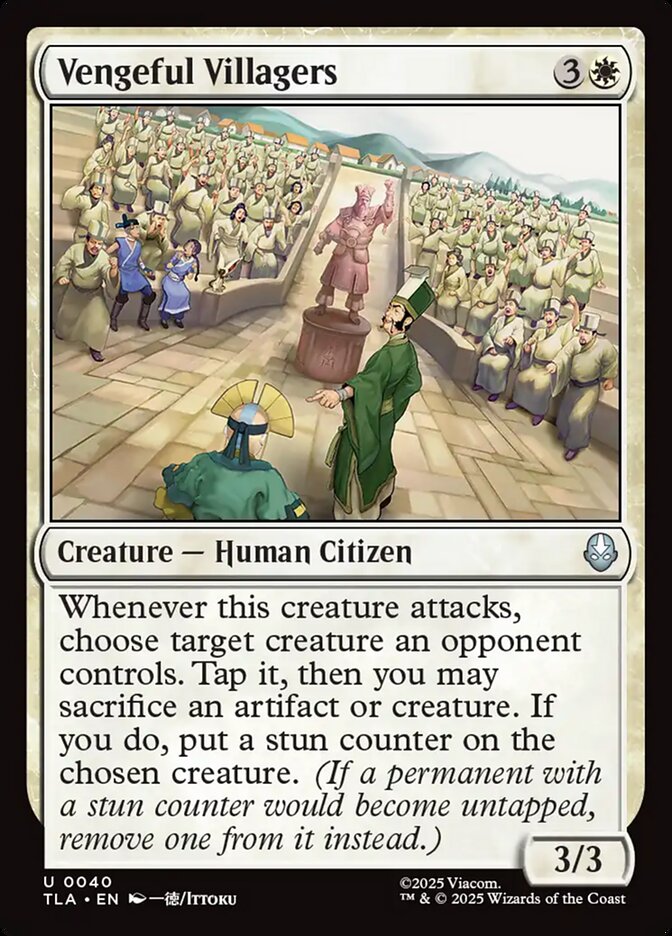
A weak card, even in BW sacrifice. I wouldn’t bother to play Vengeful Villagers unless I was desperate for sacrifice outlets or creatures.
Benevolent River Spirit
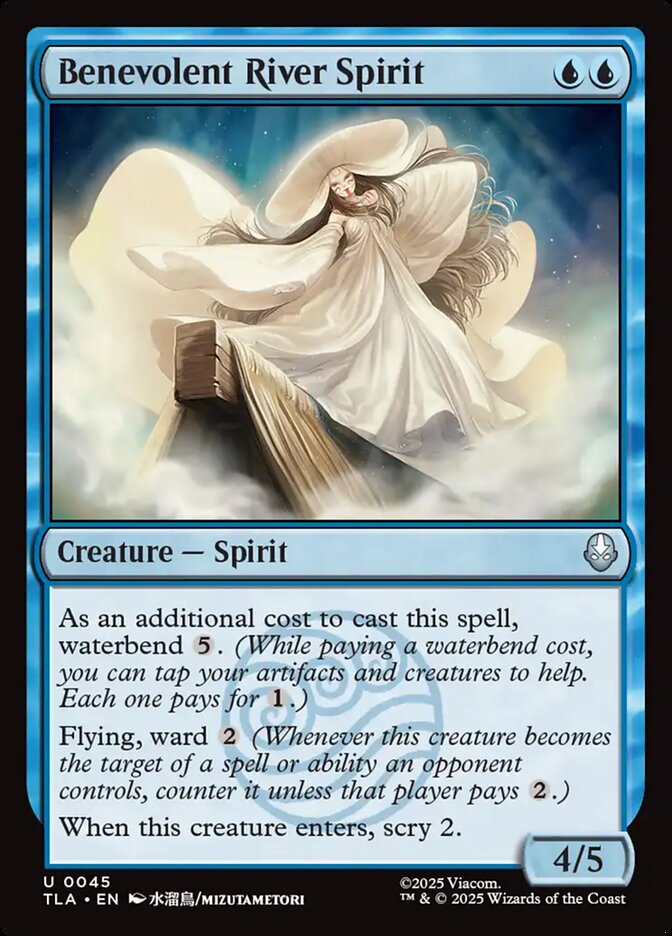
This can be devastating if played early enough, as Firebending Lesson and Lost Days cost 7 versus it. Benevolent River Spirit scales with the number of copies of Kyoshi Battle Fan and Forecasting Fortune Teller you have.
Ember Island Production
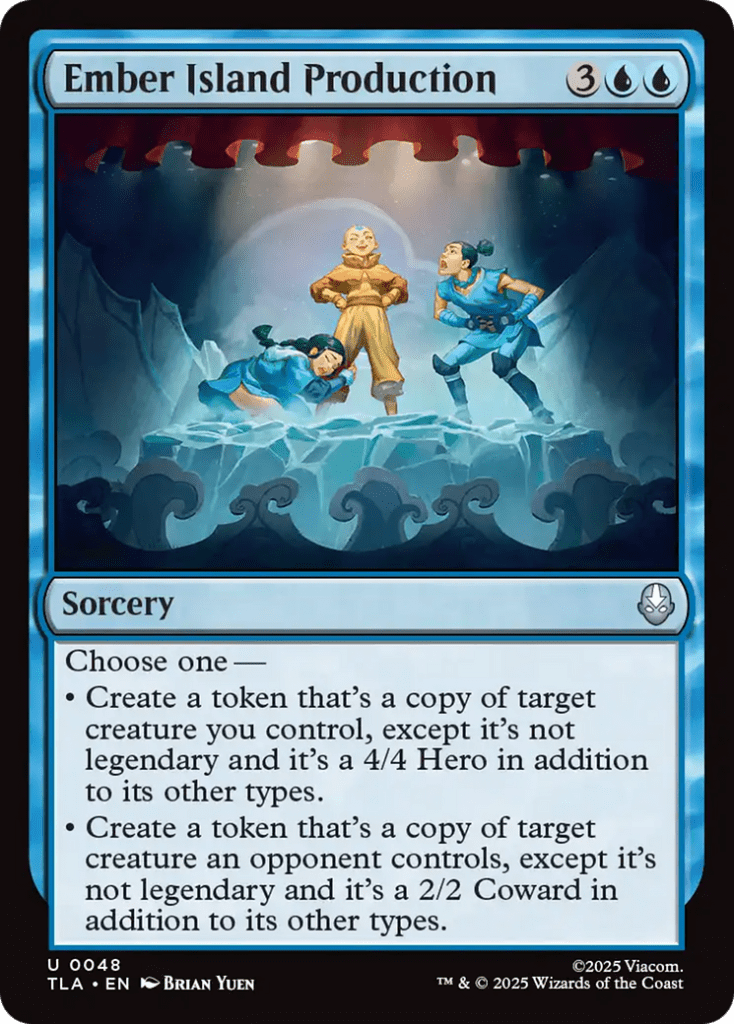
The Earth King and Avatar Kuruk are some of the best things you can copy with Ember Island Production. It’s clunky, risky, and really situational though, so I usually don’t play it.
Sokka’s Haiku
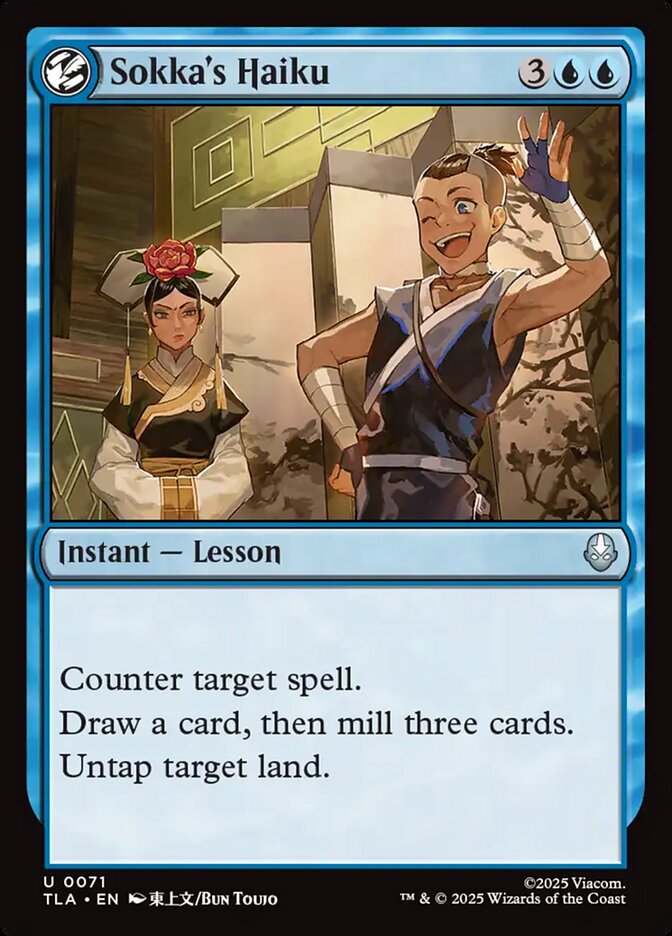
Sokka's Haiku benefits immensely from the existence of Lost Days. Playing nothing to get around this runs right into Lost Days, so don’t be surprised if people jam into this blind. I’d still cut it versus aggro in Bo3, but have generally liked playing one.
Teo, Spirited Glider
Teo, Spirited Glider is a great card in general, but it’s worth mentioning its excellent synergy with Messenger Hawk.
Lo and Li, Twin Tutors
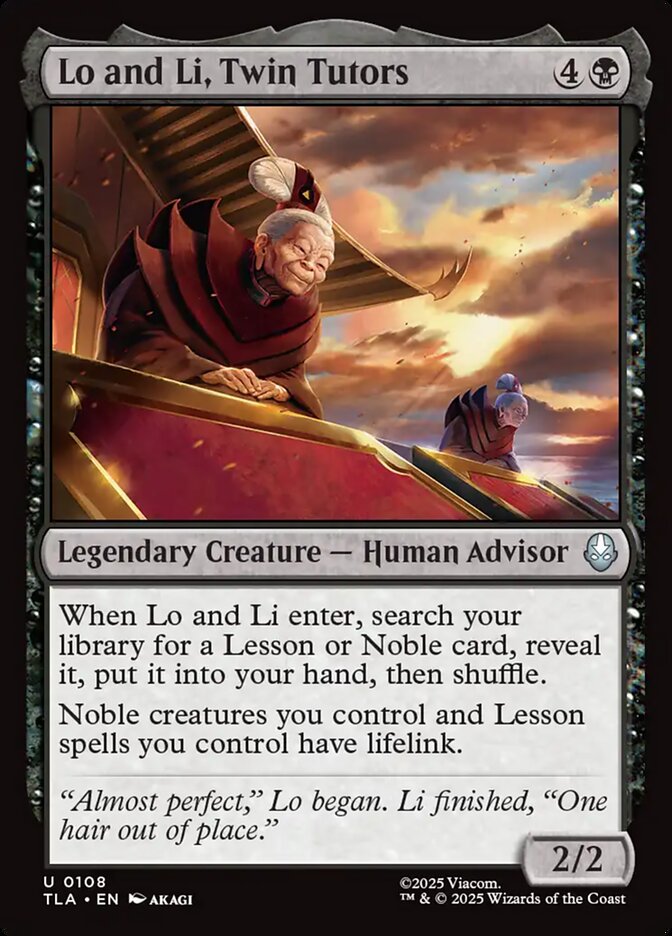
The noble creatures that Lo and Li, Twin Tutors can give lifelink to includes a number of bombs like Bumi, Unleashed, Azula, Cunning Usurper, and Ozai, the Phoenix King. Lessons also provide a nice fallback mode, especially if you can gain 5 from Firebending Lesson!
Ruinous Waterbending
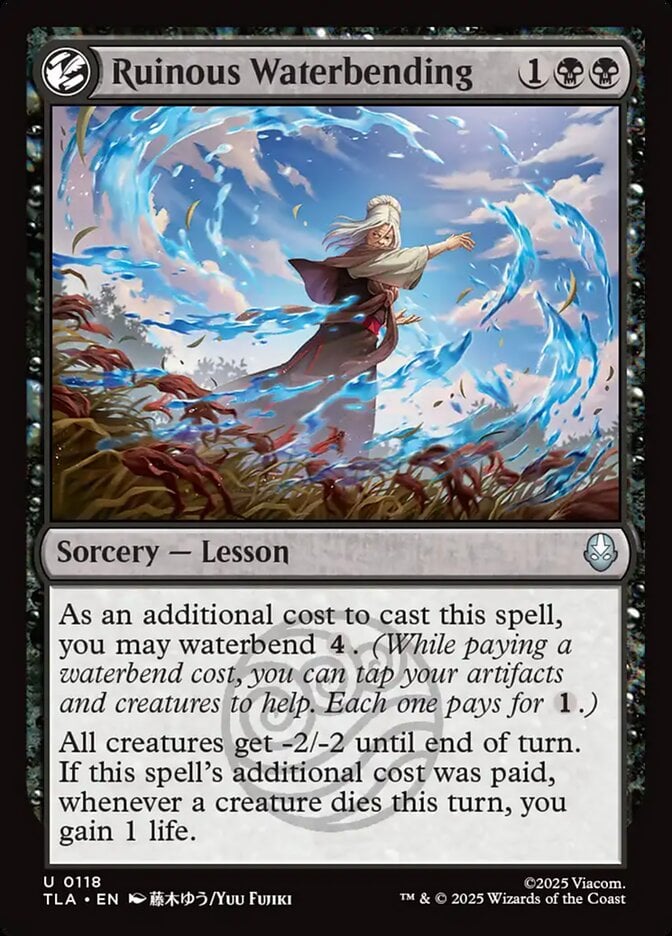
White aggro is popular enough on ladder that I’m happy to maindeck this in UB Control. Imagine kicking Ruinous Waterbending after your opponent plays United Front!
Zuko’s Conviction

“Tapped” is a bummer, so I haven’t played Zuko's Conviction much. It’s cool that you can get cycling creatures a turn early with it, but meh.
Jeong Jeong, the Deserter

Jeong Jeong, the Deserter is yet another card that wants you to have as many copies of Firebending Lesson and Lost Days as possible!
War Balloon
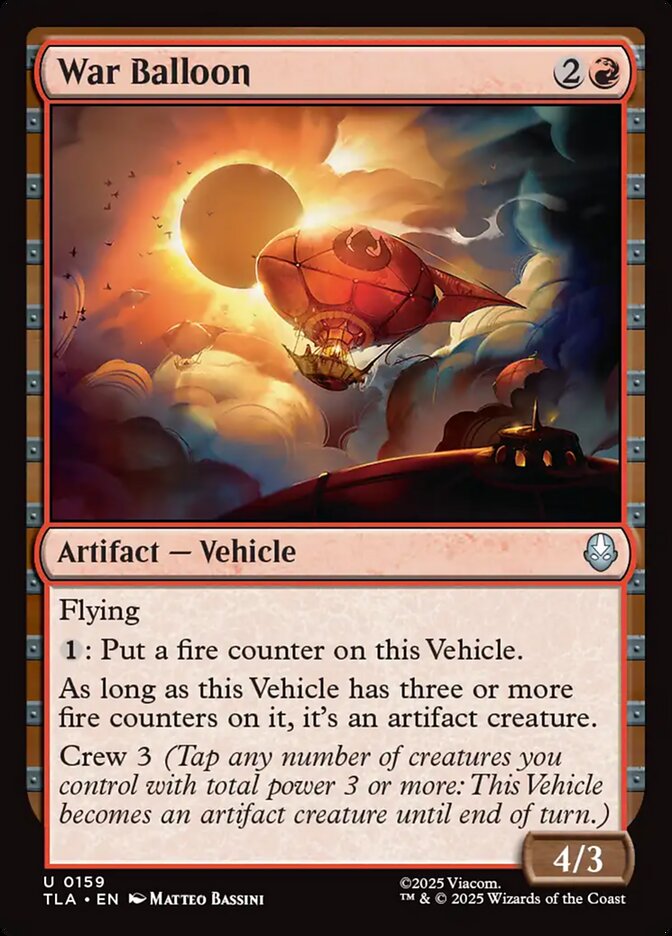
Cool synergy with firebending, and a decently sized flying threat. War Balloon isn’t a top uncommon or anything, but it’s certainly playable in most decks.
Bumi, King of Three Trials

Six mana is late enough that you don’t need that many lessons for Bumi, King of Three Trials to work. Five or more is the benchmark I’ve been using, as Bumi for two out of three modes feels good enough.
Leaves from the Vine
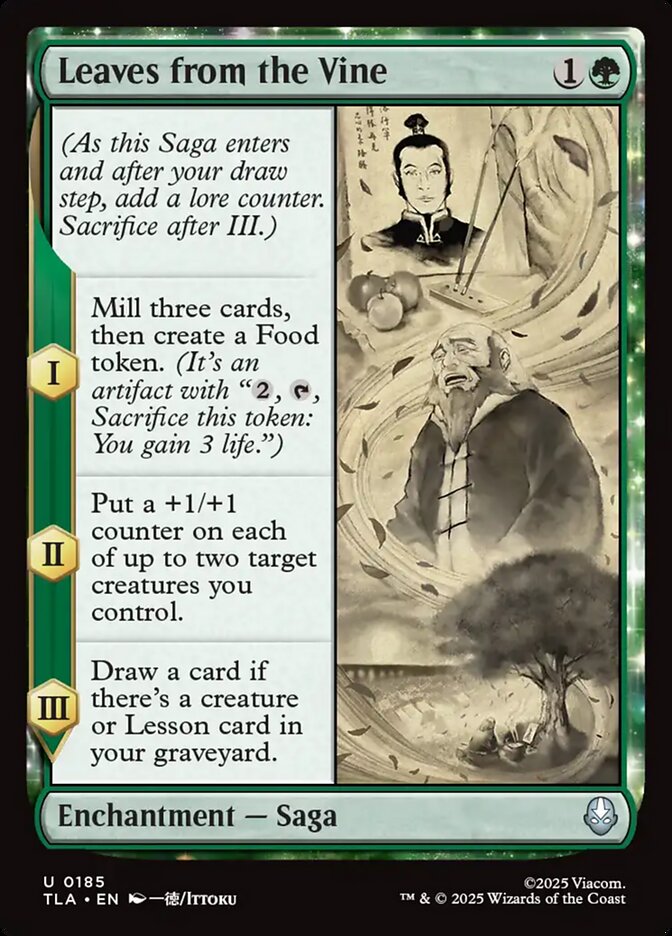
Slow and underwhelming, even if it’s easy to get Leaves from the Vine to cantrip. I’d play it in BG for counter synergies, but otherwise haven’t bothered.
Seismic Sense
Seismic Sense has been super awkward with other lessons, as it explicitly punishes you for stacking them. I don’t hate playing it if you have lesson payoffs, but it feels terrible to brick this. Try to wait as long as you can, and be sure to have plenty of good creatures, too.
Sparring Dummy
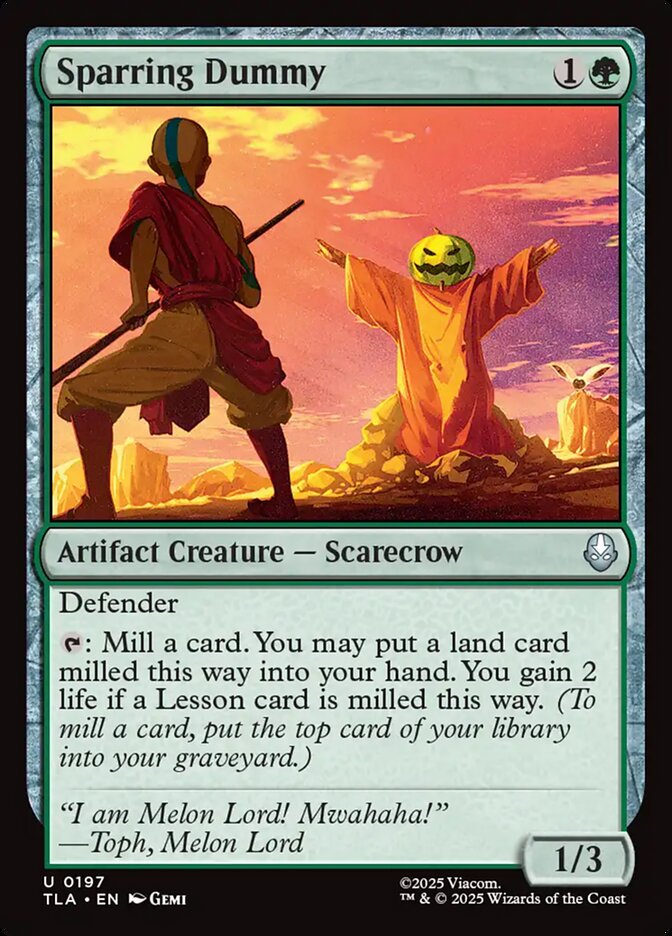
Card advantage is nice, but this is 40-% to draw a card and doesn’t block especially well. I’ll play Sparring Dummy in something like GU, but even there it’s inferior to Forecasting Fortune Teller.
Unlucky Cabbage Merchant
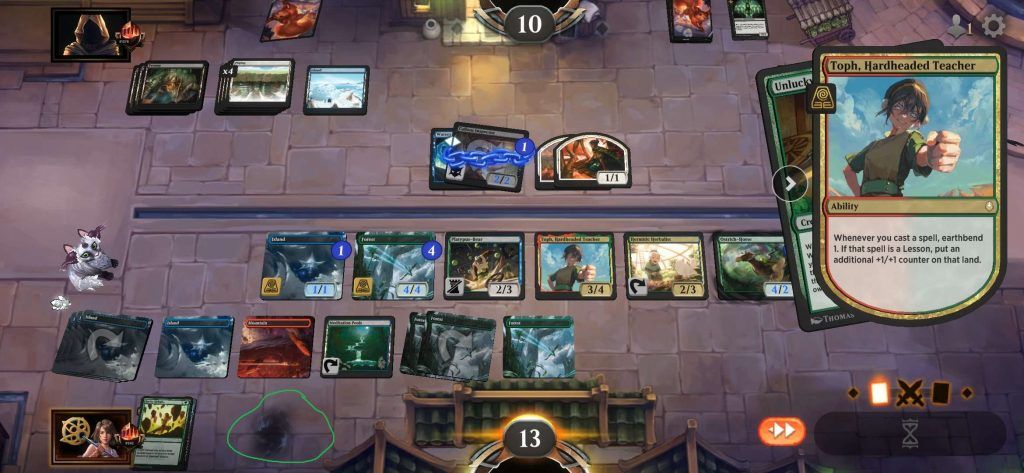

Good old Cabbages here can actually prevent you from decking! If you have no other cards in your deck, simply keep playing Unlucky Cabbage Merchant and eating the Food to never deck out. It’s also a decent defensive creature, which I’m happy to play in rampy decks.
Energybending
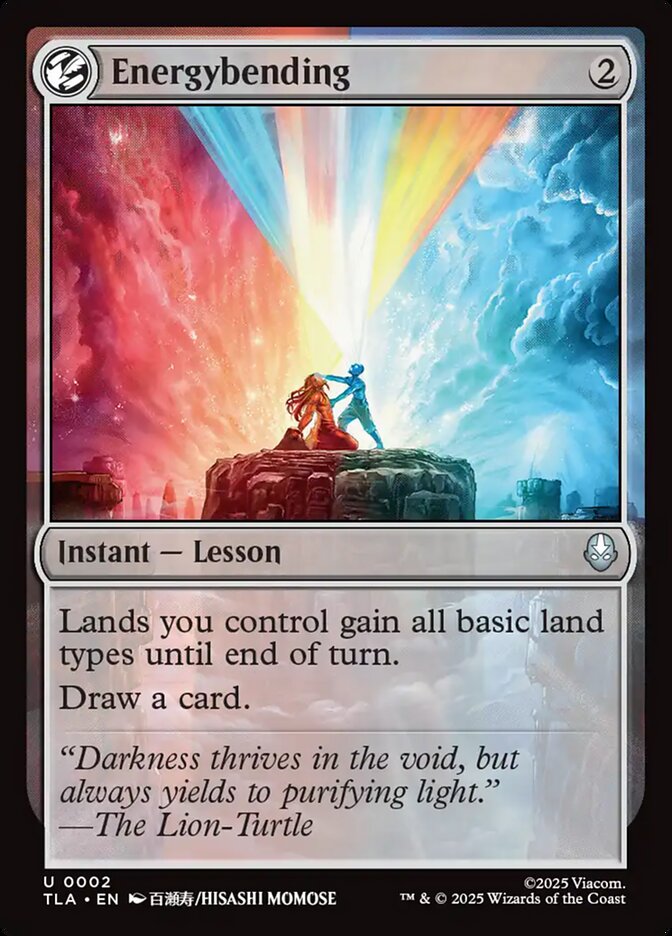
You can theoretically use this to max out cards like Gather the White Lotus and Solstice Revelations. I wouldn’t recommend that in practice though, so only play this blank cantrip if you desperately need more lessons.
Meteor Sword
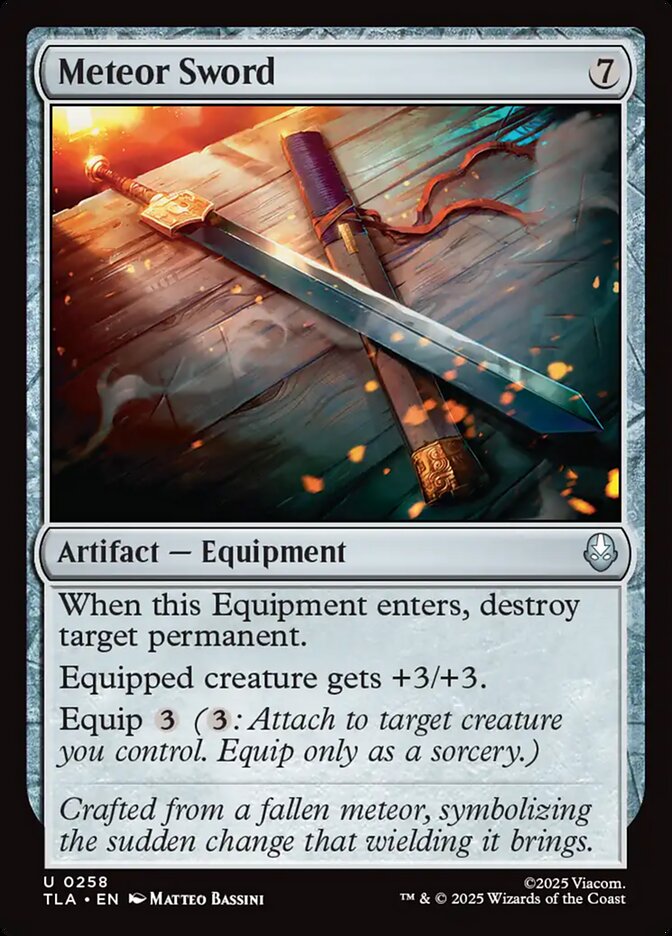
Airbending Meteor Sword is a sick combo, and Avatar has felt grindy enough for 7s to be playable, too. I’ve liked one of these at the top of my WB decks, which often struggle to close games.
Trusty Boomerang

This is a weak and expensive tapper, but it has flavorful synergy with all three Sokkas. Sokka, Lateral Strategist attacks and then throws Trusty Boomerang at a blocker, thanks to vigilance. Sokka, Bold Boomeranger grows over and over with it, and Sokka, Tenacious Tactician can use it to summon a whole army of allies!
Wrap Up
Avatar Full Scene | Illustration by Brian Yuen
Whew! And with that, you’ve mastered all four elements and should be ready to save the world. If you’re going to face Ozai, the Phoenix King, try to hit him with Sold Out or Path to Redemption to get around that indestructible ability.
Which archetypes have you had success with in Avatar Draft? Which cards have been your top performers? Let me know in the comments below or over on the Draftsim Discord.
Until next time, may your drafts always be sharper than an empire class Fire Nation battleship!
Follow Draftsim for awesome articles and set updates:










Add Comment