

Glorious Anthem | Illustration by Raymond Swanland
Archetypes are a blueprint you use to build a deck, so to say. It contains all the relevant synergies and the deck’s gameplan, and it’s up to you to fit these plans with the cards. From classic white weenie, to tokens and stax, white has no shortage of playable archetypes.
Today, we’re covering the classic white archetypes with deck examples so you have a good clue about what to expect when your opponent opens with a Plains and says: Go!
What Are White Archetypes in MTG?

White Sun's Zenith | Illustration by Mike Bierek
White archetypes are deck strategies in which white is the only played color, or it’s the main color and admits some help or support from a second color. I’m considering archetypes that tend to be central in white; sometimes, an archetype like +1/+1 counters and proliferate isn’t white-central, since it relies on other colors like green and blue to be good. On the other hand, I’m considering white to be the main color of lifegain, even though black helps a lot in that department.
Tokens
Tokens is the quintessential white archetype nowadays, especially given EDH’s ascension. White is the color that uses their numbers best, and it’s also the best color for creating tokens, multiplying them, or doubling the amount of tokens produced.
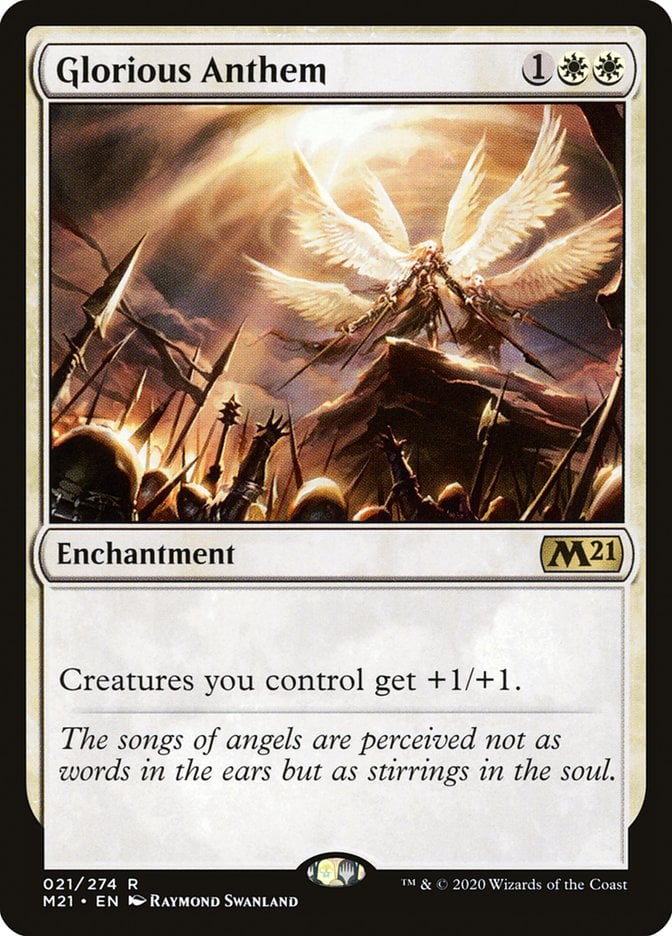
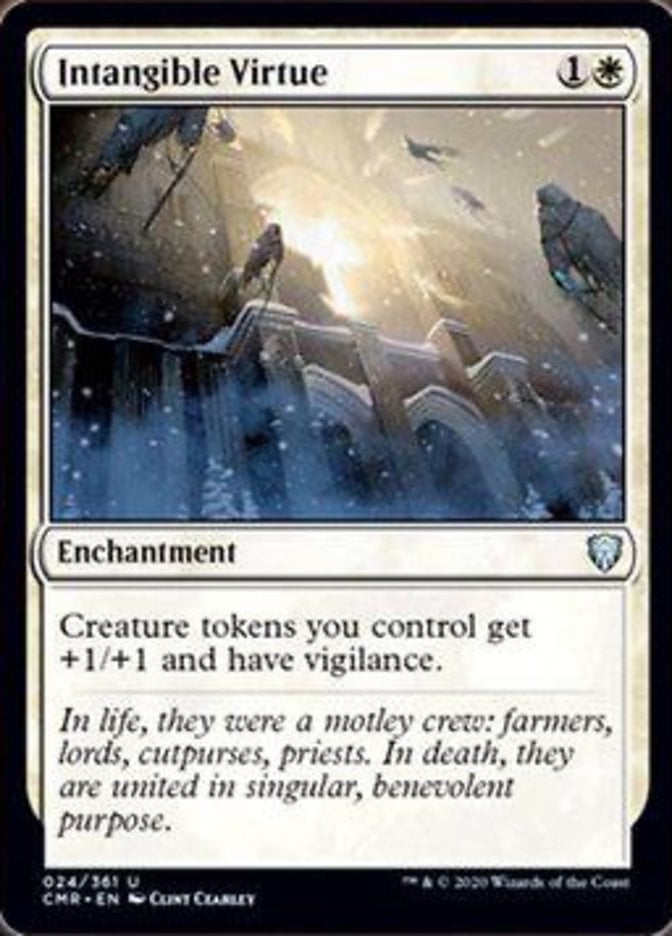
Many mechanics, like support and convoke, make good use of tokens, and you can use mass pump effects like Glorious Anthem or Intangible Virtue to strengthen your army. Red also helps you in the damage department, and it’s also an adept color at creating tokens.
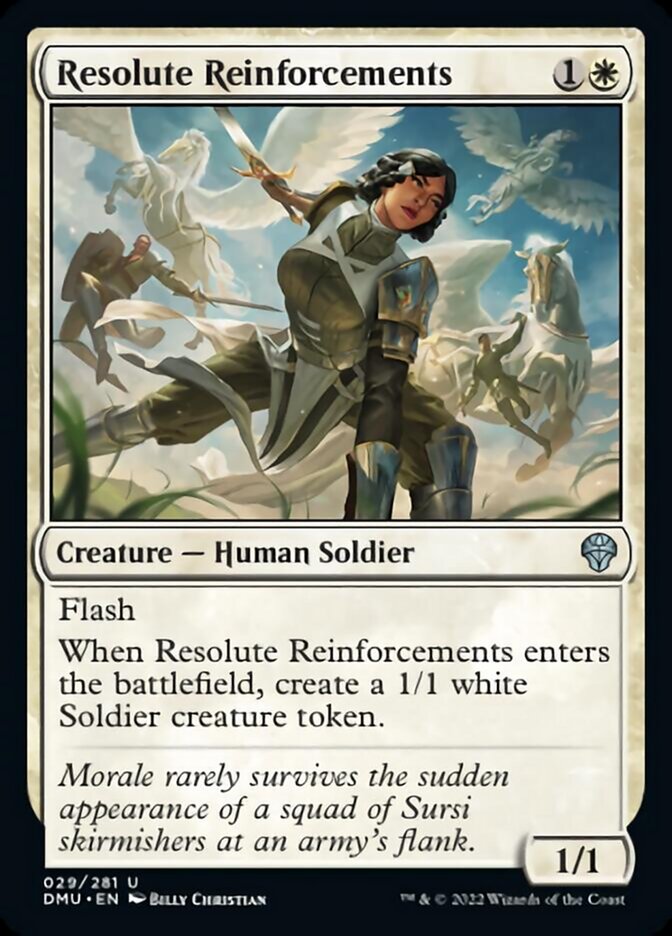
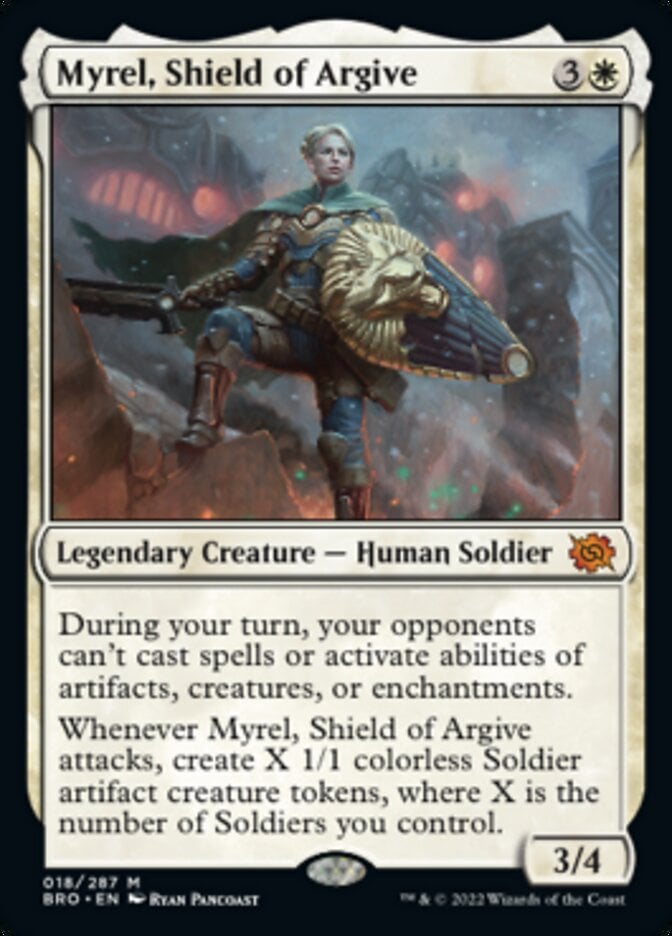
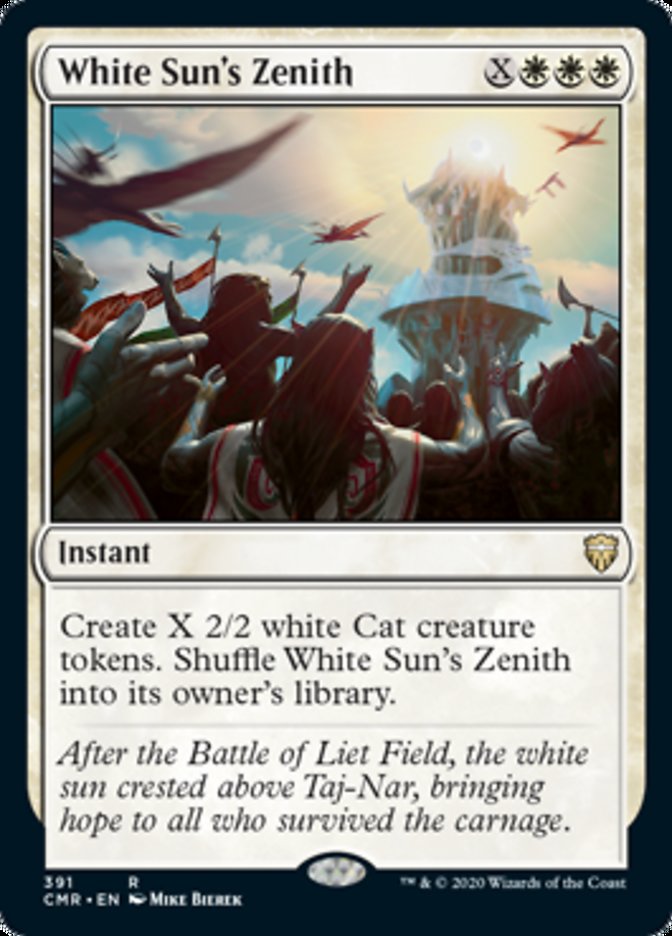
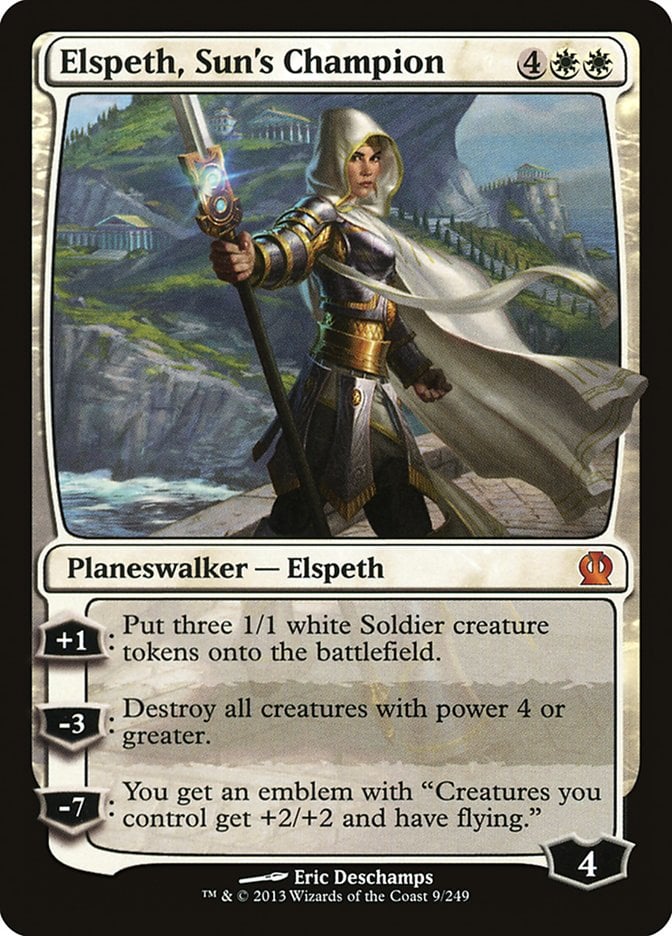
To make tokens in white, you can rely on your own creatures, like Resolute Reinforcements or Myrel, Shield of Argive. You can also cast spells that produce X tokens, like White Sun's Zenith, and many white planeswalkers also produce tokens, like Elspeth, Sun's Champion.
Example Decklist: Myrel, Shield of Argive in EDH

Myrel, Shield of Argive | Illustration by Ryan Pancoast
Commander (1)
Planeswalker (2)
Elspeth, Storm Slayer
Elspeth, Sun's Champion
Creature (28)
Baird, Steward of Argive
Ballyrush Banneret
Bastion Protector
Boromir, Warden of the Tower
Captain of the Watch
Catapult Master
Cathar Commando
Darien, King of Kjeldor
Daru Warchief
Defiler of Faith
Esper Sentinel
Field Marshal
Firemane Commando
Goldnight Commander
Keeper of the Accord
Mentor of the Meek
Mondrak, Glory Dominus
Odric, Master Tactician
Ojer Taq, Deepest Foundation
Prava of the Steel Legion
Preeminent Captain
Rescue Retriever
Reverent Hoplite
Roaming Throne
Siege Veteran
Thalia, Guardian of Thraben
Thalia, Heretic Cathar
Valiant Veteran
Enchantment (8)
Anointed Procession
Cathars' Crusade
Flowering of the White Tree
Intangible Virtue
Land Tax
Renewed Solidarity
Smothering Tithe
Tocasia's Welcome
Artifact (13)
Arcane Signet
Halo Fountain
Herald's Horn
Horn of Gondor
Horn of Valhalla
Lightning Greaves
Mind Stone
Patchwork Banner
Pearl Medallion
Skullclamp
Sol Ring
Swiftfoot Boots
Vanquisher's Banner
Instant (9)
Akroma's Will
Call the Coppercoats
Flare of Fortitude
Flawless Maneuver
Generous Gift
Path to Exile
Swords to Plowshares
Teferi's Protection
Unbreakable Formation
Sorcery (5)
Austere Command
Deploy to the Front
Farewell
Finale of Glory
Martial Coup
Land (34)
Emeria, the Sky Ruin
Minas Tirith
Nykthos, Shrine to Nyx
Path of Ancestry
Plains x27
Rogue's Passage
Three Tree City
War Room
Deck source: Average Myrel Deck, EDHREC
This is the average Myrel, Shield of Argive decklist from EDHREC, just to give you an overall idea. Myrel, Shield of Argive is a commander that adds a little disruption just by being on the battlefield, so your opponents can’t interrupt you on your turns. And when it attacks, you make Soldier tokens. Naturally, this effect snowballs, so you have some soldiers, attack, make many more soldiers, and so on. I’m not going over all the cards, so let’s see a few highlights.
- Skullclamp andMentor of the Meek allow us to draw cards with small creatures.
- Vanquisher's Banner and Cathars' Crusade buff our tokens, so that we can make a huge attack.
- Cards like Anointed Procession and Mondrak, Glory Dominus double our token production.
- Not only does our commander produce solider tokens, but so do cards like Call the Coppercoats, Darien, King of Kjeldor, and Elspeth, Sun's Champion.
- Finally, cards like Valiant Veteran and Field Marshal are soldier lords that have plenty of troops to lead.
White Weenie / Humans
One of the main viable white competitive archetypes in MTG is a typical aggressive deck filled with 1- and 2-drops, and here I want to highlight specifically human typal decks. These are very much a white weenie deck, but with human synergies.
Most good humans are white cards, especially the human lords—synergistic cards that reward you for playing a bunch of humans in the same deck. It can also rely on +1/+1 counter synergies or tokens.
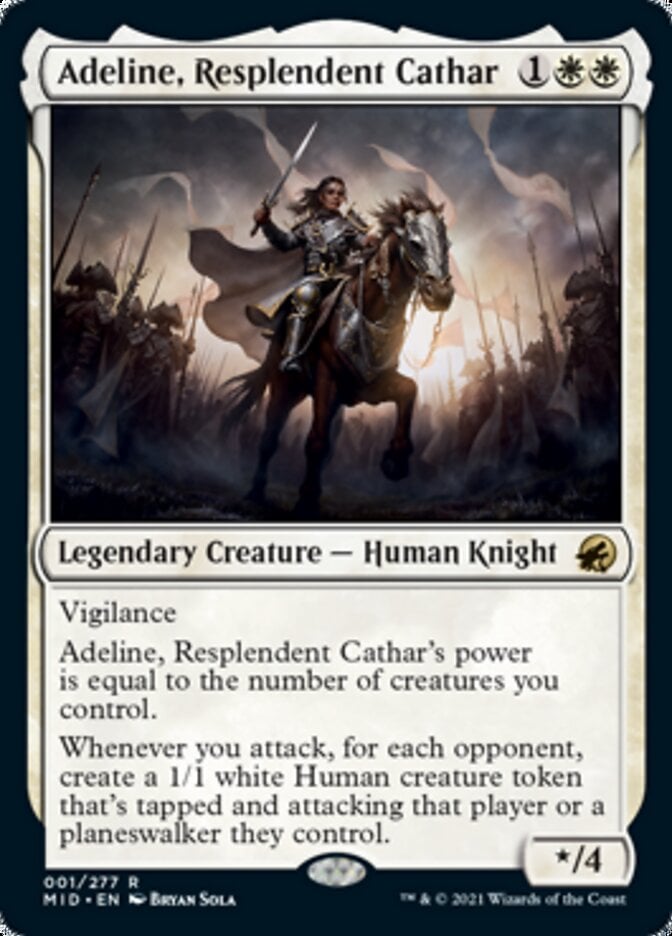
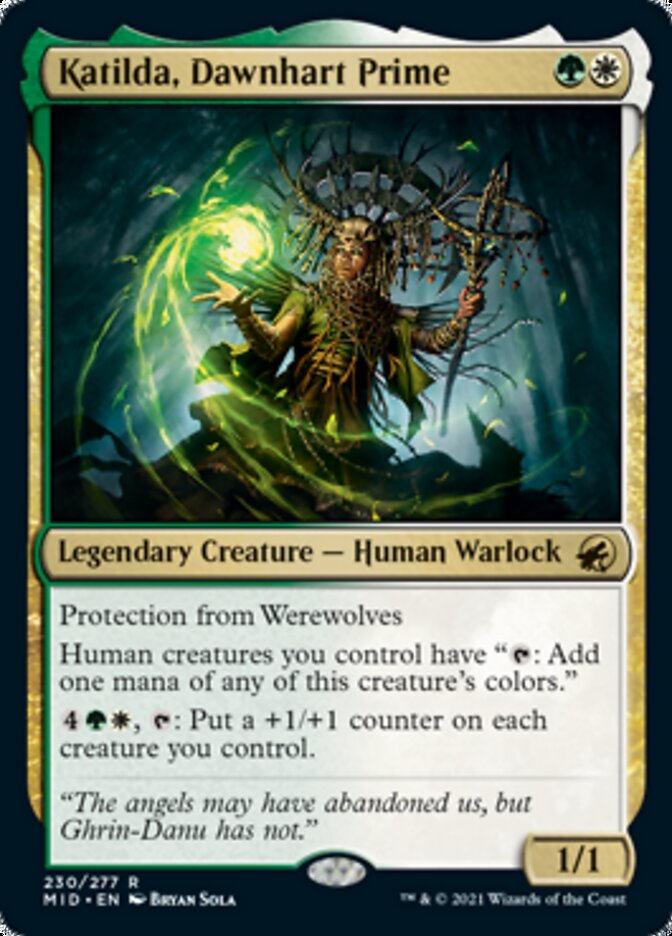
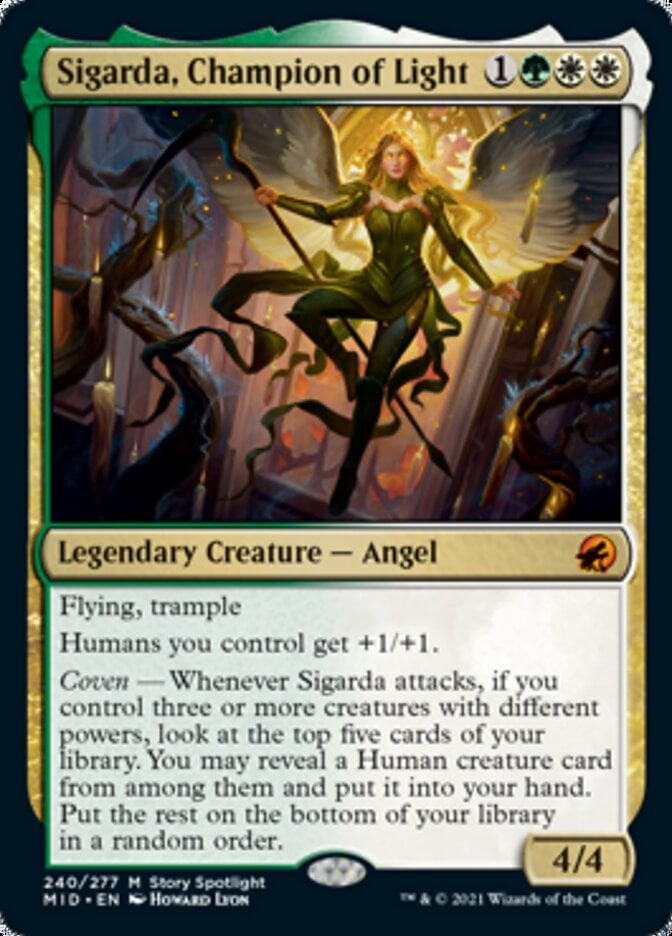
This archetype can splash red or green for support, and there are good humans in those colors as well. If we’re considering EDH, typical human commanders are Adeline, Resplendent Cathar, Katilda, Dawnhart Prime, and Sigarda, Champion of Light.
Example Decklist: Mono-White Humans in Pioneer

Thalia's Lieutenant | Illustration by Johannes Voss
Creature (32)
Thalia's Lieutenant x4
Adeline, Resplendent Cathar x4
Hopeful Initiate x2
Recruitment Officer x4
Coppercoat Vanguard x4
Thalia, Guardian of Thraben x4
Dauntless Bodyguard x2
Kytheon, Hero of Akros
Warden of the Inner Sky x4
Extraction Specialist x3
Artifact (4)
Sorcery (2)
Land (22)
Eiganjo, Seat of the Empire x2
Plains x13
Castle Ardenvale
Cavern of Souls x2
Mutavault x4
Sideboard (15)
Wedding Announcement x4
Containment Priest x2
Destroy Evil x2
Rest in Peace x2
Lavaspur Boots
Cloud, Midgar Mercenary x2
The Aetherspark
Shadowspear
Deck source: Mono-White Humans by _Cygnus, MTGGoldfish
This is a mono-white deck for the Pioneer format that features a bunch of humans. This deck wants to curve a 1-drop into a 2-drop into a 3, and keep the ball rolling. It’s also ok if you cast a bunch of 1-mana value creatures and then cast a Thalia's Lieutenant or Coppercoat Vanguard to buff them. Just beware of sweepers like Anger of the Gods and Temporary Lockdown.
This deck has a plan B of fetching The Aetherspark with Cloud, Midgar Mercenary. A nice aspect of playing humans is that you can get extra synergies with your lands. Mutavault can be a 2/2 or greater attacking human, while Castle Ardenvale makes human tokens, and Cavern of Souls makes your humans uncounterable.
Lifegain (AKA Soul Sisters)
White is the best color at lifegain, and you’ll either gain a whole bunch of life at once, or in small increments while triggering your synergies. Executing your game plan around gaining life makes you very resilient against aggressive or burn decks.
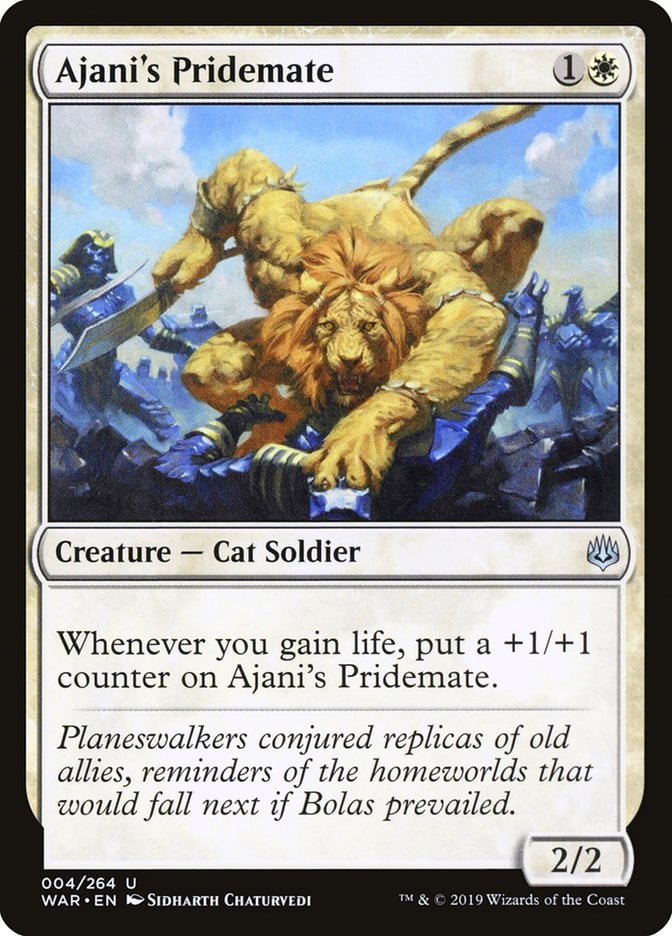

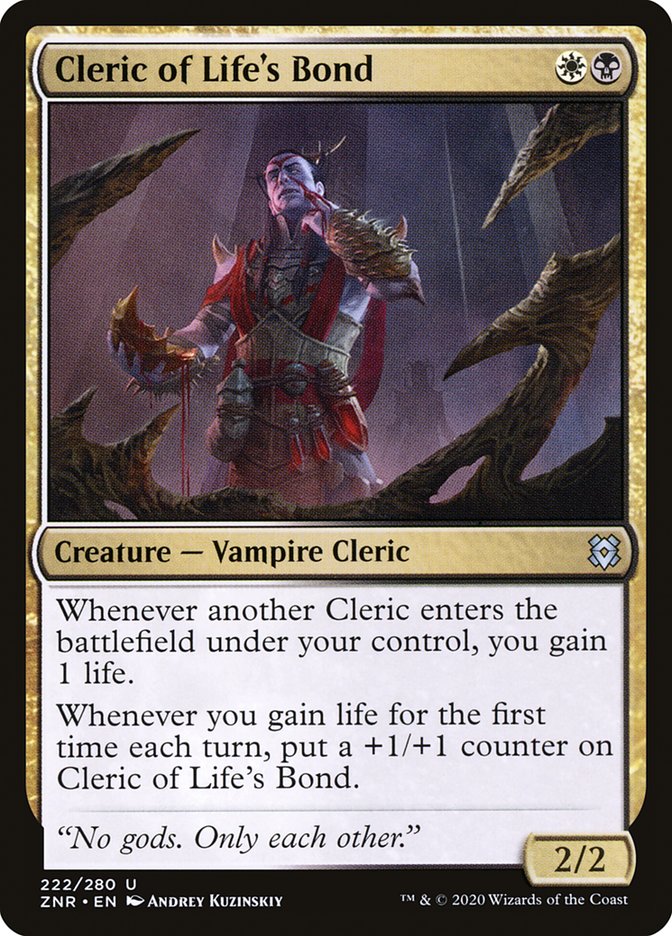
Key cards in this archetype are Ajani's Pridemate and its variants, like Aerith Gainsborough or Cleric of Life's Bond.

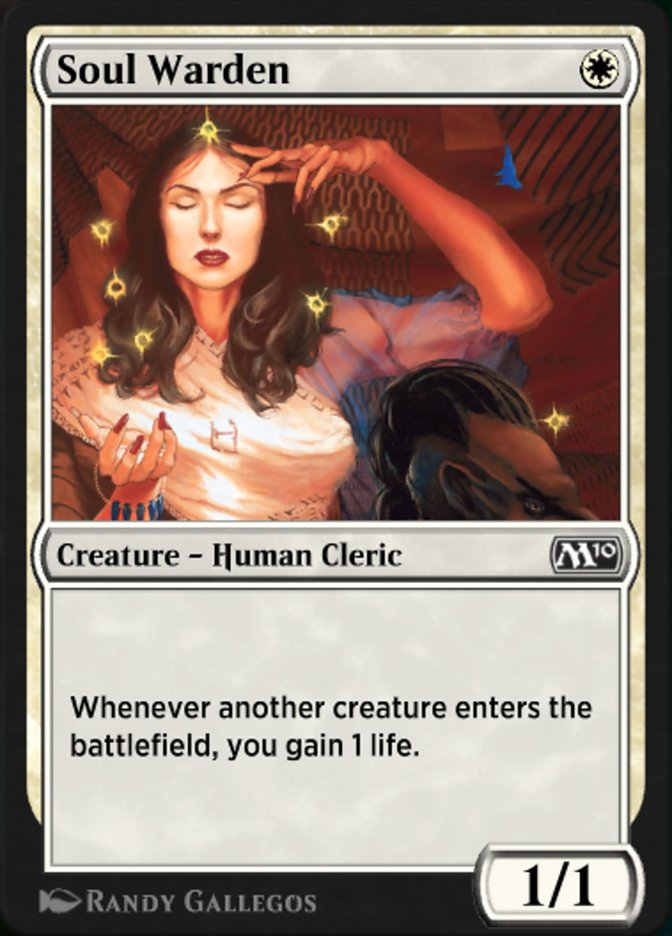
You also need cards that gain life consistently, like Ocelot Pride or Soul Warden.
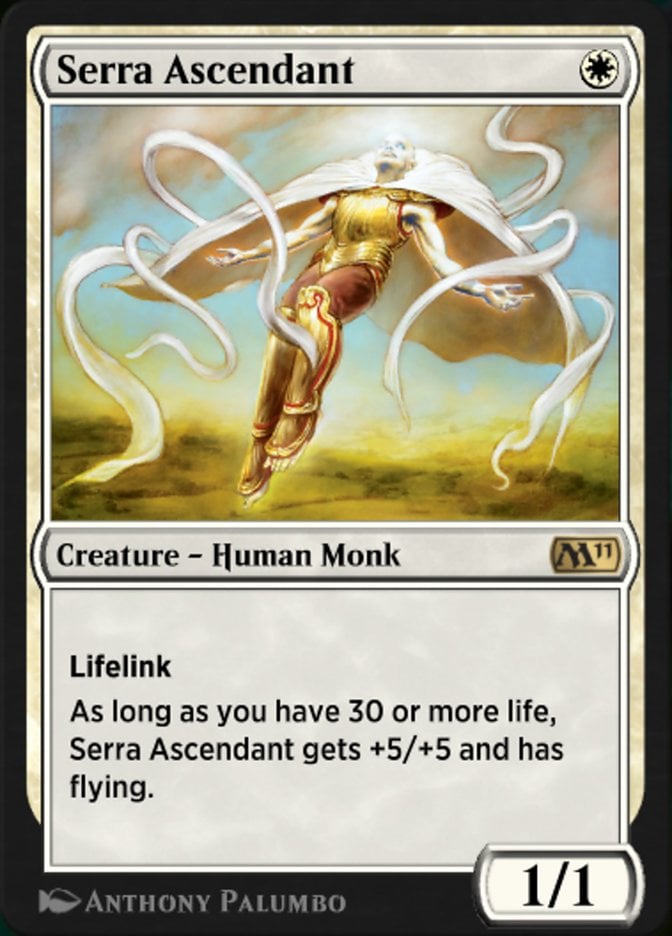
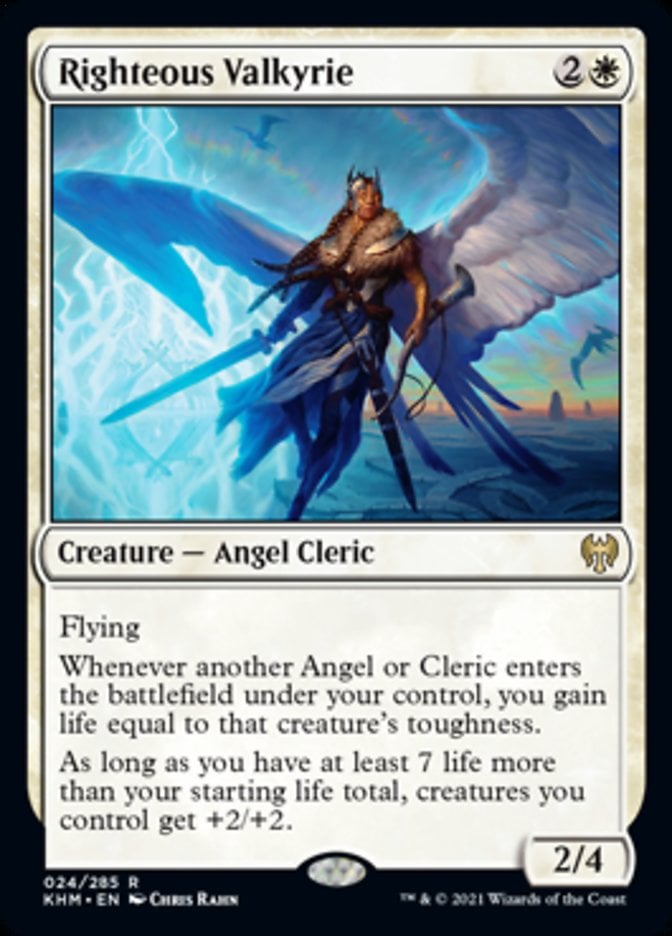
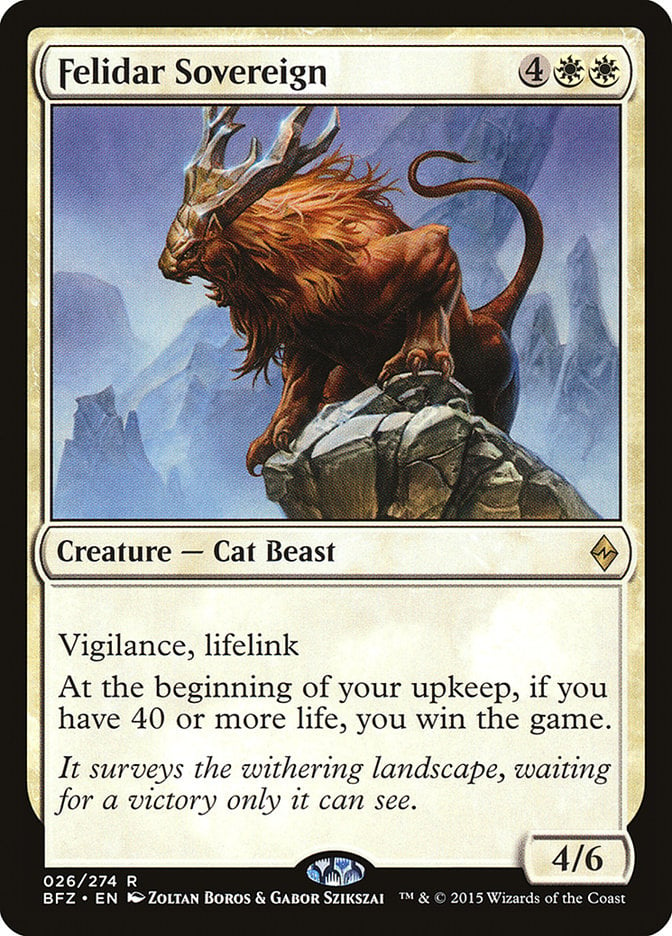
Finally, you need cards that reward you for having excess life, like Serra Ascendant and Righteous Valkyrie, or even Felidar Sovereign as an alternate win condition. A nice complement to white in this archetype is black, because many black cards also reward you for gaining life, and you can pay life for benefits such as drawing cards.
Example Decklist: Lifegain in Standard

Aerith Gainsborough | Illustration by Nakamura8
Creature (20)
Ruin-Lurker Bat x3
Deep-Cavern Bat x4
Amalia Benavides Aguirre x2
Essence Channeler x3
Lifecreed Duo x2
Darkstar Augur x2
Zoraline, Cosmos Caller x3
Aerith Gainsborough
Enchantment (10)
Authority of the Consuls x2
Case of the Uneaten Feast x3
Lunar Convocation x2
Leyline of Hope x3
Instant (7)
Go for the Throat x4
Get Lost x2
Bitter Triumph
Land (23)
Plains x4
Swamp x3
Concealed Courtyard x4
Caves of Koilos x4
Cavern of Souls x2
Scoured Barrens x3
Thran Portal x2
Bleachbone Verge
Sideboard (15)
Rest in Peace x2
Destroy Evil
Get Lost x2
Bitter Triumph
Requisition Raid x2
Dawn's Truce
Split Up x2
Nowhere to Run x2
Restoration Magic x2
Deck source: WB Midrange Deck by Iimura Tsukasa, MTGDecks
This isn’t a pure white deck, as we have a small black splash. This deck has many ways to constantly gain life, ranging from Lifecreed Duo to Case of the Uneaten Feast. The payoffs are also plentiful, like Aerith Gainsborough and Essence Warden, which grow whenever we gain life, and Darkstar Augur, which allows us to spend life on cards. Amalia Benavides Aguirre constantly explores in this deck, and while you’re gaining life, you can pay 2 mana into Lunar Convocation to make a bat and draw a card. This decks handles itself well with its good removal, disruptive elements, and grindy gameplan.
Voltron
The Voltron archetype means going tall. Voltron means you’re stacking equipment or auras on the same creature, and hitting hard enough to win the game.
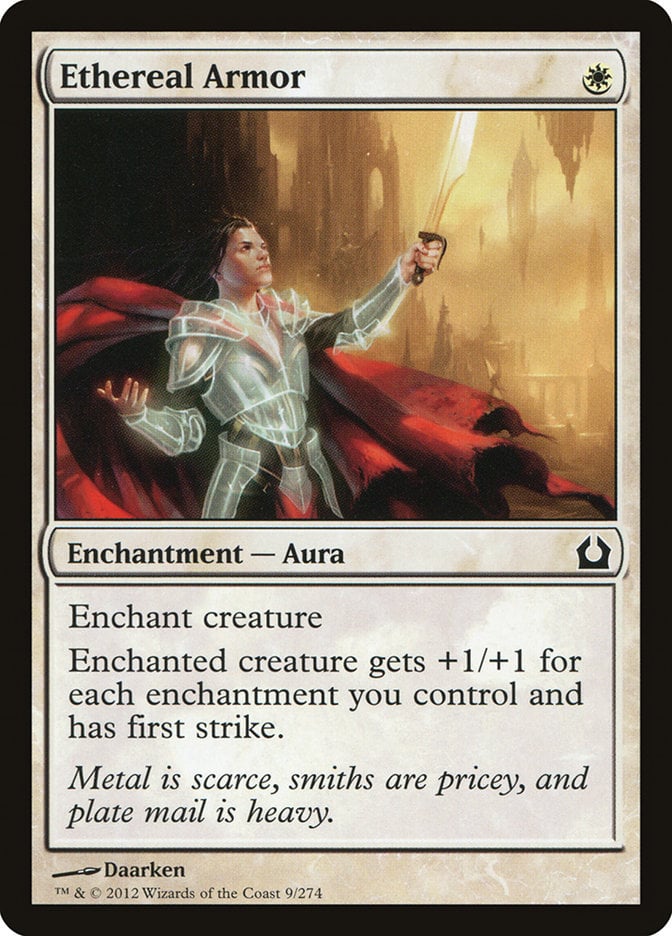
A card like Ethereal Armor goes a long way when you control many enchantments. It’s advisable that this enchanted or equipped creature has protection from removal, like hexproof, ward, or indestructible.
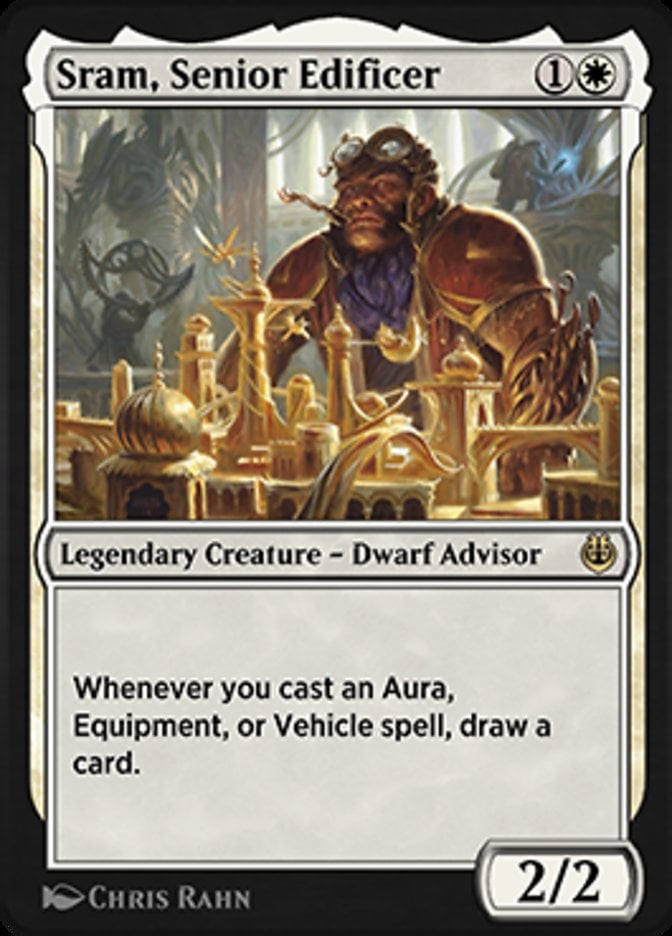
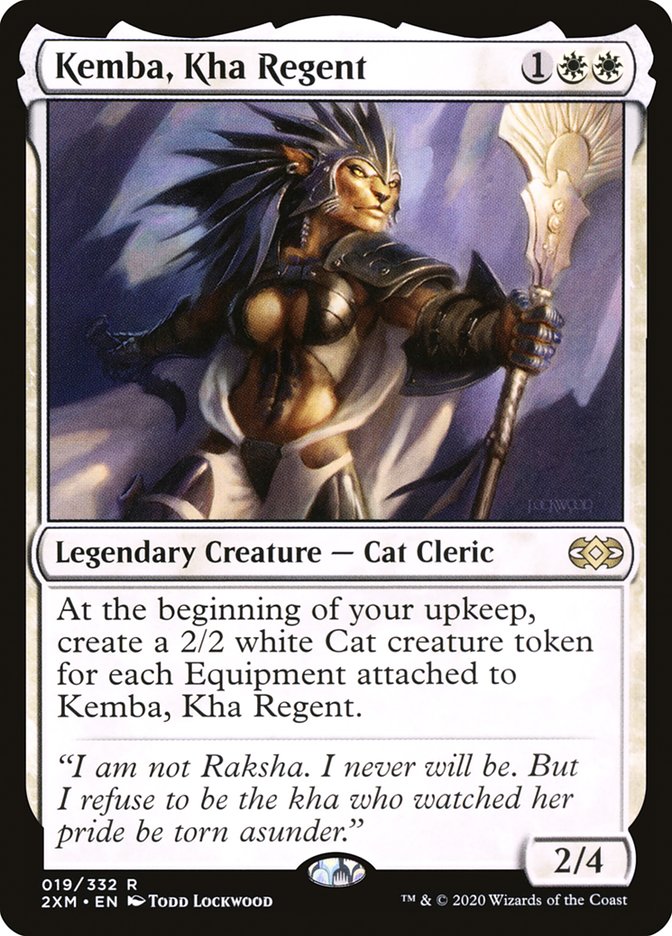
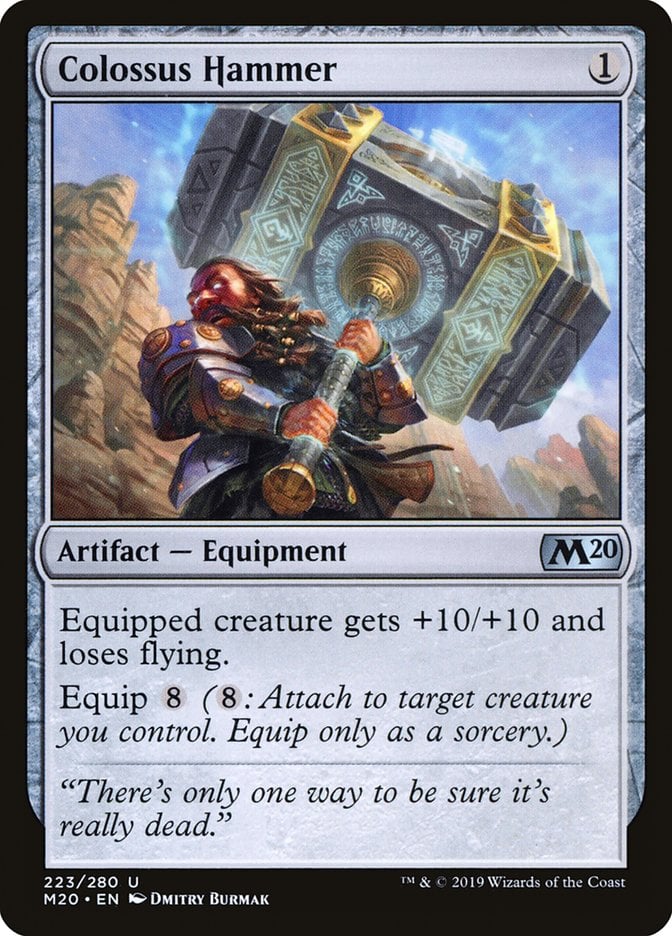
Many white creatures synergize with equipment and/or auras; you can, for example, draw cards with Sram, Senior Edificer or make cats with Kemba, Kha Regent. In this specific example, we’ll take a look at how white “cheats” on equipment costs, considering an equipment card like Colossus Hammer which costs a ton to equip.
Example Decklist: Hammer Time in Modern
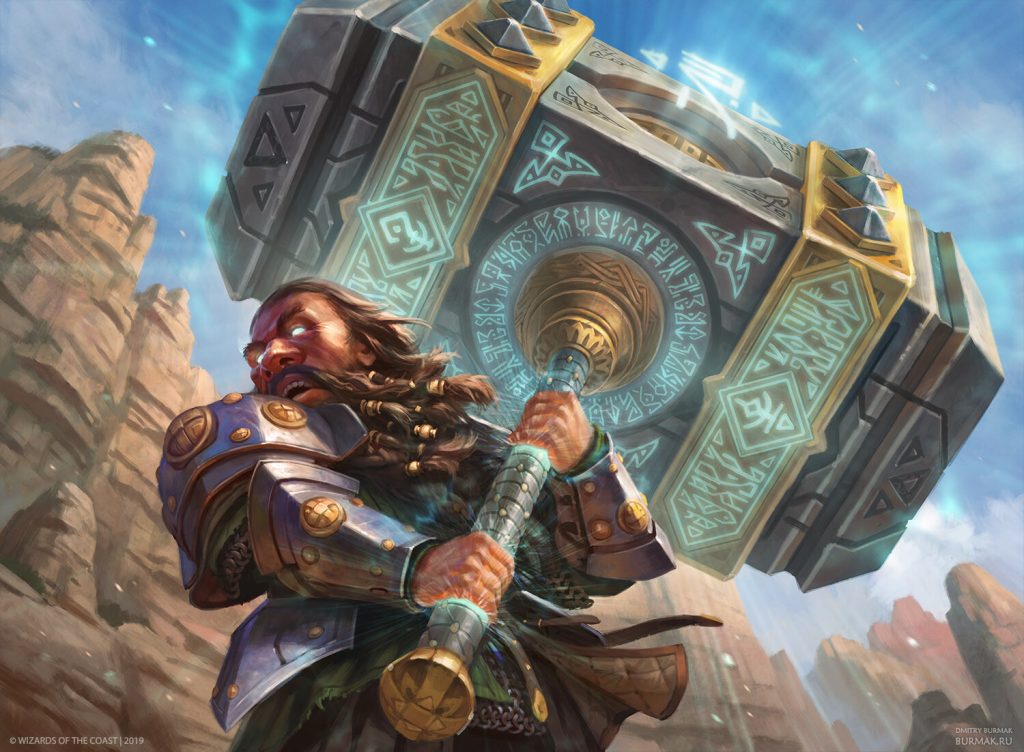
Colossus Hammer | Illustration by Dmitry Burmak
Creature (12)
Puresteel Paladin x4
Stoneforge Mystic x4
Esper Sentinel x4
Enchantment (4)
Artifact (20)
Mishra's Bauble x4
Mox Opal x4
Colossus Hammer x4
Shadowspear
Portable Hole x3
Cori-Steel Cutter x4
Sorcery (4)
Land (20)
Plains x3
Arid Mesa x2
Hallowed Fountain
Marsh Flats x2
Urza's Saga x4
Flooded Strand x4
Inkmoth Nexus x2
Sacred Foundry x2
Sideboard (15)
Pithing Needle x2
Spell Pierce x2
Lightning Bolt x3
Consign to Memory x4
Leyline of the Void x4
Deck source: Hammer Time by Ohara, MTGGoldfish
Stoneforge Mystic is one of the key cards in this deck, as it searches the equipment you want (Colossus Hammer typically, but Shadowspear is also important as a one-of). You have ways to cheat on the equip cost of Colossus Hammer, namely Sigarda's Aid and Puresteel Paladin. Cori-Steel Cutter is a nice addition to the deck, triggering when we cast two spells a turn, and producing tokens with haste so we can equip our mighty Hammer onto them.
Stax / Prison
White is the king of symmetrical effects, or effects that apply equally to all players. Those tend to slow down the game and disrupt whatever players intend to do.
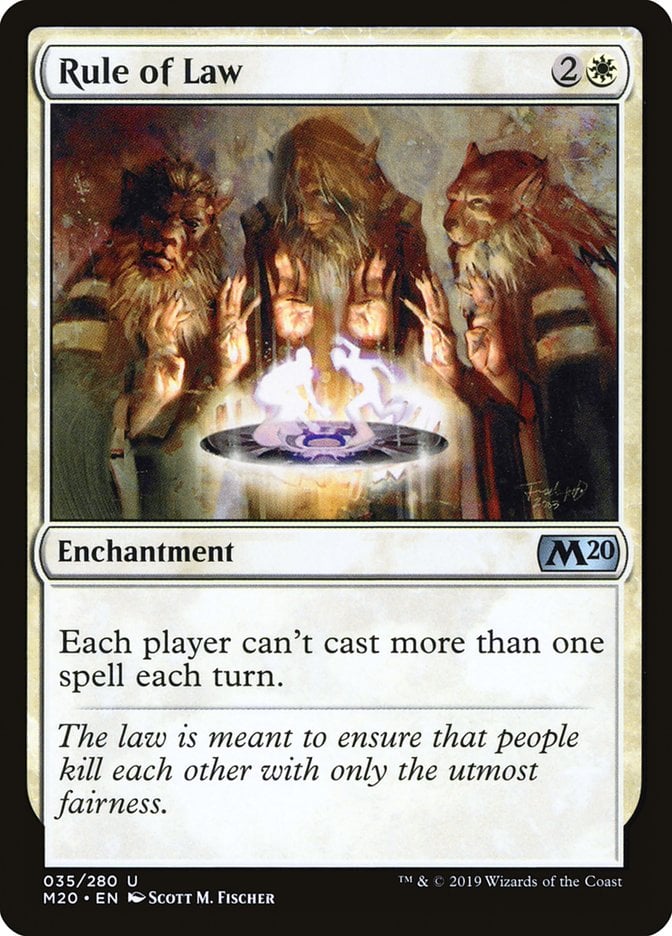
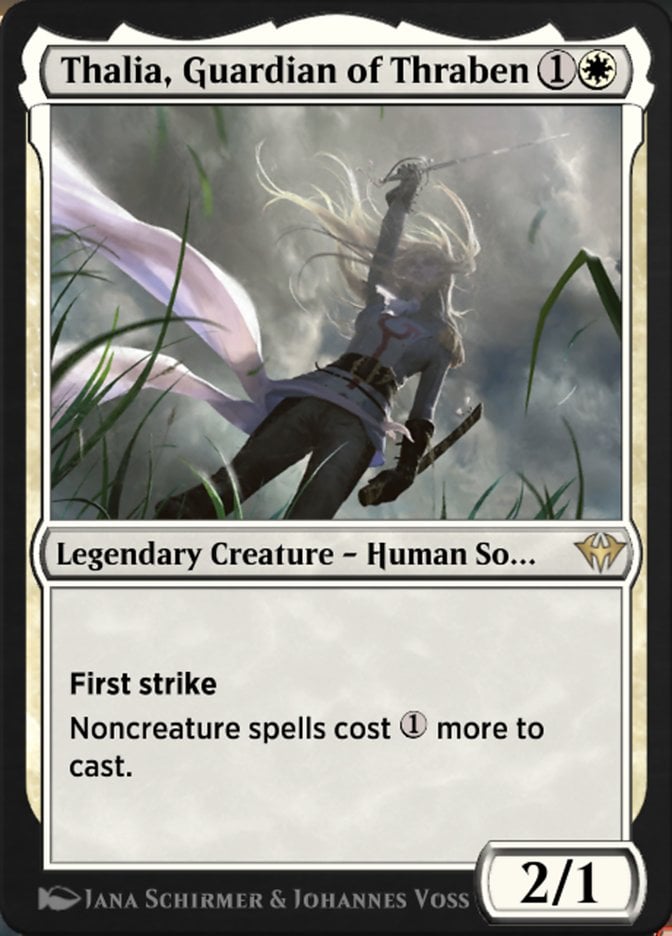
A nice example is Rule of Law, a white card made to stop combos and storm decks. White creatures also come with these disruptive effects, with the most famous being Thalia, Guardian of Thraben.
This archetype has many names, depending on the cards you play. Pillow fort means you’re stacking cards and enchantments that don’t allow you to be attacked, while stax means your opponent can’t cast spells unless they pay a godly amount of mana or sacrifice their own resources. With a little help from blue and black, these decks are often Esper in nature.
Example Decklist: Grand Arbiter Augustin IV in EDH

Grand Arbiter Augustin IV | Illustration by Zoltan Boros and Gabor Sziszai
Commander (1)
Planeswalker (4)
Dovin, Hand of Control
Kasmina, Enigmatic Mentor
Teferi, Who Slows the Sunset
Teferi, Hero of Dominaria
Creature (13)
Esper Sentinel
Lavinia, Azorius Renegade
Reidane, God of the Worthy
Thalia, Guardian of Thraben
Windborn Muse
Archivist of Oghma
Hushbringer
Mangara, the Diplomat
Spelltithe Enforcer
Azor's Elocutors
Baird, Steward of Argive
Archon of Emeria
Thalia, Heretic Cathar
Instant (12)
Cyclonic Rift
Absorb
Render Silent
Counterspell
Arcane Denial
Disallow
Unwind
Rewind
Hindering Light
Path to Exile
Swords to Plowshares
Aetherize
Sorcery (8)
Armageddon
Approach of the Second Sun
Farewell
Austere Command
Supreme Verdict
Time Wipe
Whelming Wave
Treachery
Enchantment (14)
Smothering Tithe
Aura of Silence
Stasis
Blind Obedience
Sphere of Safety
Luminarch Ascension
Grasp of Fate
Detention Sphere
Authority of the Consuls
Rhystic Study
Monastery Siege
Mystic Remora
Michiko's Reign of Truth
Imprisoned in the Moon
Artifact (13)
Commander's Sphere
Mind Stone
Talisman of Progress
Azorius Signet
Arcane Signet
God-Pharaoh's Gift
Winter Orb
Static Orb
Sphere of Resistance
Isochron Scepter
Torpor Orb
Sol Ring
The Immortal Sun
Land (35)
Command Tower
Hallowed Fountain
Evolving Wilds
Terramorphic Expanse
Glacial Fortress
Hall of Heliod's Generosity
Prairie Stream
Sea of Clouds
Sejiri Refuge
Tranquil Cove
Flooded Strand
Celestial Colonnade
Hall of Storm Giants
Cave of the Frost Dragon
Temple of Enlightenment
Azorius Chancery
Azorius Guildgate
Skybridge Towers
Reliquary Tower
Island x7
Plains x7
Karoo
Coral Atoll
Deck source: Grand Arbiter Augustin IV Prison Commander Deck Guide by Pedro Furtado, Draftsim
Grand Arbiter Augustin IV is a commander that makes your spells cheaper while making your opponents’ spells cost more to cast. In fact, your spells will cost a whole less. That’s just the beginning, considering that you’ll tax your opponent’s mana way heavier, so it all adds up. This card is a pain to play against, and you’re not making any friends this way. This is the more midrange/controlling aspect of white decks, and you can punish everyone around the table with cards like Armageddon, Time Wipe, or Farewell. Cards like Mystic Remora, Blind Obedience, Smothering Tithe, and Ghostly Prison help slow the game down, and opponents end up either overpaying for their spells or giving you more resources.
In the long run, cards like Luminarch Ascension and Approach of the Second Sun can be potent win conditions. You also dictate the flow of the game with counterspells like Dovin's Veto and Render Silent.
Finally, colorless cards like Winter Orb, Static Orb, and Sphere of Resistance help lock down the game even further.
What Colors Pair Best with White?
White is commonly a jack-of-all-trades in MTG, doing a lot of different things, and for that, it can be very well supported by other colors with their specific contributions.
White-Black (Orzhov)
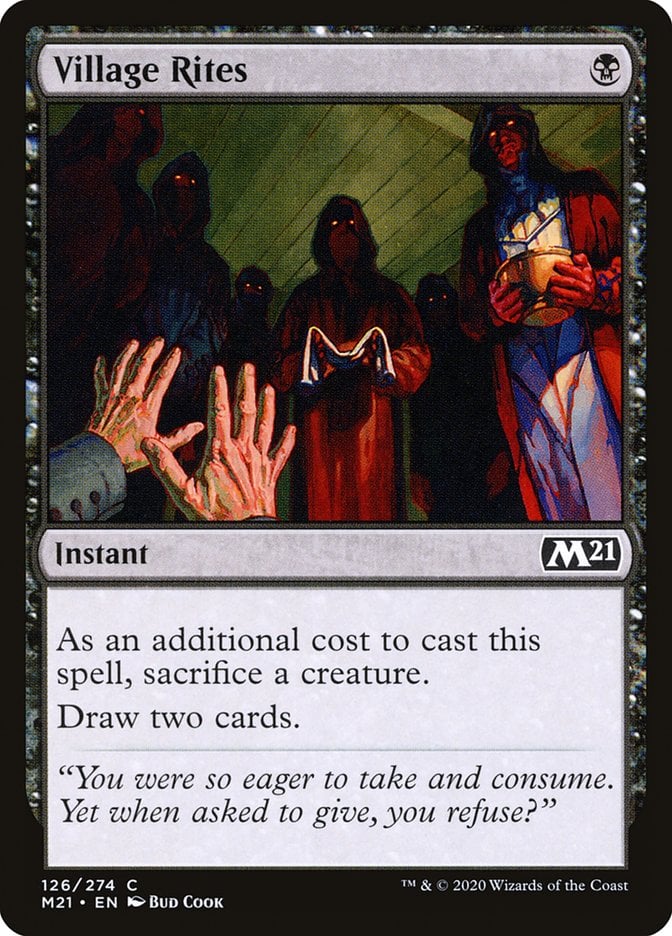
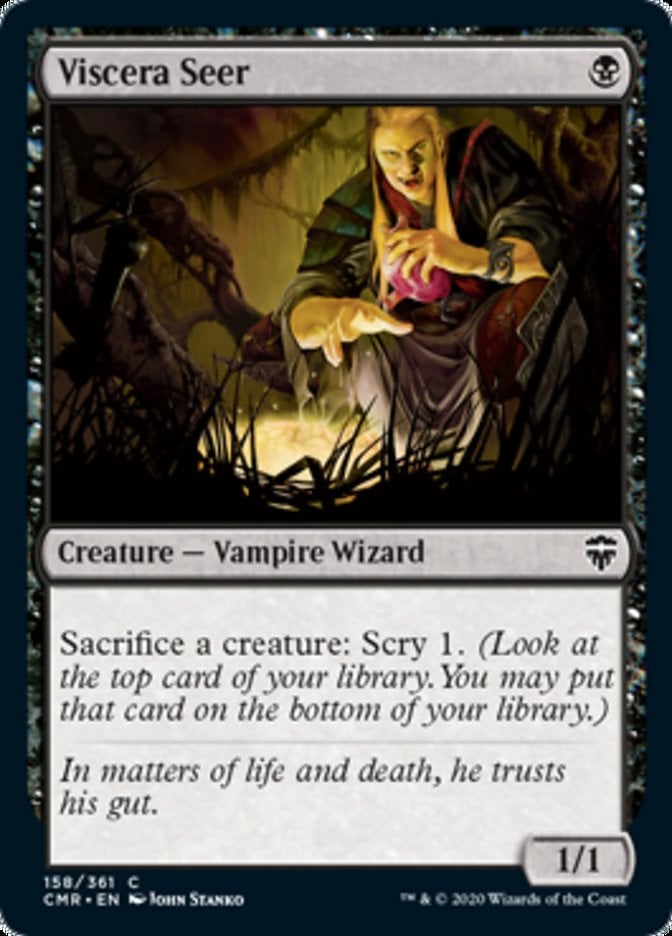
Black takes advantage of white’s token producers, naturally leaning into an aristocrats/sacrifice deck. For that, you’ll want effects like Village Rites or Viscera Seer. These two colors pair very well with lifegain and life drain decks, too.
White-Red (Boros)
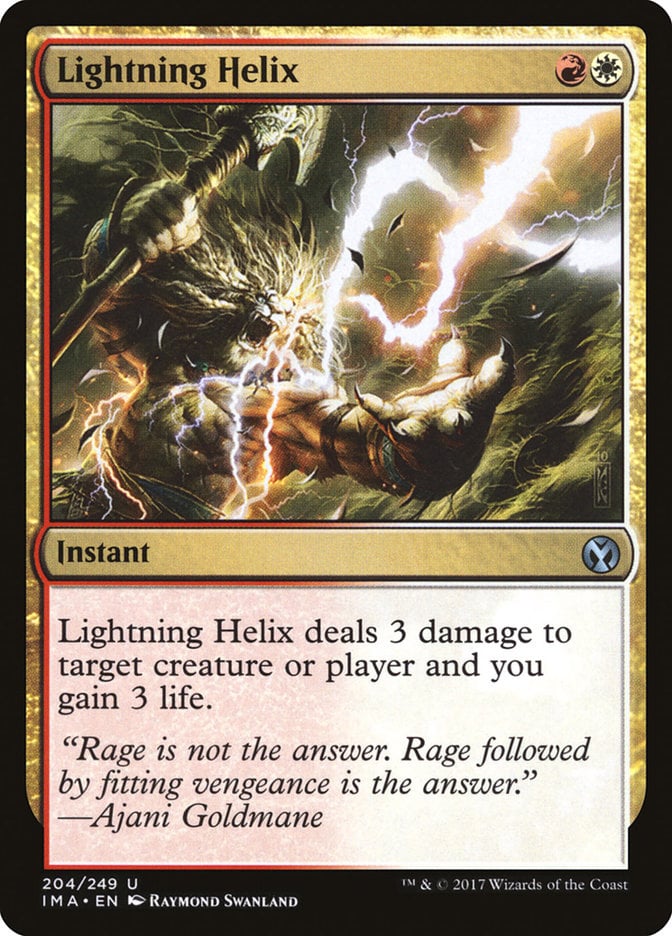
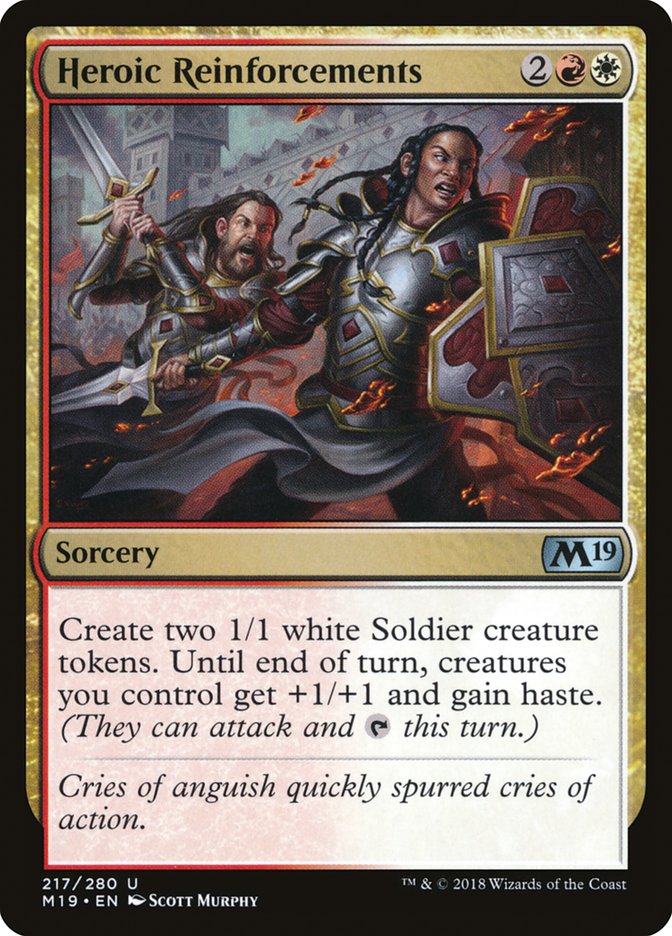
Red takes advantage of white’s aggressive capabilities and the strength in numbers. Red usually adds reach to white, in the form of burn spells—Lightning Helix is a good one—or in mass pump effects, like Heroic Reinforcements.
White-Green (Selesnya)

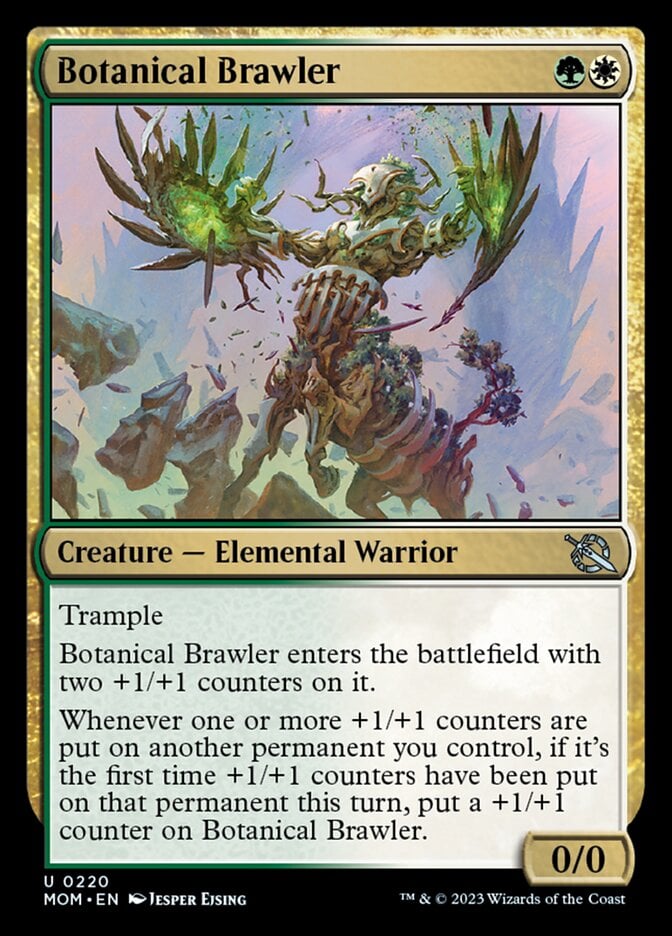
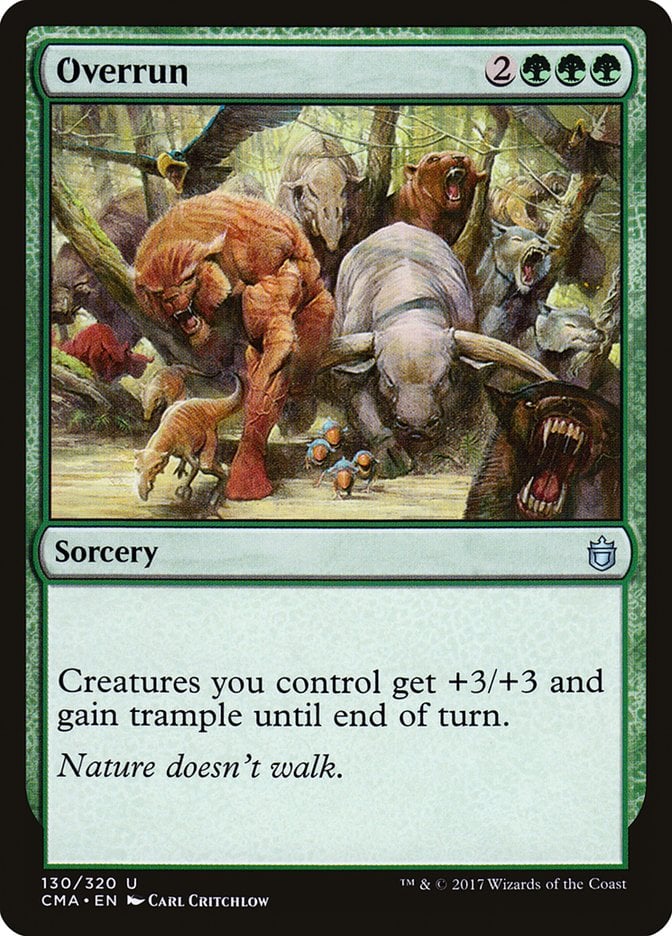
Green helps white by beefing creatures, usually in the form of +1/+1 counters or enchantment synergies. Many green and white cards thrive on +1/+1 counter synergies, like Arcus Acolyte or Botanical Brawler. Green also adds to a token deck with its Overrun effects.
White-Blue (Azorius)
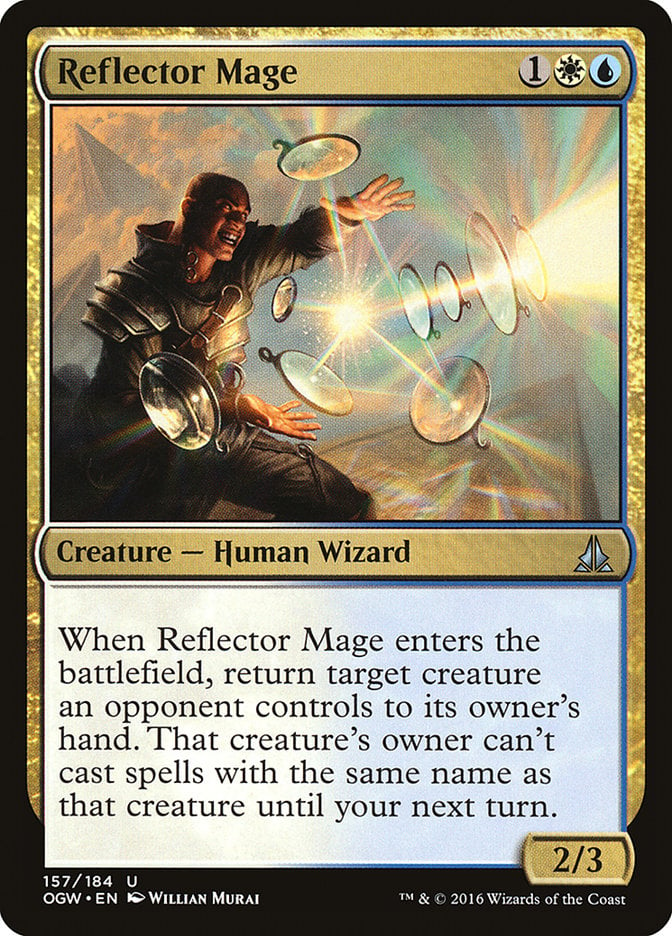
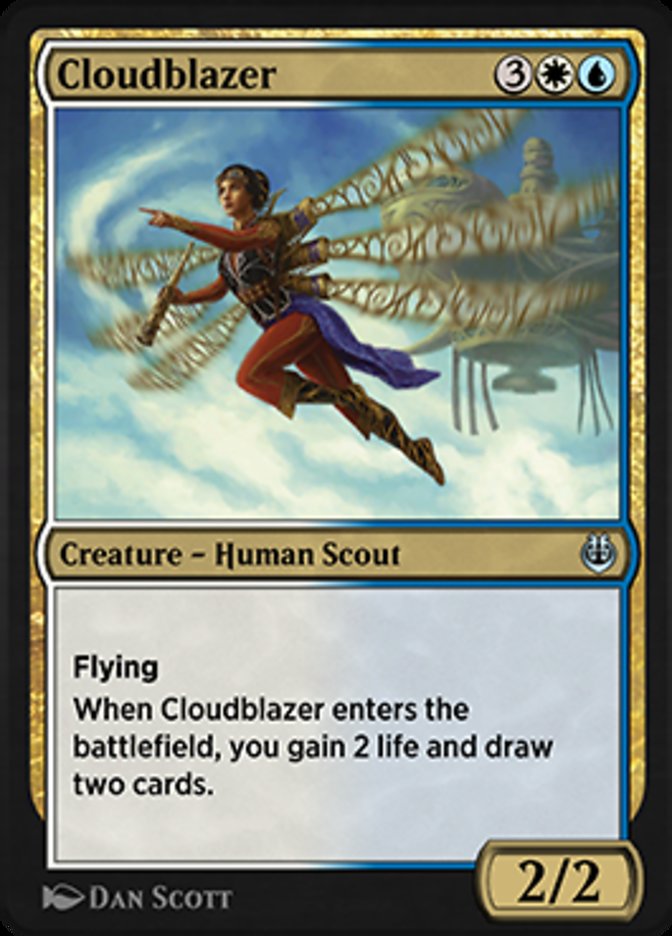
Here we have many possible combinations, ranging from tempo to control. Blue can dictate the flow of the game with counterspells and bounce effects (Reflector Mage), which naturally adds to white’s aggressive nature, or to the taxes white creatures impose on our opponents. On the control aspect, blue complements white’s wrath effects with card draw, counterspells, and late-game finishers. Or even with some value creatures, such as Cloudblazer.
Wrap Up
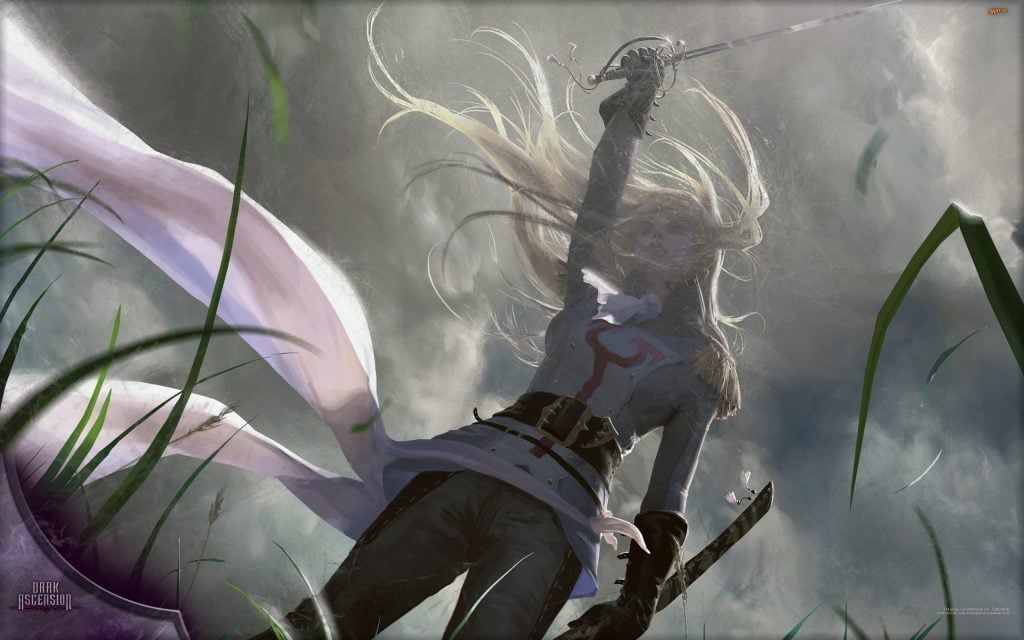
Thalia, Guardian of Thraben | Illustration by Jana Schirmer & Johannes Voss
I like that white decks are becoming more diverse as WotC pays more attention to the color in its never-ending quest to balance MTG. These archetypes I covered here are all classic ones, and they have had competitive decks all over MTG’s rich history. And in fact, white’s one of the only colors that can reliably play all aspects of the game, ranging from aggro to control. Especially with a little help from the other colors.
What do you think about white archetypes, folks? Which ones do you most play, and which ones did I miss? Let me know in the comments section below, or leave us a message on Draftsim’s Twitter/X!
Thanks for reading, and stay safe!
Follow Draftsim for awesome articles and set updates:










Add Comment