

Splashy Spellcaster | Illustration by Brian Valeza
I don’t love Universes Beyond sets, a feeling that grows with every new product announced, but I’m always a little interested to see the mechanics that Wizards cooks up to represent the magics of other properties.
Avatar: The Last Airbender poses a unique challenge because bending is an incredibly proactive magic system that relies on martial arts. Each comes with their own philosophies, which will be key to adapt them well. Let’s review waterbending to understand how the mechanic works and whether it does justice to the story!
How Does Waterbending Work?

Waterknot | Illustration by Wayne Reynolds
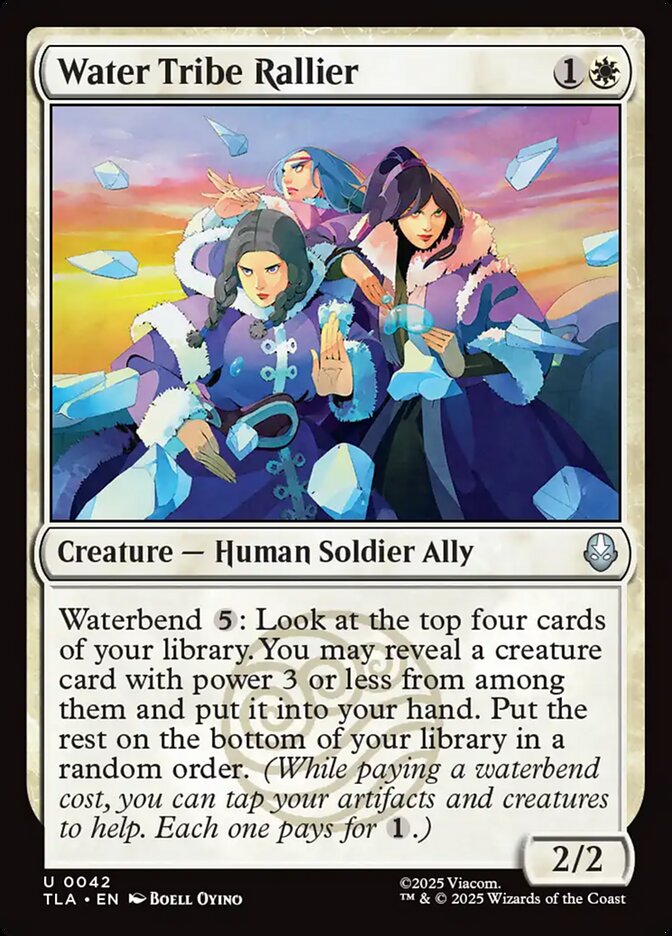
Waterbending is a mechanic that’s always associated with a generic mana cost, templated as “waterbend N.” You can pay N with mana of any color, by tapping untapped creatures, by tapping untapped artifacts, or some combination of the above. For example, if you want to pay the waterbending cost of North Pole Patrol‘s activated ability, you could pay mana of any color, tap three creatures (other than the Patrol, which taps itself as part of the cost), tap three artifacts, or pay 1 mana, tap one creature, and tap one artifact.
Waterbend most commonly shows up as the cost to activate abilities, but it can also be part of a triggered ability, an additional cost to cast a spell, or a cost you pay during the resolution of a spell.
The History of Waterbending in MTG
Waterbending debuted with Avatar: The Last Airbender in November 2025 as one of four elemental mechanics themed alongside the power system from the Nickelodeon cartoon. In the show, waterbending represents balance and flexibility, and flexibility really comes to bear in the mechanic: You can pay mana or tap creatures or tap artifacts or some combination of the above, so you use whatever you have at your disposal.
Waterbending vs. Convoke vs. Improvise
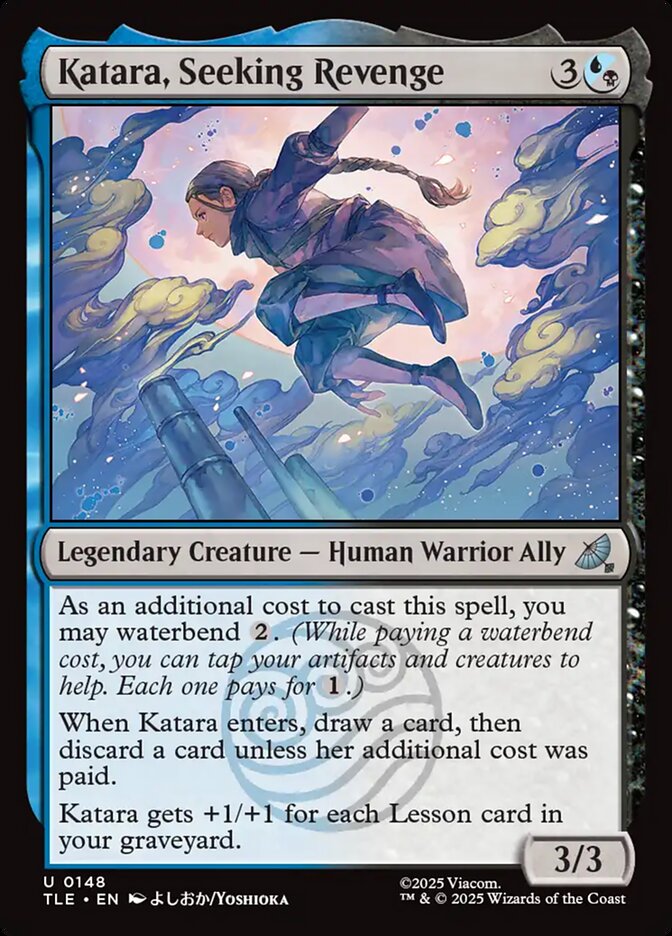
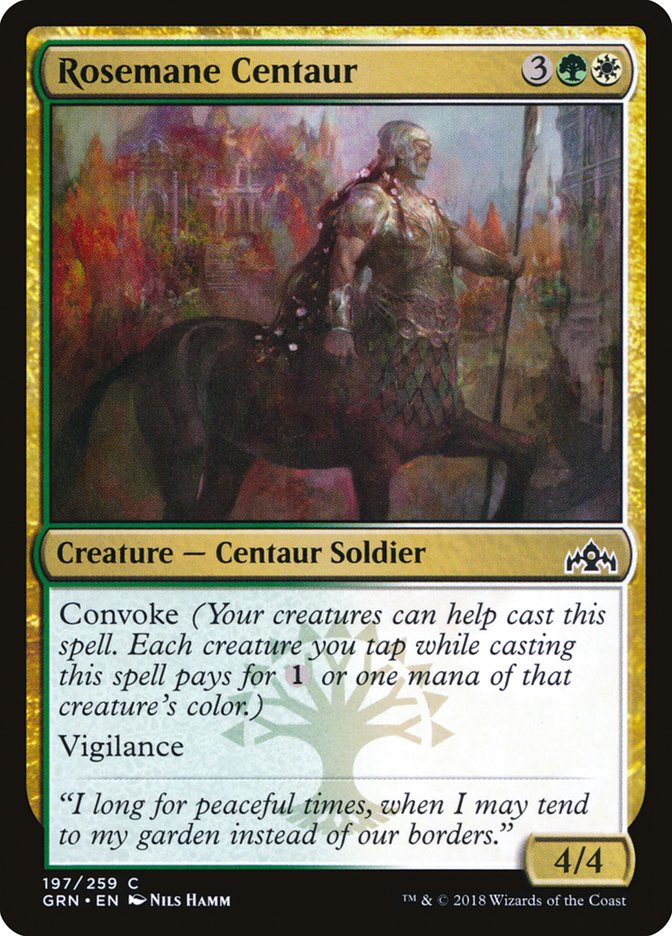
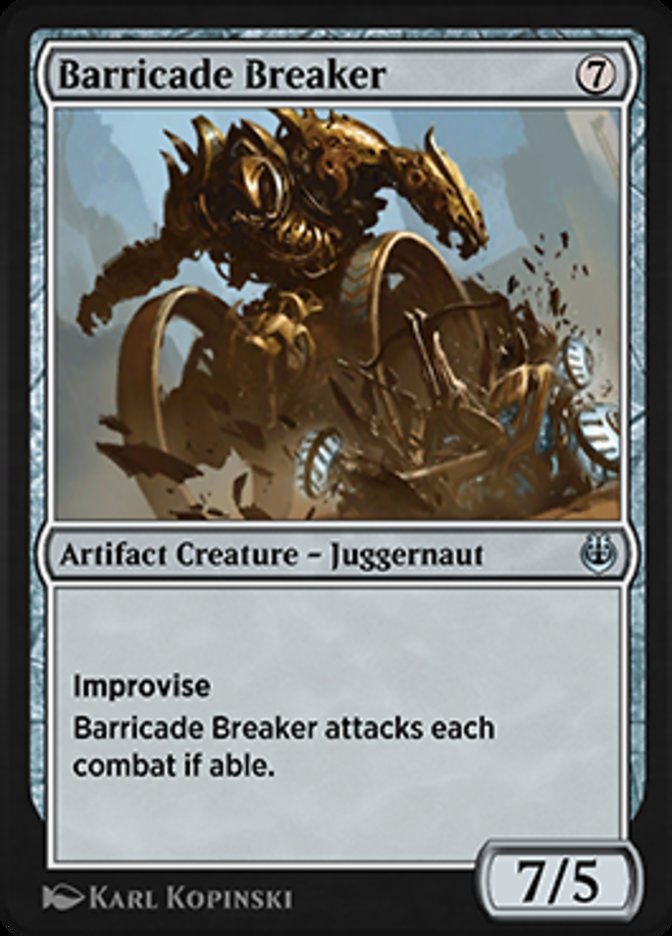
Waterbending is mechanically similar to convoke and improvise, but it has two distinguishing features. Firstly, waterbending doesn’t interact with colored mana: The creatures or artifacts you tap only work for generic costs.
More importantly, waterbending doesn’t pay for the mana cost of the spell in question. It appears as an additional cost on cards like Katara, Seeking Revenge and Water Whip, but that’s paid separately from those cards’ actual mana cost.
Beyond those differences, there are some similarities: The creatures in question can have summoning sickness since they aren’t being tapped for their own abilities, and your opponent can’t respond to you tapping the creatures since you tap them as part of an effect’s cost.
Can You Waterbend at Instant Speed?


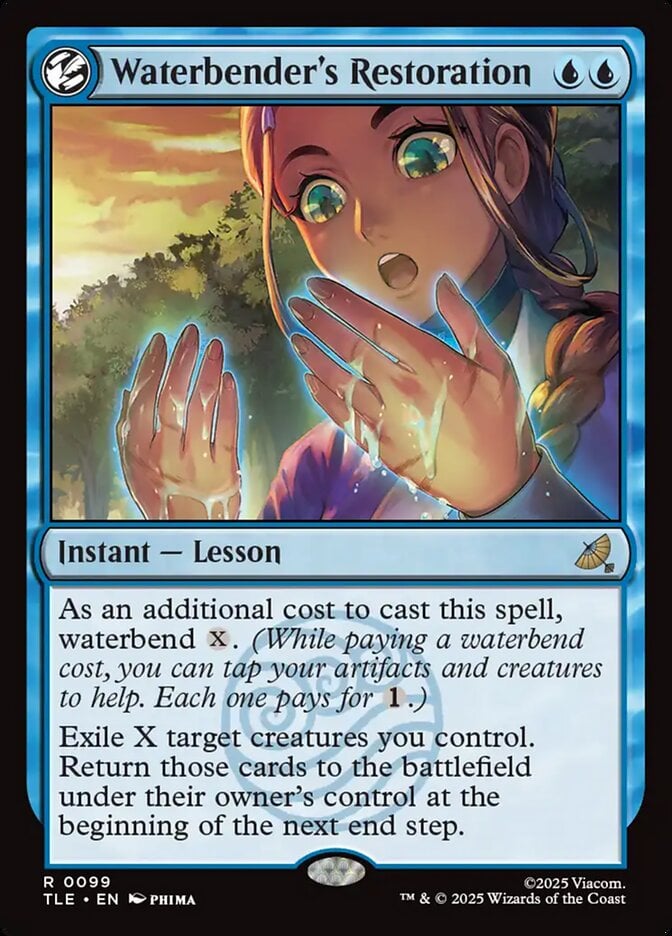
As long as the ability or spell with a waterbend cost isn’t restricted to sorcery speed, you can waterbend at instant speed. For a few examples, you can activate Watery Grasp or North Pole Patrol at instant speed, and you can waterbend at instant speed as an additional cost to Waterbender's Restoration.
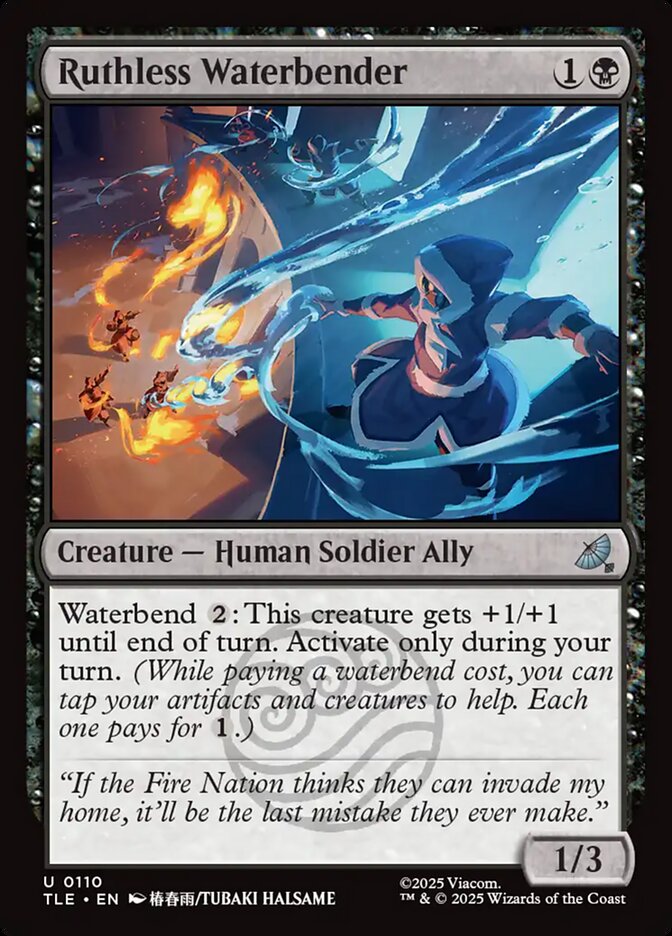
As a side note, a few cards have waterbend abilities that you can only activate on your turn, like Katara, Water Tribe's Hope and Ruthless Waterbender. These abilities can be used at instant speed on your turn only; you can’t activate them when you have priority on other players’ turns.
Can Creatures with Summoning Sickness Waterbend?
Yes! Just like with convoke, you tap the creature as a cost to pay the waterbend cost rather than with an activated ability of its own. Because it’s an external card that does the tapping, summoning sickness doesn’t affect it.
Can Waterbending Reduce Colored Costs?
No. Waterbending doesn’t actually help you to cast a spell; it’s always present as an additional cost or the cost to activate an ability. All waterbending abilities currently cost generic mana, so you don’t need any particular colored mana to pay for them.
Can You Counter Waterbending
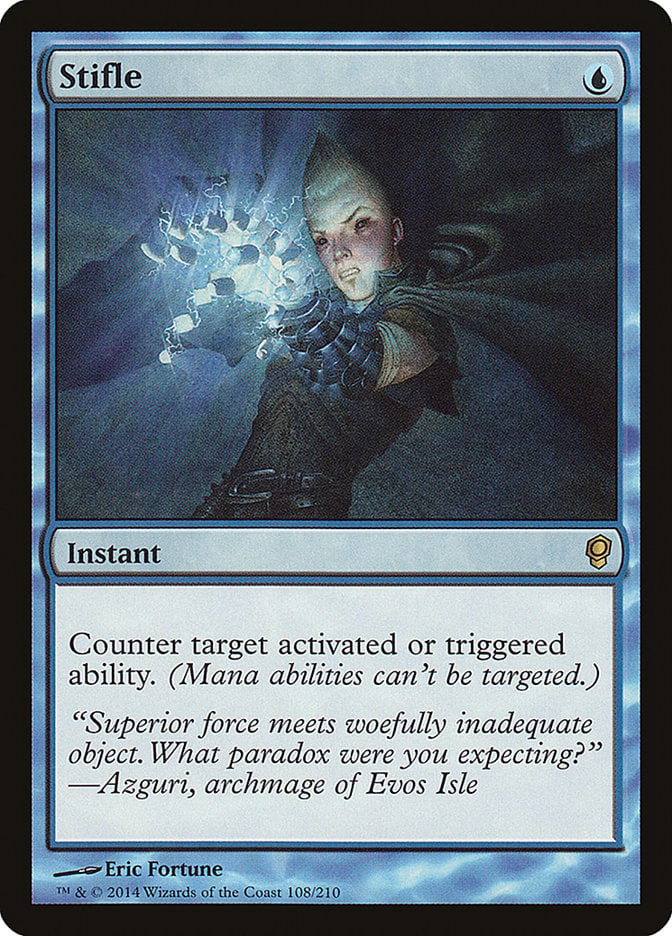
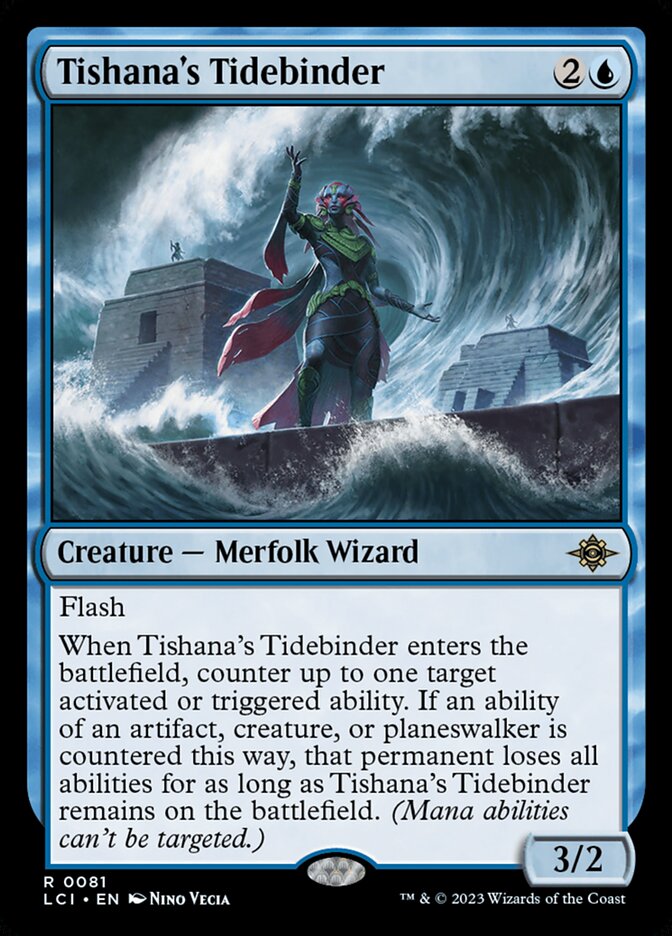

Waterbending is a cost that’s paid, so you can’t directly interact with or counter it. If your opponent activates an ability with waterbend, you can’t directly stop them. However, you can counter that activated ability with a Stifle effect like Tishana's Tidebinder. If your opponent casts a spell with waterbend as an additional cost, like Water Whip, you can counter it with Counterspell and other countermagic.
Is Waterbend an Activated Ability?


Waterbend is a cost that you can pay. While it’s often used as the cost for an activated ability, you can also waterbend as an additional cost (Water Whip, Foggy Swamp Visions) or part of a spell’s effect (Waterbending Lesson).
Can Treasure Be Sacrificed for Waterbending and for Mana?
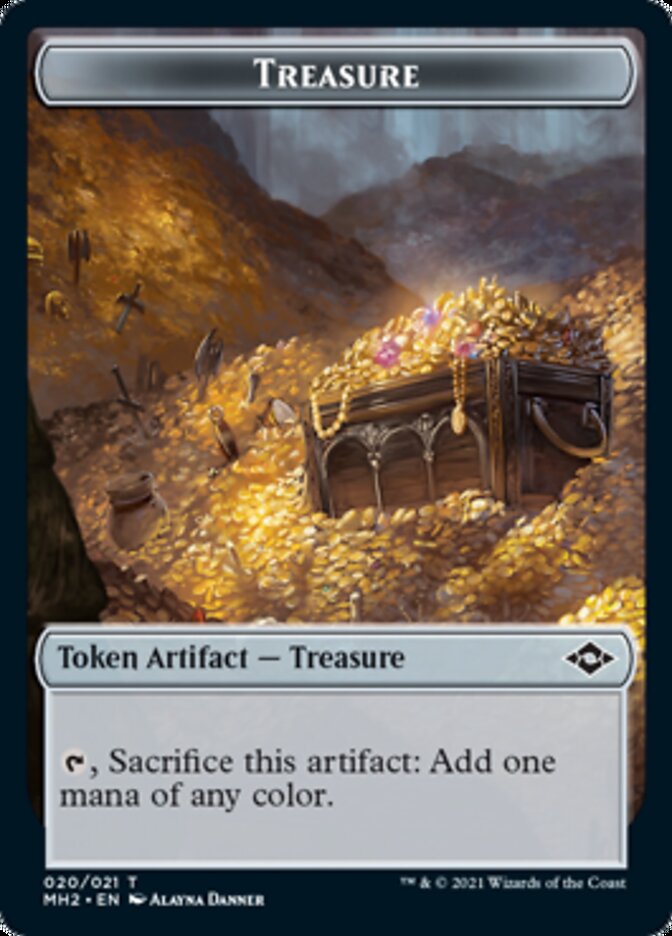
No. You can’t tap a permanent for two effects at the same time, so you must choose between whether you tap the Treasure to pay mana for waterbend or sacrifice it to its own mana ability. In this scenario, it’s best to tap the Treasure for waterbending without sacrificing it so you have access to the mana next turn.
Gallery and List of Waterbending Cards


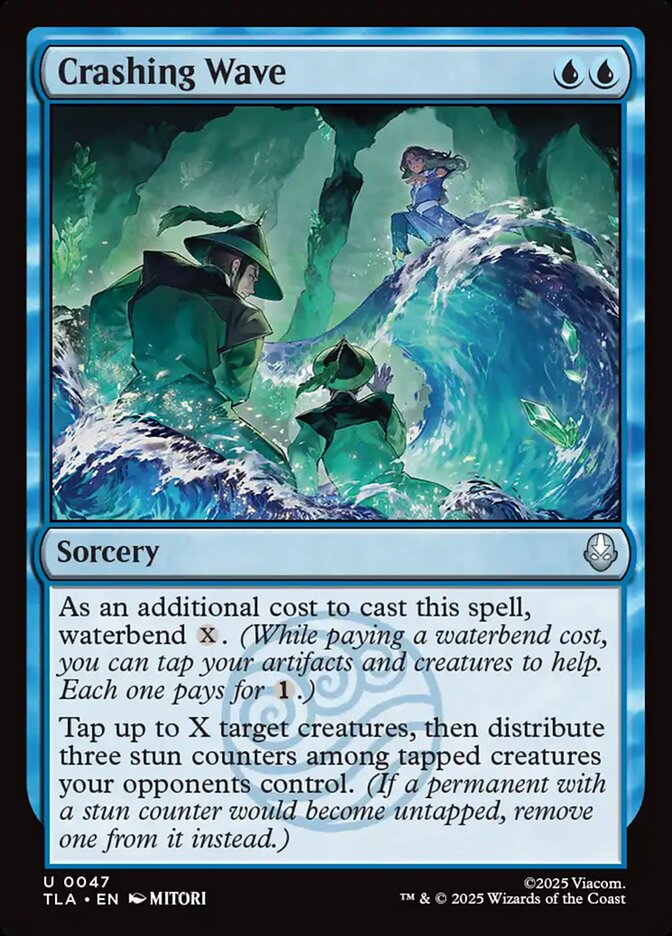

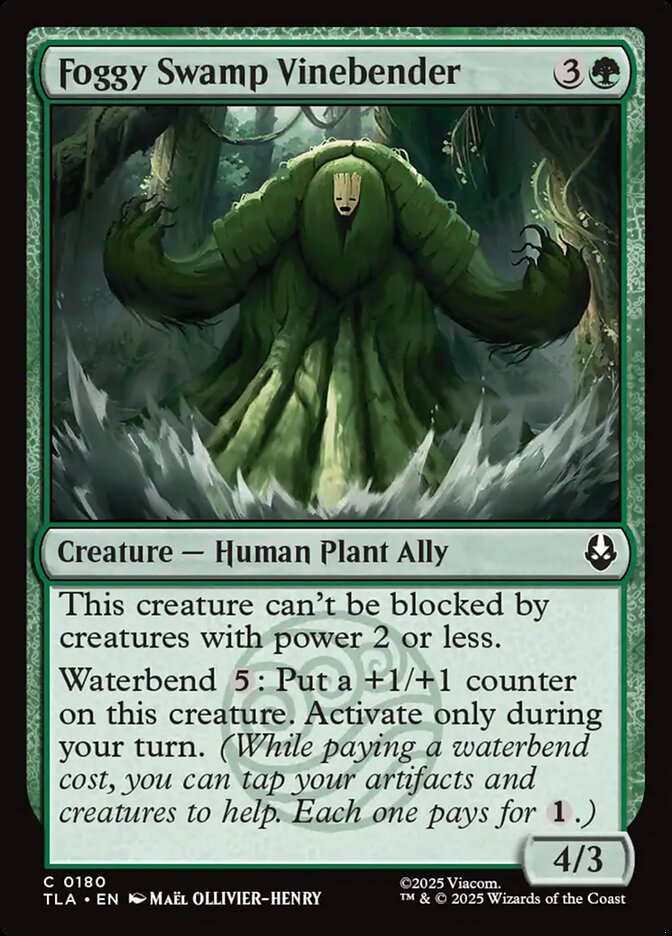


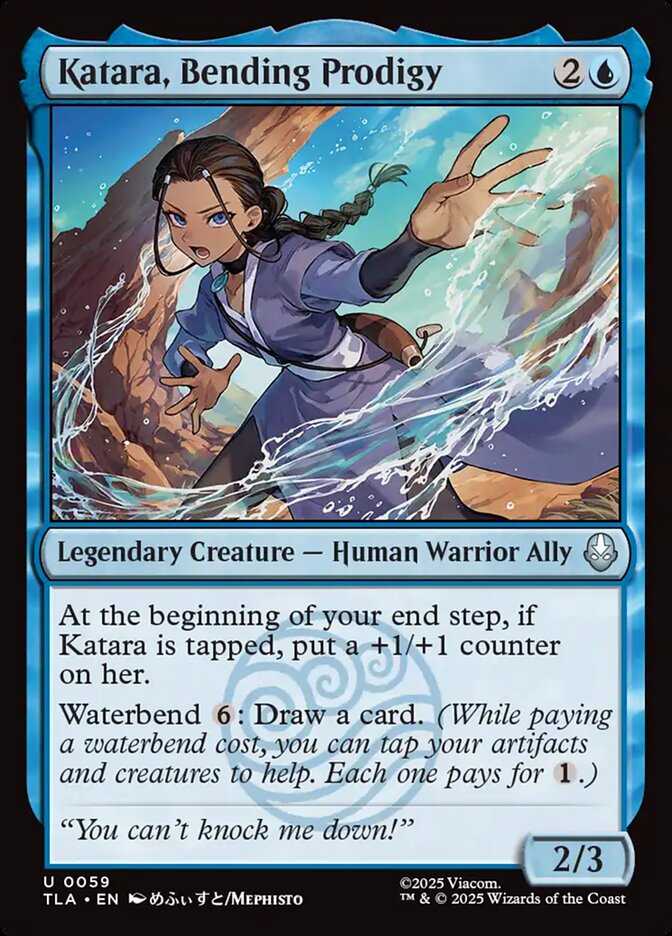

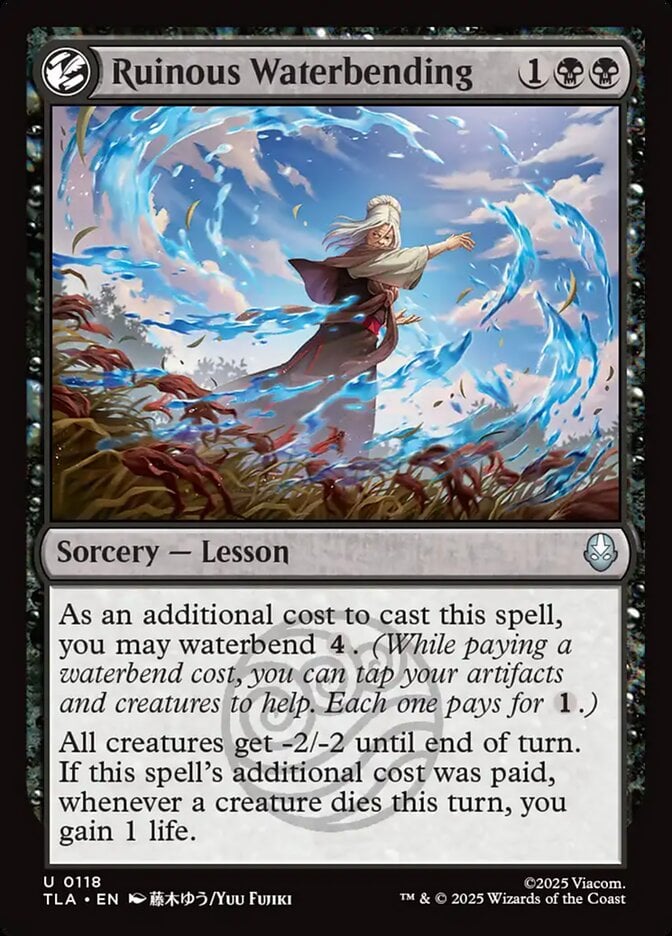




- Aang's Iceberg
- Aang, Swift Savior / Aang and La, Ocean's Fury
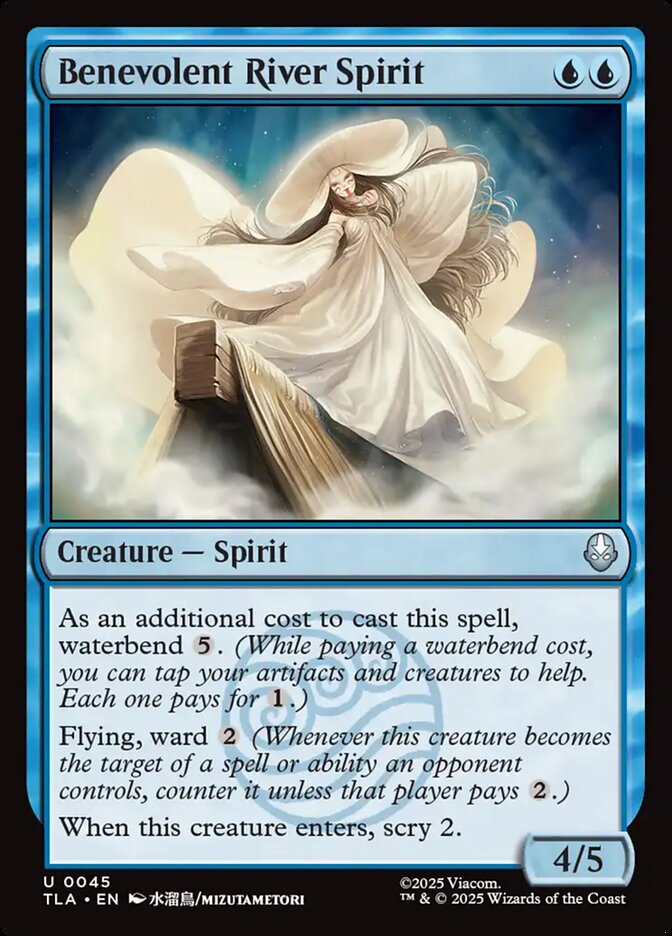
- Benevolent River Spirit
- Crashing Wave
- Flexible Waterbender
- Foggy Swamp Vinebender
- Foggy Swamp Visions
- Geyser Leaper
- Giant Koi
- Hama, the Bloodbender
- Invasion Submersible
- Katara, Bending Prodigy
- Katara, Seeking Revenge
- Katara, Water Tribe's Hope
- North Pole Patrol
- Ruinous Waterbending
- Ruthless Waterbender
- Secret of Bloodbending
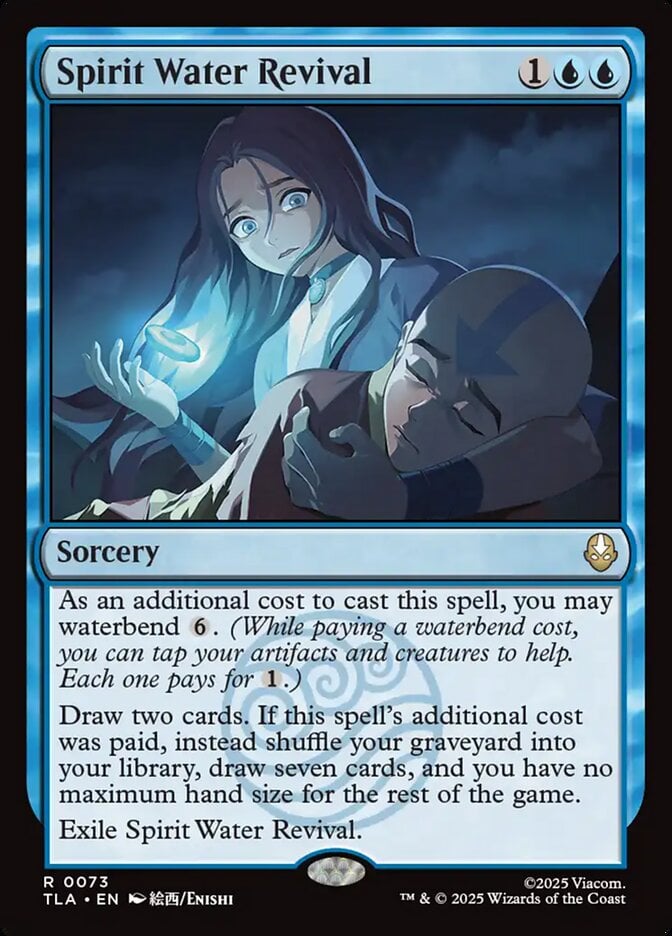
- Spirit Water Revival
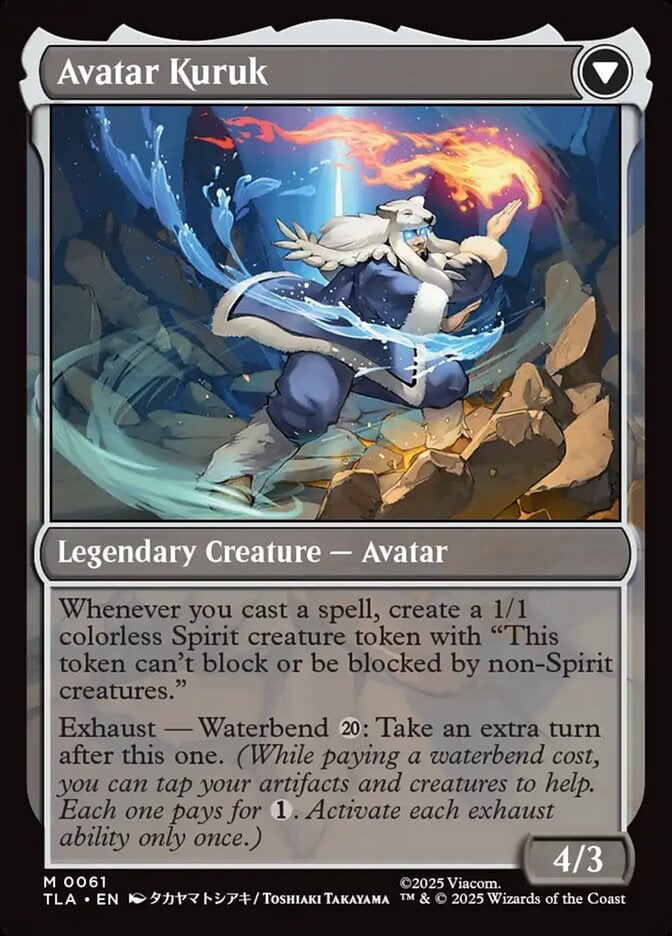
- The Legend of Kuruk / Avatar Kuruk
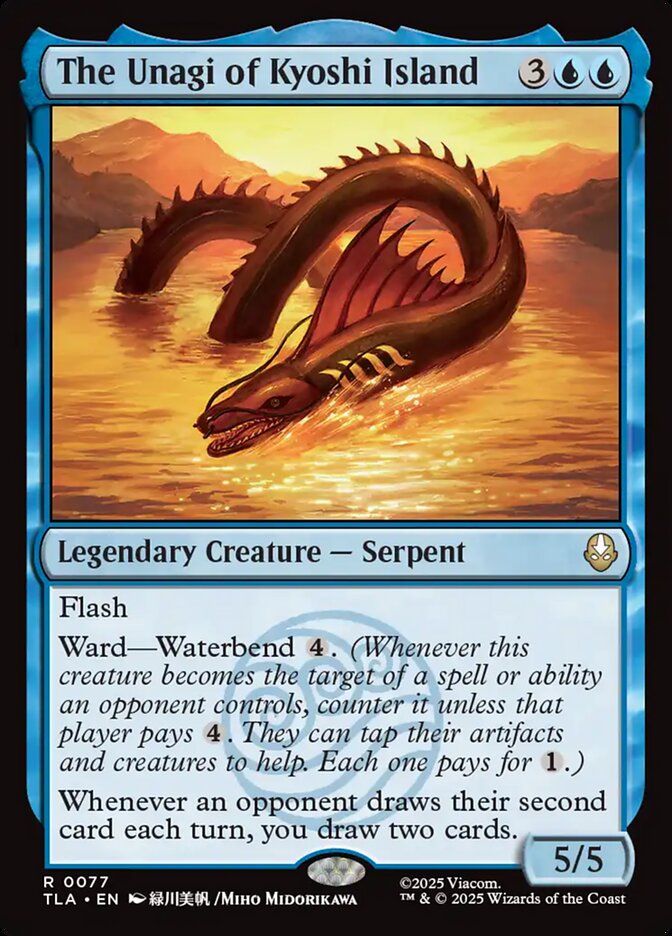
- The Unagi of Kyoshi Island
- Waterbender Ascension
- Waterbender's Restoration
- Waterbending Lesson
- Water Tribe Rallier
- Water Whip
- Watery Grasp
- Yue, the Moon Spirit
Best Waterbending Cards
Foggy Swamp Visions
Foggy Swamp Visions needs some elbow grease, but it could be explosive in the right shell. Creating a bunch of tokens to trigger powerful enters abilities or as fodder for sacrifice outlets like Ashnod's Altar can swing a game wildly in your favor, especially if you pay for the waterbending cost without mana.
Ruinous Waterbending
Ruinous Waterbending is a fine sideboard card against aggro decks, which wouldn’t normally be worth remarking on, but the lesson type makes this intriguing. A deck with learn cards could access this valuable sideboard tool in game 1. Whether this card is good really relies on Secrets of Strixhaven introducing good learn cards to Standard, but I’m keeping my eye on this.
The Unagi of Kyoshi Island
The Unagi of Kyoshi Island has one of the most unique waterbending abilities because you aren’t paying the waterbending cost, your opponent is. Giving your opponent multiple payment plans for the ward cost isn’t great, but the Unagi looks like a great control threat: An Ambush Viper that’s annoying to kill and can draw cards works in many situations and generally gets some value before it eats a removal spell.
Waterbender’s Restoration
Waterbender's Restoration allows you to mass-flicker your board, which has two primary benefits: You can retrigger valuable enters abilities from cards like Solitude and Mulldrifter or protect your team from a board wipe (which also retriggers those abilities). That flexibility gives it a role in creature-focused EDH decks.
Time to Dry Off

Katara, Heroic Healer | Illustration by Pauline Voss
Waterbending is a slightly strange mechanic, but I like how Wizards adapted it. The focus on the philosophy of waterbending gives it some coherence—better than earthbending, at least. We probably won’t see waterbending ever again unless we get a bonus Avatar: The Last Airbender Secret Lair down the line, but I look forward to playing with these cards.
Do you like waterbending? Which Avtar: The Last Airbender mechanic do you like best? Let me know in the comments below or on the Draftsim Discord!
Until next time, stay safe.
Follow Draftsim for awesome articles and set updates:










Add Comment