

Clockwork Servant | Illustration by David Palumbo
Colorless decks are usually known for their powerful equipment, their expensive Eldrazi titans, or even their powerful ramp options. But today, we look into another aspect of colorless cards, and that’s their ability to cantrip.
Supporting combo decks and spellslinging decks alike, cantrips can help you see a lot of cards from your deck and fill up your graveyard when needed. Blue and red are very good at cantripping, but if you’re playing white or green, you might be interested in a few of these colorless cantrips.
Without further ado, let’s dive in!
What Are Colorless Cantrips in MTG?

Golden Egg | Illustration by Lindsey Look
Cantrips in MTG are cards that replace themselves, usually when you cast them or when they enter play. Colorless cantrips must have a colorless identity, so I’m not considering colored cards with the devoid mechanic here.
A cantrip draws only one card, and in the case of colorless, they’re mostly artifacts. Many of these cards are also considered eggs, and for the sake of this list, I’m including mostly cheap cards that you can sacrifice to draw a card, as long as you don’t need to pay a lot of mana for it.
#23. Bomat Bazaar Barge
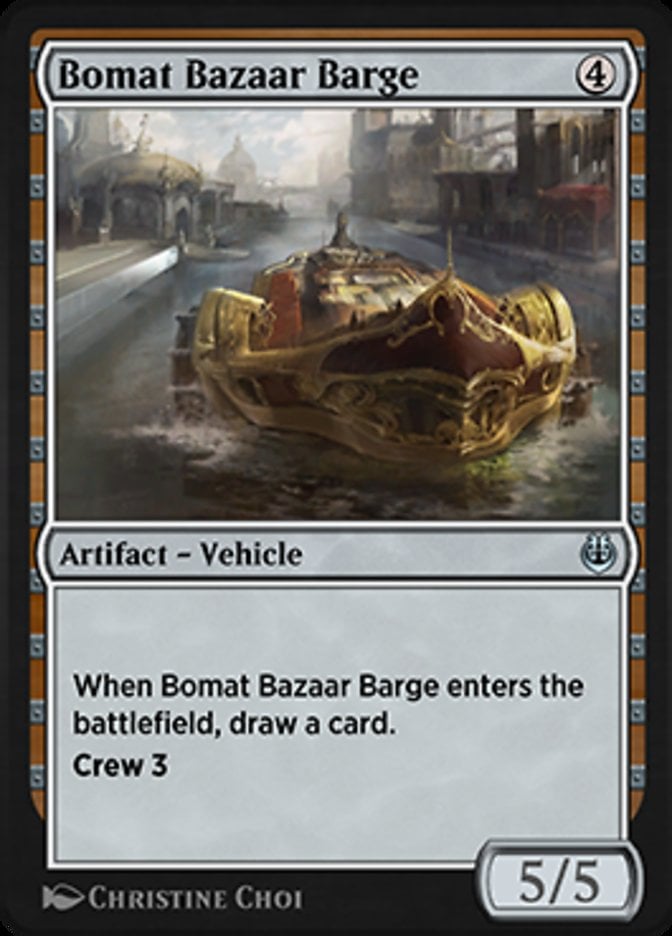
Big vehicle cards usually don’t impact the board when they enter the battlefield, but this one at least draws you a card. Bomat Bazaar Barge isn’t stellar even when you crew it, so you might as well build around vehicles for this card to be worth playing.
#22. Clockwork Servant
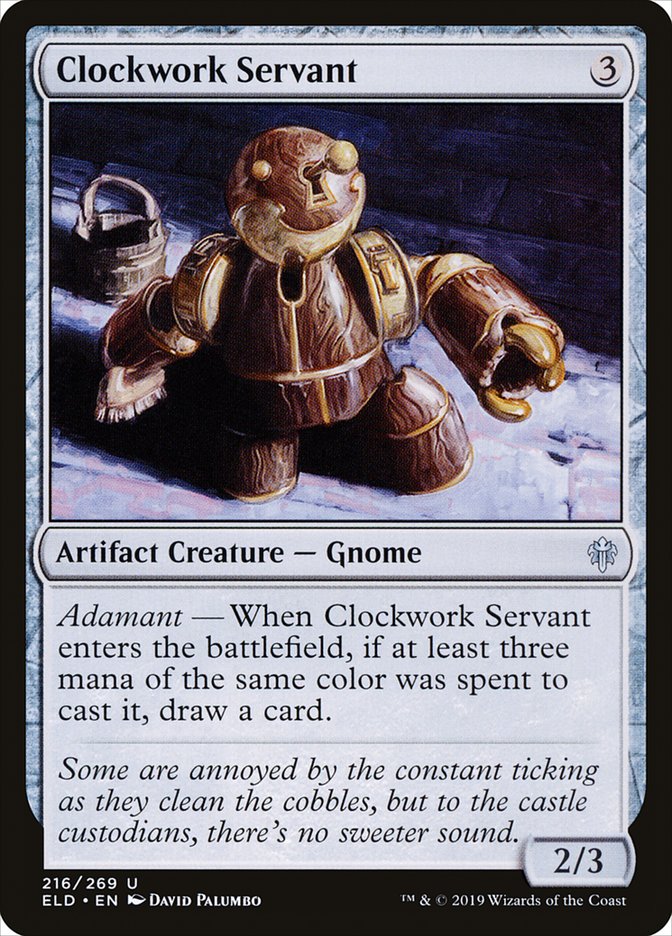
Clockwork Servant can be a competent 2/3 cantrip creature if you’re into mono-color decks or if you have the necessary mana. It’s never good early or late, so if you’re playing this card, you’ll need more synergies with the creature or card type, or with creatures with power 2 or less.
#21. Soul-Guide Lantern
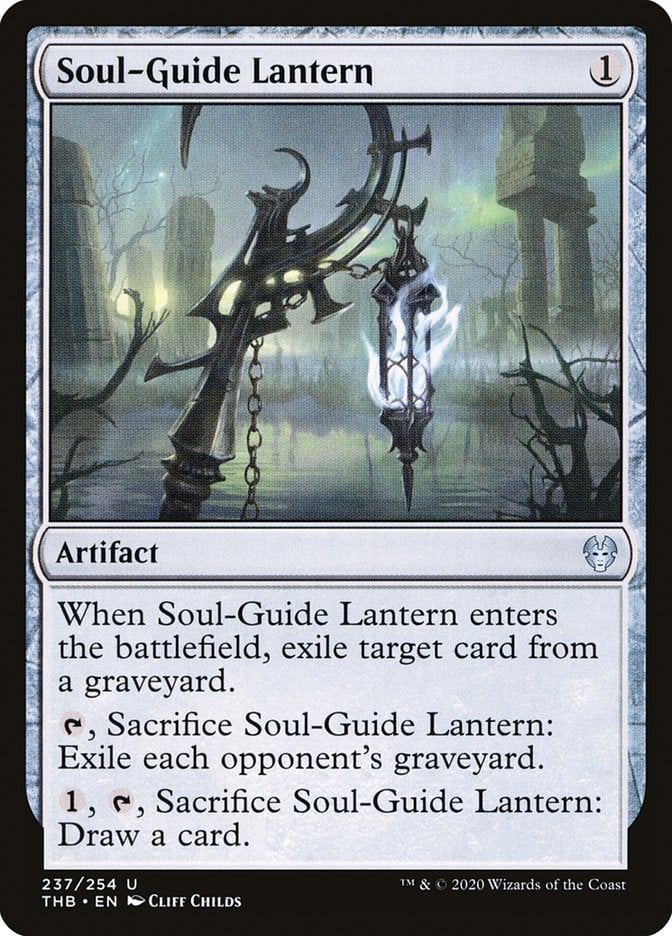
Soul-Guide Lantern can be considered a fixed (and worse) version of Relic of Progenitus that offers you graveyard hate and card draw on different modes.
#20. Skyscanner
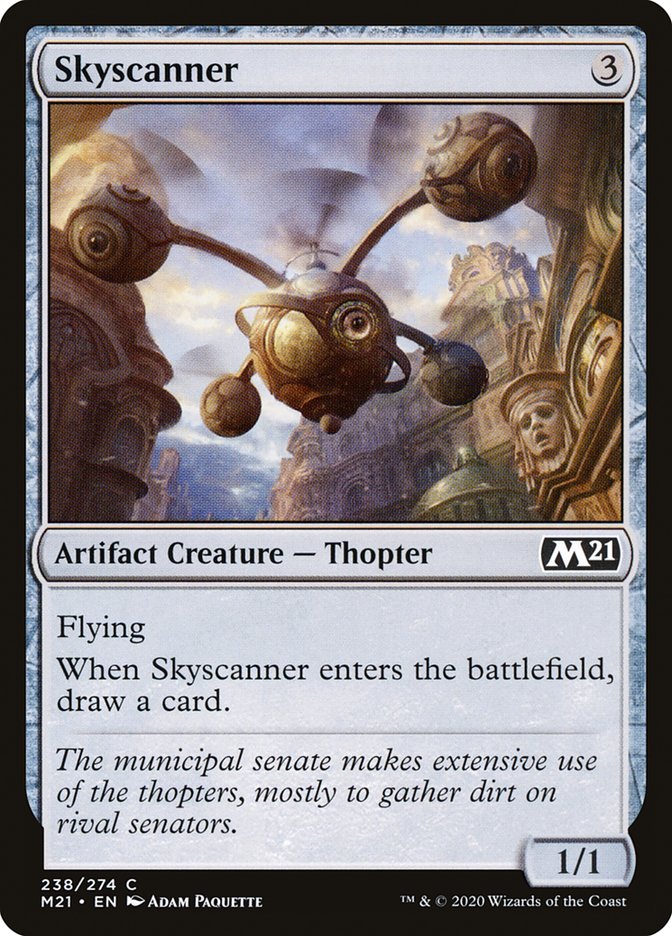
Skyscanner is interesting for Limited decks as a flying creature that draws you a card and later can trade with a 2/1 or something. Never an exciting card, but you can play one or two in some formats. It’s an okay budget card in EDH decks that care about artifact creatures and recursion.
#19. Conjurer’s Bauble
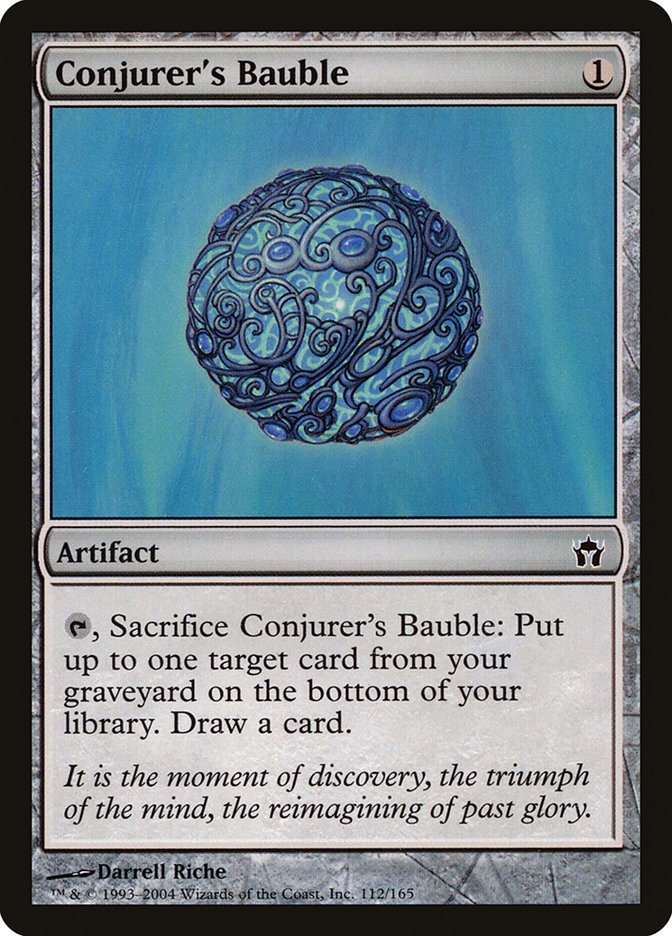
Conjurer's Bauble is a 1-mana cantrip if you need to cash it in for another card. It usually doesn’t do enough on its own, but if you want a higher redundancy of this effect, then by all means, play this card.
#18. Scene of the Crime
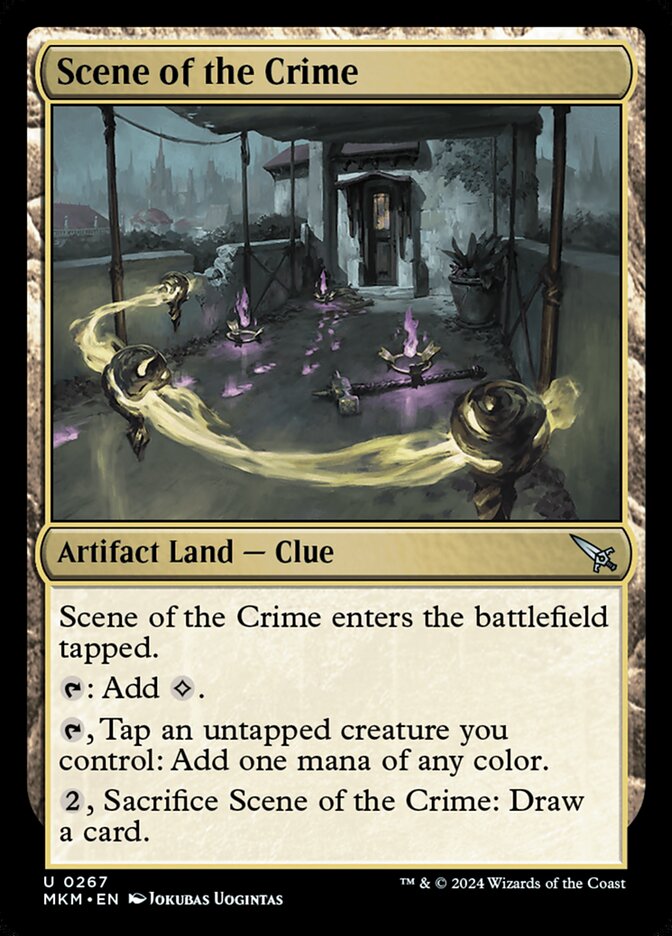
A weird way to mix a clue into a land, considering that you can effectively cantrip it for 2 mana. The best application for Scene of the Crime is to count as two different card types in your graveyard for mechanics like delirium.
#17. Horizon of Progress

I’m considering Horizon of Progress as a 1-mana cantrip. It’s bad in your opening hand because you’ll usually want the land on the battlefield, but when you’re flooding on lands and draw this card, you might as well cycle it away.
#16. Introduction to Prophecy
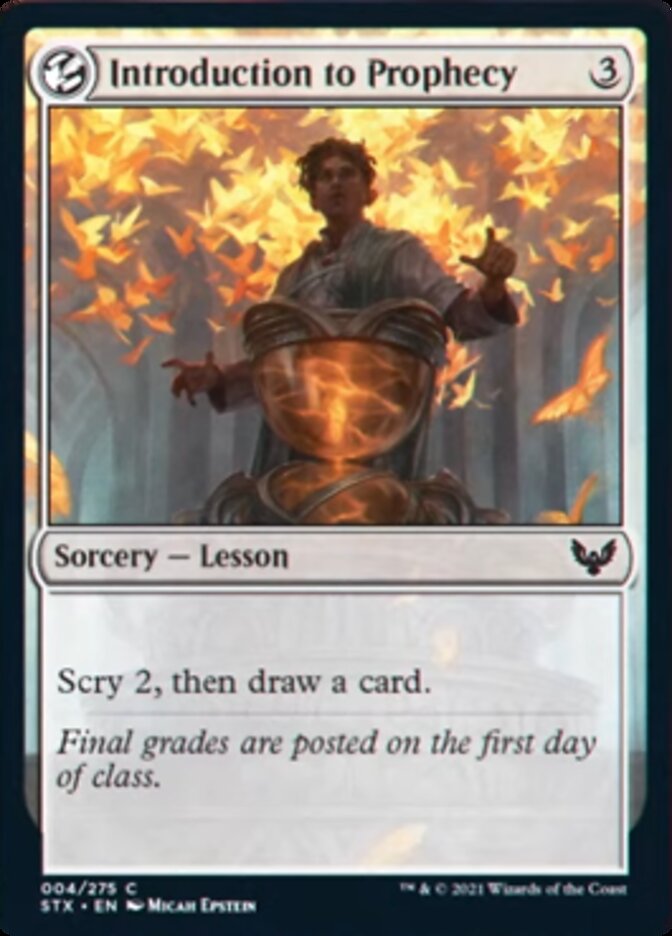
Introduction to Prophecy saw heavy play in formats like Standard and Pioneer due to the popularity of learn cards. Lesson cards were usually added in decks for free, thanks to the interaction with the learn mechanic. And getting a bad 1-mana Preordain after you cast a learn card isn’t the worst, especially in decks and colors that don’t get these effects that often.
#15. Golden Egg
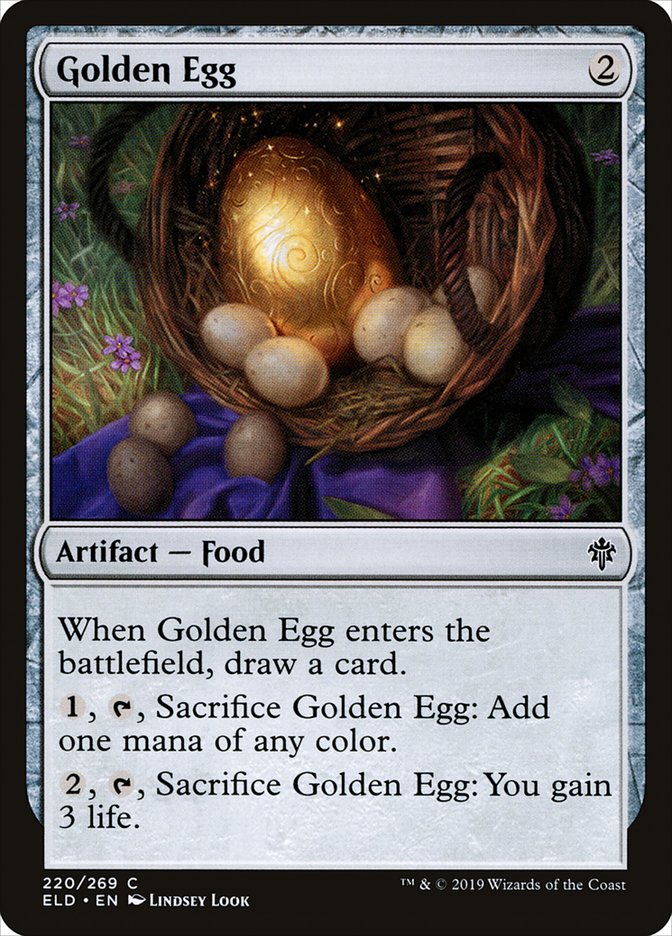
Very similar to Lembas, Golden Egg trades the scry 1 effect for the mana fixing effect. During its time in Standard, it was a good pair with Gilded Goose to allow the bird to cash this card in for mana or just to gain some life later on.
#14. Eye of Vecna
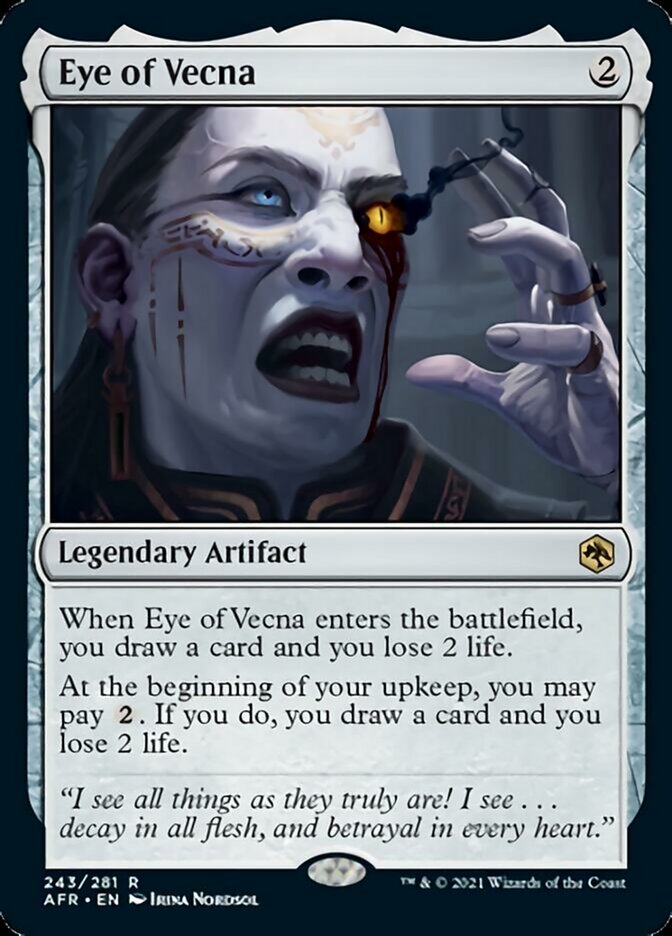
Eye of Vecna fits our primary purpose of being a cantrip, except that you can keep paying life and drawing cards later. It loses a few ranks among colorless cantrips just because you can’t just play it and profit against an aggressive opponent.
#13. Guidelight Matrix

Guidelight Matrix does some work in vehicle and mount decks. It has a strong synergy with mounts or vehicles that need a lot of power to saddle or crew them, but it shouldn’t see much play outside of this context.
#12. Lembas
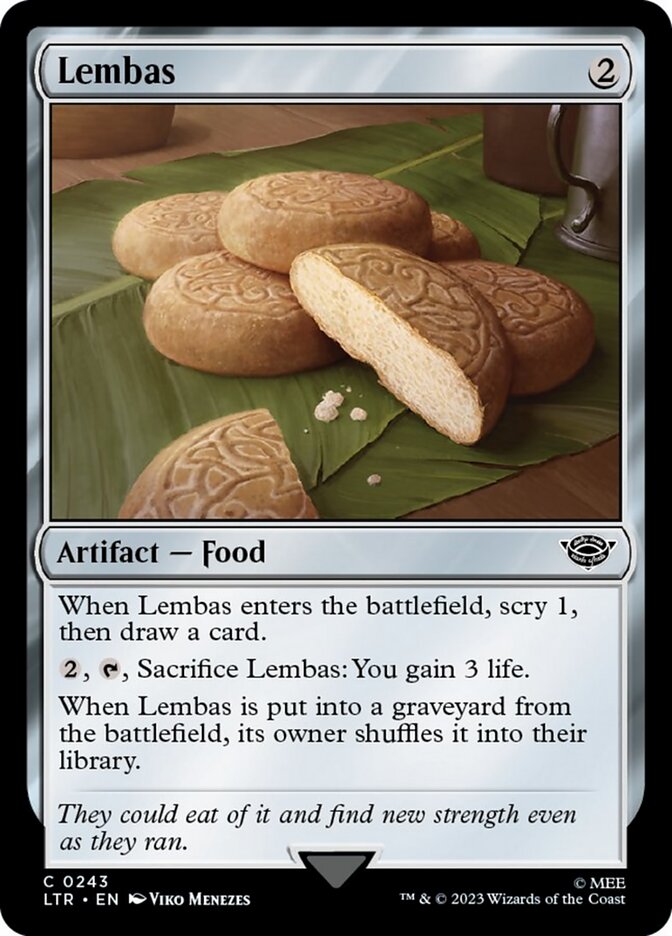
Lembas is a 2-mana food that scries, then draws you a card when it enters. It can be awesome if you have any scry payoffs like Arwen Undómiel or Matoya, Archon Elder.
#11. Instant Ramen

Following the trend of food that are 2-mana cantrips, here’s Instant Ramen. Being a flash card is better when you’re holding mana for something else or when you need to trigger prowess synergies at instant speed.
#10. Alchemist’s Vial
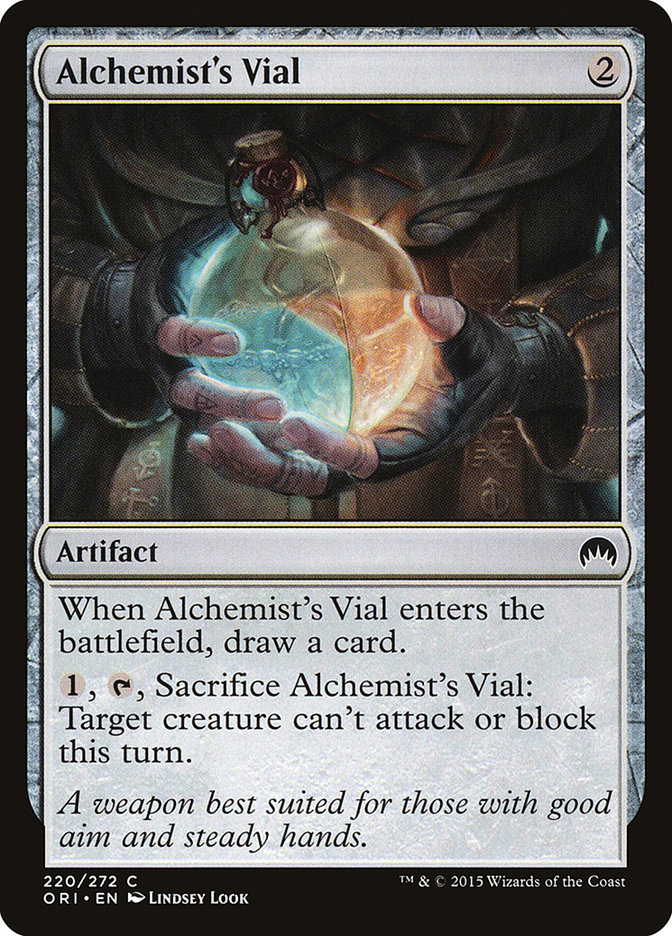
Alchemist's Vial has seen some play in Pauper, especially if you’re facing something big like a Voltron threat. Sometimes, you just need to take out that specific card for a turn to draw a removal spell or to win on the next turn in tight races.
#9. Vexing Bauble

You can play Vexing Bauble as a 2-mana cantrip, or as a hate piece for players that want to rely on evoke elementals like Fury or free counterspells like Force of Will.
#8. Prophetic Prism
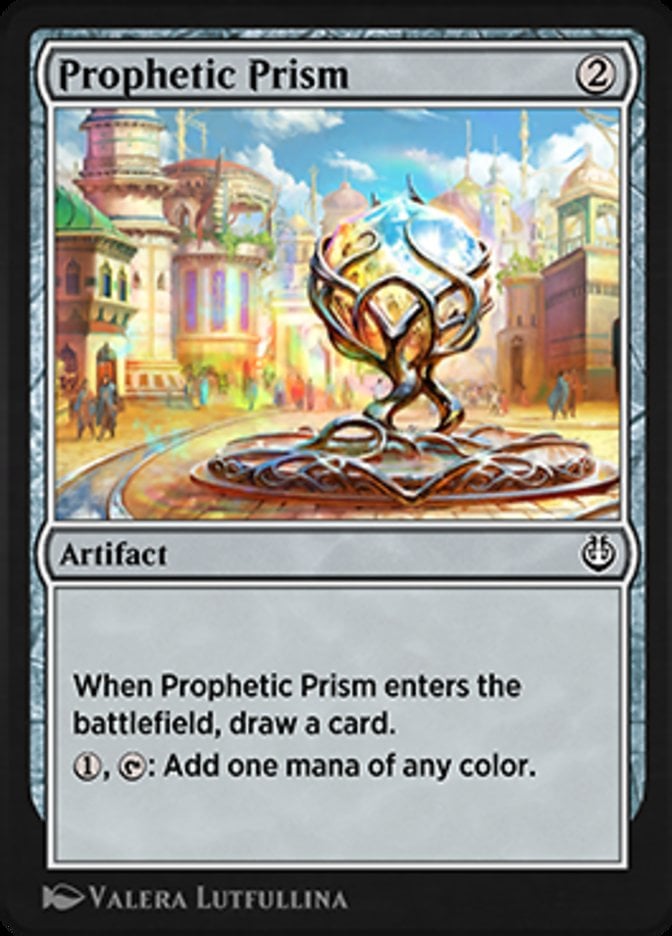
Prophetic Prism is a classic Pauper card as a cantrip and a mana fixing tool. It’s usually played in Tron decks or in Kor Skyfisher decks, and it’s a fine playable in Limited formats.
#7. Ichor Wellspring
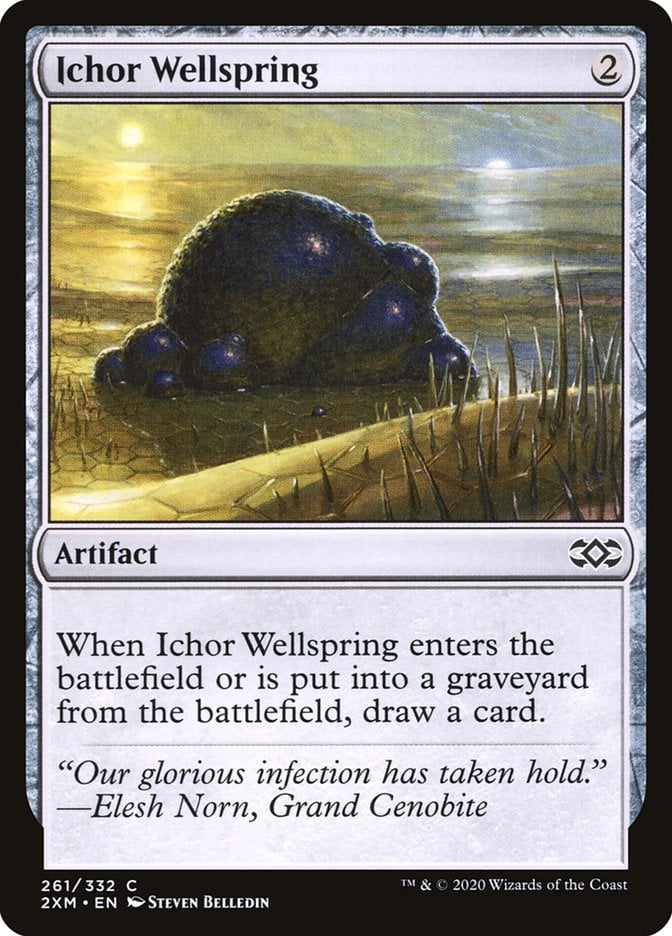
Ichor Wellspring is a classic cantrip in many formats. It sees regular play in Pauper as a 2-mana card you’ll want to sacrifice later to cards like Kuldotha Rebirth and draw another card, or just return to your hand and cast another time.
#6. Chromatic Star + Chromatic Sphere
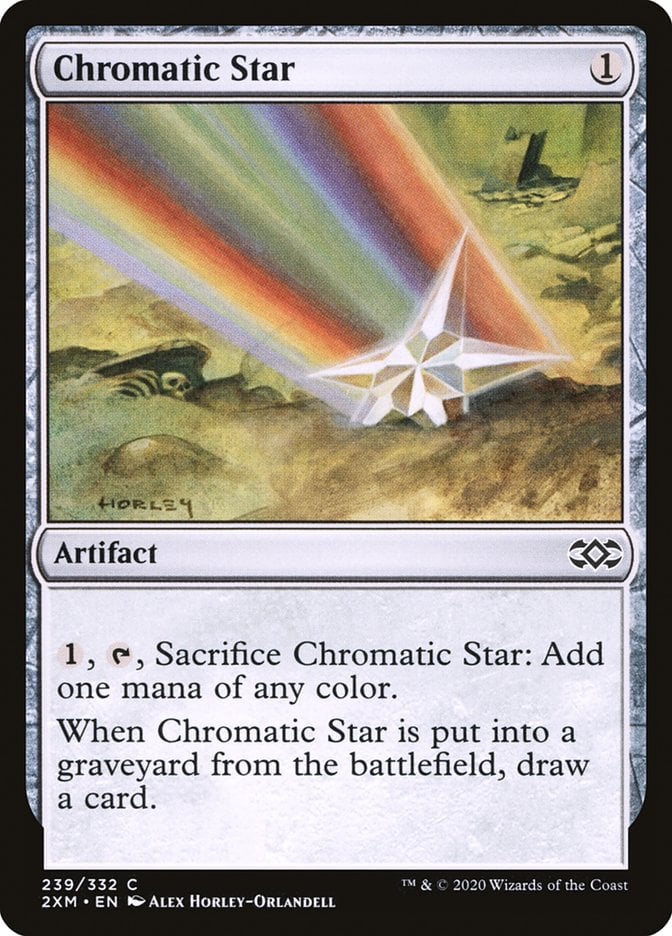
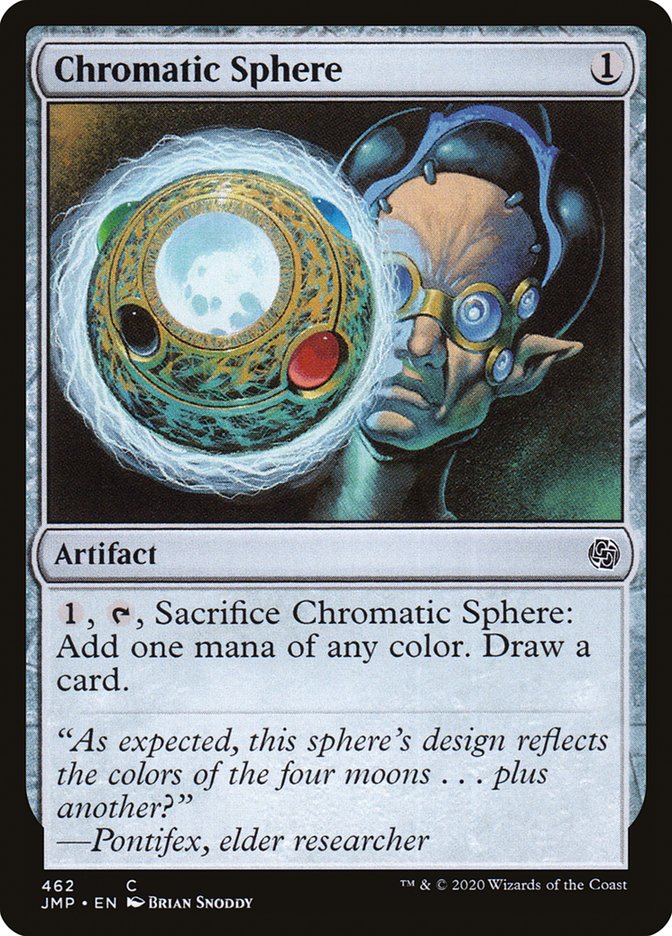
You can use these nearly identical cards as cantrips that fix your mana cheaply. Chromatic Star is better in Krark-Clan Ironworks decks, considering that you can generate mana from KCI and still draw a card.
#5. Relic of Progenitus
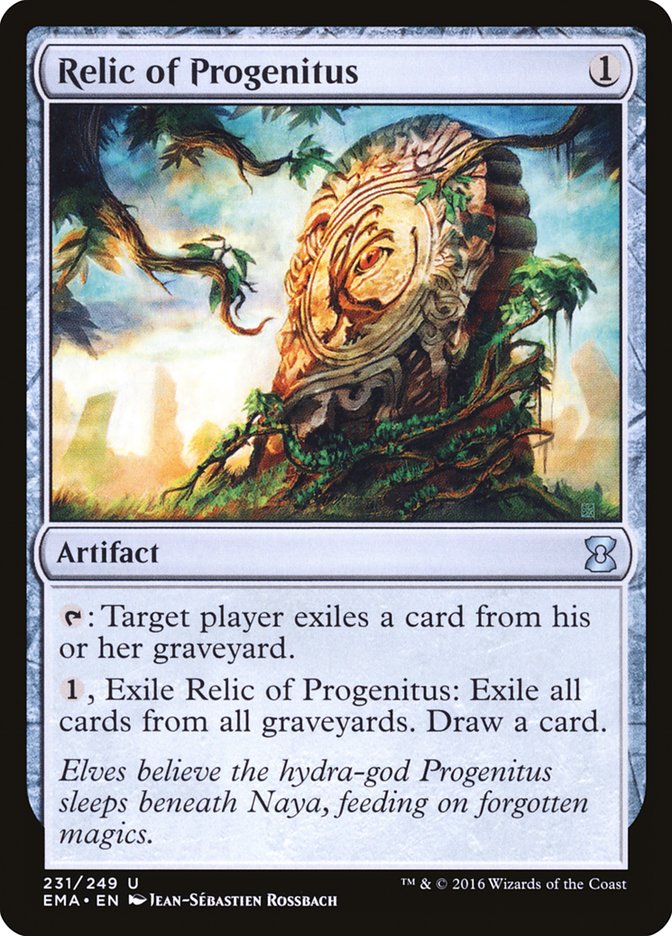
Relic of Progenitus has more use as a graveyard hate tool, and it’s one of the best cards at that. And it’s still a cantrip when you need an extra card, regardless of whether your opponents have cards in their graveyards or not.
#4. Elsewhere Flask
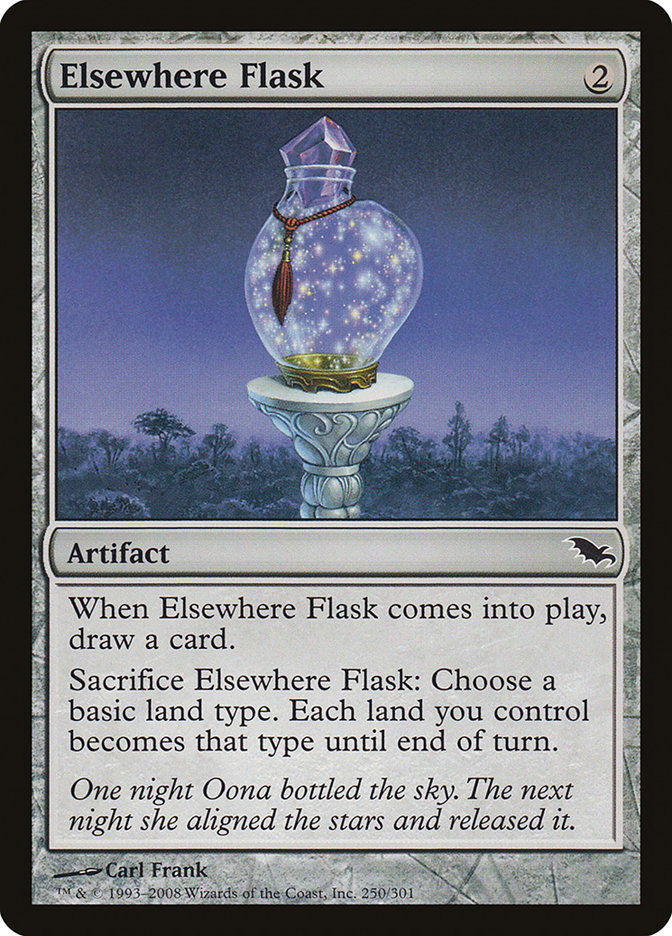
Elsewhere Flask sees some play in combo decks like Scapeshift to make all your lands count as mountains, for example. It’s also a 2-mana cantrip, and a way to fix for other mana-intensive cards in 2-color decks.
#3. Mind Stone
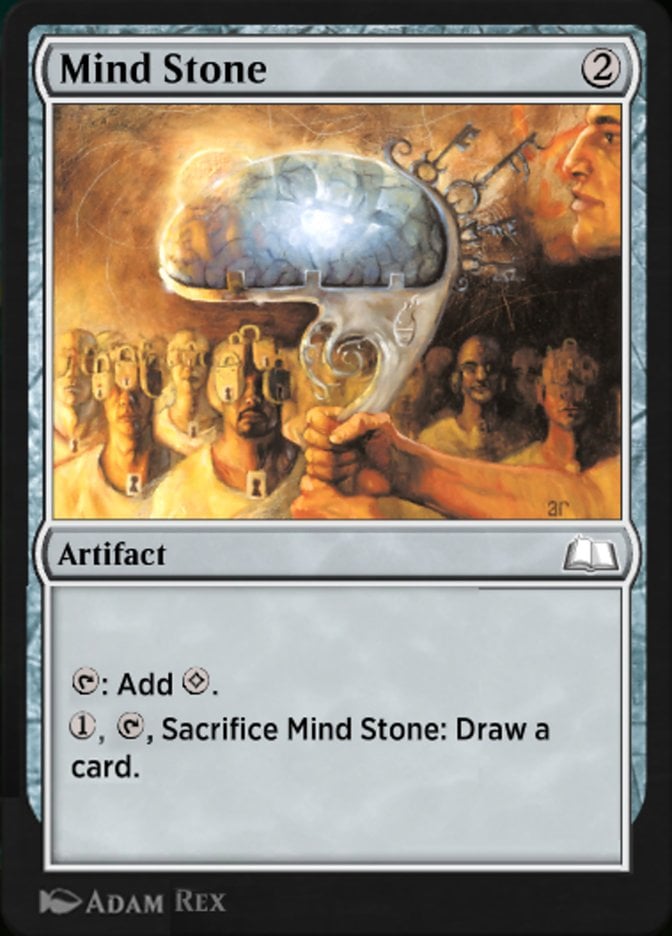
One of the simplest 2-mana rocks to see play, you can use Mind Stone to ramp your mana, immediately cash it in for a card, or sacrifice it later in the game when the mana ability isn’t necessary anymore.
#2. Arcum’s Astrolabe
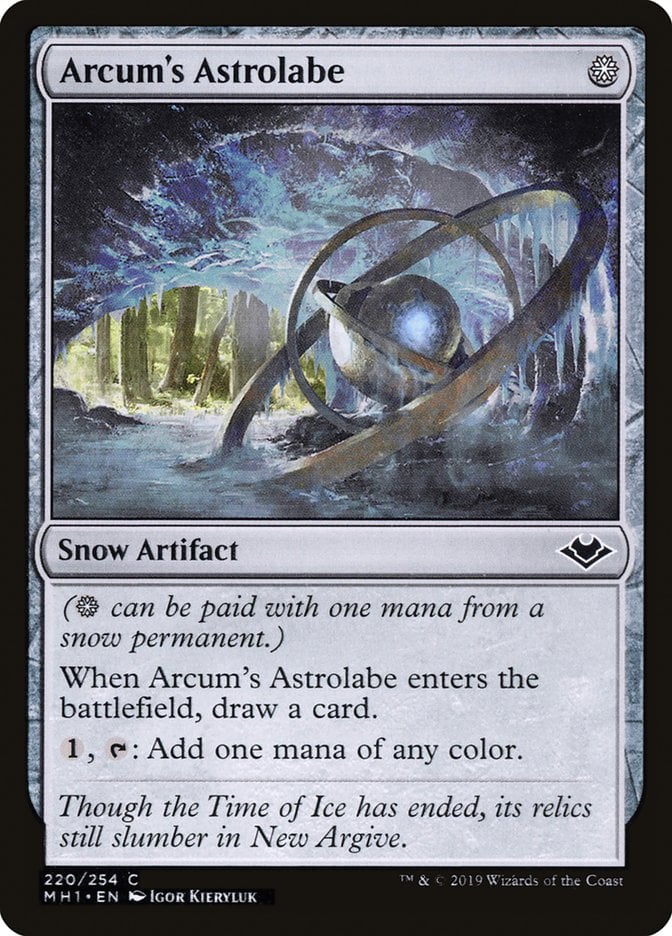
Arcum's Astrolabe had a very dominant run, considering that it’s a cantrip that any deck can run with a few snow lands. One mana to draw a card is something that only blue can do consistently, and the mana fixing this card provides is also really strong. Add in the snow synergies present in many Constructed formats, and you’re in for a threat. This card is currently only playable in Vintage and Commander, and it’s banned everywhere else.
#1. Mishra’s Bauble
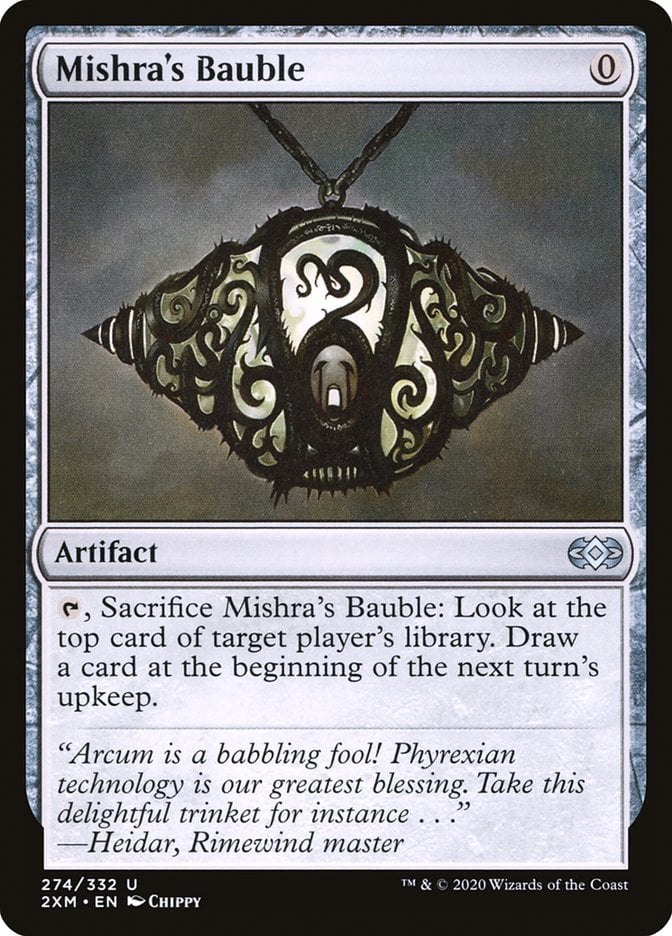
I don’t think Mishra's Bauble is better than Arcum's Astrolabe by any means, but Mishra's Bauble is playable (read: not banned). Zero-mana artifacts already see some play in Constructed formats due to affinity or prowess, and this card is also free to sacrifice. You gain some information and draw a card, while you also fill the graveyard for mechanics like delirium and delve.
Best Colorless Cantrip Payoffs
Usually, colorless cards like artifacts synergize with permanents that stay on the battlefield, using mechanics like affinity and improvise. But we can put colorless cantrips to good use, too.
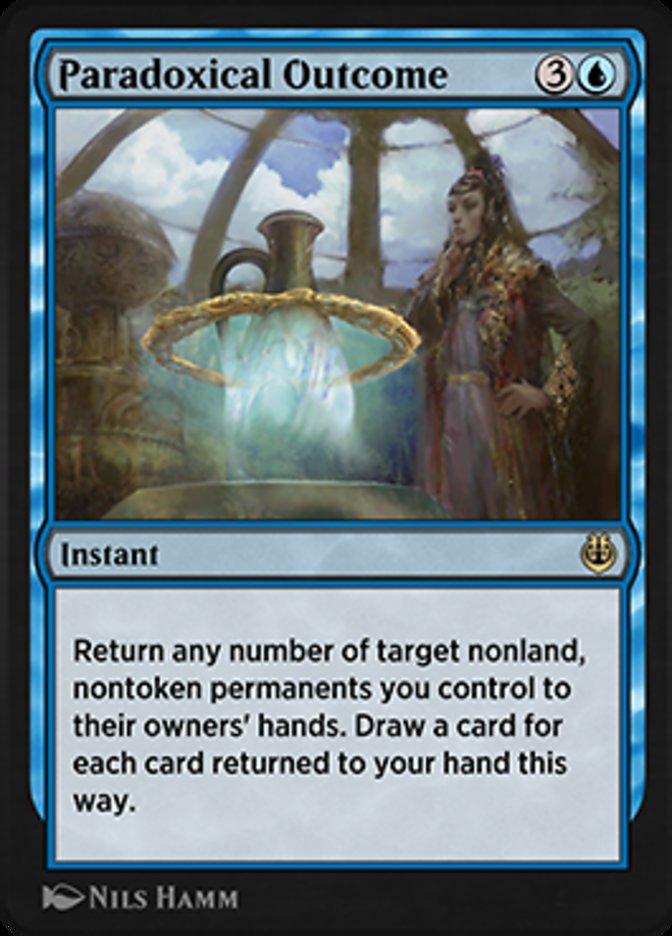
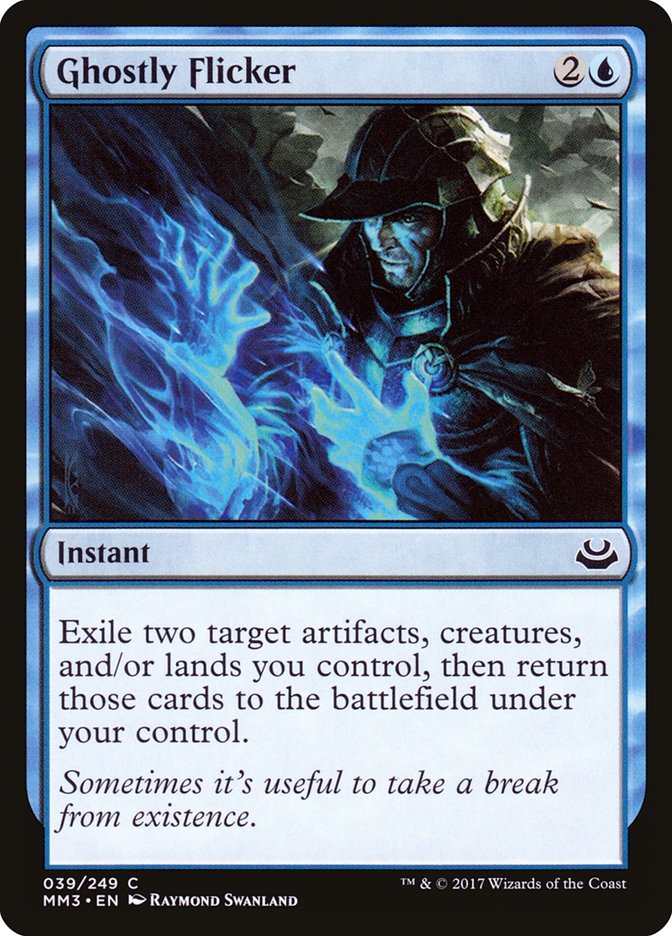
Cards like Paradoxical Outcome usually benefit from a lot from cheap permanent cantrips. During a turn when you go off, you want to return as many of these to your hand to draw some cards, cast them again, and draw even more cards. Flicker effects like Ghostly Flicker can benefit from these cantrip permanents when they’re on the battlefield.
Many MTG mechanics reward you for playing more than one spell each turn or drawing two cards a turn, like flurry or storm. Cantripping with colorless cards helps a lot in these cases, especially in white decks.
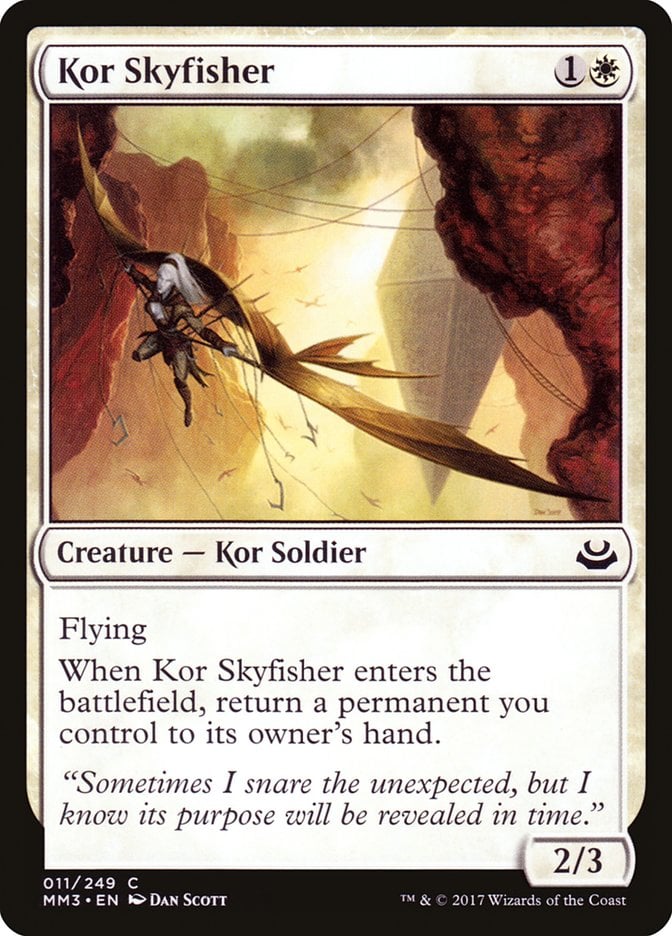
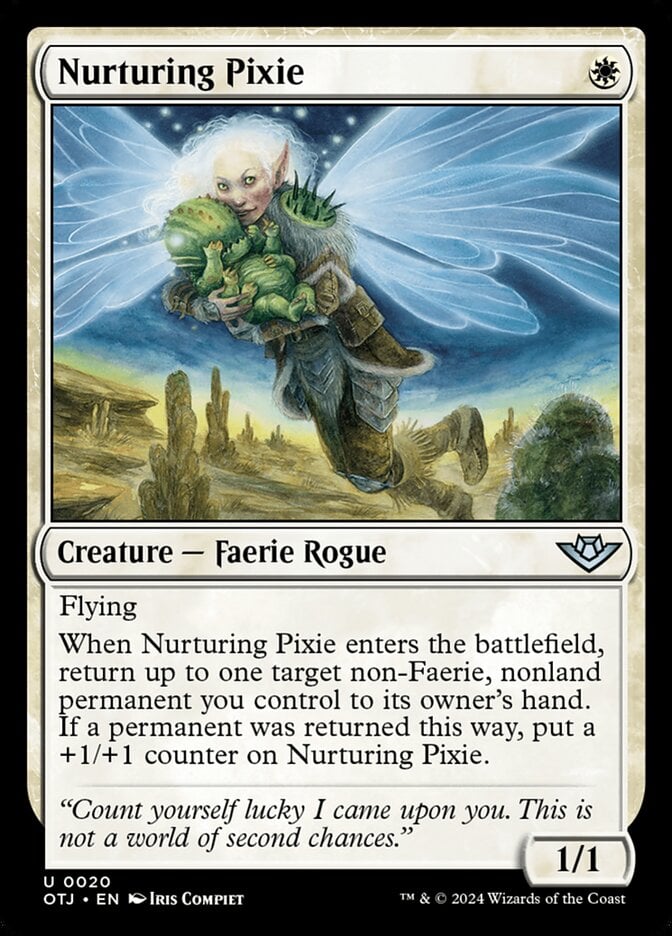
Pauper decks or Standard decks built around cards like Kor Skyfisher or Nurturing Pixie usually enjoy the interaction with permanents that enter the battlefield and draw cards.
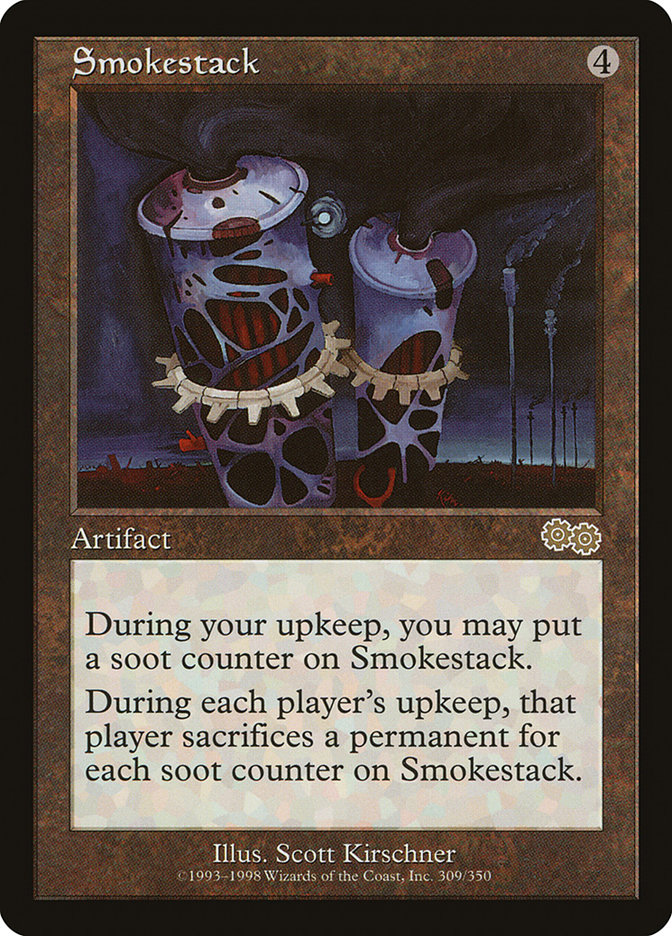
Decks built around Smokestack and aristocrats effects, where your cards cantrip or draw you a card when you sacrifice something, are very good to break the symmetry.
Cards that care about artifacts that enter or leave play, cards with prowess, or cards that care about historic permanents are a good fit for most colorless cantrips.
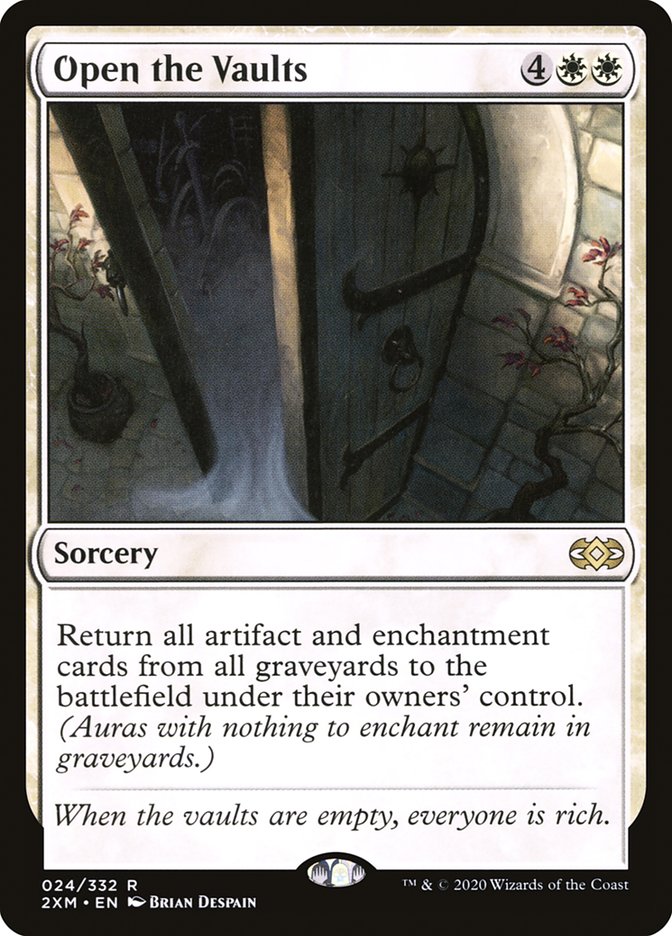
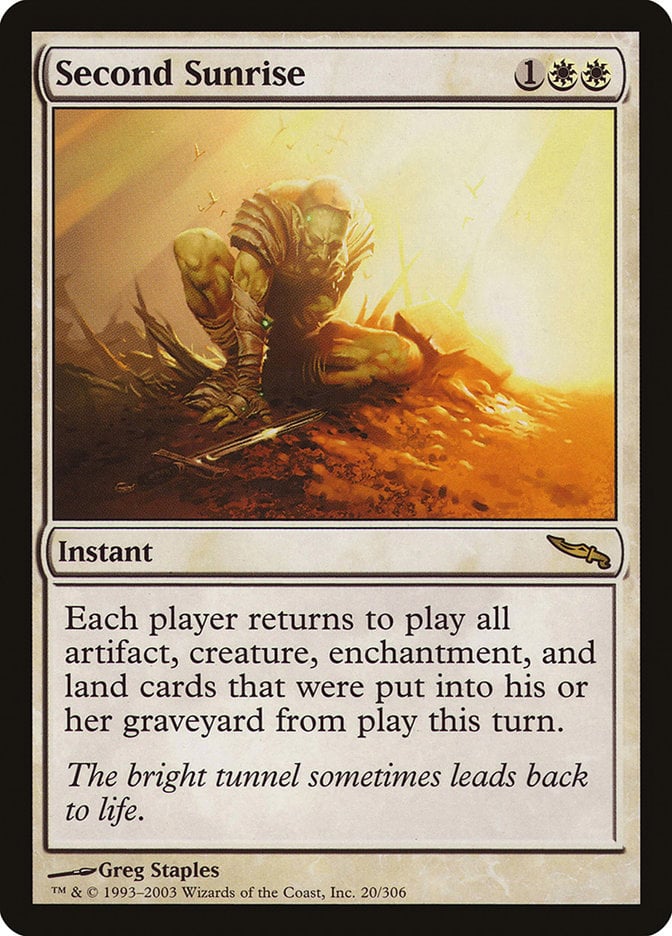
Finally, Pro Tour winning combos were designed around cards like these and recursion effects like Open the Vaults or Second Sunrise.
Wrap Up

Skyscanner | Illustration by Adam Paquette
Colorless isn’t well-known for having many cantrips like blue or red, and many artifacts draw you a card when they leave the battlefield instead of entering. Still, we’ve managed to build a nice list of colorless cards that cantrip, and many of these have seen some Constructed play, to the point that they were so ubiquitous that they needed to be banned.
What are your favorite colorless cantrips, guys? Do you play any of these in your Constructed decks? Let me know in the comments section below, or leave us something at Draftsim’s Twitter/X.
Stay safe out there, and thanks for reading!
Follow Draftsim for awesome articles and set updates:










Add Comment