
Last updated on August 11, 2026

Zhao, the Moon Slayer | Illustration by Toraji
Editor’s Note: This article was written before Badgermole Cub and Gran-Gran were banned from Standard.
Avatar: The Last Airbender just entered Standard, and while not every card is going to make waves, a handful have real potential to shape the format. From explosive ramp engines to efficient role-players and synergy pieces that slot into existing decks, there are some standouts worth paying attention to.
Intrigued? Let’s dive in.
What Are Standard Cards in Avatar: The Last Airbender?

Aang's Iceberg | Illustration by Matteo Bassini
The Standard-legal cards from Avatar: The Last Airbender come from the main set and have the set code TLA printed on them. These are the cards you’ll find in Play and Collector Boosters. They don’t include the borderless Source Material cards (available in Play and Collector Boosters) or the Jumpstart cards (also found in some Collector Boosters).
We’ll focus on the cards that are most likely to see real play in Standard. Instead of covering every single TLA card, we’ll highlight the standout pieces, the ones that have strong synergy, efficient stats, or clear roles in existing archetypes.
#25. June, Bounty Hunter
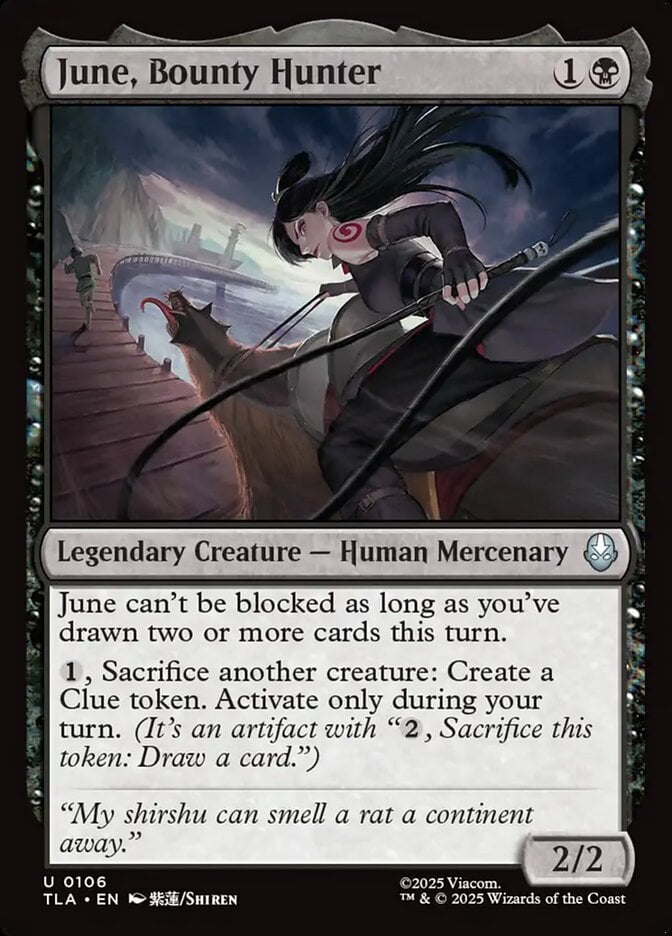
In Dimir () or any black-based value shell, June, Bounty Hunter becomes a steady source of pressure once you’ve drawn two or more cards in a turn, which makes it unblockable and lets you chip away without risking trades. The ability to sacrifice a creature to create a Clue pairs extremely well with cards that produce disposable bodies.
Sinkhole Surveyor is a standout here, since it can generate a 1/1 spirit token every time it attacks. That token becomes perfect fuel for June to turn each combat step into:
- Step 1: Attack
- Step 2: Make a token
- Step 3: Convert that token into a Clue
- Step 4: Draw deeper.
Over time, this lets black-based decks grind efficiently, control the pace of the game, and win through incremental, low-risk advantage instead of big swings.
#24. Momo, Playful Pet

As a one-mana flier with vigilance, Momo, Playful Pet naturally slots into token and convoke strategies since it can attack and still tap to pay convoke or waterbend costs afterward. What really makes it click in these shells is the versatility of its leaves-the-battlefield trigger. Whether you make a Food token for stabilizing, add a +1/+1 counter to keep pressure going, or scry to smooth your next draws, Momo always trades into value. In the same decks that enable Benevolent River Spirit, Momo helps to generate the small resources you tap to cast your big flier early, while it’s also a cheap, evasive threat that contributes to early board development.
#23. Benevolent River Spirit
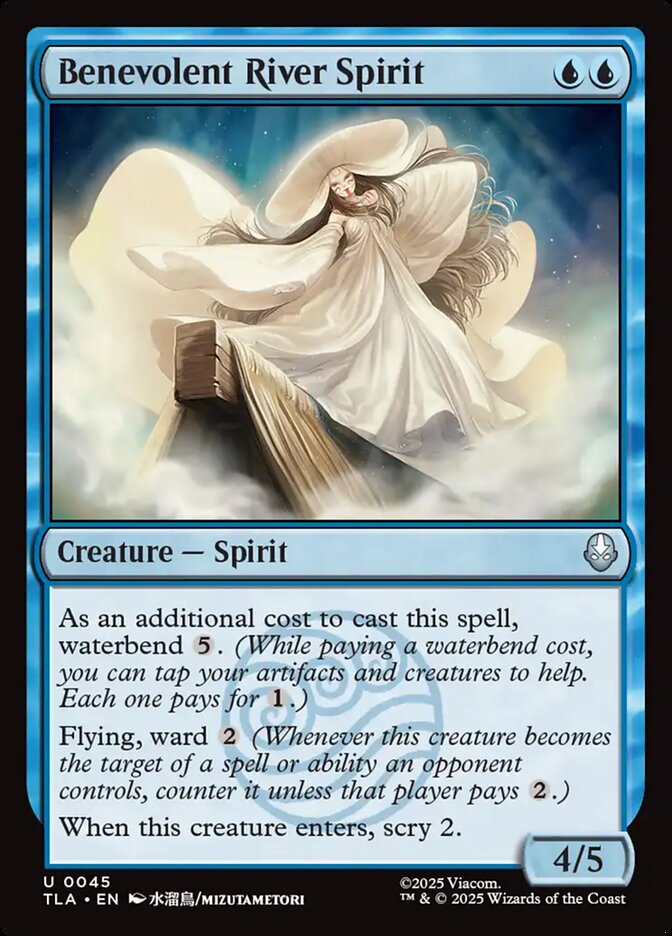
The waterbend 5 cost on Benevolent River Spirit might look steep at first, but in decks using cheap token-makers like Novice Inspector and Spyglass Siren, it becomes surprisingly easy to cast. Those artifacts and small creatures not only help to pay the waterbend cost, but they also naturally fit into the Jeskai () convoke playstyle many players are already exploring. What you get for that investment is a 4/5 flying body with ward 2 and an enters ability that scries 2, which helps to smooth your draws immediately. It’s a large evasive threat that’s hard to remove and slots neatly into token-heavy strategies that want value and staying power.
#22. Boomerang Basics

Boomerang Basics may look simple, but it’s quietly very strong in decks that care about value and repeated triggers. Not only can it bounce an opposing threat to slow the game down, but you draw a card if you target one of your own pieces, which turns it into a cheap way to reset key engines. You can rebuy something like Stormchaser's Talent to create another prowess otter and grow your board again. In slower, spell-heavy blue shells, that kind of efficient reuse is very good.
#21. Phoenix Fleet Airship

Phoenix Fleet Airship can snowball a board state fast by copying itself on any turn where you’ve sacrificed something, which makes it especially appealing in decks that naturally use sacrifice as part of their gameplan. It works well alongside cards that generate disposable material, like Clue makers or other token engines, to let you build up multiple copies quickly. Once there are enough copies, the vehicle eventually animates itself and turns into a real threat in the air. Pairing it with effects like Fanatical Offering keeps the sacrifice chain flowing.
#20. The Legend of Kyoshi / Avatar Kyoshi


The Legend of Kyoshi offers gradual but powerful payoff. It begins with card draw based on your strongest creature to push you toward a board with at least one sizable attacker. As it progresses, the earthbend trigger supports your mana and board presence by animating a land. Once transformed into Avatar Kyoshi, your lands gain trample and hexproof, which encourages aggressive pushes. It fits best in decks that already play creatures with built-in scaling, like +1/+1 counter shells.
#19. Aang’s Iceberg

Flash makes Aang's Iceberg a strong reactive play, which lets you temporarily exile a key creature, engine piece, or planeswalker at instant speed. It works as removal that also disrupts combat, punishes greedy attacks, or shields your board from a powerful ability. The waterbend option to sacrifice it later for scry 2 ensures it never becomes a dead card in the late game. This makes it ideal for controlling or tempo strategies in Azorius () and Bant (), especially those that value flexibility and the ability to keep mana open to respond rather than commit.
#18. Appa, Steadfast Guardian

A 3/4 flier with flash at 4 mana can completely change combat, much like Restoration Angel used to, and Appa, Steadfast Guardian fits that role perfectly. The ability to airbend your own nonland permanents means you can save your board from sweepers or removal, then replay them later for value. On top of that, recasting those cards from exile creates 1/1 ally tokens and turns every target into more board presence. It’s both a defensive trick and a value engine, all wrapped into a single, highly flexible threat.
#17. Wan Shi Tong, Librarian

Wan Shi Tong, Librarian brings a flexible late-game scaling threat with flash which lets you play it reactively. When it enters with +1/+1 counters, it also draws cards to provide immediate advantage. Its second ability triggers whenever opponents search their library, which gives even more growth and draw potential against fetch lands or tutor effects. In Standard, it works as a control finisher alongside counterspells and tempo tools.
#16. Toph, Hardheaded Teacher

Midrange mirrors often come down to who can trade resources more efficiently, and Toph, Hardheaded Teacher provides exactly that kind of sustained card advantage. When it enters, you can discard a card to return an instant or sorcery from your graveyard to turn weaker late-game draws into real value. Each spell you cast afterward triggers earthbend to give you an extra threat by animating lands as the game goes on. It works especially well with consistent, low-cost interaction and spells you’re happy to recast, which slowly pulls you ahead in grindy matchups where every card matters.
#15. Raven Eagle
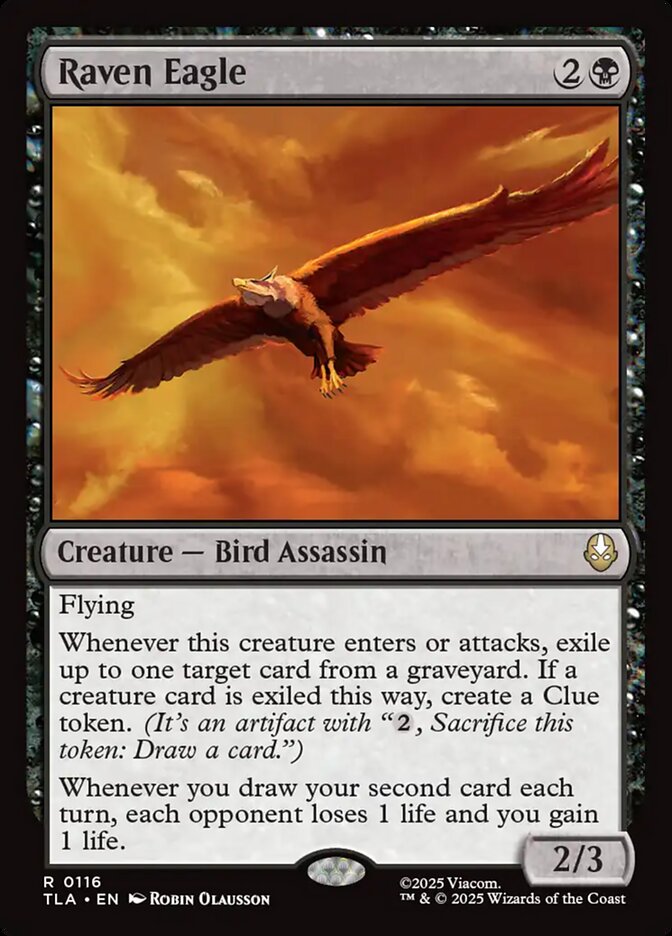
Raven Eagle fits beautifully into Standard decks that care about incremental advantage. Its enters and attack trigger can snipe key cards from graveyards, which slows recursion decks while it creating Clues for card advantage when it exiles a creature. Meanwhile, the second ability rewards you for drawing your second card each turn, turning slow value turns into small life swings. It plays exceptionally well alongside cards that naturally enable extra draws, like blue cantrips, Clues, or midrange value engines, so it’s a strong role-player in grindy Dimir and Esper () shells.
#14. Katara, the Fearless

Katara, the Fearless is a key engine in ally builds because it doubles triggered abilities from allies, which can quickly overwhelm opponents. It works especially well with Earth King's Lieutenant, since that card hands out +1/+1 counters on entry, and Katara ensures those counters stack much faster than usual. Katara fits naturally into Bant Allies, where each creature you cast adds pressure, board presence, and scaling.
#13. United Front

Flooding the board matters a lot in ally and token shells, and United Front gives you both bodies and a team-wide pump in one card. Since it creates X tokens and then puts a +1/+1 counter on every creature you already have, it scales incredibly well when you’ve spent the early turns building a board of small creatures or tokens. It’s a natural finisher for Selesnya () or Bant Allies, especially alongside pieces like Earth King's Lieutenant that reward going wide. When you cast it for even a modest X, it can turn a cluttered board into a lethal swing in one move.
#12. Earthen Ally

Back when allies last had a real moment in Standard, the strategy revolved around going wide and scaling small creatures into real threats. Earthen Ally fits right back into that playstyle perfectly. Its power grows based on the number of different colors of allies you control, so moving into 3 to 5 colors makes this a dangerous early drop. The earthbend 5 mode gives you a late-game finisher when boards stall, turning a land into a huge attacker.
#11. Momo, Friendly Flier

Momo, Friendly Flier may look small at first, but flying and cost reduction on your first flying creature each turn make it an excellent enabler for tempo strategies. Whenever another flying creature enters, Momo temporarily grows, which helps to push early damage. It pairs extremely well with Aang, Swift Savior and other evasive allies to make your curve smoother and more aggressive. Momo fits naturally in decks that want to stay airborne, chip in early damage, and keep momentum through constant board presence.
#10. Earth King’s Lieutenant

Earth King's Lieutenant is a cornerstone of ally synergy decks. When it enters, it places a +1/+1 counter on every other ally to turn small creatures into real attackers right away. Afterward, each new ally that enters fuels this card further with another counter. Combined with Katara, the Fearless, these triggers multiply and quickly snowball into a massive battlefield presence. It encourages you to build wide boards, curve out efficiently, and maintain pressure. Even late in the game, it can revitalize a weak board with meaningful buffs.
#9. Zhao, the Moon Slayer
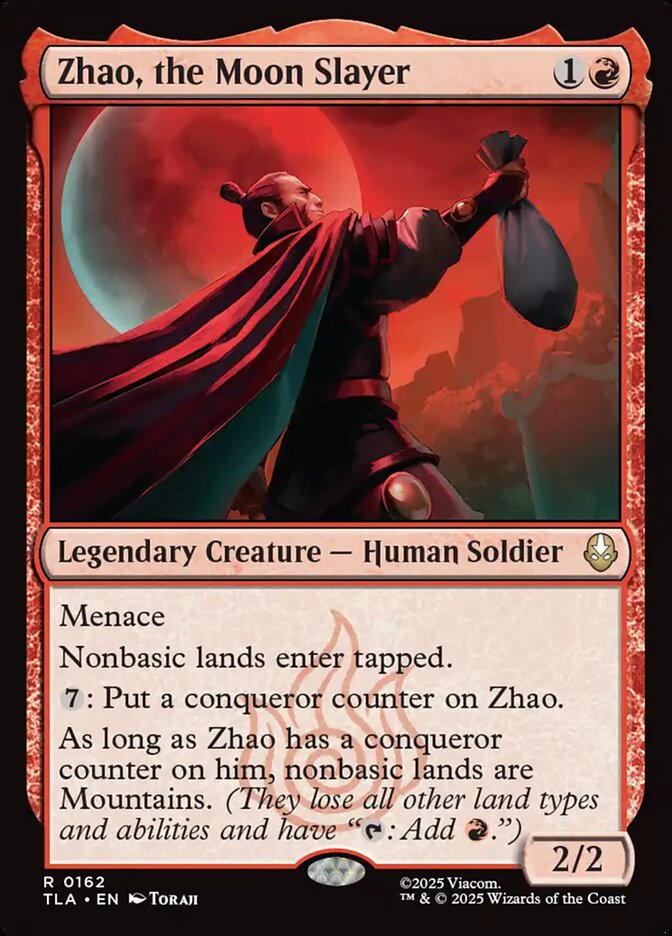
In a theoretical Standard format where mana bases are incredibly smooth and 5-color decks aren’t just viable but popular, Zhao, the Moon Slayer becomes a strong way to slow things down. By making nonbasic lands enter tapped, the card forces these greedy decks to stumble, which buys time for faster strategies to push damage. Once the conqueror counter is online, it effectively becomes the “Temu” Magus of the Moon that turns all those nonbasics into mountains and cuts off splash colors entirely. Aggressive red decks especially love this, since every delayed land drop translates into more pressure and fewer answers from the opponent.
#8. Earthbender Ascension

Earthbender Ascension allows you to blend ramp and combat scaling. It fetches a basic land on entry and triggers landfall-based growth when your lands enter the battlefield. Once the enchantment reaches enough quest counters, it hands out +1/+1 counters and trample, which supports midrange pushes. This card pairs effectively with Badgermole Cub to multiply mana output and keep the landfall engine rolling. In green decks that want to play long and snowball board advantage, Earthbender Ascension becomes a strong consistency tool.
#7. Aang, Swift Savior / Aang and La, Ocean’s Fury


Aang, Swift Savior works well in tempo decks thanks to flash and flying, which allows you to interact with opponents mid-combat or protect your board. Airbending a creature or spell temporarily removes threats or lets you recast your own creature for new triggers. If you manage to transform into Aang and La, Ocean's Fury, your entire tapped team scales with counters, rewarding aggressive swings. It fits best alongside allies like Katara, the Fearless and Earth King's Lieutenant, where every creature entering matters.
#6. Waterbender Ascension

With Waterbender Ascension, every point of combat damage your creatures deal advances your card draw plan. Once active, it becomes a repeatable source of advantage that keeps your hand full. Its waterbend ability also grants unblockability to let you push through tight board states. It pairs well with evasive creatures like Momo, Friendly Flier and tempo-oriented cards like Aang, Swift Savior to enable both early pressure and late staying power. Control and tempo decks in particular benefit from the steady card flow.
#5. Firebender Ascension

Firebender Ascension provides explosive potential in aggressive decks by granting a token upon entering and rewarding attack-based triggers. Once enough quest counters accumulate, it copies those triggers, which allows effects like pump abilities or life drain abilities to scale rapidly. It works best in red-based decks filled with creatures like Emberheart Challenger that want to attack every turn. Pair it with cards that trigger upon attacking, like those that create tokens or deal incremental damage. This enchantment quickly turns a modest board into overwhelming pressure if left unchecked.
#4. Beifong’s Bounty Hunters

Beifong's Bounty Hunters feeds off creature deaths and converts them into earthbend triggers that generate larger and larger land-based attackers. It synergizes with sacrifice strategies or creature-heavy shells that expect to trade frequently. The more powerful the sacrificed creature, the bigger the resulting land-creature becomes. Combine this with token makers or recursive creatures to ensure that you’re constantly fueling the effect. It fits best alongside cards like June, Bounty Hunter to keep board pressure and resource flow steady.
#3. Firebending Student

In aggressive red strategies, Firebending Student acts as both a threat and a mana engine. With prowess, it naturally grows when you cast burn, removal, or combat tricks, and its firebending trigger turns that power into extra red mana during combat. This makes every attack step a potential tempo spike, which allows you to follow up with a second spell mid-combat. It works especially well alongside cheap noncreature spells like Burst Lightning or Lightning Strike to let red decks keep applying pressure without ever running out of fuel.
#2. Mai, Scornful Striker

With Vivi Ornitier banned, it’s unclear whether the blue-red spellslinger decks will remain as strong as before, but the archetype has enough card draw, cantrips, and efficient burn that many players expect some version of it to survive.
That’s where Mai, Scornful Striker becomes an interesting hate piece. The first strike body trades cleanly, while the static ability taxes every noncreature spell for 2 life, which adds up fast in decks that chain spells for value. Mai fits neatly into black-based midrange or Rakdos () shells that prefer to pressure resources slowly to turn the opponent’s engine against them without the need to race it outright.
#1. Badgermole Cub

In ramp-focused Standard decks, our access to Llanowar Elves means acceleration matters more than ever, and Badgermole Cub takes that to another level. It earthbends a land on entry for early board presence, then effectively doubles the green mana your creatures produce, which lets you jump from early development straight into your top-end threats. Pairing it with cards like Earthbender Ascension turns every tapped creature into meaningful ramp. Between explosive mana and a scaling battlefield, the Cub becomes the reliable bridge from early game setup to overwhelming board dominance in mono-green ramp and multicolor midrange shells.
Bonus: Elfball in Standard

Elvish Archdruid | Illustration by Karl Kopinski
Creature (30)
Gene Pollinator x2
Llanowar Elves x4
Badgermole Cub x4
Bramble Familiar x4
Druid of the Cowl x2
Tender Wildguide x4
Fierce Empath x2
Elvish Archdruid x4
Craterhoof Behemoth x4
Sorcery (3)
Genesis Wave x3
Instant (3)
Enchantment (2)
Land (22)
Cavern of Souls x2
Forest x18
Three Tree City x2
This deck is all about building up a ton of mana fast and then ending the game in one huge swing. The main engine is Badgermole Cub, which gives you extra mana whenever you tap a creature for mana. With classic ramp creatures like Llanowar Elves and Elvish Archdruid, even a small board can suddenly generate massive mana. Once you have enough resources, the deck closes with Genesis Wave to flood the battlefield, or Craterhoof Behemoth to pump your entire team for a lethal attack in one turn.
Wrap Up

June, Bounty Hunter | Illustration by Shiren
Overall, the Avatar cards don’t feel broken for Standard. They’re fun, they’re flavorful, and they slot into existing shells without completely reshaping the format. Firebending, on the other hand, is definitely going to cause chaos in Commander and older formats, especially when cards like Hellkite Charger can turn “attack for value” into “infinite combat phases” real fast. But for Standard specifically, the only card that actually feels strong enough to matter on its own is Badgermole Cub. Even then, the Cub mostly supports the Craterhoof-style “go big or go home” plan, which can still get checked by black midrange removal or just a couple of awkward mulligans.
What do you think? Which cards from TLA do you think will have the most impact in Standard? Let me know in the comments below or over on the Draftsim Discord.
Make sure to follow us on social media so you don’t miss what’s next.
Thanks for reading. Take care, and see you next time.
Follow Draftsim for awesome articles and set updates:










Add Comment