
Last updated on February 5, 2026

Celestial Reunion | Illustration by Serena Malyon
Greetings, planeswalkers! Lorwyn Eclipsed has been out for about two weeks now, so it’s time for another Ultimate Draft Guide. This set has been polarizing for many people, and it’s really easy to end up with a bad deck if you don’t follow the hidden rules of the format. I’m here to help sort those out and make sure you’re ending up where the drafts are supposed to take you.
Mechanics Revisited
Cinder Strike | Illustration by Joshua Raphael
Vivid
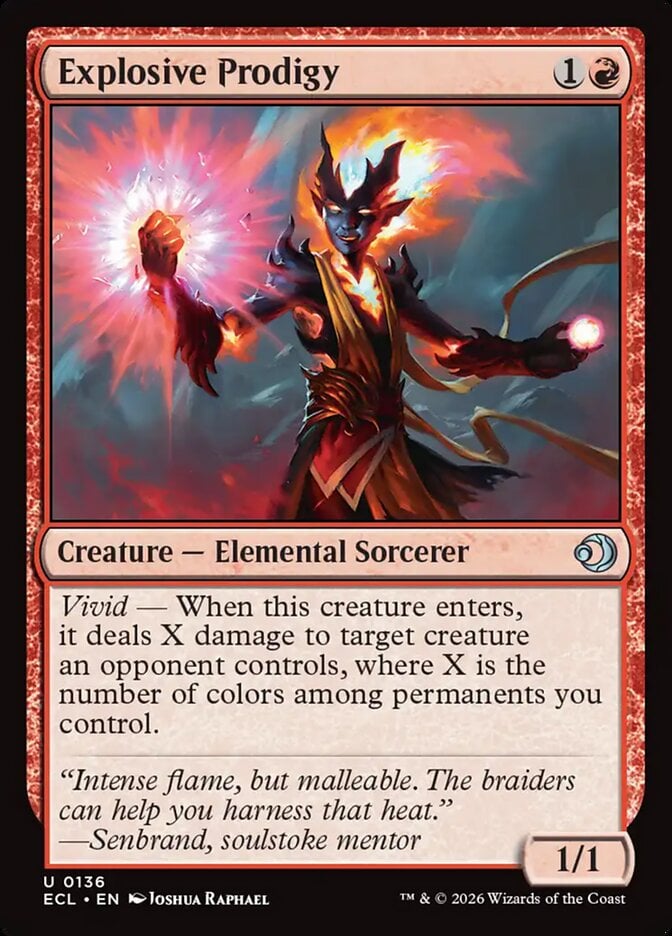
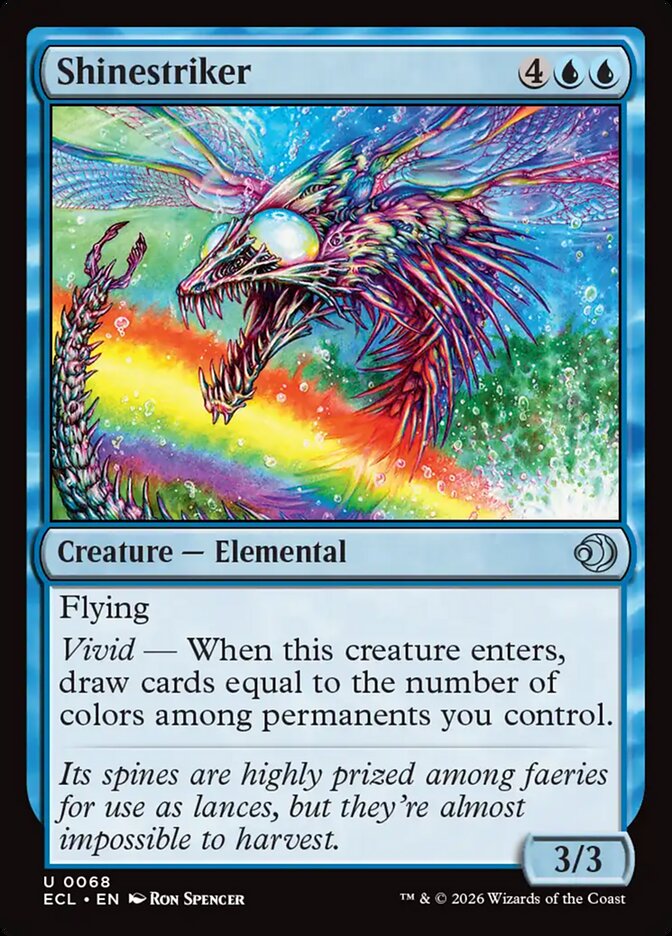
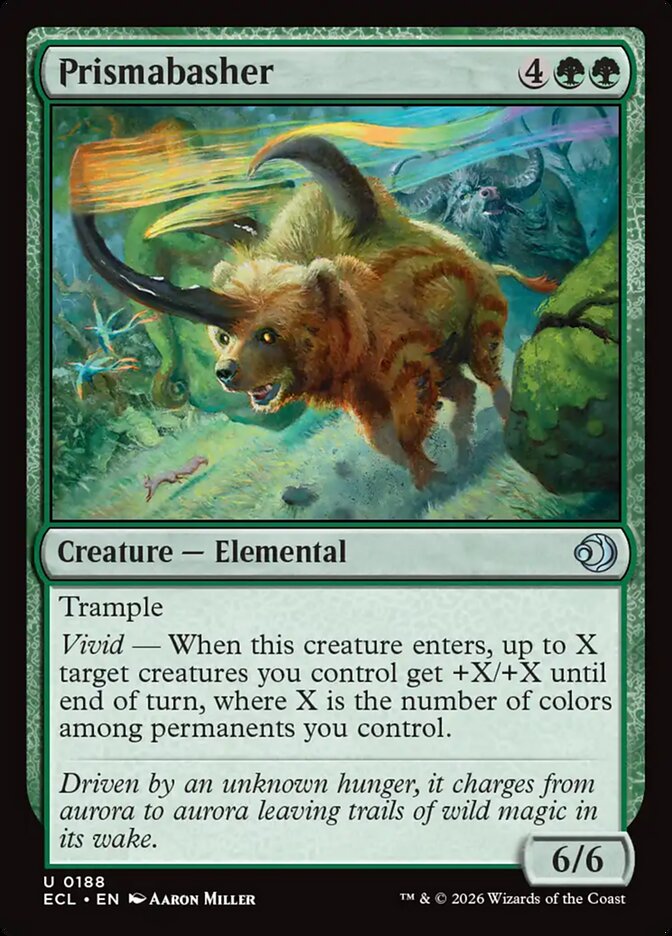
I like to look at vivid in two ways; there are vivid cards, and vivid decks. Vivid cards are of course any card that says “vivid” and gets better as you add more colors. One thing that has become clear is that many of these are actually pretty solid without much support. Explosive Prodigy, Shinestriker, and Prismabasher for instance will rarely need more than X = 2 or 3 to feel great.
On the other hand, it’s fully possible to dedicate your deck to vivid in this format. This usually involves having lots of strong vivid uncommons, and several colorful enablers like Shimmerwilds Growth, Puca's Eye, and Foraging Wickermaw. This style of deck also makes the best use out of cards like Kithkeeper, Rime Chill, Shimmercreep, and Wildvine Pummeler, which are some more demanding vivid cards.
Blight
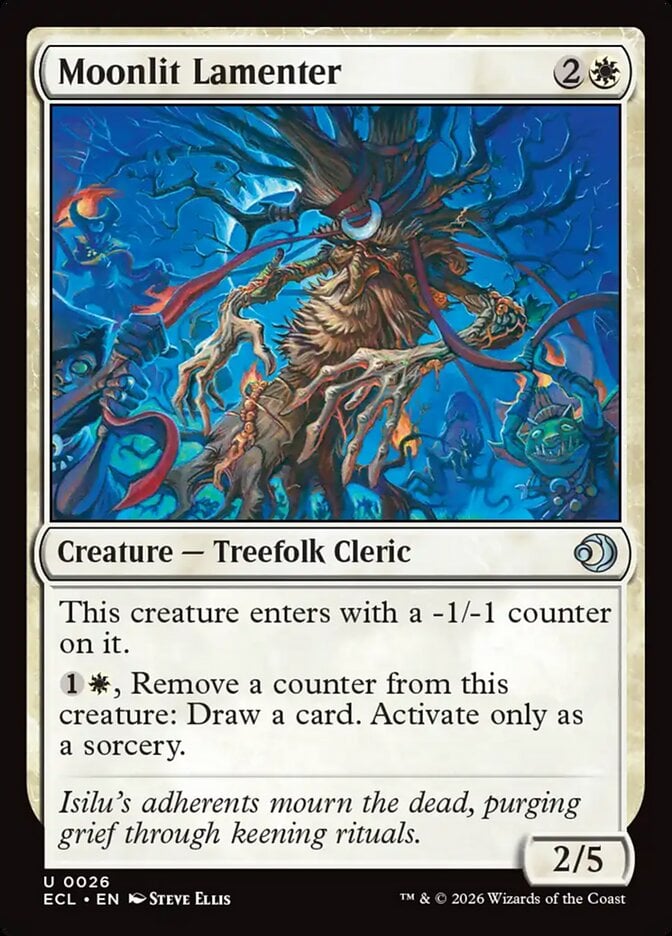
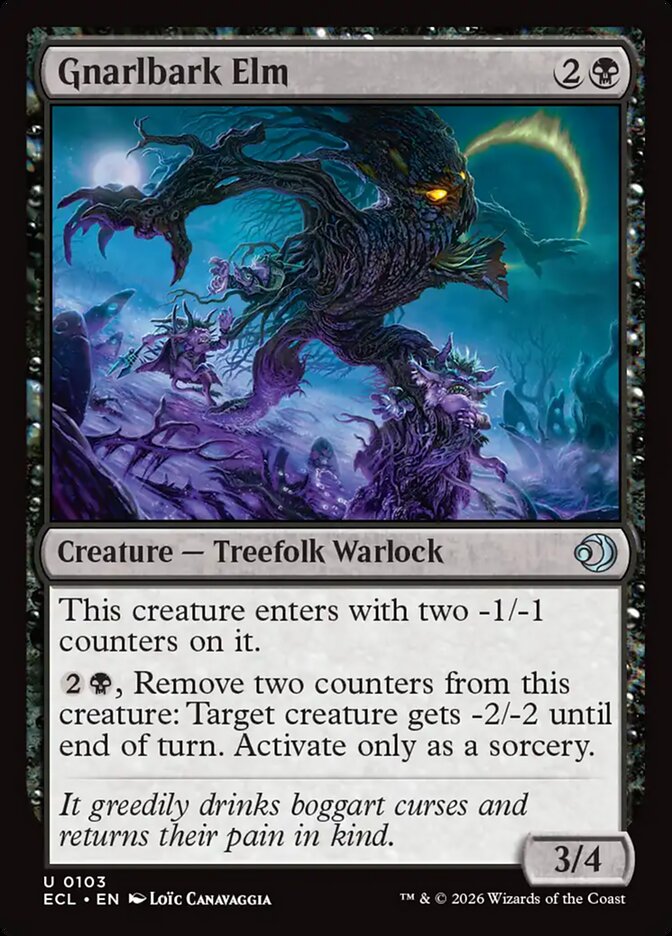
Blight is a fun mechanic to play, but it’s more punishing in practice than it looked on paper. The main issue I’ve experienced with blight is a lack of consistent -1/-1 counter dumps, or struggling to blight efficiently after my Moonlit Lamenter or Gnarlbark Elm eats a timely removal spell. This has been very bad news for goblins in particular, which has clearly been the worst of the five main creature types.
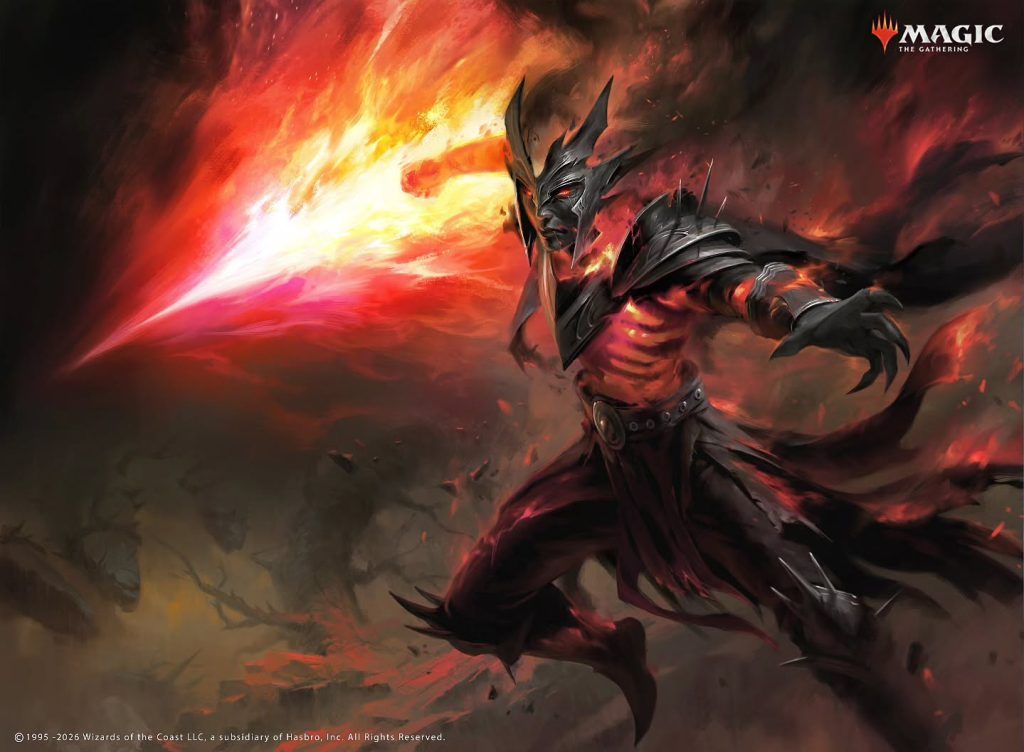
It’s not all bad news for blight though, as many of the spells with blight (i.e., Cinder Strike, Pyrrhic Strike) have been excellent. As such, it has mostly played out as a support mechanic on a handful of cards, rather than something to build your deck around. That can still happen sometimes, but less often than I expected.
Changeling
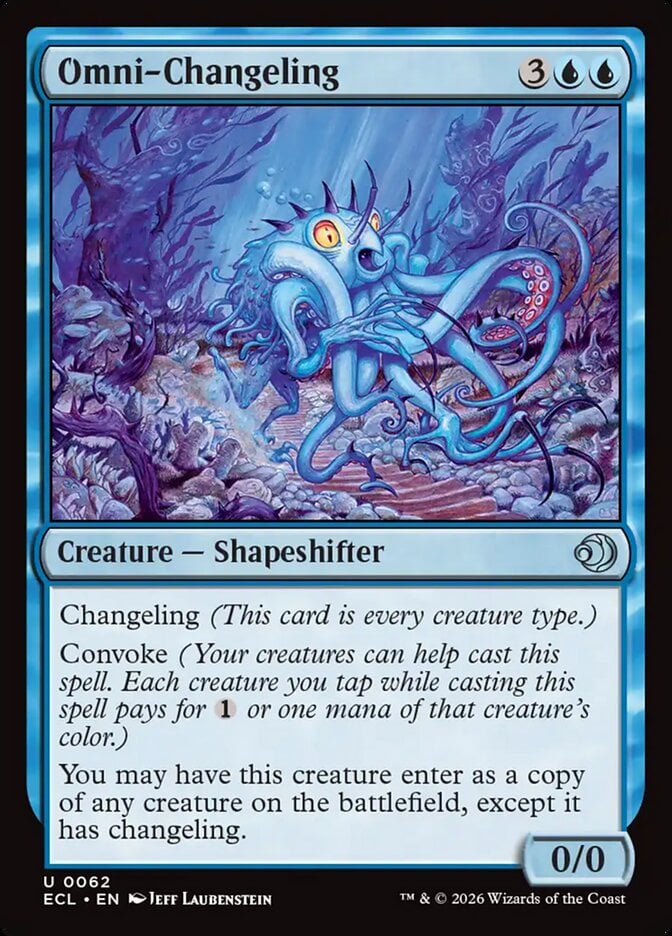
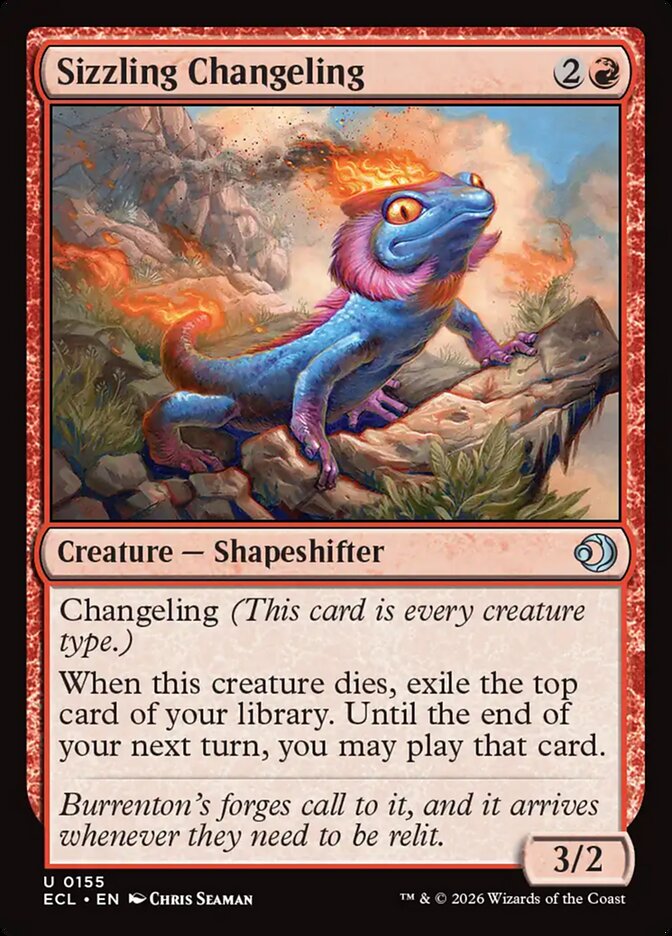
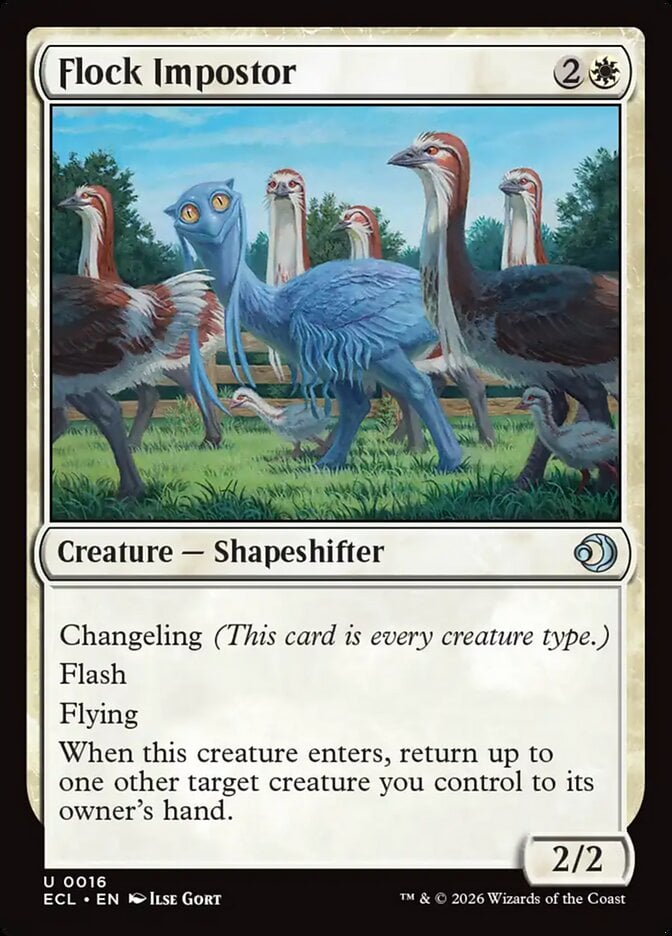
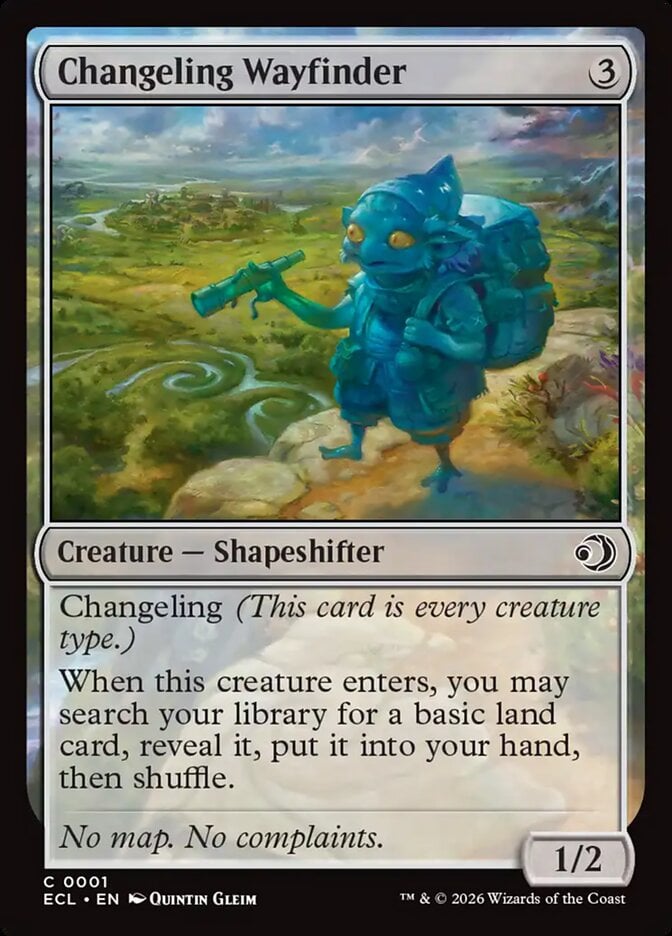
Most changelings range from filler to good, though Omni-Changeling, Sizzling Changeling, Flock Impostor, and Changeling Wayfinder are some of my favorites. They’re helpful for staying largely in one creature type, which many of this set’s uncommons and rares make highly desirable. Changelings also work with cards that care about unusual types like Tend the Sprigs, Illusion Spinners, and Boldwyr Aggressor.
Despite their utility, changelings are almost never the strongest card in early packs. Try to scoop them up later after starting with bombs, payoff cards, or removal spells first.
Kindred
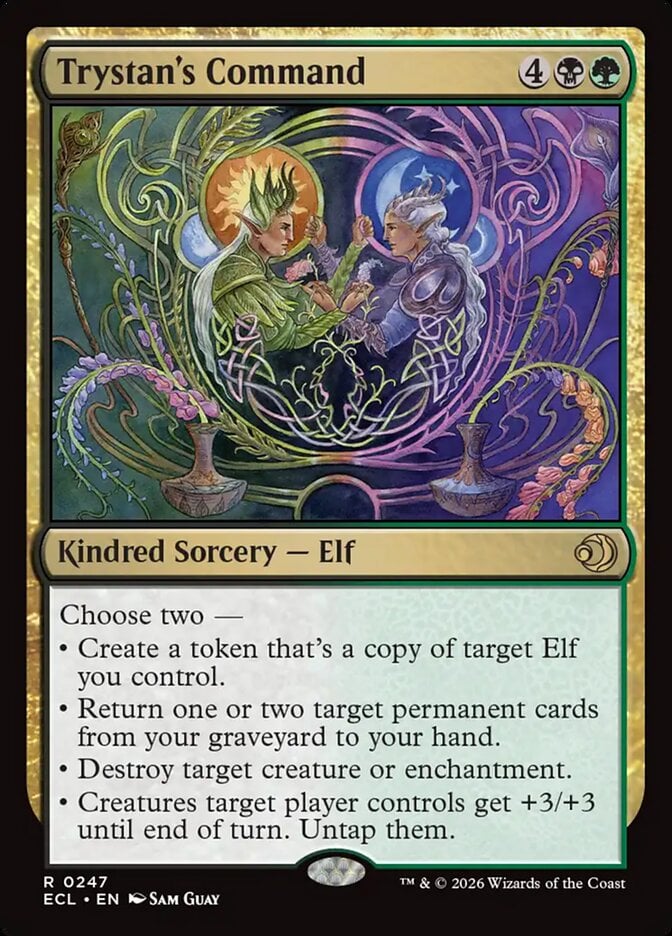

Kindred’s presence in Lorwyn Eclipsed is felt largely through two cycles: a cycle of uncommon tribe payoffs, and a cycle of rare 2-color Commands. All the uncommons are pretty strong in their respective archetypes, and the rare Commands range from good to among the most broken rares in the set (Trystan's Command and Ashling's Command).
It’s worth remembering that kindred cards count as the creature type listed. This will occasionally enable cool things like returning Trystan's Command with Morcant's Loyalist, beholding Brigid's Command for Kinsbaile Aspirant, and more.
Convoke
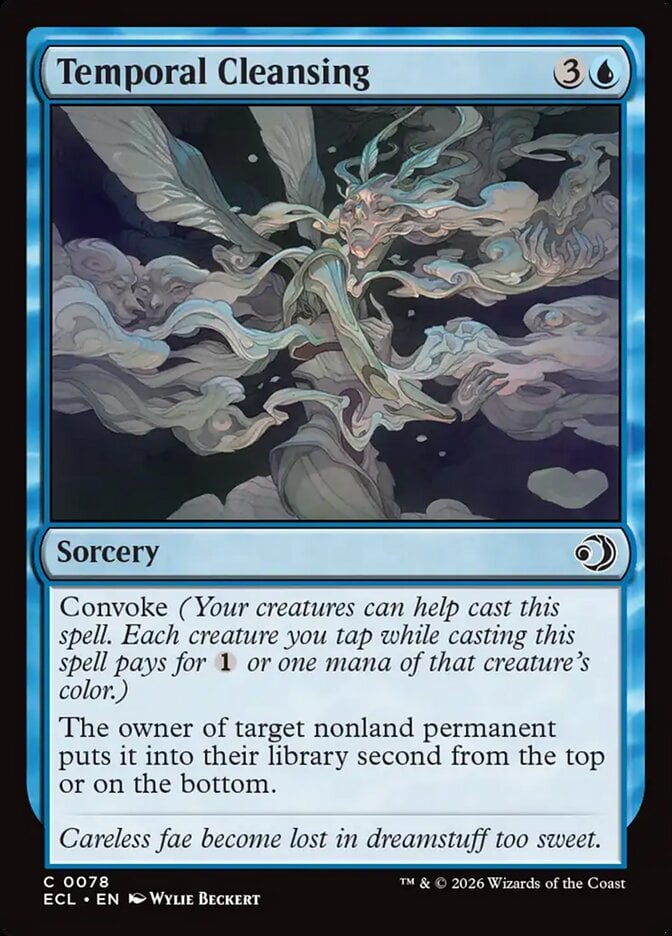

Convoke has played out quite nicely in Lorwyn Eclipsed. You’ll make the most use of it in merfolk, as they often go wide and have many creatures that care about when you tap them. Even outside of merfolk, I’ve been impressed by cards like Temporal Cleansing. One neat wrinkle is that convoke cards have stealth synergy with the elemental “4 or more” theme, as convoke cards are expensive spells that you can cast on the cheap.
Behold
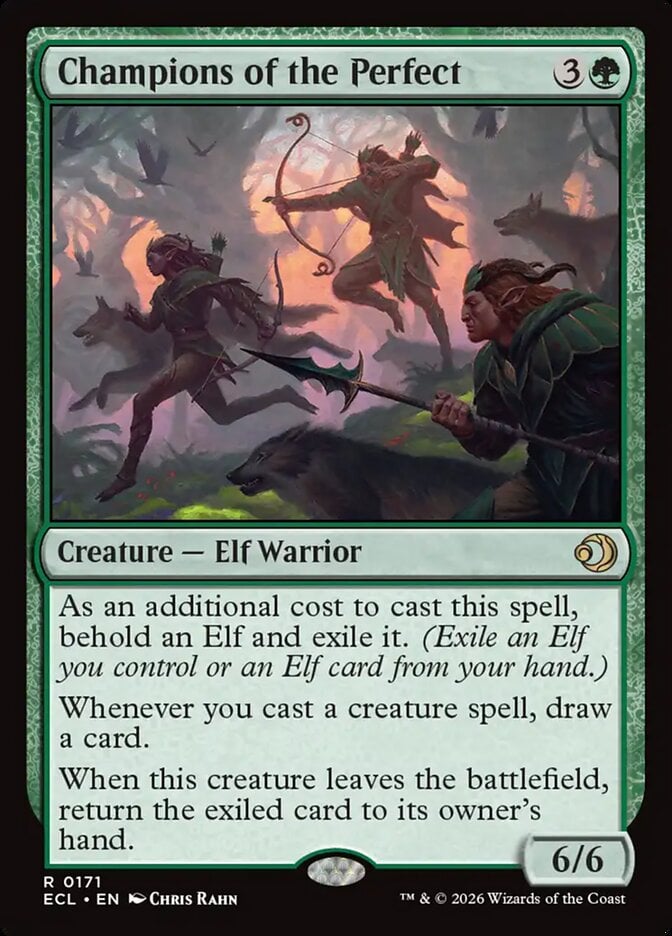
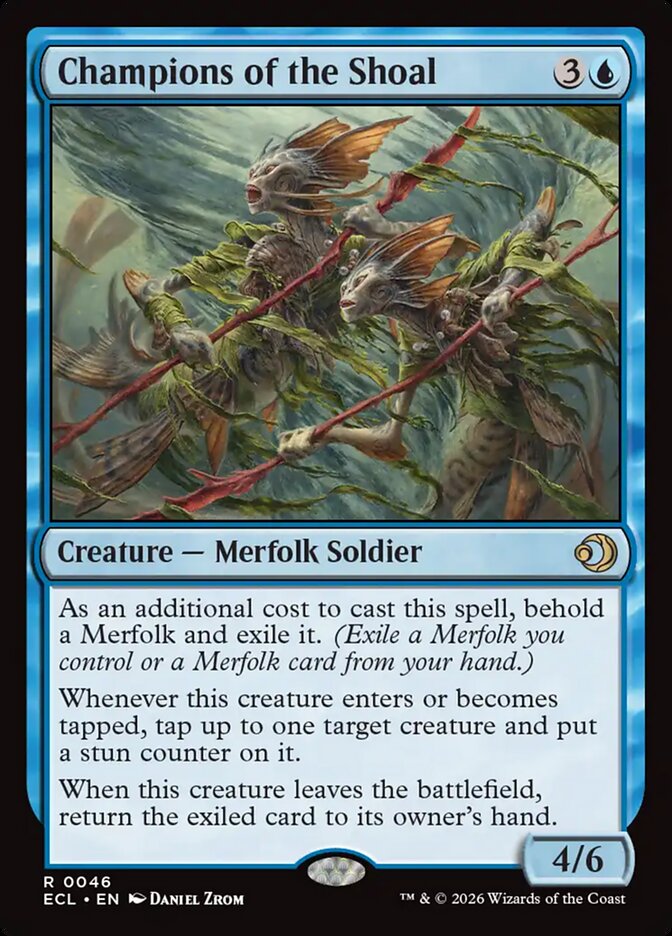
The Champions cycle has been generally strong. Champions of the Perfect and Champions of the Shoal are bomb rares, while the other Champions vary from okay to good. Champion of the Weird is probably the highest variance one because it requires not only a specific deck but also particular board states to be good. When it is, it feels incredibly busted; this usually involves combining it with cards that care about -1/-1 counters, like Reaping Willow and Gnarlbark Elm.
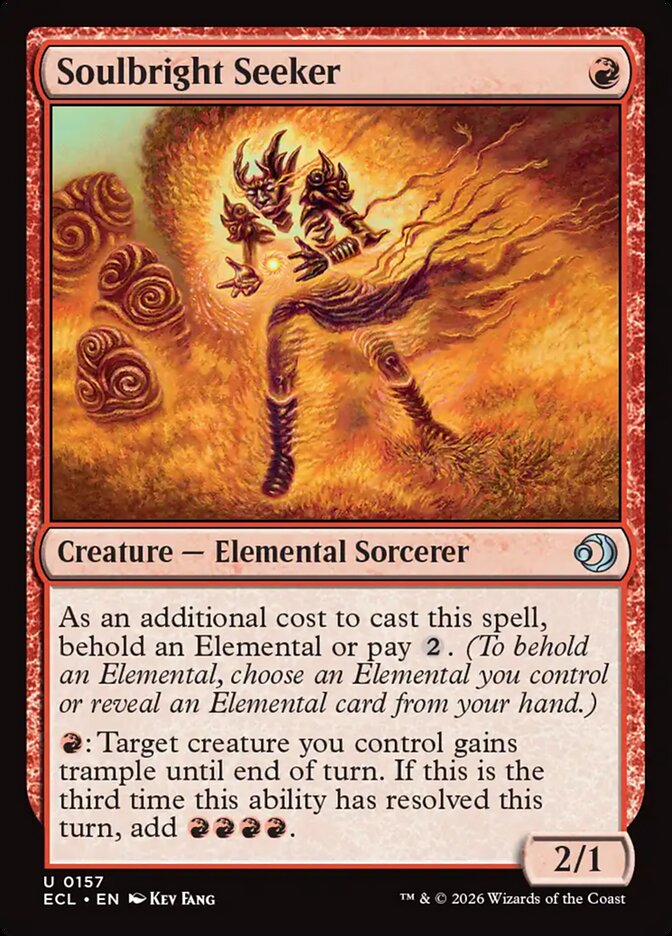
As for the uncommon cycle, most of those are pretty strong as well in their archetypes. Soulbright Seeker is the only dud for me, as elementals decks tend to go too big to want Jackal Pup. It’s also rough to use it as a mana dork without being nearly mono-red, as you’ll need before it starts to add mana, and it doesn’t color fix either.
Double-Faced Cards and Evokementals


There aren’t many double-faced cards in ECL; just Eirdu, Carrier of Dawn / Isilu, Carrier of Twilight and a cycle of rares. Each creature type gets their own double-faced rare that works well in that archetype. Evoke is also represented on 5 mythic elementals, or “Evokementals”, which are all in color pairs outside the big five archetypes.
I’ve grouped these together to touch on an important point that I missed in my last guide. What these DFCs and Evokementals share is that they’re essentially multi-level cards, depending on your mana base. You can “unlock” most of their potential with extra colors, but you can also run them as slight weaker or less flexible cards if you can’t utilize their full potential.
Here’s how I’d rank each of them:
Transforming Creatures
- Brigid, Clachan's Heart / Brigid, Doun's Mind: Basically a bomb in GW. Always play it if you’re white.
- Sygg, Wanderwine Wisdom / Sygg, Wanderbrine Shield: Another bomb if you’re WU. Never cut if you’re blue.
- Grub, Storied Matriarch / Grub, Notorious Auntie: You’ll need actual goblins for this one to be good, regardless of your colors. The ability to flip Grub also helps a ton, as you can loop its gravedigger mode in slow games.
- Ashling, Rekindled / Ashling, Rimebound: Ashling depends more on access to blue mana than Brigid or Sygg, as it’s just Discerning Peddler with +0/+1 without the right mana. Ashling’s excellent if you’re actually UR, though.
- Trystan, Callous Cultivator / Trystan, Penitent Culler: Trystan’s excellent base stats plus deathtouch means you’re never cutting it in any green deck. Its extra form is also the most underwhelming, and it even carries a slight risk of decking you if you flip it too many times. That’s not to say Trystan isn’t excellent in BG Elves though, as the mill can turbo-charge cards like Morcant's Eyes.
Evoke Elementals
- Catharsis: Boros () is barely a thing in this format, and its mode is useless in other decks. The white mode fares better, so I consider this to be a passable card for any white deck (though hardly a bomb).
- Deceit: Both of Deceit’s modes are pretty good, though neither has clear priority. You’re happy to play this either way, and you’d really love to just be UB if possible. Sultai () can also swing it by using green fixers as a way to get later on.
- Emptiness: Another Evokemental with two solid modes, though the one is a tad more situational. It’s in awkward colors, so I often end up playing it for just one or the other.
- Vibrance: I’d still play this without access to red mana, but I definitely prefer Flametongue Kavu to a simple land searcher. It’s incredible if you have both, of course.
- Wistfulness: The Catalog mode is generally superior to Naturalize in Limited, which makes this a blue card first and foremost. I’d still recommend playing it if you’re either color because a 6/5 for that occasionally kills Liminal Hold and Blossombind is more than solid.
Set Overview
Eclipsed Merrow | Illustration by Chris Rahn
So, what’s Lorwyn Eclipsed Limited about anyways? I’ve played a fair amount of the format now in Draft/Sealed, and I have some thoughts.
The Big Five
One thing I stressed in the last guide is the existence of “The Big Five”, which are 2-color pairs/creature types that occupy much of what the set does. These are GW Kithkin, WU Merfolk, BR Goblins, UR Elementals, and BG Elves. I’ll detail how to build them, draft them, and play against them later. Many of the set’s best rares and uncommons care deeply about these tribes, and they inform how you draft/build in Lorwyn Eclipsed.
Other Decks
While I mentioned five other archetypes, in practice most of them barely exist in Draft or Sealed. Let’s recap with the five listed archetypes:
- Gruul () Vivid Midrange
- Simic () Vivid Ramp
- Boros () Blight Aggro
- Orzhov () Blight Midrange
- Dimir () Flash/Faeries
The vivid decks kind of exist, but vivid is often a subthemerather than the main thing you’re doing. Dimir Faeries meanwhile relies almost entirely on whether your fellow drafters pass you multiple copies of Voracious Tome-Skimmer, which is its only strong payoff. There are others available (Nightmare Sower, Illusion Spinners, Unwelcome Sprite), but they’re fairly underwhelming cards.
As for the blight decks, these overlap considerably with BR Goblins in practice. While there are indeed some strong white -1/-1 counter cards (Moonlit Lamenter, Slumbering Walker), all of them are uncommon or above. Most of the commons that work with -1/-1 counters have been rather lackluster. Reluctant Dounguard and Heirloom Auntie play out like sad filler in most games.
Another problem with these unconventional archetypes is that their signposts aren’t even real signposts. As hybrid cards, many drafters can draft and play them, so you won’t reliably table Reaping Willow even if you’re the only WB player at the table. Voracious Tome-Skimmer is the main exception to this rule, though I’ve yet to pull UB Flash off in practice.
Format Pace
Lorwyn Eclipsed is pretty slow. Like, way slower than I was expecting. Kithkin and Merfolk are the most aggressive archetypes, but they won’t usually run you over in the way that aggro did in sets like Phyrexia: All Will Be One and Murders at Karlov Manor. Elves are probably the next most aggressive deck (and fall into the category of “assertive midrange”), while Goblins and Elementals are generally durdly.
In general, Lorwyn Eclipsed seems to lend itself to board stalls due to creature toughness slanting. There are a lot of butt-favored creatures in this set, which could explain all the staring contests I’ve seen playing it. Feisty Spikeling and Mischievous Sneakling usually have but a turn or two before becoming completely outclassed on board.
This slowness can lead to grindy games, but it often instead leads to a contest of who did “the thing” first. Did you pop Morcant's Eyes for seven elves after a board stall? Congratulations, you likely win. Or how about a sick curve out with 2-drop merfolk, 3-drop merfolk, into Merrow Skyswimmer, then next turn playing another Skyswimmer and convoking Unexpected Assistance for free? If you didn’t win, you’re at least likely quite ahead!
The most important cards in games are often bombs, typal payoffs, and answers to those things. Coming back from a Gloom Ripper or Sunderflock after an on-type curve out is extremely difficult, and indeed these are both cards I’m slamming P1P1 if possible.
Fliers
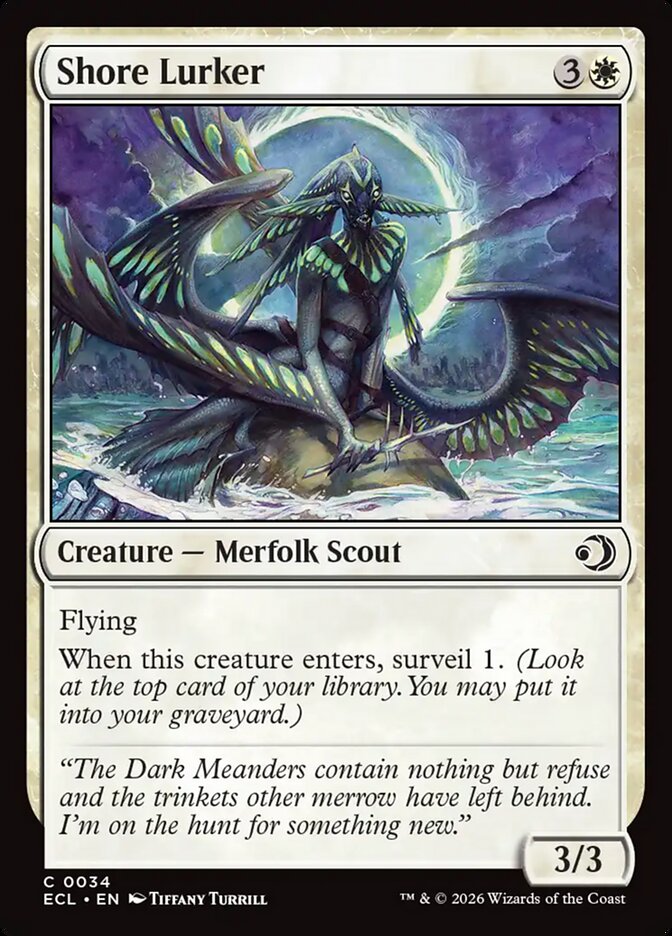
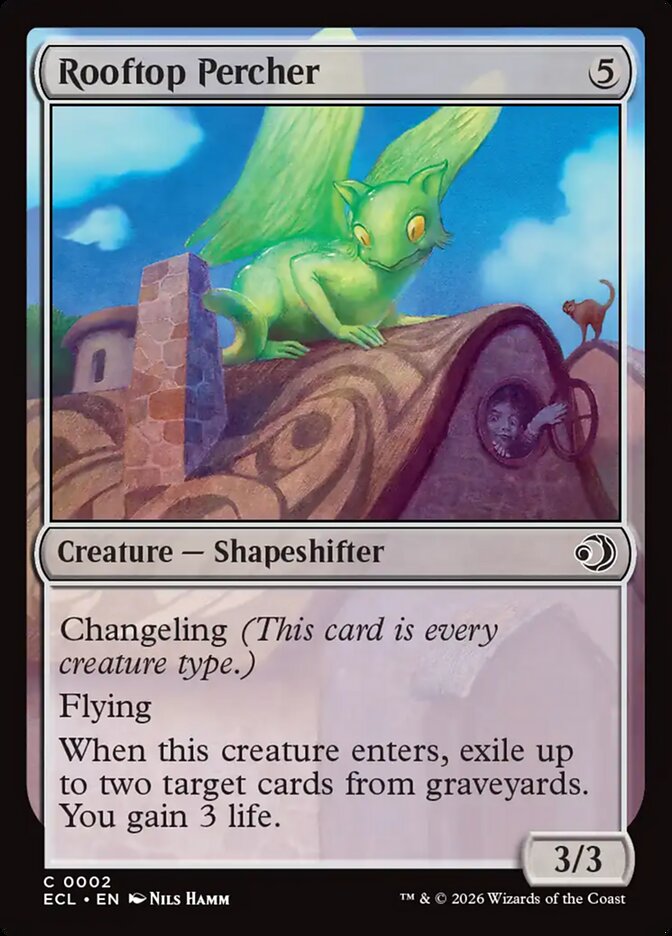
Fliers have been quite good in Lorwyn Eclipsed, from my experience. Even mediocre-looking cards like Shore Lurker and Rooftop Percher put in a ton of work. They’ll often eat removal spells due to a lack of efficient blockers, or your opponent’s inability to race through congested boards in time. This can clear a path for latter creatures to stick around, or simply win the game if a flier goes unanswered long enough.
Flood Woes
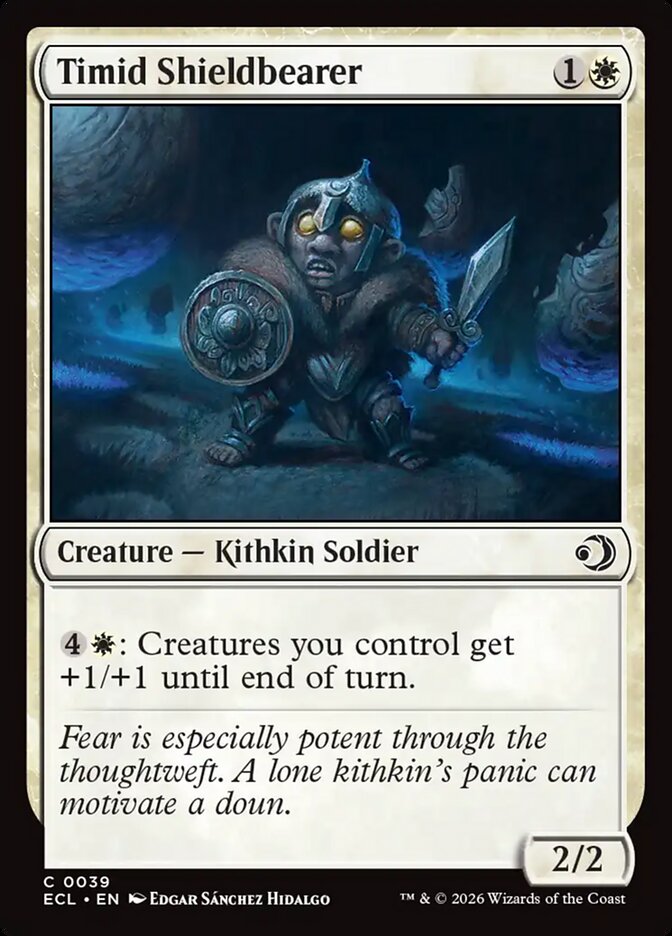
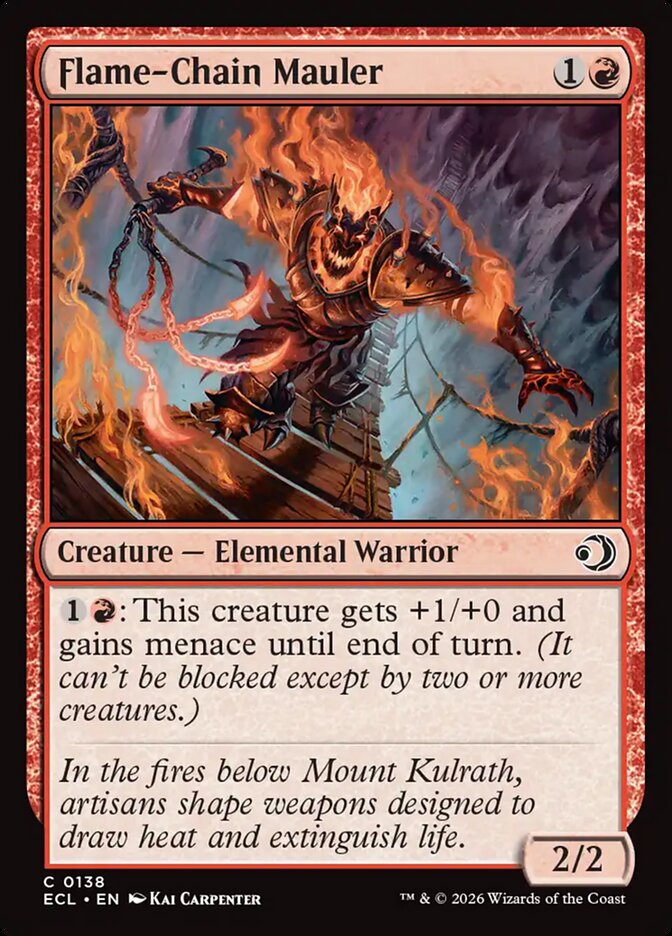
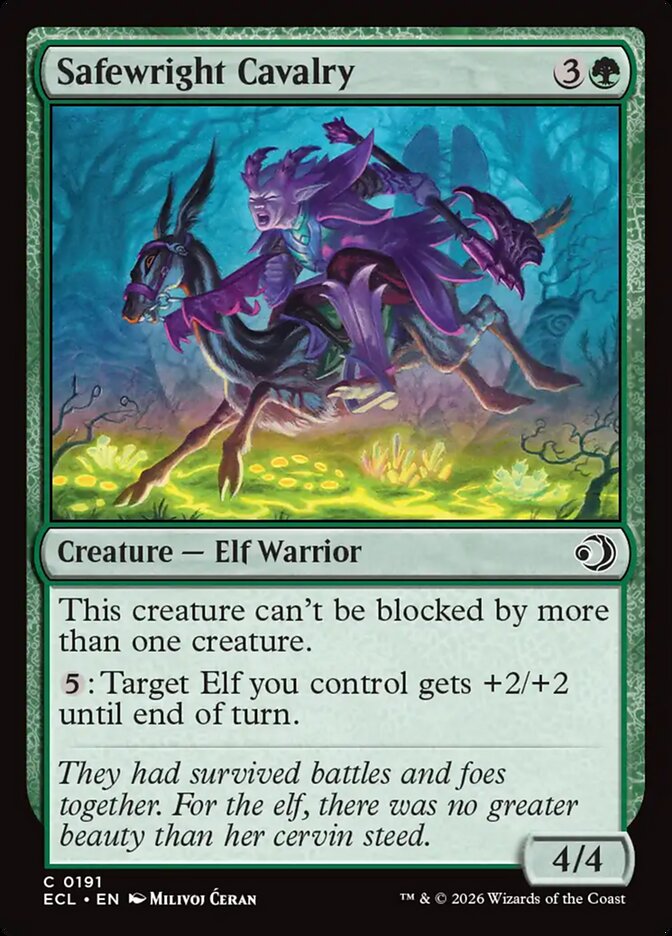
Lorwyn Eclipsed is also shockingly lacking in good mana sinks. There are no common dual lands in this set, which made flooding much less painful in Avatar and Spider-Man. Commons with good activated abilities are quite valuable for this reason; Timid Shieldbearer, Flame-Chain Mauler, and Safewright Cavalry all play better than they look.
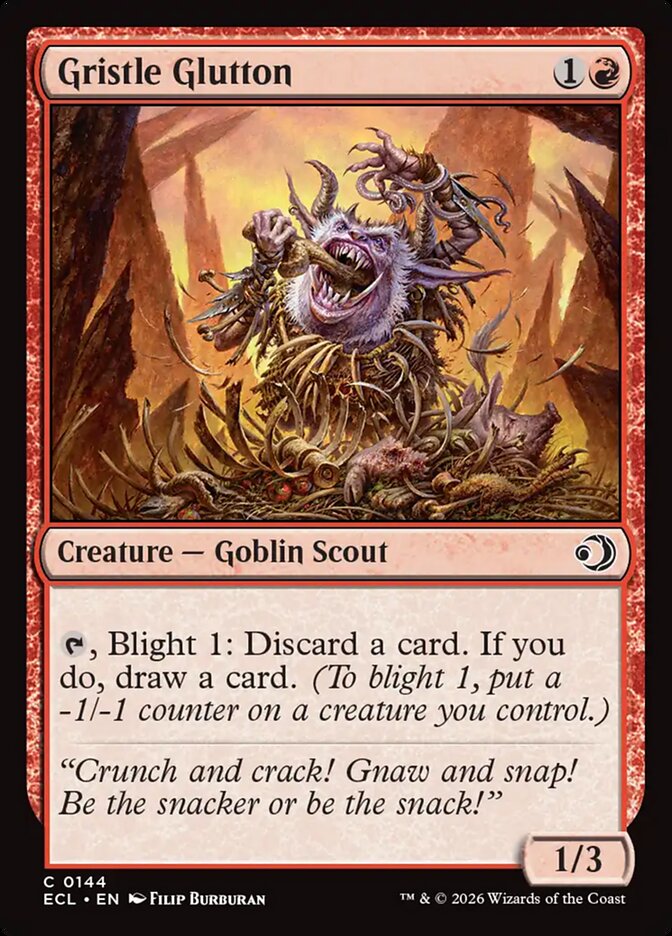
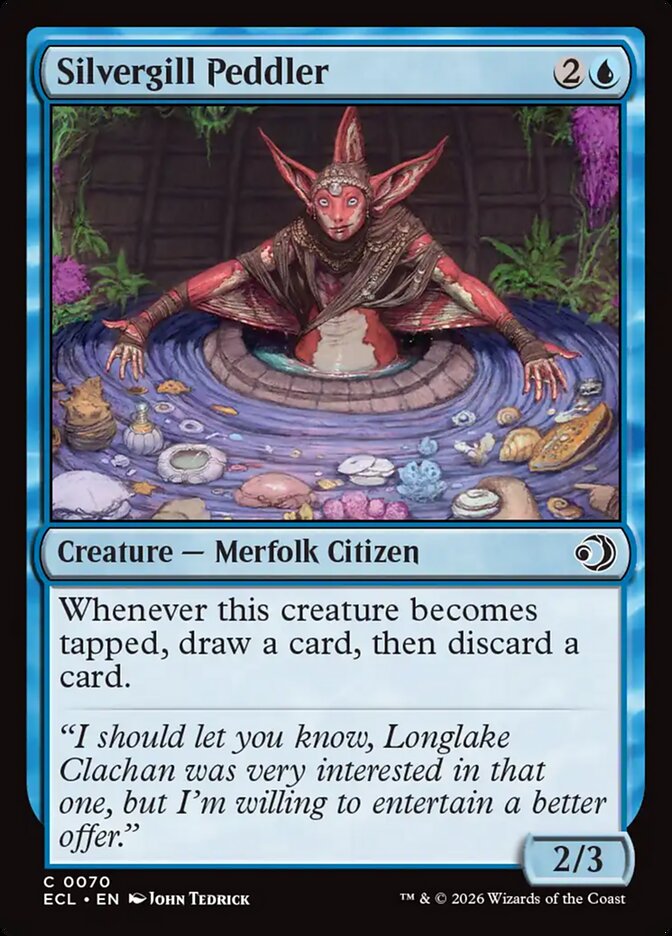
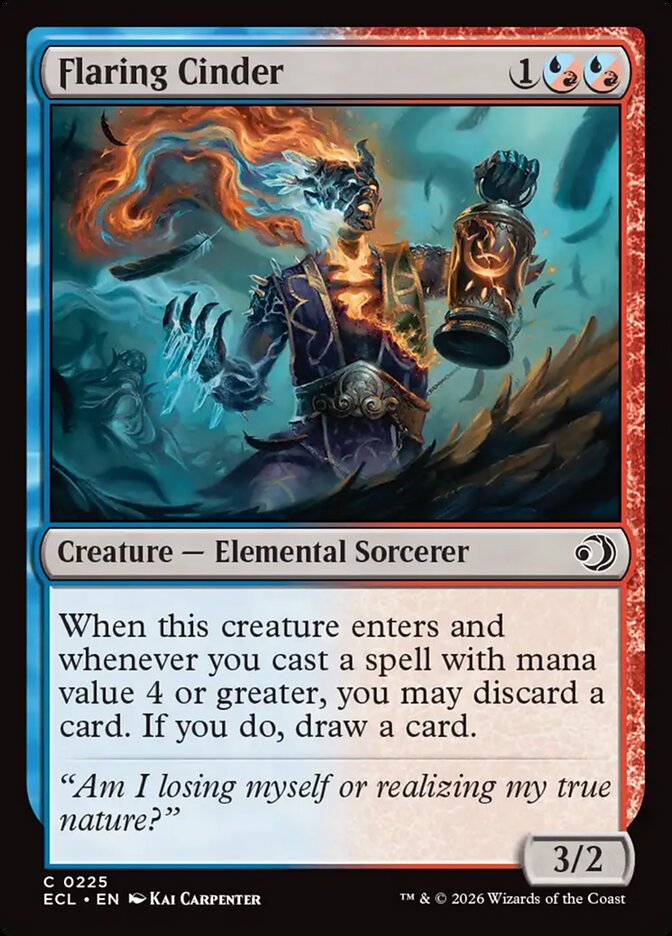
Another clear winner from that comes from this are looters and rummaging effects. Gristle Glutton, Silvergill Peddler, and Flaring Cinder have all been essential ways to avoid that dreaded mana flood. You can also occasionally dig your way out of early land shortages. Note that all of these tend to go in different decks due to their subthemes/requirements; Glutton wants blight synergy/goblins, Peddler likes ways to tap outside of combat, and Cinder just needs a mana base that can cast it.
One last point on mana is that I’ve played 16 lands more often in this format than most. I still default to 17, but if you’re light on cards that cost 4+ mana, definitely consider trimming a land. This goes doubly for decks that have convoke spells and lots of cheap creatures and those that play extra mana sources like Changeling Wayfinder and Firdoch Core.
Sweepers
Lorwyn Eclipsed is the safest Limited set to dump your hand that I’ve ever seen. Here’s a comprehensive list of all sweepers in the format.
Darkness Descends
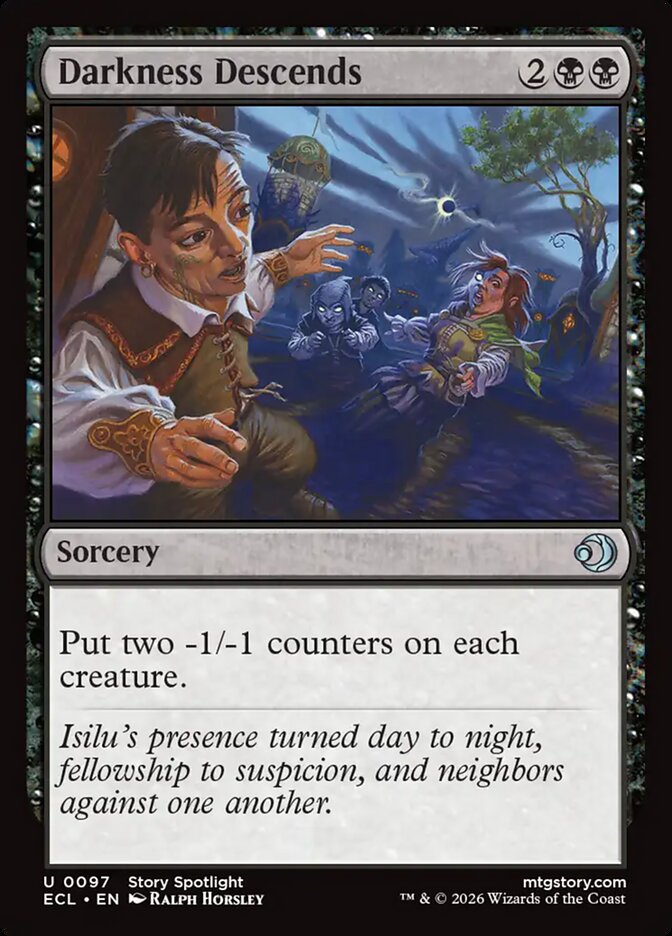
Darkness Descends is the only sweeper that isn’t rare/mythic, and it also isn’t particularly good. -2/-2 doesn’t cover enough for its mana cost, and you’ll also permanently nerf any creatures you have that live through it. I’ve tried it a couple times and have been largely disappointed, though I suppose I could see sideboarding it versus many x/2s.
Winnowing

You could write a whole essay on this strange card, which ranges from Plague Wind to uncastable. All it takes is one straggler to punish your opponent severely, but it’s also useless if they stay within a creature type. Changelings are another pain point for Winnowing, since they always survive it. You can play this maindeck if you’re mostly in one type, or try to sideboard it if you aren’t. Either way, expect immensely high variance in how it plays out.
Sunderflock

I debated whether to list this one because as a bounce effect, it doesn’t punish overextending. Sunderflock will definitely clean up a board, and it’s one of the strongest cards in the entire format.
Ashling’s Command
Another broken card, though the one-sided Pyroclasm mode is a fraction of what it offers. I’ve blown people out with Ashling's Command a few times already, especially after combat to finish off larger things.
Curious Colossus

Mythics like this aren’t common enough to play around, but things can definitely get miserable if your opponent has it. Curious Colossus doesn’t technically sweep the board, but it can be backbreaking when it severely cripples all their creatures.
Soul Immolation

Last but not least, red gets a random butt-centric Plague Wind for some reason. This is a generally absurd rare, though I recommend trying to build around it if possible by including high-toughness cards like Kulrath Mystic and Stratosoarer. Don’t forget that you don’t need to blight your biggest thing, so feel free to dump five counters on a Summit Sentinel instead of Stratosoarer!
Draft Philosophy
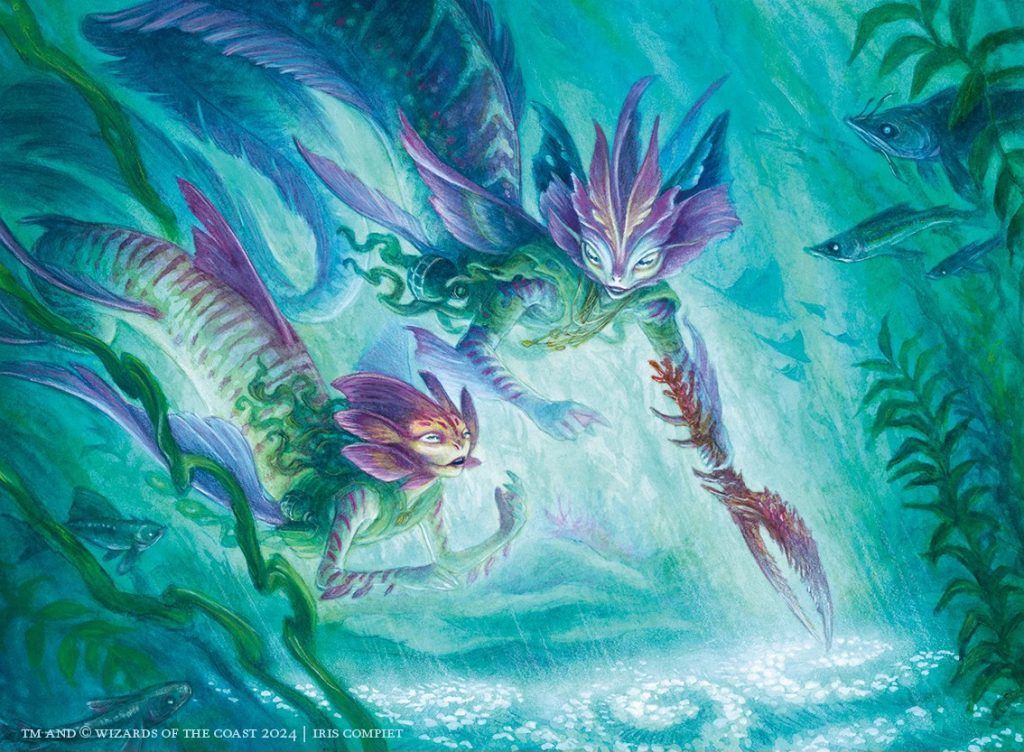
Silvergill Mentor | Illustration by Iris Compiet
While I’m going to talk about specific archetypes, cards, etc., it’s good to have an idea of how to actually draft the set first.
Lorwyn Eclipsed draft is a delicate dance where you essentially try to find the perfect seat, at the perfect time. You may have to give up certain cards you’ve picked early to pursue other avenues. Alternatively, you can sometimes just make it all work, often by using changelings or other creative ways to turn on multiple synergies. Here’s a hypothetical example.
Draft Hypothetical 1: Bx, Cut on Elves
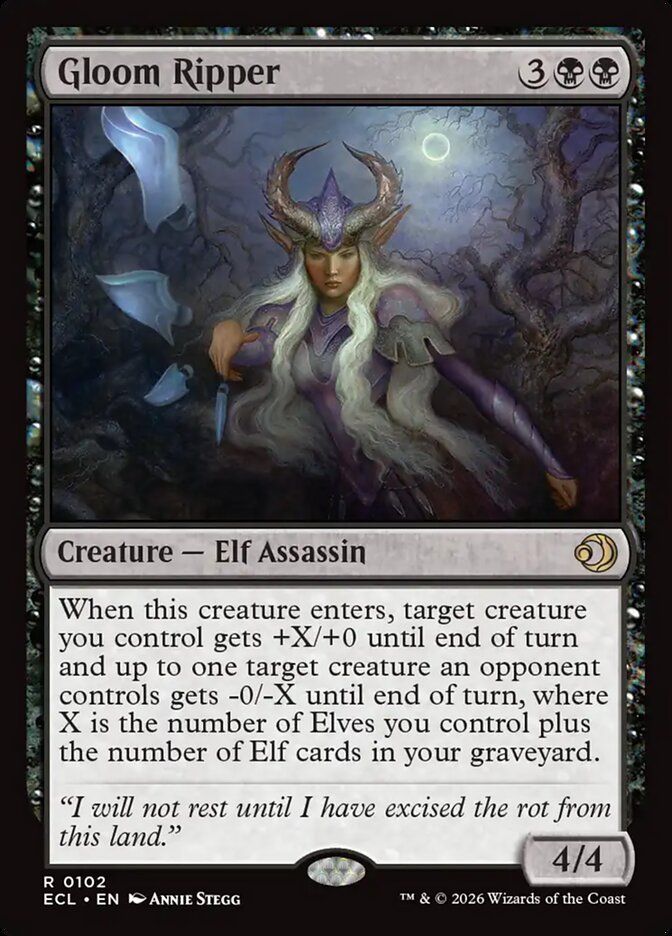
You P1P1 Gloom Ripper, which is an absurdly cracked card. You can consider yourself to be “Elves X”, and “Bx” and you ideally want to end up BG Elves, but the rare you’ve picked can work in other decks if you’re playing black.
For this hypothetical draft, let’s assume you follow up with a couple of good black removal spells, like Blight Rot and Bogslither's Embrace. You aren’t seeing any elf payoff cards at all, or really even any common elves whatsoever. You are being cut. What should you do?
The answer is that it depends on which cards you see in the pack. If you stay the course in Bx and can’t get into BG Elves, then BR Goblins is your likely destination. However, if you aren’t seeing goblin payoffs either, then your options would mostly be UB Flash, WB Counters, or some kind of GBx vivid pile.
The vivid pile is my favorite backup plan in this format. This involves staying the course with your base color/best cards and drafting towards a secondary color (usually green), uncommon vivid payoffs, and generally good stuff. This is what I do if none of the Big Five seems inviting and I have powerful cards that I can’t give up. In these cases, the common filler changelings offer essential help, providing vivid for your uncommons and potentially fulfilling multiple typal requirements.
Let’s say the draft kept going and you were Bx with some changelings, Assert Perfection, and Tend the Sprigs (which also works with changelings). You’re in a great position to splash powerful cards from other colors, as well as leverage vivid payoffs like Kithkeeper. You may need to occasionally play some rough mana for the best ones, like Shinestriker. But with enough fixing, anything is possible!
Draft Hypothetical #2: Finding Your Home
Of course, I don’t usually end up vivid in most drafts. Instead what happens is one of two things:
- I open some powerful card like Champions of the Shoal, then take merfolk after it. I see enough good merfolk to conclude that I’m basically locked in, and I’m WUx/Merfolk no matter what. This means the only cards outside of those colors I’d pick would be single-pipped splash options, which aren’t always worth the trouble.
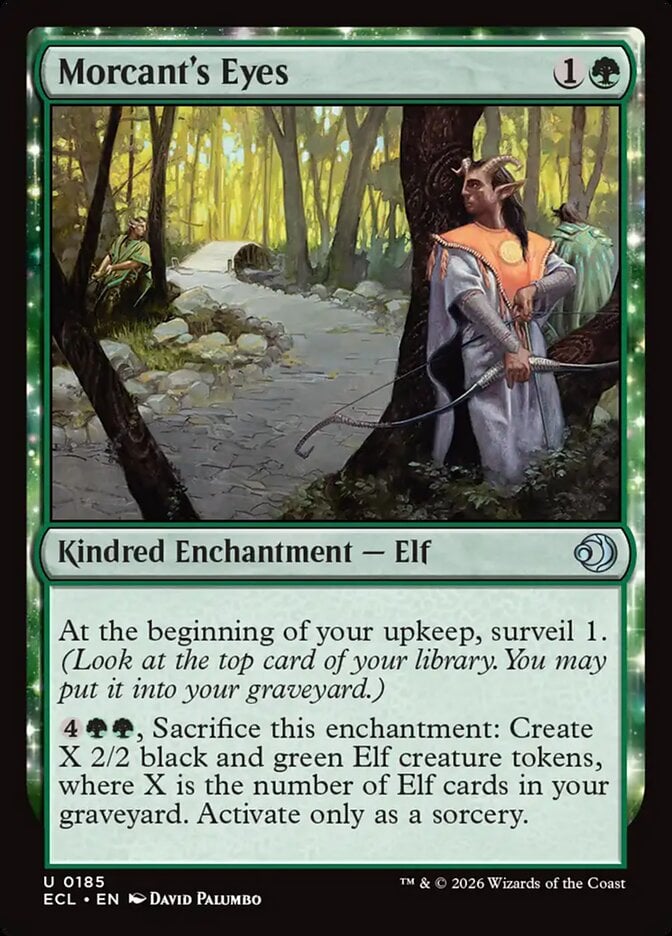
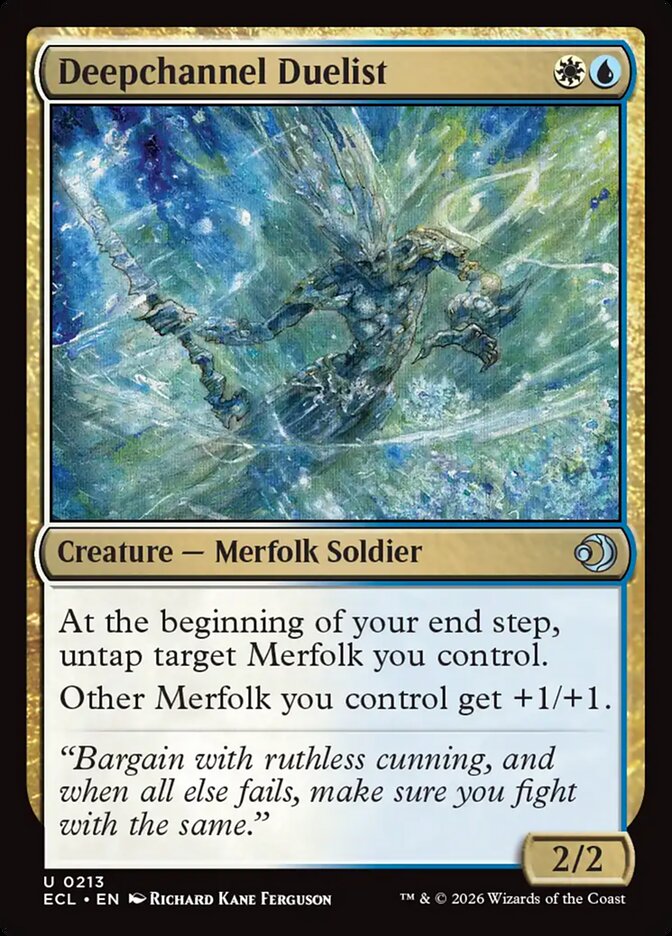
- My powerful P1P1 payoff like Morcant's Eyes doesn’t get any support, but I do see other linear and powerful cards like Champion of the Weird and Deepchannel Duelist. I simply take the highest ceiling card from my first few packs, then follow the lane that gets the best cards later.
You can easily picture this happening by just imagining a flow of:
- Morcant's Eyes
- Champions of the Shoal
- Deepchannel Duelist
- Deepchannel Duelist
- Merrow Skyswimmer
- Merrow Skyswimmer, etc.
Which would lock me into Merfolk! The key opportunity cost you’re going to have to weigh is powerful linear payoff versus decent all-purpose card. For instance, if you P1P1 Sunderflock, you’re far more likely to just take Cinder Strike than chase a late Deepchannel Duelist.
There’s no substitute for actual draft experience, but hopefully these philosophical musings were helpful.
Draft Hypothetical #3: Theoretical Spreads
Here’s a little blurb about format Draft theory. In Lorwyn Eclipsed, we have a format with five main decks, and eight players at a table. It’s therefore mathematically impossible for there to be 2+ players in every creature type at once.
What this means of course is that if you find the right lane, you can sometimes truly be uncontested for goblins, merfolk, or elementals. There simply aren’t enough players available to always mine out the same decks! It’s also not the worst to sometimes share cards with another player if your start was strong enough, though the ideal is of course to be the only one in something. This is the key way to pull off goblins in practice, as you’ll need to get late cards like Boggart Mischief reliably to make it work!
Top Commons
Lorwyn Eclipsed was a tricky set to evaluate before playing it. The trouble is that many of the commons clearly work better in one typal deck. On the other hand, none of them are really sufficient to put you into that type without payoffs. I’ll give a new top 4 for each color and review what went wrong with a few of my previous rankings.
White
My top four commons for white were Liminal Hold, Wanderbrine Preacher, Sun-Dappled Celebrant, and Spiral into Solitude. Here are my revised top four:
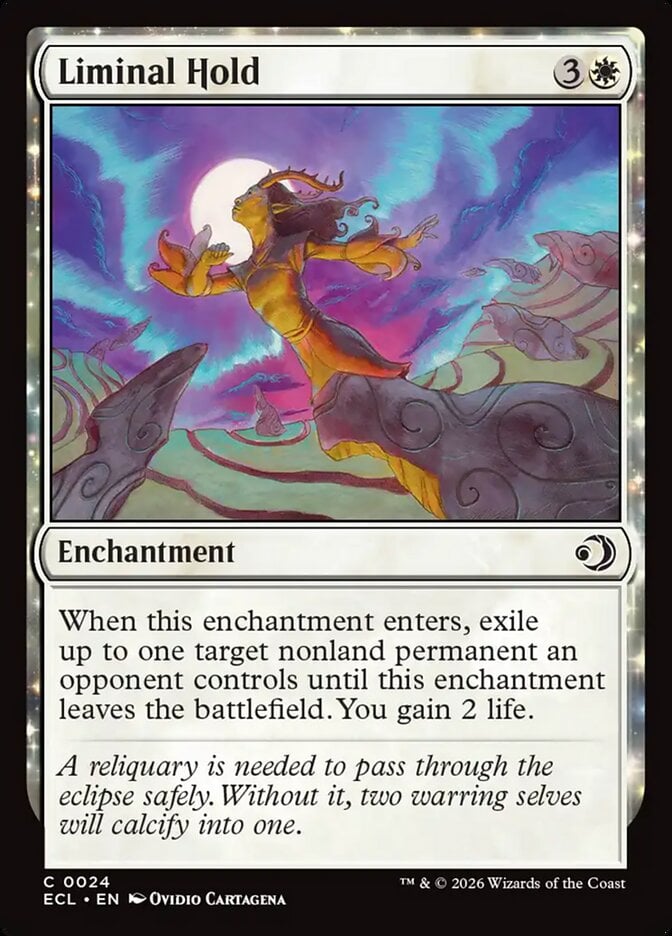
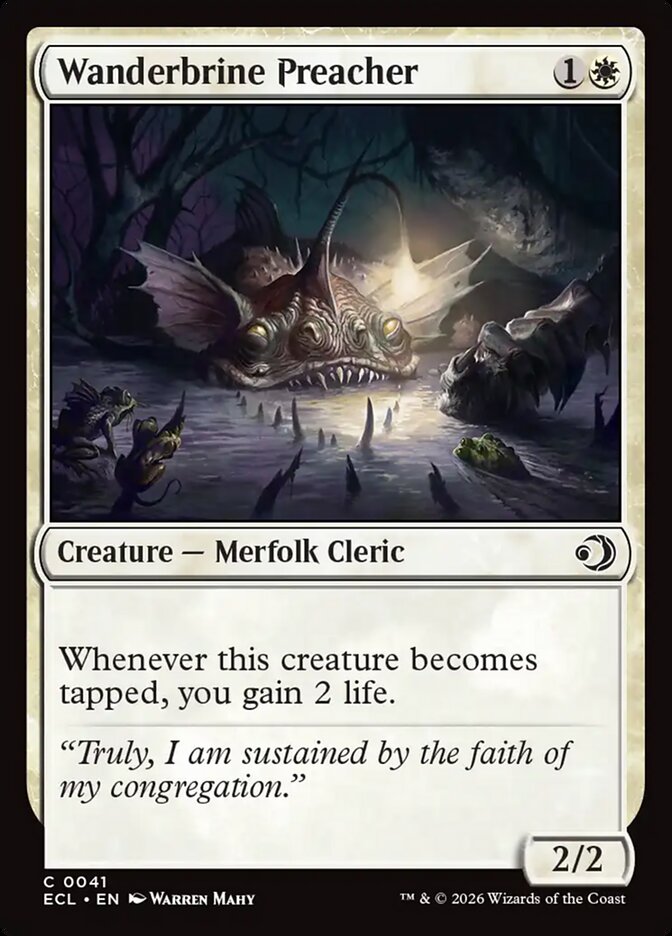
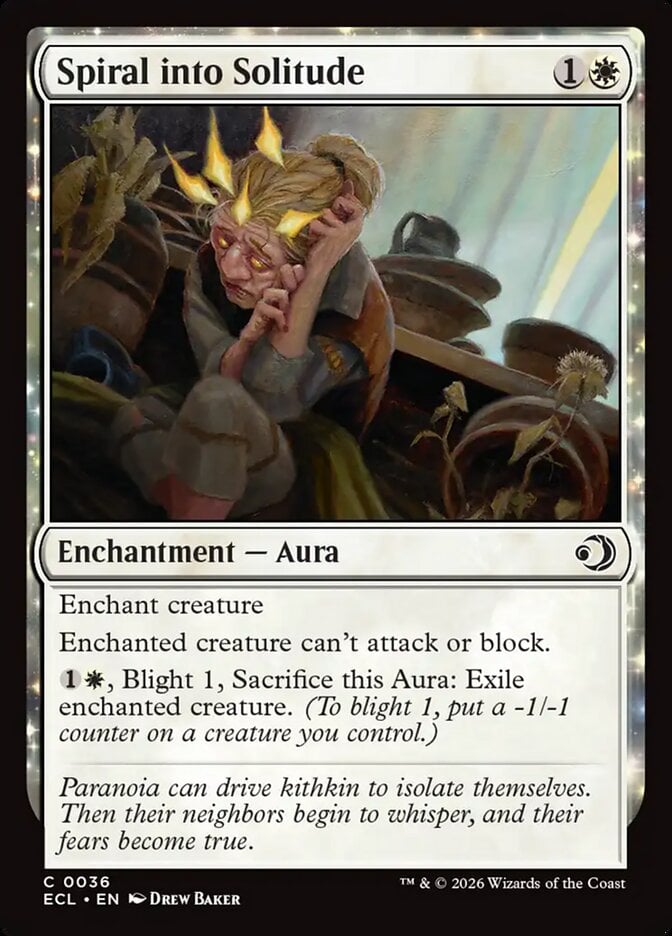
Liminal Hold and Preacher were good calls. Hold is a bit clunky, but it’s a wonderful universal answer to all sorts of problematic permanents (including the miserable Kinbinding). Preacher is efficient enough to be playable outside of Merfolk, although it’s certainly better in its preferred deck. Spiral has also generally performed well, especially in decks with a bit of blight synergy.
Sun-Dappled Celebrant though is really mediocre. I don’t hate it if you want a curve-topper, but you should never prioritize it or be all that excited about playing it. That’s a far cry from any top common, so its slot has gone to Timid Shieldbearer. This is another 2-drop that’s perfectly playable outside of its tribe, and a valuable mana sink later on.
White’s worst commons are Reluctant Dounguard and Appeal to Eirdu. Appeal is an underpowered combat trick, and Dounguard is among the weakest available 3-drop commons. I prefer playing changelings like Prideful Feastling and Gangly Stompling over it in the vast majority of decks.
Blue
My top four commons for blue were Unexpected Assistance, Silvergill Peddler, Temporal Cleansing, and Blossombind. Here are my revised top four:
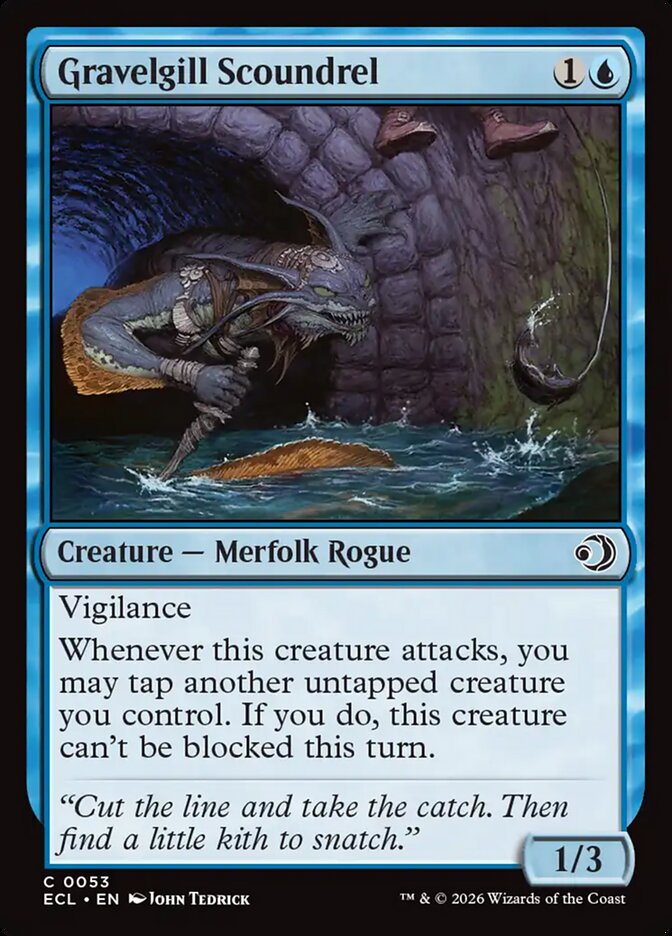
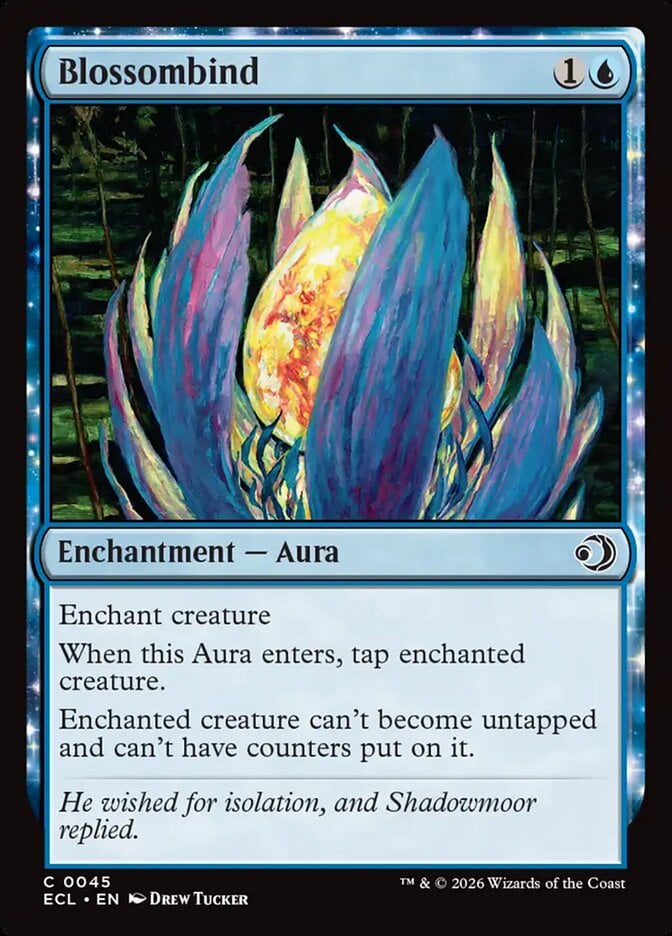
I mostly did fine with blue, and I think the color is fairly flat in power level. Gravelgill Scoundrel isn’t good outside of Merfolk, but it’s top class in that archetype. It edges out Silvergill Peddler, which would easily be #5 on this list. I’m more likely to play Peddler if I have to than Scoundrel in random other decks, but I find Scoundrel is basically irreplaceable in its archetype.
Blue’s worst two commons are Wanderwine Distracter and Run Away Together. Distracter is okay in Merfolk, and Run Away Together usually makes no sense to play.
Black
My top four commons for black were Blight Rot, Bogslither's Embrace, Blighted Blackthorn, and Moonglove Extractor. This is definitely the color I did the worst on, so here are my revised top four:
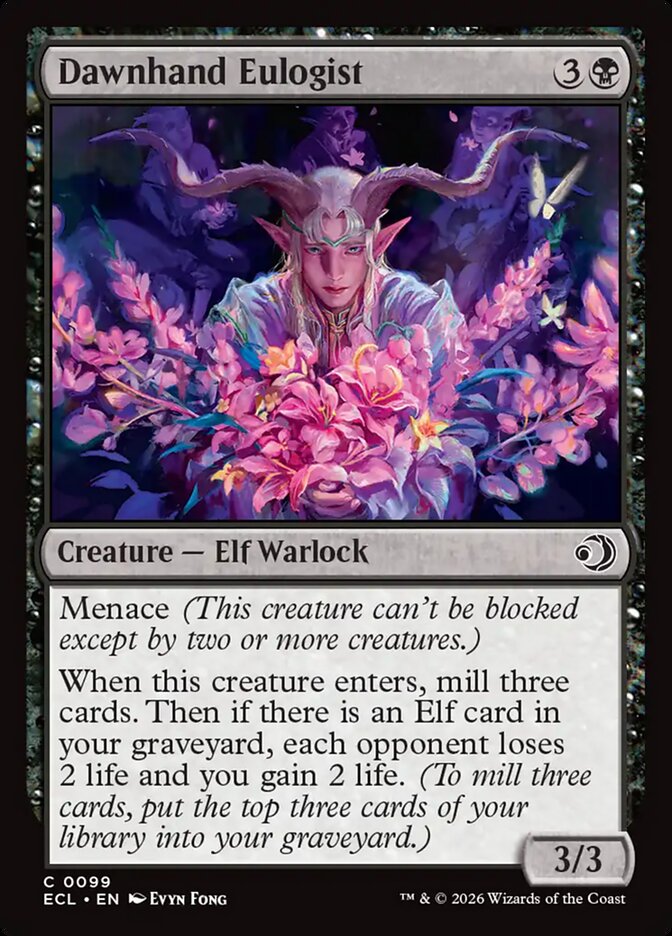
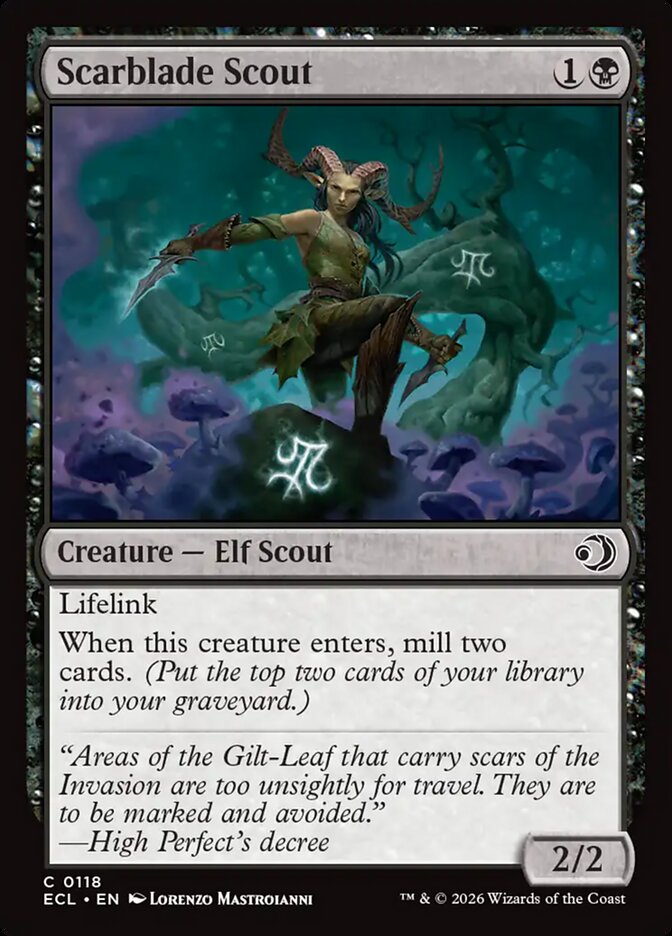
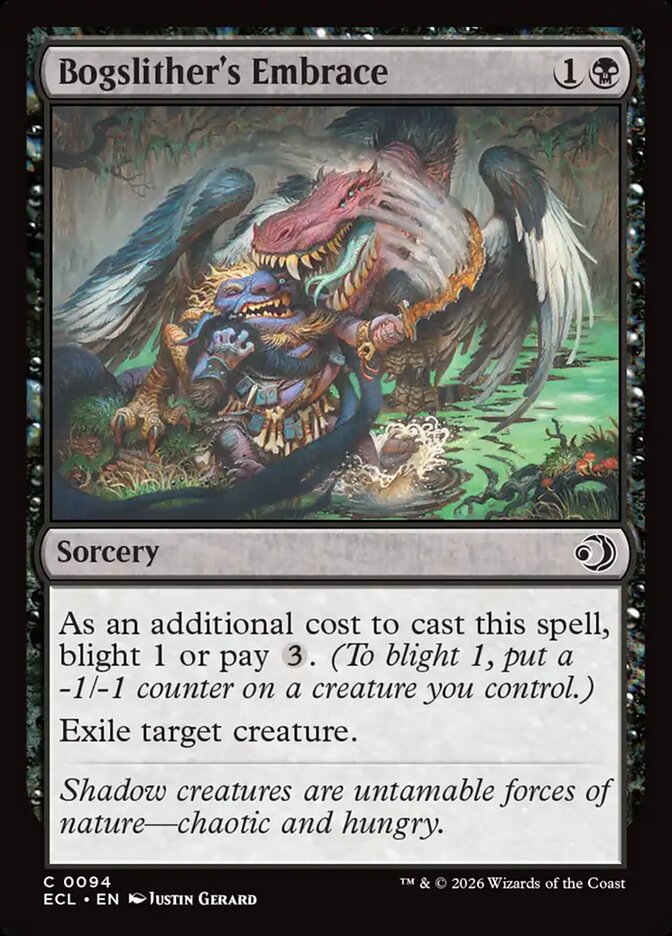
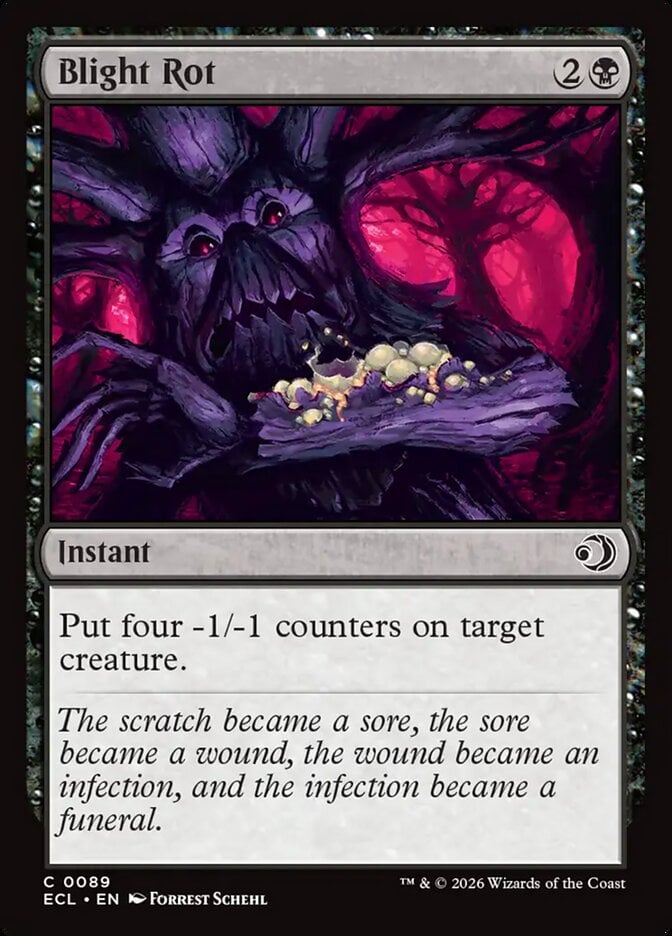
One secret to the format that I haven’t yet divulged is that it isn’t perfectly balanced. Elves is arguably the #1 deck, and Goblins are somewhat underpowered. This makes innocuous-looking common elves like Dawnhand Eulogist and Scarblade Scout much better than they look. Both contribute perfectly to your mana curve and self-mill gameplan, and I’ve even heard jokes that Dawnhand Eulogist is a “common Siege Rhino” of sorts.
While I wouldn’t go that far, the card has been quite efficient in practice. If goblins were better I’d probably list the removal spells above the two common elves, but my view on goblins is that you need busted payoffs before committing to it. Black also doesn’t have any other archetypes besides the best/worst of the big five, which makes it rather elf-dominant.
Black’s worst two commons are Heirloom Auntie and Blighted Blackthorn. Even in a Goblins deck, it’s tough to trigger Heirloom Auntie enough to justify its awful initial sizing, and it’s not like surveil 1 is “draw a card” either. Blighted Blackthorn has also shown that there’s a world of difference between blight 1 and blight 2: The former is a minor setback, and the latter is a massive hassle. Having the treefolk tag itself makes it an abysmal 1/5 for 5, and you need specific deckbuilding to have other good targets.
I’m also not a big fan of Moonglove Extractor, which has struggled to attack consistently due to its embarrassing sizing. There are too many x/3s for it to trade often, so I’m only playing it if I’m flush with removal/combat tricks to push it through.
Red
My top four commons for red were Cinder Strike, Tweeze, Kulrath Zealot, and Feed the Flames. Here are my revised top four:

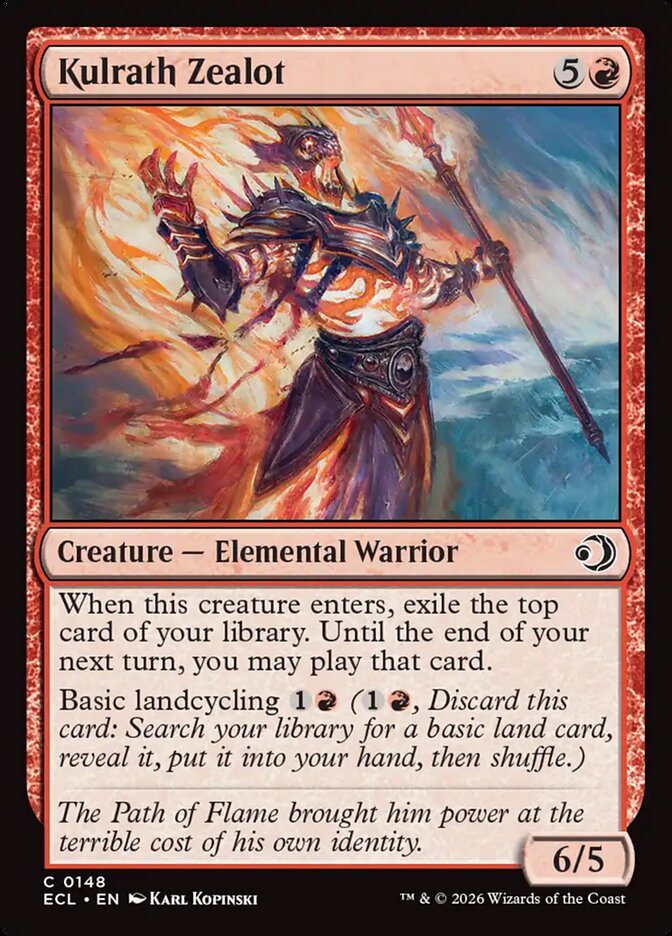
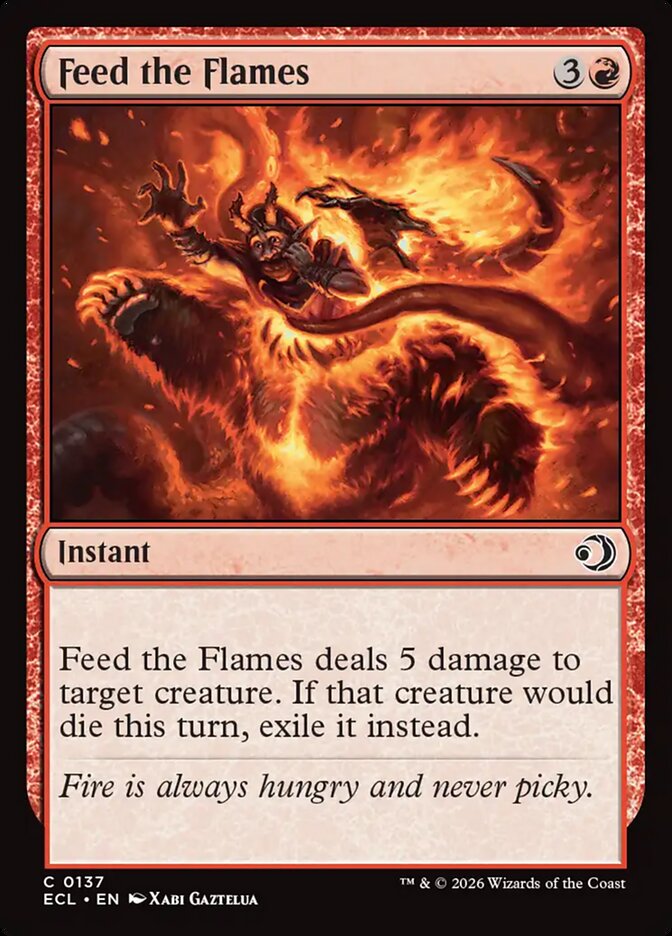
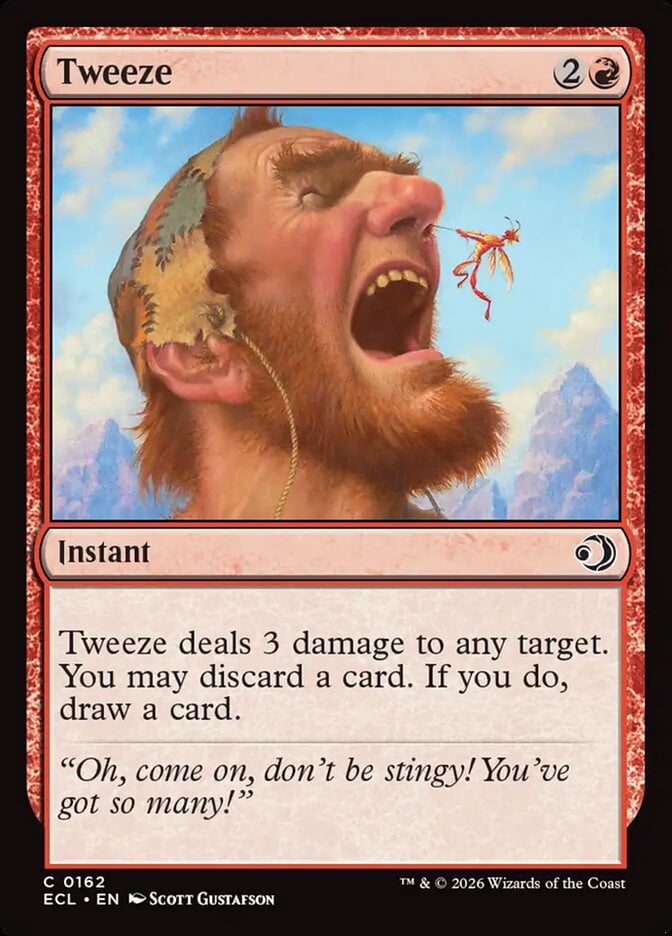
Flamekin Gildweaver barely missed #5, but I still like to pick removal over solid creatures to start. All I did for red was rearrange the cards, as Kulrath Zealot has been very good. It’s not an “Elementals” card by any means, as it’s been great in any deck that plays Mountains. It even provides another way to splash bombs and removal, while it’s an excellent late game card to boot!
Red’s worst two commons are Reckless Ransacking and Boneclub Berserker. I don’t like mediocre combat tricks in this format at all, which is firmly how I’d describe Ransacking. Berserker is reasonable to play in Goblins, but it often finds itself trading down, chump blocked, or simply answered by removal. It also conflicts a bit with the deck’s blight gameplan, since you may end up killing off your own 1/1 goblins that Boneclub depends on.
Green
My top four commons for green were Mistmeadow Council, Assert Perfection, Surly Farrier, and Great Forest Druid. Here are my revised top four:
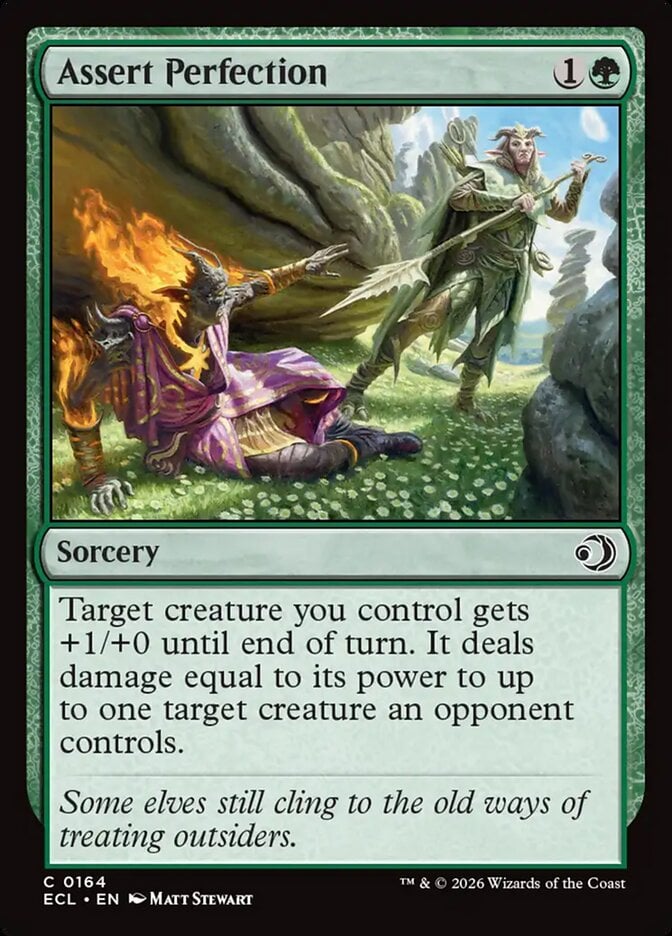
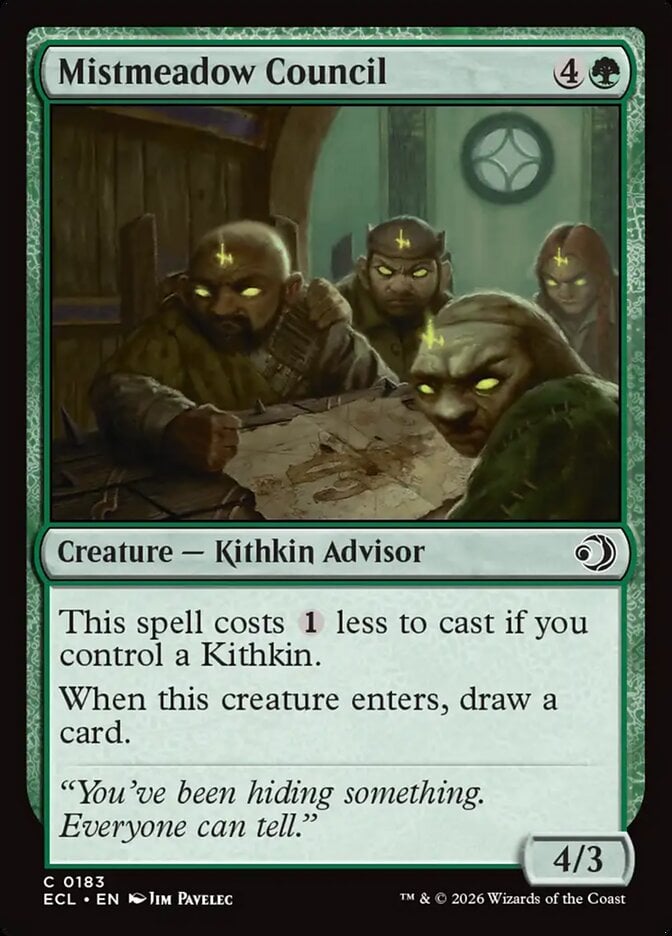
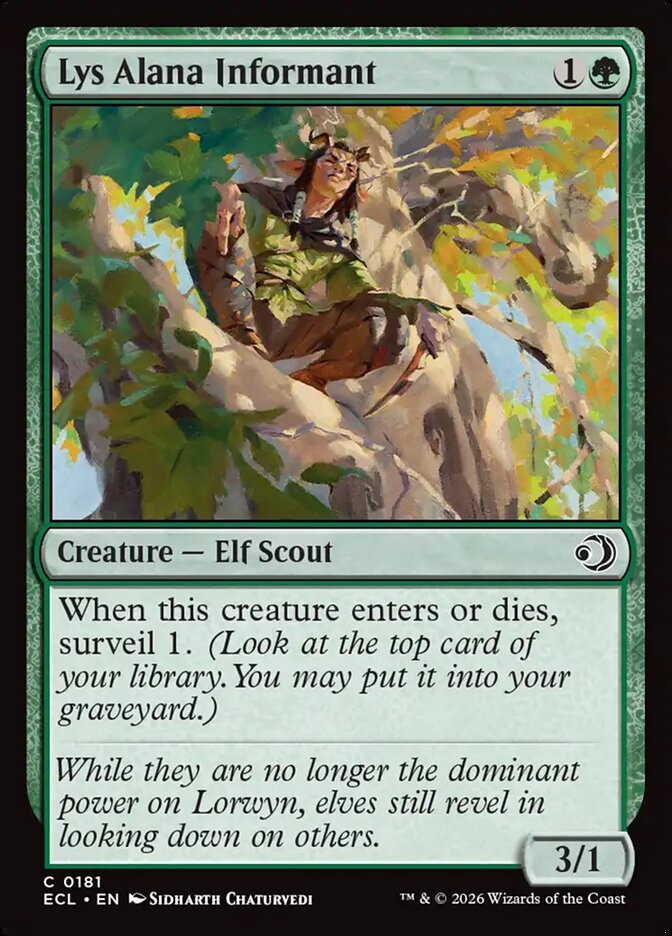
If you can, you should probably draft Elves in this format! What’s even better is that all the common elves are perfectly reasonable playables. I’m hardly embarrassed to play Lys Alana Informant, Safewright Cavalry, or Scarblade Scout in any deck that I can. I’ve also bumped up Assert Perfection to #1, as the extra +1/+0 makes it feel like a green Dreadbore. You won’t be blown out for using it much either, since it’s so easy to use and dirt cheap.
I’d also like to note that Mistmeadow Council works great with changelings, so it isn’t really a “kithkin card” in a strict sense. Paying for it is fine too if you have to, which makes it a strong general common that’s sometimes incredibly good. I also still like Great Forest Druid in general, though it plays best outside of the Big Five. I’ll have more to say about it later!
Green’s worst two commons are Unforgiving Aim and Surly Farrier. Farrier isn’t really that bad of a 2-drop, but it’s of a bit lower quality than Wanderbrine Preacher, Lys Alana Informant, and Scarblade Scout. Unforgiving Aim also has its uses, but you’re hoping never to have to cash it in as flash Gray Ogre. I’ll start one as a 23rd card if I have to, but I like it better as a sideboard card in Best-of-3.
Other Commons
I didn’t cover these in the previous guide, but Lorwyn Eclipsed has some other commons worth discussing. These are the common changeling cycle, common tribe cycle, and colorless cards.
Common Changelings
Here’s how I’d rank the common changelings:
#1. Gangly Stompling
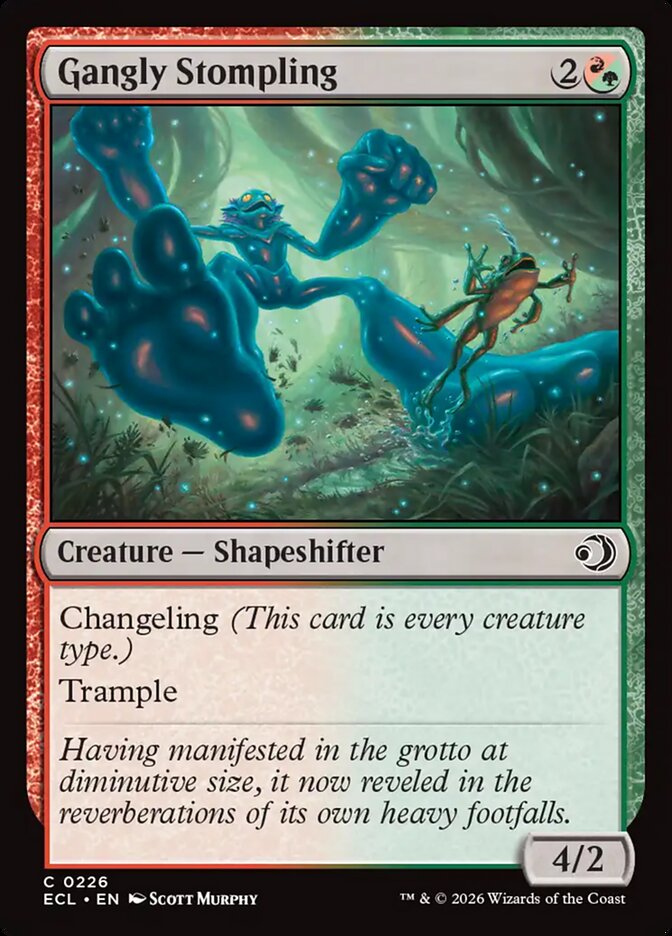
This little guy hits decently hard, often demanding a trade or removal spell. Gangly Stompling is useful colors as well, providing green for vivid if you’re URx Elementals, or red for vivid in GUx Vivid.
#2. Prideful Feastling
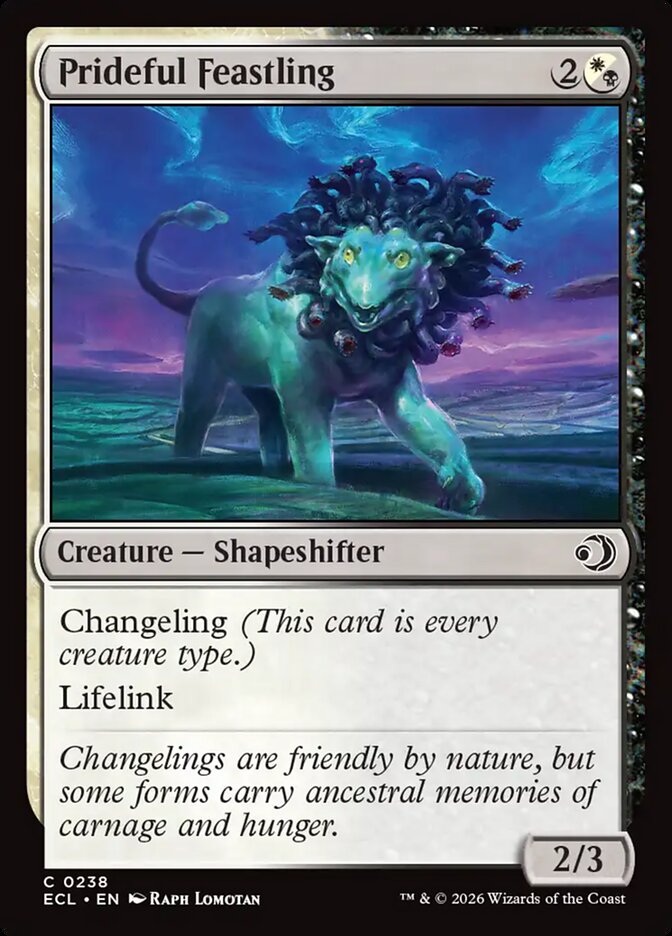
Lifelink is an awesome keyword with equipment, combat tricks, and Assert Perfection, which helps carry Prideful Feastling’s mediocre stat line. WB is also an excellent color pair for vivid, due to being an unconventional archetype.
#3. Mischievous Sneakling
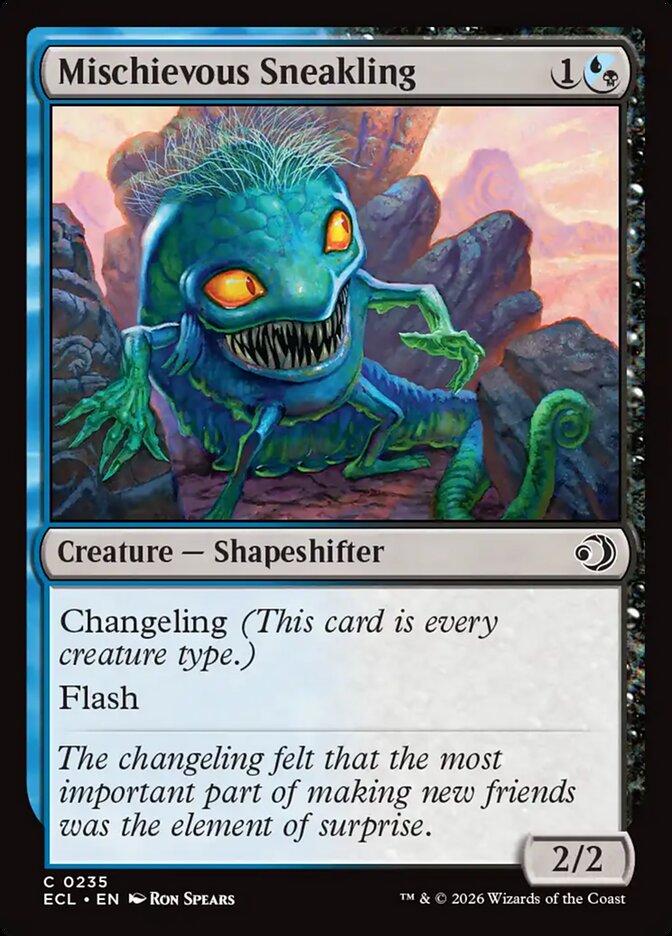
Mischievous Sneakling expires quickly on board, but it come with a useful color pair and lets you bluff other things. Changeling also lets it enable various synergies for you, so I’ve played this in more decks than I expected.
#4. Chitinous Graspling
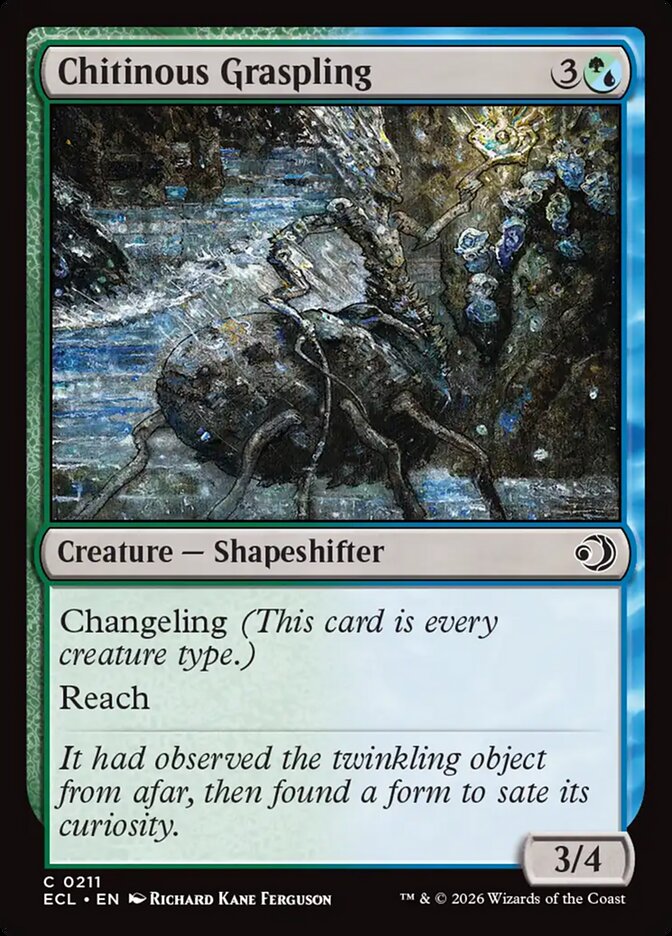
If you don’t have too many other 4-drops, Chitinous Graspling is a fine inclusion. It often gets crowded out of its slot by more efficient cards though, so it’s a frequent cut.
#5. Feisty Spikeling
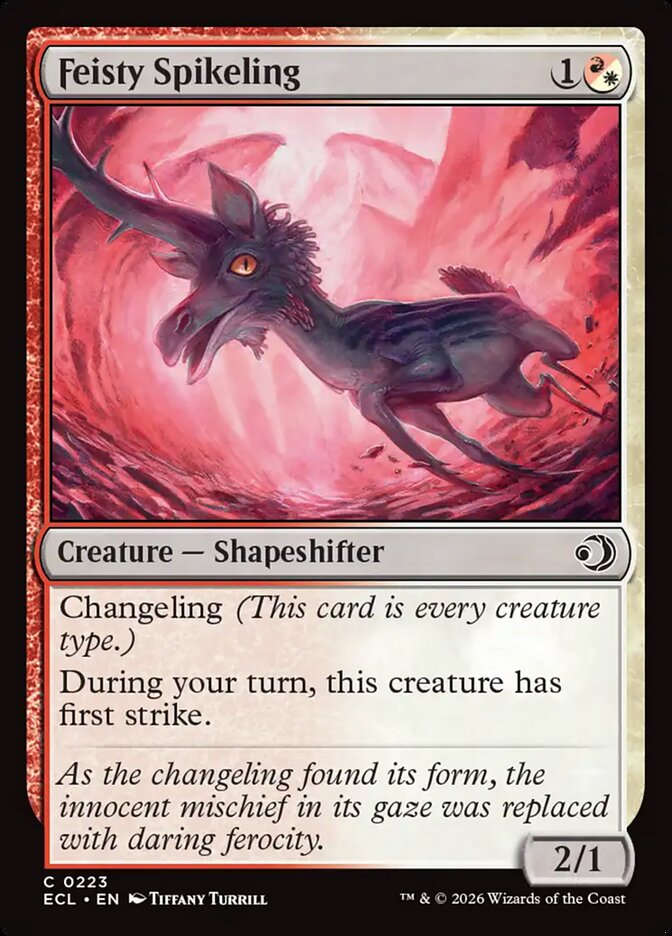
Not unplayable, but it can’t attack well into many board states. Decks that would enjoy the vivid that Feisty Spikeling provides also tend to be more controlling, which makes a vanilla(ish) 2/1 like this a sad inclusion.
Big Five Cycle
#1. Merrow Skyswimmer
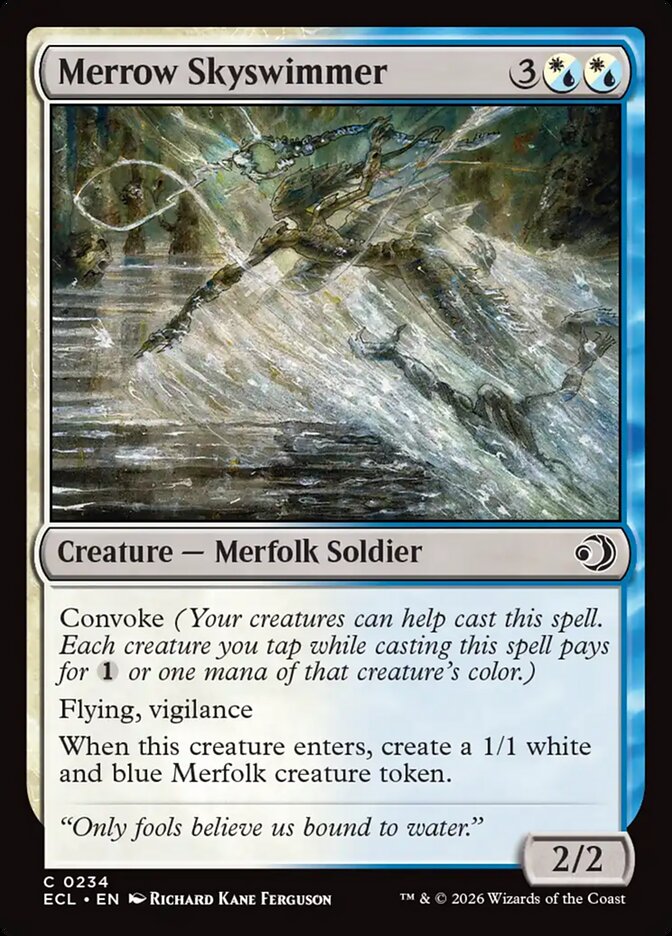
Preening Champion was apparently so busted that it can be 5 mana with convoke and still great! Vigilance is also handy with other convoke cards, too. Merrow Skyswimmer is incredible in WU Merfolk, but playable in other decks as well. Try to include a good creature curve to maximize how early you can play it.
#2. Flaring Cinder
I love this card due to flood issues. It’s best in Elementals, but Flaring Cinder can provide vivid for BRx Goblins and RGx Vivid, too. You don’t need too many 4s for this to work either, since it loots when it enters.
#3. Wary Farmer
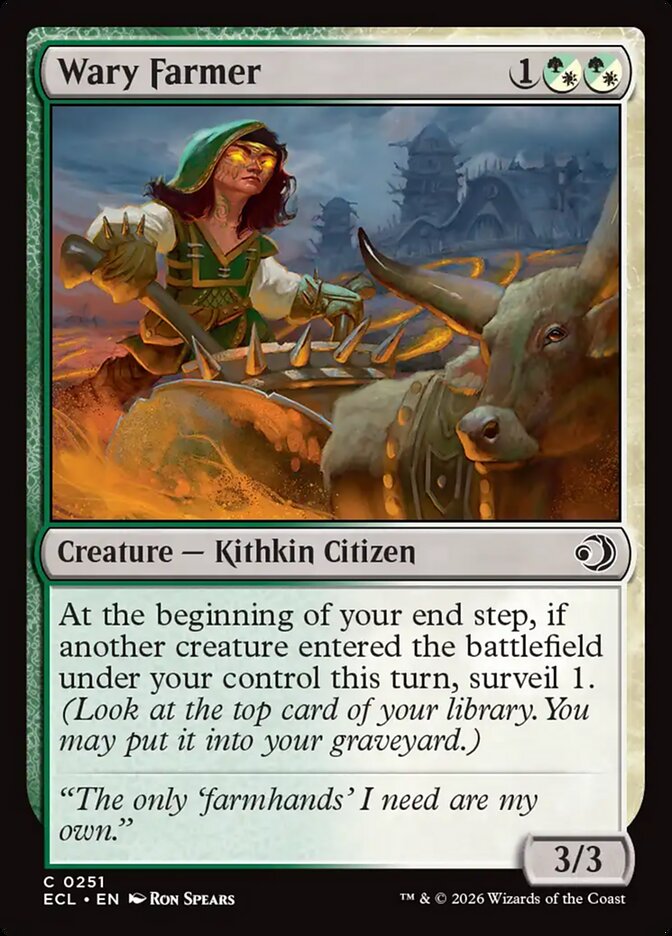
Wary Farmer is a solid 3-drop that provides valuable free card selection. I like it a little better than Crossroads Watcher, as I’m always looking for ways to see more cards in this format.
#4. Stoic Grove-Guide
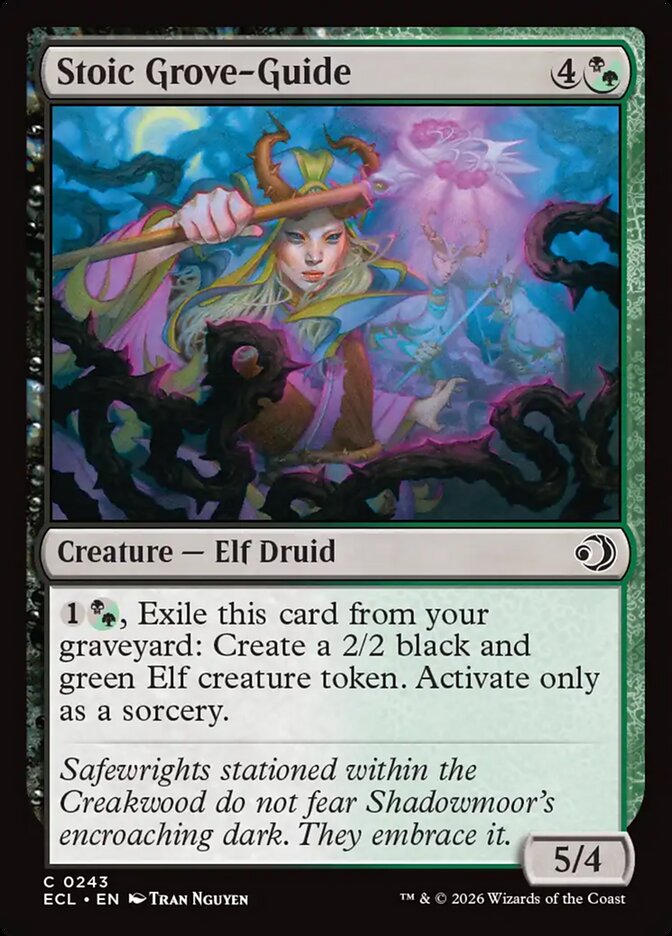
Despite being an elf, Stoic Grove-Guide is a little bit clunky to take the top spot. I do love to mill it to cards like Midnight Tilling and Dawnhand Eulogist though. I’ve also occasionally gotten some nice value with it plus Gristle Glutton and Tweeze in BR.
#5. Chaos Spewer
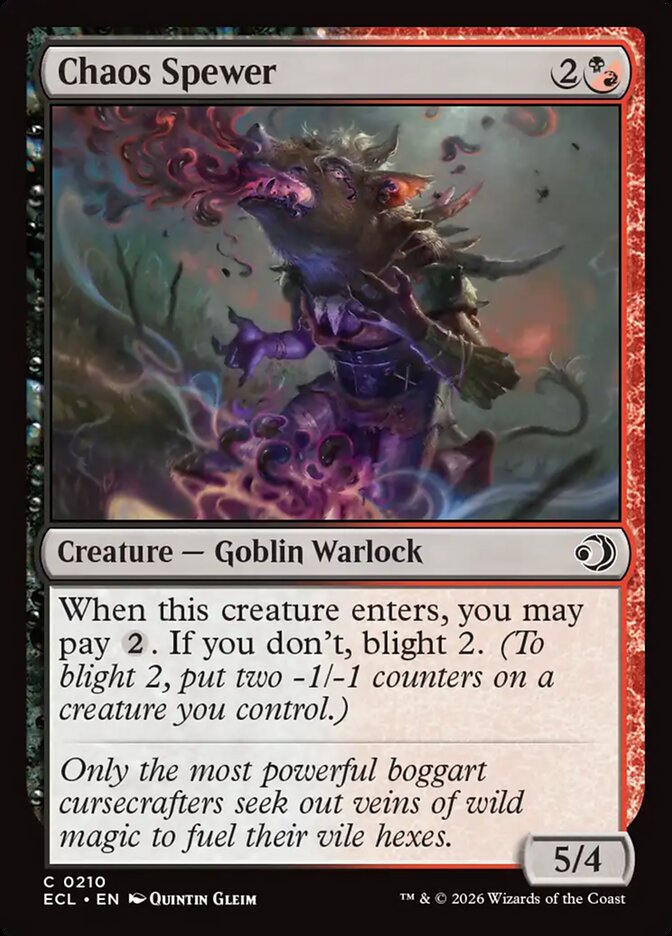
Chaos Spewer is actually one of the better common goblins available, but it still suffers a bit from belonging to one of the harder archetypes to pull off. This has some sick synergies with uncommons like Reaping Willow and Mudbutton Cursetosser.
Colorless Cards
#1. Changeling Wayfinder
Playing too many Changeling Wayfinders risks flooding you out, but I enjoy the first copy of this guy in most decks. I’m open to multiples in decks that are actually splashing, too, or have a lot of looting/good mana sinks.
#2. Rooftop Percher
Rooftop Percher looked like a bad filler card, but it has been surprisingly effective in games. The 3 life gained is relevant, and free graveyard hate has real implications versus elves. You’ll cut it sometimes for more powerful expensive spells, but definitely run a copy or two if you need a curve-topper.
#3. Foraging Wickermaw
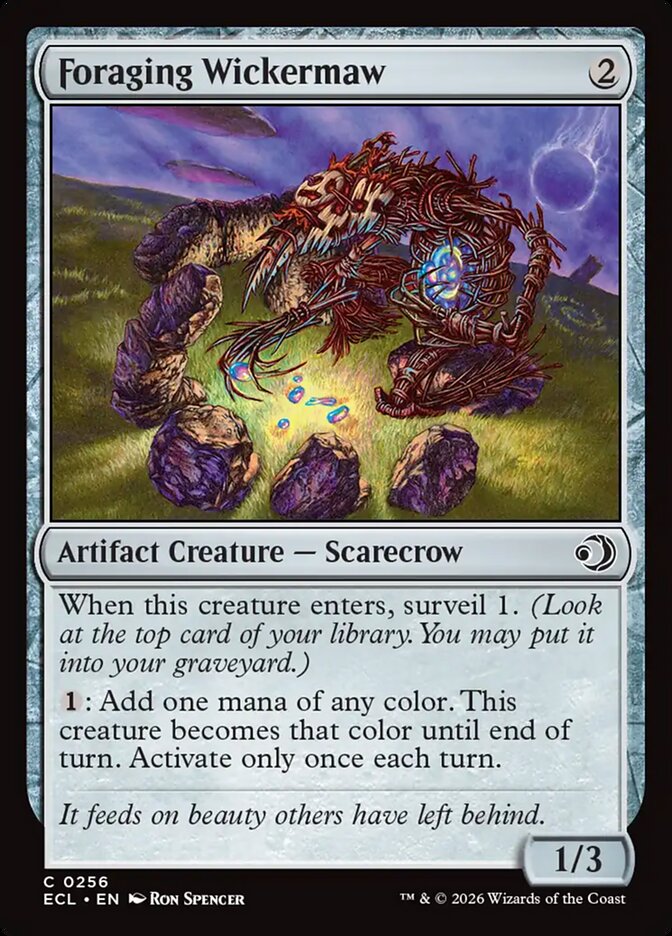
This is my go-to card to tie a vivid deck together. Foraging Wickermaw blocks other early-game creatures, provides a little card selection, and helps you cast/enable some of the coolest cards in the format.
#4. Firdoch Core
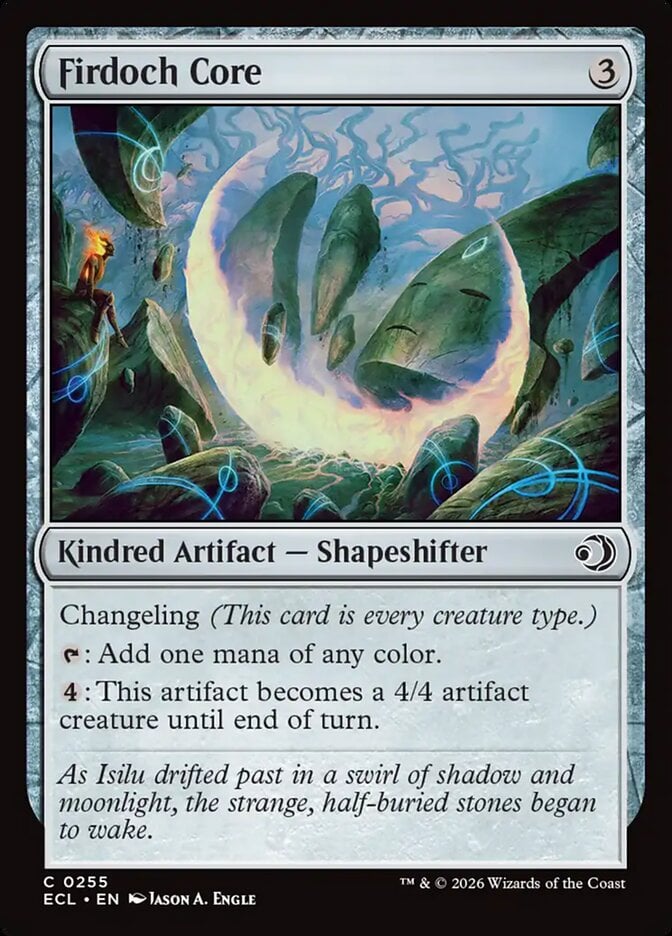
Firdoch Core has some really cool synergies in this format, as it’s the only noncreature permanent changeling available. I love it with cards like Maralen, Fae Ascendant and Sunderflock, but I almost never include it in less greedy 2-color decks.
#5. Stalactite Dagger
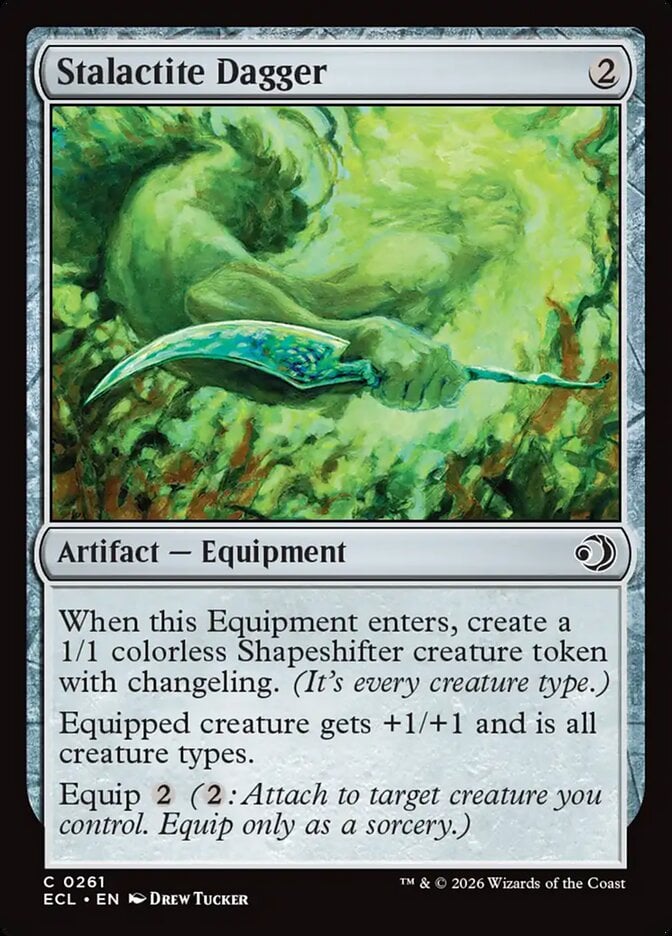
This is a weak 2-drop, though I’ve played my fair share in Sealed due to curve/creature type concerns. Stalactite Dagger doesn’t equip on entry like some of these did in the past, which makes it rather inefficient. I’d hope never to have to play this in Draft.
Top Uncommons
I regrettably couldn’t fit this in the last guide, as it was kind of massive. Lorwyn Eclipsed has its fair share of mythic uncommons, many of which tie directly into the Big Five. Let’s cover some of the format’s best offerings before moving on to archetypes.
Eclipsed Cycle
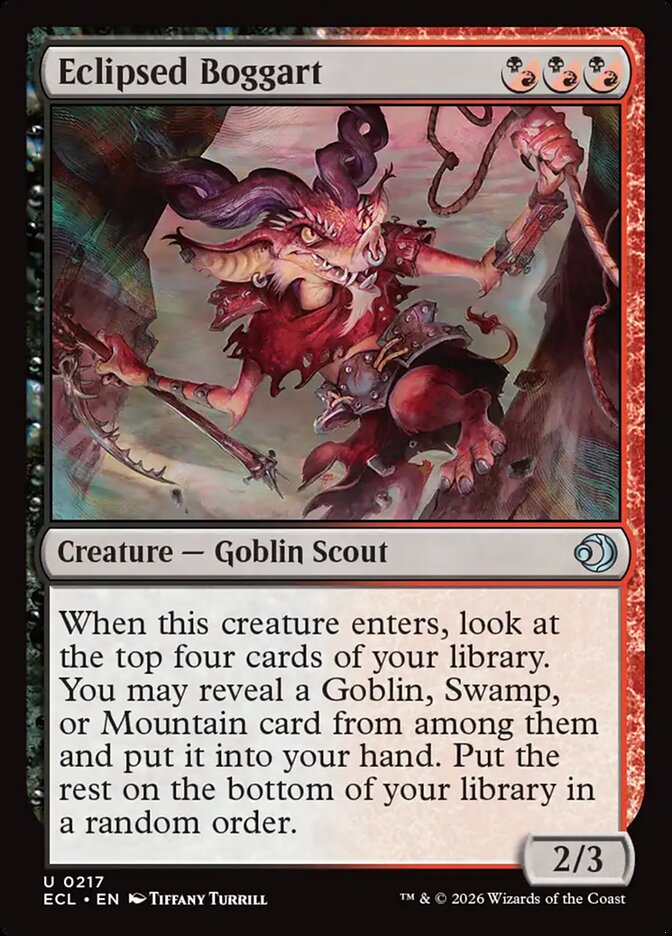
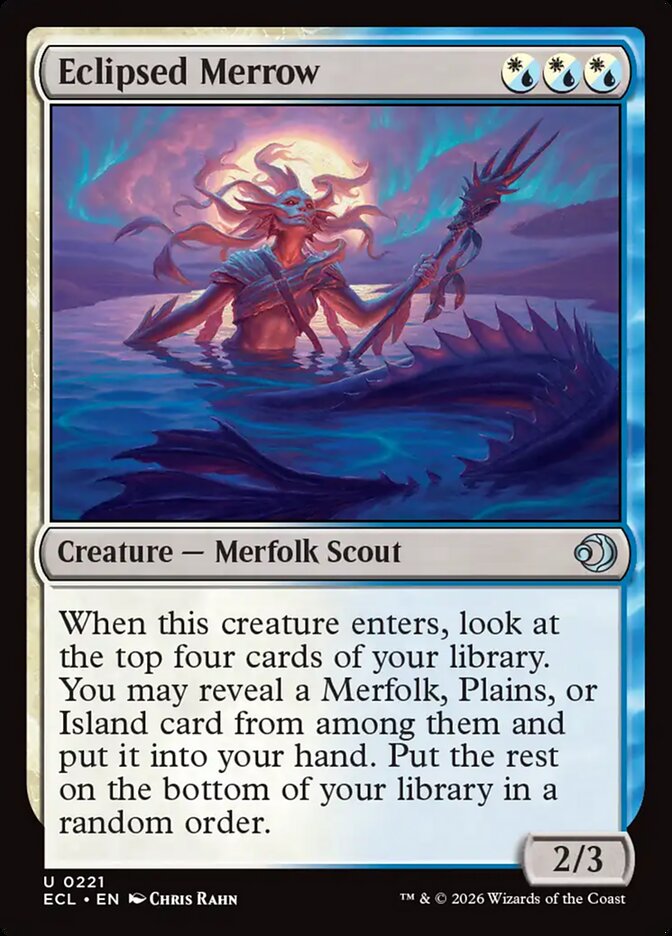
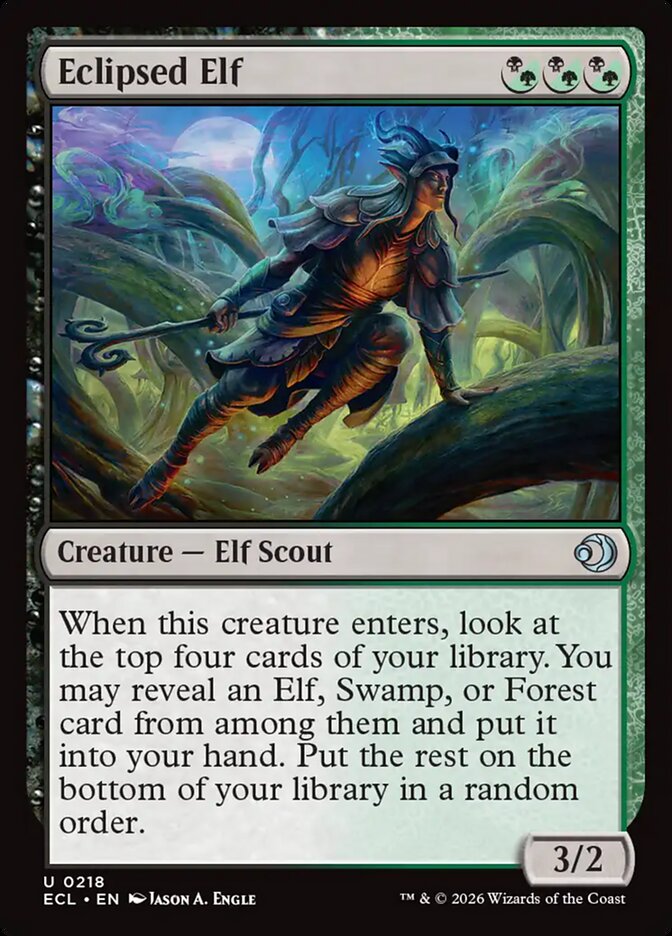
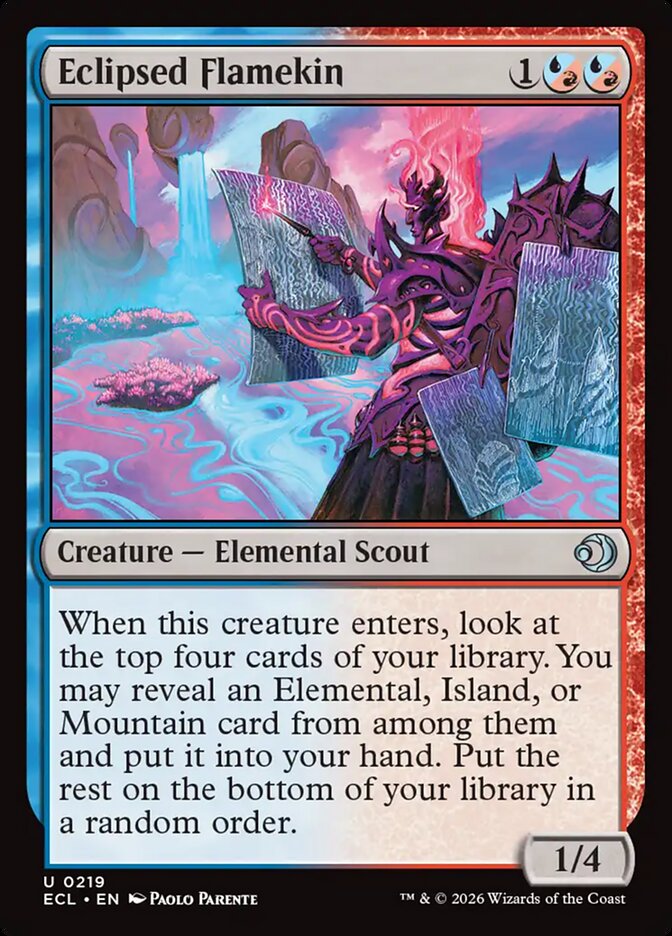
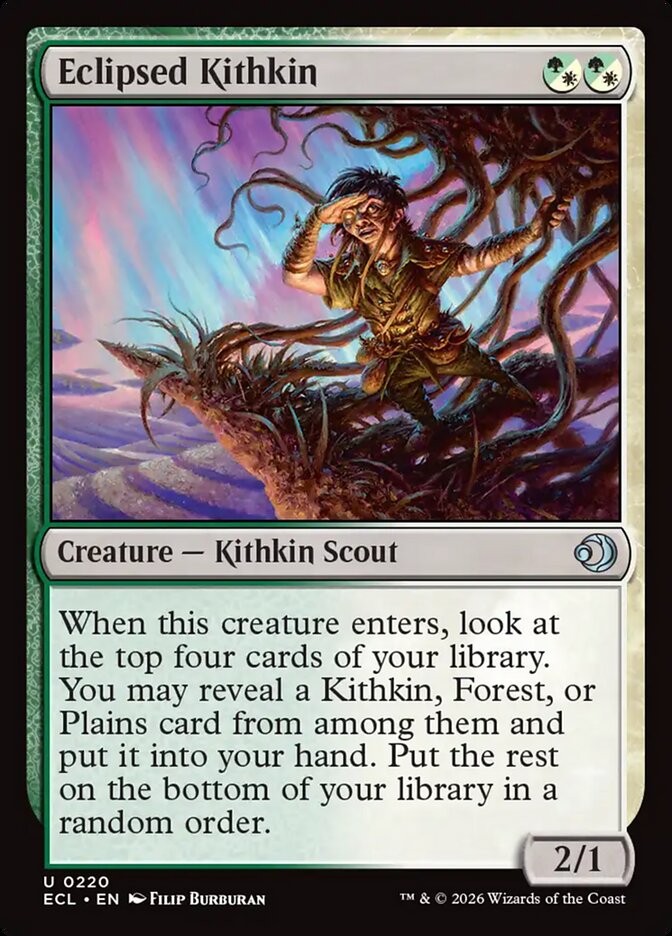
Every single Eclipsed card is premium. Even Eclipsed Boggart, which provides one of several great available reasons to draft Goblins. I can’t believe they made Eclipsed Elf a 3/2, or that these creatures can dig for uber bombs like Trystan's Command. As part of the “take payoffs early and try to draft them” philosophy, Eclipsed cards have to be near the top of what this format can provide.
Typal Payoffs
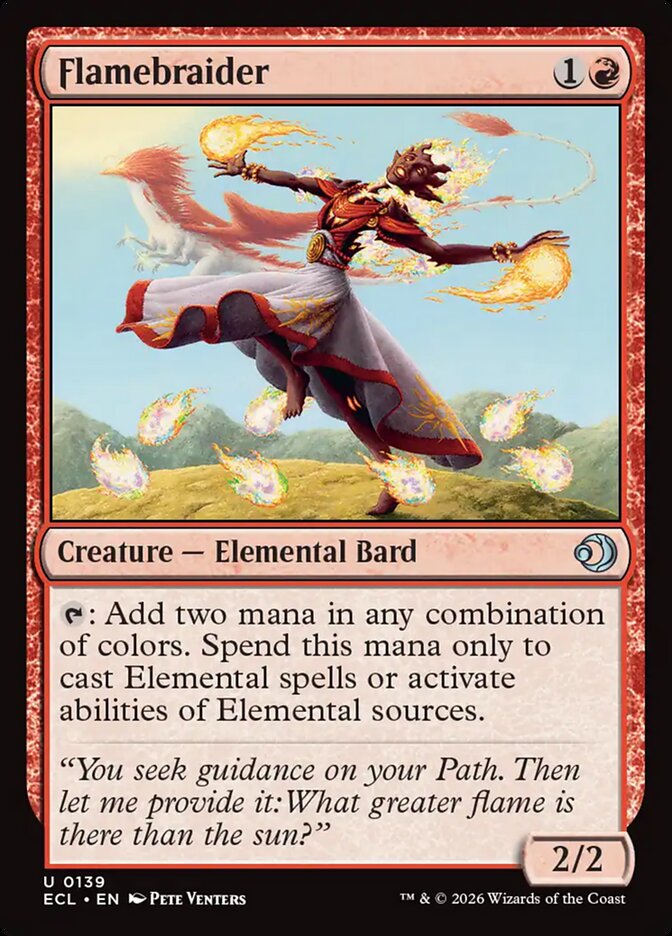
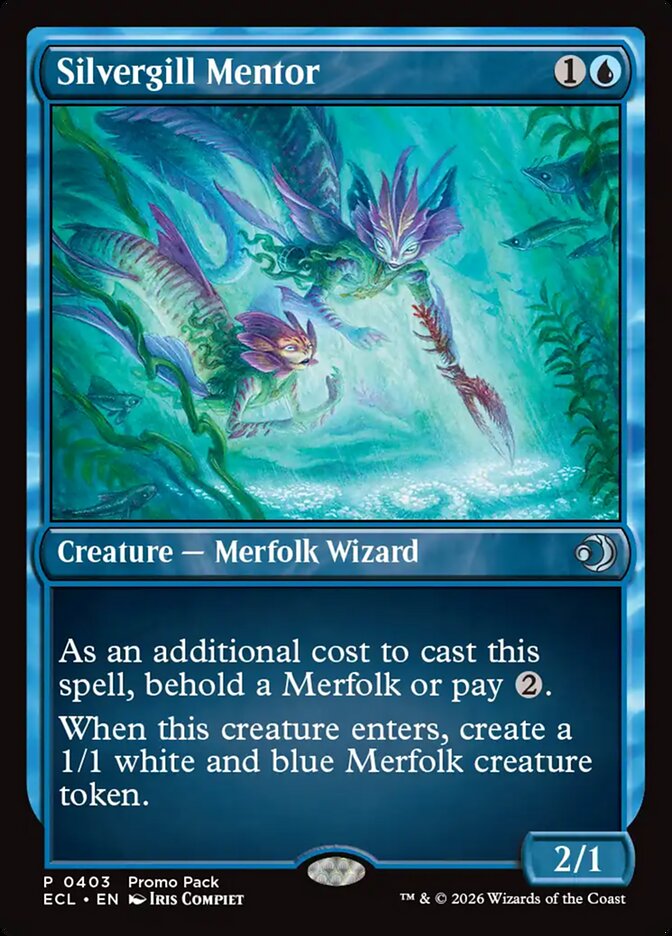
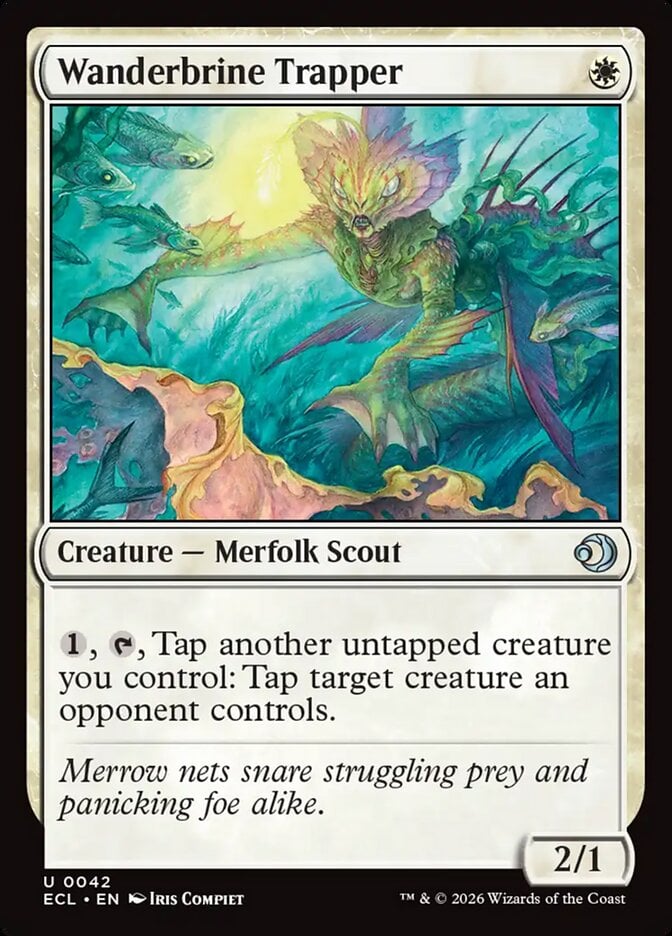

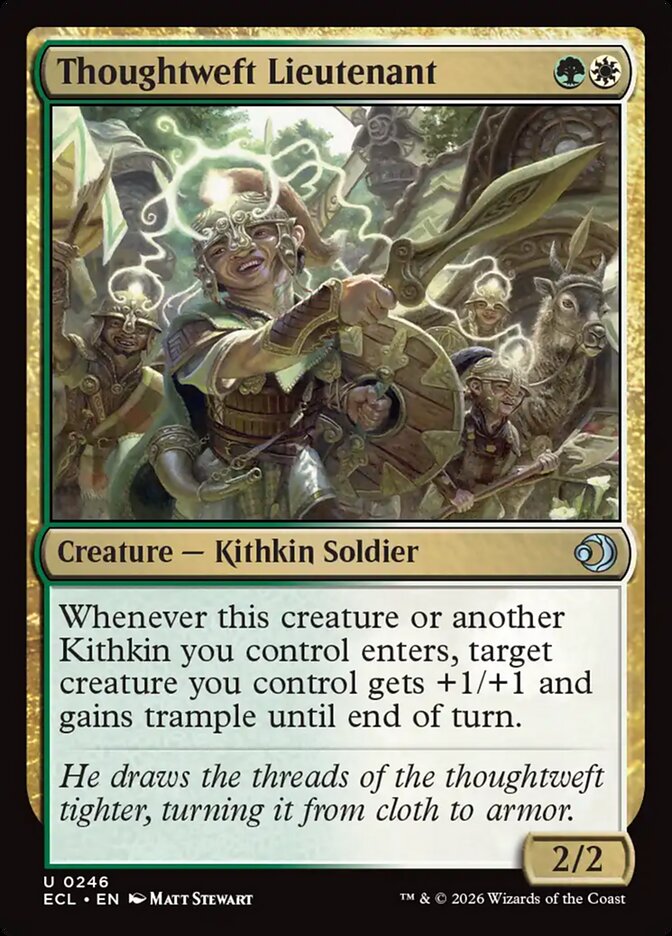
The best other uncommon Big Five payoffs available are Deepchannel Duelist, Morcant's Eyes, Flamebraider, Silvergill Mentor, Wanderbrine Trapper, Thoughtweft Imbuer, and Thoughtweft Lieutenant.
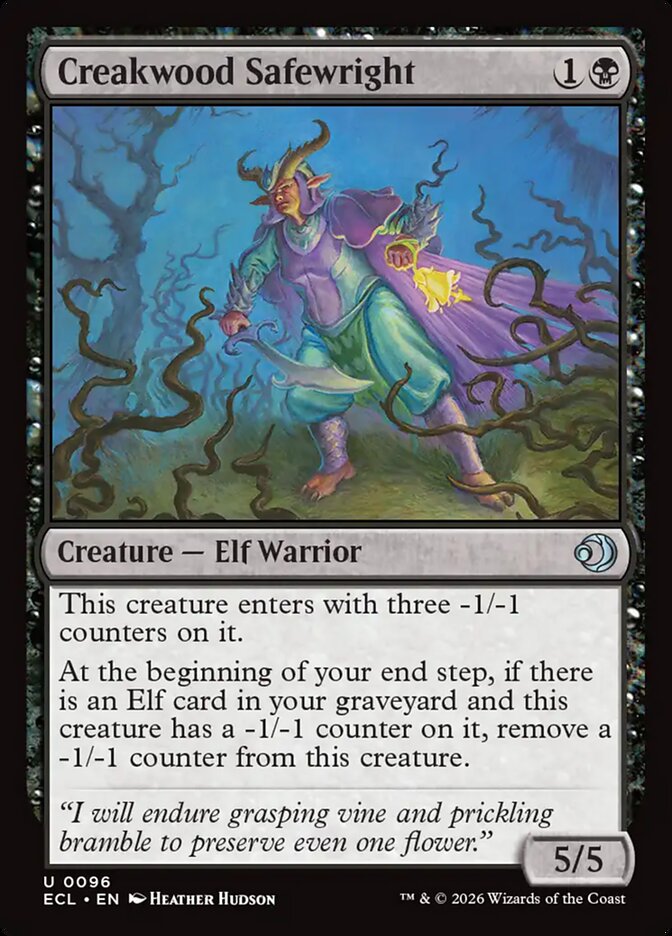
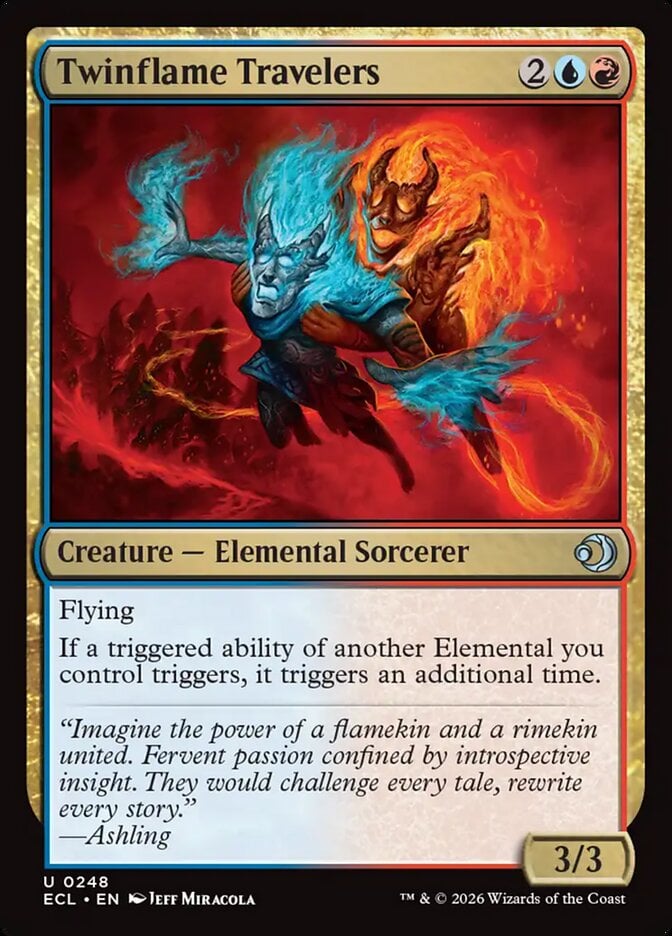
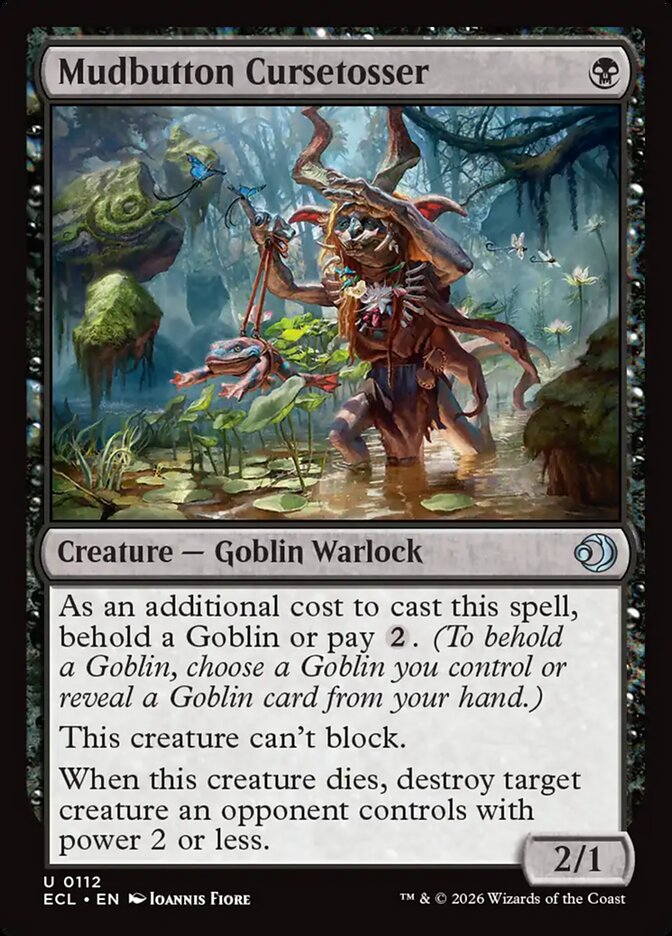
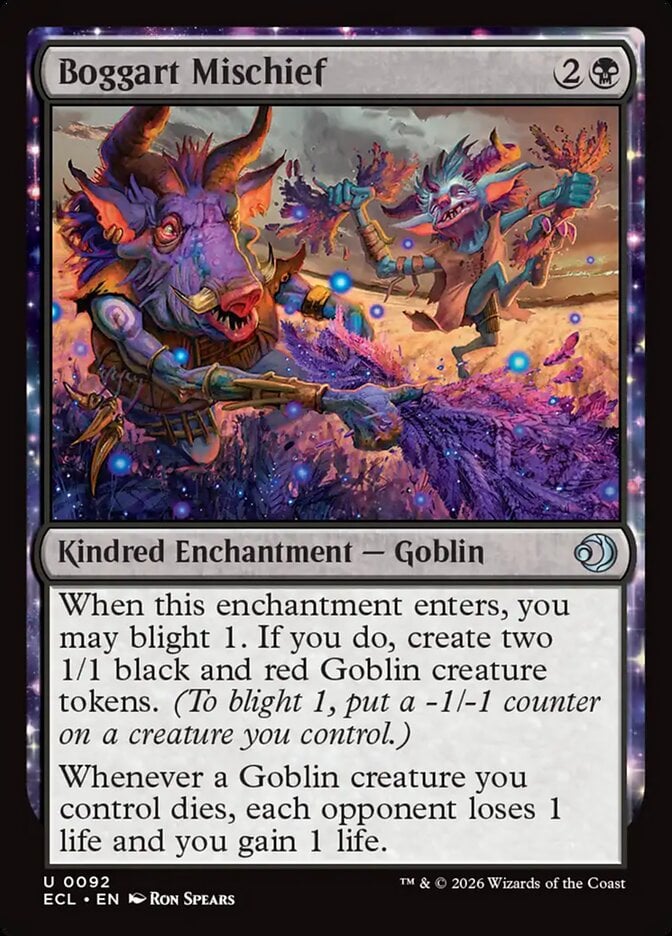
Creakwood Safewright, Twinflame Travelers, Mudbutton Cursetosser, and Boggart Mischief are worthy runner ups. Each of these can be pursued linearly to get into these archetypes and get massively paid off for doing so.
Other Excellent Uncommons
Lorwyn’s goodies hardly end with the cycles. The set is also full of exceptional cards that I’d take over any common P1P1.
#1. Rimekin Recluse
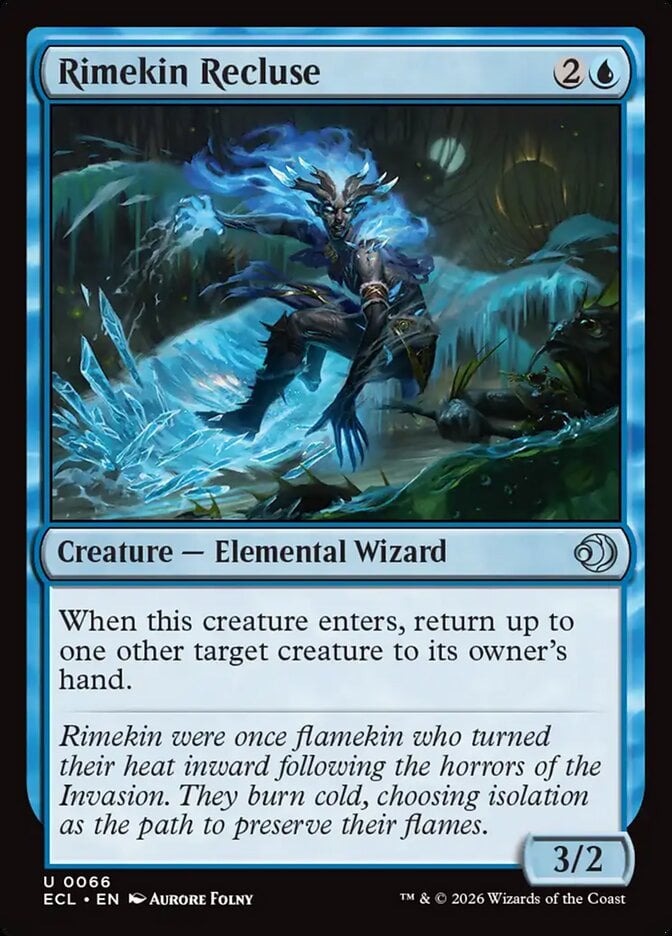
It’s a 3/2 Man-o'-War, I guess? Just an absurd rate all around, and Rimekin Recluse can even target your own stuff for value if you’d like!
#2. Moon-Vigil Adherents
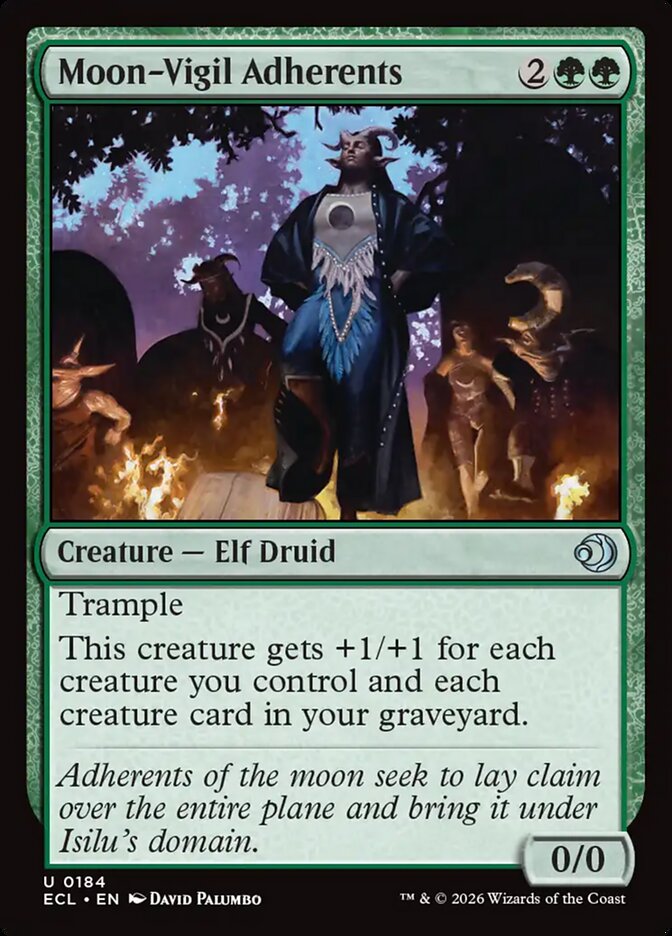
This isn’t necessarily an elves card. Moon-Vigil Adherents is better in Elves with some self-mill, but it’s strong in pretty much any deck with creatures. The fact that this scales as your creatures die makes it rather tough to deal with sometimes!
#3. Gathering Stone
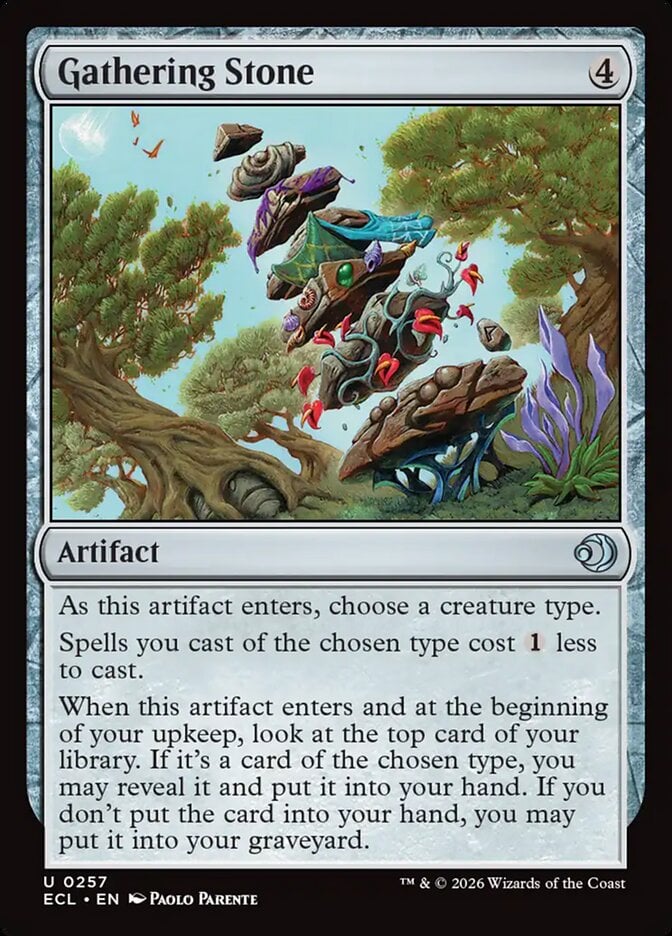
If you’re in any of the Big Five, you’ll love Gathering Stone! This provides an incredible advantage going late, especially given the format’s lack of card selection/mana sinks. Try to have at least 10+ creatures of the same creature type before playing it, and don’t forget to include changelings.
#4. Pyrrhic Strike
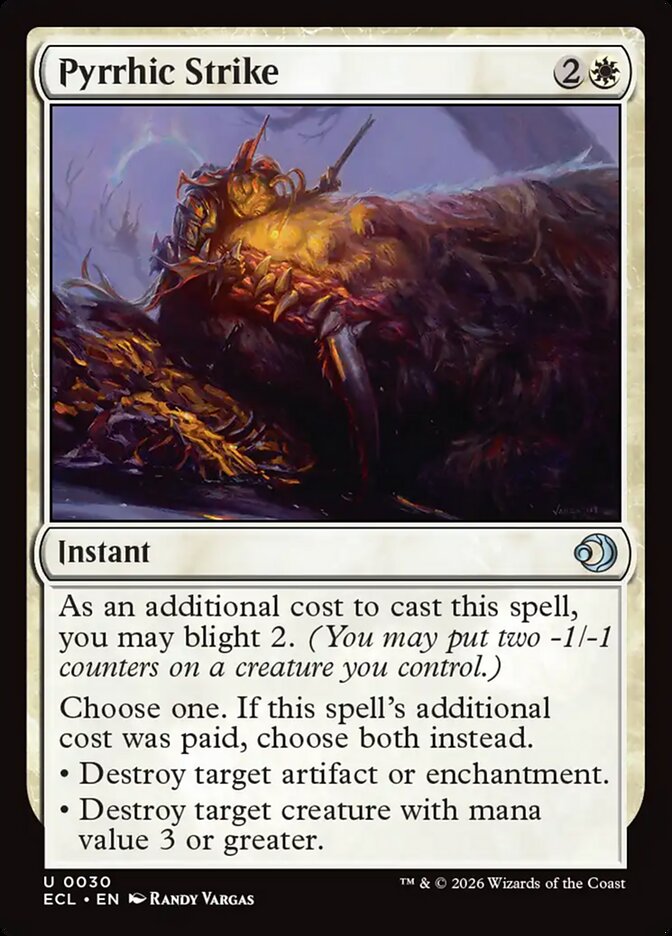
An efficient removal spell that can randomly perform massive blowouts. Pyrrhic Strike is also very easily splashable, so sign me up.
#5. Pitiless Fists
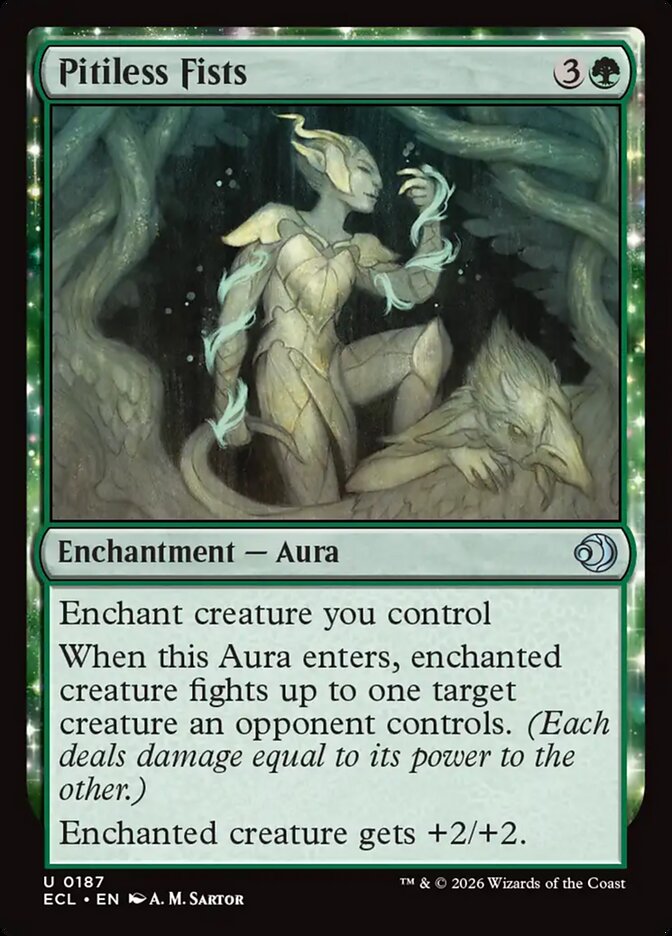
This is less efficient, but it’s extremely rewarding when you pull it off. I love the synergy Pitiless Fists has with lifelinkers and Vinebred Brawler, too.
#6. Shinestriker
The best nonrare vivid payoff available, period. means most vivid decks want to be base blue. You don’t even need to be all that vivid for Shinestriker to be strong, as Mulldrifter with +1/+1 for is still great.
#7. Explosive Prodigy
Another excellent vivid card that doesn’t ask too much of you. Three damage is the sweet spot, but I’ve killed a fair number of Lys Alana Informants with Explosive Prodigy as well.
#8. Sear

Great removal that kills most things dead. There’s a solid gap in quality between Sear and common removal options, so I like to take it highly.
#9. Prismabasher
Once again, you’ll see that the best vivid cards don’t actually ask that much of you. While I’ve been utterly obliterated by +5/+5 on five targets before from Prismabasher, it also performs fine with +2/+2 on two due to its strong base stats.
#10. Glamer Gifter
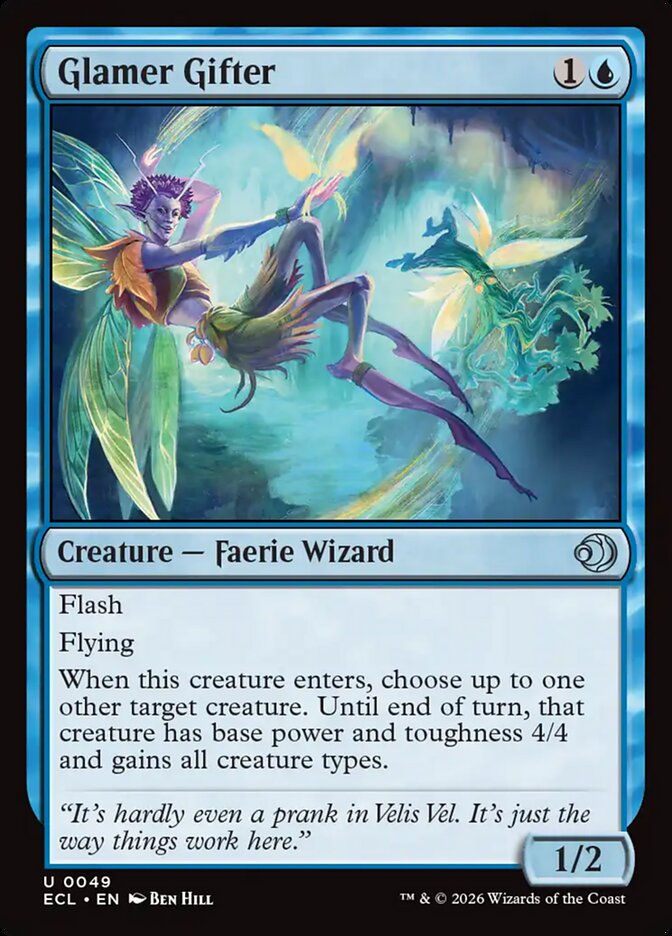
The last uncommon I’d take over Assert Perfection is a really nice “combat trick” of sorts that puts you up a 1/2 flier. It’s also pretty safe to go for Glamer Gifter on your opponent’s turn, since you’ll still be up a flier even if you get “blown out” by a removal spell.
Archetypes
And finally, we come to the set’s archetypes. I’ll cover not only the Big Five, but also the other sub-archetypes. Here’s how I’d rank everything in terms of power level/how much I want to draft them:
Tier 1 (best archetype)
- BG Elves
Tier 2 (great archetypes)
- GW Kithkin
- WU Merfolk
- URx Elementals
- Gx Vivid
Tier 3 (Goblins is super open/you have payoffs)
- BR Goblins (big drop)
Tier 4 (other stuff you could theoretically draft)
- Dimir Flash/Faeries
- Boros Aggro
- WB Midrange
To summarize: I’d like to be Elves if possible. If not, anything but Goblins is basically ideal, and they’re all fairly close in power level. I described Elementals as “URx” because it often splashes. Goblins isn’t unplayable though, and I’ll cover how to pull it off. Beyond Goblins, I’m most likely to be some kind of vivid deck, or UB/BW/RW in a very particular draft.
BG Elves
Saving the best for last is for chumps. Let’s start with the clear best deck in Lorwyn Eclipsed Draft, BG Elves. Why is this deck so good anyways?
Payoffs
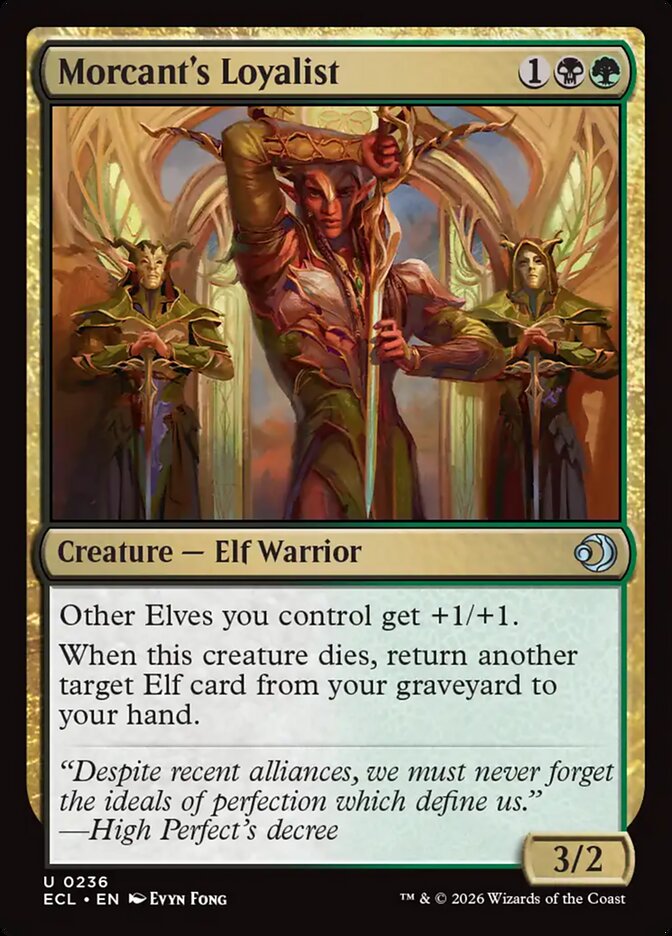


The payoffs are a huge part. Elves have the second-best Command, the best Champion, the second-best uncommon lord (Morcant's Loyalist), the best kindred payoff, and the best Eclipsed creature. It also has two other bomb payoffs in Gloom Ripper and High Perfect Morcant. You could even consider Maralen, Fae Ascendant to be an Elves bomb of sorts, since most Maralen decks will focus on elves rather than faeries.
Getting several of these cards alongside the deck’s common creatures and support cards like Midnight Tilling, Assert Perfection, and Blight Rot puts you in an excellent spot to win the draft!
Core Cards
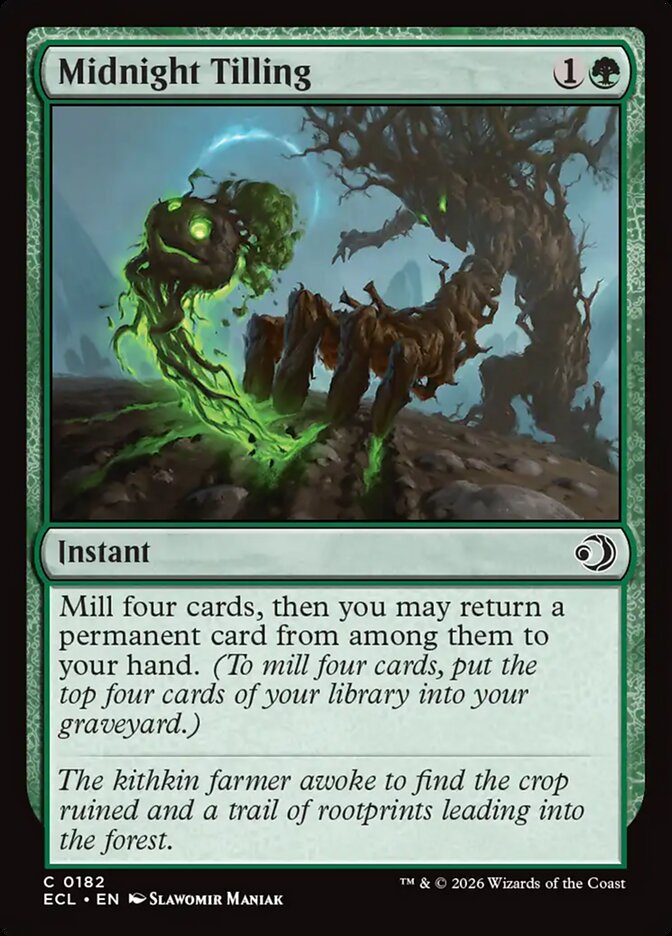
What makes Elves even better is just how remarkably solid it is at common! While I don’t want to play Elves purely for any of these cards, you can get a lot of mileage out of simple mill creatures. Midnight Tilling also makes the deck more consistent, bumps up graveyard synergies, and digs for some of the broken payoff cards.
My only real knock against Elves is that it’s very much a known quantity, which can lead to some vicious cuts. Quality commons and changelings can help you out there though, although your deck will get better and better the more payoffs you can accrue.
How to Play Against It
It’s the best deck in the format for a reason, so there’s no easy remedy. Matching elves on the ground is tough because they have the largest common creatures of any creature type. Fliers are a better idea, and Rooftop Percher even provides a tinge of graveyard hate. You can also sometimes line up Liminal Hold and Unforgiving Aim with Morcant's Eyes, if they have it.
Try to hold your removal spells for bomb payoffs if possible, or at the very least a fat common like Safewright Cavalry. Being forced to Liminal Hold a value creature like Dawnhand Eulogist or Eclipsed Elf sounds like an awful time.
Trophy Example
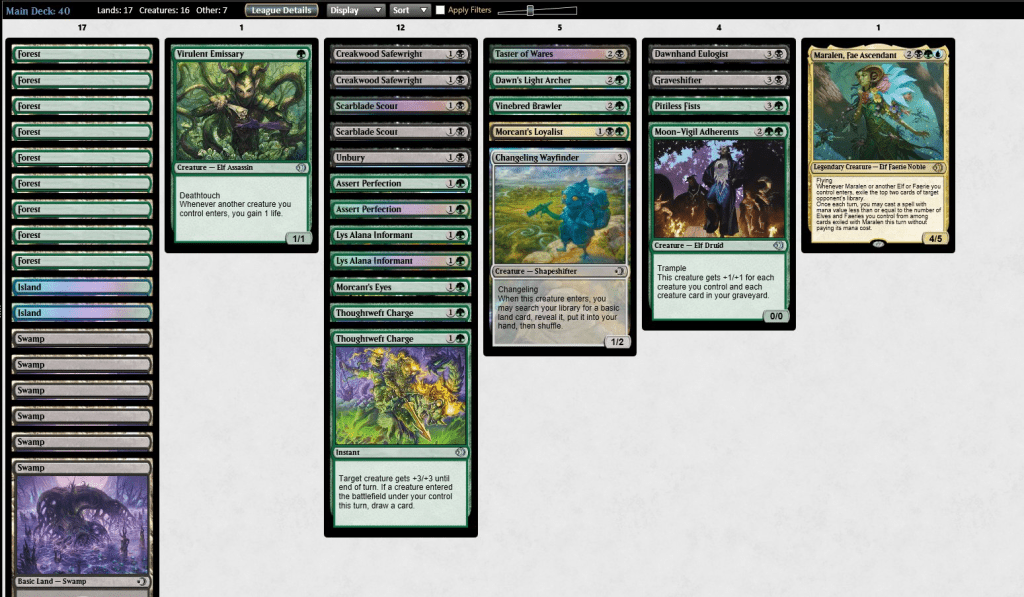
It’s a Ben Stark trophy, so you know it’s good!
GW Kithkin
Kithkin is the most aggressive deck in the format, but it tends more towards midrange than I was expecting it to.
Payoffs
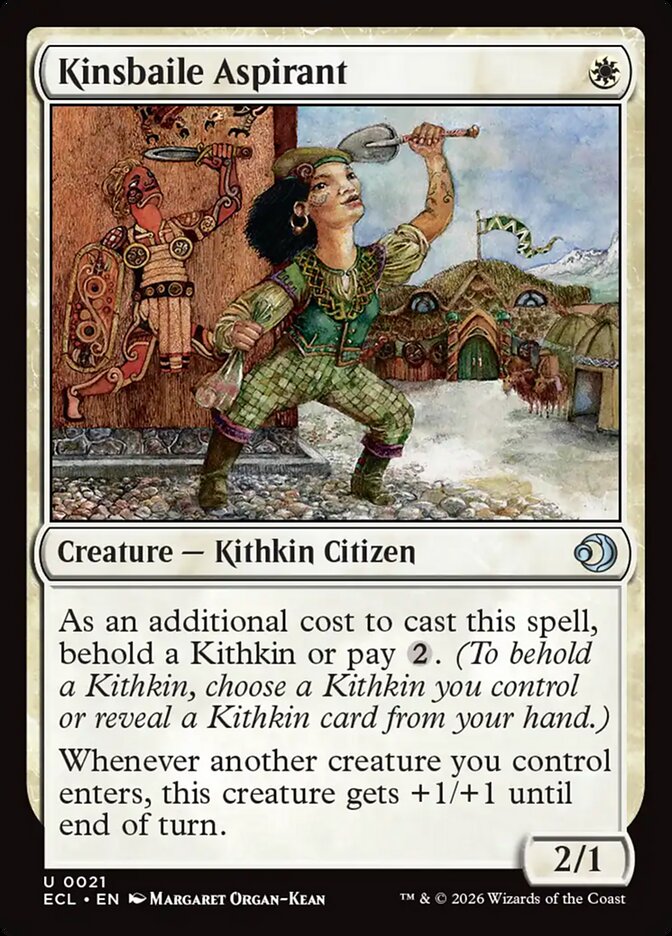
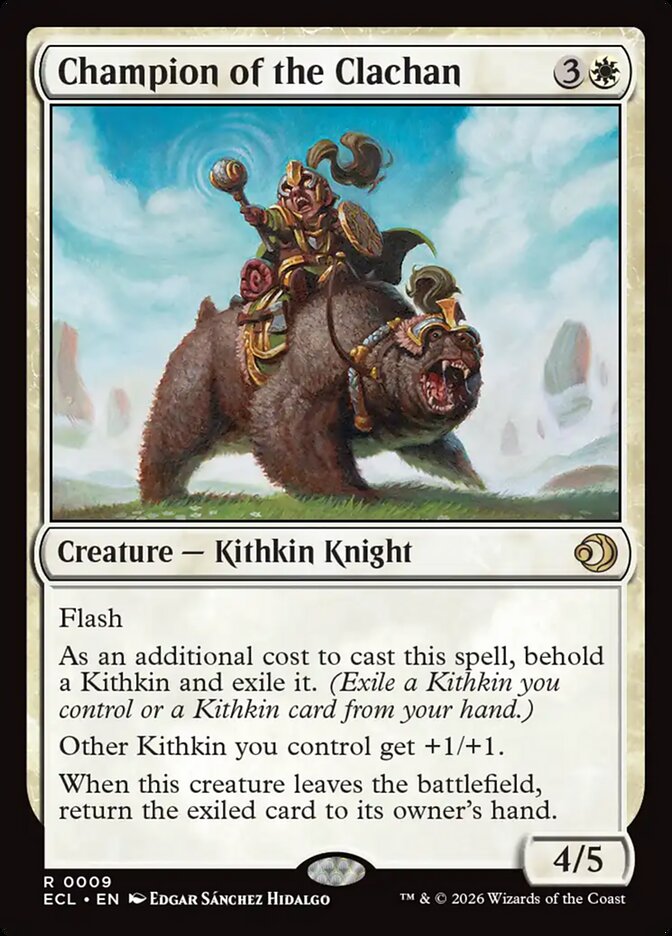
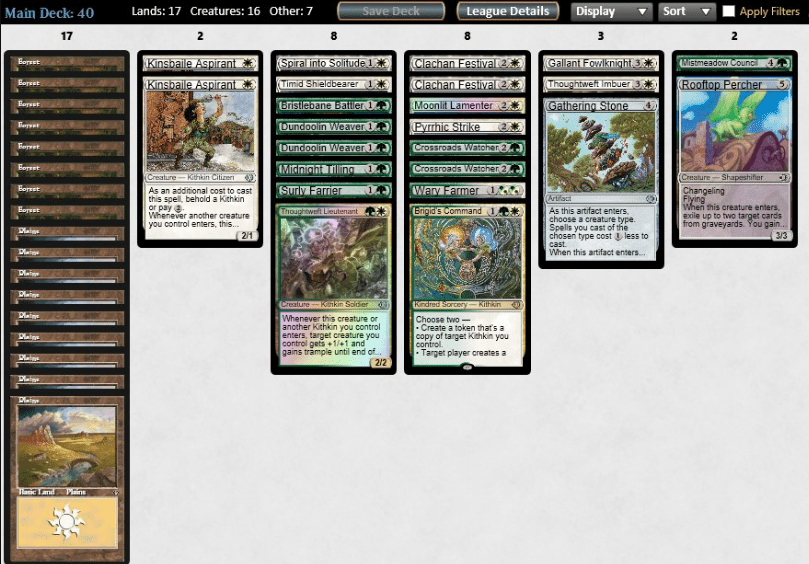
When compared to Elves, Kithkin’s payoffs are a bit tamer. Thoughtweft Lieutenant, Eclipsed Kithkin, Kinsbaile Aspirant, Thoughtweft Imbuer, and Champion of the Clachan are the primary direct payoffs available. Brigid's Command, Brigid, Clachan's Heart, and Clachan Festival are strong cards, but they don’t actually require you to play mostly Kithkin to be good (though you’ll likely have some in these colors anyways).
Core Cards
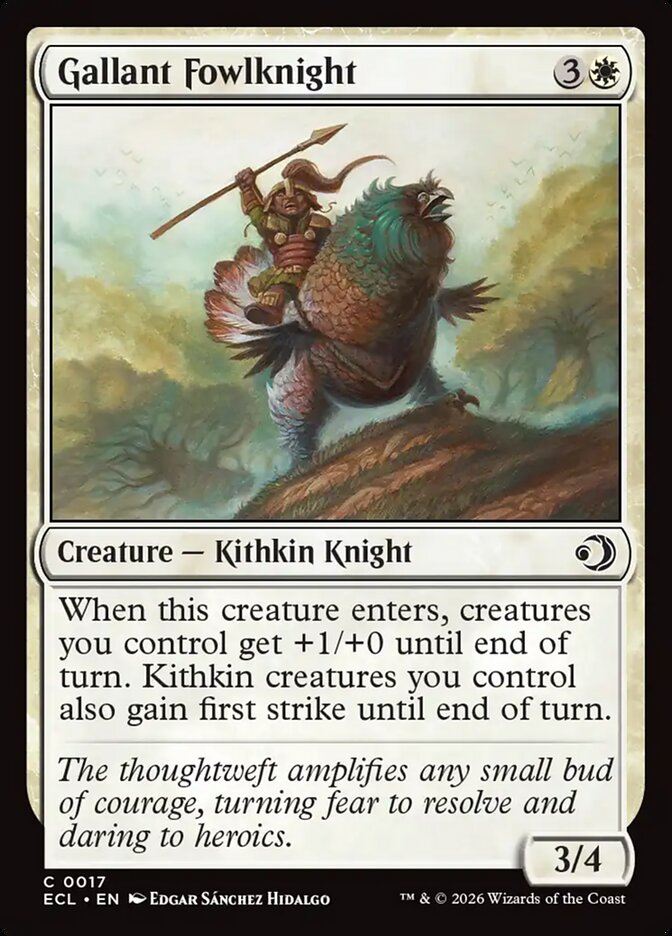
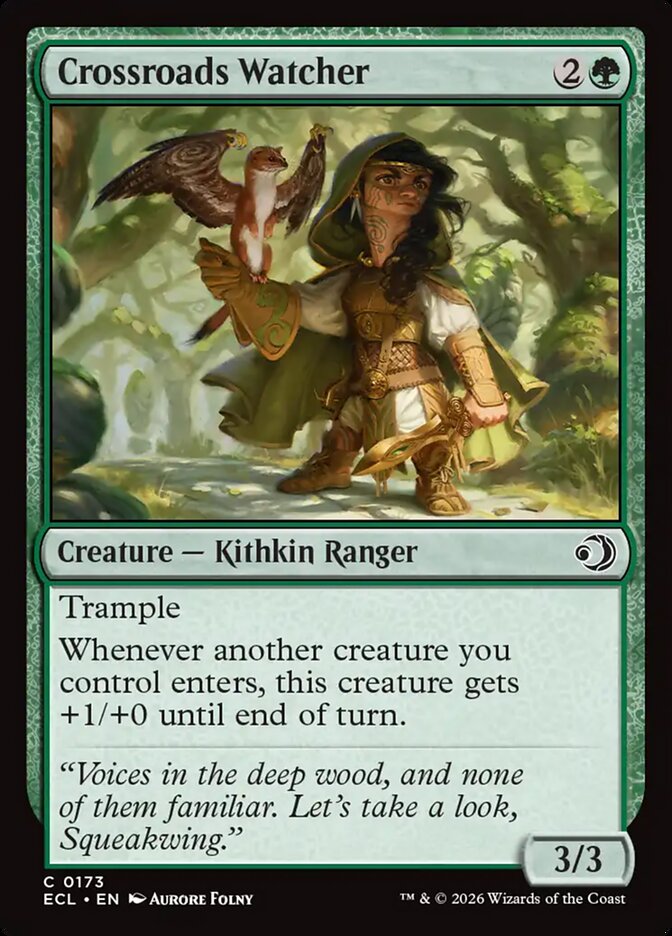
Mistmeadow Council is an absurd common when you’re mostly Kithkin, and a card I’d basically play any number of copies of. Gallant Fowlknight and Crossroads Watcher are also at their best here, with both being solid curve filler creatures. I don’t like Reluctant Dounguard much, but this is the only archetype I’m okay playing it in sometimes. Both common 2-drops available are also fine, and they’re important for curving out.
One card I don’t recommend playing is Goldmeadow Nomad. While I appreciate wanting to curve out, too often do I just see it pointlessly sitting across the table from me. It’s basically a mulligan on legs in your average Kithkin deck. If you really want to try the card, look towards playing it in different shells that either utilize it for convoke or discard it to cards like Gristle Glutton and Flaring Cinder.
Because of how light Kithkin can feel on payoffs, GW can actually make a nice core for a vivid/midrange deck.
How to Play Against It
Surviving Kithkin aggro often comes down to lining up cheap removal with the right cards, as merely blocking might not save you versus Thoughtweft Lieutenant and Thoughtweft Imbuer. Keep in mind that certain kithkin cards can’t be stopped this way though, as all the creature removal in the world won’t save you from Clachan Festival or (gulp) Kinbinding. In those cases, I’d hope to have access to a Disenchant effect like Liminal Hold, Wistfulness, or Unforgiving Aim.
Trophy Example
WU Merfolk
Merfolk is my personal favorite deck to draft in this format. It’s a remarkably synergistic shell, with lots of cards that look weak on their own but play excellently together.
Payoffs
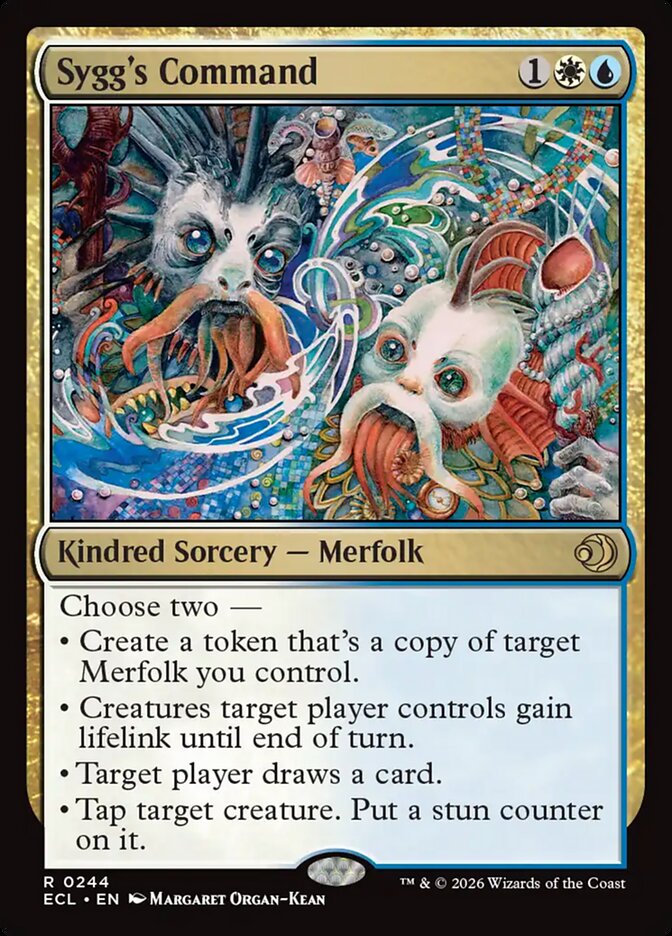
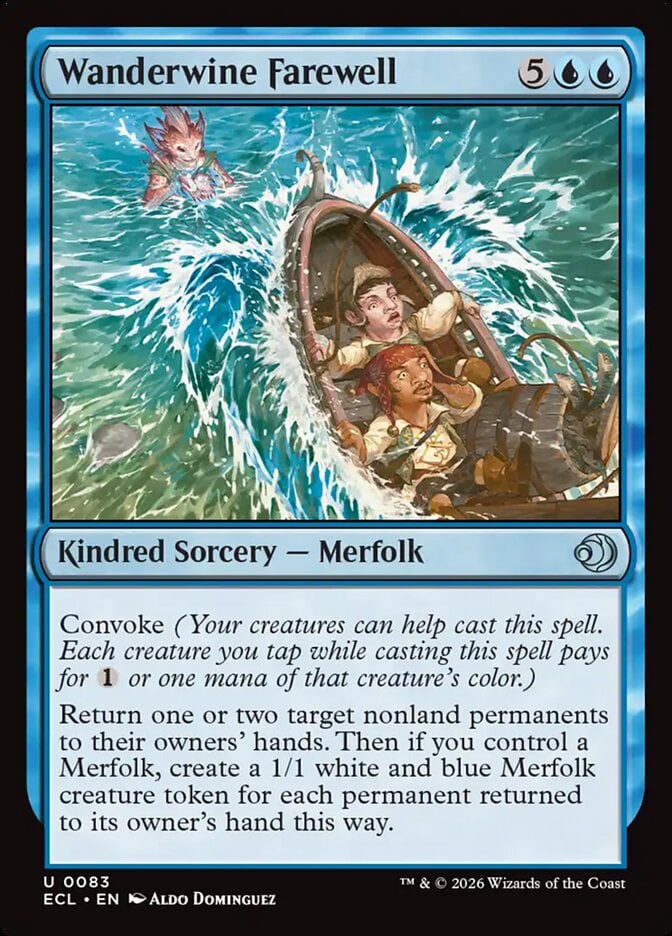
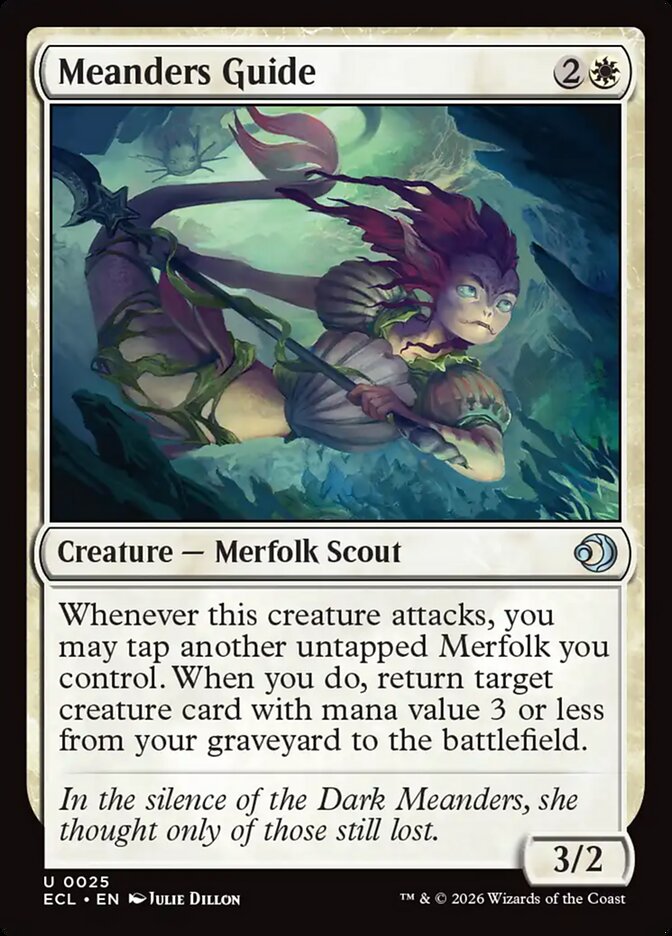
Merfolk also enjoys a larger catalog of payoff cards than Kithkin. It has the second-best Champion, the best “behold” creature, the best 2-drop lord, the best hybrid common, and some other strong cards available like Sygg's Command, Wanderwine Farewell, and Meanders Guide.
Core Cards
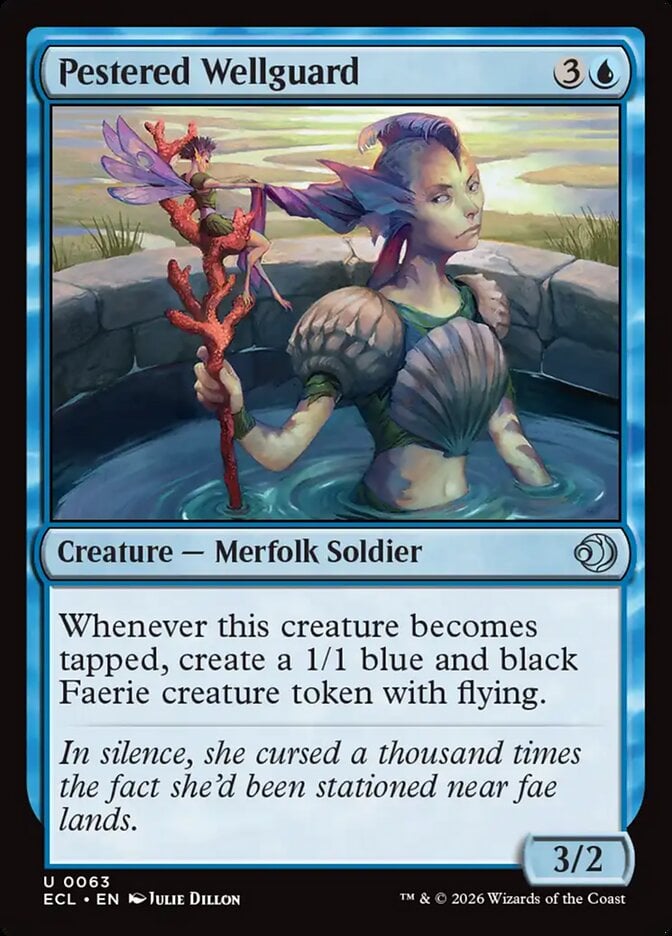

But what really makes Merfolk tick is how its commons play together. Gravelgill Scoundrel is an all-star card that conveniently taps all your Wanderbrine Preachers, Silvergill Peddlers, and Pestered Wellguards. You can also of course use convoke spells like Temporal Cleansing and Unexpected Assistance for this.
Tributary Vaulter is another surprise hit card here. No other player should want it because it has piddly sizing and only boosts merfolk. But when it’s doing the thing with its fishy friends, Vaulter can be remarkably impactful on board.
One strange card that can put in an unexpected amount of work in this archetype is Bark of Doran. It’s awesome with Gravelgill Scoundrel and Tributary Vaulter, which both get +3/+3 for cheap and come with built-in evasion! While I wouldn’t play Bark without multiples of each, it should pretty much always table, so keep this option in mind.
How to Play Against It
Merfolk is a tempo deck through and through. This means you can sometimes feel like you’re winning, only for things to start to slipping away suddenly after a timely two-spell Temporal Cleansing turn. One of the best ways to deal with Merfolk is simply to fry their fish live with cheap removal spells like Tweeze and Requiting Hex to break up their synergies. Killing Gravelgill Scoundrel can stop them from freely tapping for value, and removing Deepchannel Duelist in the middle of combat can be “GG”.
Trophy Example
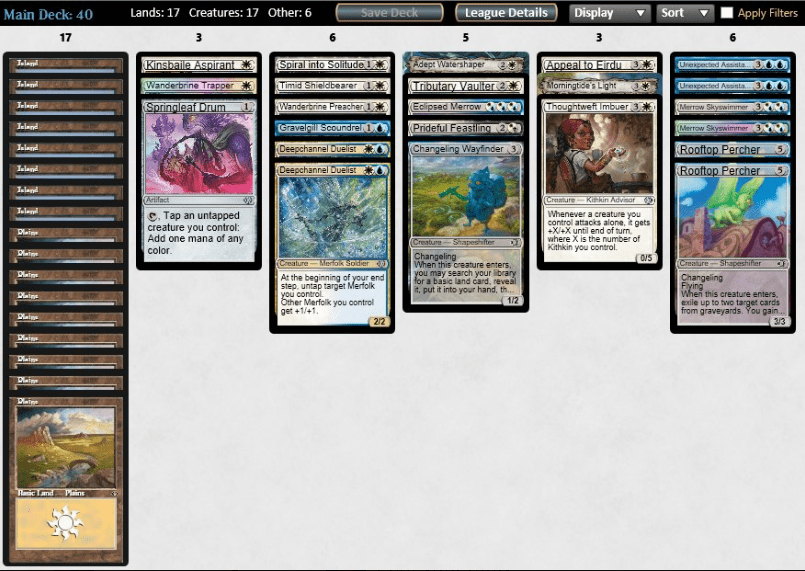
Note the merfolk/kithkin hybridism here, which can happen sometimes.
URx Elementals
Elementals is a big midrange strategy with a penchant for expensive stuff. Whereas other creature types tend to go wide in practice, Elementals “goes tall” with cards like Sunderflock and Kulrath Zealot. It also loves to splash, which is unusual for this color pair.
Payoffs
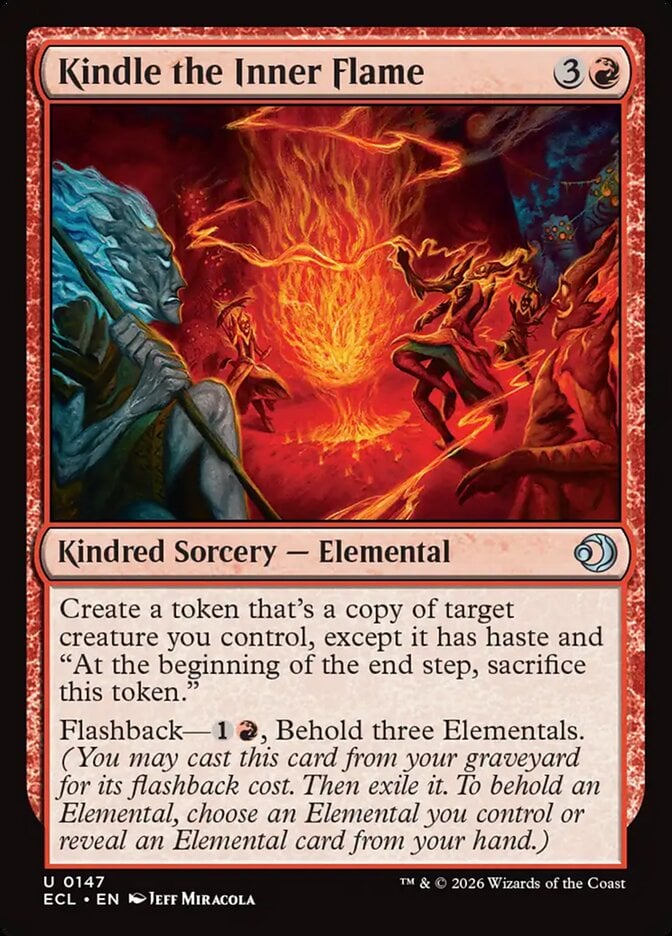
Elementals is definitely the lightest of the main creature types on synergies and payoffs. Sunderflock is ridiculously good, but other than that you’re down to just Flamebraider, Twinflame Travelers, and Kindle the Inner Flame. Ashling's Command is an uber bomb with zero elementals in your deck, so I’m listing it but not really counting it! Soulbright Seeker isn’t worth playing in most UR decks, and Champion of the Path is the worst of its cycle.
Given that most of the vivid payoffs in this set are elementals, you’ll often see this deck splash for them. This makes Twinflame Travelers even better, since all the vivid creatures come with powerful “enters” abilities. I’ve gotten to live the dream of Shimmercreep’ing my opponent for 10 life!
Speaking of Twinflame Travelers, it also has explosive synergy with Kindle the Inner Flame and Rimekin Recluse. You can really go off with “enters” abilities in this deck, so look for ways to do so when you can.
Core Cards
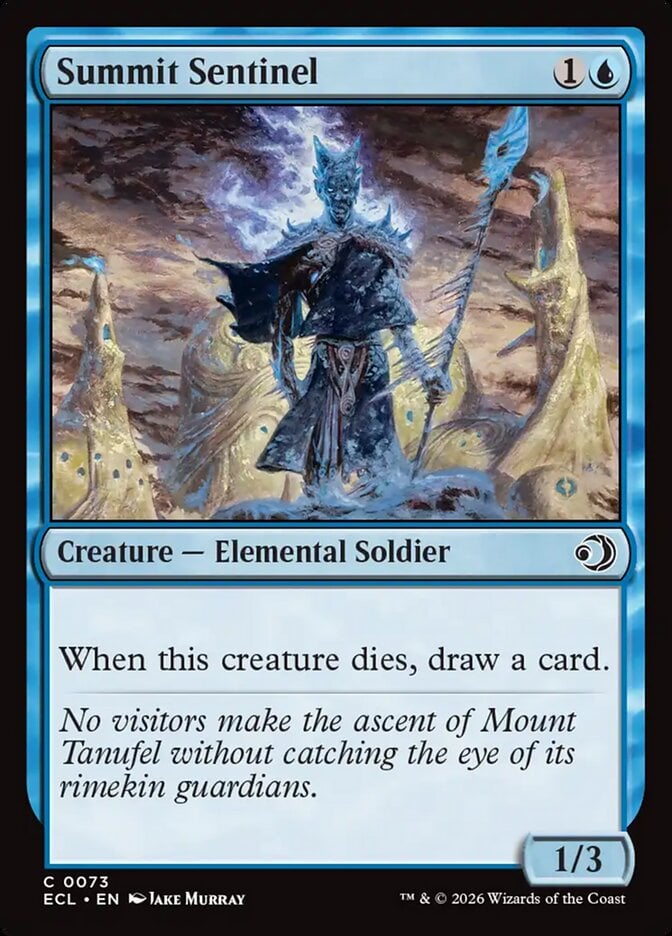
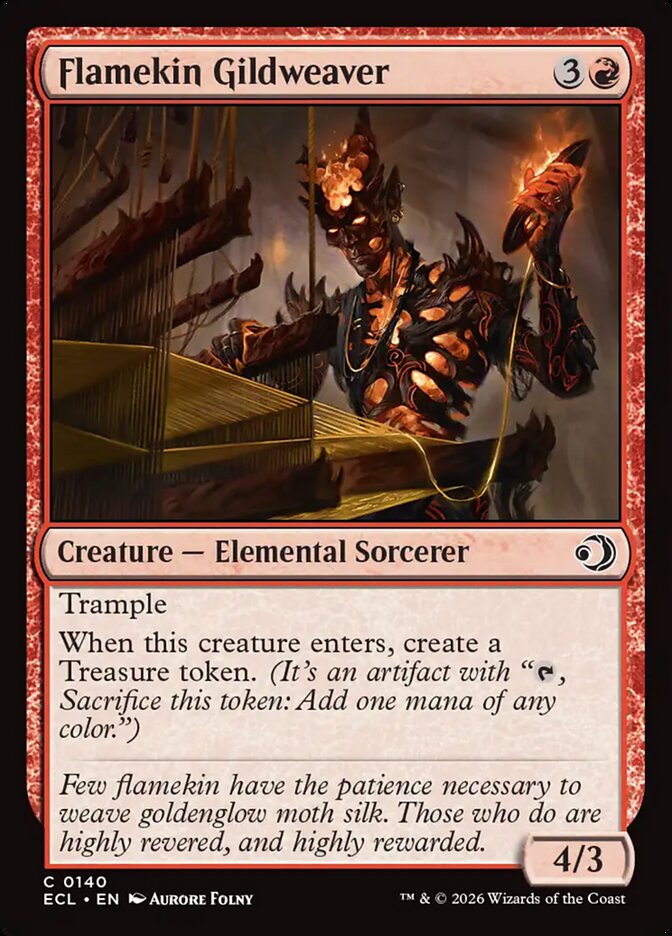
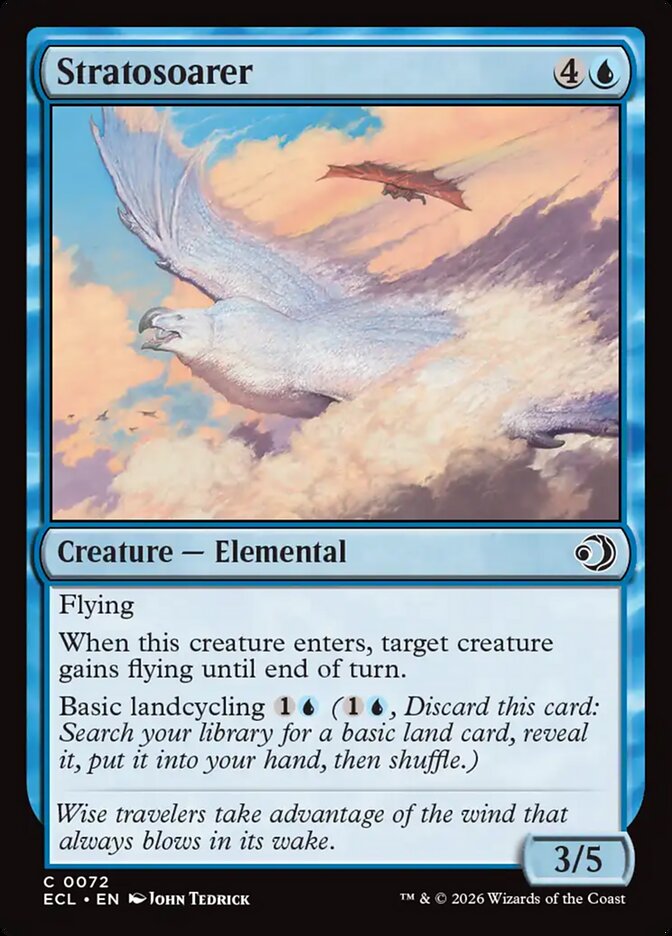
Due to Elementals’ lack of typal payoffs, it feels less pressure to play specific commons than other creature types. It also doesn’t really have any incredible 2-drops, though I like Summit Sentinel better than Flame-Chain Mauler. Three cards I really like here are Kulrath Zealot, Flamekin Gildweaver, and Stratosoarer. It’s no coincidence that all these cards lend themselves to splashing as well.
Flaring Cinder, Kulrath Mystic, and Enraged Flamecaster are all fine 3-drops here too. I’d rank Cinder first, then Mystic followed by Flamecaster, as Elementals isn’t hugely concerned with the chip damage that Flamecaster provides.
How to Play Against It
Elementals tends to go big, giving it a late game edge against most decks. Wild Unraveling is at its best versus them. They also can’t usually remove something like Kinbinding, which goes completely over the top of what most Elemental decks can muster. Merfolk and Kithkin are looking to curve out and go under them, while Elves can either do that or try to win with something like Morcant's Eyes later.
I’d also recommend hoping that your opponent doesn’t have Ashling's Command, as it’s extremely difficult to play around. Even if you see the Pyroclasm coming, all the other modes are so cracked that they’re surely going to pull ahead with it somehow.
Trophy Example
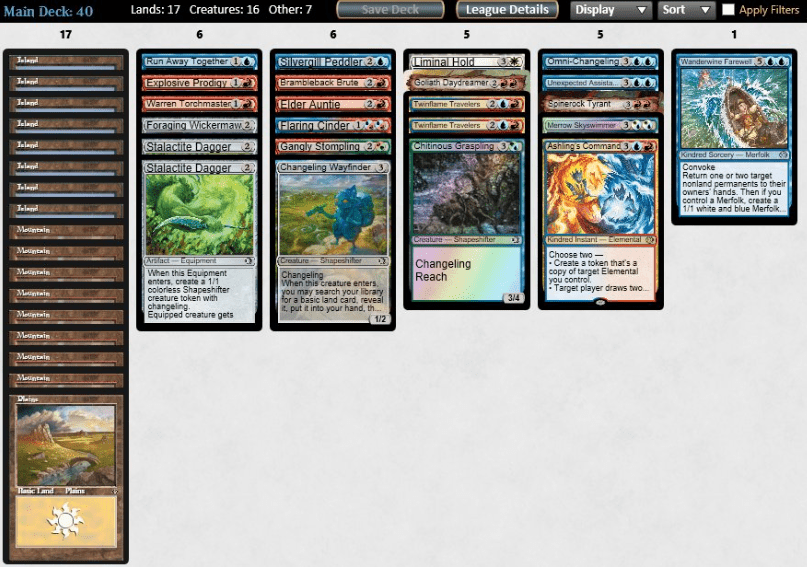
Gx Vivid
It’s not part of the big five, but I’ve still had a decent time drafting Gx vivid. You can see an example draft here.
Payoffs
As a 5-color control deck of sorts, Gx vivid can play whatever it feels like when the draft goes right. Bombs, removal spells, card advantage, and vivid payoffs are the most obvious things to care about.
Core Cards
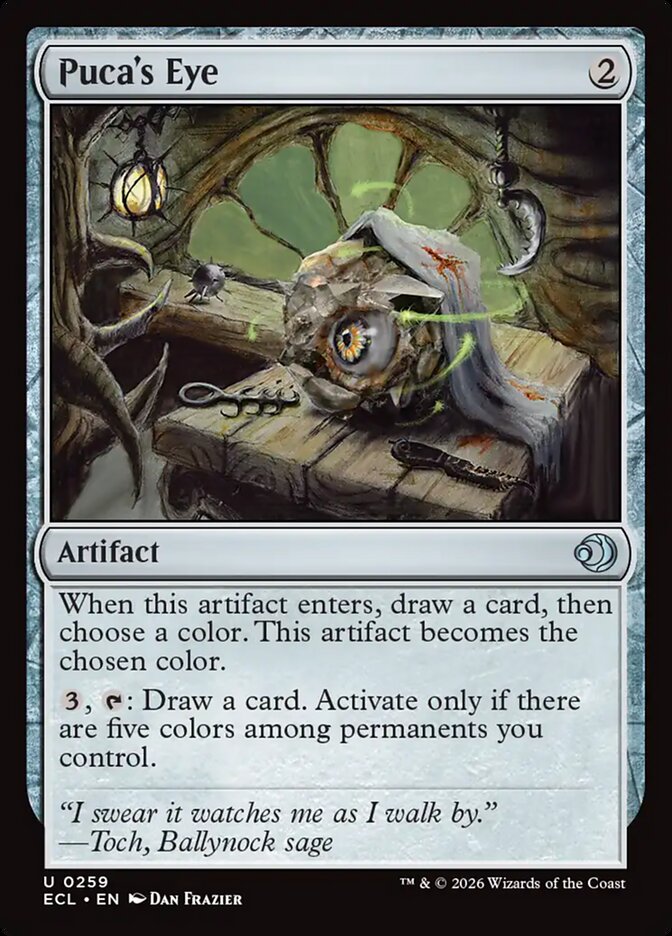
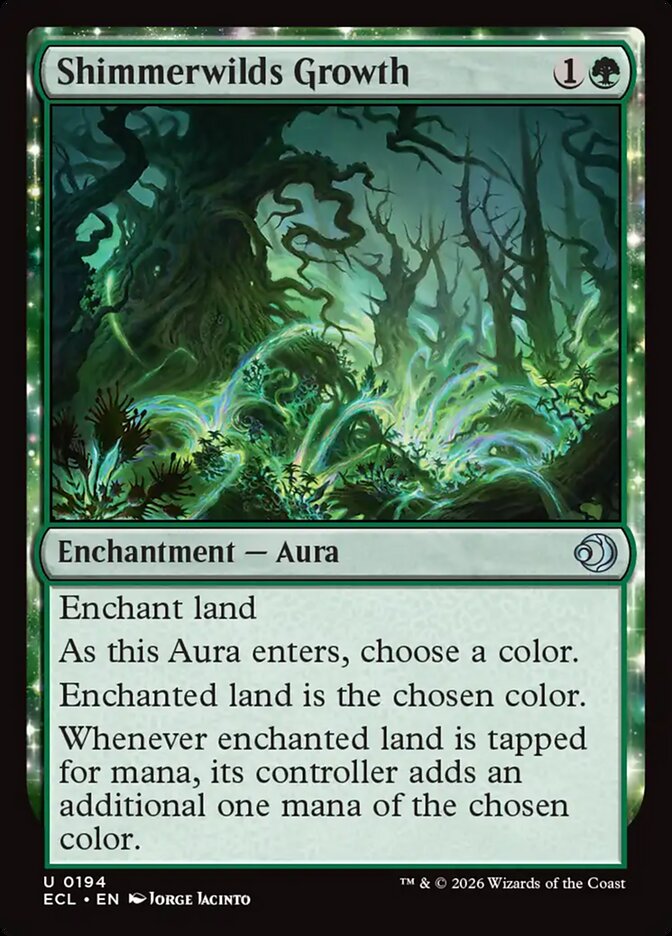
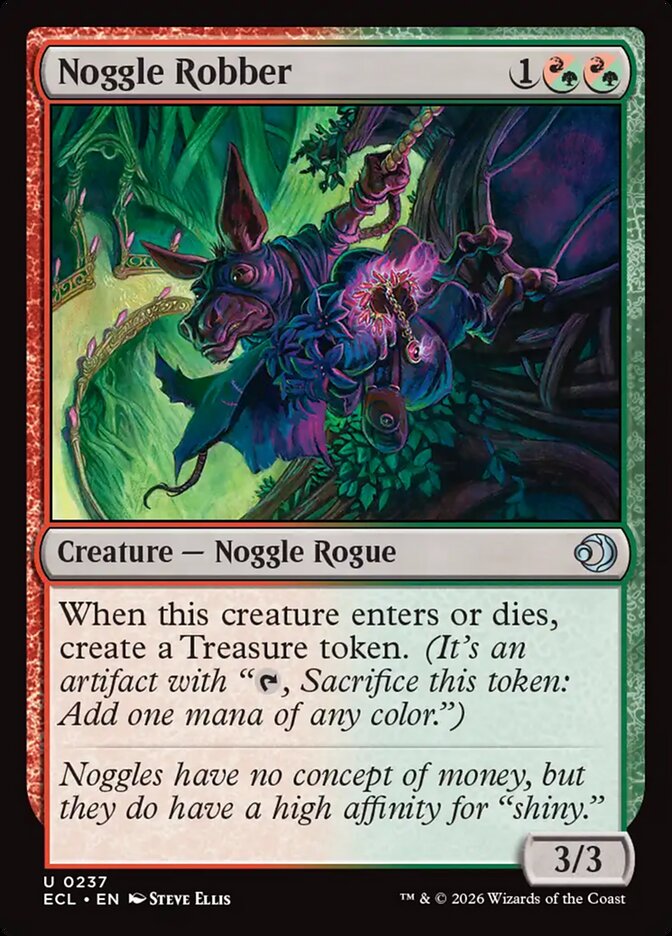
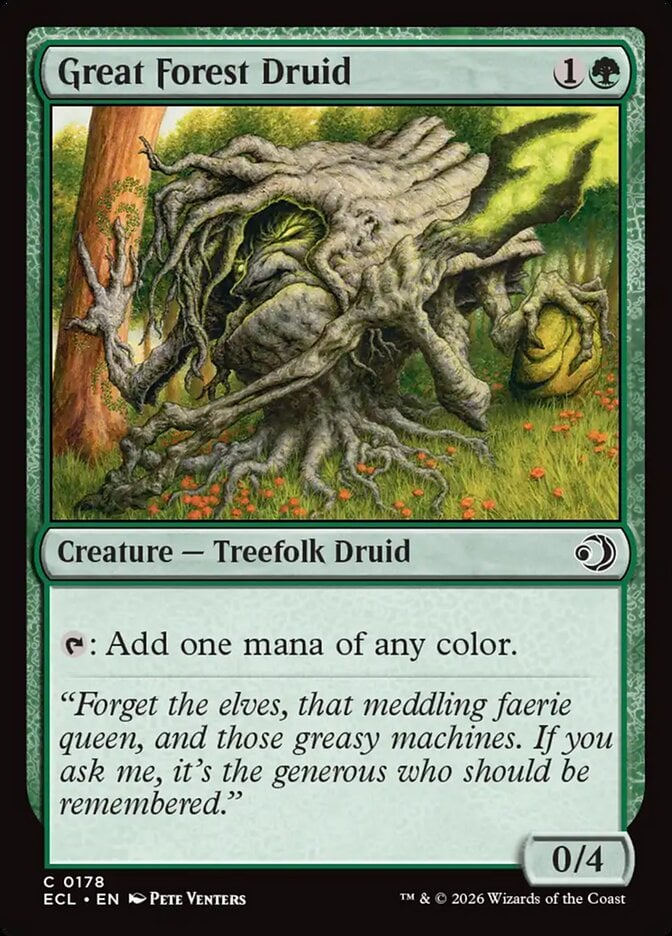
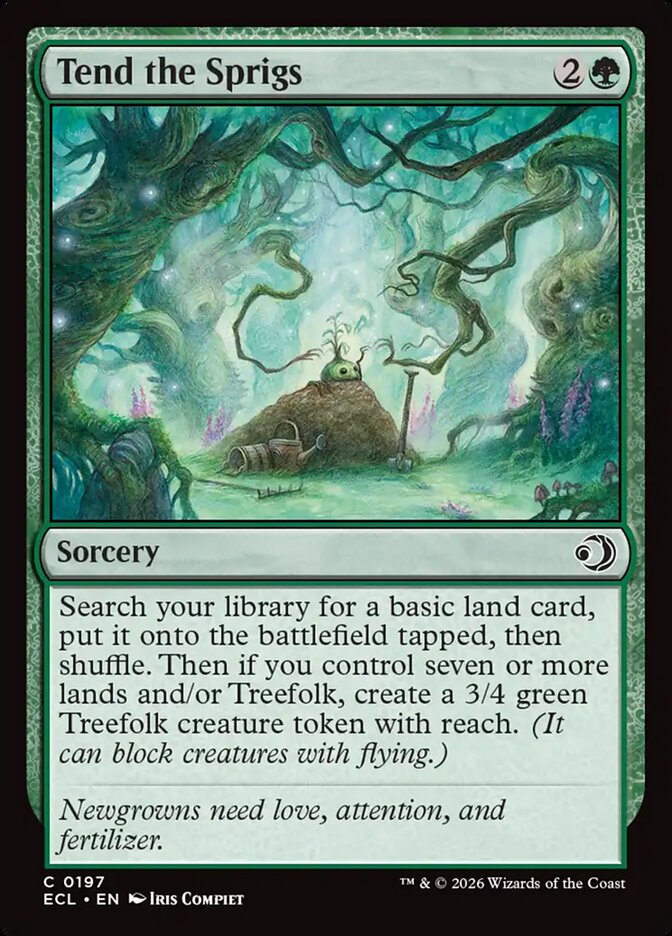
Mana fixing and removal are vital components for Gx vivid. You’ll also often make use of the common changeling cycle, which provide curve filler and extra colors for vivid. Puca's Eye, Shimmerwilds Growth, Noggle Robber, and Foraging Wickermaw all work excellently for this kind of thing. Great Forest Druid and Tend the Sprigs are also at their best here, especially given that Tend wants treefolk (which includes the druid and your changelings).
Every Gx color pair can be viable, though RGx is my favorite. It all depends on how your draft is going, which cards you have, and what you’re getting passed.
Green-White
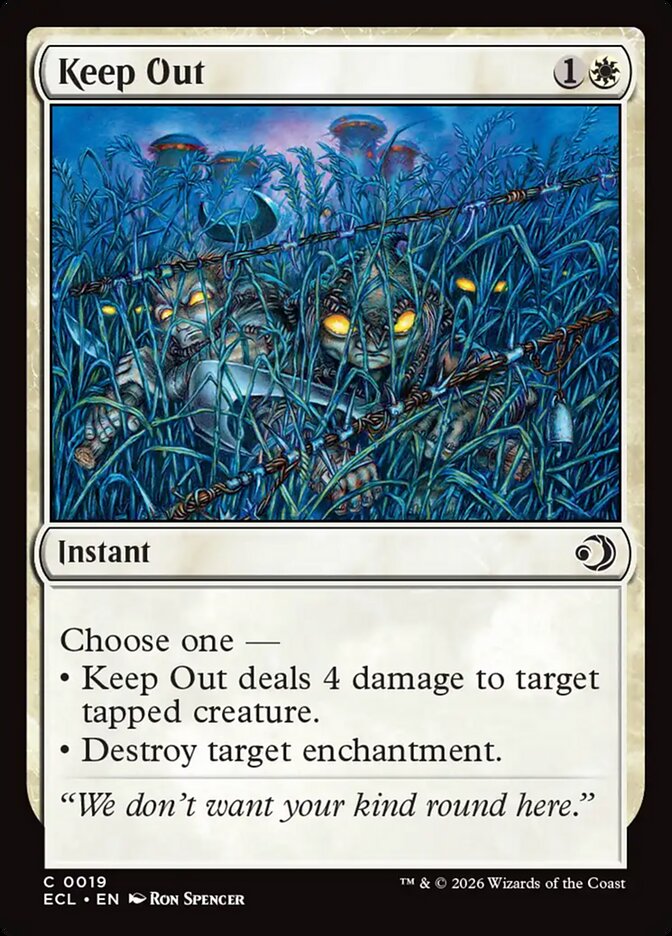
White has some great removal spells at common, like Spiral into Solitude and Liminal Hold. I’m also a fan of Keep Out, which plays better in a less aggressive deck like GWx Vivid. Kithkin and merfolk synergies won’t usually offer you much. Flooding can be a big concern with GWx, so hopefully you have strong mana sinks/bombs from other colors.
Green-Blue
Unexpected Assistance is one of the best pickups available. You can also pull off many of the set’s elemental synergies. Common removal is where this pair tends to struggle, although Blossombind and Assert Perfection are both solid. I don’t like Glimmer Bairn much because it offers no card advantage/defensive board presence.
Green-Black
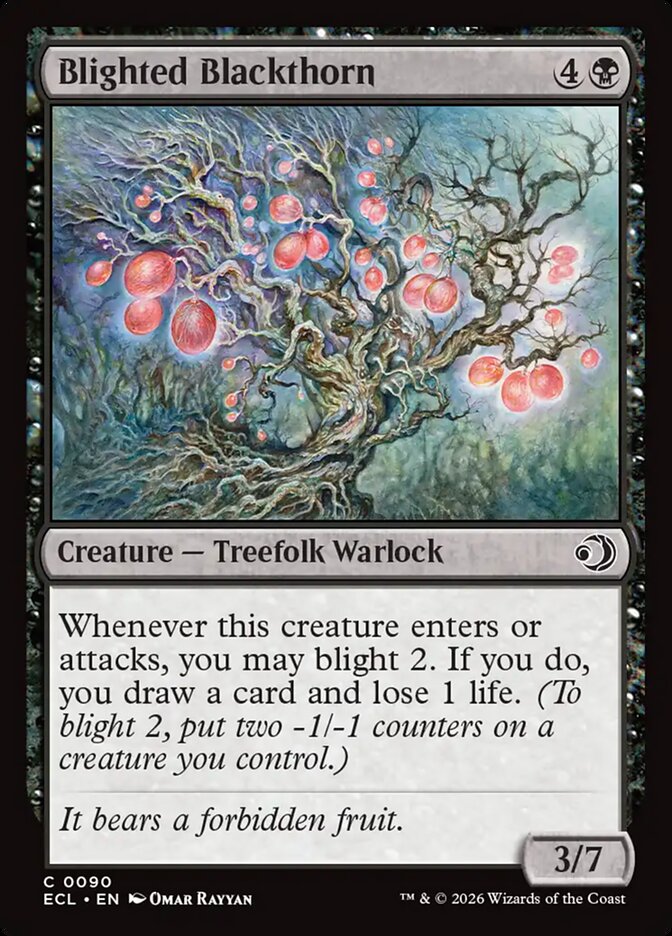
Elves wasn’t open, but hey, removal is removal right? Black will mostly just provide Blight Rot and Bogslither's Embrace in this context. I do love pairing Great Forest Druid with blight cards when I can though. It’s pretty much the best companion for Blighted Blackthorn available, which counts for something.
Green-Red
Red is my favorite secondary color for vivid decks. It has three strong common removal spells like white and black, but also higher creature quality in Kulrath Zealot and Flamekin Gildweaver. These let you splash for other colors, too, which plays perfectly with the bombs/vivid angle.
How to Play Against Them
As a 5-color control pile, you’re either going under vivid, or simply answering its bombs and hoping it floods out. Vivid decks can vary wildly from table to table, so it’s hard to offer advice without specific context.
BR Goblins
Goblins can work in this format, but it definitely requires you to start with its best cards first. Simply playing a bunch of common goblins won’t get you anywhere, because that’s where the creature type struggles most.
Payoffs

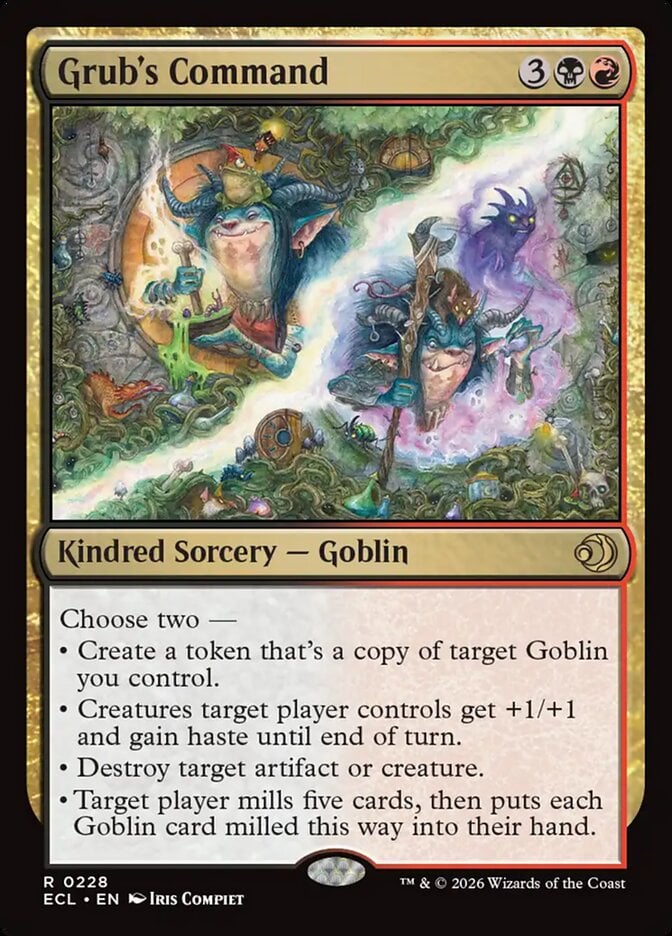

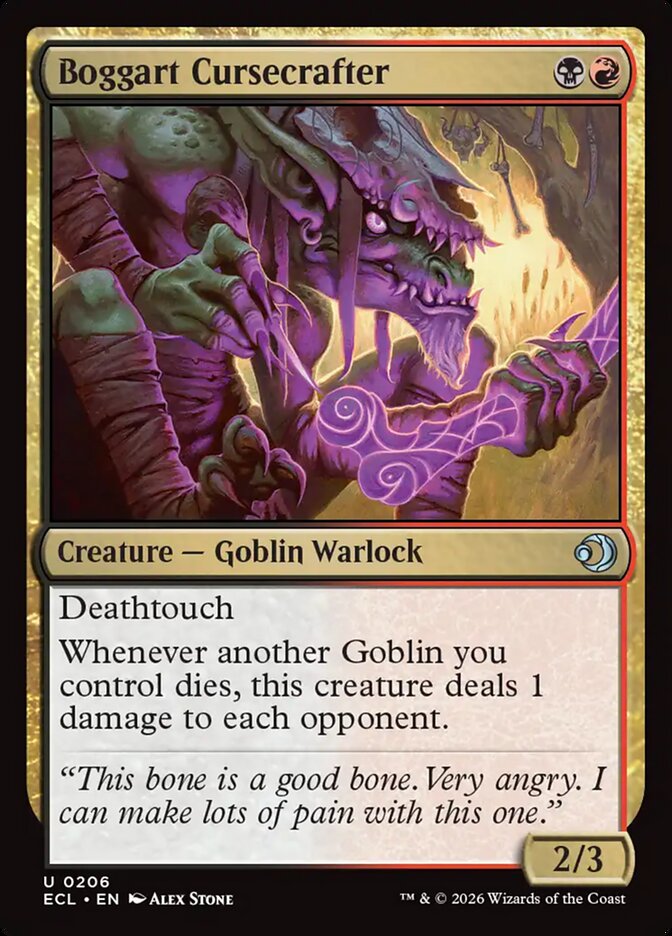
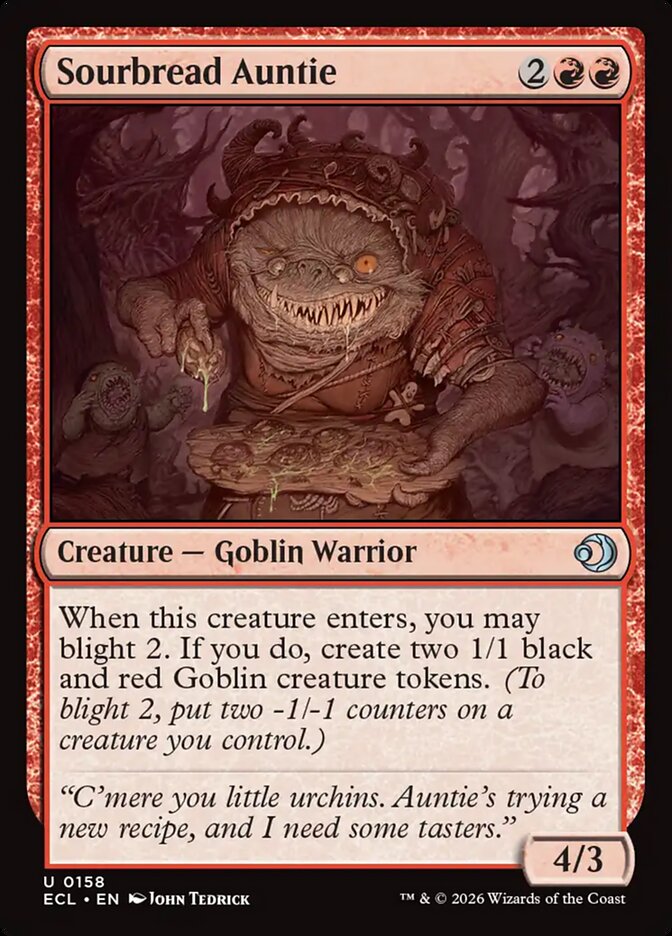
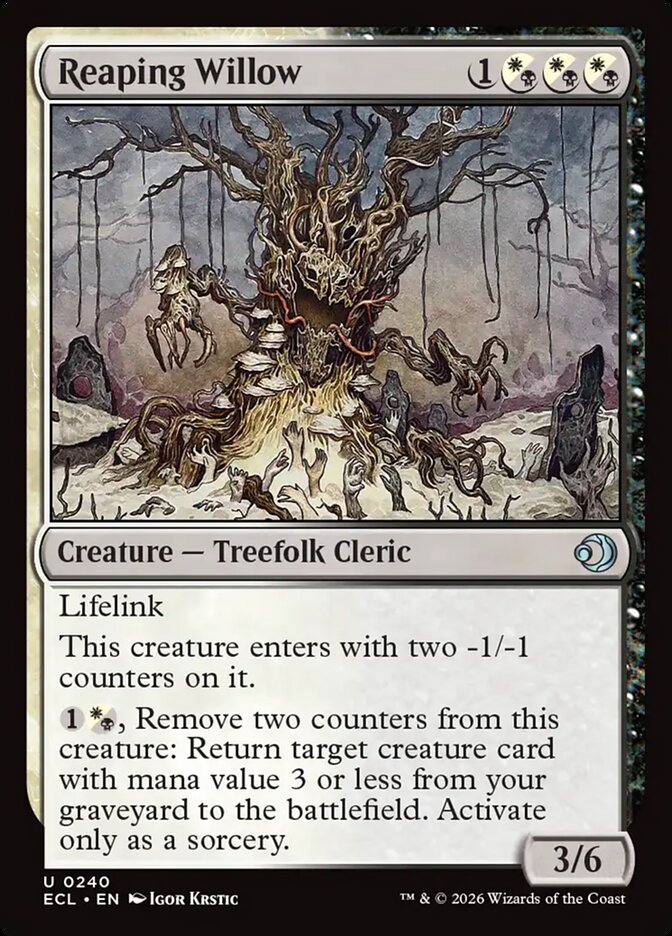
Taster of Wares and Grub's Command are as good as it gets, and the exact kind of cards that could put me into this strategy. Goblins has other excellent payoff cards though, like Grub, Storied Matriarch, Mudbutton Cursetosser, Boggart Cursecrafter, Boggart Mischief, and Sourbread Auntie. I’d also consider Reaping Willow to be a better goblin payoff than most goblins, so slam it if you can draft it and try to play more Swamps than Mountains.
Goblins has a couple of other cards that look like payoffs but aren’t great in practice. Gutsplitter Gang’s drawback is extremely harsh because it’s tough in practice to use it to your advantage. Getting it hit by Blossombind is also incredibly miserable, and it would have me rushing to sideboard it out in Best-of-3!
The same goes for Sting-Slinger and Lasting Tarfire. I’m down to run both if I have multiples of each, but on their own they aren’t doing much at all.
Core Cards
Where Goblins fail is that its commons are just worse than other creature types. A goblin deck composed mostly of commons is a 1-2 waiting to happen. Heirloom Auntie is weak, and Elder Auntie just gluts the board pointlessly. None of these commons has enough durability to withstand your own blighting, which often leads to cards like Champion of the Weird and Gutsplitter Gang being unable to do what they are supposed to.
Gristle Glutton is definitely the best of a sad bunch. Its stat line works well with its own ability and other blight cards, and managing mana flood is crucial to going long in this format. It also has some excellent synergies with -1/-1 counter cards like Reaping Willow and Dawnhand Dissident.
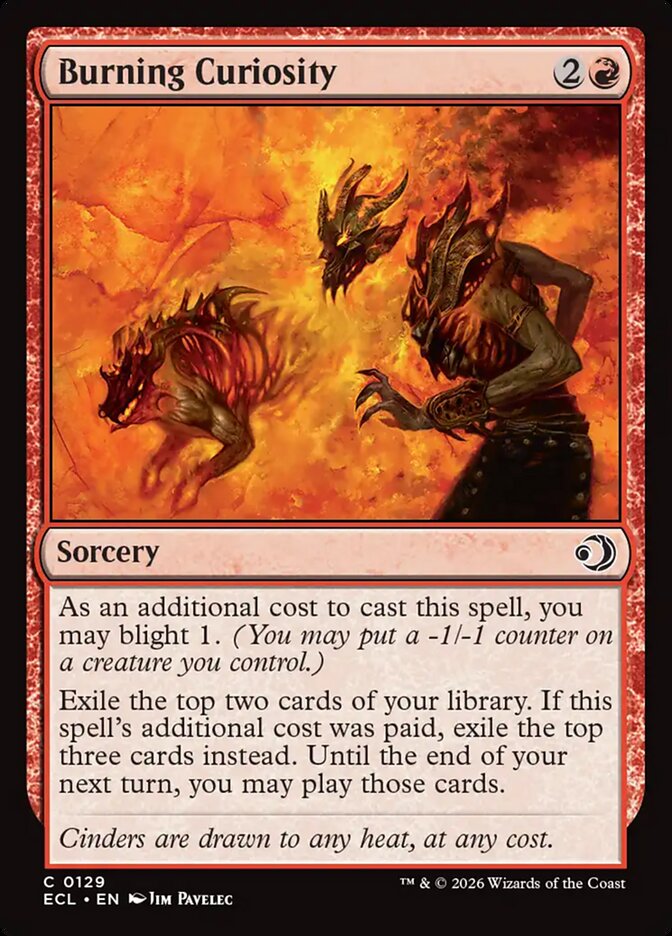
One card I really like in Goblins is Burning Curiosity. Blight 1 is much easier to stomach than Blight 2, and the extra card advantage is vital for assembling your synergies and staying gassed up.
How to Play Against It
Goblins have a definite fail rate on their own, since they can flood out or fail to assemble synergies. Removal spells on their engine cards are important because the inability to break up something like Reaping Willow and Gristle Glutton spells very bad news. Boneclub Berserker can be threatening, but it lacks evasion and trades down with creatures like Gangly Stompling and Flamekin Gildweaver.
UB Faeries/Flash
I’ve yet to actually draft this archetype, but I’d like to eventually if possible!
Payoffs
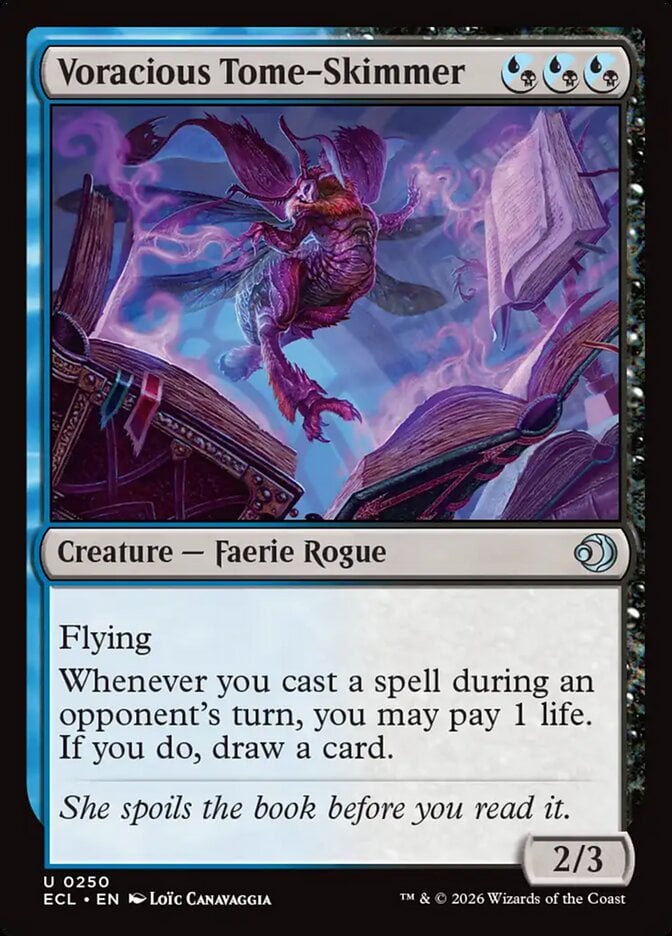
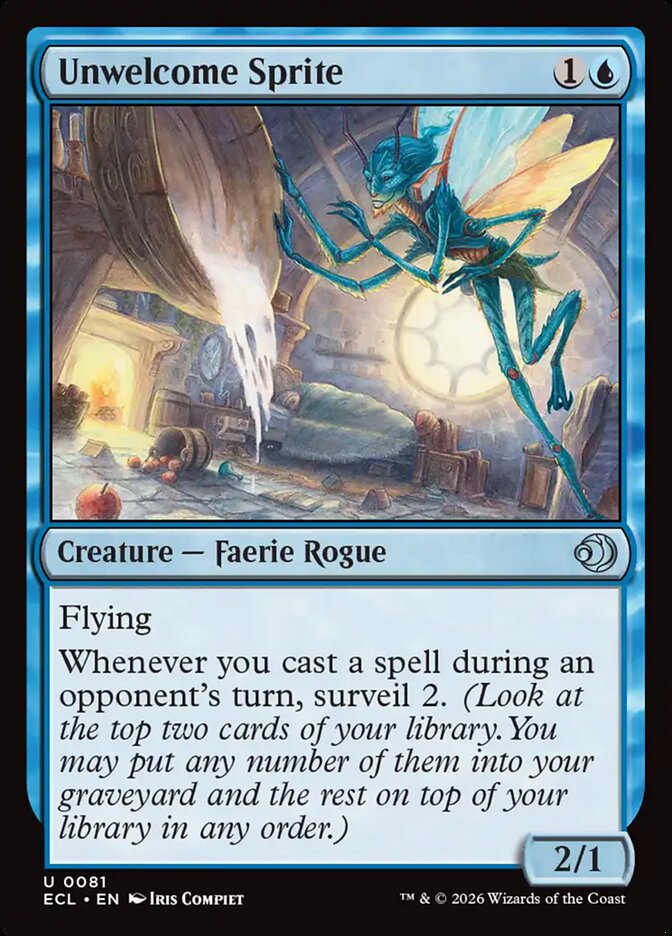
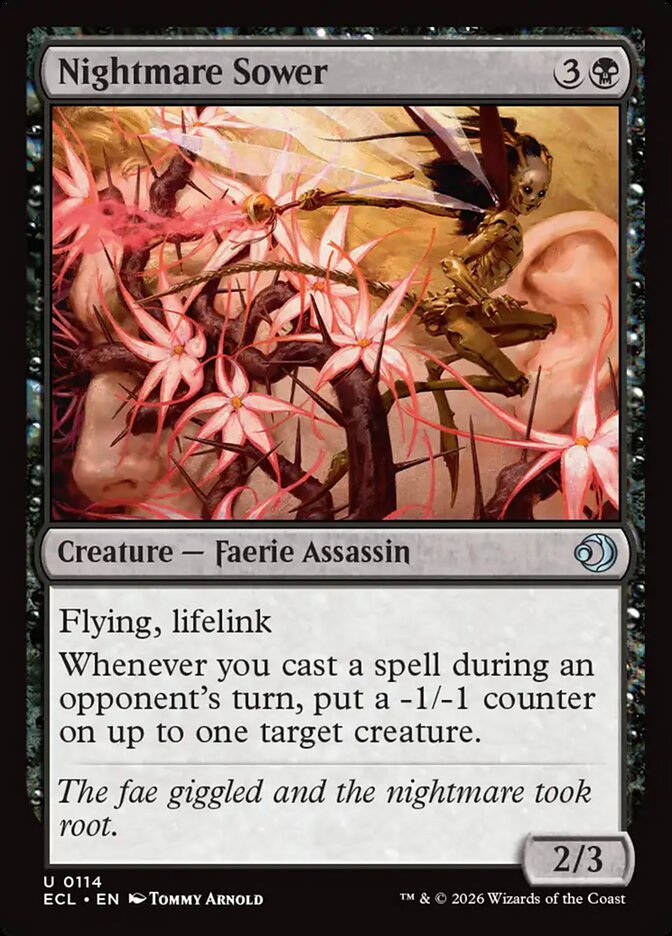
Deceit and Voracious Tome-Skimmer are the best reasons to play this color pair. Tome-Skimmer is the real build-around card, and it encourages you to go deep on instants. You can find some mild redundancy in Unwelcome Sprite and Nightmare Sower, though the dream is to have three or more Tome-Skimmers and a totally open seat!
Core Cards
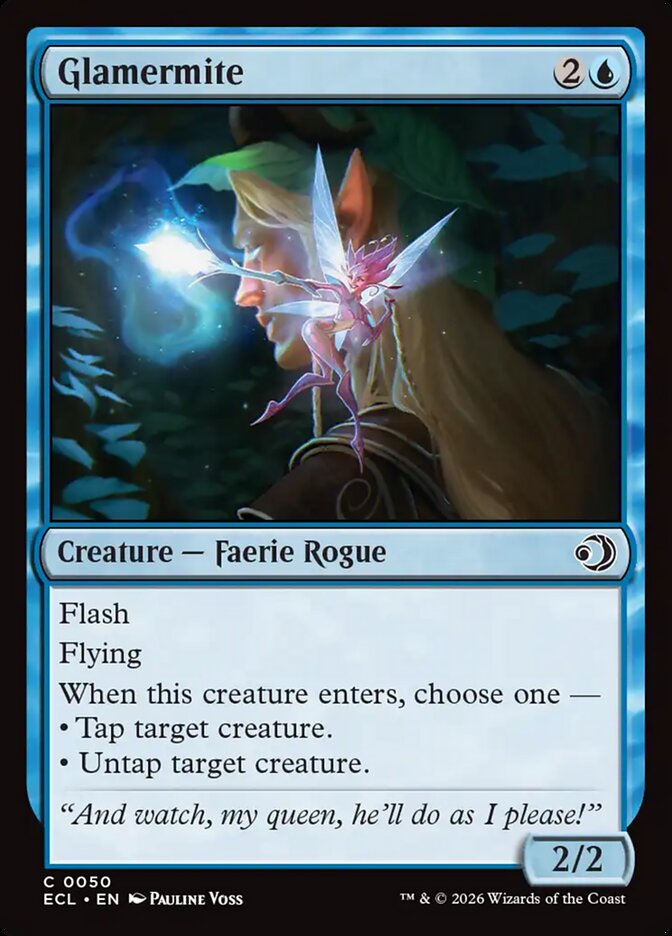
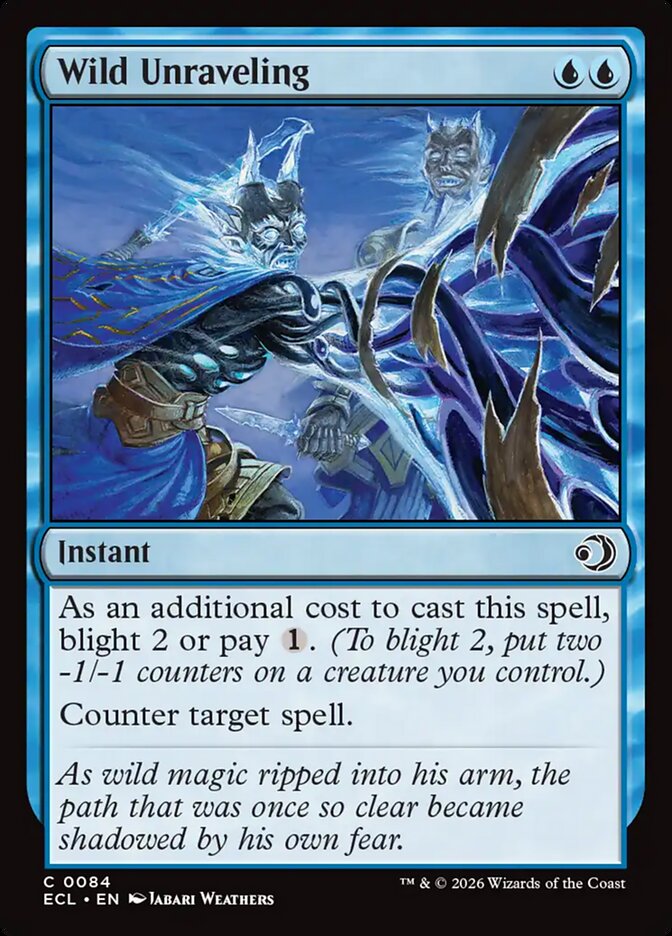
Instants are going to be vital for this theme, as you’d expect. Glamermite and Mischievous Sneakling are fairly average, but they fill up your curve and cantrip with Tome-Skimmer. Unexpected Assistance and Blight Rot are great instants in general, and would be even better than usual here.
Wild Unraveling also gets a significant boost in this archetype. I recommend pairing it with Summit Sentinel if possible, which is both a defensive 2-drop and a mini-combo with Wild Unraveling. The ability to safely dump those two blight counters makes playing it as Counterspell that much more realistic!
How to Play Against It
I haven’t yet. The closest I got was against a BG deck that played Tome-Skimmer anyways. They also had Bitterbloom Bearer and ended up beating me.
If you do, try to just kill Voracious Tome-Skimmer if you can. All it takes is one Tweeze for their entire build-around plan to fall apart, and they’ll be left with nothing but average commons!
Trophy Example
Best I can do for a trophy is a teammate who said they went “0-1 with Faeries”. One Voracious Tome-Skimmer is rookie numbers too, so I hope to have at least three when I finally have my 1/100 UB seat.
RW Aggro
Another deck that I haven’t really drafted or played against. My only experiences with it have been in Sealed, where it actually hasn’t felt very aggressive at all.
Payoffs
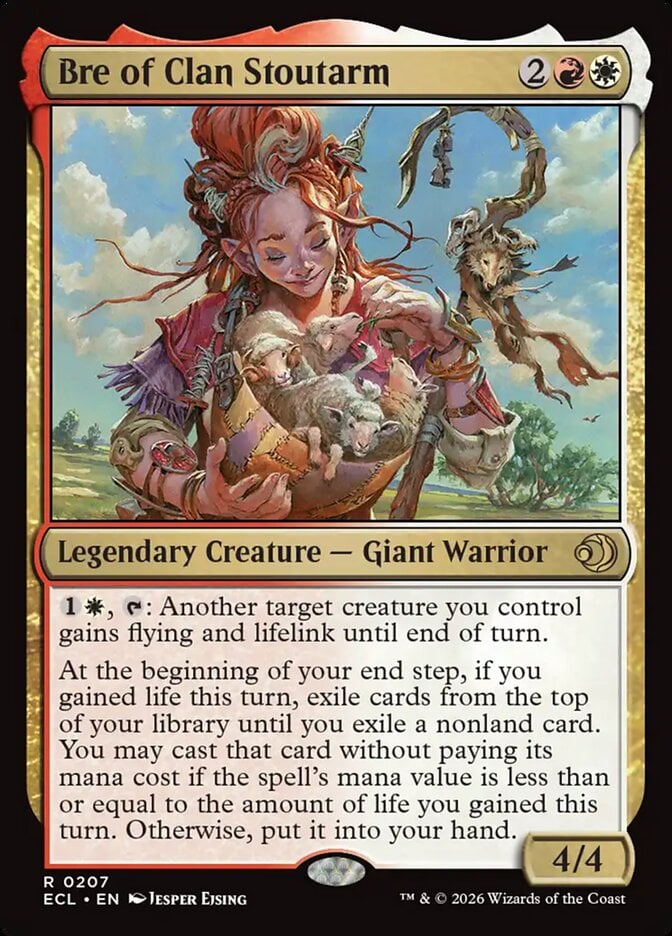

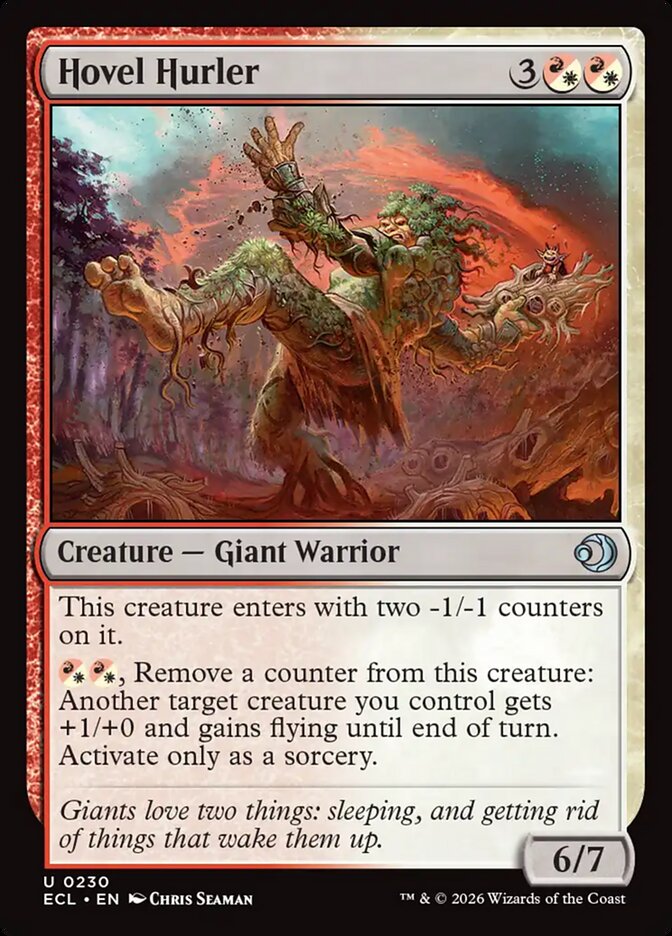
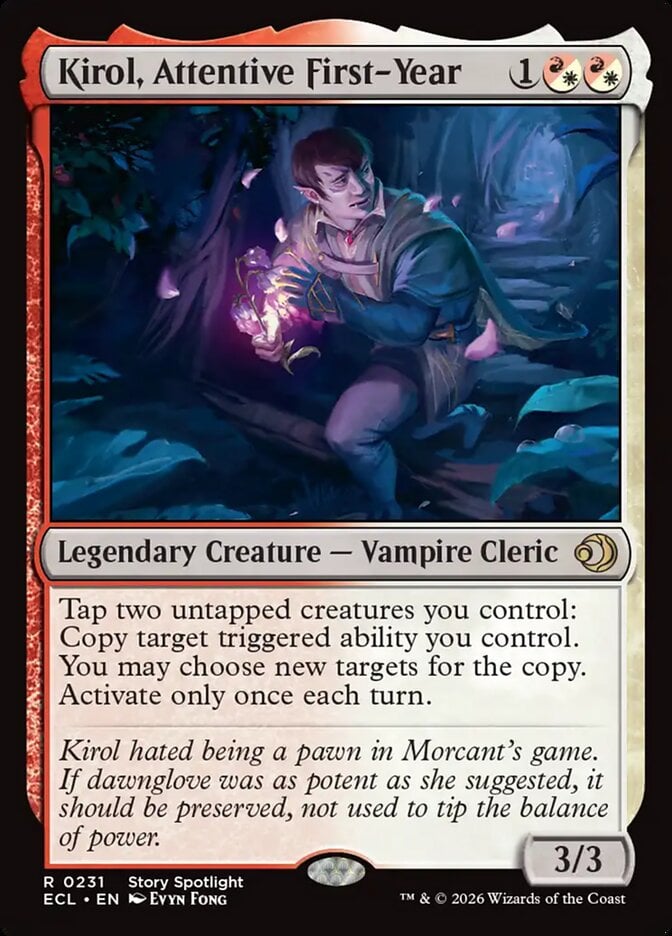
RW does actually have an excellent rare in Bre of Clan Stoutarm. Catharsis is also very strong when you’re specifically Boros. I also like Hovel Hurler and Kirol, Attentive First-Year in most decks, but both are easy enough to cast that you don’t have to be Boros to play them.
Core Cards
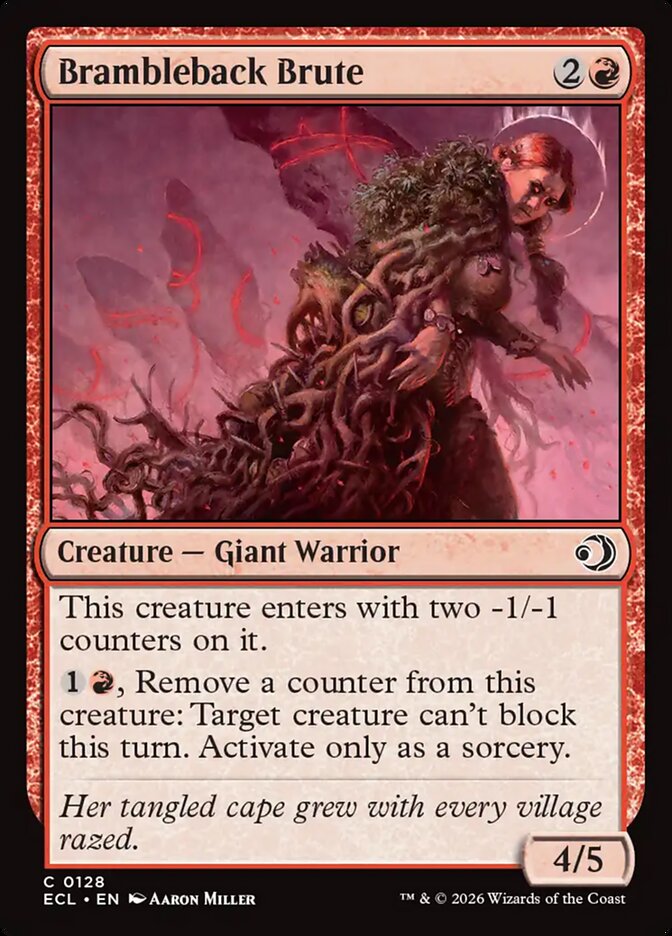
I don’t really believe in RW -1/-1 counters as a concept. That’s how it was advertised, but in practice only Hovel Hurler and Brambleback Brute actually play like that. If you’re RW, you likely have bombs/removal in these colors, and simply needed an excuse to tie the room together.
How to Play Against It
Answer their bombs if they have those, or kill/block their creatures then outscale them late game if they don’t. Simple I guess, as this archetype barely exists in practice.
Trophy Example
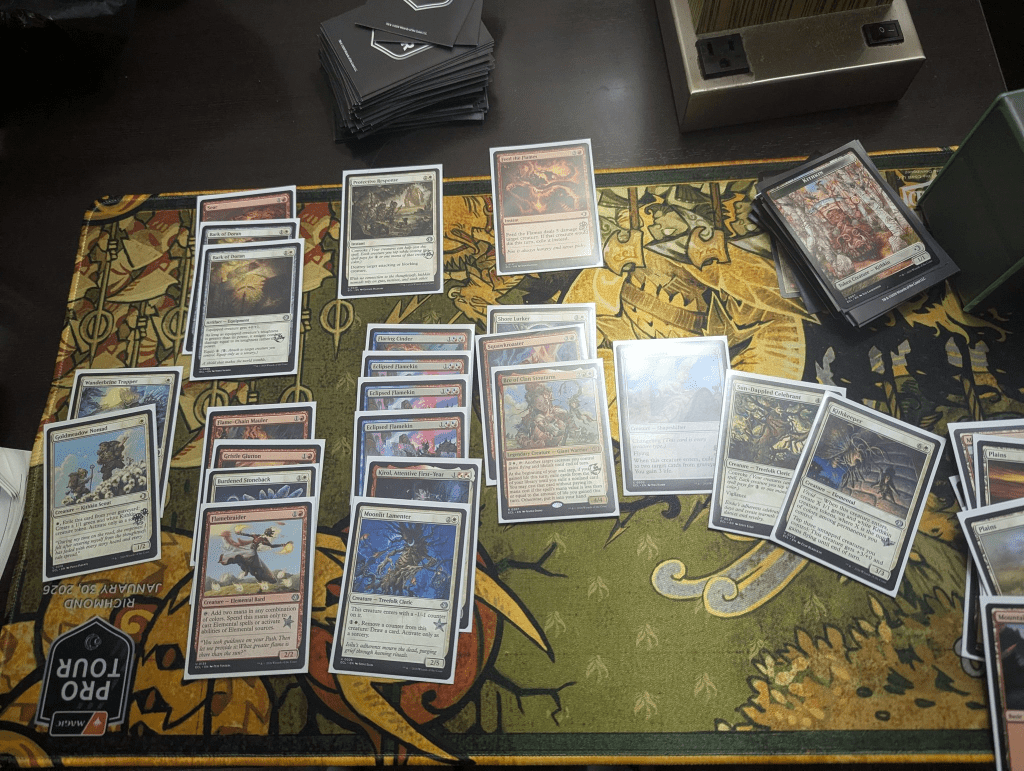
Here’s a very creative deck from Gul_Dukat (Daniel Goetschel). While he didn’t 3-0 his pod or anything, this deck makes excellent use of Bark of Doran, and does so in a strange color pair for it! I’d love to have seen exactly how his pod went because I’d never expect to draft something like this in Lorwyn Eclipsed.
WB Midrange
The last deck is another one that barely exists. I’d be less likely to draft this than RW.
Payoffs
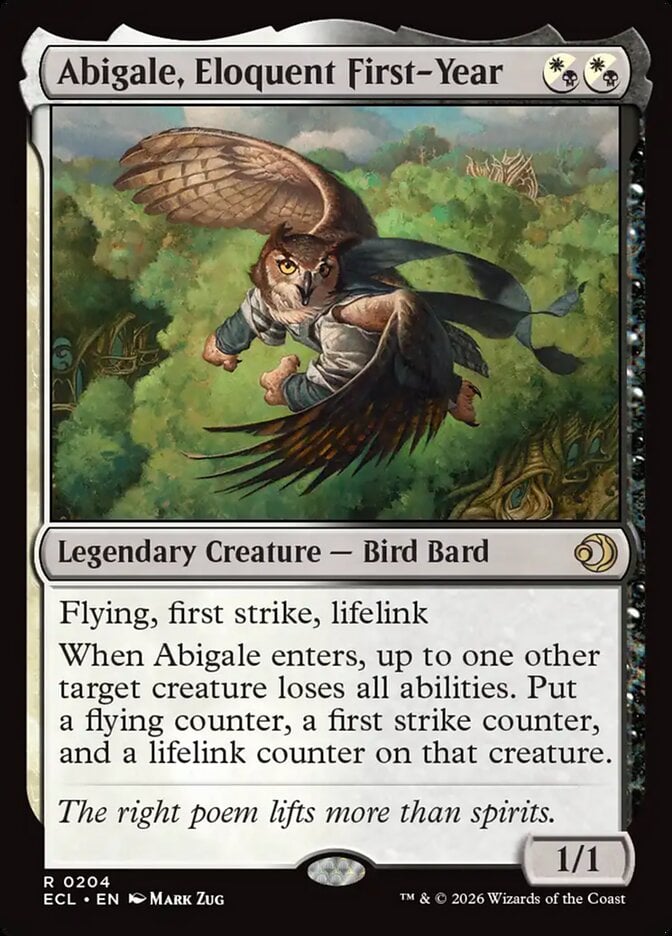
The primary reason to never end up here is that all the WB cards are playable in other decks. Goblins want your Reaping Willow, and Abigale, Eloquent First-Year is hardly restricted to this color pair as well.
Core Cards
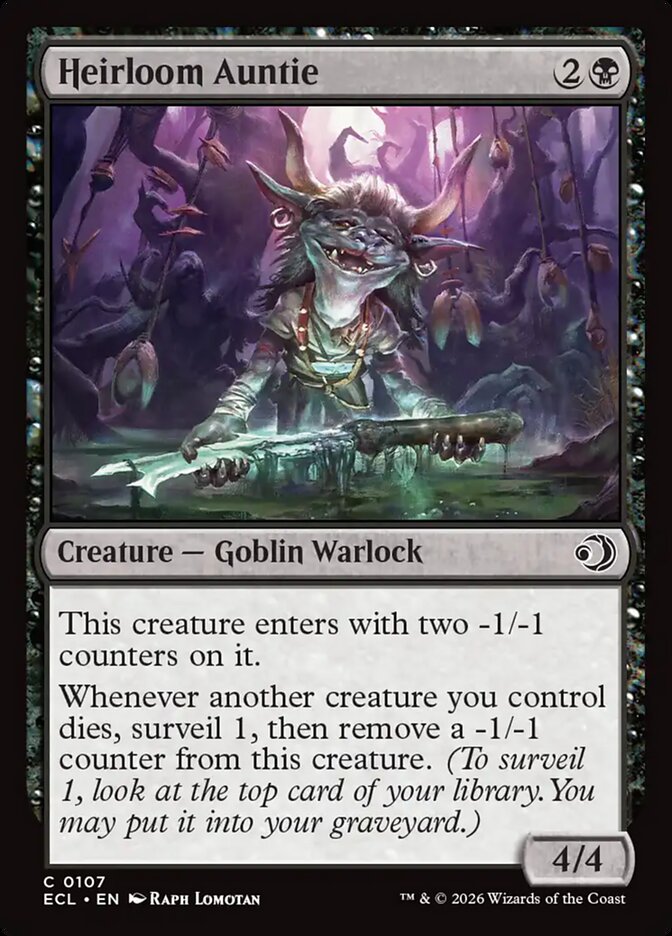
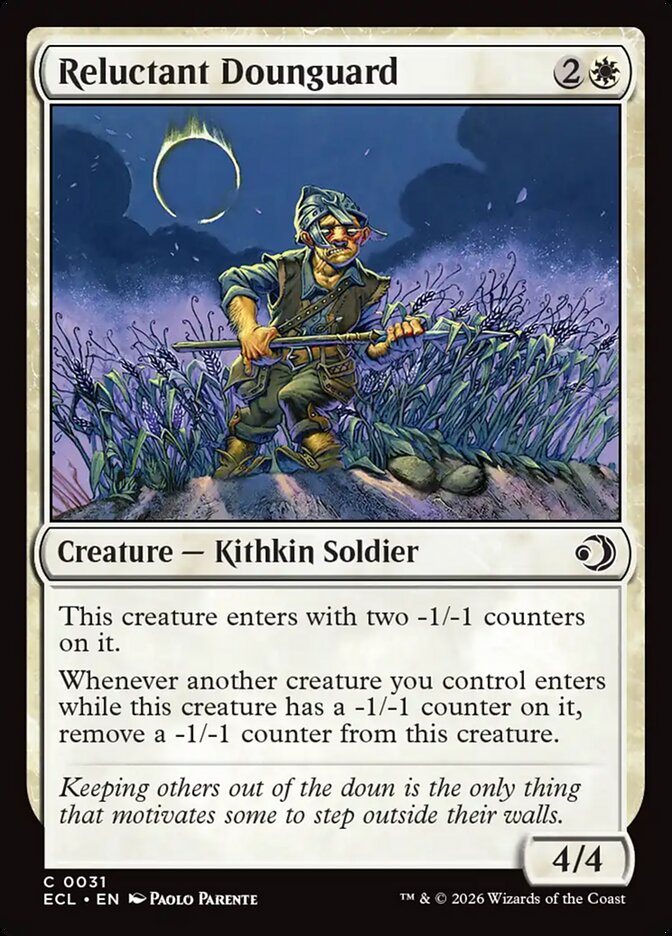
WB also lacks a clear identity at common. Heirloom Auntie and Reluctant Dounguard are definitely not it, and neither is Blighted Blackthorn.
How to Play Against It
You can almost guarantee they have Emptiness, Reaping Willow, and the like. Most decks can probably overpower that though, so uh… just do your thing!
Wrap Up
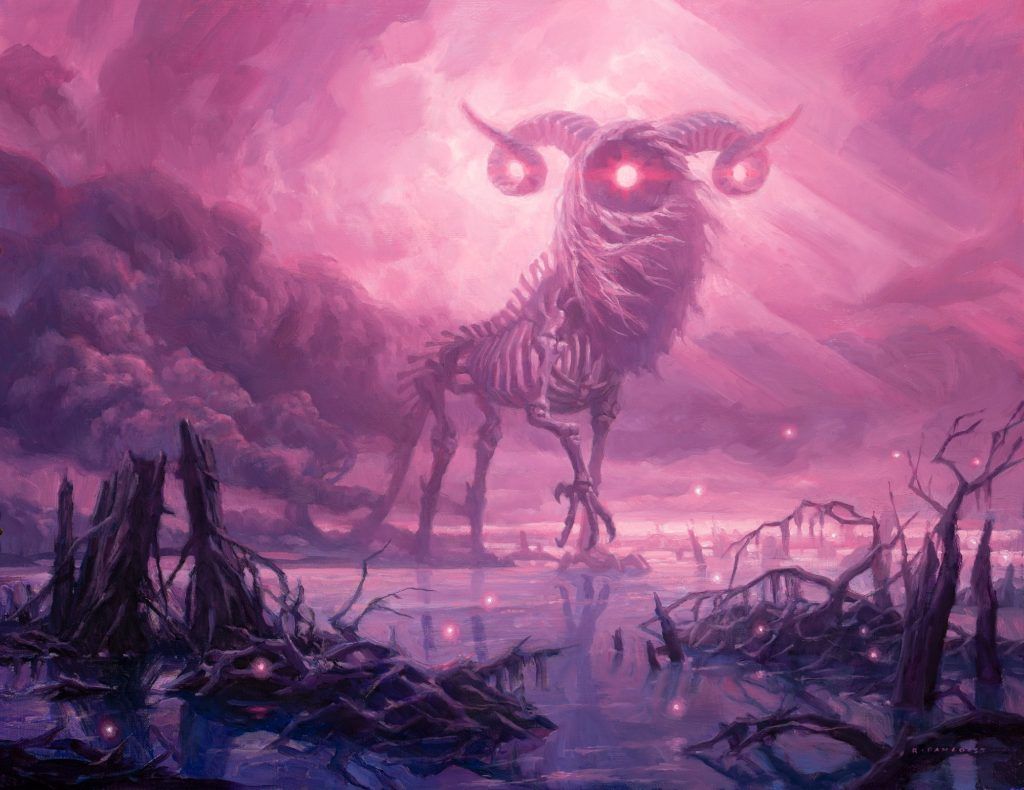
Emptiness | Illustration by Ryan Pancoast
And with that, Lorwyn Eclipsed has now been covered! I’m happy that I get to write these for you with each set, and I look forward to covering all that 2026 has to offer. I’ll see you next month when Teenage Mutant Ninja Turtles hits the shelves.
Which archetypes have you had the most fun and success drafting in Lorwyn Eclipsed? Let me know in the comments or on the Draftsim Discord.
Until next time, may your drafts always go smoothly, and uh, cowabunga, dude! Or is it too early to say that…?
Follow Draftsim for awesome articles and set updates:










4 Comments
I had the “luxury” to play Dimir Faeries twice so far and both times sweeped hard. You just fill your deck with as many copies of the two main payoffs Tome-Skimmer and Nightmare Sower and any amount of Flash/Instant cards (especially counter spells).
Overall you just end up with an incredibly annoying control shell that has a hard time ever running out of gas if you use your mana correctly. Especially the flash changeling is actually a high overachiever in the deck, as just casting it for the sake of casting something at the end of the enemy’s turn is already worth it for the extra card draw and -1/-1 counter on any creature.
Combined with the fact that most of your creatures are flying and Nightmare Sower even has lifelink, you can usually easily outtrade your enemies.
I’ve played against it a grand total of one time, and it looked impressive. Only reason I won was because of Trystan’s Command being broken, but they put in good work with double Nightmare Sower.
Thank you for the helpful draft guide! Before reading this guide, I wasn’t a fan so much of this set for draft, however, after reading how to actually draft it, I will be doing more drafts 😀
My first draft after reading this guide I ended up doing a GWx vivid deck (which I didn’t piece together as an option), and had a total blast playing it. It was uber strong (but to be fair, was an Arena quick draft lol). Rare highlights: Abigale, Tam, Brigid, and Emptiness. Had a solid curve of support with other hybrid cards, solid vivid cards, and removal ect – also had the joy of playing puca’s eye, and it working and actually being correct to play it (!!)
Anywho, thanks for helping to shift my perspective on a format I really wasn’t feeling – it’sa pretty sweet thing when that happens. 😀
Glad you got to have some fun with ECL before it rotates out!
Add Comment