

Hazoret the Fervent | Illustration by Chase Stone
I love me some polytheism. The Greek pantheon has always been an area of interest, but I also have an affinity for the Egyptian gods, even though I’m less familiar with them. I just really like the idea of gods that draw power from the people that venerate them, and not the other way around.
Amonkhet’s gods take their inspiration from the gods of Egypt, both in their physical appearances and the things for which the people of Amonkhet worship them. Let’s take a look at all the cards that are built around Amonkhet’s gods, including the God-Pharoah himself.
What Are Amonkhet Gods in MTG?
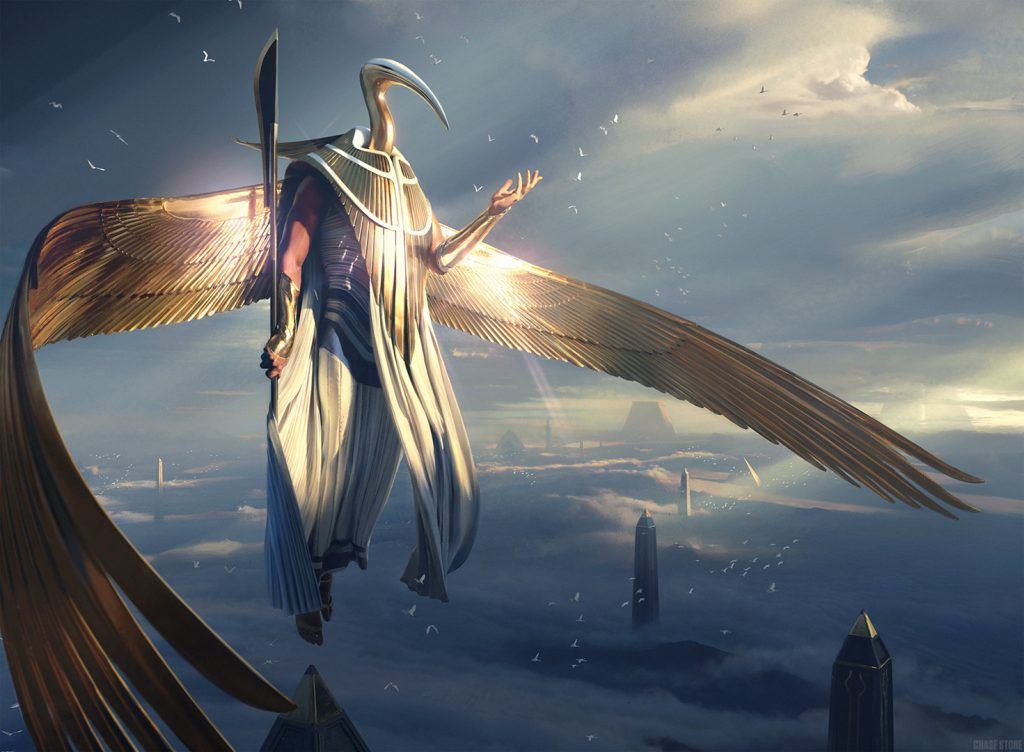
Kefnet the Mindful | Illustration by Chase Stone
Amonkhet god cards represent the deities that are venerated on the plane of Amonkhet, which takes a lot of notes from ancient Egypt. These cards mainly come from sets that take place on the plane, like Amonkhet, Hour of Devastation, and Aetherdrift. Amonkhet is also a secondary setting during major story events like War of the Spark and March of the Machine.
Unlike the gods of Theros, the Amonkhet gods aren’t enchantments. They don’t care about devotion, but they tend to have conditions to meet before they can attack or block (except for Nicol Bolas, God-Pharaoh and Djeru and Hazoret).
Many Amonkhet god cards have indestructible, while the insect gods and God-Eternals have abilities that recur them to your hand or your library when they die (as an opponent, you can get around that with abilities like Obeka, Brute Chronologist that end the turn before the delayed trigger can go off).
#17. Hazoret the Fervent

Hazoret the Fervent wants you to be near-hellbent all the time, which locks you into a single lane. You can pay to discard cards to burn opponents, so it can offer utility in a discard deck or a burn deck. But I’d want something more synergistic in the 4-mana slot.
#16. Hazoret, Godseeker

The name here comes the fact that Hazoret’s siblings all died during Hour of Devastation, so she had to go look for other gods to join the Amonkhet pantheon.
Hazoret, Godseeker is a 2-mana unblockable enabler for your smaller creatures, and it fits with speed-based decks like Samut, the Driving Force and Far Fortune, End Boss. Unfortunately (and ironically), the speed mechanic is rather slow at high-powered tables since you can’t proliferate it like experience counters.
#15. Bontu the Glorified
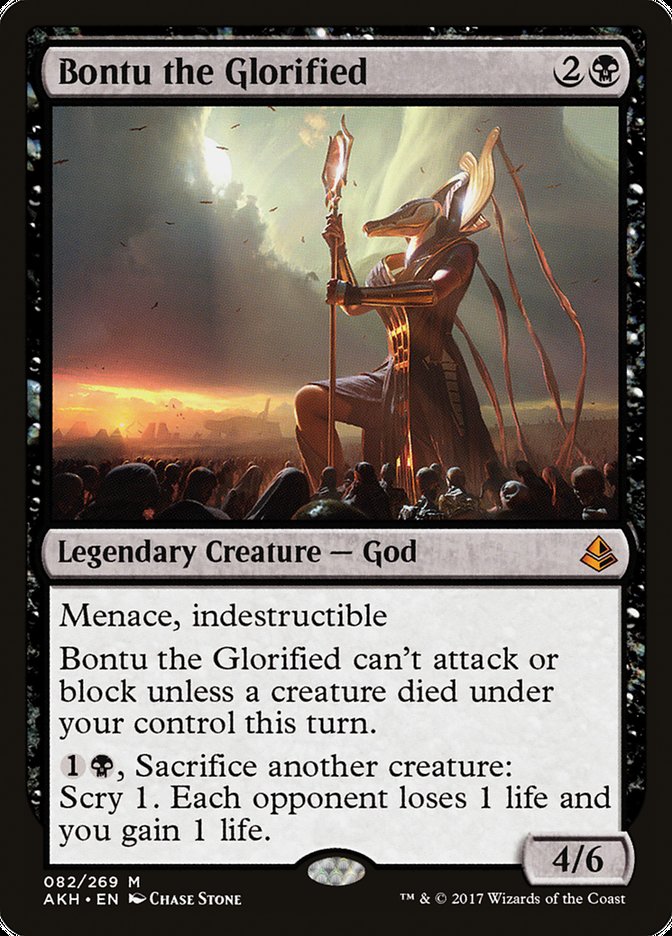
Bontu the Glorified marries a Viscera Seer to a Blood Artist with its activated ability, though you have to pay 2 mana into it. Indominus Rex, Alpha likes it both on the battlefield to sacrifice creatures before you bring out your massive dinosaur and in-hand to discard as part of its enters trigger.
Indominus Rex and the other keyword soup commanders enjoy any of the on-color named Amonkhet gods as enablers for indestructible and whatever other keywords they have.
#14. The Scorpion God
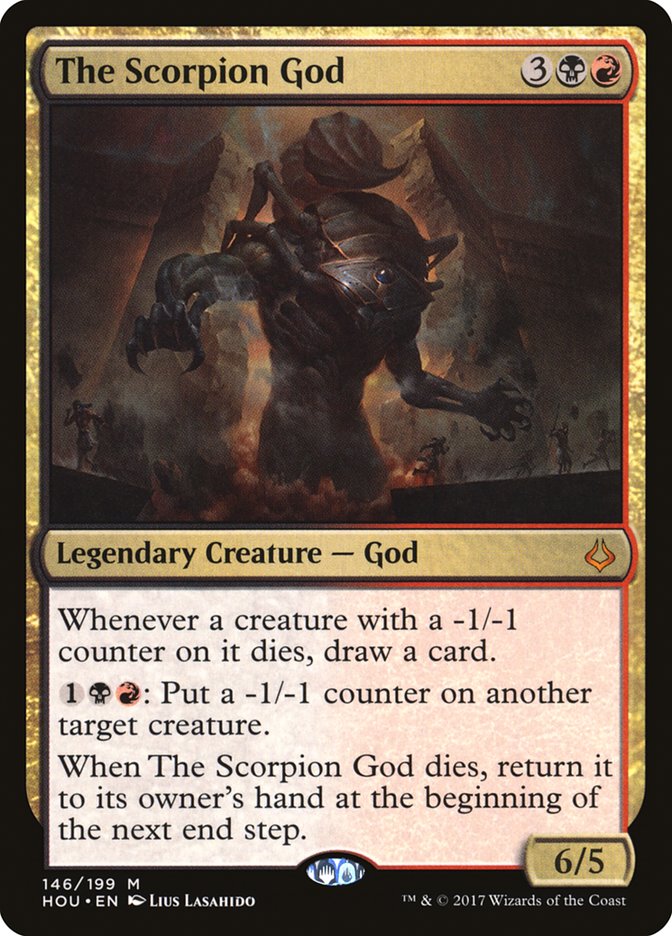
The Scorpion God is the least used among the three so-called “insect gods” (scorpions aren’t insects, but I digress), and it isn’t hard to see why. I’d rather have access to green if I’m playing with -1/-1 counters, although it does encourage you to build around wither creatures from sets like Shadowmoor and Eventide. Some more recent cards that you can play with it include Bloomburrow’s Maha, Its Feathers Night and Murders at Karlov Manor’s Massacre Girl, Known Killer.
#13. Oketra the True
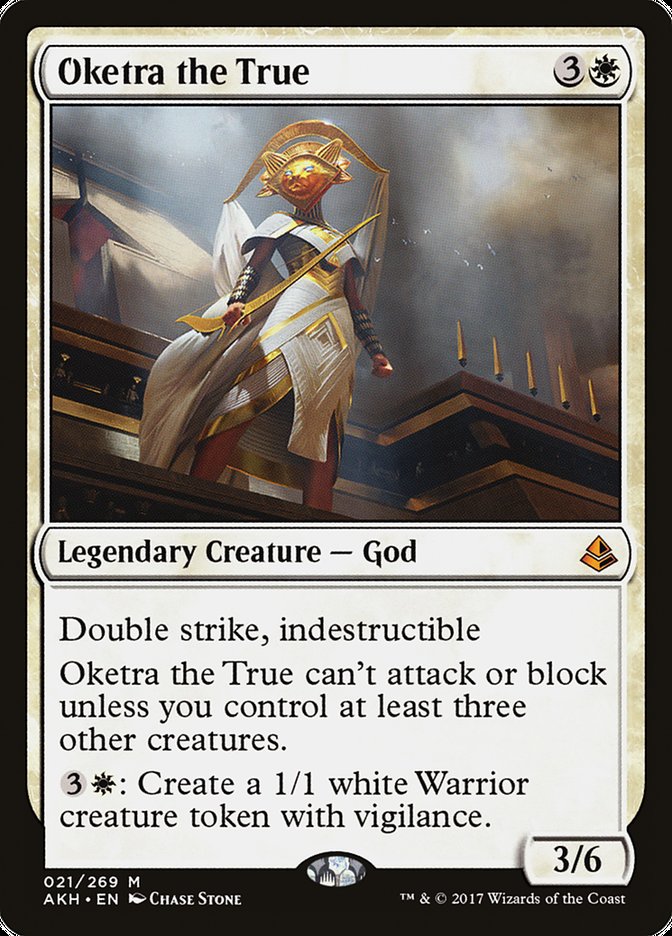
Between indestructible and double strike, Oketra the True sees the most play in keyword soup decks built around Odric, Lunarch Marshal and Kathril, Aspect Warper. It can only attack or block if you go wide enough, but its activated ability is a rather slow way to help you get there. Four mana for a 1/1 Warrior token, even with vigilance, isn’t a good rate without token doublers on board (or, you know, abilities that can give those tokens extra keywords).
Oketra the True can also be a creature that attacks for 6 double striking damage with a toughness-matters deck in the mold of Doran, the Siege Tower or Baldin, Century Herdmaster.
#12. God-Eternal Kefnet
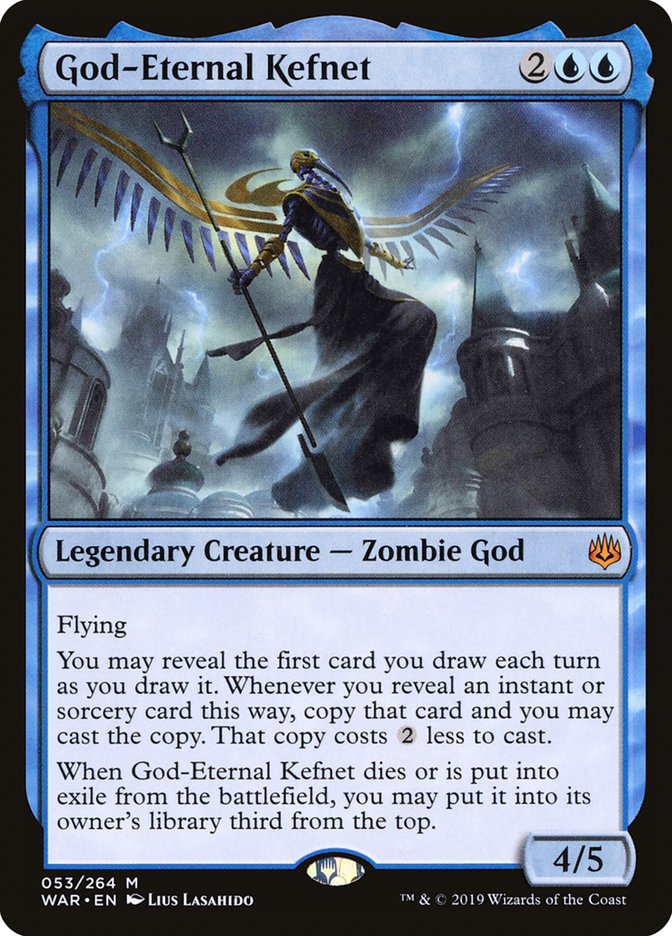
Topdeck-copy is a very niche place in the deckbuilding world, but God-Eternal Kefnet occupies it. It’s the kind of commander around which you could build an extra turn deck, in theory, one where you cast cantrips on your opponents’ turns and hope to disrupt the turn order. This is where you use cards like Brainstorm both as draw spells and to set up your next draws with cards you want to copy.
It’s a blue zombie for your Geralf, the Fleshwright deck, and it’s a god you can add to a Kratos, Stoic Father and Atreus, Impulsive Son deck.
#11. Kefnet the Mindful
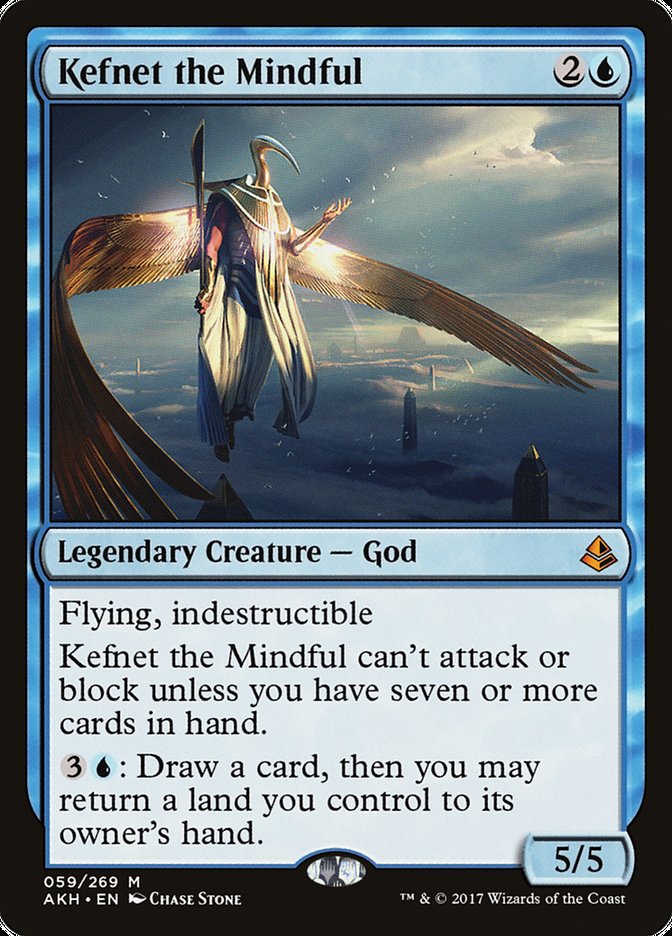
Even if you ignore the activated ability, Kefnet the Mindful can be a 5/5 indestructible flier in decks that want to play with an overflowing hand. A good example is Nin, the Pain Artist, a commander that uses its Stuffy Dolls to fill its hand with cards and win through alternate win conditions like Laboratory Maniac.
Even though Kefnet the Mindful was reprinted in the Jump Scare! precon from Duskmourn Commander, it doesn’t even show up in more than 15% of Zimone, Mystery Unraveler decks, which shows it was often trimmed from those lists when brewers have upgraded their decks or built Zimone from scratch. You’d think its activated ability would give it a home in decks that want to reuse landfall triggers and good enters abilities, like gain lands or surveil lands, or to reset a channel land that you had to use for mana during an early turn, but that’s not how most people use it.
#10. Sab-Sunen, Luxa Embodied

Another god with great keywords for Indominus Rex, Sab-Sunen, Luxa Embodied can attack some turns and give you cards during others. Its abilities care about the number of counters it has, so an opponent with proliferate or +1/+1 counter abilities can interact with it to throw off its timing. Some players also use it in frog decks for flavor reasons, even though Sab-Sunen doesn’t have the frog creature type.
#9. Rhonas the Indomitable
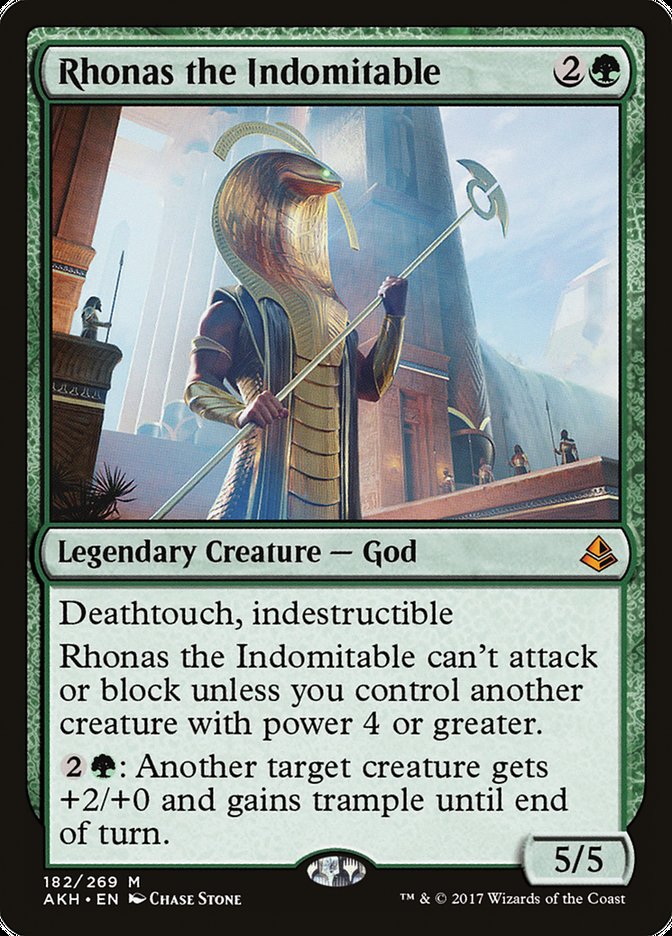
Rhonas the Indomitable is a power pumper and trample enabler, and a 5/5 for 3 mana. Such a sweet deal when you combine it with deathtouch and indestructible. It can’t attack or block unless you have another creature with power 4 or higher on the battlefield, but that could just be your commander in many decks. It slots into deathtouch themed decks like Fynn, the Fangbearer or Aveline de Grandpré, or in a fight deck like Neyith of the Dire Hunt.
#8. God-Eternal Rhonas
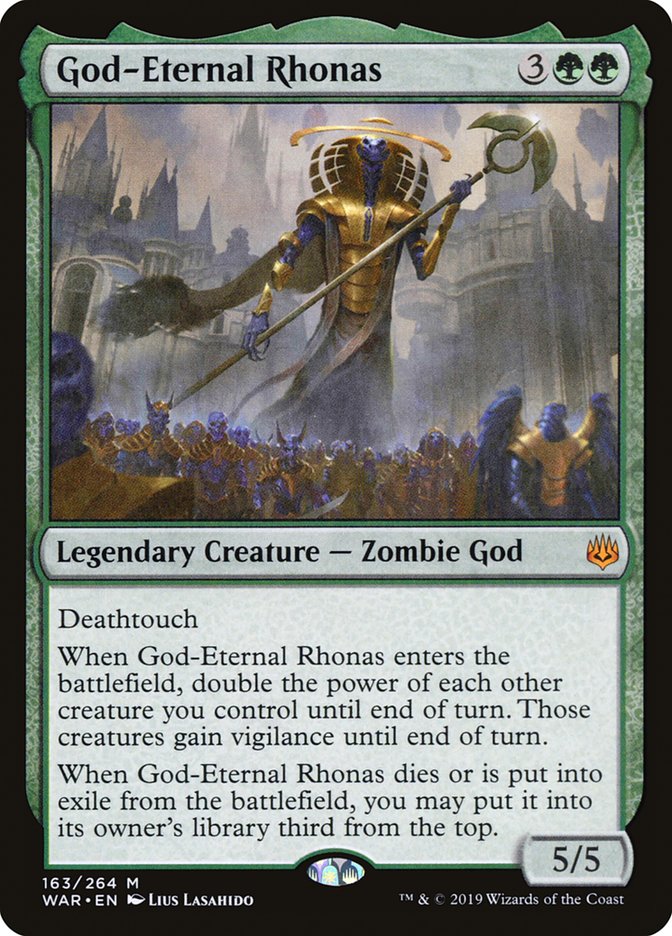
God-Eternal Rhonas is a good creature to drop right after you’ve wiped the board to act as a telegraphed finishing move, whether you take out the whole table or just one player. It can be devastating in a Volo, Guide to Monsters deck; even though the copy won’t survive due to the legend rule, a second trigger still goes on the stack, which turns a 2/2 into an 8/2 very quickly.
#7. Djeru and Hazoret
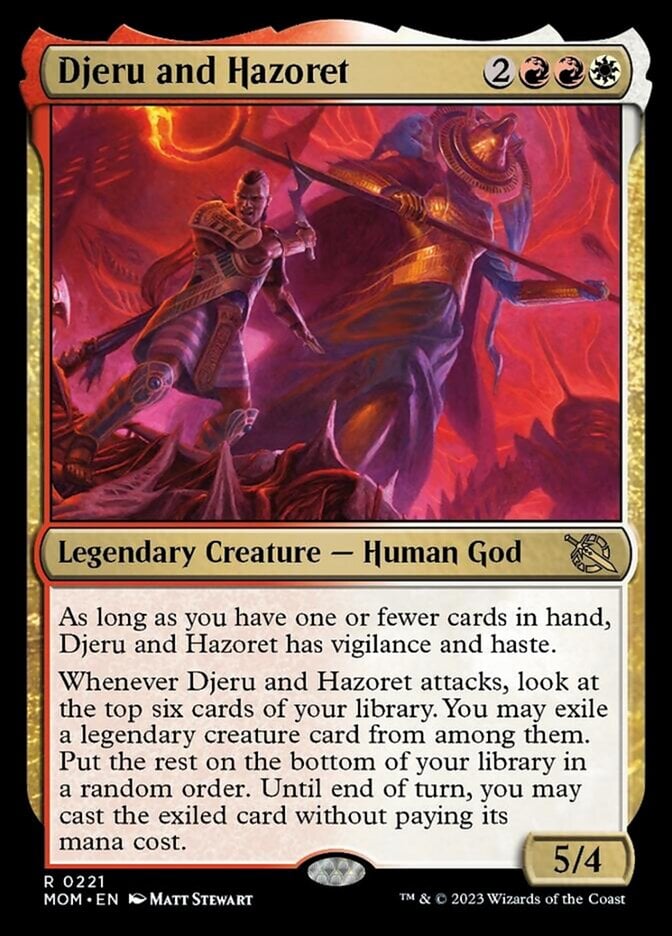
Djeru and Hazoret’s main home is in decks that feature a lot of legendary creatures. Its attack trigger filters the top of your library for a legendary creature that you can bring into play without paying its mana cost. It’s one of the few gods that plays nicely with other gods in an Esika, God of the Tree deck.
#6. Nicol Bolas, God-Pharaoh
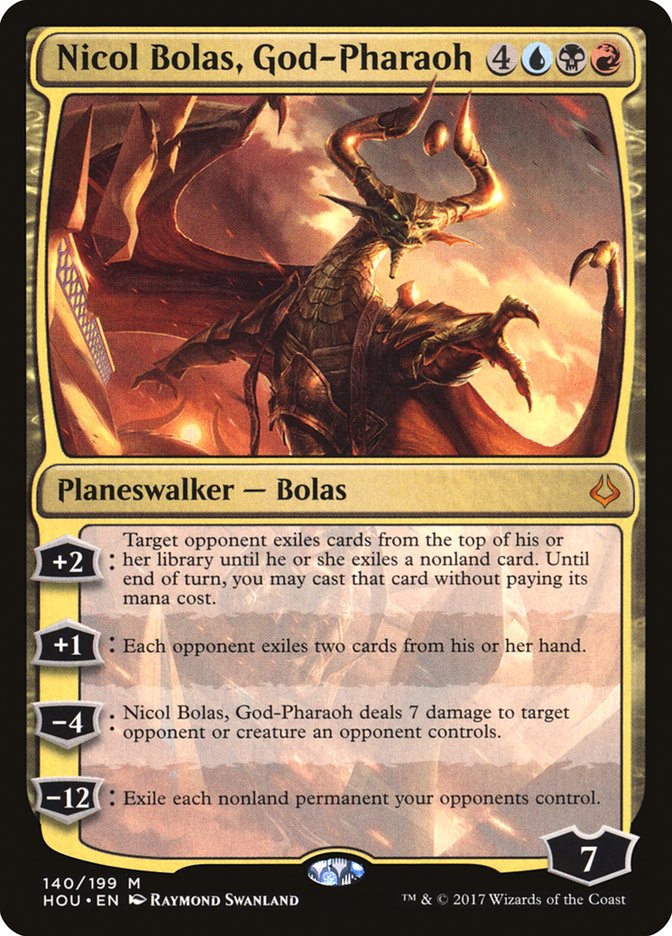
Such fitting abilities for a card that’s supposed to represent the Big Bad of a story arc. Nicol Bolas, God-Pharaoh’s abilities hate on your opponent’s hands, libraries, and boards, with one ability that you can activate the turn it comes into play to burn anything and anyone for 7 damage. If they have indestructible creatures, the ultimate ability can take care of them. The second ability doesn’t even target anyone, so hexproof and shroud can’t even save them from the devastation.
#5. God-Eternal Bontu
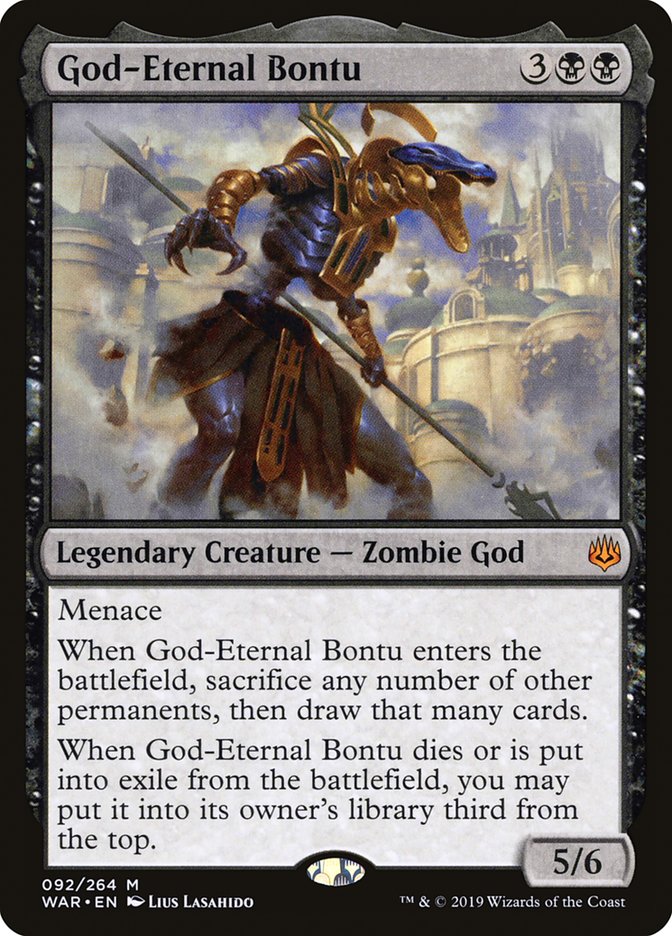
God-Eternal Bontu lets you trade in permanents to draw cards when it enters, and it sports that God-Eternal text that brings it back into your library when it dies. It was included in the World Shaper precon from Edge of Eternities Commander, where you can use it to sacrifice a bunch of lands and drain your opponents if Hearthhull, the Worldseed is fully stationed. Five lands drains each of your opponents for 10 life in that situation, not to mention the card draw.
It’s useful elsewhere as a mass sacrifice outlet, and its zombie type and mono-black color identity let it fit into virtually any zombie deck you can imagine. If you run Endrek Sahr, Master Breeder, you can sacrifice the thrulls you gain from Endrek’s cast trigger to fuel Bontu, which is a neat bit of synergy.
#4. God-Eternal Oketra
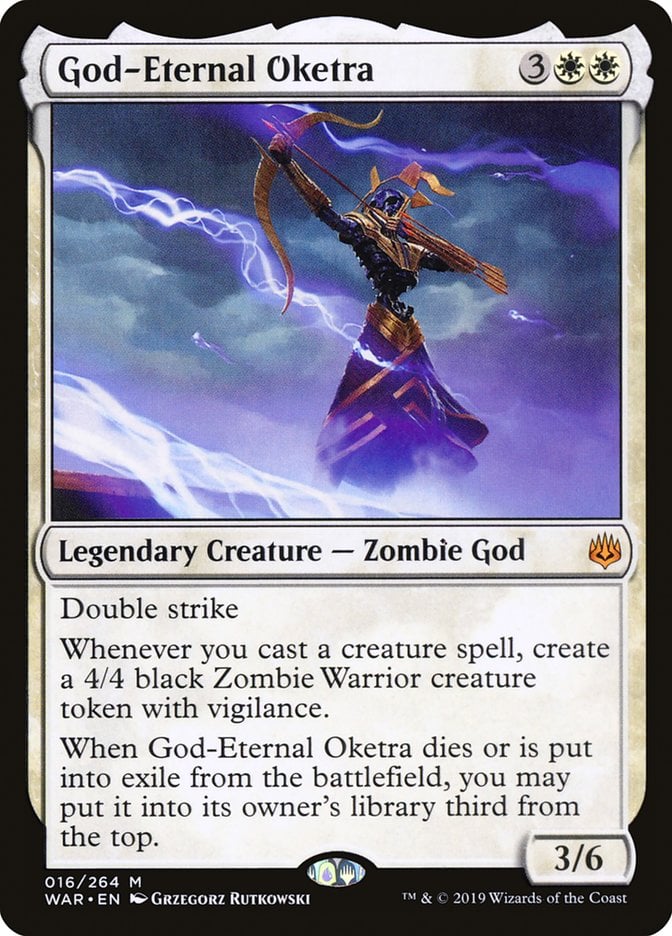
A token generator that turns all your creature spells into two bodies is very useful, and the fact that both God-Eternal Oketra and its tokens are zombies gives it a home in Varina, Lich Queen decks (it was also reprinted in the Eternal Might precon from Aetherdrift Commander, so it’s often used in Temmet, Naktamun's Will decks). This Oketra’s double strike and the vigilance its tokens have also make it a good fit for Odric, Lunarch Marshal keyword soup. In that deck, God-Eternal Oketra represents multiple bodies that spread two important keywords around your board with Odric’s combat trigger.
#3. Ketramose, the New Dawn

Now here’s an explosive payoff for decks that blink permanents or exile cards from graveyards. Ketramose, the New Dawn turns all kinds of blink combos like Felidar Guardian with Restoration Angel into win conditions. Oblivion Ring abilities can net some card draw, but your opponents can help you reach the seven-cards-in-exile threshold if they run commanders like Tasha, the Witch Queen, Faldorn, Dread Wolf Herald, Prosper, Tome-Bound, and more.
#2. The Scarab God
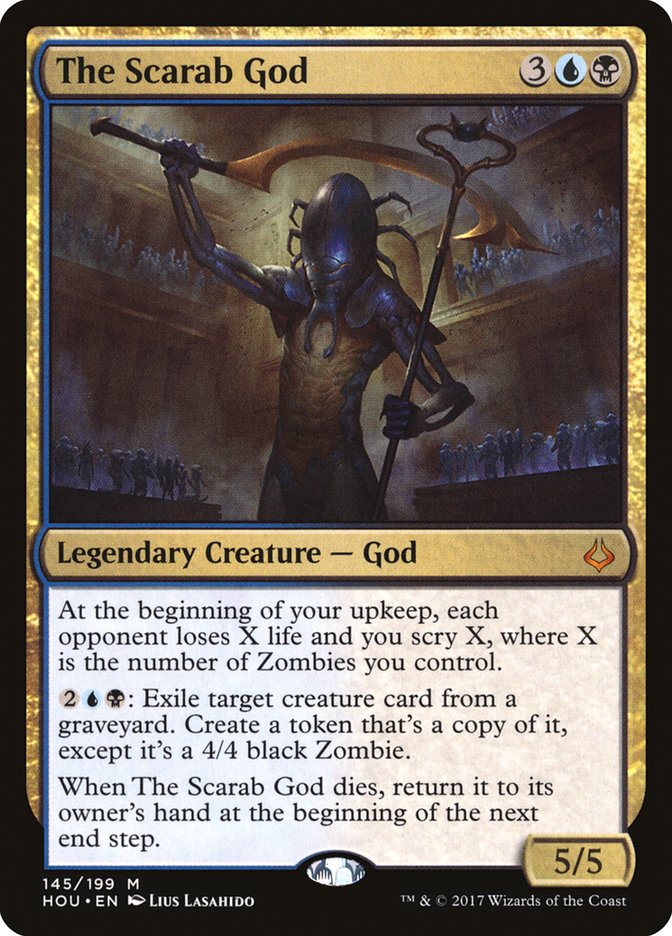
In decks that can go as wide as zombies can, The Scarab God is an oppressive, must-answer threat. Its upkeep trigger has the potential to take someone out if it goes off just once in the right situation, while the activated ability is fun since you can hate on graveyards and copy your opponents’ powerful creatures. It’s especially potent against decks that want to use the graveyard for value. I’ve mentioned how the named Amonkhet gods often feature in keyword soup decks, but imagine if you face a Kathril, Aspect Warper deck and steal their Sire of Seven Deaths?
#1. The Locust God

The Locust God is such a strong card. It can sit around on the board as a draw payoff that widens your board with hasty fliers, and its activated ability can feed into it, too. Remember that each draw is an individual action, so effects that have you draw multiple cards will also trigger The Locust God that many times.
Wheels are a great option here if you want to have The Locust God in the command zone, but it can support all kinds of decks like Okaun, Eye of Chaos and Zndrsplt, Eye of Wisdom, Xyris, the Writhing Storm, and Magnus the Red, not to mention the precons in which it was reprinted.
What Happened to Amonkhet’s Gods?
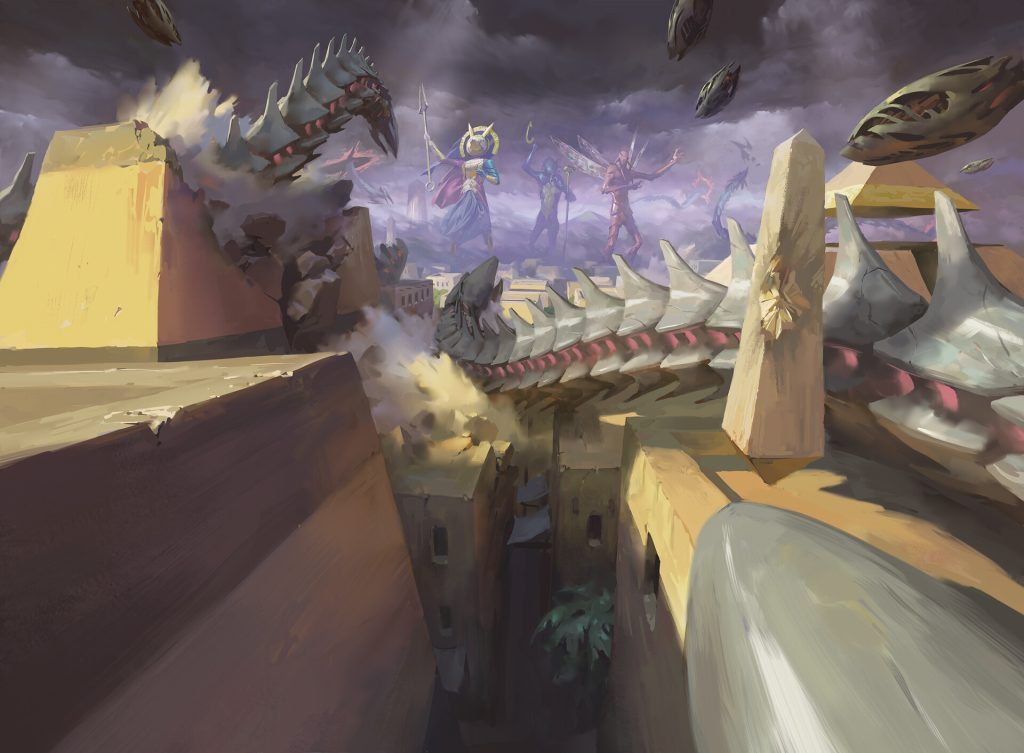
Invasion of Amonkhet | Illustration by Jokubas Uogintas
This is a bare-bones summary of these gods’ fates in the story. For more, check out the Magic Story pages for Amonkhet, Hour of Devastation, War of the Spark, March of the Machine, Aetherdrift, and Tarkir: Dragonstorm.
Oketra, Rhonas, and Kefnet were all killed by the Scorpion God during the events of Hour of Devastation. Bolas asked Bontu to kill Hazoret, but Bolas betrayed Bontu after she had defeated her sibling in combat. Hazoret survived and went on to kill the Scorpion God.
Oketra, Rhonas, Kefnet, and Bontu were all eternalized (zombified) during the War of the Spark, but each of their zombie forms died during the conflict.
The Locust God and the Scarab God participated in the defense of Amonkhet during the New Phyrexian Invasion, and they provided the distraction that was needed for Djeru and Hazoret to burn and dismember the Phyrexian armies. The Locust God and Scarab God are set up to return if and when they collect enough undead followers.
As of Aetherdrift, Hazoret is still alive, and she helped to find Sab-Sunen and Ketramose after the New Phyrexian Invasion.
Nicol Bolas was defeated during the War of the Spark and banished to the Meditation Realm, but he escaped during the events of Tarkir: Dragonstorm.
Wrap Up
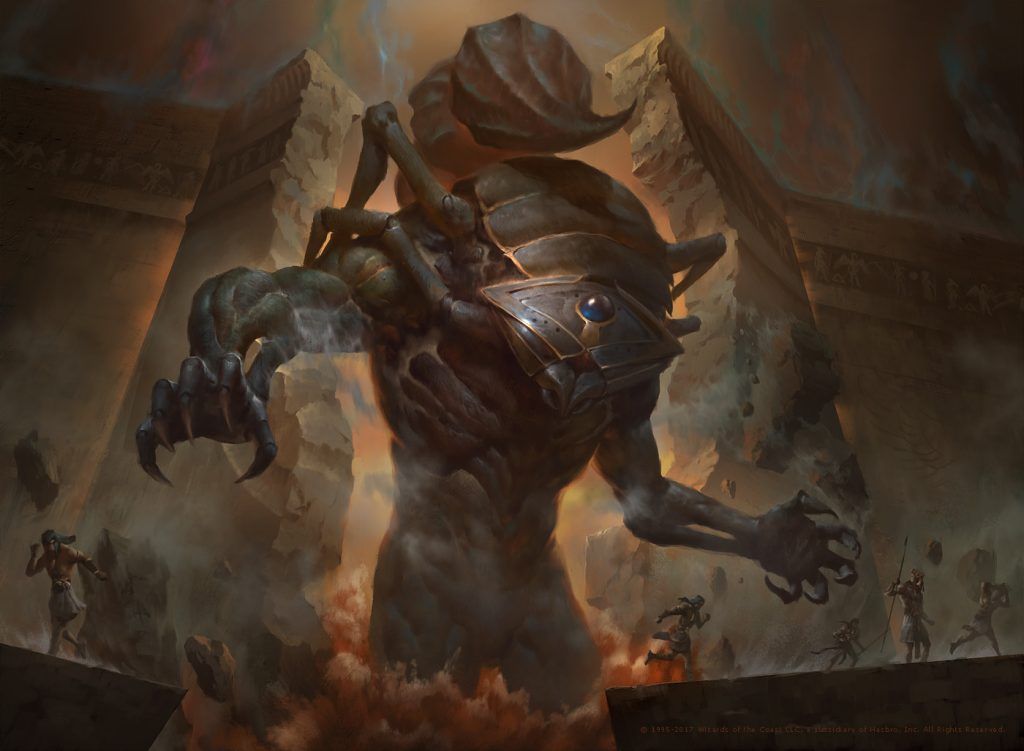
The Scorpion God | Illustration by Lius Lasahido
With that, we’ve surveyed the pantheon of Amonkhet and looked at each god that’s been represented in card form. It would be cool to go back to that plane for a full set treatment to see if any other gods have appeared, or to see whether the Scarab God and Locust God have returned to try to reclaim Amonkhet for themselves.
Which is your favorite Amonkhet god card? Or your favorite Amonkhet god character? What do you want to see the next time we visit Amonkhet? Let me know in the comments below or over on the Draftsim Discord.
Until next time, stay safe, and watch out for those zombies!
Follow Draftsim for awesome articles and set updates:










Add Comment