

Earth, Sector 001 | Illustration by Colin Searle
Star Trek Limited… the final frontier. These are the voyages of the Starship Enterprise. Its two-month mission: to explore strange new archetypes; to seek out new card combinations and synergies; to boldly craft decks no one has crafted before!
Introduction

Command Decision | Illustration by Raymond Bonilla
This guide contains everything you need for success at Day Zero of this format. You can expect to learn plenty about this set’s mechanics, archetypes, best commons and uncommons, bomb rares, rares to avoid, and more. I’ll try not to waste any of your time while providing sufficient detail to help inform your decisions.
The Daily Upkeep YouTube channel has a more condensed video guide for Star Trek if you’d like a more bite-sized version.
Mechanics
Star Trek features several new mechanics, and the return of one expected mechanic from Edge of Eternities.
Beam Me Up
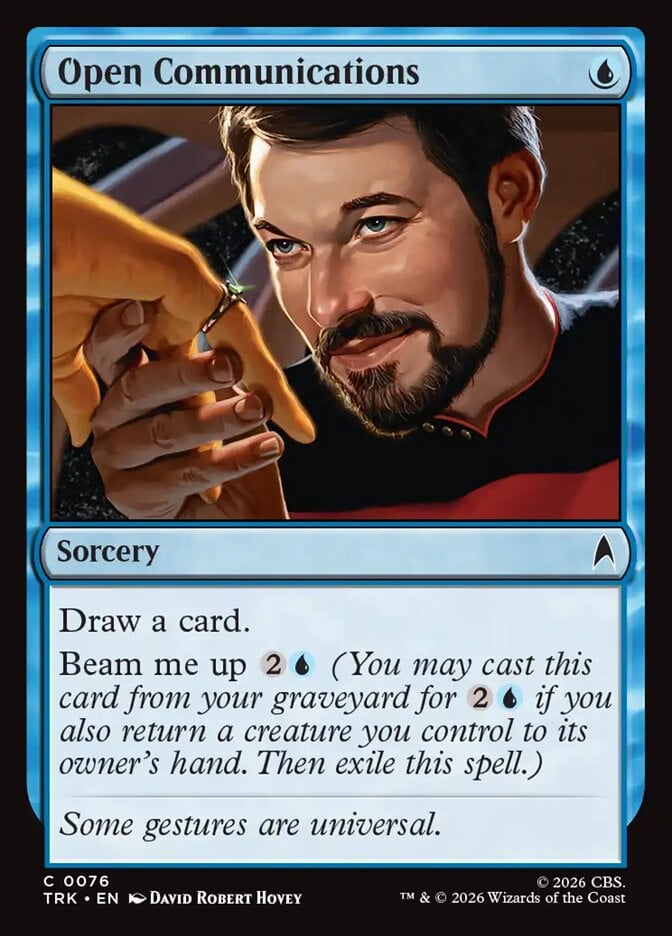
Beam me up is the first new Star Trek mechanic to cover, and it functions similarly to flashback with an extra cost. The mechanic appears only on instants and sorceries, which you can recast from your graveyard by paying their “beam me up” cost and returning a creature you control to your hand as a cost.
Unlike with many new mechanics, there’s no dedicated “beam me up” color pair in Star Trek. Instead, beam me up exists to provide the format with an extra mana sink and to add some more play to cheap “enters” creatures like Federation Probe and Emergency Medical Hologram. Every color has one common with this mechanic, and every color but black has one uncommon that features it.
The mechanic also does a great job of punishing aura-based removal like De-evolve, so be careful!
Face a Dilemma
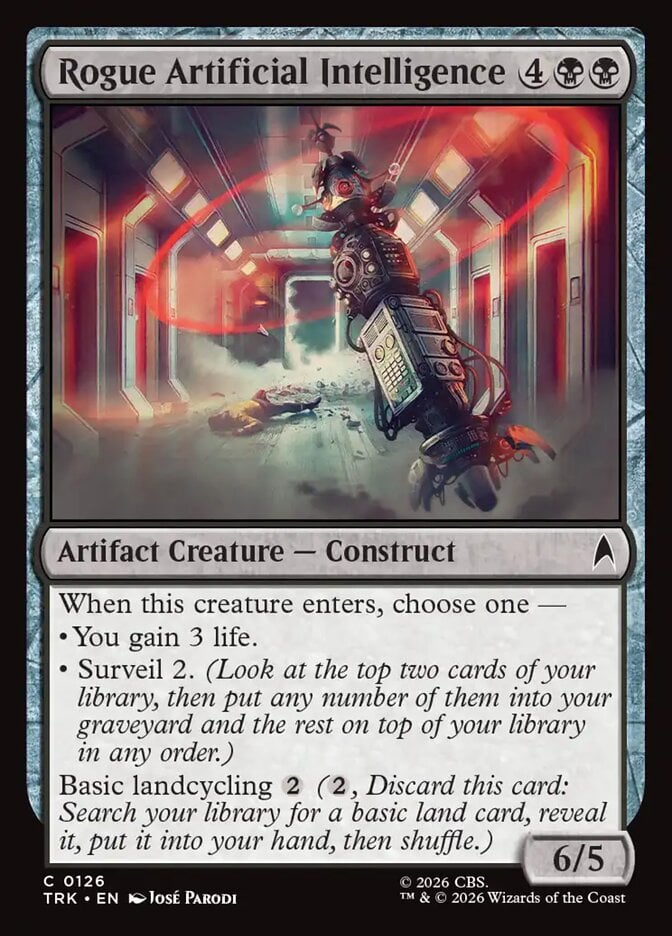
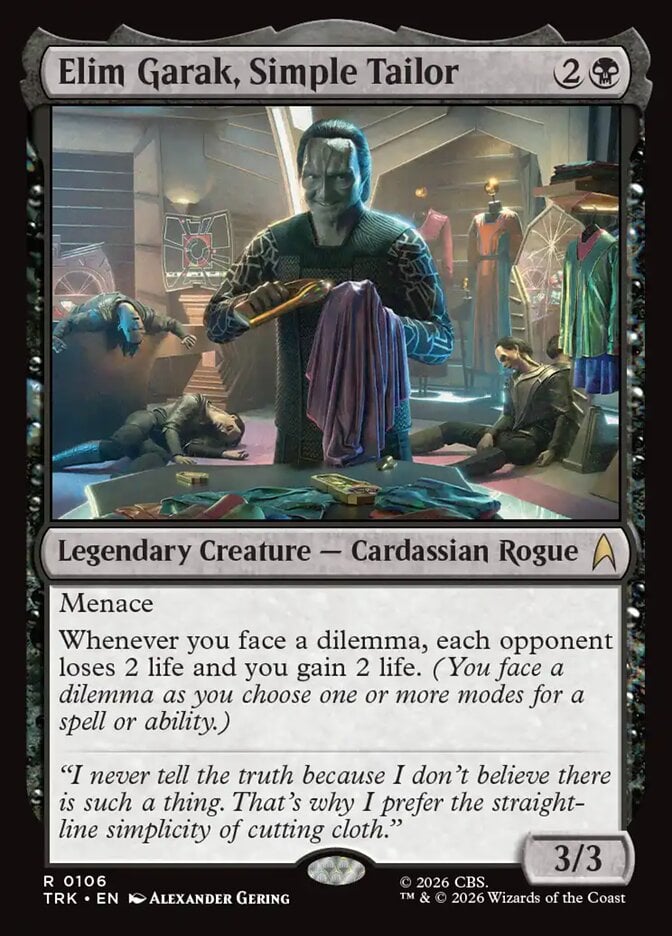
Star Trek is a franchise defined by the frequent dilemmas faced by the Captain and their crew, so this mechanic feels rather appropriate! You’ll “face a dilemma” whenever a modal card tasks you with making a choice.
This can take the form of a modal spell or ability. Look for bullet points in the card text to figure out whether a card qualifies as a dilemma, as cards with kicker like Eject the Warp Core act modal without technically being dilemmas!
Analysis
Dilemma is UB’s archetype focus in this set, as you can see from Seven of Nine. Dilemma cards are all over the place in Star Trek, including a repeatable common one in Tal Shiar Operative. Dilemma cards are most common in blue, then black, then white, and then green/red (neither of which gets many dilemma payoffs). Every payoff card for dilemmas is either blue or black, other than Captain Benjamin Sisko.
Federation
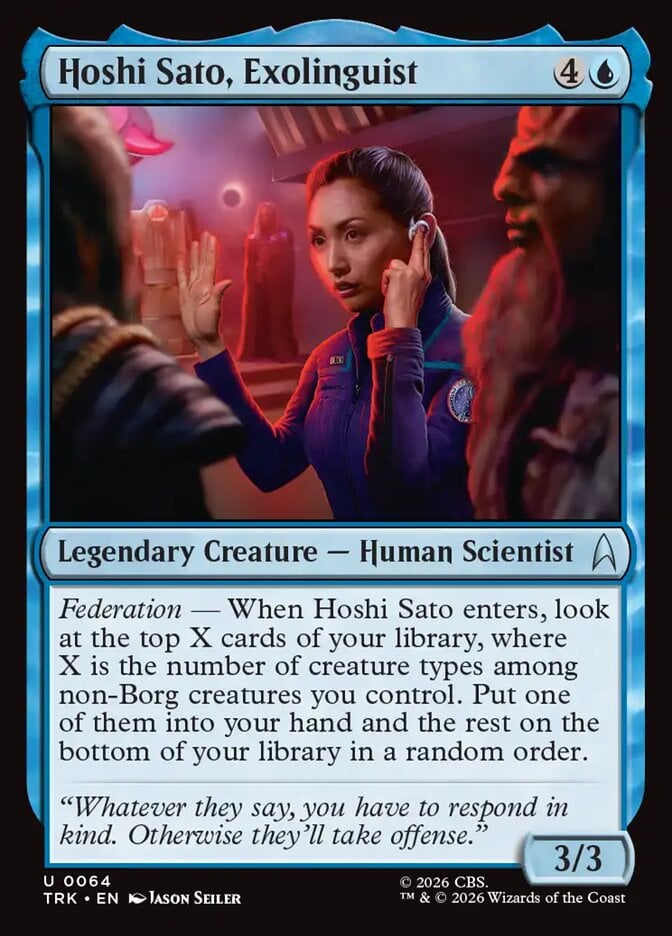
You can draw real strength from your crew’s diversity with the federation mechanic, which rewards you for every non-Borg creature type among creatures you control.
Analysis
Federation appears on only six cards in TRK, most of which are rares and mythics. It should have an ultimately minimal effect on gameplay and deckbuilding for the most part. This was likely done due to difficulties in tracking the mechanic, as your total number of creature types will change rapidly throughout the game. Achieving big numbers for federation should be fairly easy when you do have it, as Star Trek is full of unique creature types, like Klingon, Cardassian, and Ferengi.
Strange New Worlds
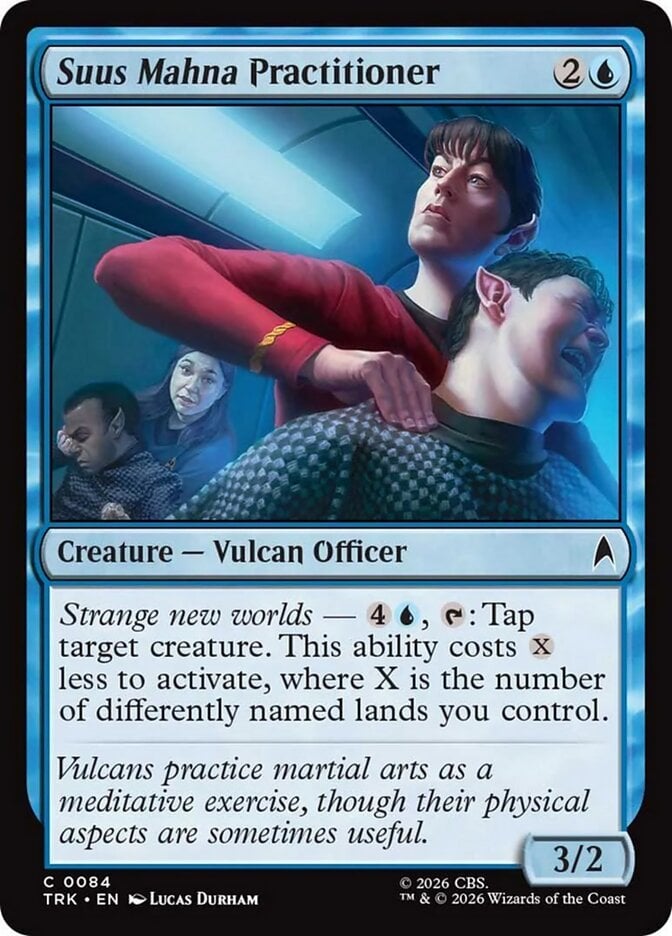
Star Trek is also known for its strange new worlds, each one teeming with new alien species and cultures to discover. You can conquer new territory yourself by fielding lands with different names, which will make your strange new worlds cards stronger!
Analysis
Strange new worlds is the primary focus of GU in this set, and it’s a build around mechanic that encourages 5-color good stuff piles! You may even want to crank out some off-color basics for this one to maximize the efficiency of payoffs like Cloak and Phaser and Deep Space Scan. The sexiest payoffs for strange new worlds tend to be rares and mythics, so I’d mostly lean into the mechanic if I opened those (or several good uncommons like Cloak and Phaser).
Payoffs for this mechanic exist in every color, but the lower-rarity ones are exclusively green and/or blue.
Spacecraft and Station
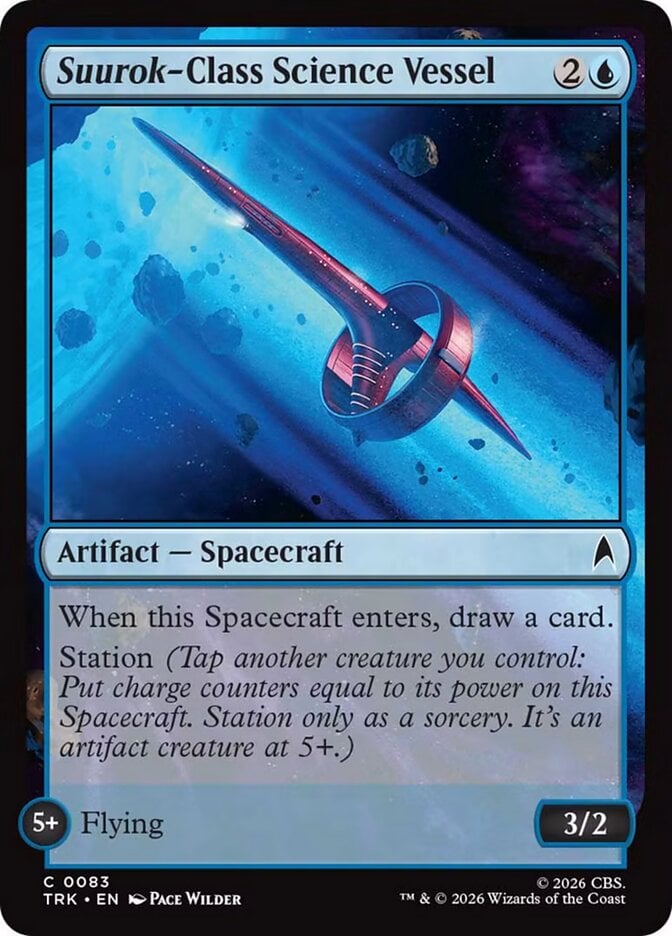
Spacecraft first debuted in Edge of Eternities, and a cynical sort could say that their debut was merely a dress rehearsal for Star Trek’s real debut! Regardless, it’s a fun mechanic that plays out kind of like a new type of vehicle.
Each spacecraft you play enters as a noncreature artifact, and you can put charge counters on it by tapping a creature at sorcery speed to “station” it. The number of charge counters you put on a ship by stationing it will always equal the power of whatever creature stationed it (at the time of resolution).
Analysis
Spacecraft are the primary focus of WU in this set, which is a departure from their role in Edge of Eternities (where they weren’t tied to any specific archetype). Most of the spacecraft in TRK are mono-colored cards that appear at rare/uncommon, although there are three common spacecraft available.
Assimilate
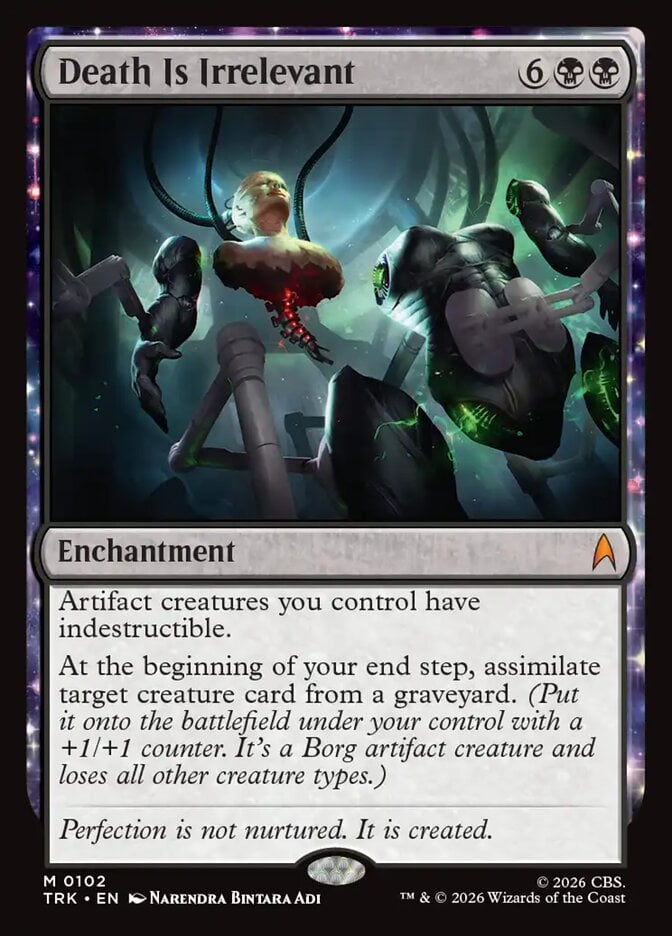
Our final new mechanic to cover is assimilate, which appears exclusively on a pair of mythic rares: Death is Irrelevant and Borg Cube. When you assimilate, you’ll put a creature into play as a Borg artifact creature with no other creature types and a +1/+1 counter on it.
Archetypes
Star Trek is a welcome continuation to the 10-archetype structure, much like Reality Fracture before it. Each color pair has its own distinct “thing” that it tries to do in this set, which is showcased by two signpost uncommons for each color pair. For every pair, one of the signpost uncommons is a typical multicolor card, and the other is a hybrid cost card that can play well in other archetypes (while being at its best in its 2-color pair).
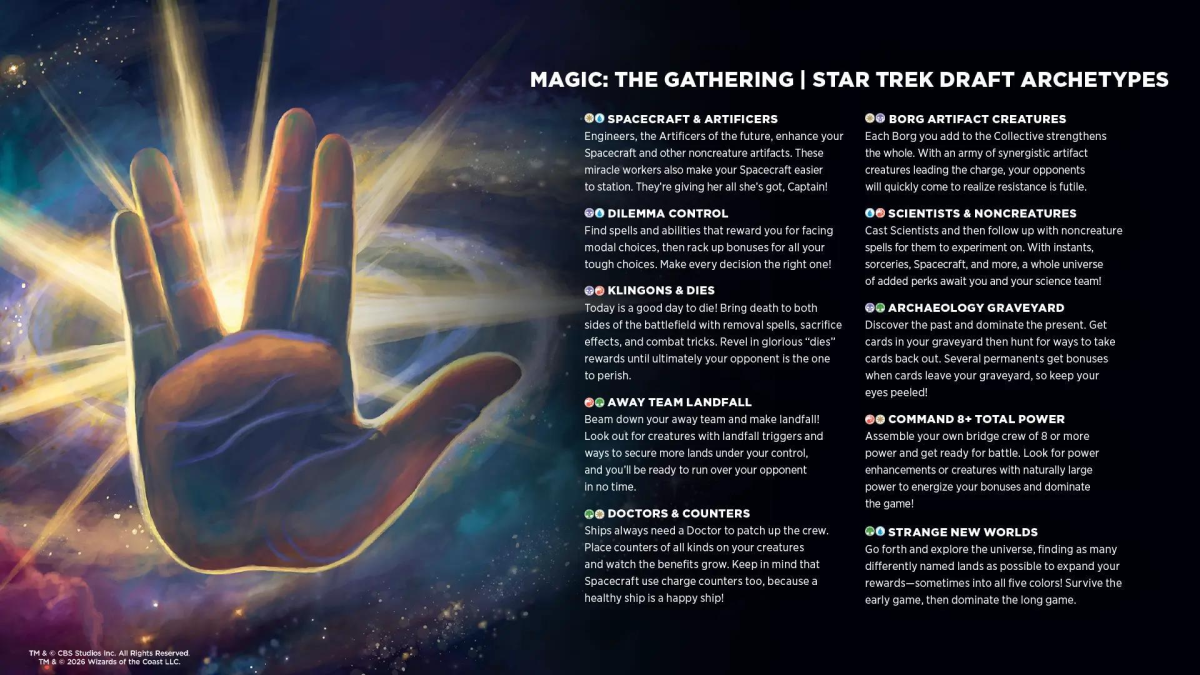
Source: Wizards of the Coast
WU Spacecraft & Artificers
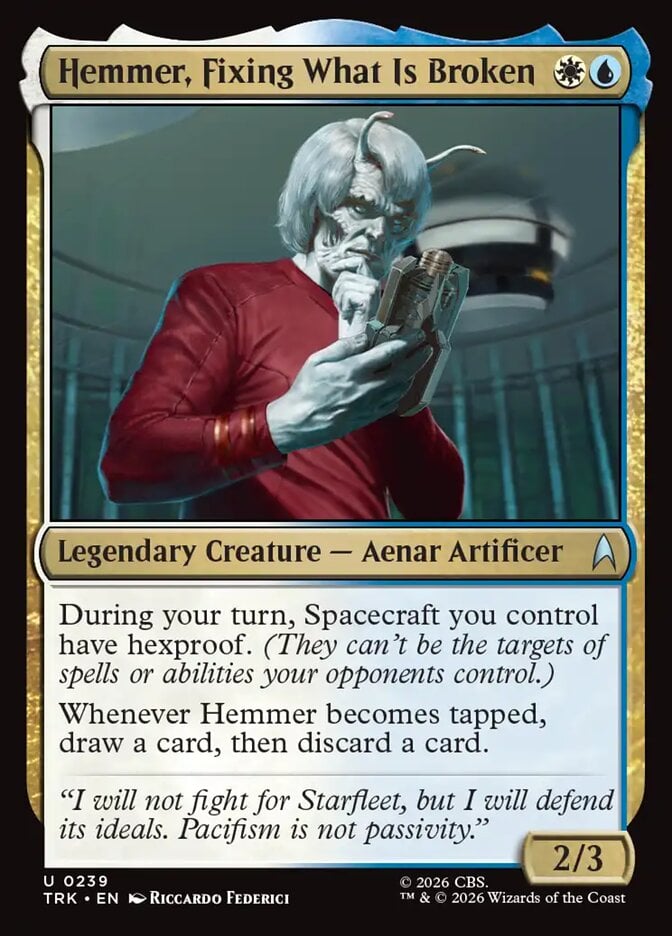
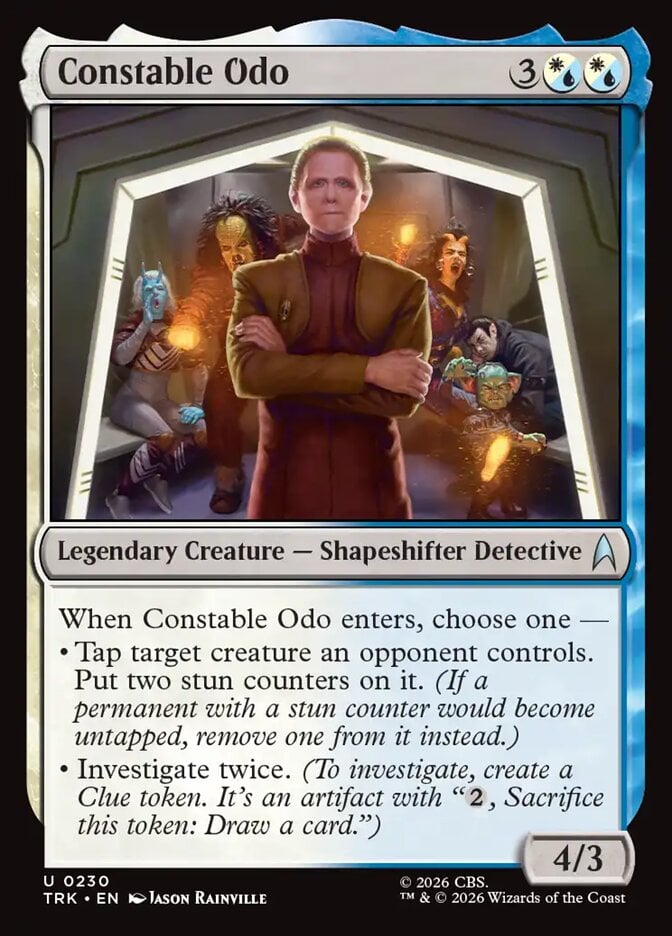
Signpost uncommons: Hemmer, Fixing What Is Broken and Constable Odo
Hemmer, Fixing What Is Broken protects spacecraft you control from removal during your turn, and offers convenient looting when it becomes tapped. These are nice bonuses that make it easier to put a few more spacecraft in your deck, although the card type still has inherent diminishing returns. Constable Odo meanwhile doesn’t interact directly with spacecraft at all, and is instead a bigger Hapatra, The Desert Frost with a nice value mode if desired.
Important Commons
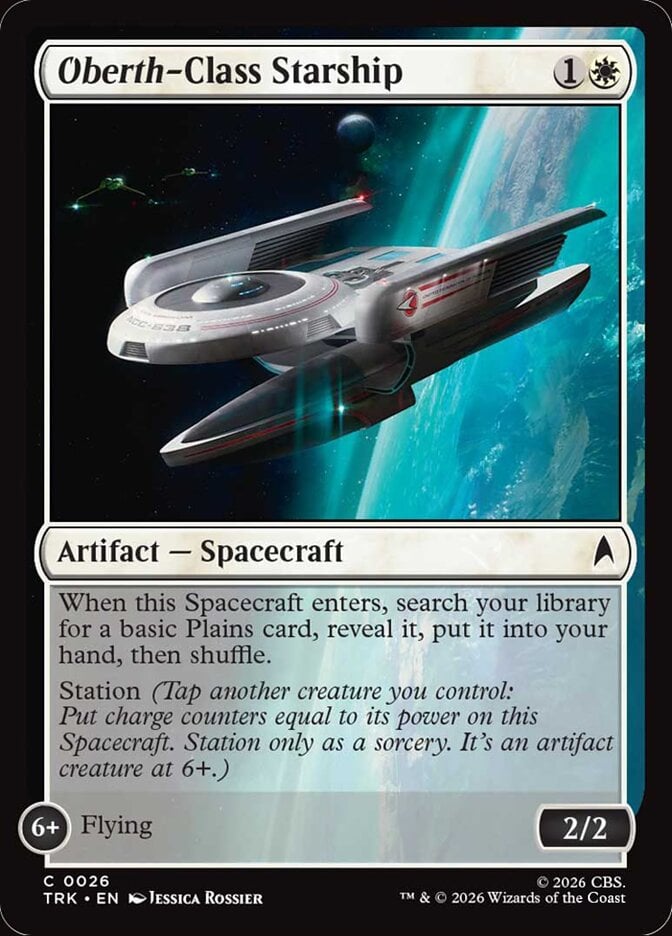
Suurok-Class Science Vessel and Oberth-Class Starship are inherent 2-for-1s that help you turn on your spacecraft synergies without needing to open a ton of rare spacecraft.
UB Dilemma Control
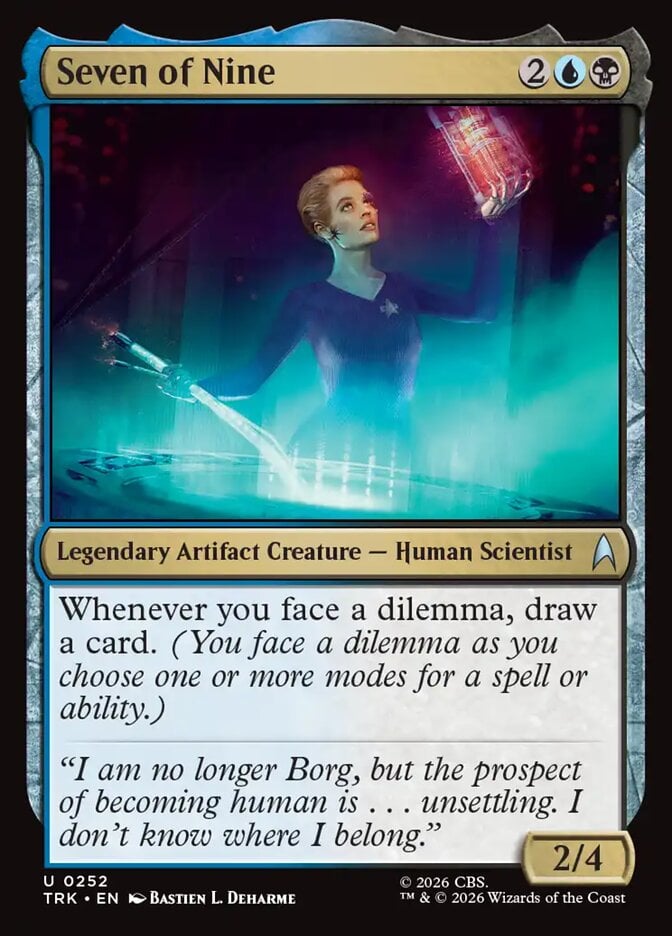
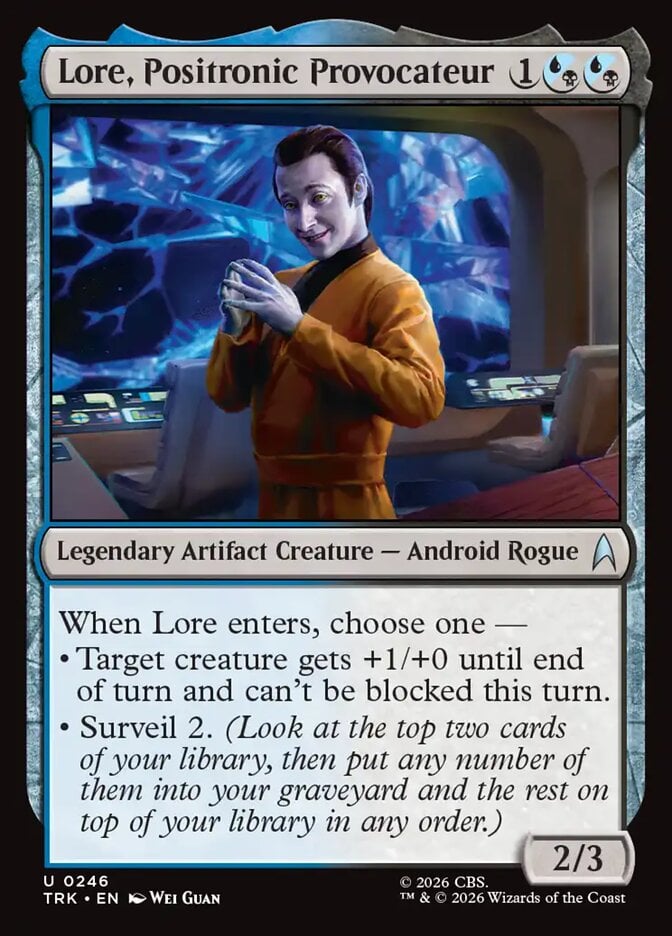
Signpost uncommons: Seven of Nine and Lore, Positronic Provocateur
Seven of Nine is an awesome payoff for dilemmas, as it’s hard to say no to free cards! It’s good enough that I could see it occasionally being splashed in other color pairs, provided you have enough modal cards available. Lore, Positronic Provocateur is less impressive, but it at least triggers dilemma while helping you curve out.
Important Commons
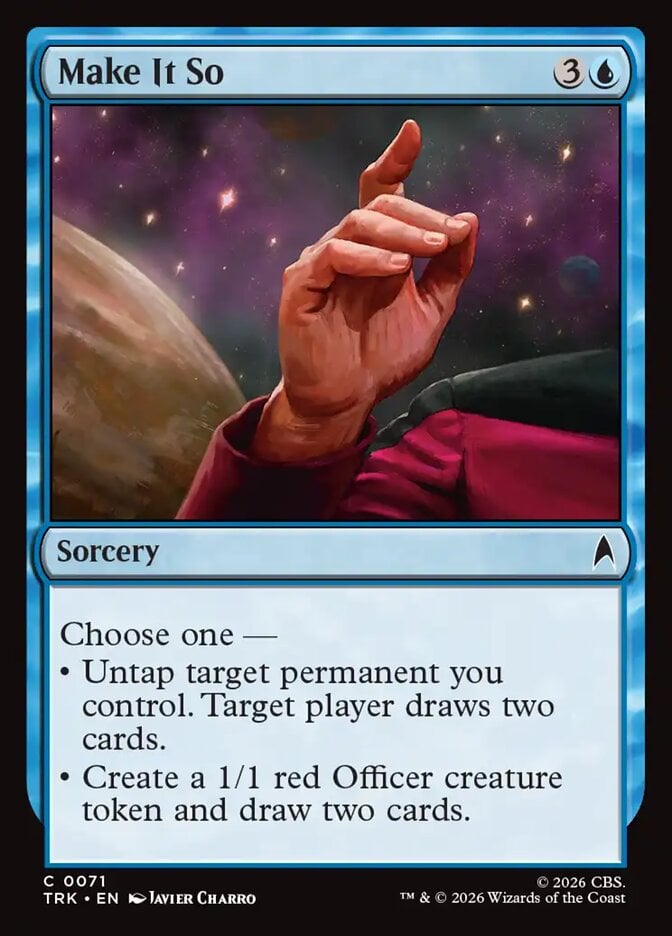
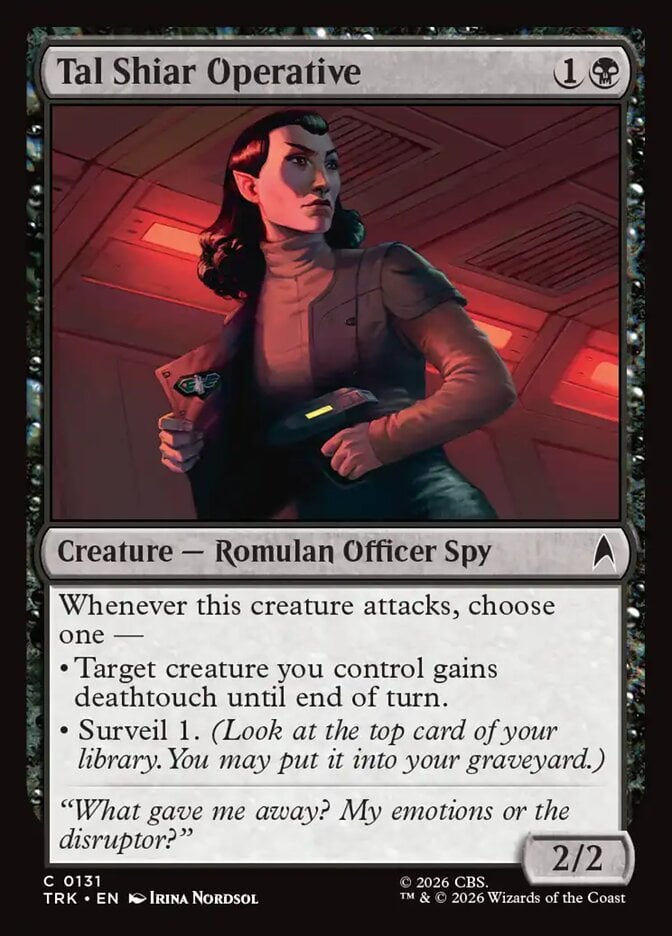
Make It So and Tal Shiar Operative are the best ways to frequently face dilemmas at common rarity.
BR Klingons & Dies
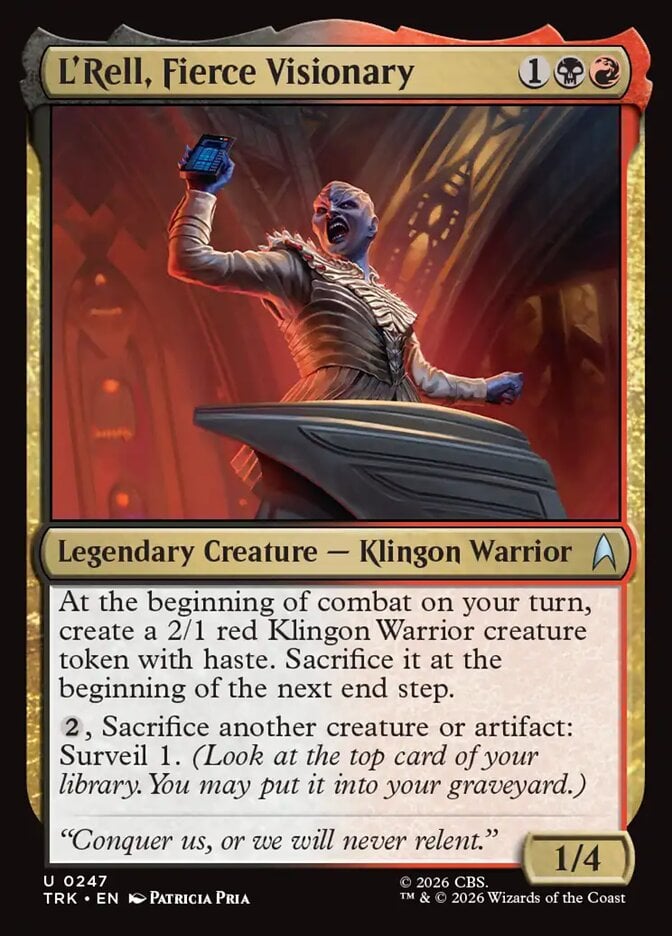
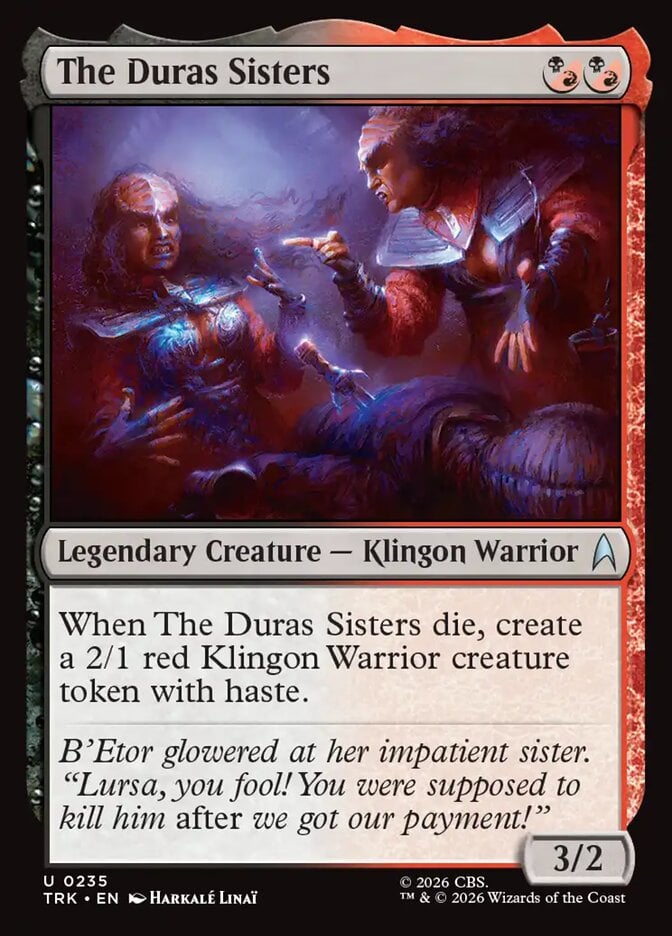
Signpost uncommons: L'Rell, Fierce Visionary and The Duras Sisters
Klingons are fearless warriors who not even death will stop! L'Rell, Fierce Visionary provides you with a constant temporary army of them for battle, and can even sacrifice your tokens to surveil if needed. The Duras Sisters meanwhile is an efficient creature with an easy mana cost for BR, which provides extra support when it dies. Fodder and sacrifice is a key play pattern for Rakdos in Star Trek, so look for sacrifice outlets and “dies” triggers.
Important Commons
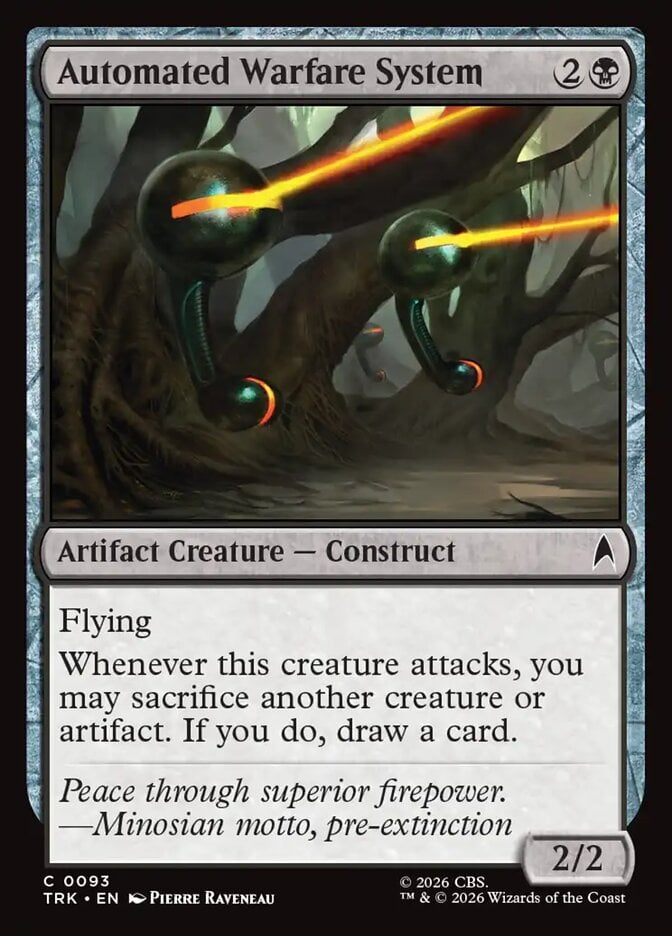
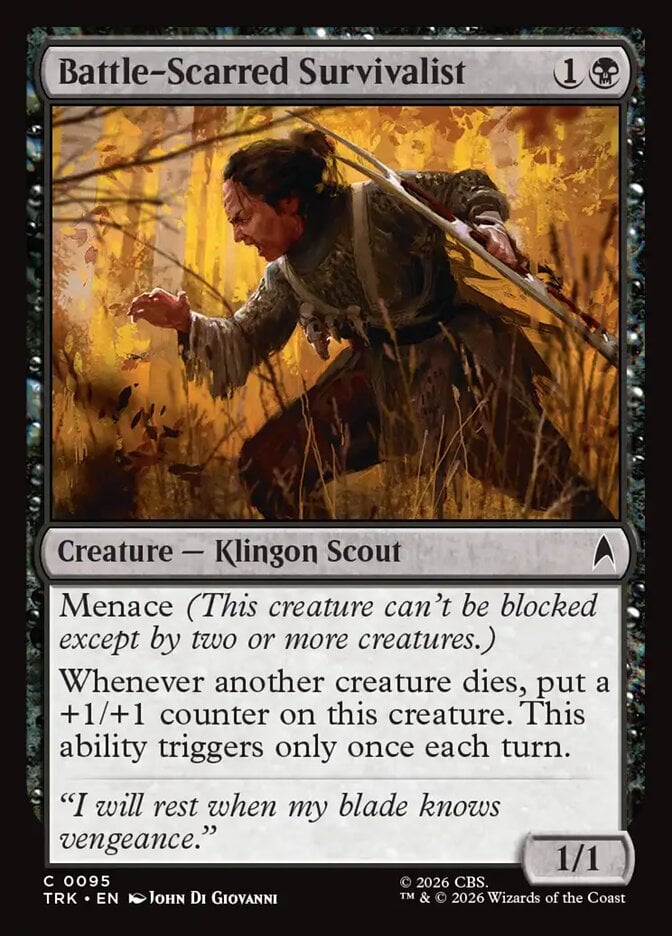
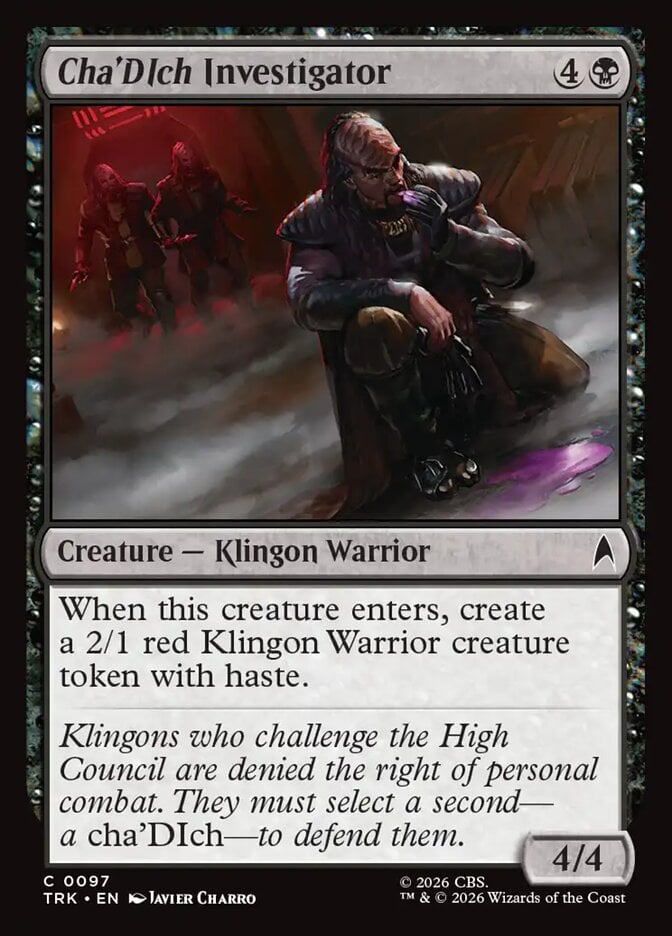
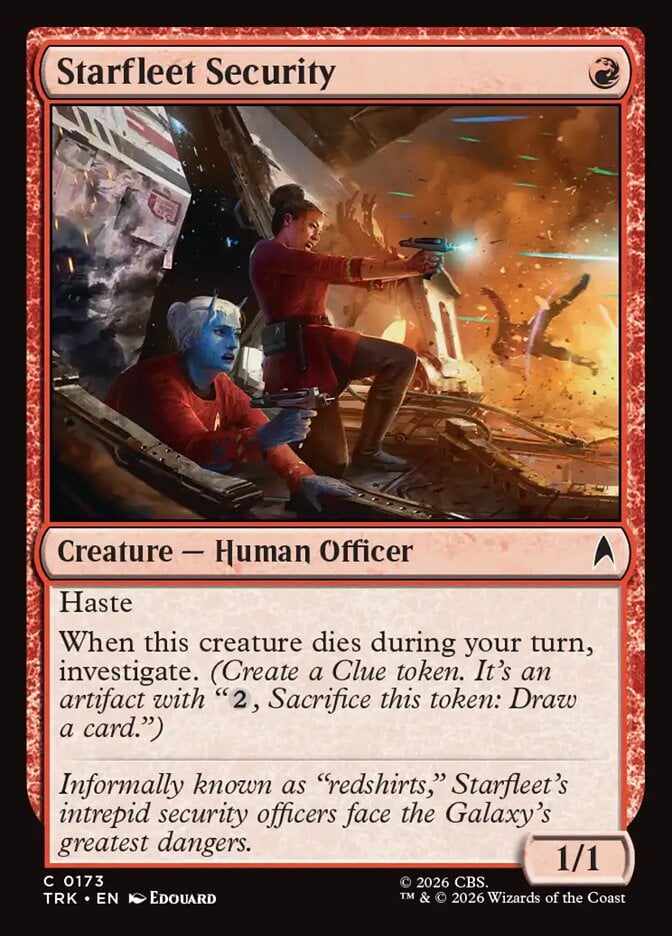
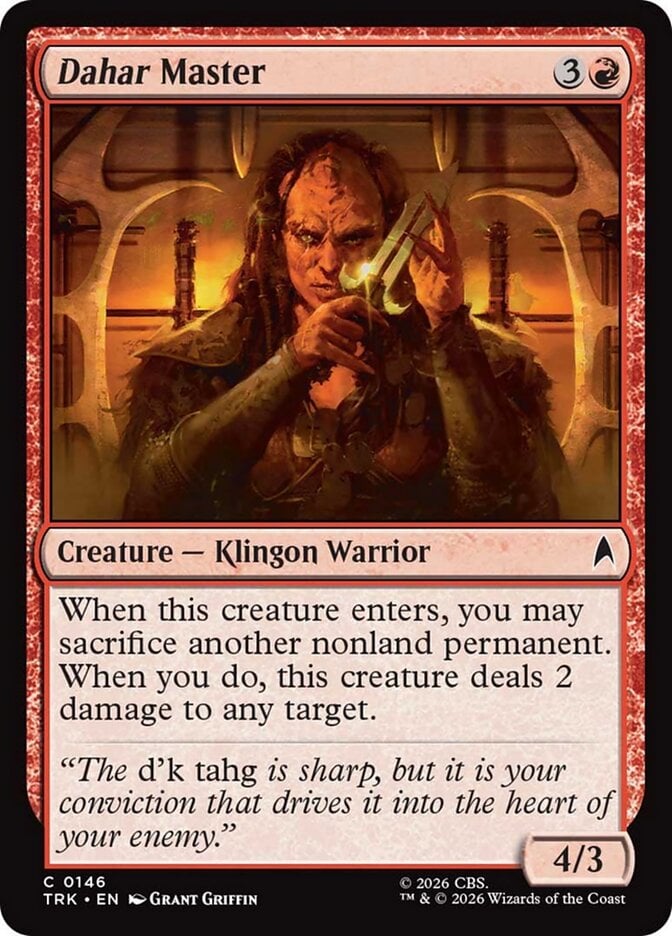
Automated Warfare System, Battle-Scarred Survivalist, Cha'DIch Investigator, Starfleet Security, and Dahar Master all pick up some extra points in this archetype, which feels rather well-supported.
RG Away Team Landfall
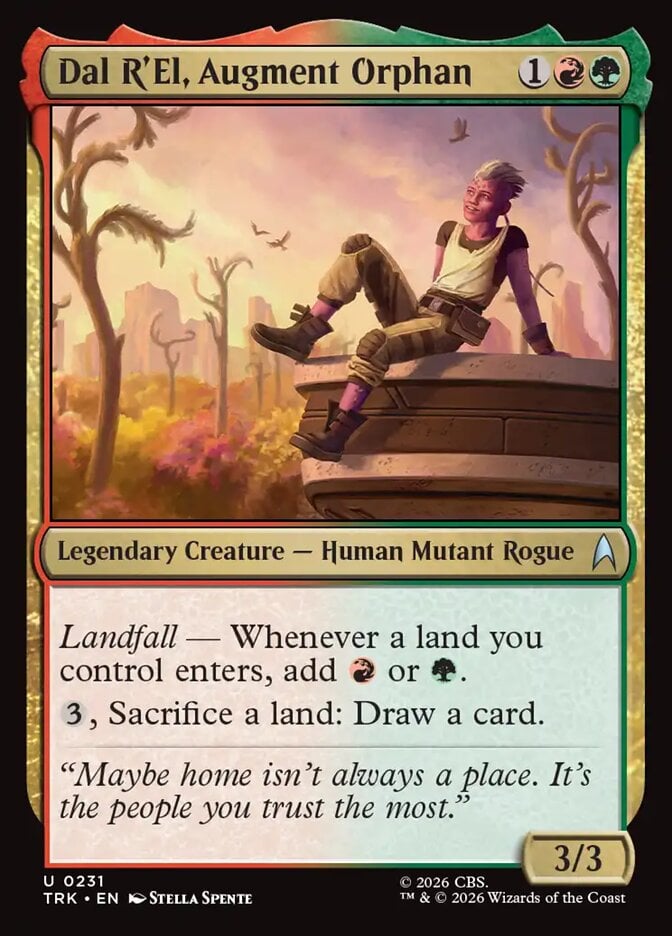
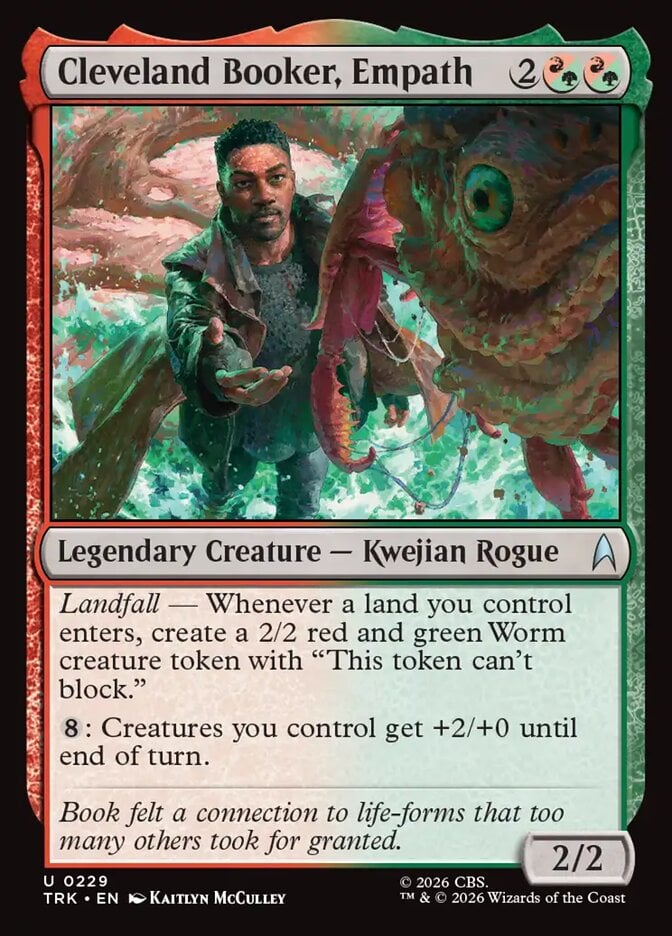
Signpost uncommons: Dal R'El, Augment Orphan and Cleveland Booker, Empath
Dal R'El, Augment Orphan plays out like a generally better Koth, the Geomancer, with higher base stats, unconditional mana ramp, and a handy mana sink if you flood out. Cleveland Booker, Empath meanwhile is rather understated for 4 mana, but it offers an army of worms if it sticks around.
Important Commons
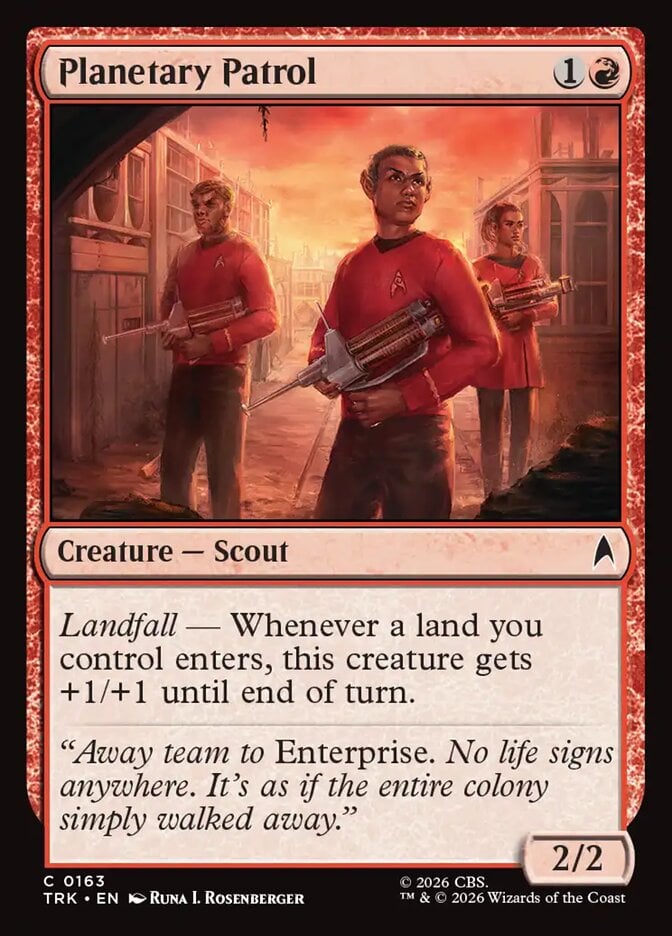
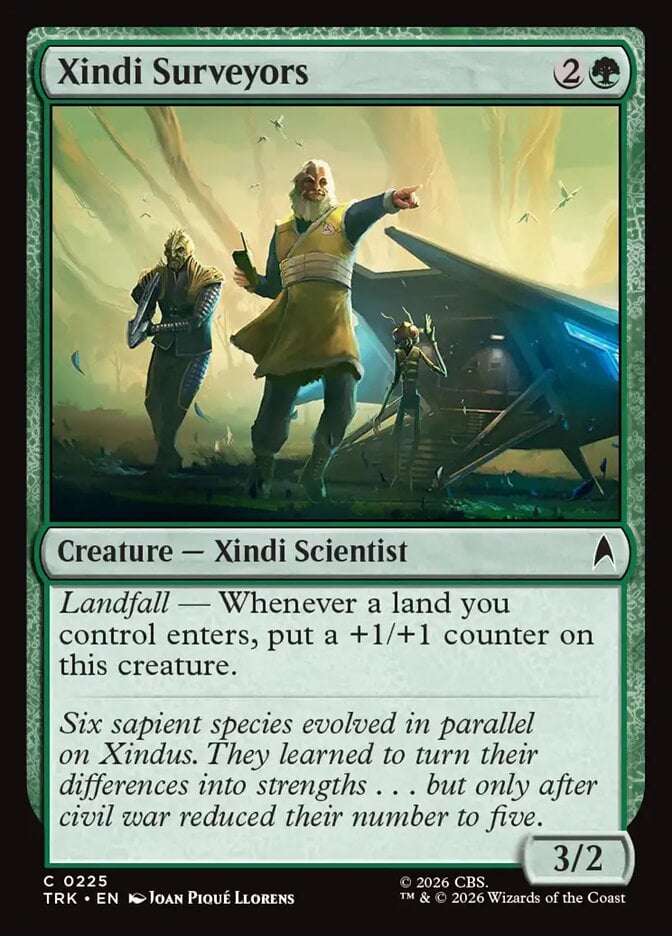
RG landfall plays much better when it curves out, so prioritize cheap landfall creatures like Planetary Patrol and Xindi Surveyors.
GW Doctors & Counters
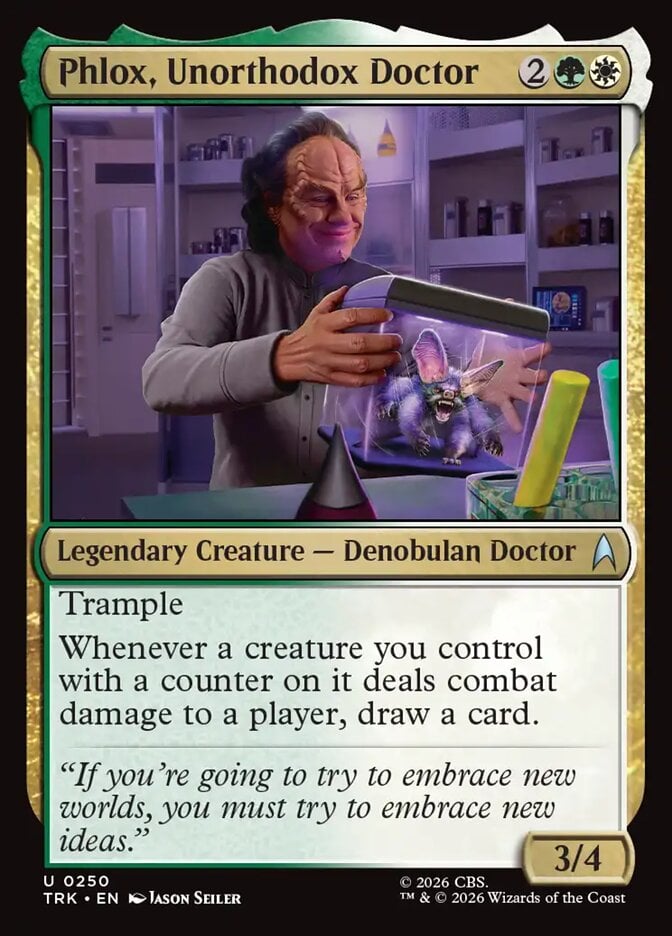
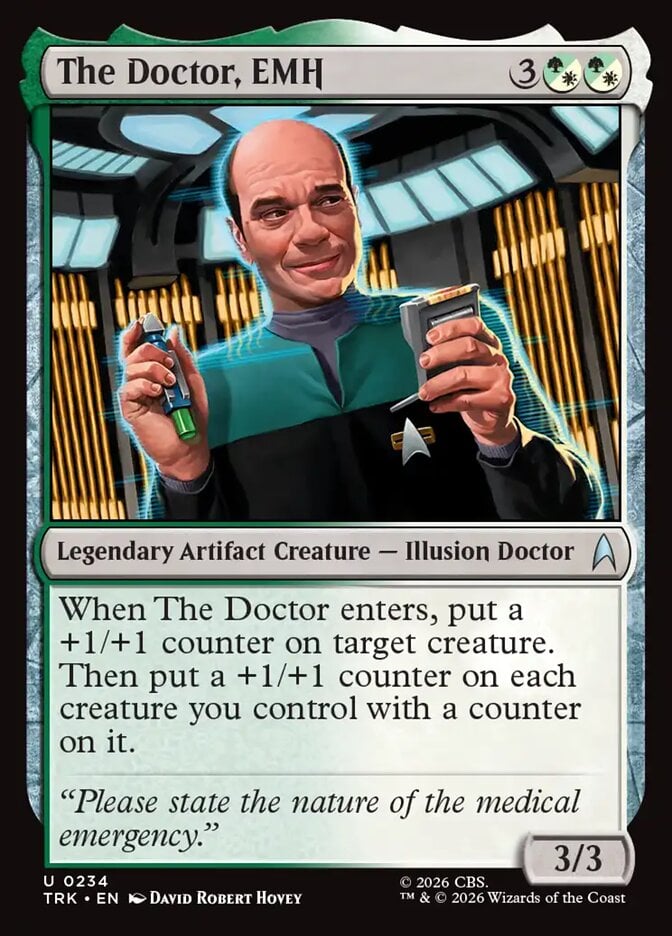
Signpost uncommons: Phlox, Unorthodox Doctor and The Doctor, EMH
GW cares about counters in this set, most of which will come from doctor creatures. There are no real payoffs for actually playing doctors though. One important wrinkle for this deck is that these cards care about “counters” rather than “+1/+1 counters”, so spacecraft will fulfill your conditions due to their charge counters.
Phlox, Unorthodox Doctor has decent vanilla stats, and it can draw a couple of cards if things line up well. The Doctor, EMH meanwhile is a 5/5 for 5 at worst, and it’ll often be better than that.
Important Commons
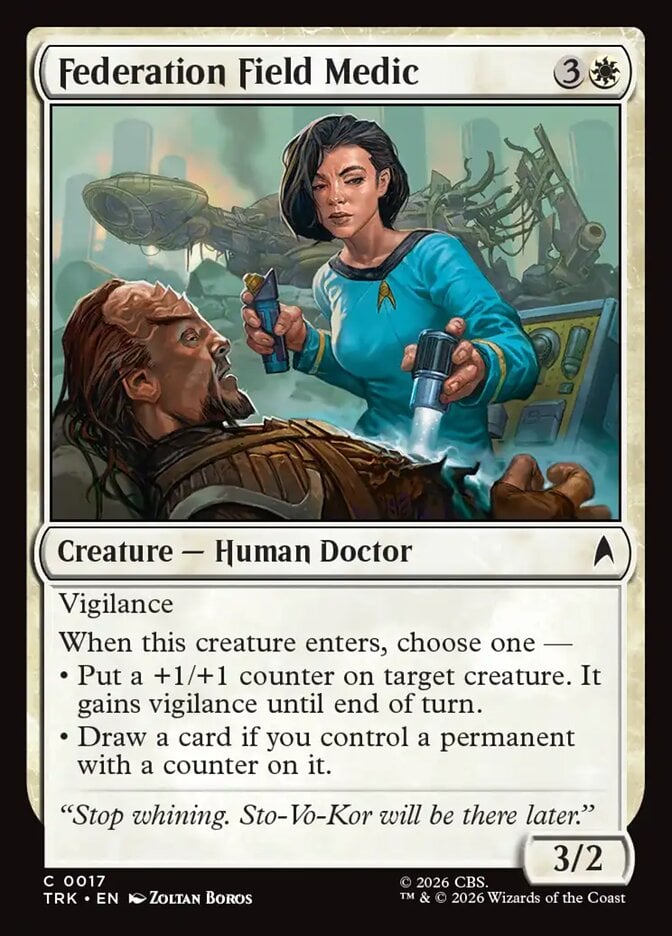
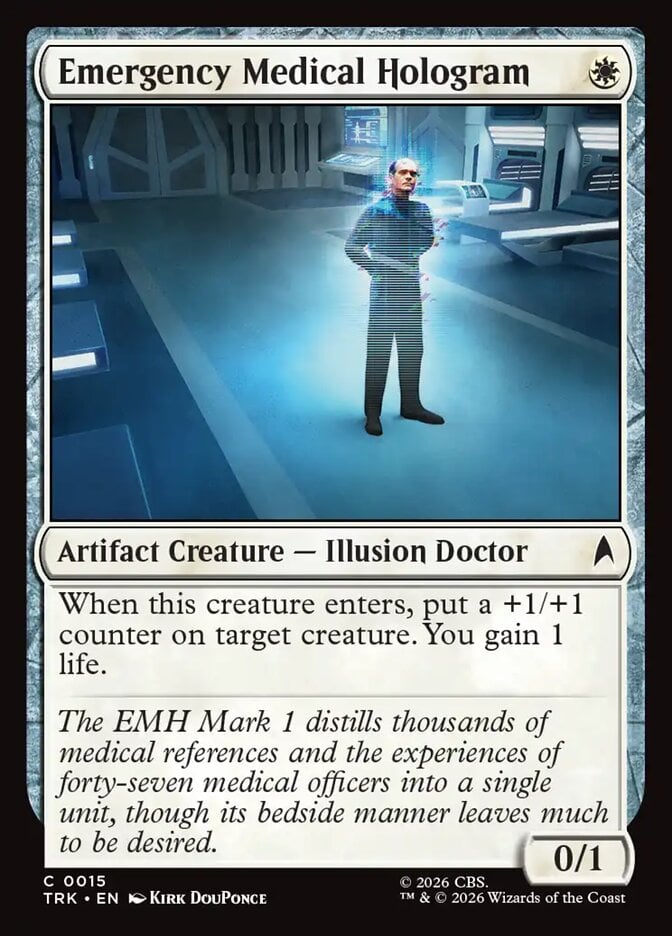
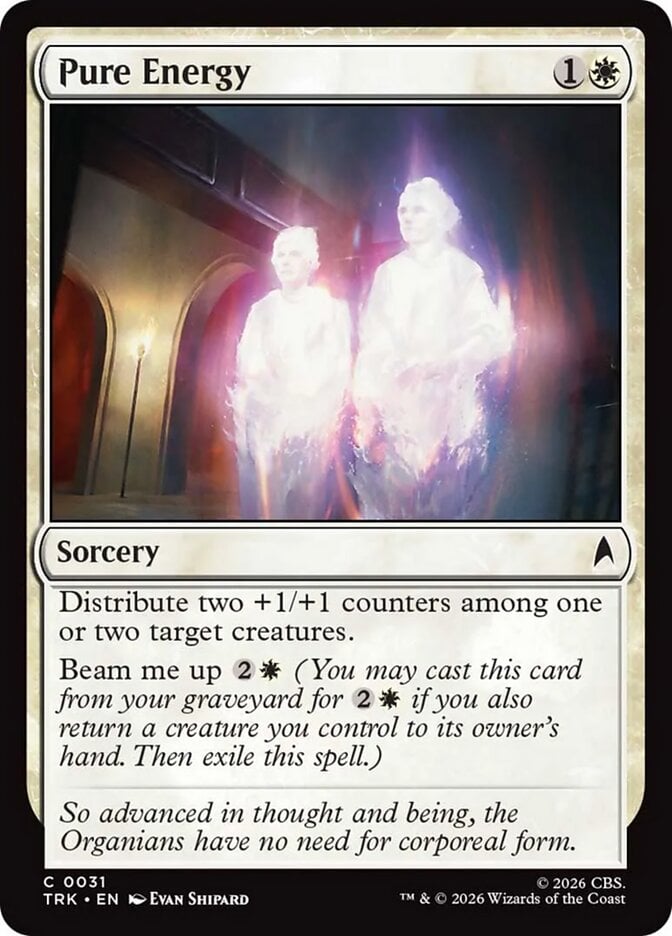
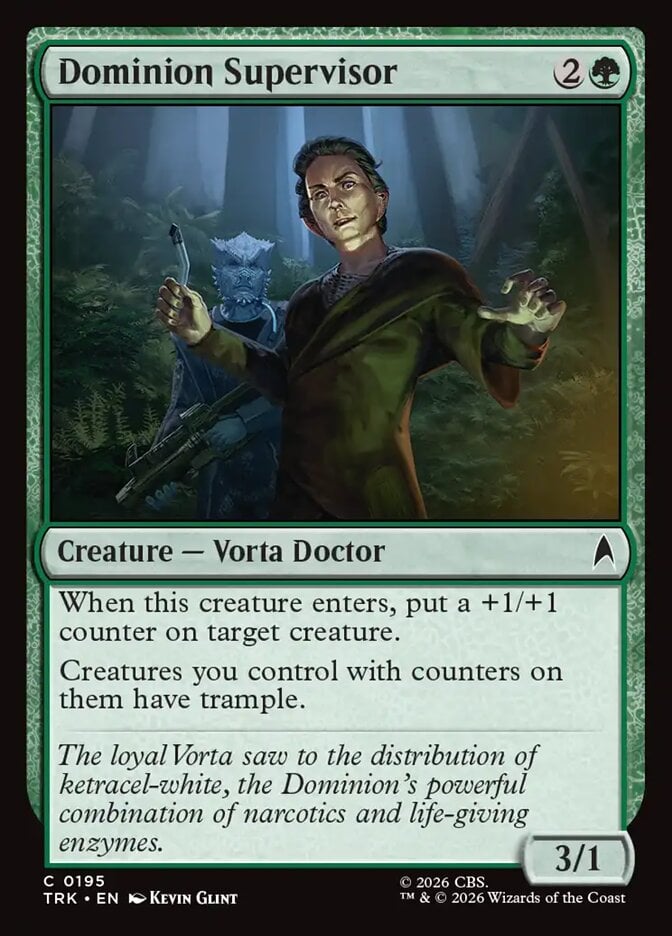
Federation Field Medic offers an easy 2-for-1 if you can set it up, which usually requires Emergency Medical Hologram, Pure Energy, or Dominion Supervisor. I’m a bit lower on this archetype in general than most of the others because support for it looks somewhat lacking.
WB Borg Artifact Creatures
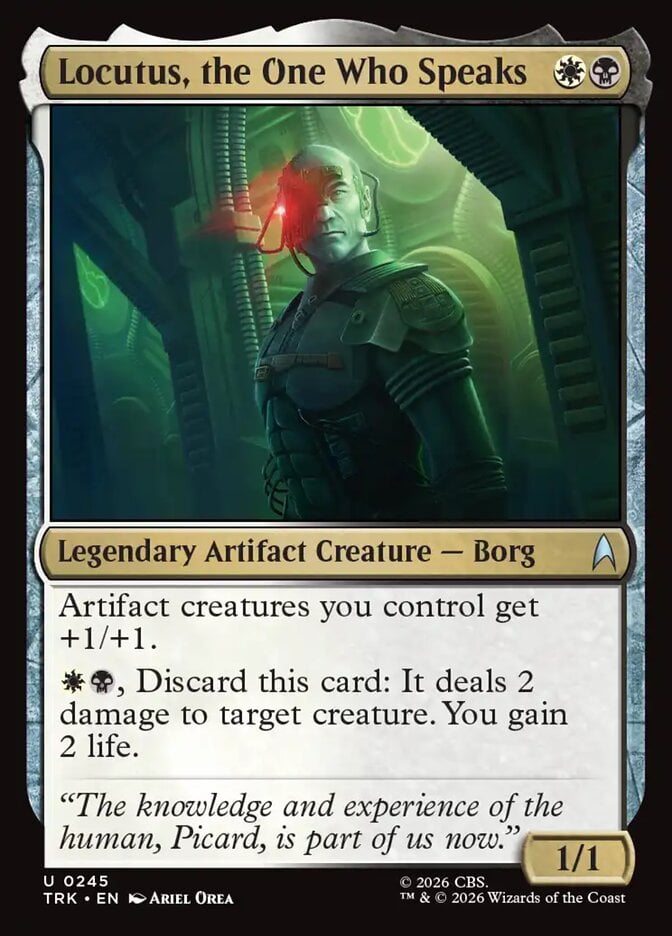
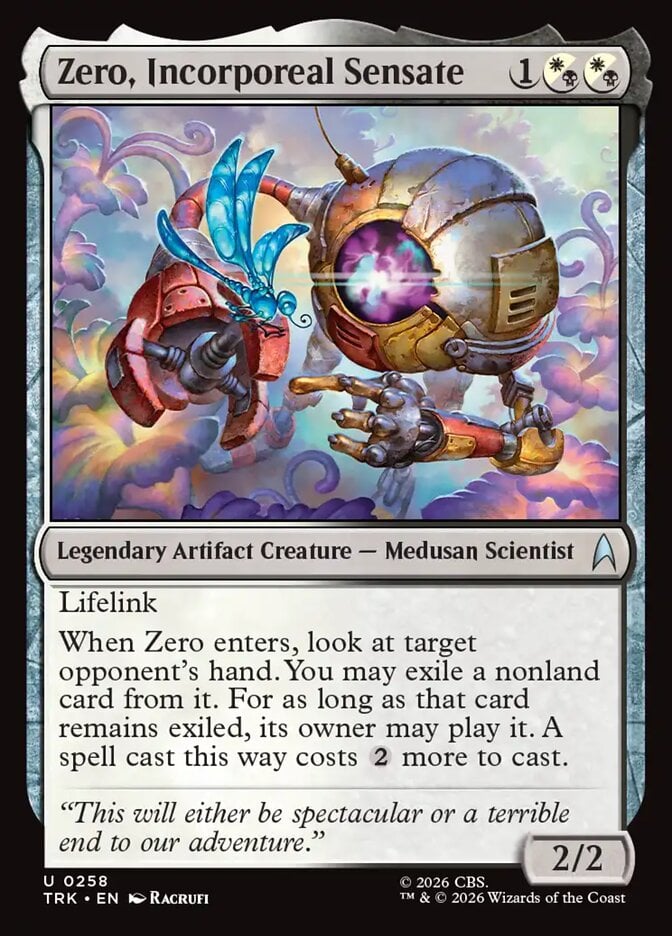
Signpost uncommons: Locutus, the One Who Speaks and Zero, Incorporeal Sensate
WB artifacts is one of the best supported archetypes in the format, with plenty of artifact creatures at all rarities and a variety of busted rare payoffs. Locutus, the One Who Speaks is an awesome 2-mana lord too, and it even doubles as a removal spell in a pinch (letting you play as many copies as you want, despite being legendary). Zero, Incorporeal Sensate isn’t nearly as efficient, but it offers a lifelinking body with some handy Elite Spellbinder style utility.
Important Commons
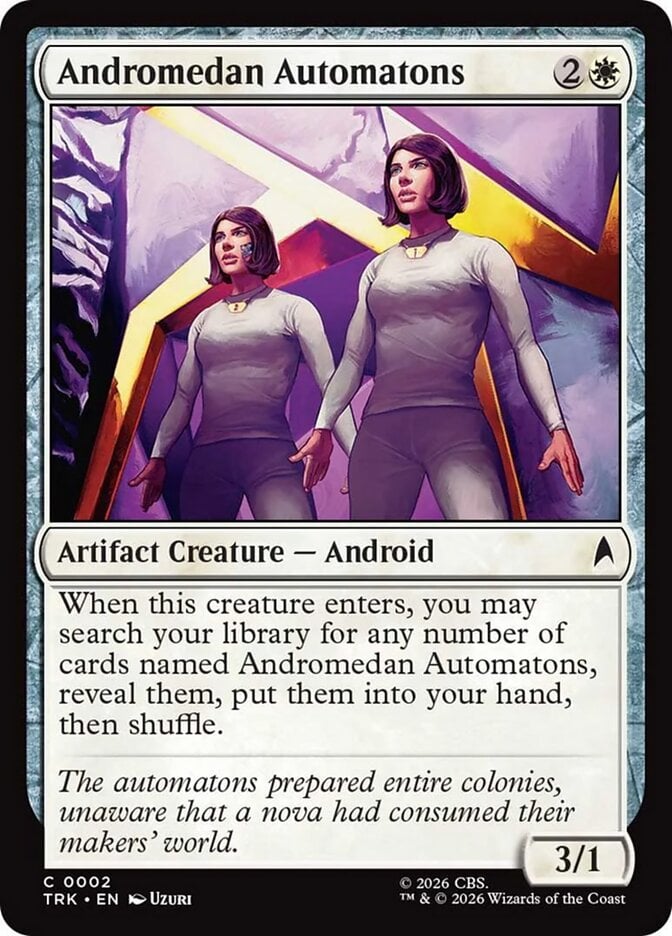
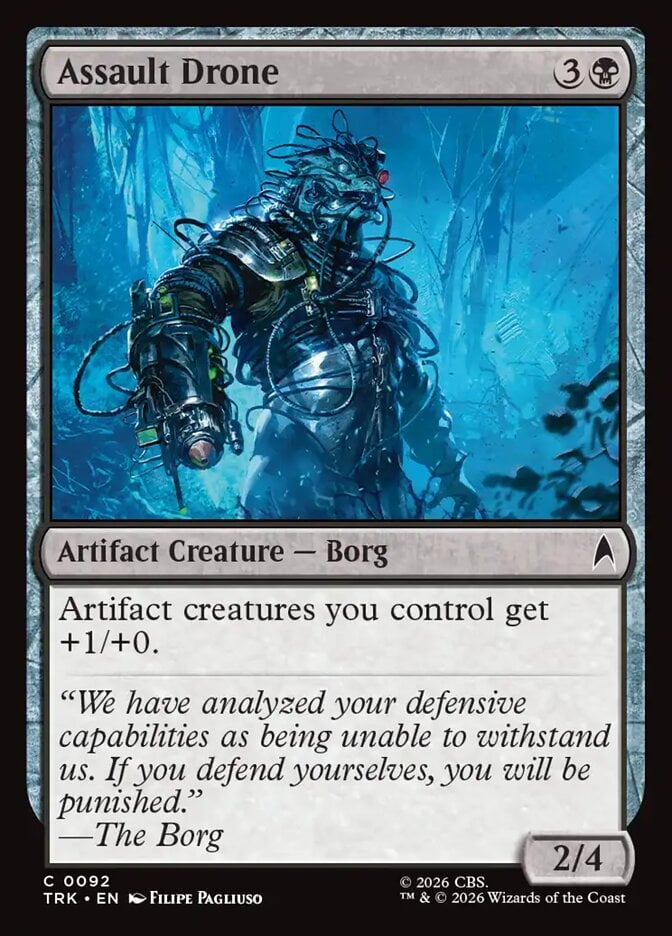
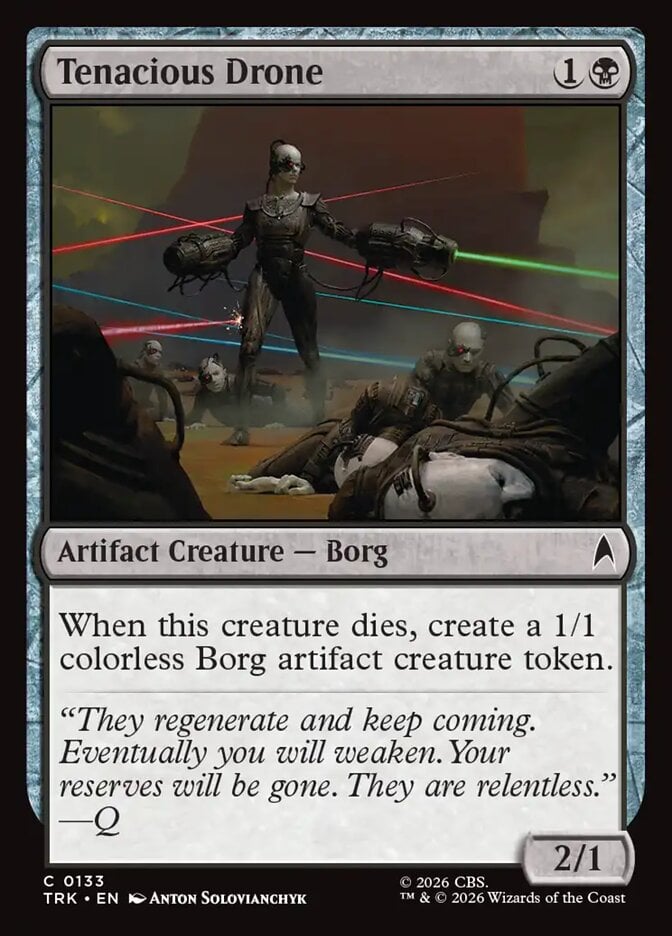
Andromedan Automatons, Assault Drone, and Tenacious Drone are some of the better common artifact creatures available.
UR Scientists & Noncreatures
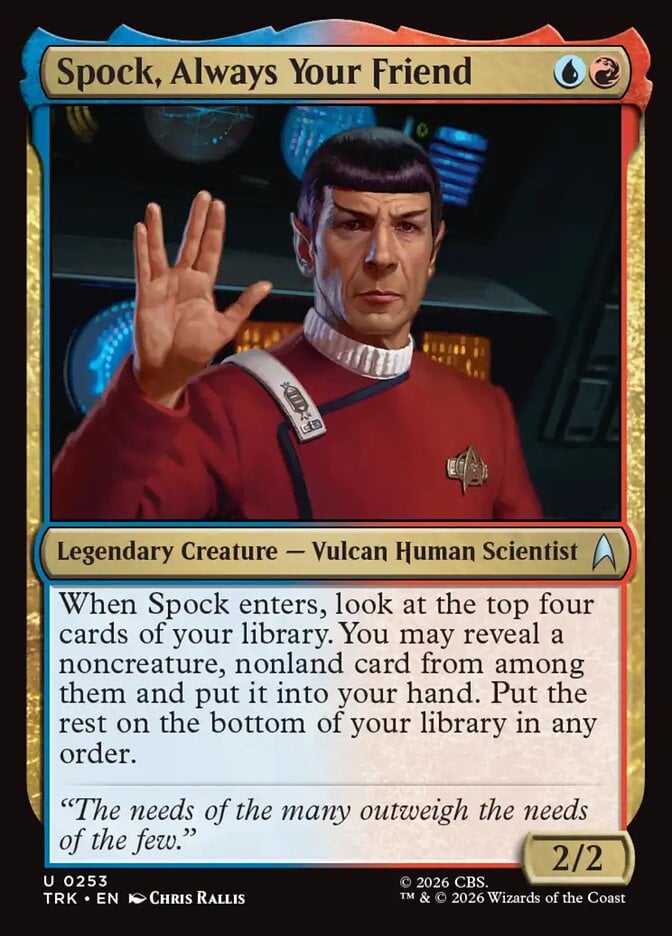
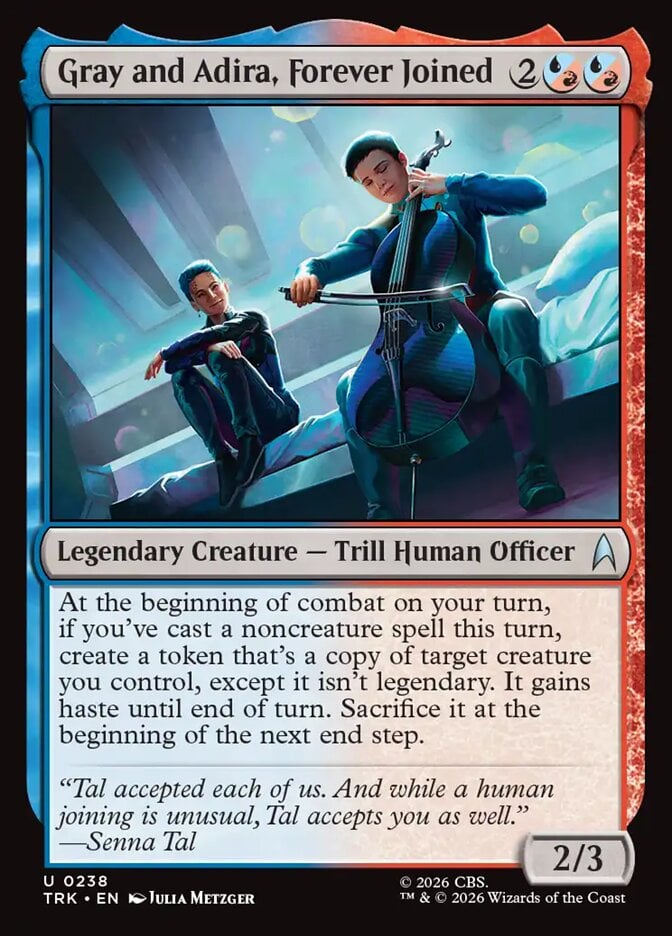
Signpost uncommons: Spock, Always Your Friend and Gray and Adira, Forever Joined
UR treads familiar territory with a noncreature theme in this set. Spock, Always Your Friend is one of the best Augur of Bolas style cards I’ve ever seen, with a full on Grizzly Bears body to go with a noncreature Impulse on ETB! Gray and Adira, Forever Joined is significantly less exciting, with no guaranteed value and extra work required to get Heat Shimmers from it. Still, the dream of copying Spock is cool at least.
Important Commons
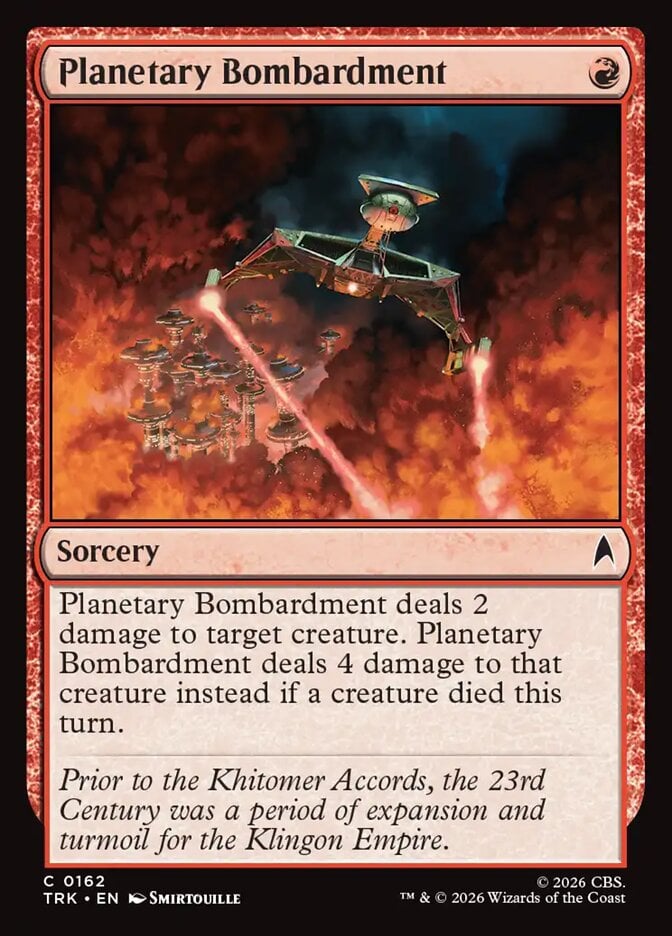
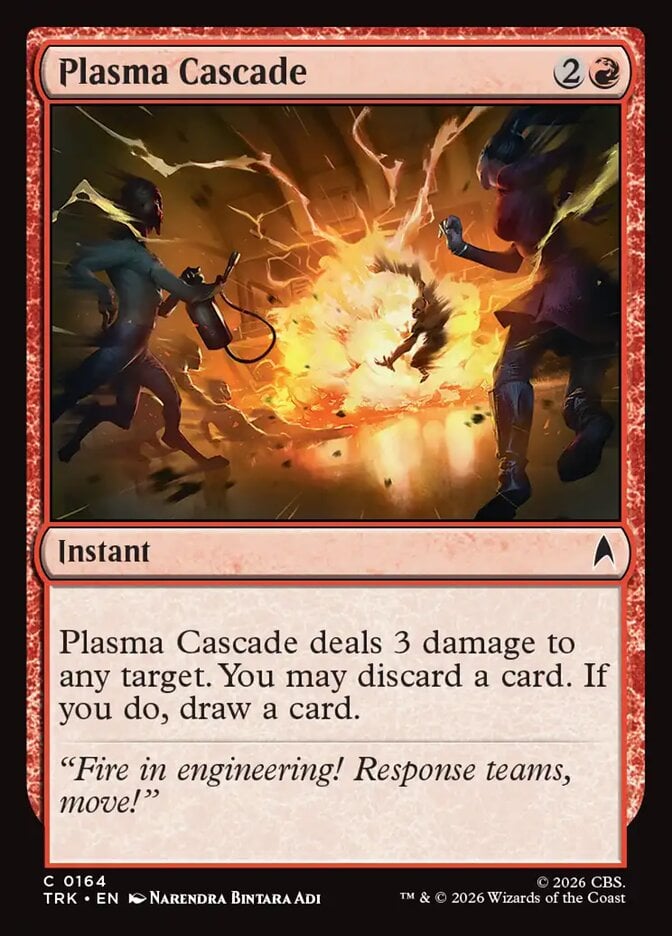
The best commons for UR are premium noncreature spells like Planetary Bombardment, Make It So, and Plasma Cascade.
BG Archaeology Graveyard
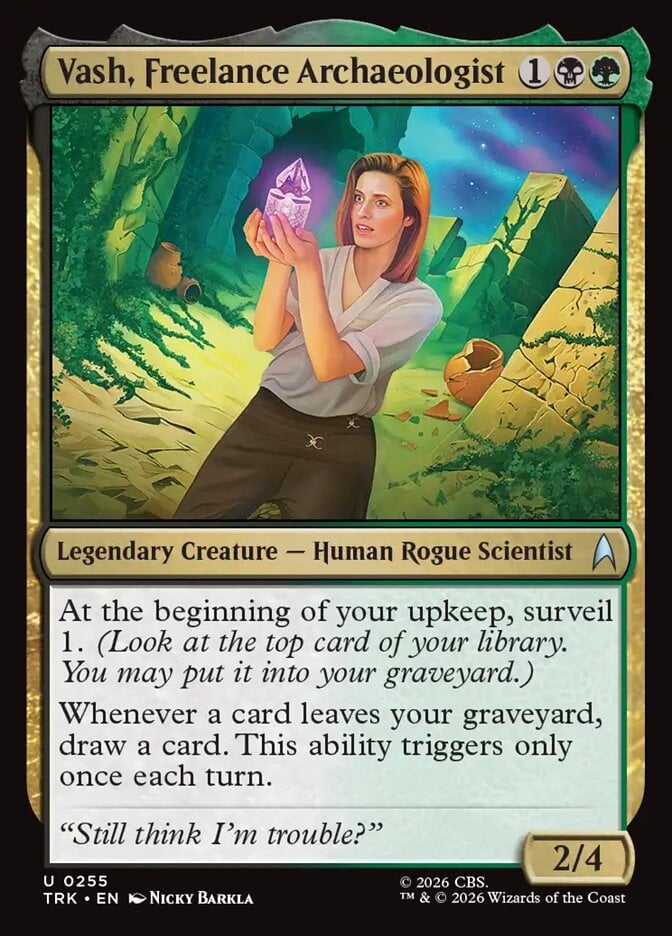
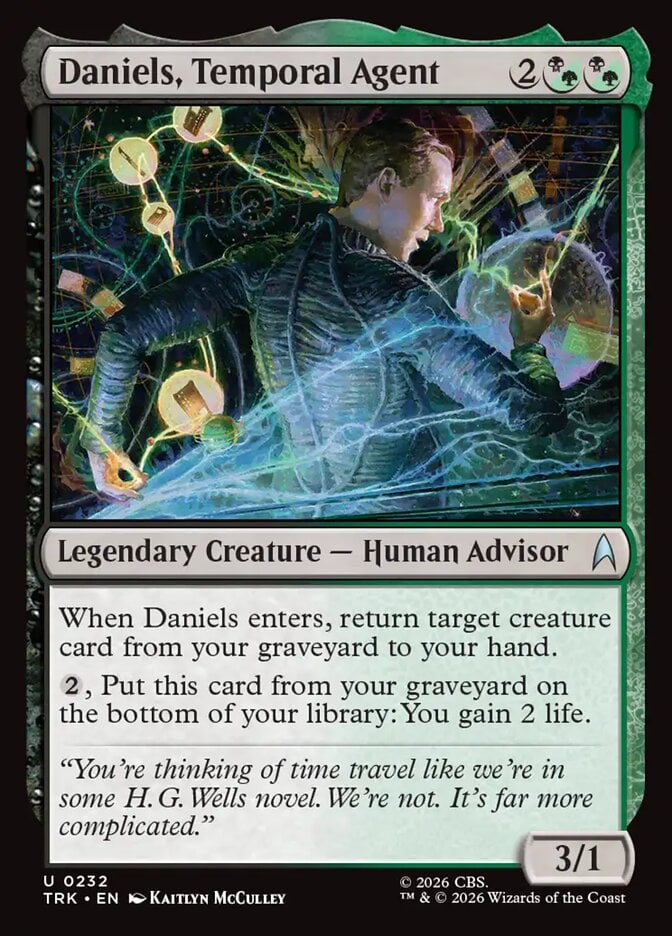
Signpost uncommons: Vash, Freelance Archaeologist and Daniels, Temporal Agent
BG’s theme in this set feels reminiscent of Tarkir: Dragonstorm, which had a similar thing going on with Kishla Skimmer. Vash, Freelance Archaeologist is an amazing payoff for “doing the thing” here, and it’s honestly pretty good even if you can’t as a vanilla 2/4 with surveil every turn. Daniels, Temporal Agent is one of the stronger hybrid signposts available, and it’ll likely be scooped up by non-BG players in Draft.
Important Commons
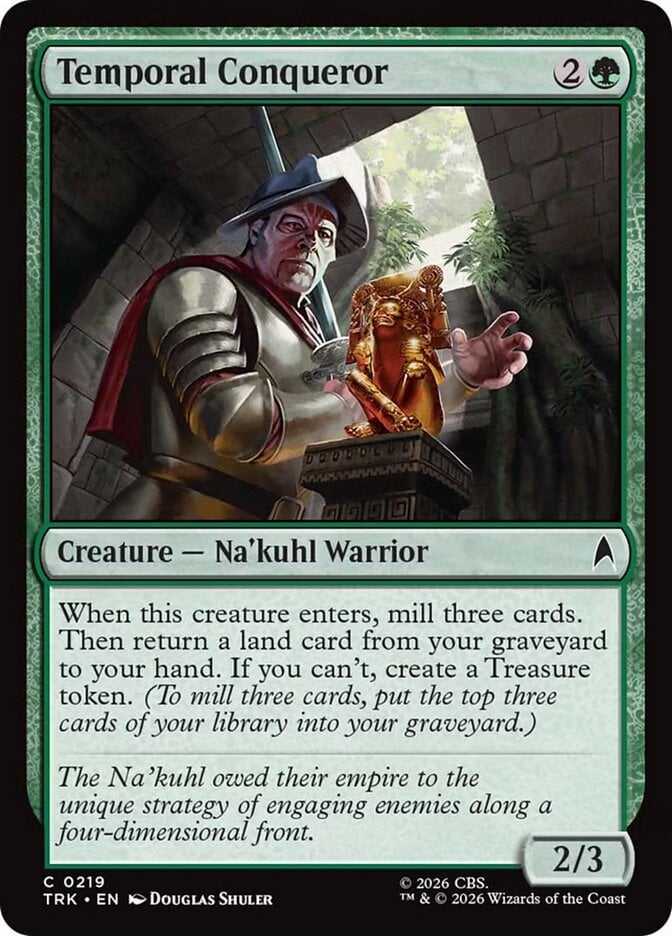
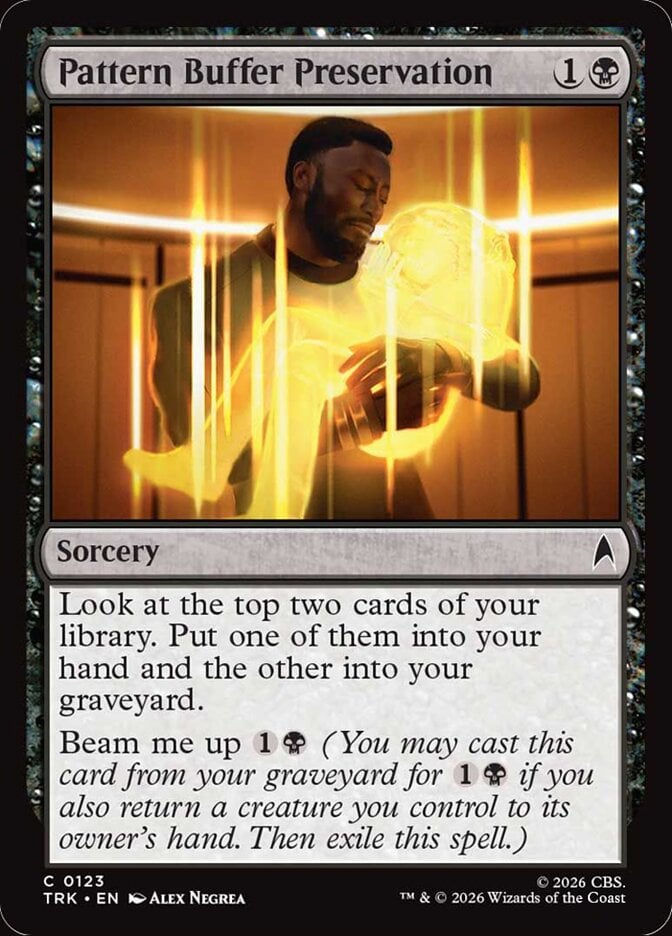
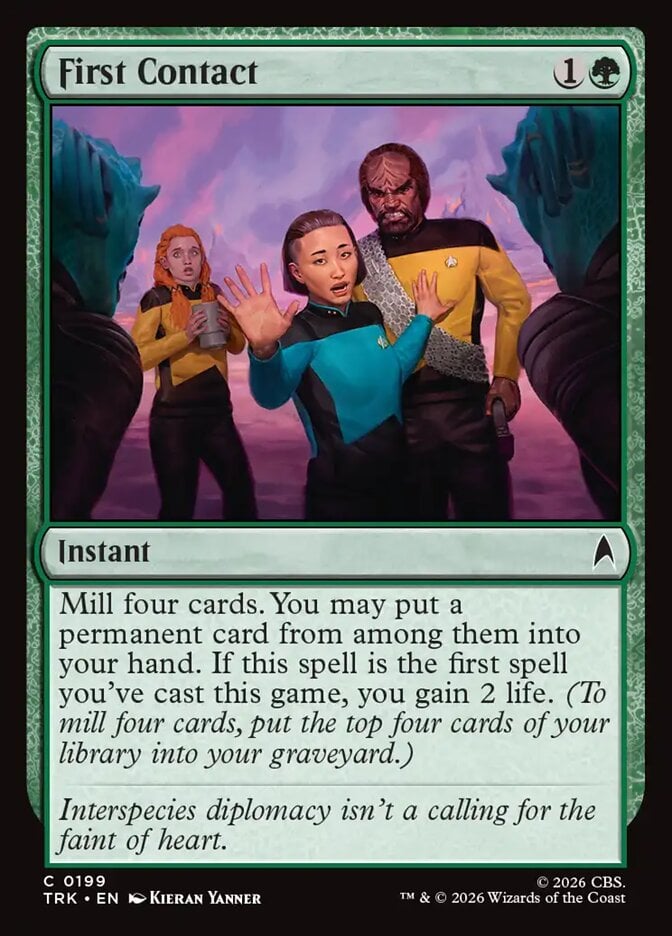
Temporal Conqueror and Pattern Buffer Preservation (when beamed up) are convenient ways to get value while triggering Vash. BG’s graveyard play makes it a great home for self-mill cards like First Contact, too.
RW Command 8+ Total Power
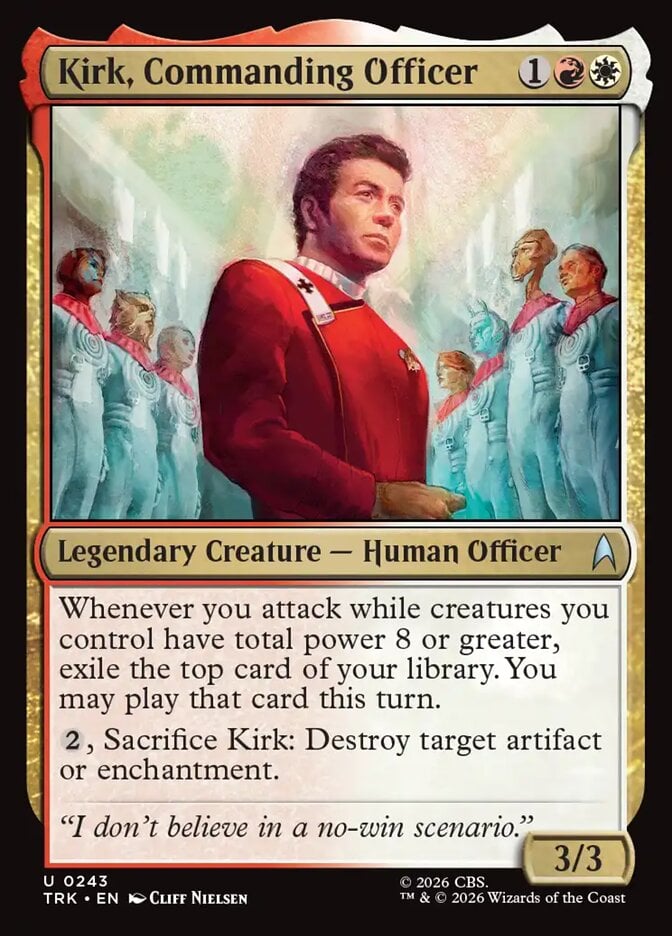
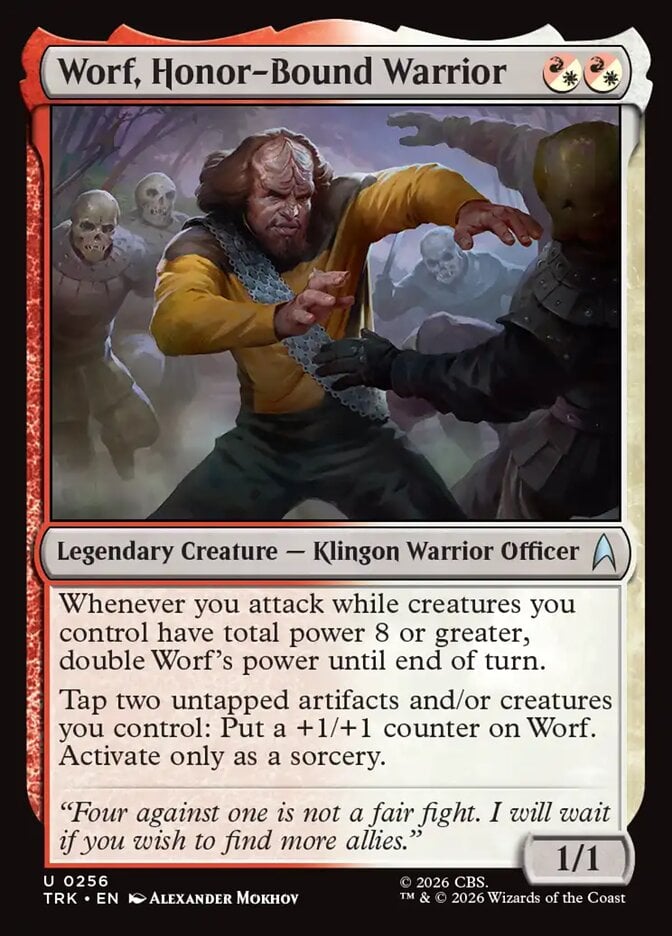
Signpost uncommons: Kirk, Commanding Officer and Worf, Honor-Bound Warrior
RW seeks to take command of combat with an interesting “8+ power” theme, which resembles the old formidable mechanic from Dragons of Tarkir. Multiple cards like Kirk, Commanding Officer check to see if you control 8+ power among creatures when you attack and offer powerful bonuses. Worf, Honor-Bound Warrior has a similar condition to Kirk, but requires substantially more effort to get going.
Important Commons
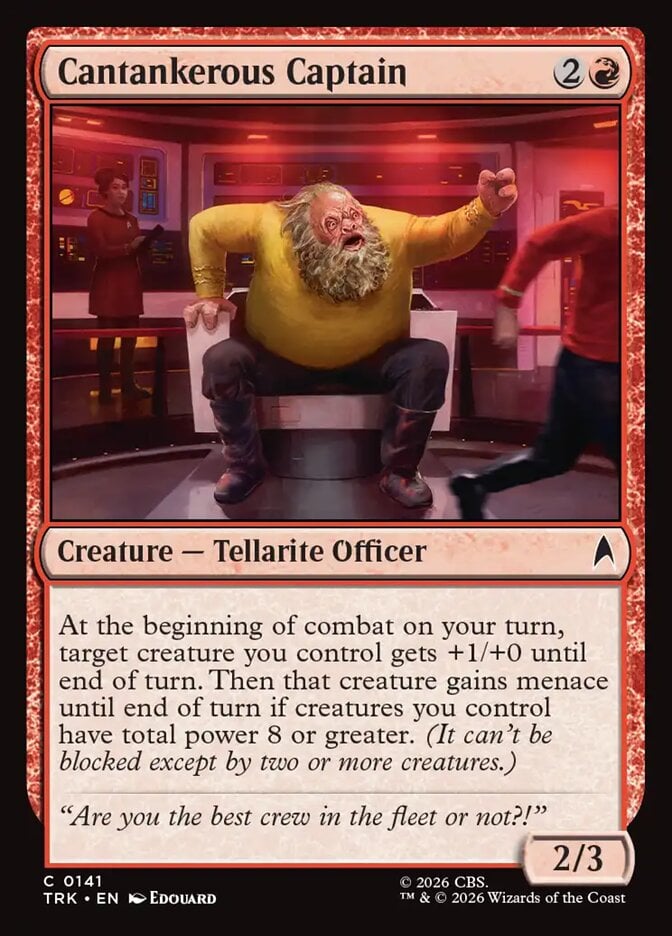
Cantankerous Captain does a nice job at facilitating this theme while simultaneously being a reasonable payoff for it. Andromedan Automatons offer a ton of potential power (from basically one card) if you open multiples.
GU Strange New Worlds
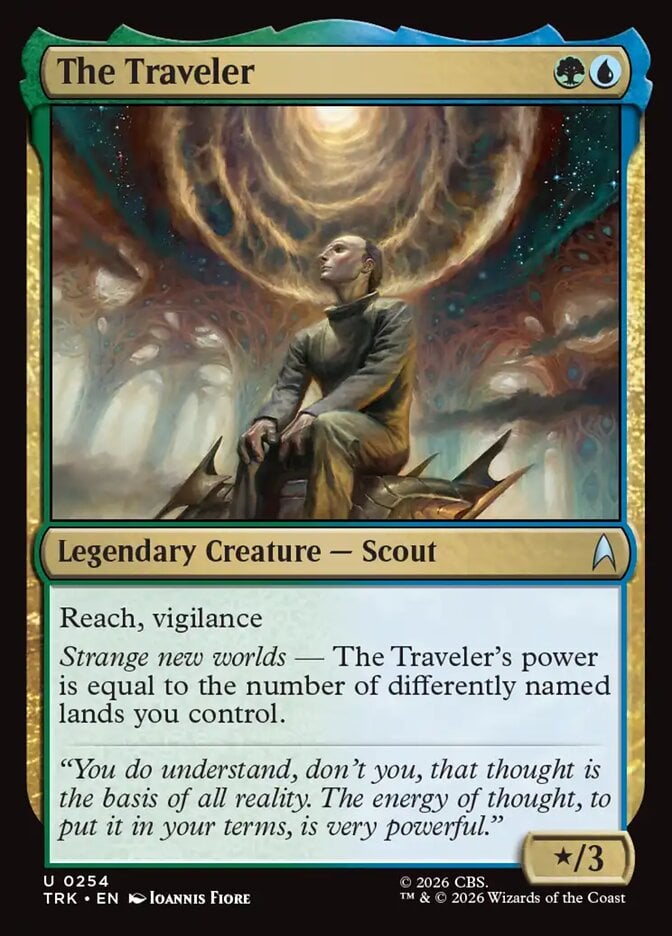
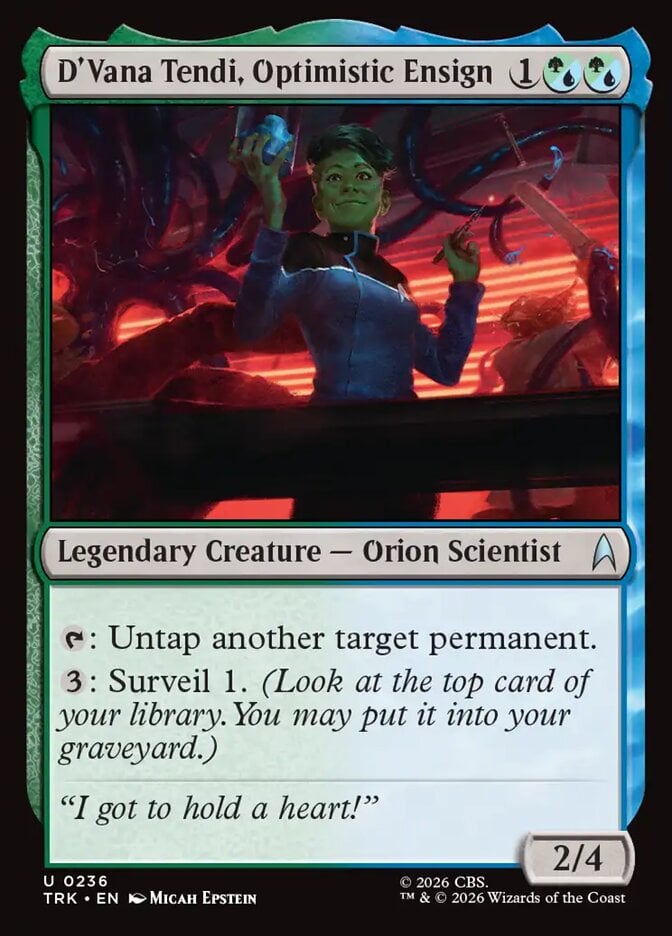
Signpost uncommons: The Traveler and D'Vana Tendi, Optimistic Ensign
GU in Star trek is the primary color of the strange new worlds mechanic, which rewards you for playing lots of different lands. This naturally encourages a kind of “5-color soup” strategy, which was popular in previous sets like Reality Fracture and Secrets of Strixhaven. You can go one step further on this mechanic by adding in some colorless lands like Unexplored Territory and Temporal Anomaly.
The Traveler is an excellent payoff for this archetype, starting as a 2/3 with reach and vigilance, and it only gets better from there. D'Vana Tendi, Optimistic Ensign has me less optimistic, but it’s at least a solid blocker/dork with a bit of surveil upside for when you flood out.
Important Commons
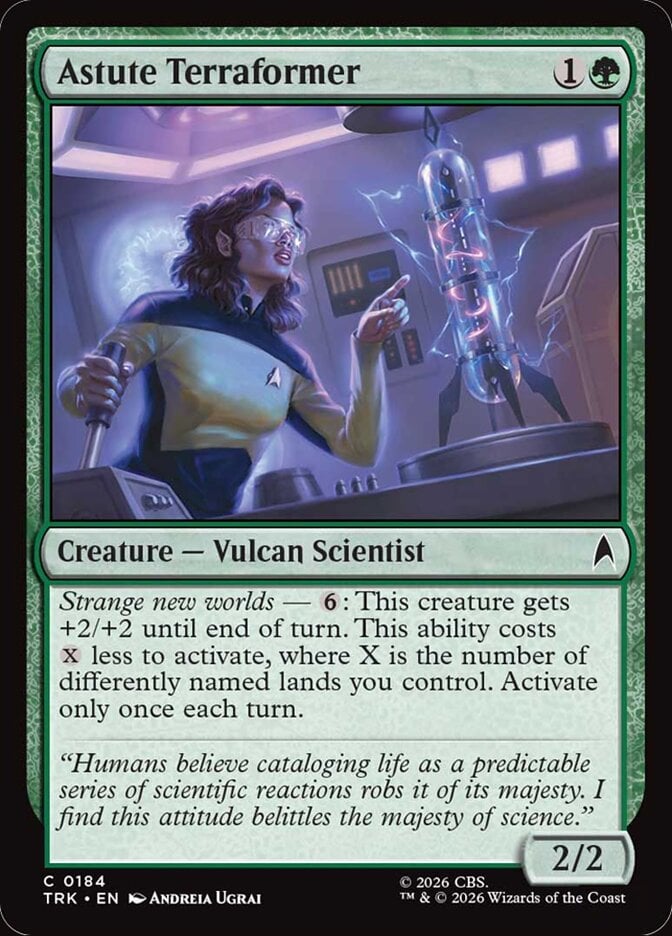
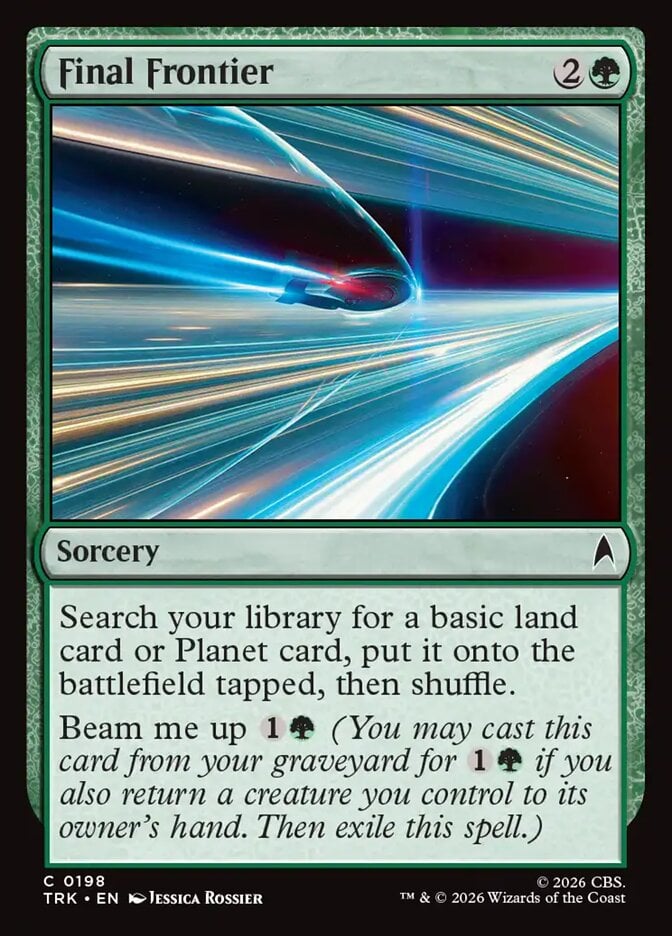
Astute Terraformer is a great blocker/beater in this archetype, and Final Frontier is a good way to fix your mana/diversify your land base. All the common planets could be considered important commons too, as you may even consider playing them without running any cards from their colors!
Set Overview
My first impression of Star Trek is that it’s a high synergy set that plays closely around its 10 archetypes.
Archetype Overlap
- Spacecraft are artifact creatures that get outfitted with charge counters. This makes them appealing for WU, GW, and WB decks in this format.
- Artifact creature payoffs are primarily a WB thing, but you can still get plenty of use out of artifact creatures in WU and BR. Tenacious Drone for instance plays well with BR sacrifice cards, and Command Subadjunct is nice for giving your spacecraft vigilance.
- RG’s focus on landfall can line up well with GU’s attempt to reach strange new worlds, as both archetypes are likely to get more out of cards like Genesis Device and Final Frontier.
- Dilemma cards can often enable other archetypes’ synergies (i.e., Test of Loyalty for BG graveyard), opening up some cross-play opportunities.
Mana Fixing
Star Trek has quite a bit of mana fixing available, so I’d expect to splash quite often in this Sealed format. Here’s a grand list of all the tools at your disposal.
Common
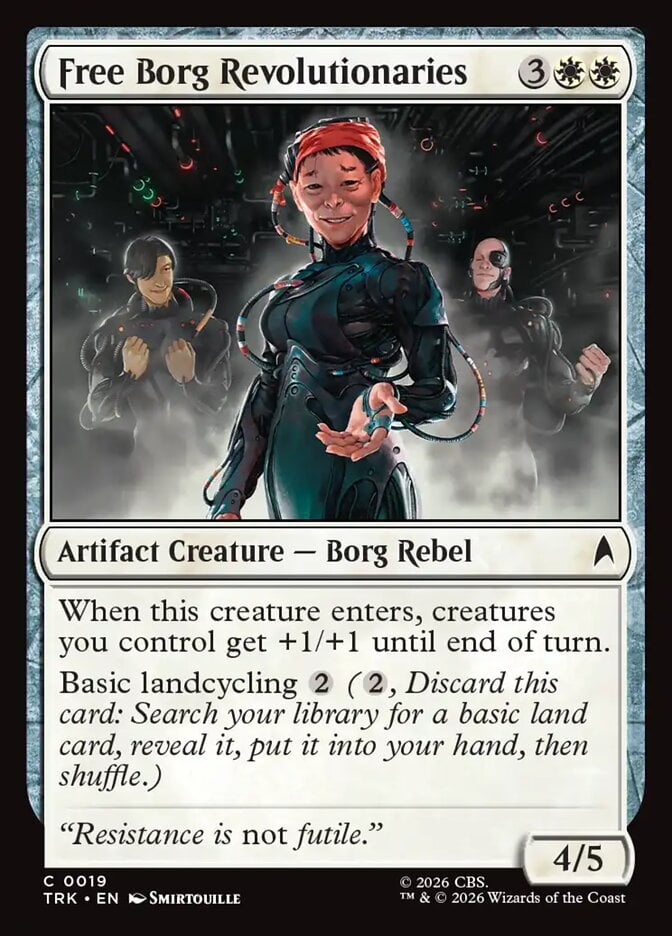
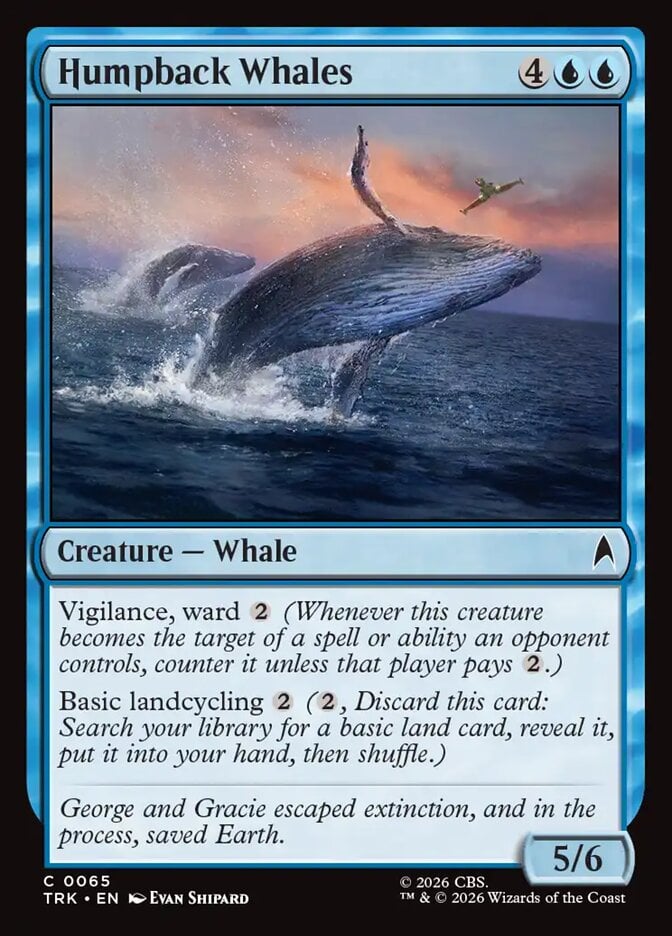
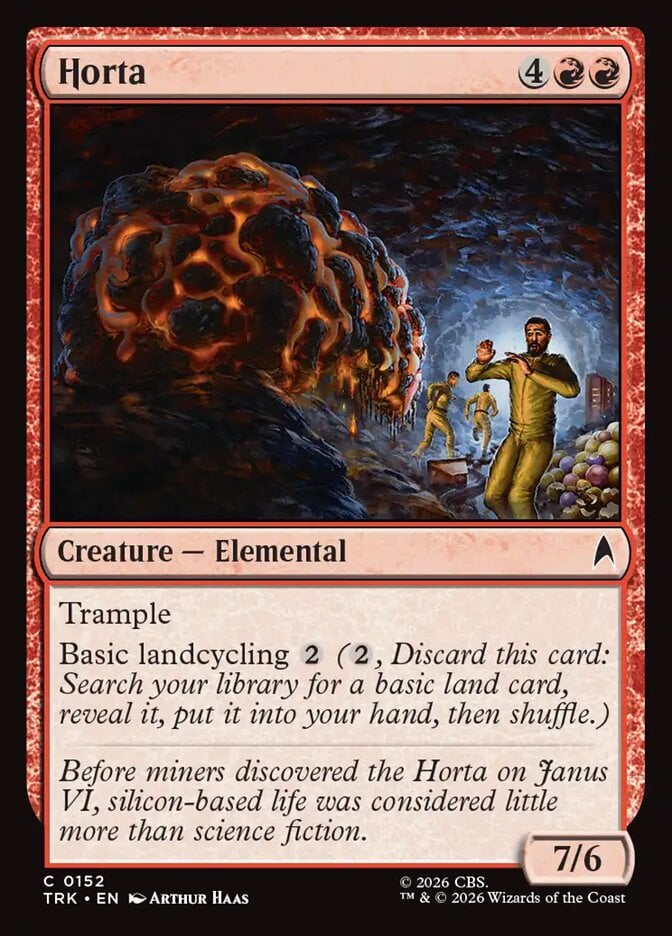
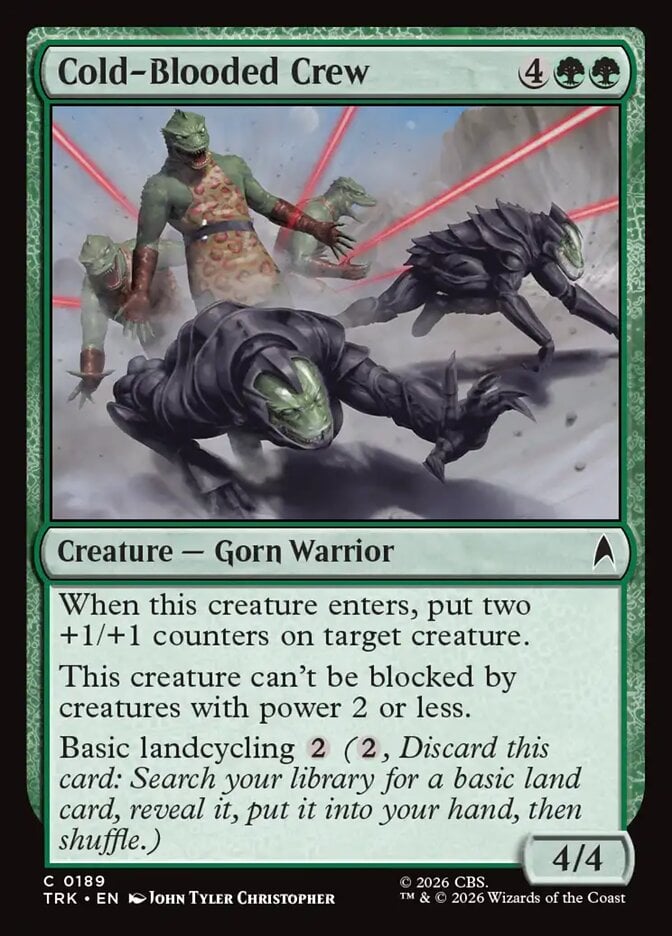
The basic landcyclers in Star Trek are similar to the ones we got in Reality Fracture, with each cycler being a clunky creature that you can discard to grab any kind of basic. All of these are double pipped, which makes them tough to cast if you aren’t based in their colors. Regardless, they’re an essential tool for splashes like in the last set.
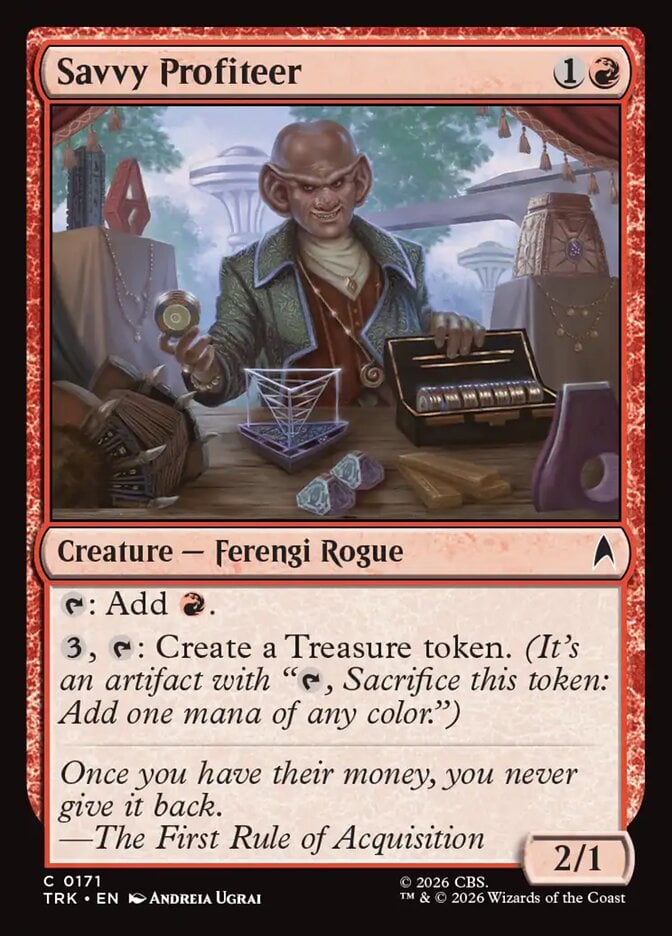
Savvy Profiteer is far more efficient at making red mana than other colors, but being able to store up mana with Treasure tokens for later is still a valuable option.
Final Frontier is similar to Roamer's Routine, which was a mediocre ramp/fixing option in its format. Grabbing specific lands does make this play well with strange new worlds though.
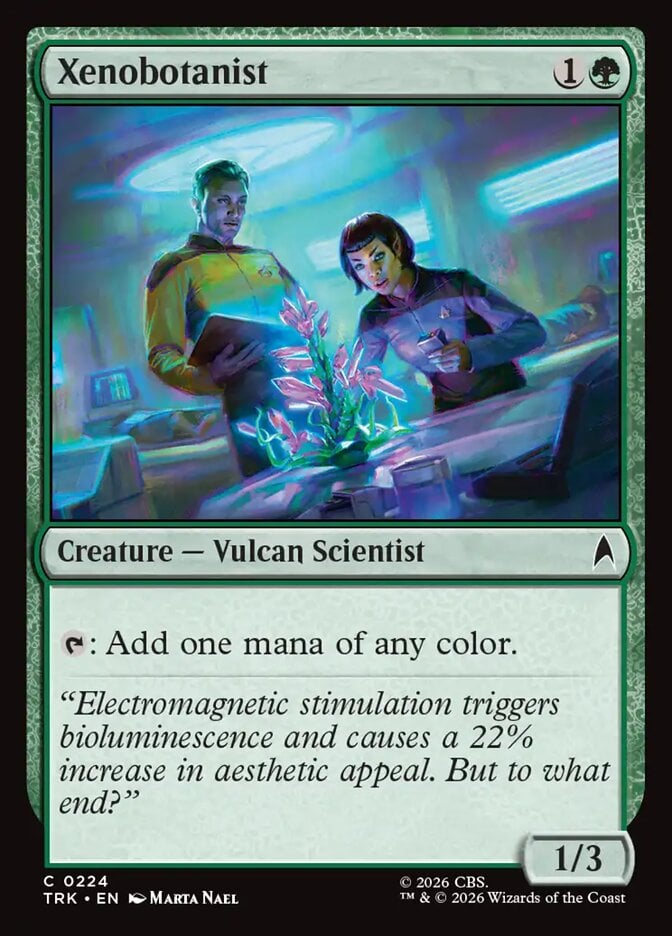
Druid of the Cowl has officially been power crept out of the game, since Xenobotanist has the same stats while adding 1 mana of any color. It’s a decent blocker that helps you to cast your exciting spells in other colors.
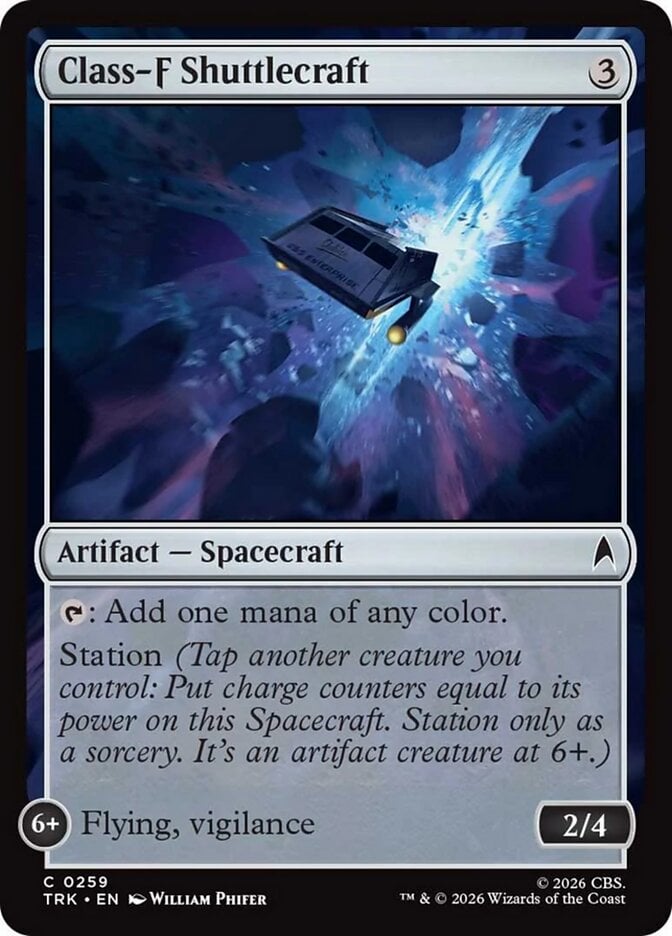
Manaliths have been on a heater lately, as Potioner's Trove and Murmuring Volume were both genuinely excellent. Class-F Shuttlecraft likely won’t be quite as good, as most of the spacecraft-friendly archetypes are proactive decks (and less likely to want to soup it up with this). Still a reasonable option for fixing either way though.
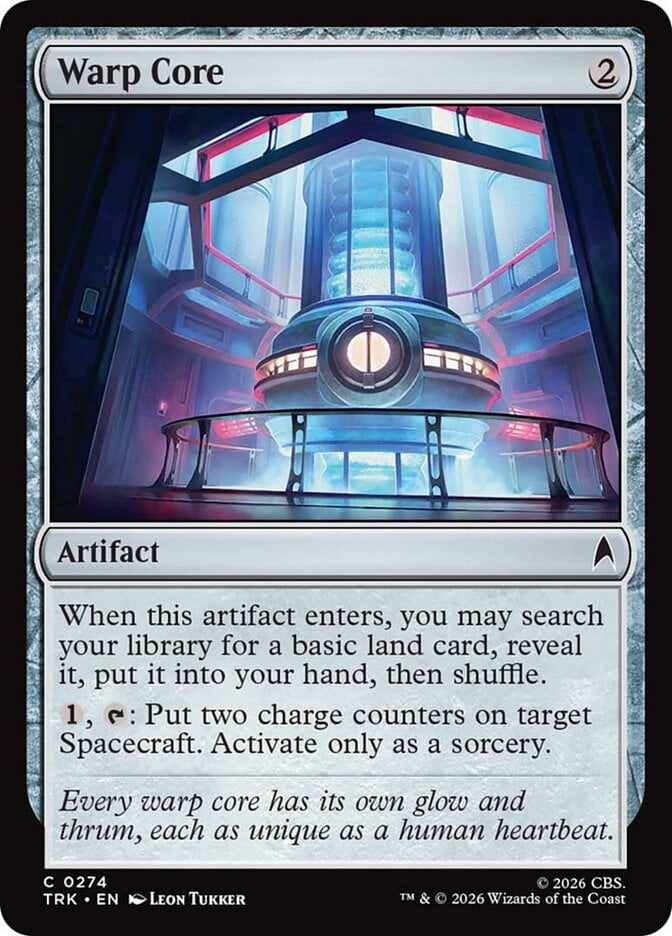
Environmental Sciences baseline with small upside for spacecraft isn’t terrible. Warp Core also plays great with a couple of flicker cards like Miles O'Brien, Transporter Ops and Ghost of Illyria.
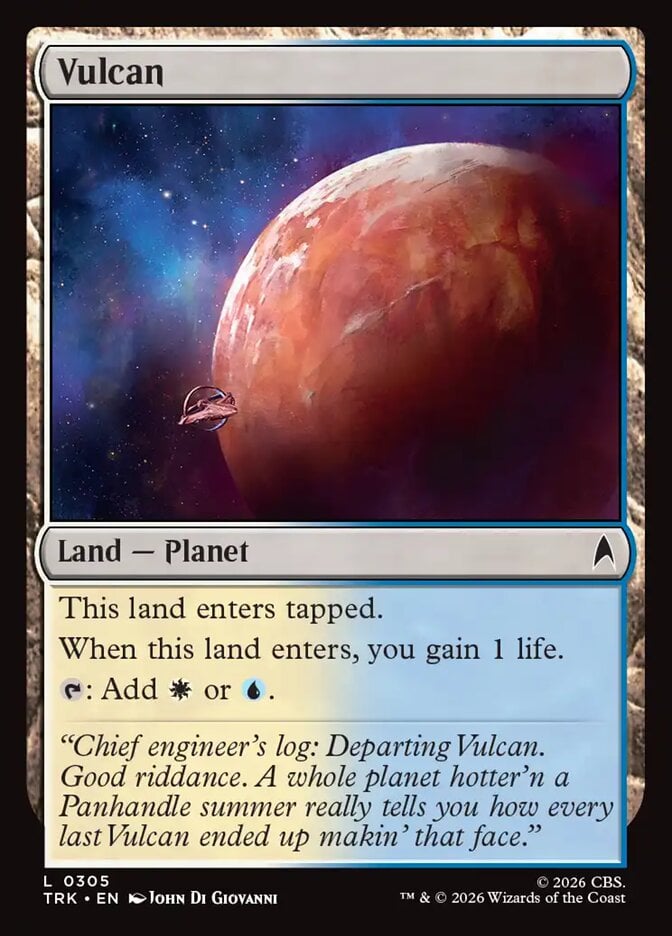
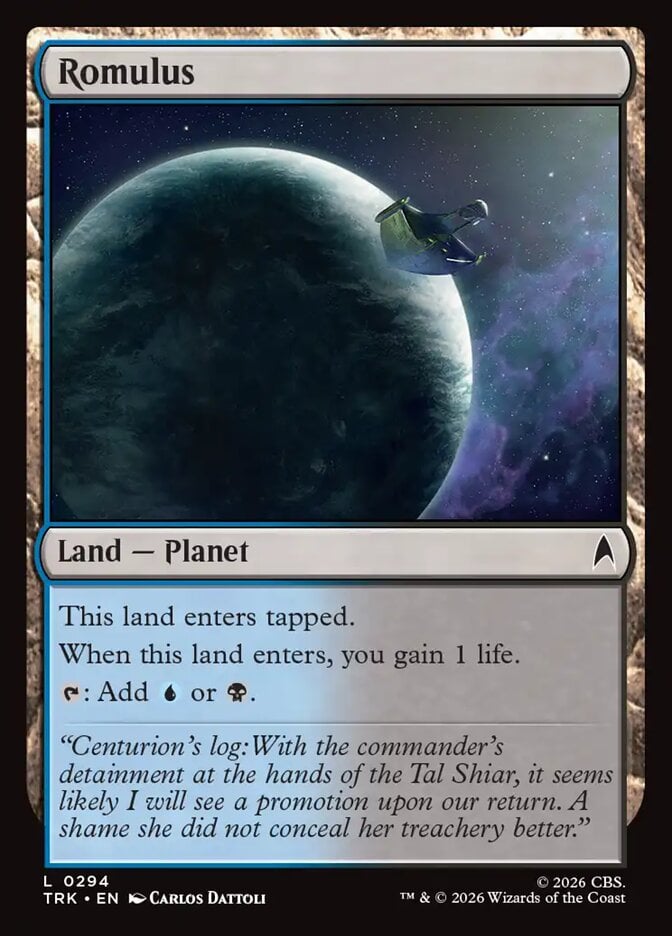
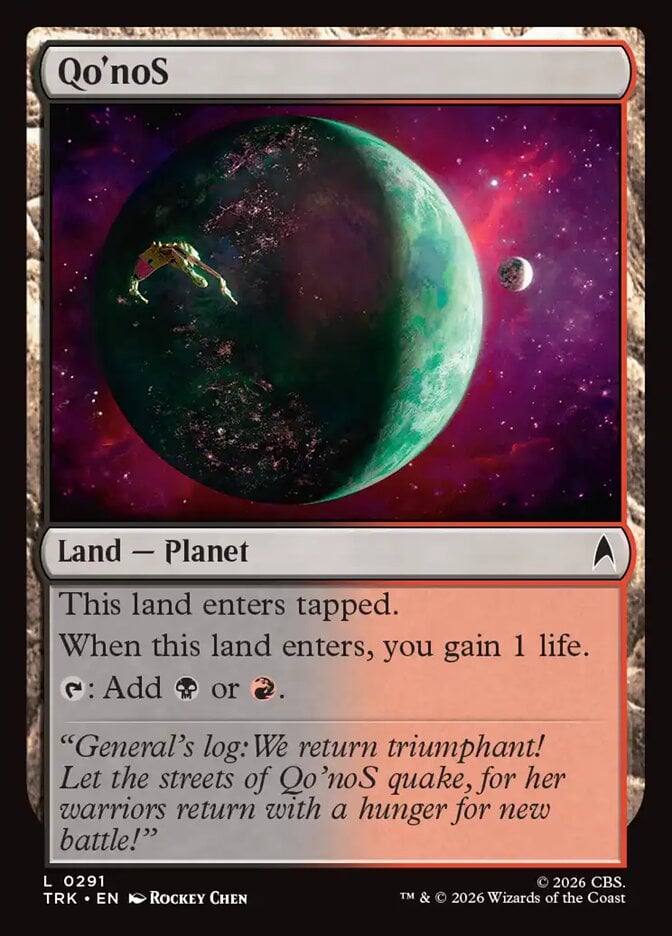
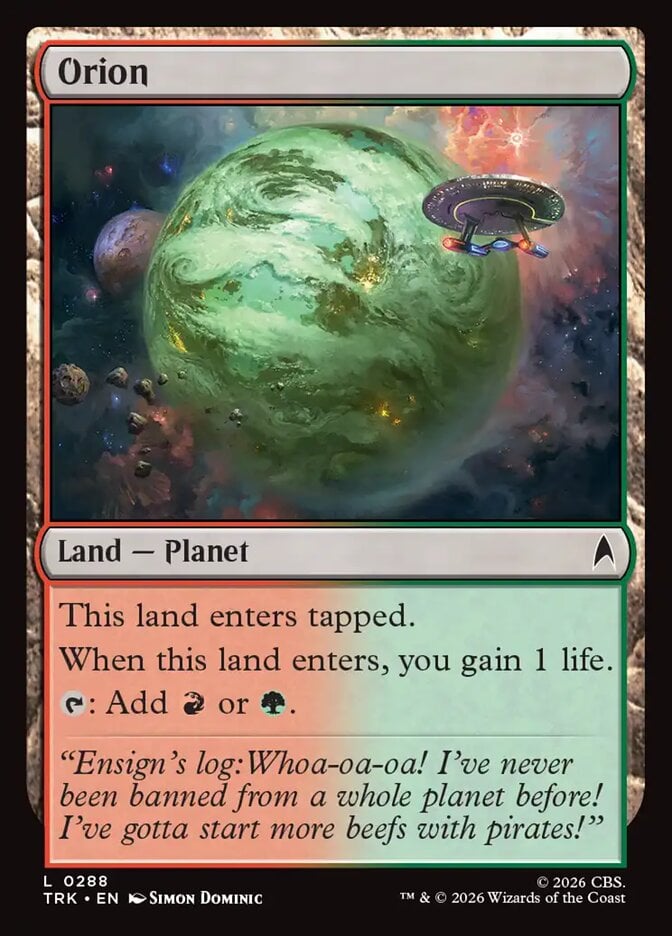
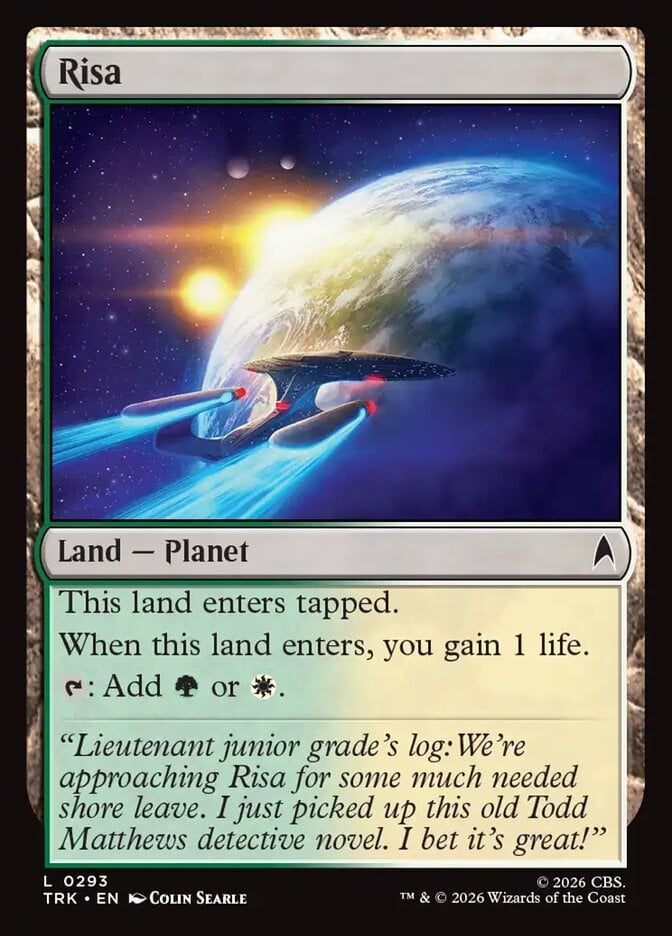
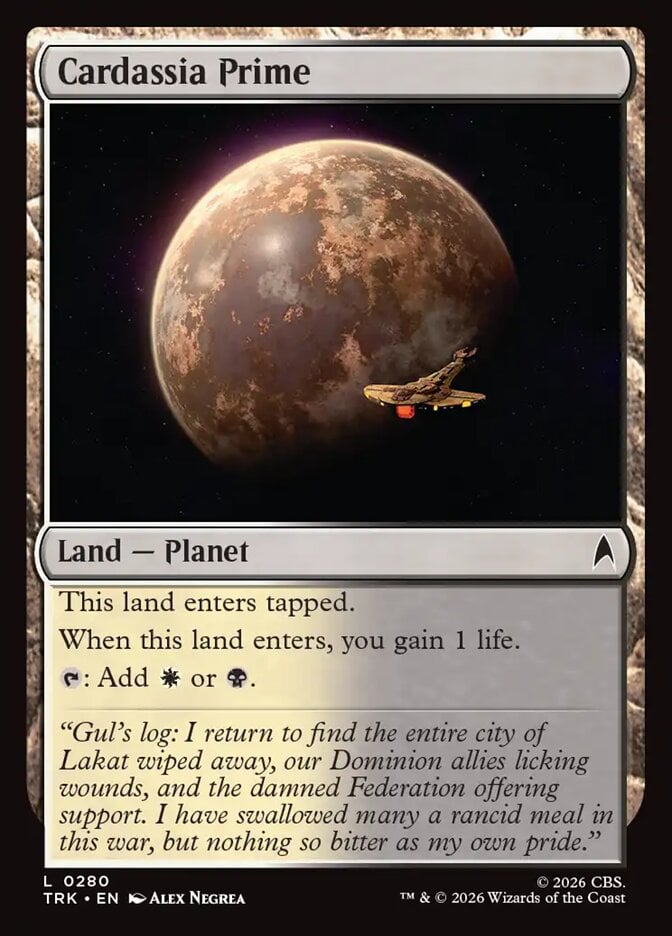
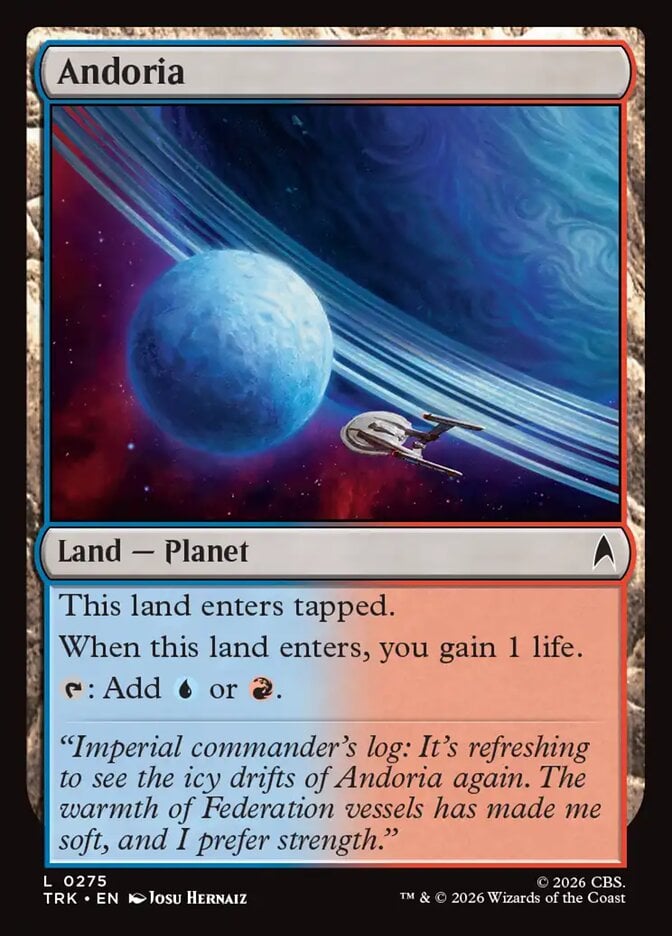
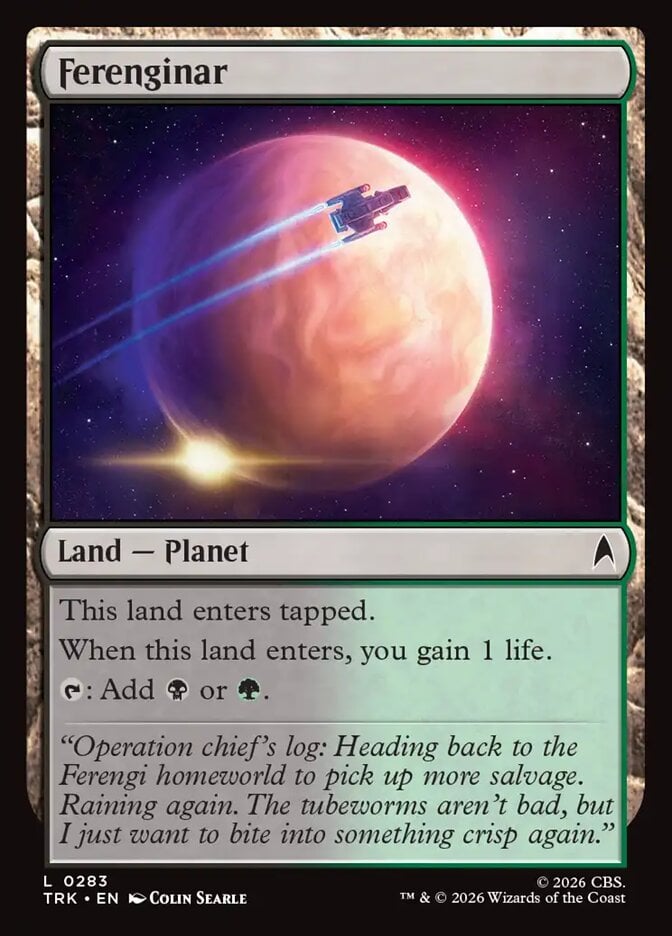
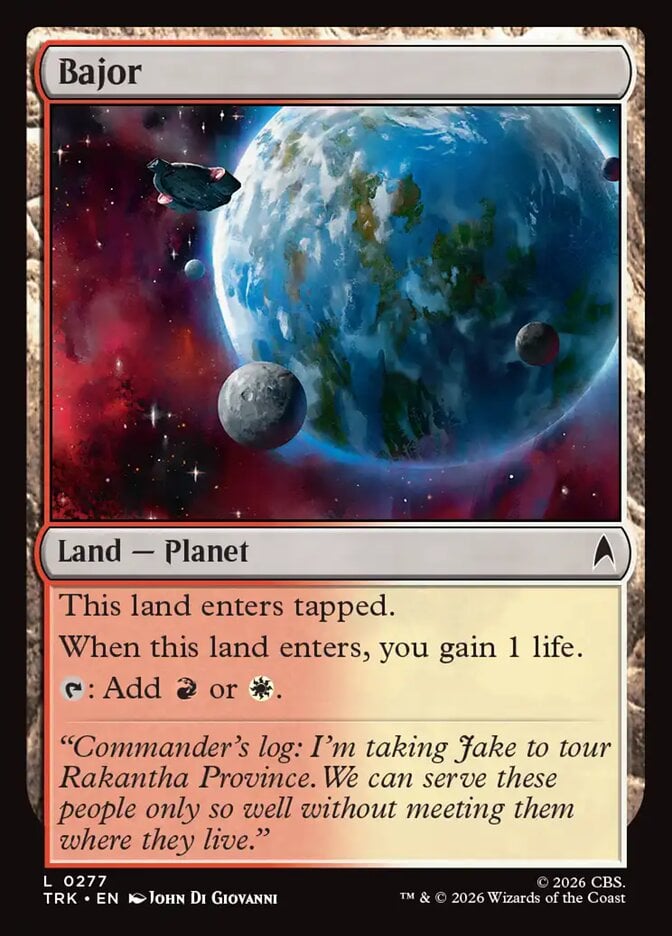
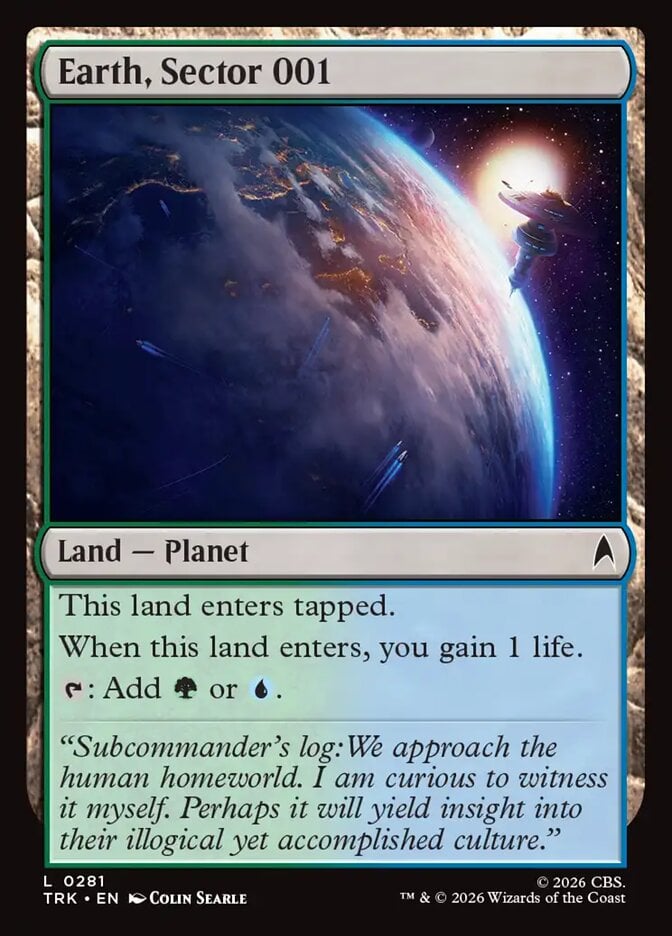
These gain lands are familiar territory for sure, albeit with the planet land type and new names. These are fine Limited fixers in general, and they help to diversify your mana base.
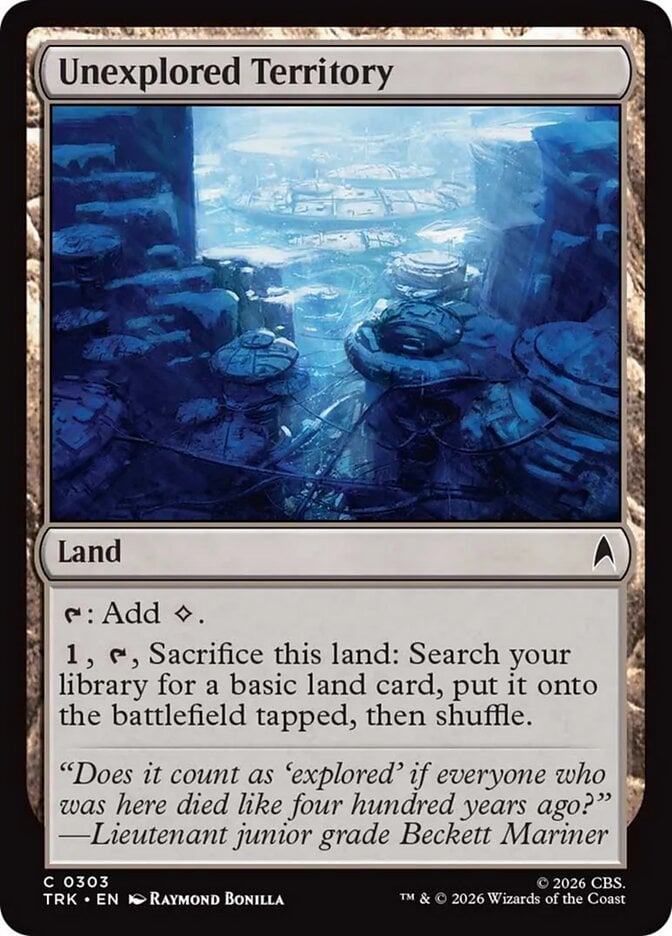
Shire Terrace is back, although it’s thankfully in a set that cares more about lands. Unexplored Territory is reasonable colorless mana fixing that plays well with landfall and strange new worlds.
Top Commons
Here I’ll take a crack at guessing the set’s best commons. I’ll list four from each color, and rank all five colorless commons afterwards.
White
#1. Malfunctioning Holodeck
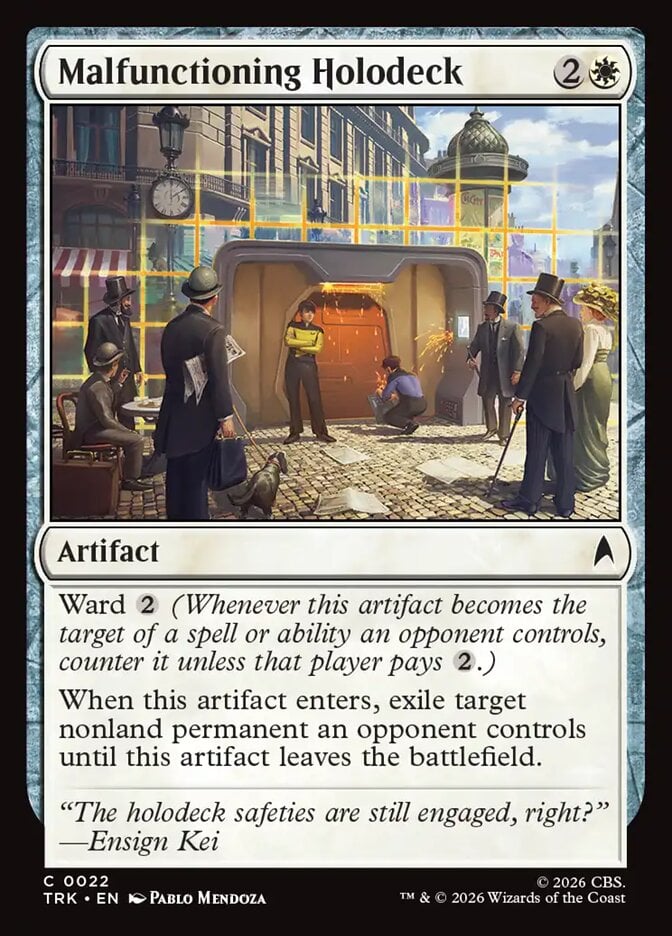
This one is a no-brainer, as it’s a better Trapped in the Screen! Expect to splash Malfunctioning Holodeck often, because it’s one of the best removal spells in the entire format.
#2. Andromedan Automatons
From a Sealed POV, this card is only good if you open 2+ copies of it. From a Draft POV, Andromedan Automatons is the white common I’d take the highest after Holodeck, as you’d love to secure 3 copies if possible. The 3/1 body does an excellent job at triggering 8+ power stuff, stationing spacecraft, and it’s even an artifact to boot.
#3. Command Decision
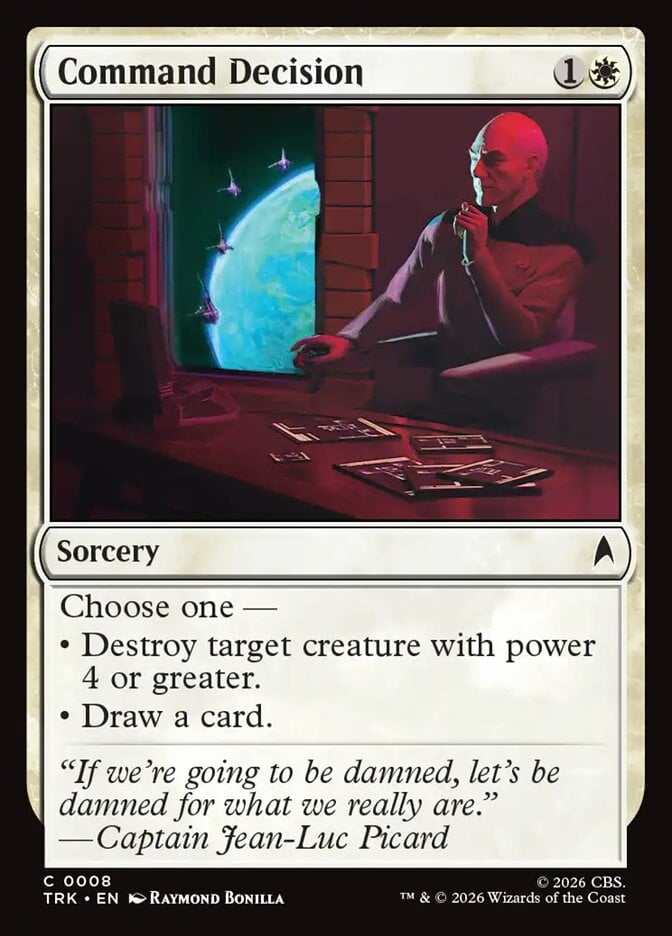
Surgical Precision is back, albeit with no lifegain. This is an efficient answer to big creatures that cycles when that isn’t necessary, while also triggering dilemma payoffs. I’d consider splashing it in UB dilemma decks often!
#4. Emergency Medical Hologram
On raw power level, this is honestly pretty underwhelming, as it’s like a slightly smaller Sunshower Druid. However, between beam me up, +1/+1 counters, and artifact creature incentives, it’s easy to come up with great excuses to play Emergency Medical Hologram.
Blue
#1. Make It So
Glimmerburst was exceptional in Duskmourn, and it’s probably the closest comparison to this card. Make It So is a straightforward way to get value in this set (while triggering dilemma payoffs), and highly recommended for all blue decks. There’s also a cheeky infinite combo with Stella Lee, Wild Card if you see that from the bonus sheet.
#2. Interstellar Effigy
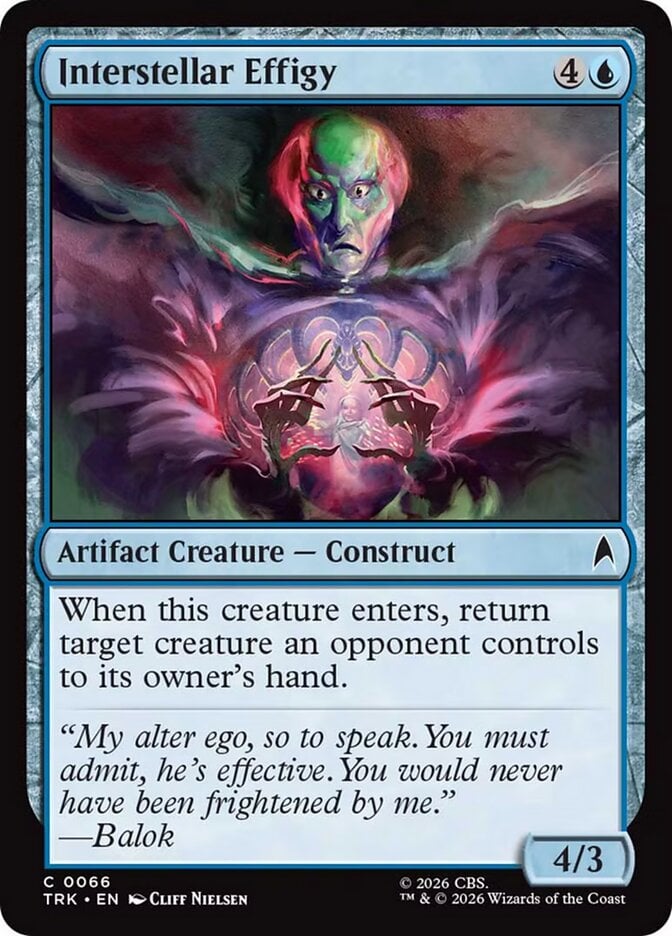
The P/T on this feels rather high for an Iceridge Serpent! Interstellar Effigy will be at its most brutal when bouncing tokens or any of the cycling creatures, but should be awesome either way. I’d even consider splashing it to be honest, as it looks way better than other common 5s.
#3. Suurok-Class Science Vessel
Who doesn’t love a 2-for-1? Suurok-Class Science Vessel is definitely the best common spacecraft available, and a wonderful card to have after you played a 2-drop creature last turn.
#4. Guidance Failure
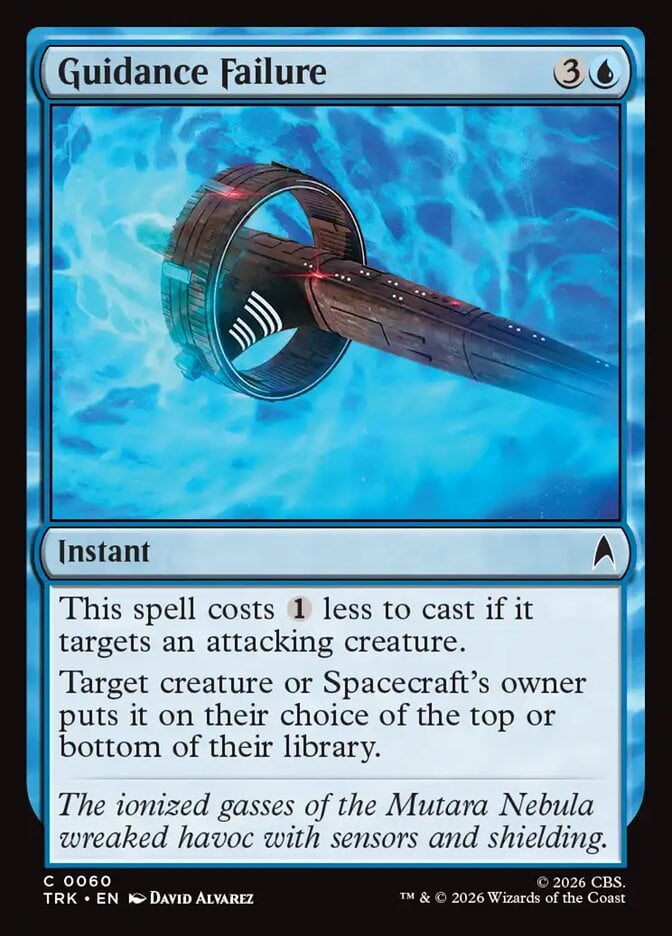
Dire Downdraft/Uneasy Partings is back! Guidance Failure is solid all-purpose interaction that should feel particularly good against spacecraft; it effectively undoes all the effort that went into stationing them.
Black
#1. He’s Dead, Jim
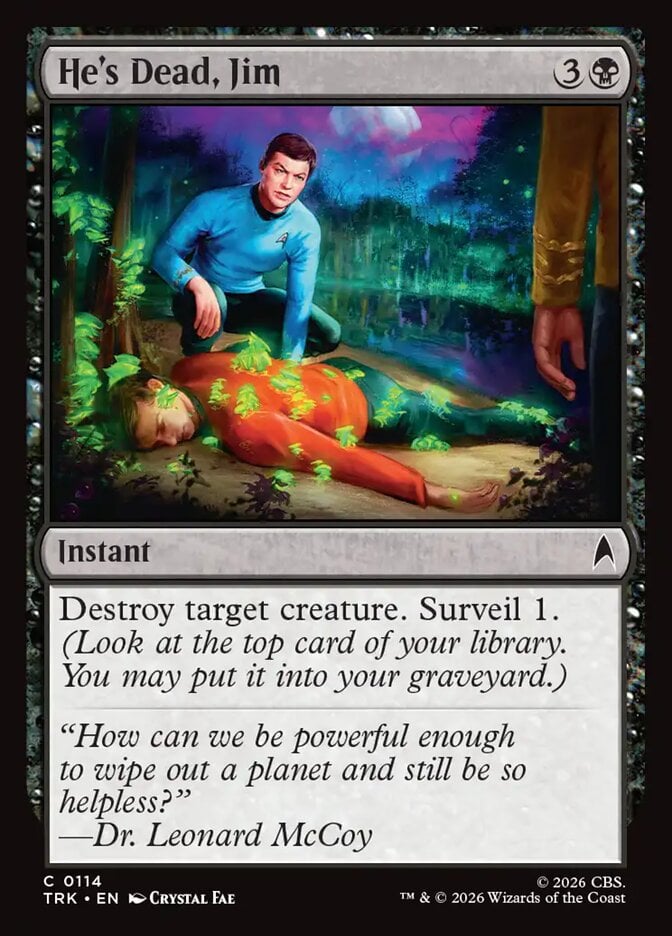
No nonsense, straightforward removal that’s highly splashable. He's Dead, Jim is an easy pick for black’s best common!
#2. Eject the Warp Core
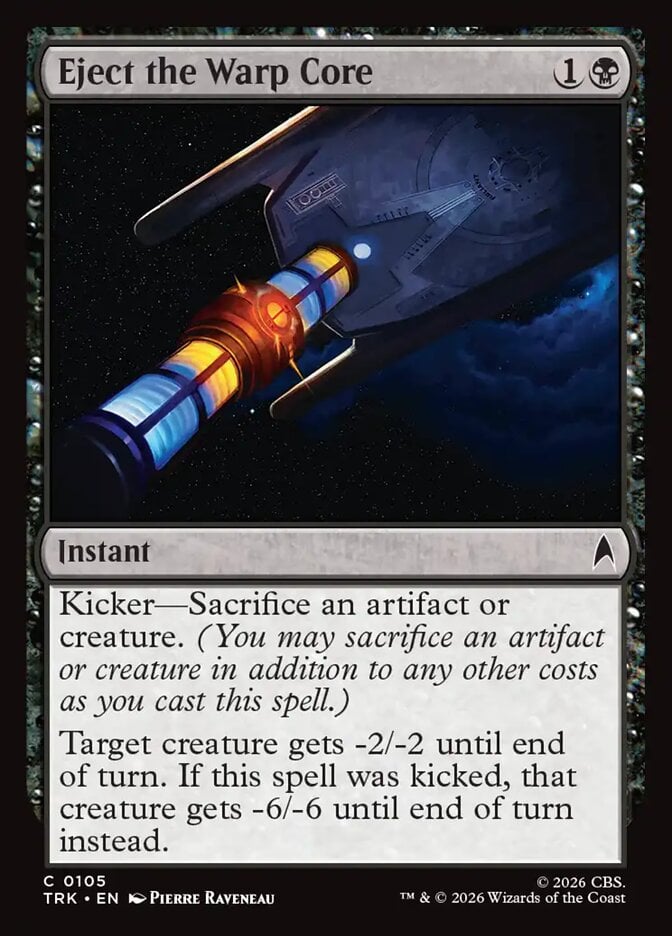
We’ve seen this effect many times (Vicious Offering, Final Flourish, Vayne's Treachery), and it has been excellent every time. You can maximize it with Klingon tokens, Treasures, etc., but hardly need to bother for it to be good.
#3. Pattern Buffer Preservation
Pattern Buffer Preservation is a great common 2-for-1 thanks to beam me up, which does a nice job of filling your graveyard and finding you what you need. Don’t forget that beam up triggers “leaves the graveyard” payoffs, too!
#4. Fugitive Listener
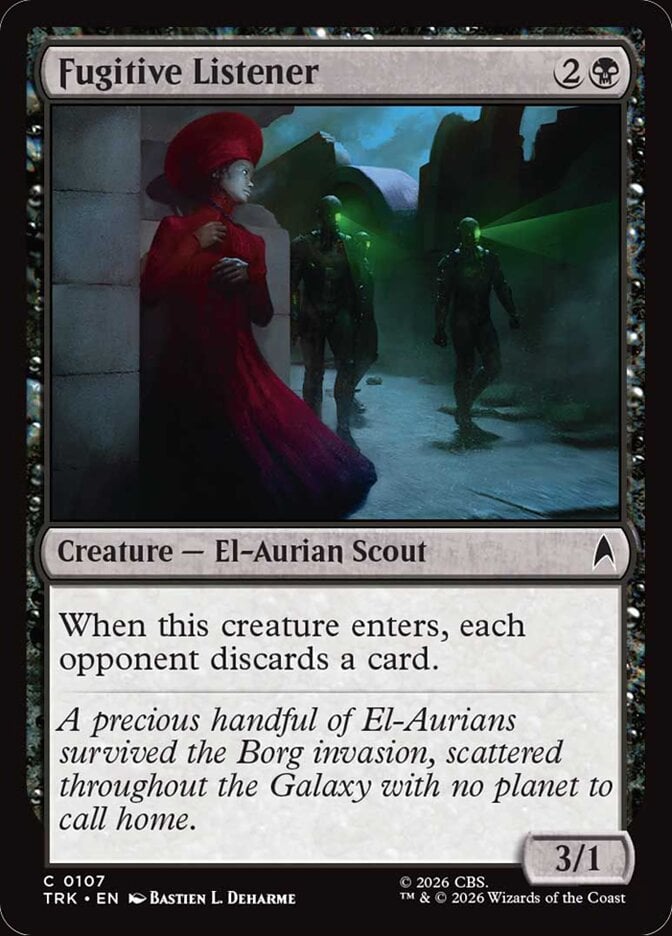
Another common 2-for-1, which has the bonus of being useful to beam up. I’m glad Fugitive Listener isn’t another Rank Rat variant, as that would have likely been a bit too efficient when paired with beam me up cards.
Red
#1. Savvy Profiteer
It’s rare to see a common creature valued over removal, but Savvy Profiteer is really efficient! This red dork packs a usable stat line and an awesome Treasure bonus ability, giving it extra play for artifact synergies and splashing bombs.
#2. Planetary Bombardment
Efficiency is key to why I’m putting Planetary Bombardment so high as well, since 1-mana removal like this rarely ever deals 4! Morbid doesn’t look tough to trigger in Star Trek either, especially if you are playing with Klingon.
#3. Plasma Cascade
Open Fire is a bit below rate these days, but a free rummage on top of it makes Plasma Cascade a very welcome common for any red deck. We just played with this card as Tweeze earlier this year.
#4. Silicate Surveyor
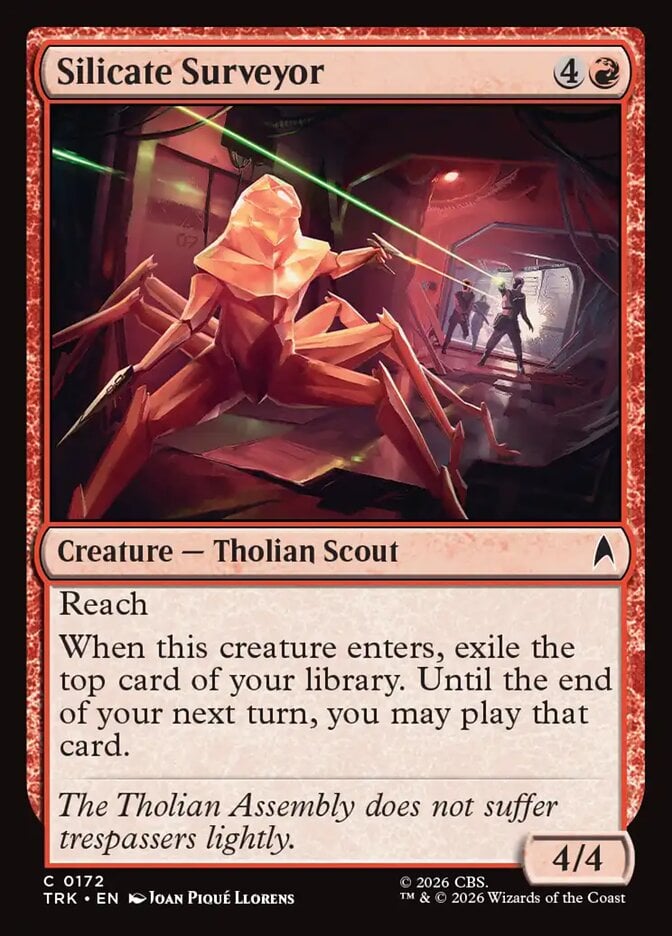
Honestly, red looks deep enough that several other commons could’ve taken this spot! I’m giving the trophy to Silicate Surveyor for being a well-statted guaranteed 2-for-1, but be careful not to overdo it on 5s (3-4 should be a good limit).
Green
#1. Temporal Conqueror
Always bet on 2-for-1s, especially if they can’t brick and happen to fill your graveyard. Temporal Conqueror-type cards have ranged from good to excellent in past sets, and looks very well positioned for Star Trek’s archetypes (especially BG).
#2. Xenobotanist
The option to splash removal and bombs from other colors is excellent in Sealed, and Xenobotanist has a usable body either way.
#3. Common Goal
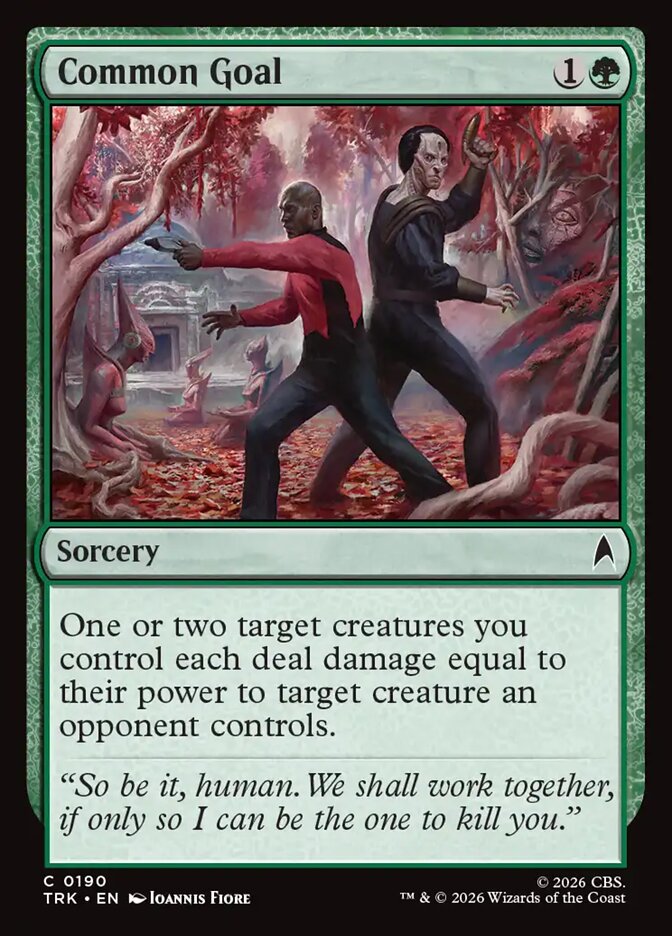
Sorcery is a bit of a downgrade from what we’re used to from green removal these days, but Common Goal does let you bite with two creatures at once if needed. That should let you play around “removal in response” a fair amount of the time, but you should still be careful!
#4. Dominion Assault Force
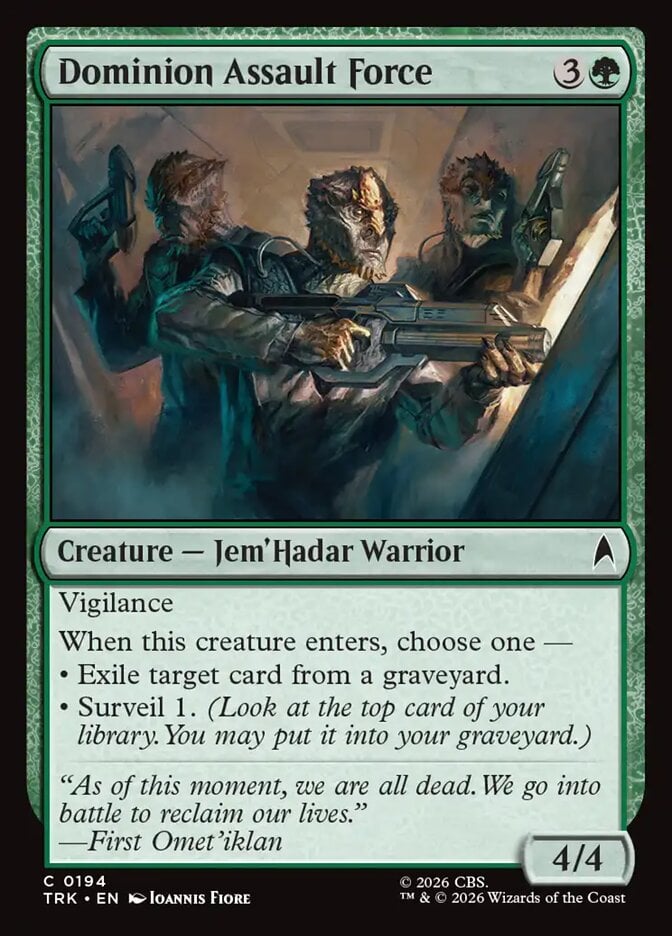
Nice base stats, vigilance, and some worthwhile enters utility (either surveil or graveyard hate/triggering your “leaves” stuff) makes for a rather nice common. None of the other 4-drop common creatures feel quite at this level to me.
Colorless
#1. Tricorder
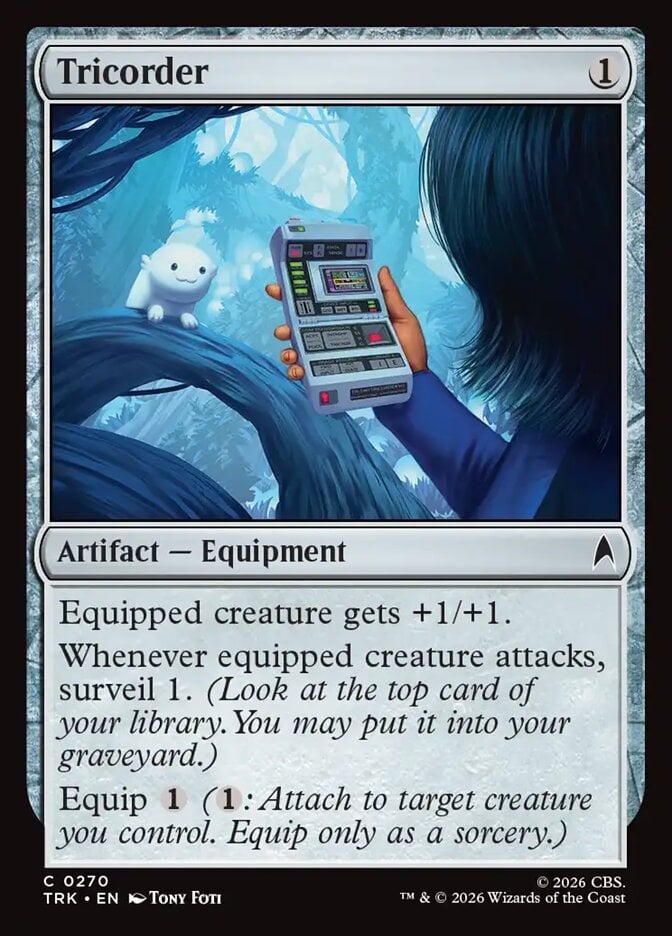
S.H.I.E.L.D. Spy Kit was a major overperformer, and Tricorder is close enough to have me interested. I wouldn’t play this without a bunch of good 2-drop creatures, but it should be a great support card for aggro/midrange decks.
#2. Warp Core
Warp Core is solid all-around fixing that any deck could make use of.
#3. Class-F Shuttlecraft
Class-F Shuttlecraft is fine enough as a 3-drop mana rock you can animate later. Three-drops should be a bit more contested than 2s in this set, so be careful not to glut on too many 3s.
#4. Tea, Earl Grey, Hot
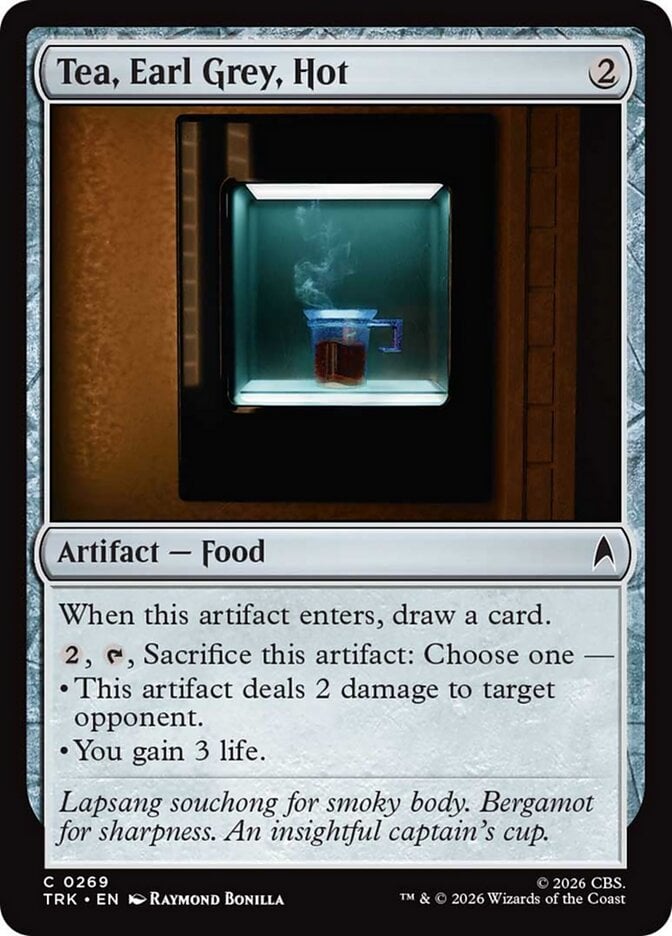
Picard’s favorite brew makes for a decent little cantrip, and will most likely see play in decks that care about dilemmas. Tea, Earl Grey, Hot is great with Miles O'Brien, Transporter Ops and Ghost of Illyria, too.
#5. Cybernetic Specialist
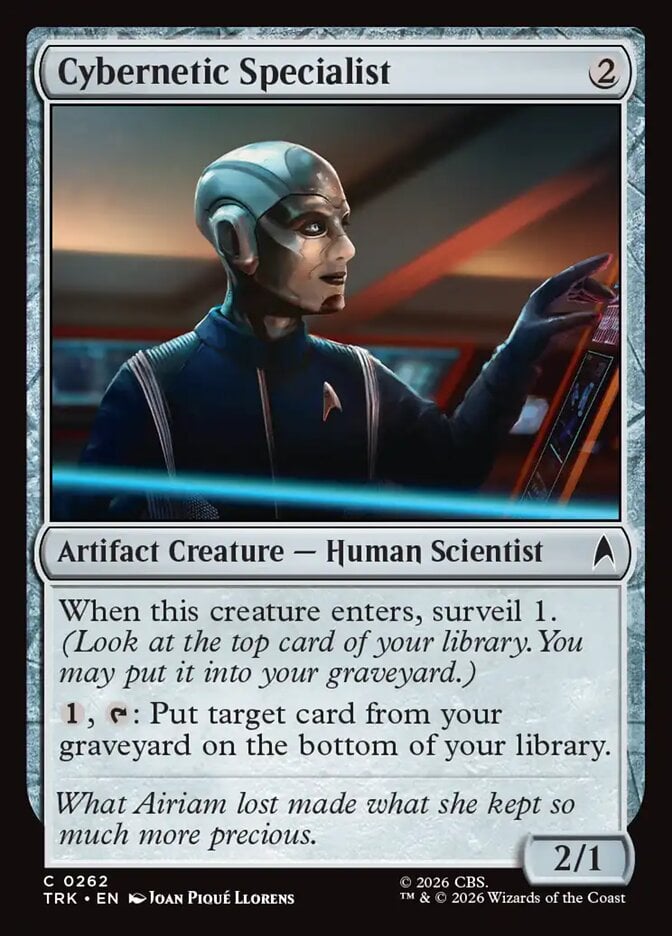
Mostly a filler artifact, but Cybernetic Specialist does help you hit your artifact creature count I suppose. It’s also one of the few common ways available to make cards “leave the graveyard”, and it could even help to mitigate decking concerns in a pinch (similar to Paradox Shaper but worse).
Top Uncommons
Let’s repeat the exercise for Star Trek’s uncommons. I’ll be highlighting four uncommons from each color that I think will play out great, though I won’t rank anything multicolor/colorless at this point.
White
#1. Rutherford, Upgraded Ensign
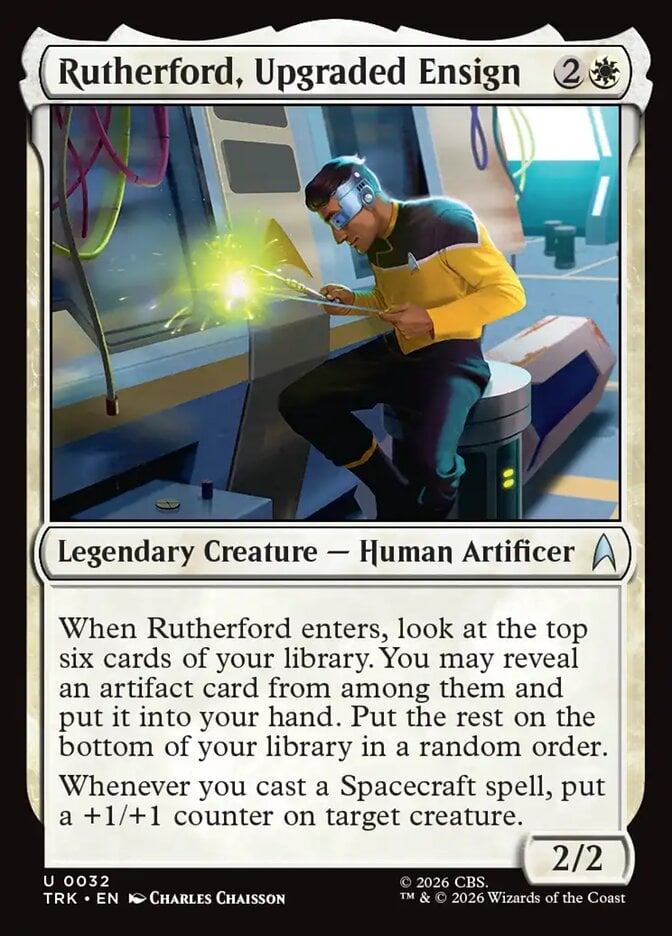
Can you say value!? Six cards means Rutherford, Upgraded Ensign should basically never brick, and you’re getting free value from each spacecraft on top of your cantripping 2/2. Wow, is this card good!
#2. Ghost of Illyria
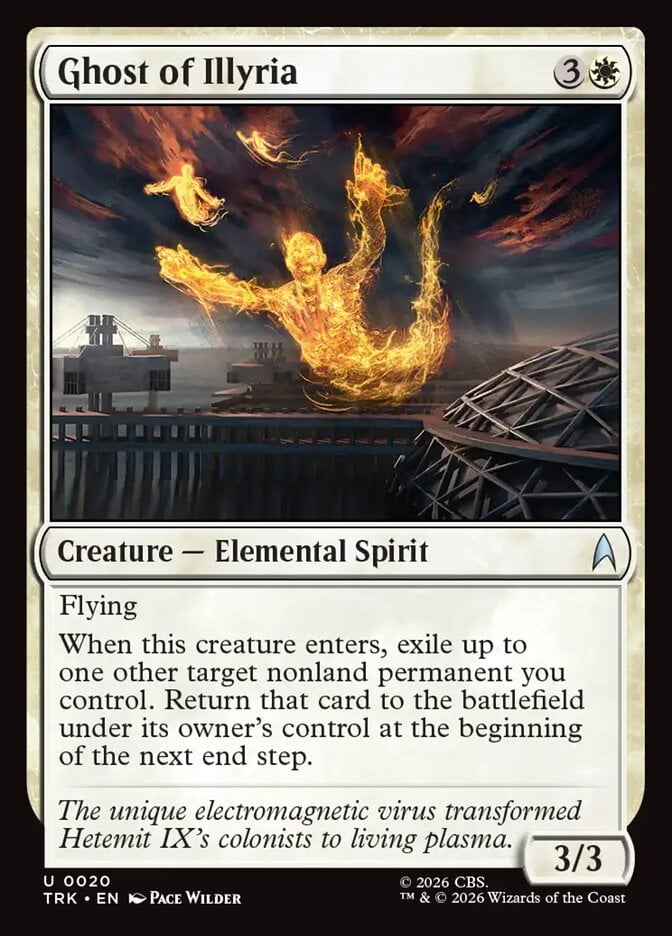
Most of the spacecraft in Star Trek have nice enters triggers, and there are plenty of other effective creatures and permanents to blink too. Throw in Ghost of Illyria’s 3/3 flying body for , and you’ve got another great uncommon.
#3. Picard, Leading by Example
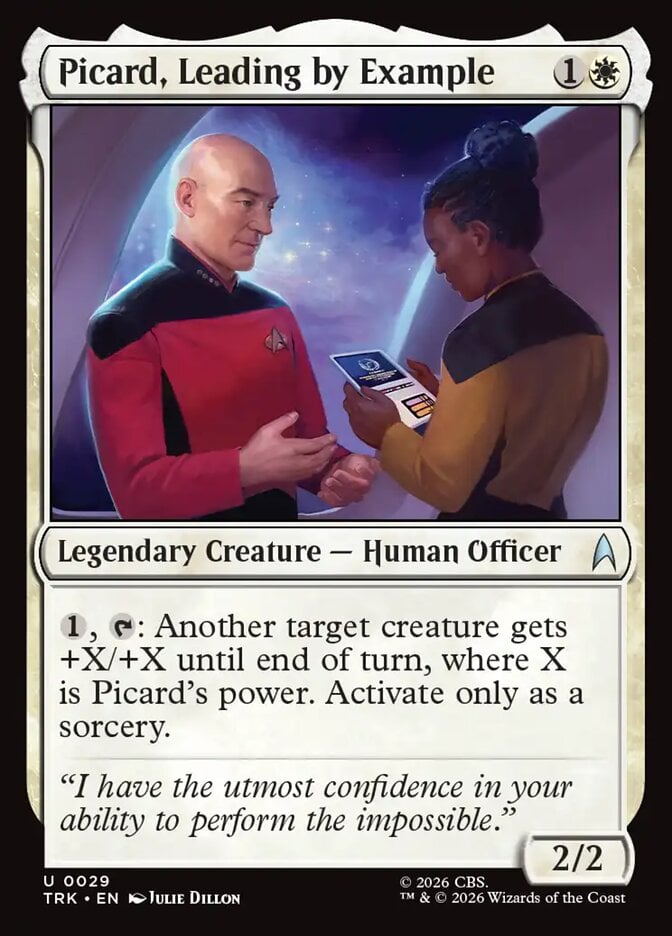
Picard, Leading by Example looks like a premium aggro card to me, as blocking another 2-drop with +2/+2 is just not realistic early on. It’s also exceptional with the “power 8+” theme.
#4. Brad Boimler, Eager Ensign
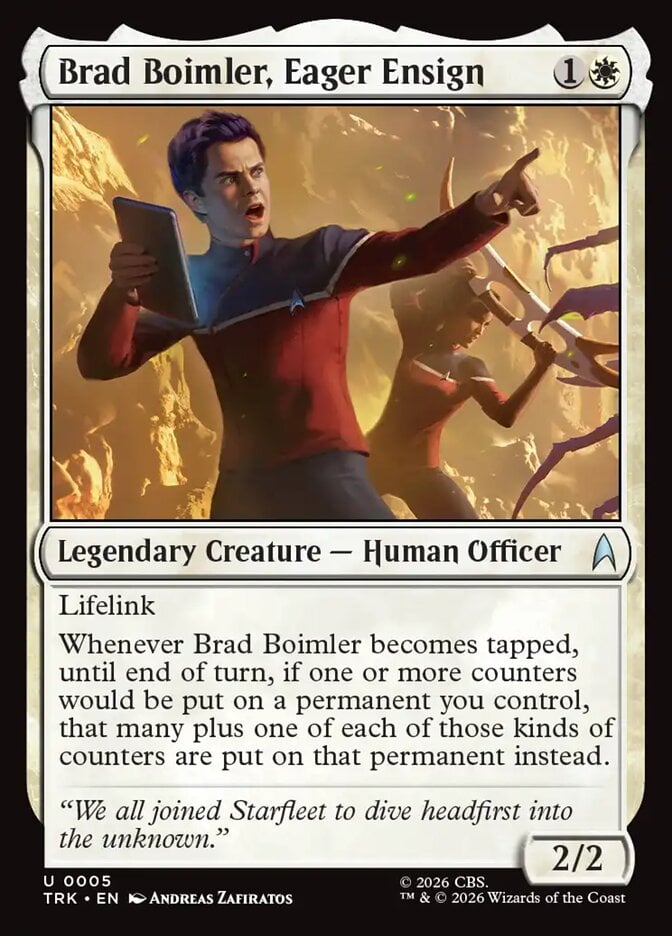
Brad Boimler, Eager Ensign is another premium 2-drop, as a 2/2 lifelinker baseline that offers upside with spacecraft and doctor creatures is a winning combination.
Blue
#1. Hoshi Sato, Exolinguist
Getting 4+ types with this should be easy, which makes Hoshi Sato, Exolinguist a 3/3 Impulse creature (or better). That’s a card no deck should say no to!
#2. Cloak and Phaser
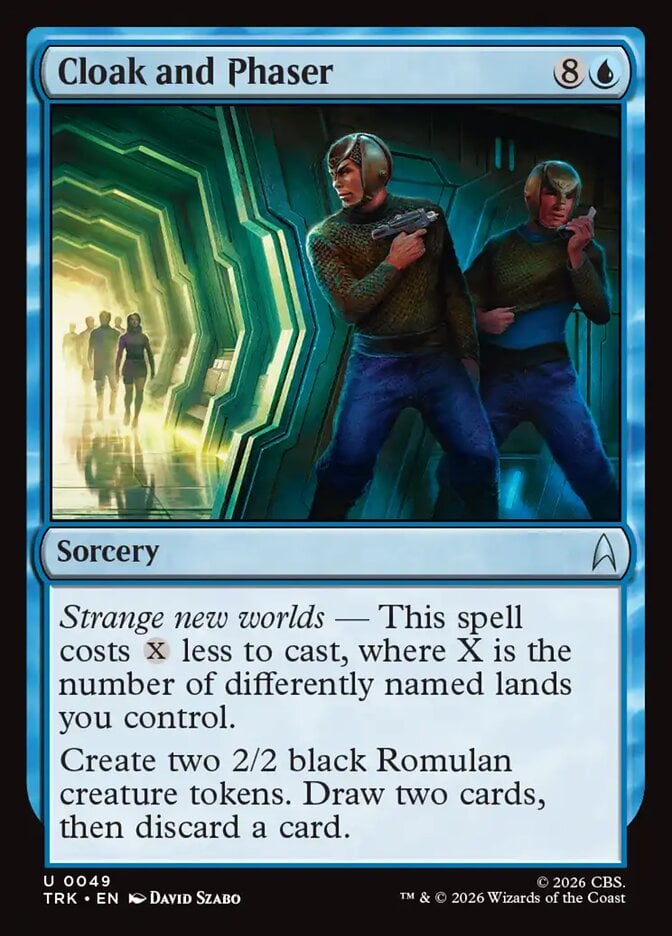
With a diverse range of lands, Cloak and Phaser could be a 4-5 mana Call the Cavalry with a free Catalog attached, which is an incredible rate. It takes building around, but it’s worth the effort.
#3. V’Ger, the Intruder
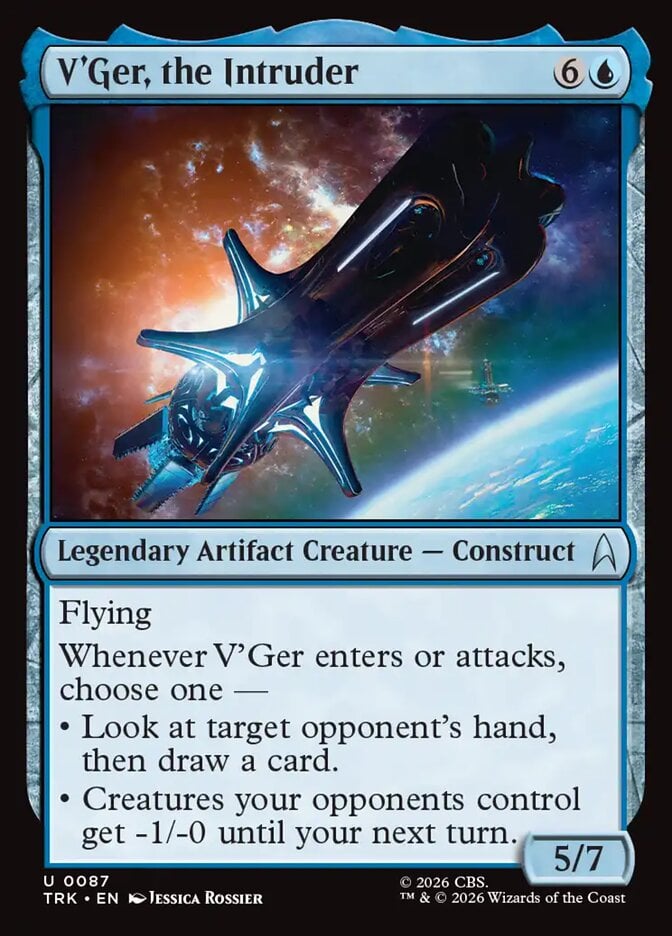
Seven mana is a lot, but V'Ger, the Intruder is huge, evasive, and easy to splash, and it comes with immediate value. You could also try the -1/-0 mode if you’re in a tight spot.
#4. Data, New Life
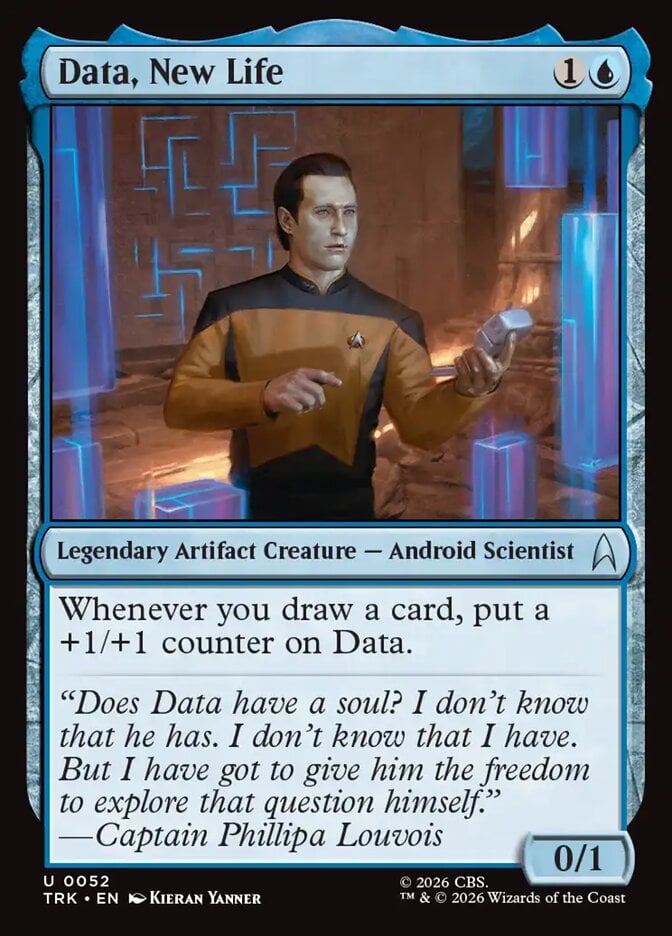
Data, New Life starts small, but it won’t take too much effort for it to grow well above normal 2-drop sizing. You can even speed up the process by drawing extra cards (which you should be trying to do anyways).
Black
#1. In the Pale Moonlight
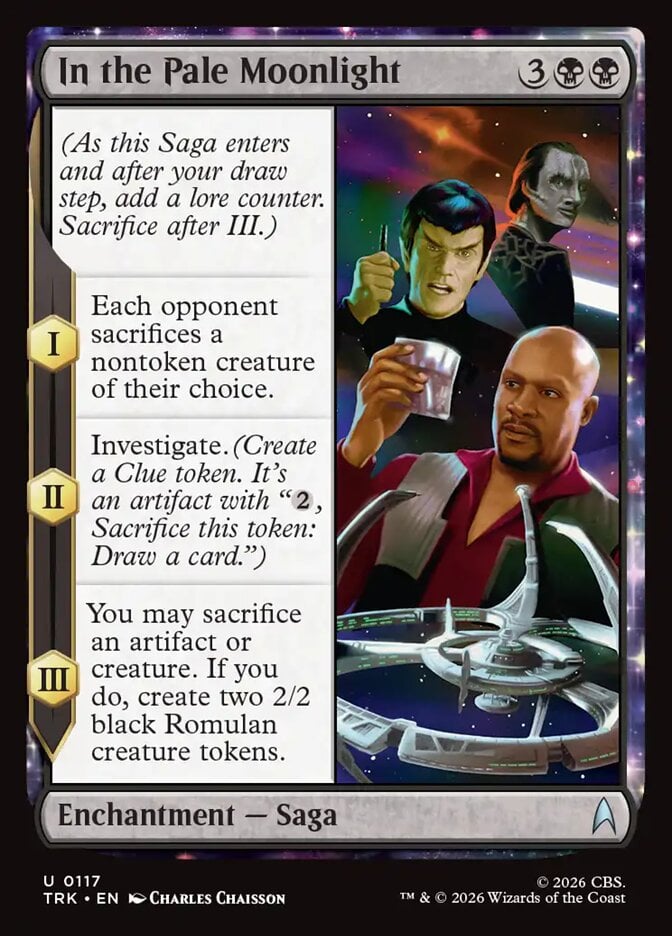
The Eldest Reborn has returned, and it should once again be a top uncommon. In the Pale Moonlight is a straightforward 3-for-1, and the “nontoken” clause may make it even better than the original.
#2. Bat’leth
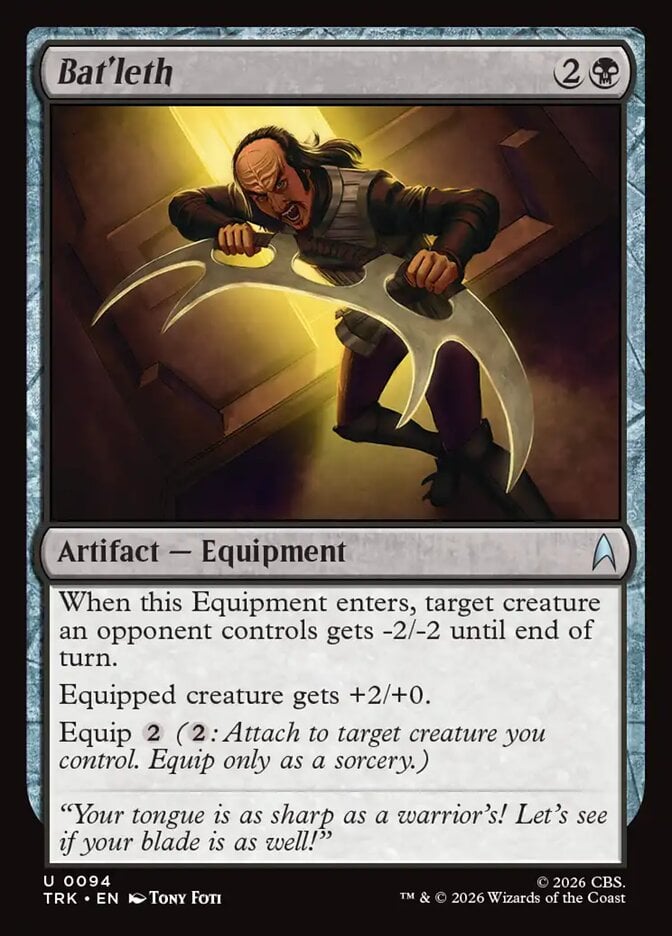
Slightly over-costed as removal, but the equipment that’s left behind makes Bat'leth incredibly efficient.
#3. Commander Raffi Musiker
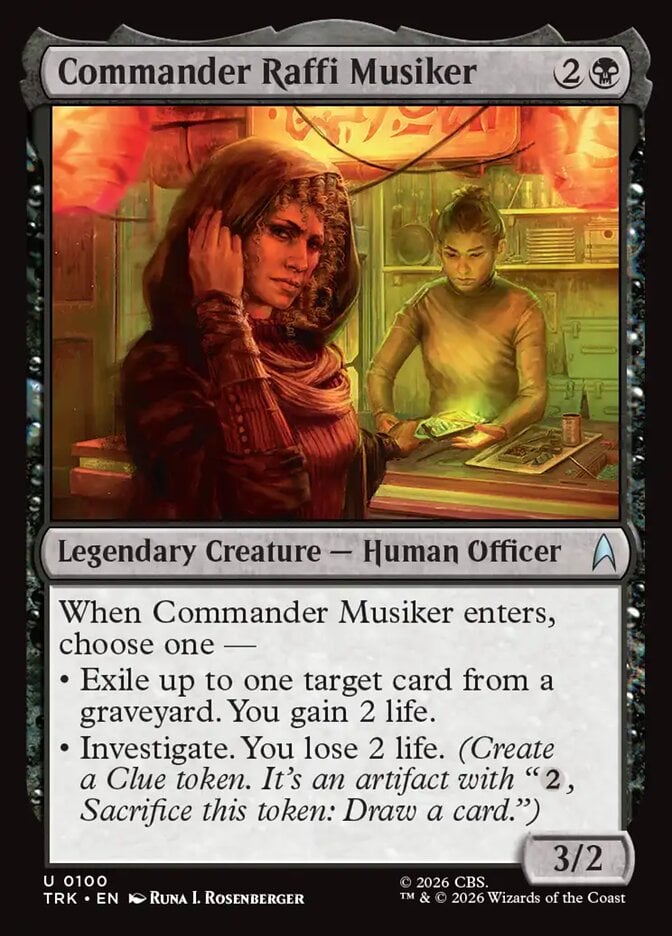
Commander Raffi Musiker is a simple 2-for-1 that triggers your dilemma payoffs, which can also be lifegain/graveyard hate in a pinch.
#4. D’Ghor Bloodletter
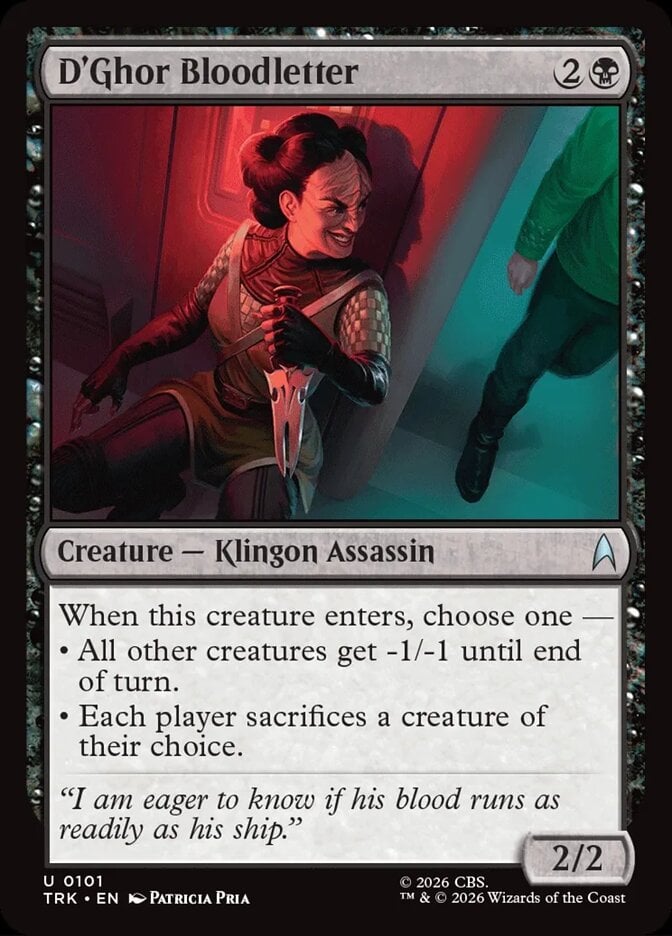
D'Ghor Bloodletter is potentially excellent with all the Klingon/dies synergy running around, and that’s without even factoring in the handy -1/-1 mode.
Red
#1. Khan, Despot by Design
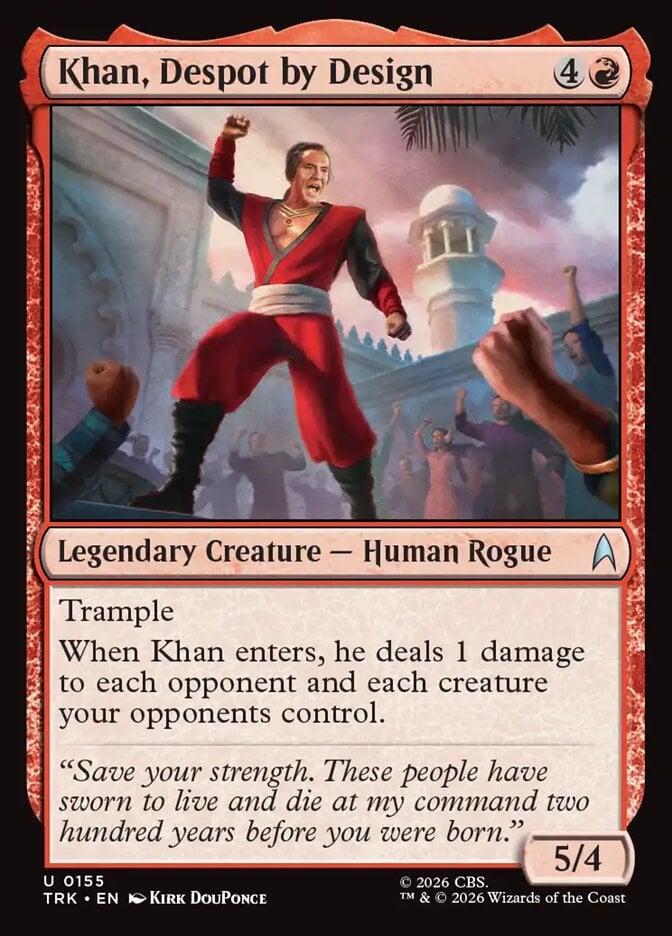
Khan, Despot by Design has strong base stats, and can pick off a number of X/1 creatures in this set. It’s strong enough on rate to consider splashing, too.
#2. Transporter Malfunction
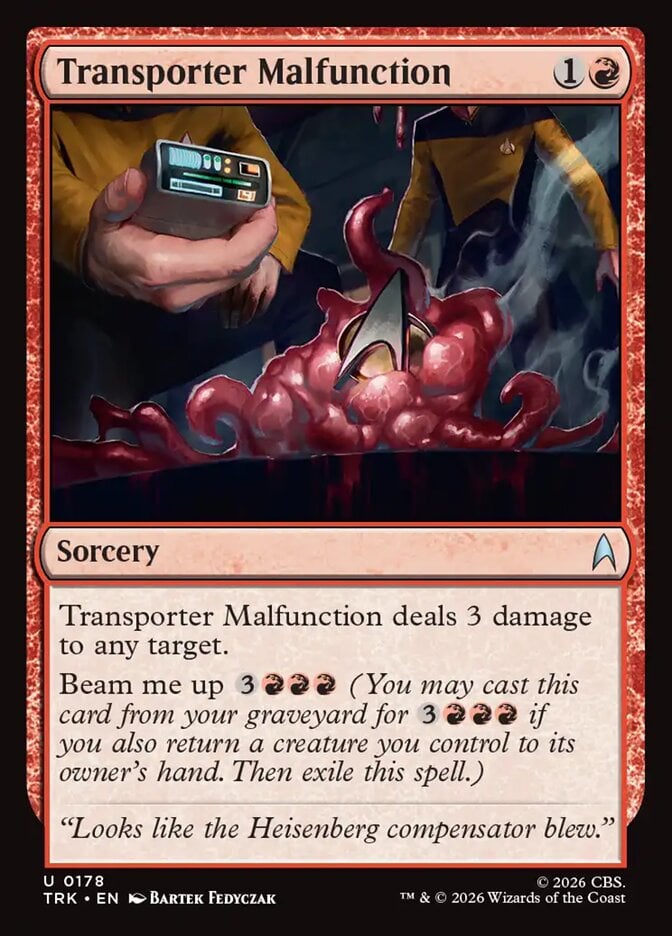
Volcanic Hammer with flashback is well above rate, even if Transporter Malfunction’s version of flashback costs and a creature returning to your hand.
#3. Khaaaaaaaaaaaannn!
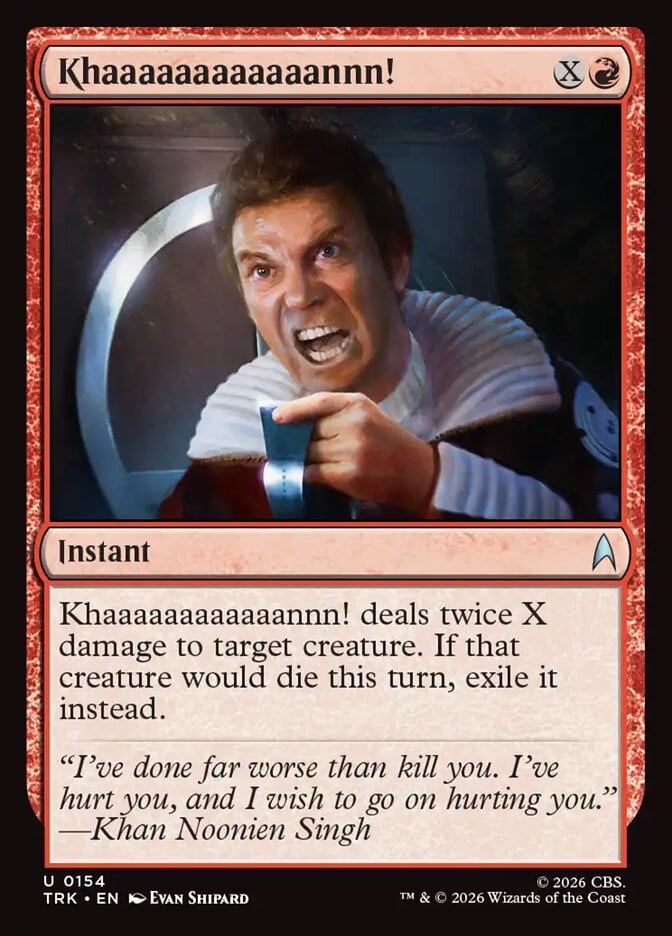
Getting the number of “As” right on Khaaaaaaaaaaaannn! just required copying and pasting the card name, if I’m being honest. Boomer memes aside, this is highly efficient and splashable removal with valuable exile text.
#4. Munitions Enthusiast
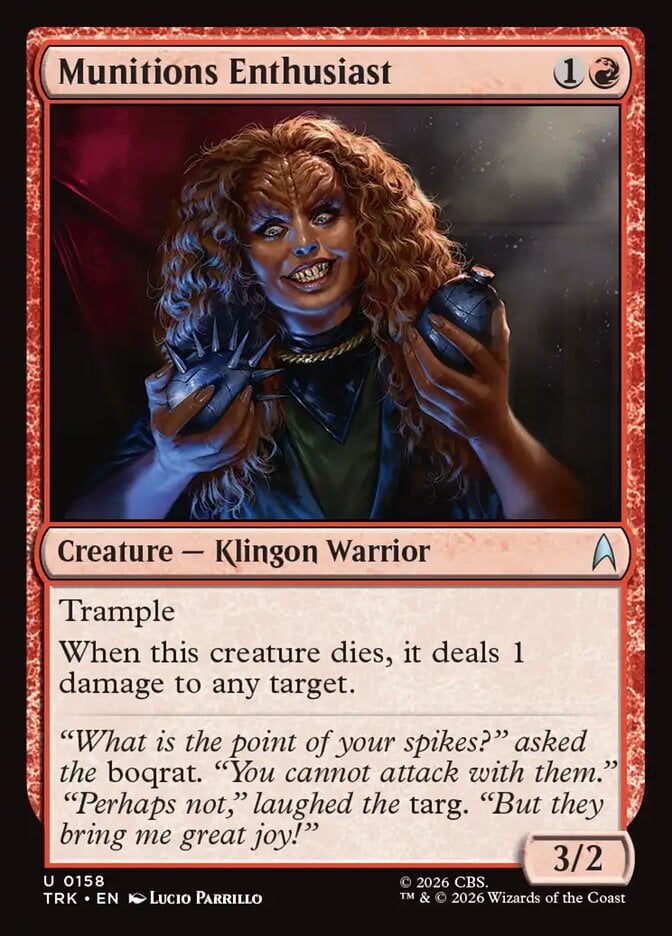
It’s easy to be enthusiastic about a 2-drop as efficient as Munitions Enthusiast, as you’re getting a substantial amount of cardboard here for just 2 mana. There are enough x/1s in Star Trek that you might even pick up a 2-for-1 with it!
Green
#1. Hologram Stalker
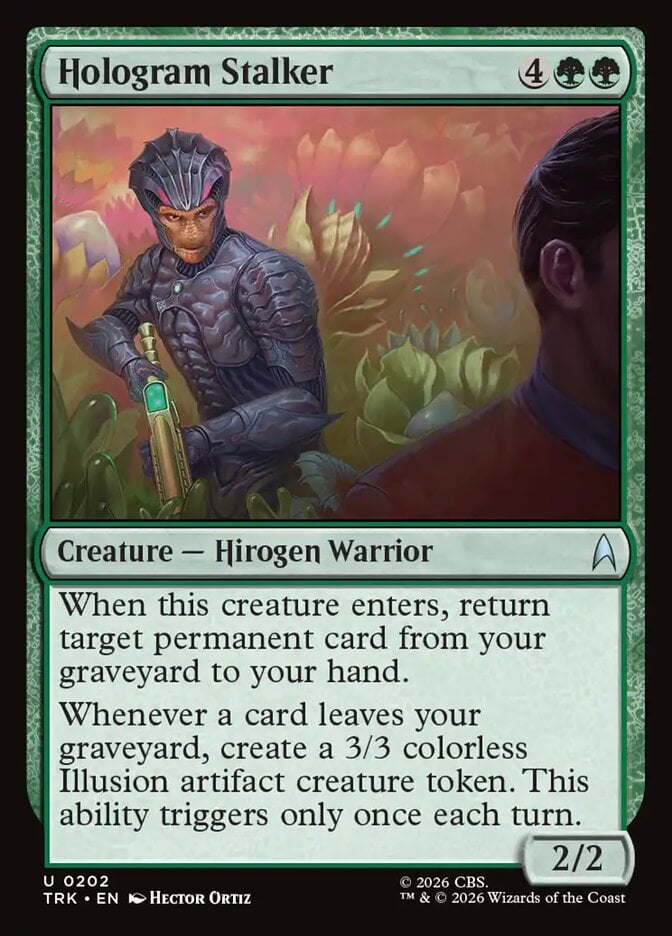
Can you say three-for-one? Hologram Stalker starts there, and somehow offers even more value if it sticks around since you can use it with other “leaves the graveyard” stuff. It’s thankfully not quite as broken as something like Kiora of Fire and Ashes, but it should feel close enough.
#2. U.S.S. Voyager, Lone Wanderer
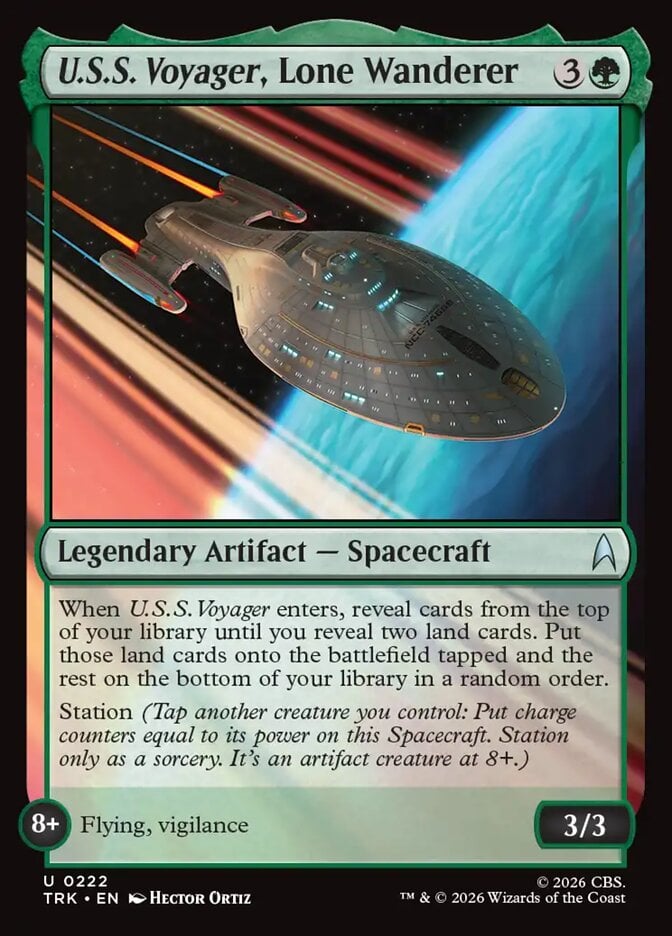
This is another 3-for-1 uncommon, although two of the cards will of course be lands from the enters trigger. Regardless, that’s a lot of cardboard for 4 mana, so please play U.S.S. Voyager, Lone Wanderer in every green deck.
#3. David and Carol Marcus, Creators
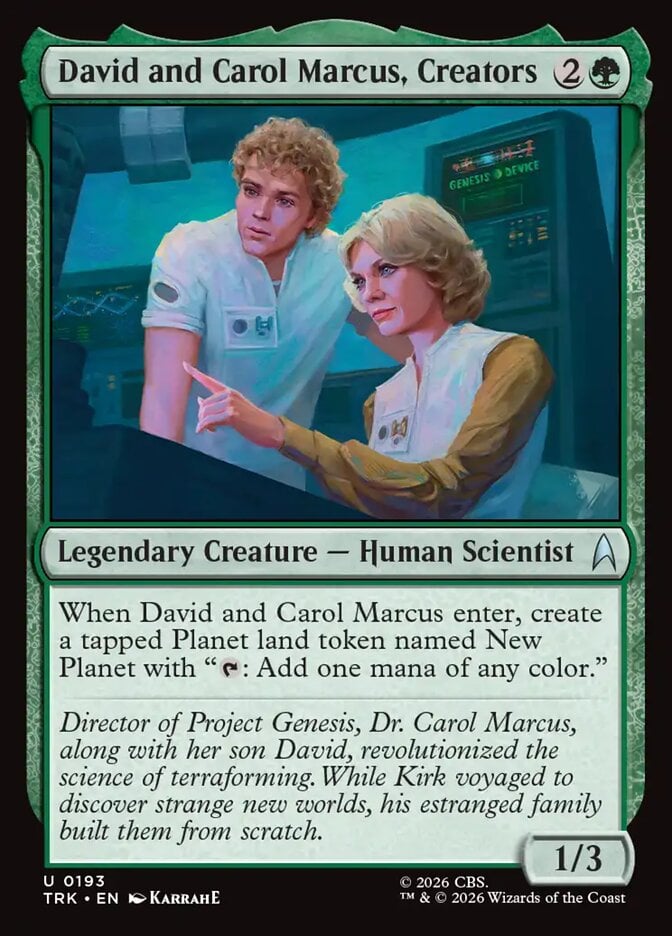
David and Carol Marcus, Creators is a straightforward value creature that helps to fix your mana, ramp you, and give you another planet for strange new worlds. I’m in!
#4. Species 8472
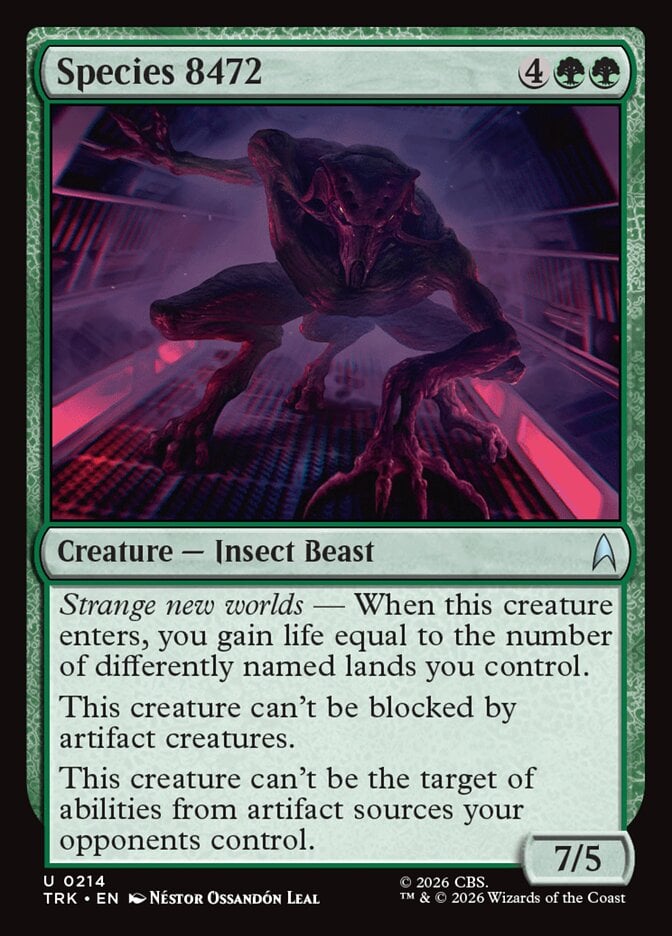
The artifact hate here will have your Borg opponent begging for mercy, and the lifegain bonus should be 3+ life each time. Note that Species 8472 dodges Malfunctioning Holodeck!
Rare Review
Lingo
Bomb: This is the best rating possible. It denotes a game-changing Limited card that you’ll want to play/splash every time you open it.
Examples from the last set: Ajani Unrelenting, Uldaros Theorix, Lich's Relic
Great: These cards fall a little short of true bomb status, but they’re still fantastic in most decks.
Examples from the last set: Repurposed Enforcer, Simulacrum Shaper, Tenured Tethermage
Good: “Good” rares are, well, good! They’ll usually have problems that prevent them from claiming a higher rating though, such as requiring setup or having a lesser output than stronger rares.
Examples from the last set: Tarmogoyf, Variable Chaser, Samut, Hazoret's Champion
Mediocre: These cards are generally either low output, or too difficult to build around for the vast majority of decks. You may occasionally be able to get some use out of them in highly specific builds.
Examples from the last set Gideon's Memorial, Pyre Rhymer, Vraska, Soul of Stone
Bad: These rares are just absolutely worthless in Limited, and you should never play them. Feel free to put them aside if you’re unfortunate enough to open one of them.
Examples from the last set: Loyal Tutor, Identity Echo, Gardenize
Mythics
Captain Jean-Luc Picard (Bomb)
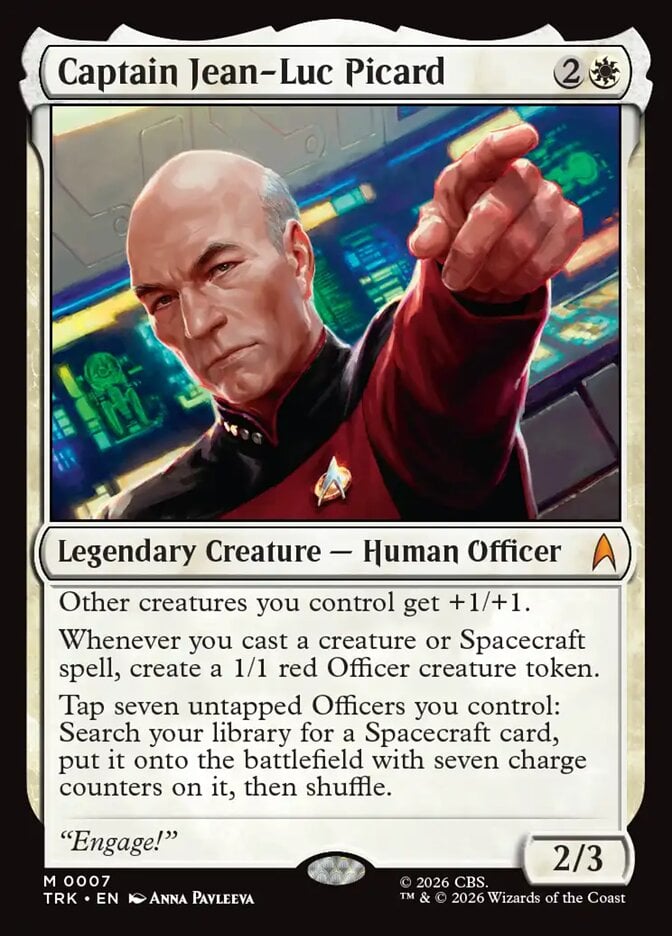
Picard fans are in for a real treat with this card, which is among the strongest rares in the set. Captain Jean-Luc Picard passively pumps your team, and will create a massive crew of Officers if your opponent doesn’t immediately remove it.
Dr. Beverly Crusher (Mediocre)
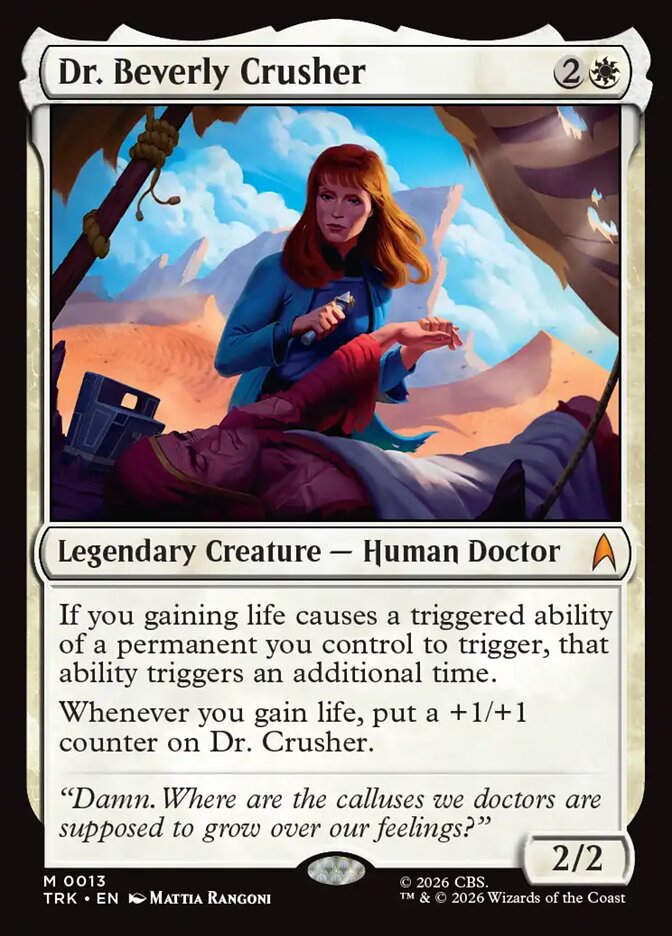
Lifegain isn’t a well-supported theme in Star Trek, as the only other two payoffs available are Neelix, Moral Support and Sickbay. I could see Dr. Beverly Crusher being at least okay with a few gain lands and Jake Sisko, War Correspondent, but otherwise I’m rather underwhelmed by this not-so-good Dr.
Excalbian Gamemaster (Bomb)
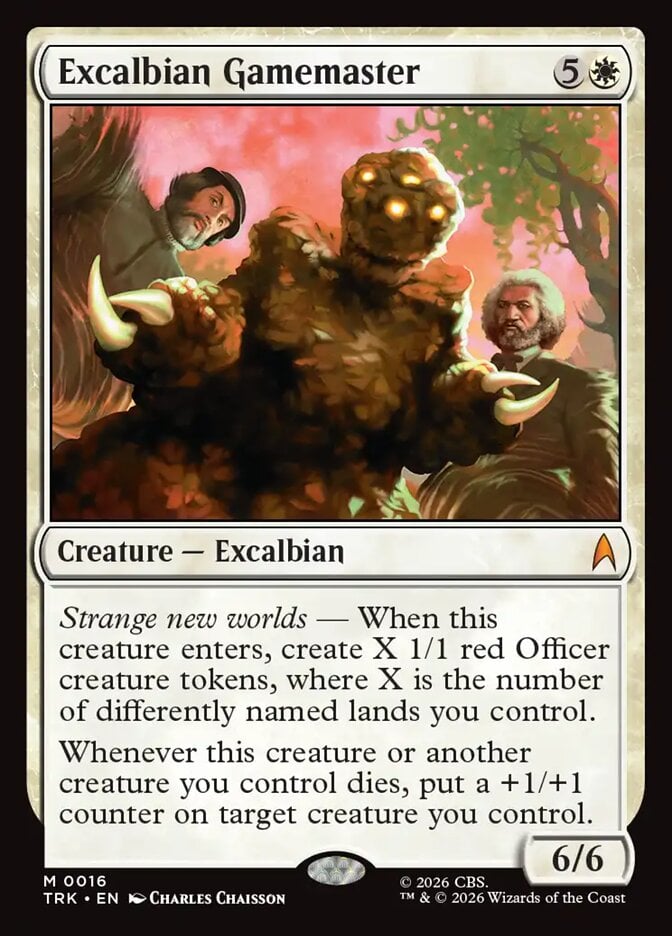
Even with absolutely zero effort put in to maximize strange new worlds, Excalbian Gamemaster is a 6/6 that comes with 2-3 1/1s and a powerful “dies” bonus. That’s obscene for Limited, and you can splash this in pretty much every deck due to it being single pipped (splashing it off 1 Plains and cyclers maximizes strange new worlds value, too). If I could open any mythic this weekend, Gamemaster would be my choice!
U.S.S. Enterprise-A, Free Spirit (Bomb)
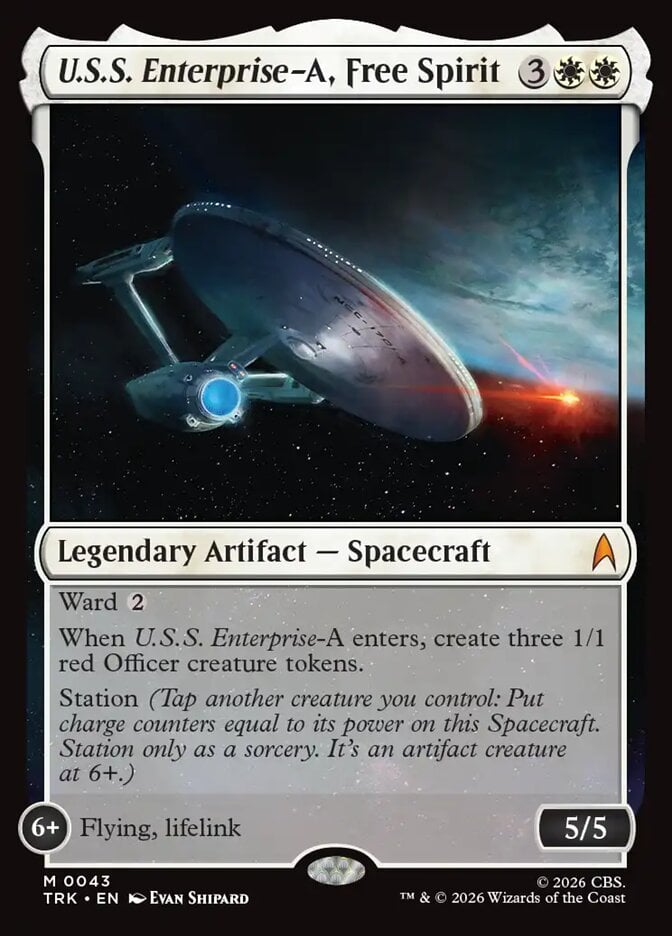
Baneslayer Angel now comes with a Hordeling Outburst, I guess? Behold U.S.S. Enterprise-A, Free Spirit, this set’s Ajani Unrelenting!
Kobayashi Maru Scenario (Bad)
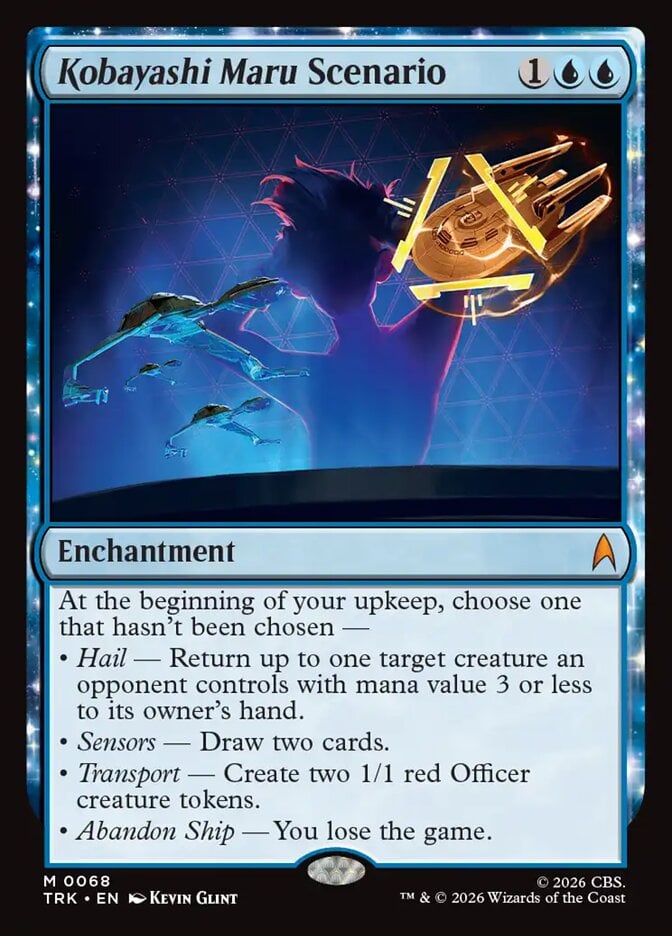
Being forced to win the game in three turns isn’t worth any of these effects, even if Kobayashi Maru Scenario is rather mana efficient. Do keep in mind that there’s a combo kill available with Rules of Acquisition, so consider trying this if you open both.
Lieutenant Commander Data (Great)
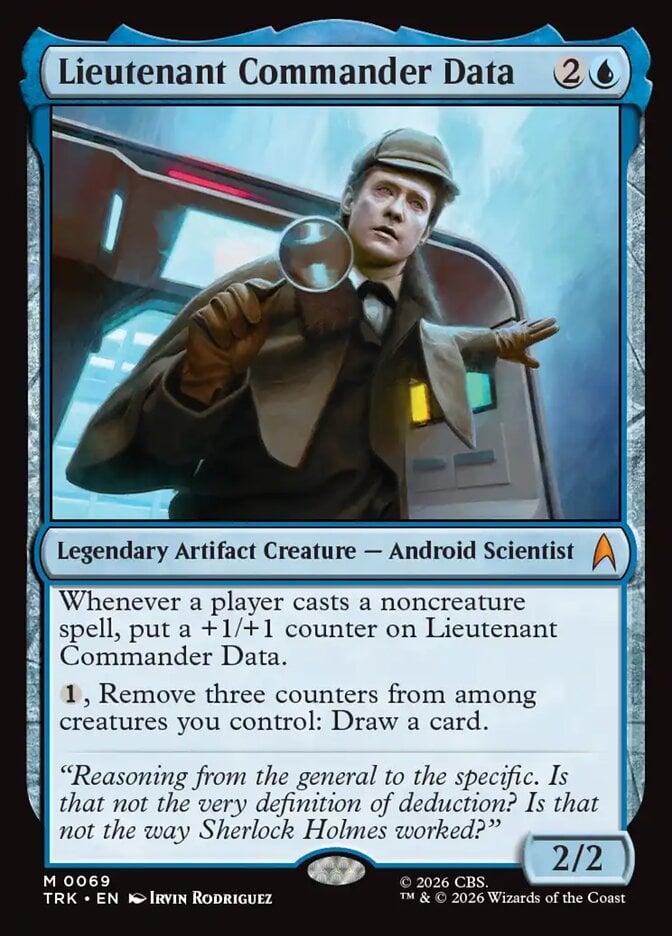
Lieutenant Commander Data’s prowess ability triggers for your opponent too, which is rather unusual. This should lead to rapid growth and potentially even a card or two later on, thanks to Data’s activated ability. Don’t forget that you can always remove charge counters from your spacecraft, too (and then re-station them) if you’re out of stuff to do.
Mr. Spock, Science Officer (Great)
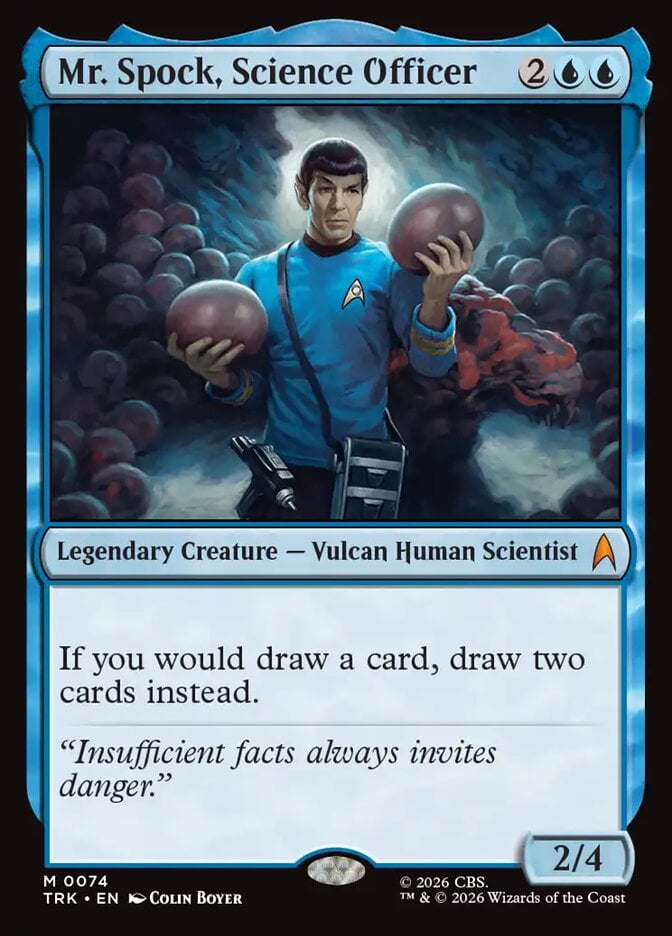
Mr. Spock, Science Officer has decent base stats and an amazing ability, which is sure to put you well ahead on resources if your opponent doesn’t remove it immediately. Just be careful deploying Spock in long games, as there’s no “may” clause here. It could very well deck you.
Scotty, Miracle Worker (Great)
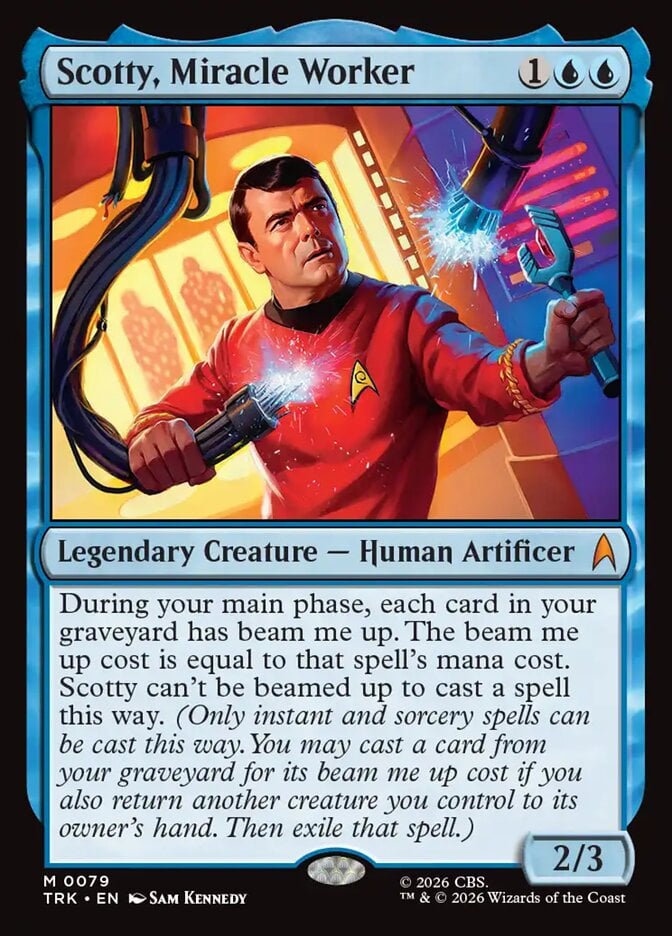
Scotty, Miracle Worker wants a mix of beam me up creatures (i.e., Federation Probe, Emergency Medical Hologram, Fugitive Listener) and good instants and sorceries. That’s not an impossible task, and you can even sequence Scotty for guaranteed value by playing it and immediately beaming up a creature to recast something cheap like Planetary Bombardment.
Seven of Nine, Unassimilated (Great)
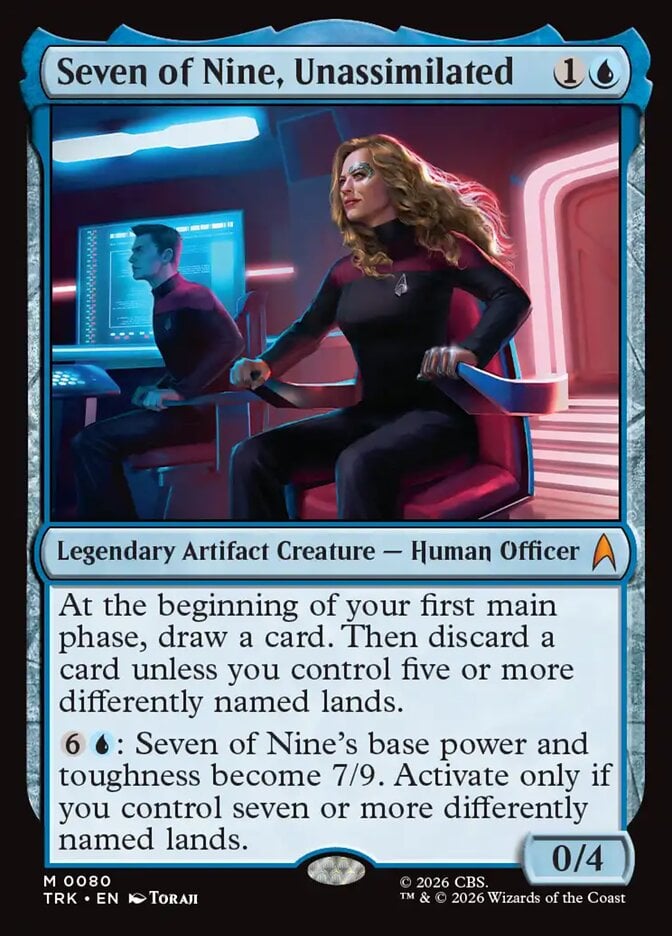
Leaning heavily into strange new worlds will make Seven of Nine, Unassimilated one of the best cards in your deck, and it’s not too shabby even if you can’t. You’re mostly playing this for the card advantage/early blocker, as achieving its 7/9 ability seems rather tough.
Death Is Irrelevant (Great)
Eight mana is a ton, but Death Is Irrelevant has a proper output for a late game super haymaker. Keep in mind that all assimilated creatures become artifacts, which makes the indestructible bonus even better than you’d expect.
Georgiou, Terran Emperor (Mediocre)
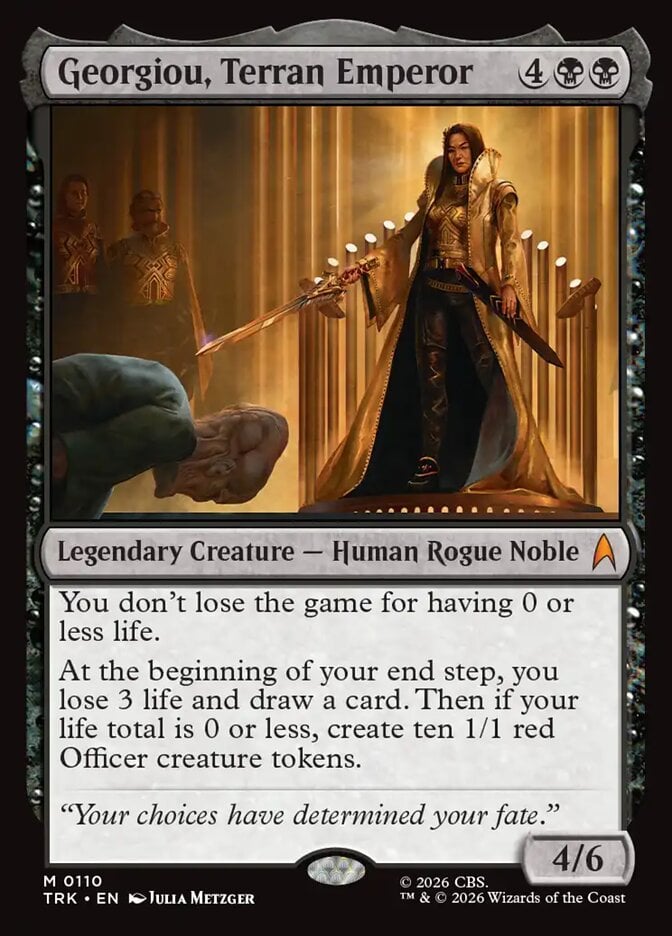
The risks here are utterly massive, as Georgiou, Terran Emperor will quickly run you out of life and then leave you holding the bag if it eats a removal spell. I’d prefer not to gamble like this if possible, although I do recognize its power level.
Gul Dukat, Colonial Prefect (Mediocre)
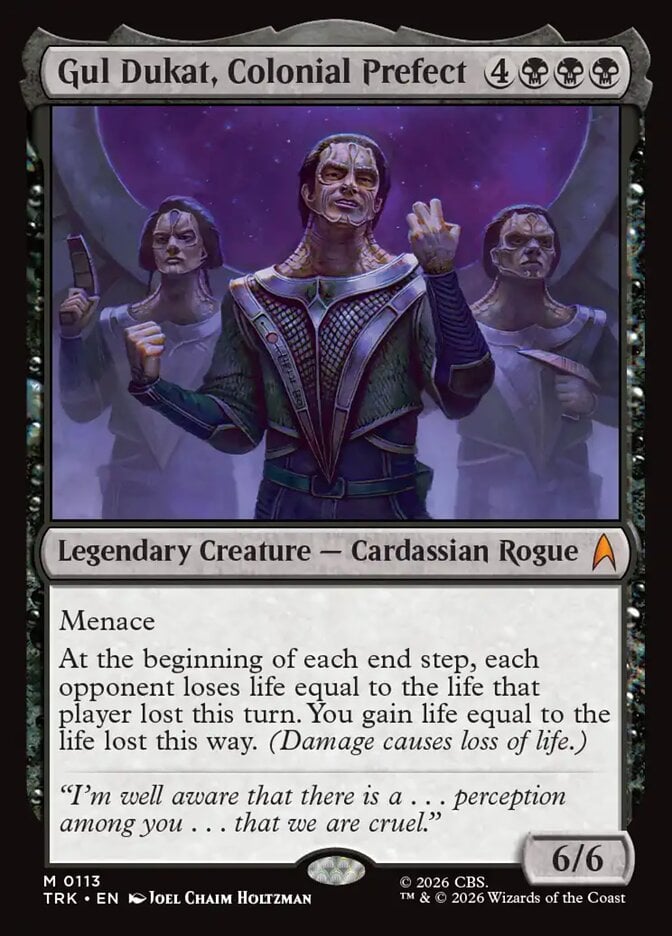
Gul Dukat, Colonial Prefect reads powerfully, but it’s a big fat semi-vanilla creature if you aren’t already smashing your opponent’s face in. That makes Dukat clearly fall into the “win-more” range in most games, and as such I’m rather unimpressed.
Khan, Vengeful Heart (Great)
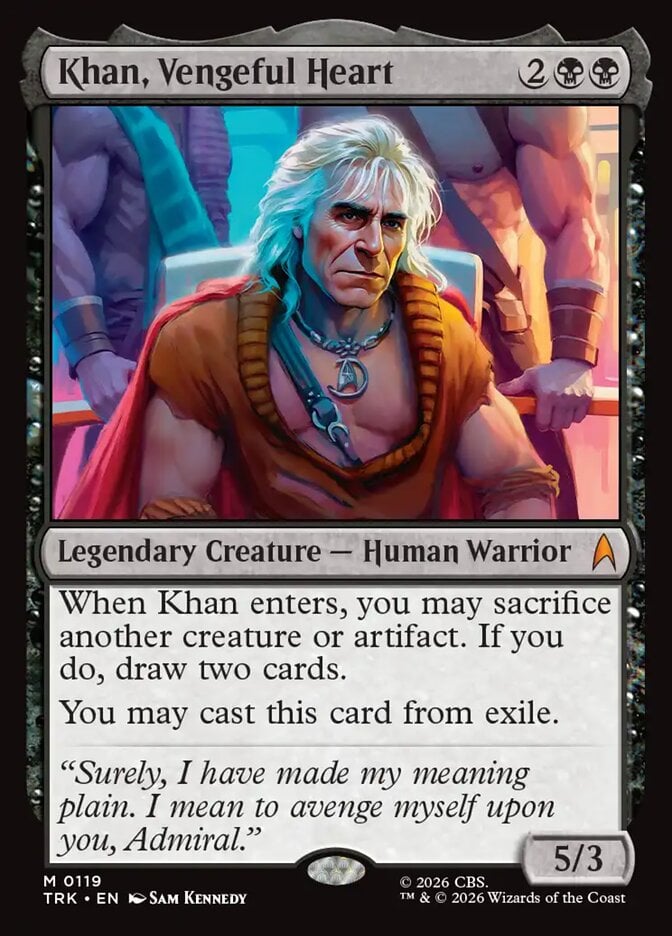
Star Trek’s most iconic villain can pick up immediate value by sacrificing a Treasure token or 1/1 Officer, and it may even come back for seconds if you can exile Khan, Vengeful Heart when it dies. Commander Raffi Musiker, Sela, Tal Shiar Paradox, Sylvia Tilly, Joy of Discovery, and Test of Loyalty are your best bets.
Captain James T. Kirk (Bomb)
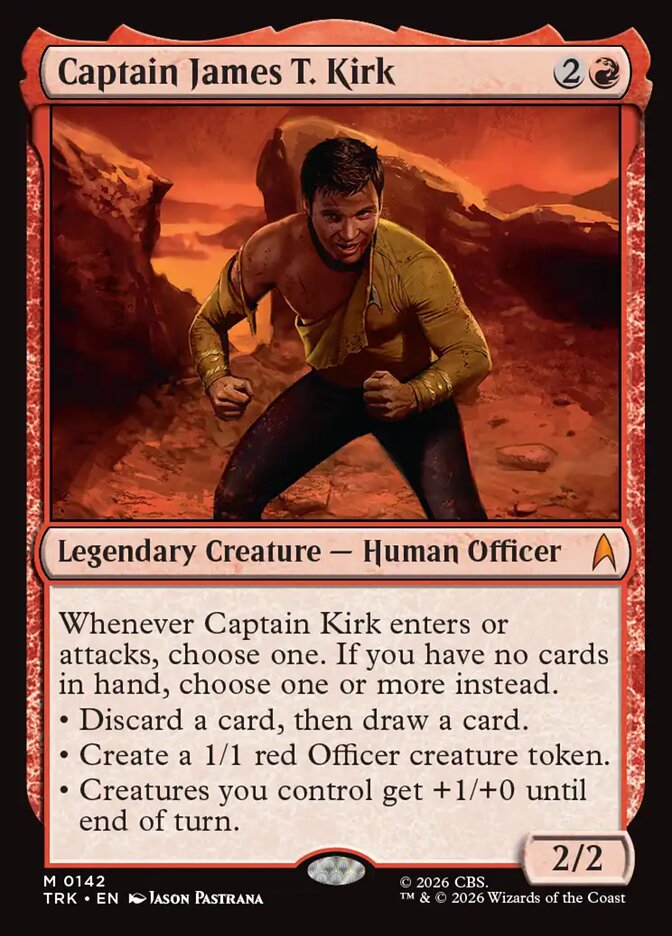
Captain James T. Kirk offers immediate and recurring value for just 3 mana, and gets even better when you run out of cards. Its +1/+0 ability will be of great use in achieving your “power 8 or greater” bonuses, too.
Infinite Diversity (Bad)
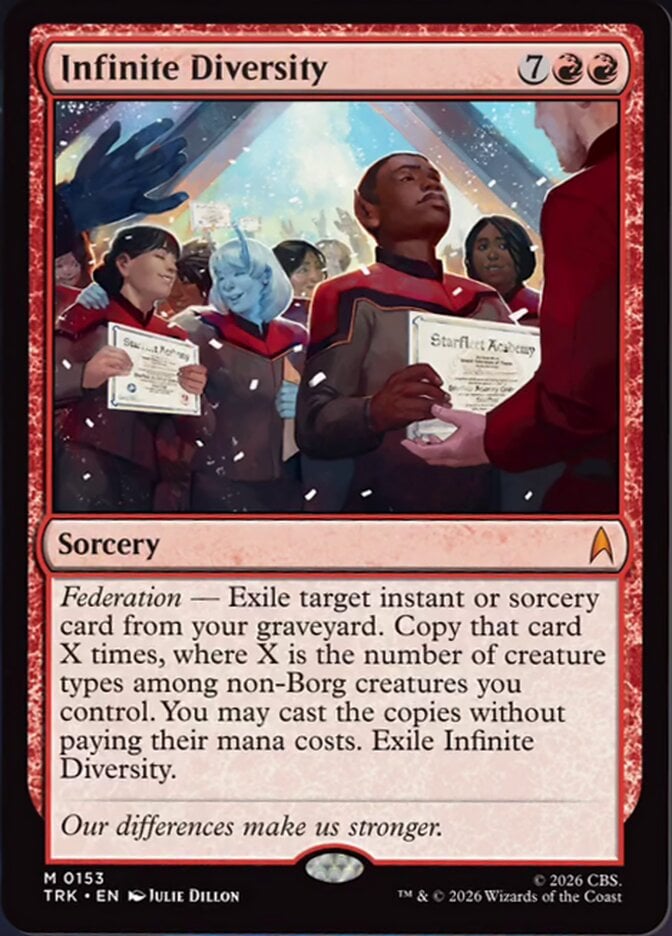
The dream here is to copy Plasma Cascade enough times to nuke your opponent instantly, but 9 mana is really, really expensive. The federation requirement means you can expect this to copy a spell 3-5 times on average, which isn’t really enough for how hard this is to cast.
Q, Stacking the Deck (Great)
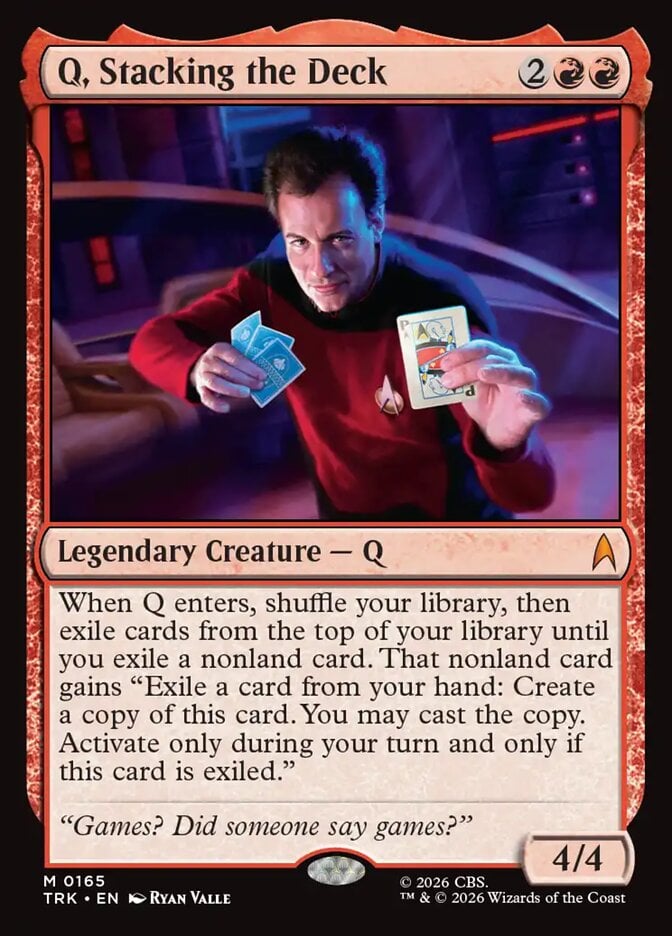
Q, Stacking the Deck gives you unlimited access to a random spell in your deck, which is incredible upside when you consider that it’s a 4/4 for at baseline. You can literally never flood out if you draw this, and a good hit like He's Dead, Jim or Plasma Cascade could pretty much win you the game on the spot.
Quark, Humble Proprietor (Mediocre)
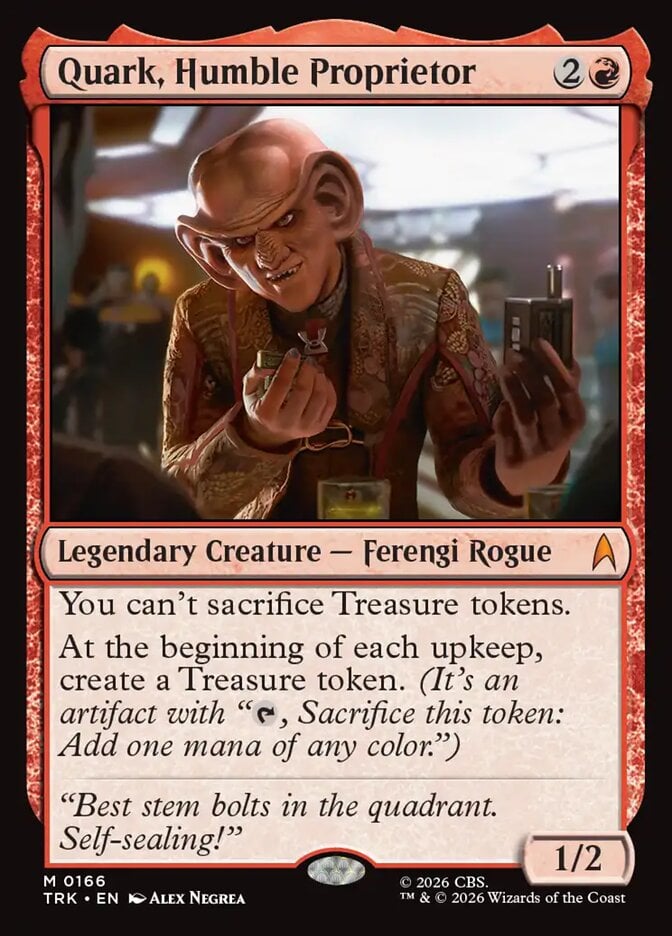
Quark, Humble Proprietor is terrible on its own as a 3-mana 1/2 that prevents you from using all the Treasures it creates. Artifact synergies and ways to sacrifice Quark are good ways to get more out of it, so don’t bother if you lack those.
Captain Kathryn Janeway (Great)
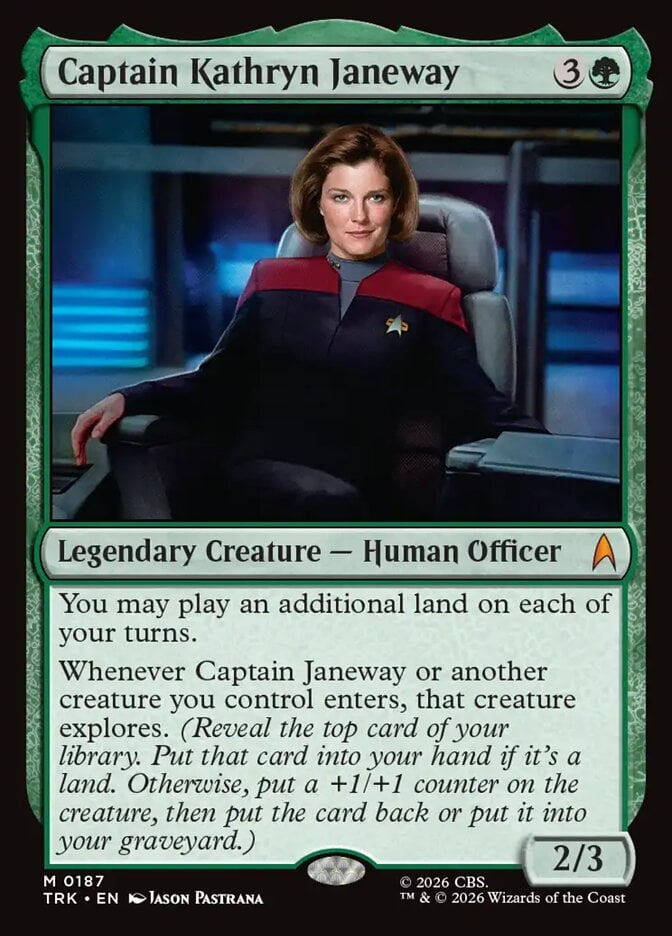
At worst, Captain Kathryn Janeway is a slightly undersized Pathfinding Axejaw. At best, it’s an incredible engine that sticks around and buries your opponent in card advantage. Janeway isn’t quite as busted as some of the other mythics thus far, but it should still do some great work if it lives.
Dr. Joseph M’Benga (Good)
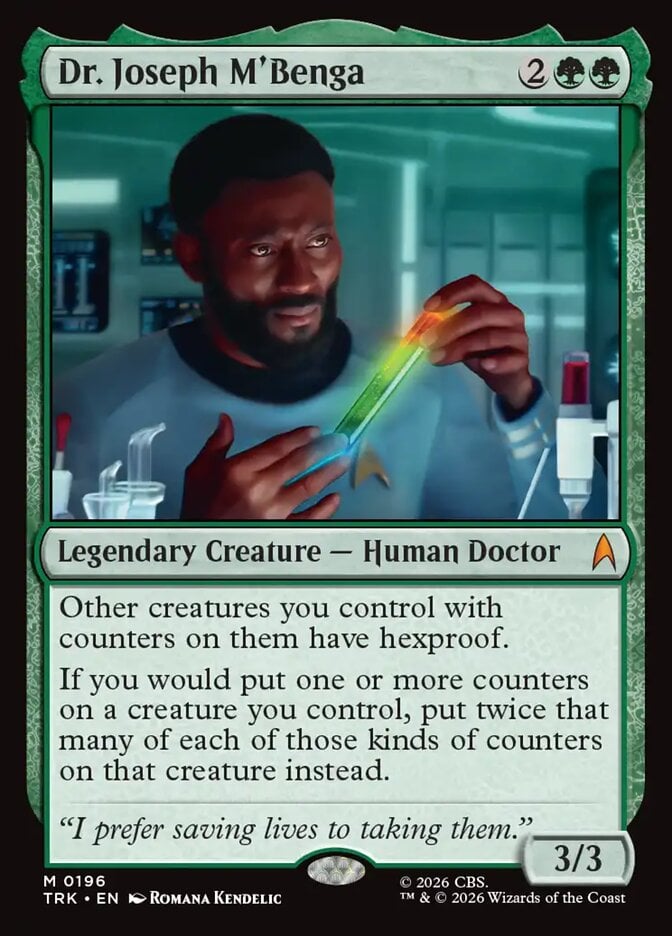
Protecting your other creatures is cool, but unfortunately Dr. Joseph M'Benga is the one your opponents will want to remove anyways. There’s enough +1/+1 counter stuff in Star Trek for this doctor to be at least decent, even if it’s rather vulnerable.
Jadzia Dax, Living Legacy (Great)
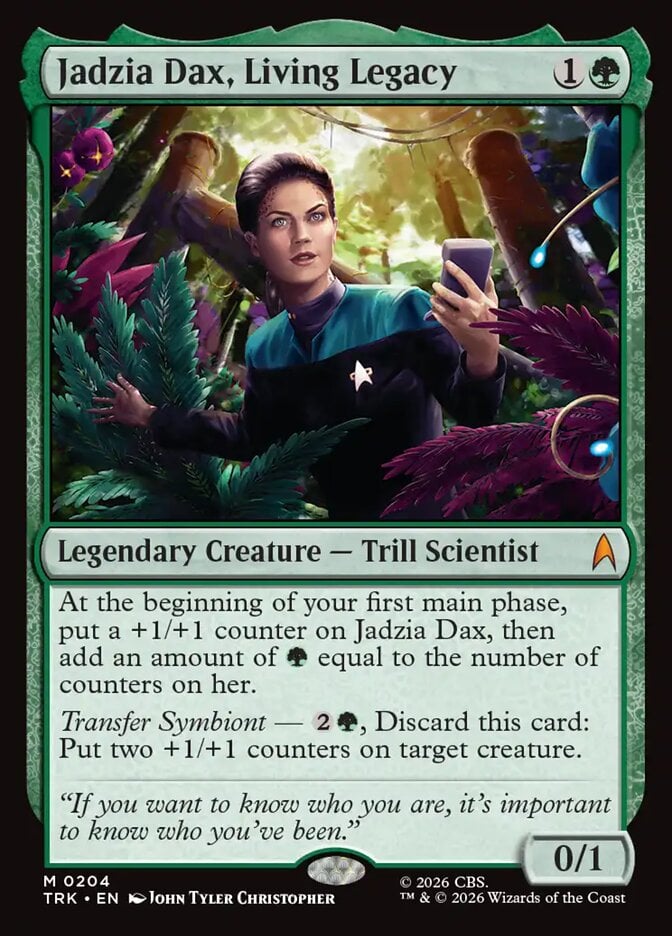
An unanswered turn-2 Jadzia Dax, Living Legacy could get completely out of control, and it doubles as a great combat trick if you draw it later on.
Rok-Tahk, Budding Scientist (Great)
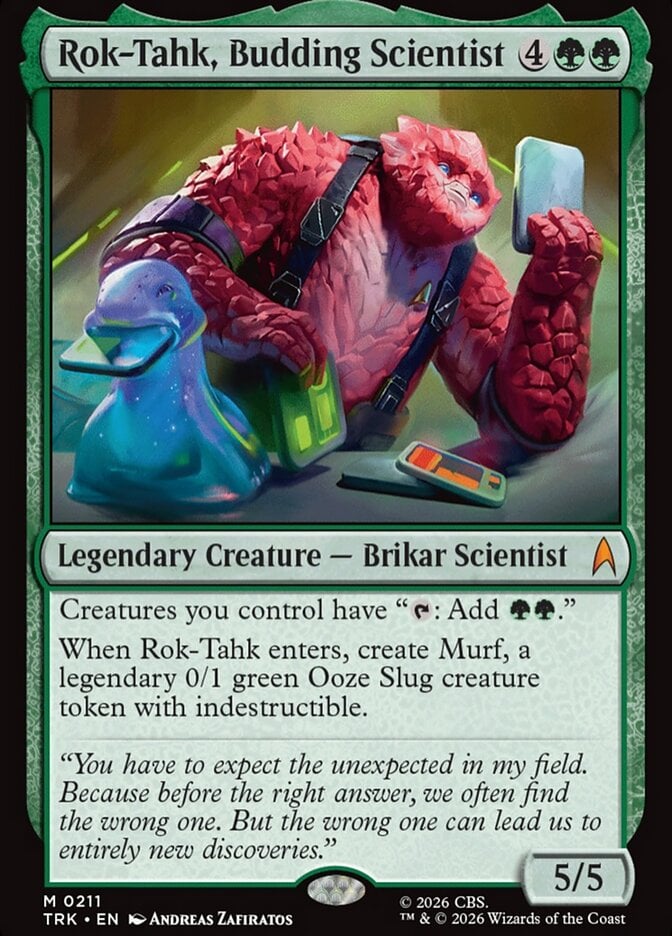
Rok-Tahk, Budding Scientist gives you access to a ton of mana and two relevant bodies, one of which is a permanent blocker for the rest of the game. Activated abilities from cards like Saurian Explorer and Cleveland Booker, Empath are excellent ways to maximize it.
Borg Cube (Bomb)
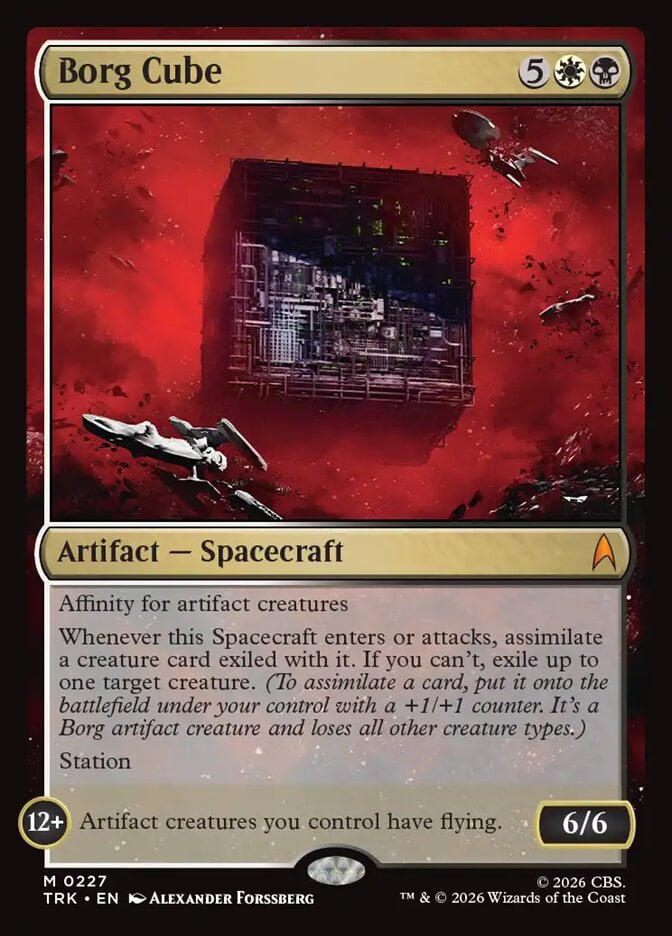
Artifact creatures are everywhere in Star Trek, and Borg Cube is an incredible payoff for amassing them. This is a cheap removal spell to start, which scales into a genuine late game win condition once fully stationed.
Crystalline Entity (Good)
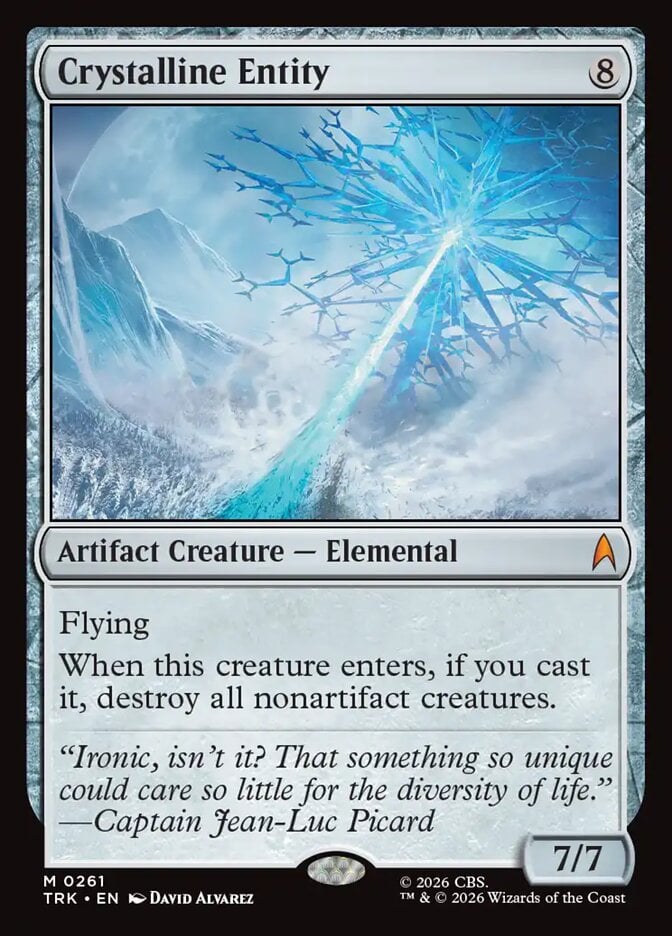
Crystalline Entity is a massive flier with substantial upside, although costing 8 and only affecting “nonartifact” creatures are real marks against it. It plays best in a controlling deck with a lot of artifact creatures, and it may be a little too big for your average WB Borg deck (as that archetype seems to lean smaller/more aggressive).
Deep Space 9 (Bad)
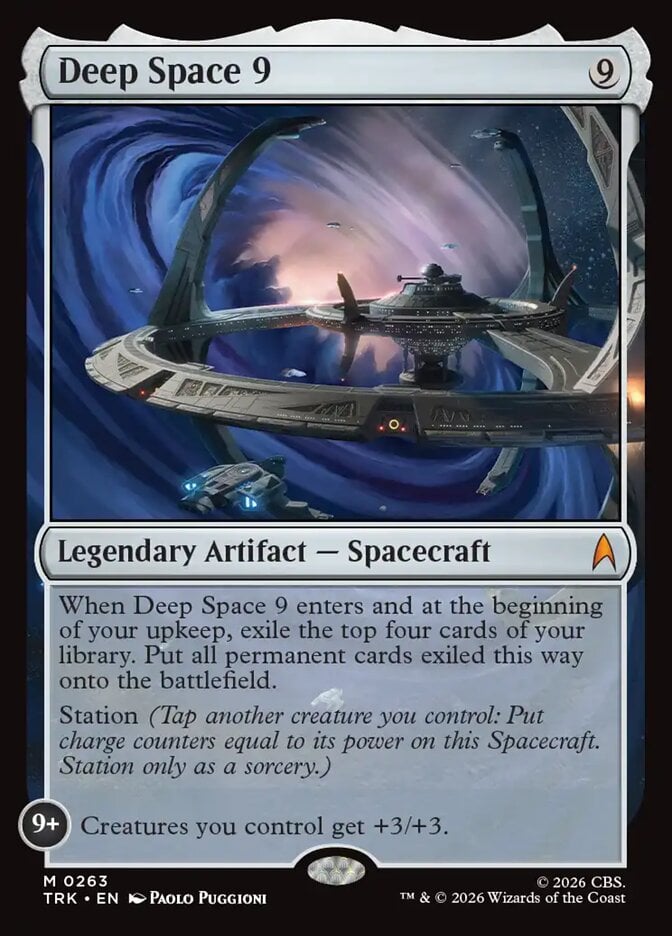
The risk of decking from Deep Space 9 is rather high, and getting to 9 mana in the first place is of course incredibly difficult. Avoid!
Starfleet Academy (Bad)
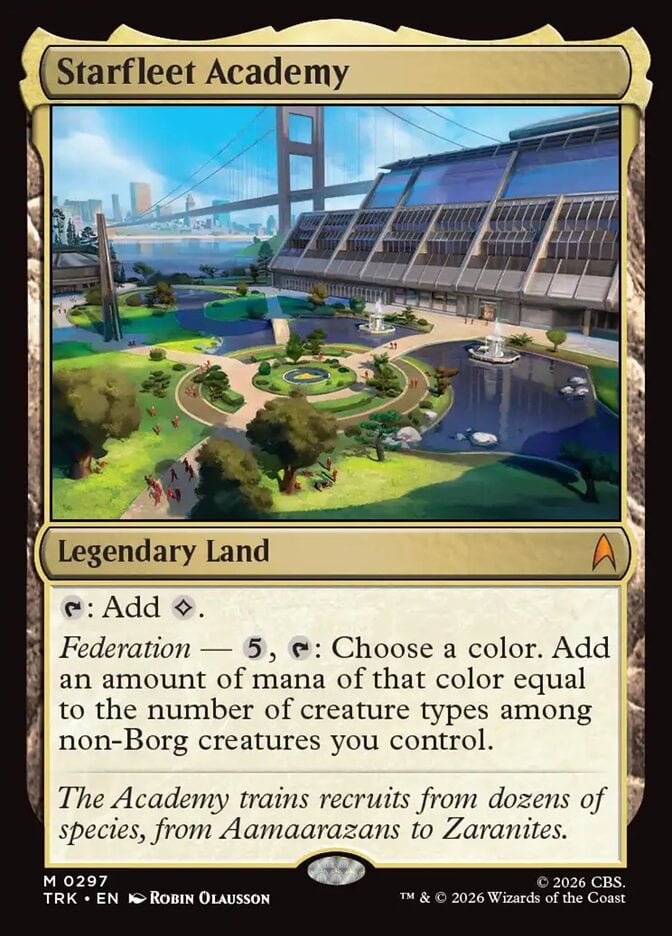
This will be a Wastes in 99% of your games, and it’s only going to add extra mana in specific spots when you were likely winning anyways. I still might play Starfleet Academy occasionally for strange new worlds value, but it’s by no means a good Limited card.
Rares
Antagonist Incorporator (Great)
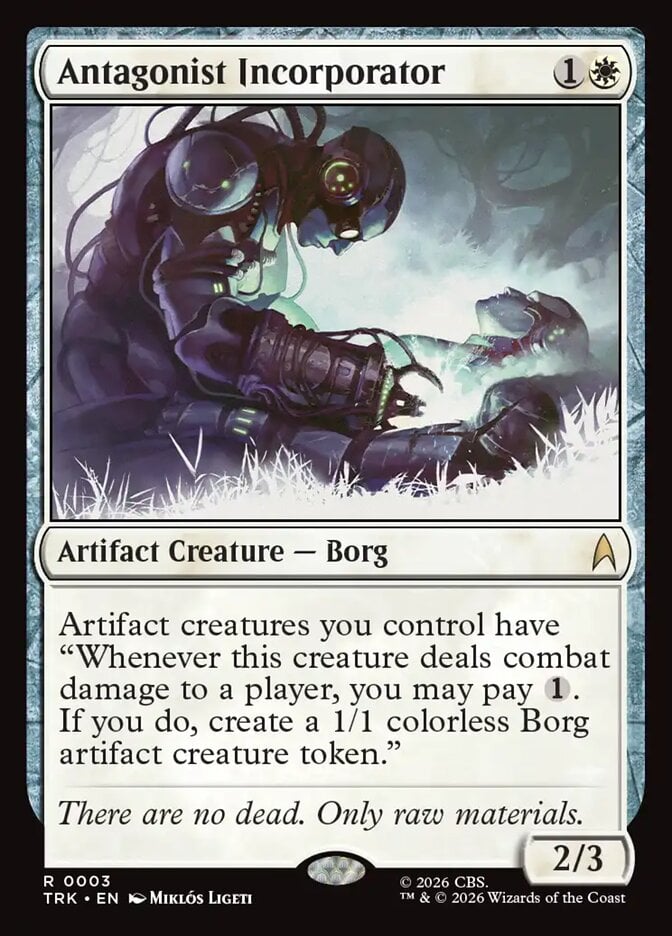
This passes the vanilla test and has great upside, even if you aren’t deep on artifact creatures. Try pairing Antagonist Incorporator with Federation Probe for an easy stream of 1/1s!
Captain Benjamin Sisko (Great)
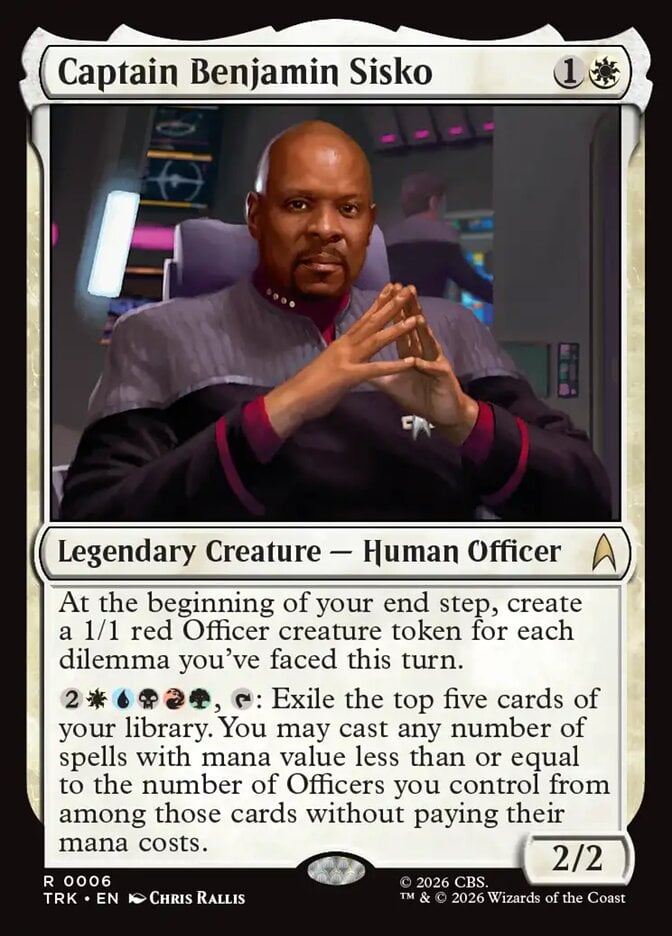
Dilemma is an easy mechanic to build around in this set, as there are plenty of commons and uncommons that let you make choices. Captain Benjamin Sisko does its best work in WU, WB, or Esper () decks, as UB has most of the dilemma cards in Star Trek. The 5-color ability is cute, but entirely irrelevant to my evaluation of Sisko.
Deanna Troi, Psychic Counsel (Bomb)
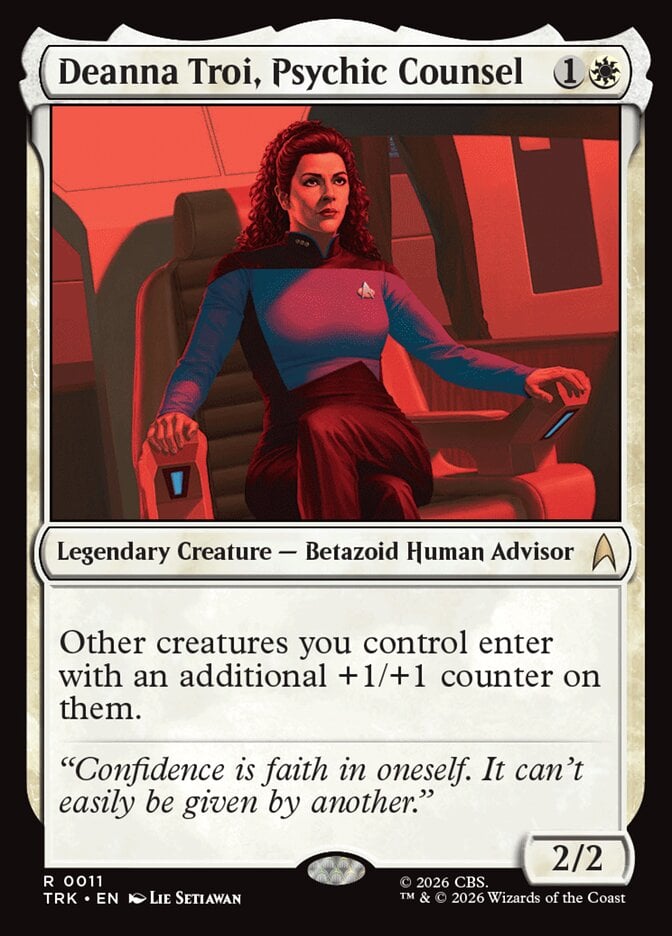
Free sizing doesn’t get easier than this! Deanna Troi, Psychic Counsel is a classic Limited bomb, and it starts you off with a massive advantage from the second turn of the game onward.
Federation Resupply (Mediocre)
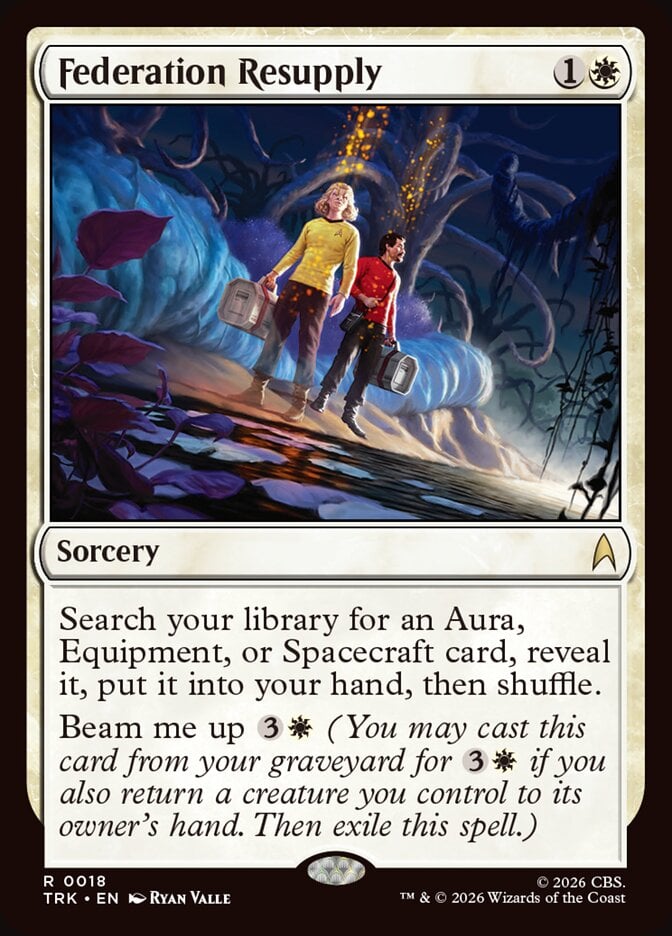
The main reason to play Federation Resupply is if you open a busted spacecraft, which this set has several of. It’s technically a 2-for-1 too thanks to beam me up, although auras and equipment are sparse and fairly weak in Star Trek.
Miles O’Brien, Transporter Ops (Great)
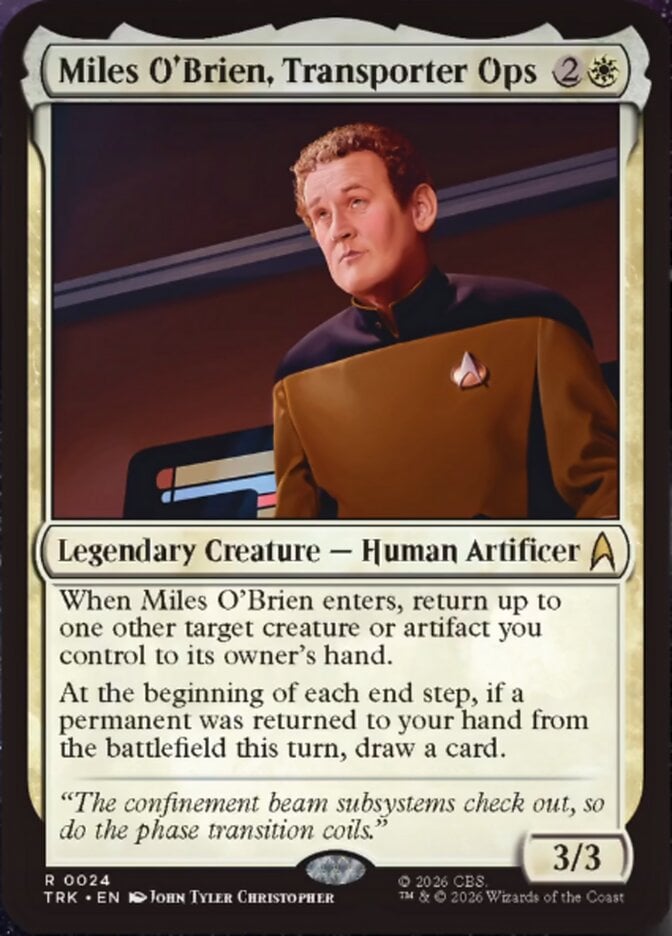
There are plenty of solid cards to return with Miles O'Brien, Transporter Ops, like Emergency Medical Hologram, Oberth-Class Starship, Tea, Earl Grey, Hot, and Warp Core. Miles is a vanilla 3/3 at worst too, so you aren’t even out of luck if your draw lines up poorly for it.
Peace in Our Time (Mediocre)
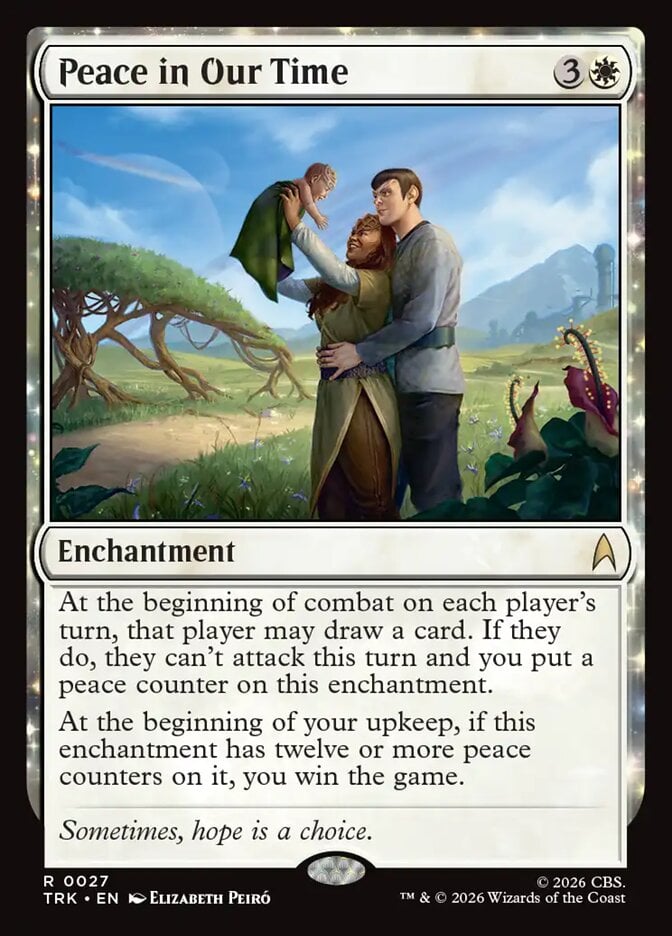
Peace in Our Time could theoretically be a win condition and a card advantage engine for an uber controlling deck, as you can skip your own combats to draw cards. Keep in mind that your opponent can do the same though, and 12 peace counters are going to take a long time to acquire. Malfunctioning Holodeck and Kirk, Commanding Officer are the main cards you’ll have to worry about if you’re trying to play this as a wincon.
Primary Unimatrix Adjunct (Bomb)
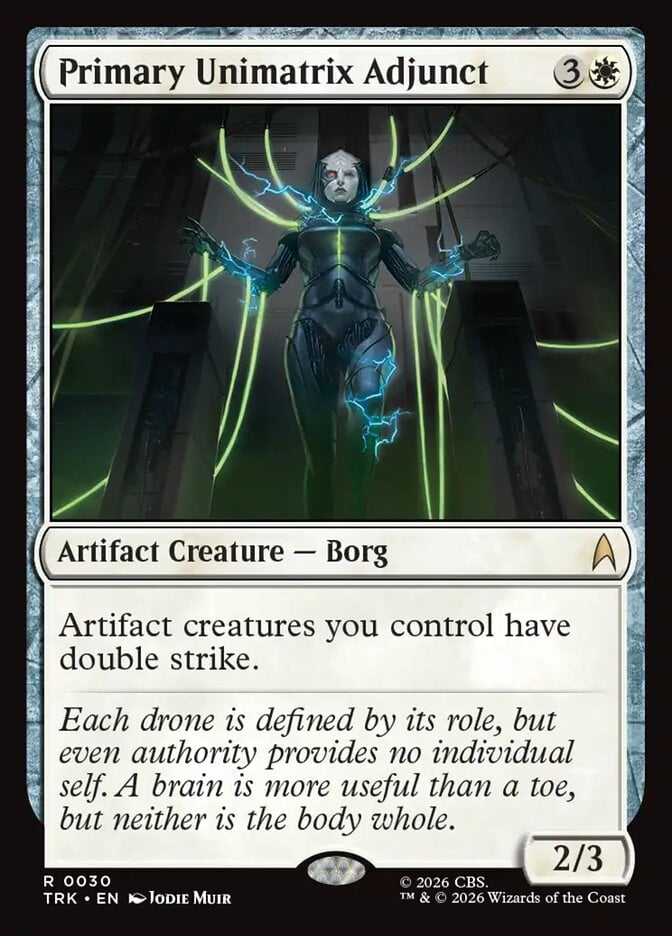
Primary Unimatrix Adjunct is similar to Blade Historian but even better, as it’s active even if you aren’t attacking. Being restricted to artifact creatures isn’t a huge problem in white, especially if you lean into the WB Borg theme (and it’ll still give your spacecraft double strike at worst).
Sulu, Space Swashbuckler (Great)
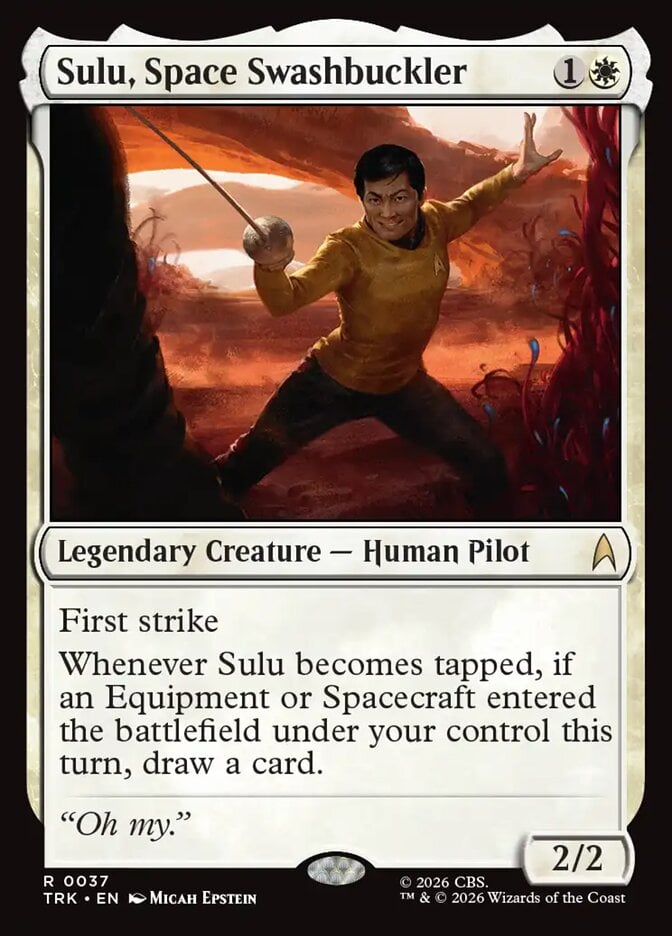
Good equipment cards are few and far between in Star Trek, so you’re mostly hoping to pair Sulu, Space Swashbuckler with some good spacecraft. Given that it’s a 2/2 first striker to begin with though, it’s pretty much all upside with ol’ Takei.
The Needs of the Many (Mediocre)
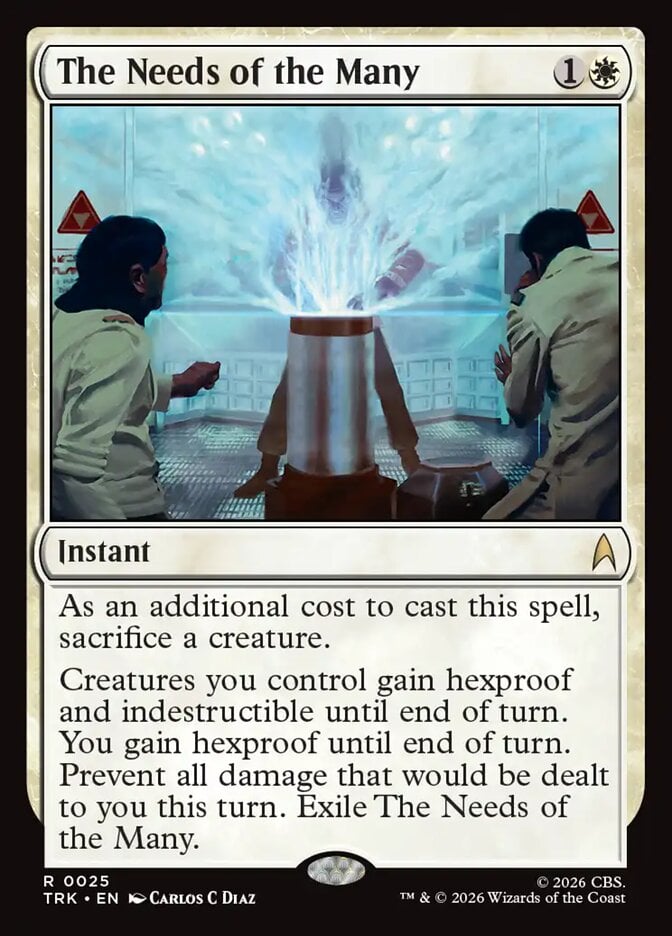
You could theoretically pick up a big late game blowout with The Needs of the Many, but I can’t imagine a worse card to see in your opening hand. I probably won’t play it much, but don’t forget it exists if you go for a big alpha strike into open mana.
Troubling Tribbles (Bad)
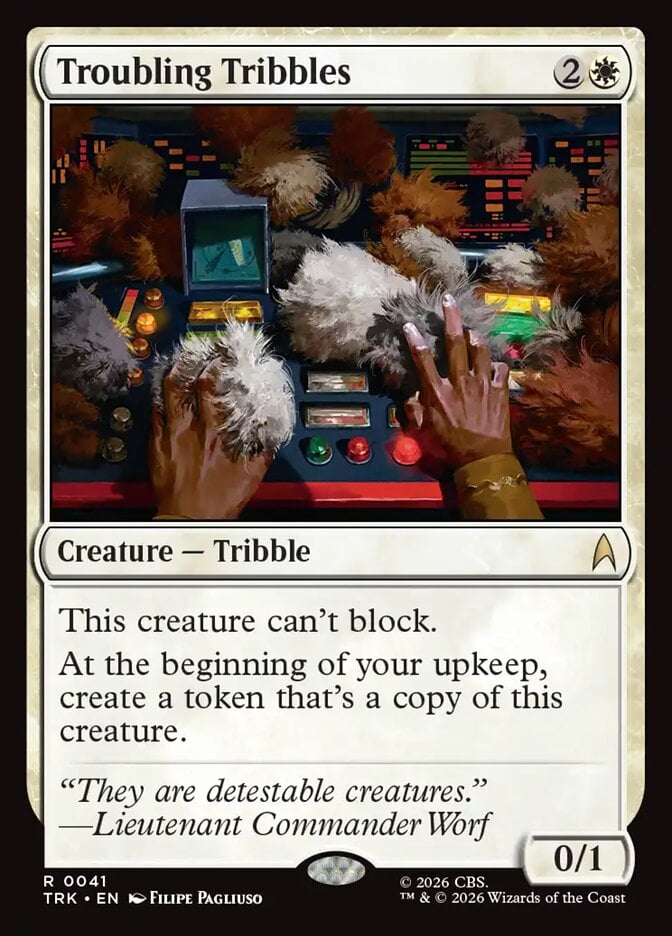
Troubling Tribbles does nothing on its own, as the tokens can’t block and obviously won’t do much damage with 0 power and all. But there are potential combos in Star Trek like Sickbay and Red Alert! available, so I wouldn’t be above trying it with several specific ones.
Deep Space Scan (Good)
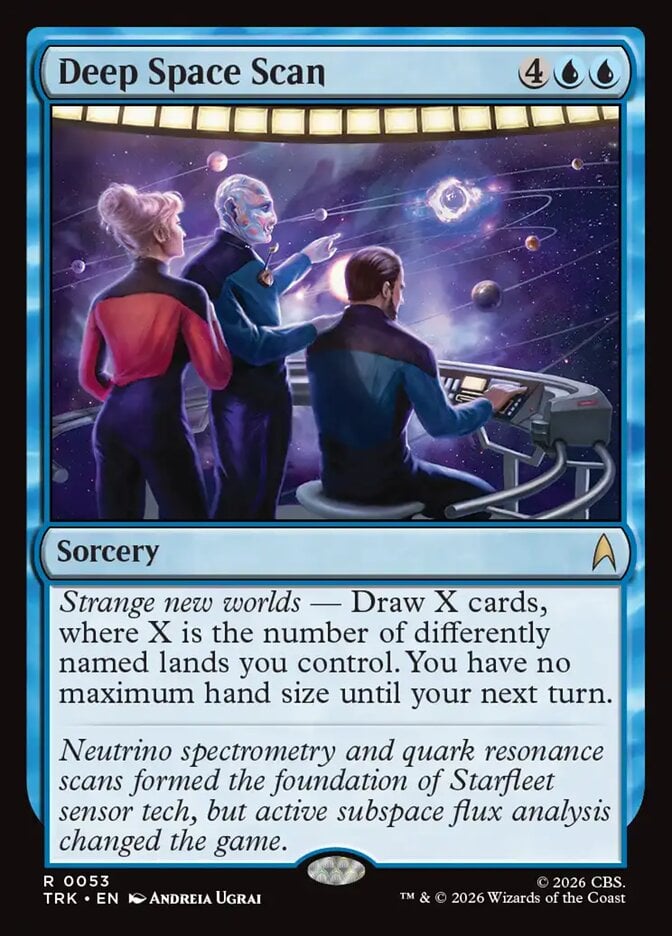
Nothing feels better than resolving a greedy card draw spell like this late game, especially if you can field a diverse mix of lands for it. Deep Space Scan is too slow to get a higher grade though, even if Star Trek ends up being a durdly set.
Gwyndala, the Progeny (Good)
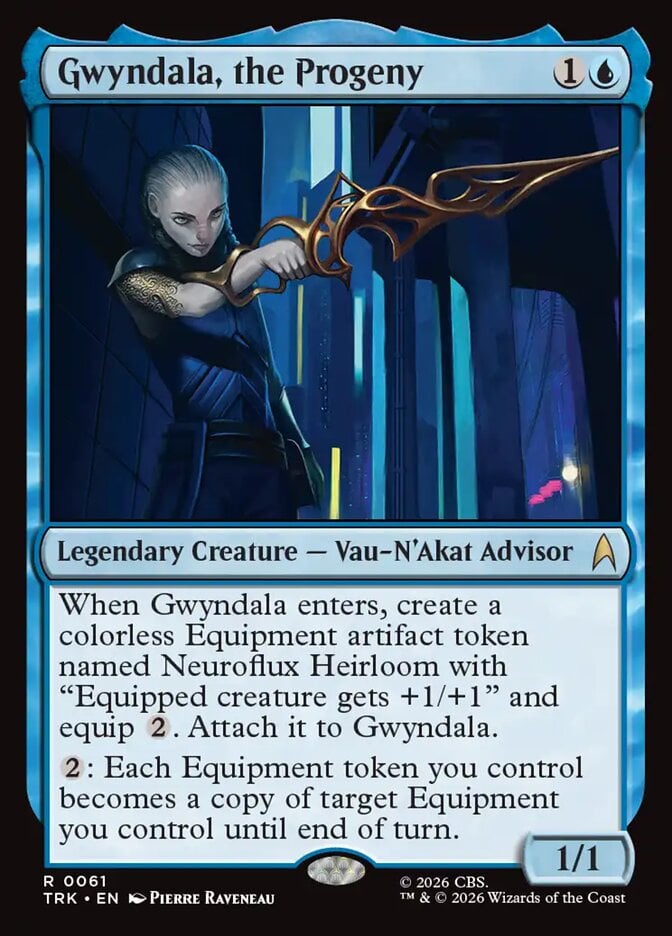
Glimmerlight was a good common, and that’s about where you should set your expectations for this rare (due to Star Trek’s near total lack of equipment support). Neuroflux Heirloom is a bit more expensive to move around than Glimmerlight, but it does at least attach automatically to Gwyndala, the Progeny.
H.M.S. Bounty, Unlikely Timeship (Mediocre)
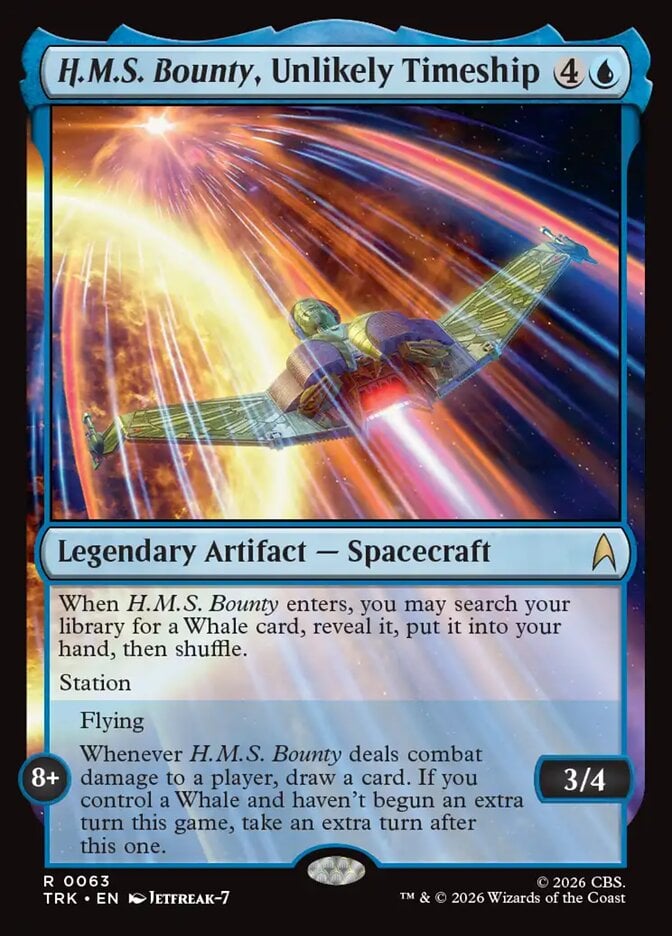
I’d only play H.M.S. Bounty, Unlikely Timeship if my pool has 2+ copies of the common whales in this set (Cetacean Ops and Humpback Whales), as both the “enters” and station ability depend on having a whale available. It’s powerful if you can pull it off, but nearly useless without whale support.
Lt. Cmdr. Geordi La Forge (Mediocre)
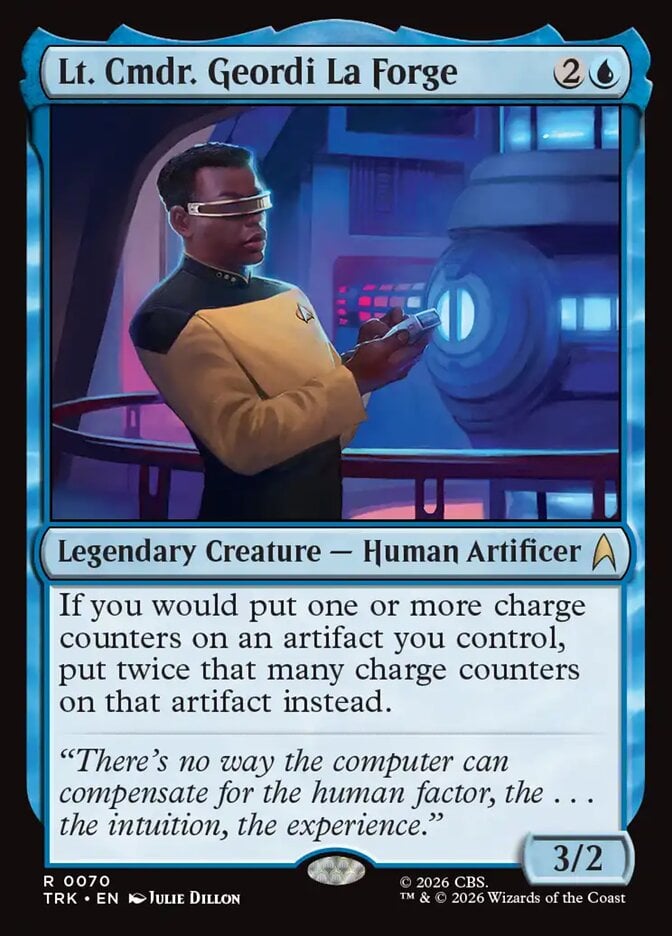
Lt. Cmdr. Geordi La Forge is somewhat useful for getting your spacecraft up and running faster, but it’s otherwise a vanilla 3/2 for (which is definitely below average).
Nyota Uhura, Communications (Good)
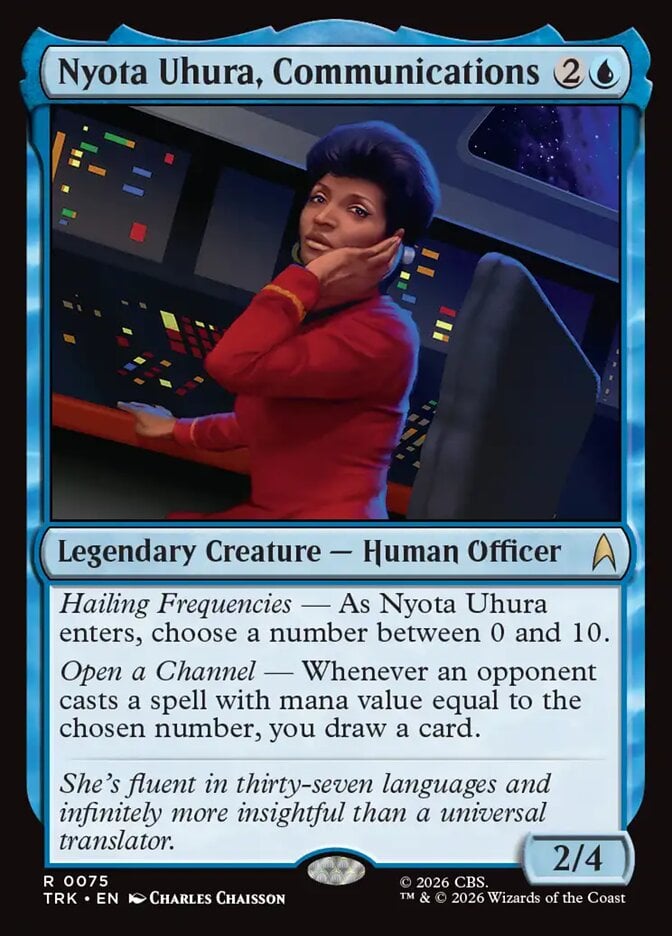
If you’re playing Nyota Uhura, Communications on turn 3 on the play, naming “3” is a safe bet. On the draw, you should name “4” in most cases. Late game, try to name a number that contains removal spells that deal with it, such as “4” for He's Dead, Jim or “2” for Common Goal. Uhura is a 2/4 for at worst, and should usually get a card or two (while potentially messing with your opponent’s sequencing).
Romulan Bird-of-Prey (Great)
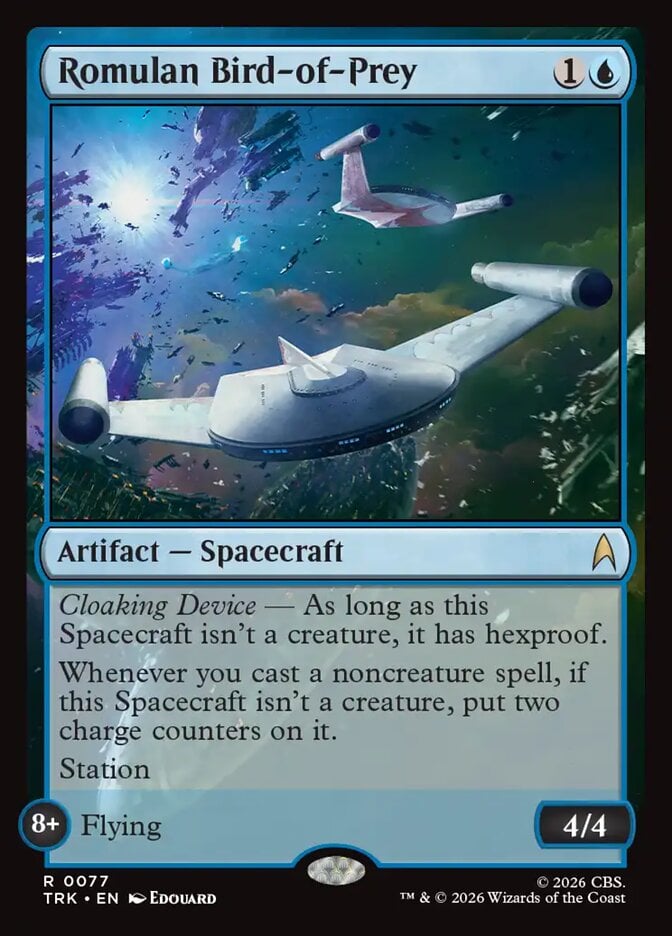
4/4 flying is utterly massive for just , and the noncreature bonus here gives you another avenue to get your Romulan Bird-of-Prey active at a decent pace.
Subcommander T’Pol (Good)
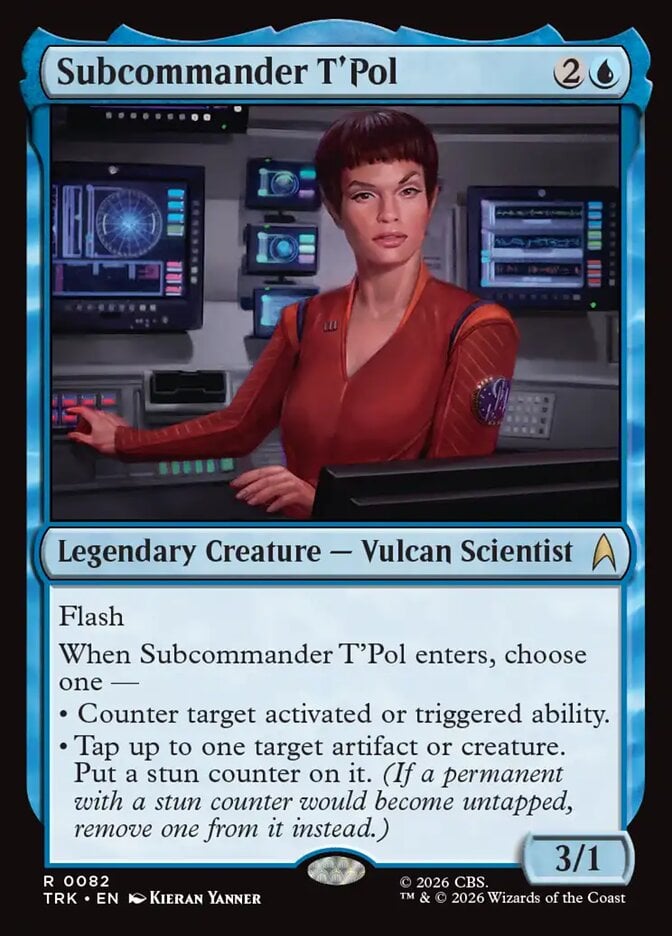
Subcommander T'Pol is a solid utility creature with two valuable use cases. Your opponent may occasionally run something awesome into its Stifle mode, but you’ll probably use the tap and stun mode most of the time.
The Caretaker (Bomb)
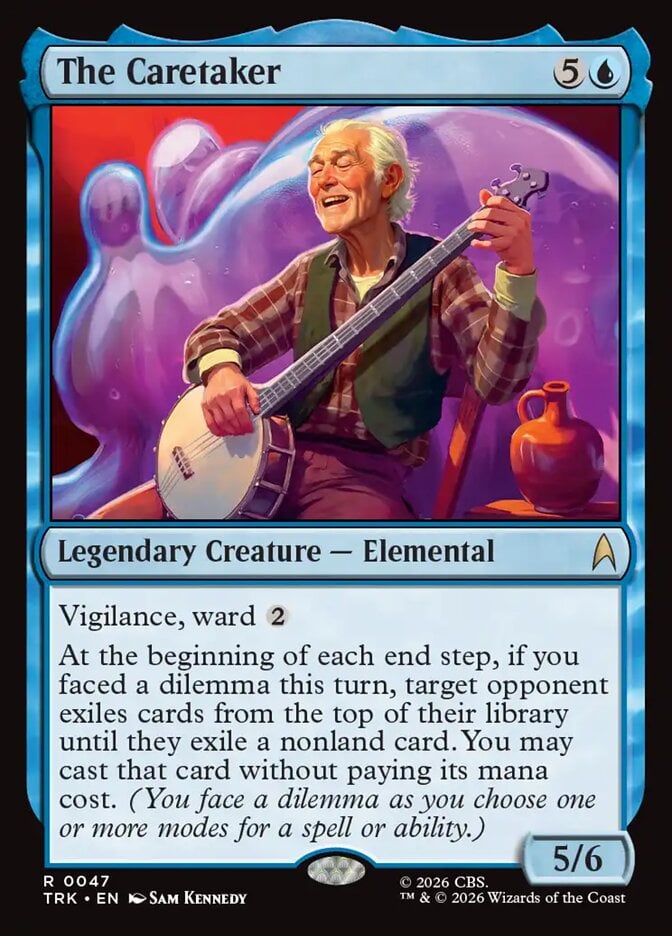
Facing a dilemma each turn is a minimal requirement, and you can even face it the turn you play The Caretaker by attacking with Tal Shiar Operative. Throw in beefy base stats, ward, and vigilance (alongside an easily splashed mana cost), and you’ve got one of the best rares in Star Trek!
Wesley Crusher, Starfleet Cadet (Great)
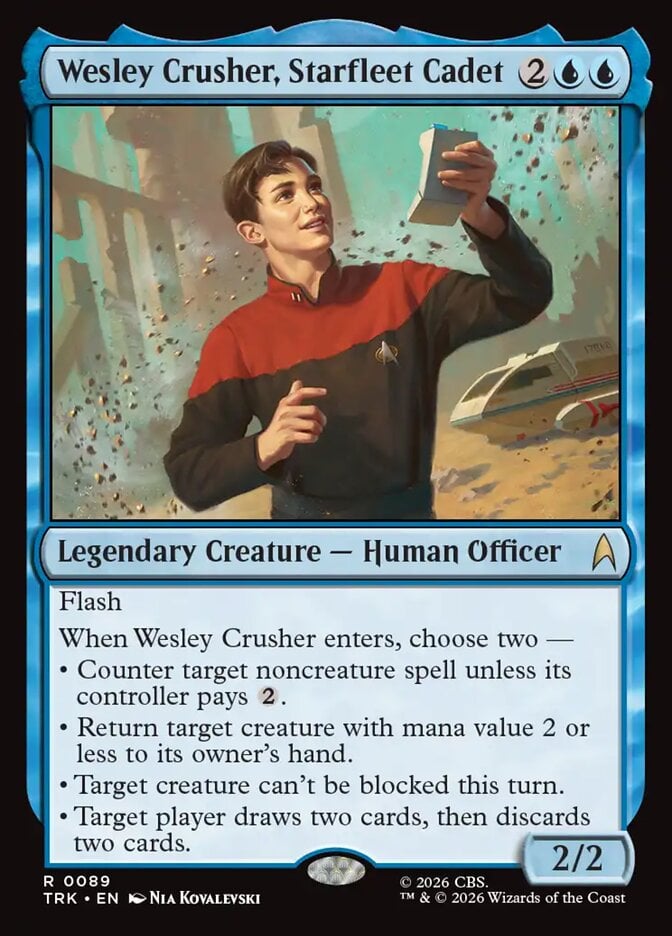
None of Wesley Crusher, Starfleet Cadet’s modes are amazing, but a 2/2 flash alongside two of them should make it a generally great creature. Careful Study with the ability to bounce a creature token, or Careful Study plus Spell Pierce are the main combinations I expect to choose.
Armus, Skin of Evil (Bomb)
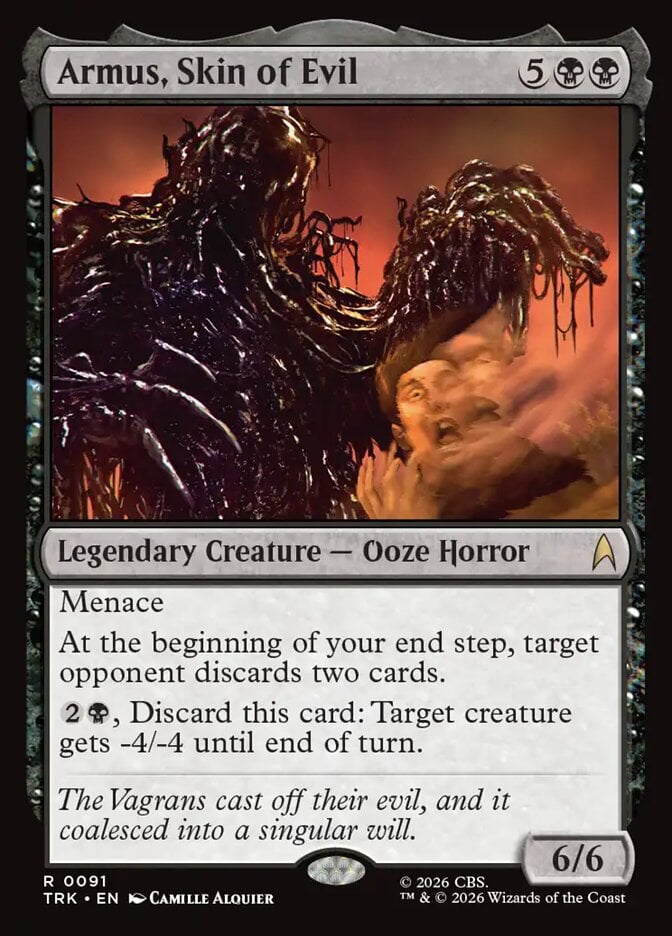
Slamming this late game is just rude, as Armus, Skin of Evil may end up forcing your opponent to discard whatever answer they were saving for it. You can even use Armus as a removal spell early if you needed. Note that there are no Reanimates in Star Trek that can target this, thankfully, although there are plenty of Raise Dead effects.
Collation Trimatrix (Bomb)
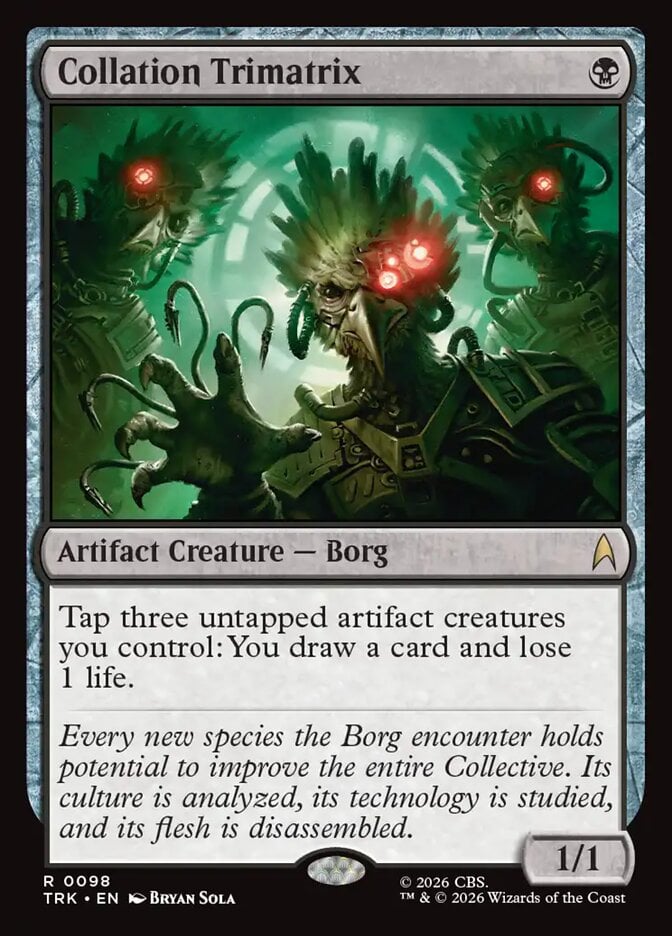
Cryptbreaker is back! One-drop card advantage engines are rarely printed for a reason, as it’s wild watching a card that costs 1 mana overpower your opponent late game. 1-2-3 curve outs with Collation Trimatrix will feel brutal, and you can get safe immediate value later on by playing it with an already developed board.
Elim Garak, Simple Tailor (Bomb)
I’m amazed there’s no “once per turn” limit on Elim Garak, Simple Tailor, as this could drain for 6+ life in one turn if you play your cards right! It’s even a 3/3 menace baseline to start, so we have another amazing rare on our hands.
General Chang, Cold Warrior (Great)
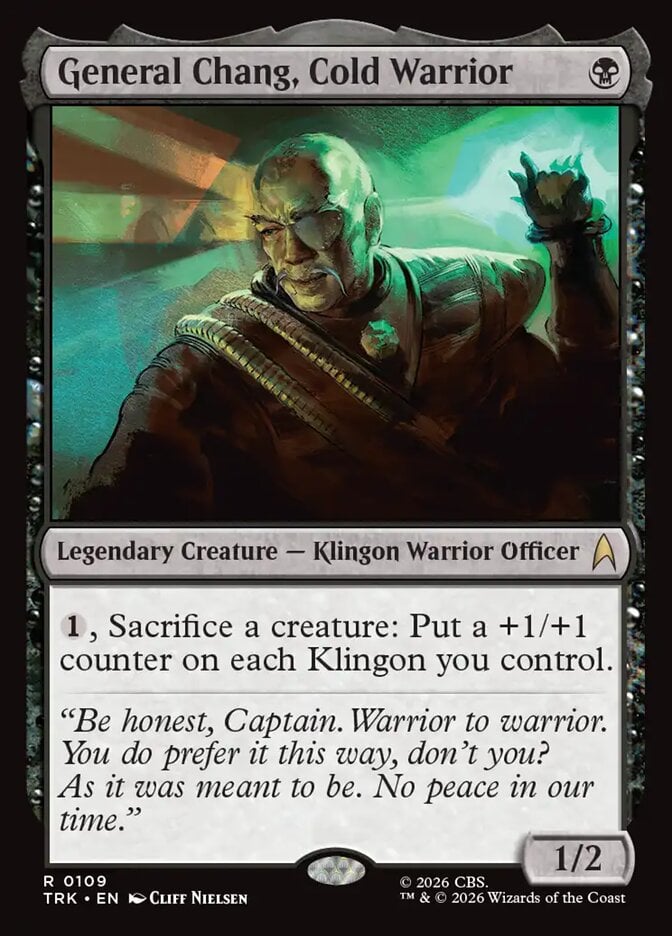
General Chang, Cold Warrior is one of the strongest Klingon/sacrifice payoffs in Star Trek, and it shines with many cards that create disposable 2/1 Klingon Warrior tokens. You can even sacrifice non-Klingon creatures to make Chang larger, so I’d play this in just about any black deck.
Grand Nagus Zek (Mediocre)
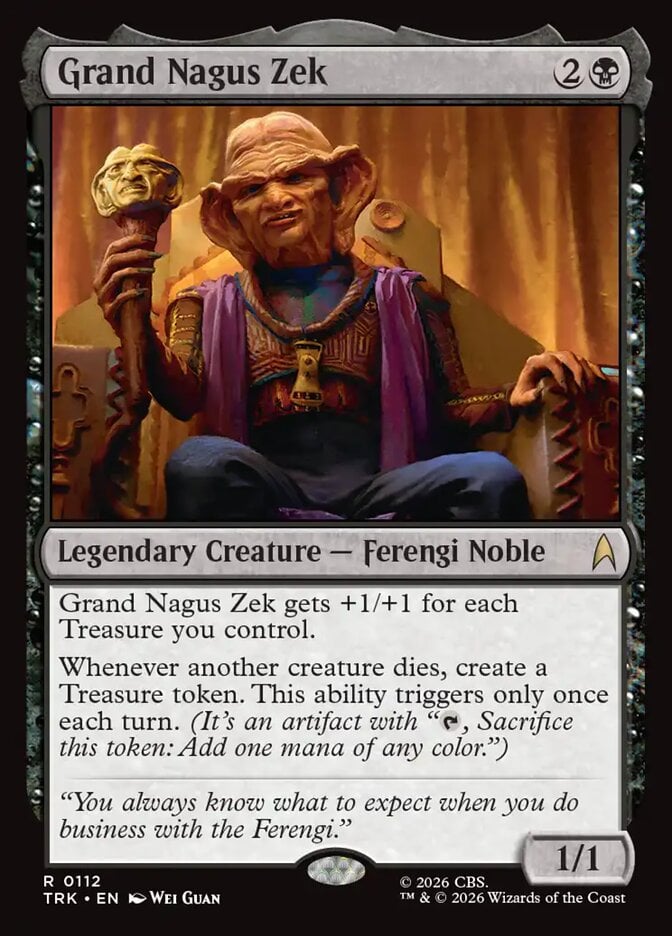
Grand Nagus Zek is a much milder “dies” payoff, since it starts pathetically small for its cost and takes several turns to get going. You can supplement it with other Treasure cards like Savvy Profiteer, but I’m likely not playing this one to begin with.
Kai Winn, Faithless Leader (Mediocre)
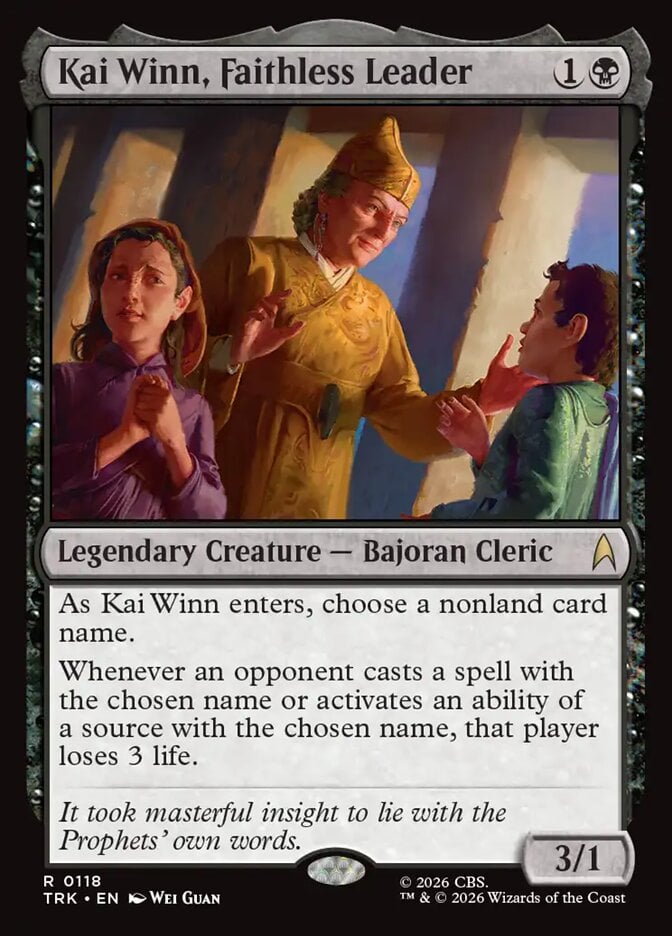
Kai Winn, Faithless Leader is a 3/1 for 2 at worst, I suppose. I’m likely to name cheap removal spells that can deal with it like Planetary Bombardment and Common Goal, especially in blind Game 1 scenarios.
Overflow Submatrix (Great)
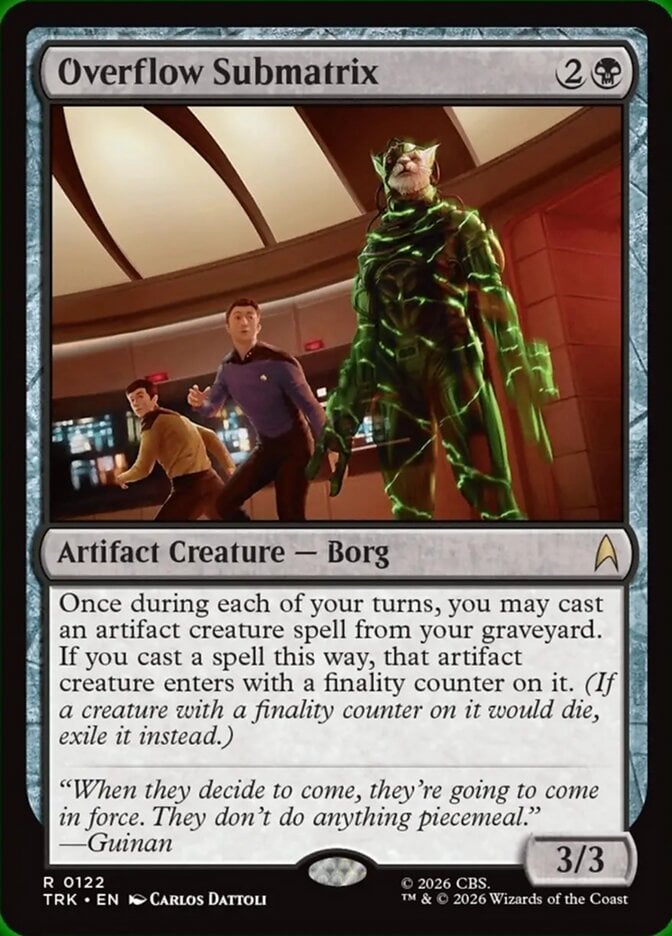
Solid vanilla stats and consistent card advantage from your graveyard make Overflow Submatrix a great rare. It does its best work in WB artifact decks alongside other artifacts-matter cards like Collation Trimatrix and Primary Unimatrix Adjunct.
Salt Vampire (Great)
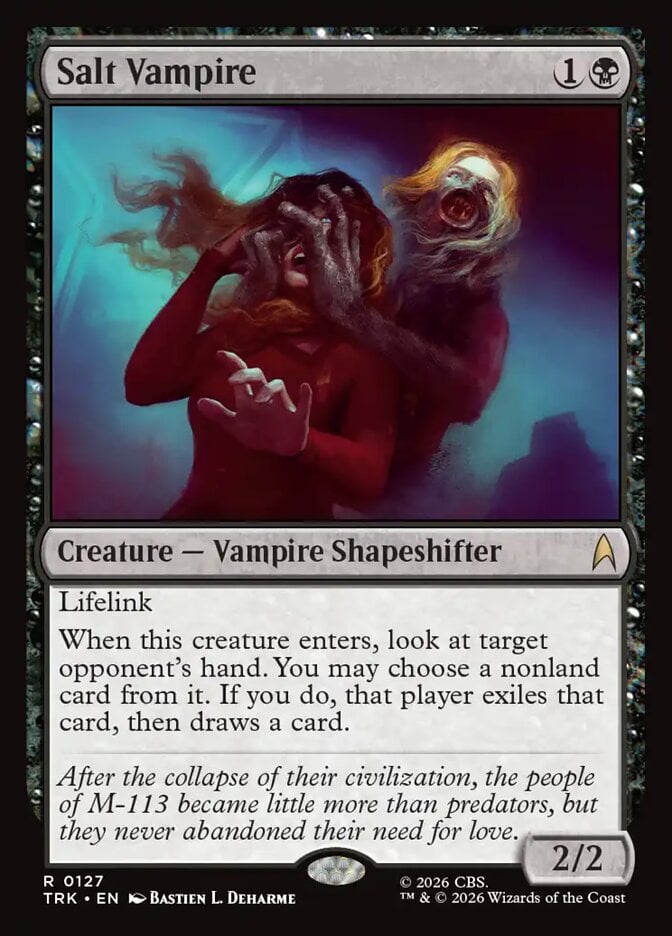
2/2 lifelink baseline and a Vendilion Clique effect is an awesome way to start a game of Magic! You don’t need to take a card with Salt Vampire if your opponent’s hand is mediocre either, so it’s all upside.
Sela, Tal Shiar Paradox (Great)
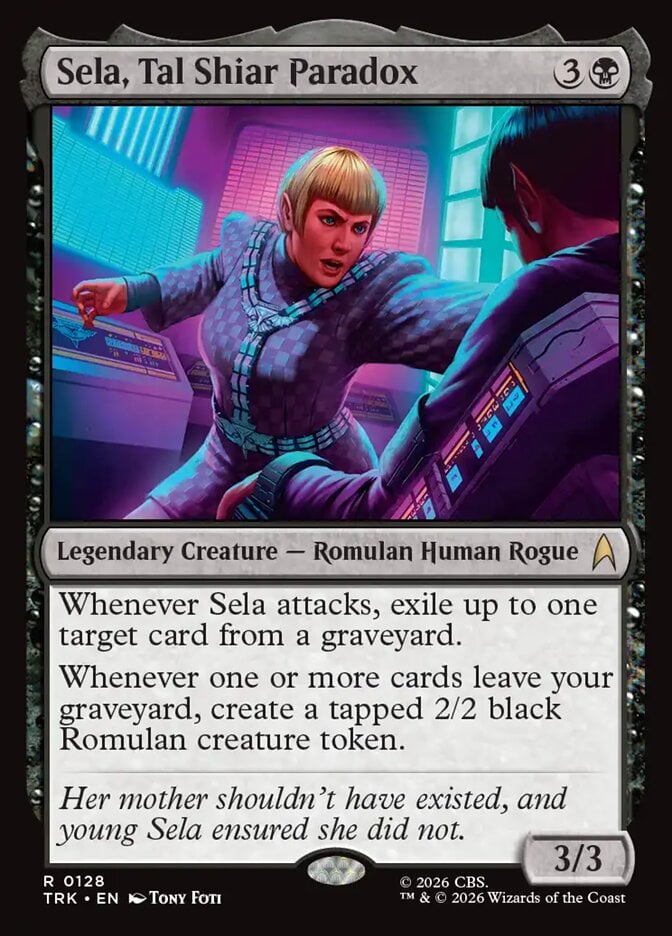
Sela, Tal Shiar Paradox is a bit slow to get going, but it’s a Hill Giant that makes a bear on attack at worst. It gets better alongside other cards that exile stuff from your graveyard, too.
The Destruction of Praxis (Bomb)
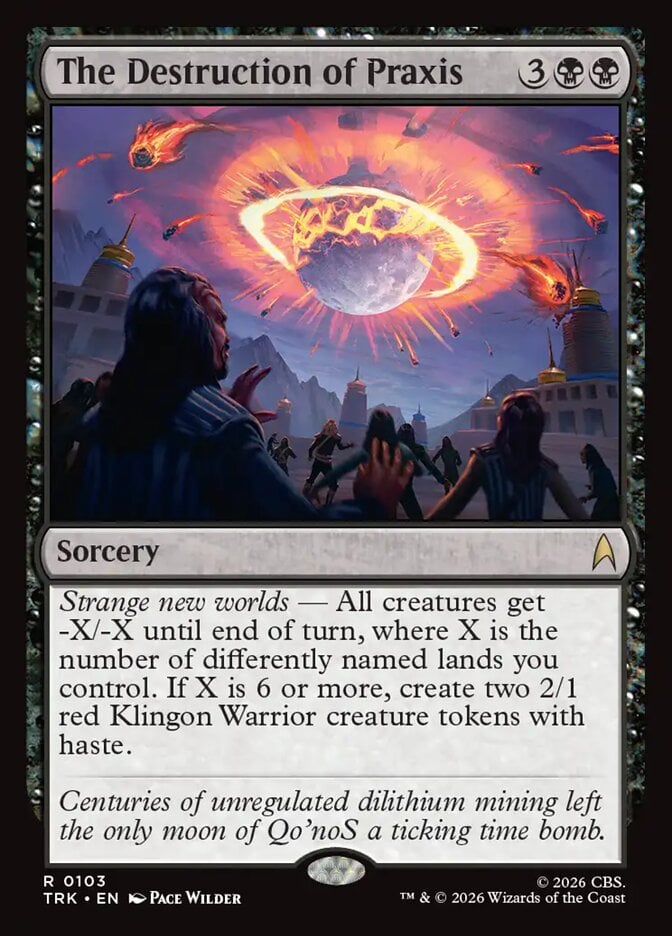
It’s well worth adding some off-color planets to make this sweeper better, and you may even be able to live the Sunfall dream if you get 6+ of them. Even at just -3/-3, I’d happily play The Destruction of Praxis (and I expect it to often be -4/-4 or better).
U.S.S. Reliant, From Hell’s Heart (Bomb)
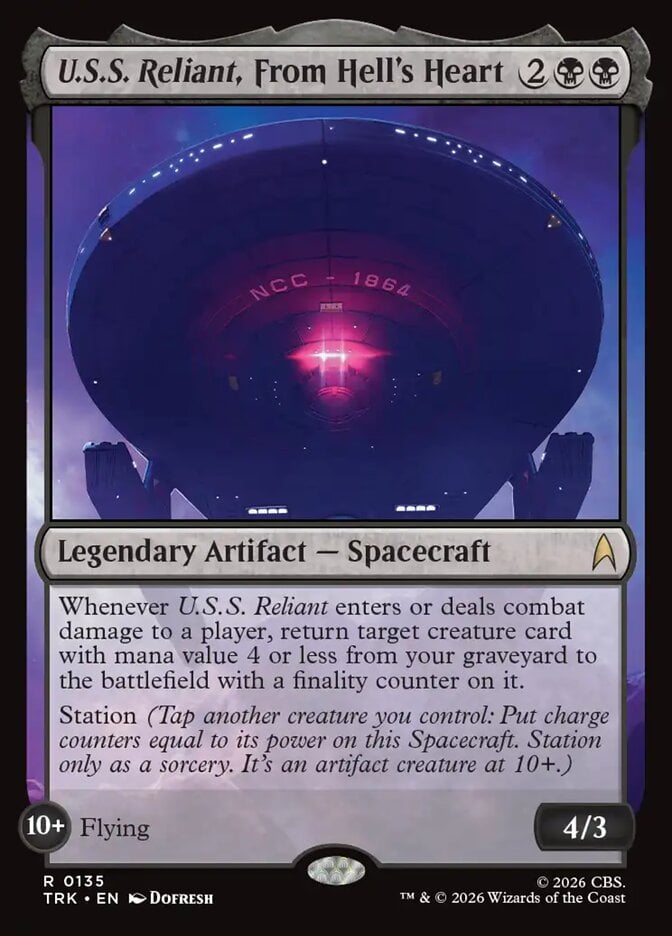
Getting a creature back immediately makes hitting station 10+ way more realistic, and you’re massively rewarded once you do. Try to include some extra self-mill like First Contact and Temporal Conqueror to ensure you can cast U.S.S. Reliant, From Hell's Heart on curve every time.
Brazen Bluff (Bad)
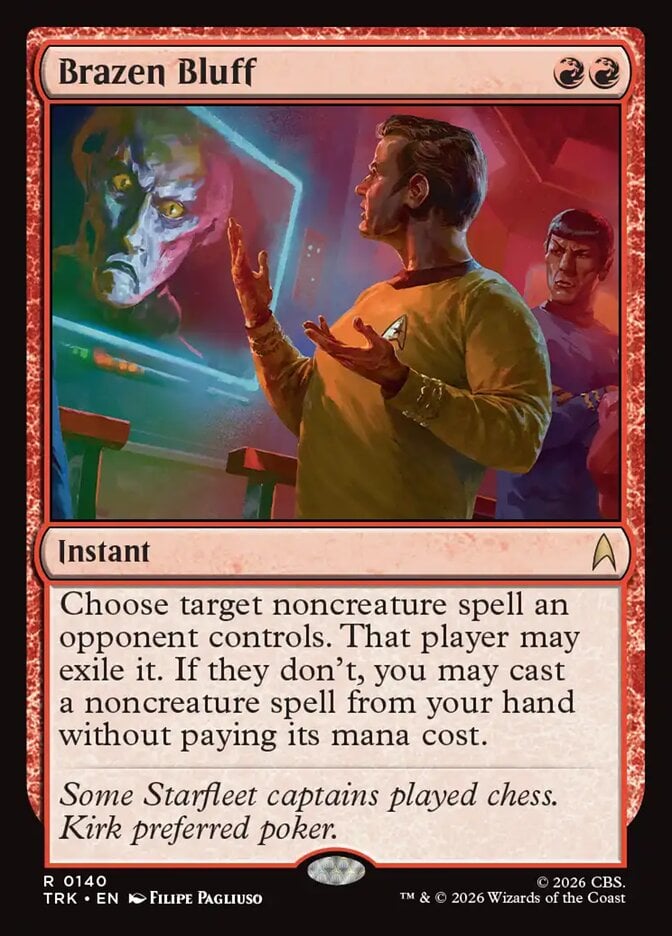
The flavor here is peak, and the dream of plopping down a Deep Space 9 or Death Is Irrelevant from this is tempting. However, the Spike in me simply will never let me play Brazen Bluff, as Negate with a very strange “upside” (which is wholly dependent on your opponent’s whims) is clearly not a “good” Magic card!
D-7 Battle Cruiser (Great)
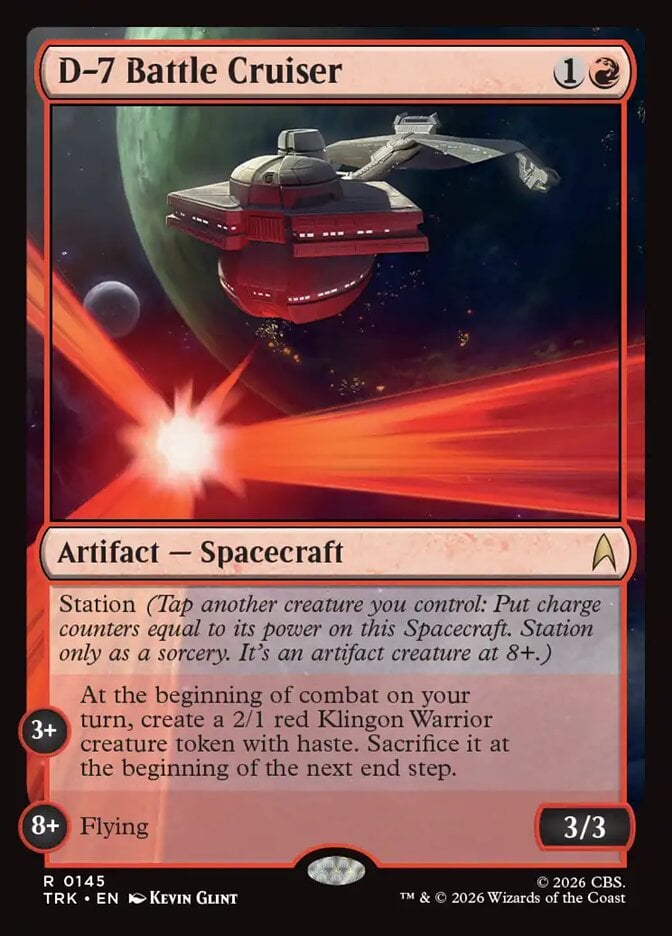
D-7 Battle Cruiser does its best work in Klingon/sacrifice decks, where it acts as an early repeatable engine for cards like General Chang, Cold Warrior. I’m a fan of this in RW power 8+ focused decks too, as they should be creature-heavy for station and will appreciate the extra temporary bodies (which can help you consistently reach 8 power).
Dominion Infiltration (Bad)
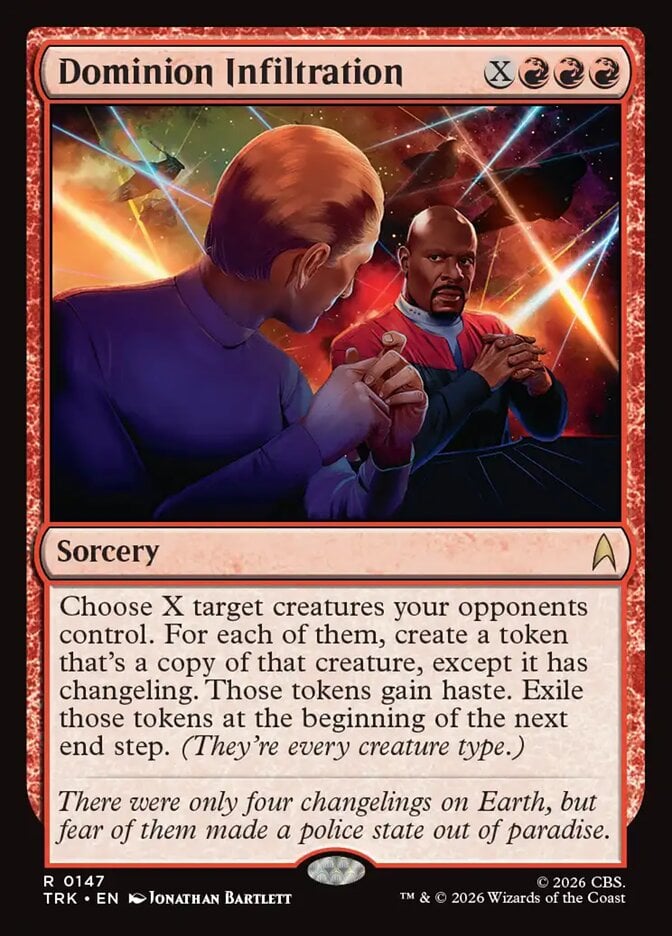
This looks similar to Face Yourself from Reality Fracture, but is significantly weaker. It can’t target your own board, costs to start, and the tokens will never stick around. I’d rather just play another mediocre top-end card like Horta over this, as it looks too inconsistent to be good.
Encounter the Unknown (Good)
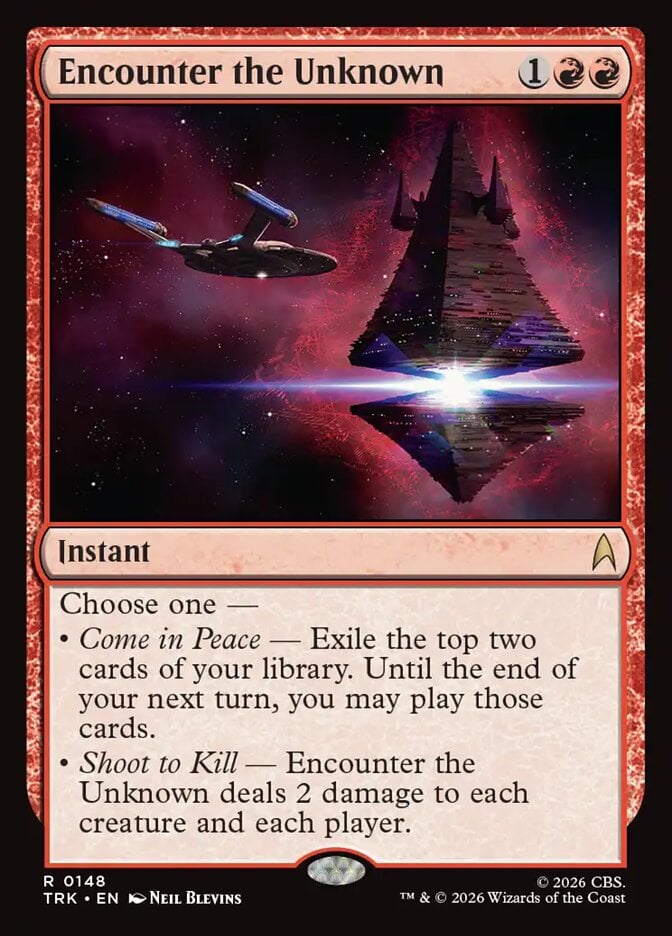
You’ll draw cards with this most of the time, but having the sweeper/player damage mode available is pure upside. I’d have given Encounter the Unknown a “Great” rating if not for its cost, which will occasionally cause problems with casting either mode conveniently.
Lwaxana Troi, Charming Guest (Mediocre)
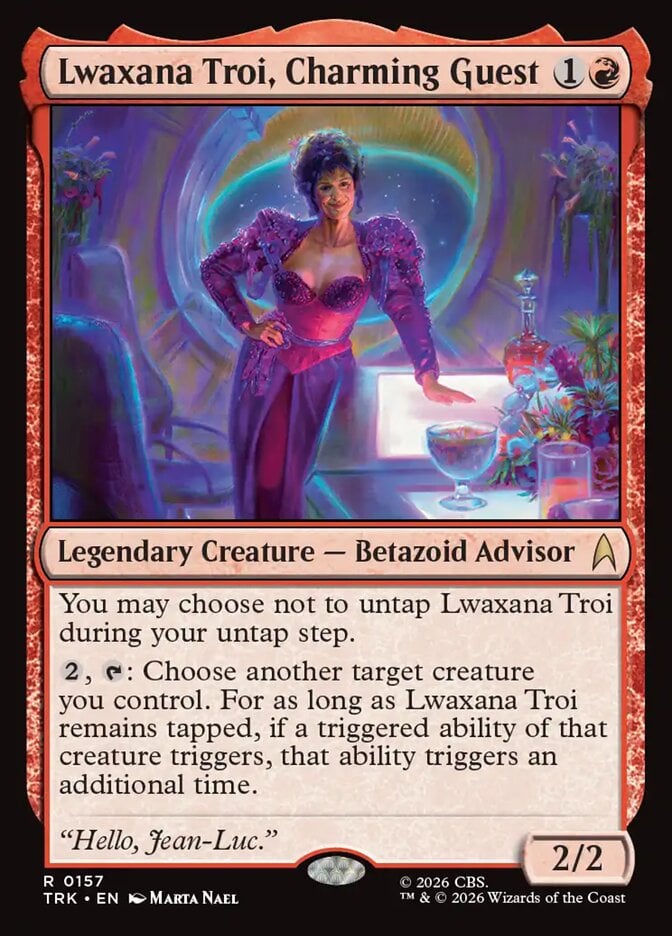
Lwaxana Troi, Charming Guest is going to feel like a red Grizzly Bears most games, as its doubling ability is rather finicky in practice. You can’t copy enters abilities with it, so you’d need to specifically tap it with some kind of creature that repeatedly triggers, then go on to trigger that creature.
Pah-Wraith (Good)
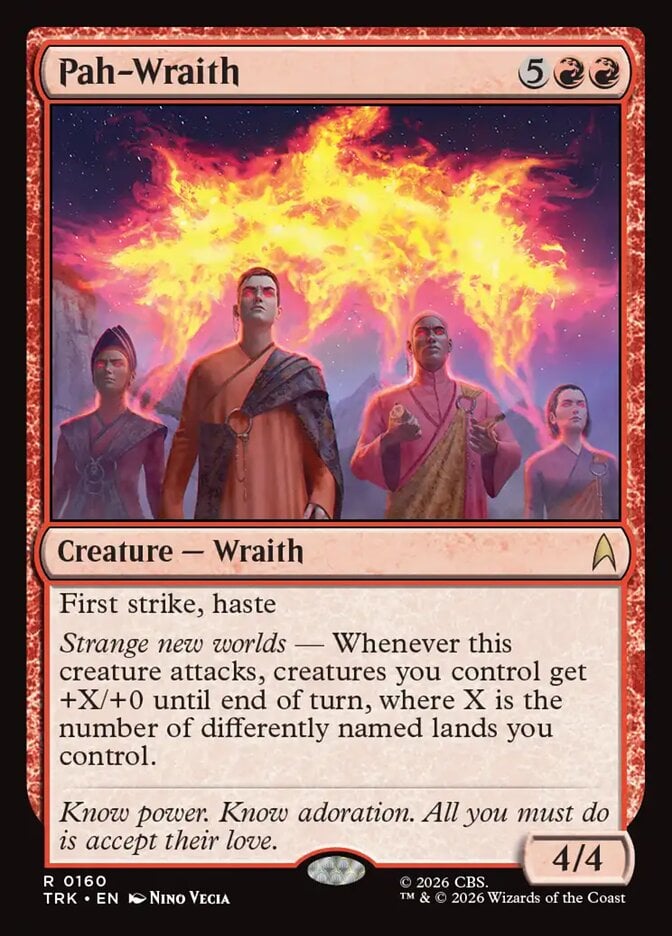
Pah-Wraith is expensive and in weird colors for strange new worlds, and somewhat liable to chump blocking/removal spells. It’s by no means a bad rare, but not at the level of some of the set’s better ones.
Tasha Yar, Out of Time (Bomb)
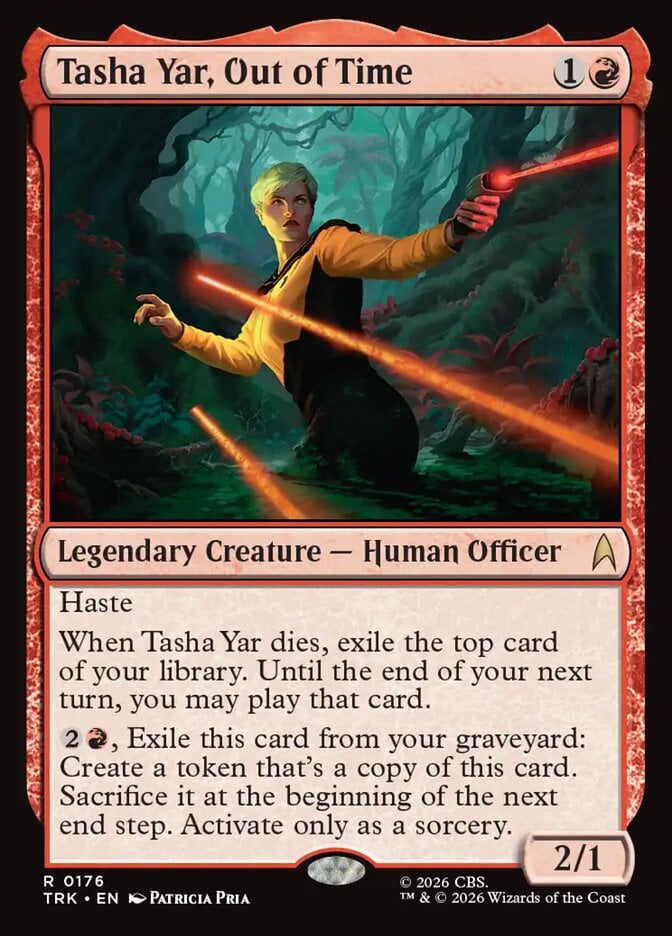
Whoever made this card must’ve been a fan of Tasha, as they made it a guaranteed 3-for-1 that’s also a 2/1 haste creature on curve! Tasha Yar, Out of Time is one of the best red cards in the entire set, and an all-around amazing 2-drop.
The Wrath of Khan (Bomb)
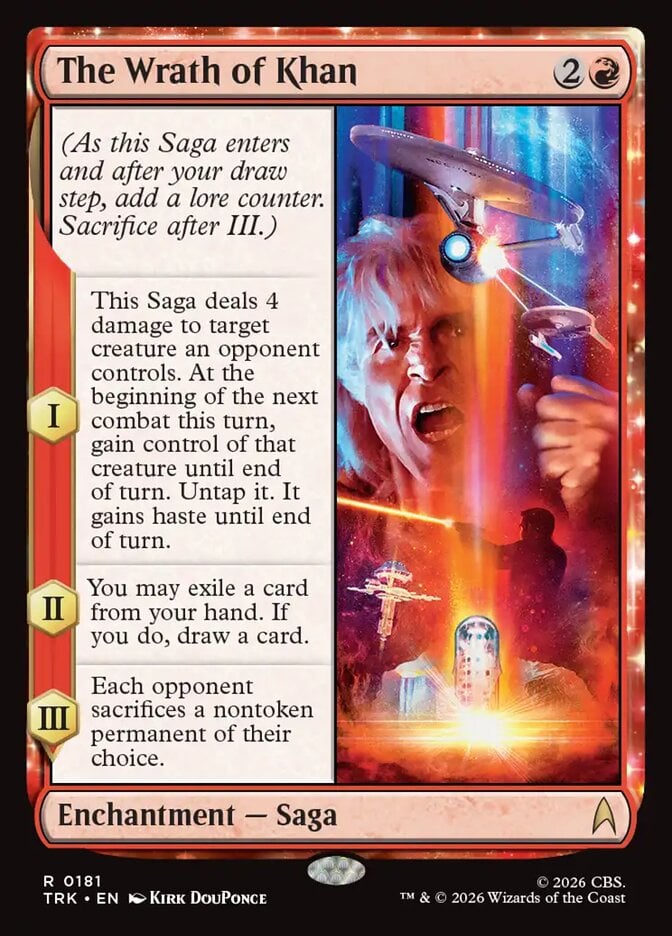
Chapter I of The Wrath of Khan kills most creatures, Chapter II improves the quality of your hand, and Chapter III adds insult to injury by forcing your opponent to sacrifice a land or other nontoken permanent. That’s an absurd deal for , and you can even get more value sometimes if you use Chapter I as an Act of Treason and then sacrifice the big creature to other cards (or just smash your opponent with that creature). Always play/splash this saga!
Will Riker, First in the Field (Good)
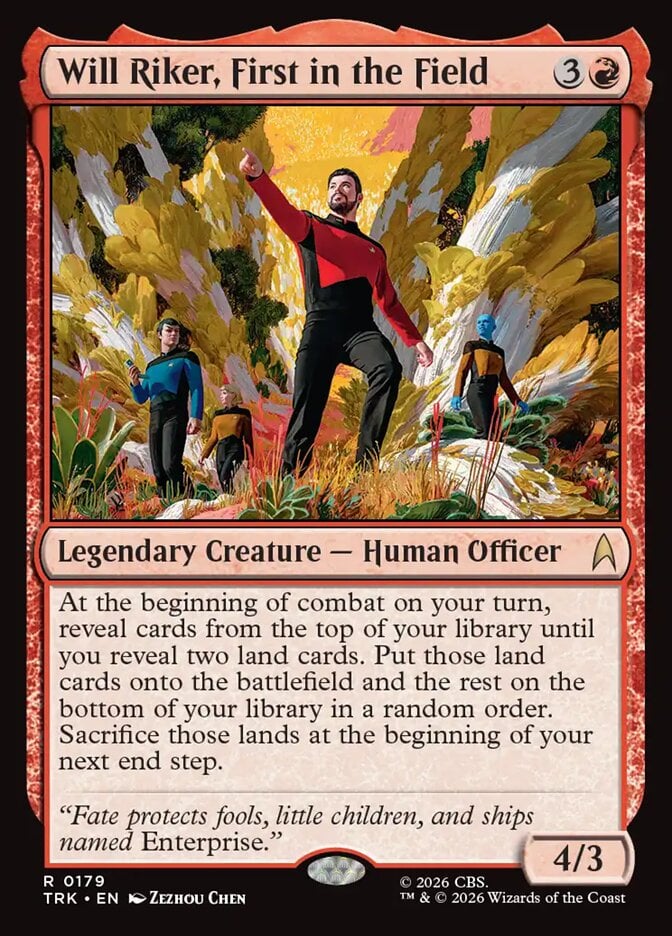
Will Riker, First in the Field is a little undersized for its cost, but it has amazing synergy with landfall cards. Riker also has the weird quirk of stripping your deck of lands if it sticks around, which will make you less likely to flood out in a longer game.
Worf, Intelligence Contractor (Great)
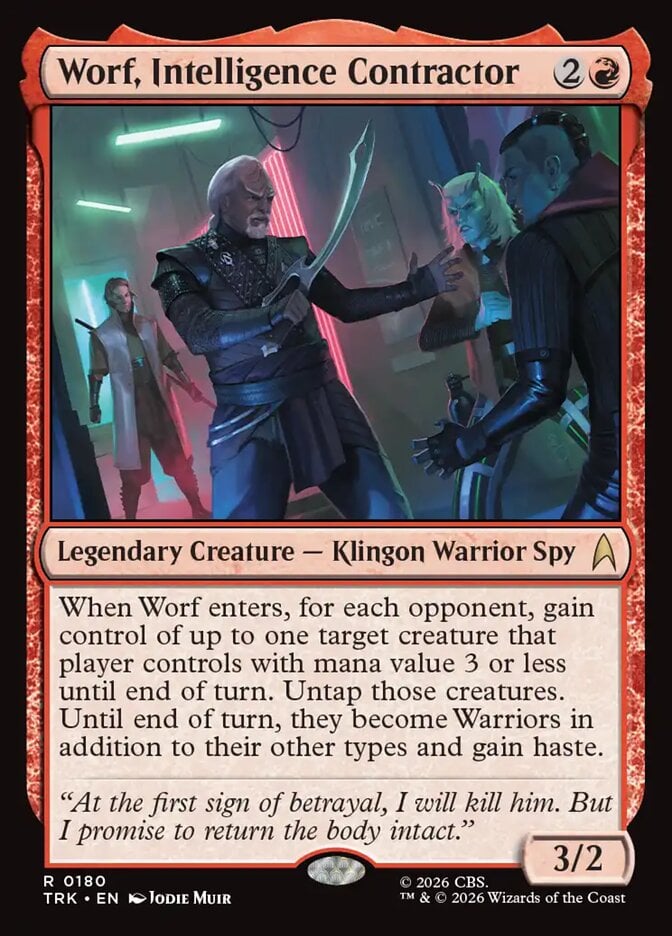
This does amazing work with sacrifice cards like Automated Warfare System and Dahar Master, both of which are commons. Worf, Intelligence Contractor is well worth building around, and has an okay fail case of being a 3/2 with an Act of Treason (for small things) when you can’t go off.
Branching Timeline (Bad)
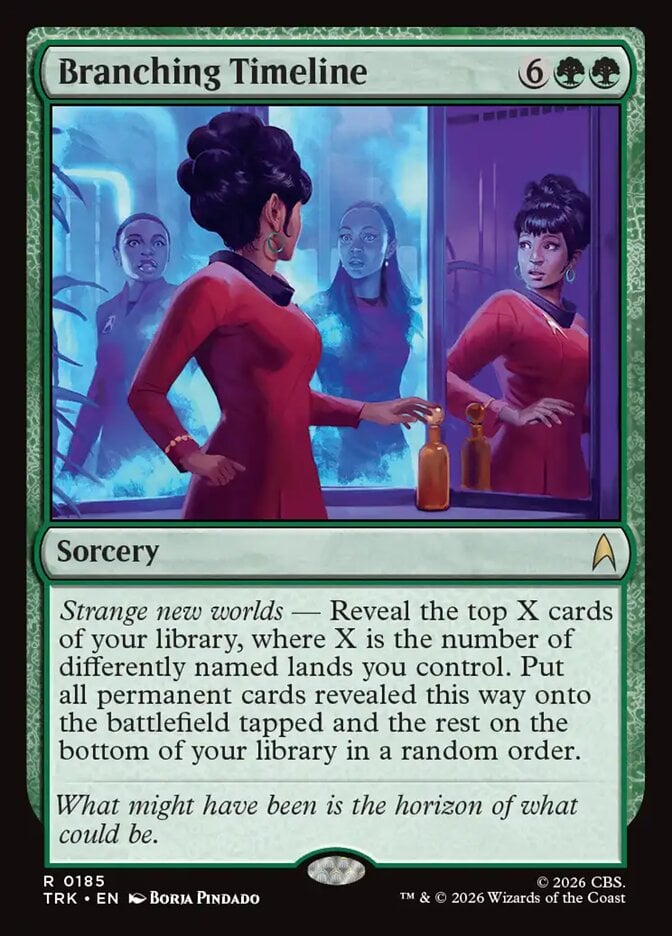
There are several good payoffs for strange new worlds in Star Trek, but sadly Branching Timeline isn’t one of them. The effort required here isn’t even close to the reward you get.
Captain Jonathan Archer (Bomb)
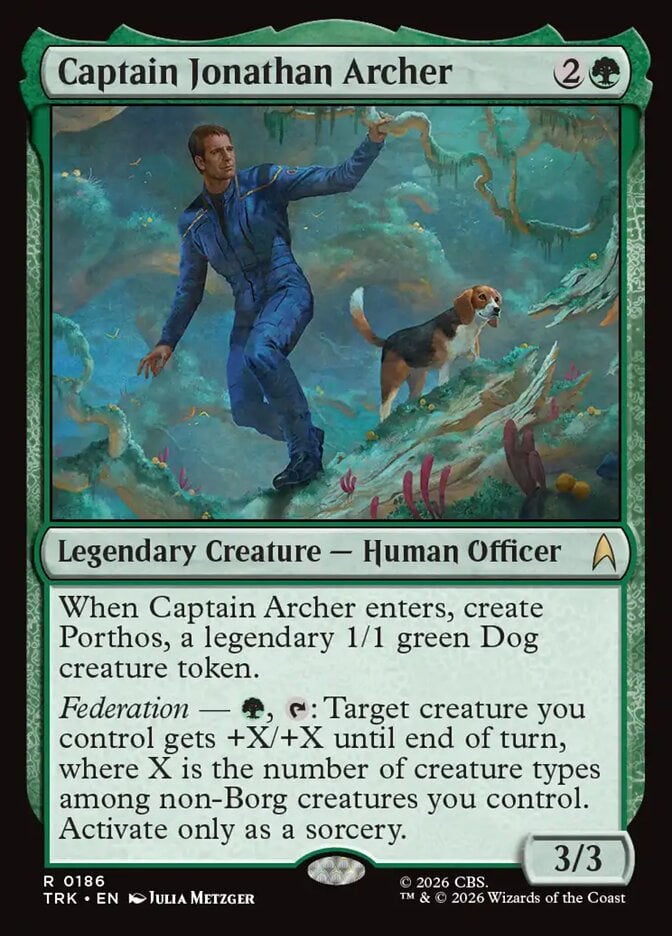
This offers 4/4 stats spread across two bodies, which is followed by some utterly massive pumps from Captain Jonathan Archer if it sticks around. And Porthos is just adorable, too!
Captain Pike, Fullness of Time (Great)
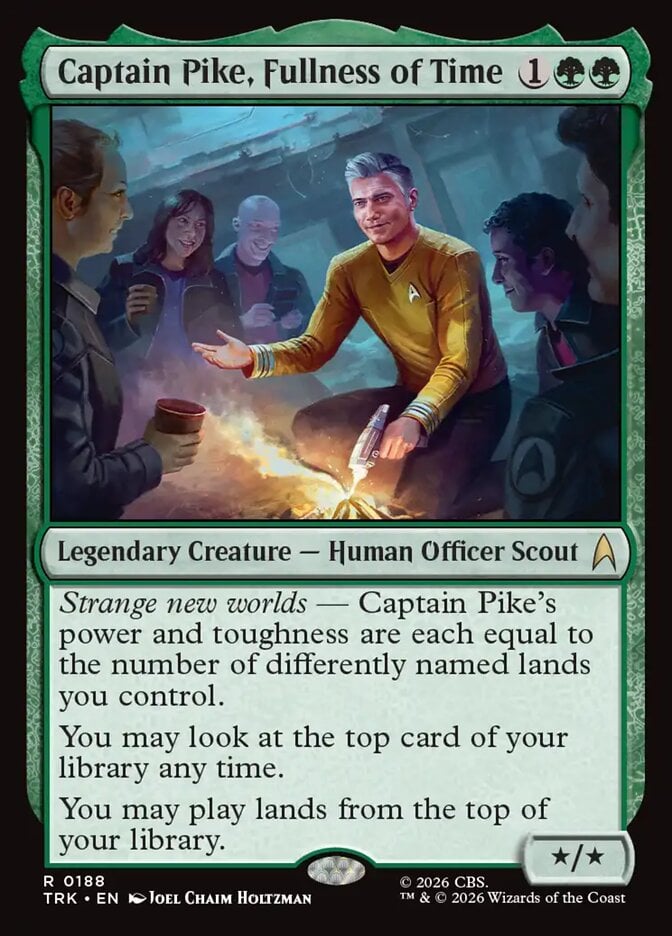
Captain Pike, Fullness of Time will start as a 2/2 most games, and will continuously grow while providing valuable card advantage if it sticks around. That’s an awesome deal for , and you can even get guaranteed value sometimes by playing a land off of the top immediately.
Dr. Leonard “Bones” McCoy (Bomb)
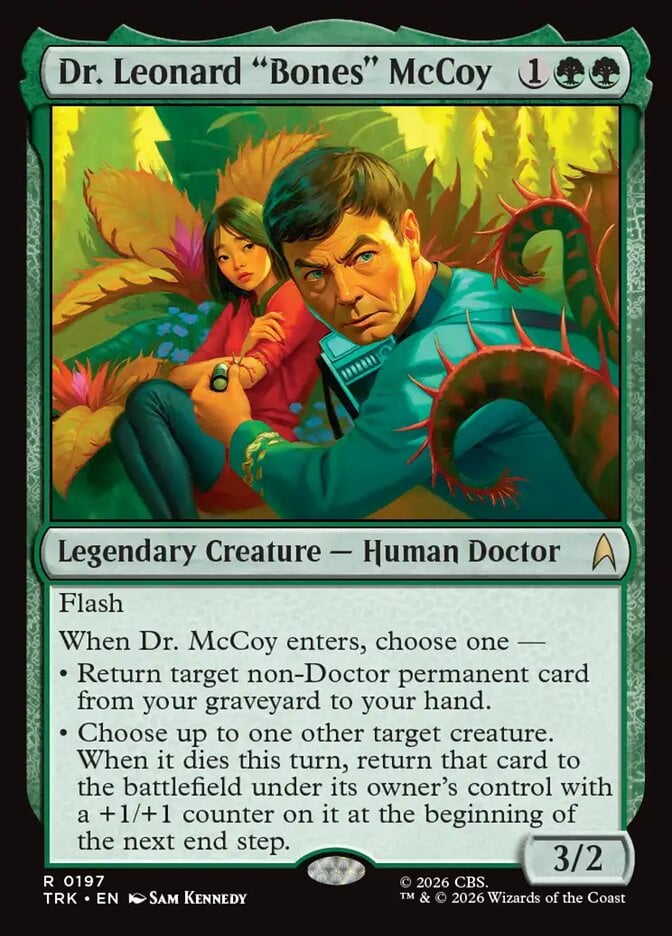
for a flash 3/2 Eternal Witness is way above rate, and Dr. Leonard "Bones" McCoy even has a secondary combat trick mode.
Genesis Device (Good)
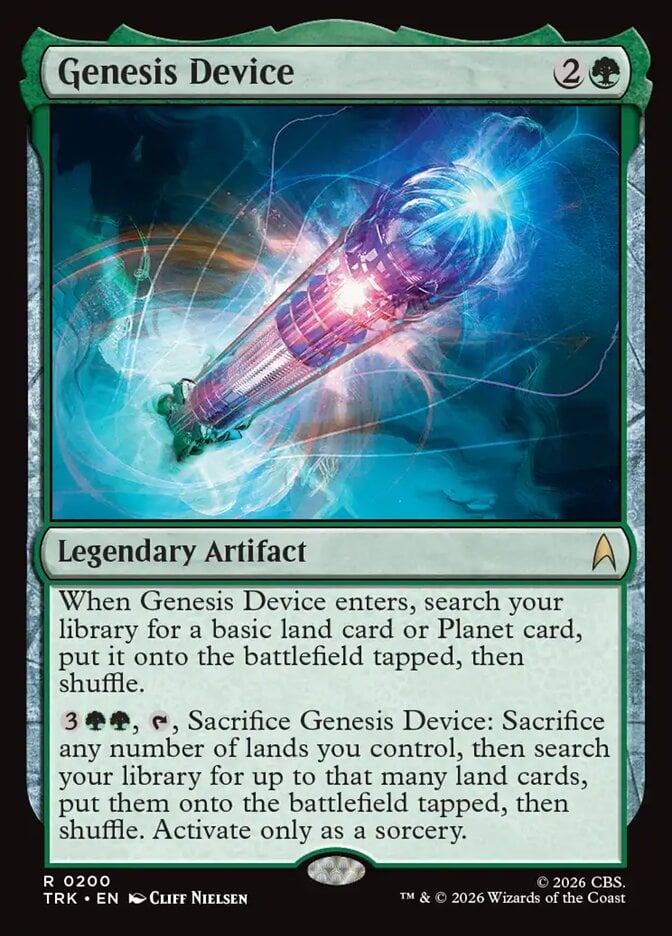
The base rate here is similar to Final Frontier, but the added upside is Scapeshift rather than beam me up. If you have a couple of good landfall cards, you may actually be able to get some real use out of Genesis Device, and it’s at least a Rampant Growth effect to start. You could also try bouncing or sacrificing the artifact with cards like Miles O'Brien, Transporter Ops and Eject the Warp Core.
Holo-Engineer (Bomb)
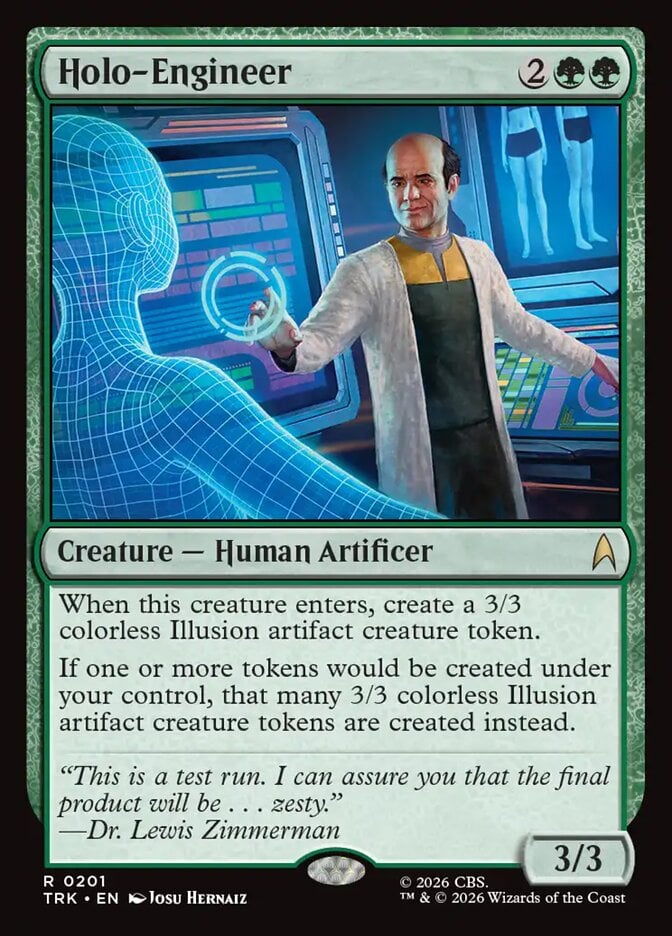
At worst, Holo-Engineer is a pair of 3/3s for , which is well above rate. At best, it’s that plus multiple 3/3s in the future, which can replace Treasure tokens and 1/1 Officers. Try to pair Engineer with other token makers, and always play it when you can!
MACO Strike Team (Great)
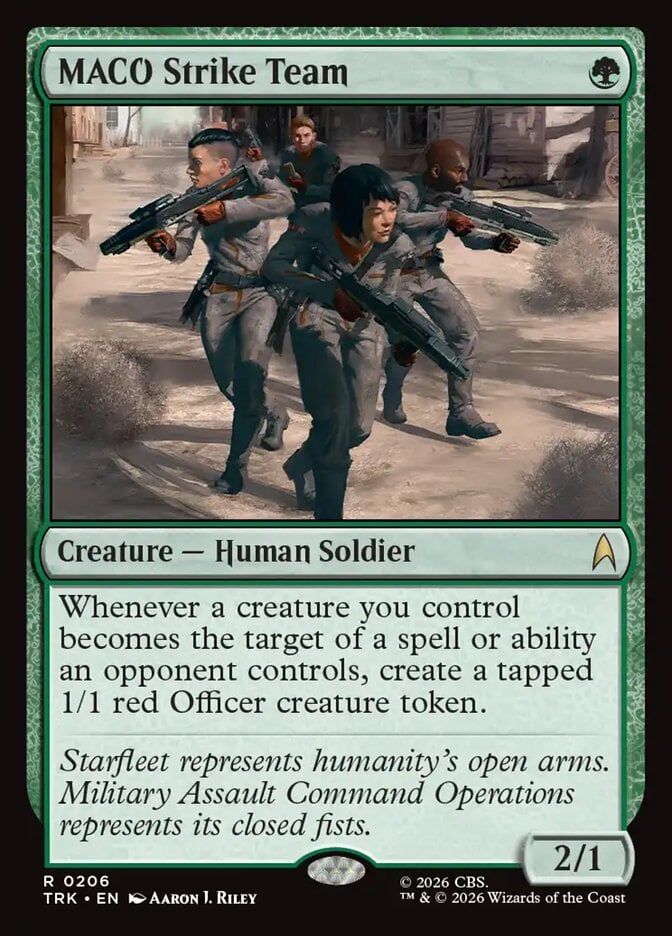
Getting free Officers when your opponent plays removal is great upside on a Savannah Lions. MACO Strike Team at least replaces itself in most games, but can put in a lot of work for a humble 1-drop, especially as a cheap creature to bounce for beam me up costs.
Stable Wormhole (Good)
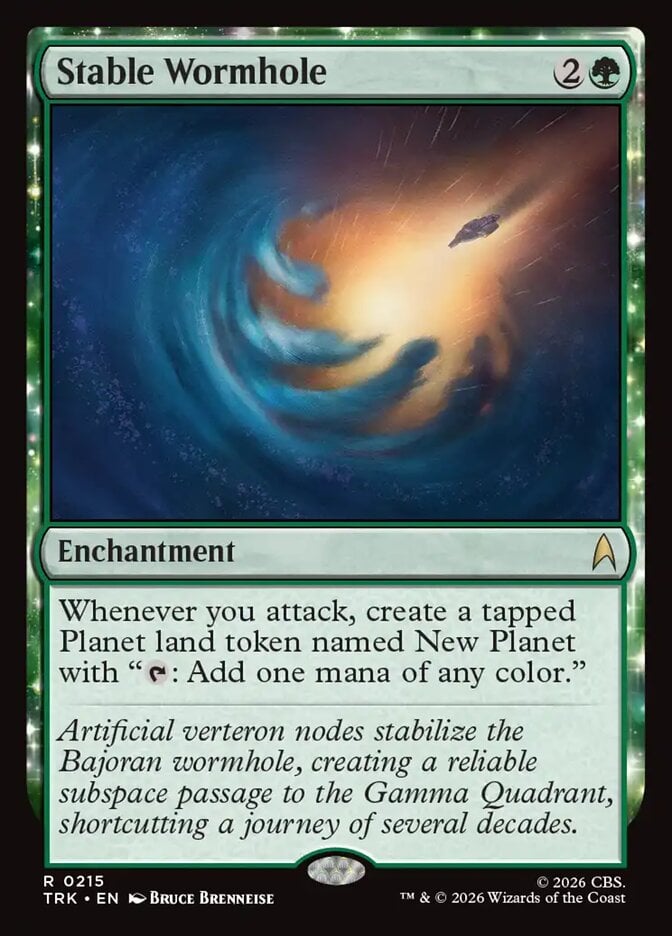
Curving Planetary Patrol or Jake Sisko, War Correspondent into this seems like a great way to start a game. Federation Probe is another card I love with this, as Star Trek is light on early reach creatures/fliers to block it. Wormhole is definitely a bit high variance (as it won’t do much if you are behind), but potentially worth building around.
U.S.S. Discovery, at Black Alert (Bomb)
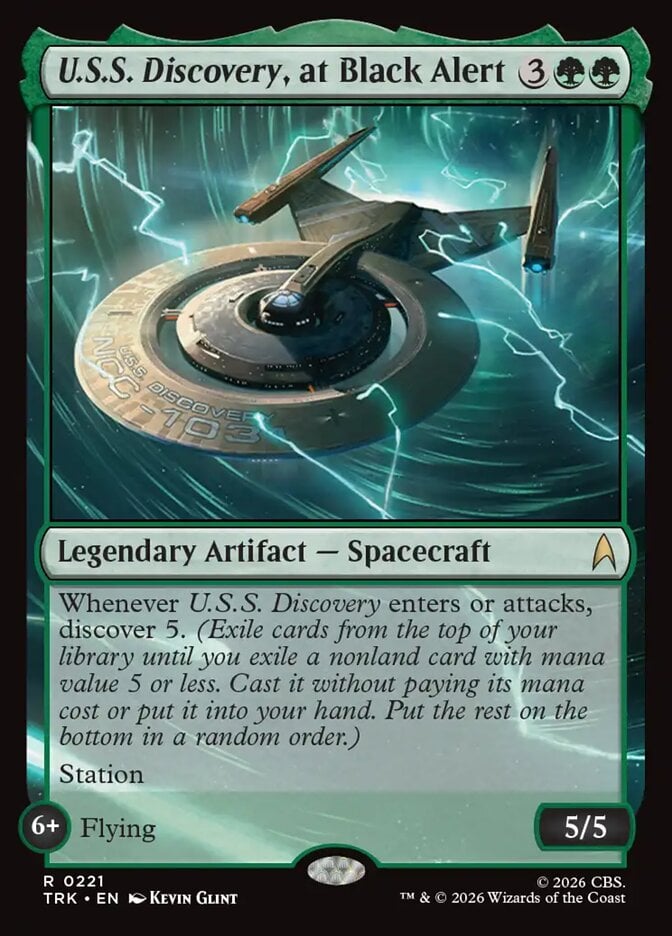
I can’t believe this requires only 6 power to finish, as U.S.S. Discovery, at Black Alert immediately refunds itself with another spell and then threatens to do so on every attack afterwards. A clear giga-bomb!
Live Long and Prosper (Mediocre)
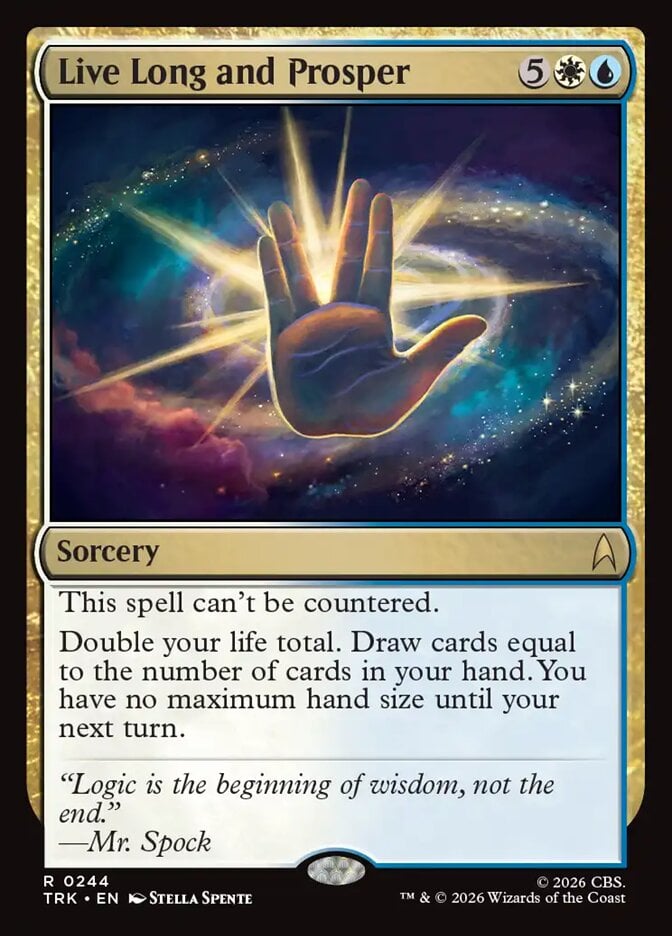
Spock’s Revelation requires you to have cards in hand to actually draw much from it, and you can’t play it until you’ve naturally reached 7 mana anyways. Live Long and Prosper is a powerful effect in theory, but the fail cases with this will be truly garish to behold.
Mirror Universe Intrusion (Good)
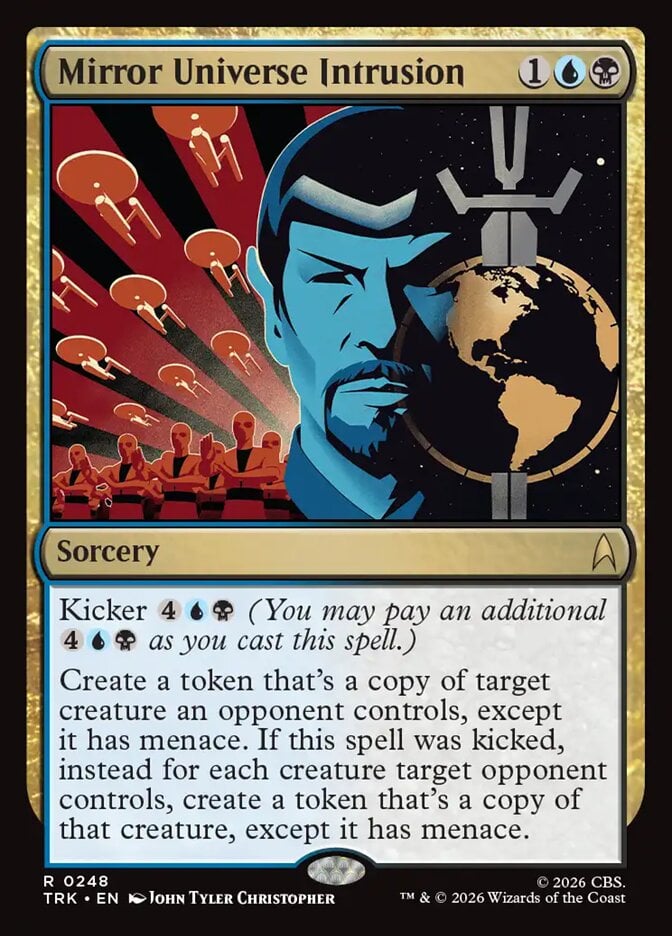
Three mana for an opponent-only Clone (plus menace) isn’t a bad deal, and is a good excuse to get me to put Clone Legion in my deck. Mirror Universe Intrusion will be really fun to kick every now and then, even if you mostly won’t be able to.
Gowron, Eager for Battle (Bomb)
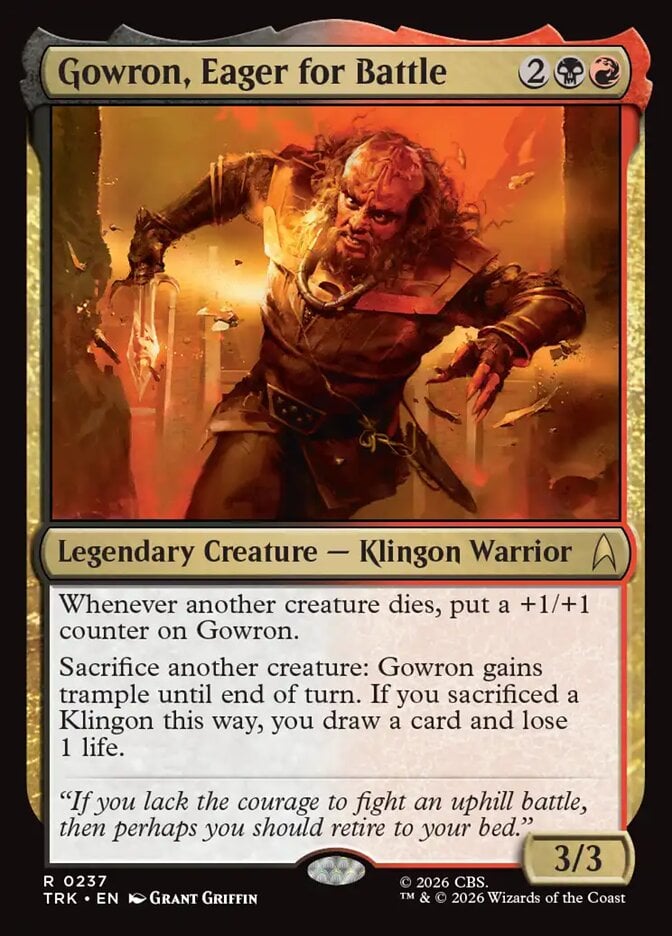
Gowron, Eager for Battle gets huge fast, as it triggers from any creature dying, not just yours. Throw in the sacrifice for trample text and its Klingon bonuses, and you have a winner.
Hit It! (Good)
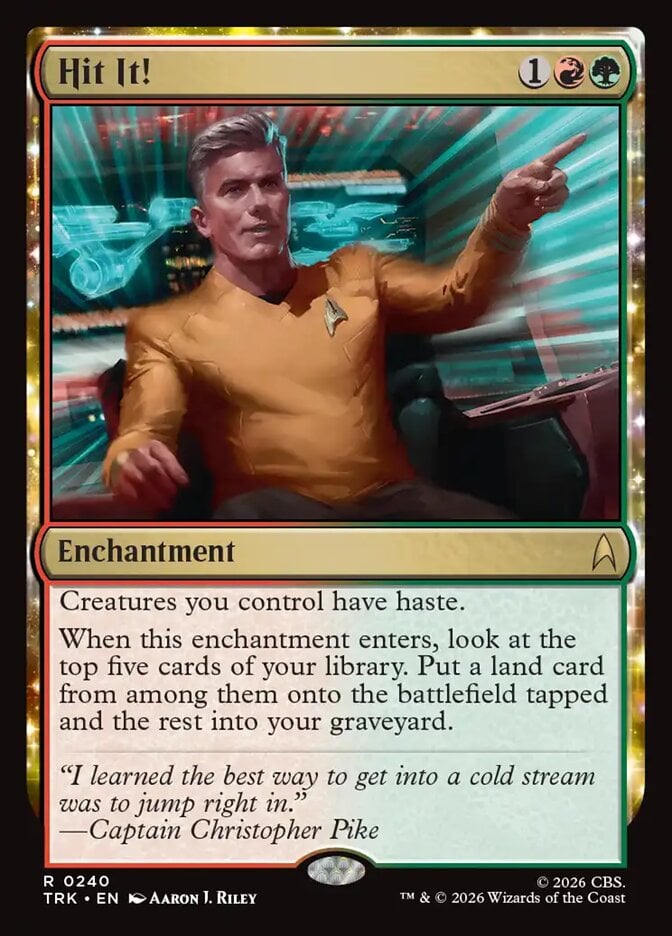
Three mana for a Rampant Growth is a bit below rate, but having permanent haste on creatures for the rest of the game is a worthwhile bonus. I wouldn’t splash this, but I’d happily play it in anything base RG.
The Inner Light (Mediocre)
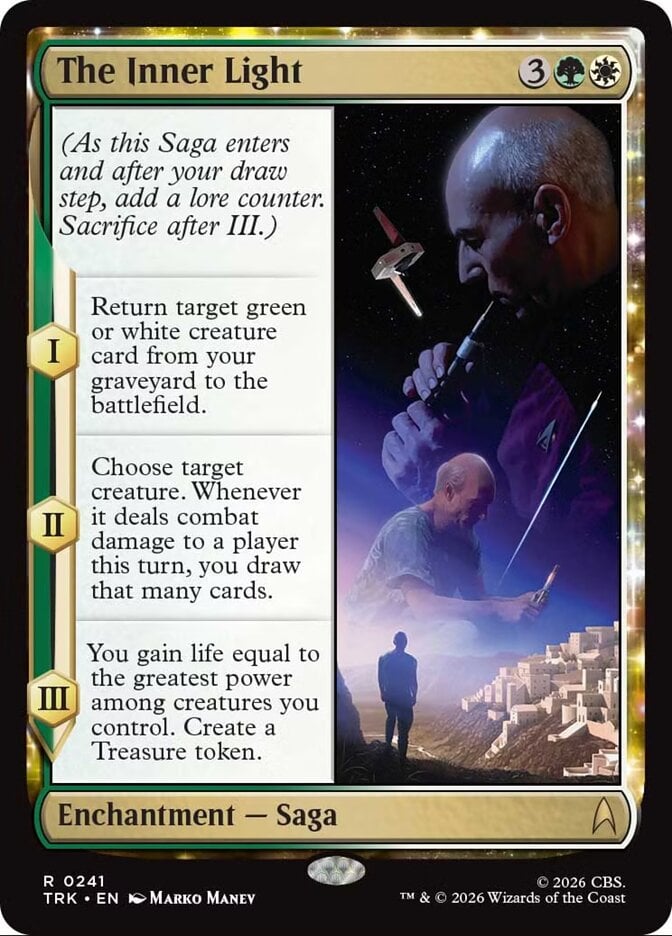
You might be able to set up a decent Chapter I with Temporal Conqueror and First Contact, although keep in mind that only green and white creatures are eligible. Chapter II is the most powerful mode of The Inner Light, but your opponent can easily disrupt it with removal/blockers. Throw in the lifegain from Chapter III, and you’ve got an overall passable saga that usually falls short of its (potentially massive) ceiling.
The City on the Edge of Forever (Mediocre)
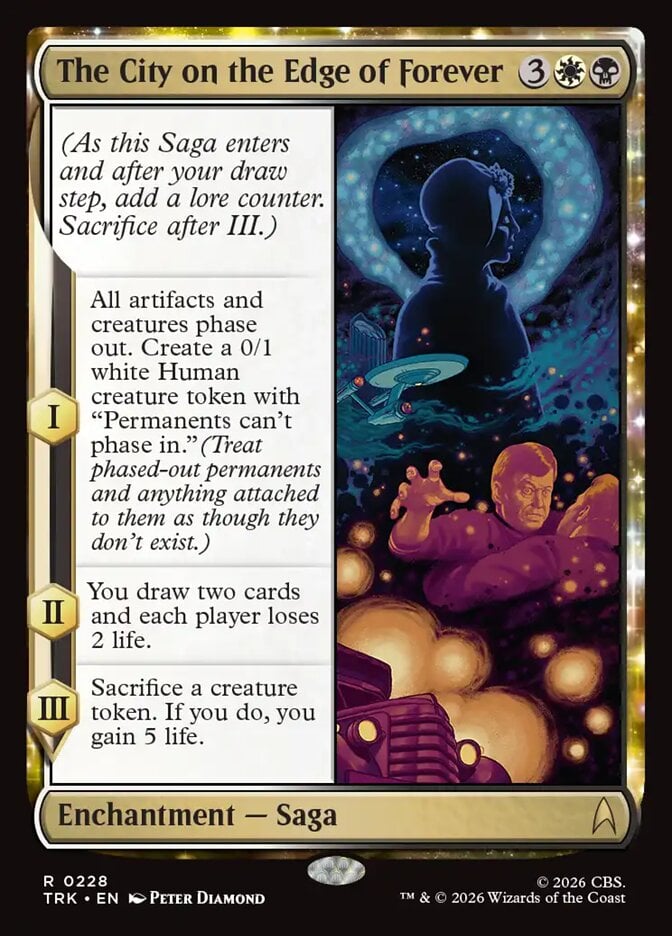
Awesome flavor aside, The City on the Edge of Forever is a bizarre Sleep variant that usually ends with a Divination and +3 life. You could technically sacrifice an Officer token instead of the 1/1 white human to keep the phase out going, although your opponent will always be able to get their stuff back by killing the 0/1.
Year of Hell (Bad)
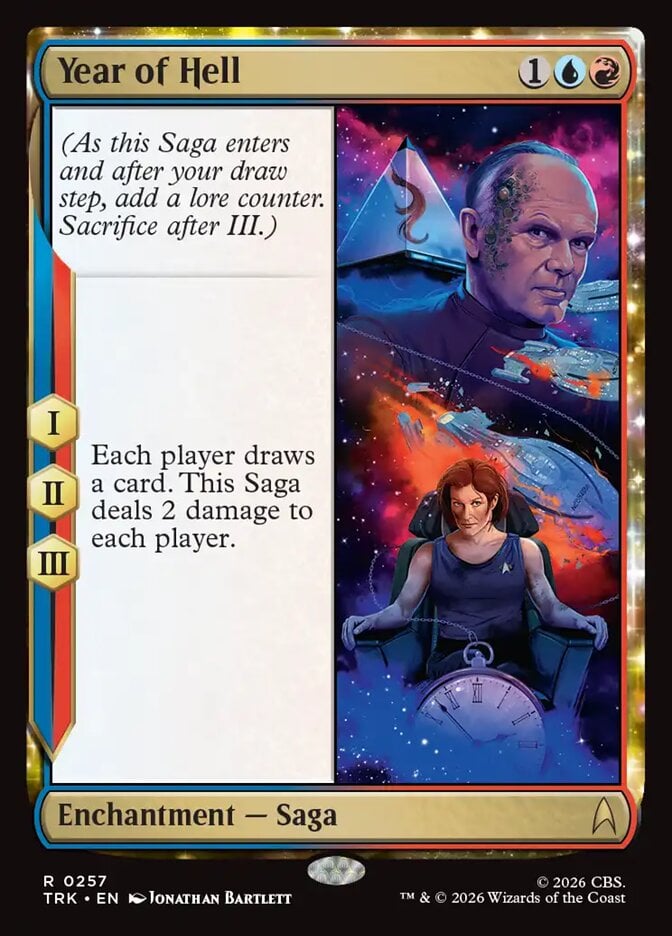
You’re in for a game of hell if you put Year of Hell in your deck, as it’s 100% symmetrical. That could potentially work out if you have a very aggressive UR deck, but UR looks pretty durdly in this set to me.
Nog, Ambitious Cadet (Bomb)
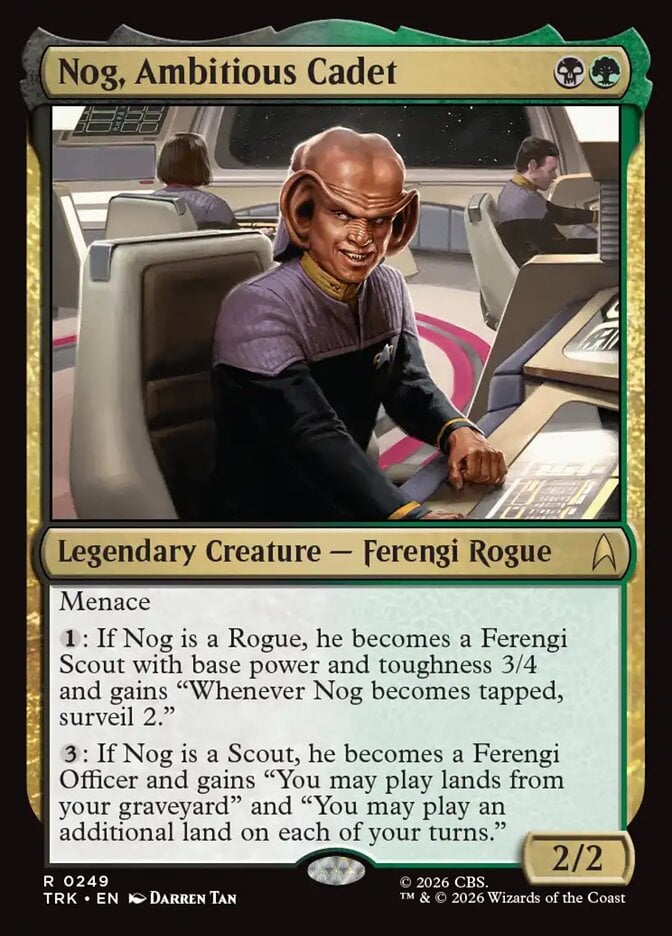
Nog is ambitious indeed, as no other 2-drop in the set scales like this does. Give Nog, Ambitious Cadet a bit of time, and it’ll fix your draws for you for the rest of the game, while delivering free lands from your graveyard and solid beatdowns. This is an absurdly good creature for 2 mana, so please play/splash this every time!
Kira Nerys, Firebrand (Good)
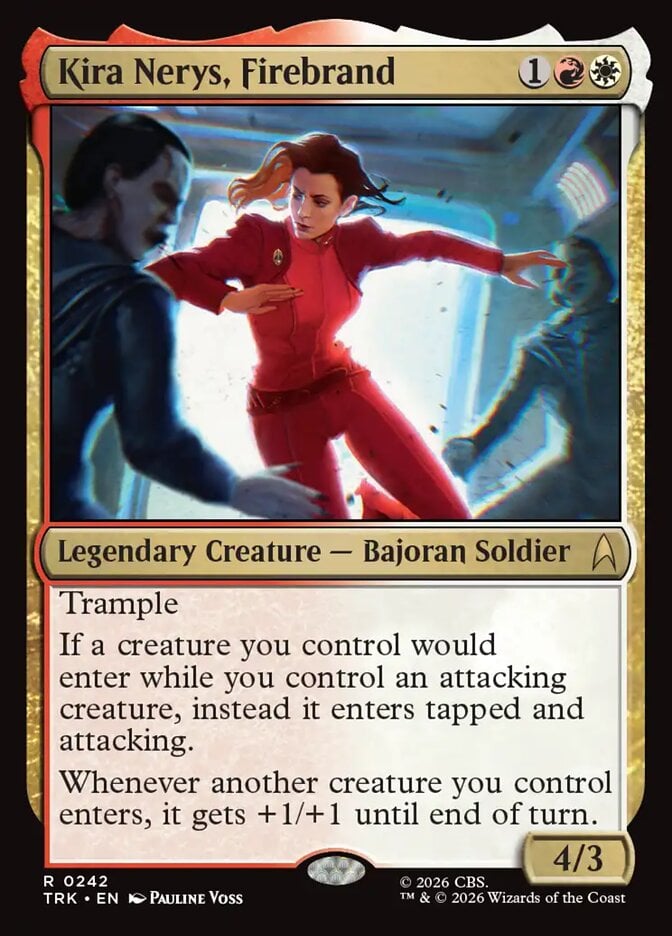
Kira Nerys, Firebrand has cool synergy with flash creatures, which can enter tapped and attacking, even after blockers have been declared. It’s mostly just a trampling 4/3 otherwise, but that’s already decent for .
All Good Things… (Bomb)
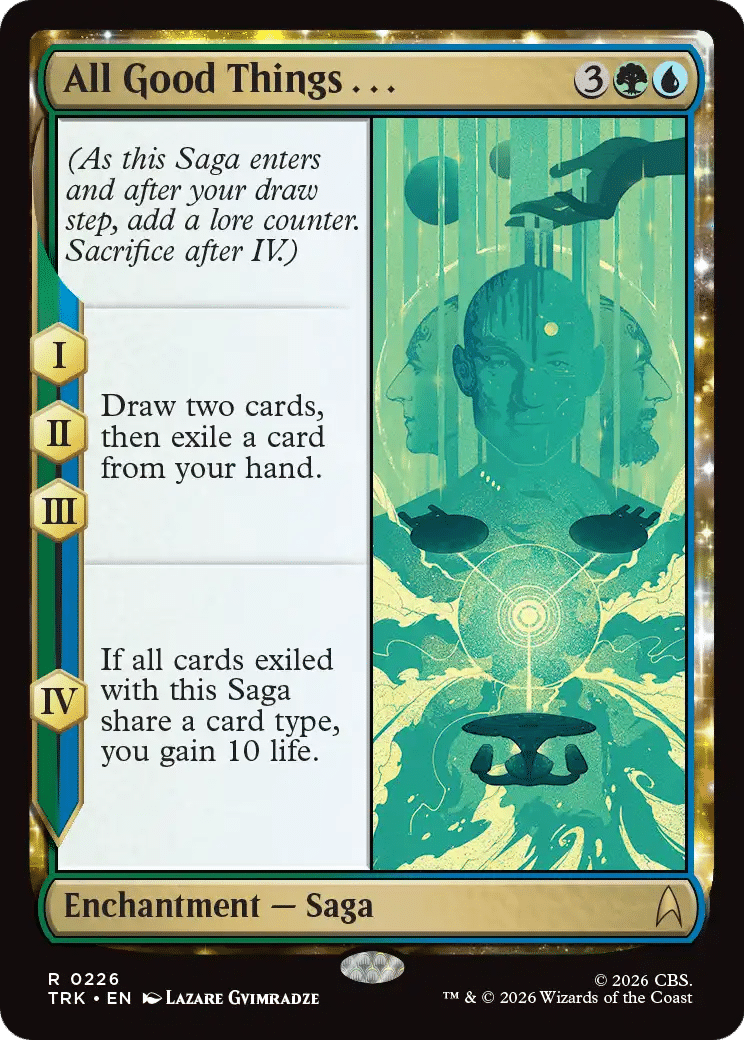
This saga offers an unprecedented amount of card advantage, as you’ll see six cards by the time Chapter III rolls around (and keep three of them). Chapter IV may occasionally gain you 10 life as well if you can exile three lands or creatures to All Good Things. . ., but that’s hardly needed.
Sarek, Federation Ambassador (Mediocre)
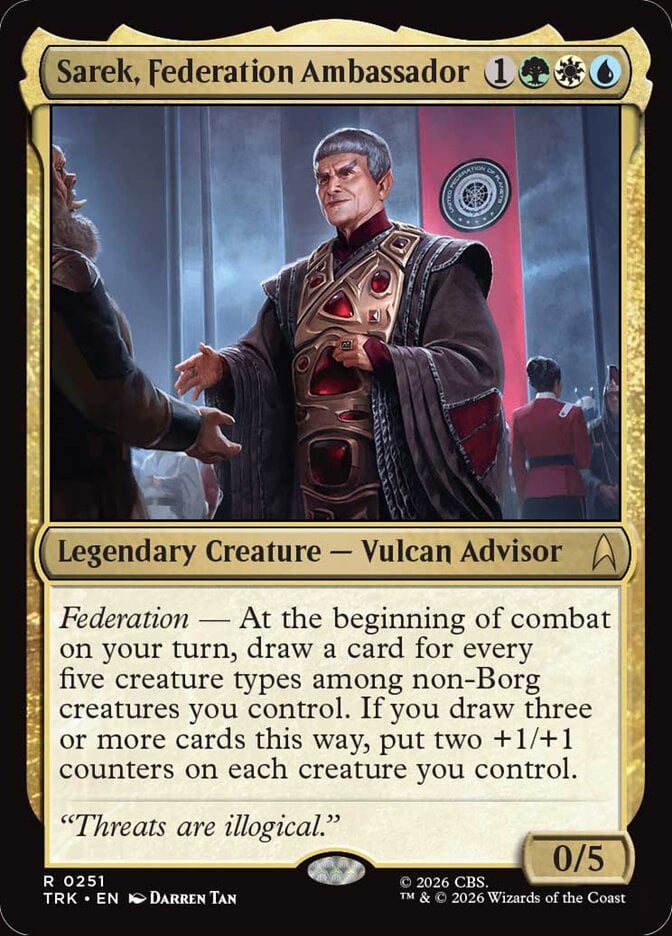
Sarek, Federation Ambassador requires three colors and a decently sized board to do much. Your goal is mostly just to draw one a card a turn with this (and have it block), as getting 15+ creature types in play will be very difficult (even with TRK’s diversity).
Dathon, His Heart Open (Mediocre)
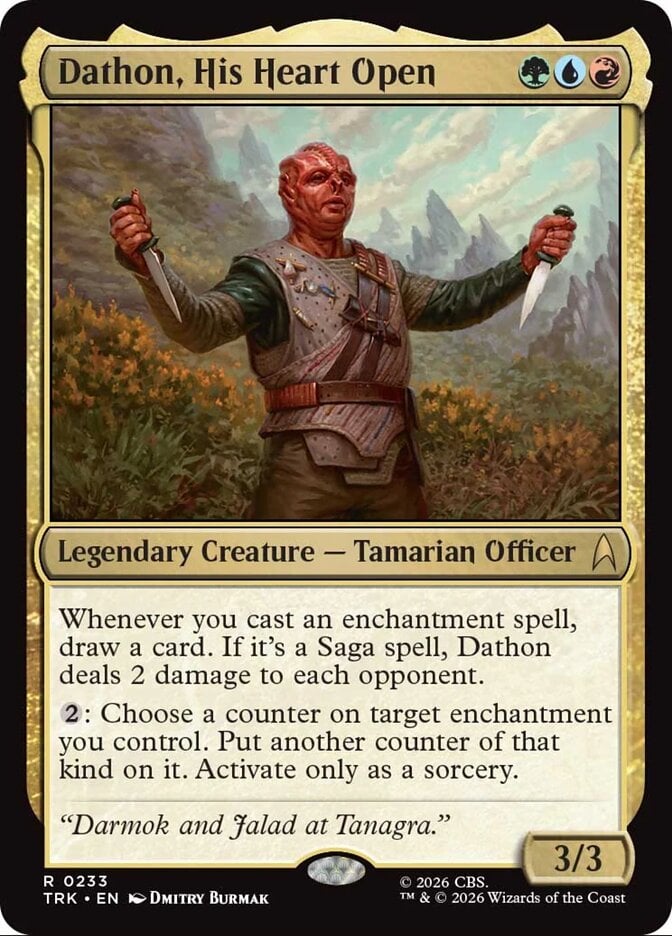
Marooned and Captain's Tutelage are the only common enchantments in Star Trek, although there are at least a handful of decent uncommon ones (Amok Time, Warp Speed, Those Old Scientists, etc.). I’d happily play Dathon, His Heart Open with those, but don’t expect to commonly do so.
Engineered Explosives (Good)
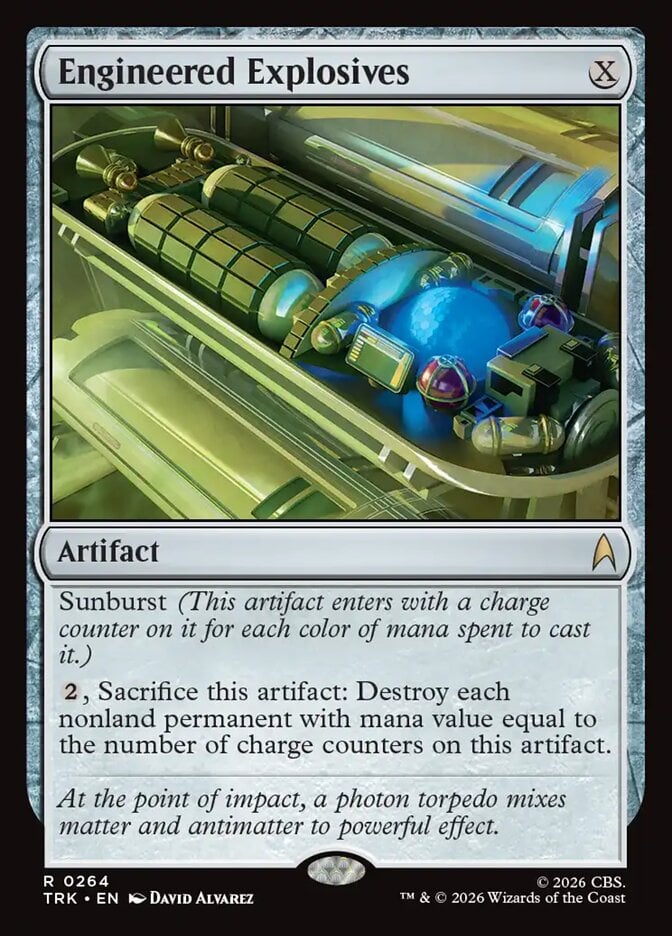
Engineered Explosives tends to shine brighter in Constructed than Limited, as Standard decks skew lower curve than your average Limited deck. Try to wait a few turns to get a feel for what mana value you want to blow up with this.
Replicator (Mediocre)
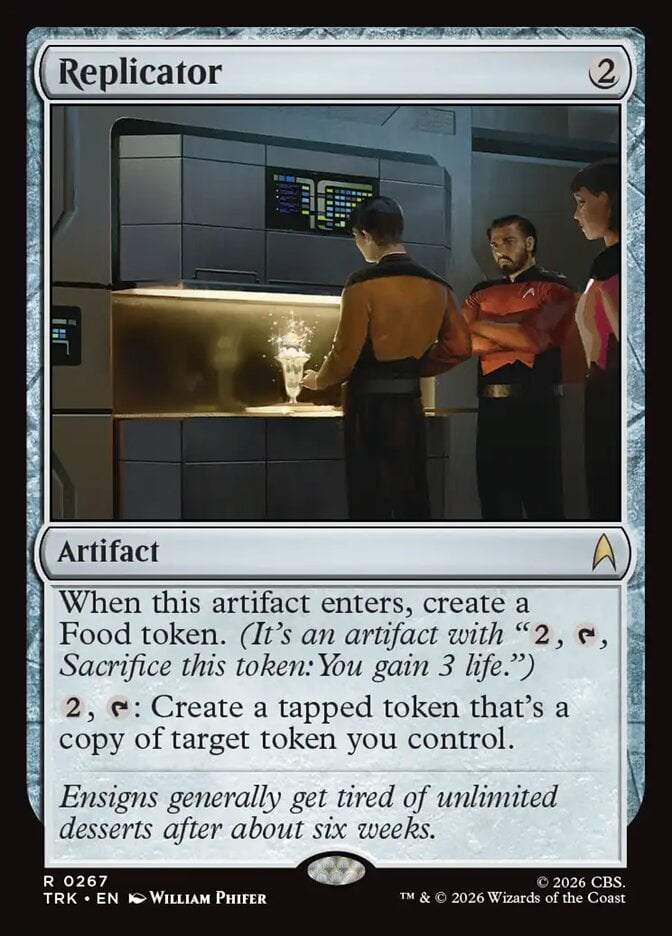
Just copying Food tokens won’t do, so you’ll need help from other cards. New Planets, 1/1 Officers, and 2/1 Klingon Warriors are the only tokens available to copy with this from commons. Your best bet will probably be cards that make 3/3 illusion tokens like Adversary by Algorithm and Holo-Engineer.
The Holodeck (Mediocre)
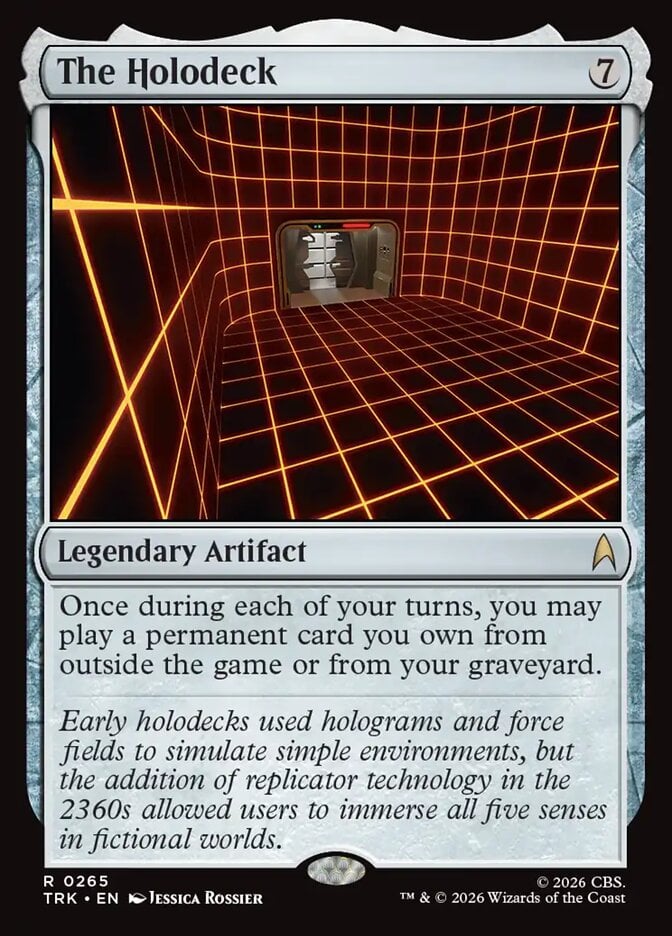
Seven mana is a ton for a card with no immediate impact, although I’d be open to boarding The Holodeck in if Game 1 proves rather grindy. You’ll mostly be playing off your graveyard, but access to random cards from your sideboard isn’t shabby.
U.S.S. Enterprise-D, Galaxy-Class (Bomb)
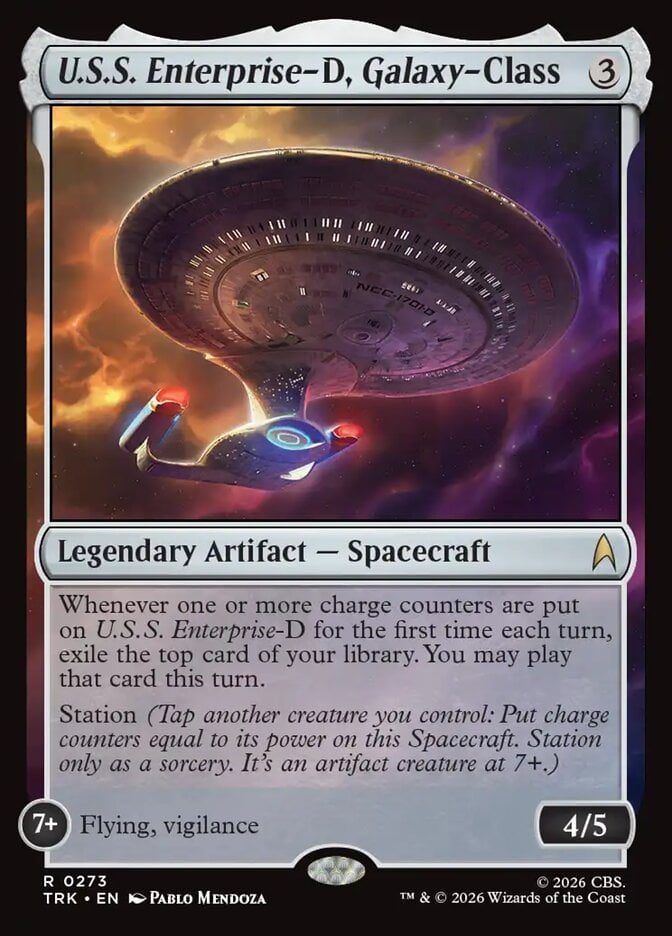
Card advantage doesn’t get easier than this, and your final prize for doing what you already wanted to do anyways is a Serra Angel spacecraft. U.S.S. Enterprise-D, Galaxy-Class is even colorless, so go ahead and sleeve this up as soon as you open it (as you should play it in literally every deck, with zero exceptions).
Dilemma Lands (Great)
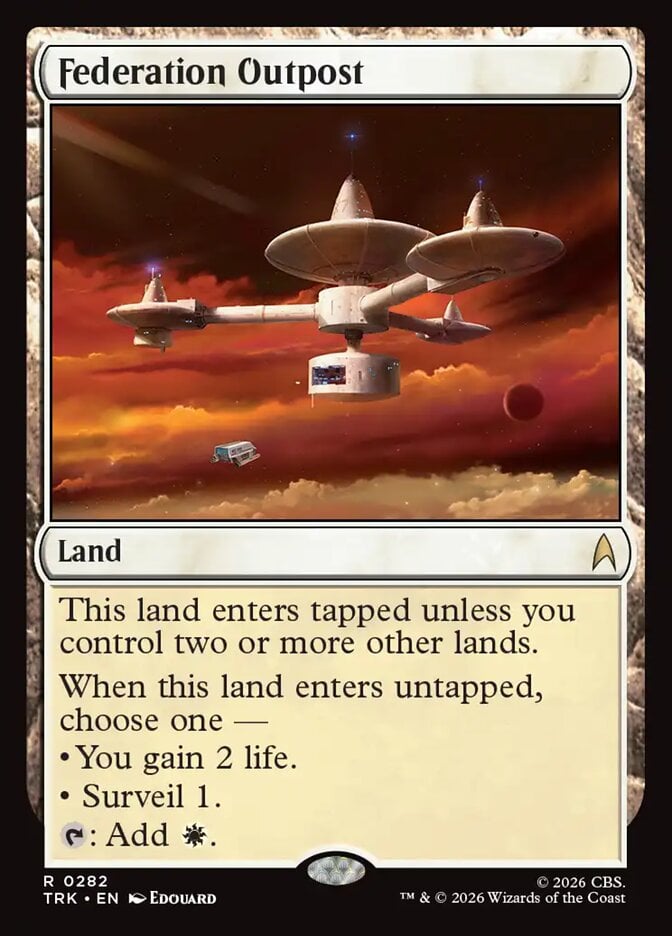
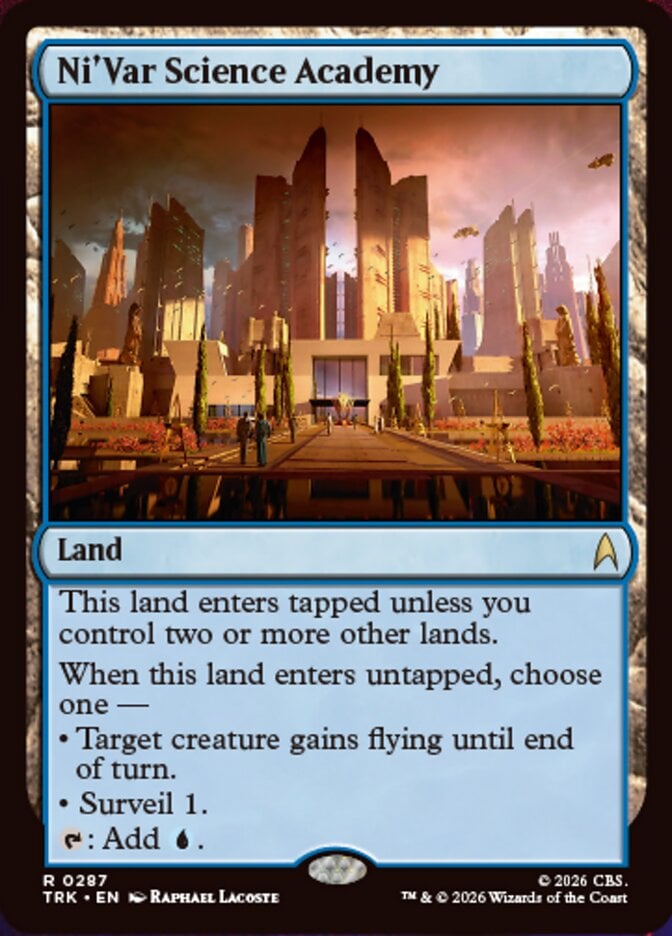
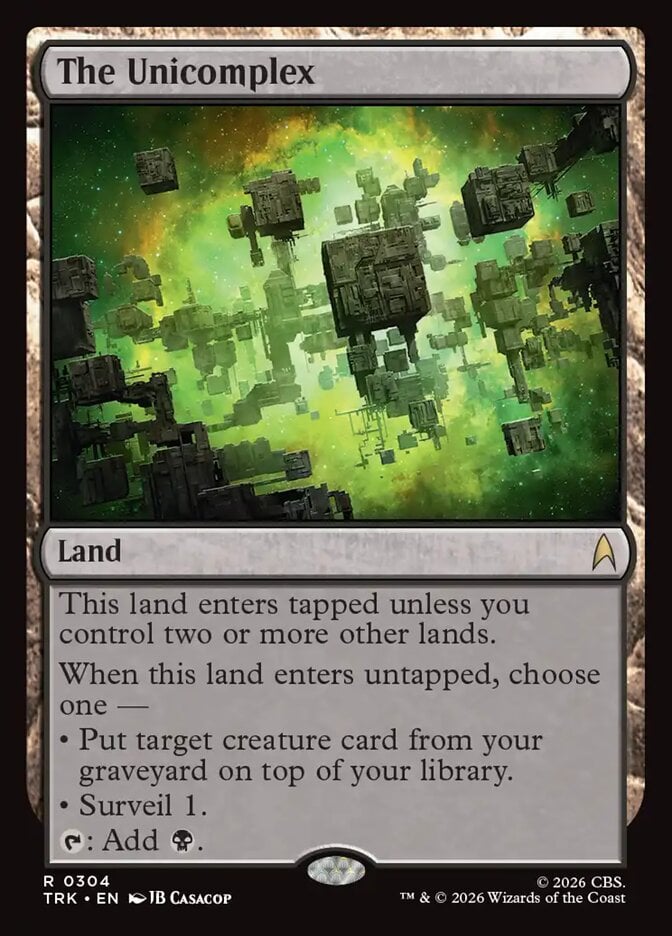
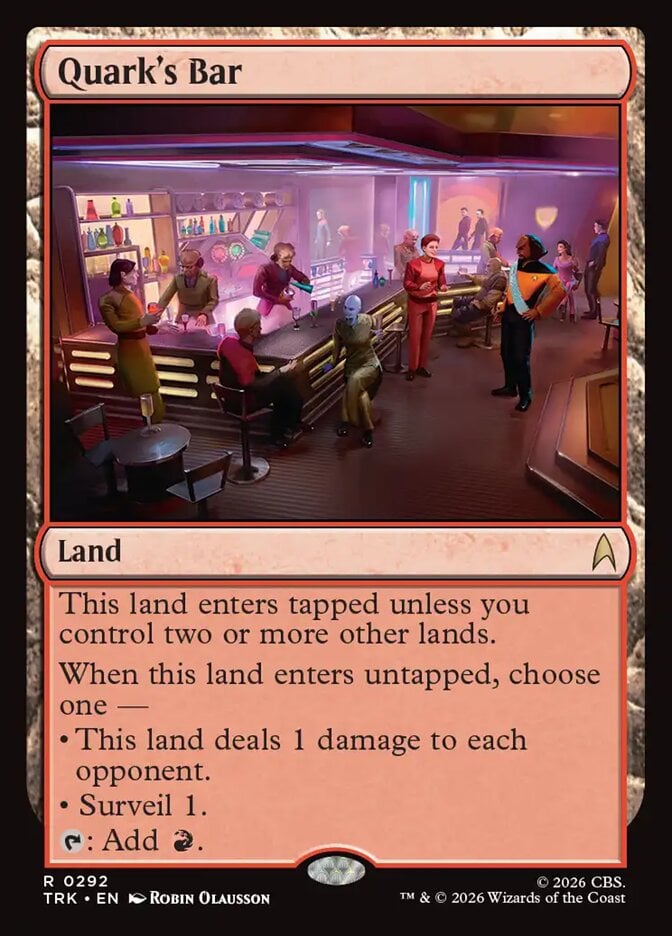
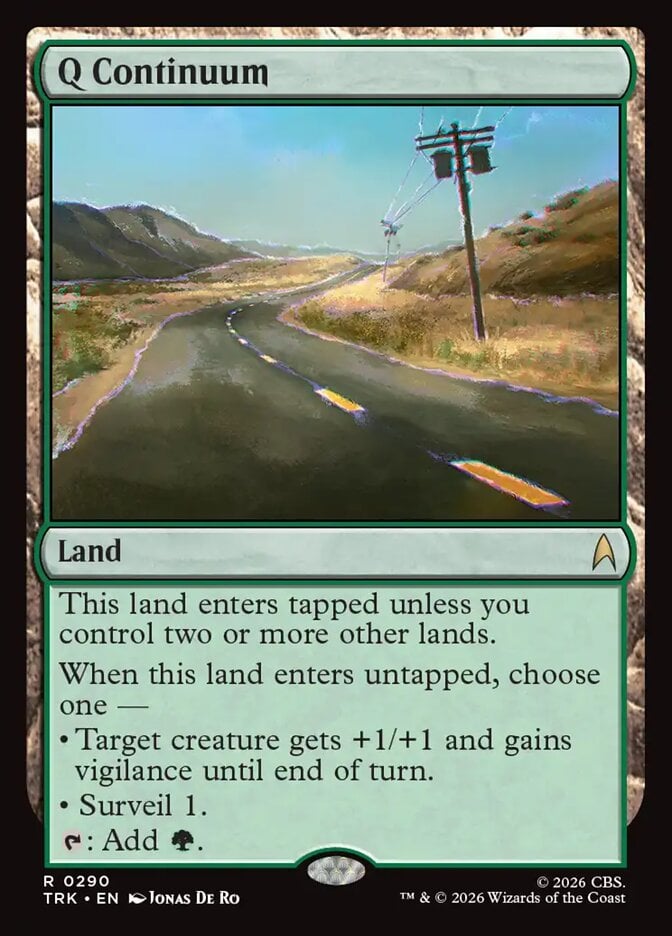
This land cycle is subtly excellent. They’ll almost always enter untapped in Limited, trigger your dilemma payoffs, have different names for strange new worlds, and all do useful things. Opening a bunch of lands in Sealed is usually a bummer, but it may not be with these!
Shock Lands (Good)
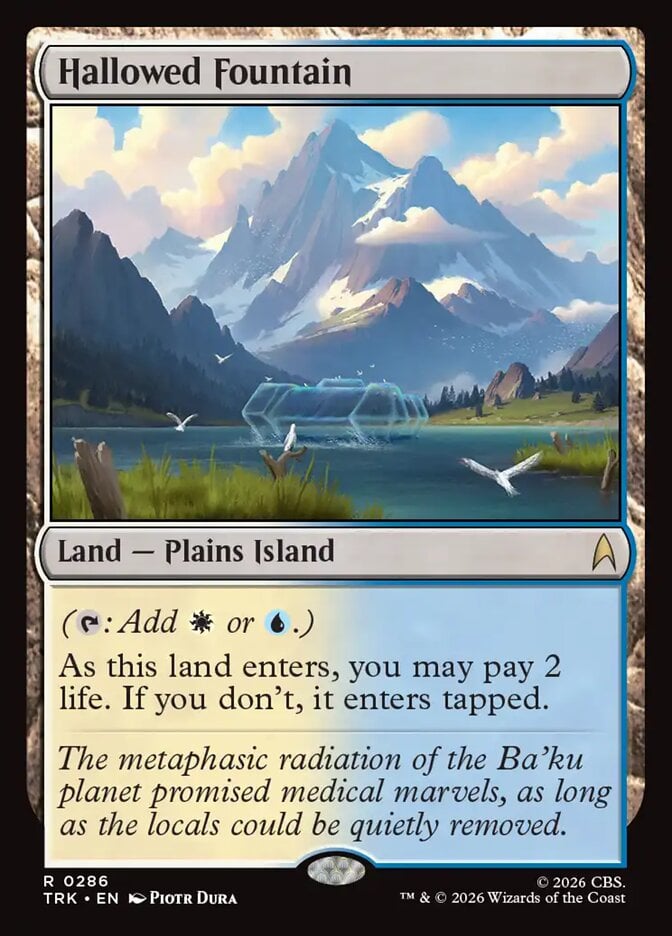
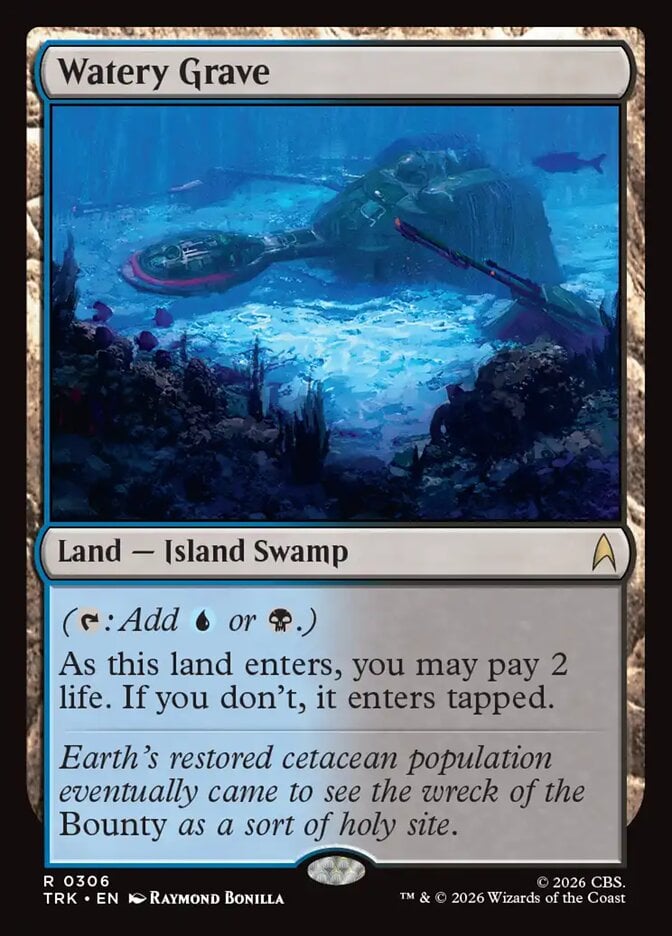
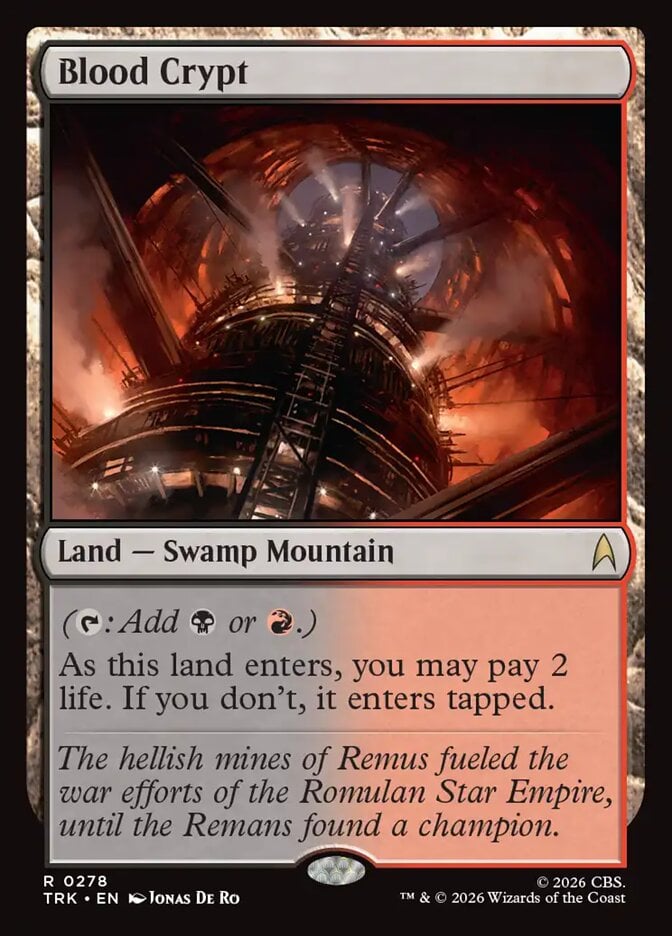
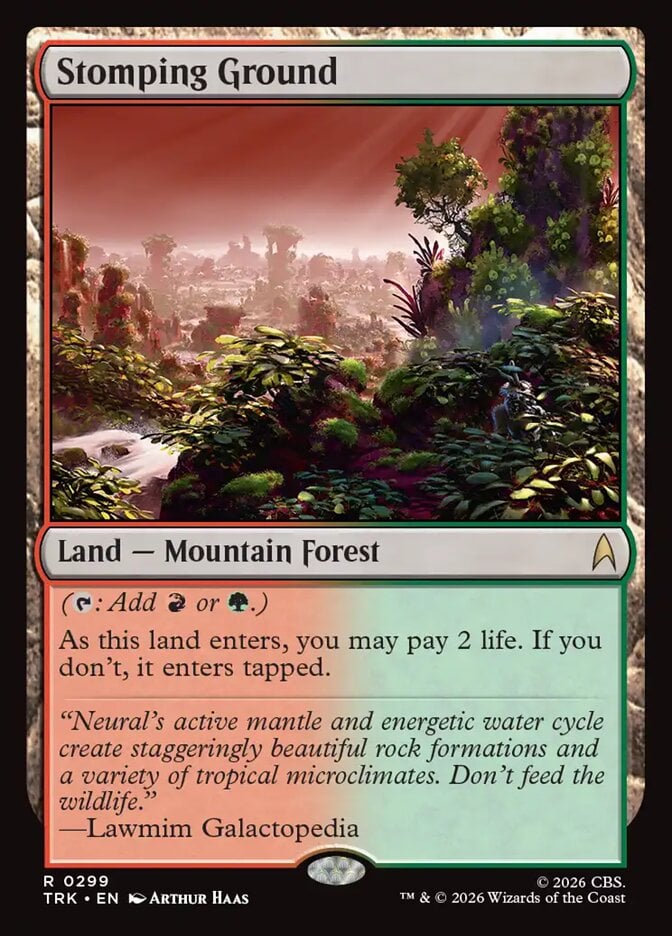
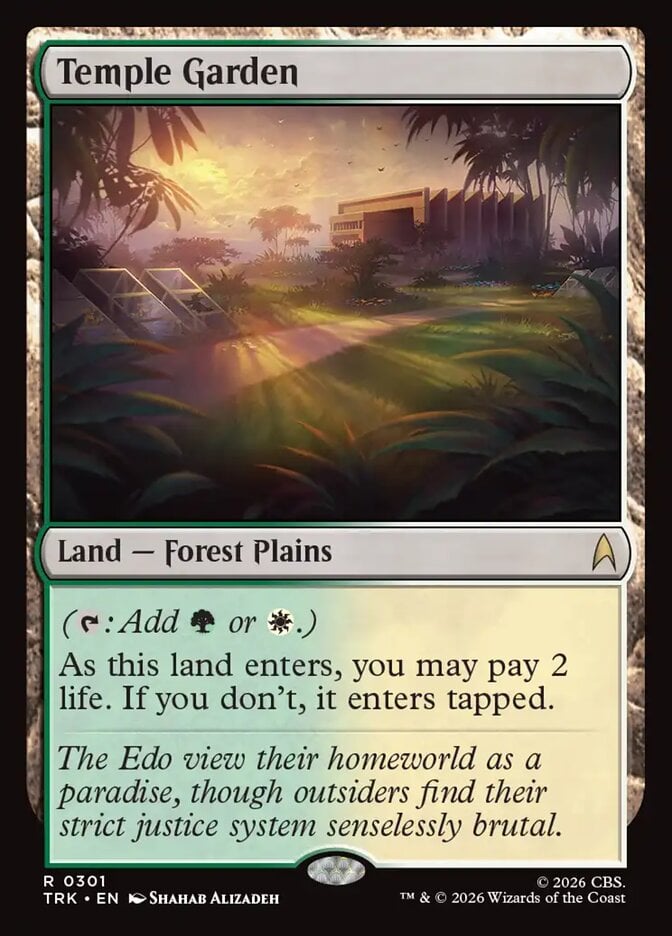
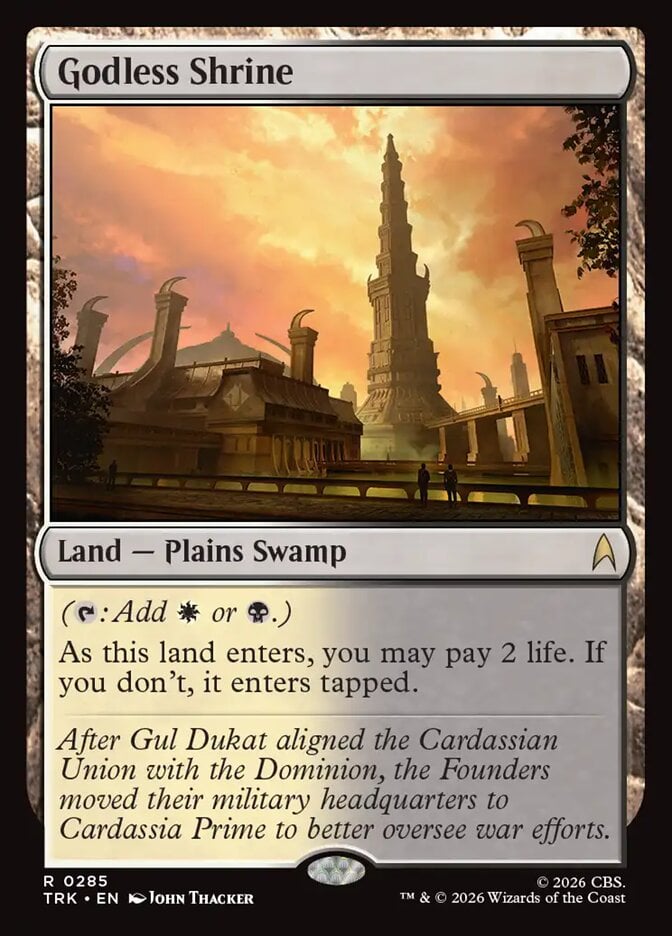
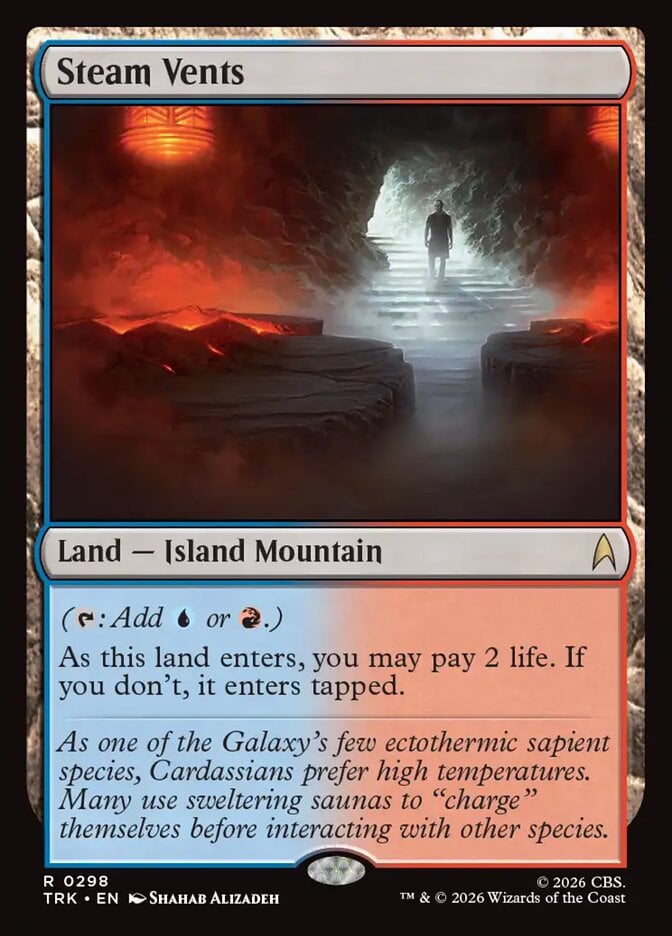
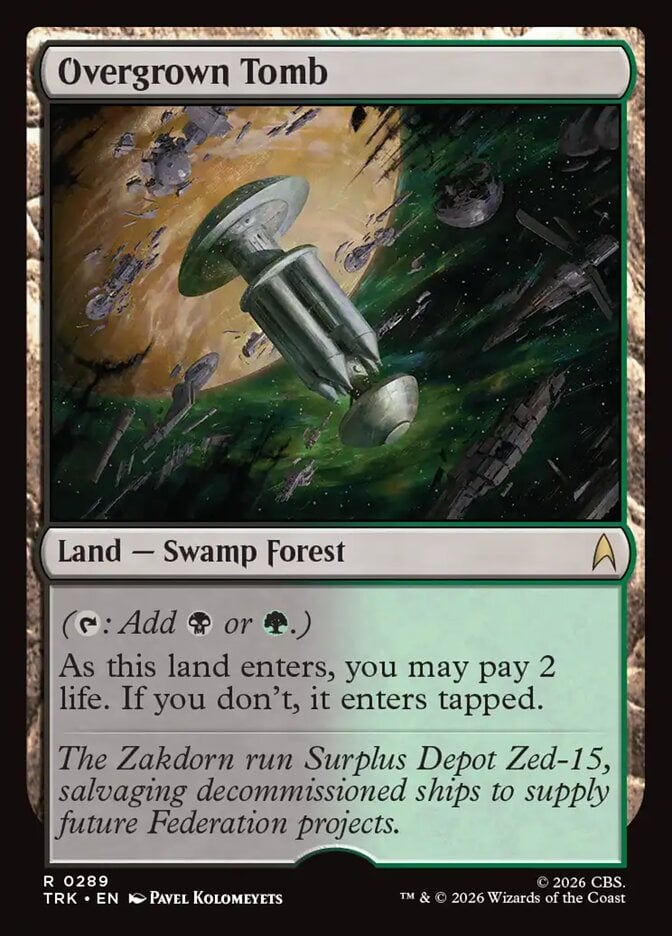
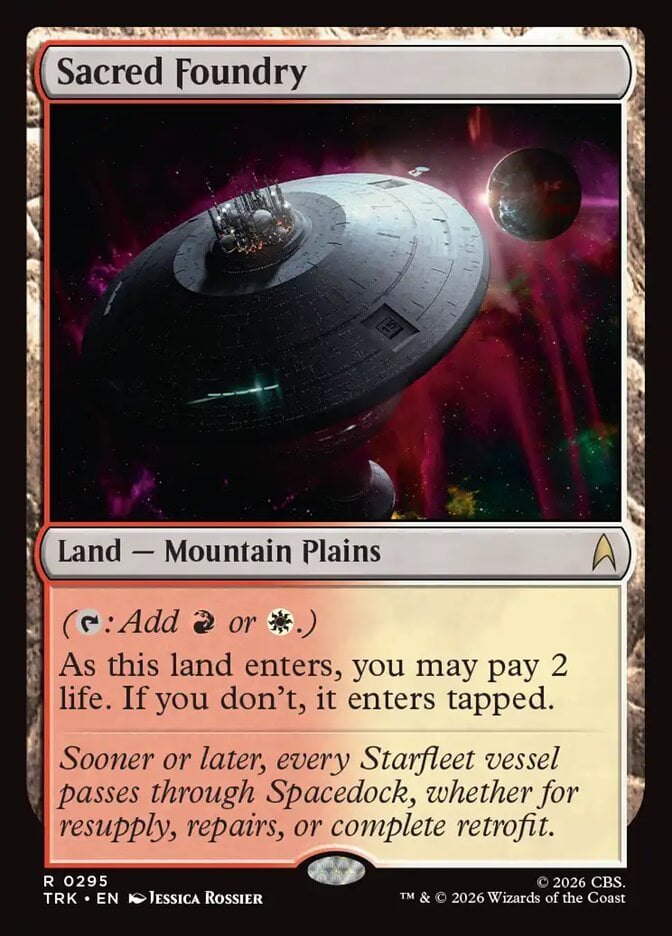
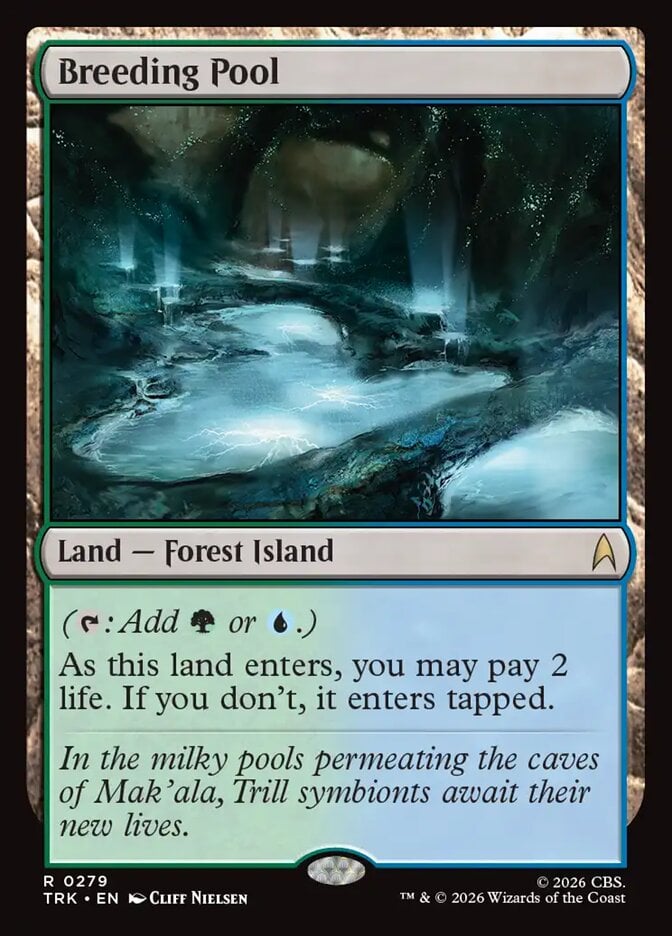
Shock lands are generally good mana fixing for Limited, and they’re great for strange new worlds to boot.
Stardates
Star Trek also features a bonus sheet of 30 cards, known as Stardates cards. You won’t see these very often in Limited (odds are about 1-in-25 Play Boosters), but here’s a review for each in case you do. All of these are reprints of popular past cards with new Star Trek flavor, and they have wildly disparate power levels for Limited.
Benny Russell, Dreamer (Bomb)
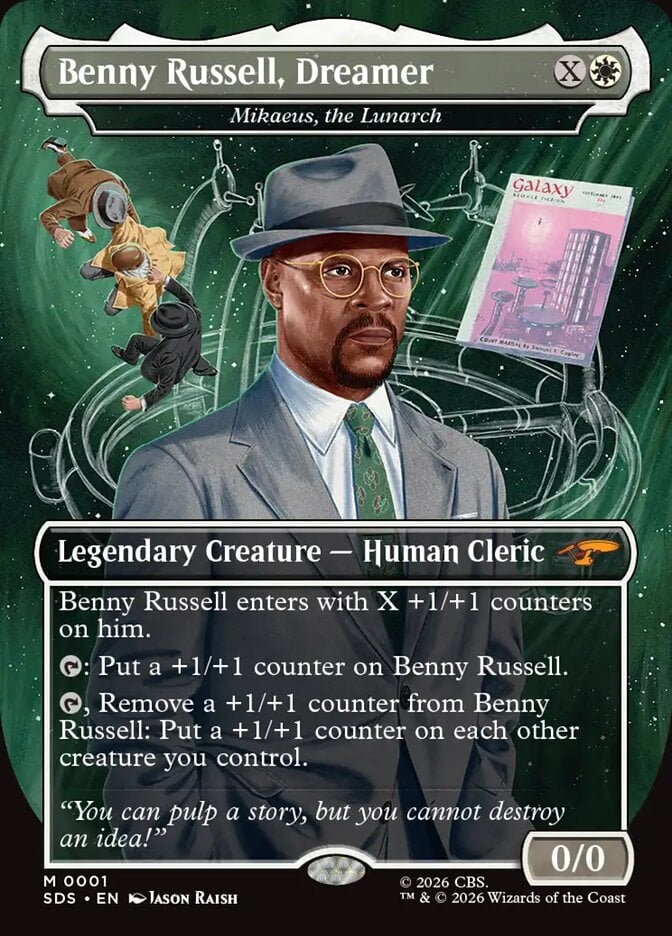
Even with over a decade of power creep, Mikaeus, the Lunarch is still one heck of a Limited card.
Flare of Fortitude (Mediocre)
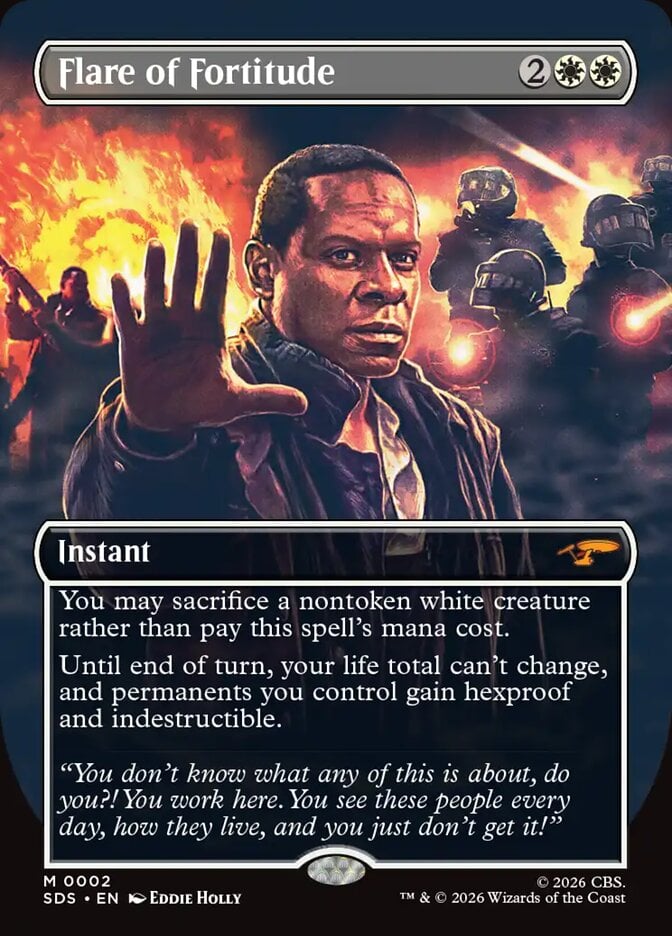
Potential for 0-mana blowouts aside, Flare of Fortitude is rather difficult to use in your average game of Limited.
General Picard, Earth Warlord (Bomb)
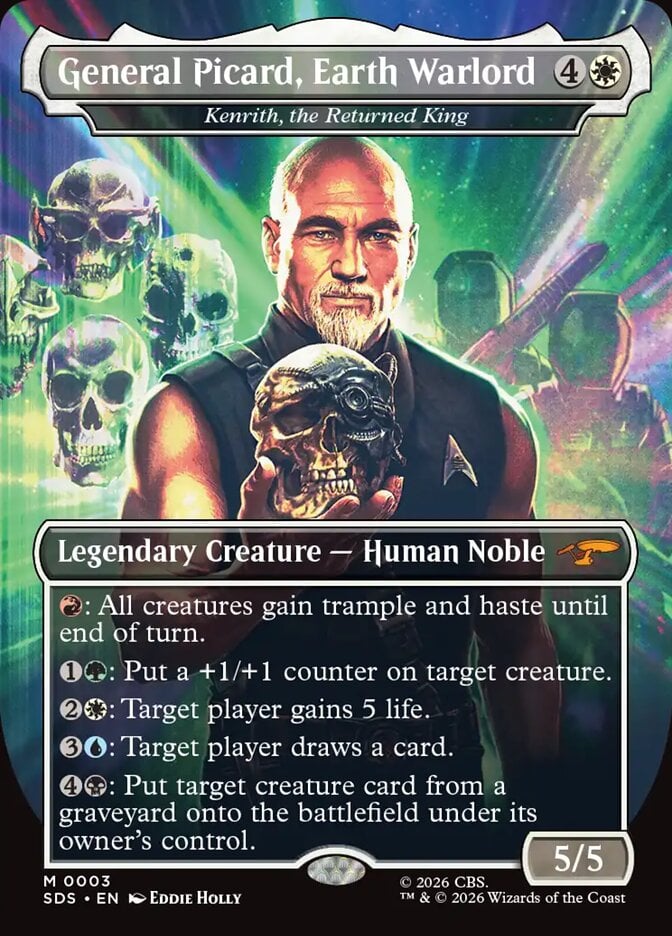
It is 2023. March of the Machine has just been released in stores. Kenrith, the Returned King is a bomb rare in the set’s Multiversal Legends bonus sheet.
It is 2025. Final Fantasy Draft is more popular than ever. Kenrith is a bomb rare in the set, thanks to the Final Fantasy: Through the Ages sheet.
It is 2026. Star Trek releases in stores. Kenrith is a bomb rare, once again reprinted in a bonus sheet.
Kirk, Alluring Upstart (Mediocre)
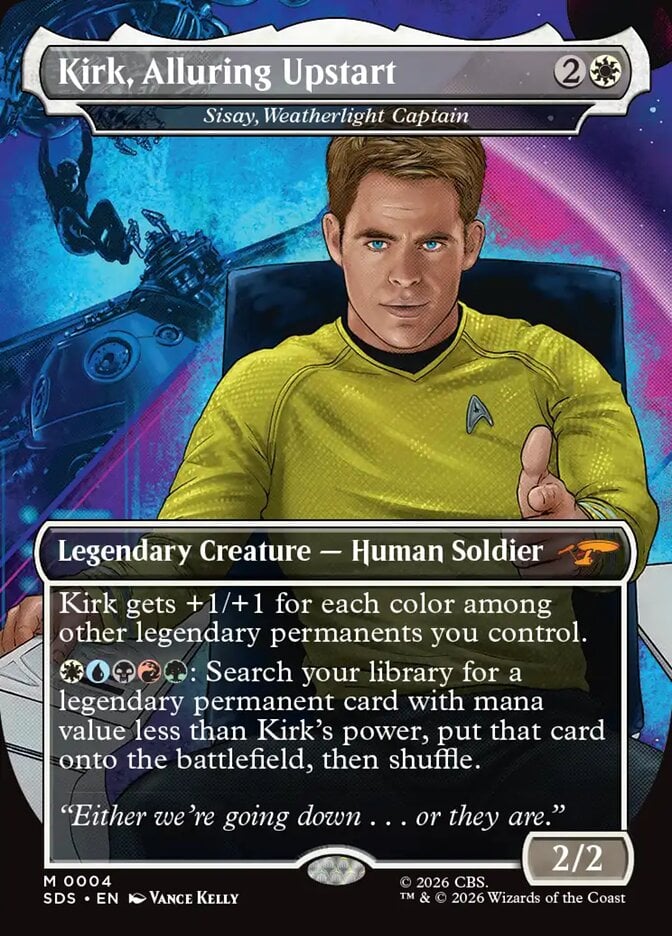
It isn’t hard to get Sisay, Weatherlight Captain above a 2/2 with so many legendaries in Star Trek, but this is way too fragile and demanding for your average Limited deck.
Carol Marcus, Scientist Sleuth (Mediocre)
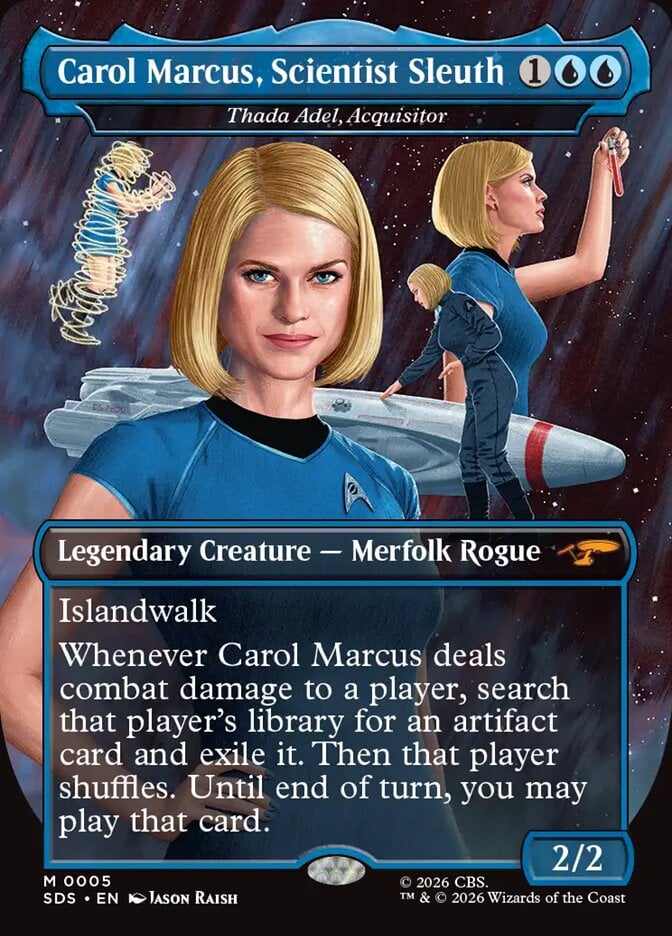
Thada Adel, Acquisitor is somewhat punishing in blue mirrors, I suppose, since you can yoink your opponent’s spacecraft from their deck. Rather unimpressive if Thada isn’t evasive though.
Empress Sato, Terran Tyrant (Great)
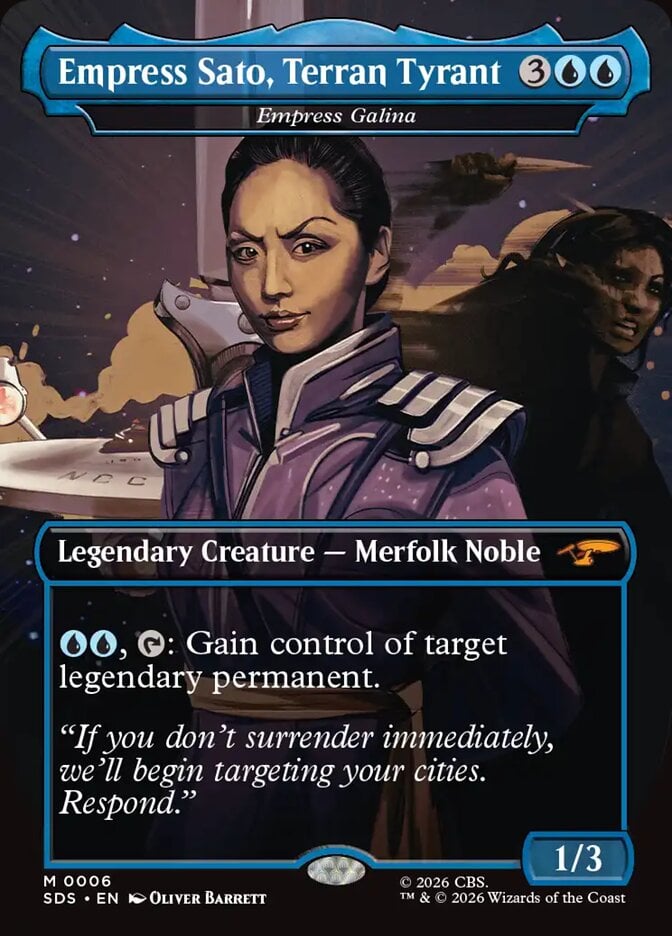
Untapping with a 5-mana 1/3 is challenging, but wow is this ability worth the risk. Removing Empress Galina later won’t get your opponent their permanents back, so try to deploy this when they’re empty-handed and hope for the best!
Scotty, Transwarp Transporter (Mediocre)
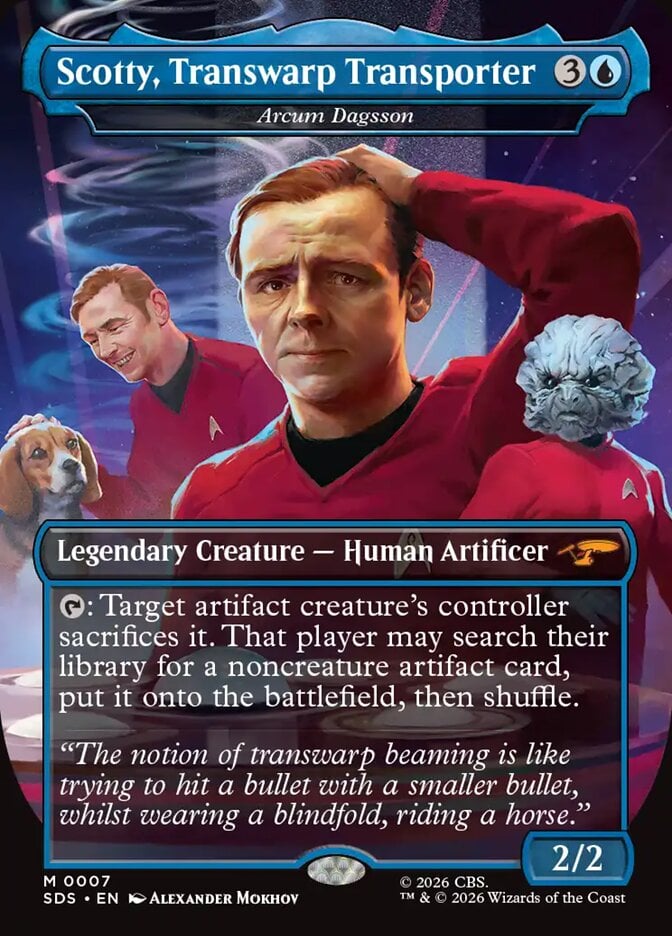
The ceiling on Arcum Dagsson is really high, but you’ll need a specific deck with fodder artifacts and a couple of big spacecraft to grab. Most spacecraft in this set skew a bit smaller, so I’m skeptical.
Spock, Completely Logical (Bad)
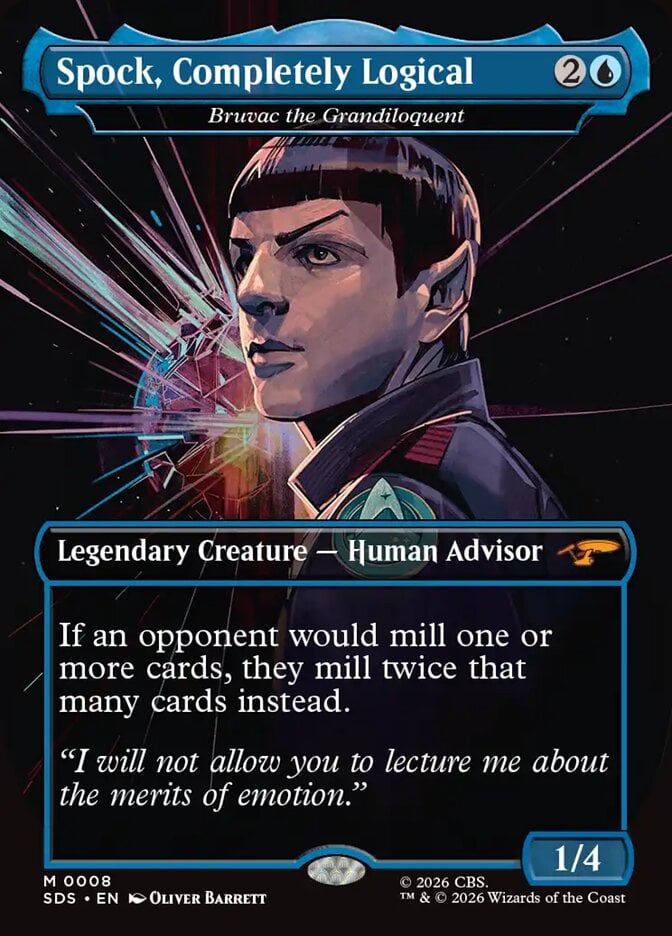
Including Bruvac the Grandiloquent in your deck is not logical, as there’s pretty much zero mill support in Star Trek (other than self mill).
Decree of Pain (Great)
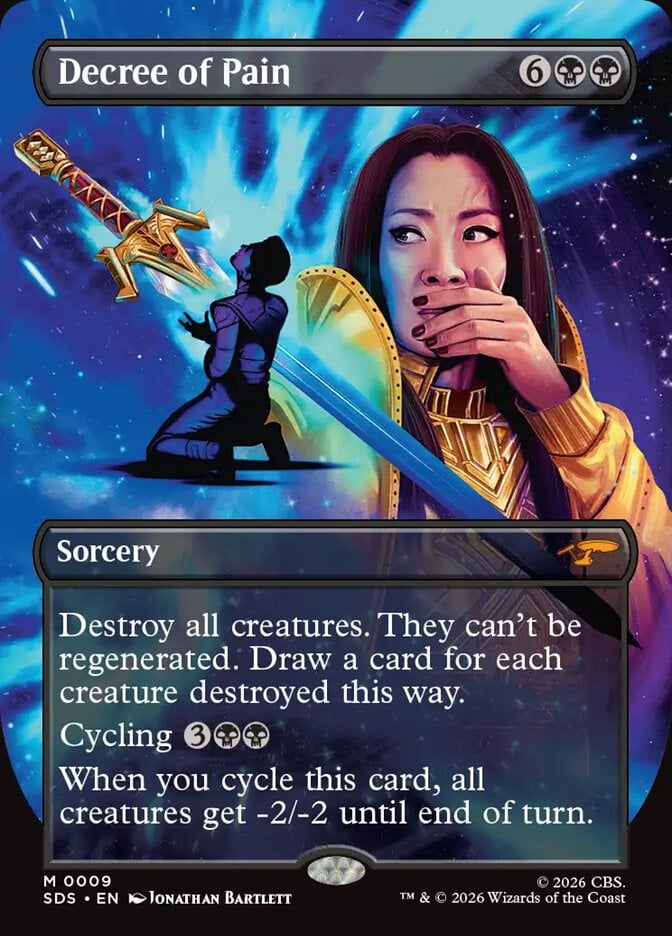
You’ll be cycling Decree of Pain most of the time, and your opponent will definitely not see this one coming. The 8-mana mode also offers a random table flip option to crush your opponent late game, which they’ll still never see coming.
Intendant Kira Nerys (Mediocre)
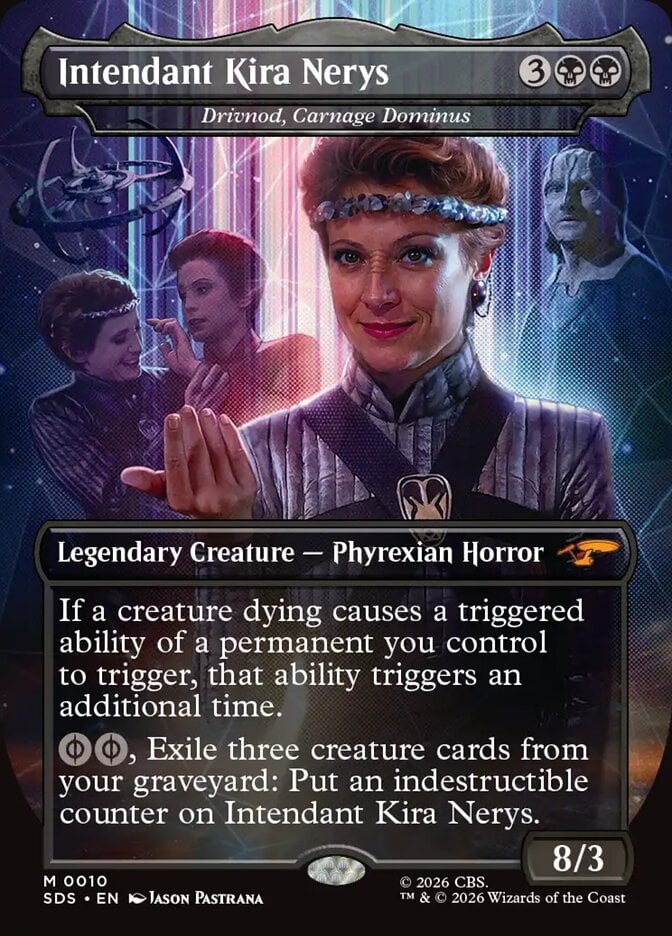
There’s a bit of a “dies” theme in Star Trek, but Drivnod, Carnage Dominus was underwhelming enough in Phyrexia: All Will Be One that I wouldn’t expect much.
Khan, Engineered Evil (Bomb)
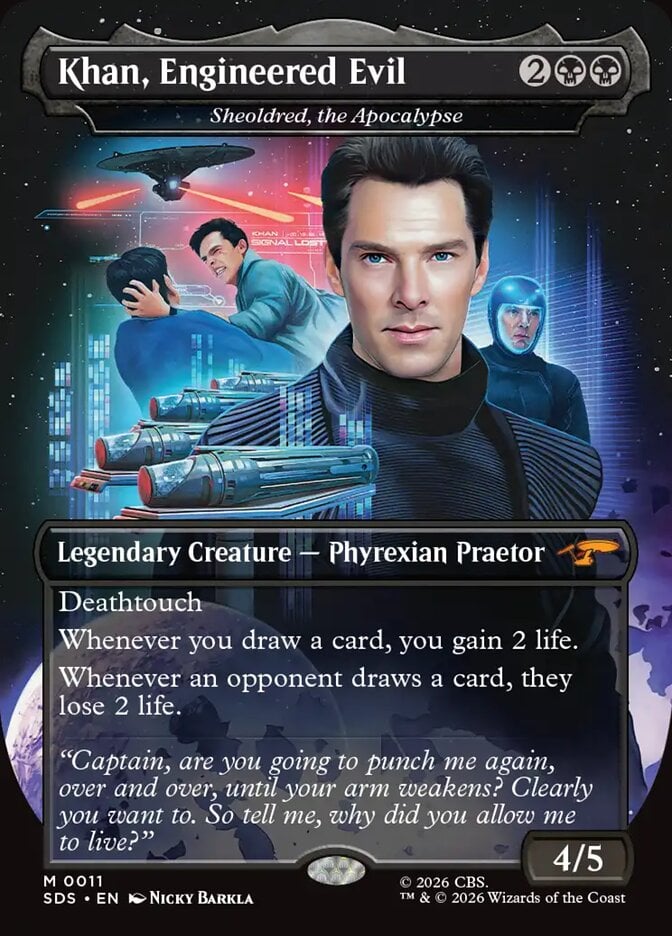
Benedict Cumberbatch may utterly destroy your opponent’s hopes and dreams, as Sheoldred, the Apocalypse remains one of the most “kill it or you lose” Limited cards of all time.
Michael Burnham, Enforcer (Good)
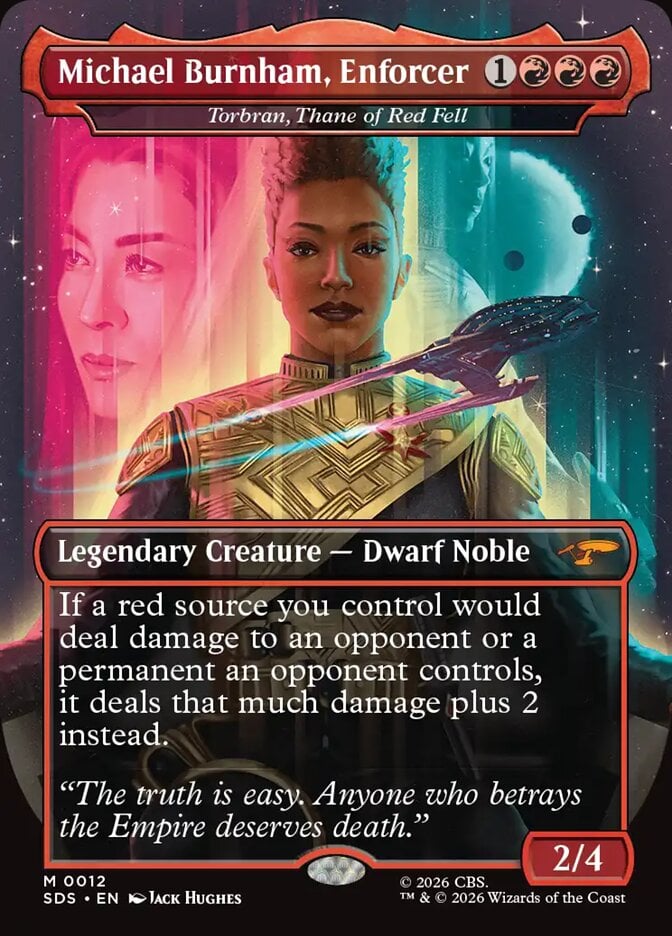
Torbran, Thane of Red Fell has some strict deckbuilding/mana requirements, which are unlikely to line up with the pool you open. If you can be very base red though, it should do excellent work.
Hikaru Sulu, Peerless Pilot (Good)
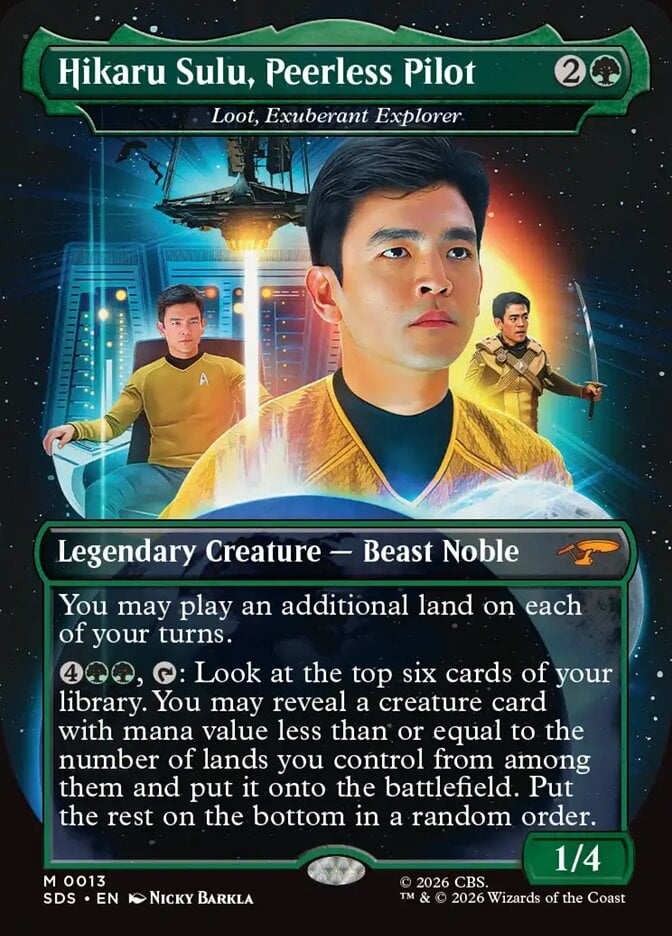
Loot, Exuberant Explorer is a decent blocker that can plop fat creatures into play later on. It should fit most green decks, especially those on the rampier side.
Keenser, Scotty’s Spotter (Great)
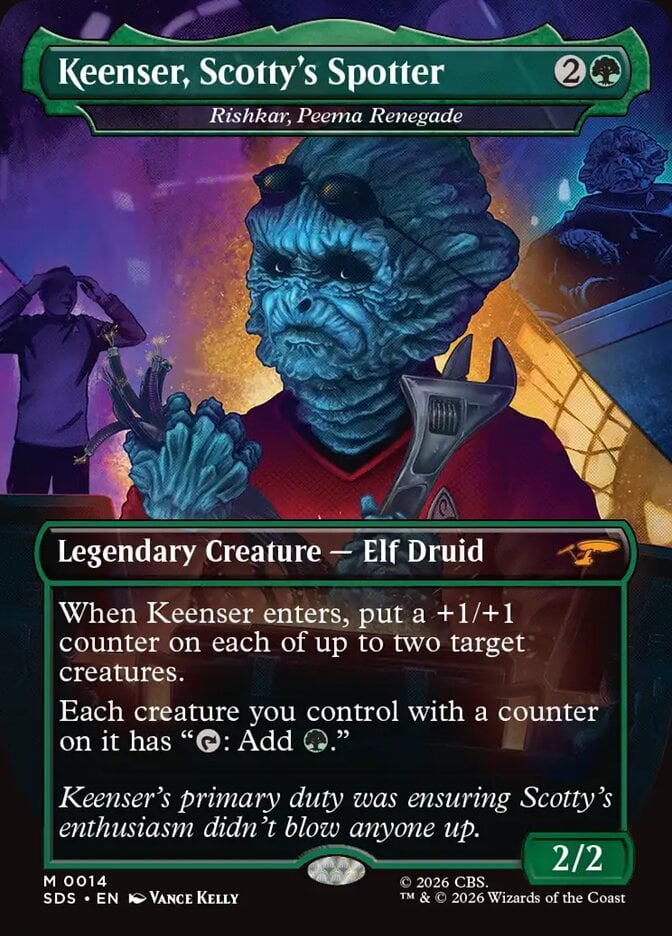
Rishkar, Peema Renegade is a better +1/+1 counter enabler than most of Star Trek’s, and a decent payoff in its own right.
Leonard McCoy, Country Doctor (Bomb)
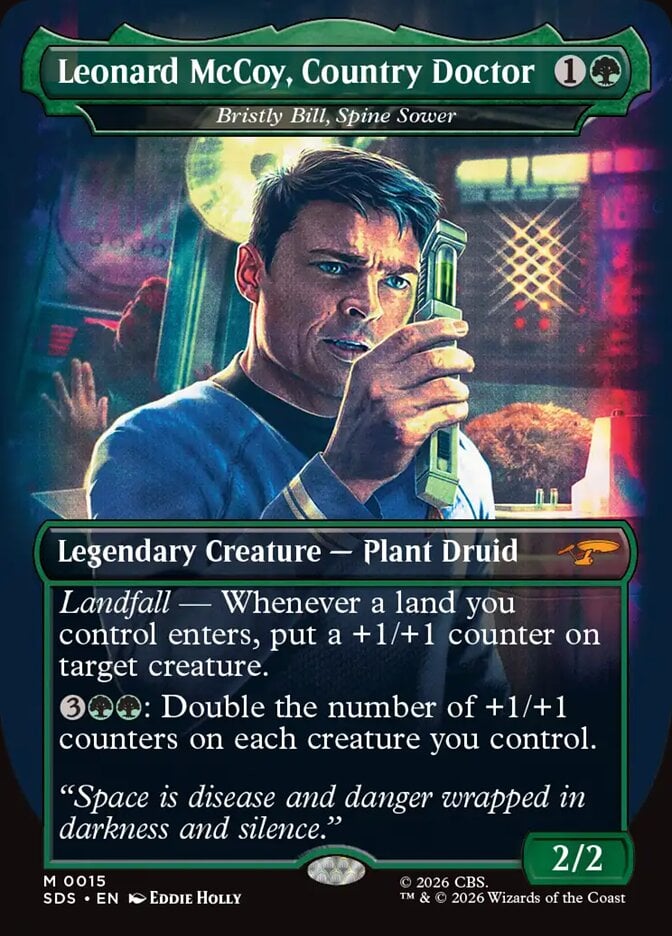
There isn’t a single landfall card in Star Trek as good as this, so please go nuts with landfall stuff if you’re lucky enough to open a Bristly Bill, Spine Sower.
Borg Queen, Hateful Legacy (Great)
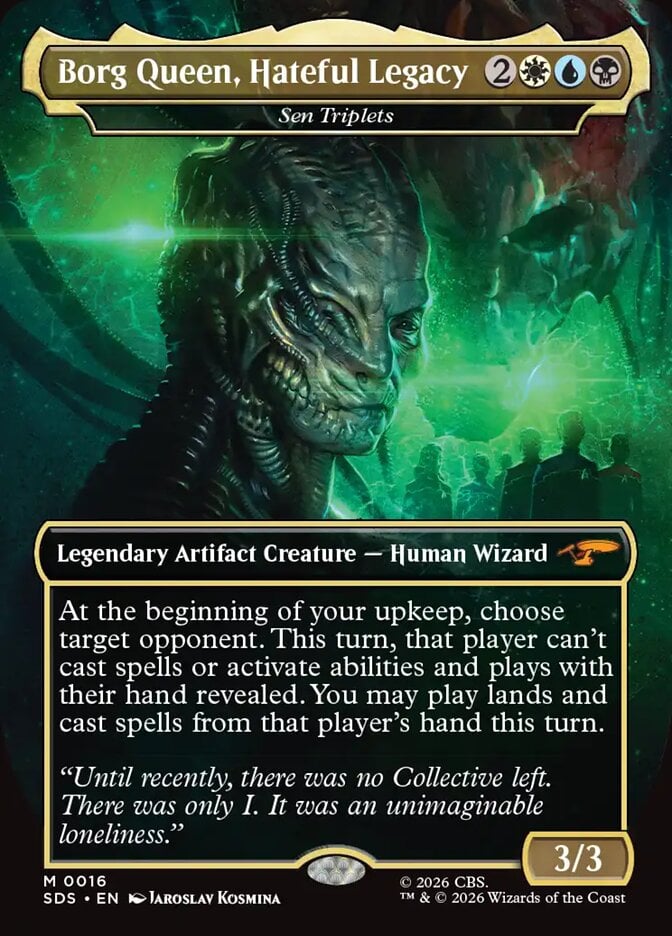
I’ve never played with Sen Triplets in Limited, so I’m unsure exactly how good it is. If this isn’t removed immediately, you’re potentially getting a ton of card advantage at your opponent’s expense, so I’d definitely splash/try this if I opened it.
Chekov, Young Wayfinder (Good)
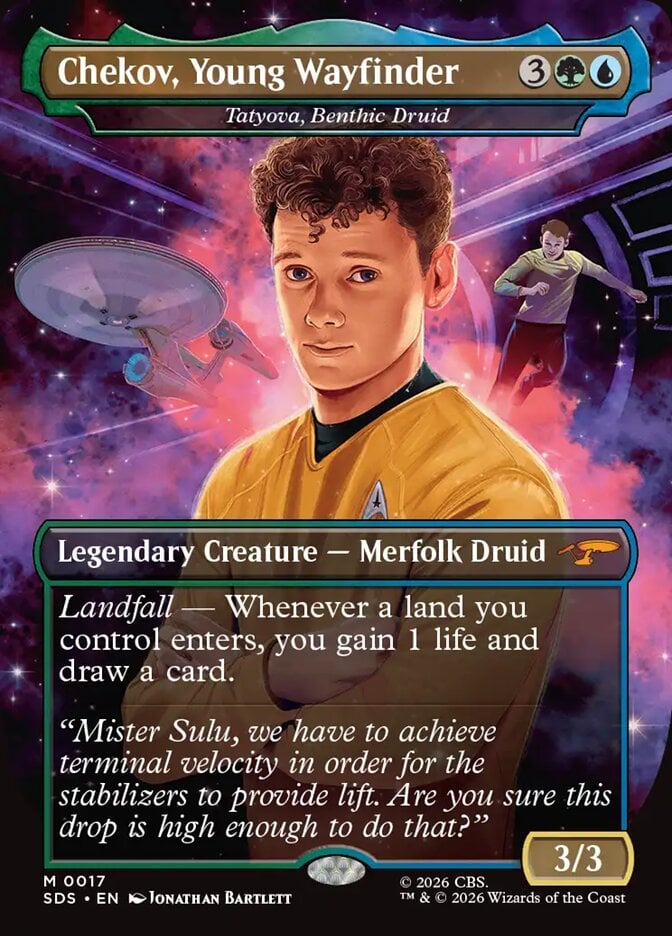
Tatyova, Benthic Druid is well-worn territory at this point, as I played with it in both Dominaria and Foundations. It’s rather slow these days, but Star Trek at least has good support for landfall.
Hull Breach (Bad)
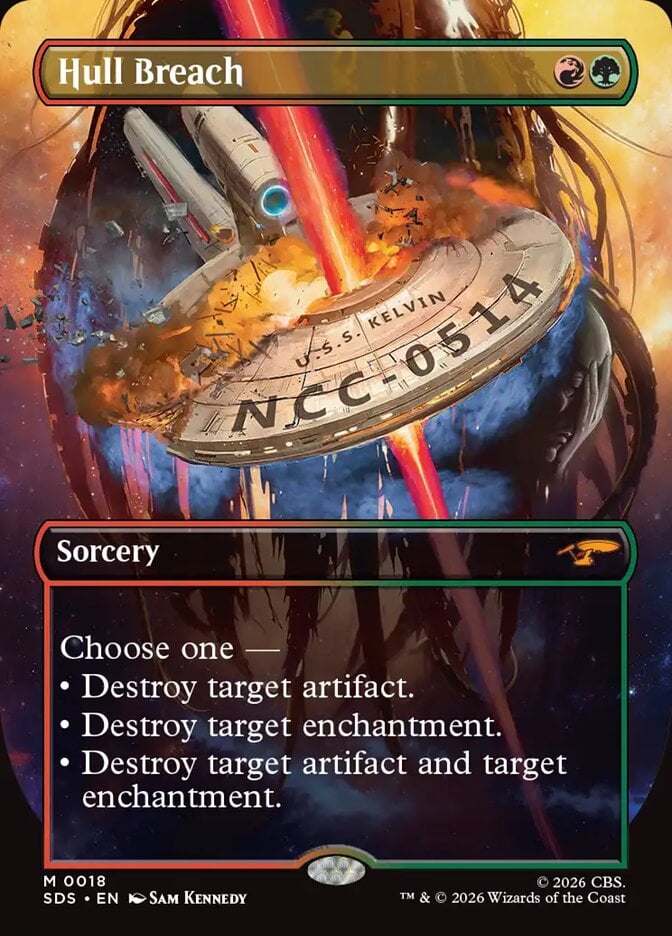
Too situational for your average game of Limited, which is still dominated by creatures. Feel free to board Hull Breach in against an opponent with Marooned and spacecraft of course.
Janeway, Cracked Mirror (Mediocre)
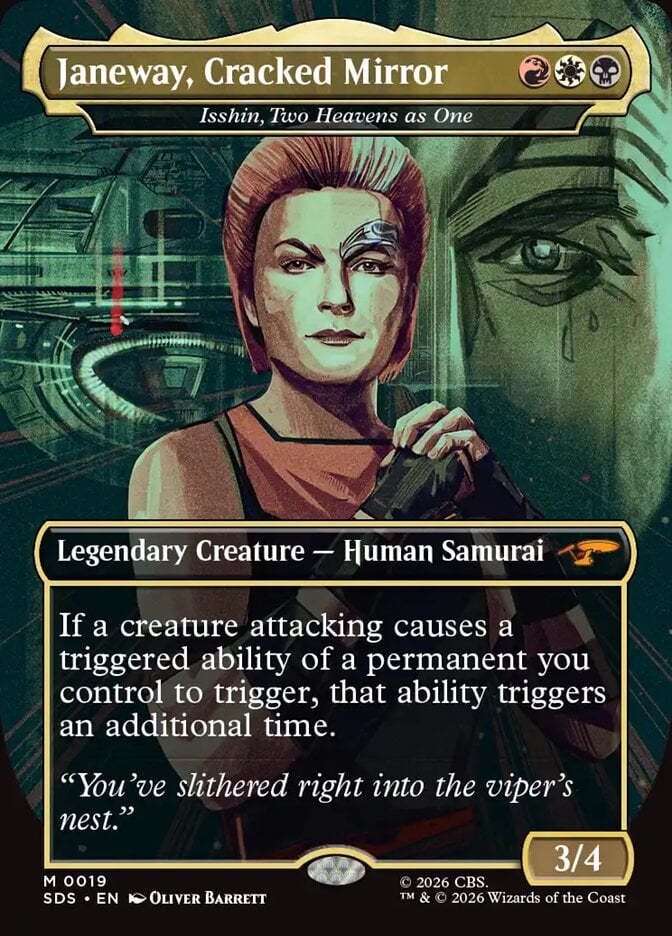
There are a handful of attack triggers in Star Trek, but most of them come from higher rarity cards or aren’t that exciting to copy with an Isshin, Two Heavens as One.
Nero, Last of the Empire (Great)
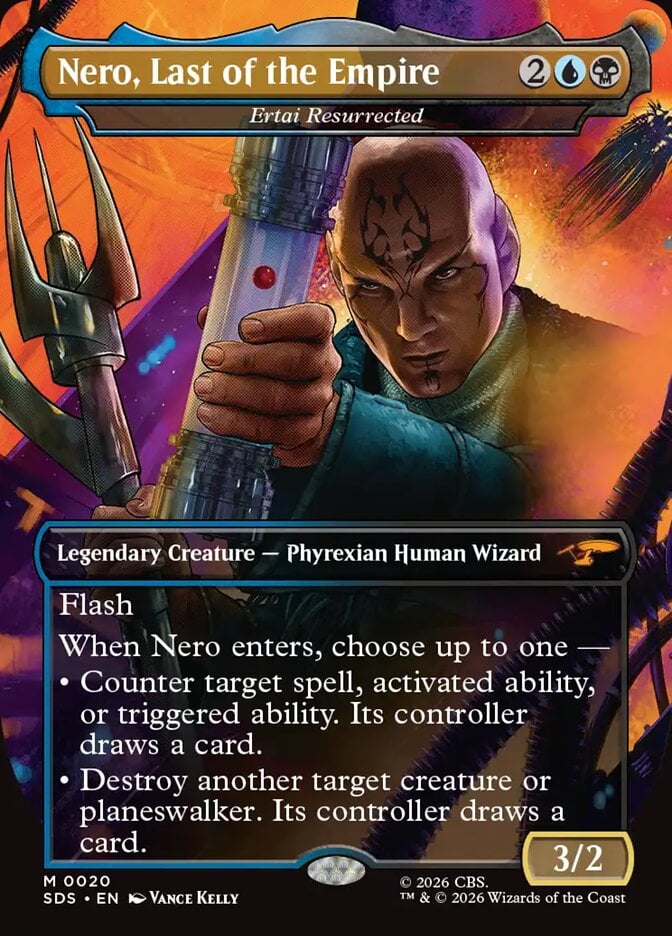
Ertai Resurrected was an awesome rare in Dominaria United, and it should be even better when your opponent will never expect you to have it.
Nyota Uhura, Endless Insight (Great)
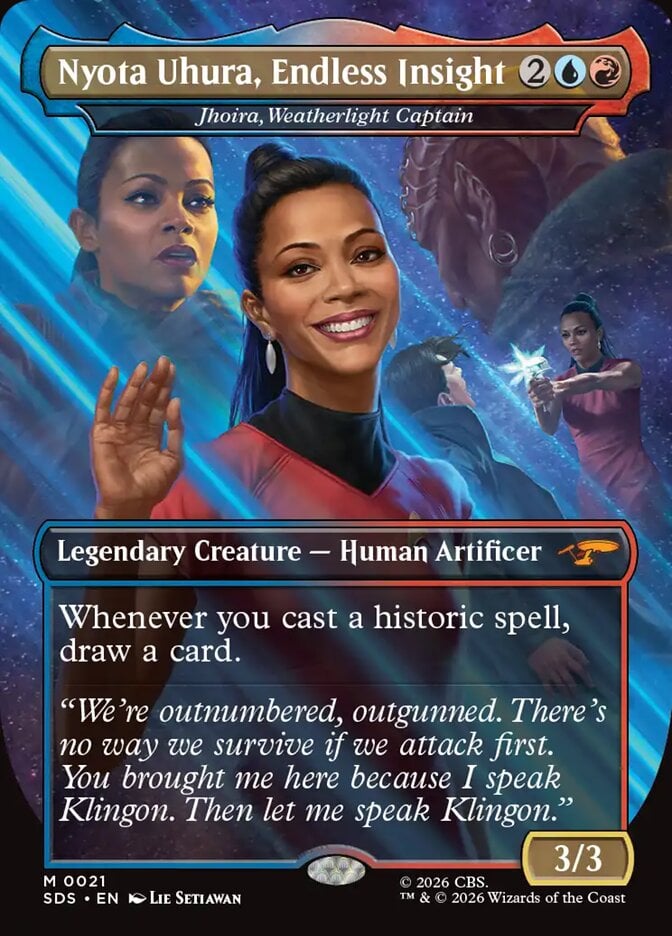
Between all the legends, spacecraft, and artifact creatures, historic spells are everywhere in this set. You’ll need to untap with Jhoira, Weatherlight Captain first, but the reward is worth the risk.
Pike, Unrelenting Mentor (Mediocre)
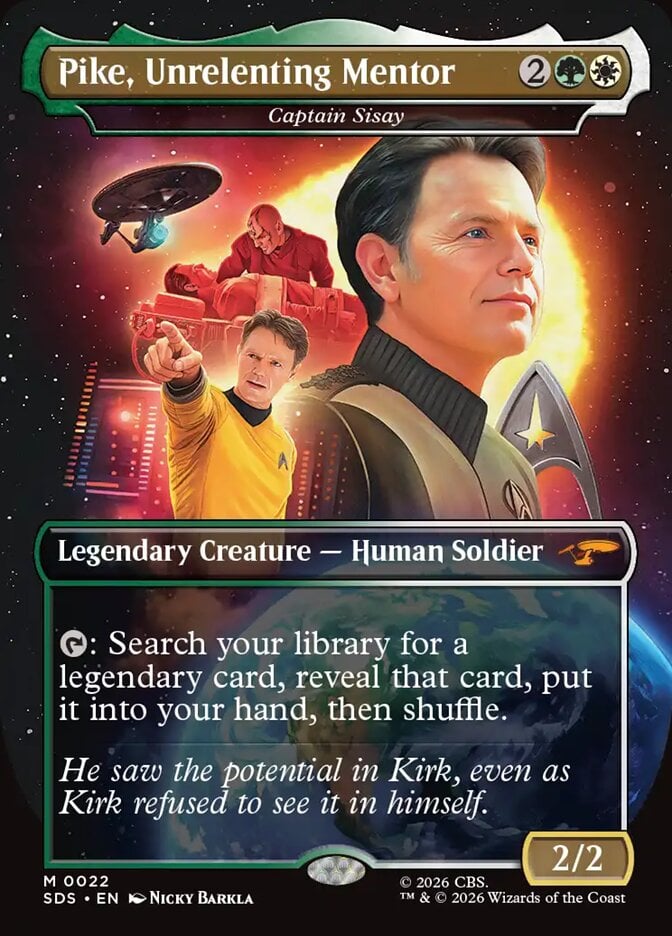
Solid card advantage in theory, but Captain Sisay is highly deck dependent and tied to a 4-mana 2/2.
Spock, Cross-Time Captain (Mediocre)
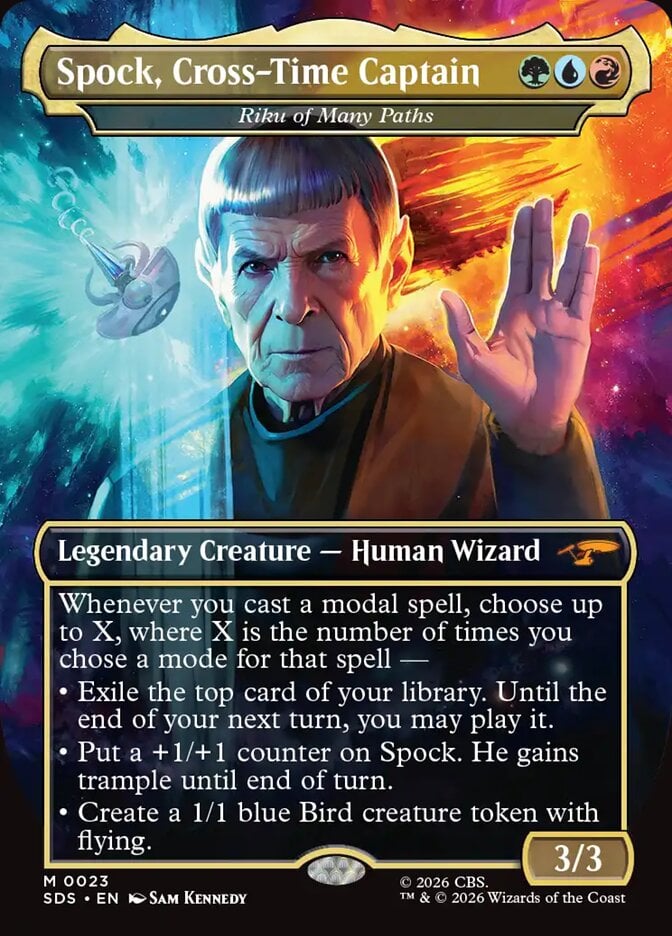
You’d think this would be Riku of Many Paths’s set with dilemmas and all, but unfortunately it only cares about modal spells, not modal abilities. You won’t get any value from stuff like Tea, Earl Grey, Hot or Tal Shiar Operative. It’s also in somewhat awkward colors for dilemma in the first place, as you’d need to double splash this to play it in a UB deck.
Spock, Mirror Malefactor (Bomb)
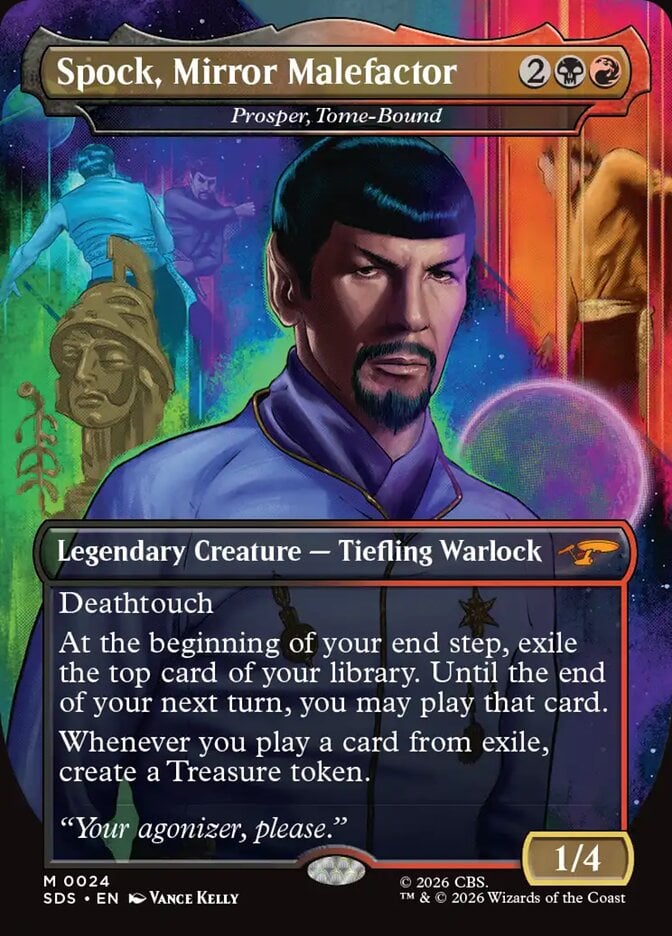
Prosper, Tome-Bound is a really overpowered card for 40-card Limited play, as it immediately gets to work drawing cards and has an excellent stat line with deathtouch. Always play/splash this one if you’re lucky enough to open it!
Spock, Strangely Human (Great)
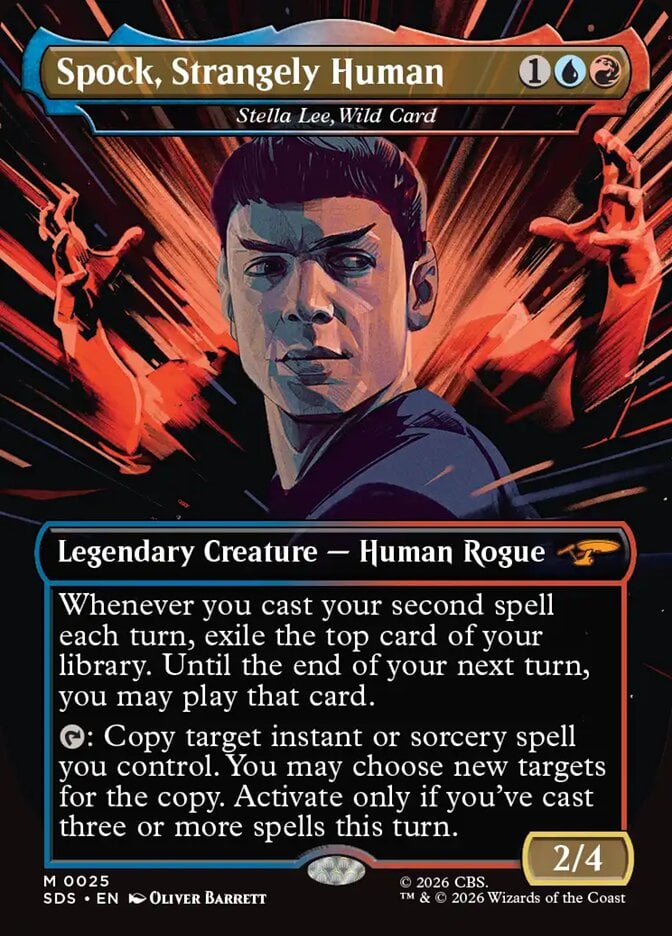
There’s a very janky combo available with this and Make It So, which seems rather hard to pull off. Jank aside, Stella Lee, Wild Card has solid base stats and a great card advantage ability, so I fail to see how this wouldn’t be awesome. This even lines up perfectly with UR’s noncreature theme.
Worf, Regent of Terok Nor (Good)
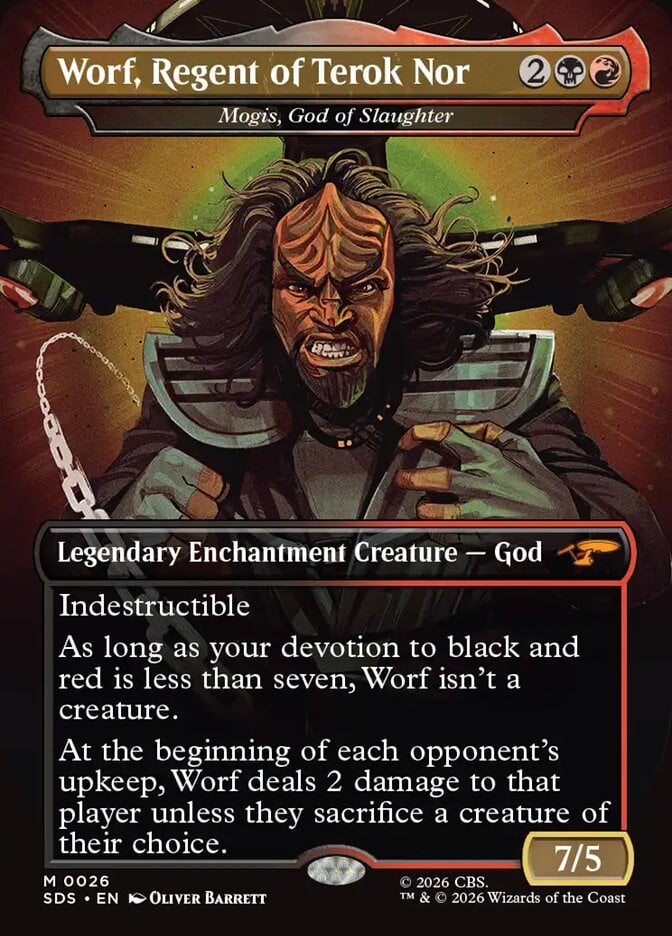
Mogis, God of Slaughter is a weird card to see in Star Trek, although I suppose it would play fine in an actual black and red deck. Don’t splash this or anything, as my interest is definitely tied to the possibility of making it a creature at some point.
Academy on the Bay (Good)
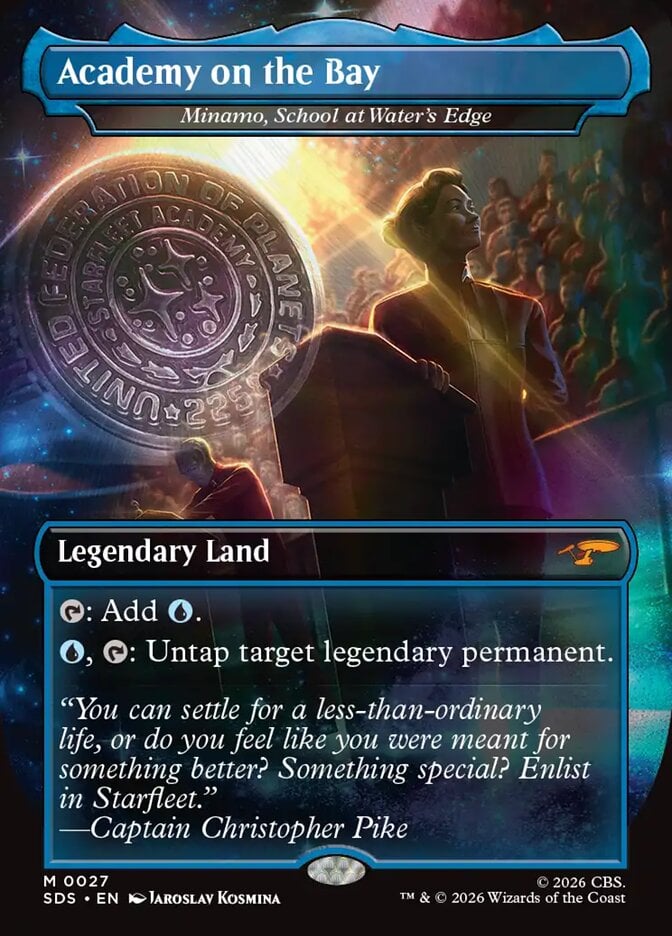
Minamo, School at Water's Edge: a slightly better “Island” that counts as a different name for strange new worlds!
Starbase Yorktown (Good)
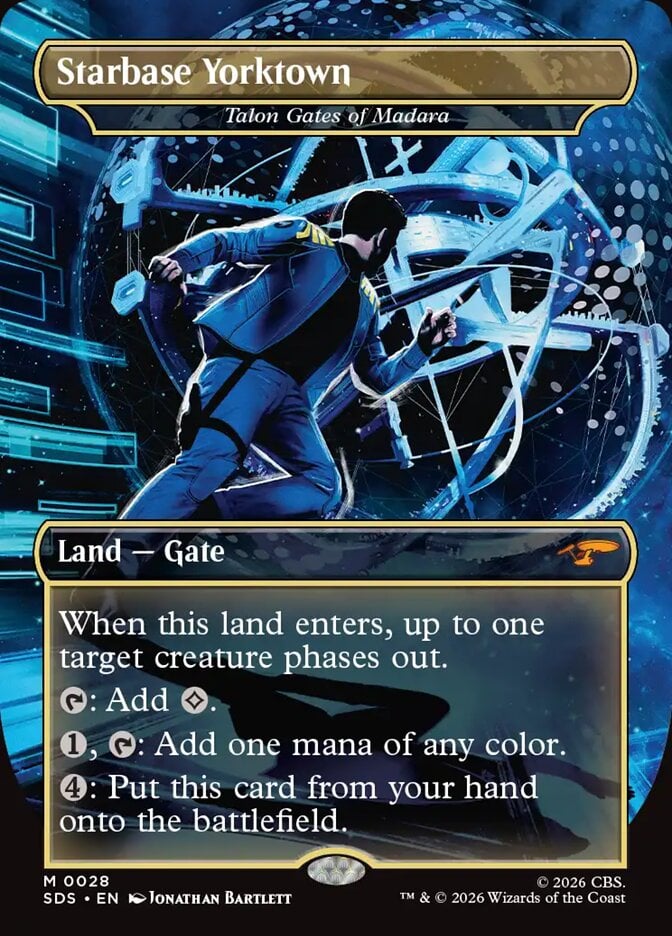
Talon Gates of Madara is a…combat trick land? That’s really neat, and it isn’t even terrible fixing to begin with (since the baseline is Unknown Shores).
Starfleet HQ, Under Assault (Mediocre)
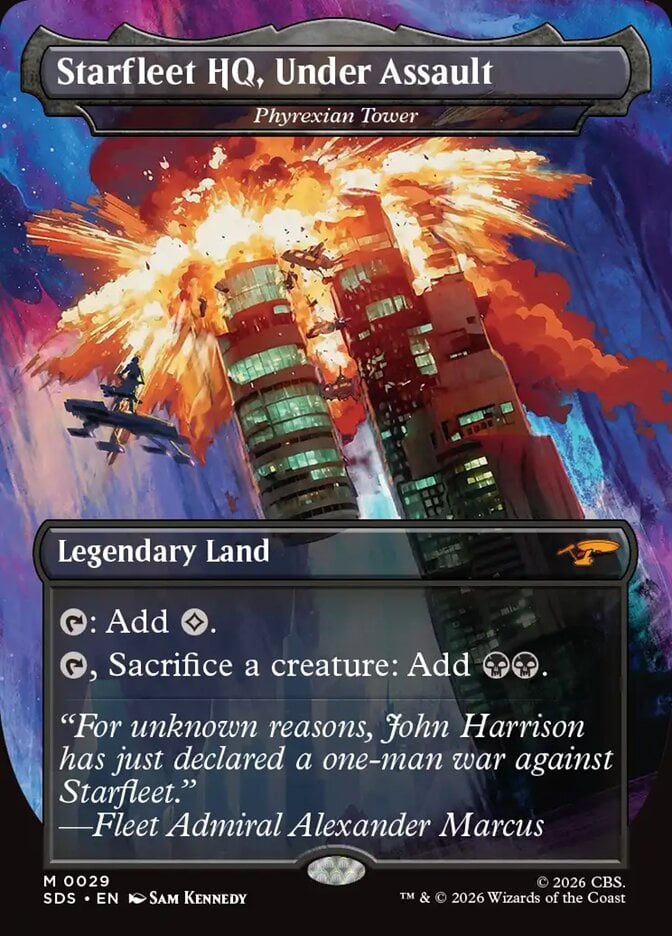
Sacrificing creatures for mana may occasionally come up with Klingon tokens, but I’d expect to get more value out of something like Artificial Anomaly than Phyrexian Tower in most decks.
Terran Throne Room (Good)
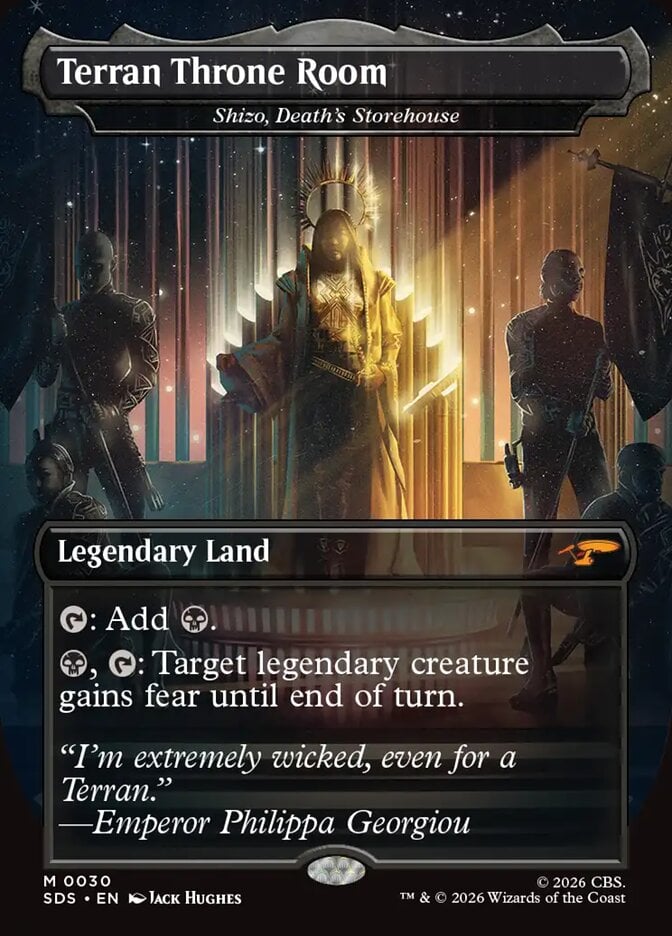
Fear means “can’t be blocked except by black or artifact creatures”. That’s a decent bonus on what’s essentially a “Swamp+”, so go ahead and play Shizo, Death's Storehouse if you’re in black at all.
Wrap Up

Tea, Earl Grey, Hot | Illustration by Raymond Bonilla
Whew! And with that, we have finally reached our planet of rest for now (Earth, I presume?). Don’t forget that you can use Draftsim’s very own Sealed Pool Simulator to practice opening packs and looking at cards ahead of Prerelease.
Which archetypes are you hoping to find in your Star Trek Prerelease Kit? Do you disagree with any of my rare or mythic ratings? Let me know in the comments below or over on the Draftsim Discord. And to stay in the loop on Star Trek and all other upcoming Magic sets, subscribe to our newsletter, The Daily Upkeep.
I’ll see you in a couple of weeks for our sequel Draft guide, after I’ve had some time to play the set. Until then, Live Long and Prosper!
Follow Draftsim for awesome articles and set updates:










Add Comment