
We Say Thee Nay! | Illustration by Mateus Manhanini
Greetings heroes! We’re two weeks into Marvel Super Heroes Limited, which means it’s time for another Ultimate Draft Guide! Keep reading and I’ll tell you everything I’ve learned about what it takes to win at this format.
This guide expands on everything I highlighted in my original Ultimate Sealed Guide. You don’t need to have read it to enjoy this guide, though I’ll expand on some concepts and assessments I covered there. Everything below comes from a mix of my own experiences playing the format, watching/reading other content creators, and 17lands data, which I always recommend checking out.
I’ve played significantly more of this set than I did of Secrets of Strixhaven and Lorwyn Eclipsed, which will hopefully be reflected in my writings!
Mechanics Revisited
Hero in Training | Illustration by Taurin Clarke
Power-Up
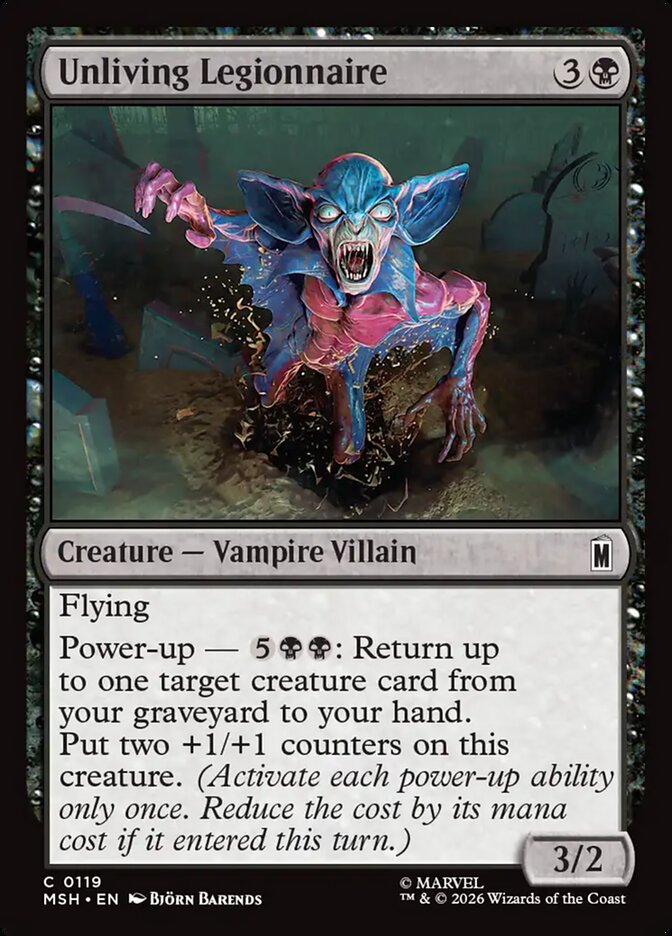
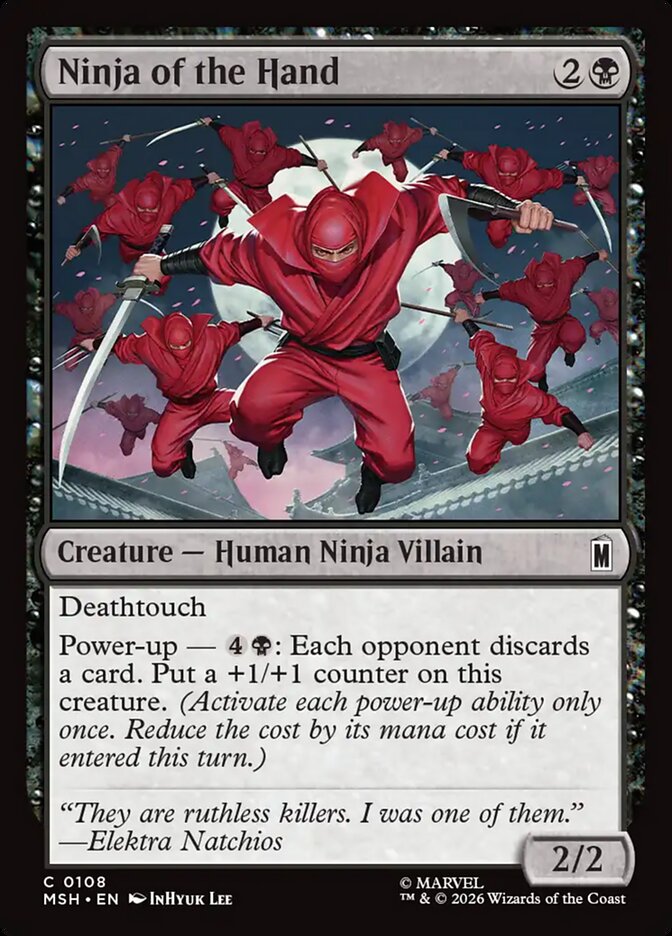
Power-up is the format’s primary mana sink. Most creatures with power-up have been overperformers for me, even clunky looking ones like Unliving Legionnaire and Ninja of the Hand. One important point worth emphasizing with power-up cards is that they’re essentially modular. Ninja of the Hand for instance is:
- A 3-mana 2/2 with deathtouch that you can trade off on curve, or spend to pump/Raven's Crime with later.
- A 5-mana 3/3 with deathtouch that immediately forces your opponent to discard a card.
As such, I often like to think of the power-up creatures as both costs at once for my mana curve. Cards like She-Hulk, Jade Defender and Pet Avengers make for both beefy 4-drops and powerful late game haymakers, while Serpent Specialist and Brave Brawler are acceptable early game plays that can scale later on.
While I have liked this mechanic, I’ll say that building around power-up hasn’t felt very necessary. Wonder Man, Hollywood Hero, Hulk, Gamma Goliath, and Shang-Chi, Master of Kung Fu are basically the only game in town, and they don’t really offer enough oomph to prioritize them.
Teamwork
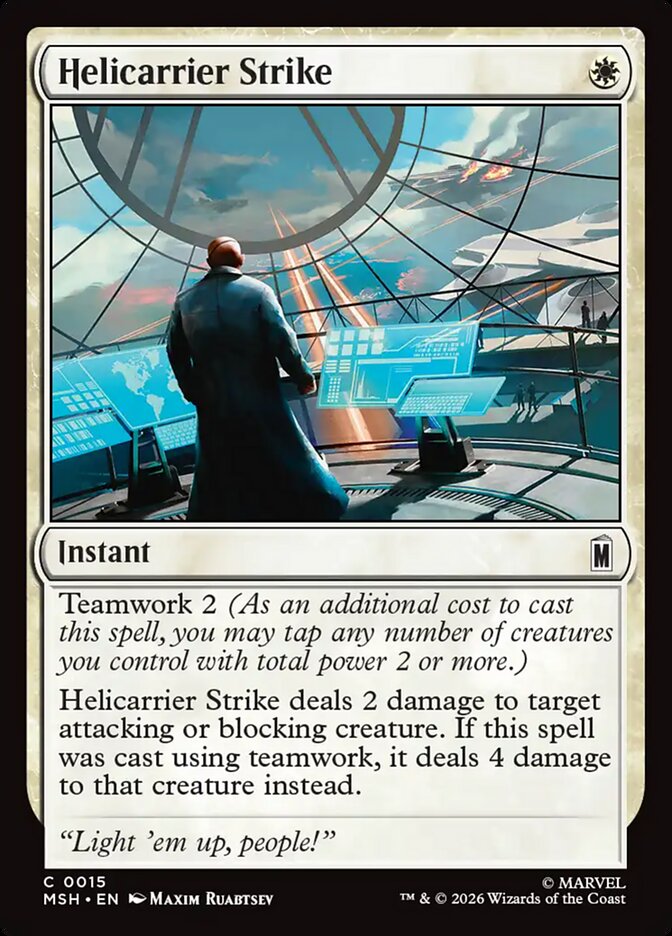
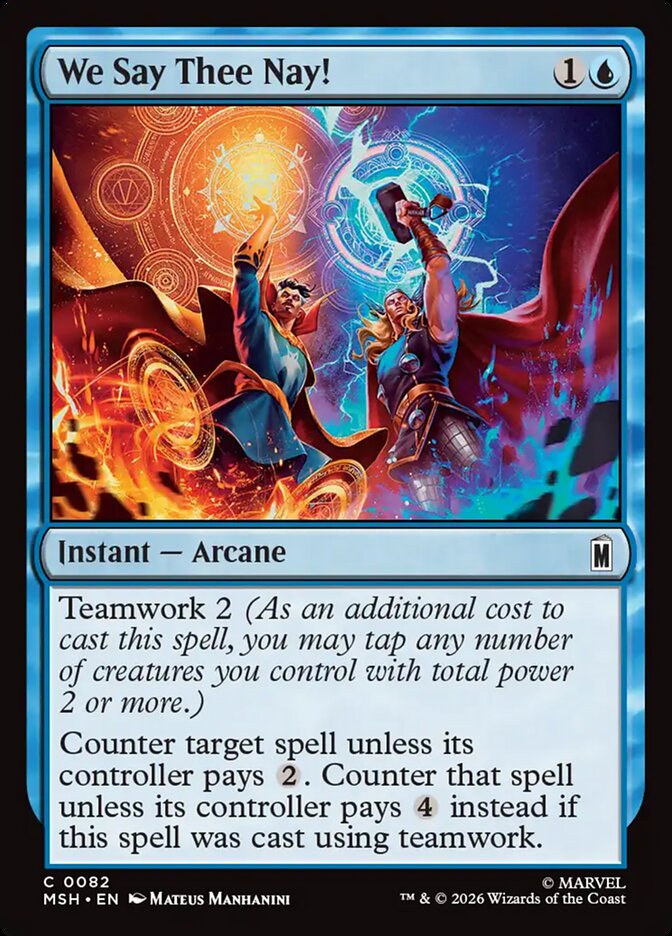
Teamwork is one several of factors that contributes to Marvel Super Heroes being a very creature-dominated format. It’s kind of the opposite of Secrets of Strixhaven, which often featured successful decks with single digit creature counts.
Here’s how each of the teamwork costs has felt in practice:
- Teamwork 1: Extremely trivial to activate, almost entirely free.
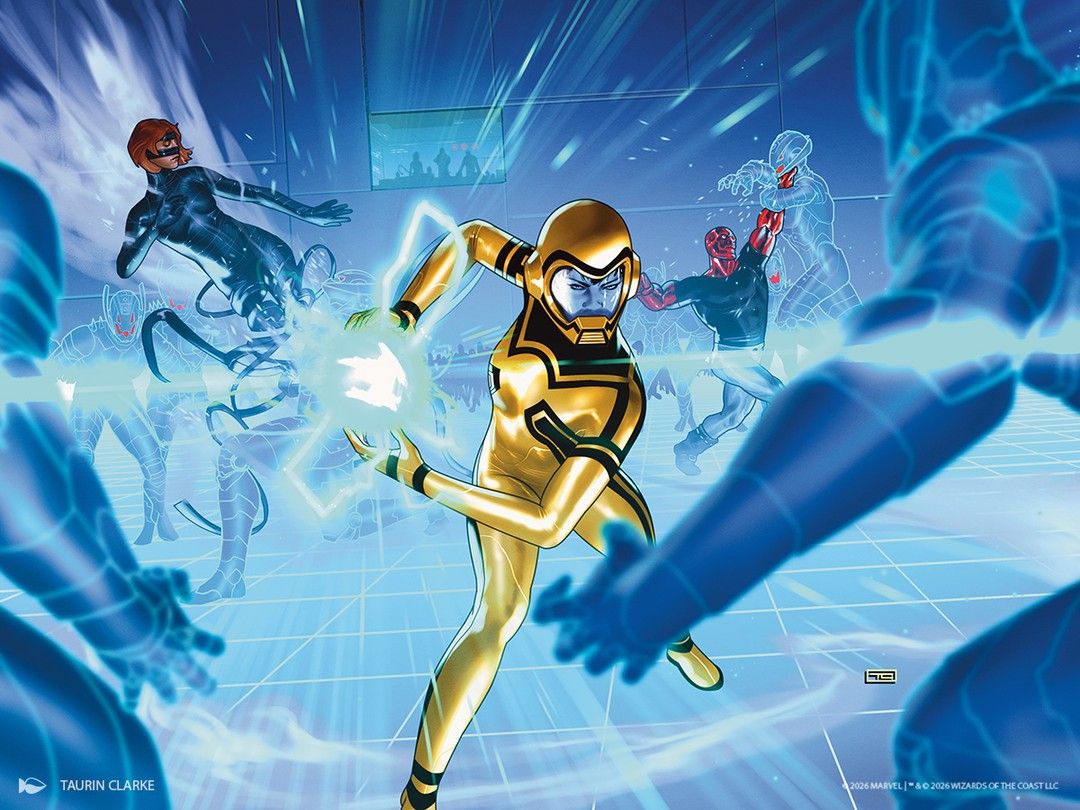
- Teamwork 2: Requires a small commitment, but oftentimes you can just play a cheap creature like Hero in Training and then immediately tap them for Helicarrier Strike or We Say Thee Nay!
- Teamwork 3: Somewhat inconvenient because you’ll need a 2/2 plus a 1/1 token or a 3+ power creature (usually a 3+ drop) to solo it.
- Teamwork 4+: Not impossible, but it usually requires you to give up some attackers or wait to play your fattie alongside HULK SMASH! or Murdock's Crusade.
Despite teamwork being the stated theme of WU in this set, I’d like to go on the record and say that there is no real “teamwork deck”. The mechanic is on a ton of great cards, but the closest you’ll come to building a deck around it is getting a couple of Agent Maria Hills and then prioritizing cards to work with it.
Plans
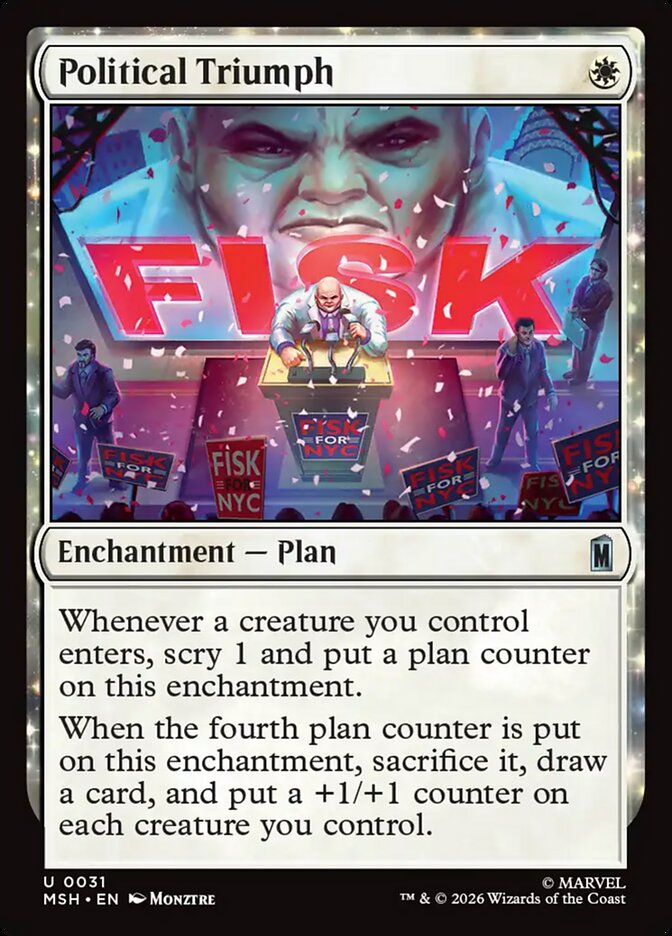
Most of the plans have been weaker than expected, other than Political Triumph (which has massively overperformed). I’ll briefly cover how to build each one here so you know how to approach them if the draft lines up:
- Political Triumph: Play this, then play creatures (especially token makers) to pop it. Wow, that was pretty hard!
- Rewrite History: Rewrite needs three things to be good: cheap creatures, ways to tap your creatures besides just attacking (i.e., vehicles, teamwork cards, mana dorks like Undercover Skrull), and quality instants and sorceries. If you can somehow align all the stars for this, your reward is a repeatable loot engine that casts Pull from the Deep later on, which is admittedly not bad. It’s a ton of work, but an interesting card to speculate on if you see it late.
- Robot Domination: The potential card advantage here is massive (+3 cards plus a trio of 2/2 Robot Villain tokens), but actually getting there is quite a pain. Trading in combat is okay, but it really helps to have extra ways to directly bin creatures like Rapid Rescue and Red Room Recruit. Note that tokens don’t count towards this, as it cares about “creature cards” entering your graveyard. The “one or more” line also means you’ll only get one counter for trading off multiple creatures in combat, so try to space out your trades. In general, the card suffers from the format’s penchant for flying creatures, which deny Domination the creature trades it needs and also punish you for the tempo and life loss associated with this card. I haven’t really liked or used it much, but I respect its potential both as a build-around and as a potential sideboard card for grindy matchups.
- Death to Our Enemies: This is a powerful card in theory, but it happens to exist in a terrible set for it. Marvel Super Heroes has much more creatures than your usual Limited set, as the vast majority of uncommon slots have gone towards legendary creatures. As such, getting this to work requires an unusual control deck with tons of removal, noncreature card draw like Vision of Love and Futurist Forge, plus some late game win conditions. I’ve only played it once so far out of about 18 drafts and 56 Arena Directs.
- Claim the Kingdom: Claim is much easier to use than the other plans we’ve covered so far (besides the overpowered Political Triumph, of course). That doesn’t mean I usually like to play it though, as I haven’t found it to be impressive without +1/+1 counter synergies. There’s no Evolving Wilds or anything like that for double landfall triggers, so getting enough value out of this requires extra counter incentives like Ant-Man, Colony Commander, Knight of Wundagore, and Viv Vision, Teen Synthezoid.
- Construct a Cosmic Cube: I gave this card a “Good” rating in my Rare Review, which was definitely overrating it. It’s too difficult to trigger this card each turn consistently, and failing to do so makes it a 3-mana do-nothing. I’m happy to play it in very specific decks with multiple copies of cards like Red Room Recruit, H.E.R.B.I.E. Scout Unit, or Trickster's Stratagem, but I’m never taking it early in a Draft.
- Doom Reigns Supreme: I gave Doom Reigns Supreme a “Bomb” rating, which it unfortunately has not earned. Villains in general just kind of stink in this set, which is the main reason why “Bomb” was too high of a grade. I’m still definitely playing this in any villain piles I draft, but I’m less likely to draft those in the first place.
Connive
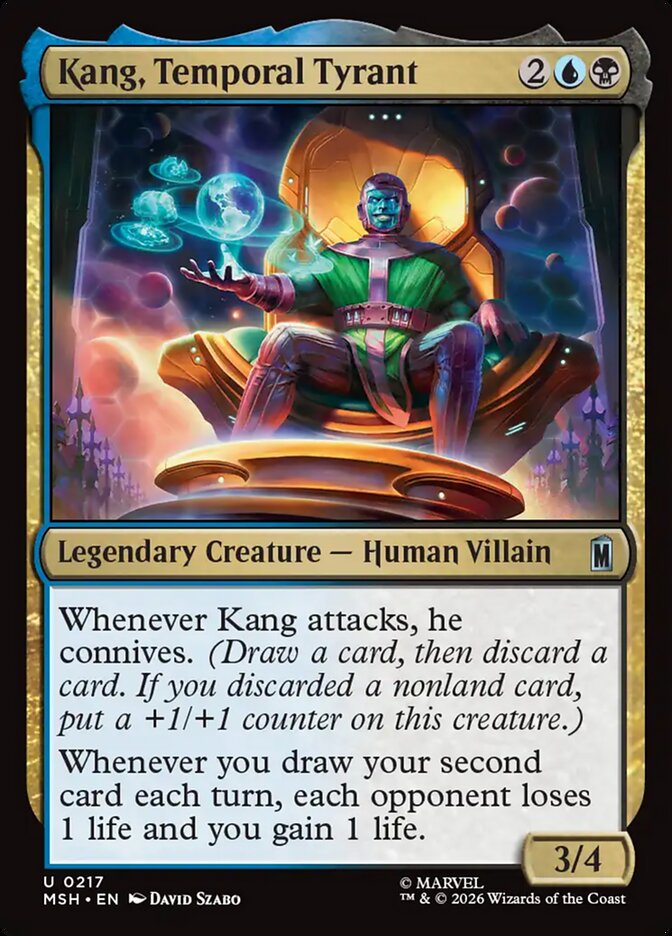
Connive is a nice consistency mechanic. There actually isn’t that much of it in the set though, which limits the appeal of building around it with cards like Construct a Cosmic Cube and Kang, Temporal Tyrant. Marvel Super Heroes is also a bit light on graveyard synergies, although you’ll occasionally pick up some extra value by discarding a creature to turn on HYDRA Troopers.
Transforming Modal Double-Faced Cards
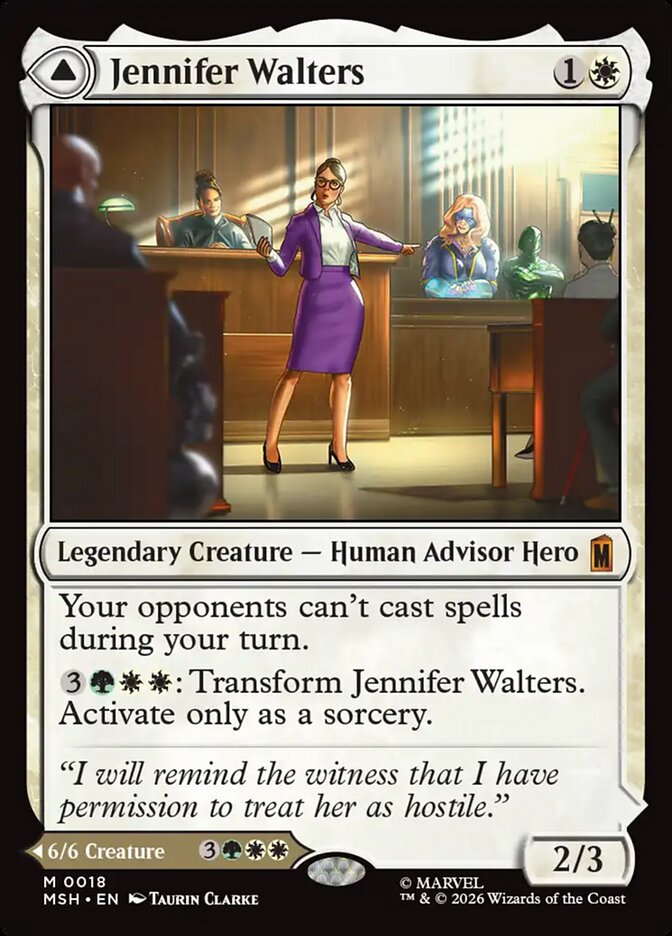
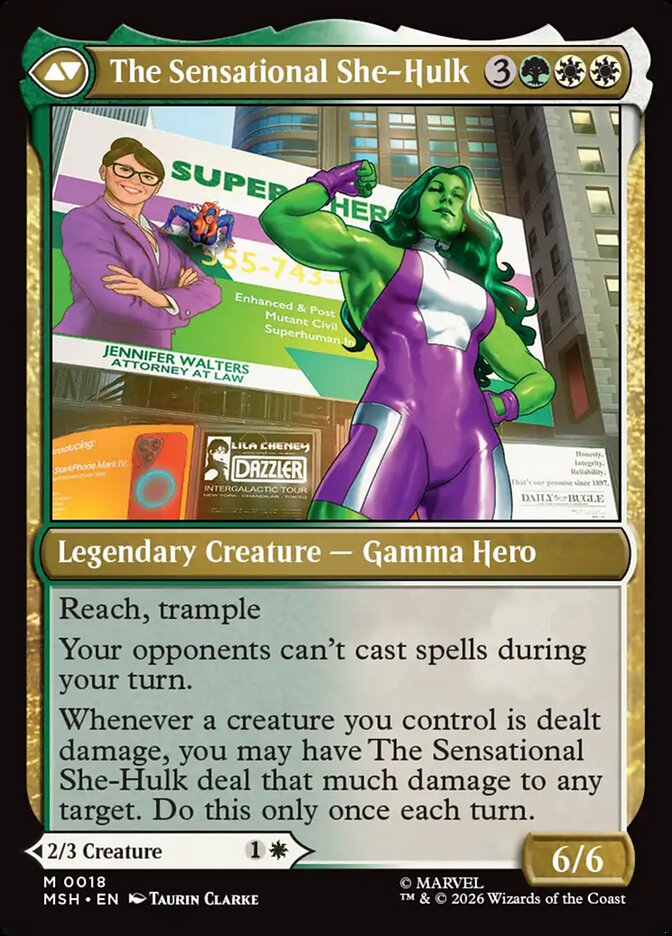
All five of these mythics have been quite strong, especially Jennifer Walters / The Sensational She-Hulk and Monica Rambeau / Photon, Living Light. Photon, She-Hulk, and King T'Challa / Black Panther, Hope Enduring are almost always worth splashing if you open them!
Set Overview 2.0
Here’s the fun part where I’ll share my hot takes on how I see this MSH Draft.
Balance
Marvel Super Heroes is a fun but poorly balanced set. There are two main imbalances with massive implications for this Limited format.
- White and blue are overpowered, and red is underpowered.
- Heroes have higher card quality than villains, especially in terms of common creatures (why did Hero in Training even need that lifegain kicker?).
These trends are heavily reflected in the 17lands data for the format, which shows off some shocking differences in colored win rates. The best red common (Lightning Strike) wins only 55.2% of the time, while the best white common (Hero in Training) has almost the same win rate as Thor, God of Thunder(the best red card in the entire set)!
Azorius Posting Ws
So why is WU so good in this format anyways? It certainly doesn’t come down to its fake “teamwork” theme, that’s for sure. Instead, WU gets by on the strength and depth of its commons and this format’s propensity for ground based board stalls (which allows WU’s fliers to peck their way to victory).
WU has the best common creatures in the format (Hero in Training and S.H.I.E.L.D. Deployment Drone), some of the best removal/tempo spells, an excellent Quench variant to punish bigger decks, and more. Both colors are almost entirely bereft of actual bad commons too; Kree Commandos is admittedly pretty bad, but if Atlantean Cavalry or Panther Pounce is your 23rd card, you could do much worse.
Another perk to these colors is their superior consistency. Cards like Political Triumph, Hero in Training, Futurist Forge, and S.H.I.E.L.D. Spy Kit will often let you see more cards than your opponent, dramatically decreasing the odds of you having a non-game due to land/spell imbalance. Seeing more cards also increases your odds of having an out to some game-winning bomb like Doctor Doom or The Super Hero Civil War.
Red Woes
So why is red so bad anyways? Let’s take a look at the format’s commons for our answer:
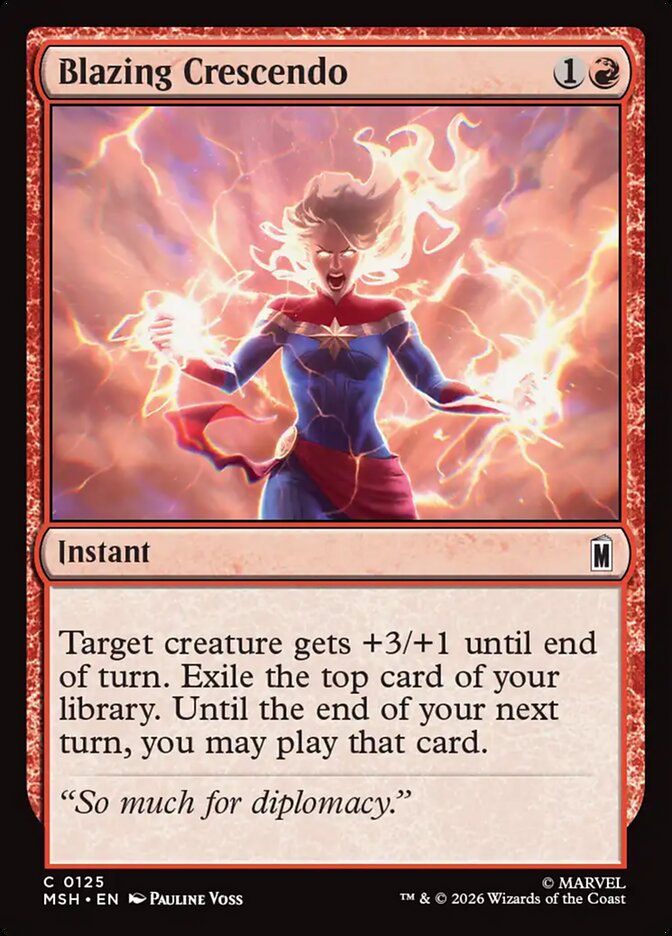
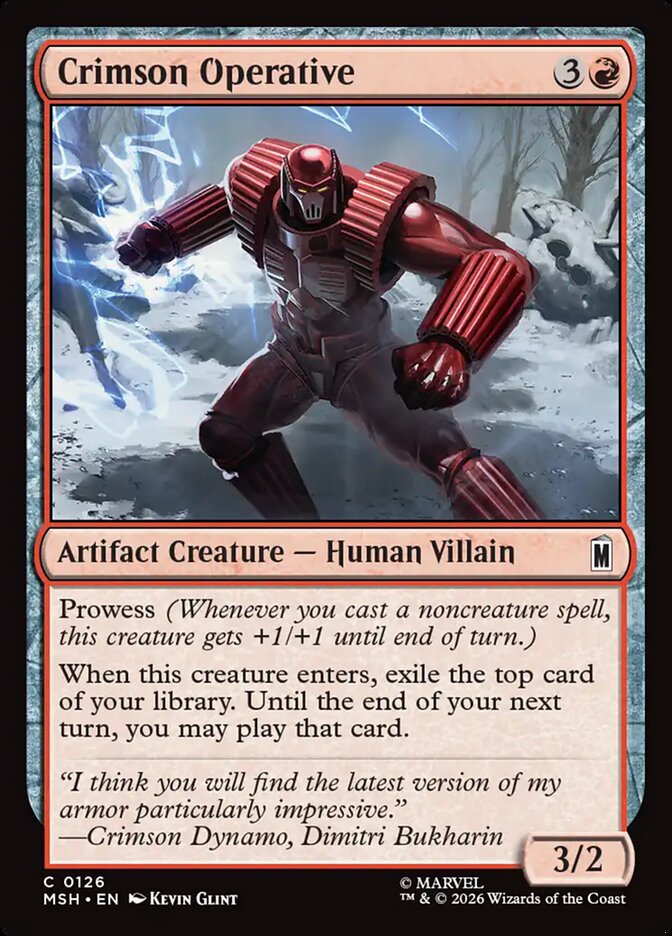
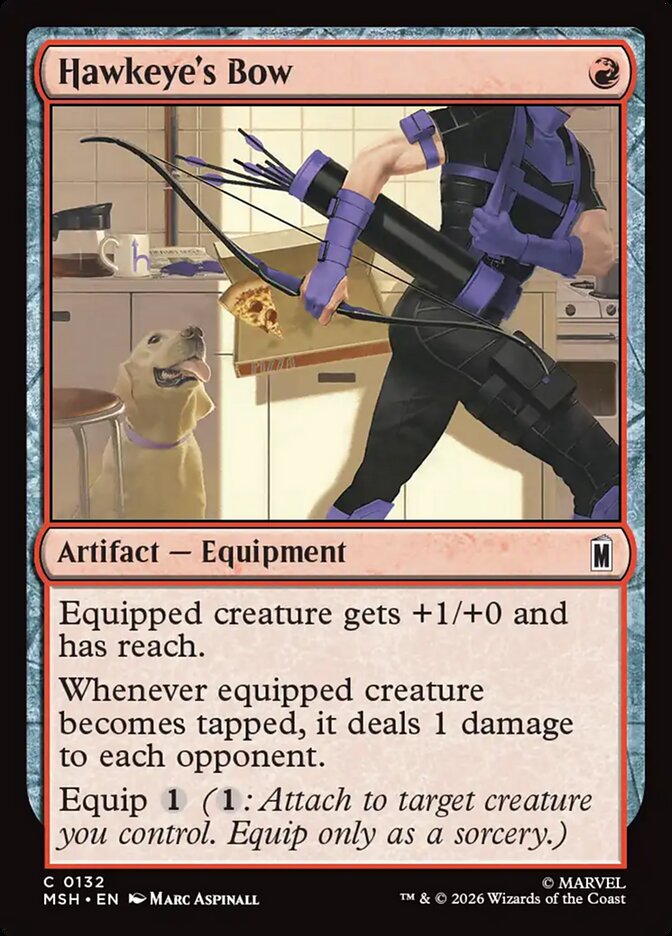
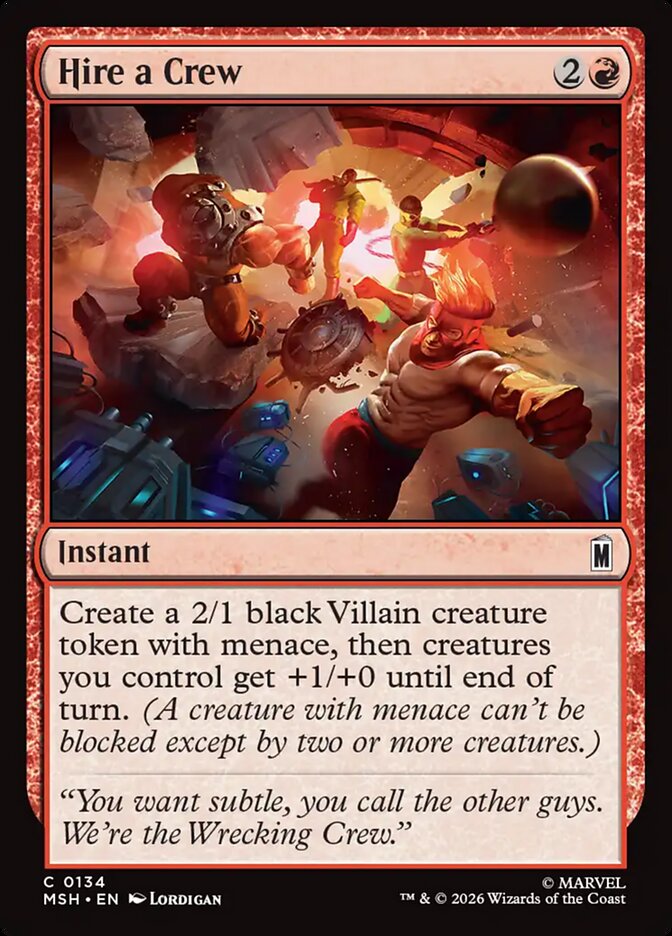
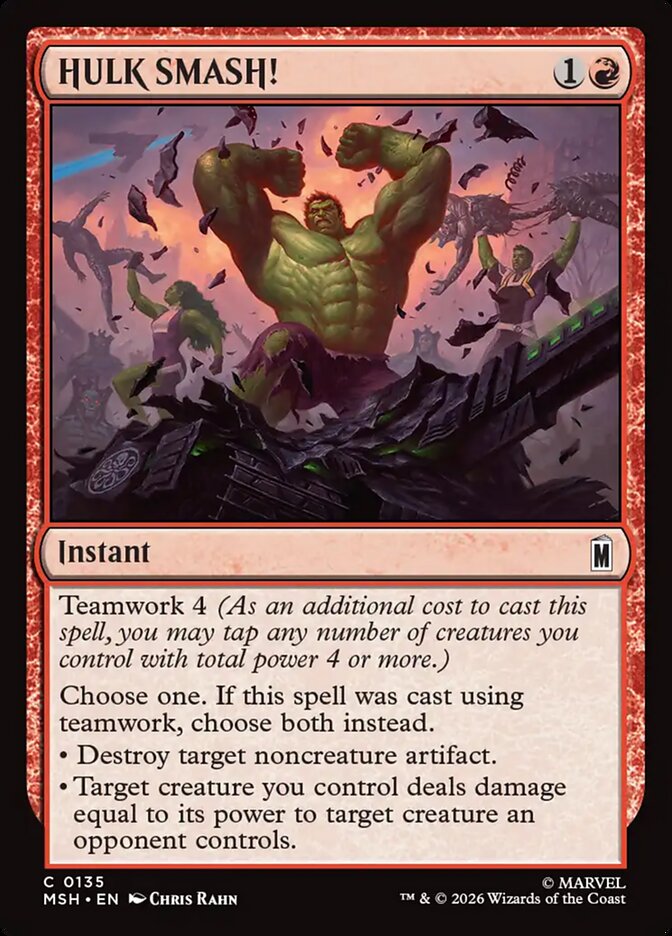
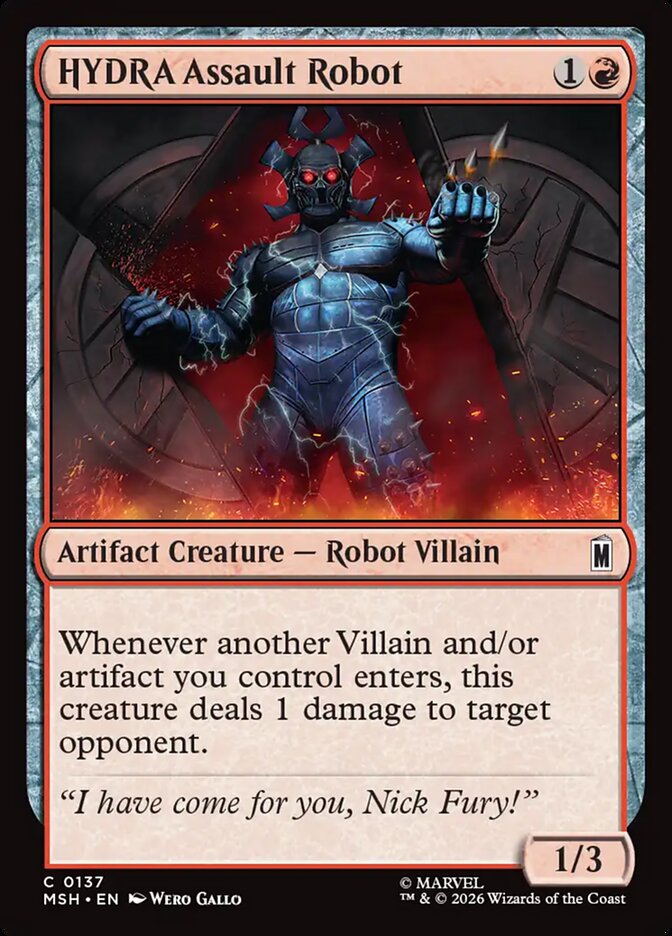
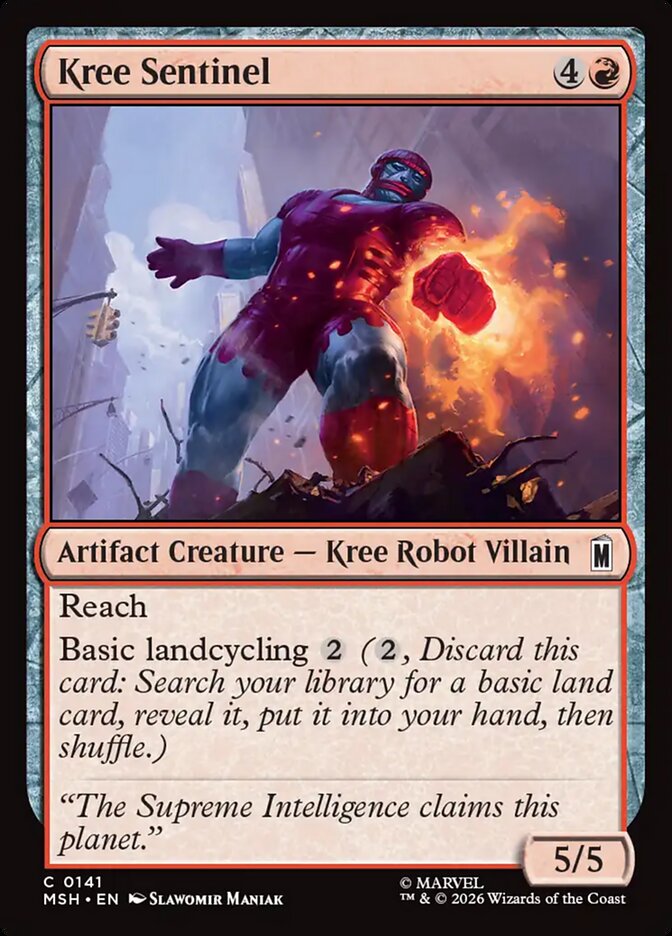
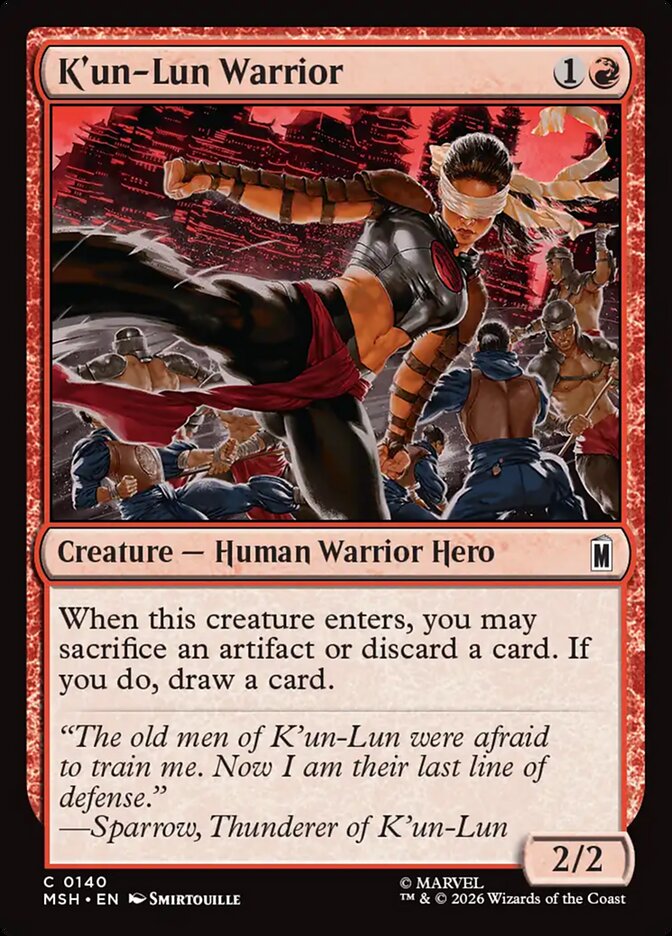
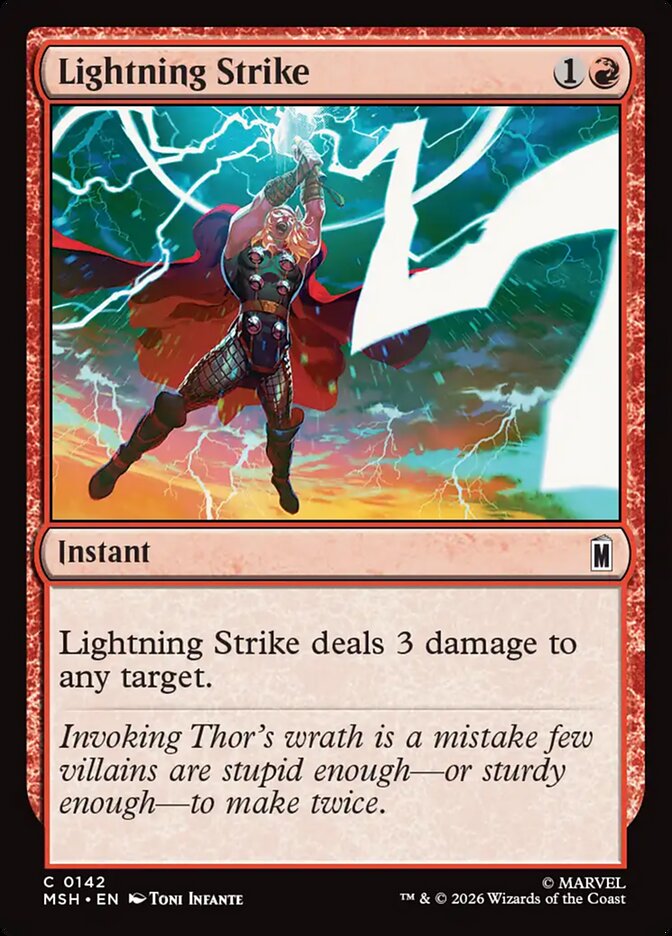
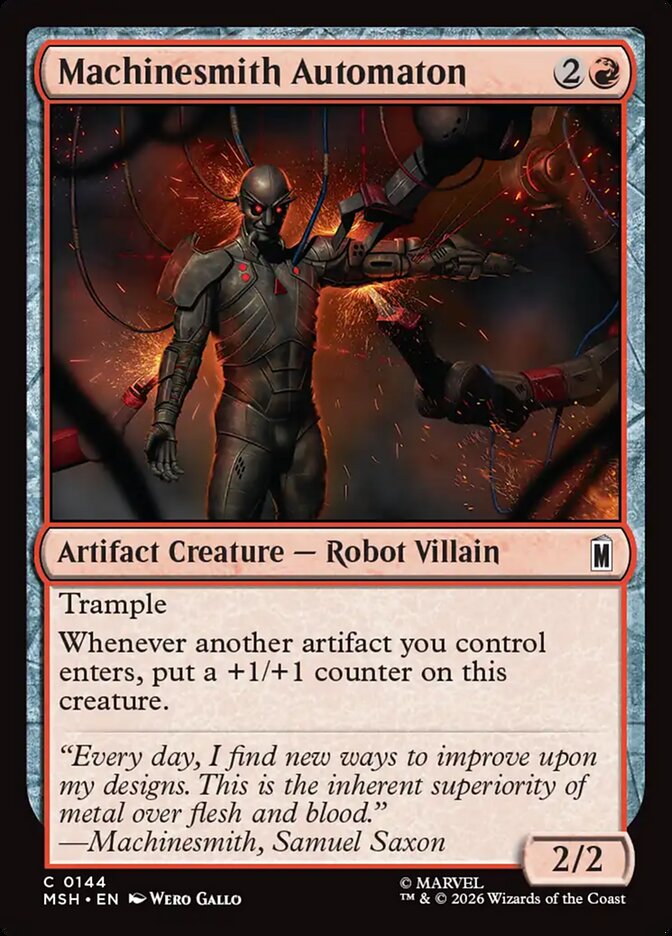
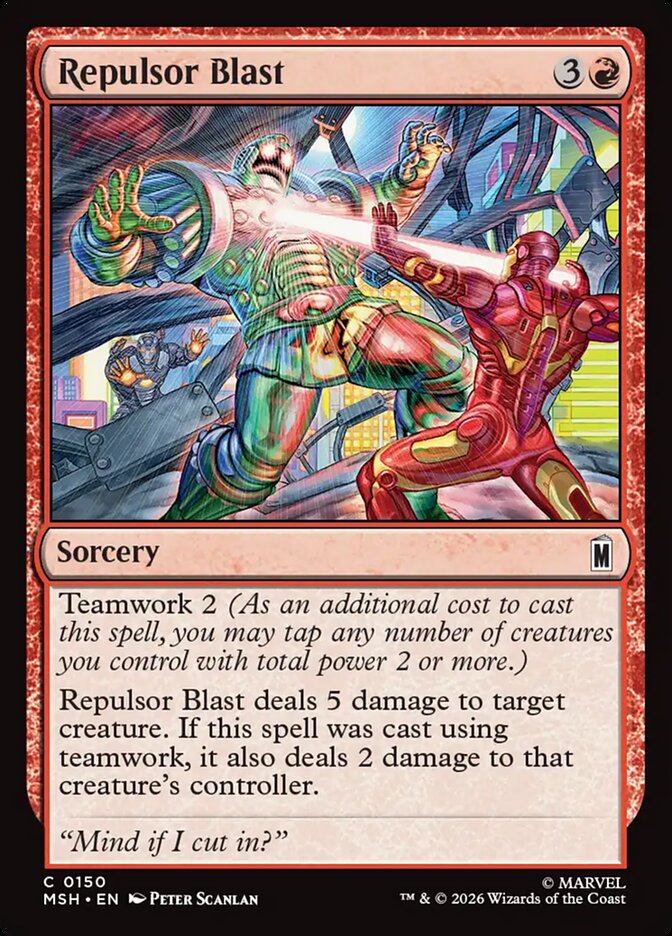
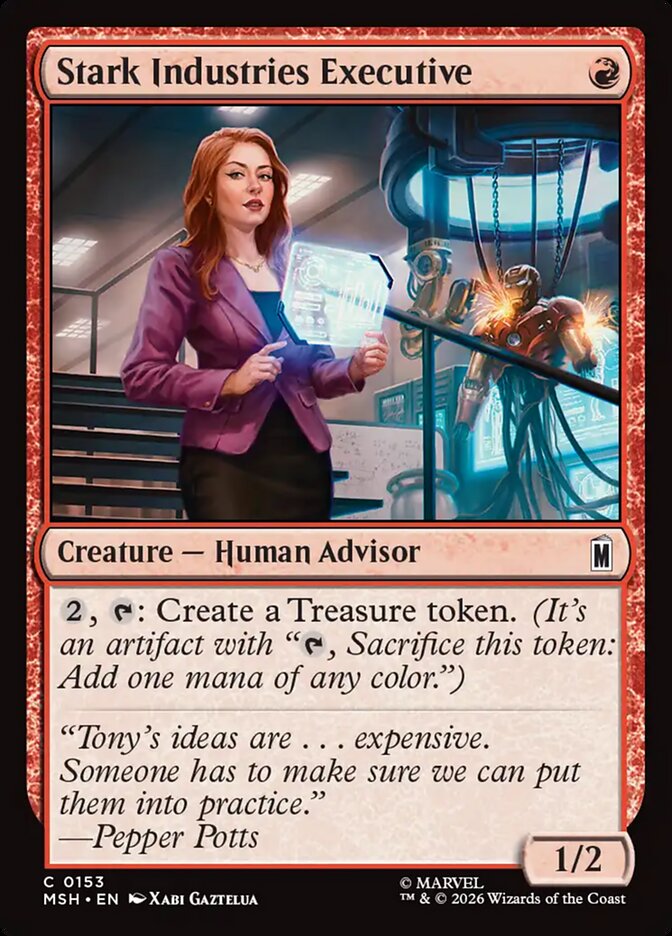
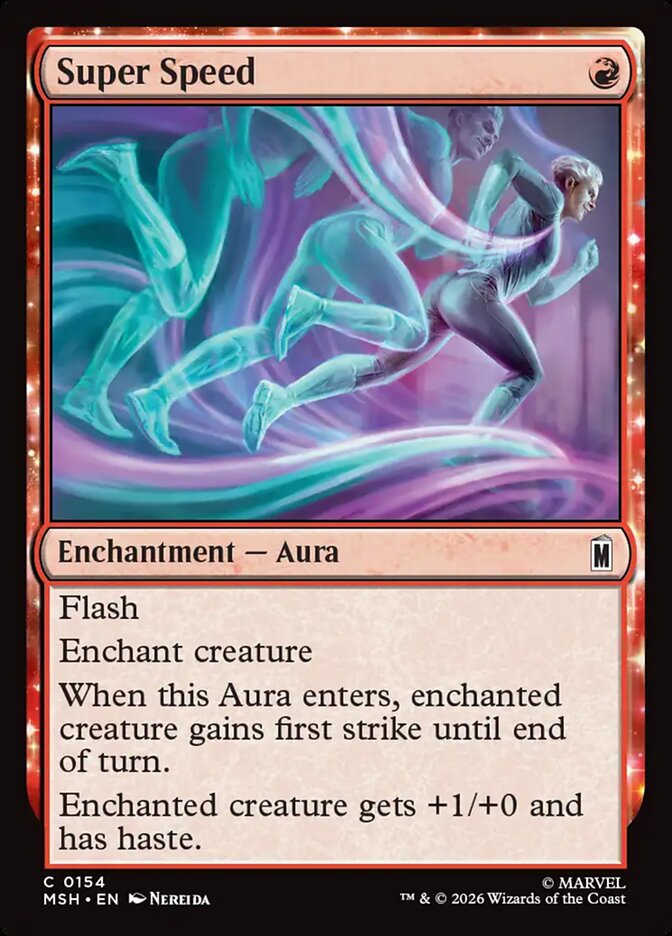
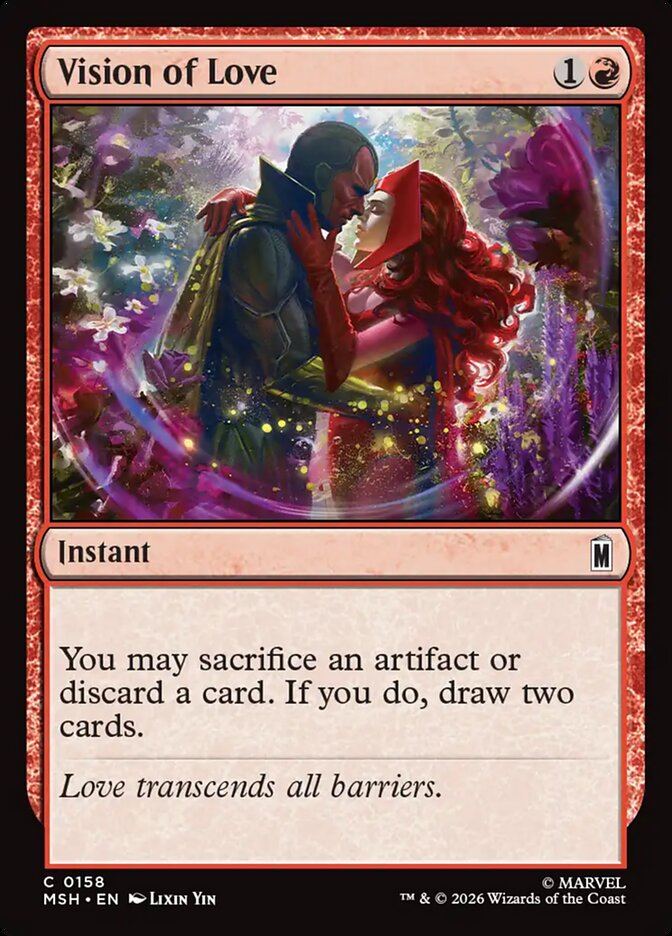
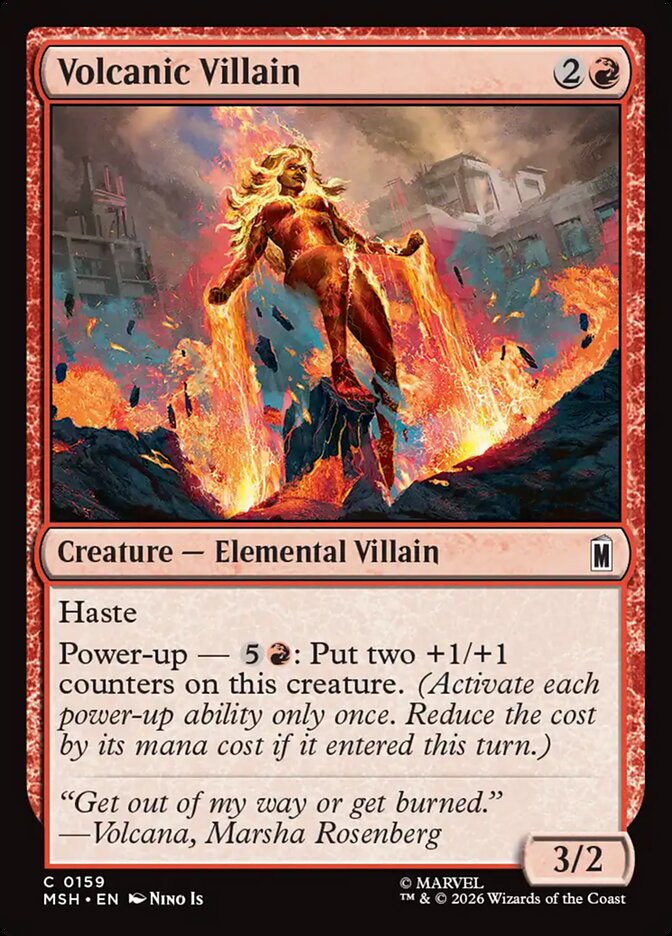
Of these 15 cards, the only ones I’m actively happy to put in my deck are Lightning Strike, HULK SMASH!, Crimson Operative, and Kree Sentinel. The rest of the creatures range from filler (K'un-Lun Warrior, HYDRA Assault Robot) to archetype filler (Machinesmith Automaton, which is only playable in UR Artifacts) to just plain embarrassing (Volcanic Villain, Hire a Crew). Red’s creatures simply don’t attack well, don’t block well, and don’t create card advantage.
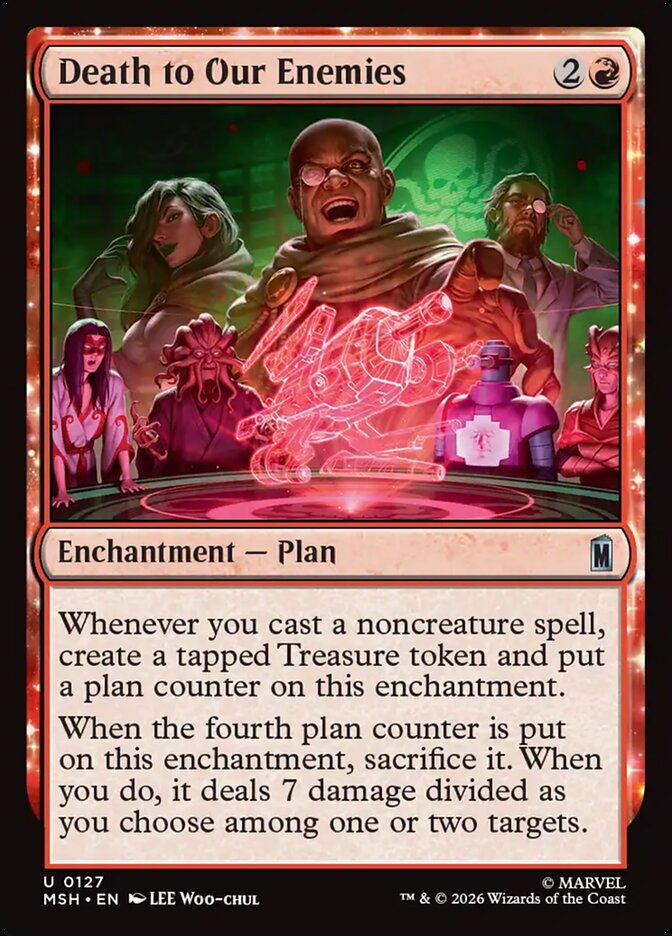
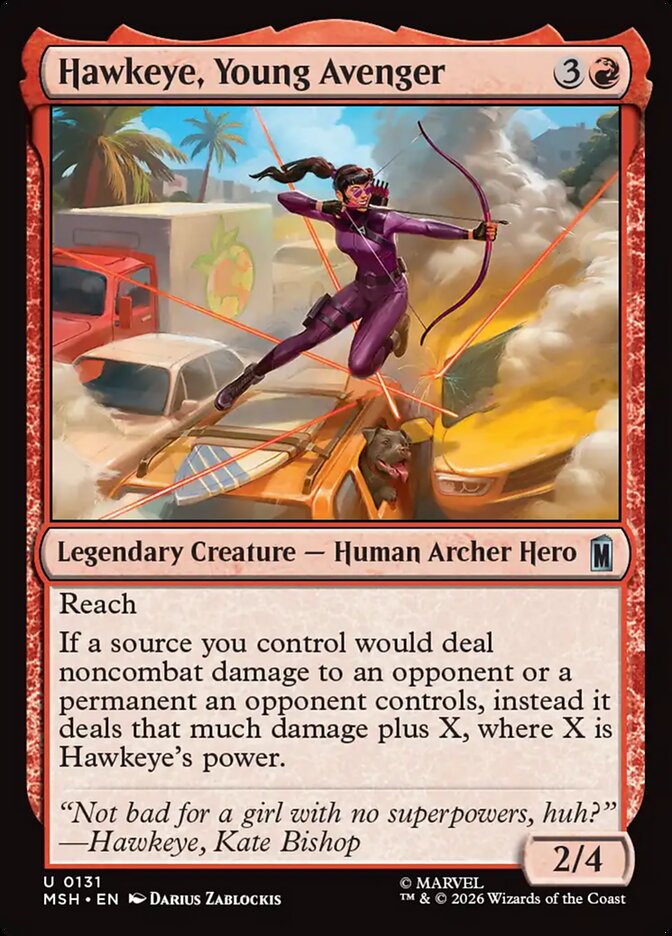
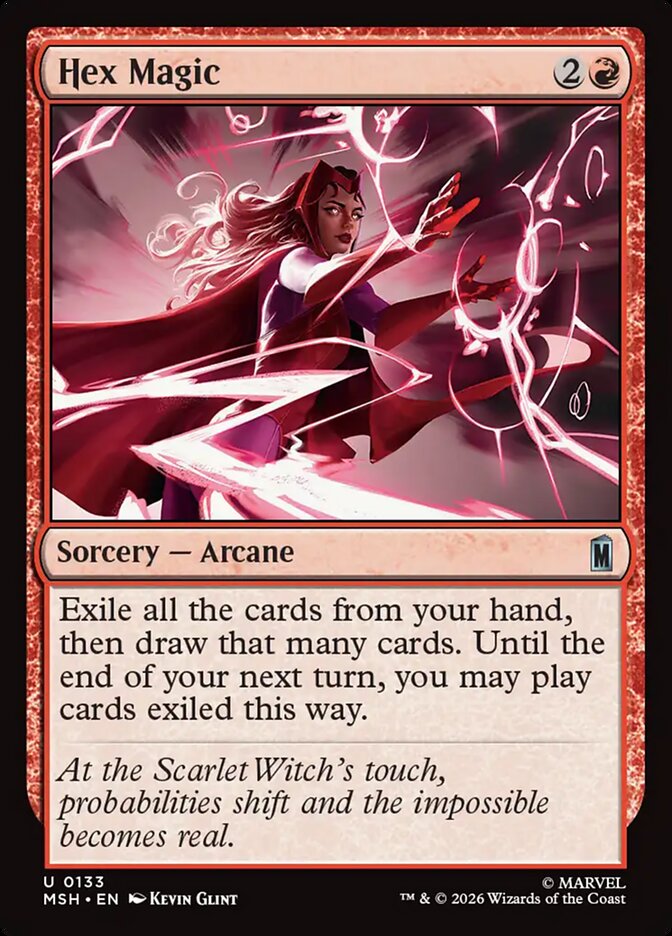
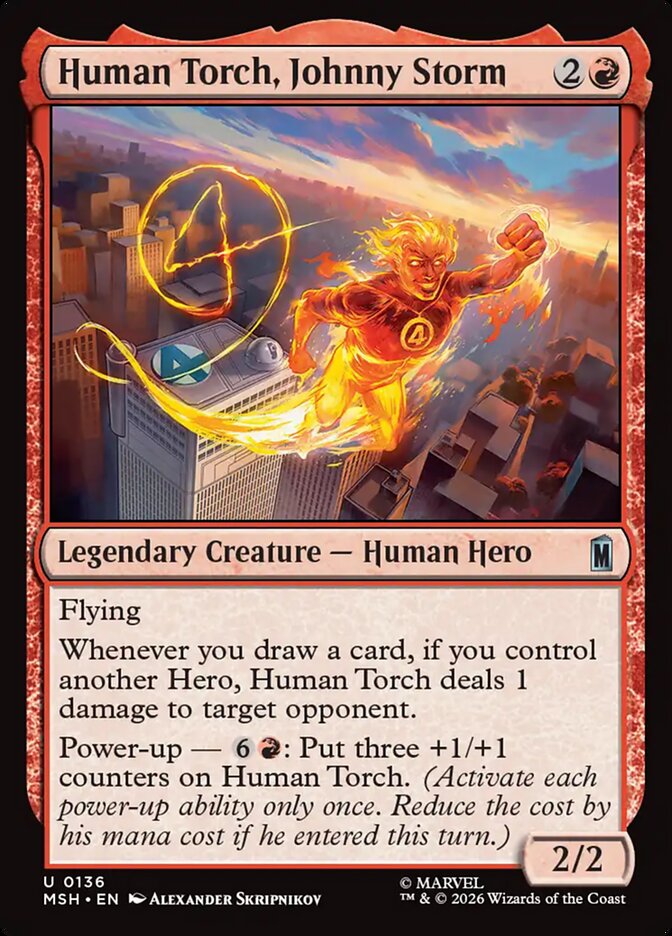
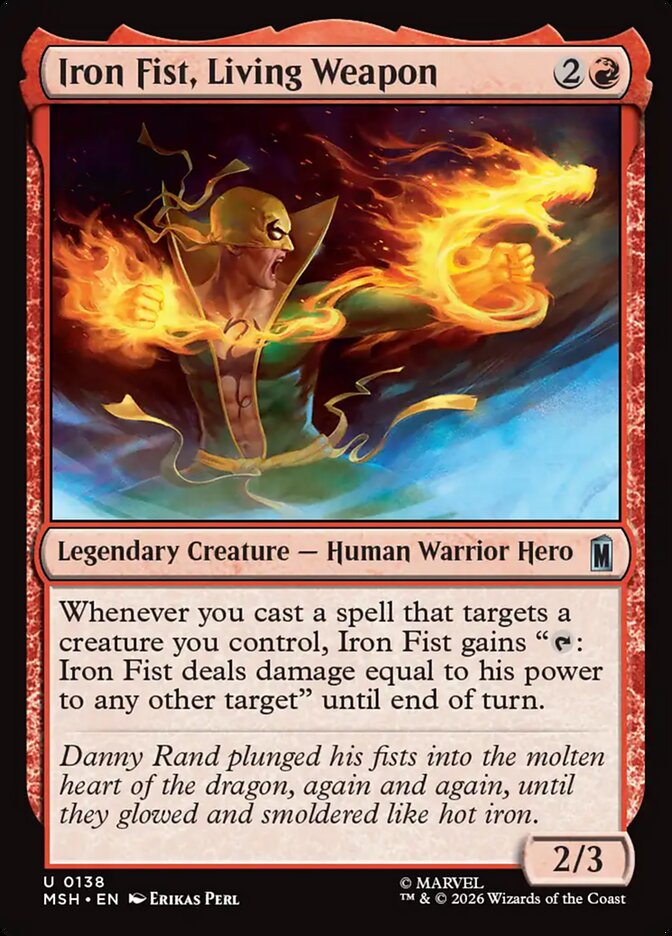
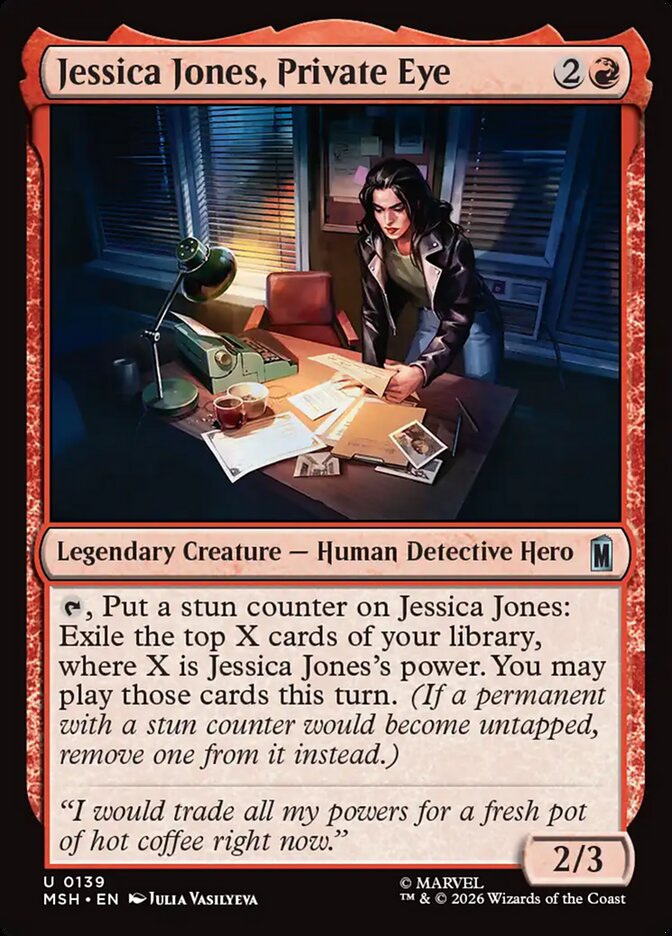
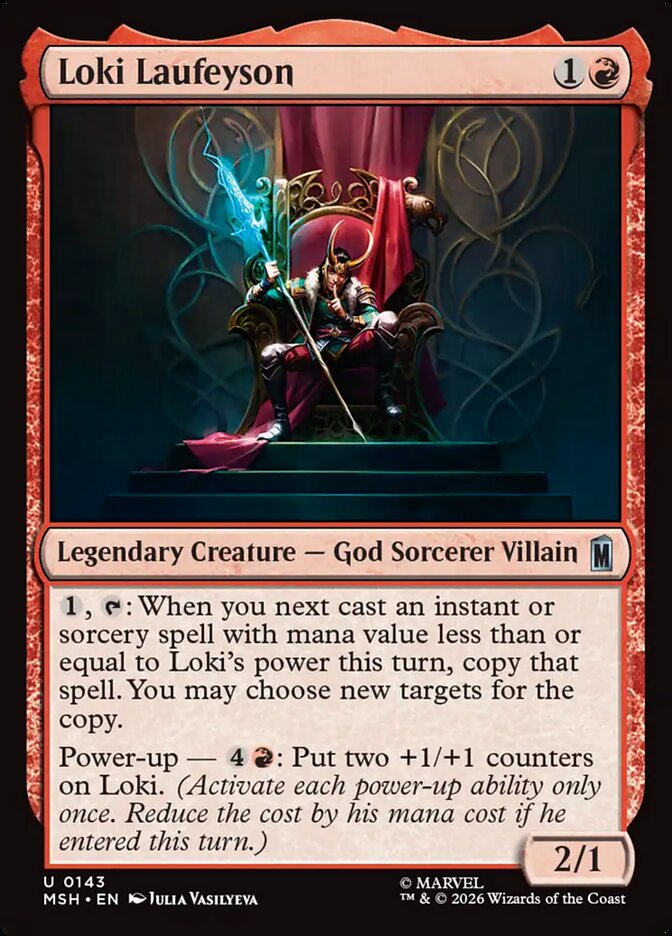
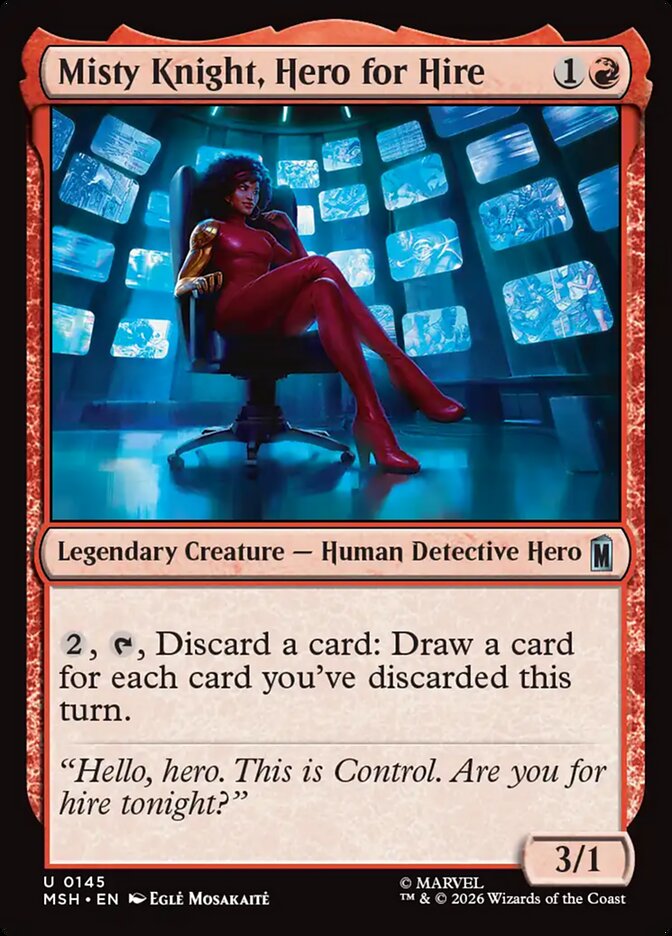
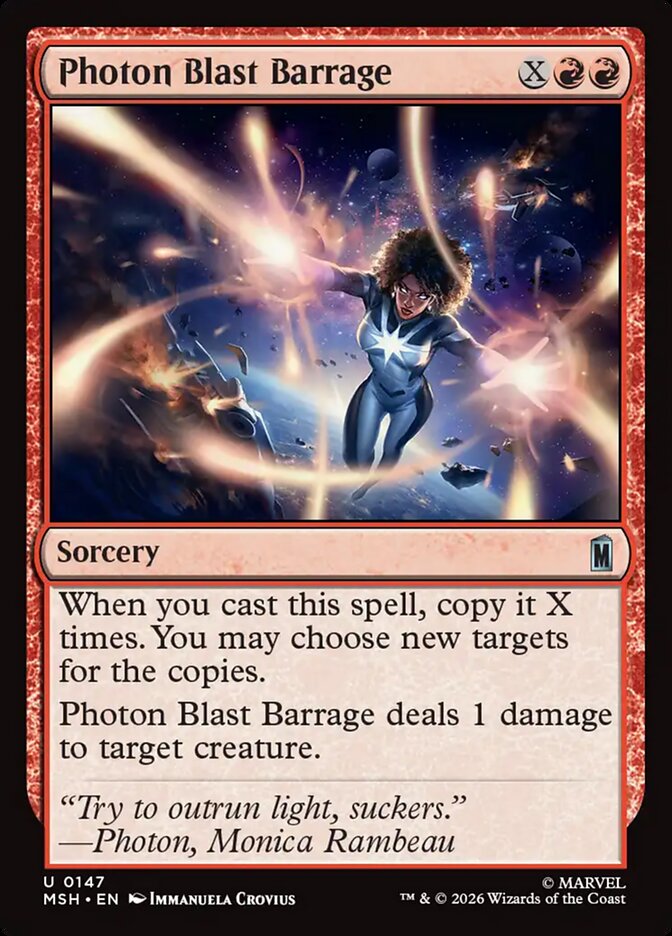
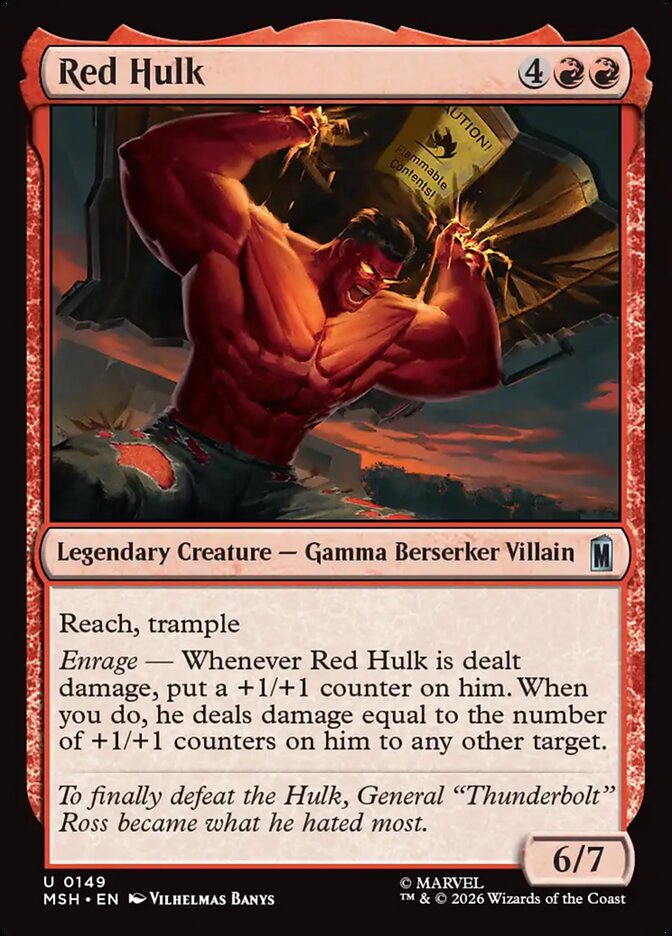
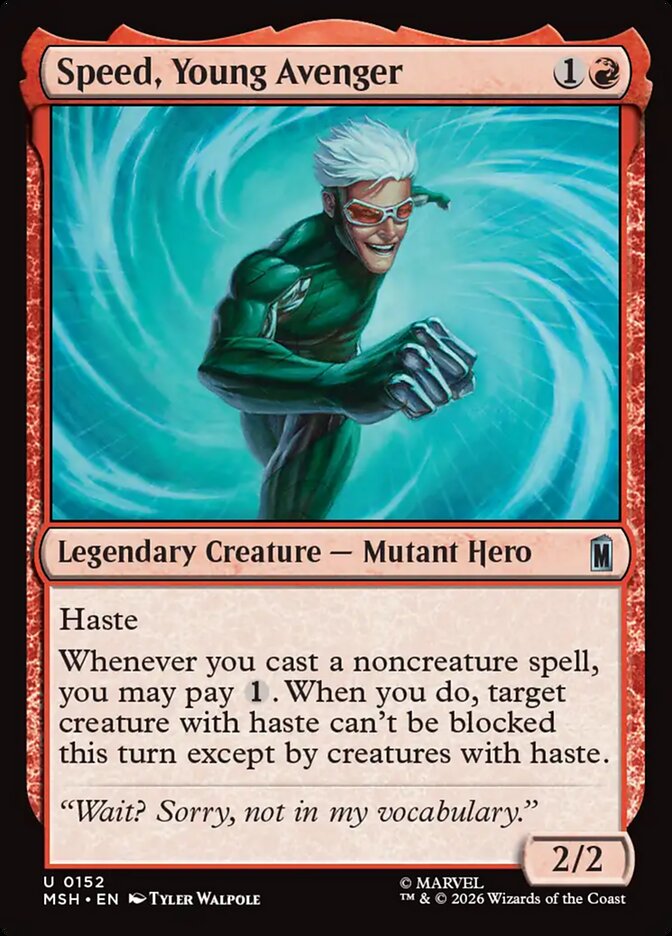
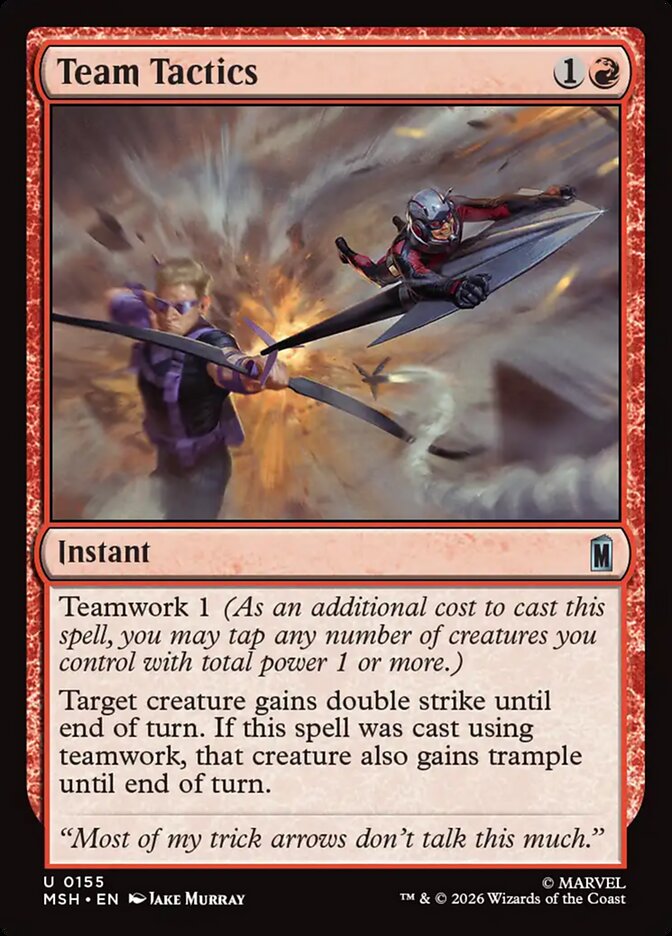
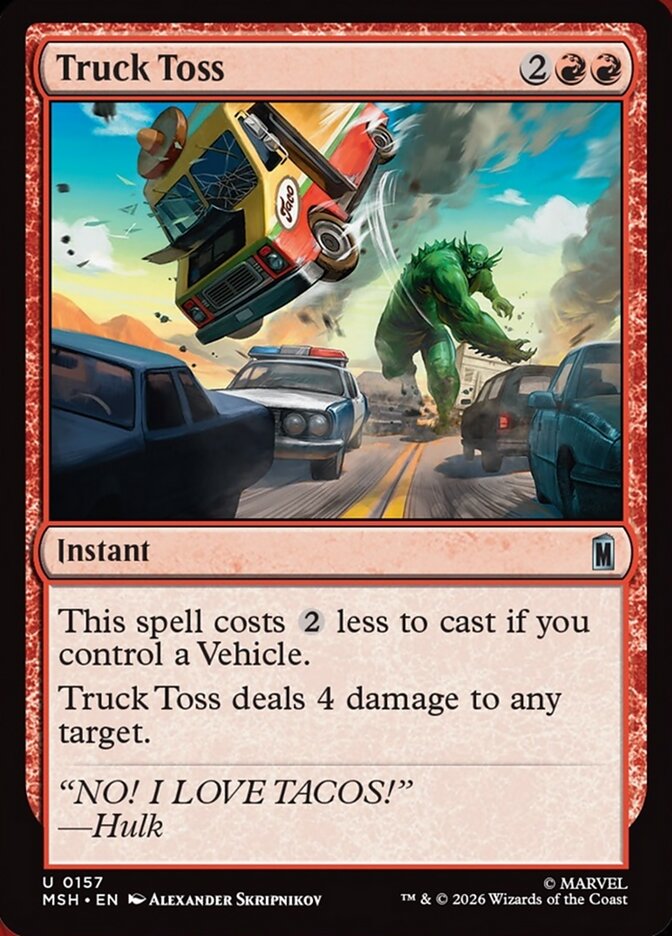
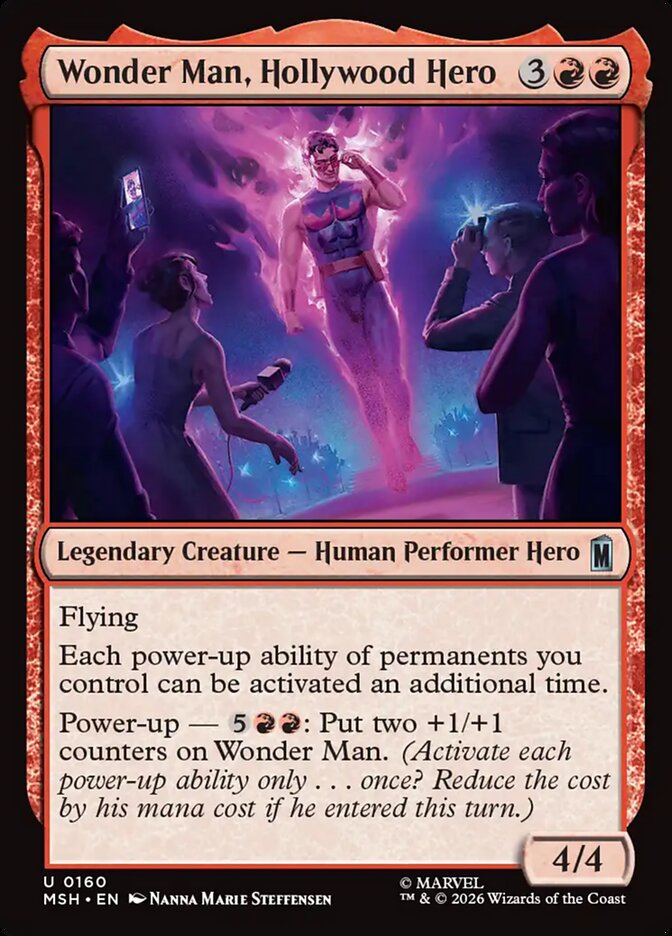
Red uncommons are definitely less dire. Jessica Jones, Private Eye and Photon Blast Barrage are exceptional cards that fit into any red deck. Loki Laufeyson, Hawkeye, Young Avenger, Truck Toss, and Misty Knight, Hero for Hire are generally above-average cards, and there are plenty of other cards here that are at least okay. Hex Magic and Death to Our Enemies are the only true uncommon stinkers that red has.
Thus, my recommended approach to red is only to play it when you see its best cards. Without premium uncommons or a ton of Lightning Strikes, the color simply doesn’t have much to offer.
Of course, Draft is ultimately a self-correcting format. If everyone is drafting white decks, you aren’t going to see any Hero in Trainings going late. If no one is drafting red at all, you may see some genuinely excellent red cards like Jessica Jones, Private Eye and Photon Blast Barrage quite late, so you’ll reap the rewards.
What About Black and Green?
Black has three great removal spells but fairly poor creature quality, which ties into my incoming spiel against villains. Red Room Recruit is the best common villain available, though hardly Hero in Training levels of quality. The other common villains are decent role-players with some utility later on, but it’s tough to feel ahead when you cast cards like Unliving Legionnaire and HYDRA Troopers on curve. Black can work as a base if you have strong uncommons, but it often works best as a support color for a deeper color like white, blue, or green.
Speaking of green, it’s my pick for the third best color behind blue and white. Undercover Skrull, Ant-Man's Army, and even Restorative Technique give it an advantage in splashing some of the best cards in the format. Green has generally high creature quality as well, and a very strong removal spell in Go Nuts!, which rewards you for curving out. Green’s worst common is definitely Super Strength, which only fits into desperate aggro decks (or as a sideboard card to punish a lack of removal).
How and What to Splash
Splashing in this set is pretty easy and highly lucrative. There are a ton of rares I rated as “great” or “bombs” in the Rare Re-Review below, most of which make for excellent splashes so long as they’re single pipped.
How to Splash
Green decks have two extra cards compared to everyone else in Undercover Skrull and Restorative Technique. Every color pair has access to universal basic landcyclers, common dual lands, Dependable Quinjet, and Surveillance Room, plus some great uncommon lands like Avengers Tower and Baxter Building. These are the primary tools I’ve used to splash cards in Marvel Super Heroes. Some ground rules for splashing are:
- Try to include 3+ sources for when you’re splashing 1-2 cards.
- If you’re splashing 3-4 cards, you’ll want significantly more sources (5-7 total). You won’t necessarily need to play more basics though; simply playing 1-2 basics of that color plus ways to find it will work.
- Splashing double-pipped cards is possible with enough fixing, but it usually involves just actively being three colors at that point. It’s possible to do though, especially with enough cyclers.
- Land counts in this format tend to be 16-17 lands. I play 17 more often than 16, but I’ll often shave to 16 when I have multiple cyclers, Rapid Rescue, and/or Undercover Skrull.
What to Splash
Here’s a non-exhaustive list of cards I’d consider splashing, sorted from most to least rare.
- Avengers Assemble!
- Jennifer Walters / The Sensational She-Hulk
- Monica Rambeau / Photon, Living Light
- Mjölnir, Hammer of Thor
- King T'Challa / Black Panther, Hope Enduring
- The Coming of Galactus
- Captain America, Wings of Freedom
- The Wondrous Wasp
- The Mighty Thor, Jane Foster
- Avengers: Under Siege
- The Ruinous Wrecking Crew
- Wolverine, Fierce Fighter
- Storm, Windrider
- Cloak and Dagger, Entwined
- The Kingpin of Crime
- Winter Soldier, Icy Assassin (with Equipment)
- Vision Quest
- Daredevil, Man Without Fear
- The Super Hero Civil War
- Agent Maria Hill (with several teamwork cards)
- Red Guardian, Super-Soldier
- Super Villain Lockup
- Falcon, Winged Wonder
- Justice, Vance Astrovik
- Dark Deed
- Madame Masque
- Jessica Jones, Private Eye
- Ka-Zar of the Savage Land
- Punishing Punch
- Spider-Woman, Secret Agent
- Killmonger, Scourge of Wakanda
- Murdock's Crusade
- Web Up
- Hero in Training
- Frozen in Ice
- Cruel Alliance
- Hour of Defeat
- Lightning Strike
- HULK SMASH!
- Go Nuts!
As you can see, most of these cards are bombs, guaranteed 2-for-1s, and efficient removal spells. That’s what this format is all about, really!
Fun Factor
Despite the flaws of Marvel Super Heroes, I’m not afraid to admit that I’m actually enjoying it more than any other Limited set this year. The sets’ soft archetypes mean you’ll need to focus on card quality, micro synergies between cards, and mastering combat math to win at the format. Decks don’t quite “build themselves” like they did in Lorwyn Eclipsed and Secrets of Strixhaven, which often saw you locking into whichever creature type/school you could.
Knowing when to race is a very important skill in Marvel Super Heroes because board states can shift rapidly as the game unfolds. Grinder games of the format may also yield ridiculous board states, like this one:
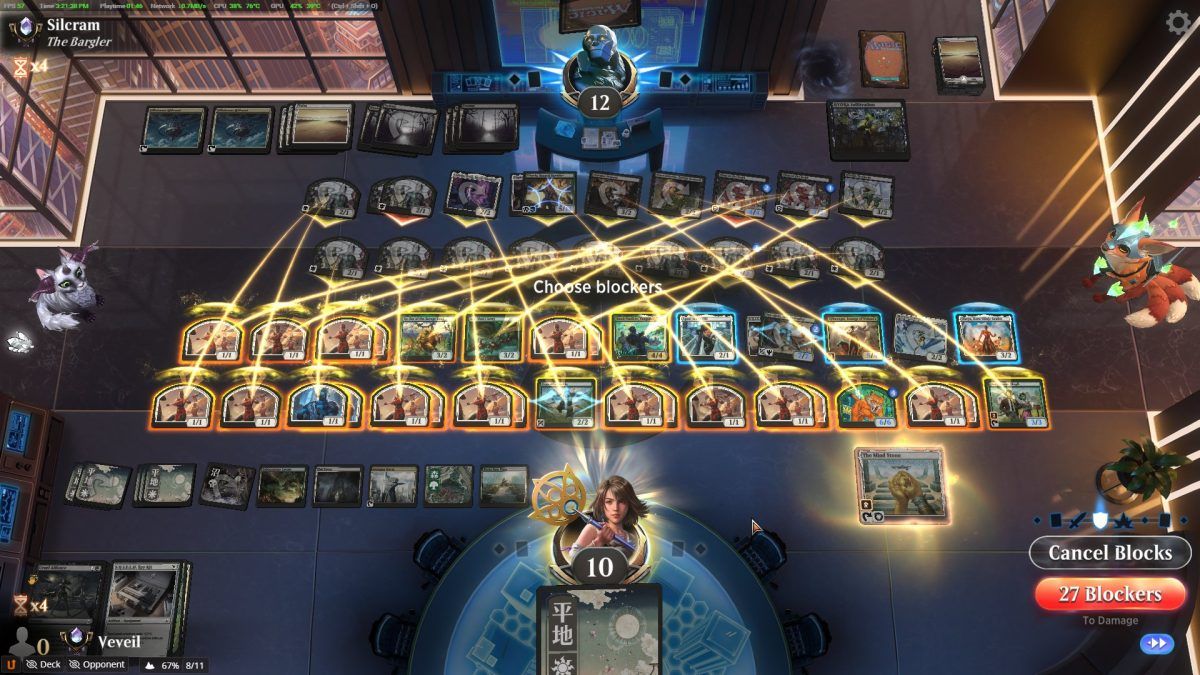
I can understand being bummed if you’re a red mage at heart, but on a personal level, Mountain and I were never really that close anyways. I’ll happily keep drafting this format, taking every single Hero in Training that my podmates pass me….
Top Commons Revisited
Now I’d like to revisit the top four commons I ranked for each color. With the benefit of experience, how would I revise my rankings for each color? Let’s find out.
White
My picks for white’s top four commons were:
Here are my revised rankings:
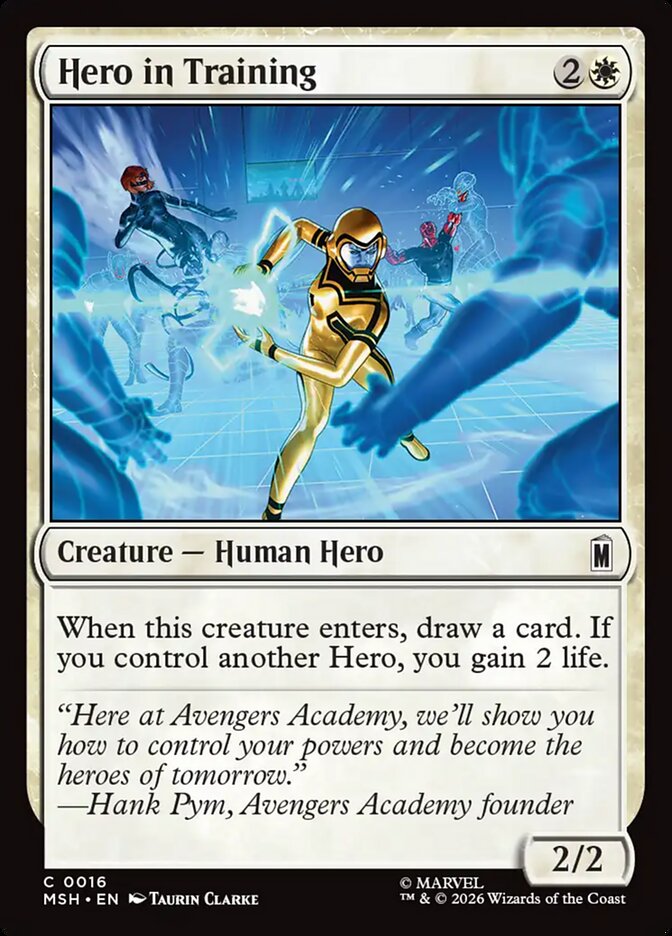
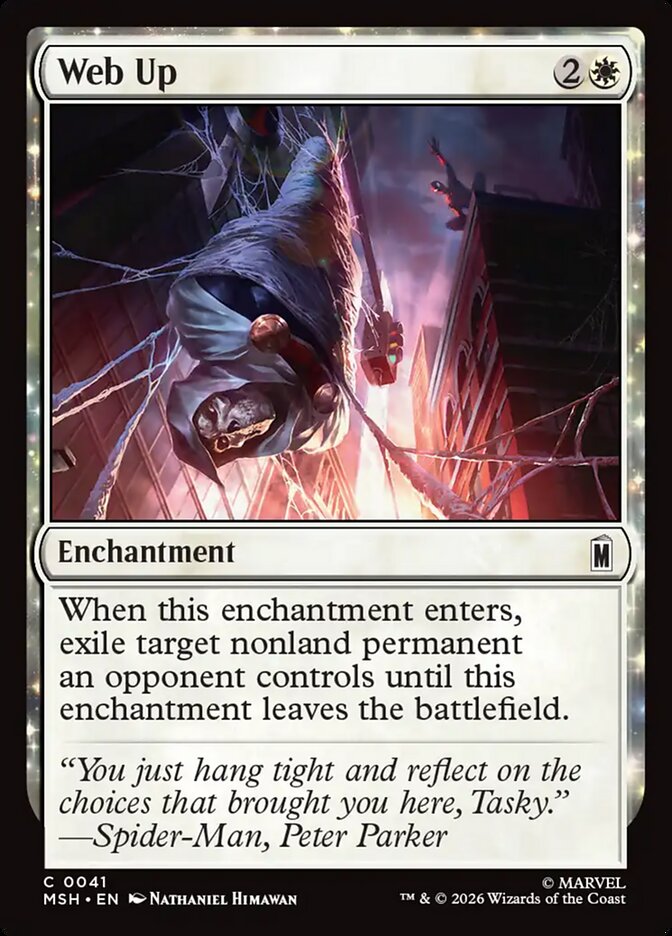
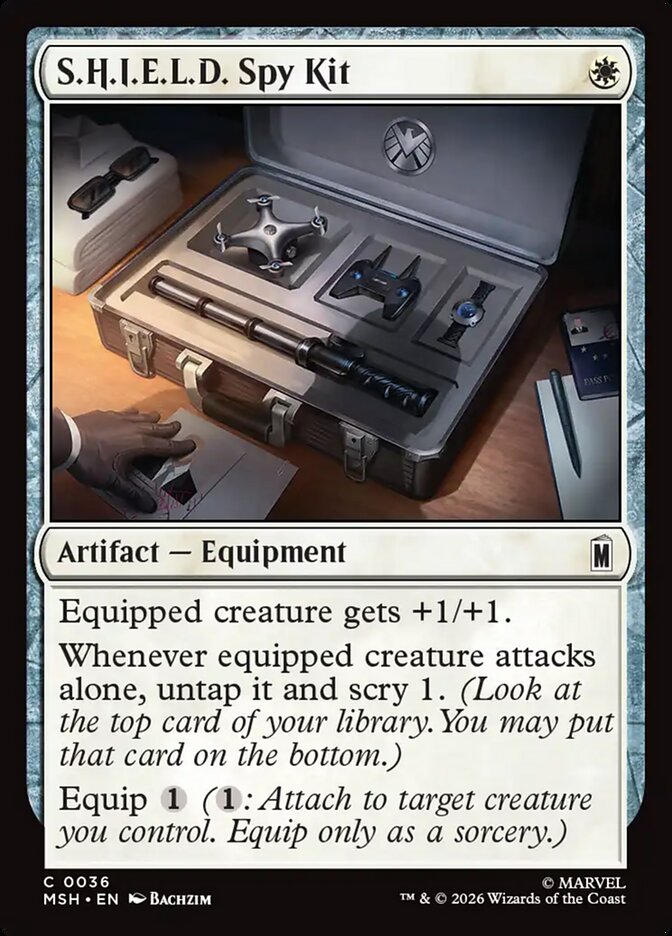
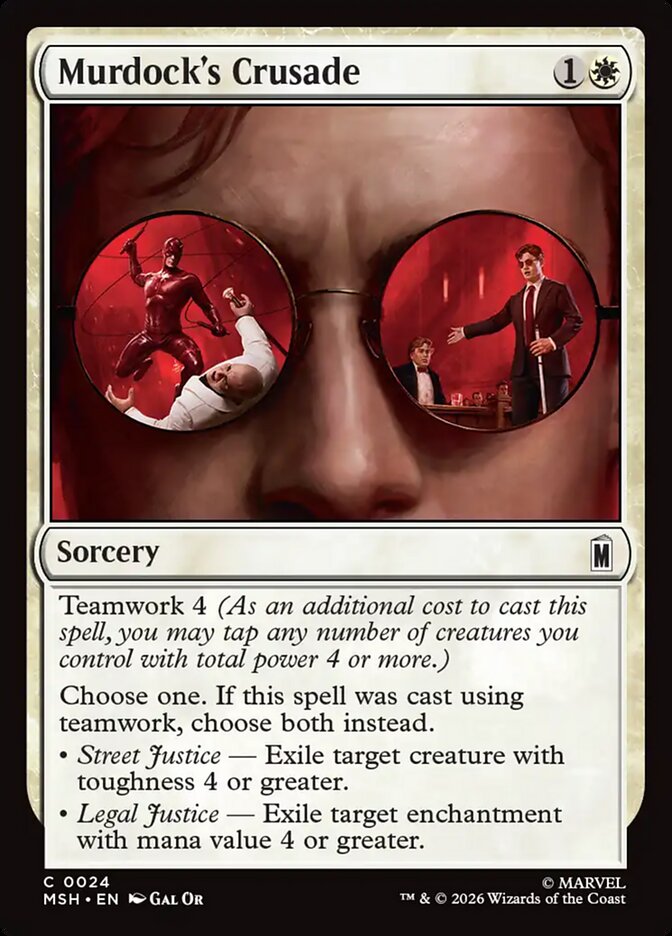
I feel pretty comfortable with how I rated white, as Take Up the Shield and Brave Brawler have both performed well and would be #6 and #5, respectively.
S.H.I.E.L.D. Spy Kit has been a major overperformer though, since it provides invaluable free consistency, helps win races, and is dirt cheap to use. Murdock's Crusade is incredibly efficient too, but narrow enough to the point where I aim to play just one copy in my main deck, with more in the sideboard for BO3 formats if possible.
Also, I’ve typed “Hero in Training” like 10 times already for a reason! Getting something for nothing is really powerful in this format, and there are a ton of awesome ways to leverage the body, too (such as hero synergies, equipment, and +1/+1 counters). If eight copies of Hero in Training were to be opened in a Draft, I’d hope all eight ended up in my deck.
Blue
My picks for blue’s top four commons were:
Here are my revised rankings:
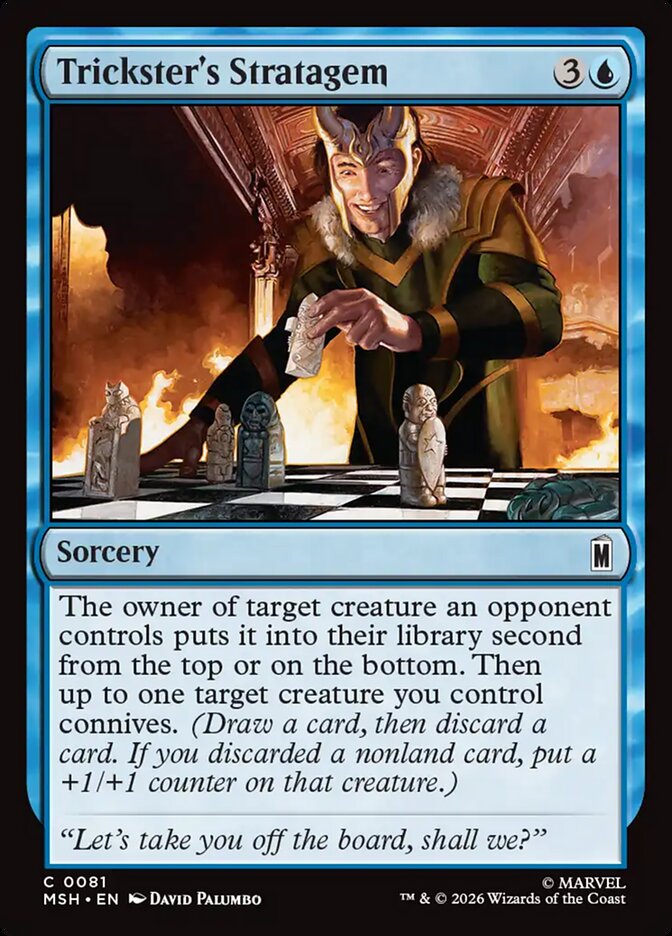
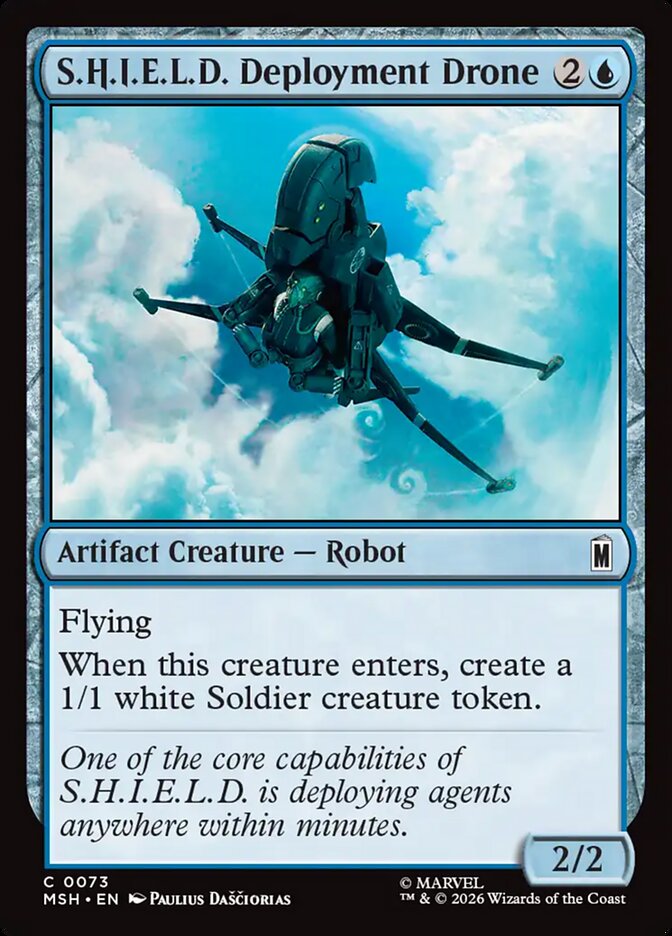
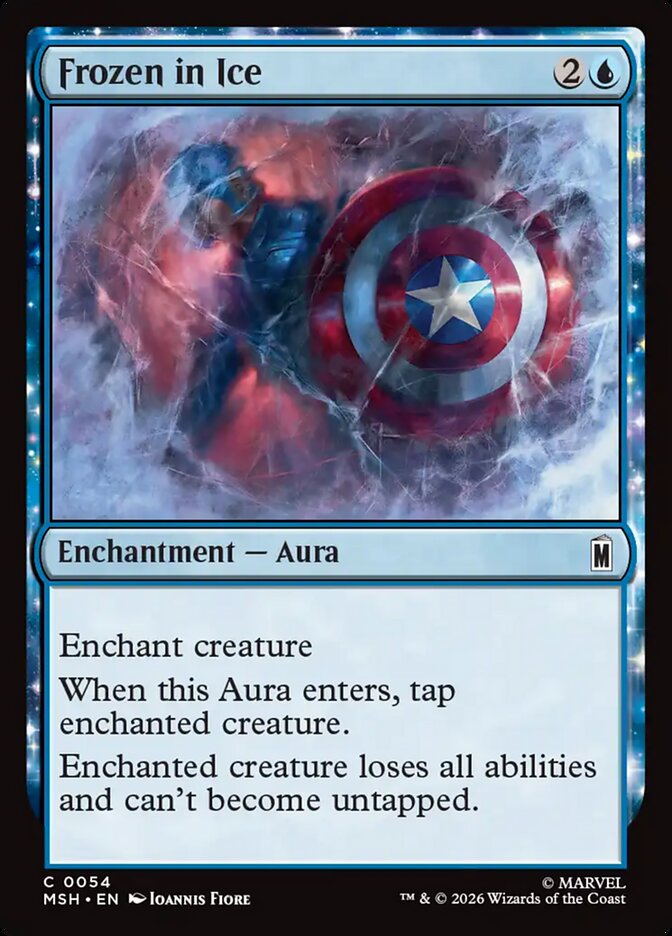
Trickster's Stratagem was a card I really missed. Other “tuck” spells like Vanish from Sight have been consistent overperformers in modern Limited formats, but I thought the sorcery limitation would hurt it. Instead, it turns out that the connive bonus more than makes up for the lack of instant speed, so Stratagem is an especially brutal tempo play against big creatures like Kree Sentinel and Pet Avengers.
The rest of blue lines up fairly well with expectations. The color is rather deep; commons like Futurist Forge, Giant-Sized Flying Ant, and Bold Biochemist are all quite solid and barely below anything listed. Feel free to adjust your picks for what your deck needs at that moment (i.e. more 2s, more removal, more card advantage), rather than dogmatically following this pick order.
Depower isn’t a bad card by any means, but it has been a little tough to find room for it in many decks. I like to slot in as a defensive combat trick if you can find the room, but I often struggle to fit it due to other needs.
Black
My picks for black’s top four commons were:
Here are my revised rankings:
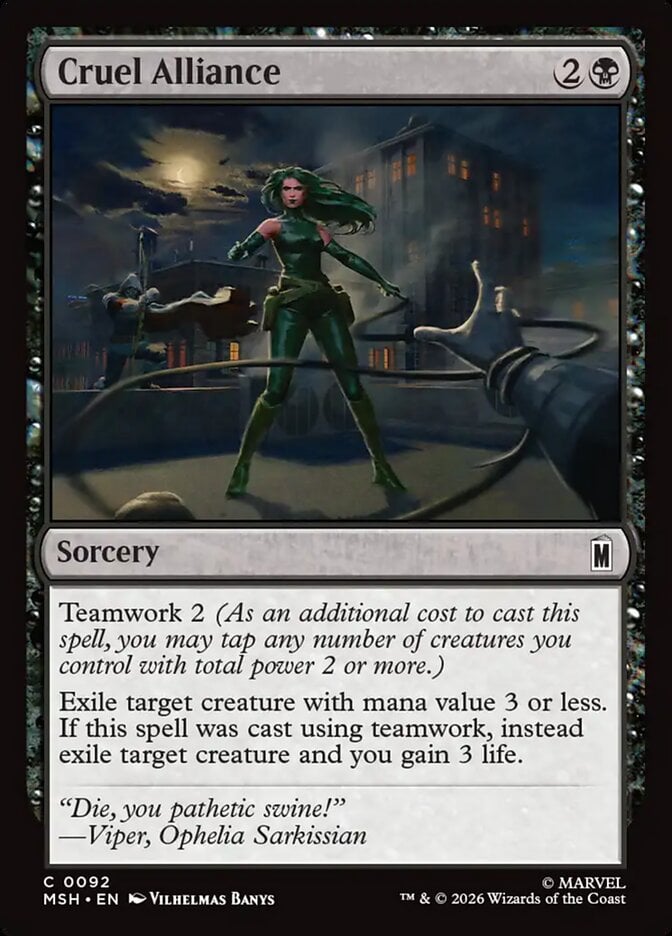
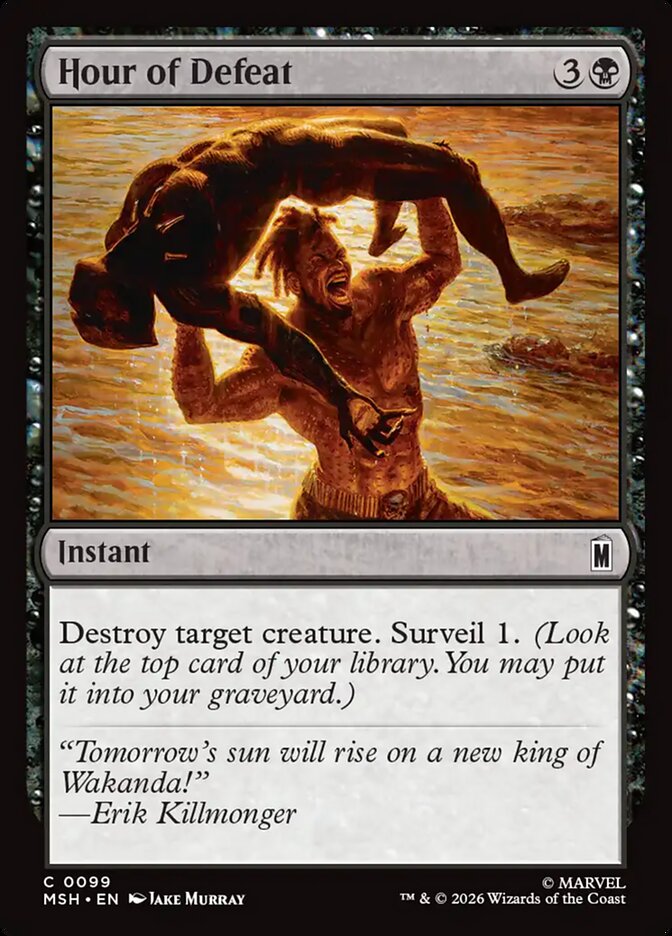
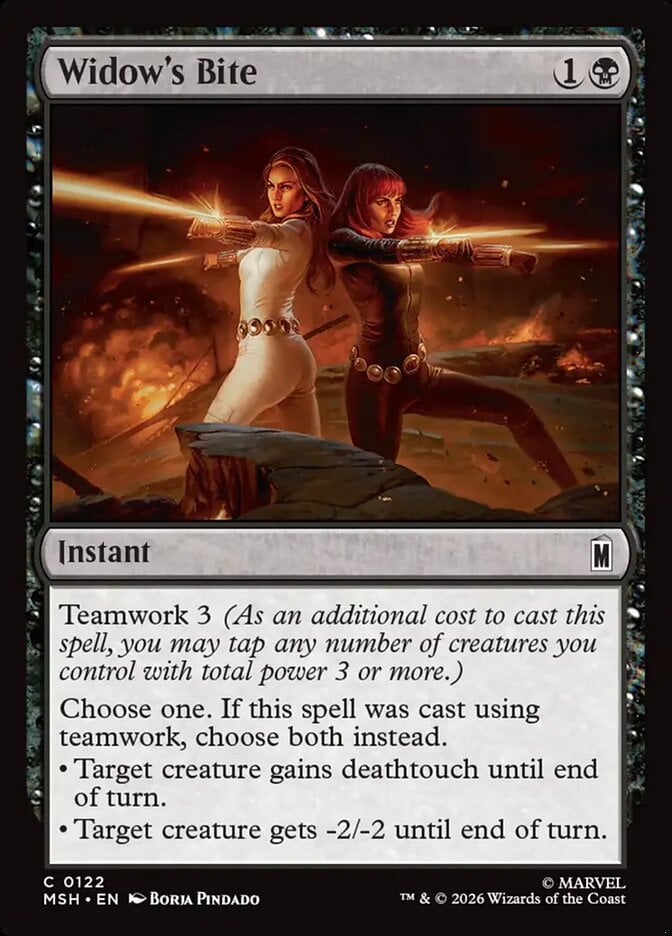
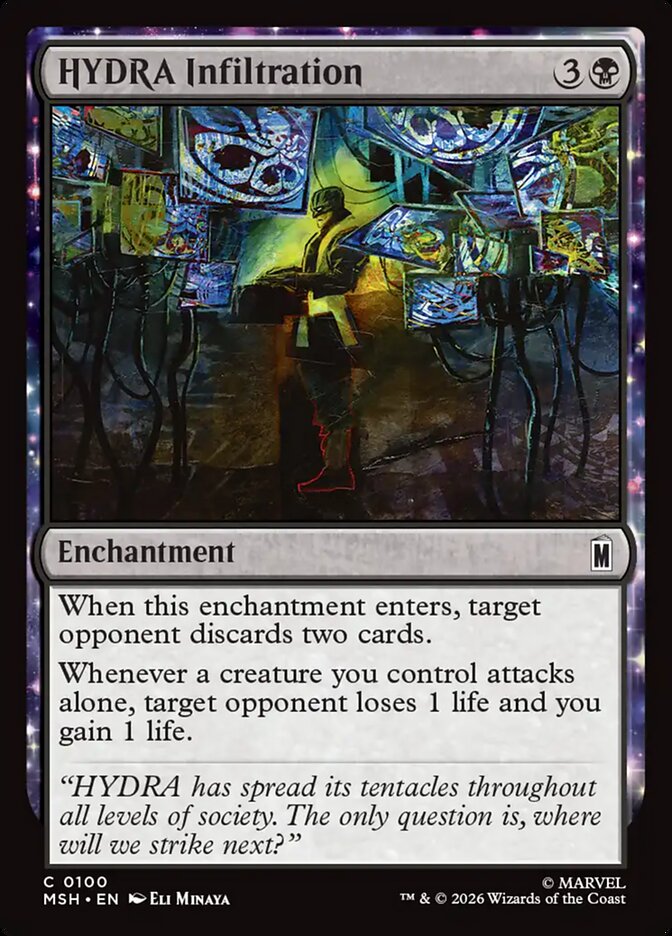
Black’s two universal removal spells being good (and Cruel Alliance being the better one) was pretty obvious going into the format. Widow's Bite however has been a real overperformer; -2/-2 kills more than I expected, and the teamwork 3 bonus can enable some sick late game 2-for-1s. HYDRA Infiltration gets the fourth slot due to this format’s penchant for grindy games, plus the strength of the card’s repeated ability to drain. Red Room Recruit would easily be my #5 common though, especially after the copy or two of HYDRA Infiltration (as playing a ton of 4-mana Mind Rots is a tough sell).
Red
My picks for red’s top four commons were:
Here are my revised rankings:
I’ve already given my generally low thoughts on red. The main change here is that HYDRA Assault Robot hasn’t impressed me, while HULK SMASH! has been better than expected. You do need creatures for it to be good of course, but occasionally picking up 2-for-1s with your cheap removal spell is a great feeling.
Green
My picks for green’s top four commons were:
Here are my revised rankings:
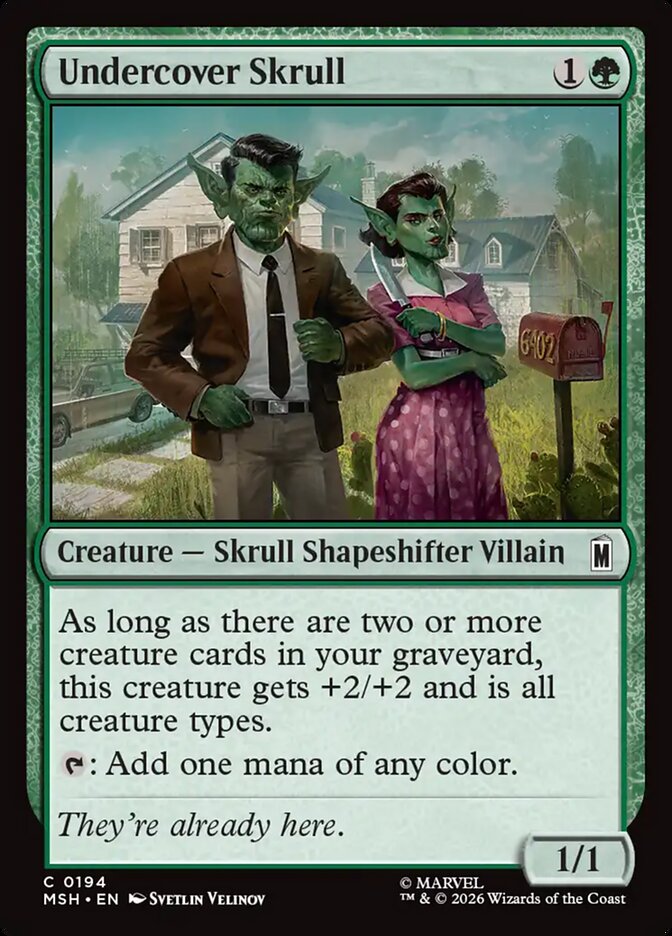
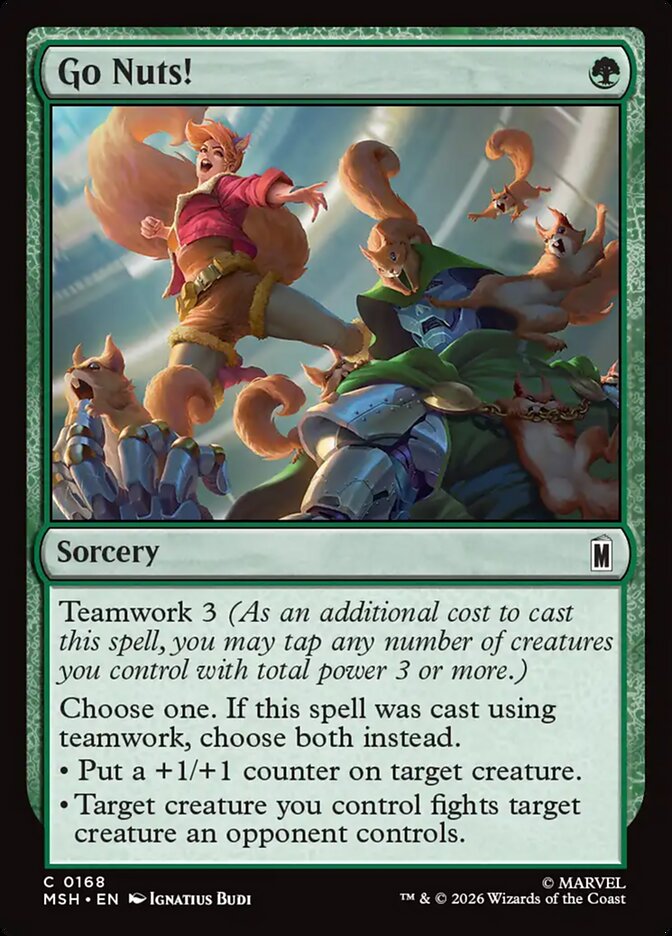
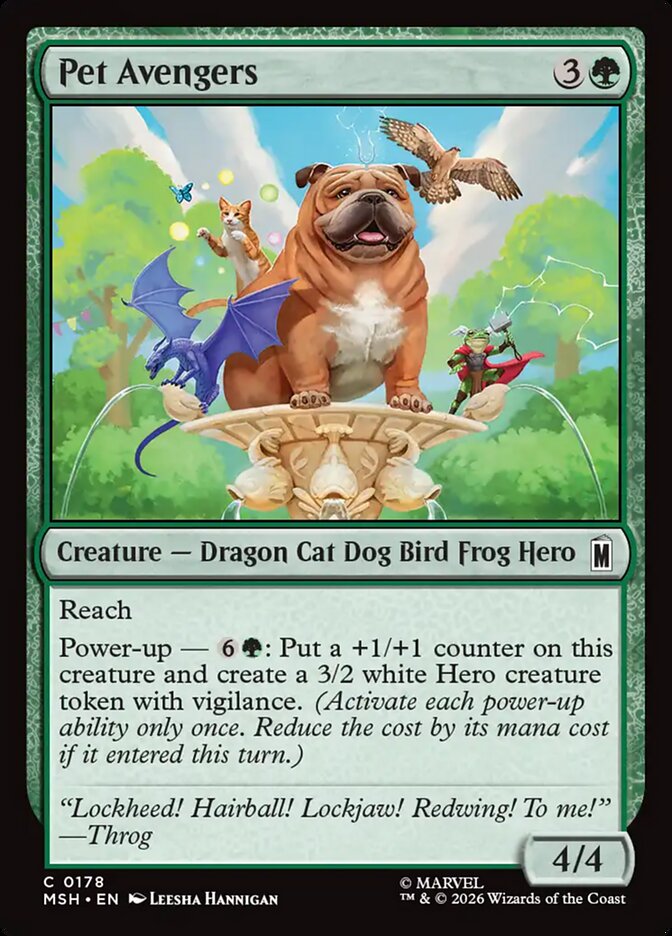
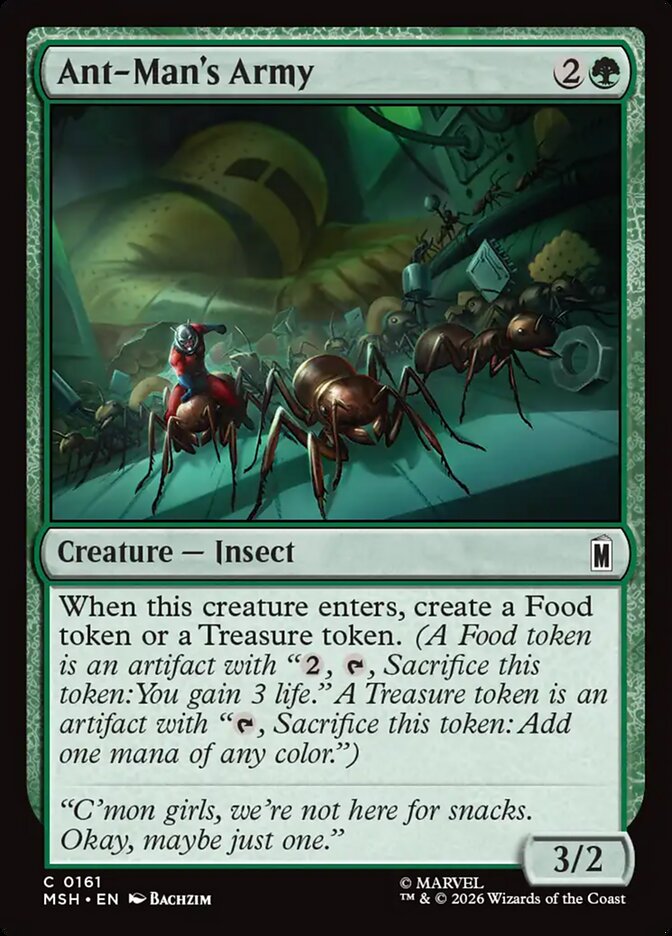
Green isn’t changing much. Serpent Specialist would probably be #6 for now, behind Army and Rapid Rescue (which is a great way to enable graveyard bonuses for Undercover Skrull and friends at no real cost). Ant-Man's Army is the second best way to splash behind Undercover Skrull, and I’m quite a fan of splashing bombs and removal in this format when I can.
Colorless
There are only five colorless commons to begin with, which I ranked as follows:
For your average deck, I’d adjust the rankings like this after playing the format:
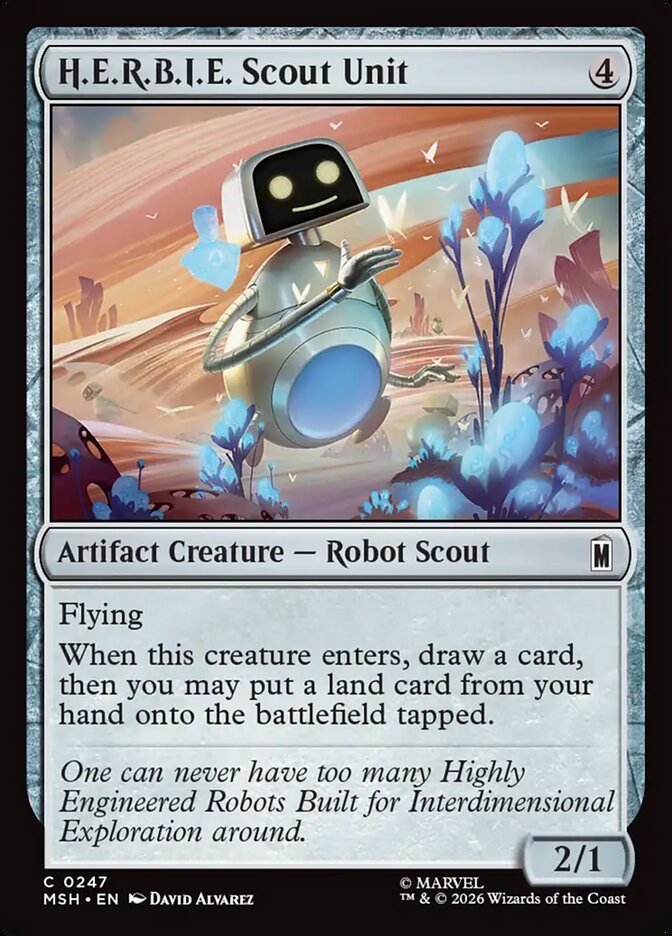
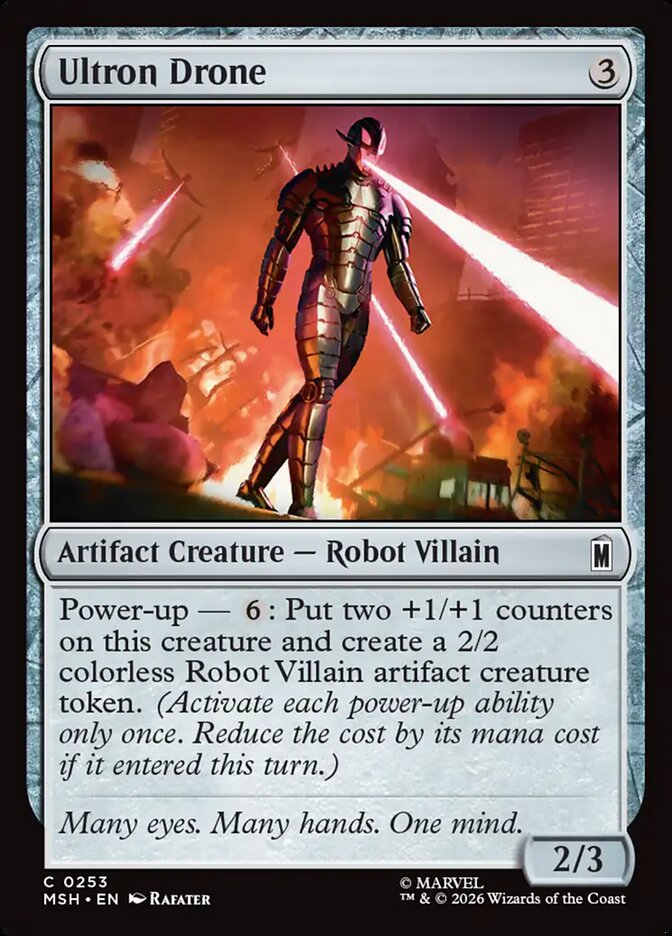
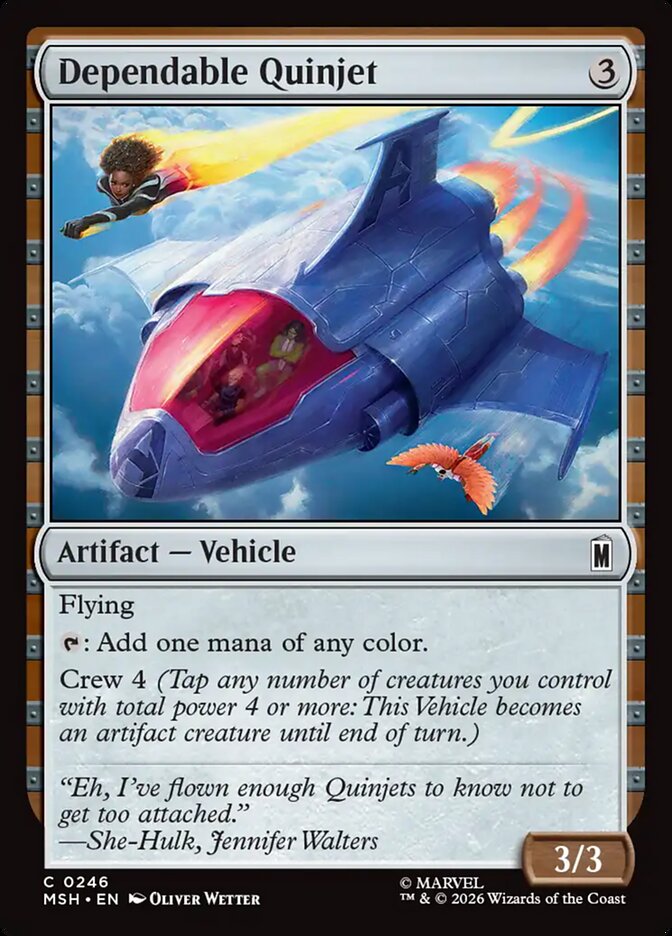
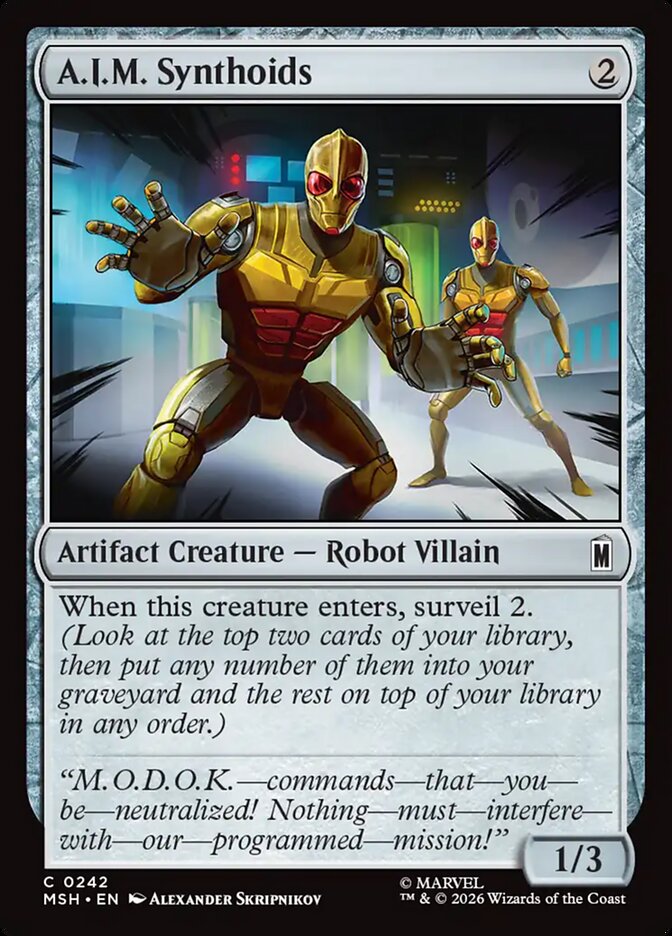
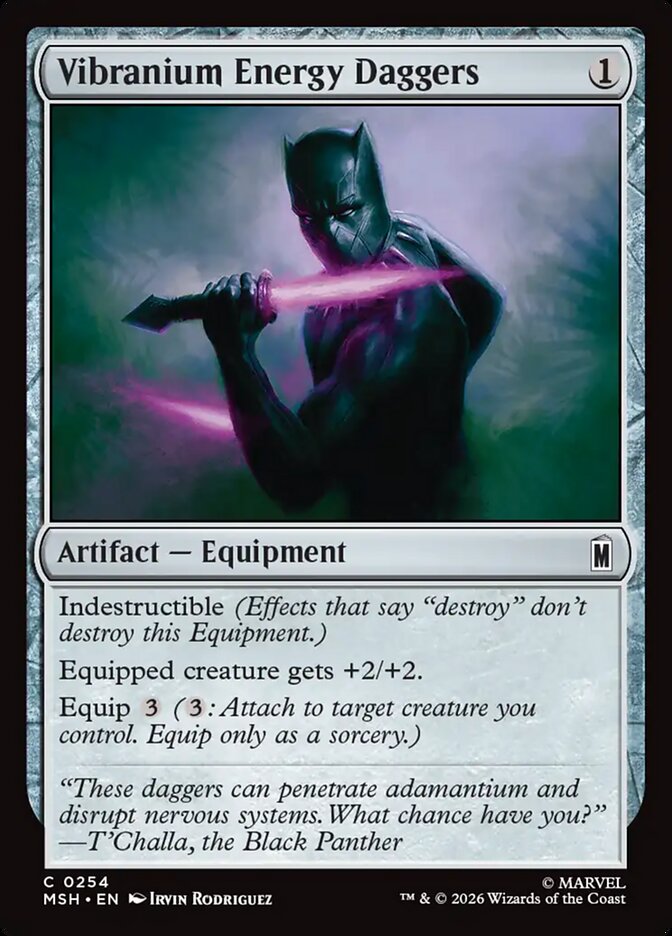
H.E.R.B.I.E. Scout Unit is the only genuinely good colorless common, to the point where I’m happy to play it in most decks (if I’m not too flush with better 4s already). Drone is an okay curve-filler that gets better if you have artifact/villain synergies. Quinjet is solid for very colorful decks (especially if you have large creatures), while Synthoids is a passable early blocker that helps dig for lands/action. Energy Daggers only makes sense if you have a ton of lifelinkers or equipment payoffs but lack other more efficient equipment to play.
Strong Uncommons Revisited
Now that commons are out of the way, let’s move on to the set’s uncommons. My approach here is to call myself out for some cards I overrated and draw attention to some gems I failed to include.
Five Cards I Overrated
#1. Mister Fantastic, Reed Richards
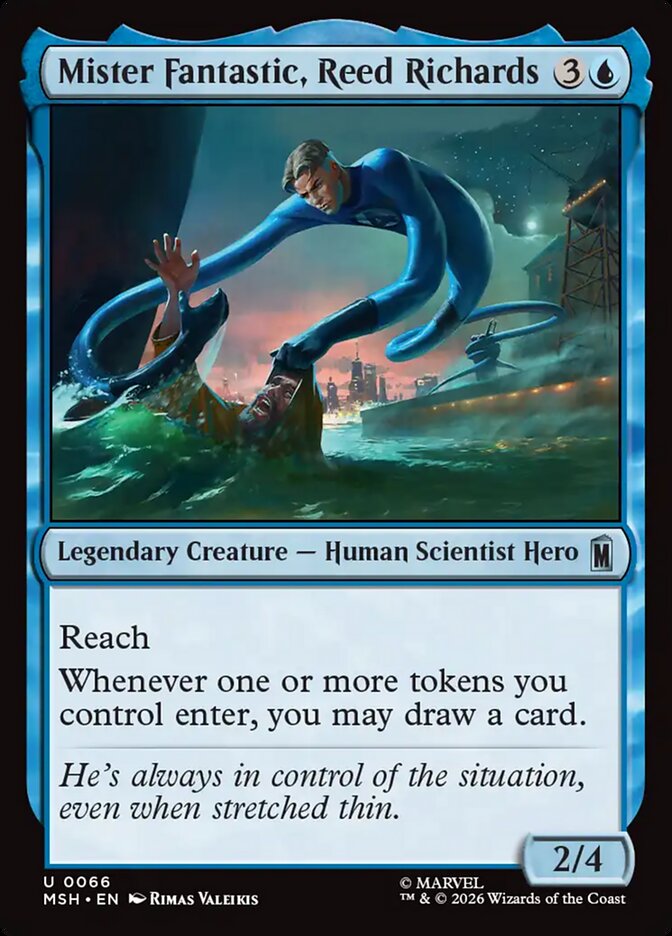
It isn’t too difficult to make tokens in MSH, but doing so consistently enough to merit putting blue Giant Spider in your deck hasn’t felt good. On their own, The Fantastic Four range from merely okay (Mister Fantastic, Reed Richards, Human Torch, Johnny Storm, The Thing, Ben Grimm) to embarrassingly bad (Invisible Woman, Sue Storm), which is a shame.
#2. Baron Strucker, HYDRA Overlord
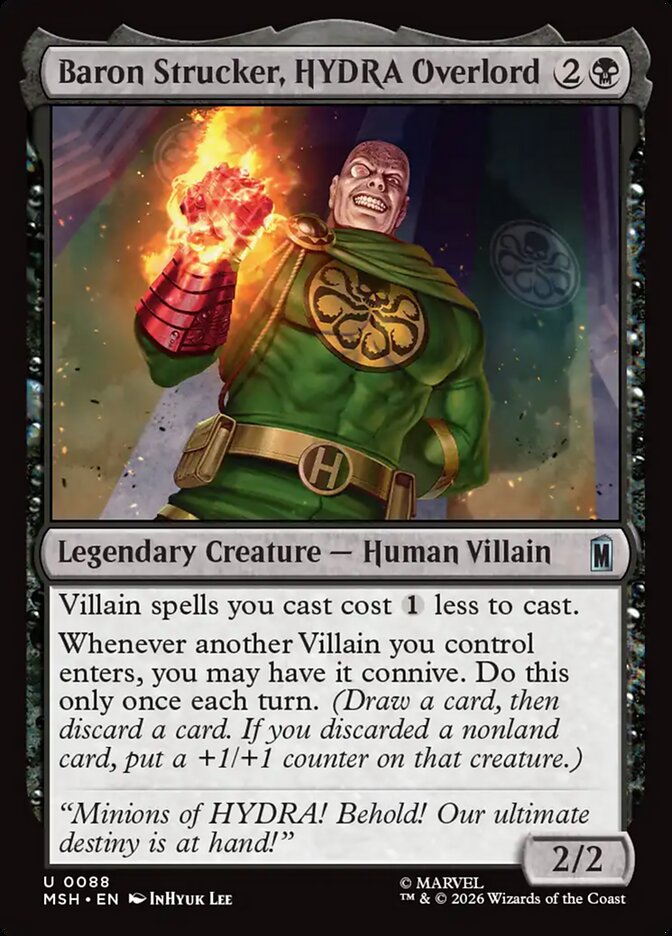
A decent villain payoff, although Baron Strucker, HYDRA Overlord can’t singlehandedly carry a bunch of lackluster creatures to the finish line.
#3. Yellowjacket, Heartless Marauder
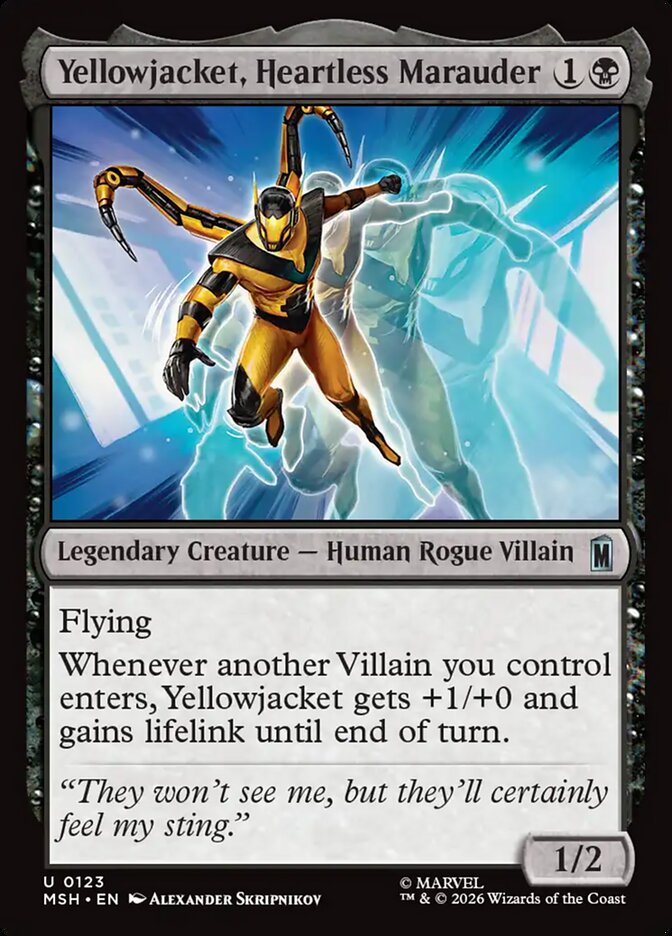
Another card that suffers from villains being lower quality, as you’ll need to stuff your deck full of them for Yellowjacket, Heartless Marauder to be good.
#4. Hawkeye, Young Avenger
Combos with Hawkeye, Young Avenger (i.e., Photon Blast Barrage) can be delightful, but it’s a bit slow and vulnerable to removal to be truly premium.
#5. Hellcat, Undying Vigilante
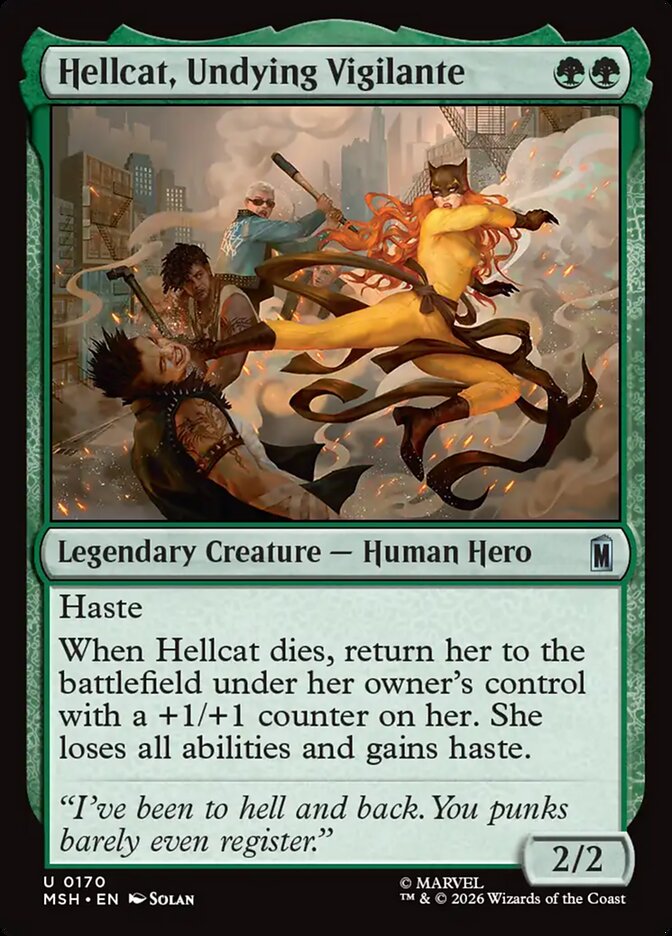
Hellcat, Undying Vigilante is an efficient creature, but it hasn’t felt premium enough to deserve a spot next to cards like She-Hulk, Jade Defender and Punishing Punch. Your deck won’t be that much worse if this is just Guerrilla Gorilla, honestly.
Five Gems I Missed
#1. Justice, Vance Astrovik
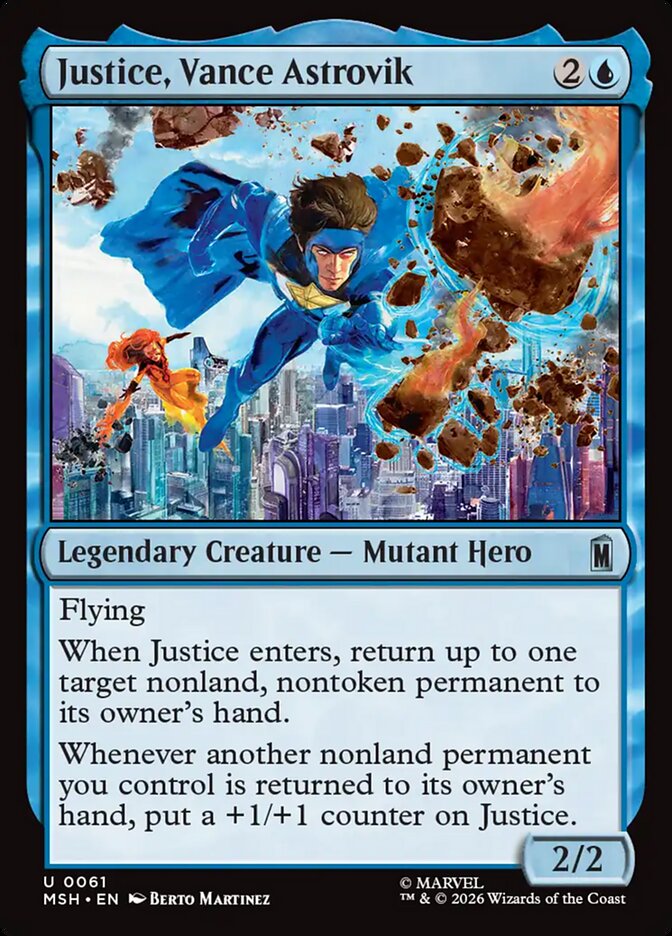
I originally read Justice, Vance Astrovik as limited to bouncing only your own stuff. It’s actually a flying Man-o'-War that gets bigger when you bounce your own stuff, and the single best uncommon in the entire set. Please forgive me for failing to read!
#2. Ka-Zar of the Savage Land
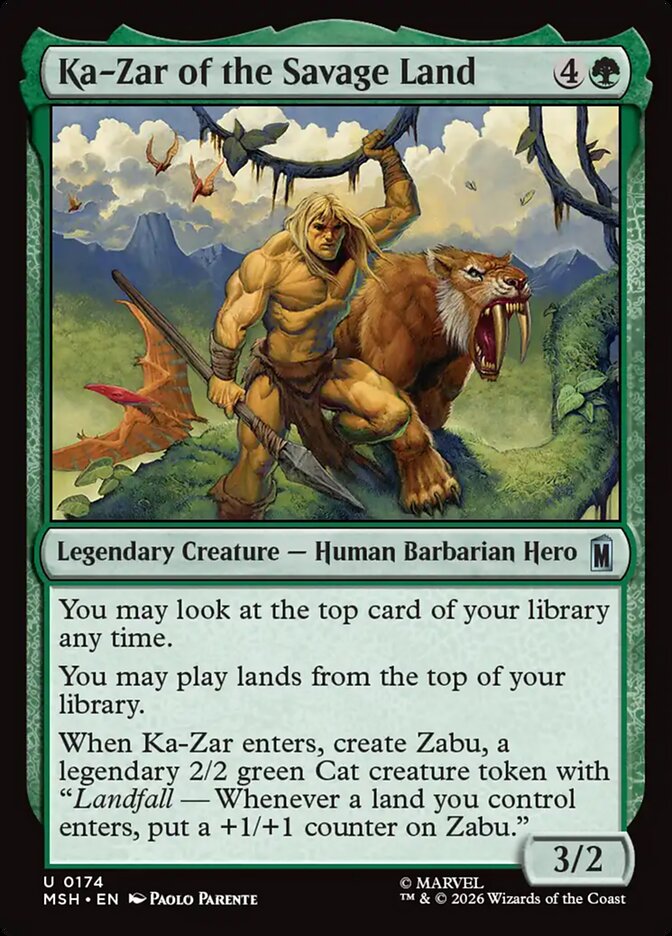
I also somehow missed this utterly busted creature, which effectively creates two excellent threats for just one card. Ka-Zar of the Savage Land must be answered before it buries your opponent in card advantage, while Zabu can grow quickly into a decently sized threat. Throw in how splashable this card is, and you have one of my favorite P1P1s in the entire set.
#3. Political Triumph
“Stupid overpowered white cards” is a real theme in Marvel Super Heroes. Play this on turn 1, and you should have an extremely easy time hitting your land drops, curving out, and then delivering the payload later. Note that you can actually scry extra times from Political Triumph with token generators, right before you sacrifice it!
#4. Agent Maria Hill
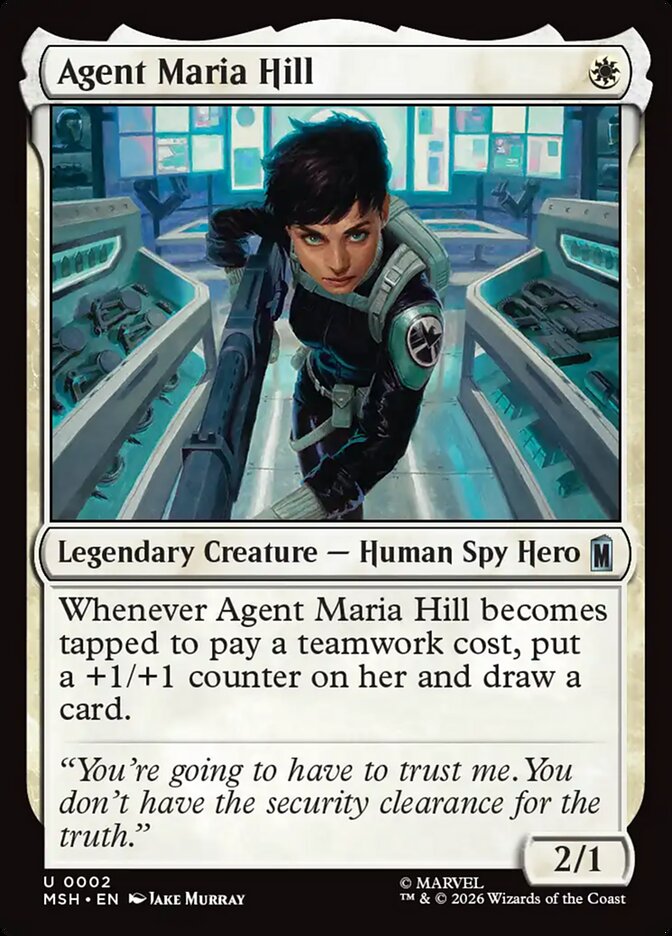
Agent Maria Hill shines in just about every color pair, provided you have a couple of teamwork cards for it to work with. Getting to 2-for-1 with your Savannah Lions is a wonderful feeling, and your opponent’s only way to prevent this is to spend 2-4 mana killing it.
#5. Spider-Woman, Secret Agent
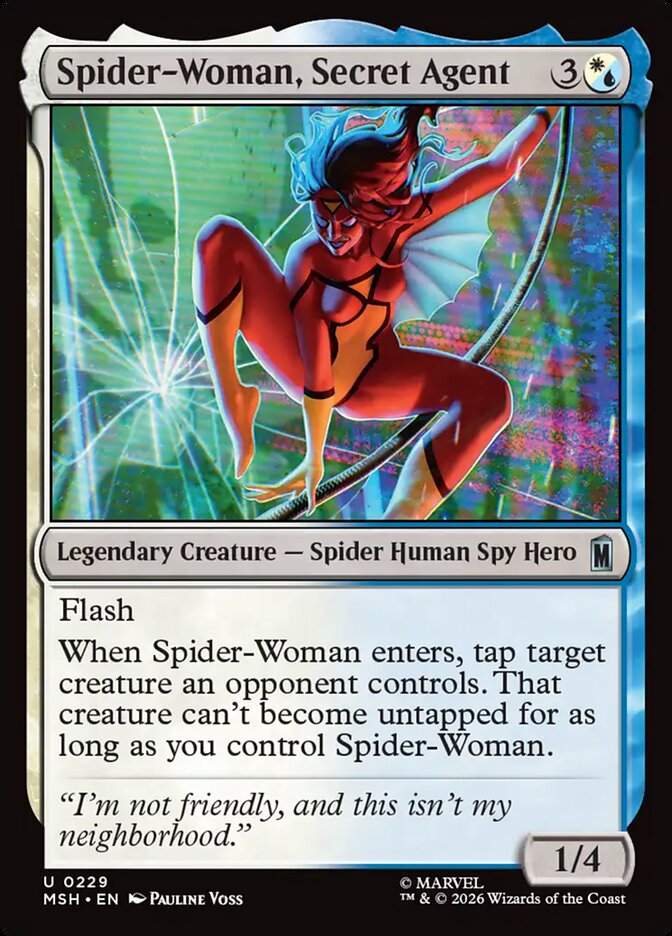
Fiend Hunters tend to be awesome in Limited, and Spider-Woman, Secret Agent is a great Fiend Hunter. Flash and 4 toughness make this trickier to answer than your average Fiend Hunter, and its flexible casting cost lets it play in a ton of different decks.
Rare Re-Review
This section revisits the ratings I gave in the last guide and updates them.
Terms
Bomb
This is the best rating possible and denotes a game-changing Limited card that you’ll want to play/splash every time you open it.
Examples from the last set: Emeritus of Ideation, Improvisation Capstone, Practiced Offense.
Great
These cards fall a little short of true bomb status but are still going to be great in most decks.
Examples from the last set: Mathemagics, Informed Inkwright, Splatter Technique.
Good
“Good” rares are, well, good! They’ll usually have problems that prevent them from claiming a higher rating though, such as requiring setup or having a lesser output than stronger rares.
Examples from the last set: Silverquill, the Disputant, Erode, Vastlands Scavenger.
Usually Not Good
These cards are generally either low output, or too difficult to build around for the vast majority of decks.
Examples from the last set: Witherbloom, the Balancer, Maelstrom Artisan, Comforting Council.
Bad
These rares are just terrible in Limited and you should never play them. Feel free to put them aside if you’re unfortunate enough to open one of them.
Examples from the last set: Pox Plague, Choreographed Sparks, Petrified Hamlet.
Mythics
Jennifer Walters / The Sensational She-Hulk
Previous Rating: Great // New Rating: Bomb
The Sensational She-Hulk is one of the best cards in the entire format, and the broken backside also happens to be highly splashable. “Great” was definitely not going far enough!
M.O.D.O.K.
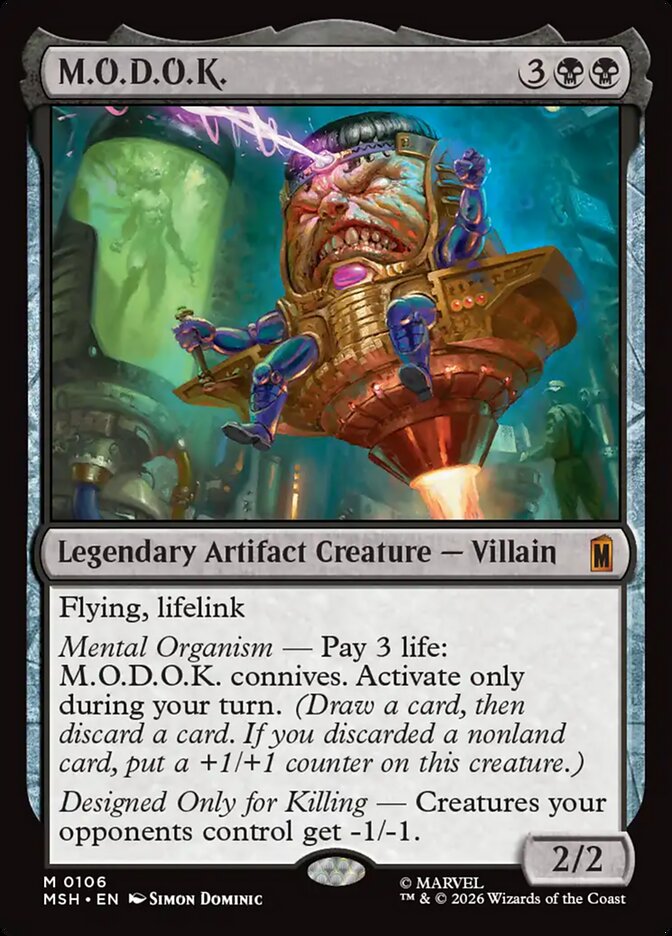
Previous Rating: Good // New Rating: Great
M.O.D.O.K. has overperformed due to the strength of its -1/-1 ability, which dramatically impacts combat and instantly kills Villain and Soldier tokens. I tend not to connive much with it until I’ve untapped once (due to the pricey life cost), though the option to do so is appreciated.
King T’Challa / The Black Panther, Hope Enduring
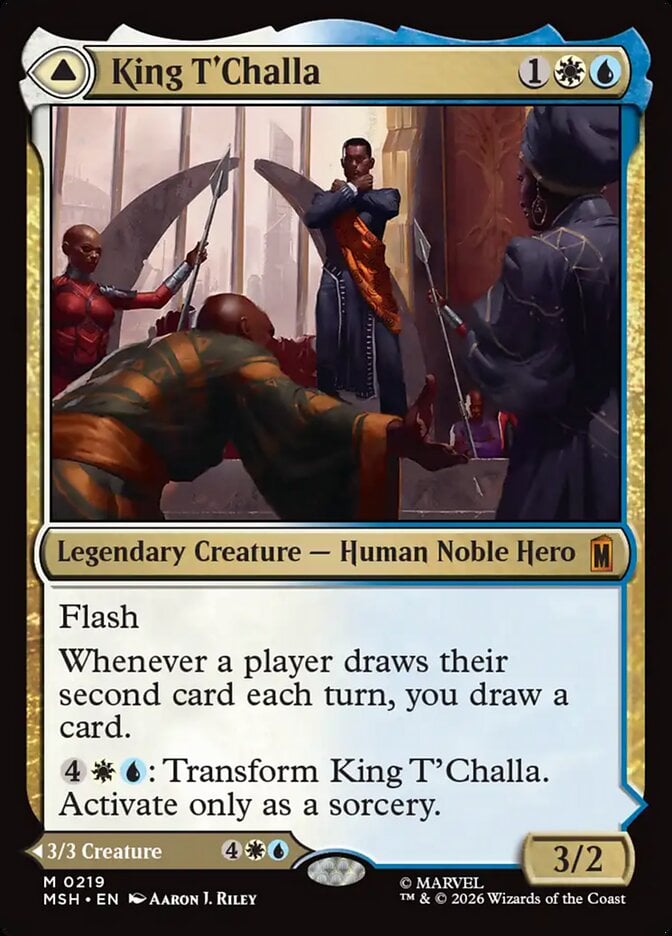
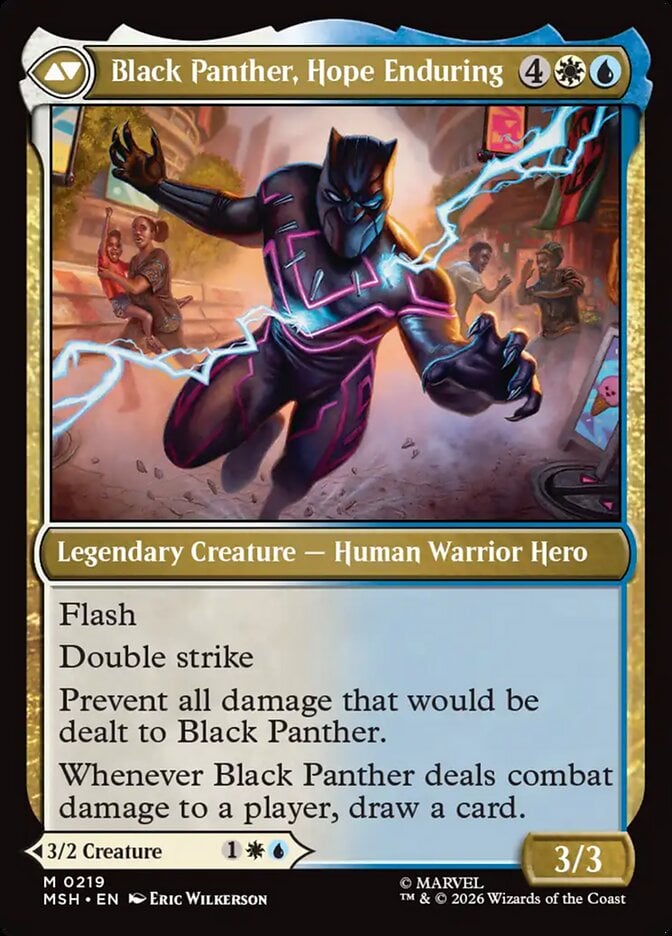
Previous Rating: Great // New Rating: Bomb
Another mythic MDFC I underrated. Black Panther, Hope Enduring demands non-damage based removal immediately, or the game ends in a short order. It also dodges Murdock's Crusade and is highly splashable to boot. King T'Challa is more of a bonus, although I missed that it triggers off your own draws as well, letting you double up on cards like Hero in Training.
The Coming of Galactus
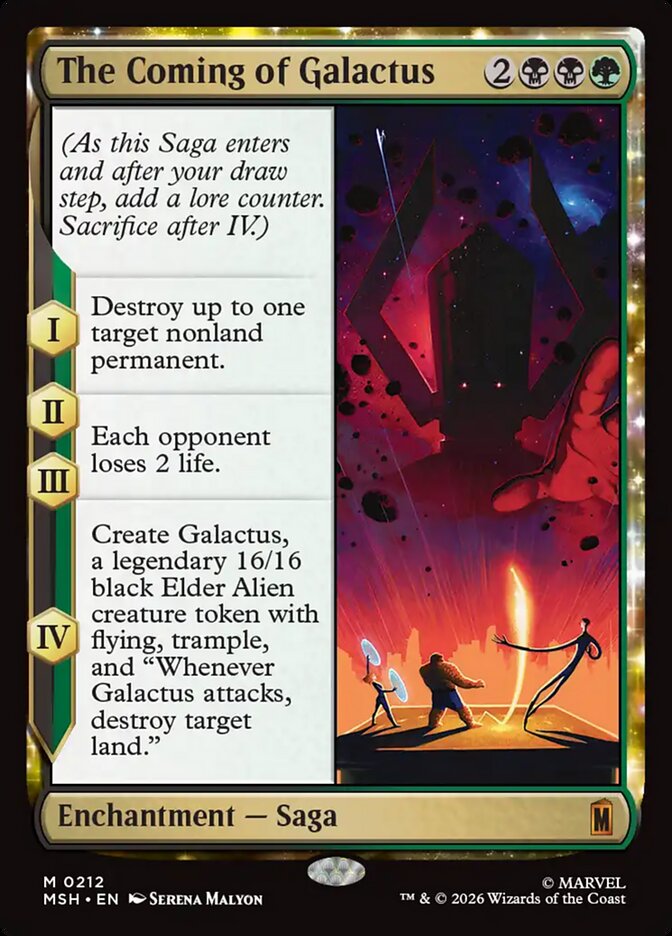
Previous Rating: Great // New Rating: Bomb
The Coming of Galactus is a guaranteed 2-for-1 that gets rid of your opponent’s best thing, creates a must-answer threat, and deals 4 damage to their face. I’m not sure how I didn’t give it a Bomb rating in the first place, but hey, Magic is hard!
Rares
Agent Phil Coulson
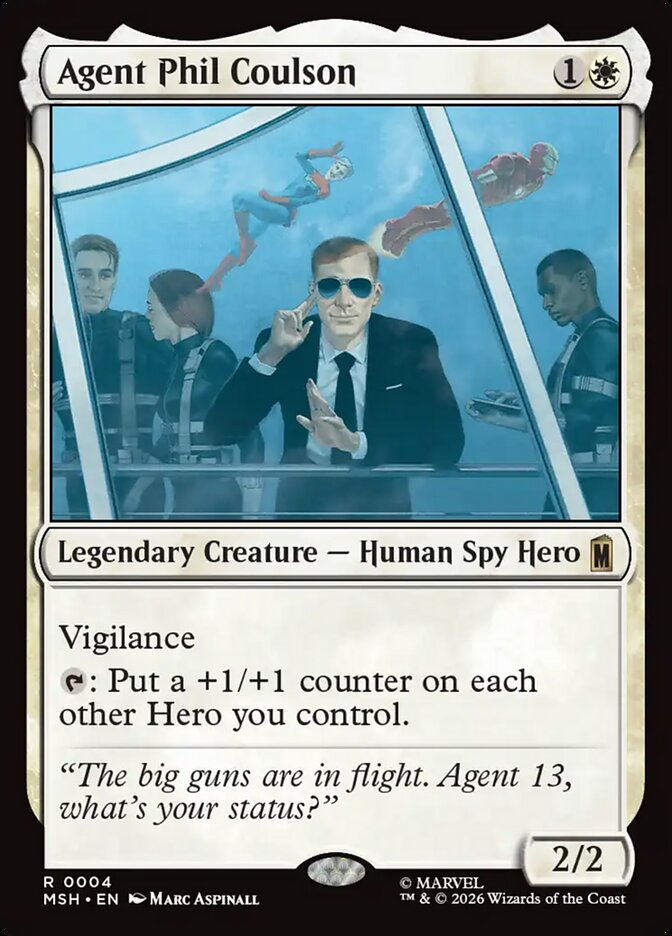
Previous Rating: Great // New Rating: Bomb
Your opponent must answer Agent Phil Coulson or die, more or less. I was a bit wary of sometimes not having heroes for this, but in practice it’s been easier than expected to consistently get value out of Phil when it lives.
Captain America, Wings of Freedom
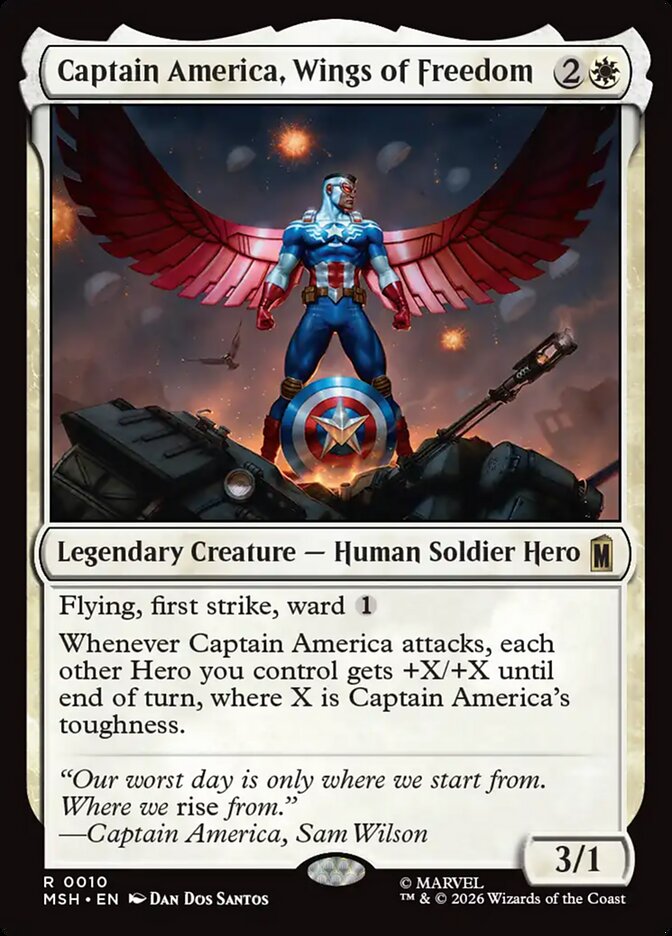
Previous Rating: Good // New Rating: Great
I underrated how excellent the base stats on Captain America, Wings of Freedom are, because 3 power, flying, first strike, and ward already feels incredible even without its +X/+X mode!
The Sentry, Golden Guardian
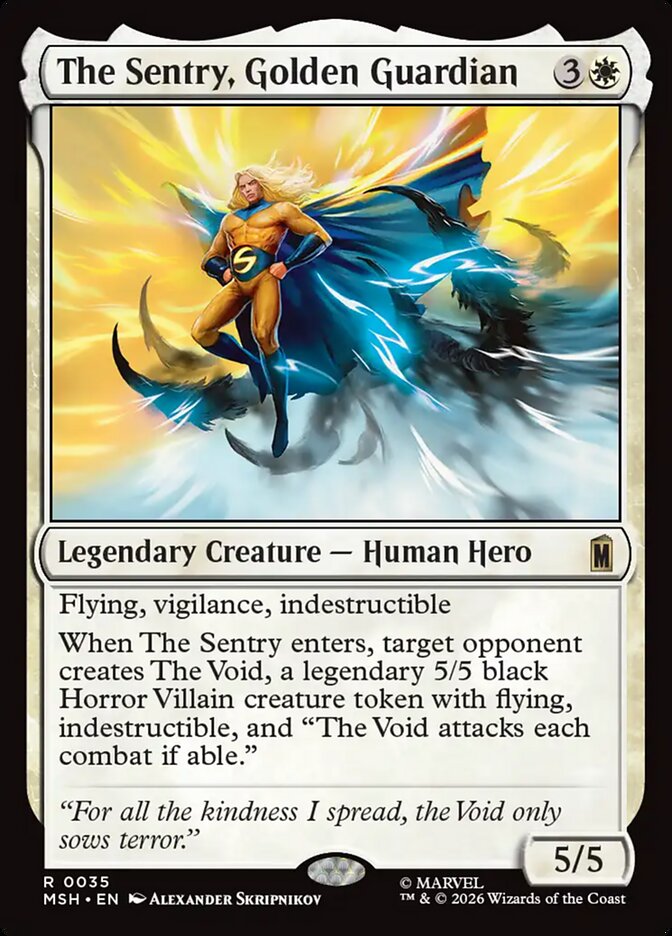
Previous Rating: Great // New Rating: Usually Not Good
The risks here don’t outweigh the rewards. It’s game-losing when your opponent tags The Sentry, Golden Guardian with Murdock's Crusade, Web Up, or Frozen in Ice, and remember, blue and white are the best colors in the format. It’s a powerful sideboard card versus red and green players (who are in dire trouble), but otherwise don’t bother.
Loki, God of Mischief
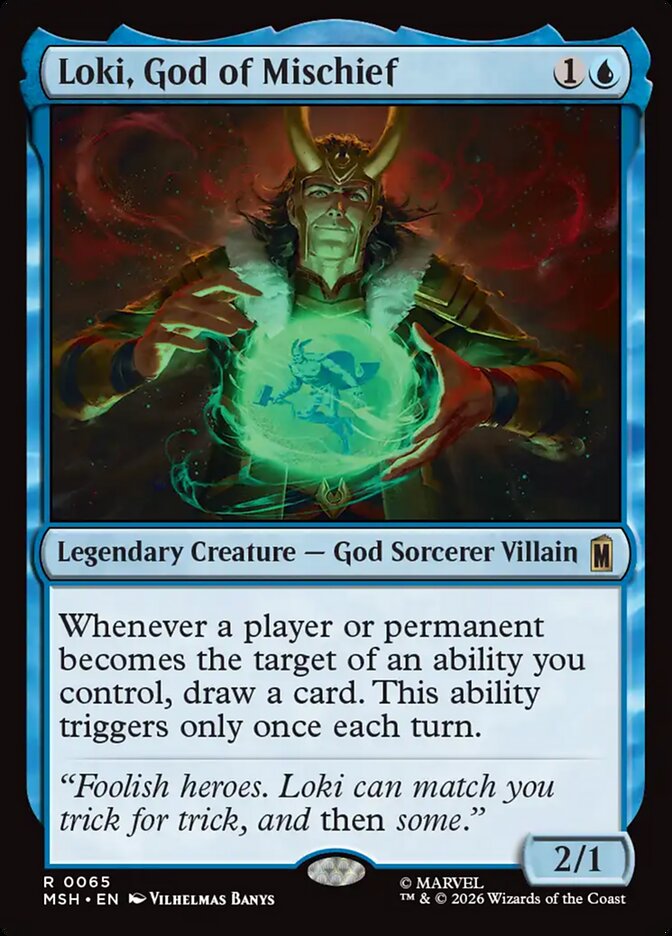
Previous Rating: Good // New Rating: Great
Building around Loki, God of Mischief is easier than expected, especially in WU. All you have to do is play some cards you were happy to play with anyways (S.H.I.E.L.D. Spy Kit, Raft Security Officer, Giant-Sized Flying Ant), and Loki will hook you up with a ton of card advantage.
Secret Invasion
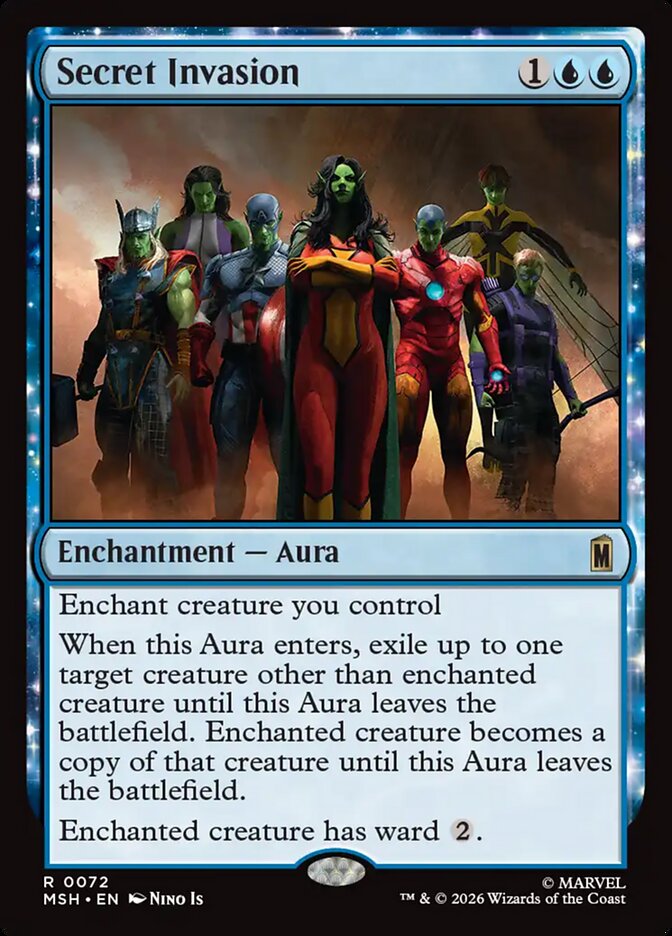
Previous Rating: Bomb // New Rating: Great
Secret Invasion requires a reasonable amount of setup to be good, and it can occasionally be picked apart by removal spells. S.H.I.E.L.D. Deployment Drone, Hero in Training, and other cheap cantrip creatures/token generators are important cards to have for this, as you don’t want to be forced to put this on a creature that was already useful.
Construct a Cosmic Cube
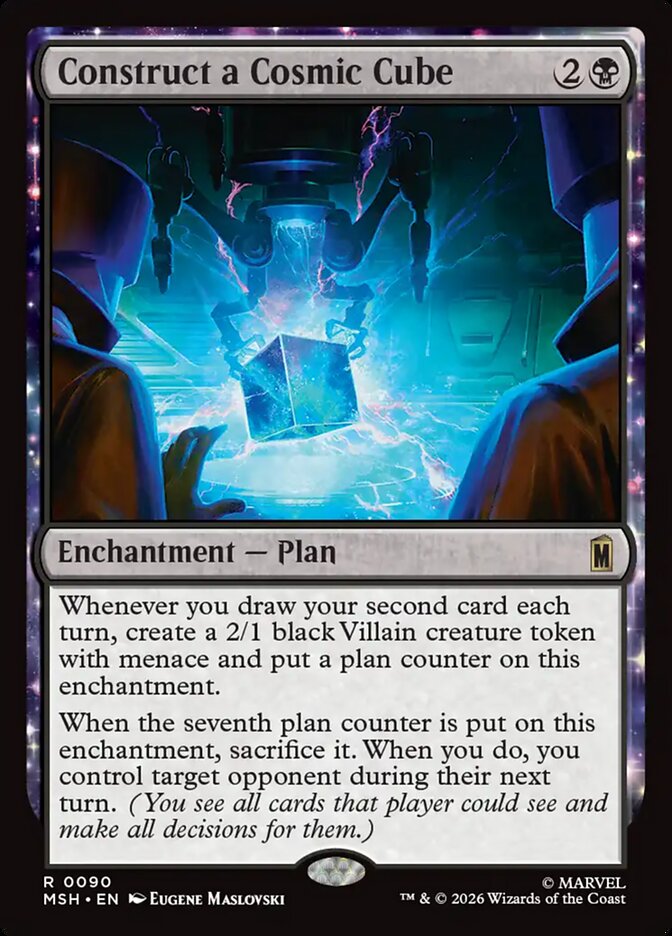
Previous Rating: Good // New Rating: Usually Not Good
Construct a Cosmic Cube is too inconsistent in this set, though I’d play it in decks that run Red Room Recruit, H.E.R.B.I.E. Scout Unit, and Trickster's Stratagem.
Doom Reigns Supreme
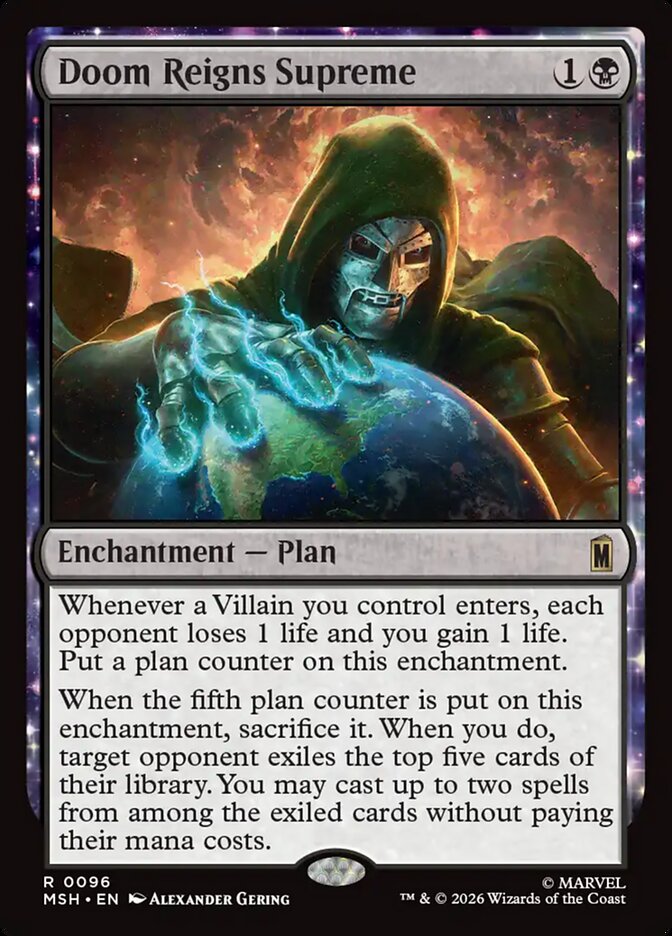
Previous Rating: Bomb // New Rating: Good
Doom Reigns Supreme is still one of the best villain payoffs, even if villains are sus.
Thunderbolts Conspiracy
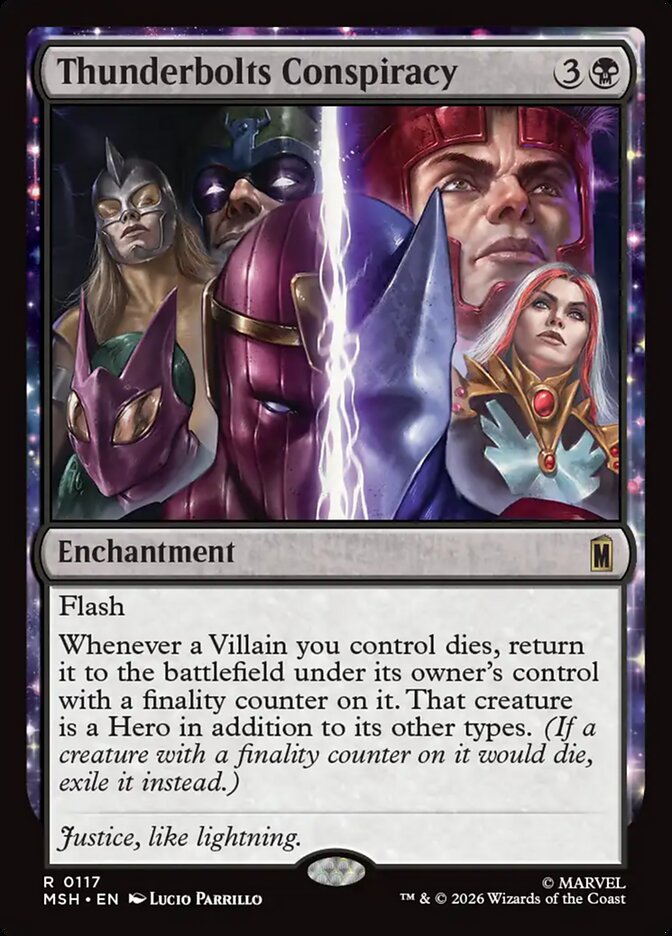
Previous Rating: Good // New Rating: Usually Not Good
Fine to play if you’re largely villains, and Thunderbolts Conspiracy also has great synergy with Kingpin's Enforcers. I’m only taking this when I see it late though.
The Scarlet Witch
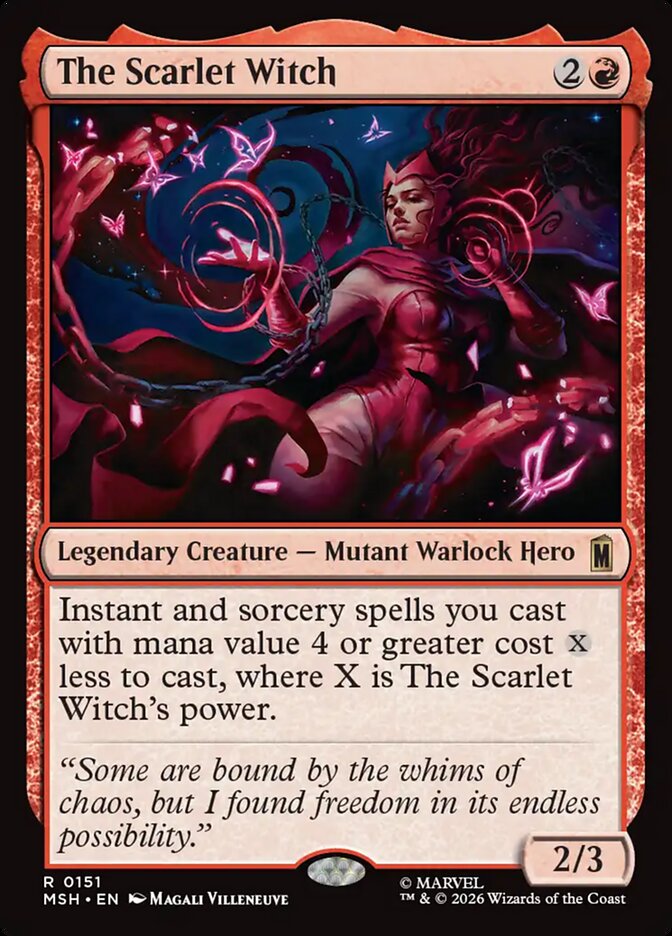
Previous Rating: Good // New Rating: Bad
There’s almost nothing worth playing with The Scarlet Witch because most of the good instants and sorceries in this set cost less than 4. Atlantis Attacks is one of the only good pairings, so I suppose you could try that if you have multiples of each (since no one else should want this).
Heroic Feast
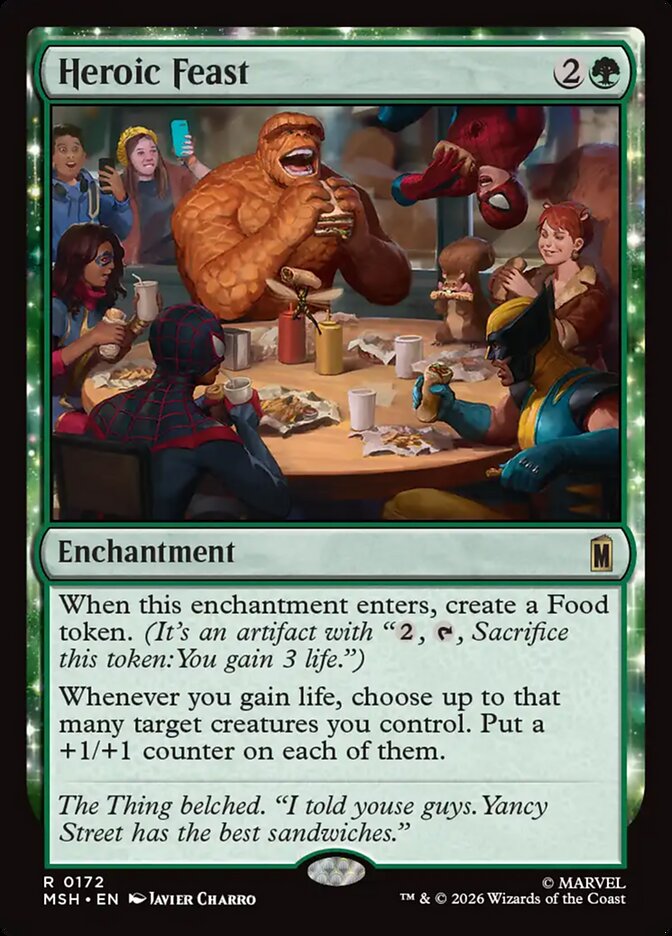
Previous Rating: Usually Not Good // New Rating: Good
Feast isn’t great on its own, but it can pick up some solid extra value with Hero in Training, Brave Brawler, Rapid Rescue, and tapped gain lands. Your average GW deck is probably happy to play this, as most of the cards it wants are independently good.
The Unbeatable Squirrel Girl
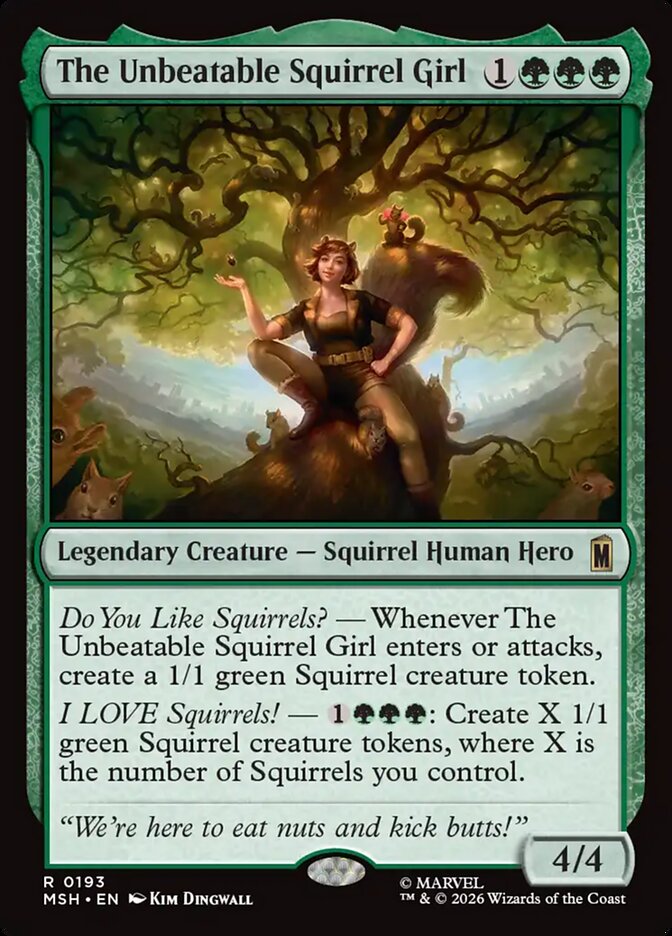
Previous Rating: Great // New Rating: Bomb
is a tough cost, but The Unbeatable Squirrel Girl is a “nutty” rare if you’re base green. If your opponent can’t kill this, they’ll eventually drown in Squirrels. This card is a great reason to play some extra Raise Dead effects like Decoy Ploy, Unliving Legionnaire, and Call Damage Control, too.
World War Hulk
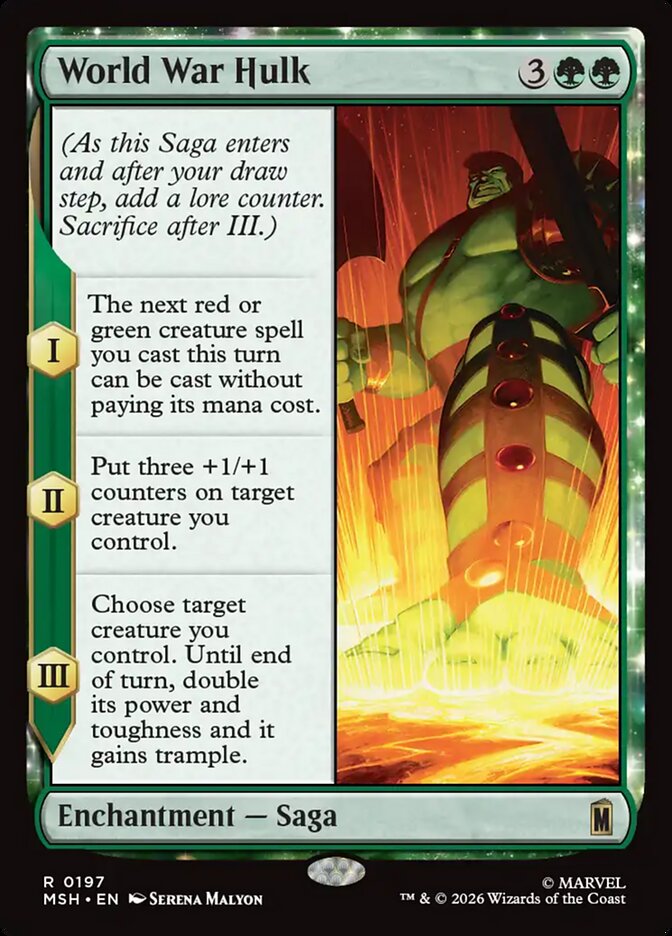
Previous Rating: Usually Not Good // New Rating: Bad
I’m demoting this to discourage you from playing it. Chapters 2 and 3 of World War Hulk are highly vulnerable to bounce and removal, and I’ve seen Chapter 1 brick enough times now to avoid playing this junk.
Scientist Supreme of A.I.M.
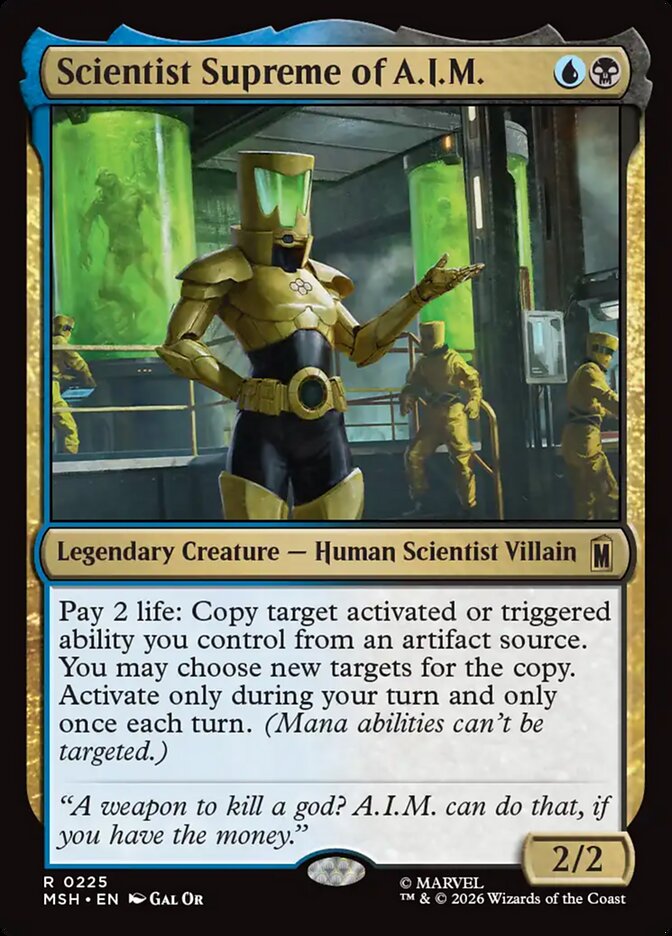
Previous Rating: Great // New Rating: Good
A powerful card in theory, but is an awkward color pair for an artifacts matter card like Scientist Supreme of A.I.M. It’s strong with certain commons, but it’ll just be Dimir Grizzly Bears if your draw doesn’t line up correctly.
Avengers: Under Siege
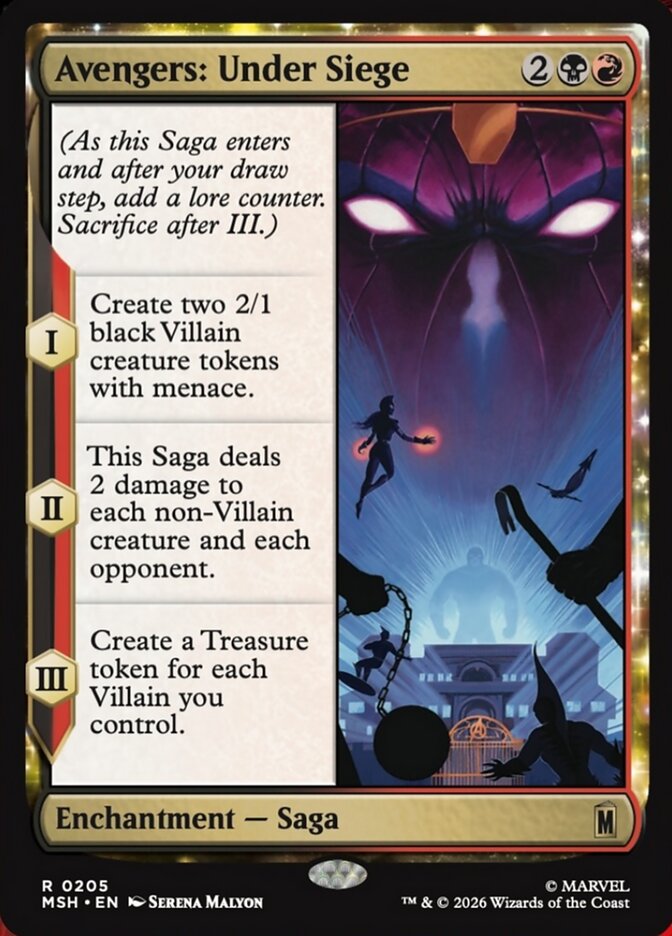
Previous Rating: Great // New Rating: Bomb
Remember what I said about white and blue being the best colors? That’s excellent news for Chapter 2 of Avengers: Under Siege, which can eliminate all those pesky Hero in Trainings while creating a ton of value. It’s solid even when that Chapter doesn’t accomplish much, but it’s outright game-winning when it does.
The Ruinous Wrecking Crew
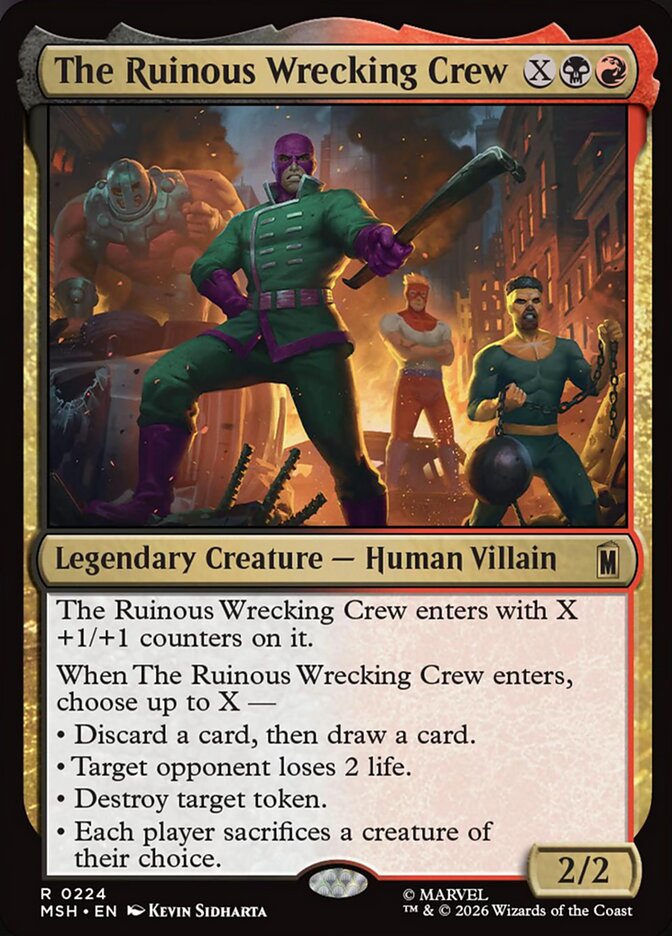
Previous Rating: Great // New Rating: Bomb
BR may be a lackluster archetype, but it does have some excellent rares! The Ruinous Wrecking Crew is an incredible modular creature with a ton of play in this format, especially if you can find a token for it to blow up. You may even be able to set up a nasty 3-for-1 by combining this with a free-to-sacrifice creature like Agents of HYDRA.
Alien Invasion
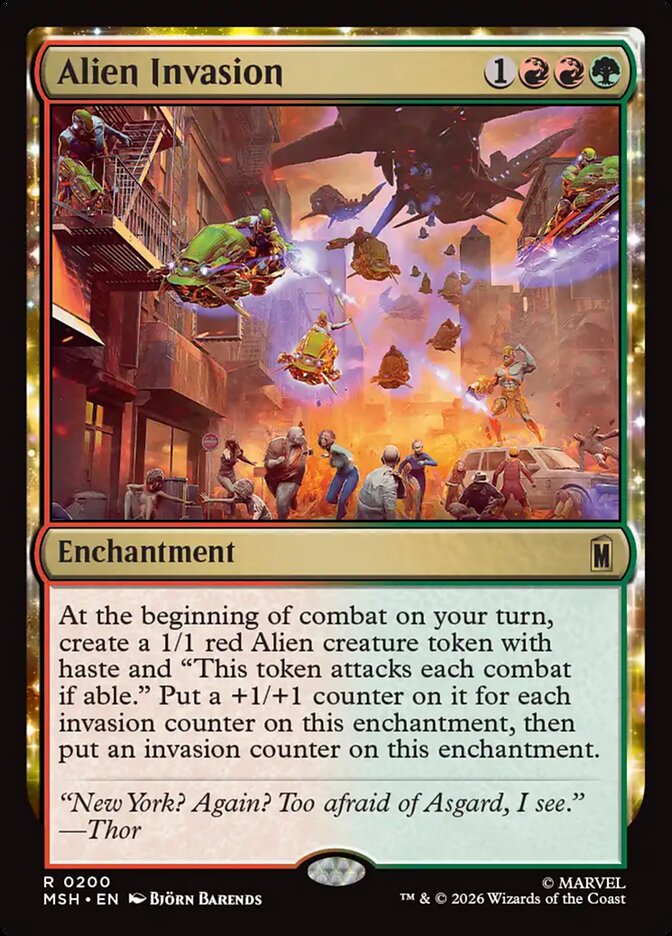
Previous Rating: Great // New Rating: Good
Alien Invasion hasn’t been as good as I expected. The tokens it creates start small, and you can never use them for anything but attacking. Fliers often race this card before it does much, and it’s completely useless for stabilizing the ground, too.
Storm, Windrider
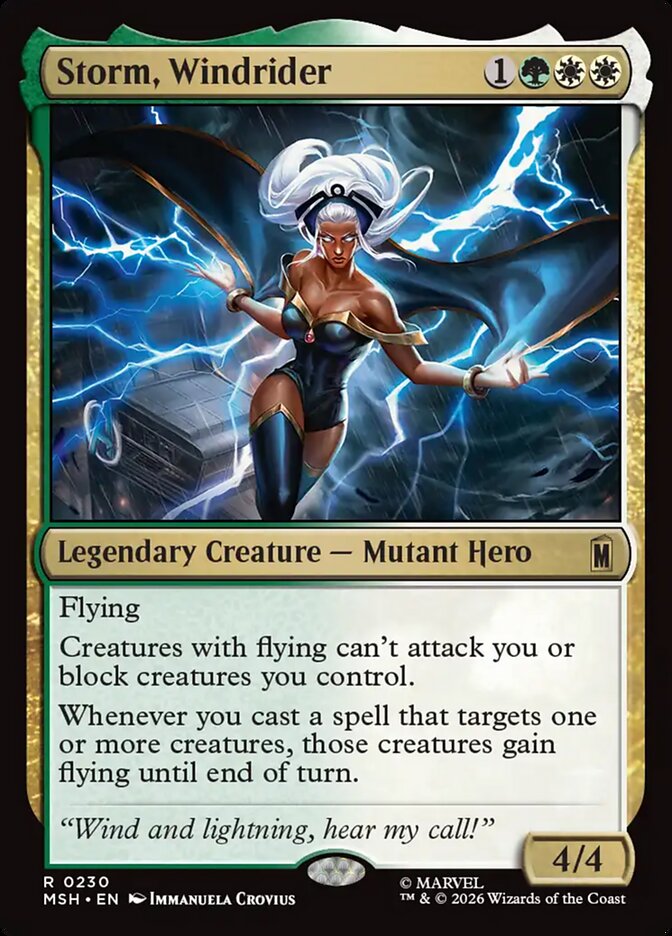
Previous Rating: Great // New Rating: Bomb
The effectiveness of flying in MSH Draft is fantastic news for Storm, Windrider, which often says “kill this or you lose” to WU decks. It’s very easy to splash too, so long as you’re base white.
Armor Wars
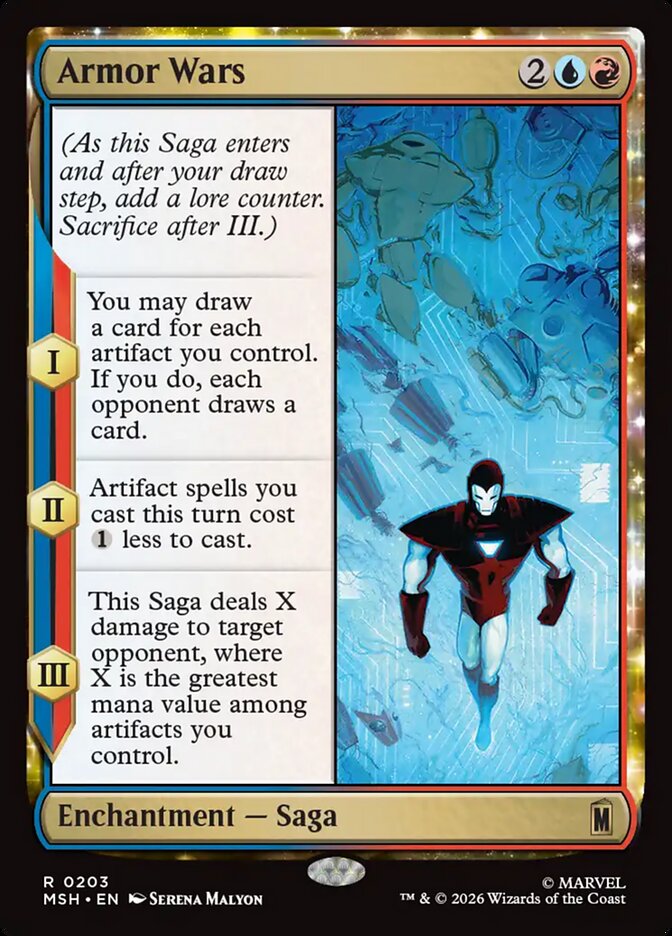
Previous Rating: Usually Not Good // New Rating: Bad
I think that this card is just plain bad, so please don’t put it into your UR decks. Drawing enough cards from the first Chapter of Armor Wars to justify +1’ing your opponent requires an already excellent board state, and the other Chapters barely do anything.
Vision Quest
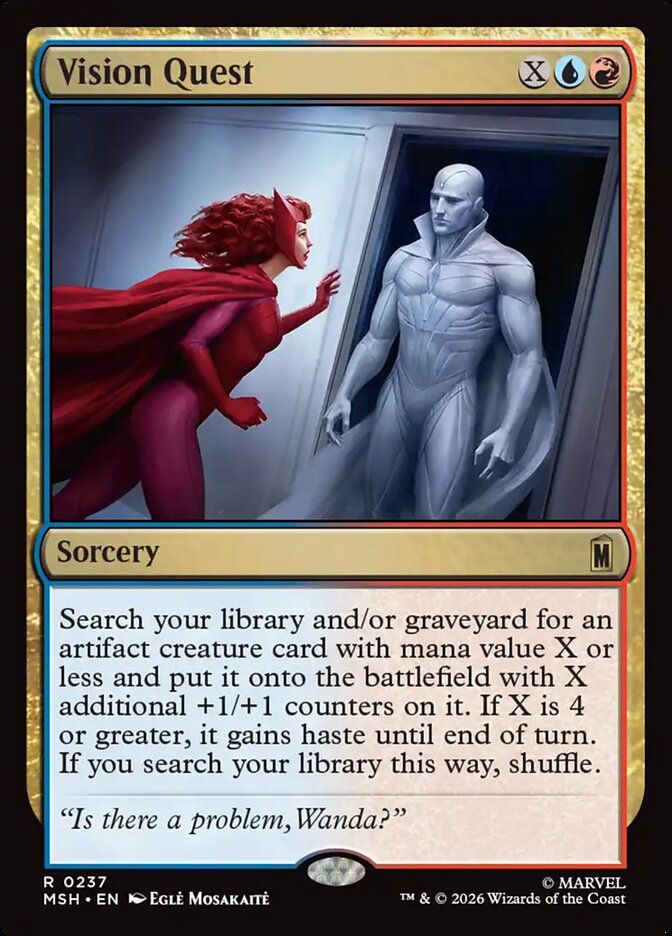
Previous Rating: Good // New Rating: Great
Vision Quest is incredibly powerful, so long as you have 3+ artifact creatures to grab with it. They don’t even have to be great ones necessarily, as getting a hasty 5/7 A.I.M. Synthoids is still solid for . Keep in mind that this can target your graveyard as well, which keeps it from being dead if you draw all your artifact creatures.
The Super Hero Civil War
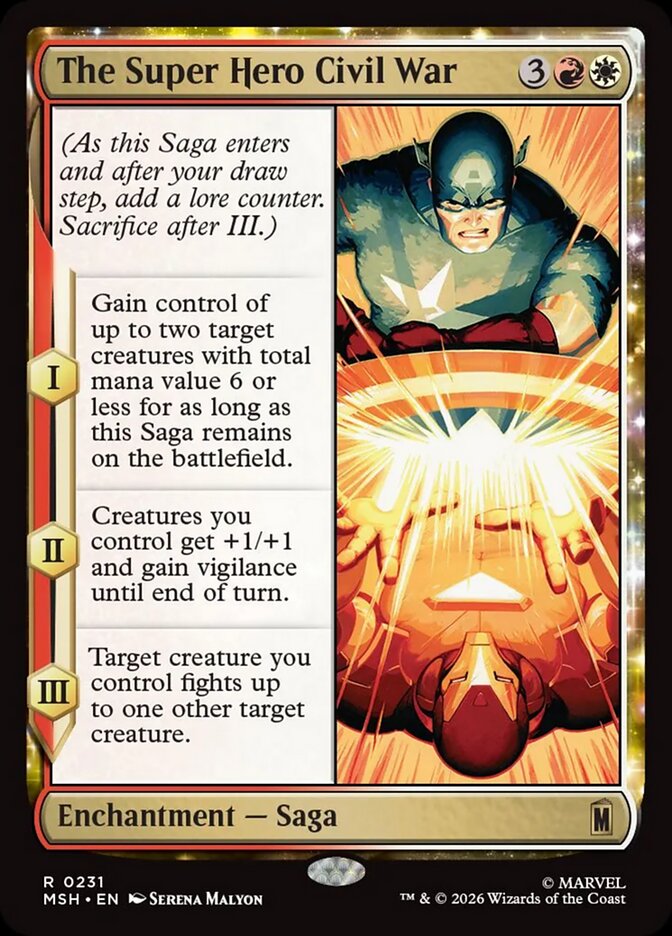
Previous Rating: Bomb // New Rating: MEGA BOMB
I hate this stupid card. I really do. I don’t know why The Super Hero Civil War even exists really, but hey, if you see this thing, you are compelled to splash it. It will win 90% of the games you cast it. The only reason 17lands says it wins merely 71.2% of the time is because we aren’t casting it hard enough.
Absorbing Man
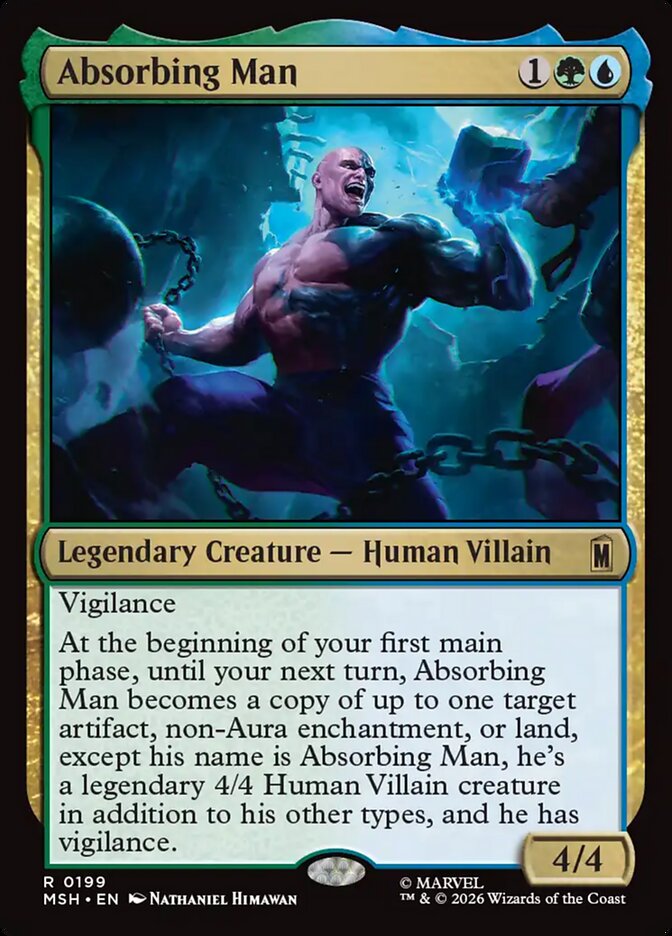
Previous Rating: Good // New Rating: Great
Absorbing Man can copy lands, which has made it significantly better than I expected. A 4/4 vigilance creature for that functions as a mana dork is ludicrously above curve, and that’s merely the floor here.
Moon Girl and Devil Dinosaur
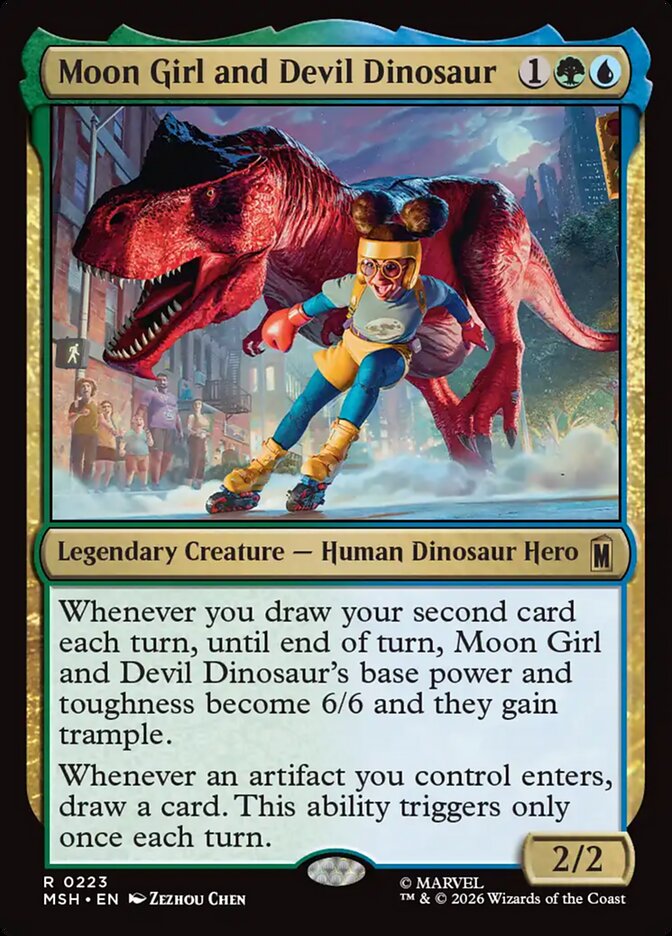
Previous Rating: Bomb // New Rating: Good
As with A.I.M. Scientists, Moon Girl and Devil Dinosaur suffers from being in an awkward color pair for artifacts. It’s also pretty vulnerable to removal spells and weak on defense, so I now consider this to be a potentially good card rather than a straight up bomb.
Captain America’s Shield
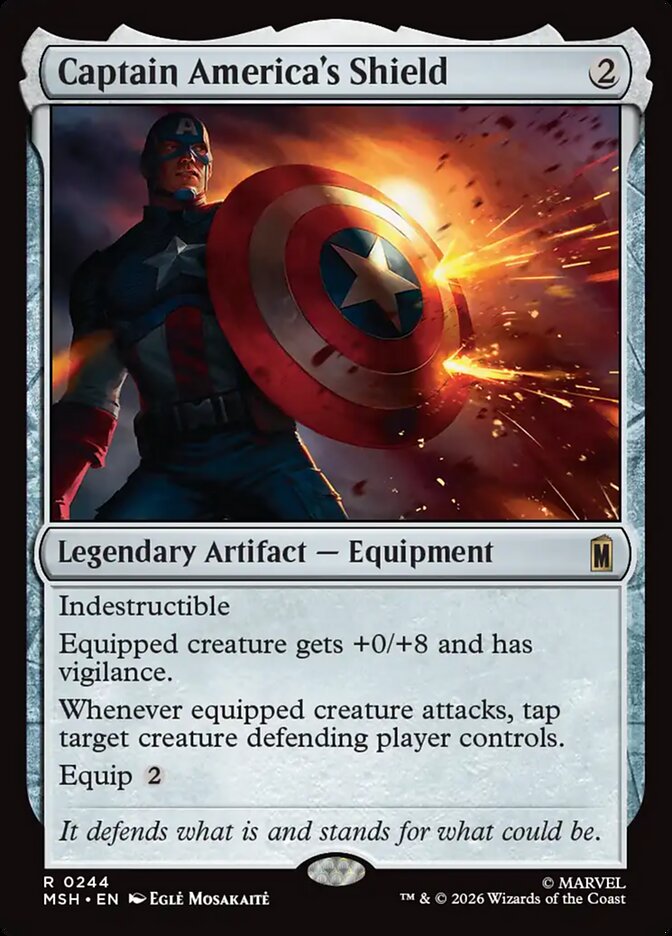
Previous Rating: Good // New Rating: Great
Captain America's Shield is a huge pain to deal with because it makes your attack steps much better while providing a ridiculously large blocker every single turn. Answering the Shield directly is pretty much Web Up or bust too, because indestructible gets around the vast majority of this set’s artifact removal.
Castle Doom
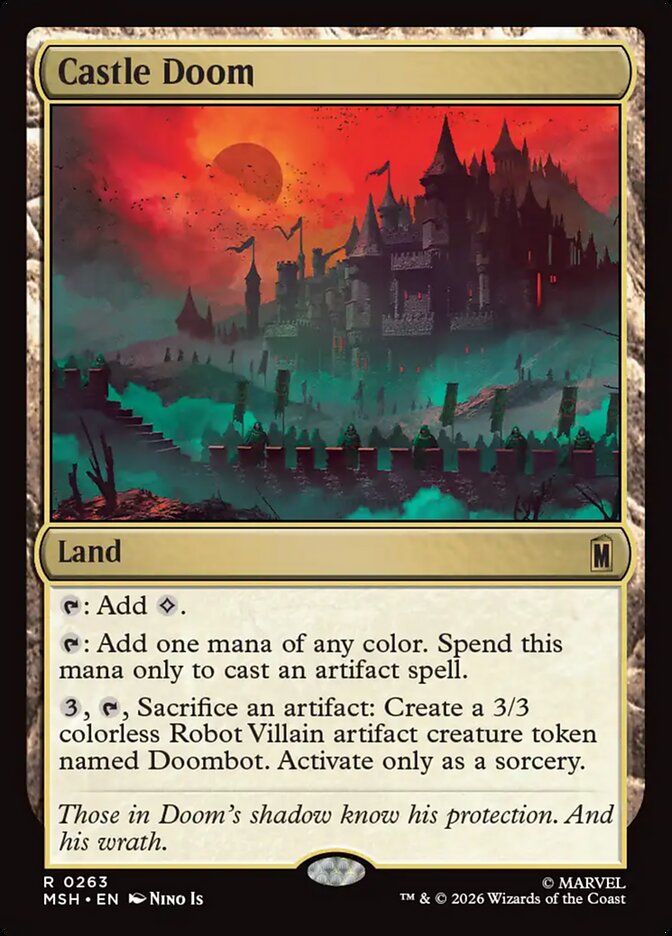
Previous Rating: Good // New Rating: Usually Not Good
There are just so few artifacts worth sacrificing in this set, unfortunately, so I haven’t seen Castle Doom do much. I’m down to play it if I have a Project Deathlok Soldier for late game loops, but I’ve found the uncommon lands (Baxter Building, Avengers Tower, and Villainous Hideout) to be superior mana sinks.
Archetypes (or Lack Thereof)
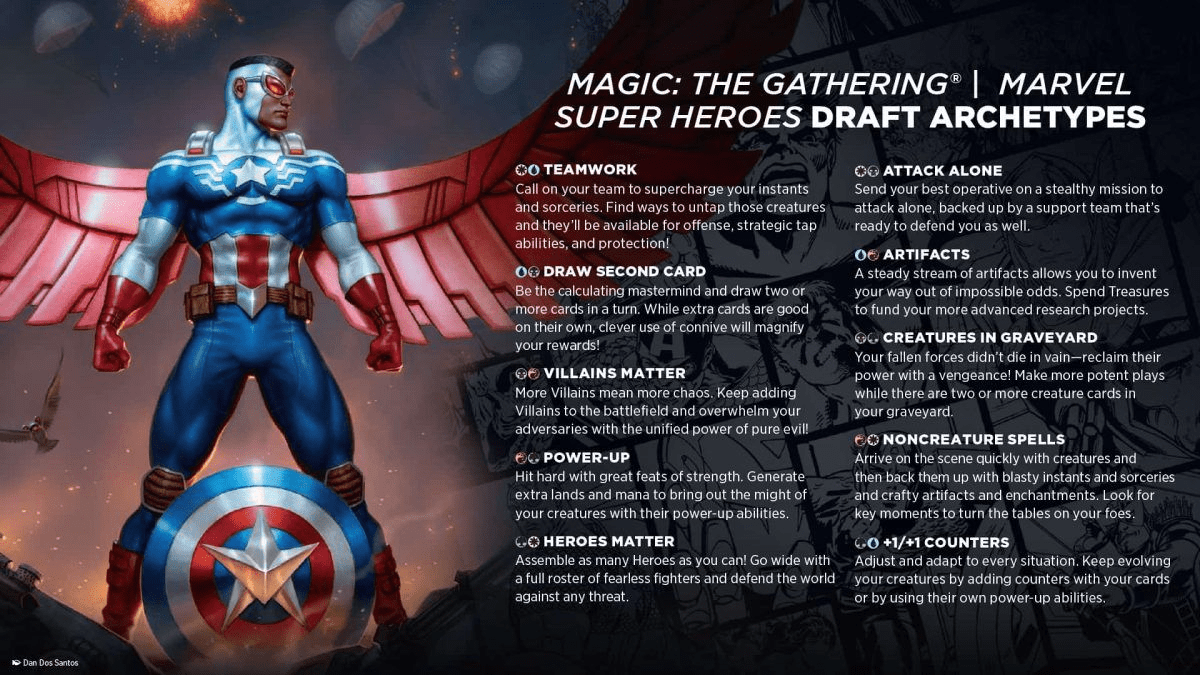
Source: Wizards of the Coast
Unlike most sets, Marvel Super Heroes has really soft archetypes. Focusing on individual card quality and synergies will yield greater results than trying to do any of the 10 official things that Wizards suggests, which have felt largely undercooked. UR Artifacts, BR Villains, and GW Heroes are the main decks that actually aim for what was advertised, although of the three I’ve only liked GW Heroes.
I wrote far too much to include my traditional archetype assessments, so read on to find out what I’m cooking. I promise you, you’ll learn a ton about the format regardless! I’ve also included some Trophy examples to showcase all 10 decks that I’ve achieved seven wins with in this format so far.
Card-Specific Notes
This section is a bit of a catch-all for me to give my thoughts on specific cards. Marvel Super Heroes has a lot of intricate little synergies, which I hope to highlight in this section!
Mythics
Captain Marvel, Earth’s Protector
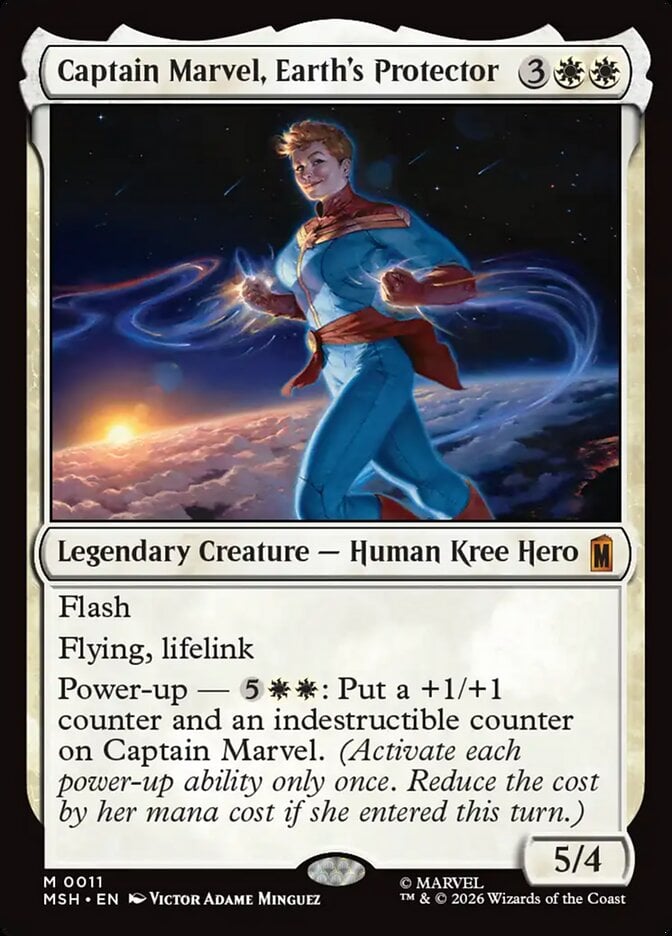
Obviously this card is busted, sure. But a question that will come up is whether you should try to flash and ambush a creature with Captain Marvel, Earth's Protector, or wait to slam it and main phase indestructibility. There are a surprising number of answers to the second line, including:
I’d prioritize picking up the indestructible counter versus red and green decks the most, because both colors lack any real way to remove Captain Marvel once it’s powered up. Against WU fliers, finding a window to eat a creature in combat is a better way to leverage this bomb.
The Mind Stone
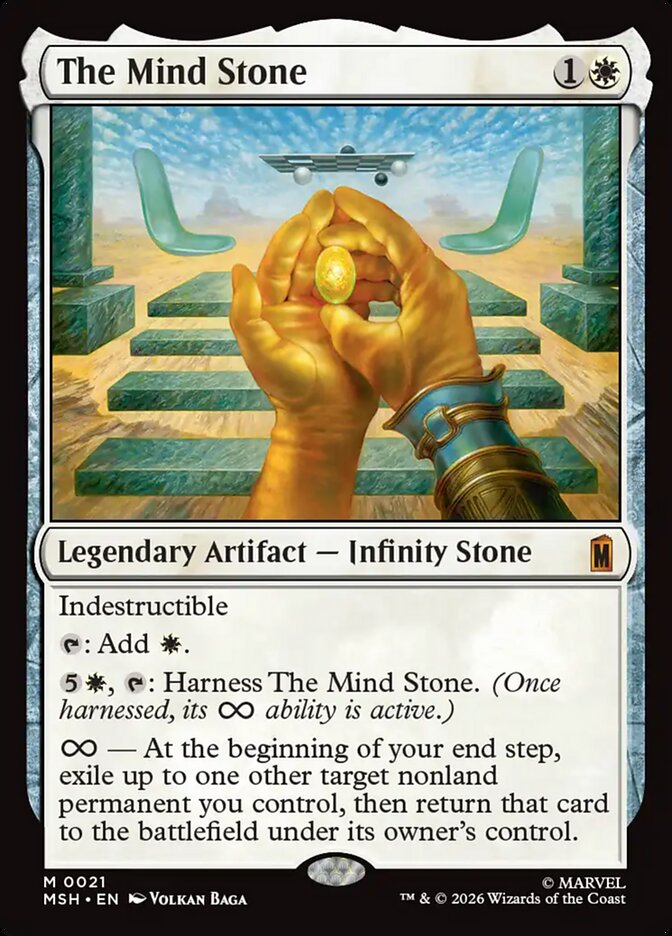
The Mind Stone isn’t limited to creatures, which can make it incredibly brutal late in the game with specific noncreature permanents. Some wombo combos to dream about with this include:
- HYDRA Infiltration
- S.H.I.E.L.D. Helicarrier
- Mjölnir, Hammer of Thor
- The Super Hero Civil War
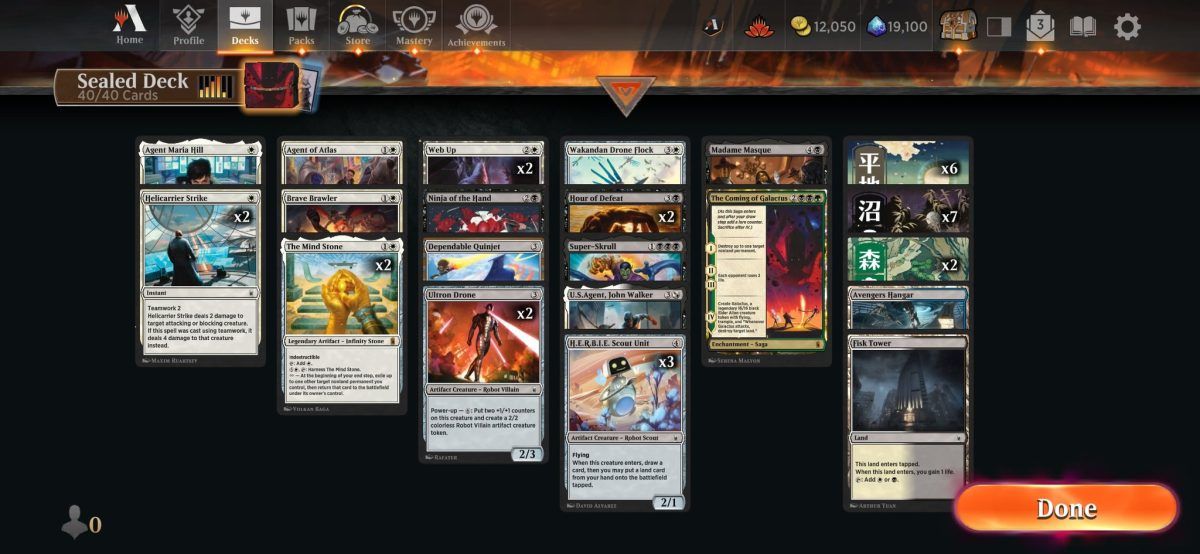
- The Coming of Galactus (this combination won me a Collector Booster Box; Sealed deck is pictured below)
Bruce Banner / The Incredible Hulk


Bruce Banner is interesting for being two completely different colors at once. The more powerful backside requires a significant amount of green and red mana, but the front side is efficient enough that I’m happy running it in any blue deck. Keep in mind that you may sometimes be able to cast The Incredible Hulk in decks that could never normally hit via Treasure tokens, Surveillance Room, and Baxter Building.
Namor the Sub-Mariner

Namor the Sub-Mariner being limited to blue noncreature spells is quite restrictive, so I’m generally only happy to play this with multiple copies of cards like We Say Thee Nay!, Atlantis Attacks, and Depower. You can occasionally pick up some extra value here with other merfolk like Atlantean Cavalry and Attuma, Atlantean Warlord.
Black Widow, Super Spy
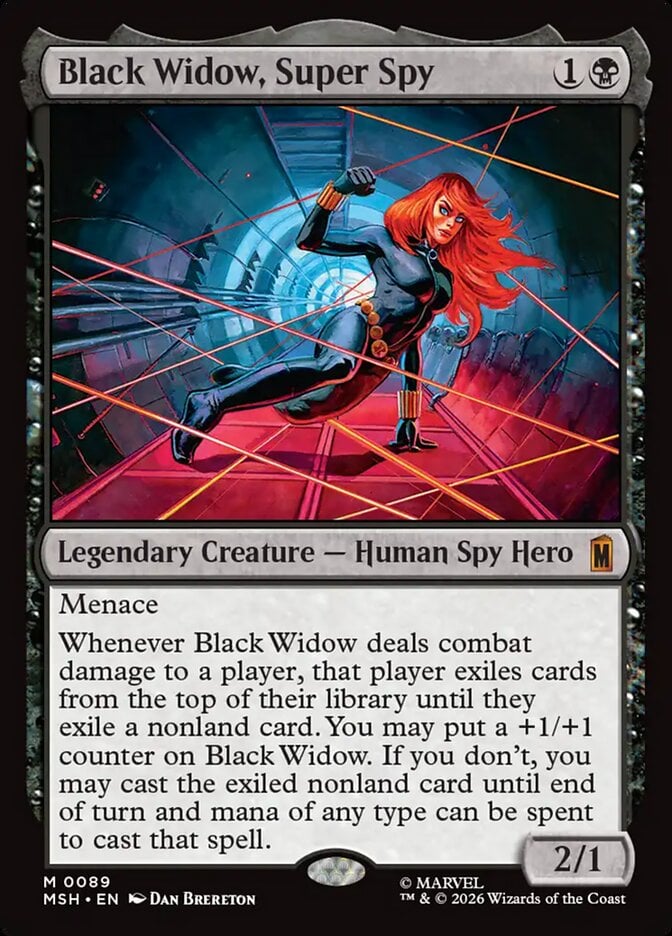
Always connect first with Black Widow, Super Spy if you can, because you’ll have full mana plus information to decide whether you want to play your opponent’s card.
Doctor Doom
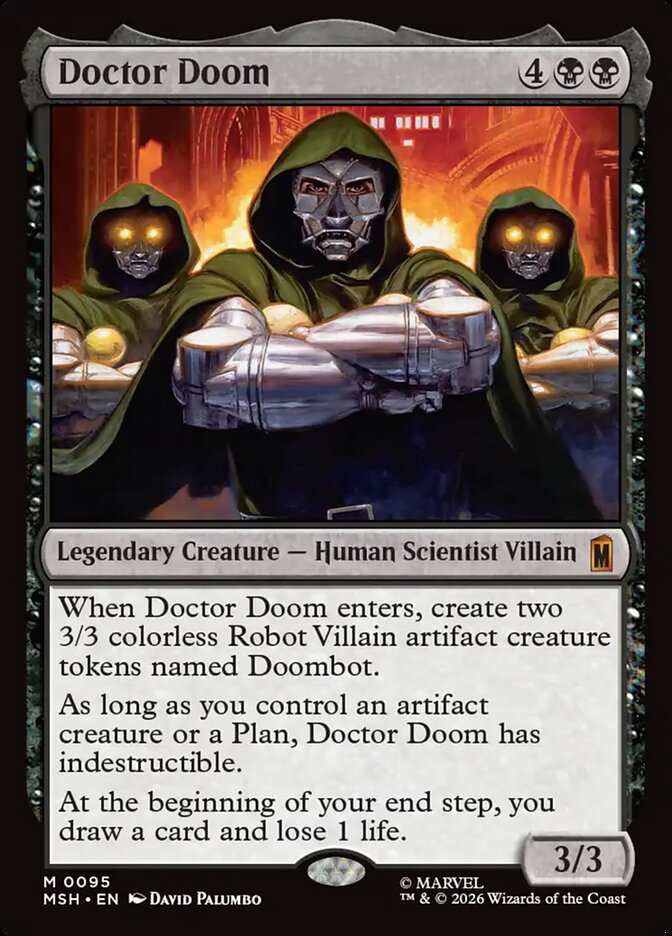
Removing this is a huge pain, because Doctor Doom dodges every removal spell I can think of besides Web Up, Frozen in Ice, and Dark Deed. If your opponent is sloppy and doesn’t have any other artifact creatures (or plans), you can actually HULK SMASH! or Lightning Strike in response to the Doombot trigger.
Mjölnir, Hammer of Thor
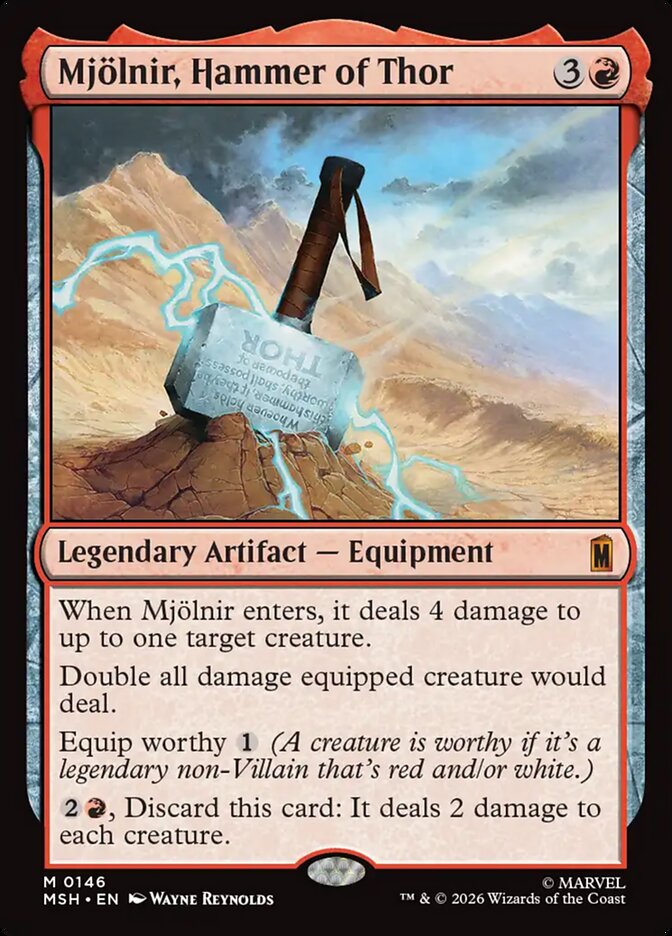
Swordsman, Sharp Scoundrel offers a neat way to equip this to unworthy creatures, which will often come up when you play this in black decks. It’s efficient enough as modular removal to always be worth playing though.
Shang-Chi, Master of Kung Fu
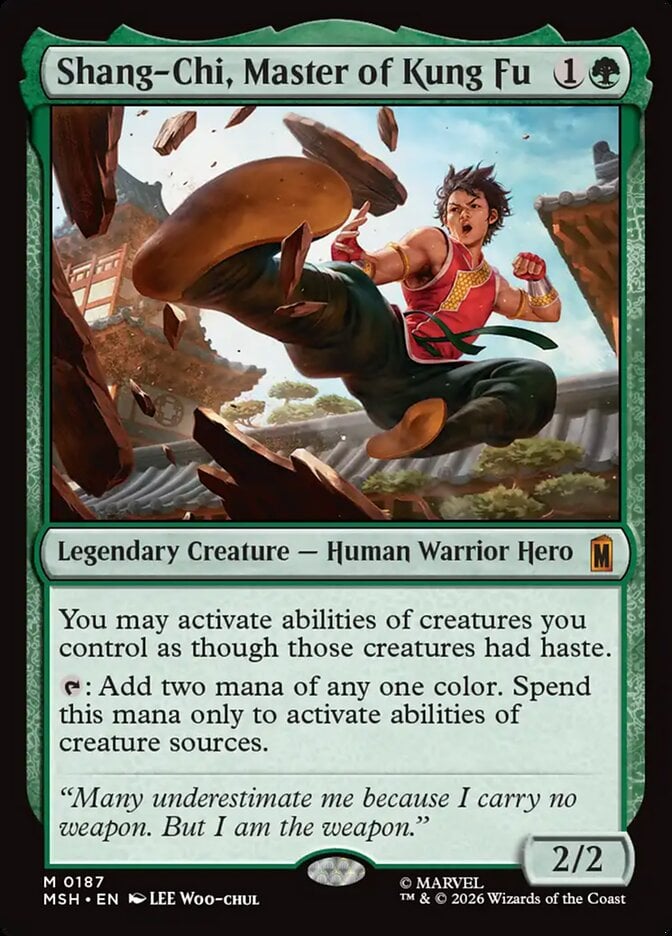
Shang-Chi, Master of Kung Fu is obviously great for power-up abilities, but it may be even better with certain other rares. Hasty Agent Phil Coulson is an especially gross use of Shang-Chi’s talents, as is having mana to dump into The Unbeatable Squirrel Girl after you play it.
Thanos, the Mad Titan
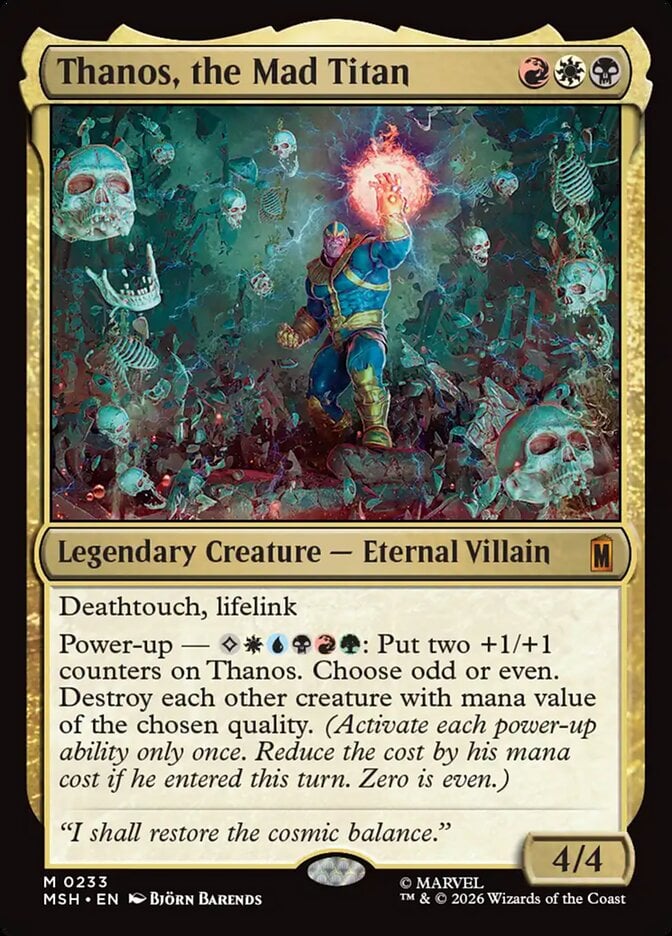
I’ve only pulled this off once because is even harder than I expected it to be. Baxter Building is Thanos’s best friend, because it provides all the colors necessary (or colorless if you have the other colors already). Thanos probably isn’t worth the effort for most decks, but you can bet I’ll try it when I can.
Cosmic Cube
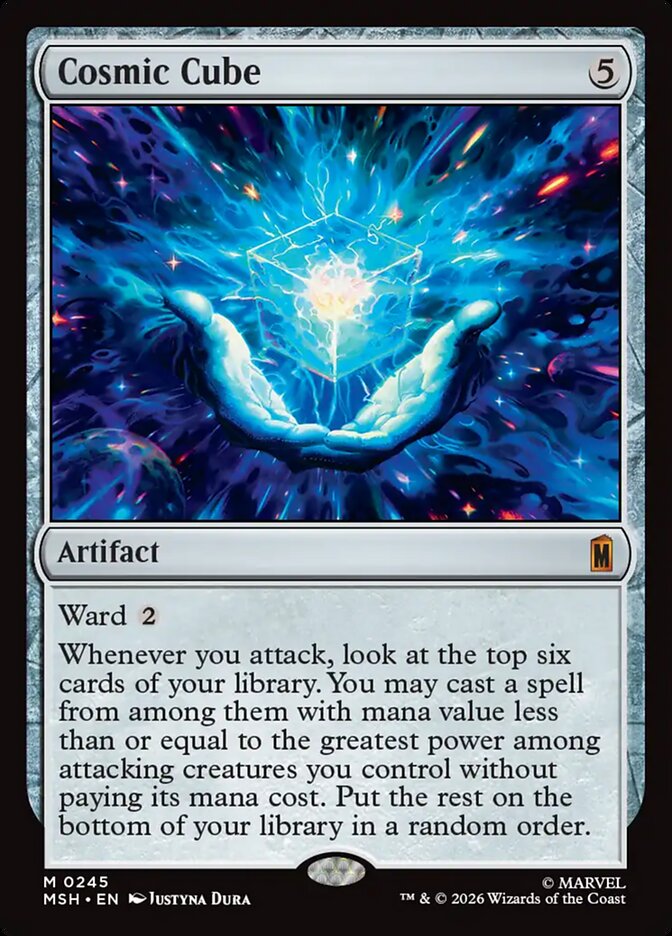
A great rare, though it does pay to be mindful of your curve and creatures’ power to maximize Cosmic Cube. Being dense on 2s is an awesome idea, because it’s much easier to attack with a 2-power creature than a 5-power one.
Ultron, Artificial Malevolence
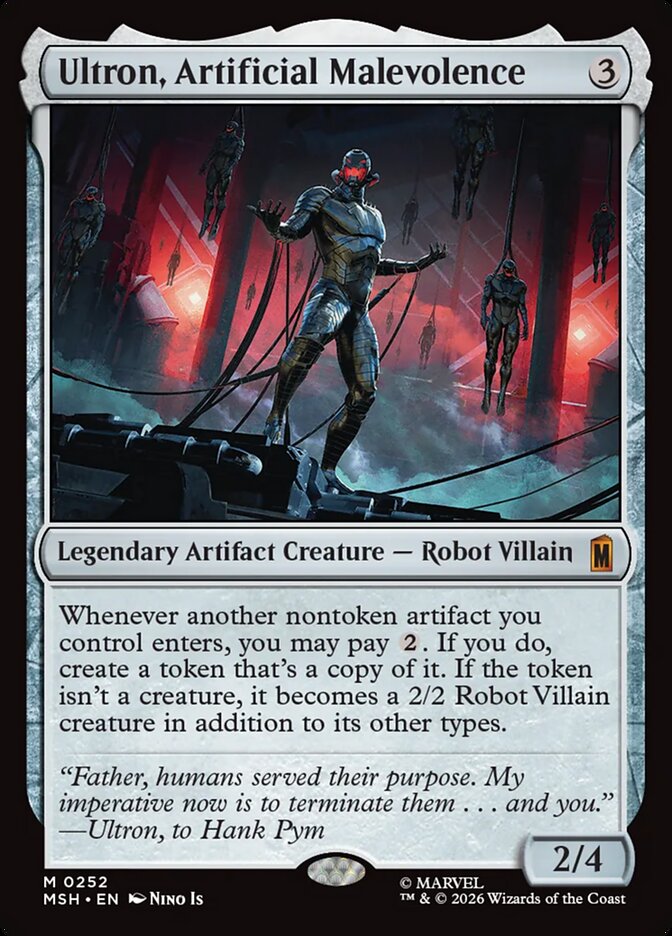
Don’t count legendary artifacts like Iron Man, Master of Machines towards your hit count for this, because Ultron, Artificial Malevolence doesn’t get around the legend rule (unlike many other cards in this set).
Rares
Nick Fury, Agent of S.H.I.E.L.D.
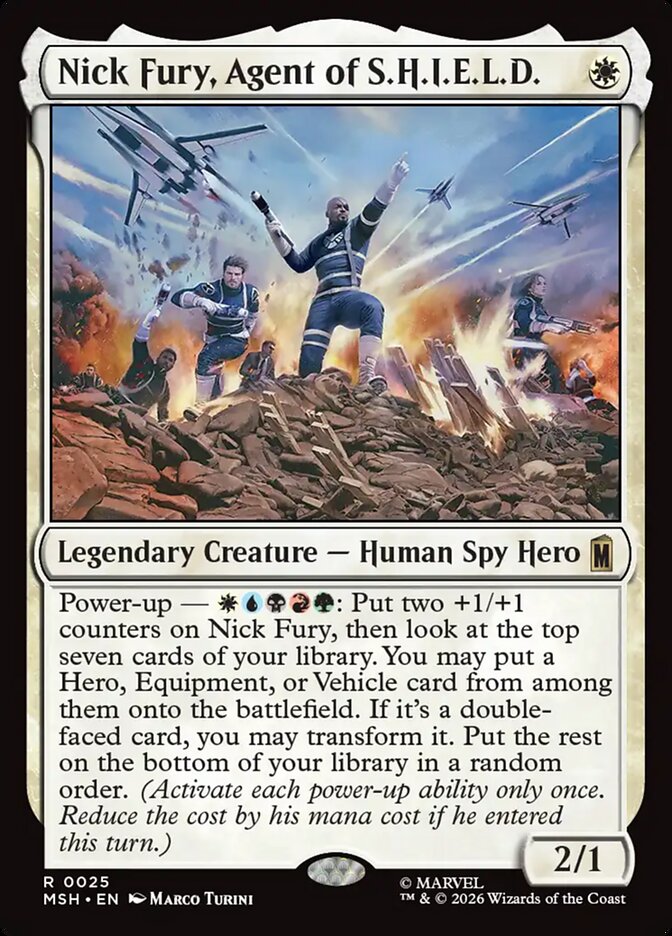
As with all cards in Marvel Super Heroes, Nick Fury, Agent of S.H.I.E.L.D. really loves Baxter Building. You don’t even need any other 5-color sources besides that to activate it!
Origin of the Avengers
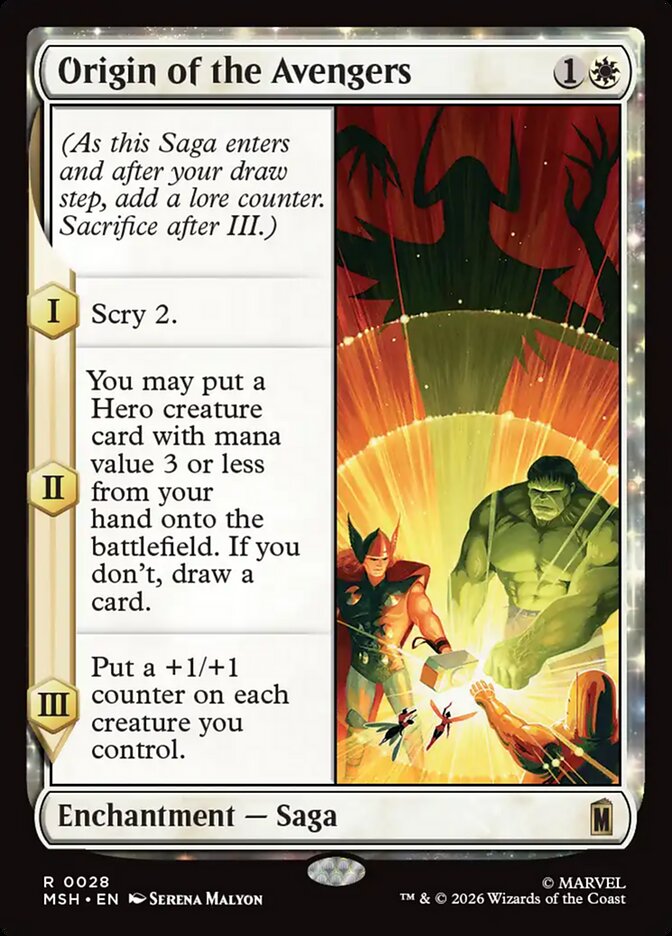
You should be drawing with Chapter 2 the vast majority of the time, as I’ve seen too many opponents dump 2-drops into play pointlessly. Turn 2 is a passable window to play Origin of the Avengers, but turn 4 (with a 2-drop creature) is ideal for maximizing Chapter 3.
The Sentry, Golden Guardian
There are surprisingly few ways to make the risk of The Sentry, Golden Guardian worth it, at least from a Game 1 point of view. Just about every bounce/flicker card in Marvel Super Heroes has a “nontoken” clause, which means you’ll almost always have to spend a card to get rid of The Void if something goes wrong.
Ironheart, Clever Champion
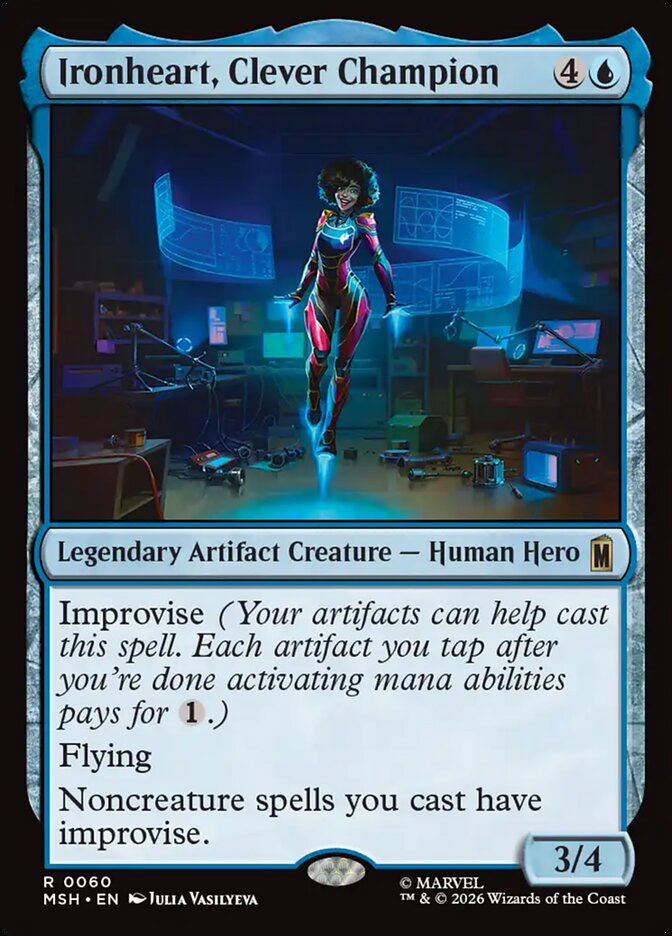
I haven’t been particularly impressed by Ironheart, Clever Champion, but We Say Thee Nay! and I Am Iron Man could catch your opponent off guard for “1 mana”. It’s quite effective at ramping towards Atlantis Attacks as well.
Loki, God of Mischief
Here are some cards you can combine with Loki, God of Mischief for excellent results:
- Crowd of True Believers
- Raft Security Officer
- Web Up and Super Villain Lockup (the abilities target, not the spell!)
- Giant-Sized Flying Ant
- Powerful Broker
- Patriot, Shield Wielder (protects Loki too)
- Quake, Agent of S.H.I.E.L.D.
- Red Guardian, Super-Soldier
- White Widow, Free Agent
- Justice, Vance Astrovik
- Shuri, Wakandan Inventor
- Wiccan, Rising Magician
- Swordsman, Sharp Scoundrel (even with no equipment in play, simply having a villain enter triggers Loki)
- Training Regimen
- Spider-Woman, Secret Agent
- Spider-Man, To the Rescue
- War Machine, Legacy of Iron
- Villainous Hideout
- Equipment in general
The list of cards that Loki combos with is quite expansive, even without factoring in other rares.
S.H.I.E.L.D. Flying Car
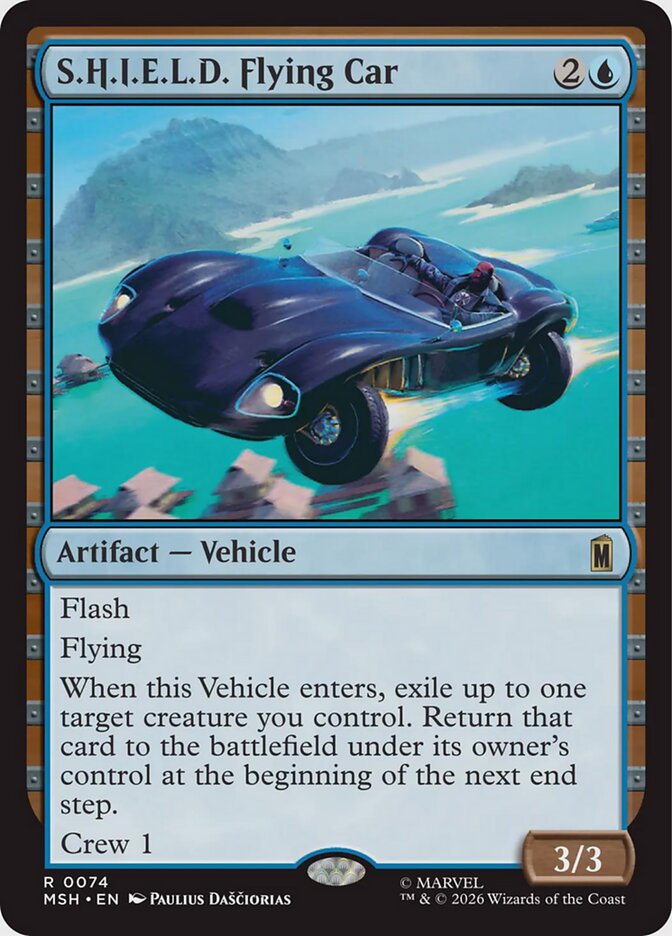
For MTG Arena players, I recommend that you turn on Full Control as you cast this one. This lets you hold priority as you target your own creature to flicker, enabling you to crew the Car with your creature before it’s exiled. Also, if you plan to use this to flicker something before the opponent passes the turn but still want the target available when you untap, make sure you do this in their second main phase; flickering during their end step will leave it exiled until your end step.
Baron Helmut Zemo
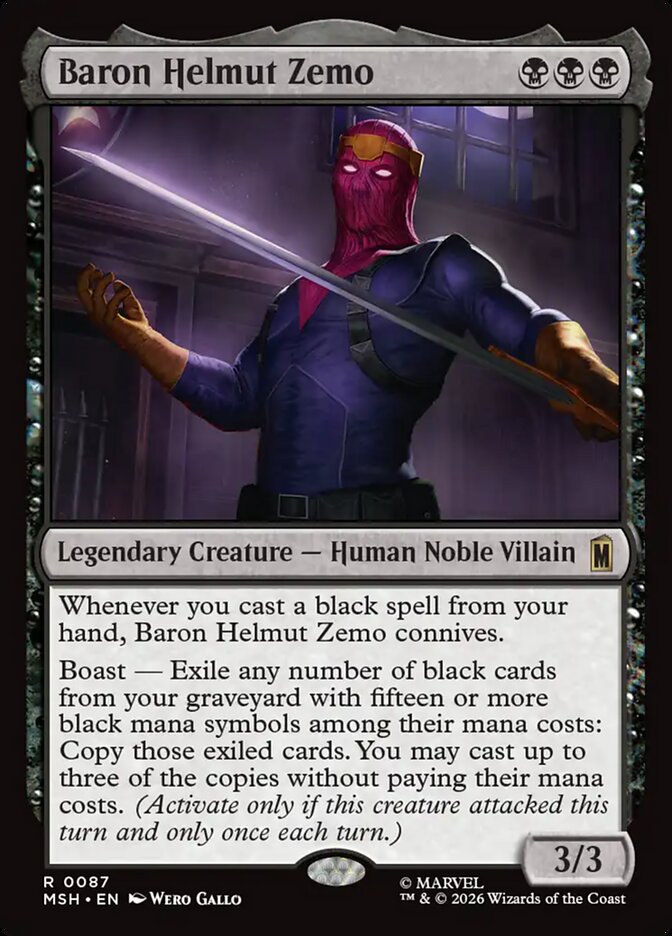
The “15 black” line here is pure flavor text in Limited, even if you’re basically mono-black. I’ve never seen anyone come close to activating Baron Helmut Zemo, so only play it if you’re already on 12+ black sources.
Super-Skrull

Baxter Building, Surveillance Room, and Villainous Hideout are ideal ways to generate off-color mana for this. I’d even consider playing an off-color dual for access to blue and/or red mana if I don’t have those because they’re Skrull’s best abilities.
Thunderbolts Conspiracy
The potential this has to grind with Kingpin's Enforcers is pretty remarkable in longer games! One thing I like to do is to reset power-up abilities, because the ability to reuse cards like Ultron Drone and Abomination, Terrifying Titan is pretty sick. You may also sometimes be able to leverage both hero and villain synergies due to the bonus creature type that Thunderbolts Conspiracy adds.
Avengers Disassembled
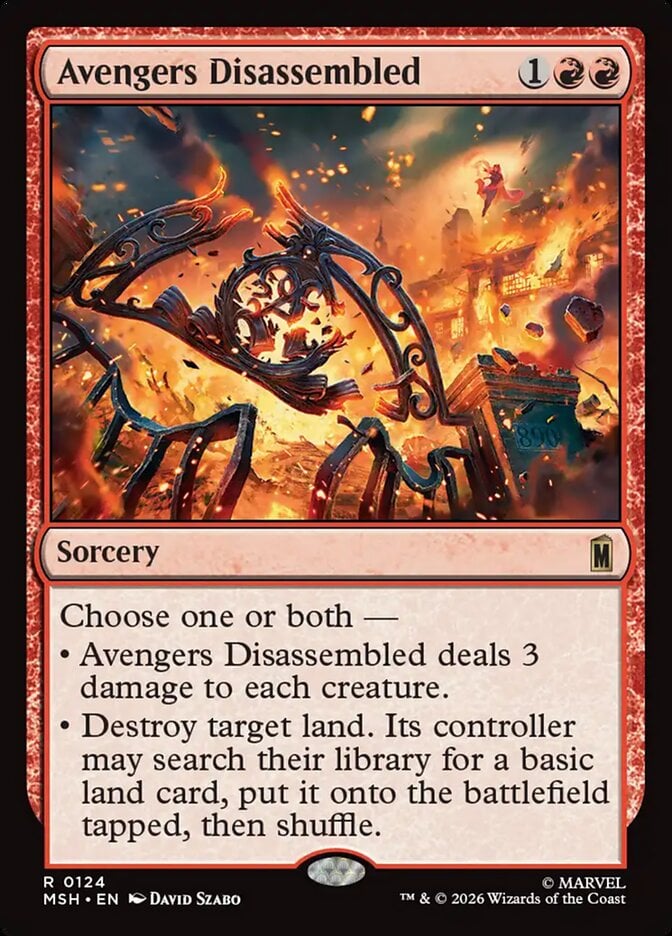
is a tough sell in this format, but Avengers Disassembled is admittedly a pretty awesome sweeper when it works. The land mode is clutch against this format’s trio of excellent uncommon mana sinks, and it can also provide fixing in a pinch by targeting your own land. You could also attempt to cut your opponent off their splash by targeting their sole basic of that color, although that usually won’t be an option.
Fin Fang Foom
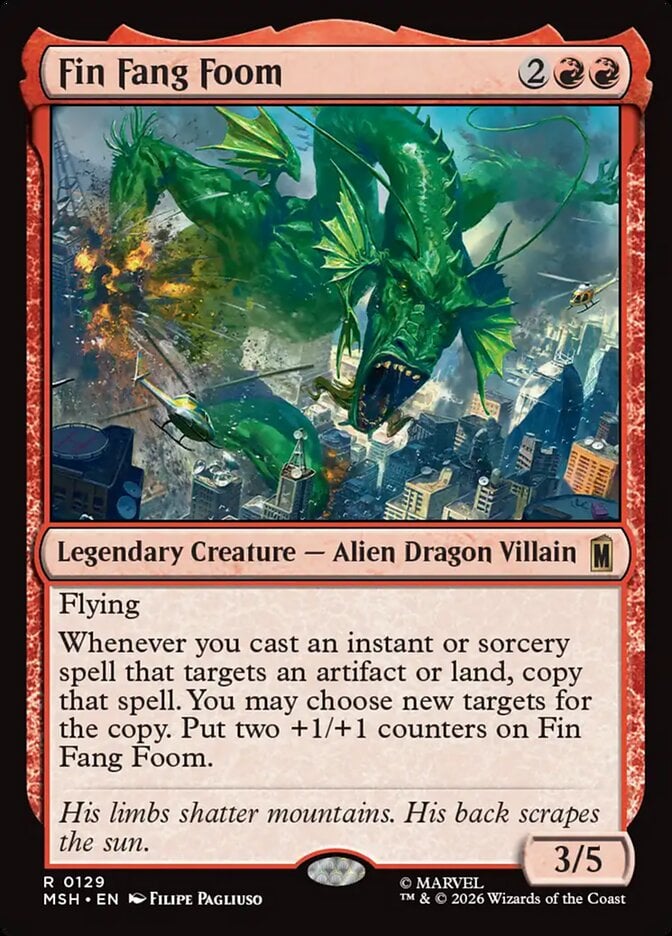
As I mentioned in the last guide, Fin Fang Foom combos with Avengers Disassembled. One thing I missed about Foom is its spectacular interaction with and against artifact creatures, which can often function as liabilities against this dragon. Piggybacking off of H.E.R.B.I.E. Scout Unit would let you double kick a Repulsor Blast, for instance. You can also set up brutal 2-for-1s using your own artifact creatures (i.e. Kree Sentinel + HULK SMASH!), as this will still count for Fin Fang Foom’s trigger.
Hawkeye, Master Marksman
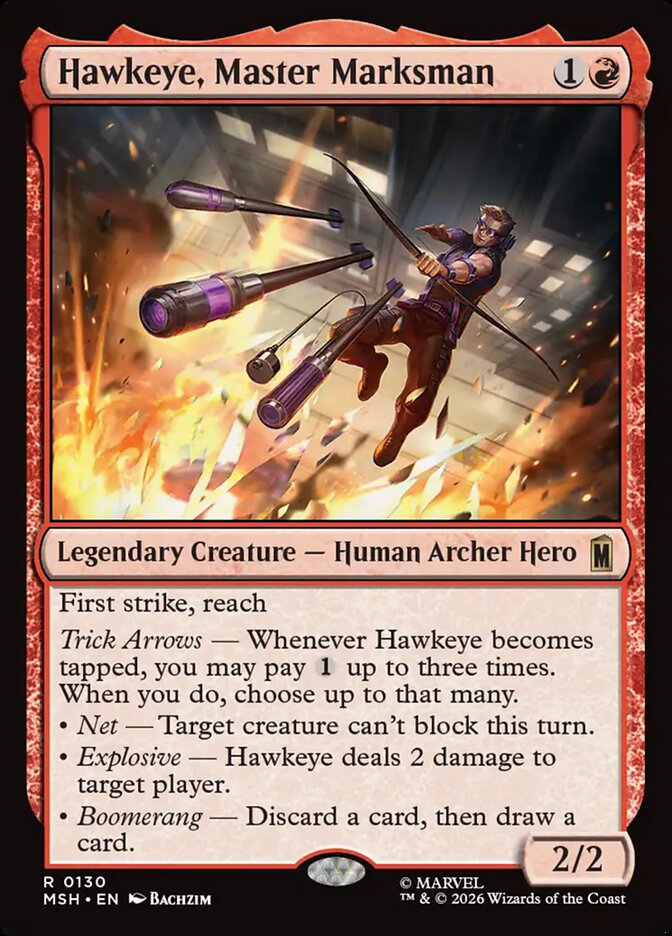
Unconventional ways to tap this take Hawkeye, Master Marksman from excellent 2-drop to a must answer threat. Vehicles, Raft Security Officer, and Quake, Agent of S.H.I.E.L.D. are all good options. S.H.I.E.L.D. Spy Kit is another great card worth mentioning because it gives it “vigilance” while still letting Hawkeye tap for value!
Mole Man, Moloid Master
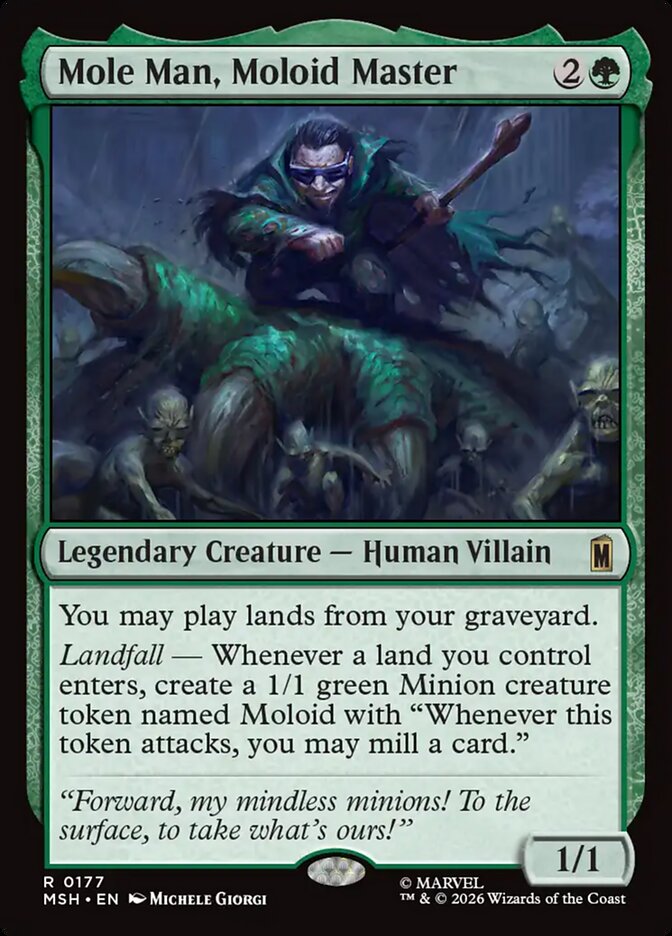
Having some go-wide payoffs or other graveyard synergies makes Mole Man, Moloid Master better than it looks. It’s not the best rare in Marvel Super Heroes by any means, but I can easily picture GW or GB decks in which this guy pulls its weight.
The Mighty Thor, Jane Foster
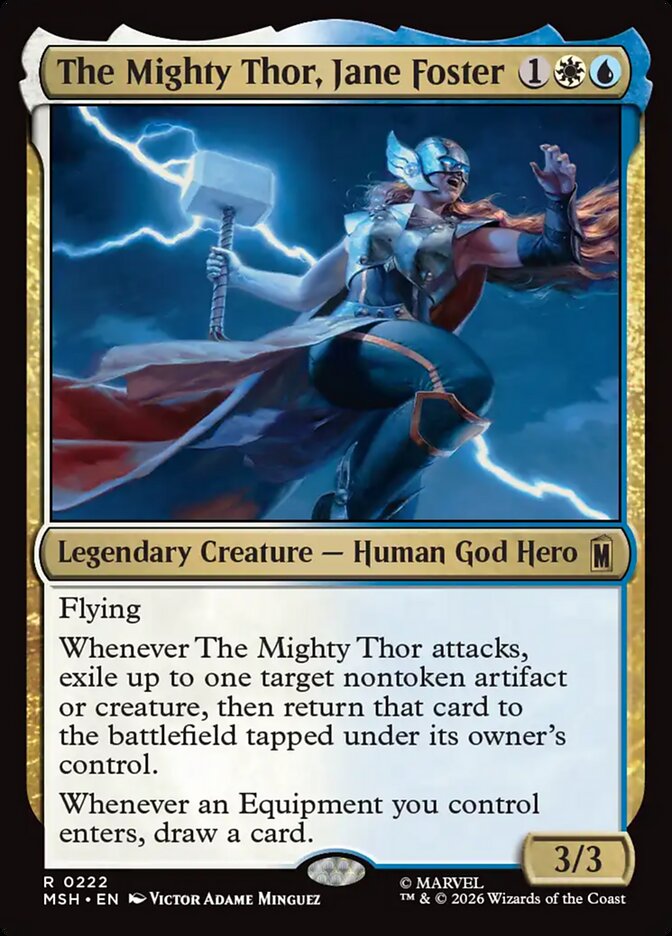
Some cards that The Mighty Thor, Jane Foster loves are Futurist Forge, S.H.I.E.L.D. Spy Kit, Justice, Vance Astrovik, and Hero in Training. Most of these are already great cards in the best color pair, but hey, it never hurts to win more!
Taskmaster, Mercenary Mimic
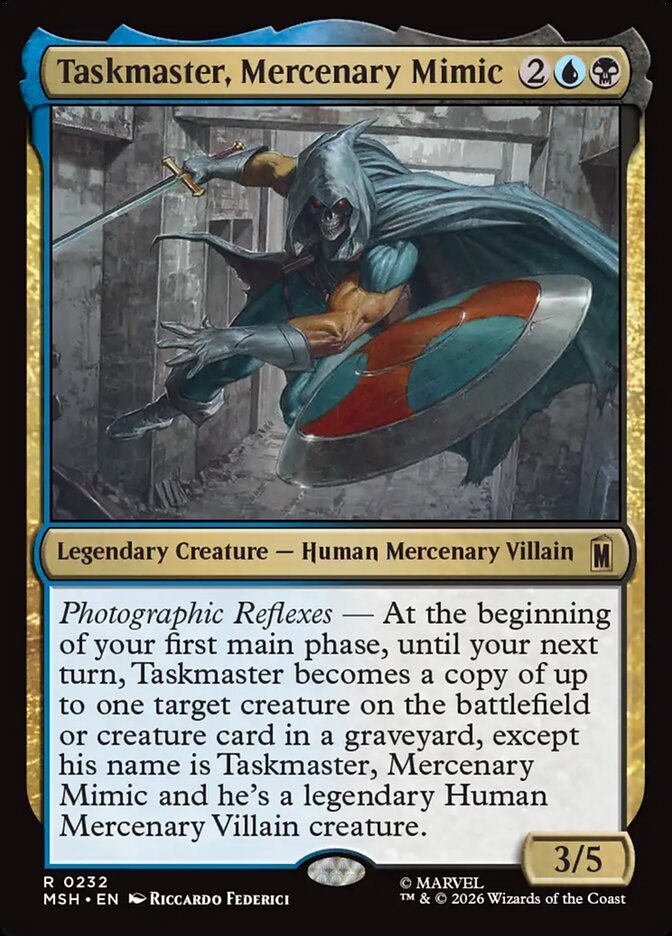
Taskie can target both graveyards and both sides of the battlefield, although it loses its 3/5 stat line when you clone with it. You might decline to do so for that reason initially, but the ability to piggyback off of the best creature played so far makes Taskmaster, Mercenary Mimic a valuable asset.
Ares, God of War
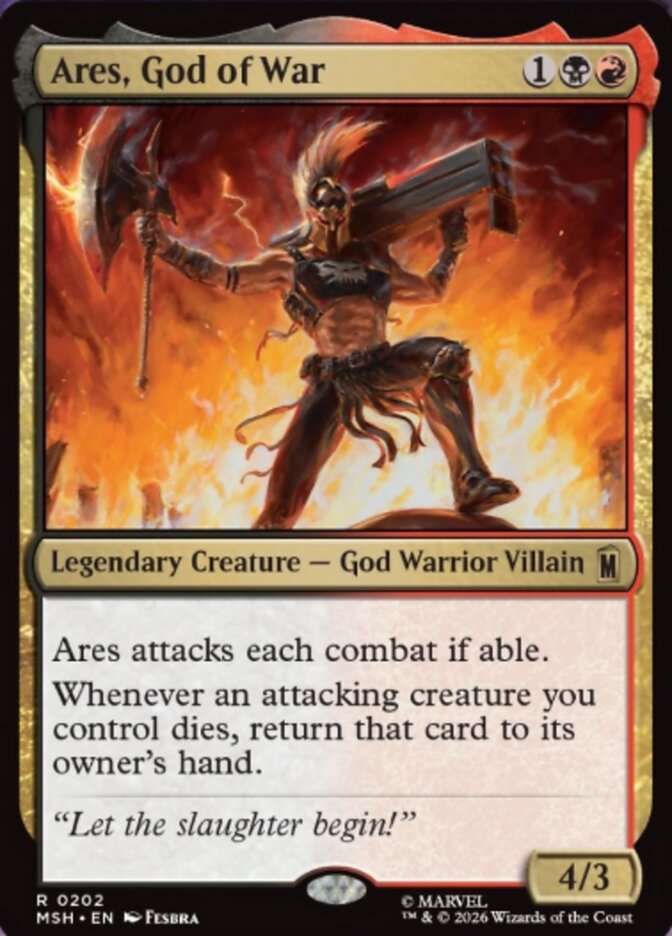
You can pick up extra value with this using Kingpin's Enforcers to sacrifice attacking creatures. This isn’t necessary for Ares, God of War to pull its weight, but it’s cool when it comes up.
Wolverine, Fierce Fighter
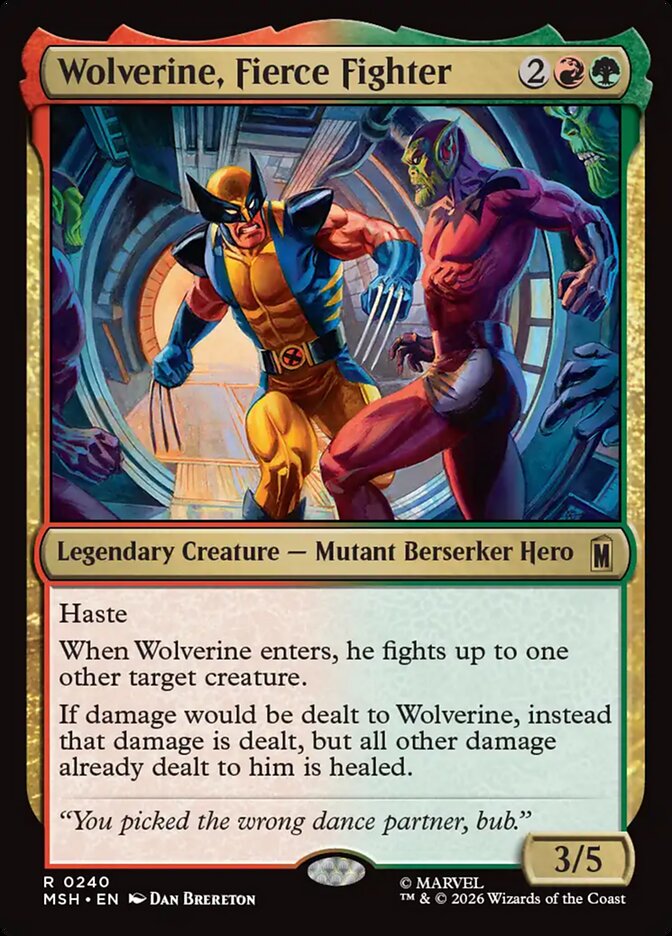
Stack-blocking Wolverine, Fierce Fighter is the best way to kill it so you can get around its unique damage protection. Deathtouchers also always do the trick. Just don’t try to remove this with Photon Blast Barrage!
Storm, Windrider
Storm, Windrider’s targeted flying clause is kind of niche, but it can enable some clutch lethal attacks with your ground creatures. You’re mostly playing this for the other abilities though.
Cloak and Dagger, Entwined
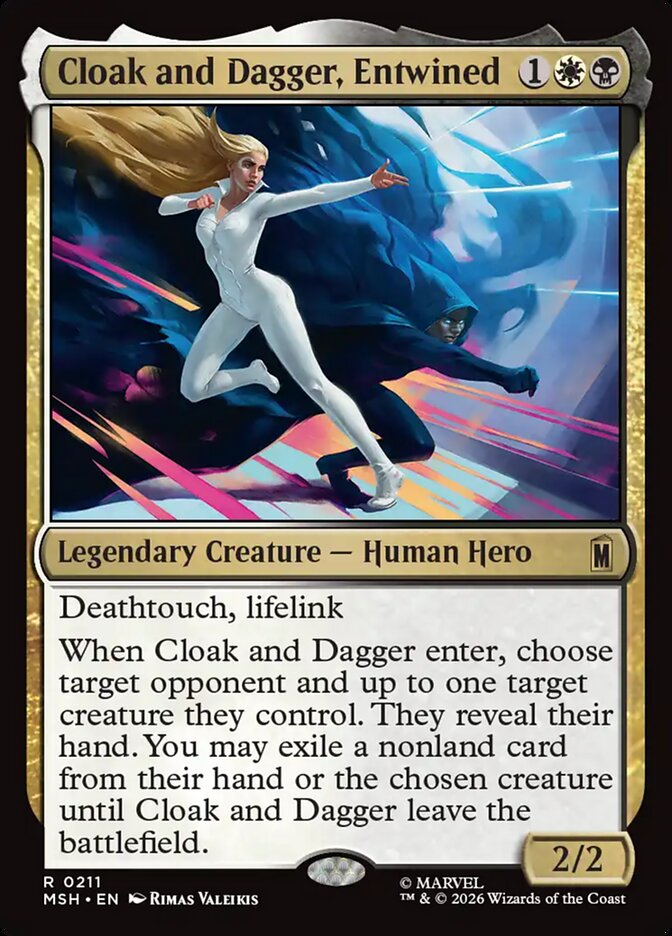
A very powerful and flexible rare. I’m usually tagging a removal spell with Cloak and Dagger, Entwined as soon as I can, although occasionally it’s best to tax the board and then trade this off for tempo.
The Kingpin of Crime
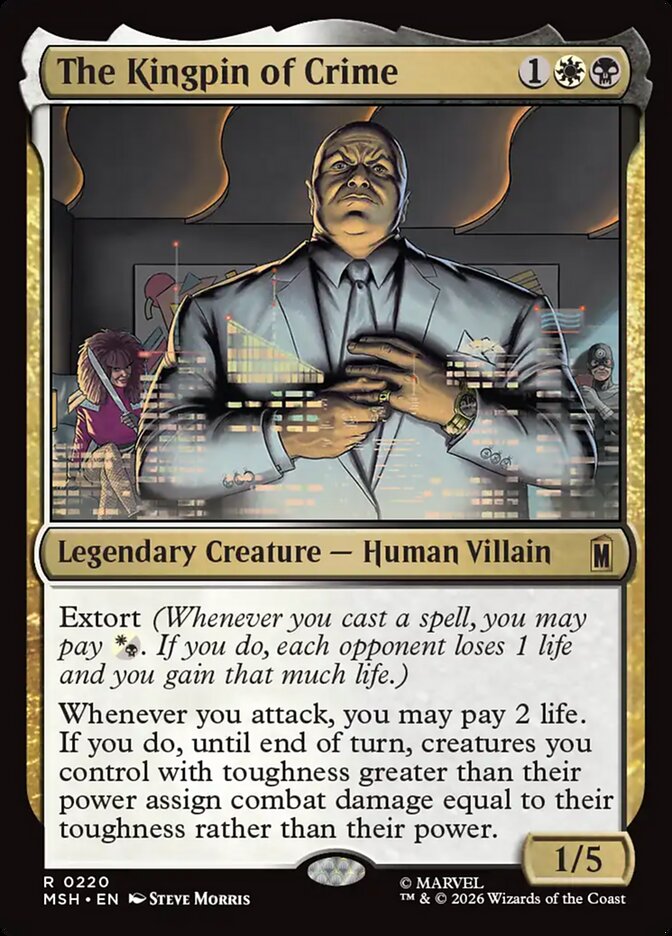
Other high-toughness creatures like Raft Security Officer and Spider-Woman, Secret Agent are nice pairings with The Kingpin of Crime, although hardly necessary for it to be good.
Winter Soldier, Icy Assassin
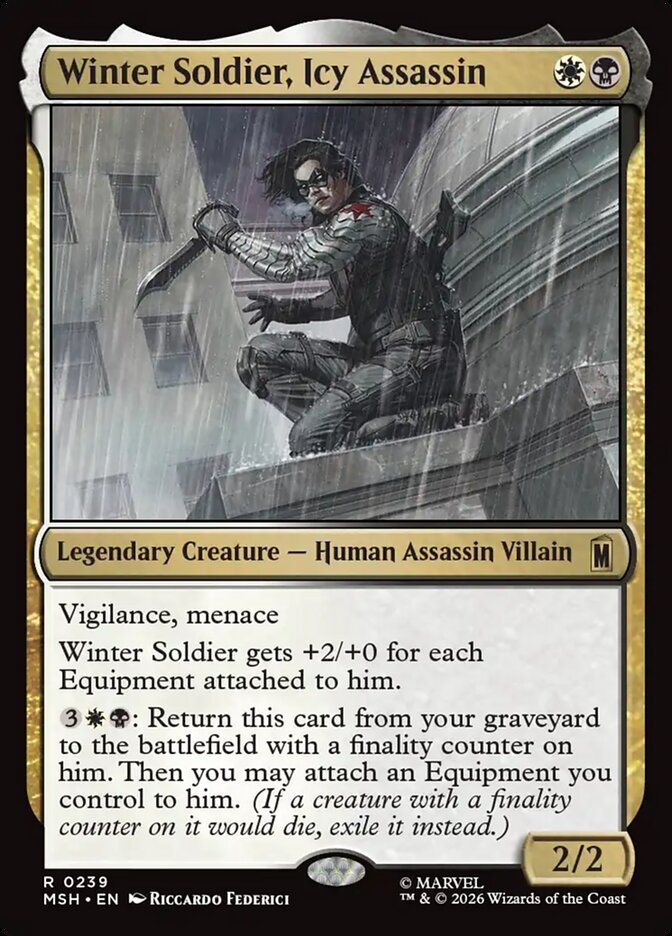
Easily the strongest of this set’s small group of equipment payoffs. You can play Winter Soldier, Icy Assassin without any equipment, but it’s a strong incentive to include otherwise mediocre cards like Stolen Stark Tech and Vibranium Energy Daggers.
Vision Quest
The best hits in the format for Vision Quest are Iron Man, Master of Machines, Viv Vision, Teen Synthezoid, War Machine, Legacy of Iron, and M.O.D.O.K.. Massive hasty fliers out of nowhere are always powerful in Limited, but even more so when they immediately draw a card or gain life!
The Serpent Society
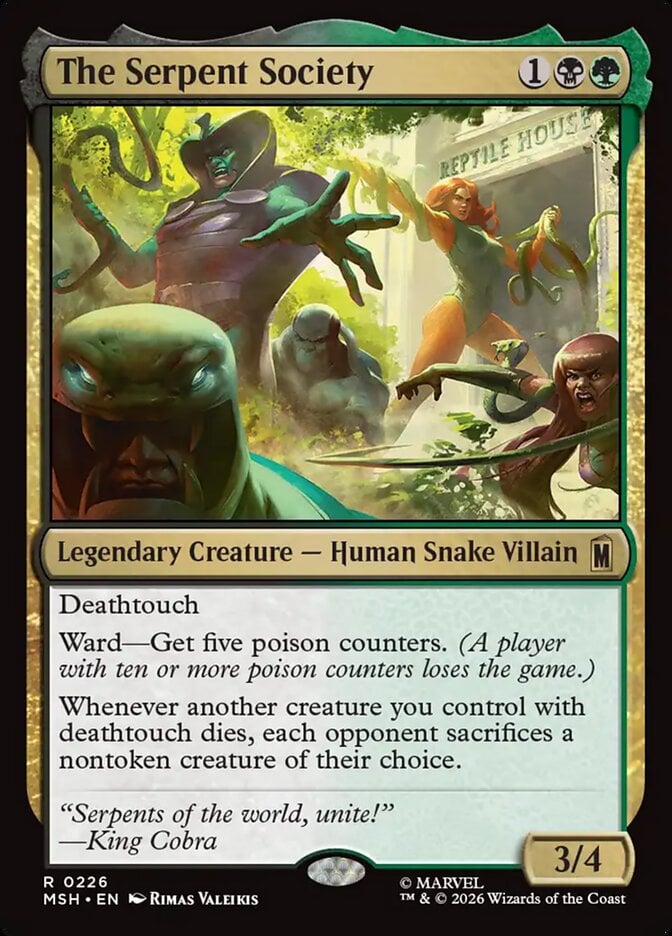
The Serpent Society clearly likes other deathtouch creatures. You can go one step further by pairing them with Kingpin's Enforcers to force some awkward 2-for-1s, as your opponents won’t want to trade naturally when this is out.
The Super Hero Civil War
Let’s drop the hyperbole for a second. How do you actually beat this thing when your opponent plays it?
Well, the hopeful answer is just to have an answer to this in hand. These include:
- Murdock's Crusade
- Web Up
- Guerilla Gorrilla
- She-Hulk, Jade Defender
- Killmonger, Scourge of Wakanda
- The Coming of Galactus
Another way to mitigate the damage is to remove or incapacitate your own creature(s) temporarily. Justice, Vance Astrovik, Giant-Sized Flying Ant, and Atlantis Attacks are ways you can attempt to survive Chapter 2 without doing too much chump blocking. As for Chapter 3, Depower offers a way to prevent your two creatures from killing each other, although you’ll need to hold up 3 mana for this and save it for that turn.
In terms of gameplay patterns without specific cards, your goal against The Super Hero Civil War is not to die while not killing your own creatures. Actively pointing removal at your own stuff is pretty much out of question (unless you literally have no other outs), so generally what happens when your opponent plays this saga and you can’t answer it is:
- You stop attacking,
- You chump block as much as you need to survive Chapter 2,
- You try not to give your opponent any fight that lets them cleanly kill two creatures (unless they already took two creatures that cleanly fight to the death, in which case your goal is not to kill any of them to prevent further casualties).
If you can do this, then what you’re effectively experiencing is the Magic: The Gathering equivalent of a really bad hangover. You’re still alive, but you’ll be down 1-2 creatures and a ton of life, and you will no longer have any sort of offense going.
If you want to see what losing a game after casting this rare looks like, you’re in luck; here’s a replay of me losing a game to Marshal Sutcliffe (of Limited Resources fame) after resolving it! I think I cast my trump card too early in this game (and should have just played Kree Sentinel instead), which created a window for Sutcliffe to stabilize at 8 life with some well-timed removal spells. He then resolved a Leader, Super-Genius, which buried me in card advantage and won him the game.
Beating the Civil War isn’t easy, but I at least wanted to give you a dash of hope. I’ve done it myself several times now, even if I’d obviously prefer if the card didn’t exist.
The Astonishing Ant-Man
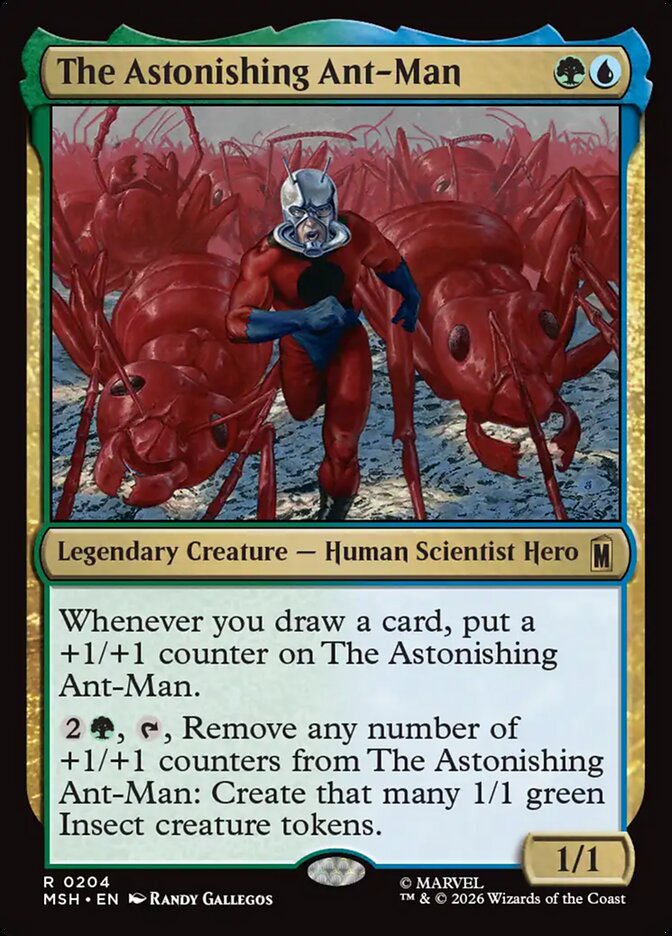
The Astonishing Ant-Man really likes other ways to draw and to play with +1/+1 counters. I recommend cashing it in for insect tokens around 3+ counters; going too early won’t result in much, but waiting too long increases the risk of Ant-Man dying to a 1-for-1 removal spell before you get any extra value.
Arc Reactor
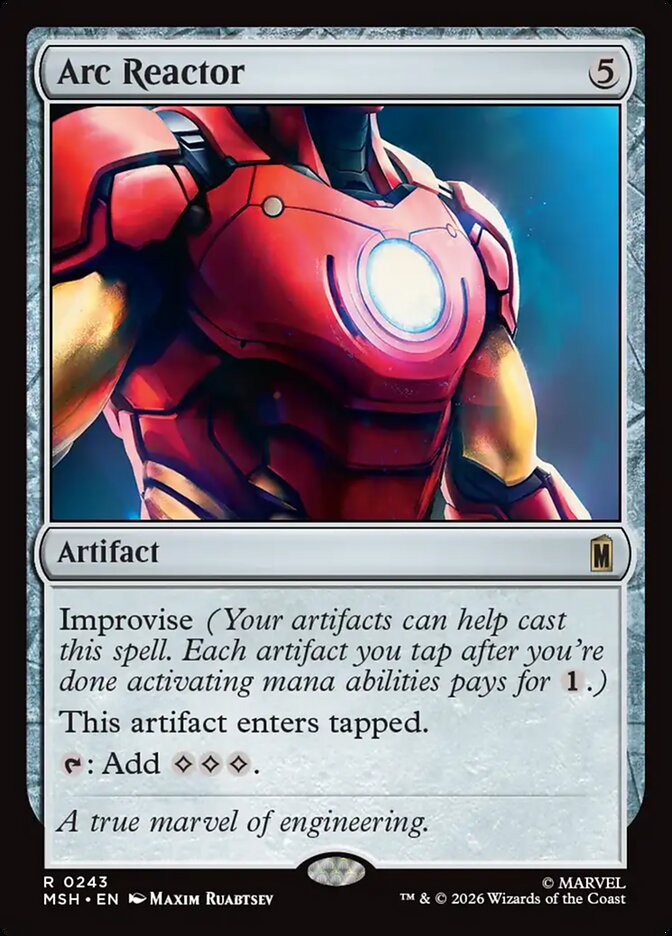
Futurist Forge, Vision Quest, and power-up cards are the main mana sinks available for Arc Reactor. I haven’t played it yet, but I could be convinced to try it in a deck with a ton of artifacts and uses for mana.
Super-Adaptoid
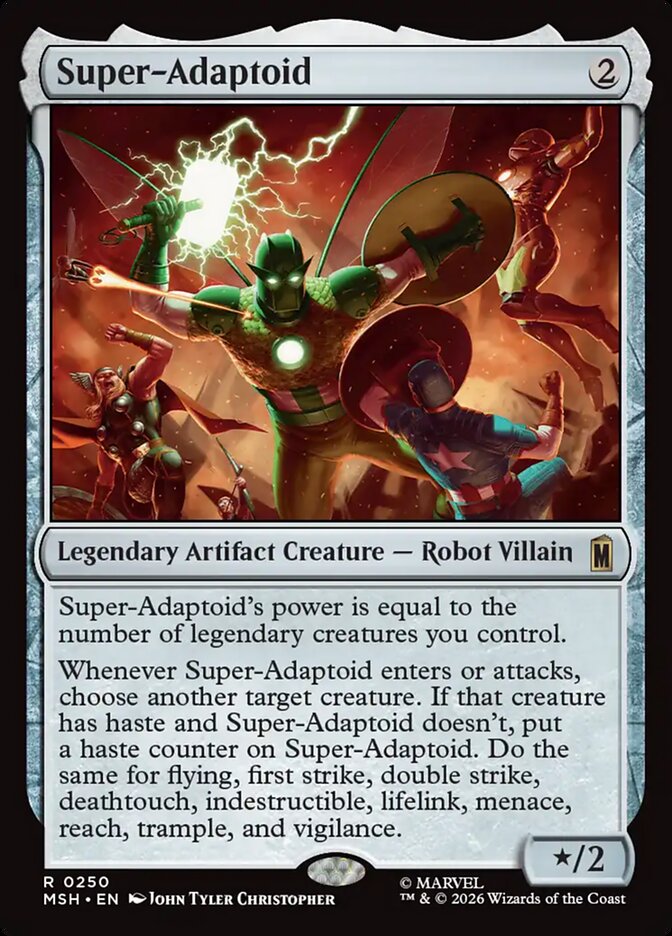
Super-Adaptoid plays very well with temporary buffs, since it can permanently copy keywords granted this way. Take Up the Shield for instance lets you turn Adaptoid into an indestructible, lifelinking threat. It’s also worth noting that if you’re against Adaptoid, removing its target in response results in Adaptoid not gaining those abilities, which can occasionally lead to blowouts (i.e. killing the flier it targets and then blocking it).
Rare Dual Lands
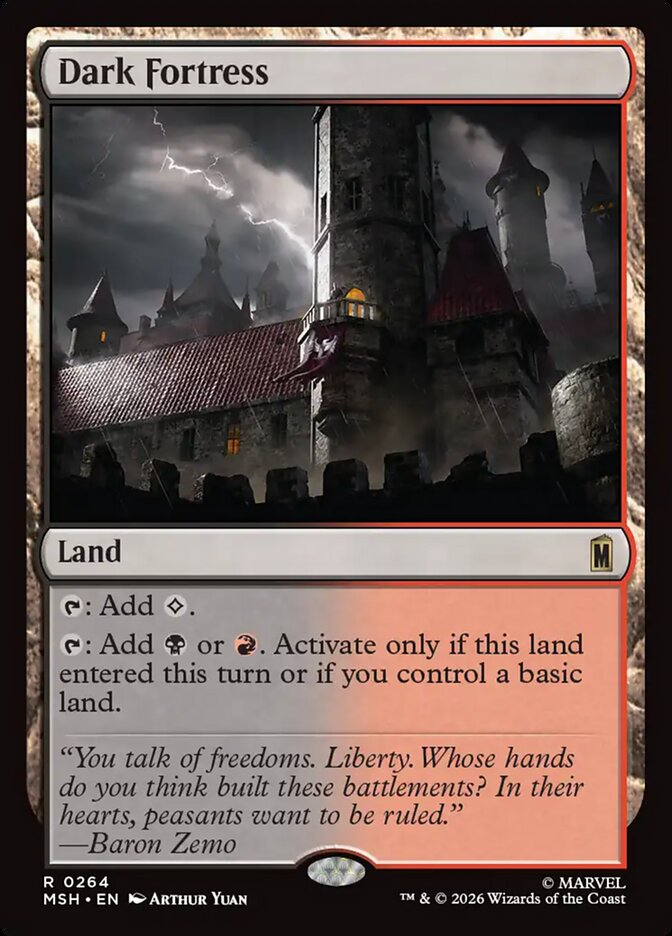
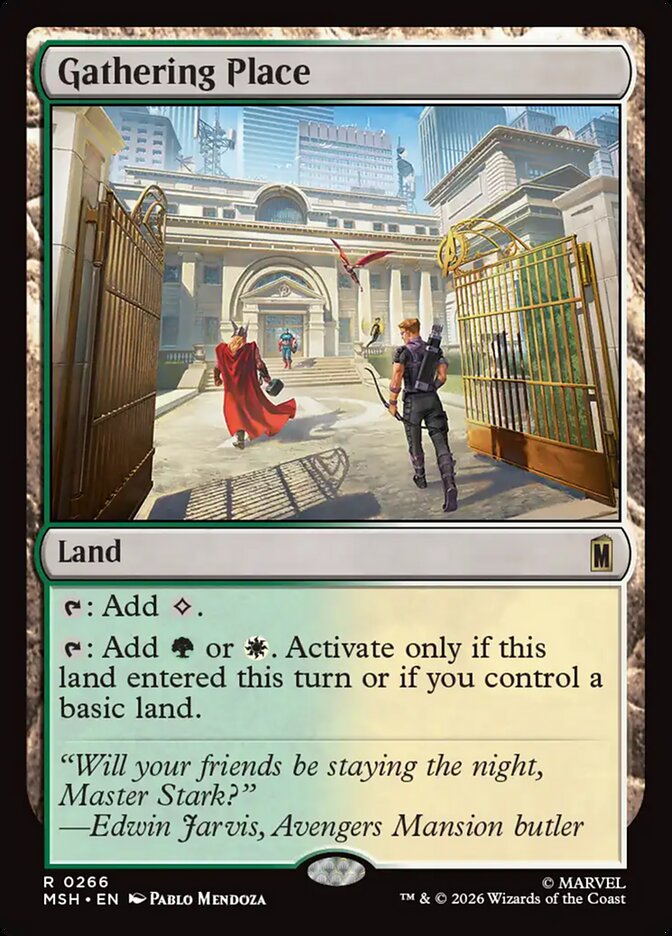
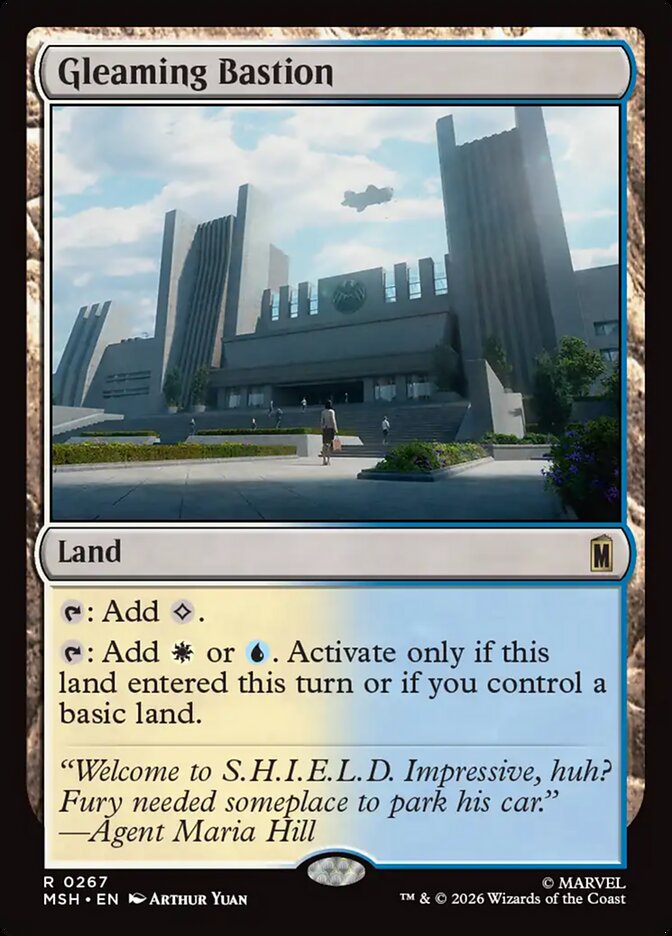
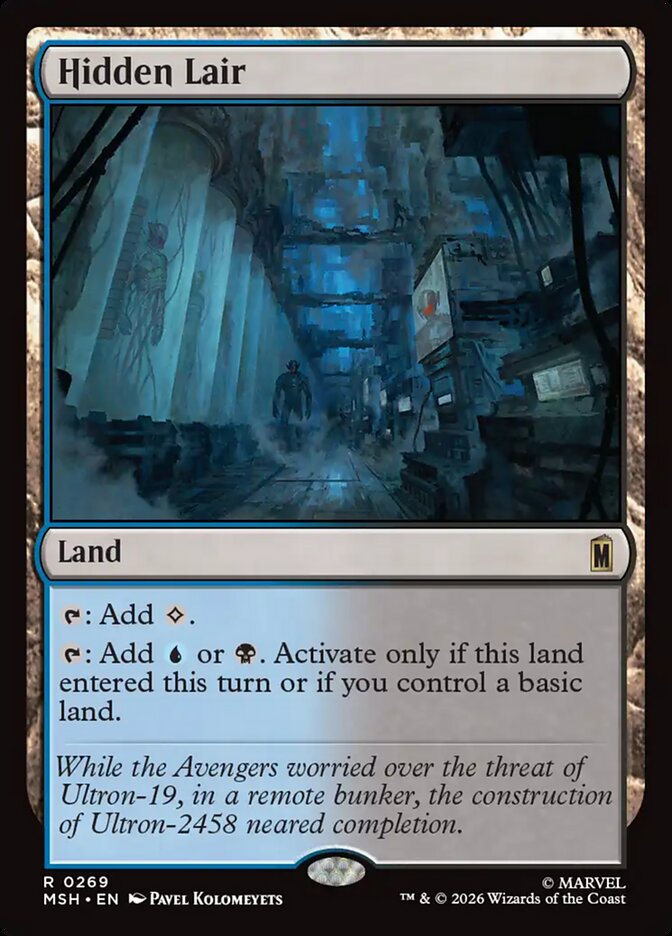
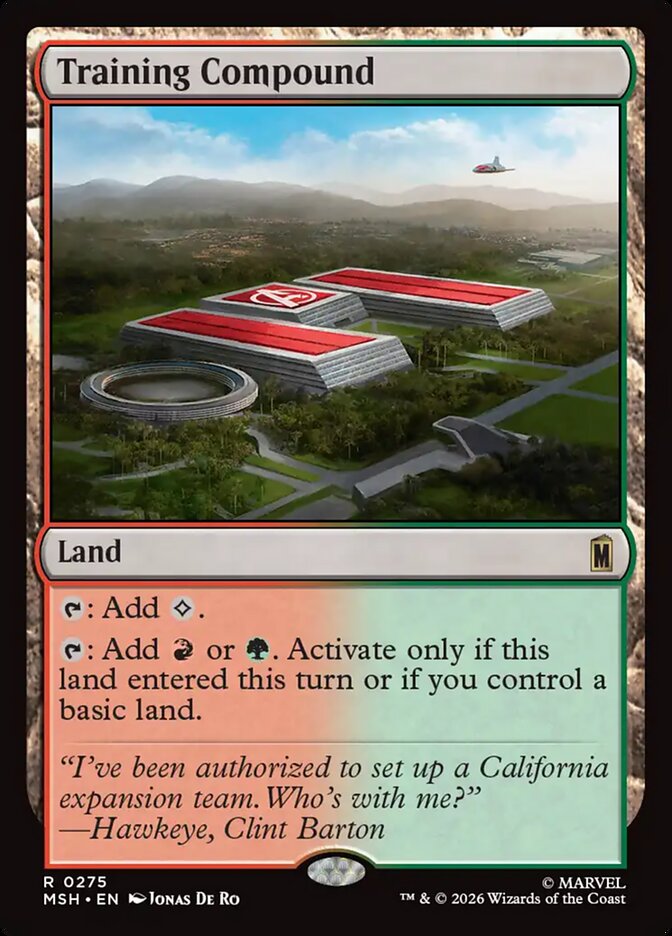
Don’t forget that these can add colorless for Thanos, the Mad Titan, which could be the difference between successfully powering it up or not.
Uncommons
Agent Maria Hill
This is a daunting card to play against with open blue mana, because it basically turns We Say Thee Nay! into a Dismiss! Helicarrier Strike is another card to be careful of when you see Agent Maria Hill untapped.
Captain Mar-Vell, Space-Born
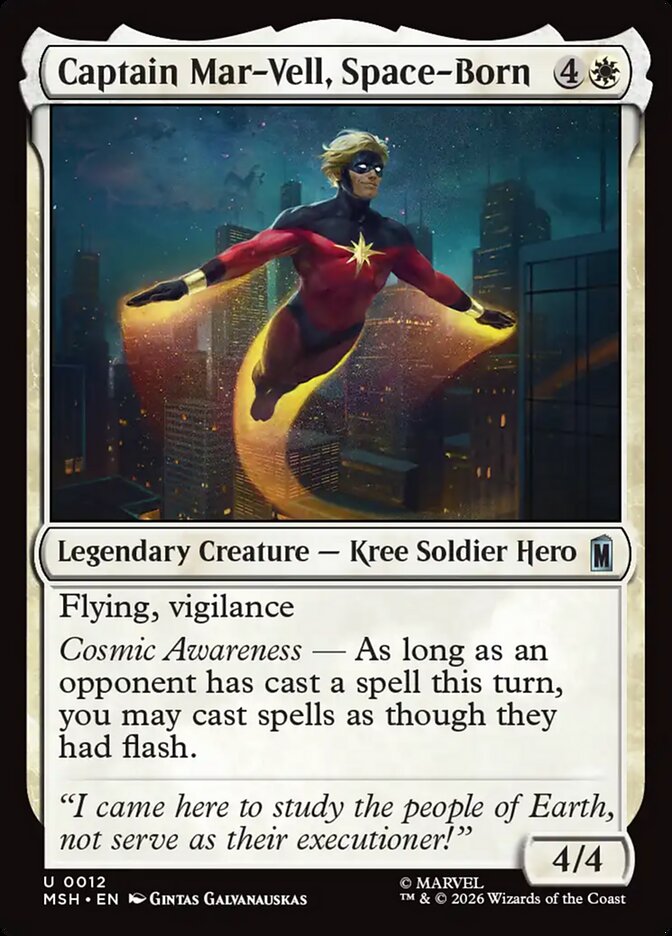
This is a fairly average 5-drop, all things considered. Don’t forget about Captain Mar-Vell, Space-Born’s ability though, which can punish you for pointlessly main phasing spells before attacking.
Invisible Woman, Sue Storm
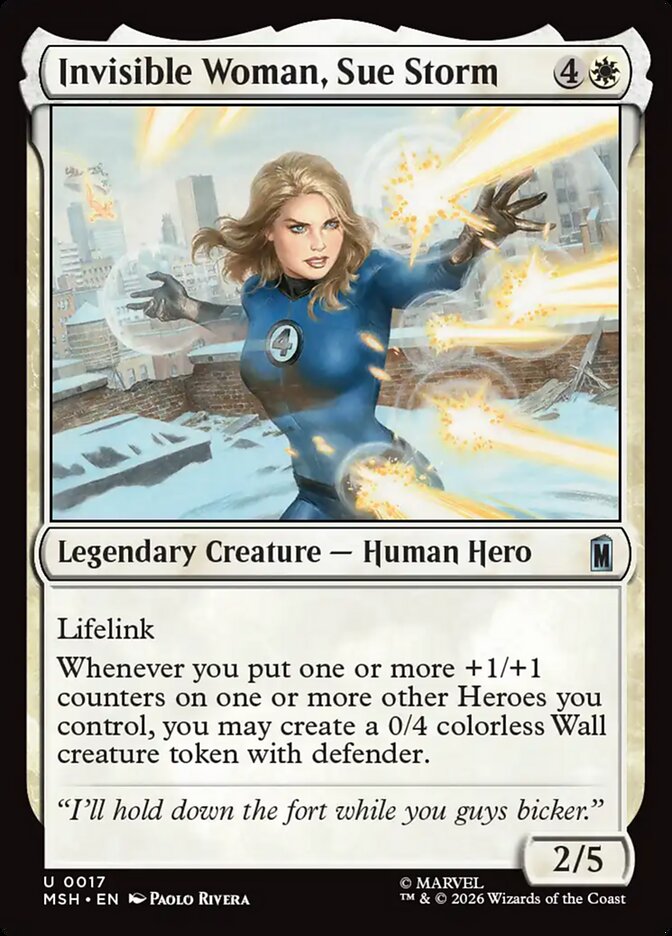
I’ve tried this card a couple of times, and I’ve come to the conclusion that Invisible Woman, Sue Storm is sadly quite bad. Even with a ton of heroes and +1/+1 counter synergy, the Wall tokens haven’t mattered much, and 5 mana for this stat line is just awful. Play another Brave Brawler instead.
Luke Cage, Power Man
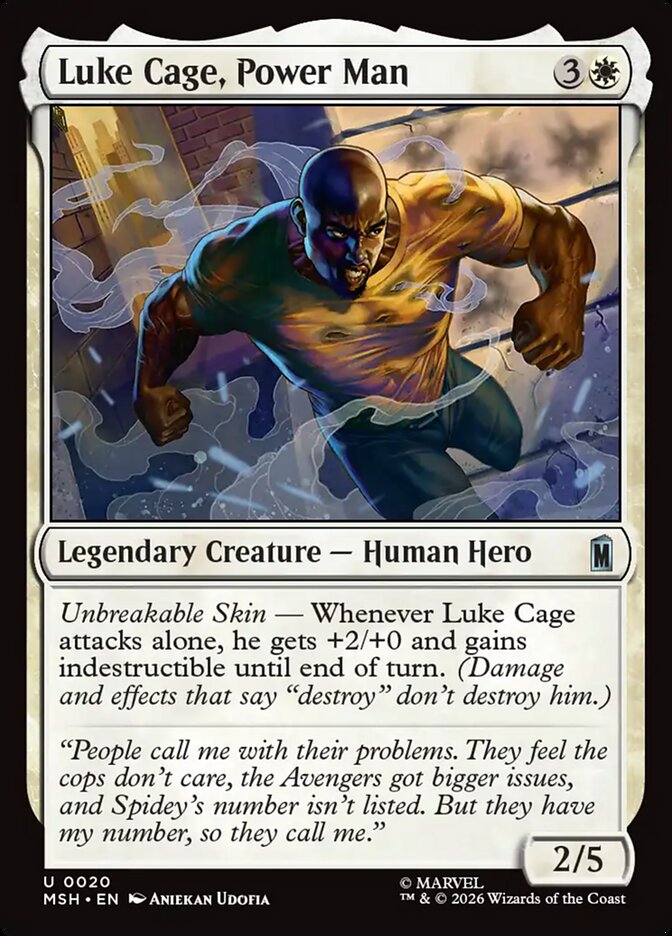
Another less than stellar white creature, although S.H.I.E.L.D. Spy Kit can dramatically improve Luke Cage, Power Man’s performance.
Night Nurse, Healer of Heroes
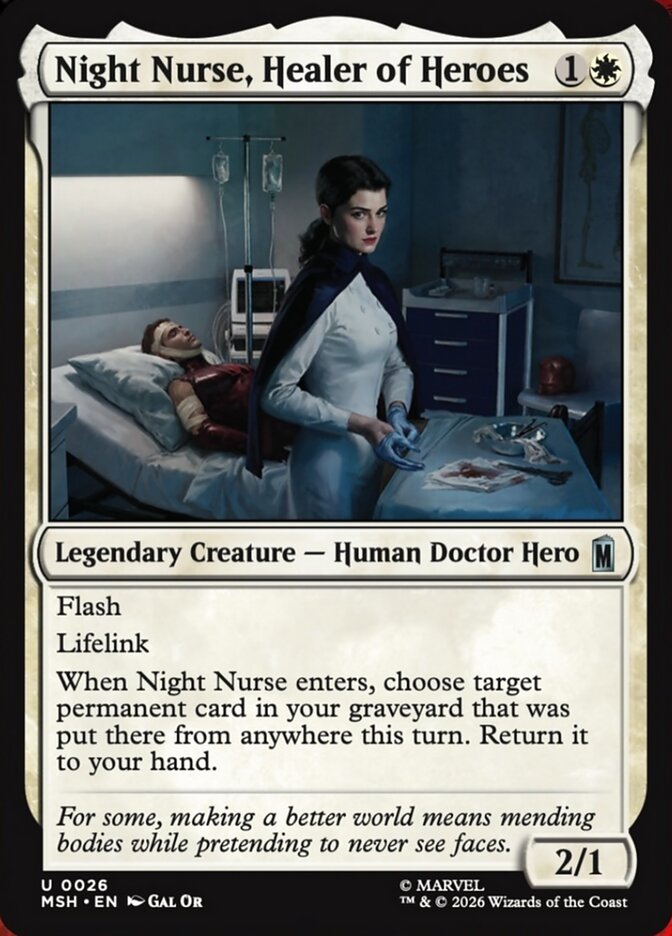
Night Nurse, Healer of Heroes returns a permanent that’s placed into your graveyard “from anywhere”, which opens up all sorts of possibilities. Rapid Rescue or Surveillance Room can make it into an easy cantrip, as will cycling a Kree Sentinel and then playing Night Nurse. I’d also be remiss not to mention its incredible synergy with The Super Hero Civil War, because timing Night Nurse correctly returns the most broken card in the format for another round of fun.
Okoye, Dora Milaje Leader
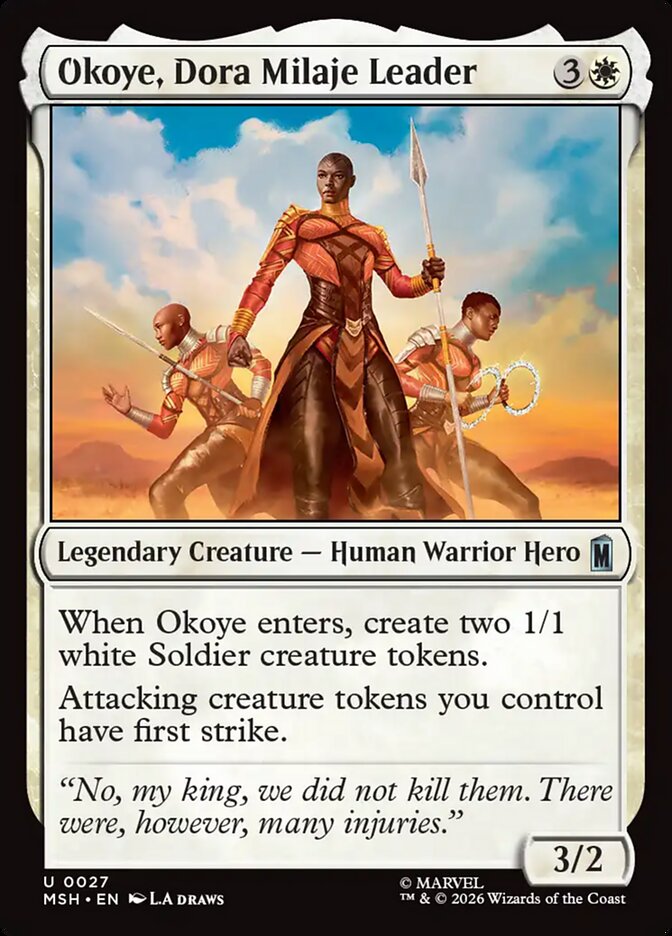
Borough Backup is generally the best card to pair with Okoye, Dora Milaje Leader because 3/2 heroes become much deadlier when you give them first strike. Okoye isn’t very good at attacking on its own, which can be awkward if you’re attempting to race fliers.
Quake, Agent of S.H.I.E.L.D.
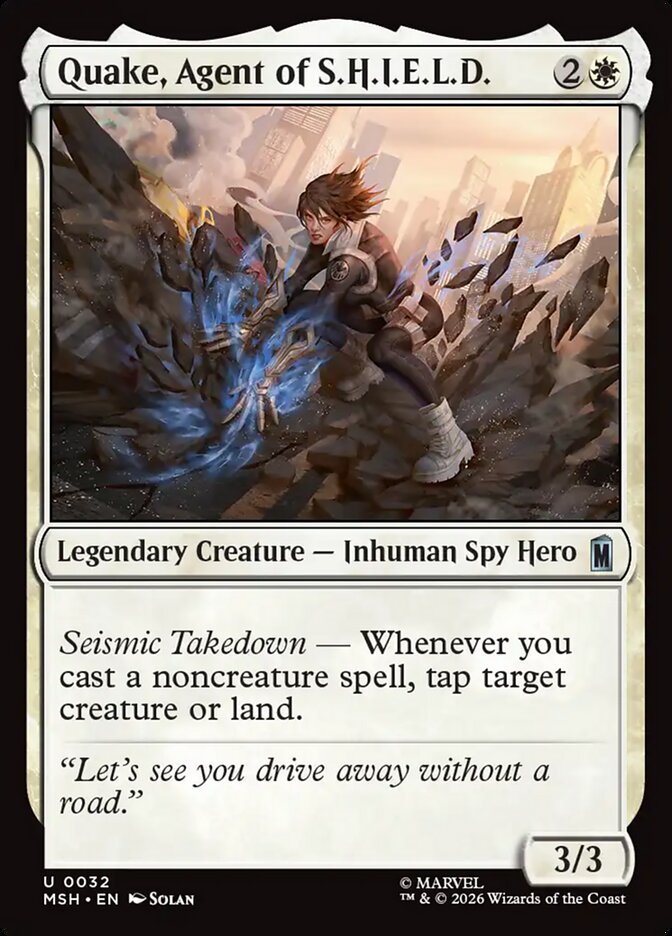
It’s tough to have enough noncreature spells for Quake, Agent of S.H.I.E.L.D. to be great, but you can occasionally pick up extra value by upkeeping a Lightning Strike with this and tapping a land.
Red Guardian, Super-Solder
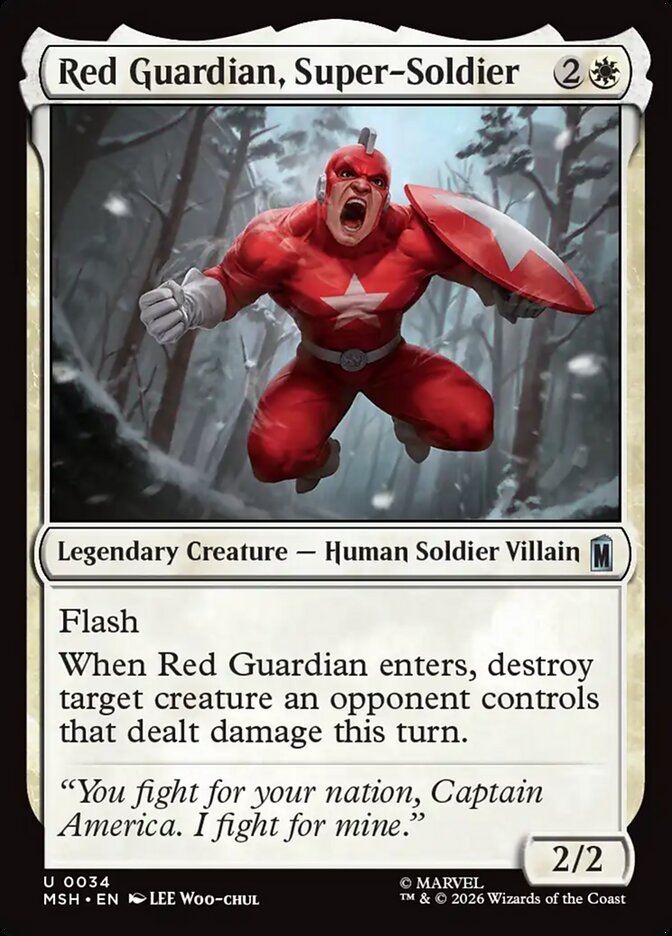
Three untapped white mana is a stop sign in this format. I lost way too many Arena Direct games to blindly attacking into this, so try not to make my mistake. Giving your opponent one free turn of reprieve to play around this is worth the potential for Time Walk’ing them, because there are tons of 4-drops in Marvel Super Heroes that they’ll want to play afterwards.
As for tips for playing Red Guardian, Super-Soldier yourself, don’t forget that this works for any kind of damage a creature has dealt. Go Nuts! opens creatures up to being killed by this. Your opponent blocking your 1/1 Soldier opens their creature up to dying to this. And so on.
Super Villain Lockup
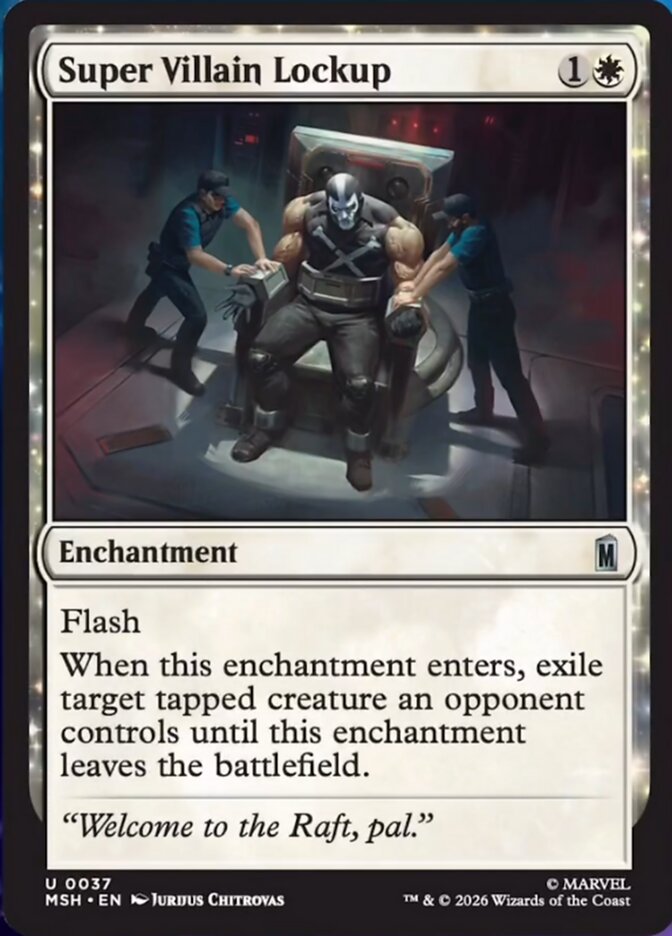
This only targets tapped creatures. I had three opponents pointlessly play Super Villain Lockup at the start of my combat last weekend, so it’s worth a refresher on Seal Away I suppose.
Echo, Perceptive Prodigy
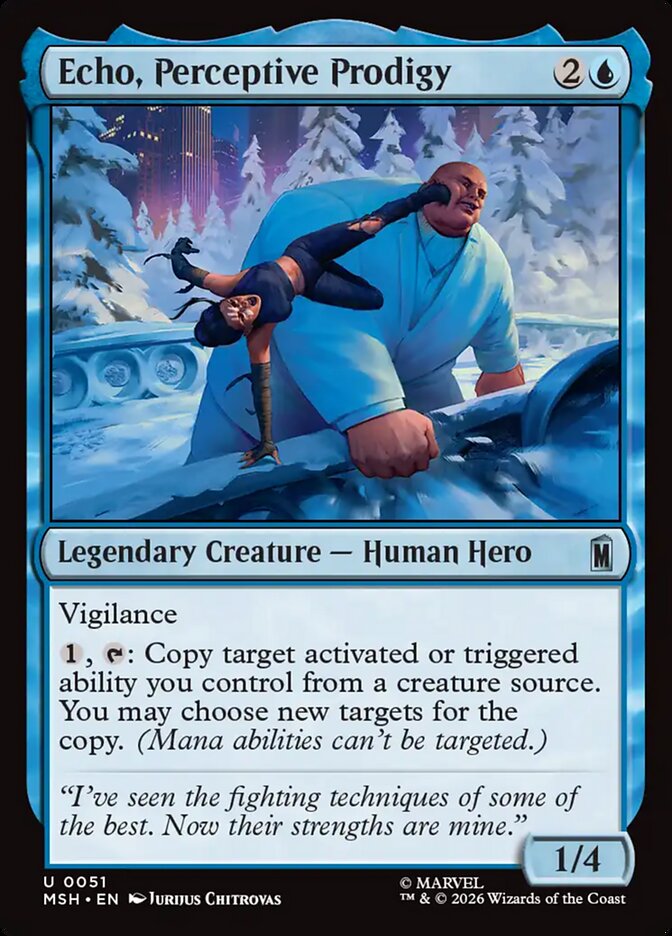
Echo, Perceptive Prodigy ranges from filler to pretty good, depending the number of strong abilities you have to copy. +1 enters abilities like those from Hero in Training and H.E.R.B.I.E. Scout Unit are among the best pairings available. Also note that this can copy the basic landcycling abilities, since those are activated abilities from creature sources.
Iron Lad, Diverging Destiny
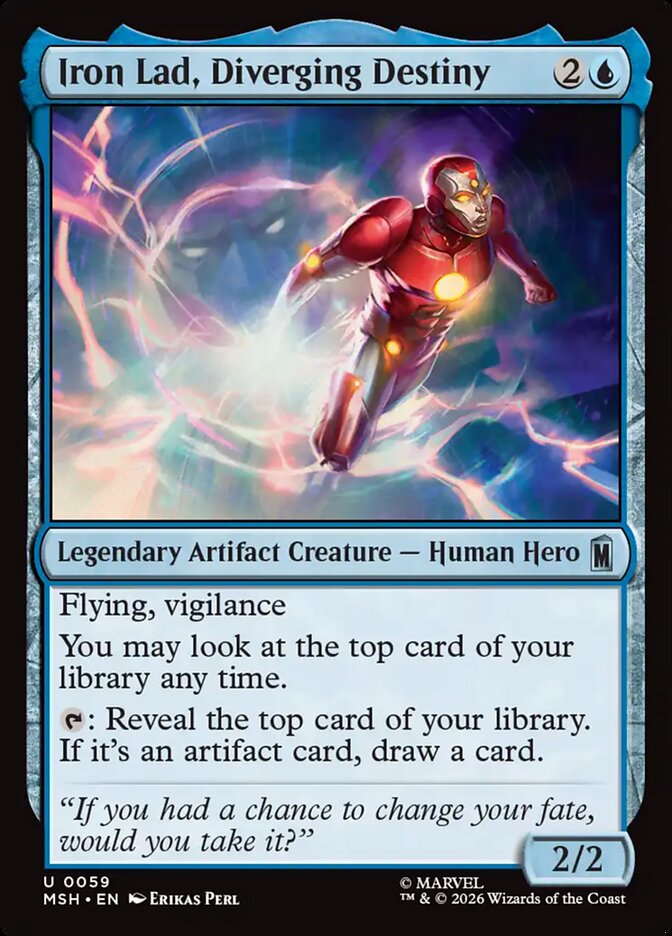
It takes a considerable artifact account (10+) for this card to feel great. Don’t forget that you can upkeep Iron Lad, Diverging Destiny if you need to, which comes up if there’s an artifact on top of your deck the turn you play it.
Kid Loki
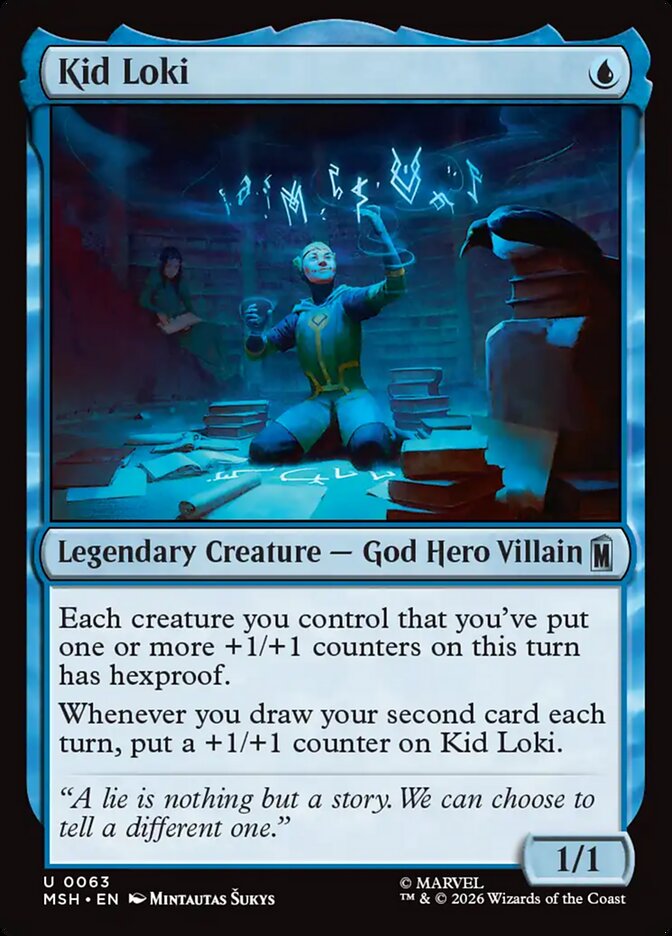
Kid Loki upgrades Take Up the Shield into a true protection spell, capable of stuffing even a kicked Cruel Alliance. That’s not enough for me to put this card in my deck though, as I’ve only played this when I have a ton of convenient card draw to grow it on curve.
Mister Fantastic, Reed Richards
If you must get fantastic, some of the best cards for Mister Fantastic, Reed Richards include:
- S.H.I.E.L.D. Deployment Drone
- Stark Industries Executive
- Ant-Man's Army
- Falcon, Winged Wonder
- Madame Masque
- Black Panther, Vanguard
- Ant-Man, Colony Commander
- Mole Man, Moloid Master
- The Unbeatable Squirrel Girl
- The Astonishing Ant-Man
Most of these are uncommon or higher, so I have yet to play Mister Fantastic as anything but a 23rd card.
Pym Particles
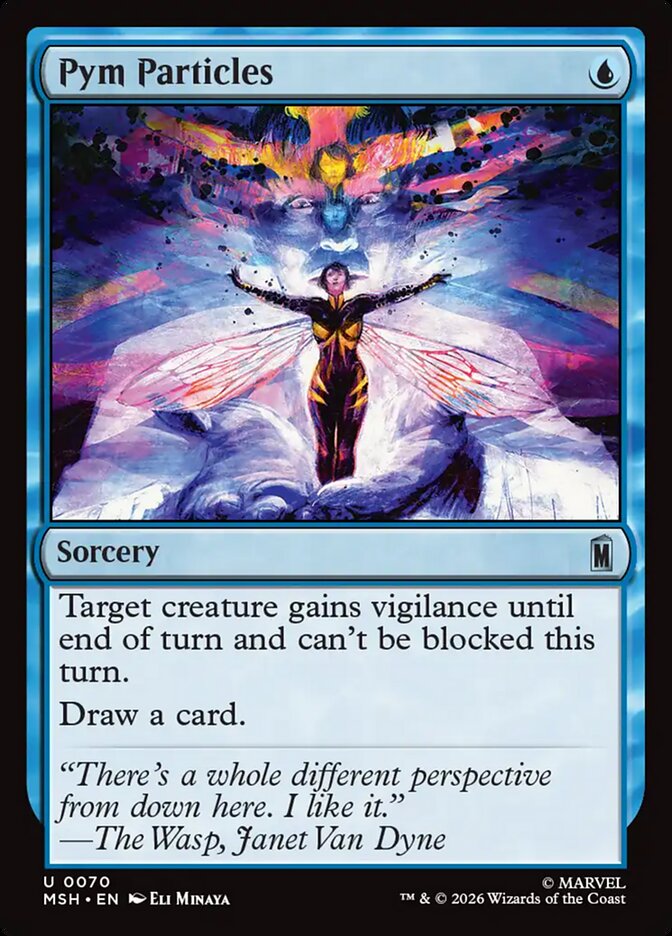
Pym Particles is a forgettable cantrip that’s fine to play with creatures that care about targeting, like Ms. Marvel, Kamala Khan and Colleen Wing, Street Samurai.
Shuri, Wakanda Inventor
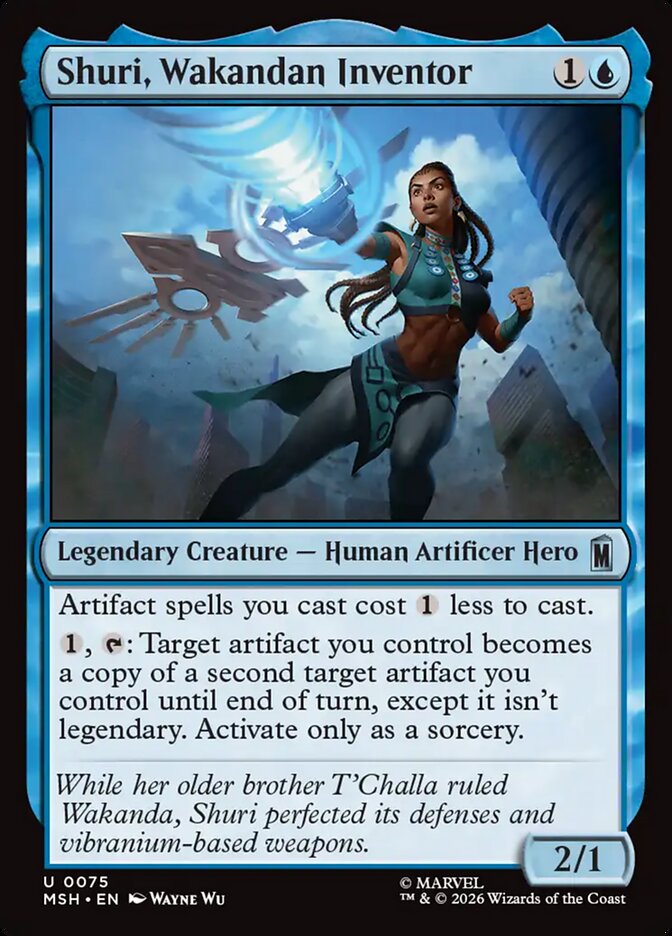
Shuri, Wakandan Inventor really loves Iron Man, Master of Machines. Getting to draw two cards by making a pair of Iron Men is a great feeling, and it’s one of the better things to do with this creature.
Stature, Size Shifter
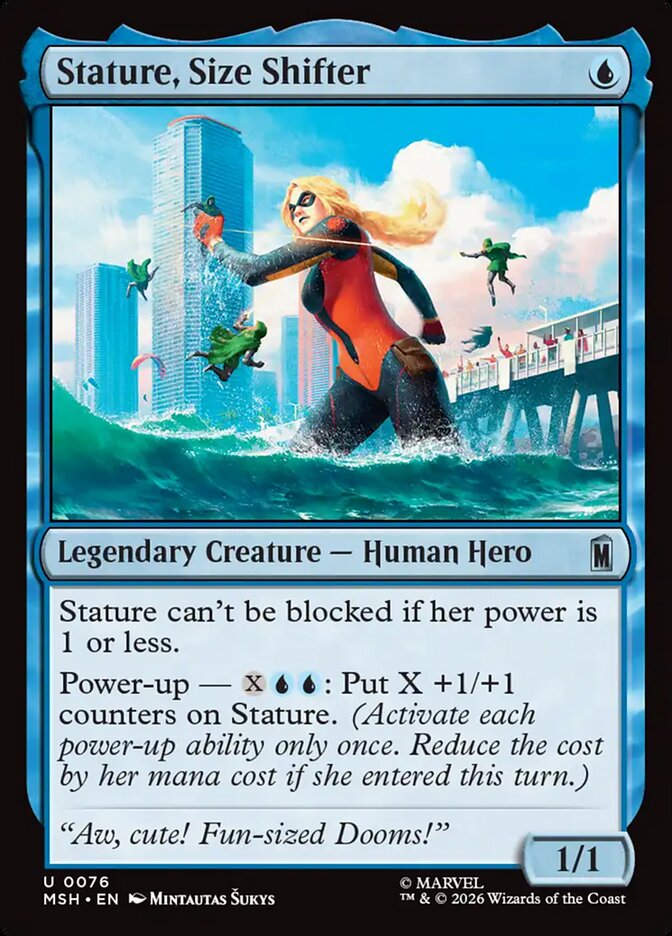
Stature, Size Shifter combos great with Agent 13, Sharon Carter, and poorly with equipment and +1/+1 counters. Its usual pattern is to peck for 1 each turn while threatening a blue Fireball later, although you can occasionally pump Stature early to use it as a blocker/straightforward attacker.
Super Intelligence
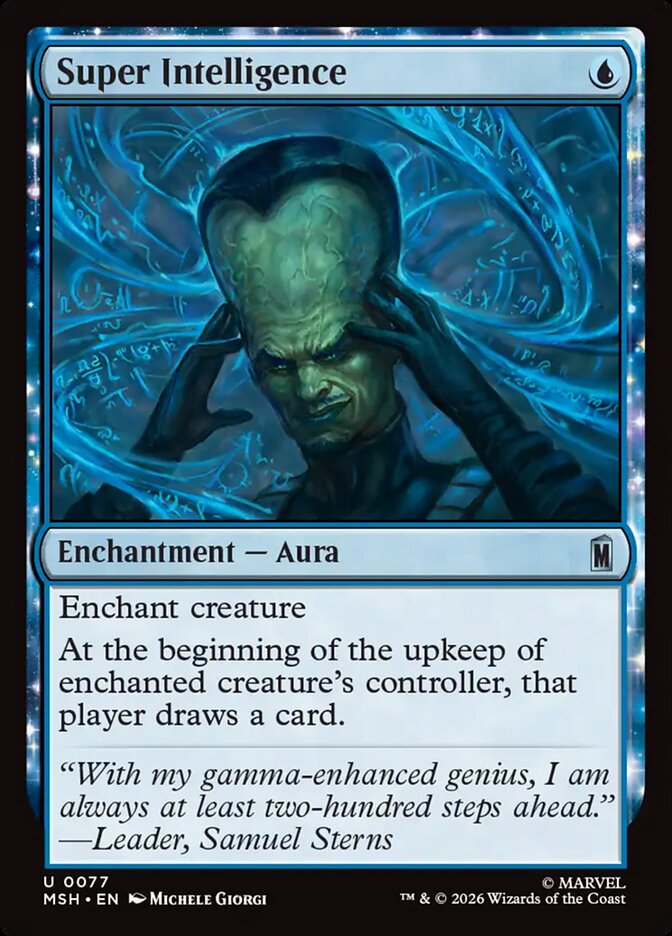
This hasn’t been as bad as I expected it to be. Removal is already at a premium in MSH, so sticking Super Intelligence onto a Soldier token or Hydraulic Helper forces your opponent’s hand or simply draws you a bunch of cards over time if it sticks. Feel free to board this one in/out in Bo3 games, depending on how convenient it is for your opponent to deal with it. Frozen in Ice is much better to face with this than Lightning Strike!
Thirst for Knowledge
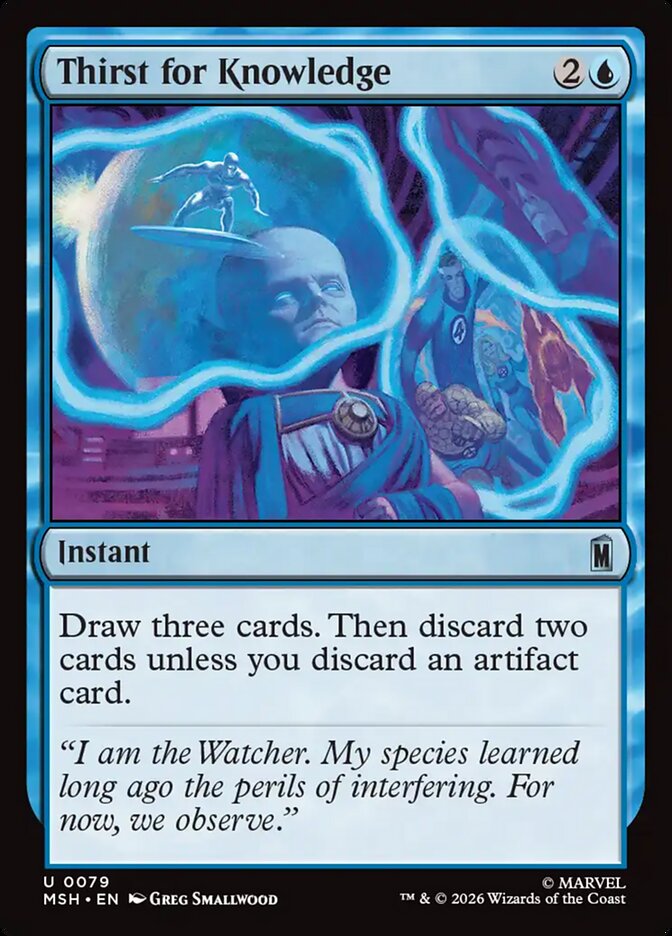
Acceptable only in decks with a ton of artifacts. The best cards to discard to Thirst for Knowledge are ones that fall off in usefulness late game, like Hydraulic Helper and A.I.M. Synthoids.
Wiccan, Rising Magician
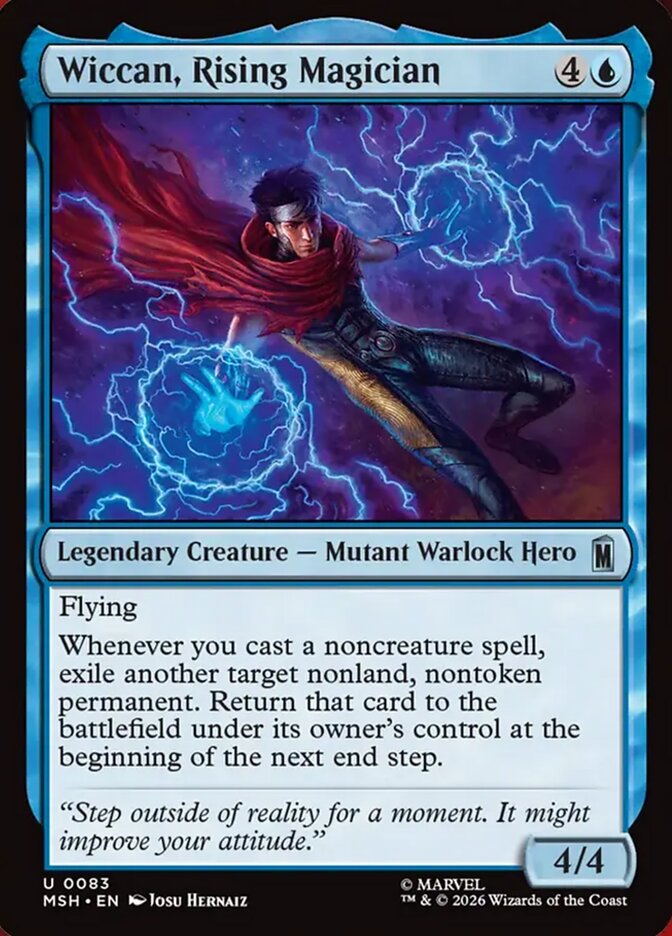
Wiccan, Rising Magician is expensive enough that you’ll have to risk tapping out for it most of the time, but quite powerful with flicker payoffs like Hero in Training and HYDRA Infiltration. Using Wiccan to flicker blockers and attackers late game can also be quite effective.
Baron Strucker, HYDRA Overlord
Baron Strucker, HYDRA Overlord has a cool micro synergy with HYDRA Troopers. Order the connive trigger to resolve first, then discard the second creature you’d need to get the bonus 2/1 Villain token (rather than milling yourself and then conniving).
Grim Reaper, Lethal Legionnaire
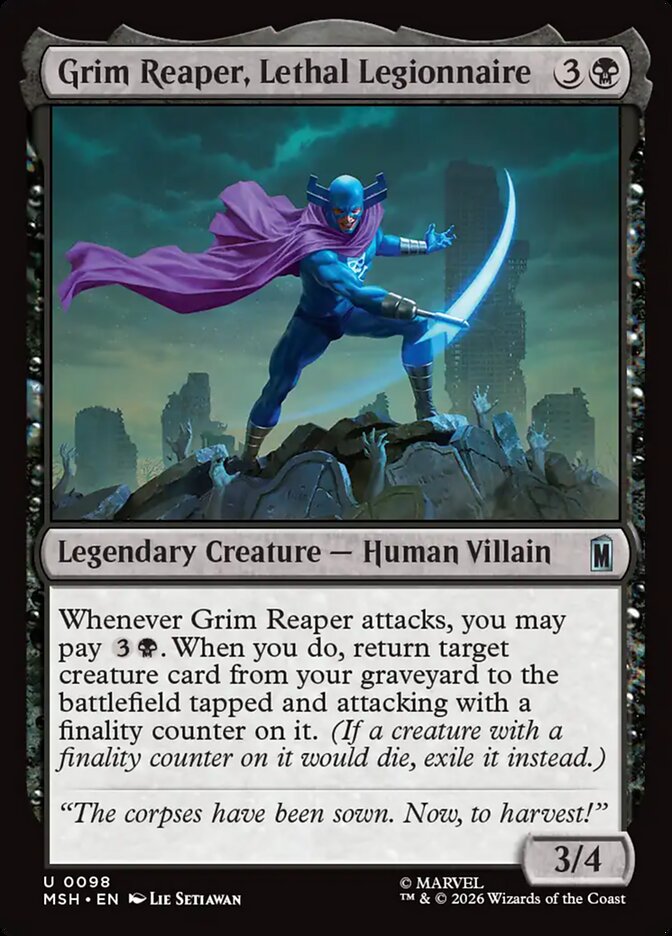
It’s odd that there are two Legionnaire creatures, both of which are black 4-drops that bring back a creature. I prefer Unliving Legionnaire to this one though, because Grim Reaper, Lethal Legionnaire is slow, unevasive, and pricey to use. The creature you bring back often dies in combat as well, due to being forced to attack immediately.
Madame Masque
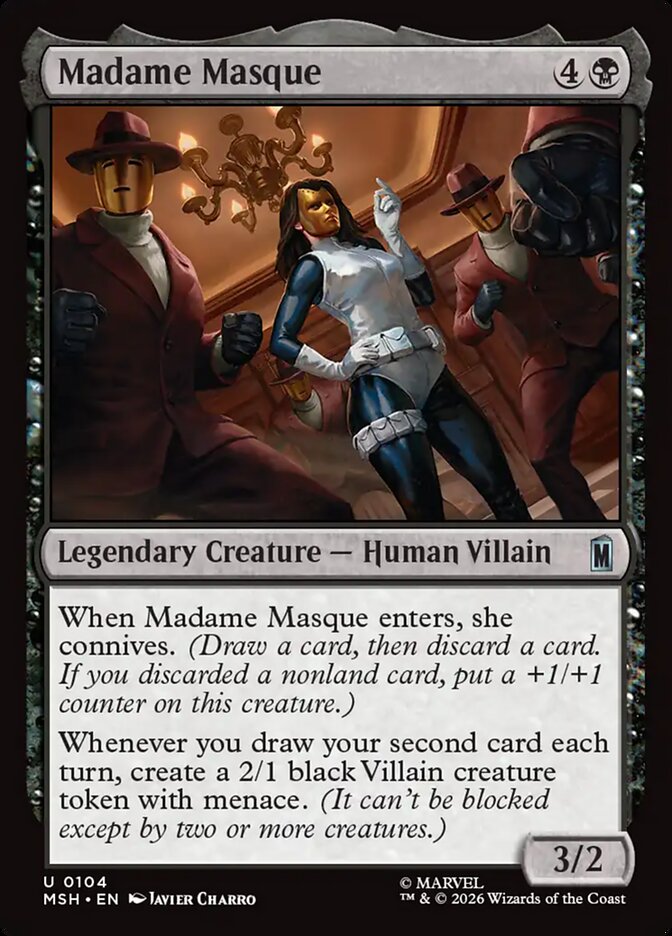
Madame Masque needs no help to be great, but I do love comboing it with Villainous Hideout when possible. You’ll never run out of gas!
Moonstone, Harsh Mistress
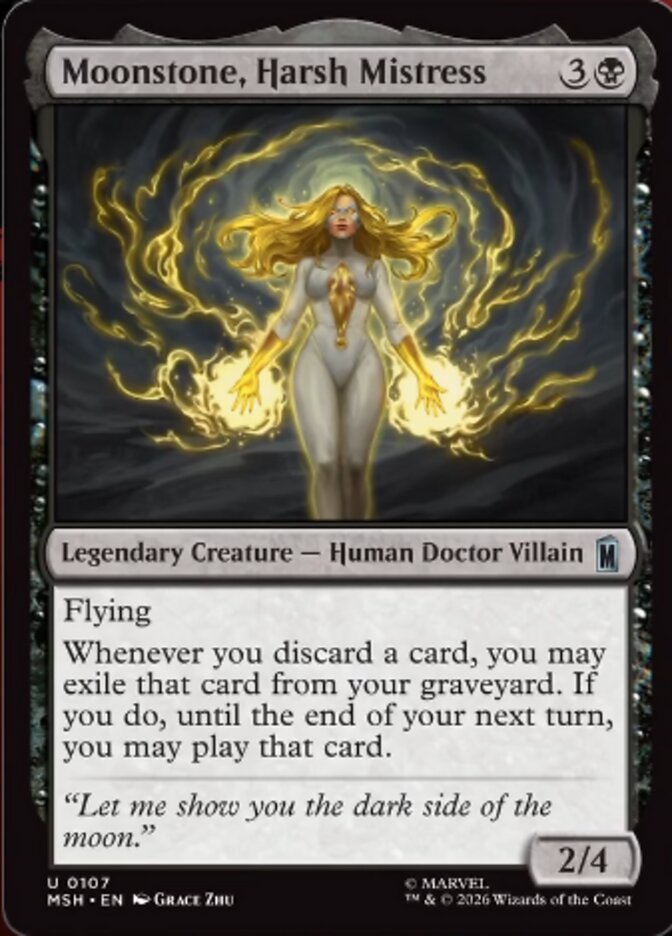
Moonstone, Harsh Mistress is another card that plays well with Villainous Hideout, as it’s tough to muster enough connive for this to be good otherwise. Don’t forget that cycling creatures also work with this because you “discarded” them when you cycle them.
Ronin, Shadow Stalker
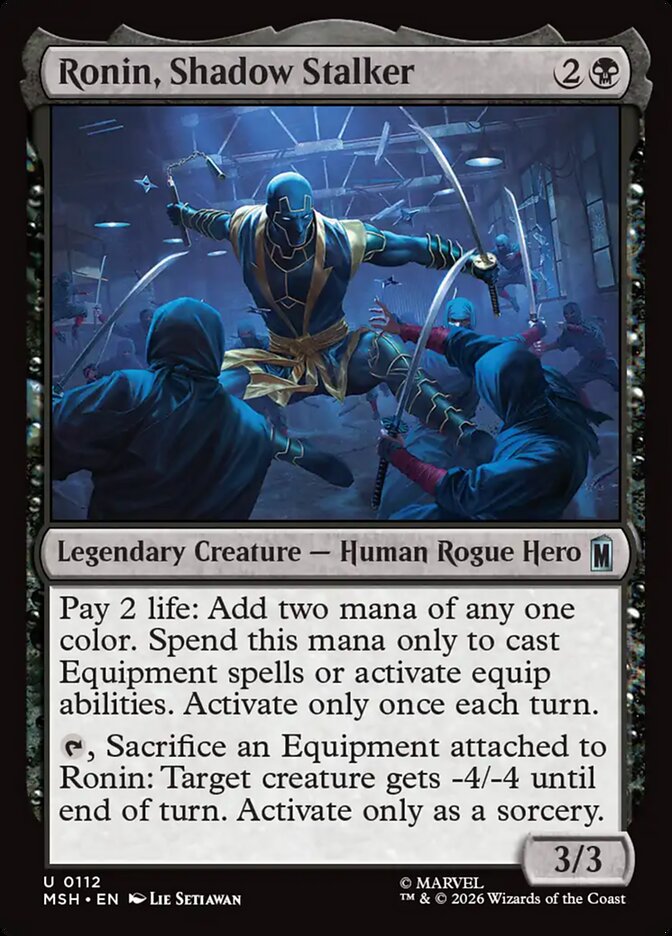
Stolen Stark Tech has amazing synergy with Ronin, Shadow Stalker. You can tap out for Ronin and use it to play a free Stark Tech, then untap and use the Stark Tech as a Dark Deed!
Swordsman, Sharp Scoundrel
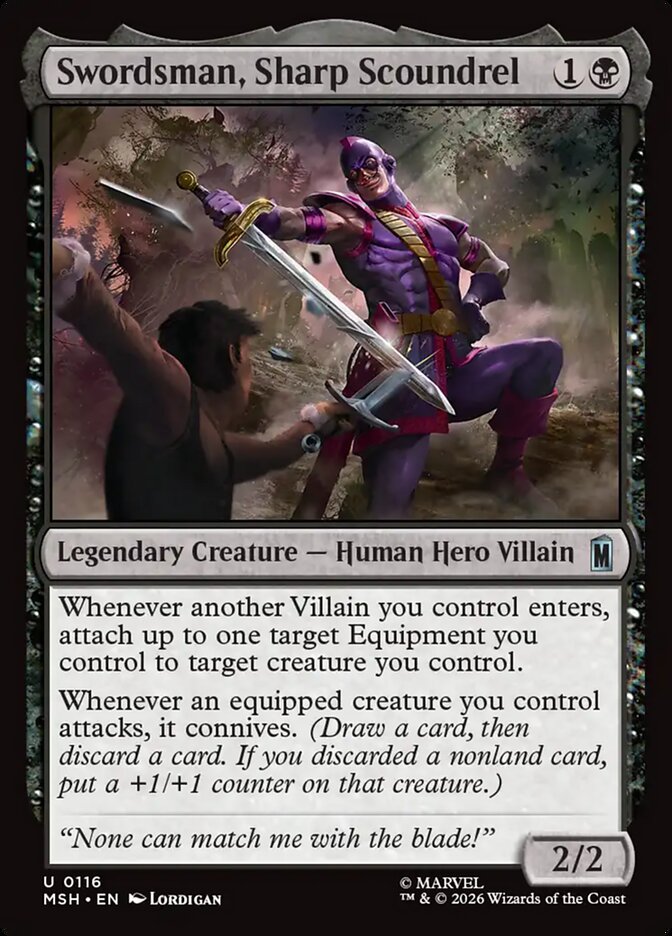
Ronin, Swordsman, Sharp Scoundrel, and Whiplash, Vengeful Engineer form a trio of uncommon equipment payoffs. This theme mainly comes together in BW decks, which get to play the best equipment card (S.H.I.E.L.D. Spy Kit) alongside all of these.
Evil’s Thrall
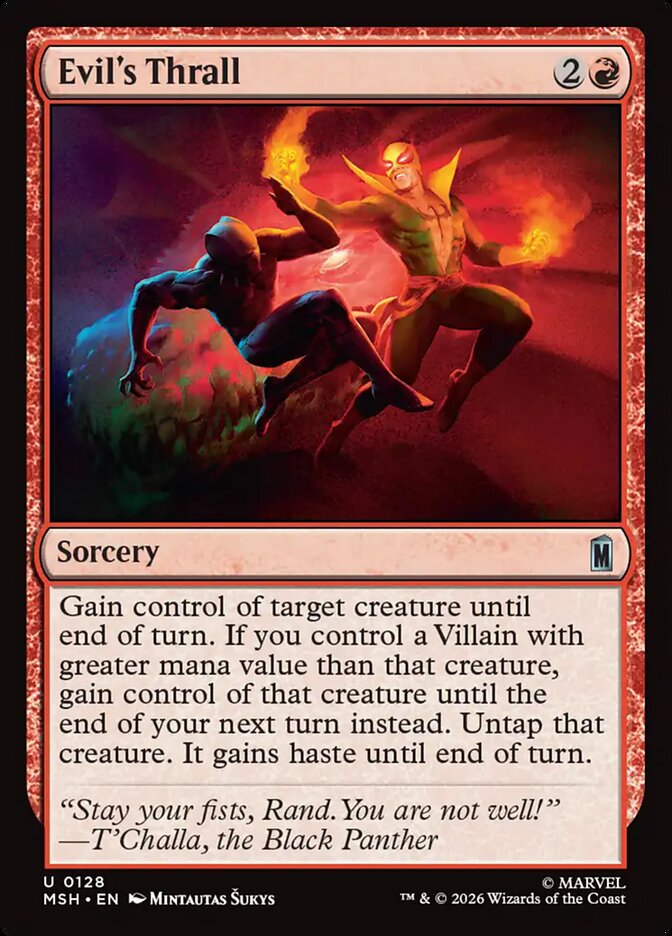
Treason isn’t at its best in this format, as there are precious few sacrifice outlets and lots of glutted board states on the ground. The extra turn clause on Evil's Thrall does make using it with Kingpin's Enforcers easier though, which constitutes its main niche.
Hawkeye, Young Avenger
Photon Blast Barrage is the money shot, but there are all sorts of other fun combos with this. Avengers: Under Siege and Avengers Disassembled are particularly brutal, since Hawkeye, Young Avenger won’t increase the damage they deal to your own creatures (meaning it survives both). I’ve even seen 20 to the face once with this, Loki Laufeyson, and a pair of Lightning Strikes!
Hex Magic
I love card advantage, but Hex Magic is a really janky way to get it. This requires you to have gas already in hand to actually draw you cards, so I haven’t bothered playing it yet.
Iron Fist, Living Weapon
The self-target theme in Marvel Super Heroes feels fairly underbaked, but I do love the combos Iron Fist, Living Weapon has with pump spells. Panther Pounce is especially sexy, since you can hold priority when you target Iron Fist, use it to deal 2 damage, and then resolve Panther Pounce to use it again!
Jessica Jones, Private Eye
This is the best red uncommon in the set, period. You don’t need to put in any effort for Jessica Jones, Private Eye to be awesome, but I’ve liked it with cheap equipment like S.H.I.E.L.D. Spy Kit and Hawkeye's Bow when possible.
Loki Laufeyson
Loki Laufeyson’s 5-mana mode has been very clunky, so it’s easiest to get value with this by leveraging 2-drop spells. Lightning Strike, HULK SMASH!, Go Nuts!, Widow's Bite, and Vision of Love are all good options.
Misty Knight, Hero for Hire
3/1 for isn’t too bad, and Misty Knight, Hero for Hire gives you a nice mana sink for those land-heavy games. It can even pick up a bit of extra value with cards like Red Room Recruit, Vision of Love, and the basic landcyclers, which makes for a solid turn-4 play.
Photon Blast Barrage
Unlike most X-spells, this counts itself as 1 damage, so always treat the amount of output Photon Blast Barrage has as “X+1”. It’s a devastating late game play, and one of the few good reasons to be base red in Marvel Super Heroes.
Red Hulk
Red Hulk is a mediocre fattie on its own, but it has a wombo combo with Photon Blast Barrage. Playing Red Hulk into Barrage for X = 5 next turn results in 21 (1 + 2 + 3 + 4 + 5 + 6) damage to the face!
Speed, Young Avenger
Speed, Young Avenger is pseudo unblockable, but not truly unblockable. I’ve had at least one opponent jam this into a haste creature, so always double check before you rush in.
Team Tactics
Team Tactics has one-shot potential with other pump spells and big creatures, and it fits well into decks built around the set’s “self-target” theme. I haven’t played it much, but I try to consider it if I’m ahead and thinking about ways I could possibly die out of nowhere.
Wonder Man, Hollywood Hero
I haven’t loved this card, but it’s worth noting that the power-up discount includes the casting cost of the card. That means that Wonder Man, Hollywood Hero can be an 8/8 flier for in really long games, with the same going for cards like Ultron Drone (9 for a 6/7 with two 2/2 friends) and other power-up creatures.
Doc Samson, Super Psychiatrist
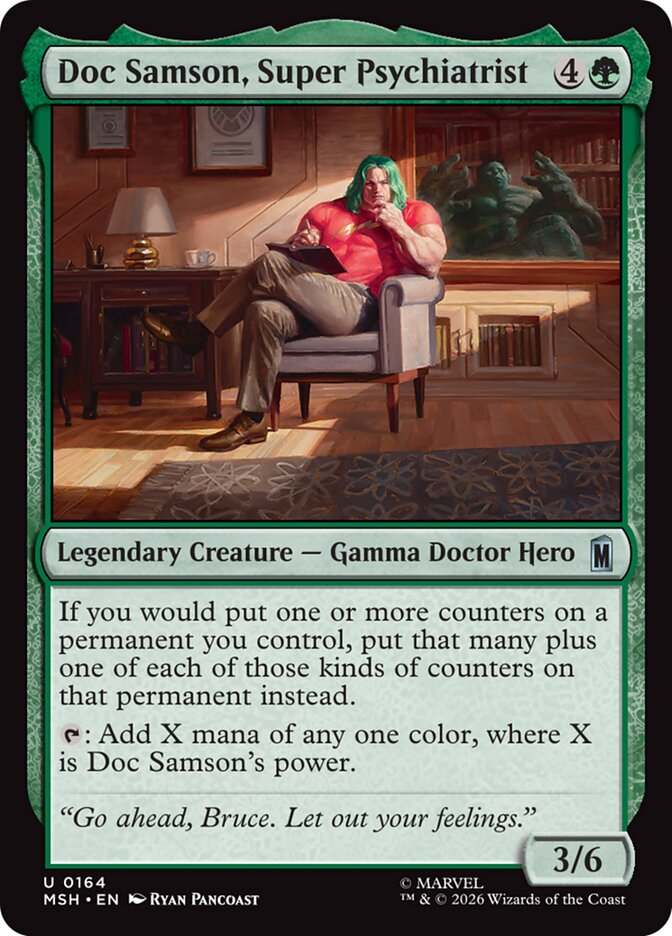
Doc Samson, Super Psychiatrist has played out a bit better than expected. 3/6 is a tough stat line for other ground creatures to bypass, and both of its abilities have felt relevant. It works best in decks with lots of mana sinks (power-up, uncommon lands) and extra mana sources like Undercover Skrull and Restorative Technique.
Mister Hyde, Monster Within
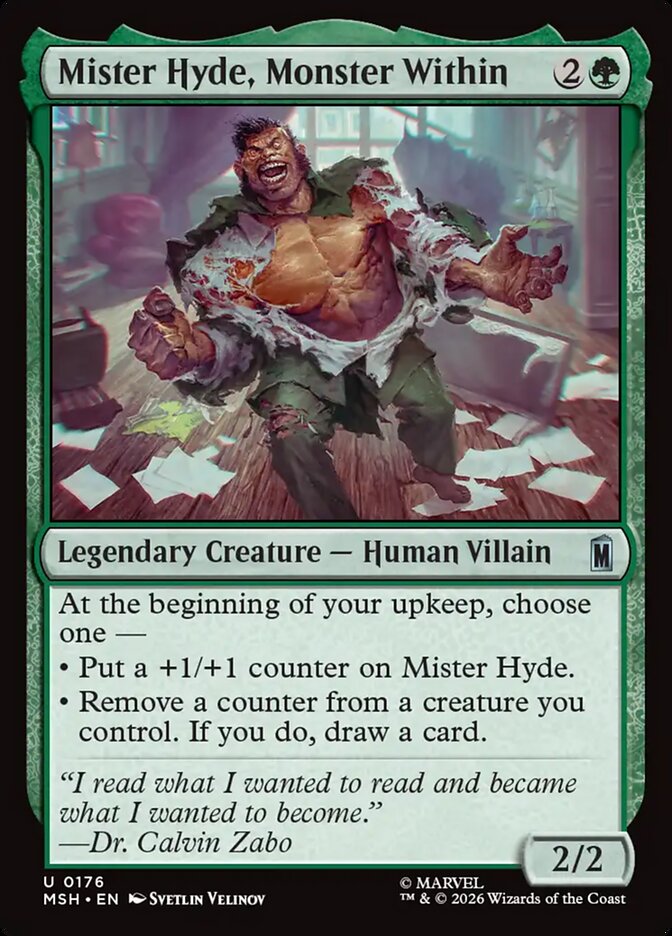
Knight of Wundagore really likes this guy and Training Regimen, which let it grow much faster. I tend to remove counters if I’m not immediately pushing damage because Mister Hyde, Monster Within grows too slowly to get there on its own in most games.
Punishing Punch
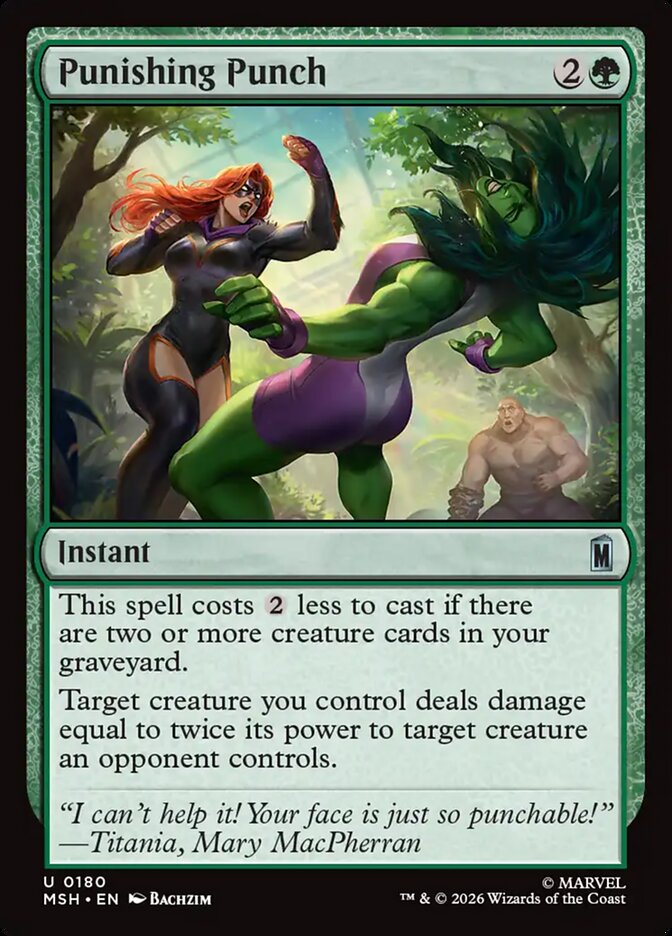
The 1-mana mode on Punishing Punch can lead to some filthy blowouts, so I always try to include Rapid Rescue and other convenient mill cards when I can for this.
Rick Jones, Destined Sidekick
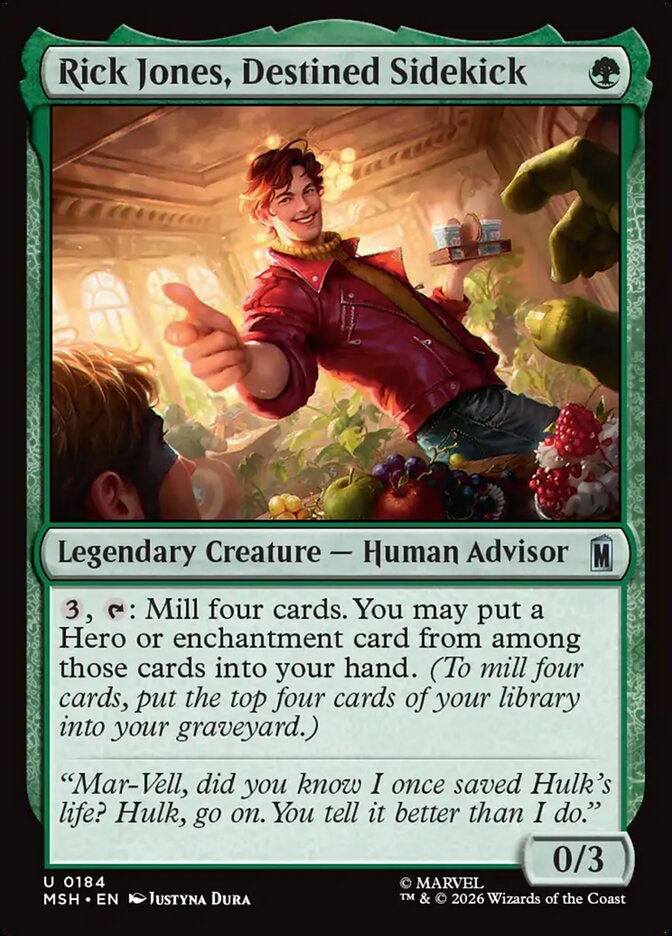
This is an odd fit in most decks, because Rick Jones, Destined Sidekick isn’t a hero itself and won’t contribute to your plan of curving out. It’s nice to have a mana sink for later though, so I’d still consider it if you have a high hero count and cards like Web Up and Avengers Assemble!
She-Hulk, Jade Defender
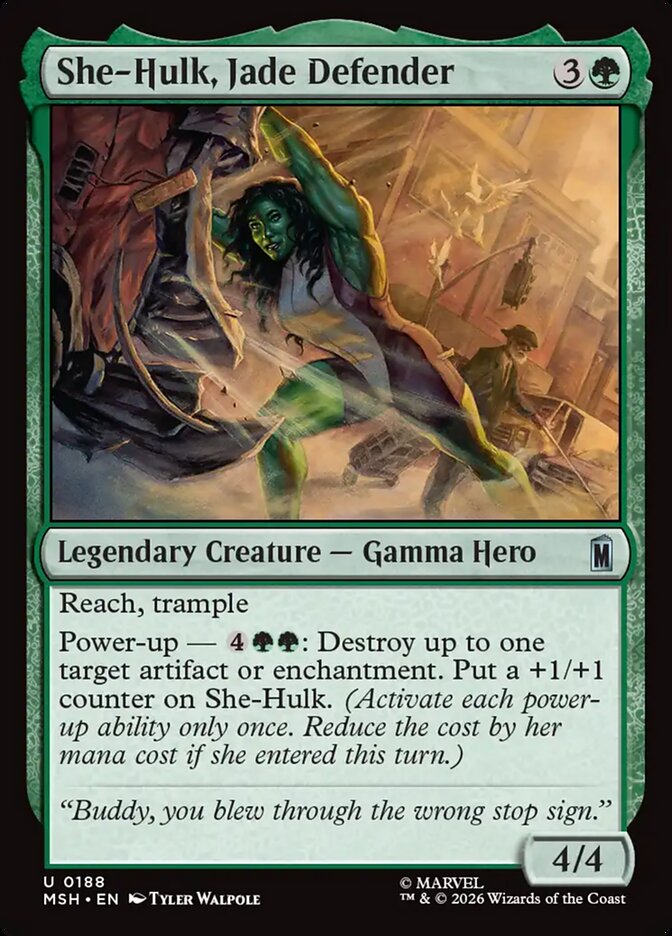
Green’s best uncommon, in my opinion. I like to play She-Hulk, Jade Defender as a 6-drop in most games, especially against blue and white decks (which almost always have a good target).
Tigra, Feline Fury
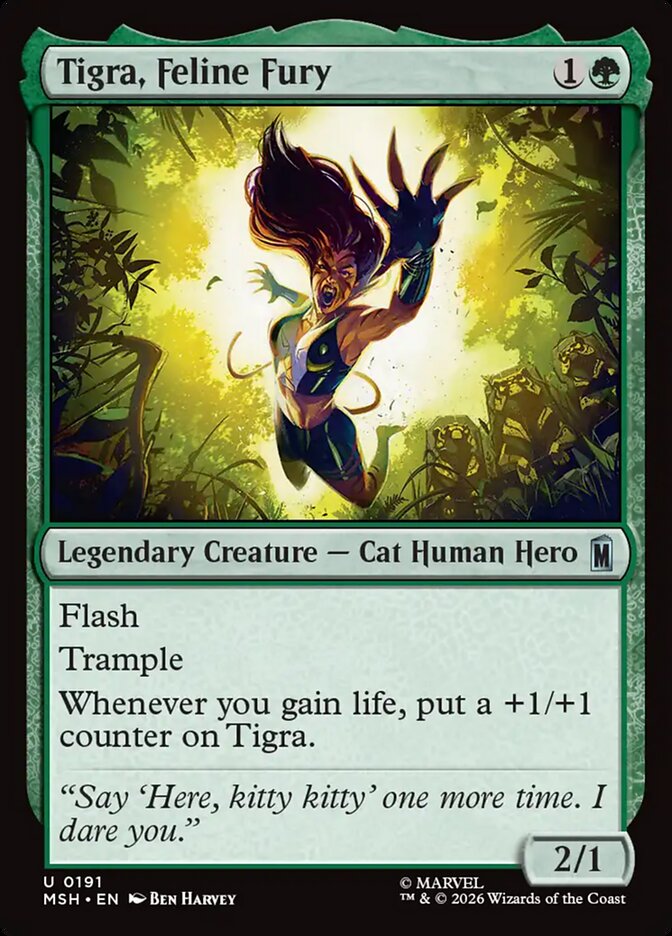
This and Heroic Feast are the set’s two lifegain payoffs, although I haven’t used either much. Brave Brawler, Rapid Rescue, and the gain lands are some of the most practical pairings to try with Tigra, Feline Fury.
Training Regimen
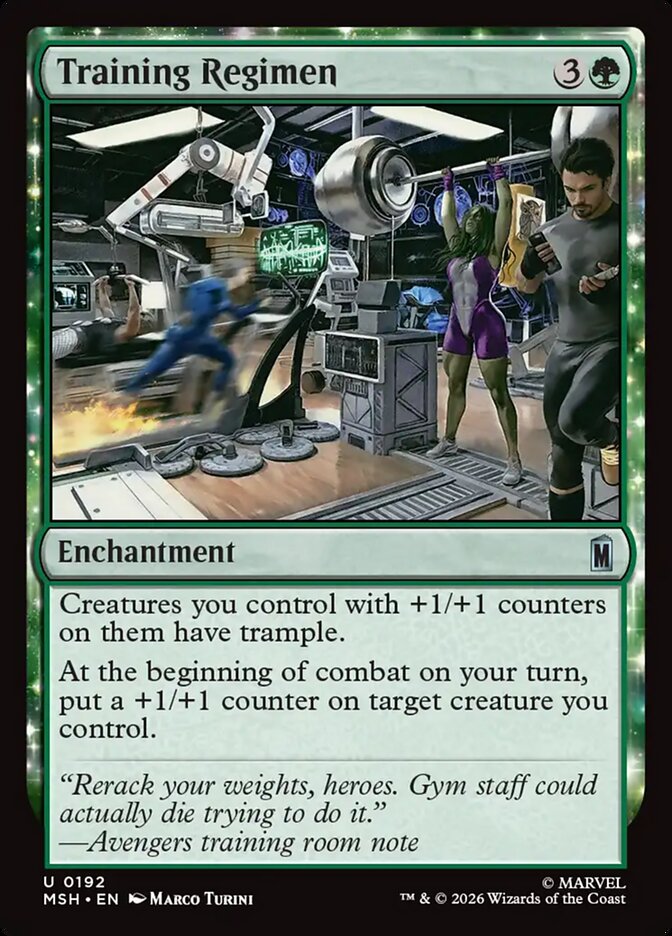
I tend to only play Training Regimen in decks with a lot of lifelink and/or +1/+1 counter synergy, though I could definitely see it as a great sideboard card, too. I’m less likely to want a card like this in higher curve decks, as it pairs better with small creatures than big ones.
Captain America, Living Legend
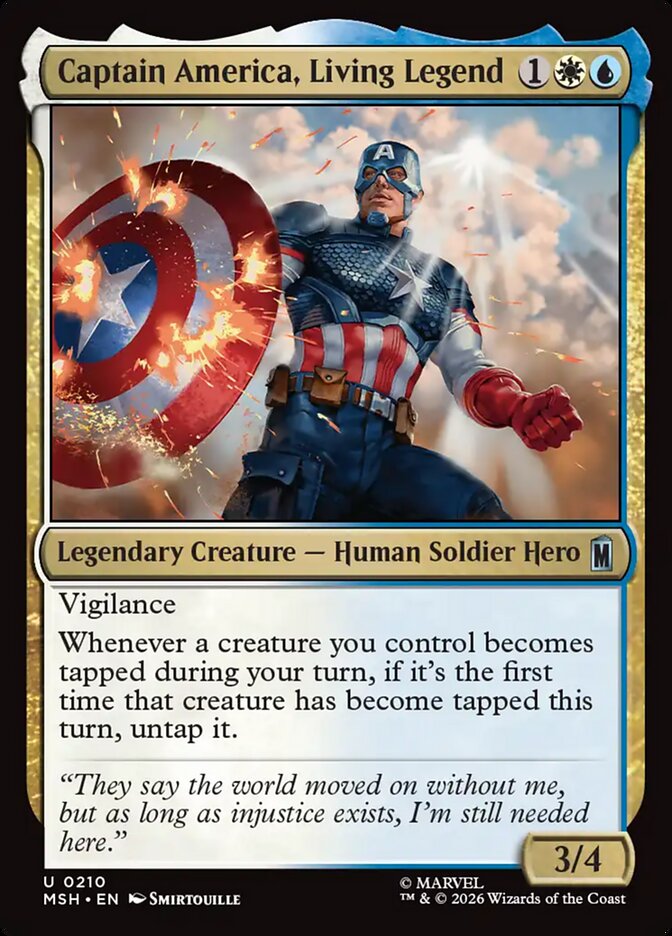
Captain America, Living Legend has some great combos with Raft Security Officer and Dependable Quinjet. Security Officer can double tap or attack and then tap with Cap out, while you can crew Quinjet freely with other creatures, then freely tap it for mana! It’s a great creature for any WU deck though, regardless of whether you have these synergies.
Bullseye, Death Dealer
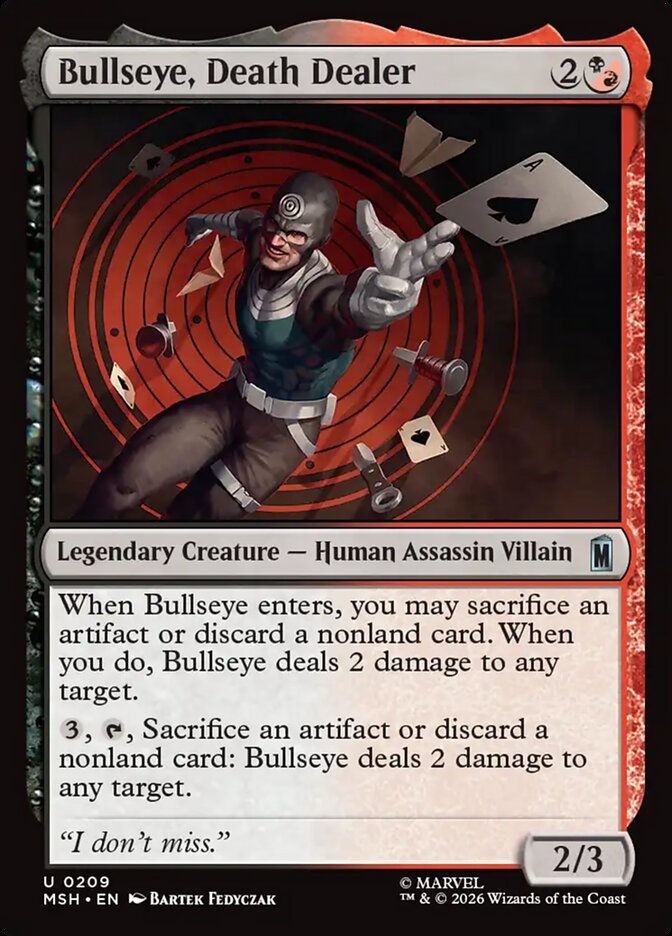
Bullseye, Death Dealer suffers from this format’s almost complete lack of artifact fodder. Project Deathlok Soldier is one of the few ways to get ahead with this, although it’s very slow of course. You could also try sacrificing Stolen Stark Tech and Treasure tokens from Stark Industries Executive, I suppose.
Spider-Man, To the Rescue
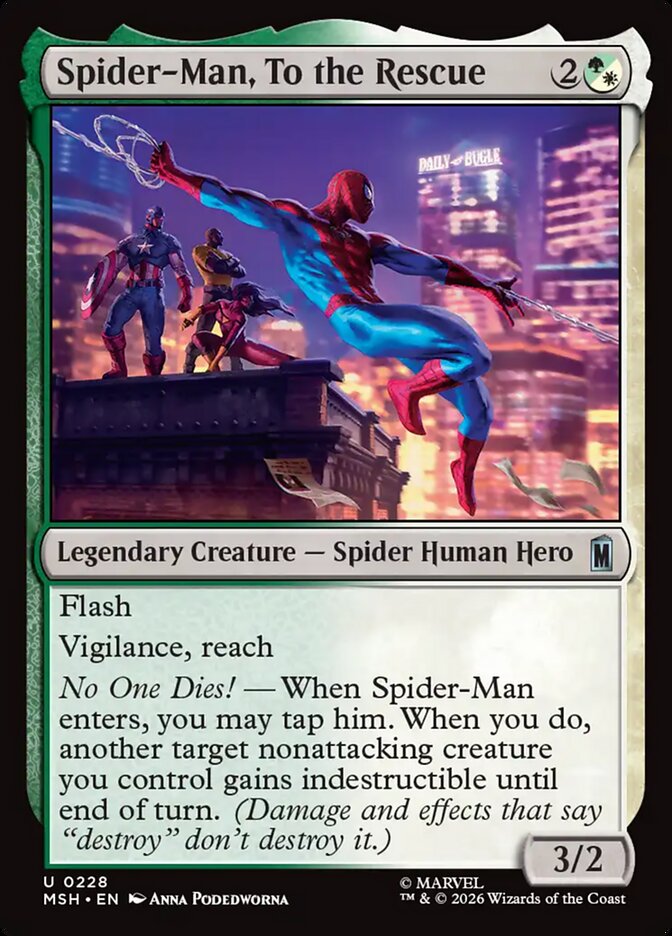
Spider-Man, To the Rescue has been tougher to use than I expected, and it doesn’t have great combat stats for its cost. It’s certainly playable, but unlikely to rescue your mediocre drafts.
U.S.Agent, John Walker
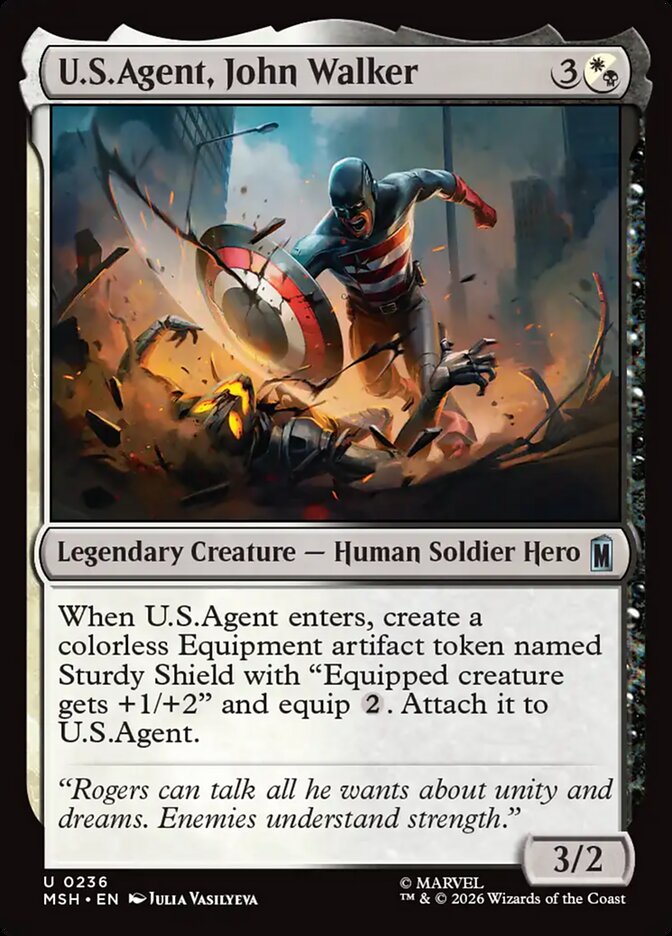
I love this card for its solid rate and flexibility, and I play it in just about every white or black deck I draft. You can even use U.S.Agent, John Walker to support the equipment trio, which has come up for me a couple of times.
Speedball, New Warrior
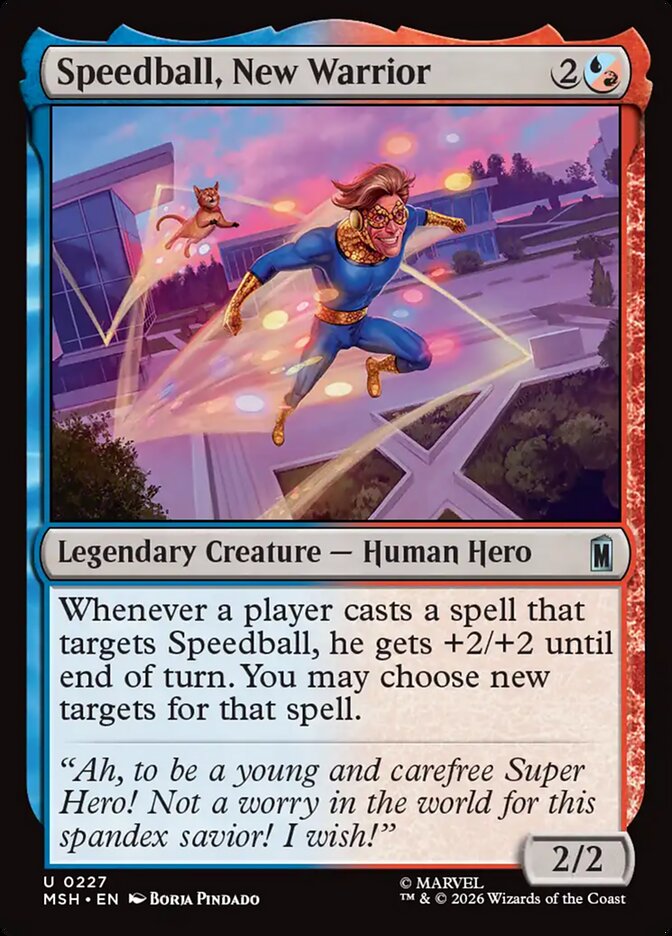
Speedball, New Warrior is an intriguing build-around card that plays with the “target your own stuff” theme. Unlike the other creatures in that theme, Speedball effectively has a weird form of hexproof, since you can redirect any removal spells your opponent plays on this. It won’t fit into most Draft decks, but it has real potential with cards like Go Nuts!, Depower, and Take Up the Shield. Don’t forget that you can target it with your own removal spells as well and then redirect them.
Killmonger, Scourge of Wakanda
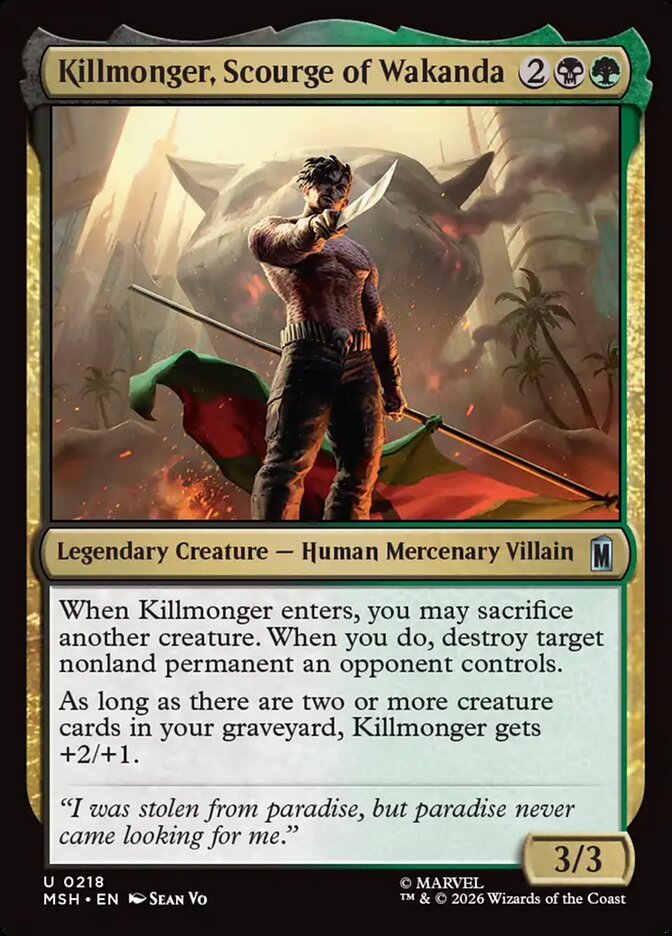
Killmonger, Scourge of Wakanda is the strongest signpost uncommon in the set, and definitely the one I’ve splashed the most. Try to play it with token generators like S.H.I.E.L.D. Deployment Drone, Agents of HYDRA, and S.H.I.E.L.D. Helicarrier if you can because they make Killmonger’s removal ability much easier to leverage.
War Machine, Legacy of Iron
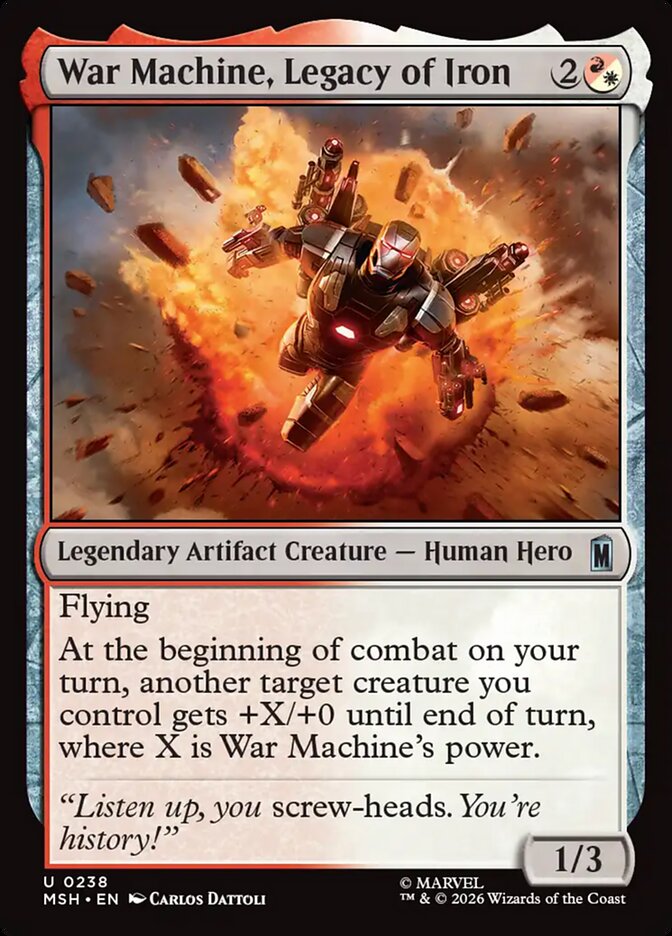
I’d only play War Machine, Legacy of Iron if I had a ton of ways to pump it. It’s very awkward with the set’s “attacks alone” cards too, which is another point of demerit.
Beast, Erudite Aerialist
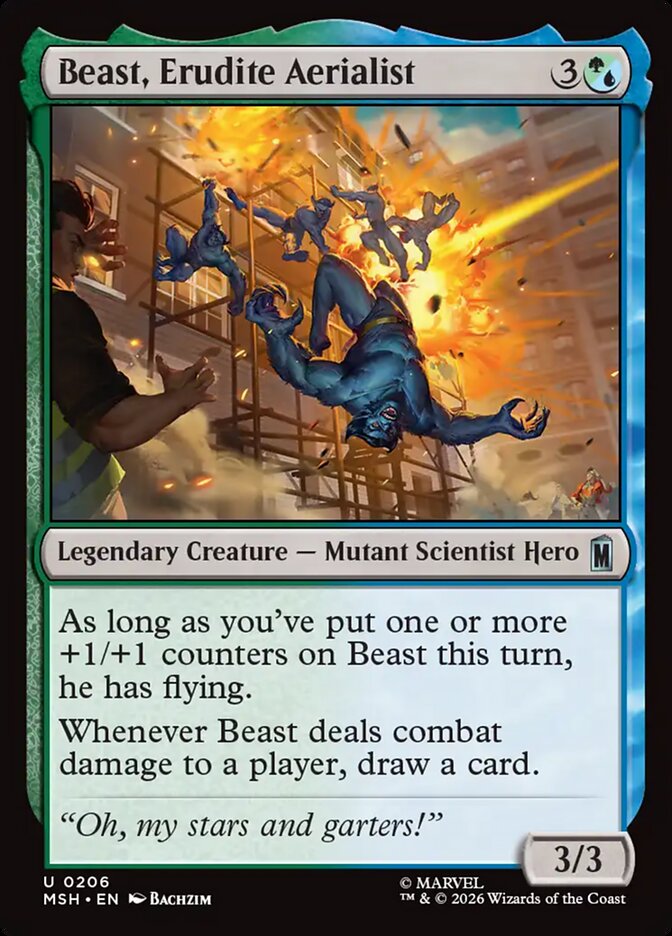
Training Regimen goes hard with Beast, Erudite Aerialist, but I’ve otherwise been largely unimpressed with this mutant. It’s too easy to block normally, and quite vulnerable to common interaction like Lightning Strike, Web Up, and Trickster's Stratagem.
Avengers Tower
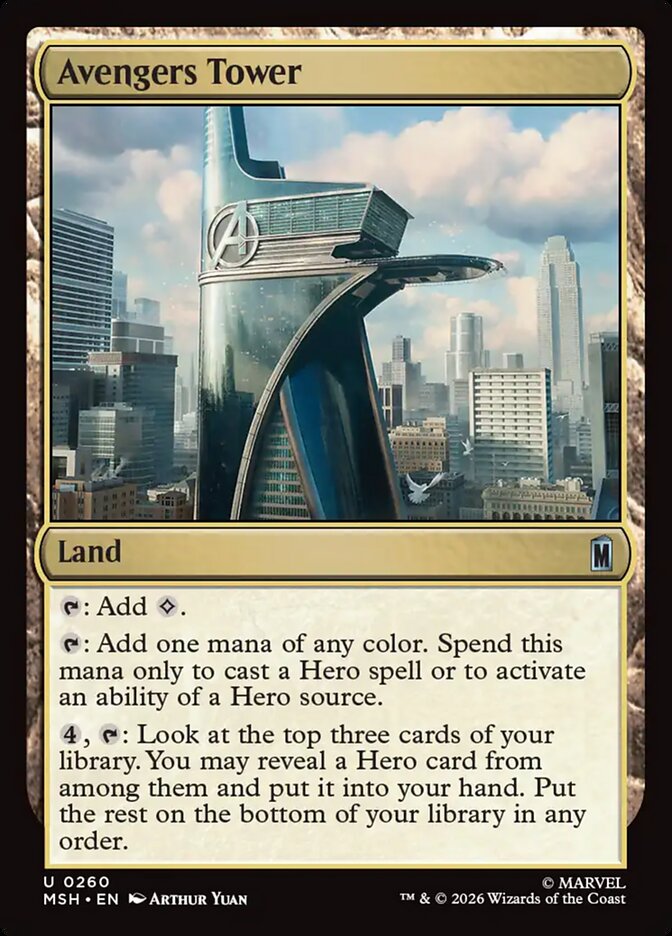
Avengers Tower is the best of three great uncommon lands, in my opinion. There are some awesome heroes worth splashing (especially the flip DFC mythics and Ka-Zar of the Savage Land), and digging for heroes is quite powerful later on.
Commons
Crowd of True Believers
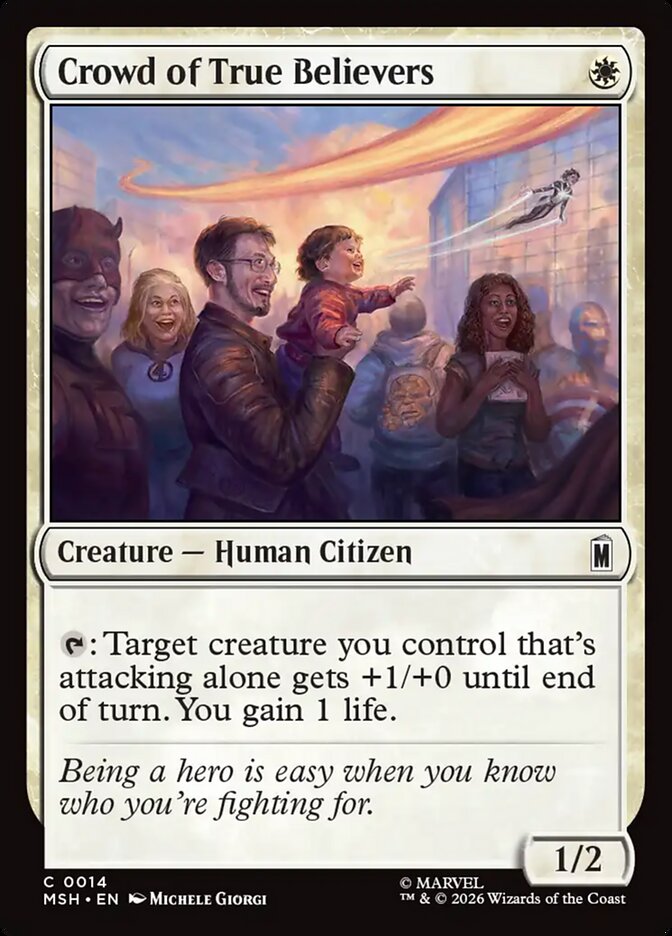
I’ve only played Crowd of True Believers in very aggressive decks, or when I had Loki, God of Mischief. The “attacks alone” theme can have some diminishing returns later on, and this is also useless on defense.
Murdock’s Crusade
Most enchantments in Marvel Super Heroes are too cheap to target with Murdock's Crusade. If you’re looking for two-for-one opportunities, there are only a couple of cards that are actually worth targeting with this, most of which are rares:
- Avengers Assemble!
- Robot Domination
- Thunderbolts Conspiracy
- Training Regimen
- Avengers: Under Siege
- Alien Invasion
- The Coming of Galactus
- The Super Hero Civil War
As such, I’m happy to cash this in on the first x/4 I see most of the time. It’s quite efficient, but it’s definitely narrow compared to Web Up and Cruel Alliance.
Bold Biochemist
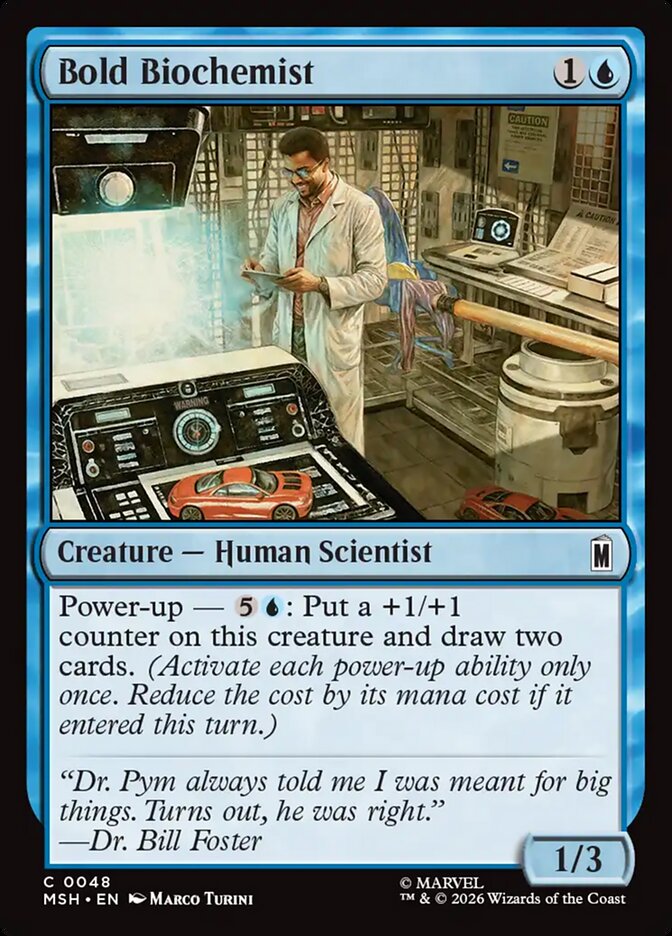
Bold Biochemist blocks most other cheap creatures, and it can also be a bad Mulldrifter later if needed. Whether to risk it versus removal varies from game to game, because your opponent often has more threatening cards to kill anyways.
Frozen in Ice
Frozen in Ice is solid removal, but it does have a distinct vulnerability to other blue cards like Justice, Vance Astrovik and Wiccan, Rising Magician. I’d consider cutting in Bo3 if either of those cards shows up.
I Am Iron Man
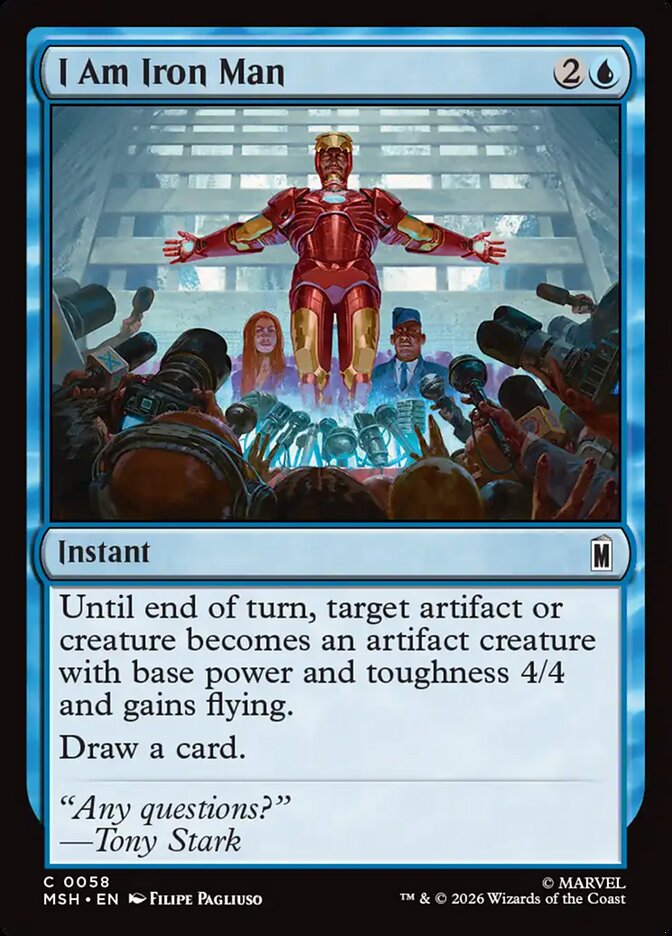
Don’t forget that I Am Iron Man can target noncreature artifacts. Your opponent may run their creature into Futurist Forge thinking you were just going to draw cards instead!
We Say Thee Nay!
Playing around this card can be tough. Pay close attention to how your opponent attacks and blocks with their creatures, as well as how much mana they leave up each turn. Cheap power-up creatures like Brave Brawler and Ninja of the Hand are ideal plays into a suspected We Say Thee Nay!, especially if your opponent can’t teamwork it.
Agents of HYDRA
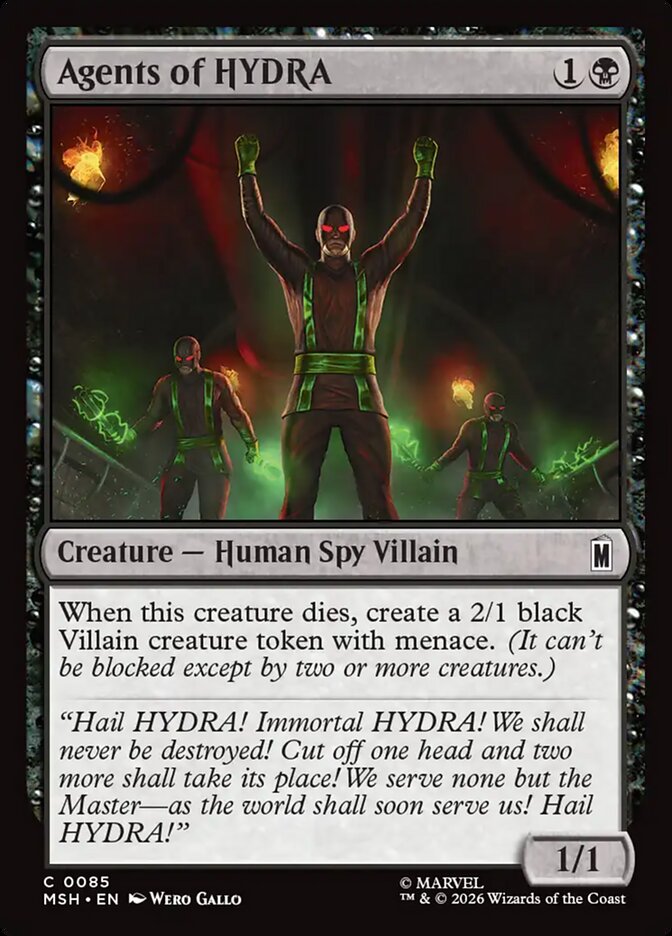
Sacrifice synergies are minimal in MSH Draft, so I mostly only play Agents of HYDRA if I have Kingpin's Enforcers and/or Killmonger, Scourge of Wakanda.
Decoy Ploy
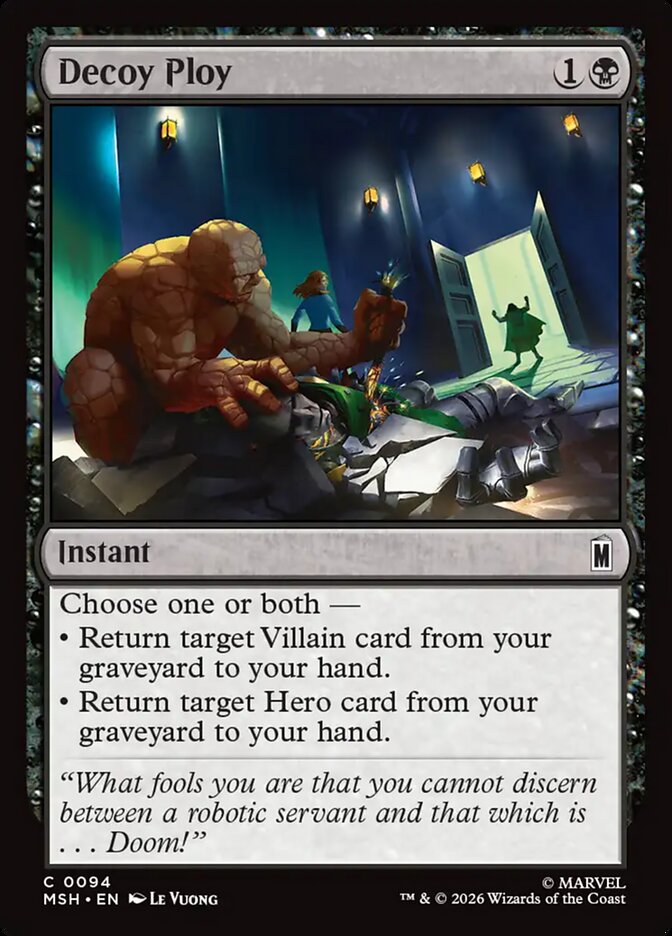
Decoy Ploy plays best in WB decks, which tend to have the best mix of heroes and villains.
Visions of Villainy
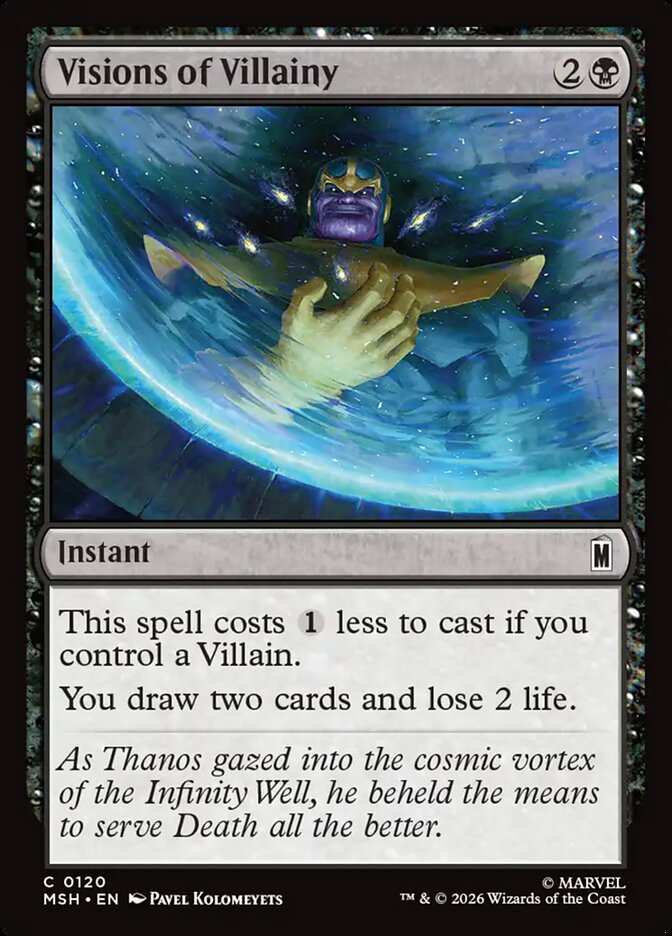
Visions of Villainy is actually an instant, which is unusual for Night's Whisper variants, and relevant for draw-2 payoffs like Madame Masque.
Hawkeye’s Bow
Hawkeye's Bow isn’t quite the red S.H.I.E.L.D. Spy Kit, but it’s still pretty efficient (and a nice tool versus fliers). It also has exceptional synergy with vehicles and Hawkeye, Young Avenger, which can turn it into a legitimate win condition. It’s arguably red’s fifth best common, and definitely more playable than I expected it to be.
Super Speed
I haven’t liked this trick at all, but it would be extremely cheeky to combo Super Speed with The Coming of Galactus sometime. Getting to attack with your 16/16 before your opponent answers it with Frozen in Ice, Web Up, or Atlantis Attacks could win you the game on the spot!
Call Damage Control
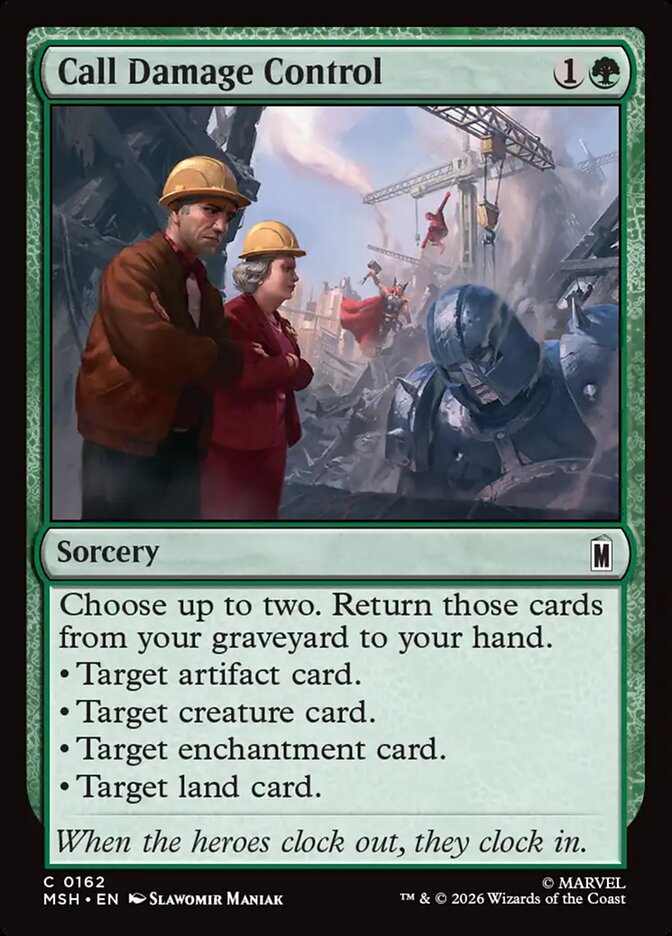
I wish this said “one or more”, because it would’ve fun to build around the dream of four-for-one’ing with it. As is though, Call Damage Control is a very mediocre card advantage spell that I only play with self-mill and cards like The Coming of Galactus and The Super Hero Civil War.
Powerful Broker
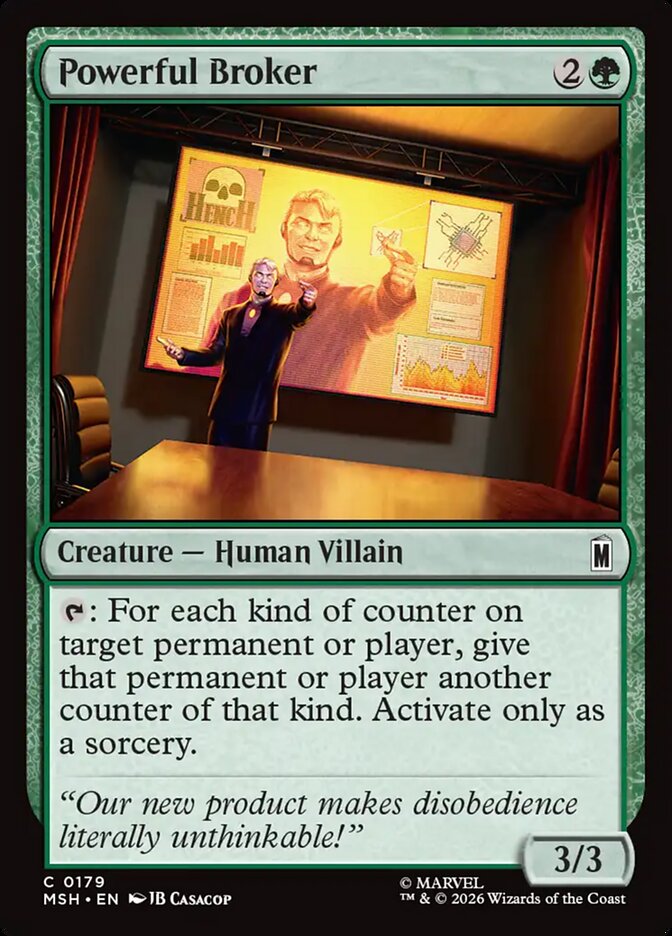
Not a great card on its own, although it plays fine in decks that care about +1/+1 counters. It’s neat that you can use Powerful Broker with plans and sagas too, which give it a bit of extra play in specific spots.
Super Strength
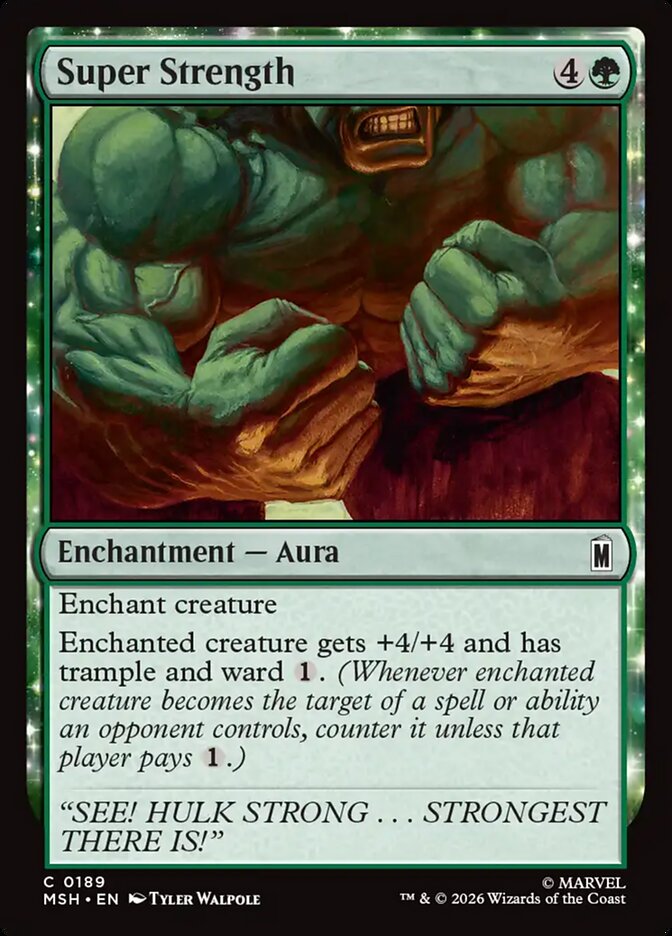
Definitely not a “good” Magic card, but an acceptable desperation option if your deck lacks good win conditions. You could also try Super Strength as a sideboard card if your opponent is light on removal.
Wakandan Royal Guard
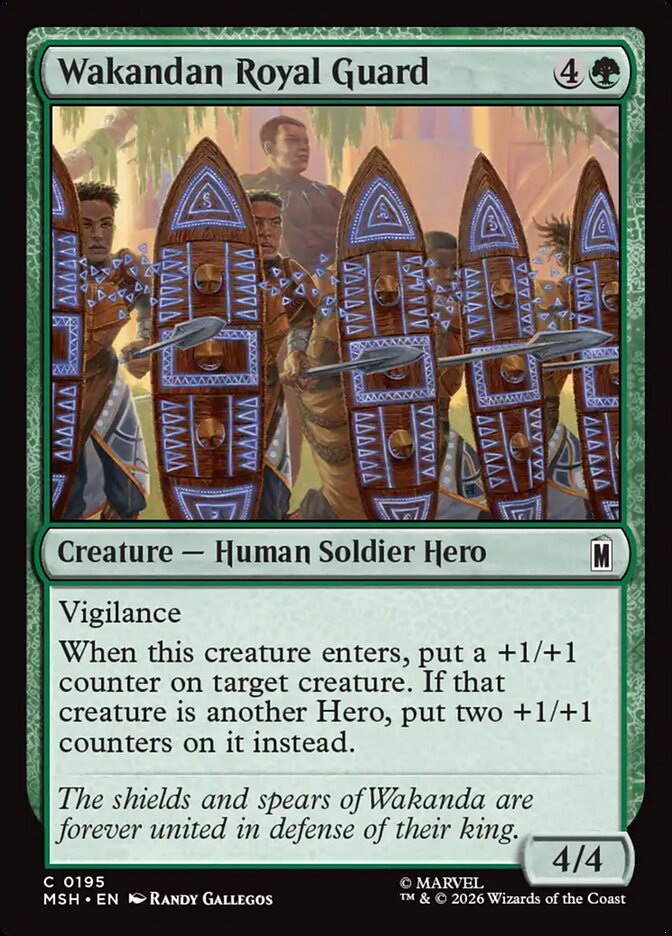
Viv Vision, Teen Synthezoid into Wakandan Royal Guard immediately sets Viv up to draw a card, which is a nice little synergy.
Trophy Examples
Last but not least, I’d like to share what’s worked for me so far in drafts of Marvel Super Heroes. You can view most of my Marvel Super Heroes Limited games (including an absurd number of Arena Directs) on my 17lands page if you’d like.
Trophy #1 (RW Aggro)
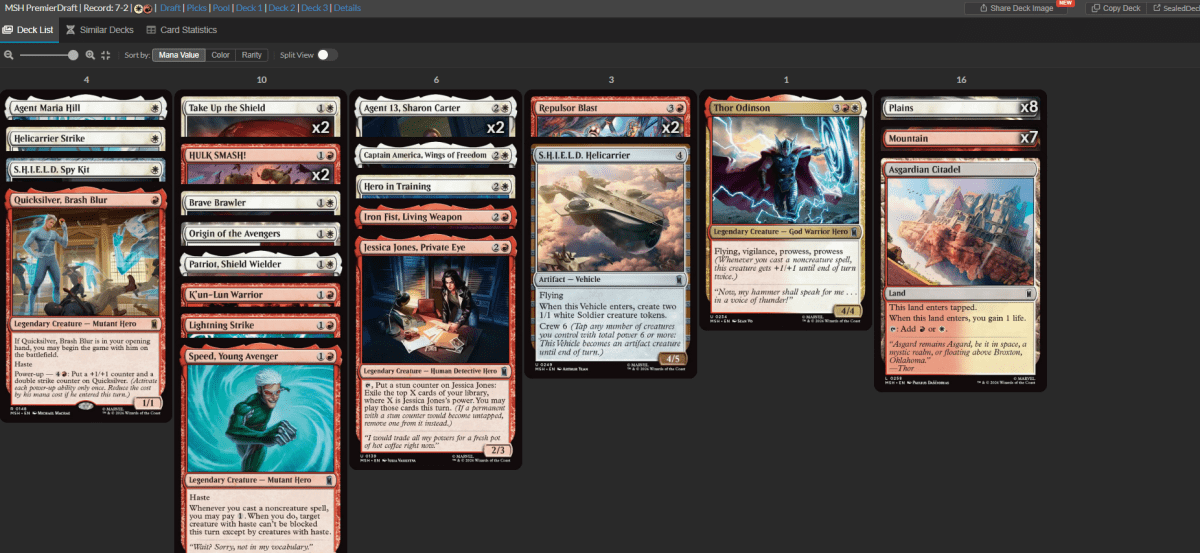
This was my first draft of the format. I had a lean curve and lots of ways to play with Iron Fist, Living Weapon, which was excellent in this deck.
Trophy #2 (WBr Villains w/ The Super Hero Civil War)
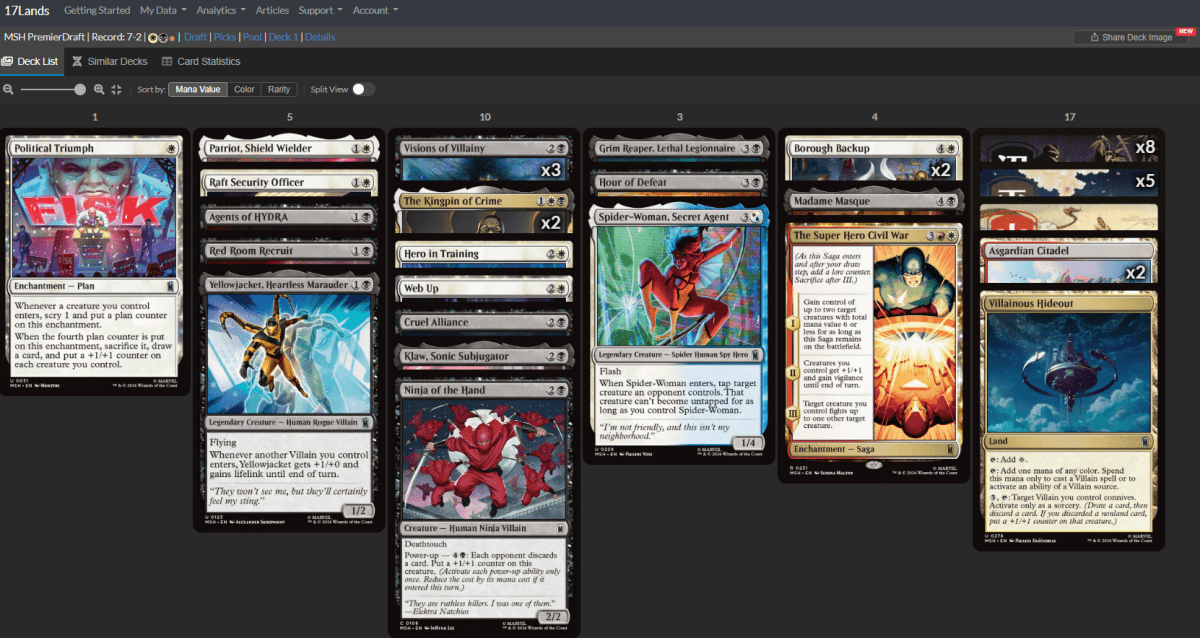
This deck had a pair of The Kingpin of Crimes, some great removal, and the best rare in the set. Villains were a focus to leverage three Visions of Villainy, Yellowjacket, Heartless Marauder, and Villainous Hideout.
Trophy #3 (UBw)
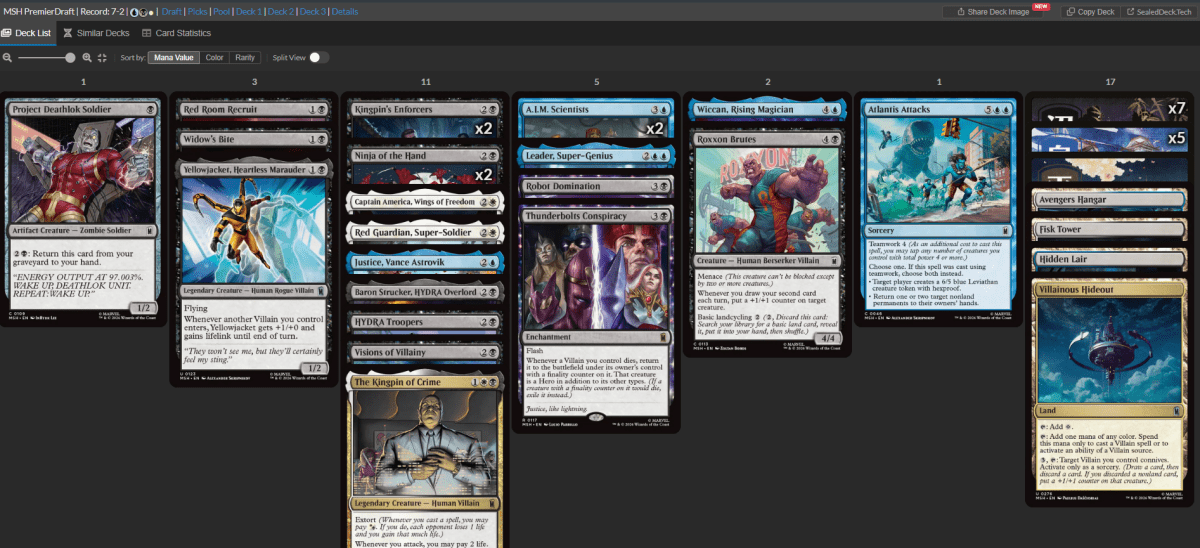
Definitely one of the most mediocre trophies due to its poor curve. Robot Domination and Thunderbolts Conspiracy were unimpressive in this deck. Powerful cards like Leader, Super-Genius, Justice, Vance Astrovik, and The Kingpin of Crime ultimately carried me.
Trophy #4 (GUr Midrange)
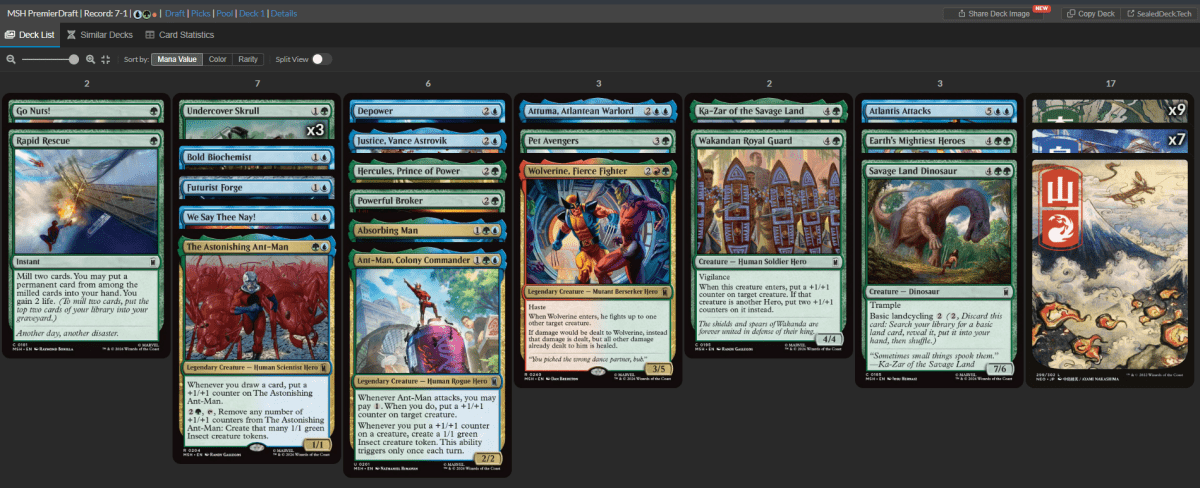
Undercover Skrull, Wolverine Fierce Fighter, Earth's Mightiest Heroes, and the two Ant-Men were all great in this deck. I ended up playing 17 lands + 3 Skrulls due to the great high end I had, and I don’t remember flooding out too badly.
Trophy #5 (GWu Midrange)
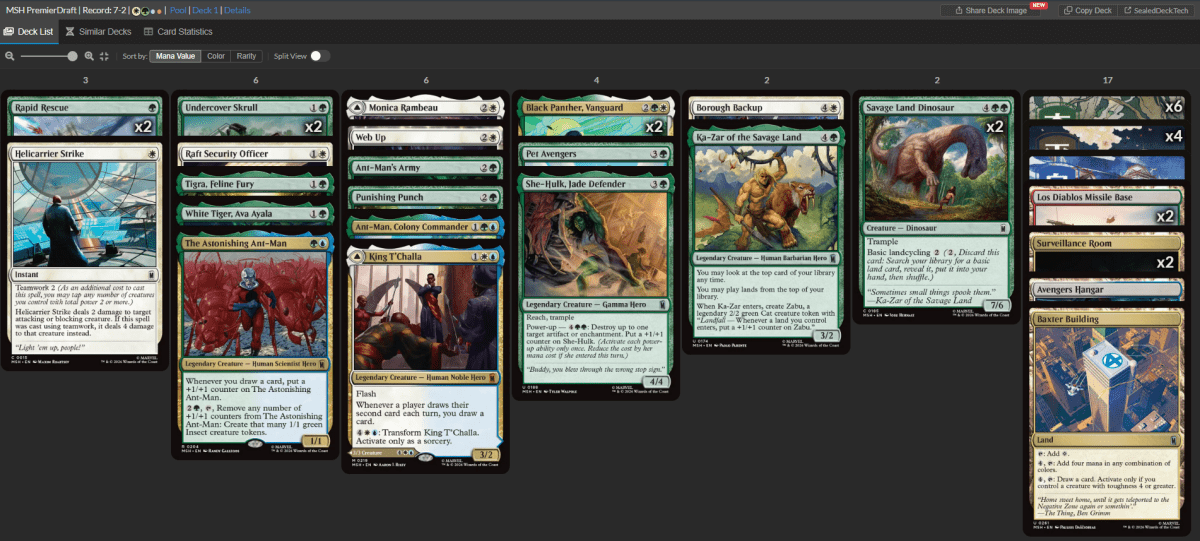
The double Ant-Man splash was ambitious, but I did have quite a bit of fixing here. The decision to play 17 lands over 16 came down to Baxter Building and a lack of any other great cards I wanted.
Trophy #6 (GW Aggro)
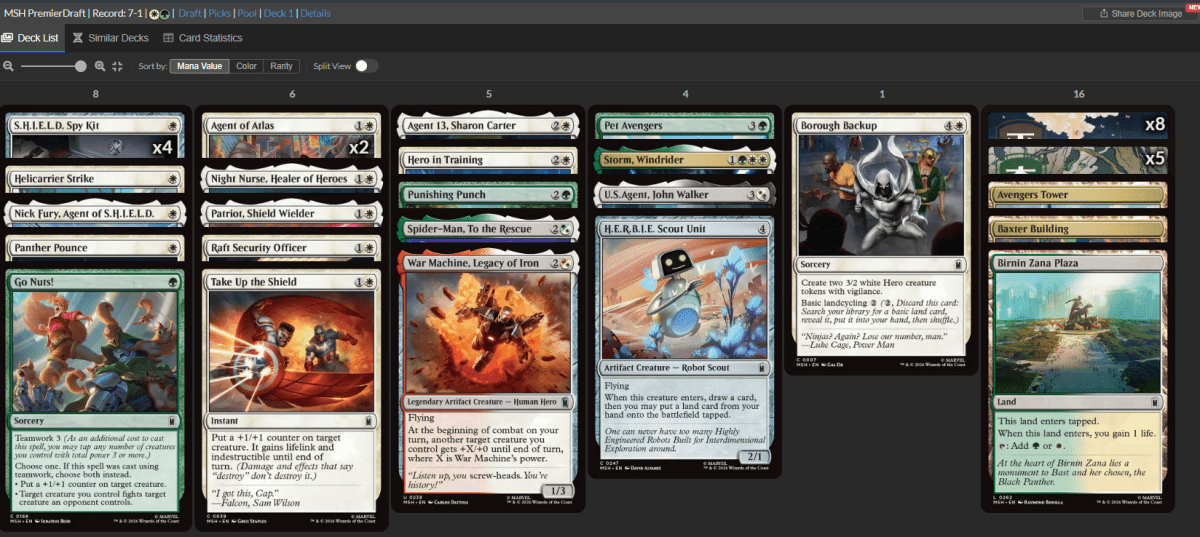
This was the draft where S.H.I.E.L.D. Spy Kit proved how good it was for me, as having four copies of it felt absurdly good!
Trophy #7 (GWb Midrange)
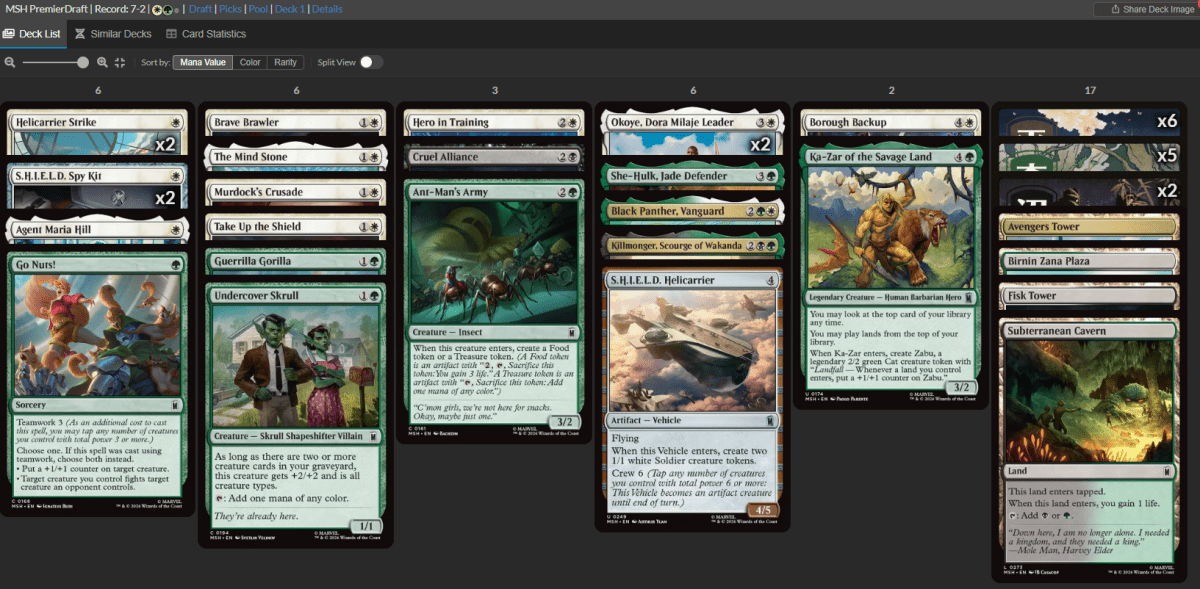
This midrange deck was responsible for that ridiculous screenshot with 30+ blockers on my side. It had a balanced curve, some removal, and plenty of tokens for Killmonger, Scourge of Wakanda to sacrifice.
Trophy #8 (GB Midrange)
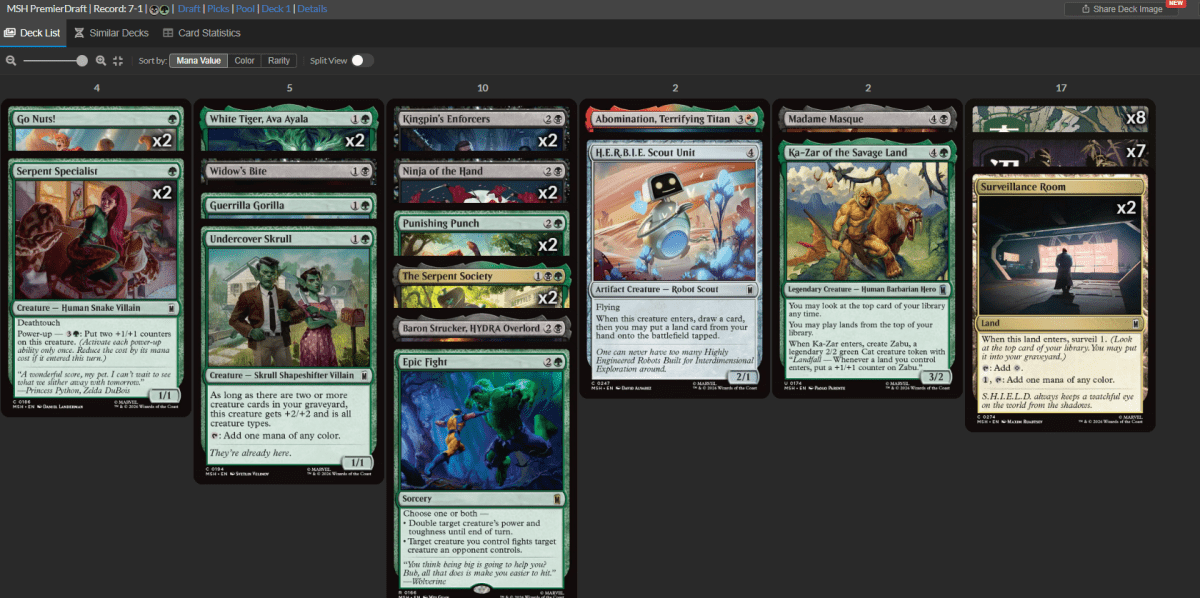
The Serpent Society played great with my Serpent Specialists and Ninja of the Hands. I also had Kingpin's Enforcers to force advantageous edicts, and lots of fight spells to take advantage of all this deathtouch.
Trophy #9 (WB Equipment)
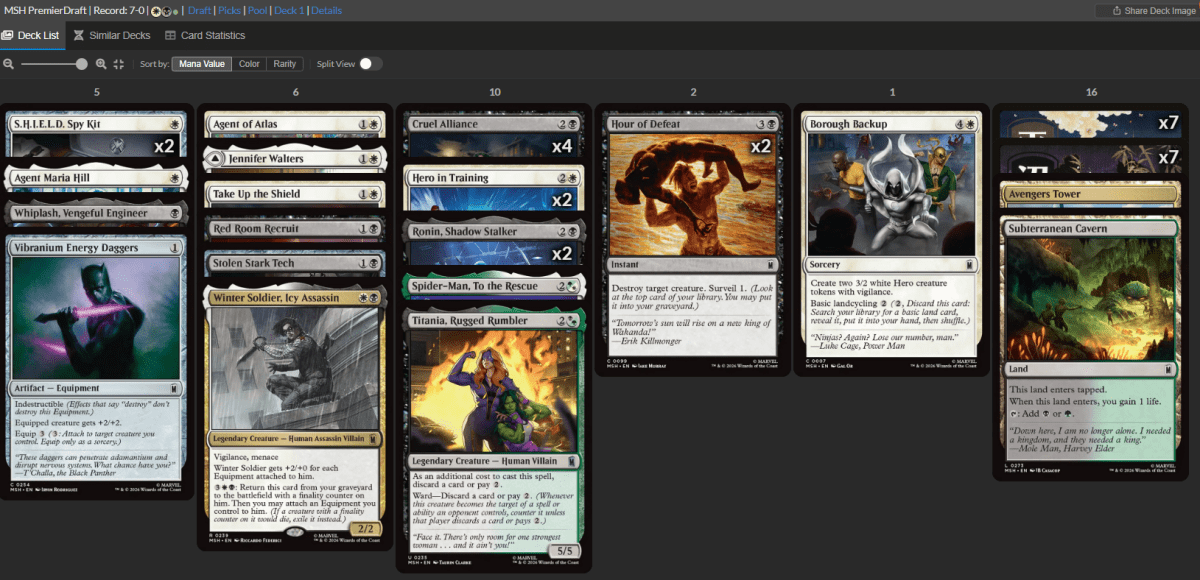
This is the only deck I’ve played Vibranium Energy Daggers in, which provided a fourth equipment for all my synergies. Ronin, Shadow Stalker, Winter Soldier, Icy Assassin, and the splashed Jennifer Walters / The Sensational She-Hulk were MVPs.
Trophy #10 (GBw Midrange)
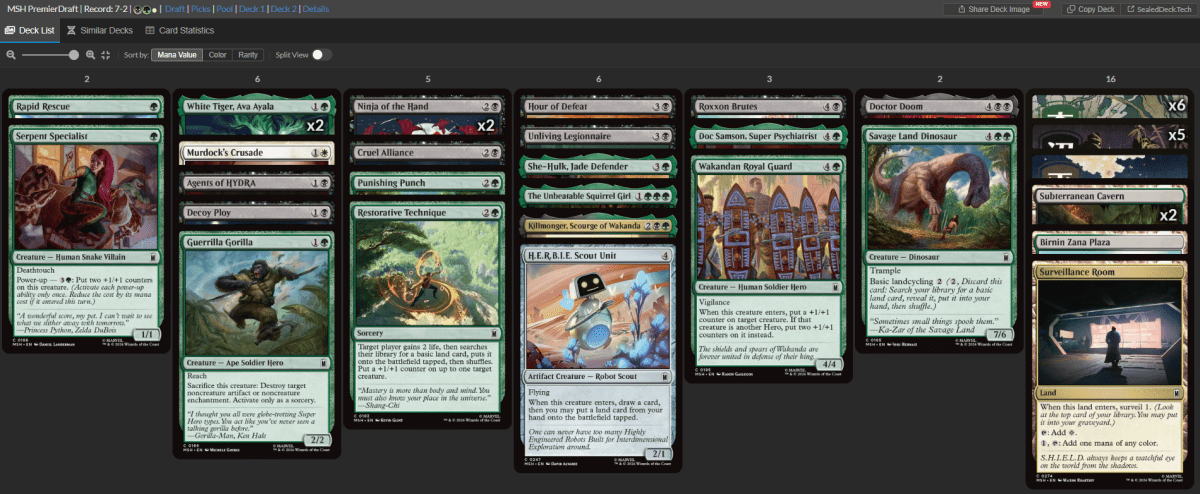
Doctor Doom and his arch nemesis (The Unbeatable Squirrel Girl) teamed up to get me another trophy! I had a slight white splash for extra removal in Murdock's Crusade, and a lot of solid fatties and 2-for-1s to outclass my opponents’ late game.
Wrap Up
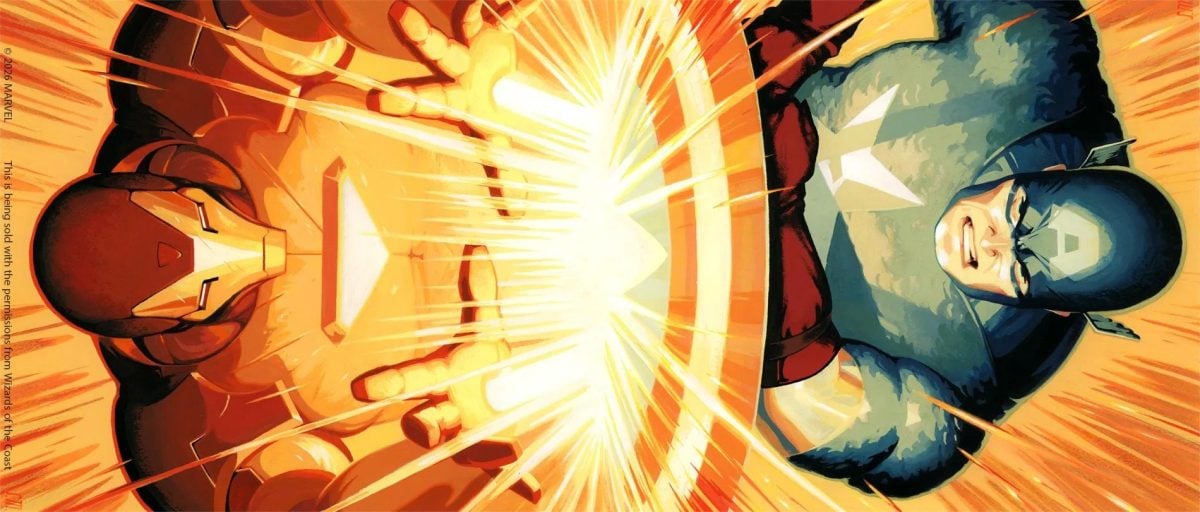
The Super Hero Civil War | Illustration by Serena Malyon
You have finally come to the end of this guide. I hope you’ve learned quite a bit about Marvel Super Heroes and are ready to take that knowledge to any future Limited events.
Which themes have you enjoyed building around in MSH Draft? Which cards have over- or underperformed for you? Let me know in the comments below or over on the Draftsim Discord. Subscribe to our YouTube channel, The Daily Upkeep, for more from us.
Until next time, may The Super Hero Civil Wars always be your P1P1!
Follow Draftsim for awesome articles and set updates:










Add Comment