
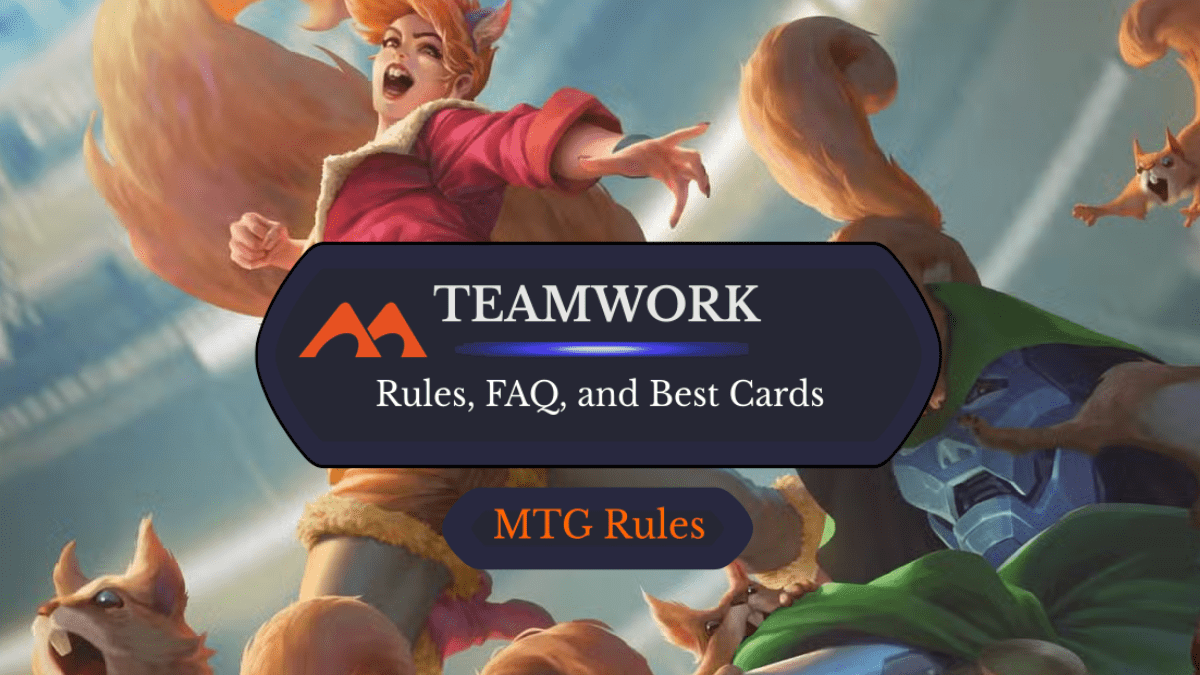
Go Nuts! | Illustration by Ignatius Budi
In the Marvel universe, heroes and villains alike often work in teams. Whether we’re talking Avengers, X-Men, or even the Sinister Six, there’s bound to be some teamwork going on. Initially a mechanic that should work only for heroes, MTG’s teamwork mechanic is actually agnostic, so you can use villains to help heroes and vice versa. It’s a flexible mechanic that lets a set have fewer spells but still cover all the bases, because here the focus is on the legendary villains and heroes.
Let’s assemble a team of creature cards and see what teamwork is all about!
How Does Teamwork Work?
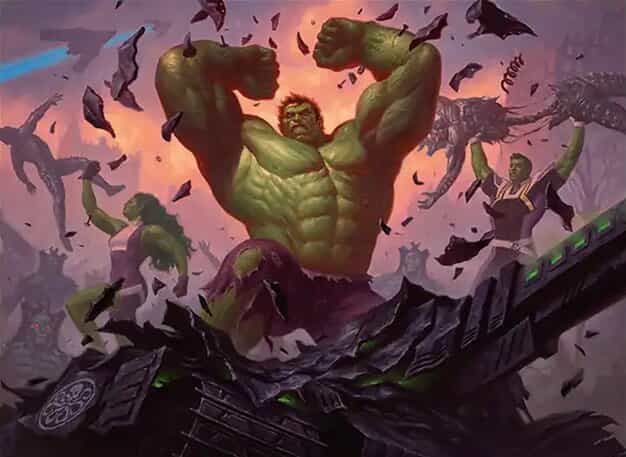
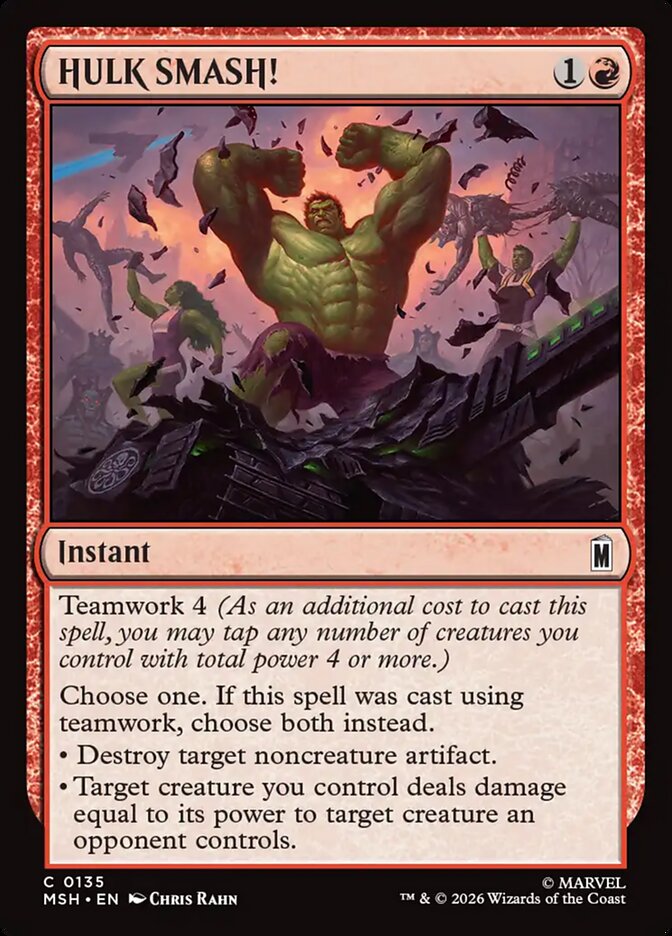
HULK SMASH! | Illustration by Chris Rahn
Teamwork is an ability that enhances the impact of your noncreature spells, mostly instants and sorceries, which we’ve seen before in mechanics like escalate or spree.
Teamwork N asks you to tap creatures with a total power of N as an additional cost to cast the spell to unlock a bonus, which can be both modes of a spell or an enhanced version of the card.
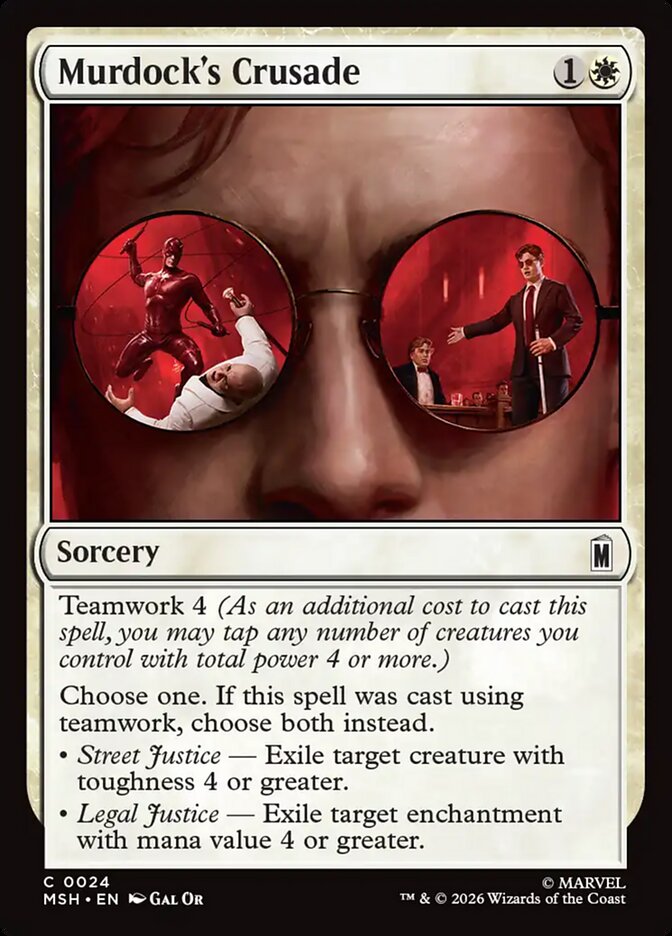
For example, Murdock's Crusade lets us exile a creature with toughness 4 or greater, or an enchantment with mana value 4 or greater. Usually, you’ll choose only one of these modes, but if you tap creatures for the teamwork cost, you can do both, which nets you a two-for-one. This card has teamwork 4, which requires you to tap 4 power worth of creatures, so it’s not going to be all that easy. Maybe you have a Monoist Sentry laying around that you don’t plan to block with. Or two 2/2 creatures.
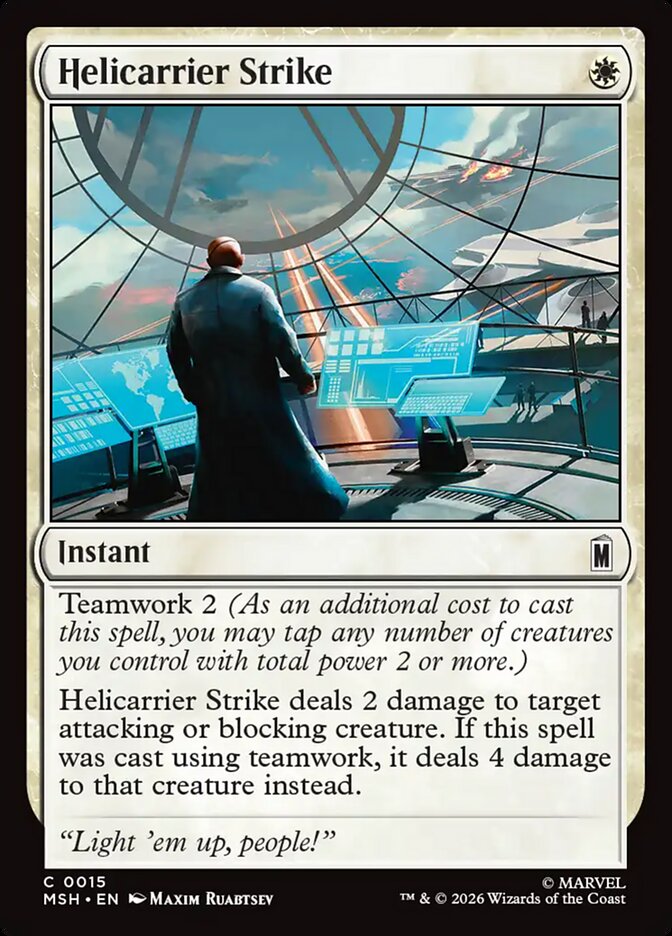
In other cases, like Helicarrier Strike, paying the teamwork cost is the difference between dealing 2 and 4 damage to an attacking or blocking creature, so it’s an enhanced version of the same effect.
The History of Teamwork in MTG
Teamwork was first created in 2026 for the Marvel Super Heroes (MSH) set, and it also has a few designs in the Marvel Super Heroes Commander set. There are 17 teamwork cards, and most of them are commons, so you should see a lot of teamwork in your Limited matches.
While the name ties into the Marvel universe well, it’s an interesting and novel design space, caring about the tapped creature’s power to add to a spell instead of just reducing the cost like convoke or improvise, and I can see this being used in future sets.
Teamwork vs. Crew/Saddle/Station
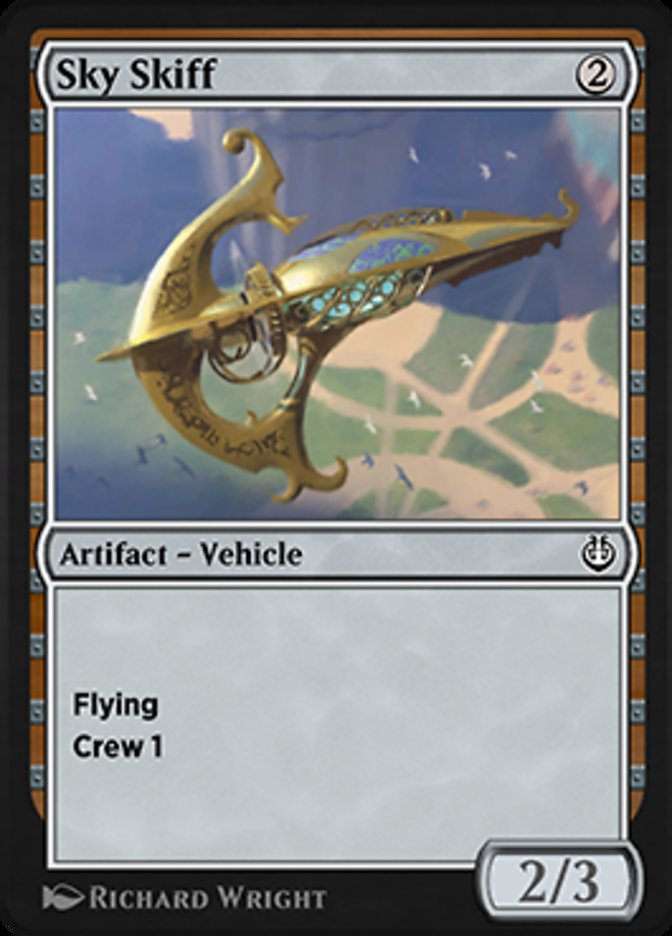


Crew, saddle, and station are examples of mechanics that take advantage of tapping a creature to do something. Crew and station require you to tap creatures to power them up, and if you don’t have creatures, nothing happens, really. Creatures with saddle are mounts that don’t need any external help, but they’re much better when saddled by other creatures. Teamwork is like that: It’s a card can have a strong effect already, but if you put a team behind it and power it up, you’ll reap much better rewards.
Is Teamwork an Additional Cost? An Alternate Cost?
Teamwork is an additional cost, not an alternate cost.
Can Your Total Power Exceed the Teamwork Number?
Yes, it can. Teamwork doesn’t set a maximum number; instead you need to reach a minimum total power. So, if you’re casting a teamwork 2 card and you only have a 3/3 in play, you can tap the 3-power creature to pay for the 2 on teamwork.
Can You Tap 0-Power Creatures for Teamwork?
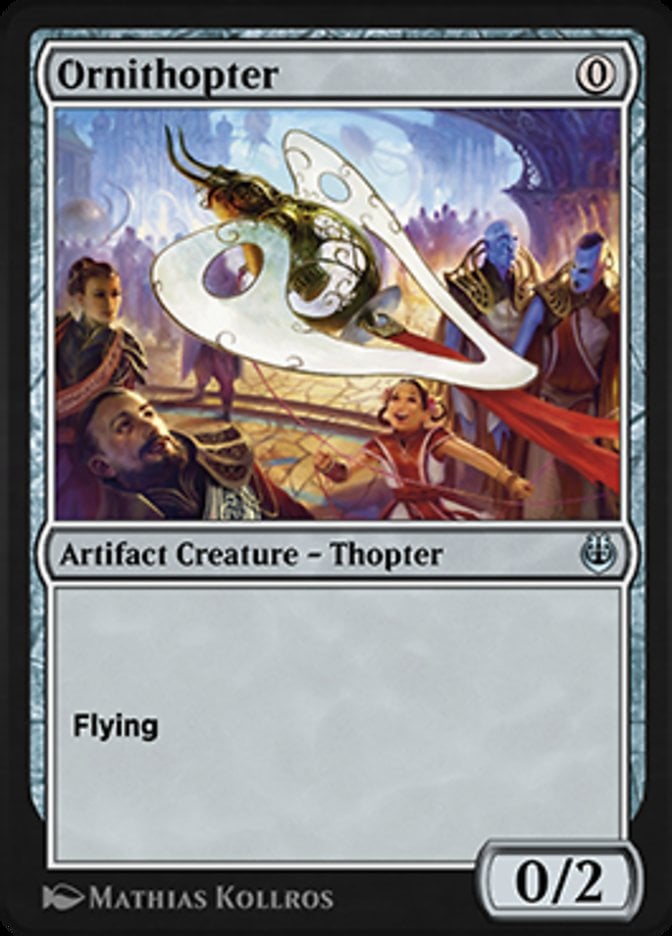
You can. Teamwork will compute the total power of creatures you’re tapping, and you can tap a 0-power creature like Ornithopter. It just won’t do anything, but you can take advantage of that to tap your creature for the purposes of the survival or inspired mechanics, or for Mesmeric Orb. For now, Agent Maria Hill is the only card that cares about being tapped for teamwork.
Can You Tap Creatures with Summoning Sickness for Teamwork?
Yes, you can. When a certain effect allows you to tap a creature, the creature can have summoning sickness. It’s similar to what happens in mechanics like crew, convoke, or saddle. You can cast a creature and tap it right away.
Are Teamwork Cards Modal Spells?
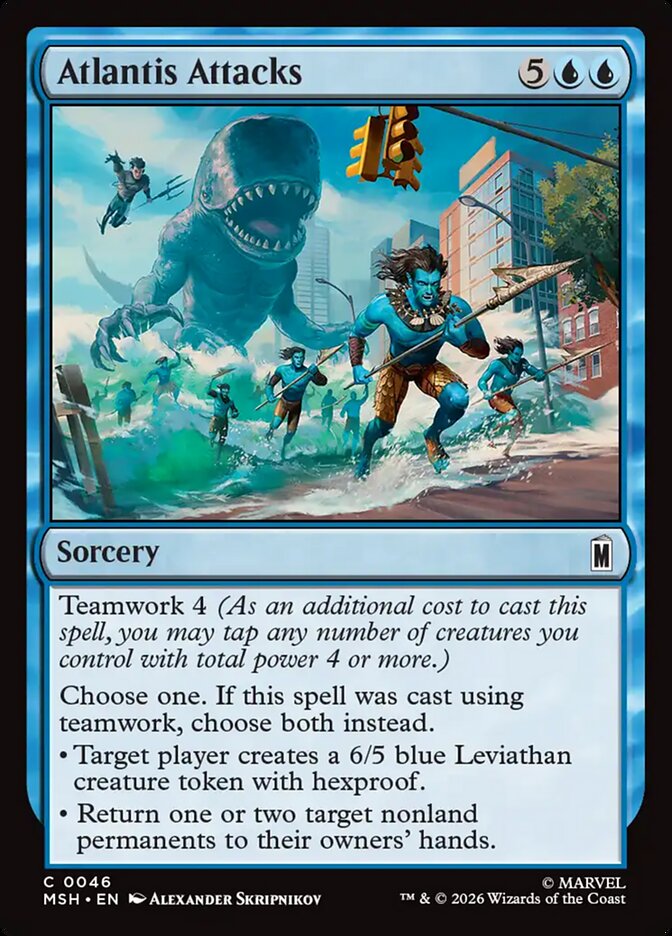
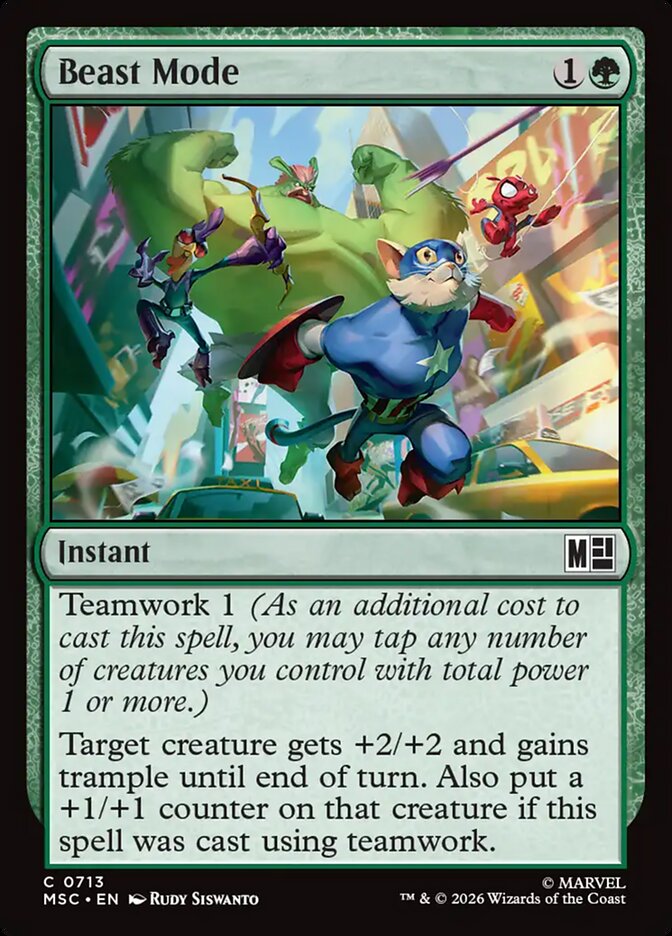
Some teamwork cards are modal spells. For example, Atlantis Attack is a teamwork modal spell while Beast Mode isn’t. It depends on the individual card’s text box.
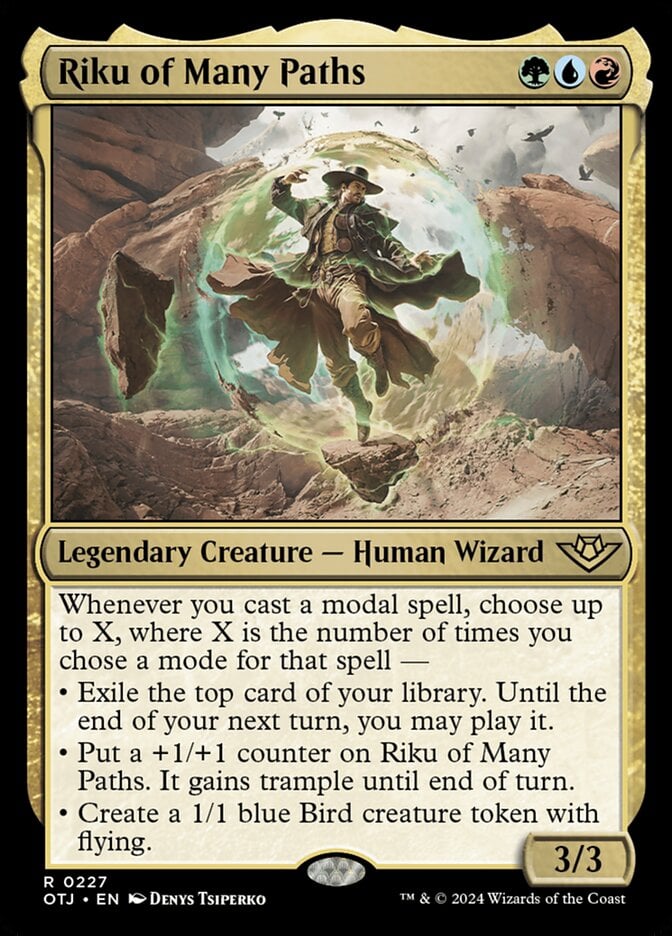
According to the Gatherer text on Riku of Many Paths: A spell is modal if it has two or more options in a bulleted list and instructions for a player to choose a number of those options, such as “Choose one” or “Choose one or more.”
Gallery and List of Teamwork Cards
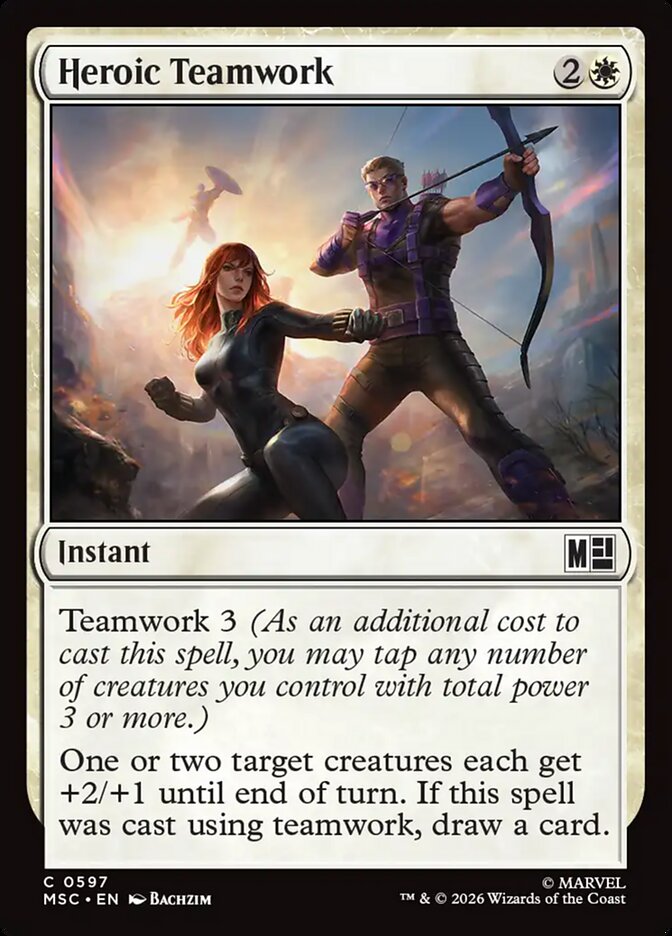
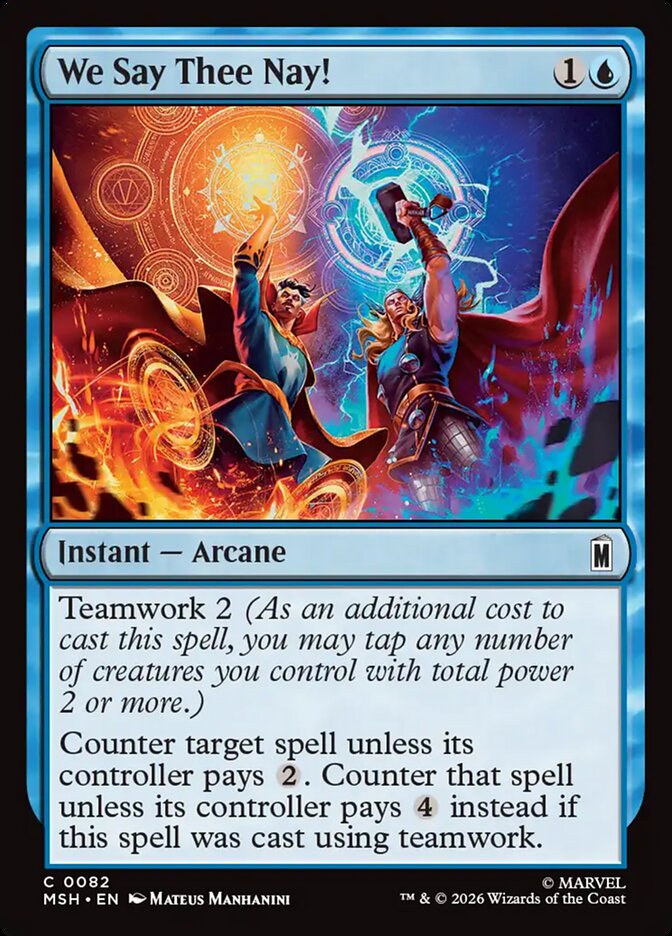
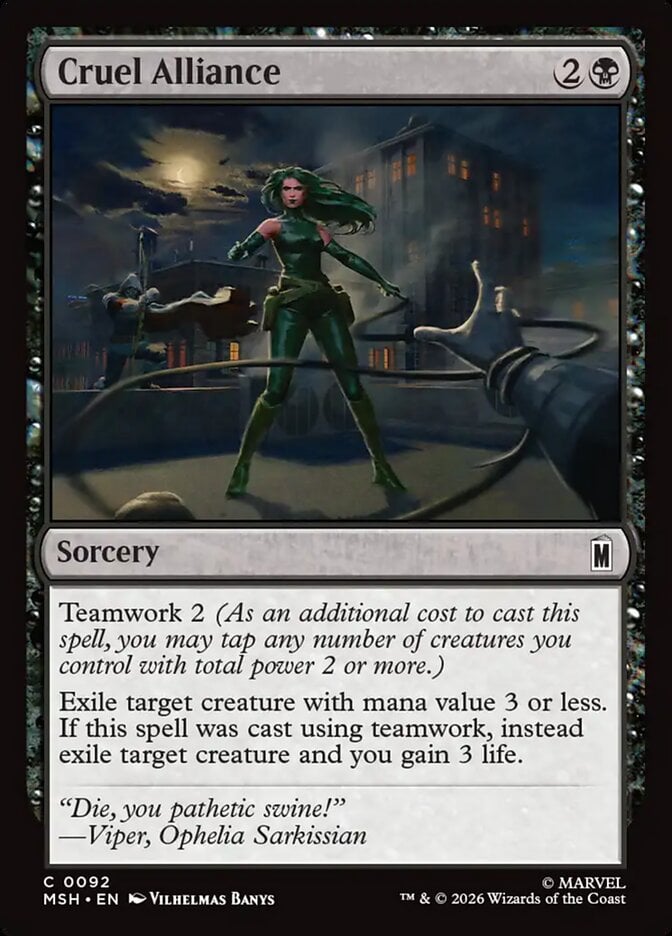
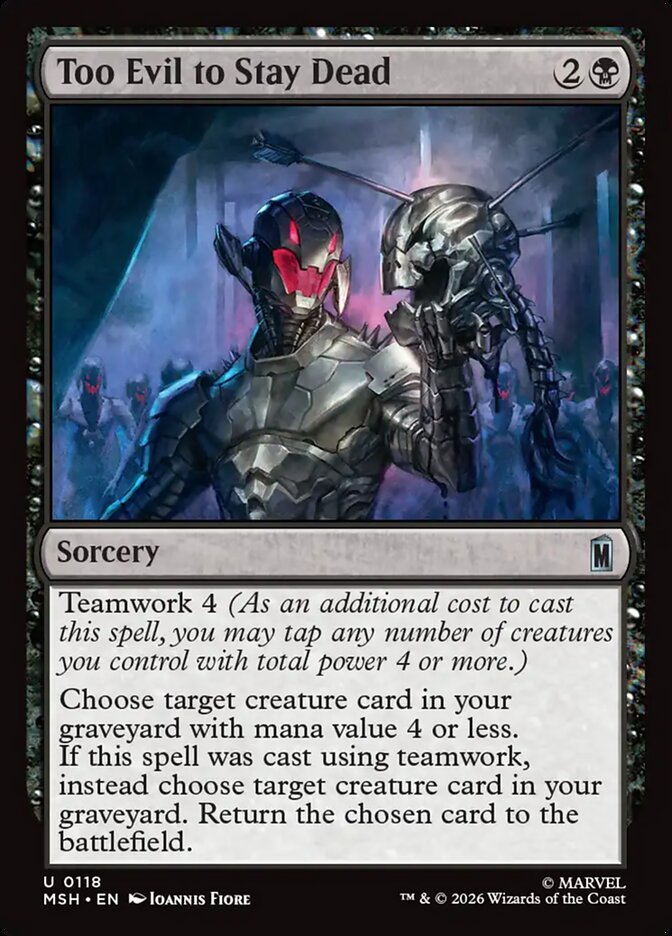
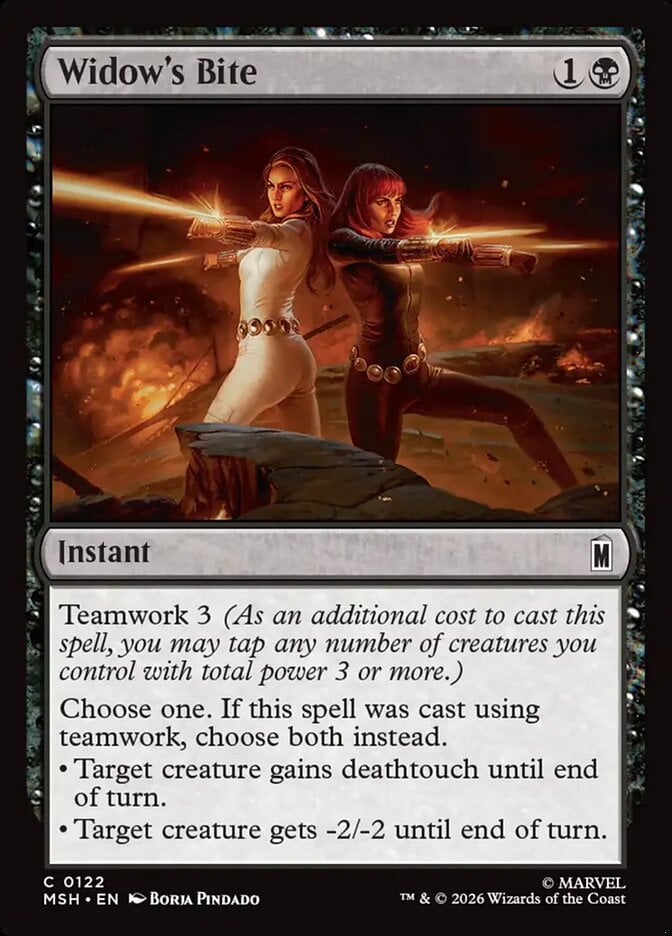
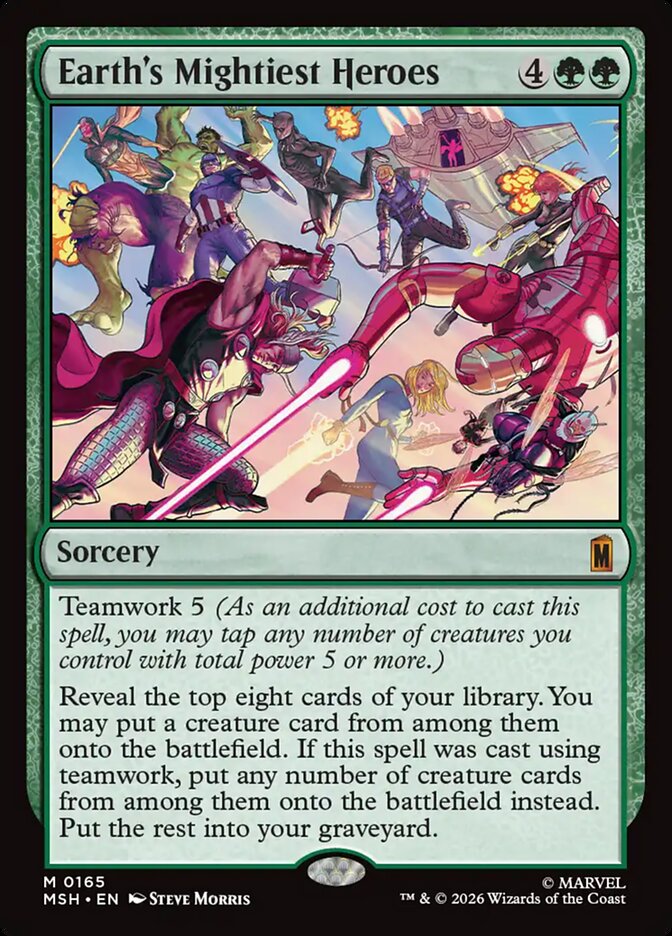
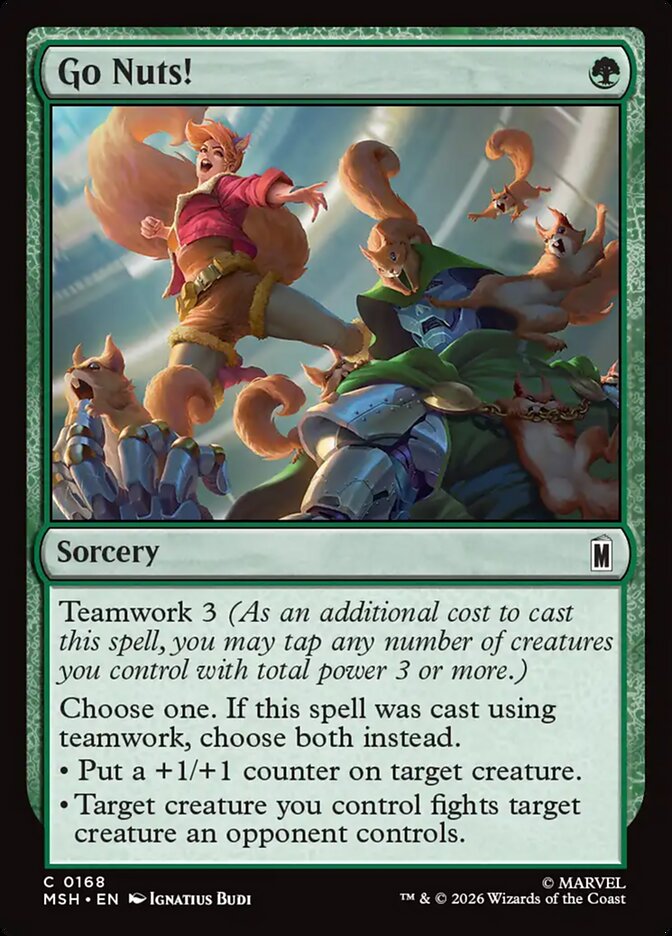
- Heroic Teamwork
- Helicarrier Strike
- Murdock's Crusade
- Atlantis Attacks
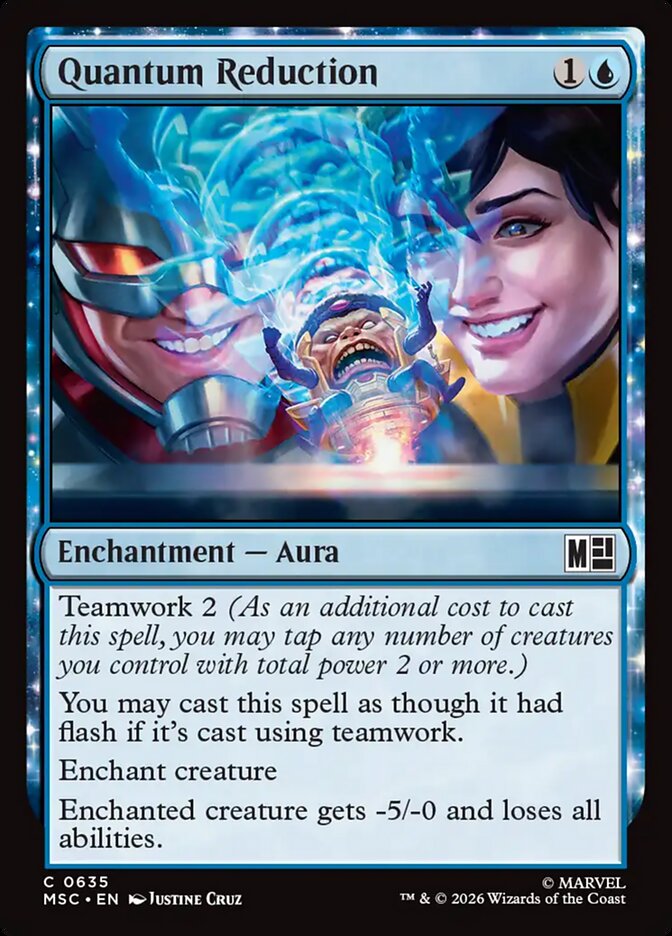
- Quantum Reduction
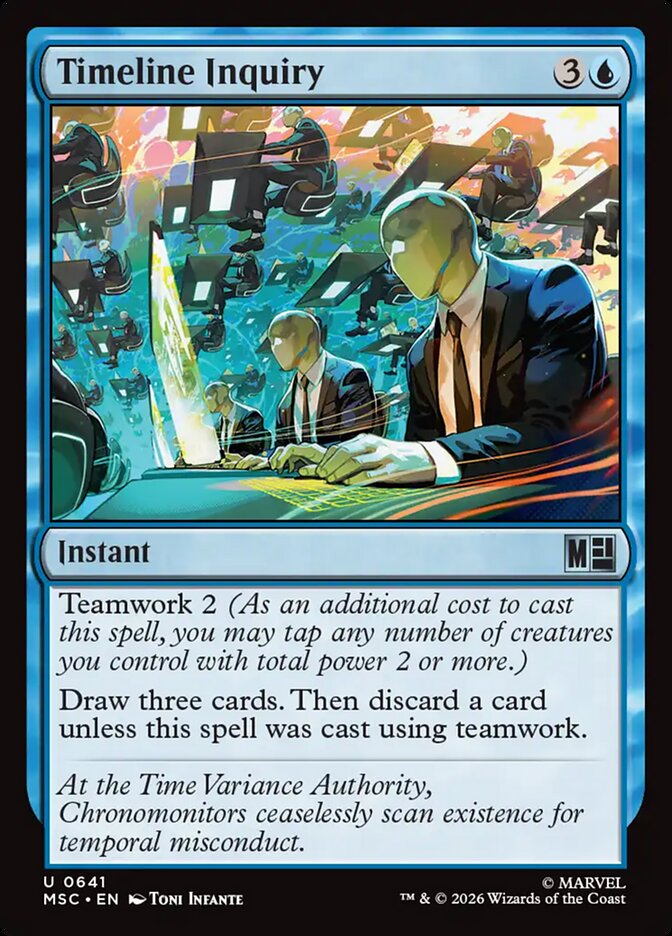
- Timeline Inquiry
- We Say Thee Nay!
- Cruel Alliance
- Too Evil to Stay Dead
- Widow's Bite
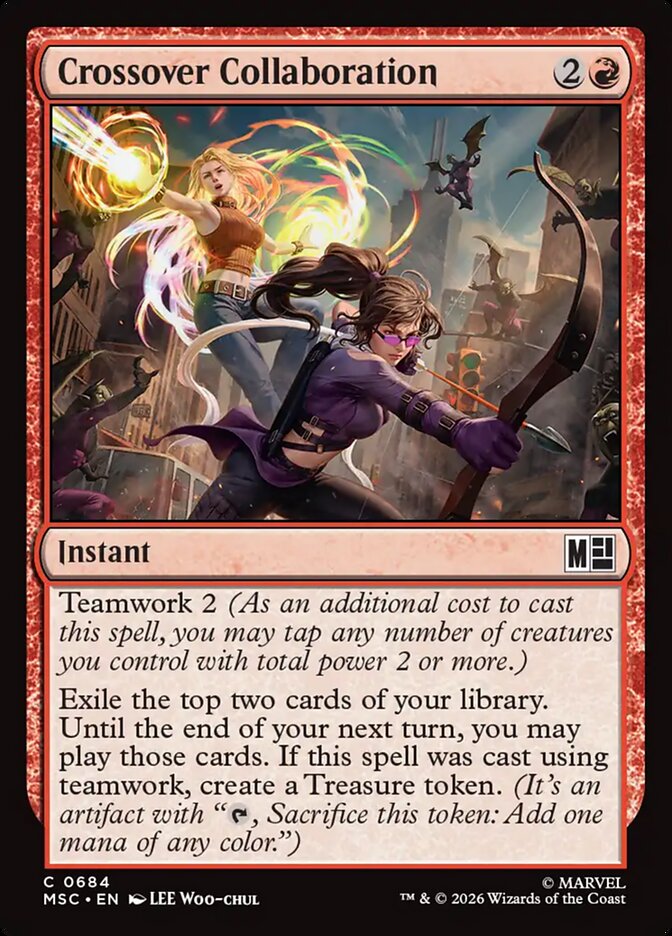
- Crossover Collaboration
- HULK SMASH!
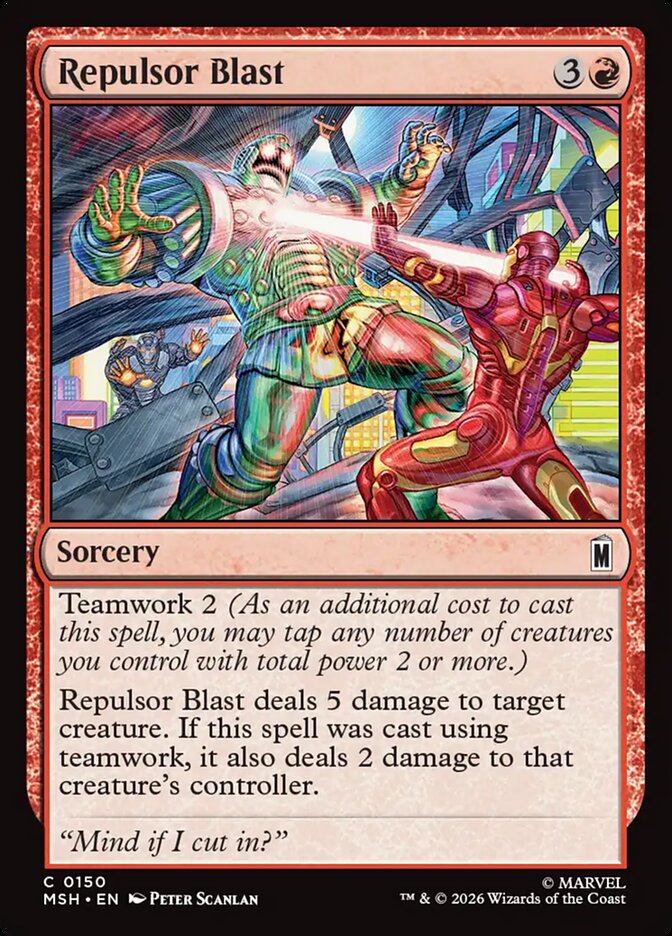
- Repulsor Blast
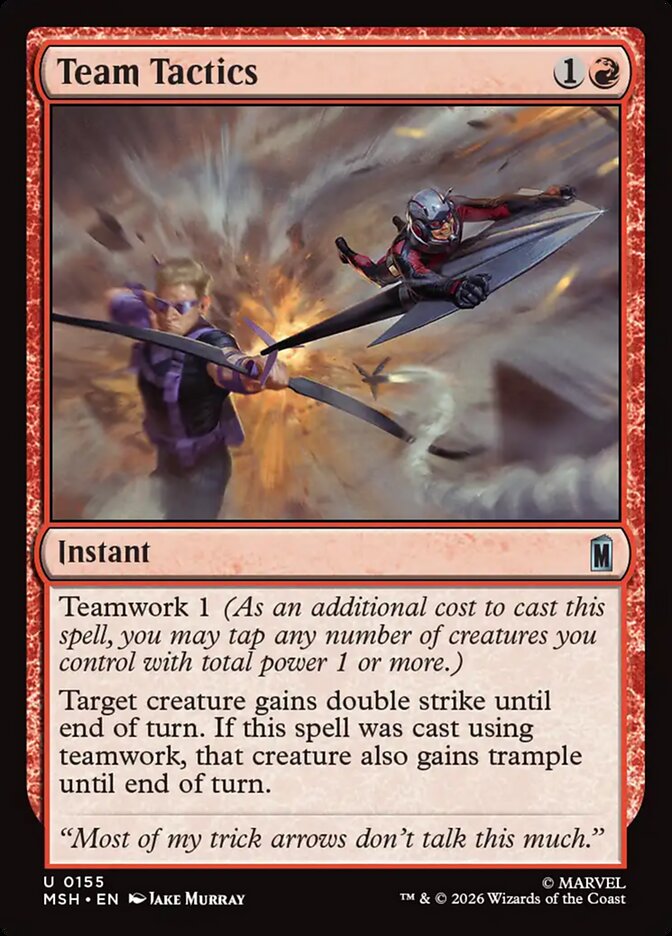
- Team Tactics
- Beast Mode
- Earth's Mightiest Heroes
- Go Nuts!
Best Teamwork Cards
#8. Go Nuts!
Go Nuts! is a little upgrade on Prey Upon, but it’s always good to put a +1/+1 counter on the creature before fighting. Sometimes you’ll tap the creature that should be fighting and take a little tempo loss, but most of the time it’ll be okay. Then there’s other situations when one creature fights (and maybe dies) while the other receives the counter and gets in.
#7. HULK SMASH!
I’ll first evaluate this card as though you only get one mode, and it’s passable. HULK SMASH! at the very least smashes something, be it a lone artifact or another creature your opponent controls. When you get both modes, it’s an easy two-for-one most of the time, especially in Commander games. The main competition for this card is Abrade, which is more reliable but more limited.
#6. Atlantis Attacks
Atlantis Attacks looks super cool. I mean, a 6/5 hexproof token isn’t nothing, and it can win some games. When you add a double unsummon effect, it’s even better. A 6/5 creature that bounces two nonland permanents is strong.
#5. Too Evil to Stay Dead
Too Evil to Stay Dead is weird. Three mana for Unearth is bad, although you can get a 4-mana creature. Three mana for Zombify isn’t bad at all. The effect is very good, but teamwork 4 looks like a lot, and these effects are often played when you have an empty board. There’s a little concern that it can be very good in decks that play Superior Spider-Man, speeding up the clock by one turn.
#4. Crossover Collaboration
A Commander card, Crossover Collaboration lets us impulse draw at instant speed, and for the small teamwork cost of 2, even generate a Treasure token to ease casting those spells. Of course, you can untap your resources and play those cards, too. There aren’t that many ways to do that at instant speed, so this card gets a little nod, especially in spellslinger and combo decks.
#3. We Say Thee Nay!
In a Standard format that has Aang, Swift Savior and Aven Interrupter, tapping 2 power doesn’t seem hard to make the jump from Quench to Convolute, and it looks like blue players will have a few copies of We Say Thee Nay! around. Another thing that caught my attention with this card is that it’s an arcane instant, and this set has another arcane card in Hex Magic. It’s probably nothing, but I don’t think it’s impossible that splice will return in a future set – I was wrong about the return of learn in Secrets of Strixhaven, but still.
#2. Team Tactics
It’s another age of MTG entirely, but Temur Battle Rage has defined some formats. Team Tactics can be excellent in the right green monsters deck, and if it is, people will find a way to have a 1-power dork around to tap. The combination of double strike and trample hits hard, but just double strike for 2 mana can be a little lackluster.
#1. Earth’s Mightiest Heroes
The big mythic rare with the headliner mechanic is often going to be the best card, right? See the Unwritten saw a little play in green decks that cheat creatures into play, and this card can be a lot better. Earth's Mightiest Heroes has a pretty big upside when you pay the teamwork cost: Sometimes you’ll get 4-5 creatures for free onto the battlefield, regardless of their mana value and additional costs.
Wrap Up
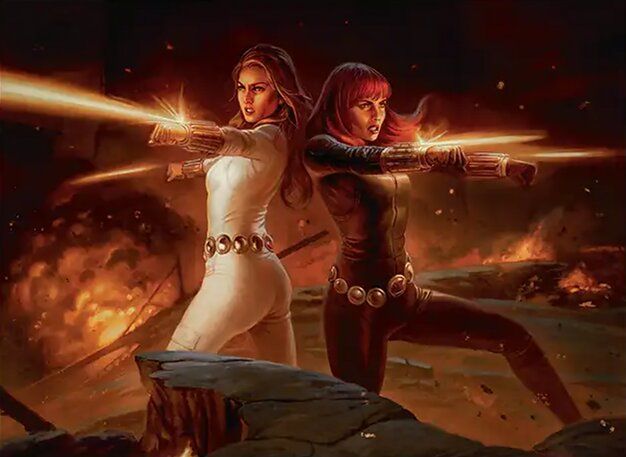
Widow's Bite | Illustration by Borja Pindado
Teamwork is mainly a Limited mechanic present on commons and uncommons. There are very few payoffs for teamworking, like Agent Maria Hill in Standard or Virtual Assistant in Commander. But my guess is that these’ll be highly picked commons in Draft, and they’ll make your pools most of the time.
Do you enjoy the teamwork mechanic? Do you think they’ve done a better job with this set’s mechanics than with Marvel’s previous set (yes, that one.)? Let me know in the comments below. And for more on Marvel Super Heroes’ release and news, check out our YouTube channel, The Daily Upkeep.
Teamwork will (probably) return in MARVEL’S NEXT MTG Universes Beyond Set.
Follow Draftsim for awesome articles and set updates:










Add Comment