
Last updated on May 29, 2026

Rona, Herald of Invasion | Illustration by Victor Adame Minguez
Dimir () is often dissociated from creatures due to its focus on being controlling, with strong interaction and draw spells defining the color pair. But it has its share of powerful creatures, especially because Commander encourages Wizards to print powerful legends.
From sneaky ninjas to terrifying kaiju, cheap threats to control finishers, Dimir has a host of powerful creatures to improve your Cubes and decks. Let’s see the best creatures that this color pair has to offer!
What Are Dimir Creatures in MTG?
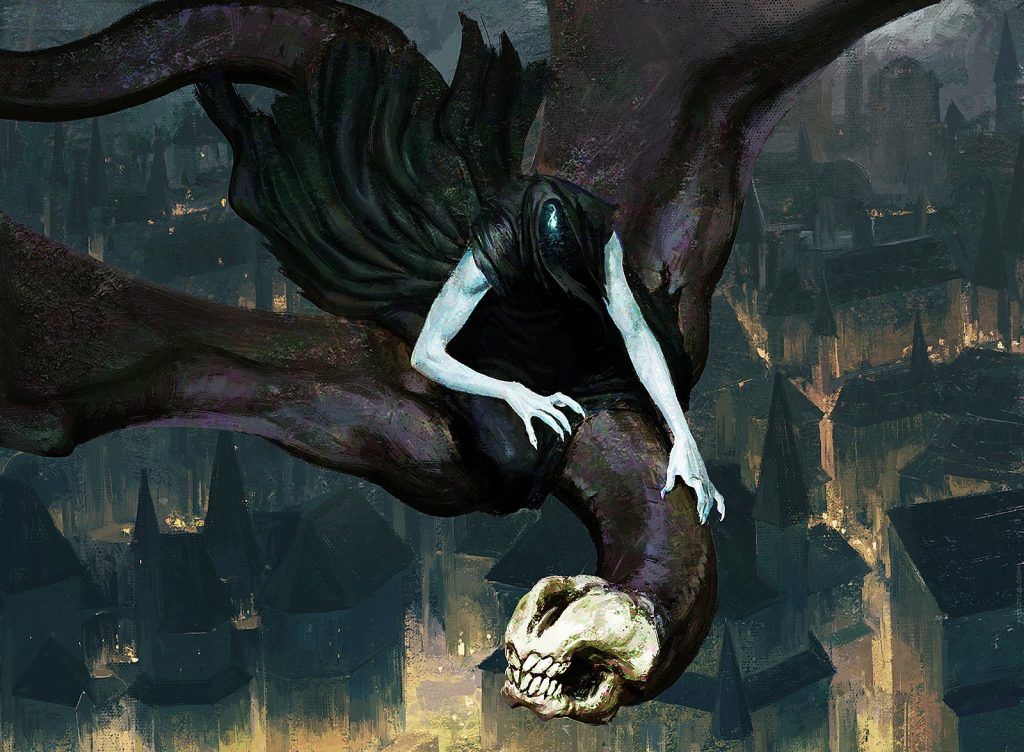
Thief of Sanity | Illustration by Igor Kieryluk
Dimir () creatures have a blue-black color identity, typically due to their mana cost, but they may get the color identity because they have activated abilities of the other color or transform into a permanent with a different color.
Dimir creatures are often controlling, caring about card draw (or producing it), disrupting your opponents, and overall being tricksy. A few creature types Dimir broadly cares about are zombies, faeries, and ninjas, all of which crop up on the list.
#45. Brine Shaman
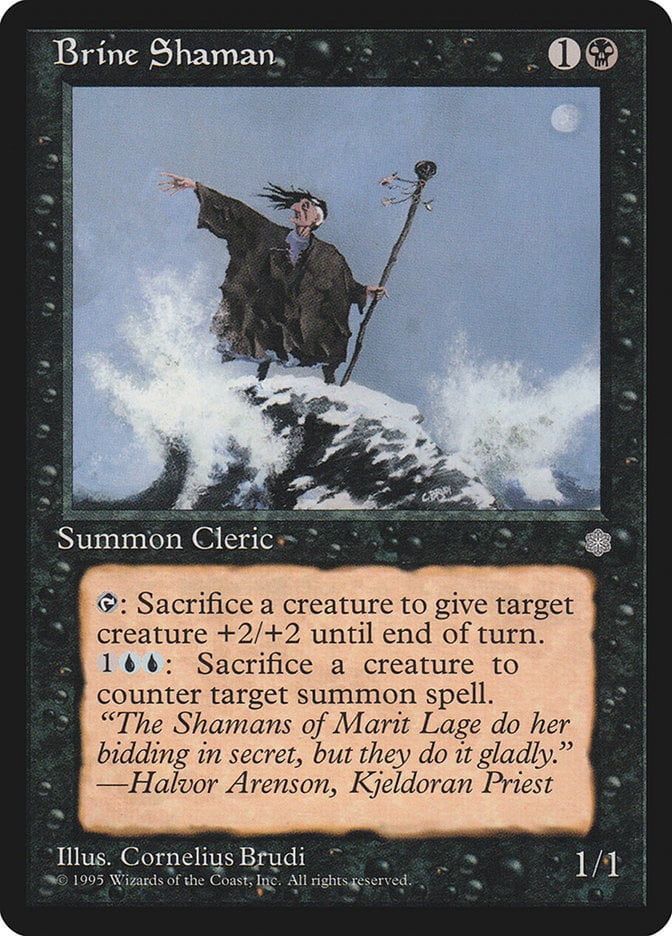
Cancel is pretty mediocre these days, but what if you could do it again and again? Brine Shaman is a super niche card that belongs only in Dimir sacrifice decks—a rather uncommon archetype—but it provides continuous Essence Scatters if you keep it down.
#44. Cavern Harpy
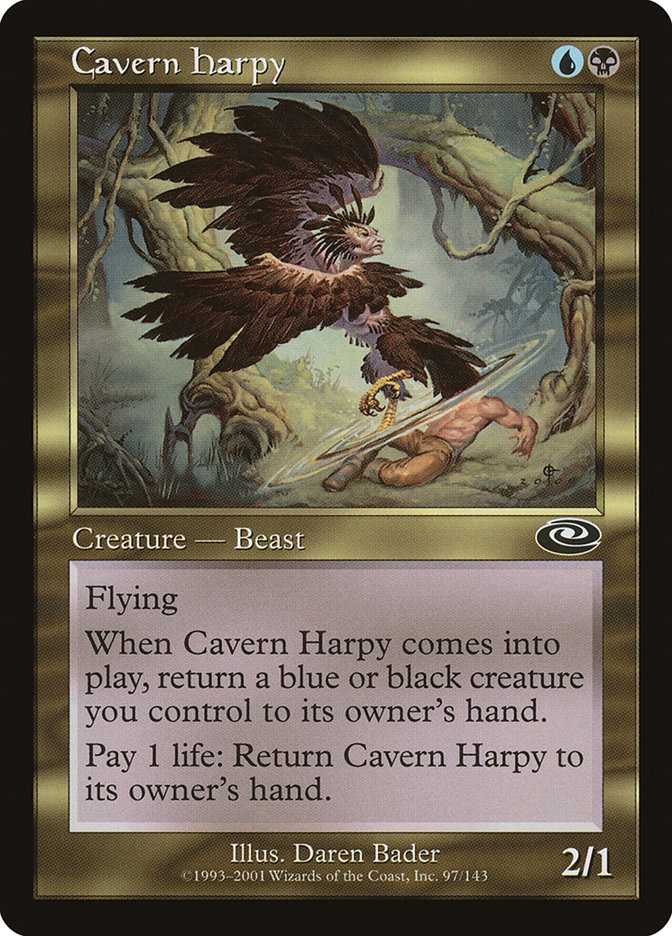
Cavern Harpy made a name for itself with Aluren combo decks that let you construct infinite loops by bouncing Cavern Harpy and other creatures around, but it also works as a setup piece for Dimir flicker decks: You can play it to bounce Baleful Strix to your hand, then bounce the Harpy again to do it all over.
#43. Consuming Aberration
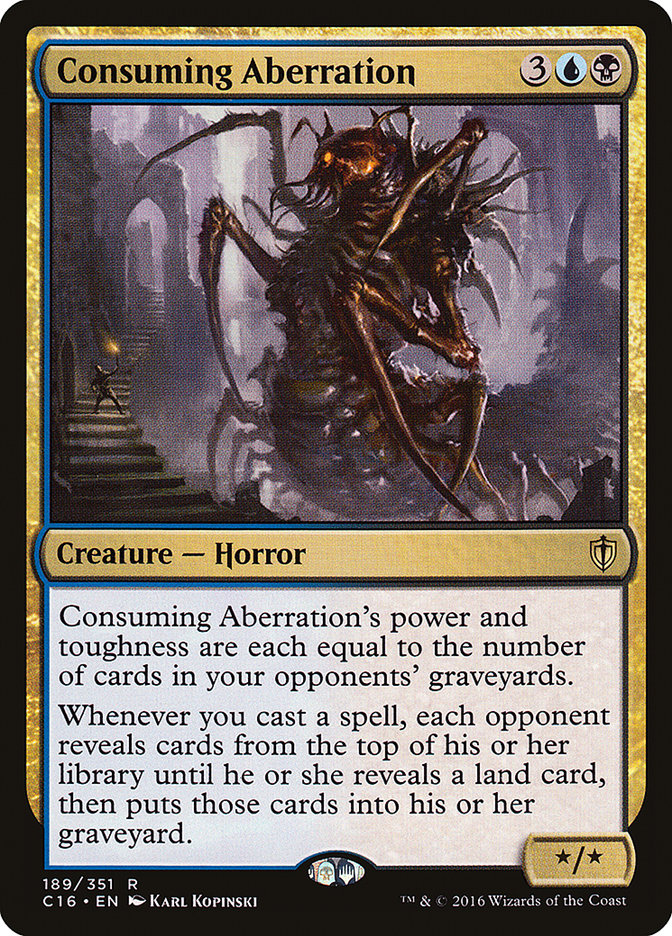
Consuming Aberration often pays off mill decks as a colossal threat that grows as your Mesmeric Orb and Hedron Crab whittle away your opponent’s dreams. It even mills cards itself to grow, though I wouldn’t recommend relying on it as your only source of mill.
#42. Duskmantle Guildmage
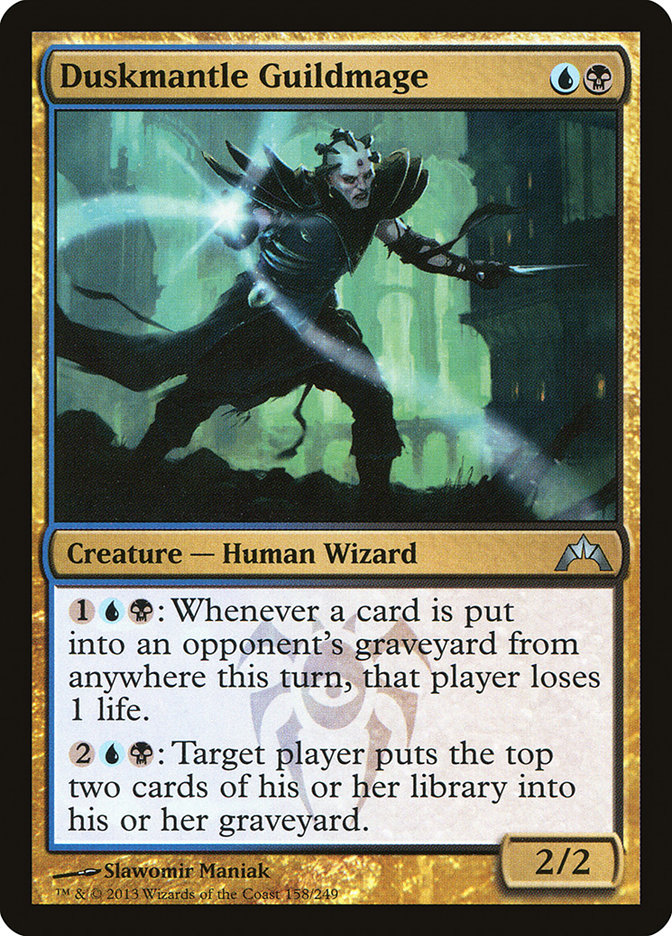
Duskmantle Guildmage is best known for going infinite with Mindcrank to mill your opponent to death, though it has other applications as a cheap, low-rarity infinite mana outlet or win condition for mill decks.
#41. Kels, Fight Fixer
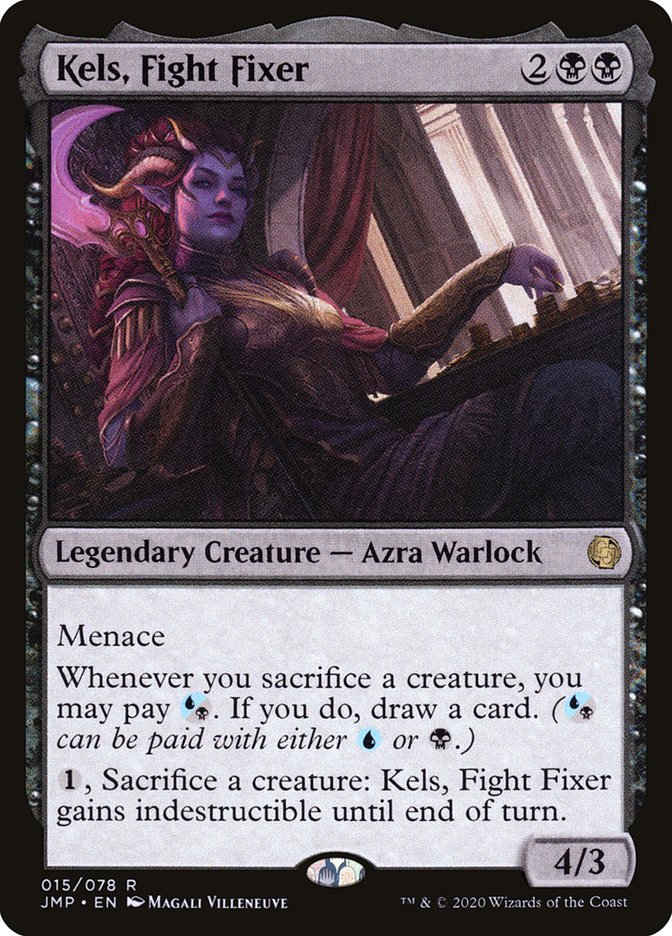
One of the simplest payoffs for any archetype is to tack card draw on it somewhere, which allows Kels, Fight Fixer to be a respectable sacrifice commander. Serving as both payoff and sacrifice outlet makes it useful at most points in the game, though the sacrifice outlet effect is rather narrow. You need to surround Kels with powerful death triggers to make it work since the activated ability won’t win the game.
#40. Atris, Oracle of Half-Truths
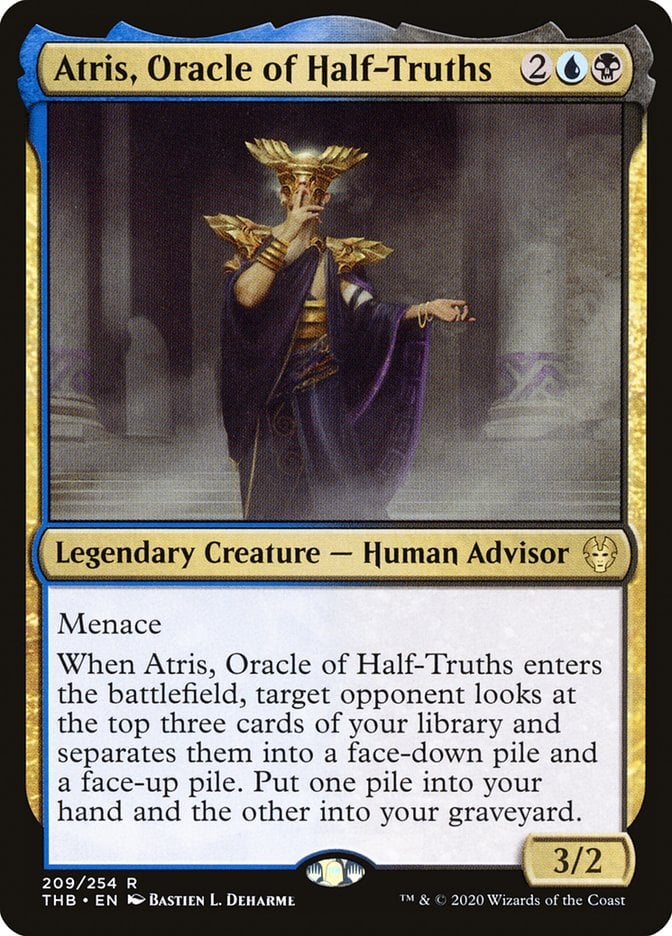
Fact or Fiction tied to a creature is one of my favorite cards. Atris, Oracle of Half-Truths always draws at least one card when it enters and fills the graveyard. Between card draw, a strong enters ability, and the graveyard fuel, it touches on most synergies Dimir cares about. It’s a bit pricey and slow, but a lot of fun.
#39. Silas Renn, Seeker Adept

Silas Renn, Seeker Adept has lots of potential as a commander and it has nothing to do with the text box. cEDH players commonly deploy Tezzeret’s mortal foe as a partner that gives them access to the format’s two best colors—blue for Rhystic Study and black for tutors—alongside Rograkh, Son of Rohgahh. If you want a partner pairing that utilizes Silas’s abilities, try Akiri, Line-Slinger or Rebbec, Architect of Ascension.
#38. Cruel Somnophage
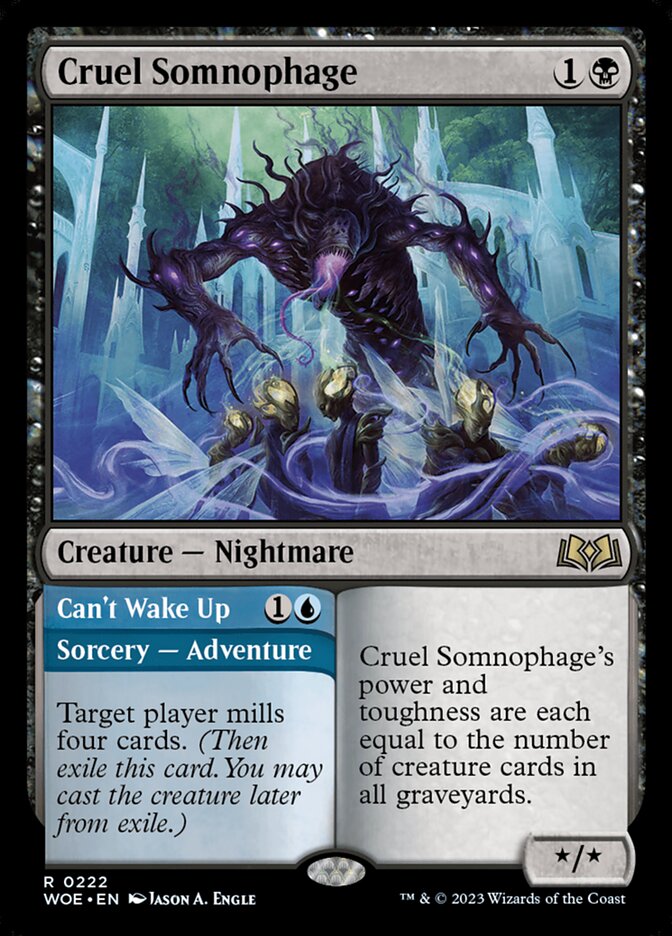
Cruel Somnophage does a paltry Tarmogoyf impression by growing alongside the graveyard, but the adventure, Can't Wake Up, kickstarts things. A cheap self-mill payoff that grows in real time is a cool build around.
#37. Master of Death
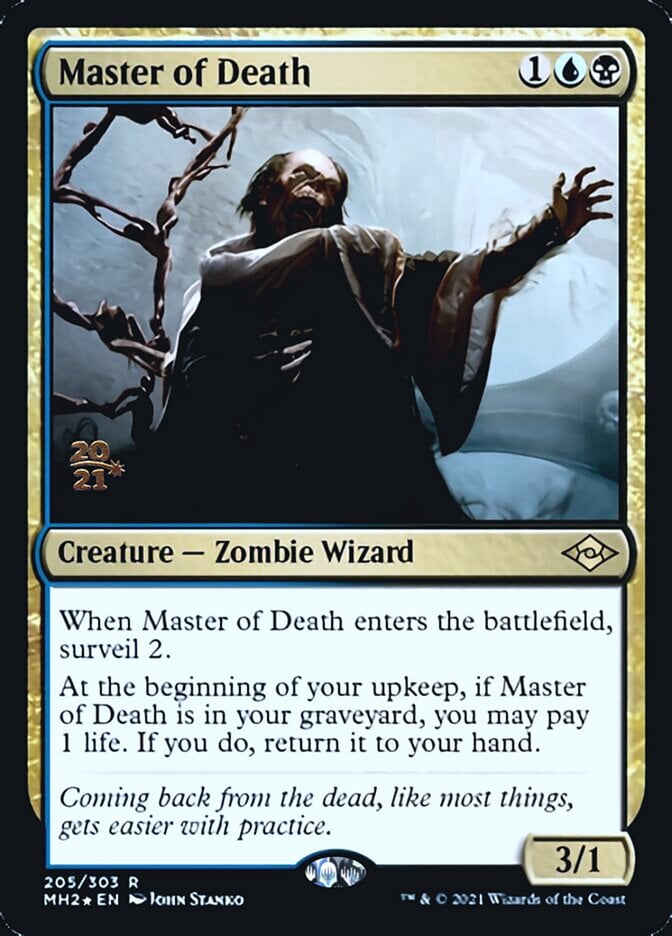
Master of Death has niche applications in decks that consistently discard spells. My favorite application is to use it to break the symmetry of cards like Liliana of the Veil and Necrogen Mists in Commander—I discard the Master every turn while my opponents hemorrhage resources. It also plays nicely with Magic’s many leaves the graveyard payoffs like Teval, the Balanced Scale since it consistently triggers them once each turn.
#36. Halo Forager
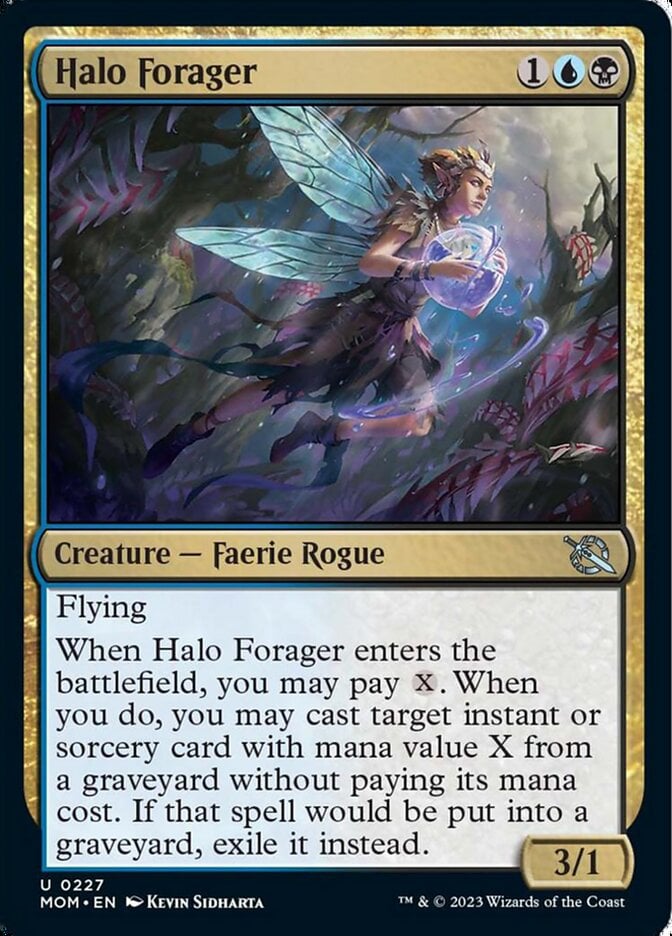
Halo Forager kicks the power level of Snapcaster Mage down several levels, but being a faerie nearly makes up for it. This won’t win any tournaments, but a flying creature with a good enters ability and relevant creature type has a role in more than a few formats. It’s exactly what I want in Peasant Cube, for example.
#35. Cunning Nightbonder
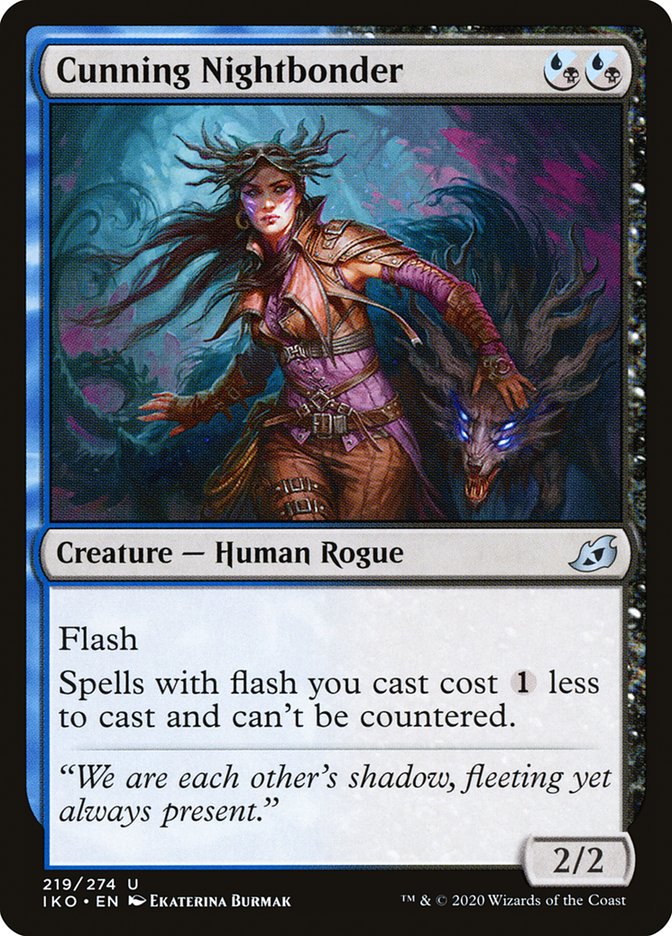
Cunning Nightbonder combines cost reduction and uncounterability into a single package that would be busted if it weren’t so narrow: It only helps cards with flash. But the right archetype—like faeries—makes good use of that, so you should keep it on your radar.
#34. Dimir Infiltrator
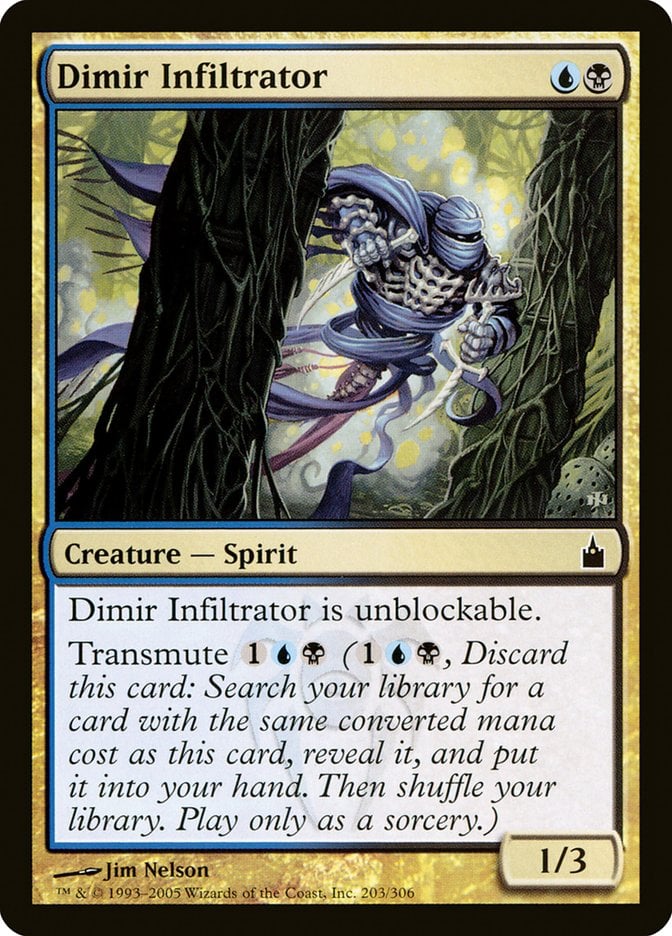
Dimir Infiltrator is remarkable for its transmute ability. Sure, ninjas and Coastal Piracy variants like unblockability, but what about a tutor that goes on the stack as an ability, thus dodging most countermagic? It’s a little slow since it only works at sorcery speed, but it’s perfect when your strategy revolves around a 2-drop and you’re either avoiding Game Changers or already have the good tutors.
#33. Dinrova Horror
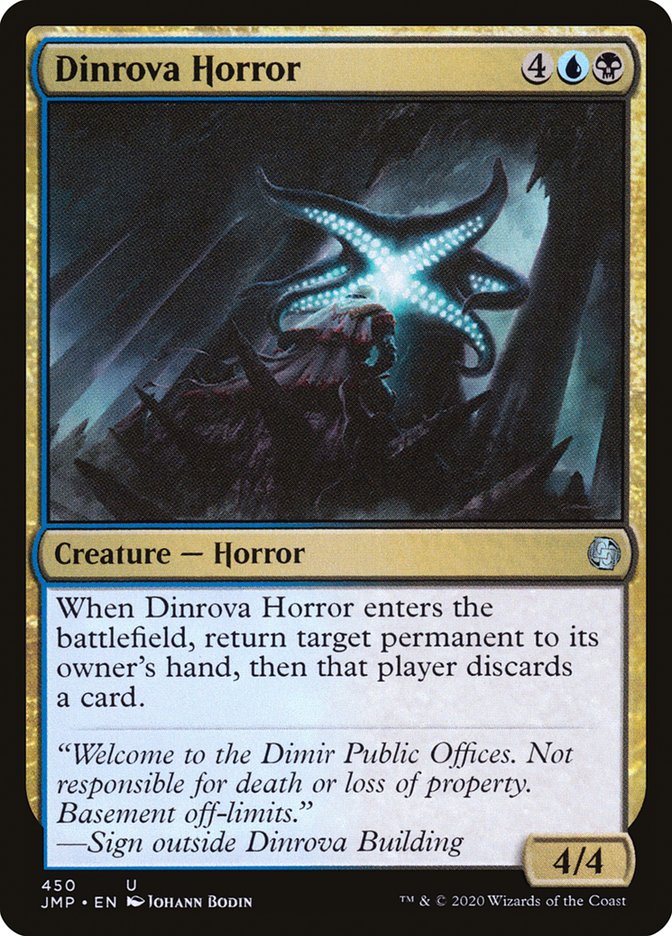
Dinrova Horror has an immense text box for its rarity. It works best as top-end in Pauper Cube and Peasant Cubes that want a powerful payoff for Ghostly Flicker and other blink effects—it’s often the perfect control finisher and a reward for drafting good fixing.
#32. Callidus Assassin
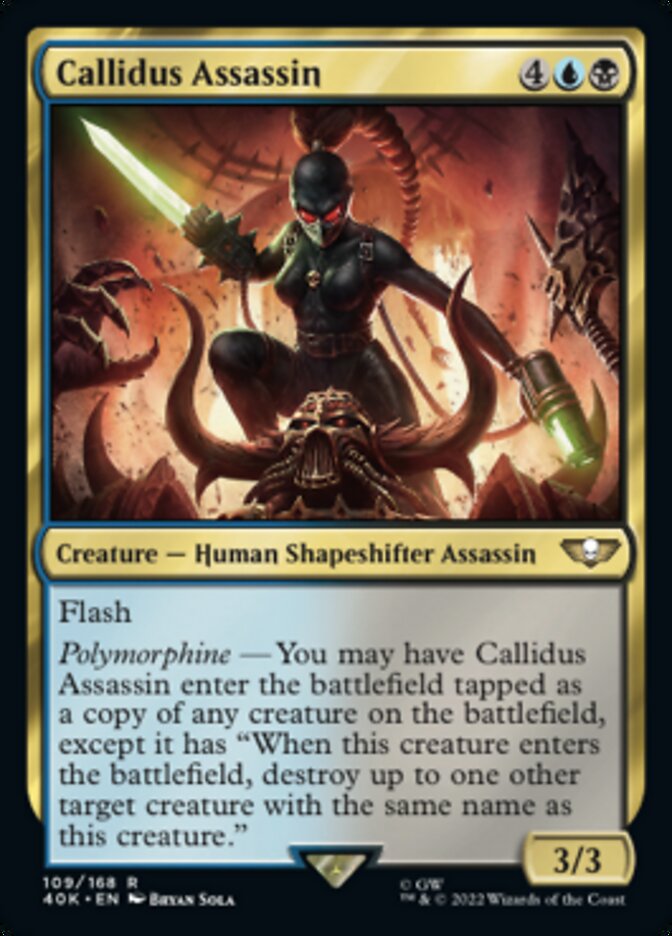
Clones are fun, especially in Commander, where everybody plays wild threats. Callidus Assassin kicks it up a notch by murdering whatever it copies as an enters trigger. It’s a perfectly priced clone for casual Commander, which is exactly where it belongs.
#31. Dreadwing Scavenger

Looting every turn both fuels the graveyard and sculpts the perfect hand for your to dominate with, which makes Dreadwing Scavenger a great threat, albeit one that belongs at lower-powered tables. Threshold is a nice reward: You loot through the midgame, sculpting a better hand, and eventually turn this into a finisher.
#30. Oskar, Rubbish Reclaimer
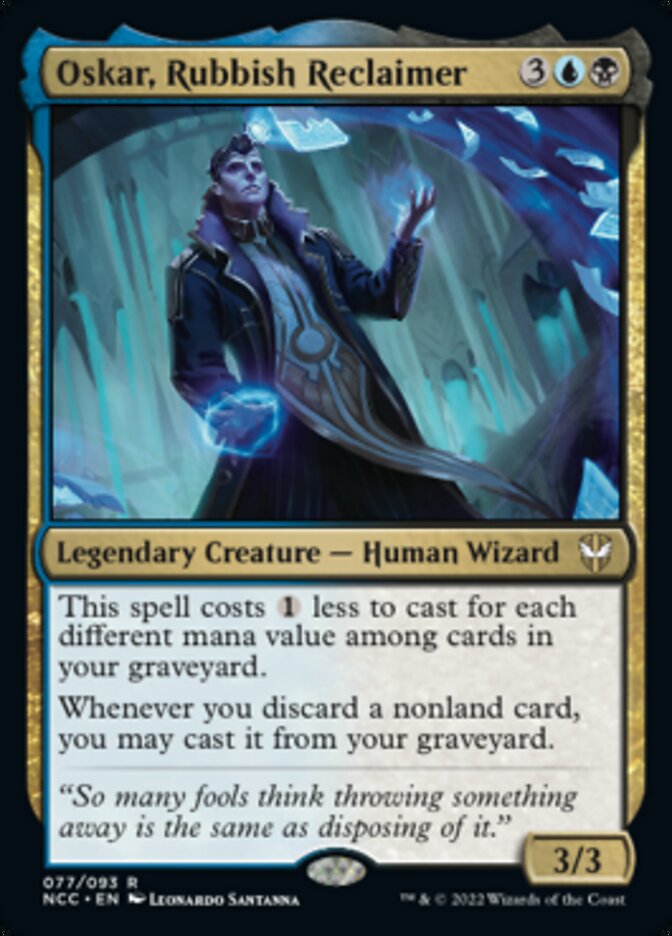
Oskar, Rubbish Reclaimer exploits Dimir’s many, many loot effects to become a strong card advantage engine. We can’t overlook the cost reduction, either; commanders that cheat on the command tax or their cost are quite sticky since you can keep casting them over and over. Oskar’s biggest weakness as a commander is how many discard payoffs have migrated to red (see: Inti, Seneschal of the Sun, Captain Howler, Sea Scourge), which makes this best-suited as a support piece in Grixis ().
#29. Gisa and Geralf
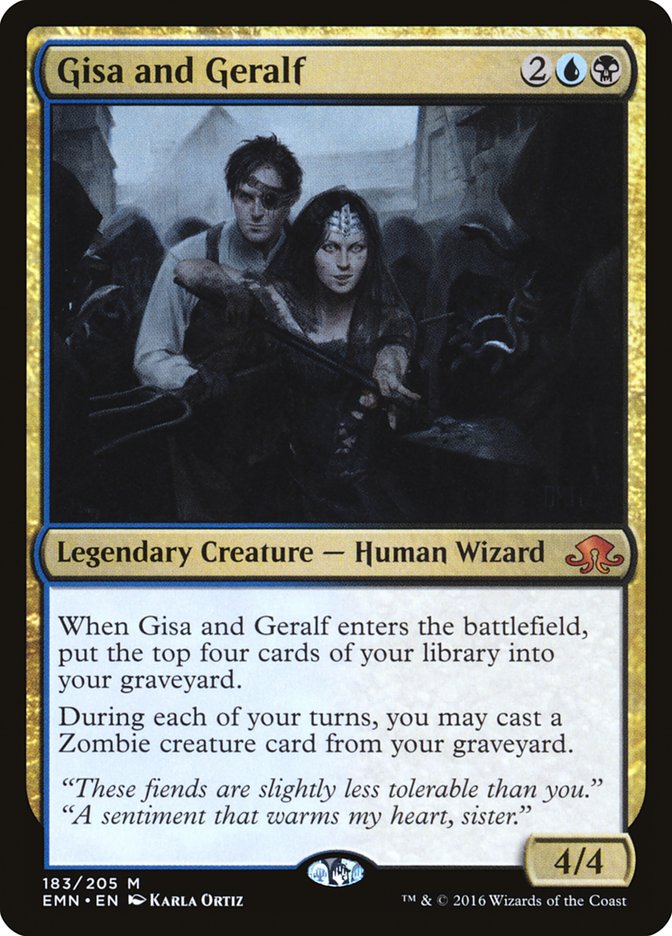
Gisa and Geralf combine their powers to become a zombie-engine that churns through the undead, continuously resurrecting them so you can retrigger abilities from cards like Accursed Marauder and Gray Merchant of Asphodel. Though other zombie commanders have outpaced it, this one’s still worth considering or playing as a zombie support piece.
#28. Araumi of the Dead Tide
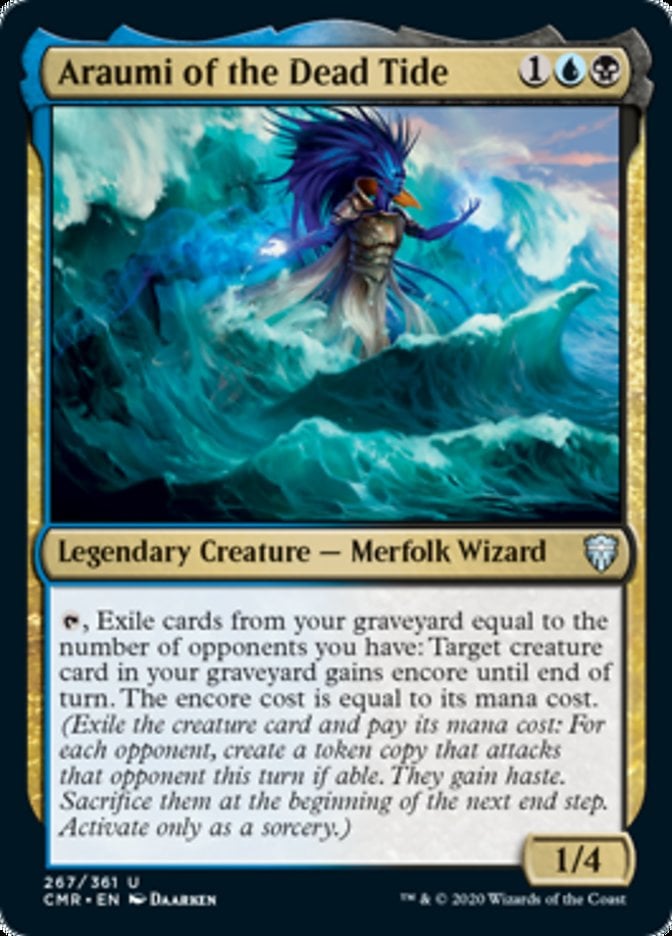
Araumi of the Dead Tide doesn’t look like a flicker commander, but it often exists in the same space since encore wants to exploit powerful enters the battlefield effects—it just does it from the graveyard. Dropping three copies of cards like Gray Merchant of Asphodel, Mulldrifter, and Peregrine Drake pushes the game in your favor.
#27. Cybernetica Datasmith
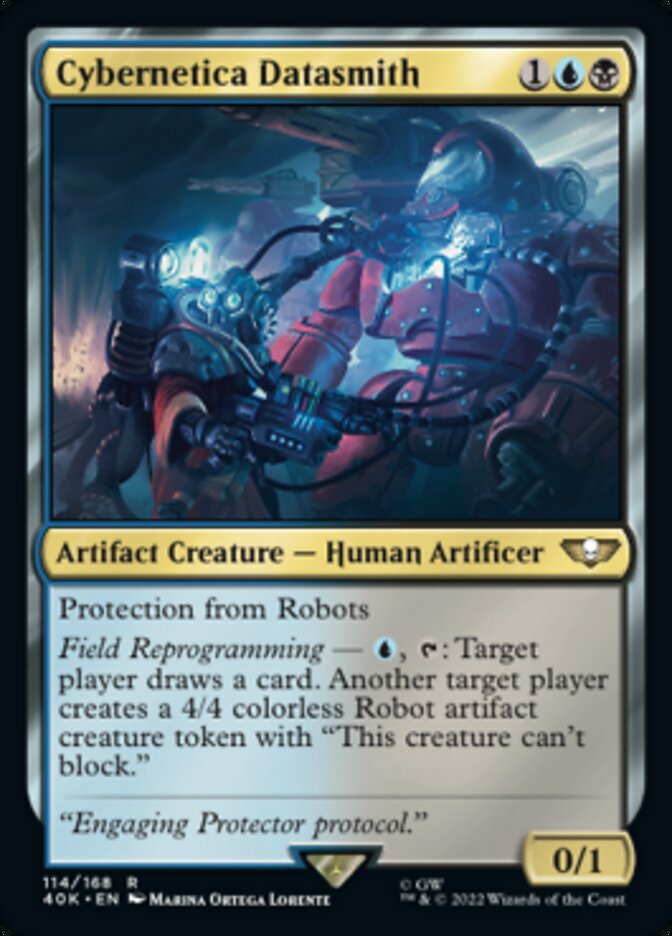
Cybernetica Datasmith has political implications in Commander. You’ll often want to make more artifact creatures while making a friend or two with the stream of card draw. This card pairs nicely with green and its many Elemental Bond variants that draw cards as hefty creatures enter.
#26. Nymris, Oona’s Trickster
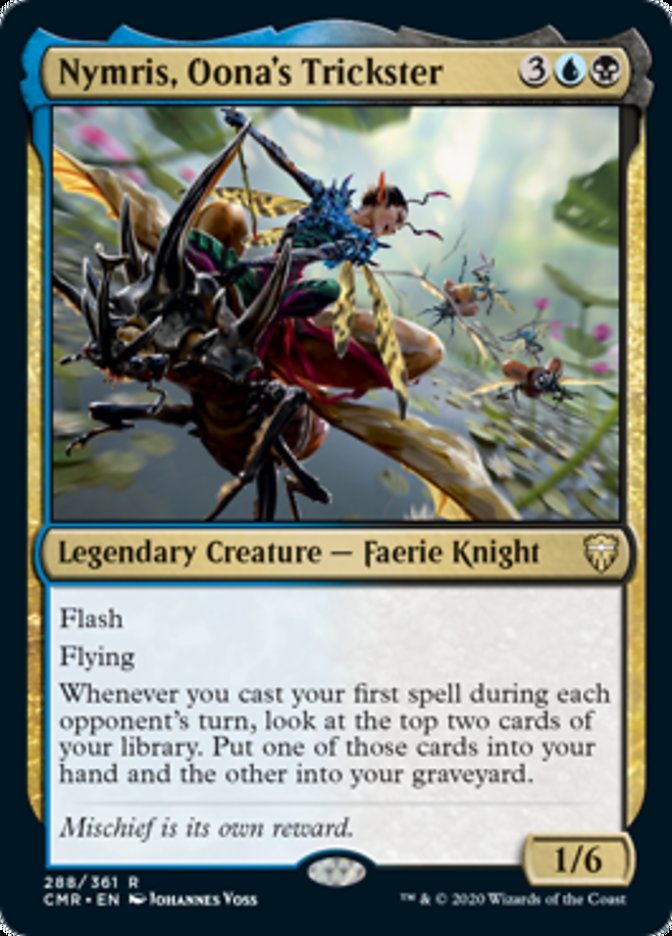
Nymris, Oona's Trickster is a perfect payoff for instant-speed strategies. It often plays second fiddle to cards like Alela, Cunning Conqueror and Y'shtola, Night's Blessed that reward you for controlling strategies. Making every counterspell or removal or draw spell cantrip and fill your graveyard offers incredible card advantage.
#25. Deceit

Deceit has a beautiful design. Tying the enters ability to the mana spent on the card proves that Wizards learned from Grief, and it opens the door to so many options. This is basically a charm that scales with the game and attacks your opponent.
#24. Ingenious Infiltrator
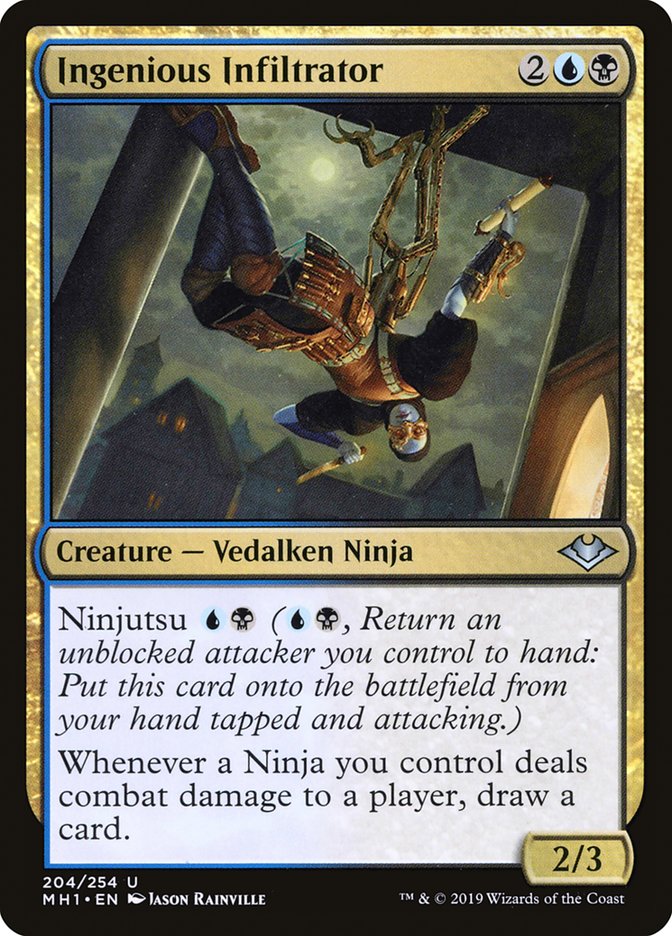
Ingenious Infiltrator’s ceiling needs other ninjas, but it doesn’t need them that bad; baseline, it’s Ninja of the Deep Hours. Since the trigger isn’t restricted to once per turn or anything dull like that, you can squeeze multiple cards from a single combat relatively easily.
#23. Eloise, Nephalia Sleuth
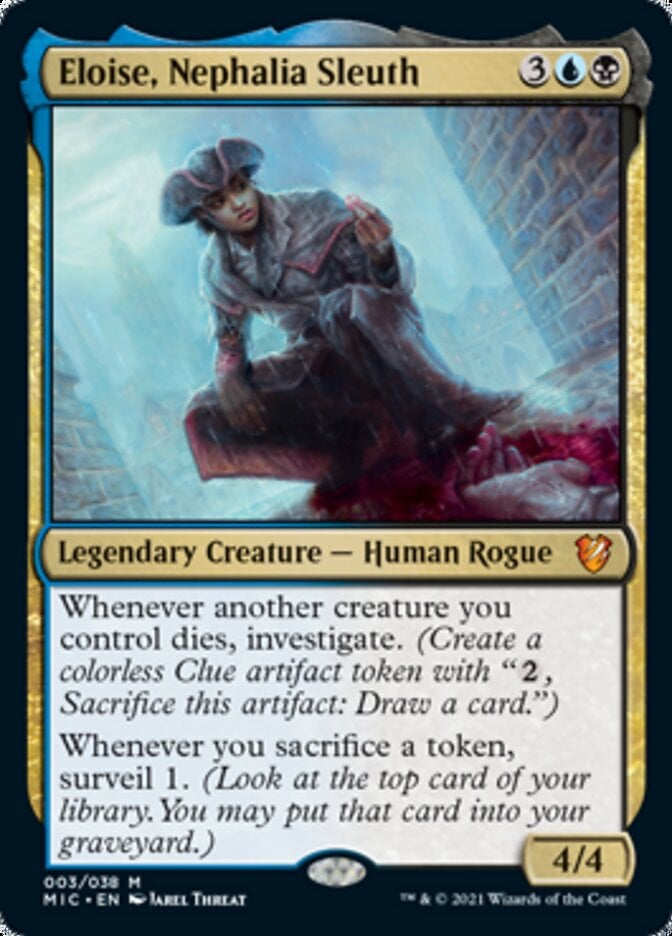
Eloise, Nephalia Sleuth converts creatures’ deaths into Clue tokens, which makes it one of the few Dimir sacrifice commanders in the game. The combination is quite potent, especially as Wizards keeps printing cards like Deadly Dispute and Joo Dee, One of Many that can sacrifice creatures or artifacts; it makes Eloise both the sacrifice payoff and a source of sacrifice fodder.
#22. Diregraf Captain
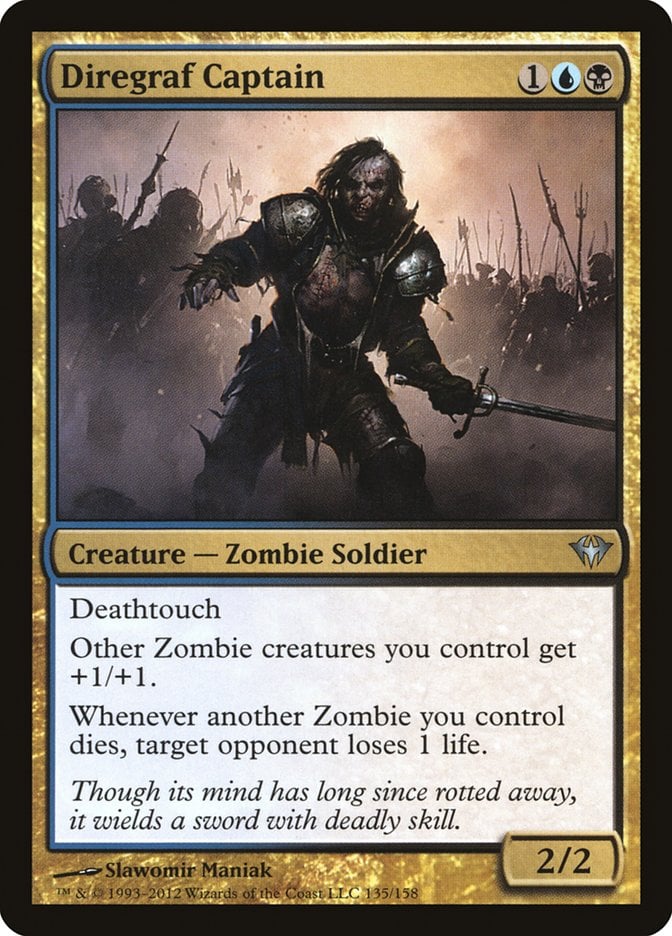
Diregraf Captain is the quintessential zombie lord in Dimir (). While the archetype has a host of mono-black options, the death trigger makes this a nasty threat: Pinging your opponents as zombies die gives you another angle of attack and means Wrath of God might not be enough to salvage a game.
#21. Nashi, Searcher in the Dark

Nashi, Searcher in the Dark rewards you for stacking your deck with legendary creatures or enchantments, but legends are the real deal: Various flavors of 5-color legends have cropped up in Standard and Pioneer, and a cheap threat that gradually grows or draws cards fits right into those lists. Filling the graveyard doesn’t hurt Dimir decks, either.
#20. Sire of Stagnation
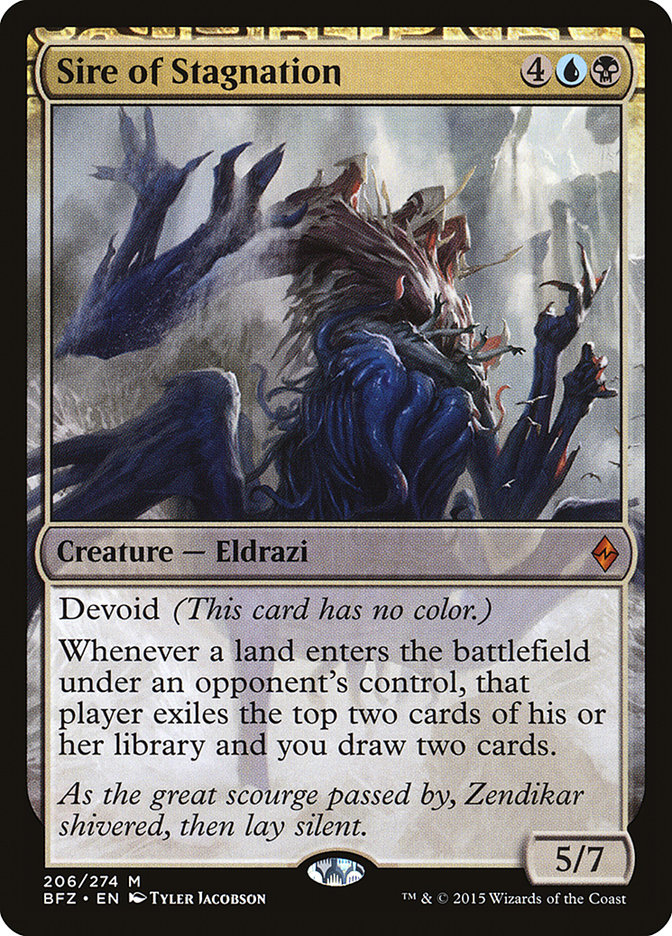
Sire of Stagnation is, in my opinion, heavily underrated in Commander. It’s like an inverse landfall card that benefits you with a significant amount of card draw when one of your three opponents makes a land drop! Sure, a lack of enters ability means it won’t make waves at high power levels, but it’s a great low-powered and budget-friendly alternative to something like Consecrated Sphinx or Rhystic Study.
#19. Wilhelt, the Rotcleaver
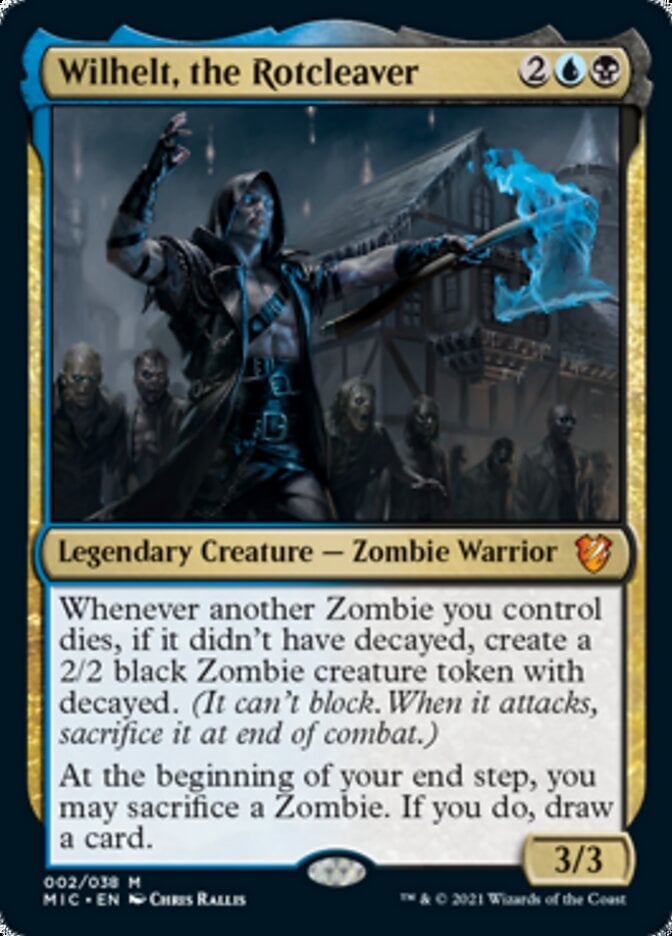
Wilhelt, the Rotcleaver has long been one of Dimir’s most popular commanders, in large part because it’s a perfect commander for one of Magic’s most popular creature types. The steady stream of tokens and card draw rewards you for playing zombies without being super restrictive; you can go for combo-zombies with Gravecrawler and Rooftop Storm, or midrange zombies that go wide, or battlecruiser zombies with cards like Army of the Damned.
#18. Gyruda, Doom of Depths
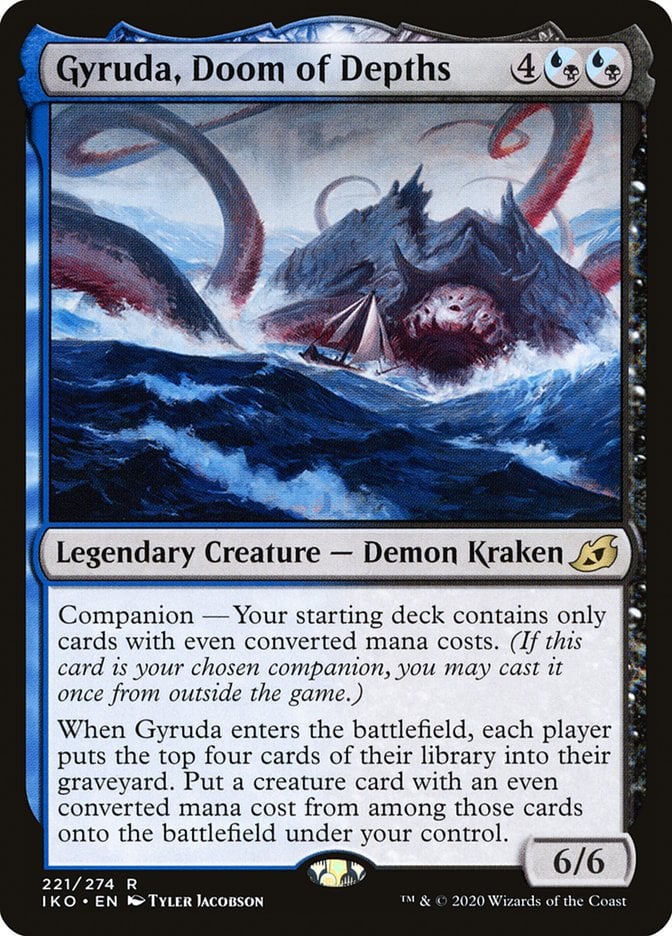
As far as companions go, Gyruda, Doom of Depths is one of the fairer ones, with a strange restriction. But its real power might lie in being a commander, where it’s commonly played alongside a billion Clone variants to churn through your deck. It’s also an excellent reanimation target as it often brings another creature with it, especially in Commander.
#17. Emet-Selch, Unsundered / Hades, Sorcerer of Eld


Emet-Selch, Unsundered debuted to great fanfare in the cEDH community because Hades, Sorcerer of Eld is just Yawgmoth's Will on a stick. While it hasn’t revolutionized the format, it’s still a powerful commander for anybody aspiring to reach Bracket 3 or 4 due to its power as a combo enabler that exploits the graveyard.
#16. Hostage Taker
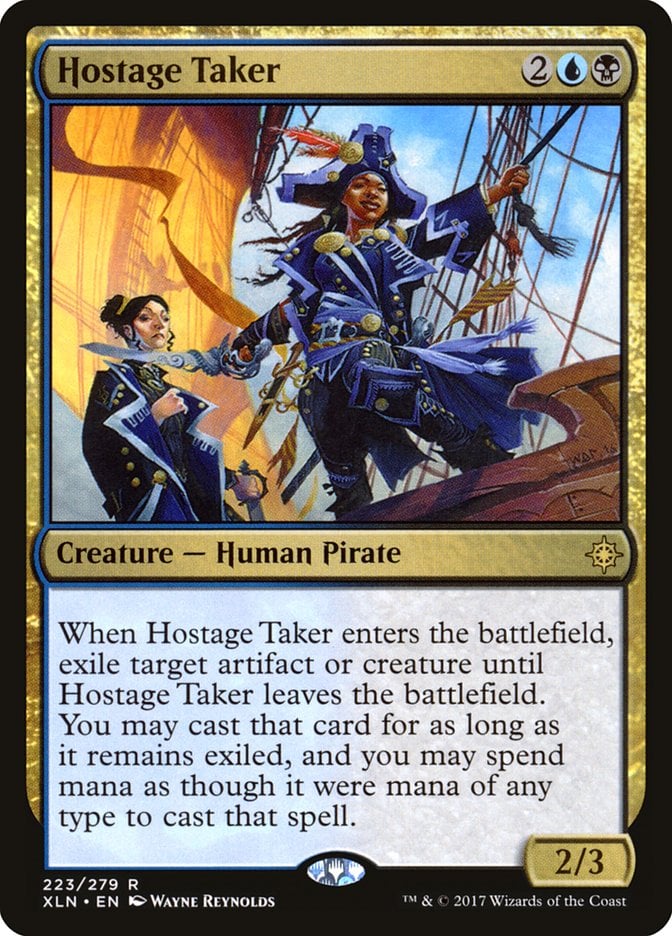
Hostage Taker does everything Dimir could hope for. Removing an artifact or creature, even temporarily, provides a powerful boost, if only because you get in an extra attack or two. But if you cast that card? Not just removing a threat but stealing it gives you a monumental boost—there’s a reason all the Mind Control variants printed in the past few years have various restrictions on them.
#15. Oildeep Gearhulk

Oildeep Gearhulk is the perfect midrange threat. The enters trigger destabilizes your opponent and lifelink either stabilizes you against aggro or lets you win the race. Ward 1 is just enough to make removing this annoying since it has a large enough body to dodge most cheap removal spells like Lightning Bolt and Torch the Tower. It just does lots of little things right, enough to justify the extremely color-intensive cost.
#14. Superior Spider-Man

Superior Spider-Man has made a huge splash in Standard and beyond as a clone that copies creatures in the graveyard, with explosive payoffs. The trick to this is that it counts as being cast when entering as a copy of cards like Bringer of the Last Gift that specify they must have been cast to get around reanimating them. That little synergy makes this one of the strongest Spider-Man cards.
#13. Thief of Sanity
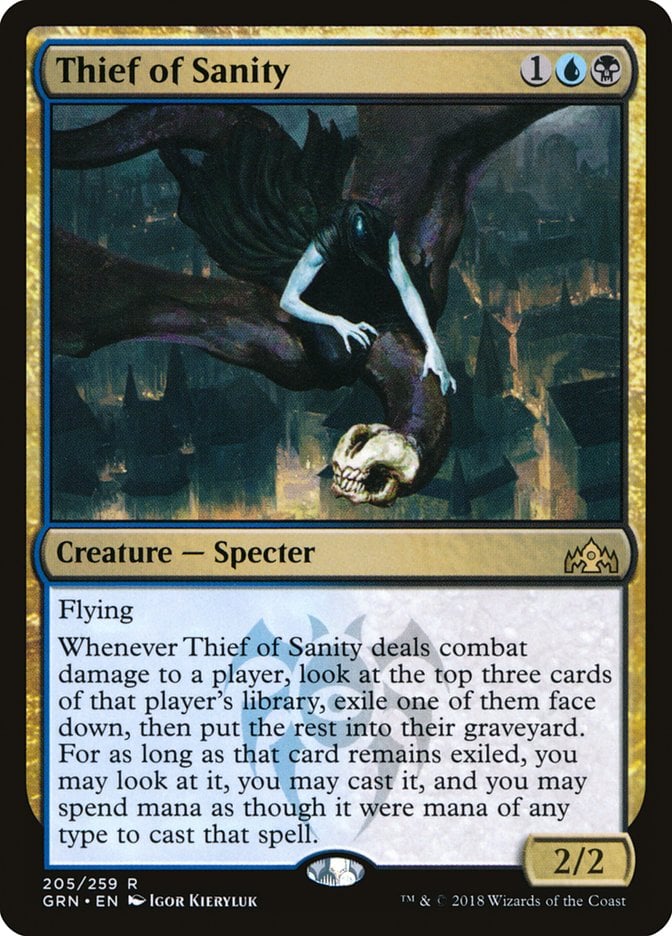
I love Thief of Sanity dearly. It’s a sleek, powerful threat held back only by its fragility: It dies to practically anything your opponents run to interact with creatures, from Shock upwards. If unchecked, its steady card advantage and chip damage give you an excellent foundation at winning the game; those qualities are strong enough to warrant running it and forcing your opponents to have the answer.
#12. Alela, Cunning Conqueror
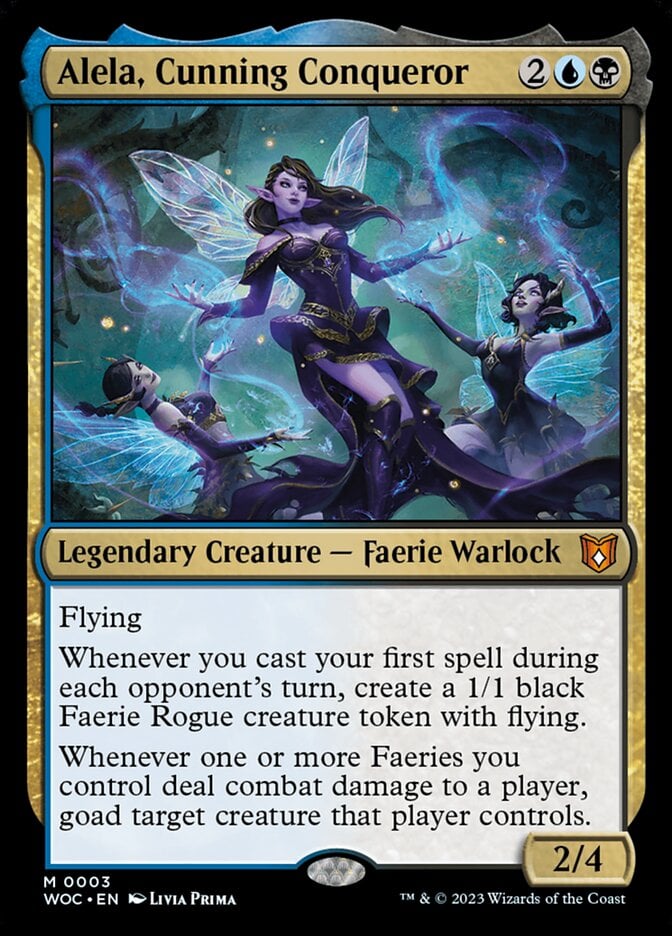
Though Alela, Cunning Conqueror isn’t nearly the powerhouse Alela, Artful Provocateur is, it’s still a respectable commander and more faerie-focused. Casting spells on your opponent’s turn is quite easy with cheap cantrips like Opt and Brainstorm, plus faeries rarely want to tap out on your turn—see Spellstutter Sprite, Vendilion Clique, and so on.
#11. Rona, Herald of Invasion / Rona, Tolarian Obliterator
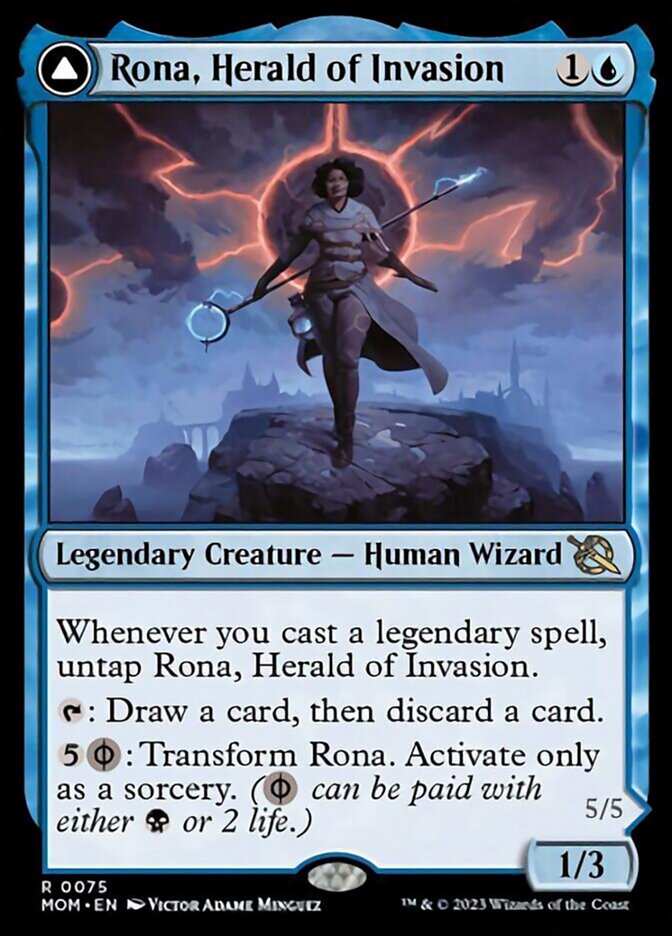
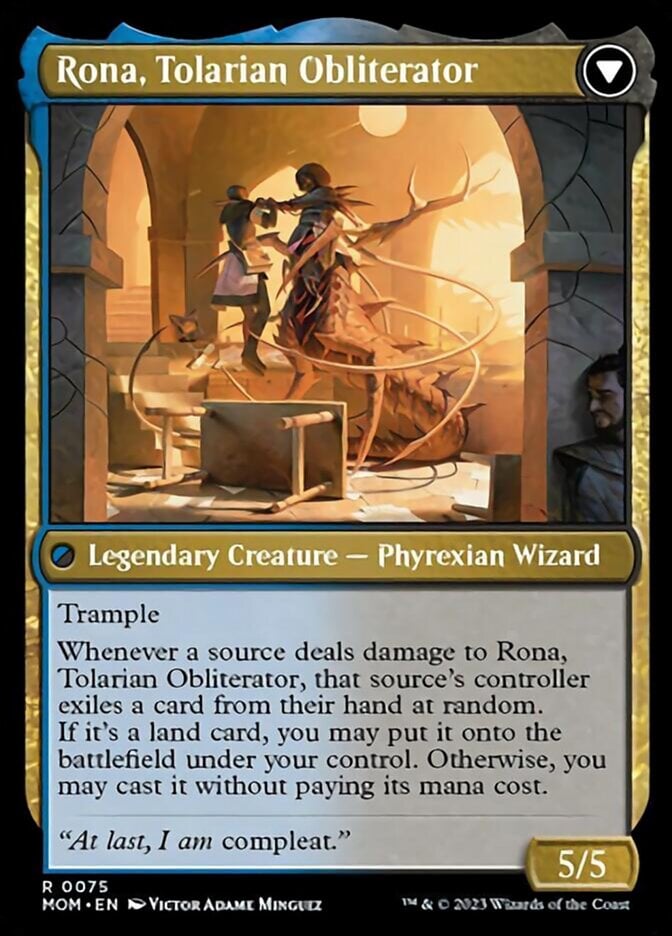
Rona, Herald of Invasion is a central part of many legendary-matters decks due to its mana production with Relic of Legends and the velocity you get when every spell you cast loots—not to mention a sleek infinite combo with Mox Amber. Rona, Tolarian Obliterator is a great fallback if you run out of gas and can’t loot your way through extra lands.
#10. Notion Thief
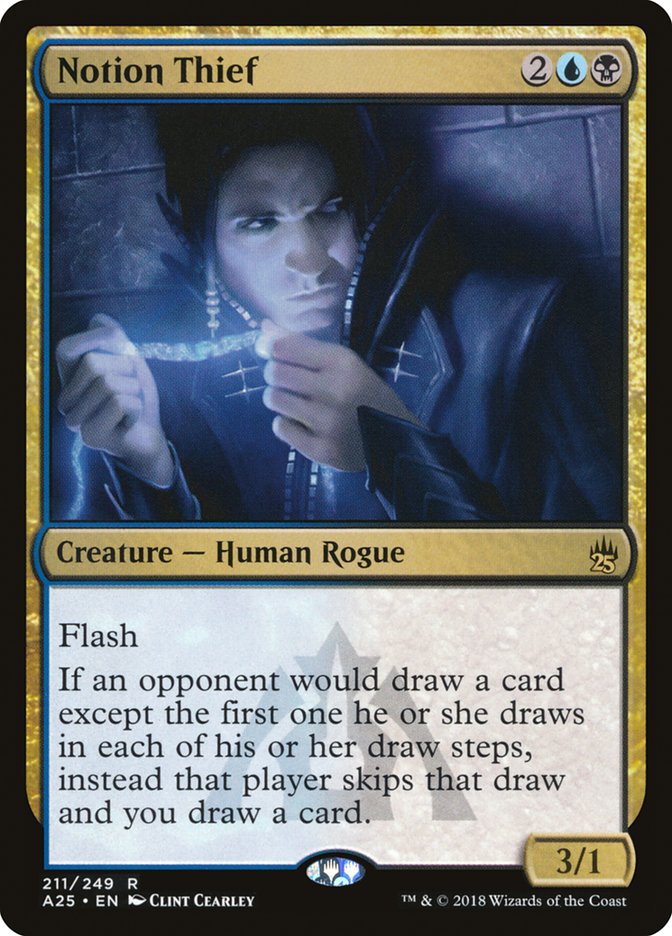
If you’ve ever watched the blue player draw endless cards and felt jealous, worry no more—you can do it yourself with Notion Thief. Card draw is one of Magic’s most important resources, so swiping it for yourself is a horrid swing in your favor. Stopping your opponents is good; stealing those resources is great.
#9. Ertai Resurrected
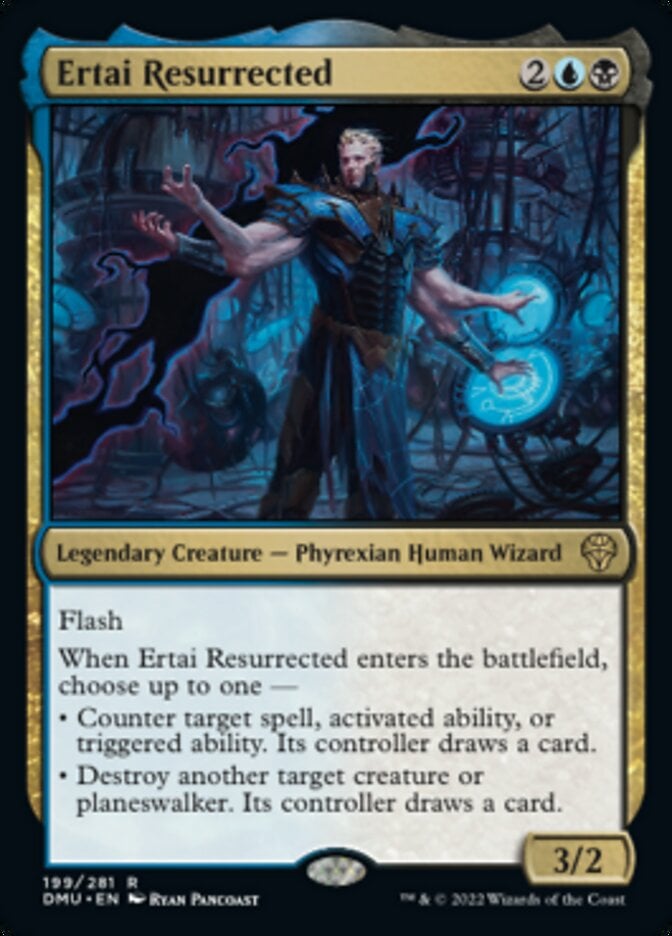
Ertai Resurrected has an incredible design. A creature that’s both Counterspell and Murder would be too good, so it gives your opponent a card—normally terrible, but you still get the 3/2. It’s incredibly well-balanced and a perfect card in tempo and midrange decks that need control elements but still want board presence.
#8. Fallen Shinobi
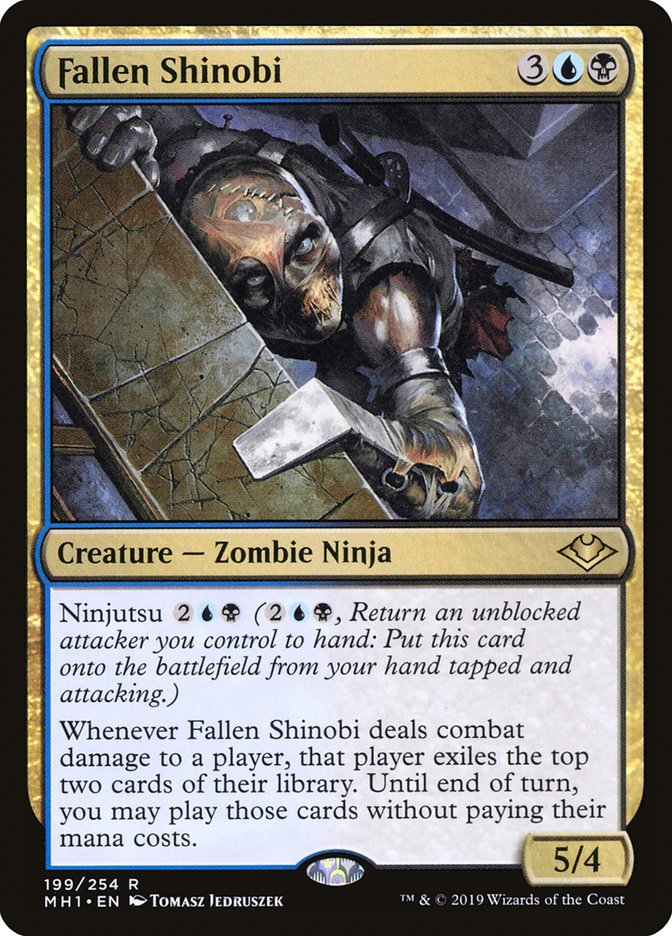
Fallen Shinobi is the premier big ninja, with a powerful saboteur ability that could win the game in a single trigger if you hit two spells. Even if your opponent kills it before it deals damage—tricky with 4 toughness—the ninjutsu ability generates its own value because you often bounce creatures with strong enters abilities like Baleful Strix and Spyglass Siren back to your hand.
#7. Prized Amalgam
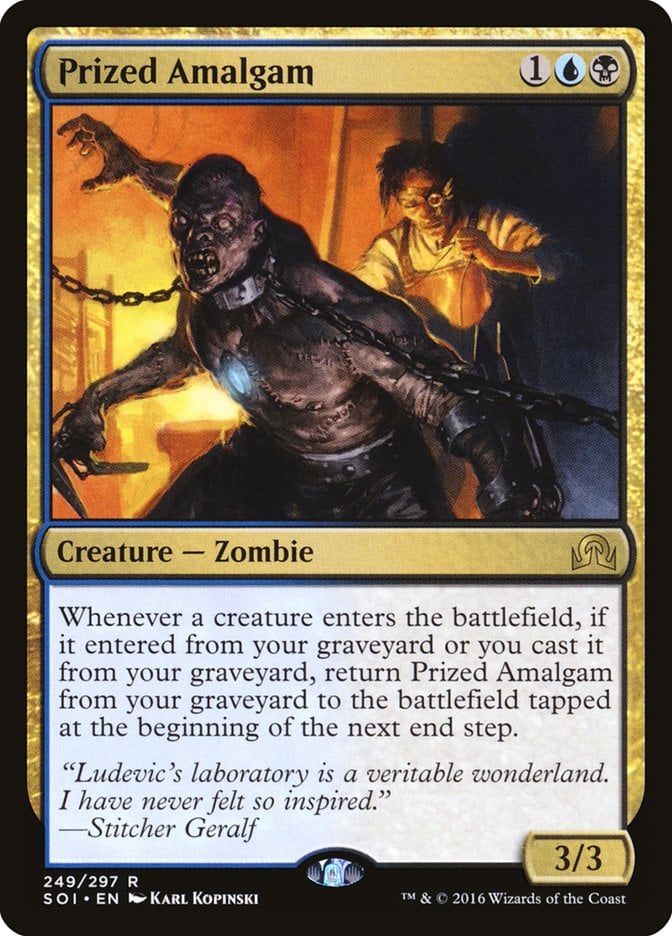
Prized Amalgam has been a core part of Dredge decks since its debut because it’s basically just a free 3/3, under the right circumstances. The deck’s best draws often involve milling Narcomoeba and an Amalgam to build an instant board presence. Prized Amalgam works very well in Commander, though you need to focus less on the body and more on building a synergy engine around a creature continuously dying and reanimating.
#6. Talion, the Kindly Lord
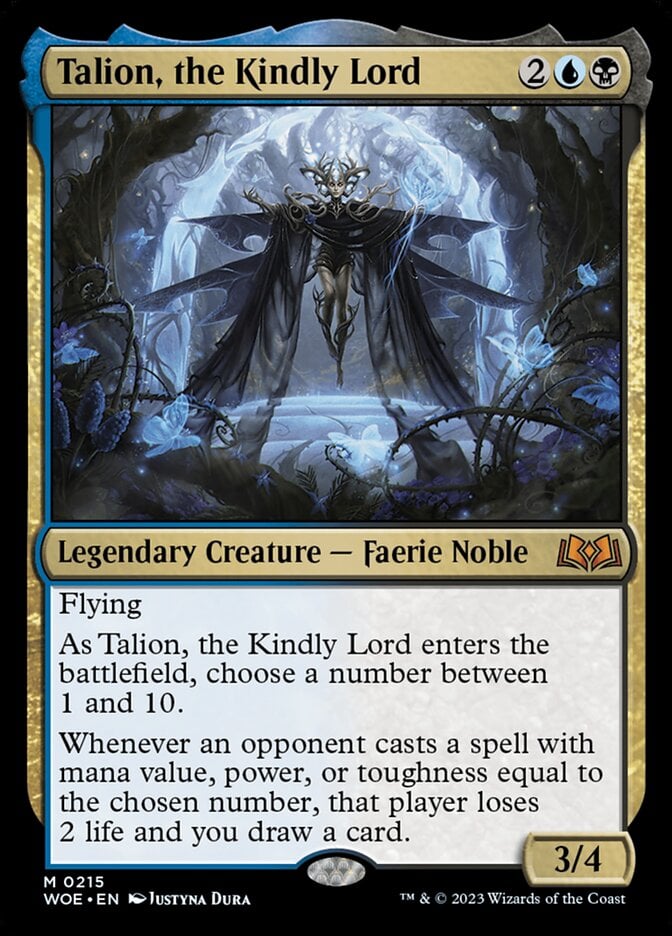
Some of the best commanders are those that gain you a resource, like Treasure or card draw, when your opponents do something; they’re exceptional because you have three opponents to trigger them. That makes Talion, the Kindly Lord a powerhouse card draw engine. Smaller numbers are generally best—decks tend to have more 2- and 3- than 5- or 6-drops—but you can also use information on your opponents’ commanders to choose the best number to draw the most cards.
#5. Toxrill, the Corrosive
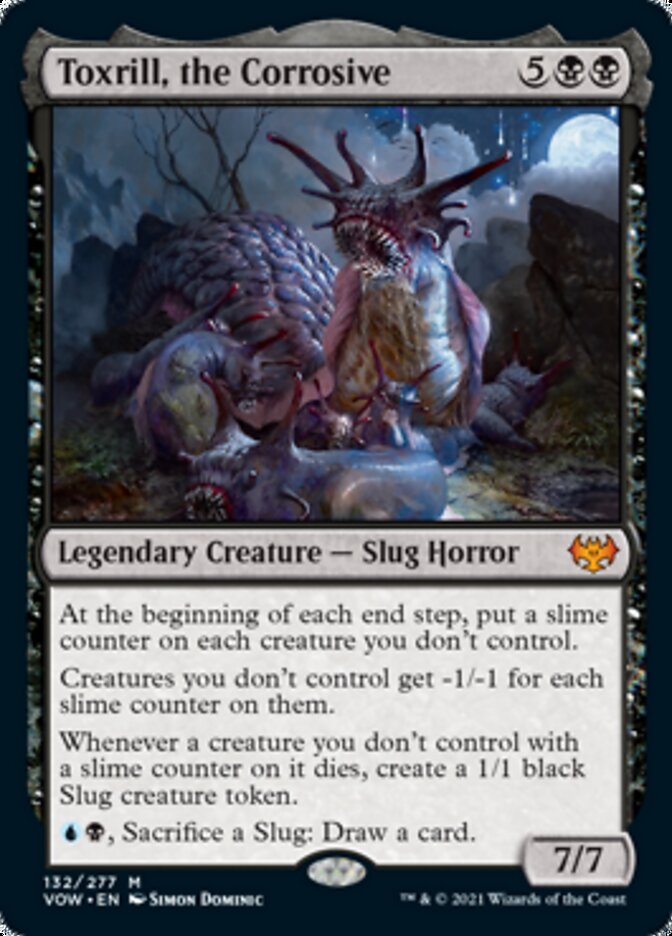
Dimir doesn’t get massive monsters often, but those that see print tend to be quite good. Case in point: Toxrill, the Corrosive, one of the most annoying top-end cards ever. It obliterates boards that rely on smaller creatures and hobbles ones that go big with its end step trigger—something easily copied or strengthened with proliferate spells.
#4. The Scarab God
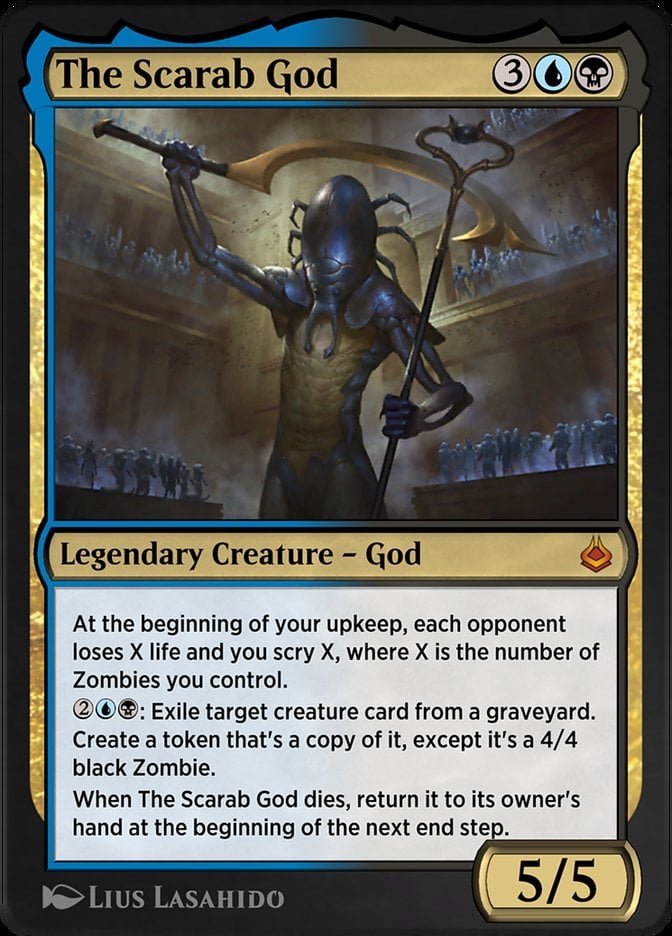
I remember when The Scarab God stalked the sands of Standard as a terrifying threat. Though its heyday has passed, this is still a formidable threat. It’s extremely hard to kill and provides an exceptional mana sink—you just need the time to exploit it.
#3. Yuriko, the Tiger’s Shadow

Yuriko, the Tiger's Shadow is a busted commander because it violates the need to pay the command tax thanks to its unique ninjutsu variant. That makes it incredibly hard to remove, and you kind of need to remove a threat like this that rushes the table to 0 by flipping cards like Shadow of Mortality with its combat damage trigger.
#2. Baleful Strix
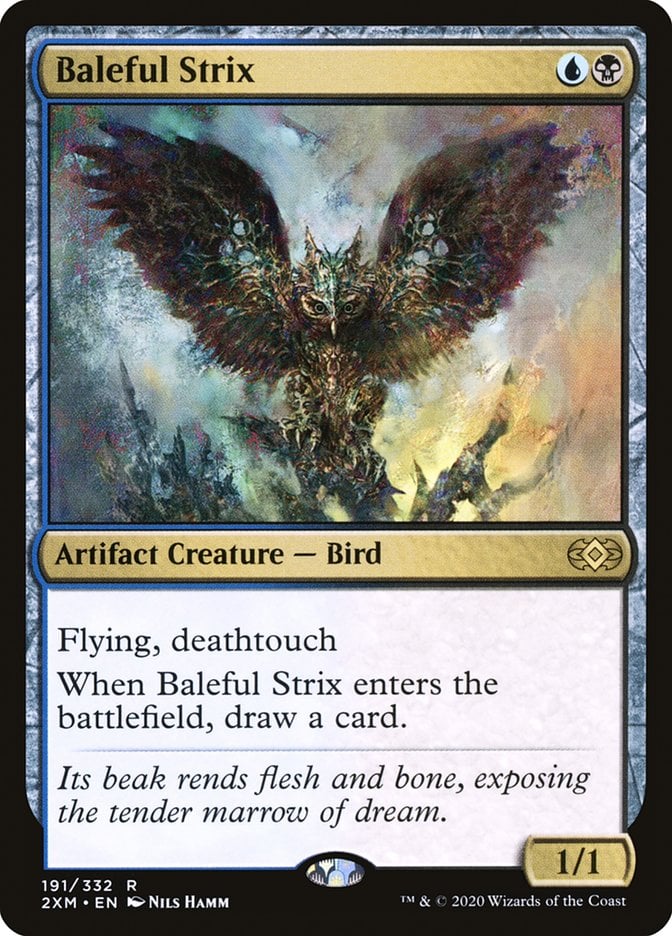
Baleful Strix is just too efficient. Elvish Visionary is very playable, but when you add flying and deathtouch so that it trades with anything and make it an artifact for the sake of cards like Tinker and Mox Opal, you have an exceptional, cheap card that belongs in practically every Cube.
#1. Psychic Frog

What doesn’t Psychic Frog do? It’s a cheap discard outlet for cards like Reanimate and Pyrogoyf, a draw engine, a threat that hits hard due to its counters—which also make it almost impossible to kill without exile or destroy-based removal—and it can’t even be blocked well between its immense power and temporary flying ability. Like many rares from Modern Horizons 3, it’s just a disgustingly pushed threat that displays the most possible power and text Wizards could cram onto a 2-mana play. Until Modern Horizons 4, that is.
Wrap Up

Dreadwing Scavenger | Illustration by Xavier Ribeiro
Dimir’s creatures are spread across a range of costs and rarities, but they’re generally controlling, with an eye towards card draw and value accumulation. Whether you want to play a typal strategy or something more general, it has the creatures for you!
What’s your favorite Dimir creature? Do you play them, or do you prefer another color pair? Let me know in the comments below or on the Draftsim Discord!
Stay safe, and thanks for reading!
Follow Draftsim for awesome articles and set updates:










Add Comment