
Last updated on September 25, 2026

Charge the Sanctum | Illustration by Nestor Ossandron Leal
Greetings planeswalkers! Reality Fracture Prereleases are this weekend, which means that the most anticipated set of 2026 has finally arrived. This Day 0 guide contains everything you need for success early in the Reality Fracture Sealed format, with a full analysis of its mechanics, archetypes, best cards at each rarity, and more.
Let’s get crackin’!
Introduction
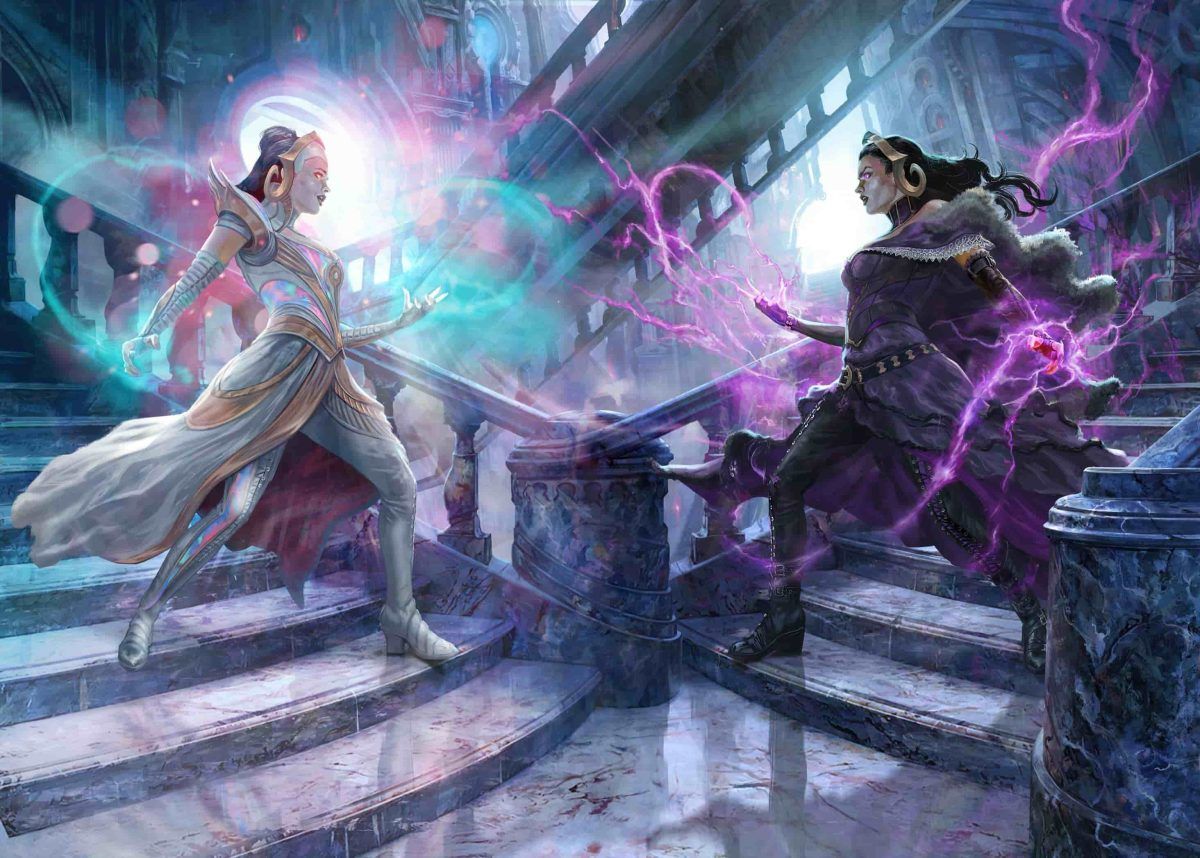
Liliana the Faultless | Illustration by Aleksi Briclot
Reality Fracture is a set that plays heavily off of Magic’s previous history and gameplay. Much of the set is inherently referential to already established characters and cards, in two main functions: echoed pairs, and callback cards.
Echoed Pairs
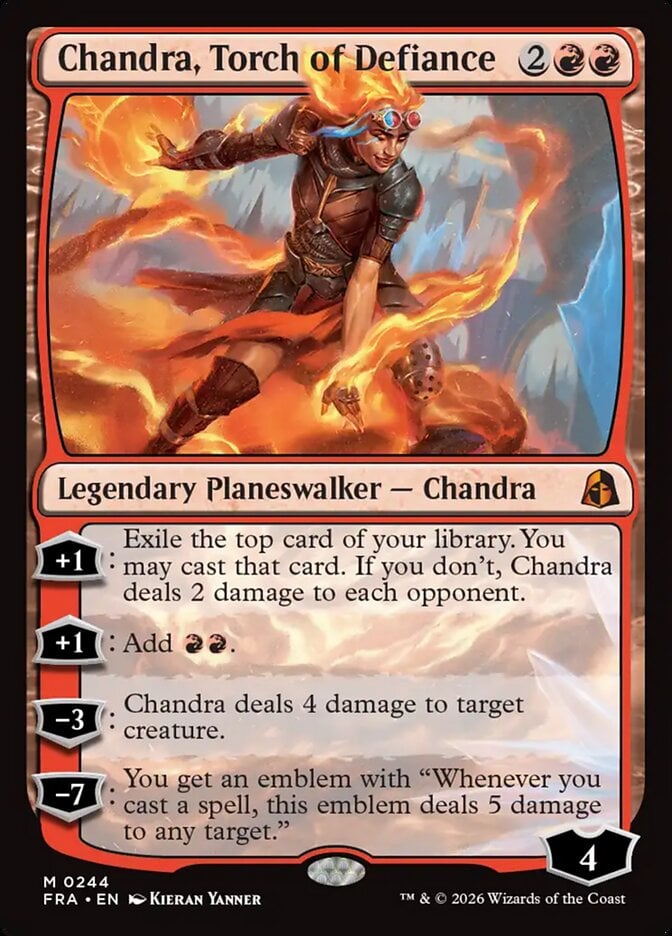
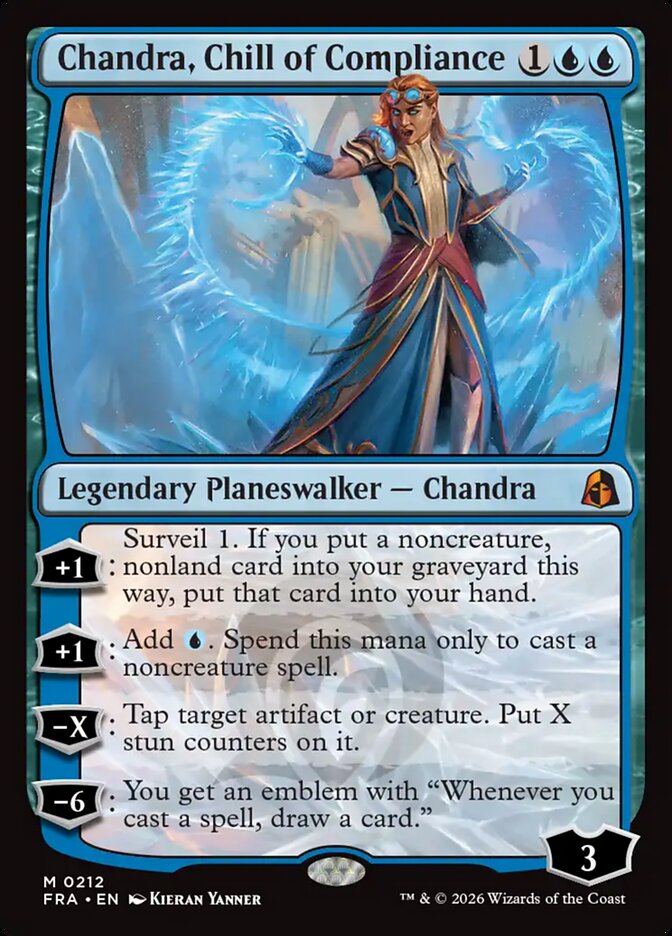
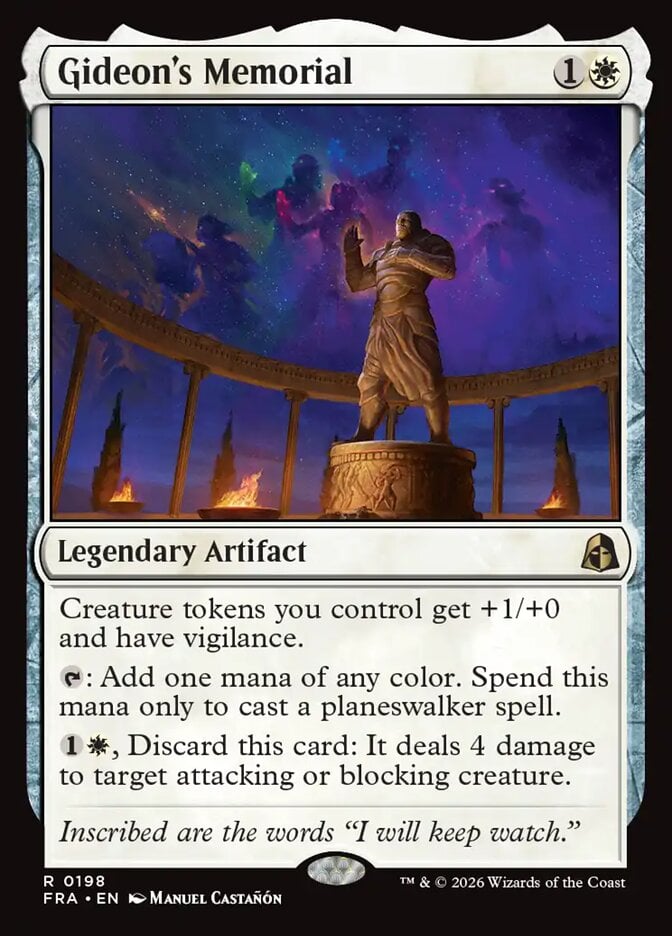
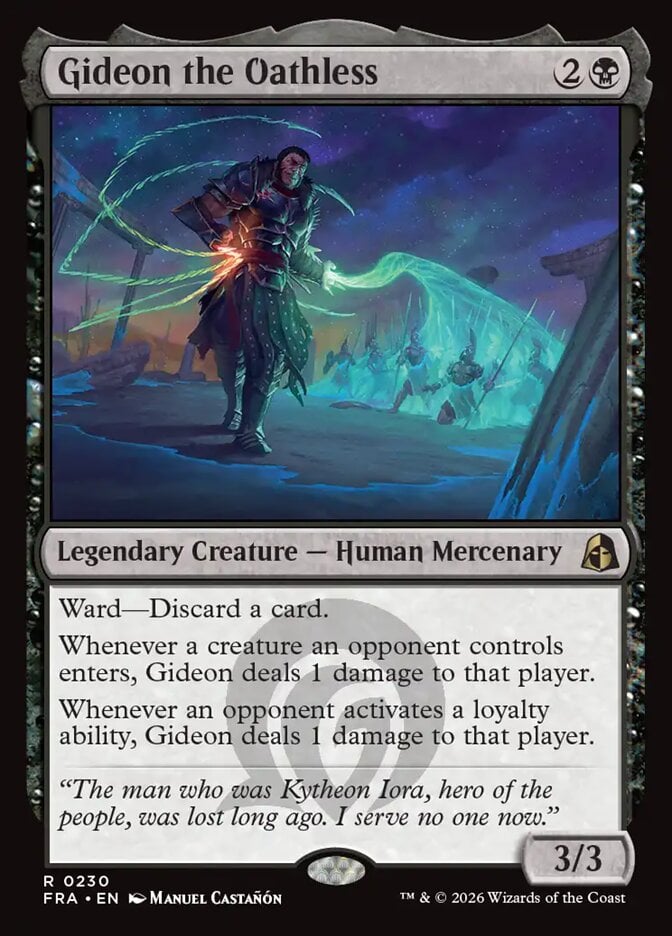
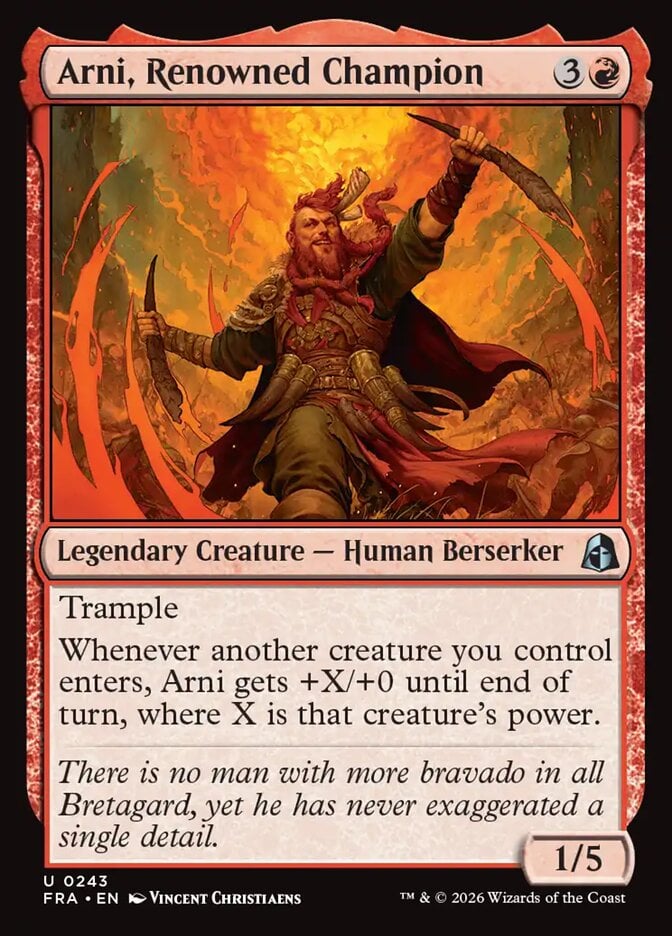
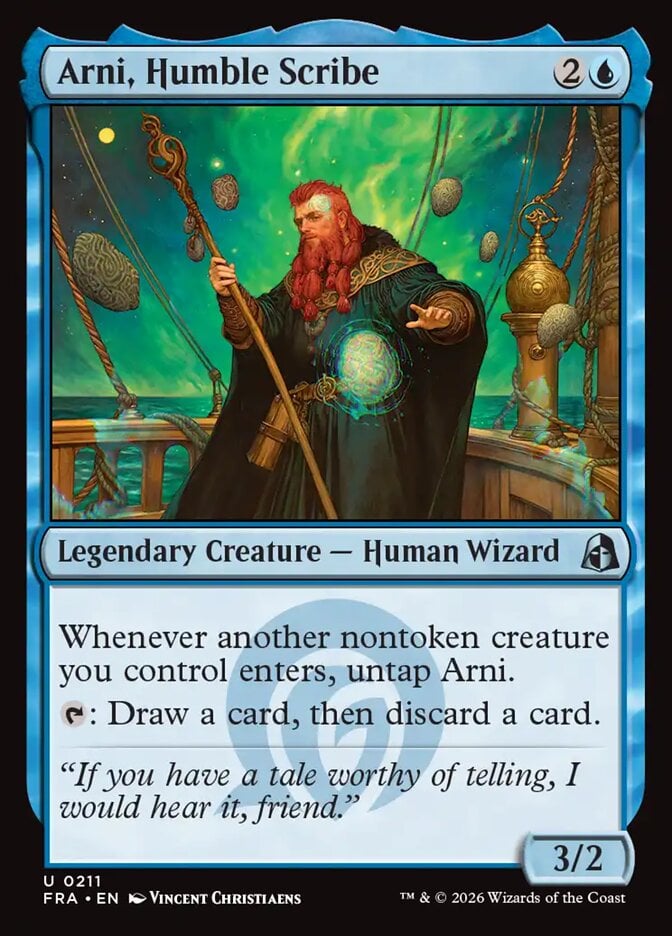
One really unique thing that Reality Fracture has is its echoed pairs, which are paired versions of iconic creatures and spells. Each has been pitted against an “Echoverse version” of themself, which is the same character or spell imagined in a “what if” scenario masterminded by The Theorist, Jace Beleren (the central antagonist of this set’s story). Chill of Compliance for instance is Chandra but blue, Gideon the Oathless is Gideon after giving up his whole good guy schtick, and so on. It’s great flavor, and it makes for some very interesting card designs.
Pack Structure
Another cool thing about echoed pairs is that the entire structure of Play Boosters in this set was warped to accommodate them! Every Play Booster you open will have three cards that come from the set’s echoed pairs. Two out of three of those cards will be a true pairing (i.e. two Garruks, two Fblthps, etc.), while the other one will be an unpaired card. This was done for three reasons:
- It makes Draft less predictable; if you were always given pairs, then you could always tell what someone took simply by going off the missing pair card.
- Sealed also becomes less predictable, as Garruk, Veiled Butcher won’t always mean your opponent opened Garruk, Curse Breaker, too.
- The last reason relates to how WotC actually manufactures cards for paper packs, as Maro explained that this was necessary for the set to even work.
Callback Cards
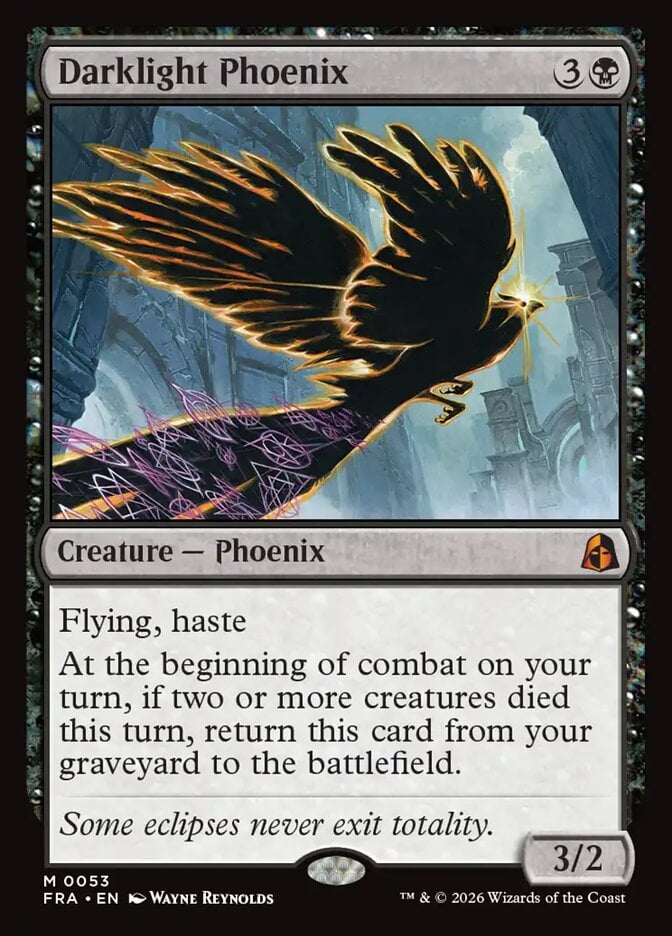
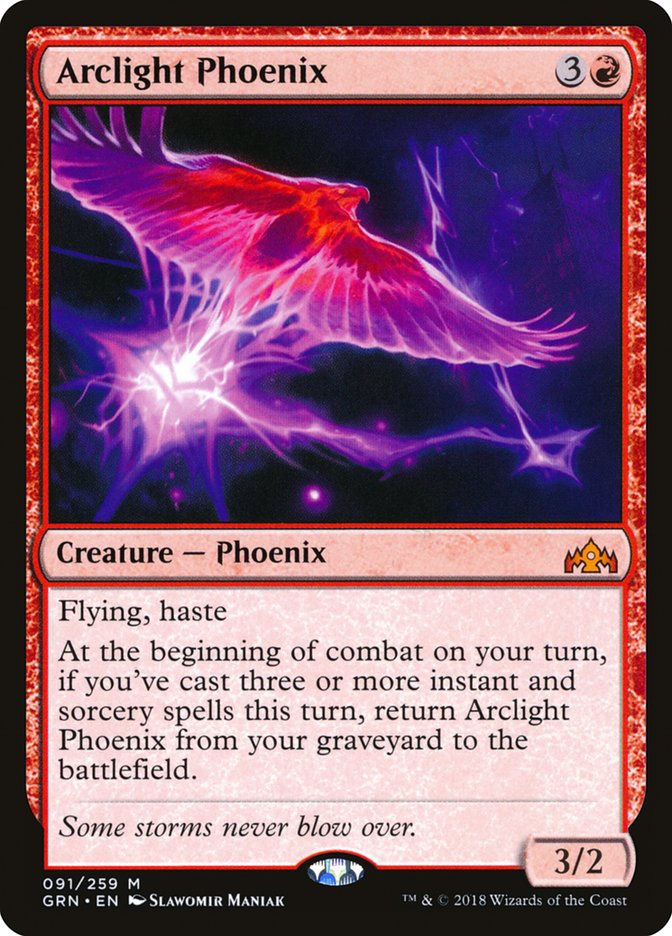
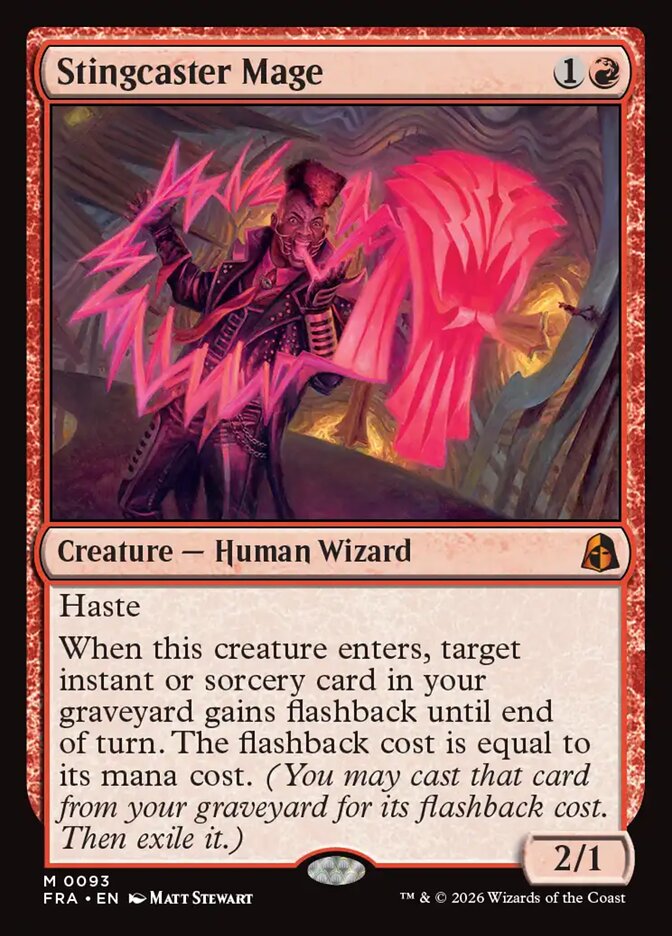
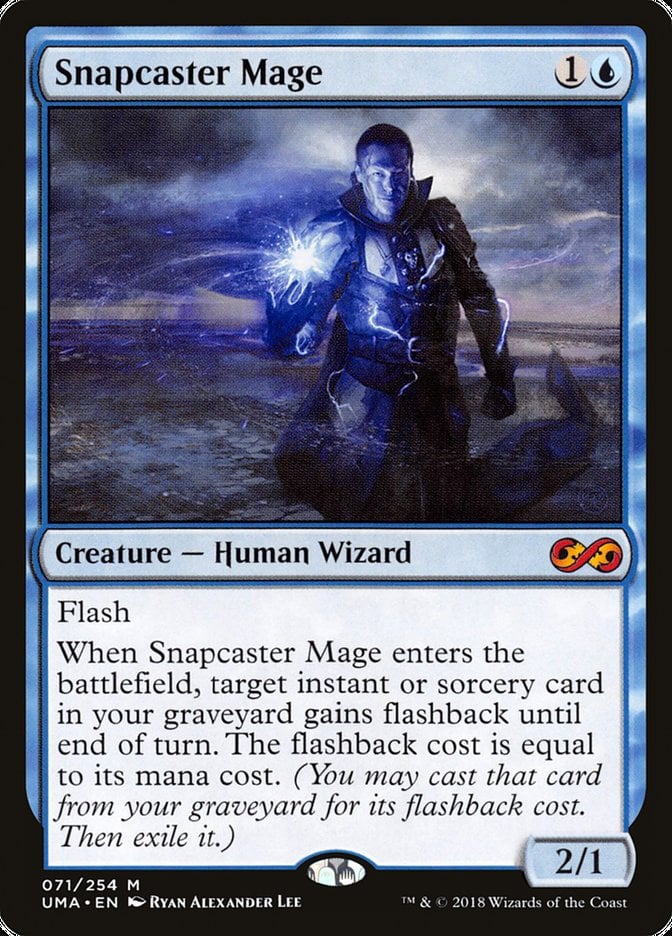
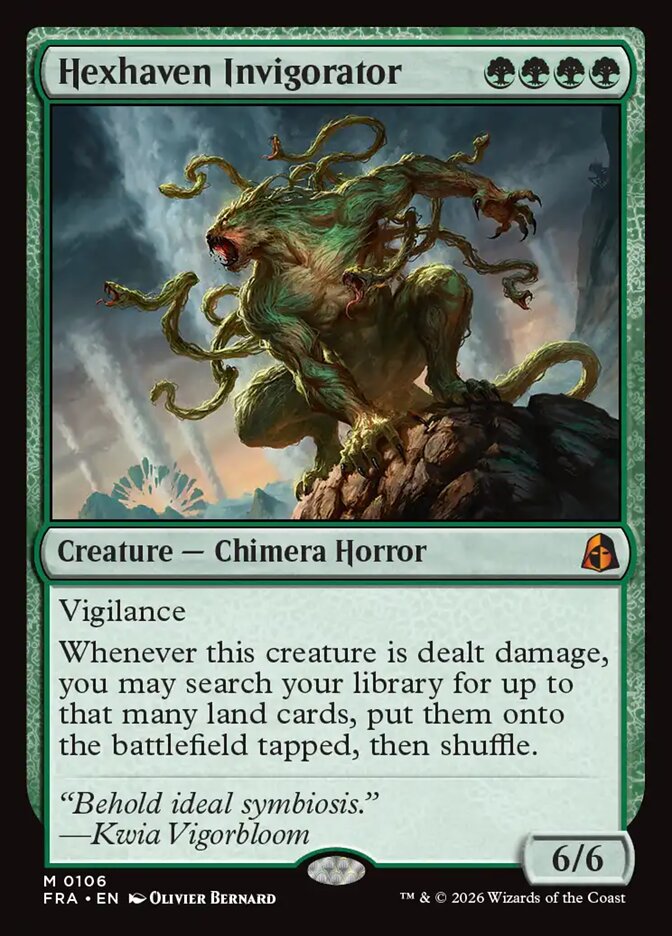
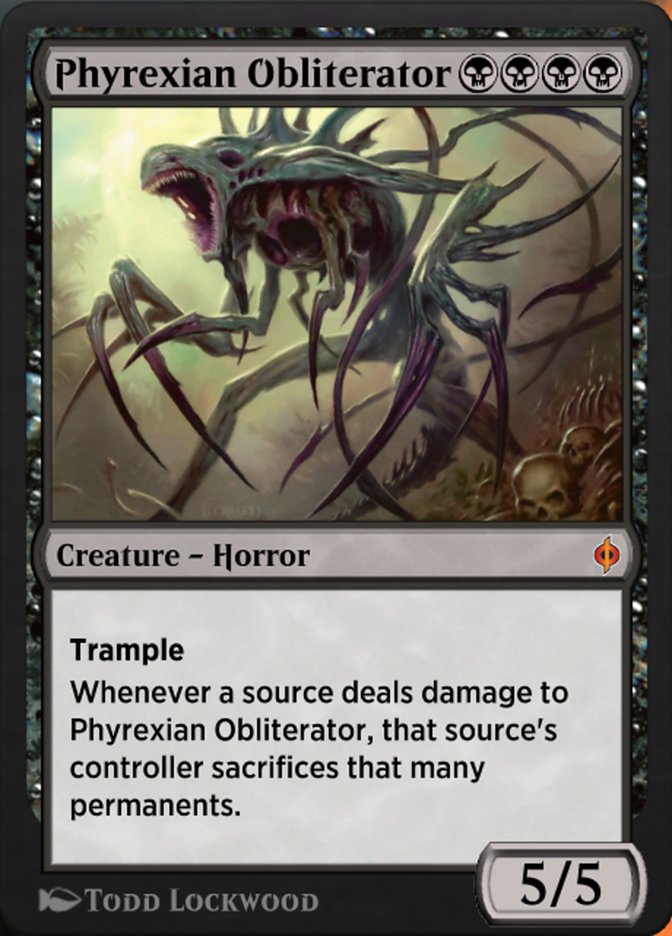
These are some of the set’s most exciting mythics, all riffs on beloved Magic cards from past sets. Stingcaster Mage is Snapcaster but with haste instead of flash. Darklight Phoenix has the same return timing and stats as Arclight, but with a very different hoop to jump through. And Hexhaven Invigorator is a wacky green take on Obliterator, although it seems very tough to use in Sealed.
Mechanics
Empower Jace
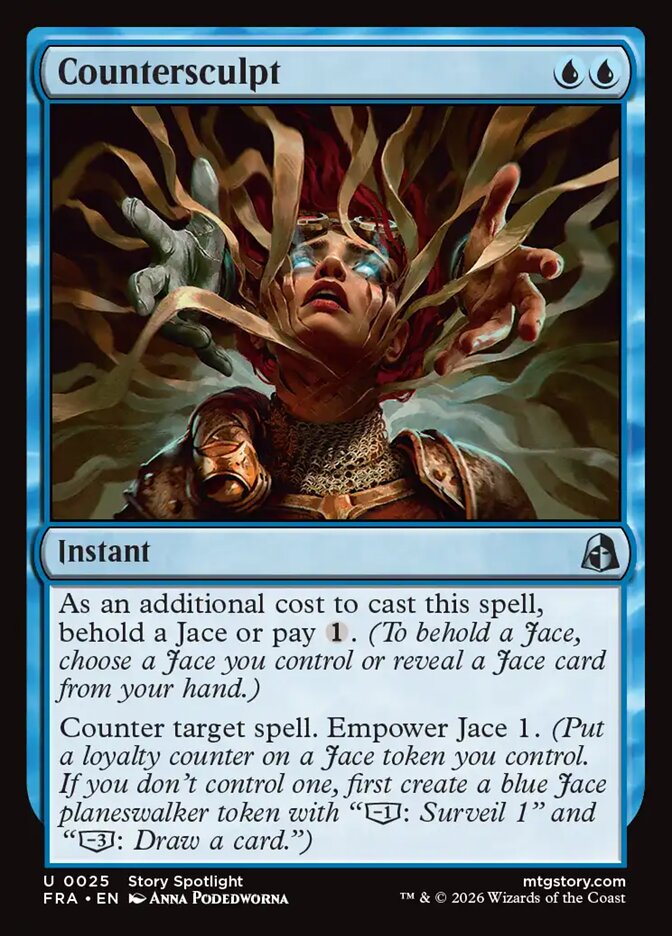
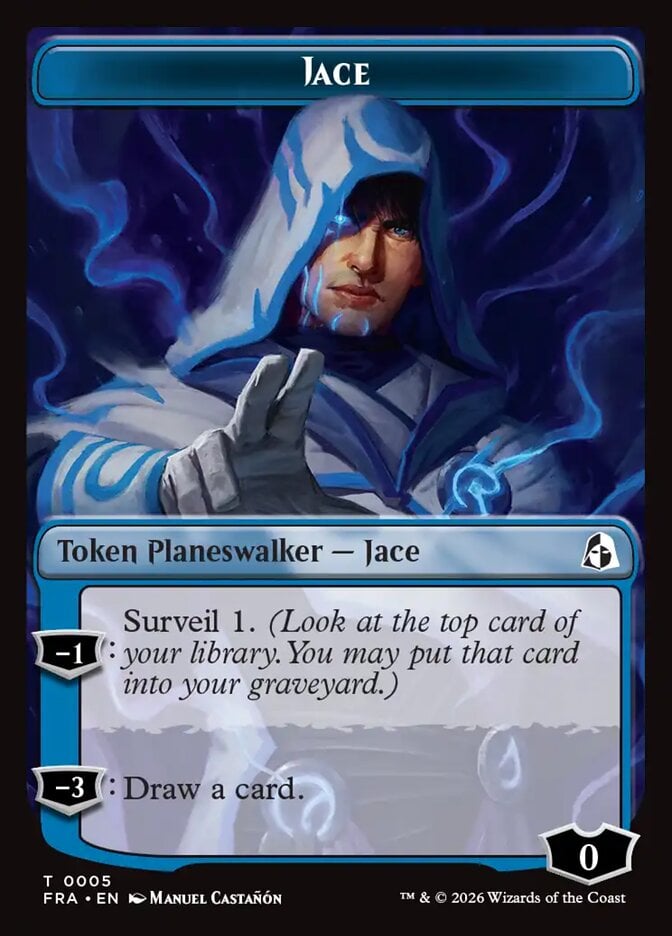
Empowering Jace is a core mechanic in Reality Fracture, and it requires a little bit of an explanation. The easiest pitch for this mechanic is that it’s more or less “planeswalker amass”. Whenever you empower Jace N, you’ll put N loyalty counters on a Jace token you control; if you don’t control one, you’ll first create a Jace token with “-1: Surveil 1″ and “-3: Draw a card.”
Jace tokens are going to have a huge impact on how this format plays out. From going over the spoiler, aggro decks in Reality Fracture actually look quite decent. Let me give some context:
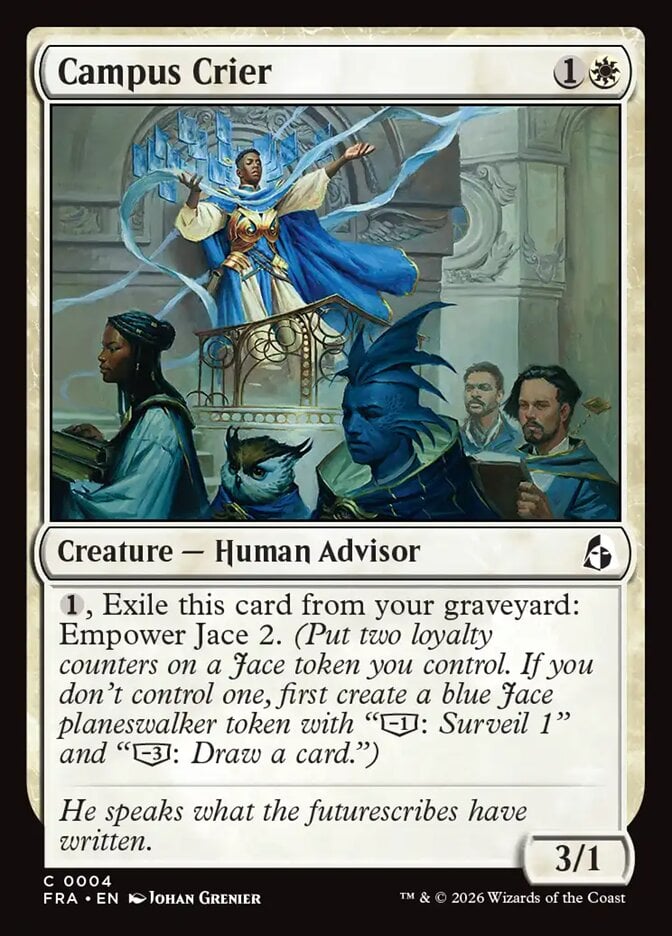
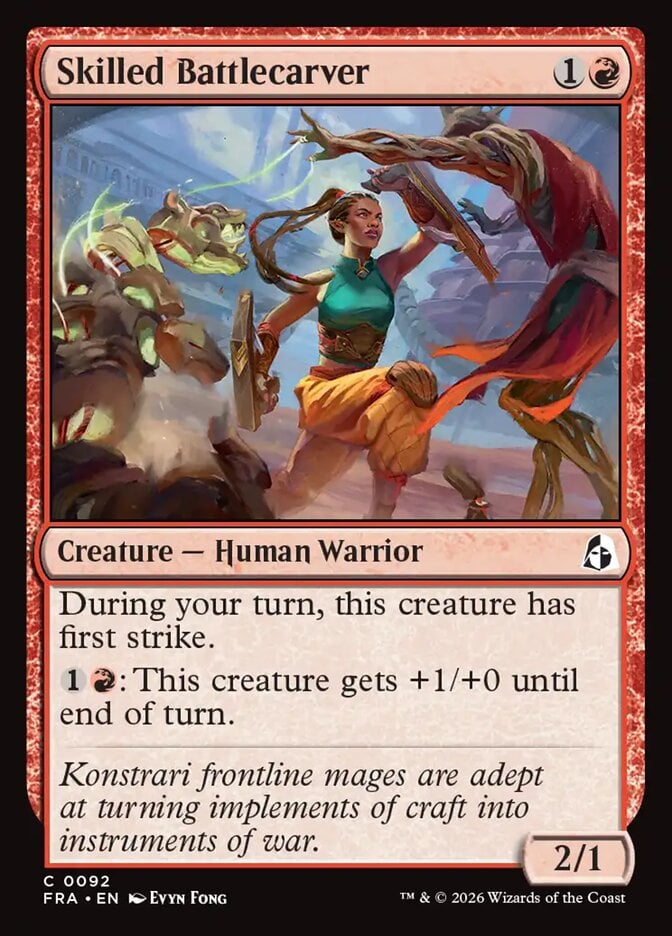
- Good 2-drops like Campus Crier and Skilled Battlecarver give aggro decks high-quality cards to start their curve with.
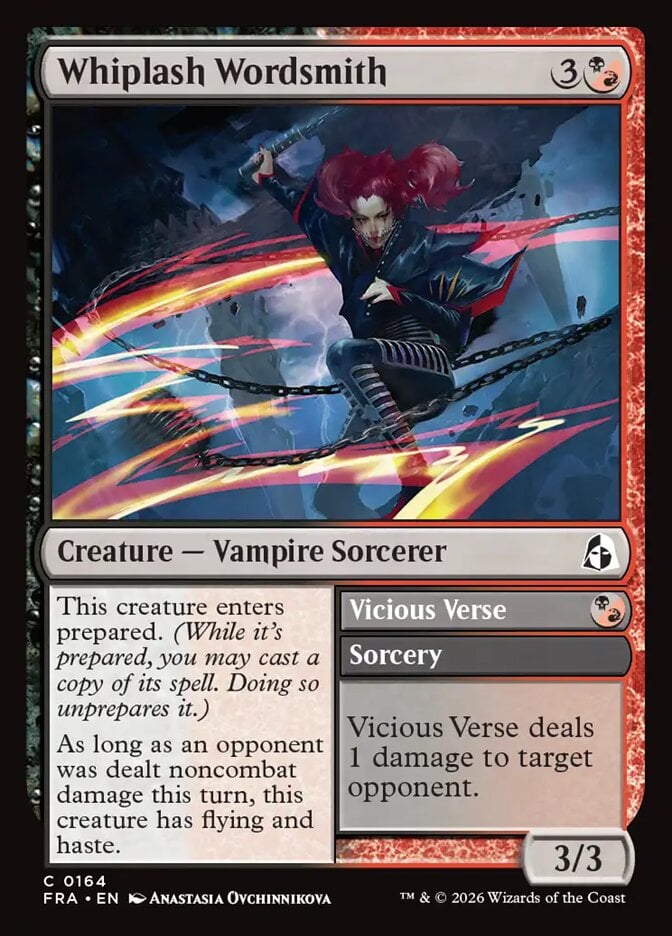
- There’s a bit more haste in Reality Fracture than most Limited sets I’ve played (Chandra's Emberling, Whiplash Wordsmith).
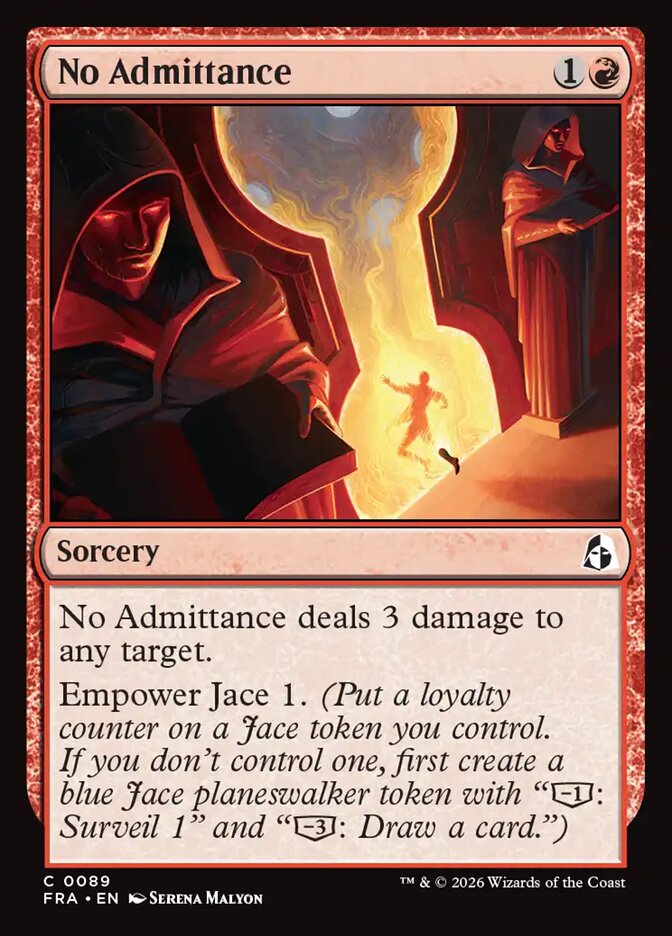
- There’s also more burn available than most recent sets; No Admittance and all the Vicious Verse cards go face, so life totals are a precious resource.
So, what does this have to do with Jace tokens? Well, having token planeswalkers running around is inevitably going to create some games in which those tokens end up being attacked. The effect of this is that players have “more life” than they normally would, which may affect game length and how aggro feels in Reality Fracture. Aggro has many good tools at its disposal, but it must balance its power with the need to sometimes attack Jace tokens to prevent value.
Outside of this larger context, Jace tokens also do a number of things for the format:
- They provide card selection and card advantage.
- They provide another way for WU decks to surveil consistently (every “empower Jace” card is an archetype enabler, if you think about it).
- They provide fodder for black decks to sacrifice with cards like Silence the Echo.
“Ways” and Other Planeswalkers
Jace tokens are also essential to a key cycle of uncommons, the “Way of the Planeswalker” legendary enchantments, which notable appear in the echoed pair slots of your Play boosters. Each of them is an enchantment that enters the battlefield and immediately empowers Jace for some amount. The enchantment will then either grant a new loyalty ability to all your planeswalkers, or grant some other kind of planeswalker-friendly bonus.
These enchantments significantly improve the output of your Jace tokens, and they should be essential to the GU Empower archetype. Let’s look each one.
Way of the Healer
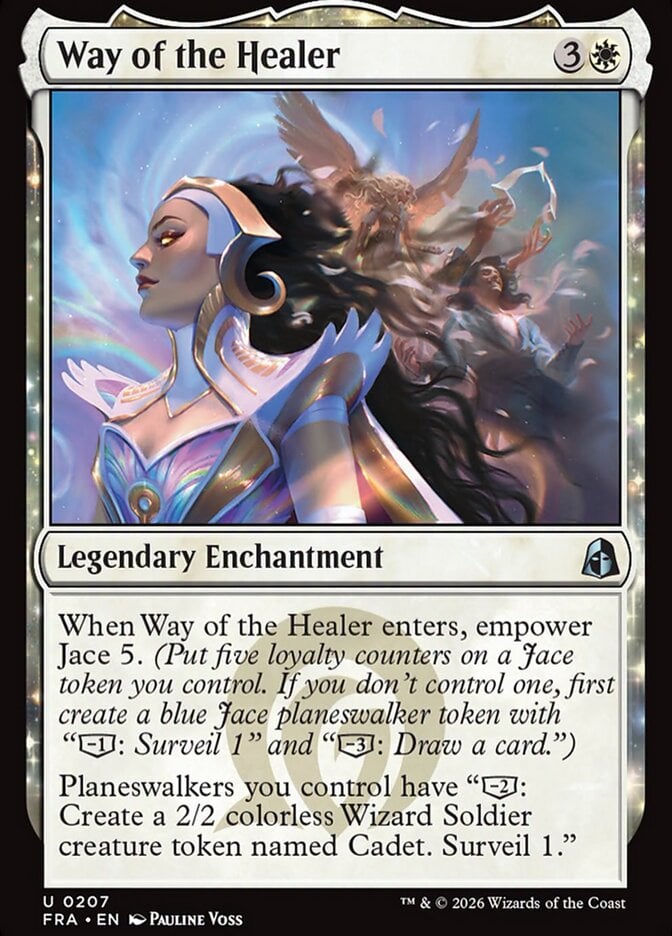
Way of the Healer dramatically improves the effectiveness of cards that empower Jace 2, which includes several commons. Getting 2/2s is great on both offense and defense. On its own, you can read this as , get a 2/2 and a 3-loyalty Jace.
Way of the Mentor
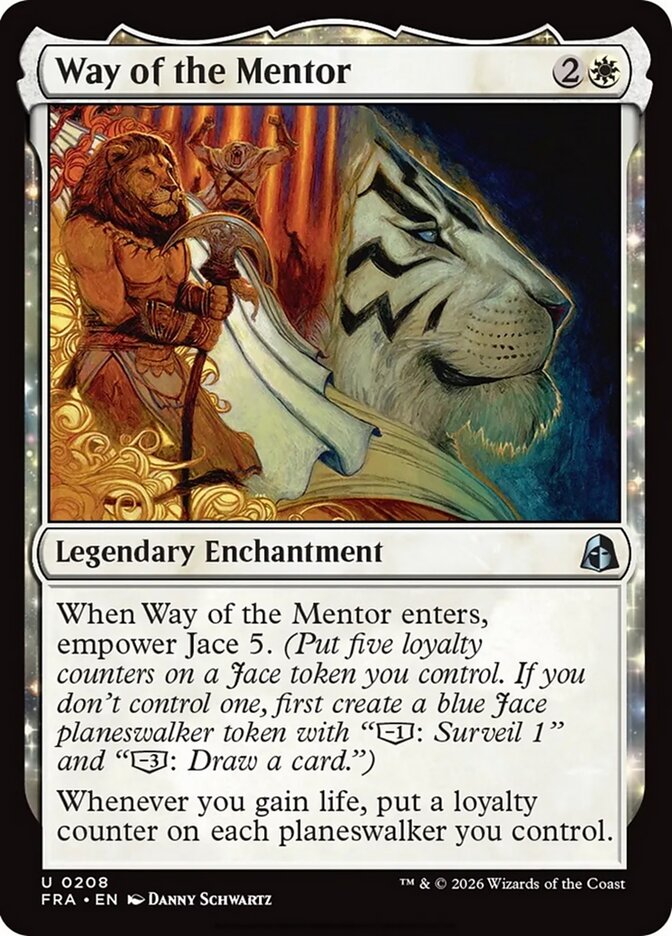
I would be surprised if Way of the Mentor is very good, as it seems to conflict with what other lifegain payoff cards want you to do. Ideally, you’ll cantrip off it and then pump the Jace with lifegain spells for more card draw, but in practice I probably wouldn’t play it.
Way of the Cryomancer
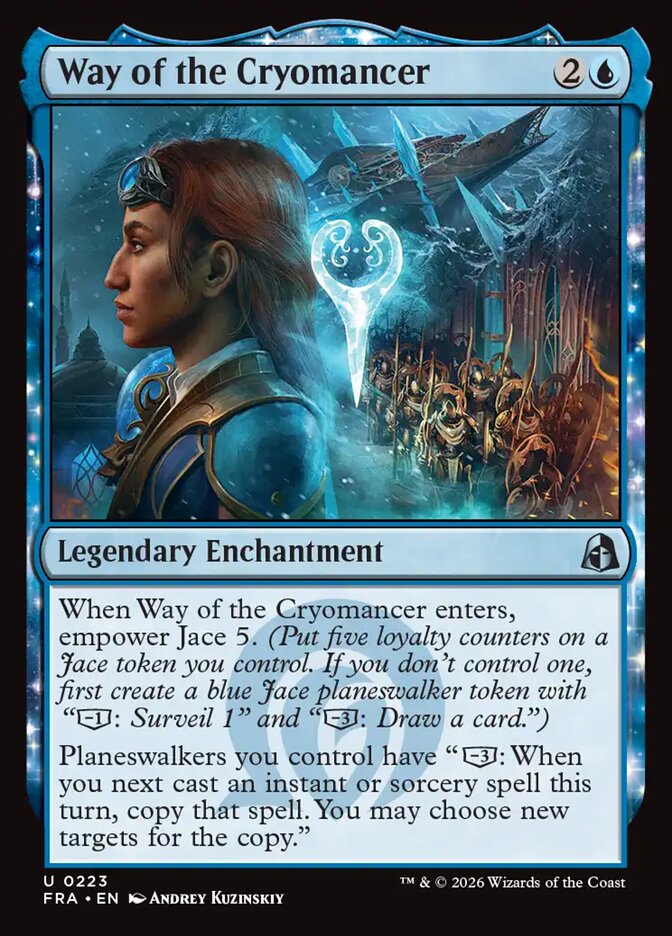
Way of the Cryomancer on the other hand is an exceptional uncommon. Untapping with this lets you -3 Jace to double up on a removal or card draw spell.
Way of the Mind Sculptor
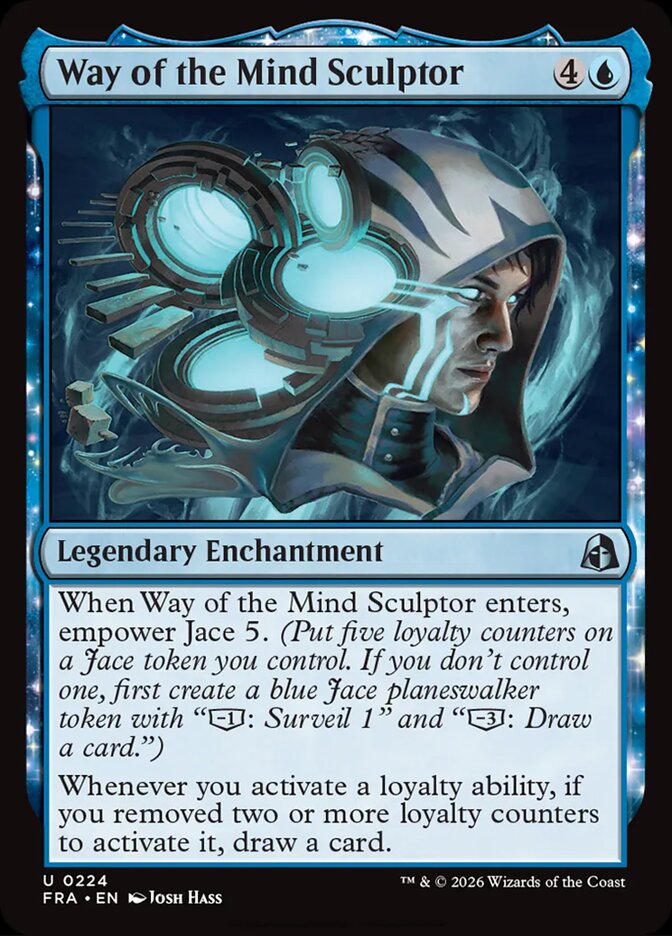
Way of the Mind Sculptor only makes sense in big decks that are going very deep on empower Jace, as on its own this is just a 5-mana Divination that leaves behind a 2-loyalty Jace.
Way of the Deathbringer
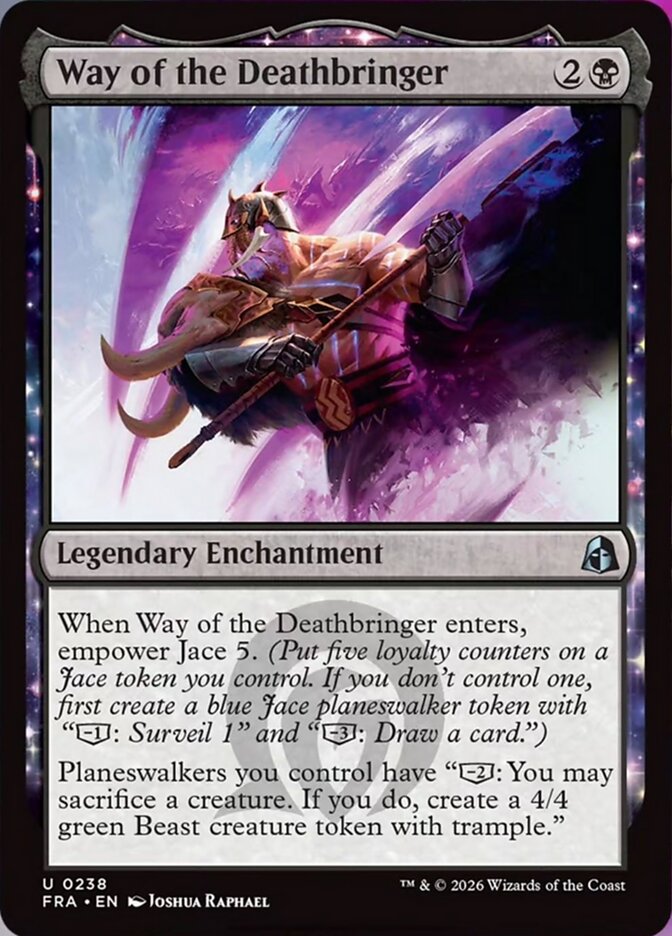
Way of the Deathbringer is excellent for black sacrifice-friendly decks, and it should see a lot of play in WB in particular.
Way of the Necromancer
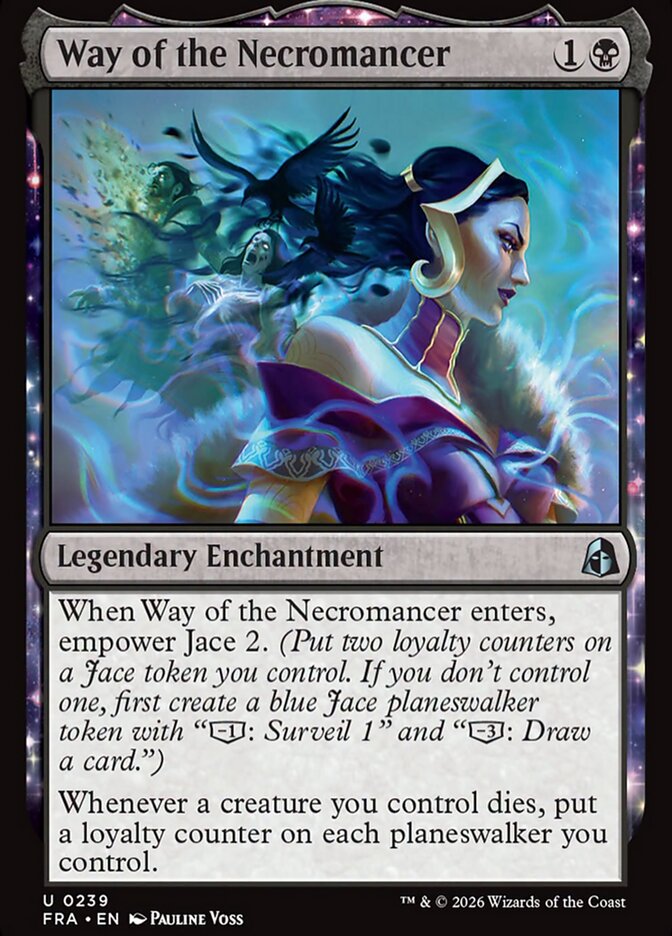
I don’t care for Way of the Necromancer nearly as much, since you’ll often sacrifice your low-loyalty Jaces in black anyways. As with Way of the Mentor, it offers a payoff that’s awkward with what the rest of your deck will likely do.
Way of the Pyromancer
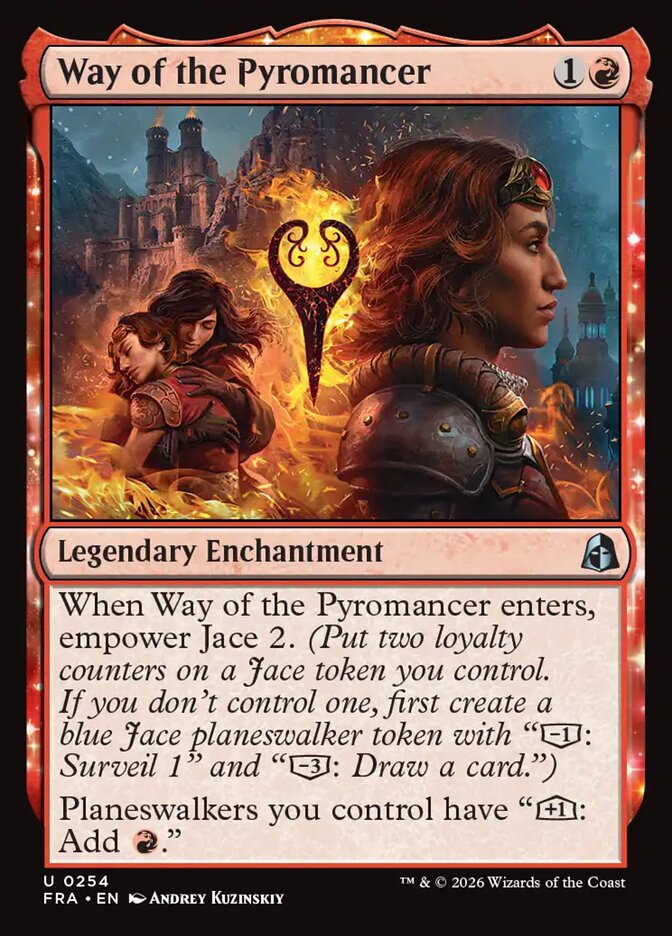
Jace tokens may be too vulnerable on the draw to attacks to ramp effectively with this. It’s amazing on the play though, and efficient enough to be interesting in most red decks either way.
Way of the Warlord
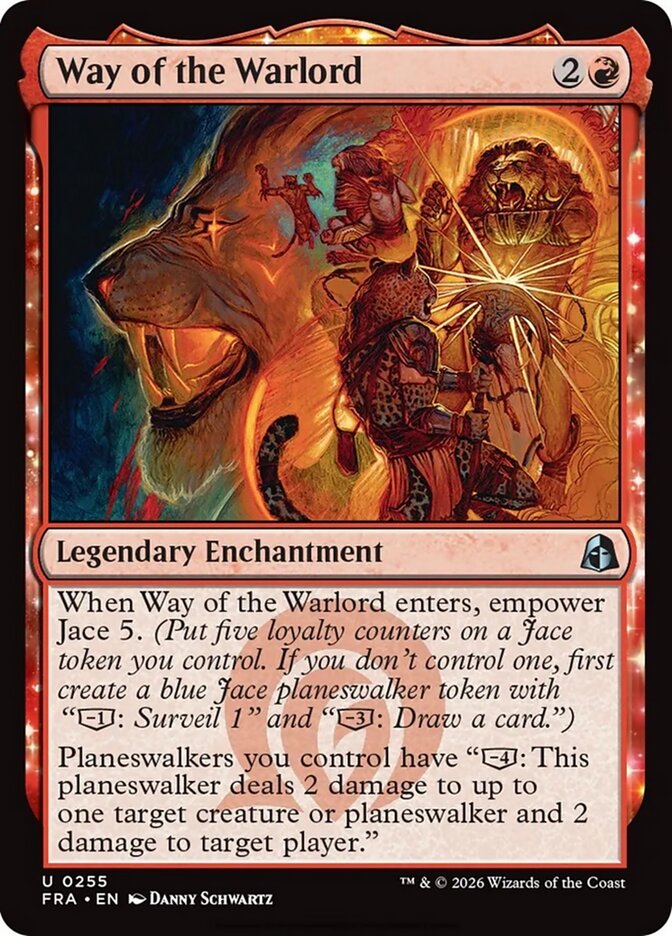
-4 is a bit hefty for a shock effect, although I like how Way of the Warlord triggers “noncombat” payoffs. The 1-loyalty Jace left over is perfect for sacrificing as well.
Way of the Paradox
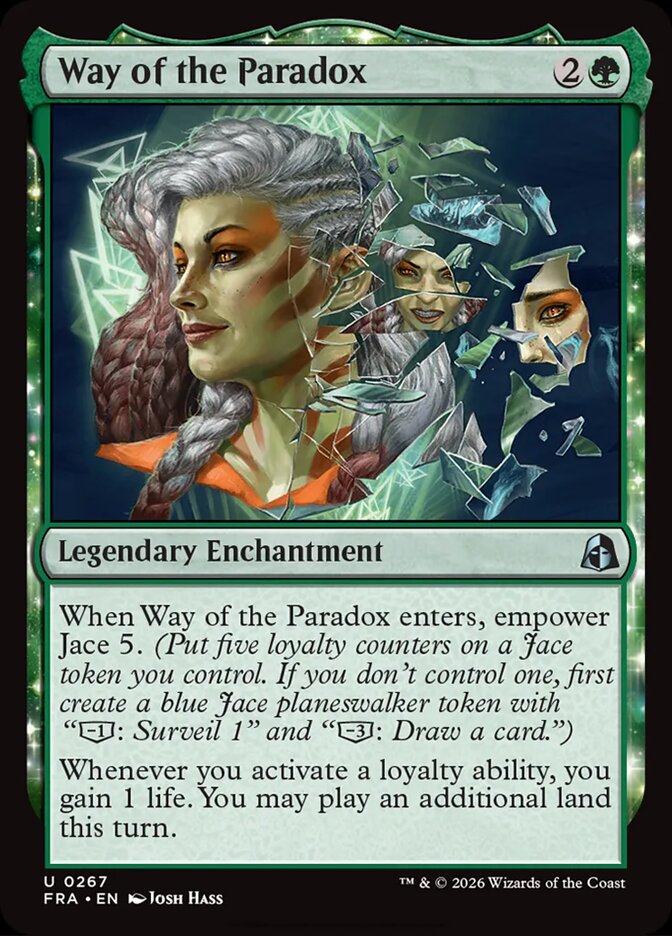
Best in GUx decks that are going deep on several “Way” enchantments, since Way of the Paradox stacks nicely with others. Drawing a ton of cards is the best way to make the Explore bonus relevant.
Way of the Wildspeaker
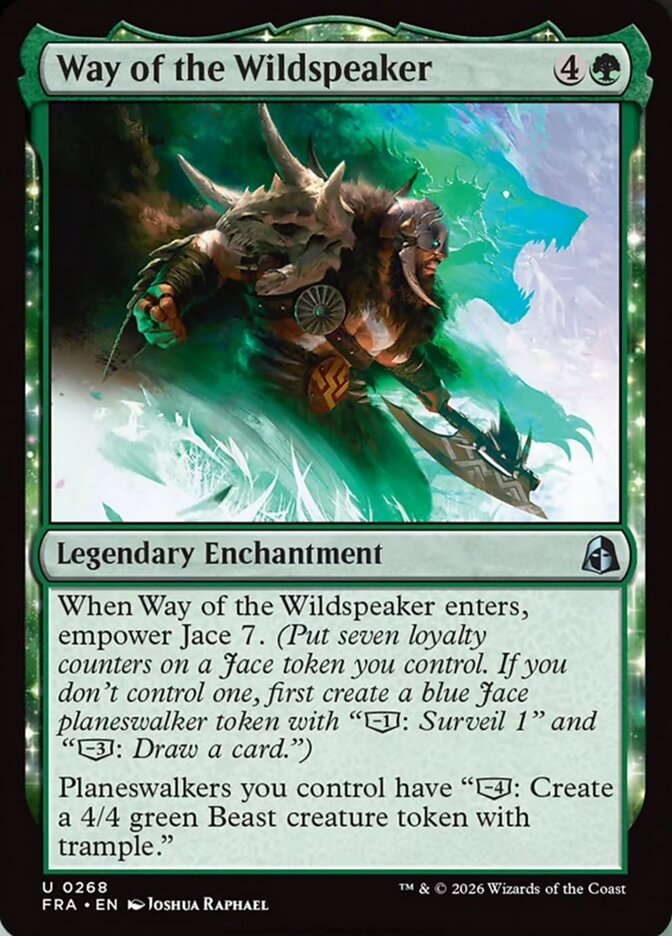
Easily the beefiest of the 10 Ways, since Way of the Wildspeaker makes an immediate 4/4 with a 3-loyalty Jace behind it. I wouldn’t be surprised if this ends up splashed fairly often.
Proper Management of Jace
Playing Jace is going to be tricky for sure. Here are some general tips for the format:
- When in doubt, -3 your Jace. There’s no need to let it stack up a ton of loyalty without a specific supporting plan (i.e. Jace, Reality Sculptor). You can always put cards to good use immediately.
- On the other hand, only -1 your Jace only when you’re pressed for time and looking for something specific. Think hitting land drops, desperately digging for spells when flooded, or simply “cashing in” the Jace before it eats an attack you can’t protect it from.
- Not activating Jace is a perfectly defensible line, especially if it’s only sitting at 1 or 2 loyalty. This way you’re saving it to draw a full card when you play another small empower Jace card later.
- Refusing to -3 your Jace could put you in a situation where you have too much loyalty, and not enough time to use it safely. A 15-loyalty Jace or something like that is a perfect target for removal spells like Extended Absence.
- Even if you aren’t holding out on -3s, cards like Protege's Awakening may still fail to get full value due to your opponent attacking Jaces.
- “Way of” abilities further complicate your Jace usage. Most of them are better in a vacuum than drawing cards, but you may want to alternate abilities if you’re low on resources (as cards are always good).
- You don’t need to protect your Jace tokens as ferociously as you would your average Limited planeswalker, as the difference between Jace or not tends to be “draw a card”, not some game-winning ultimate later in the game.
Playing Against Jace Tokens
Whether you should attack your opponent’s Jace is going to vary from game to game.
- A general ground rule is always to attack Jace tokens for the first few turns, and ignore them later in the game when you can push significant/lethal damage.
- The primary punishments for ignoring Jace include letting your opponent see cards, draw cards, or use Jace as fodder for stuff like Silence the Echo.
- Most “Way of” enchantments have enough empower to use at least once immediately, although leaving a big Jace could spell disaster if a Way of the Wildspeaker shows up later.
- Over-prioritizing Jace tokens, on the other hand, saves your opponent a significant amount of life, which could be the difference between a lethal No Admittance or not.
- Aggro decks will likely face the most difficult “attack Jace or not” decisions. Midrange and control decks are far less likely to be punished for just playing for value.
Echoed Pair Information
The existence of echoed pairs (and their distribution in packs) is a way to derive potentially free information from your Draft packs or opposing Sealed decks.
Let’s say your UR opponent plays Chandra, Chill of Compliance. You now know that a pack in their pool had a 50% to have Chandra, Torch of Defiancein it, and you can now sweat that for the rest of the match. The same goes for the mythic green/black Garruks, the blue and white rare Lyras, the uncommon Marwyns, and several other powerful cards that you could play together.
However, it’s worth noting that many echoed pairs actually won’t play well in the same deck. Here are some examples.
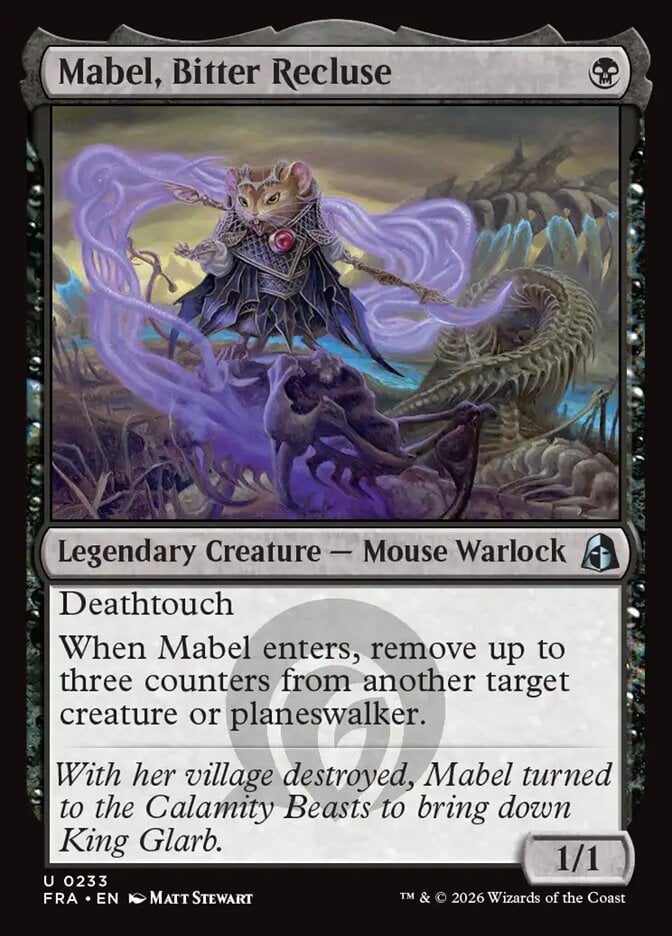
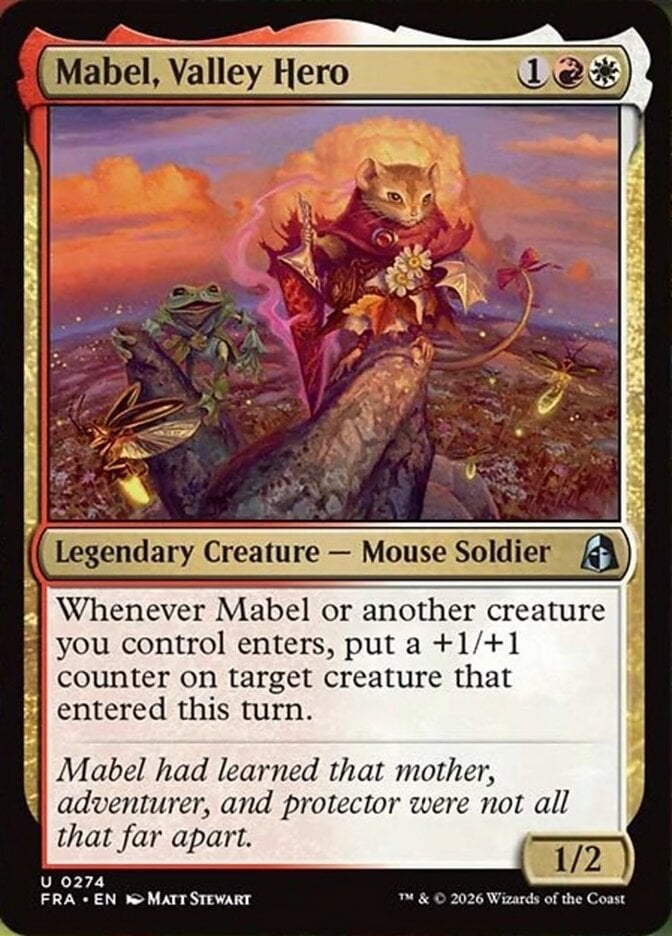
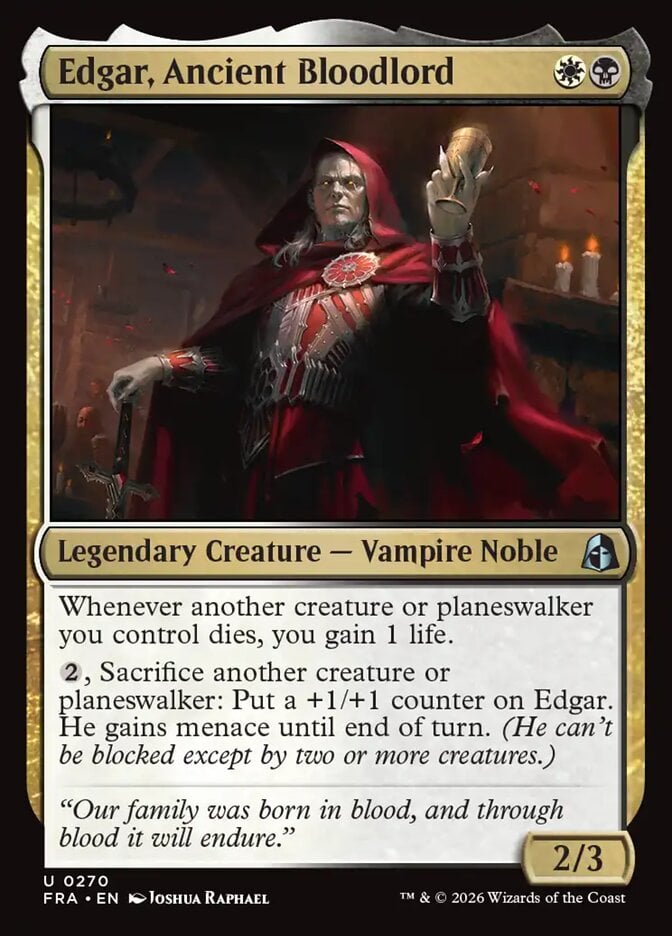
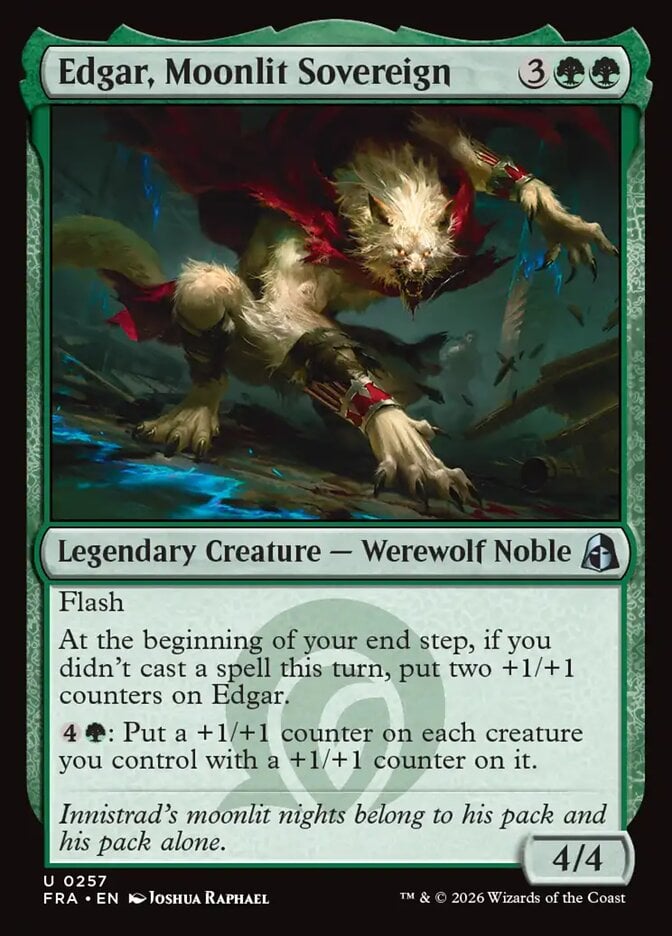
Mabel, Bitter Recluse and Mabel, Valley Hero would force you to play three colors to accommodate both, and they have basically zero synergy. Edgar, Ancient Bloodlord and Edgar, Moonlit Sovereign are very similar to the Mabels.
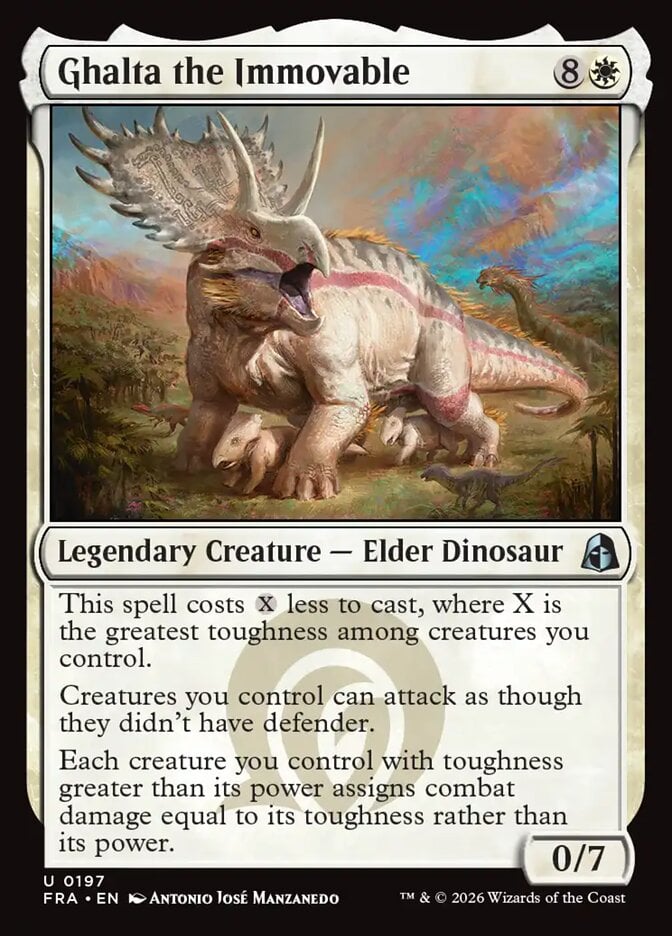
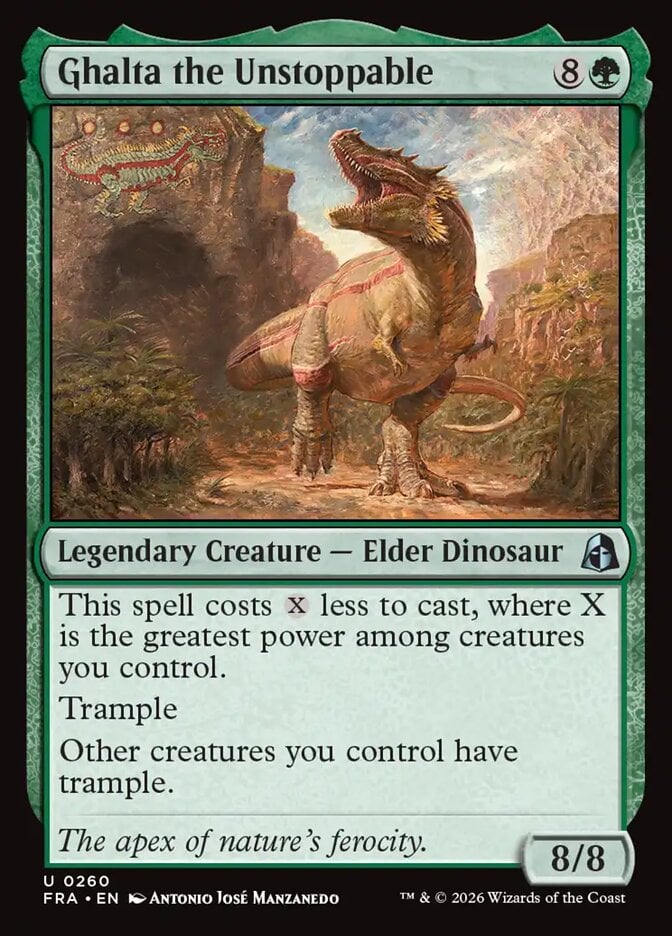
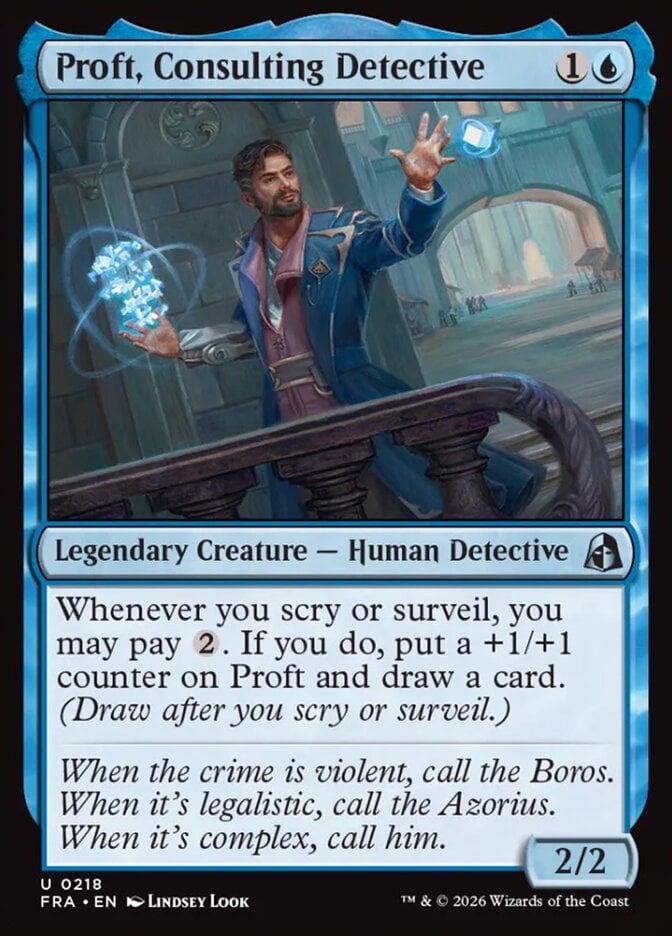
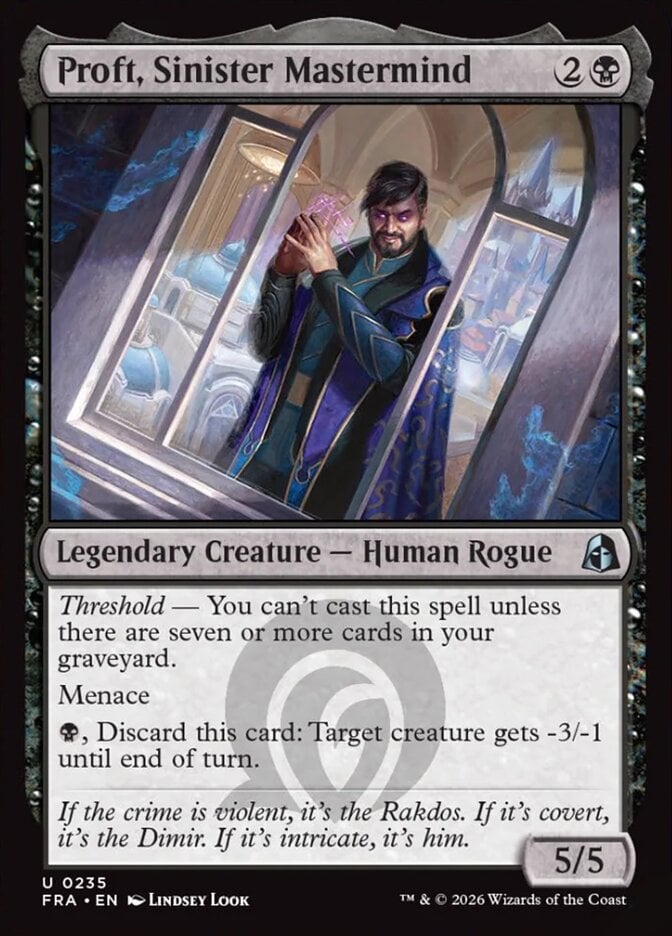
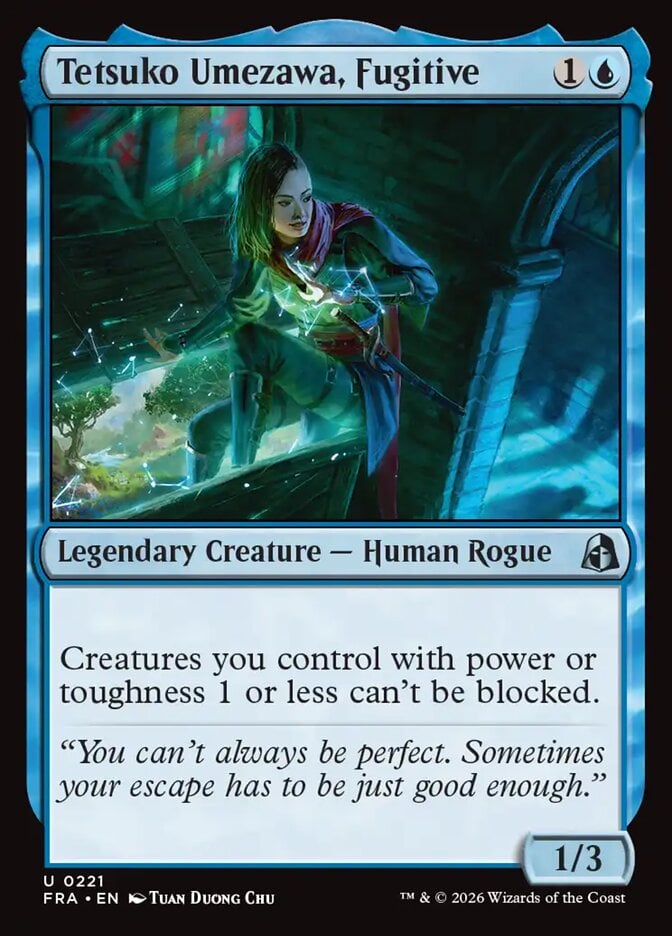
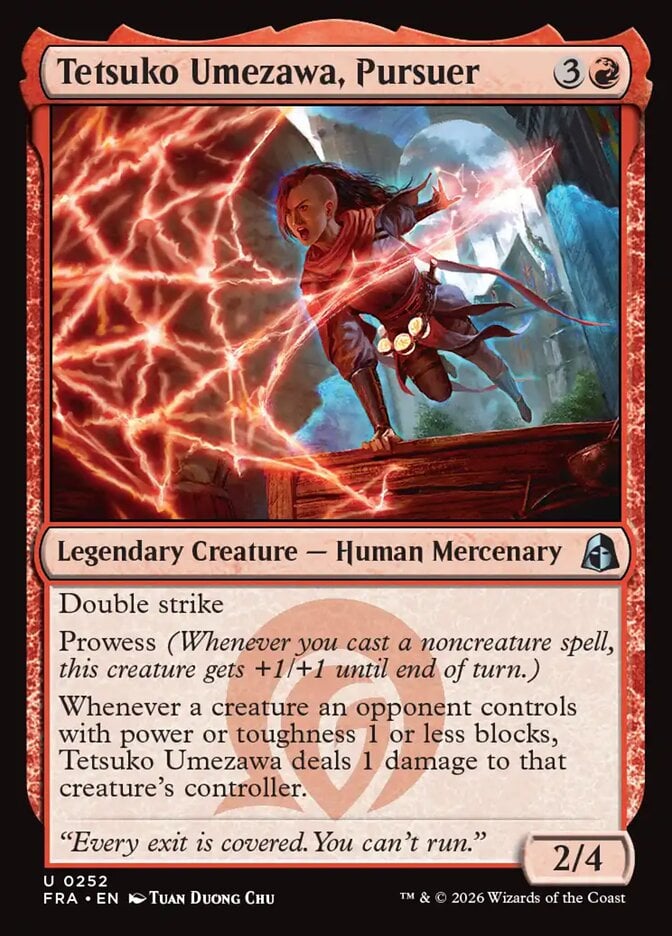
Ghalta the Immovable and Ghalta the Unstoppable play best with completely different kinds of creatures. Proft, Consulting Detective wants scry/surveil support, while Proft, Sinister Mastermind requires a stocked graveyard to do much of anything. Tetsuko Umezawa, Fugitive rewards 1/x or x/1 creatures, while Tetsuko Umezawa, Pursuer punishes them.
I wouldn’t go overboard in “sizing up your opponent’s deck” when you see an echoed pair card. The possibility of false leads from these is somewhat real, and the information derived will often just be “oh boy, they have another mythic rare” anyways. Best to focus on more tangible things, like….
Top Commons
The set’s best commons! I’ve picked out four cards from each color that I think will play exceptionally well, and I’ve included a bit of information on hybrid/colorless commons as well.
White
#1. Memory Trap
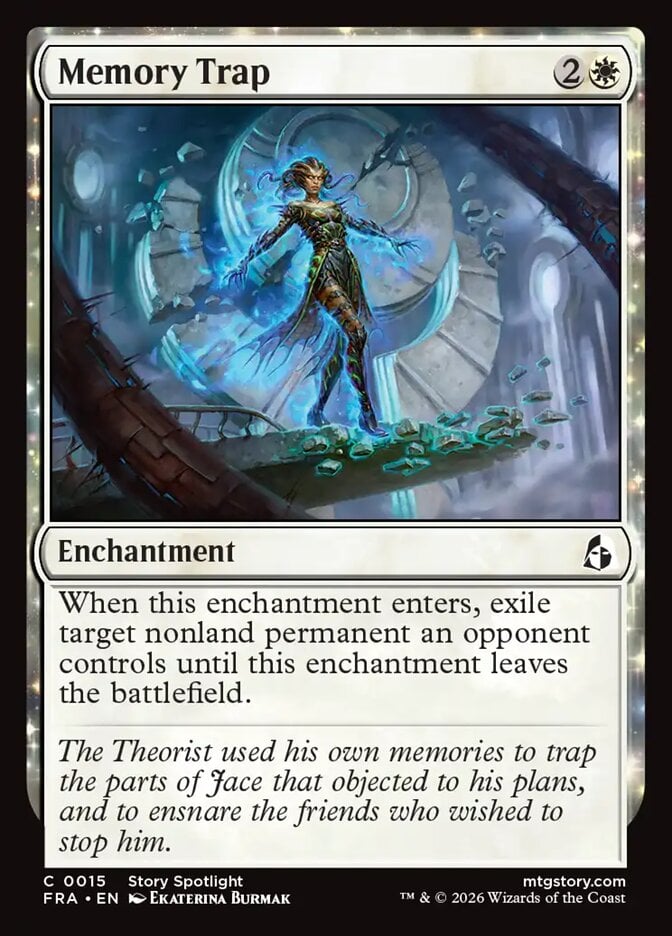
They keep printing Banishing Light, and every time they do it’s either the best or second best white common. Reality Fracture is rather low on Disenchants too, with only Budding Insurgent at common and a handful of uncommon answers to Memory Trap available like Clash of Elements.
#2. Campus Crier
This is a significant upgrade to something like Stone Docent. Campus Crier has a similar body, but higher graveyard value that you can exile at instant speed. Every white deck should be happy to play this, regardless of what their plan is.
#3. Hexhaven Battalion
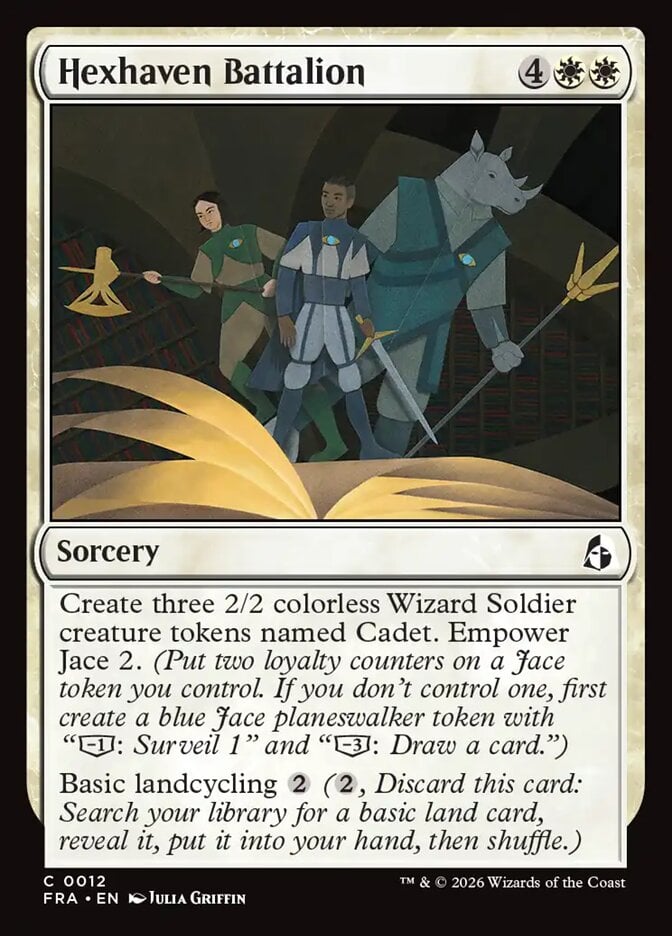
Imperial Oath was a sleeper hit in Kamigawa: Neon Dynasty, and Hexhaven Battalion is pretty close to that. It’s missing vigilance on the Cadets though, and empower 2 isn’t quite as juicy as scry 3 in the late game. On the other hand, the addition of cycling seems awesome because it makes your deck more consistent and enable splashes.
#4. Surgical Precision
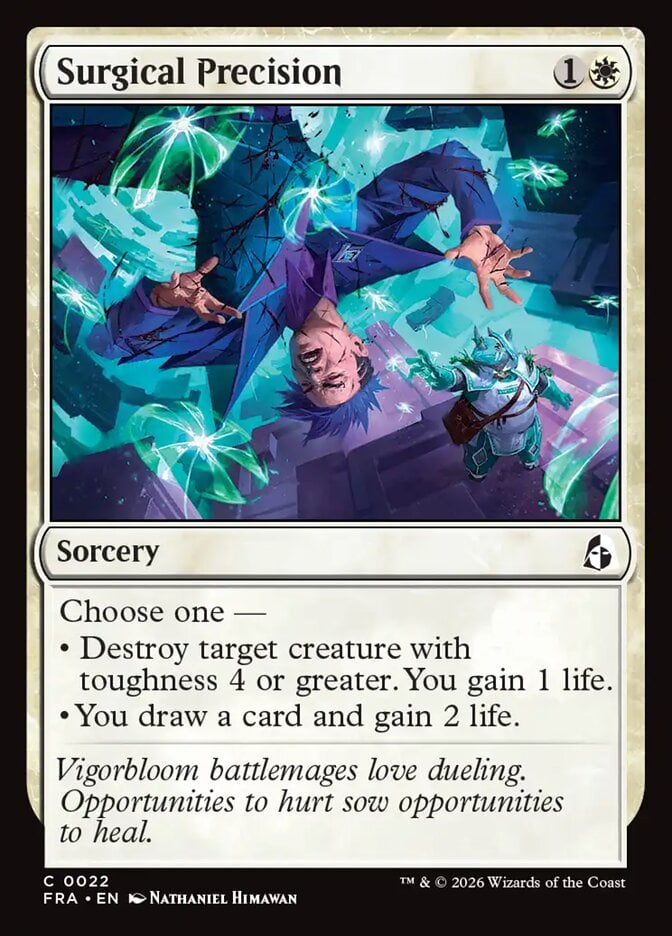
Murdock's Crusade was a significant overperformer in Marvel Super Heroes, and this is basically that but with cycling and tacked on lifegain. The format seems a bit light on X/4+ creatures though, so I expect us to cycle it a reasonable amount. Surgical Precision will perform best against green players most of the time, as green has a majority of this set’s chonkers.
Blue
#1. Mindseeker Oculus
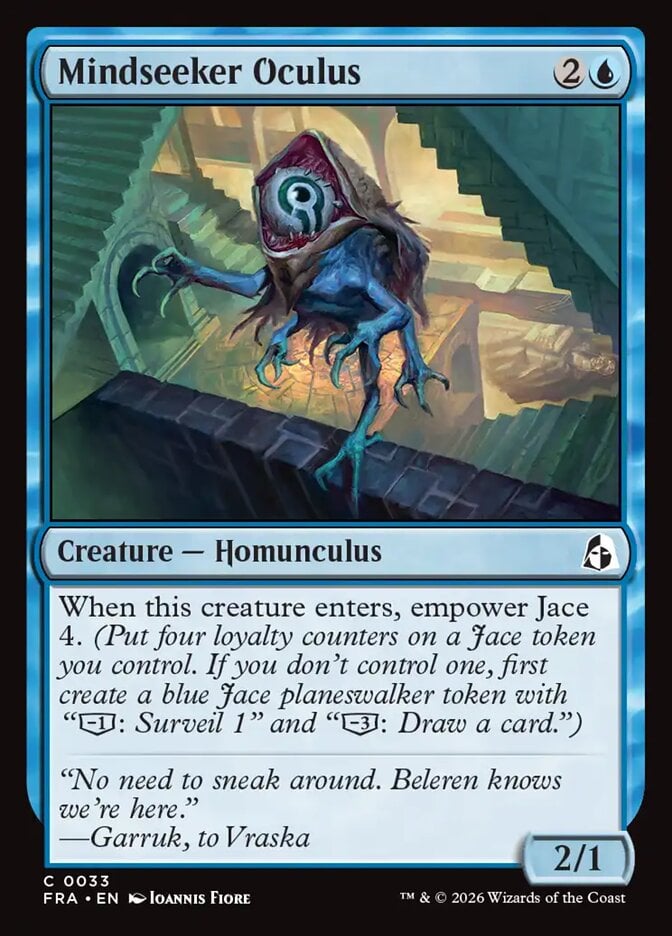
Blue Hero in Training goes brr. If you’re ever in doubt when looking at a new set’s commons, always look for efficient 2-for-1 creatures like Mindseeker Oculus. They’ll never let you down!
#2. Infinite Coursework
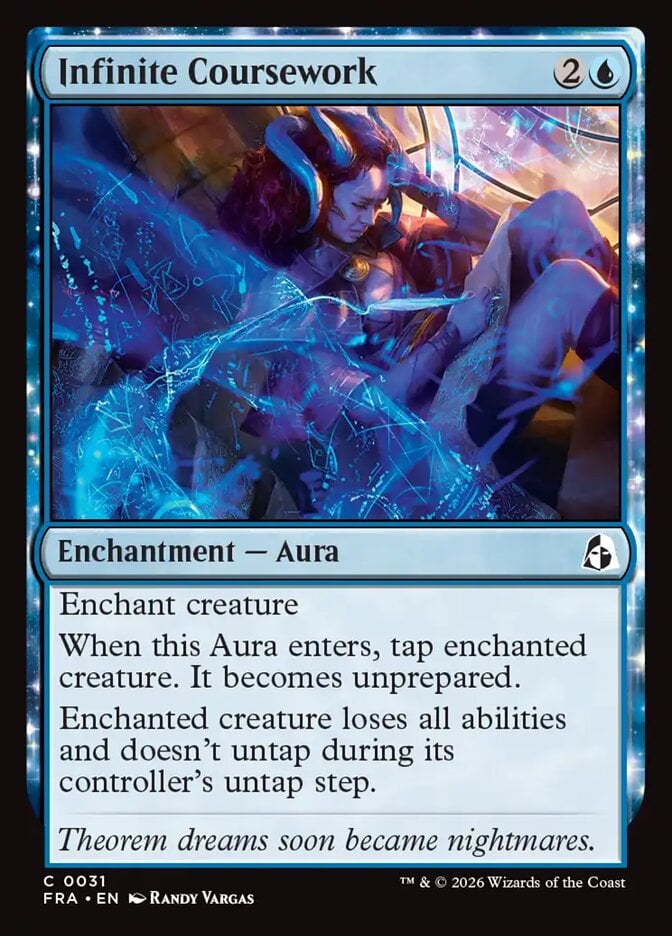
Infinite Coursework suffers from a couple of cards that Memory Trap doesn’t, like Unsummon, Rescue Girl, First Responder, and Flickering Hound. There’s no common like Mirkwood Nurturer in Reality Fracture though, and blue has zero other hard removal options.
#3. Icy Reception
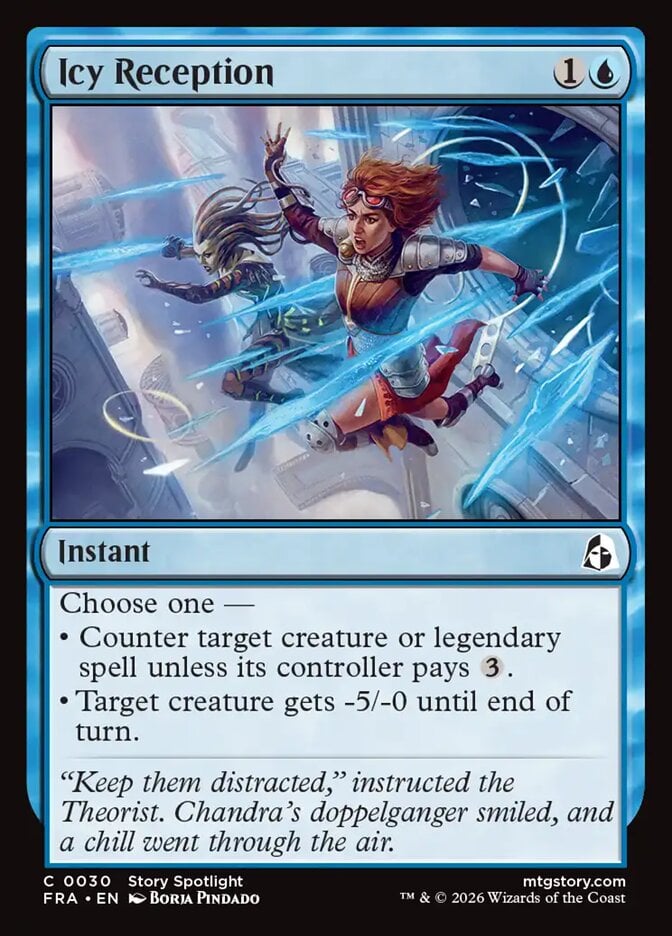
A decent Essence Scatter variant that counters creatures, planeswalkers, and the “Way of” enchantments (due to them being legendary). The counter mode will eventually expire late game, where Icy Reception still isn’t dead due to its Hydrosurge mode.
#4. Surveillance Phantasm
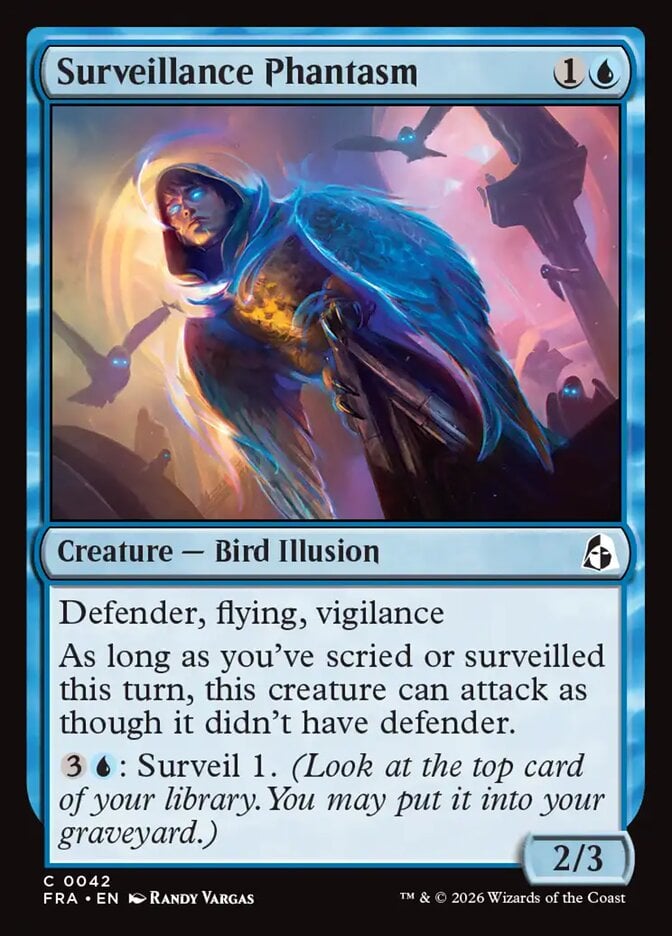
I find it difficult to look at Surveillance Phantasm without wanting to laugh, as “Jace bird” is truly a ridiculous spectacle to behold. The silliness of this card masks its efficiency; this 2-drop does a great job of holding down the fort and getting a little value later. It’s decent in any defensive blue deck, and desirable in decks with consistent surveil/scry.
Black
#1. Extended Absence
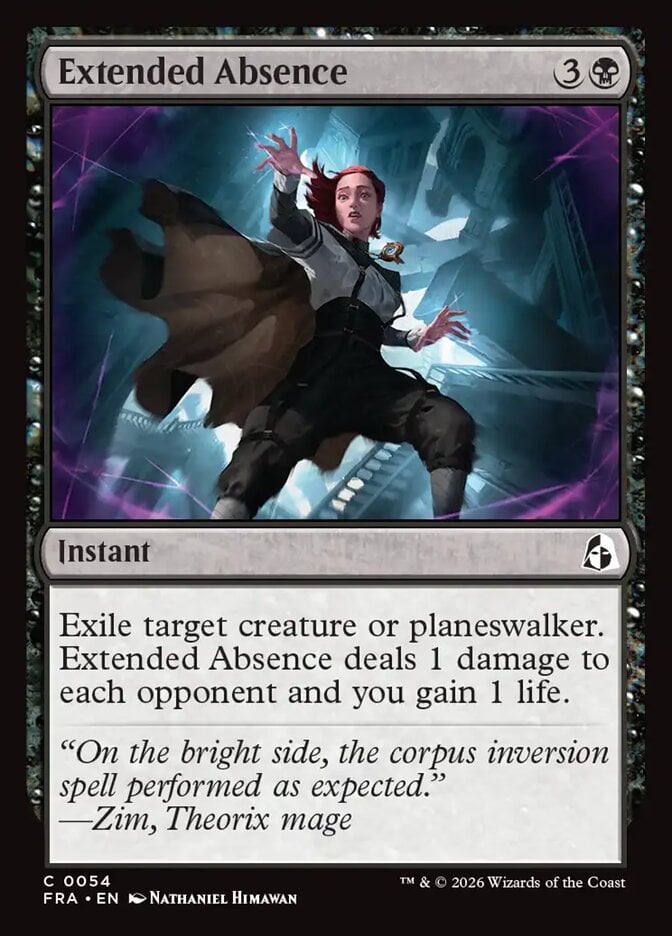
As with Memory Trap, the 4-mana black removal common is always among black’s best. Extended Absence goes one step further by triggering all your lifegain and noncombat damage payoffs, exiling busted mythic planeswalkers, and existing in a color with very few other 4-drops.
#2. Last Gasp
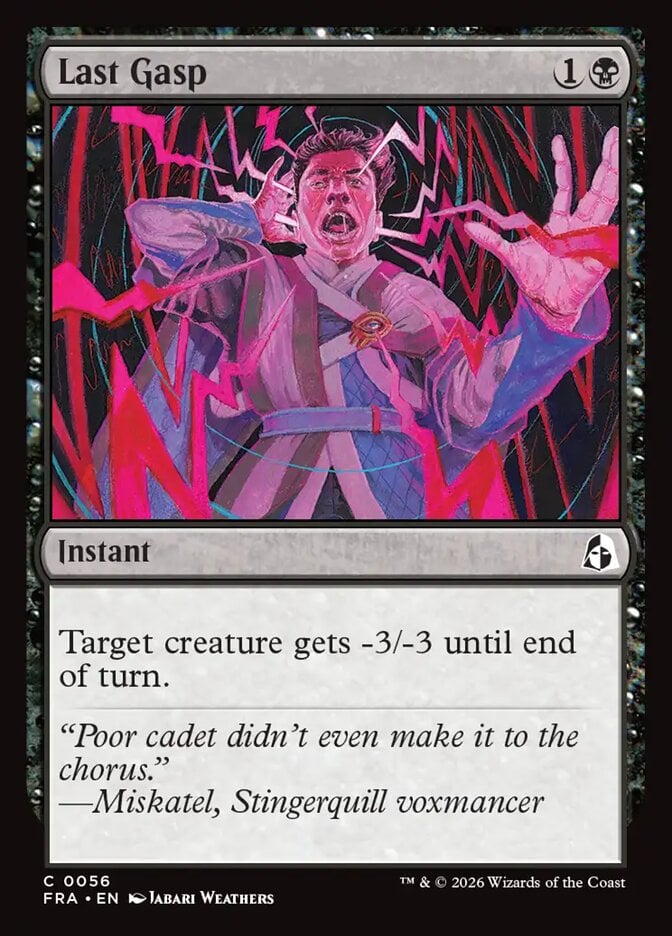
Absence is a better card in a vacuum, but there’s no removal spell I’d rather have on the draw than Last Gasp. This does an incredible job of buying you time to breathe against aggro decks, and it reliably kills almost every creature in the Reality Fracture Limited format that costs less than 3.
#3. Screeching Soulbreaker
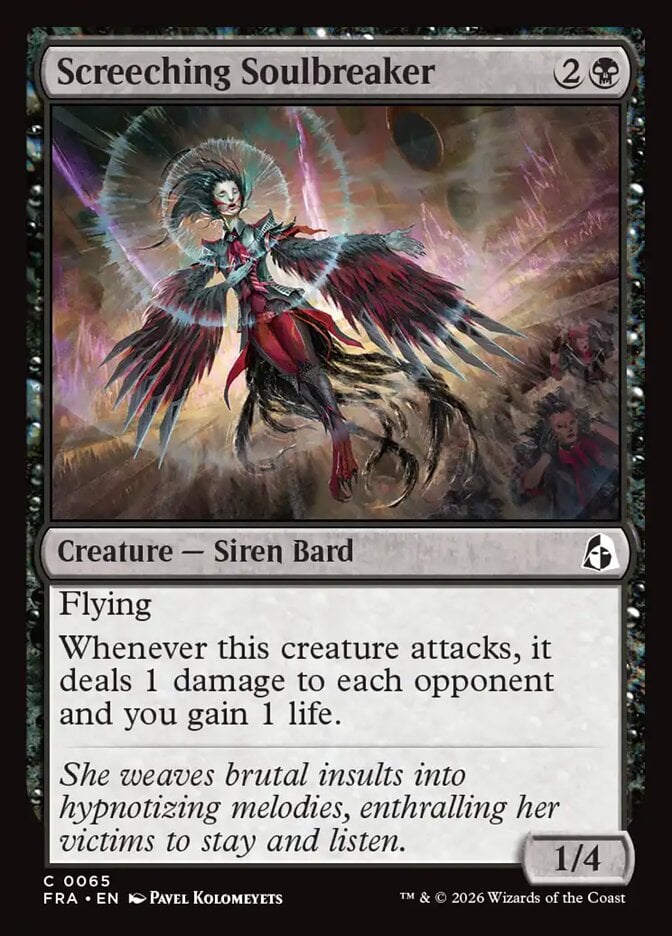
Screeching Soulbreaker is an efficient flier that effectively has 2 power for 3 mana, given the drain on attack. It triggers your lifegain and noncombat damage payoffs, too.
#4. Solve for Disappointment
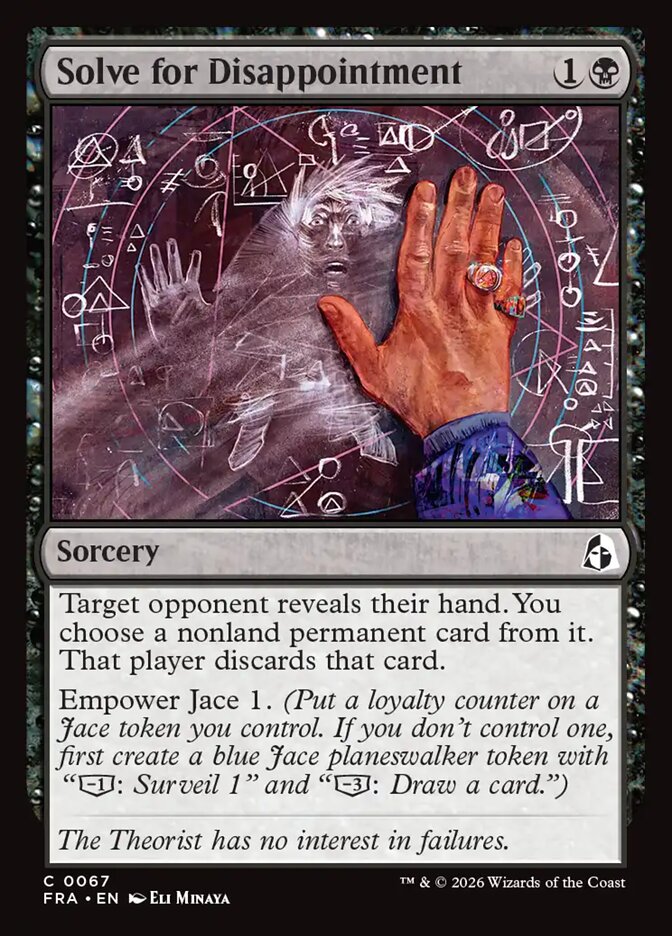
Solve for Disappointment is a great way to disrupt your opponents curve, get some information, and potentially nab a bomb (while getting a little bit of Jace value). Empower Jace 1 is the perfect line to set up a discounted Silence the Echo (which almost made this list).
Red
#1. No Admittance
Volcanic Hammer plus a little bit of Jace value is an incredible recipe for a common. Don’t forget No Admittance can go face, too!
#2. Wrath of the Bloodmane
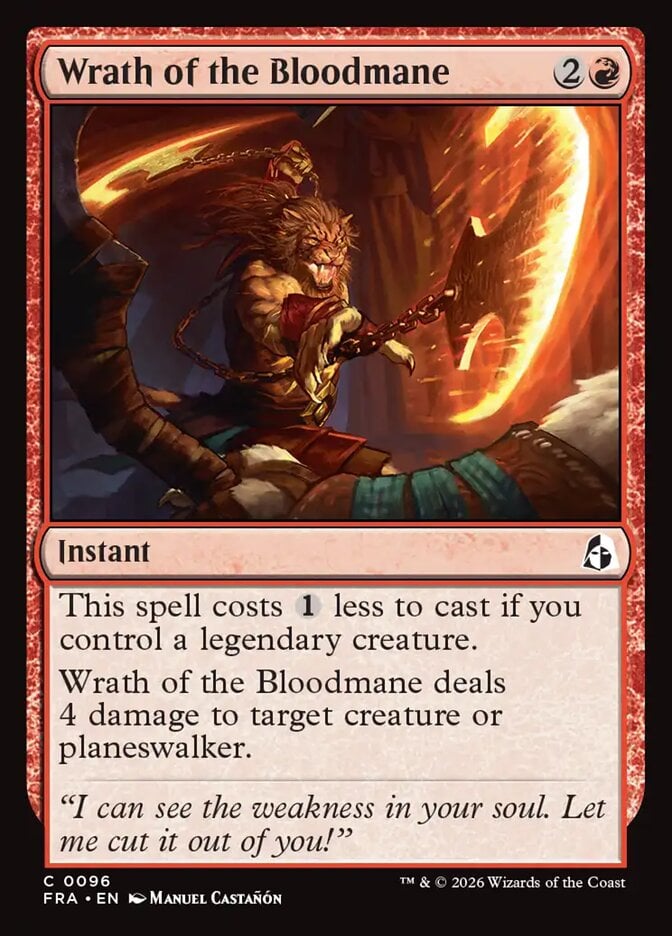
Reality Fracture has a ton of legendary creatures in it, most of which are echoed uncommons. It shouldn’t be too hard to discount your Wrath of the Bloodmane, and it’s Bombard (that also hits planeswalkers) at worst. Four damage covers the vast majority of creatures in the format.
#3. Skilled Battlecarver
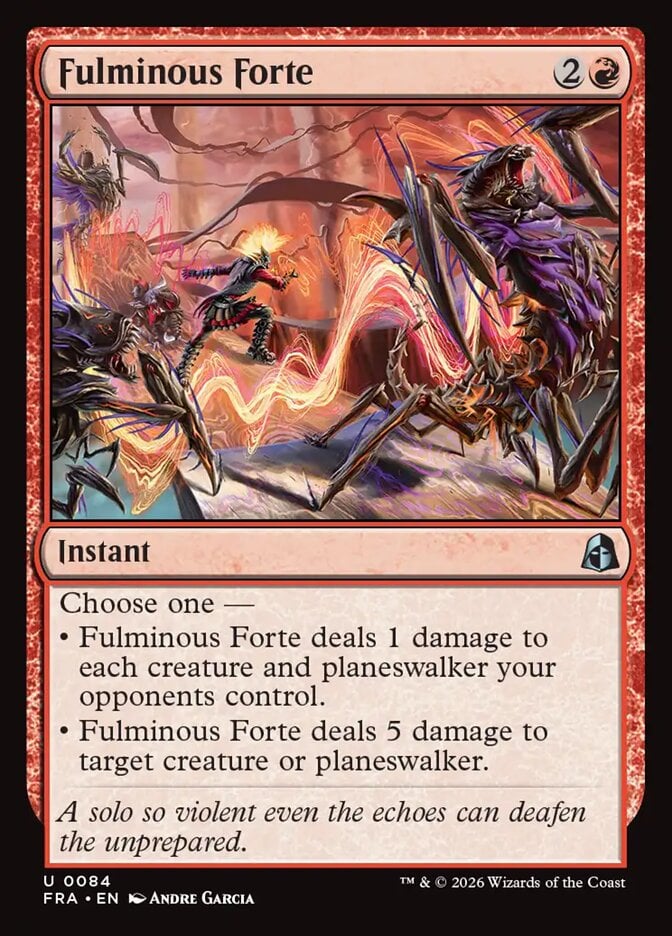
X/1 hate in Reality Fracture is pretty lacking (other than Fulminous Forte), so Skilled Battlecarver will often demand cheap removal or be a serious hassle to block in combat. It’s at its best versus cheap deathtouchers like Arcane Amphisbaena, which won’t be able to protect Jace from Battlecarver.
#4. Heartstring Puller
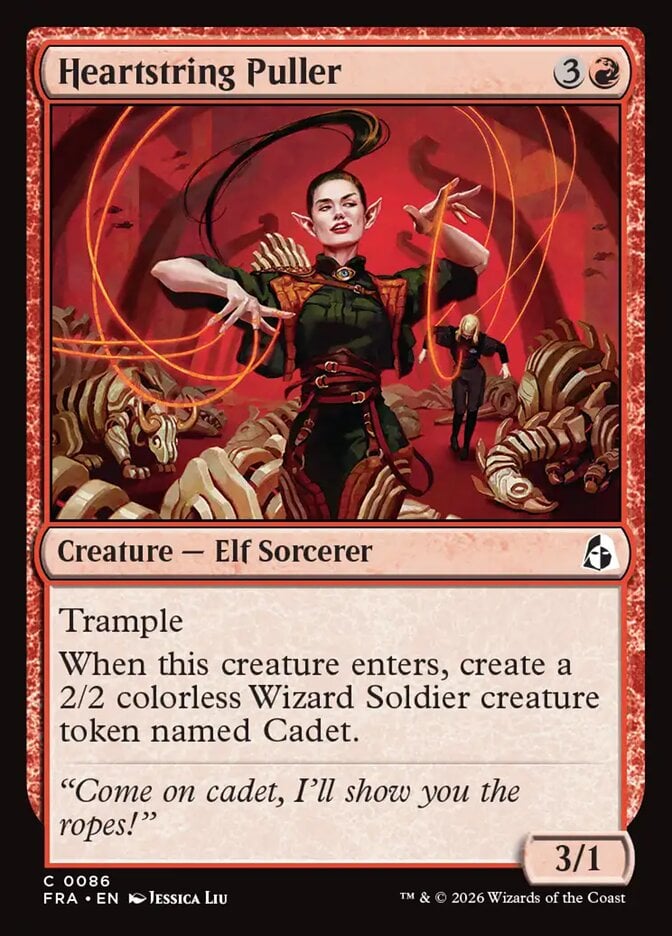
Red rarely gets simple 2-for-1s like this! Heartstring Puller should more than pull its weight in most Sealed decks, provided you aren’t too glutted on 4s to slot this in.
Green
#1. Compel Brutality
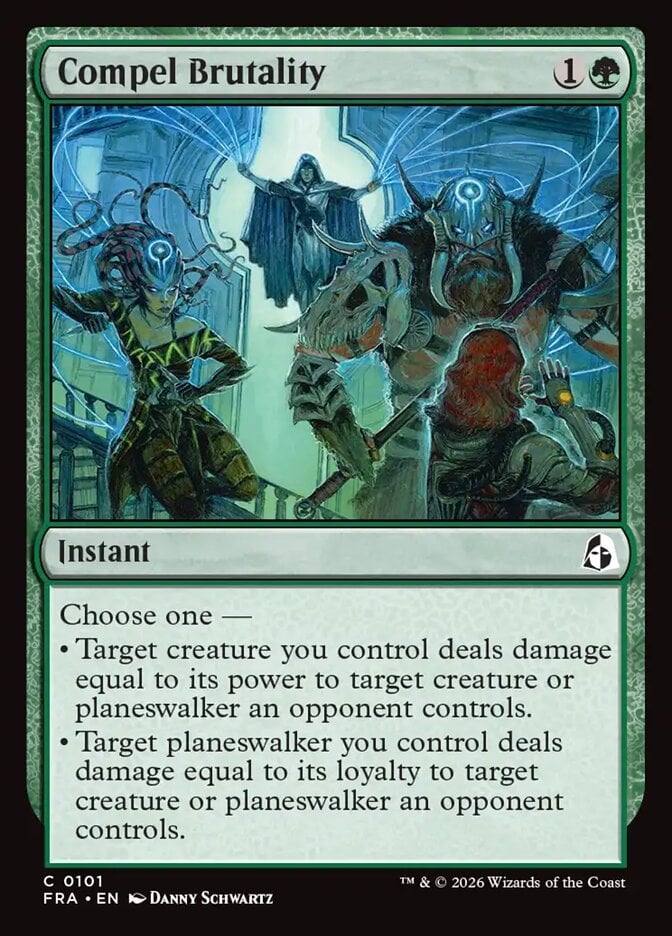
Getting to Rabid Bite with your Jace tokens from this is really neat, and it helps to make this card rarely dead. The synergy Compel Brutality has with something like Arcane Amphisbaena is actually unreal, since you can trade off your deathtoucher and still use this as removal!
#2. Bestial Incursion
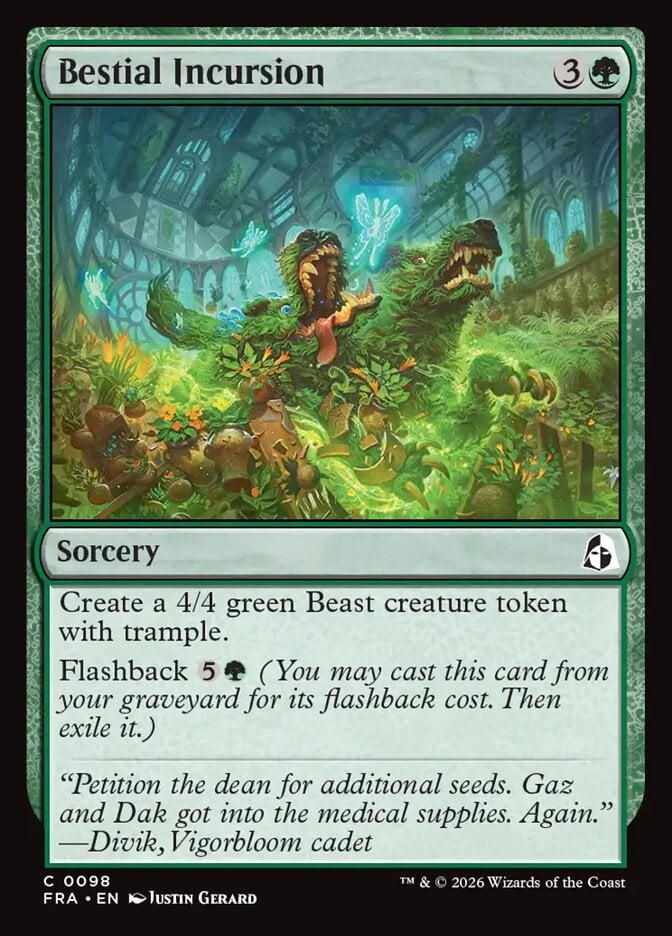
Bestial Incursion is a simple and clean 2-for-1 that fits in any green deck, but especially those with a bit of self-mill (perhaps from Something Worth Saving). Tokens are mostly safe in this format, although you may occasionally get tagged by Unsummon.
#3. Arcane Amphisbaena
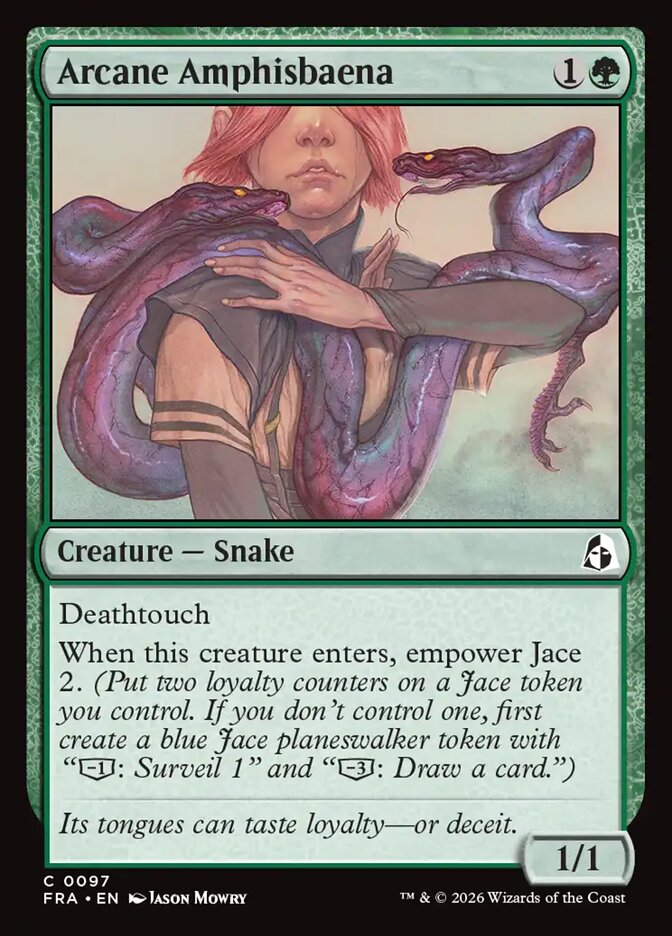
I haven’t enjoyed typing this card’s name, but I’ll definitely enjoy putting Arcane Amphisbaena into my green decks. It’s an excellent defensive creature, and one that comes with a guaranteed bit of value.
#4. Greenhouse Propagator
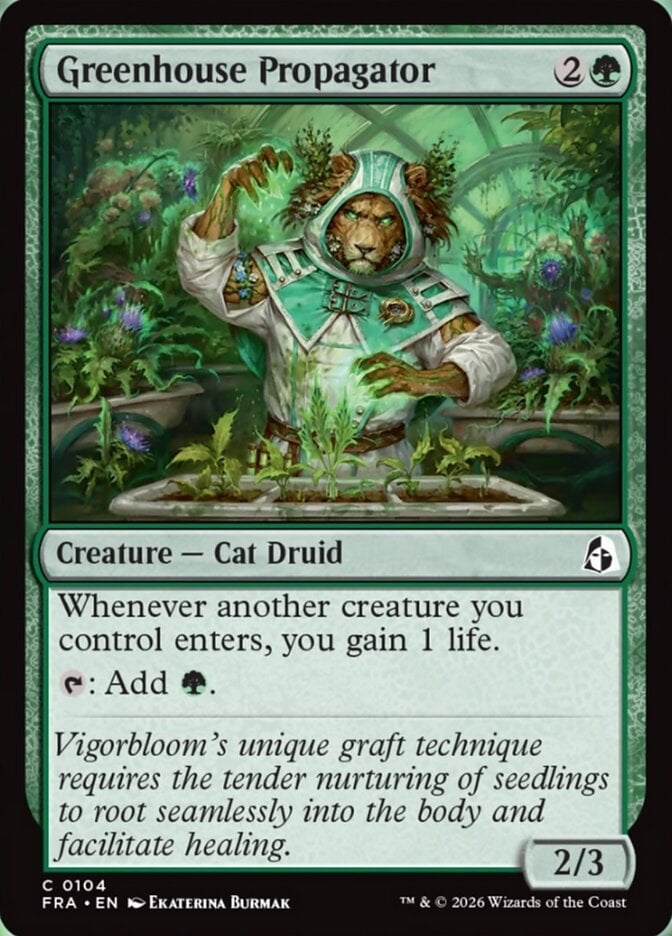
Three mana isn’t ideal for a Soul Warden, but this one does come with a reasonable stat line and mana acceleration attached. There’s enough meat here to play in any green deck, but it should do its best work alongside cards like Bloombrute.
Hybrid Commons
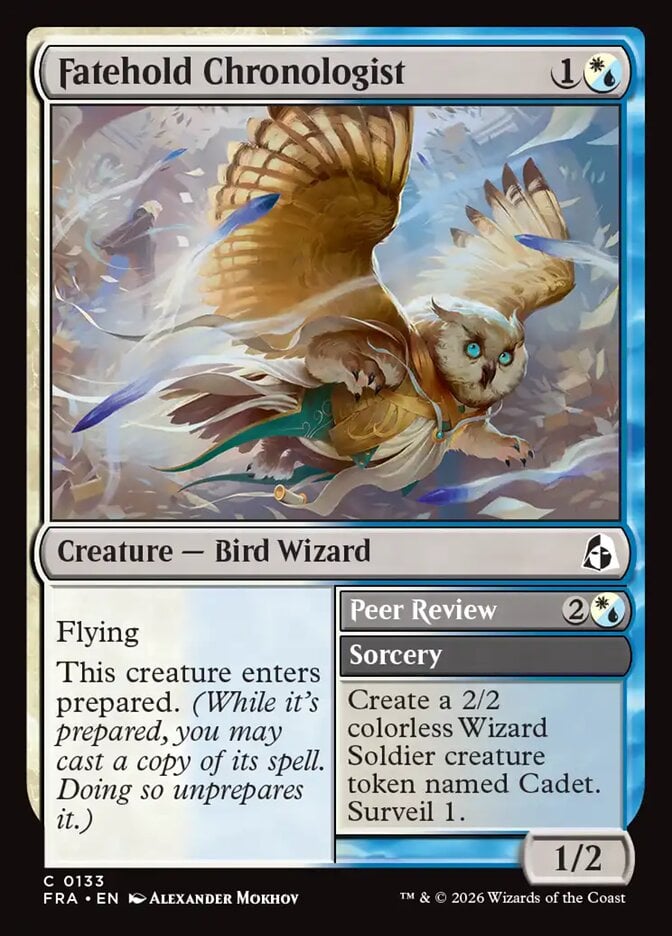
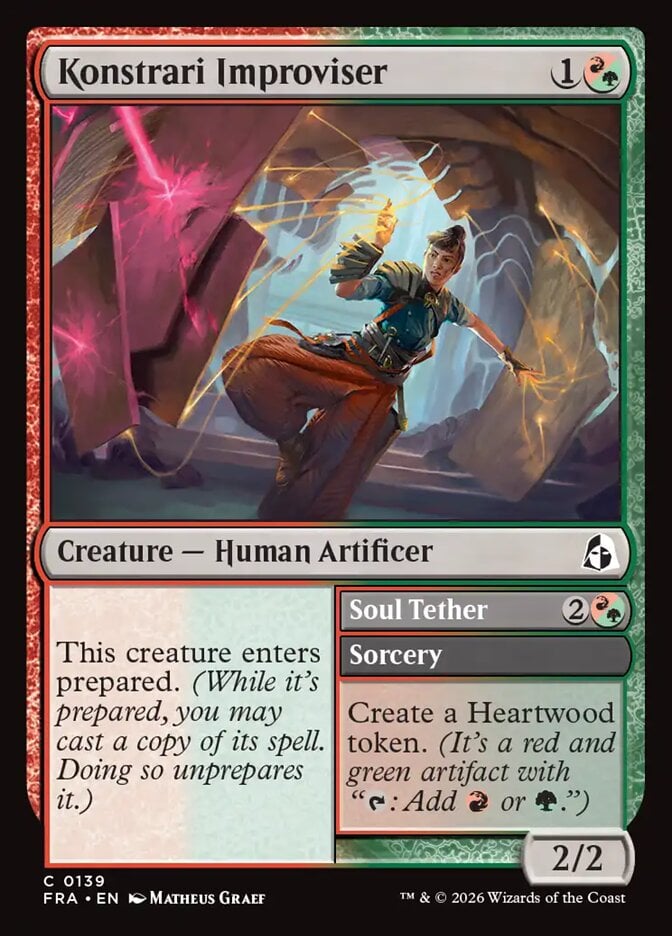
All 10 hybrid commons are designed to be playable in various decks, while generally best in their specific archetype. Fatehold Chronologist for instance can fill your curve in any blue or white deck, but will pick up extra value when you care about surveilling (which means you’re likely blue-white). Konstrari Improviser meanwhile brings ramp and a bit of artifact support to any red or blue deck, but it isn’t efficient enough to be exciting if you aren’t interested in ramping.
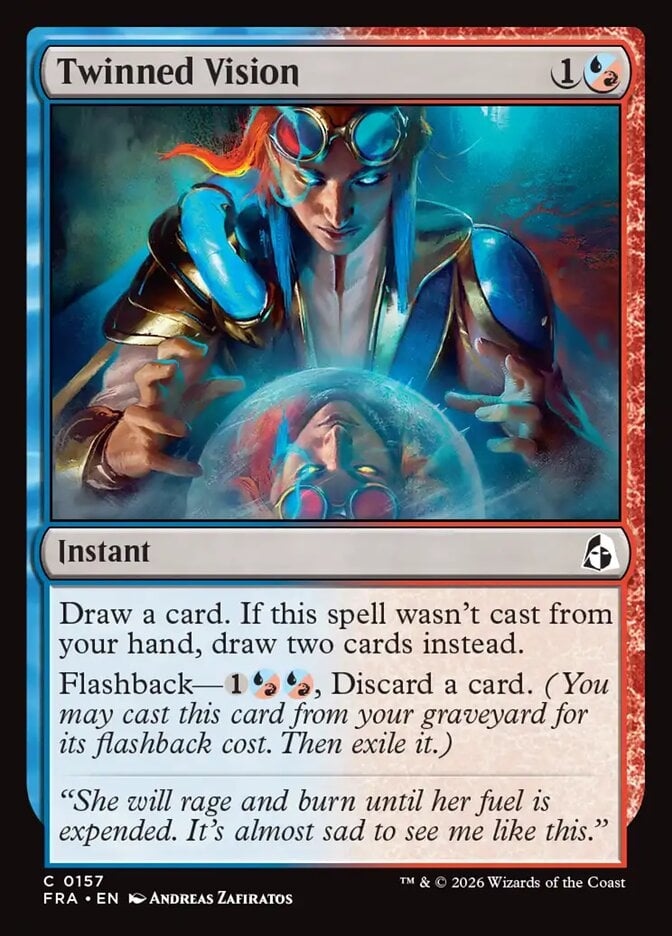
My pick for the best hybrid common is easily Twinned Vision. You can play this great new Think Twice variant in any blue or red deck, and you can add it to RG ramp decks for an unusually effective (and instant speed) card draw option. It’s the perfect way to mitigate mana flood/screw woes, and it even stacks well in multiples (since you can rummage one to another for flashback).
Colorless Commons
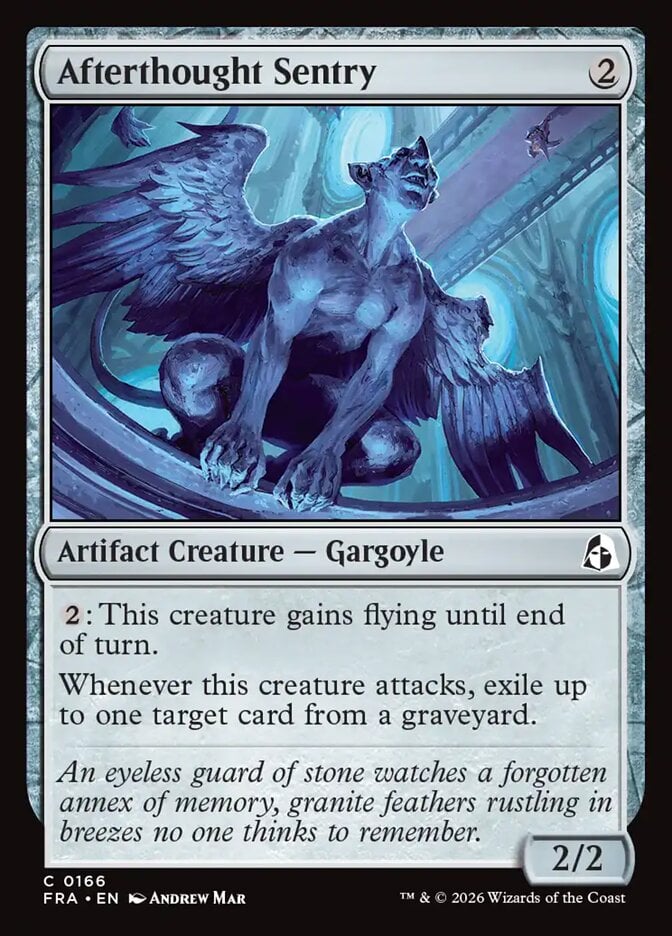
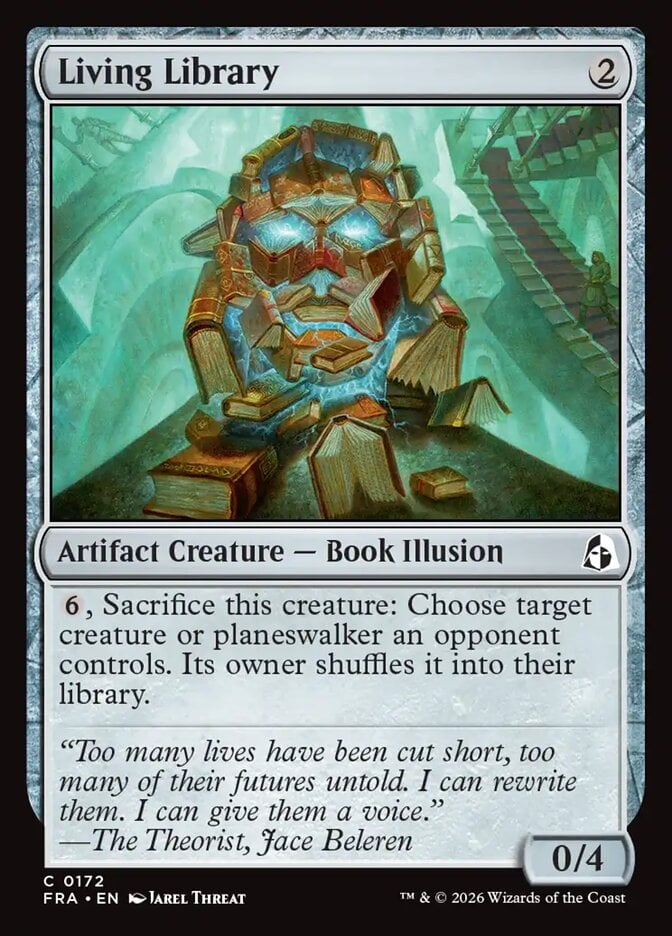
There are only five colorless commons in Reality Fracture. Afterthought Sentry is kind of an afterthought, but it’s a playable filler creature that’s also the only piece of graveyard hate in the entire format. Living Library does a better job of blocking than Sentry, and it may be a fine inclusion in durdly piles of rares and bombs.
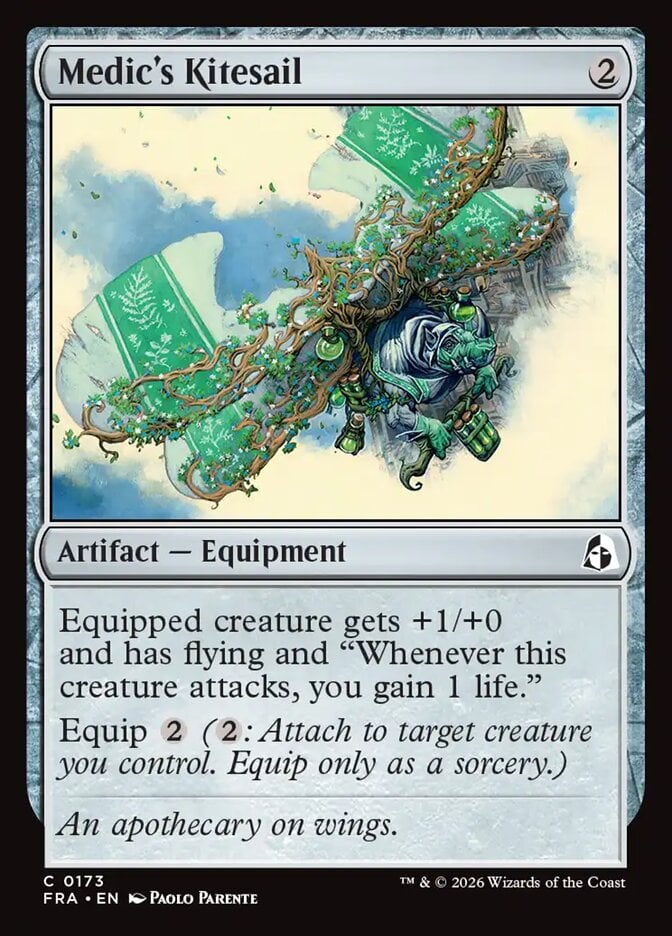
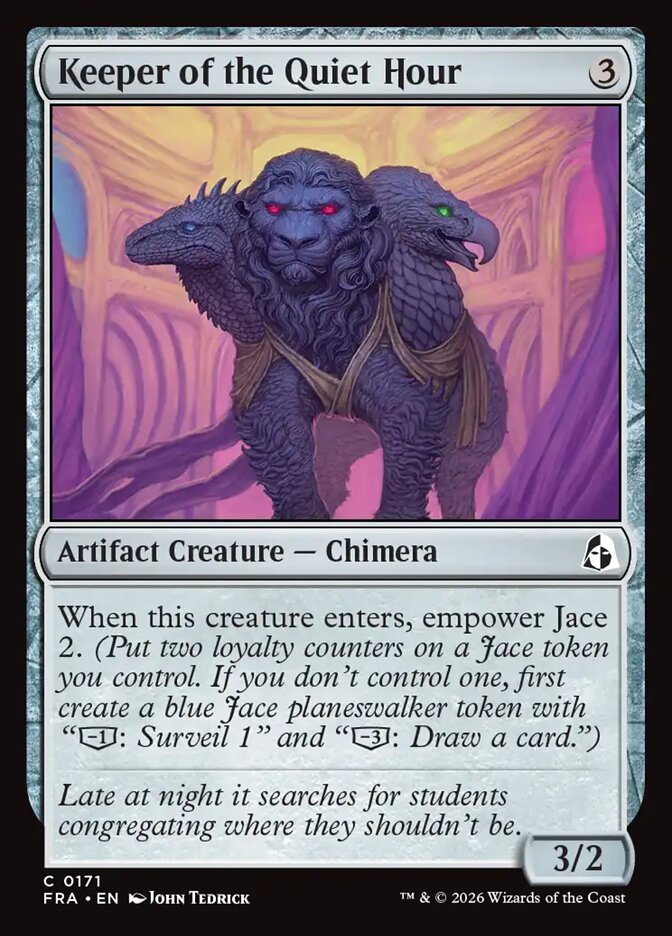
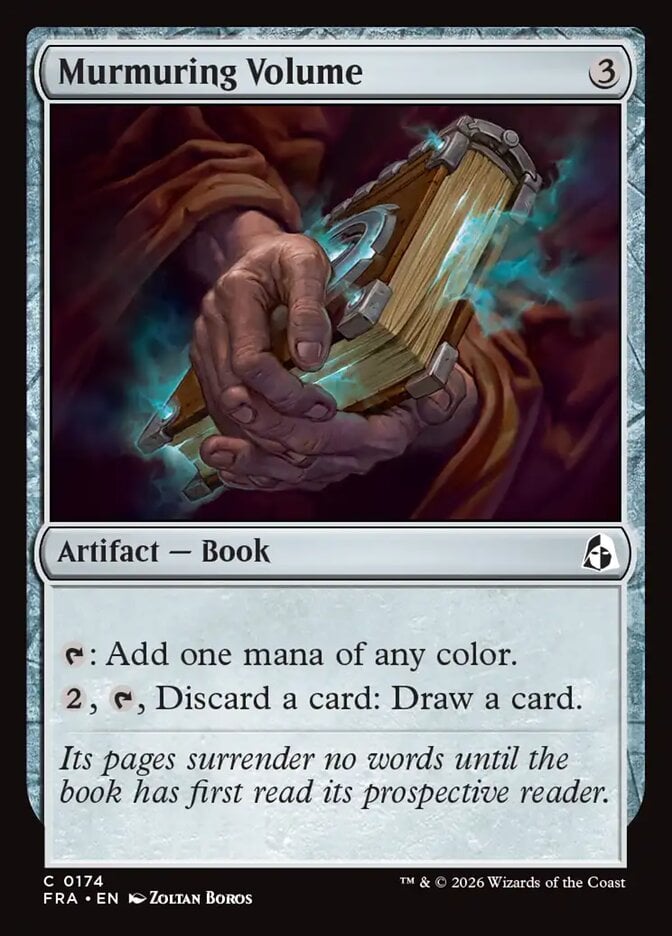
Medic's Kitesail is a little clunky, but the repeatable lifegain makes this a valuable card for Unflinching Hortimancer decks. Keeper of the Quiet Hour is acceptable filler for any deck, although there are many better 3-drops available. But Murmuring Volume is the colorless common I’m most likely to play because it’ll be a key role-player in greedy multicolor strategies that look to cast all their bombs.
Top Uncommons
This uncommon section will be a Top 20 list of some uncommons I really like, rather than a ranking for each color. Some of these will come from echoed pairs, but the other card in the pair won't necessarily be represented. Life isn’t always fair!
Craftwork Crusher
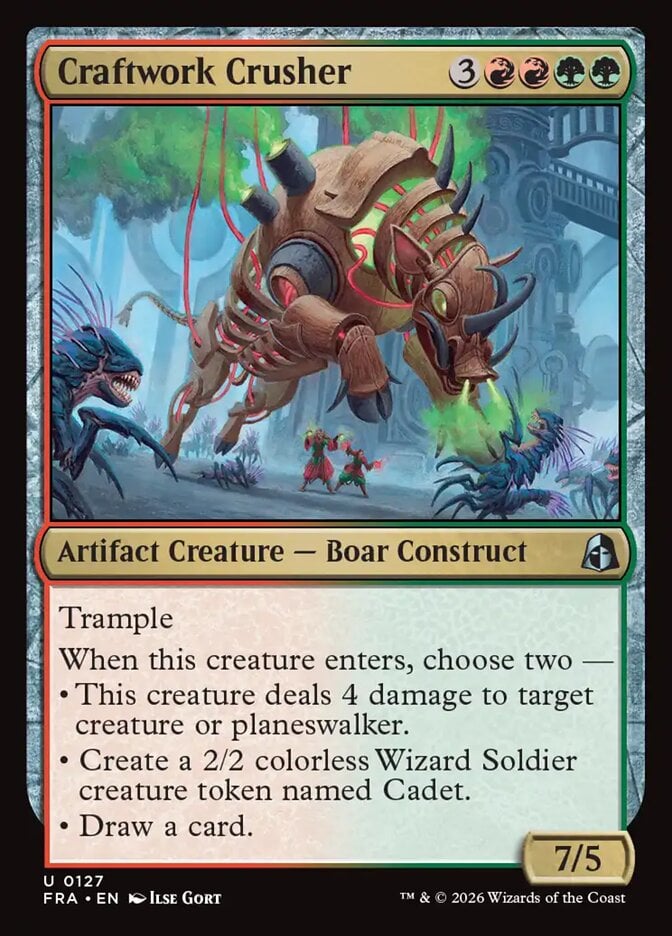
I can’t believe Craftwork Crusher says “Choose both”. 17lands GIH +62% card incoming.
Stingerquill Charm
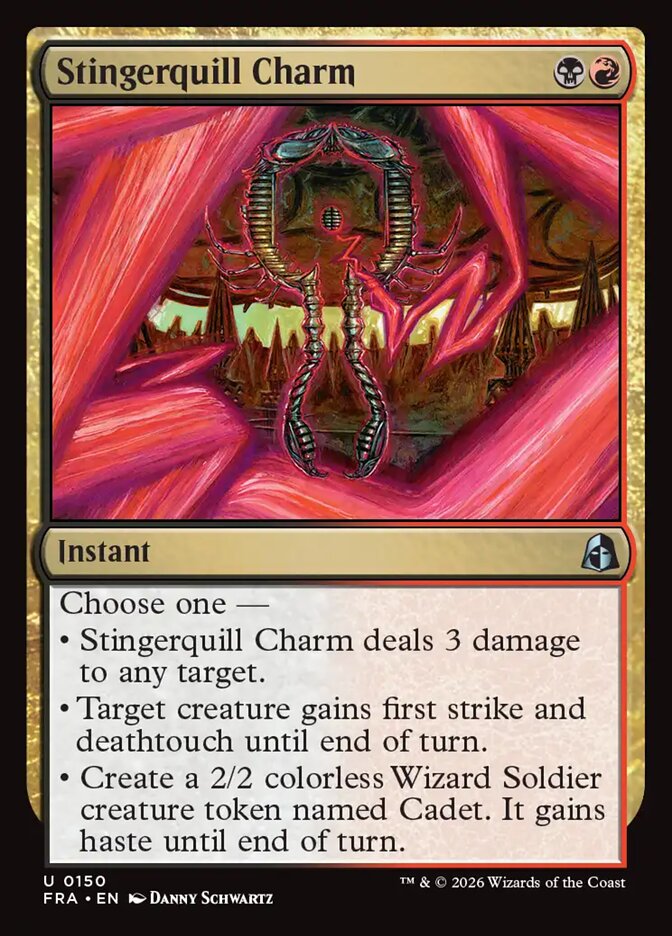
Stingerquill Charm is easily the best of its cycle for Limited. Lightning Strike + haste bear + a first strike/deathtouch combat trick covers everything I could ever want from a 2-drop spell!
Clash of Elements
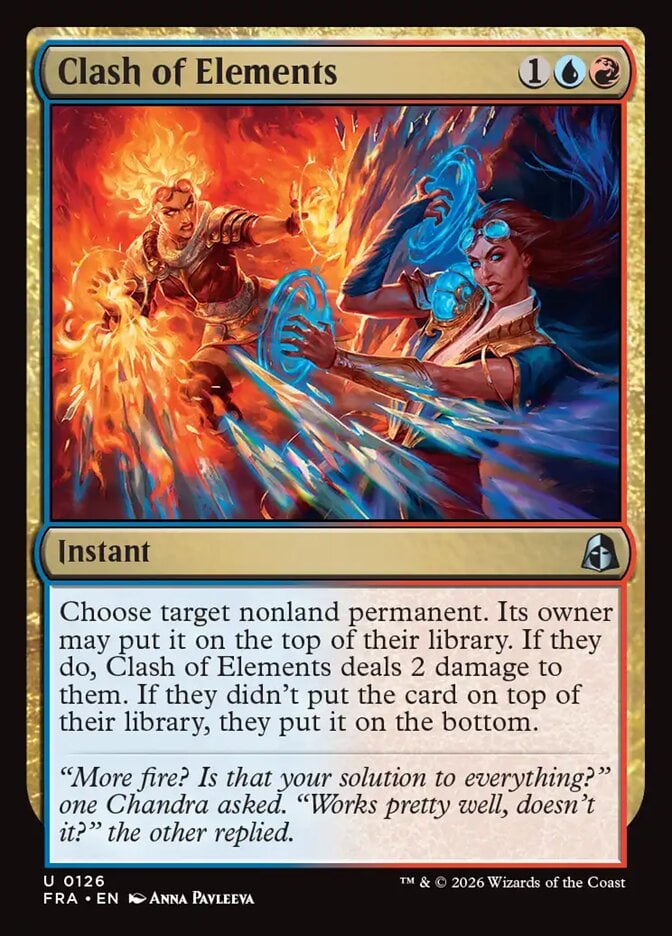
All roads on Clash of Elements lead to substantial upside. If your opponent bottoms the card, you get rid of whatever you wanted gone. If they redraw it, you get a free Shock for your troubles. And it’s an under-costed Vanish from Sight variant either way!
Twisted Fates
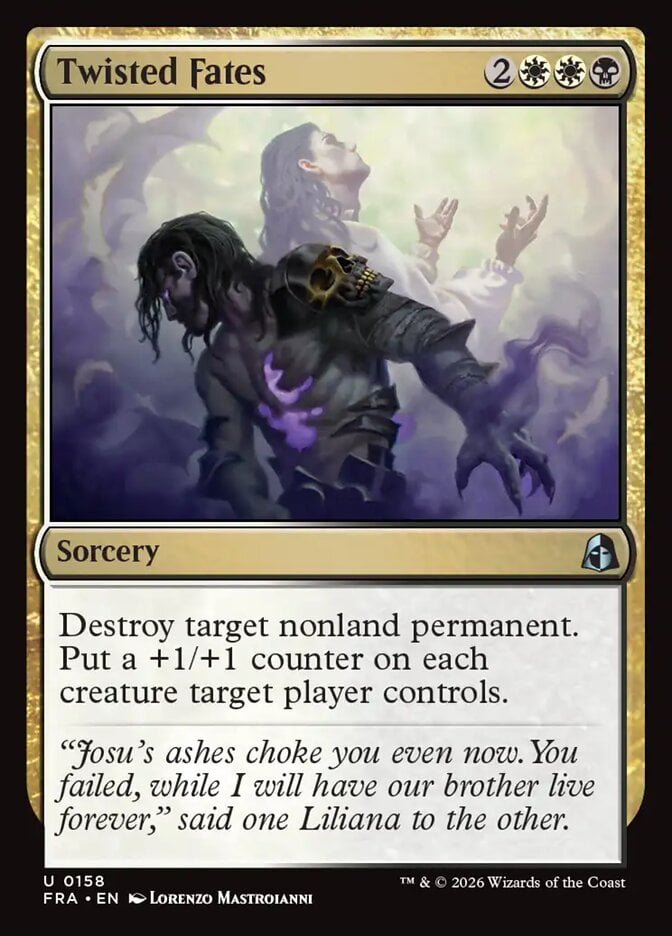
Twisted Fates is over-costed purely as removal, but a Titania's Boon on top of your Fell is quite strong.
Hapatra, the Desert Fang
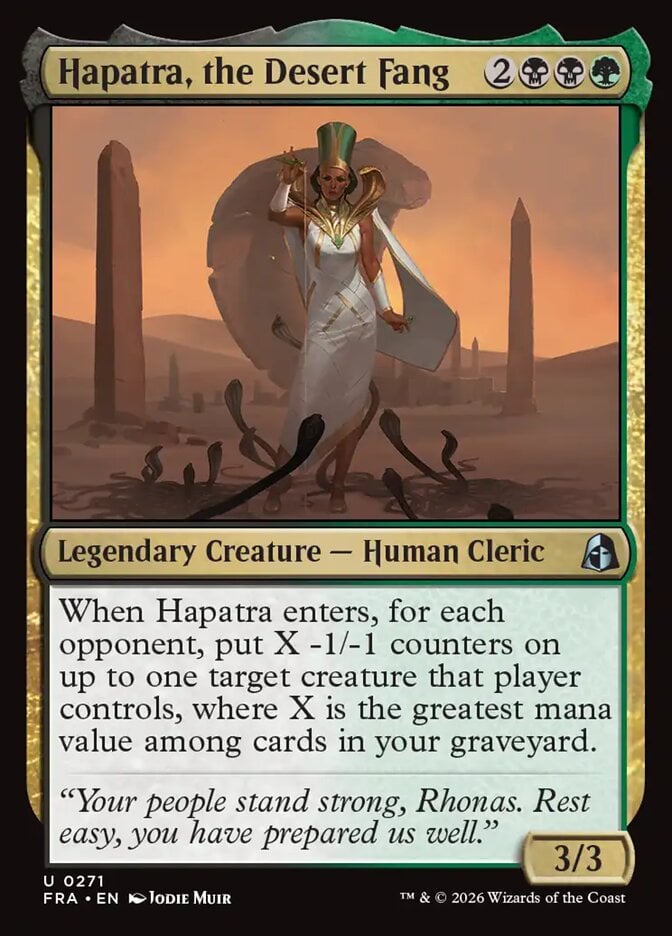
Hapatra, the Desert Fang is an easy 2-for-1 to set up, which reminds me of Cloud of Darkness (albeit without flying).
Warrior’s Blades
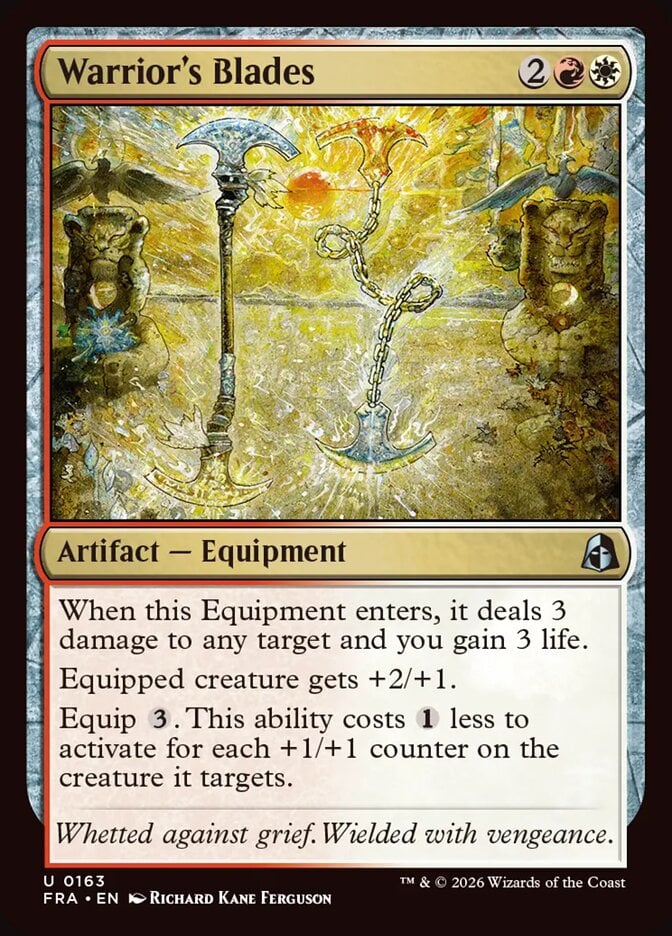
Boros doesn’t look especially high synergy in Reality Fracture, but the raw rate on Warrior's Blades is impressive. +1/+1 counters are fairly easy to acquire too, especially if you’re lucky enough to have Mabel, Valley Hero to go with this.
Mind Meanderer
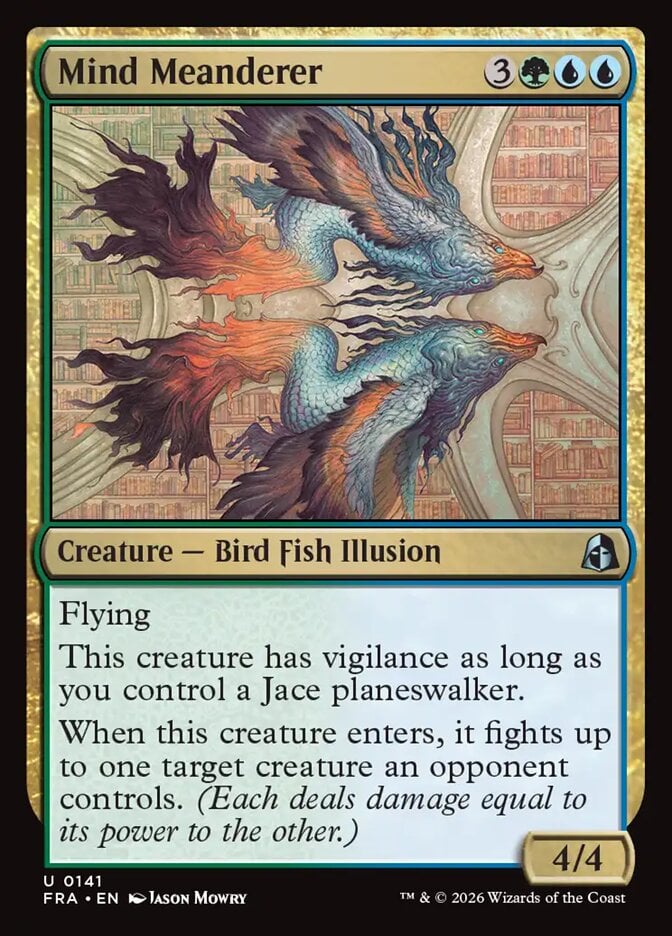
Speaking of easy 2-for-1s, Mind Meanderer is another really solid one that you can easily splash in base blue decks.
Recursive Recruitment
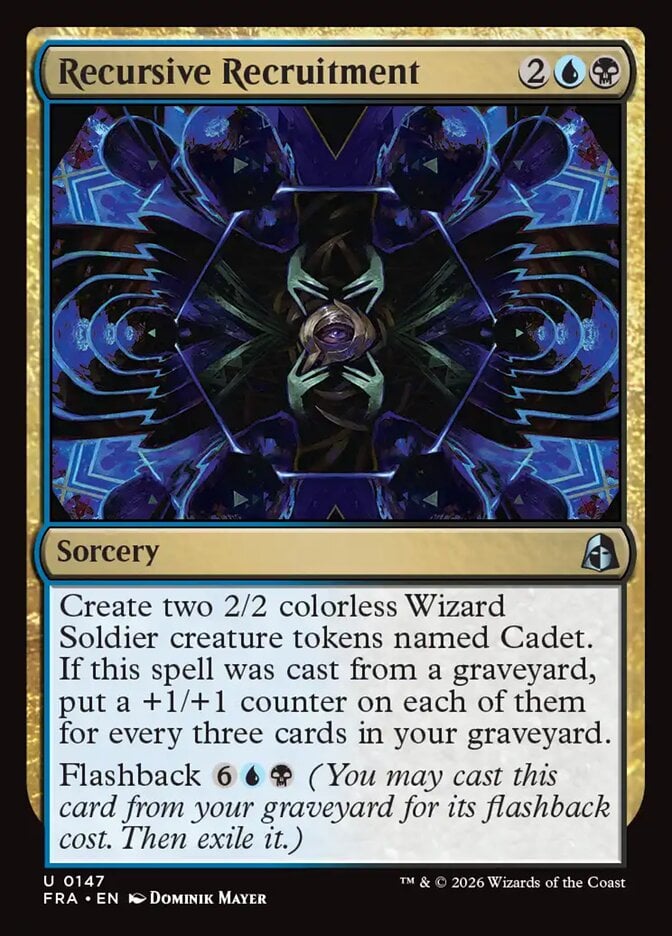
Call the Cavalry baseline is nothing special at this point, but still reasonable. The flashback on Recursive Recruitment however is an incredible late game trump card, as you’ll eventually get two 4/4s or 5/5s out of an already solid piece of cardboard.
Violent Echoes
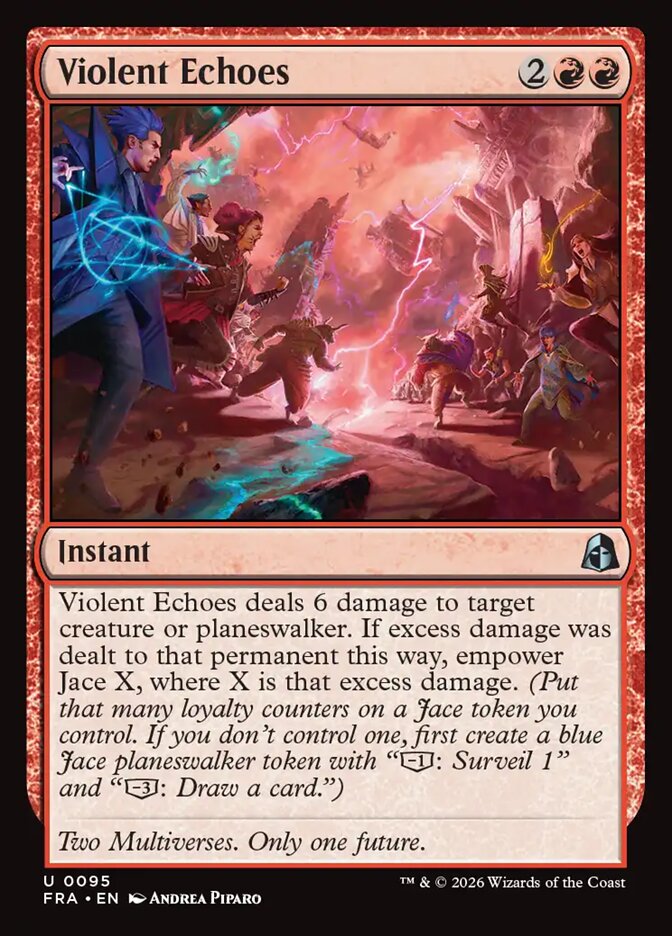
A removal spell that kills almost everything in the format and empowers my Jace for 2-4 on average? And it's instant!? Sign me up now! (The only drawback here is costing , which prevents it from being splashed.)
Rescue Girl, First Responder
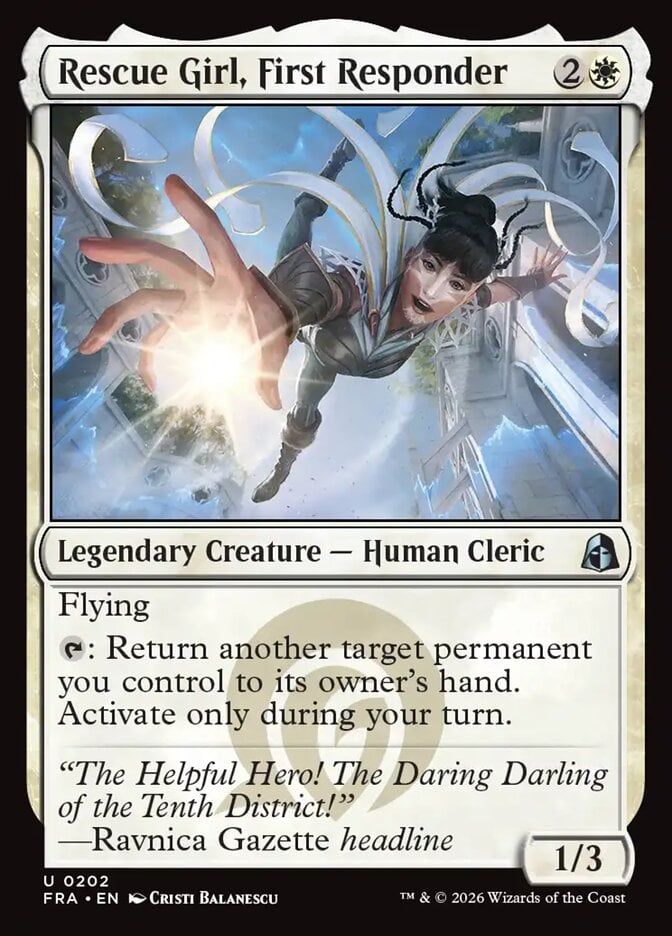
A bit undersized and slow to get going, but Rescue Girl, First Responder has impressive synergies in Reality Fracture. “Enters” commons like Mindseeker Oculus and Rank Rat are a good start, but the real brokenness comes from pairing it with noncreature permanents like Ajani's Anguish and Plan for All Outcomes.
Your Fate Ends Here
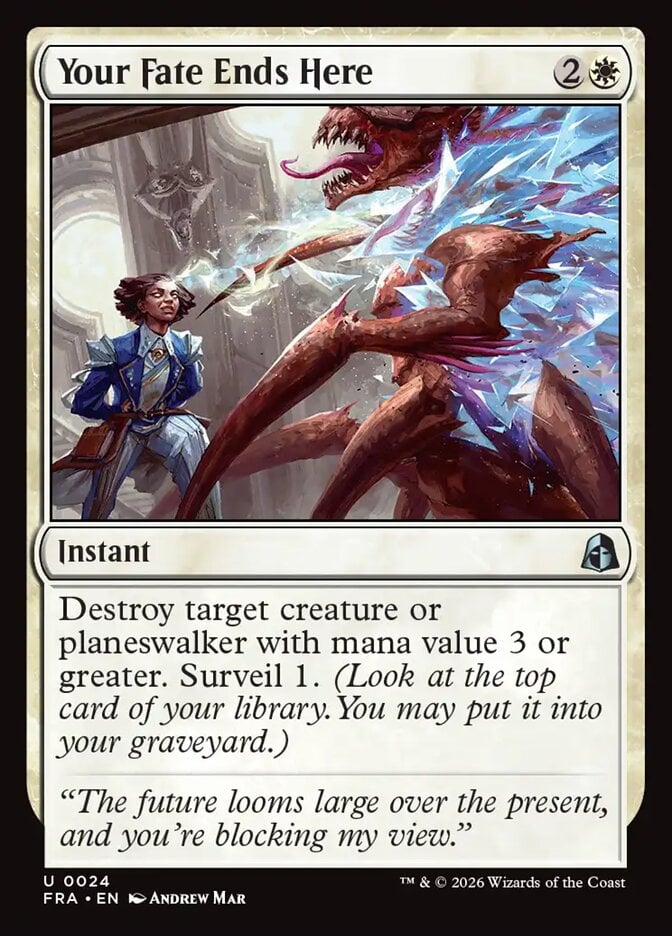
Excellent removal that answers everything but 2-drops, token creatures, and planeswalkers at a fair, splashable rate. You even get a bit of surveil as a bonus for casting Your Fate Ends Here.
Arni, Humble Scribe
A 3/2 looter for would already be a solid baseline, but Arni’s untap ability lets it loot multiple times per turn cycle! It has some excellent pairings in Reality Fracture too, like Tinybones, Pocket Nuisance and flashback cards.
Proft, Consulting Detective
Getting to sink some mana into Proft, Consulting Detective will result in incredible value, and the baseline here is a bear at worst. This dramatically improves the effectiveness of your Jace tokens, as you can always pay after you -1 them.
Break Under Pressure
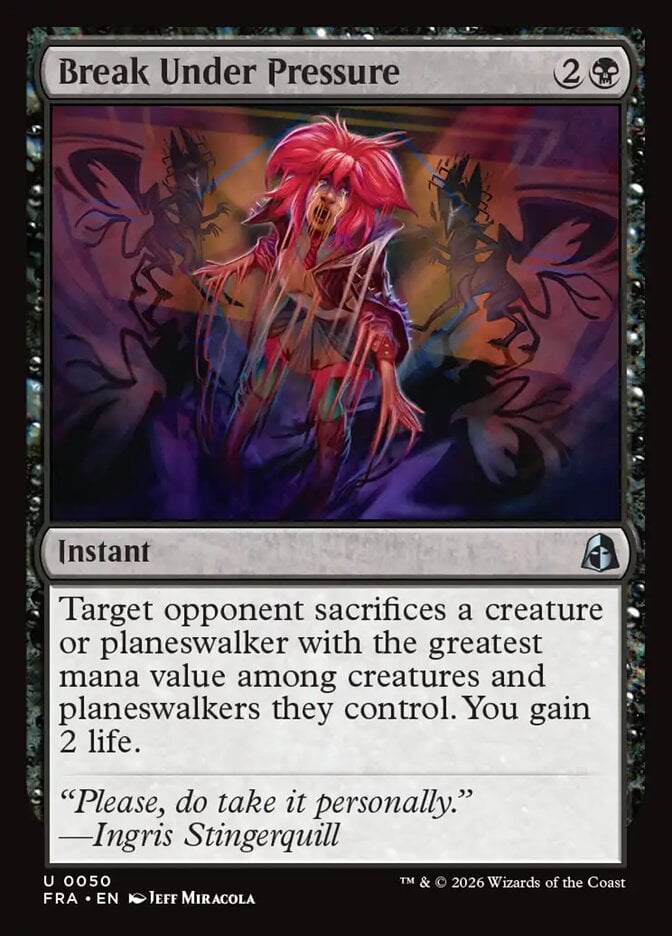
Nice removal that answers a couple of tricky cards like Hungering Puppetbeast very effectively, while performing fine in normal games, too. The lifegain rider more than makes up for Break Under Pressure being an edict, and it isn’t even a “true” edict anyways (since it usually hits what you want it to).
Rewrite Regrets
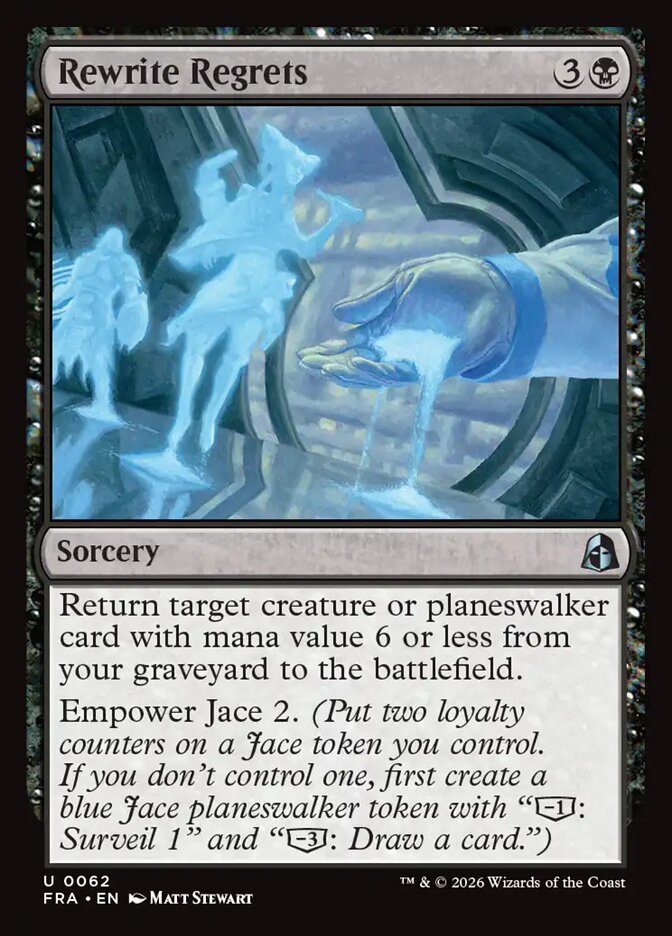
All you’ll need for Rewrite Regrets is a common cycling creature, and this can put you ahead on curve with a free empower 2 on top of that. Throw in the lack of graveyard hate in this set (plus all the incidental surveil/discard), and you have the best variant of this effect we’ve seen in a long time.
Kiora of Fire and Ashes
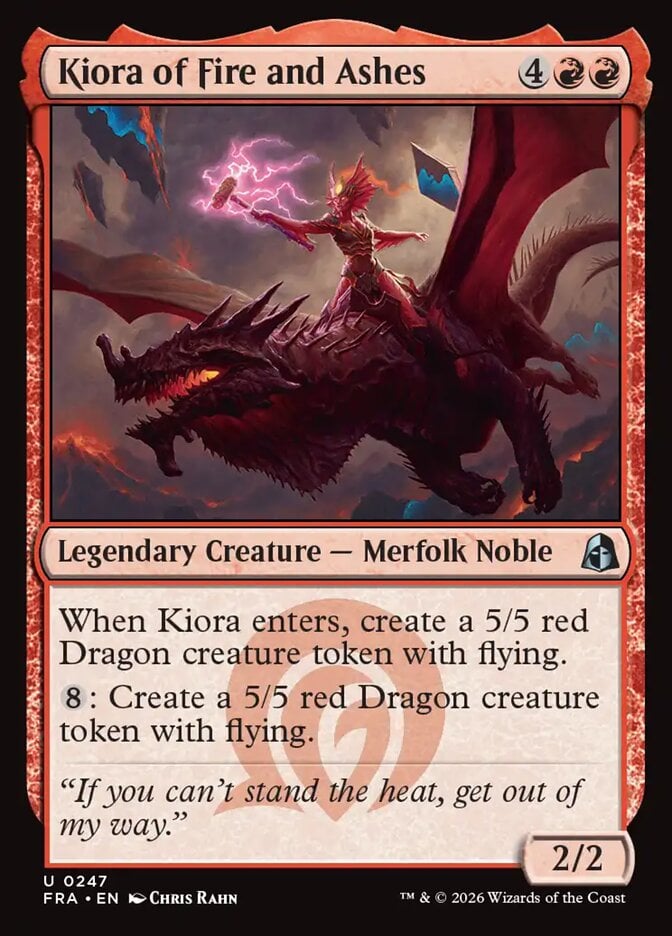
Seven power and toughness spread across two bodies is good, and Kiora goes one step further by letting you sink into it if it sticks around. Your opponent will usually be forced to spend their actual removal on the dragon token, so that’s more likely than you might expect.
Way of the Wildspeaker
Way of the Wildspeaker is one of the better “Way of” legendary enchantments. 4/4 beasts are incredibly substantial game pieces to produce, especially if you can include other good ways to empower Jace.
Fblthp, Knows the Way
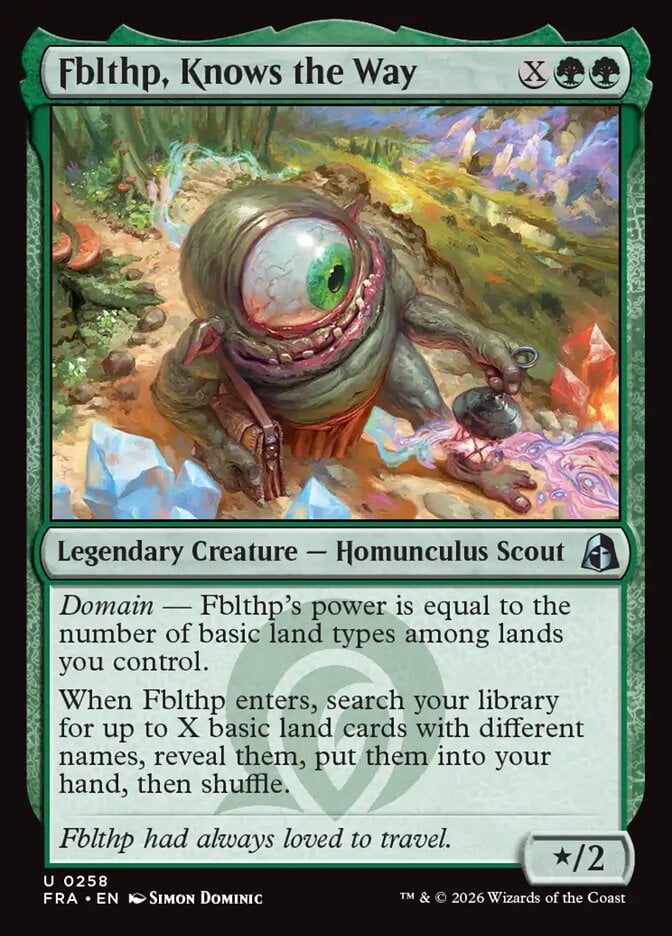
Even if you aren’t a 5-color deck, Fblthp, Knows the Way is a 4-mana 2/2 that draws 2 at worst. I’m very likely to splash additional removal spells when I’m playing this, as Reality Fracture seems full of creatures worth answering.
Thalia, the Survivor
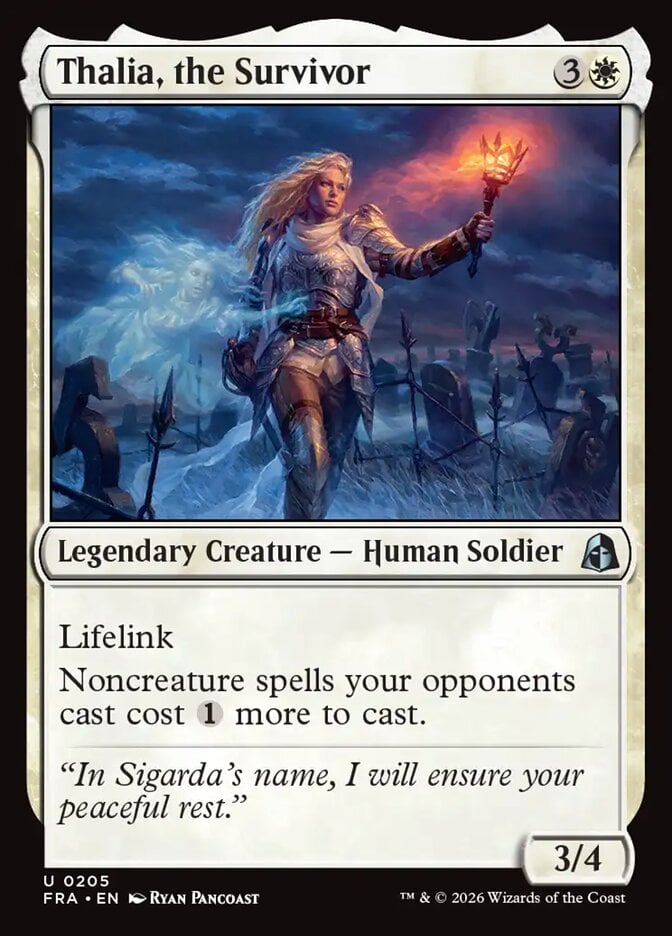
3/4 lifelink is a great stat line, and Thalia, the Survivor’s noncreature hate text only affects your opponent. It’s excellent at delaying removal spells and “Way of” enchantments, and should be a general nuisance to deal with.
Hapatra, the Desert Frost
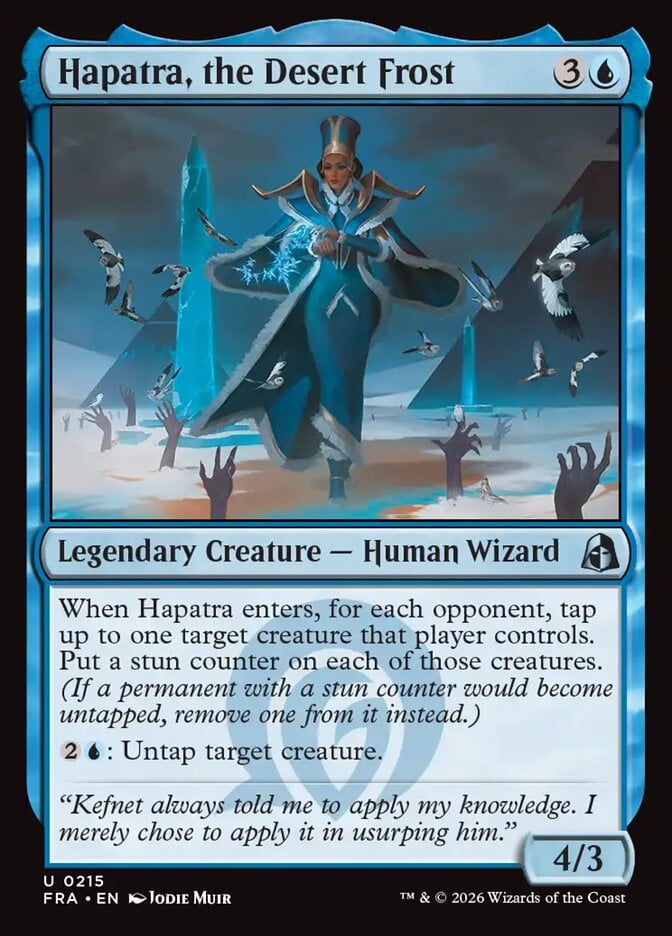
At worst, Hapatra, the Desert Frost is a slightly under-costed Berg Strider that goes in any blue deck. At best, it can actually add infinite mana with Loot, the Nexus! Here’s how the combo works:
- First you’ll need Loot, the Nexus and Hapatra, the Desert Frost on the battlefield, plus at least two other creatures with different powers than 2 or 4, for example Living Library and Inspired Tethermage.
- Tap Loot for .
- Target Loot to untap with Hapatra for .
- Repeat steps 2-3 for infinite mana (which can be any color).
- Now dump that mana into something like Inspired Tethermage, Wrecking Gecko, or Shatterwing Pegasus to win the game on the spot!
There’s admittedly a good deal of setup required here, and it can all end with a timely removal spell on either piece. Still, it’s rare to see true infinites with two Limited uncommons, so keep an eye out for this one in Sealed!
Rare Review + Terminology
Bomb: This is the best rating possible. It denotes a game-changing Limited card that you’ll want to play/splash every time you open it.
Previous Examples: An Unexpected Party, Bard's Company, Chief Warg's Company.
Great: These cards fall a little short of true bomb status, but they’re still going to be fantastic in most decks.
Previous Examples: Rhovanion Rampager, Gandalf, Goblins' Bane, Bejeweled Warg.
Good: “Good” rares are, well, good! They’ll usually have problems that prevent them from claiming a higher rating though, such as requiring setup or having a lesser output than stronger rares.
Previous Examples: Roads Go Ever, Ever On, Most Decrepit Old Bird, Smaug, Wicked Worm.
Mediocre: These cards are generally either low output, or too difficult to build around for the vast majority of decks. You may occasionally be able to get some use out of them in highly specific builds.
Previous Examples: Azog, Moria's Ruin, Cantankerous Keepers, Gigantic Big Bear.
Bad: These rares are just absolutely worthless in Limited, and you should never play them. Feel free to put them aside if you’re unfortunate enough to open one of them.
Examples from the last set: Bilbo's Gambit, Getaway Barrel, Last Light of Durin's Day.
Mythics
Ajani Resolute (Mediocre)
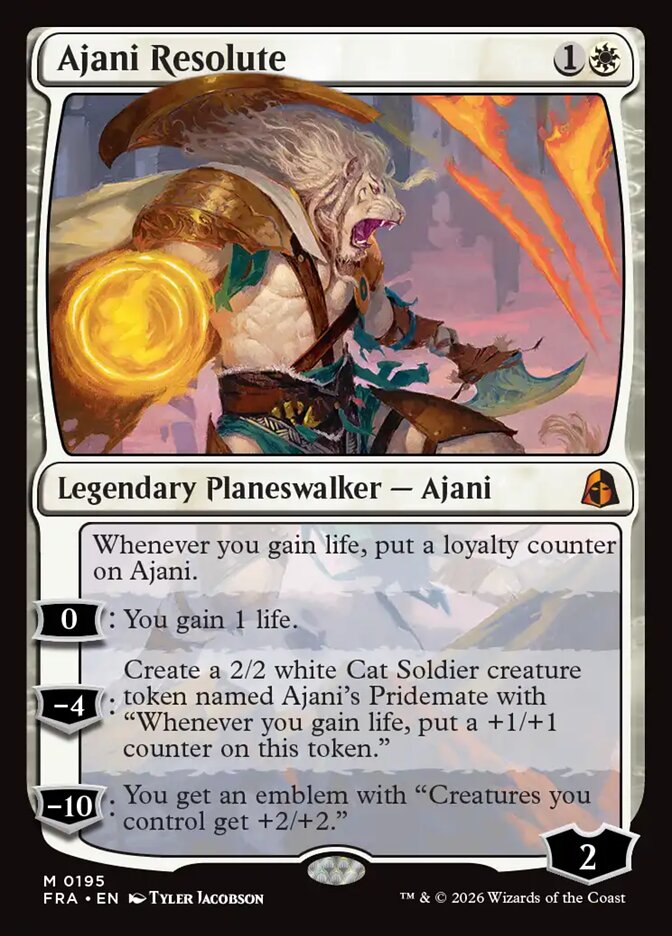
There’s a fair amount of lifegain support in this set, so it’s definitely possible to open a pool in which Ajani Resolute is good. It’s weak without a bunch of support though, so only play it in decks with several convenient (ideally repeatable) ways to gain life. Prepared creatures with “Seed Suture”, Greenhouse Propagator, and Medic's Kitesail are ideal cards to pair with Ajani.
Enlightened Confidant (Great)
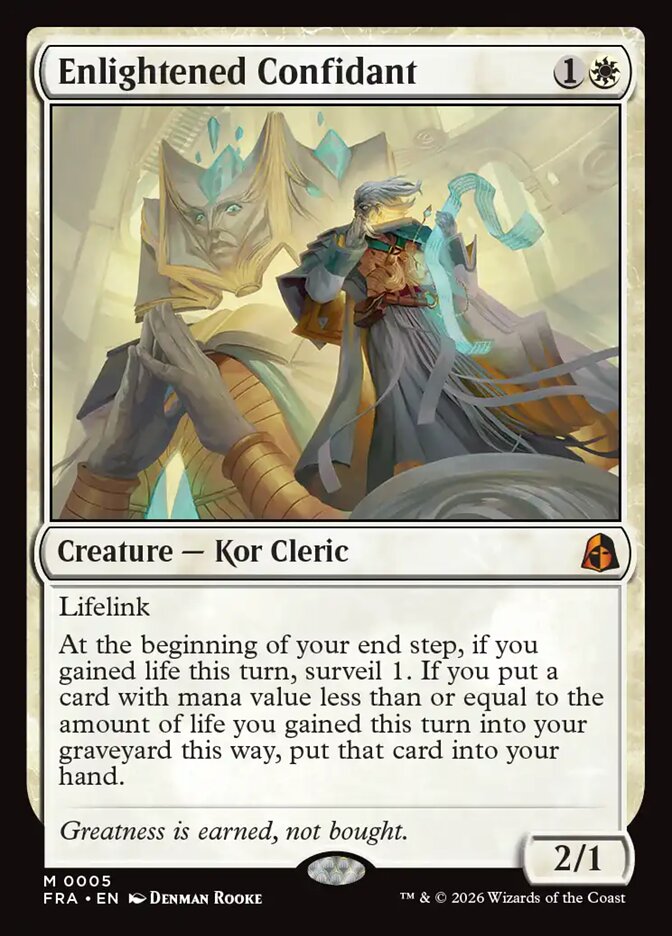
Enlightened Confidant is a lifegain payoff that’s solid on its own and exceptional with support. Any white deck can play this hoping to connect with it once or twice, while netting easy card advantage with dedicated help.
Return to the Light Realms (Bad)
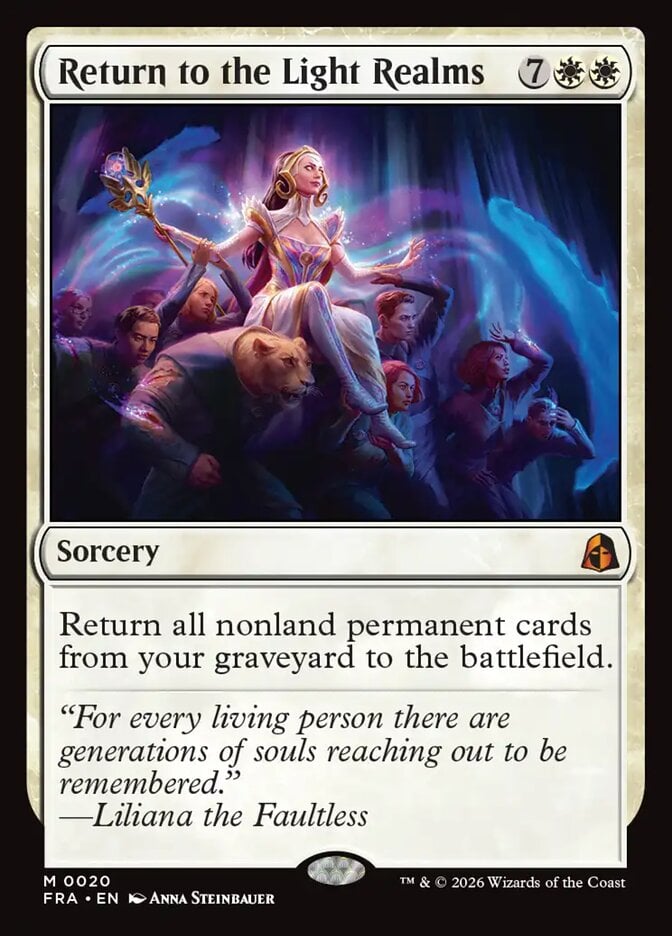
Leave Return to the Light Realms for Commander players, because getting to 9 mana with a stocked graveyard for Return seems exceptionally difficult.
Chandra, Chill of Compliance (Great)
Both of Chandra, Chill of Compliance’s +1s are useful in noncreature-heavy decks, and its -X lets this blue planeswalker protect itself as well. You can’t ask for much more from a 3-mana planeswalker, so I expect this to be pretty good.
Seasoned Cryomancer (Bomb)
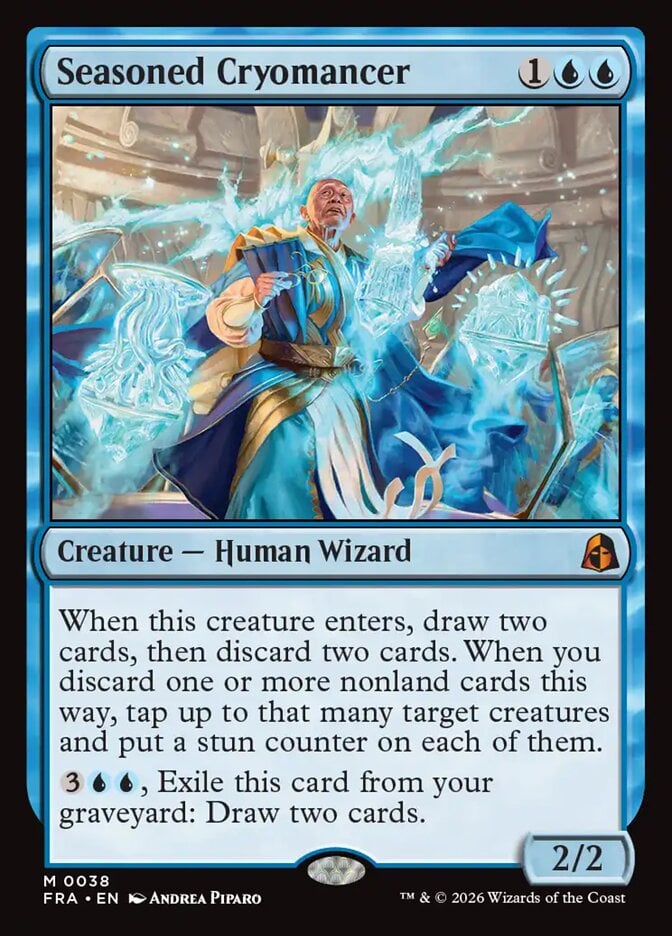
Seasoned Cryomancer is an awesome value creature that draws inspiration from Seasoned Pyromancer. Discarding non-lands to this buys time while helping you hit your land drops, which can power out its Divination mode when it dies later. Try discarding Recursive Recruitment or Twinned Vision to this for even more card advantage!
The Theorist, Jace Beleren (Bomb)
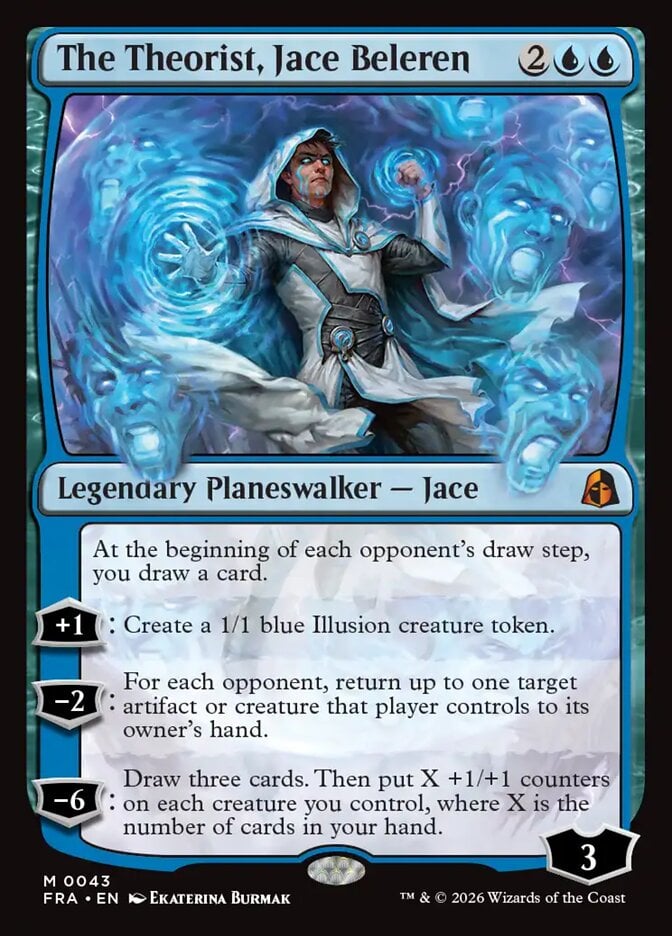
Reality Fracture’s flagship planeswalker is quite the card! Both of The Theorist, Jace Beleren’s loyalty abilities do a good job of protecting itself, and its passive provides free card draw whenever your opponent draws for turn.
Bloodline Recollector (Great)
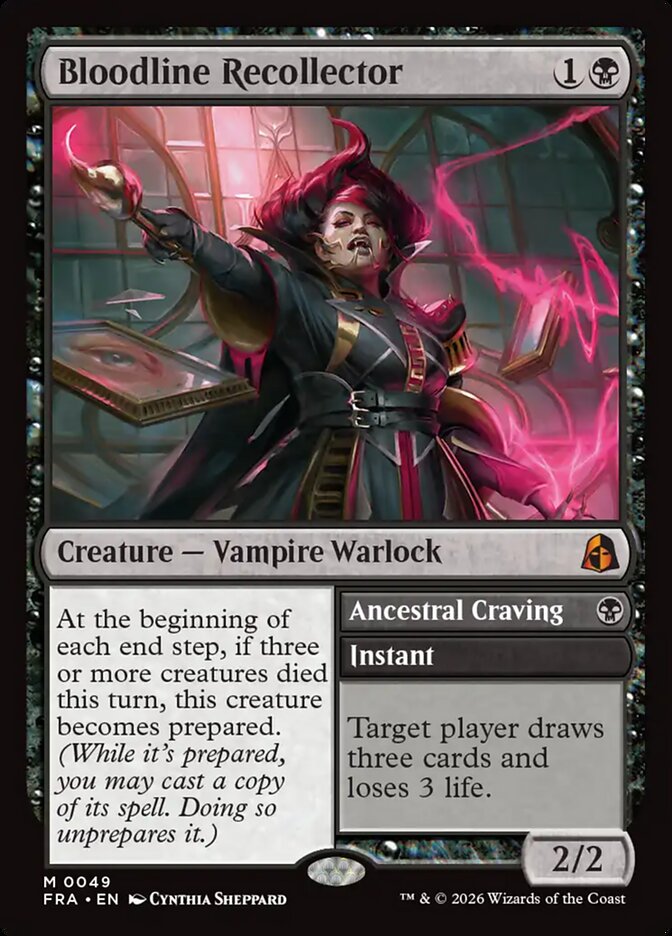
I thought Bloodline Recollector might be too difficult to get prepared, but the fact that this only cares if creatures died (and not if it was on the battlefield while they died) may let you surprise your opponent. It’s also great with Silence the Echo, which gets you two-thirds of the way there. And in the absolute worst case scenario, it's a bear that forces your opponent to play differently.
Darklight Phoenix (Great)
Needing two creatures to die rather than three seems significantly easier, especially with Silence the Echo at common. Milling or discarding this is ideal, but even hardcasting it and having it die later doesn’t seem that bad. Darklight Phoenix isn’t quite a bomb rare, but the workable base stats, evasion, and haste here should make it fairly strong.
Garruk, Veiled Butcher (Bomb)
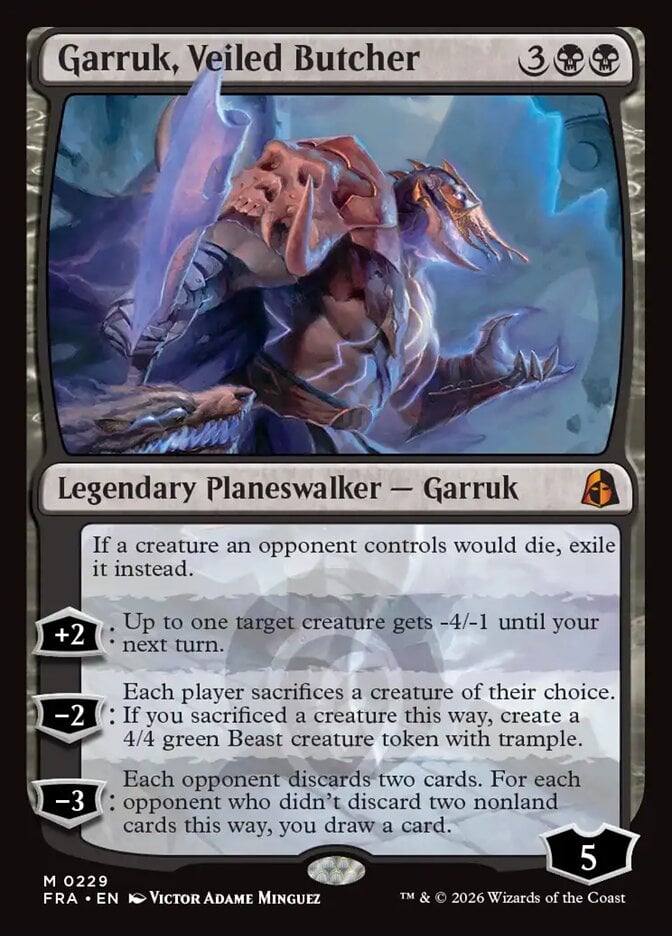
Between its +2 and -2, Garruk, Veiled Butcher does an incredible job of protecting itself, while steadily exchanging weak creatures for 4/4 beasts. -3 can strip your opponent of resources too if needed.
Overwrite the Multiverse (Bomb)
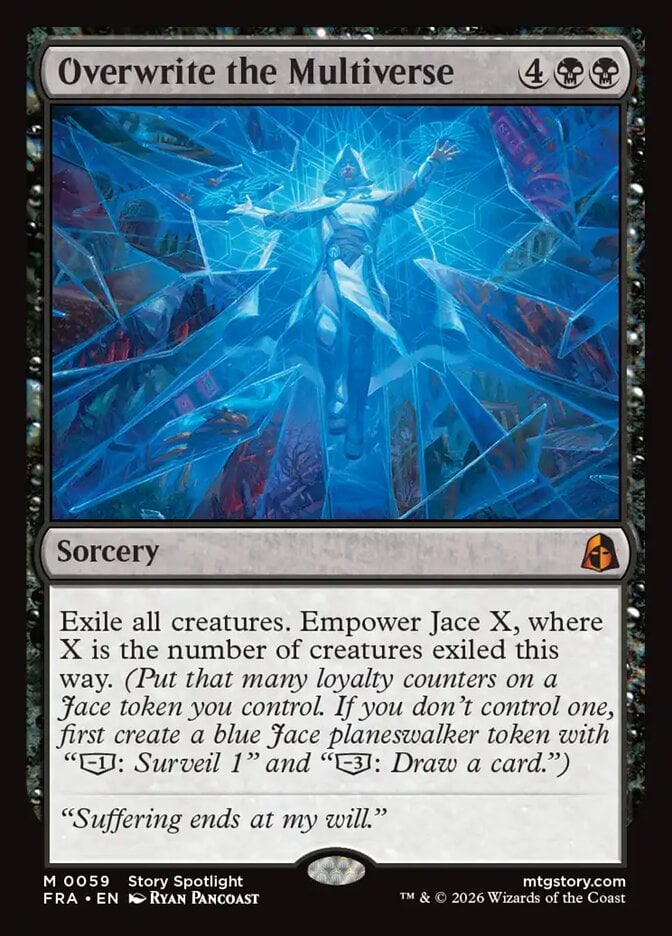
Overwrite the Multiverse reminds me of Sunfall, which was one of the most busted Limited cards in years. Six mana for an effect this good is worth the effort, and the extra Jace token can immediately refund you the card spent on this.
Ajani Unrelenting (Bomb)
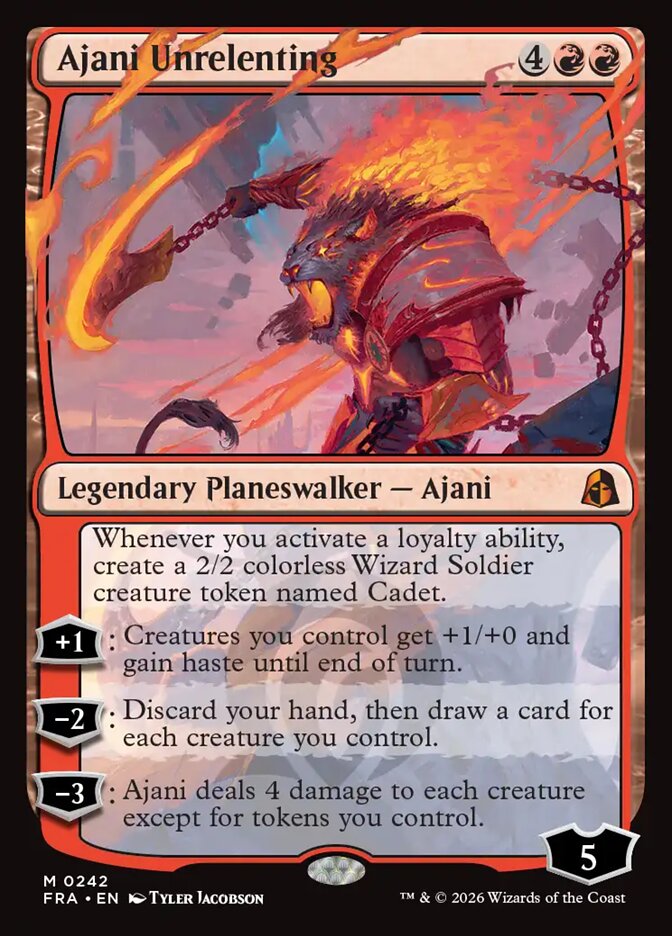
All of Ajani Unrelenting’s abilities are designed to work with its Cadet-creating passive ability, which is where most of this card’s muscle is. Jace tokens will also trigger this passive, so try to include some empower Jace cards to make Ajani even better.
Chandra, Torch of Defiance (Bomb)
Even with a decade of Limited power creep, Chandra, Torch of Defiance is still well above the curve for a Limited planeswalker. -3’ing it to take out a creature will be a common first move, but it’s even better when you can +1 it to immediately play No Admittance on a creature (leaving Chandra safe with 5 loyalty).
Craterclaw Colossus (Good)
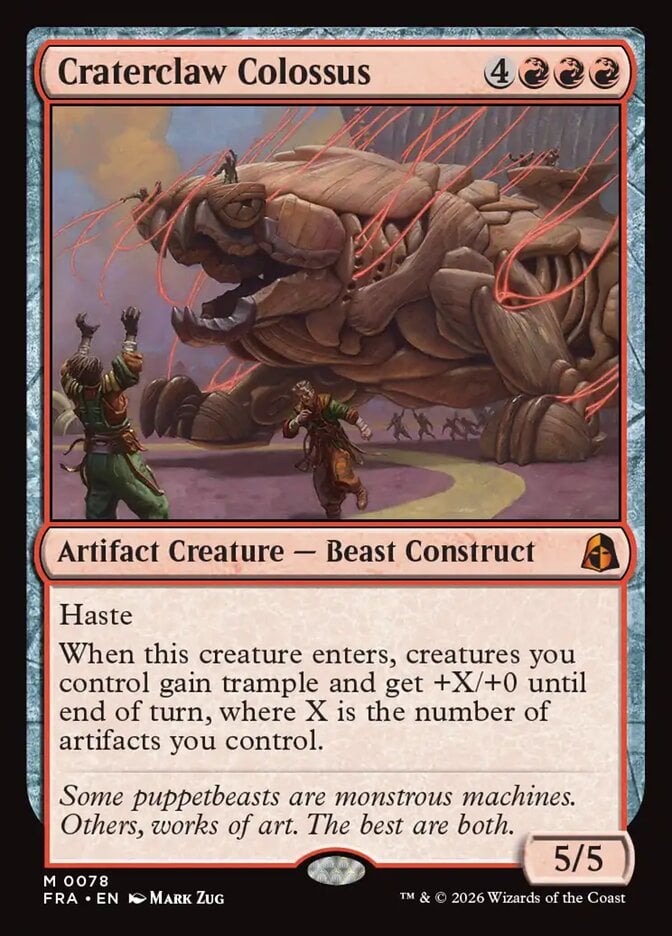
Actual artifacts in Reality Fracture are few and far between, so you’ll mostly rely on Heartwood tokens to make Craterclaw Colossus hurt. Colorless filler cards like Afterthought Sentry and Keeper of the Quiet Hour become a bit more appealing with this in your deck too.
Stingcaster Mage (Great)
With a couple of good instants and sorceries available, Stingcaster Mage should be great. Commons like No Admittance, Wrath of the Bloodmane, and Artifist Acumen are nice cards to include to ensure value.
Garruk, Curse Breaker (Bomb)
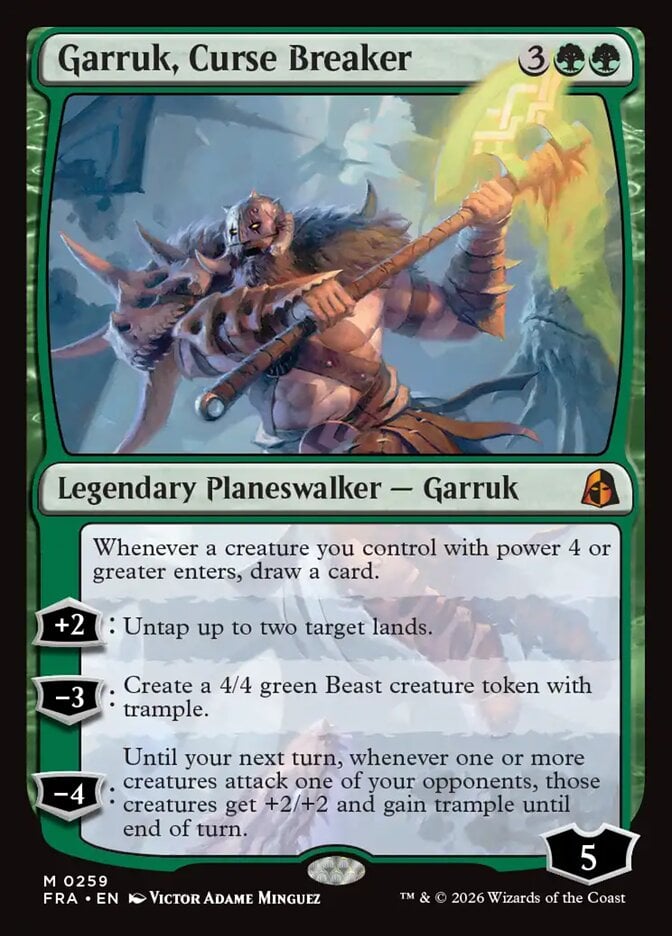
Garruk, Curse Breaker is arguably even better than the black one. Downticking it to create a beast token immediately draws you a card, so protect Garruk if you can and bury your opponents in value.
Hexhaven Invigorator (Mediocre)
Despite the incredible power level of Hexhaven Invigorator, it’ll likely be unplayable in most decks (and pools) due to that rough cost. 9-10 Forests won’t be enough to field this thing reliably, so realistically you’ll need to either be mono-green or on 13+ forests with a tiny splash at most to ever cast this. You may occasionally be able to “splash” this in actual green decks if you have reliable G generators like Greenhouse Propagator, Loot, the Nexus, and Heartwood tokens.
Deep green builds for Hexhaven Invigorator are likely to be a bit more viable in Draft than Sealed, where Roiling Canopy (the set’s other mono-green incentive) should routinely go last pick.
Omnipresence (Bad)
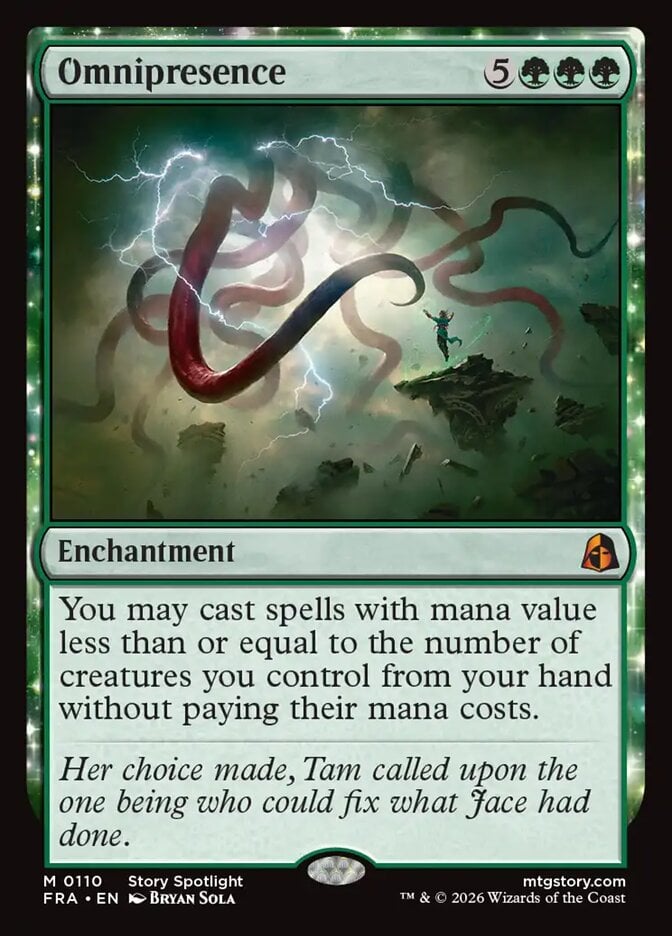
Absolutely nothing about Omnipresence is remotely playable in Limited. I can’t wait to open a bunch of these in Reality Fracture Arena Directs!
Tarmogoyf (Good)
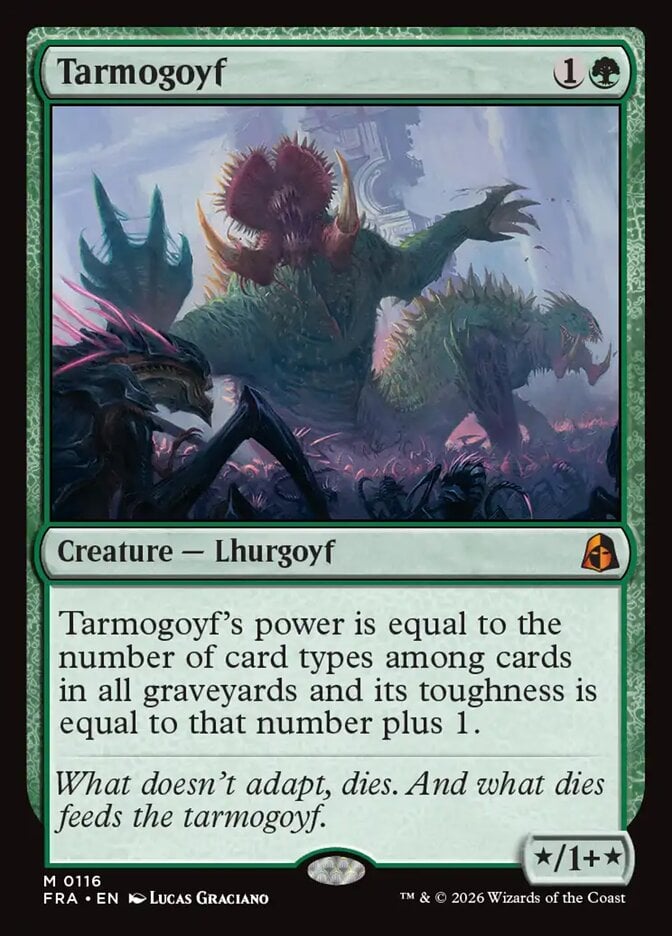
Self-mill cards like Something Worth Saving are essential companions for Tarmogoyf, and they can rapidly grow it to a big P/T for its cost. It’s not a bomb rare by any means, but probably worth playing if you have a little support for it. Don’t forget that it counts your opponent’s graveyard too!
Denzilore Fatehold (Bomb)
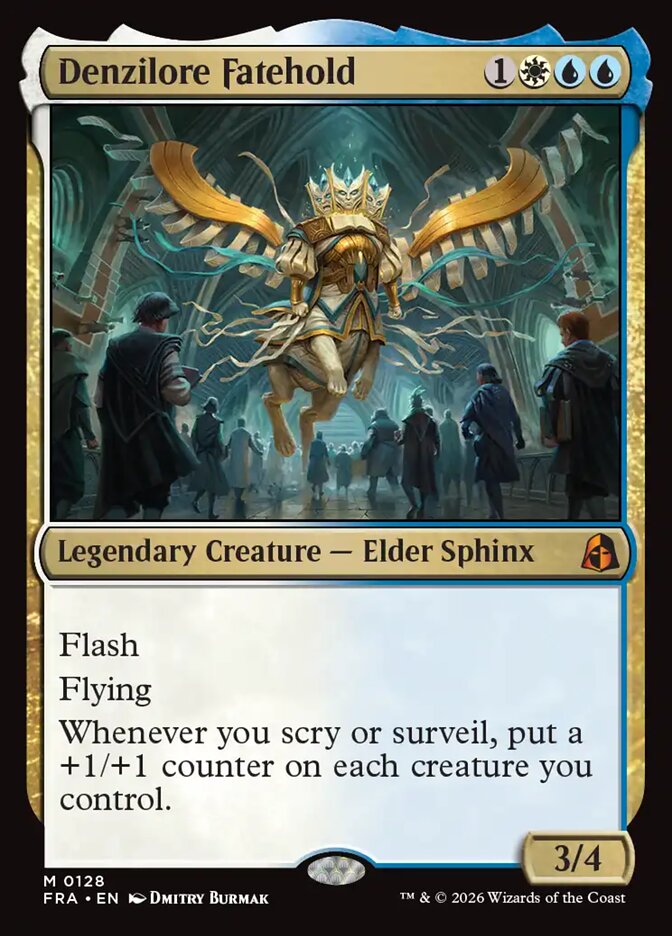
A little bit of surveilling goes a long way towards Denzilore Fatehold winning you the game on the spot. Flash makes it easy to safely resolve this one too, dodging removal and countermagic until you’ve scried/surveilled a couple of times. Throw in Restoration Angel base stats, and you’ve got what’s clearly one of the best cards in the entire set.
Uldaros Theorix (Bomb)
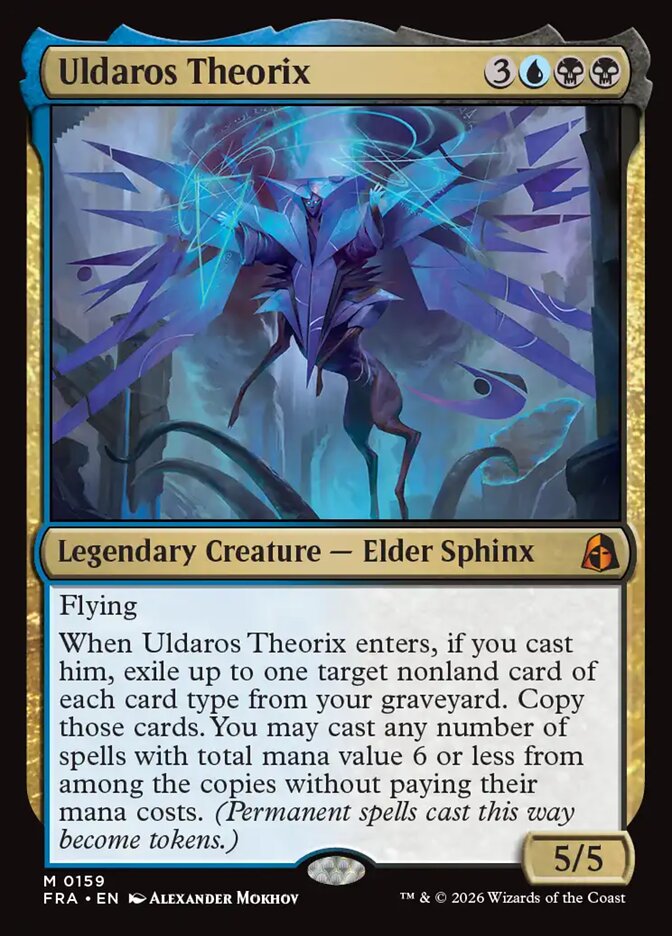
Getting a 3-for-1 with Uldaros Theorix should be very easy, as that would only require you to play this after one creature has traded off and one instant/sorcery was cast. You don’t really need to mix card types for this to be awesome, since the 6 mana value limit will usually restrict you to two or three spells anyways.
Ingris Stingerquill (Bomb)
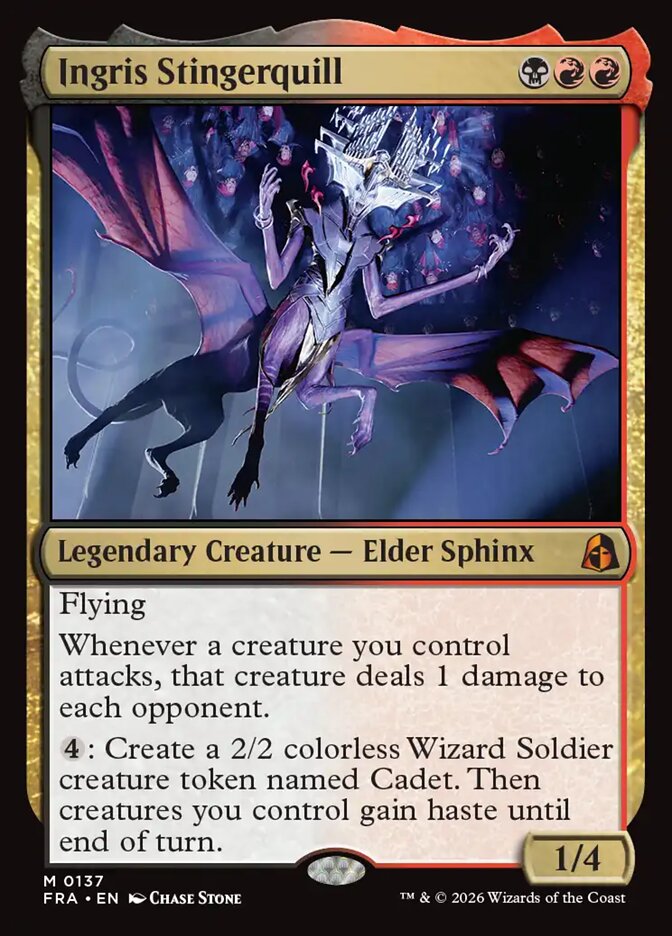
Ingris lets all your creatures freely ping on attack, is effectively a 2/4 flier for on its own, and it can even create a hasty army of Cadets if left unanswered. It’s also incredibly good at enabling all of Reality Fracture’s“noncombat damage” payoffs like Command the Stage and Tomik, Izzet Sparkmage.
Aerid Konstrari (Bomb)
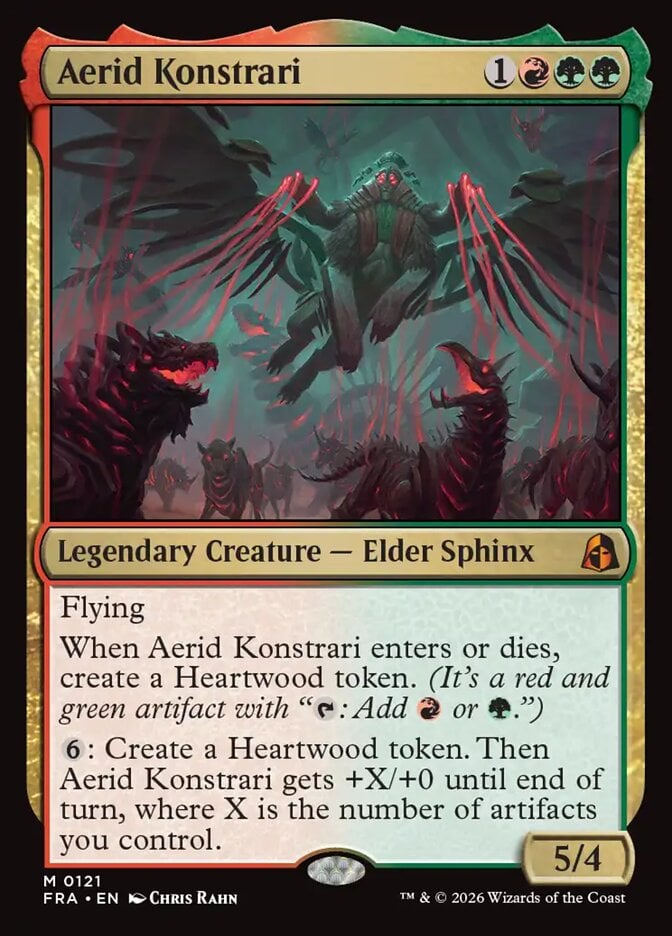
Aerid Konstrari is a well-statted flier that immediately ramps you, ramps you more if it dies, and murders your opponent if it doesn’t (while producing more Heartwoods). Green players should always try to splash this if they aren’t already RG.
Kiwa Vigorbloom (Great)
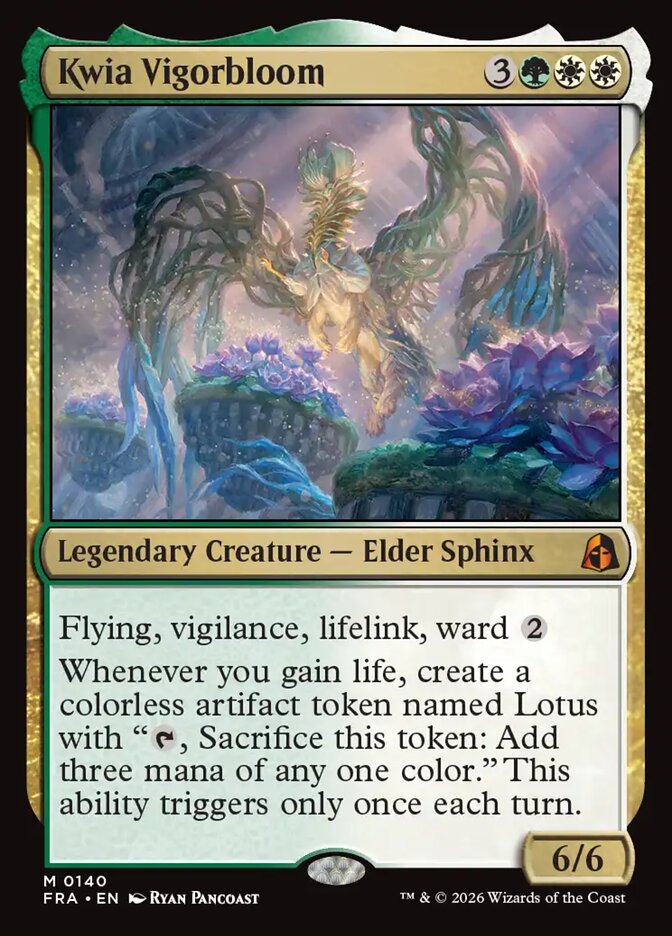
This is the only elder sphinx to fall short of a “Bomb” rating because the Lotus tokens this creates seem like overkill for your average Limited deck. Still, it’s a huge lifelinking flier with ward , which means it either eats a timely removal spell or your opponent dies.
Avatar of Burgeoning Echoes (Bomb)
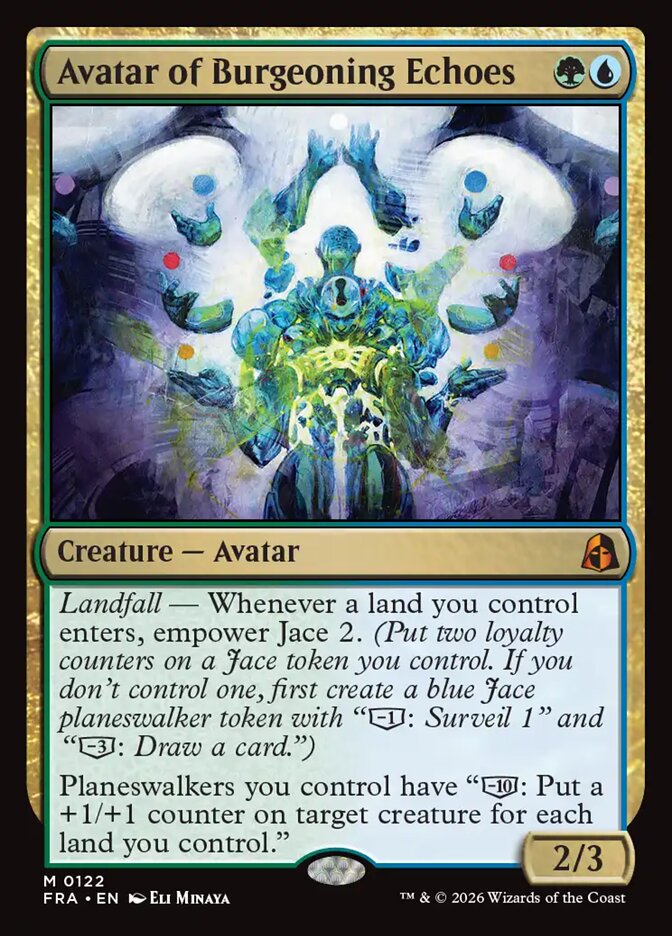
Avatar Aang, eat your heart out! Avatar of Burgeoning Echoes is the true avatar, capable of generating a ridiculous amount of value from the second turn onward. Every land drop basically draws you two-thirds of a card, and that juicy -10 bonus ensures your opponent won’t survive if this does for too long.
Emrakul, the Exigent Doom (Good)
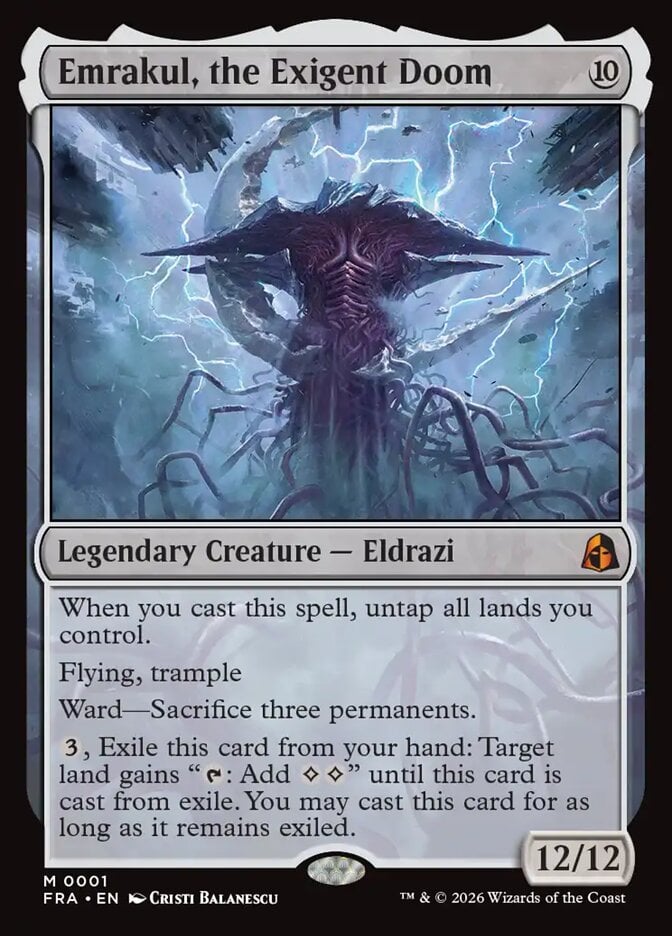
Emrakul, the Exigent Doom is an interesting fattie that’s half ramp spell, half “free” 9-drop. Exiling Emrakul from your hand acts like a 3-mana Rampant Growth of sorts, with you effectively “spending the card” to gain a mana each turn. This in turn makes Emrakul basically cost 9 rather than 10, which is frankly still a ton of mana. For a card that requires this much effort to cast, it’s surprisingly vulnerable to removal too, as your opponent can just sacrifice three lands after they Surgical Precision your Emrakul (that sounds painful, but you won’t ever play this until late game anyways).
On the other hand, Emrakul’s untap trigger makes it much easier to play it with protection up, and it’ll dramatically mitigate the tempo loss when it’s dealt with regardless. I wouldn’t play this Eldrazi in every deck, but if I have some Heartwood creators in my deck, you can bet I’m giving it a try.
The Echoverse Fulcrum (Good)
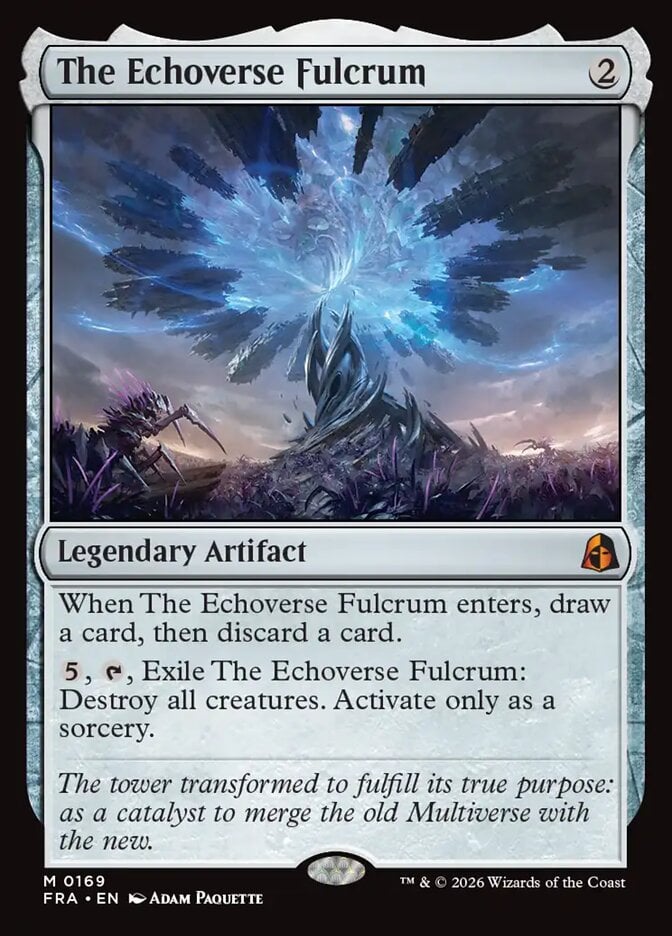
The Echoverse Fulcrum is a somewhat over-costed and telegraphed Wrath of God effect, but it does come with a couple of perks. Being colorless lets this play in any deck, and the extra loot on entry will help you hit your fifth land drop to crack it on time. On-board sweepers like this tend to create a ton of pressure on both players, because committing to the board will feel like losing a game of chicken with Fulcrum out.
I’d play it in any controlling deck or midrange soup, but I have mixed feelings about shoving it into anything proactive and/or creature-heavy.
Rares
Flickering Hound (Mediocre)
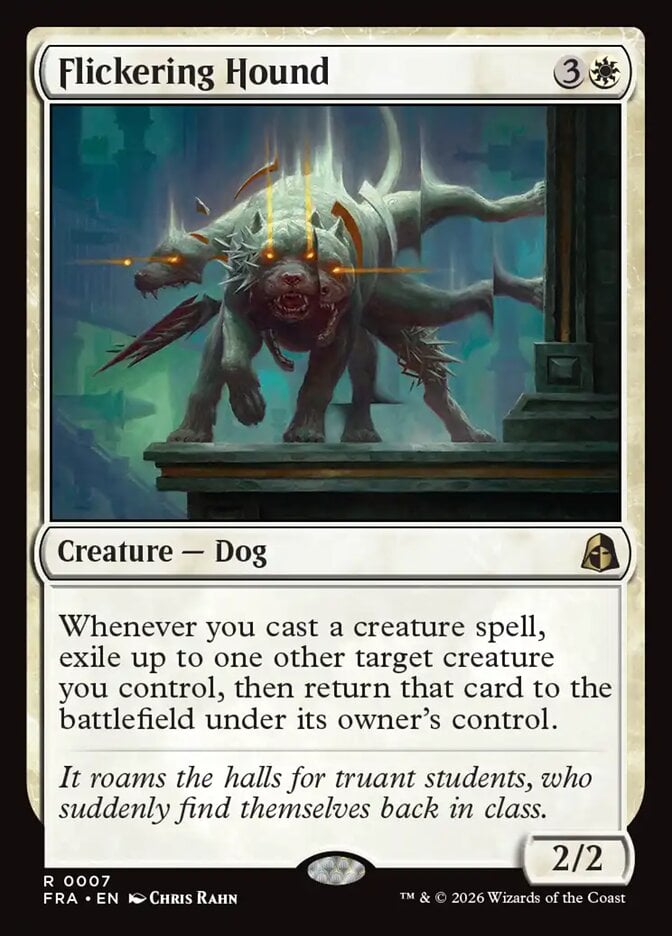
Flickering Hound is a fragile value creature that should only go in decks with good “enters” cards like Arcane Amphisbaena, Fateshaper Aspirant, and Mindseeker Oculus. Every color has at least one way to answer this at common, but red decks will have by far the easiest way of dealing with it due to No Admittance and Tether Technician (which is an especially brutal answer).
Germinate Recruits (Bad)
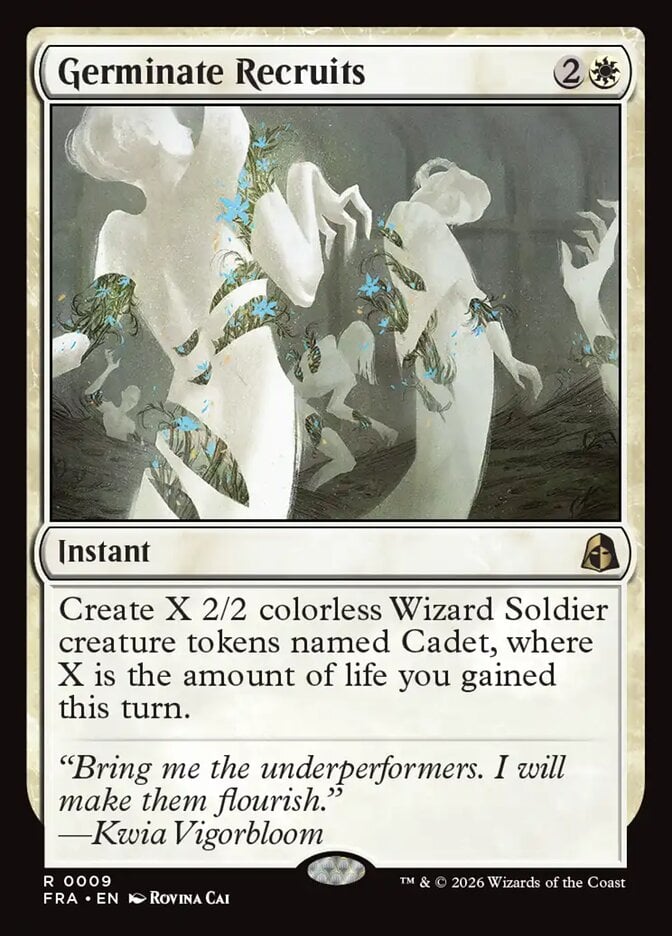
Lifelink dreams aside, most of the ways to gain life in Reality Fracture do so in tiny increments. That’s bad news for Germinate Recruits, and it relegates this card to be more or less unplayable (even in GW decks).
Gideon’s Memorial (Mediocre)
Divine Arrow has been shifted to rare now, at least as far as Limited is concerned. The other mode of Gideon's Memorial will punish inexperienced players by tempting them to cast it, since it’s more or less a mulligan in your average Limited game.
Guiding Hydra (Bomb)
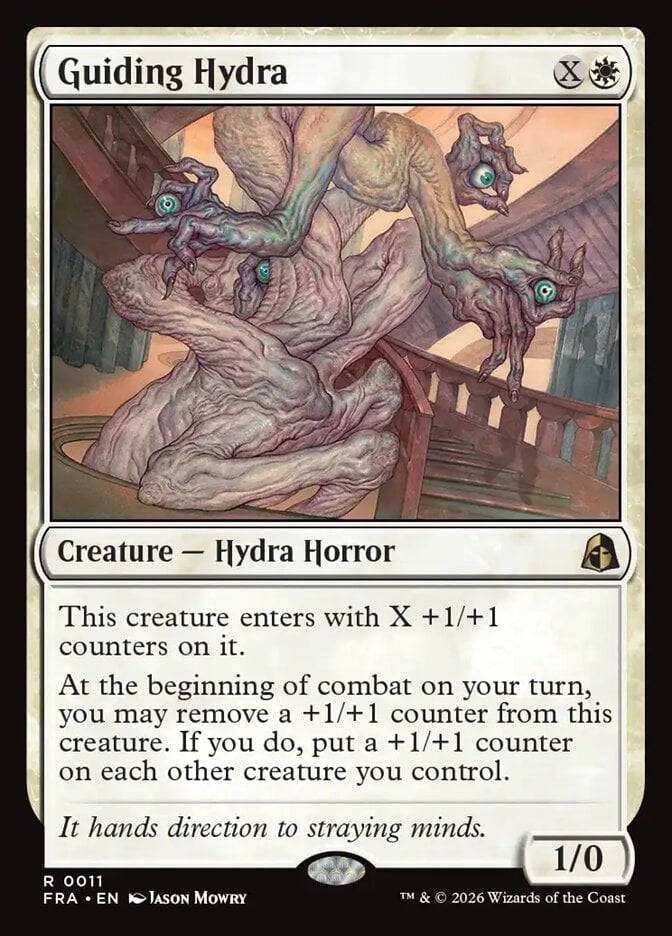
Guiding Hydra does a nice Mikaeus, the Lunarch impression, but it’s arguably even better since you can get immediate value in combat after you play it. Try to include lots of small creatures and token generators for this if you can, which will make it even better. I’d look to cast this for or in most games.
Kindred Judgment (Good)
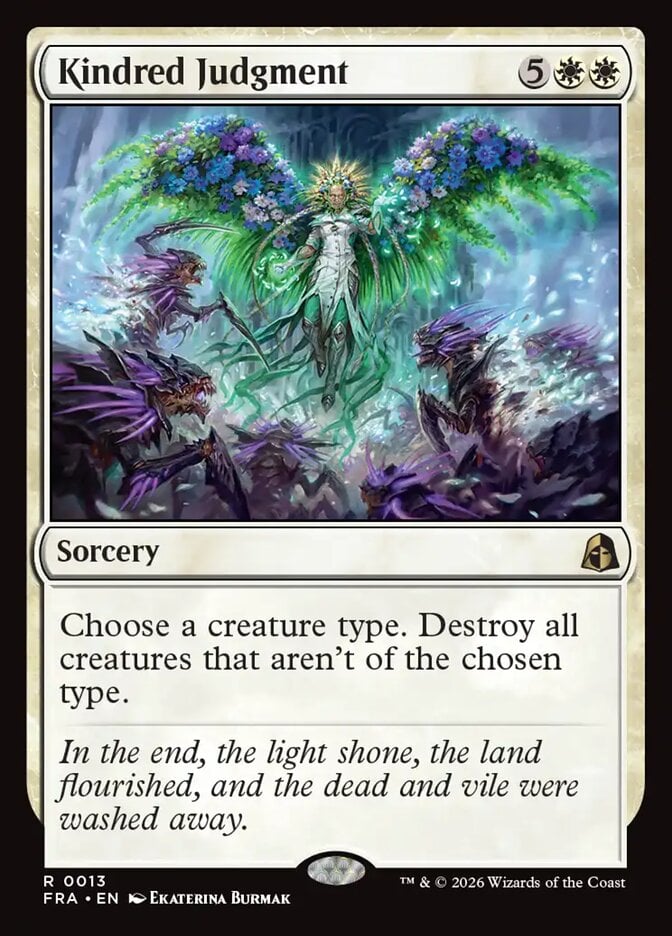
Reality Fracture is a rather diverse set on the creature type front, as there aren’t too many repeat tribes here (other than human). As such, I’m mostly evaluating this as a weird Duneblast, where you end up naming whatever odd creature type you alone control and kill everything else. Does that make this worth 7 mana? Perhaps, but not resoundingly enough for me to give this a higher grade than “Good”.
Liliana the Faultless (Great)
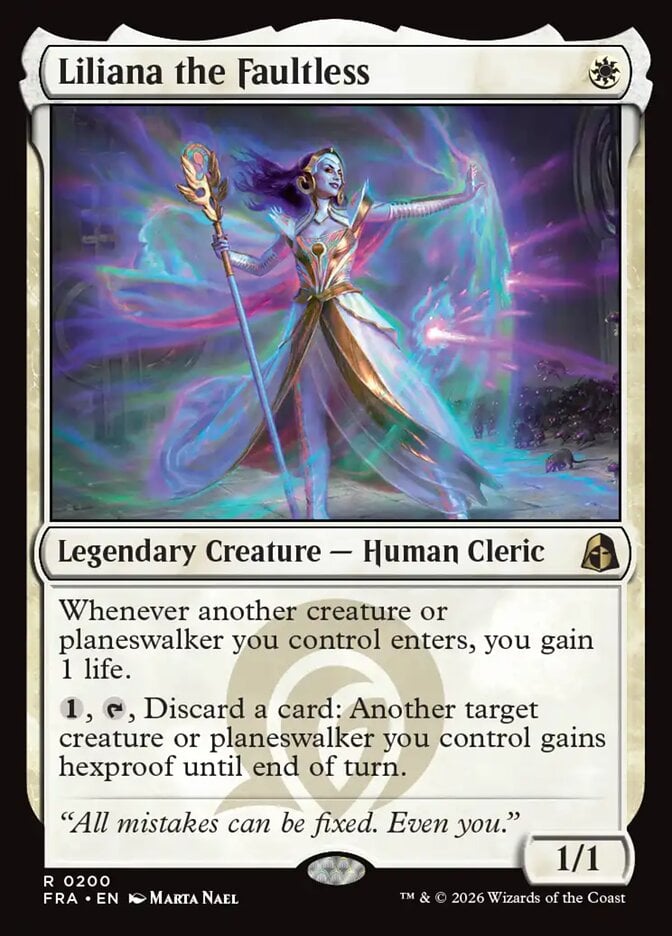
Liliana the Faultless is an interesting hybrid of Soul Warden and Mother of Runes that can gain lots of life and protect your best threats later. The protection mode does cost and a card though, so it’s at least not as broken as the original Mom. Liliana is likely good enough to play in any white deck, but it’ll shine brightest when you actively care about gaining life (i.e. in most GW decks and some WB decks).
Loyal Tutor (Bad)
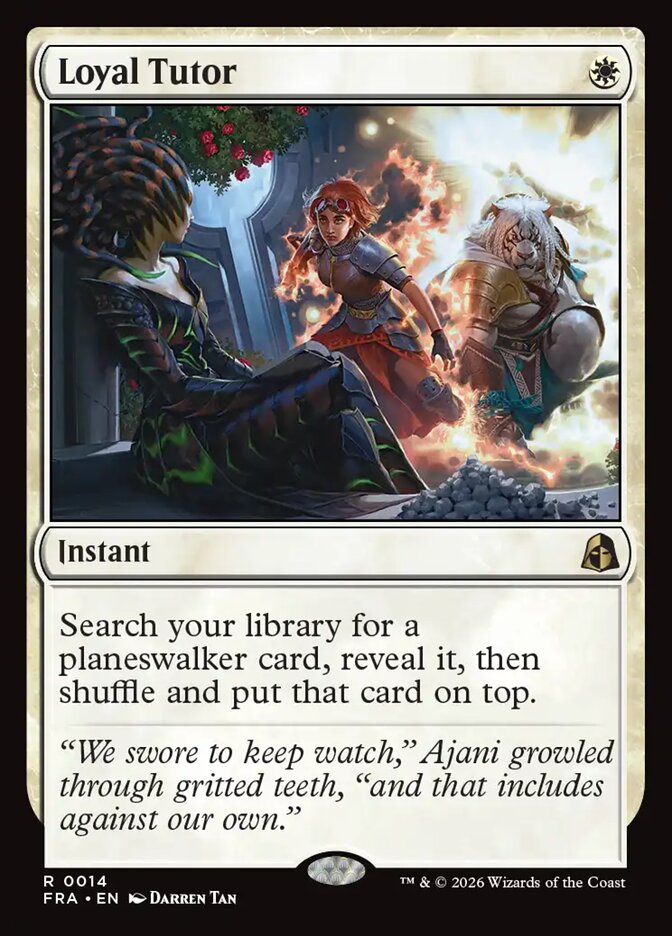
Most pools won’t have a single card that you can tutor with this, and even those lucky enough to open a planeswalker or two should still avoid it. Being down a card to reliably draw your bomb is a rough exchange, and that’s the best Loyal Tutor can ever do for you.
Lyra, Archangel of Dawn (Great)
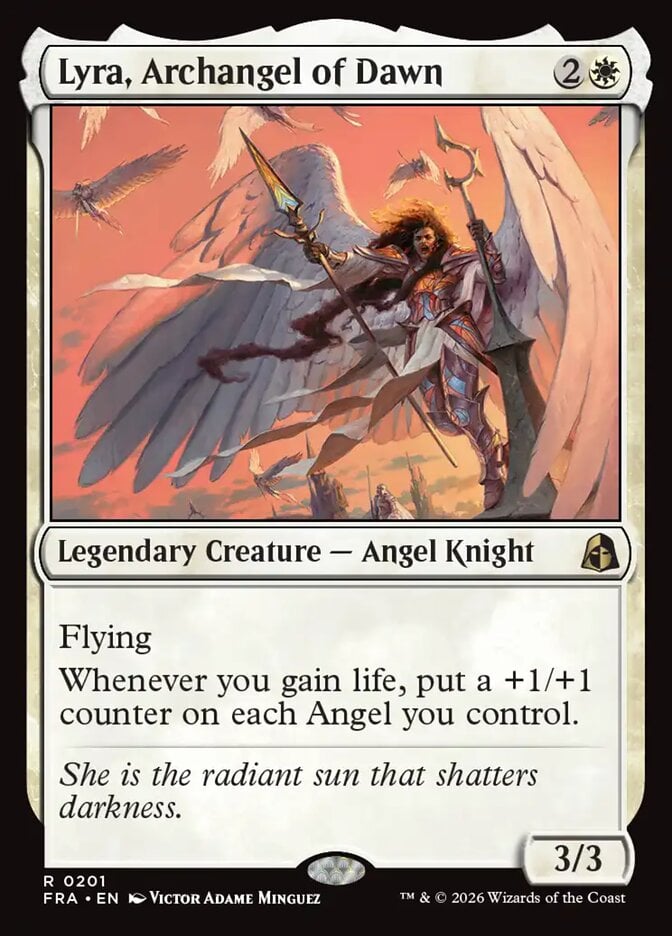
The only other angels in Reality Fracture are Blossom-Blessed Angel and Lyra, Tolarian Archangel. Despite this, white Lyra is effectively a 3/3 flying Ajani's Pridemate in a set with lots of cheap lifegain, so expect good things.
Repurposed Enforcer (Great)
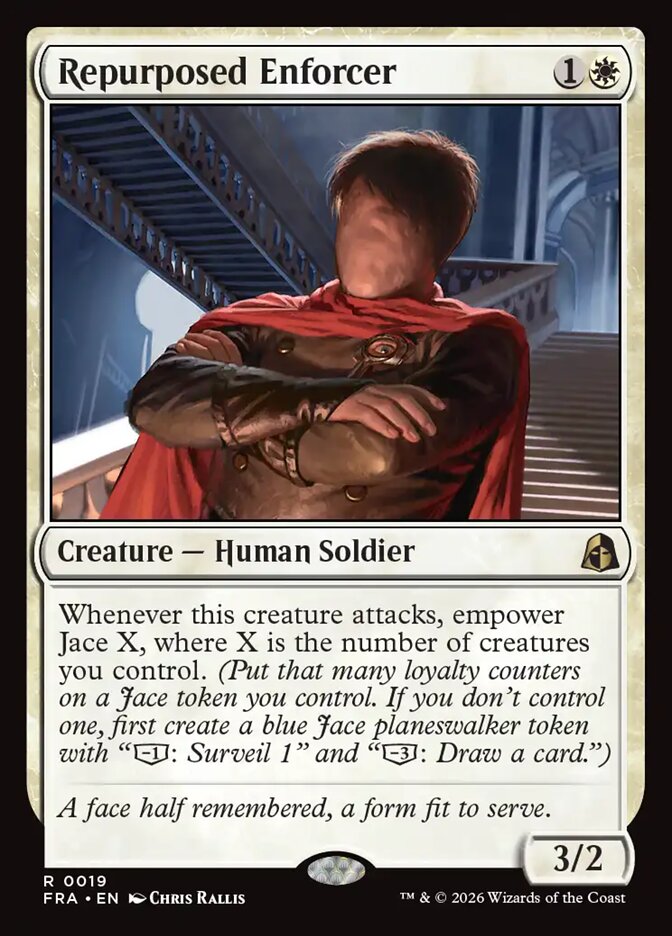
Repurposed Enforcer has a very high ceiling and a respectable floor. You should at least be able to empower Jace 2 off this in most games (even if it trades in early combat).
Cruel Calculations (Mediocre)
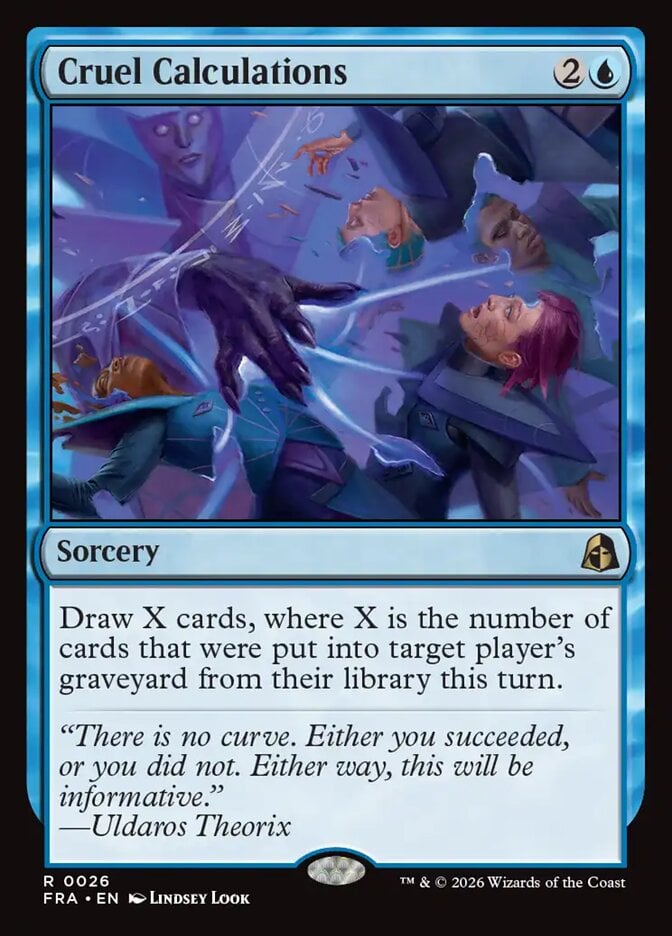
You can combo Cruel Calculations with any self-mill card for a slightly better Divination (target yourself), although it won’t do anything without setup. I’d play it if I were running many copies of support cards like Something Worth Saving and Theorix Metamage, but otherwise please don’t bother.
Diviner of Victory (Great)
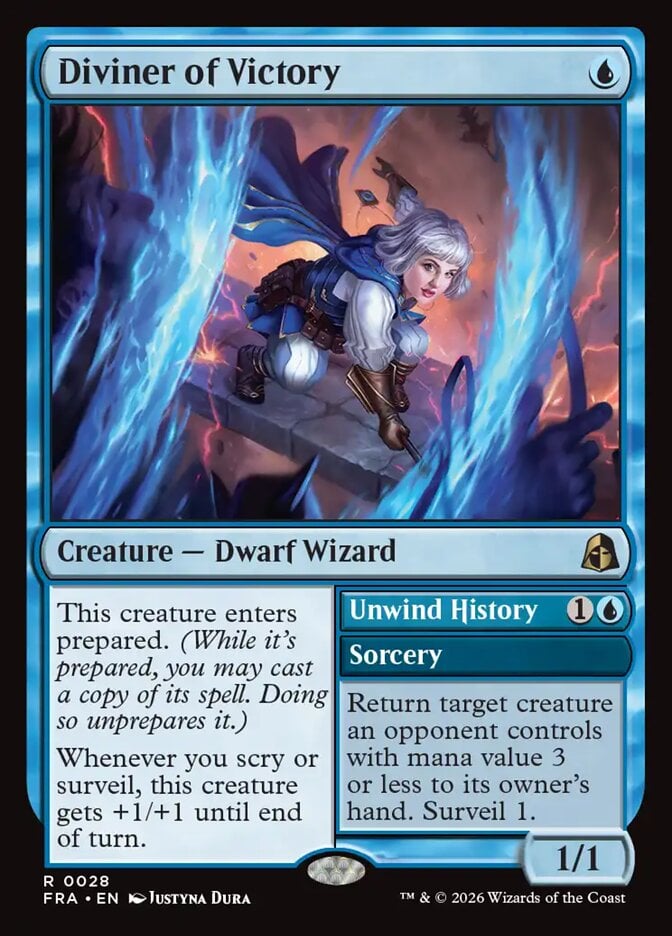
Man-o'-War style creatures just keep getting better and better. Diviner of Victory is a great inclusion in any blue deck, and downright excellent for WU surveil builds.
Jace, Reality Sculptor (Great)
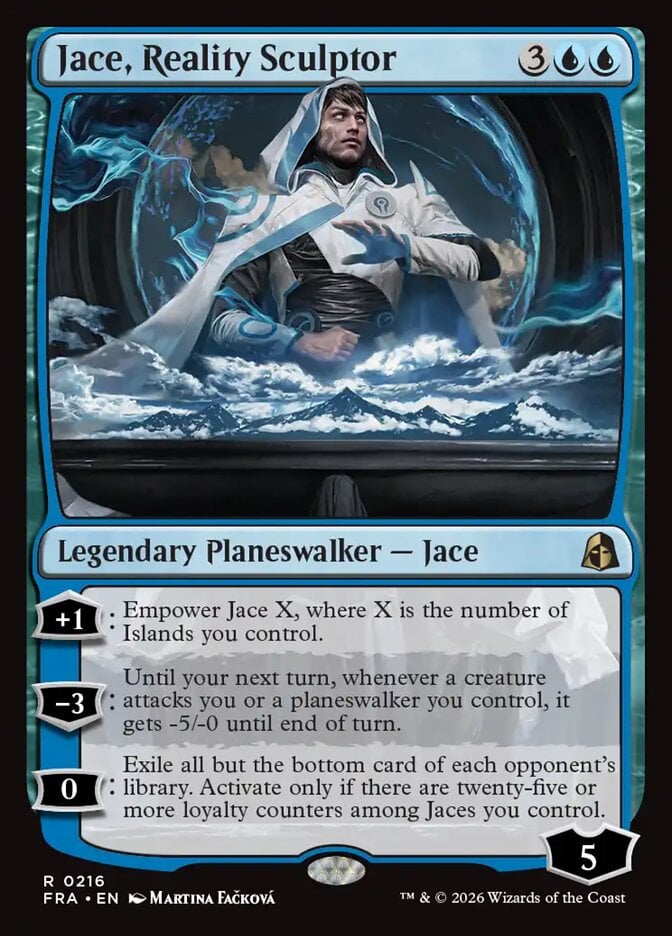
Jace, Reality Sculptor’s dependence on Islands is odd, although you should usually have at least two in play when you cast this (blue dual lands aside). That means the +1 is basically “Empower Jace 2-3”, and the -3 is great to buy time if pressured. I’d try to bias my mana towards Islands as much as I could to support this, without jeopardizing my other color(s).
Jace’s Machinations (Great)
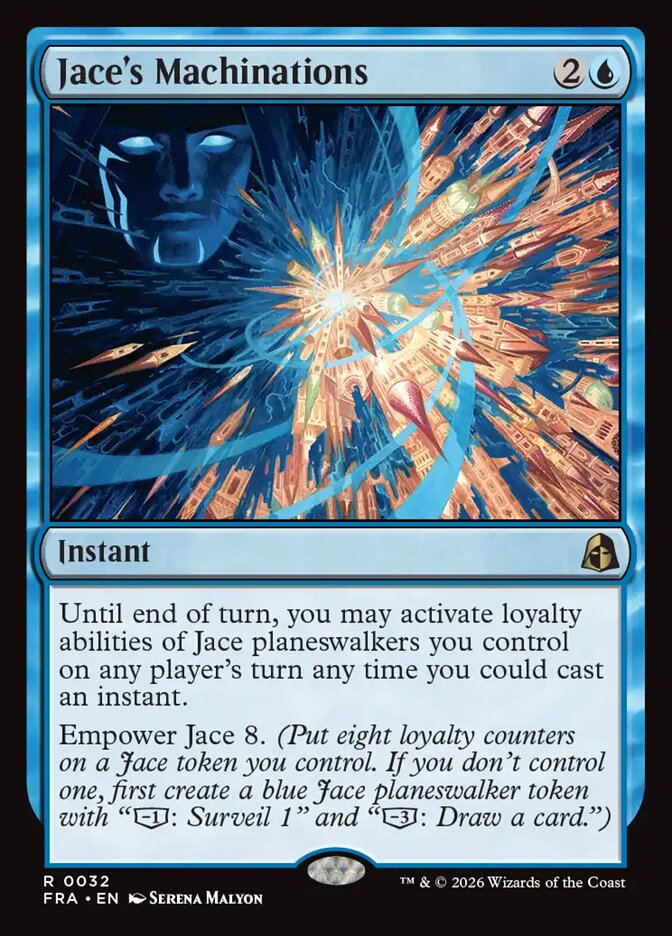
Since you can -3 the Jace token you create immediately, Jace's Machinations is at worst a Quick Study that leaves behind a 2-loyalty Jace token! It also has the highest natural empower number of any card in Reality Fracture, which would play amazingly well with cards like Way of the Wildspeaker.
Lyra, Tolarian Archangel (Bomb)
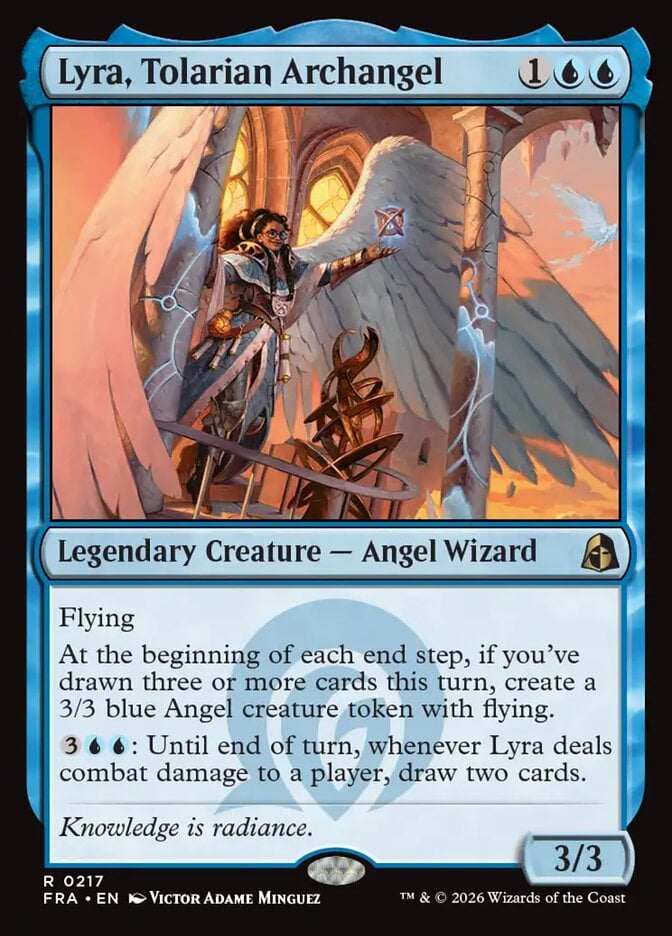
Lyra, Tolarian Archangel is an efficient flier with unbelievably good upside. Its activated ability could have Lyra generate three cards worth of value in one turn, and other card draw spells like Protege's Awakening can create angels in the meantime.
Samut, Tyrant of Naktamun (Mediocre)
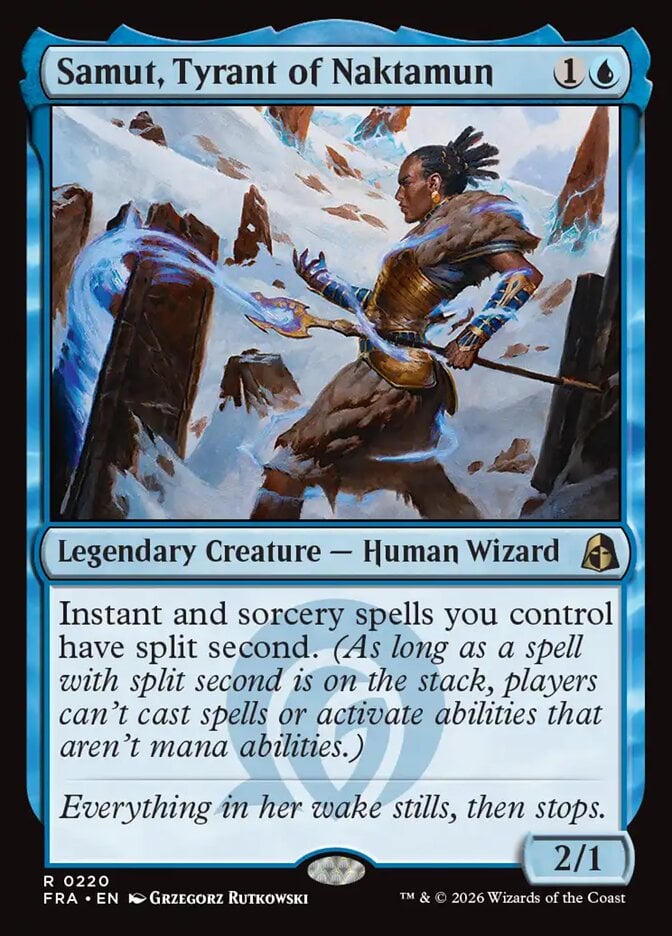
While I've seen a ton of clamor about Samut, Tyrant of Naktamun being busted in cEDH, giving all your instants and sorceries split second won’t help much in Limited. The main application is to prevent counterspells or protection spells like Teyo, Lightshield Expert from finding their mark, but don’t expect Samut to be much better than a Coral Merfolk in most games.
Sphinx of False Conclusions (Bomb)
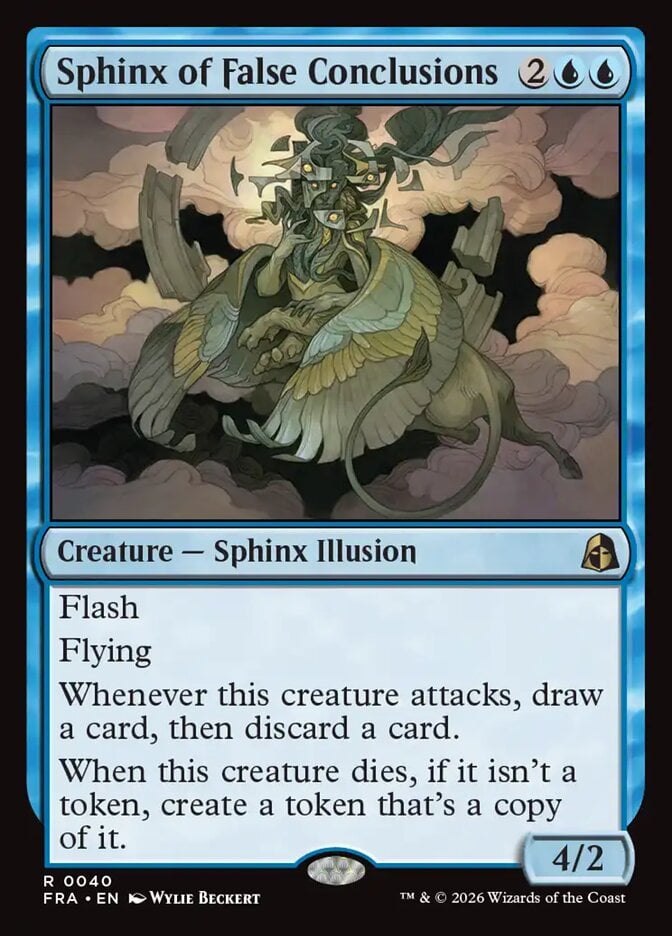
Sphinx of False Conclusions hits very hard, packs evasion, loots on attack, shrugs off non-exile removal spells, and can even ambush other creatures for value if you’re behind. It’s an utterly filthy bomb rare, and a ready invitation to play blue in Sealed.
Theorist’s Proxy (Good)
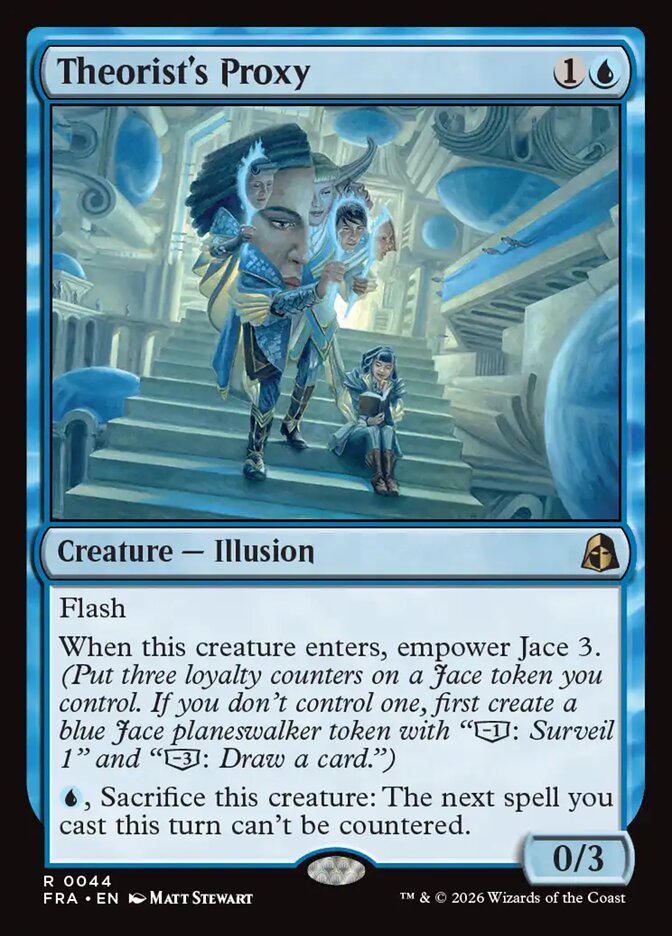
Remember that “Empower Jace 3” always means “draw a card”, so the worst Theorist's Proxy can be is a weird cantripping 0/3. The “can’t be countered” mode won’t come up much in Limited, but you could use it to ram an important spell through a suspected Countersculpt.
Variable Chaser (Great)
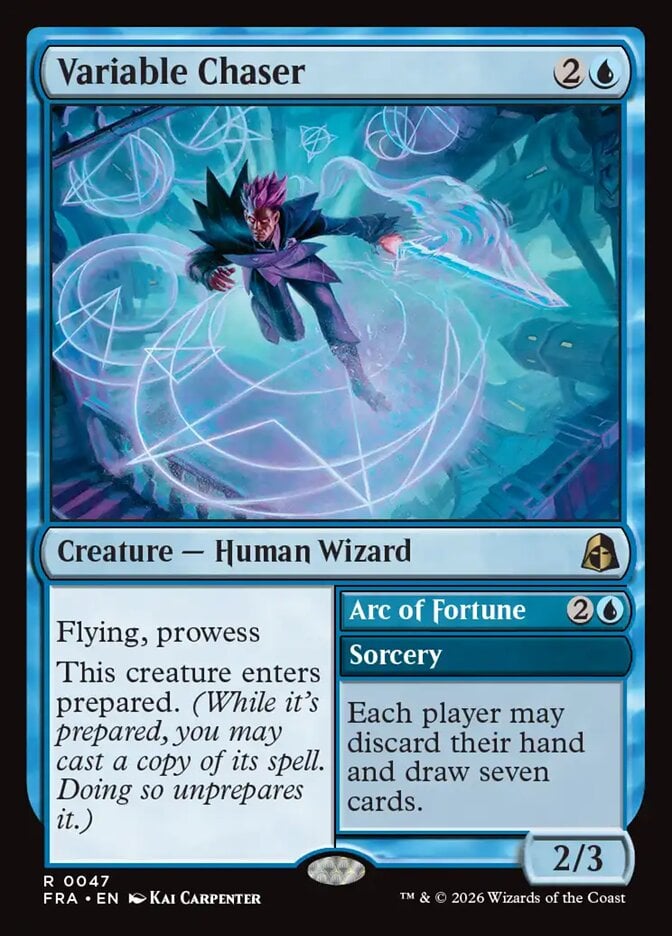
Variable Chaser’s base stats are pretty good, so it should play fine even if you don’t end up using “Arc of Fortune” much. I’d recommend only doing so if you’re very down in resources, since your opponent will usually be able to spend their mana more efficiently after you spin the wheel.
Dark Matter Manipulator (Good)
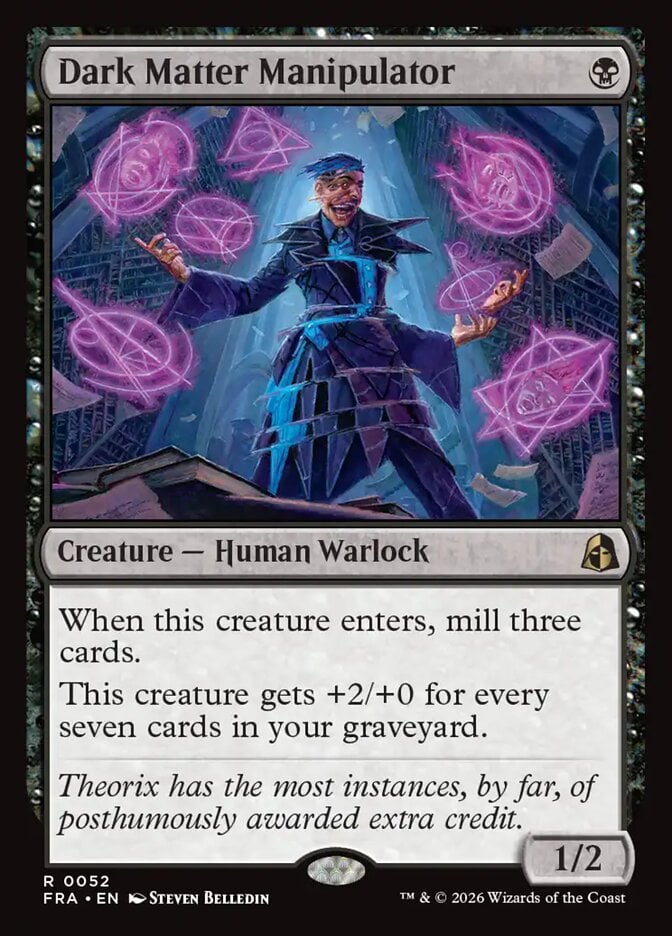
The efficiency of Dark Matter Manipulator is somewhat wasted on Limited, as you’ll need other self-mill to get this to a 1-mana 3/2 reliably. I like it if you have a clear threshold theme, but I wouldn’t expect it to be great in non-graveyard black decks (like BR and WB).
Extrapolate the Impossible (Bad)
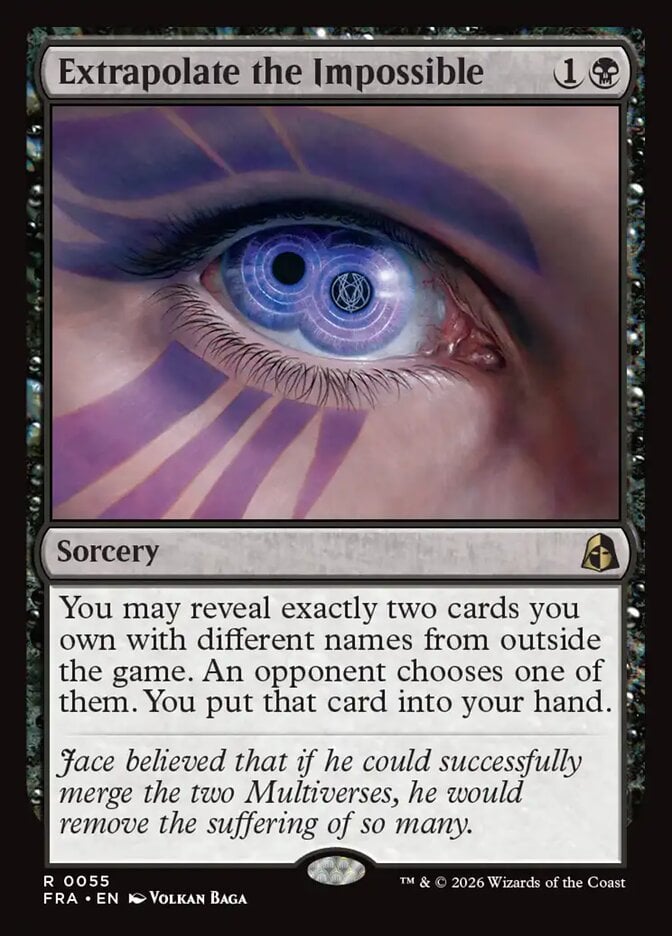
A really cool design for Constructed, although getting Extrapolate the Impossible to do much in Limited seems tough. Whatever cards you’d have wanted to tutor with this likely made your main deck, which is the core issue here.
Gideon the Oathless (Great)
Evil Gids is efficient enough to be good in any black deck, but it’ll feel especially brutal in BR builds. The incidental damage Gideon the Oathless deals stacks with ping payoffs like Tomik, Izzet Sparkmage, which sounds absolutely miserable to deal with. Oh, and if your opponent does answer Gideon, its ward ability ensures that you’re getting a 2-for-1 anyways. Ouch!
Lich’s Relic (Bomb)
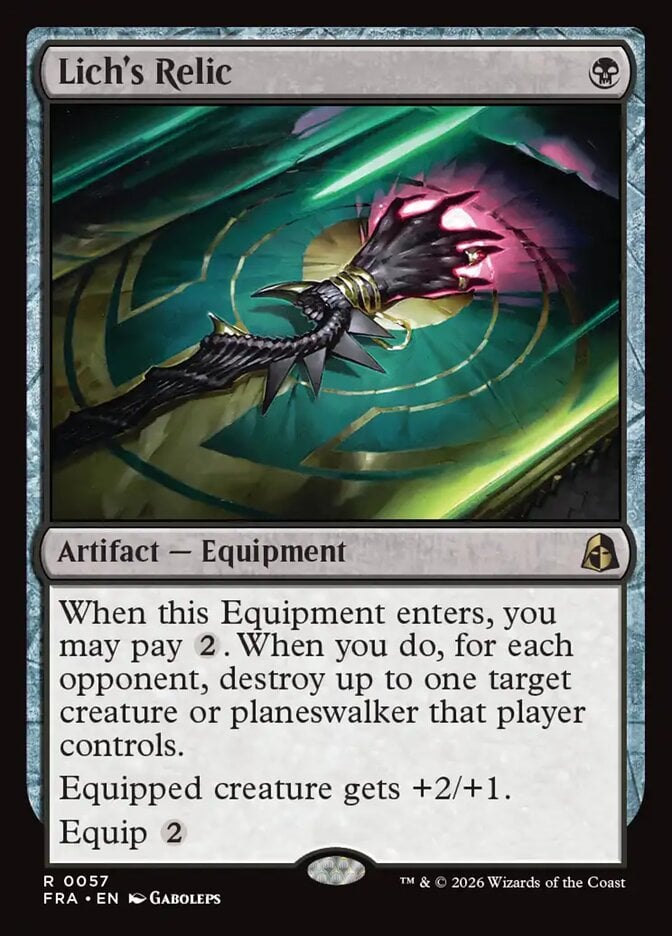
Crude Bent Blade has been upshifted to rare, but now it destroys target creature rather than merely edict! That’s quite the glow-up for an already busted Limited card, so please respect Lich's Relic as one of the best rares in the set.
Liliana the Repentant (Good)
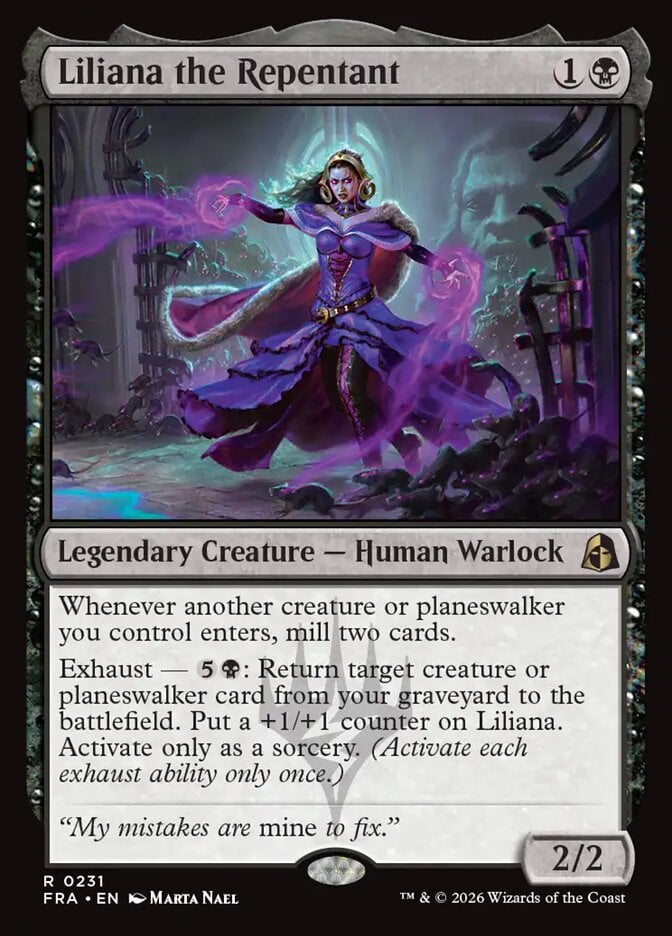
Liliana the Repentant does a good job at enabling threshold, and it grants you an expensive reanimate later if it sticks around long enough. It’s mediocre if you don’t care about the graveyard, but it’s still a bear with upside at worst.
Rise of the Deathbringer (Bomb)
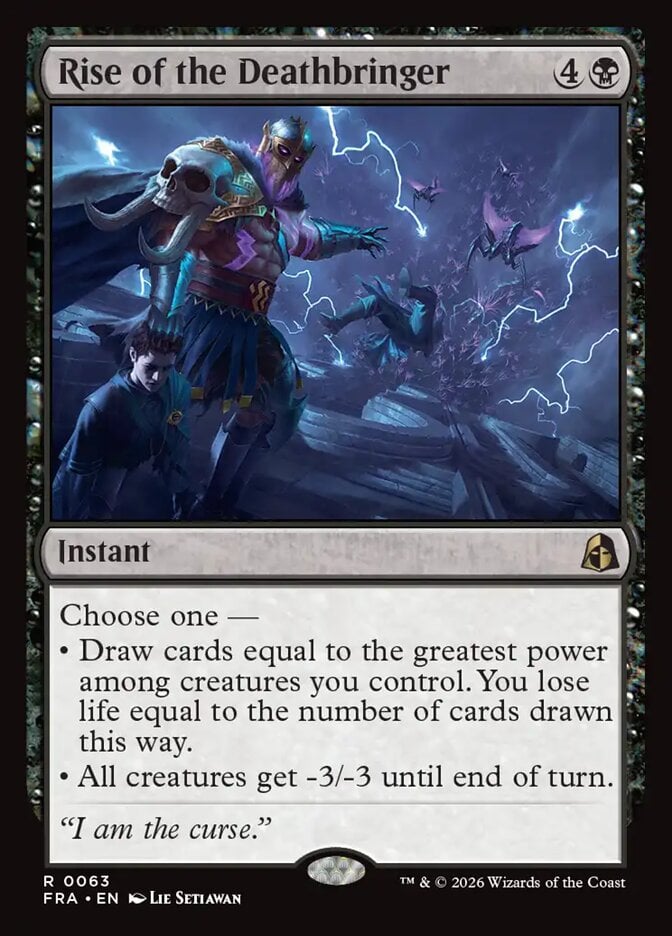
Instant speed sweepers like this can be deadly, and Rise of the Deathbringer is significant enough to catch most small to medium creatures. It also has a backup card draw mode for when a sweeper isn’t needed, which makes this instant rather versatile. It’s highly splashable as well!
Sanctum Lurker (Great)
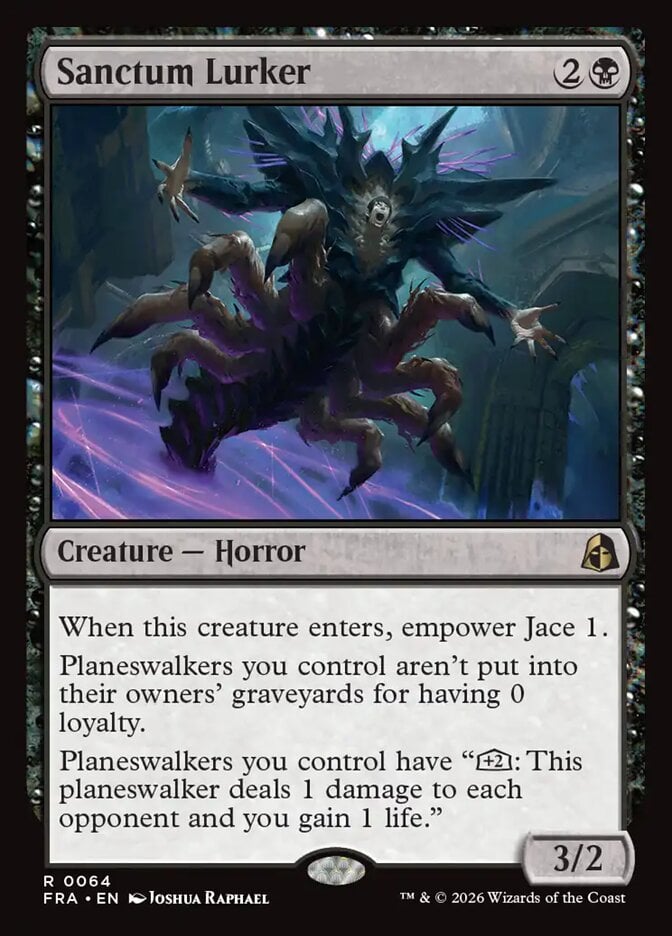
The planeswalker protection on Sanctum Lurker is interesting, but the real meat here is on that juicy +2 ability. Giving your Jace tokens the option to increase loyalty makes them play more like other planeswalkers, which are notoriously excellent in Limited.
Vraska’s Final Mercy (Great)
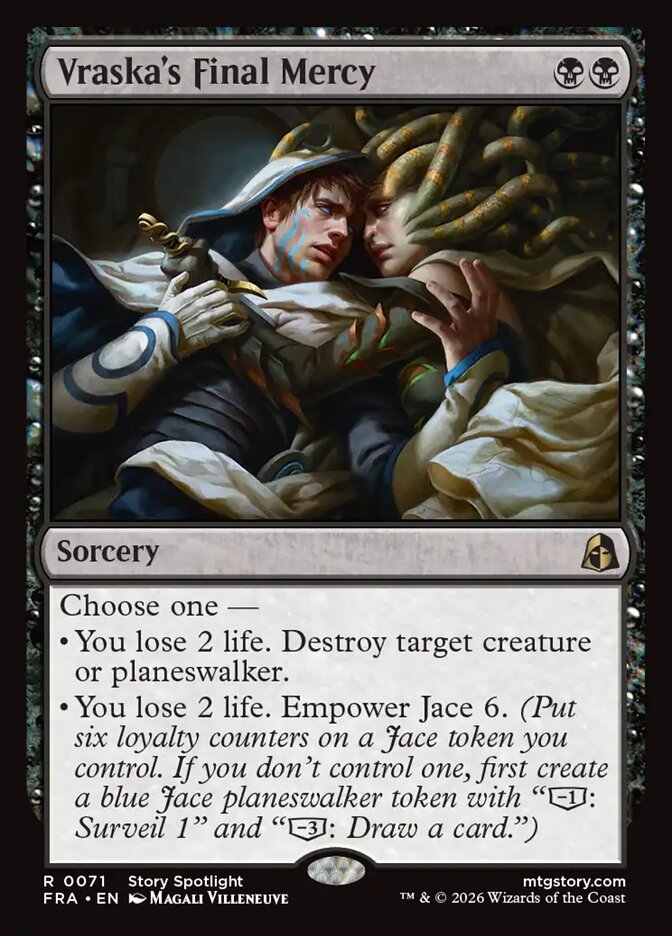
Vraska's Final Mercy is basically Fell and Sign in Blood stapled together, although the Sign in Blood comes in the form of “Empower Jace 6”. This all makes for a highly flexible card that any deck with 9+ Swamps will happily play.
Ajani’s Anguish (Bomb)
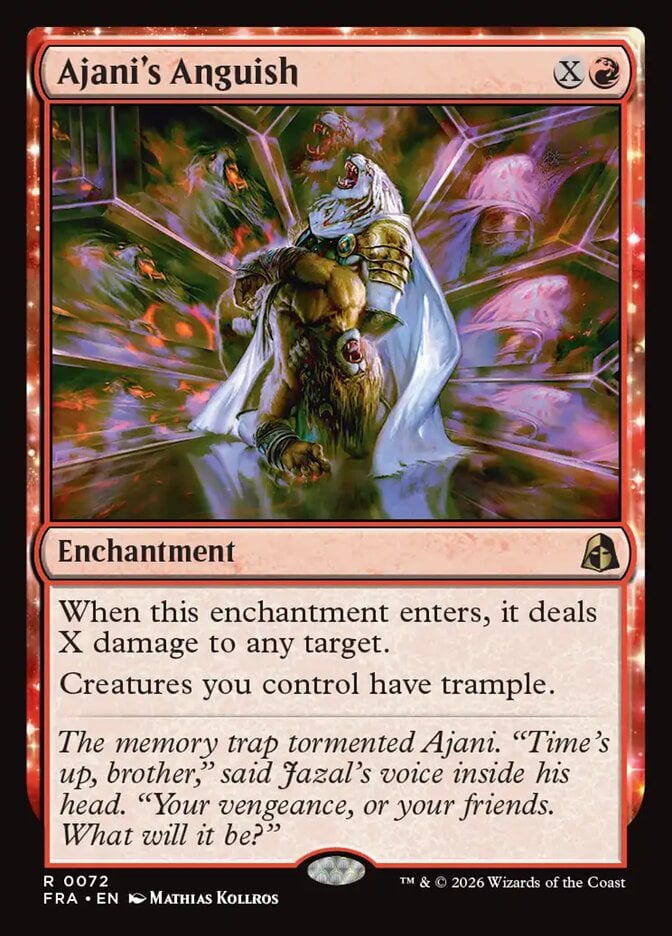
Fireball has received a modern glow-up; now it leaves behind a useful mass trample enchantment. But Ajani's Anguish comes from a permanent, and it can enable some cool micro synergies, such as:
- Rescue Girl, First Responder returning this each turn for unlimited fireballs!
- Pia, Aether Ascetic tutoring this up by discarding a land late game.
- Puppet Crafting’s ability to suit up the enchantment for battle afterwards.
Curse-Marred Demon (Great)
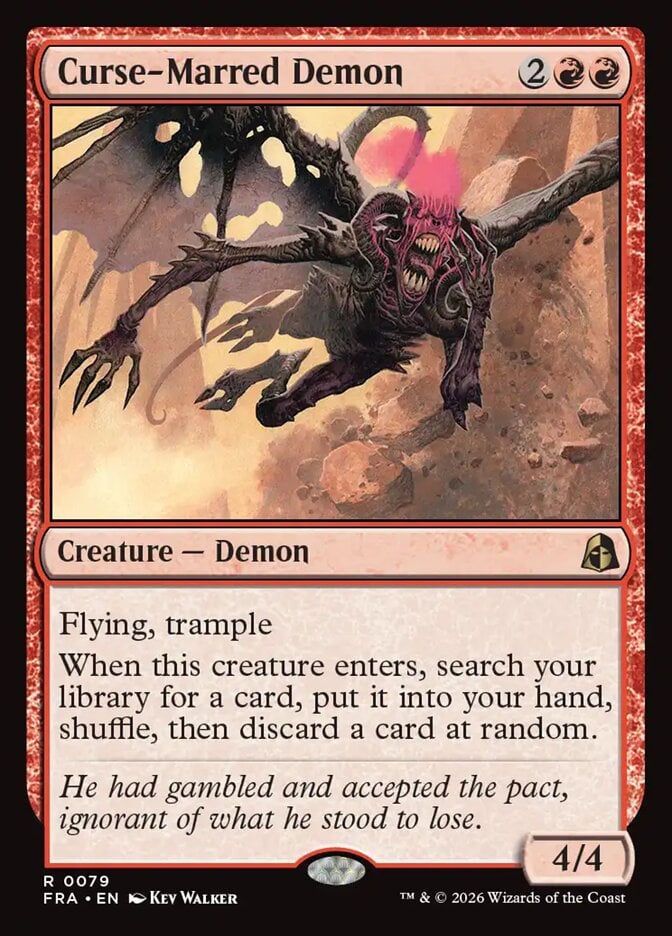
You can’t always get what you want. But if you try sometimes, you just might find, you get what you need….
No but really, Curse-Marred Demon is a 4/4 flampler for 4 that on average improves the quality of your hand. You can mitigate the drawback of random discard a bit by tutoring up something with flashback like Twinned Vision or Bestial Incursion. Don’t tutor up your uber bomb rare unless you’re desperate and see no other way to win, as this will make you discard it, I promise.
Draconic Visitor (Great)
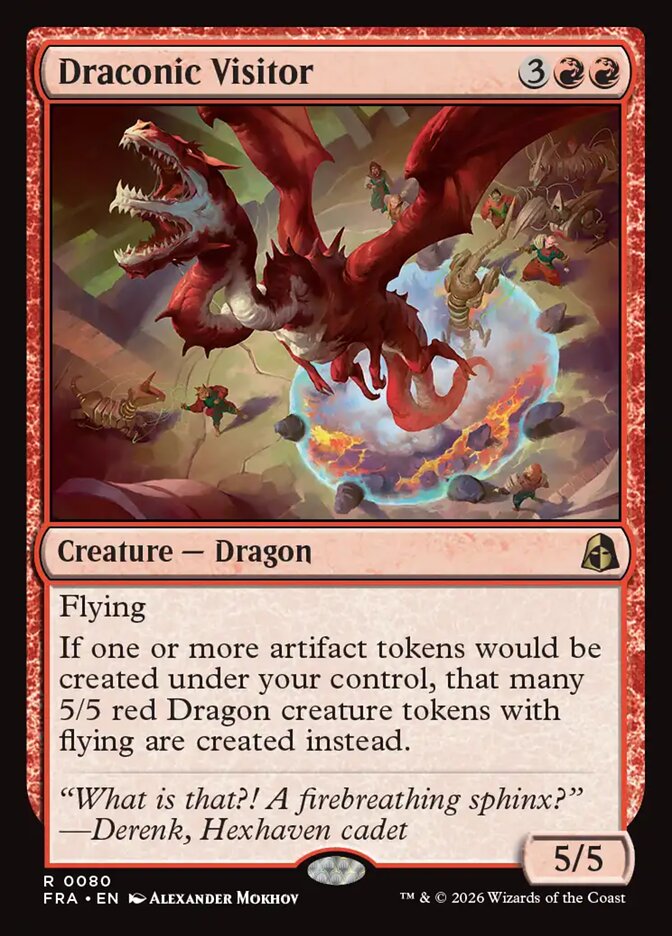
Turning Heartwood and Thopter tokens into 5/5 dragon tokens should easily win you the game, so try to play all your artifact token creators with Draconic Visitor. Worst case scenario, this is a 5/5 flier for 5, which is still above average.
Face Yourself (Mediocre)
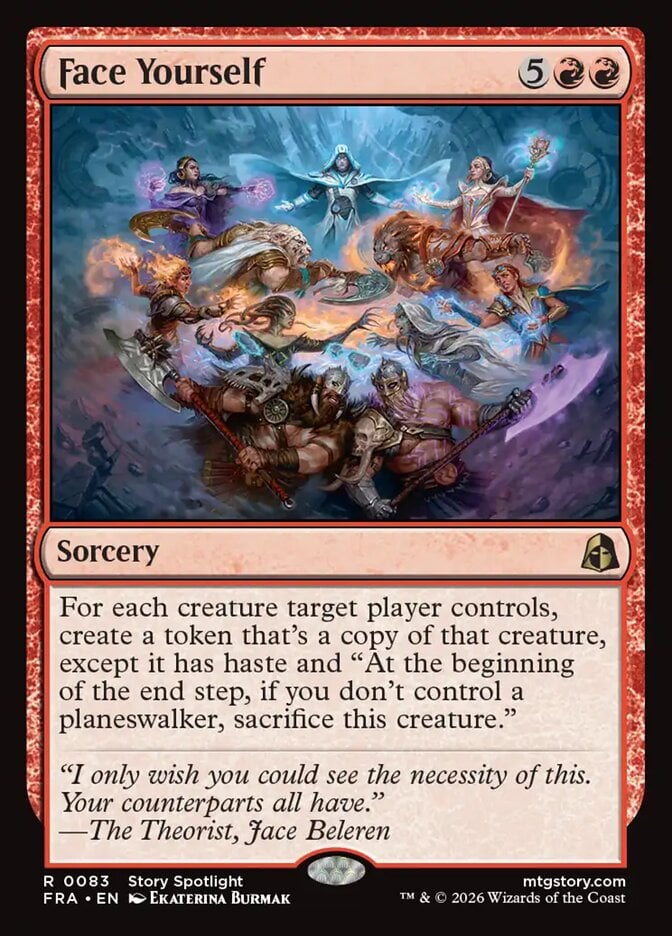
My pick for the hardest card to evaluate in the set, because Face Yourself’s effectiveness will vary immensely from board to board. It also requires a Jace token (or other planeswalker) in play for the tokens to stick around, which is another hoop to jump through. I plan to try it if I have several Heartwood token generators, but otherwise will stick to more consistent cards.
Identity Echo (Bad)
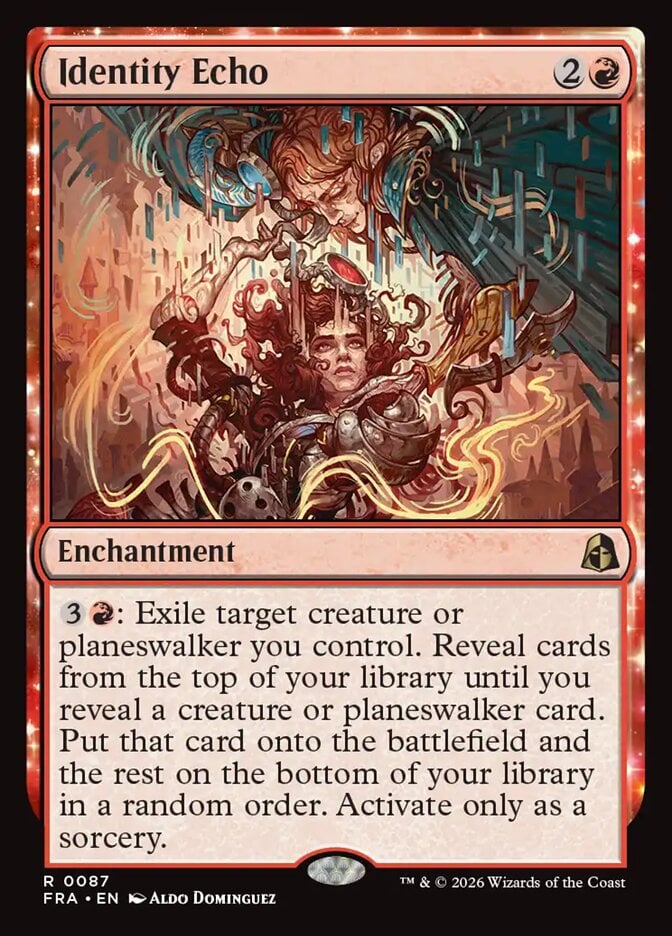
Polymorph isn’t a realistic build-around in Limited, and Identity Echo isn’t even a good polymorph card. It takes 7 mana before this does anything, and all you’re getting is random nonsense from the top of your library (with significant setup required).
Master of Barbs (Great)
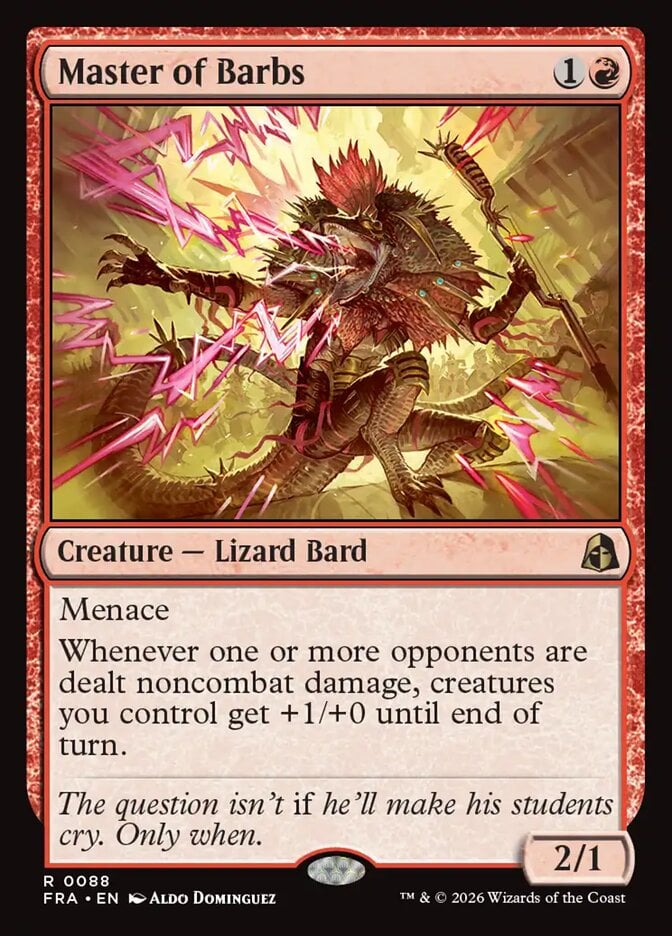
Master of Barbs is a nice aggro card that’s designed to play in BR decks alongside pingers like Stingerquill Voxmancer and Whiplash Wordsmith. It’s mediocre at best without support, but there’s a good amount of support for building around noncombat damage anyways.
Pompous Battlemage (Good)
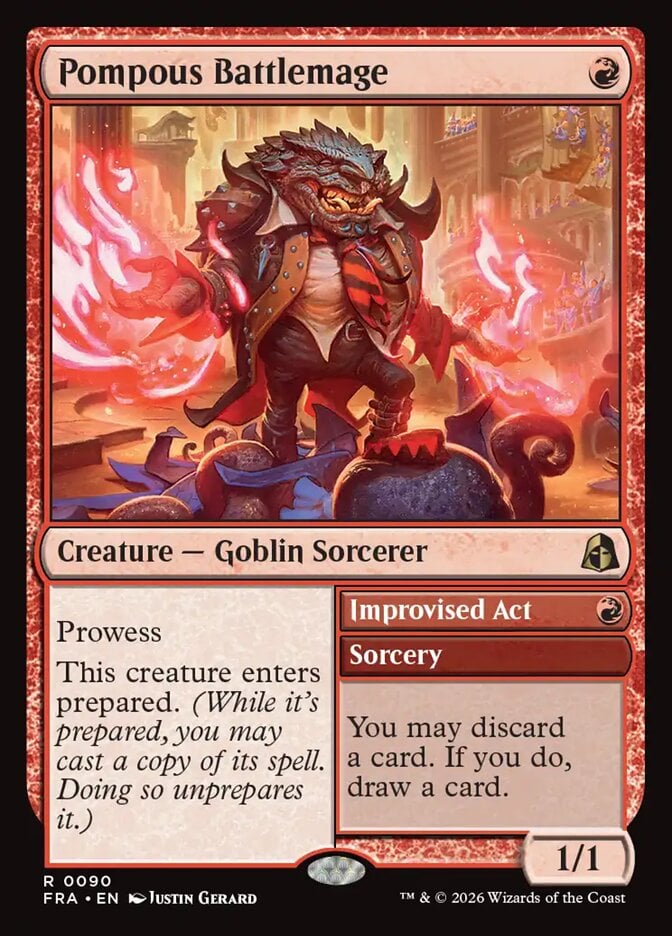
Prowess and prepared is a nice combination, as Pompous Battlemage will be able to pump itself on its own. It’s definitely an aggressive card, but a very efficient one.
Pyre Rhymer (Great)
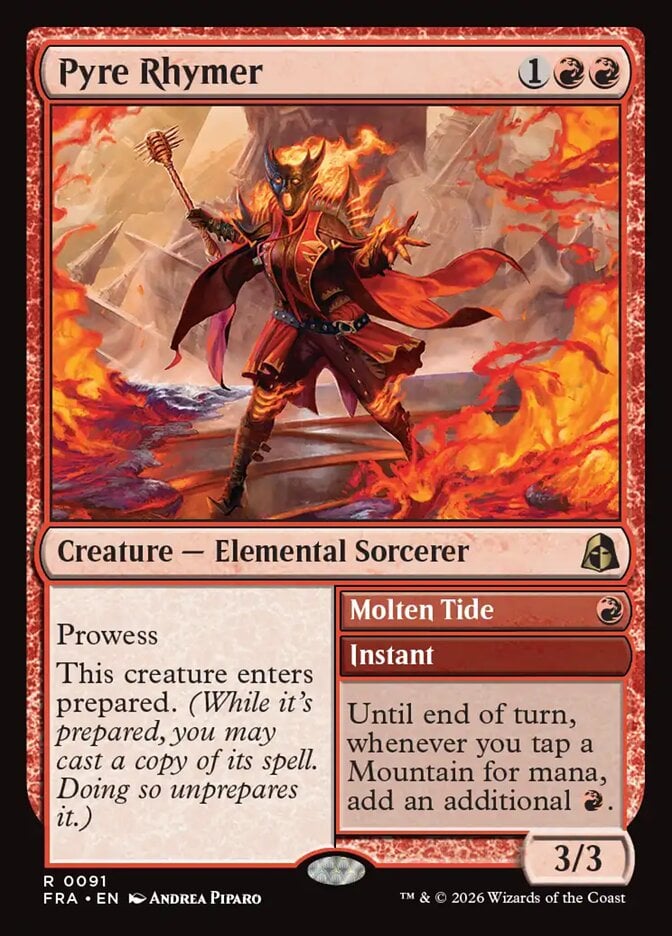
A 3/3 prowess creature for isn’t a bad start, and “Molten Tide” being instant lets you have threat of activation when you attack with this (meaning it's basically a 4/4 at smallest when it attacks). As for Molten Tide itself, I wouldn’t expect to storm off anytime soon, but getting an extra mana or 2 from this midgame doesn’t sound unrealistic.
Samut, Hazoret’s Champion (Bomb)
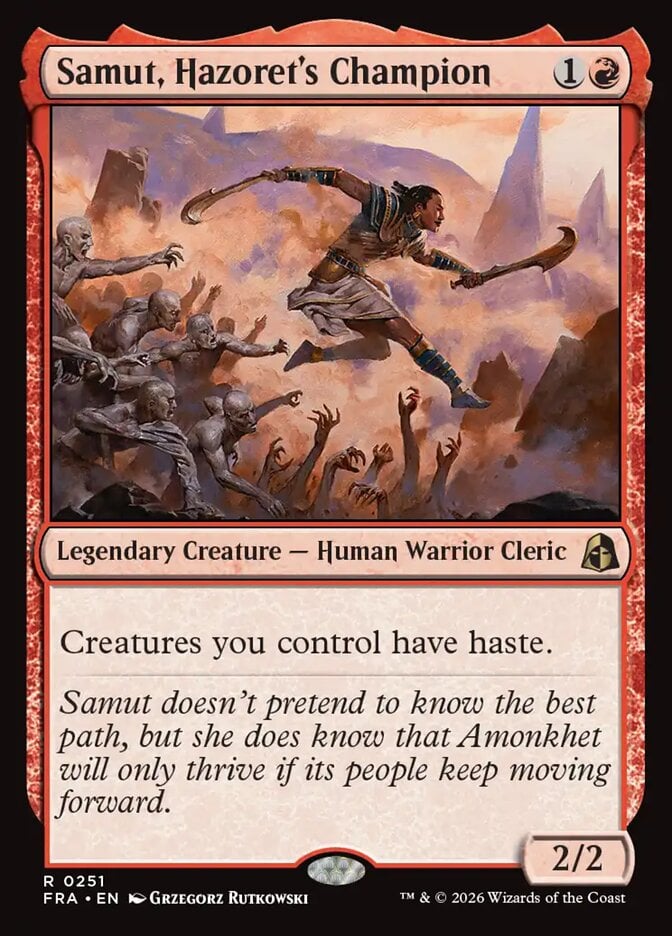
2/2 haste for 2 is a solid rate to begin with, but having every single creature you play enter with haste afterwards creates a ton of pressure! Samut, Hazoret's Champion is an excellent incentive to build a more aggressive deck, and it should play phenomenally in RW and BR decks.
Carnivorous Cultivator (Great)
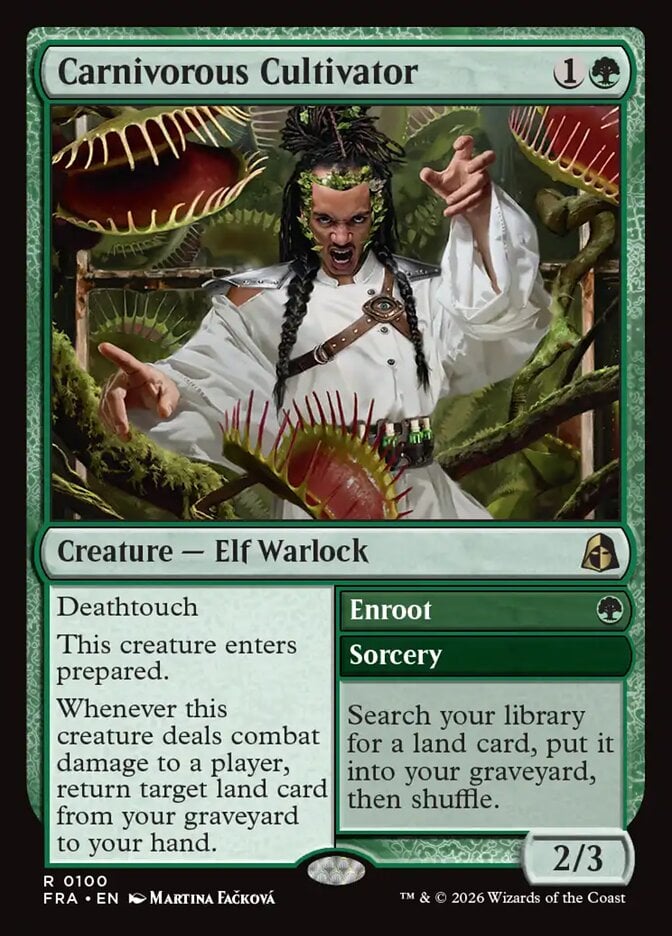
A 2/3 deathtoucher for is a strong baseline, and Enroot ensures an immediate 2-for-1 if Carnivorous Cultivator doesn’t eat a fast No Admittance or Last Gasp.
Gardenize (Bad)
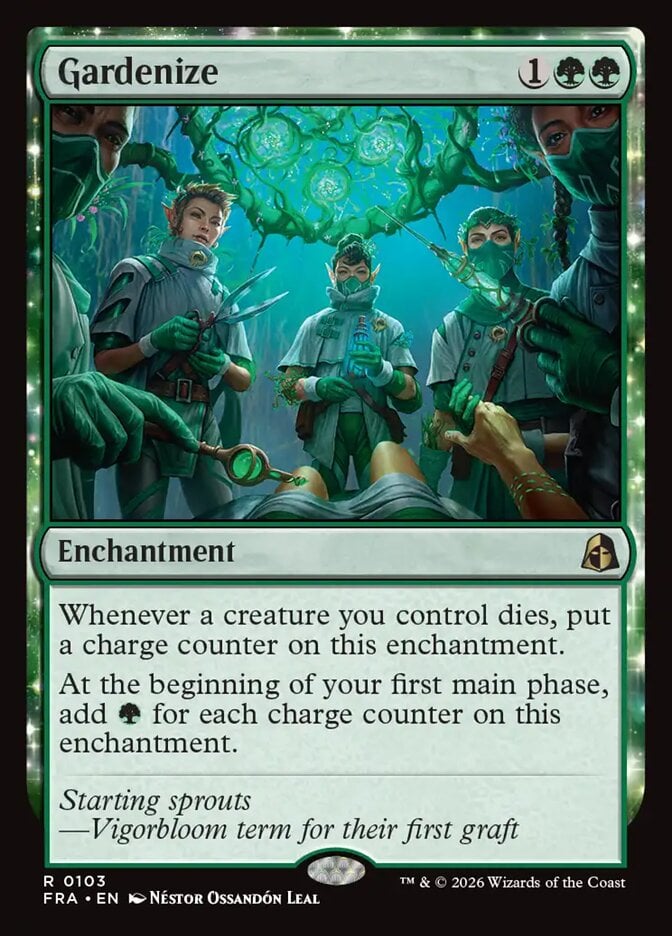
Clearly a Constructed kind of card, as your average Limited deck will have nowhere near enough sacrifice for Gardenize to do anything. Throw in the fact that sacrifice is WB’s thing anyways, and you have a certified dud of a rare.
Hungering Puppetbeast (Bomb)
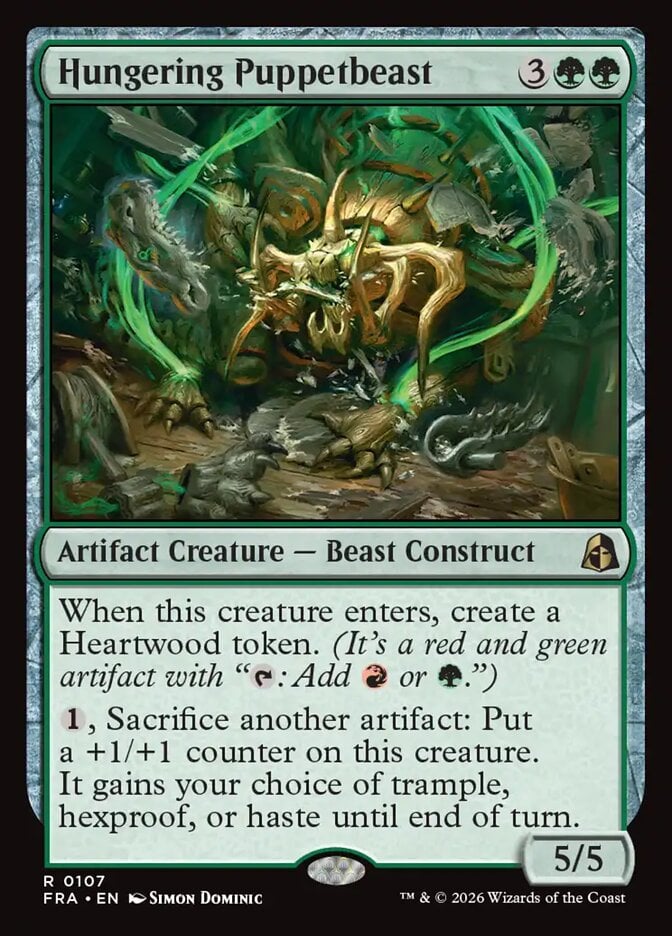
Hungering Puppetbeast, on the other hand, is straight up gasoline. The Heartwood token this creates enters untapped, which means you can immediately tap it to sacrifice it and crunch in with a 6/6 haste. You could also just save the token to keep Puppetbeast safe from removal spells, which should be the most common line. It scales well with other Heartwood generators, but it hardly needs them to be incredible.
Puppet Crafting (Good)
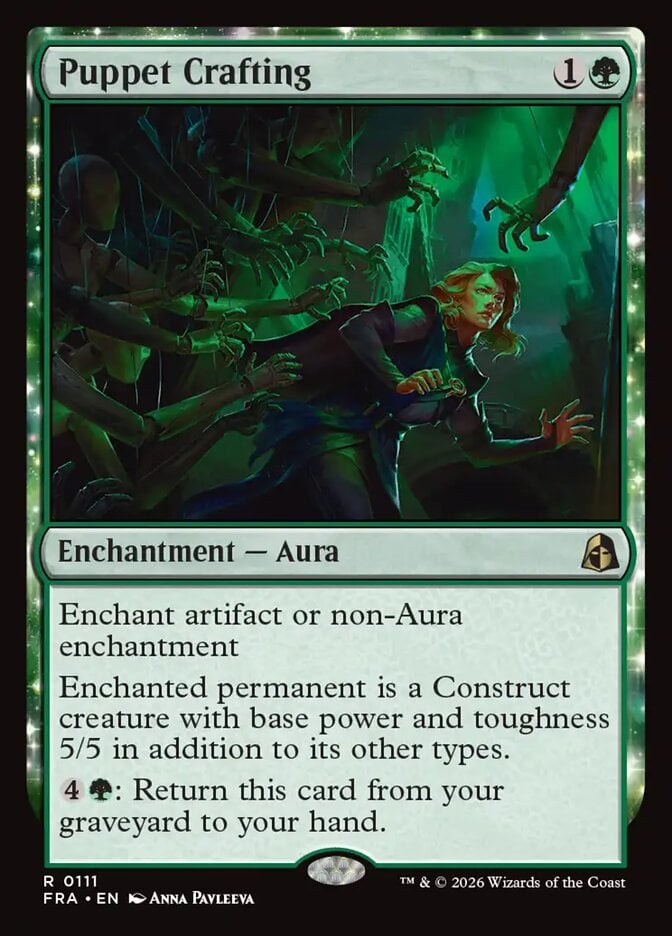
This is rather reminiscent of Ensoul Artifact, but with the added bonus of being able to return late game if this aura hits the graveyard. If you can consistently support it with artifact tokens and disposable enchantments like Way of the Paradox, then Puppet Crafting should be incredibly powerful (since it's basically a 5/5 with haste for when it works). Some pools won’t be able to even play this card though, as it does have very specific requirements.
Simulacrum Shaper (Great)
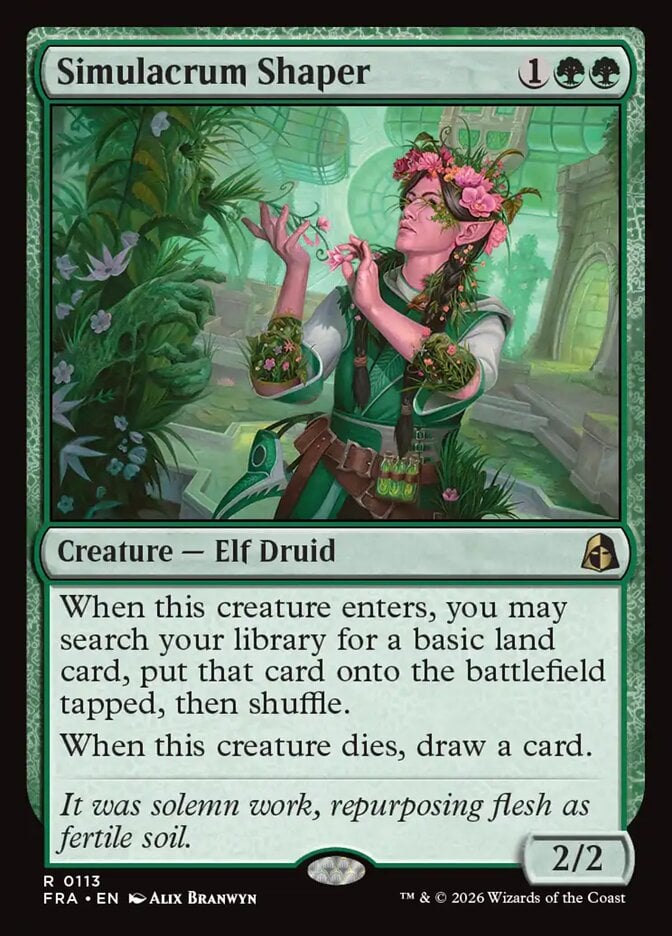
Solemn Simulacrum got a glow-up, as it’s now available for just 3 mana (albeit in green). This is a dream value creature for rampy decks, but it’s clearly efficient enough to be good in anything green.
Verdant Kraken (Bomb)
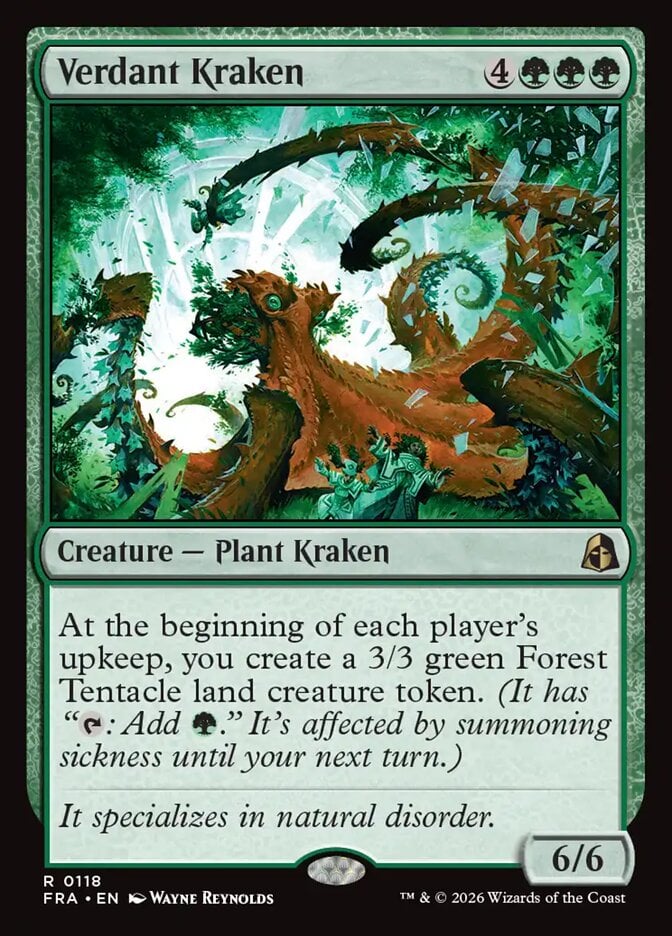
If your opponent has a removal spell for this, Verdant Kraken will eat that and still often leave a 3/3 Forest Tentacle behind. If they don’t, the game should rapidly end in a deluge of 3/3s and extra mana. Kraken is a premier card to ramp to with Heartwood tokens, and a classic Limited bomb.
Proctor of Potential (Great)
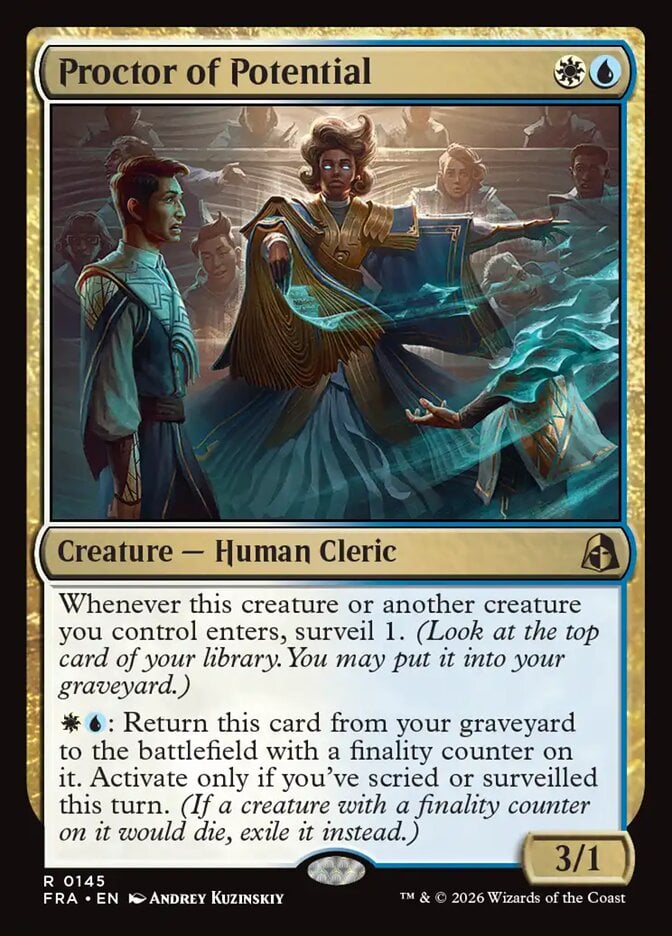
A dreamy enabler for WU surveil strategies, although it isn’t powerful enough to splash if you aren’t explicitly “doing the thing”. Hopefully you’re lucky enough to open this alongside several good payoffs!
Null Summoner (Bomb)
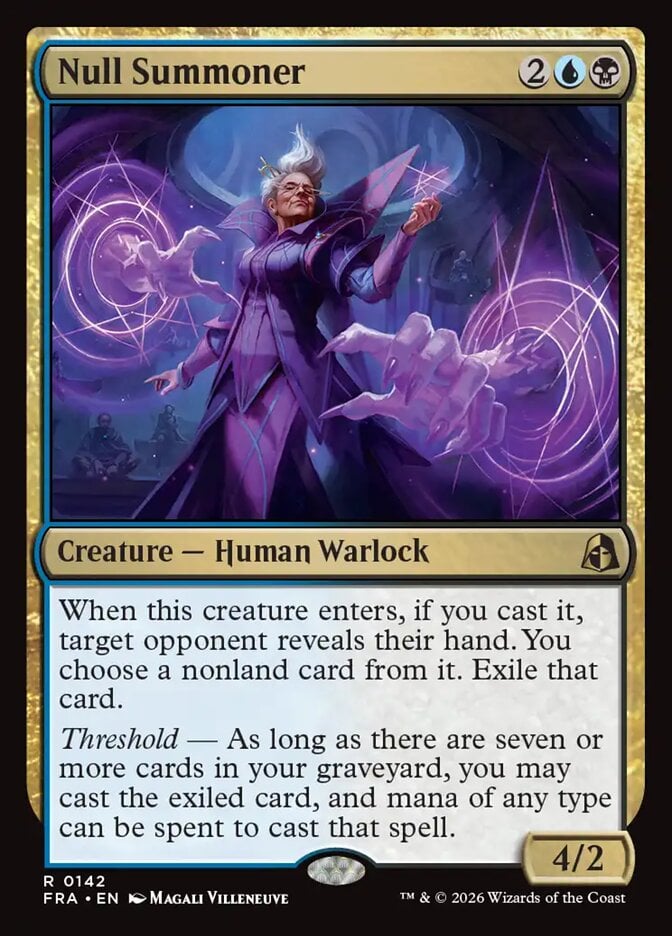
Null Summoner’s base stats are much higher than they’d need to be for a Thoughtseize creature to be good, and that’s without even counting the ridiculous threshold upside this has. I plan to splash this in all sorts of decks, but it’ll do its greatest work in actual UB.
Stinging Vitriol (Good)
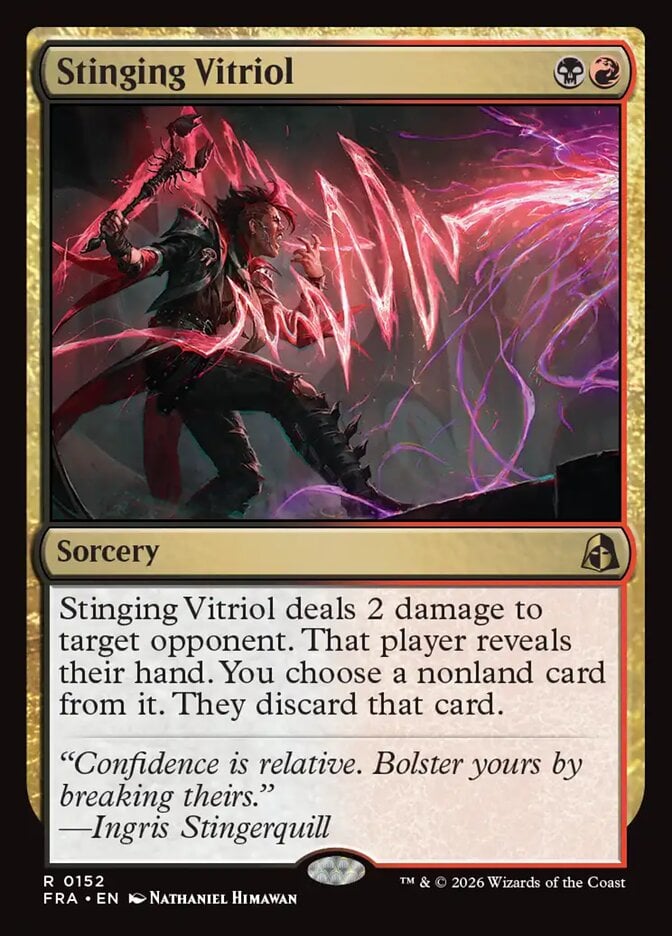
This is a nice upgrade to Solve for Disappointment, as its colors are always looking for convenient ways to deal extra noncombat damage. I wouldn’t splash Stinging Vitriol or anything, but it's an efficient Castigate variant.
Tenured Tethermage (Great)
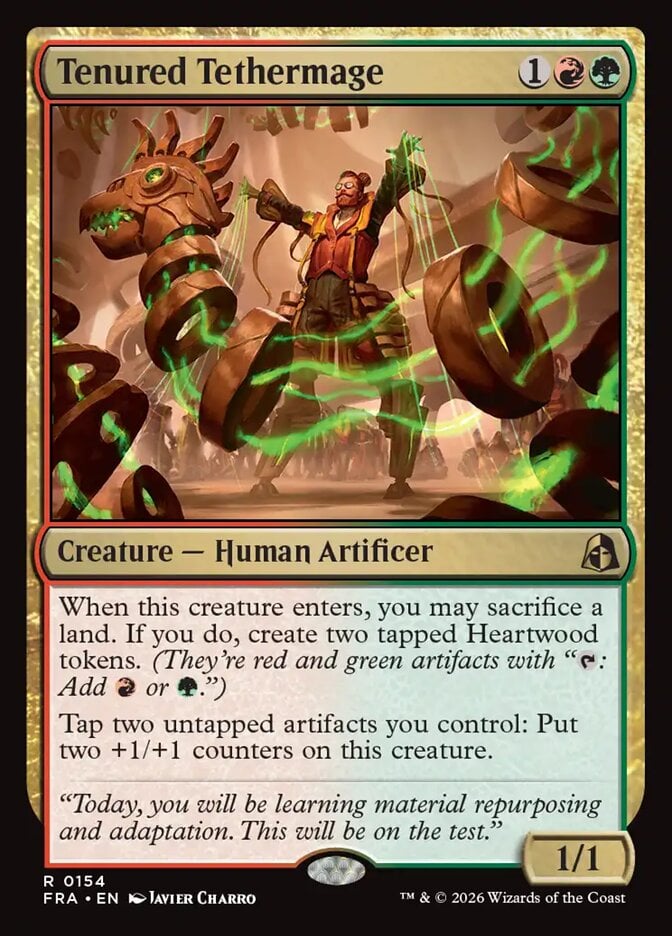
Springbloom Druid isn’t a bad baseline, but Tenured Tethermage takes Druid one step further by letting your artifact tokens tap to pump it. It’d be obscene if its own tokens entered untapped, but thankfully WotC realized this and made them not do so.
Solarium Sentry (Good)
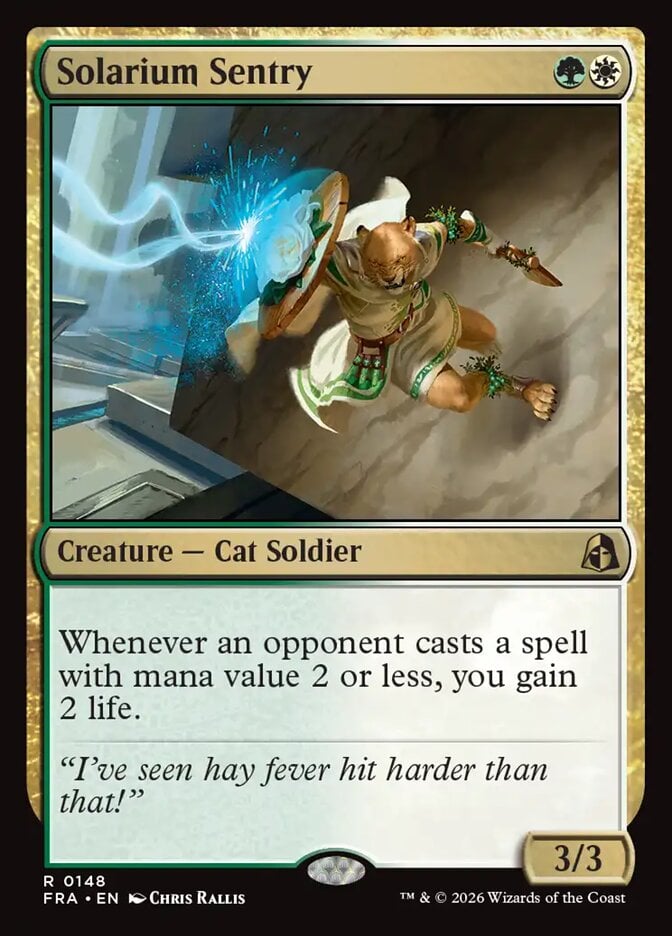
Watchwolf base stats are still strong in 2026 Limited, and Solarium Sentry should be good for a bit of extra life if you play it early. Lifegain has extra utility in its colors too, as GW is very much the home of Pridemates in Reality Fracture.
Vindictive Triumph (Bomb)
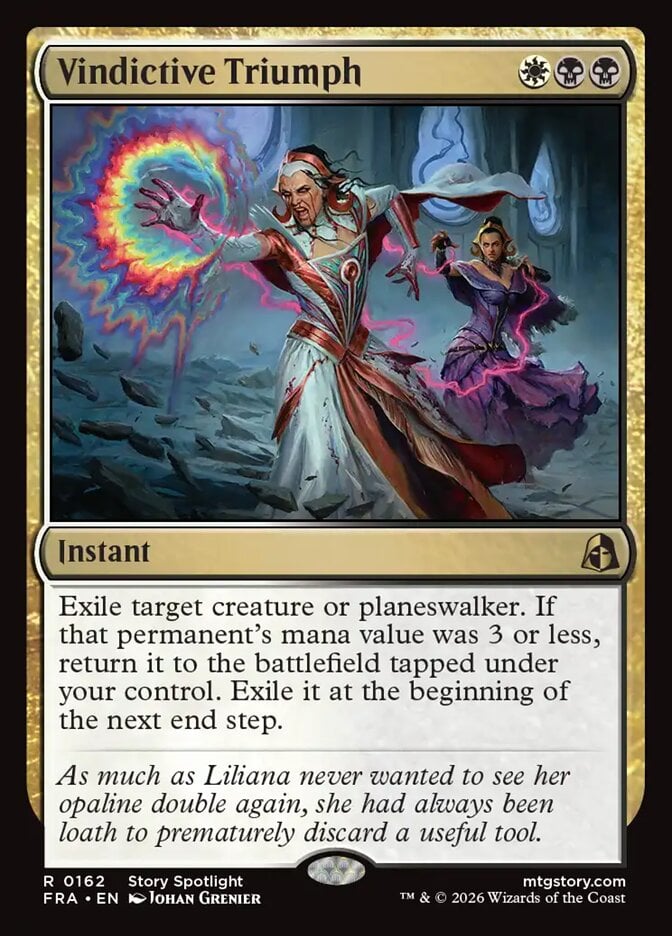
Vindictive Triumph is a significant upgrade to Come Back Wrong, and one of the best removal spells in Reality Fracture. It answers whatever you need for a fair price, permanently exiles it, and even lets you borrow that permanent for a turn of fun (provided it costed 3 or less).
Frostbite Pyromental (Good)
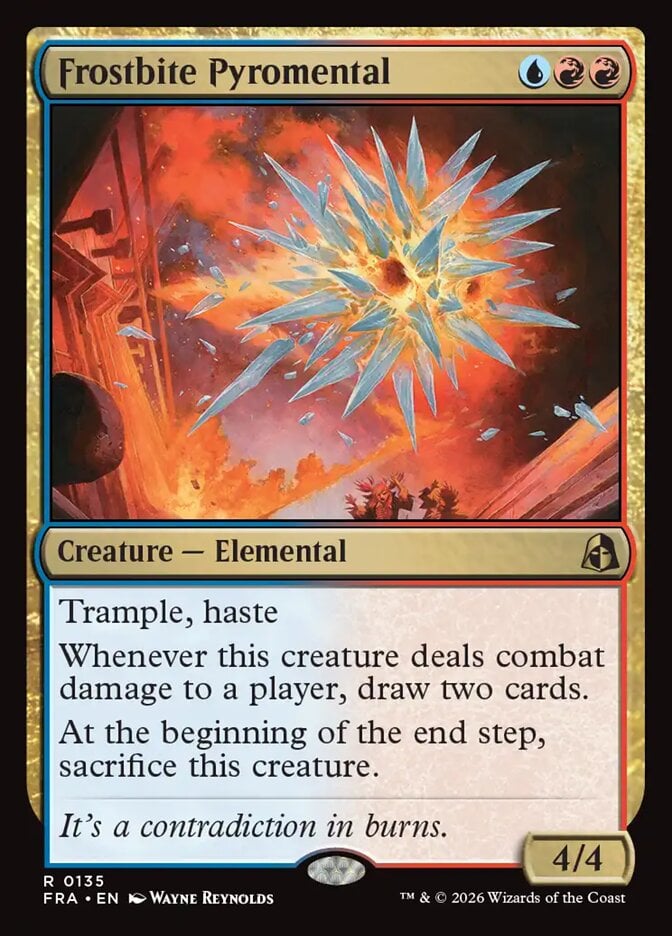
Frostbite Pyromental is Divination + Boros Charm when it works, and it should work most of the time due to trample. It plays best in aggressive UR decks, but it probably isn’t worth including in your average control deck (because it’s just a Divination with downside in those).
Vraska, the Cutting Glare (Bomb)
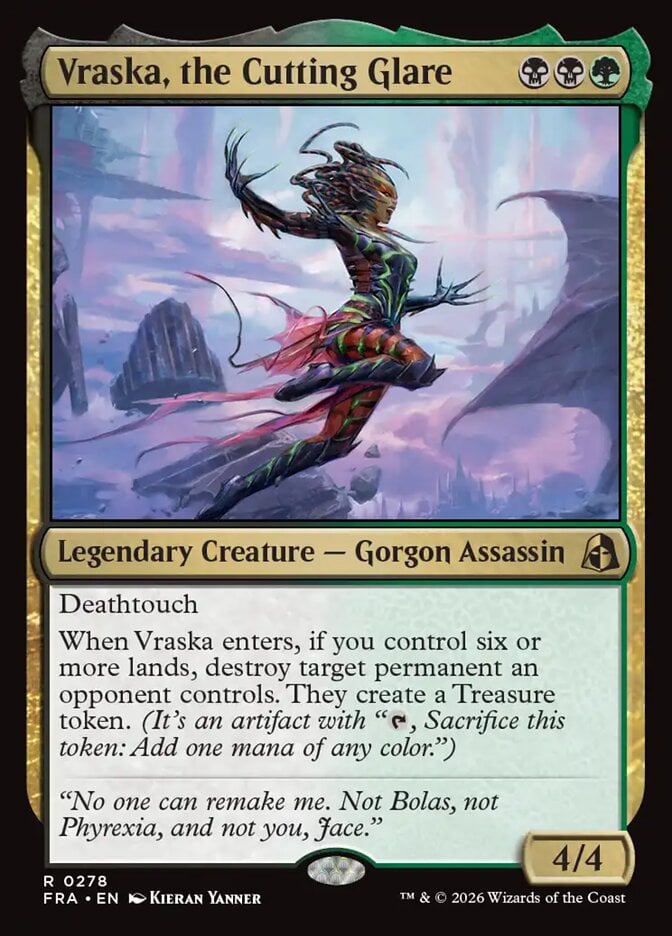
Playing Vraska, the Cutting Glare on turn 3 would immediately put you ahead on board, due to its deathtouch and its high stats for its cost. I’d prefer to save this Vraska for turn 6 if possible though, when it gets to do an incredible Nekrataal impression (and keep its juiced base stats).
Solitary Cell (Good)
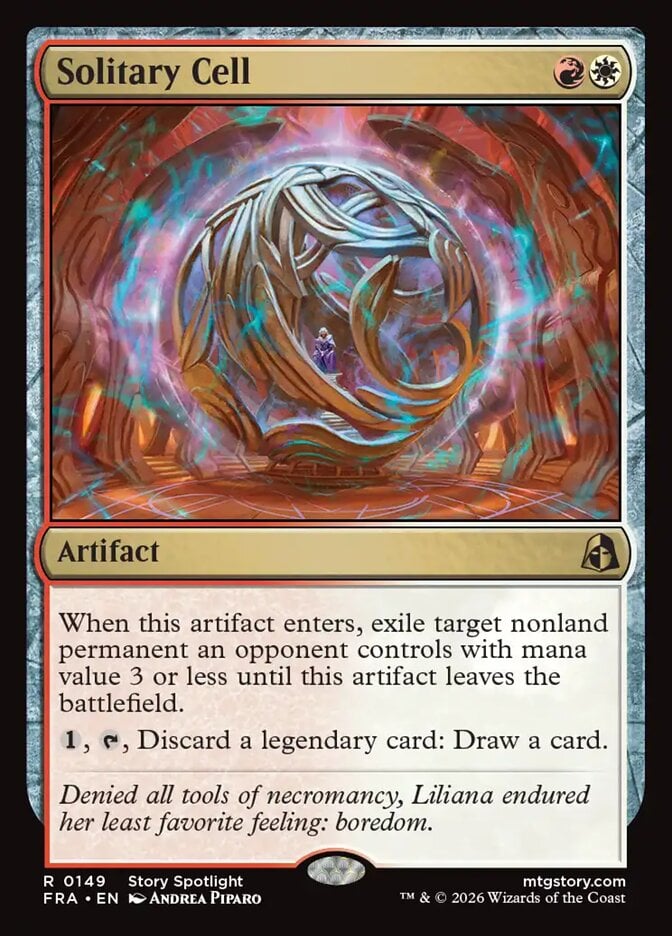
This is a solid removal spell with a fairly demanding mana cost, which keeps it from achieving a higher rating. Don’t forget that Solitary Cell says “nonland permanent”, not “creature”, which makes other removal spells like Infinite Coursework and Memory Trap fair game. You won’t use the legendary discard mode much in Limited.
Entrust the Spark (Bad)
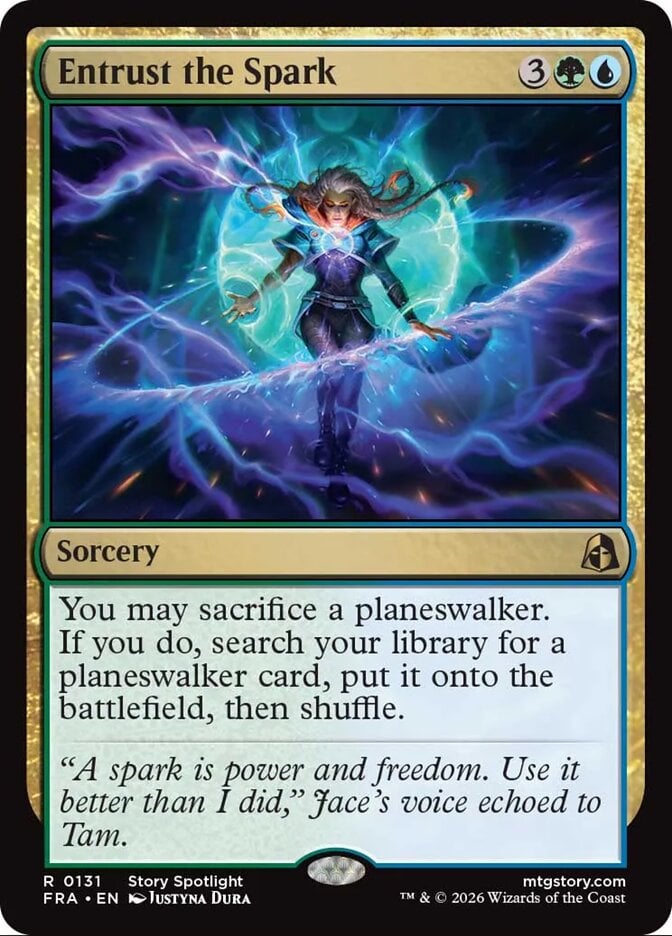
Even with Jace tokens, Entrust the Spark costs a ridiculous amount of mana and requires you to have opened at least 2+ planeswalkers worth tutoring with it. As such, we have another worthless rare on our hands.
Tam, the Possibility (Mediocre)
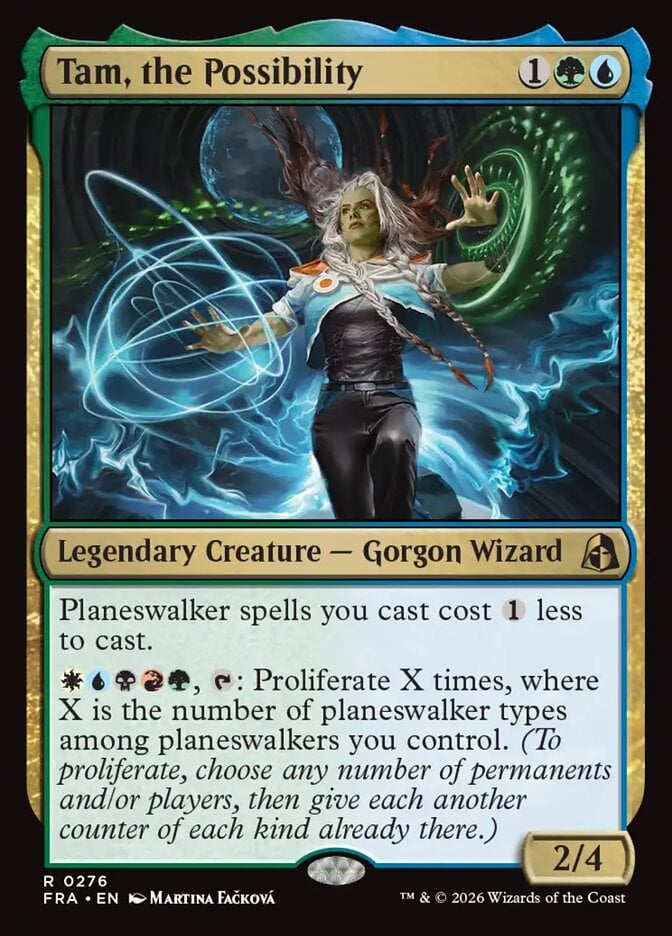
The possibility of this card being more than a vanilla 2/4 isn’t great in your average game of Limited, although it looks like Umezawa's Jitte when compared to Entrust the Spark. I’d be shocked if the mode ever comes up, but you could at least curve Tam, the Possibility into Jace, Reality Sculptor or something.
Vraska, Soul of Stone (Good)
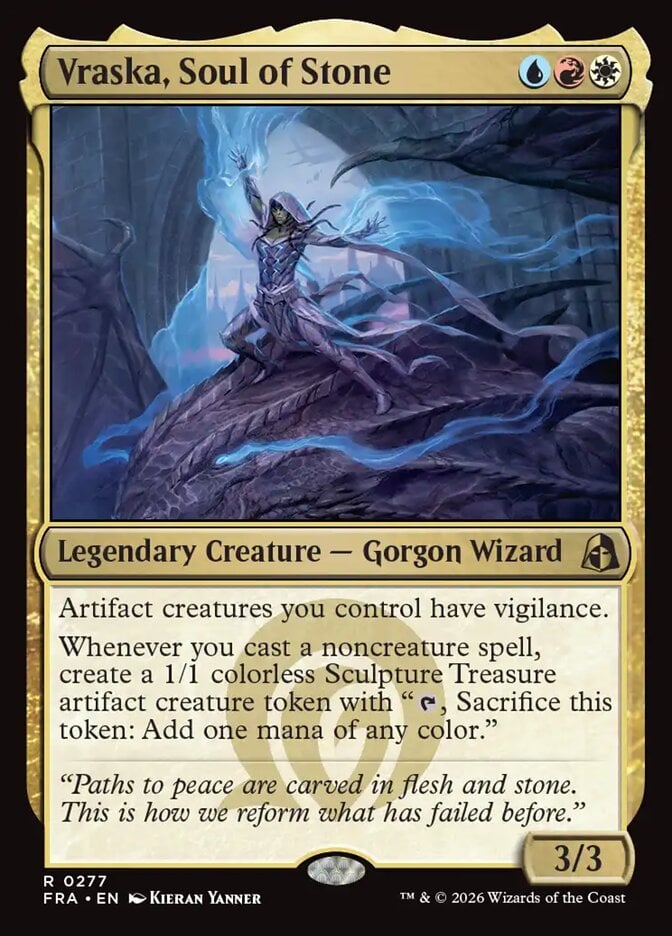
Vraska, Soul of Stone reminds me of Sokka, Tenacious Tactician, which was a good rare in Avatar: The Last Airbender. As with Sokka, this will usually play best as a splash in UR decks with lots of instants and sorceries.
Karn, Gilded Guardian (Mediocre)
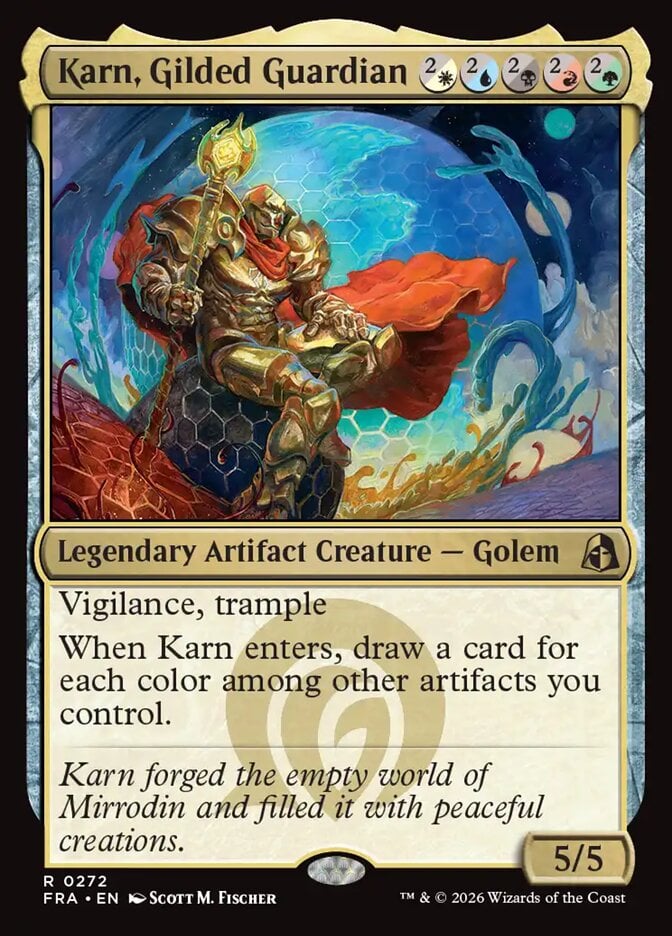
Heartwood tokens are notably red and green artifacts, which is the only thing that gives Karn, Gilded Guardian a tiny glimmer of viability. In a colorful deck with lots of Heartwood tokens, this could draw 2-3 cards and be discounted enough to be actually castable. Don’t bother playing Karn otherwise though.
Codie, Ravenous Codex (Great)
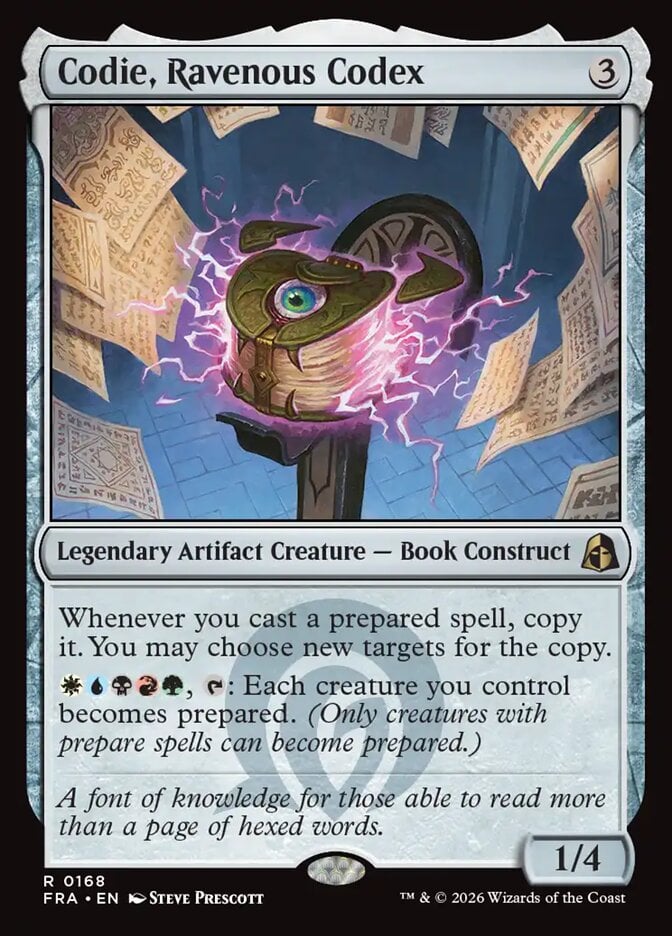
Doubling up on prepared spells seems powerful in Reality Fracture, and it’s something that all five of the main color pairs would be interested in doing. Imagine getting two 2/2 Cadets, 2 damage per ping, 2 life and counters, two Heartwood tokens… the possibilities are definitely there, and Codie blocks passably well too. The mode probably won’t come up much, but it’s a cute bonus if nothing else.
Karn, Argent Defender (Mediocre)
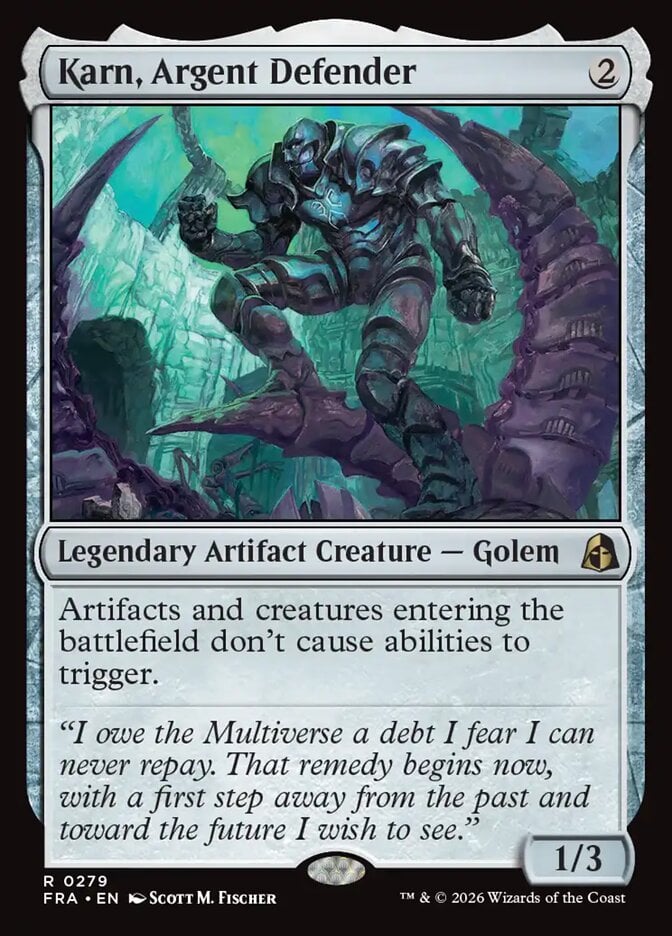
Karn, Argent Defender shuts down some value creatures like Mindseeker Oculus and Heartstring Puller, but note that this happens for both players, not just your opponent. It’s also not a very good blocker for its cost, so I’d only run this Karn if I needed more 2s and wasn’t playing creatures that it hurts.
Theorist’s Sanctum (Great)
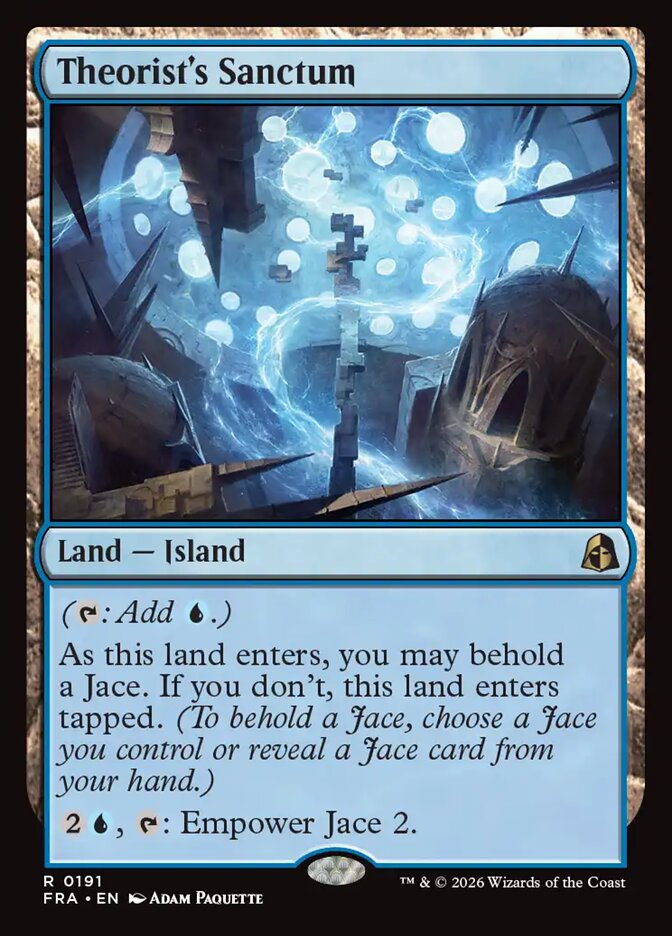
Theorist's Sanctum is an awesome value land that would be worth playing even if it always entered tapped. Getting to pump your Jaces and make new ones on demand will give you a major edge in top-deck wars, and the opportunity cost for including it is almost nothing (so long as you were already playing blue).
Roiling Canopy (Bad)
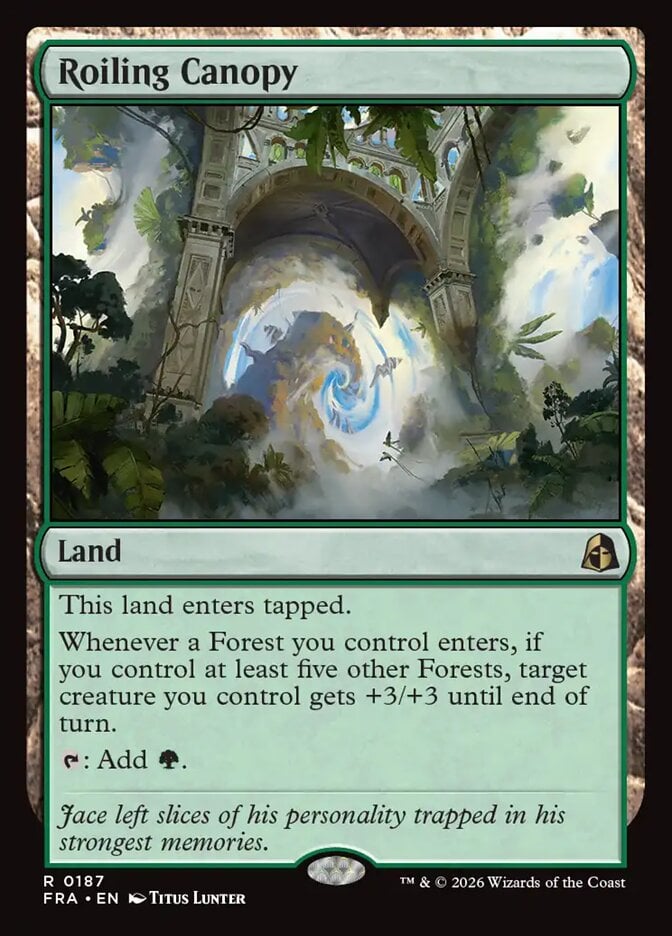
You’ll need to be more or less mono-green for Roiling Canopy, as otherwise it won’t trigger enough to justify playing a tapped forest in your deck. That isn’t going to happen in 99% of Sealed pools, so I hope not to open this one at Prerelease.
Slow Lands (Good)
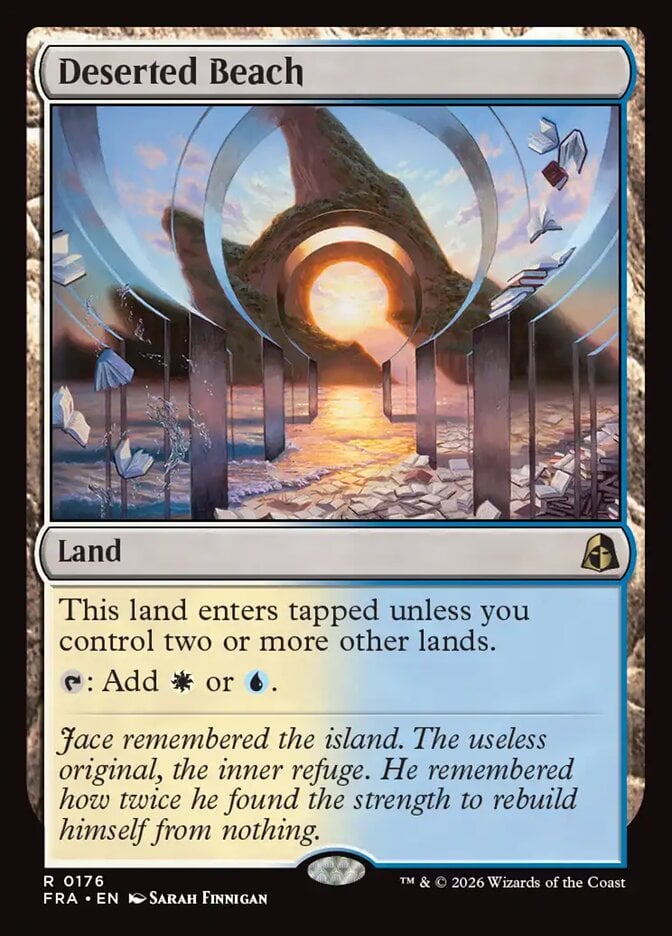
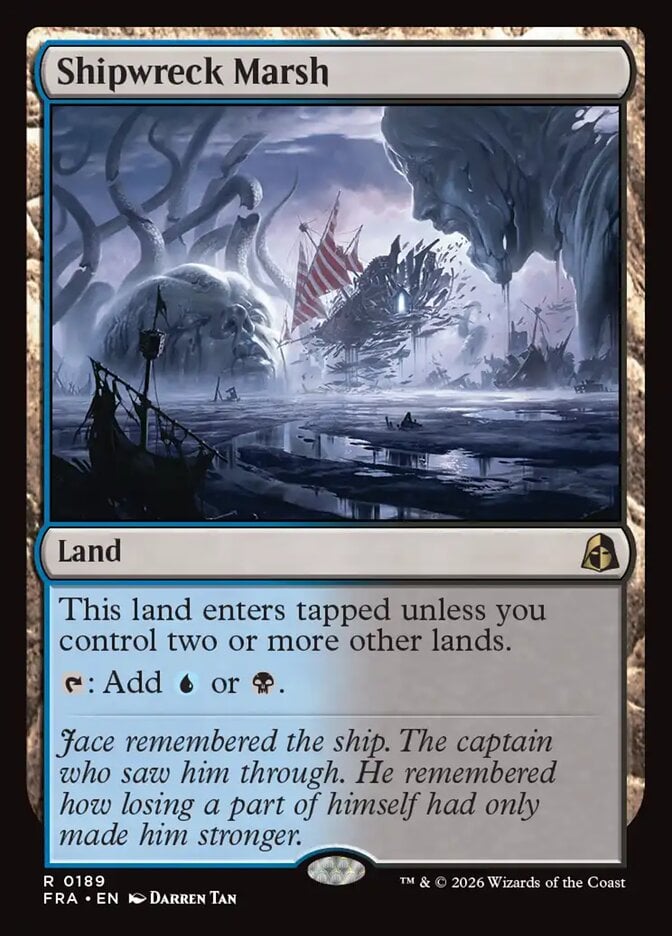
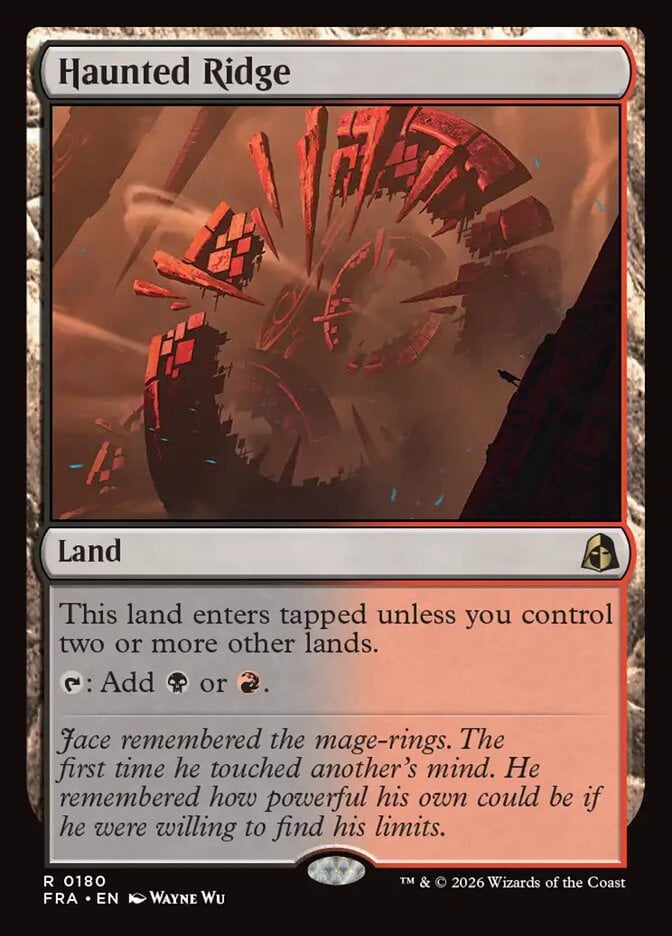
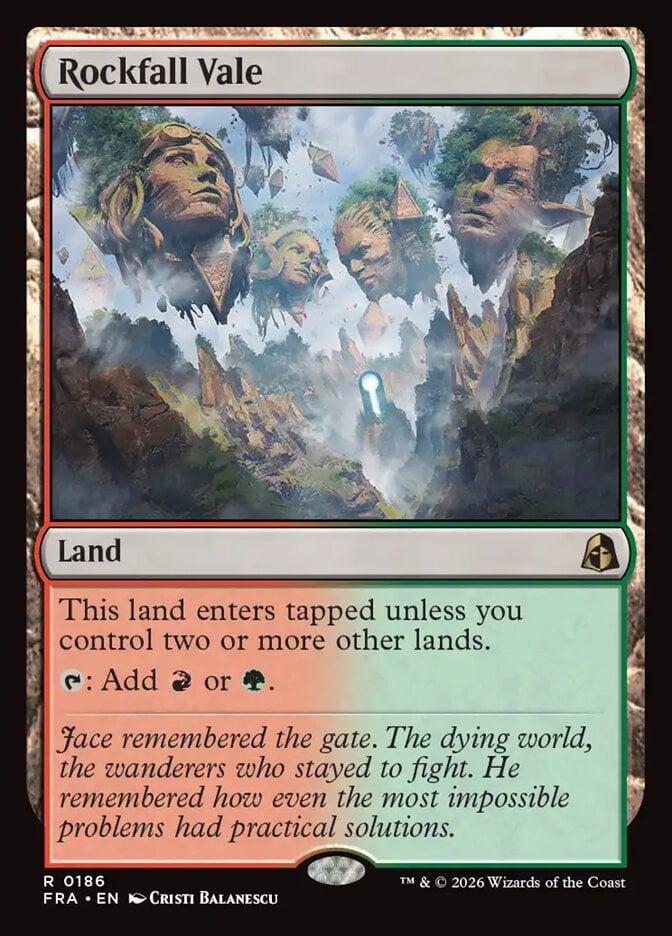
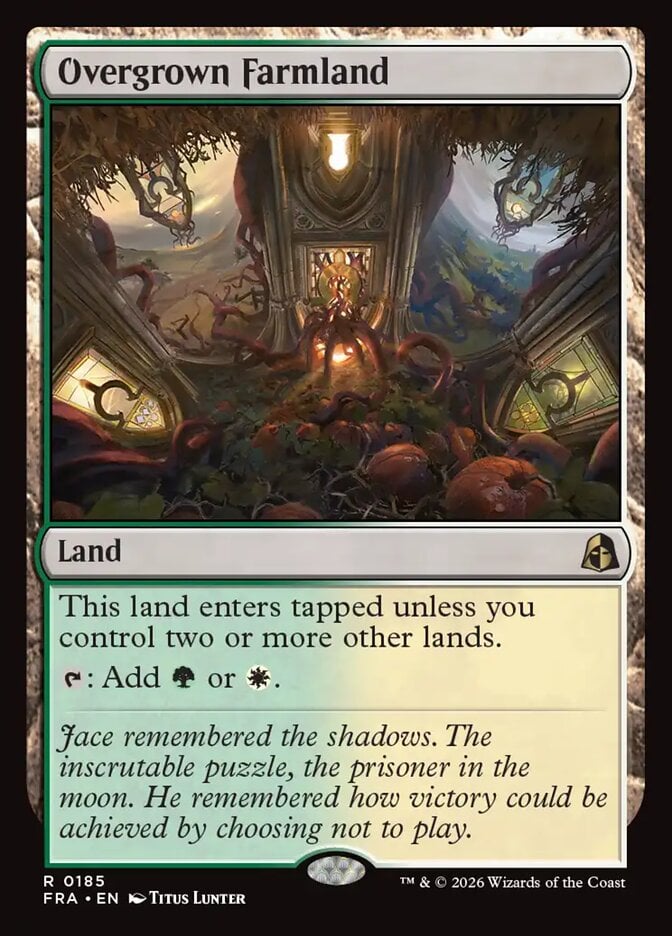
Slow lands are solid mana fixing with barely any drawback in Limited, as most decks won’t even have turn-1 plays to begin with. They aren’t the most exciting rares to open, but they can still be a useful part of your deck.
Hall of Echoes (Good)
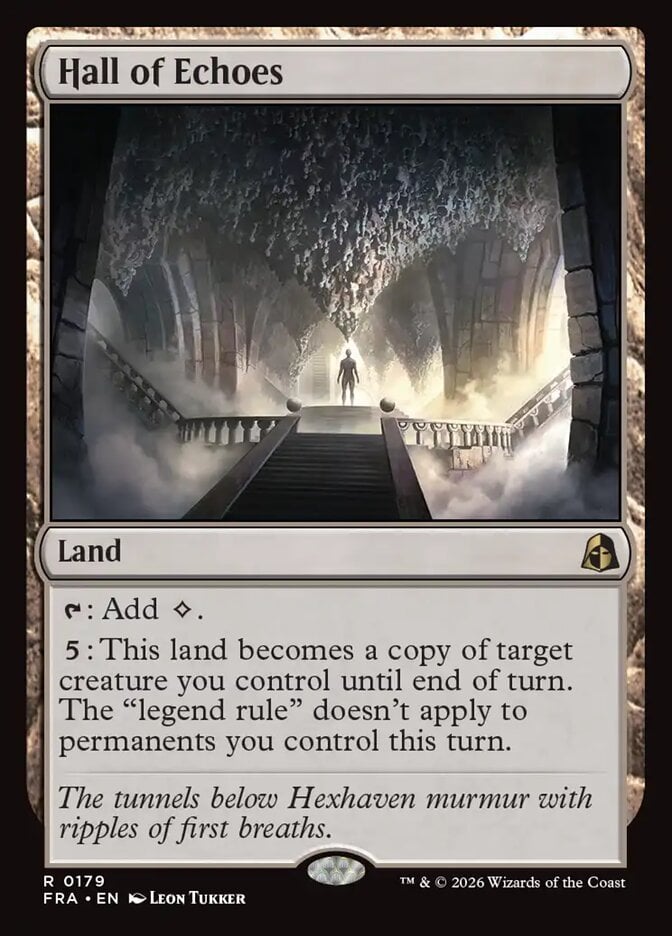
Hall of Echoes is an interesting colorless land that can go off late game with powerful creatures. It’s especially good with bombs like Ingris Stingerquill, as it lets you stack up their effects without triggering the legend rule. I’m not playing it in greedy decks that are already splashing, but I’d happily play it over my 17th basic in your average 2-color deck.
Rare Scorecard
Assuming I added up my ratings correctly, Reality Fracture contains:
- 24 Bomb rares
- 26 Great rares
- 17 Good rares
- 10 Mediocre rares
- 9 Bad rares
I wouldn’t be surprised if this is a Prince format, as there are a ton of really good things you could open. Hopefully you rip those and dodge all the “Bad” ones this weekend!
Splash Checklist
These are the primary cards in Reality Fracture that I’d expect to splash for sometimes in Sealed play. The typically desirable splash card is usually either a bomb or removal spell, as neither card needs to be played early to be effective. I’ve grouped each of these cards by rarity below.
To splash any of these double-pipped cards, you should be based in whichever color is double pipped (i.e. you can’t splash Vindictive Triumph in a WU deck, but could definitely consider splashing it in a UB one).
Mythics
Rares
- Guiding Hydra
- Jace's Machinations
- Lich's Relic
- Rise of the Deathbringer
- Ajani's Anguish
- Null Summoner
- Vindictive Triumph
- Vraska, the Cutting Glare
- Vraska, Soul of Stone
Uncommons
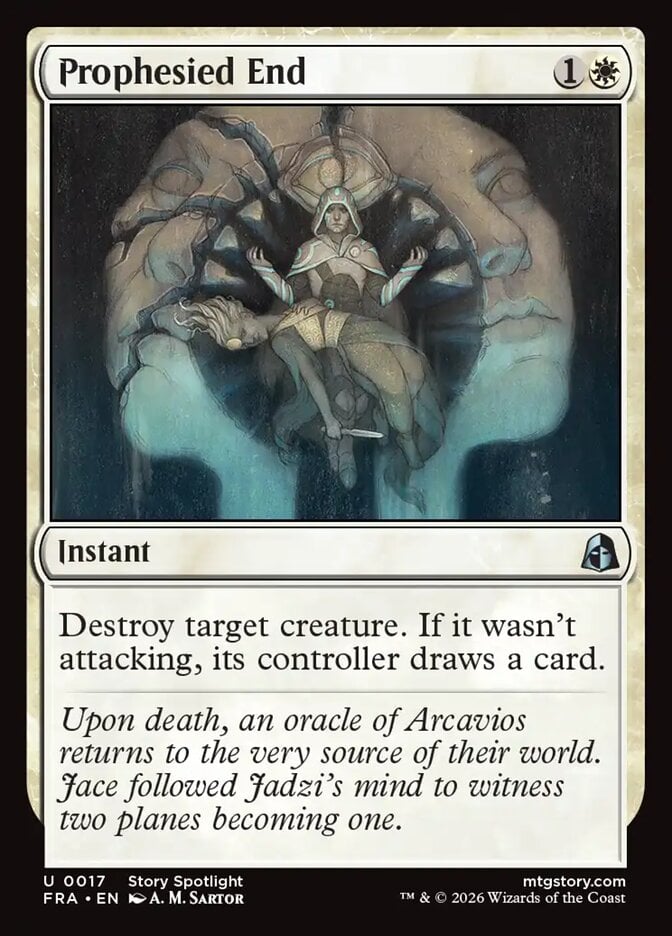
- Prophesied End
- Your Fate Ends Here
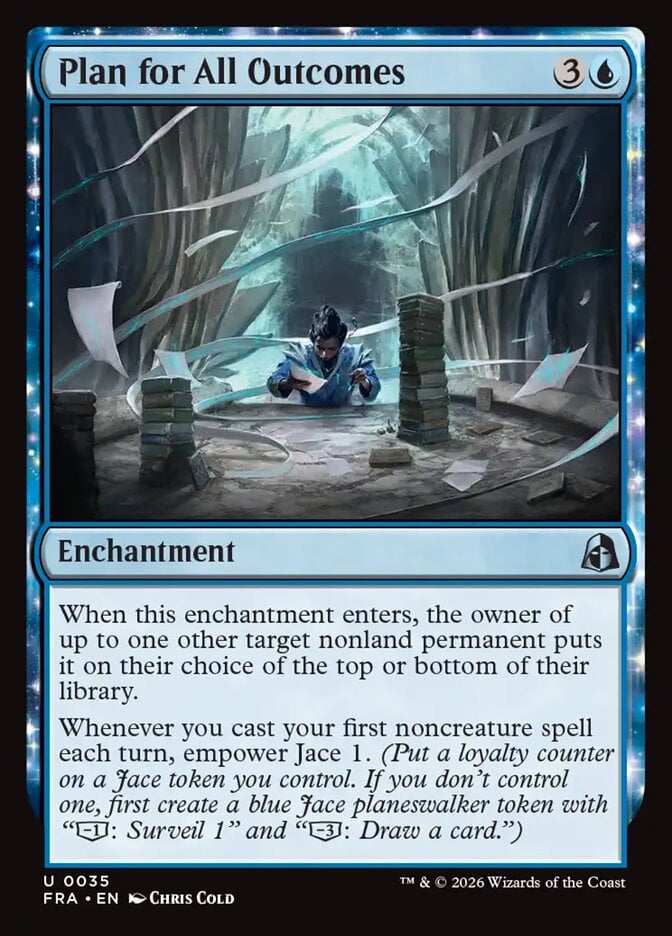
- Plan for All Outcomes
- Break Under Pressure
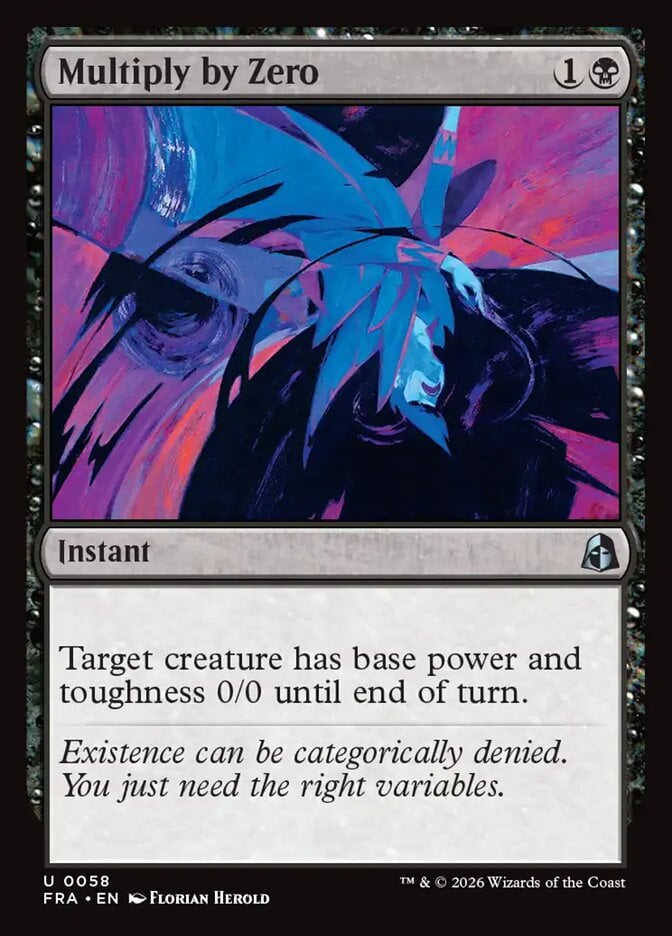
- Multiply by Zero
- Fulminous Forte
- Recursive Recruitment
- Stingerquill Charm
- Twisted Fates
- Clash of Elements
- Hapatra, the Desert Fang
- Warrior's Blades
- Mind Meanderer
- You can splash in all of the color hate uncommons for games 2 and 3 when relevant: Refute Destiny, Precise Redaction, Terminal Criticism, Essence Burn, and Flourishing Grapple
Commons
- Memory Trap
- Surgical Precision
- Infinite Coursework
- Extended Absence
- Last Gasp
- No Admittance
- Wrath of the Bloodmane
- Compel Brutality
Special Guest Review
Reality Fracture also includes 10 Special Guest cards, which are uber rare reprints that may appear in packs.
Eye of Ugin (Bad)
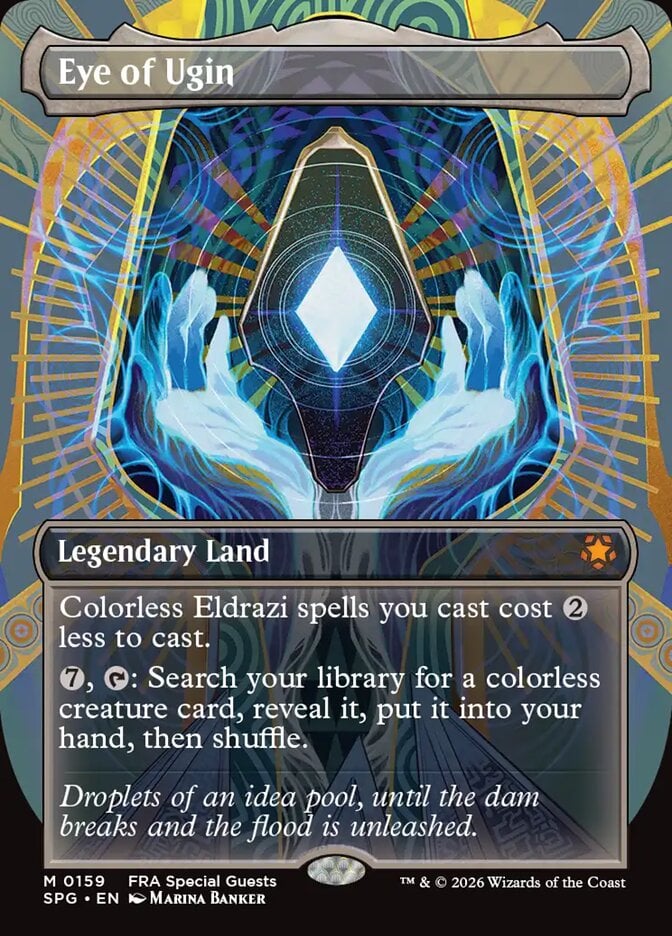
Eye of Ugin does actual nothing in this format, even if you have an Emrakul, the Exigent Doom.
Austere Command (Great)
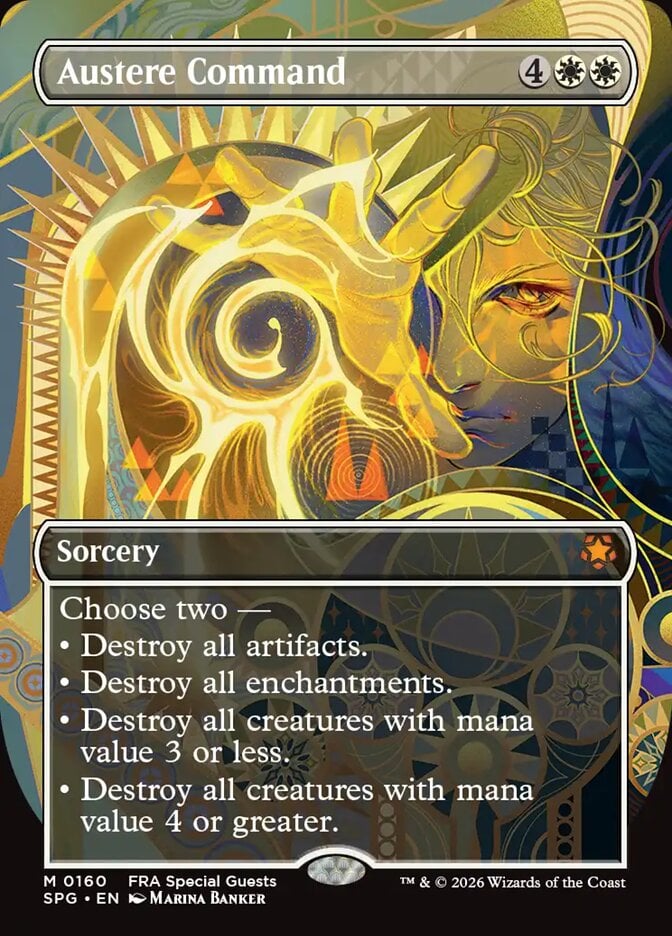
Seeing Austere Command coming is very difficult due to its rarity, and the “destroy all enchantments” mode lets it blow up Memory Traps, too.
Flesh Duplicate (Mediocre)

Clones are generally nice in Limited, but vanishing 3 and a cost are both knocks against Flesh Duplicate.
Consign to Memory (Bad)
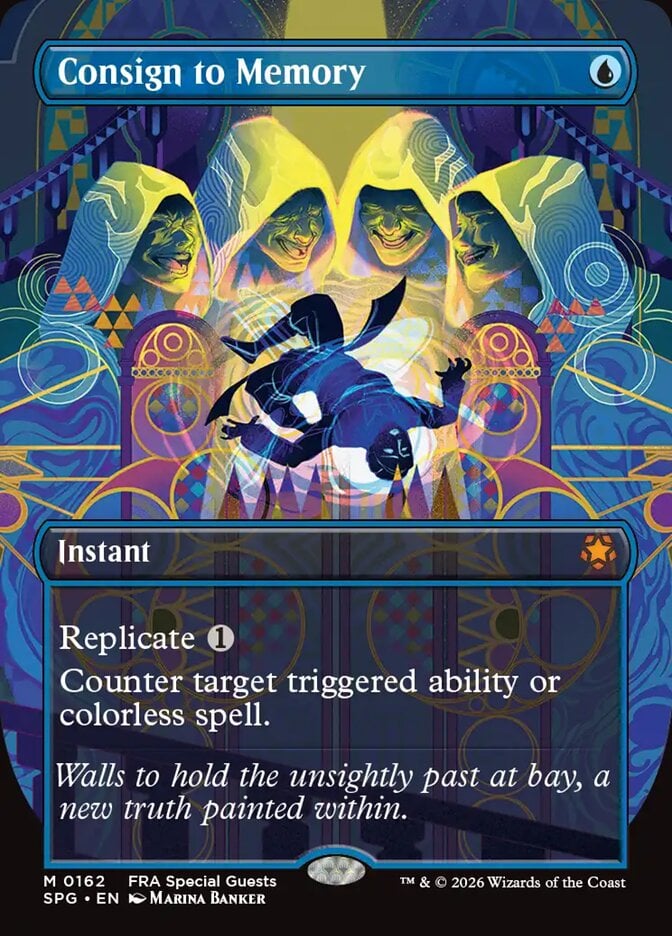
An incredible sideboard card in Constructed, but a niche sideboard card at best in Reality Fracture Limited. It’d be almost impossible to play around Consign to Memory, though.
Sublime Epiphany (Great)
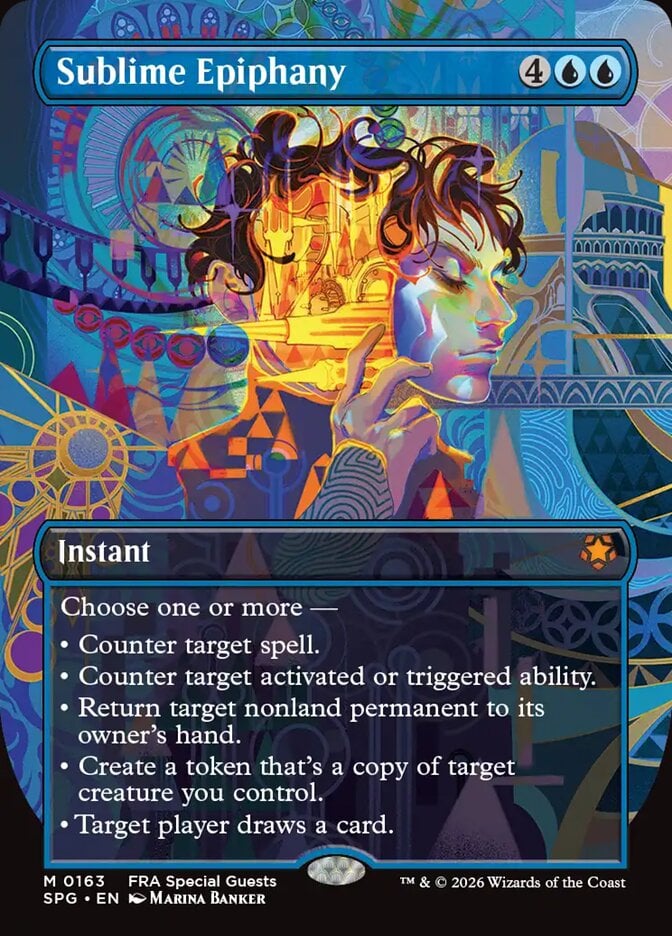
A potential 3-for-1, which will benefit from its own obscurity. Counterspell + unsummon + copy your own creature + draw a card is the goal with Sublime Epiphany, and it should come up enough of the time for this to be well worth playing.
Consider (Good)
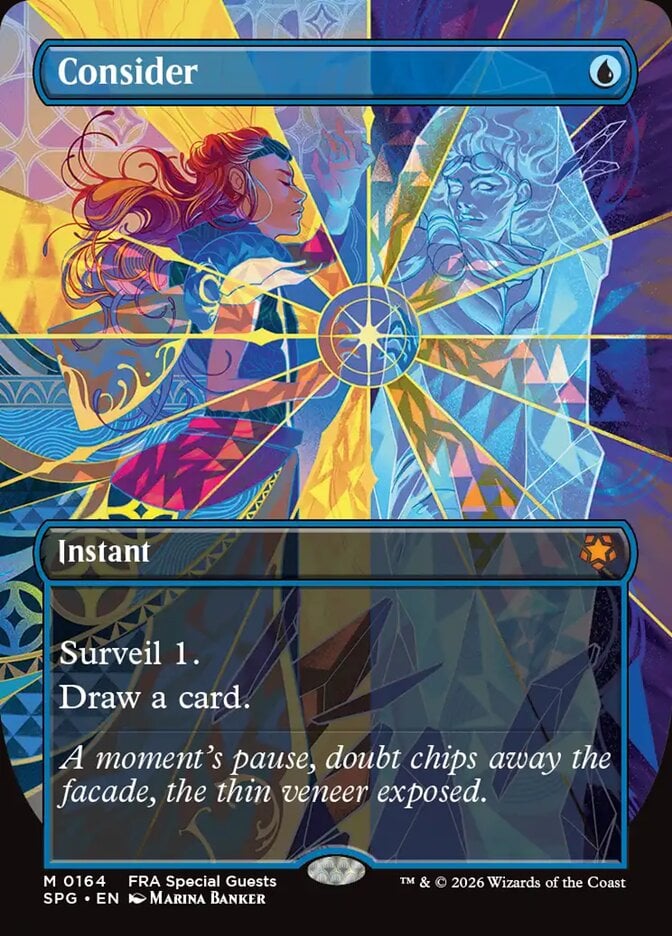
There’s enough prowess and noncreature payoffs in Reality Fracture for Consider to play nicely, and it even triggers surveil payoffs too. Nothing incredible, but a good inclusion if you see one going around the table.
Necrodominance (Bad)
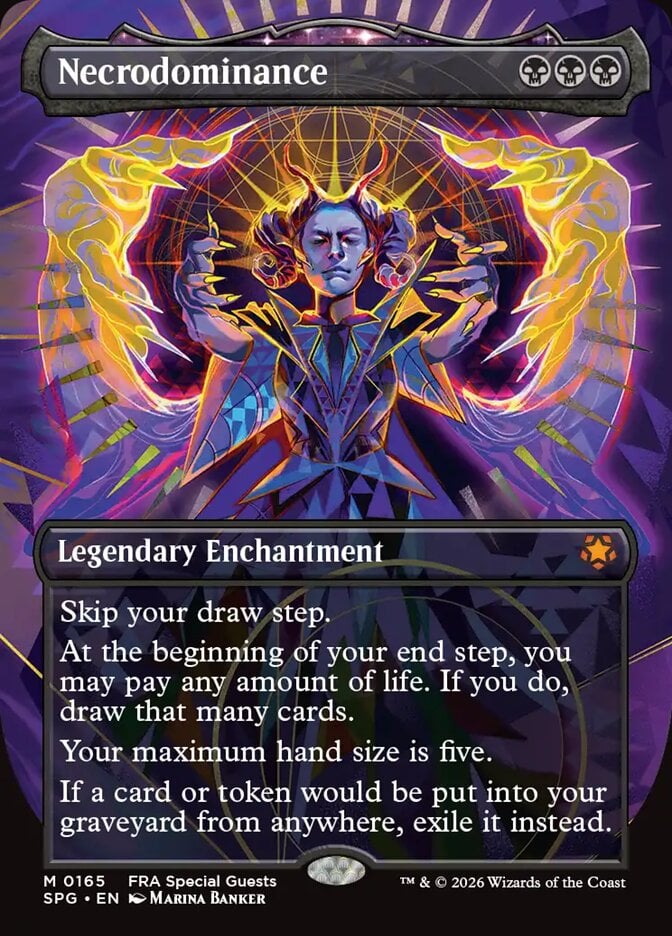
Necrodominance is incredibly difficult to use in Limited, even if you ignore the cost.
Mind Twist (Bomb)
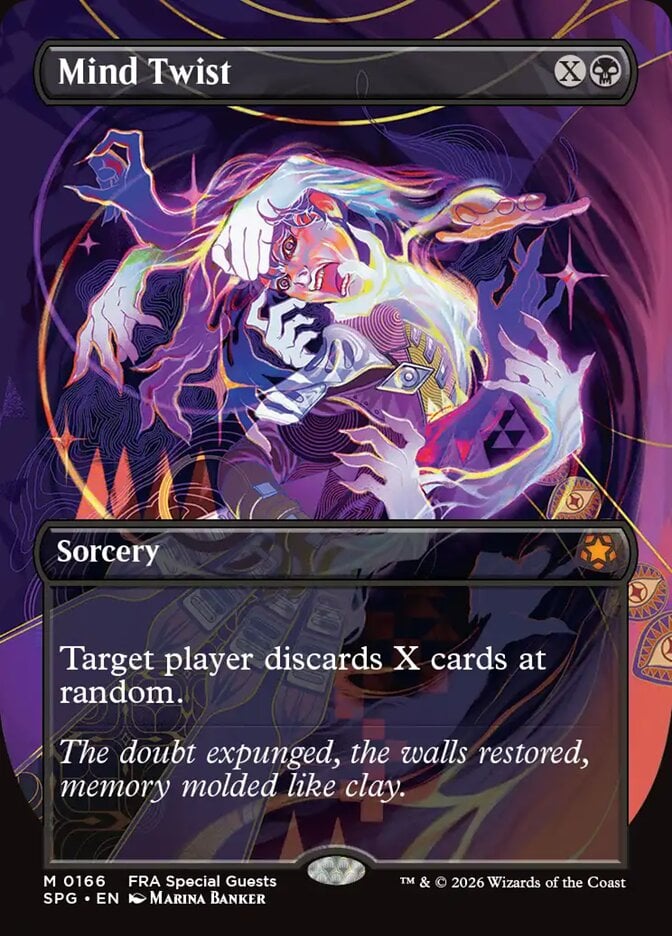
Uh, why is Mind Twist in the set file? I hope I never play against this nonsense.
Splinter Twin (Great)
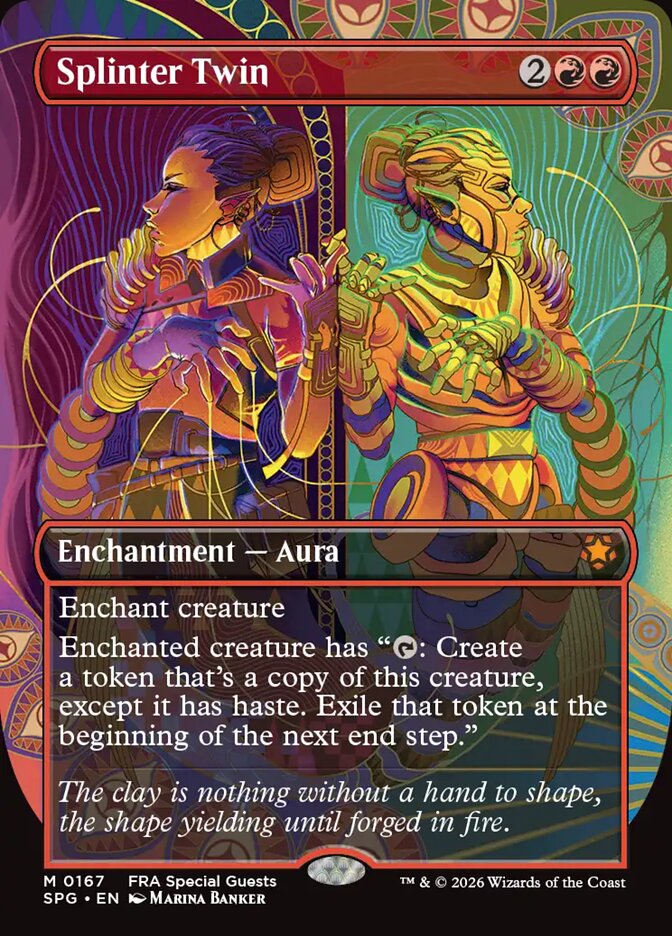
Splinter Twin has an infinite combo in Reality Fracture with Divining Duelist! It won’t come up much, but perhaps you’ll find this in your Sealed pool with a couple of Duelists and live the dream. You also have to be wary of it whenever you see Duelist from an opposing UR player, even if the odds are low….
Root Maze (Bad)
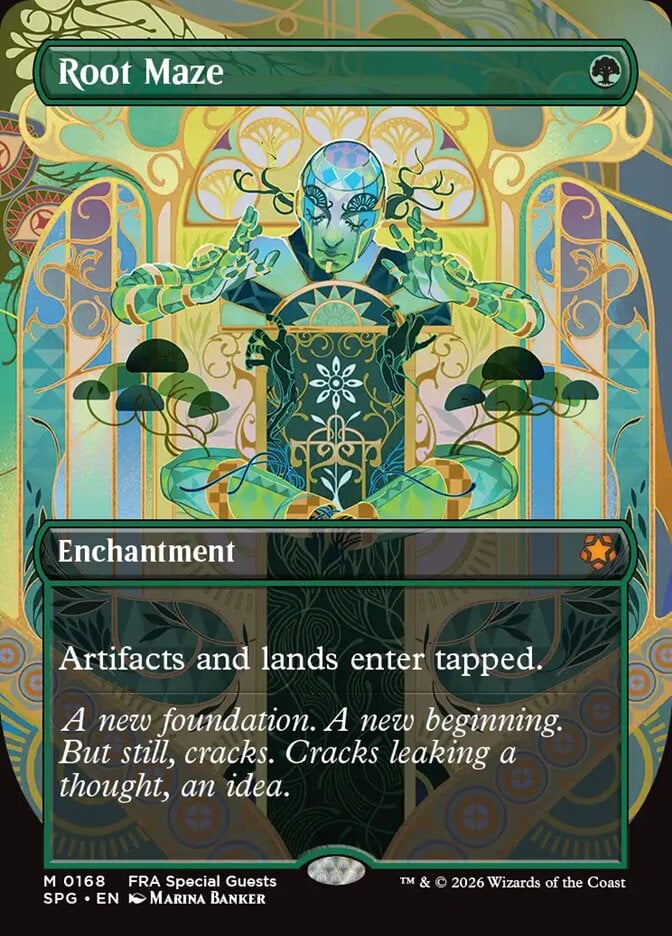
Woah. Root Maze is worthless!
Wrap Up
Ajani Resolute | Illustration by Aleksi Briclot
And with that, our detailed introduction to the world of Reality Fracture has come to a close. You can look forward to a sequel Draft Guide in a couple of weeks, which will expand on everything I’ve learned after playing the set. And don’t forget to get some reps in with our Sealed Pool Generator ahead of Prerelease!
Which archetypes are you hoping to find in your Reality Fracture Sealed pools? Which bomb rares do you hope to play, and which of them do you hope you never see across the table? Let me know in the comments below or over on the Draftsim Discord. For more from us, come find us on YouTube at The Daily Upkeep, or check out my live set review stream.
Thanks for reading, and hope you enjoyed the guide!
Follow Draftsim for awesome articles and set updates:










2 Comments
In your splashable cards list is Silverquil Charm. Wrong (right) multiverse 😉
Hah! Thanks for the catch, I’ve fixed it to the correct Echoverse charm.
Add Comment