

Ark of Hunger | Illustration by Ksenia Kim
Greetings planeswalkers! Secrets of Strixhaven has been out for a little over a week now, and its Pro Tour is wrapped up. That means it’s time for another Ultimate Guide. Read on to learn everything you need for success in this format!
This guide builds on everything I discussed in our original Ultimate Sealed Guide. You don’t have to have read it to make use of this, but I do reference it many times (often to correct things I was wrong about). My strategies and evaluations here come from my own experiences playing the set, watching streamers/Pro Tour coverage, and online data, which I always recommend that you check out.
Mechanics Revisited

Harmonized Trio | Illustration by Marie Magny
Prepare


Prepare has actually been a bit less impactful for the format than expected. Prepared creatures vary quite a bit in quality, ranging from staples (Elite Interceptor, Studious First-Year) to decent (Landscape Painter, Goblin Glasswright) to filler at best (Honorbound Page, Strife Scholar). You won’t always play every prepared creature you draft, and you must evaluate each one on an individual basis.
Prepared provides a valuable way to get spells and creatures into the same slot, though. Many decks in Secrets of Strixhaven struggle with having proper creature density for cards like Germination Practicum, and my experience playing it is that your average instant and sorcery is better than your average creature.
Repartee (Silverquill)


Repartee has largely worked as advertised. It plays kind of like a hybrid heroic/crime mechanic, and it rewards you for drafting removal spells and repeatable buffs like Dig Site Inventory and Killian's Confidence. It’s difficult to draft a coherent WB deck without caring about this mechanic. There are also some fringe builds of RW that are basically “repartee decks” as well, which often feature Ancestral Anger.
Opus (Prismari)


UR decks will lean into the opus mechanic to varying degrees. If you have cards like Colorstorm Stallion, Elemental Mascot, and Muse Seeker, you’re much more likely to play otherwise mediocre 5-drops like Muse's Encouragement. There are also some decks that play opus as though it were prowess, often with cards like Expressive Firedancer and Deluge Virtuoso.
Infusion (Witherbloom)

Infusion has been kind of a bummer for me. The common infusion payoffs are quite underwhelming (often bottom of the barrel filler like Ulna Alley Shopkeep), and the set is generally short on other great lifegain payoffs. Witherbloom is ultimately one of my least favorite archetypes, though I’ll still cover how to build it.
Flashback (Lorehold)


Pursue the Past and Tome Blast have been excellent, both in Lorehold decks specifically and in general. There aren’t actually too many cards with this mechanic in the set, though most of them (barring Daydream and Duel Tactics) are quite good.
Increment (Quandrix)


Increment is a useful mechanic, though cards with it vary quite a bit in quality, generally scaling with rarity. Ambitious Augmenter and Pensive Professor are the best of the bunch, while Hungry Graffalon is very sad filler. Don’t trick yourself into playing +1/+1 counter synergy cards like Growth Curve, as +1/+1 counter deck is barely supported in SOS.
Paradigm

I underrated paradigm in Sealed, as these range from great to “this card should be banned in Limited” levels of power. Other than Decorum Dissertation (which can still be situationally powerful), every member of this cycle is P1P1 worthy.
Converge


Most of the converge cards in Secrets of Strixhaven have been exceptional, to the point where 4- to 5-color piles are my favorite thing to do in Draft and Sealed. Snarl Song, Arcane Omens, and Together as One are so powerful that they feel like cheating!
Books

Only mentioning for completeness, as there are no actual reasons to care about books. Diary of Dreams has been largely unimpressive, too.
Set Overview 2.0
Here I’ll lay down some rules of engagement for Secrets of Strixhaven. This is my big picture spiel for what I think the set is about.
White Aggro vs Value Piles
That’s how I’d sum up this set in just one phrase. Lorehold and Silverquill decks generally look to go under Prismari and Quandrix decks, while Witherbloom plays an awkward middle ground. Converge and splashes can easily be accommodated in non-white strategies, so expect to see a ton of “soups” full of removal, card draw, and bombs.
Let’s briefly cover soup composition:
- Removal is essential to play against the aggro decks in the format and still live against most soup mirrors.
- Card draw is essential in general, since you need it to out-scale aggro decks and to find your win conditions in the soup mirror.
- Hard late-game win conditions like Crackle with Power, Wisdom of Ages, and Moment of Reckoning are essential for soup mirrors, but they often aren’t necessary against white piles.
And for aggro decks:
- Silverquill and Lorehold often rely on strong uncommons to get ahead of the curve. Cheap threats like Scolding Administrator, Snooping Page, Practiced Scrollsmith, and Kirol, History Buff are ideal.
- Removal is still important too, as clearing blockers or sniping utility creatures like Studious First-Year can pay dividends.
- Splashing is still possible, though your average white aggro deck is usually just going to be 2-color. If you do see a splash, it’ll likely be tiny and for something rather busted (i.e., splashing Ark of Hunger in Silverquill).
Strixhaven: Dragonstorm


SOS may all feel reminiscent of another recent set, Tarkir: Dragonstorm. Both sets share five factions and a focus on white aggro vs soups. You could also view the set’s instant and sorcery theme as its own version of dragons matter, I suppose. It’s not a 1:1 comparison or anything (obviously they have entirely different cards), but it’s a useful framing device.
You Can Draft Many Other Things
Despite this heuristic working for over half of the decks, there’s still plenty of other things to do in this format. Witherbloom lifegain is an obvious one, but there are also pump spell combo decks, decks with fewer than 5 creatures, flicker synergies, artifact synergies, sacrifice decks, and more. I’ll touch on this with some card-specific notes later.
Removal Is Very Good


One of the contributors to Secrets of Strixhaven’s “white vs soup” dynamic is how good removal is in this set. Most of the common removal spells are among the set’s best commons, and there are also excellent uncommon ones like End of the Hunt and Stress Dream. Decks are also generally lighter on creatures, which can make removal feel even better. It’s not uncommon to kill your opponent’s 3-drop and have your opponents say “land go” in soup mirrors.
Top Commons Revisited
I ranked the top four commons for each color in my previous guide, as well as five excellent multicolor commons. With the benefit of experience and data, how did my predictions pan out? Let’s revisit my guesses and construct new rankings for each color.
White
My picks for white’s top four commons were:
Here are my revised rankings:


Ajani's Response is highly efficient removal and white’s only real common removal spell. I’m not sure why I didn’t list this one last time, but it was definitely an omission. It’s the only white common I ever splash. Stone Docent has been white’s best common 2-drop, even outside of Lorehold decks.
Eager Glyphmage isn’t terrible, but white decks would rather get on board faster than this. There are also stronger uncommon 4- and 5-drops that I’d rather play for my expensive slots, like Inkshape Demonstrator and Render Speechless. Owlin Historian is solid in Lorehold, but very mediocre otherwise.
Blue
My picks for blue’s top four commons were:
Here are my revised rankings:


Run Behind is an awesome time-waster for your opponent, and it really shines in soup/control decks. A mix of it with Essence Scatter is ideal in blue decks, especially given the lack of other 1-for-1 interaction in the color. Hydro-Channeler has overperformed, as it’s closer to a real mana dork in SOS than cards like this usually are. It also has a valuable 3rd point of toughness, and it can even contribute converge mana in a pinch.
Deluge Virtuoso and Textbook Tabulator have both been thoroughly mediocre. Most blue decks aren’t aggressive enough to leverage Virtuoso well, and Tabulator costs a card while taking several turns to develop a worthwhile body.
Black
My picks for black’s top four commons were:
Here are my revised rankings:


Cost of Brilliance was a big whiff; it should’ve been more obvious that a black Combat Tutorial would be an amazing card in this set! Even with the 2 life drawback, this is an absolute slam dunk for Silverquill decks, and it’s worth playing in Witherbloom, too. Keeping up on cards while triggering repartee and building board presence is an invaluable combination, and it doesn’t even fizzle if your opponent removes your creature in response (due to targeting a player).
Burrog Banemaker hasn’t been bad, and it’d probably be 5th or 6th here. Sneering Shadewriter, on the other hand, has been incredibly mediocre. There are much better expensive things to do in this set, which makes this smug vampire Witherbloom filler at best.
Red
My picks for red’s top four commons were:
Here are my revised rankings:


Tome Blast has plenty of targets in this format, including highly relevant ones like Noxious Newt, Scolding Administrator, Melancholic Poet. The flashback mode is also highly relevant, both as additional removal and a potential face-burner later on. Heated Argument has played better than most 5-drop removal spells usually do, as it hits just about everything in the format, triggers opus, and enables Lorehold synergies.
Goblin Glasswright has been alright, though I wouldn’t usually play it without converge synergies or awesome cards to ramp into. Zealous Lorecaster often makes my decks, though I usually only play a single copy and don’t prioritize them.
Green
My picks for green’s top four commons were:
Here are my revised rankings:


Green was the color I did the best with. Mindful Biomancer is the only common I’m adding, and I don’t especially love it either. This is because for me, green is definitely the weakest and most narrow color inSecrets of Strixhaven. If you aren’t specifically playing Studious First-Year, Burrog Barrage, Noxious Newt, or multicolor cards, there’s no particular reason to be this color (at least not at lower rarities). Tenured Concocter has been merely okay fat, and it’s definitely not what the format is about.
Multicolor
My picks for the top five multicolor commons were:
Here are my revised rankings:


Wilt in the Heat is an awesome removal spell. It’s one of the few ways to exile in the format, can be discounted easily in actual Lorehold decks, and has a decent rate even if you can’t. Visionary's Dance has overperformed due to its flexibility; it provides a useful mix of early game smoothing and late game muscle. I especially like it in soup decks, since you can always dig for more lands/colors if you have at least two lands.
Elemental Mascot and Embrace the Paradox are both great commons and would be runner ups on this list. Paradox is getting docked a little for being sluggish against aggro decks, while Mascot is an easier effect to replace than Visionary's Dance. But I still like it more than most other common creatures since it’s a decent blocker that pecks with vigilance and gets easy value if it sticks around.
Colorless
I didn’t rank the colorless commons last go around. There aren’t many, so I’ll just rank them here:


Top Uncommons Revisited
Now that commons are out of the way, we are on to uncommons. Rather than doing a full ranking, I’ll cover some uncommons I missed and some I overrated.
Missed Gems
Converge Cards


Arcane Omens, Sundering Archaic, and Snarl Song are among the set’s very best uncommons. Archaic's Agony and Transcendent Archaic are also solid, though not quite at the same level.
Other Stuff


Divergent Equation is a sick finisher for control decks. Think of it sort of like an uncommon Wisdom of Ages, although it returns fewer cards and is an instant. It plays especially well with other great instants like Stress Dream and Unsubtle Mockery.

Strixhaven Skycoach is an exceptional uncommon that can fit in almost any deck. Soup decks love the fixing/2-for-1 it provides, while aggro decks are better at actually crewing it and still appreciate value. It’s one of my favorite cards to pick early due to its combination of flexibility and power.


I should have mentioned Molten Note and Colossus of the Blood Age over Startled Relic Sloth. Sloth is an above-average card, but Note and Colossus are both premium. Note is an efficient removal spell that you can reuse later for 8, and it’s quite splashable. Colossus meanwhile is huge, immediately face drains when it enters, and even nets you a +1 when it dies (since it says “that many cards plus one”).
Overrated Uncommons

Quill-Blade Laureate isn’t awful, though in practice it’s been awkward to use and it dies a lot. Muse Seeker also has the problem of dying to stuff like Tome Blast, which makes it an unreliable way to get value in soup mirrors. You can’t always slow roll it either since you’d need 2 plus 5 mana for an opus trigger.


Spectacular Skywhale is really tough to pull off with so much good interaction running around. I’d much rather play cards like Stress Dream and Sanar, Unfinished Genius when I can. Old-Growth Educator is quite large, but narrow and still vulnerable to cards like Run Behind and Heated Argument. I’m still always playing it in Witherbloom decks, but I wouldn’t let it pull me into that archetype.
Rare Re-Review
Here I want to revise some of the ratings I gave out in my last guide. Most of these are one bump up or down, though there were a couple of total whiffs on my part. Here’s a refresher on my rating system before we get into it.
Terms
Bomb
Best possible rating. Denotes an absurd Limited card that you’ll want to play/splash every time you can.
Great
These cards fall a little short of bomb status but are still strong and won’t require much from your deck to be great.
Good
“Good” rares are, well, good! They’ll usually have problems that prevent them from claiming a higher rating, such as being clunky or dependent on other cards.
Usually Not Good
These cards generally aren’t worth the effort required for them to be good. I like to dream though, so I try not to shoot down anything with at least some potential.
Bad
These rares are just terrible. You shouldn’t ever play them in Limited.
Main Set
Emeritus of Truce

Previous Rating: Bomb
New Rating: Great
Still a great rare, though in practice Emeritus of Truce is conditional enough to fall a bit short of true bomb status. You’re happily playing this for the 3-mana Eager Glyphmage mode either way.
Restoration Seminar

Previous Rating: Usually Not Good
New Rating: Great
I’ve bumped every single paradigm card to “Great” or better, period. All of these effects are just obnoxious to deal with in Limited when they never stop, and you can even set Restoration Seminar up occasionally with discard effects. Don’t forget that there’s at least a little bit of graveyard hate in SOS, like Startled Relic Sloth and Ascendant Dustspeaker.
Echocasting Symposium

Previous Rating: Usually Not Good
New Rating: Great
Having to keep a creature in play in such a creature-light/removal-heavy set can be a challenge, but Echocasting Symposium is still well worth the effort. Note that removing the creature in response will not prevent the spell from resolve, and you’ll still be able to cast it again next turn.
Mathemagics

Previous Rating: Usually Not Good
New Rating: Great
While I spelled out what Mathemagics was capable of in the last review, I lacked faith in its merits as a hybrid draw spell/finisher. This provides unmatched inevitability, and there are plenty of great ways to ramp in this format, too. I’m sorry Mathemagics… I wasn’t familiar with your game!
Ral Zarek, Guest Lecturer

Previous Rating: Great
New Rating: Good
Imposter Ral Zarek is a fraud in more ways than one, as this card hasn’t particularly impressed in Limited. It’s not even close to Kaya, Orzhov Usurper levels of bad or anything though, so “Good” is the lowest I’m willing to assign Ral Zarek, Guest Lecturer.
Withering Curse

Previous Rating: Great
New Rating: Good
Lifegain decks tend to be creature-dense midrange strategies in this format, which makes Damnation a very awkward payoff for them. Withering Curse has potential for greatness, but it’s tough to use in actual games.
Improvisation Capstone

Previous Rating: Good
New Rating: Bomb
I failed to read Improvisation Capstone correctly, as for some reason I thought it was capped at 4 or less, rather than just going until you hit 4 or more mana worth of stuff. The end result is one of the single most broken cards in the set, so please just slam this, draft ways to ramp into it, and win games.
Germination Practicum

Previous Rating: Bomb
New Rating: Great
I want to knock this one down just a tad because of how awkward it can be in this format. Green soup decks should still play Germination Practicum, but they may have a bit of trouble with consistent creature density. It’s an actual giga bomb for decks with Pest tokens though.
Silverquill, the Disputant

Previous Rating: Bomb
New Rating: Good
Still a large dragon with a potentially powerful ability, although casualty is difficult to use in your average repartee deck. Silverquill, the Disputant also trades down with Unsubtle Mockery and several other cheap removal spells, so it won’t always stick around either.
Witherbloom, the Balancer

Previous Rating: Great
New Rating: Usually Not Good
There’s a lot of effort required to get Witherbloom, the Balancer to an acceptable mana cost, and the payoff is mostly just a vanilla flier. Deathtouch and cost reduction do very little in your BG deck, which makes Witherbloom one of the rares I was most wrong about.
Practiced Offense

Previous Rating: Great
New Rating: Bomb
“Great” isn’t cutting it, as Practiced Offense is another one of the set’s most miserable rares to play against. A previously manageable board may force an immediate chump block with this one, and the flashback just feels totally egregious. It even triggers repartee via targeting, too!
Exhibition Tidecaller

Previous Rating: Usually Not Good
New Rating: Great
My reading comprehension failed me here, too, as I read this card as “eight” for some reason on opus. It actually says “10”, which in Limited speak means about a third of your deck! It doesn’t take much effort for this to just deck someone, which makes it a 1-drop you need to eliminate on sight (especially in control mirrors). Some games you’ll want to slow roll it for max effect, while in others it’s just great as removal bait. I also recommend pairing it with Pull from the Grave or Restoration Seminar if you can, as barely any removal in this set exiles.
Wisdom of Age
Previous Rating: Usually Not Good
New Rating: Great
Wisdom of Ages is a perfect finisher for a blue-based 5-color soup pile. You don’t want a ton of cards like this, but it’s essential to have a couple to go over the top in control mirrors.
Postmortem Professor

Previous Rating: Good
New Rating: Great
It’s almost guaranteed that you’ll get this back over and over, and it does an excellent job of triggering infusion, too. There’s even a cheeky Grixis angle with Postmortem Professor where you can discard it to cards like Seize the Spoils and Stadium Tidalmage for value!
Flashback

Previous Rating: Usually Not Good
New Rating: Good
Overpaying by 1 hasn’t been that big of an issue in most matches, and getting to rebuy another removal/draw spell is useful. I’m happy to play Flashback if I have great spells and/or graveyard synergy.
Maelstrom Artisan

Previous Rating: Great
New Rating: Usually Not Good
Even as a 5-color pile lover, I’ve had basically zero issues against Maelstrom Artisan. It’s clunky and vulnerable to removal, and the body feels totally anemic in this format.
Steal the Show

Previous Rating: Great
New Rating: Good
The main problem with Steal the Show is that it isn’t a proper removal spell early on, and the wheel mode is hard to get extra value out of in most decks. It’s not unplayable or anything, but I wouldn’t take it over Unsubtle Mockery.
Comforting Counsel

Previous Rating: Good
New Rating: Usually Not Good
Most lifegain decks won’t have enough support for Comforting Counsel, which requires an obscene number of Pest generators. You’ll also still need to find a way to trigger this five times without losing all your Pests, so usually I just wouldn’t bother.
Vastlands Scavenger

Previous Rating: Bomb
New Rating: Great
The late game upside with Vastlands Scavenger is indeed free, but the hits have just been so underwhelming. Most decks simply don’t have enough creatures for this to consistently hit anything other than an average 2- or 3-drop. It still plays well thanks to its high base stats, but it isn’t the P1P1 bomb I expected.
Wildgrowth Archaic

Previous Rating: Bomb
New Rating: Great
Wildgrowth Archaic is a little too fragile for true “Bomb” status I think, especially due to this format’s lower creature density. One cool thing about this guy is that it’s not actually a green card; you can play this as a 4-drop in any color combination (same goes for Magmablood Archaic for 6).
Colorstorm Stallion
Previous Rating: Great
New Rating: Bomb
Your opponent’s chances of winning if you copy Colorstorm Stallion are zero to none, and it’s not like the baseline of 3/3 with haste, ward , and prowess is anything but excellent. I underrated this noble steed!
Resonating Lute

Previous Rating: Usually Not Good
New Rating: Good
A recurring theme here is that I overrated creature payoffs and underrated noncreature payoffs. Resonating Lute won’t fit in every deck, but it’s absolutely terrifying to face from decks with cards like Embrace the Paradox, Visionary's Dance, and Mathemagics.
Cauldron of Essence

Previous Rating: Bomb
New Rating: Great
The potential is definitely here, but you’ll need a lot of Pest support for Cauldron of Essence to be good. Pestbrood Sloth is one of the best pairings for it, as the two cards create an endless value loop with each other!
Dina’s Guidance

Previous Rating: Usually Not Good
New Rating: Bad
Dina's Guidance is probably being played too often for how narrow it is, so I’m just flat out marking it as bad. Even tutoring some bomb like Quandrix, the Proof or Moseo, Vein's New Dean might not be good enough for 3 mana.
Aziza, Mage Tower Captain

Previous Rating: Great
New Rating: Good
Aziza, Mage Tower Captain dies to a lot of cheap removal (Tome Blast, Burrog Barrage, Unsubtle Mockery, etc.), and requires a ton of setup to do anything special. Try to pair it with token generators like Hop to It if you can, though.
Hardened Academic

Previous Rating: Great
New Rating: Bomb
Hardened Academic gets an upgrade due to how successful Lorehold has been. The graveyard theme is much more real in SOS than it was last go-around, and Academic is one of the best payoffs for it.
Berta, Wise Extrapolator

Previous Rating: Bomb
New Rating: Great
High output, but Berta, Wise Extrapolator is vulnerable enough to removal that I have to lower its rating. Getting your 4-drop tagged by Unsubtle Mockery for no value is harsh.
Mystical Archive Revisited
I was closer on most of these, and the rare/mythic Mystical Archive cards will almost never show up in your Drafts anyways. Still, let’s touch on some cards I view differently now.
Helping Hand

Previous Rating: Usually Not Good
New Rating: Good
There are enough graveyard synergies in Secrets of Strixhaven for Helping Hand to have some legitimate uses. Look to include this one in decks with cards like Living History and Primary Research for extra value.
Repel Calamity

Previous Rating: Good
New Rating: Great
Repel Calamity has felt more reliable than it was in Bloomburrow, and it’s tough to see coming too since it’s a Mystical Archive card.
Disdainful Stroke

Previous Rating: Good
New Rating: Great
Few cards strike as much fear into the hearts of 5-color piles as Disdainful Stroke. It’s not amazing against your average Lorehold or Silverquill deck, but this is one of the only outs in the format to a game-ender like Mathemagics.
Spell Pierce

Previous Rating: Usually Not Good
New Rating: Good
It’s definitely a mise card, but the format’s high focus on noncreature spells makes Spell Pierce much better than it usually is. In Bo3, look to get your opponent with it in Game 1, then board it out and ride the fear equity.
Stargaze

Previous Rating: Usually Not Good
New Rating: Good
Black is a bit short on raw card advantage options, so Stargaze is another card that has played better than it did in Bloomburrow.
Abrade

Previous Rating: Good
New Rating: Great
I underrated the efficiency of 2 mana for 3 damage a tad, and Abrade will sometimes save you from the obscenely broken rare known as Ark of Hunger.
Bulk Up

Previous Rating: Bad
New Rating: Usually Not Good
I’ve died to Bulk Up plus Monstrous Rage already, so it definitely has potential in the right deck. Berserk and Giant Growth are also in the Mystical Archive.
Return the Favor

Previous Rating: Bad
New Rating: Usually Not Good
Bumping this up a little, because it’s much easier to get value out of Return the Favor in Secrets of Strixhaven than it was in Outlaws of Thunder Junction. Still never a priority in Draft though.
Brain Freeze

Previous Rating: Usually Not Good
New Rating: Good
Brain Freeze is insane with Exhibition Tidecaller, and also potentially good with cards like Rapturous Moment and Sleight of Hand. This requires a specific deck, but don’t sleep on it.
Daze

Previous Rating: Good
New Rating: Great
I have yet to be Dazed, but 0-mana counterspells are fundamentally busted. Imagine getting your lethal Mathemagics countered for free!
Empty the Warrens

Previous Rating: Bad
New Rating: Usually Not Good
Storm isn’t easy to pull off, but there’s enough support between the main set and Mystical Archive for Empty the Warrens to get bumped up. I’ve seen a couple examples of this working shared on social media, though I have yet to draft it myself.
Archetypes
Secrets of Strixhaven has five official archetypes, a notable converge theme, and then lots of small things you can do that mix into the set’s Big Five. Here’s how I’d rank the five schools:
- Lorehold Graveyard (Midrange/Aggro)
- Silverquill Repartee (Aggro)
- Prismari Opus (Control/Tempo)
- Quandrix Increment (Ramp)
- Witherbloom Infusion (Midrange)
The white schools are clearly winners as far as true 2-color decks are concerned. However, non-white decks in this format are often converge soups, which I actually prefer to draft over anything else.
Lorehold Midrange
Lorehold is the Star Pupil of Secrets of Strixhaven. It was clearly the worst school in the original set, so it’s nice to see Lorehold on top of the roost this time around. Most Lorehold decks sit somewhere between aggro/midrange. RW has a proactive playstyle in this format, and it leans on graveyard value/synergy to stay in longer games.
Payoffs


The nuttiest Lorehold cards you could draft are Ark of Hunger, Antiquities on the Loose, Practiced Offense, and Hardened Academic.


Most of its multicolor uncommons are also exceptional; Practiced Scrollsmith, Molten Note, and Colossus of the Blood Age are obvious standouts. Primary Research and Living History are less impressive, though both have great synergy with your average Lorehold deck.
Core Cards
Pursue the Past provides card advantage, synergy, lifegain, and consistency. It’s the single best Lorehold common available, and I’d play as many copies as possible. Rubble Rouser is the next most important common, offering ramp, defense, and a bit of burn while turning on all your graveyard synergies. Beyond those two, most of Lorehold’s best commons are simply the best red and white cards available, like Unsubtle Mockery and Elite Interceptor.
Land counts for RW may vary based on your curve. I’ve generally been happy with 17 lands, as Pursue the Past would prefer you to be flooded rather than short.
How to Play Against It
Silverquill has less late game than your average Lorehold deck, and it’ll generally need to be the beatdown. Witherbloom can also find itself grinded out if Lorehold has late game cards like Ark of Hunger and Primary Research. Soups should easily outclass Lorehold late game, but they must answer many threats from the deck to tread water.
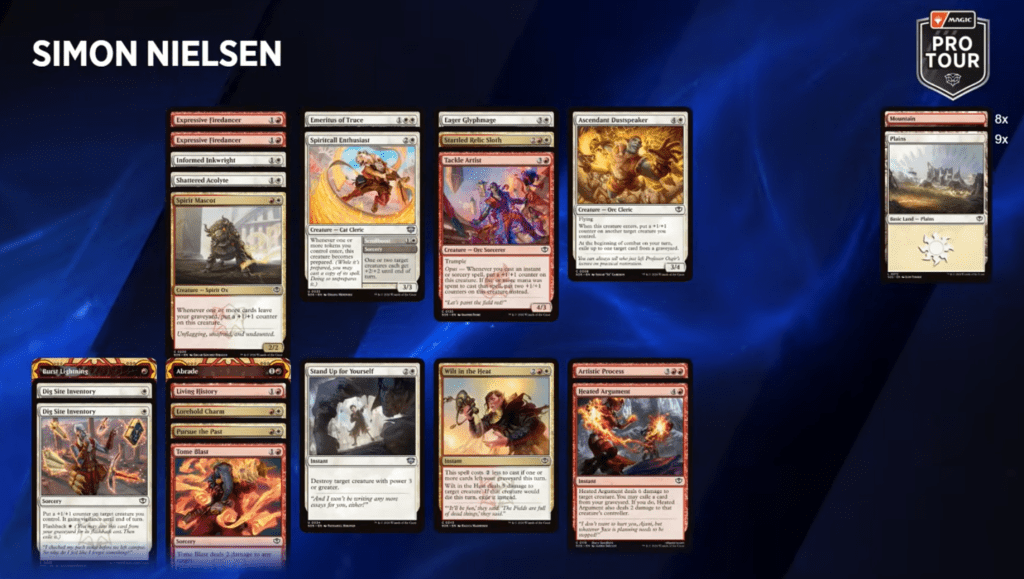
Trophy Example
Other Variants
RW also supports a repartee aggro variant. Rather than caring about graveyard synergies or card advantage, you could just try to pair creatures like Expressive Firedancer and Tackle Artist with Monstrous Rage and Bulk Up! This strategy actually led Quinn Tonole to a 3-0 at the last Pro Tour, although sadly their list wasn’t posted.
Silverquill Aggro
Silverquill is a very focused deck that revolves around the repartee mechanic. Curving out with cheap creatures, removal spells, and pump spells is the name of the game.
Payoffs


Informed Inkwright, Practiced Offense, Stirring Hopesinger, and Conciliator's Duelist are dream rares to open for Silverquill.


Perhaps even more important though for the deck are premium uncommons like Lecturing Scornmage and Scolding Administrator. Every WB uncommon card but Social Snub is great in this deck, so late copies of Killian's Confidence and Silverquill Charm are likely a signal you should be drafting it.
Core Cards
Elite Interceptor is the best common available for the deck, and you’d happily play any number of copies of it. Cost of Brilliance, Melancholic Poet, and Last Gasp are only slightly behind.


Honorbound Page and Adventurous Eater are solid role-players here because they provide a spell plus a body. Dig Site Inventory is also great for providing relevant sizing and two repartee counters. I’ve found Interjection and Masterful Flourish to be fairly interchangeable, but I want at least a couple of pump spells here.
Silverquill decks should play 16 or 17 lands, depending on the number of 4- to 5-cost cards you have. Don’t dip below 16, because hitting land three for Cost of Brilliance is too important. Try to include at least 13 creatures if you can, and look to include cards like Abigail, Poet Laureate that can provide a creature plus repartee triggers.
How to Play Against It
Cheap removal is your best tool versus Silverquill decks. Tome Blast is as good as it gets, followed by the usual suspects like Unsubtle Mockery and Ajani's Response. This is the most likely deck to have pump spells against you in the format, so try not to run into Interjection and Masterful Flourish (unless you value them using it over your blocker’s life).
If your opponent has a nutty repartee payoff like Stirring Hopesinger, you generally don’t want to get into a stack fight if you can avoid it. Repartee triggers when a creature is targeted, which gives your opponent plenty of windows to pump or save their creature. Try to safely main phase your removal whenever possible, unless you’re specifically hoping to bait your opponent into using a pump spell (while considering their repartee triggers, as those would still happen).
Trophy Example
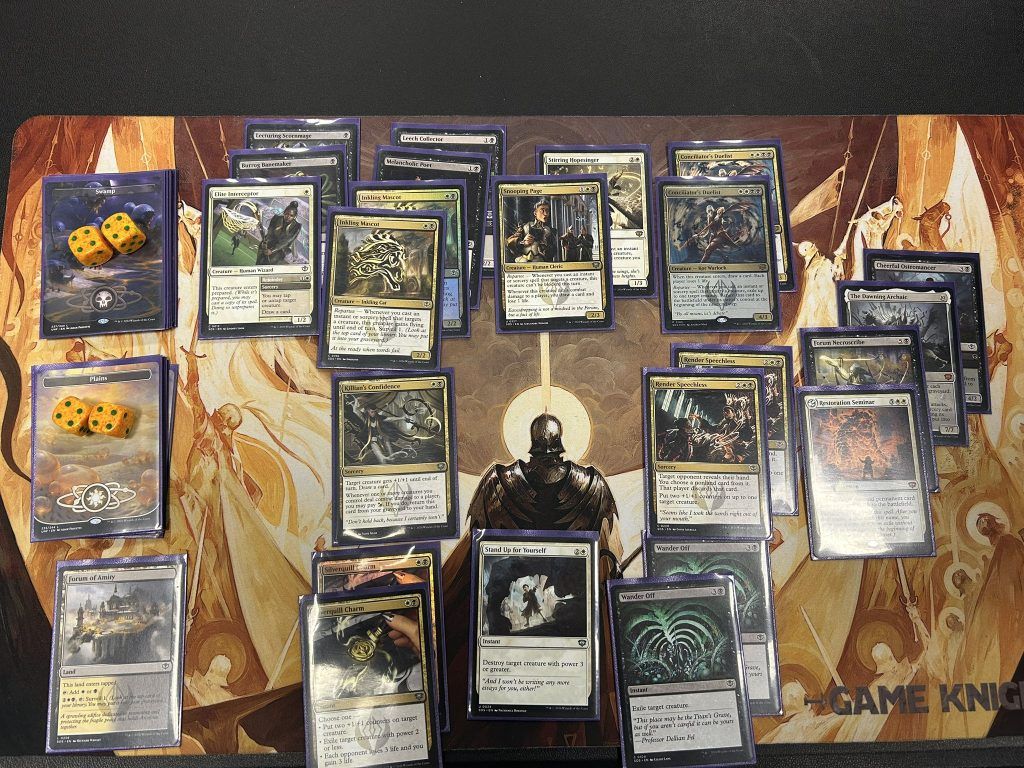
Other Variants
Stirring Honormancer and Moment of Reckoning are the best midrange cards available for this color pair. You can play both in “normal” repartee decks, although they’d definitely bump my land count from 16 to 17. Nita, Forum Conciliator and Silverquill, the Disputant are notable for bringing a bit of sacrifice synergy to this color pair, although ultimately the best card to sacrifice (Elite Interceptor) is also the best repartee card/best white common in general.
Prismari Control
Prismari is probably my favorite school to draft. Playing big spells can be very satisfying, and the deck has some excellent removal and card draw spells available.
Payoffs


The best cards for this color combination are often splashy higher-rarity spells. Controlling the game until you can cast Improvisation Capstone, Wisdom of Ages, Splatter Technique, or Traumatic Critique is often “GG”. Colorstorm Stallion is also an exceptional card which could put you into this color pair early.


You don’t always have to rely on rares either, as there are a ton of premium uncommons for Prismari. Stress Dream, Divergent Equation, Artistic Process, Tablet of Discovery, and Sanar, Unfinished Genius are some examples.
Core Cards
Prismari’s most important commons are its best removal spells. Tome Blast, Essence Scatter, Run Behind, and Unsubtle Mockery are essential picks for cleaning up the board early and often. Visionary's Dance, Quick Study, and Rubble Rouser are the next best commons available, followed by solid filler creatures like Elemental Mascot, Landscape Painter and Hydro-Channeler.
One thing worth noting about Prismari is that it can actually splash pretty easily. Splashing in UR usually means relying on Treasure-makers and Hydro-Channeler to cast juicy spells like Arcane Omens and Embrace the Paradox. I’ll cover this more when I talk about soup, but just about every non-white color can make for a good soup base.

Prismari decks will generally play 17 lands, although it’s definitely possible to go above that if you have enough card draw. Hitting land drops is essential, and it can be tough to flood out between surveil duals and cards like Visionary's Dance and Seize the Spoils.
How to Play Against It
Prismari’s reliance on big spells makes countermagic great if you have it. Aggro decks need to stick a threat in the face of a potential wall of removal, while soup decks generally look to execute their late game win condition. It’s important to try to figure out what the Prismari player is building towards, as a late-game Visionary's Dance is much easier to deal with than a lethal Mathemagics.
Trophy Example
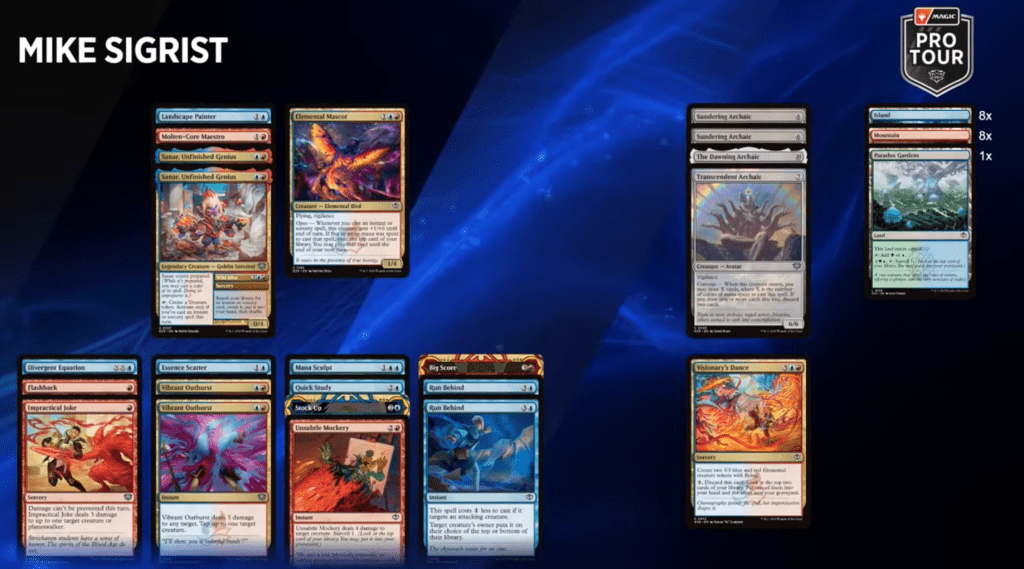
Other Variants
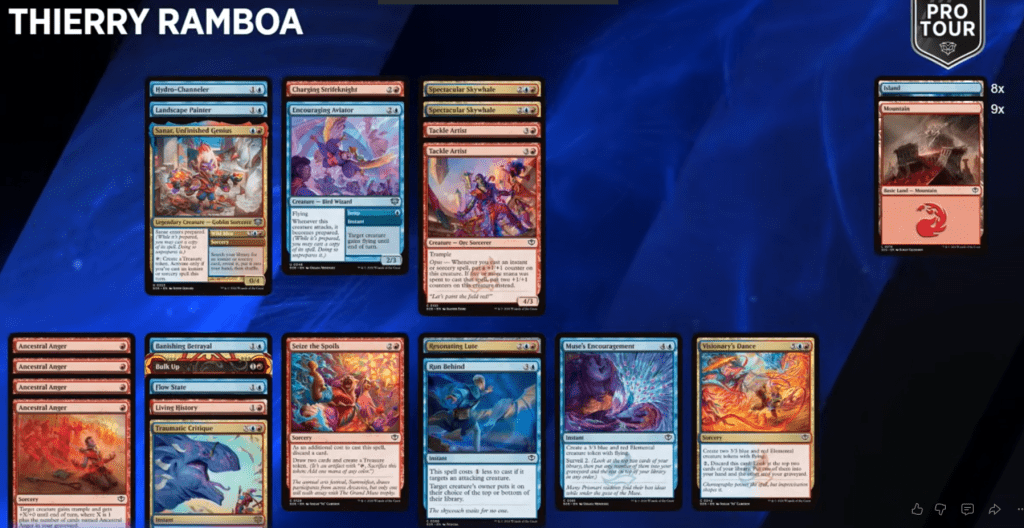
Prismari aggro can definitely be a thing, even if control decks feel more natively supported. You can pair Expressive Firedancer, Deluge Virtuoso, and Spectacular Skywhale with cards like Ancestral Anger and Bulk Up for a prowess-style strategy.
Quandrix Ramp
Quandrix is usually going to be a soup deck rather than a true 2-color school. It does have the tools for success on its own though, even if some of its cards (generally the +1/+1 focused ones) are lackluster.
Payoffs


Quandrix, the Proof is the best mythic dragon by a considerable amount, although other players are very likely to splash it rather than pass it. Quandrix has plenty of other powerful rares though, like Applied Geometry, Berta, Wise Extrapolator, and Mind into Matter.


The best non-rares for this color pair are Paradox Surveyor and Proctor's Gaze, both of which lend themselves towards splashing. You can almost treat converge cards like soft Simic cards really!
Core Cards


Studious First-Year is the best GU common because it’s a 2-for-1 that ramps you and enables splashes. Run Behind, Burrog Barrage, and Essence Scatter are your next priorities, and Barrage really appreciates Noxious Newt due to its interaction with deathtouch. Embrace the Paradox and Quick Study would be my next priorities, followed by decent beef like Fractal Mascot and Pterafractyl.
Land counts in Quandrix will vary between 16-18 lands. If you have a ton of extra mana sources like Noxious Newt and Environmental Scientist, that’s a good reason to trim a land or two. I’d never go below 16 though.
How to Play Against It
GU tends to be pretty durdly, even if it isn’t splashing that much. Non-splash builds often rely on fatties like Fractal Tender, Fractal Mascot, or Pterafractyl to get the job done, while soup builds are harder to predict. Burrog Barrage, Essence Scatter, and Run Behind are some of its only available removal spells, which is great news for Silverquill aggro decks. Running them over, countermagic, or outclassing them late game with something like Mathemagics or Moment of Reckoning are all viable plans.
Trophy Example
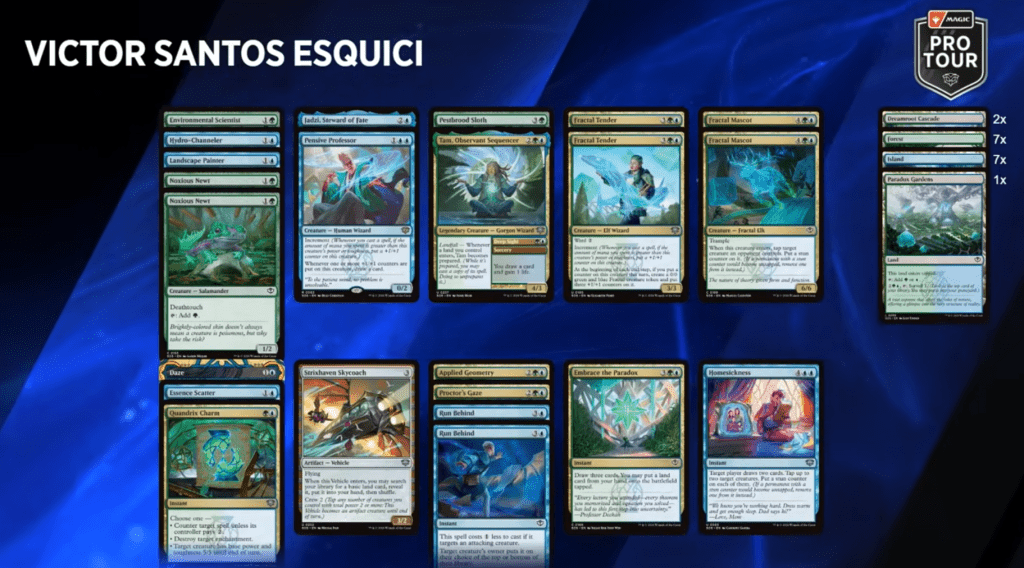
Witherbloom Midrange
This is my least favorite school of the bunch. Witherbloom’s main problem is its lackluster commons, middling card advantage, and vulnerability to soup type strategies. Still, if you do find yourself in this deck, you should generally stick to the lifegain theme and try to find its best payoffs.
Payoffs


Professor Dellian Fel is probably getting scooped up and splashed, but if it doesn’t, it’s the single best card available. Moseo, Vein's New Dean, Scheming Silvertongue, Blech, Loafing Pest, Cauldron of Essence, and Vicious Rivalry are other excellent rares.


There are also some strong uncommon payoffs for infusion. Poisoner's Apprentice does a great Nekrataal impression with proper support. Pestbrood Sloth is even better because it requires no setup and does excellent work here. Essenceknit Scholar, Lluwen, Exchange Student, and Teacher's Pest are some of the stronger multicolor cards available.
Core Cards


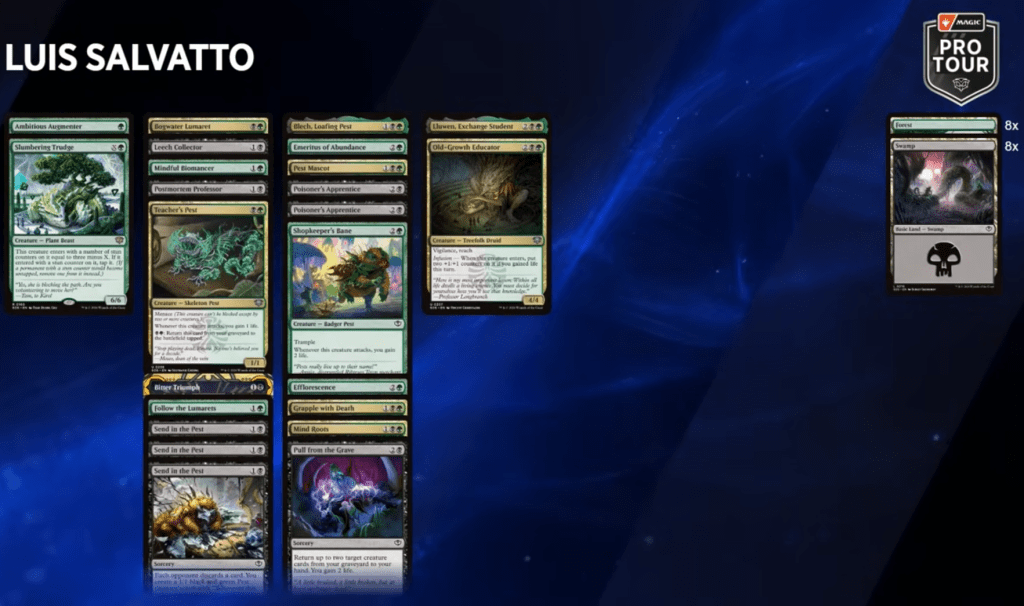
Grapple with Death, Bogwater Lumaret, and Pest Mascot are all better than any mono-colored commons available. Send in the Pest is the next best thing. Follow the Lumarets is the only good infusion common, although Efflorescence and Tenured Concocter are playable (Ulna Alley Shopkeep barely qualifies). Mindful Biomancer and Shopkeeper's Bane are decent filler creatures here due to their okay stats and synergy.
Beyond those, BG generally prioritizes the same top commons as other decks that share its colors. Land counts will vary from 16-17, with most playing 17. Feel free to shave a land if your curve is low enough (I think Luis was correct to play 16 in the trophy example, for instance).
How to Play Against It
Removal plus Quick Study and other 2-for-1s is an excellent plan versus Witherbloom. The deck often has plenty of removal, but it struggles to keep up with grindier decks in the format. Aggro decks have a tougher time with it though, since Witherbloom has bigger creatures and plenty of free life padding. Try to hold a basic or two in hand if you can to play around Send in the Pest later on and to avoid the embarrassment of having to discard a bomb like Wisdom of Ages to it.
Trophy Example
Converge Soups
Last but certainly not least, we have my favorite archetype in the format. There are a number of different ways to cook a soup in SOS, but they all share certain qualities.
Payoffs
Your payoffs are just the best cards in Secrets of Strixhaven. Whichever ones you can cast really, especially converge bangers like Together as One, Snarl Song, and Arcane Omens. You also have the joy of playing whatever bombs you’re passed, from Quandrix, the Proof to Ark of Hunger.
Core Cards
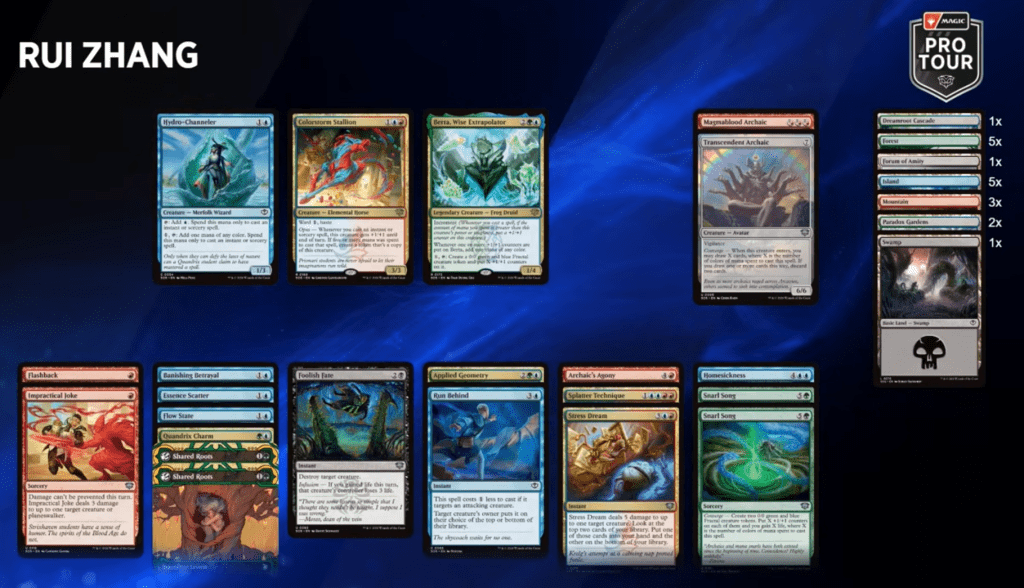
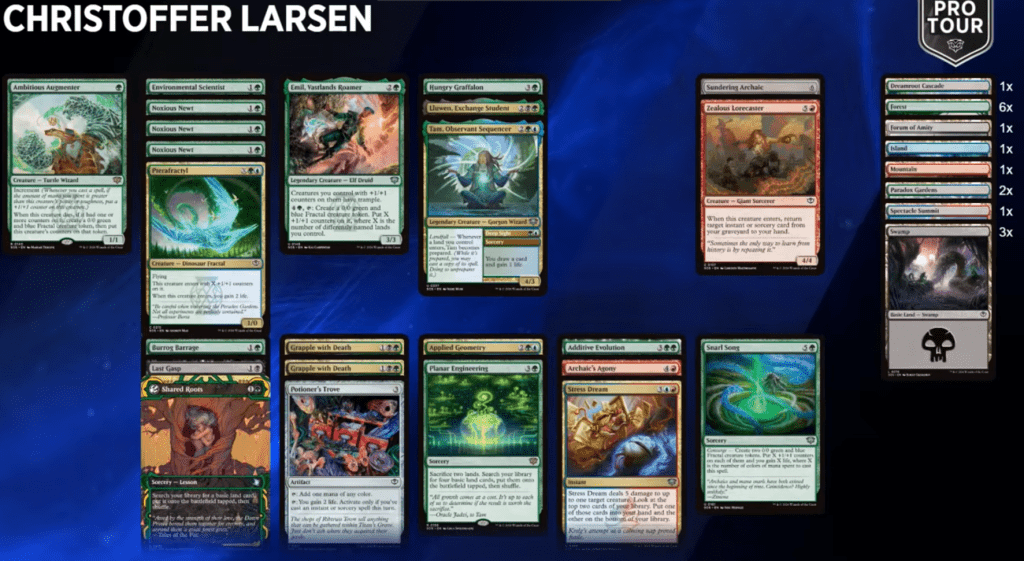
I generally want to have a 2-color baseline for my soup decks, which can then accommodate a splash of one to three other colors. Any of the non-white schools are a good fit for this depending on what’s open and how your draft started. Let’s look at each one as a base position.
Prismari
For URx, you’re mostly leaning on Hydro-Channeler, Goblin Glasswright, Seize the Spoils, and the color pair’s removal/card draw spells. Leaning on Treasures for splashes rather than lands means you’ll want fewer off-color cards, so try to limit yourself only to the highest impact ones. It’s acceptable to play a slightly worse removal spell to stay on color, for instance.
Quandrix
For GUx, Studious First-Year, Hydro-Channeler, Run Behind, Quick Study, and Embrace the Paradox are essential workers. This is the most likely of this trio to serve as your 5-color baseline, but it’s hardly the only option.
Witherbloom
Lifegain synergies should mostly be ignored here, although Grapple with Death is a phenomenal removal spell either way. Last Gasp, Studious First-Year, Noxious Newt, and Wander Off are some of your bread-and-butter commons. This is also the best color pair to leverage Burrog Barrage, as you have Burrog Banemaker and the Newt.
How to Play Against It
No two soups are ever exactly the same. Pay close attention to your opponent’s colors to clue into which common removal spells you should look for. In Bo3, you may be able to do quite a bit of sideboarding against these decks specifically, depending on what their blockers, win conditions, and removal spells are like. If you have countermagic like Disdainful Stroke, try to hold it up around turn 6 or later to be safe.
If things are going well, I’d encourage you to be very choosey as to what you counter, as there are just so many stupid bombs in this format. Countering your opponent’s Fractal Mascot only to eat a lethal Crackle with Power for X=3 later isn’t a good feeling!
Trophy Examples
Card Specific Notes
This is a catch all section for tips on specific cards. Expect a mix of strategy advice plus some spotlight on some odd cards that may be useful in specific decks.
Mythics
Emeritus of Truce
Emeritus of Truce has a monster combo with Skycoach Waypoint, so definitely play Skycoach if you have it.
Withering Curse
Chump attacking with Pest tokens is the best way to actually use Withering Curse as a Damnation. The more copies of Send in the Pest I have, the more I want this card. It also has an exceptional interaction with Potioner's Trove because you can hold priority while casting it, gain 2 life, and enjoy your 3 mana Damnation!
Emeritus of Conflict

The same point about Skycoach Waypoint’s utility applies to Emeritus of Conflict. It can be quite tricky to cast three spells in one turn to prepare this wizard again.
Silverquill, the Disputant
Finding convenient creatures to sacrifice in this color pair isn’t easy. Elite Interceptor is already premium, but it’s even better in the context of Silverquill, the Disputant and casualty. Eager Glyphmage and Stone Docent are the next best commons available.
The Dawning Archaic

15+ instants and sorceries would be ideal alongside The Dawning Archaic, as you really need to respect its demands for it to be castable. This’ll fit some converge soups, but not always.
Rares
Harmonized Trio

Harmonized Trio is very difficult to use in your average GU or UR deck, especially if you have noncreature incentives. It’d work best in an odd Jeskai () build with cards like Hop to It and Eager Glyphmage.
Jadzi, Steward of Fate

Jadzi, Steward of Fate pumps all fractals you control, which gives it cross synergy with many Quandrix cards. Jadzi doesn’t need them to be premium, though.
Mana Sculpt

There are a fair number of wizards in Secrets of Strixhaven to enable Mana Sculpt, most of which are blue. Here’s a list of non-rare ones:
- Elite Interceptor
- Studious First-Year
- Hydro-Channeler
- Landscape Painter
- Deluge Virtuoso
- Textbook Tabulator
- Spellbook Seeker
- Muse Seeker
- Tester of the Tangential
- Encouraging Aviator
- Matterbending Mage
- Tam, Observant Sequencer
- Fractal Tender
Pensive Professor
It pays to wait with this one. Playing Pensive Professor on turn 5 often means drawing a card immediately. It’s also extremely good when you pair it with protection spells like Royal Treatment and Chase Inspiration.
Skycoach Conductor

Skycoach Conductor is just a great card in general, although it ties into a small flicker theme in SOS.
Grave Researcher

It can be tricky to fill your own graveyard for Grave Researcher. Try to trade off creatures like Burrog Banemaker and Noxious Newt. It also has cross synergy with Vastlands Scavenger, if you’re lucky enough to have both.
Moseo, Vein’s New Dean
Obviously an excellent card, but Moseo, Vein's New Dean has especially nice synergy with Shattered Acolyte. If you’ve ever traded with Acolyte and had this bring it back immediately, you know what I’m talking about!
Tragedy Feaster

You must respect the lifegain requirement here, or don’t bother playing Tragedy Feaster. Sacrificing lands is painful in longer games, and you usually won’t have many better options.
Choreographed Sparks

This has a janky infinite you could pull off with Blazing Firesinger and Zealous Lorecaster. If you’re just trying to win games though, leave Choreographed Sparks in your sideboard!
Slumbering Trudge

I evaluate Slumbering Trudge as a 4-drop while deckbuilding, though casting it earlier does have uses. It also has nice synergy with cards that care about X-spells, like Geometer's Arthropod and Paradox Surveyor.
Conciliator’s Duelist
I’d almost never play Conciliator's Duelist without mana up if I could. Even if you’re merely bluffing, the threat of activation here is extremely dangerous!
Moment of Reckoning

Not that this card needs any help, but I’ve actually looped it with Zealous Lorecaster a few times! Even with its awkward mana cost, I’d vote this as the single most powerful card in the entire set.
Nita, Forum Conciliator

Be careful with effects like Nita, Forum Conciliator, since they may trigger your opponent’s Lorehold payoffs. Accidentally feeding your opponent 2/2 spirits from Garrison Excavator is a tough beat.
Resonating Lute
Not every deck is a Resonating Lute deck, as you’ll really want several good reasons to double your mana before playing this. You may occasionally be able to milk value with its Library of Alexandria ability, so consider holding lands in hand to enable that (in very slow games).
Suspend Aggression

You can target your own creatures with Suspend Aggression, which makes it a clean 2-for-1 against removal spells. It really is just a Boros Repulse at the end of the day.
Applied Geometry
Targeting your own lands is generally the safest thing you can do with Applied Geometry. You may even get some value out of this by dodging cards that care about “nonlands”, like Cyclonic Rift.
Mind into Matter
Don’t forget that the permanent you play off of Mind into Matter enters the battlefield tapped. I’d hate to have one of my readers try to cheat in a blocker with this!
Great Hall of the Biblioplex

Many of the best converge cards in SOS are instants and sorceries, which makes Great Hall of the Biblioplex even better than advertised.
Uncommons
Daydream + Ennis, Debate Moderator

These cards encompass a tiny flicker theme in SOS, which generally hasn’t played out well. Elite Interceptor, Eager Glyphmage, Matterbending Mage, Orysa, Tide Choreographer, and Stirring Honormancer are some of the only cards worth blinking. If you don’t have several copies of those, don’t bother with Daydream or Ennis, Debate Moderator.
Harsh Annotation

The drawback here is too steep for Harsh Annotation to be good, so stick to other removal spells.
Spiritcall Enthusiast

Look to pair Spiritcall Enthusiast with Mystical Archive cards like Hop to It and Royal Treatment for best results.
Summoned Dromedary

Slow, but worthwhile as a way to trigger “leaves the graveyard” effects. Summoned Dromedary can even collect a long-term 3-for-1 with Pursue the Past.
Brush Off

Brush Off, Essence Scatter, and Disdainful Stroke can keep your opponent guessing versus 2 open mana. You won’t usually have each one, but their existence makes the others trickier to play around!
Encouraging Aviator

Too aggressive for most blue decks, though Encouraging Aviator would be a great fit in a lean Expressive Firedancer plus Monstrous Rage style Prismari build.
Fractal Anomaly

Cute, but Fractal Anomaly is way too win-more to be good in practice. I don’t need a 1-mana 3/3 that I can only play after casting Quick Study on turn 4!
Fractalize

I don’t love Fractalize, though it’s worth noting its flexibility and Fireball potential with Pterafractyl.
Orysa, Tide Choreographer

Orysa, Tide Choreographer is a natural fit for Prismari decks, as it naturally plays a lot of toughness-slanted creatures like Elemental Mascot and Hydro-Channeler.
Tester of the Tangential

Moving counters is very slow, but it offers a way for you to shrink Tester of the Tangential and make it easier to increment again.
Arnyn, Deathbloom Botanist

Fragile and generally low output, so I haven’t liked Arnyn, Deathbloom Botanist at all. I’d probably only play it with Cauldron of Essence and several Pest cards.
Dissection Practice

It looks a bit anemic, but Dissection Practice does a nice job of triggering repartee and infusion for a dirt cheap cost. Practice also provides enough sizing to win most early combats, and it can even snipe x/1s like Studious First-Year.
End of the Hunt
Generally exceptional removal, though End of the Hunt can miss the mark against threats like Pterafractyl and Exhibition Tidecaller.
Eternal Student

Discarding Eternal Student to Pursue the Past is one of the best reasons to be Mardu () in the format!
Forum Necroscribe

High output, but the tempo loss when your opponent kills your Forum Necroscribe can be massive. Ward also hasn’t felt that punishing, as you’re still removing this on sight every time. It’s too clunky for most Silverquill decks, and it fits better in Witherbloom or black-based soups.
Lecturing Scornmage
This only puts counters on itself. Lecturing Scornmage is still an amazing WB card, but I lost a game once because I thought it worked like Optimistic Scavenger for some reason.
Rabid Attack

I don’t like this combat trick at all, even in Pest-based decks. Rabid Attack requires way too much to go right for it to be good, and it barely provides any stats to push your creatures through.
Duel Tactics
Duel Tactics can double up on the same creature for , which lets it act as a Tome Blast in a pinch. It’s mostly an aggro card, but it can be a great one.
Mica, Reader of Ruins

Finding cheap artifacts for Mica, Reader of Ruins is challenging. Goblin Glasswright, Seize the Spoils, and Page, Loose Leaf are your best bets. If you can provide those, Mica fits quite well into your average Prismari deck (as copying big spells is best).
Aberrant Manawurm

Not a great card, because Aberrant Manawurm is pure vanilla and is only conditionally big. I do love its synergy with Splatter Technique though, as it lives through the sweeper and immediately crunches for 7.
Chelonian Tackle

You could theoretically combo Chelonian Tackle with Orysa, Tide Choreographer and cast the bard for just . Otherwise, it’s just a weird fight spell that plays best with deathtouchers like Noxious Newt.
Zimone’s Experiment

Definitely an underperformer for me. Zimone's Experiment won’t always be Explosive Vegetation when you want it to be, and most decks greedy enough to play a Veggies variant won’t have enough creatures for it to hit reliably.
Killian’s Confidence
This is another card you could theoretically discard for value to Pursue the Past. Killian's Confidence tends to work best in a straightforward repartee shell, though.
Social Snub

A potentially excellent sideboard card, especially if you have token generators like Hop to It and Eager Glyphmage. Many decks won’t have enough creatures to play around a double edict like Social Snub.
Rapturous Moment

Weak in a vacuum, but the potential for Rapturous Moment to double opus makes it interesting. It’s also among the best cards in Secrets of Strixhaven to enable Brain Freeze and Empty the Warrens.
Borrowed Knowledge

I’d love to see someone “counter” a Wisdom of Ages with Borrowed Knowledge, since it could exploit your opponent’s full grip. It’s generally awful, however.
Growth Curve
I don’t like Growth Curve, but it’s another card that Fireballs with Pterafractyl.
Diary of Dreams
Even in decks with a ton of instants and sorceries, I’d have to be short on card advantage to want Diary of Dreams.
Skycoach Waypoint

Great with certain prepared creatures like the Emeriti, but colorless lands have a very high cost in this format. Play Skycoach Waypoint only in true 2-color decks, or decks that have exceptional prepared setups.
Wrap Up

Graduation Day | Illustration by Brian Valeza
And with that, our semester at Strixhaven has come to a close. Take everything you’ve learned here, and come back next semester with high marks!
Which archetypes and cards have you enjoyed most in Secrets of Strixhaven Draft? Let me know in the comments below or over on the Draftsim Discord. If you’re looking for a taste of Draftsim in video form, check out The Daily Upkeep on YouTube.
Until next time, may your P1P1s always be broken, and your 5-color mana bases always silky smooth!
Follow Draftsim for awesome articles and set updates:










Add Comment