
Last updated on May 19, 2026

Fractal Summoning | Illustration by Livia Prima
One of Strixhaven’s greatest features is its mascots, creatures that represent and are summoned by students of each of the colleges. They’re a wonderful tool that adds flavor and flair to the setting. While the first set primarily interacted with mascots via token creatures, the rerun added more creatures with the type.
Quandrix students conjure fractals, artificial life forms fueled by math and inspired by real animals in a perfect blend of blue and green sensibilities. Many cards either make or are fractals, so let’s find the best one for your next deck!
What Are Fractals in MTG?

Fractal | Illustration by Andreas Zafiratos
Fractals are artificial constructs animated via math that are created by Quandrix students at Strixhaven. Fractals are generally, though not always, represented as 0/0 tokens that enter with a number of +1/+1 counters specified by the card that creates them. While Fractals are mostly tokens created by other cards, a handful of creatures have the fractal type; this list considers both cards that create fractals and cards with the fractal type.
#33. Emergent Sequence
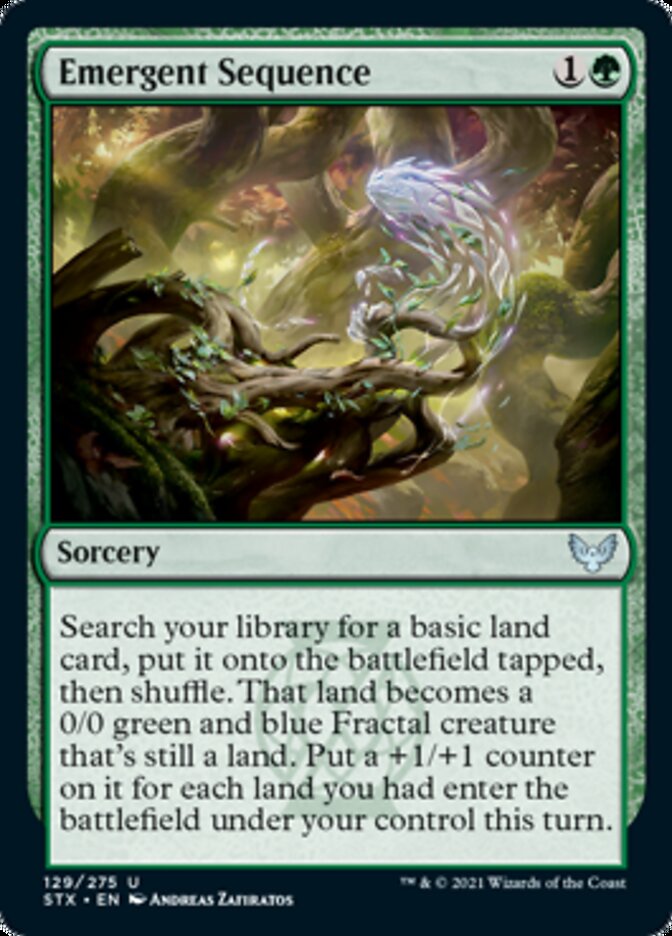
Emergent Sequence might be the worst Rampant Growth variant in the game. Because the land you search up animates into a fractal, your opponents can just remove it and put you behind. I suppose it’s cute that it scales into a threat for landfall decks, but I’d pass every time.
#32. Leyline Invocation
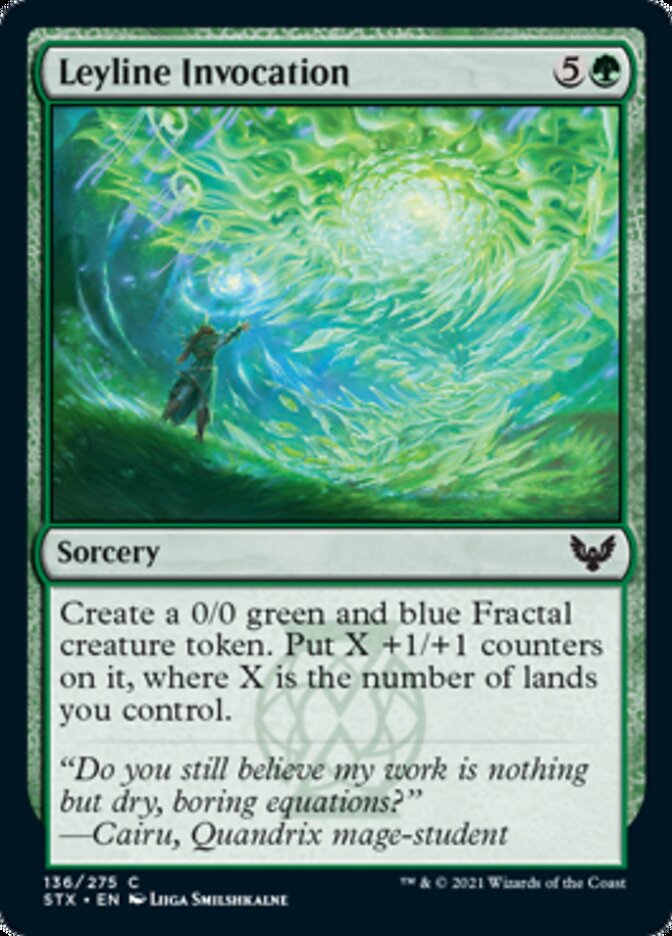
Can somebody say Limited card? Because Leyline Invocation screams it.
#31. Additive Evolution

Additive Evolution is priced for Limited. An enchantment that comes with a body and spreads counters each combat has power, but 5 is too much for most formats.
#30. Geometric Nexus

Geometric Nexus scales well since it counts spells cast by all players, but the costs are still too high. It hits the table for 2 mana, and you make a Fractal with another 6; how big does that token need to be to warrant the 8 total mana? It seems unlikely that you’ll get more than one token from it, so it leaves a lot to be desired unless you know your meta is all spellslinger decks and no artifact hate.
#29. Sequence Engine
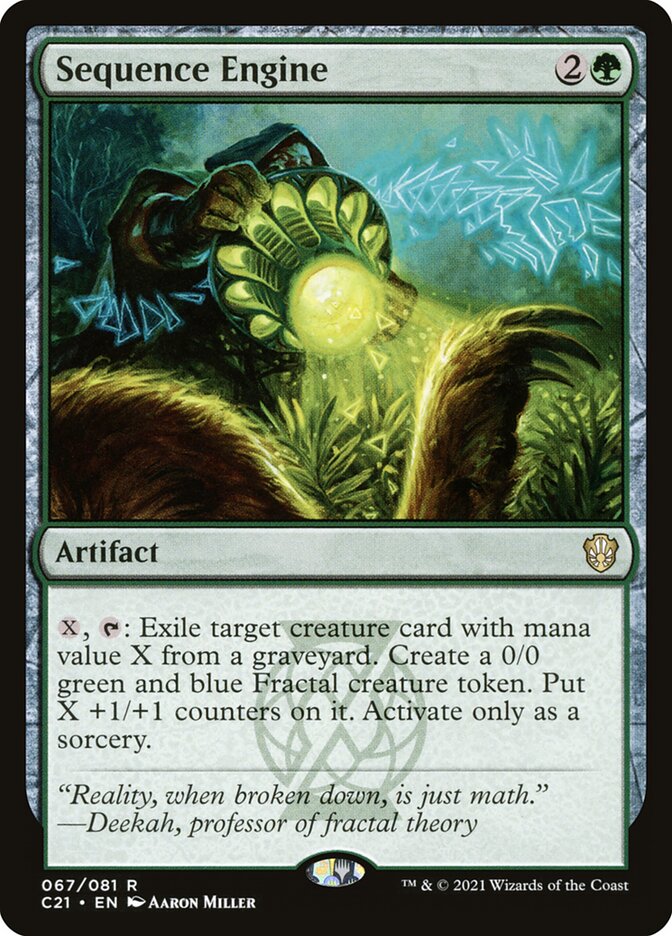
Sequence Engine asks way too much of you. You need to have X mana and a target that equals exactly X? That makes it incredibly unreliable as a token engine (what if you don’t have a target?) and graveyard hate (what if you don’t have the mana to handle Valgavoth, Terror Eater from the reanimator player?). Even gravebreak decks would rather use a Regrowth than this.
#28. Wild Hypothesis

Wild Hypothesis has reasonable stats, but it’s basically always worse than an hydra like Goldvein Hydra or Wildwood Scourge since it has fewer abilities and is susceptible to bounce.
#27. Fractal Summoning
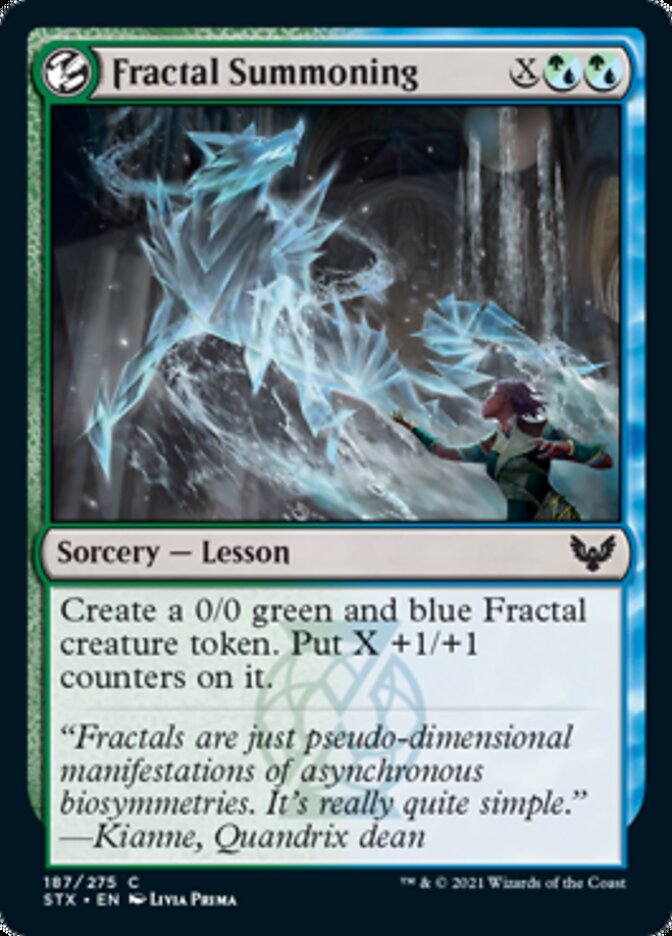
Fractal Summoning is thoroughly a Limited card, though I suppose a lesson with X it its cost might be appealing to an Iroh, Grand Lotus or The Lion-Turtle deck.
#26. Fractal Harness
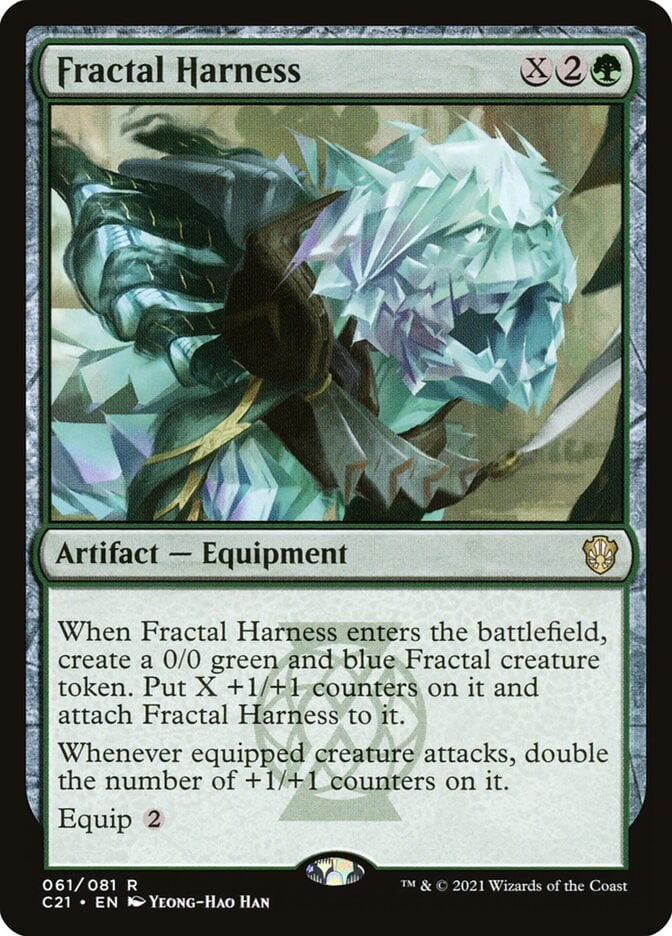
Fractal Harness costs too much for what it does. Equipment cards that come with tokens are powerful, but 4 mana for a 1/1 that becomes a 2/2 if it survives doesn’t scale fast enough. It might be worthwhile if you ignore the potential token and just go for cheating the equip cost with Sigarda's Aid or something.
#25. Pterafractyl

Having flying is nice, but Pterafractyl is a better pun than card. There are too many stellar creatures with X in their costs like Walking Ballista, Hydroid Krasis, and Genesis Hydra to waste a slot on this.
#24. Fractal Mascot

Wizards has power crept Colossal Dreadmaw for the umpteenth time, and Fractal Mascot shows that it’s still unplayable in any format that doesn’t involve opening Play Boosters.
#23. Serpentine Curve

Serpentine Curve can be noted down as another Limited card… though if you want to get really cute, you could mill your library then use this and a Fling to cheese a player out.
#22. Biomathematician
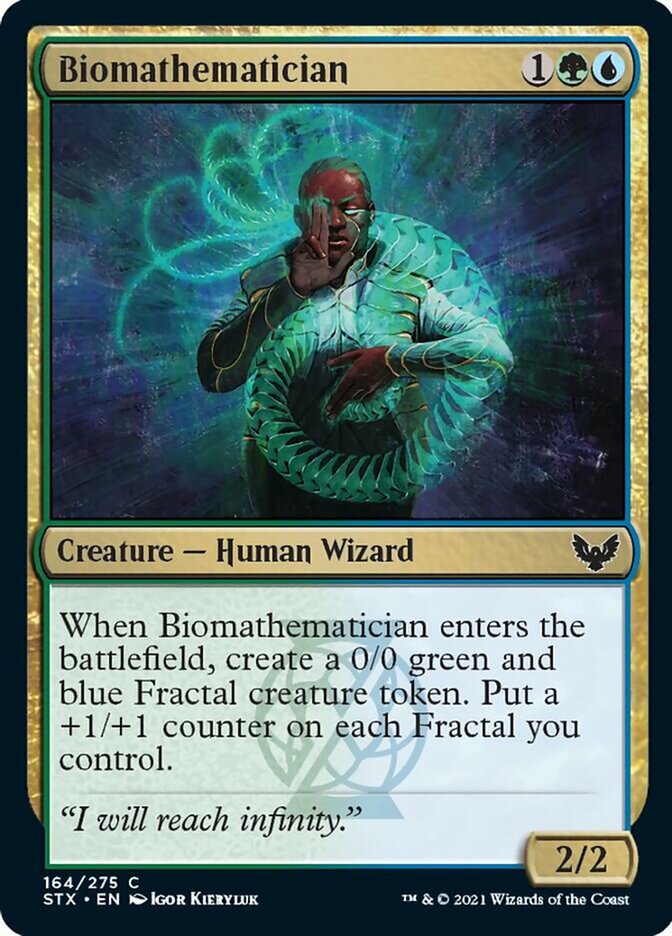
Biomathematician has more spice than other mostly Limited-level fractal cards. I can see a Bracket 2 deck that wants to tutor it up then use every flicker and copy ability at their disposal to replicate it. Think Rite of Replication, kicked, for an egregious number of Fractals.
#21. Interdisciplinary Mascot
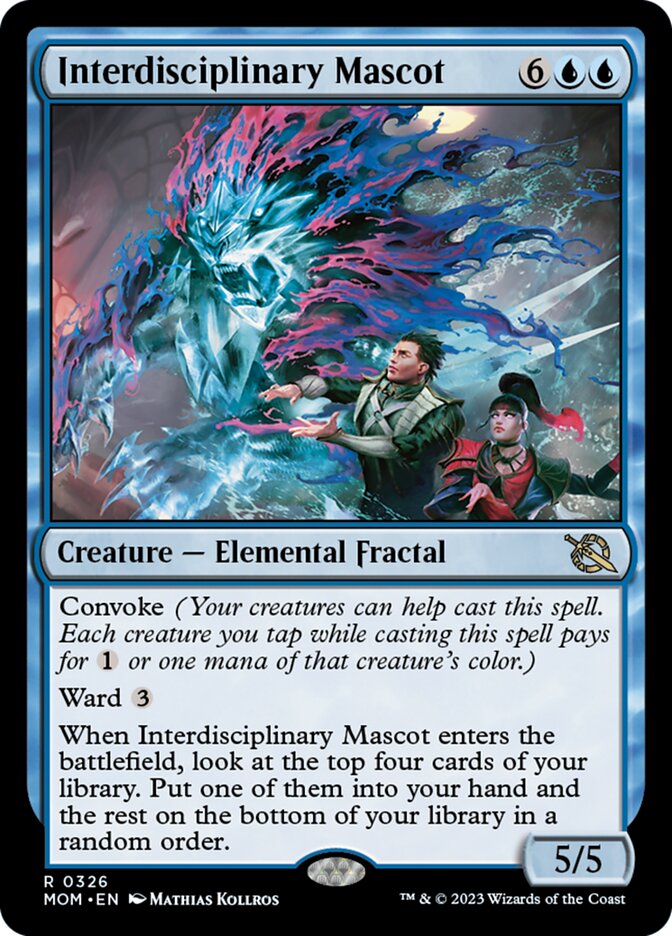
Interdisciplinary Mascot costs too much to be exciting, even with convoke to help out. It’s not that decks can’t produce enough tokens to pay for this, but why tap eight tokens for a 5/5 that cantrips when you could use them on Transcendent Message or March of the Multitudes? It’s completely outclassed.
#20. Kianne, Dean of Substance / Imbraham, Dean of Theory


Kianne, Dean of Substance is dreadfully slow. No other card puts study counters on cards in exile, so you’re entirely reliant on the tap ability, which isn’t even guaranteed to put cards into exile. It takes far too long to get enough study counters to make the activated ability worth its cost.
#19. Kasmina, Enigma Sage
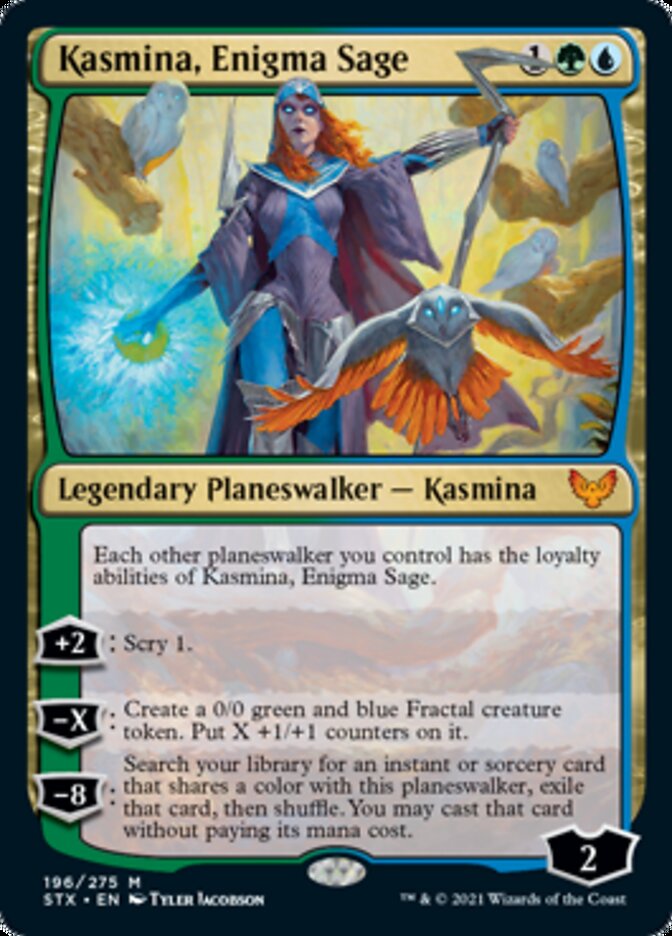
Giving your other planeswalkers Kasmina, Enigma Sage’s abilities is really cute, especially with planeswalkers like Narset, Parter of Veils that have no upticks, but 2 loyalty is almost nothing, and I want more from the Fractal.
#18. Snarl Song

Snarl Song can be pretty impressive if X always equals 5. I could buy it as a top-end card in a casual The Wandering Minstrel deck, though the ceiling is still admittedly too low for comfort.
#17. Zimone, All-Questioning

I didn’t think Wizards could create an interesting Simic lands card, but I love Zimone, All-Questioning. It’s a much better application of Quandrix math than cards that just double counters or ask you to count to eight lands. It’s a little sad that it makes a legendary token, so Zimone never makes a massive board, but it’s such a cool design.
#16. Paradox Zone

Paradox Zone can be fun with either a ramp or controlling game plan to back it up. The biggest hurdle is that it’s extremely slow and durdly, but proliferate effects and extra turn spells help you to catch up.
#15. Manifestation Sage

Manifestation Sage can make pretty substantial tokens; pair that with Adrix and Nev, Twincasters and some flicker effects like Thassa, Deep-Dwelling, and you could have a reasonable threat.
#14. Emil, Vastlands Roamer

Emil, Vastlands Roamer is reasonable filler in multicolor +1/+1 counter decks. I’d generally rate it higher than something like Tuskguard Captain since it has utility later in the game, though it’s still not the most exciting trample enabler.
#13. Fractal Anomaly

Fractal Anomaly is basically a combo card. You’ll play it in dedicated draw decks that use lots of wheels or Howling Mine effects, and pass on it if you can’t regularly draw 5+ cards a turn. It’s pretty impressive in the right shell, though.
#12. Fractal Tender

Fractal Tender puts in work if you have the counter distribution to back it up. Since this checks for counters on each end step, not just yours, a Commander player could reasonably wring three or four tokens from it, which doesn’t seem difficult with proliferate cards. At 5 mana it’s costed as a casual card, but Commander has ample room for that.
#11. Ambitious Augmenter

Ambitious Augmenter has a promising application of increment. A cheap threat that grows and then dies into another large threat is a pain for your opponent to deal with since they need to remove it twice; it feels reminiscent of Voice of Resurgence, but at a mana cost that’s more appealing for sacrifice decks.
#10. Applied Geometry

Applied Geometry has wild applications, especially when you use it to make creature versions of cards that weren’t balanced around being creatures or tokens, like Doubling Season and Monkey Cage. It’s just a large threat for the size, which is handy with green power-matters cards.
#9. Jadzi, Steward of Fate

Jadzi, Steward of Fate is one of the few cards that makes a considerable number of Fractals. You could make a dedicated brew built around it with a couple token or counter doublers and some flicker effects to consistently reprepare it.
#8. Oversimplify

Blue and green rarely get board wipes as those are outside their share of the color pie, which makes Oversimplify a very unique card. It wants you to be more green than blue so your Fractal outsizes the competition, though there’s merit to a very blue strategy that follows this up with stun counters or bounce spells. Reducing a board of threats into a single creature offers myriad answers.
#7. Esix, Fractal Bloom
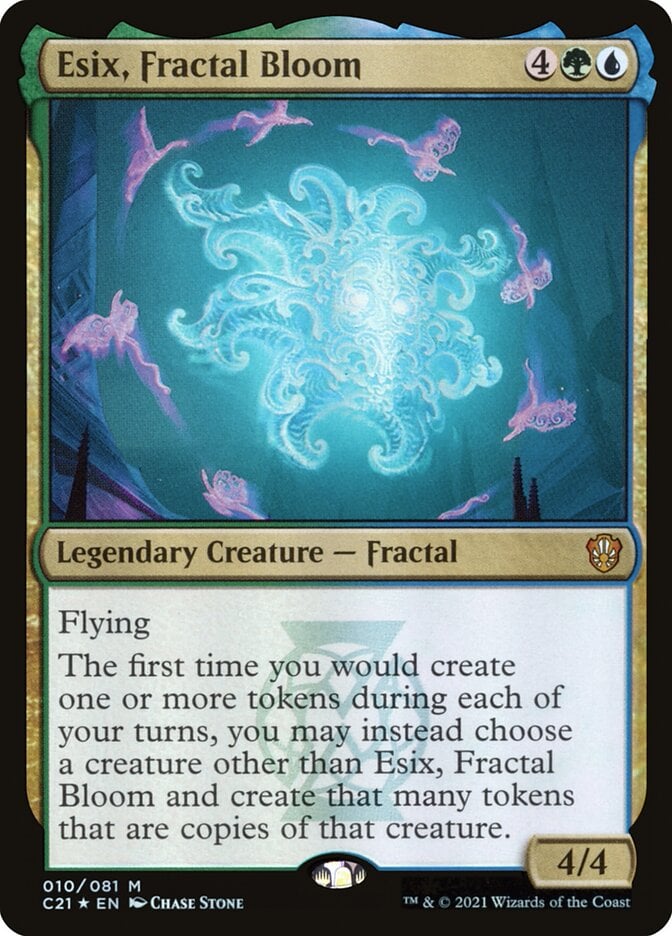
Esix, Fractal Bloom costs a lot for a creature with no immediate impact, but making tokens that are copies of other creatures spirals out of control fast. You could keep it simple, with cards that have great enters triggers like Hornet Queen, or take advantage of cards like Kairi, the Swirling Sky that are balanced by the legend rule. It’s a perfect card to pair with Applied Geometry.
#6. Body of Research
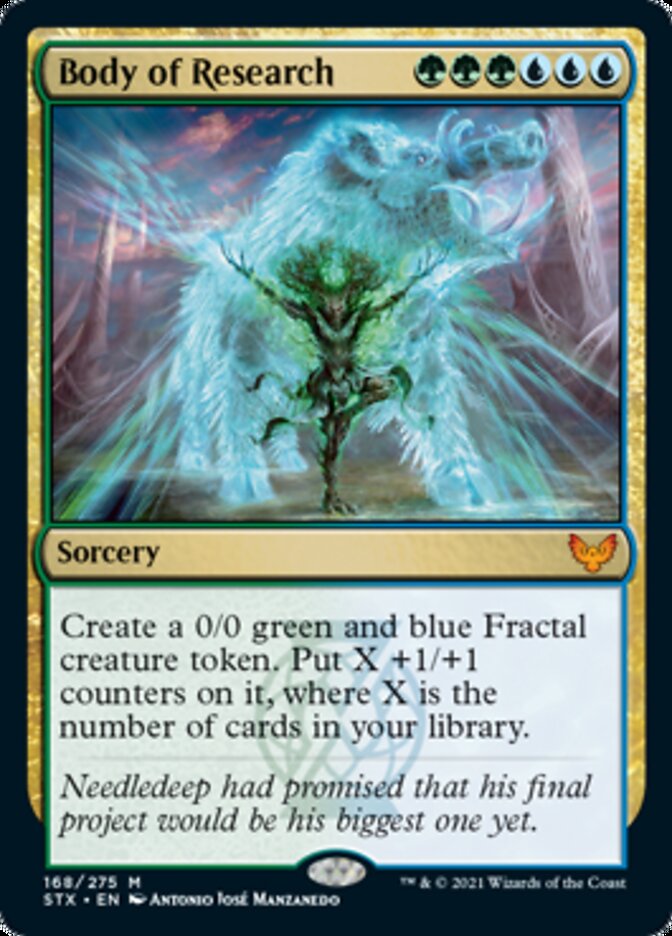
Body of Research likely makes the biggest Fractal on average; a creature the size of your deck is no joke, especially in Commander. It’s mostly used as a combo piece that wins the game with Simic Ascendancy or draws your deck alongside cards like Terrasymbiosis and Greater Good.
#5. Lattice Library
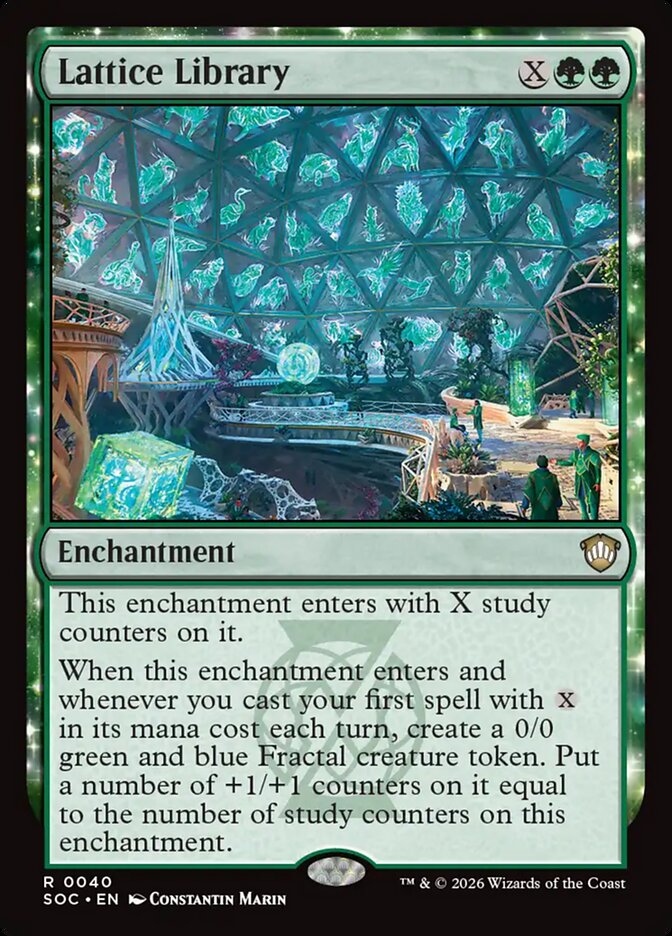
Lattice Library is one of the best X-spell support cards from Secrets of Strixhaven because it’s an X-spell itself. It’s the reward for playing cards like Blue Sun's Zenith while benefiting from cards like Nexos and Geometer's Arthropod that reward you for playing X-spells. There’s also lots of overlap between X-spells and +1/+1 counters.
#4. Deekah, Fractal Theorist
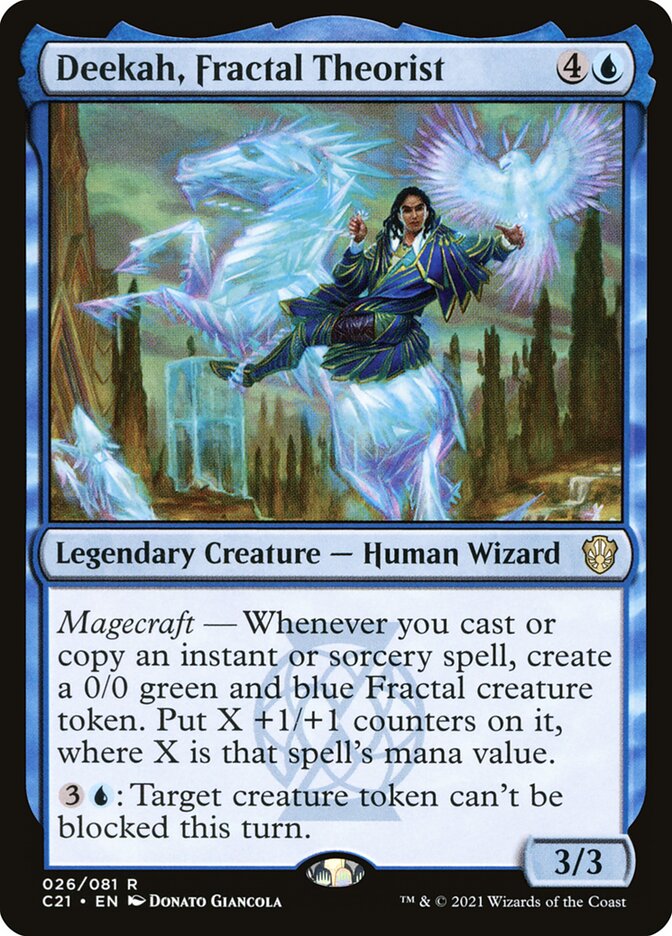
Deekah, Fractal Theorist is a useful commander if you want to play around with spellslinger and +1/+1 counter synergies. Blue has enough proliferate effects and counter synergies like Danny Pink to make Deekah an interesting alternative to Talrand, Sky Summoner. It also plays well in the 99 of decks that need lots of creatures with lots of counters.
#3. Geometer’s Arthropod

X-spell decks rarely lack for card advantage with spells like Blue Sun's Zenith, but Geometer's Arthropod still deserves a slot in your deck. It’s a passive card advantage engine that digs for your explosive spells, plus it’s nice to not leave your card advantage dreams at the mercy of one Negate.
#2. Primo, the Unbounded
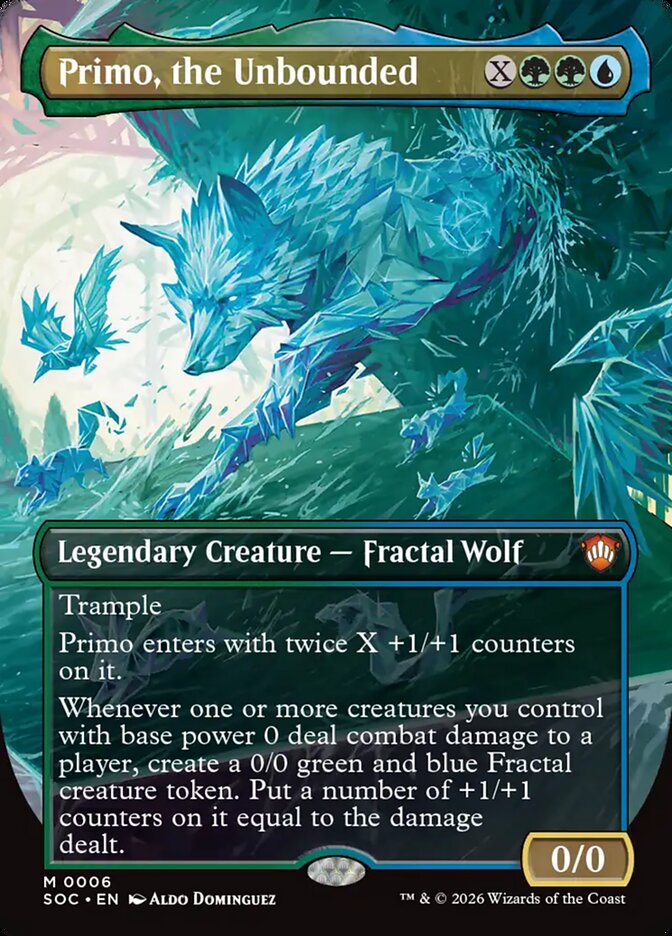
Primo, the Unbounded has potential as a fractal commander, but also a hydra one. Those archetypes share a surprising amount of overlap between a love of ramp and X-spells and a desire for +1/+1 counter payoffs. It’s also the only card in Magic that rewards you for playing with creatures with base power 0, which is pretty cool.
#1. Berta, Wise Extrapolator

Berta, Wise Extrapolator is one of the more formidable commanders that create Fractals because its activated ability has incredible combo potential with Intruder Alarm. Since you can always choose X=0, the two produce infinite untaps, creatures entering, etc. It takes very little to turn that into a win, plus the mana generation leads to combos of its own.
Best Fractal Payoffs
Very few cards directly reward you for controlling fractals. It’s just Jadzi, Steward of Fate and Biomathematician, both of which only put extra counters on fractals. There’s also Primo, the Unbounded, which doesn’t say “fractal” but was clearly designed to support them. More compelling payoffs are cards that care about tokens and/or counters.
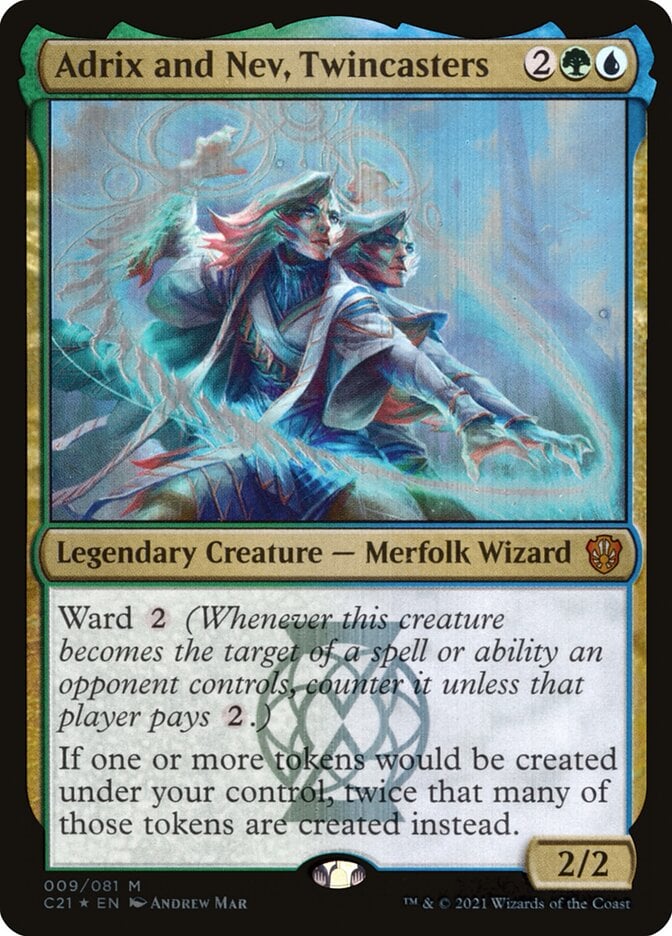
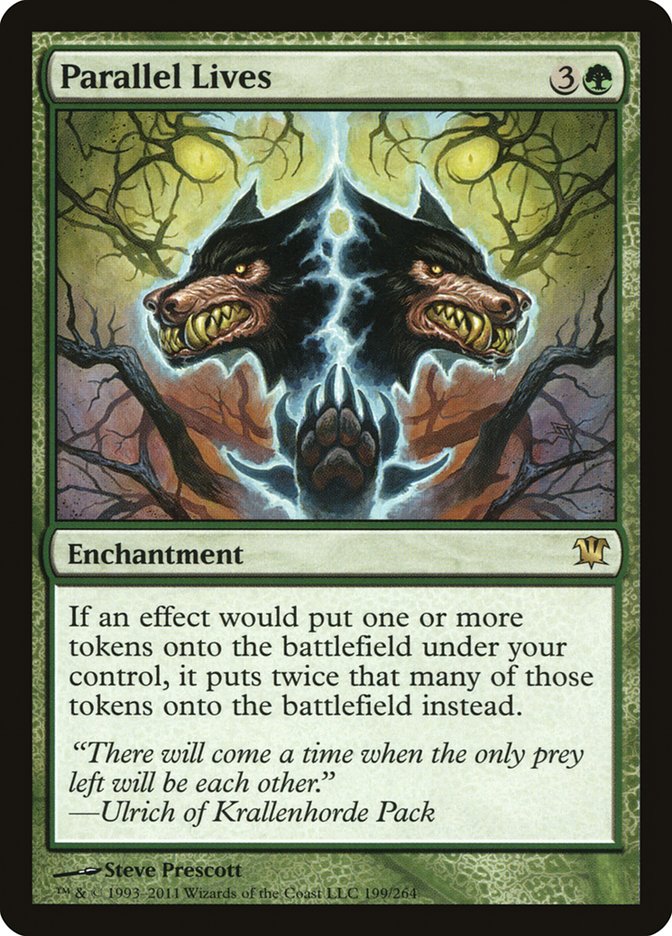

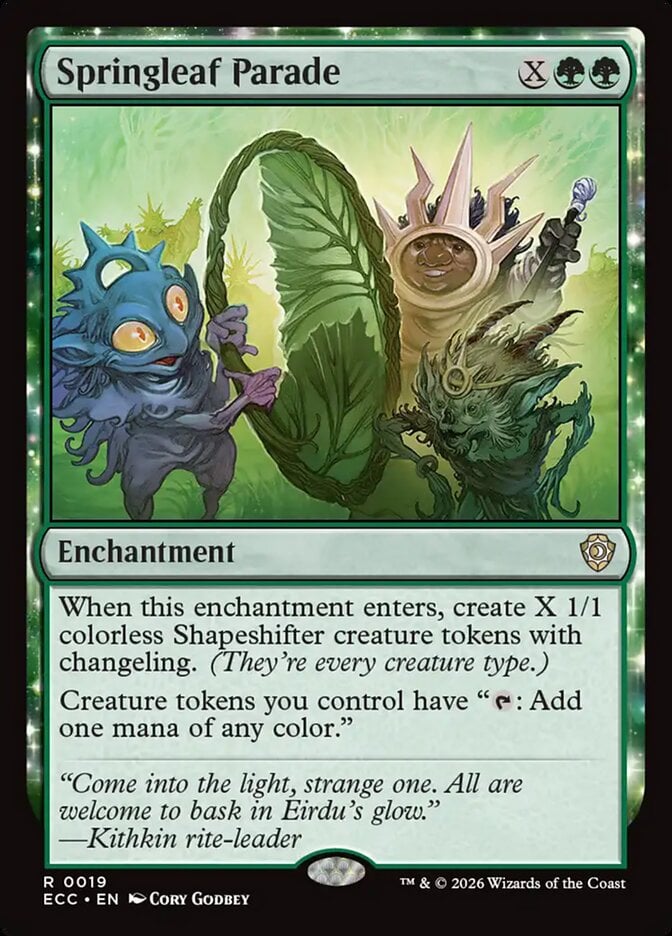
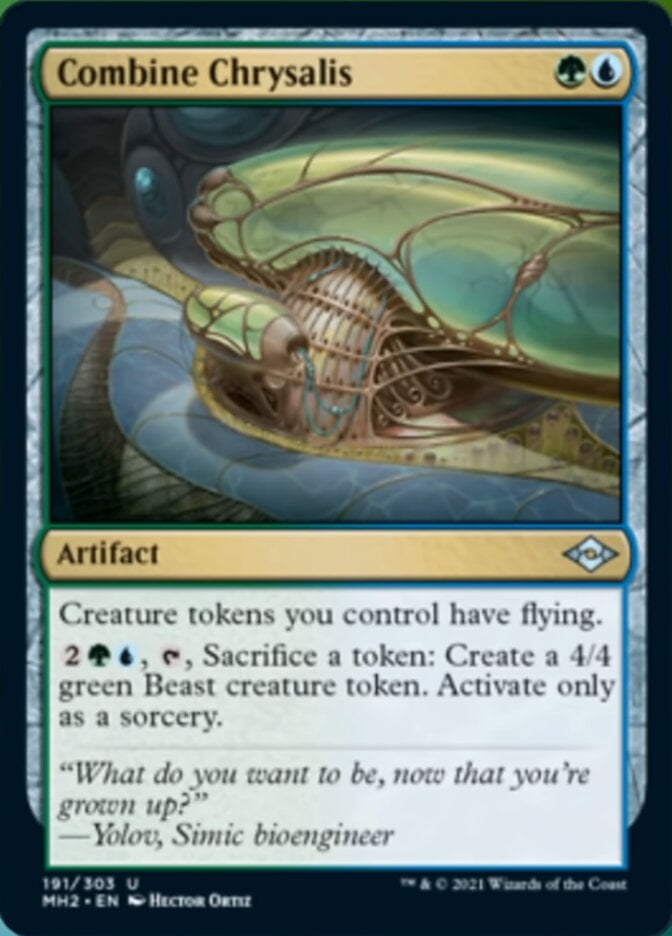
Since fractal cards are predominately cards that create Fractal tokens, token support like Adrix and Nev, Twincasters and Parallel Lives double up your fractal production. Once you have that board, cards like Propagator Drone, Springleaf Parade, and Combine Chrysalis make them even better.
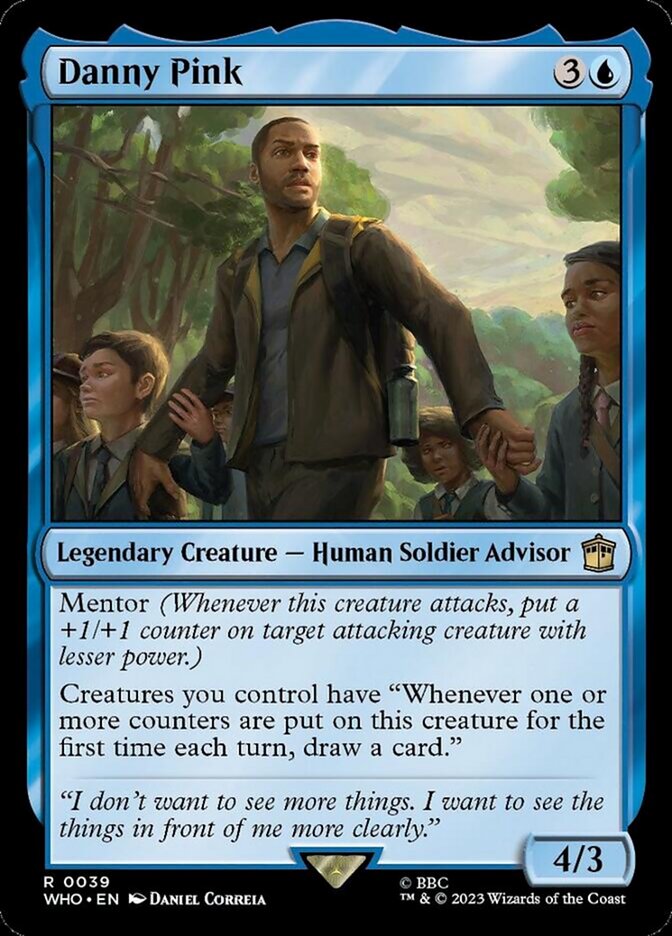

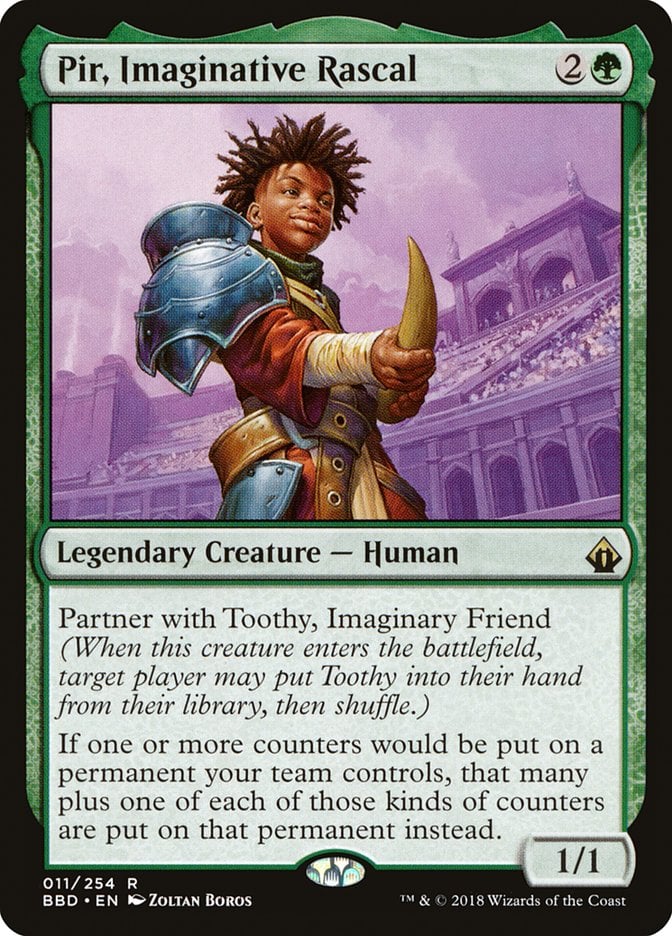
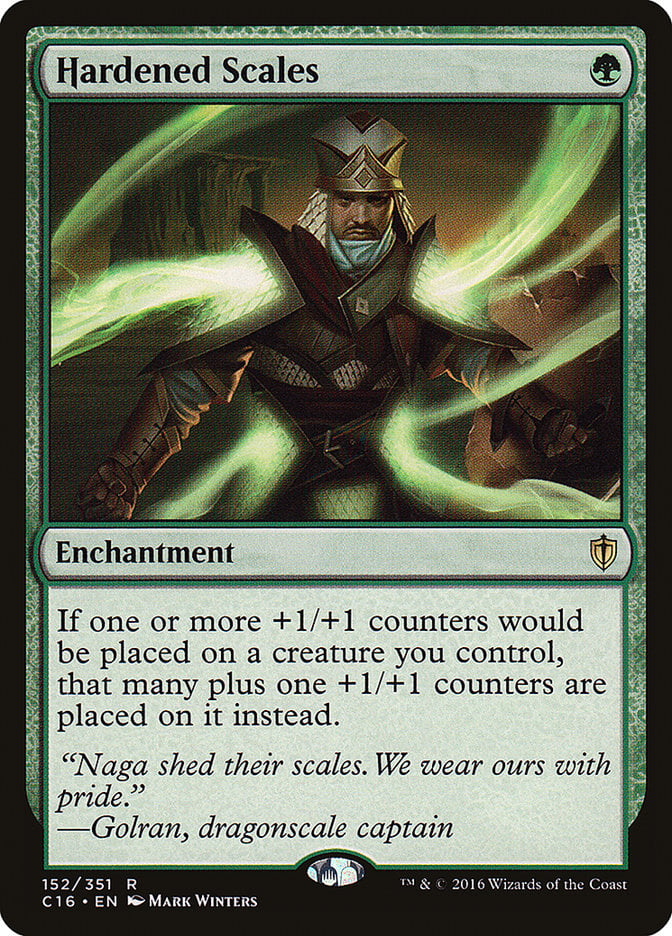
Since we care about counters, cards like Danny Pink and Terrasymbiosis offer card draw, Pir, Imaginative Rascal and Hardened Scales make the Fractals bigger, and proliferate effects make them formidable.
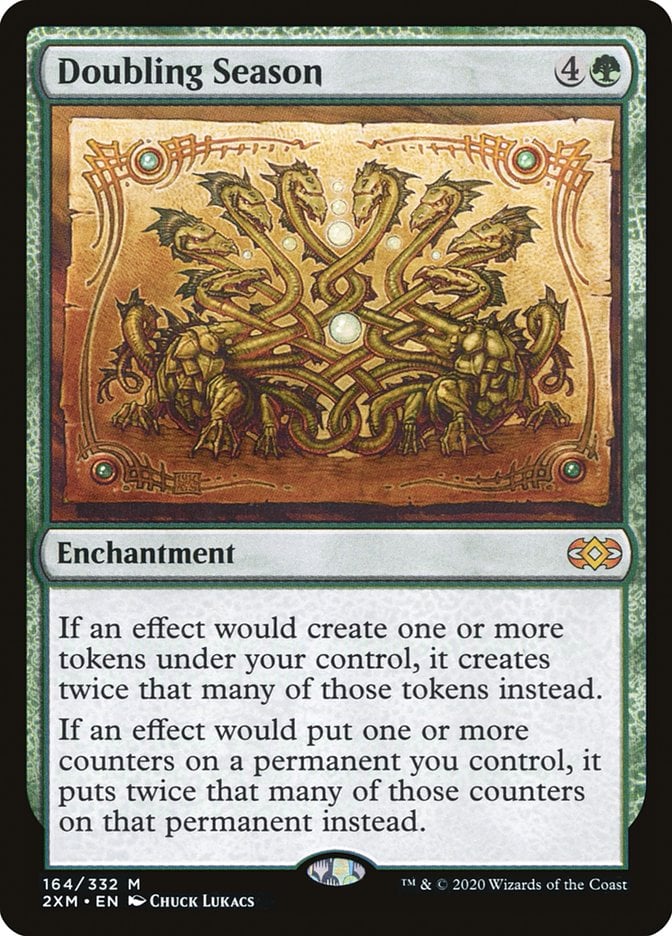
Doubling Season probably crowns all other payoffs, as you make twice as many fractals that are twice as big.
Are There Any Fractal Commanders?
The best commander for a fractal-themed deck is absolutely Primo, the Unbounded; it makes Fractals and rewards you for attacking with them, which is a perfect storm.
Jadzi, Steward of Fate is an option, but going mono-blue means you lose out on lots of fractals and many of the counter payoffs to make them a significant threat.
Adrix and Nev, Twincasters is also a solid choice, though it doesn’t directly interact with fractals.
Berta, Wise Extrapolator is probably the strongest commander that interacts with fractal tokens, but most of that power has nothing to do with the creature type itself.
Wrap Up

Pterafractyl | Illustration by Andrew Mar
Fractals don’t have the greatest cards, but the ones that are good have incredible potential to be powerful combo pieces or simply large, threatening cards. Between the counters and tokens, there’s plenty of ways to double different aspects of the card—appropriate for the mascot of a math-themed school.
Do you enjoy fractals? How do you feel about Strixhaven’s mascots? Let me know in the comments below! For more Draftsim, check out our YouTube channel, The Daily Upkeep!
Stay safe, and thanks for reading!
Follow Draftsim for awesome articles and set updates:










Add Comment