
Last updated on April 16, 2025
Duelist of the Mind | Illustration by Darren Tan
Welcome to Thunder Junction, where crime is perfectly natural. We’re all outlaws here, which means that crime pays!
According to the rules of crime in Magic, we’ve apparently been committing crimes for our entire Magic careers. It’s like a secret ingredient or something.

But what does it actually mean in terms of gameplay, and which types of cards reward you the most for your criminal behavior?
I am not, nor have I ever been a judge, but would you really want to learn about how to commit a crime from a judge? (Kidding).
How Does Commit a Crime Work?

Deepmuck Desperado | Illustration by Loïc Canavaggia
You commit a crime in Magic whenever you target an opposing player or their stuff, defined as their spells on the stack, their permanents on the battlefield, or cards in their graveyard. This includes anything that they control, even if they don’t own it, which means that targeting a permanent that you own but don’t control is also considered a crime.
Targeting is important when considering crime. Effects that refer to “all” or “each” don’t target, so they don’t count. You can, however, commit a crime even if you’re doing something that can be considered positive, like targeting an opponent’s creature to add a shield counter. Many cards only trigger once per turn when you commit a crime.
I wish that committing crimes worked more consistently with spree, because, well, “crime spree” is fun. Alas, not all spree cards have you commit a crime.
The History of Committing Crime in MTG
In terms of keyword actions, crime first appeared in 2024’s Outlaws of Thunder Junction. The first look at the set introduced us to Duelist of the Mind (which depicts 2022 World Champion Nathan Steuer) and Oko, the Ringleader. These cards give us different flavors of how crime works; the Duelist packages crime into a triggered ability (whenever you commit a crime), while planeswalker Oko’s +1 loyalty ability checks whether the crime has happened as an event (if you have committed a crime).
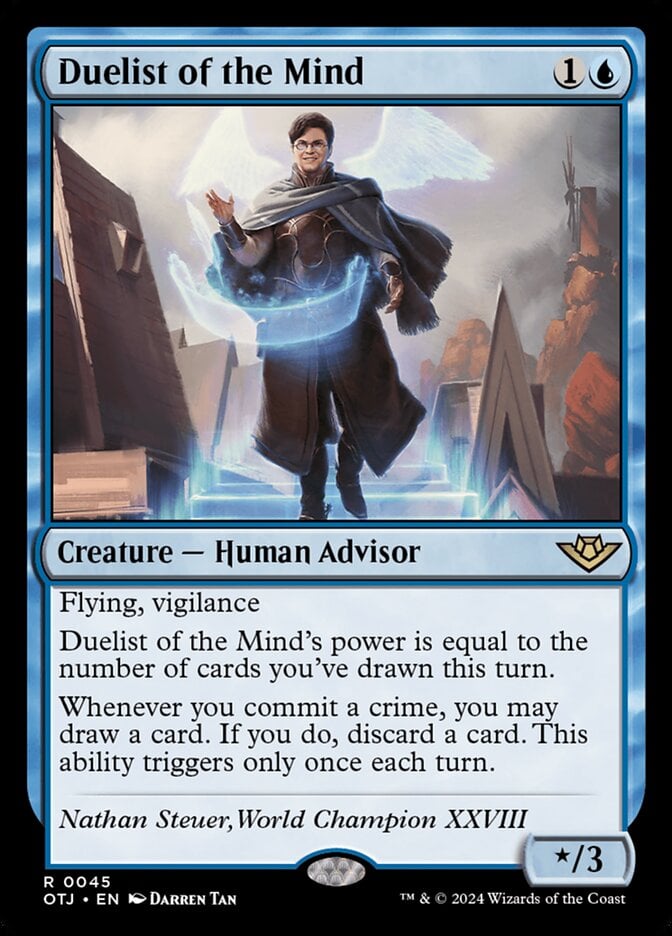
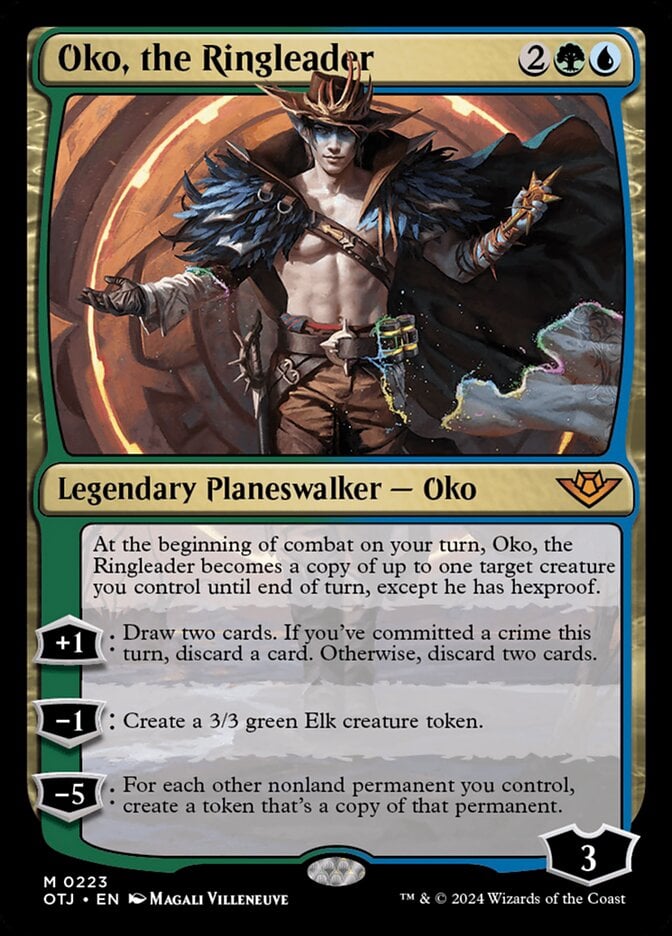
OTJ features just under 30 cards with the “commit a crime” text on them, while many other cards in the set count as committing crimes, including desert lands that ping an opponent when they enter the battlefield. The set’s bonus sheet, Breaking News, is made up entirely of cards that can commit crimes.
Because there have been cards that target your opponent and their stuff since Alpha, you can say that crime has been part of Magic since the beginning. OTJ and its Commander precons turned committing a crime into a game action and feature cards that reward you for crimes.
You could consider the behavior of committing crime as evergreen (can you imagine an MTG set with no cards that target your opponents or their things?), but the keyword action itself isn’t evergreen.
Is Committing a Crime a Triggered Ability?
No. Committing a crime itself is considered a game action, but that action can be part of a triggered ability or activated ability.
Looking at Duelist of the Mind, its ability is worded, “whenever you commit a crime.” That “whenever” is your clue that this is a triggered ability, but committing a crime in and of itself is not a triggered ability.
Meanwhile, Oko, the Ringleader’s +1 loyalty ability is an activated ability that checks whether you’ve committed a crime before indicating how many cards you need to discard.
If One Spell Targets Multiple Creatures My Opponents Control How Many Crimes Does It Commit?
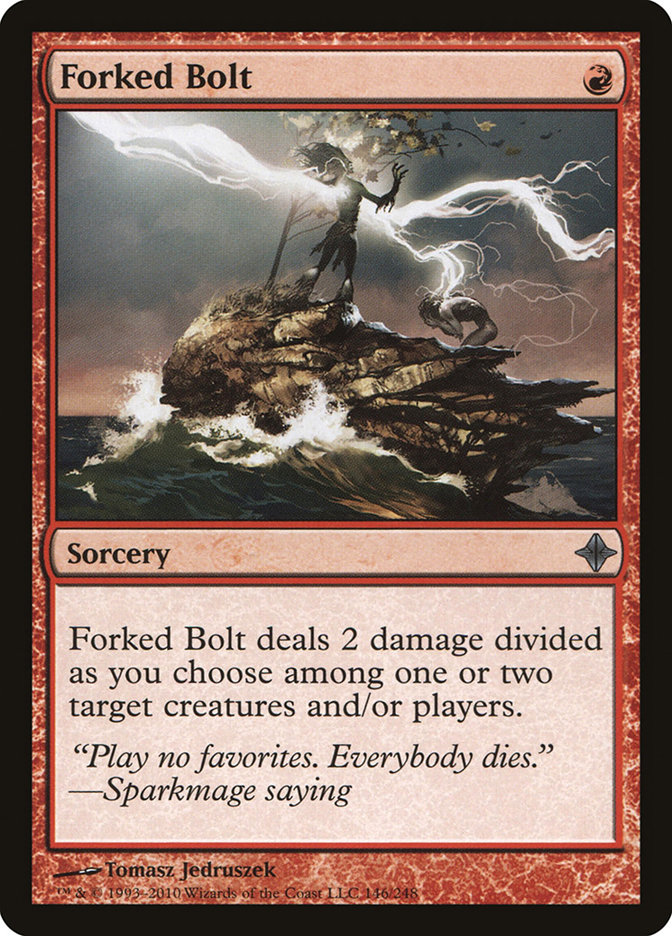
One spell that targets can count as one instance of crime. The number of targets does not mean that many crime triggers. If you use Forked Bolt and hit two creatures that different opponents control, you commit one crime.
Do Auras and Curses Trigger Crime?
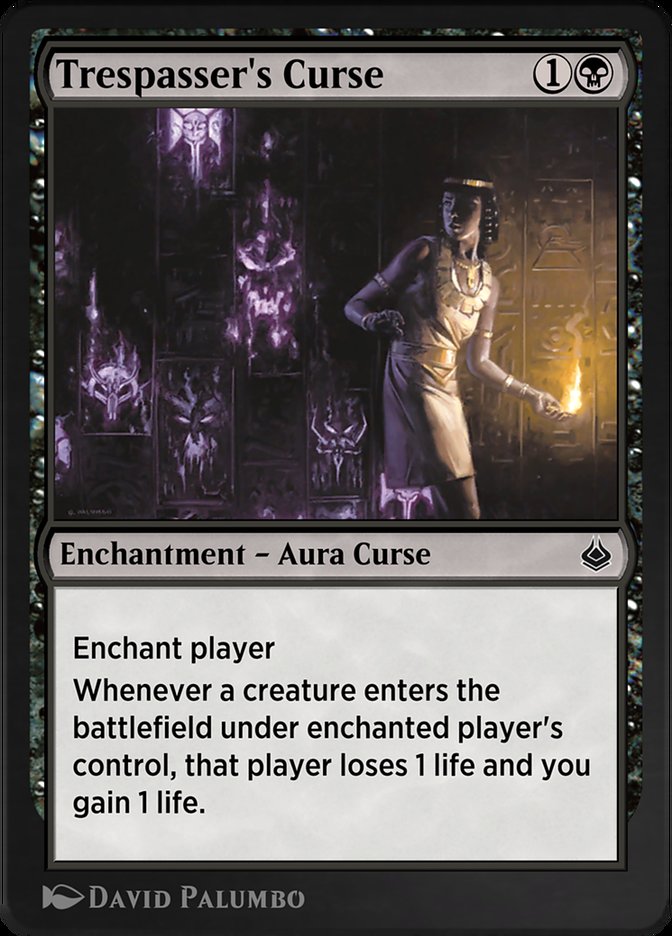
When auras enter play, they target a permanent or player so they may commit a crime. Notorious auras like curses are prime suspects for targeting players.
Is Milling a Crime?
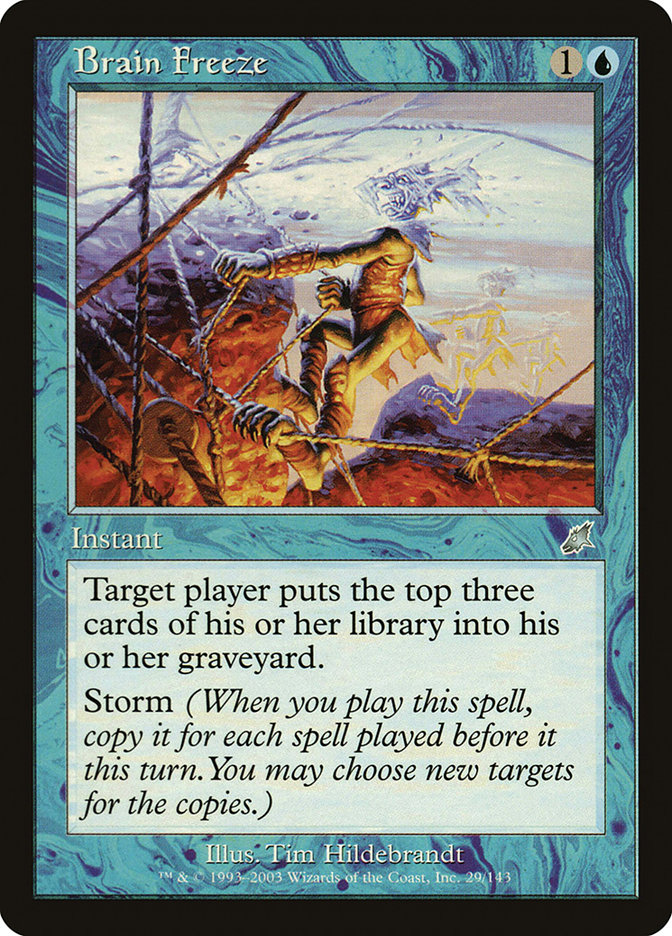
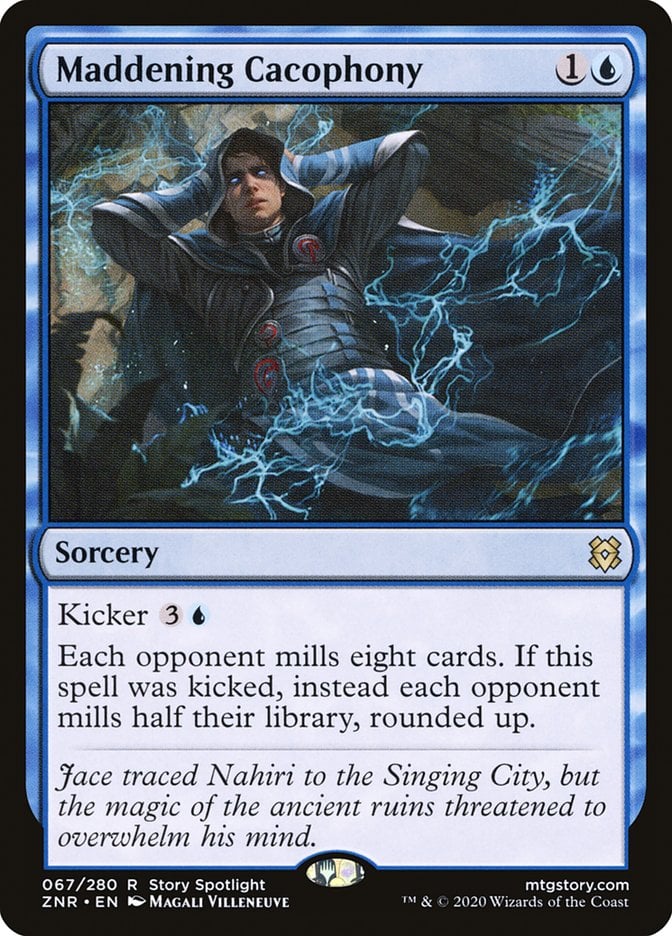
Many mill effects target a player and can count as a crime. Brain Freeze is an easy crime to spot, and each storm copy counts as a separate crime. Maddening Cacophony on the other hand does not commit any crimes.
Is Declaring Attackers a Crime?
No, though you direct your attackers to a specific player, attacking does not target, and thus is not a crime.
Is Targeting Cards in the Graveyard a Crime?

Yes, as long as the targeted cards are in an opponent’s graveyard, this constitutes a crime. Keen-Eyed Curator is a graveyard hater that makes crime committing easy and fruitful.
Do Board Wipes Trigger Crime?
Only if they target your opponent or their permanents.
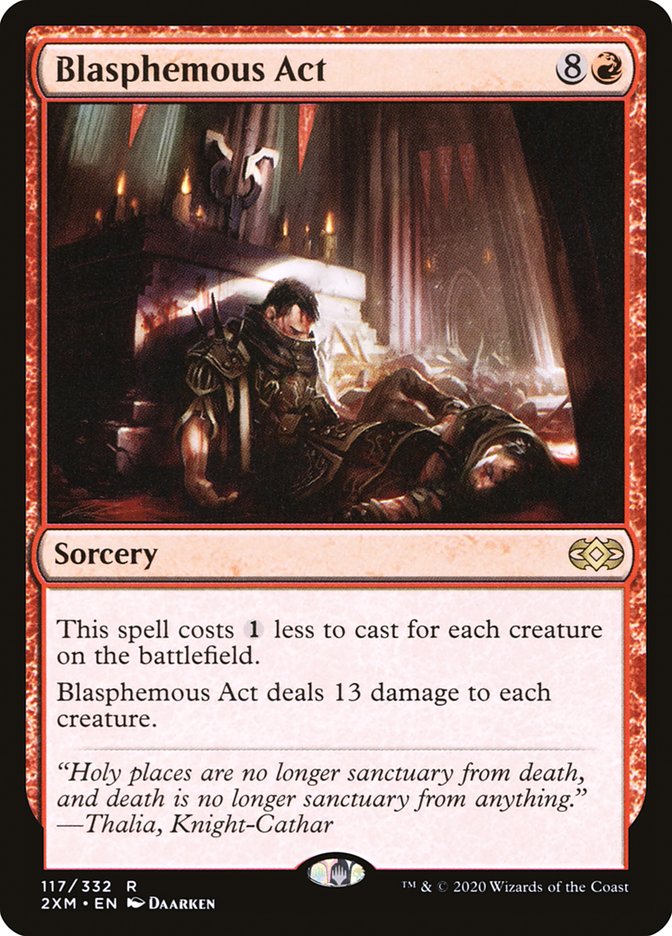
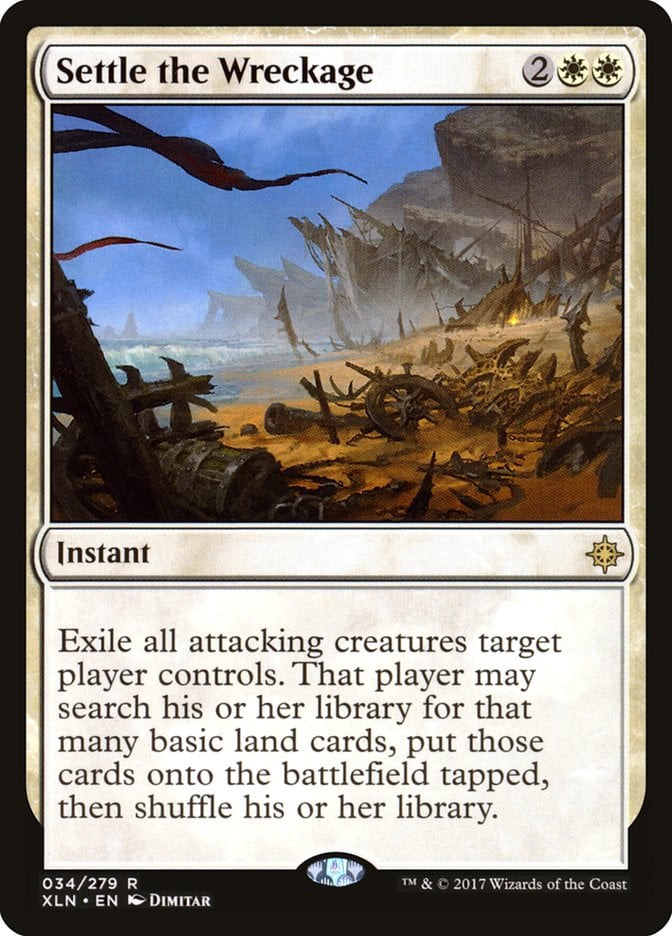
The large majority of board wipes, like Wrath of God, Blasphemous Act, Toxic Deluge, and so forth don’t target anything, and therefore are not crimes.
But effects like River's Rebuke, Settle the Wreckage, or Liliana of the Veil‘s ultimate all target a player, and make you a criminal.
Do Counterspells Trigger Crime?
Yes, as long as your counterspell targets the spell that you’re countering.
Does an Overloaded Spell Count as a Crime?
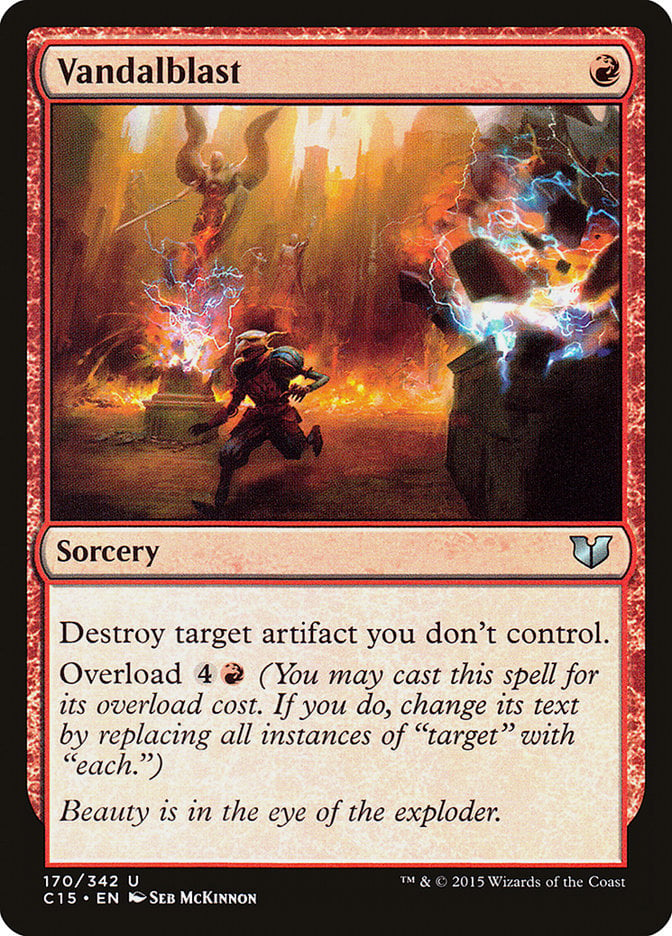
No, overloaded spells are not crimes. While Vandalblast is a crime if you paid to cast it, when you overload it, you lose the “target” and so it is no longer a crime.
Is Gifting a Crime?


Yes gifting can be a crime in Magic, but not all gift cards are crimes. Into the Flood Maw must target an opponent’s creature so it is a crime whether you gift the Fish or not. Dawn's Truce however, cannot be a crime, even if you gift the card to an opponent, there’s no targeting of your opponent’s stuff, and thus no crime.
Is Targeting Spells on the Stack a Crime?
Yes. If you target anything that your opponent controls, including spells on the stack, it’s considered a crime.
Gallery and List of Commit a Crime Cards
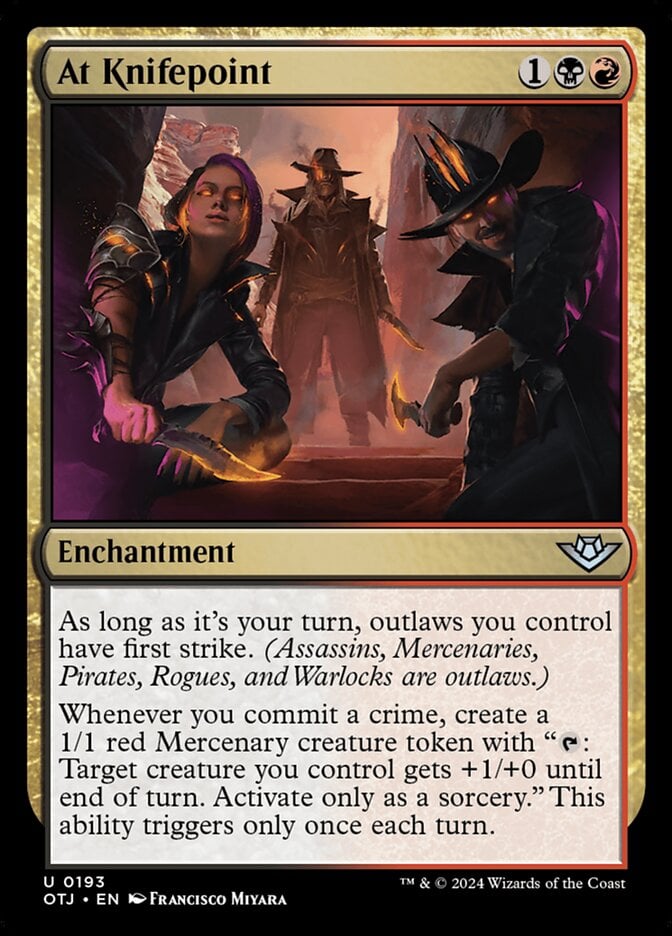
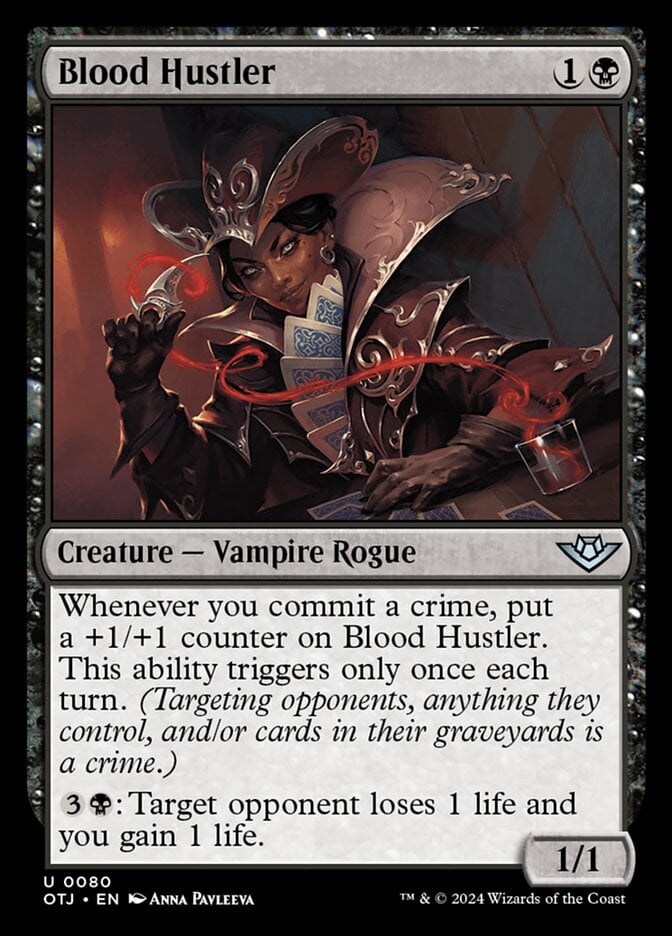
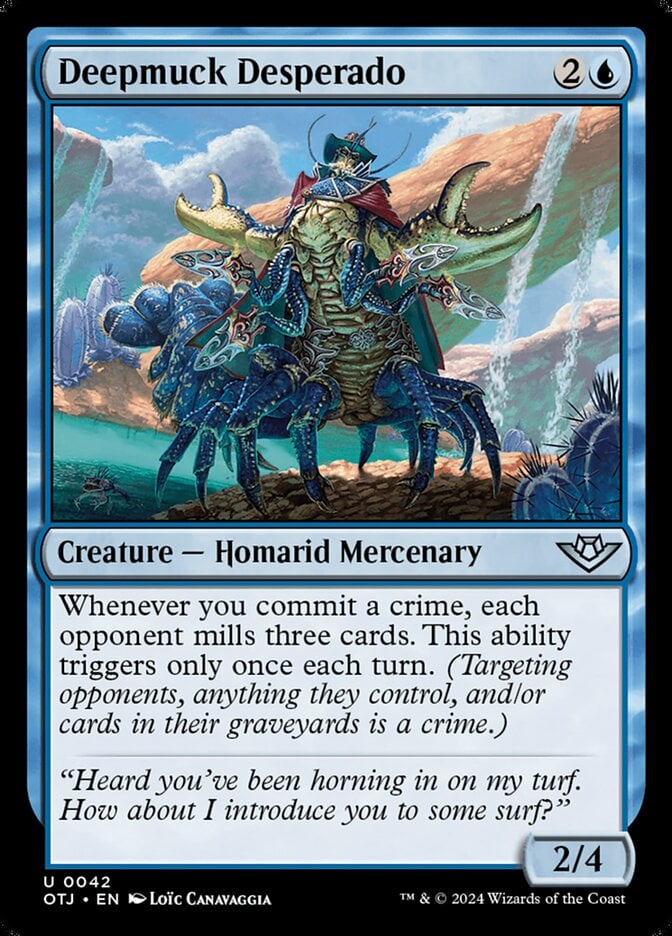
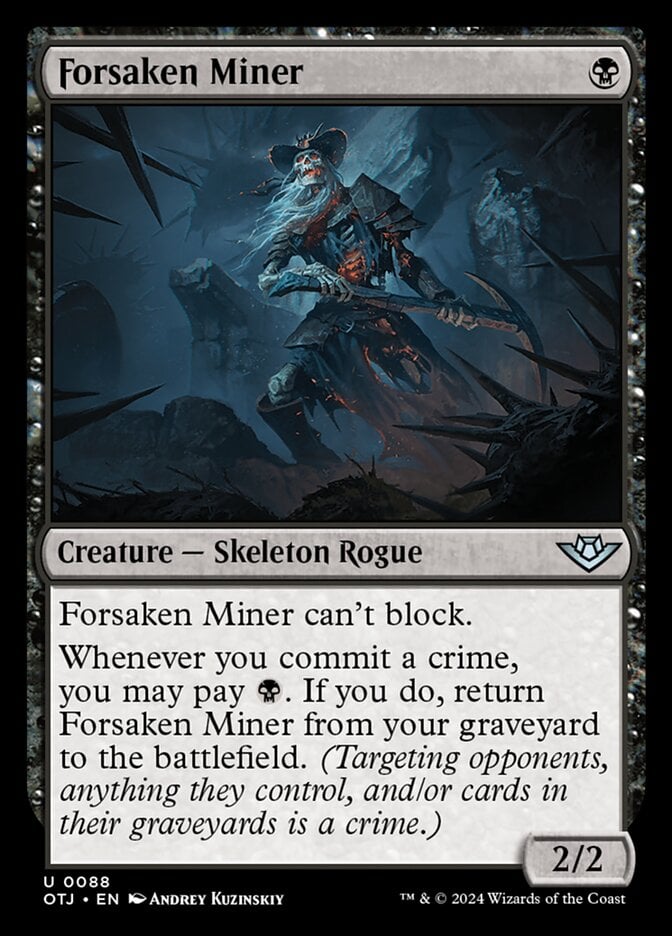
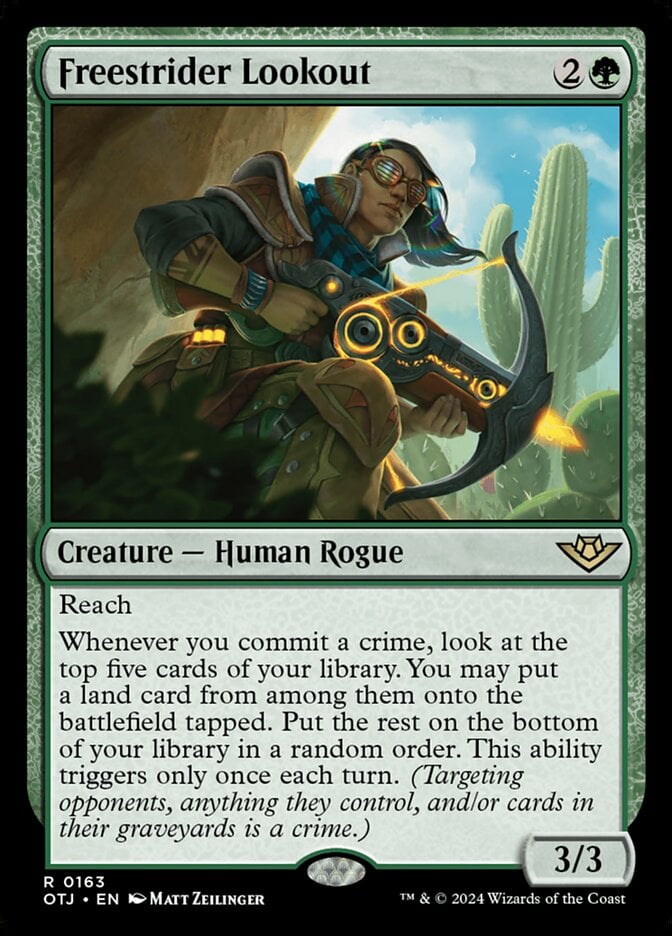
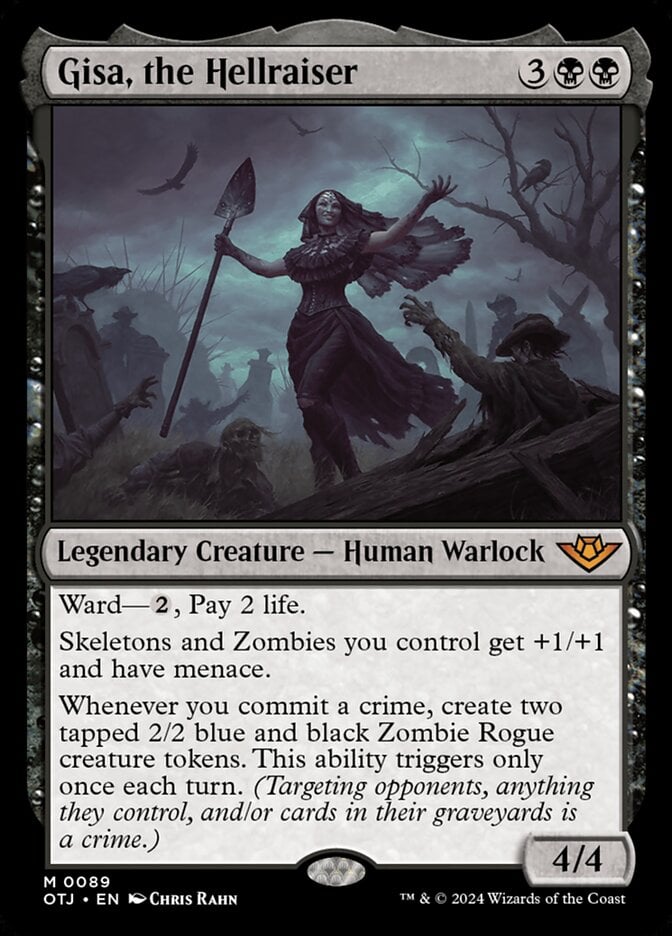
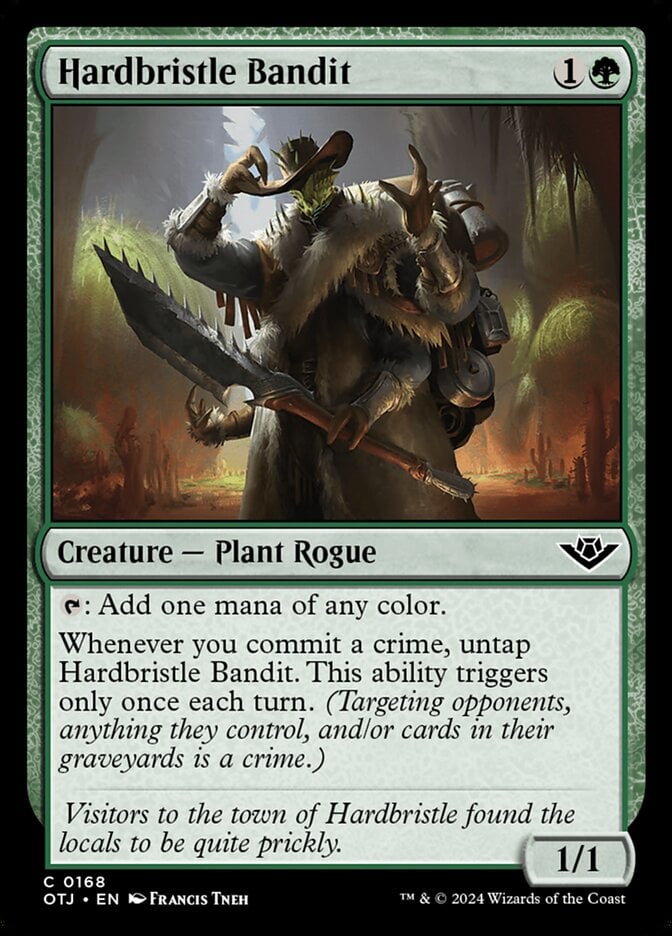
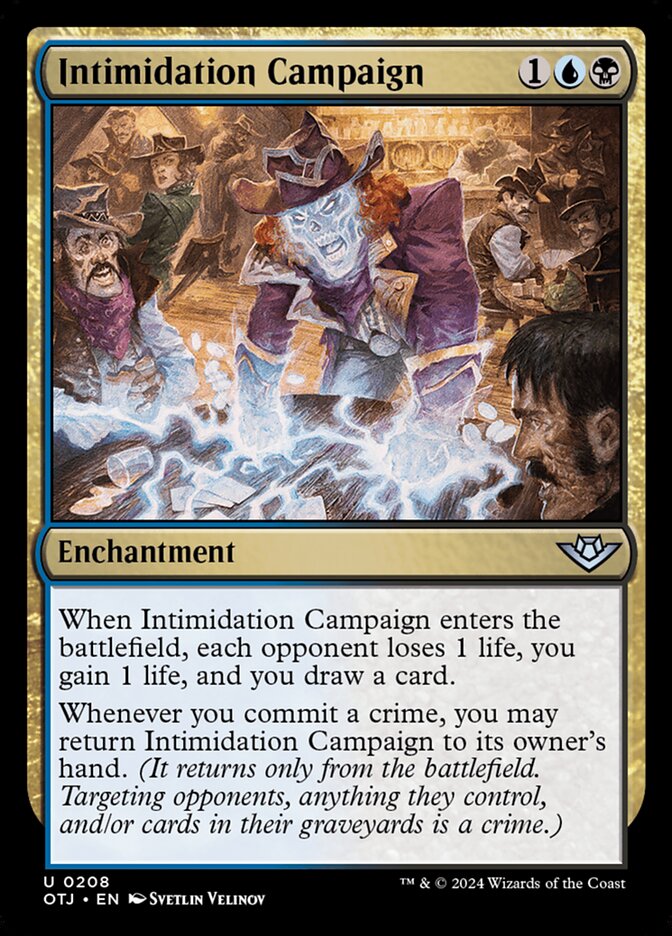
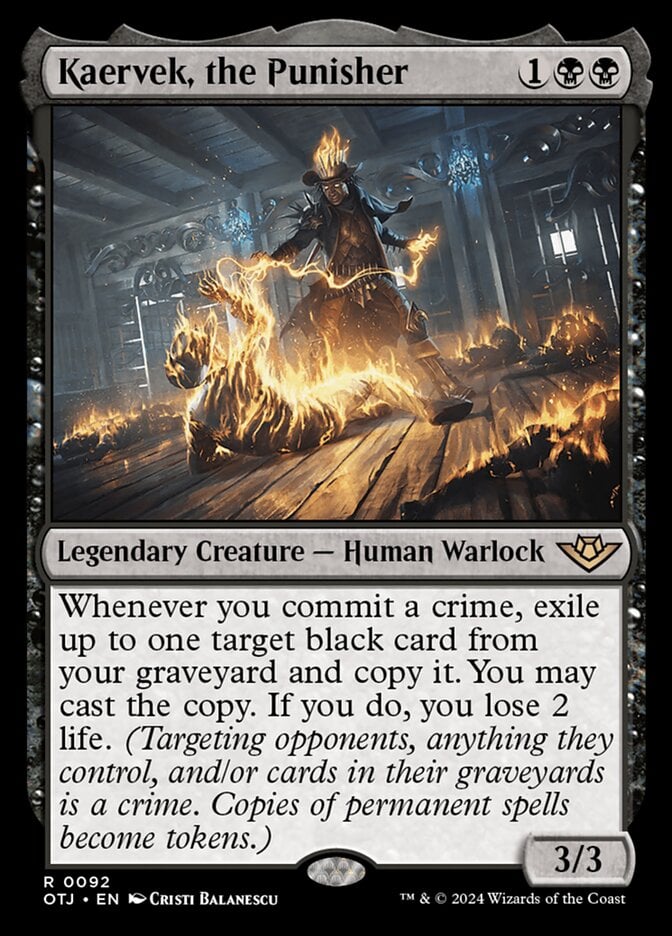
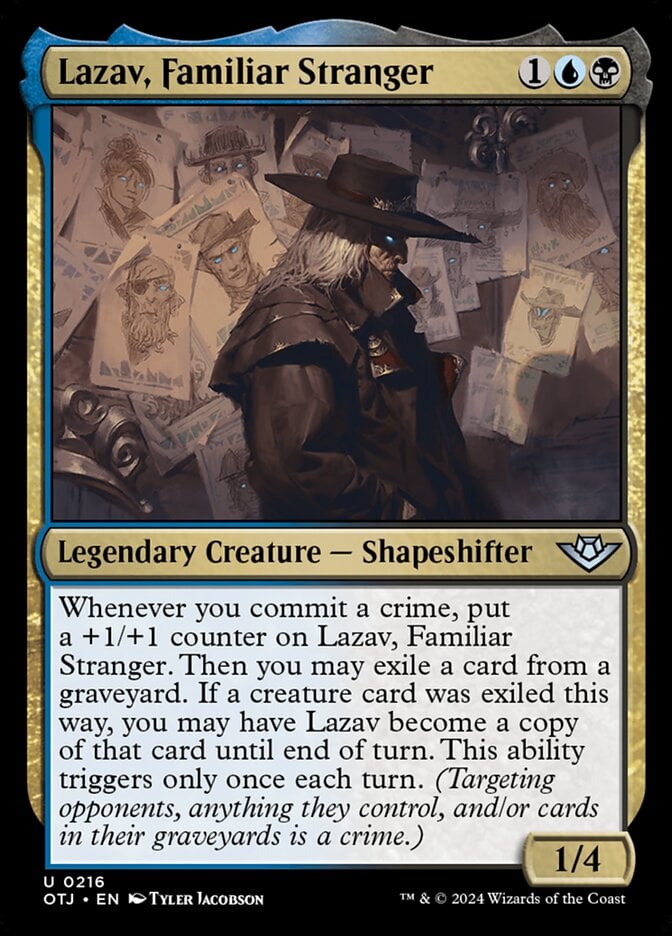
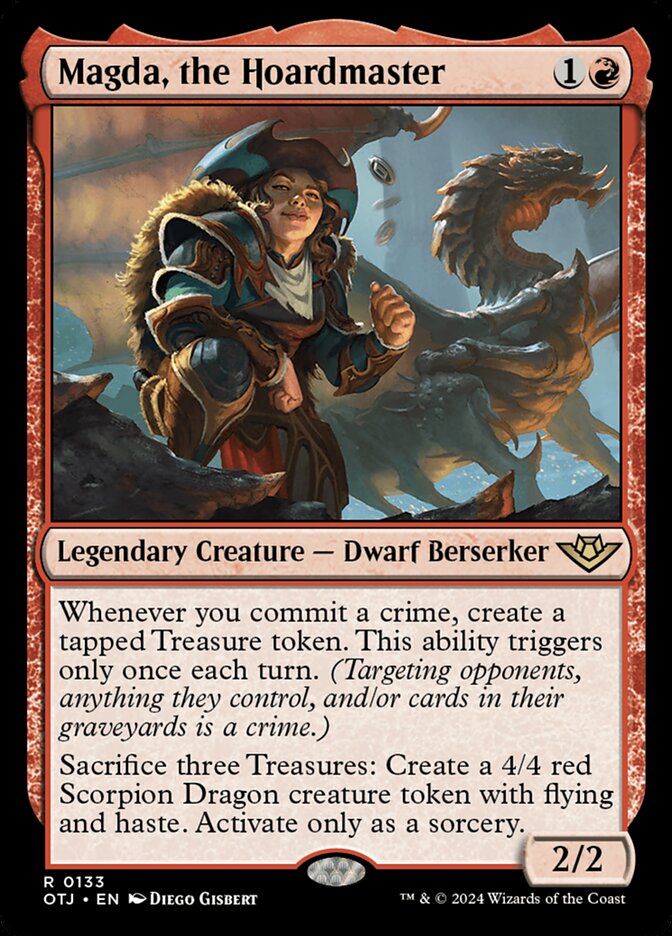
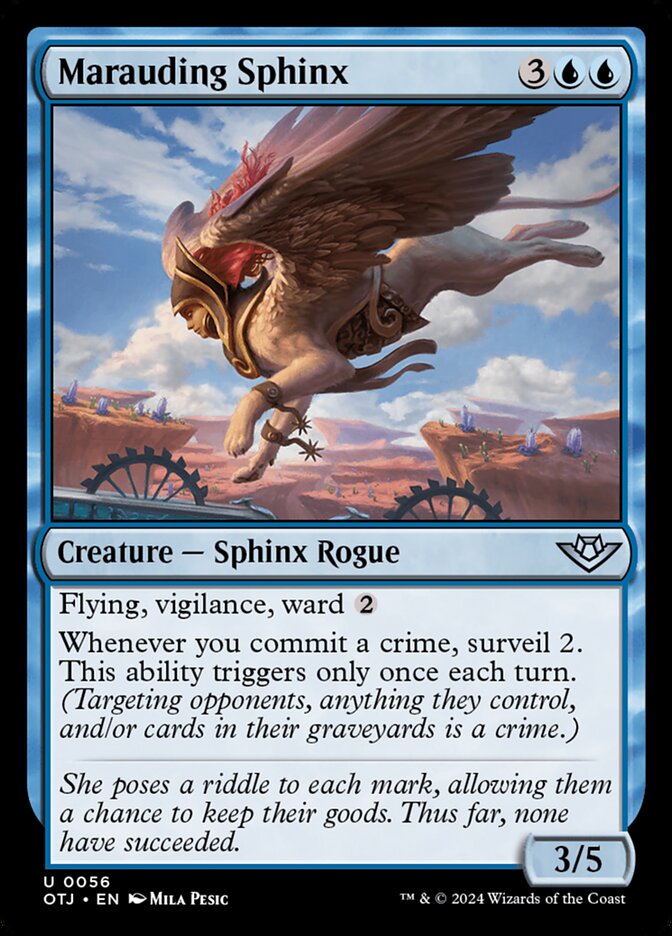
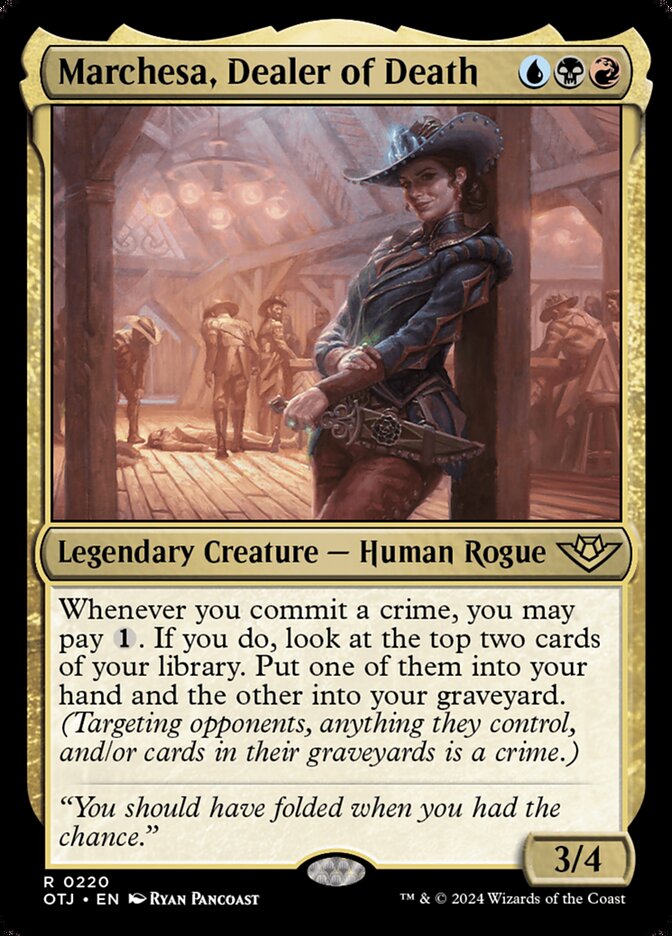
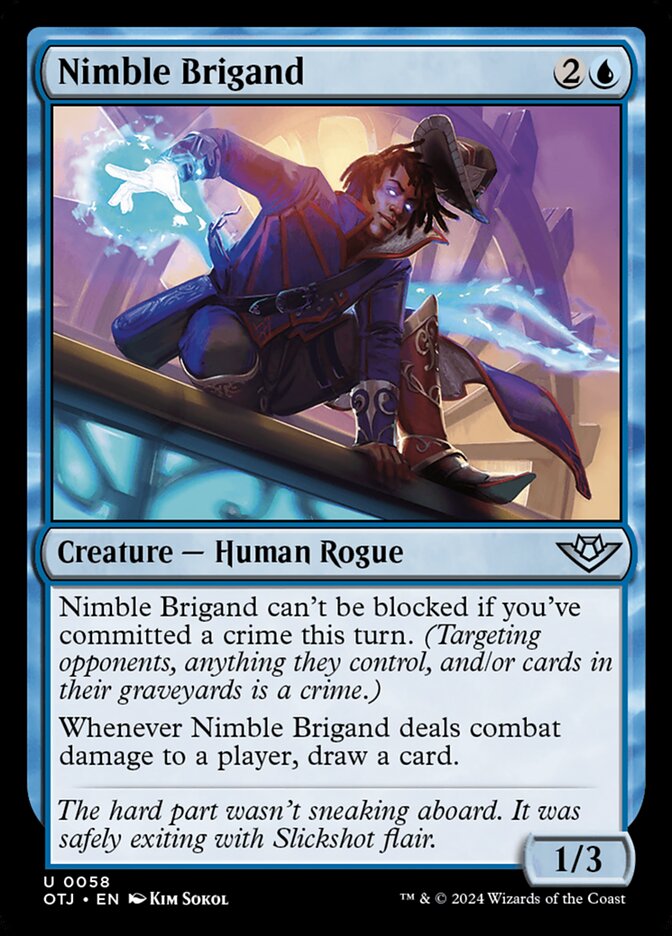
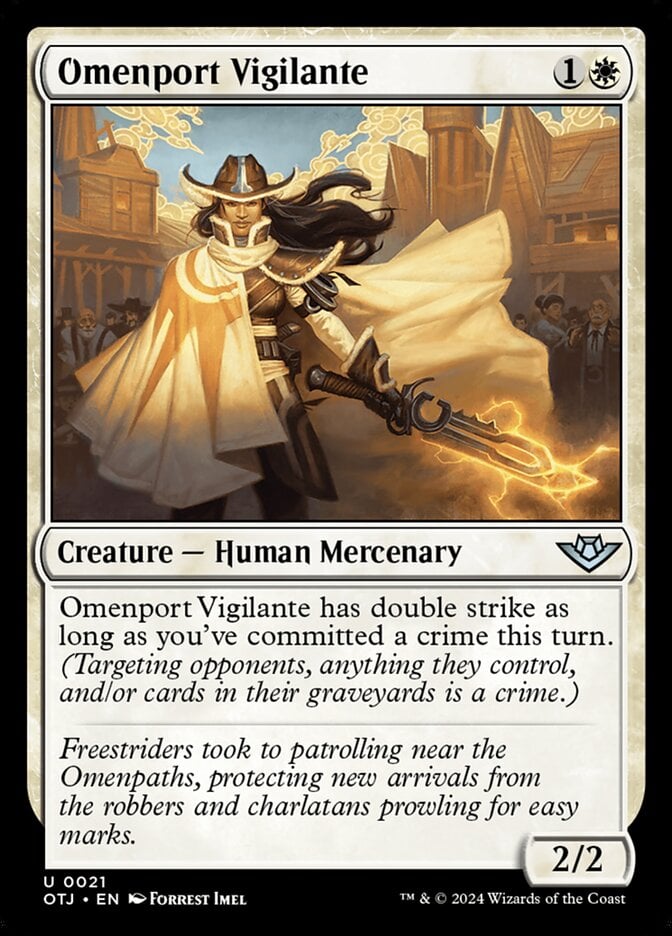
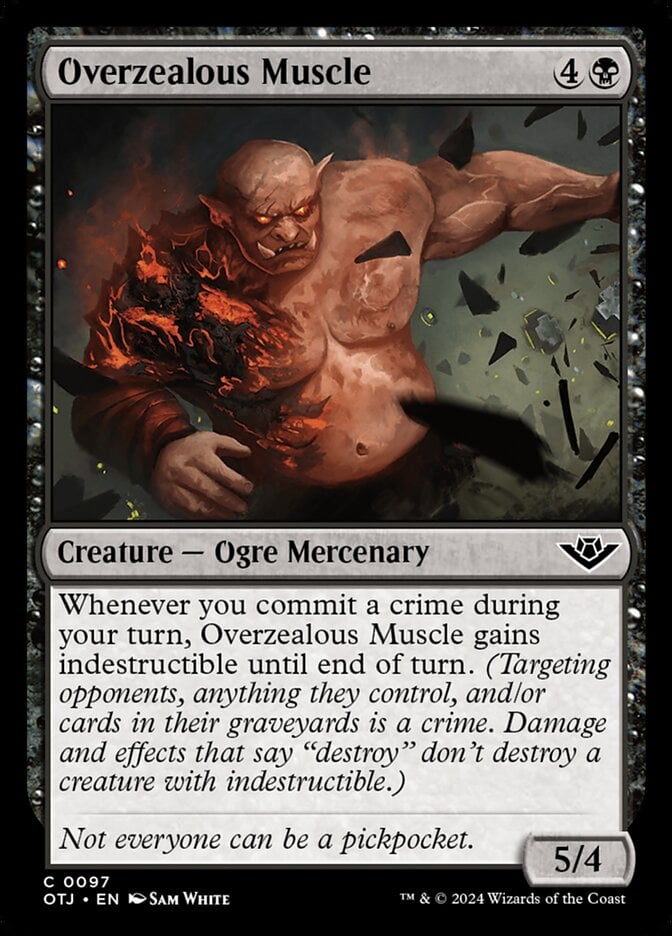
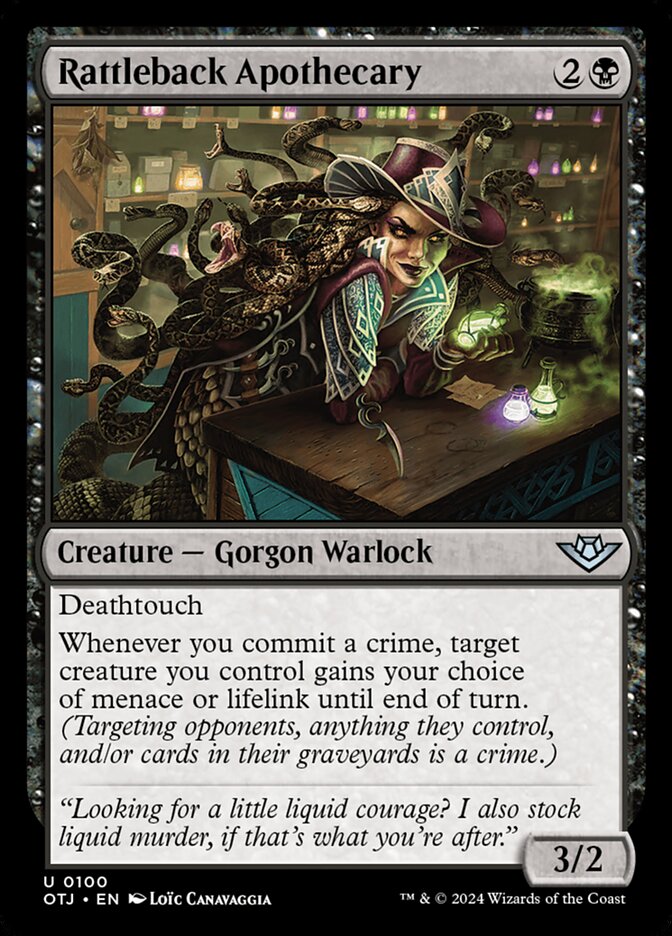
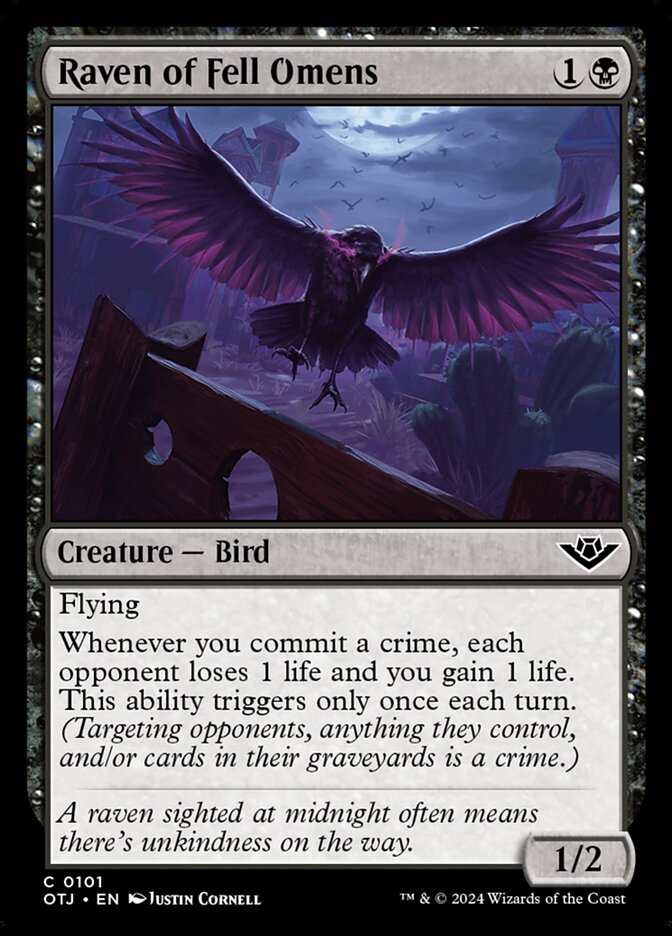
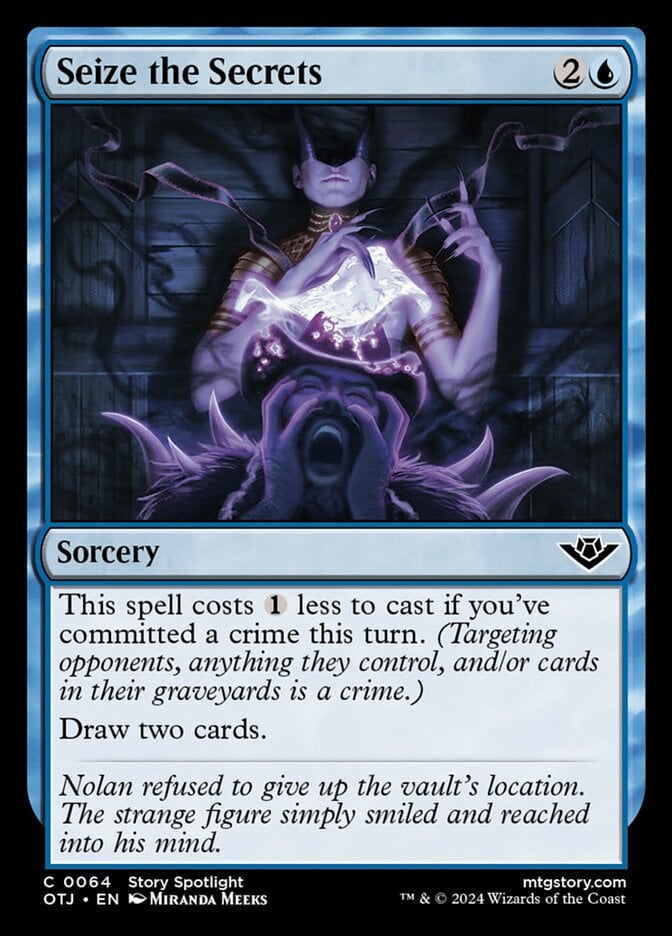
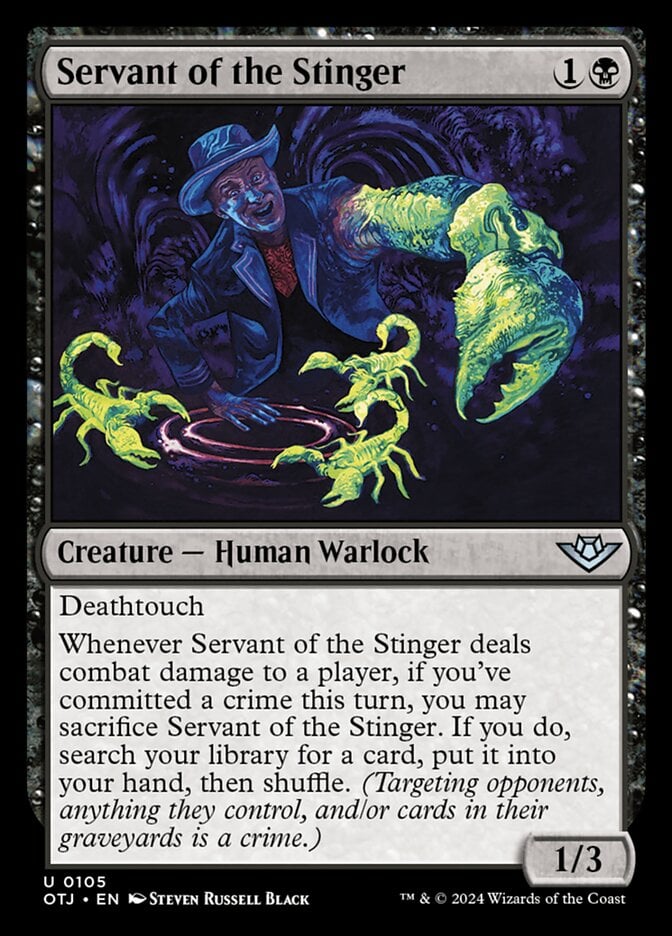
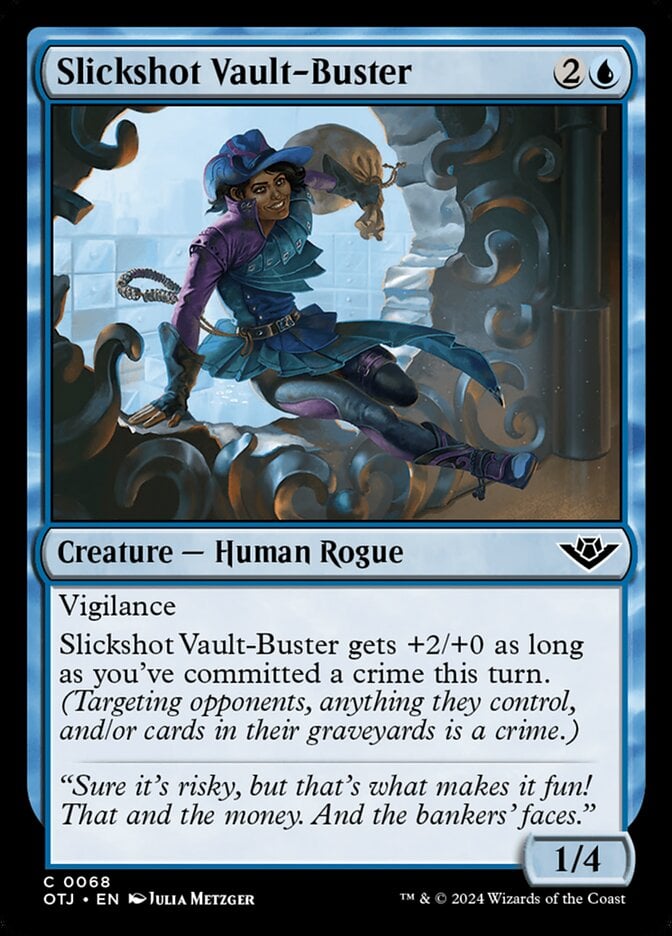
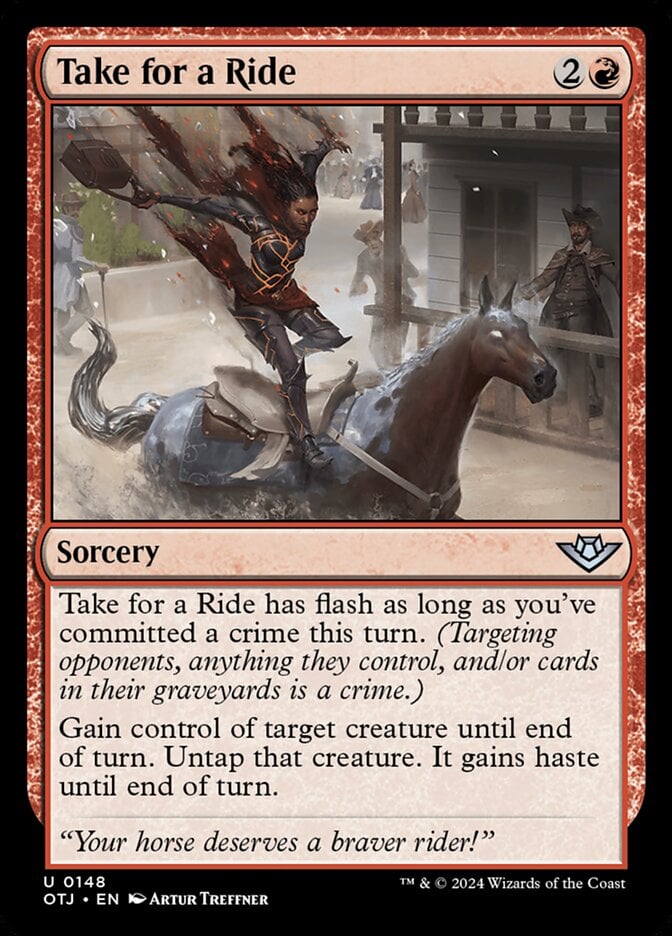
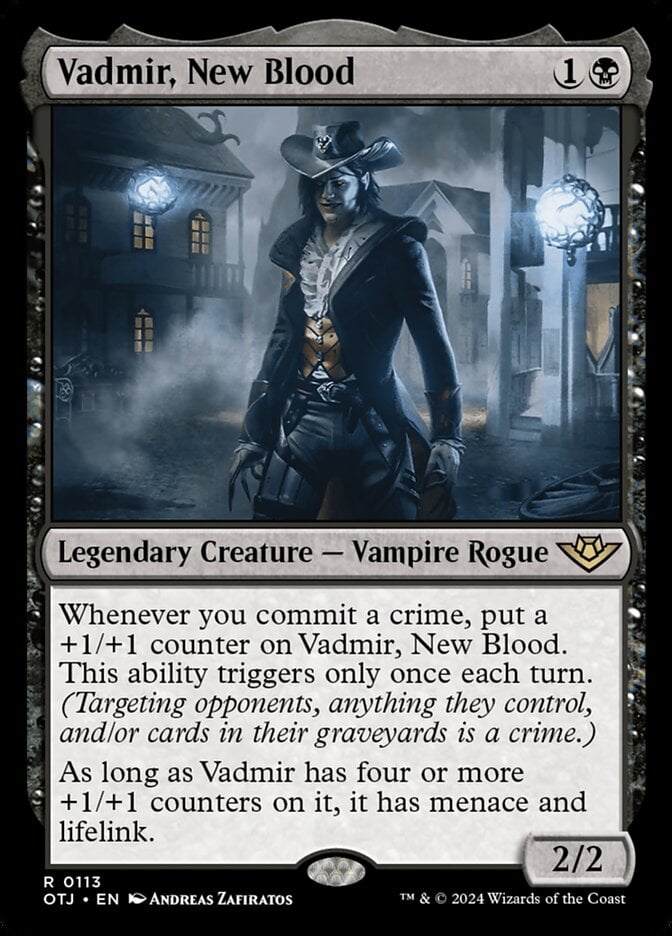
- At Knifepoint
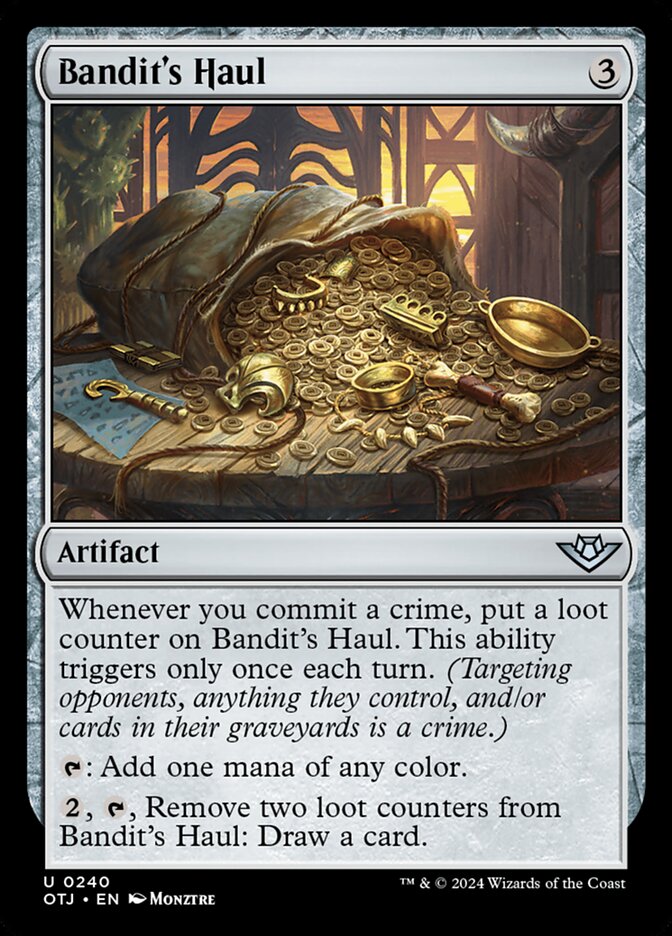
- Bandit's Haul
- Blood Hustler
- Deepmuck Desperado
- Duelist of the Mind
- Forsaken Miner
- Freestrider Lookout
- Gisa, the Hellraiser
- Hardbristle Bandit
- Intimidation Campaign
- Kaervek, the Punisher
- Lazav, Familiar Stranger
- Magda, the Hoardmaster
- Marauding Sphinx
- Marchesa, Dealer of Death
- Nimble Brigand
- Oko, the Ringleader
- Omenport Vigilante
- Overzealous Muscle
- Rattleback Apothecary
- Raven of Fell Omens
- Seize the Secrets
- Servant of the Stinger
- Slickshot Vault-Buster
- Take for a Ride
- Vadmir, New Blood
Best Commit a Crime Cards
Hardbristle Bandit, Bandit's Haul, and Freestrider Lookout give us a mana dork, a mana rock, and a tutor that care about committing crimes. Someone smarter than me can make some kind of “rampant crime” joke here.
#5. Marchesa, Dealer of Death
If this were a yearbook, Marchesa, Dealer of Death wins Most Likely to Become a Crime-Centric Commander. It lets you play many of the other cards that care about when you commit a crime, but Grixis also accesses three important types of crime. Blue has counterspells, black has removal, and red has direct damage and burn, plus the Grixis commander allows a bunch of effects that let you take control of a target creature.
#4. Kaervek, the Punisher
Kaervek, the Punisher turns your crime-committing instants into a Snapcaster Mage effect for your black cards with the additional cost of 2 life. Not bad for a bulk rare that can also pull card advantage out of your targeting activated abilities or sorceries.
#3. Forsaken Miner
Forsaken Miner habitually finds its way into near-infinite combos. Here’s a simple one in a solely black color identity. Put Pitiless Plunderer and Altar of Dementia on the battlefield. Sacrifice the Miner to the Altar, targeting an opponent. Plunderer provides you a treasure, spend that treasure to return the Miner to the battlefield. Let the Altar resolve and sac the Miner again as needed to mill opponents to death two cards at a time, or use another trigger to win sooner.
#2. Gisa, the Hellraiser
Gisa, the Hellraiser is a good lord and source of tokens for zombie and skeleton decks, and the Cult Conscript-type skeleton in Forsaken Miner enables a grave full of synergy.
#1. Magda, the Hoardmaster
Magda, the Hoardmaster is a 2-mana treasure generator that also lets you trade in your hoard for Scorpion Dragons.
Round Up

Oko, the Ringleader | Illustration by Magali Villeneuve
Ever since I saw what committing a crime was and how it worked, I’ve had Not a Crime by Gogol Bordello stuck in my head: “In the old time, it was not a crime.” Just like descending in The Lost Caverns of Ixalan, WotC turns things we already do into keywords and game actions. It makes sense: They want new sets to be compatible with everything that came before, and this is an easy way to do it.
Which are your favorite crimes to commit in Magic? Which cards with “commit a crime” text do you think are the best? Let me know in the comments or over on Draftsim’s Discord.
Until next time, go out there as a smooth criminal!
Follow Draftsim for awesome articles and set updates:










Add Comment