
Last updated on March 12, 2026

Sea Gate Restoration and Sea Gate, Reborn | Illustration by Adam Paquette
Double faced cards (DFC) have been a constant weapon in WotC’s arsenal to introduce new mechanics and changes in gameplay. The original Ixalan block brought several powerful enchantments and artifacts that transform into powerful lands if the conditions are met. Zendikar Rising introduced us to the infamous MDFCs, which are spells on one side and lands on another.
The modal gates have been opened, with MDFCs making another appearance in Modern Horizons 3. MTG now has more than 100 cards that have a land as one of their sides, and I’ve got the 48 best.
Let’s dive in!
What Are Flip Lands in MTG?

The Myriad Pools | Illustration by David Alvarez
Flip lands are any land that has two functional sides. This could be cards that are lands on both sides, or lands on one side and another type of card on the other.
Certain flip lands start as one type of permanent and transform into a land under certain conditions, while others force players to choose which side to use as it enters play.
#48. Jwari Disruption / Jwari Ruins
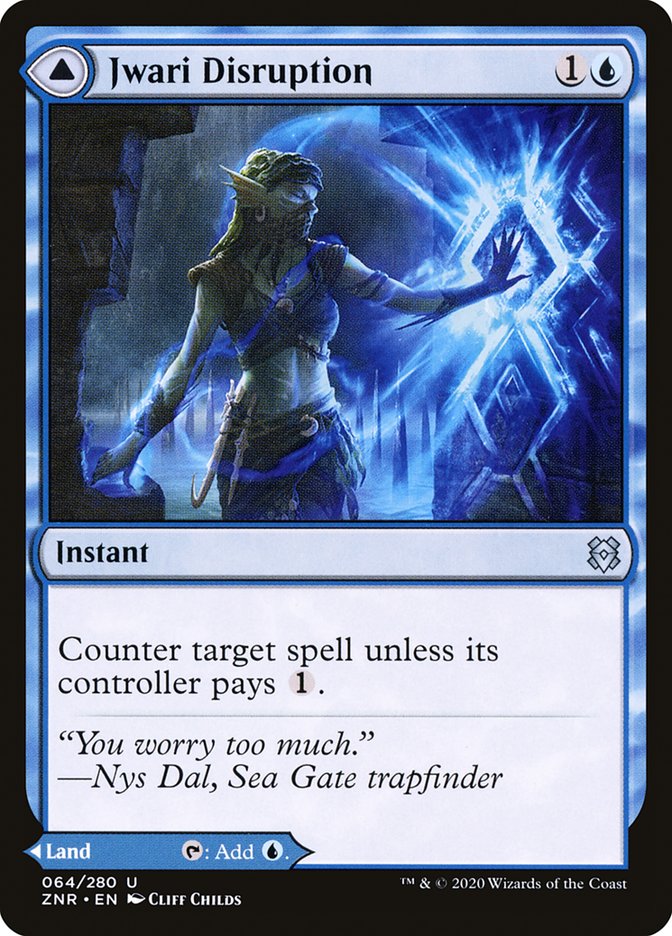
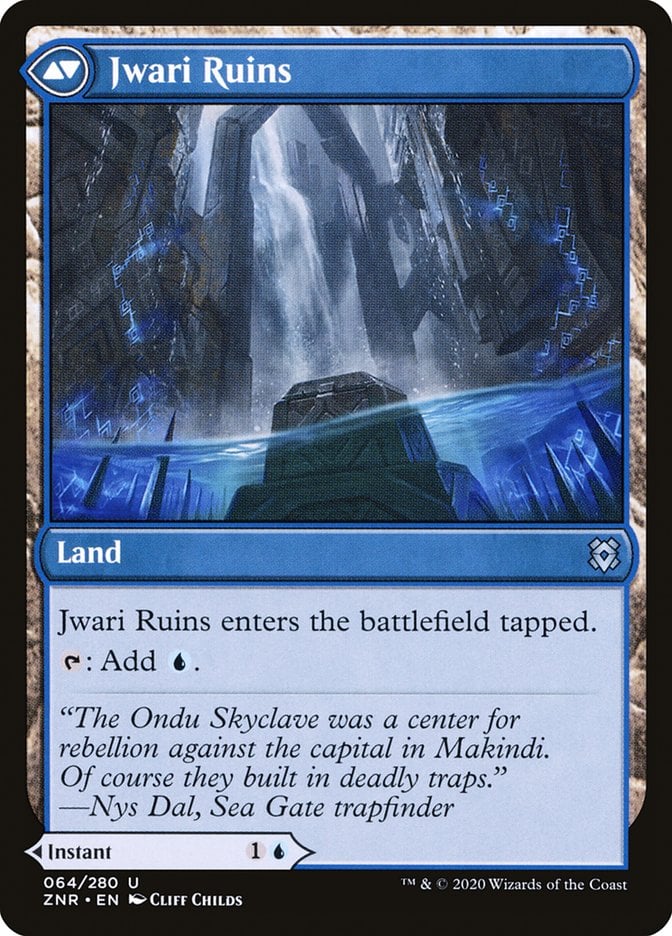
There are instances when Jwari Disruption comes in handy. If an opponent is tapping out for a card or needs an exact amount of mana to pull off a big move, this can throw a wrench in that plan.
I think you might be better off running Spell Pierce and giving up the option to play this as Jwari Ruins.
#47. Kabira Takedown / Kabira Plateau
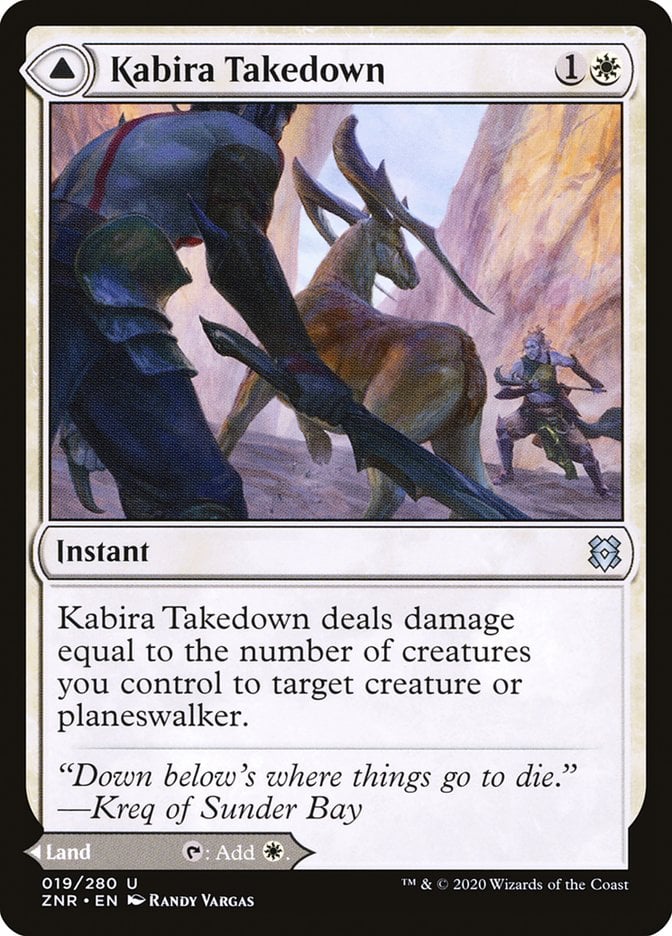
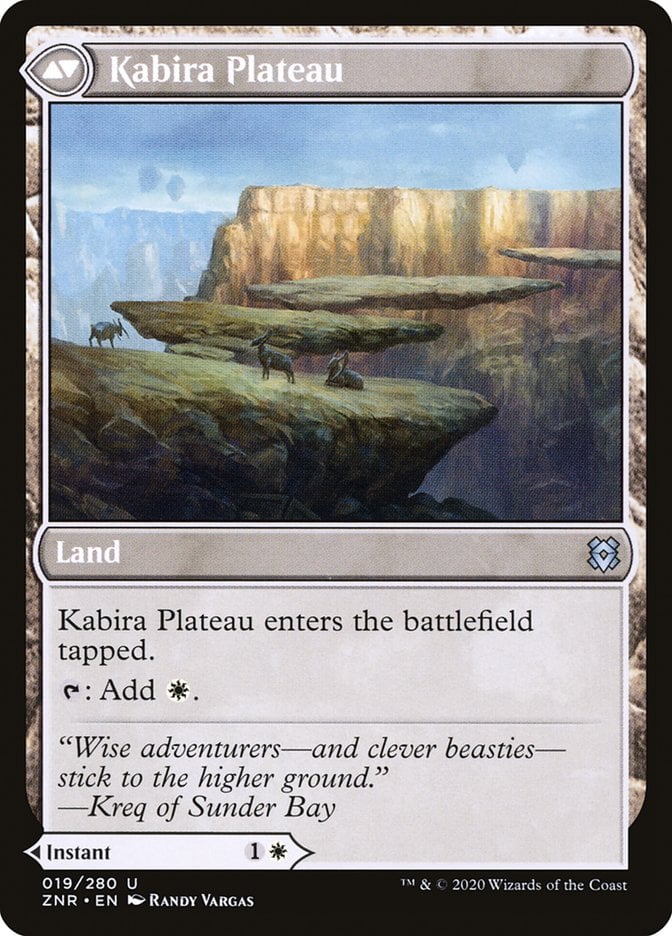
Kabira Takedown is too hit-or-miss of a card to be consistently good. If you happen to have enough creatures to destroy what you want, that’s great, but you’d be better off running a similarly priced spell that removes your target like Path to Exile.
Being a flip land helps slightly with how niche the card’s effect is, but I still think you’d be better off just running a different card.
#46. Silundi Vision / Silundi Isle
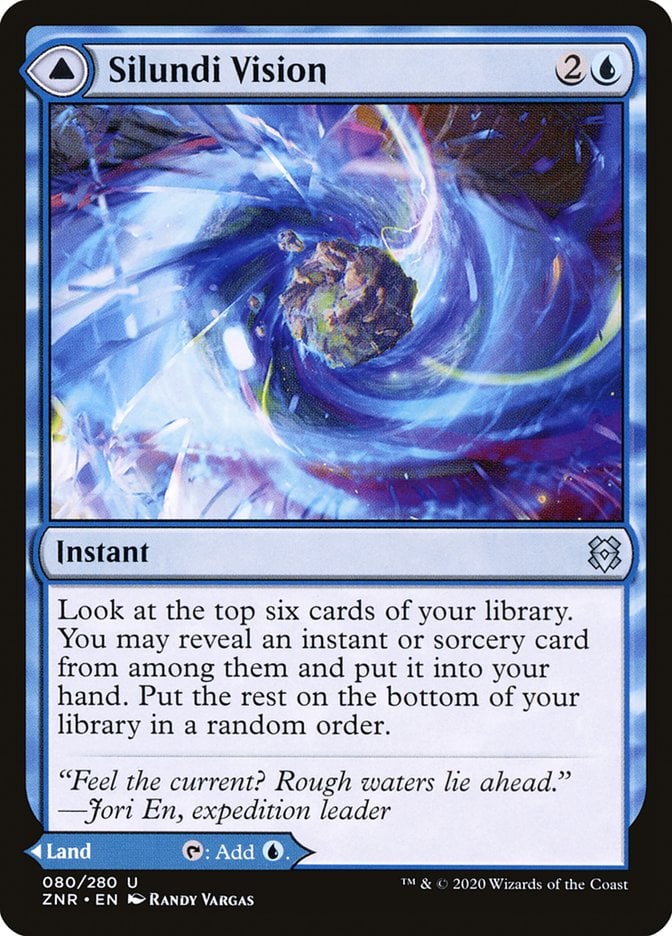
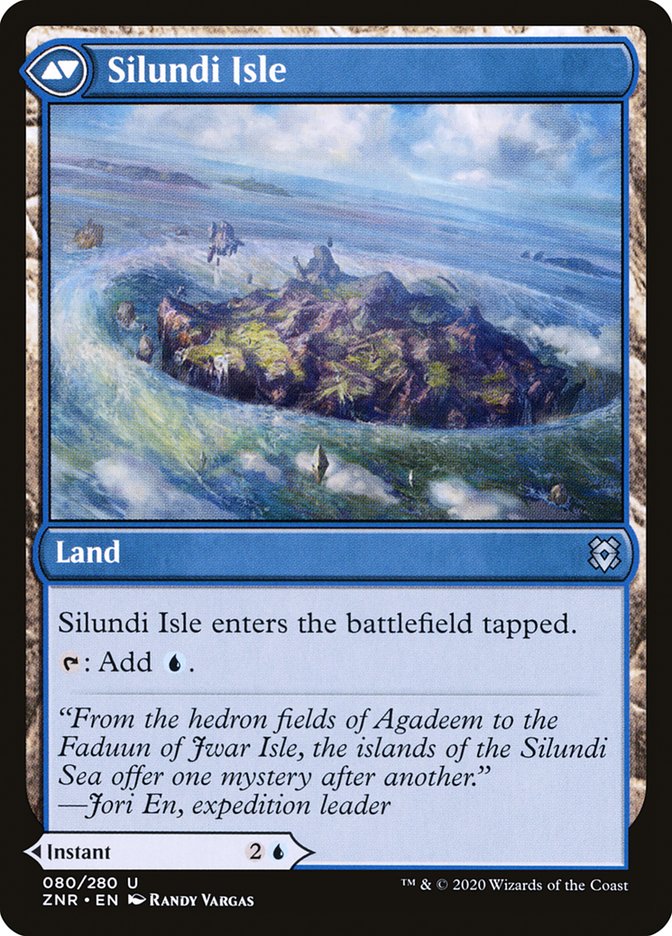
Silundi Vision is a pretty good filler card in a Limited deck, even some spell-slinger Commander decks. It’s a land if you need it to be, or it can help you dig relatively deep into your library for a card given its cheap cost.
#45. Hagra Mauling / Hagra Broodpit
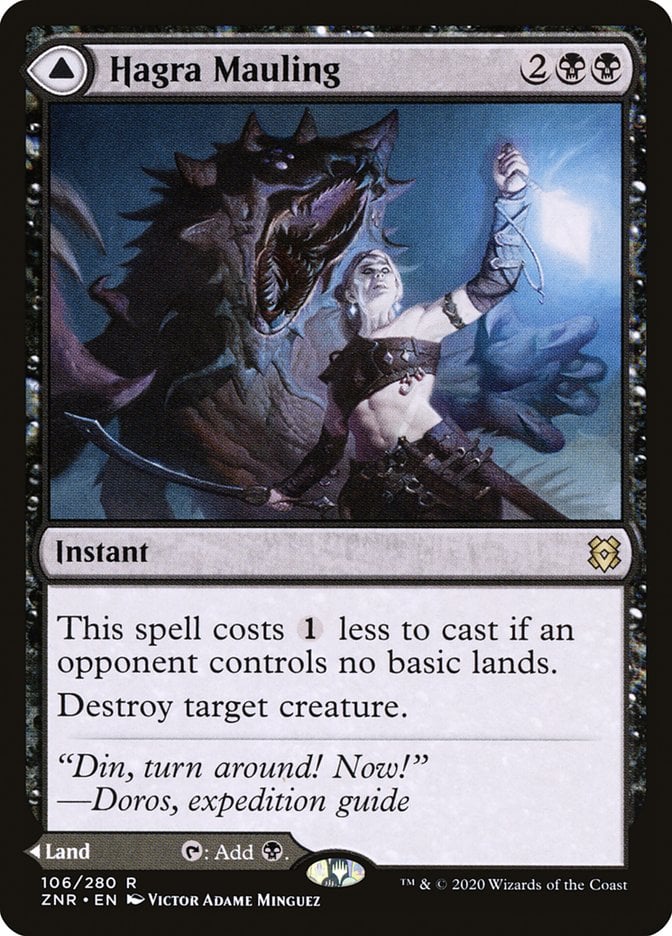
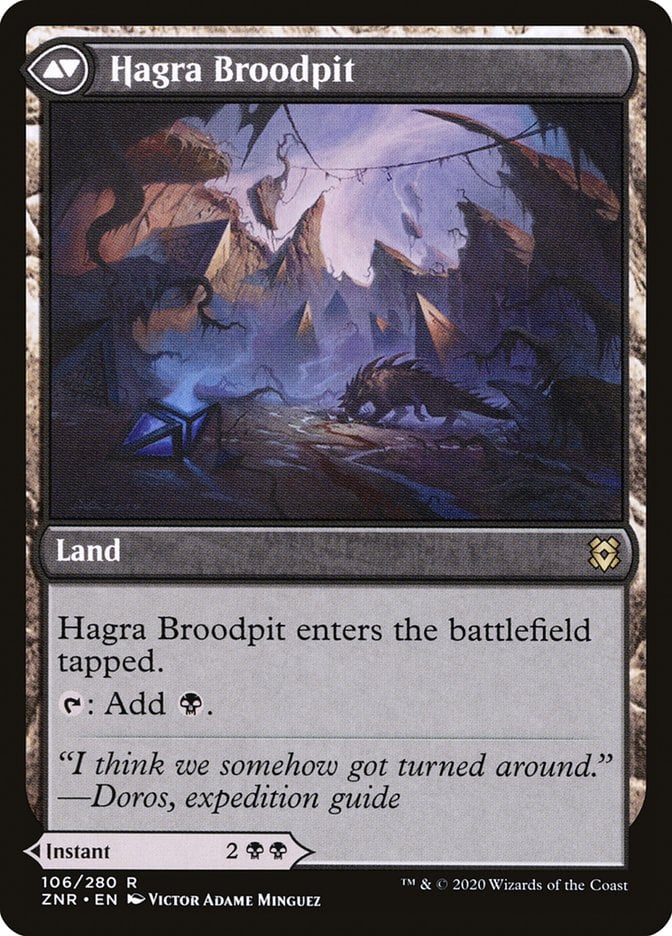
Hagra Mauling isn’t too overpriced of a removal spell. Given the prevalence of nonbasic lands now you probably won’t pay more for this card than you would for Murder, and you have a land attached if you need it.
#44. Tarrian’s Journal / The Tomb of Aclazotz
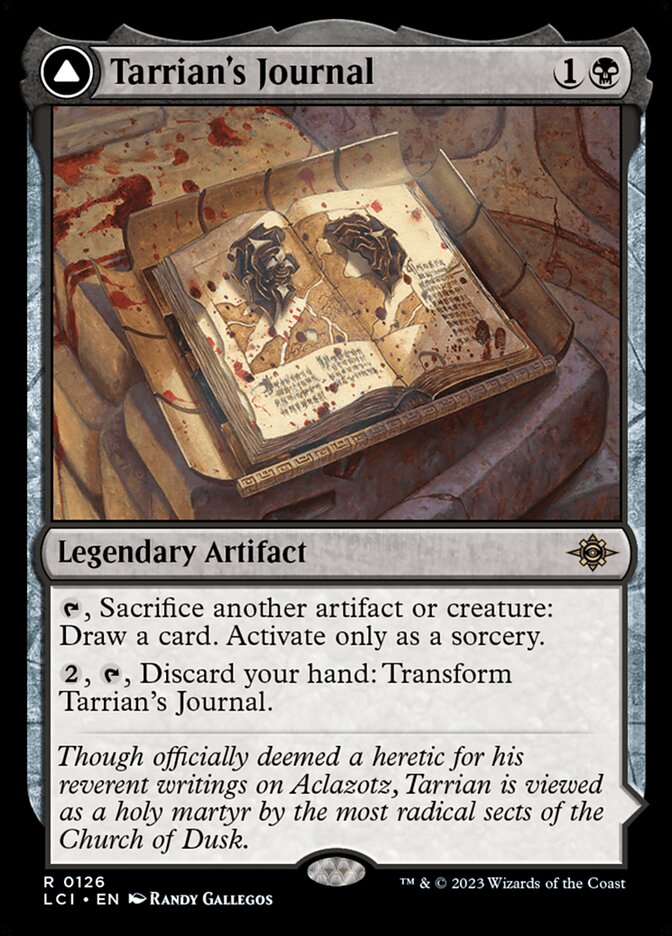
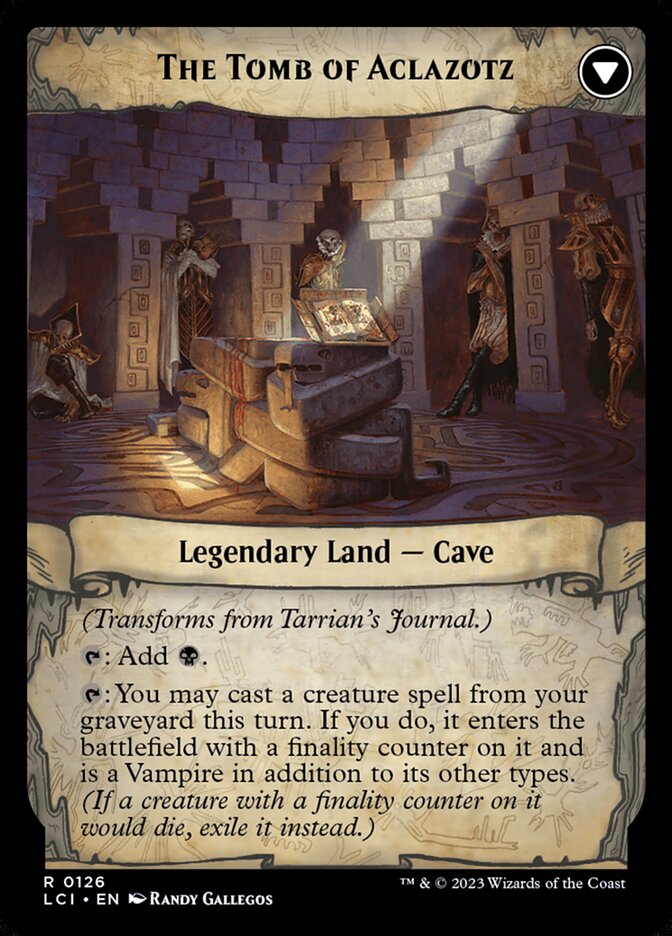
Tarrian's Journal is a slow sac outlet, and The Tomb of Aclazotz allows you to cast one creature from the grave per turn and does represent card advantage, though it is tricky to use.
#43. Spikefield Hazard / Spikefield Cave
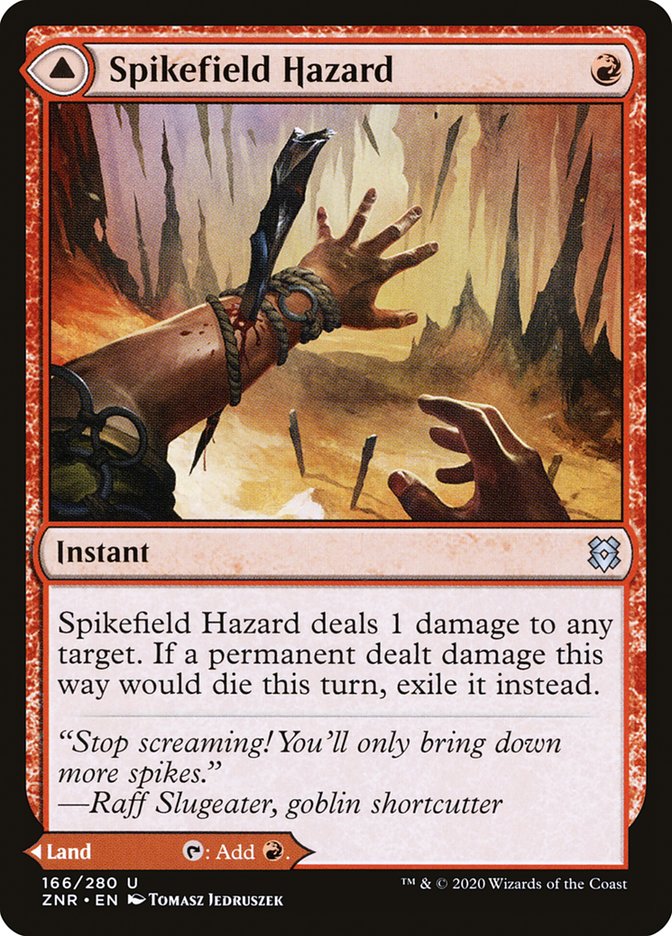
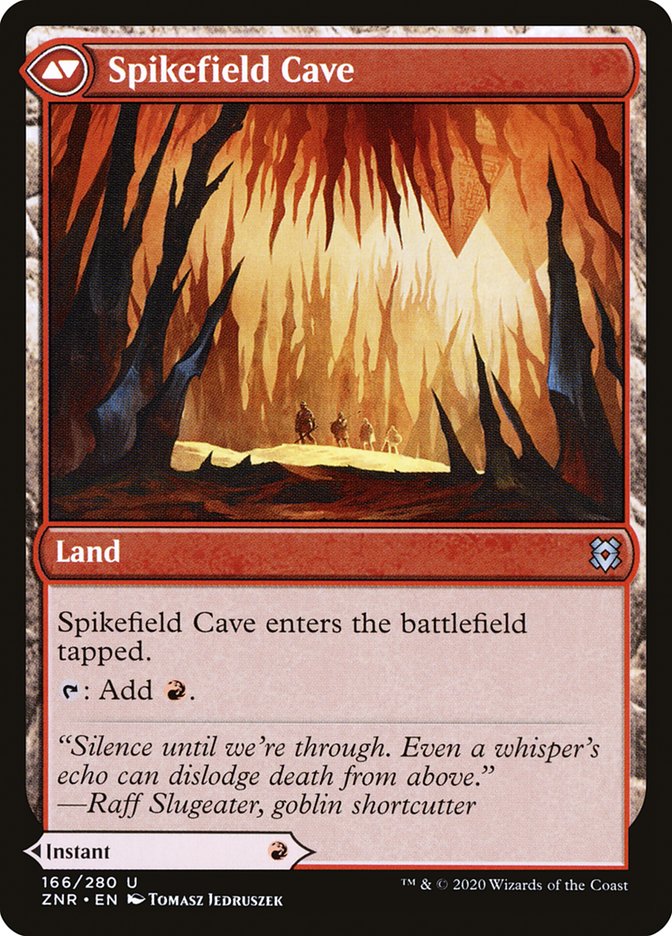
Spikefield Hazard can be a decent removal spell. If you kill the creature hit with it during combat or any other part of your turn after it was damaged then it’ll be exiled. One extra mana to exile a card like Arclight Phoenix or Tenacious Underdog isn’t bad at all.
#42. Sink into Stupor / Soporific Springs


Sink into Stupor from Modern Horizons 3 is an enhanced version of Unsubstantiate, and this blue instant can be a huge tempo swing if your enemy plans on spending all their mana on one spell. It’s a situational card, so if you can put this effect on a land, it’s even better.
#41. Havengul Laboratory / Havengul Mystery
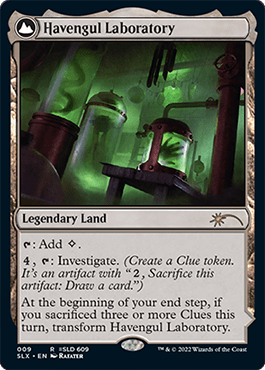
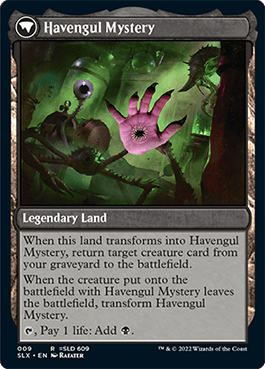
Havengul Laboratory isn’t an evergreen card, but it can be effective in the right deck. To make it worth your while you’ll need a way to generate Clue tokens besides the activated ability on this card.
Otherwise it’s very expensive and takes a long time to transform. Since you can transform this into Havengul Mystery multiple times, it can serve as a good way to consistently grab creatures from your graveyard.
#40. Welcome to . . . / Jurassic Park
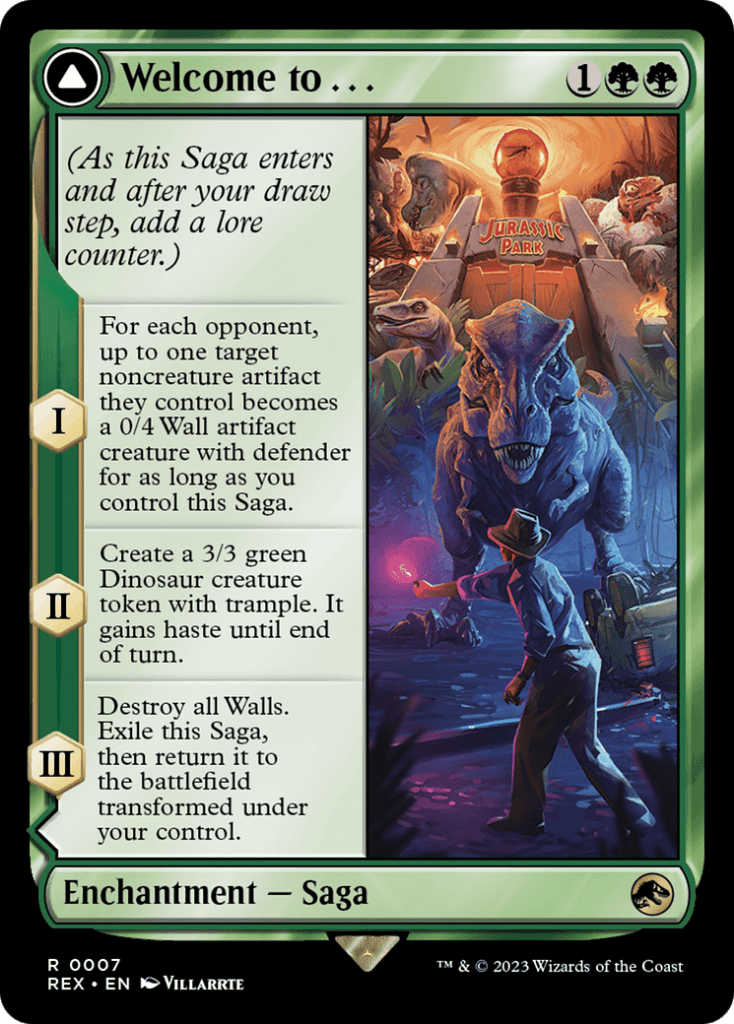

Welcome to . . .Jurassic Park gives a little fence to your opponent, then the best part is when you press play on Jurassic Park, rewind and bring back any dinosaur from your graveyard. Escape doesn’t allow all your dinosaurs to come back at once, but it’s a powerful and flavorful ability nonetheless. The dino-dependent ramp is pretty cool too.
#39. Tangled Florahedron / Tangled Vale
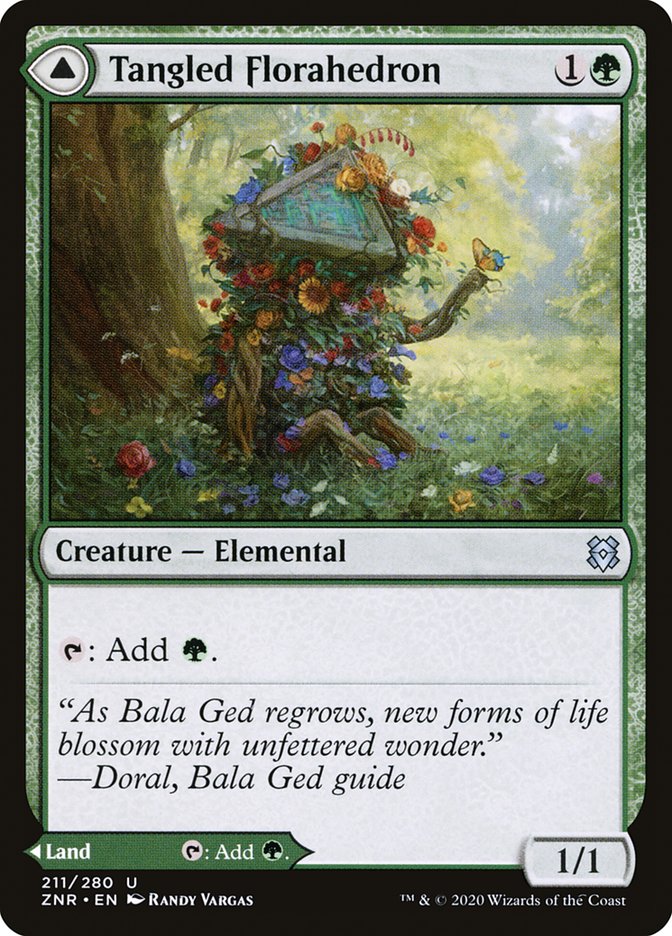
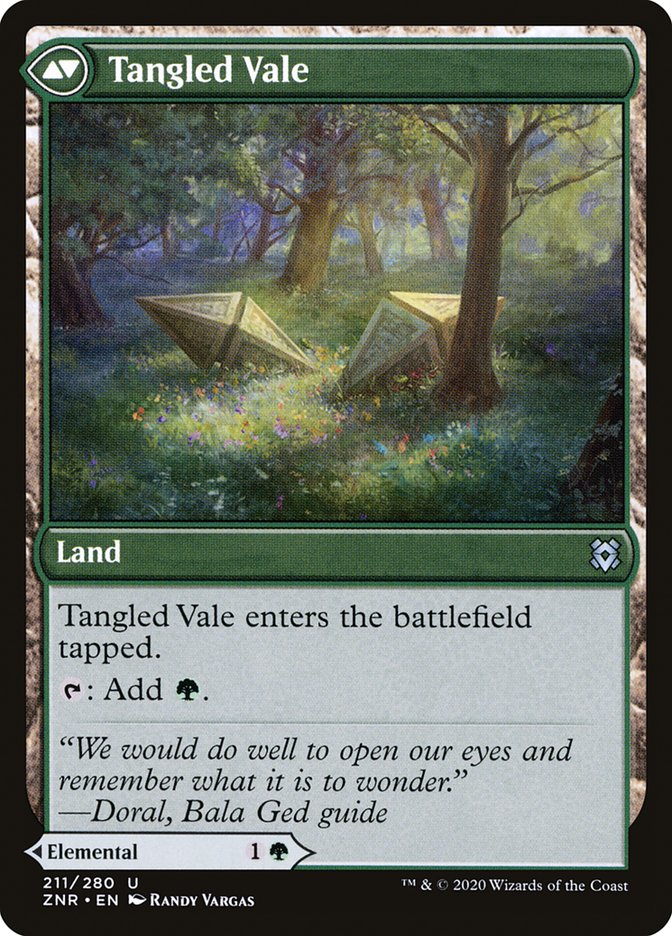
The nice thing about Tangled Florahedron is that both sides of the card are working towards getting you more mana. Unlike other flip lands you don’t have to give up a mana source to play it on the front side, and you get to choose which side’s best in the given situation.
#38. Golden Guardian / Gold-Forge Garrison
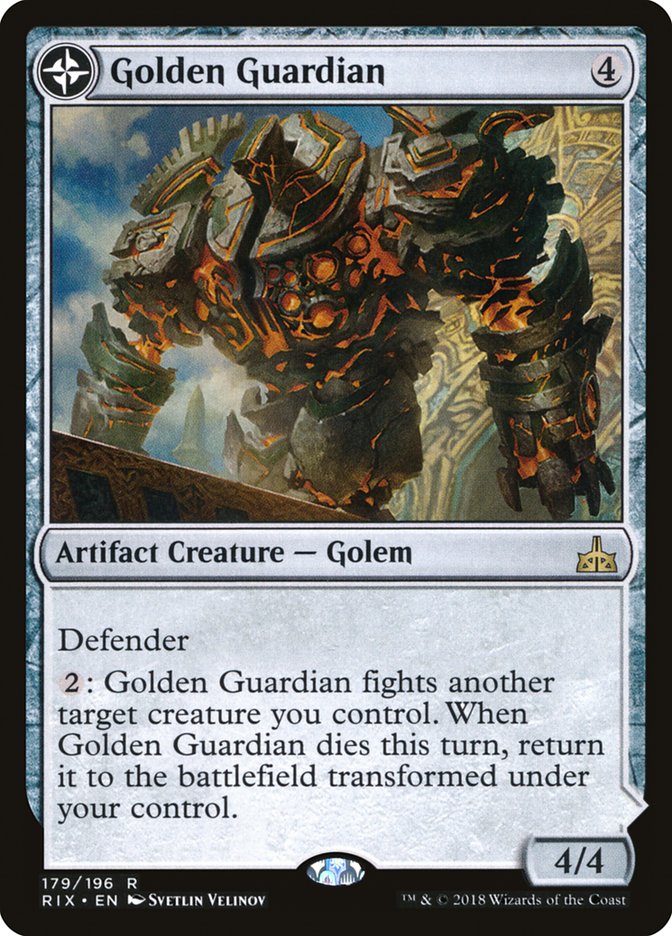
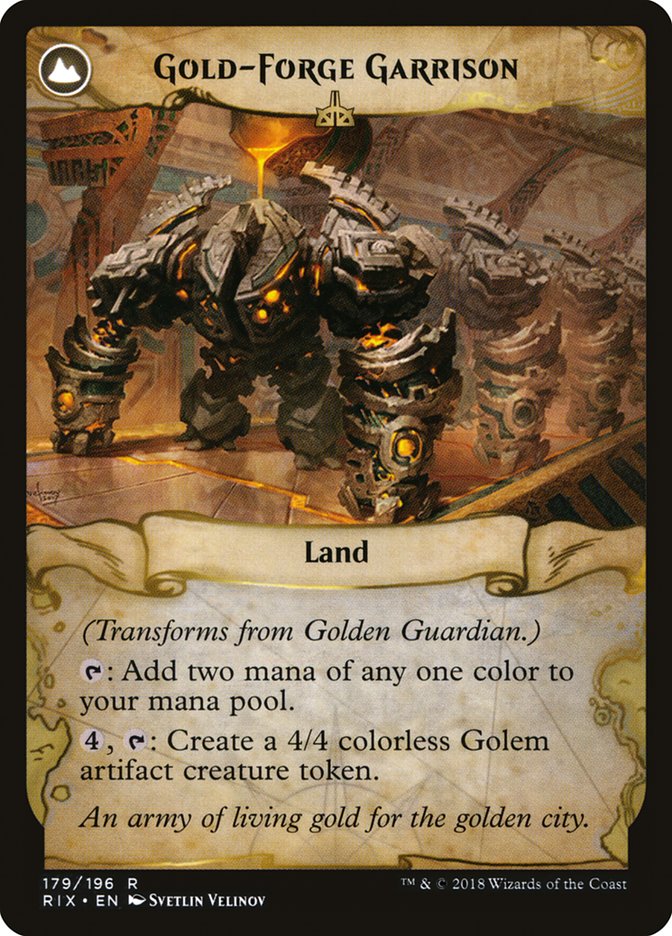
Golden Guardian is a huge flavor win, forcing you to defeat the guardian to access the Gold-Forge Garrison. The Garrison itself is pretty good, both for mana production and creating creatures if you don’t have another use for mana on a given turn.
#37. Emeria’s Call / Emeria, Shattered Skyclave
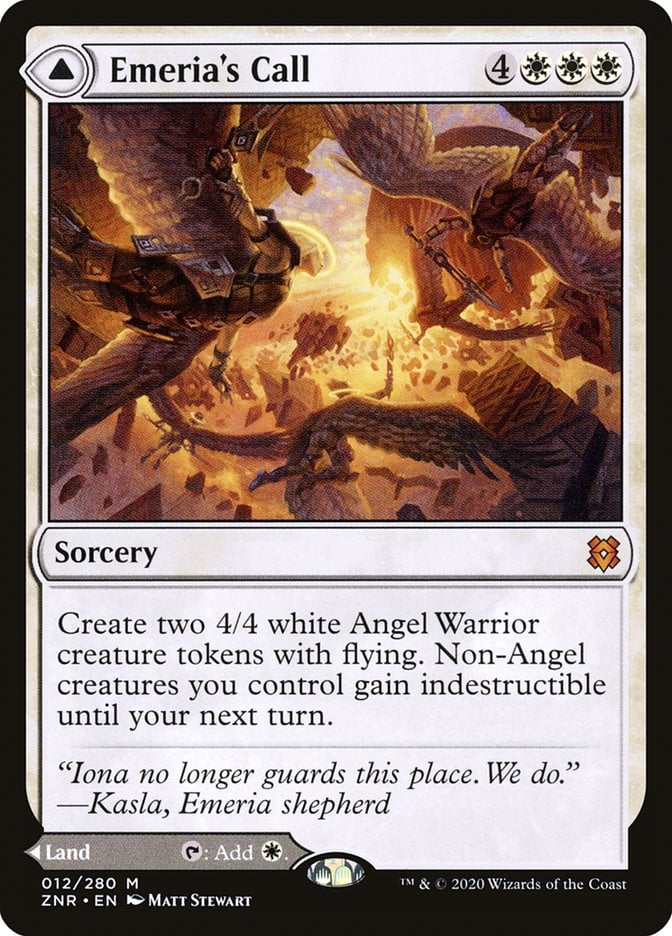
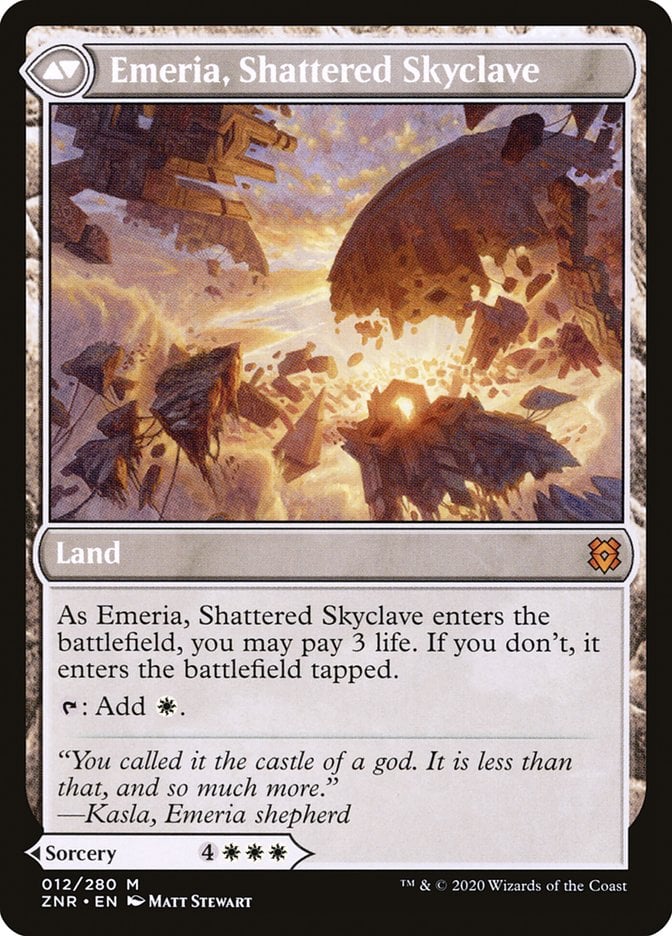
Emeria, Shattered Skyclave can enter the battlefield untapped like the other mythic double-faced lands from Zendikar Rising, so it’s a much more versatile option than other flip lands. But Emeria's Call is way too overpriced, and there are much better and cheaper options to keep your creatures safe.
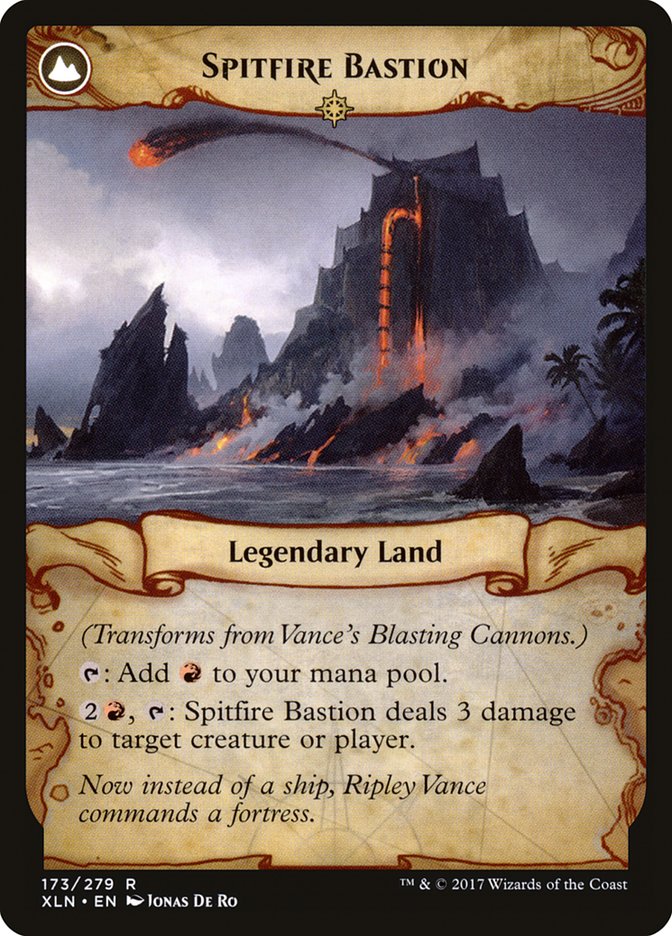
#36. Vance’s Blasting Cannons / Spitfire Bastion
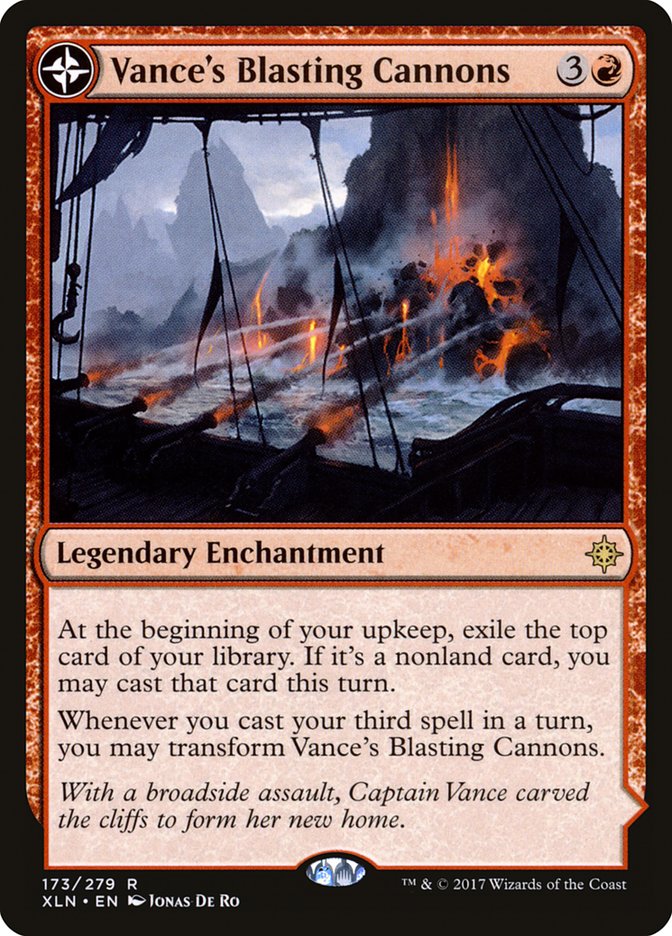
Vance's Blasting Cannons is a great way to make sure you’re drawing into something each turn. It could occasionally turn out biting you, but an extra card a turn can be a very powerful thing.
This card is slightly underwhelming when it flips into Spitfire Bastion, but its damage ability can be helpful in the right circumstances.
#35. Bridgeworks Battle / Tanglespan Bridgeworks


In a slower environment, giving +2/+2 to your best creature and fighting something is very good and a huge tempo swing. Bridgeworks Battle is almost playable on its own, and it’s very good when you swap a land for this green sorcery, especially in green decks that lack good removal options.
#34. Sejiri Shelter / Sejiri Glacier
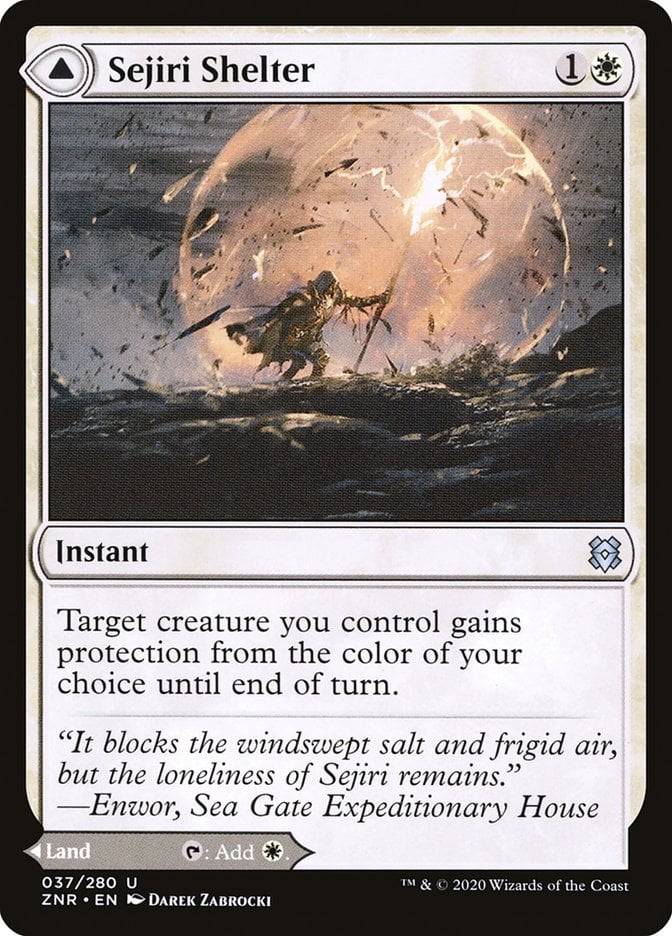
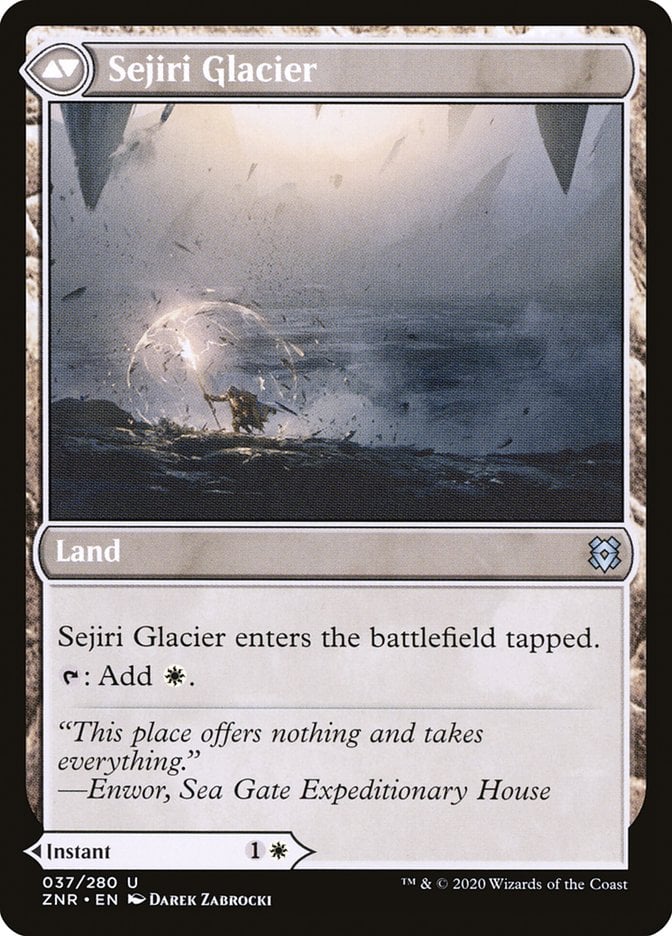
Sejiri Shelter can be a great way to keep a creature safe or sneak an attacker through blockers. It’s a good budget option for an EDH deck if you just want a way to keep your commander safe.
#33. Kazuul’s Fury / Kazuul’s Cliffs
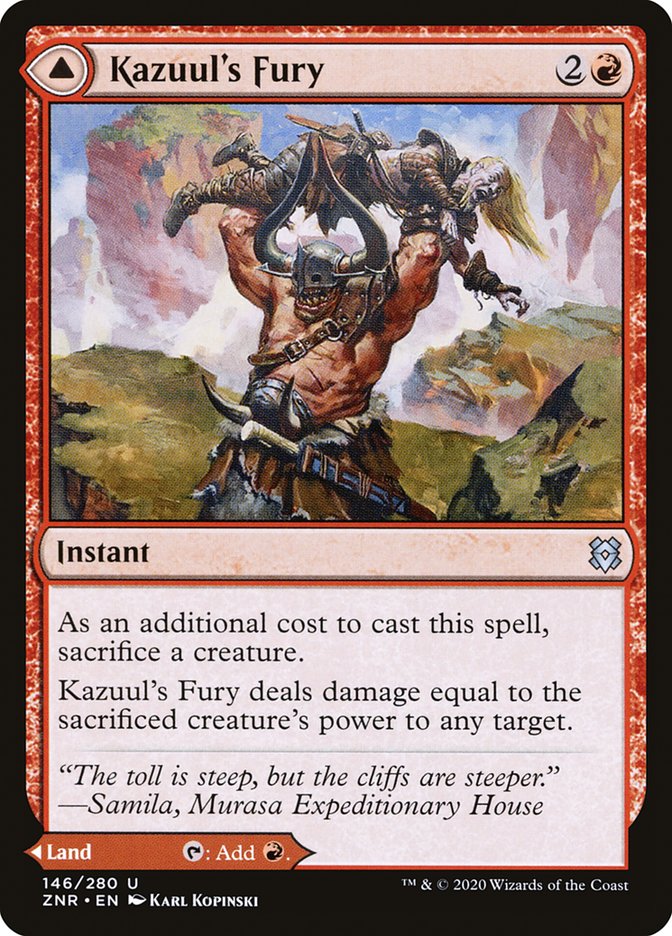
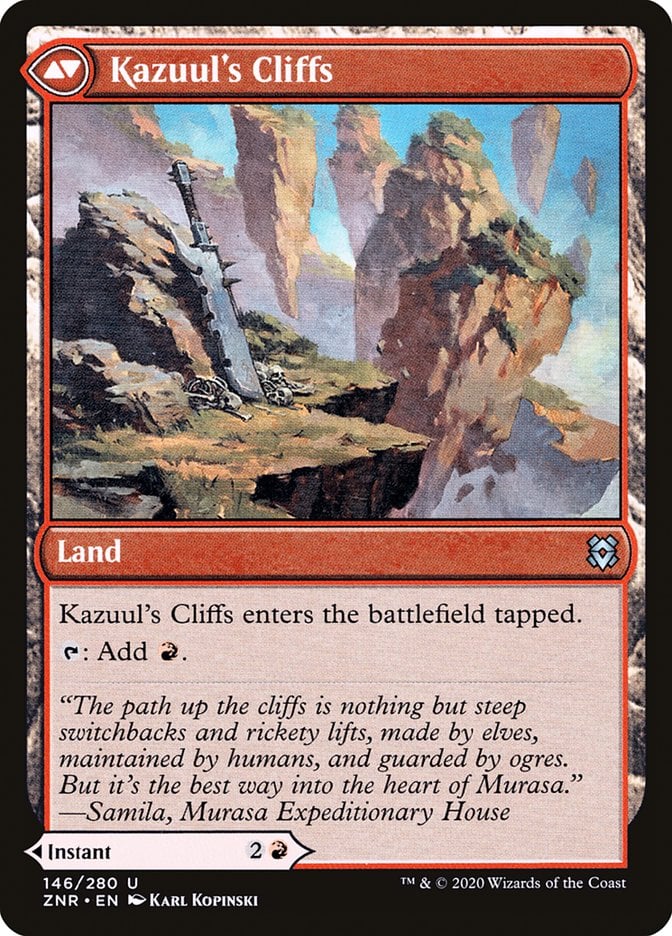
Kazuul's Fury works well as another way to Fling creatures in Singleton formats like Commander. Having the flip land option also prevents it from being a dead draw when you don’t have any creatures to use it with.
#32. Bala Ged Recovery / Bala Ged Sanctuary
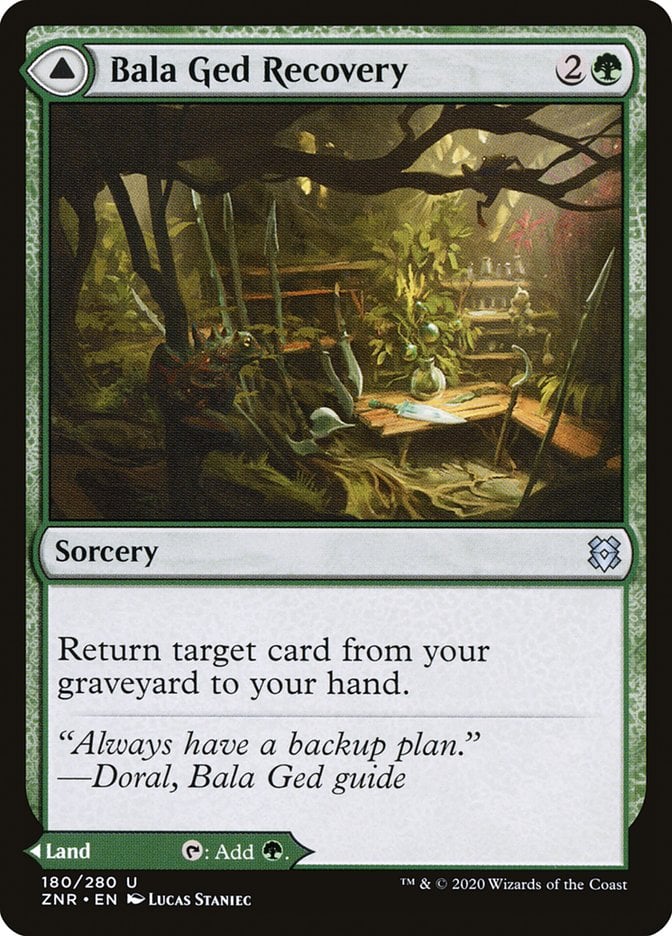
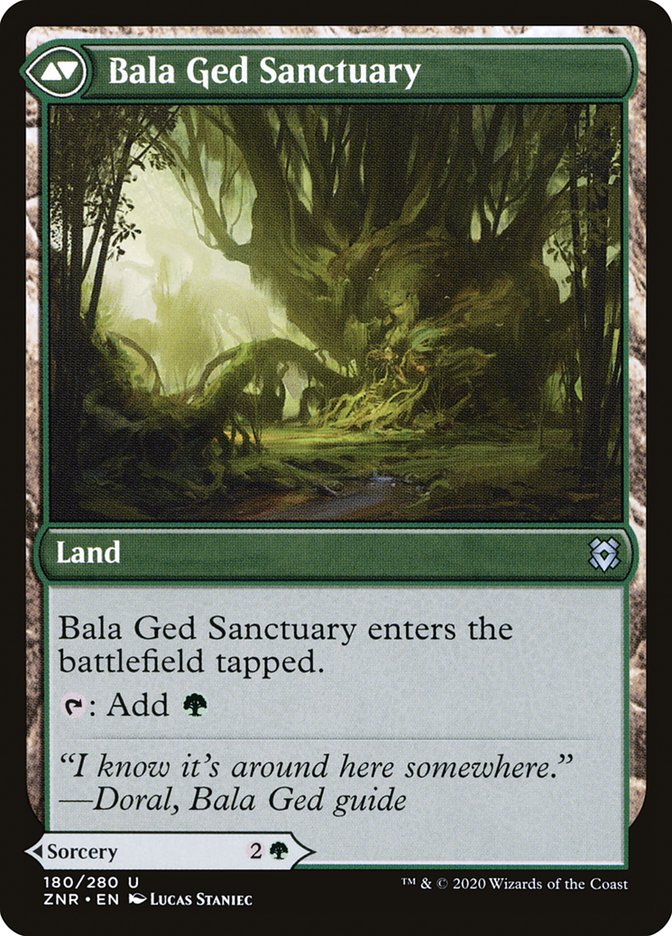
I run Bala Ged Recovery as a good means of recursion in decks that don’t include black. It’s easier to cast than Eternal Witness and no more expensive than Dryad's Revival. It may be one of your better options for green recursion depending on the deck you’re playing it in.
#31. Fell the Profane / Fell Mire


Fell the Profane is a big upgrade over Hagra Mauling, being able to remove planeswalkers and getting to pay 3 life so the land enters the battlefield untapped. It’s a nice choice to swap a basic Swamp for this black instant and have an extra flexible removal spell.
#30. Glasspool Mimic / Glasspool Shore
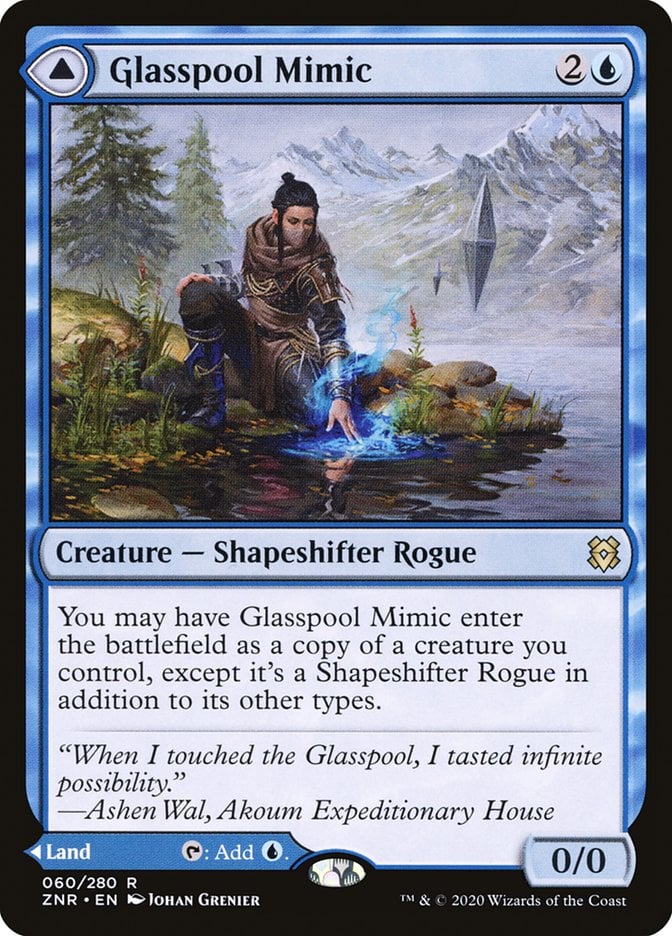
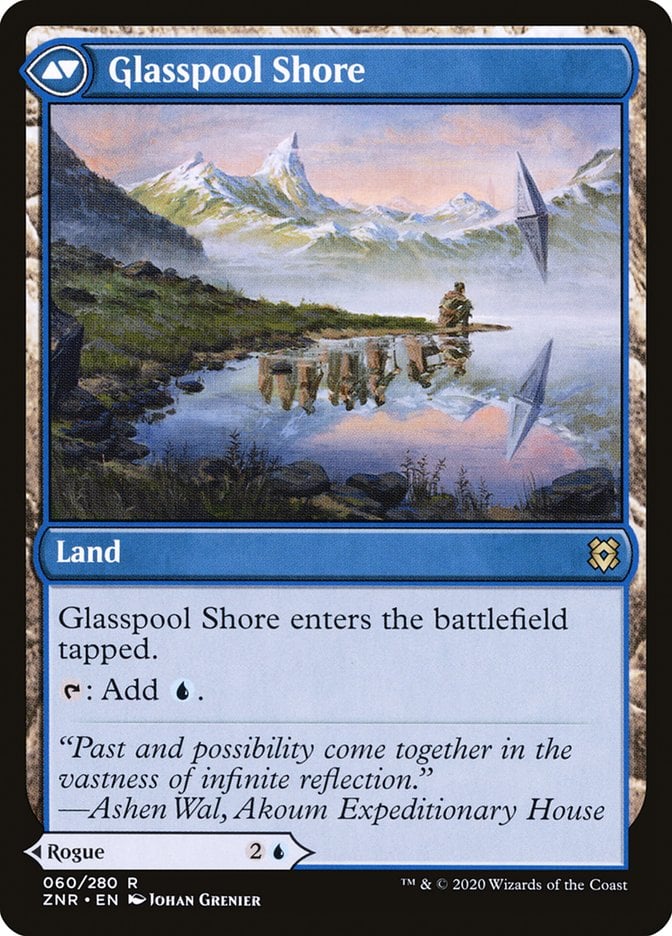
Glasspool Mimic is a relatively cheap copy spell. It works well in rogue decks and would pair well with great ETB effects.
One fun move is to steal an opponent’s legendary creature, copy it, and then remove your opponent’s creature and keep the copy.
#29. Revitalizing Repast / Old-Growth Grove


Revitalizing Repast is a great way to protect your battlecruiser or commander from harm or just to win a certain combat, and the failsafe is a tapped dual land. It’s flexible and has some synergies with +1/+1 counters too. Unfortunately in EDH, the hybrid mana stops this Golgari card from being used in decks like mono-green and Simic ().
#28. Malakir Rebirth / Malakir Mire
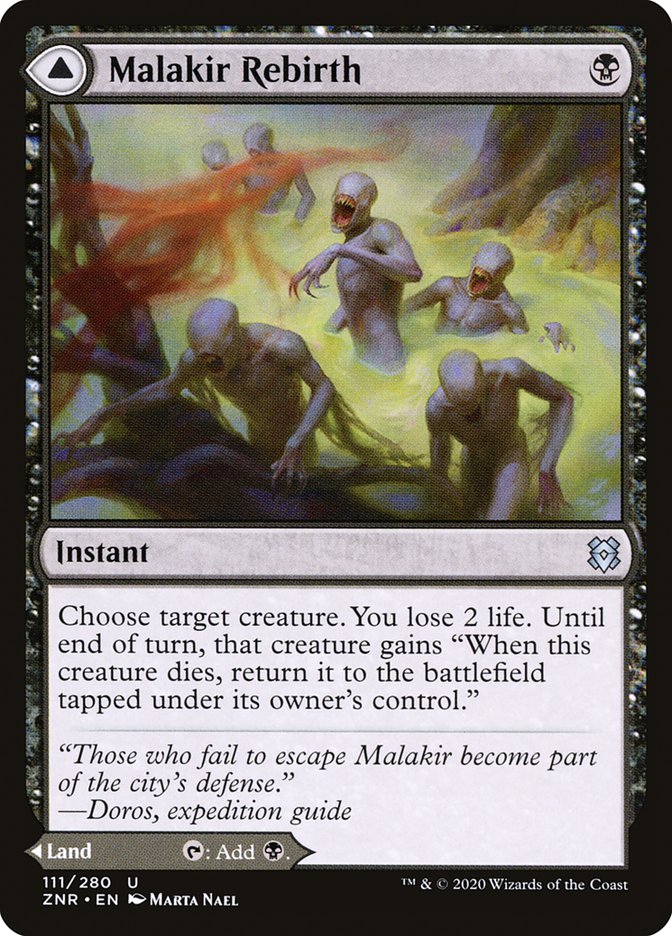
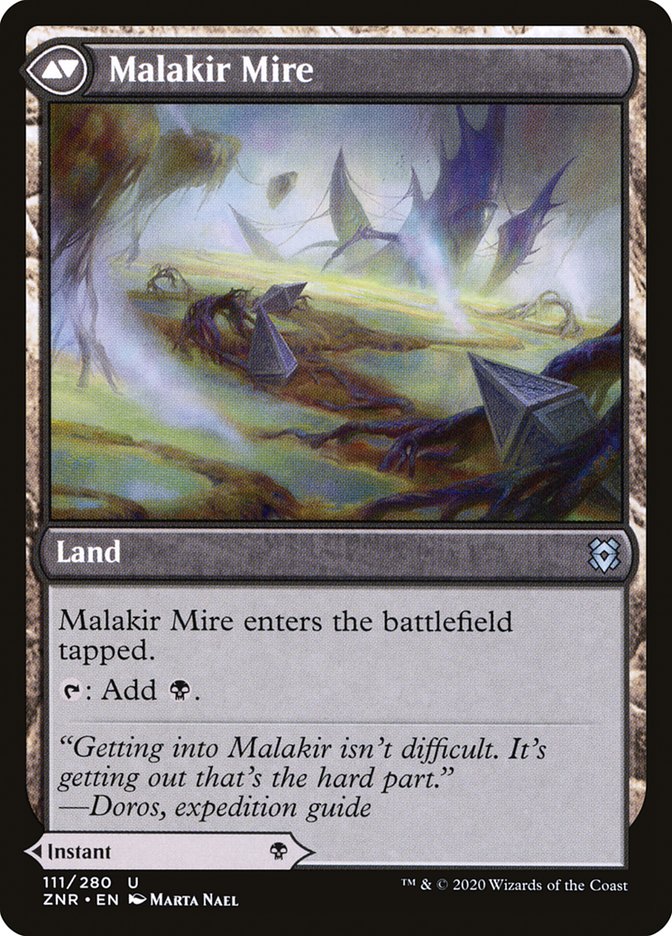
Malakir Rebirth can be helpful in a lot of different situations. You can sacrifice a creature and bring it back with this card in a sacrifice-themed deck, allowing you to get the payoff from the sac effect and double dip on an ETB effect.
You can also use this on a blocker so that you don’t take damage but get to keep your creature. You likely want to use this card as Malakir Rebirth most of the time. There isn’t really a downside to the flip land aspect, so it just adds to how good this card already is.
#27. Treasure Map / Treasure Cove
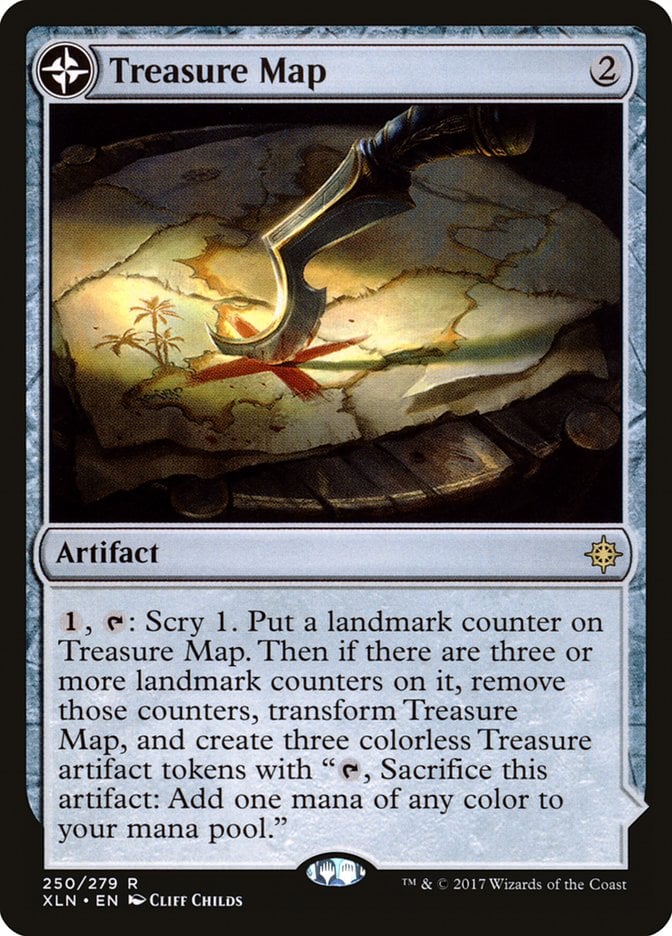
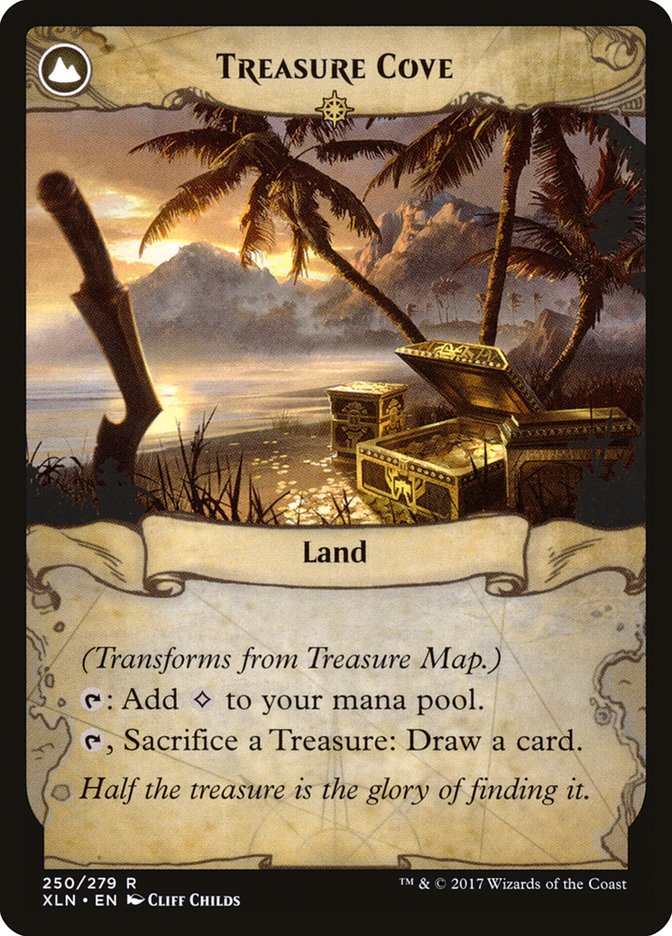
Treasure Map is useful and doesn’t take too much mana to activate. It’s very easy to flip into Treasure Cove, and you get back any mana you sink into it in the form of Treasures. Nice!
Decks that make a lot of Treasure get a lot of use out of Treasure Cove’s draw ability.
#26. Westvale Abbey / Ormendahl, Profane Prince
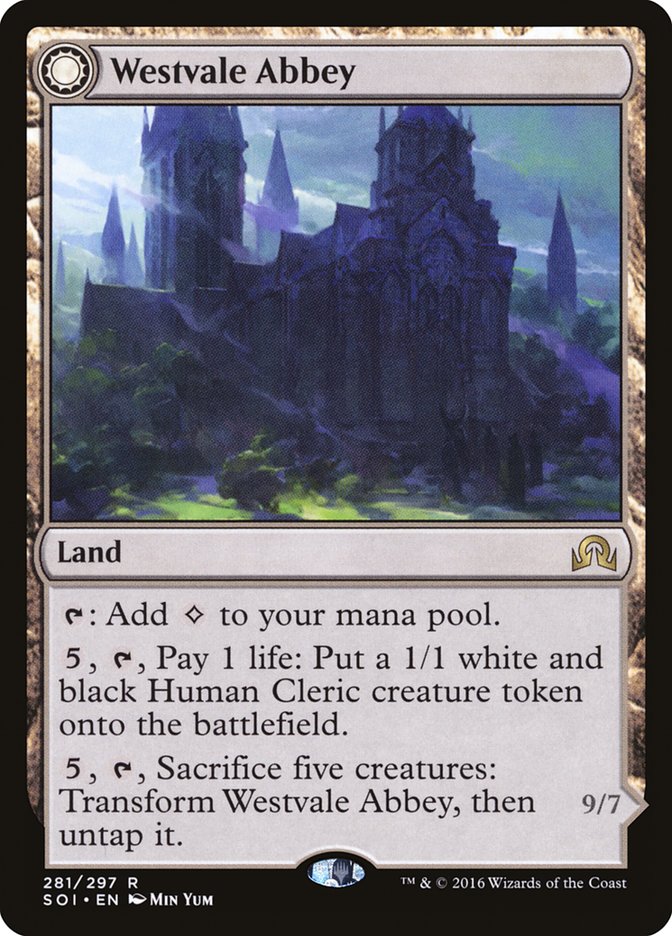
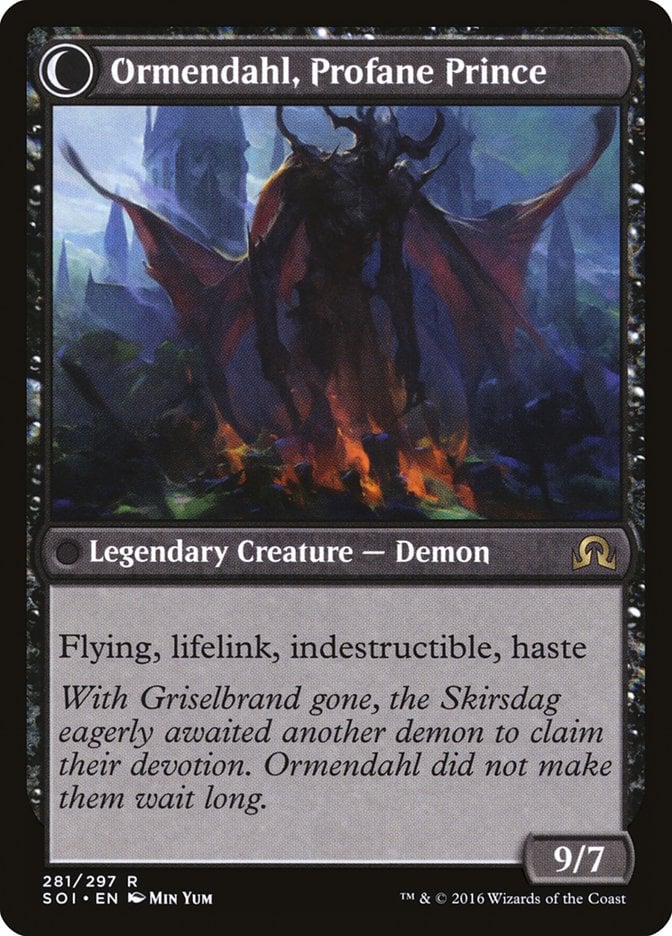
Westvale Abbey offers a few different options for you to activate, though they’re pretty expensive. Its flip side is powerful, but it’s questionable if it’s worth five other creatures and 5 mana.
That said, it can be a big threat to your opponents if you manage to get Ormendahl, Profane Prince on the field without getting behind.
#25. Legion’s Landing / Adanto, the First Fort
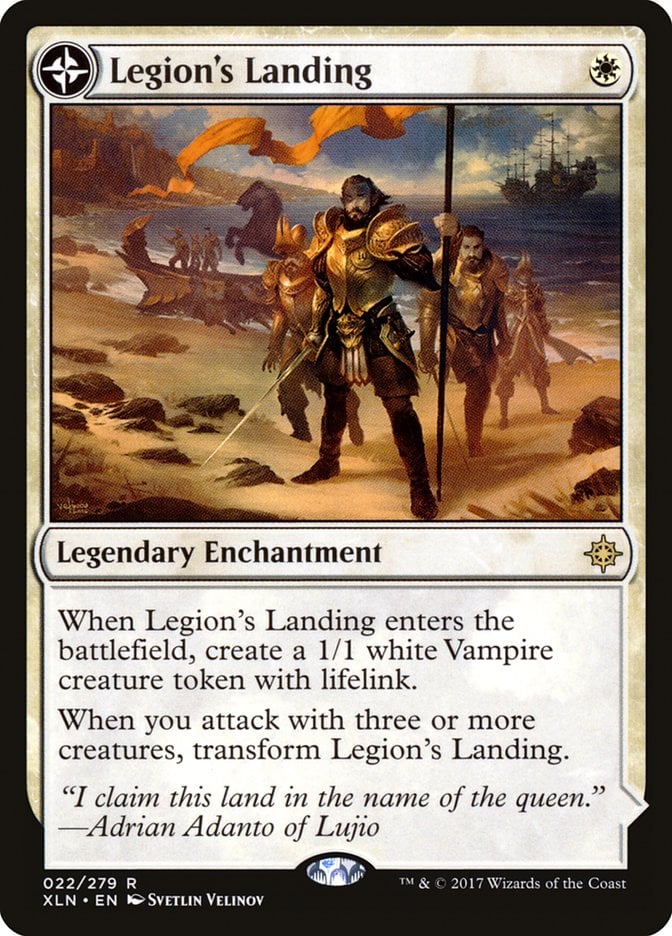
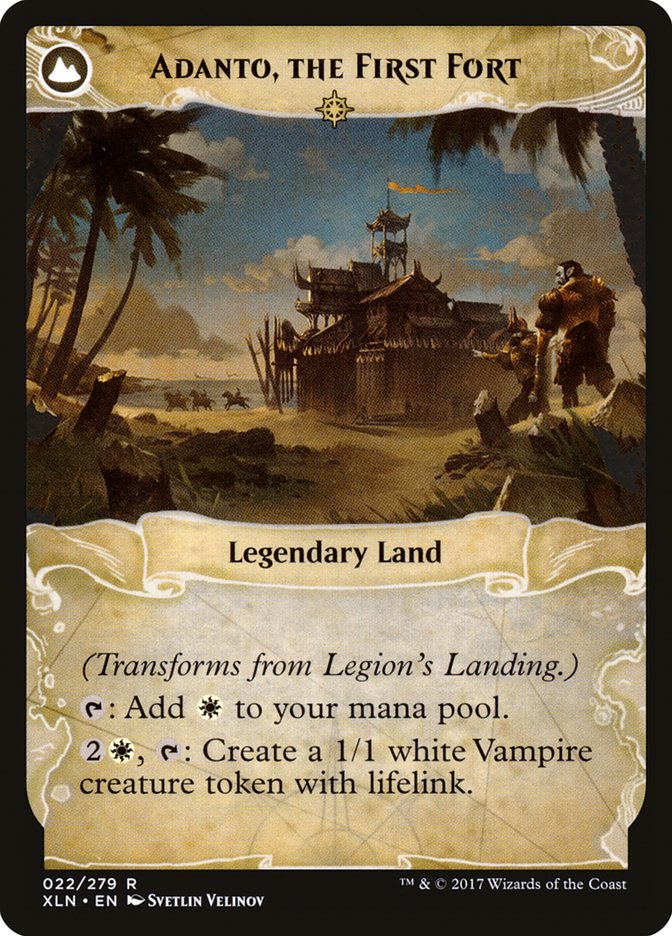
Legion's Landing is a great flip land for aggro decks. It drops a creature token when it comes in, but it’s also able to quickly transform into Adanto, the First Fort if you’re running cheap creatures.
Adanto gives you a consistent method of creating more creatures and gaining life if you’re running lifegain payoffs.
#24. Witch Enchanter / Witch-Blessed Meadow


It’s no secret that EDH is a format where many artifacts and enchantments are played, so many decks play artifact destruction and enchantment hate like Reclamation Sage. Witch Enchanter is a white creature like this disguised as a Plains that can even ETB untapped. Easy include in white decks and in 2-color decks containing white.
#23. Hadana’s Climb / Winged Temple of Orazca
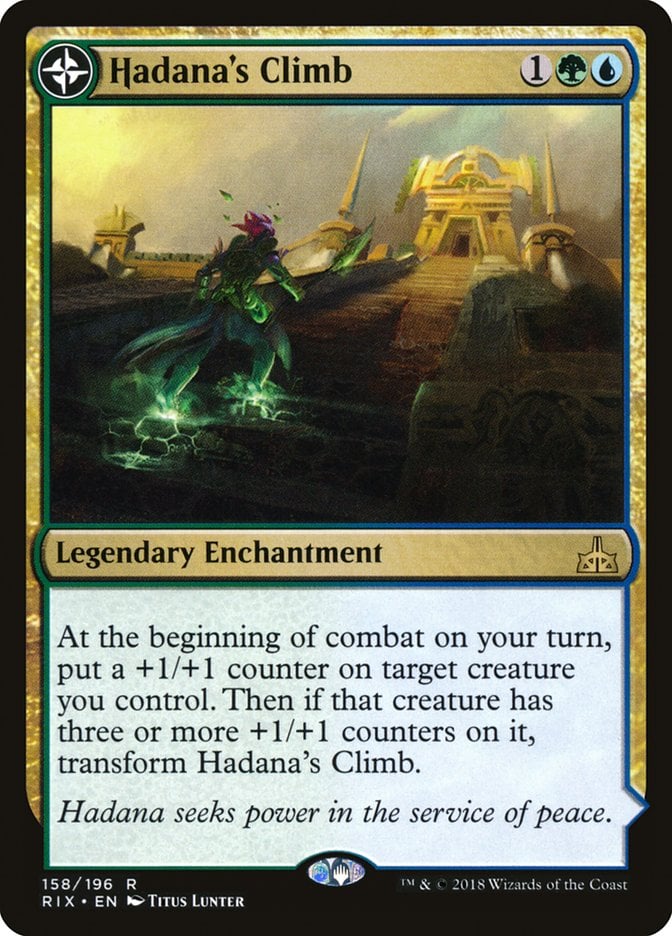
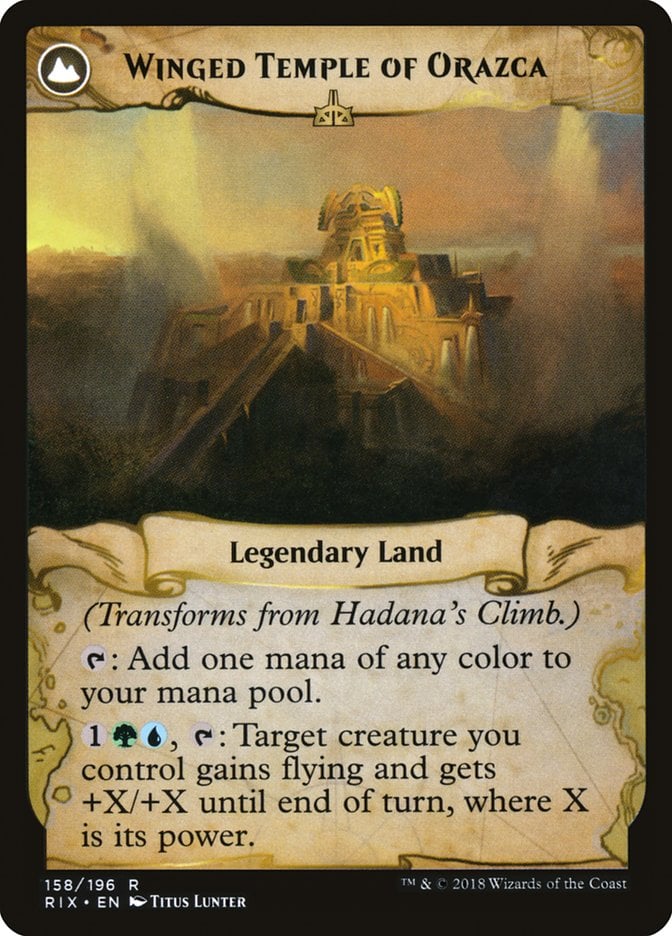
Hadana's Climb is a nice way to buff up your creatures. It can transform into Winged Temple of Orazca relatively quickly if you want, but you can choose to keep buffing different creatures instead.
On the flip side, its activated ability can be a great way to deal a lot of damage.
#22. The Everflowing Well / The Myriad Pools
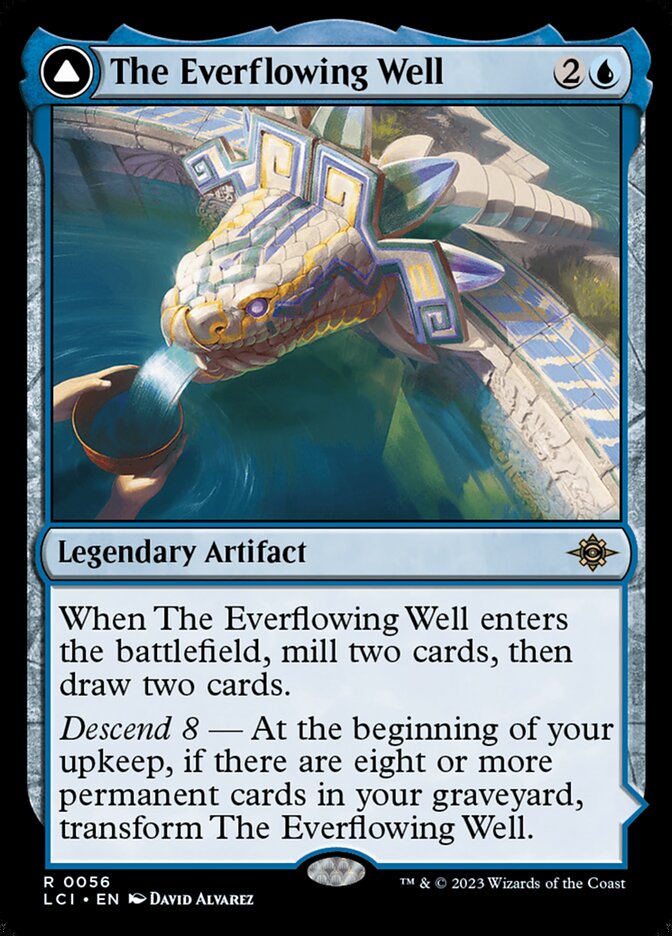
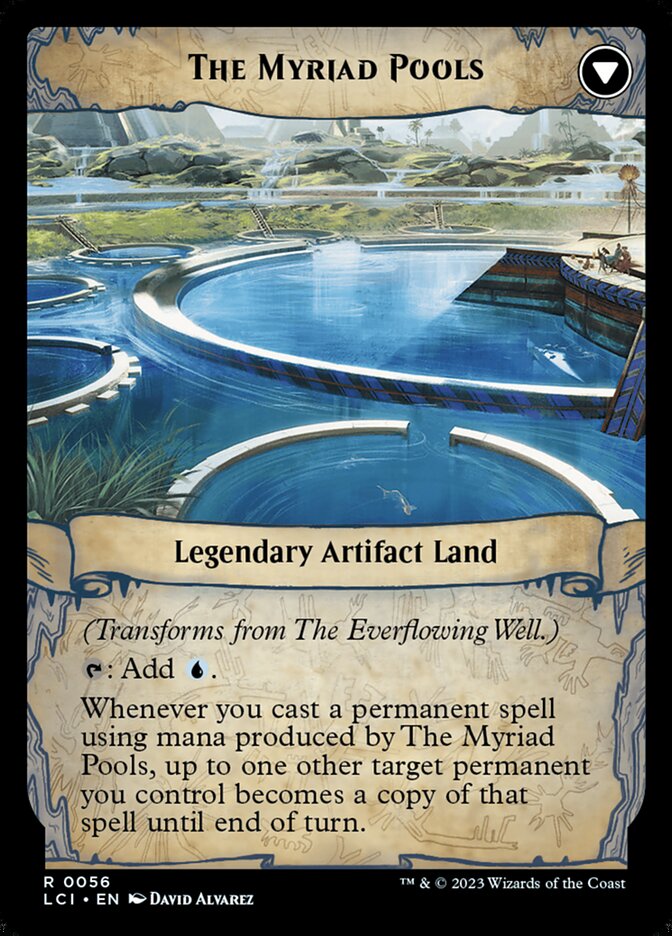
The Everflowing Well trickles cards into good zones and gives you a lot of creative plays from The Myriad Pools, especially if combined with Emry, Lurker of the Loch.
#21. Journey to Eternity / Atzal, Cave of Eternity
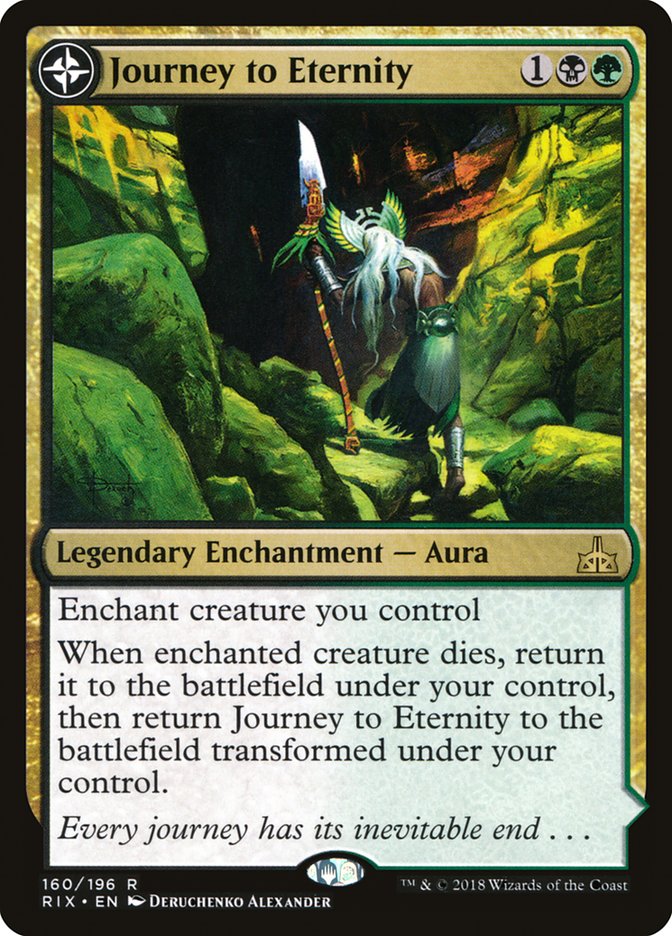
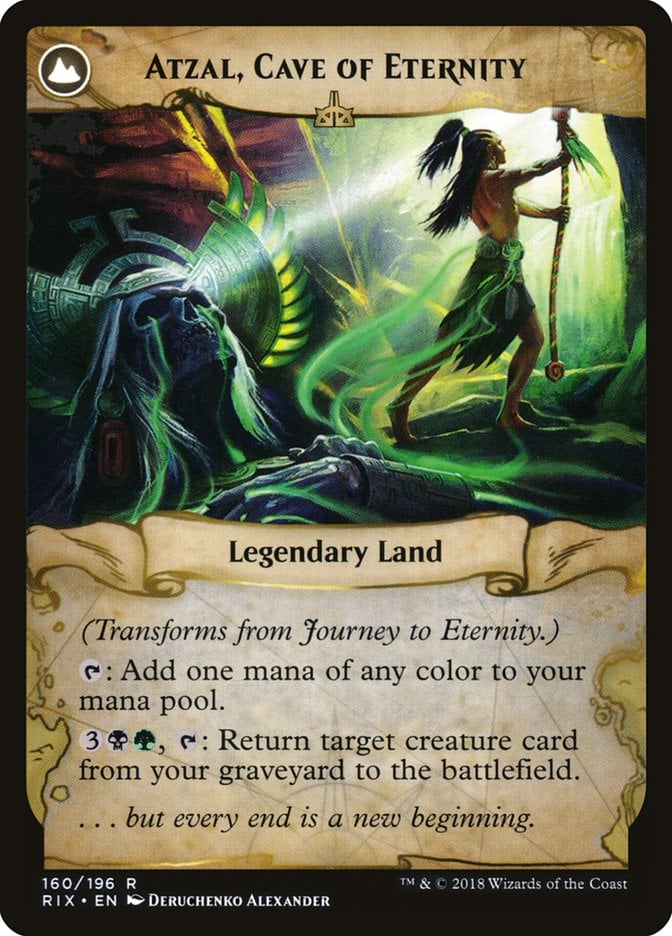
Journey to Eternity is probably one of the easiest Ixalan flip lands to transform. It can keep one of your creatures safe in the meantime, both because of its effect and because some opponents may be hesitant to let you transform it.
As Atzal, Cave of Eternity you can consistently return creatures from your graveyard for a pretty cheap activation cost. This works well in self-mill and delve decks since you’re filling your graveyard with creatures from your deck.
#20. Arguel’s Blood Fast / Temple of Aclazotz
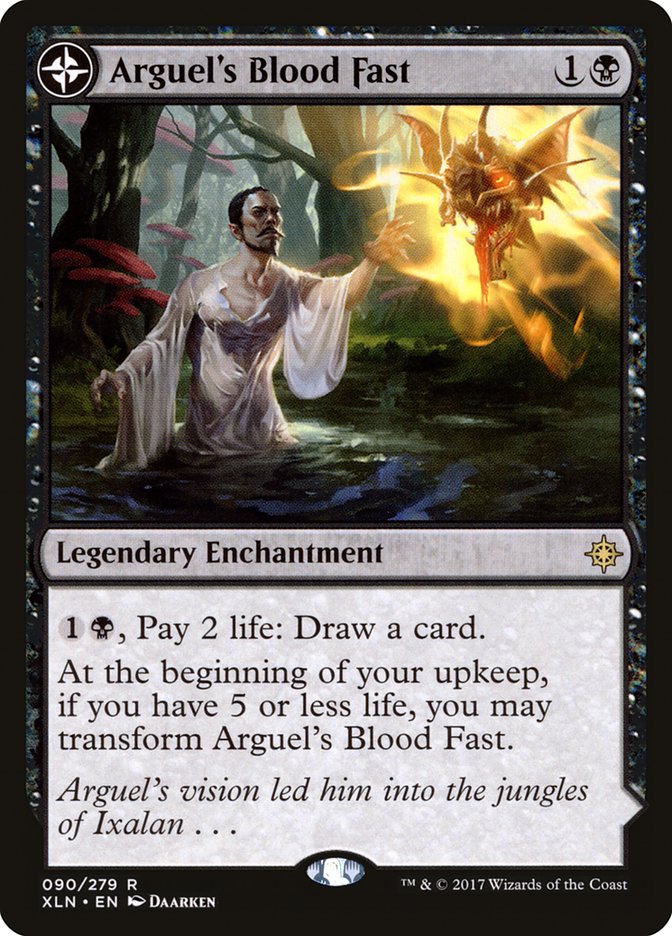
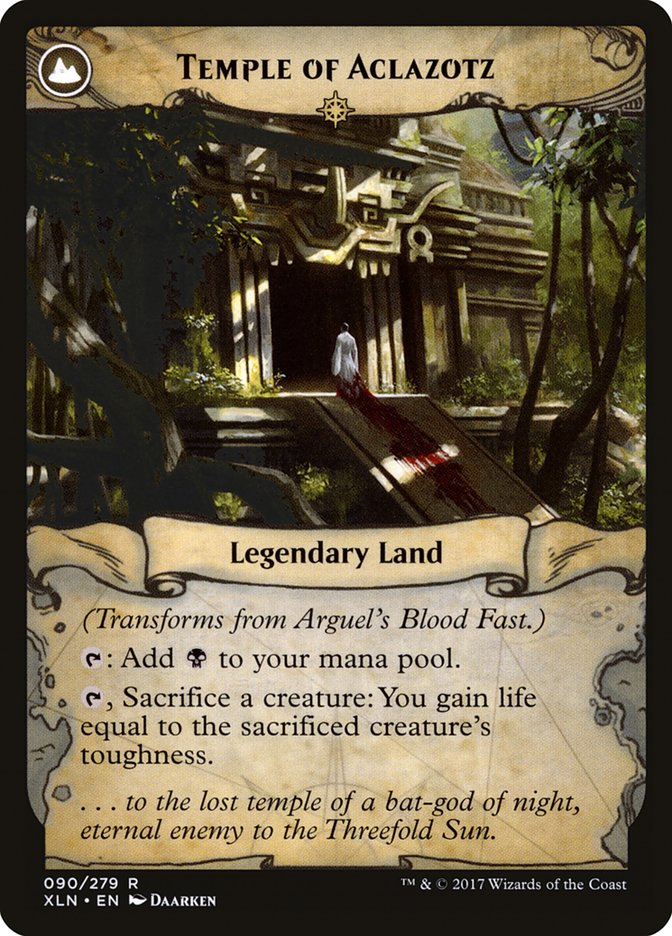
Consistent cheap card draw might be the best aspect of Arguel's Blood Fast. If you’re down to 5 or less life, the land can start sacrificing creatures to get your life total back up all at once.
I’d still run this card without intending to use Temple of Aclazotz all that much just because the front side is so good.
#19. Azor’s Gateway / Sanctum of the Sun
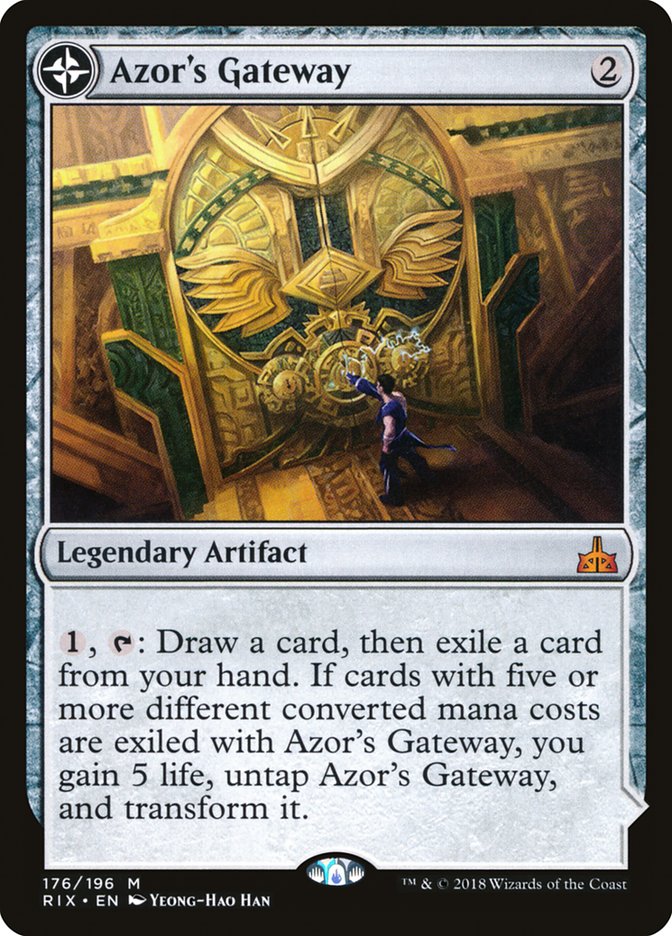
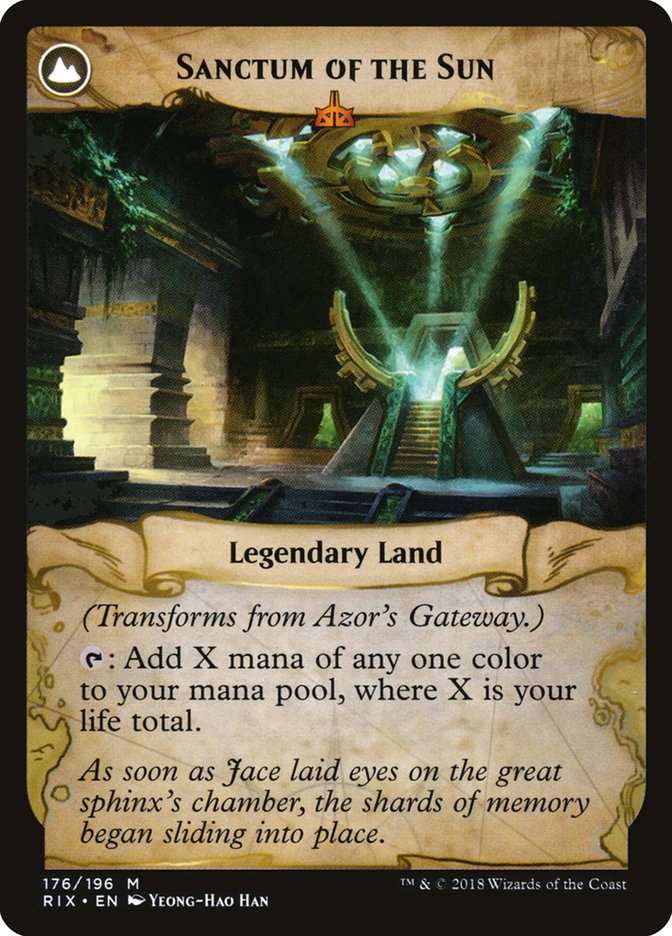
Azor's Gateway can help you search through your deck if you need to. It’s up to you whether you ever flip it into Sanctum of the Sun, so you can keep it on the front side if you just want the card draw.
Sanctum of the Sun likely produces a ton of mana for you, especially in Commander. This can be very useful in hydra decks or any deck that uses spells with X in the cost.
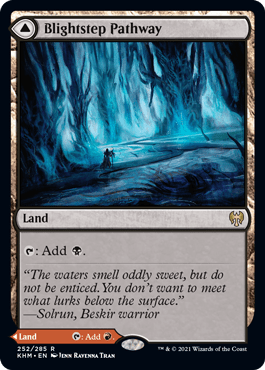
#18. Pathways
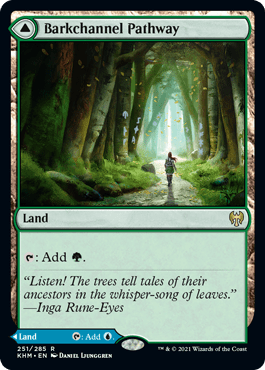
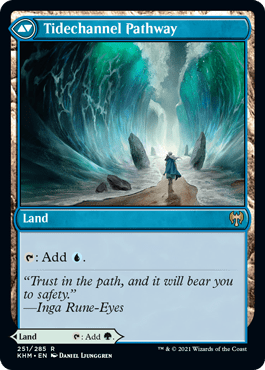
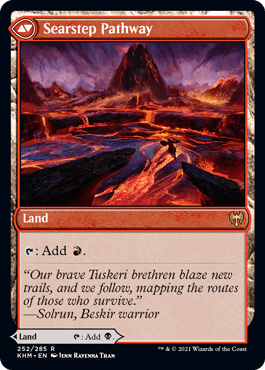
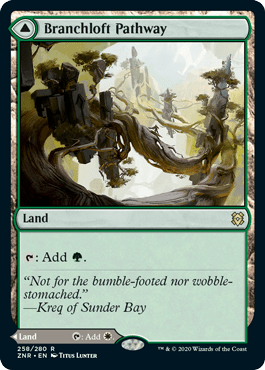
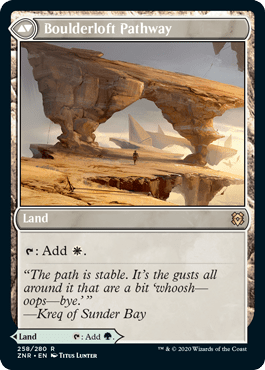
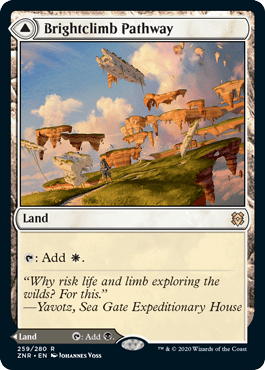
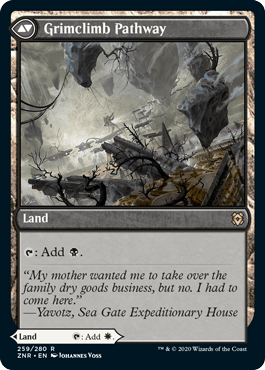
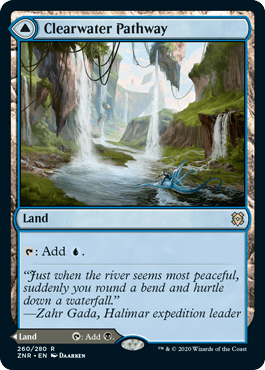
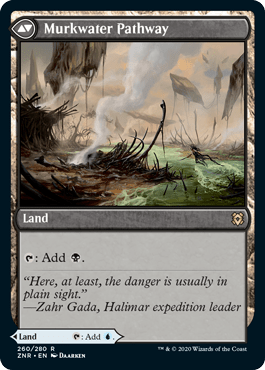
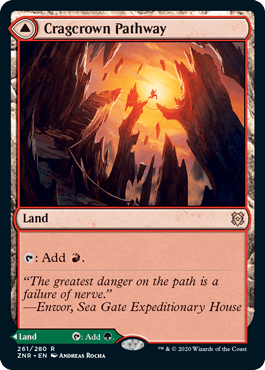
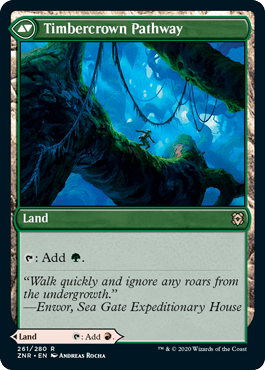
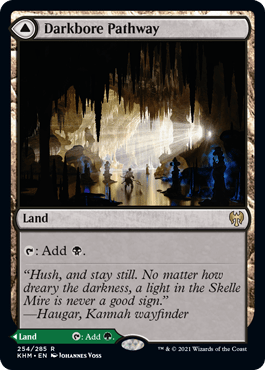
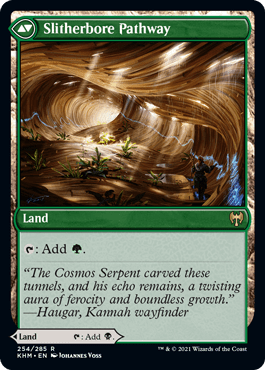
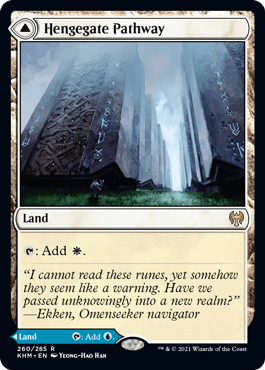
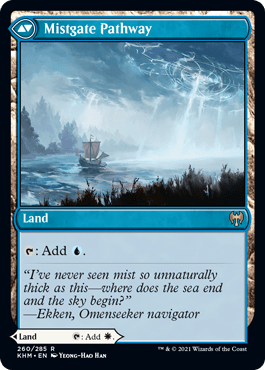
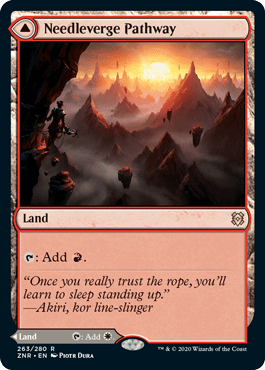
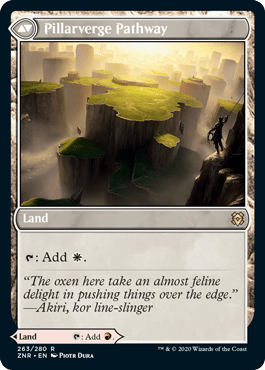
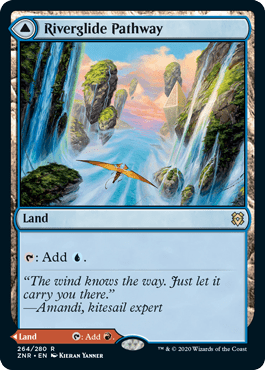
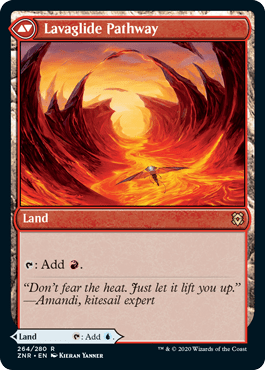
- Barkchannel Pathway / Tidechannel Pathway
- Blightstep Pathway / Searstep Pathway
- Branchloft Pathway / Boulderloft Pathway
- Brightclimb Pathway / Grimclimb Pathway
- Clearwater Pathway / Murkwater Pathway
- Cragcrown Pathway / Timbercrown Pathway
- Darkbore Pathway / Slitherbore Pathway
- Hengegate Pathway / Mistgate Pathway
- Needleverge Pathway / Pillarverge Pathway
- Riverglide Pathway / Lavaglide Pathway
All Pathways are essentially the same thing: There’s one color of mana on the front and another on the back. You choose which side you want to put onto the battlefield, allowing you to pick the color of mana you need at the given moment.
You can hold off on playing a Pathway until you know which color you need if you have other lands in your hand. They can also be played right away if you need mana quickly.
One Pathway isn’t really any better than another, it just depends on what color combination you’re playing. For decks using more than two colors, the best Pathway to include really just depends on the proportion of different colors in your deck. Pathways are some of the best flip lands because they’re quick mana with a few options of what color they’ll produce.
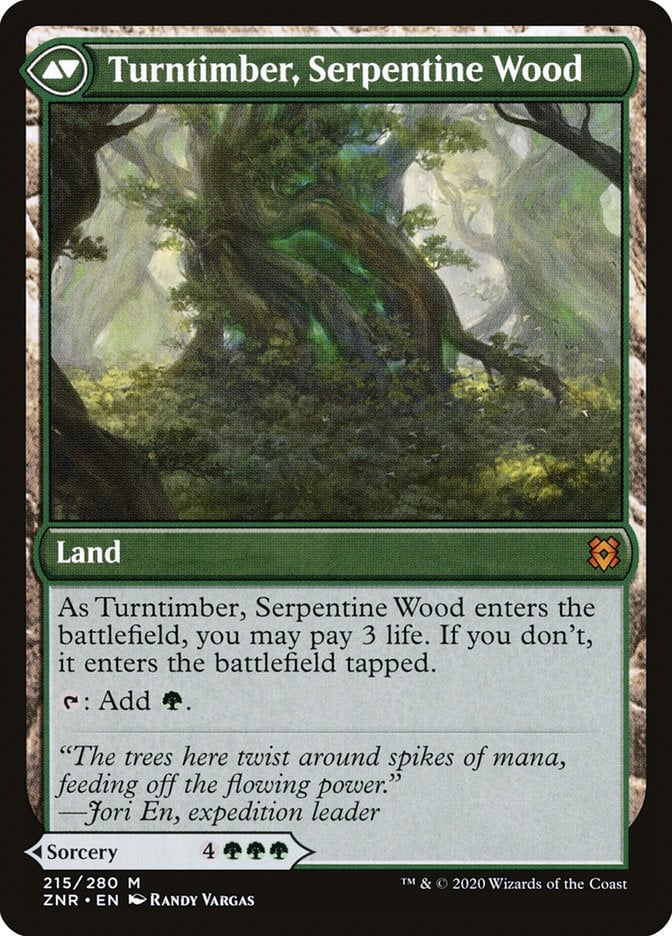
#17. Turntimber Symbiosis / Turntimber, Serpentine Wood
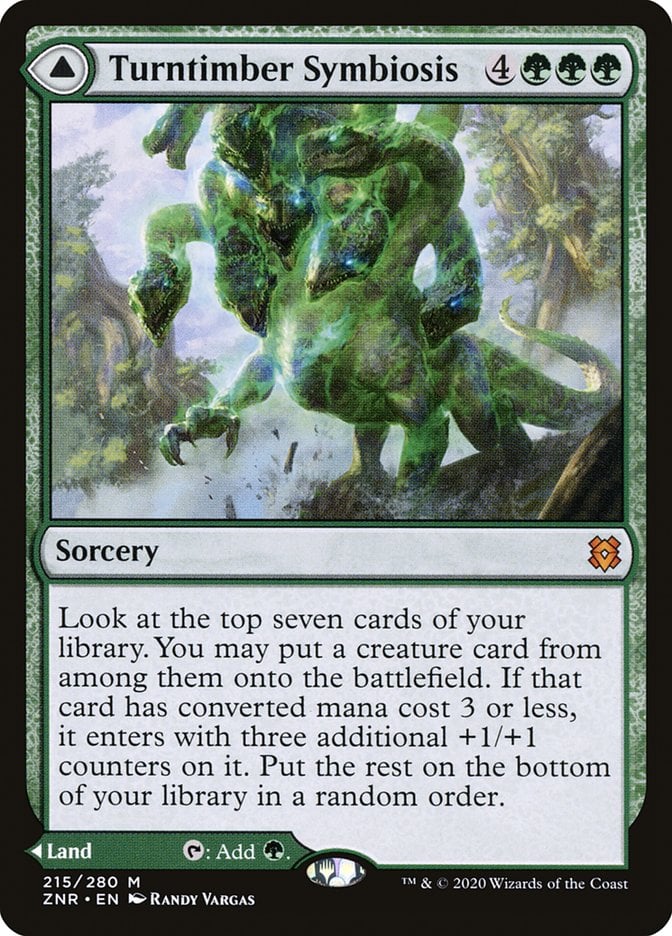
Turntimber Symbiosis lets you dig deep looking for a creature to drop. The main danger with the spell is that you can whiff and hit a tiny creature, or no creature. That shouldn’t happen too often if you build your deck correctly. This card also makes up for hitting a tiny card by giving a buff to cheaper creatures you play with it.
If you choose to play this card as Turntimber, Serpentine Wood, you can pay life to have it come in untapped. It’s a quicker mana source as a result and is easier to include without worrying that it’ll slow down your game or be a dead draw.
#16. Storm the Vault / Vault of Catlacan
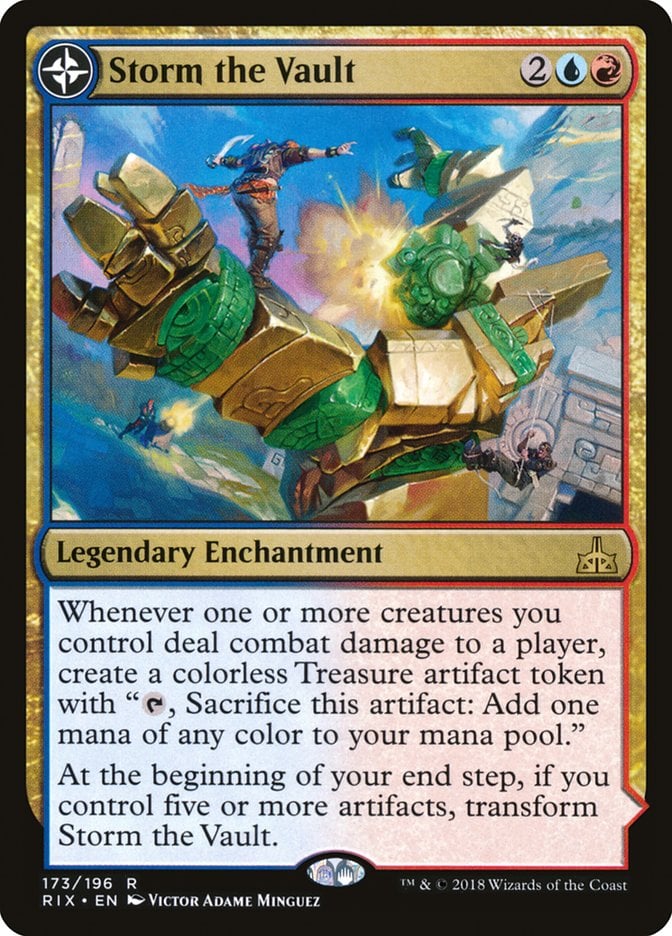
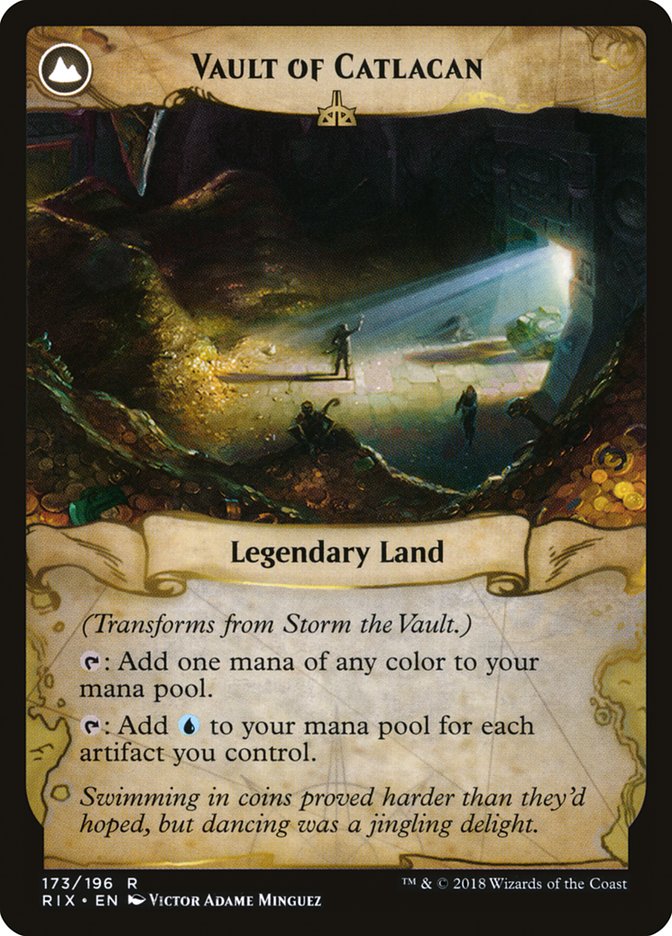
Treasure tokens have become a powerful tool in Magic. Storm the Vault, one of the the strongest Izzet enchantments, fits nicely into any Treasure-themed deck that includes red and blue.
When it flips into Vault of Catlacan, it can generate lots of mana in an artifact or Treasure deck. It’s also a great choice for Izzet () or multicolor artificer decks.
#15. Valakut Awakening / Valakut Stoneforge
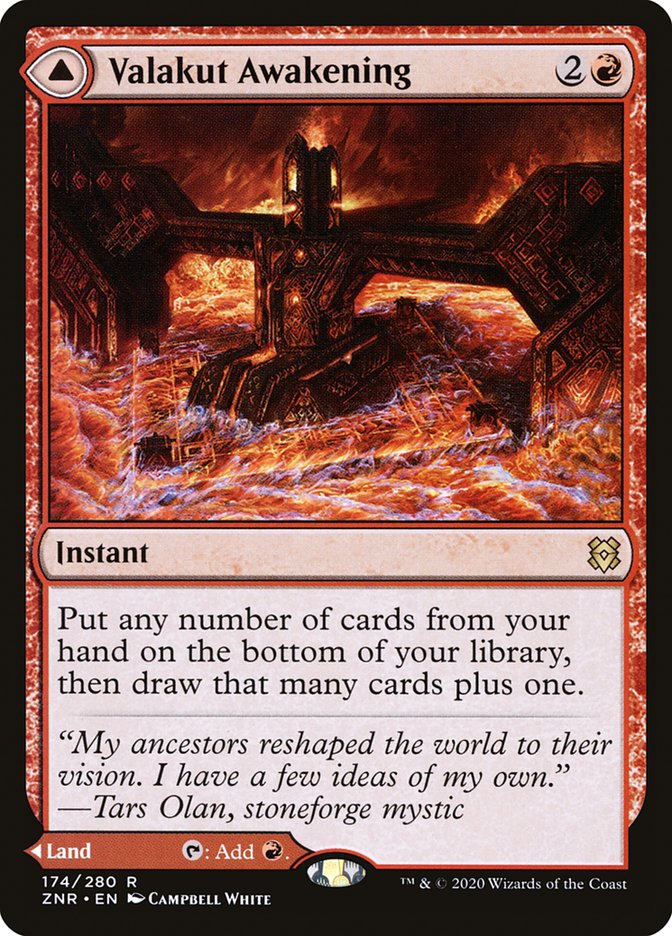
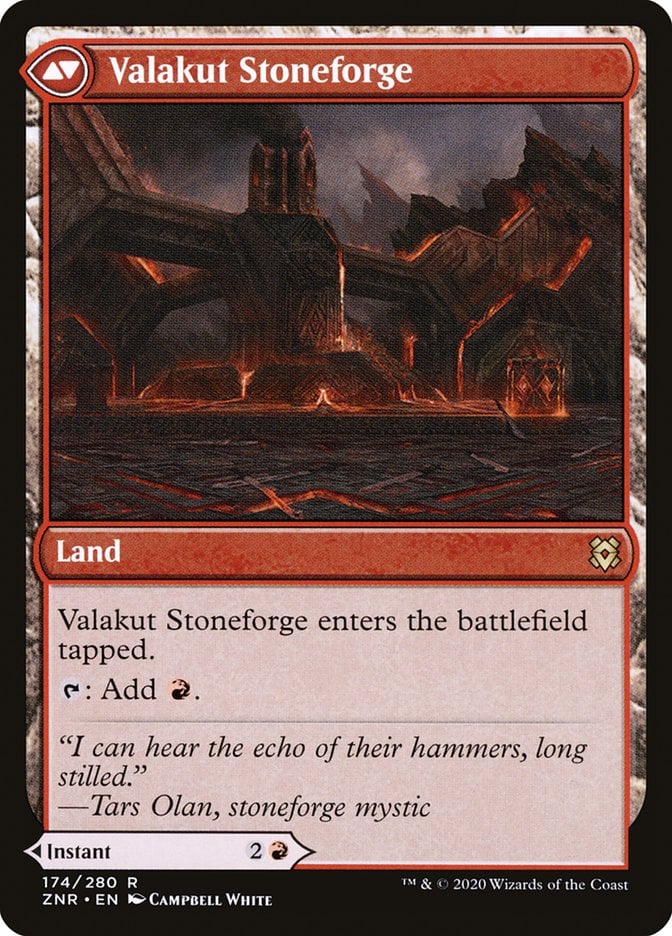
I think Valakut Awakening is one of the better wheel options you can use. Instead of having to ditch your entire hand you can just pick and choose which to keep and which to replace.
It’s kind of nice not worrying that you’re going to accidentally help your opponents.
#14. Matzalantli, the Great Door / The Core
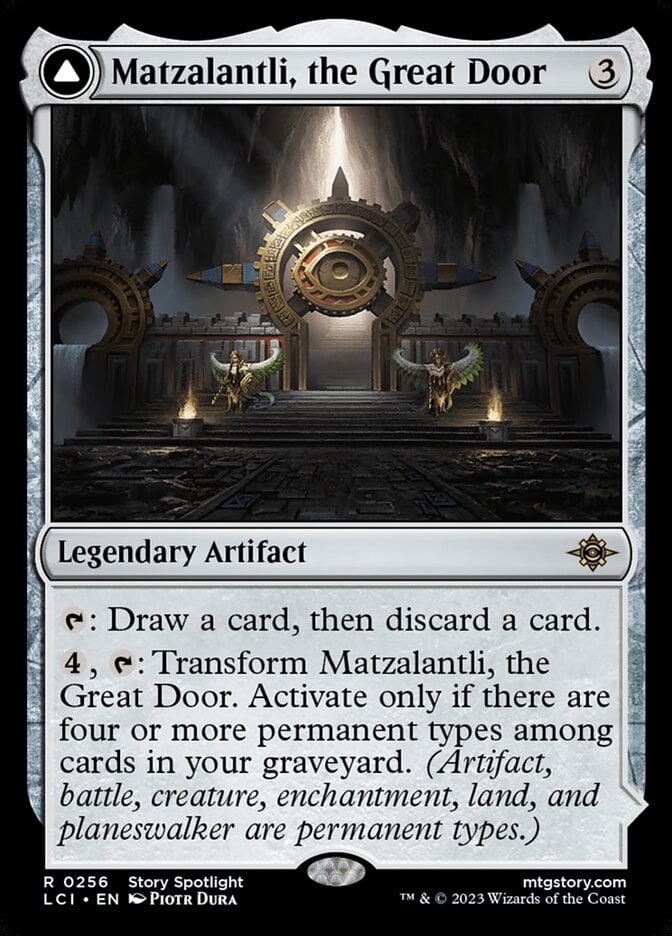
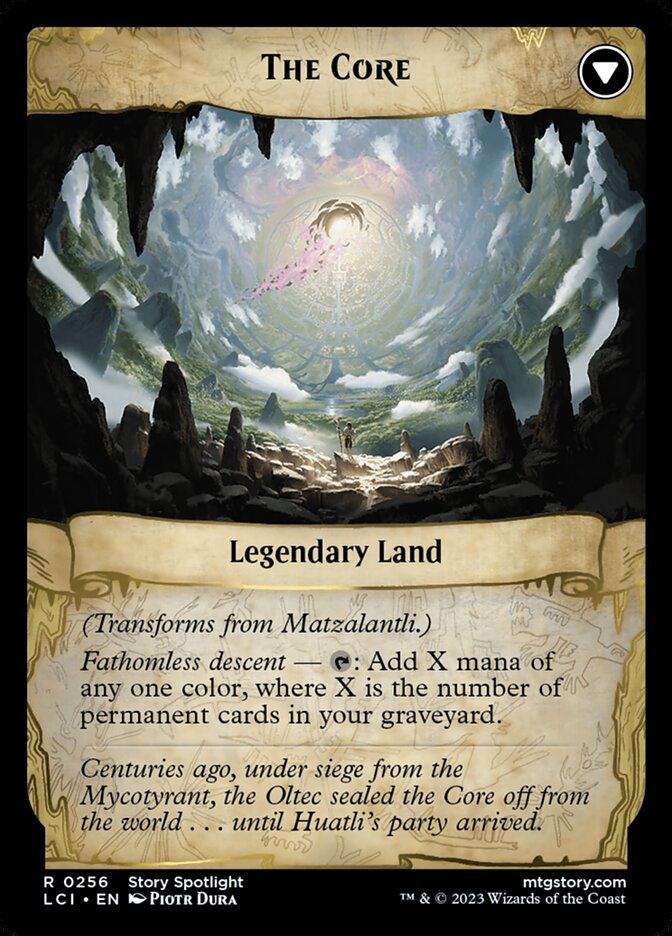
Knock on Matzalantli, the Great Door four times with good loots, then tap into The Core for colored ramp based on the number of permanents in your graveyard. The only downsides I see here are the initial costs. Wow, your fetch lands provide even more mana! This story spotlight card goes right up against the best mana rocks in the game.
#13. Shatterskull Smashing / Shatterskull, the Hammer Pass
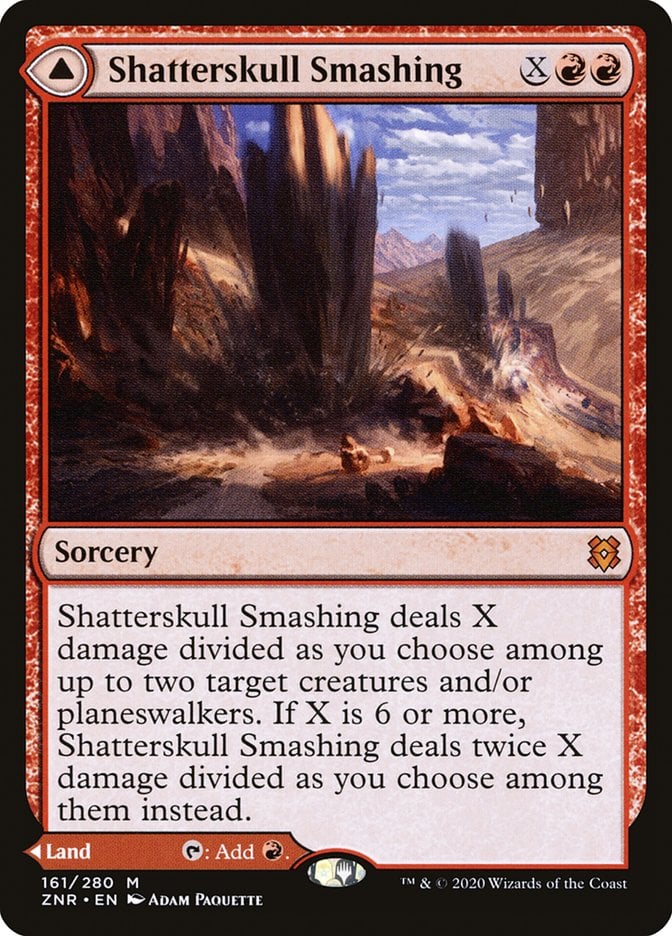
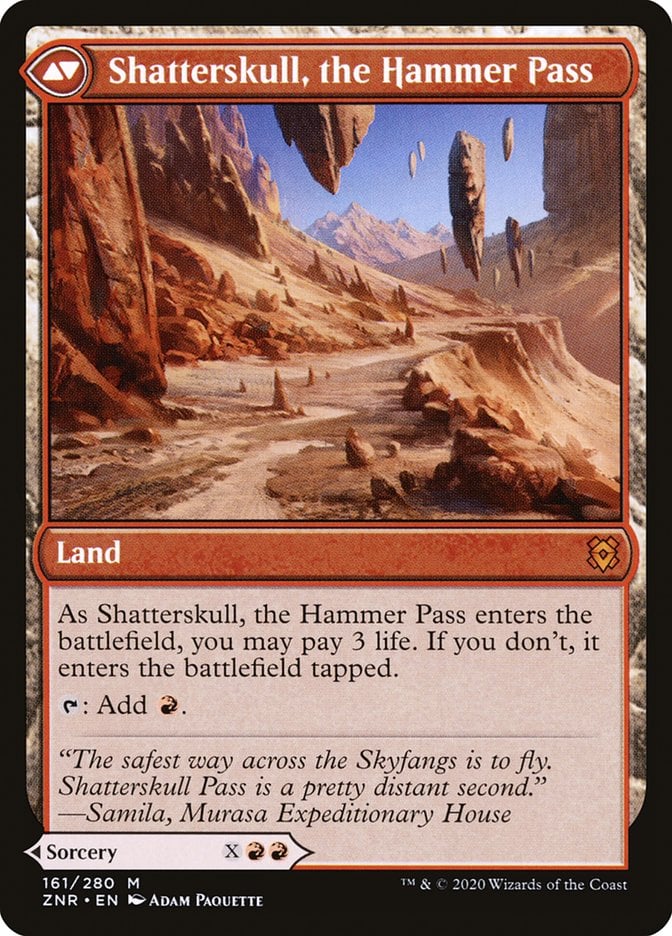
Mono-red decks can sometimes lack good removal. Shatterskull Smashing can be a good way to clear out a few of your opponent’s creatures without using too many of your burn spells.
You don’t have to worry about this card slowing down aggro decks thanks to Shatterskull, the Hammer Pass’s ability to come in untapped.
#12. Ojer Axonil, Deepest Might / Temple of Power
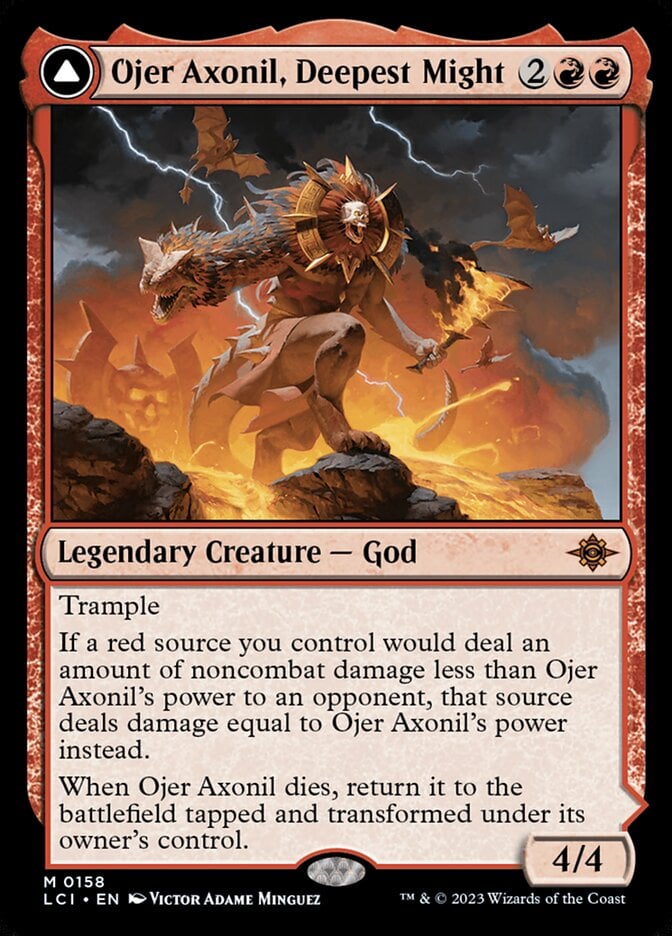
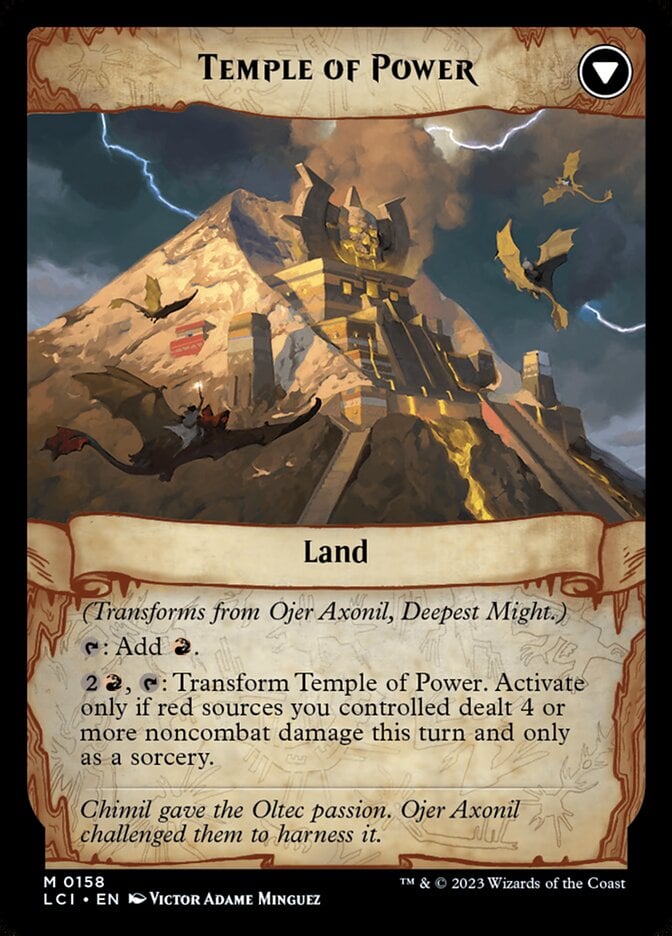
Ojer Axonil, Deepest Might is great with small damage sources like pingers. I love that a Flame Slash is all you need to flip it from the Temple of Power back to the mighty side. The sky’s the limit when you pump up the power!
#11. Thousand Moons Smithy / Barracks of the Thousand
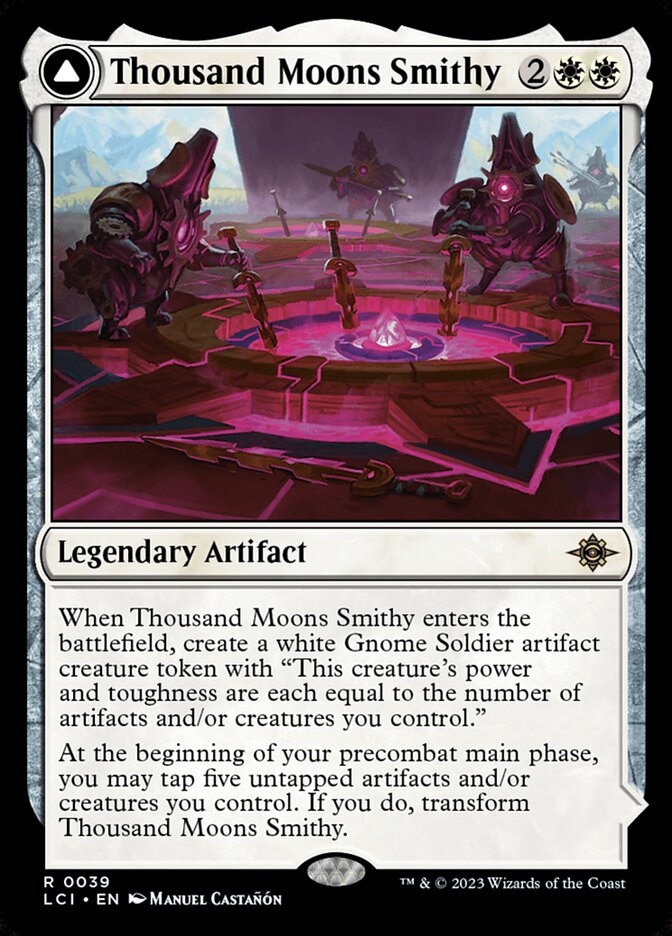
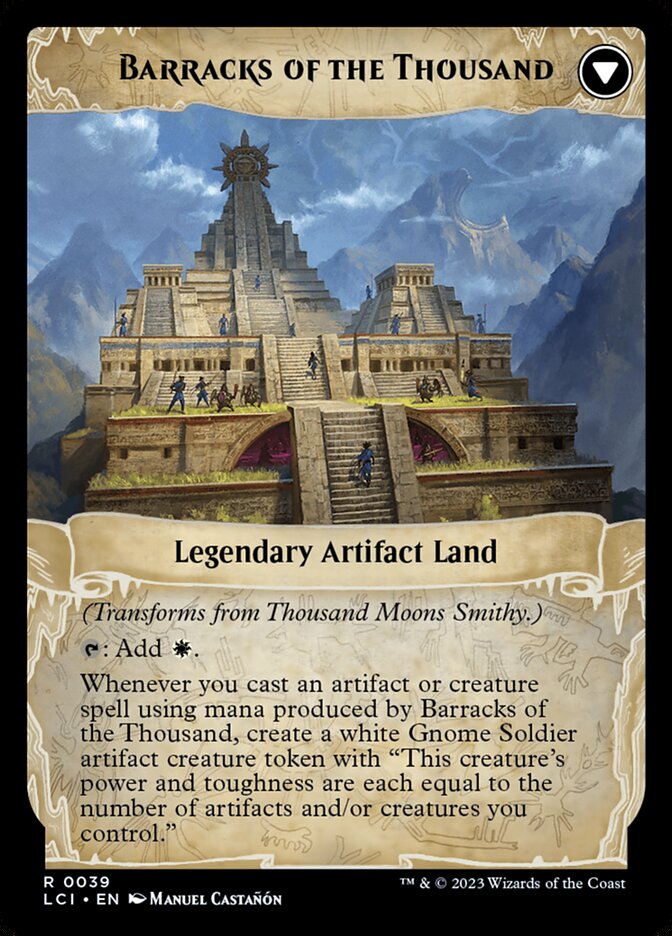
There are simply too many artifacts and creatures running around these days for Thousand Moons Smithy not to be a sizable threat. Getting to five artifacts and creatures can be a task if your opponents are on to you, but once you unlock the Barracks of the Thousand, your living weapons, Ancestral Blades, Citizen's Crowbars, and Treasures become incredibly strong.
#10. Search for Azcanta / Azcanta, the Sunken Ruin
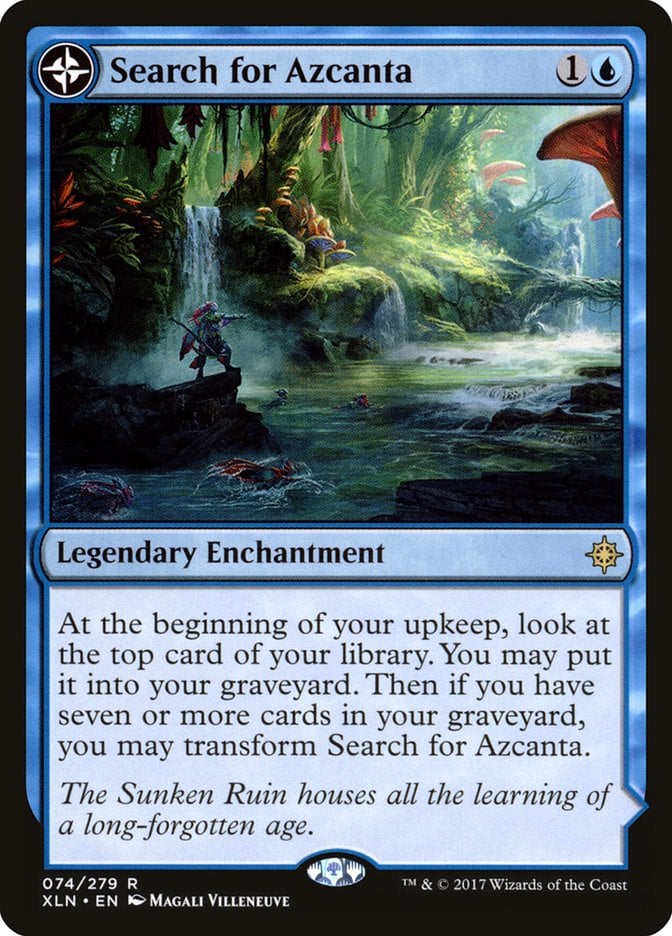
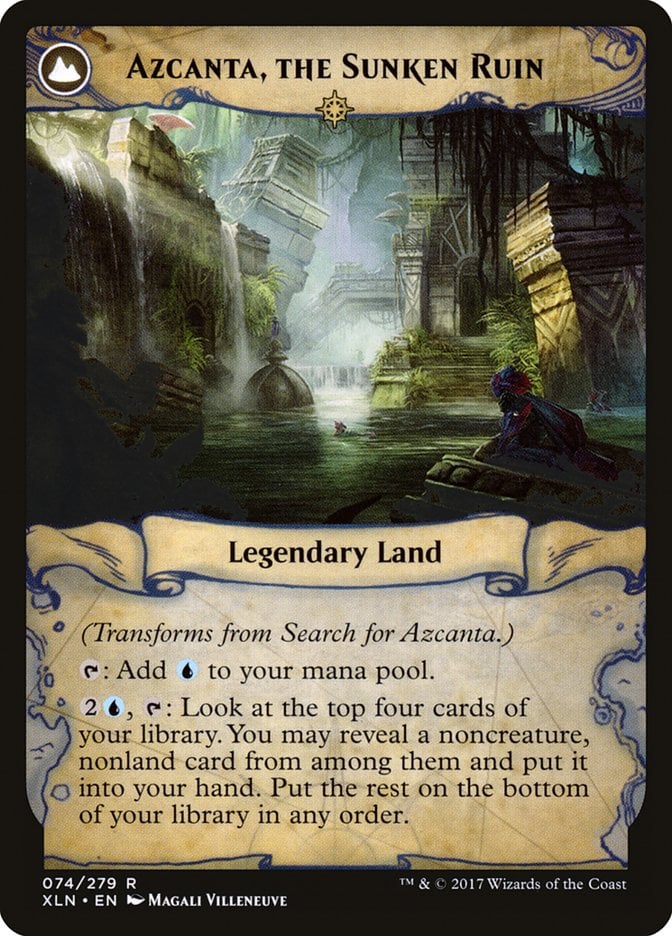
Search for Azcanta can help you ensure that you’re drawing into something useful each turn. Its transform ability says “may,” so you can keep this as a way to surveil as long as you want. Thanks to an erratum this card now also surveils, so you get any payoffs for surveilling if you have them.
Azcanta, the Sunken Ruin can help you search through your deck even more quickly, but it isn’t as helpful if you’re running lots of creatures in your deck. It can be a great tool for spellslinger or superfriends decks.
#9. Ojer Kaslem, Deepest Growth / Temple of Cultivation
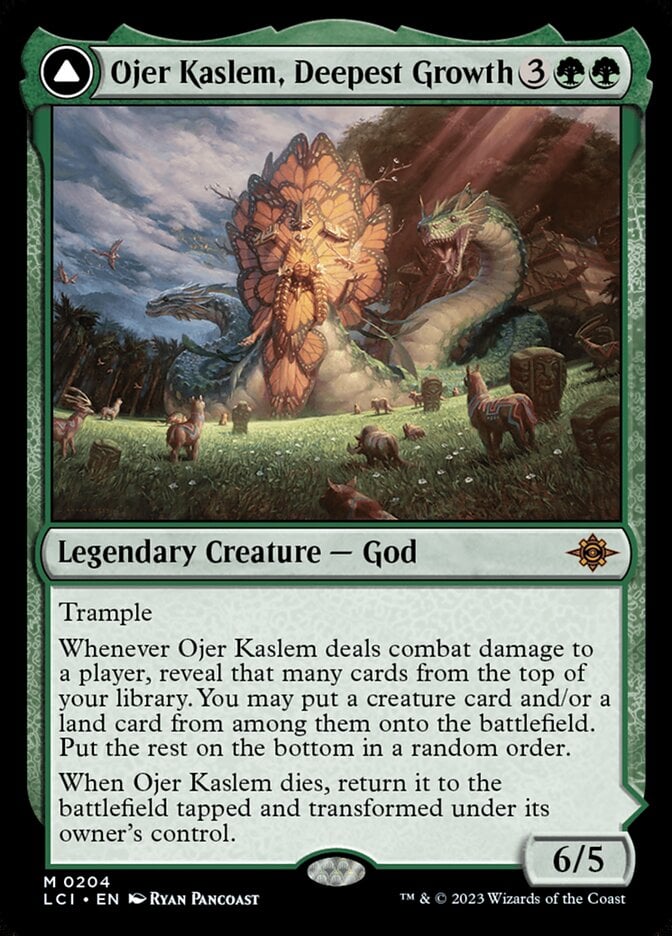
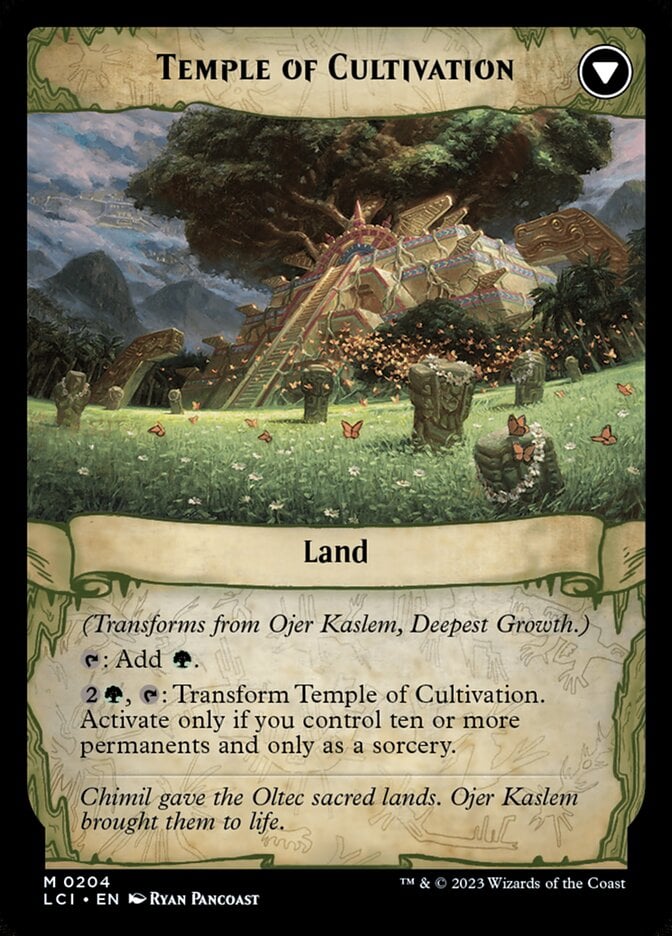
Ojer Kaslem, Deepest Growth cheats a creature and/or land into play if it hits, and threatens an inevitable end if not dealt with. It can transform back from Temple of Cultivation if you have the city’s blessing which counts itself and the permanent you just put into play with the front side.
#8. Ojer Pakpatiq, Deepest Epoch / Temple of Cyclical Time
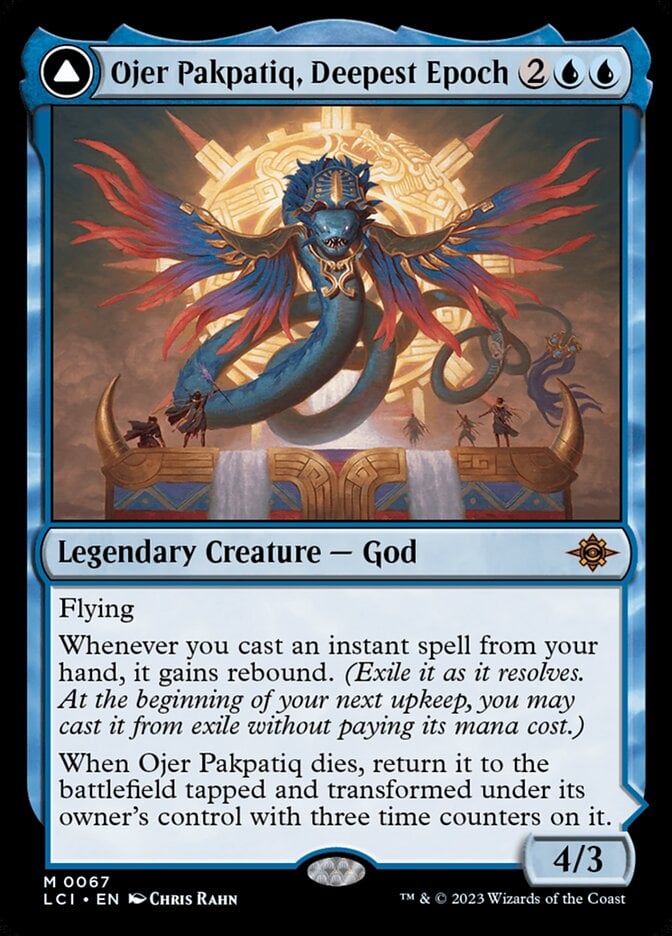
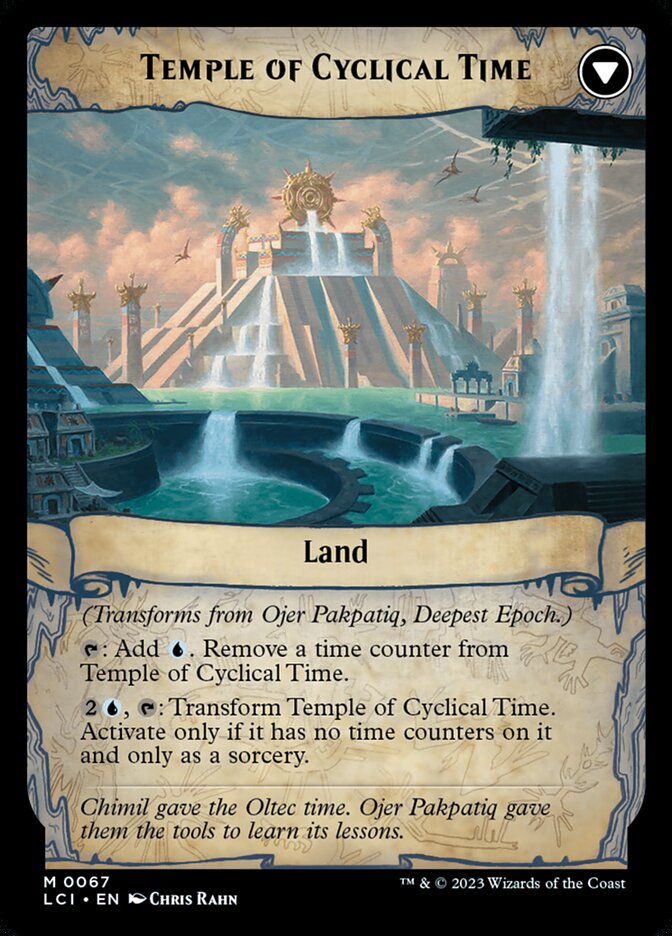
Ojer Pakpatiq, Deepest Epoch grants rebound to all your instants, turning into huge card and mana advantages. Though the Temple of Cyclical Time may not surprise many opponents, getting through suspend three is a small ask to give you double spells nearly every turn.
#7. Ojer Taq, Deepest Foundation / Temple of Civilization
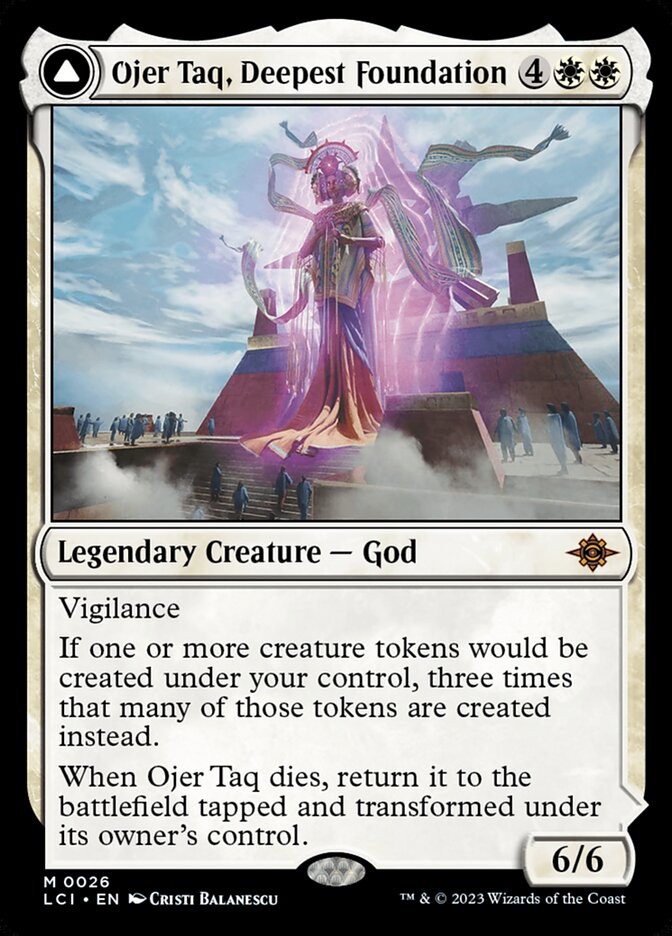
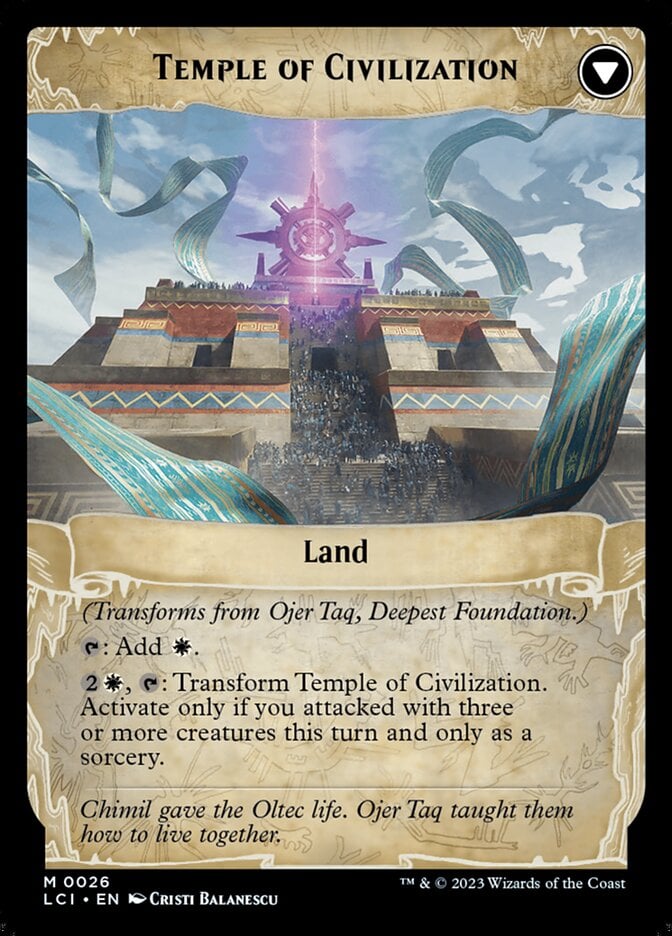
Ojer Taq, Deepest Foundation is worth making your deck’s cornerstone. I thought token doubling was an achievement, but tripling tokens gets you to lethal attack power, dare I say, three times as fast. The hard part is getting three attackers to activate Temple of Civilization in your recovery from a board wipe.
#6. Primal Amulet / Primal Wellspring
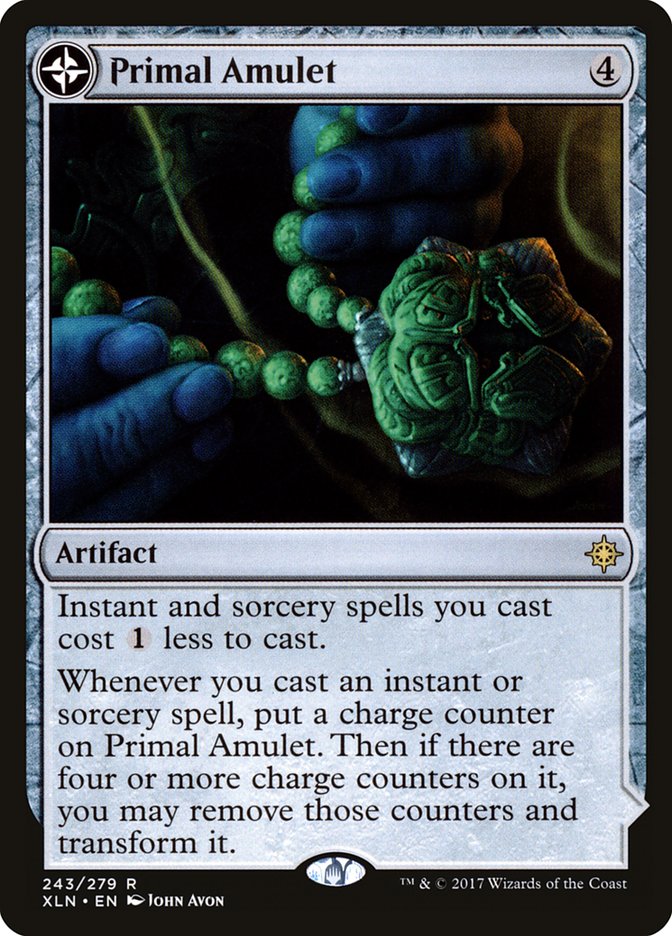
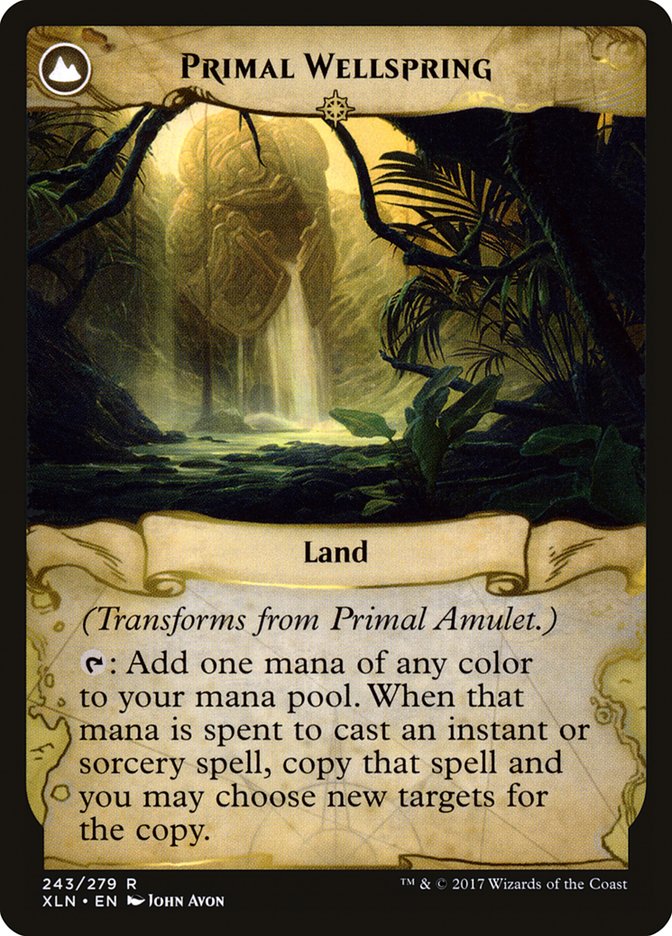
Primal Wellspring is a great tool for more spell-focused decks. The cost reduction on instants and sorceries can have a huge impact, especially because it makes it easier to hold up mana for counterspells.
If you choose to transform this card into Primal Wellspring you’re basically able to copy one spell you play on each of your turns. Neither of these cards is legendary so you can have multiple Primal Wellsprings on the board at a time copying several spells a turn or the same one twice.
#5. Brass’s Tunnel-Grinder / Tecutlan, the Searing Rift
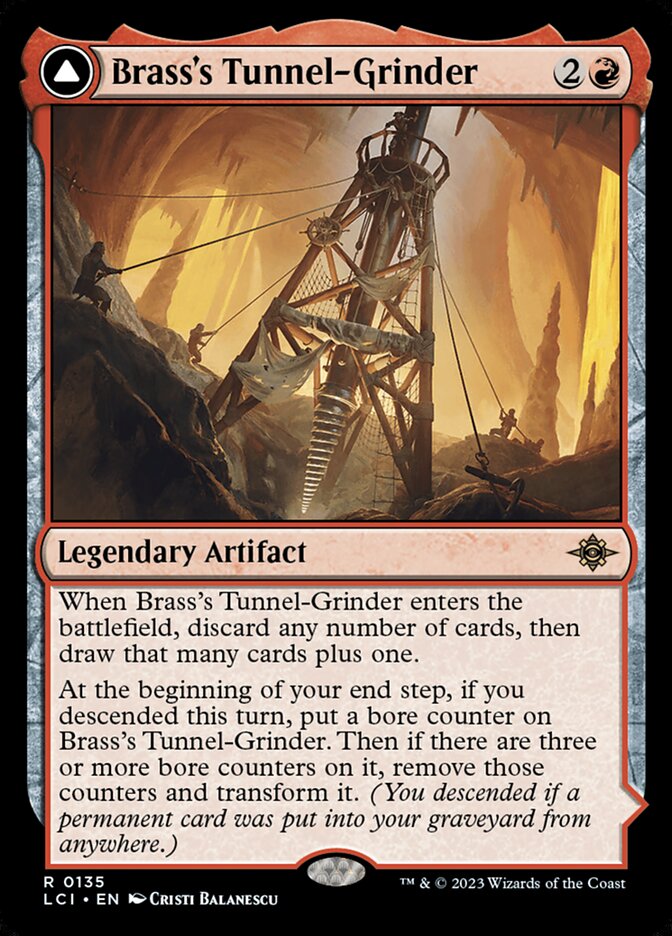
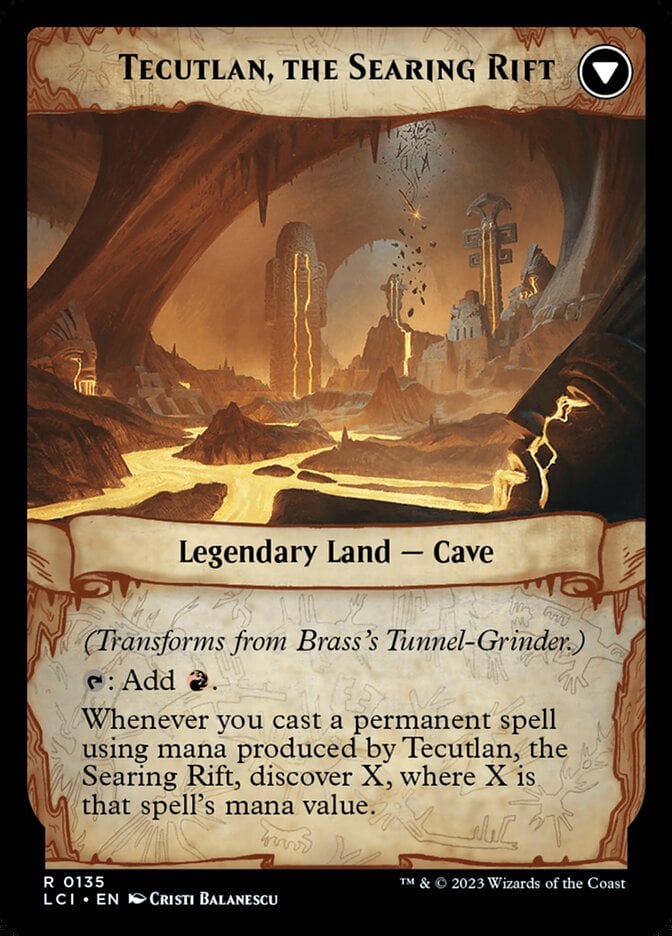
The artifact side of Brass's Tunnel-Grinder helps you descend, and is pretty easy to transform. Then, Tecutlan, the Searing Rift adds discover to one of your permanent spells each turn. You get to rip off lots of value when you get to this cave.
#4. Agadeem’s Awakening / Agadeem, the Undercrypt
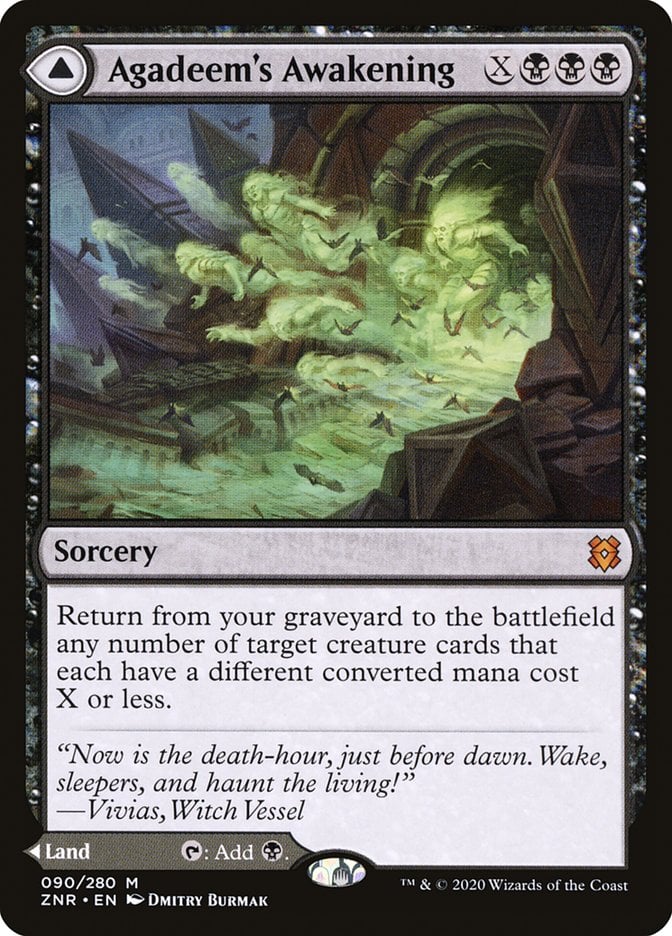
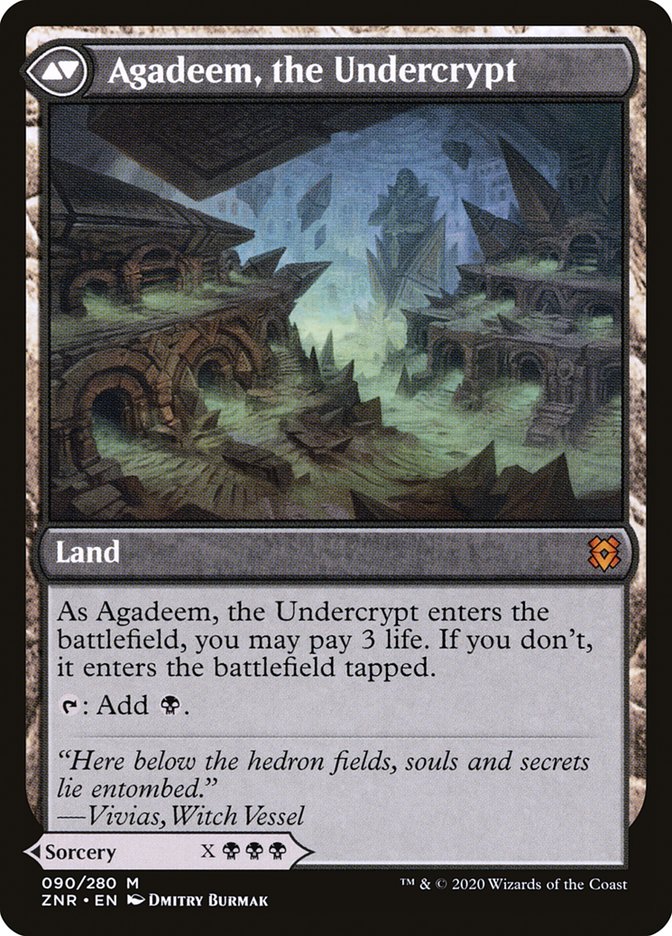
This MDFC is one of the best bolt lands. Agadeem's Awakening can be an incredibly powerful card in a Pod deck because you’re likely to have a lot of creatures with different mana costs. That might be the most explosive use of this card, but it also works well in a variety of different decks.
It can enter untapped as Agadeem, the Undercrypt, making it one of the better flip land spell options.
#3. Sea Gate Restoration / Sea Gate, Reborn
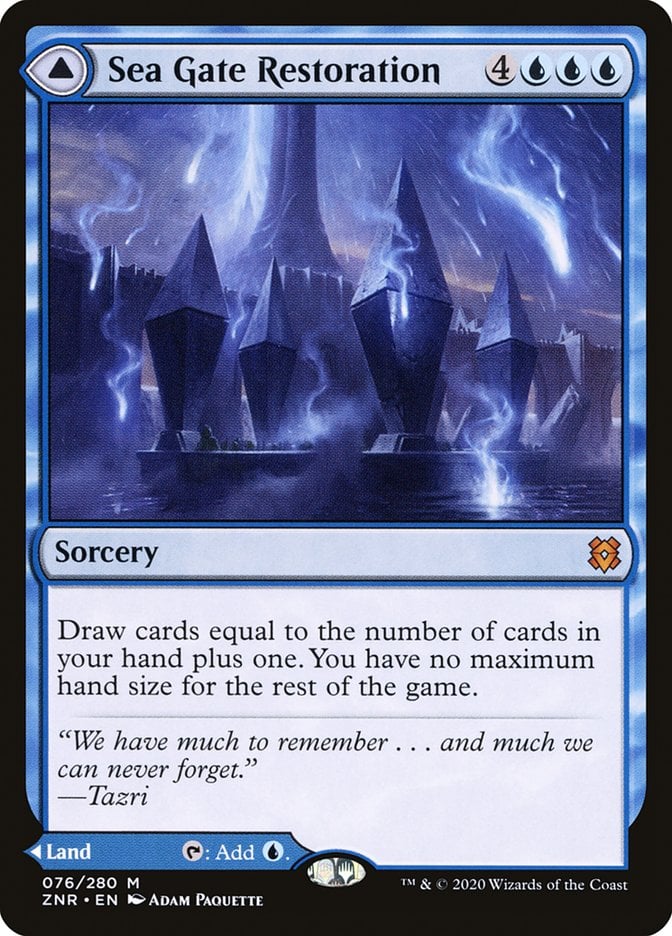
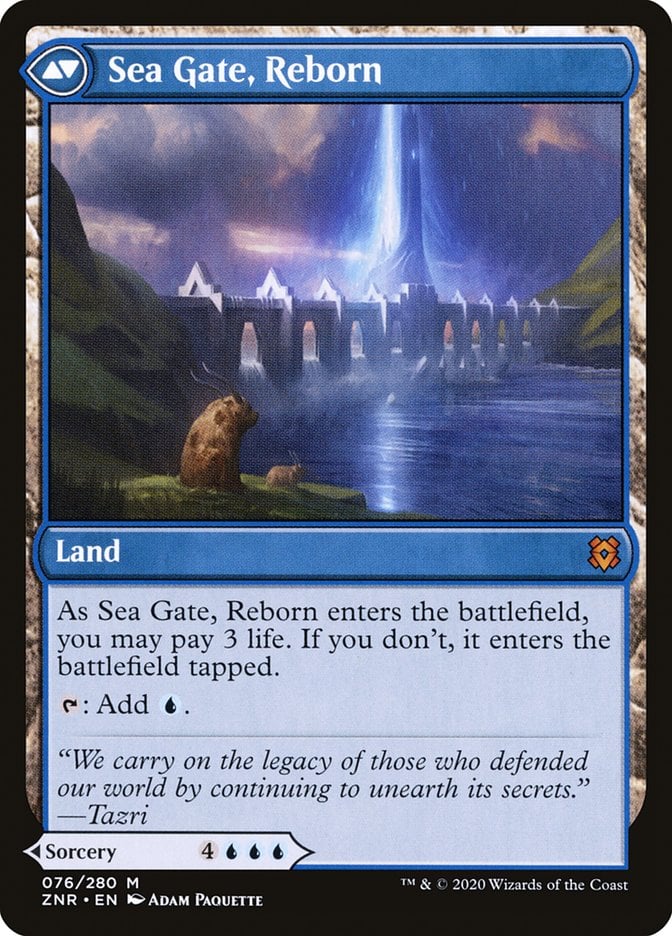
Sea Gate Restoration is an incredible tool for control decks. You’re likely to draw a few cards off this spell, and more resources are always a good thing to have. You also won’t have to worry about hand size so you can keep drawing and finding answers without ever discarding them.
Aside from card advantage you also get a potential source of blue mana that only costs you 3 life to come in untapped.
#2. Aclazotz, Deepest Betrayal / Temple of the Dead
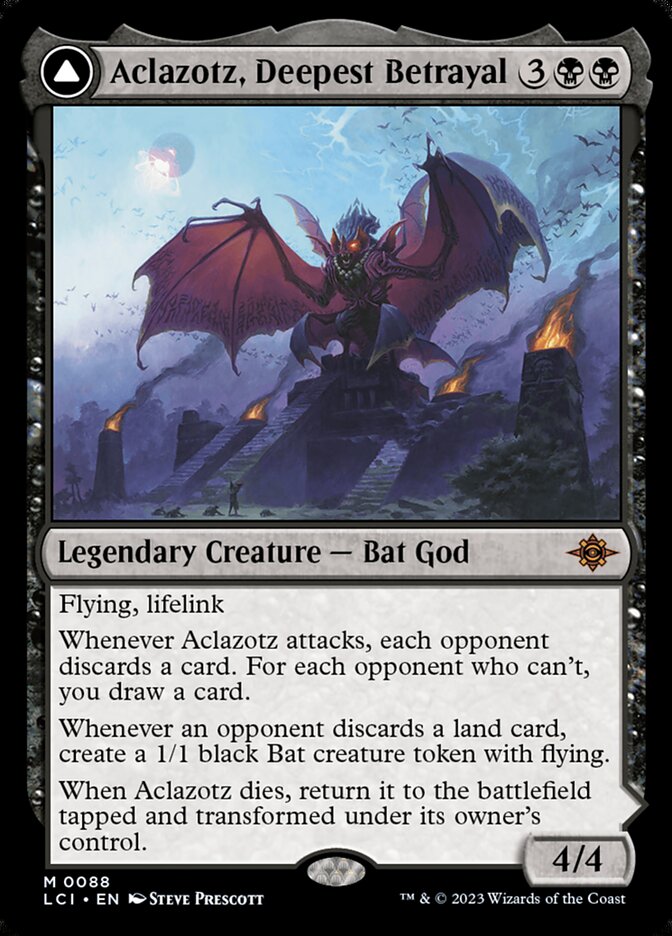
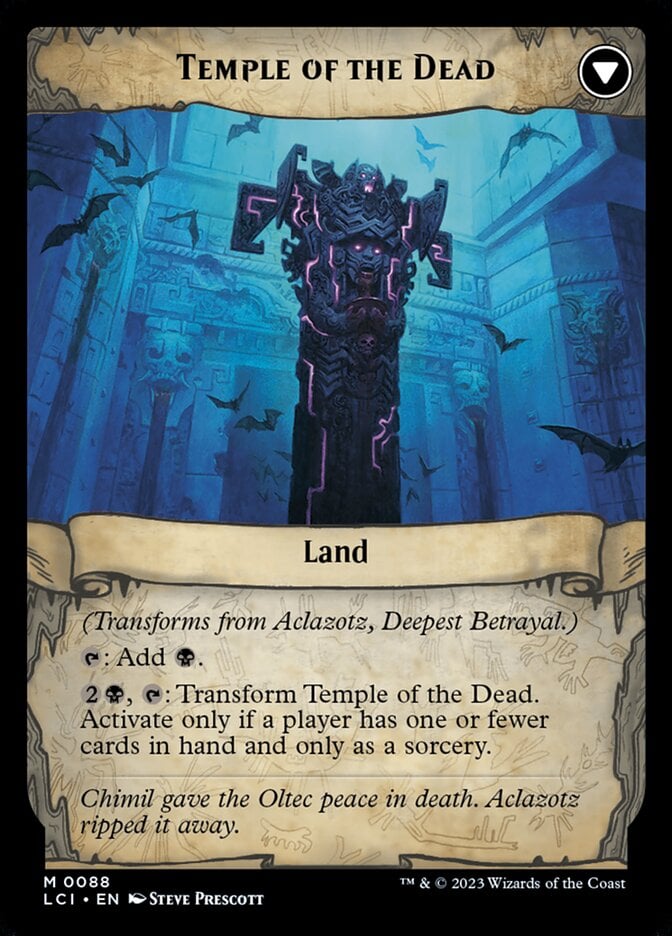
The creature is a nightmare for opposing aggro players, and the first two triggered abilities are both great. You can force multiple discards, win races through the air, and bring Temple of the Dead back once removed. Then the cost to transform back to Aclazotz, Deepest Betrayal may simply be drawing out another card from your opponent, or a Mind Rot effect away.
#1. Growing Rites of Itlimoc / Itlimoc, Cradle of the Sun
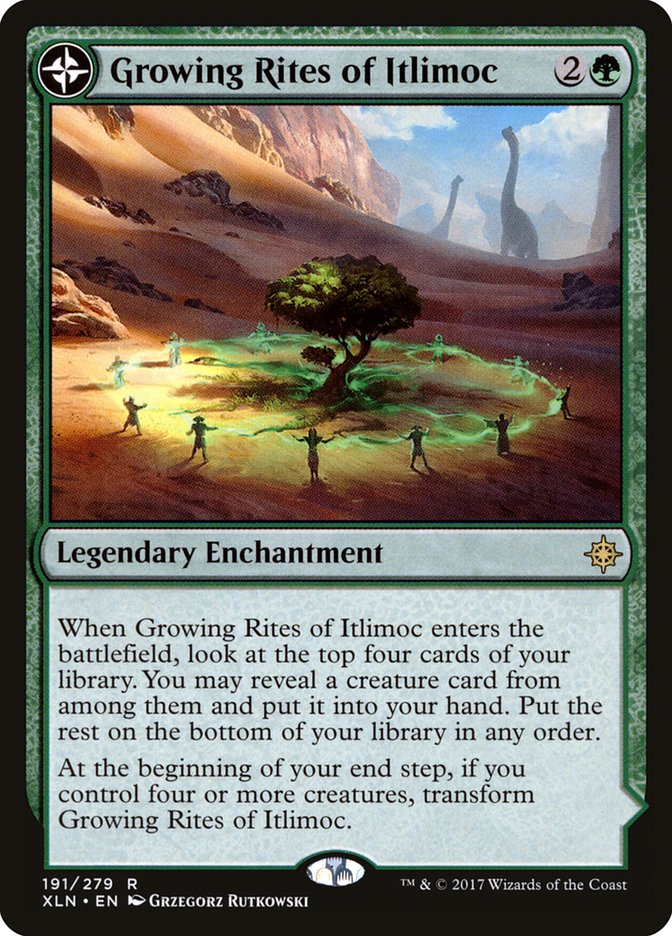
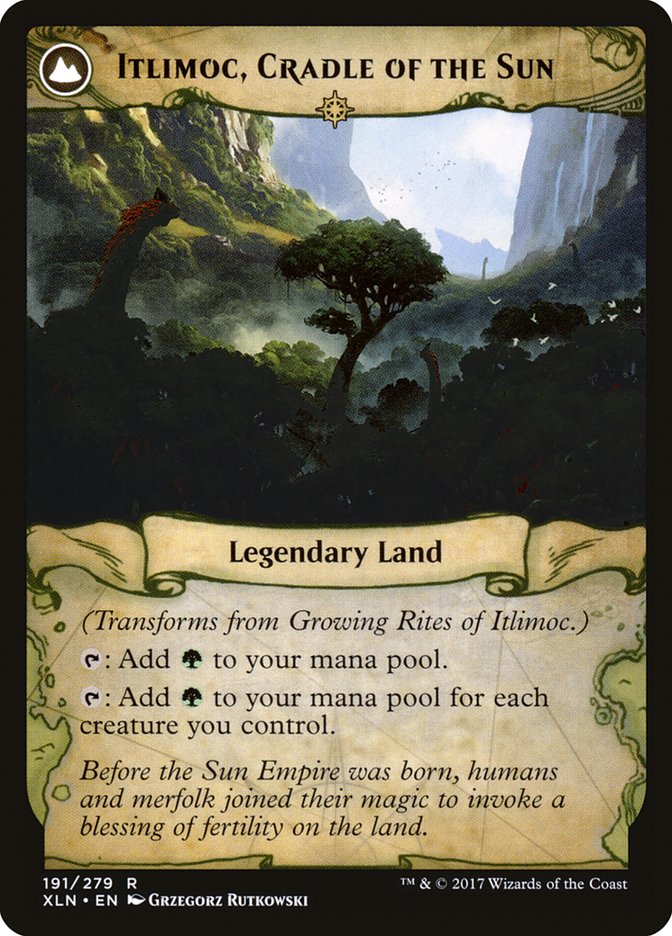
Growing Rites of Itlimoc is quick and powerful. It can be played pretty early on and helps you work towards transforming it by getting you a creature to your hand off the top of your deck. You can fill your board with more ease thanks to it transforming on your end step as opposed to upkeep, knowing your creatures just have to survive to the end of your turn.
Itlimoc, Cradle of the Sun is basically a Gaea's Cradle, but it’s even better because it can also tap for mana without having any creatures on the board. With a $700 Reserved List card on the back, it’s hard not to consider this one of the best flip lands.
Best Flip Land Payoffs
The best thing about flip lands is that most of them are spells on the front side and lands on the back. This allows you to increase your spell count and land count at the same time.
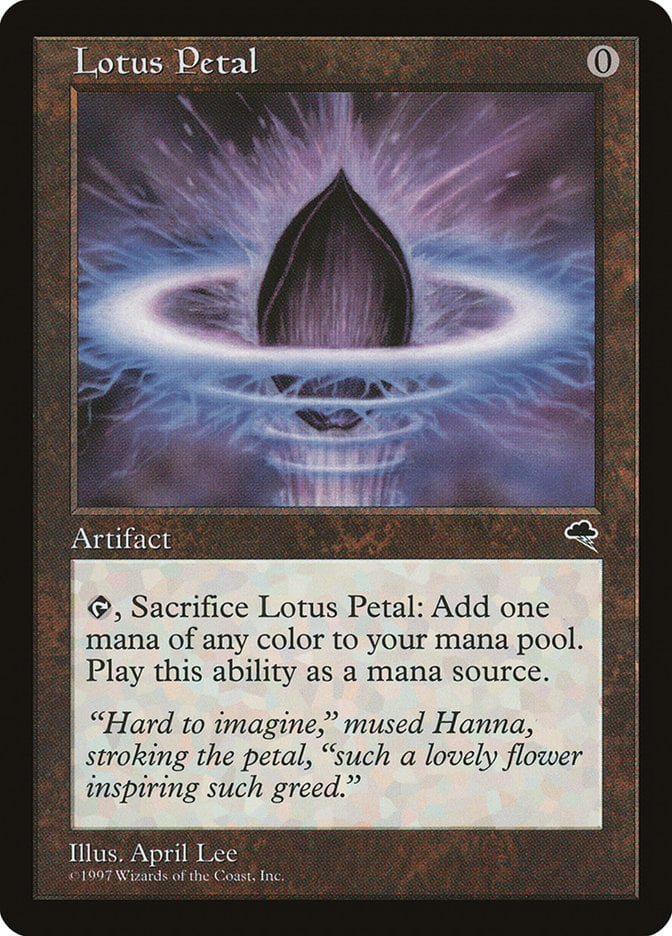
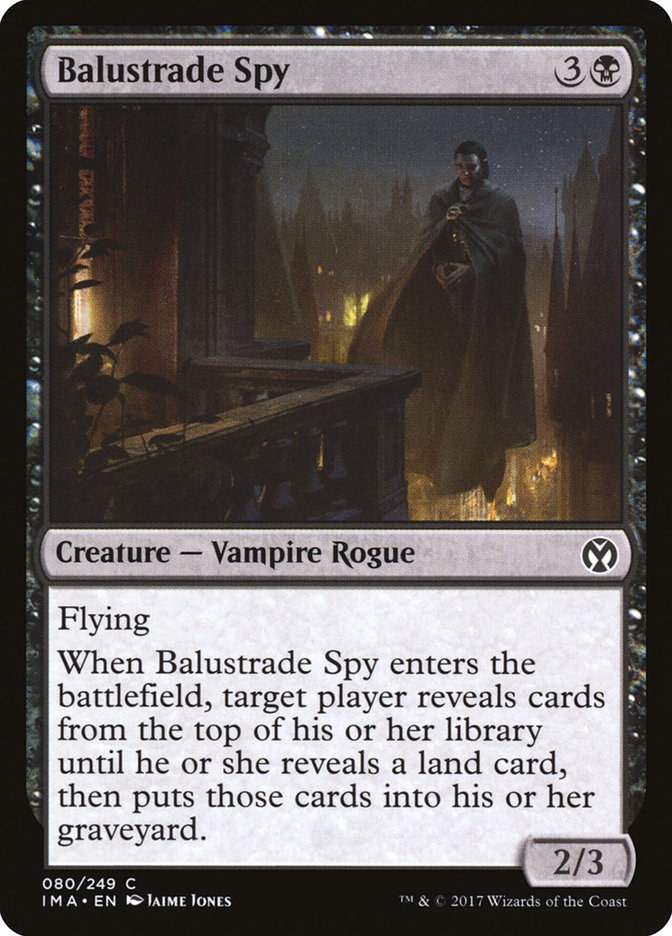
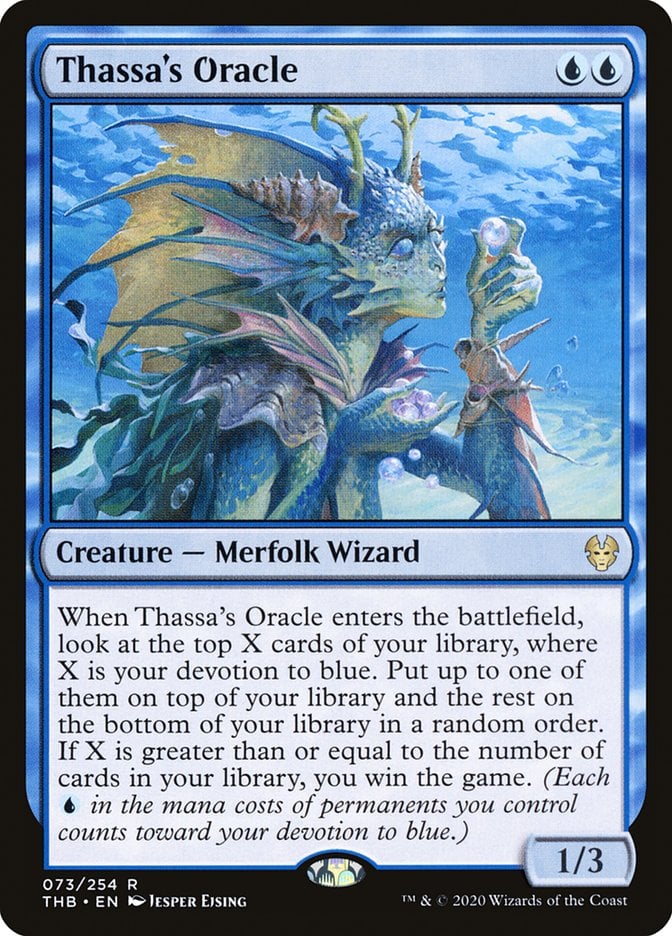
There are many “Oops, All Spells” decks that get more consistent when you replace lands with flip lands or with spells that generate mana like Lotus Petal. These decks cast a card like a Balustrade Spy, mill their whole deck because they don’t have lands, and reanimate a Thassa's Oracle for the win.
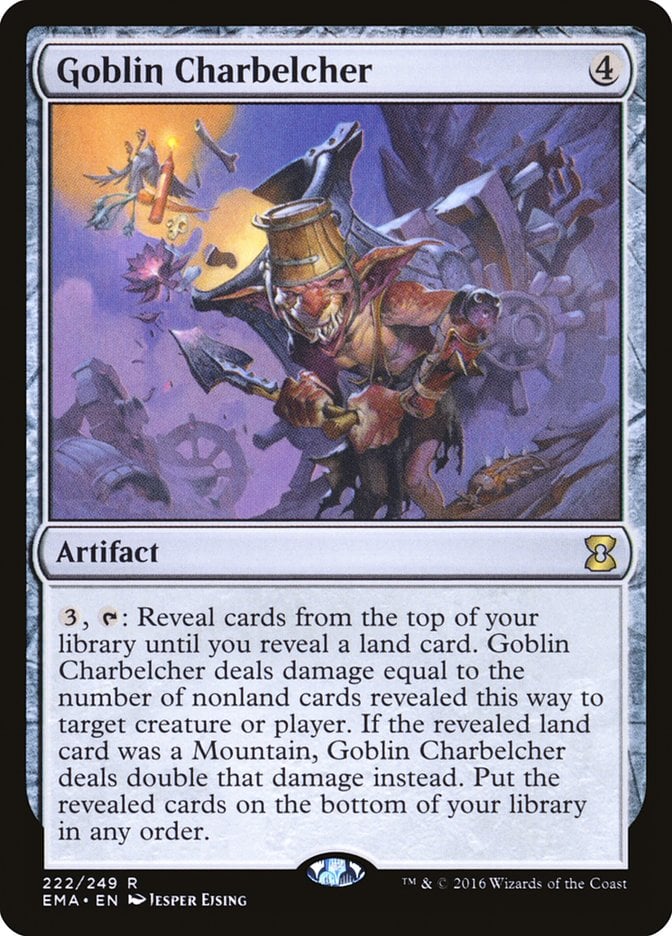
Another card that operates in this axis is Goblin Charbelcher. You tap the Charbelcher, reveal a good chunk of your deck and a mountain and deal enough damage to win.
Lastly, ramp decks get more consistent, because they can make their land drops more consistently while land-flooding less.
How Do Double Sided Lands Work?
There are two main versions. The first are the Pathways, which are lands on both sides like Clearwater Pathway / Murkwater Pathway.
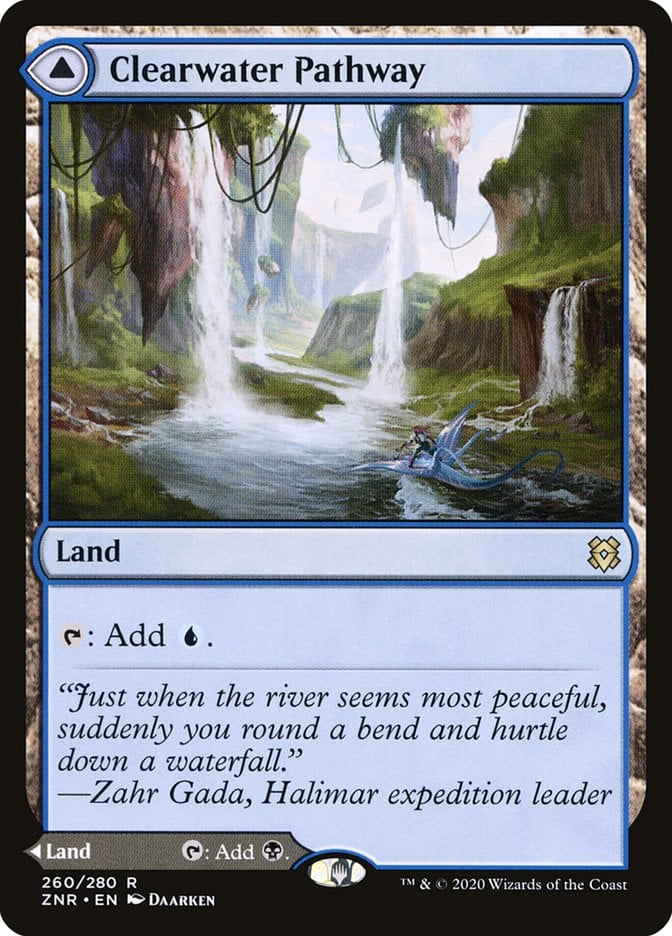
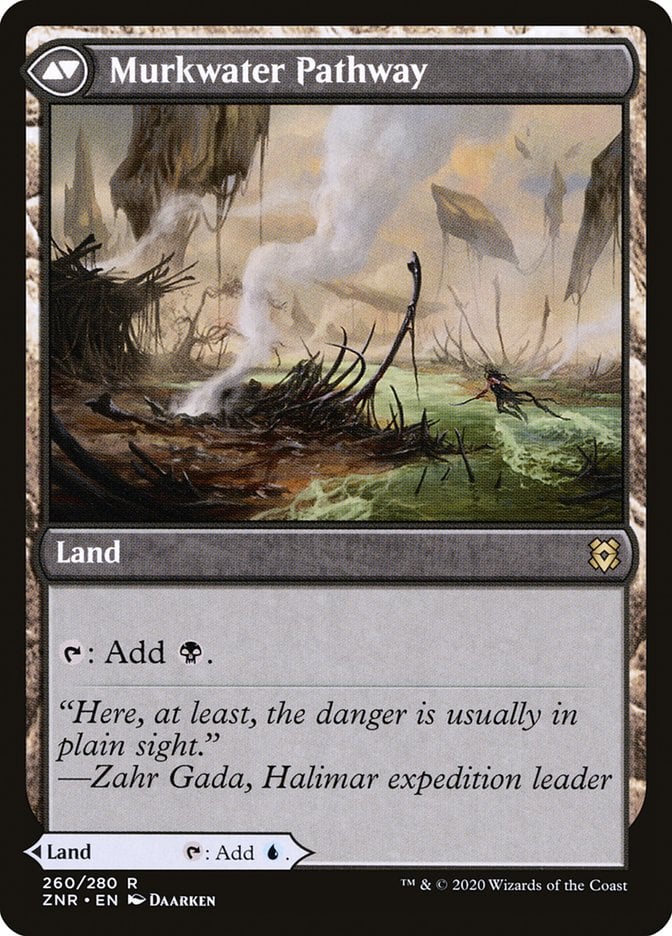
The frontside is Clearwater Pathway, so that means it’s a land in every zone (hand, graveyard, library). The name of the card is also Clearwater Pathway. The only way this card is Murkwater Pathway is if you play it like that.
The second case is when you have a spell like an instant, sorcery, or nonland permanent on the front side and a land on the back side.
Using Spikefield Hazard / Spikefield Cave as an example, the front side is Spikefield Hazard, so the card is a red instant in all zones. It’s only going to be a land if you play it as Spikefield Cave.
The same rules work for creatures like Akoum Warrior / Akoum Teeth and sorceries like Bala Ged Recovery / Bala Ged Sanctuary.
Can You Play Flip Lands From the Top of Your Library?
You can play the land side from the top of your library if you have cards like Oracle of Mul Daya in play. That can be done only with modal double-faced cards that could be played as a land from your hand in the first place. You can’t play Azcanta, the Sunken Ruin from the top of your library since that transforms from Search for Azcanta.
Notable, if a card asks you to reveal a land from the top of your library, MDFCs with spells on the front won’t count. For example, if you flip a Fell the Profane off Druidic Satchel, you will always gain 2 life and never have the option to put Fell Mire into play, since the revealed card will be an instant. Similarly, cards that count card types in graveyards (like delirium cards or Tarmogoyf) will always see MDFCs as their front side, and will not count the back half of the card at all.
Can You Flip Pathway Lands in MTG?
No, you can’t flip Pathway lands. Once a Pathway is on the battlefield it can’t be flipped to the other side. In fact, any double-faced card that doesn’t specifically have a way to transform in the rules text of the card can’t be flipped once it’s been played.
Make sure you’re choosing the side of your Pathways carefully, because you won’t be able to change it later.
Do Pathway Lands Count as Basic Lands?
Pathways are not basic lands. They can’t be searched up with fetch lands or any spells that grab basic lands from your deck.
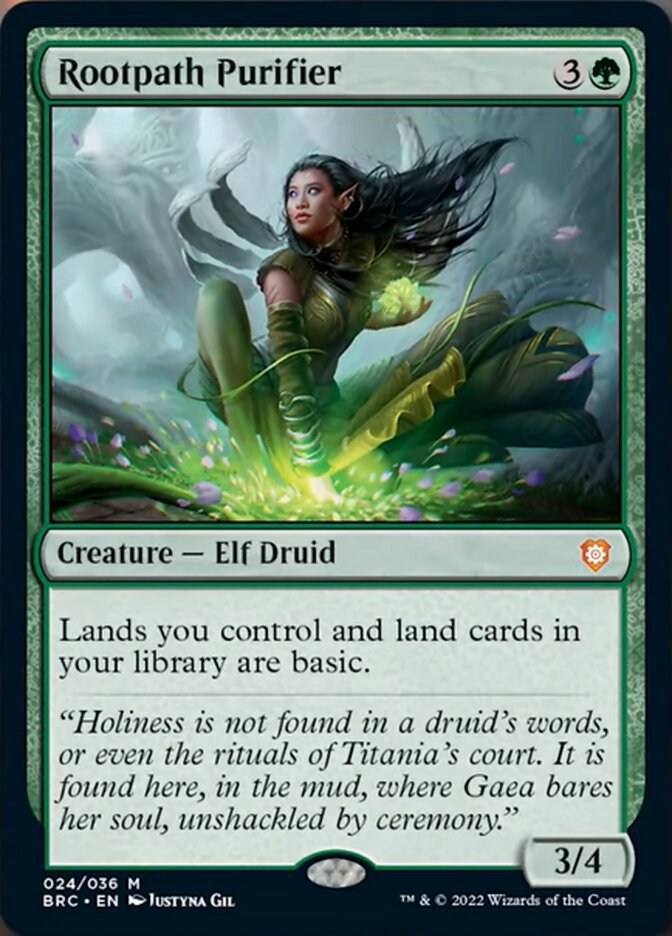
If you want your Pathways to be basic you need to have Rootpath Purifier on the field.
Wrap Up
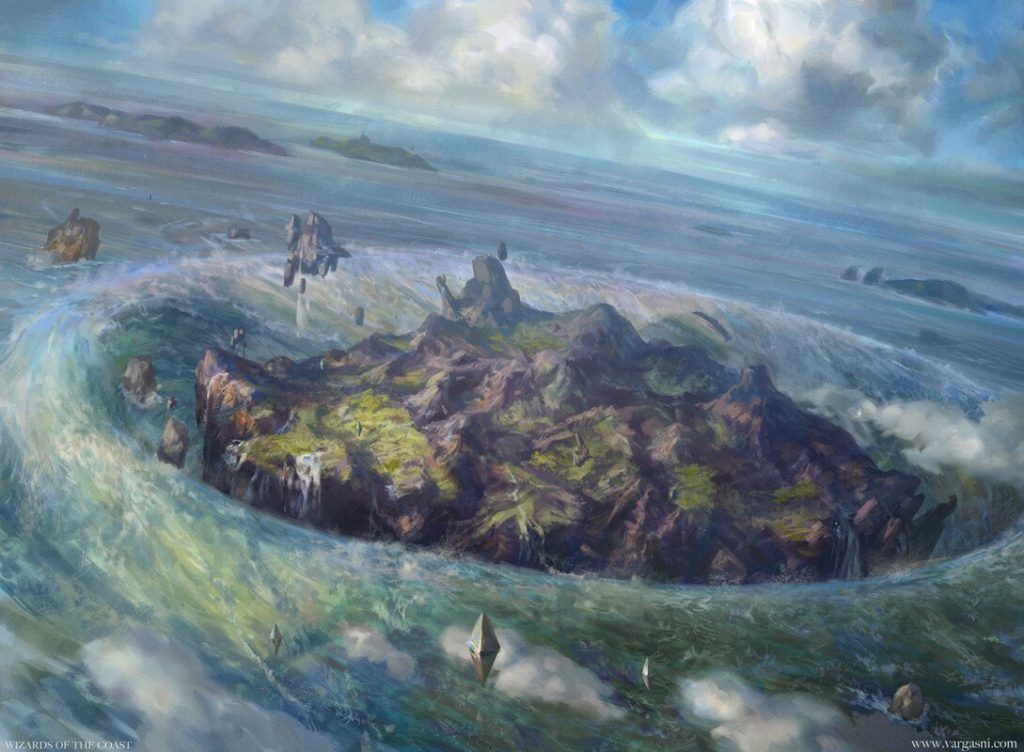
Silundi Isle | Illustration by Randy Vargas
Flip lands can be very useful cards to include in your deck. Some flip land spells are worse versions of other spells, but their ability to be played as lands often makes up for this. Some of these cards work better on their nonland side, but they’re still worth considering for your decks.
What flip lands do you use most often? Do you prefer dual lands or Pathways? Let me know in the comments below or over on Draftsim’s Twitter.
Thank you for reading, and I’ll see you in the next one!
Follow Draftsim for awesome articles and set updates:










Add Comment