
Last updated on November 1, 2025

Dina, Soul Steeper | Illustration by Chris Rahn
Greetings, planeswalkers! Today, we take a look at the green and black colors, or Golgari, a color combination that has produced some of the best creatures in MTG’s history.
While many BG decks combine beefy green cards and strong black removal to trample the opposition, other decks create big monsters by slowly feeding their graveyards or just profit from great sacrifices. Many of these are evaluated mainly through an EDH lens, and some are even good commanders themselves.
With that out of the way, let’s see what mighty creatures this color combination has to offer!
What Are Golgari Creatures in Magic?

Mazirek, Kraul Death Priest | Illustration by Mathias Kollros
Golgari () creatures in Magic have a green and black color identity. These might be straight-up green and black multicolor creatures, be they gold or hybrid, or a green creature with a black activated ability, for example.
The Golgari Swarm is the graveyard guild, so expect these creatures to be related to the graveyard in some way, either milling cards or benefiting from a filled graveyard. BG also profits in some way from creatures that die, so we have some aristocrat enablers and payoffs.
Unfortunately, I won’t include Grist, the Hunger Tide, since it’s a mere planeswalker while sitting on the battlefield, even though it’s a creature in any other zone.
#40. Poison-Tip Archer
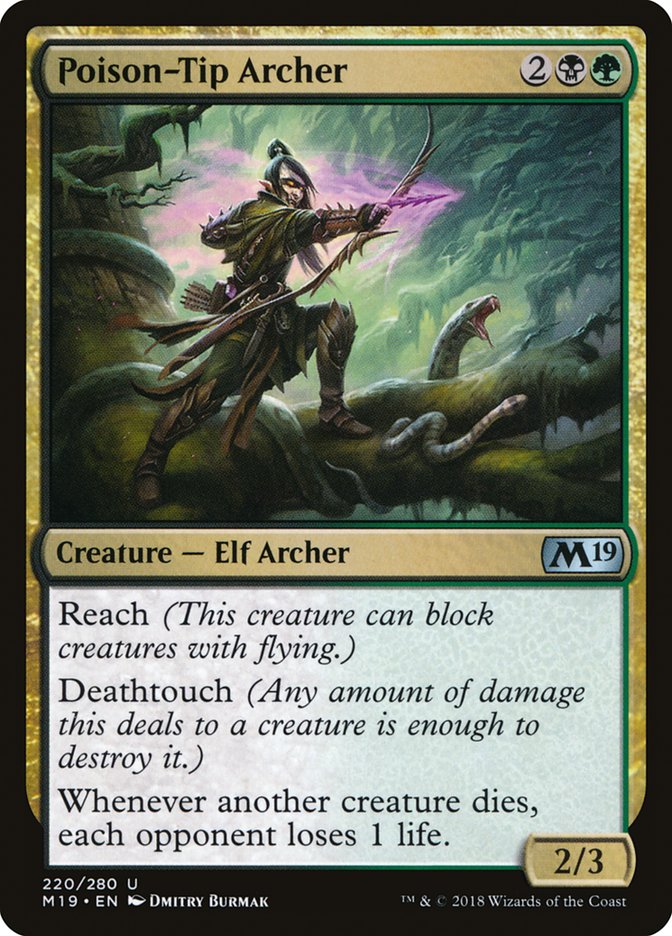
Poison-Tip Archer looks like a fine playable card in Limited, but you’ll add this card to your aristocrats deck to have more redundancy for the Zulaport Cutthroat effect. The fact that its textbox says “each opponent” helps this card see more EDH play.
#39. Corpsejack Menace
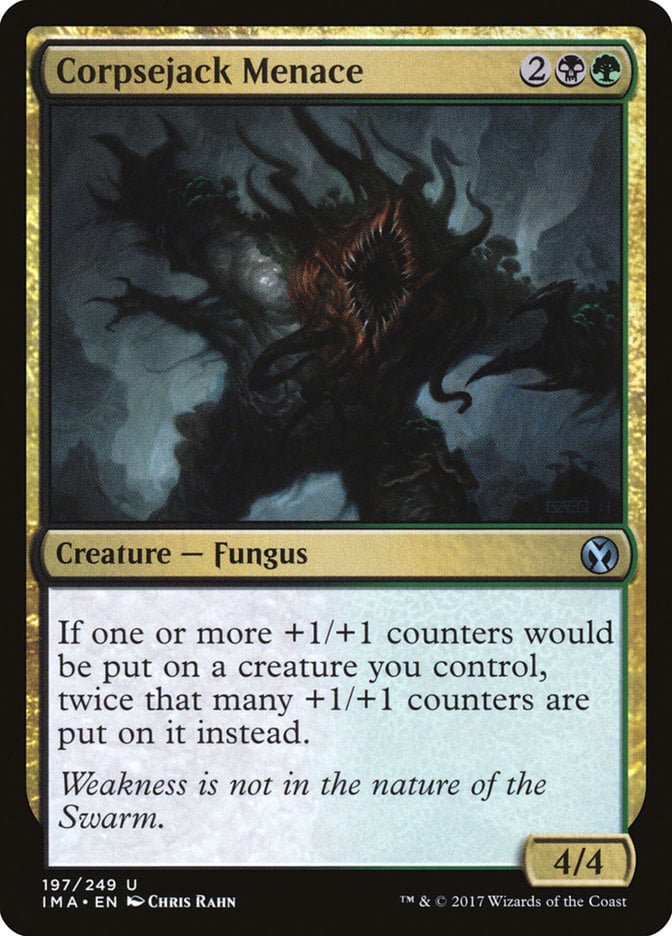
Corpsejack Menace isn’t stellar by any means, but if you’re into +1/+1 counters, it’s a solid guy to have around. The difference between a 4/4 hydra and an 8/8 one is huge. Many BG, Abzan (), or Sultai commanders () deal with +1/+1 counters, so this card has plenty of homes.
#38. Honest Rutstein
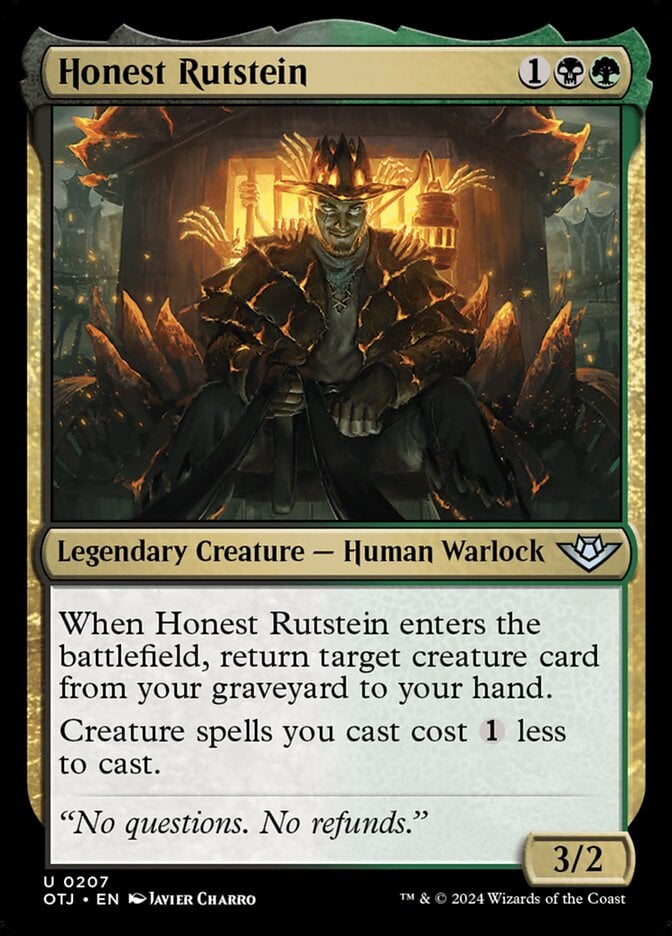
A Gravedigger is a solid creature, and Honest Rutstein is one of the better versions, a solid 3/2 and that also reduces the cost of creatures you cast. It’s a nice addition to recursion decks or a creature ramp piece.
#37. Winding Constrictor
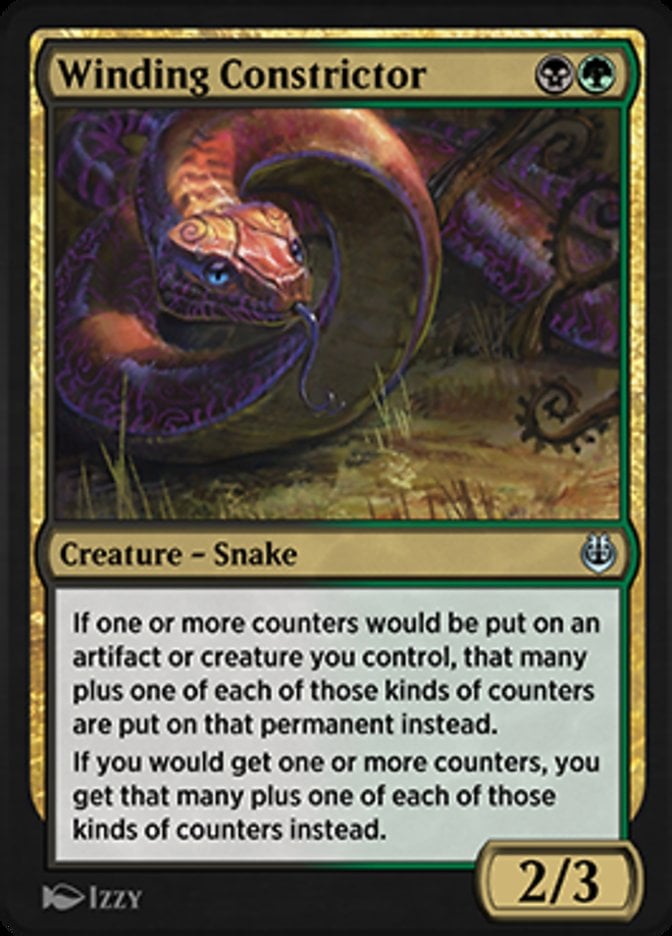
Winding Constrictor plays into the same Corpsejack Menace +1/+1 counter themes, although this time it’s more like a Hardened Scales. It’s also a 2-mana card, so it’s easier to include. This card also adds counters to you or artifacts you control, so it’s nice with energy or experience counters, but bad against infect and poison.
#36. Yargle and Multani
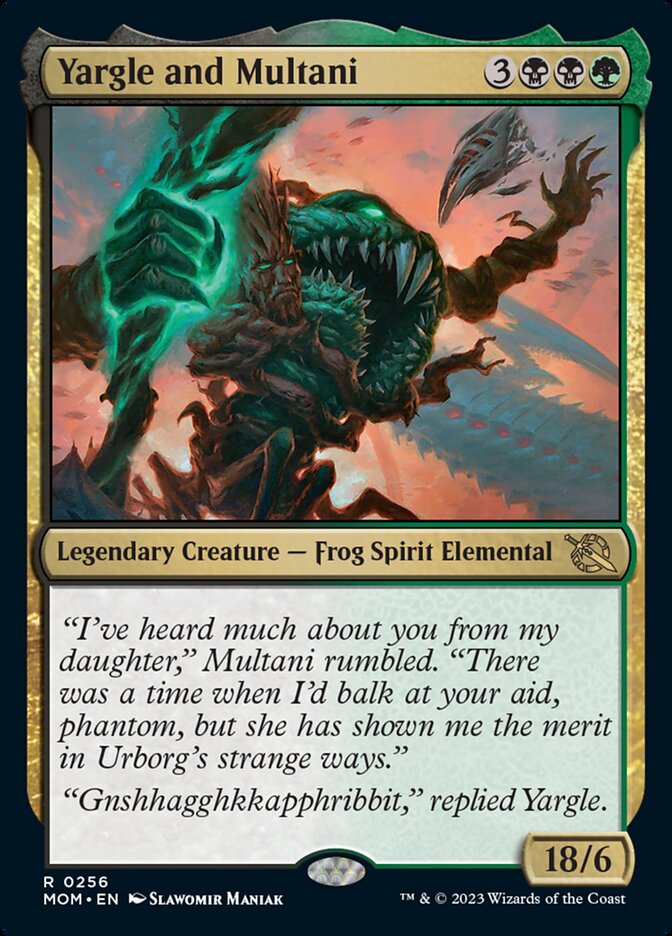
18/6 is a ridiculously unique statline, and that’s about all you need to know about Yargle and Multani. Zero abilities, but the juiced-up stats make this card an interesting piece of synergy, whether you’re Berserking, Flinging, or just casting something like Traverse the Outlands.
#35. Daemogoth Titan
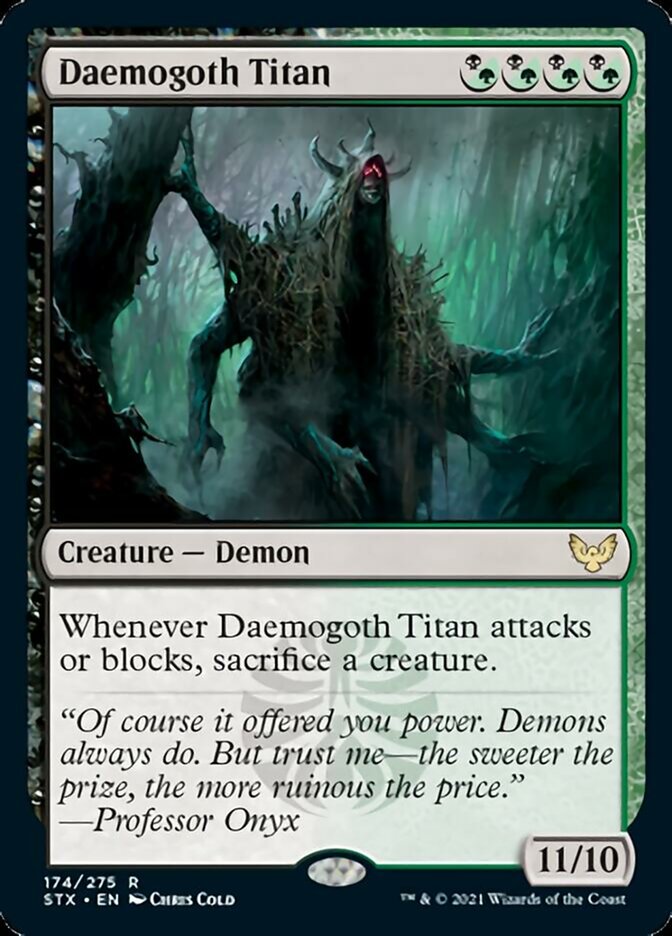
Daemogoth Titan, like Yargle and Multani, is all about the stats. That and the ability to sacrifice creatures for free when this card gets involved in combat. Don’t overlook the four devotion this card provides, because green and black devotion are well-supported decks. This demon goes straight into your graveyard if you want, and some mechanics work best when you have a big-power or high-toughness creature in your ‘yard.
34. Polukranos, Unchained
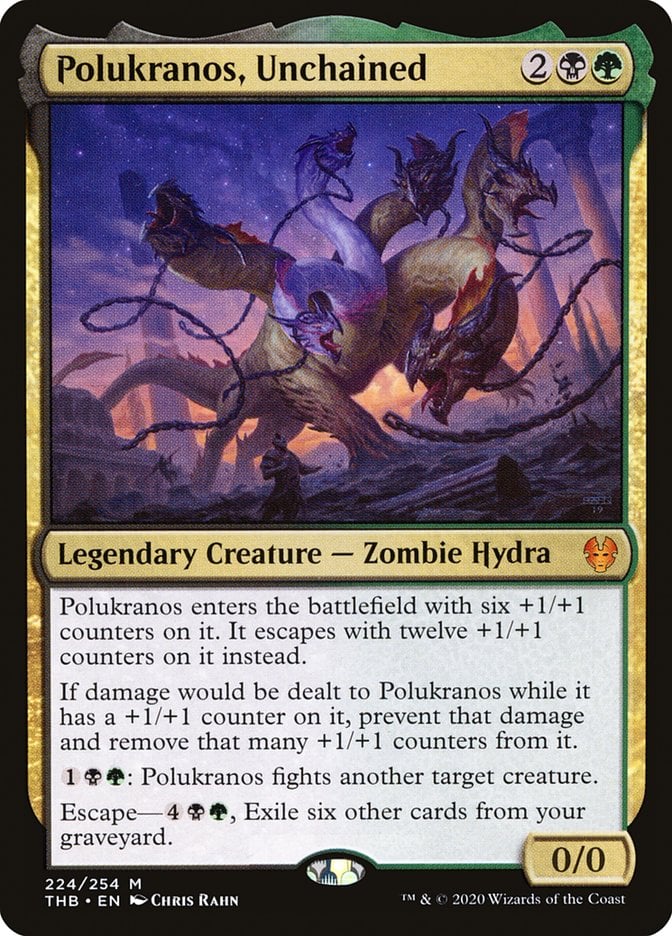
Polukranos, Unchained is big. Like, 6/6 for 4 mana big. Not only that, but you have a damage-prevention system and a fighting system, so this card doubles as removal. Late in the game, you can escape this hydra as a 12/12 and start to snipe big targets. It’s one of the most efficient Golgari creatures that doesn’t need any synergies to be good.
#33. Beledros Witherbloom
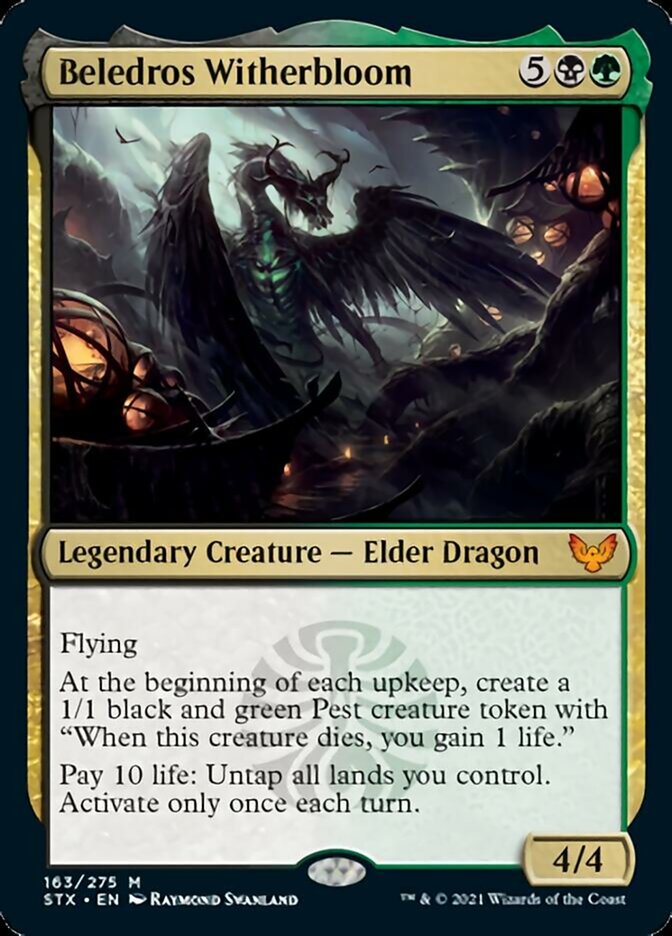
Beledros Witherbloom is an interesting Commander card just because you can use its abilities once “each turn”. Naturally, you’ll cast it and generate many Pest tokens over the course of a game, which gives you some chump blockers and life. But what sells this card is the ability to pay 10 life to have access to double the mana, and channel all of that into a strong Torment of Hailfire or Exsanguinate.
#32. Gloomshrieker
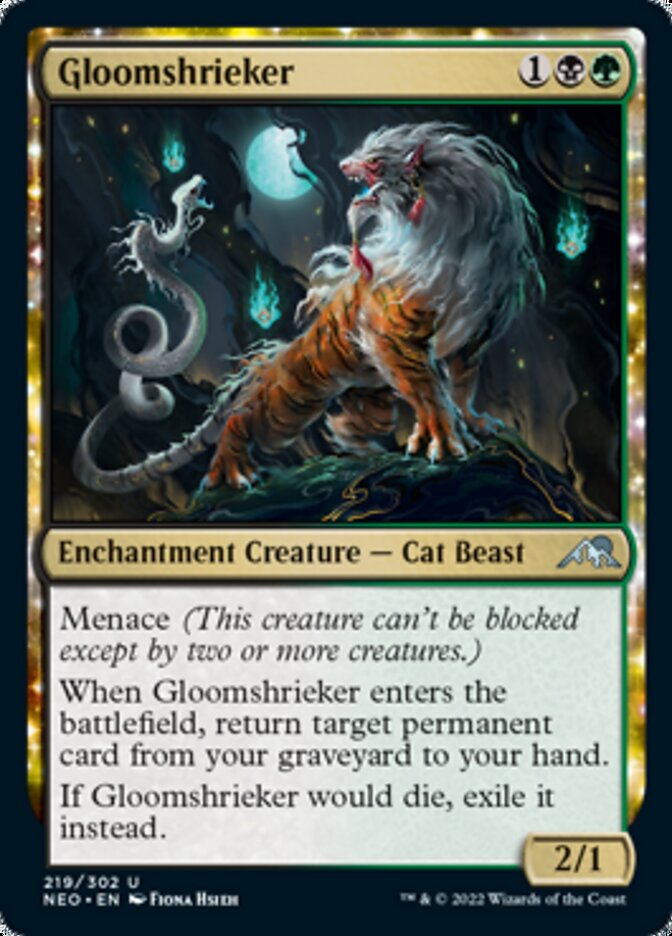
Gloomshrieker is your solid, trustworthy Eternal Witness card, although you can’t loop it. It’s also an enchantment, and some decks will use this card with extra synergies. Play this in decks that use the graveyard as a tool.
#31. Ishkanah, Grafwidow
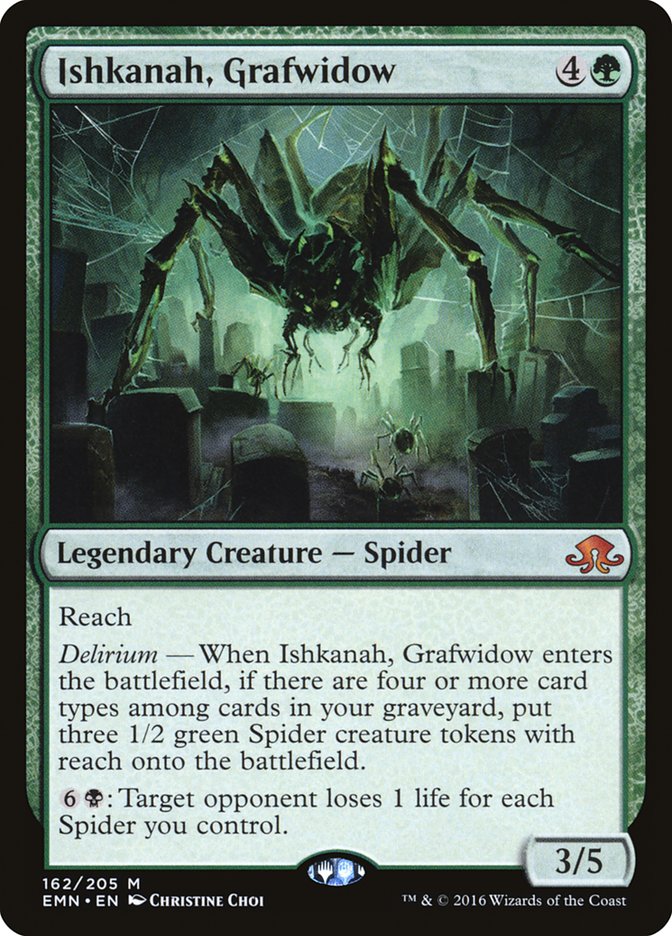
Ishkanah, Grafwidow offers you four spider bodies with reach, provided that you have delirium enabled. Not only that, but later in the game, its activated ability can be a strong win condition. A late Standard star, this card is better used in the many EDH decks that rely on spiders like Shelob, Child of Ungoliant, Cosmic Spider-Man, or as a value card for graveyard decks.
#30. Elves of Deep Shadow
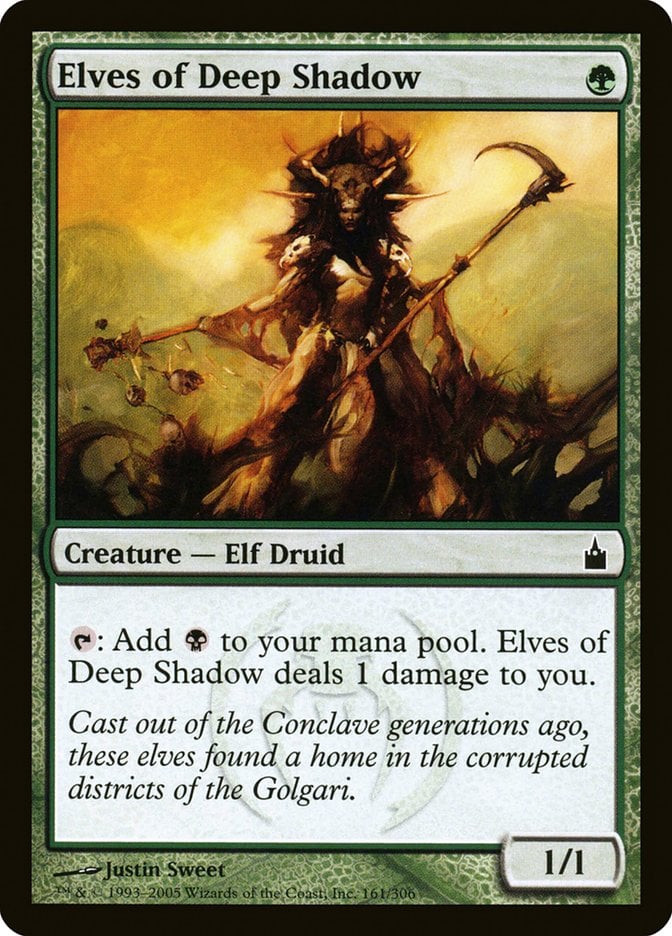
Here’s your classic Llanowar Elves, but in Golgari colors. Elves of Deep Shadow generates black mana if you need it, and if your deck leans heavily towards black, so much the better. The life loss is usually negligible in EDH, so this card tends to see a lot of play, especially in elf decks.
#29. Glissa Sunslayer
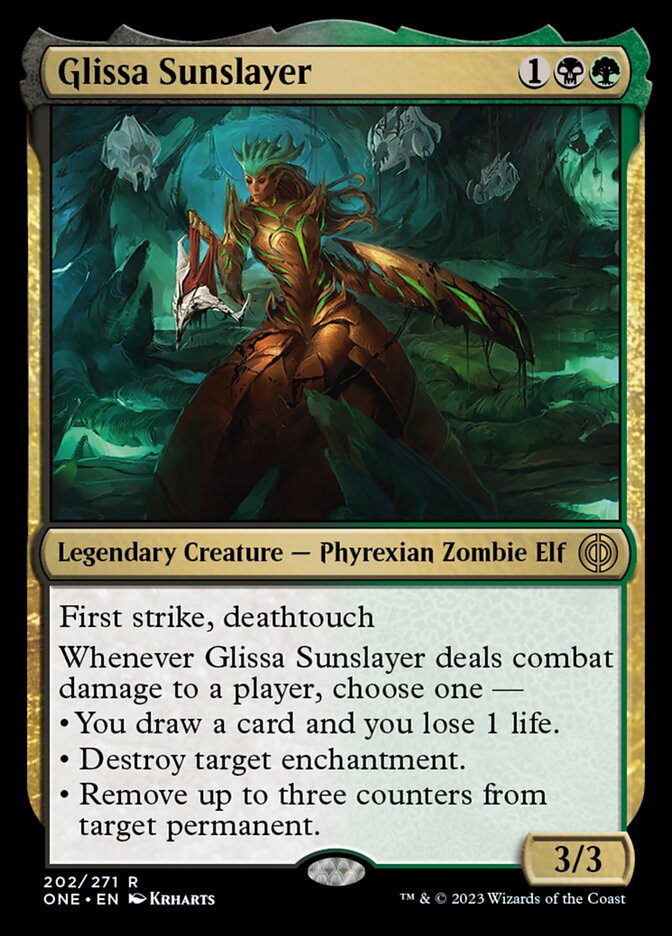
Glissa Sunslayer is a solid 3-drop creature, having seen some Standard and Pioneer play. It’s a strong and flexible saboteur creature that your opponents won’t like to block that often in EDH, and you can easily get a free attack each turn. It’s that kind of value creature that midrange decks like to have in their sideboards against a removal-light opponent.
#28. Mosswood Dreadknight
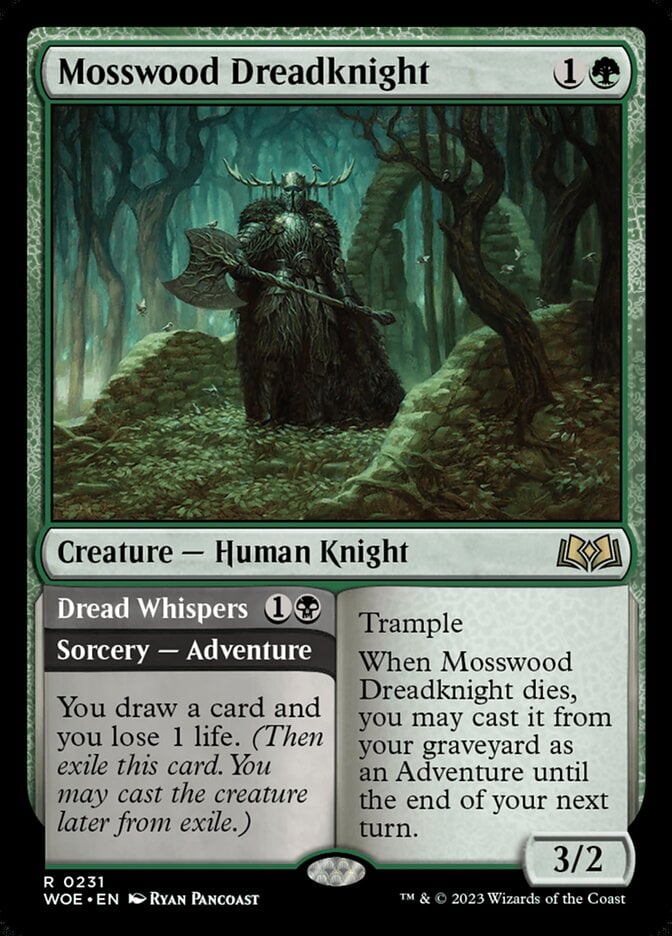
Mosswood Dreadknight is a strong value creature that sees some play in formats like Standard and Pioneer. It’s basically a 3/2 with the added black kicker and recursion, and you can draw many cards over the course of a game with only one of these, let alone multiple.
#27. Grim Flayer
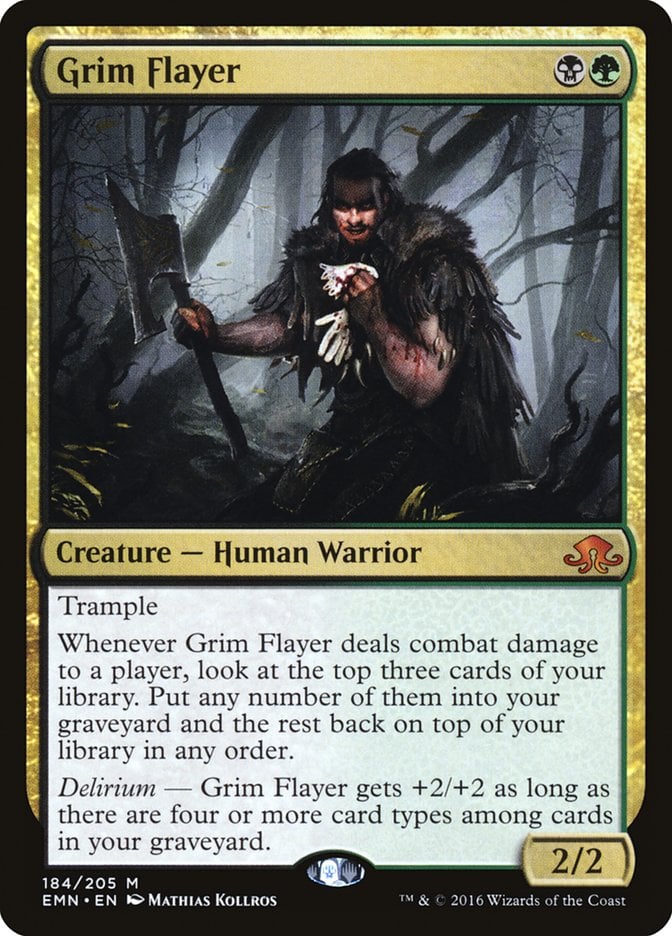
Grim Flayer is more of a 1v1 card, and it was an interesting addition to formats like Pioneer and Modern. A 2-drop that can attack as a 4/4 trampler is a good incentive to build around delirium, and each time it connects, you fill your deck even further. Some EDH decks built around delirium can still make use of Grim Flayer, especially if you can put the surveil 3 ability to good use.
#26. Hapatra, Vizier of Poisons
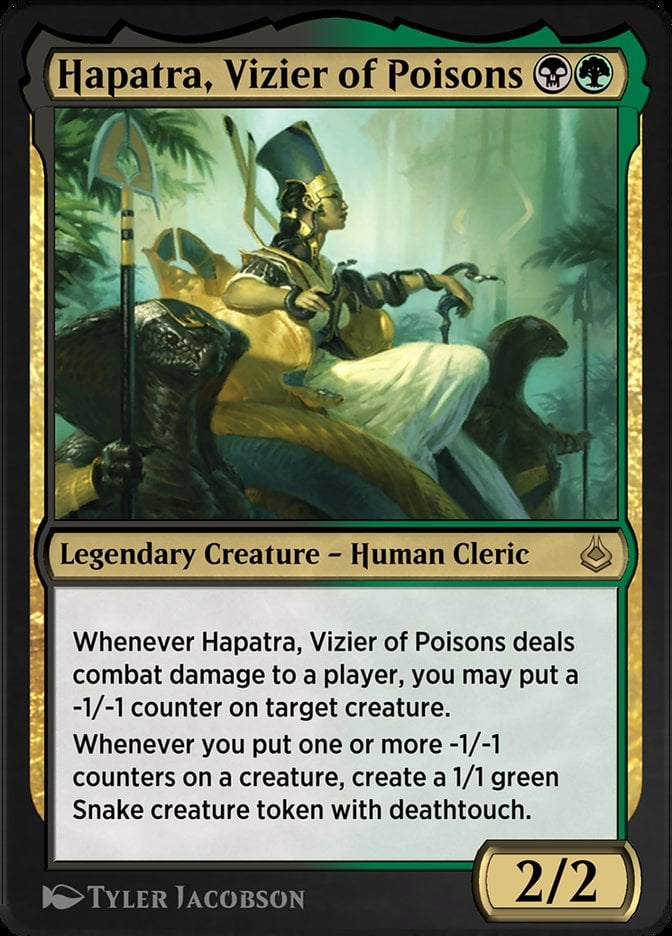
Hapatra, Vizier of Poisons is a strong creature to build around -1/-1 counters, a theme less supported than its +1/+1 counterpart. Here, mixing -1/-1 counter cards with proliferate is the way to go. With Hapatra around, it’s risky to attack you, considering that you can make 1/1 deathtouch snakes at instant speed.
#25. Belbe, Corrupted Observer
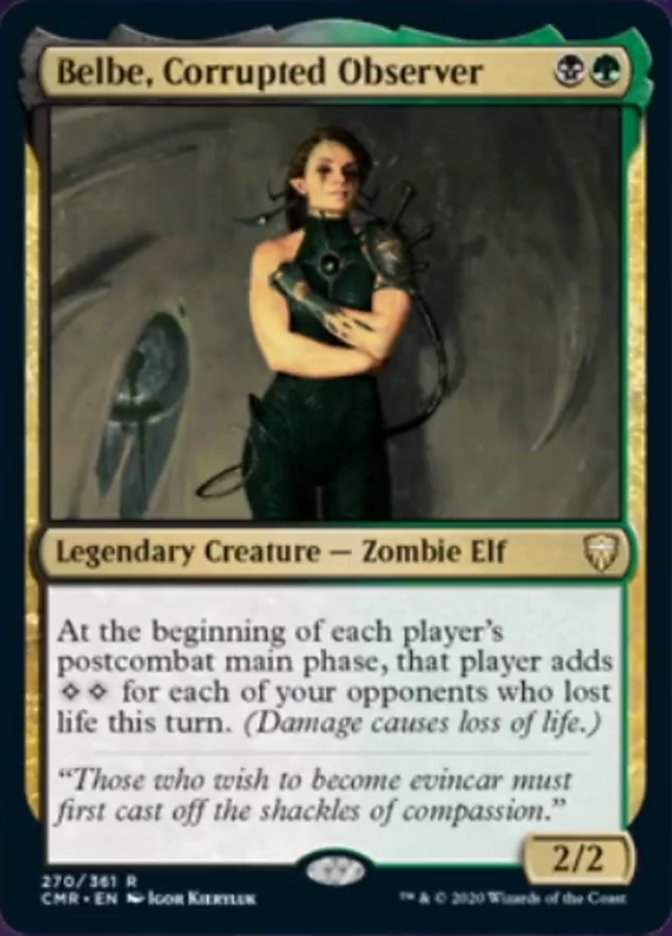
Belbe, Corrupted Observer is a nice way to turn damage or life loss into 6 mana in a typical EDH pod. Yes, it’s symmetrical, but you’ll be the one who can profit from this every turn if you build around the effect, and you’ll probably cast the big bombs before everyone else.
#24. Alpha Deathclaw
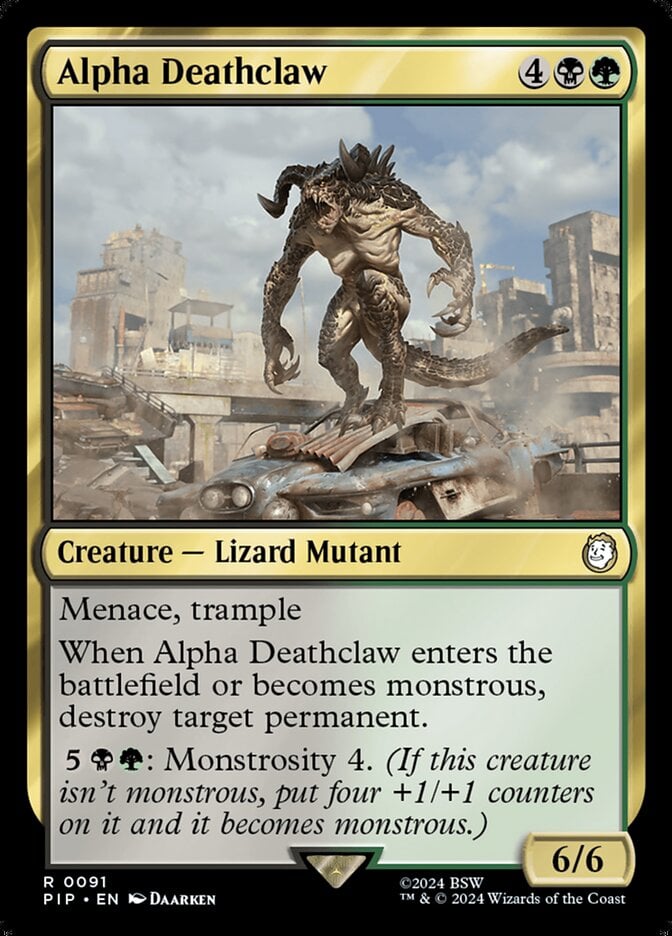
Alpha Deathclaw is the evolution of cards like Ravenous Chupacabra, offering you a second instance of the same effect with the monstrous ability. Destroying any kind of permanent is a huge upgrade, well worth the added cost, and a monstrous 10/10 trample and menace beatstick is also worth the investment.
#23. Abomination of Llanowar
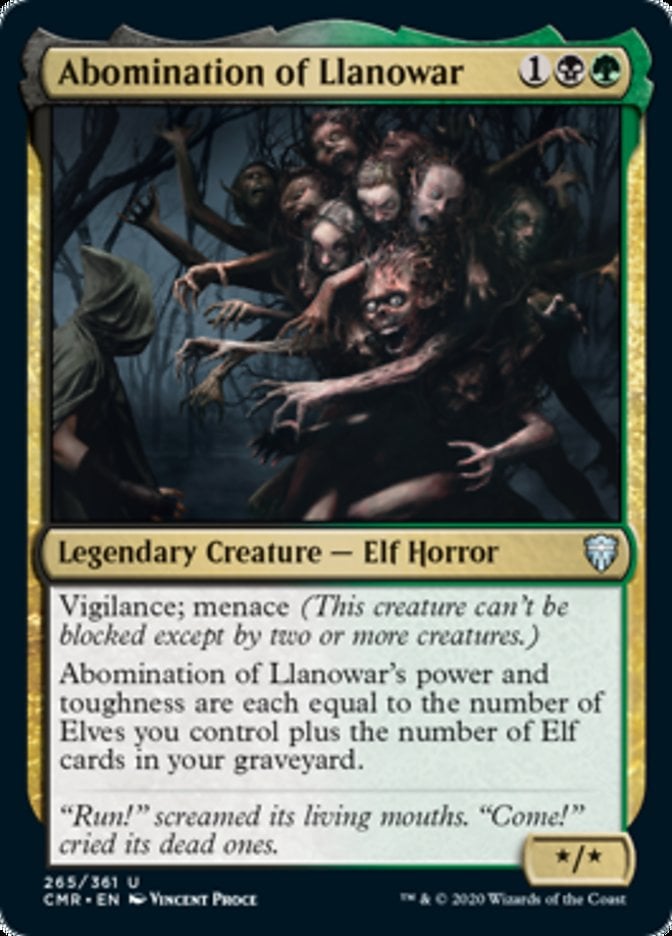
Elf decks are very good at going wide, and sometimes you also need a huge tower. Abomination of Llanowar delivers, and most of the time this 3-drop is a 6/6 or bigger, while it also has vigilance and menace. It’s also an okay elf commander if you’re on a budget or have rarity restrictions.
#22. Slimefoot, the Stowaway
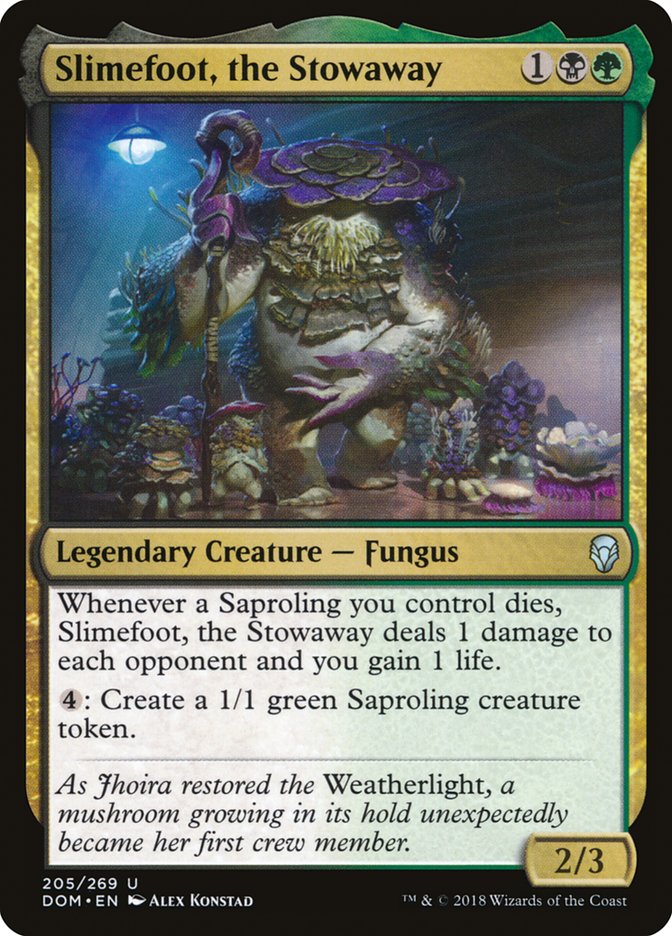
Slimefoot, the Stowaway is a versatile little card, even if you’re not building around saprolings. It’s okay to pay 4 mana to make a 1/1 token, even if it’s just to chump block. And when they die, you drain your opponents for 1 life. Some engines allow you to sacrifice creatures and generate mana, which in turn you can spend to make more creatures, and so on.
#21. Shaman of the Pack
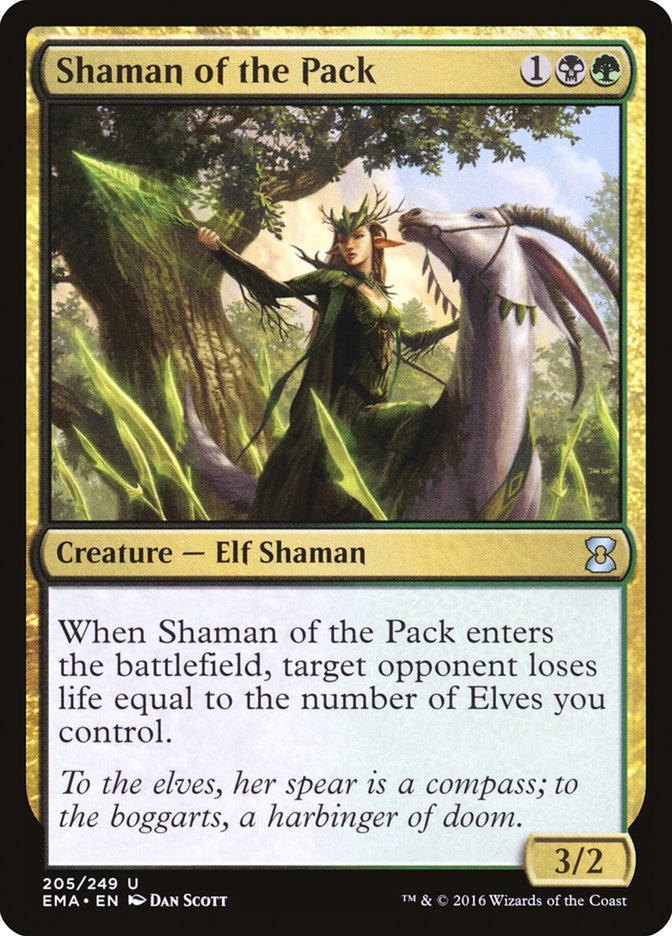
Better in 1v1 than in Commander pods, Shaman of the Pack packs a punch when it enters, and it’s a great finisher in a typical elf deck. A 3-mana creature that can kill a player is worth a second look, even if it kills just one player in EDH.
#20. The Gitrog, Ravenous Ride
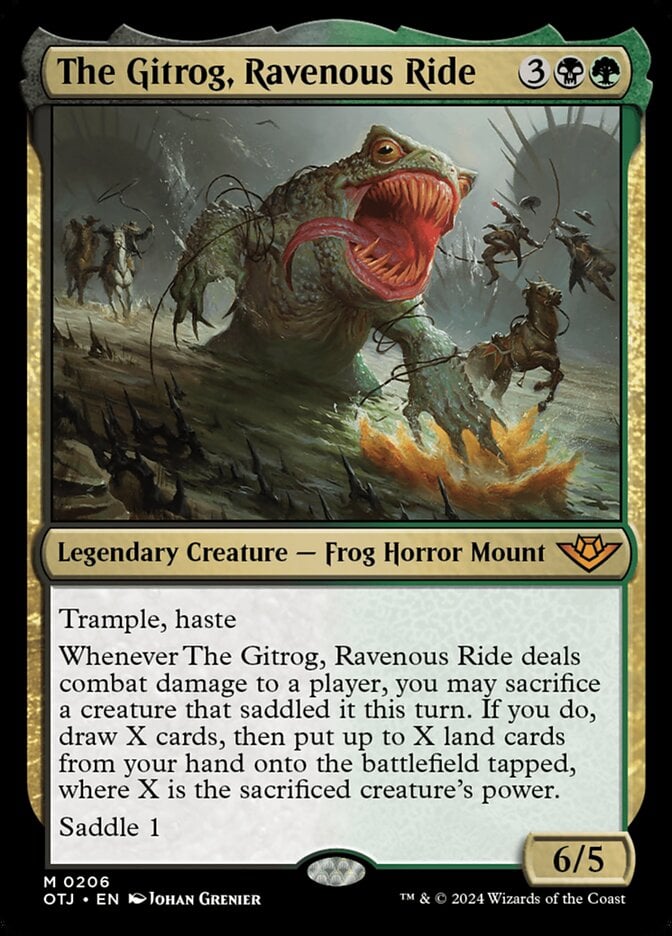
The Gitrog, Ravenous Ride already offers you a strong punch as a 6/5 with trample and haste. But like many of the other best Golgari creatures, this card profits from the “giant undercosted creatures” Golgari decks have access to. It’s a nice addition to decks that can fill graveyards and have massive under-costed beaters that you’re willing to sacrifice, and sometimes you’ll draw 10+ cards when it connects.
#19. Lord of Extinction

Lord of Extinction is big. Like, really big. If you have a card that says each player mills three cards, then this card gets at least +12/12 in your regular EDH pod, and that’s a steal for 5 mana. Coram, the Undertaker, The Mimeoplasm, and others enjoy cards that are this big in your graveyard.
#18. Jarad, Golgari Lich Lord
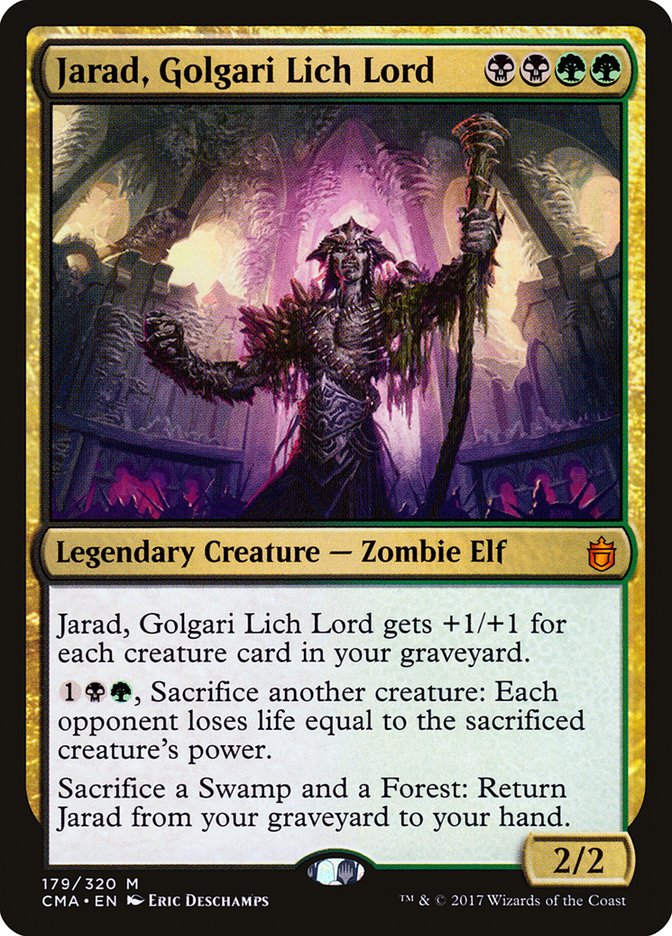
Golgari isn’t a stranger to creatures that grow if your graveyard is full of other creatures. Jarad, Golgari Lich Lord goes even further with its built-in win condition, and it sports a good recursion mechanism. Suddenly, you’re cashing in Yargle and Multani to make everyone else lose 18 life.
#17. Dina, Soul Steeper
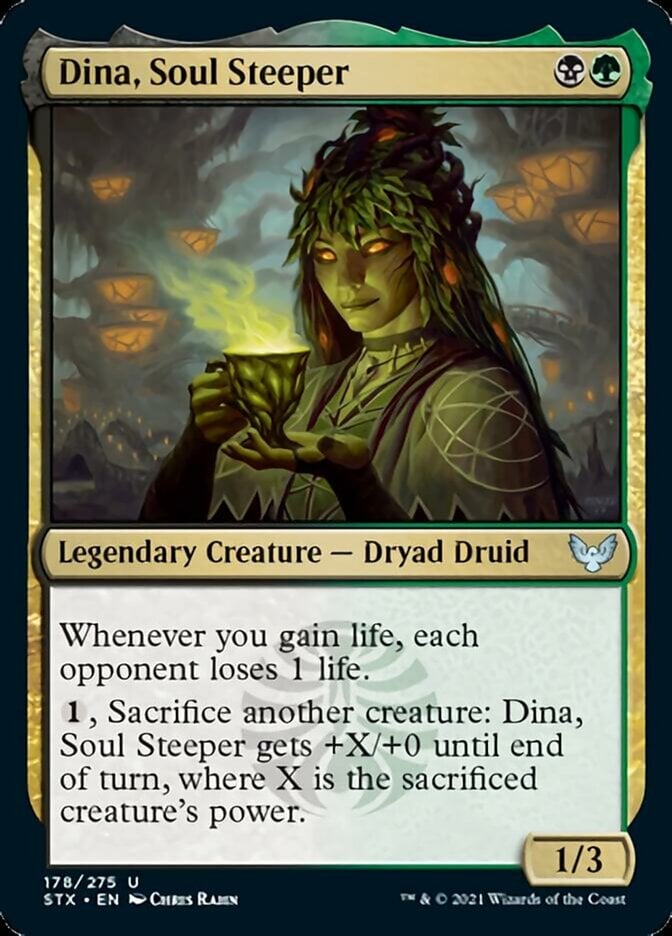
Dina, Soul Steeper offers you two aspects to build around, and in a 2-mana package to boot. You can maximize on your lifegain triggers and sacrifice payoffs like Blood Artist. Dina is also a cheap sacrifice outlet, and sometimes you’ll be able to beat down with it. It’s a strong and versatile tool in many decks, and a competent enough commander, too.
#16. Grist, Voracious Larva / Grist, the Plague Swarm


Grist, Voracious Larva is perfectly fine as a little creature with deathtouch. The thing is, when your 1-mana creature can turn into a planeswalker that’s relevant in the late-game, things change a little bit. Grist, the Plague Swarm can be helpful to your plans by making 1/1 tokens, milling cards, or giving you access to a Naturalize effect.
#15. Wight of the Reliquary

Wight of the Reliquary is a cool Golgari take on Knight of the Reliquary that allows you to sacrifice creatures and get land drops. It’s also a good beater for just 2 mana, so most of the time your 2-drop is a 4/4 or 5/5 vigilant creature.
#14. Gyome, Master Chef
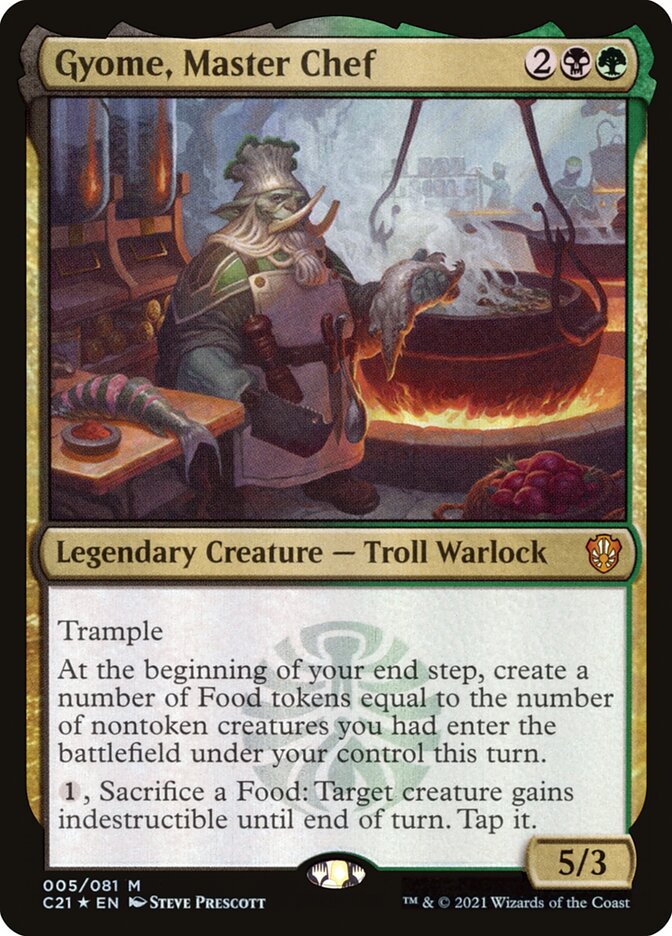
While solid as a Golgari food commander, I think of Gyome, Master Chef as a food-creating engine, and it offers a lot of value in creature decks of any sort whether. BG has lots of ways to profit from the Food tokens and lifegain; you can profit from the combo of Cauldron Familiar and Witch's Oven, turn them into cards with Savvy Hunter, or sacrifice Food tokens for value.
#13. The Mycotyrant
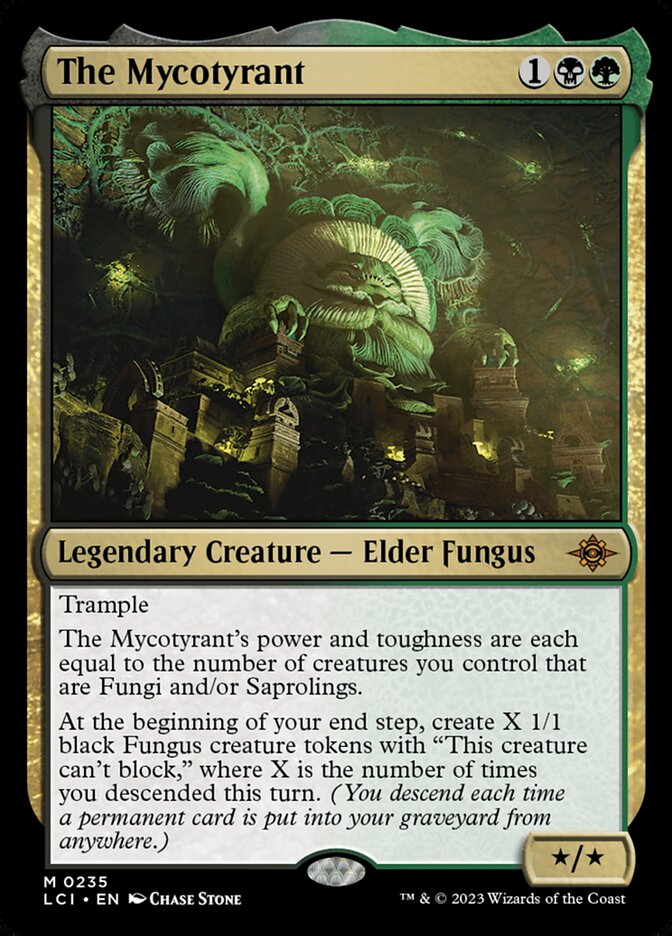
The Mycotyrant is an enabler and payoff for fungi/saproling creatures, and an awesome payoff for self-mill strategies. You’ll want to put at least a permanent or two in your graveyard every turn, which can be a fetch land or a sacrificed creature, or build heavily around permanents. Many black and green cards make Saprolings, and even a simple Fists of Ironwood turns this card into a nice beater. You can also think about putting this card into a Ghave, Guru of Spores deck because Ghave offers you ways to descend regularly while making more saprolings.
#12. Ravenous Squirrel
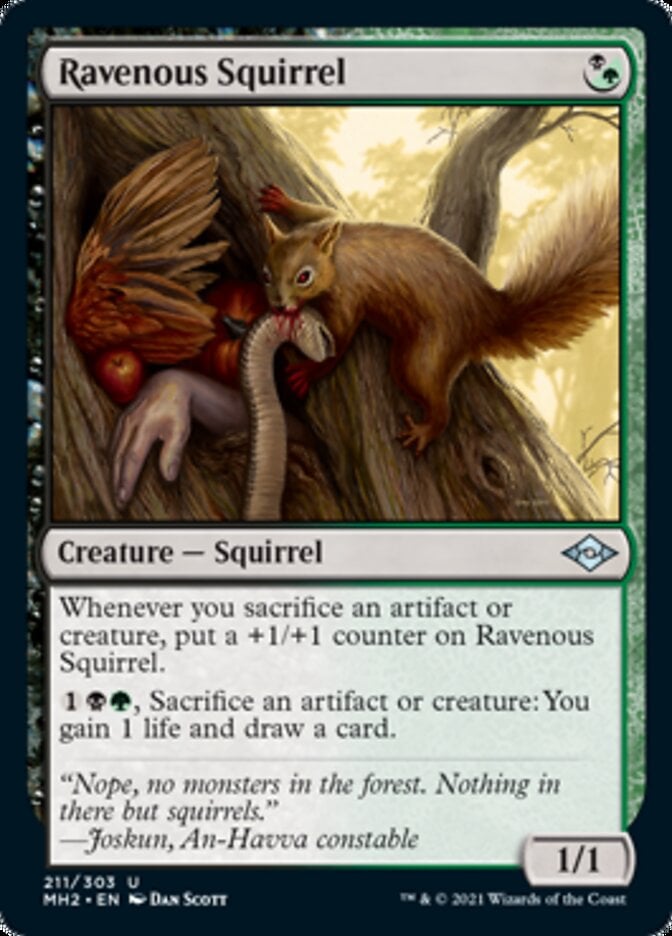
Ravenous Squirrel is a juiced-up version of Carrion Feeder, a card that sees some amount of play in aristocrats decks. Just playing a game of MTG and sacrificing Treasures and Food already grows this otherwise weak 1-drop, and it can even be proactive by sacrificing stuff to draw cards.
#11. Mazirek, Kraul Death Priest
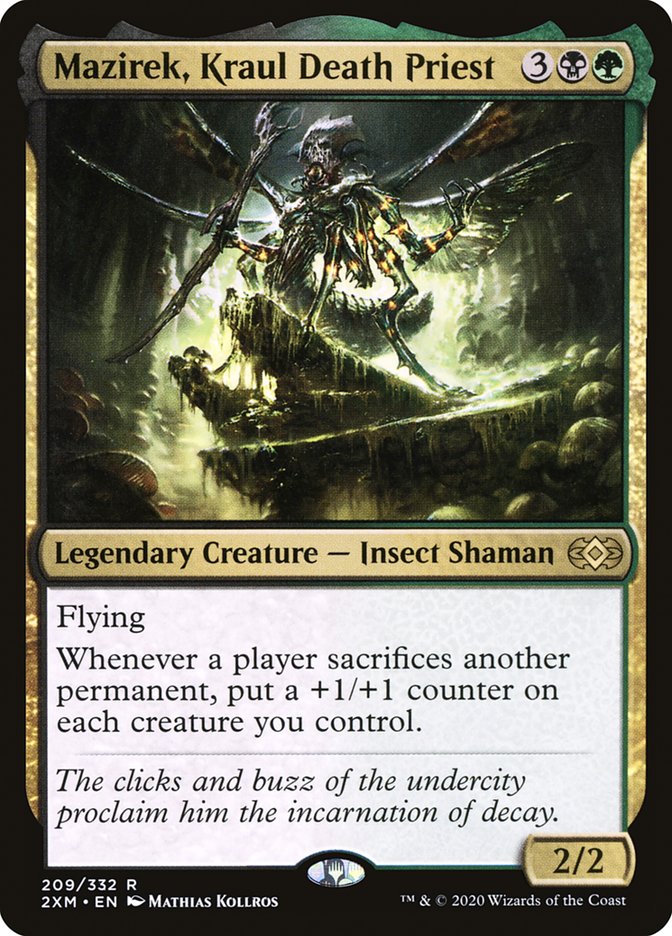
Mazirek, Kraul Death Priest starts small, but permanents will be sacrificed over the course of a regular MTG game. It can be scary just to have this card on the battlefield as a huge flier, but once you’re buffing your whole army, your opponents won’t even want to sacrifice their Treasure tokens.
#10. Amzu, Swarm’s Hunger

Amzu, Swarm's Hunger is a versatile enough commander that you can build around in many ways, and there are many tools availabe in green and black. You can focus on the insect aspect with cards like Hornet Queen or Grist, the Hunger Tide, or on the “leave the graveyard” trigger, with Insidious Roots or delve cards. Reanimate is also an option to cheat a big creature into play while you gain a mighty insect token to go alongside it.
#9. Rendmaw, Creaking Nest

Rendmaw, Creaking Nest is the kind of creature that creates fun board states. You’re getting a good creature with menace and reach, and all players get 2/2 flying creatures. The thing is, their tokens are goaded, so they can’t attack you, and they can’t block your creatures either. Rendmaw also incentivizes you to build decks in a different way, and adding cards with two or more types helps you to build around artifacts, enchantments, or mechanics like delirium.
#8. Shelob, Child of Ungoliant
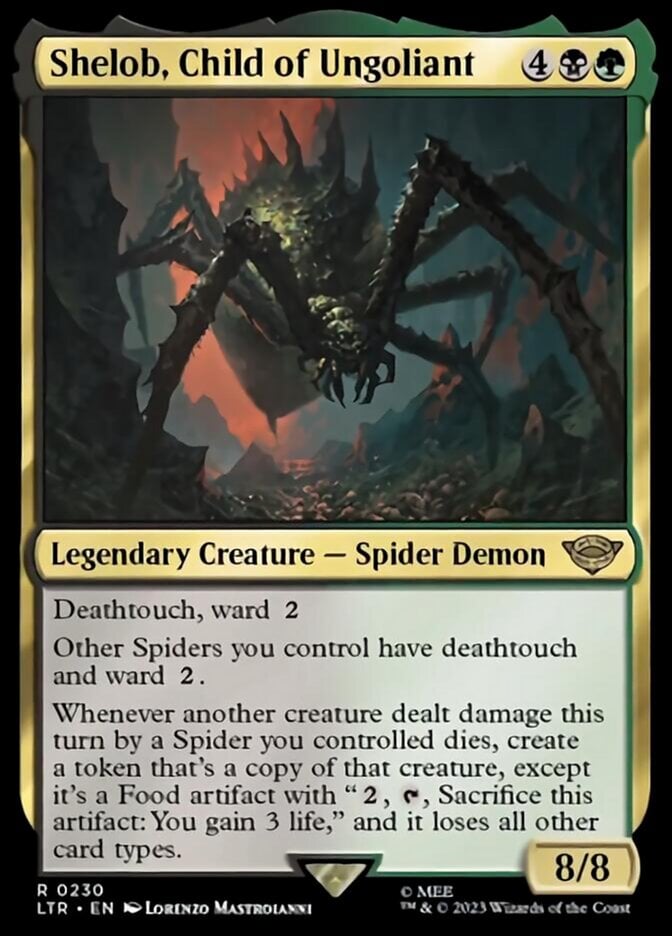
Shelob, Child of Ungoliant is one of the best reasons to have spiders around, not counting the Marvel’s Spider-Man offerings. A mass deathtouch enabler for your spiders is really relevant for offense and defense purposes, and if they die in combat, you’ll at least make a food token out of it. And if the abilities you gain from those food copies weren’t good enough, we’re talking about a baseline 8/8 for 6 mana with very relevant abilities.
#7. Ygra, Eater of All

Ygra, Eater of All is an excellent food enabler and payoff, and it grows very quickly. The card is already big as a 6/6 for 5 mana, and if your strategies revolve around generating food, lifegain, sacrifice, or even +1/+1 counters, definitely include Ygra. In fact, there’s plenty of “whenever you sacrifice a Food token” abilities in these colors.
#6. Meren of Clan Nel Toth
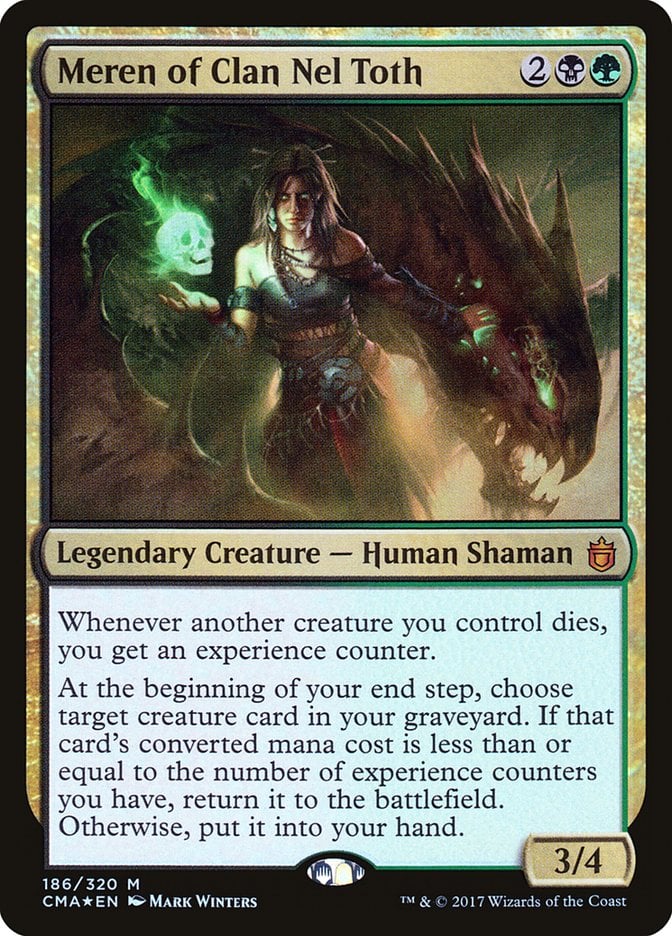
Meren of Clan Nel Toth is a classic reanimation and self-mill commander. While Meren is on the battlefield, you get a Raise Dead effect each turn at the very least, which can be a full Zombify if you have enough experience counters. Granted, you’ll accumulate experience counters as the game goes on, and in the long run, it’s tough to compete against a player whose creatures don’t die for good.
#5. The Gitrog Monster
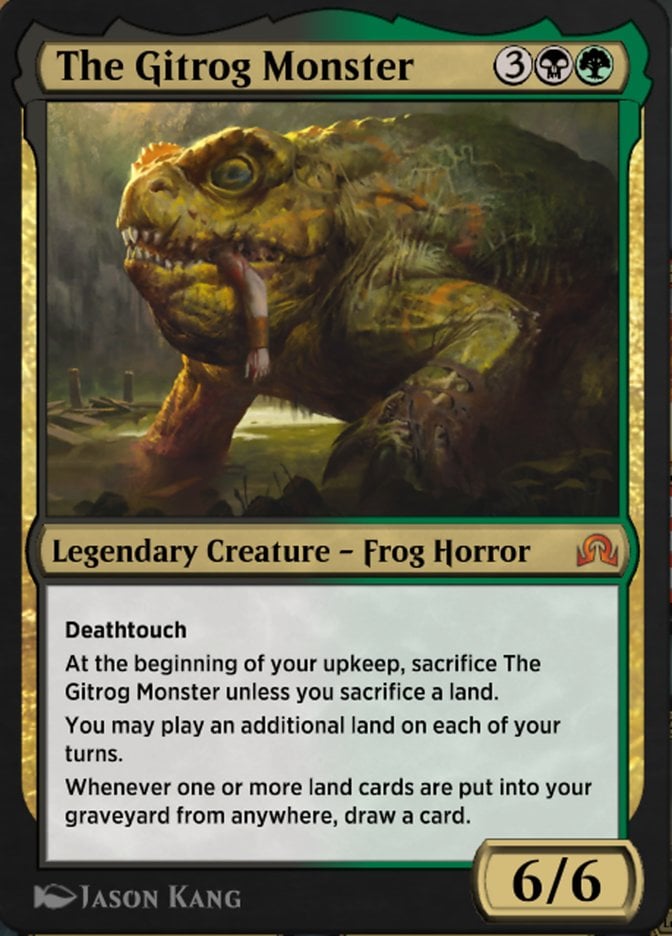
The Gitrog Monster is a classic Golgari rock creature, and a 6/6 deathtoucher for only 5 mana is already strong if you want to attack and block. But what pushes this card above others is that it’s fairly easy to interact with your graveyard, milling lands or cracking fetch lands, and even using mechanics like dredge. As such, you’ll draw many cards this way and play two lands a turn naturally, which offsets this card’s main downside.
#4. Lathril, Blade of the Elves
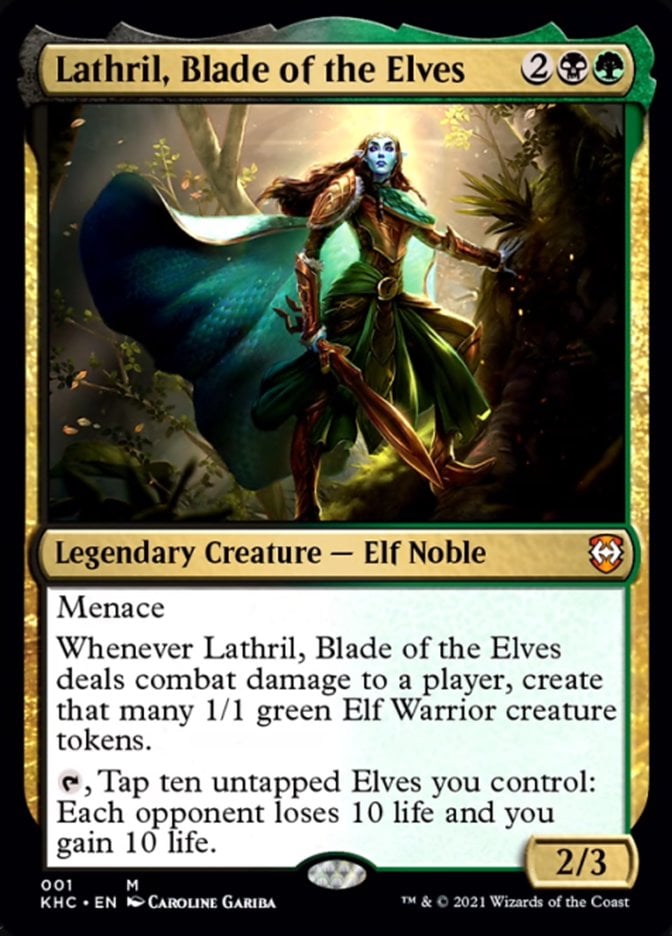
Lathril, Blade of the Elves is the commander when we’re talking about elves. Lathril gives you access to black and green elves, a route to make a lot of elves, and even something to do with your elf army. A cool play involves casting Elven Ambush at the end of your opponent’s turn to make a lot of elves and activate your commander’s ability, then untap and repeat the process.
#3. Chatterfang, Squirrel General
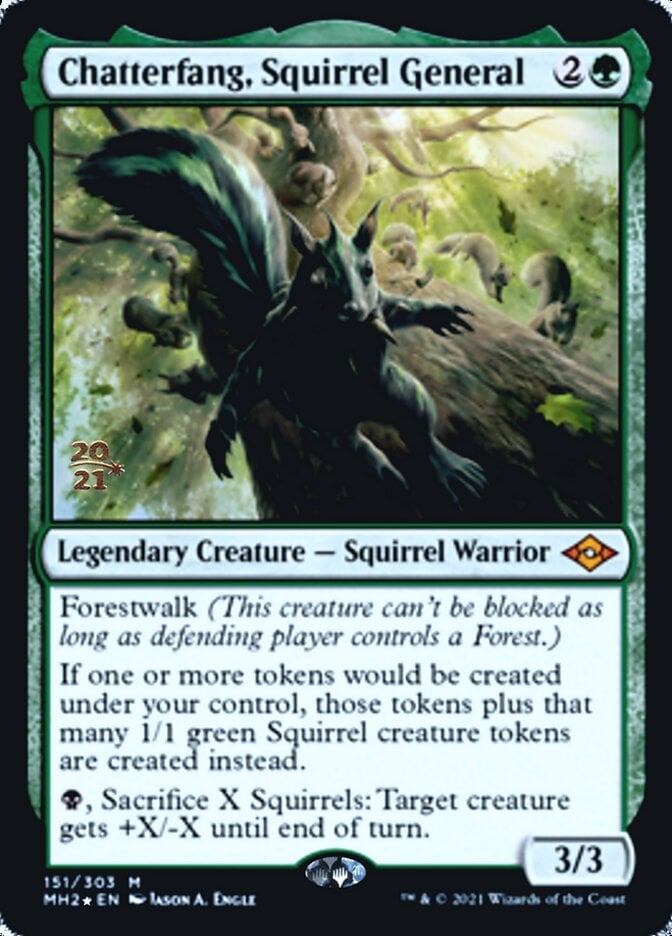
Chatterfang, Squirrel General is a very popular and powerful Golgari commander, even if you’re not into squirrels as a creature type. With Chatterfang around, you can produce a large number of Squirrels and send them to their doom by paying just 1 mana to turn them into very efficient removal. And of course, if you have a Zulaport Cutthroat around, you’re killing many squirrels and a good creature your opponent controls, and you drain all of your foes for a bunch. And, of course, you can also beat down with cards like Deranged Hermit, which together with Chatterfang produces eight 2/2 tokens.
#2. Hogaak, Arisen Necropolis
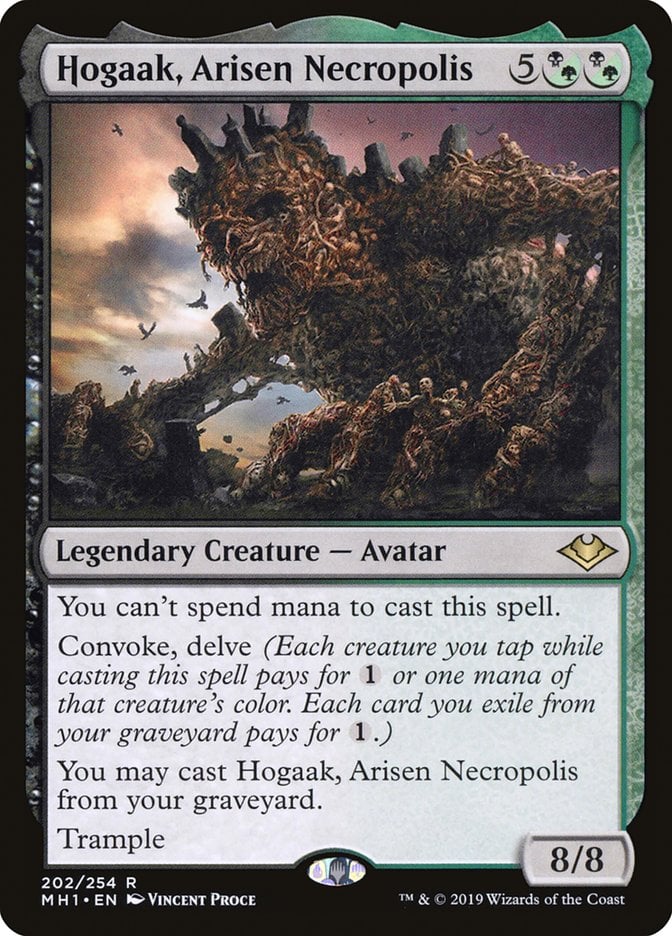
Hogaak, Arisen Necropolis was such a dominant threat in the competitive scene that it’s almost considered a design mistake, a naturally broken card. Don’t be fooled by that “prohibitive 7-mana” cost, for delve and convoke reduce that very quickly. And considering that you can cast it from your graveyard, it’s hard to answer Hogaak. If you wrath the Hogaak player’s board, you also fill their graveyard and give them the opportunity to cast it again for almost free.
#1. Deathrite Shaman
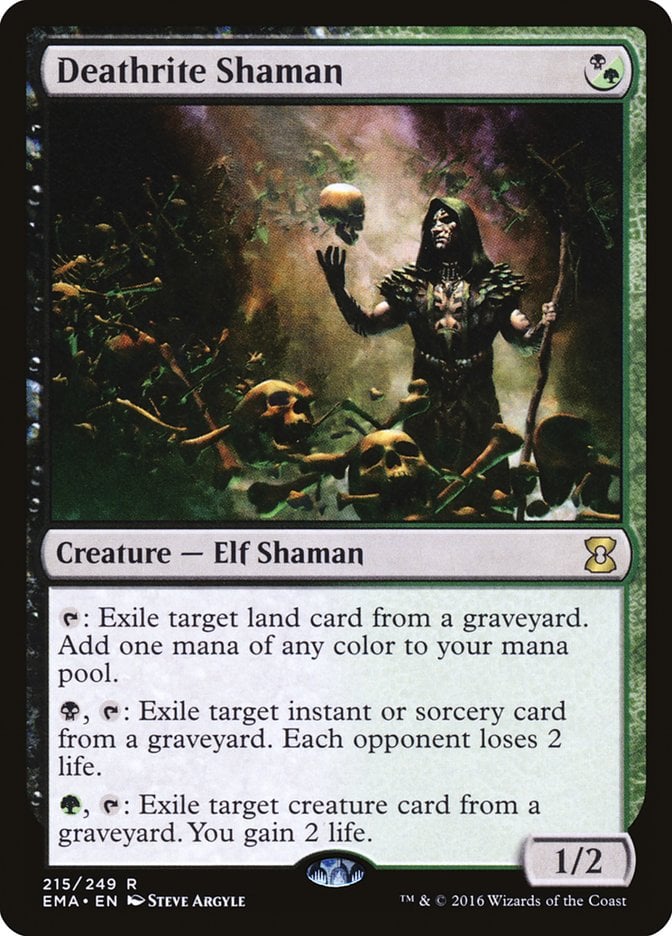
Deathrite Shaman is one of the best 1-mana creatures ever printed. You can get mana, graveyard hate, or life, or you can deal damage to another player, which makes this little elf almost like a planeswalker. You can use a sequence that starts with a fetch land to get a land you need, and immediately add mana of any color by exiling the fetch land you just cracked. Oh, and it also adds mana of any color, not just black or green.
Wrap Up

Alpha Deathclaw | Illustration by Daarken
Golgari () has a long record of being a competitive color pair, and it’s very creature-centric. Many of these creatures exploit the graveyard in some way, either via recursion or by getting big with filled graveyards. But sometimes you’re also getting value with Food tokens, or even some Insect tokens with reach that slow things down.
What is your take on Golgari creatures, guys? Do you regularly play any of these? Let me know in the comments section below, or let’s discuss it over Draftsim Discord.
Thanks for reading, and I’ll see you next time!
Follow Draftsim for awesome articles and set updates:










Add Comment