
Last updated on October 11, 2026

1996 World Champion | Illustration by Christopher Rush
Magic cards were collactibles from the start. Some players spend absurd amounts of money to own specific cards. Anyone who’s played MTG for almost any length of time has heard of the OG cards. The ones that were the most powerful back in the day, and so happen to be some of the rarest.
This still applies today since these cards will never see another printing thanks to Wizard’s policy on the Reserved List policy. There are expensive commons with unexplained value. With Modern Horizons 2 and, more specifically, Garth One-Eye, the community has found that we can still play with some of their effects, even if it’s not in their original form.
Few players today will own these cards in paper, but how much would it cost you to become one of those people? Let’s take a look at some of the rarest cards that money can buy, and a couple that it can’t!
What Are Rare Cards in MTG? How Can I Tell If a Magic Card is Rare?
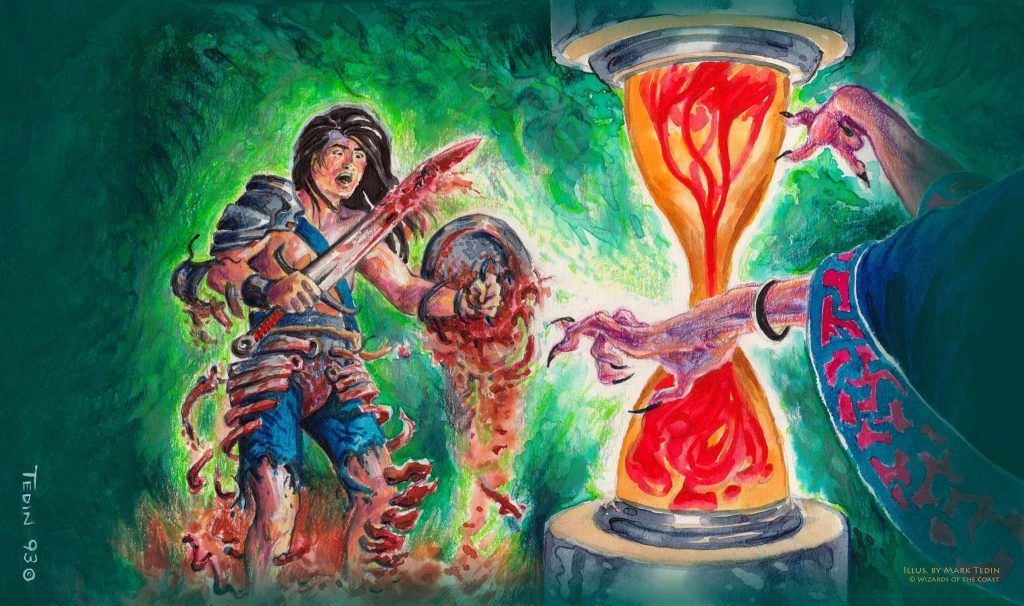
Timetwister | Illustration by Mark Tedin
To be crystal clear, we’re not talking about the rarity rare, indicated on modern Magic cards by a gold set symbol on the right side of the type bar. This is about scarce Magic cards, cards as prestigious as they are hard to find and boast the highest prices. These are typically very old cards because age tends to correlate with scarcity, especially with the Reserved List hanging around.
As for how you can tell… well, you need to do some research. If you dug a dusty box of old Magic cards from the recesses of your dad’s attic, it’s probably worth rifling through them. If you’re dedicated to scouting out rare cards, a great start is to learn what’s on the Reserved List; because the RL prevents WotC from printing new versions of those cards. The Reserved List creates artificial scarcity that keeps them rare.


There are 77 golden chocobos from Final Fantasy, there were 3 (hundred) rings given to the elves, and The Brothers’ War Retro Artifacts were the first large scale printing of serialized cards.
Serialized cards are an modern-day version of chase rares. Thanks to the handy serialized stamps it’s super easy to tell if you grabbed one of these ultra-rare chase rares from sets like March of the Machine, Ravnica Remastered, and The Brothers’ War. The value of serialized cards can vary wildly, but their rarity can’t be disputed.
The Best Place to Buy Rare Cards

Underground Sea | Illustration by Rob Alexander
This is the hard question. Any reputable seller of Magic cards would be ideal. Specifically if you can meet them and see the cards in person and they allow you to verify its authenticity or provide you with authenticity verification paperwork. When it comes to these kinds of cards, getting it graded by BCA or Beckett is encouraged, but not a requirement.
AncestralMTG has an expansive collection of the cards listed here, as well as many more oddities and hidden treasures. You’d be surprised by some of the gems you’ll find in their inventory, and you might even walk away with something new for your collection. You can find everything from Revised dual lands to Power Nine, and you’ll even find some incredibly rare Richard Garfield celebration cards, which are holy grail collectibles for some MTG enthusiasts.
Chances are you have an idea what the difference between “light play” and “near mint” is if you’re looking to buy something like this. I strongly suggest a seller with an actual storefront or one that can get it to a secure location, like TCGplayer or Card Kingdom.
You may find eBay is full of these cards, but it’s risky. You have to rely on written judgments from the seller’s eyes and prayers that their image is the correct thing. Sometimes that’s the only place your desired card can be found, so just take care to know your stuff and, if necessary, call for assistance. There are tons of people who can look at a card or even a close-up picture and give expert knowledge.
If you’re talking about a lot of money and a private seller, working through a middleman may be the best. Sotheby’s is an auction house but can also help with advisory, private sales, and evaluation. If you’re looking to purchase a card for more than $10,000, splurging on this extra cost to have 100% certainty in the authenticity of your purchase is pretty crucial.
#16. Serialized Cards
I broadly lump all serialized cards into this category. Expect one serialized card per set as a headliner. These kicked off 2025 with Innistrad Remastered‘s Edgar Markov. Outside of those headliners, you can find serialized cards in the following sets:
- Universes Beyond: Assassin’s Creed
- Modern Horizons 3
- Universes Beyond: Fallout
- Murders at Karlov Manor
- Lorwyn Eclipsed
- Ravnica Remastered
- Secrets of Strixhaven
- Reality Fracture
- Tarkir: Dragonstorm
- Aetherdrift
- Universes Beyond: Doctor Who
- The Lord of the Rings: Tales of Middle-earth
- March of the Machine
- The Brothers’ War
Each serialized card typically gets 500 copies. Tales of Middle-earth makes a pretty big exception here; not only did it have the 1/1 The One Ring, its serialized Sol Ring variants had different numbers; because they were designed to match the rings of power that Sauron distributed to the dwarves, elves, and humans; each race got a different number of rings, so a different number of Sol Rings were printed.
As for opening these serialized cards, you can only get them in collector boosters of the appropriate MTG set. LTR takes things a step further with special serialized poster cards only found in LotR Special Edition collector boosters, part of a special release from the end of 2023.


The value of serialized cards varies greatly but they’re all collectors’ items and worth quite a bit more than the base version. If you were lucky enough to pull one, check its market price at TCGplayer as virtually all of The Brothers’ War retro artifacts are worth at least $350 including Jalum Tome, Perilous Vault, and Altar of Dementia.
The most valuable serialized card according to TCGplayer is the Cavern of Souls / Paths of the Dead from LTR at a staggering $3,975. Which is somehow still chump change next to some other entries.
#15. Gleaming Gold Smaug Headliner
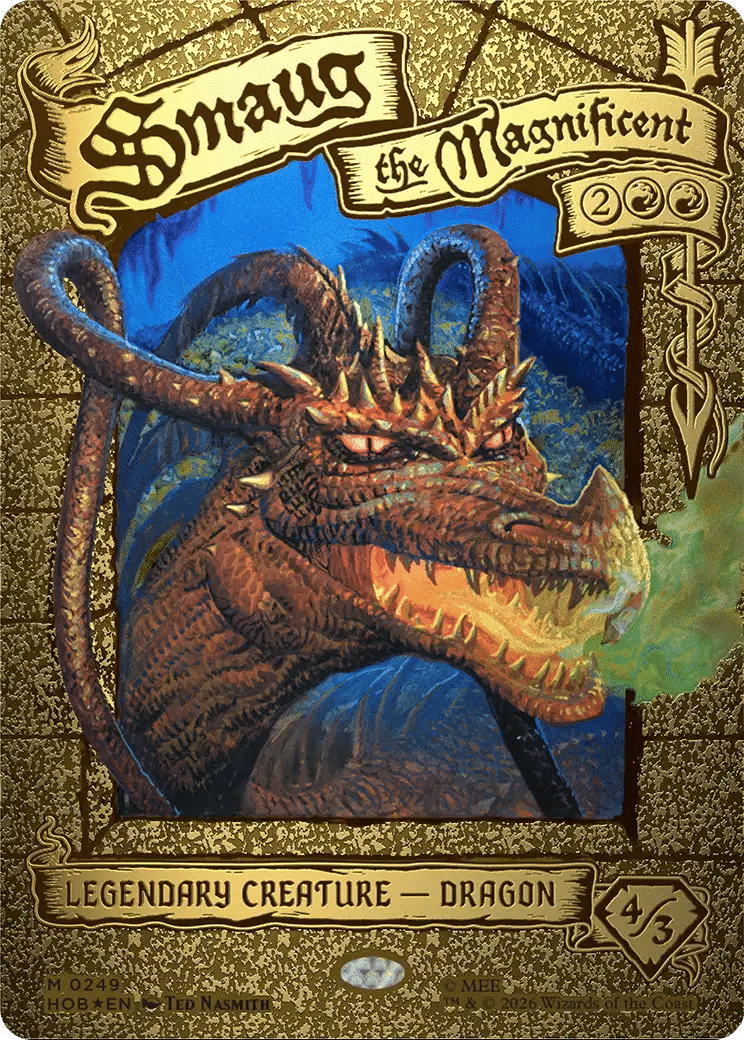
When Wizards adapted The Hobbit, only one card could become the headliner: Smaug! The gleaming gold Smaug the Magnificent depicts Tolkien’s iconic dragon with a classic fantasy look and a stunning golden border fit for the treasures of the Lonely Mountain. Though unserialized, there are approximately 500 Smaugs, just like the cards above.
#14. Mox Sapphire + Mox Emerald + Mox Jet
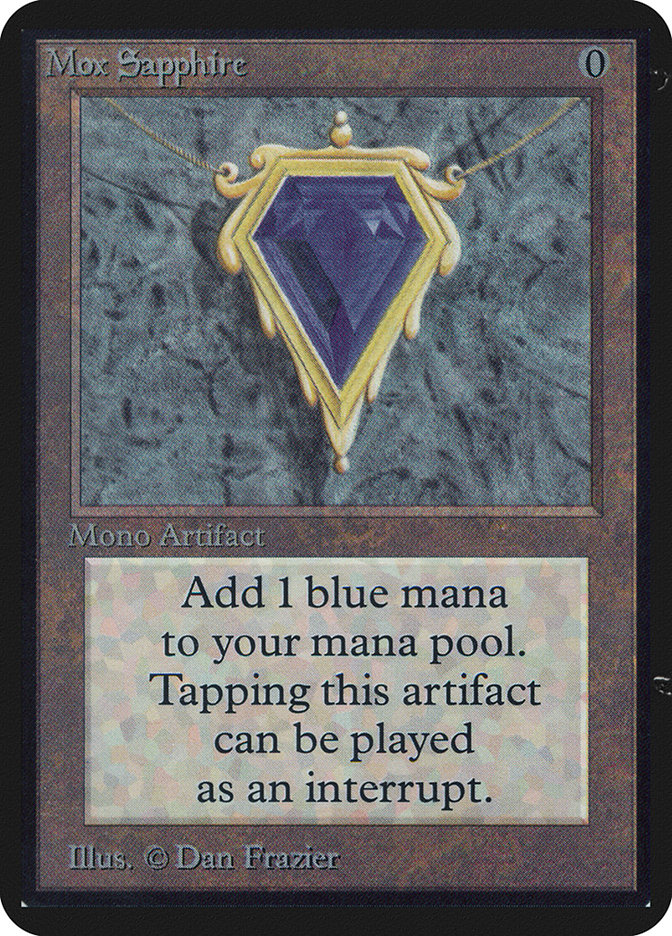
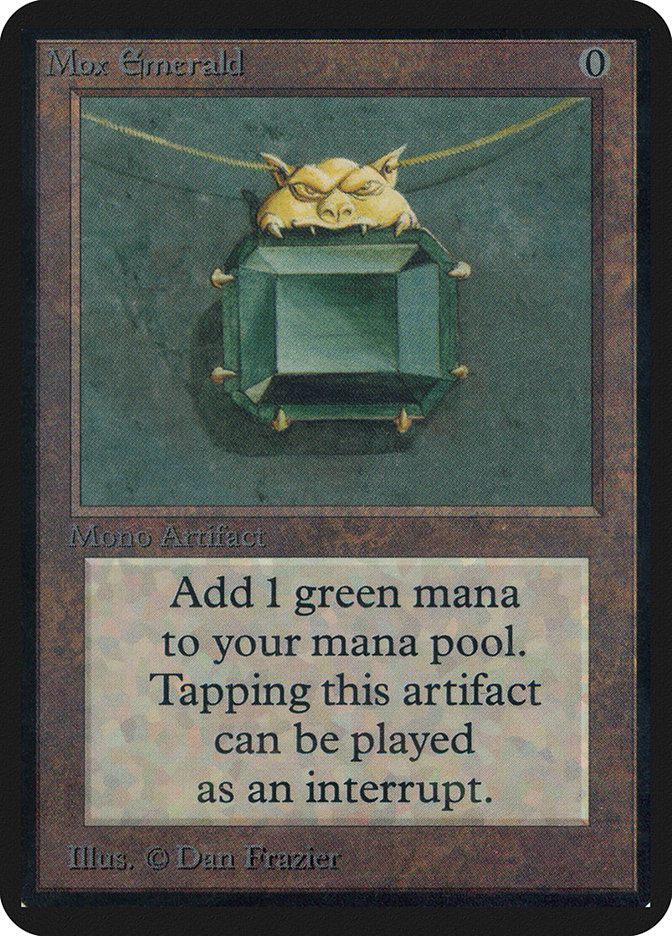
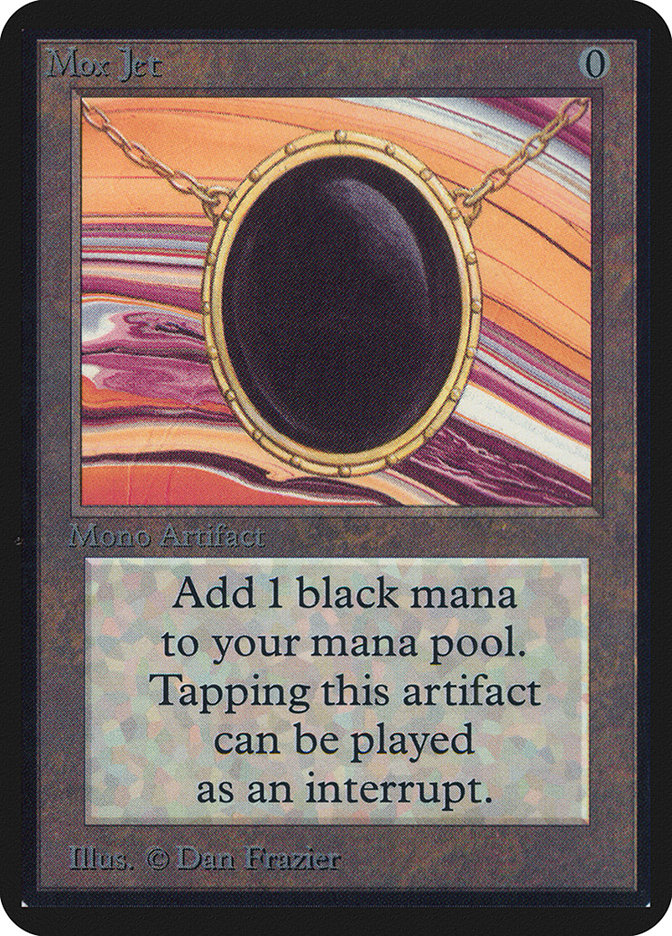
For the same reasons as the original dual lands, Mox Sapphire, Mox Emerald and Mox Jet wind up as the most expensive of the Moxes. Getting free mana the same turn you can also drop a land is nothing to sneeze at, no matter the color.
Look through a Vintage lens, blue and black have a ton of value. That’s why these tend to be in the $3,000 neighborhood. It’s closer to $500-700 if you don’t need it to be tournament-legal, though.
#13. Volcanic Island + Underground Sea
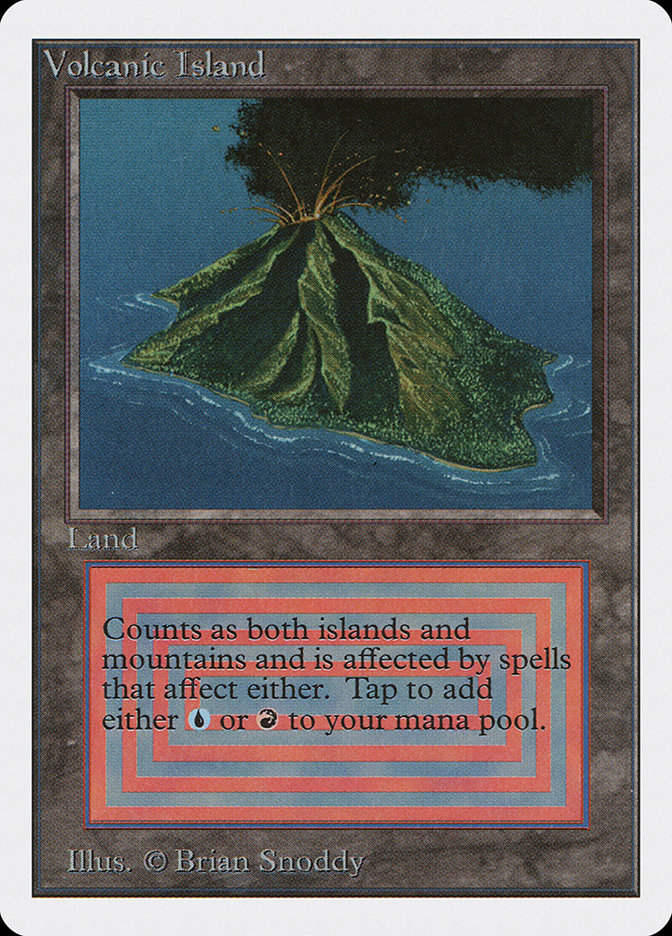
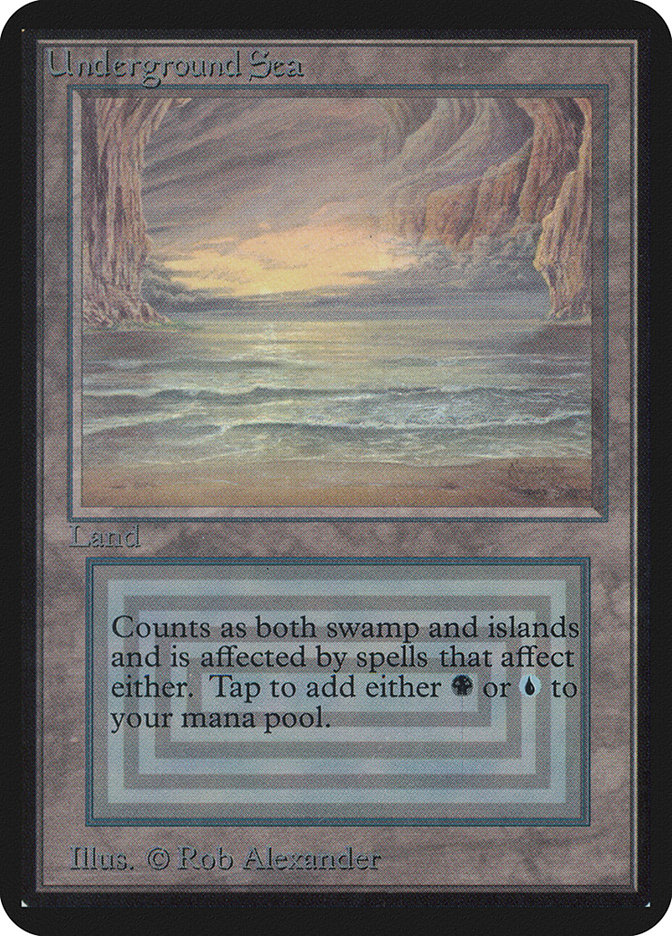
I roll Volcanic Island and Underground Sea into one spot because they’re on about the same level of rarity and demand. Tapping for a red/blue and blue/black respectively, you can guess how Grixis is the best color combination. Or to make Esper/Sultai/Jeskai/Temur just as easy. Either way, when you tap for one of two colors without a penalty or cost is awesome.
A legal one of either of these bad boys would cost you anywhere from $650 to $800.
#12. Ancestral Recall
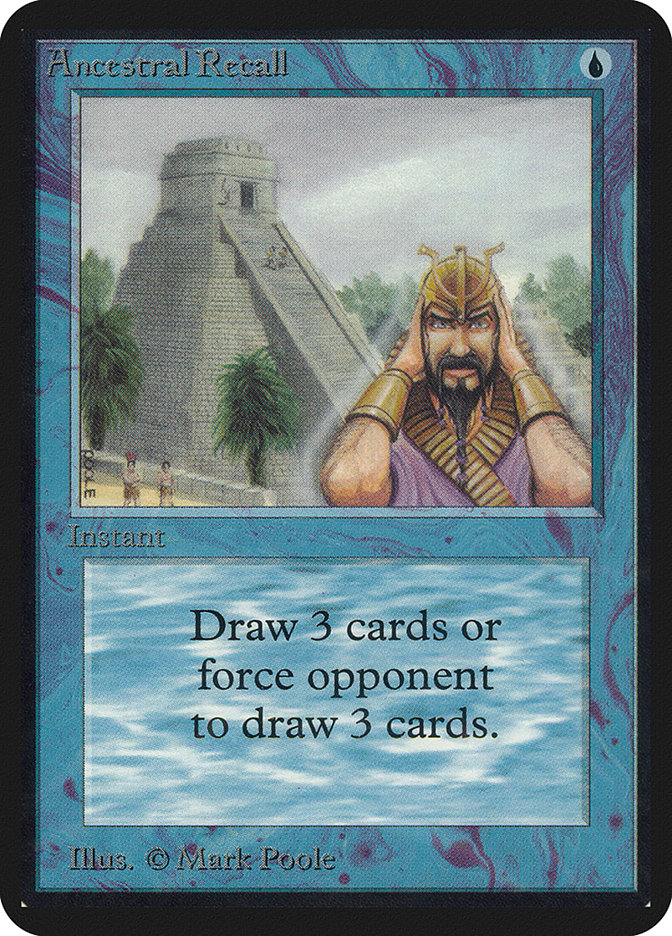
Well, card draw is king. Who knew?! Ancestral Recall allows you (or your opponent) to draw three cards for a single blue mana. Cheap resources truly are something to strive for.
Recalls are seen more commonly than Black Lotuses and are cheaper, but that’s not saying much here. Just one of these will set you back $3,000 for even a heavily played copy.
#11. Time Walk
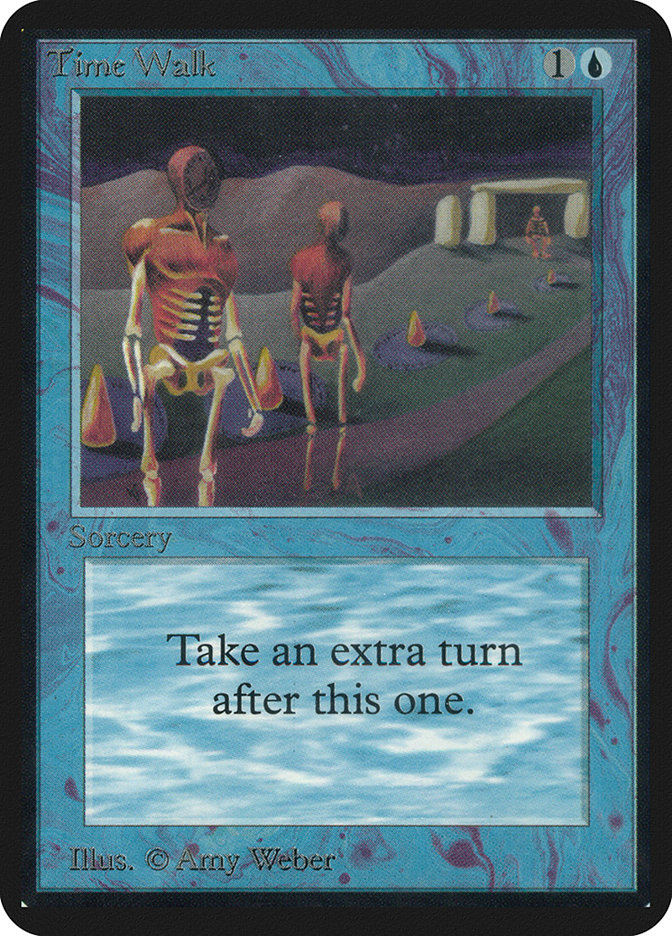
Taking extra turns in just about any format can get you a lot. That’ll cost you in today’s metas, but back in Alpha it only cost for one Magic’s best blue sorceries.
Time Walk not only goes on this list of rarest cards, it’s also on my list of cards I wish had flavor text. A Time Walk of your very own would cost you about $2,500 depending on the card’s quality.
#10. Timetwister
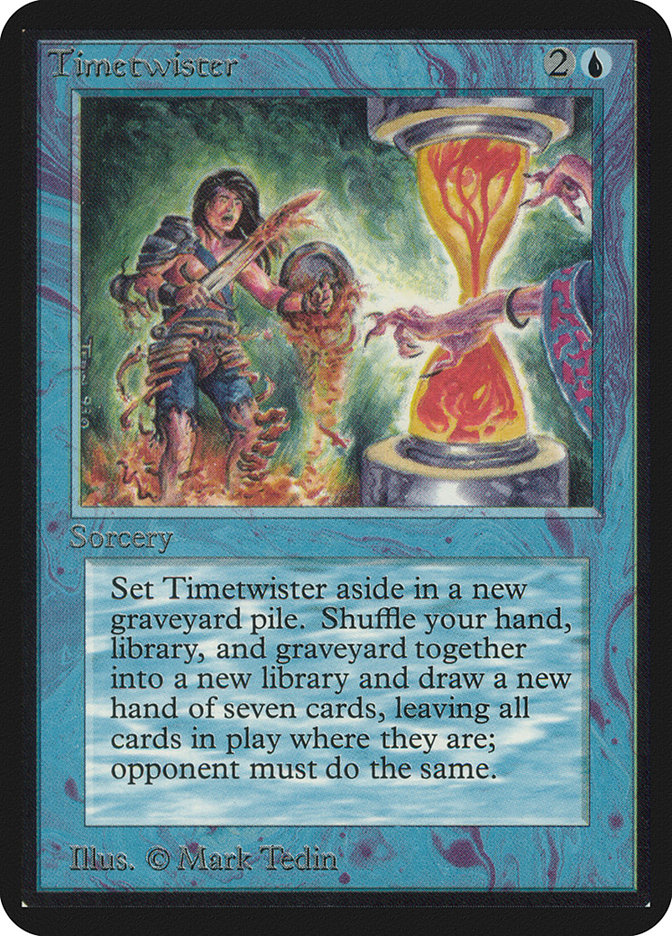
If you look through the list of mechanics in the game’s history, you occasionally see effects like Timetwister. Shahrazad comes to mind, but that’s an extreme case. Either way, cards that completely reset or change the game like this tend to come with steep price tags. It’s for Timetwister. For you, it’s closer to $3,300.
#9. Black Lotus
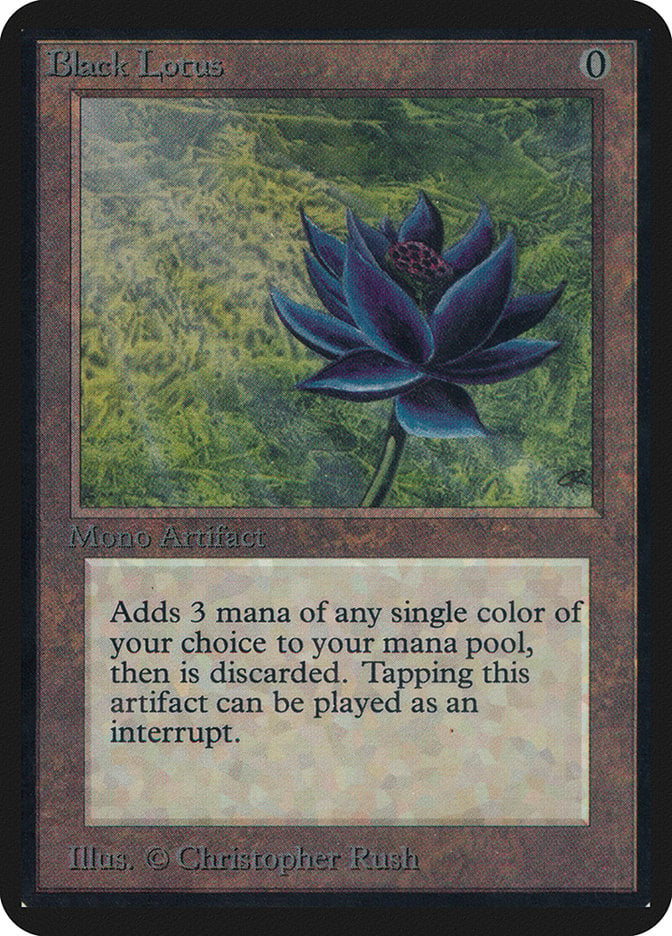
We’re getting out of the personal and nearly impossible to find cards and into the commercial and very hard to find cards. Black Lotus is by far the most famous Magic card in existence, and part of the infamous Power 9. Every new player is told the story of this and it’s eight brothers from Alpha and Beta and their insane price tag. I don’t believe I need to explain why.
Getting one of these bad boys can run you anywhere from $10,000 for a heavily played Unlimited edition or up beyond $55,000 for one in better condition. In April 2024, a sale between an anonymous buyer and Pristine Collectibles broke records: The item sold was a pristine Alpha Black Lotus that went for $3 million dollars, breaking the 2023 record sale for the then-most expensive Magic card that was the 1/1 The One Ring.
#8. Intuition (Foil)
Intuition is a tutor card from Tempest that lets you search for three different cards. Its main punishment is that your opponent gets to decide which one you get to put in your hand and which two go to the graveyard. That alone makes the card worth between $130 to $175.
However, they’re not rare in the same sense as the other cards on this list. What makes Intuition special is that it wasn’t originally offered as a foil, but a foil variant was introduced as a Judge Promo in 2003. This caused the price to shoot up to between $700 to $2,000 depending on condition. Not as much as the other cards so far, but its rarity puts it so high on this list. Only the Judges of sanctioned tournaments got these, so supply is much lower and there’s no possible way to get this in a booster or starter pack.
#7. Phoenix Heart
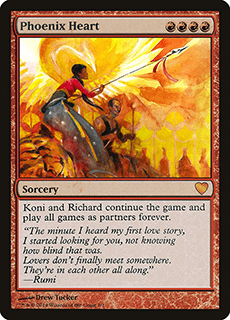
Phoenix Heart was created to celebrate Richard Garfield’s second marriage to Koni Kim in 2015. Less is known on this card, but given the previous details, you can assume that 330 cards were printed and given to family members and important Wizards employees.
At least one was put up for sale, but the only records I found were one sold for $15,000 and another for $13,500. They do pop up now and again as people who were invited may not have been interested in MTG and didn’t realize that they were given an awfully expensive invitation.
#6. Splendid Genesis + Fraternal Exaltation
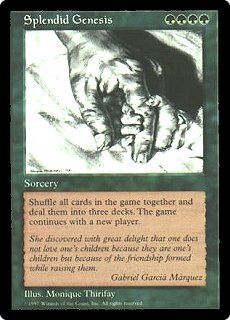
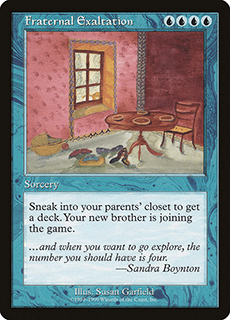
Much like Phoenix Heart, Splendid Genesis was another card made to celebrate something happening in Richard Garfield’s life. This time, it was the announcement of their first child. Wizards did a print run of 110 of these cards to be handed out to family members and important Wizards employees.
A few years later, when the Garfield’s welcomed their second child to the world, Fraternal Exaltation was created. Wizards printed 220 to once again be handed out to family and important Wizards employees.
Because of these cards’ rarities, their price tag is on the level of Black Lotus. At least one copy of Splendid Genesis emerged on the market and asks for $50,000! So, get in line for that one, I guess.
#5. Golden Traveling Chocobo
The Traveling Chocobo from the Universes Beyond Final Fantasy set might look out of place here in the ranking, but that 77 in the serialized number is especially special. The gold-colored Chocobo hails from Final Fantasy 7, and is far more rare than the Black Lotus which was mass produced into lots of booster packs. There are 77 of the supremely rare bird is packed into less than 1% of English-language Final Fantasy collector boosters, and if the most expensive Final Fantasy cards are any indication, this card commands a hefty price.
#4. Proposal
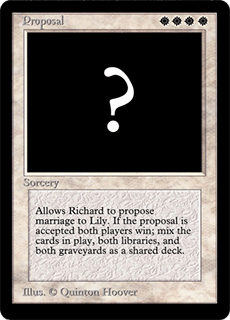
You may notice a trend here: When Richard Garfield planned to propose to his then-girlfriend, Lily Wu, he wanted to do something special. He approached production manager Dave Howell and Quinton Hoover about making a special card to propose with.
Dave created the cards, and Richard added them to a deck he play tested with Lily. On the fourth game, he finally drew and was able to play the card. Lily and Richard did get married, and the deck is apparently still intact. Eight more copies of Proposal were printed and given to family members as well as Dave and Quinton.
Quinton Hoover’s copy was apparently stolen on a trip to Japan and has never been recovered. A copy did show up for sale in 2017 in Paris at Magic Bazar for $50,000, but the webpages about the posting have been closed and whether or not it was bought is unknown.
#3: The 1/1 The One Ring

Magic crossing over with one of the most iconic fantasy franchises of all time would have been a noteworthy event by itself, but WotC decided to make it even more of an event with the 1/1 The One Ring.
Only one was printed, in an Elven script with a special border. It could only be opened in English collector boosters. This drove the hype for the set even higher with individuals and businesses offering hundreds of thousands of dollars before the card was even opened.
And opened it was! It didn’t sell for a few hundred thousand dollars, however. Post Malone purchased the 1/1 The One Ring for around $2 million. It was the most expensive Magic card ever sold—that is, until that pristine Black Lotus beat it out by a million dollars.
#2. Shichifukujin Dragon
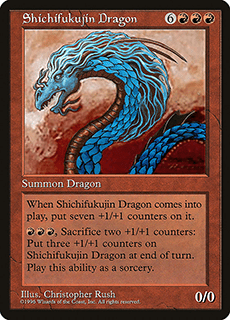
Only one Shichifukujin Dragon was ever printed. In 1996, Magic was beginning to make moves into the Asian market and saw a great increase in success. The DCI Tournament Center was being built in Tokyo, Japan with the card game’s rising popularity. They asked Mark Rosewater and artist Christopher Rush if they could have a unique card created for the event.
While they agreed, they also wanted to make something that was symbolic in Japanese culture. “Shichifukujin” are the seven gods of fortune. With the center just opening, it seemed like a nice sentiment.
In terms of rarity, the Dragon is only second to the 1996 World Champion on a technicality. While the extra copies were destroyed, we have no idea if the printing plates were archived, so technically another one could be printed up. This card has never been sold on the market.
When the center closed, the card was moved to the Hobby Japan Head Office where it can still be seen today.
#1. 1996 World Champion
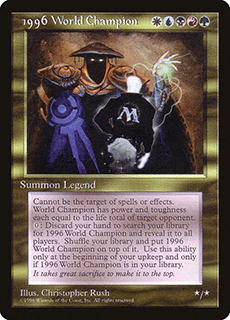
1996 World Champion takes the top of the cake in terms of rarity, because only one of them will ever exist. This card was presented to Tom Chanpheng upon beating Mark Justice with a severely weakened deck. He was forced to remove and replace some cards with lands because of technical and in-game issues. In an after-game ceremony, the extra printed copies and printing plates were destroyed so that this card could never be replicated.
In the early 2000s, Chanpheng sold the card to a private collector for $17,500, sealed in a trophy. The card hasn’t been seen on the market since.
Just Proxy It
If you want a cheap option just to have these cards for laughs, or for your casual decks (read: NOT tournament play), then buy them as proxies.
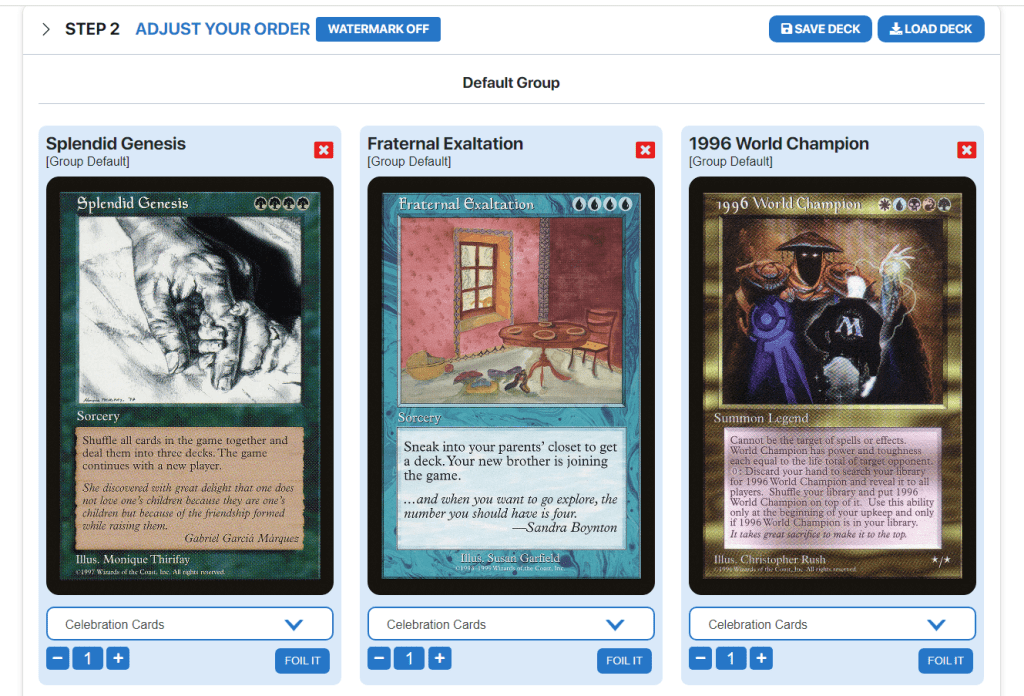
I mean, I think it would be really fun to troll my friends with a 1996 World Champion as my commander. You know?
And you can get cards like this on MTG Proxy for only a couple bucks each.
Best Rare Cards to Proxy
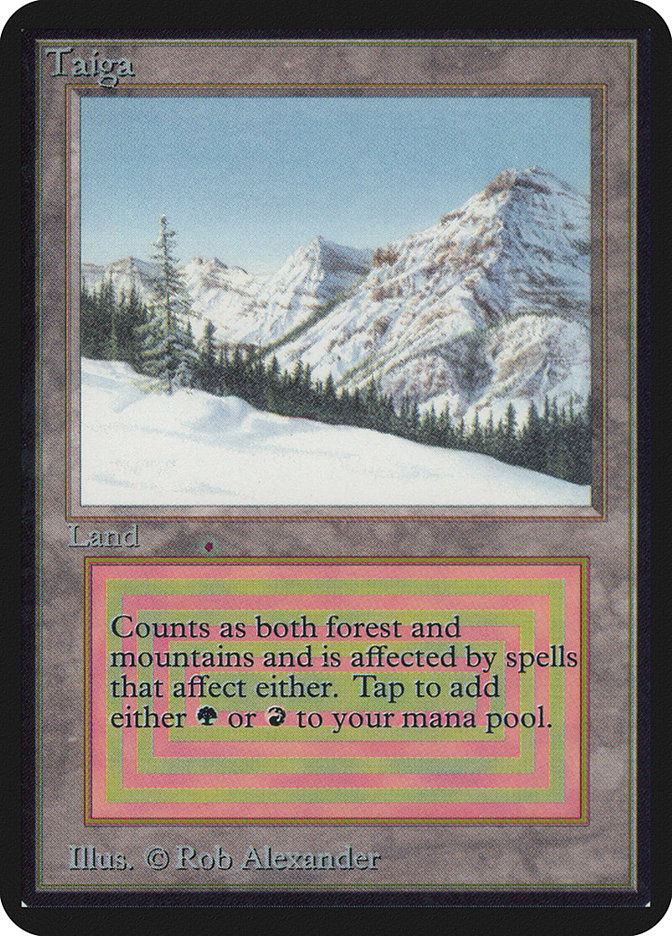
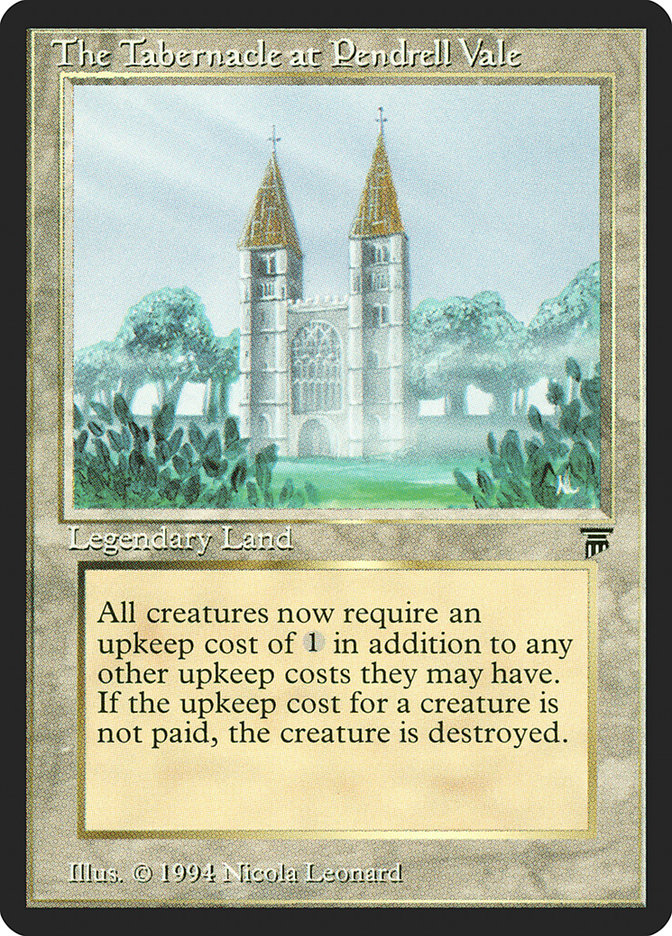
If you proxy in Commander, the first cards that come to mind are the original dual lands like Volcanic Island, Underground Sea, and Taiga. They’re among the best fixing lands in the game since you can fetch them, and the only real downside is their vulnerability to Blood Moon type effects. The Tabernacle at Pendrell Vale is another pricy card from the Reserved List that is expensive and legal as a Commander Game-Changer.
Timetwister is another juicy choice; plenty of commanders don’t mind a 3-mana draw-seven. After that, we begin to move beyond Commander in terms of legality. Proxying the rest of the Power 9 won’t help in Commander, but it’s great for Powered Cube. I think the best cards to proxy are the playable ones; cards like 1996 World Champion and Splendid Genesis are mementoes more than game pieces, so I feel that proxying them isn’t as worthwhile.
Why Are Rare Cards Graded?
Cards are graded for a few key reasons. Protection is an obvious one; I’m sure we’ve all seen graded cards in their nice plastic cases. But it serves several other important functions. Authentication is near the top of that list; fakes and counterfeits won’t hold up to a rigorous grading process. This is practically another form of protection because potential buyers know they aren’t getting scammed as they shell out unspeakable sums of money for a few centimeters of cardboard.
Grading also assesses a card’s condition, which correlates closely with its market value. A damaged card can still fetch a handsome sum provided it’s rare enough, but a general rule of thumb is that the higher a card’s quality is, the higher the price you can ask. Grading makes selling even easier since buyers are more likely to purchase graded cards because of all the above traits. In short, it keeps cards safe and makes sure all information is on the table between parties interested in selling rare cards.
Does a Signed Card Mean It Is Worth More?
The simple answer is: It depends. Signing a card does decrease its condition because it has been, well, written on. That typically decreases value as well. The average signature makes a card less valuable.
But with a few qualifications, a signature changes things. For example, pretty much any Magic card could get a boost if Richard Garfield signed it. Most signed cards are signed by the artists, however. Someone like Christopher Rush (the artist behind the original art of Brainstorm, Mana Leak and Lightning Bolt, among many others) can increase the value of cards. Deceased artists and artists who rarely sign cards tend to have signatures that increase the value the most. Ultimately a signature decreases the card’s condition, so don’t get your entire collection signed in the hopes of making a quick buck.
Wrap Up
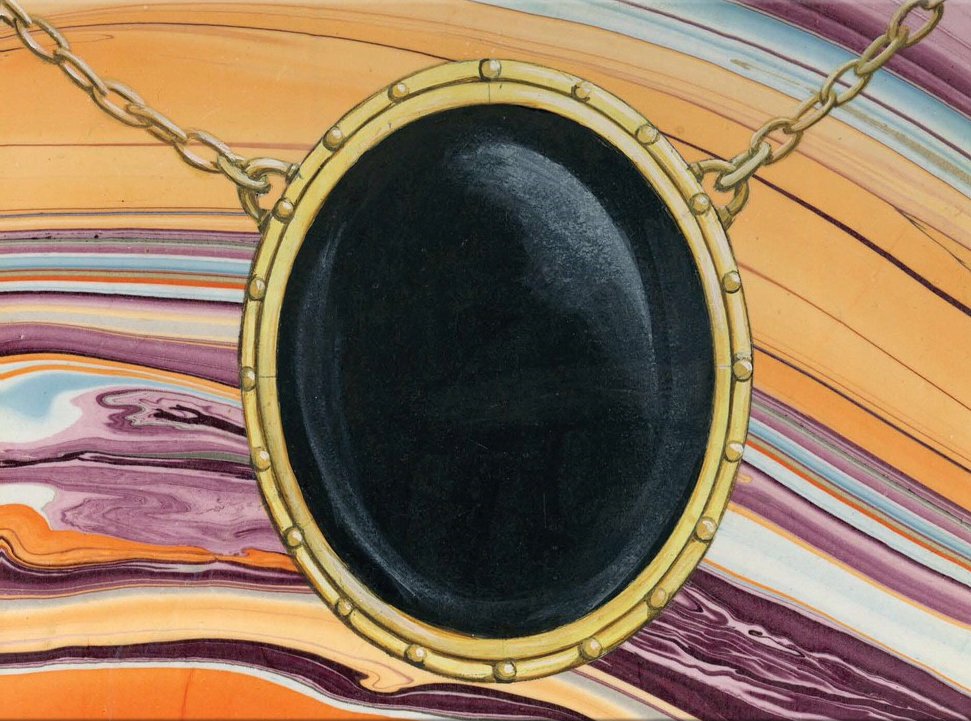
Mox Jet | Illustration by Dan Frasier
Looking at rare Magic cards can sometimes leave a hole in your heart about what you wish you could play with. It won’t leave a hole in your wallet, though. In terms of the rarest cards, they’d be awesome collectibles. In terms of the less rare items mentioned, they can be awesome game pieces too if you have that level of disposable income. Either way, I think we can all agree on one thing: Seeing rare cards in person is still awe-inspiring.
If these are a little beyond your budget, you may be able to actually afford some expensive basics, perhaps? Or you want to jump over to the best cards you can afford list.
If you want to share any decklists or thoughts on this list, we welcome them in the Draftsim Discord or in the comments.
There’s only one of you and remember that you’re worth it!
Note: this post contains affiliate links. If you use these links to make a purchase, you’ll help Draftsim continue to provide awesome free articles and apps.
Follow Draftsim for awesome articles and set updates:










Add Comment