
Last updated on January 9, 2026

City in a Bottle | Illustration by Daniel Ljunggren
Typically, winning a game of Magic comes down to who cast the most spells. Using all your available mana each turn is a simple way to track how well you’re playing. In fact, most spells want you to cast other spells, too, whether it’s a Fervor in anticipation of your Terra Stomper or a boatload of cantrips to feed your Weather the Storm, casting spells on spells is how you win the game.
If casting spells is how you win the game, then the inverse must also be true, and denying your opponents the ability to cast anything can greatly increase your chances of victory. Sure, everyone knows how to Counterspell your opponent to stop that spell, but how do you keep them from even putting that spell on the stack?
A number of cards from Magic’s history have some way to prevent your opponent from casting spells. Let’s take a look at the best of the bunch!
What Are Cards That Prevent Players From Casting Spells in MTG?

Phyrexian Censor | Illustration by Alexey Kruglov
For this list, I look at any card that can prevent players from casting spells. This effect is typically found on white cards. These effects come in a variety of forms; some, like Grand Abolisher, have a static effect that only applies to your opponents, and only during your turns. Others, like Silence, are one-time effects that last until the end of the turn but completely lock them out of any spellcasting. Some prevent your opponents from casting only certain types of spells, while others lock down a spell with a particular name.
The best cards to prevent players from casting spells have the broadest utility and the best mana rate.
It’s important to note that spells like Silence and Abeyance can’t be used as counterspells – if they’re cast in response to another spell, the previous spell is already “cast” when Silence is placed on top of it on the stack.
#40. Alhammarret, High Arbiter
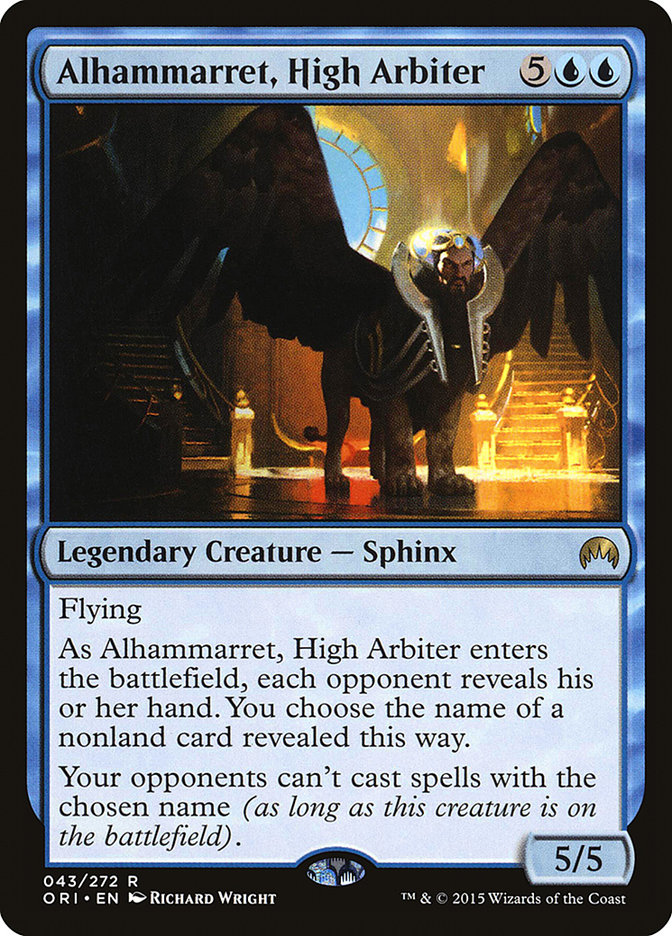
Alhammarret, High Arbiter takes all the guesswork out of declaring cards your opponents can’t cast and instead just lets you pick your favorite card from their hand to lock them out of. This could be an incoming Counterspell or board wipe to keep your soon-to-be-cast commander safe, or maybe you’re locking them out of the Blood Artist they need to complete their Ghave, Guru of Spores combo.
#39. Calamity’s Wake
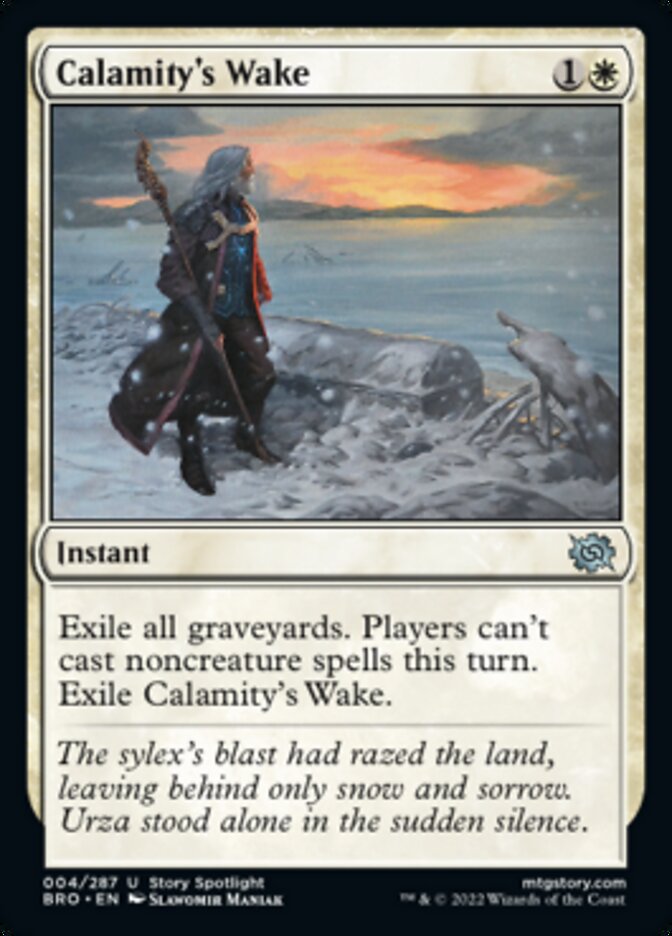
Calamity's Wake, from The Brothers’ War, is a 2-mana graveyard hate instant that locks opponents out of noncreature spells until the end of the turn. Calamity's Wake is about average for a typical Magic set’s graveyard hate – it’s no Tormod's Crypt, but it’s serviceable graveyard removal that prevents an opponent from looting into another full ‘yard immediately.
#38. Cornered Market
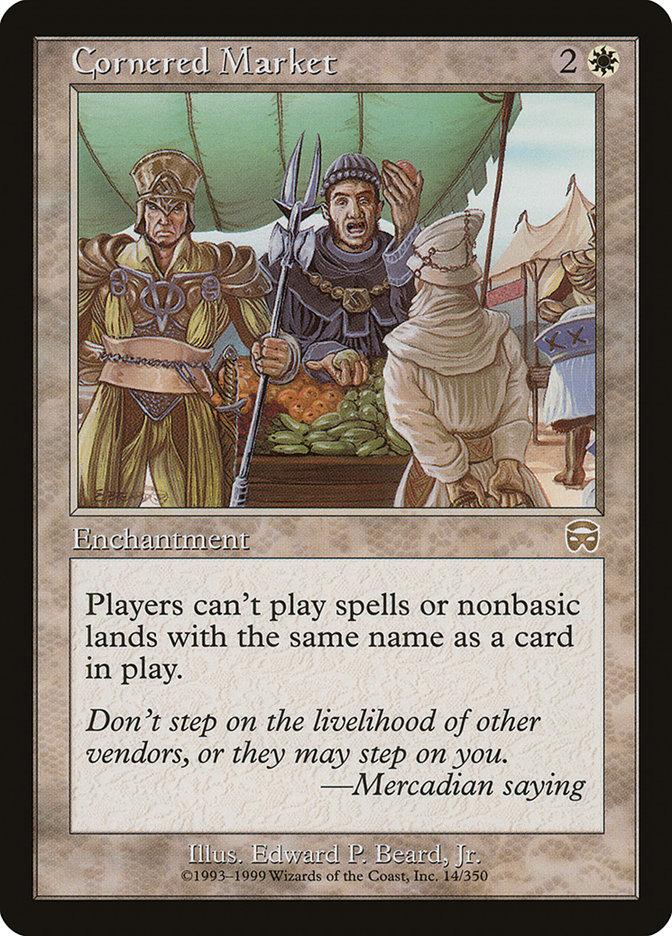
Cornered Market is a funny card from Mercadian Masques that only allows players to cast new cards and play new non-basic lands. If it’s on the field already, you can’t cast another copy. Useless in singleton formats like Commander, where we already only have one copy of each card, but probably very fun in your Legacy-format casual kitchen-table deck to shut off your opponent’s consistency. I’m imagining a world where we’ve built a singleton Mercadian Masques block Constructed deck except for four copies of Cornered Market.
#37. Moderation

Unlike the rest of this list, Moderation’s spells-per-turn limit only applies to you. That said, replacing any spell you cast with another card is a useful effect! You can play around this Azorius () enchantment by running lots of instant-speed and flash spells to continue drawing cards during your opponents’ turns.
#36. Cease-Fire
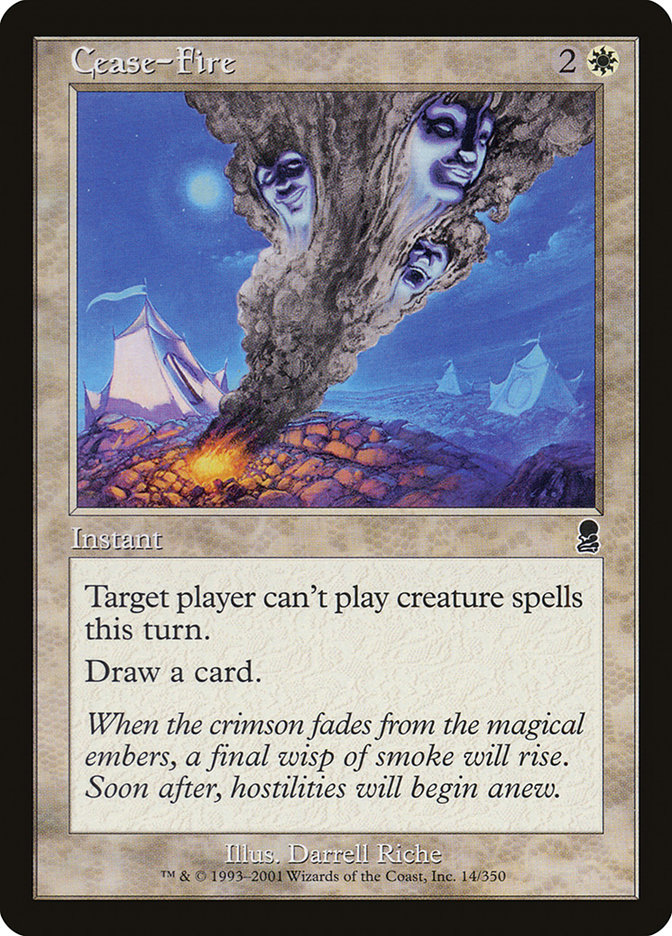
Cease-Fire is a little worse than the average “can’t cast” spell, but its value as a cantrip can’t be denied. Even though it costs 3 mana, this white instant can shut down a creature-based deck for the entire turn while generating a small amount of advantage for you. Time Walk who?
#35. Archon of Valor’s Reach

Archon of Valor's Reach isn’t cheap, but as a “can’t-cast” effect with a 5/6 flying–trample–vigilance creature is well worth the 6 mana. Even though it only locks them out of a single spell type, by the time you have the mana for this archon you should have a pretty good idea of what spells you need to stop your foes from casting.
#34. Academic Probation
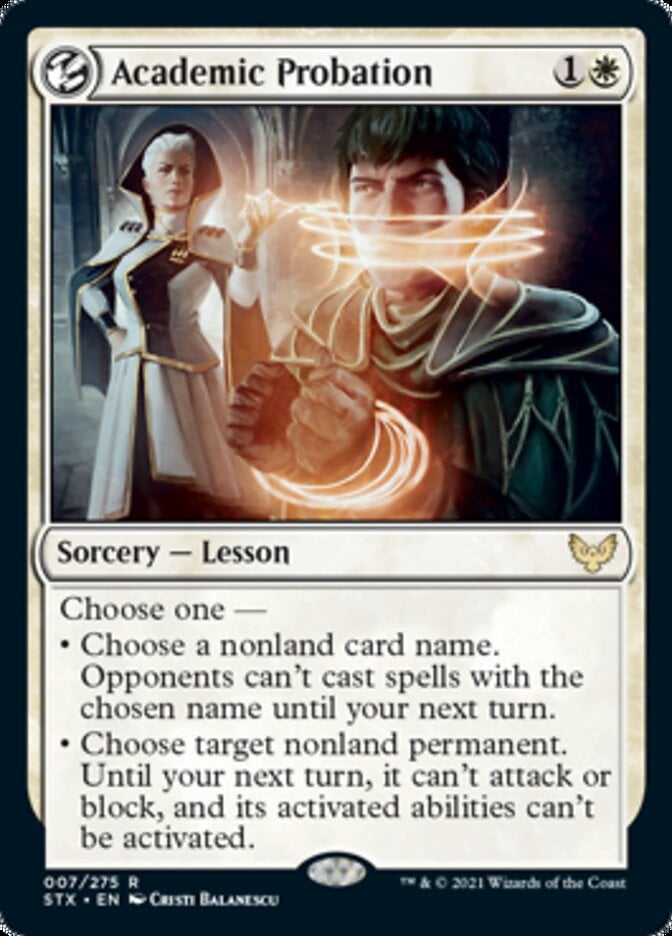
Academic Probation is a 2-mana sorcery that lets you choose a card by name and prevents an opponent from casting that spell until your next turn. Any of the “can’t cast” spells that require you to choose a card name are best used when you actually know your opponent’s deck, meaning they’ll typically be sideboarded in for games two and three. That said, Academic Probation’s second mode (effectively a one-turn Arrest) is useful against any deck running, well, permanents. Its lesson type also means it’s tutorable to your hand with any of the learn spells – perfectly timing it until right after you’ve bounced their threat back with an Unsummon.
#33. Ward of Bones
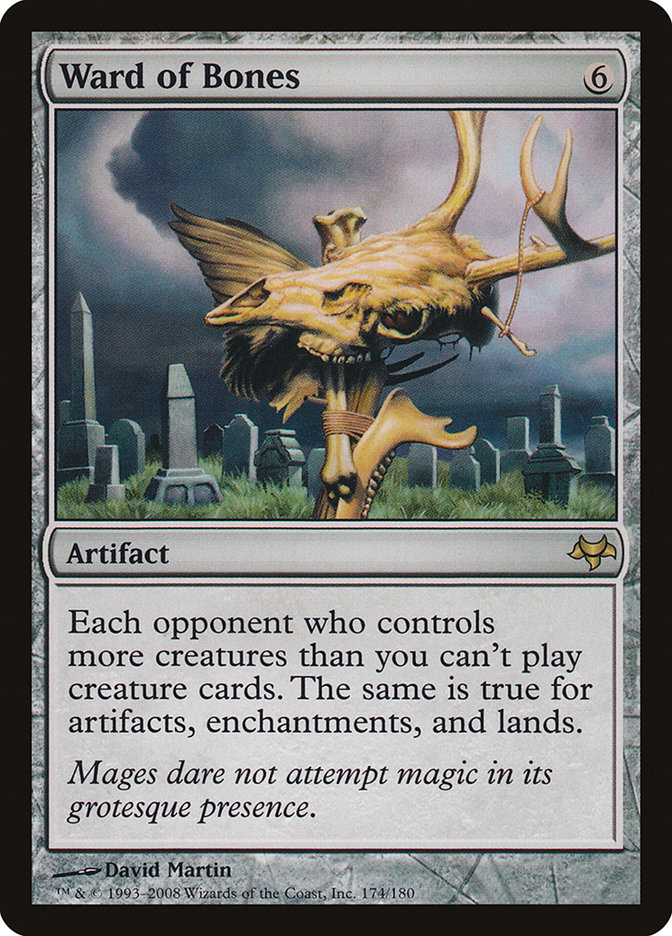
Ward of Bones is another of these “play fair” type cards that prevents any player from pulling too far ahead of you in terms of board presence. Built around a deck with no permanents besides the Ward of Bones, this artifact can effectively shut off any deck that requires players, well, cast permanent spells. A great lock-out, but its 6-mana casting cost makes it a little hard to stick early enough to matter.
#32. Nevermore
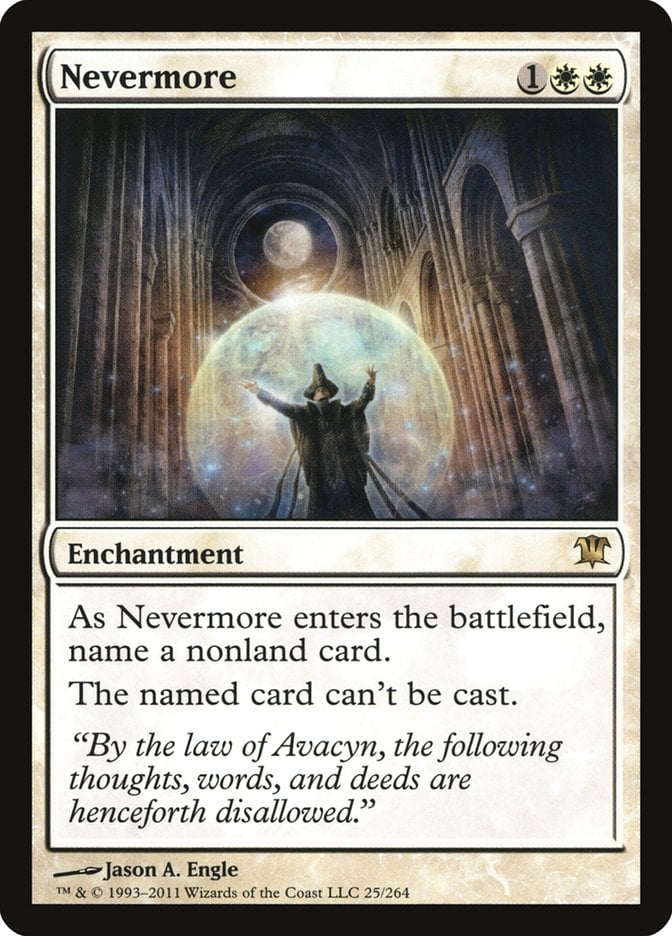
I used Nevermore to fill out one of the last spots in my first ever Commander deck back in high school, mostly because I pulled it from a booster pack and just needed to slap some rares in there. I had no clue how rude it’d be to effectively halt my opponents’ decks from ever going off by casting Nevermore and declaring their commander. The 3-mana white enchantment might only lock one spell out of the game, but that doesn’t mean it isn’t useful as pre-removal for that Nadu, Winged Wisdom.
#31. Phyrexian Censor
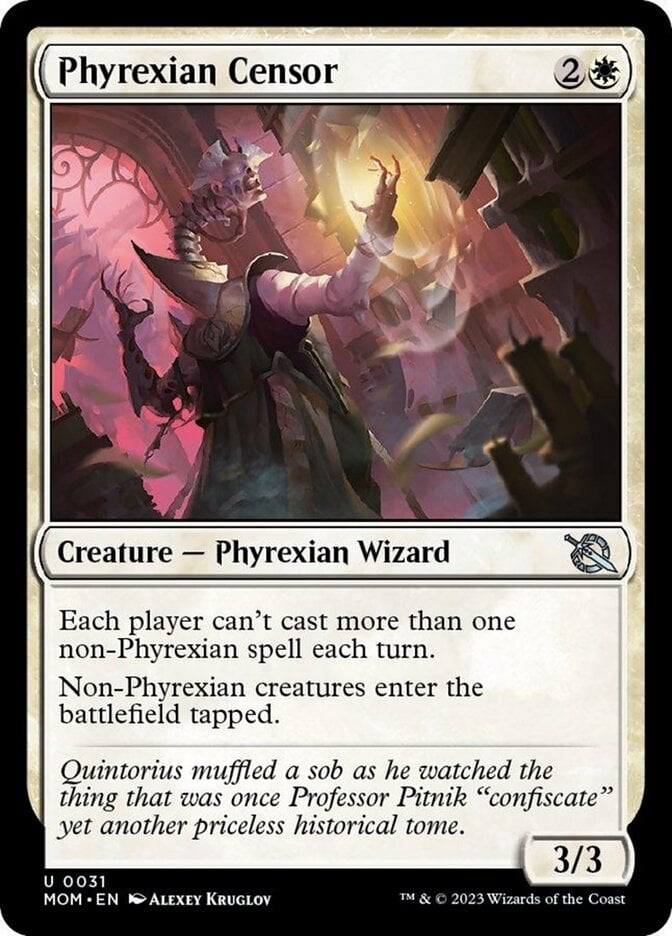
Phyrexian Censor takes the Ethersworn Canonist effect and staples it onto the newly-supported Phyrexian creature type. The option to build around the Phyrexian creature type and completely ignore that one-spell-per-turn effect makes this white creature one of the best hatebears in Commander, at least in a Phyrexians deck.
#30. Reflector Mage
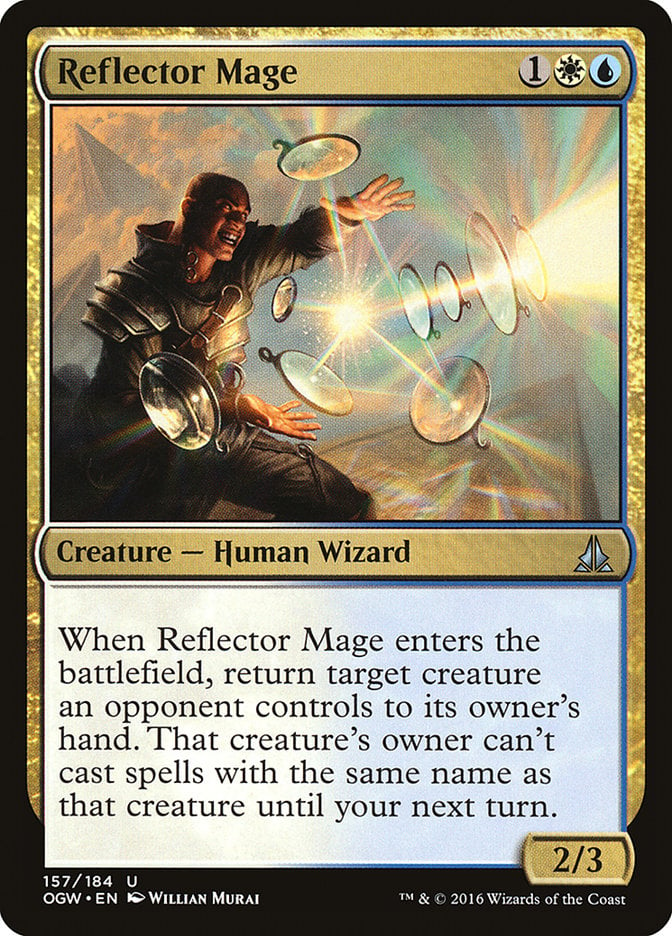
Reflector Mage is (was?) a staple in Modern thanks to its very effective removal. Bouncing a problem creature back to hand and locking it there for at least another turn and getting a 2/3 body out of it is great value for 3 mana, especially when you can follow up this Azorius human wizard with a Meddling Mage or Nevermore.
#29. Render Silent
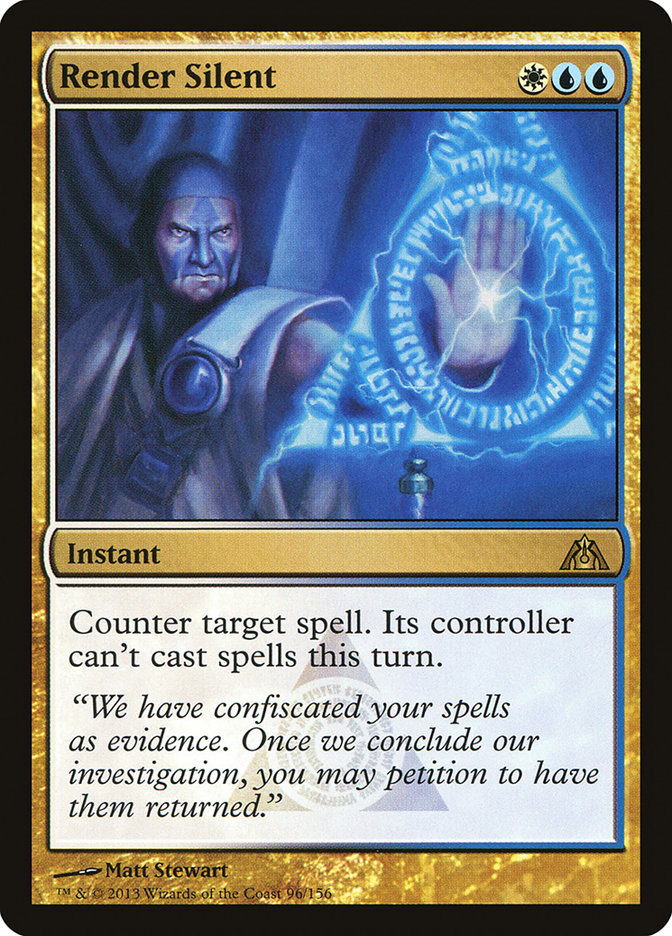
Render Silent is a tough sell. There’s a significant leap in effectiveness from a 2-mana counter to a 3-mana counter, but at least Render Silent doesn’t have a stipulation on what type of spell it counters and then prevents your opponent from casting. Its difficult casting cost makes it less-than-optimal, but it’s still an effective control piece in a singleton format where you can’t run a playset of Permission Denied.
#28. Permission Denied

If there’s one thing Wayne Knight’s known for, besides his iconic role as Newman on Seinfeld, it’s his computerized face mocking Samuel L. Jackson’s character in Jurassic Park. Permission Denied takes that famous scene, turns it into a Negate, and locks your opponents out of casting any more noncreature spells that turn. Spells like Permission Denied work great when an opponent is trying to bait out your counter with a less-important spell, but Permission Denied stops them in their tracks.
#27. Sen Triplets
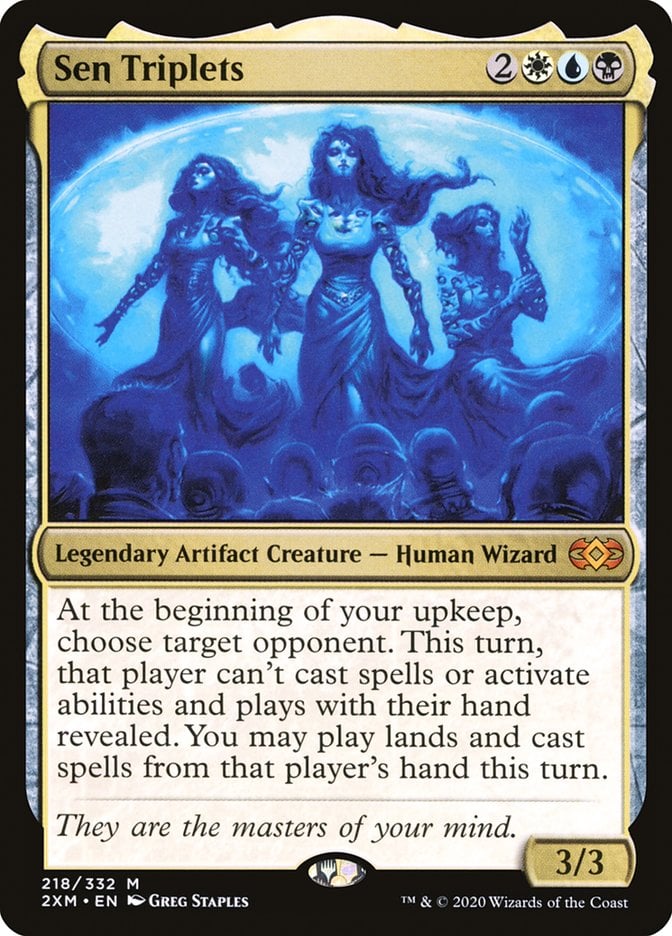
Why play with your own cards when you could play with your opponents’? Sen Triplets is the Esper commander everyone loves to hate, as the Triplets are one of the best theft commanders and among the strongest stax commanders. They shut down an opponent during each of your turns, and let you play lands and cast spells from their hand (you don’t truly “control” the player during their turn like Mindslaver). Playing against the Triplets makes it hard to plan your next turn, since you don’t know what spells you’ll actually still have access to, and you can’t dump the instants in your hand after their upkeep ability has resolved.
#26. Moonhold

Eventide’s Moonhold comes from a cycle of hybrid mana cards that gain effects depending on what colors of mana were spent on them. If you cast Moonhold with both red and white mana, not only is your opponent locked out of casting creatures this turn, they can’t even play lands! At 3 mana, this is an okay rate for this effect. The stipulation of only creature spells hurts a bit, but this is definitely a sideboard card to bring in against creature heavy aggro decks, and not versus control decks.
#25. Mandate of Peace
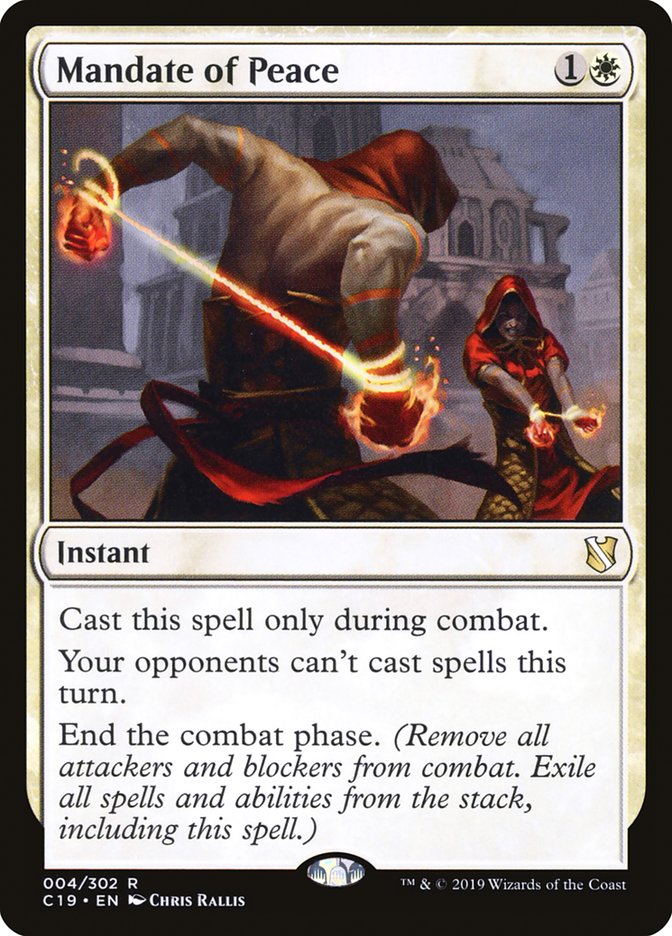
We’ve all been there: What we thought was a great declare attackers step has evolved into a very poor-looking blockers step, and now we’re trying to respond effectively. Casting Mandate of Peace is a great way to say, “No, actually, my bad. We won’t be doing combat this turn.” While this white instant is locked to being cast during the combat phase, it’ll more often than not result in the turn ending as well, unless your opponent has some activated abilities or special actions to take in that second main phase.
#24. Abeyance
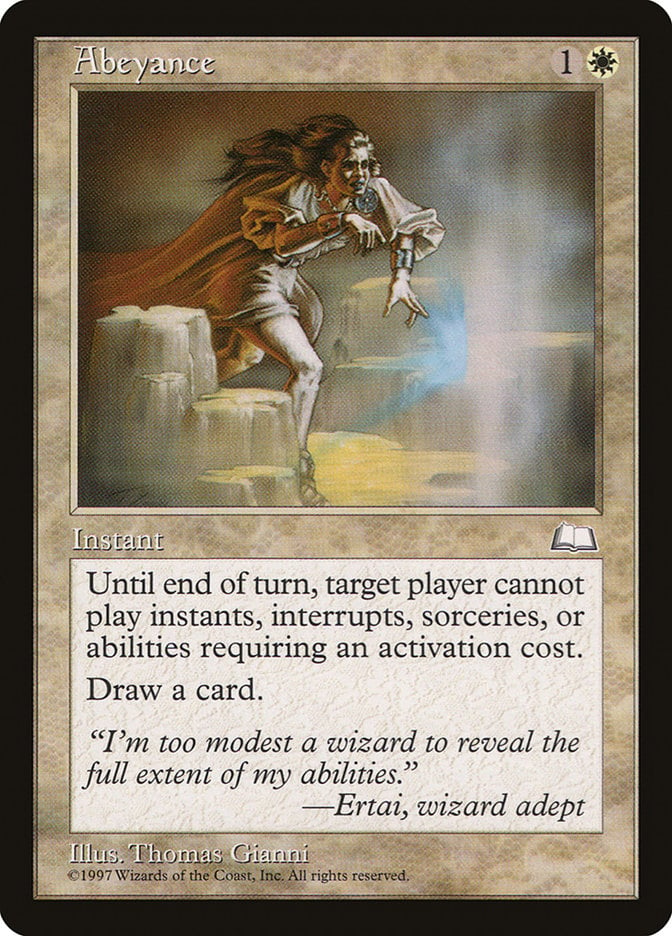
Abeyance is the ultimate hose against spellslinger decks. This two-mana instant stops just instants, sorceries, and activated abilities from being used (as well as interrupts, ooh!). Plus, it’s a cantrip, replacing itself in your hand as it resolves.
#23. Flamescroll Celebrant / Revel in Silence


The back half of Flamescroll Celebrant is Revel in Silence – one of the only ways to lock opponents out of planeswalker’s loyalty abilities. Doing this in addition to their spells is an effective way to stop an opponent’s value-generating Wrenn and Six for a turn, and its creature side can punish them if you want to go that route instead.
#22. Curse of Exhaustion
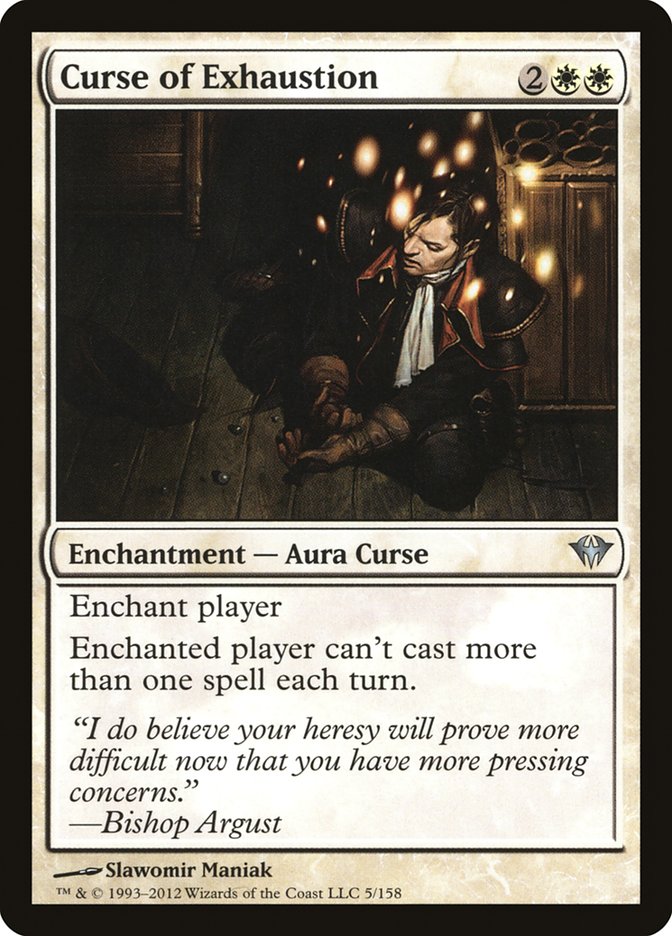
I was certain Curse of Exhaustion was my one-way ticket to some permanently transformed werewolves back in 2011/2012. Boy, was I wrong. While Curse of Exhaustion can be an absolute hose versus a storm deck, running it as a key part of a 3-color midrangey-creatures deck was a mistake. Four mana is a tough sell, and in multiplayer formats you want to be able to lock multiple foes out of spells at once. Useful in your Ghen, Arcanum Weaver curses deck, but not much else.
#21. Conqueror’s Flail
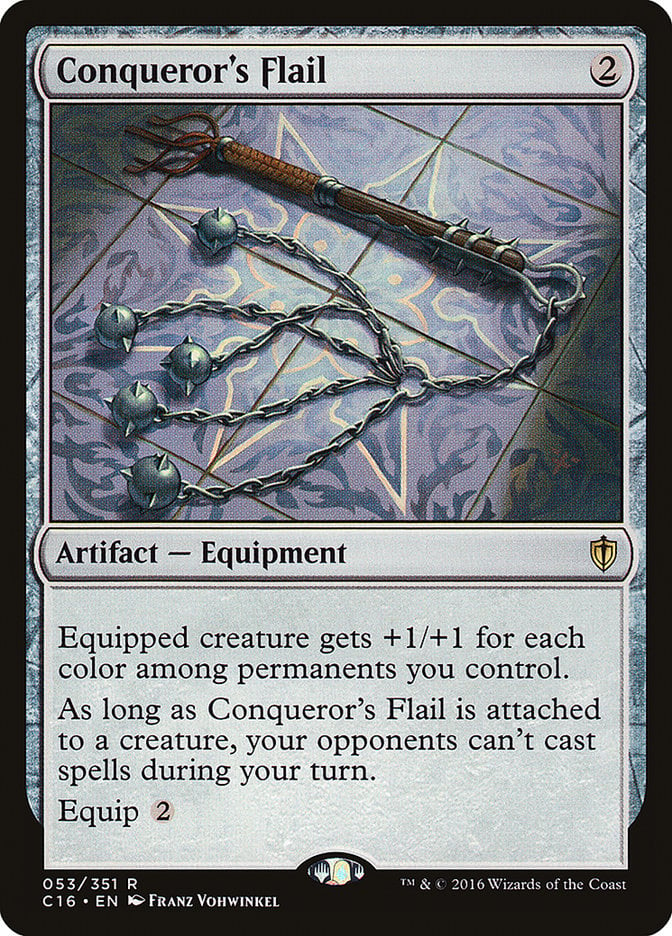
Conqueror's Flail is a valuable hate-card due to its colorless color identity. Sadly, Conqueror's Flail’s ability is best used in a deck with at least three colors, and if one of those is white. We just have better options for Grand Abolisher effects, like, say, Grand Abolisher. Useful for your Voltron commander and protecting your uber-strong Dakkon Blackblade from instant-speed removal.
#20. Arcane Laboratory
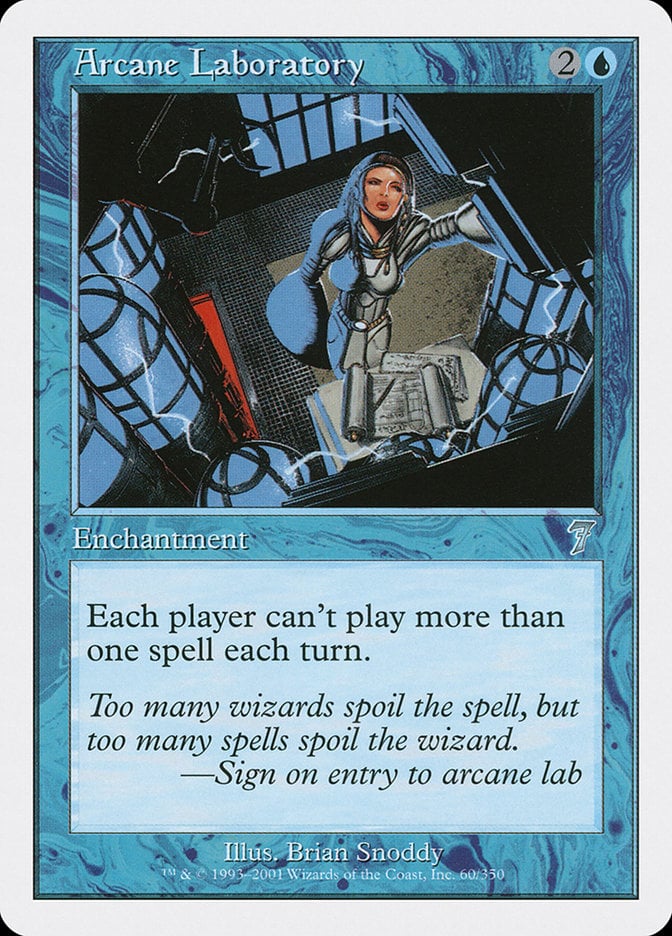
Arcane Laboratory is about the most basic “one spell per turn” clause you can find on a Magic card. Its symmetrical effect feels a bit out of place in blue, but you can always use this blue enchantment to top off a spell-heavy turn to generate a ton of advantage, and then lock your opponents out of the ability to catch up.
#19. Rule of Law
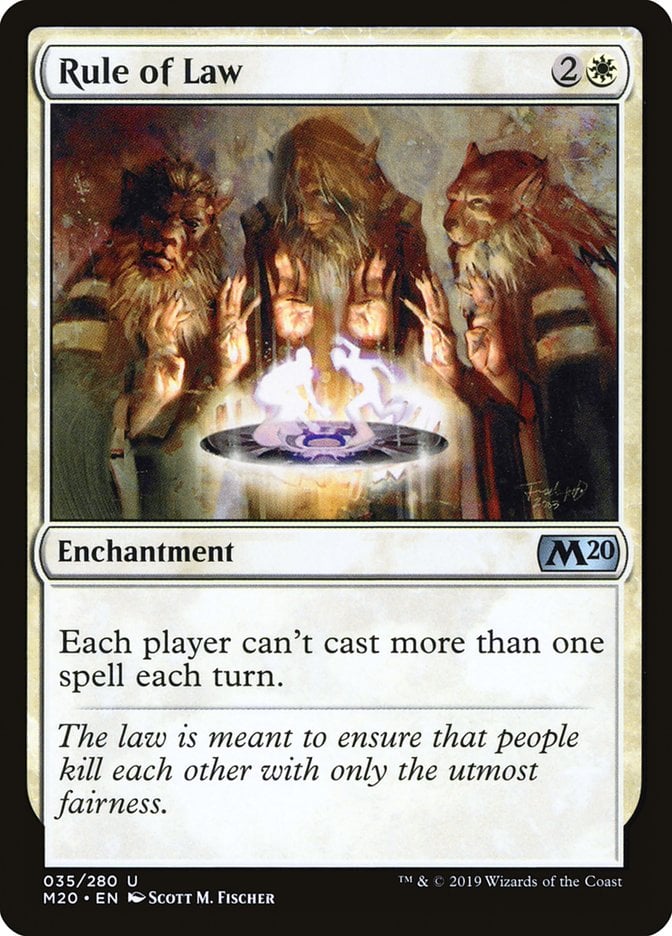
Rule of Law is just the color-fixed Arcane Laboratory. This effect makes a lot more sense when it’s centered in white, and running this instead of the Lab helps smooth over your mana base if you’re looking to lean into all the “can’t cast spells” spells white has access to.
#18. Angelic Arbiter
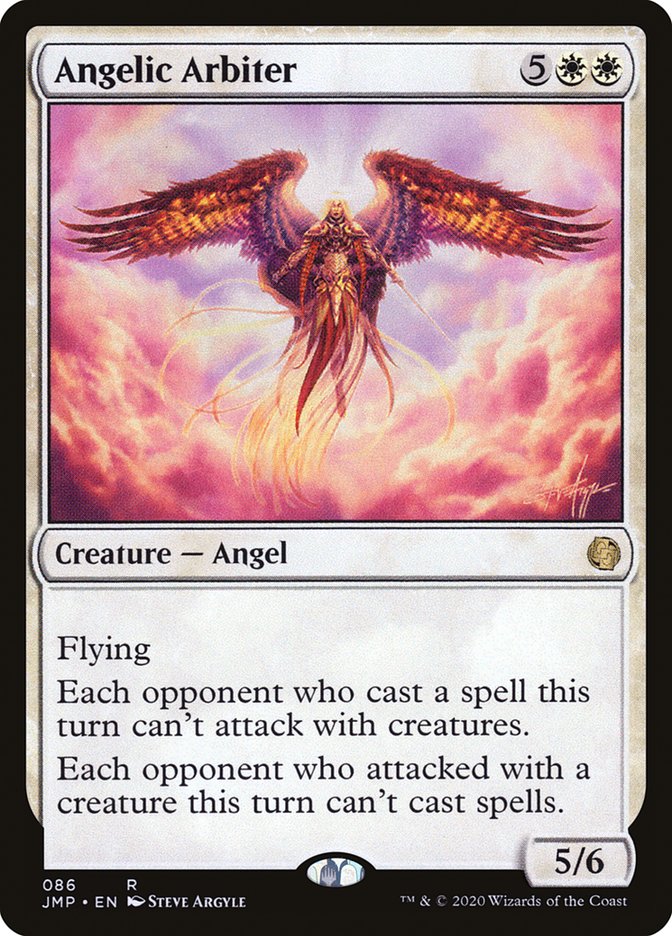
Angelic Arbiter is one of the best ways to grind your opponent’s deck to a halt. Forcing them to choose between attacking or casting a spell that turn feels like you’ve given them only half of a turn. At 7 mana Angelic Arbiter is hard to cast, but when this angel sticks to the field you’ll see yourself pulling ahead in advantage slowly but surely.
#17. Archon of Emeria
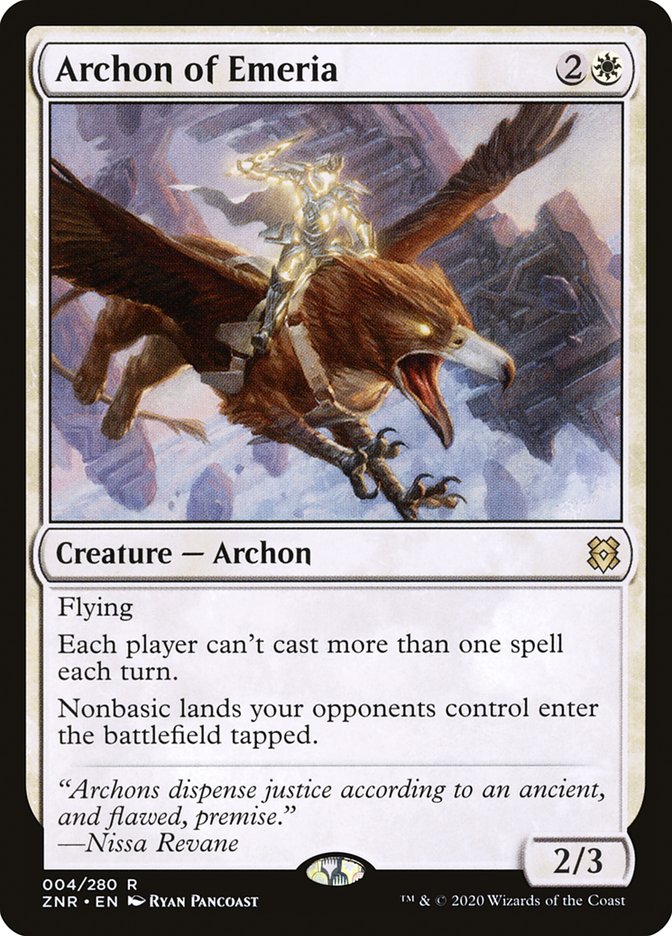
I like to think of some of the white cards as “play fair” effects – Archon of Emeria’s symmetrical effect locks both you and opponents into just one spell per turn. This can feel like you’ve handicapped yourself, but the Archon’s nonbasic land hate gives you a slight advantage by slowing any multicolor deck down significantly. No fetch land into a shock land for you!
#16. High Noon
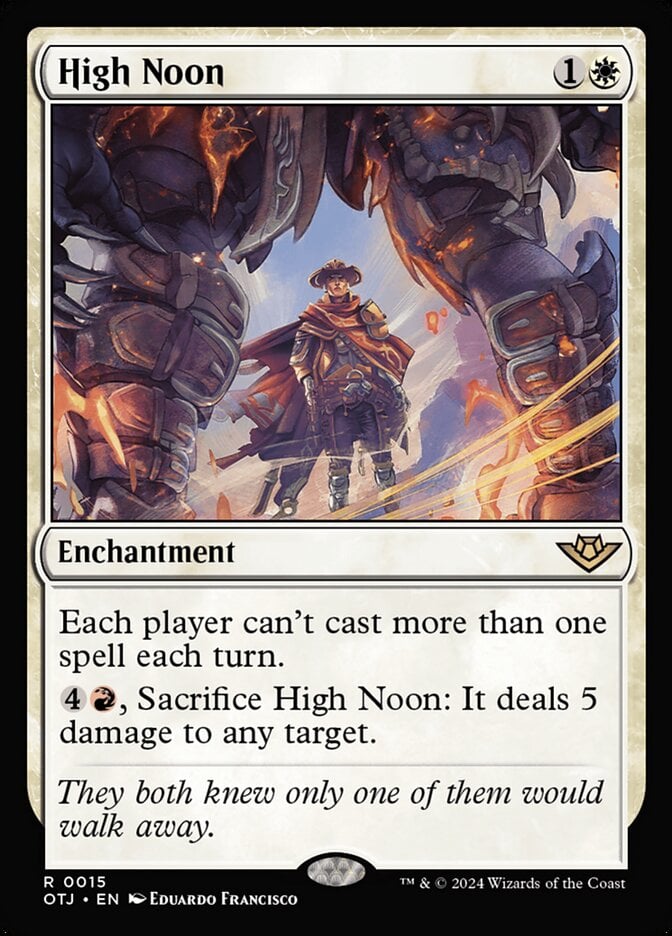
High Noon is an interesting one and only certain decks want to limit players to one spell per turn. Unfortunately, red and white often want to play multiple cards in a turn (remember celebration?). The nice burn option is very handy to have access to when you’re ready to Quick Draw for lethal.
#15. Drannith Magistrate
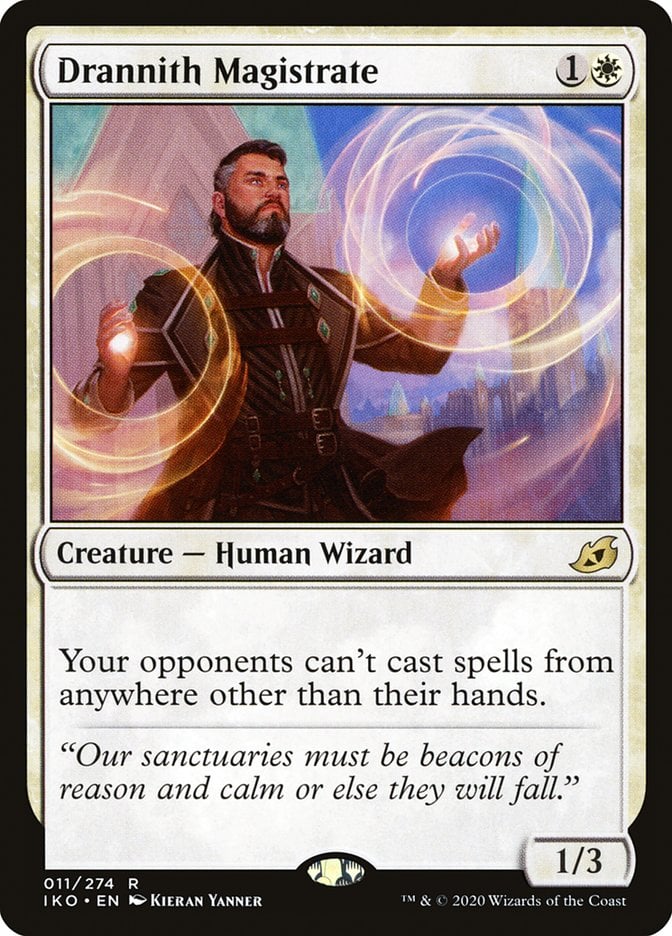
Ikoria: Lair of Behemoth’s Drannith Magistrate is incredibly good at shutting down some of the best advantage-generating spells in the game. Think about how many cards can cast something from exile: from broken Commander staples like Opposition Agent to every single cascade card, Drannith Magistrate shuts down most sources of free spells, and many of red’s Act on Impulse-style effects.
#14. Ethersworn Canonist
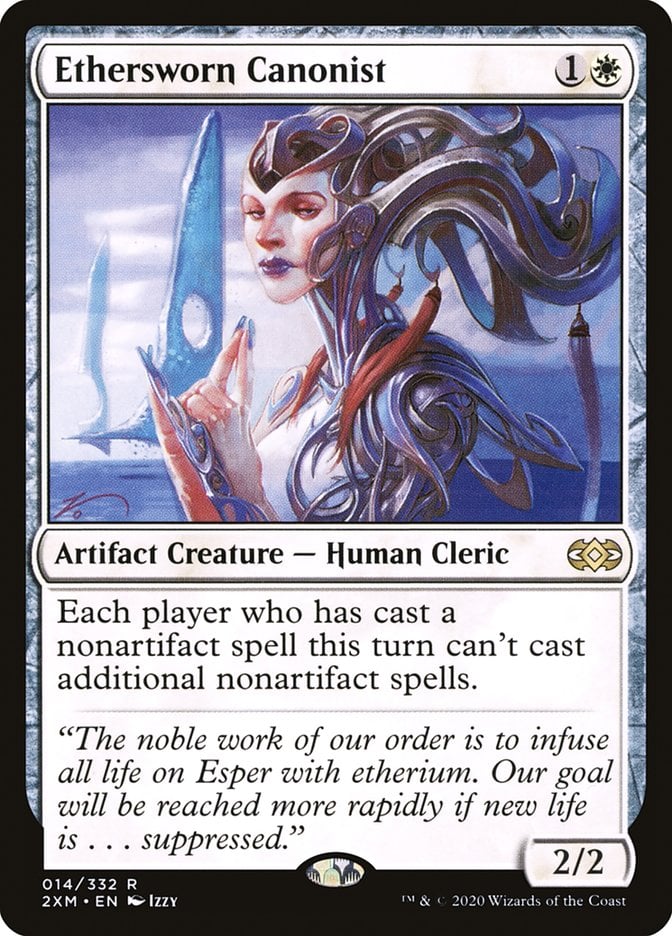
You get one (1) nonartifact spell each turn while Ethersworn Canonist is on the field. Interestingly, you’ve accounted for your own Canonist and have built a deck of entirely artifacts. Lucky you! Now you’re the only player casting more than one spell per turn, pulling ahead in advantage bit by bit each turn while everyone else struggles to at least cast a mana rock in addition to their other spell.
#13. Eidolon of Rhetoric
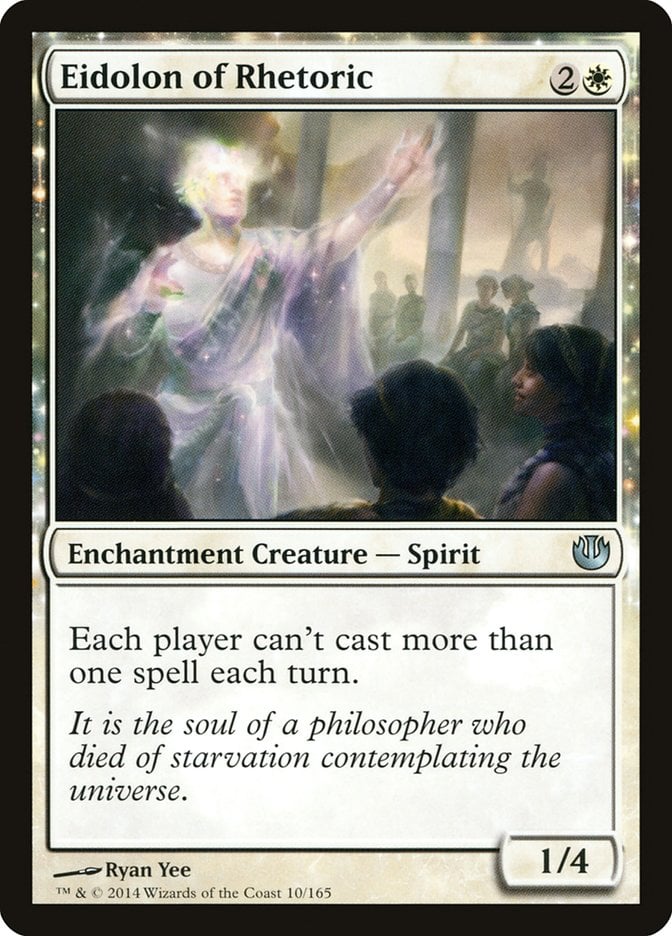
Eidolon of Rhetoric takes Arcane Laboratory, fixes its colors, and slaps it on a fairly resilient enchantment creature. Four toughness means the Eidolon survives Lightning Bolts and can be an effective blocker early game, but its 3-mana MV means it’ll run out a bit slower than something like Deafening Silence. It makes a great play against go-wide aggro decks, though!
#12. Voice of Victory

The cheap cost on Voice of Victory is a big part to its appeal. Mobilize turns this into a strangely aggressive card. The bard is definitely one of the best surprises from Tarkir: Dragonstorm.
#11. Grand Abolisher
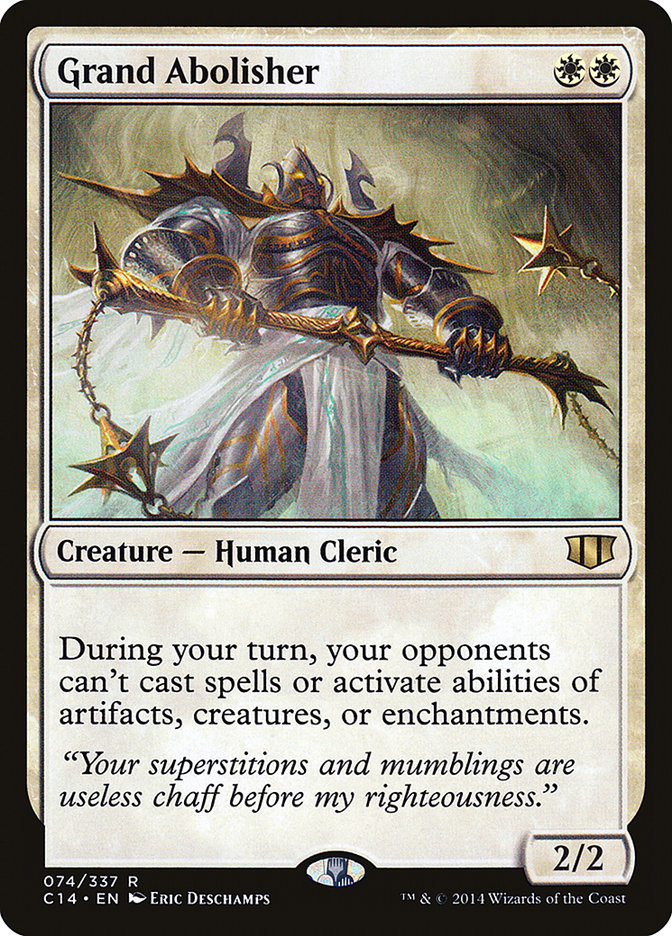
The classic hatebear Grand Abolisher is iconic for its all-encompassing lockout on spells and abilities from opponents. No longer will you have to worry about an incoming Counterspell or Lightning Bolt during your turn – you’re safe from their instant-speed responses, and your opponents won’t even be able to sacrifice all their creatures to Viscera Seer in response to your Wrath of God, either.
#10. Kutzil, Malamet Exemplar
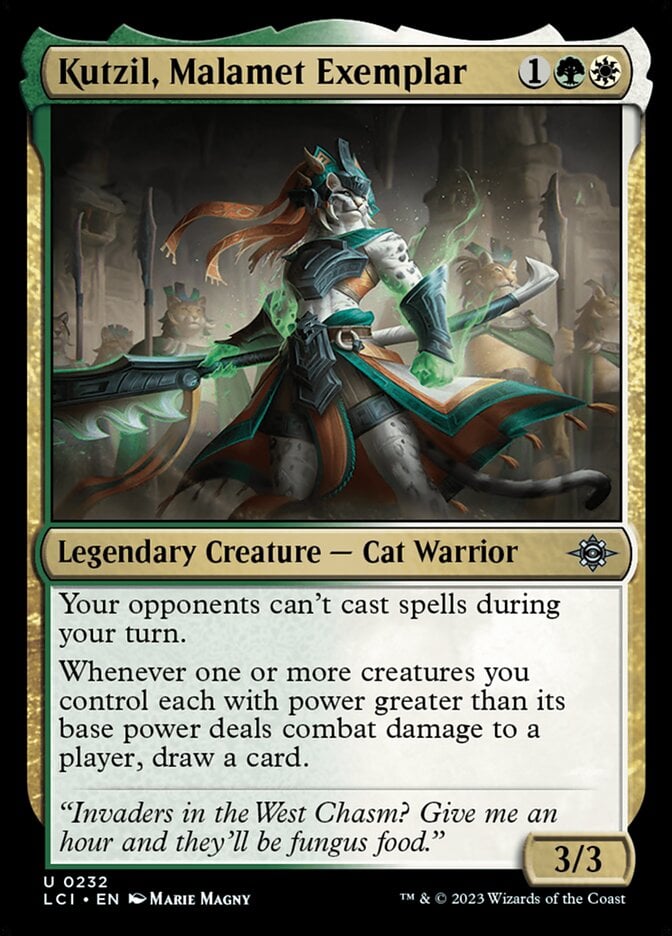
Kutzil, Malamet Exemplar is a hatebear (the 3-mana kind, though) that also generates advantage whenever one of your buffed creatures deals damage to a player. Your green aggro deck really picks up pace when something as simple as your Audacitys and Giant Growths are replacing themselves in your hand.
#9. Mana Maze
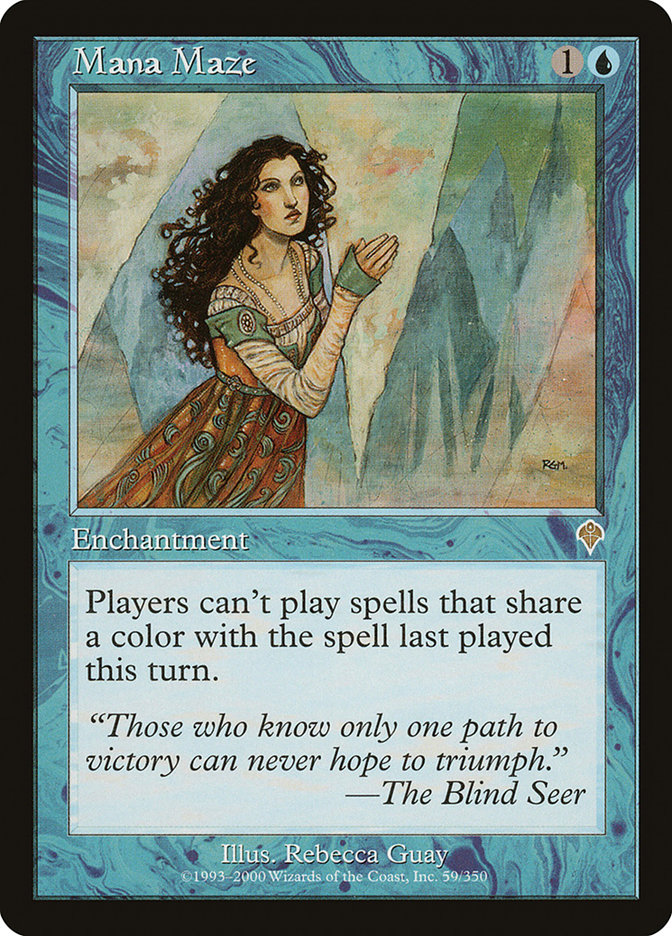
Mana Maze is a fun card for multicolor decks to run against mono-colored ones. Effectively locking mono-color decks into one spell per turn, with a little build around and conscious choices of mono-color spells in your multicolor deck, you’ll see great returns on this cheaper Rule of Law.
#8. Deafening Silence
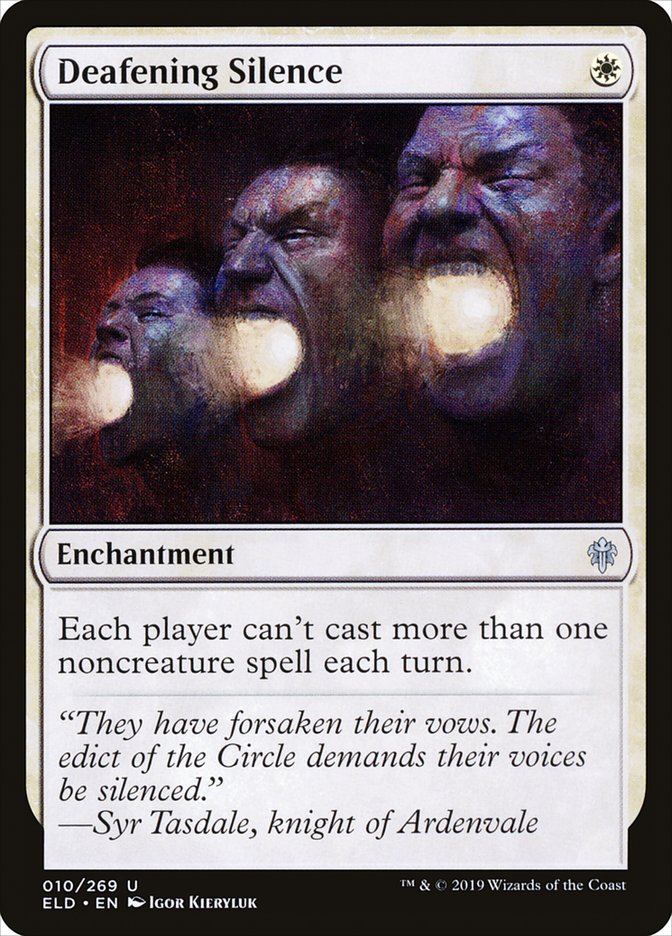
If you took Arcane Laboratory and wanted to grind it down to 1 mana, Deafening Silence is what you’d get. While its effect is still symmetrical, and it only blocks noncreature spells, Deafening Silence’s cheap mana value means it’ll hit the board before your opponent has any chance to start cantripping like mad. Unfortunately, it’s a total whiff versus those creature-based aggro decks. A swingy card that definitely has a place in the sideboard of many a white deck.
#7. Void Winnower
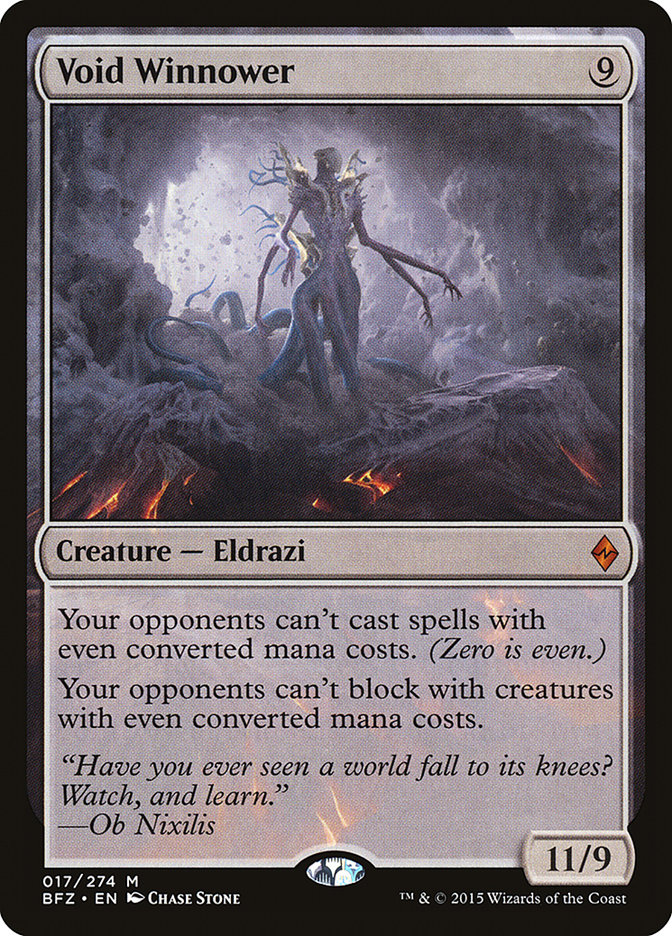
One of the funniest eldrazi of all time is Void Winnower. Locking players out of half of all the spells in the game is hilarious, and changes everyone’s entire game plan to “I need to kill that Void Winnower.” As long as you have enough odd-mana-value’d spells to keep playing, this 9-mana monster should bring you close to ending the game right then and there.
#6. Myrel, Shield of Argive
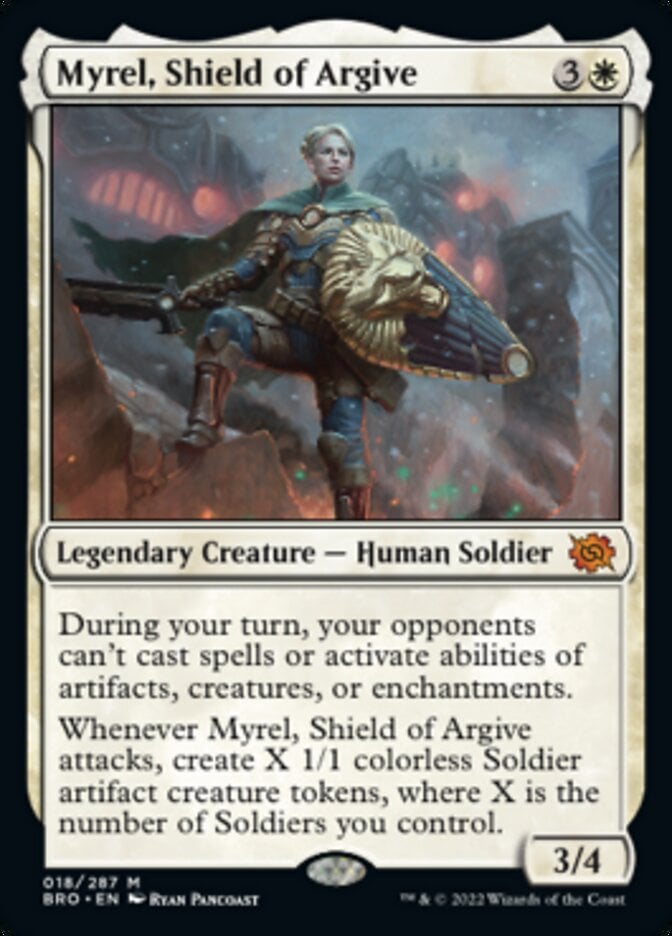
Myrel, Shield of Argive simplifies so much on your side of the battlefield, your developments and combat tricks land unopposed. Then the attack trigger cements this as one of the best white creatures period.
#5. Orim’s Chant
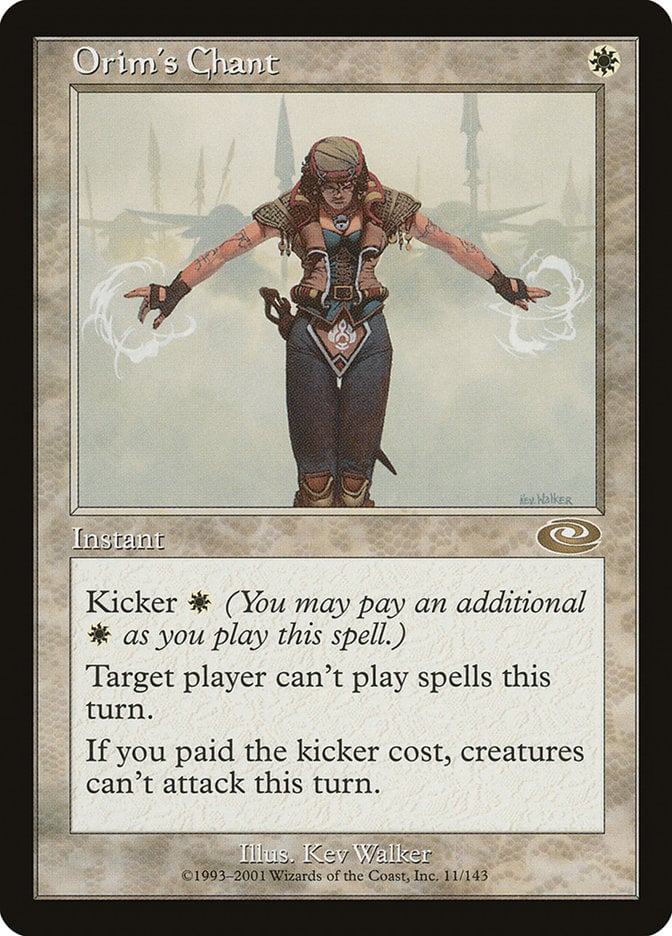
Orim's Chant is one of the best ways to stall out a turn. Against a deck that was only planning to play spells and attack you this turn, it’s basically a Time Walk. Okay, not technically, they’ll still get to untap and activate any abilities they control, but ultimately you’ll have another full turn of actions before they can cast or attack with anything.
#4. Lavinia, Azorius Renegade
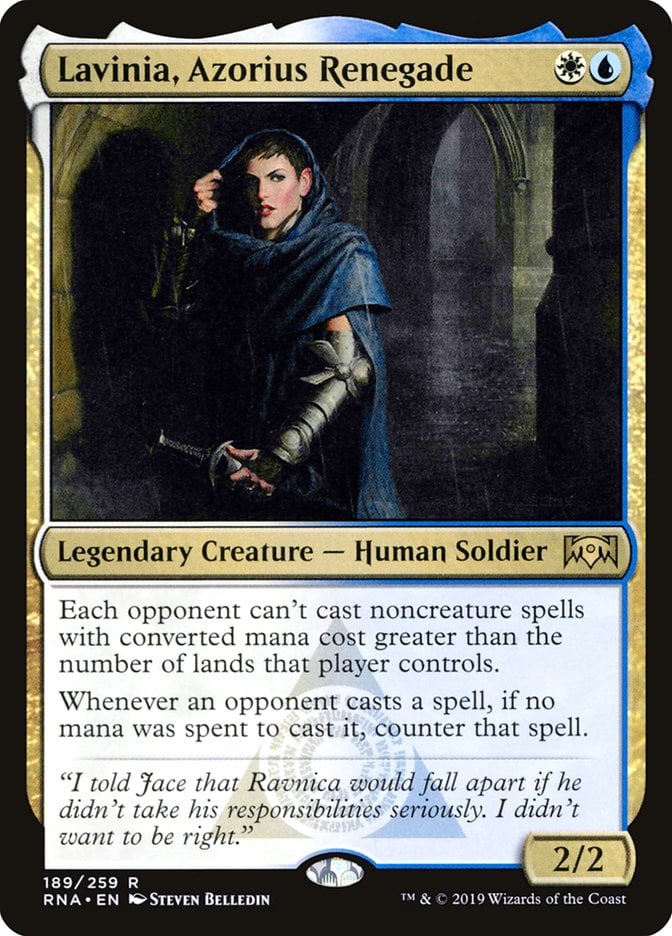
Lavinia, Azorius Renegade is one of the best hatebears in Magic. It locks players out of artifact-based ramp and stops them from casting any free spells. This makes it a great response to evoke-heavy decks running cards like Solitude and Grief, as well as against Force of Wills and Pact of Negations.
#3. Iona, Shield of Emeria
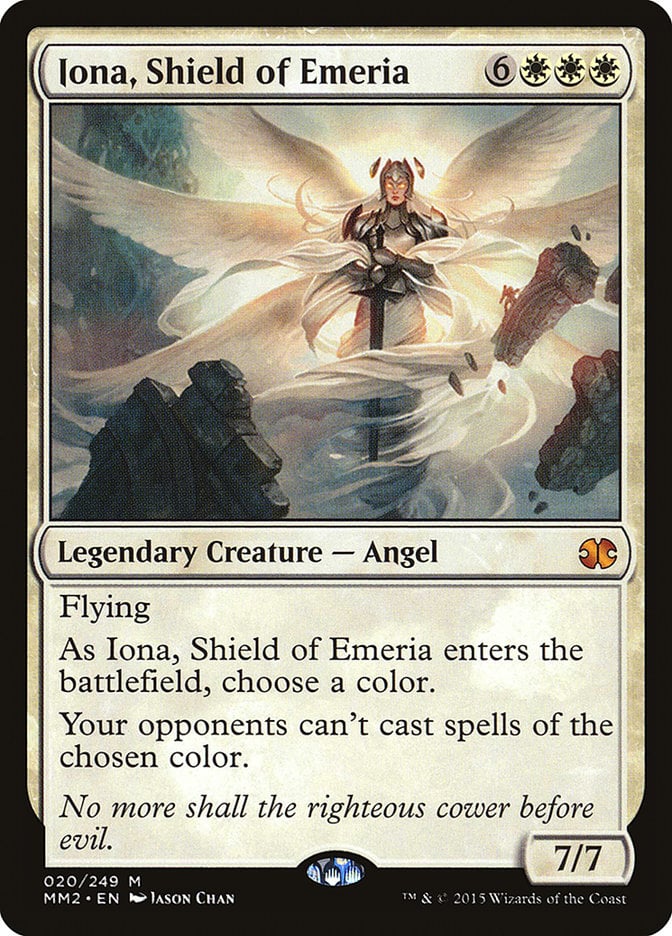
Iona, Shield of Emeria was one of the most punishing white commanders to play against until it caught a ban in 2019. Couldn’t have come any later, in my opinion, as Iona decks have a tendency of completely shutting down any mono-colored Commander deck. Playing Talrand, Sky Summoner or Yisan, the Wanderer Bard? Sucks. No spells for you. No Commander game for you. Sit there and draw cards while the rest of us play Magic.
Despite its ban, Iona remains one of the best ways to lock an opponent out of the game. It doesn’t see too much play in the other Constructed formats, mostly due to its MV of 9 , but that doesn’t mean there isn’t some janky Modern deck out there you could build around it.
#2. Silence
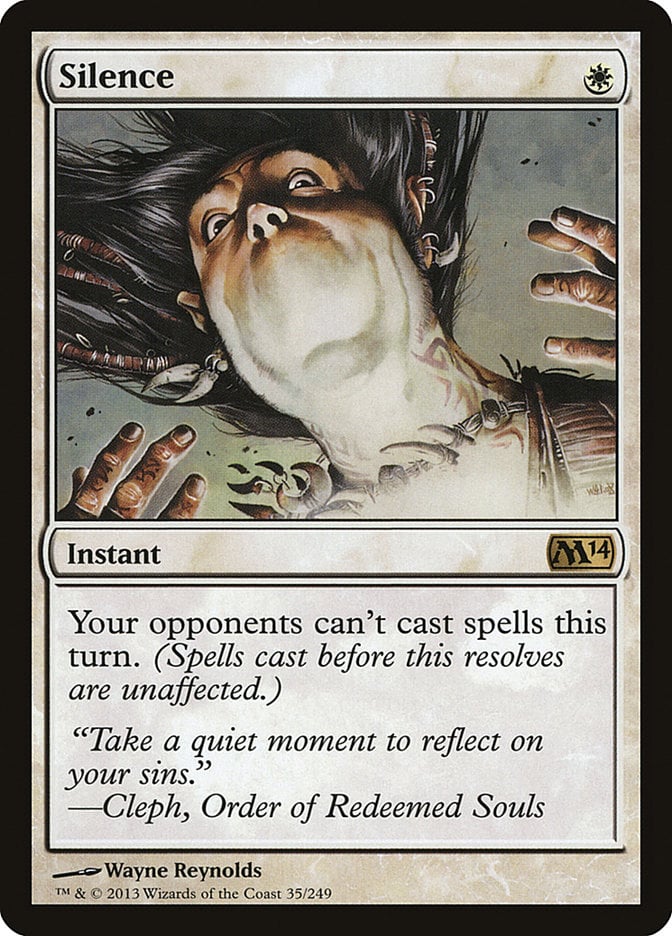
Silence is the weathervane via which we can rank all other “can’t cast spells” cards. This 1-mana instant simply states, “your opponents can’t cast spells this turn.” Spells put on the stack before Silence resolves will still resolve, but from that moment on, they’ll be unable to cast anything.
Silence works best when you’re trying to protect a fragile combo. For 1 extra white mana, whatever wacky combo you set up is totally protected from instant-speed interaction – just make sure you haven’t left any valuable pieces on the board to be Murdered before your Silence resolves.
Back in my day, in the far-off realm of 2011, Innistrad had just been released, and I was feral over those werewolf cards. As anyone else who played Standard back then remembers, werewolves weren’t an effective type to build around, but I was determined to make a Naya () werewolves deck work with Avacyn's Pilgrims to cast Silence and keep my wolves transformed! It didn’t work. I recommend using Silence for a real combo, and not my goofy janky deck.
#1. City in a Bottle
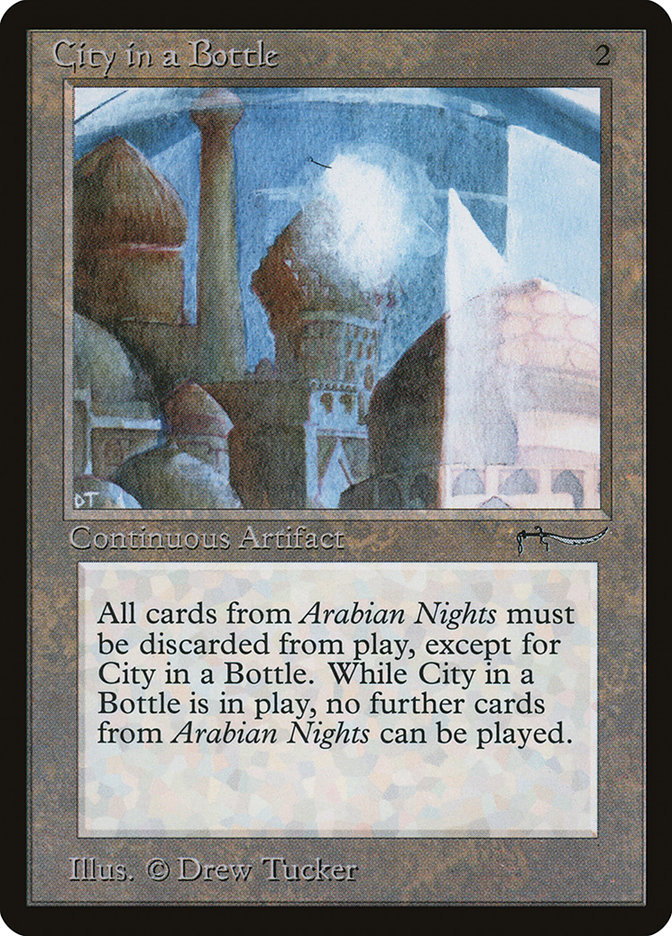
City in a Bottle is the ultimate lock-out in Magic: The Gathering. So much so that we’ll never see another set-matters card, guaranteed (I’ll be back to eat my words when Secret Lair: Set Matters inevitably drops).
No other can’t-cast effect locks out so many specific cards at once. Finally, we have an answer to Cuombajj Witches and Kird Ape!
Best Can’t Cast Spells Payoffs
The main payoff is that you shut off interaction from your opponents under certain conditions, and this opens the door for you to set off your infinite combo, send an alpha strike or simply control the game into your wincon. You know how there are hard counterspells and soft counterspells? Well, this ranking is like the hard version of soft stax like Ghostly Prison.
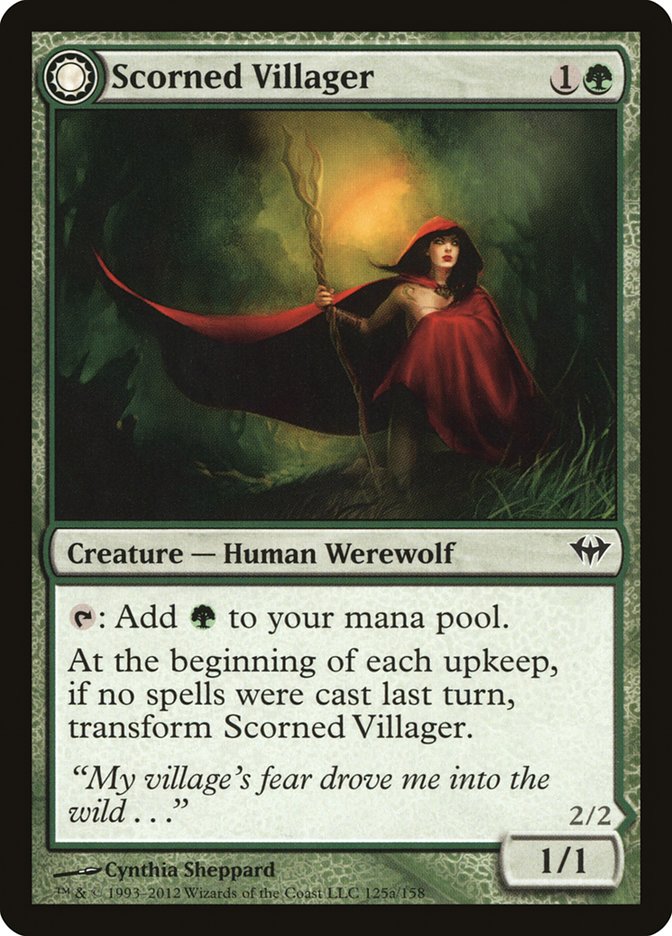
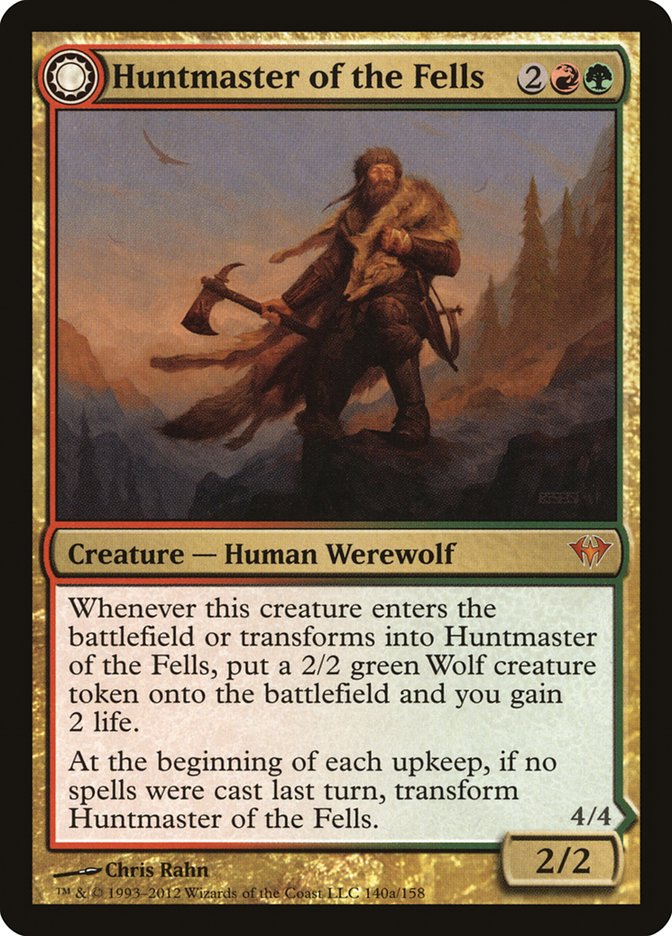
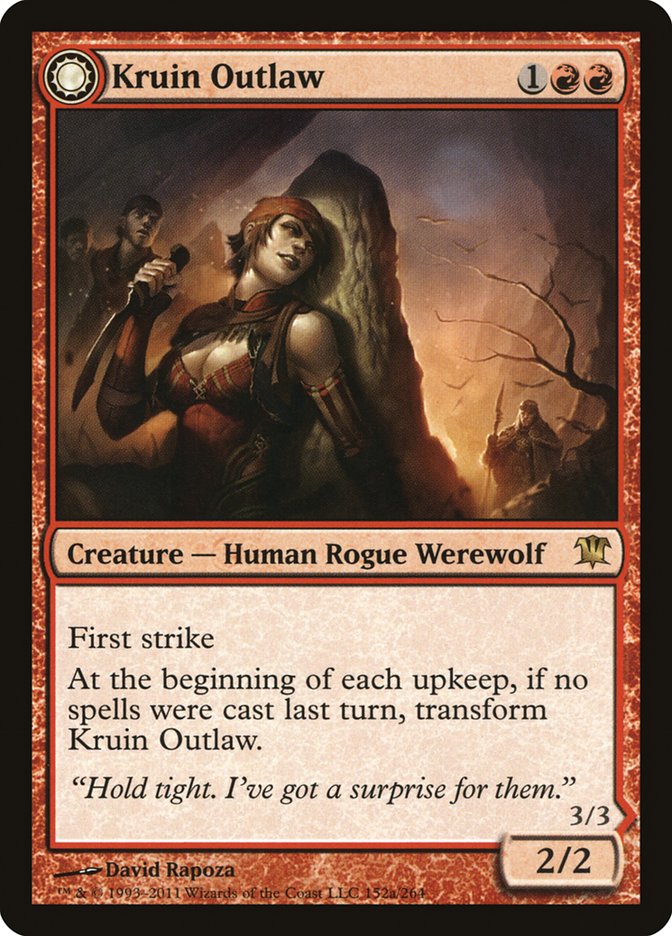
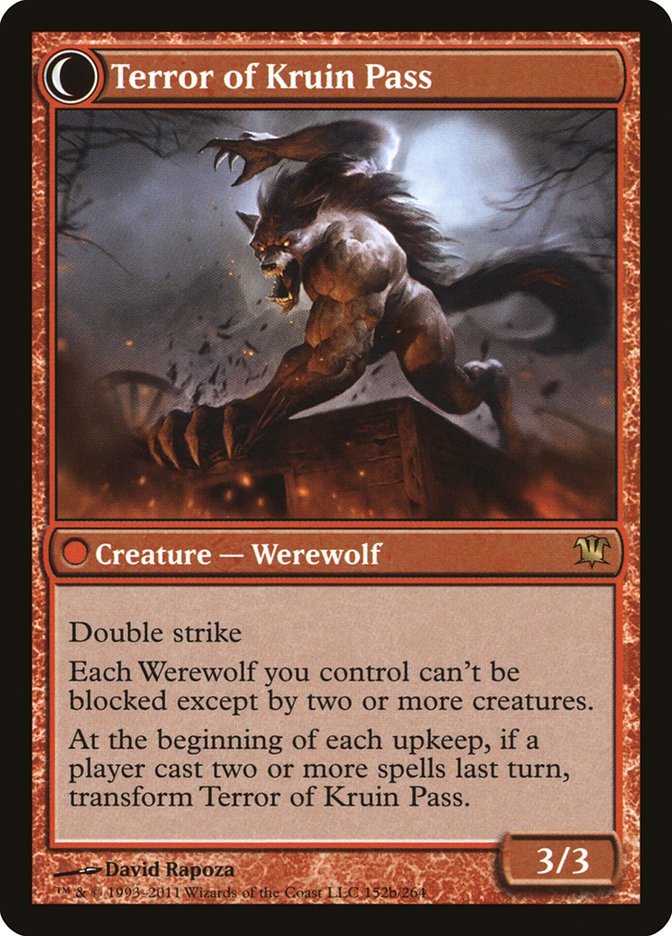
Don’t forget one category of cards that benefits from players not casting cards for a turn are werewolves from the original Innistrad block of Magic sets. Their transform mechanic checks if no spells were cast in the last turn so you need a static effect to help you along but it is a good way to “force” these cards to transform or keep them transformed.


Bonus: Cards You Can’t Cast Until Turn 4
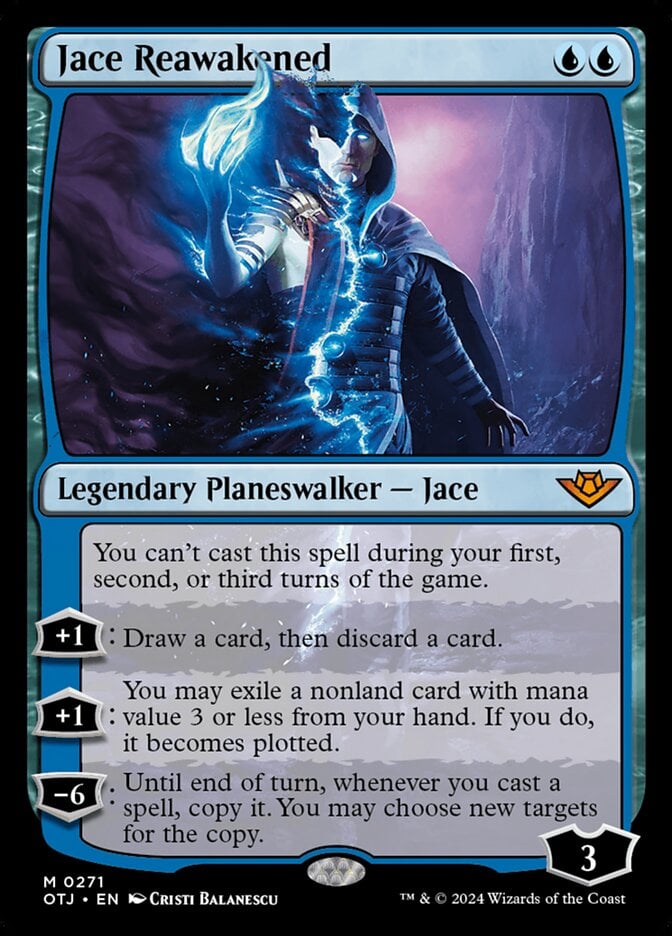

These are no restriction on your opponent, but cards that restrict themselves, and mainly to make up for their exceedingly good rate. Slow down those ultra aggressive decks if you plan to roster Jace Reawakened, Serra Avenger, or Spider-Man 2099.
Wrap Up

Silence | Illustration by Wayne Reynolds
Whether you need to protect your fragile combo or keep your werewolves from transforming back, Silence-ing opponents is one of the best ways to do it. Locking out storm decks, forcing opponents to play fair, and preventing them from casting counterspells during your turn is a tried-and-true strategy for keeping you and your permanents safe from harm.
What are your favorite ways to stop an opponent from casting? Are there any great payoffs for preventing them from casting? Let me know in the comments, or over on Draftsim’s Twitter/X.
Thank you for reading, and keep it down!
Follow Draftsim for awesome articles and set updates:










3 Comments
Great article both in content and layout. I will be buying some new singles to tweak a few decks now.
how come dragonlord dromoka didn’t make this cut?
Maybe an oversight? Worth slotting in when we update this.
Add Comment