
Last updated on April 30, 2026

Nikya of the Old Ways | Illustration by Ryan Pancoast
No matter your current win percentage or metagame, every Commander player was, once upon a time, a fresh-faced recruit. A green bean. A newbie.
Whether you’re in that position yourself as a player that’s new to Magic or to Commander as a format, or you’re looking for commanders to recommend to your less experienced friends, I’ve got some decks for your consideration!
What Makes a Commander Good for New Players?
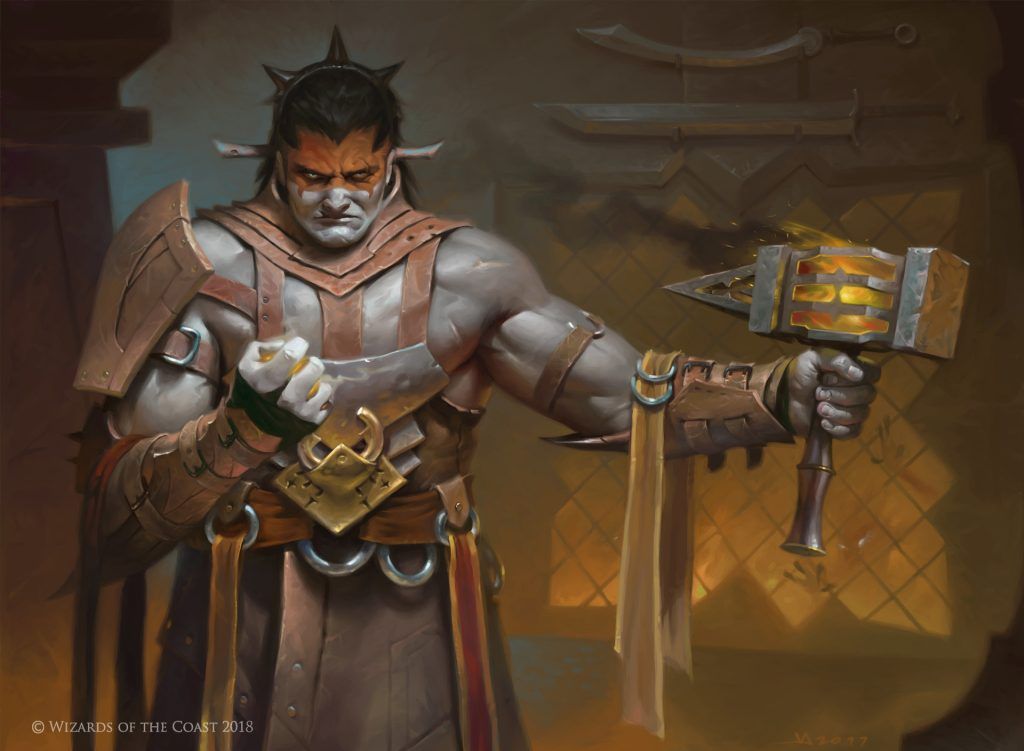
Valduk, Keeper of the Flame | Illustration by Victor Adame Minguez
There’s lots to consider when you evaluate if a commander is good to recommend to a newer player. My big three principles for good beginner commanders are that you want less text, fewer colors, and more typal support. That’s not all-inclusive, but it’s a start.
The less text you have, the fewer things you have to keep in the back of your mind. If your commander has multiple triggered abilities, or a static ability and an activated ability with multiple conditions, that can just be overwhelming, and you wind up missing out on opportunities to do good stuff because there’s just so many options.
Commanders that ask you to track what happens in the game, like the monarch or day and night cycles, are a bit more advanced than what we’re looking for here. I want fewer complex mechanics or abilities that combine triggers (“whenever”) with “if” clauses.
Low mana values are generally better too. There’s nothing quite as frustrating as being a newer player who’s making no progress because you barely know how to mulligan and you’re mana screwed.
This all assumes that you’ve got a player that’s new to Magic as a whole, not just Commander as a format. I might suggest getting started with something like Jumpstart to master some of the game’s fundamentals.
While I mainly think from the perspective of how these commanders pilot when you’re new to the game, I also mention some commanders that are good to have at a table with newer players to teach them some parts of the game.
#28. Katara, the Fearless

Katara, the Fearless is in her most inspiring mode and as a Bant commander has access to lots of the best allies. The biggest thing to learn are which abilities you can trigger so here are a few great examples of allies with text that includes “when”, “whenever”, and “at”: Katara, Bending Prodigy, South Pole Voyager, Ondu Cleric, Earth Kingdom General, and Hero of Goma Fada.
#27. Melek, Izzet Paragon
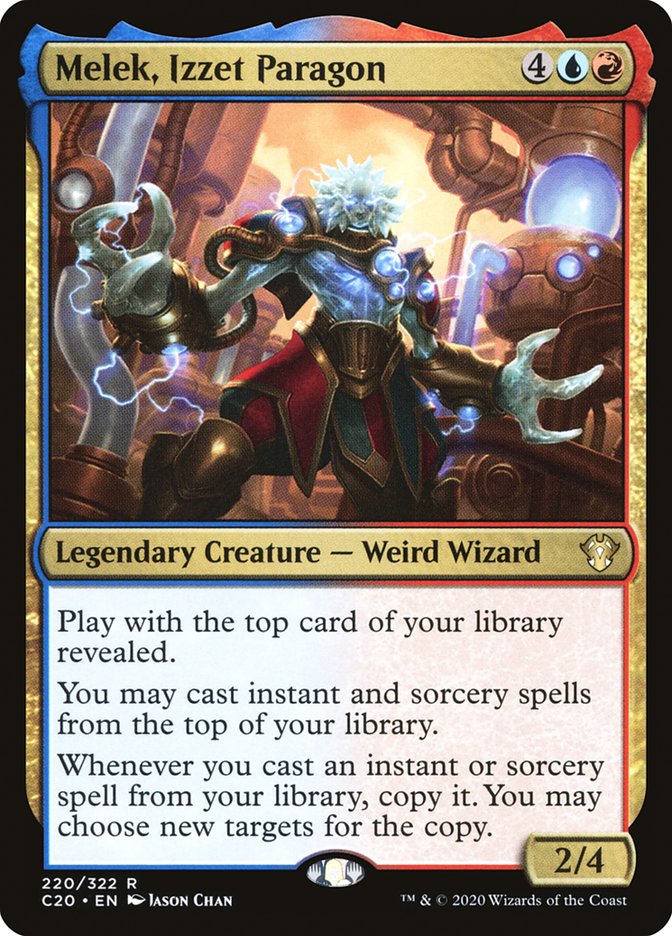
Melek, Izzet Paragon is less of a commander for beginners to pilot than a commander to teach beginners what Izzet () is all about. Playing with the top card of your deck revealed gives away a lot of your game plan, but Melek does very Izzet things by caring about instants and sorceries and allowing you to copy them. It also isn’t as oppressive as other Izzet spellslinger commanders, and I actually like giving away information for free if my goal is to teach a newer Magic player what blue and red do together.
#26. Jasmine Boreal of the Seven
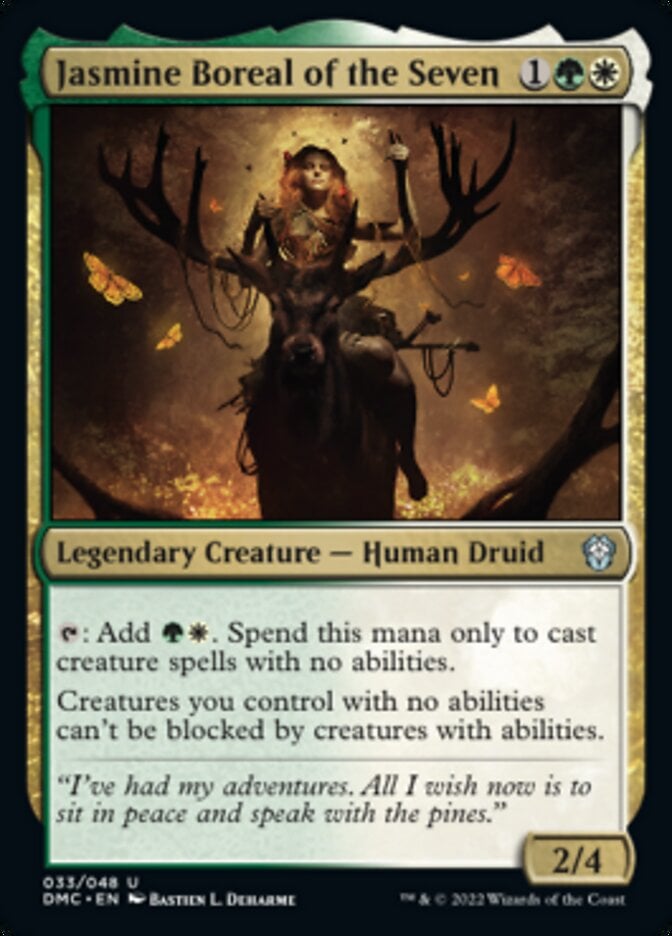
Vanilla creatures may not be the most powerful strategy around, but it does simplify the text boxes in your deck. Our visit to Muraganda during Aetherdrift brought along some new creatures to consider for this deck, and vanilla creatures don’t tend to break the bank either. You can then focus on learning the abilities and interactions of all the support cards in the deck!
Keep in mind that many token creatures don’t have abilities either, so you can take advantage of token generators in a Jasmine Boreal of the Seven deck, too. You’ll probably use cards like Kutzil, Malamet Exemplar and Sovereign Okinec Ahau, just with more anthems than +1/+1 counter synergies.
#25. Atraxa Superfriends
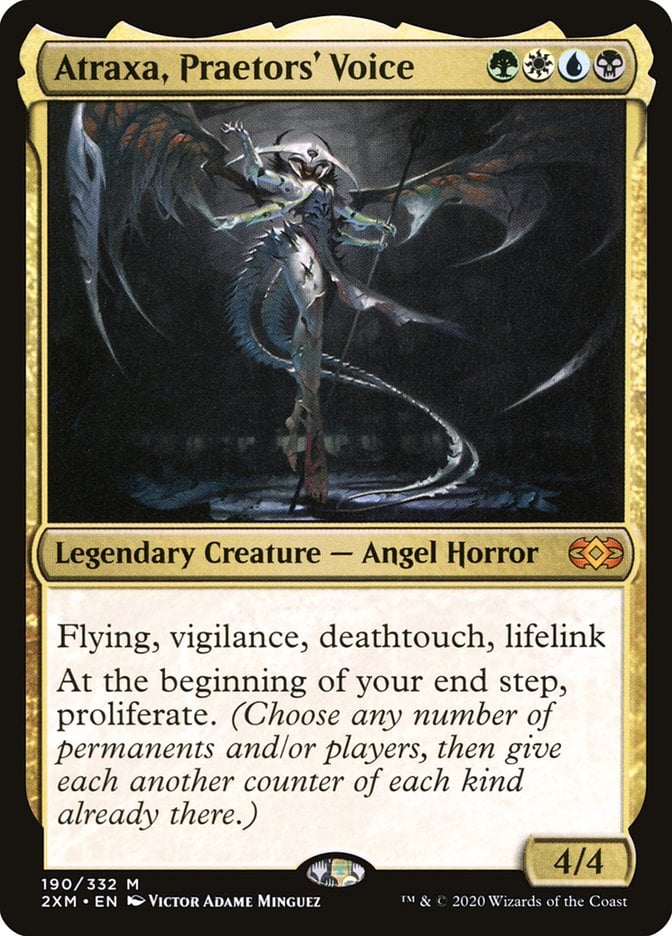
I don’t really consider planeswalkers a theme particularly friendly to beginners, especially if you have players that had to train themselves to forget how combat works in Yu-Gi-Oh! But if you’re going to lend a superfriends deck to a newbie to show them the wonders of ‘walkers, Atraxa, Praetors' Voice is a solid choice. Its rules text is simple with just a triggered ability and a bundle of good keywords, and you can tune the deck to different power levels and budget levels.
I’d recommend trying to build a deck without many overlapping planeswalker types. It’s also why I think it’s a good thing that Atraxa doesn’t have red; it’d be too tempting to make the deck “Oops, all Chandras”, but having planeswalkers with different names helps avoid confusion at the table.
#24. Alisaie Leveilleur + Alphinaud Leveilleur


You may need to share some Final Fantasy 14 stories about Alisaie Leveilleur and Alphinaud Leveilleur, but even if you can’t, the turns in which you play multiple spells are your big plays and rightfully so, a lot happens in those instances. Celebrate and embrace these moments with a clear cost reduction and a very easy payoff for a flexible, and non-threatening Azorius Commander partner pair.
#23. Graaz, Unstoppable Juggernaut
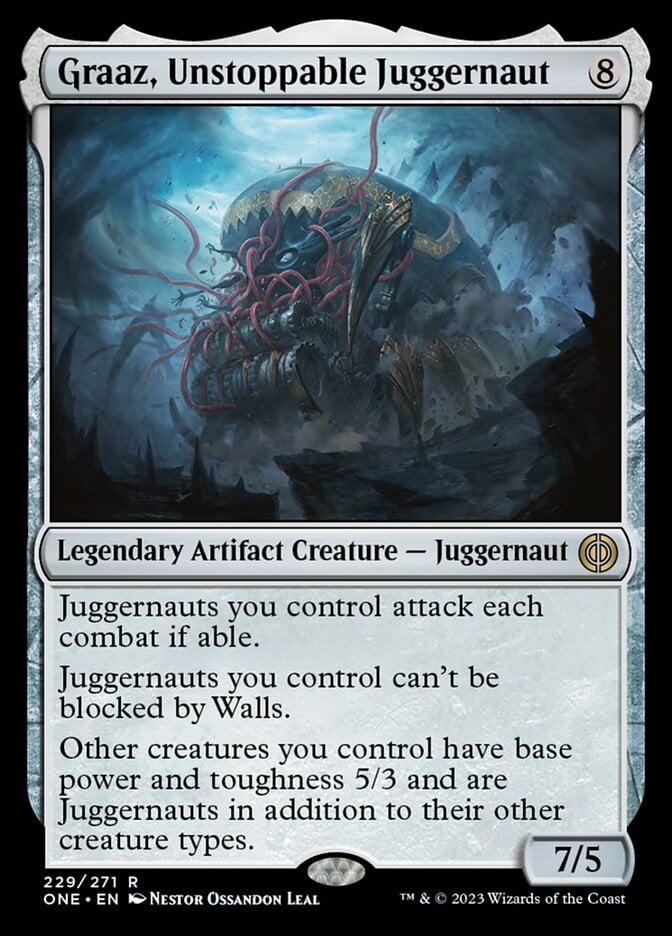
Graaz, Unstoppable Juggernaut is the commander that you lend to a player who grasps the basic concepts of Magic, but who’s just too plain shy about attacking their opponents. Here! Take a commander that’ll force you to attack with all your creatures. And if you want to play with a house rule that the Graaz player get perks if they shout “I’m the juggernaut!” when they enter combat, hey, go nuts.
#22. Cloud, Midgar Mercenary

I would rank Cloud, Midgar Mercenary higher but the cost for this highly-sought after commander is substantial. It’s a great card and looks like a big block of text at first the two abilities are pretty simple. Tutor for an equipment, finding one that grants hexproof is often one I reach for. The second ability only looks at Cloud’s equipment, so while voltron commander is a risky strategy, supporting one creature is simple and effective.
Here are a handful of inexpensive equipment with triggered abilities that will help the deck function: Explorer's Scope, Goldvein Pick, Greatsword of Tyr, Rogue's Gloves and Quietus Spike.
#21. Nikya of the Old Ways
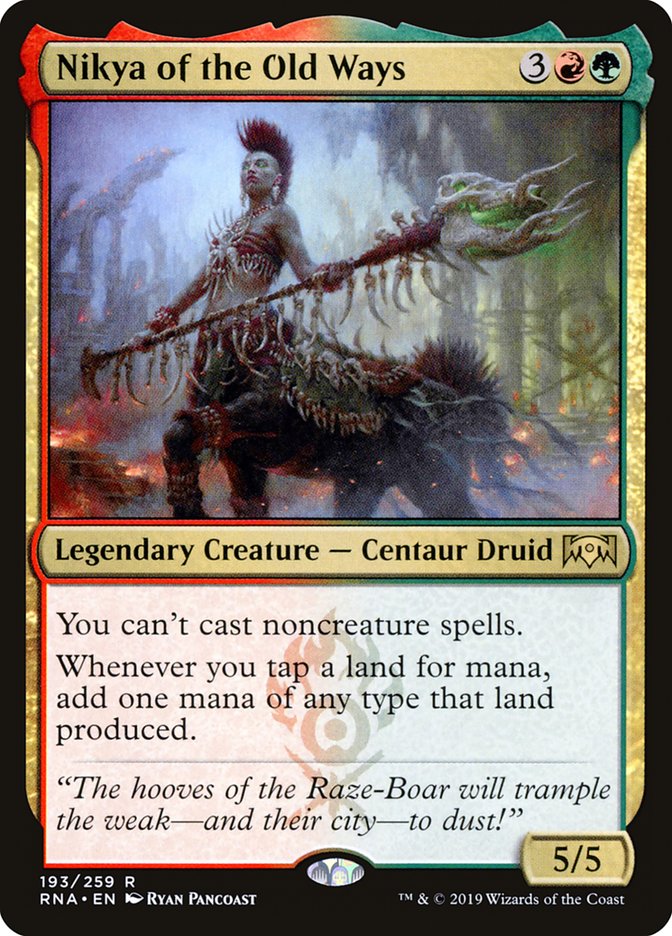
Another deck that encourages you to specialize, Nikya of the Old Ways just wants you playing creatures, so it should be fairly straightforward to pilot. You’ll usually want big battlecruisers, creatures that let you drop other creatures onto the battlefield (Ghalta, Stampede Tyrant), and maybe Primal Surge if you’re feeling really spicy. Creatures like Pyrewood Gearhulk with Overrun effects when they enter are another worthy consideration, and you’ll want your Rhythm of the Wild and other haste enablers here.
#20. Chatterfang, Squirrel General
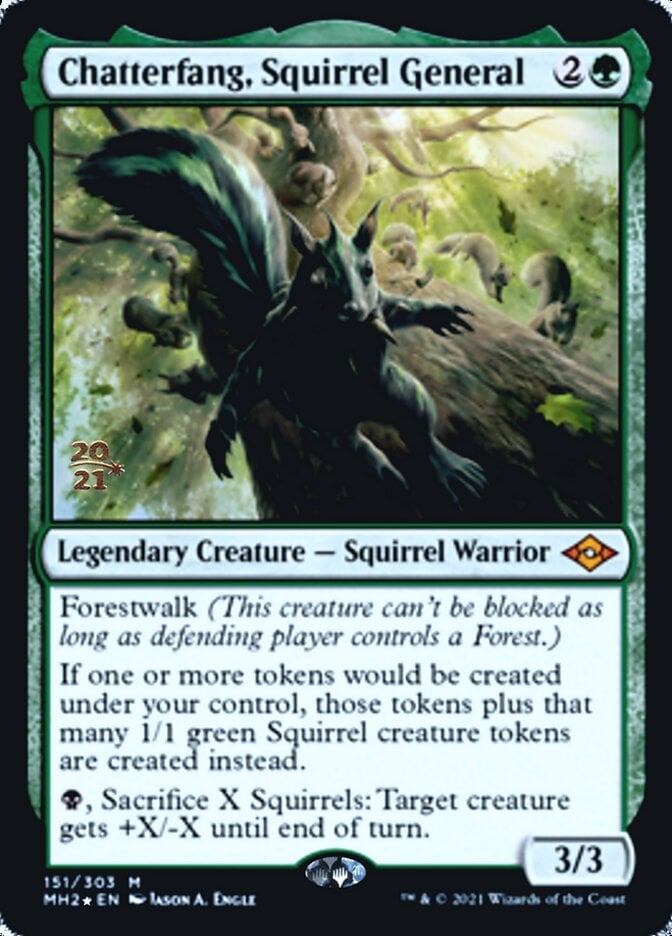
The interactions in a Chatterfang, Squirrel General deck may be a little more advanced than you want for new players, but you can’t deny how great it feels to run a commander that goes infinite so easily. You have a token doubler in the command zone, and don’t forget that you can activate that ability at instant speed both to pump up your own creatures and to kill your opponents’.
#19. Tetsuko Umezawa, Fugitive
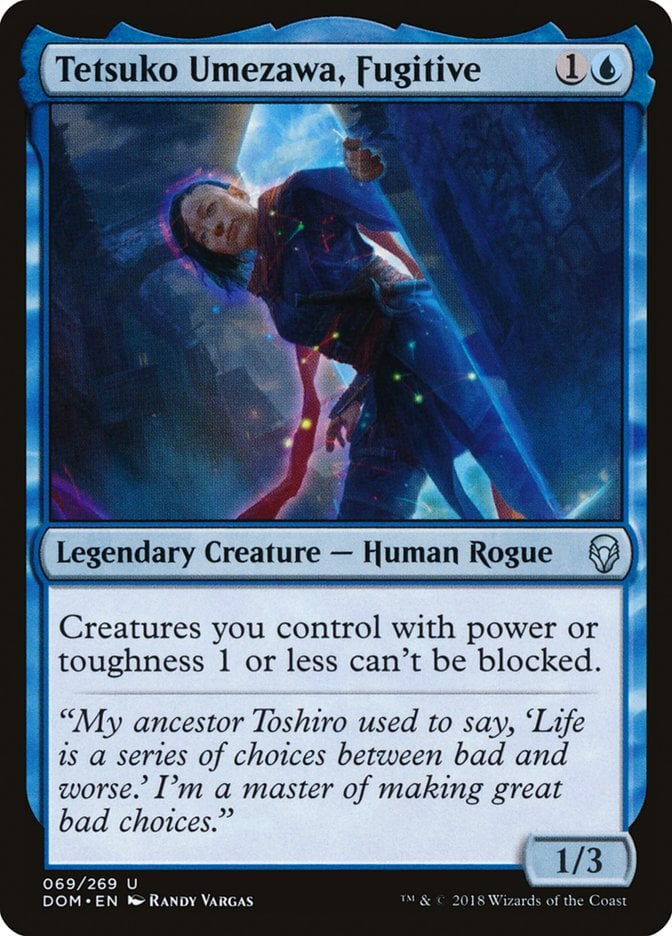
Functionally, a deck like this that’s built for beginners will be very similar to a Fynn, the Fangbearer deck. You might use small-power or small-toughness creatures that have abilities like infect, then Tetsuko Umezawa, Fugitive makes them unblockable. You need a combination of saboteur abilities to profit with a deck like this.
#18. Legolas, Master Archer
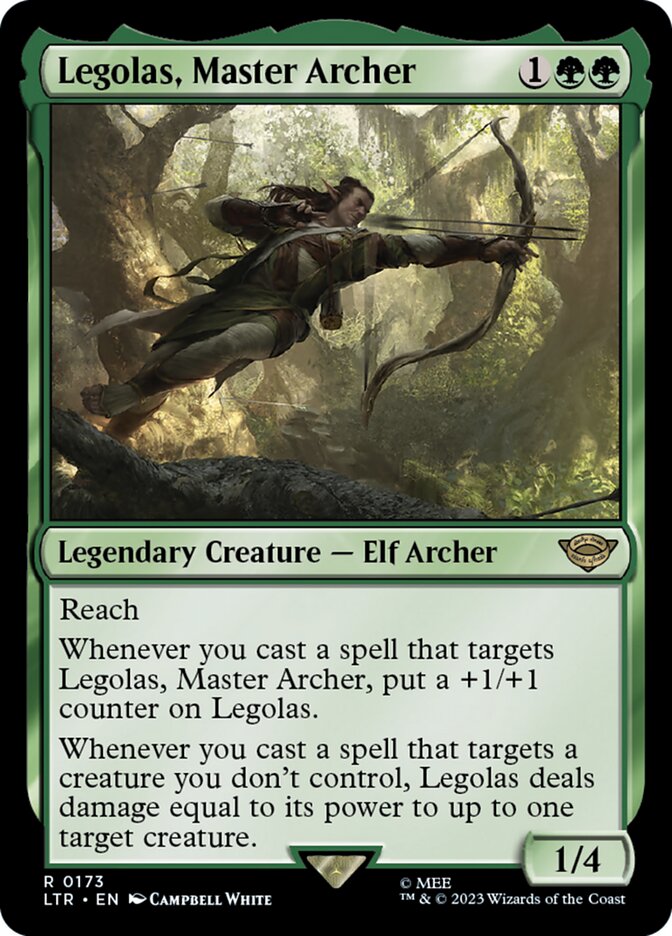
Legolas, Master Archer is the most popular Lord of the Rings commander that I also feel comfortable recommending to newer Magic players, and Tales of Middle-earth is almost the entire reason it’s included; it wouldn’t make the list if it was named “Greg, Elven Archer” or something.
No need to learn what it means when the Ring tempts you; this deck cares about targeting Legolas and your opponents’ creatures with spells. The most common cards you use include fight spells and bite/punch spells, but you can support them with combat tricks to make Legolas grow with counters before you punch your opponents’ creatures.
#17. Michelangelo, Weirdness to 11
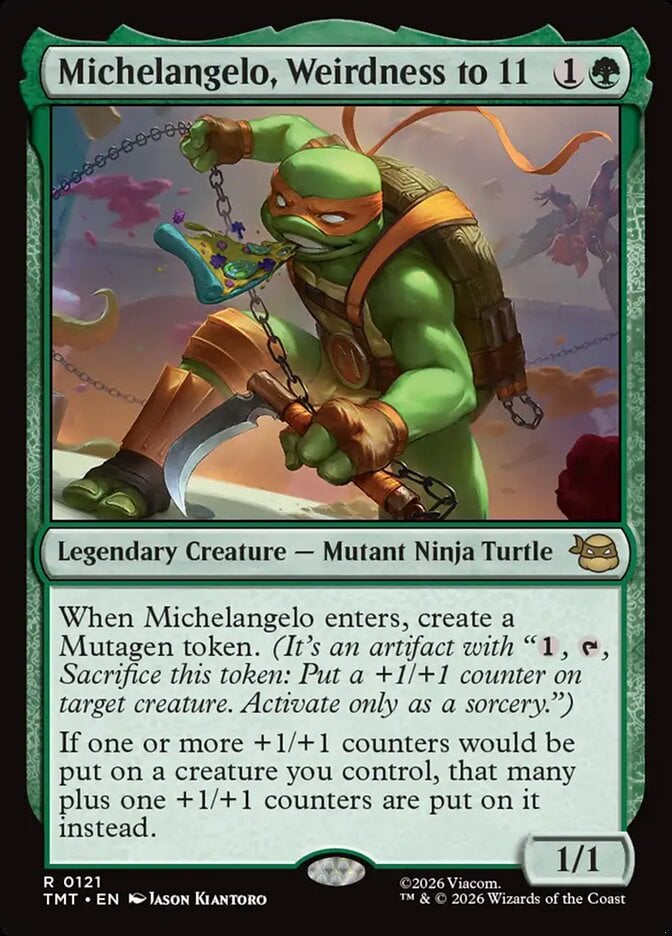
Who can’t get behind a weird commander? Do a little searching and Michelangelo, Weirdness to 11 is Hardened Scales in the command zone, which works with nearly 1,000 cards in green. This +1/+1 counter commander is easy to work with whatever a player already has, and grows easily. Just look at the last set and how green plays with +1/+1 counters and they’ll almost certainly work beautifully.
#16. Giada, Font of Hope
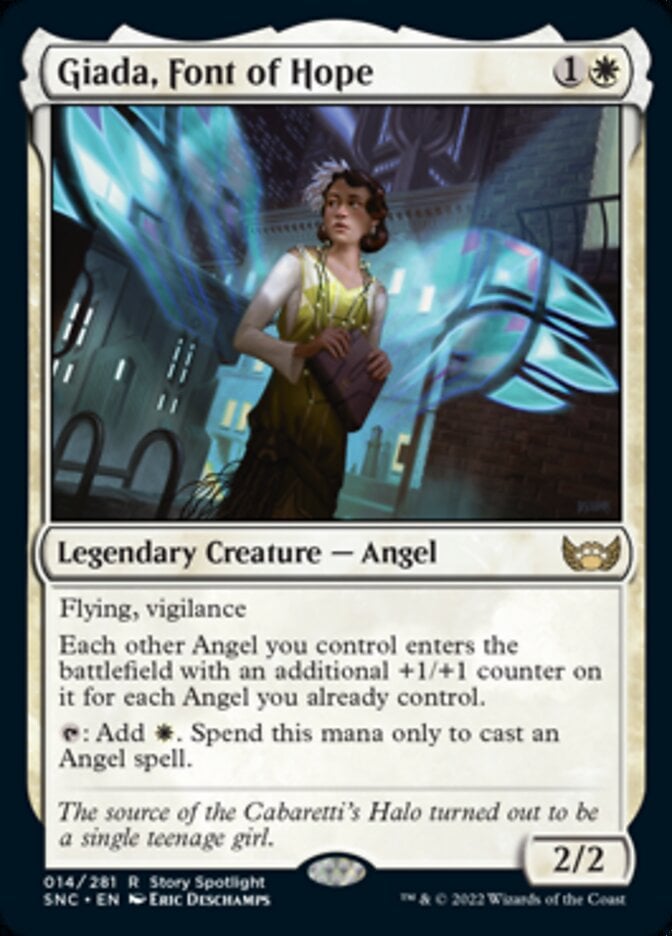
If you’re building a deck that’s mostly Giada, Font of Hope and cards you have lying around, you can build a pretty okay angel deck. The creature type is so powerful and popular that a lot of good cards are more highly valued than they would be if they were salamanders or sharks, but I can’t argue with a mana dork that gives your angels +1/+1 counters as they enter.
#15. Marrow-Gnawer + Karumonix, the Rat King
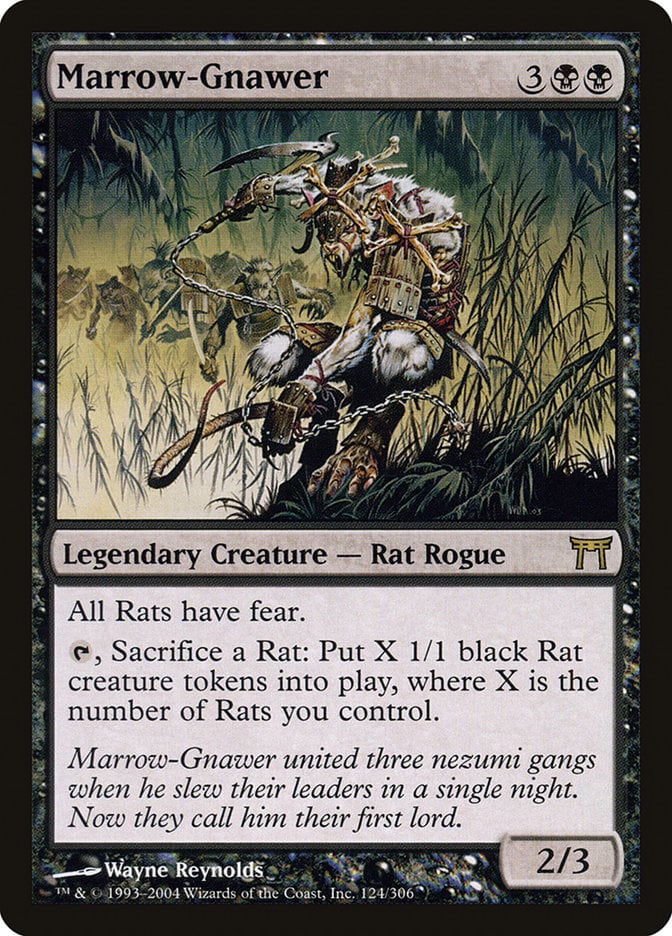
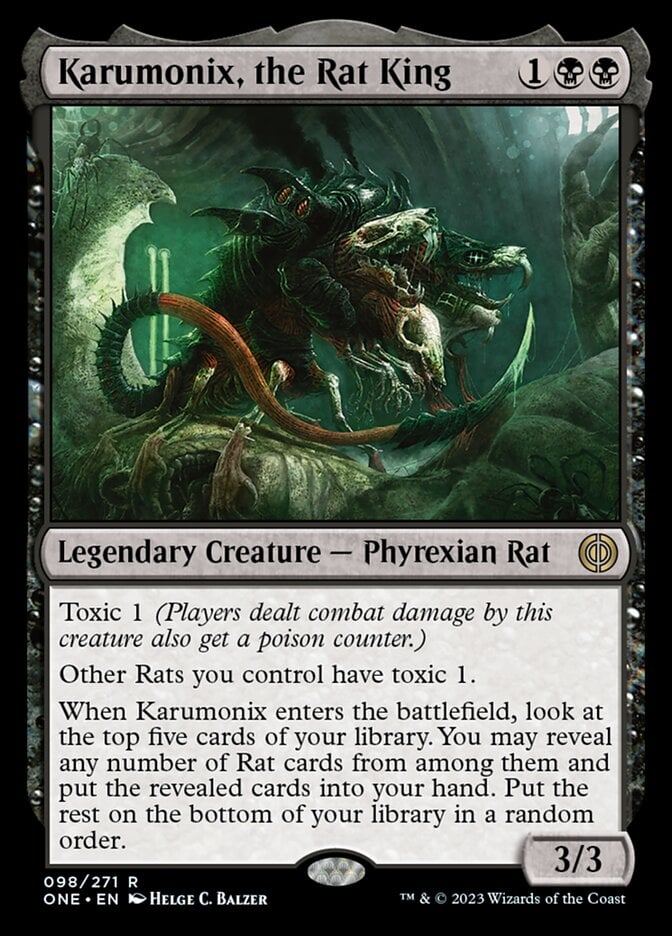
Basically a rat version of Krenko, Mob Boss, my only issue with Marrow-Gnawer as a “beginner” commander is that the card itself is rather expensive. But I can’t say that a beginner would have a hard time understanding how it works!
Karumonix, the Rat King is more easily built as a budget commander (my own deck currently tracks at under $100). It has a bit more text, but being a typal lord is helpful, and having a rat tutor as an enters ability is a good way to teach about tutors without using Game Changers or building a Bracket 3 deck.
#14. Group Huggy Wheels Commanders
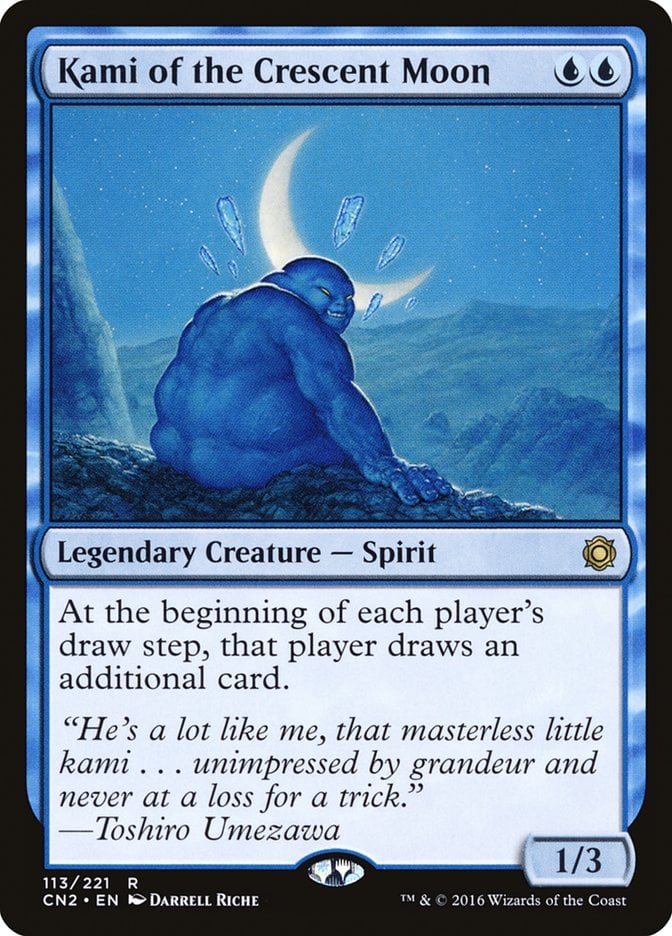
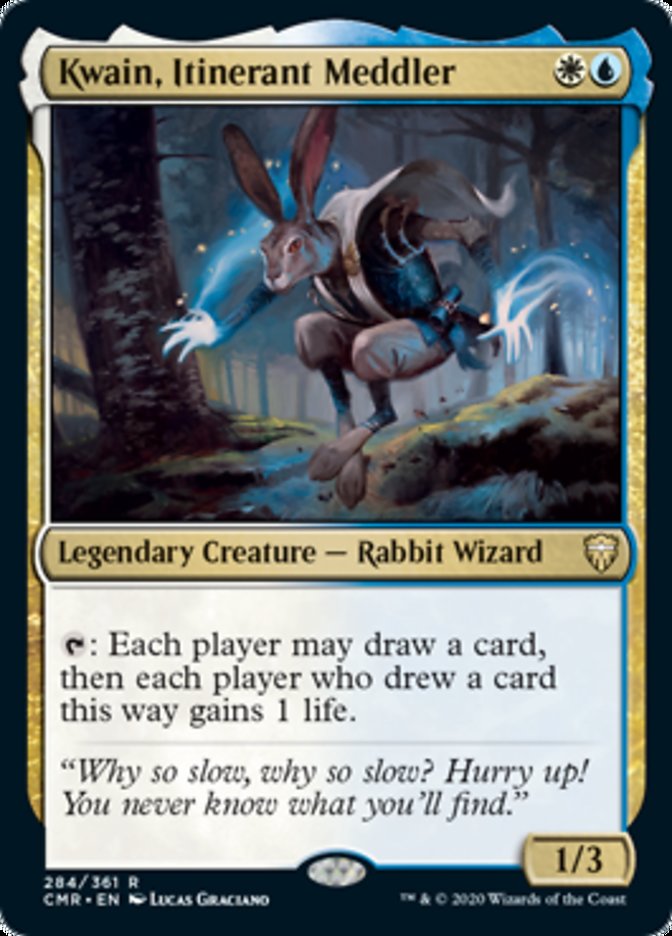

By nature of being a 100-card format, you usually only see a fraction of the cards in your deck in any given match. Commanders like Kami of the Crescent Moon, Kwain, Itinerant Meddler, and Ms. Bumbleflower give you and your opponents some ways to draw extra cards. If you’re piloting these decks, you can help out a newer player who isn’t drawing into the lands or answers that they need, while a newer player who’s piloting a group hug commander or wheel commander doesn’t look as threatening as a very aggressive commander that cheats battlecruisers into play.
#13. Bruenor Battlehammer + Valduk, Keeper of the Flame
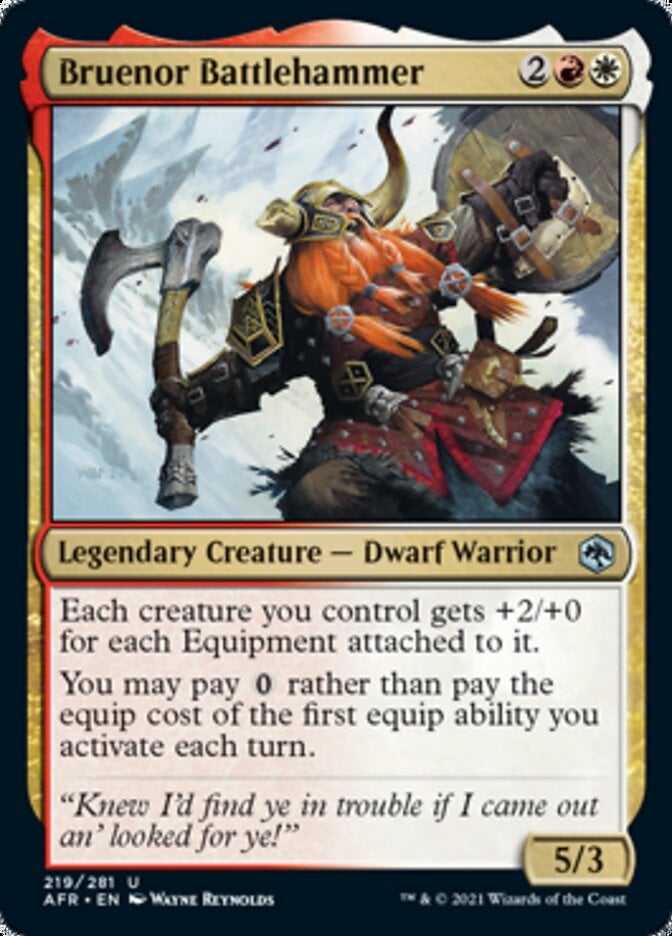
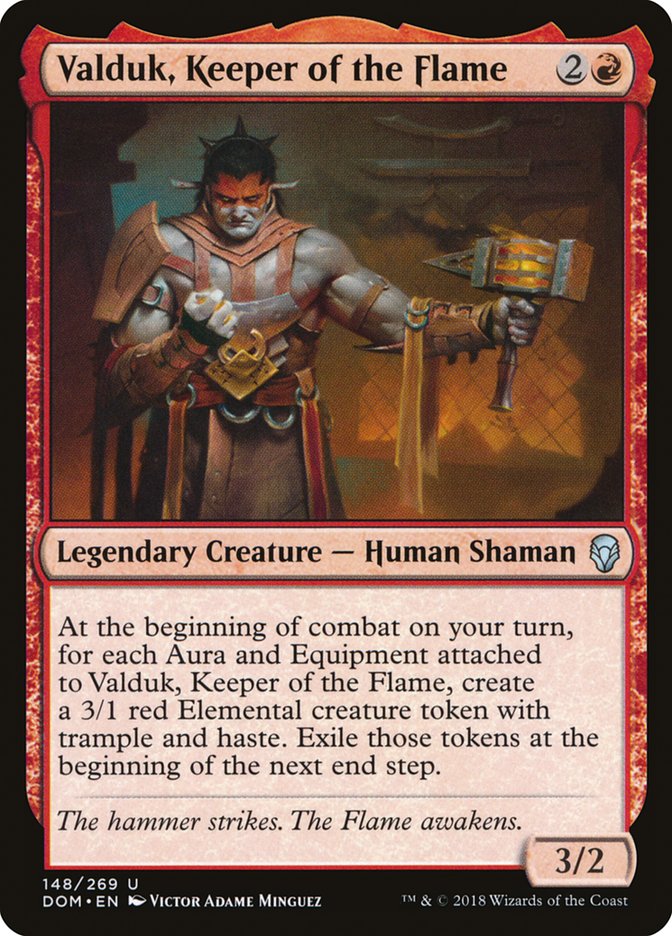
There are certainly more powerful equipment commanders to run, Boros colors () or not. Bruenor Battlehammer is my pick because it balances the power of some cost reduction without being too much of a kill-on-sight commander. We’re always getting new equipment that you can consider to give your deck a refresh, and Bruenor rewards you whether you’re slapping a few equipment cards onto many creatures or piling them all onto the same one.
If you want a purer go-tall route, Valduk, Keeper of the Flame rewards you with tokens during combat. Pile on your cheapest and favorite equipment and aura spells, support them with Impact Tremors effects, and profit!
#12. Ivy, Gleeful Spellthief + Feather, the Redeemed
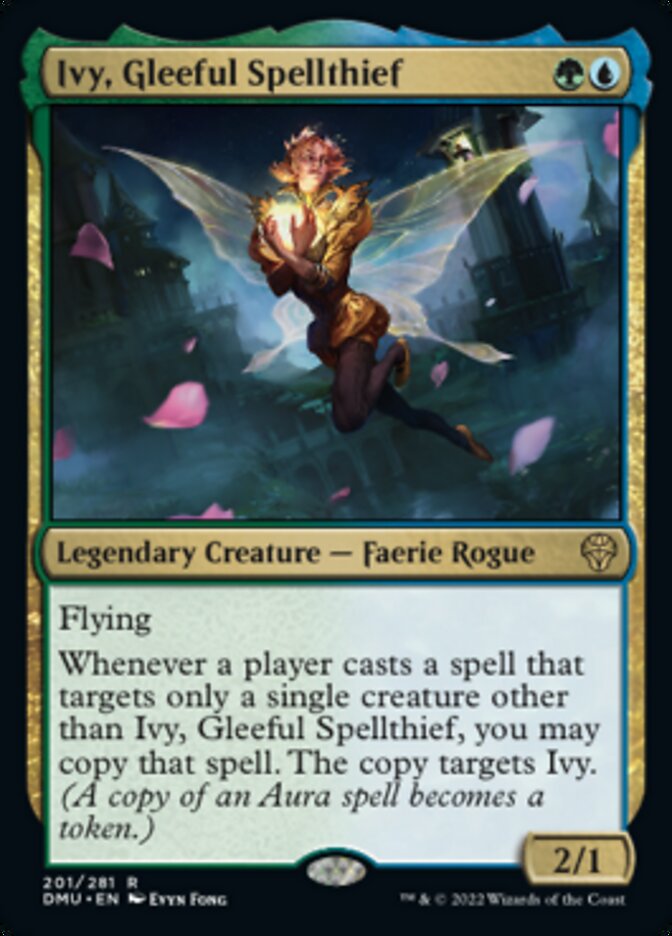
Nothing is as discouraging as not being able to play your commander because you’re severely mana screwed, so 2-mana commanders like Ivy, Gleeful Spellthief with fun abilities are good to learn with. I like that you can build Ivy in multiple different ways: You can build it as a mutate commander, as an auras commander, or as a spellslinging, combat tricks commander. All it cares about is single targets, which also creates an opportunity to teach about targeting.
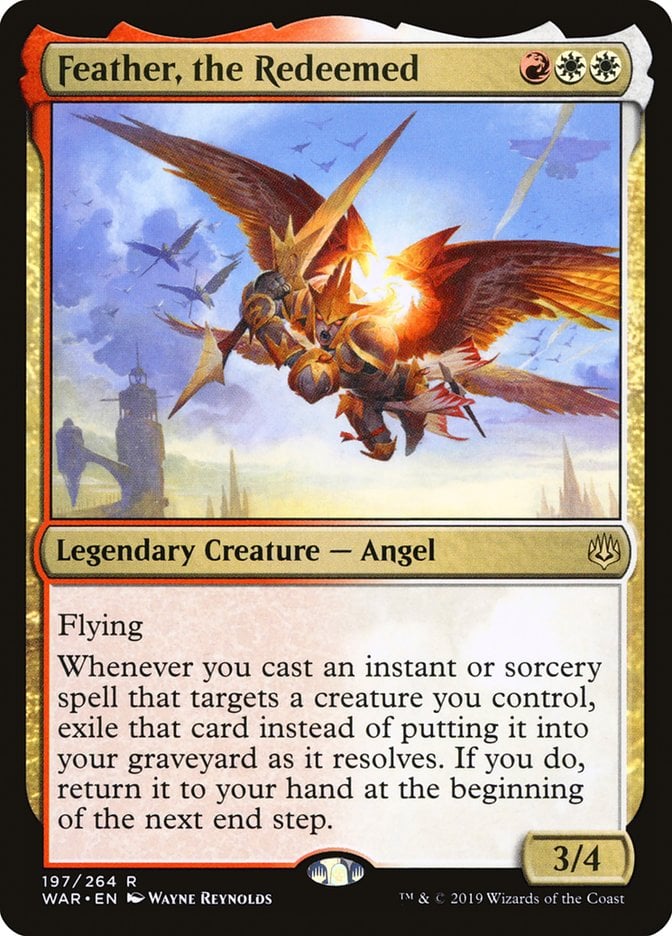
Shoutout to Feather, the Redeemed, which is a similar commander in that it rewards you for playing around with combat tricks. The only issue with these commanders is if your infinite hand size effects are on the field and your draw engines are working; you don’t want to be the player taking 10-minute turns because you’re deciding exactly what you want to do.
#11. Lathril, Blade of the Elves + Freyalise, Llanowar’s Fury
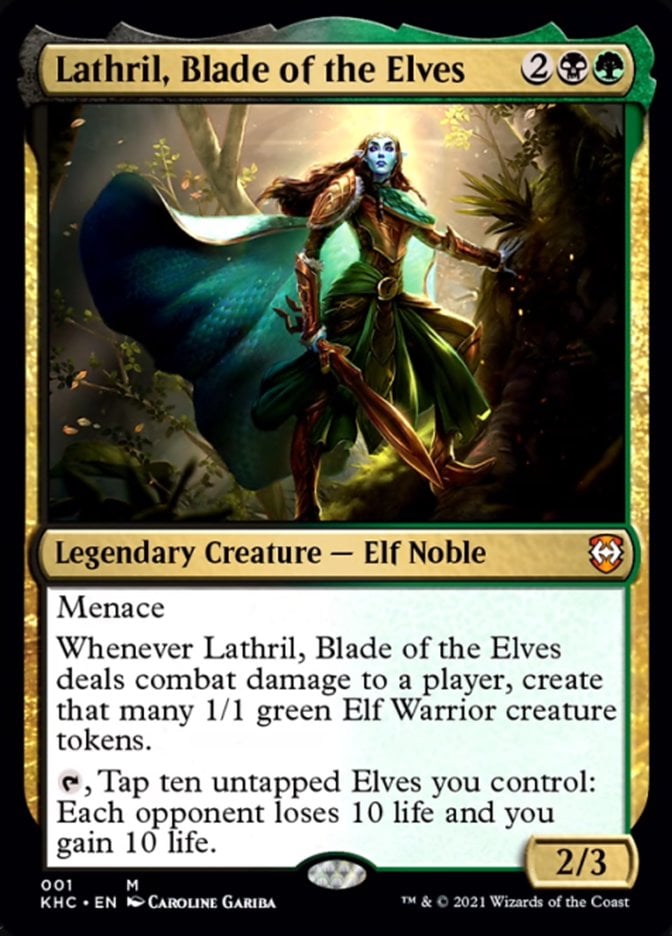
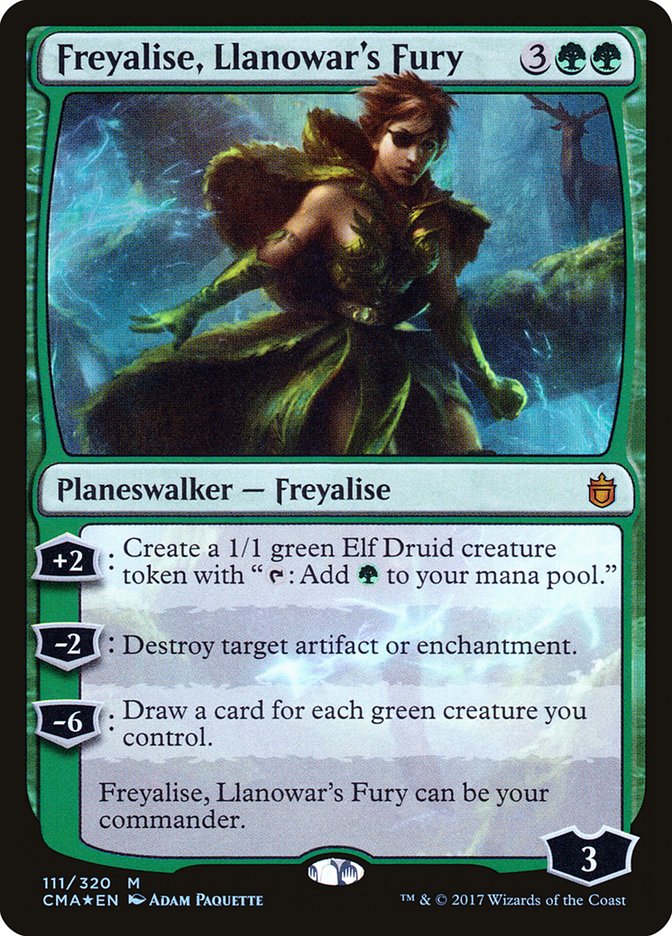
This could be a placeholder for many, many good elf commanders, but I’m selecting Lathril, Blade of the Elves because its Foundations printing means it should be easy to find and pick up. Elves have lots of synergies, and you can build with pretty much any elves you’ve been picking up in Limited over the years. Heck, the average Magic collector can probably slap a budget elf deck together from what’s in their bulk boxes.
Lathril wants to attack and deal combat damage, and it wants you to have many, many elves on board to tap for a win condition.
Freyalise, Llanowar's Fury restricts you to mono-green, but it’s another elf deck option, and you can also use it to demystify the whole “planeswalker in the command zone” thing.
#10. Starter Commander Decks 2022
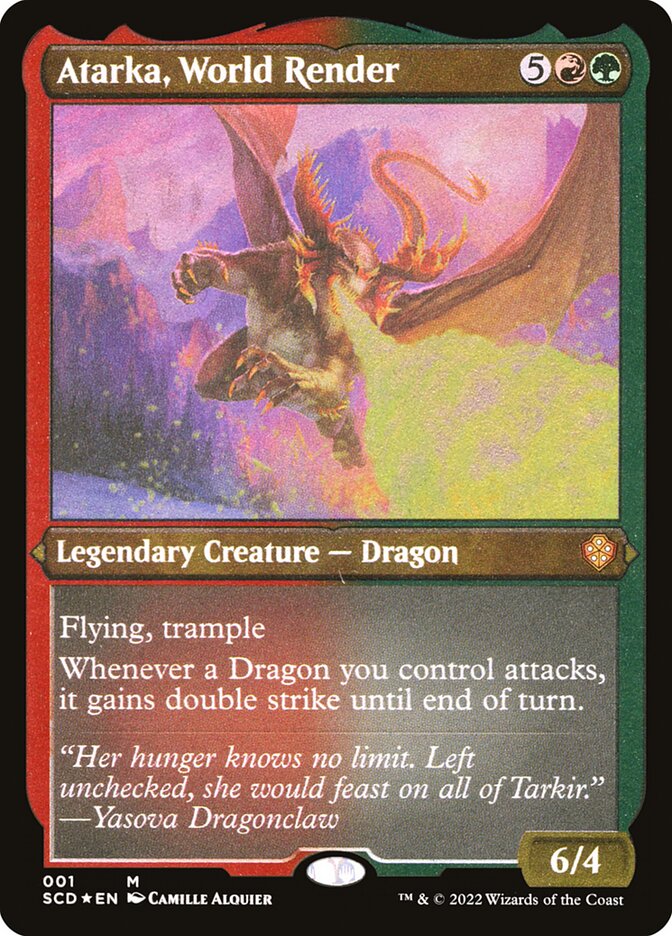
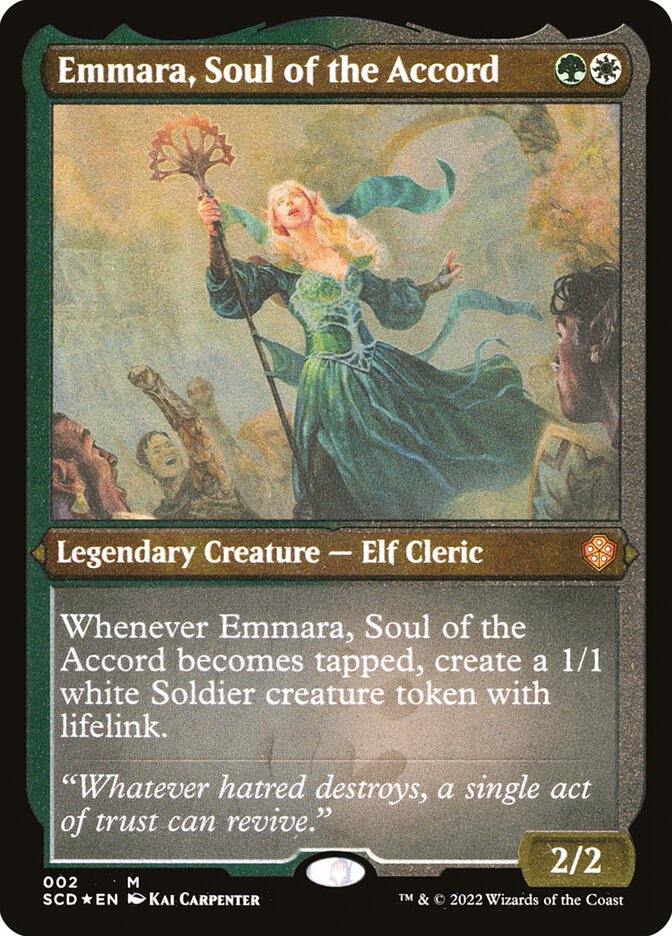
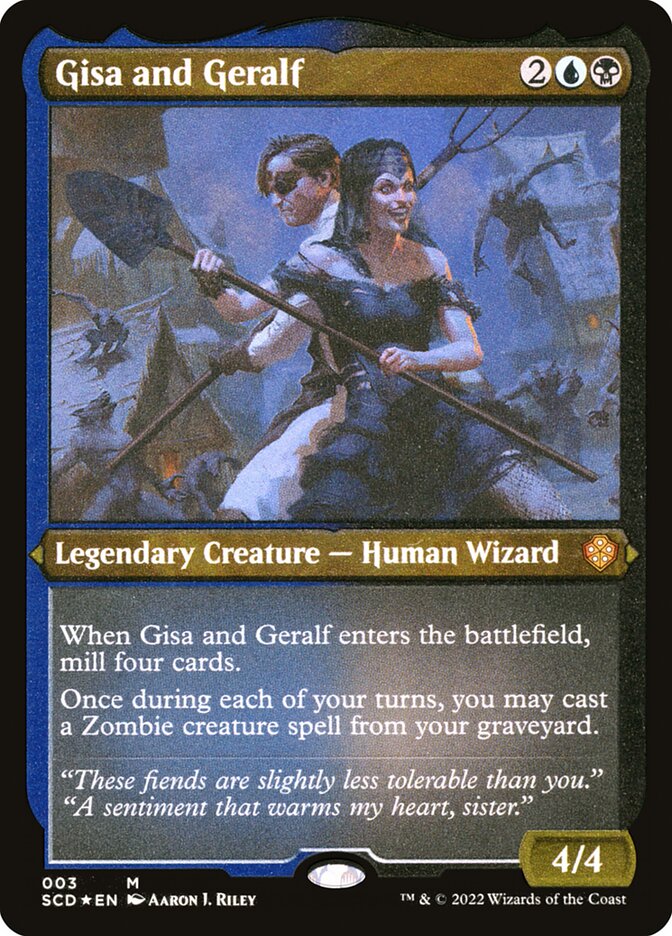

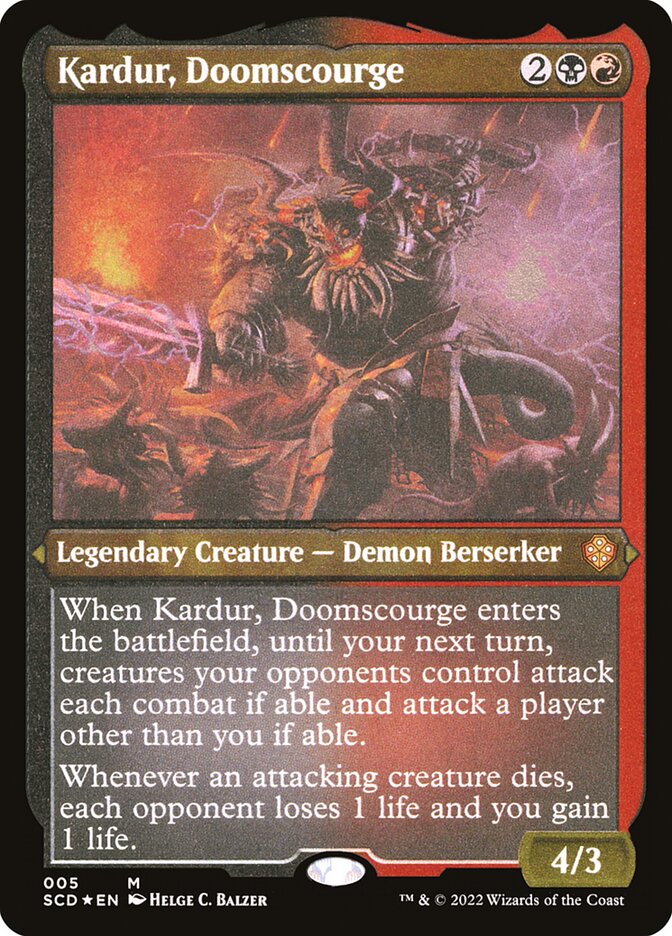


It’s a bit cheating to include an entire product line, but you can sometimes find these decks kicking around on the market. Atarka, World Render is a dragon deck, Emmara, Soul of the Accord is a token deck, Gisa and Geralf is a zombie deck, Kardur, Doomscourge is a Rakdos () sacrifice deck, and Isperia, Supreme Judge combines fliers and control elements. Each of these covers some pretty fundamental ground, and if you’re playing in a precon-only meta, you can’t go wrong with any one of these.
The newest player in my pod has been borrowing my Atarka, World Render deck the most over the last however many sessions and enjoying it very much. It’s a 2-color dragon deck that looks to ramp out big fliers and win when Atarka gives them double strike. Pro tip: If you’re making an Atarka deck for a newbie to borrow, maybe leave out that showcase copy of Incinerator of the Guilty, especially if you don’t feel like explaining how the heck collecting evidence works.
#9. Gishath, Sun’s Avatar
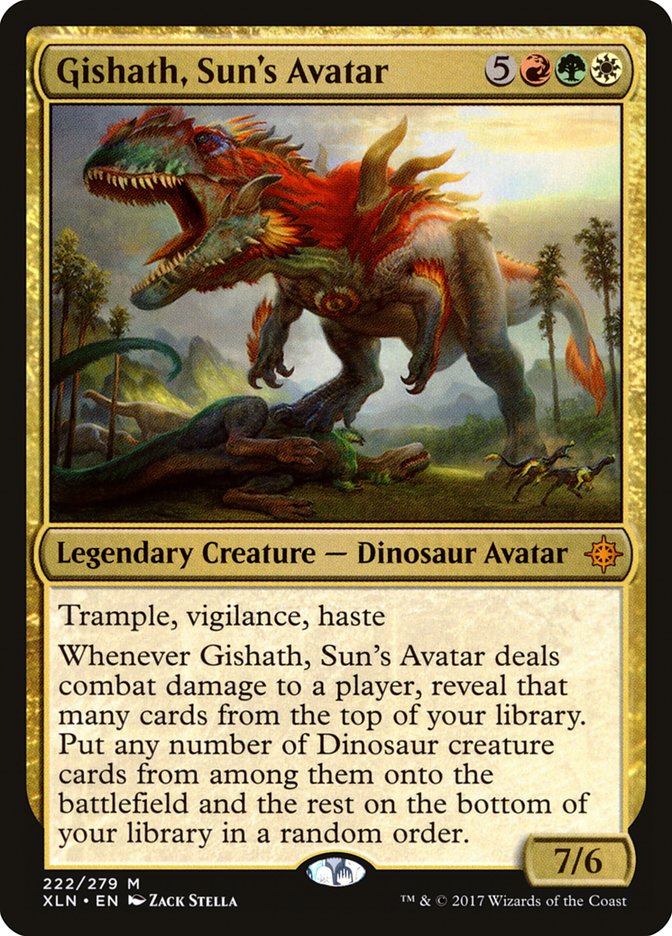
One surefire way to enjoy your first Commander games is to slap some huge battlecruisers onto the battlefield and attack with them. Naya () Dinosaurs is a perfect theme for this, and dinosaurs’ coolness is evergreen. The only issue is that dinosaur commanders tend to cost a lot of mana; if you’re running Gishath, Sun's Avatar or Zacama, Primal Calamity, don’t skimp out on that mana base because you will lose a bunch of games to mana screw. When in doubt, run more lands than you think you need when you want to playtest a deck.
Gishath is probably my pick for a “first dinosaur commander.” Its trio of keywords help to make it more likely that you’ll attack with it and deal combat damage the same turn that it comes down, which means extra value by hopefully pulling a dinosaur or two out of your deck.
#8. Caesar, Legion’s Emperor
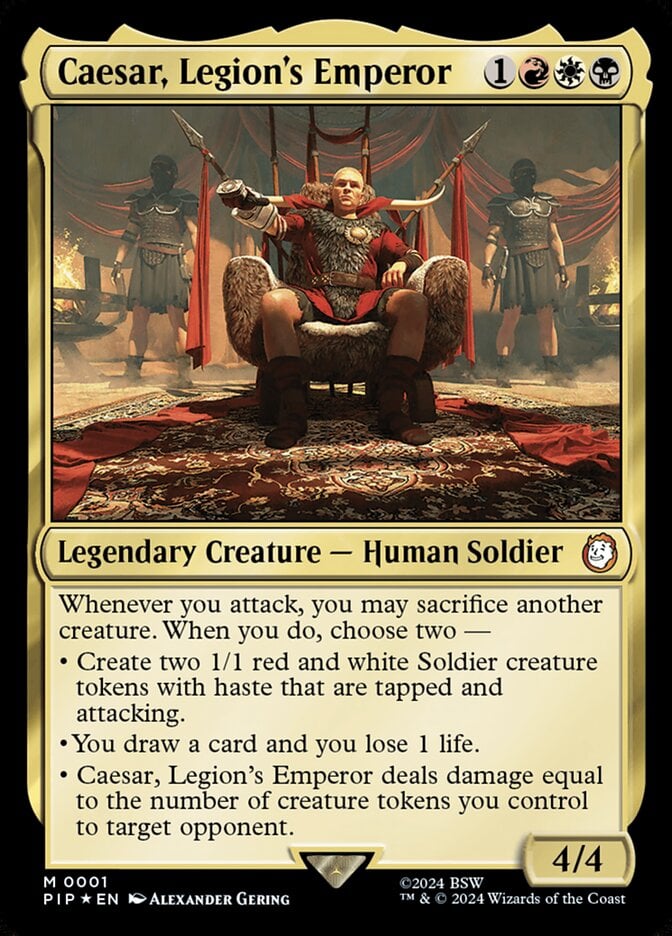
I wanted at least one commander from a Universes Beyond product here because that’s part of the reason they exist: to attract new players to Magic through I.P.s that they already know. Caesar, Legion's Emperor is a good commander for a deck that wants to go wide, and you can focus on the human creature type if you really want to. It’s a lot of text, but it’s all related to one trigger when you attack.
#7. Krenko, Mob Boss
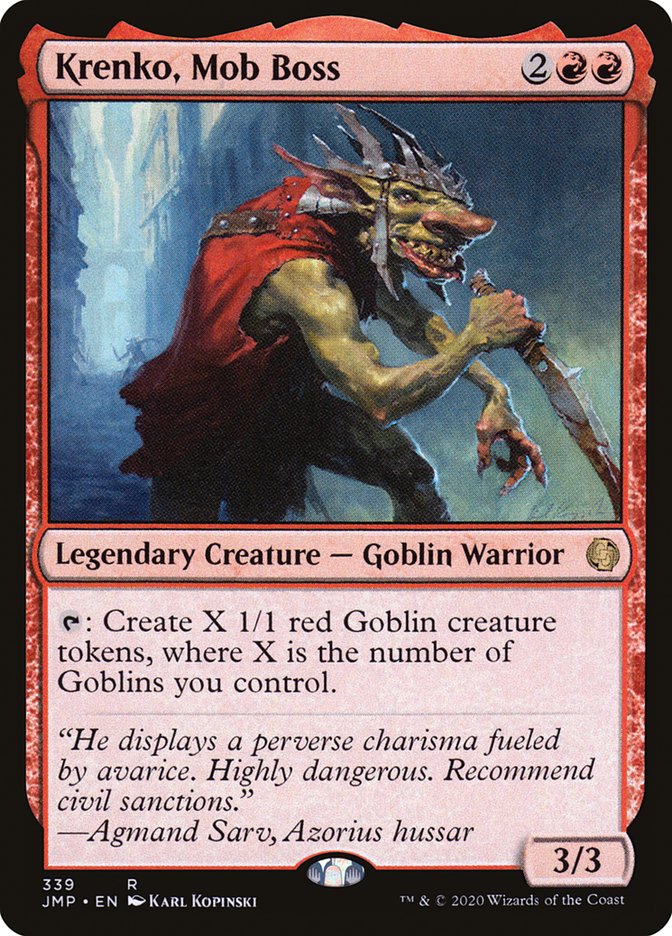
Aside from vanilla commanders, how much simpler do you want your commander to be than a body with an activated ability?
Krenko, Mob Boss is great for teaching the power of having a deck that goes wide. You also teach a new player that not every commander wants to get involved in combat. Krenko just wants to tap to recruit more Goblin tokens to the cause.
Impact Tremors abilities chip away at your opponents, you can chump block with your tokens, and cards like Massive Raid act as win conditions.
#6. Bloomburrow Typal Commanders


Whether you’re new to Magic in general, or a Limited player that’s new to Commander, these 2-color commanders are a good place to start. You could say the same about many other signpost legends, but it’s impressive how many of the Bloomburrow 2-color creatures are good typal commanders. Especially if you played a bunch of Bloomburrow Draft or Sealed, you probably have a halfway decent start on the creature base you need for a deck like this.
Some of these commanders are obviously stronger than the others based on their own abilities and the depth of the creature pools they can pull from (squirrels vs. raccoons or mice, for example). But each one is still fun (and cute!) in its own right.
#5. Teysa Karlov
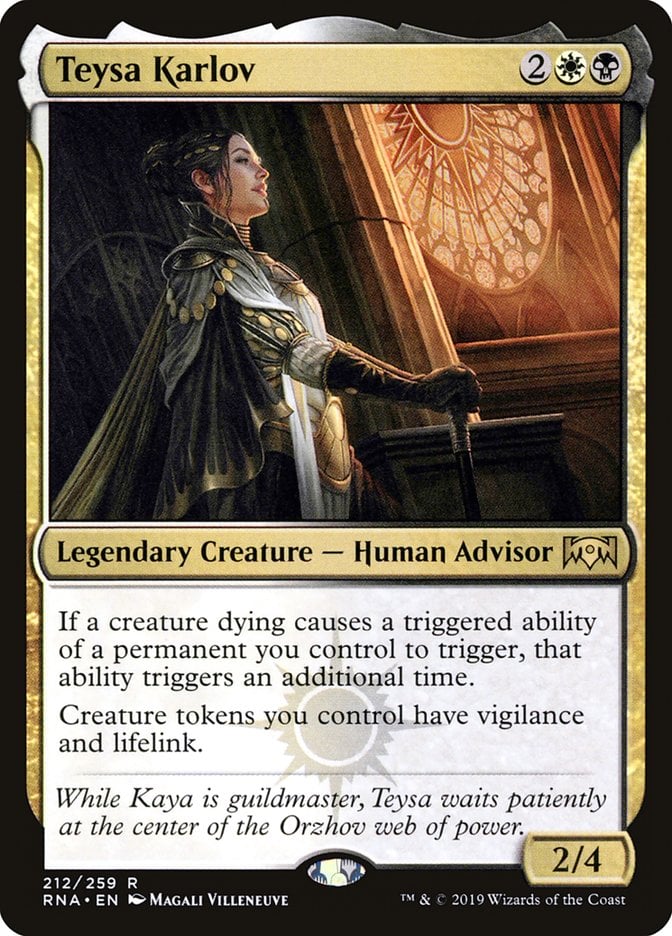
Here’s your introduction to aristocrats, tokens matter, and ability doublers. All on one Orzhov commander ()! There are so many token producers in white that you can build a token deck around Teysa Karlov for all budgets and skill levels. Just pack in your favorite Blood Artist effects, and go to town!
#4. Mendicant Core, Guidelight

With the right setup, Mendicant Core, Guidelight is baby’s first artifact commander, and you can lean into so many subthemes. You can load them up with equipment, you can surround it with Thopters and other artifact token generators, you can build it with vehicles…. The limits are pretty much your color identity, your budget, and your creativity. Speed skirts my rule about not wanting to track things in the game, but there are few ways to lose speed and you’re only tracking your own. Besides, at max speed, this robot gives you an easy way to copy your artifact spells, which might mean you’ll steer clear of some legendary artifacts.
#3. Fynn, the Fangbearer
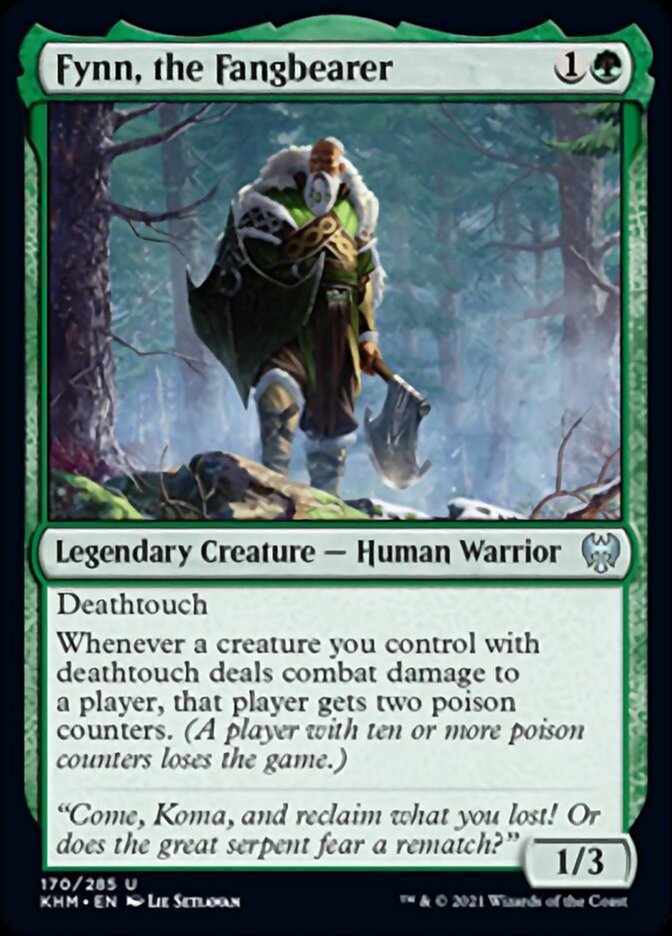
If you’d have asked me ages ago, I’d have never said that a poison commander made a good beginner commander. But I’ve come around! People can change. Holy crow.
Fynn, the Fangbearer is a mono-green commander that cares about your deathtouch creatures connecting with your opponents. You can build a very linear deck that drops creatures onto the battlefield and looks to attack, and Fynn itself only costs 2 mana.
#2. Tatyova, Benthic Druid
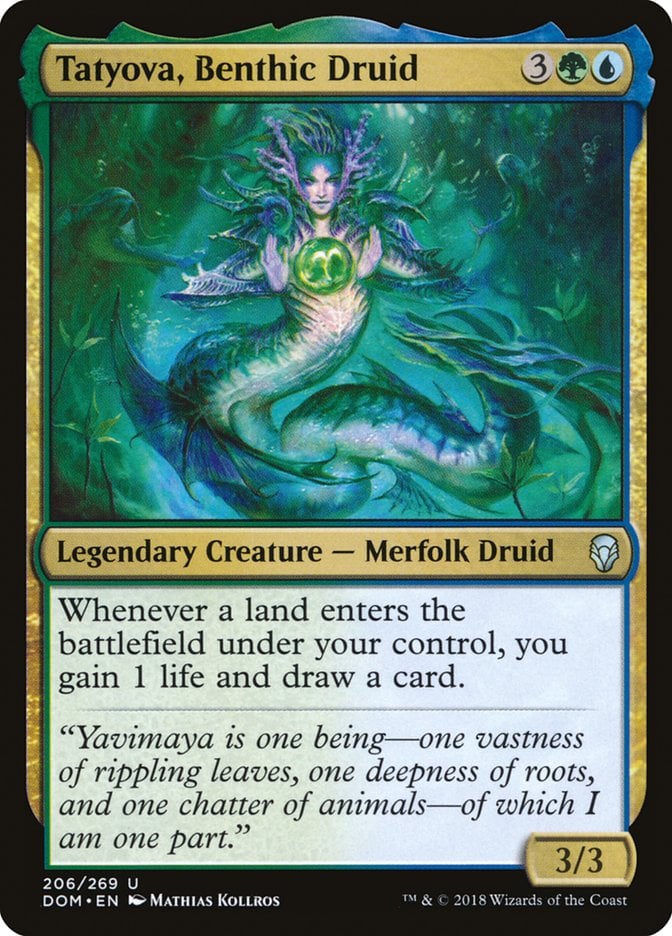
Tatyova, Benthic Druid’s Foundations printing should make it accessible to many players (I say this despite my Local Game Store running out of Foundations product ages ago). If you’re newer to Magic, Tatyova, Benthic Druid can be a good first lands-matter commander. Its landfall trigger is nearly identical to how Sythis, Harvest's Hand rewards you for enchantments, but this time you’re packing your deck full of effects that let you tutor lands and drop them onto the battlefield.
#1. Sythis, Harvest’s Hand
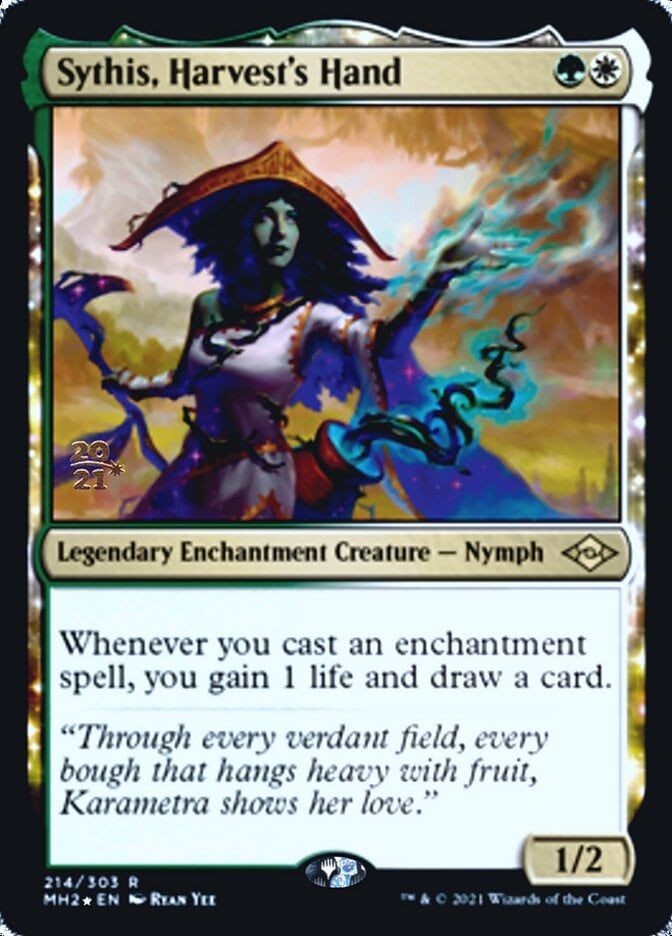
You can’t get more elegant of an enchantress than a pure casting trigger that gives you life and cards, and Sythis, Harvest's Hand has that for a mere 2 mana. General enchantments, sagas, rooms, auras… you can generalize and specialize as much as you want, and you’ll always have new tech to consider as new sets are released.
Commanding Conclusion

Giada, Font of Hope | Kai Carpenter
I wouldn’t call Commander the best place to start teaching Magic players, especially anyone with a flittering attention span (myself included). But if you’re getting a friend into Magic, exploring it for yourself, or expanding your horizons into a new format, these commanders should offer you some good starting points.
Which commanders did you start out playing with, and would you recommend them to newer players? Let me know in the comments below, or share your beginner Commander stories on the Draftsim Discord.
Until next time, happy brewing!
Follow Draftsim for awesome articles and set updates:










Add Comment