

Vision of the Unspeakable | Illustration by Jenn Ravenna
Sagas are arguably one of Magic’s best designed card types. They provide great value, but they do so over several turns instead of immediately providing game-winning pressure, as opposed to busted cards like Oko, Thief of Crowns. Because they’re a finite resource, some players have referred to them as “fixed” planeswalkers.
Blue’s sagas are no exception to this rule. They range up and down the mana curve, from the cheap to ramp targets, and they perform almost any game action you’d want from a blue card. One that plays at sorcery speed, at least. Whether you care about enchantments or just something that provides a little more value than that Divination kicking around your decklist, blue sagas have something for you.
What Are Blue Sagas in MTG?

The Mirari Conjecture | Illustration by James Arnold
Blue sagas are sagas with a mono-blue color identity. Sagas encompass almost everything blue cares about; this includes artifacts, instants and sorceries, scrying, card draw, bouncing/tapping permanents, and so on. Basically the only blue ability you can’t find on a saga is countermagic and other on-stack interaction, since saga triggers have extremely restrictive timing.
This list includes traditional sagas, saga creatures, sagas that turn into creatures, and creatures that turn into sagas—Wizards has really explored this design space!
#27. The Eleventh Hour
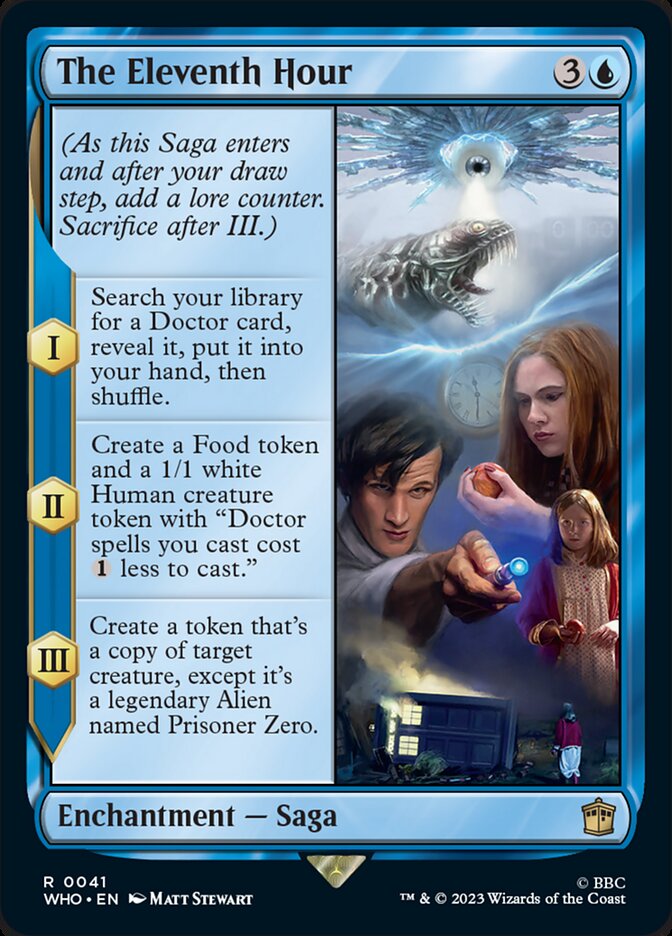
The restriction to caring about doctors makes The Eleventh Hour niche to the point of nearly unplayable. It functions in such a small percentage of decks that putting it any higher seemed wrong.
#26. An Unearthly Child
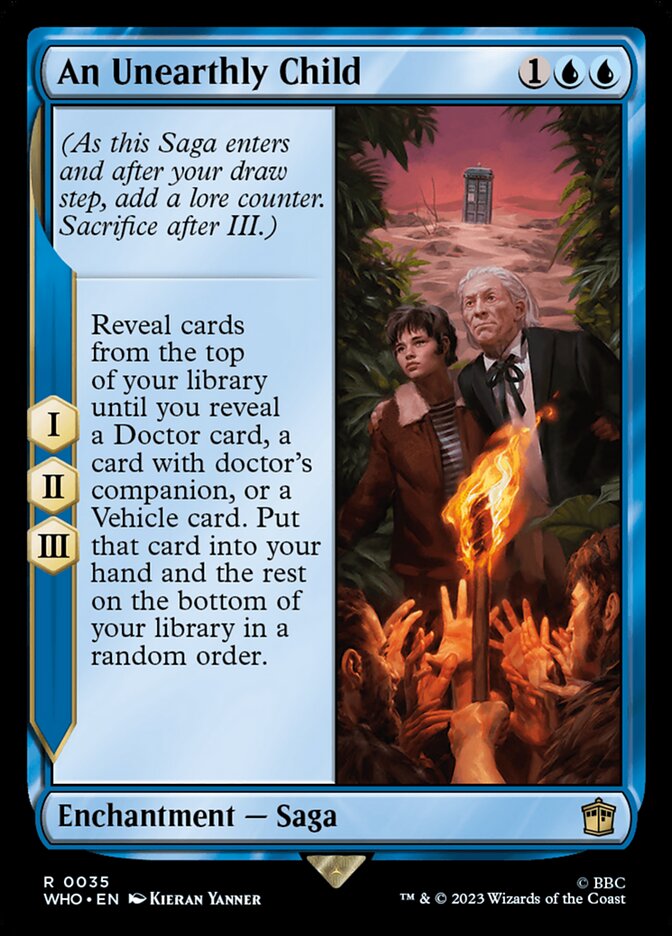
An Unearthly Child has a similar downside to The Eleventh Hour, though working with vehicles lets it break free of Doctor Who Block Constructed. Still, vehicles—especially blue vehicles—are still so niche that this can’t go any higher. Drawing three cards is nice, though.
#25. The Phasing of Zhalfir
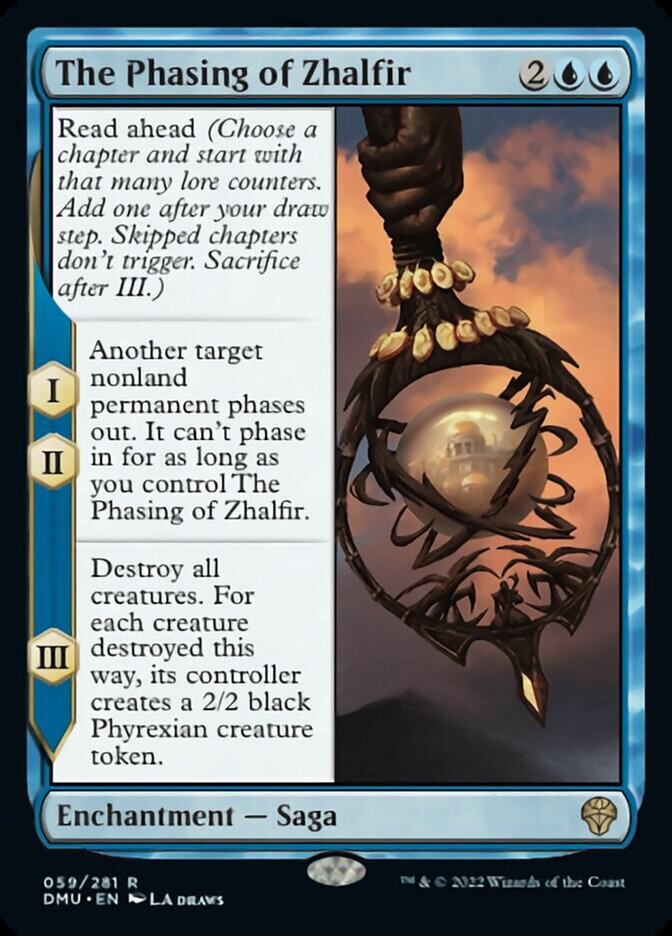
With The Phasing of Zhalfir, we move from the niche to the bad. Blue’s board wipes are generally janky (with the exception of Cyclonic Rift) but this one doesn’t hold up. Replacing opposing creatures with 2/2s isn’t nearly as useful as it sounds unless your local Commander meta is dominated by Timmys. And even then, it takes one Overrun to make you wonder why you didn’t reach for Evacuation instead. Those weaknesses don’t even touch on the downside of a delayed wrath your opponents can see, so they know not to commit to the board. Hard pass.
#24. Behold the Unspeakable / Vision of the Unspeakable
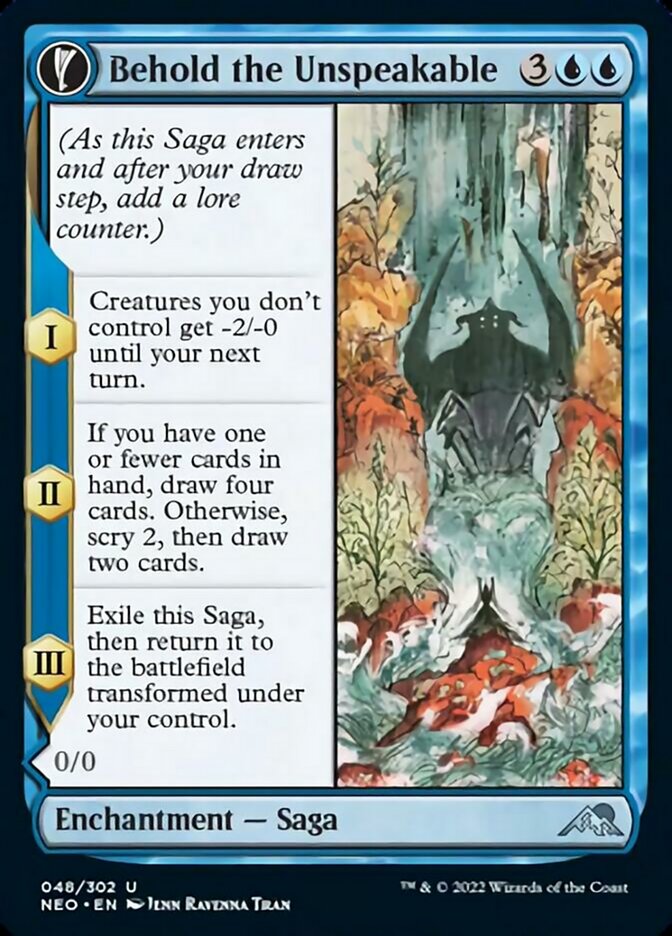
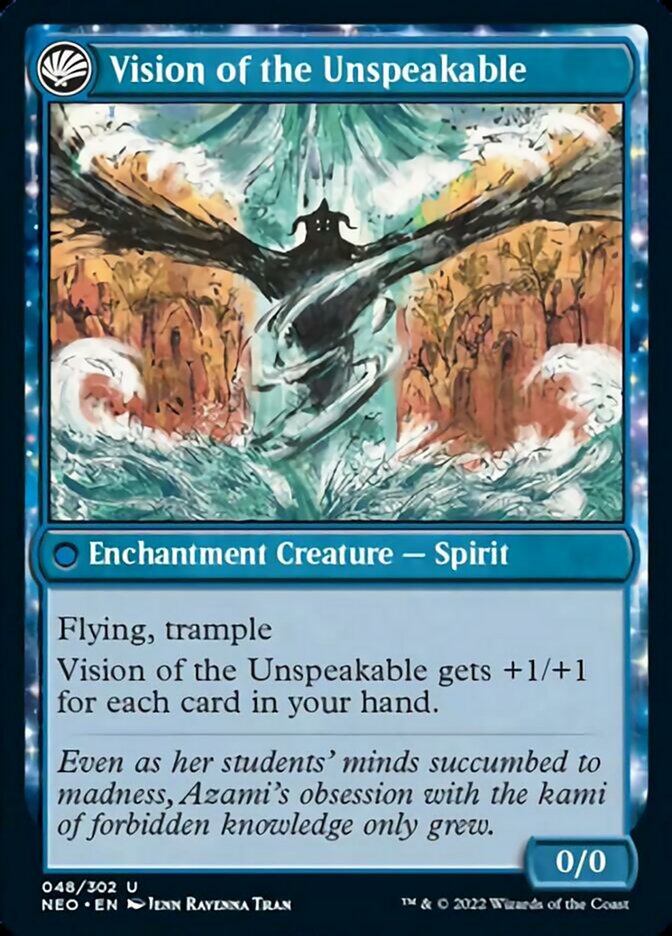
Behold the Unspeakable did well in Kamigawa: Neon Dynasty Draft, but it’s too expensive and low impact to matter much outside that format. It could fit into the right Battle Box or Peasant Cube, but that’s its limit.
#23. Medomai’s Prophecy
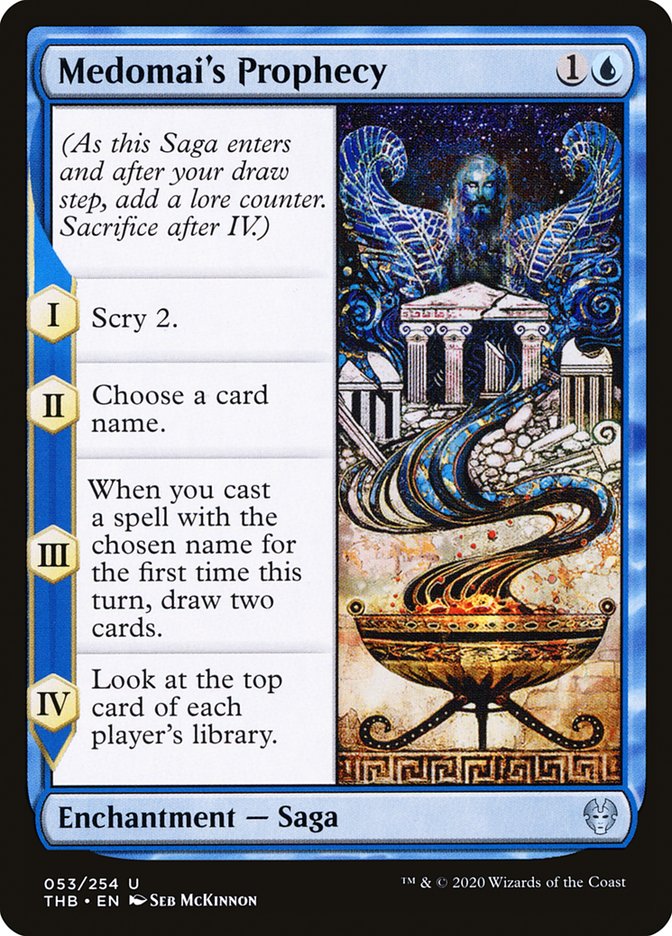
Don’t be fooled by all the text on Medomai's Prophecy; it’s only okay. Scry 2, draw two is very powerful, but this delays it over several turns. Naming the card you’ll cast to draw cards is also very awkward. It gives your opponent lots of information over what you’ll do on a given turn, and they get to decide whether to hold up countermagic or save removal. It gives you a resource boost, but it also helps your opponent to optimize their turn; I don’t know that two cards is worth that.
#22. Tamiyo Meets the Story Circle

Tamiyo Meets the Story Circle is rather meek, but it has potential. Few other cards create this many Clues at such a light cost, which is great for artifact players or commanders like Urza, Lord High Artificer and Lonis, Cryptozoologist. Of course, it comes with the downside of discarding your hand and investing 2 mana a turn to replace it, plus the other abilities are just okay. Still, I see the homes for this.
#21. The Conundrum of Bowls

This one goes out to the Brawl players.
The Conundrum of Bowls, from Alchemy: Wilds of Eldraine, is pretty strong. Seeking a card means you always get two spells, and probably a free one. That said, a 4-mana draw 2 has stiff competition in cards like Stock Up and Memory Deluge, so this one falls a little short of greatness. It could be a useful alternative to those spells in decks that specifically care about sagas, enchantments, permanents, etc.
#20. The Tale of Tamiyo

The Tale of Tamiyo offers decent self-mill for its cost, especially in a deck that cares about specific card types, or perhaps a delirium deck with lots of overlapping, dual-typed cards. But the last chapter falls flat. You get to copy all the exiled spells, but you still need to pay their costs. Depending on the circumstances it likely “draws” two, maybe three spells, but there are other ways to do that and better self-mill spells. Consider how The Tale of Tamiyo stacks up to Court of Cunning as card draw plus self-mill, and you’ll see why it’s worth 10 cents.
#19. Gadwick’s First Duel
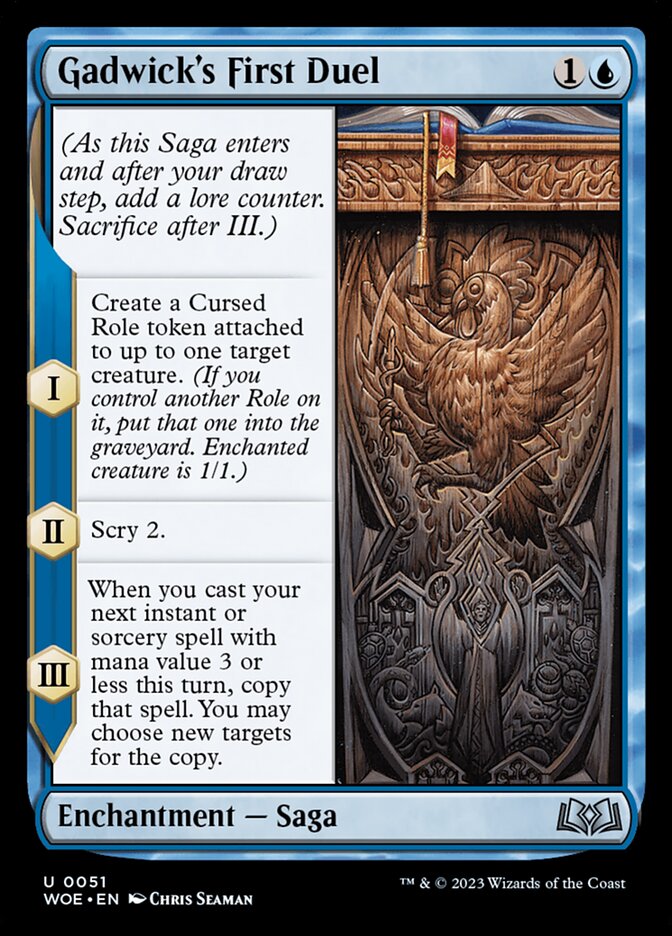
Gadwick's First Duel works well for casual players. The Cursed role is cute interaction but ultimately meh because it doesn’t remove a creature’s text box. Nobody cares if Kaaila of the Vast becomes a 1/1. Scrying is fine, and the spell copying can be useful, if restrictive. It bundles together several small effects to create a playable if underwhelming card.
#18. Time of Ice
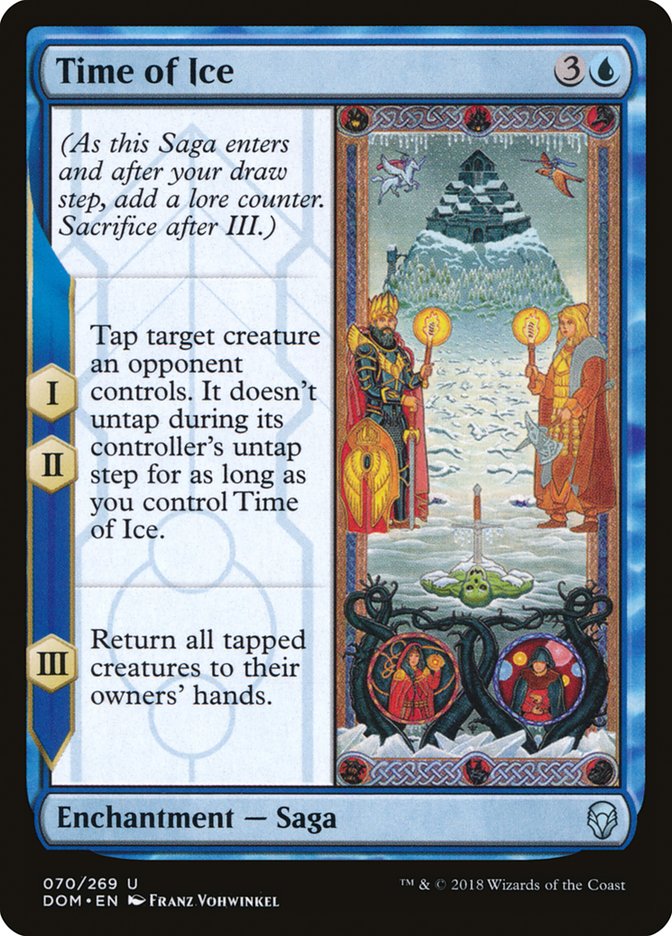
Time of Ice is similar to Behold the Unspeakable in that it was a top-tier uncommon in its Limited format, but this one has aged much better. There are just more cards that care about tapping your opponents’ creatures, including commanders like Hylda of the Icy Crown and Sensational Spider-Man. These give it a decent home with enablers for a powerful final chapter.
#17. The Modern Age / Vector Glider
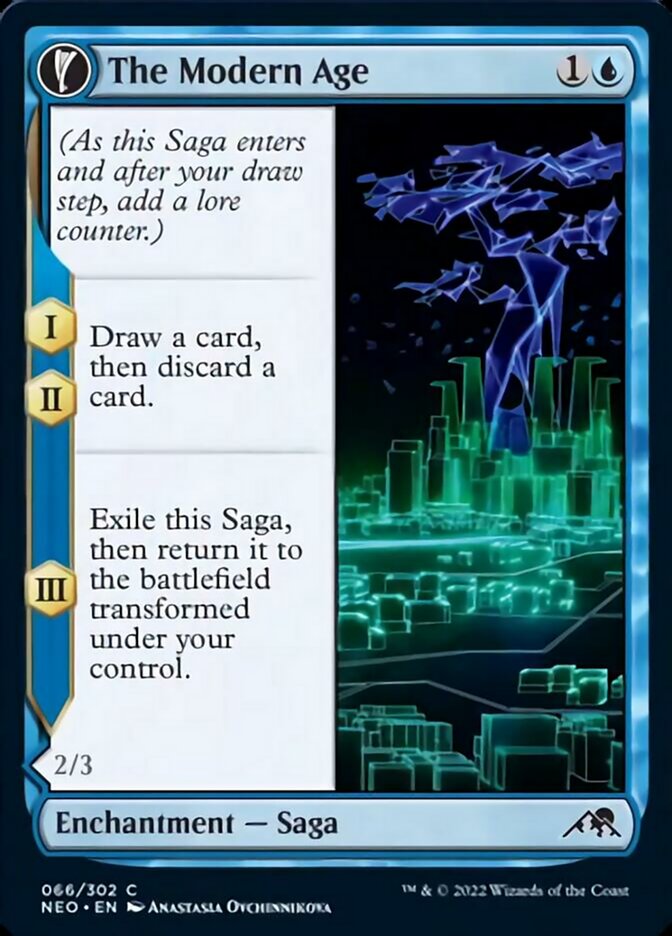
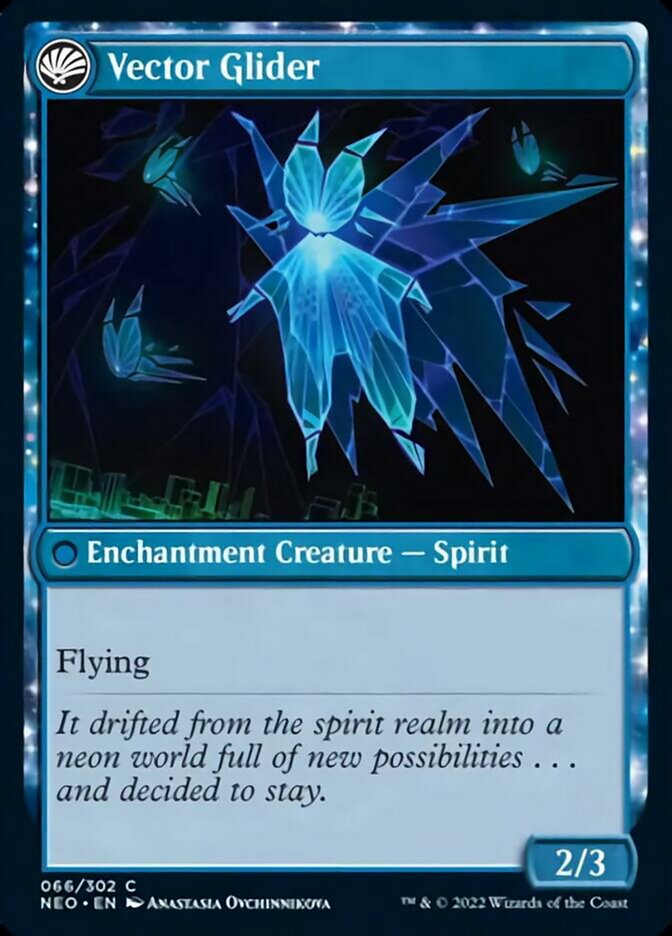
Glue cards are unassuming yet meaningful spells that pull a lot of weight, even if they aren’t the flashiest. The Modern Age has put forth such work in Pauper and its Cube variants. Looting twice sculpts your hand and enables discard/graveyard synergies, giving you lots of choices early. Vector Glider then becomes a meaningful threat that pressures your opponent well, especially when protected by the cards it drew. Try it out for a few games, and you’ll see why decks like Gates and Turbo Fog want 2-4 copies.
#16. The Bath Song
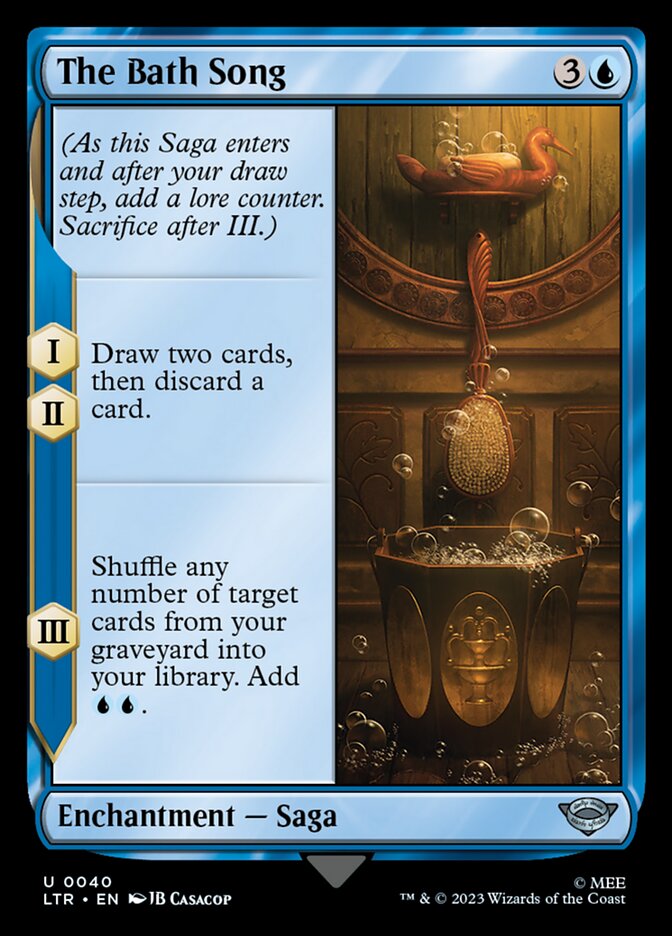
Though slow, The Bath Song offers decent rewards. Two Catalogs plays nicely in decks that care about drawing or discarding cards and filling the graveyard. The mana boost on the third chapter provides resources to cast all those extra cards you drew. The shuffle effect is more niche, but sometimes you just need that Lightning Bolt back in your deck with the hopes of drawing it again.
#15. Summon: Shiva

Summon: Shiva is perfectly respectable. It wants to be in the same decks as Time of Ice, though I rank it higher because drawing cards is fantastic and putting stun counters on creatures is far more exploitable than keeping them tapped while you control the saga. Toss in some flicker stuff to keep tapping down creatures, and you have a decent threat.
#14. Inventive Iteration / Living Breakthrough
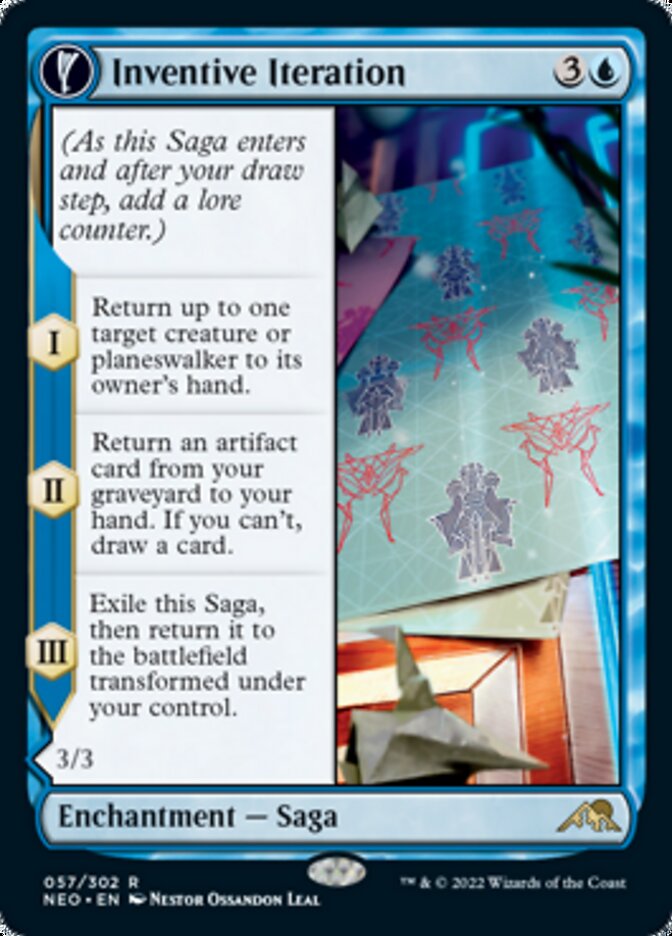
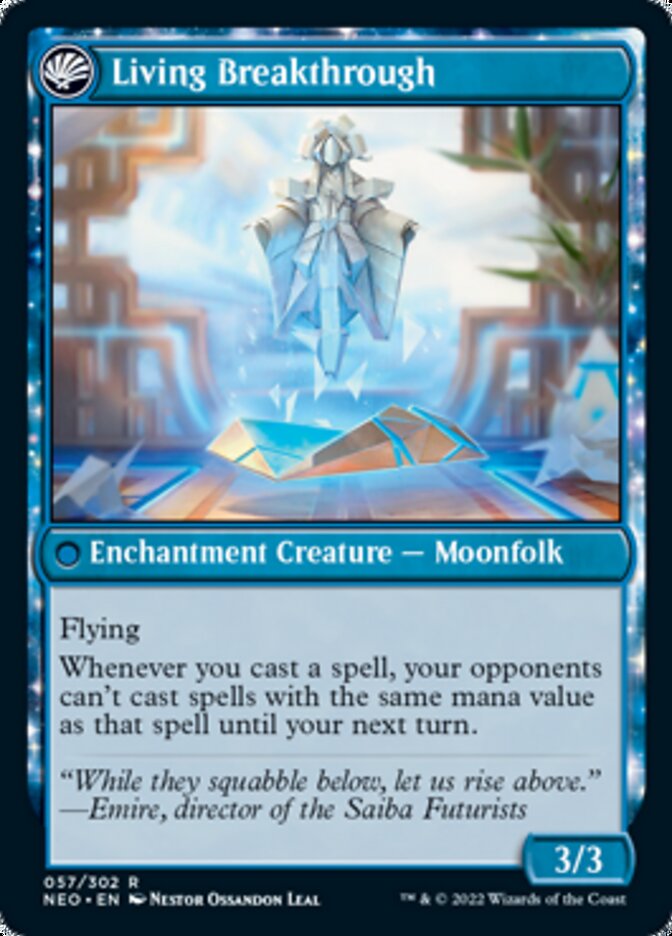
A card that bounces a permanent then draws a card does decent work. Inventive Iteration takes it a step further by flipping into Living Breakthrough, a stax card. Cheap spells often work best with an effect like this; few decks run 8-drops, but almost all have spells that cost 1, 2, or 3 mana. It probably works best in artifact decks where you get a specific artifact back instead of drawing a random card. Bonus points if that artifact is something like Lion's Eye Diamond or Cryogen Relic you wanted to sacrifice.
#13. Nightmares and Daydreams
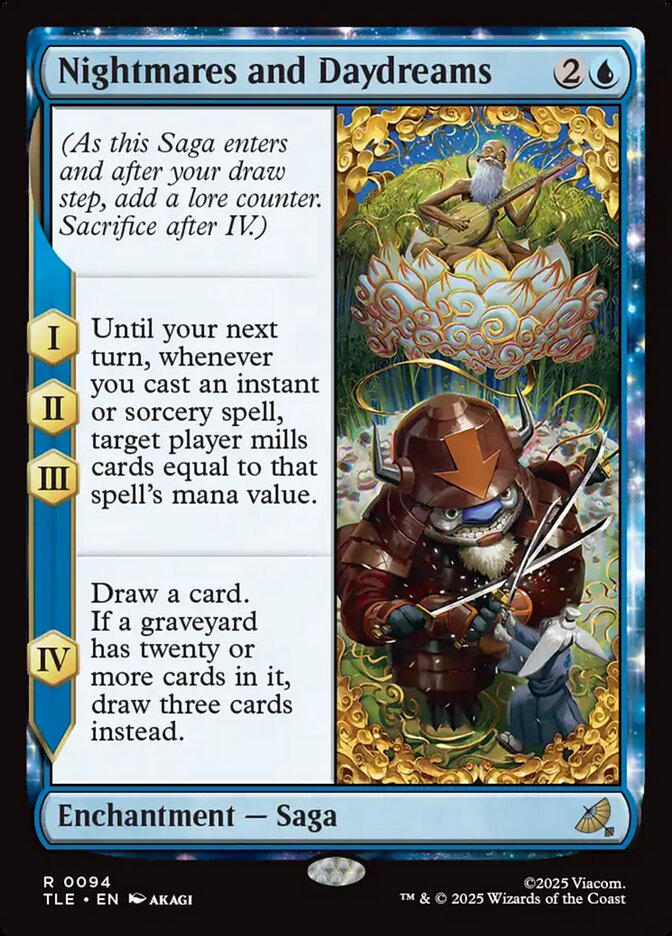
I’m sure the mill players looked at Nightmares and Daydreams and started salivating, but it looks much more interesting for the self-mill players. It might get lots of cards in the graveyard, and the 20-card threshold isn’t hard to hit with dedicated self-mill support like Mesmeric Orb and Court of Cunning. It looks especially promising with something like Muldrotha, the Gravetide that can recast the saga after it sacrifices itself. It even looks good in combo decks; imagine casting a storm of spells to fill the graveyard before casting Yawgmoth's Will.
#12. The Clone Saga
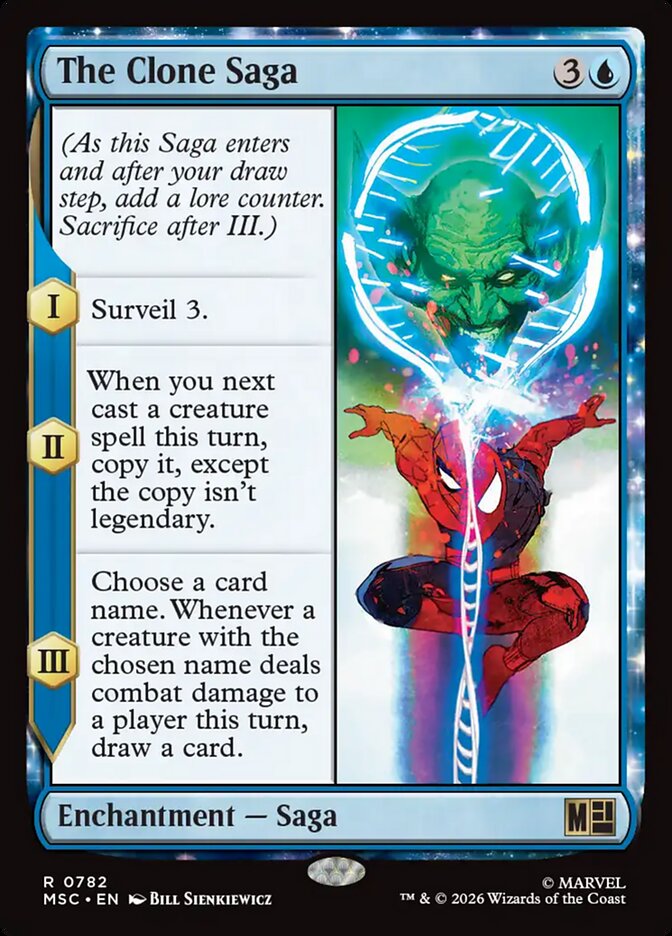
The Clone Saga is rather strange. At 4 mana, it’s on rate for a clone, even great value since its a nonlegendary clone that can copy commanders. But the delay worries me. You put up a big sign saying “remove this or I’ll do something spicy next turn”. Perhaps I’m just too Spike-y to see the appeal? Still, this looks like a banger with 5-mana commanders like Maralen, Fae Ascendant to curve into.
#11. The Mirari Conjecture
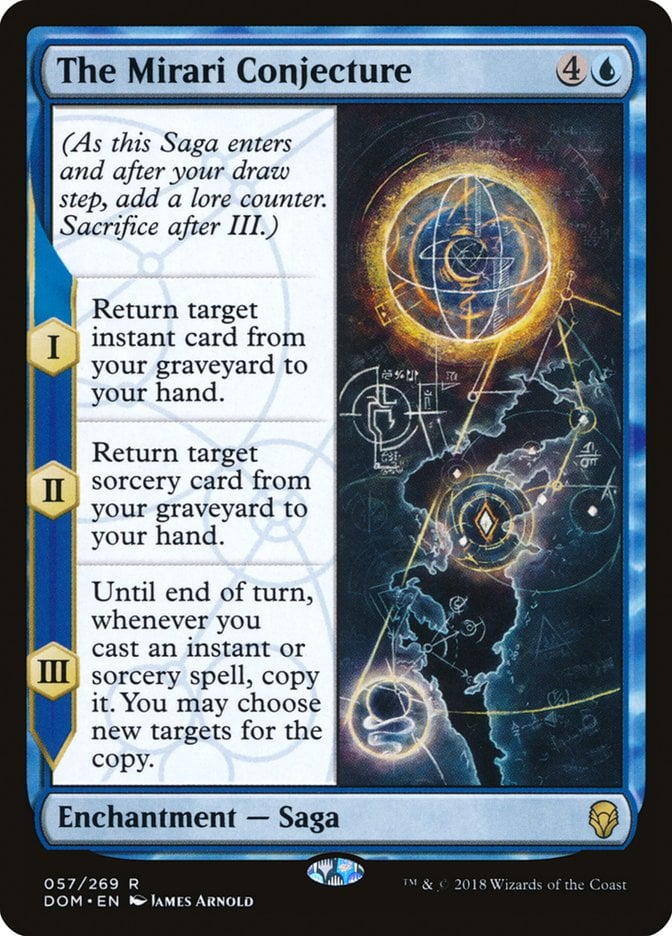
The Mirari Conjecture is so much fun, and so slow in terms of modern Magic. Drawing two cards then getting a full turn of unconditional instant/sorcery copying provides spellslinger decks with a fantastic engine if they can buy the time to wind it up.
#10. Ballad of the Black Flag

Ballad of the Black Flag does lots of things right. You need a heavy focus on historic permanents, but that’s a far more manageable restriction than caring about doctors or vehicles specifically. The chance at drawing three cards, and always milling nine, looks pretty good for 3 mana, and the cost reduction sets up an explosive turn. Giving that the cost reduction is colorless, I imagine the Ballad works best with artifacts and cards like Jhoira, Weatherlight Captain that care about casting them.
#9. Founding the Third Path
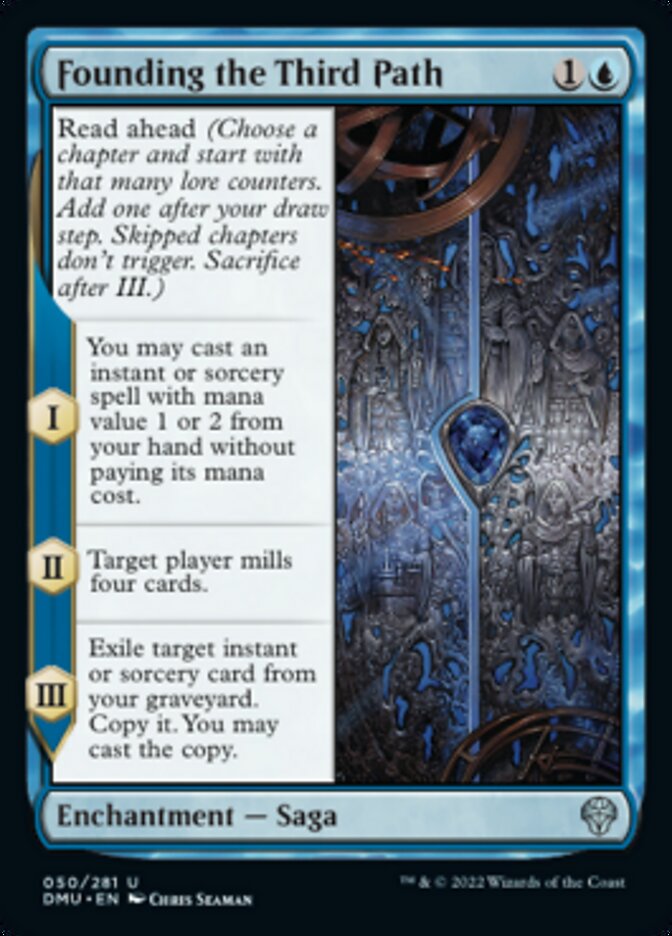
Founding the Third Path does many little things right; you could almost consider it the opposite of Gadwick's First Duel in that its small effects add up to a meaningful card rather than a dull one.
Casting a cheap spell is cool, especially since you can recast it on the third chapter. Milling yourself is quite relevant, either uncovering a better spell to cast or simply filling the graveyard. It saw a smattering of Standard play alongside Abhorrent Oculus and Helping Hand, which paints a good picture of where it belongs: decks that care about the graveyard and cheap instants or sorceries.
#8. Scroll of Isildur
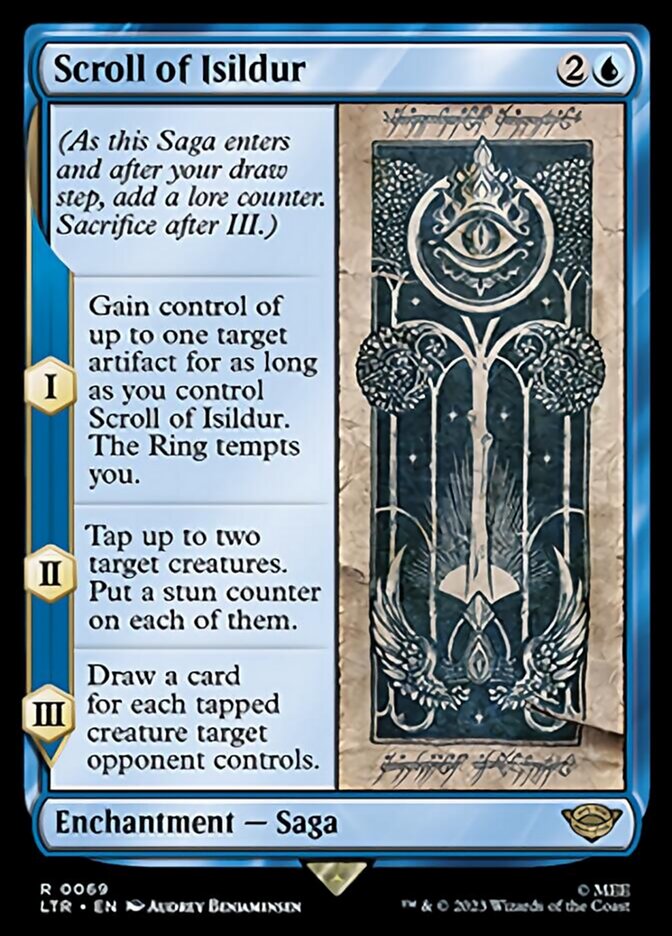
Artifact hate comes in many forms, but Scroll of Isildur might be the most unique. This is another saga that plays well into the tapping opposing creatures archetype, which might warrant a saga subtheme at this point, but it has more general applications since swiping an artifact is good. It works especially well with black or red so you can then sacrifice the artifact before it goes back to your opponent.
#7. Jin-Gitaxias / The Great Synthesis
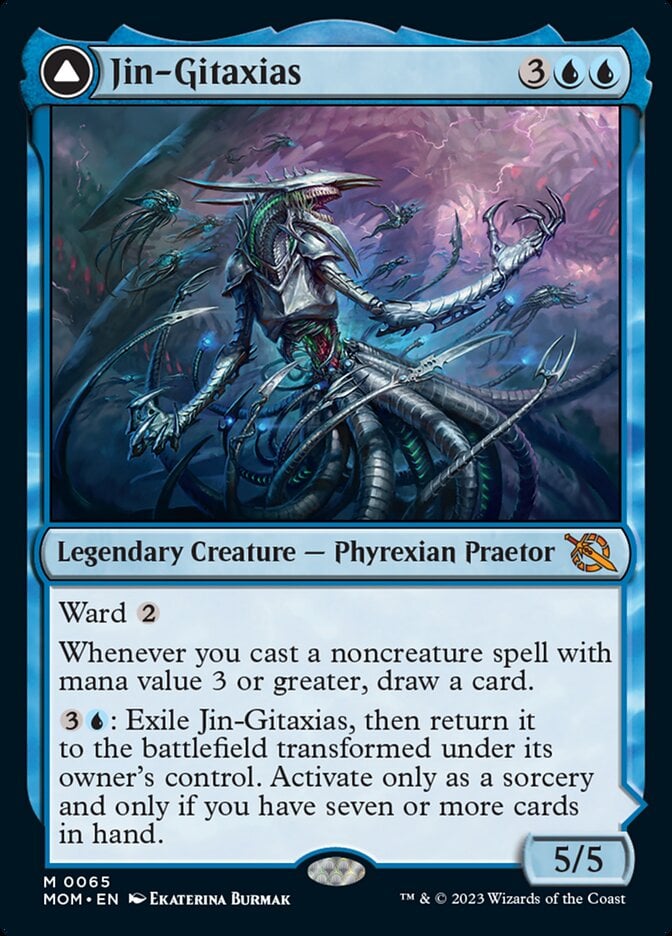
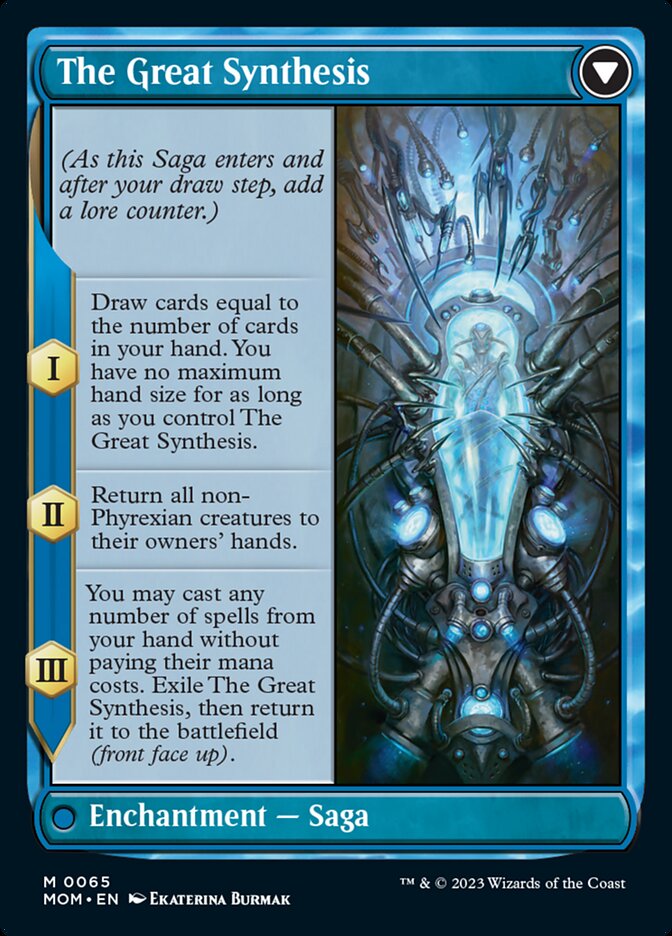
Jin-Gitaxias is the least impactful version of the blue praetor we’ve seen, despite the absolute horror show of its other printings. It encourages spellslinger players to go big for card draw, then it flips into The Great Synthesis. It’d be a far more impressive saga if the board wipe came first, but you can’t complain about doubling your hand size for 4 mana. The third chapter ought to close the game if you reach it, so be prepared with plenty of countermagic and other control tools to protect yourself until you can start casting Rise of the Eldrazi and other nonsense for free.
#6. The Legend of Kuruk / Avatar Kuruk

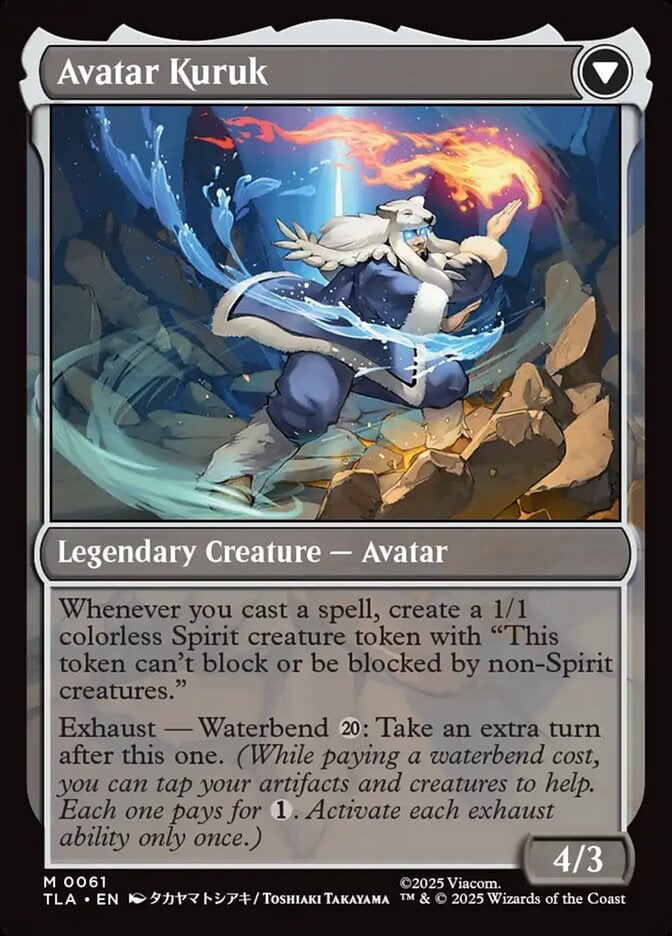
Though a recent card, The Legend of Kuruk has great potential. A double Preordain provides ample control over what cards you draw for several turns, which streamlines your hand for maximum efficiency. Then we get Avatar Kuruk. Waterbend 20 for an extra turn sounds silly until you realize how many tokens this spits out. If you run it in a deck filled with similar effects, like Third Path Iconoclast, the joke becomes serious awfully fast.
#5. Summon: Leviathan

Sea monsters—the loose term that bundles krakens, leviathans, merfolk, octopuses, and serpents into a single class—rarely get new toys, but Summon: Leviathan gives the archetype an upgrade. But it should be noted this doesn’t need to be in a typal deck to matter. A big creature that bounces an opposing board and draws a card or two in combat is a strong control tool that breaks typal containment if you let it.
#4. Summon: Valefor

Summon: Valefor is super obnoxious in Commander. Bouncing a players’ most expensive creature doesn’t always correlate with their most pressing threat, but it’s often the case and makes them waste the most mana replaying it. As your opponents try to rebuild, you get a decent threat that keeps other pressing threats tapped down. This is one of the best saga creatures to flicker; resetting Valefor each turn with Thassa, Deep-Dwelling feels oppressive.
#3. The Antiquities War
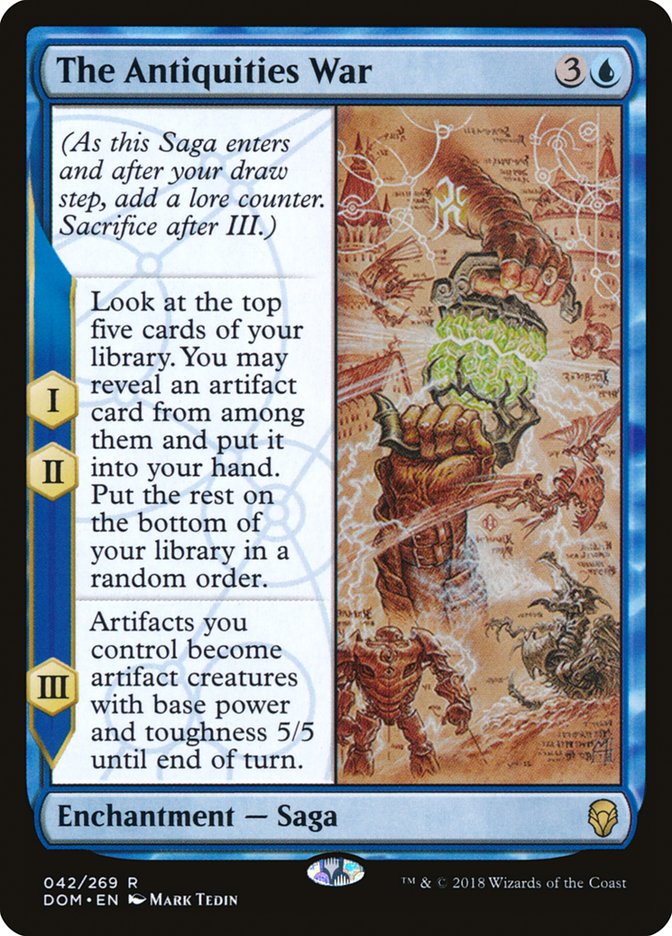
A common fair, non-combo win condition for artifact decks involves animating noncreature artifacts so you have a sizable attack force. The Antiquities War isn’t quite Cyberdrive Awakener, but it comes close. Letting your opponents know exactly when you’ll attempt to finish them off is a significant downside, but drawing two artifacts makes up for it.
#2. Jill, Shiva’s Dominant / Shiva, Warden of Ice


Jill, Shiva's Dominant might be Magic’s best Man-o'-War variant. It returns any permanent to hand and becomes the powerful Shiva, Warden of Ice. This iteration of Shiva probably works best in Simic (), where it sneaks threats like Ghalta, Primal Hunger past enemy lines for massive damage.
#1. Kiora Bests the Sea God
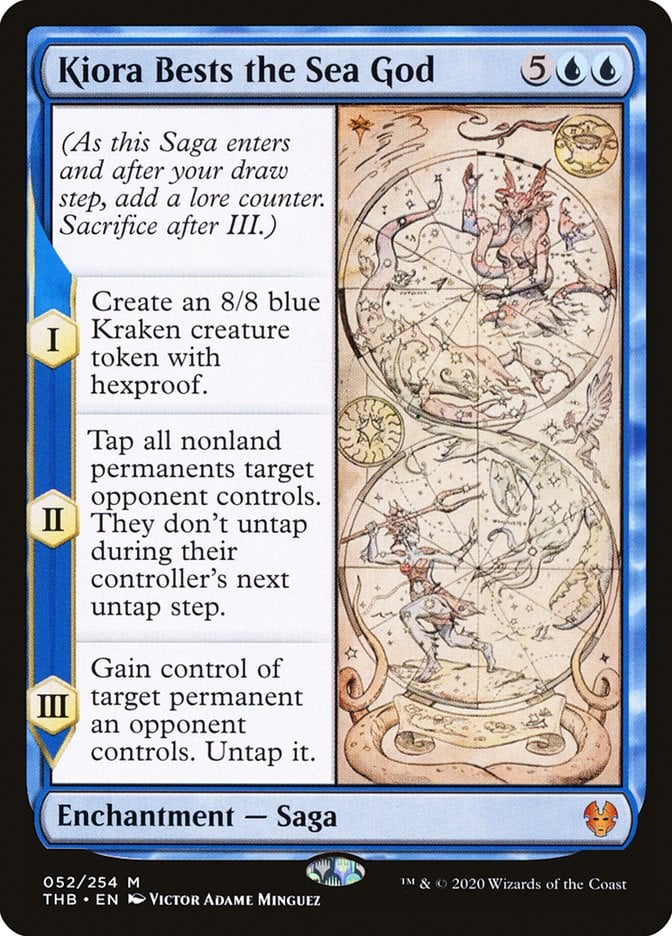
Big spells need impact, and Kiora Bests the Sea God delivers. The Kraken is nice, but the power lies in the second and third abilities. Tapping down a player’s permanents late in the game often results in that player getting knocked from the pod, or eliminated, or whatever’s appropriate for your format of choice. The theft ability is permanent, which makes it a wonderful card for Commander: You can knock out player A and still punish player B. It also means this saga has a lasting impact on the game.
Best Blue Saga Payoffs
Blue isn’t known for many enchantment payoffs and doesn’t have any cards that directly reward playing sagas, but there are a few ways to maximize their impact.
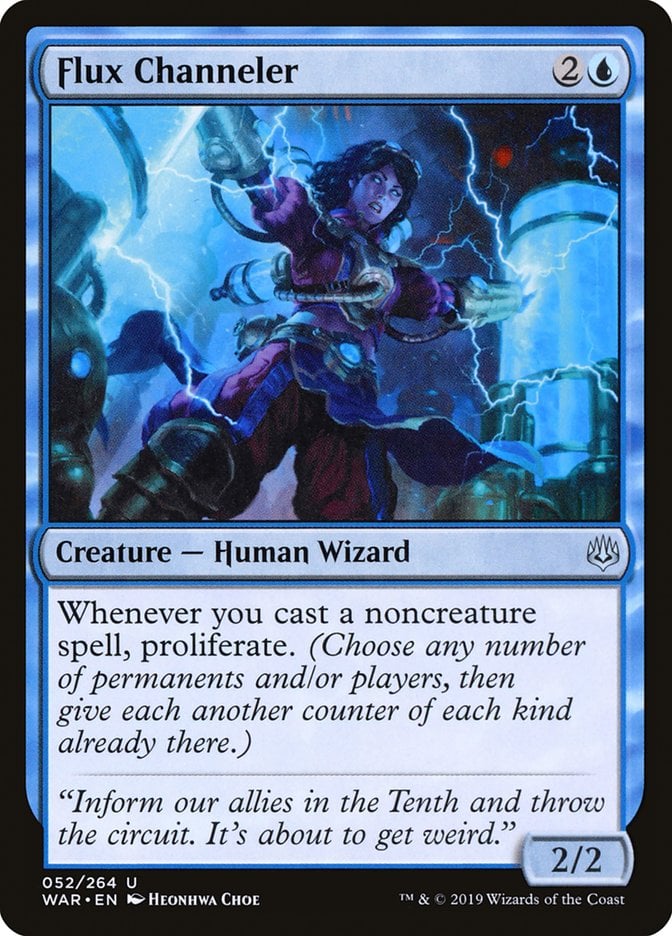
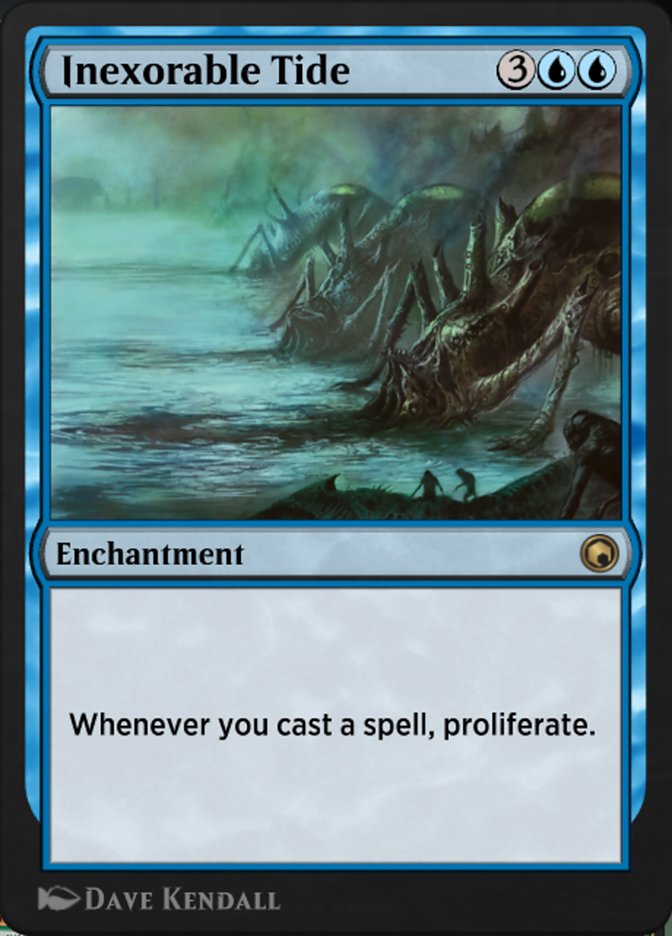

Blue boasts plenty of proliferate cards like Flux Channeler, Inexorable Tide, and Dreamtide Whale that play perfectly with sagas. Proliferating them lets you get additional abilities faster. If you can proliferate at instant speed, you can even break timing restrictions since the saga just checks for a lore counter—suddenly the second chapter of Kiora Bests the Sea God becomes defensive and offensive.
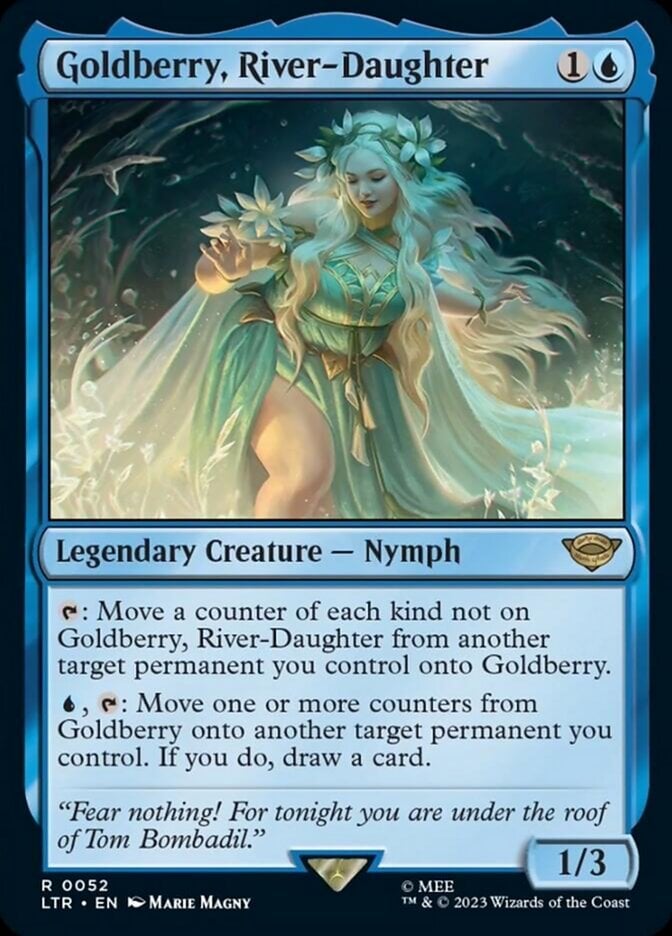

Goldberry, River-Daughter is particularly useful here; it can remove lore counters from a saga to trigger the same chapter multiple times and add them to another to speed that one up. Leech Bonder can do a similar trick, though it requires two saga creatures.
Speaking of saga creatures, blue’s flicker effects have two great synergies with them. The first, and most obvious, is retriggering powerful first chapters, like on Summon: Valefor. A saga’s first chapter isn’t technically an enters ability, but you get a similar value from flickering it. You also get the benefit of keeping the saga creature around. As long as you blink it before it sacrifices to its last chapter ability, you can essentially refresh the saga turn after turn. Who said these creatures had to be temporary?
Wrap Up

Living Breakthrough | Illustration by Nestor Ossandon Leal
Blue’s sagas run the gamut of its abilities, from card draw to tapping creatures and beyond. They offer long-term value, generally working over three or more turns to generate a cumulative advantage that drives your opponent towards defeat.
Which blue sagas are your favorite? Do you prefer sagas or planeswalkers? Let me know in the comments below or on the Draftsim Discord!
Stay safe, and thanks for reading!
Follow Draftsim for awesome articles and set updates:










Add Comment