
Last updated on October 4, 2026

Junk Winder | Illustration by Campbell White
Serpents have been lurking in Magic’s oceans almost since the beginning as enormous blue creatures, usually with some pretty big drawbacks. Thankfully, serpents have improved quite a bit since Magic’s early days. Some of them can even fly!
Nowadays serpents range from cheap beaters to card draw engines, while some of them have kept their early “this belongs to the sea” creature theme. Let’s see which ones are actually worth putting in your deck!
What Are Serpents in MTG?
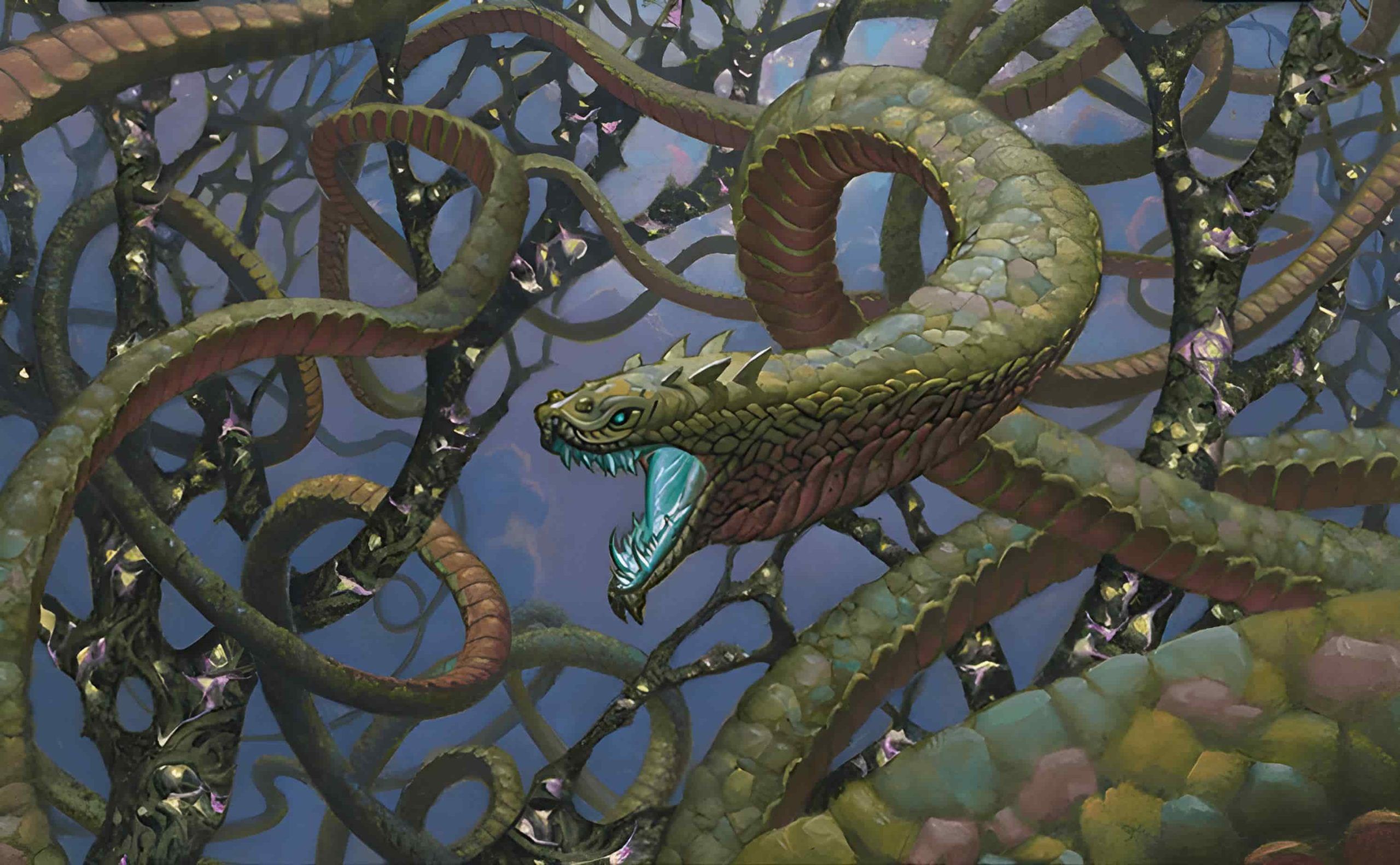
Koma, World-Eater | Illustration by Mark Zug
Serpent is a creature type in MTG. Magic treats each creature type as something completely unique and with no connection to real-life biology, so serpents have nothing to do with snakes as far as creature types are concerned.
Most serpents are blue and tend to depict sea serpents, although there are exceptions in other colors as with the bird serpent Yorion, Sky Nomad and the horse serpent Loch Mare.
Serpents are also one quarter of what Magic players often call KLOS creatures: krakens, leviathans, octopuses, and serpents. Wizards has often batched those four types together, as seen on cards like Kiora, Sovereign of the Deep or Kenessos, Priest of Thassa.
For this ranking, I’m counting any card with serpent as one of its creature types, including double-faced cards whose serpent side isn’t the front face.
Honorable Mentions: Sea Serpent + Deep-Sea Serpent
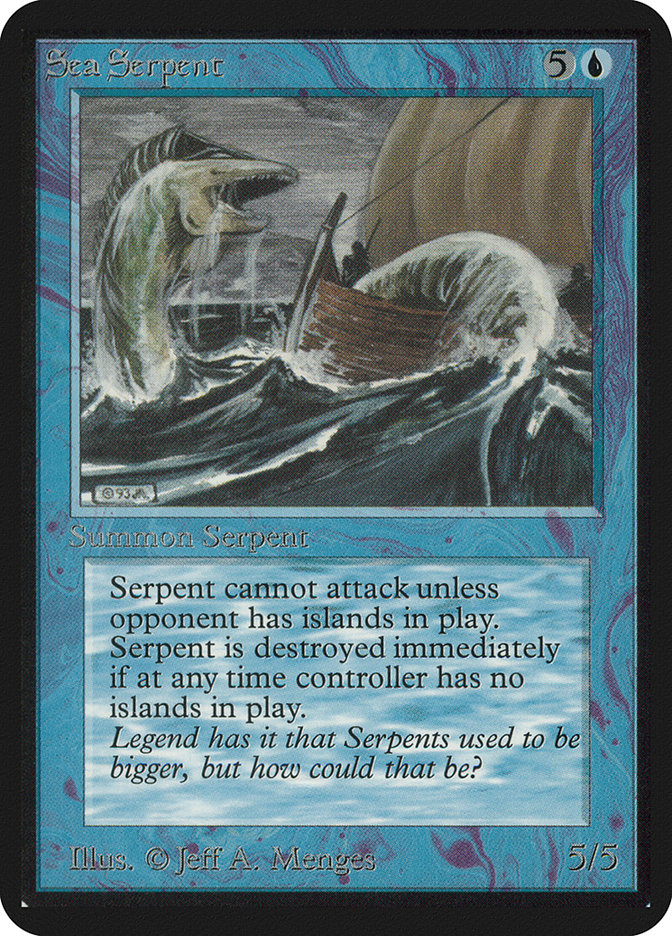
Sea Serpent is Magic’s first serpent, printed all the way back in Alpha. It’s a horribly bad card by any standard; I’m including it here as a testament of how far these big blue creatures have come since the early days.
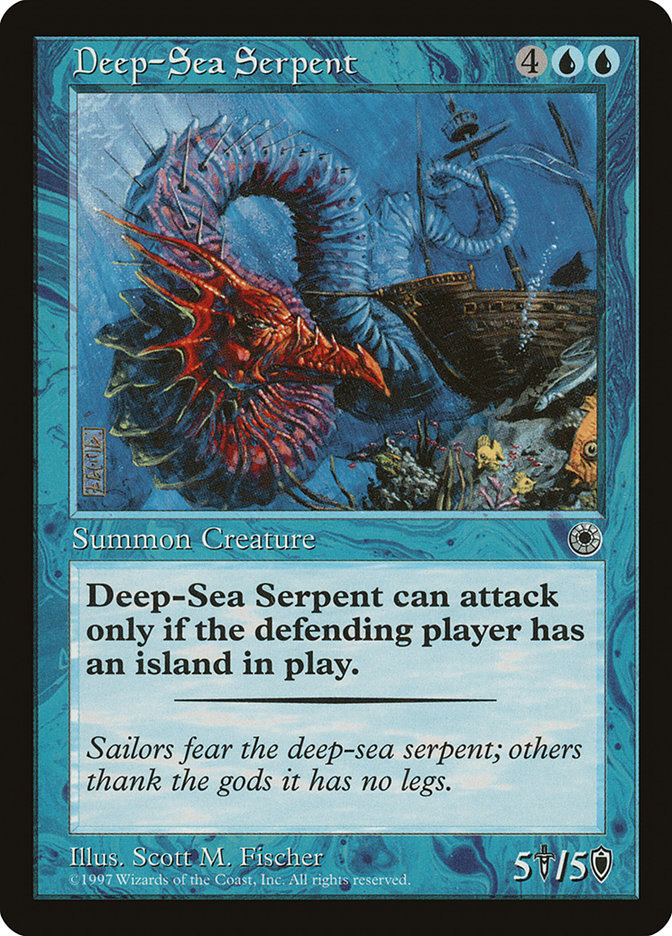
I guess WotC realized how bad their first design was, so a few expansions later Portal gave us Deep-Sea Serpent. It’s much better, but it’s still a horrible card you’d never want to play.
The one thing WotC stuck with is the theme: Sea serpents are fairly big creatures (5/5 and 6/6 are very common stat lines), very often leaning blue, and tend to cost quite a bit of mana.
#28. Serpent of the Endless Sea
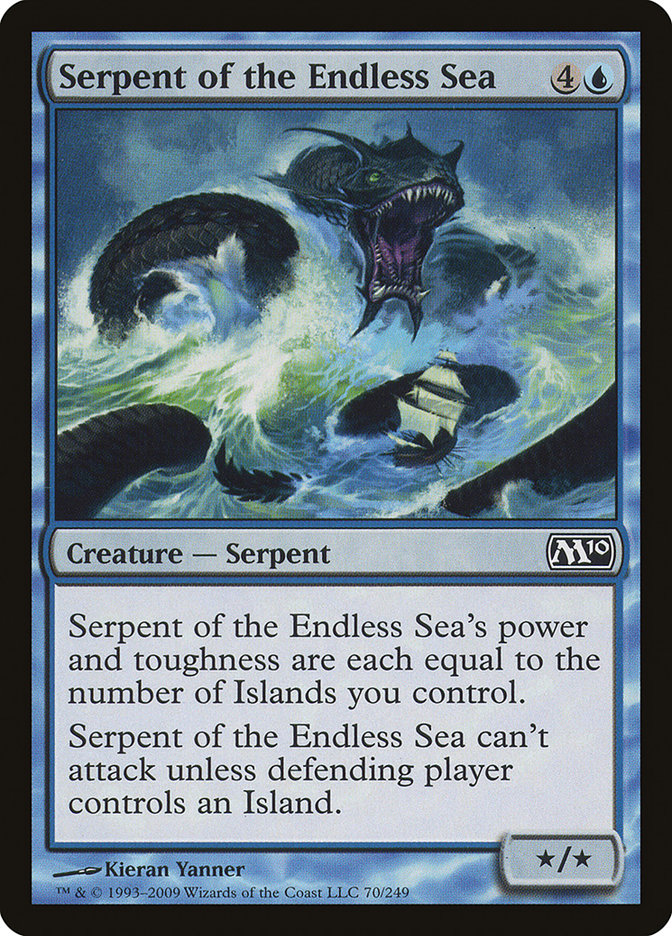
Serpent of the Endless Sea is still pretty bad, retaining Sea Serpent‘s original problem that you can’t attack island-less players. But at least here you have a creature that could potentially be huge.
#27. Biolume Egg / Biolume Serpent
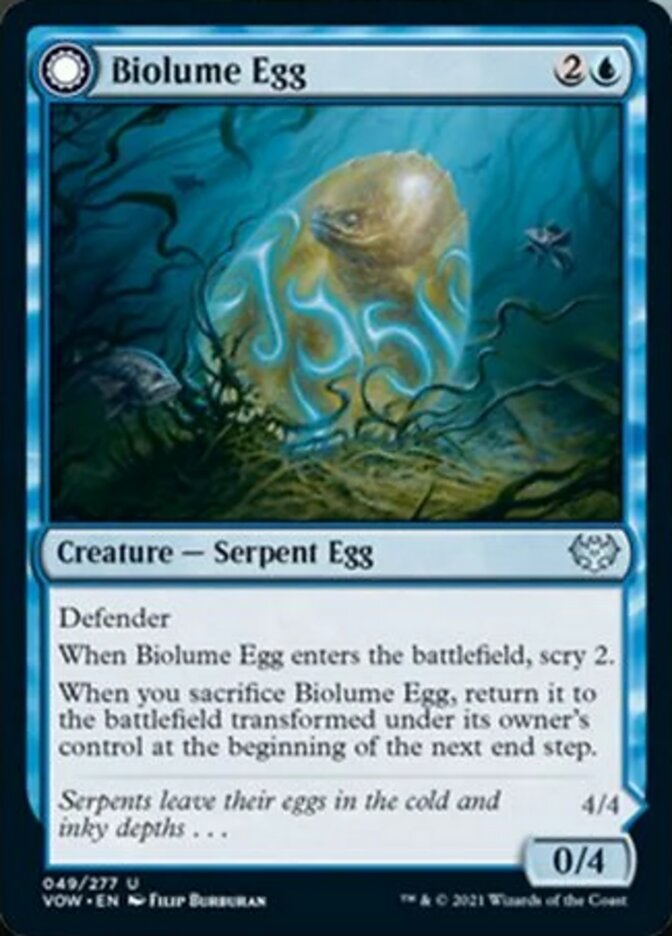
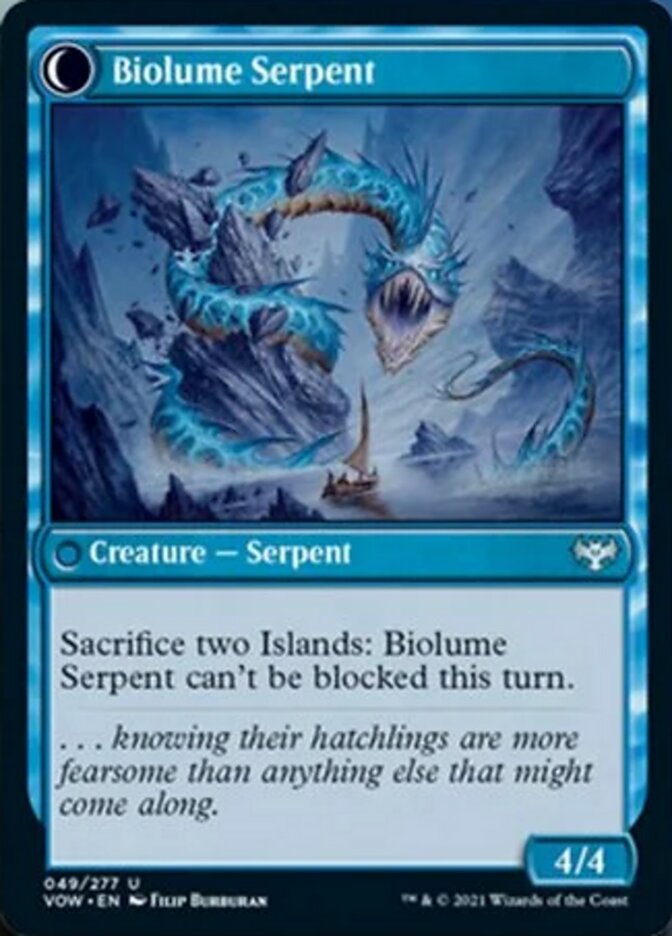
There’s at least a plan behind Biolume Egg. You get a defensive body and scry 2 up front, and sacrificing it brings it back at the beginning of the next end step, transformed as a 4/4 serpent. And you get all that just for , which is not a bad ideal.
The pretty big catch is that the egg can’t sacrifice itself, so outside of dedicated sacrifice decks, this is too much setup for too little payoff. But at least it’s a serpent that’s a good bang for the mana, if you happen to be playing such a deck.
#26. The Terror of Serpent’s Pass
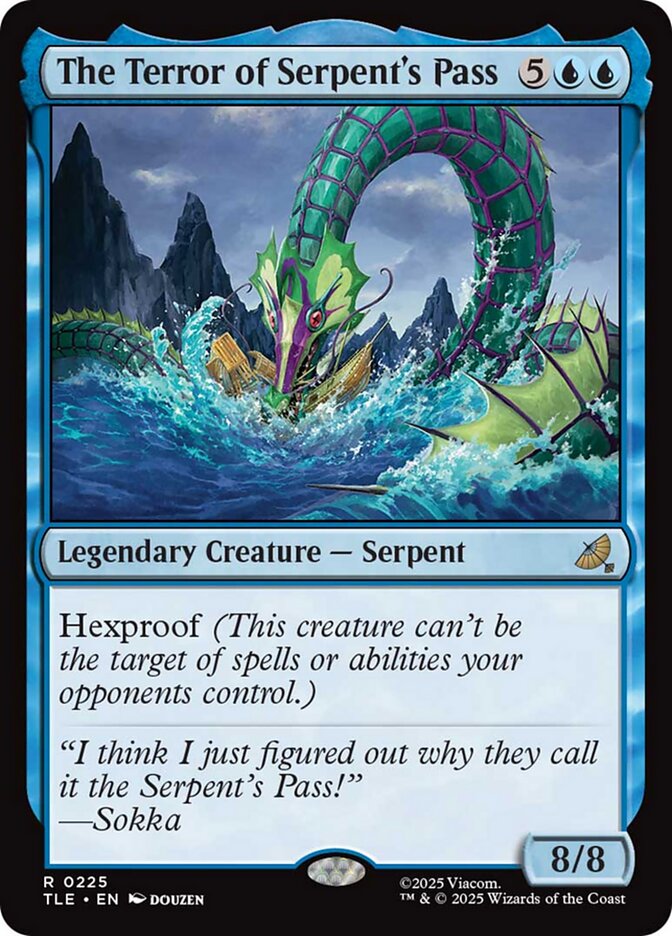
The Terror of Serpent's Pass gives you a huge, difficult-to-remove sea monster, and that’s sometimes what a KLOS deck wants. If your commander can cheat expensive creatures into play or reward their mana value, an enormous, protected body can come in handy.
#25. Harbor Serpent
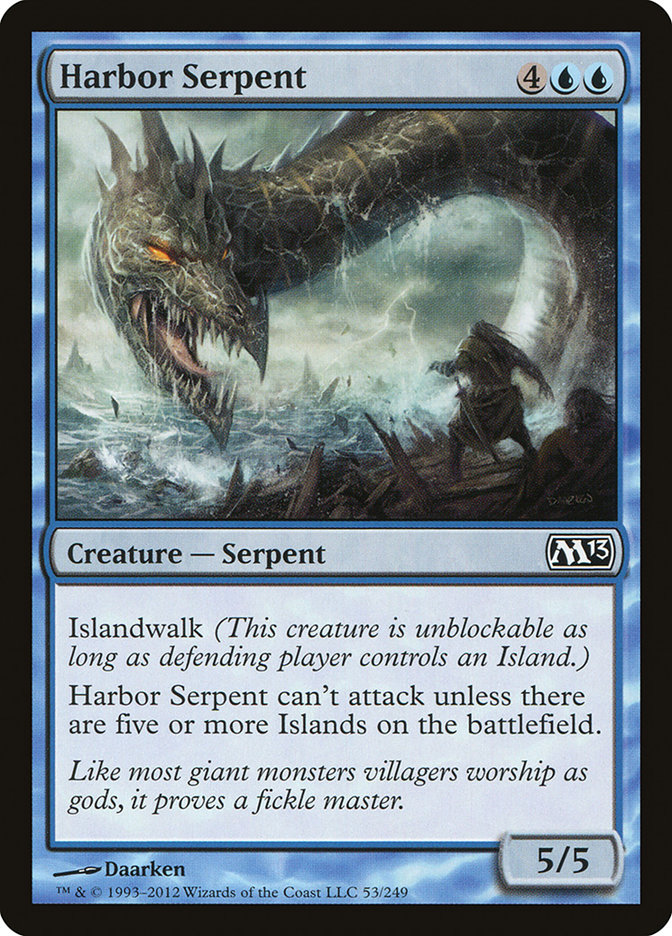
Harbor Serpent is another old-fashioned blue sea monster with hoops to jump through before it can attack, but this time it comes with one of the most annoying keywords in Magic: landwalk. And the hoops you do have to jump through aren’t that hard to overcome in Commander, anyway. There are still much better options if you’re looking for serpents, but unblockable is a really nice ability to have.
#24. Scrapdiver Serpent
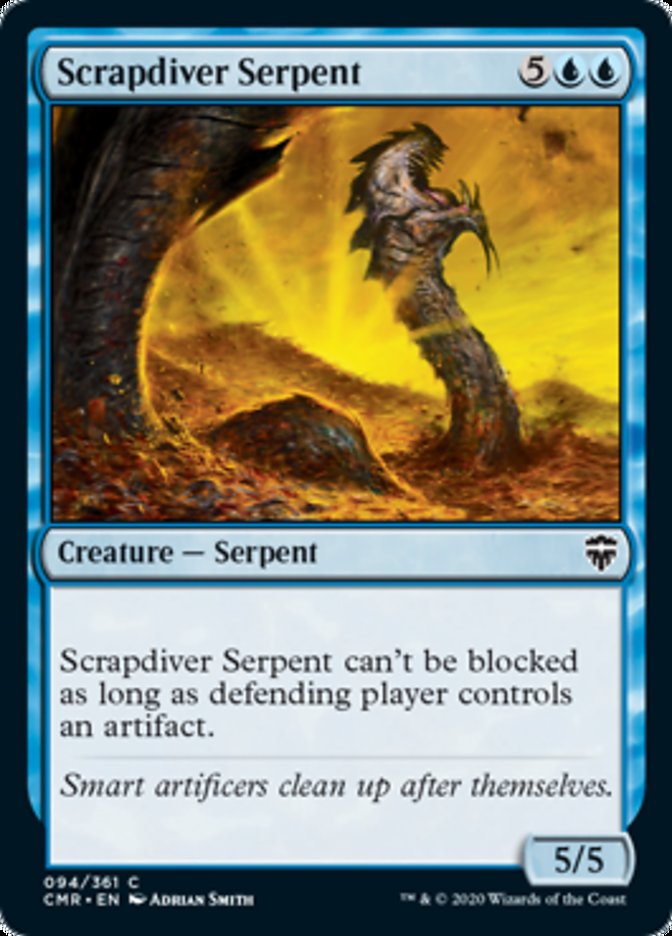
Scrapdiver Serpent‘s particular form of evasion has aged surprisingly well: It has what you could call “artifactwalk”, so it can’t be blocked if the defending player controls an artifact. Commander tables nowadays aren’t exactly suffering from a shortage of mana rocks, Treasures, and Clues, amongst a gazillion other artifacts.
That makes it a reasonably reliable attacker in sea-monster decks, but 7 mana for a creature that offers no immediate value tends to be a pretty hard sell.
#23. Wormhole Serpent
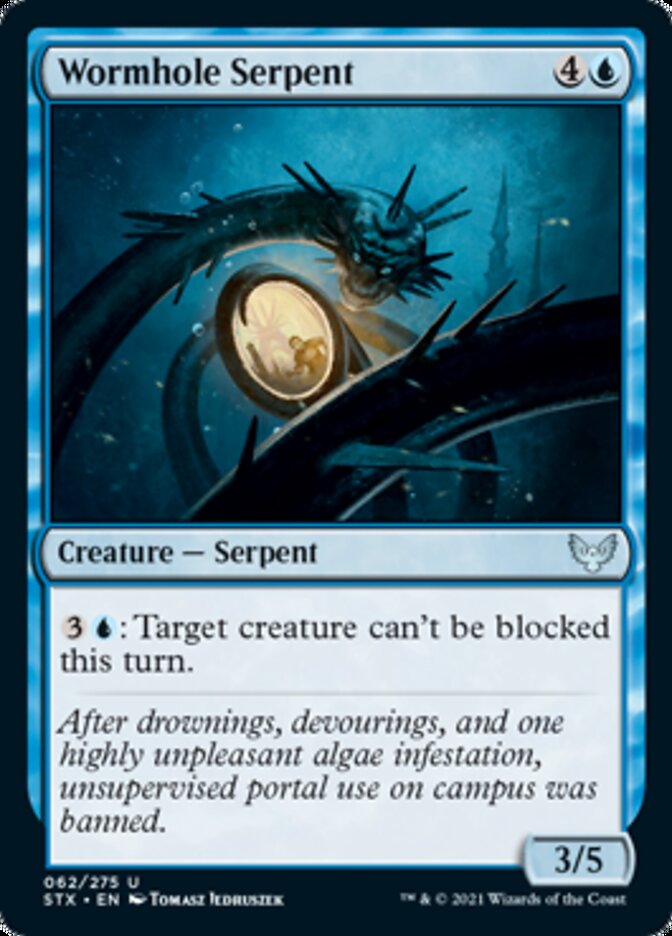
Wormhole Serpent can help a giant commander or another sea monster punch through a clogged board, so it has a role in combat-heavy KLOS decks. It has the usual sea serpent problem of costing a lot for what you get.
#22. Iceridge Serpent

Iceridge Serpent is an oversized tempo creature: Cast it, bounce an opposing creature, and leave a serpent behind. This is the sort of creature that can carry its weight in Draft or Sealed, but even in its home turf (Tarkir: Dragonstorm Limited), it ended up a bit too costly to be really good.
#21. Lightning Serpent
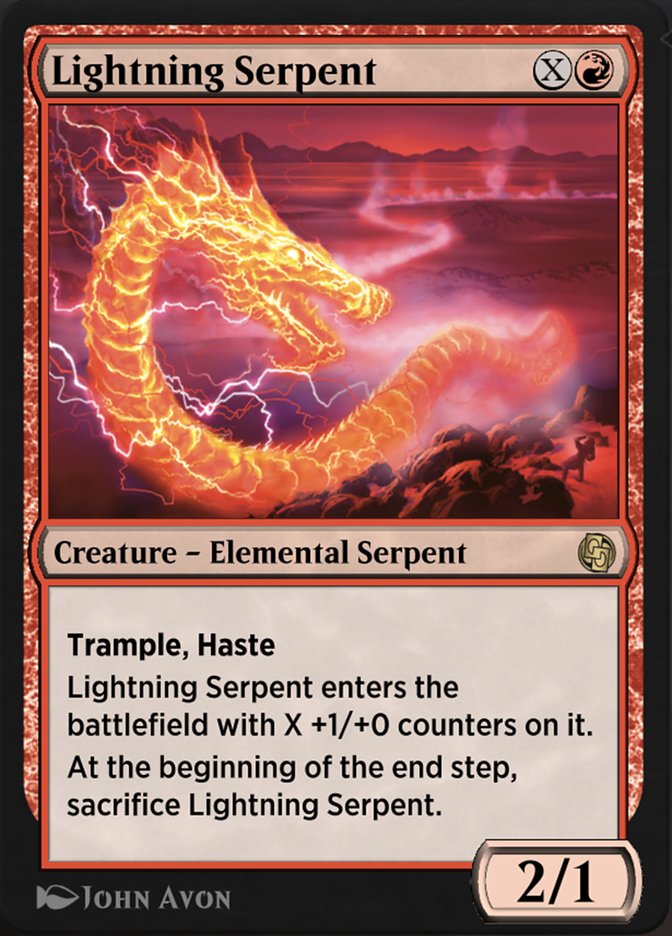
Here we have something pretty different. Red doesn’t get many serpents, and Lightning Serpent is pretty different from its blue cousins: You can play it for pretty cheap, it’s scalable, and haste makes it a threat right away.
You’ll need a way to either prevent or profit from its end-of-turn self-sacrifice effect, but at least Lightning Serpent does something immediately.
Its biggest problem is that it has very little synergy with other serpents, given its color identity; there’s no card that cares about serpents in red, and very little reason to play Izzet () if you’re going for serpents.
#20. River Serpent
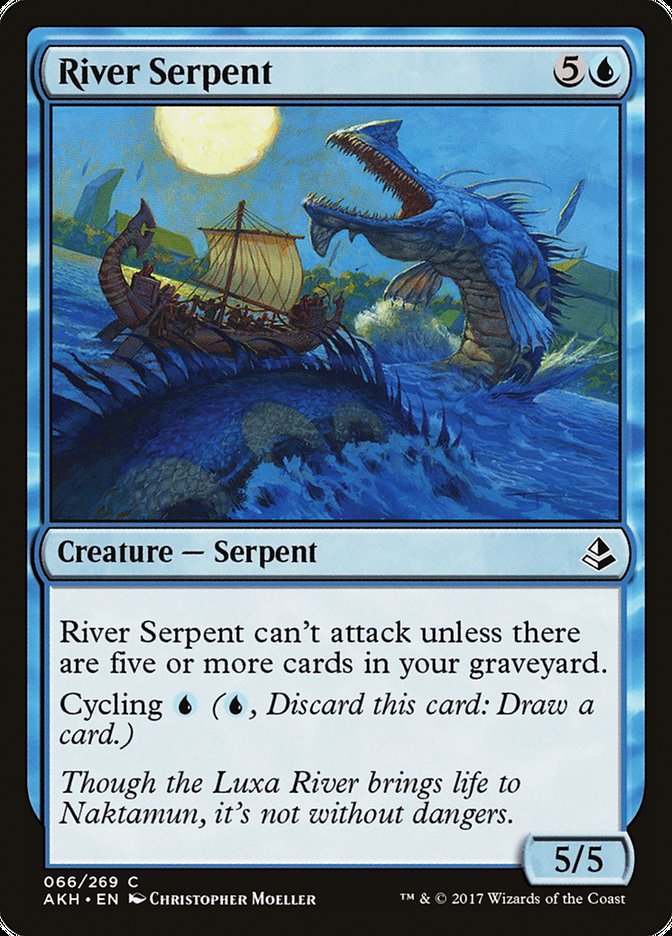
WotC certainly loves to give serpents a hard time to attack! River Serpent isn’t too exciting on the battlefield (just another biggish, dumb beatstick), but cycling changes that equation a bit.
For starters, an expensive creature that can cheaply put itself into the graveyard is pretty much what reanimator decks want. And there’s one particular KLOS commander, Runo Stromkirk, that can put River Serpent to good use: River Serpent makes it very easy to trigger Runo’s transformation.
#19. Verazol, the Split Current
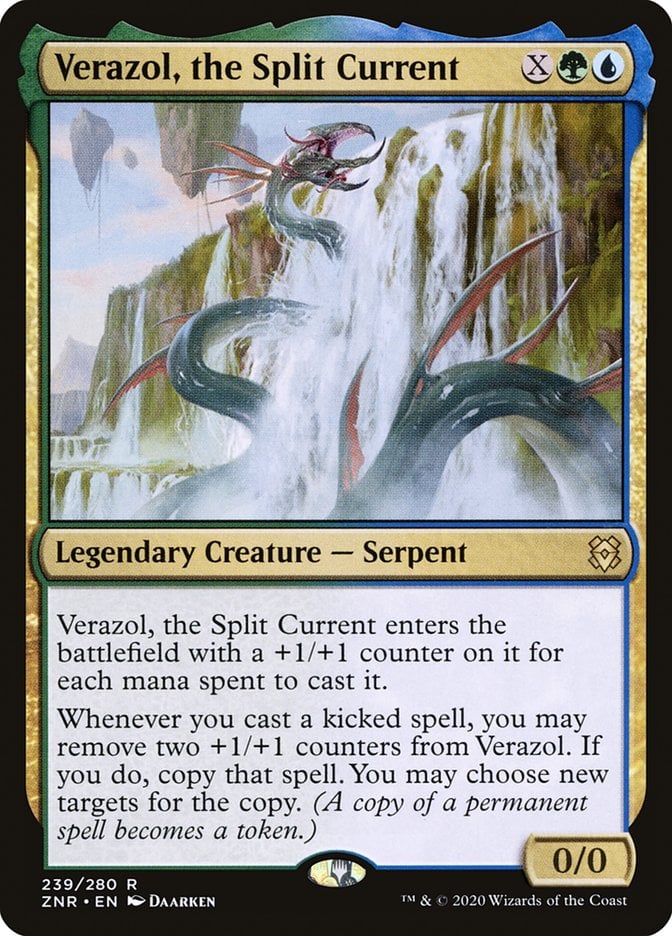
Kicker commanders aren’t too much of a thing (perhaps for good reason…), but here we have one such commander: Verazol, the Split Current.
Copying kicked spells gives you an actual reason to build around this serpent, while +1/+1 counters gives you another theme to focus on. It’s narrow, but a coherent Simic commander () is a long way from dumb beatsticks that can’t attack!
#18. Taniwha
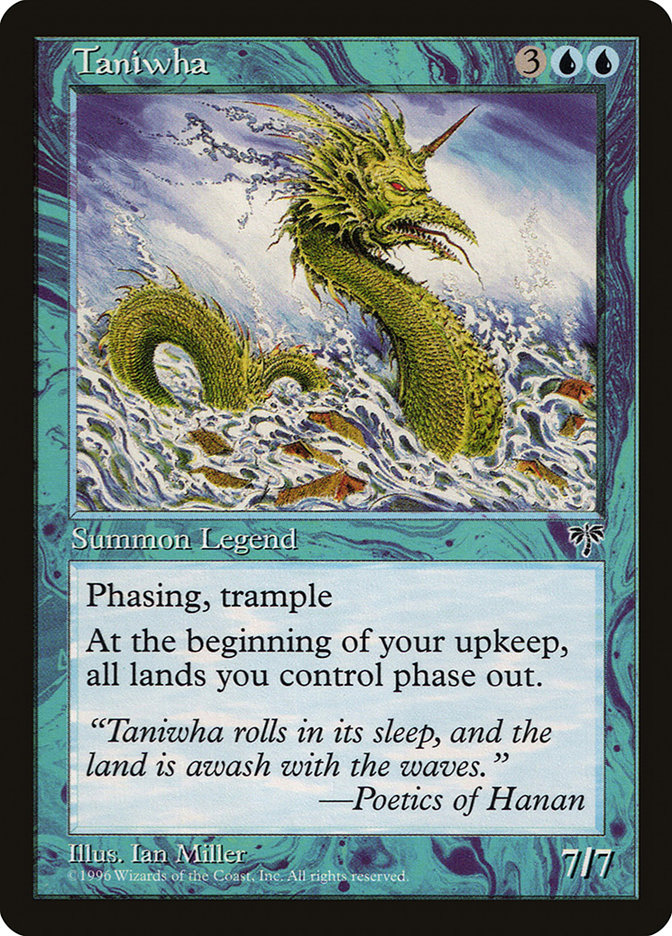
Taniwha is one of Magic’s strangest creatures. A 7/7 trampler for 5 mana isn’t nothing. Phasing means it’ll be there only half your turns, which is definitely a downsize. But then they stapled on a really huge drawback: During your upkeep, all your lands phase out, too.
Here’s the irony: The drawback has become its selling point if you play a commander like Jon Irenicus, Shattered One, which can hand it to your opponent and turn that land-phasing into somebody else’s problem.
#17. Gearseeker Serpent
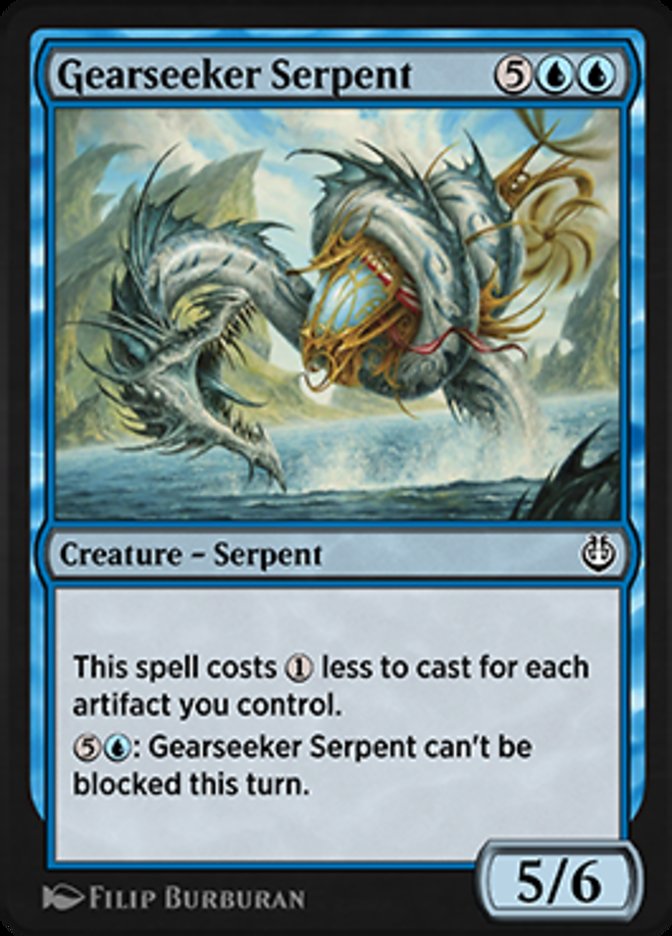
Alright, now we’re getting somewhere!
Gearseeker Serpent is as niche as previous serpents when you look at Commander, but it’s got a pretty impressive track record in competitive Pauper decks. It showcases one way in which some of the best serpents manage to be relevant: They reduce their own mana cost.
#16. Cryptic Serpent
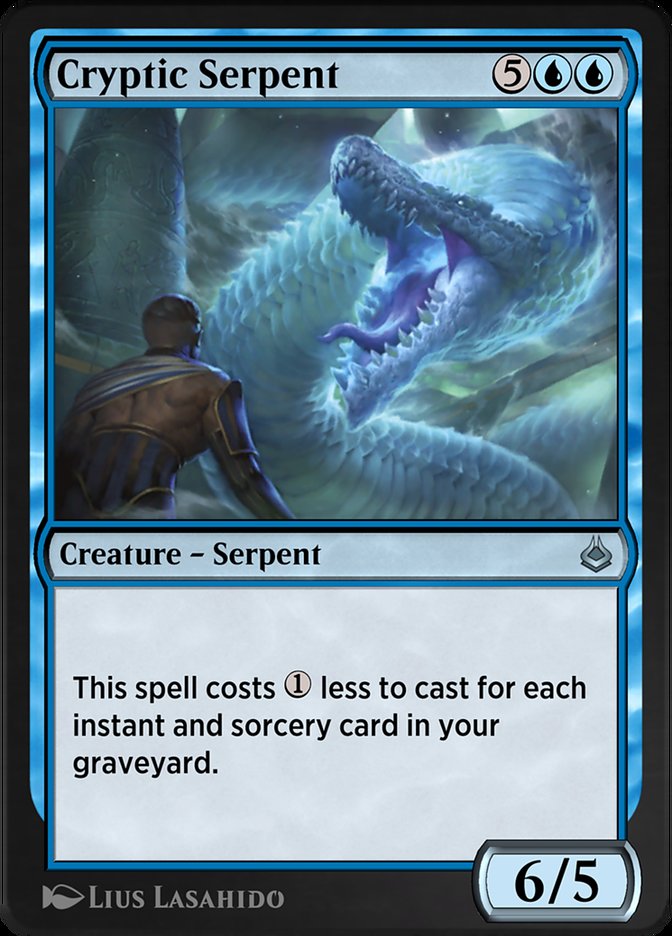
Cryptic Serpent uses Gearseeker Serpent‘s trick, but for spellslinger decks: Filling your graveyard with instants and sorceries turns this into an enormous creature for very little mana. Like its Gearseeker cousin, Cryptic Serpent is pretty solid in competitive Pauper.
#15. Lochmere Serpent

Like most serpents, Lochmere Serpent is pretty expensive, but at least you get options for your trouble. Flash is a very powerful keyword, and Lochmere Serpent‘s activated abilities can give you evasion, card draw, and even a way to recur the serpent itself.
It’s especially popular with Runo Stromkirk, where a large mana value is actually useful and putting huge creatures into the graveyard is part of the plan.
#14. Striped Riverwinder
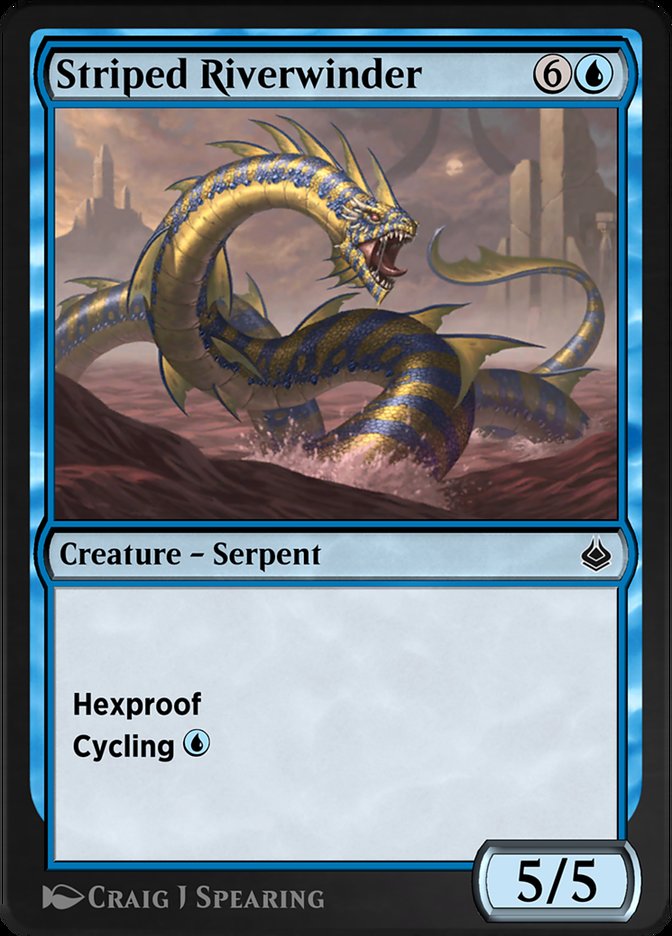
Here’s another serpent that can cycle for 1 mana: Striped Riverwinder can replace itself for cheap while putting a large creature into your graveyard, which makes it excellent for reanimation strategies. And if you actually reanimate it, hexproof makes Striped Riverwinder a lot harder to answer than most of the older serpents. It’s strong enough to see play in competitive Modern Living End decks.
#13. Loch Mare

Loch Mare has a pretty cool way to justify its combination of size and mana value. It costs just 2 mana and is printed as a 4/5, but it enters with three -1/-1 counters to shrink it effectively to 1/2. You can then pay to remove those counters, de-shrinking it, while also getting either card draw or tapping and stunning target creature.
An important subtlety: Loch Mare‘s abilities can remove any counters from it, not just the -1/-1 counters. You could even put a stun counter on it, then remove it!
#12. Tolarian Terror
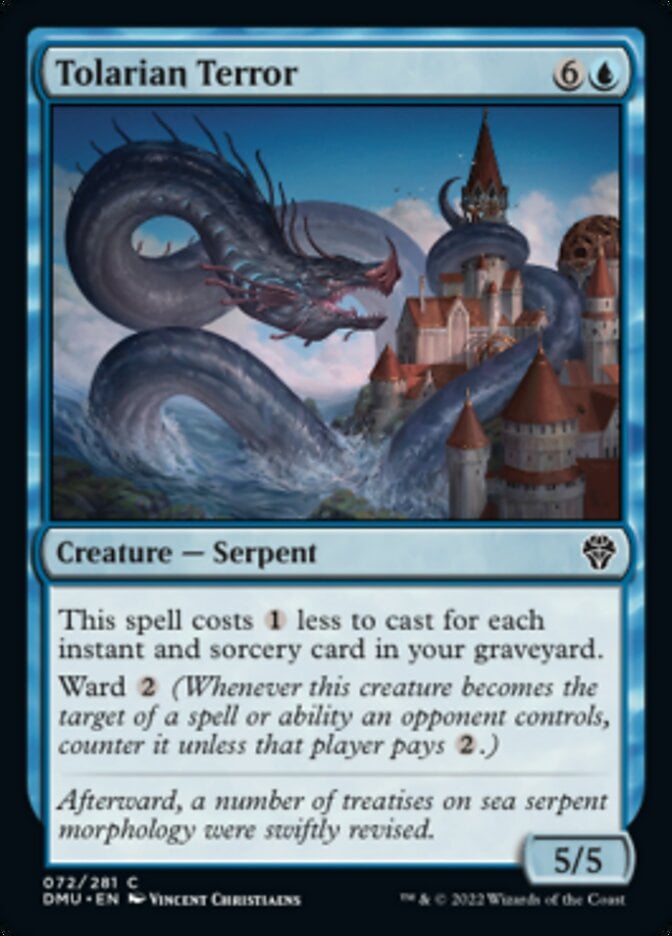
Tolarian Terror never made much of a dent in high-power formats, but it can be pretty scary in Standard depending on the meta, where it’s legal thanks to Foundations. And it really lives up to its name in Pauper, where Tolarian Terror sees top-tier competitive play.
#11. Sword Coast Serpent
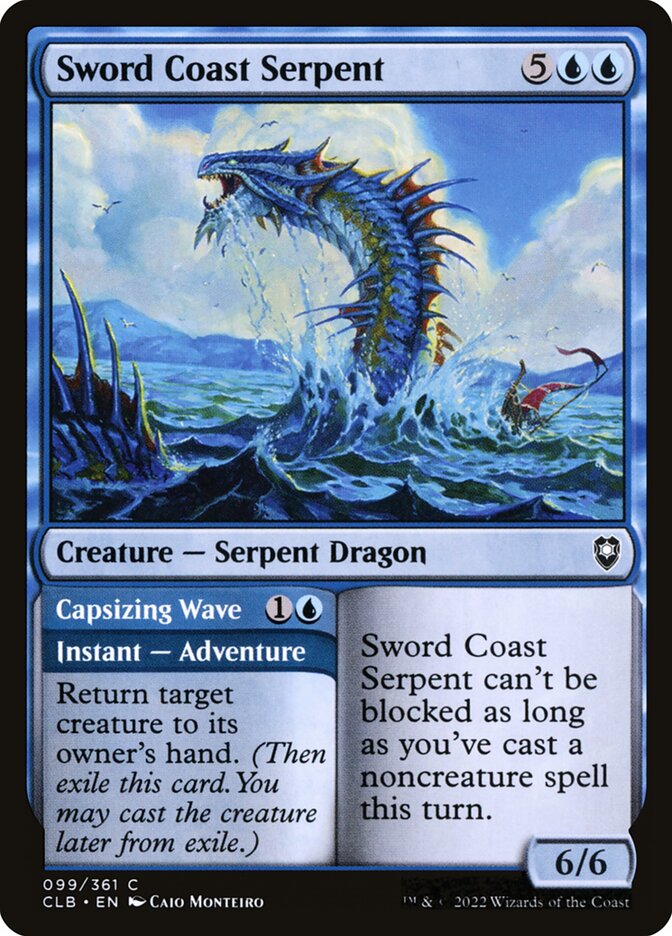
Sword Coast Serpent has a different way to solve the biggest problem with expensive sea monsters (namely, that sometimes you just don’t want an expensive sea monster). Its adventure side can bounce a creature early, after which you can cast the 6/6.
It also makes Sword Coast Serpent a pretty good card for adventure commanders like Beluna Grandsquall or Gorion, Wise Mentor.
#10. Invasion of Segovia / Caetus, Sea Tyrant of Segovia
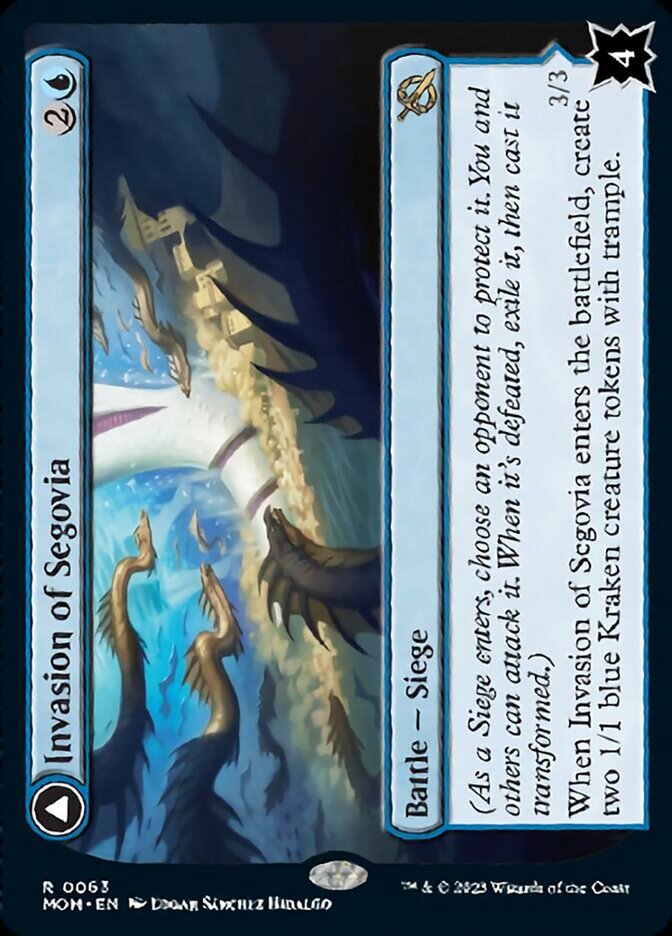
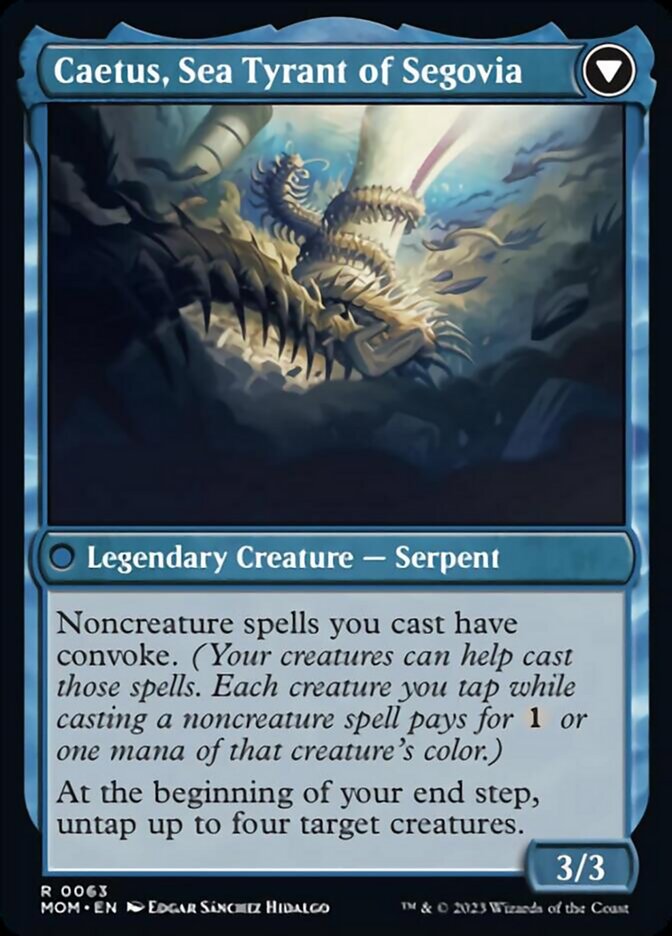
Yeah, this counts! The front face of Invasion of Segovia is a battle, but its transformed face, Caetus, Sea Tyrant of Segovia, is a legendary serpent.
And it’s a pretty good serpent! Your noncreature spells get convoke, while you get to untap up to four creatures at your end step (for example, four attackers that you can now use as blockers).
#9. Xolatoyac, the Smiling Flood
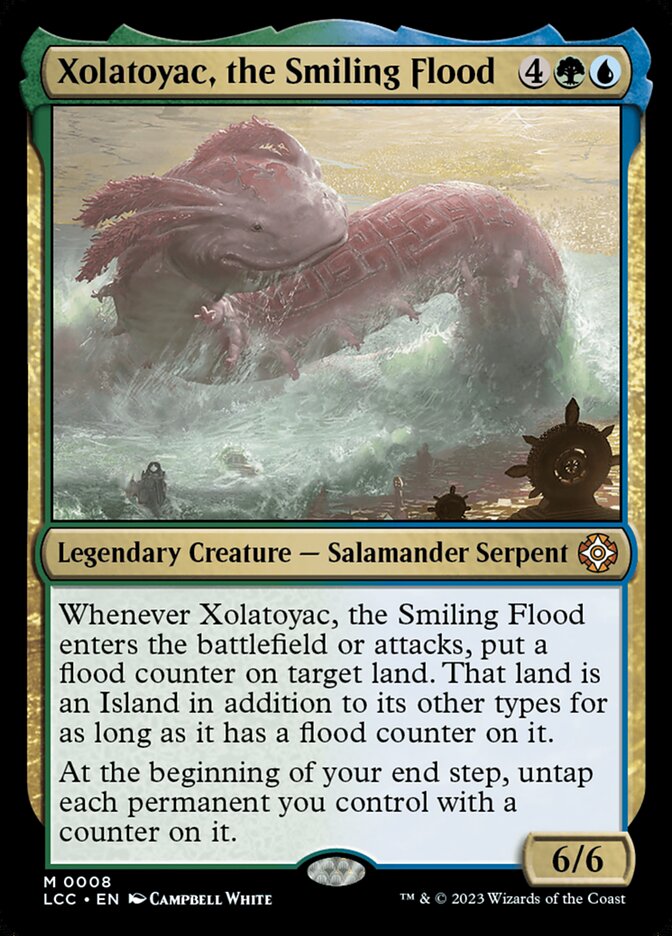
Everything has counters these days, it seems, and during your end step Xolatoyac, the Smiling Flood untaps each permanent you control that has a counter on it.
Xolatoyac will also helps you to get counters onto your permanents by putting flood counters on a target land (usually yours, so you can untap them at the end of your turn). Not enough to make it a great commander, but very flexible in the 99.
#8. Benthic Anomaly

Two for the price of one! Or, well, two potentially huge creatures for the price of … not exactly a steal, but a pretty good deal nevertheless!
Benthic Anomaly gives you something before the creature itself even resolves (its ability triggers when you cast it). That means the trigger survives even if somebody counters the 7/8 serpent itself, so you still get the big token creature if the anomaly gets Counterspell‘d.
Eldrazi decks also appreciate the creature types, making Benthic Anomaly useful with commanders like Ulalek, Fused Atrocity and not just the usual KLOS crew.
#7. Serpent of Yawning Depths
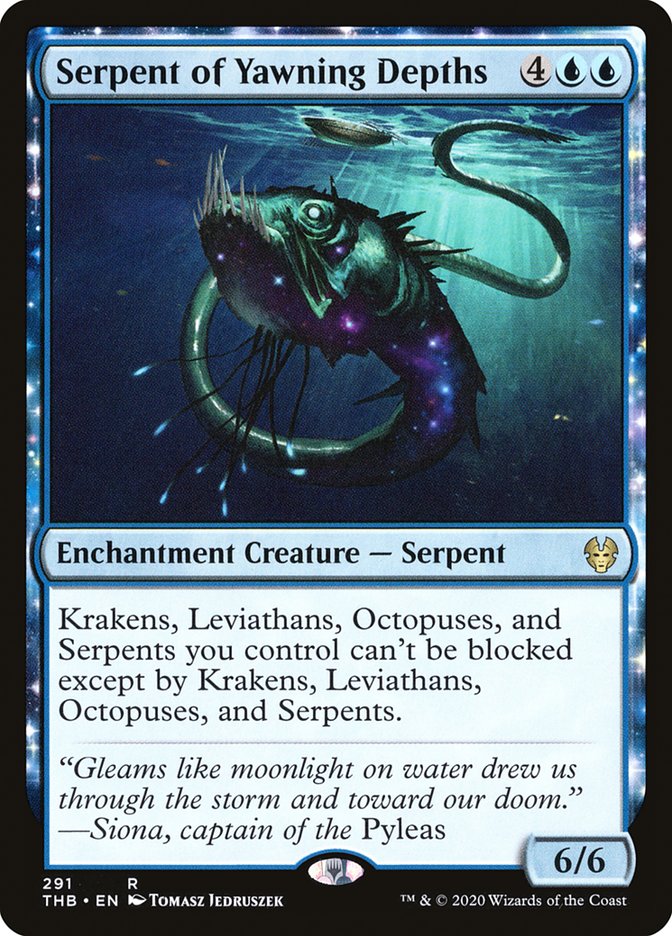
If you’re actually here because you’re building a dedicated serpent deck, or focused on the KLOS crowd, Serpent of Yawning Depths may be more important to you than several cards I’ve ranked above it. It effectively makes your krakens, leviathans, octopuses, and serpents unblockable unless your opponent happens to have one of those creature types available to block… which usually won’t be the case. One of the perks of playing one of the less-played archetypes!
Probably too narrow unless you’re going for that particular synergy, but if you’re going deep down into a rabbit hole the sea, Serpent of Yawning Depths is a great team player for exactly the deck you may be trying to build.
#6. Yorion, Sky Nomad
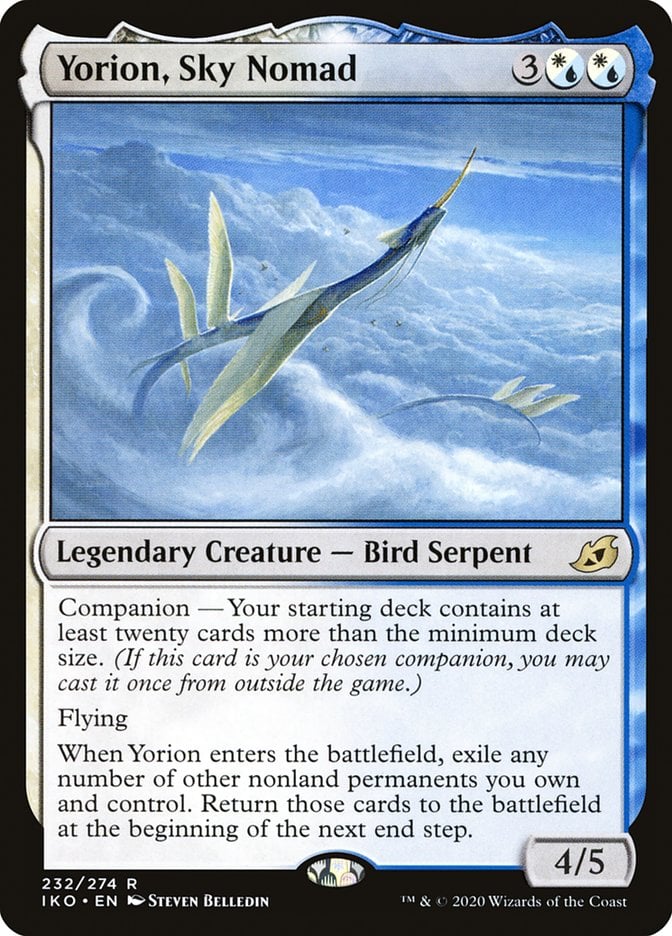
Nobody looking at the artwork is going to mistake Yorion, Sky Nomad for a sea snake, but that’s what it says on the tin: bird serpent.
You can’t use Yorion, Sky Nomad as your companion in Commander (except in a Whtz, the Bibliophile deck), but it’s perfectly legal as your commander or, more often, in the 99. Blinking all your other nonland permanents makes this a tremendously powerful ETB engine.
And it’s even better in 60-card formats: It’s so good, in fact, that it had to be banned in Modern, and it sees a lot of competitive play in Pioneer and Legacy.
#5. Koma, World-Eater

Koma, World-Eater does a couple of very green things: It can’t be countered, and it has trample. And on top of that, it spews cardboard whenever it punches one of your opponents in the face: four 3/3 serpent tokens per hit. Enough to put most foes into a Koma.
It has become pretty strong in Legacy (even if it’s a Foundations card), and very popular in Commander.
#4. The Unagi of Kyoshi Island
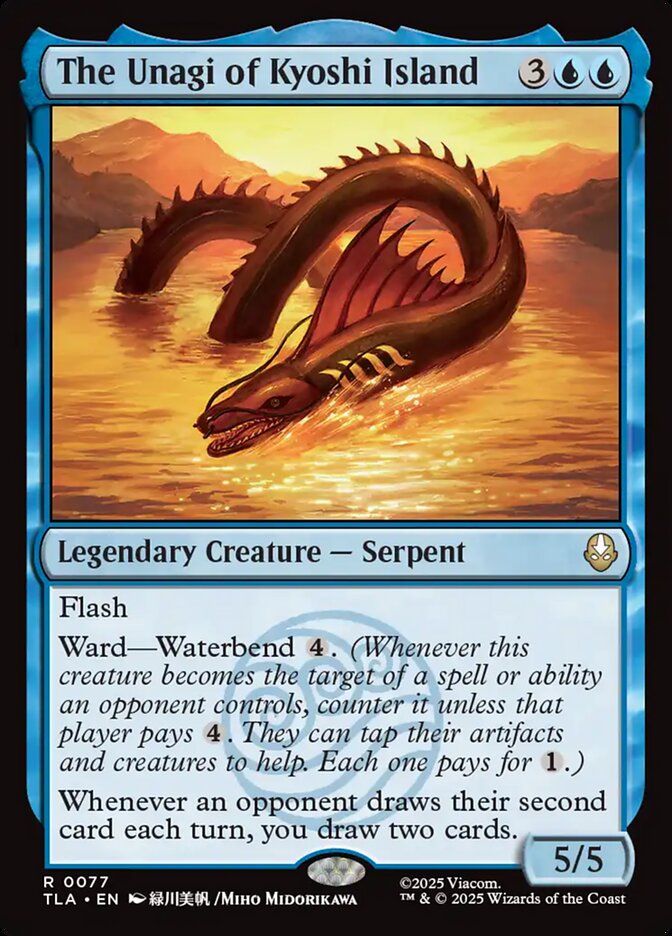
Avatar: The Last Airbender‘s The Unagi of Kyoshi Island isn’t especially popular in the command zone, but it’s become a very popular inclusion in other blue decks. Flash lets you wait until the last possible moment, ward makes it a pain to remove, and whenever an opponent draws their second card in a turn, you draw two cards.
#3. Junk Winder
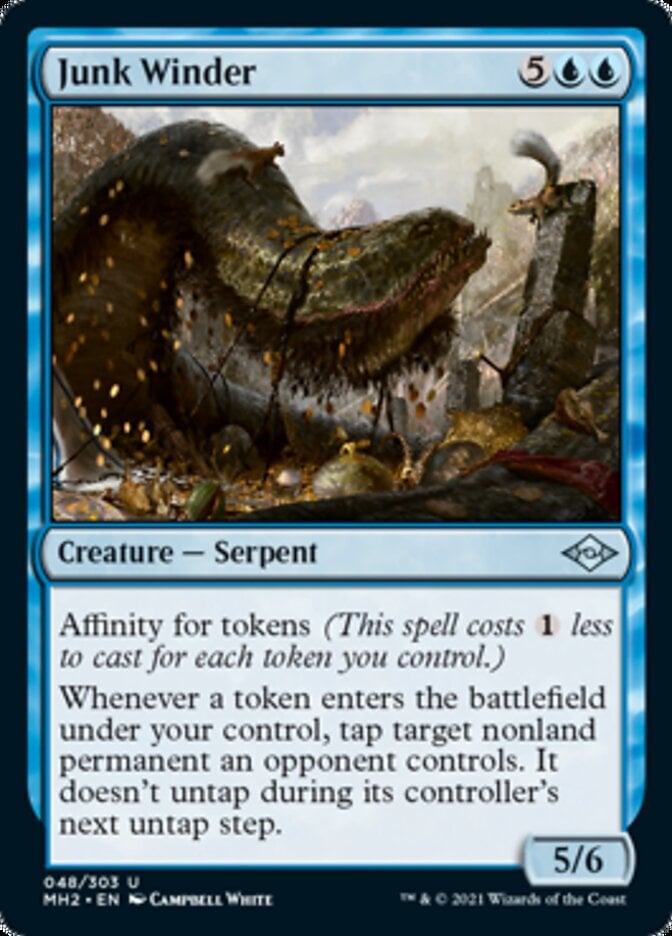
Junk Winder doesn’t need a serpent deck to be good. It just needs tokens: Affinity for tokens can make this 5/6 as cheap as , and then every token you create stuns an enemy creature for one turn.
That makes Junk Winder very useful with commanders like Hylda of the Icy Crown or Zinnia, Valley's Voice, and excellent with serpent commanders that have token synergy like Koma, Cosmos Serpent.
#2. Koma, Cosmos Serpent
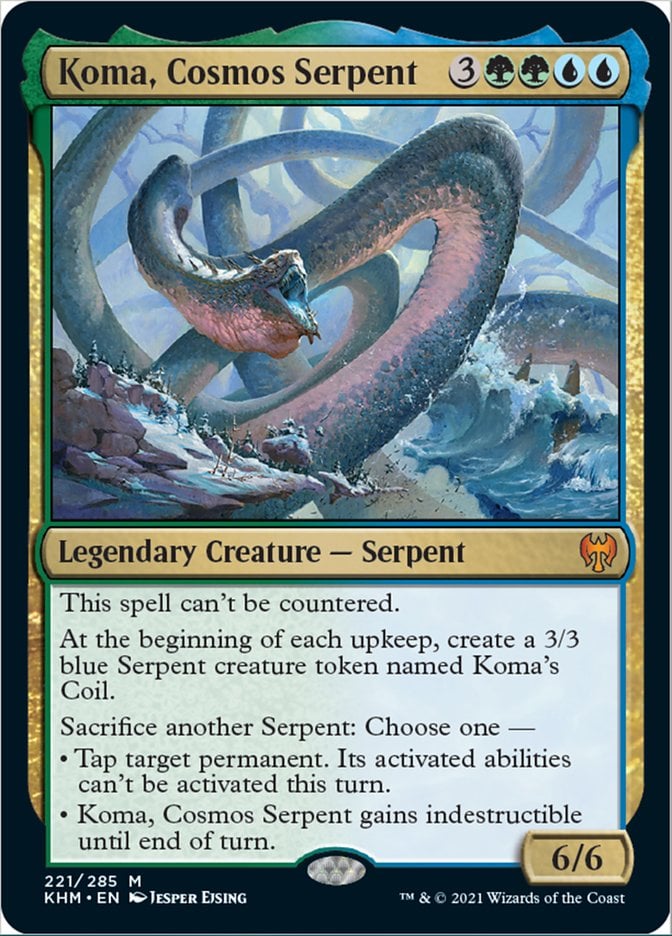
Koma, Cosmos Serpent can’t be countered and produces a 3/3 serpent token on every upkeep, not just on your own. Then you can sacrifice any other serpent (usually the tokens, but it could be any serpent permanent) to protect Big Koma or lock down your opponent’s board.
Koma, Cosmos Serpent is an excellent Simic commander in its own right (very often playing its other version, Koma, World-Eater in the 99), and it’s strong enough to see competitive play in cEDH with Kinnan, Bonder Prodigy in the command zone.
#1. Aesi, Tyrant of Gyre Strait
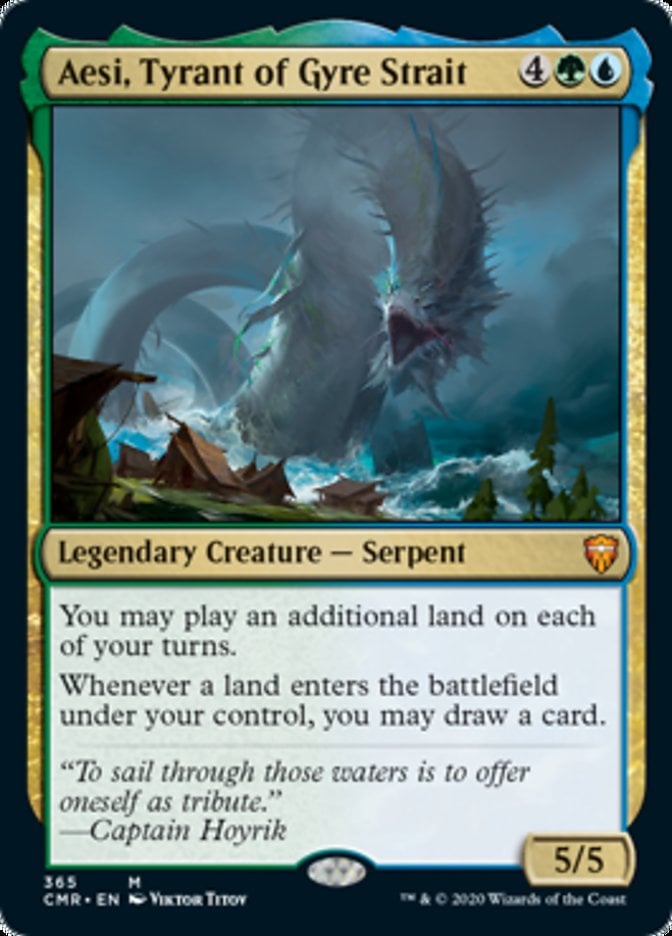
Aesi, Tyrant of Gyre Strait is both a great serpent commander and one of the best Simic commanders overall, not to mention among the most popular commanders in the game. And a team player, to boot: It happily slots into the 99 if you need.
It’s also as straightforward as it gets: You get an additional land play every turn, while drawing a card whenever a land enters under your control. Ramp becomes card advantage, fetch lands become card advantage, ordinary land drops become card advantage… and all that extra mana helps you cast whatever enormous sea creatures (or otherwise) you’ve stuffed into your deck.
You can build around lands, landfall, ramp, sea creatures, or just generic Simic value and wind up with a powerful deck. Best serpent, hands down!
Best Serpents Payoffs
Serpents don’t have the kind of dedicated typal support that more popular creatures types like elves, goblins, or zombies enjoy. But they do get something: There are several cards that care about the sea creature package, which groups serpents with krakens, leviathans, and octopuses. Wizards has been using that batch for years.
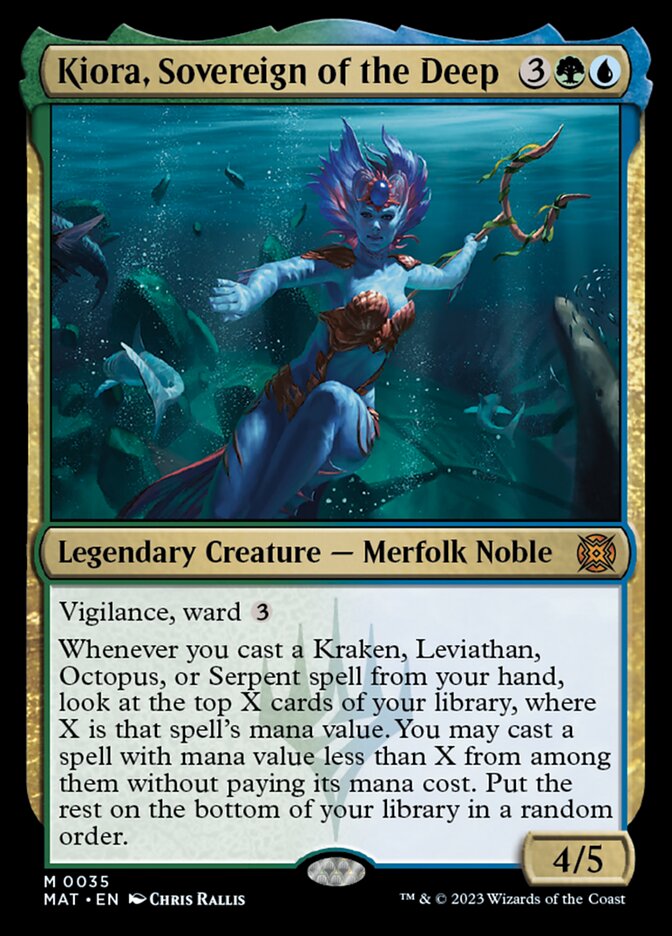
That means that some of the best serpent payoffs and commanders aren’t themselves serpents. Kiora, Sovereign of the Deep is one such example: It rewards you whenever you cast one of those four creature types.
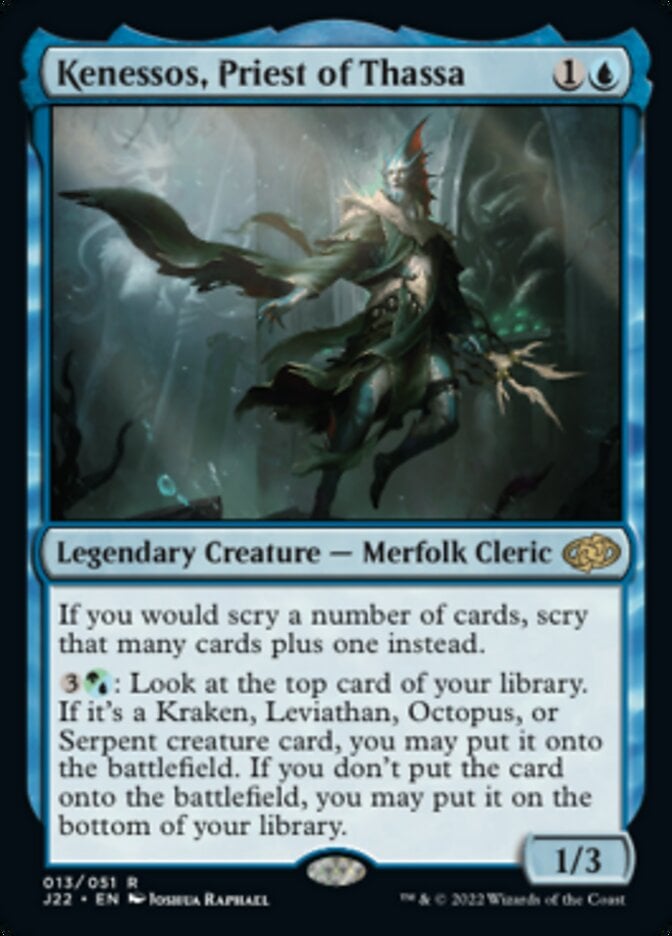
Kenessos, Priest of Thassa can instead cheat them directly from the top of your library.
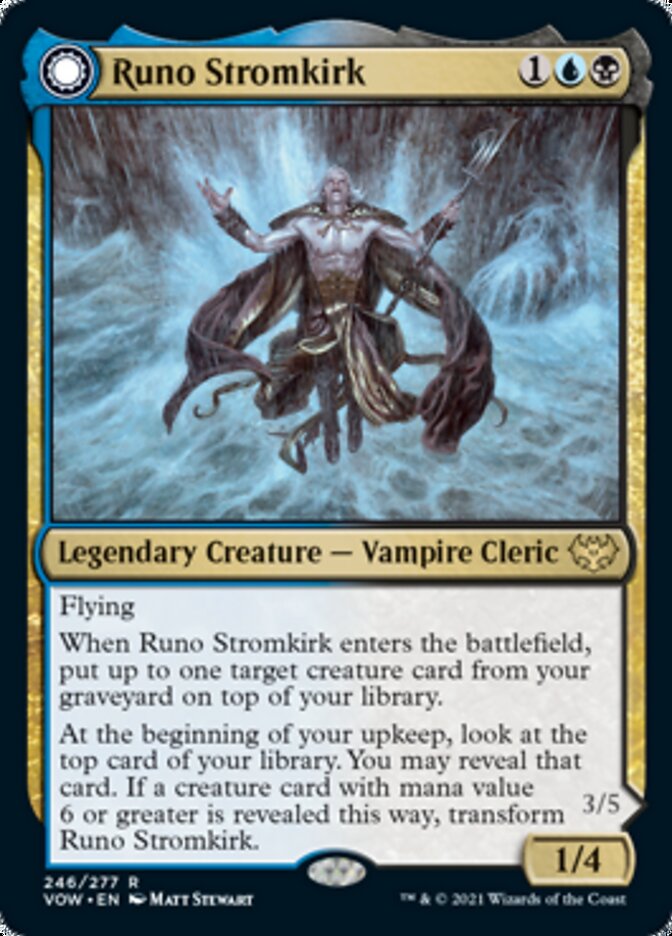
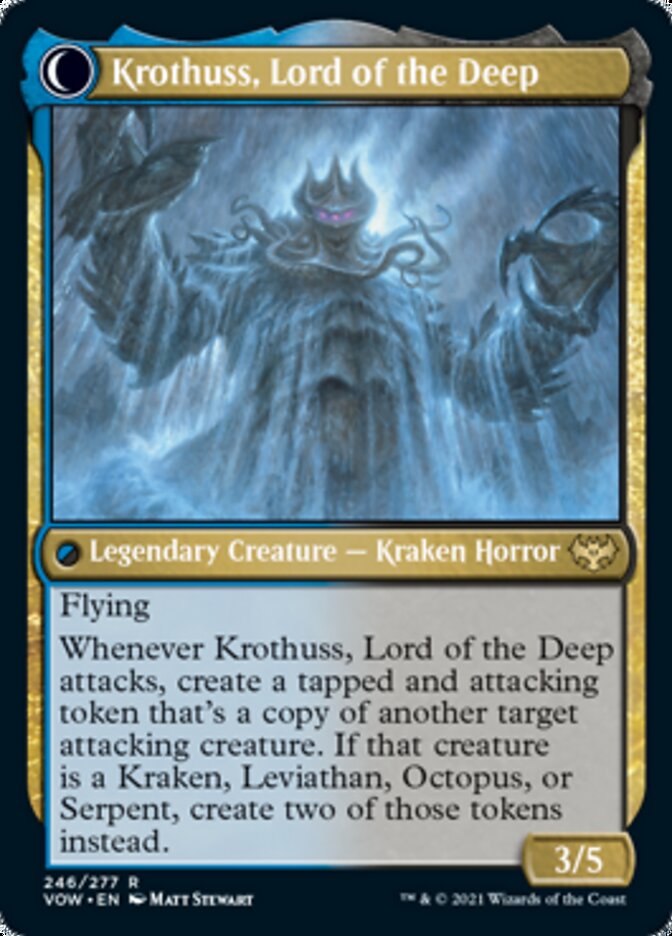
Runo Stromkirk cares about creatures with large mana values (as the majority of serpents tend to be), and then transforms into Krothuss, Lord of the Deep, which makes extra copies of attacking sea creatures.
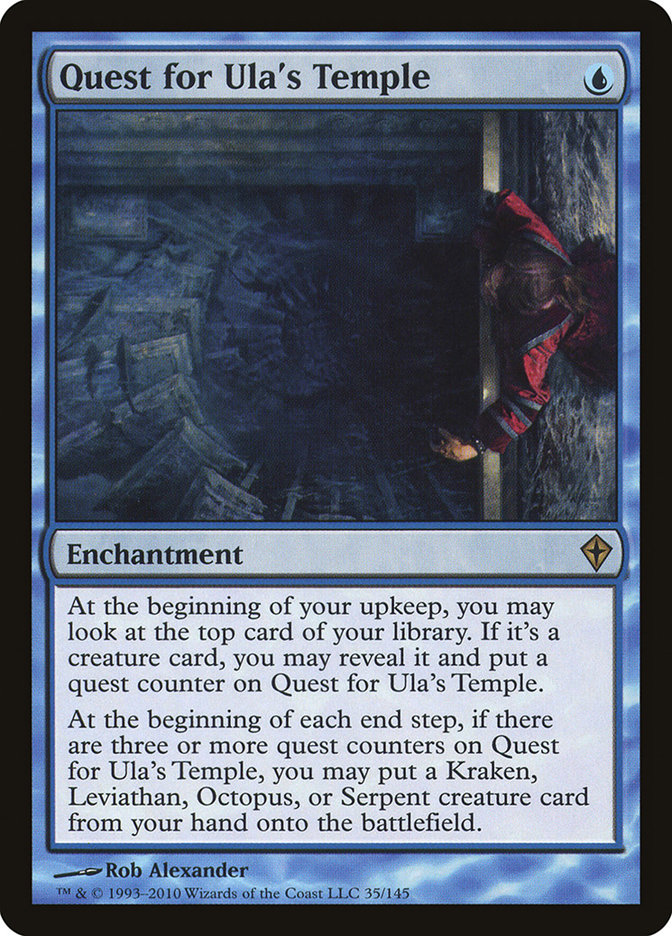
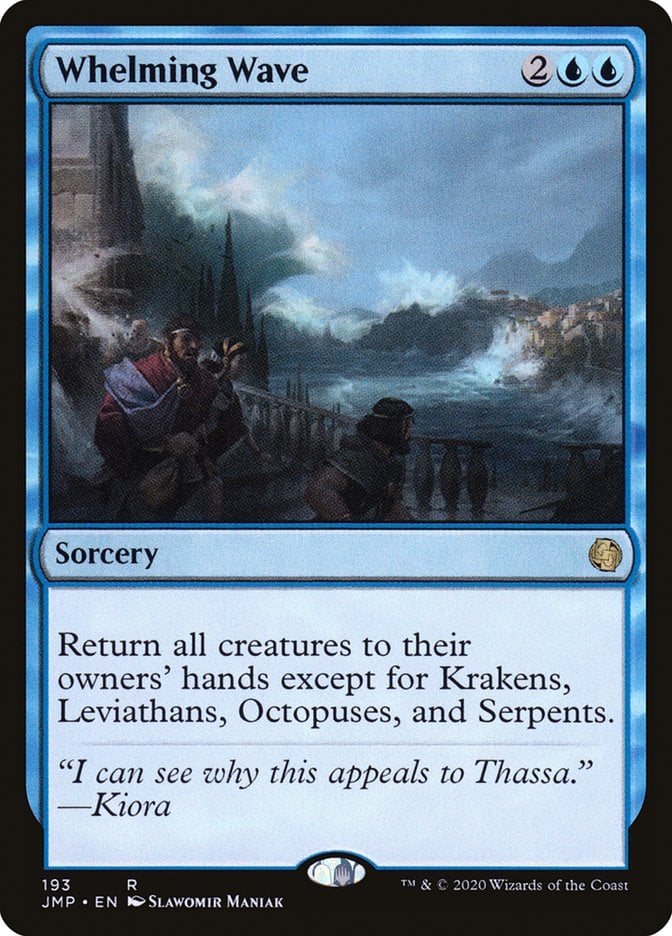
There are also several excellent cards for the 99. Quest for Ula's Temple helps cheat giant sea creatures into play, Whelming Wave can clear away most creatures while leaving your serpents and their aquatic friends alone, and Serpent of Yawning Depths gives the whole crew evasion.
Are Snakes and Serpents the Same in MTG?
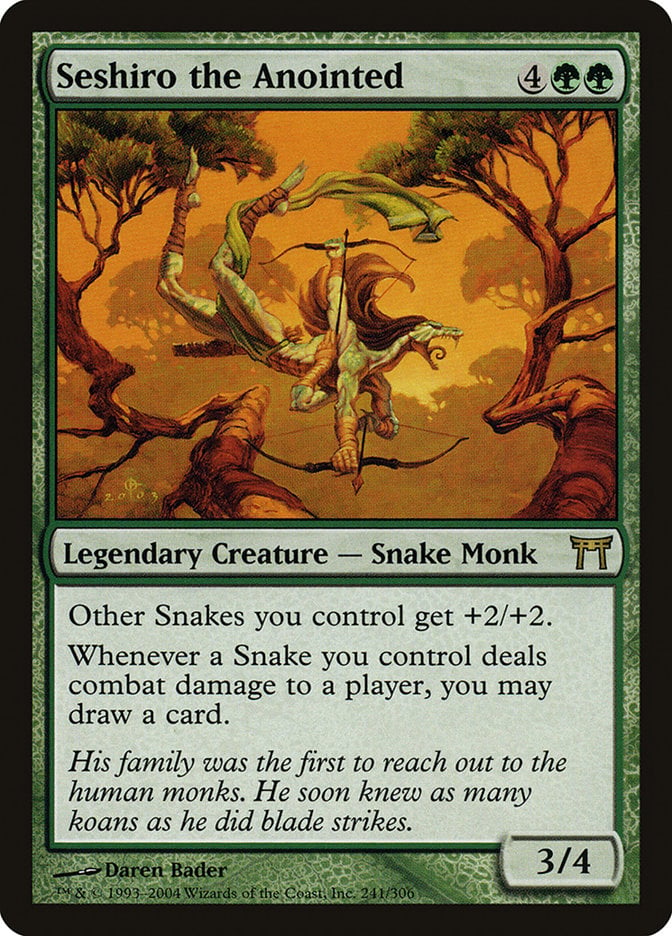
Nope! Snake and serpent are separate creature types in Magic, so a card that specifically cares about snakes doesn’t automatically work with serpents, and vice versa. Seshiro the Anointed, for example, may look thematically perfect next to a bunch of serpents, but its snake bonuses won’t help ordinary serpents at all.
The only exception would be changelings: Since changelings have every creature type, they count as both snakes and serpents (along with everything else!).
Flavor-wise, Magic tends to use serpent for its enormous sea monsters and snake for smaller terrestrial or humanoid snake creatures. Mechanically, they’re completely different creatures.
Wrap Up (in Koma’s Coils)
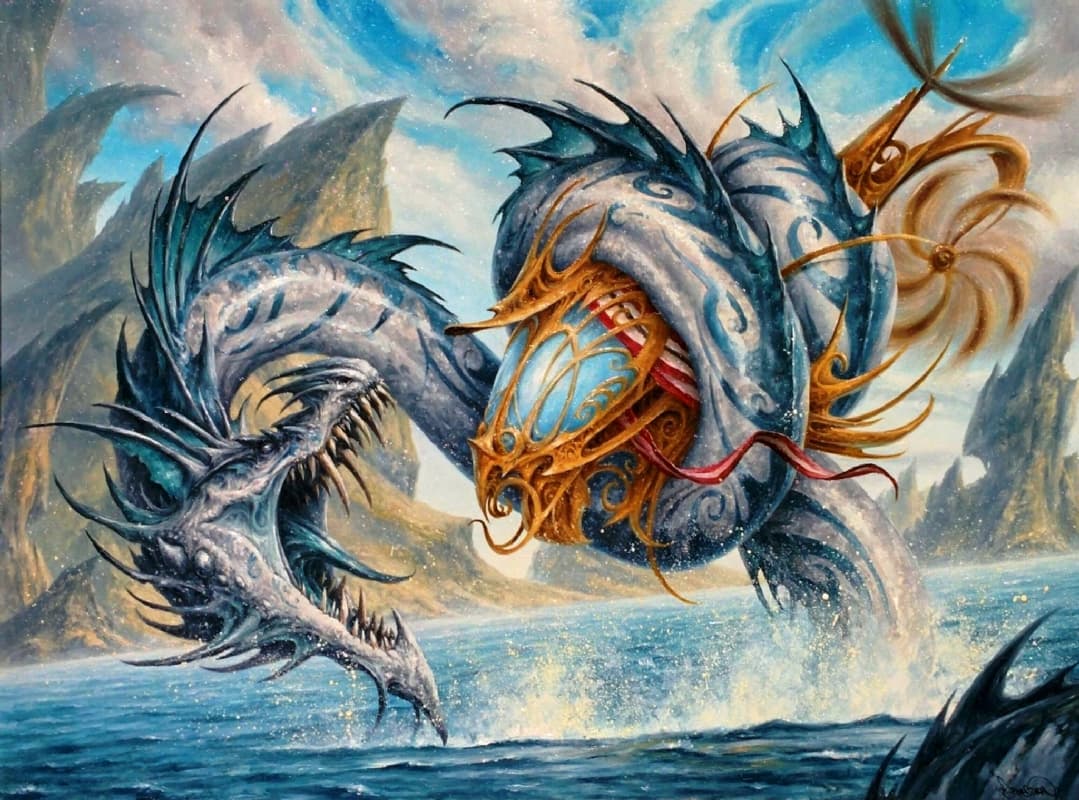
Gearseeker Serpent | Illustration by Filip Burburan
Serpents have come a long way from giant blue creatures that were a pain to attack with. The Unagi of Kyoshi Island and Junk Winder are excellent Commander cards without needing any typal support, while Koma, Cosmos Serpent and Aesi, Tyrant of Gyre Strait are excellent Simic commanders that can support different strategies.
If you’re building around serpents specifically, I’d start with the broader KLOS package rather than trying to force pure serpent typal. There simply aren’t enough dedicated serpent payoffs yet, while cards like Kiora, Sovereign of the Deep, Kenessos, Priest of Thassa, Whelming Wave, and Serpent of Yawning Depths turn the best serpents into part of a much more cohesive strategy. And if Wizards keeps feeding the deep-sea monster archetype, there’s plenty of room for this list to get considerably more crowded.
Which serpents do you run in your decks, and in which formats? Let me know in the comments below or over on the Draftsim Discord. And for more from us, follow us on YouTube at The Daily Upkeep.
I hope you have enjoyed this deep dive into Magic’s best serpents, and good luck out there!
Follow Draftsim for awesome articles and set updates:









Add Comment