
Last updated on May 8, 2026

The Tenth Doctor | Illustration by Luisa J. Preissler
Time counters are Magic’s built-in countdown timer. Suspend delays spells, vanishing puts permanents on a clock, and impending turns enchantments into scary creatures when the time is up.
But why wait?
Time travel is a mechanic that lets you mess with that clock, and make it run slower or faster depending on what you need. So let’s take a minute and check how time travel works in MTG!
How Does Time Travel Work?

All of History, All at Once | Illustration Néstor Ossandón Leal
Time travel lets you add or remove a time counter from permanents you control on the battlefield, or your suspended cards in exile. The only caveat is, those permanents or cards must already have a time counter. You can’t add a time counter to permanents or suspended cards with no time counters on it.
Time travel works for any number of suspended cards you own and permanents you control, as long as they have time counters on them. Time travel is not mandatory, by the way: You can leave any of those objects untouched, if you prefer.
There are several ways to put time counters on cards.
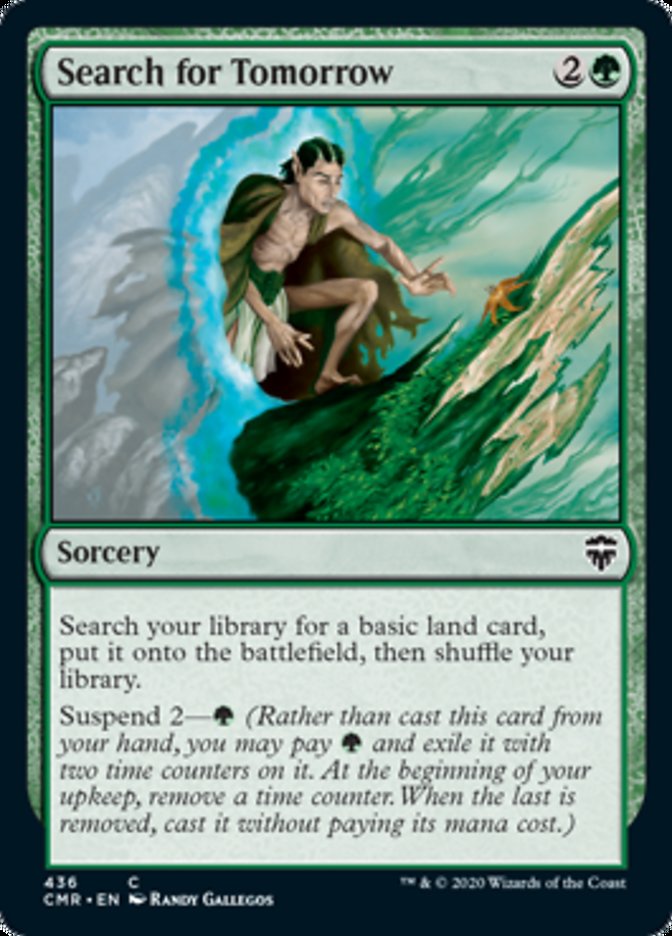
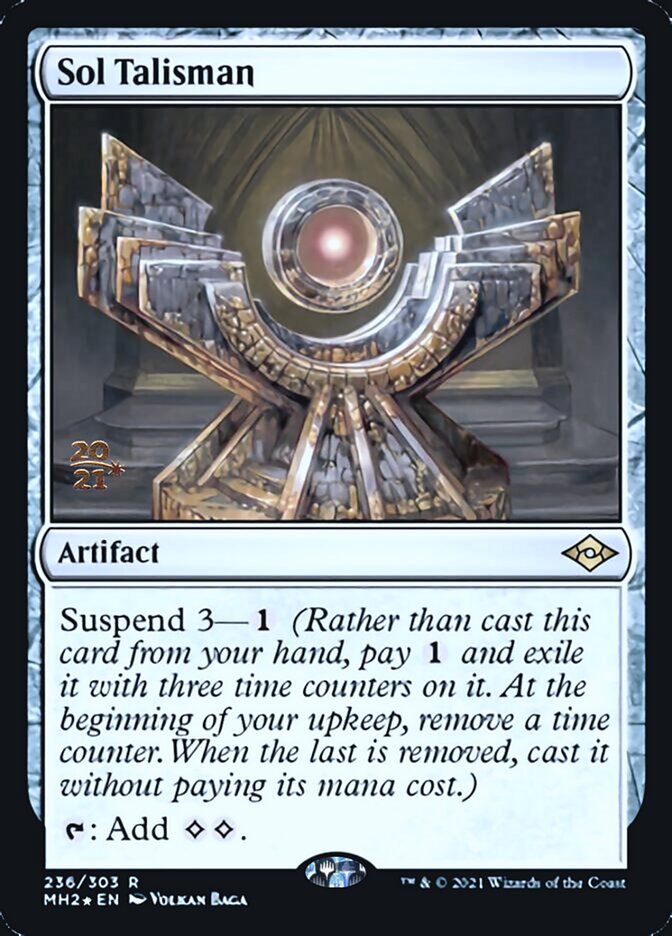
The most common way is the suspend mechanic, like on Search for Tomorrow or Sol Talisman, which lets you exile a card from your hand, put some time counters on it, and then cast the card for free when those counters are gone.
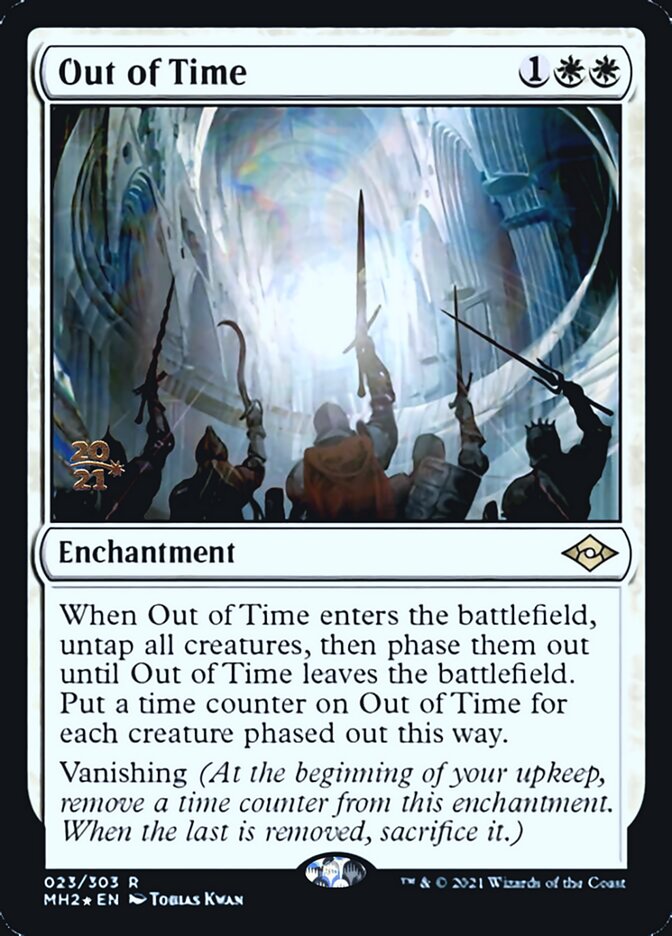

There’s the vanishing mechanic, usually found on enchantments like Out of Time or creatures like Dreamtide Whale, which forces you to sacrifice that permanent when it runs out of time counters.


There’s the impending mechanic from Duskmourn: House of Horror, found on enchantment creatures like Overlord of the Hauntwoods or Overlord of the Balemurk, that lets you cast them for cheaper as an enchantment, and they become creatures when they run out of time counters.
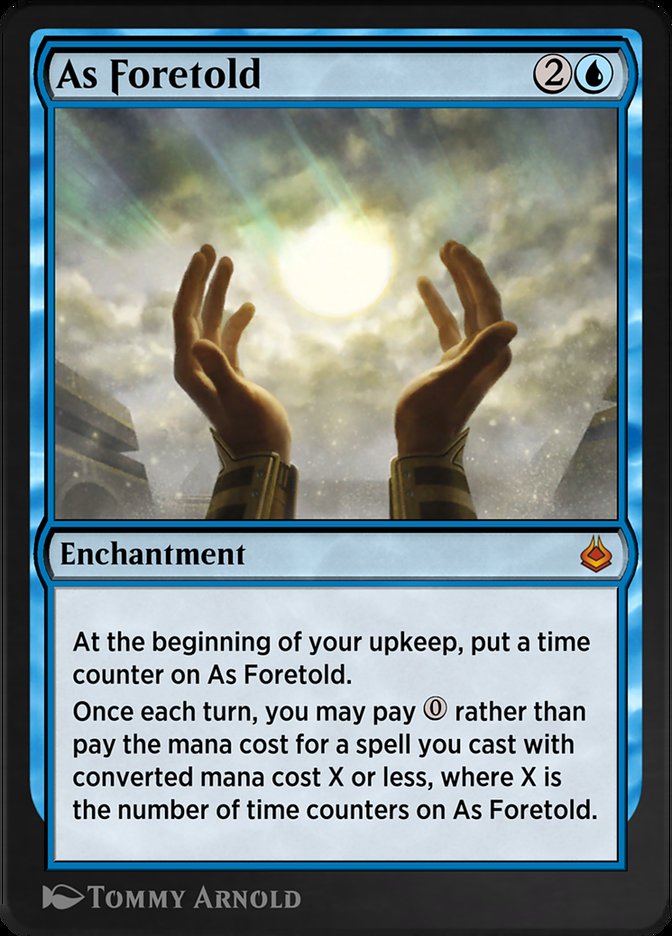
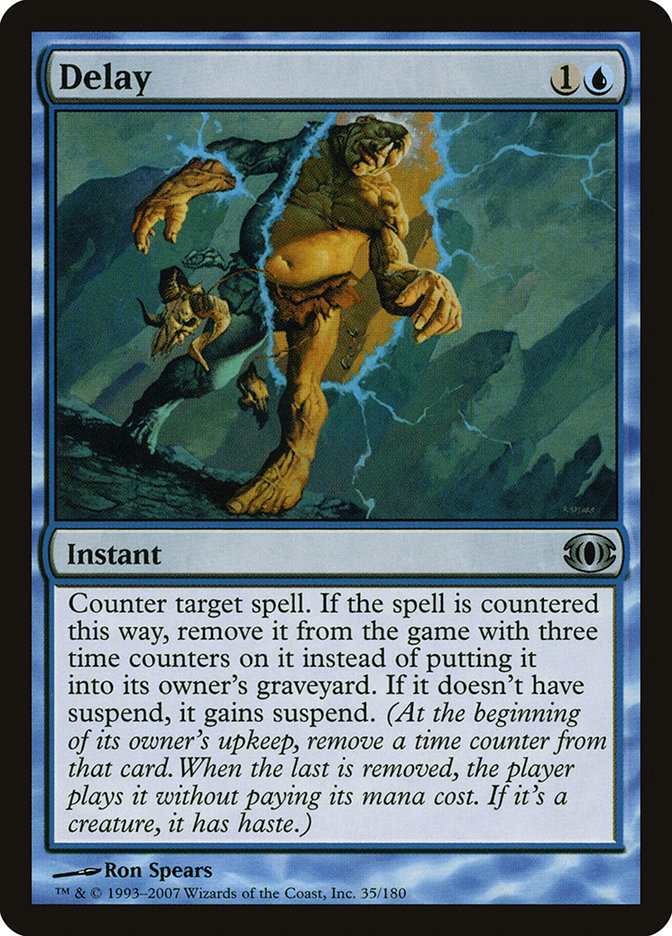
And then some cards that add or remove time counters with some specific, non-keyworded ability; some of them, like Delay, give suspend to other cards.
Mechanics that use time counters also include an upkeep/end step trigger that removes them as part of the ability (suspend and vanishing do so during the upkeep, and impending at the end of the turn). Time travel allows you to speed up or slow down this process, depending on what you prefer.
The History of Time Travel in MTG
Time travel was introduced in Magic: The Gathering – Doctor Who in 2023. All time travel cards can be found in the Timey-Wimey precon.
Time counters are much older than that: The first card with time counters on it was Tourach's Gate from Fallen Empires (more than 30 years ago), and the suspend keyword is from Time Spiral in 2006. Time travel is therefore Doctor Who’s twist to interact with a fairly old type of counter.
To date, there have been no other Magic sets with the time travel mechanic (neither new cards, nor reprints of Doctor Who cards). But it’s not impossible to see the mechanic returning in an MTG setting with time travel as a theme.
Does Time Travel Target?
No, it does not.
In Magic, targeting is a very specific action: The ability in question needs to literally spell out “target” in order to be considered targeting.
Expressions like “a permanent of your choice,” or wording like “for each permanent… you may…” (which is what time travel uses), are not targeting.
That means that shroud won’t stop time travel from affecting an eligible permanent you control, because shroud only cares about targeting. If you equip your Dreamtide Whale with a Lightning Greaves, you can still add (or remove) time counters with time travel from it.
Do You Have to Add or Remove a Counter with Time Travel?
No, you don’t. It’s strictly optional. For example, if you have five permanents with time counters, you could add a time counter to one permanent, remove a time counter from a second permanent, and leave the three other permanents untouched.
What About “Time Travel Three Times”?
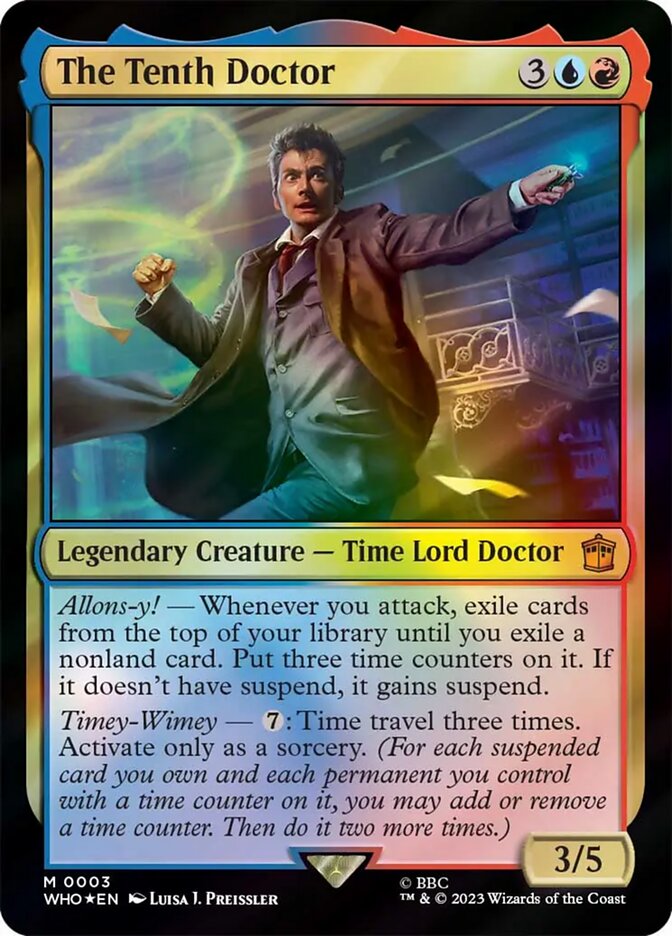
If a spell or ability lets you time travel X times, it means that you perform the time travel action X separate times, one after another, during the resolution of that spell/ability. You don’t have to choose the same permanent(s) or cards each time.
That means you could choose to add or remove less time counters than X. For example, if you time travel three times, you could remove just two time counters from an object (you are not forced to remove three time counters; you can remove up to three in this case). If you wanted to, you could add, then remove, then add a time counter in this case.
Time Travel vs. Proliferate
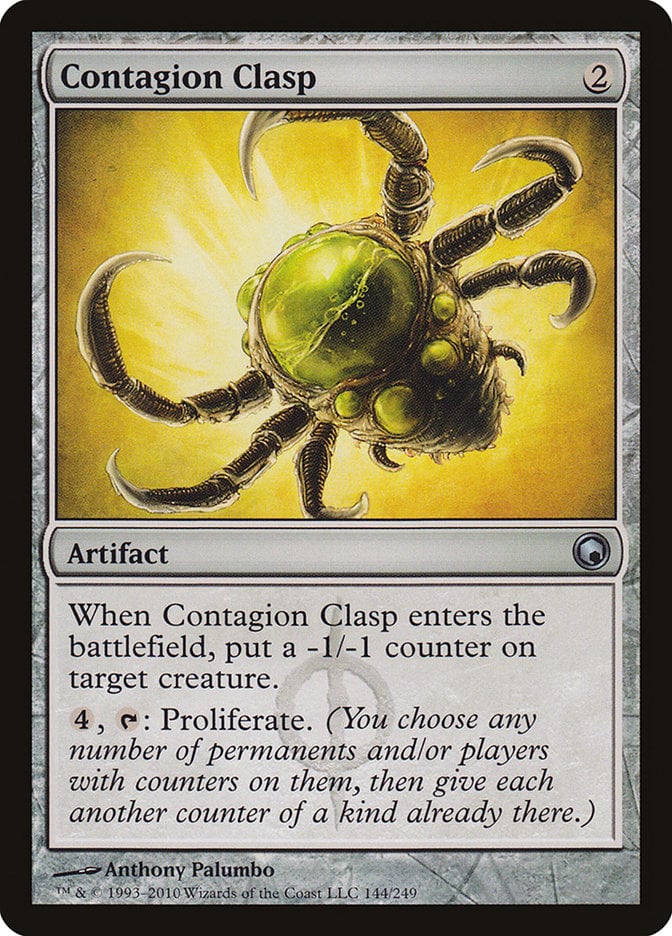
Time travel and proliferate are somewhat close relatives, but are pretty different when compared up close.
To begin with, proliferate works with any kind of counter: +1/+1 counters and stun counters on creatures, lore counters on sagas, loyalty counters on planeswalkers… and even time counters!. Time travel only works with time counters, and with nothing else.
Proliferate also works with players (and therefore with poison or energy counters), not just permanents.
And, perhaps most important, proliferate works on your opponents and their permanents, not just yours. Time travel is specifically about messing with your time counters, and just time counters.
The last difference is that proliferate always adds, while time travel can either add or remove.
Does Time Travel Work with Fading Cards?
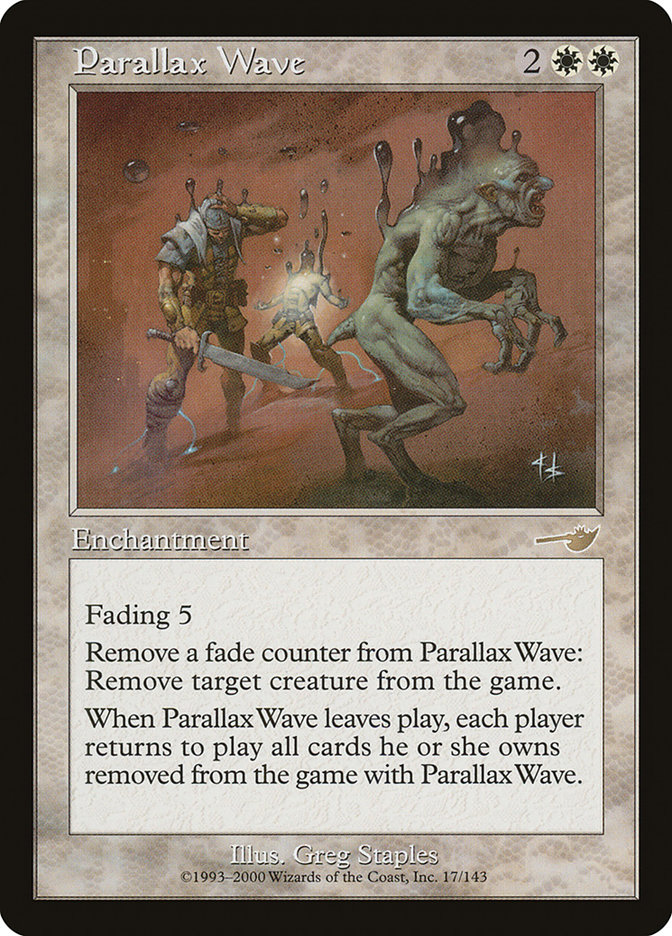
No. Fading uses “fade counters,” not time counters.
Time travel only interacts with time counters, full stop.
What’s the Point of Time Travel in MTG?
From the point of view of flavor, time counters are about something that will happen in the future. And time travel is a way to either speed things up, or slow them down, depending if you want that future to happen or not.
Mechanically, the point of time travel is usually:
- Fast-forward suspended and impending cards so you get the payoff now instead of in 2–3 turns. Suspend and impending are balanced around waiting; time travel lets you skip the wait,
- Slow down vanishing permanents, so you don’t have to sacrifice them when they run out of time counters (although in some cases the vanishing card has a good trigger when it leaves the battlefield, so you may want to speed it up).
Will We See Time Travel in MTG Again?
Time counters themselves have proven deciduous, returning from time to time when they make sense.
And time travel is a fairly generic trope which WotC has already used for their in-universe stories.
So I’d bet that we’ll see the time travel mechanic again in Magic some day, when the setting makes sense. The Star Trek crossover, for example, would be a fitting setting for a few time travel cards.
Gallery and List of Time Travel Cards
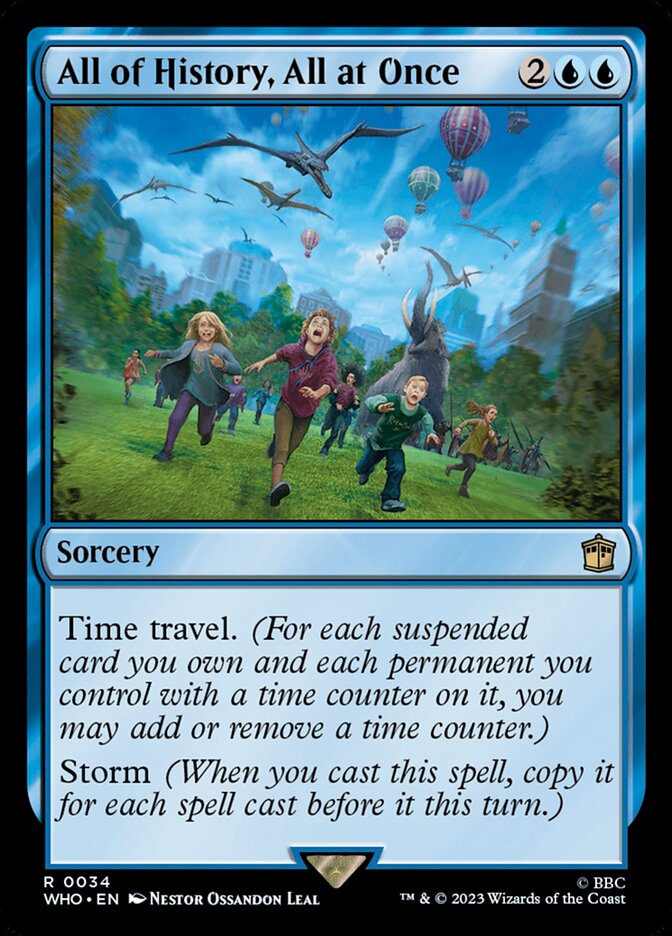
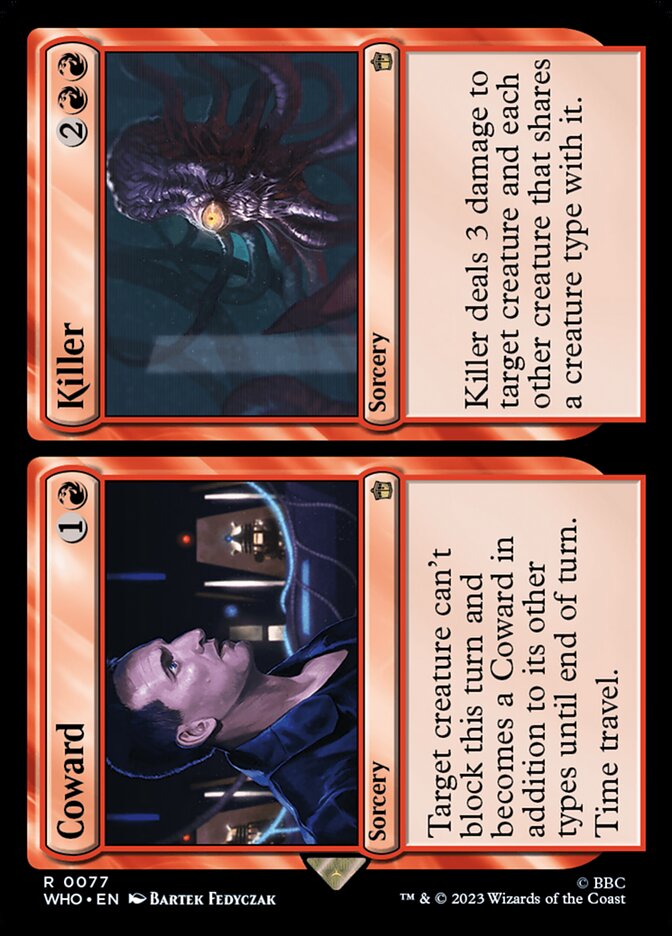
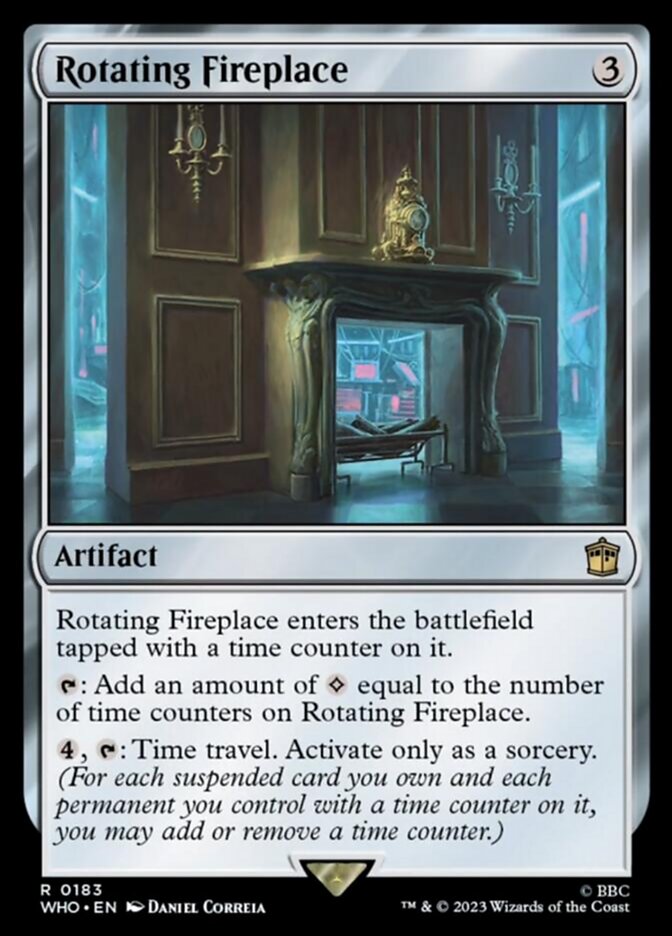
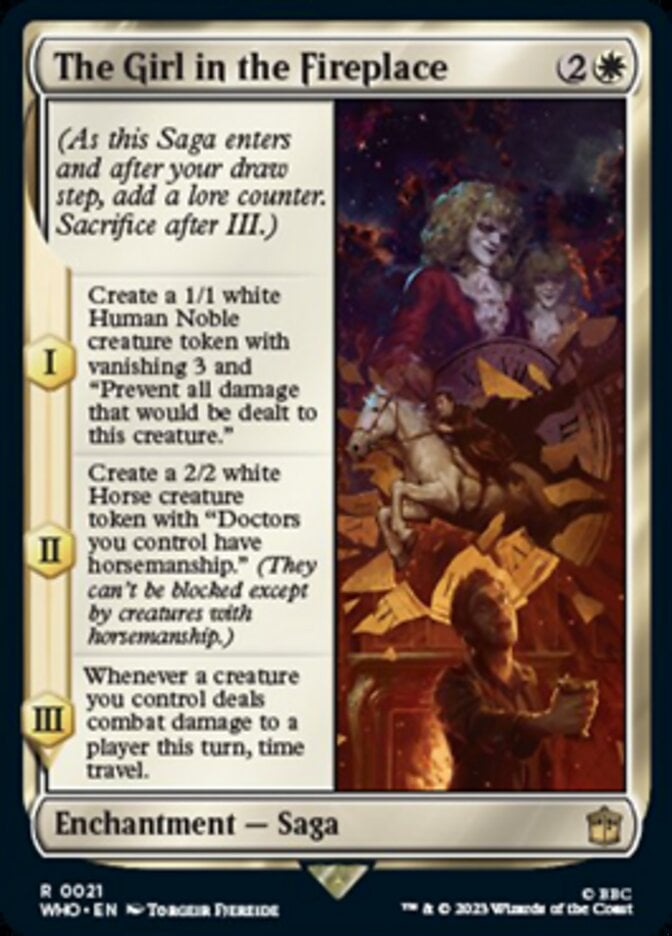
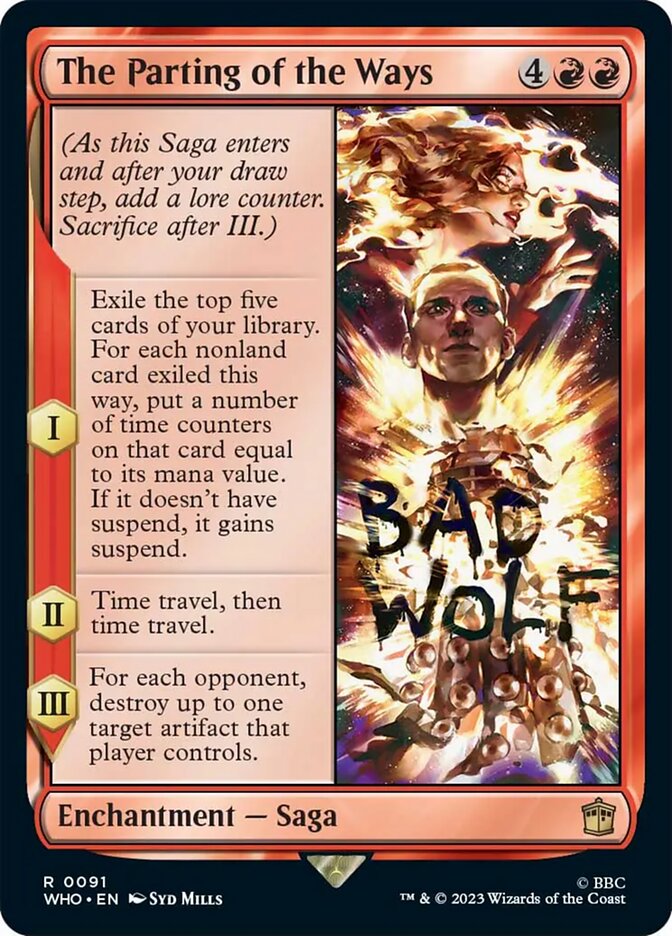
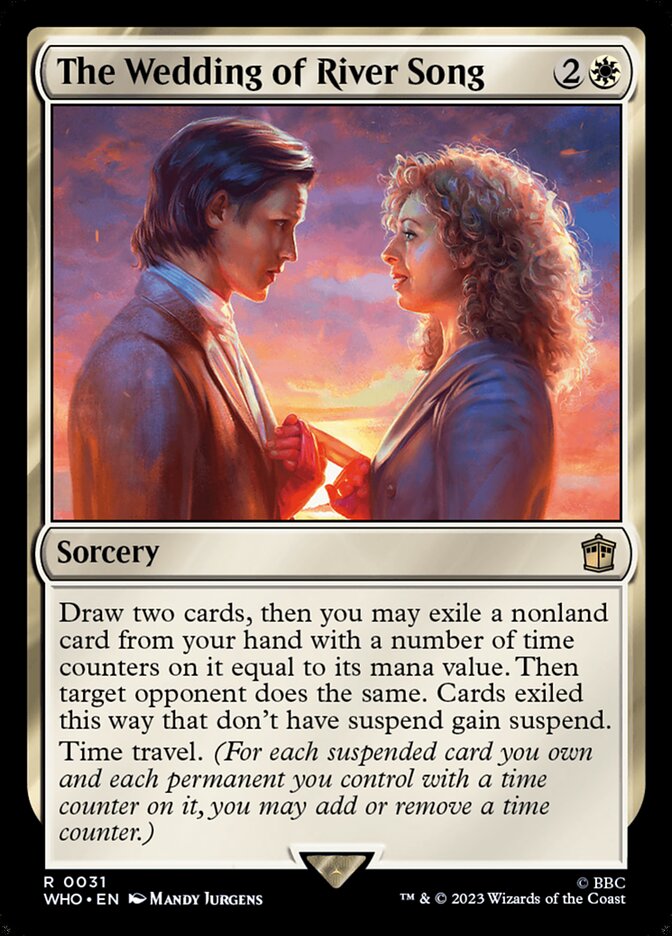
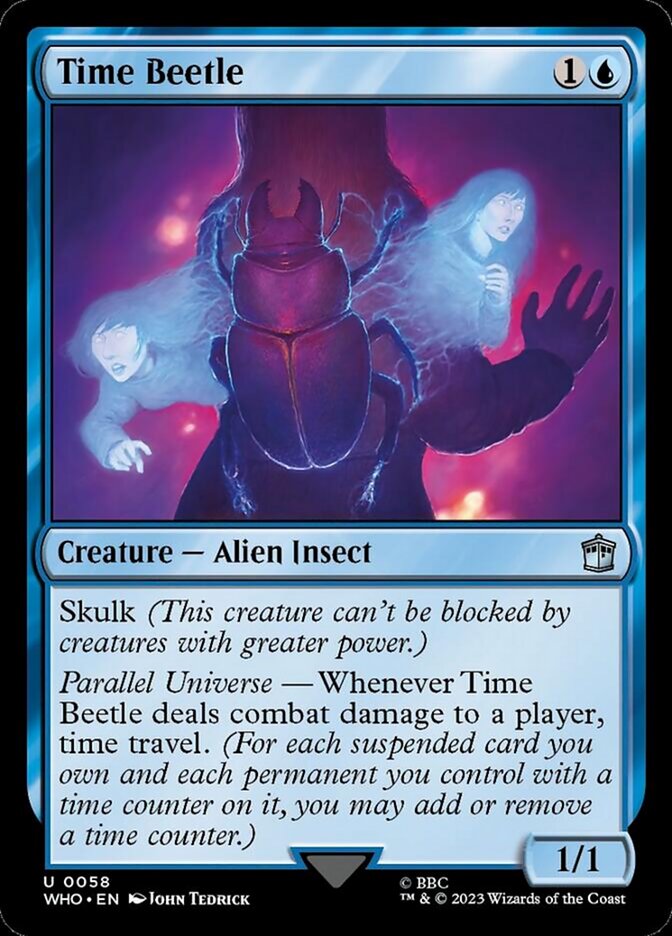
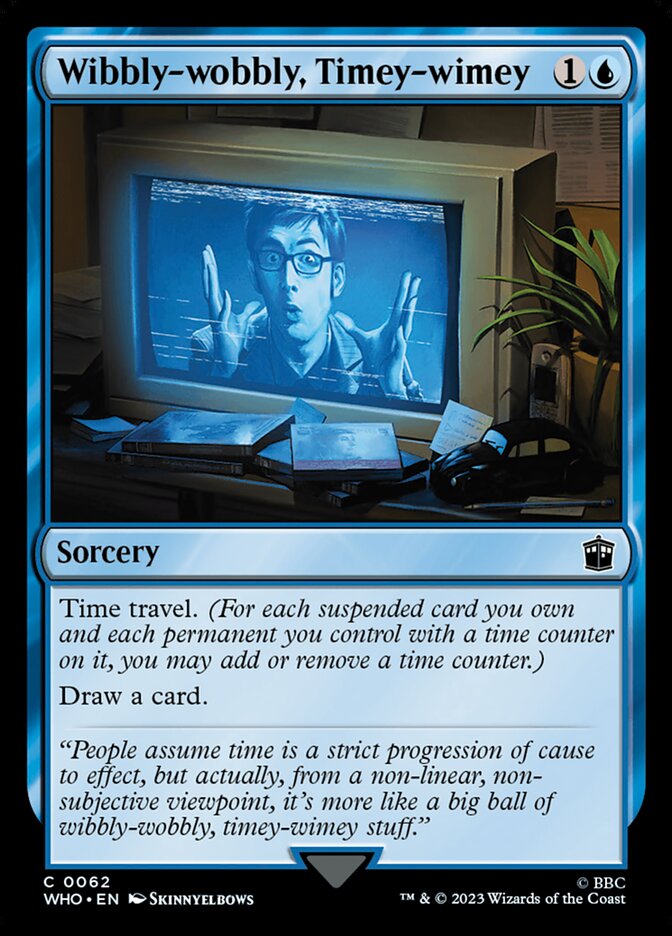
There are nine time travel cards, all from the Timey-Wimey Commander precon from Doctor Who.
- All of History, All at Once
- Coward // Killer
- Rotating Fireplace
- The Girl in the Fireplace
- The Parting of the Ways
- The Tenth Doctor
- The Wedding of River Song
- Time Beetle
- Wibbly-wobbly, Timey-wimey
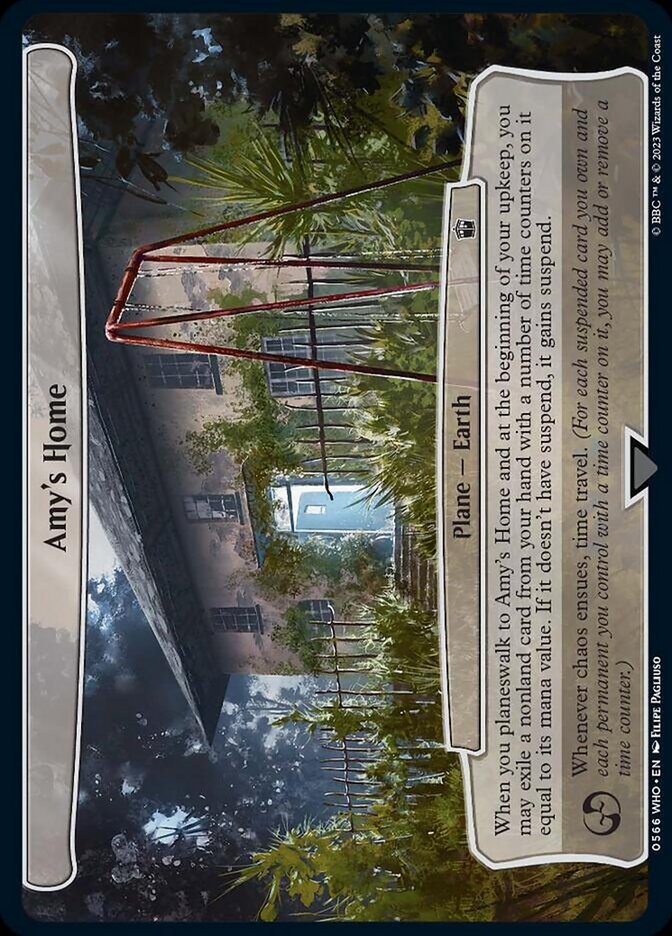
There’s also one Planechase card, Amy's Home:
Best Time Travel Cards
Time travel is a support mechanic (it’s pretty useless without other cards that care about time counters), and certainly not the most powerful out there. At the time of writing, you can buy all the time travel cards for less than $3, which should tell you something about their power level.
On the other hand, it means you can play around with time travel for fairly cheap, so here are the best of the bunch.
The Tenth Doctor
The Tenth Doctor is the time travel commander, and a reasonably popular commander overall when traveling with Rose Tyler.
Since this may be a bit confusing, and is not spelled out on The Tenth Doctor card itself: Doctor Who introduced the “Doctor’s Companion” mechanic which, in spite of its name, has nothing to do with the companion mechanic, and everything to do with the partner mechanic. Specifically, there are a number of legendary creatures with the “Doctor’s Companion” ability, like Rose Tyler…
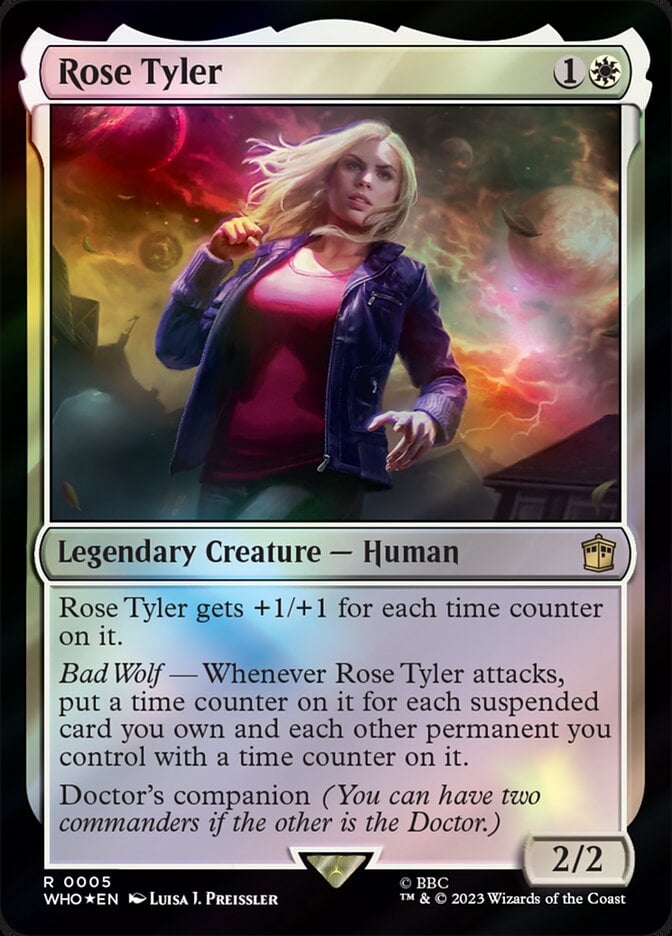
… and in that case you can have two commanders, a Doctor and a Doctor’s Companion. Rose Tyler is the Doctor’s companion in the Timey-Wimey precon.
If you’re down for some time traveling in the time zone, this is the team you’re looking for!
In the 99, The Tenth Doctor often shows up in Jhoira of the Ghitu.
Time Beetle
Time Beetle is an auto-include in EDH decks with The Tenth Doctor as their commander. It’s also very popular in Taigam, Master Opportunist decks, and in Jhoira of the Ghitu decks, given the direct synergy between commanders that can suspend cards every turn, and a time-travelling saboteur.
Wibbly-wobbly, Timey-wimey
Time travellers being a pretty tight family, Wibbly-wobbly, Timey-wimey is another auto-include in The Tenth Doctor decks, and very common with either Taigam, Master Opportunist or Jhoira of the Ghitu in the command zone.
Rotating Fireplace
A time-travelling mana rock! Rotating Fireplace fits any color identity, and here’s a good example of a card that wants you to add time counters to it, rather than remove them.
Wrap Up

Wibbly-wobbly, Timey-wimey | Illustration by Skinnyelbows
Time’s up, I’m afraid!
Time travel is, in itself, a pretty simple mechanic: If your stuff has time counters, time travel lets you either add a time counter, remove a time counter, or leave it untouched. It works both for permanents on the battlefield, and suspended cards in exile. Just remember that it only works for permanents you control (it doesn’t work for your opponents’ stuff), and that it only works with time counters (other types of counters are unaffected). And it doesn’t target.
I hope you’ve enjoyed this mechanical deep dive into Magic’s time travel, and if you have comments or questions please drop something below, or stop by the Draftsim Discord for a chat.
Good luck out there!
Follow Draftsim for awesome articles and set updates:









Add Comment