
Last updated on May 8, 2026

Overlord of the Boilerbilges | Illustration by Akio
Shhh! Stay still!
Did you hear that!?
I’m… I’m sure I heard something. I can feel it. There’s something out there.
Don’t you feel it too? This… this impending feeling that there’s something out there, something that knows we’re here?
Well… you should! Because in Duskmourn: House of Horror, the whole plane is out to hunt you. That’s the gimmick with this Magic set, and one of its new keyword abilities: impending.
Let’s find out what’s going on!
How Does Impending Work?
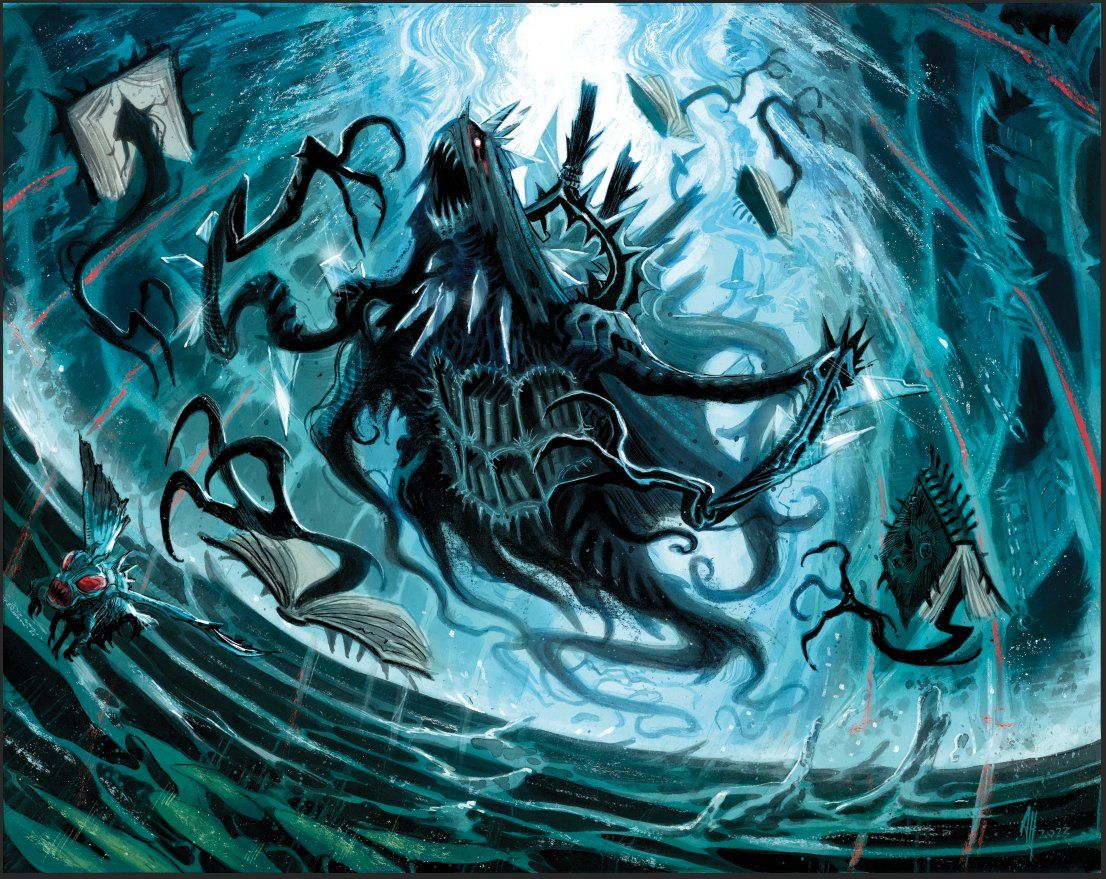
Overlord of the Floodpits | Illustration by Abz J Harding
Impending is an alternative cost that lets you cast an enchantment creature for less mana, except that it enters with a number of time counters on it. As long as there are time counters on it, the permanent isn’t a creature.

For example, if you cast Overlord of the Balemurk for its impending cost of , your Overlord enters with four time counters on it and will only be an enchantment, not an enchantment creature.
You remove one time counter at the beginning of your end step – once all the time counters are gone, Overlord of the Floodpits becomes a creature (and still counts as an enchantment).
The History of Impending in MTG
The impending keyword was introduced to MTG with Duskmourn: House of Horrors in September 2024.
This Magic set wants to capture the feeling of something dreadful being out there, unseen, creeping up on the survivors. “The team explored using suspend early on,” wrote Head Designer Mark Rosewater when describing the set’s mechanics, “but it was wordy, and having the card be an enchantment until the time counters ran out was much more flavorful.” Duskmourn is an enchantment-focused set, so having the impending permanent be an enchantment on the field (rather than be held in exile, like suspend does) was a much better fit.
Their original plan for the mechanic was to use it in just a couple of individual cards without keywording it, but they found the design so flavorful that they created a whole mythic cycle for it and turned impending into a keyword.
There’s no way of knowing if impending will become an evergreen mechanic, and there haven’t been any new impending cards since DSK. But from what Rosewater wrote on his blog, impending is a 6 in the Storm Scale, an informal scale which goes from 1 to 10 and which Rosewater uses to communicate how likely it is for a mechanic to return in a future set (1 being extremely likely, 10 being very little chance).
By the way: There are three older cards with “Impending” in their name (Impending Disaster, Impending Doom, and Impending Flux), but they have nothing to do with the impending mechanic.
Is Impending an Alternative Cost?
Indeed it is!
Impending is a textbook case of an alternative cost: You can pay the full cost and get the whole enchantment creature package right now, or pay a different (in this case cheaper price) for a different effect (just the enchantment, in this case).
Impending vs. Suspend

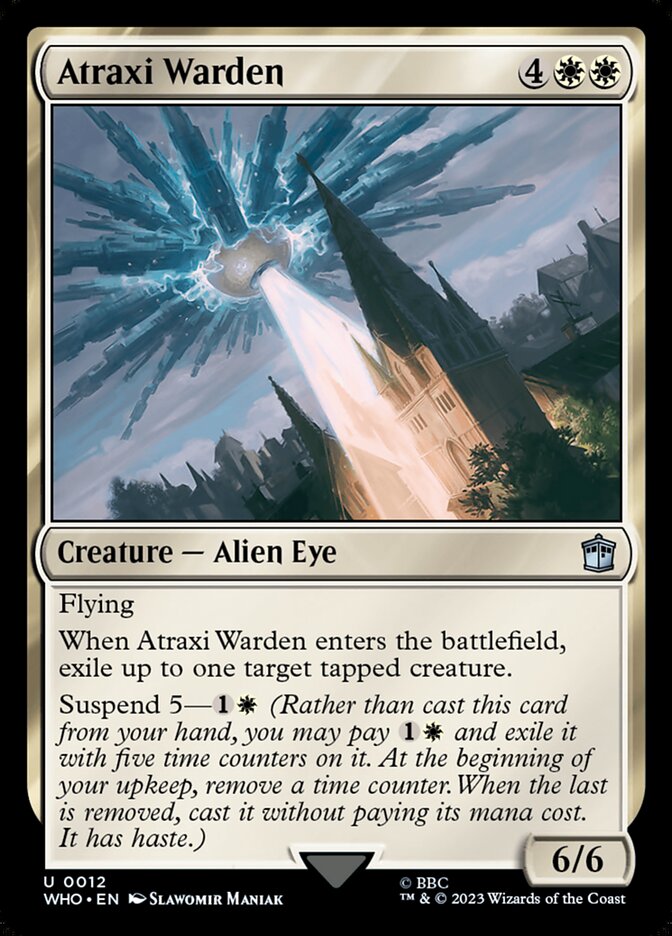
Impending and suspend have a number of similarities, above all in how they let you pay a cheaper cost and use time counters to get a delayed effect. But they’re very different mechanics.
When you suspend a card, you exile it. When an impending card enters the battlefield and has ETB effects when it does.
Impending has thus far been used on one very narrow subset of cards: enchantment creatures. Suspend has been used for creatures, artifacts, and an aura, and it’s worded so that it could work perfectly well for planeswalkers; it’s also been used with a lot of sorceries. Also, suspended creatures gain haste when un-suspended, while impending creatures don’t.
Lastly, you remove time counters from a suspended card during your upkeep, while for impending cards you remove them during your end step.
What they have in common is that the last new card with suspend is Suspended Sentence… which was printed in Duskmourn, the set that introduced impending.
Do Impending Cards Have Summoning Sickness?
An impending card only suffers from summoning sickness if it becomes a creature the same turn you play it. This applies both if you remove all the time counters or otherwise animate the enchantment while it still has time counters, like with Zur the Enchanter.
The impending creature will rarely be affected by summoning sickness when the last time counter is removed, but that happens during the end step, so it’ll rarely matter.
What if You Remove the Counters with a Different Effect?
Once the time counters are gone, the impending enchantment becomes an enchantment creature, no matter how the counters were removed. Impending cards don’t care how time counters are remove, just that they are.
Notice that there are effects that can add counters to permanents (proliferate being a common example), and your opponents could keep your Overlords in “impending stasis” for longer.
Gallery and List of Impending Cards


- Overlord of the Balemurk
- Overlord of the Boilerbilges
- Overlord of the Floodpits
- Overlord of the Hauntwoods
- Overlord of the Mistmoors
Best Impending Cards
All the Overlords are excellent in Duskmourn Limited, with the Boilerbilges and Mistmoors versions probably being the best for your DSK Sealed or Draft pool.
#5. Overlord of the Boilerbilges
Overlord of the Boilerbilges is amazing in Duskmourn Drafts as a 6-drop that takes something down when played and a fast clock if unanswered, but it seems too slow to make the cut in 60-card formats.
In EDH, though, with Bello, Bard of the Brambles as your Gruul commander….
#4. Overlord of the Mistmoors
Overlord of the Mistmoors has some serious aggro-stopping power in Standard, and can also work as a finisher in control decks in that format. It also sees top-tier competitive play in Duel Commander, but rarely makes the cut into the Commander format proper.
#3. Overlord of the Floodpits
Overlord of the Floodpits is one of the strongest of the Overlords in DSK Draft or Sealed. A 5/3 flier ends games all by itself, and the card draw effect is huge. Like its white cousin, it also sees competitive play in Standard and Duel Commander, but rarely makes it into Commander.
#2. Overlord of the Balemurk
Overlord of the Balemurk is the ona Overlord that 60-card formats like the most: It has become a staple in several Modern decks, while also very being very good in Pioneer and Standard, and even showing up in Legacy. Returning to your hand nearly any creature in your graveyard (not just one of the four you just milled) and conveniently adding planeswalkers as one of its gravedigging targets makes Overlord of the Balemurk very powerful.
#1. Overlord of the Hauntwoods
This is the love child of domain and ramp, which to be honest have been happily married for quite some time. Overlord of the Hauntwoods triggers Up the Beanstalk even if cast for (since the mana value is still 5), and the Everywhere land gives you full domain.
Good enough to be one of the top three priciest cards from Duskmourn, along with Abhorrent Oculus and Standard powerhouse Enduring Curiosity!
Wrap Up

Overlord of the Hauntwoods | Illustration by Tiffany Turrill
Alright, I’ve managed to hold on until now, but I just have to say it: I, for one, welcome our new impending Overlords!
I really like this mechanic. Impending is a bit too narrow to become something we’ll see often (and I doubt we see this keyword outside of enchantment creatures), but the play pattern is very interesting.
I hope you’ve enjoyed this mechanical deep dive, and if you have comments or questions please let me know down below, or stop by the Draftsim Discord for a chat.
And good luck out there!
Follow Draftsim for awesome articles and set updates:









Add Comment