
Last updated on October 7, 2026

Rhystic Study | Illustration by Fuzichoco
Multiplayer Magic has existed since the game’s inception, but we’ve only recently seen the explosion of the Commander format as the most popular way to play with three or more players.
Since the early 2010s, we’ve seen an increase in cards designed for multiplayer formats. Some spells are designed with the assumption that they’ll be interacting with more than one opponent. Some assume multiple players will vote on the outcome of the spell, and others let two players team up instantly to deliver a powerful blow to a third.
What are the best cards for a multiplayer game of Magic? Let’s take a deep dive into the perfect spells for your next Commander game!
What Are Multiplayer Cards?

Mana-Charged Dragon | Illustration by Mike Bierek
For the purposes of our list, “multiplayer cards” will be any cards that were specifically designed for multiplayer interaction, or become more valuable as the number of opponents increases. Many of these cards hail from multiplayer-focused MTG sets like Conspiracy, Conspiracy: Take the Crown, Commander Legends sets, and Battlebond.
#41. Truth or Consequences
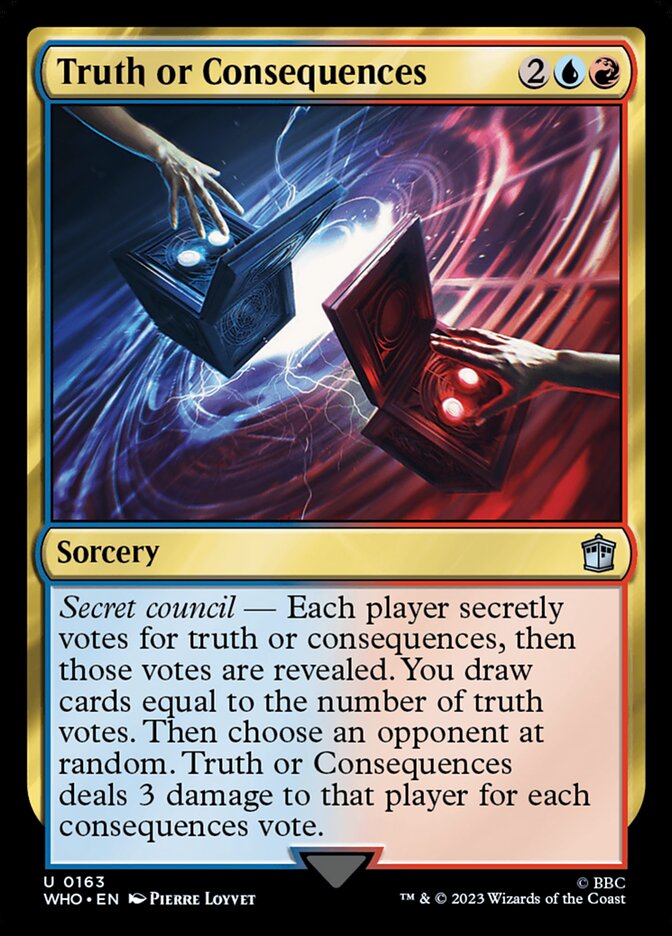
Despite its uncommon rarity, Truth or Consequences does a lot in a four-player pod. Its only drawback is the randomly-assigned direct damage – not being able to target one of your opponents kind of hurts this Izzet sorcery. That said, it still has the potential to be a draw-four or 12 damage for 4 mana.
#40. Mana-Charged Dragon
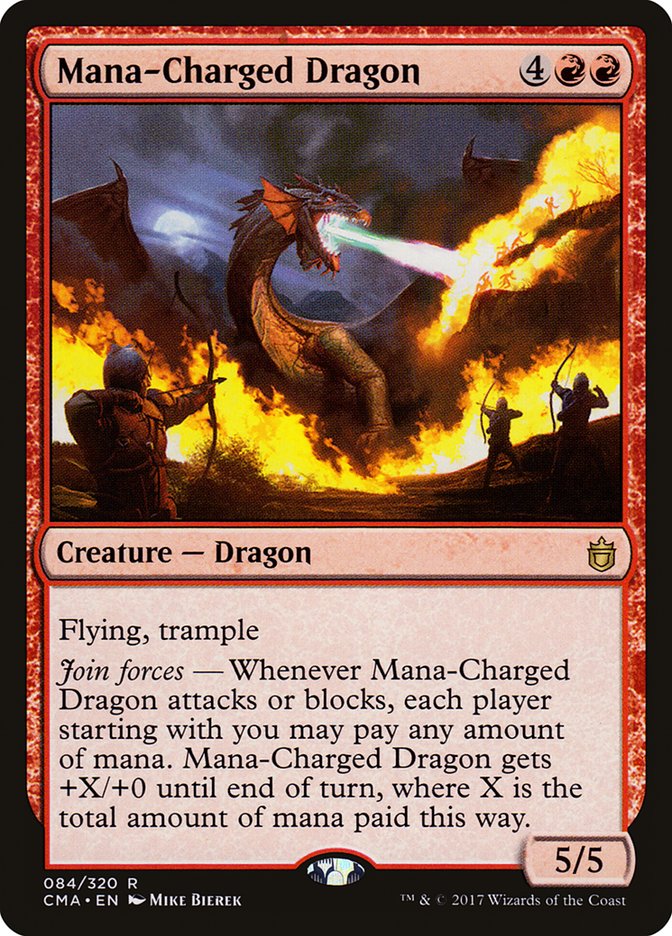
Mana-Charged Dragon used to be the key card in the ancient Scion of the Ur-Dragon Commander deck. After rushing our Scion onto the field, we’d use its activated ability to clone Mana-Charged Dragon, then dump all our multicolor mana into its effect to punch someone for a ton of commander damage. Nowadays it mostly sees play as a politics card to convince your opponents to go in on a single player together.
Like the tempting offer cards, it’s usually advantageous for your opponents to not interact with you when you’re offering to join forces, but your mileage will vary based on how suggestable your friends are.
#39. Timesifter
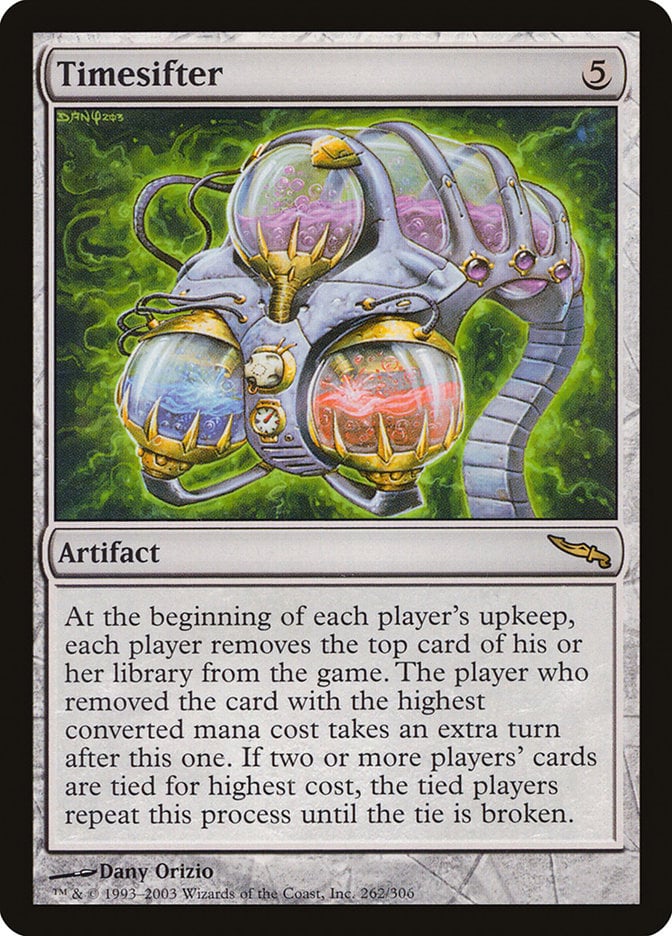
Boy, if you’ve ever wanted to double-down on a chaotic deck, Timesifter is the artifact for you. The potential for any player to take an extra turn after anyone else’s can really mess up your rotation. Within minutes of Timesifter hitting the field, you’re certain to hear some common questions like: “Whose turn is it? How did we get off of clockwise rotation? Wait, was I skipped?”
You can play into Timesifter by stacking the top of your library with Sensei's Divining Top and other scry effects, or just loading the rest of your deck with high mana value creatures like Scornful Egotist (maybe playing well in the 99 of a Yuriko, the Tiger's Shadow ninja deck).
#38. Telepathy
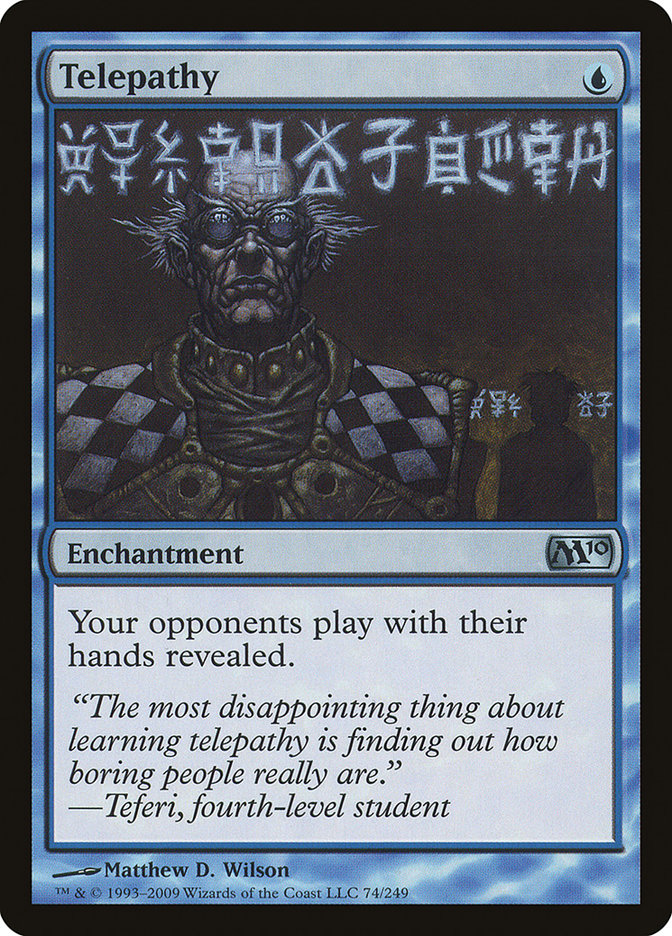
I once sat down to play a pre-shift game of Commander and my friends and I had to fill our pod with a random player I didn’t know. I cast a turn-one Telepathy, and the new player scooped his cards up and left, saying “I don’t play against Telepathy, it just reveals everyone’s game plan and then another player can backseat game once they see someone has a victory cinched up.” He proceeded to walk away for five minutes, then returned and backseat-gamed us until he saw a winning hand. Funny.
My justification for running Telepathy is I’m too dumb to bother reading my opponents’ hands and finding their wincon – I just want to know what they have coming down so I can play countermagic in time.
#37. Shoving Match
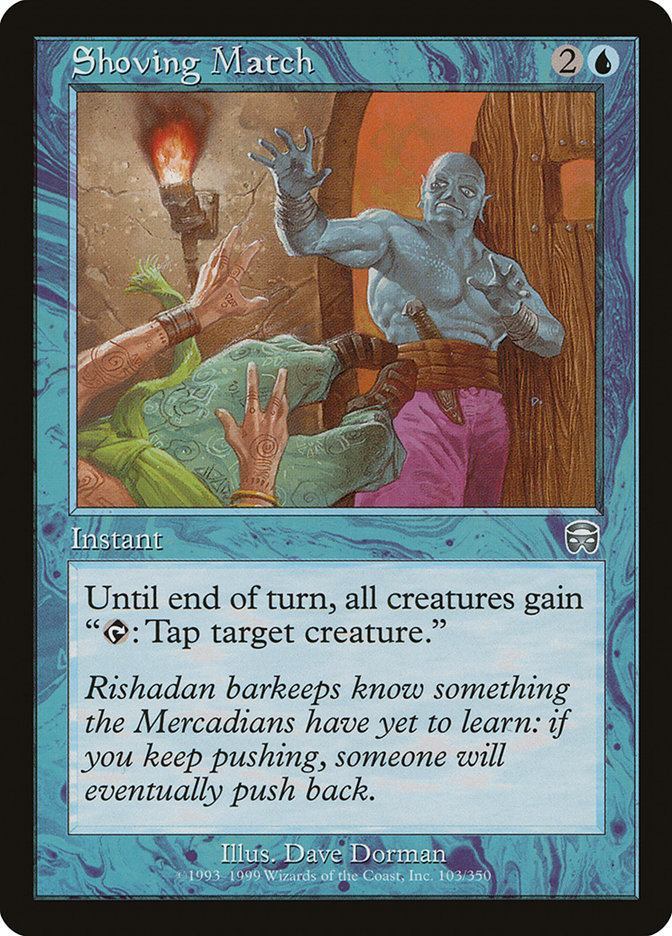
This is one of the funniest cards I’ve ever seen. Shoving Match does just what it sounds like, and turns everyone’s creatures into a bunch of half-drunk knuckleheads wrestling on the bar floor. This blue instant‘s symmetrical effect is hilarious because of the timing of the actual shoves: I can tap all of my creatures to tap all of yours, but then you can respond by tapping all of them to tap someone else’s, and so on until everyone’s been pushed to the ground. This is a great way to stall out the game for a turn while everyone recovers from some gentle pushing and jostling.
#36. Tempt with Vengeance
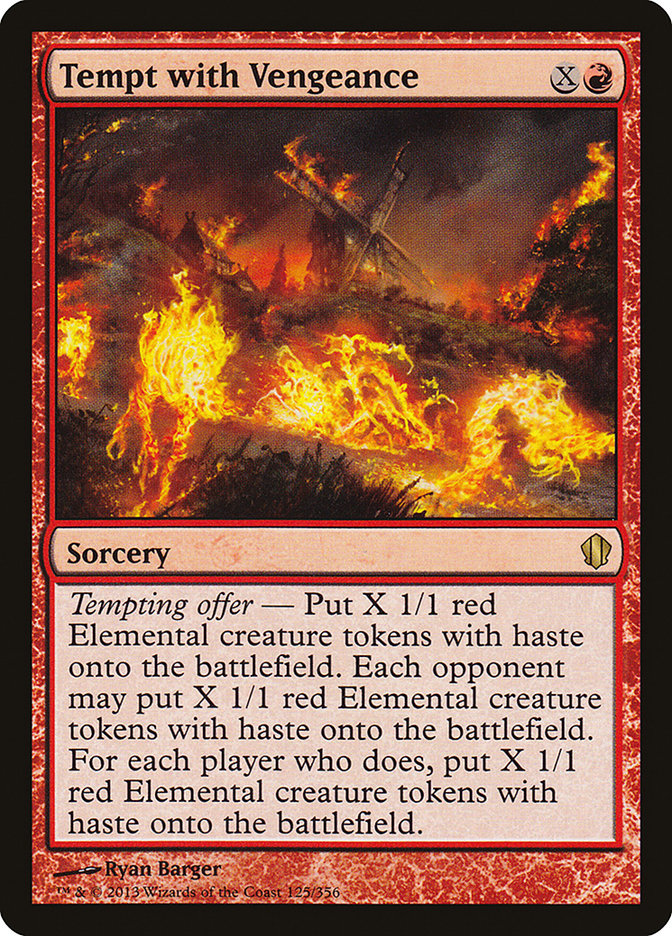
Tempt with Vengeance is the red entry in the cycle of tempting offer cards from Commander 2013. This red sorcery makes a great mana dump. When combined with an Impact Tremors or Goblin Bombardment this is a devastating assemblage of hasty 1/1s to throw around the board with reckless abandon. Once again, the best choice from your opponents will almost always be to decline your offer; doubling or tripling the number of 1/1s the active player is getting will always end poorly for them. That said, the player who was just board-wiped might be thankful for a wall of blockers to save them from the follow-up blow.
#35. Conjured Currency
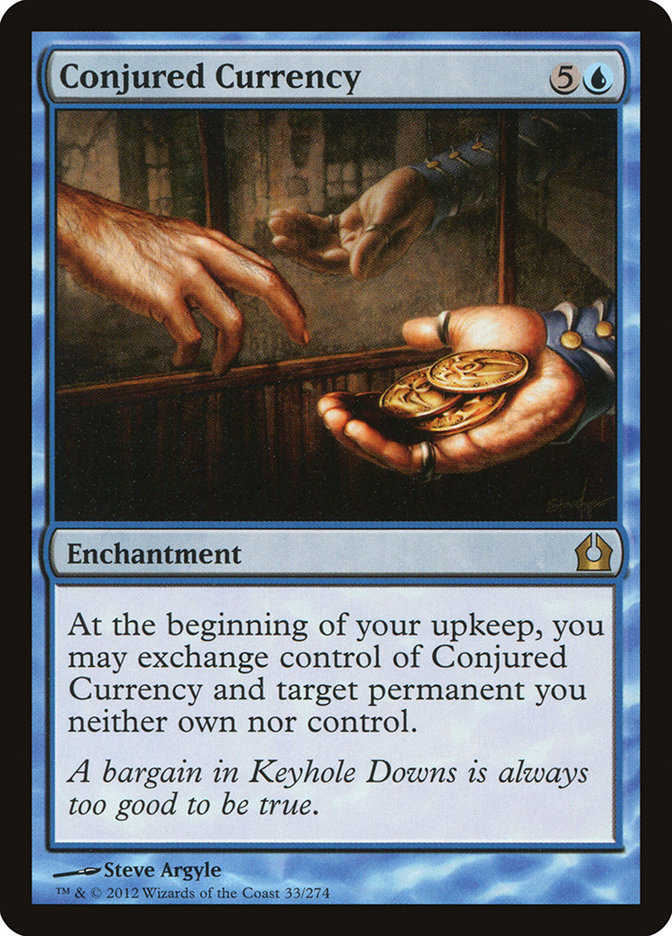
Conjured Currency is the number-one way to get your cards shuffled into your opponents’ libraries after the game’s over. This blue enchantment trades around the board, but never lets you trade it for a permanent you own. Before long, everyone’s permanents will be shuffled about the board. In a multiplayer game, you and your opponents just plainly have more options for trading with Conjured Currency.
#34. Alexios, Deimos of Kosmos

Alexios, Deimos of Kosmos is a nice and efficient card that ensures your opponents see some action every combat. Just set it and forget it.
#33. Chain of Vapor
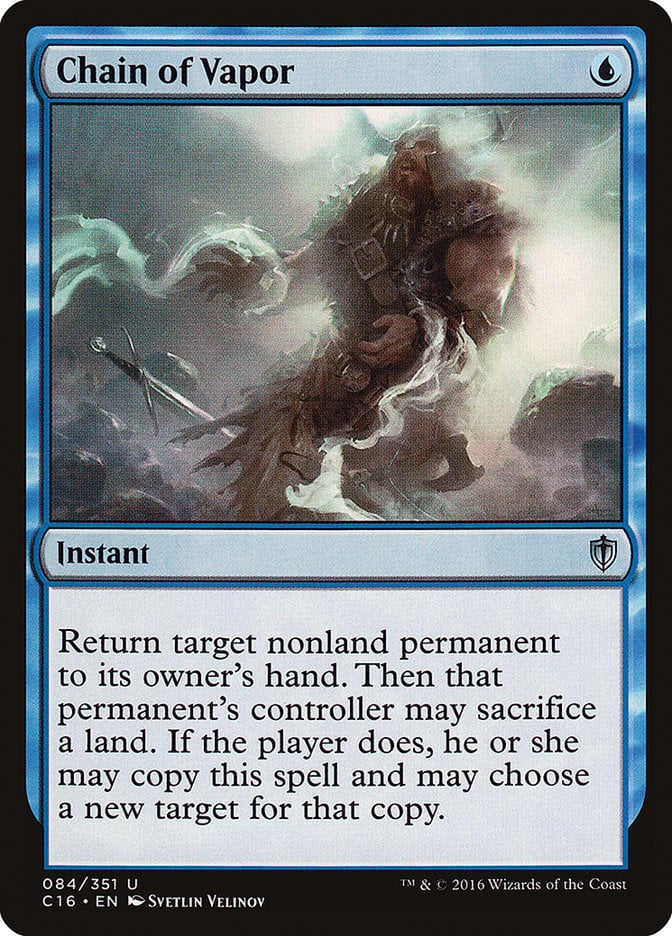
The cycle of chain cards are each removal of one form or another that allows the affected player to copy the spell. Chain of Vapor has a ton of targets in a multiplayer game, and the option to keep sacrificing lands to keep bouncing nonlands is tempting. With some smart politicking, you can keep the Chain going around the table four or five times!
#32. Disrupt Decorum
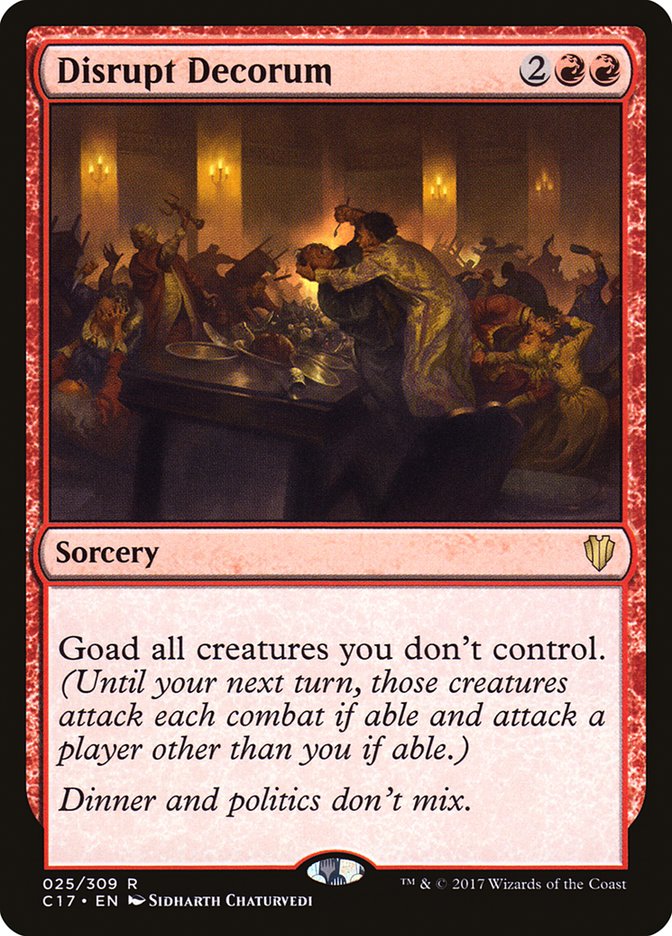
The easiest way to get your opponents to fight each other is to goad their creatures. Disrupt Decorum goads the entire board and forces your opponents’ creatures to charge headlong into each other. The more players at the table, the more creatures you’re forcing into combat, so this red sorcery’s value doubles or triples at three- and four-player pods.
#31. Master Warcraft
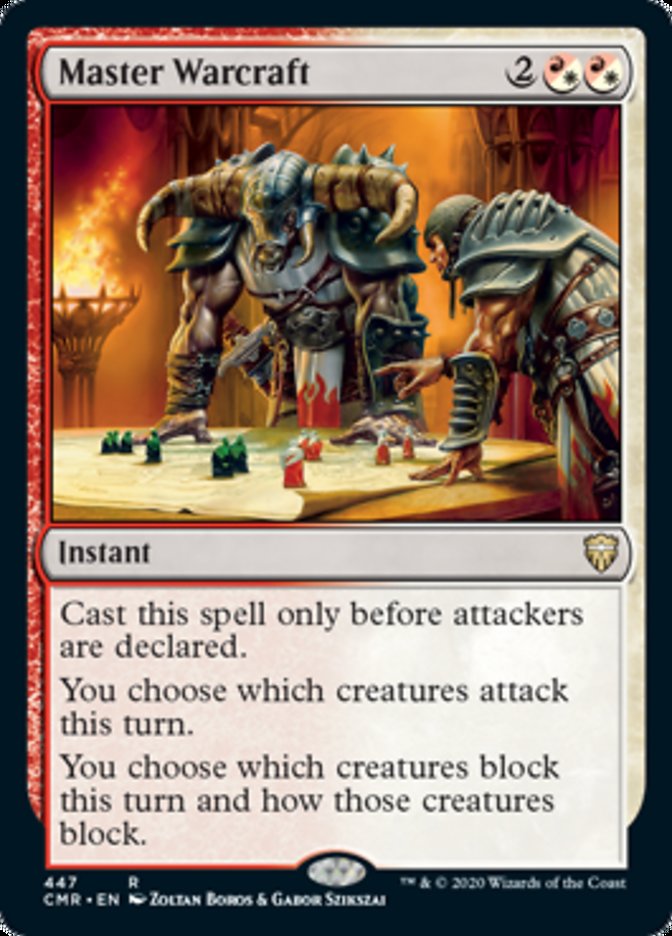
Master Warcraft puts you in charge of combat for a turn: This red instant lets you take control of your opponent’s board and force their creatures to swing into unfavorable conditions. In a multiplayer match, this means sending them into your other opponents, or into your rattlesnake creatures with deathtouch for some convoluted removal. This spell gets a leg up on Disrupt Decorum for the added benefit of choosing how the creatures block that turn.
#30. Thieves’ Auction
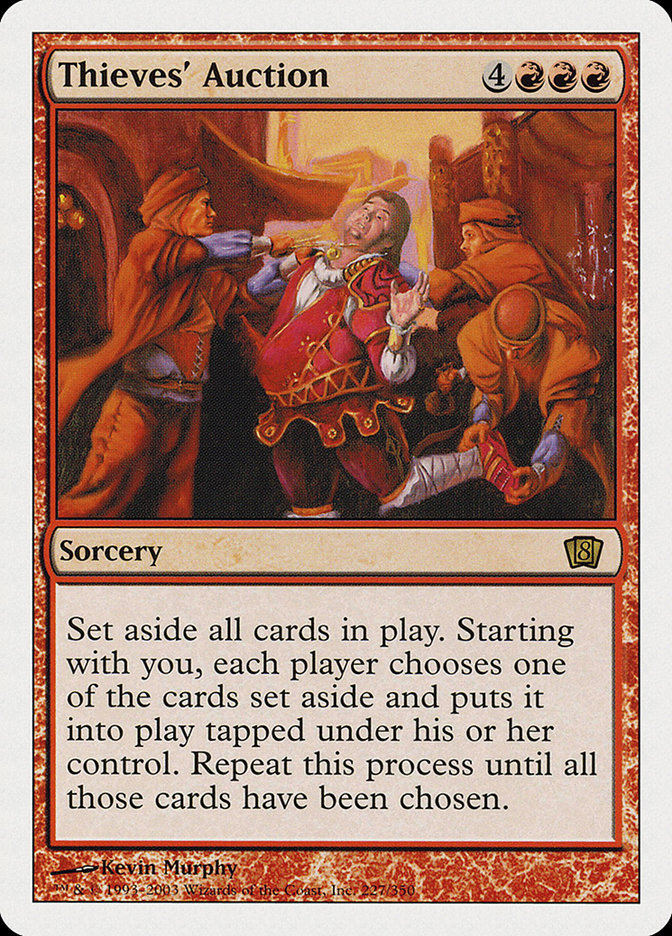
Oh, yeah, I mean, I guess we can just exile every permanent and draft them back onto the battlefield, that’s fine. Thieves' Auction is one of the most chaotic cards on the block, flipping games on their head whenever it resolves. There are easily twice as many permanents on the field in multiplayer games, meaning our draft pool is much larger. The extra choice of juicy threats to steal from our opponents increases exponentially as we add more players, making Thieves' Auction better and better and more fun than a barrel of monkeys.
#29. Confusion in the Ranks
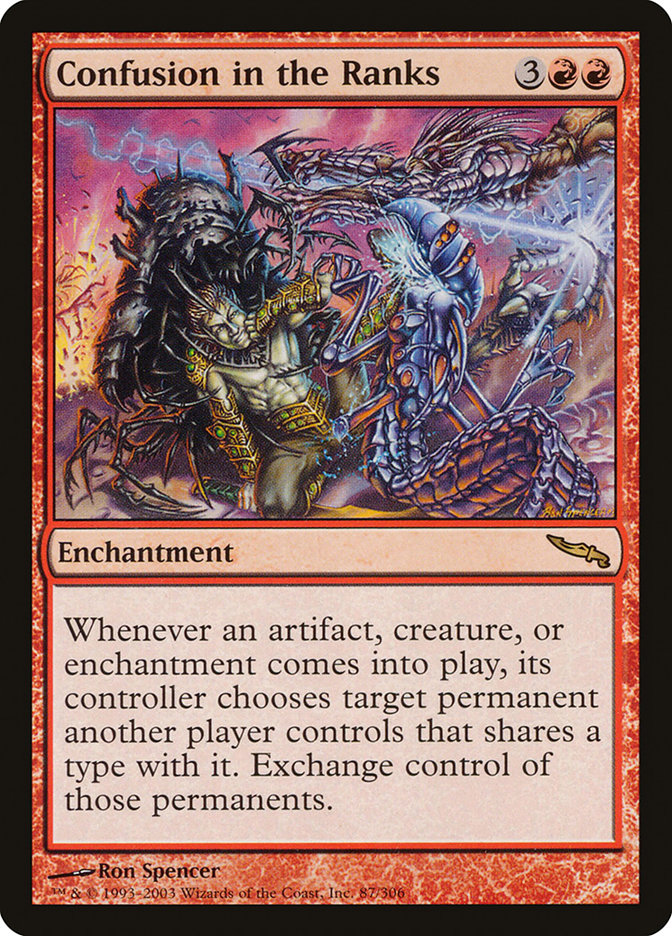
Confusion in the Ranks is another chaos-centric card that swaps any artifact, enchantment, or creature entering the battlefield with another permanent of the same type. Players must choose another permanent to swap it with, so they’ll have to find the path to victory using your cards! If you’re feeling mean, you can donate Grid Monitor and Aggressive Mining to your opponents, or just trade their Blightsteel Colossus for your Goblin token.
#28. Hive Mind
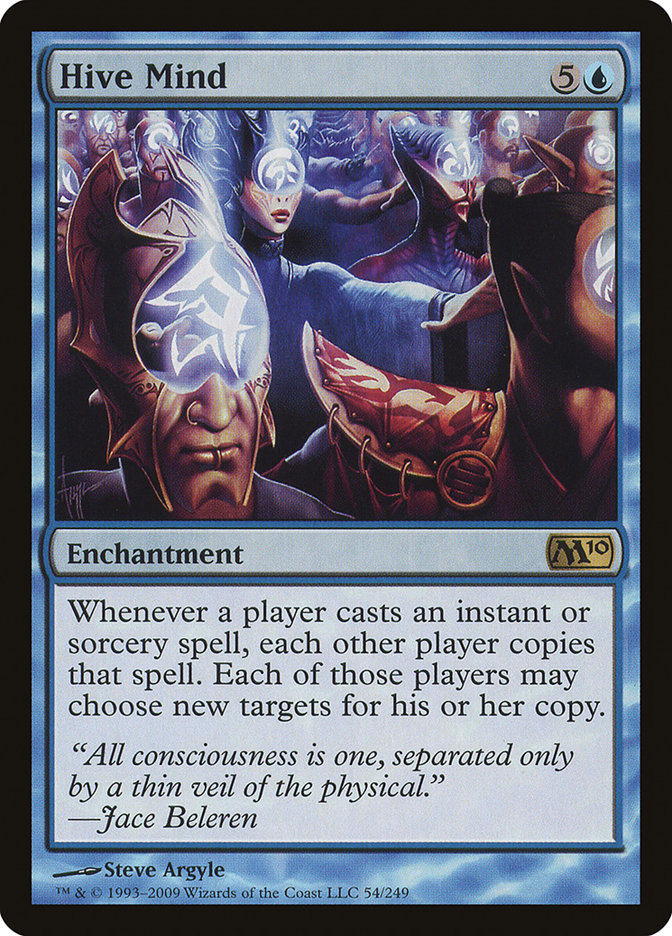
Your Demonic Tutor? No, comrade, our Demonic Tutor. Hive Mind takes every instant or sorcery cast by any player and forces each other player to cast a free copy. I like to call this “playing fair” since we’re finally all sharing in the bounty provided by those Ponders and Brainstorms and whatever else.
#27. Primal Vigor
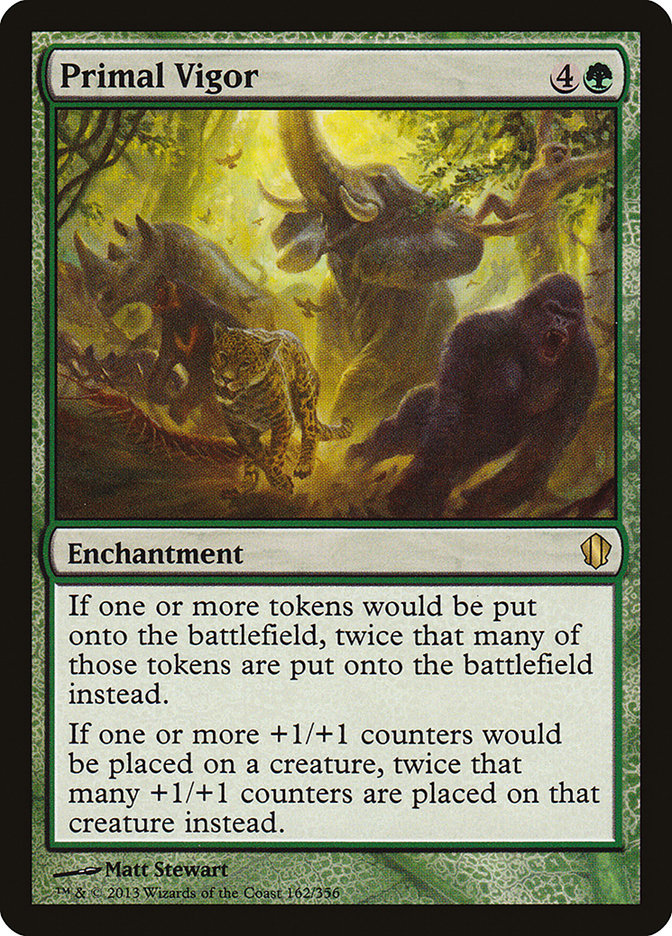
Primal Vigor is a symmetrical effect as both a +1/+1 counter doubler and a token doubler. This green enchantment has been a Commander staple since the format’s inception, slotting well into just about any green deck that even slightly cares about counters or tokens. While it’s symmetrical effect is typically seen as a downside compared to Doubling Season, you should instead use its presence on the field to your political advantage: “Don’t remove me from the game, you’re getting value off of my Primal Vigor,” “Wait, I can cast Primal Vigor next turn and we can swing in with all those Tempt with Vengeance tokens,” etc.
#26. Breach the Multiverse
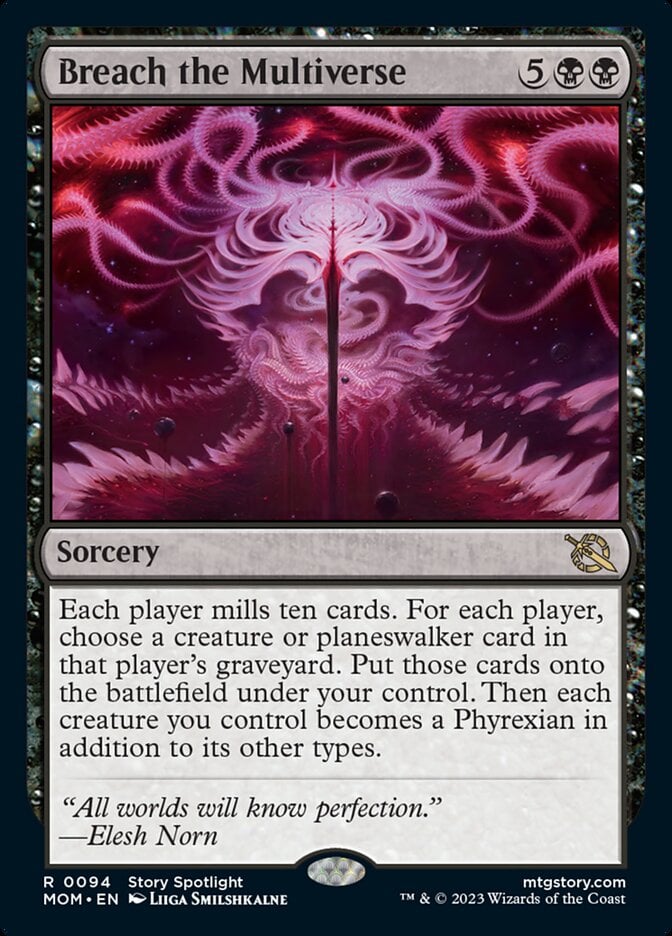
Breach the Multiverse pulls double-duty as essential reanimation for your Phyrexian typal deck and as a generally awesome late game bomb to fill your board with the best creatures that’ve died earlier in the game. For 7 mana, this black sorcery lets you get the pick of the litter from your and your opponents’ graveyards, and chances are you’ll see another tasty pick somewhere in the 40 cards that were just milled across four players.
#25. Vaevictis Asmadi, the Dire
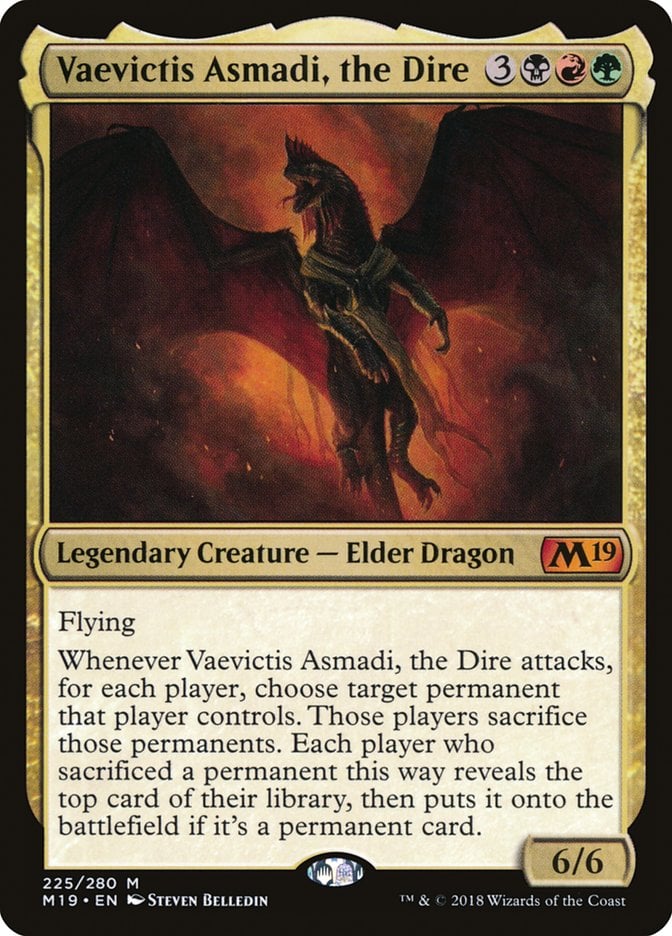
Core Set 2019 saw some re-imaginings of the classic cycle of Elder Dragons from Legends. The Jund-aligned Vaevictis Asmadi, the Dire acts as a pseudo-Chaos Warp, removing permanents from your opponents with the possibility of replacing it with something worse (or better).
Vaevictus works best for you when you can manipulate the top of your library via scry effects or by returning cards to the top of your library, like with Reclaim. Our Dire dragon works best in multiplayer when we can use political plays to remove “unwanted” permanents from your opponents’ boards with the sly assurance that they might get something cool instead!
#24. Goblin Spymaster

Forcing your opponents to make undesirable attacks on each other is a tried-and-true tactic in the political world of EDH. Goblin Spymaster gives each opponent a rabble-rousing goblin that’ll force them to attack with those Llanowar Elves and Blood Artists into the waiting arms of your Goblin tokens.
Goblin Spymaster can speed up a game like no other. It takes those five or six turns where the pod is mostly assembling their battlecruisers and not interacting and makes everyone play the damn game.
#23. Syphon Mind
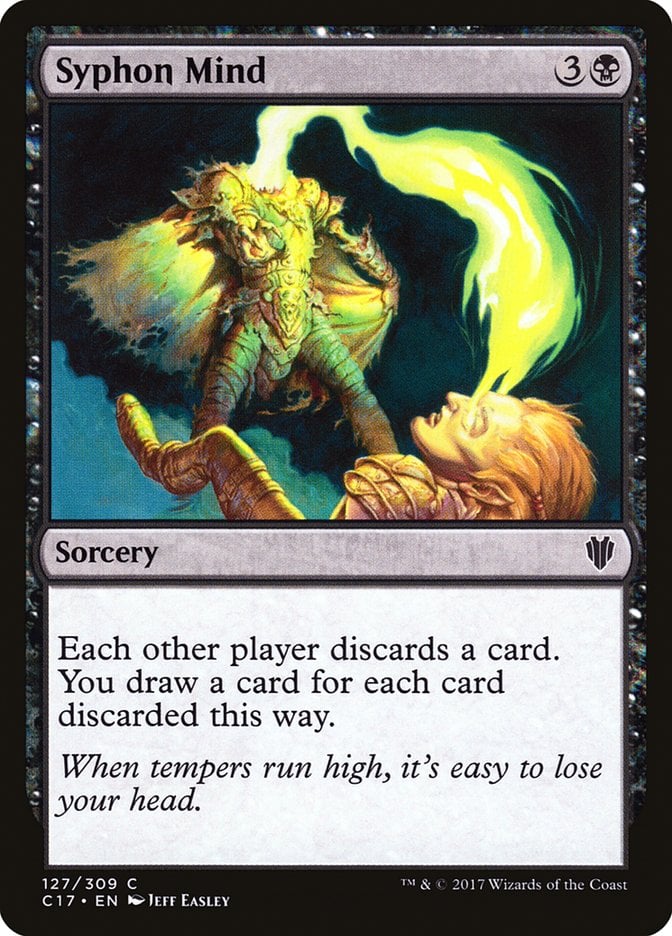
Syphon Mind wasn’t the best card when it was released in Onslaught. Four mana to make an opponent discard one card and draw one for you wasn’t great. This card’s value skyrockets in multiplayer games. Suddenly you draw three cards off of three discarded cards in your four-player pod. That’s better value than most other card-draw spells in mono-black right now!
#22. Sunspine Lynx

You insert Sunspine Lynx to your playgroup to punish the deck that relies on lifegain payoffs as well as the put some nonbasic land hate on your opponent’s minds. Though you might make an enemy with this cat, you’re just as likely to make an ally.
#21. Círdan the Shipwright
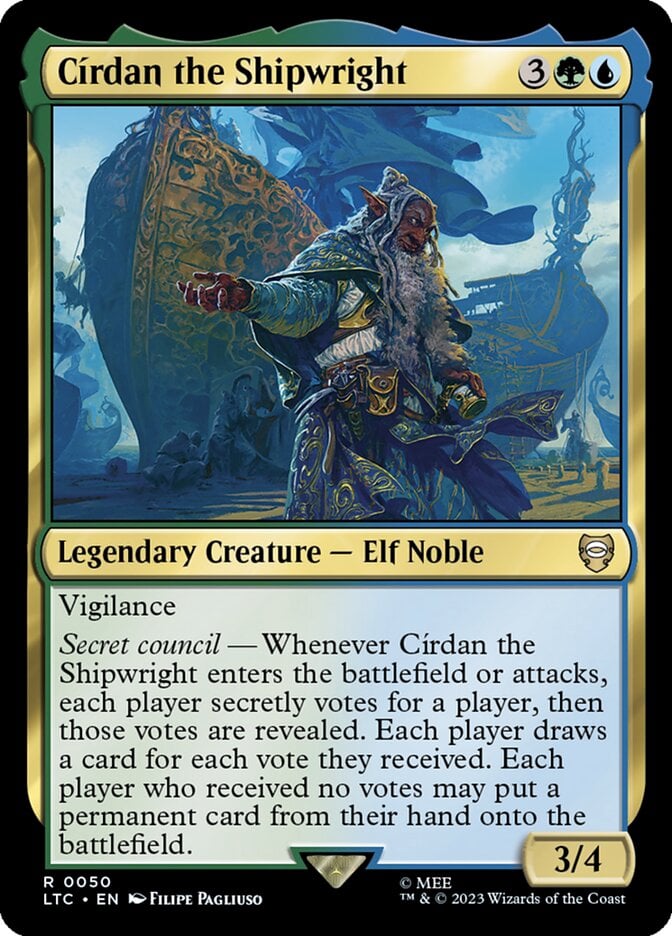
Círdan the Shipwright creates a fun mini-game whenever they enter or attack where each player secretly votes for a player (they can vote for themselves). Where this legend gets tricky is trying to guess who’ll vote where, and how that’ll affect the board state. Ideally, you’ll want each player to get one vote, since drawing a card will usually be worse than a free permanent onto the field. Assuming the Círdan player doesn’t vote for themselves, shouldn’t you vote for them? But what if they did vote for themselves, and now they’re drawing two or more cards? What if they sussed out your plan already? Círdan is the number one multiplayer card for fans of Sun Tzu’s The Art of War.
#20. Magister of Worth
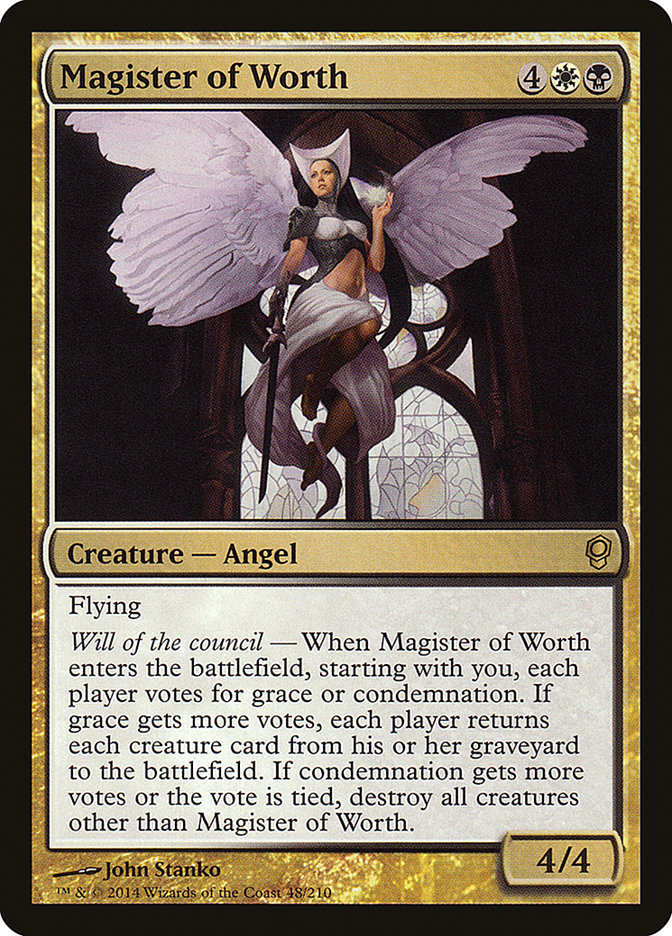
Conspiracy’s Magister of Worth has players vote on whether each player deserves a creature back from their graveyard or if they deserve a board wipe. It’s an enters-the-battlefield effect, so it’ll only happen once, but sticking this 4/4 Orzhov flier to an empty field after it destroys every other creature can’t be that bad. Wrath of God or Exhume; which way will your pod turn?
#19. The Madcap Jester
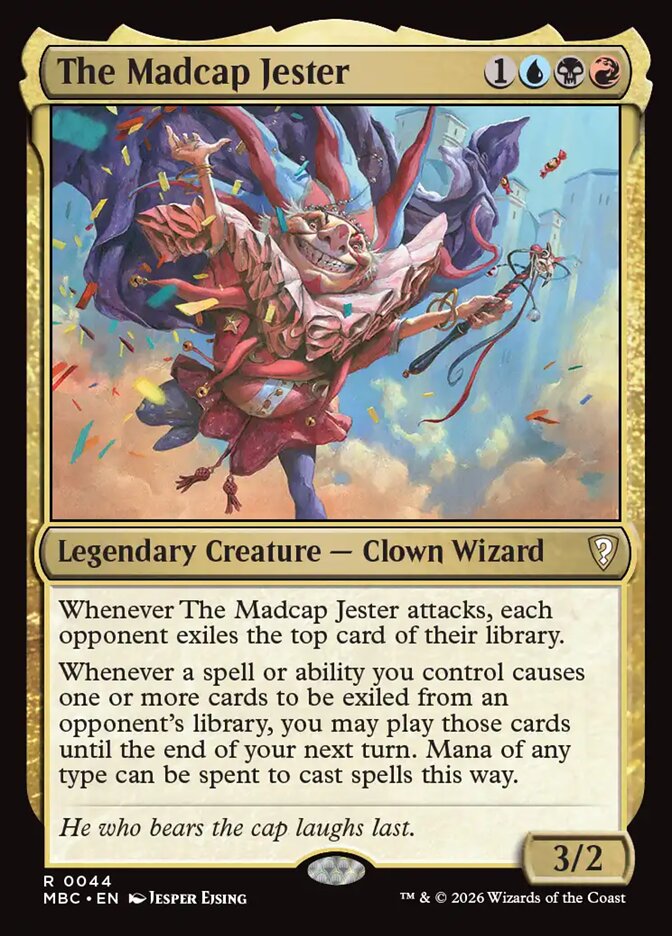
The Madcap Jester scales quite simply: More opponents means more cards to exile, and thus more cards stolen…er, drawn. It gets even spicier with cards like Extract that have three decks to search instead of one.
#18. Blasphemous Edict

Blasphemous Edict is a strong sort of board wipe that control players and token players can weather just fine. This gets around hexproof, ward, high toughness creatures, indestructible and any creatures with shield counters. Plus sometimes, you have the least number of creatures and happily pay just one to clean up a full battlefield.
#17. Lightning, Army of One

Lightning, Army of One gets better in multiplayer because its damage doubling ability doesn’t only affect your sources of damage. Any source of damage towards the damaged player gets better, so you can gang up on one person to ensure they don’t win.
#16. Tempt with Discovery
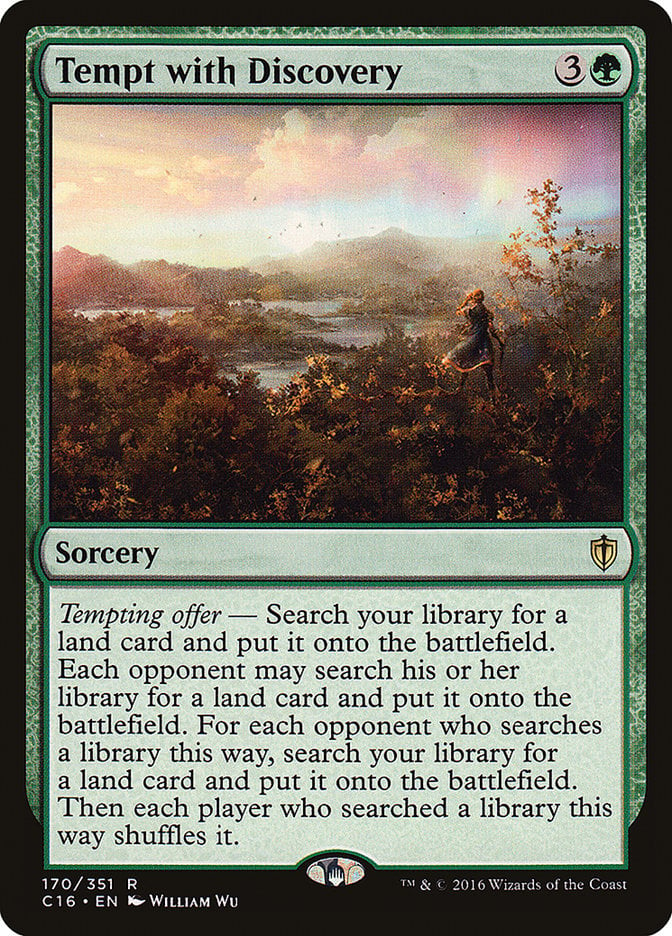
Commander 2013 introduced a cycle of spells with the tempting offer ability word. Tempt with Discovery is a 4-mana Sylvan Scrying that gives each of your opponents the chance to also search for a land. Typically, the “correct” response from your opponents will be to decline your offer, knowing as they do that you’ll benefit from the extra lands more than them.
However, there’s always that one mana-screwed player at your pod that’s struggling to hit their land drops (it’s me, running only 34 lands). If you can get just one more land off of your Tempt with Discovery, you’re looking at some fair value.
The best part of this green sorcery is its ability to fetch any land, letting us pull a Field of the Dead into play immediately, hopefully triggering it with the other lands we pull off this spell.
#15. Collective Voyage
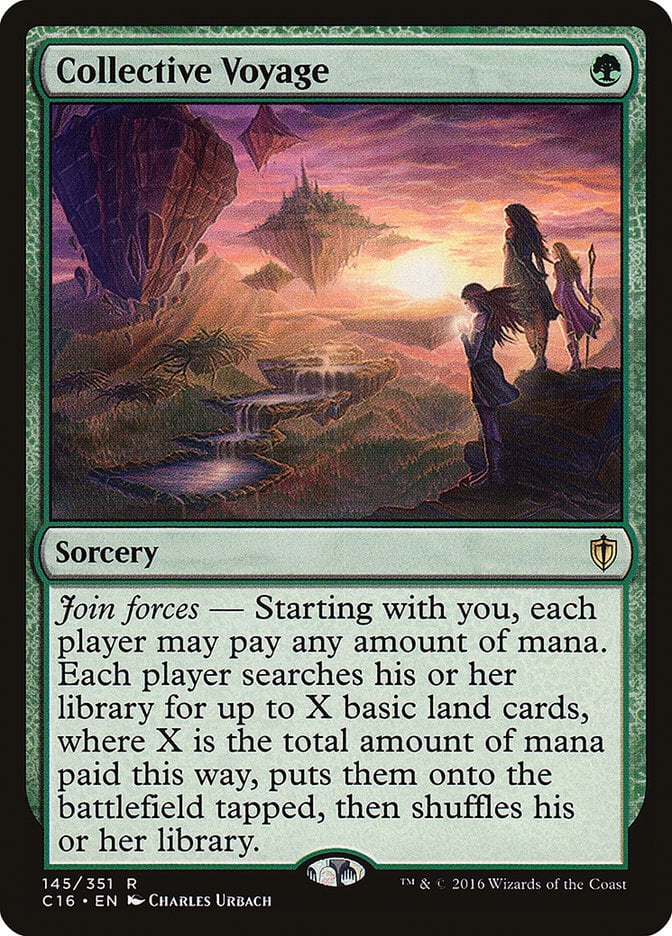
Not only is Collective Voyage one of the best ramp spells in Commander, it’s also one of the most fun spells to play against. In a similar vein to Tempt with Discovery, Collective Voyage gives the whole table the opportunity to search for as many lands as they can pay for. Dumping even just 3 extra mana into this spell sees you ramping for three lands for 4 mana, more than enough to be valuable.
Just know that everyone at the table gets the full benefit of the card, regardless of how much mana each individual paid into it. You might be the only one spending mana on Collective Voyage, and you’ll still be doubling the total amount of mana everyone has access to.
#14. Cruel Entertainment
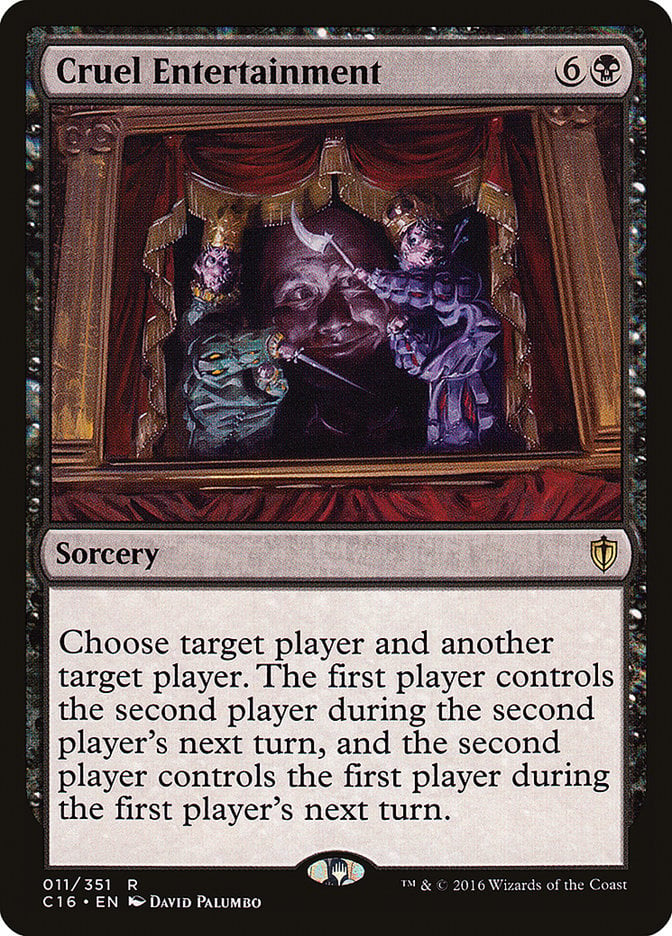
I’ve yet to see anyone cast Cruel Entertainment in a Commander game, but I want to see it so badly. Casting this black sorcery is the most appropriate time to break out your villain voice and command your puppets to dance!
Cruel Entertainment just doesn’t work in a two-player game. You can technically cast it, but there are few situations where you’ll want to give an opponent control of your turn. Instead, make them fight amongst themselves by letting them ruin each others’ board states.
#13. The Queen of Dale
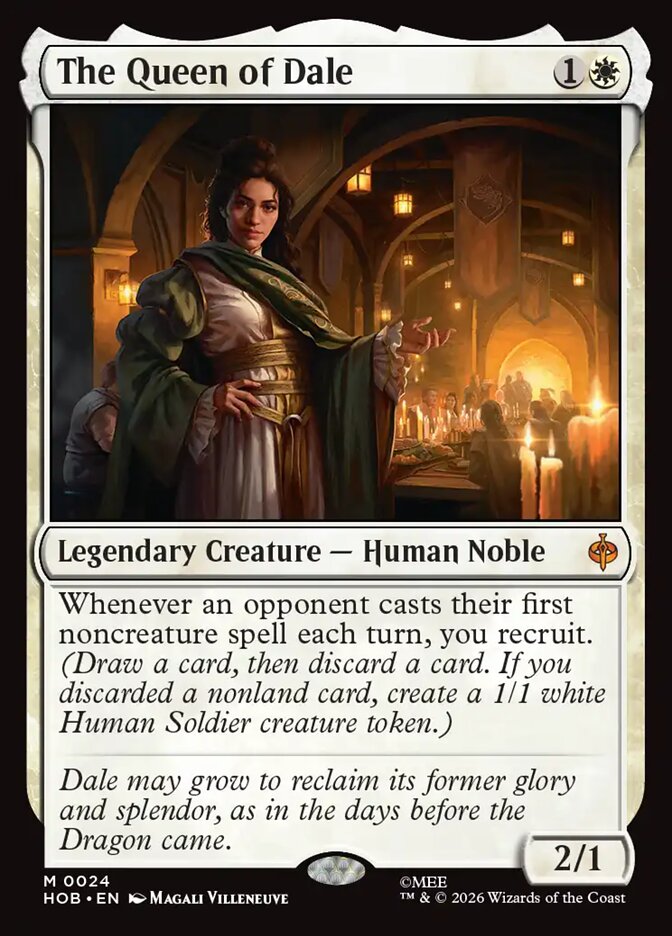
The Queen of Dale recruits early and often. Now, that’s not quite as good as drawing a card every turn, so I wouldn’t force this into every white deck. But if you can leverage the tokens or discard with commanders like Marneus Calgar or Hashaton, Scarab's Fist, you get a wonderful, compact engine.
#12. Verdant Kraken
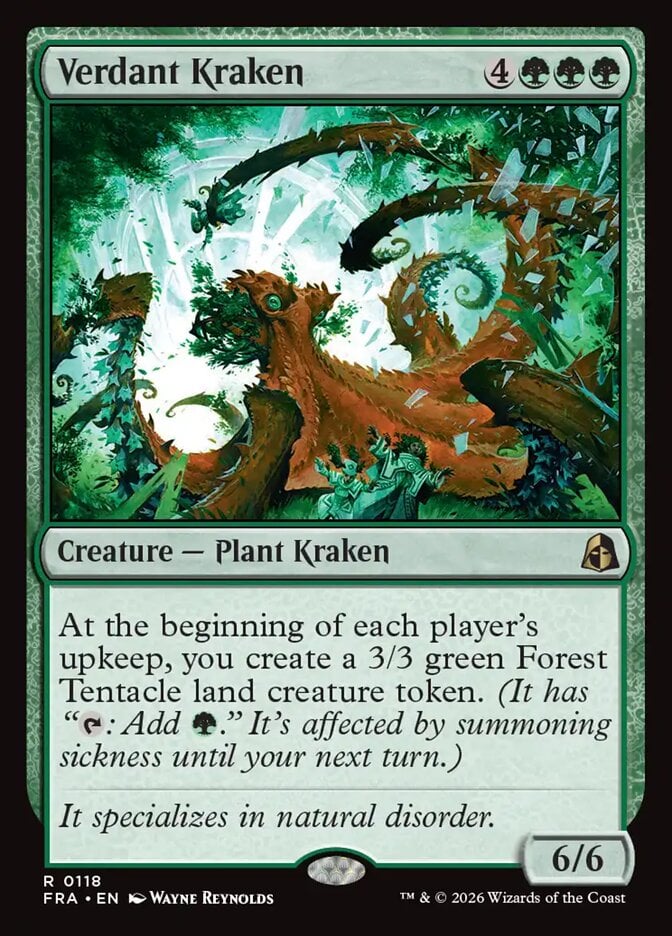
Making a 3/3 land on your upkeep would be pretty sick, but it’s 2026. “Pretty sick” isn’t good enough, so Verdant Kraken makes 3/3s every upkeep. Remember that those are lands, so you will get landfall triggers every upkeep.
#11. Selvala’s Stampede

Selvala's Stampede is my favorite council’s dilemma card. There’s no good choice for your opponents to make – wild votes result in free creatures played from the top of your library, and free votes result in free creatures from your hand. The worst case scenario is you cast this with no cards in hand and everyone but you votes for free, but you wouldn’t do that. I’ll say it again: don’t do that. Selvala's Stampede is only fun when you get to play mind games with the table and bluff that you have many more threats in your hand than you let on.
#10. Zur’s Weirding
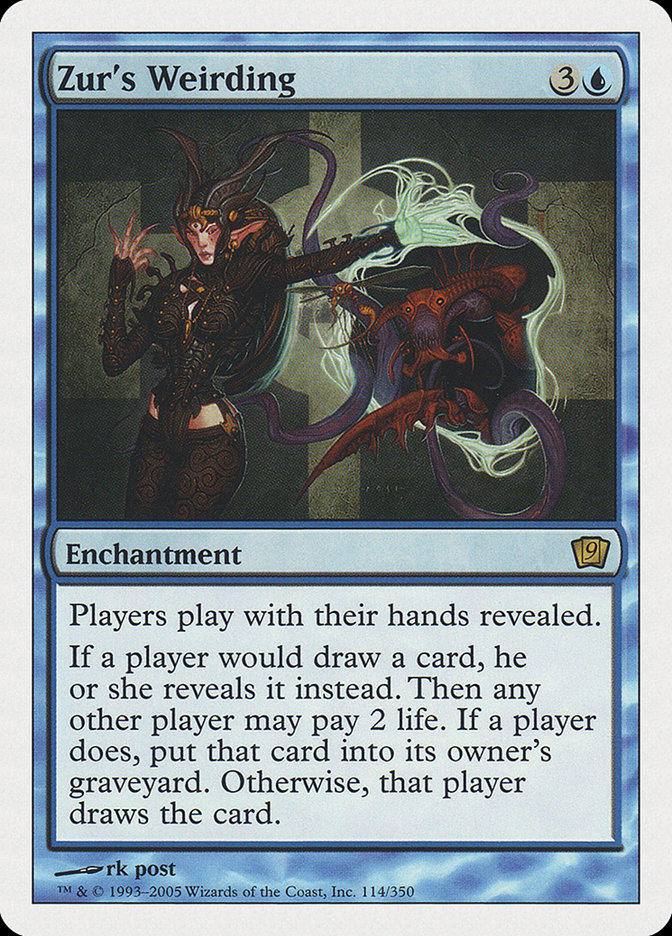
If Shoving Match is funny, Zur's Weirding is a riot. Nothing, and I mean nothing, slows a game to a halt like Zur's Weirding. We should build an entire format around this card a la Dandân. The way that this blue enchantment changes the basic layout of everyone’s turn shifts Magic from a game about hidden information and probabilities into a gamble to see who’s afraid of which cards.
I don’t even know what the optimal play is for a Zur's Weirding. How do you even capitalize on this? With sufficient lifegain, I suppose you could eternally force your opponents to discard any new draws, but they’ll also have that option against you. Next time you’re looking for a wild way to slow down the game, give Zur's Weirding a try.
#9. Afterlife from the Loam

Afterlife from the Loam has a very similar end result as Breach the Multiverse. However, I would trade delve for 10 milled cards almost every time because getting stuff into the graveyard is easy, casting a big black card is harder and delve reduces the cost in a huge way.
#8. Coercive Portal
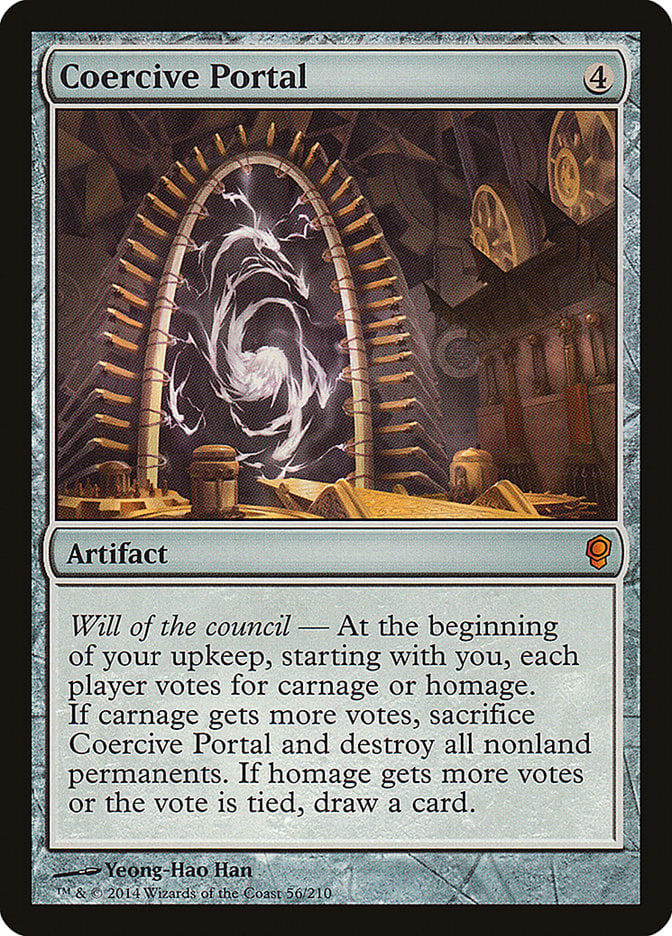
Coercive Portal is one of the best “politics” cards in the game. It’s a board wipe in the making: as soon as the table agrees it’s time to wipe the board with the triggered ability, the Portal takes every nonland permanent out. Until then, this 4-mana artifact should see you drawing an additional card every turn.
#7. Kefka, Court Mage / Kefka, Ruler of Ruin


All the sauce on this card is in Kefka, Court Mage, including the multiplayer element that makes this such a strong discard commander. The more players who discard cards, the more card types that hit the graveyard. Even if by some stroke of misfortune everybody discards the same card type, you’ve put all your opponents down one card while remaining neutral yourself.
#6. The Bond Dual Lands
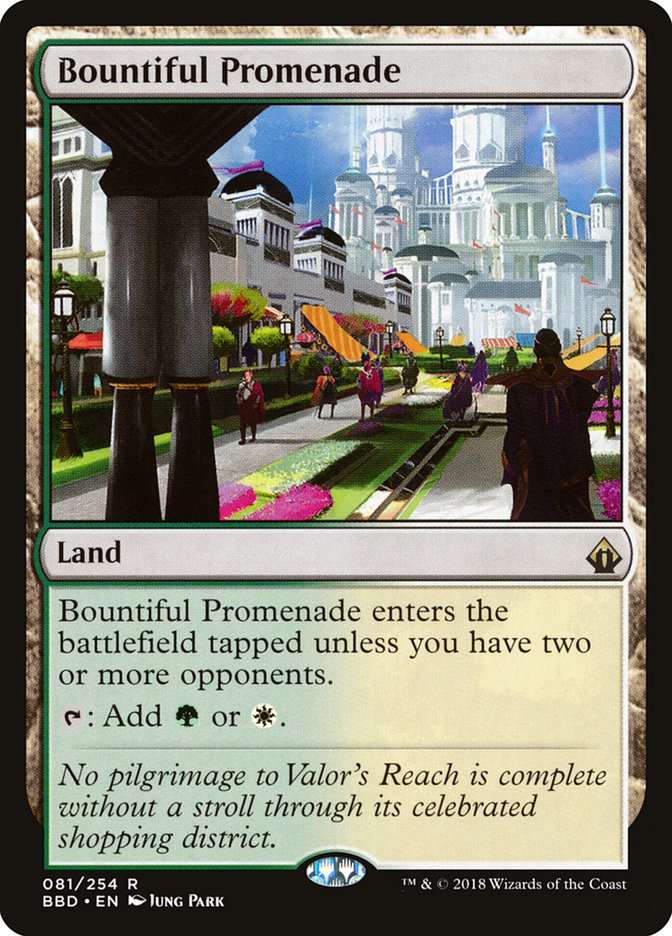
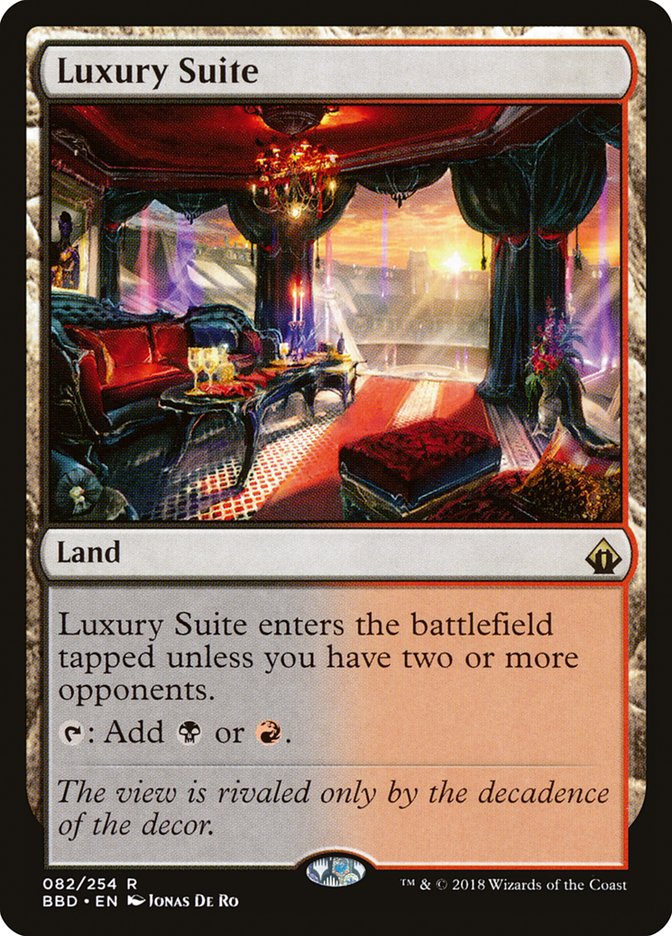
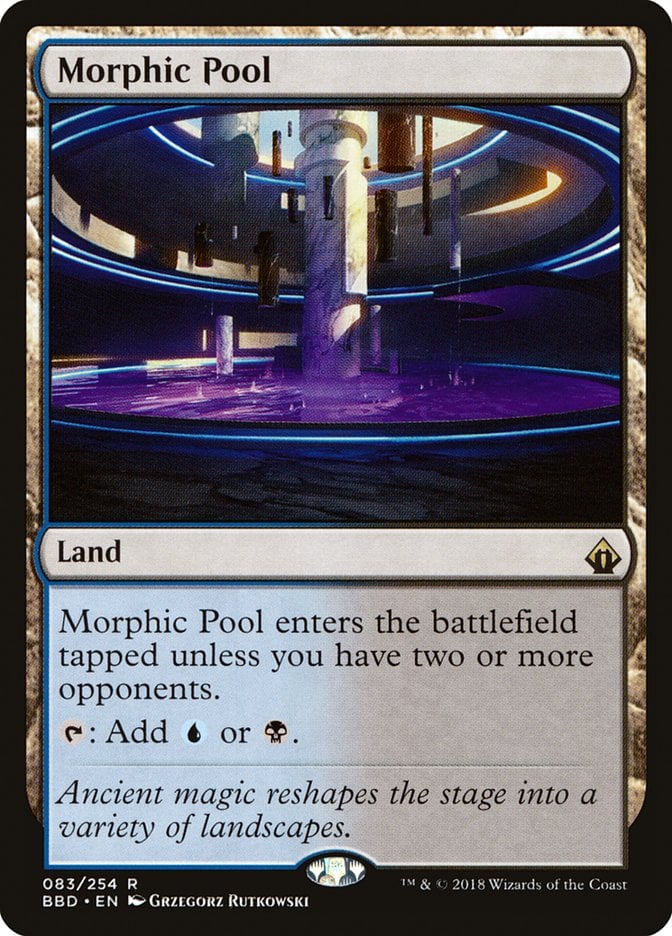
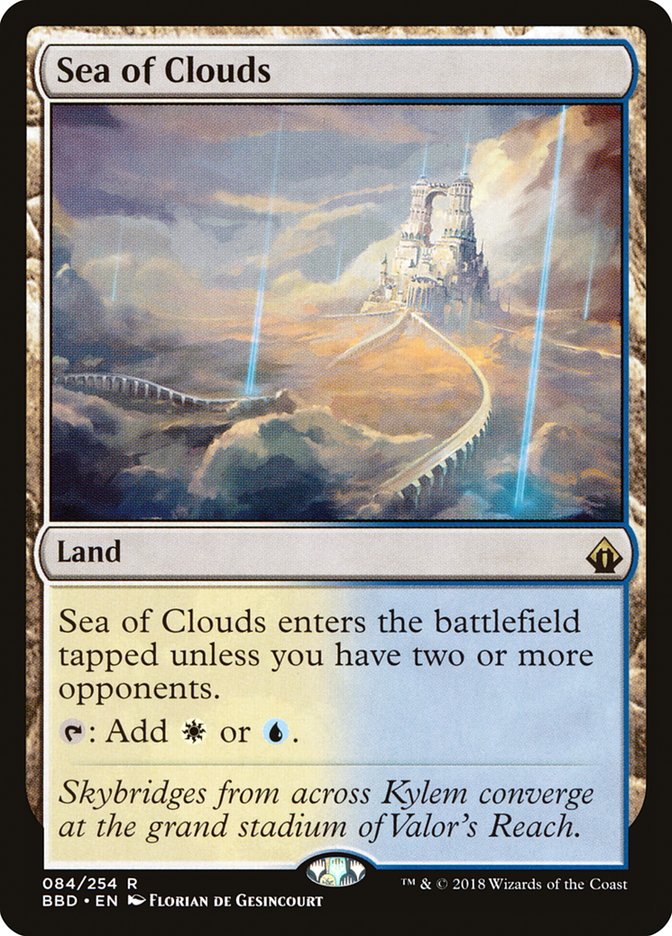
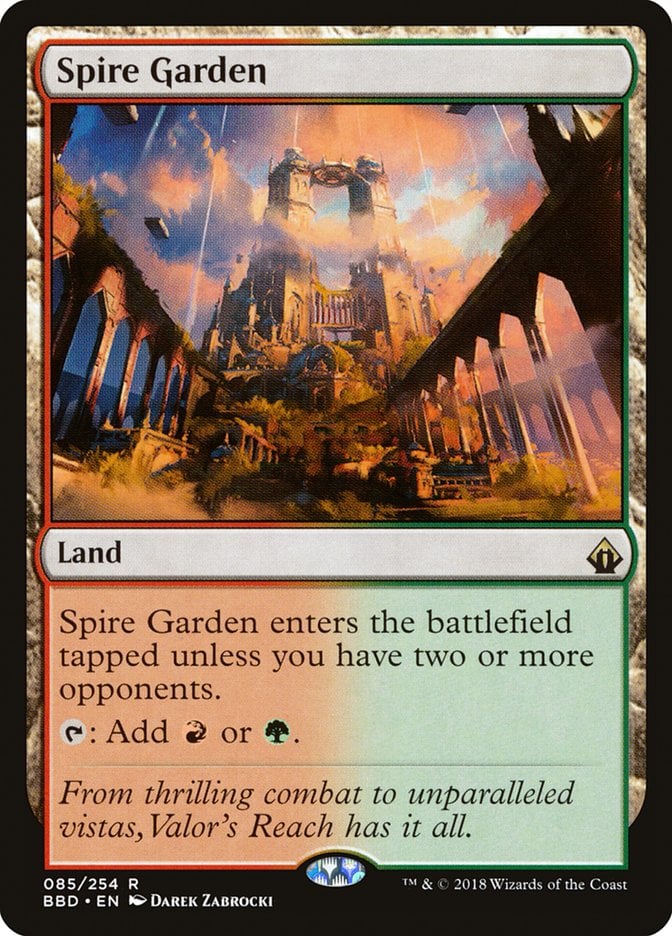
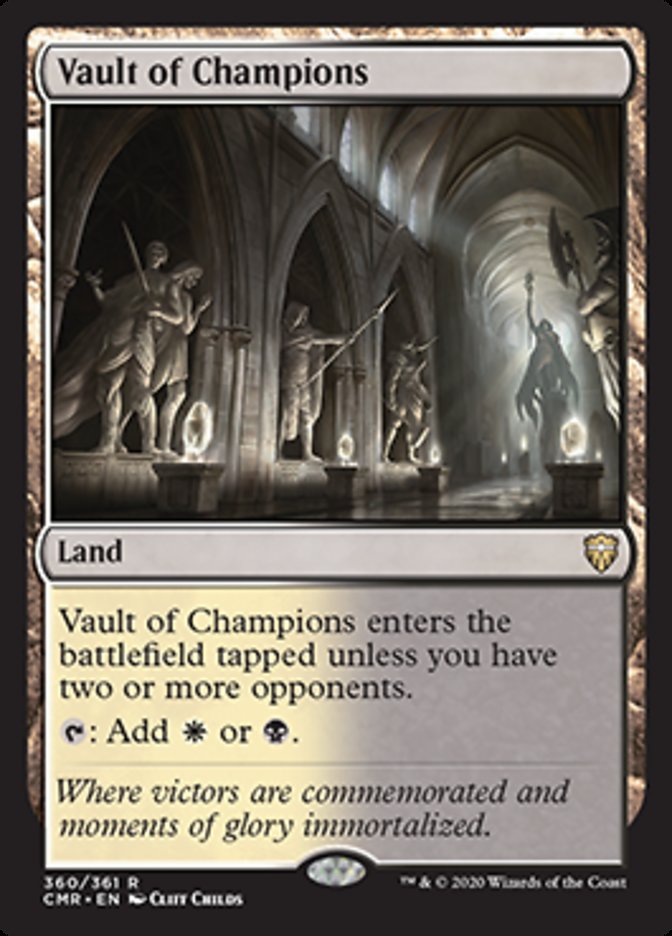
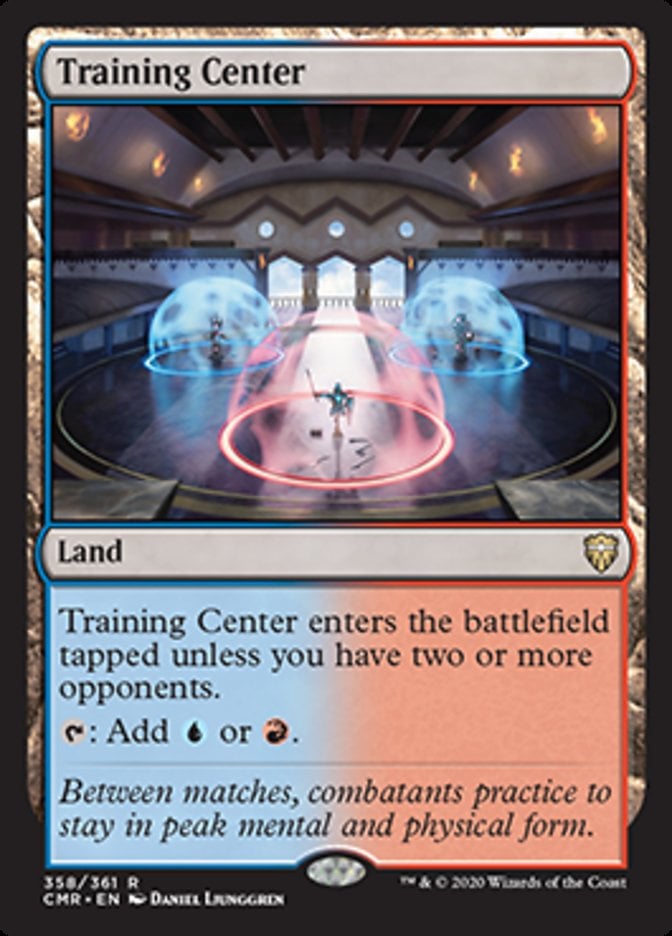
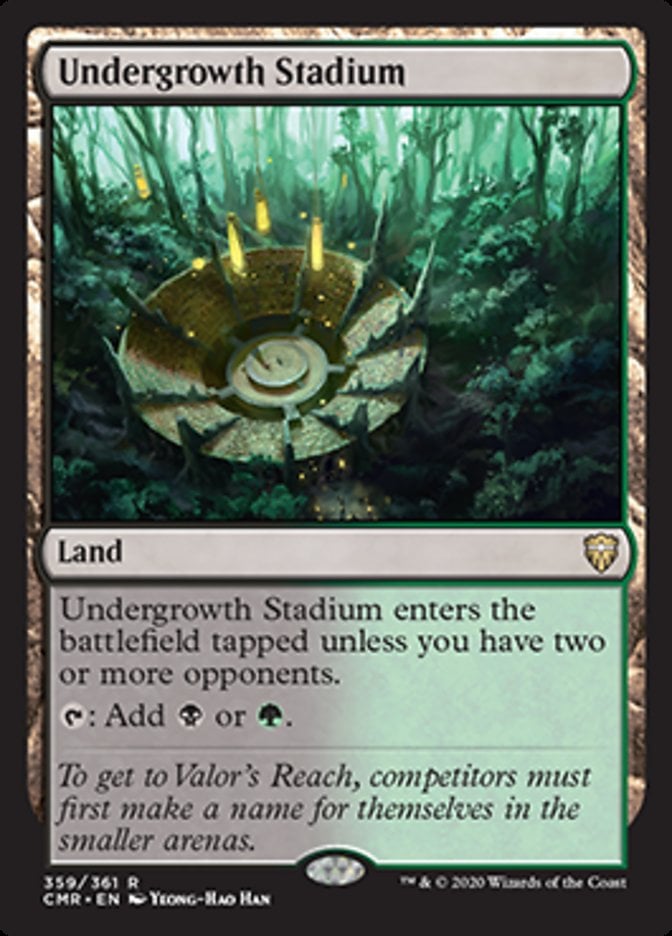
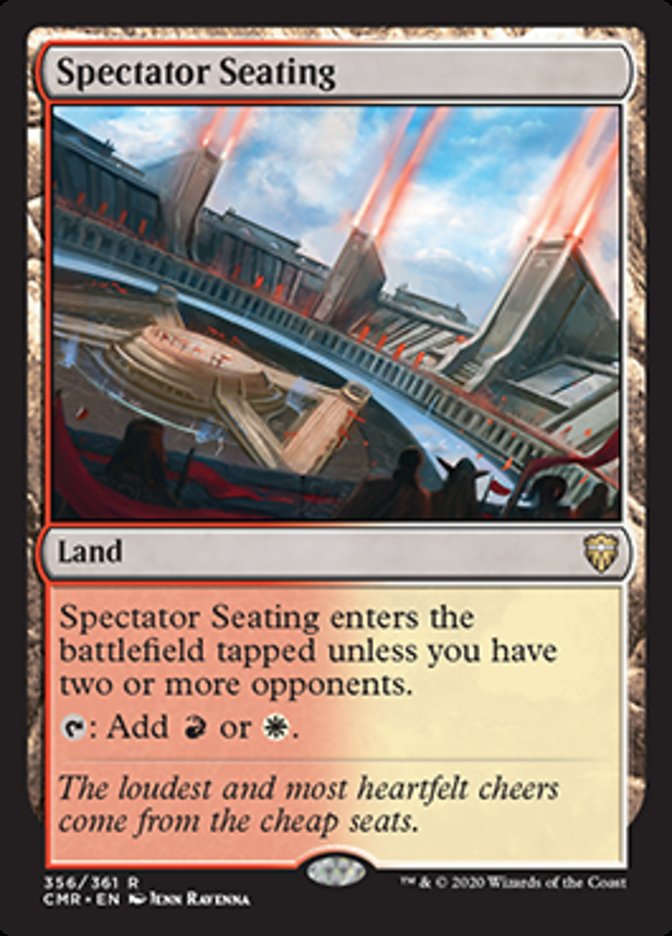
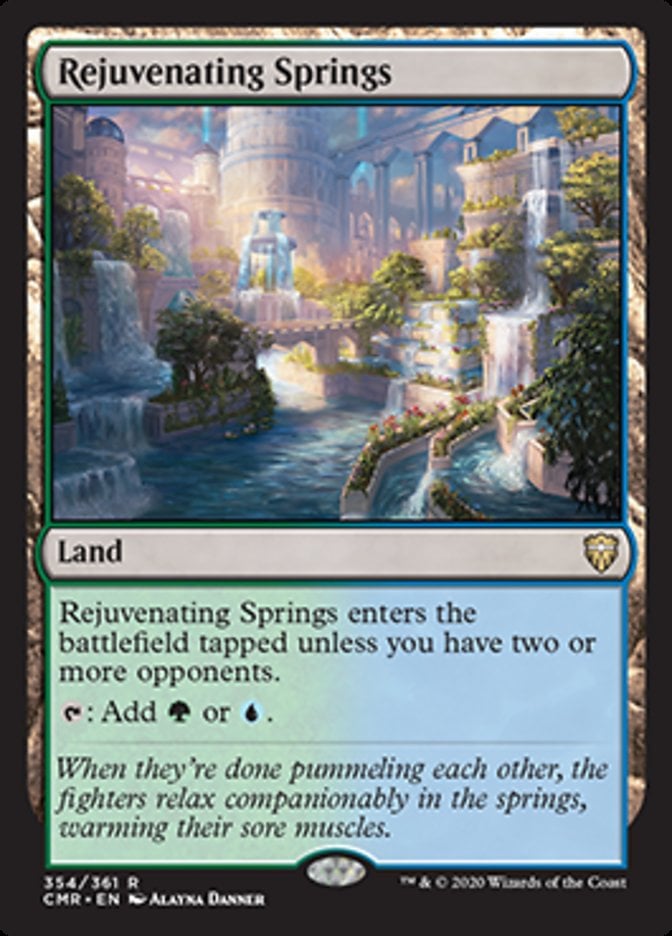
- Bountiful Promenade
- Luxury Suite
- Morphic Pool
- Sea of Clouds
- Spire Garden
- Vault of Champions
- Training Center
- Undergrowth Stadium
- Spectator Seating
- Rejuvenating Springs
Battlebond introduced a cycle of 2-color lands that enter the battlefield tapped unless you have two or more opponents. These are the perfect lands for multiplayer games, and are almost essential includes in any Commander deck with two or more colors.
There’s just too much value in a perfect dual land on turn 1. These cards technically fall off in value once you’ve reduced your pod down to a single opponent, but hitting a tapland shouldn’t be so game breaking that these Battlebond lands aren’t worth it. Nine out of ten times these are good lands in your deck. The cycle was later completed in Commander Legends so all 10 color pairs have access to one.
#5. Goblin Game
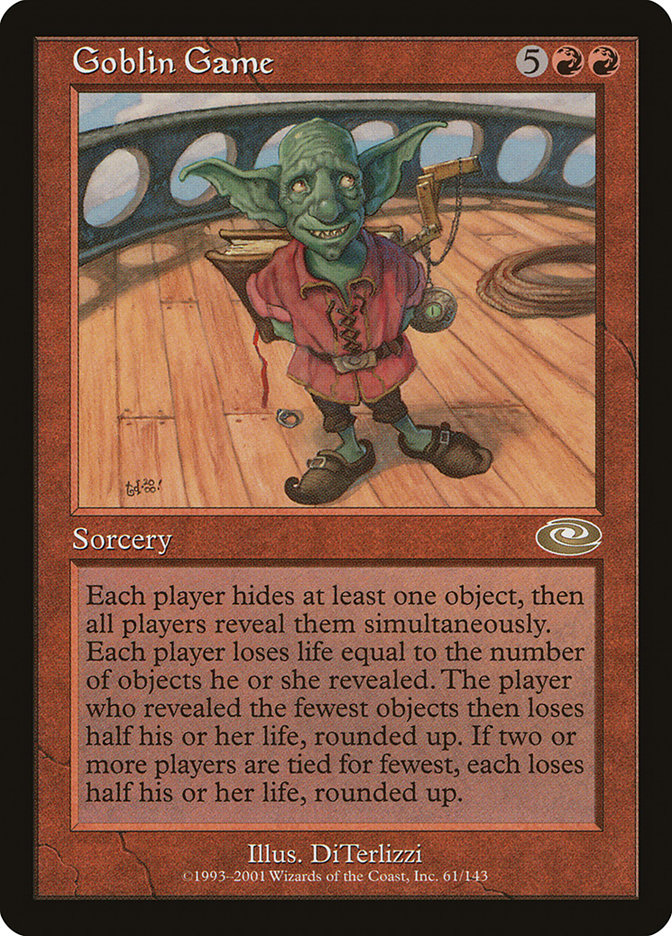
There’s nothing in Magic quite like Goblin Game. Nothing else requires you to “hide” “items” (???). This mini-game is confusing and creates a fun interaction where you don’t want to hide the least number of items, but you also don’t want to go overboard and lose 36 life for hiding every single die in your Chessex dice brick.
Goblin Game leaves a lot up to interpretation, which is half the fun of casting it. What sort of items are you supposed to hide? Where are you actually supposed to put them? A note on this red sorcery from 2004 encourages you to use common sense when determining this, but I think that’s making a lot of assumptions about the average intelligence of a Commander player.
#4. The Theorist, Jace Beleren
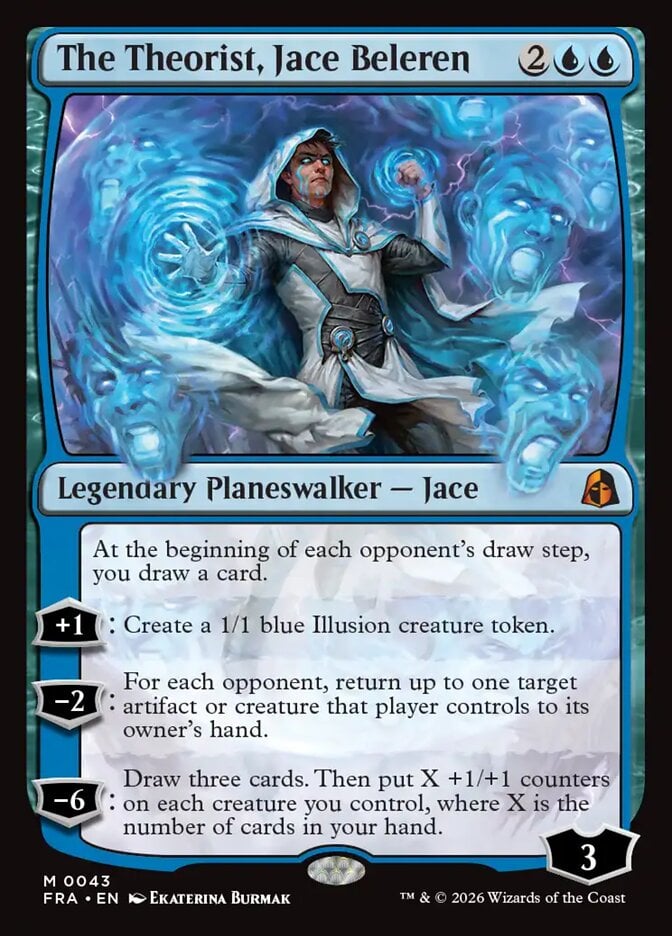
Wizards might as well have put The Theorist, Jace Beleren into the Commander deck because this was so obviously designed for multiplayer. It draws a card on every player’s turn and bounces a creature for each player, so it protects itself well. It’s no Rhystic Study but it’s a good bit closer than I would have expected Wizards to go.
#3. Smothering Tithe
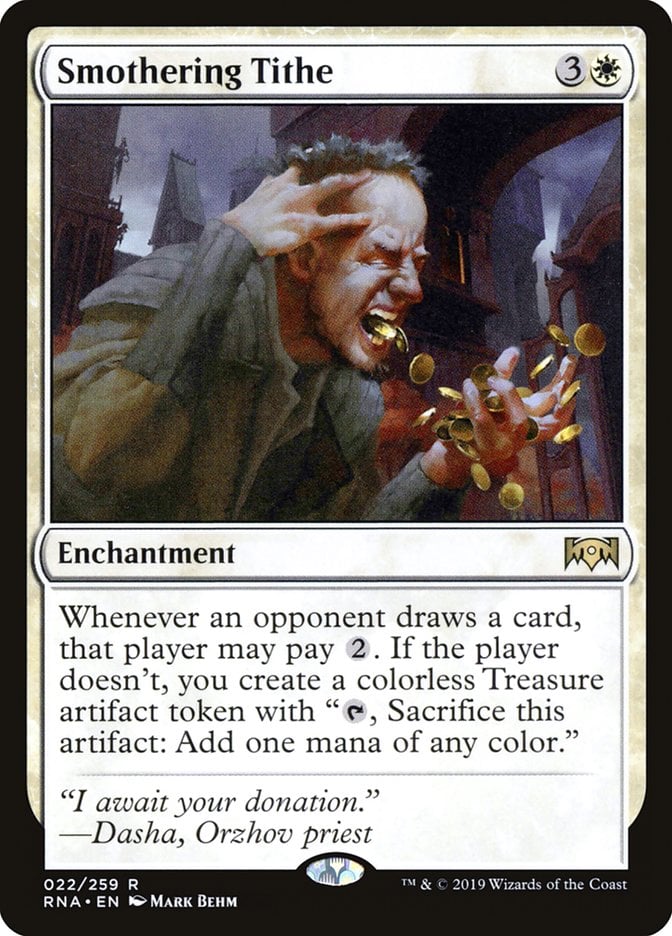
The infamous Smothering Tithe has been a glaringly obnoxious card in Commander since 2019. As anyone who’s been playing against Mystic Remora and Rhystic Study for years can tell you, nothing is more infuriating than the inevitable interruption by the SmoTithe player asking: “Do you pay the 2?”
But this white enchantment isn’t just annoying – it’s powerful. In a four-player pod, you’re looking at three extra treasure tokens after this hits the field before the turn comes back around to you. It’s safe to assume that 80-90% of your Tithe triggers will go unpaid for when we consider the prohibitive 2-mana cost to keep you from ramping by one.
#2. Mystic Remora
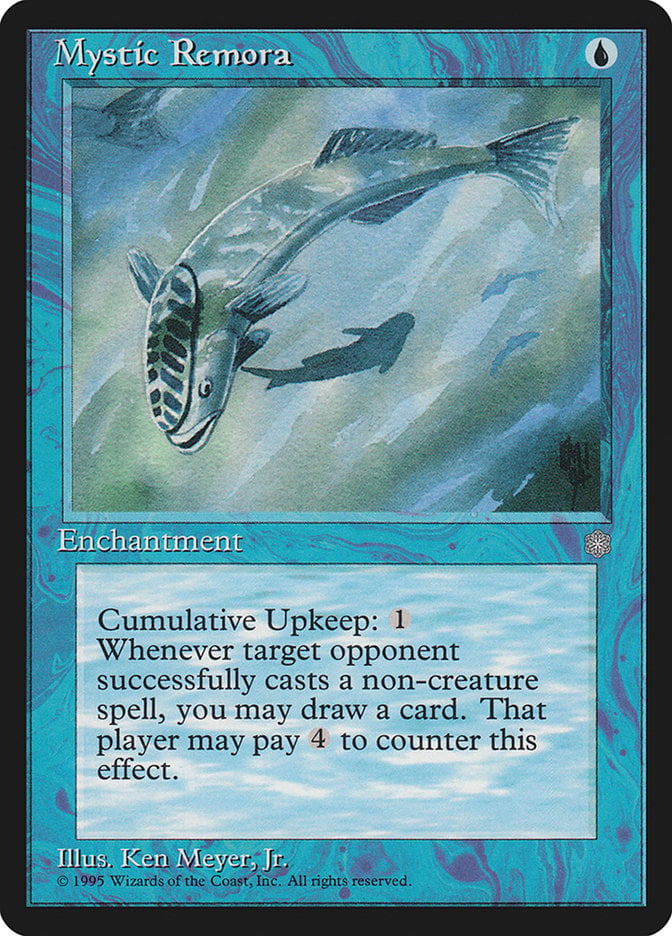
Is there anything better than a turn-one Mystic Remora? Maybe, but you’re hard pressed to find a better 1-drop in blue. The 4-mana restriction to prevent you from drawing when an opponent plays a noncreature spell is so, so expensive that there’s basically no way they’ll even be able to pay. It starts to get very expensive to keep on the field after the first two turns, but after two rounds around the table you’ve probably drawn four to six cards off the Remora as your opponents play their mana rocks and Rampant Growths in the early game. All for, what, 3 mana after the second turn? And you get to be obnoxious about “Do you pay the 4?” for the next 10 minutes?
#1. Rhystic Study
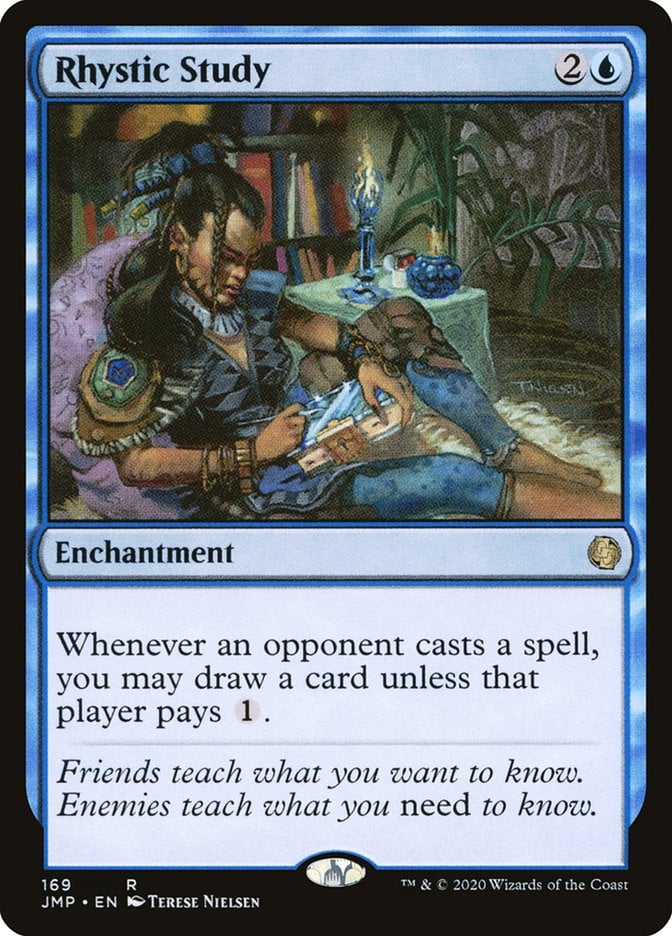
Rhystic Study is arguably the best enchantment in Commander, and probably the best card to run in a multiplayer game. For 3 mana, you’re almost guaranteed three draws as the turn passes around the pod and your opponents decline to “pay the 1.” There’s a higher chance than Mystic Remora that your opponents will have the mana available to pay the tax, but players like to use all their available mana every turn, even if it means you’ll draw cards off of their spells. With no upkeep cost, this blue enchantment hangs out on the field indefinitely, generating massive advantage for you throughout the entire game. If it goes unanswered, an early Rhystic Study is the best card-advantage effect in EDH and can seal the match for you before it’s even started.
Wrap Up

Coercive Portal | Illustration by Yeong Hao Han
Multiplayer Magic is a whole new beast compared to one-on-one. There are three times as many threats hitting the board, and six times as much damage you need to deal to secure victory. Don’t underestimate the power of vigilance. I arm you with this arsenal of multiplayer-focused cards to prepare you to face down multiple opponents simultaneously!
What are your favorite multiplayer-based cards? What sort of multiplayer formats do you play besides Commander/EDH? Let me know in the comments, or on Draftsim’s Twitter/X!
Thanks for reading, stay goaded!
Follow Draftsim for awesome articles and set updates:










Add Comment