

Tempt with Bunnies | Illustration by Ben Wootten
Introduced in Commander 2013, tempting offer was created at the dawn of the new age of supplemental multiplayer sets. WotC would explore multiplayer-centric mechanics through their different product offerings, testing the waters with designs such as this one, the monarch, and voting. The main idea behind these mechanics is that they’ll incentivize players to interact more with each other, instead of the traditional 1v1 MTG gameplay, often adding benefits to attacking, forging new allies, or teaming up to attack the strongest player at the table.
Tempting offer, as we’ll see further down the road, is a very interactive and novel mechanic, and here we’re going to break down the rules and best cards. Let’s go!
How Does Tempting Offer Work?

Tempt with Reflections | Illustration by Mike Bierek
When you cast a spell with tempting offer, you’ll get a benefit. Then, in turn order, each player is offered the same benefit. For each player who accepts the benefit, you get that benefit again.
Let’s use a simple example in a classic 4-player Commander pod: Tempt with Bunnies, besides being a cute and adorable card, will give me a card and a 1/1 rabbit token. All three of my opponents may, in turn, draw a card and create a 1/1 rabbit token, and for each one that opts for this, I draw another card and make another 1/1 token. Worst case scenario, I paid 3 mana for a token and a card, and in the best case, I’ll draw four cards and make four 1/1 tokens. So, as we can see, everybody will be “tempted” to get some benefits and not fall behind, while risking that the spellcaster gets a huge benefit.
The History of Tempting Offer in MTG
Tempting offer was created in Commander 2013, with a rare 5-card cycle, one for each color. Some of these cards got reprinted in subsequent Commander sets, like Commander 2016 and Commander 2019. New cards with tempting offer were printed in Modern Horizons 3 Commander and Bloomburrow Commander. It’s a flexible enough mechanic that we’ll probably see more of, though it’s been used very sparingly so far.
When Should You Take a Tempting Offer?
Tempting offer is essentially a group hug mechanic that will benefit at least the spellcaster once. The mechanic is very tricky because it offers a dilemma, and the right play will vary from time to time. You should take a tempting offer if you’re clearly behind, and if the player casting the tempting offer spell won’t benefit that much from your choice.

Maybe because they’re miles above the other players, and the extra benefit they’ll get is irrelevant. If all the other players decline and you’re the last one to decide, maybe you should take it. Sometimes, a player needs more resources to stay alive or to deal with a game-winning threat from the leading player, and in this case, you should consider allying temporarily with said player. If your opponent casts Tempt with Immortality and they have only two or three creatures in their graveyard, one being very good and the other ones weaker, then you should totally say yes and get tempted.
When Should You Not Take a Tempting Offer?
You’ll clearly know when you can’t accept the offer, as tempting as it can be.
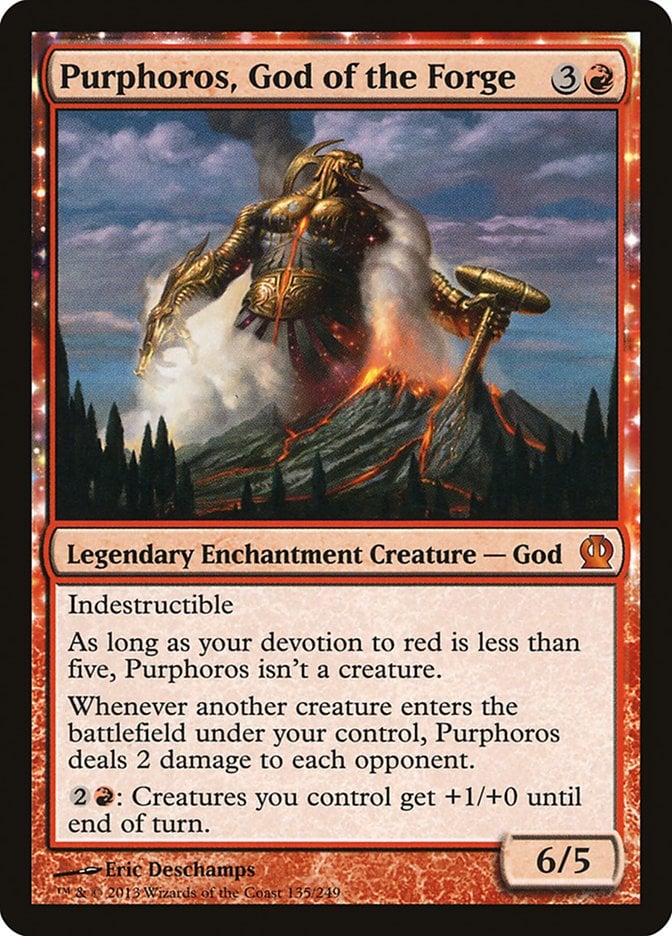
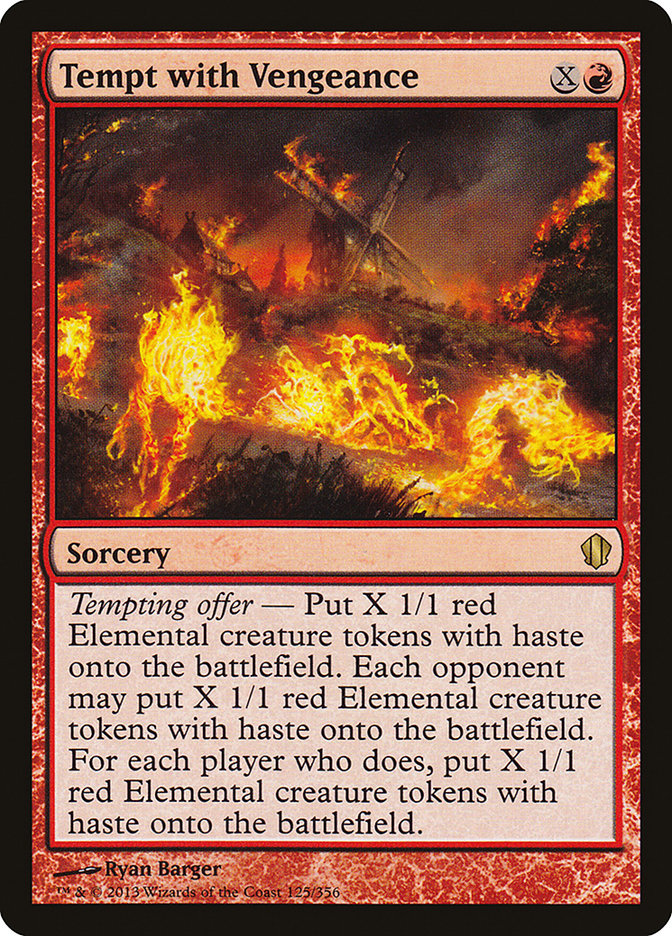
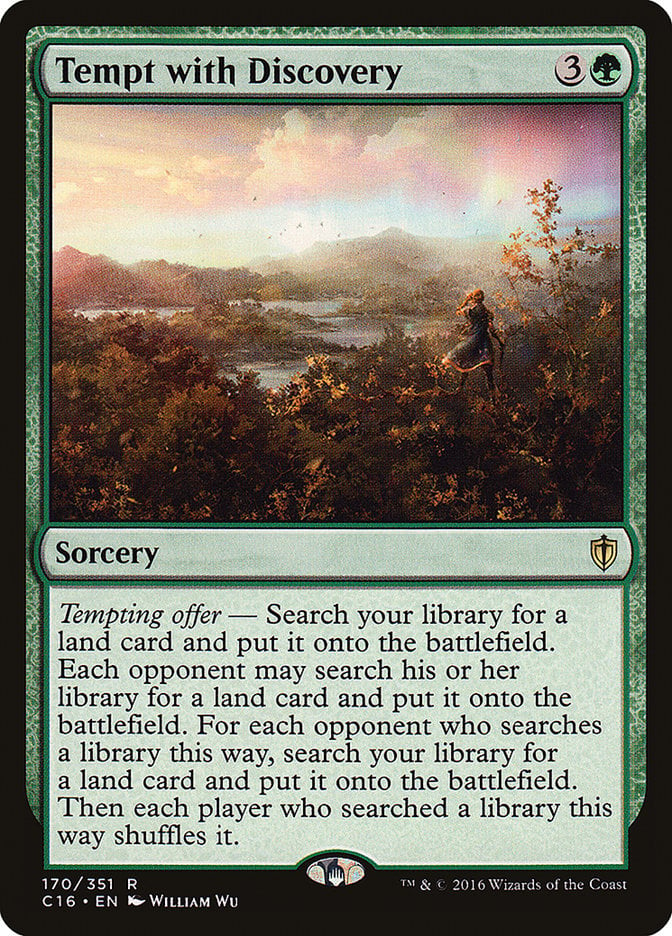
You shouldn’t take a tempting offer when your opponent casts Tempt with Vengeance and they have a Purphoros, God of the Forge in play that can kill everybody else with the tokens alone. If someone’s playing a ramp deck that threatens to cast an 8 or 9 mana value play and they cast Tempt with Discovery on turn 4, you should usually decline the offer.
What Order Does a Tempting Offer Card Go in?
When a spell with tempting offer resolves, starting with the player counterclockwise to the caster, each player will decide if they take the offer or not in turn order. The last player to decide is the one on the right side of the caster.
Can You Respond Once You Know What Choices Were Made?


No, you can’t. All decisions made are part of the spell’s resolution, and once all choices are made, the spell resolves simultaneously for every player. In the case of Tempt with Mayhem and Tempt with Reflections, the target is chosen before the spell resolves, so players have that window to mess with the spell’s target. Of course, if the spell with tempting offer gets countered, it won’t resolve, and players won’t choose anything.
Player’s can of course discuss their intent about what they plan to choose before locking in any decisions.
Does Tempting Offer Count as Voting?
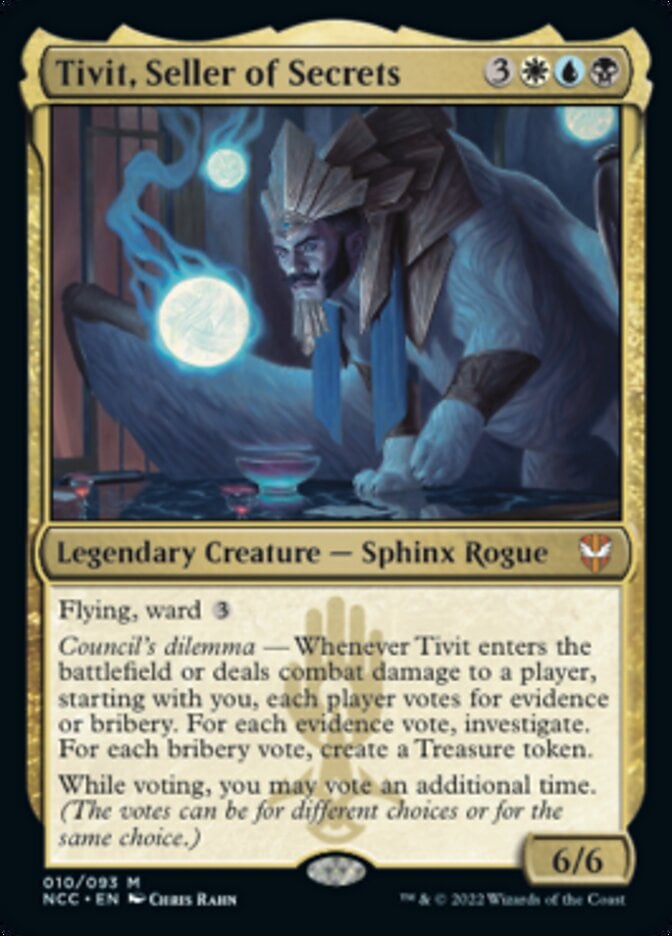
No, tempting offer doesn’t count as voting. Voting applies to mechanics like council’s dilemma and will of the council. Unlike tempting offer, these mechanics clearly state “each player votes for option A or option B” in their rules text. So cards like Tivit, Seller of Secrets don’t synergize with the tempting offer mechanic and its choices.
Gallery and List of Tempting Offer Cards


- Tempt with Bunnies
- Tempt with Discovery
- Tempt with Glory
- Tempt with Immortality
- Tempt with Mayhem
- Tempt with Reflections
- Tempt with Vengeance
Best Tempting Offer Cards
To rate tempting offer cards, assuming a 4-player Commander pod, I’m considering which spells offer the best cost-to-benefit and which ones are more exploitable in the decks that want to cast them. As such, cards that are very situational or that can be bad even if all players take the offer won’t make the list.
#4. Tempt with Bunnies
Base rate 3 mana, make a token and draw a card is very acceptable, and the more cards you draw, the better. Tempt with Bunnies of course gets better when you can take advantage of the extra token or the rabbit creature type.
#3. Tempt with Discovery
Ramp is good, and getting any land from your deck is even better. Tempt with Discovery stops being overpriced if a single player takes your offer, and at that point it’s comparable to a pumped up Circuitous Route. This card gets much better if you can fetch a specific land that’s important to your gameplan. Here, players won’t get tempted so easily because they can get a land, but if you get three or four, the advantage is too great.
#2. Tempt with Mayhem
The interesting part about Tempt with Mayhem is that you can build your deck around it, and take advantage of your own strong / synergistic spells. Other players will not be so keen on letting you do more of the stuff you already want to be doing. You can, of course, copy a removal spell or a ramp spell from other players, especially if they’re doing something your commander’s color identity won’t allow you to easily do (say, remove enchantments in a red deck). And 3 mana to get a single copy of a spell is not the end of the world either.
#1. Tempt with Vengeance
For me personally, Tempt with Vengeance is the best of the bunch. You’re not overpaying by spending X mana to make X tokens. That’s a kind-of Song of Totentanz already. Since you’re the one making tokens, you can have cards like Impact Tremors, Anointed Procession, attacking benefits, and the like, besides the obvious synergies with numbers.
A commander like Jetmir, Nexus of Revels enjoys the extra numbers you can put onto the table, while other commanders can trigger on the extra 2-power or less creatures attacking. Be cautious though, because people will be less tempted to take the offer based on your board state.
Wrap Up

Tempt with Discovery | Illustration by Jakob Eirich
And that’s all I can tempt you with today, guys. Tempting offer is just one entry in the multiplayer mechanics pantheon, like monarch, goad, and voting. It has a limited design space, so WotC won’t use it very often, though as we’ve seen, these cards get reprinted in Commander precons from time to time, or we’ll get a new tempting offer card when it makes sense.
What do you thinking about tempting offer, guys? How does it fare against your favorite MTG multiplayer mechanics? Let me know in the comments section below, or in our Draftsim Discord.
Stay safe out there, and may you enjoy the thrills of forging and crashing alliances in multiplayer games.
Follow Draftsim for awesome articles and set updates:










Add Comment